


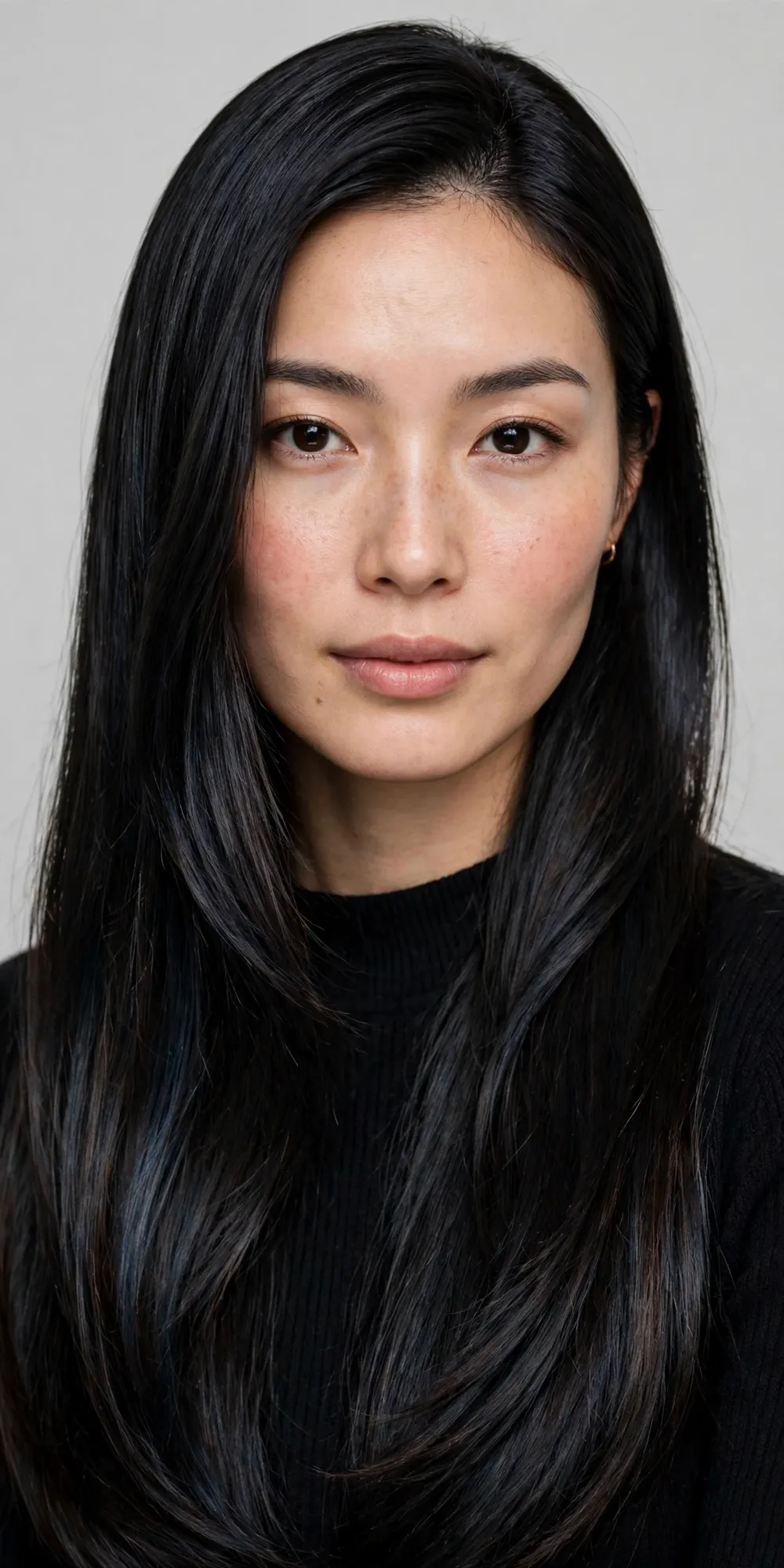
If you’re searching for black hair color ideas that actually look expensive instead of flat and heavy, three shades stand out in 2026: Jet Black Glass Hair for mirror shine, Black Cherry Cola Auburn Blend for warm dimension, and Glossy Raven Moneypiece Elegance for a face-framing lift without a full colour change. The rest of this guide walks through 28 shades — from inky blue-black to caramel ribbons — so you can pick one that suits your skin tone, your length, and how much upkeep you’ll honestly do.
1. Midnight Blue Black Velvet
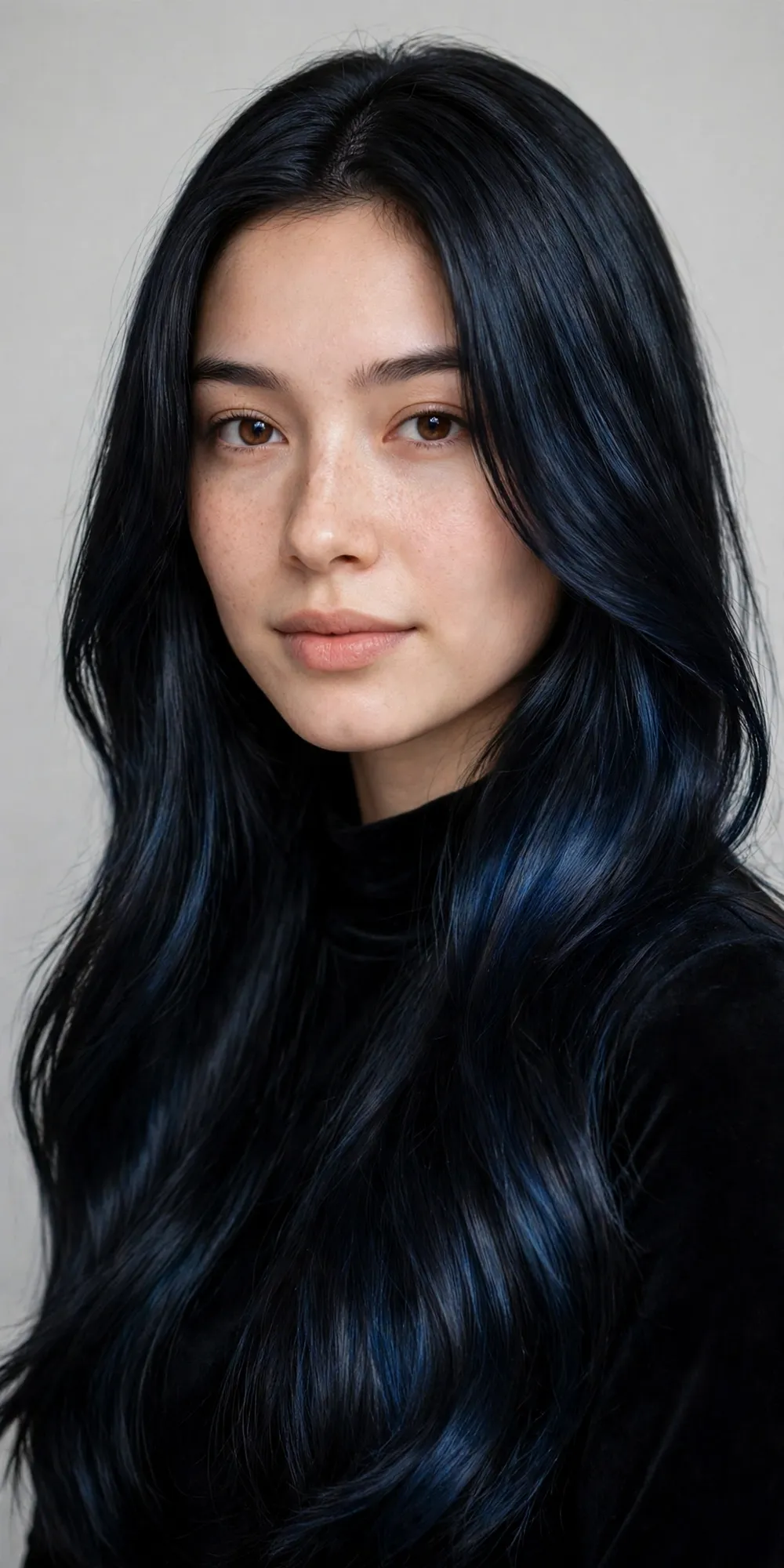
This one looks plain black indoors, then catches the light with a deep navy flash. The “velvet” part is how soft and even the colour sits, with no harsh shine lines. It’s a level 1–2 black base with a blue-violet gloss layered over the top. Cool and neutral skin tones get the most from it; warm skin can wear it if the blue stays subtle. It works on straight, wavy or curly hair, shoulder-length and longer. Ask for a blue-black permanent colour with a cool violet gloss, and bring a daylight photo so your stylist sees the blue you mean. Maintenance is moderate — the blue fades first, usually within four to six washes, so a blue-depositing conditioner keeps it alive between appointments.
2. Glossy Raven Moneypiece Elegance
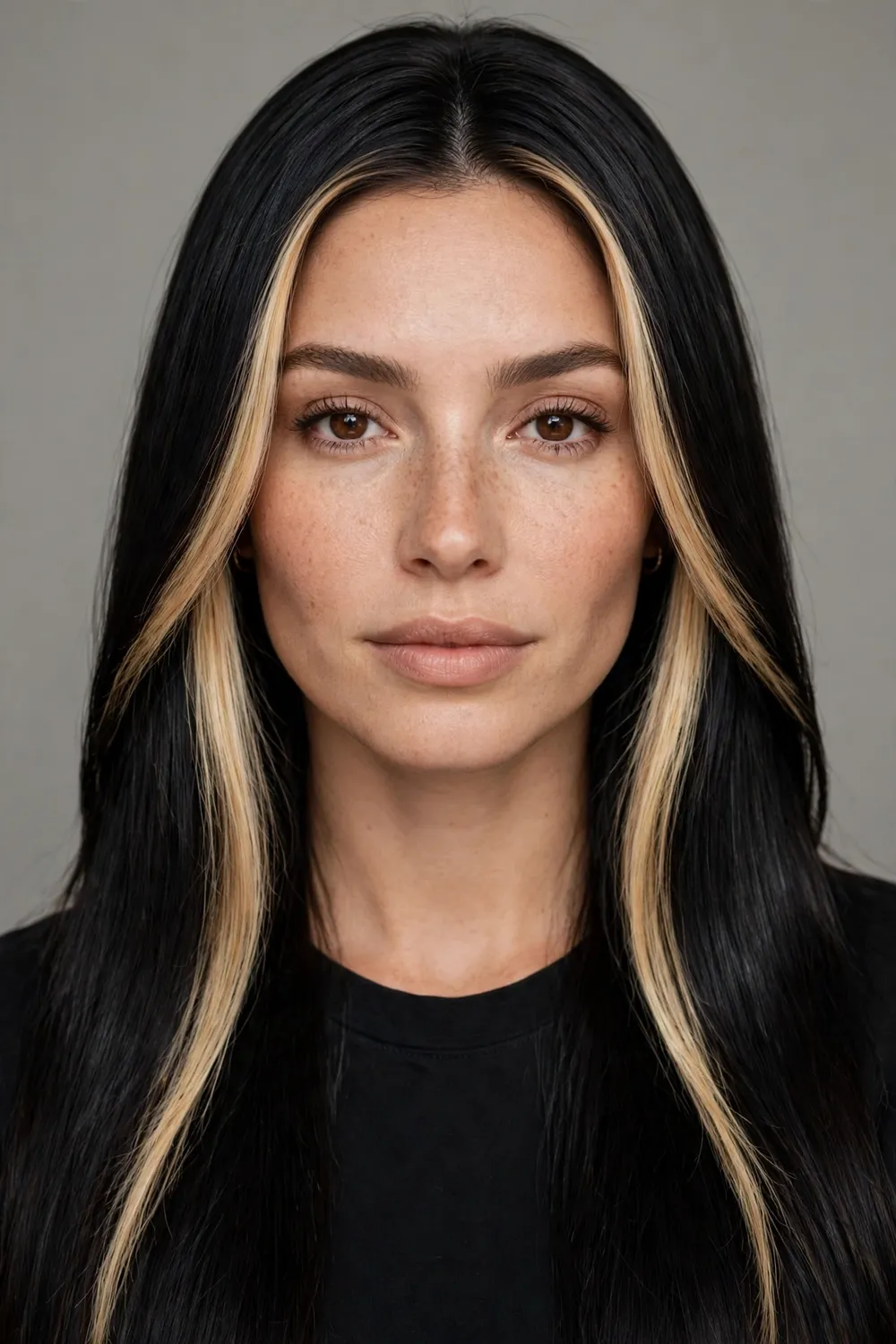
A true-black base with a mirror gloss, and the two front sections lightened a shade or two to frame your face. The moneypiece brightens your whole look without touching the rest of your hair. It suits almost every skin tone — the black stays neutral, and the front pieces can be tuned warm or cool. Best on medium to long hair, straight or softly waved, with the front sections falling past the cheekbones. Ask for a level 1 black all over with face-framing pieces lifted to level 5–6 and toned to match your undertone. Roots need a touch-up every four to five weeks, and the moneypiece fades faster than the base, so plan a toner refresh at the same visit.
3. Black Cherry Cola Auburn Blend
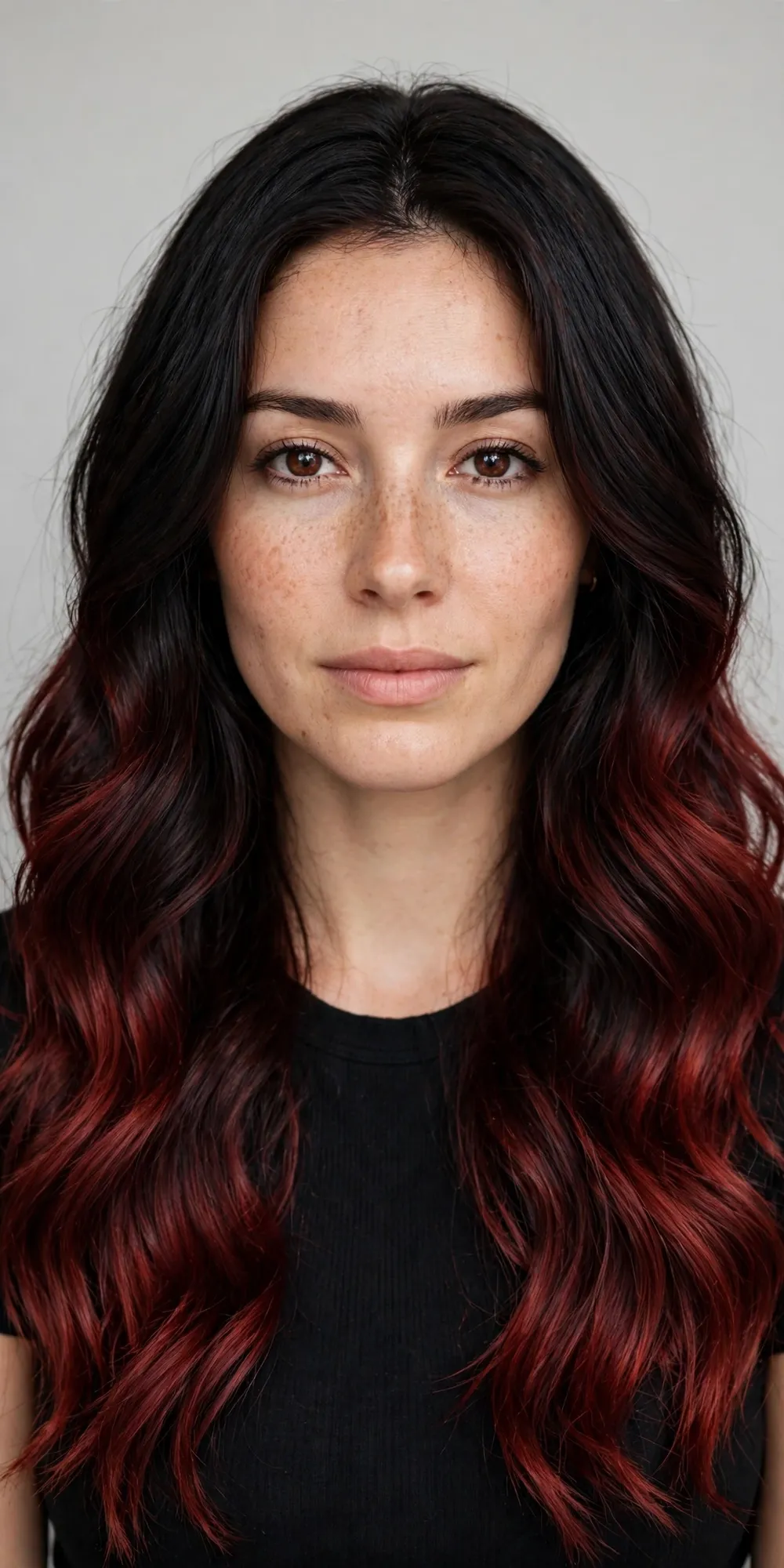
Black at the roots, melting into rich auburn and cherry tones through the lengths and ends — like a dark cherry soda. The blend is soft, not striped, so it reads as one dimensional colour rather than two. Warm and neutral skin tones love this one — the red pulls warmth into the face — and it flatters olive skin especially well. It works best on wavy and curly hair, where the curls show off the red, but straight hair wears it fine too. Ask for a black root melt into a cherry-auburn balayage, with the red kept deeper than copper so it stays classy. Expect the cherry to soften within three to four weeks, and book a gloss refresh when it starts looking brown.
4. Platinum and Black Leopard Spotting
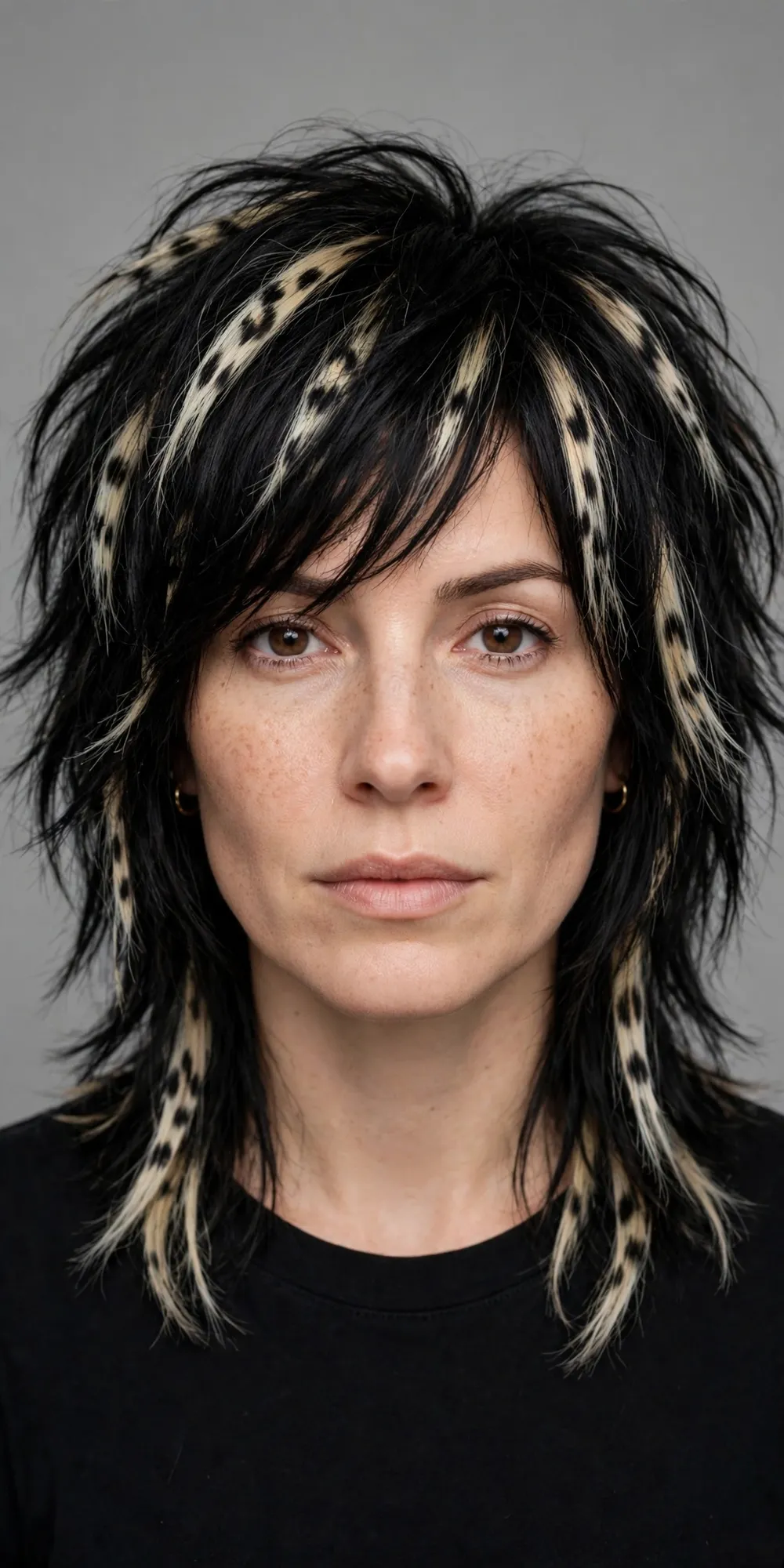
This is the boldest idea on the list, and it knows it. Irregular platinum patches are placed over a deep black base, like a leopard print, so the contrast does all the talking. It suits cool and neutral skin tones best, since platinum can wash out very warm skin, and it needs medium to long hair so the patches have space to sit naturally. Ask your stylist for a black base with freehand platinum spots, placed asymmetrically and kept away from the hairline so it grows out gracefully. The platinum needs a purple shampoo to stay icy, and the black needs a gloss to stay rich. Upkeep is high: roots and patch toning every four weeks, plus regular conditioning, because lifting to platinum is hard on hair.
5. Espresso Rooted Smoky Silver
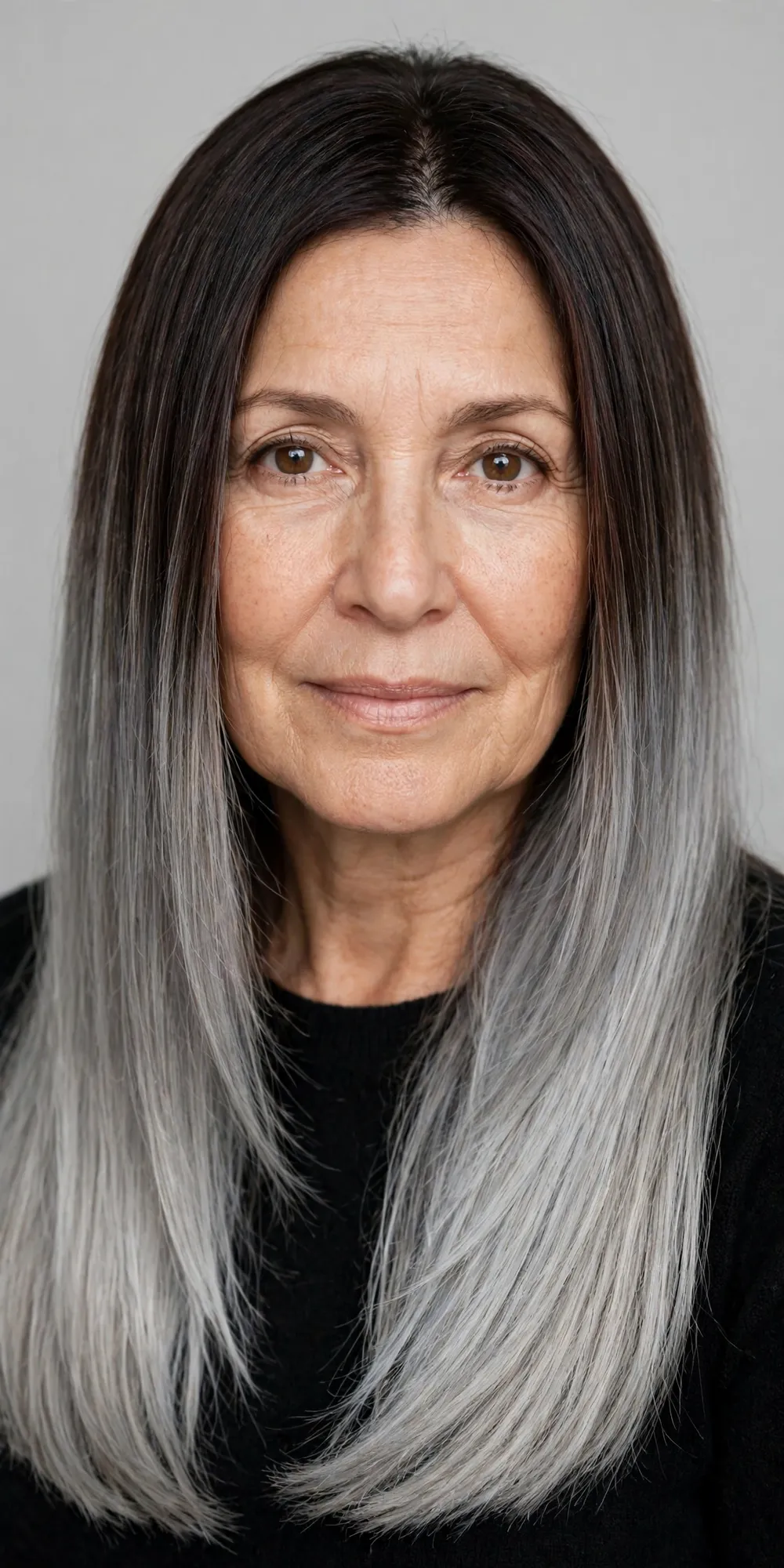
Dark espresso roots fade into smoky silver ends — a grown-out, lived-in look that somehow still feels polished. Cool and neutral skin tones get the best result; warm skin can work with it if the silver is toned warmer, more pewter than ash. It needs length — collarbone or longer — so the melt has room to happen gradually, and it looks great on straight or loosely waved hair. Ask for a dark espresso root shadow melting into a level 9–10 silver, with a smoky ash toner rather than a bright white one. Silver fades to yellow quickly, so purple shampoo once a week is essential. Touch-ups are forgiving thanks to the dark root, but the silver needs toning every four to six weeks.
6. Midnight Ruby Burgundy Lights
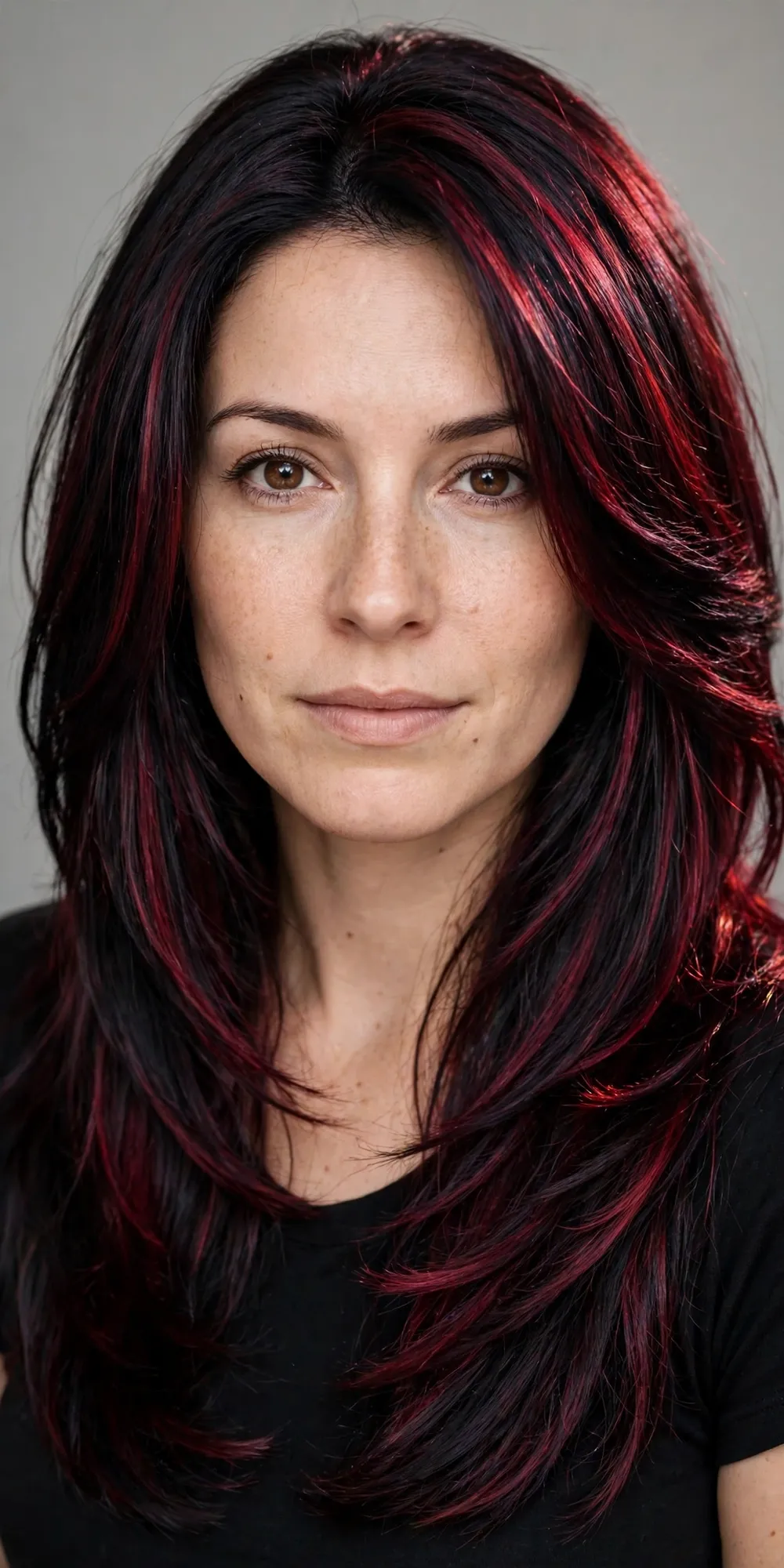
Deep ruby and burgundy ribbons are woven through midnight black, catching the light when you move and vanishing when you stand still. It’s dramatic without being loud — the kind of colour people notice in sunlight and ask about. Warm, neutral and deep skin tones all wear it beautifully; the red undertones warm up the face. It suits every hair type, though wavy and curly hair shows the burgundy best, and it works from bob length upward. Ask for a black base with fine burgundy and ruby lowlights woven through the mid-lengths, not chunky highlights. Red fades fastest of all, so wash in cool water with a colour-safe shampoo and plan a gloss refresh every four weeks to keep the ruby from turning muddy brown.
7. Black Velvet Balayage with Ash Brown
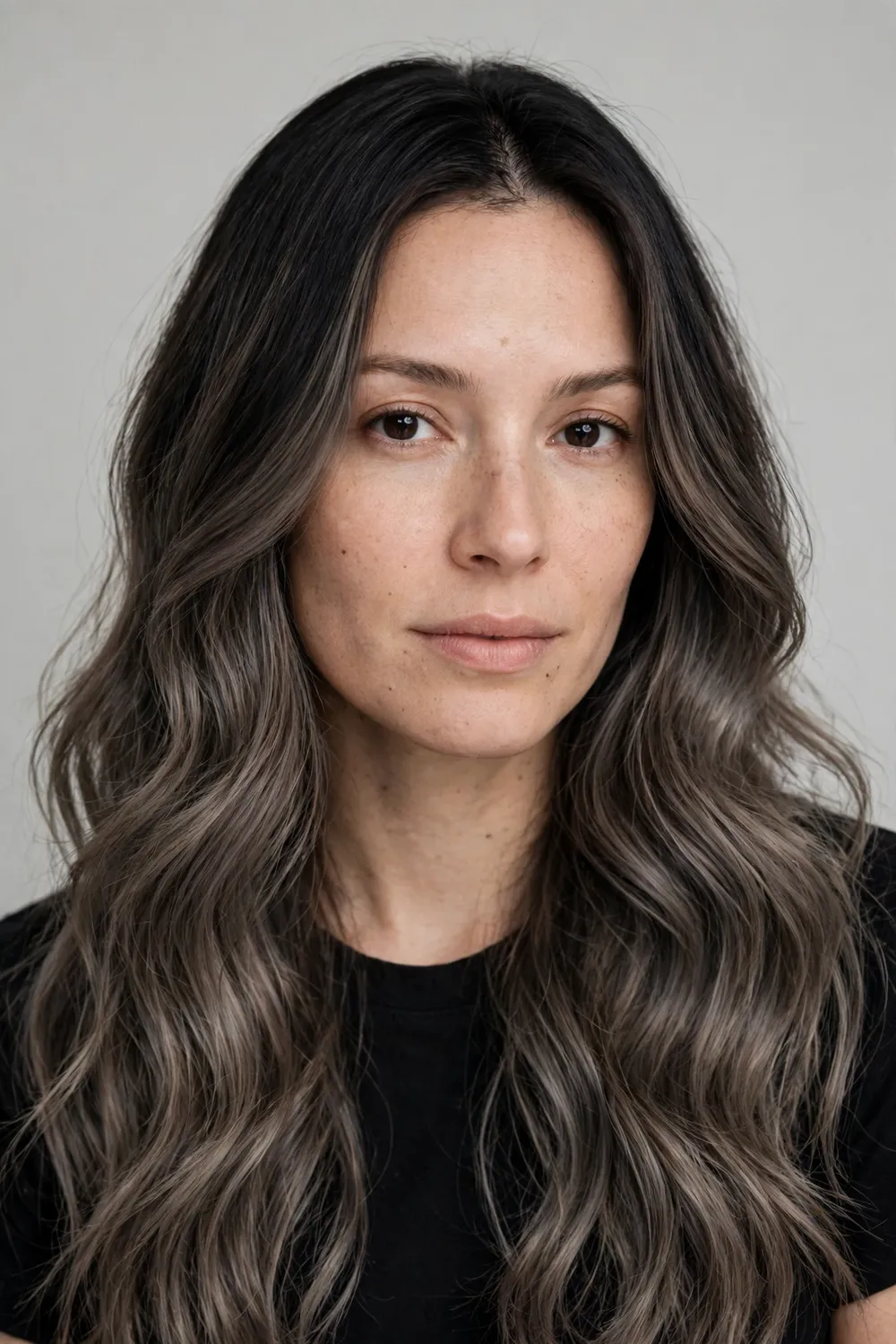
The low-maintenance way into black hair colour: a deep black root melting into cool ash-brown ends, hand-painted so there’s no harsh line anywhere. It reads soft and expensive, and it grows out beautifully because the root is already dark. Cool and neutral skin tones suit it best — ash brown can look dull against very warm skin — and it flatters straight, wavy and curly hair alike. Medium to long lengths work best, since the balayage needs space to blend. Ask your stylist for a black root melt into an ash-brown balayage, level 5–6 at the ends, with a cool toner to keep brassiness out. Touch-ups are easy: the dark root means you can stretch appointments to eight to ten weeks, just refreshing the toner in between.
8. Black to Silver Peacock Ombré
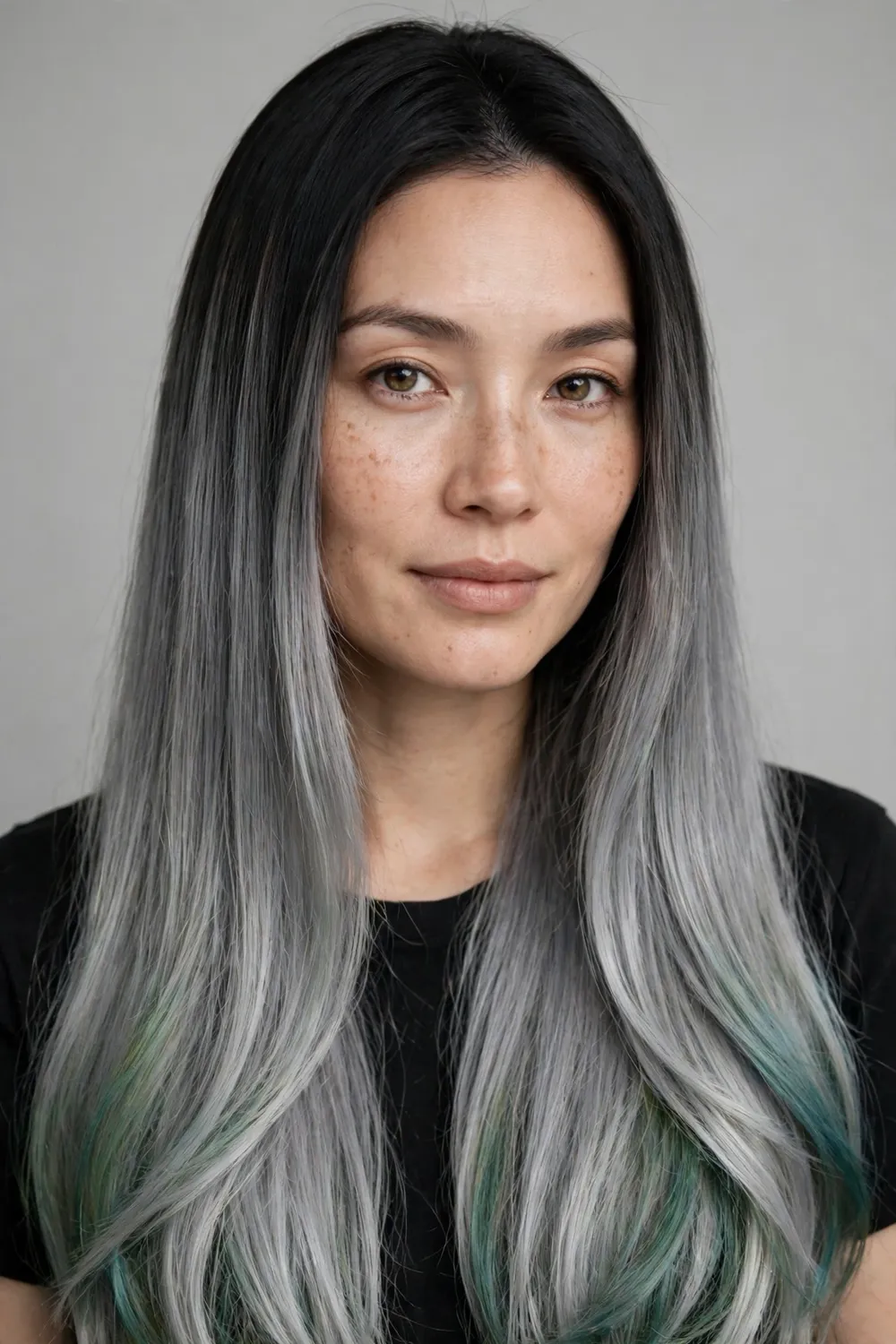
Black roots fade into silver ends with flashes of peacock green and teal woven through — a colour that changes depending on the light and how your hair moves. Cool skin tones carry it best; the green and silver can clash with very warm undertones. It needs long hair, past the shoulders at least, so the ombré gradient and the peacock accents each get their own zone. Ask for a black-to-silver ombré with peacock green and teal panels painted through the mid-lengths and ends. Colour-safe shampoo and cool water are essential, and the green fades fastest, usually within two to three weeks. Plan on a colour refresh every four weeks, plus a deep conditioning mask weekly — silver and green both need lifted hair, which needs care.
9. Dimensional Black with Beige Babylights
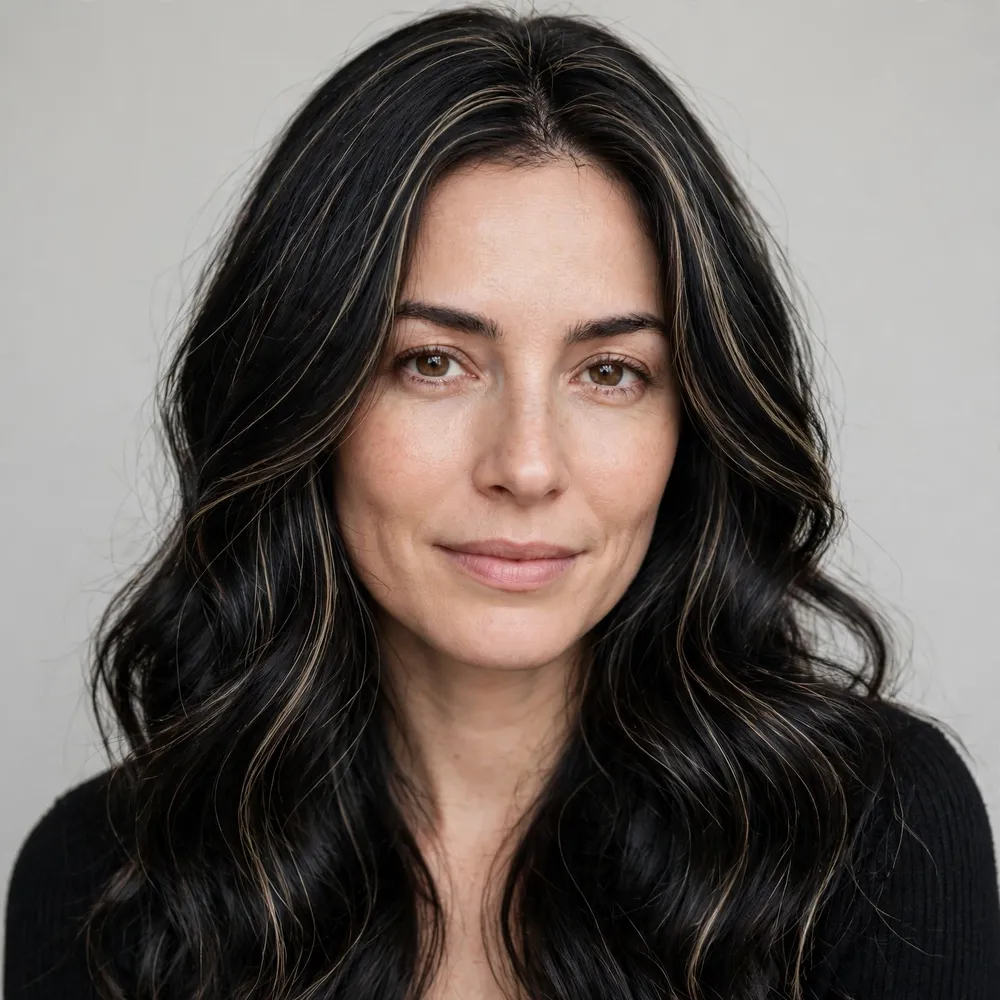
Fine, delicate beige highlights are scattered through a black base, adding movement and light without ever looking highlighted. From a distance it just looks like healthy, dimensional black hair — the babylights only reveal themselves up close. It’s one of the most flattering options here — the beige softens black’s harshness and suits warm, cool and neutral skin tones alike. Works on all hair types and from chin length up, though longer hair shows the dimension better. Ask for a level 1–2 black base with fine beige babylights, level 7–8, woven through the top layers only. Maintenance is gentle: the highlights are so fine that regrowth barely shows, so you can go eight weeks between visits with a toner refresh at week six.
10. Smudged Black Denim Roots Look
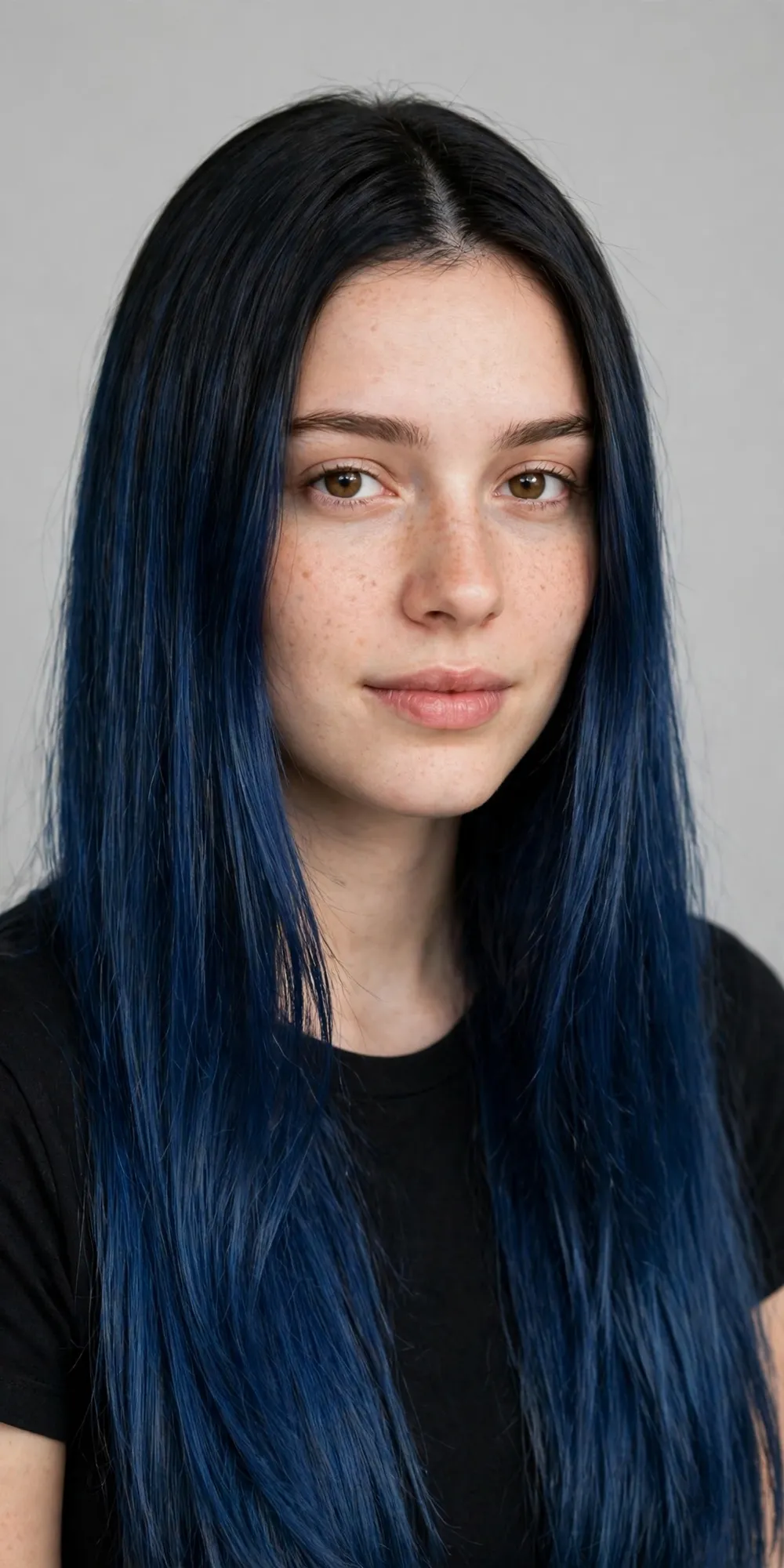
A black root is deliberately smudged — blurred, not blended — into deep denim blue, so the two colours melt with no visible line. The denim is a dusty, muted blue, more like worn jeans than bright dye. It suits cool and neutral skin tones best, and looks especially good on olive skin. Any texture works, but straight and wavy hair shows the smudge most clearly; anything past chin length is fine. Ask for a black root smudge into denim-blue lengths, with the transition zone kept soft and wide rather than sharp. Blue fades fast, so wash with cool water and a sulphate-free shampoo, and use a blue depositing conditioner weekly. Expect the denim to soften within three to four weeks, and book a refresh before it washes out grey.
11. Black Pearl Iridescent Pastel Overlay
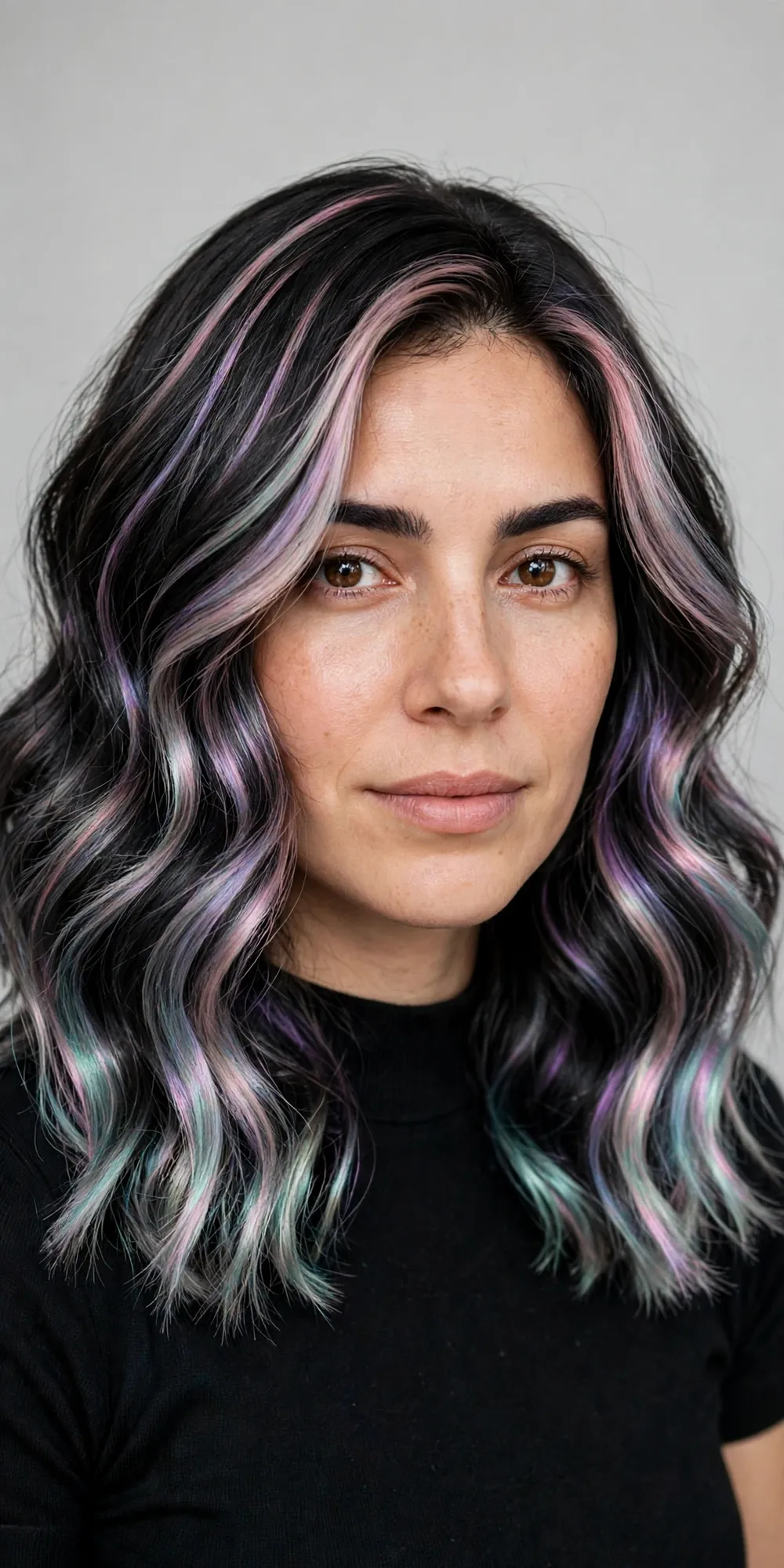
A deep black base is topped with a sheer, iridescent pastel overlay — hints of pink, lavender and blue that shimmer like a pearl when the light hits. Cool and neutral skin tones get the most from it; very warm skin can make the pastels look slightly off. It works best on straight or loosely waved hair, medium to long, where the overlay catches light evenly. Ask for a black base with a sheer iridescent pastel gloss layered over the top, not a full pastel dye — the black underneath gives it depth. The pastel is delicate and washes out within two to three weeks, so this is a high-maintenance, short-lived look. Cool water, colour-safe shampoo, and a pastel gloss refresh are all part of the deal.
12. Black Velvet with Violet Peekaboo
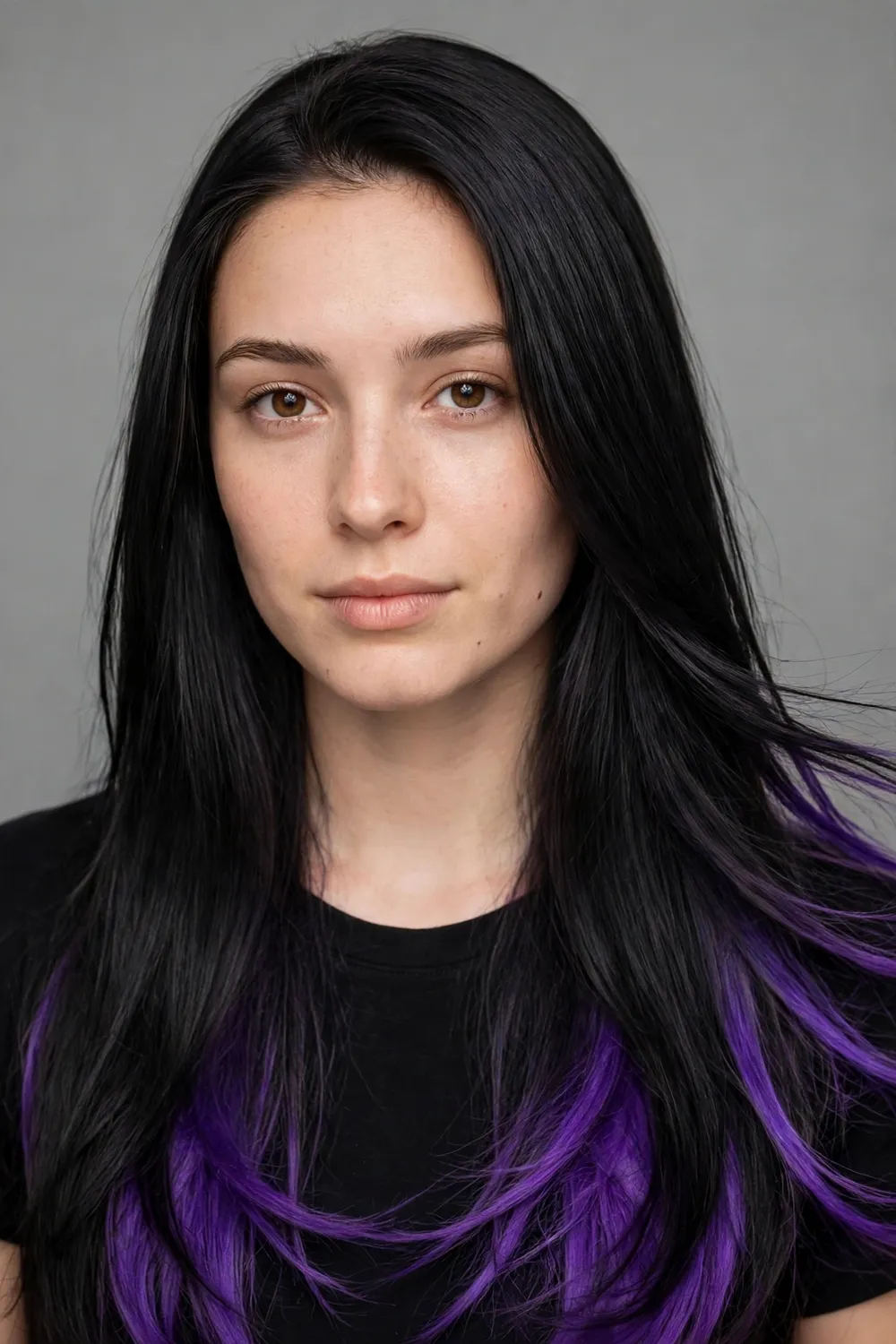
Vibrant violet hides underneath a deep black top layer, flashing out only when your hair moves, when you tuck it behind your ear, or tie it up. It suits every skin tone — the black frames your face, and the violet is a surprise, not a statement. Works on all hair types, though you need enough length for the underlayer to hide, so chin-length or longer is ideal. Ask your stylist to colour the underlayer violet and keep the top black, with the violet starting just behind the ears. A violet colour-depositing conditioner keeps it vivid, and the top black layer needs a gloss to stay rich. Maintenance is moderate: the violet fades in three to four weeks, but since it’s hidden, nobody notices but you.
13. Inky Black with Copper Money Piece
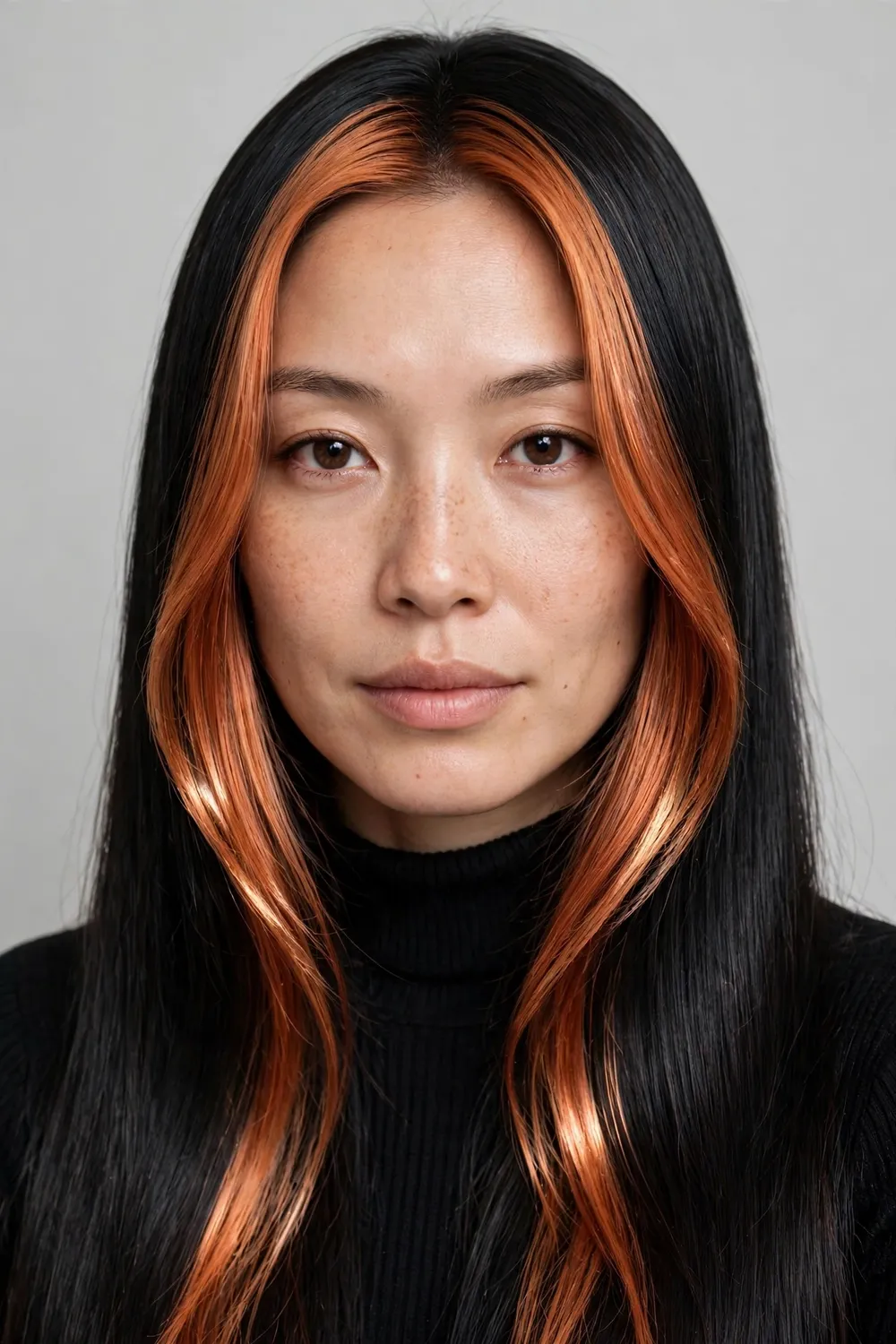
An inky black base meets two copper front pieces — warm against cool, light against dark, right where everyone looks first. It’s bold but controlled, and it suits warm and neutral skin tones beautifully — copper warms the face. Best on medium to long hair, straight or wavy, where the copper pieces fall cleanly along the face. Ask for a level 1 black all over with the front sections lifted and toned to a true copper, not gold and not red. Copper fades fast — it’s one of the quickest colours to wash out — so a copper-depositing conditioner is worth buying, and cool water helps. The moneypiece needs toning every three to four weeks, while the black base can wait longer — ask for a front-only refresh in between.
14. Black to Rose Gold Melt Transition
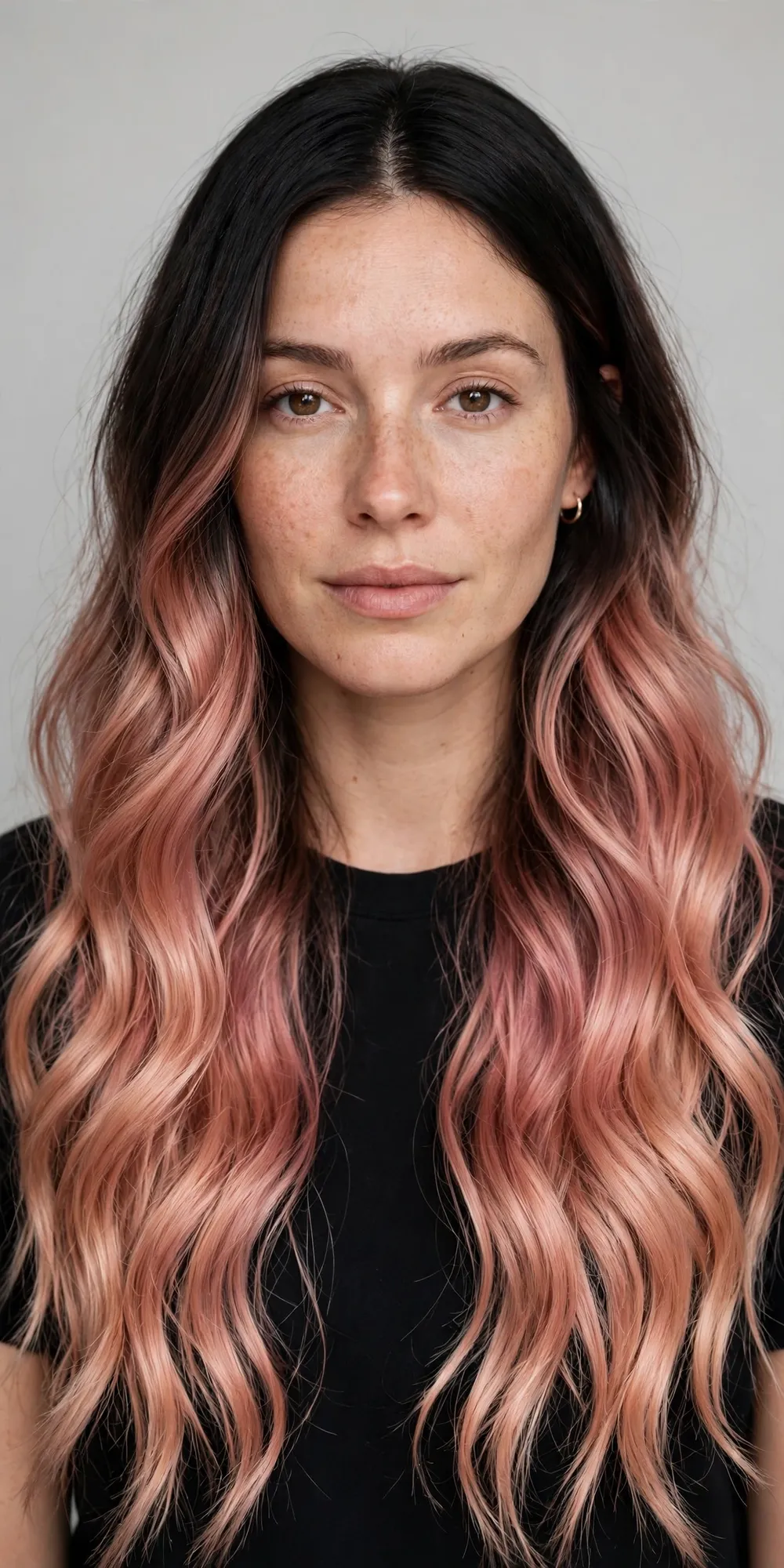
A deep black root melts into rose gold ends — dark and moody at the top, warm and romantic at the bottom. The melt is seamless, so it reads as one colour changing as it travels down. Warm and neutral skin tones suit it best; the pink-gold flatters fair to medium skin. It needs shoulder length or longer so the transition has room to breathe, and it looks lovely on wavy and curly hair. Ask for a black root melt into rose gold, level 8–9 at the ends, toned pink, not peach. Rose gold is a pastel at heart, so it fades within three to four weeks; a pink depositing conditioner stretches it out. Book a toner refresh monthly, and keep the ends conditioned — lightened ends dry out faster.
15. Black Velvet and Pearl Blonde Contrast
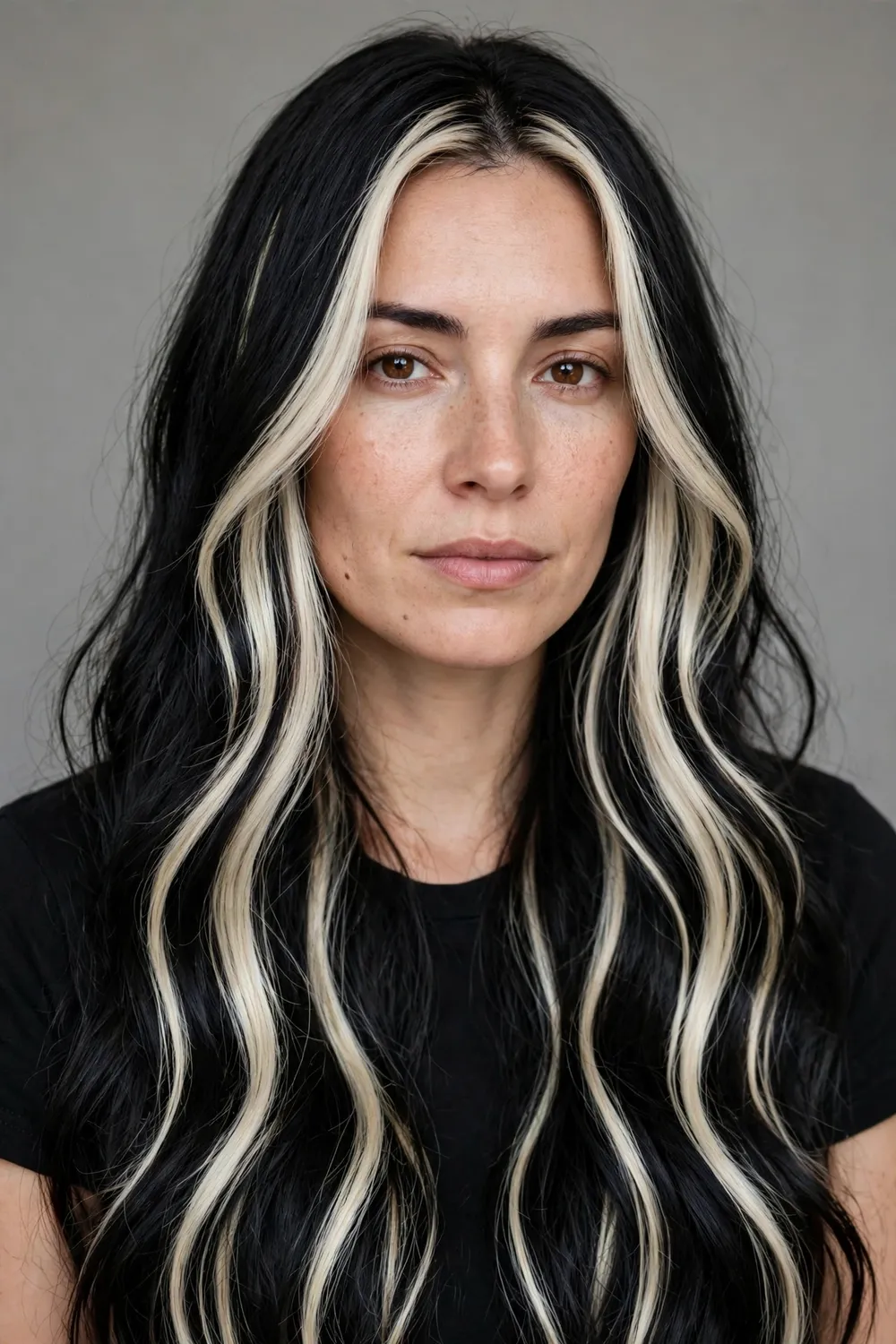
This is black and blonde pushed to the opposite ends of the spectrum on purpose. A deep black base carries sharp, pearl-toned blonde highlights — usually in wide panels — It suits cool and neutral skin tones best, and straight or lightly waved hair, because sleek lengths show off the two tones cleanly. The blonde is lifted first, then toned pale pearl so it never slides yellow. Ask your stylist for a level 1 base with pearl-blonde panels placed around the crown and through the lengths, not only at the surface. A glossing serum and a weekly violet shampoo keep it bright. Maintenance is honest work: the blonde needs toning every four to six weeks, and the regrowth line is obvious. High drama — if you don’t mind the upkeep.
16. Black Rooted Smoky Lavender Ends
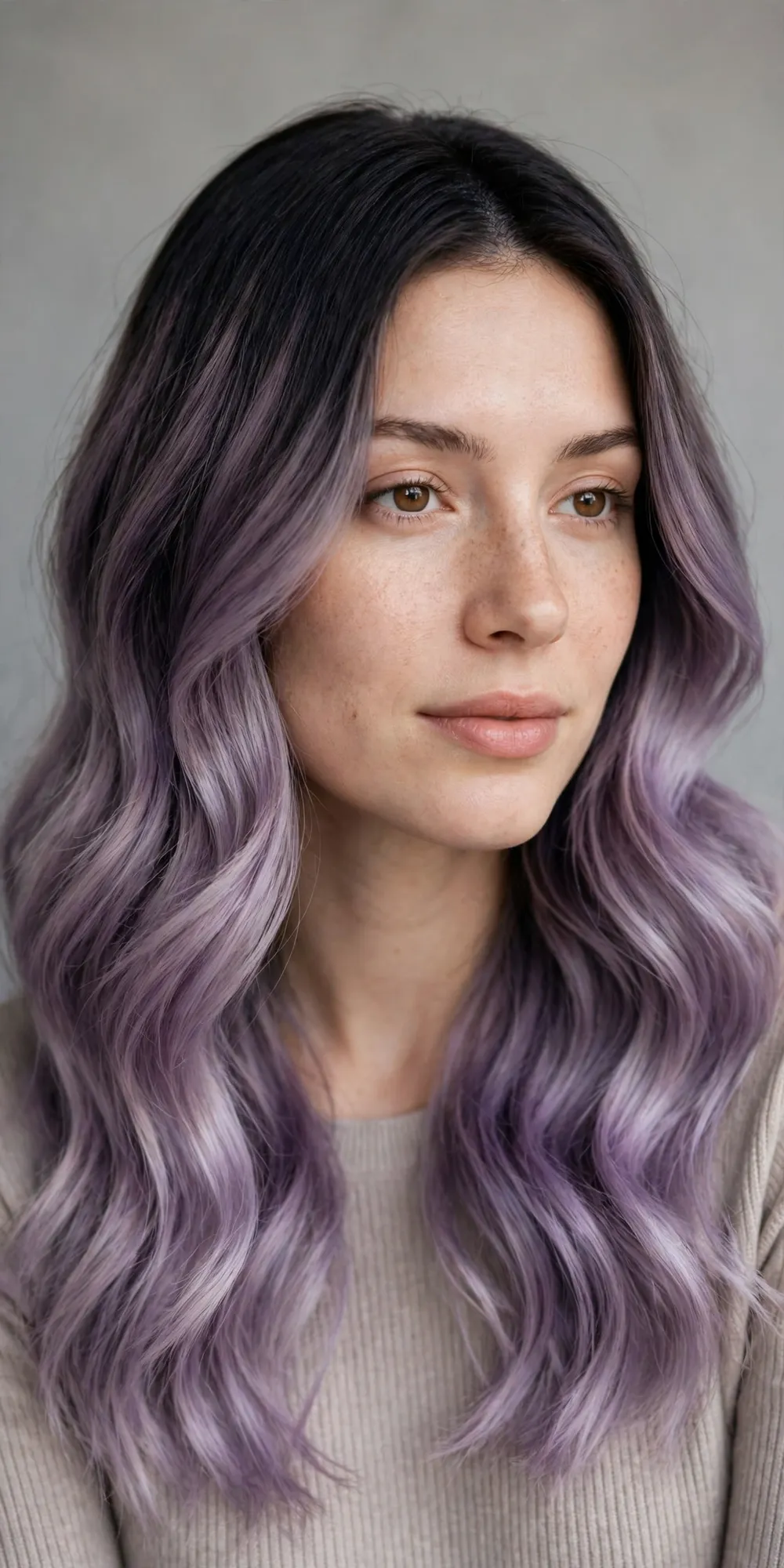
A dark root melts into soft smoky lavender at the ends, so you get a pastel without committing your whole head to it. It flatters cool and neutral skin tones especially, and it looks best on medium to long hair where the gradient has room to breathe. The lavender is a muted, dusty shade — not bright purple — which makes it surprisingly wearable. Ask for a black shadow root blended into pre-lightened ends, toned with a smoky lavender demi-permanent colour. A colour-depositing conditioner in lavender keeps the tone from washing out grey. It fades gently, so the grow-out is forgiving, but expect the lavender to soften noticeably within six to eight washes. The fade is gentle, so it’s one of the easiest fantasy ends to live with.
17. Black Velvet with Subtle Teal Undertones
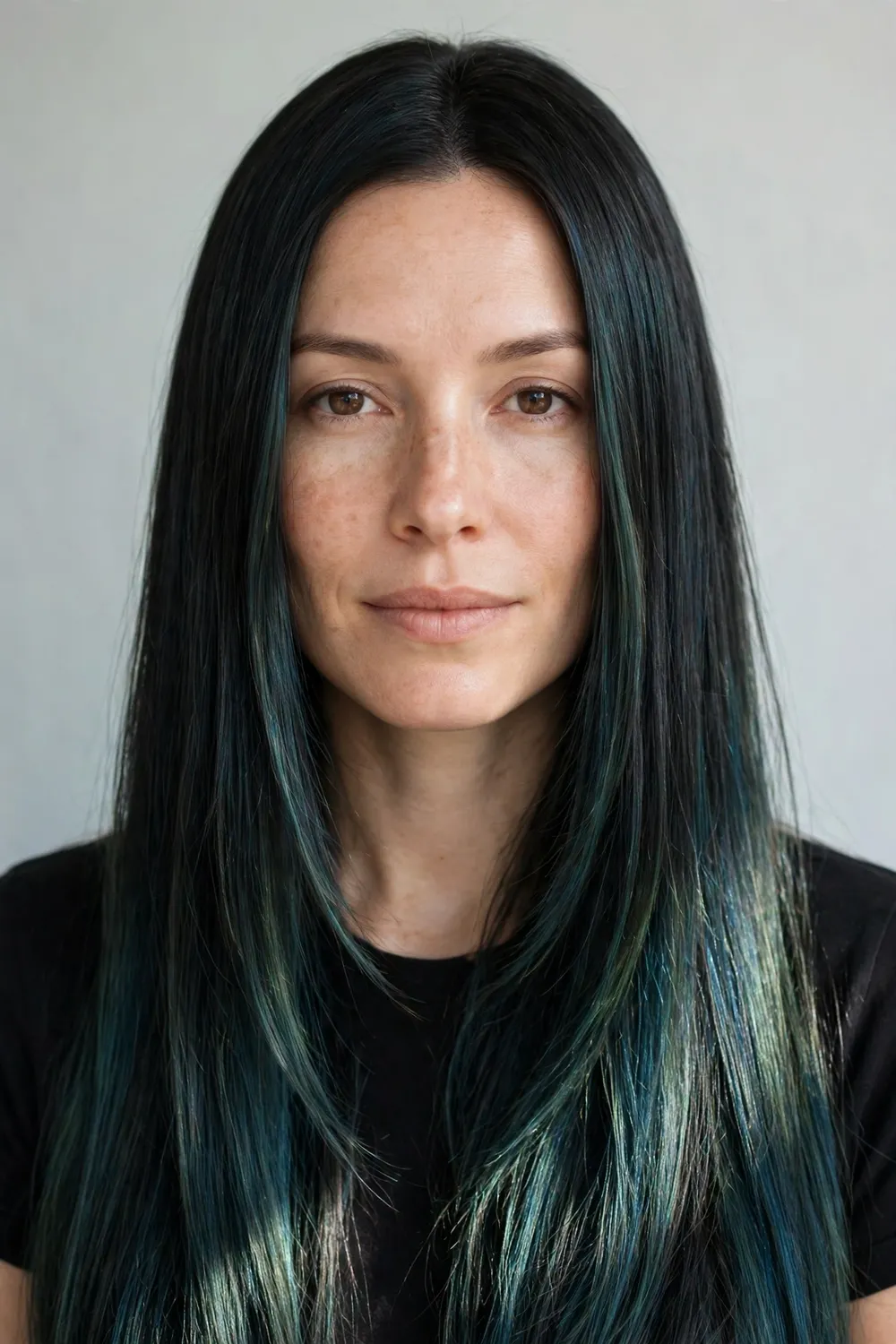
At first glance this looks like a classic deep black. Step into sunlight and a faint teal sheen appears through the lengths, giving the colour a cool, jewel-toned depth. It suits cool and olive skin tones beautifully and works on any length, though shoulder-length and longer hair shows the undertone best. Ask your stylist for a black base with a teal gloss or demi-permanent tint worked through the mid-lengths and ends — not a bright blue, just enough to catch the light. A colour-safe shampoo and cool rinses keep the teal from dulling. The effect is subtle enough for work but distinctive up close, and it fades into a softer smoky tone rather than a patchy one. Re-gloss every six to eight weeks to keep the teal alive.
18. Black to Ash Gray Rooted Bob
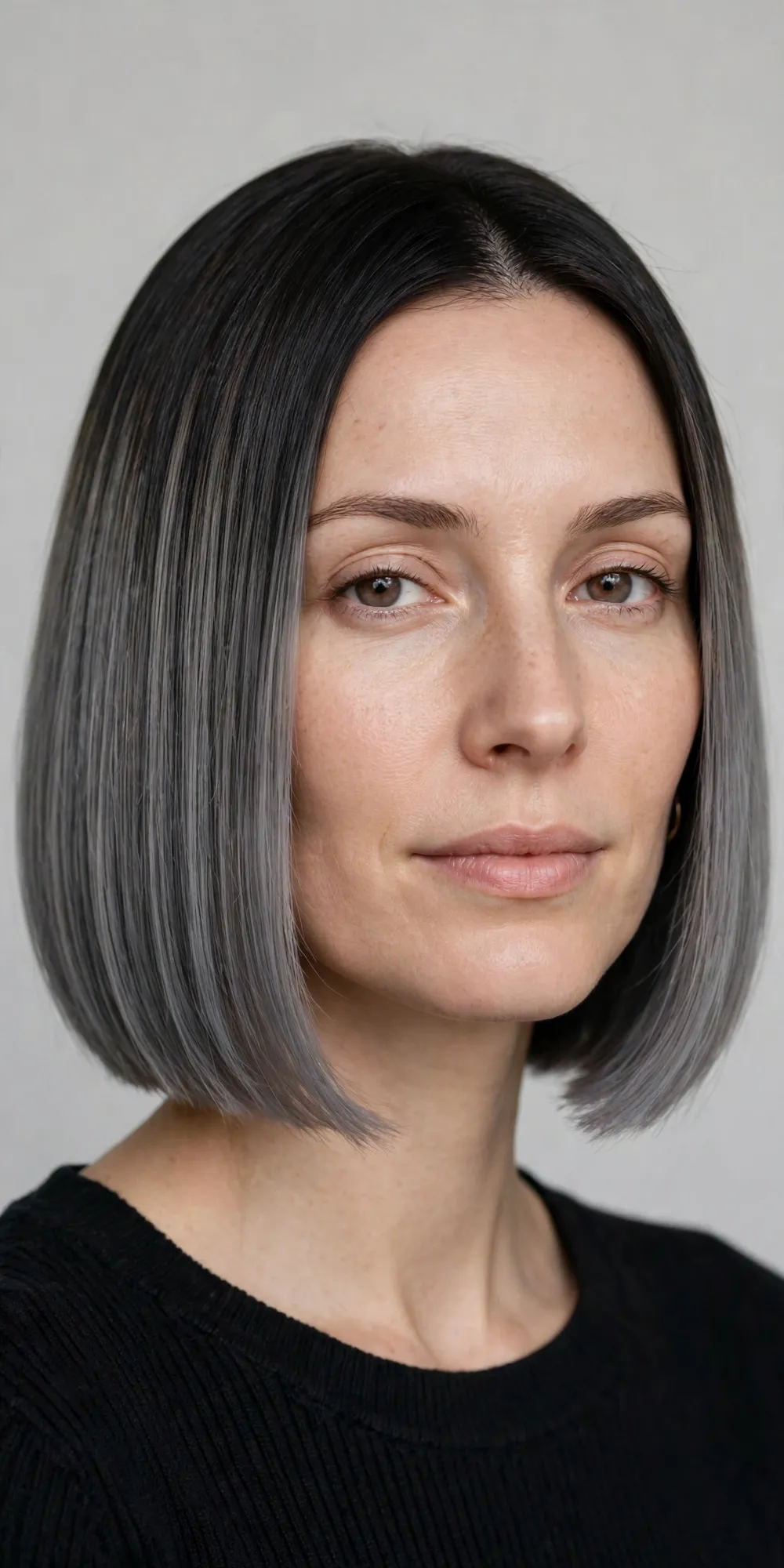
This is the sleek bob version of the black-to-grey gradient: a dark root melting into cool ash grey through a sharp, chin-length or jaw-length cut. The bob’s clean line makes the colour transition look deliberate and polished rather than grown out. It suits cool skin tones and straight or fine hair best, since the ash finish needs a smooth surface to read as silver rather than dull. Ask for a black shadow root with pre-lightened lengths toned ash grey, cut into a blunt bob. A purple shampoo once a week stops the grey from going brassy, and smoothing serum keeps the finish glassy. The dark root makes regrowth soft, so visits can stretch to eight weeks. It’s a striking, low-drama look for anyone who wants grey without the wait.
19. Black Velvet Chunky Face Framing Highlights
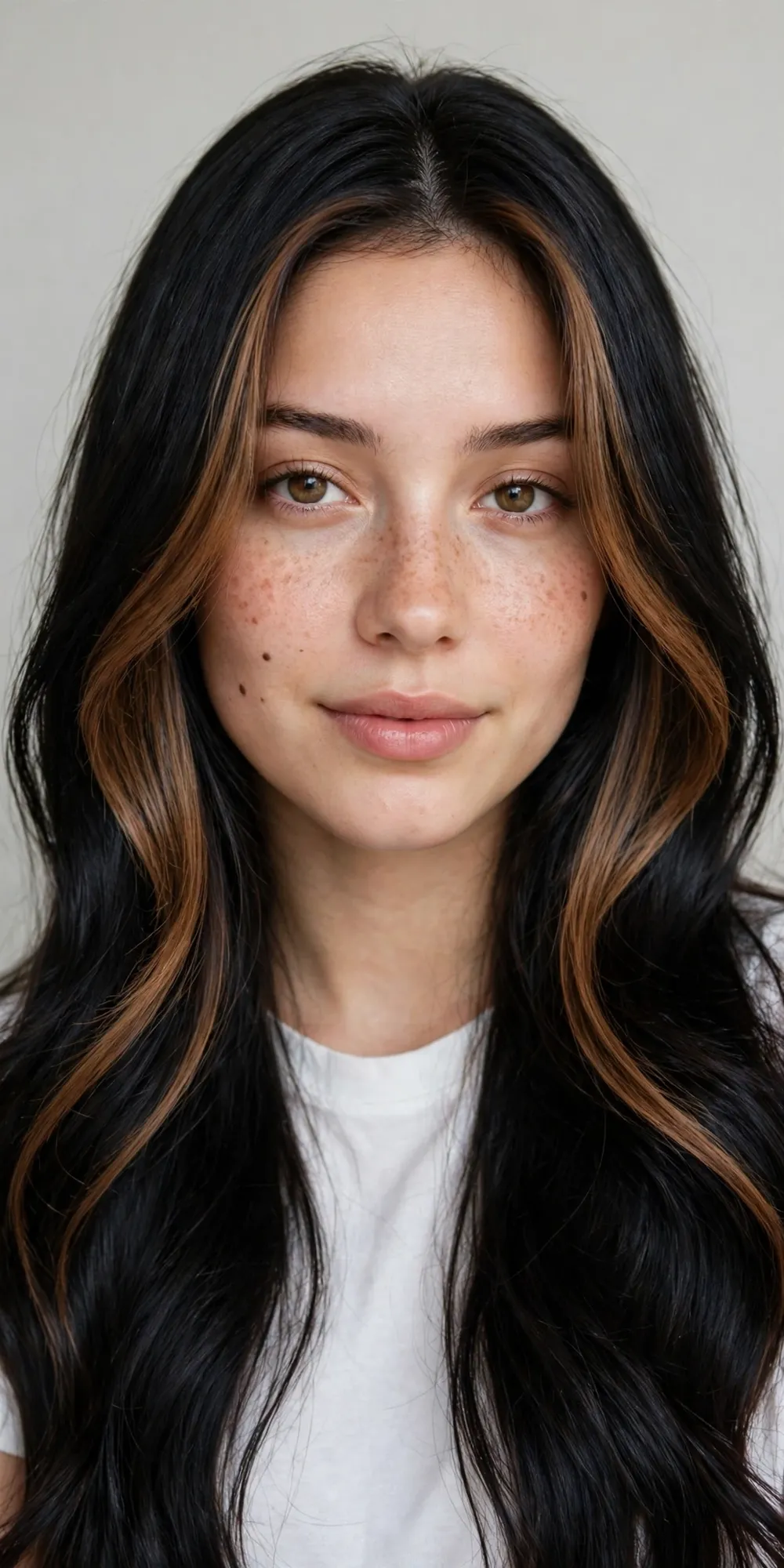
Thick, bold highlight panels frame the face against a deep black base — a deliberately chunky, nineties-inspired placement that photographs beautifully. It works on any length from a lob down, and the highlight shade is yours to choose: warm caramel, ash blonde, or even a copper ribbon. Caramel or copper suits warm skin; ash suits cooler tones. Ask your stylist for two wide panels on each side of the parting, lifted to your chosen shade and left unblended at the root so the contrast stays graphic. Only the front panels need toning, so upkeep stays low. Use a colour-safe shampoo and a weekly toning wash matched to your highlight shade. It’s a quick way to change your whole look without touching most of your hair.
20. Black to Icy White Pixelated Color Block
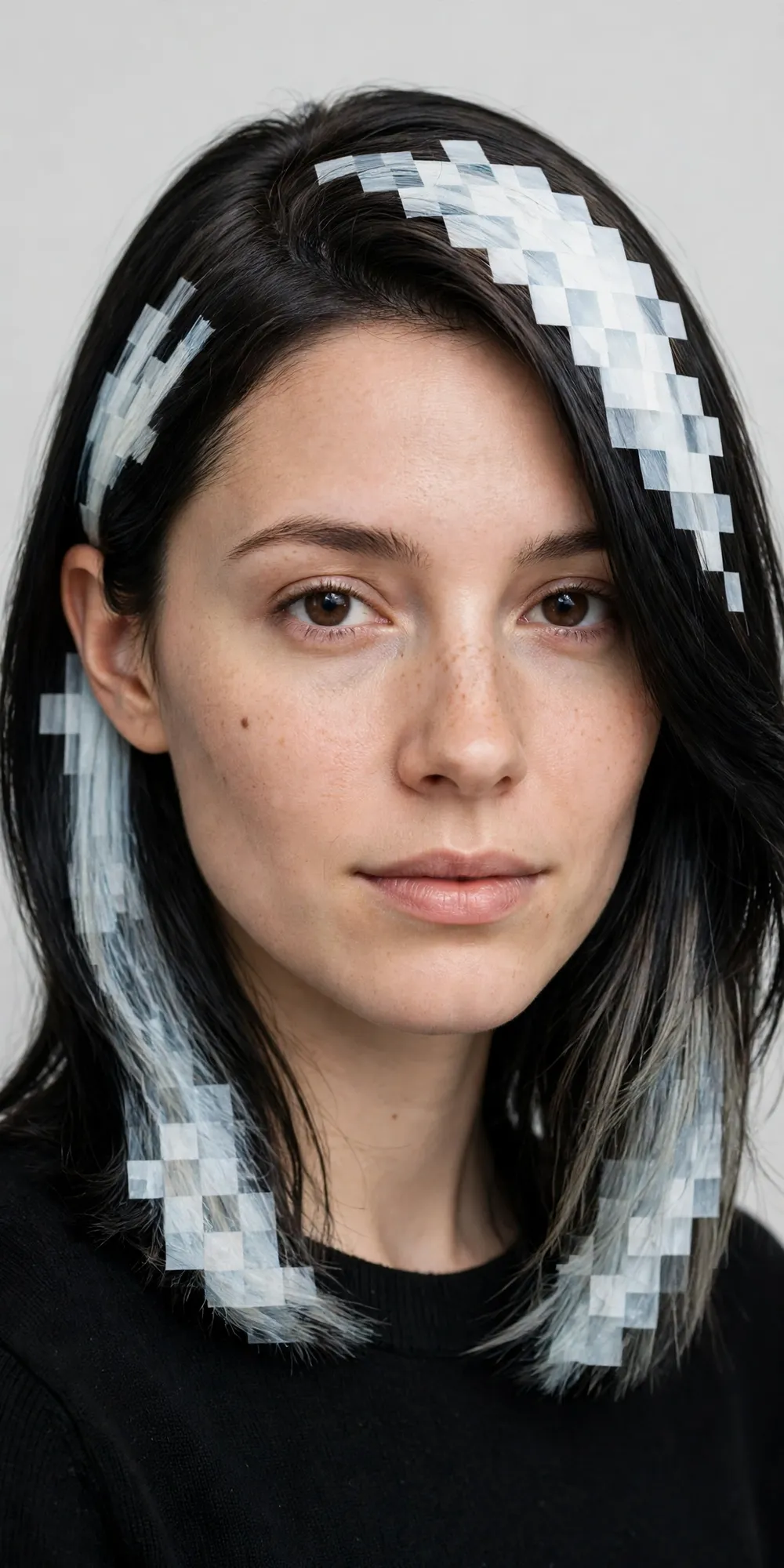
This is the boldest idea on the list: a black base interrupted by sharp, pixelated blocks of icy white — geometric panels placed like digital glitch art through the hair. It’s an editorial look, best suited to straight hair where the block edges stay crisp, and to anyone who wants their colour to be the outfit. Ask your stylist for sectioned colour blocking, not freehand painting: the white panels are lifted to a clean level 10 and toned icy. Precision is everything here, so this is a salon-only job. Purple shampoo keeps the white from yellowing, and heat protectant is essential on the fragile lifted sections. Maintenance is real — the blocks need re-lifting every four to six weeks — but nothing else on this list turns heads like it.
21. Black Velvet with Subtle Mauve Babylights
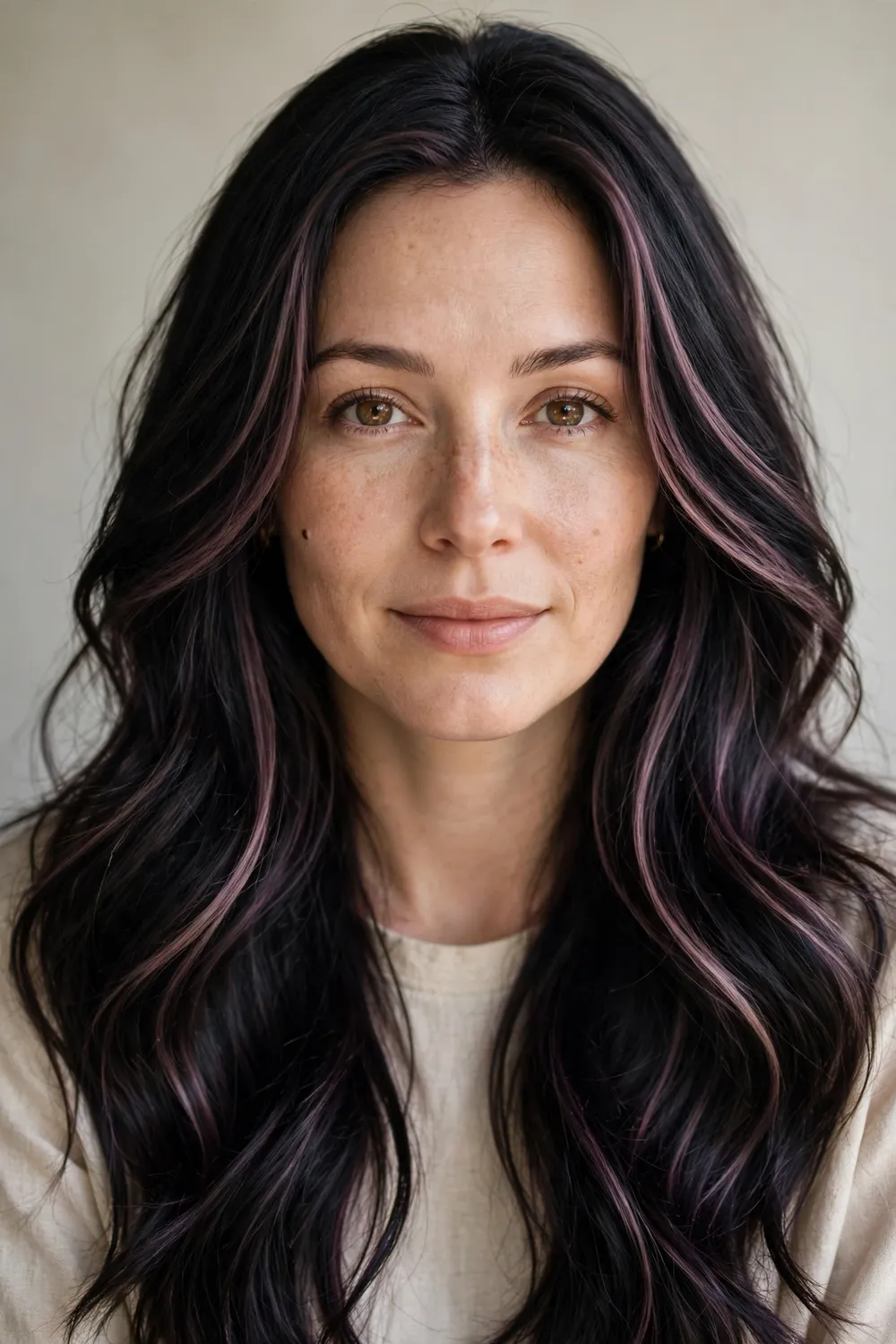
Fine, delicate mauve babylights are scattered through a deep black base, giving the colour a soft rosy-mauve shimmer that only reveals itself when the hair moves. It’s the quietest way to wear pink in your hair, and it suits warm and neutral skin tones especially well. On very thick hair, ask for extra babylights so they don’t get buried. Ask your stylist for ultra-fine weaves toned with a dusty mauve demi-permanent, placed mostly through the top layers and around the face. The babylights are so fine that regrowth is barely visible, so you can go ten weeks between visits. A colour-depositing mauve conditioner once a fortnight revives the tone. This is the pick if you want dimension that feels romantic rather than loud.
22. Jet Black Glass Hair
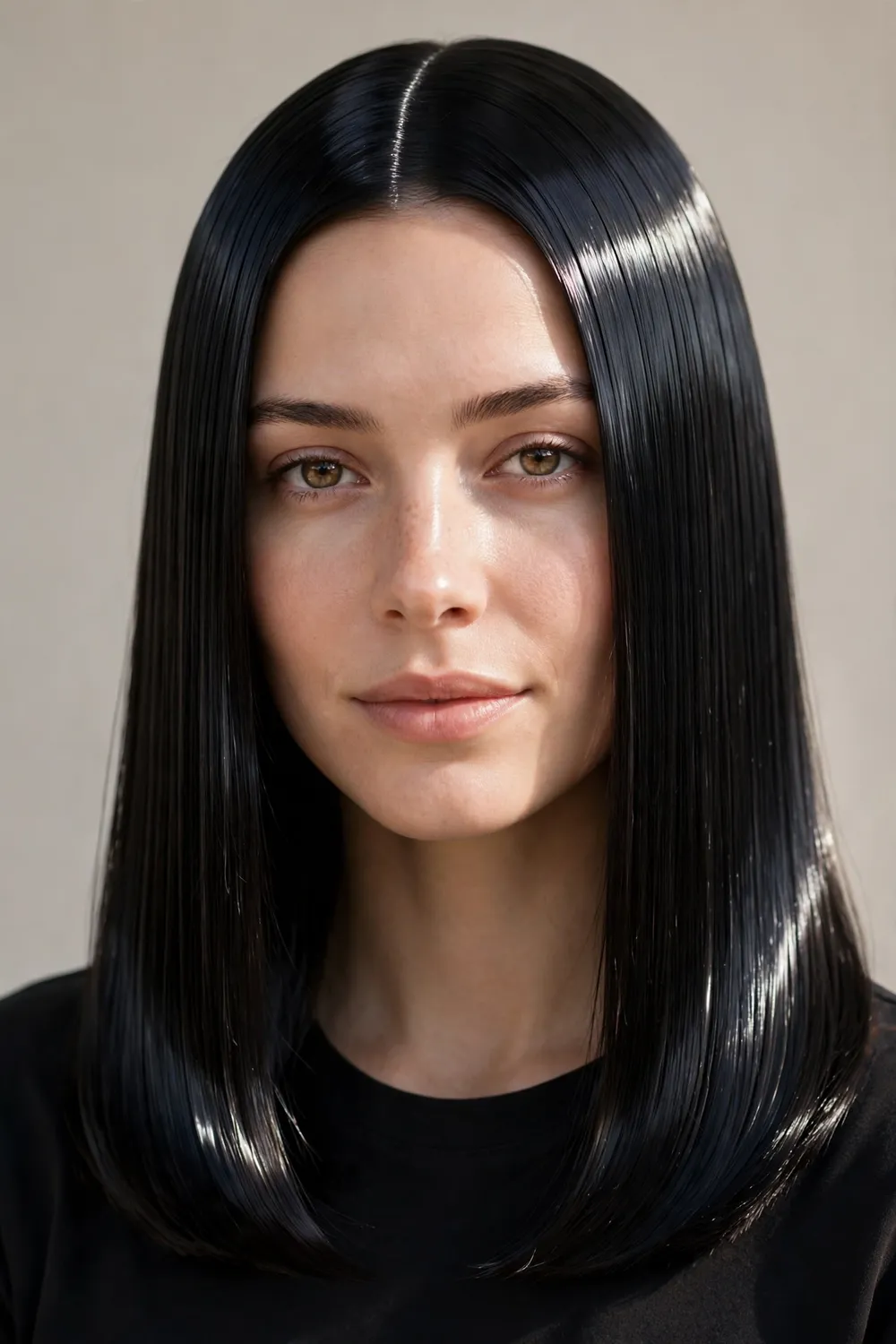
Jet black is the deepest shade on the scale — level 1, no warmth, no brown, just pure black — and the glass-hair finish is what makes it look expensive. Cut blunt and smoothed to a mirror shine, it reflects light like polished stone. It suits cool and neutral skin tones and straight or blow-dried hair best — the shine needs a smooth surface. Ask for a level 1 permanent colour, a clear gloss on top, and a blunt cut with no layers. The routine matters as much as the colour: smoothing cream before blow-drying, a flat-iron pass, and shine serum on the ends. Maintenance is straightforward — a root touch-up every four to five weeks — but the shine needs daily upkeep. Black at its most dramatic.
23. Soft Black
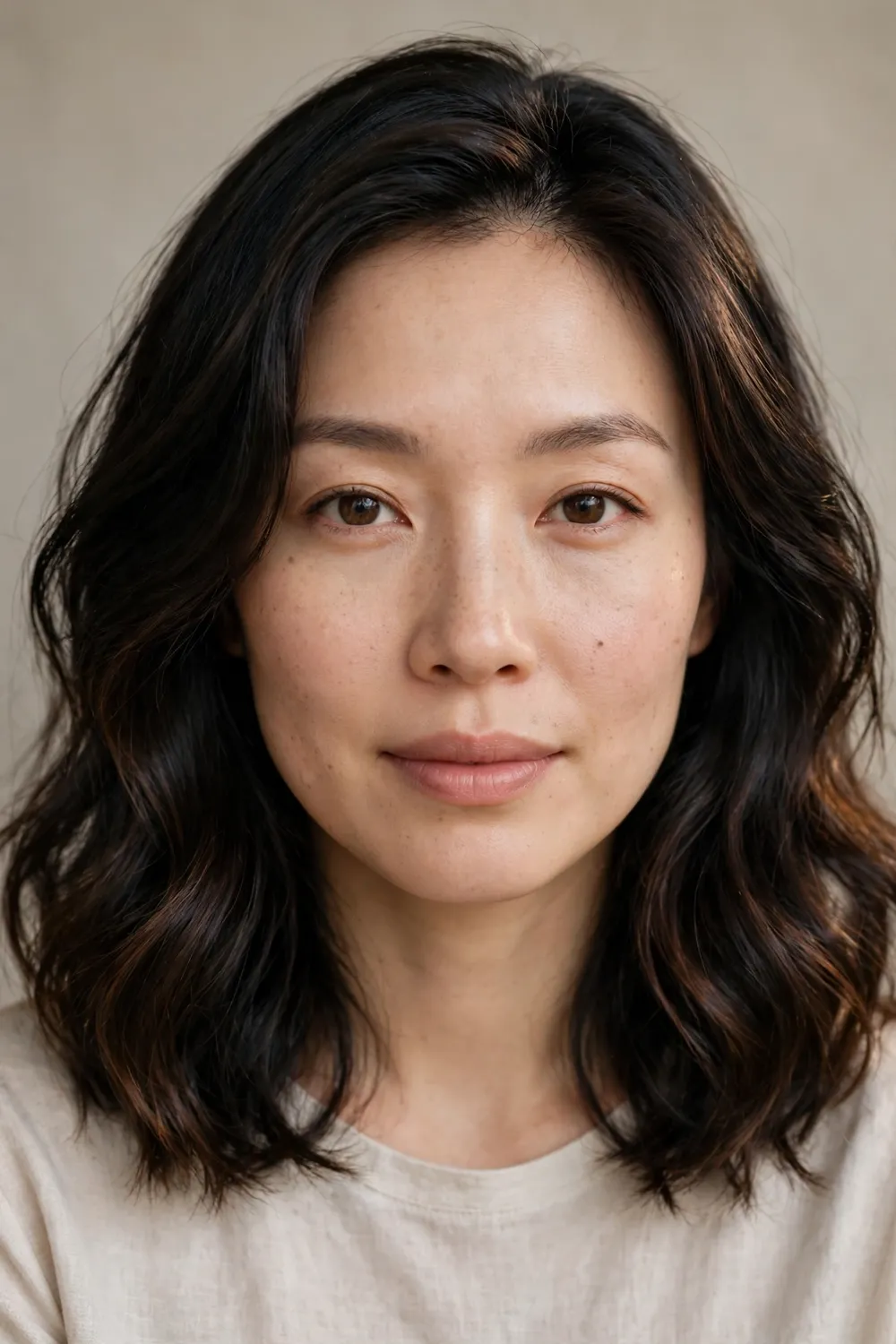
Soft black is almost-black with a gentle warm tint, the most natural-looking black on the list. It reads as a born-with-it shade — deep and rich, not ink-dark — and the easiest black to wear daily. It suits warm and neutral skin tones particularly well, and it works on every hair type and length, from a pixie to waist-length waves. Ask your stylist for a level 2 soft black, ideally a demi-permanent colour if your hair is already dark, so the result stays warm, not flat and matte. It needs almost no special care beyond a colour-safe shampoo, and regrowth blends in softly because the shade isn’t far from many natural dark browns. If you’re nervous about going fully black, start here — you can always go deeper next time.
24. Natural Black
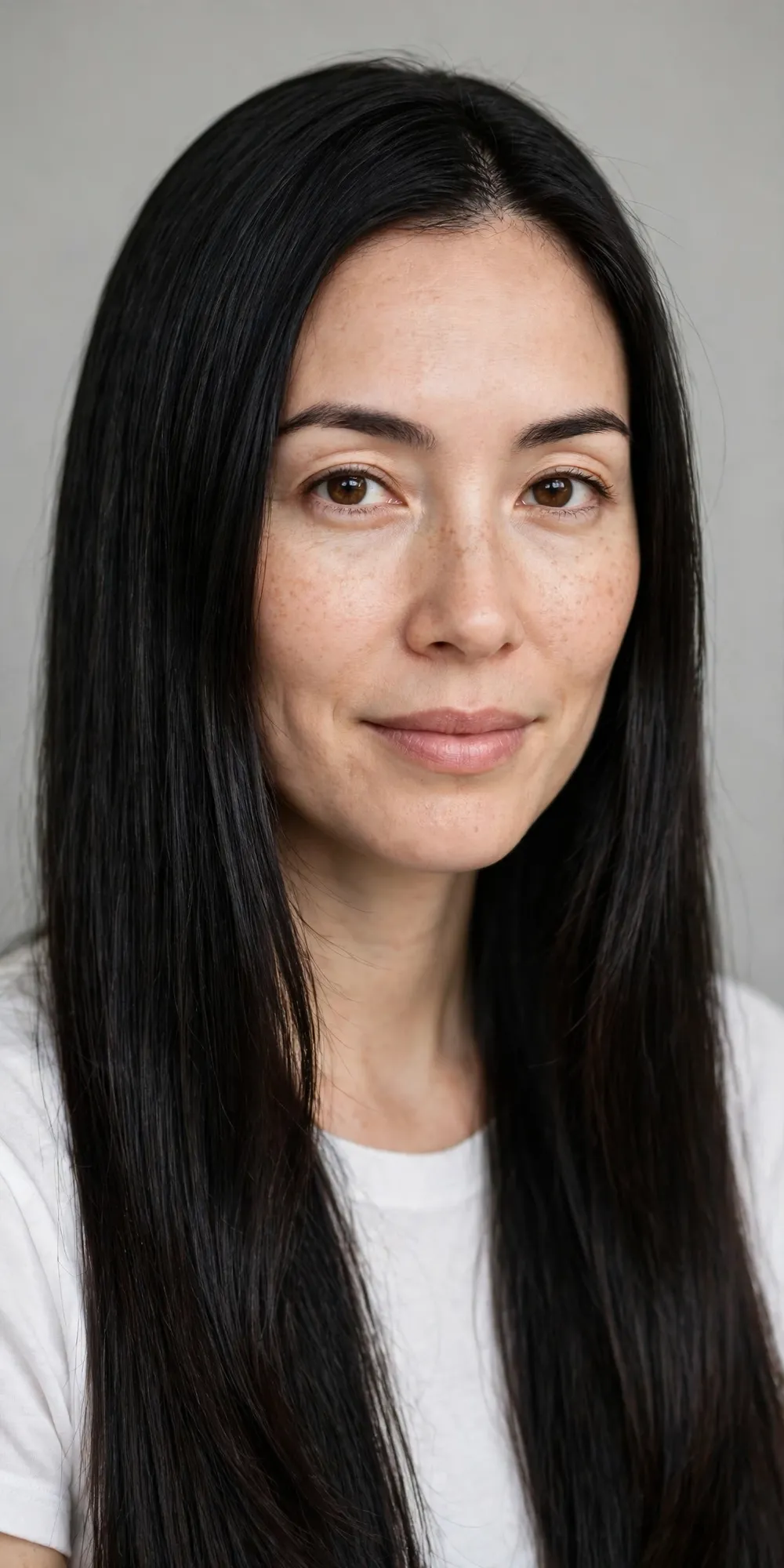
Natural black is a true neutral black — no warm tint, no blue cast — just the darkest shade your hair could naturally be. It’s the most universally flattering shade in this guide because it doesn’t fight any skin tone: warm, cool, neutral, and deep skin all sit comfortably against it. Ask for a level 1–2 neutral black, and tell your stylist you want it to look natural, not dyed — usually a demi-permanent formula, no extra gloss. It suits every hair type, but it looks its best with a healthy shine, so a weekly deep-conditioning mask matters more than any styling product. Root touch-ups every five to six weeks keep it even. For a first black, it’s the safest, most timeless choice.
25. Brown Black
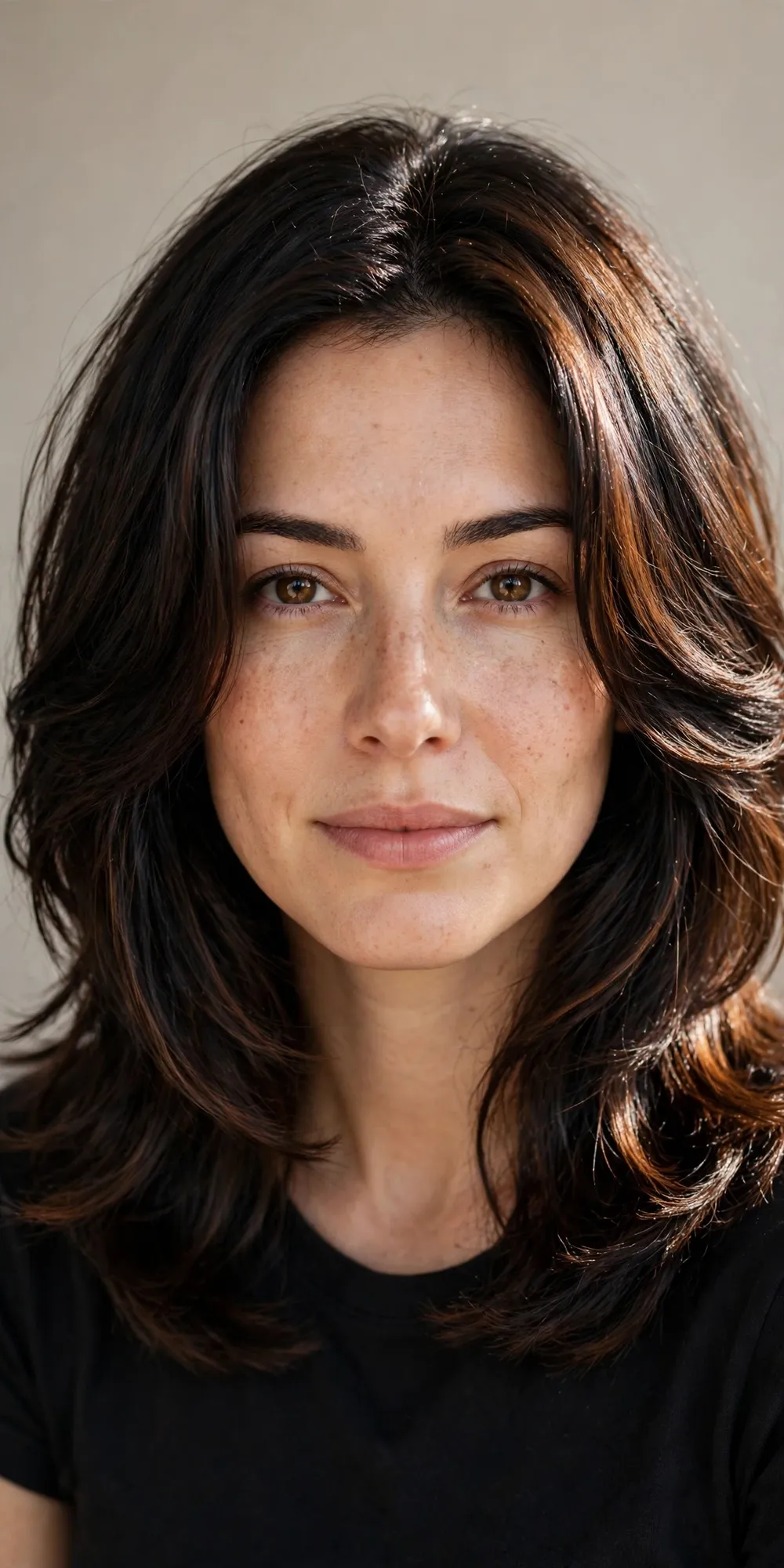
Brown black is a rich brown-black with soft warm undertones. It’s the ideal first step into black because it never looks harsh, and it flatters warm and neutral skin tones beautifully. It works on all hair types, and curly or wavy hair shows the warm dimension well. Ask for a level 2–3 brown-black, and if your hair is naturally dark brown, a demi-permanent colour may be all you need. A colour-safe shampoo and a weekly mask are enough to keep it glossy; it fades gracefully rather than going flat. The regrowth is the softest of any black on this list, so you can stretch appointments to seven or eight weeks. If you love brunette hair colour ideas but want something deeper, this is the bridge between the two.
26. Metallic Black
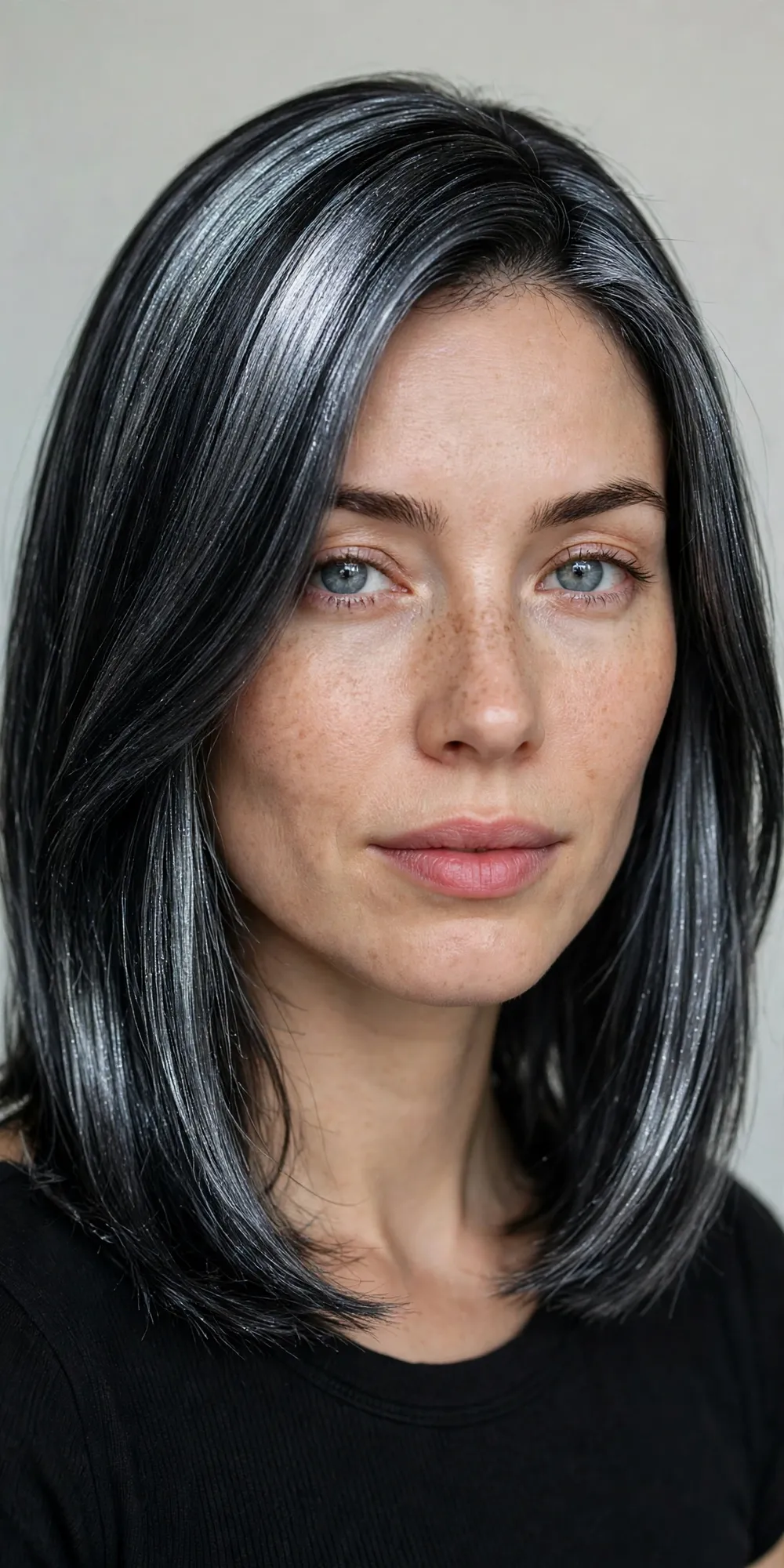
Metallic black is a cool black with an icy silver sheen that shimmers as the hair moves. It suits cool and neutral skin tones best, and straight or sleek hair shows the metallic finish most clearly; on textured hair the sheen appears more softly. Ask your stylist for a cool-toned black base with a silver metallic gloss over the top, and keep the cut sharp — a blunt bob or long straight lengths let light play across the surface. A weekly silver or purple shampoo protects the cool tone, and shine spray finishes every style. The metallic effect fades gradually over six to eight weeks, so book a gloss refresh rather than a full recolour. It’s black with a futuristic edge, and it photographs like nothing else.
27. Espresso Black
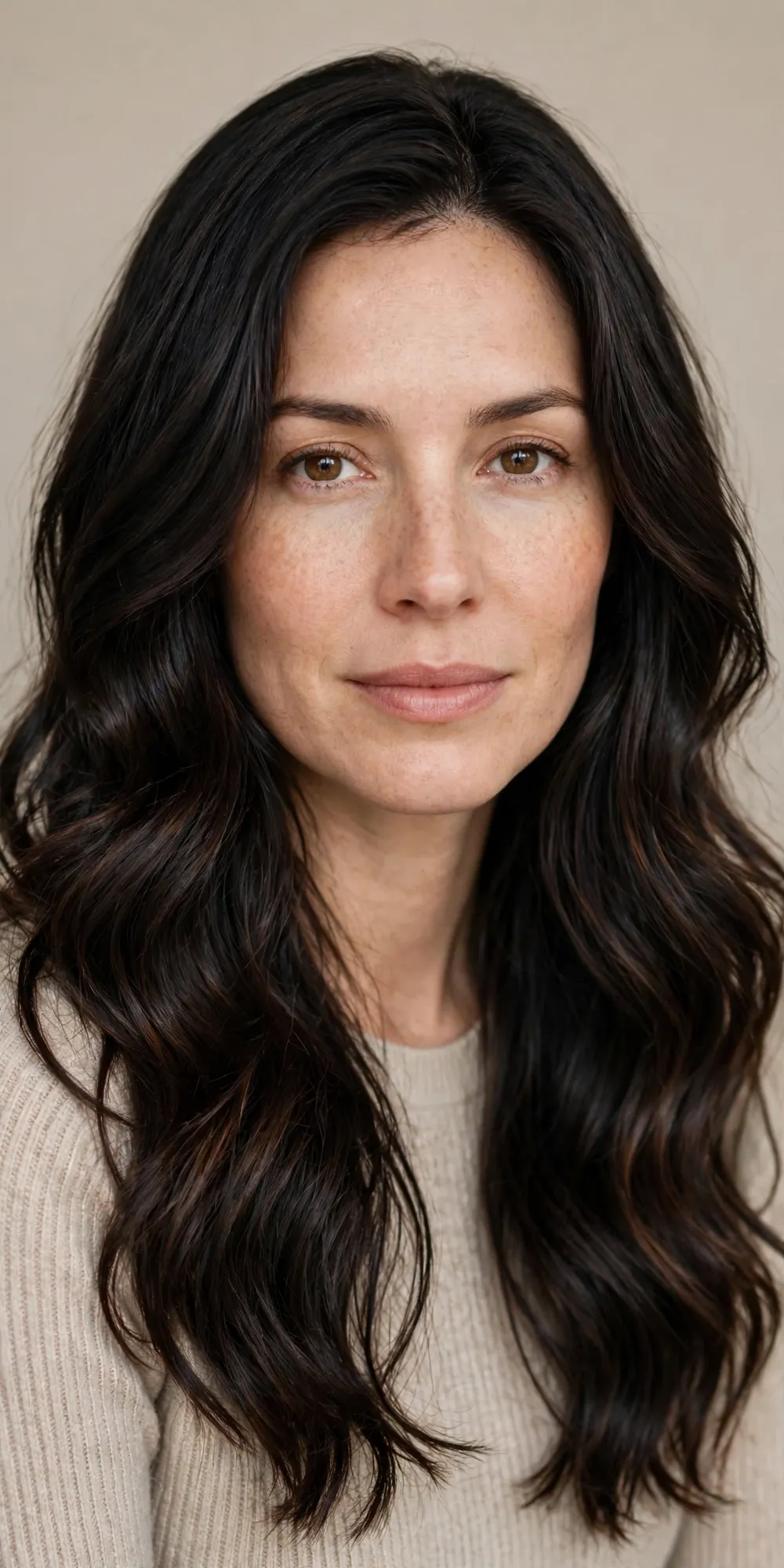
Espresso black is warm dark-roast black-brown — softer than jet black, deeper than brown black. It suits warm and olive skin tones especially well, and the warmth keeps it kind to mature skin. It works on any hair type. Ask for a level 2 espresso black with warm brown undertones, and a demi-permanent formula if your hair is already dark. A colour-safe shampoo and a monthly gloss keep the roast rich; fading looks like a gentle softening, not a colour going wrong. Root touch-ups every six weeks keep it even. If jet black feels too severe but you still want a proper dark shade, espresso black is the warm, wearable answer — and it pairs beautifully with honey blonde hair highlights if you ever want to lighten the front pieces.
28. Black with Caramel Highlights
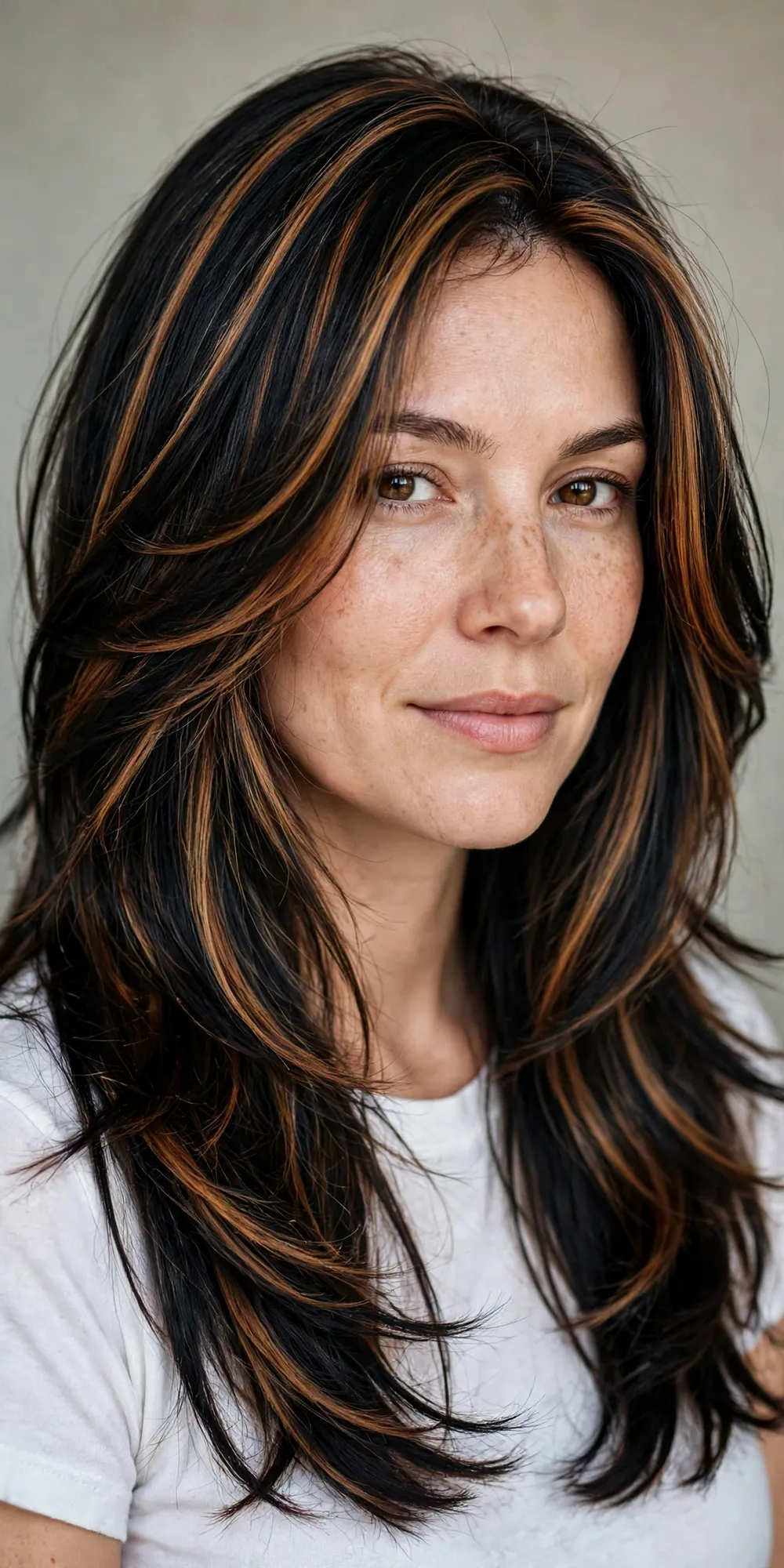
Warm caramel ribbons woven through a black base — the classic way to soften black without giving it up. The caramel adds warmth, movement, and light around the face. It suits warm and neutral skin tones best, and medium to long hair where the ribbons have room to flow; on shorter cuts, keep the caramel near the face. Ask your stylist for hand-painted caramel highlights, a level 6–7 warm caramel, placed mostly through the mid-lengths and ends with a few pieces framing the face. A gloss after lifting stops brassiness, and colour-safe shampoo protects both tones. Touch-ups every eight to ten weeks are enough, since the balayage-style placement grows out softly. It’s a good first step if you’re curious about balayage but not ready for a full lightening service.
How Do You Choose Black Hair Colour for Your Skin Tone?
The trick is matching the undertone of the black to the undertone of your skin, not just picking the darkest shade on the chart. Hold a swatch — or even a piece of black fabric — against your face in daylight and see which version makes you look rested rather than washed out.
| Skin undertone | Best black shades | Shades to be careful with |
|---|---|---|
| Warm | Espresso Black, Brown Black, Soft Black, Black with Caramel Highlights | Jet Black, Metallic Black (can look harsh) |
| Cool | Jet Black Glass Hair, Metallic Black, Black to Ash Gray, Midnight Blue Black | Espresso Black, Brown Black (can look muddy) |
| Neutral | Natural Black, Soft Black, Black Cherry Cola, Black Velvet Balayage | Any — neutral skin takes most blacks well |
| Deep | Jet Black, Natural Black, Black Cherry Cola, Black Velvet with Violet Peekaboo | Ash Grey blends (can look ashy against deep skin) |
If you’re unsure of your undertone, look at your veins in natural light: blue or purple veins usually mean cool, green veins usually mean warm, and a mix means neutral. Gold jewellery flatters warm undertones; silver flatters cool ones. And remember that your natural hair colour is a clue — if you were born with very dark hair, black is almost certainly going to look like it belongs on you.
How to Keep Black Hair Colour from Fading
Black fades more slowly than red or pastel shades, but it still loses its depth — usually turning a little brown and dull after a few weeks. The routine that protects it is simple and worth sticking to.
- Use a colour-safe, sulphate-free shampoo. Sulphates strip colour faster than anything else in your shower. Wash two to three times a week rather than daily, and use dry shampoo between washes.
- Rinse with cool water. Hot water opens the hair cuticle and lets colour escape. A cool final rinse seals the cuticle and boosts shine — it also makes black look noticeably glossier.
- Book a gloss every six to eight weeks. A clear or black-tinted gloss refreshes the depth and shine without a full recolour, and it costs far less than a root touch-up plus colour.
- Protect it from sun and chlorine. UV light fades black to a rusty brown, so use a UV-protectant spray or a hat in strong sun, and wet your hair with clean water before swimming so it absorbs less chlorine.
- Time your touch-ups. Roots need attention every four to six weeks for permanent black, but the lengths only need a refresh when they look dull — usually every eight to ten weeks. Over-colouring the lengths is what makes black go flat and matte.
5 Mistakes to Avoid with Black Hair Colour
- Going straight to jet black on your first try. Black is the hardest colour to remove, so start with soft black or brown black. You can always go darker; going lighter again takes months of work.
- Skipping the patch test. Colour products contain chemicals that can irritate skin, so always do a patch test 48 hours before colouring, even if you’ve used the same brand before. The Wikipedia guide to hair coloring explains how these products work and why a patch test matters before you put any chemical colour near your scalp.
- Colouring the lengths every time you touch up the roots. Re-applying permanent black to already-coloured hair builds up layers that go dull and inky. Touch up the roots only, and gloss the lengths instead.
- Using the wrong shampoo. A regular or clarifying shampoo strips black fast and leaves it looking brown and tired. Switch to a colour-safe, sulphate-free formula the day you colour — not a month later.
- Forgetting that black shows damage. Split ends, frizz, and dullness are far more visible on black hair than on lighter shades. A weekly deep-conditioning mask and regular trims matter more with black than with almost any other colour.
Frequently Asked Questions
Is black hair color good for warm skin tones?
Yes, as long as you pick a warm black. Espresso black, brown black, and soft black all have warm undertones that sit beautifully against warm skin, and caramel highlights add even more warmth. What to avoid is a cold, blue-toned jet black, which can make warm skin look sallow. If you love red hair color ideas for their warmth, a black cherry cola blend gives you a similar warm richness in a black base.
Does black hair make you look older or younger?
It depends on the shade and the cut. A soft, warm black with movement can look youthful and polished, while a very harsh jet black on a severe, flat cut can emphasise fine lines and make skin look paler. The rule is simple: if your skin is fair or mature, choose a softer black — natural, soft, or espresso — and keep some face-framing softness in the cut. Glossy, healthy-looking black hair reads as youthful; dull, flat black does the opposite.
Will black hair dye damage my hair?
Any permanent colour opens the hair cuticle and causes some wear, but black dye is actually gentler than lightening because it deposits colour rather than stripping it. The damage risk comes from repeated full-head applications and from poor aftercare, not from one careful colour. Use a demi-permanent formula if your hair is already dark, condition weekly, and avoid overlapping colour on the lengths. If your hair is already fragile, talk to your stylist before colouring — and if you’re coming from a much lighter shade, a strand test first is worth the extra day.
How do I keep black hair color from fading?
Wash less often with a colour-safe, sulphate-free shampoo, rinse with cool water, and book a clear or black-tinted gloss every six to eight weeks. Sun and chlorine are the biggest fading culprits, so use a UV spray outdoors and wet your hair before swimming. Roots need a touch-up every four to six weeks, but don’t recolour the lengths each time — a gloss refresh is enough to keep the depth.
Can I go from blonde or brown to black hair at home?
From brown, yes — a box dye in soft black or brown black usually works well and the result is fairly forgiving. From blonde, it’s trickier: blonde hair is porous and can grab black unevenly, sometimes turning greenish or patchy, and you may need a filler colour first. If you’re going from light blonde to black, a salon visit is worth it for the first application. If you’re a natural blonde considering the switch, a ginger hair shade is a gentler stepping stone that lets you test a darker look before committing to black.
Does black hair suit fair skin?
Yes — black hair against fair skin is a classic, striking combination, and it’s been a beauty staple for decades. The key is the shade: cool fair skin looks best with a true jet or natural black, while warm fair skin suits a softer or espresso black. Keep the cut soft around the face and add a little gloss, and the contrast looks deliberate and polished rather than harsh. If the full contrast feels too much, a brown black or a few caramel face-framing pieces will soften it.
How do I remove black hair dye if I want to go lighter again?
Black is the hardest colour to lift, so expect a slow process, not a single appointment. A colour remover can strip some of the artificial pigment, but going from black to blonde usually takes several sessions with a professional, plus bond-building treatments to protect the hair. Never try to bleach over black at home in one go — it risks severe damage and patchy, orange results. Plan for two to three salon visits spread over weeks, and accept that you may pass through a warm brown or copper stage on the way.
Final Word
Black hair colour is one of those rare choices that works for almost everyone — you just have to pick the right black. Start with the shade that matches your skin’s undertone, keep the shine up with a gloss and a colour-safe routine, and don’t be afraid to add a little dimension with caramel, cherry, or a face-framing highlight. Whether you land on glossy jet black or a soft, warm brown black, the result should look like it belongs on you. For more colour inspiration, browse the Hair Groom blog and find your next shade.