


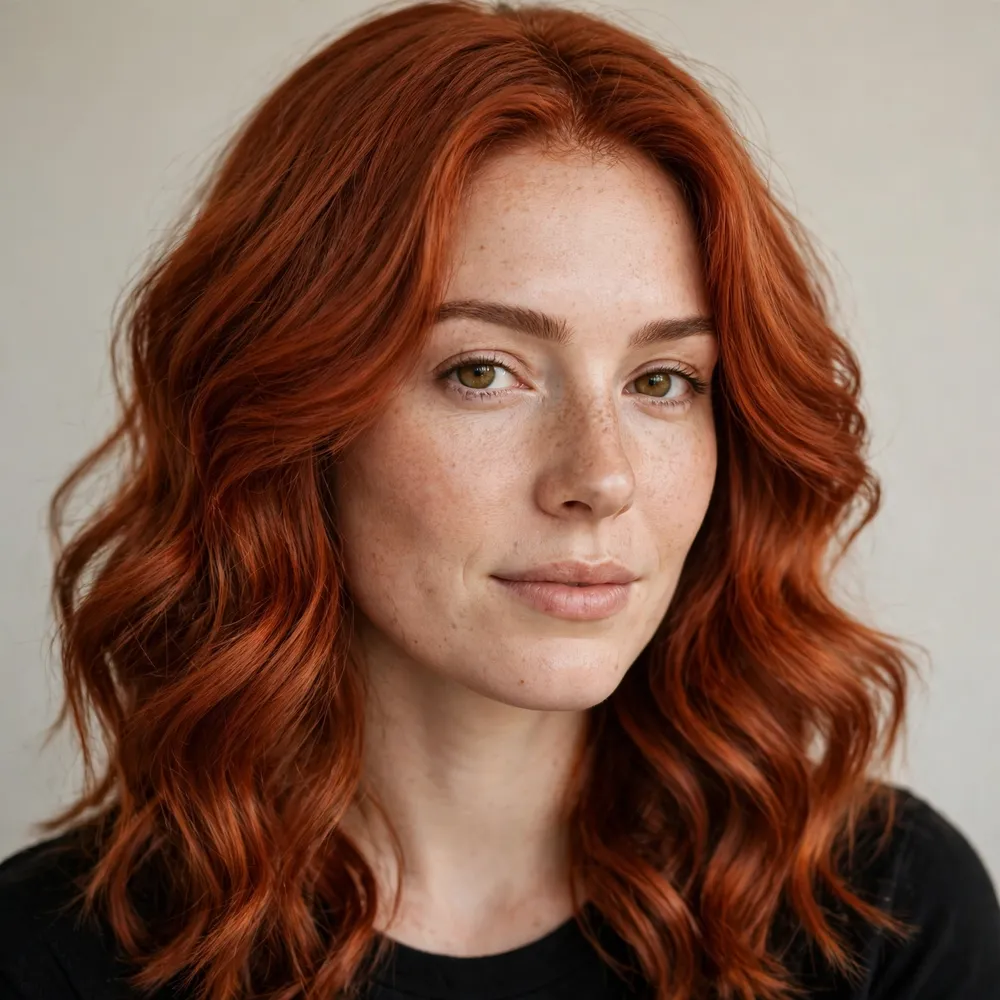
Red hair turns heads like nothing else, but the wrong shade can wash you out fast — which is why this guide to red hair color ideas starts with the shades that actually work, not just the ones that photograph well. Red hair colour is any shade from soft strawberry blonde to deep burgundy that adds warm red, copper or wine tones to your natural hair. If you want the short answer, start with these three: Copper Money Piece Face Framing for instant brightness, Cherry Cola Melt on Long Layers for rich dimension without full commitment, and Burgundy Balayage on Soft Waves for a deep, grown-up red that flatters almost everyone.
How Do I Choose the Right Red Shade for My Skin Tone?
The trick is undertones, not how fair or deep your skin is. Look at the veins on your wrist in daylight: greenish veins usually mean warm undertones, bluish-purple veins point to cool undertones, and a mix of both means you’re neutral. Warm undertones glow with copper, ginger, cinnamon and golden auburn — the heat in those shades matches the warmth in your skin. Cool undertones look best in burgundy, wine, cherry and deep mahogany, because the blue-violet base in those reds balances pinkness instead of fighting it. Neutral undertones are the lucky ones: true auburn, strawberry blonde and soft rose gold all sit comfortably.
Natural red hair is rare — only about one to two percent of people are born with it — which is part of why a good salon red looks so striking. Before any red, do a patch test 48 hours ahead, especially with vivid or permanent shades, and be honest with your colourist about how often you’ll actually come back for upkeep. A shade you love for two weeks and hate at week six was the wrong shade.
The 29 Best Red Hair Color Ideas
1. Copper Money Piece Face Framing
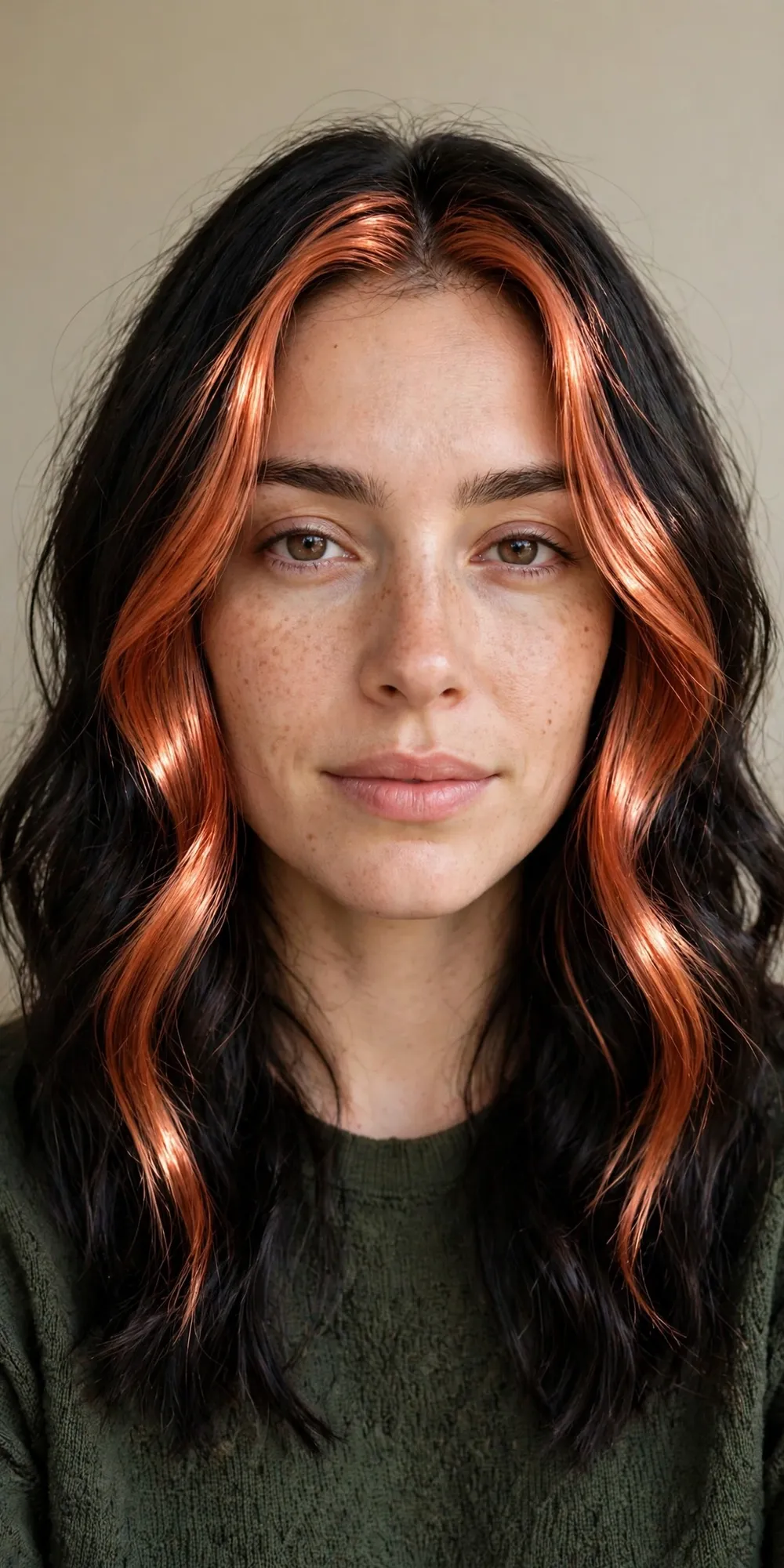
This is the fastest way to try copper without dyeing your whole head. Two bright metallic copper sections frame your face, painted from the parting down past the cheekbones, while the rest of your hair stays its natural dark brown or black. It suits warm and neutral skin tones best, and it works on straight, wavy or curly hair because the brightness sits right where the light hits. Ask your colourist for a copper money piece, level 7–8 copper, with soft blending at the roots so there’s no hard line as it grows out. A colour-depositing copper conditioner once a week keeps it from going brassy or dull. Finish with a gloss for shine, and expect a refresh every five to six weeks — face-framing colour fades first because it’s the most exposed to sun and washing.
2. Burgundy Balayage on Soft Waves
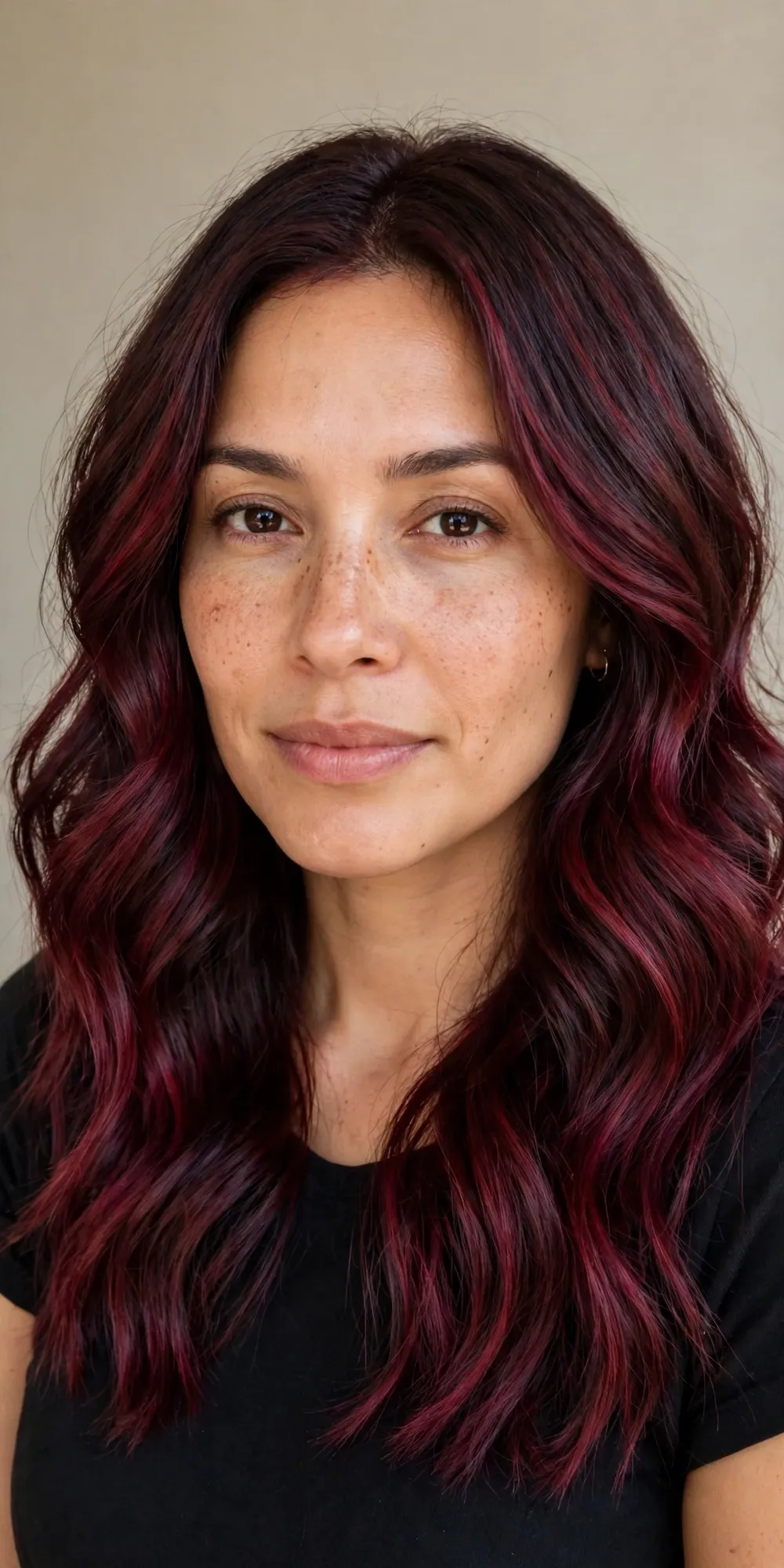
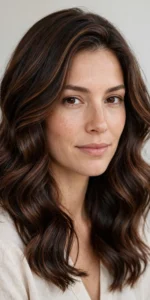
Burgundy balayage is the red for people who want drama without shouting about it. Deep wine-red is hand-painted through the mid-lengths and ends of soft, loose waves, leaving your natural root untouched so grow-out looks intentional rather than neglected. It flatters cool and neutral undertones beautifully, and it’s one of the kindest reds for dark hair because it doesn’t need heavy lifting. Ask for a burgundy balayage with the colour concentrated from the ears down, kept slightly darker underneath for depth. Style it with a large-barrel curling iron and a light texturising spray — the waves are what show off the colour variation. It’s also a gorgeous choice for evening looks and prom hairstyles, where the wine tones catch the light. Touch up the gloss every six weeks.
3. Cherry Cola Melt on Long Layers
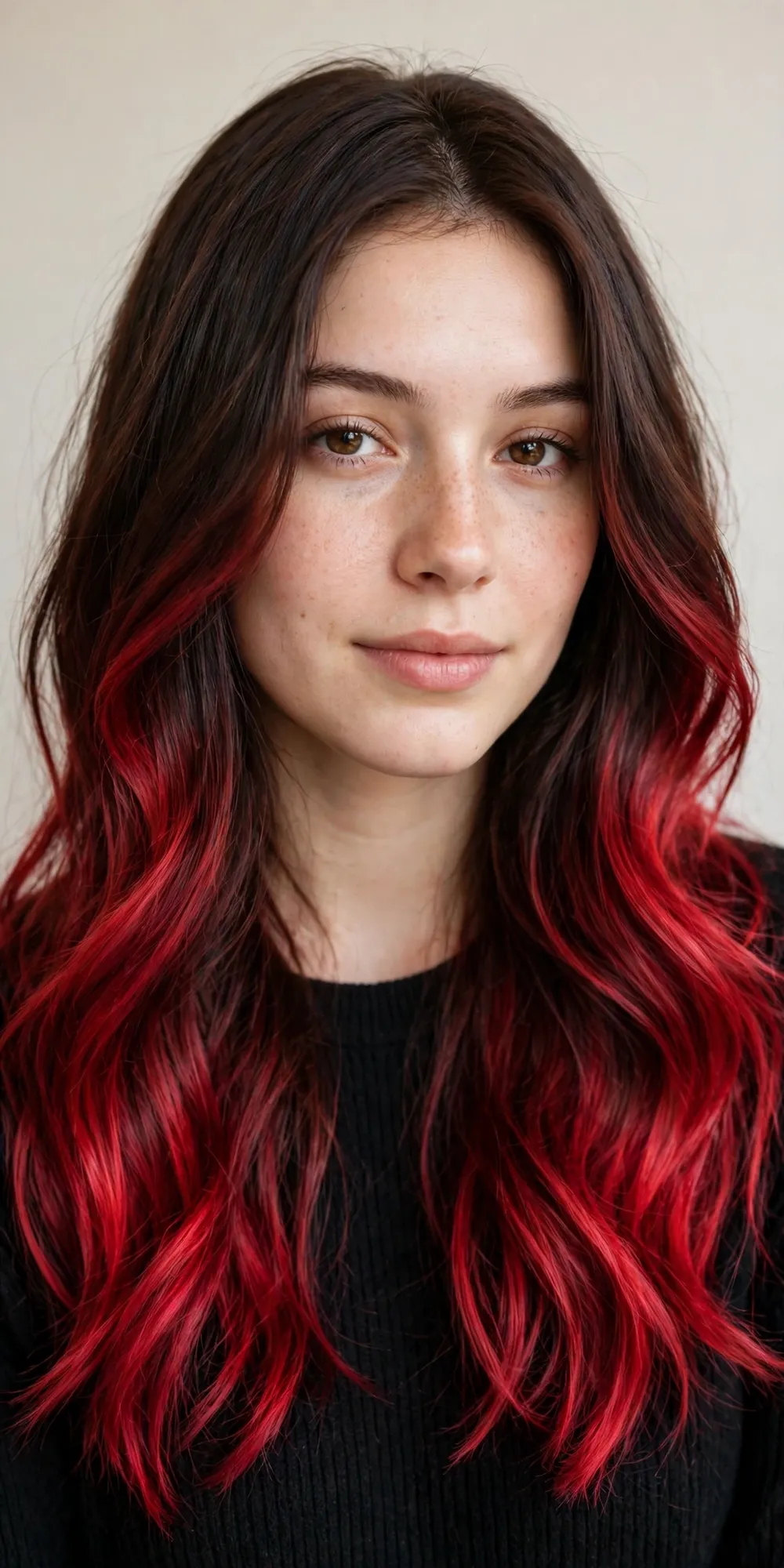
Cherry cola is exactly what it sounds like: a dark brown base that melts into bright, fizzy cherry red through the ends. The melt is seamless — no stripes, no hard line — which is why it looks expensive even as it grows out. Long layers suit it best, because the movement lets the cherry peek through as your hair swings. It suits cool and neutral skin tones, and it’s a strong pick if your hair is naturally dark, since the base stays close to your own colour. Ask for a cherry cola melt: roots stay your natural brown, cherry red (around level 5–6) through the mid-lengths, brighter at the very ends. Colour-safe shampoo and cool-water rinses are non-negotiable — cherry is one of the fastest-fading reds. Refresh the ends every four to five weeks.
4. Cinnamon Swirl Highlights on Lob
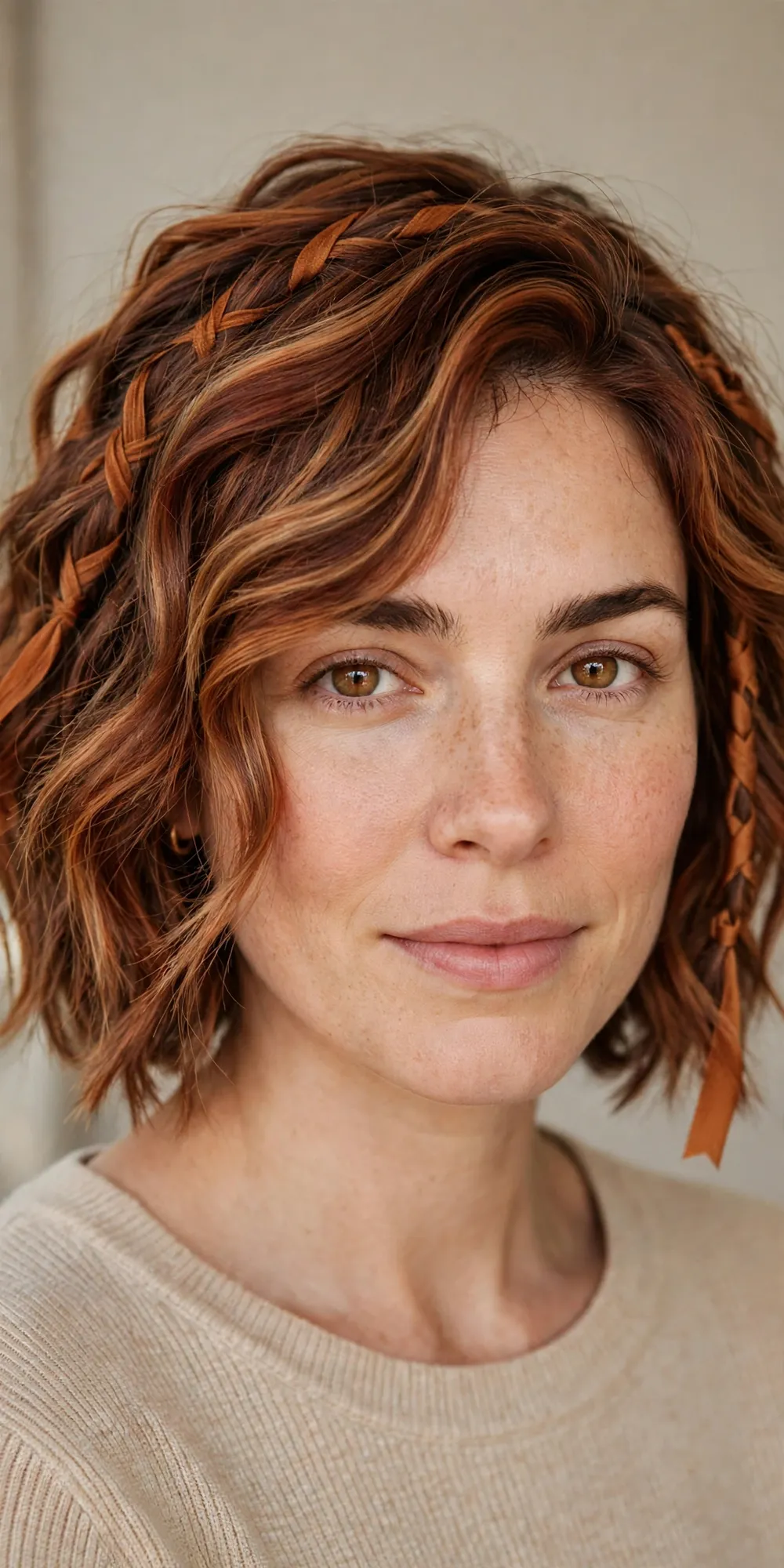
A lob and cinnamon highlights were made for each other. Warm cinnamon ribbons are woven through a textured, collarbone-length cut, giving the whole style a spiced, sunlit warmth that flat colour never achieves. This one is made for warm undertones and fine to medium hair — the highlights add the illusion of thickness, and the lob’s ends flip just enough to show them off. Ask for fine cinnamon highlights, a level 6–7 warm copper-brown, placed with a mix of foils and balayage so the result looks lived-in rather than striped. A salt spray or light mousse gives the lob its texture without weighing the highlights down. Maintenance is gentle: a gloss every six to eight weeks keeps the cinnamon from turning muddy, and the grow-out is soft enough that you can stretch appointments.
5. Ruby Red Peekaboo Underlights

Peekaboo colour is red with a secret. Jewel-toned ruby is painted onto the underlayer, hidden beneath a sleek dark top layer, flashing only when your hair moves — or when you tie it up. It’s perfect if you want vivid red but your job won’t allow a full head of it. It suits straight and slightly wavy hair best, where the top layer falls cleanly over the colour, and any skin tone works because the ruby sits away from your face. Ask for ruby underlights on the bottom two inches of the under-section, pre-lightened to level 7 so the ruby actually shows. Wear it down for subtlety, or sweep it into a high ponytail to show the colour off. Vivid ruby fades fast, so use a colour-depositing conditioner weekly and wash in cool water.
6. Ginger Spice Babylights on Curtain Bangs

Babylights are the quietest way into red, and on curtain bangs they’re genuinely lovely. Fine, whisper-thin ginger strands are woven through the face-framing bangs and the front layers, catching the light every time you move your head. The effect is sun-kissed rather than dyed — ideal if you want warmth without a visible colour change from across the room. It suits warm and neutral undertones, fine hair especially, because babylights add dimension without bulk. Ask for ginger spice babylights, level 7–8, concentrated through the curtain bangs and the first few inches of the front layers, with the rest of your hair left natural. Blow-dry the bangs with a round brush for that soft, parted sweep. Maintenance is the easiest on this list: a gloss every eight weeks, and the grow-out is nearly invisible.
7. Mahogany Lowlights on Blunt Cut
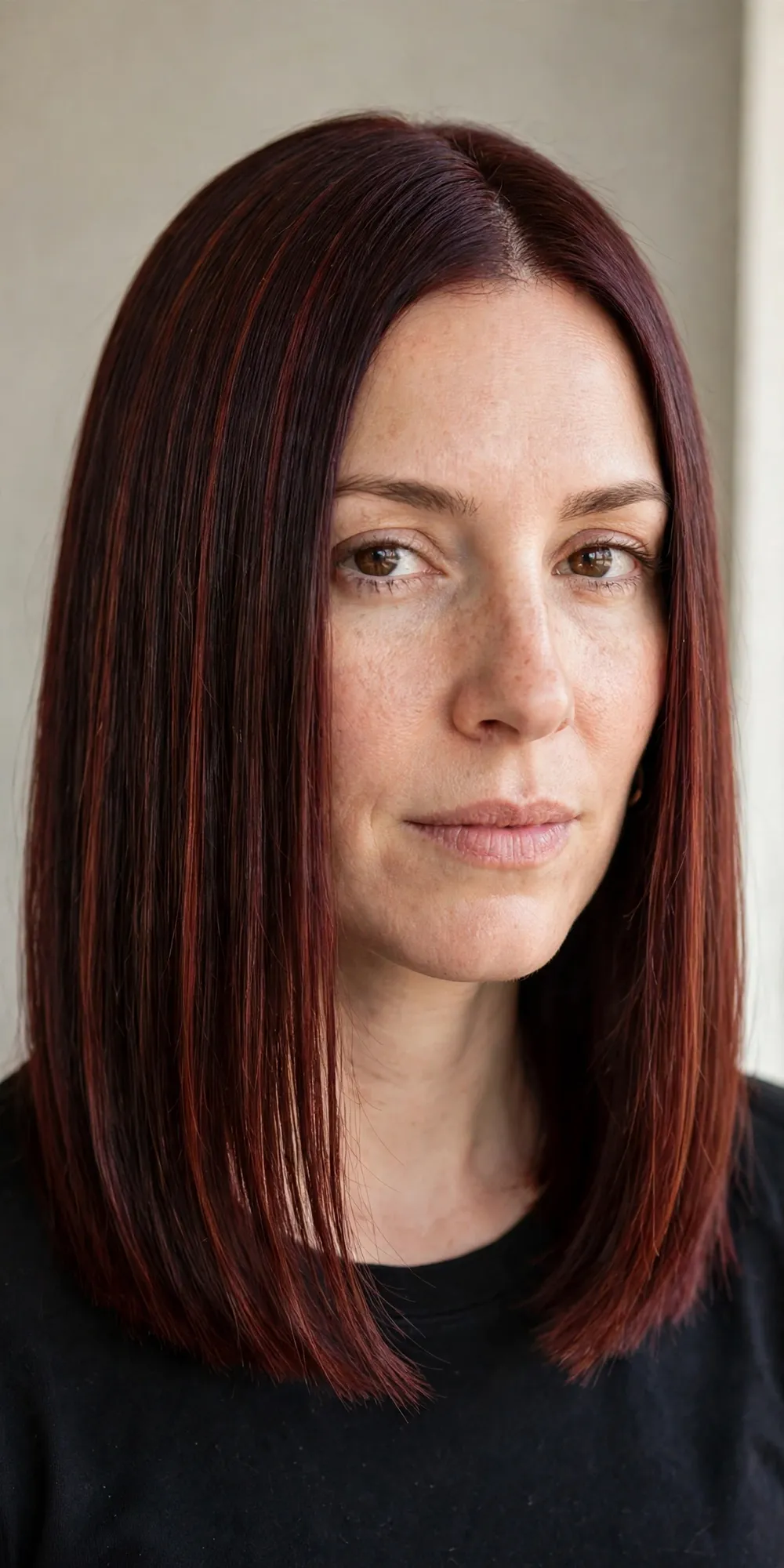
A blunt cut can look flat in one solid colour, and mahogany lowlights are the fix. Deep reddish-brown lowlights are woven through the interior of a sharp, straight cut, adding shadow and dimension that make the blunt edge look even more precise. This is a brilliant choice for cool and neutral undertones, and for thick hair that needs depth rather than more volume. It also works beautifully on naturally dark hair — no lightening needed, since mahogany sits close to your base. Ask for mahogany lowlights, one to two levels darker than your natural colour with a red-brown reflect, placed mostly underneath and through the mid-lengths. A smoothing serum and a flat iron keep the blunt line crisp so the lowlights read as intentional shadow. Touch up every six to eight weeks; the fade is gradual and forgiving.
8. Strawberry Blonde Money Piece
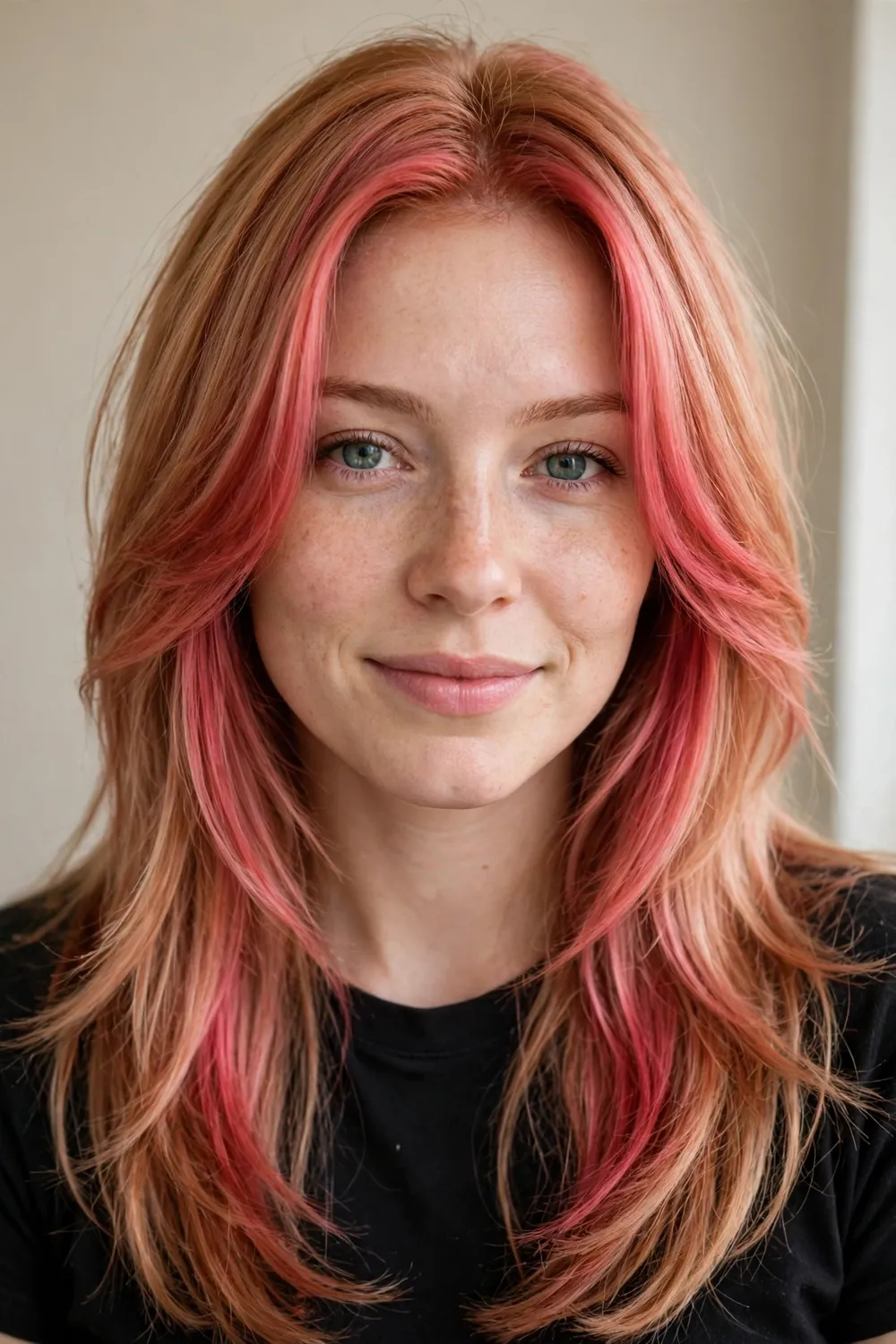
Strawberry blonde is the softest red on this list, and as a money piece it’s almost unfair how flattering it is. Two pale, pink-tinged copper sections frame the face, brightening your complexion the way good lighting does. It suits fair to medium skin with warm or neutral undertones, and it’s a natural first step if you’re blonde or light brown and curious about red. Ask for a strawberry blonde money piece, level 8–9 with a pink-copper reflect, blended softly at the root so it grows out without a line. It looks best on long layered hair, where the brightness at the front contrasts with the softer colour behind. A purple-tinted or colour-depositing conditioner keeps it from going too gold. Refresh every five to six weeks, and protect it from sun — pale reds fade faster than deep ones.
9. Fire Engine Red Chunky Highlights

Some reds whisper; this one arrives with sirens. Thick, vivid fire-engine red sections are woven through a dark shag in bold, unapologetic stripes. It’s the loudest idea in this guide and the one that needs the most confidence — and the most upkeep. It suits cool and neutral undertones and shaggy or layered cuts — the texture breaks up the colour so it never reads as a solid block. Ask for chunky fire-engine red highlights, pre-lightened to pale yellow (level 9) first — vivid red won’t show on dark hair without lifting. A direct dye in a true red, sealed with a gloss, gives the most punch. Expect to refresh every three to four weeks, wash only in cold water, and keep a colour-depositing mask on hand. This is not a low-maintenance choice, and that’s the honest truth.
10. Rose Gold Balayage on Mermaid Waves
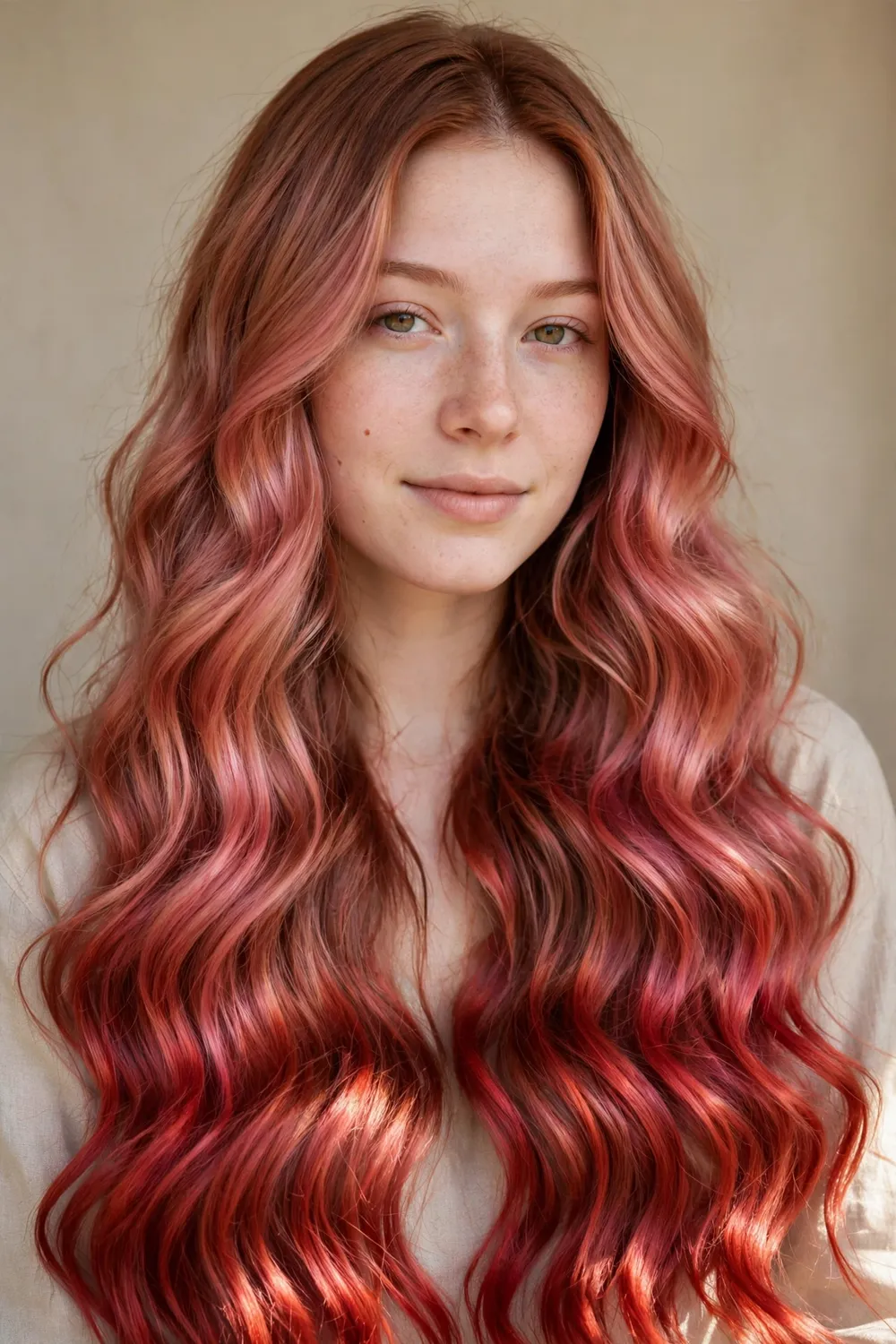
Rose gold is red’s romantic side: pink and copper melted together, painted through long, flowing mermaid waves. The colour shifts as your hair moves — blush-pink in one light, copper in another — which is why it photographs so well. It suits fair to medium skin with warm or neutral undertones, and long hair is essential: the balayage needs length to show the gradient. Ask for a rose gold balayage, pre-lightened to level 8–9 through the mid-lengths and ends, with the rose tone stronger at the tips. A waver or large-barrel iron plus shine spray does half the work here — the waves sell the colour. Refresh the tone every four to six weeks — rose gold is a toner, and toners fade.
11. Auburn Babylights on Textured Bob

Auburn is the red that never looks like a mistake. Delicate babylights in warm auburn are blended through a textured bob, adding warmth and movement without changing your overall colour. It suits neutral undertones especially — auburn sits right in the middle of the red family — and it works on fine to medium hair, where the babylights give the bob a fuller look. Ask for auburn babylights, level 6–7, scattered finely through the top and sides with a slightly stronger placement around the face. A texturising spray and a quick tousle with your fingers is all the styling this needs; the cut and colour do the rest. Maintenance is light: a gloss every six to eight weeks and a colour-safe shampoo. If you’ve never tried red before, this is the safest, prettiest place to start.
12. Crimson Velveteen Ribbon Highlights
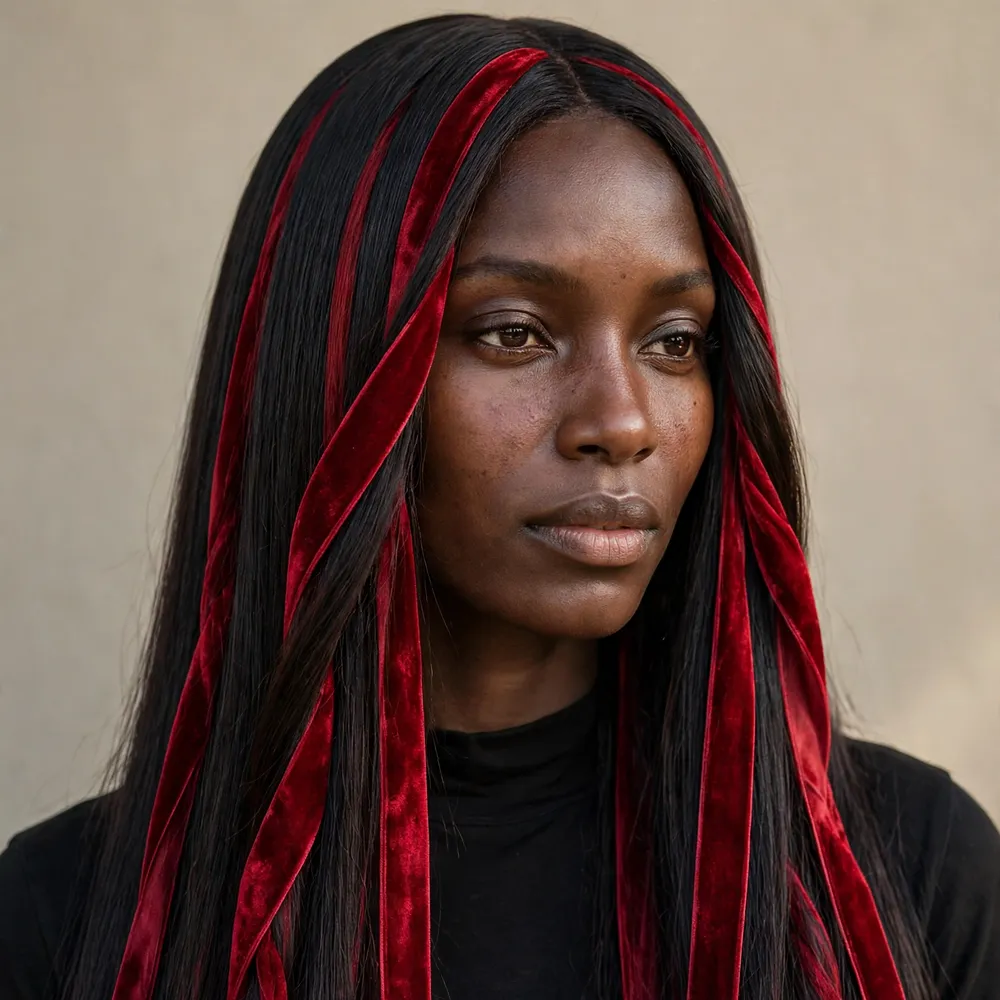
Crimson ribbons are what you ask for when you want red that looks like fabric — deep, rich, and smooth. Thick ribbons of crimson are painted through sleek, straight hair, so the colour reads as glossy bands rather than scattered highlights. It suits cool undertones and straight or blow-dried-smooth hair best, because the sleek finish is what makes the ribbons visible. Ask for crimson ribbon highlights, a level 5–6 true crimson, placed in wide sections through the top layers and kept slightly deeper underneath for contrast. A smoothing cream and a flat iron are essential — any frizz breaks up the ribbon effect. The colour itself is moderately high-maintenance: wash in cool water, use a colour-depositing conditioner every other wash, and book a gloss refresh every five weeks to keep the crimson from sliding toward brown.
13. Sunset Copper Balayage on Long Hair

Sunset copper is the shade that looks like golden hour, all the time. A warm brown root glows into vibrant, almost orange copper through the ends of long hair, with the brightest colour concentrated at the tips. It’s made for warm undertones and long, thick hair — the balayage needs length and density to build the gradient properly. Ask for a sunset copper balayage: keep the root your natural warm brown, lift the mid-lengths to a level 7, and saturate the ends with a true copper. Loose waves or a bouncy blow-dry show the colour transition best. Copper is the classic fast-fader, so wash as little as you can get away with, always in cool water, and use a copper colour-depositing conditioner weekly. A gloss top-up every four to five weeks keeps the ends from going dull.
14. Cherry Red Face-Framing Tendrils
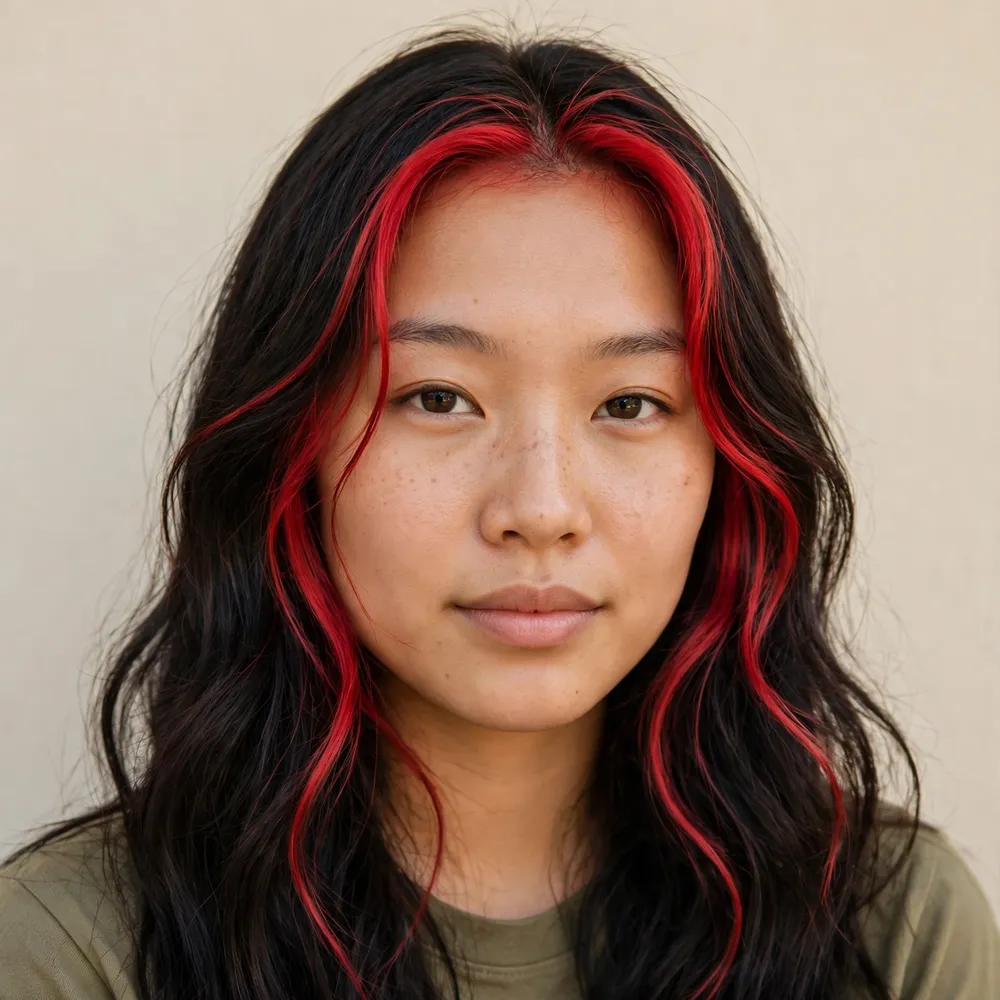
If a full money piece feels like too much, tendrils are the lighter version. Bright cherry red is painted onto the fine strands around your hairline, so the colour frames your face like jewellery rather than covering it. It suits cool and neutral undertones and works on any length — the tendrils are the point, not the rest of the hair. Ask for cherry red face-framing tendrils, pre-lightened to a level 7–8 so the cherry stays bright rather than muddy, with the colour kept to the first inch of hair around the face. It looks best when the rest of your hair is dark, because the contrast makes the cherry pop. Maintenance is quick but frequent: the tendrils fade fastest since they’re the most washed and sun-exposed, so refresh them every four weeks with a colour-depositing conditioner between appointments.
15. Maple Syrup Red on Long Shag

Maple syrup red is warm, golden and quietly rich — the colour of autumn light on brown hair. Golden-red highlights are woven through a layered long shag, so the colour catches in the texture instead of sitting flat. It suits warm and neutral undertones, and wavy or textured hair, because the shag’s layers give the highlights somewhere to hide and reappear. Ask for maple syrup red highlights, a level 6–7 golden copper-red, placed with balayage through the mid-lengths and ends, heavier around the face and the top layers. A sea-salt spray and a rough blow-dry bring out the shag’s texture, and the colour looks better slightly messy than perfectly smooth. Maintenance is moderate: a gloss every six weeks, colour-safe shampoo, and as little heat styling as you can manage.
16. Wine Red Ombre on Sleek Strands

There’s something quietly dramatic about wine red on pin-straight hair — no curls to hide behind, just a smooth, glossy gradient doing all the talking. Your natural dark root melts into a deep wine red that looks almost black indoors and glows burgundy in the sun. It suits cool and neutral skin tones best, and it works beautifully on medium to long hair that’s naturally straight or regularly flat-ironed. Ask your colourist for a soft ombre with the wine starting around cheekbone level, blended with a brush rather than a hard line. A shine gloss on top is what sells it. Maintenance is moderate: the dark root means regrowth is forgiving, but the wine tones need a gloss refresh every five or six weeks to stay rich rather than muddy.
17. Red Velvet Peekaboo on Layers
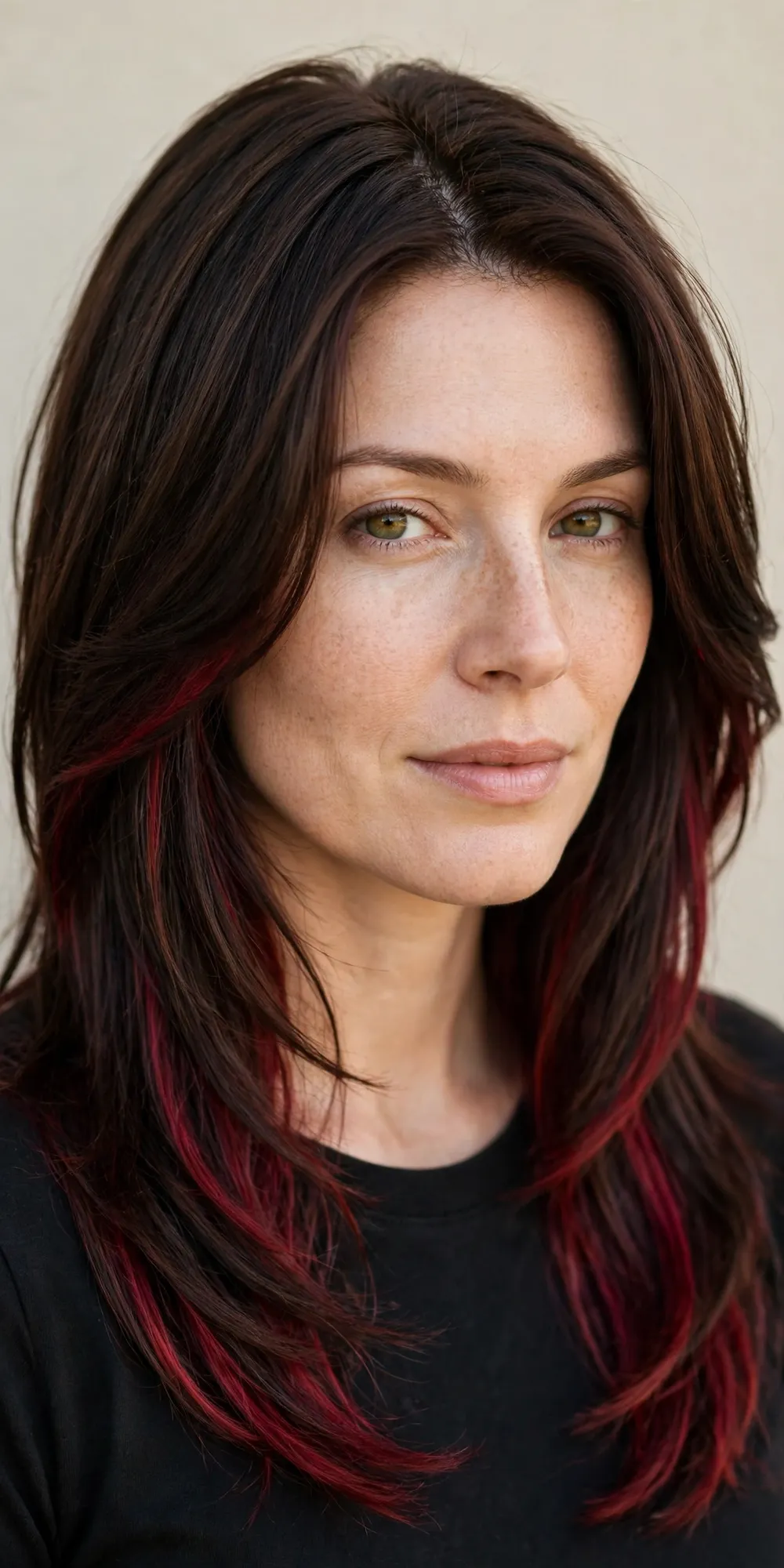
Peekaboo colour is the best of both worlds — professional on top, party underneath. Your dark chocolate layers stay untouched, while a deep velvet red hides beneath, flashing out every time your hair moves or goes up into ponytail hairstyles. It flatters most skin tones because the red sits low and away from your face, and it works on layered cuts of any length from a long bob down. Ask your colourist for a hidden panel of red through the underlayer only, from the nape up to about ear level, keeping the top layer clean. Finish with a softening gloss so the red reads velvety, not brassy. Upkeep is genuinely low: the hidden placement means regrowth is invisible, and you only need to refresh the panel when the colour itself starts to fade, roughly every six to eight weeks.
18. Glazed Cherry Red on Blunt Bob

A chin-length blunt bob in glazed cherry red is pure polish — sharp lines, high shine, and a colour that looks good from every angle. The glaze is the secret: it seals the colour and bounces light off the cut ends, so the red reads almost lacquered. It suits cool and neutral skin tones, and it works on fine to medium hair, where the blunt ends make the hair look thicker than it is. Ask your colourist for a single-process cherry red with a clear or cherry-tinted gloss on top, and keep the cut sharp — blunt ends and a clean jawline are what make this style. Use a colour-safe shampoo and a weekly shine mask, because the finish is the whole point here. Expect a root touch-up every four to five weeks, since a bob shows regrowth faster than long hair.
19. Rustic Copper Highlights on Wolf Cut

The wolf cut is already the most lived-in, textured cut around, and earthy copper highlights make it look even more effortless. Instead of a bright, metallic copper, this is a rustic, slightly muted version — think fallen leaves rather than a new penny — painted through the shaggy layers so the texture catches the light in different places. It suits warm and neutral skin tones and works on medium to long hair with natural wave or curl. Ask your colourist for freehand copper highlights concentrated on the face-framing layers and the ends, with a shadow root so it grows out softly. A salt spray or light texture cream finishes the look. Maintenance is low: the shaggy cut and the root shadow both hide regrowth, so you can stretch salon visits to eight weeks or more.
20. Paprika Highlights on Mid-Length Waves
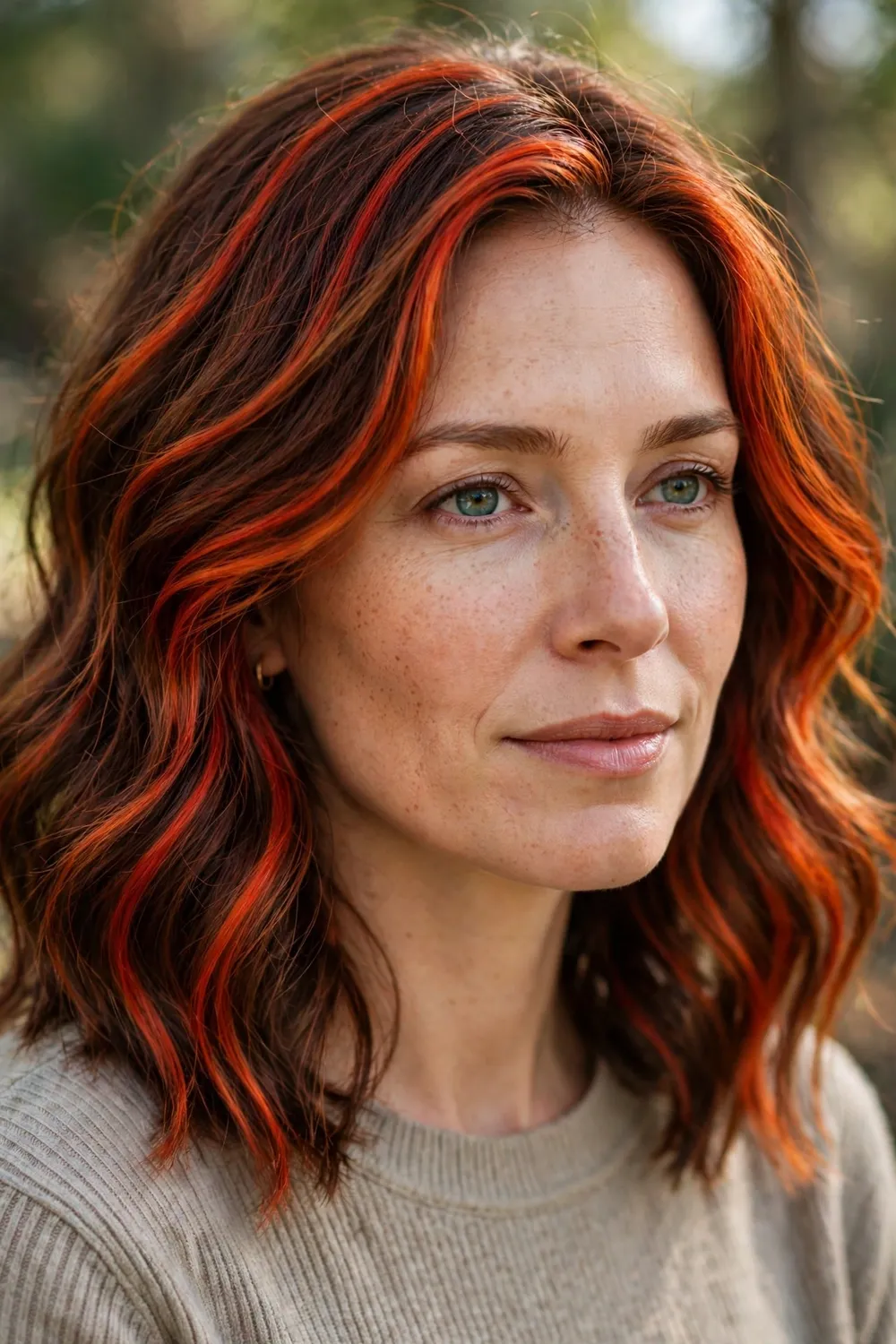
Paprika is the spice shade of the red family — a fiery red-orange that’s warmer than cherry and softer than fire-engine red. Woven through mid-length waves, it gives your hair a warm glow that catches the light every time you move. It flatters warm and olive skin tones especially well, and it suits medium-length hair with natural wave or a loose curl from a wand. Ask your colourist for fine-to-medium paprika highlights painted through the mid-lengths and ends, with a slightly deeper base so the colour has dimension rather than looking flat. A curl cream or light oil will define the waves without weighing them down. Upkeep is moderate: paprika tones fade toward a softer copper, which still looks good, so a colour-depositing conditioner between appointments keeps it fiery for longer.
21. Deep Maroon Slices on Layered Cut
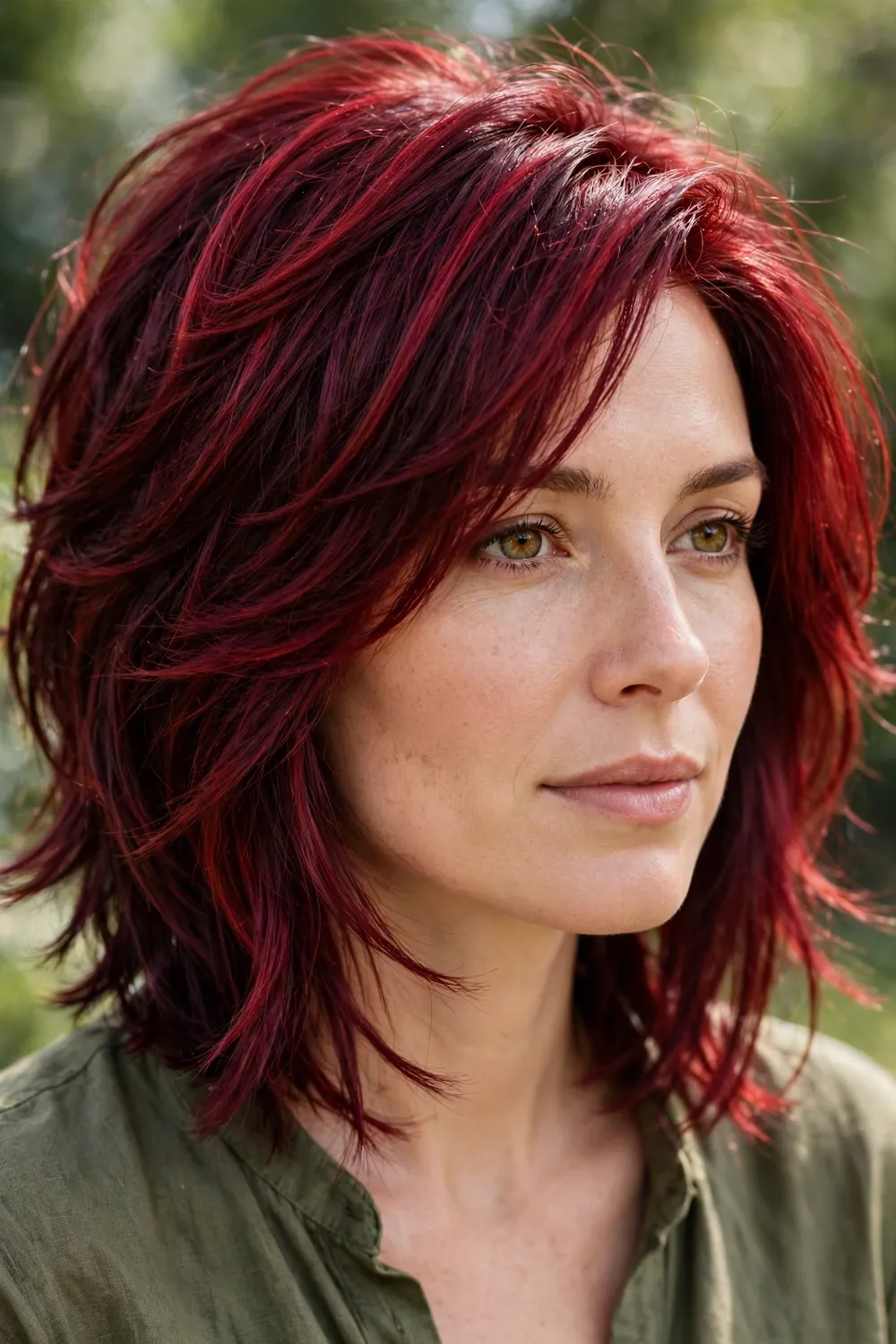
If you want red that reads sophisticated rather than loud, deep maroon slices are the answer. Thick ribbons of rich maroon are sliced through a layered cut, so the colour shows in bands that move with the layers — subtle in low light, striking in the sun. It suits cool and neutral skin tones, and it works on medium to long layered hair, straight or wavy. Ask your colourist for slice highlights rather than fine babylights — you want visible bands of colour — placed through the mid-lengths and ends with a dark base underneath for contrast. A smoothing serum keeps the layers sleek so the slices stay visible. Maintenance is on the easier side for red: the dark base hides regrowth, and maroon fades gracefully into a softer wine, so a gloss every six weeks keeps it looking deliberate.
22. Ginger Red Melt on Butterfly Cut
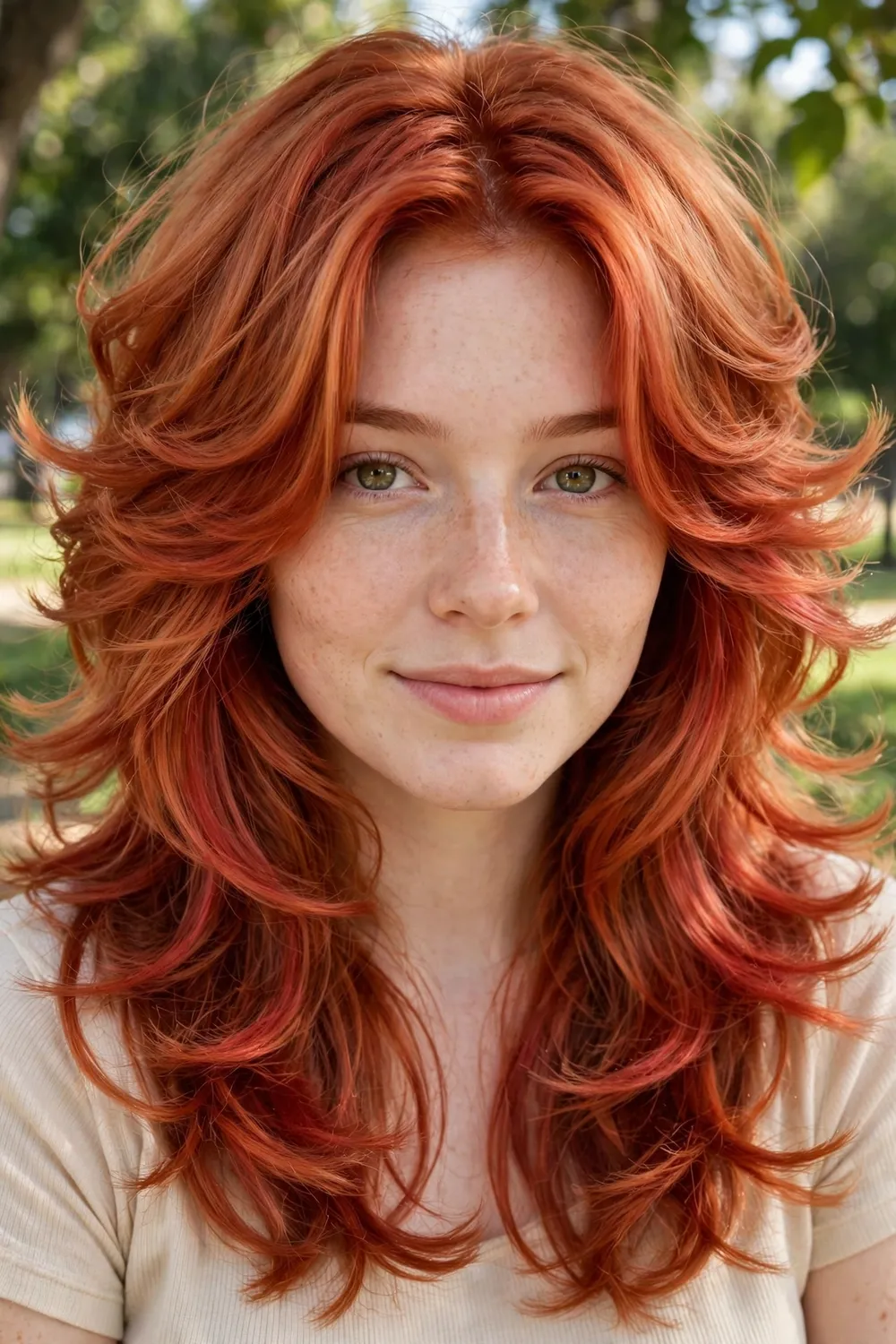
The butterfly haircut is all about bouncy, face-framing layers, and a ginger red melt gives those layers something to show off. The colour starts as a warm ginger at the roots and melts into a brighter, more golden red through the ends, so the layers seem to glow as they move. It suits warm skin tones best and works on medium to long hair with enough length for the butterfly layers to sit properly. Ask your colourist for a root-to-end melt — no harsh lines — with the brightest ginger on the face-framing pieces and the ends. A round brush blow-dry is what makes the layers bounce, and a lightweight oil keeps the ends looking healthy. Upkeep is moderate: the melt grows out softly, but the ginger will need a gloss refresh every five or six weeks to stop it sliding toward brassy.
23. Fiery True Red Long Layers

This is red with no apologies — a pure, vivid true red all over, worn on choppy long layers. There’s no brown to soften it and no balayage to dilute it, just saturated colour that turns heads. It suits fair to medium skin with warm or neutral undertones, and it needs long hair with texture, because the layers stop the colour from looking like a flat sheet. Ask your colourist for an all-over true red, and be honest about whether your hair needs pre-lightening first — on dark hair, lifting a level or two is what lets the red actually show. A colour-depositing mask once a week is non-negotiable here. This is the highest-maintenance red on the list: expect a root touch-up every three to four weeks and a gloss in between, or the fade will be obvious.
24. Bright Penny Bob
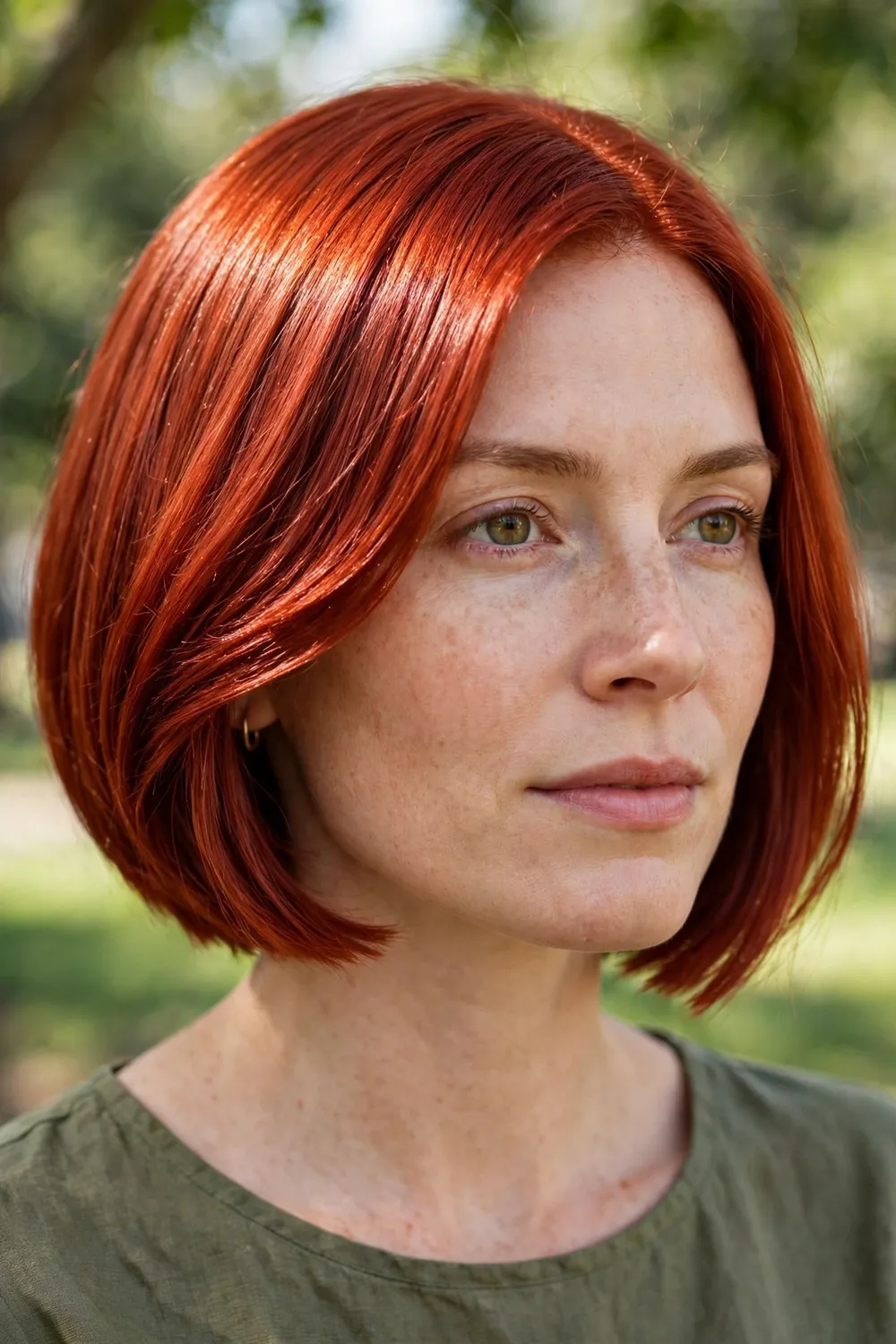
A bright penny bob is copper with a metallic edge — the kind of high-shine, new-coin colour that looks expensive because it catches the light like polished metal. On a sharp jaw-length bob, the colour and the cut work together: the shine shows off the blunt ends, and the blunt ends show off the shine. It suits warm and neutral skin tones and works on fine to medium hair, where the bob’s structure gives the style its shape. Ask your colourist for a single-process penny copper with a metallic gloss finish, and keep the cut precise — a bob this short needs a trim every six weeks to hold its line. Wash in cool water with a sulphate-free shampoo, because this is a shade where fading shows fast. Root touch-ups every four weeks keep the colour looking freshly minted.
25. Fiery Red Pixie Cut
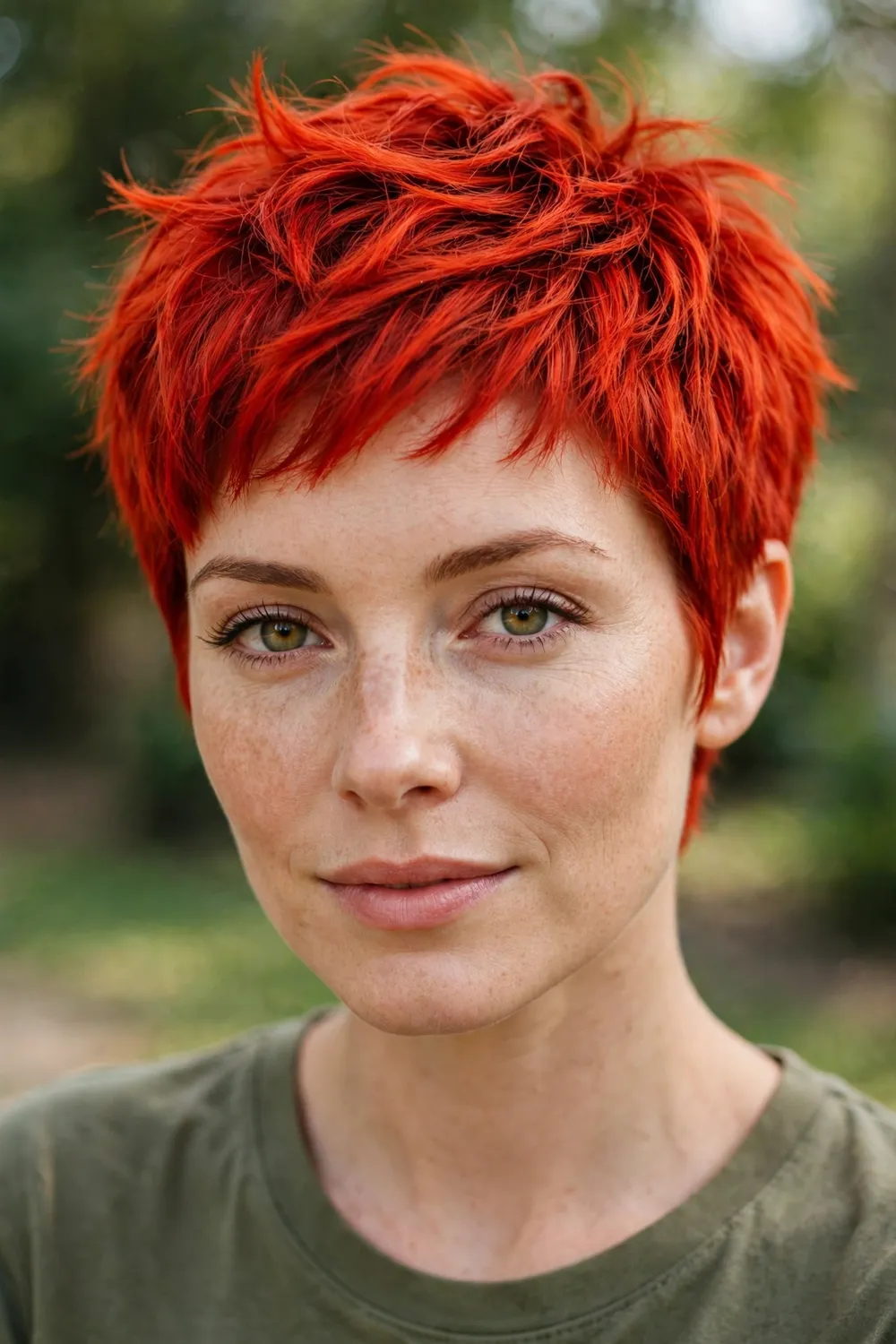
Short hair plus bold colour is a combination that never goes unnoticed, and a fiery red pixie is the loudest version of it. The colour sits close to your face, so it frames your features like makeup — which means it suits people who want their hair to be the statement, not an accessory. It works on most skin tones if the red is tuned right: a warmer red for warm undertones, a cooler crimson for cool ones. Ask your colourist for an all-over vivid red with a slightly deeper root for depth, and keep the pixie textured rather than perfectly smooth so the colour has dimension. Styling is easy — a dab of texture paste and you’re done. The trade-off is upkeep: pixies grow out fast, so you’ll need a cut and a colour refresh every four weeks, and daily washing will fade the red quickly, so dry shampoo becomes your best friend.
26. Muted Terracotta Red
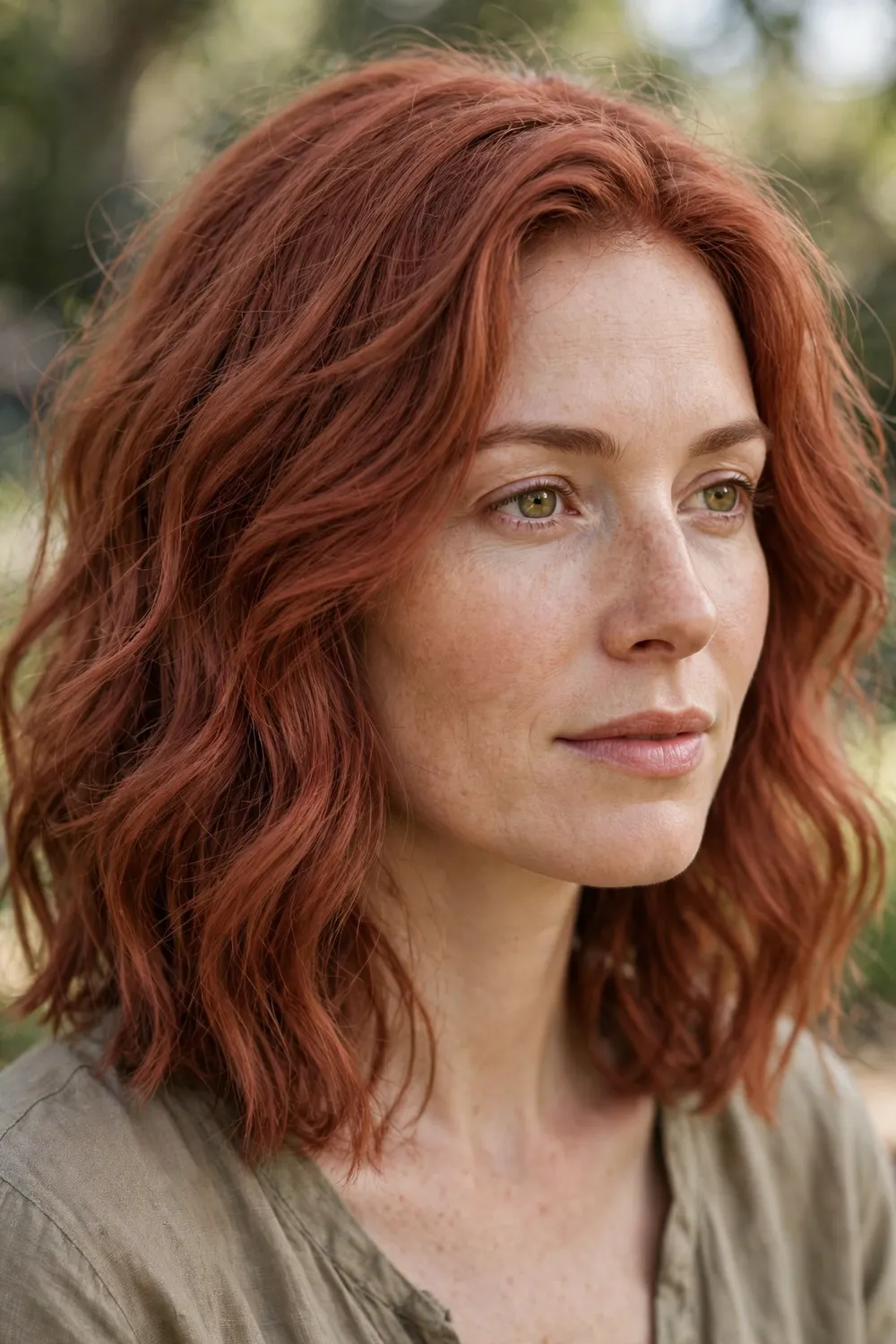
Not everyone wants their red to shout, and muted terracotta is the answer for anyone who prefers a whisper. It’s a dusty, earthy red with a soft matte finish — closer to clay than to cherry — and it looks completely natural, like a colour your hair could almost have grown itself. It suits warm and olive skin tones, and it works on any length, though it looks especially good on medium hair with a bit of wave. Ask your colourist for a terracotta tone with the saturation pulled back — a muted, dusty red rather than a bright one — ideally as a demi-permanent colour, which fades gently instead of leaving a harsh line. A matte-finish styling cream suits the look better than a high-shine serum. This is one of the lowest-maintenance reds: the muted tone fades gracefully, and you can easily go eight weeks between appointments.
27. Sunset Ombre Red Gradient

If one red isn’t enough, this gradient gives you three: mahogany roots fading through a warm orange into soft peach ends, like the last hour of a summer evening. It’s the most artistic red on this list, and it works best on long hair, where there’s enough length for each shade to have its own moment. It suits warm skin tones, and it flatters wavy or curly hair, where the colour shifts as the texture moves. Ask your colourist for a three-stage ombre — mahogany at the root, orange through the mid-lengths, peach at the very ends — with each band blended, not striped. This one almost always needs pre-lightening on the ends to get the peach to show. Maintenance is high: three colours fade at different speeds, so a gloss and a tone refresh every four to five weeks keeps the gradient looking intentional rather than accidental.
28. Soft Strawberry Blonde Balayage
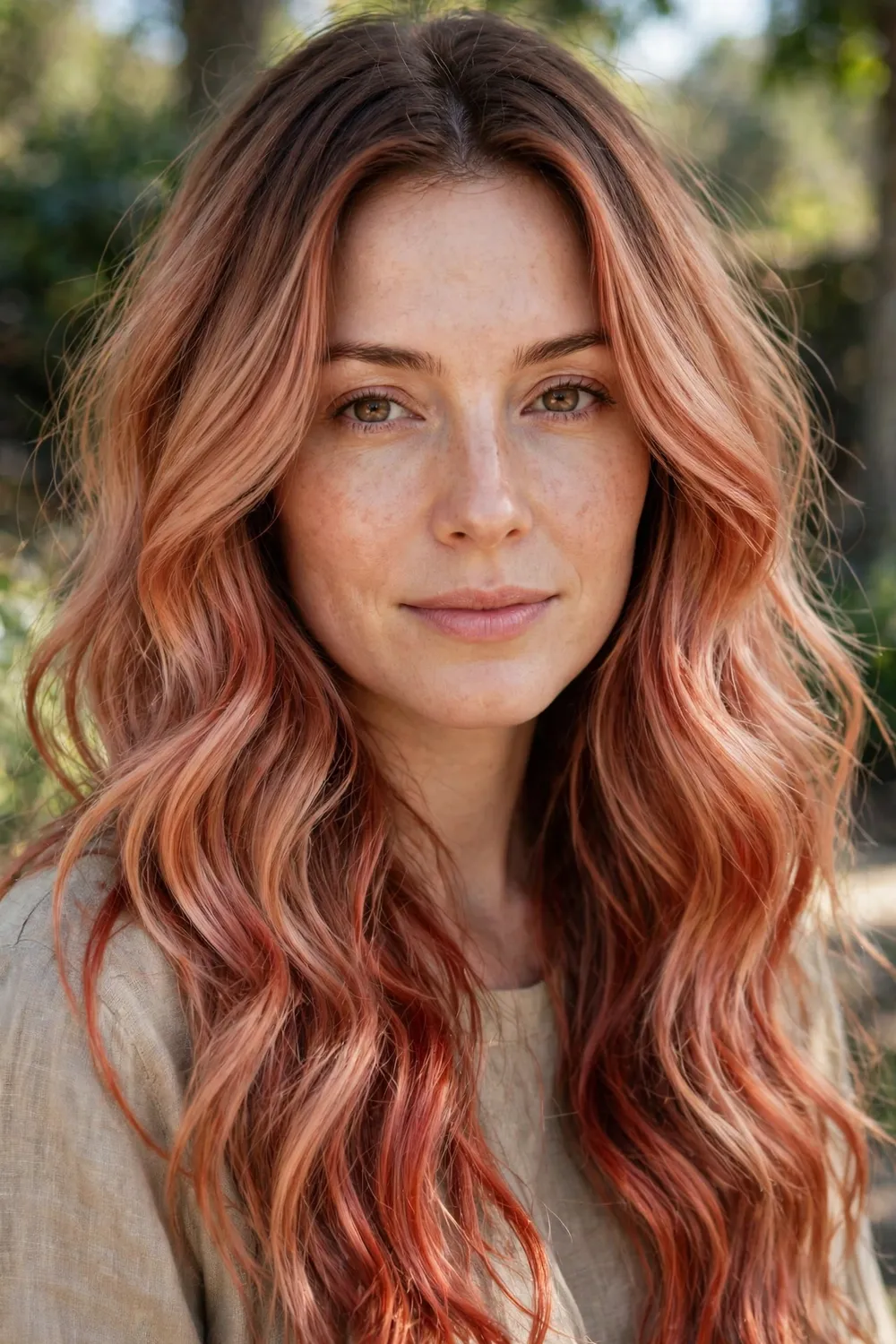
Strawberry blonde balayage is red for people who aren’t sure they want red — pale, soft, and barely there, melting from a neutral root into gentle copper ends. It’s the most wearable red on this list, and it suits fair skin with warm or neutral undertones, especially on fine to medium hair where the soft colour adds the illusion of thickness. Ask your colourist for a hand-painted balayage with a pale strawberry copper, keeping the root your natural colour so it grows out without a line. A purple-tinted shampoo used sparingly will stop the blonde tones from going brassy, and a light oil keeps the ends soft. Upkeep is genuinely low: the soft colour and the natural root mean you can stretch appointments to ten or twelve weeks, with just a gloss in between if the copper starts to look dull.
29. Vivid Ruby Red Bob

A vivid ruby red bob is jewel-toned colour at its boldest — deep, saturated, and almost glowing, like the stone it’s named after. On a sleek jaw-length bob, the colour is the whole look: no layers to distract, no texture to soften it, just a sharp shape in an unforgettable shade. It suits cool and neutral skin tones, and it works on straight to slightly wavy hair, where the sleek finish lets the colour shine. Ask your colourist for a single-process ruby red, and expect pre-lightening if your hair is dark — ruby needs a lighter base to reach that jewel brightness. A shine spray is the finishing touch. This is high maintenance: the colour fades fast, the bob shows regrowth quickly, and the sleek finish shows every dull patch, so plan on a touch-up and gloss every four weeks, plus a colour-depositing conditioner at home.
How to Ask Your Colourist for Red Hair
The difference between red hair you love and red hair you regret usually comes down to the consultation, not the dye. Bring a photo — not one, but two or three, showing the shade in different lights — because “copper” means something different to every person in the chair. Name the technique, not just the shade: balayage, ombre, babylights and all-over colour behave completely differently as they grow out, and your colourist needs to know which one you want. Be honest about how much upkeep you’ll actually do. If you wash your hair every day and never want to come back before two months, say so — a good colourist will steer you toward a low-maintenance option like a balayage or a peekaboo instead of an all-over vivid red. And ask directly about pre-lightening: vivid reds on dark hair need lifting first, and it’s better to hear that before the colour goes on than to wonder why your “fire engine red” came out burgundy.
How to Stop Red Hair Colour Fading
Red is the fastest-fading hair colour there is — the molecules are large, so they slip out of the hair shaft more easily than other shades. That doesn’t mean you’re doomed to dull hair; it means your routine matters more. Wash in cool water, because hot water opens the cuticle and lets the colour rinse away. Switch to a sulphate-free, colour-safe shampoo, and wash less often — two or three times a week is plenty, with dry shampoo covering the gaps. A colour-depositing conditioner once a week puts red pigment back in while you condition. Protect your hair from UV and heat: a hat in strong sun, and a heat protectant every time you use hot tools. And book a gloss top-up every four to six weeks — it’s a quick, affordable appointment that seals the colour and brings back the shine, and it’s the single best thing you can do to keep red looking freshly done.
5 Mistakes That Ruin Red Hair Colour
- Skipping the patch test. Red dyes, especially vivid and permanent ones, can cause reactions. A patch test 48 hours before your appointment is a small step that prevents a serious problem — never skip it, and never let a salon talk you out of it.
- Washing with hot water daily. Hot water plus daily washing is the fastest way to strip red. Cool water and fewer washes keep the colour in your hair instead of down the drain.
- Using clarifying shampoo. Clarifying shampoos are designed to strip build-up — and they’ll strip your colour right along with it. If you need a deep clean, use one made for colour-treated hair, and only occasionally.
- Going vivid red without pre-lightening. Vivid red on dark, unlifted hair comes out muddy and dark, not bright. If you want a true vivid shade, the lift has to happen first — there’s no shortcut.
- Waiting too long between glosses. Red fades gradually, so it’s easy to miss until one day your hair looks dull and washed out. A gloss every four to six weeks keeps the colour rich — waiting three months means you’re starting over instead of topping up.
Red Hair Color FAQs
What skin tone suits red hair?
Almost every skin tone suits some shade of red — the trick is picking the right family. Warm undertones glow with copper, ginger and paprika; cool undertones look striking with burgundy, wine and cherry; neutral undertones can wear auburn, which sits comfortably in the middle. If you’re unsure, a colourist can check your undertones in a minute, and a face-framing money piece is a low-commitment way to test a shade before going all over.
Does red hair colour fade fast?
Yes — red fades faster than any other hair colour, because red dye molecules are larger and don’t anchor as deeply in the hair shaft. You’ll usually notice the first fade within two to three weeks, especially if you wash daily or use hot water. The good news is that fading is manageable: cool water, colour-safe products and regular glosses slow it down a lot, and some shades, like muted terracotta and deep maroon, fade far more gracefully than vivid reds.
How do I keep red hair from fading?
Wash less often, in cool water, with a sulphate-free colour-safe shampoo, and use a colour-depositing conditioner once a week to replace lost pigment. Protect your hair from sun and heat, which both speed up fading. The most effective habit is a gloss top-up at the salon every four to six weeks — it seals the cuticle and refreshes the colour in one quick appointment.
Can I dye my hair red without bleach?
Yes, for many shades. If your hair is light to medium brown, copper, auburn, mahogany and burgundy can all be achieved without bleach, because those shades are close to your natural depth. Vivid reds — fire-engine red, true red, vivid ruby — usually need pre-lightening on dark hair, because the brightness has to come from somewhere. A colourist can tell you after one look at your hair whether your chosen shade needs lifting.
Is red hair colour high maintenance?
It depends on the shade and the technique. All-over vivid red is genuinely high maintenance, with root touch-ups every three to four weeks. But balayage, ombre, peekaboo and muted shades like terracotta are much easier — the root grows out softly, and you can go six to ten weeks between appointments. If low maintenance matters to you, choose a technique with a natural root and a muted shade, and your red will be no harder to keep than any other colour.
What is the best red hair colour for dark hair?
Burgundy, cherry cola, deep maroon and mahogany are the best reds for dark hair, because they’re deep enough to show up beautifully without heavy lightening. They add richness and dimension to dark hair, and they fade gracefully into softer wine tones. If you want something brighter, a cherry or wine ombre works well — the colour is concentrated on the ends, where lightening is safer and easier to maintain.
How often should I touch up red hair colour?
For all-over vivid red, every three to four weeks; for single-process shades like cherry or copper, every four to five weeks. Balayage, ombre and peekaboo styles can stretch to six to eight weeks, and soft shades like strawberry blonde balayage can go ten to twelve weeks. A gloss every four to six weeks sits between full appointments and keeps the colour looking fresh, so many people alternate a gloss visit with a full colour visit.
Final Word
Red hair is a commitment, but it’s one of the most rewarding ones in hair colour — few shades change how you feel about your reflection as quickly as a good red. Pick the shade that suits your skin tone and your real life, not just the photo, and your colourist will do the rest. And when you’re ready for your next look, you’ll find more hair ideas on the blog to inspire you.