


Beards break down into five families: full beards, short beards, goatees and chin-focused styles, jawline styles, and mustache-forward looks. If you want three safe bets to start with, they’re the Short Boxed Beard, the Classic Full Beard, and the Beardstache — one of them suits almost every face, and each one forgives a few weeks of uneven growth.
Which Beard Style Fits Your Face Shape?
Before you pick a style, work out your face shape. A good beard is basically optical illusion work: it adds length where your face is short, and width where it’s narrow.
| Face shape | What works | What to avoid |
|---|---|---|
| Oval | Almost anything — full beards, stubble, goatees | Very long beards can stretch an already balanced face |
| Round | Length at the chin: ducktail, Van Dyke, classic full beard | Wide, bushy cheeks — they make a round face rounder |
| Square | Softened edges: rounded Garibaldi or a short boxed beard | Sharp squared-off cheek lines that exaggerate the jaw |
| Oblong | Width on the cheeks, short length at the chin | Long pointed beards — they drag the face down further |
| Diamond | Fullness on the chin and cheeks to fill the hollows | Chin straps and anything that sharpens the cheekbones |
| Heart | Chin coverage: full beard or a goatee with some weight | Heavy side growth that widens the forehead line |
The rule underneath the table: grow volume where your face lacks it, and keep it trimmed where your face already has plenty.
Full Beard Styles
1. Classic Full Beard
The classic full beard is even coverage across the cheeks, jaw and chin, with a defined neckline and tidy cheek lines. It needs about 8 to 12 weeks of uninterrupted growth before it looks like a style rather than a lazy month. It suits oval, square and oblong faces best, and it works when your cheeks actually fill in; if the cheeks stay patchy past week eight, this isn’t your style yet. Ask your barber for “a full beard, neckline two fingers above the Adam’s apple, cheek line left natural, ends evened to one length.” Keep a trimmer with a No. 2 guard for the cheeks and a pair of scissors for the flyaways. Beard oil daily, balm when it gets past 3 cm, and a 10-minute trim every week.

2. Ducktail Beard
The ducktail takes a full beard and tapers the chin into a point, like the tail of a duck — wider at the cheeks, narrowing down to a chin tip. It’s the best friend a round face can have, because that point adds length the face doesn’t have on its own. You’ll need at least 10 weeks of growth, with the chin left longest the whole time. Ask your barber to “shape the chin to a soft point, keep the sides shorter, taper the cheeks with a No. 2 to No. 3 guard.” Maintenance is a weekly session with scissors at the point — snip only the stragglers, never chop the tip flat. Beard oil keeps the point from splitting into a fork.
3. Garibaldi Beard
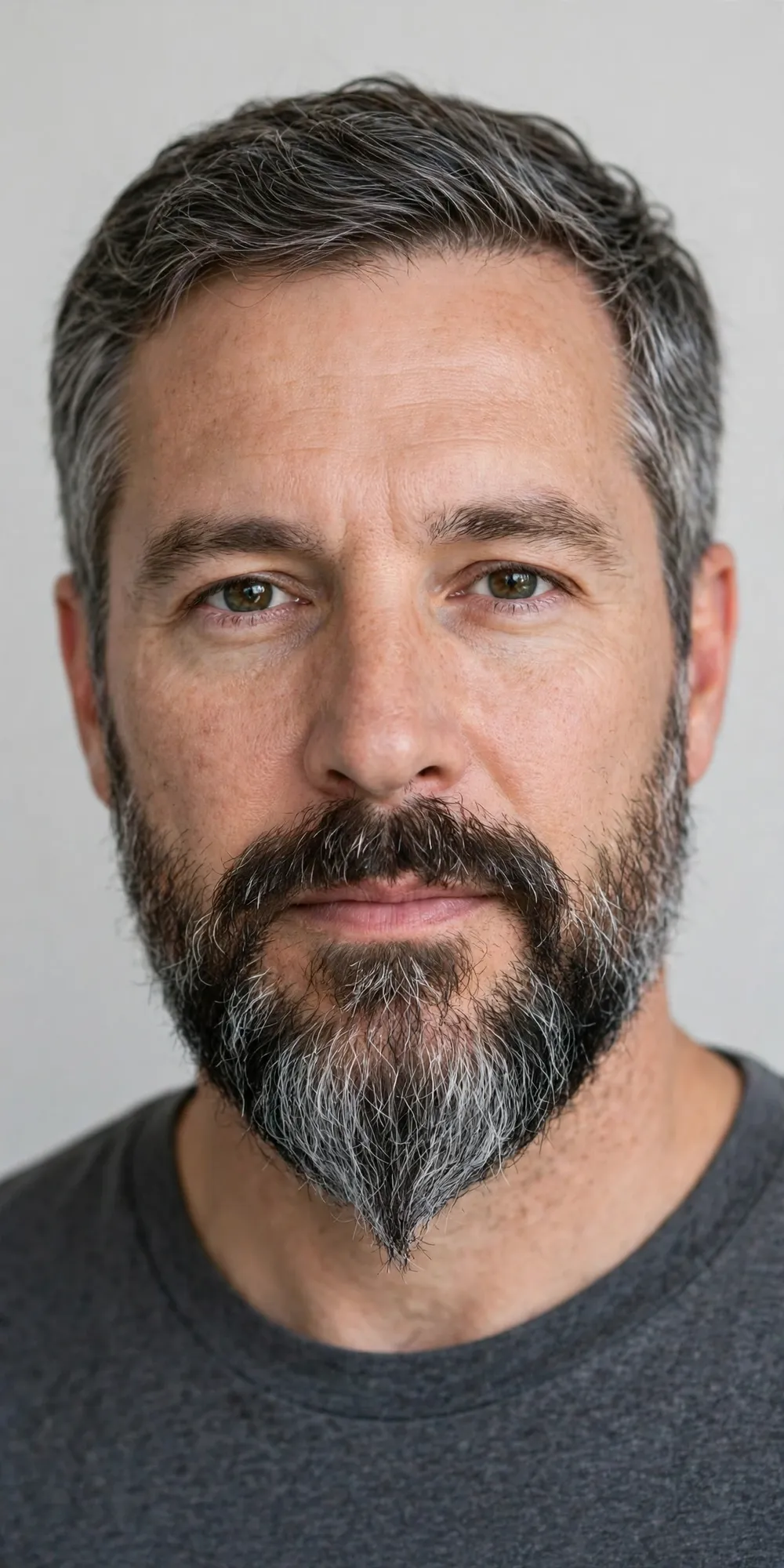
The Garibaldi is a wide, rounded full beard with a natural, unshaped bottom edge — the classic full beard’s relaxed older brother. It goes no longer than about 20 cm, and the bottom is rounded rather than pointed, which suits oval and square faces that can carry width without looking heavy. Grow it out for 12 weeks, then ask your barber for “a Garibaldi — rounded bottom, natural edge, sides thinned slightly so it doesn’t puff out.” Because the bottom line is deliberately soft, you trim less often: a 15-minute tidy every two weeks, mostly evening the length with scissors and keeping the mustache out of your mouth. A dab of balm on wash day keeps it looking groomed, not wild.
4. Bandholz Beard (Yeard)
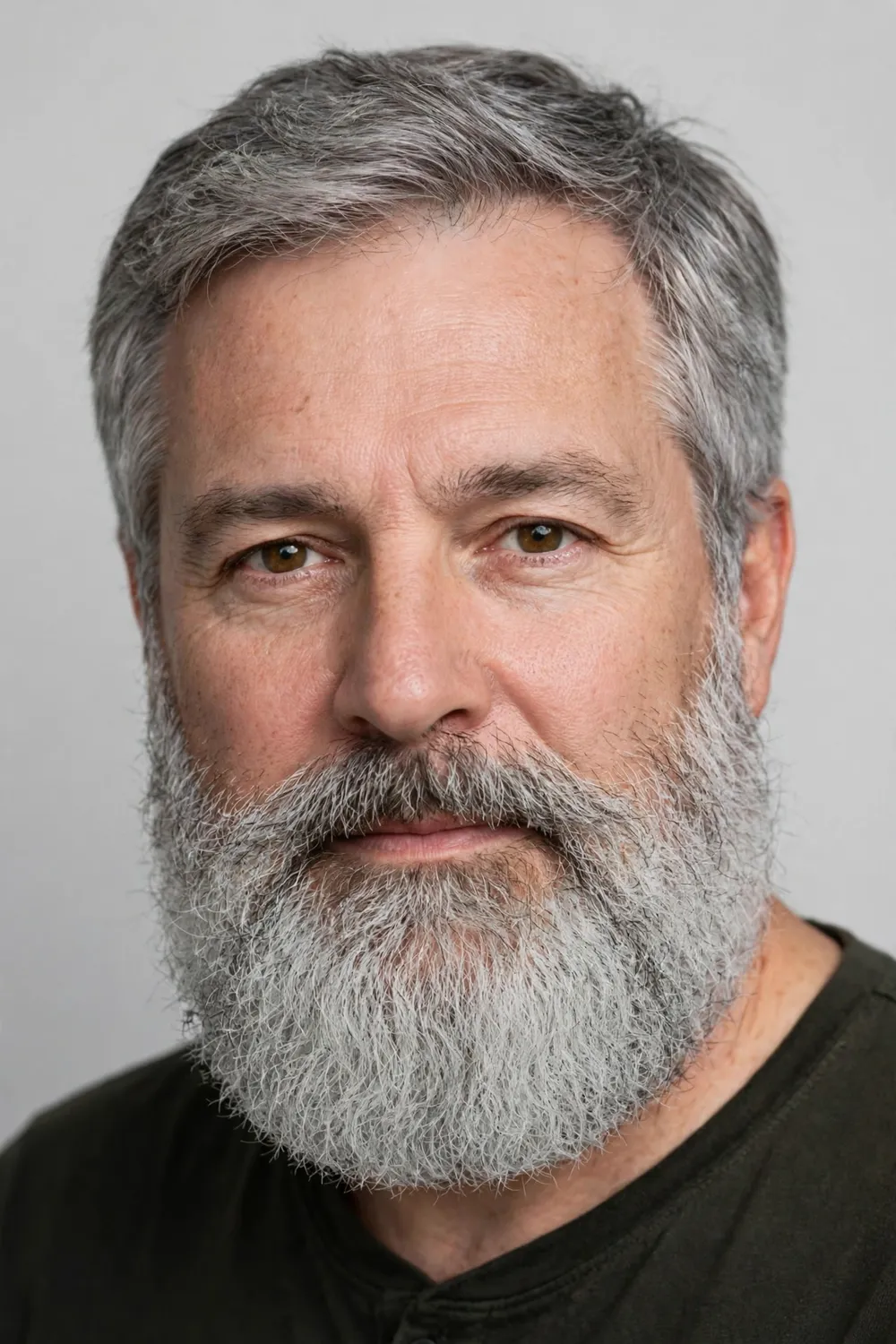
The Bandholz — better known as a yeard — is a full year of beard growth, left long and natural with almost no shaping. It’s a commitment, not a haircut: expect 12 months, some awkward phases around month three and month six, and a beard that reaches 15 cm or more. It suits men with genuinely full cheek growth and a strong jaw, and it flatters oval and oblong faces. There’s no real barber ask — you visit every six to eight weeks for a “light ends trim, keep the length, clean the neckline only.” The honest truth is that most men can’t grow a yeard that looks good, because cheek coverage decides everything. Oil daily, wash twice a week, and brush it.
5. Verdi Beard
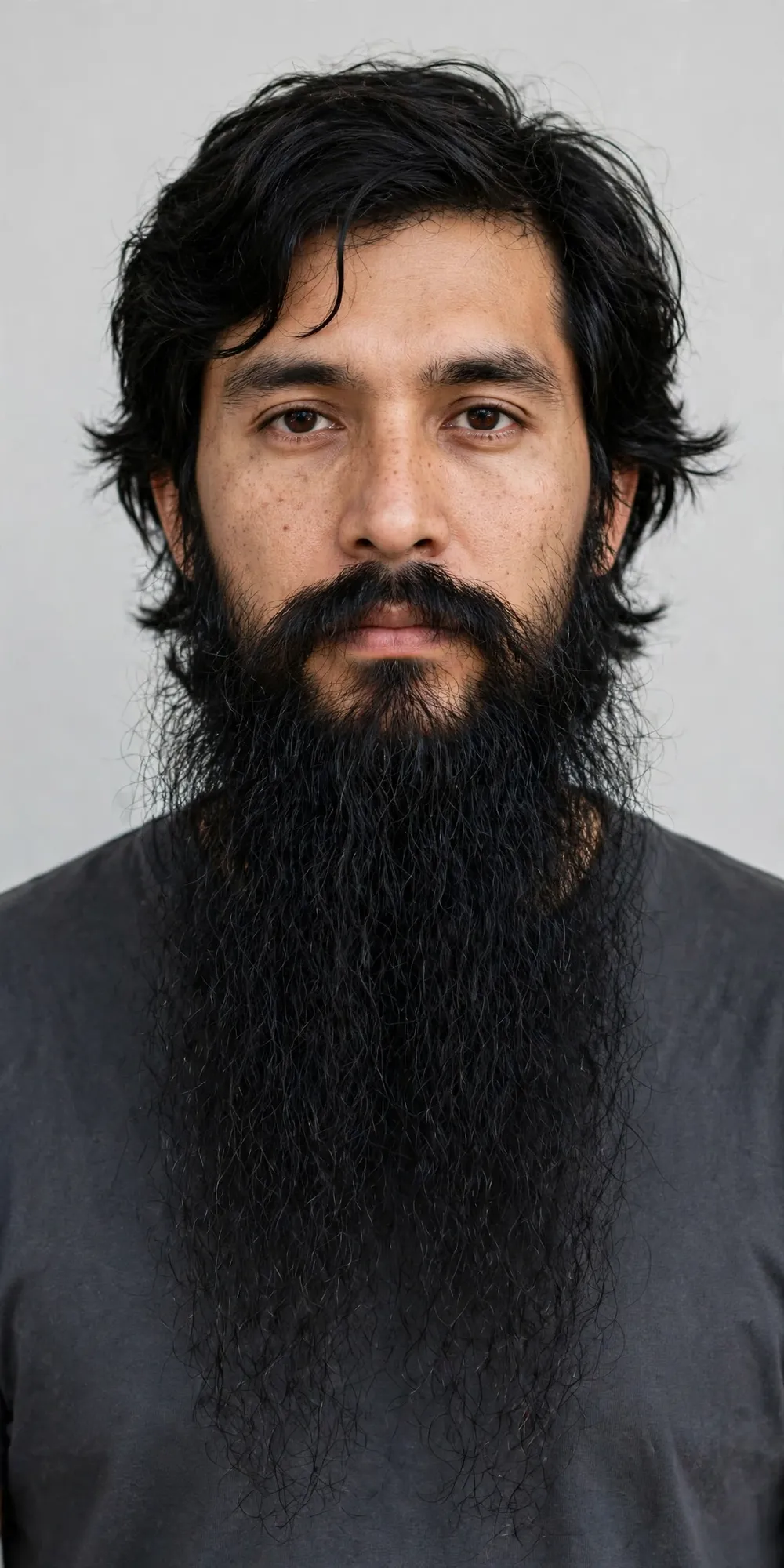
The Verdi pairs a full, rounded beard with a mustache that’s shaped and turned up at the ends — a short beard with one flamboyant detail. It’s a Giuseppe Verdi namesake and it still works today, especially on oval and heart-shaped faces where the rounded beard balances a narrower chin. Grow the beard to about 8 to 10 cm, keep the bottom rounded, and let the mustache grow long enough to train outward. Ask your barber for “a rounded full beard, mustache left long at the ends so I can turn them up.” The mustache is the maintenance: a little wax every morning, combed outward and curled with your fingers, and trimmed so it doesn’t hang over the lip. The beard itself needs only a weekly tidy with scissors.

6. Viking Beard
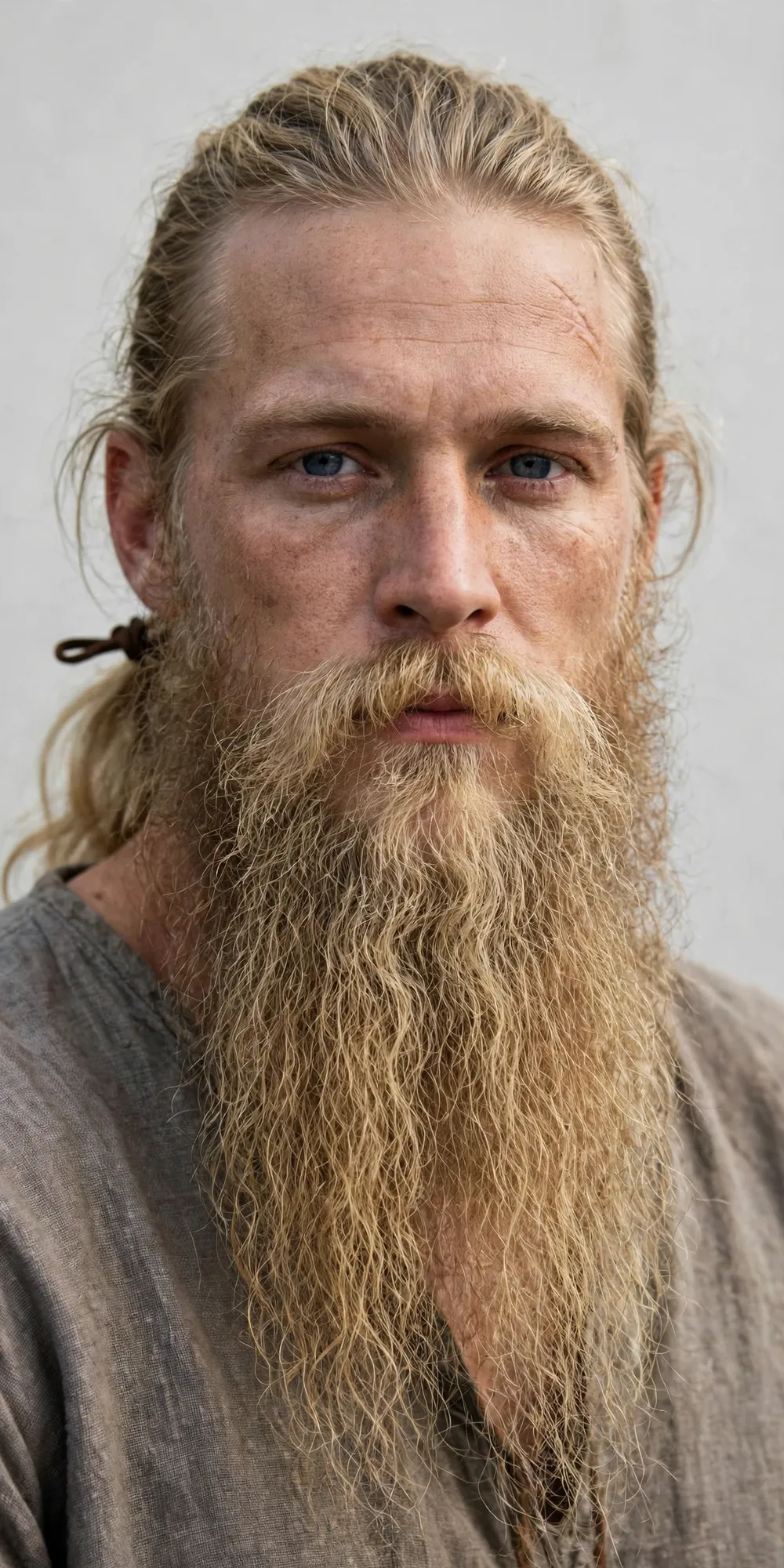
The Viking beard is long, rugged and barely shaped — a full beard grown past 15 cm with a natural bottom edge and minimal intervention. It suits big, strong faces: square and oblong shapes carry it best, and it needs thick growth on the cheeks and chin or it reads as thin rather than tough. Plan on six months of growth minimum, and don’t shape the bottom until it’s genuinely long. Your barber’s job is small but regular: “just tidy the neckline and take the split ends off, leave the length alone.” Maintenance is the honest part — this is a high-effort beard pretending to be low-effort. Oil every day, brush it out every morning, wash it twice a week, and trim the mustache so you can eat.
Short Beard Styles
7. Short Boxed Beard
The short boxed beard is the most reliable style in this entire list: even short length all over, a clean cheek line and a sharp neckline, usually kept between 5 and 10 mm. It suits every face shape — oval, round, square, all of them — which is why barbers recommend it to men trying a beard for the first time. Grow it to about two weeks, then shape it. Ask your barber for “a short boxed beard, cheek line set just below the natural line, neckline two fingers above the Adam’s apple, even length on a No. 2 guard.” After that, maintenance is ten minutes a week: guard trim to even it up, razor or detail trimmer for the lines, and a drop of oil.
8. Corporate Beard
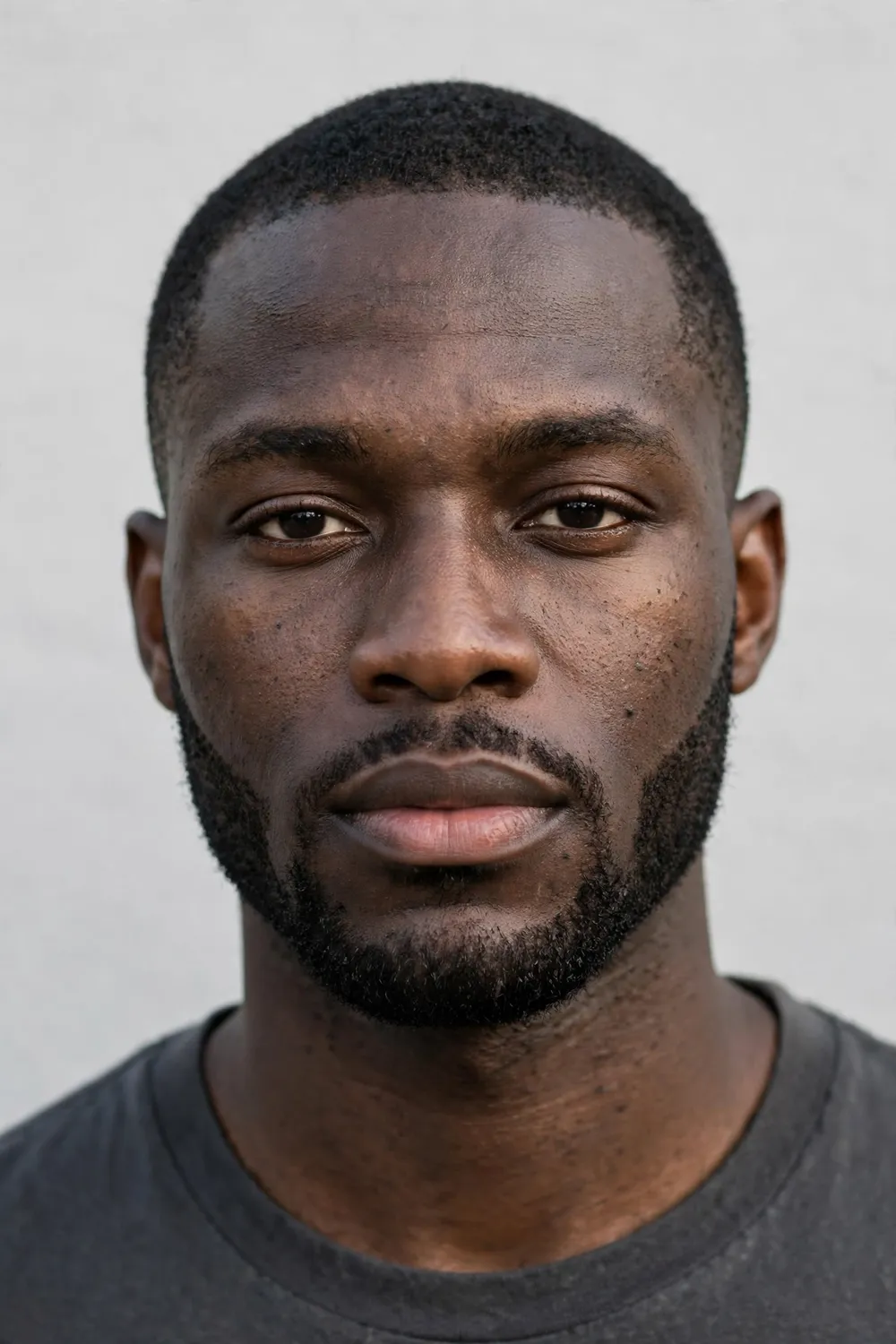
The corporate beard is a close-cropped beard kept at 10 to 15 mm — long enough to read as a beard, short enough to pass in any office. It’s the grown-up version of stubble, and it suits round and square faces particularly well because the even length adds structure without adding bulk. Grow it for three to four weeks, then ask your barber for “an even corporate beard, No. 3 guard, neckline and cheek line kept clean but not razor-sharp.” The key is consistency: a weekly guard trim keeps it at the same length, and a daily pass with beard oil stops the itch that makes so many men shave it off in week two. Pair it with a neat haircut and it looks deliberate rather than lazy.

9. Stubble (Light, Medium & Heavy)
Stubble is the spectrum from one day of shadow to ten days of designer growth. Light stubble is a day or two of growth, barely visible; medium stubble is three to five days, clearly there; heavy stubble is a full week or more, around 4 to 5 mm, with real texture. It suits almost everyone, and it’s the best choice if your growth is patchy, because short length hides the gaps a full beard would expose. There’s barely a barber ask — “even it out on a No. 1 guard and clean the neckline” once a week, or do it yourself with a trimmer. The real work is the neckline: shave it clean every two or three days or the stubble slides into looking unkempt.
10. Shadow Beard
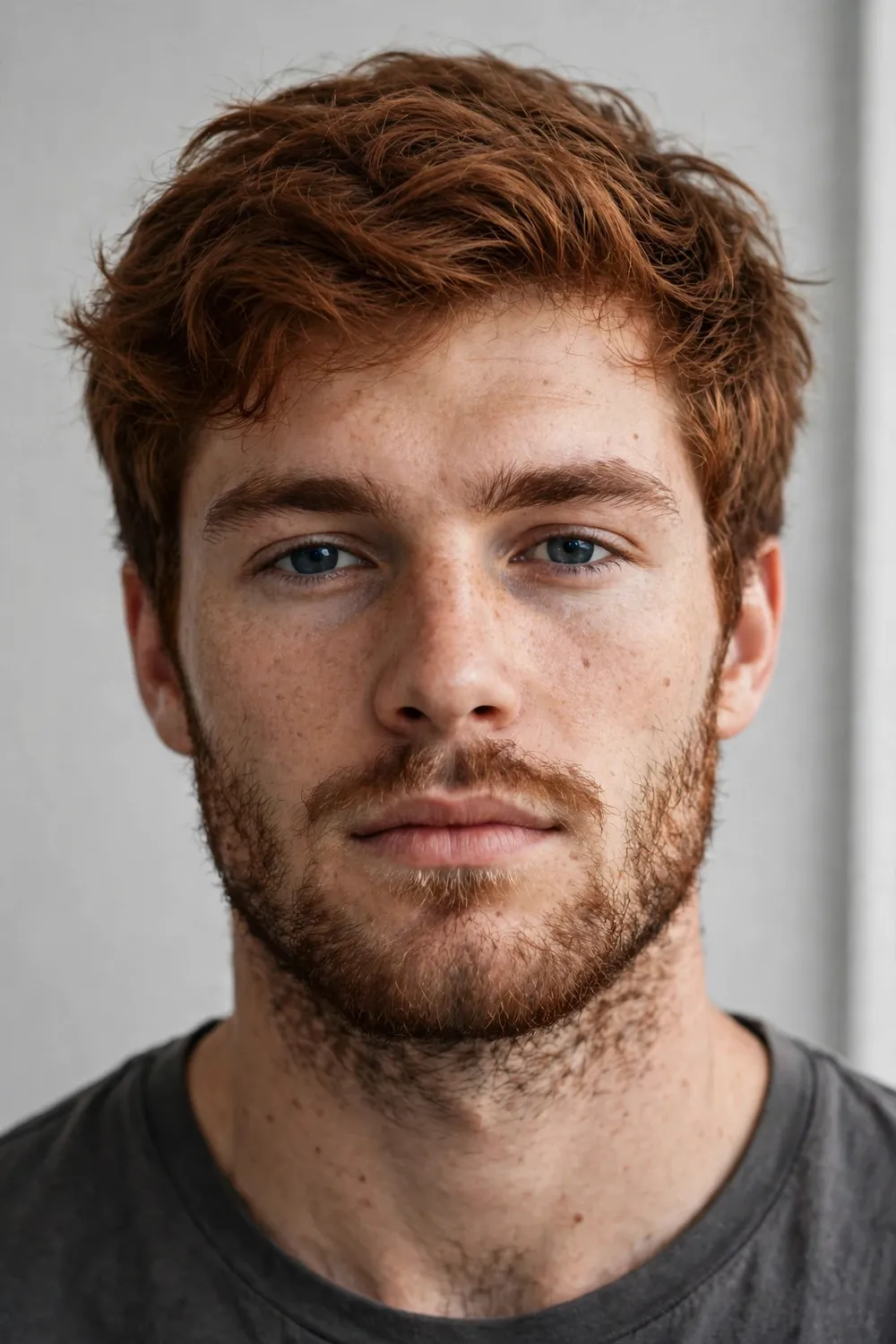
The shadow beard is under 1 mm of growth — the darkening along the jaw that shows a few hours after a shave, worn deliberately as a style. It’s the lowest-commitment beard there is, and it works best for men whose stubble is dark and dense enough to read as a shadow rather than dirt. It suits oval and square faces by adding definition to the jaw without any bulk. There’s no barber visit: you shave clean, then let it grow for a day, then shave again — the “style” is really a timing habit. Exfoliate before you shave and moisturise after, because the shadow look depends on healthy skin underneath; razor burn ruins it instantly. It’s also the honest answer for men who can’t grow a longer beard.

11. Beardstache
The Beardstache flips the usual balance: a full, thick mustache paired with light stubble, usually 2 to 3 mm, across the rest of the face. The mustache is the star, so it needs to be dense — if your mustache is thin, this style won’t work. It suits oval and square faces, and it’s a good pick for men whose chin growth is patchy, because the stubble is so short that gaps barely show. Grow the mustache for six to eight weeks while keeping the rest of the beard trimmed short every three or four days. Ask your barber for “full mustache, trimmed just above the lip, stubble on a No. 0.5 guard, clean neckline.” Maintenance is mostly mustache work: comb it daily and trim the lip line weekly.

Goatee & Chin-Focused Styles
12. Classic Goatee
The classic goatee is chin hair only — a tuft on the chin, no mustache, and clean-shaven cheeks. It’s one of the oldest beard styles still around, and it works best on round and oval faces because it adds length to the chin and narrows the face visually. It’s also the right choice if your cheek growth is thin or patchy, since the cheeks are shaved anyway. Grow the chin hair for three to four weeks, then shave the cheeks and neck clean and shape the chin patch to a neat rounded tuft, about 2 to 3 cm wide. Ask your barber for “a classic goatee, chin only, cheeks shaved clean.” Maintenance is shaving the cheeks every two or three days and trimming the goatee weekly.

13. Van Dyke Beard
The Van Dyke pairs a pointed chin beard with a disconnected mustache — the two never touch, and the gap between them is part of the look. It’s named after the 17th-century painter Anthony van Dyck, and it still suits men who want something with character: it flatters round and oval faces by adding a point to the chin. Grow the chin to about 4 to 5 cm and the mustache for five or six weeks, keeping the cheeks clean throughout. Ask your barber for “a Van Dyke — pointed chin beard, mustache disconnected, cheeks shaved clean, mustache ends shaped.” The upkeep is the fussy part: shave the cheeks every two days, trim the chin point with scissors weekly, and keep the mustache combed so the disconnect stays visible.
14. Anchor Beard
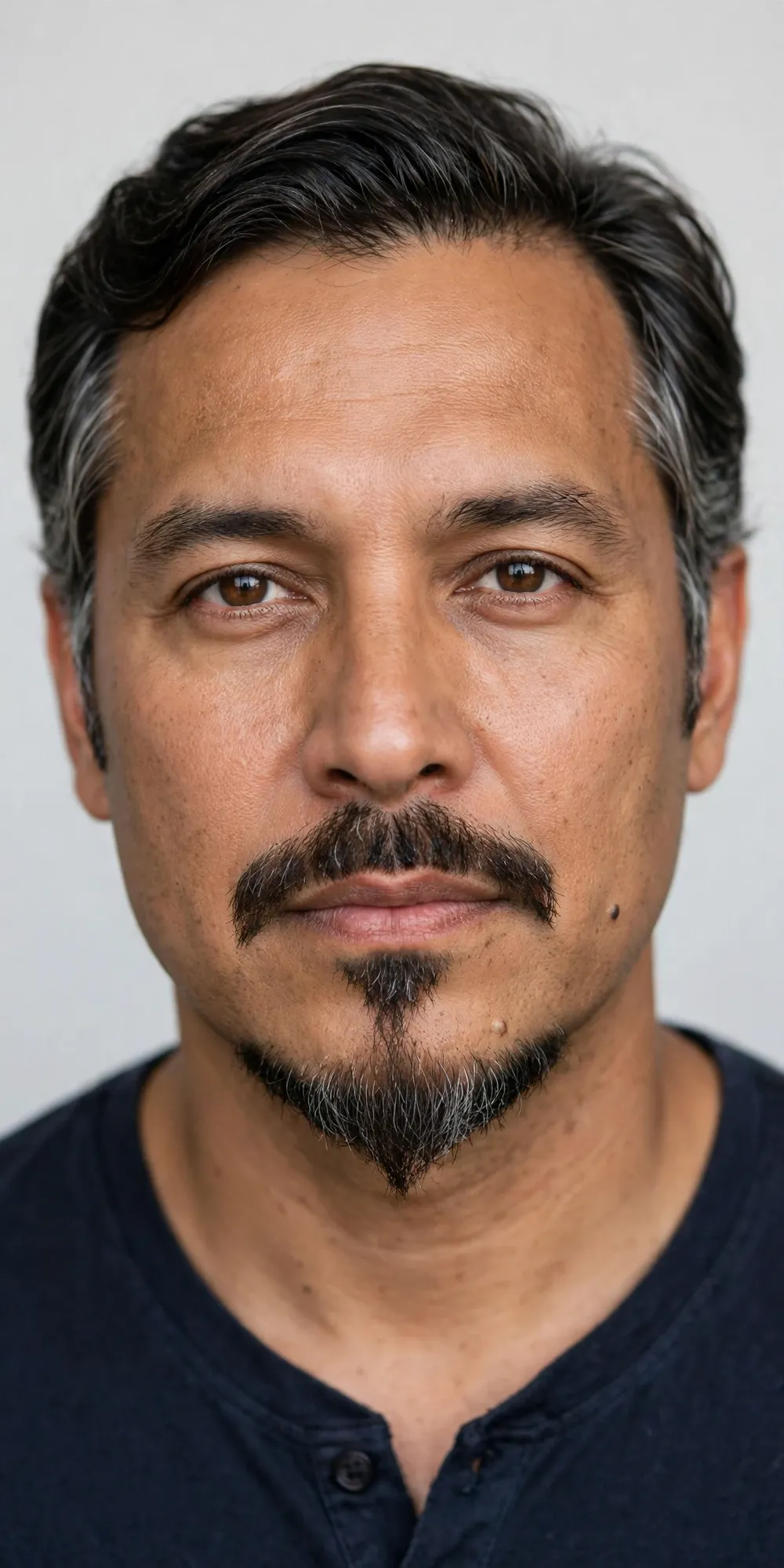
The anchor beard traces the jawline in the shape of an anchor: a pointed chin beard, a thin strip along the jaw, and a mustache, all connected. It’s a precise, sculpted style that suits oval and square faces, and it needs decent density along the jawline or the anchor’s arms look broken. Grow everything for four to five weeks, then shape it with a detail trimmer: the chin point is the bottom of the anchor, the jaw strips are its arms, and the mustache sits on top. Ask your barber for “an anchor beard — pointed chin, jawline strip, connected mustache, everything else shaved.” Maintenance is the real commitment here: shaving the cheeks and neck every two days, and a weekly trim to keep the lines sharp.

15. Circle Beard
The circle beard connects the mustache to the chin beard in a neat circle around the mouth — the classic “goatee with a mustache” most people picture when they hear the word goatee. It suits round and square faces, and it’s forgiving on patchy cheeks because they’re shaved anyway. Grow it for three to four weeks, then shave the cheeks and neck and shape the circle: the ring should be even, about 2 cm wide, with a clean outer edge. Ask your barber for “a circle beard — mustache connected to the chin beard, everything outside the ring shaved clean.” Maintenance is simple: shave outside the ring every two or three days and trim it weekly on a No. 1 or No. 2 guard.
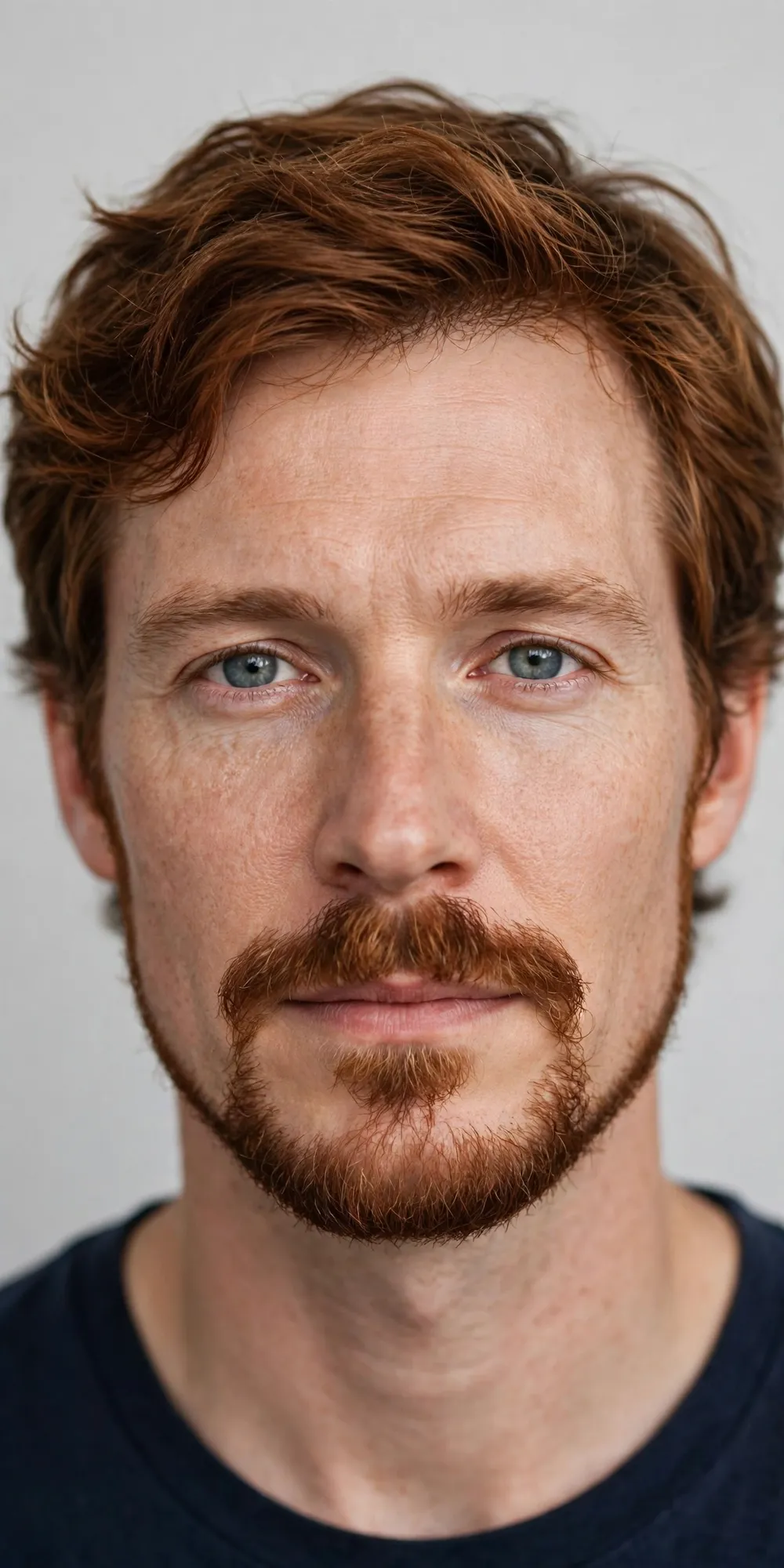
16. Balbo Beard
The Balbo is a floating mustache with a separate chin beard — the two never connect, and there’s no soul patch bridging them. It’s an Italian style with real character, and it suits oval and diamond faces because the chin beard adds weight where the face narrows. Grow the chin beard to about 3 to 4 cm and the mustache for five weeks, keeping the cheeks shaved clean. Ask your barber for “a Balbo — mustache floating, separate chin beard, no connection, cheeks clean.” The shaping is precise: the chin beard is trimmed to a neat rounded shape, the mustache is kept thick and combed, and the gap between them stays shaved. Maintenance means shaving the cheeks and the gap every two days and trimming the chin beard weekly.
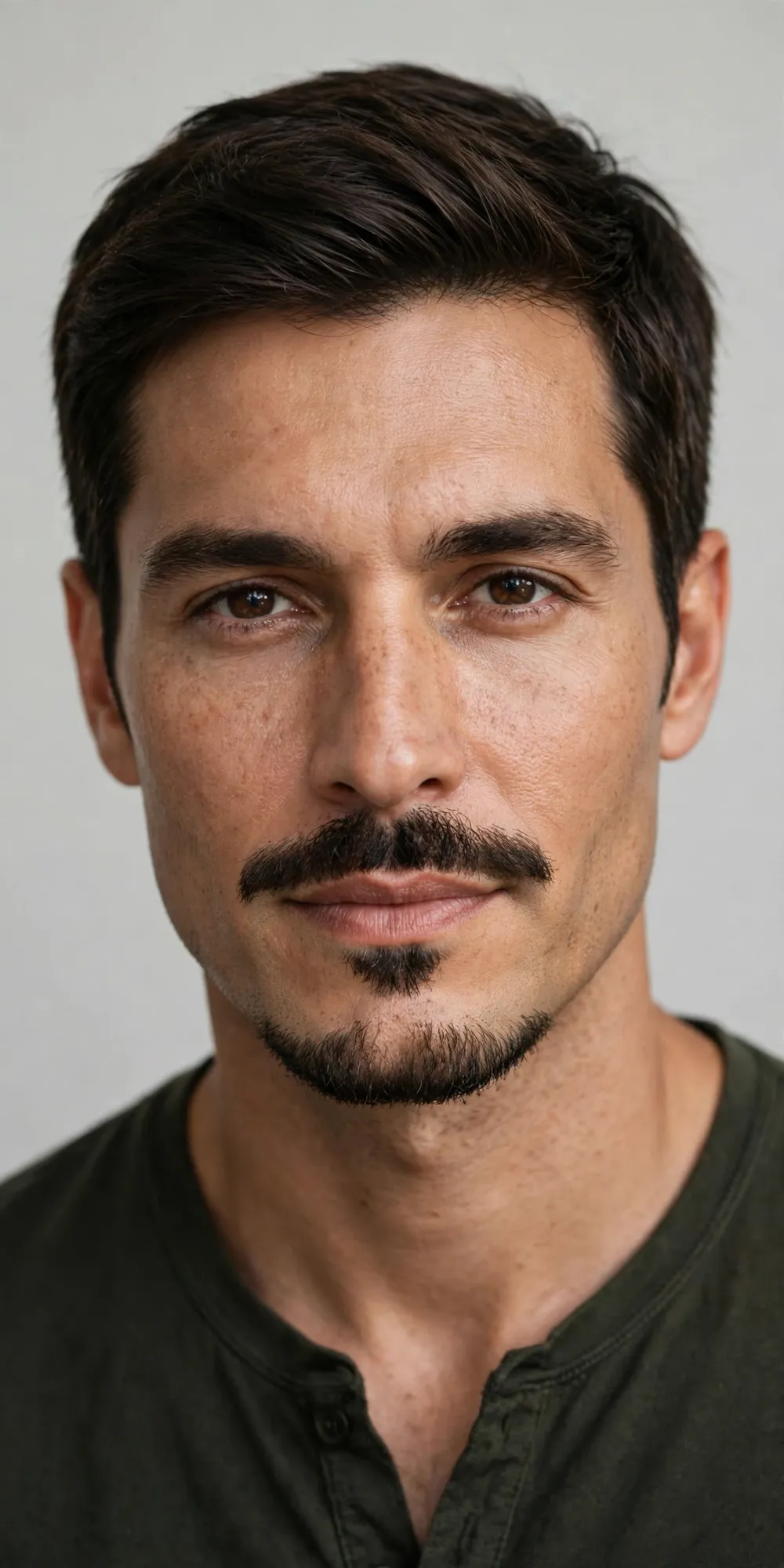
17. Soul Patch
The soul patch is a small tuft of hair directly below the lower lip — the smallest beard style there is. It suits any face shape, and it’s the perfect option if you can’t grow much elsewhere, because the patch is only about 1 to 2 cm wide. Grow it for two weeks, then shave everything else clean and shape the tuft into a neat triangle or rectangle. There’s barely a barber ask — “just leave the soul patch, take everything else off” — and most men do it themselves with a detail trimmer. Maintenance is a daily shave of the surrounding skin and a weekly trim of the tuft. On its own it’s a subtle touch; pair it with a mustache and it becomes the Zappa.
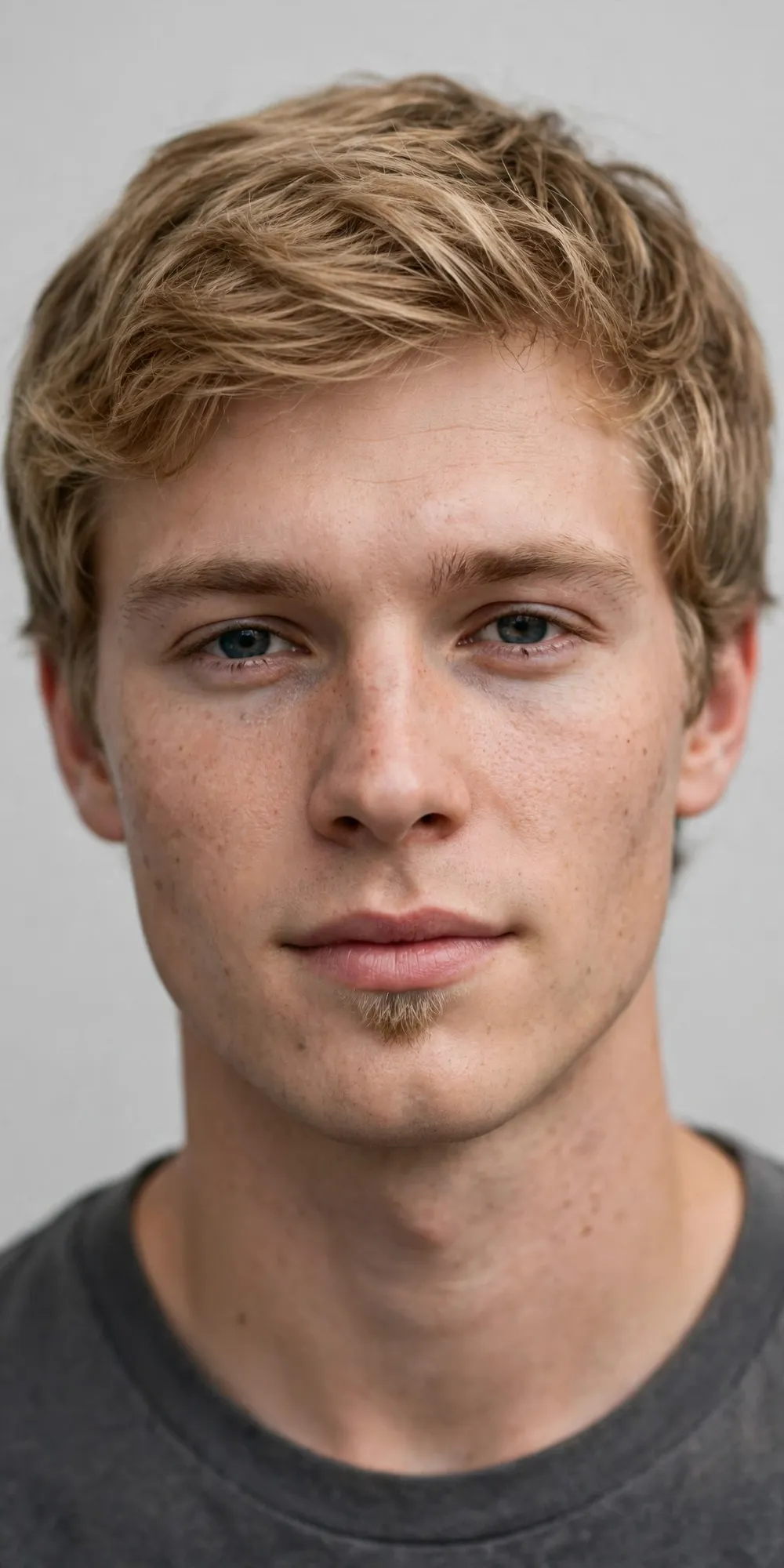
18. Extended Goatee
The extended goatee takes the classic chin beard and stretches it along the jawline toward the ears, so the chin patch links to thin strips framing your lower face. The cheeks stay shaved — a smart middle ground between a goatee and a short beard. It suits oval and square faces best, and men whose cheek growth is patchy — you only need solid coverage on the chin and jawline, not on the whole cheek. Ask your barber to keep the chin full, carve a clean cheek line, and taper the strips toward the ears. Keep it even with a #2 guard (6 mm), and tidy the cheek line with a detail trimmer every few days. Beard oil keeps the chin hair soft and stops it looking wiry.
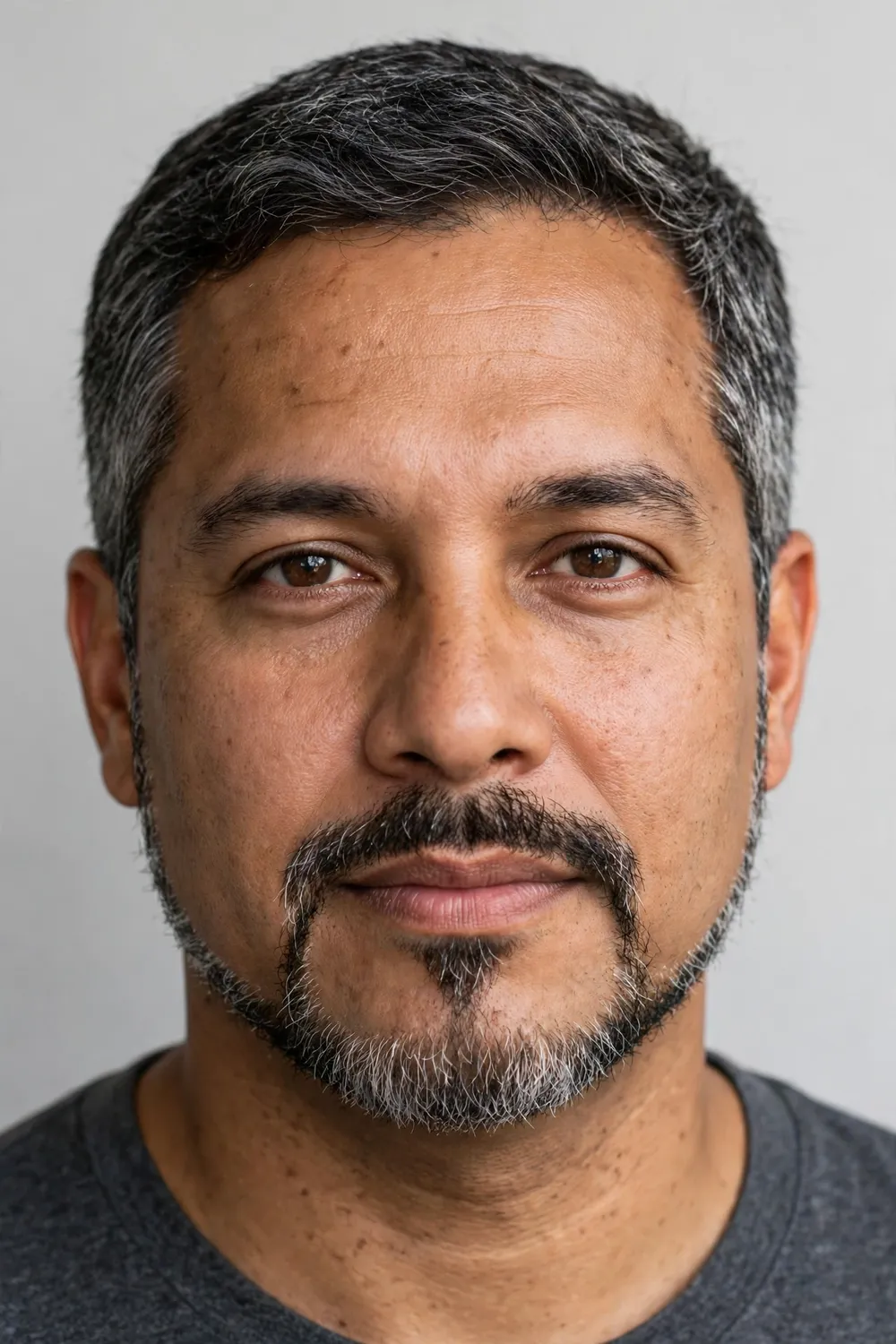
Jawline & Partial Beard Styles
19. Chin Strap Beard
The chin strap is a thin strip of hair that runs along the jawline from one ear to the other, with cheeks and chin shaved clean. It is a precise, graphic look — the line itself is the whole style, so a wobbly edge has nowhere to hide. It suits oval and square faces with a strong jawline, and men with even jawline growth but thin cheeks. Ask your barber to set the strap about a finger’s width, then keep the rest of the face clean-shaven. A detail trimmer or straight razor every day or two keeps both edges crisp, because a day of stubble blurs the line. A little beard balm keeps the strap tidy without shine.
20. Mutton Chops
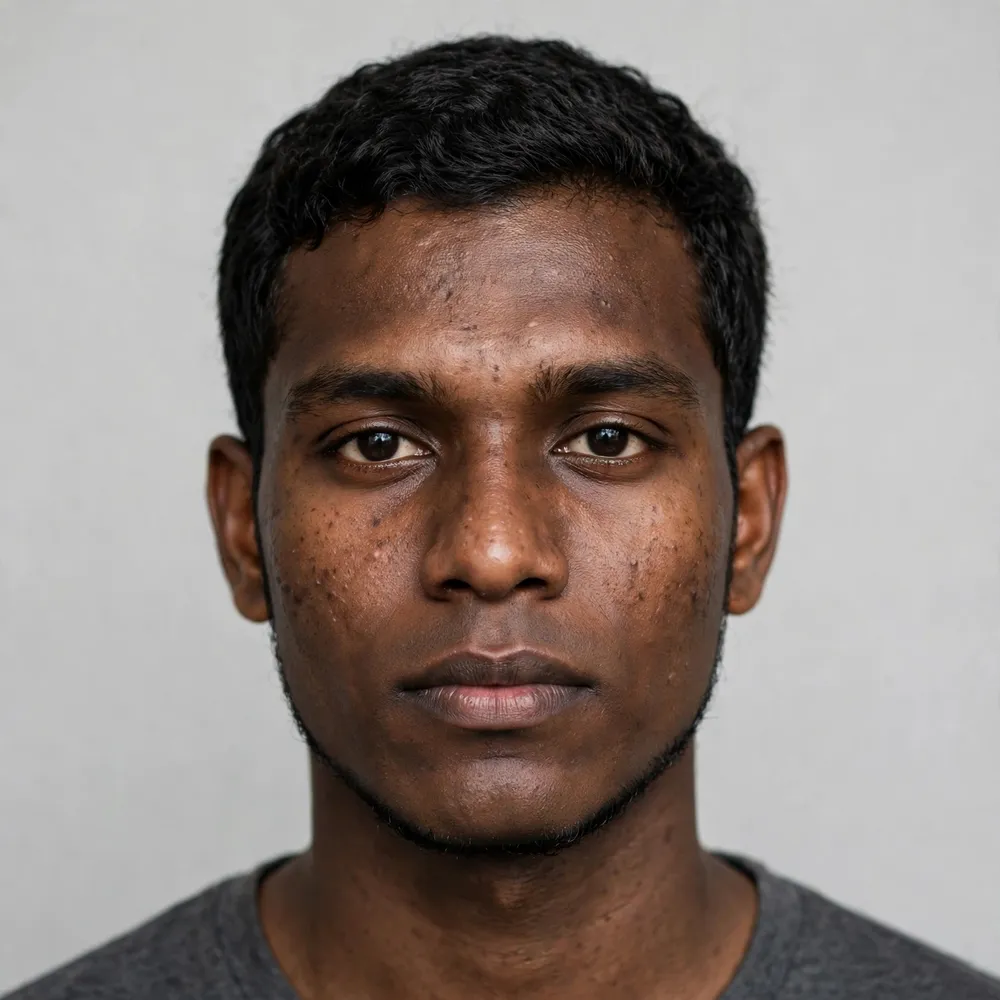
Mutton chops are thick sideburns grown down to the jaw, with the chin shaved completely clean. It is a bold, old-school look that has come back as a deliberate statement rather than a novelty — done well, it frames the face and shows off a strong jaw. It suits round and oval faces, and it needs thick, even growth on the cheeks and sideburns; thin or patchy cheek hair will not carry it. Ask your barber to keep the chops full and squared at the bottom, with a clean shave across the chin and under the lip. Trim the chops with a #3 guard (9 mm) and keep the edges sharp with a detail trimmer. Expect daily shaving on the chin, and a weekly tidy of the chop shape.
21. Chin Curtain (Lincoln Beard)
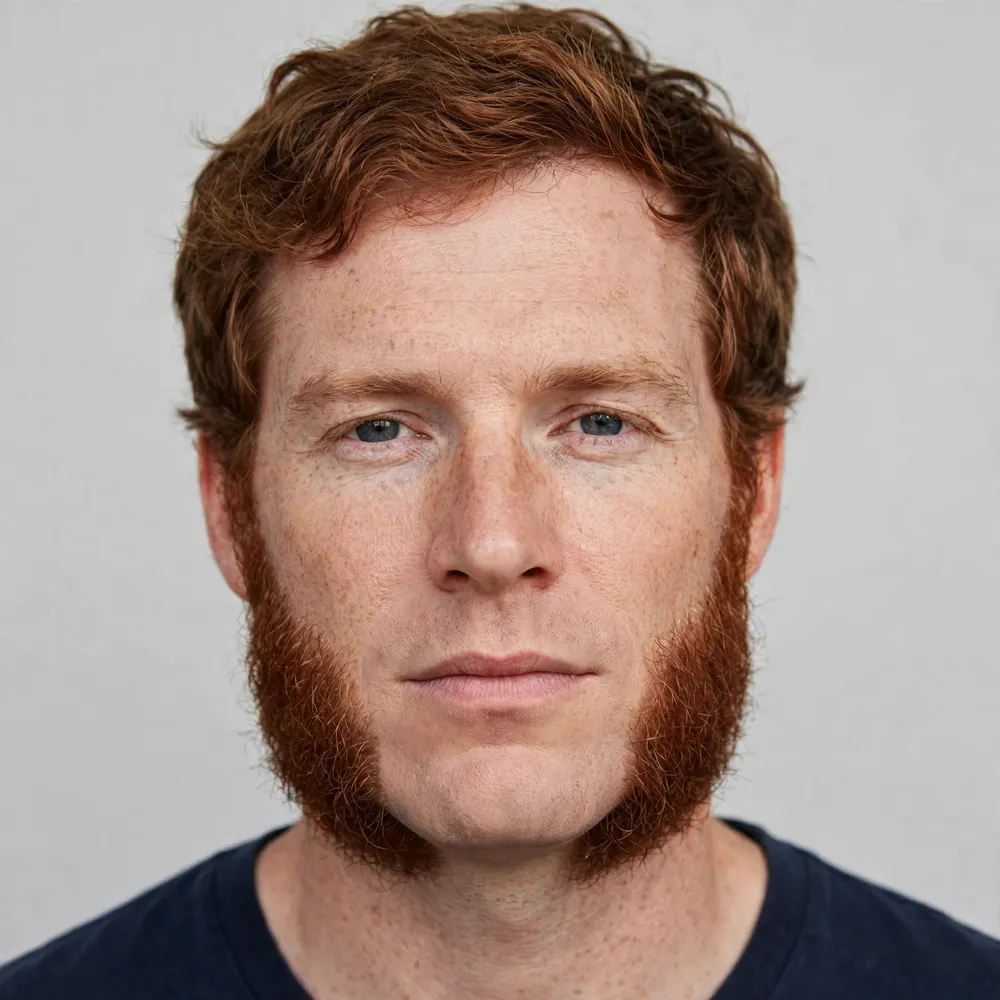
The chin curtain — the Lincoln beard — follows the jawline from ear to ear with no mustache at all. The hair hangs from the jaw like a curtain, which gives the face a longer, leaner look. It suits round faces that want more length, and oval faces that want a distinctive style. It needs even growth along the whole jawline, so patchy chins will struggle with it. Ask your barber to keep the curtain even, about 2–3 cm, and shave the mustache area and cheeks completely clean. A #2 or #3 guard keeps the length uniform, and a daily pass with a razor keeps the upper lip and cheeks smooth. Beard oil stops the longer hair from looking dry.

22. Hollywoodian Beard
The Hollywoodian is a jaw and chin beard with the sideburns removed, so the beard floats on the lower face without connecting to the hairline. It looks clean and intentional, and it is one of the easiest partial beards to wear with a modern haircut. It suits oval and square faces, and men whose sideburn growth is thin or who want the beard clearly separated from the hair. Ask your barber to keep the chin full, shape the jawline cleanly, and remove the sideburns entirely so there is a clear gap. A #2 guard (6 mm) keeps the length even, and a detail trimmer defines the cheek line and the gap at the ears. A little balm adds shape, and the style needs a tidy-up every three or four days.

Mustache-Forward Styles
23. Chevron Mustache
The chevron is a full, thick mustache that follows the upper lip and covers it completely — the classic 1970s look that has never really gone away. It works best on men who grow a dense mustache, because a thin chevron just looks like stubble above the lip. It suits oval, square and oblong faces, and it pairs well with short hair or a clean-shaven jaw, since the mustache does all the talking. Ask your barber to leave the mustache alone at the top and trim only the bottom edge so it sits just above the lip. Comb it down daily and use a small amount of mustache wax to keep the ends in place. Trim the lip line every few days so it never hangs into your mouth.
24. Handlebar Mustache
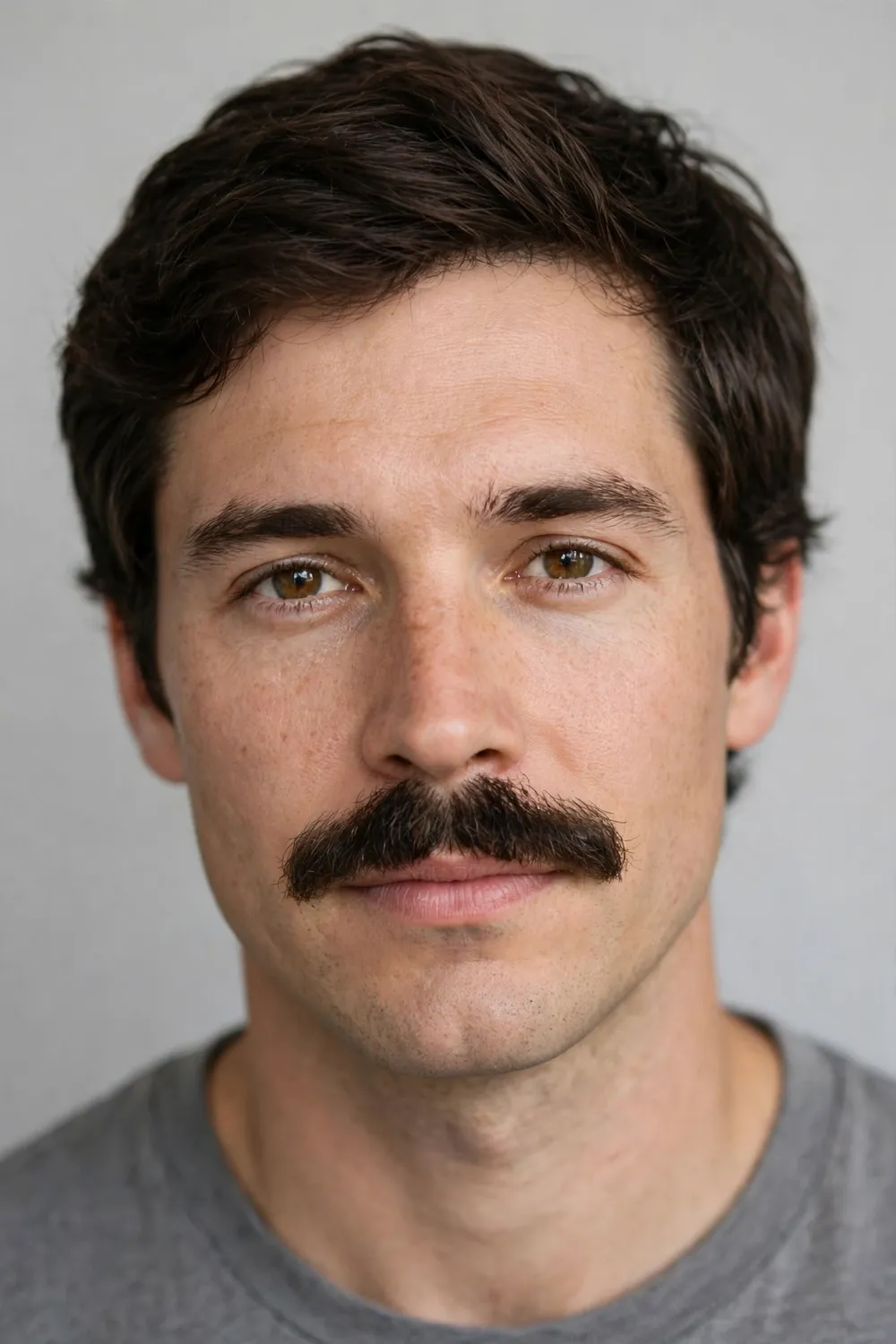
The handlebar is a long mustache with the ends curled upward, shaped with wax into the classic curl. It is a statement look that takes patience — you need several months of growth before the ends are long enough to curl properly. It suits oval and square faces, and men with thick mustache growth; fine hair will not hold the curl. Ask your barber to trim only the centre above the lip and leave the ends long, then shape the curl yourself with a strong-hold mustache wax, warming a pea-sized amount between your fingers and twisting the tips upward. Comb it through each morning and re-wax the ends during the day. Expect a few minutes of styling every morning — this is not a wash-and-go style.
25. Horseshoe Mustache
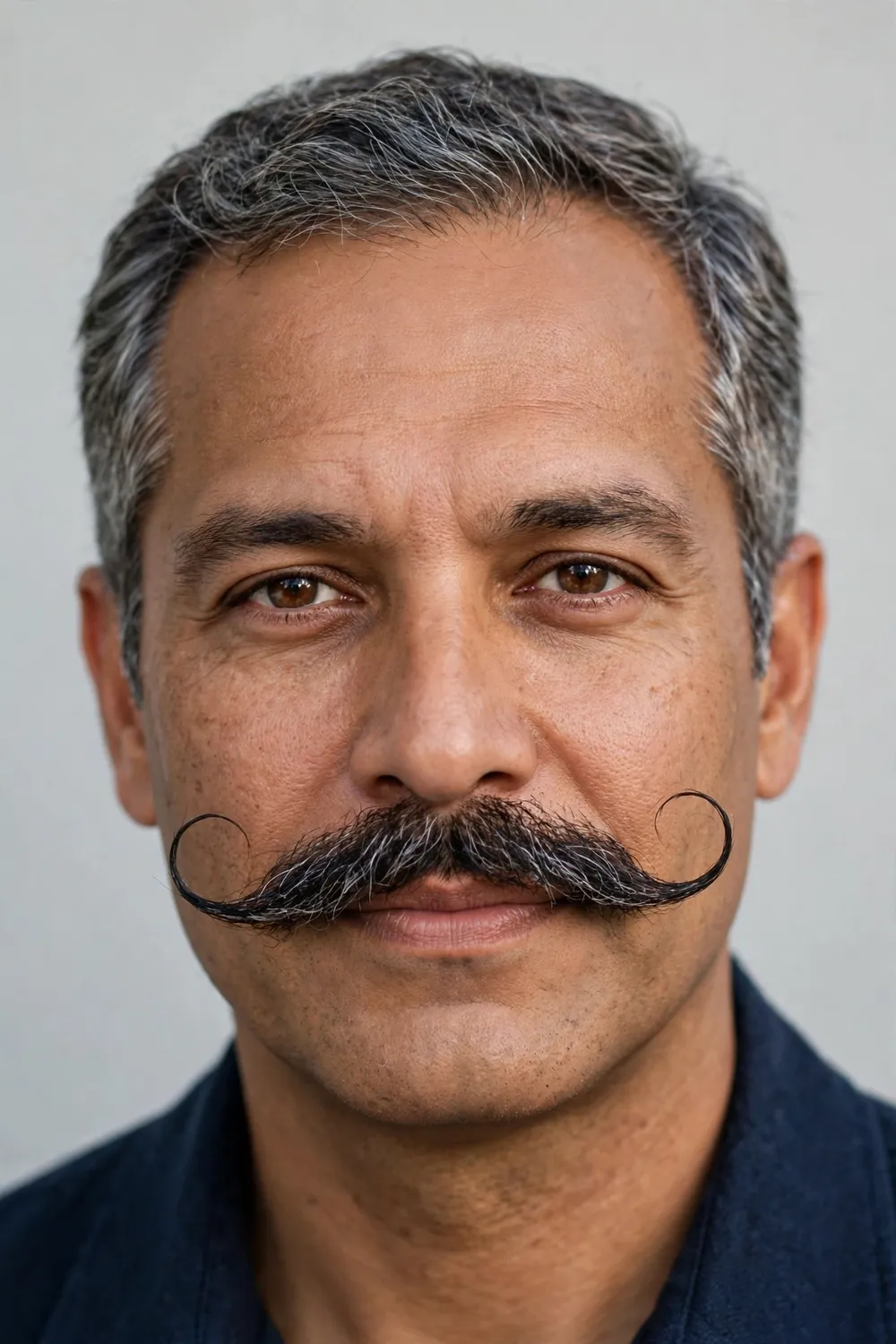
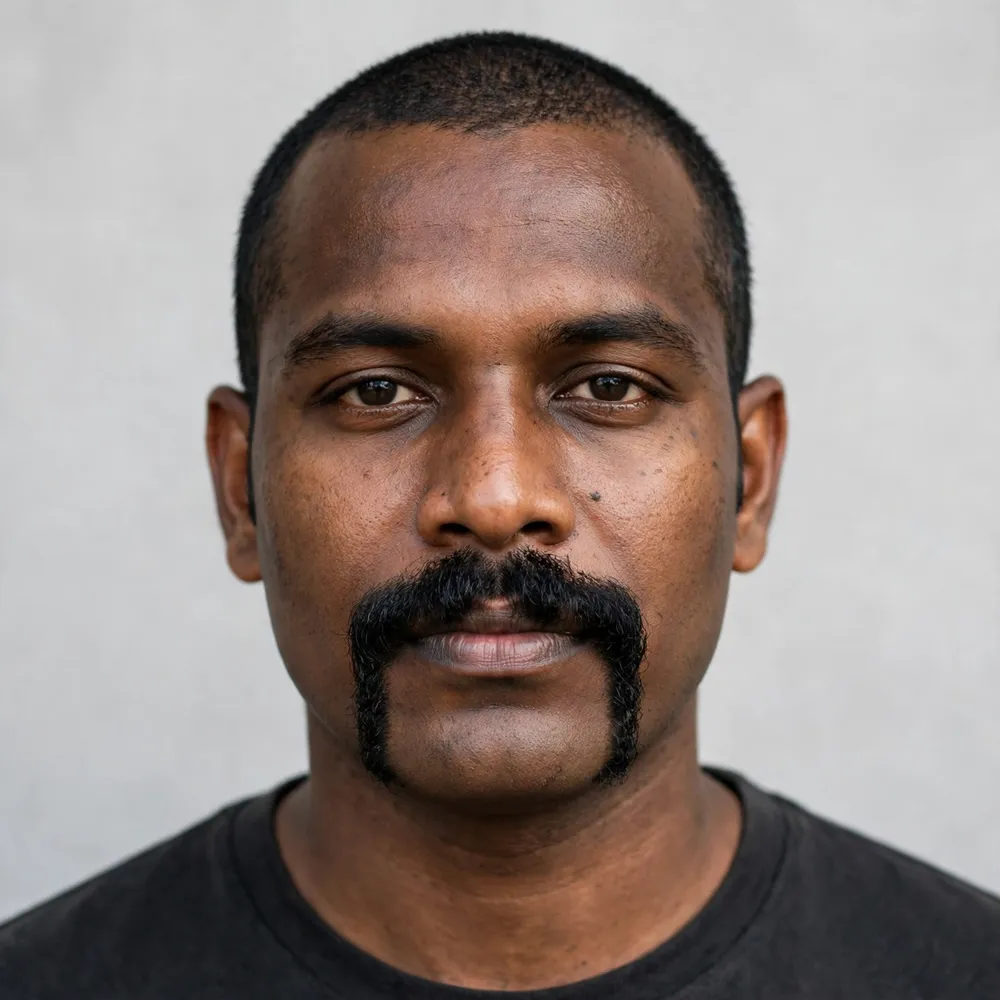
The horseshoe runs down from the upper lip in two vertical strips toward the jawline, leaving the chin clean — the shape that gives it its name. It is a heavy, masculine look that works best with thick mustache growth and a strong jaw. It suits square and oval faces, and it is a good choice for men who can grow a dense mustache but have patchy cheek hair, since the cheeks stay shaved. Ask your barber to keep the strips wide and even, about a finger’s width, and to shave the chin and cheeks completely clean. A detail trimmer keeps the inner edges straight, and you will need to shave the chin daily to keep the shape clear. Mustache wax keeps the strips lying flat and tidy.
26. Zappa Mustache
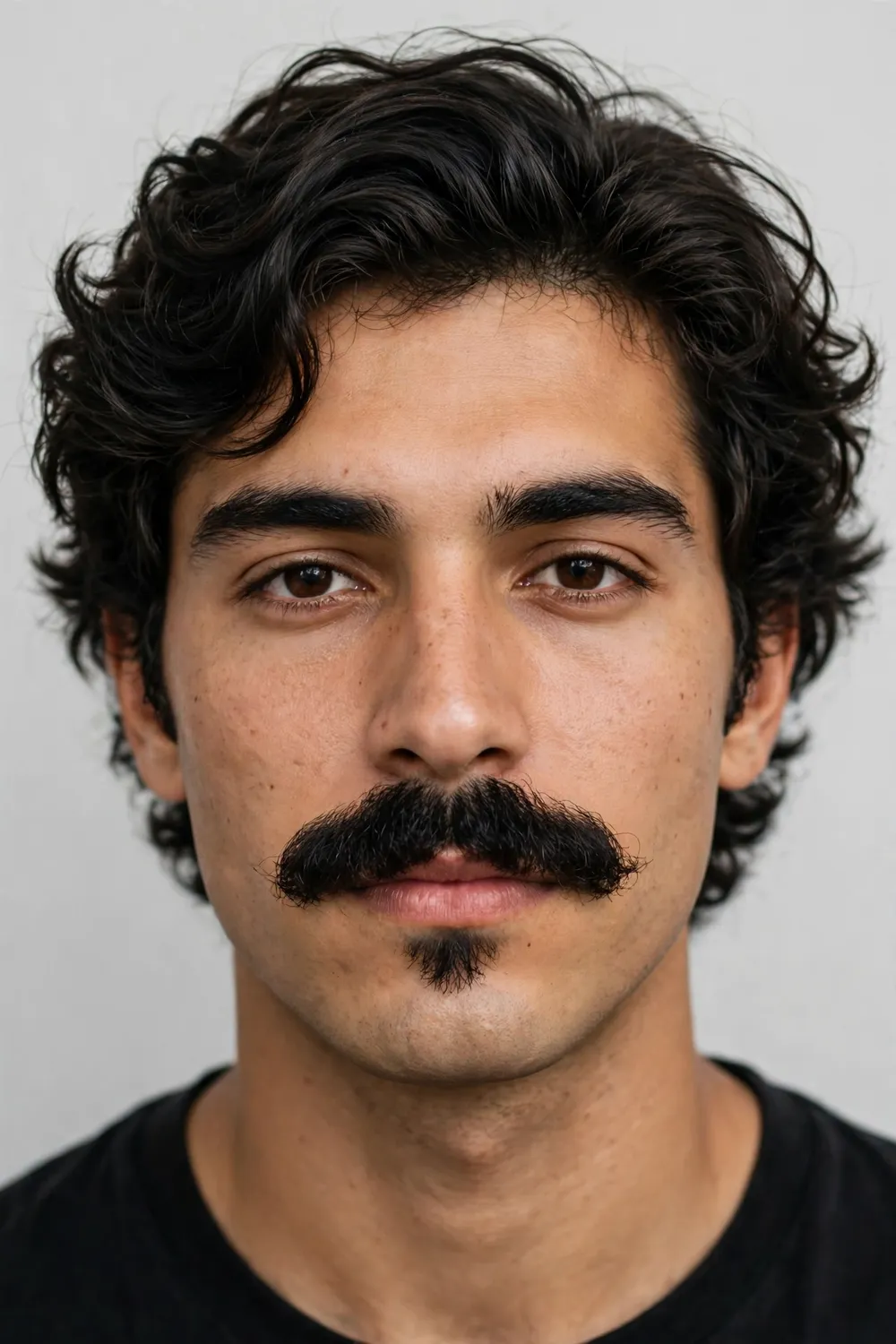
The Zappa pairs a thick mustache with a soul patch below the lower lip, and nothing else — a look named after Frank Zappa that still turns heads. It suits oval and round faces, and men with strong mustache growth who want something distinctive without committing to a full beard. Ask your barber to keep the mustache full and wide, leave a small soul patch under the lip, and shave everything else clean. The mustache needs a trim along the lip line every few days so it stays out of your mouth, and the soul patch should be kept small and neat with a detail trimmer. A touch of wax holds the mustache shape, and the daily shave of the cheeks and chin is what keeps the look sharp.
Modern & Statement Beard Styles
27. Beard Fade
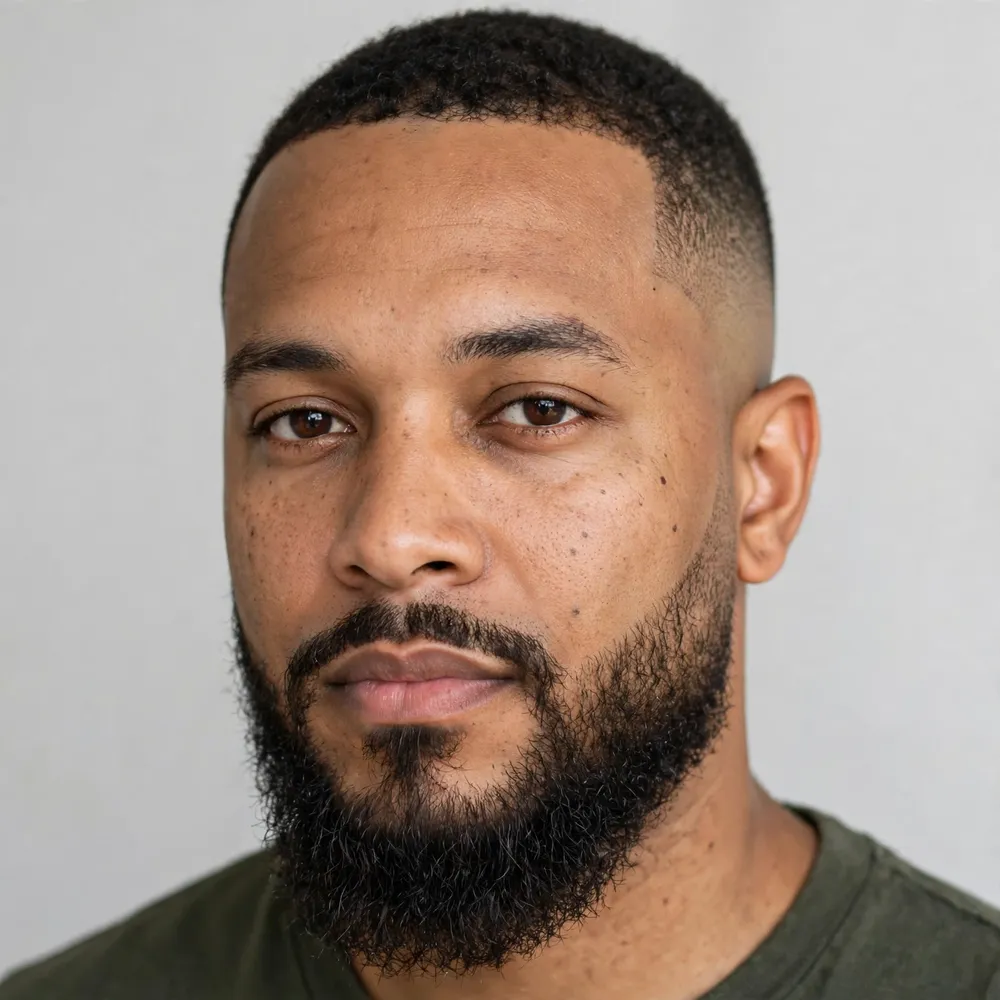
The beard fade blends the beard from the sideburns down into the jawline, going from near-bare skin at the ears to full length at the chin — a skin fade, applied to the beard. It looks sharp and modern, and it suits men who want a full beard without the bulk at the cheeks. It suits every face shape, but it shines on square and oval faces with a matching fade haircut. Ask your barber to start the fade at the sideburns, usually a #0 or #1 guard at the top blending into a #3 or #4 at the chin. A fade needs a barber visit every two weeks to stay crisp, and a boar bristle brush plus a little balm keeps the longer chin hair lying neatly.
28. Imperial Beard
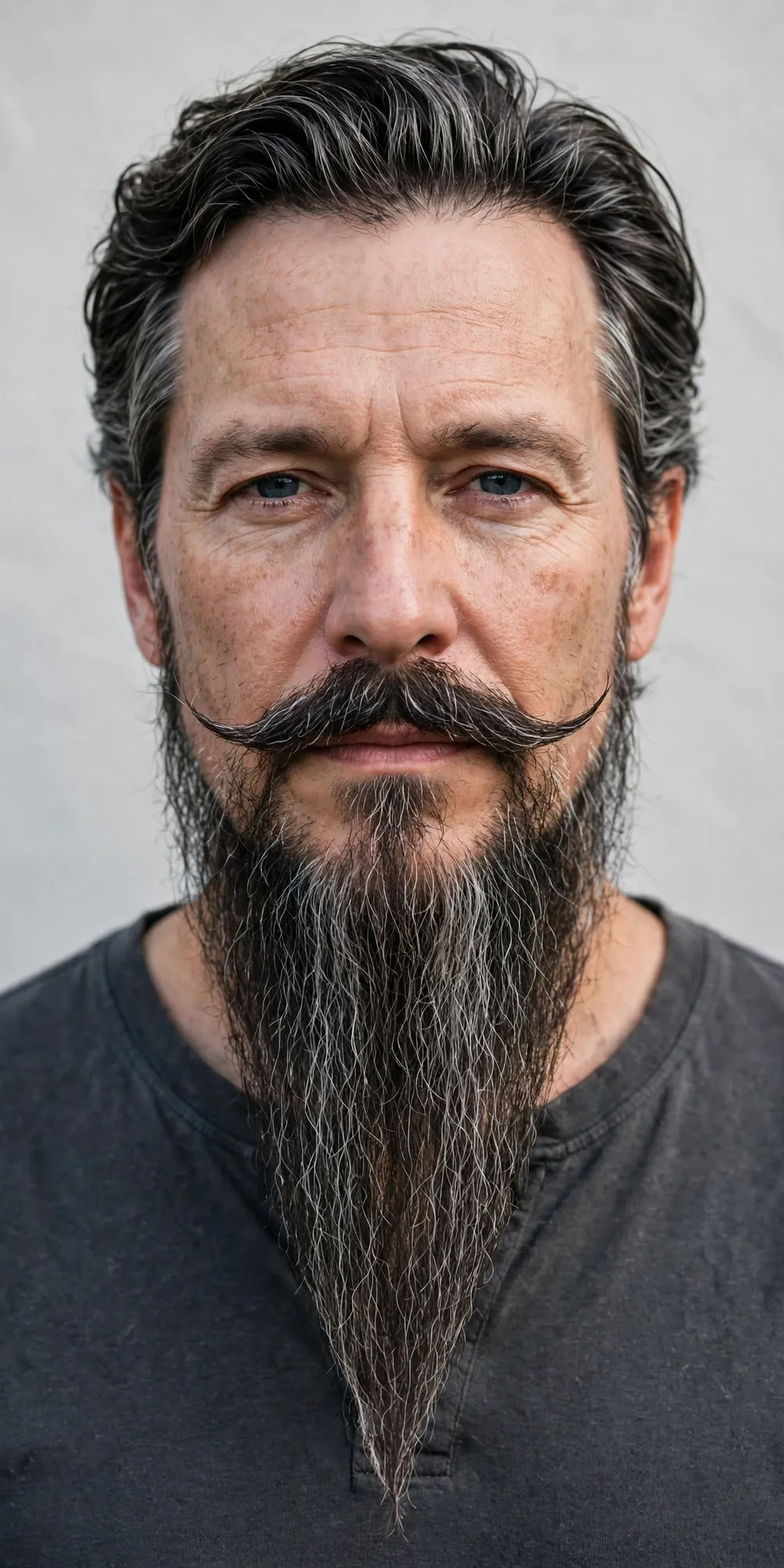
The imperial is a long, pointed beard paired with a styled, upturned mustache — a regal, old-world look that demands commitment. You need at least six months of growth before the beard is long enough to shape into its point, and the mustache has to be waxed upward every day. It suits oblong and oval faces best, since the length adds drama without widening the face. Ask your barber to taper the sides, keep the point centred on the chin, and shape the mustache so it sweeps up and out. A strong-hold mustache wax is essential, and beard oil keeps the long hair soft rather than straw-like. Comb it through daily and trim split ends monthly — this is a high-maintenance style that rewards the effort.
29. French Fork Beard
The French fork splits a full beard into two points at the chin, like a fork — a bold style that has been around for centuries. It needs serious length — six months or more of growth — and thick hair that holds two separate points. It suits oval and oblong faces, and it is best on dense, straight or slightly wavy growth; very curly hair will not split cleanly. Ask your barber to part the beard at the centre of the chin and taper each side into its own point, keeping the cheeks neat so the fork is the focus. Beard oil and a little balm keep the two points separated, and you will need to re-split the fork after every wash. Trim the points every few weeks.
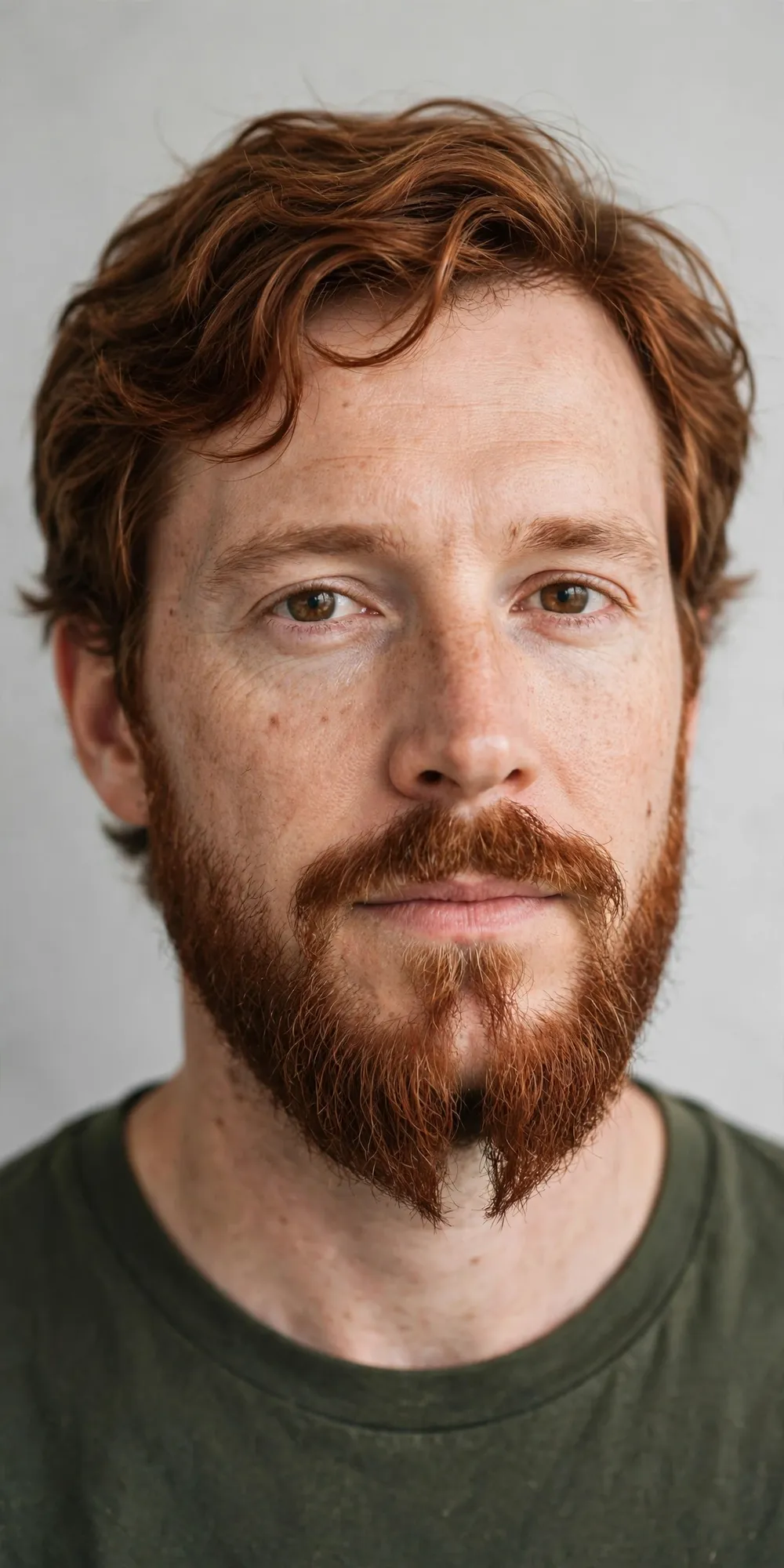
30. Royale Beard
The royale is a pointed chin beard paired with a thin, neat mustache — a refined look between a goatee and a full beard. The chin hair comes to a soft point while the mustache stays slim and controlled, which gives the face a longer, more elegant shape. It suits oval and oblong faces, and men with a decent chin beard but patchy cheeks. Ask your barber to keep the chin pointed, trim the mustache thin and even, and shave the cheeks completely clean. A #2 guard keeps the chin beard even, and a detail trimmer shapes the point and the mustache line. Shave the cheeks every day or two, and a drop of oil keeps the point polished rather than scruffy.

31. Petit Goatee
The petit goatee is a small, neat goatee with a trimmed mustache — the understated, short and tidy version of the classic goatee. It suits almost every face shape, and it is one of the best choices for men with lighter or patchier growth, since the small area is easier to keep looking full. It also works well in offices and formal settings. Ask your barber to keep the goatee compact, about 1 cm long, with a clean, defined outline and a short, even mustache. A #1 or #2 guard keeps the length right, and a detail trimmer defines the edges every two or three days. A tiny amount of balm is enough — too much product will overwhelm such a small area of hair.
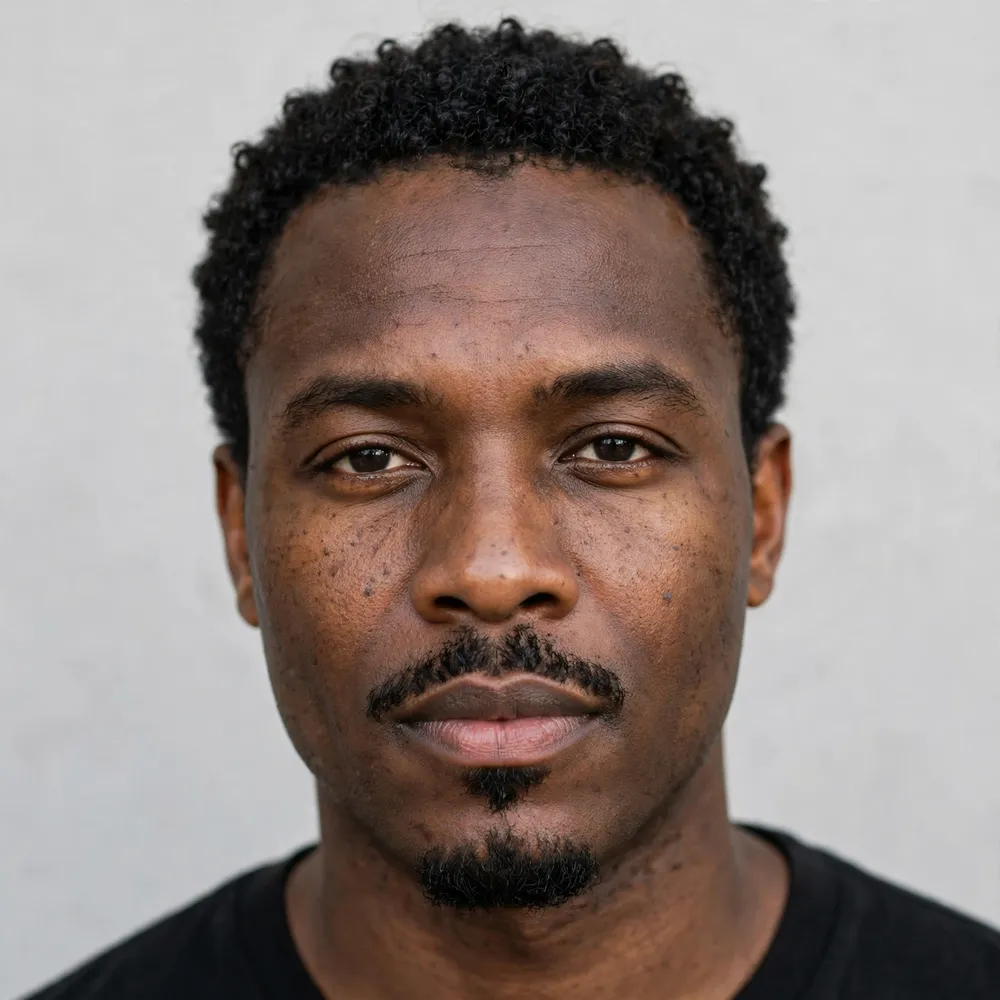
32. Bushy Beard
The bushy beard is a thick, full beard worn wide and natural, with minimal shaping — volume is the whole point. It suits men with dense, fast-growing hair, and it works best on square and oval faces that can carry the width without looking swamped. It is not a lazy style, despite the name: a bushy beard needs regular washing, oiling and brushing, or it turns into a tangled mess. Ask your barber to take off split ends and keep the neckline and cheek line clean, but otherwise leave the bulk alone. Wash it two or three times a week with beard wash, work in beard oil daily, and brush it with a boar bristle brush to keep it full but tidy. Trim the wild hairs every couple of weeks.
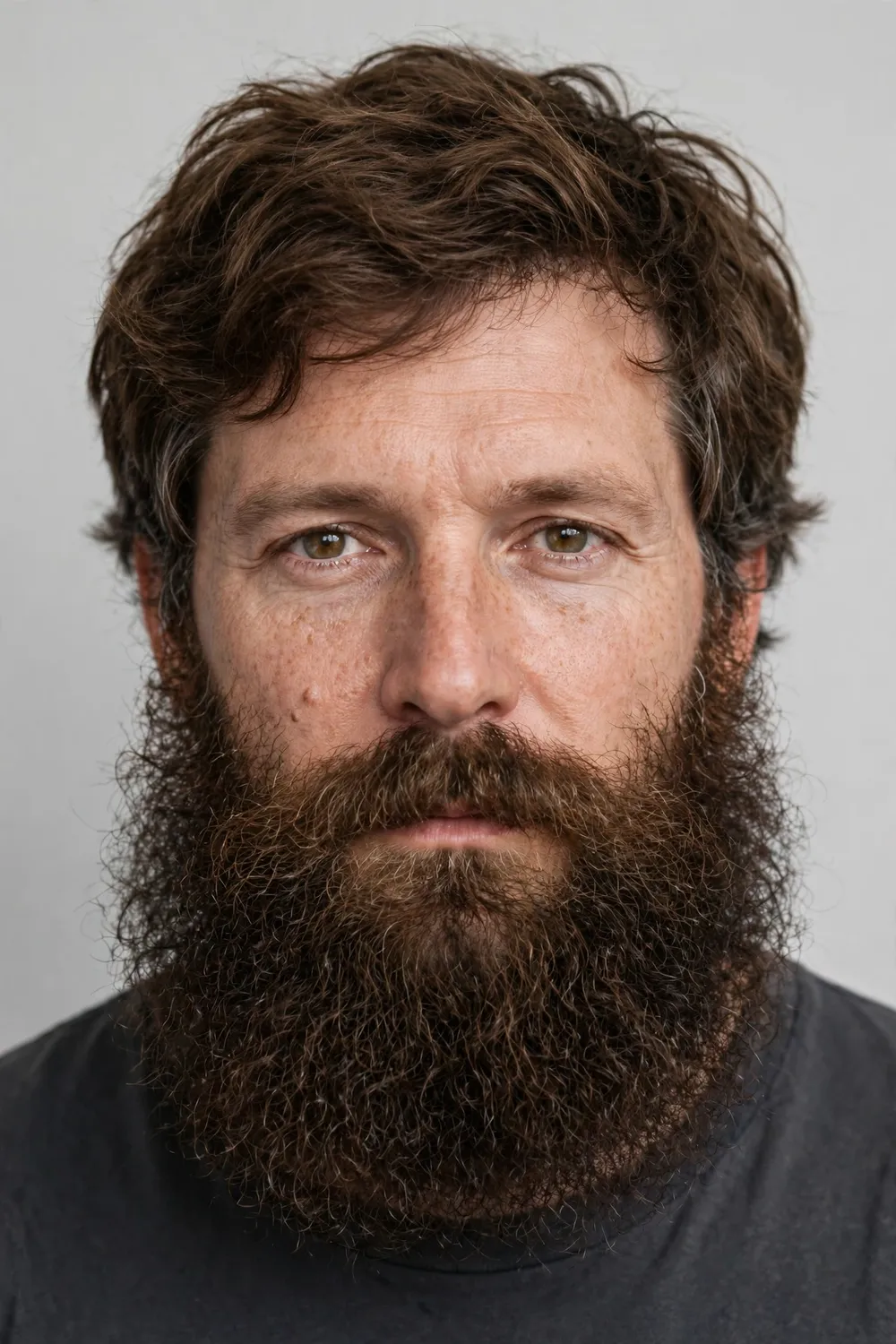
33. Tapered Beard
The tapered beard is a full beard that is longer toward the chin and shorter at the cheeks, so the shape stays controlled and neat rather than boxy. It suits round faces especially well, because the taper adds length and structure, and it works on any face shape that wants a full beard without bulk. Ask your barber for a taper that blends from a #1 or #2 guard at the cheeks down to a #4 or #5 at the chin, with a clean neckline. It needs a barber visit every two to three weeks to hold its shape, and a boar bristle brush plus a little balm keeps the chin hair sitting neatly. It is the full beard for men who want polish.
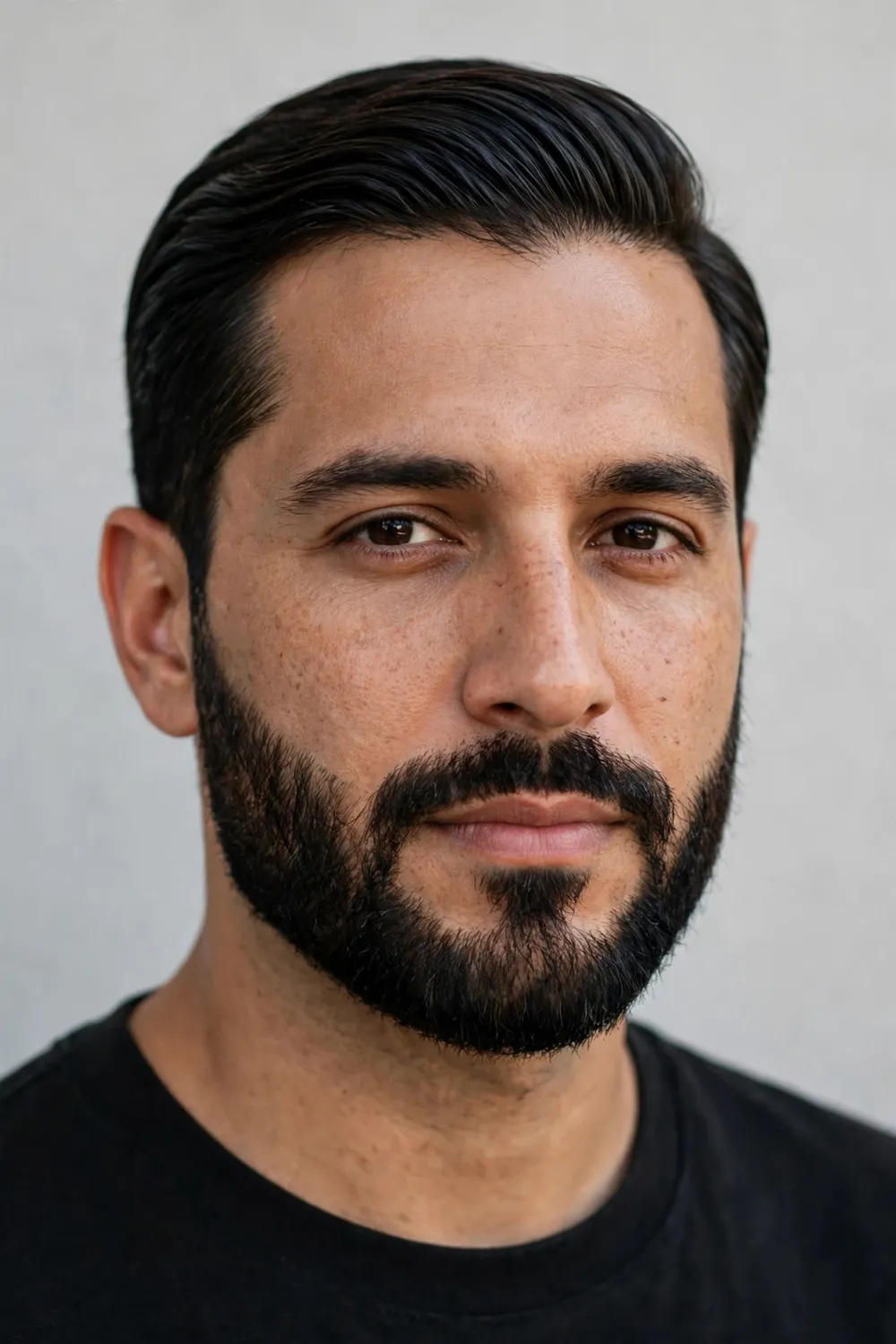
How Do You Grow a Beard That Fills In Well?
Most beards look patchy in the first few weeks, and that is normal — the only fix is time. In weeks 1–2, just let it grow and resist the urge to shape anything; you are finding out where your hair actually grows. By weeks 3–4 you will have enough length to see the real pattern, and this is when most men give up — do not. Weeks 5–8 are when the longer hairs start covering the thinner spots, and the beard begins to look like a beard rather than stubble. Wash it two or three times a week with a gentle beard wash, brush it daily with a boar bristle brush to train the direction, and work in a few drops of beard oil to keep the skin underneath from drying out. Eat well, sleep properly and be patient: oils and supplements do not change where your hair grows, and any product that promises to fill patches is selling hope, not hair. If your beard is still very patchy after eight to ten weeks, the honest answer is that a shorter style — stubble, a goatee or a chin strap — will look better than forcing a full beard. And if you get persistent ingrown hairs, redness or itchy skin that does not settle, see a dermatologist rather than trying stronger products on irritated skin.
How to Trim and Maintain Your Beard at Home
A good home routine is simple, but it needs doing regularly. First, set the neckline: put two fingers above your Adam’s apple and shave everything below that line — a neckline set too high makes the beard look small, and one set too low looks untidy. Next, the cheek line: follow your natural growth line rather than drawing a straight edge, and only tidy the stray hairs above it. Trim the length with a beard trimmer, starting with a longer guard than you think you need — you can always go shorter, but you cannot put hair back. Work with the grain, then tidy the edges with a detail trimmer and a sharp razor. The tools worth owning are a decent trimmer with guards, a detail trimmer, small scissors for strays, and a boar bristle brush. After trimming, wash the beard, work in a few drops of beard oil while it is still slightly damp, and finish with a little balm if you want hold. The whole routine takes about ten minutes, once or twice a week.
How Should Your Beard Match Your Haircut?
Your beard and your haircut should look like they were planned together, not chosen separately. A fade haircut with a beard fade is the cleanest pairing: the fade in the hair blends into the fade in the beard, and the whole head looks like one shape. If you are not sure which fade to ask for, our guide to low fade haircuts for men explains the options. A buzz cut with a full beard is another strong match — the short hair makes the beard the feature, and the contrast is sharp. See our buzz cut hairstyles for men for the lengths that work best. A bald head pairs well with a medium or full beard, because the beard gives the face the frame the hair used to provide; our haircuts for a balding crown cover that balance in detail. Long hair with a fuller beard works too, but keep the beard groomed — long hair plus an unkempt beard reads as neglect, not style. Short hair with a short beard is the safest all-round pairing; our short haircuts for men show how the lengths line up. The rule is simple: if the hair is sharp, the beard should be sharp too.
5 Beard Mistakes to Avoid
- Shaving your neckline too high. A neckline cut up to the jaw makes the beard look small and the chin look weak. Keep it two fingers above the Adam’s apple.
- Trimming too early. Cutting a beard before week four means you are shaping hair that has not finished growing in. Let it fill out first, then shape it.
- Skipping beard oil. A dry beard itches, looks dull and breaks more easily. A few drops of oil a day is the cheapest upgrade you can make.
- Drawing a straight cheek line. Your natural cheek line is almost never a straight edge. Follow the growth, tidy only the strays, and the beard will look like it belongs to you.
- Using the wrong guard. Starting with a guard that is too short is the most common home-trimming disaster. Always start longer than you think you need, check in the mirror, then step down one guard at a time.
Beard Styles for Men — FAQs
How many types of beard styles are there?
There is no single official count — Wikipedia’s Beard article lists dozens of named styles, from the full beard and the goatee to the Van Dyke, the Garibaldi and the French fork. In practice, most styles fall into five families: full beards, short beards, goatees and chin-focused styles, jawline and partial beards, and mustache-forward looks. This guide covers 33 of the most wearable ones, so you can pick a family first and then a style inside it.
What beard style do women find most attractive?
Surveys and studies usually put heavy stubble and the short boxed beard at the top — they read as masculine without looking unkempt. That said, attraction is personal, and a style that suits your face and that you keep well groomed will always beat a fashionable style worn badly. Pick the beard that fits your growth and your face shape, keep the lines clean, and the style will take care of itself.
Can I switch beard styles without shaving everything off?
Yes, in most cases. Moving from a full beard to a short boxed beard, a goatee or a chin strap is just a matter of trimming away what you do not need. Going the other way — from a goatee to a full beard — takes regrowth, usually four to eight weeks. The only switch that needs a clean shave is when you want to reset the neckline or cheek line completely, or when you are changing to a style that needs a different growth pattern, like a handlebar mustache.
How long should I wait before deciding a beard style is not working?
Give it at least four weeks, and ideally six to eight. Beards change a lot as they grow: the first two weeks look patchy for almost everyone, and the shape only settles once the hairs are long enough to lie down and cover the thin spots. If after eight weeks the style still looks wrong — the patches are not filling, or the shape fights your face — then it is time to try a different style, not to give up on beards altogether.
Should my beard always match my haircut?
It should look coordinated, but it does not have to match in length. A short haircut with a longer beard works well, and a longer hairstyle with a short beard works too. What matters is that both are kept to a similar standard of grooming: a sharp haircut with a scruffy beard looks unfinished, and a neat beard with overgrown hair looks the same. Ask your barber to look at both together at every visit.
Which beard style suits a round face?
Styles that add length and structure work best on a round face: a ducktail beard, a tapered beard, a Van Dyke, or an extended goatee. All of them draw the eye downward and make the face look longer. Avoid styles that add width at the cheeks, like a bushy beard or a wide Garibaldi, and keep the sides of the beard shorter than the chin.
How do I fix a patchy beard?
First, give it time — eight weeks of growth covers more patches than most men expect. Keep it clean, brush it daily to train the hairs over thin spots, and use beard oil to keep the skin healthy. If the patches are still obvious, choose a shorter style that works with your growth, like stubble, a goatee or a chin strap. Oils, serums and supplements cannot make hair grow where it does not grow. If the patchiness is sudden, or comes with redness, flaking or hair falling out in clumps, see a dermatologist.
Final Word
The right beard is the one that fits your face, your growth and your life — not the one on the poster. Pick a style from this guide, give it six to eight weeks, keep the lines clean, and let your barber shape it properly at least once so you know what you are maintaining at home. And if you want more ideas for the hair on top, browse the Hair Groom blog — there is a style there for every length.