

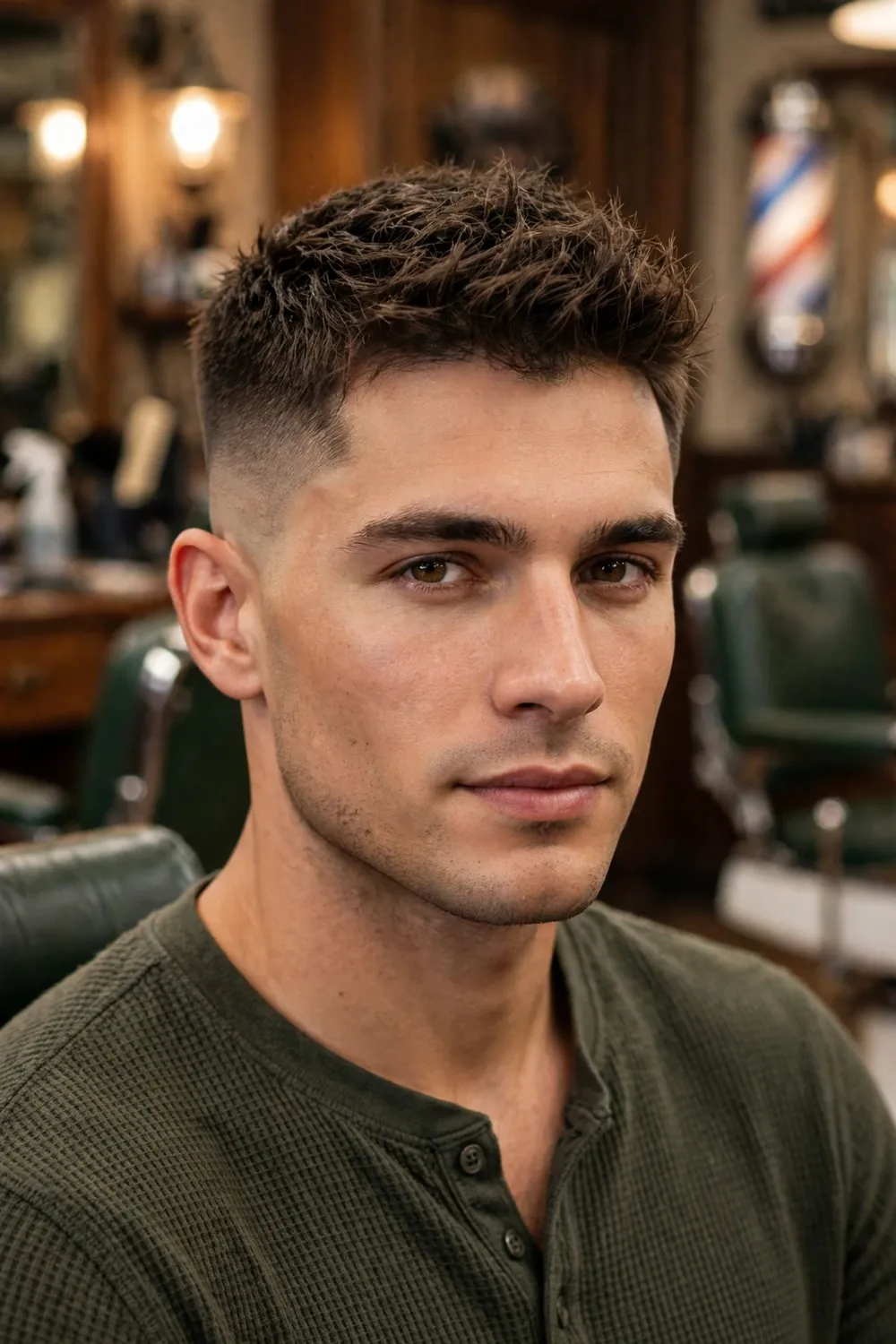
A low fade is the quietest fade there is — the blend starts about half an inch above your ear and melts into the hair above it, so you get a clean, tidy edge without the sides disappearing halfway up your head. That is the whole appeal of low fade haircuts: they look sharp in a meeting, at a wedding, or on a school run, and they never shout. This guide covers 55 of them, from the classic cuts your barber could do in his sleep to skin fades, drop fades, curls, and designs — each one with what to ask for, who it suits, and how much looking after it really takes.
Our top 3 picks: if you only read three entries, make them the Classic Low Fade (#3) — the safest first fade anyone can wear; the Low Fade Quiff (#43) — the best everyday volume in this list; and the Low Skin Fade (#13) — the sharpest, cleanest finish here. One more thing worth knowing before you scroll: the low taper fade is the defining 2026 trend. It never touches skin, it blends hair into hair, and it holds its shape for three to five weeks. A skin fade looks crisper on day one, but it needs a barber visit every 10 to 14 days. Pick your side of that trade-off and the rest of this list falls into place.
Quick Picks
| If you want… | Go for | Idea |
|---|---|---|
| The safest first fade | Classic Low Fade | #3 |
| A sharp, clean finish | Low Skin Fade | #13 |
| Everyday volume | Low Fade Quiff | #43 |
| Zero styling in the morning | Buzz Cut with Clean Low Fade | #4 |
| Something smart for work | Low Fade Ivy League | #6 |
| Curls with clean sides | Low Fade with Curls | #34 |
| A fade that suits a beard | Low Fade with Beard | #36 |
| A bold, modern shape | Low Burst Fade | #19 |
| Length on top, tidy sides | Low Fade with Long Flow | #48 |
| A hairline-friendly cut | Low Fade for a Receding Hairline | #54 |
What Is a Low Fade?
A low fade is a haircut where the shortest part of the sides sits low — just above the ears and around the neckline — and the hair gets gradually longer as it moves up toward the top. The fade zone is short, maybe an inch or so tall, so most of the side keeps its natural length and the overall look stays soft and grown-in rather than shaved. It suits almost every face shape, which is rare for a fade: round faces get a bit of height on top to balance things out, long faces stay balanced because the sides are not stripped bare, and square faces get a clean jawline without extra width. Straight, wavy, curly, thick, and fine hair all work — the fade itself does not care about texture, only the top does.
The two words you will hear most are “taper” and “skin”, and they are not the same cut.
| Low taper fade | Low skin fade | |
|---|---|---|
| Bottom of the fade | Blends into short hair, never bare skin | Blends down to bare skin |
| Grow-out | Soft, holds 3–5 weeks | Harsh line appears in 10–14 days |
| Best for | First-timers, offices, low upkeep | Sharp contrast, hot weather, bold looks |
Say the words out loud at the chair — “low taper” or “low skin” — because “a low fade” on its own leaves your barber guessing, and the difference between the two is the difference between a cut you forget about for a month and one that needs a tidy-up every fortnight.
Classic & Everyday Low Fades
These twelve are the workhorses of the list. Nothing here is hard to wear, hard to explain to a barber, or hard to grow out — which is exactly why they have stayed popular while flashier fades come and go.
1. Low Fade Comb Over
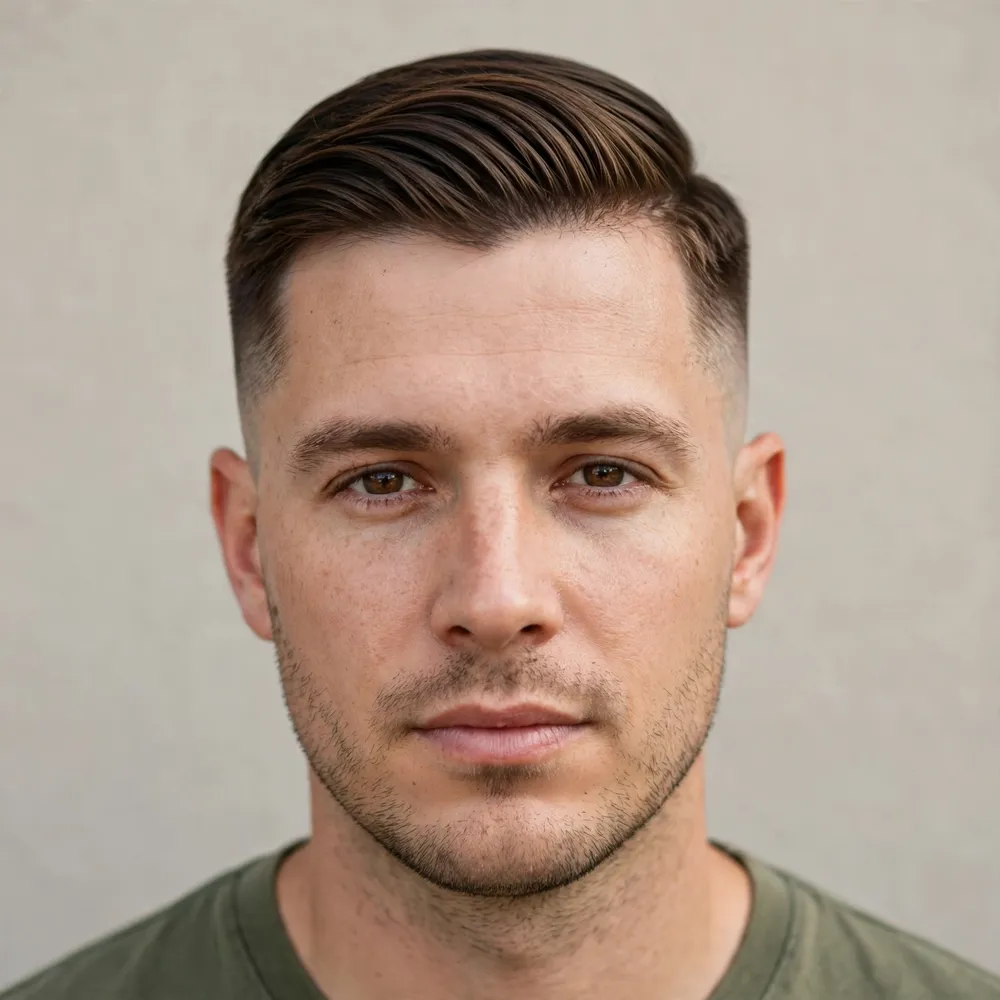
The comb over is the grown-up answer to a low fade: the top sweeps neatly to one side, while the low fade keeps the sides tidy. It suits oval and square faces best, and straight or slightly wavy hair does the combing for you — very curly hair will fight the part. Ask for a low fade with a #3 or #4 guard where the fade meets the top, and a natural side part rather than a hard line. A light-hold pomade with a low shine gives it a neat, office-ready finish. Maintenance is easy: the fade softens gracefully, so three to four weeks between cuts is realistic, and a quick blow-dry keeps the sweep in place.
2. Textured Pompadour with Low Skin Fade

This one pairs old-school volume with a very modern edge: the top is grown to three or four inches and swept up into a textured pompadour, while the low skin fade drops to bare skin just above the ear. It suits oval, square, and heart-shaped faces, and loves thick, straight to wavy hair — fine hair works with volumising powder, but holds less height. Ask for a low skin fade, foil-shaved at the bottom, with the top point-cut and the fringe left longest at the front. A matte clay, blow-dried upward through damp hair, is the product here — shine would make it look greasy. Upkeep is the honest cost: the skin fade needs a clean-up every 10 to 14 days, and the pompadour takes five minutes each morning.
3. Classic Low Fade
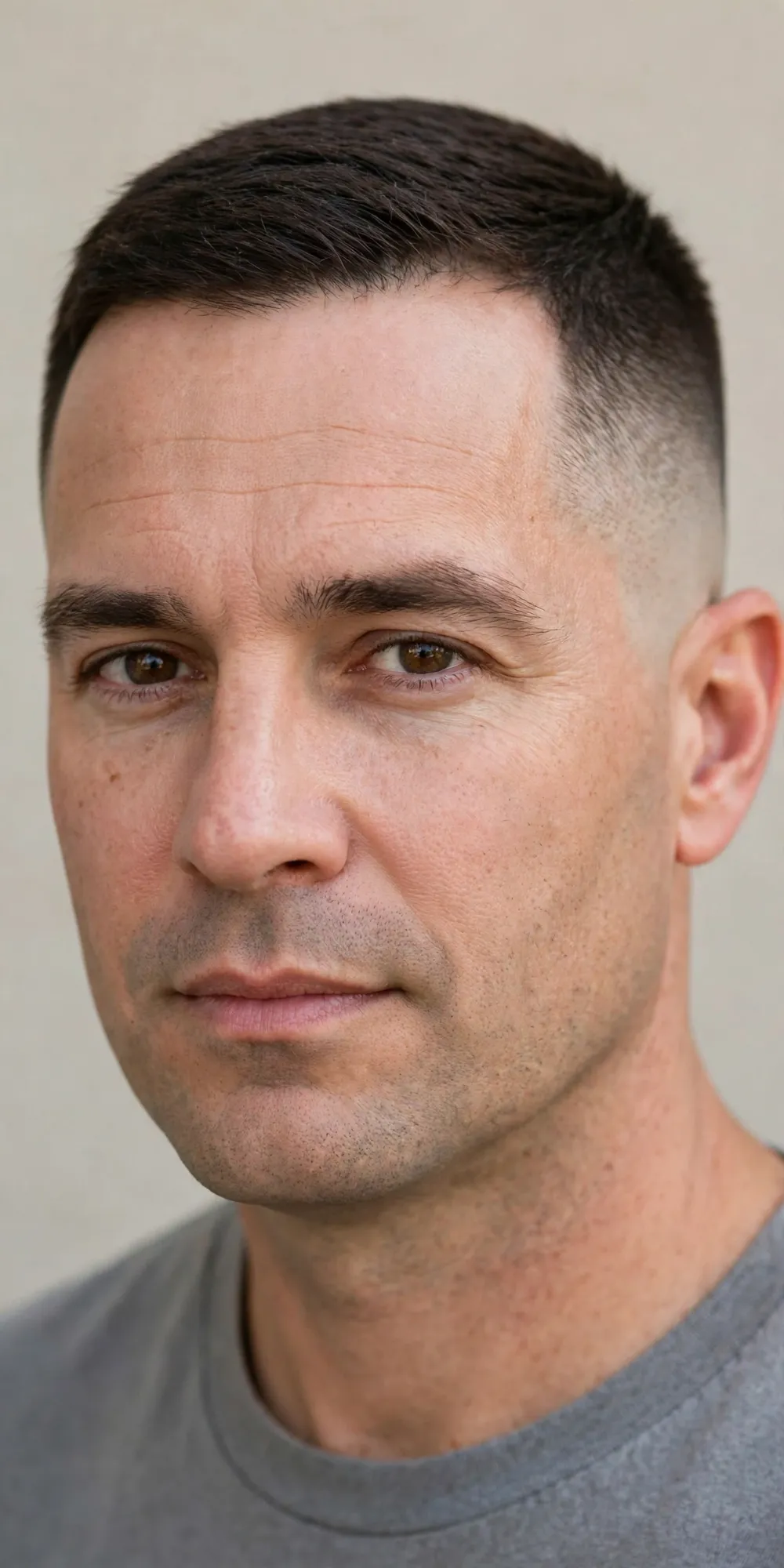
If you have never had a fade, start here. The classic low fade keeps the top at around two inches, with a gentle blend starting just above the ears — no skin, no hard lines, nothing awkward to grow out. It flatters every face shape and every hair type, which is why barbers reach for it so often. Ask for a low fade with a #2 guard at the bottom blending up to a #4, and the top scissor-cut to about two inches. A pea-sized amount of matte paste gives a natural finish, or leave it alone — it still looks intentional. Maintenance is about as low as a fade gets: four weeks between visits, and a quick finger-comb on lazy mornings.
4. Modern Buzz Cut with Clean Low Fade
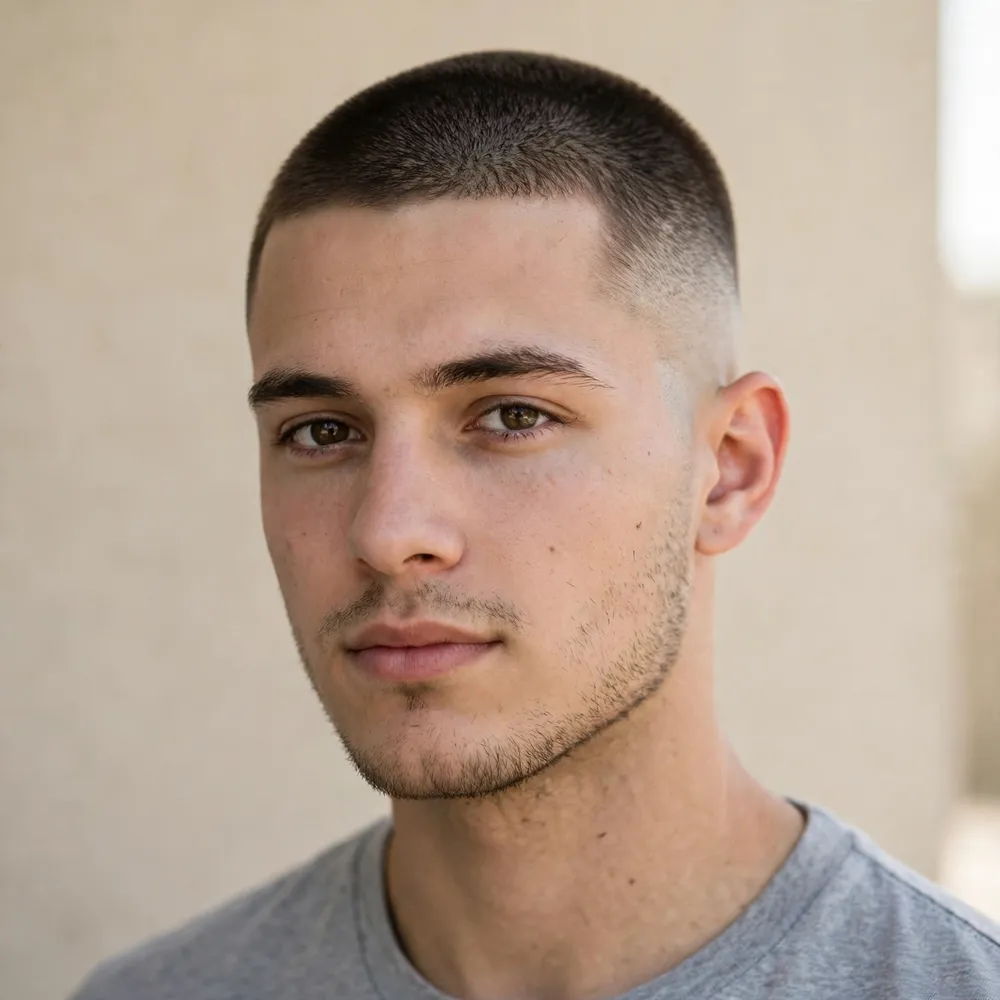
The buzz cut is the lowest-effort haircut a man can own, and the low fade stops it looking like a bathroom job. The top is clipped evenly short — a #2 or #3 guard — while the low fade adds a clean taper around the ears and neckline that makes the whole thing look finished. It suits oval and square faces, and it is the honest choice for thinning hair or a receding hairline, since short, even length hides patchiness. Ask for a buzz on top with a low fade: a #3 top with a #1-to-skin fade at the bottom is the usual balance. No product needed — a dab of moisturiser on the scalp is the routine — and upkeep is a clipper pass every two weeks.
5. Crew Cut with Low Fade
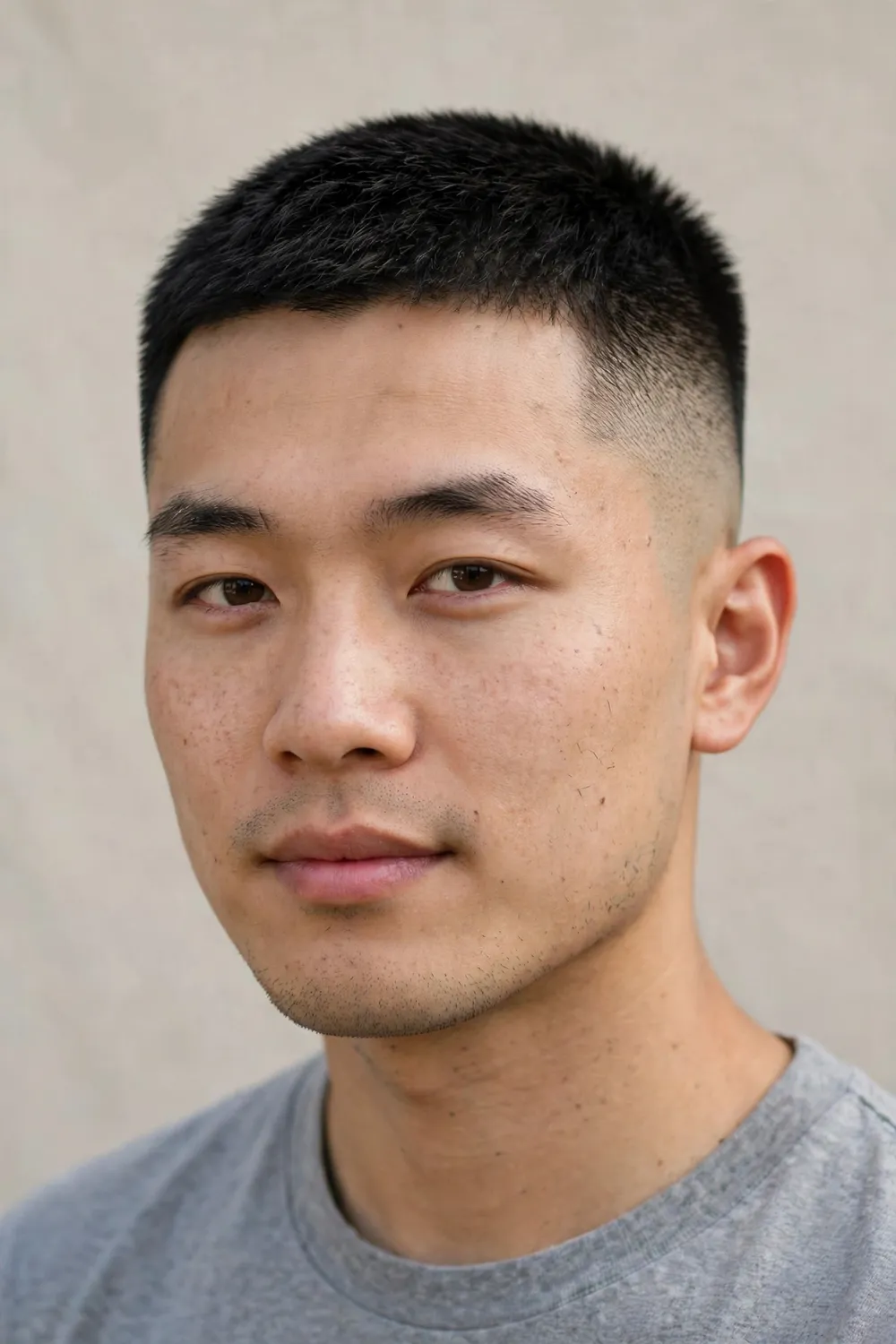
The crew cut has been a barbershop staple for decades: smart, and asking nothing of you. The top is short — about an inch, slightly longer at the front — and the low fade keeps the sides neat without feeling severe. It suits round faces well, since the height at the front lengthens things, and works with straight, wavy, or thick hair; very curly hair needs the top kept shorter. Ask for a crew cut with a low fade: a #2 guard at the bottom blending to a #4, the top scissor-cut to about an inch. A tiny amount of matte clay gives it texture on days you bother; otherwise, towel-dry and go. Maintenance is gentle — three to four weeks between cuts — and the grow-out stays respectable.
6. Low Fade Ivy League

The Ivy League is the crew cut’s smarter older brother: same short back and sides, but the top sweeps to one side with a neat part — at home in an office or at a wedding. It suits oval, square, and heart-shaped faces, and straight or wavy hair of medium thickness is ideal; very thick hair may need thinning. Ask for a low fade with the top left long enough to side-part, tapered at the back, and a #2 guard at the bottom blending up to a #4. A light-hold cream or classic pomade with a soft shine keeps the sweep in place without looking stiff. Maintenance is moderate: the fade needs attention every three to four weeks, and mornings take a two-minute comb and a little product.
7. Low Fade Caesar Cut
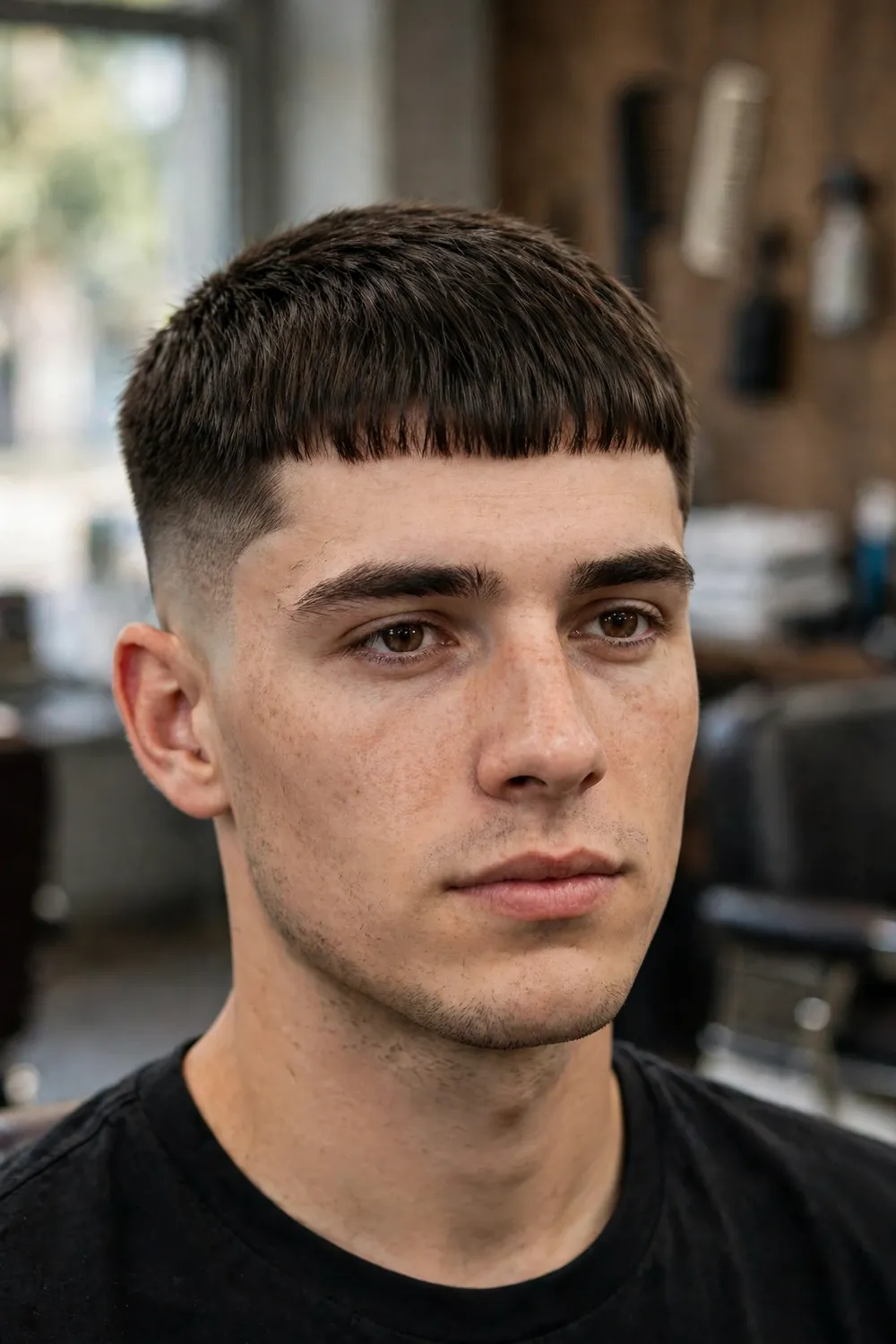
The Caesar is a short, even cut with a straight fringe brushed forward, and the low fade gives it a clean modern frame. The top is kept to about an inch and a half, brushed forward to a soft hairline, while the fade starts low and keeps the sides tidy. It suits oval and square faces, and it is a good option for a receding hairline, because the forward fringe covers the temples. Ask for a Caesar with a low fade, the fringe cut straight across at about an inch, and a #2 guard at the bottom. A matte paste, worked through with your fingers, gives texture without shine — avoid heavy pomade. Maintenance is easy: three to four weeks between cuts, a minute of styling each morning.
8. Low Fade Side Swept Hair
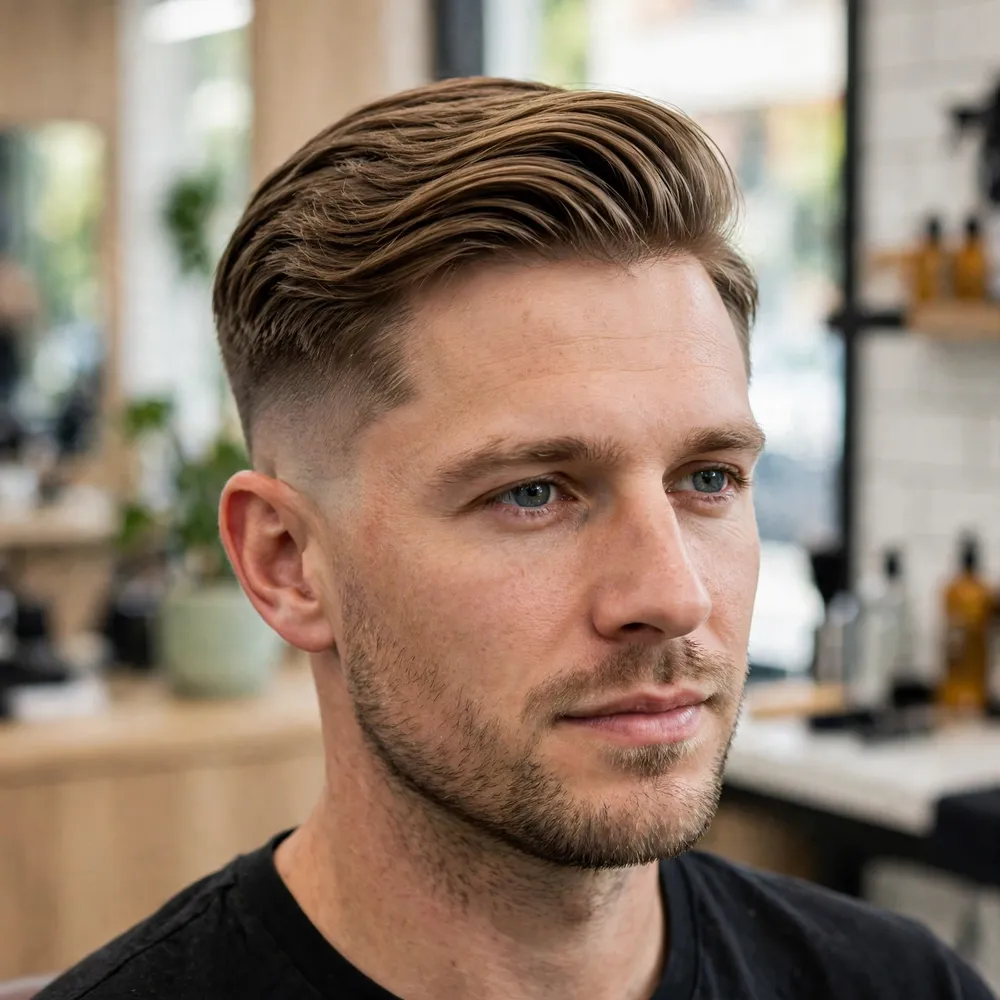
Side swept hair is the relaxed cousin of the comb over — same idea, less formality. The top runs two to three inches, swept to one side with a soft part, while the low fade keeps the sides clean without a harsh contrast. It suits oval and round faces best; straight to wavy hair falls into the sweep naturally, and thick hair benefits from a little thinning. Ask for a low fade with the top scissor-cut to two or three inches and a #2 or #3 guard at the bottom. A sea salt spray on damp hair gives a relaxed texture — or a light cream if you want it neater. Maintenance is low: the fade grows out softly over three to four weeks, and styling takes two minutes.
9. Low Fade Slick Back Undercut
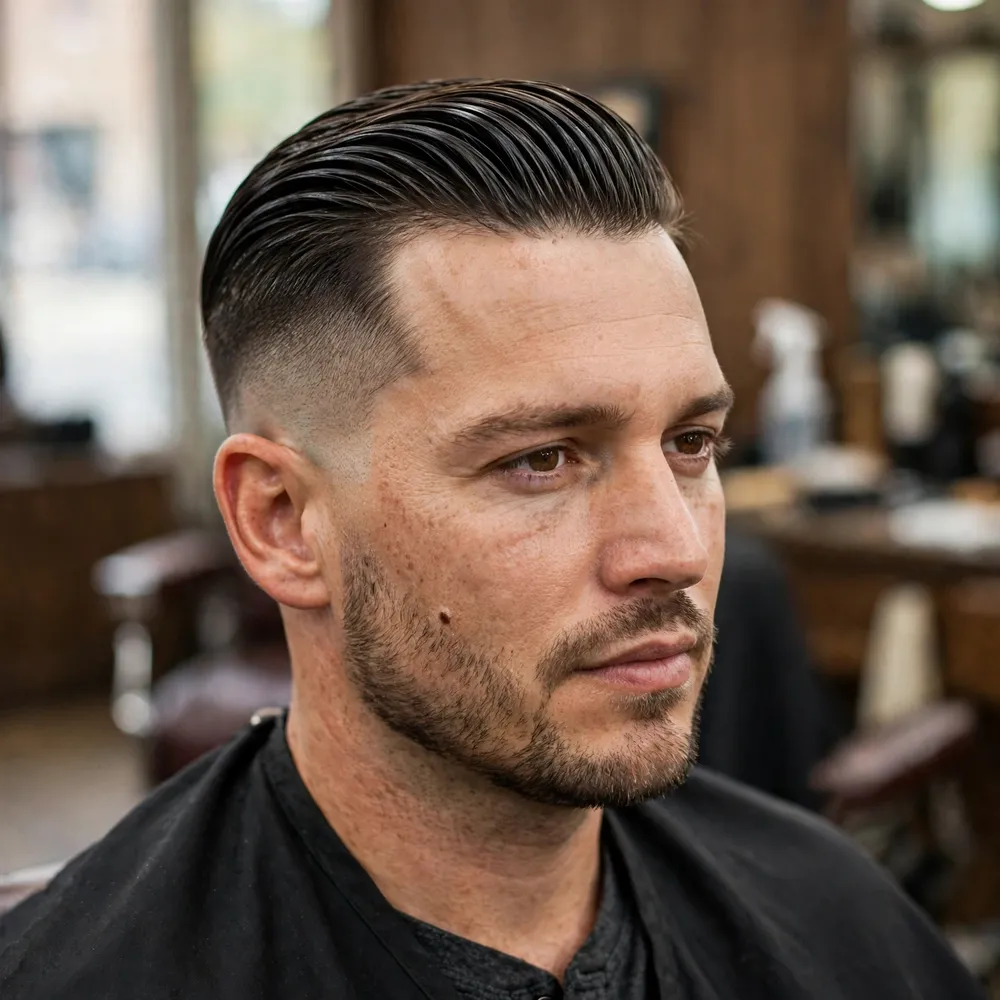
This cut takes the slick back’s confidence and grounds it with a low fade instead of a full undercut disconnect — easier to wear, easier to grow out. The top is kept long, three to four inches, and slicked straight back, while the low fade blends the sides down low. It suits oval and square faces with strong jawlines; straight or wavy hair of medium thickness holds the slick best. Ask for a low fade with the top left long and the back tapered — and be clear you want a fade, not a disconnected undercut. A medium-hold pomade with a natural shine, combed back on damp hair, is the classic finish. Maintenance is moderate: a fade tidy every two to three weeks, and a few minutes of styling each morning.
10. Hard Side Part with Low Taper Fade
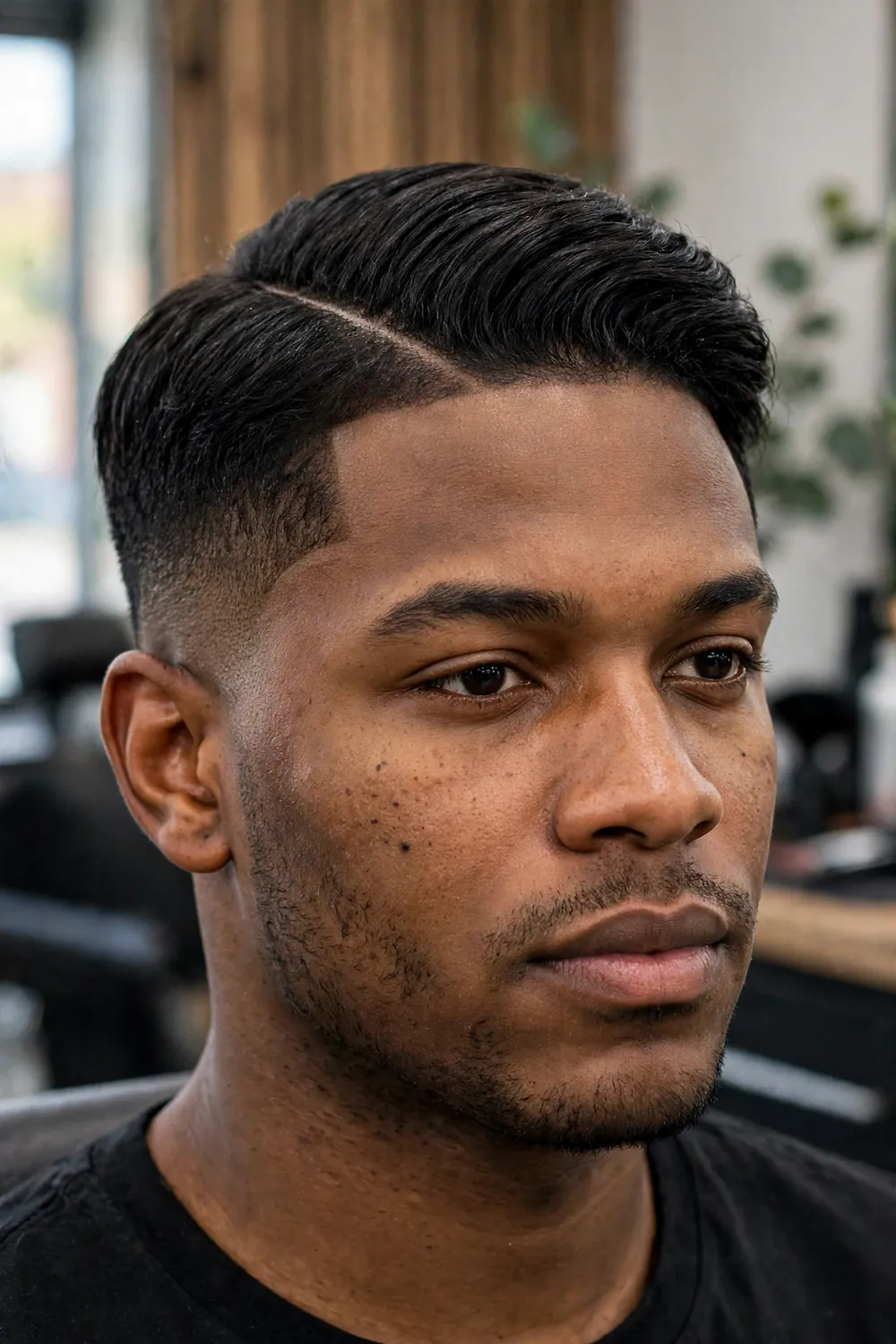
A hard part is a shaved line marking exactly where the hair parts, and paired with a low taper fade it turns an ordinary side part into something deliberately sharp. The top is two to three inches, parted hard to one side, while the taper stays soft — it never touches skin, so the cut holds for three to five weeks, the defining 2026 approach to a parted style. It suits oval, square, and round faces; straight hair shows the part line cleanest. Ask for a hard side part with a low taper fade, a #2 guard at the bottom, and the part cut in with a razor or trimmer. A classic pomade with a medium shine is the right product — matte would hide the line’s crispness — and the part needs re-cutting every few weeks.
11. Very Low Fade
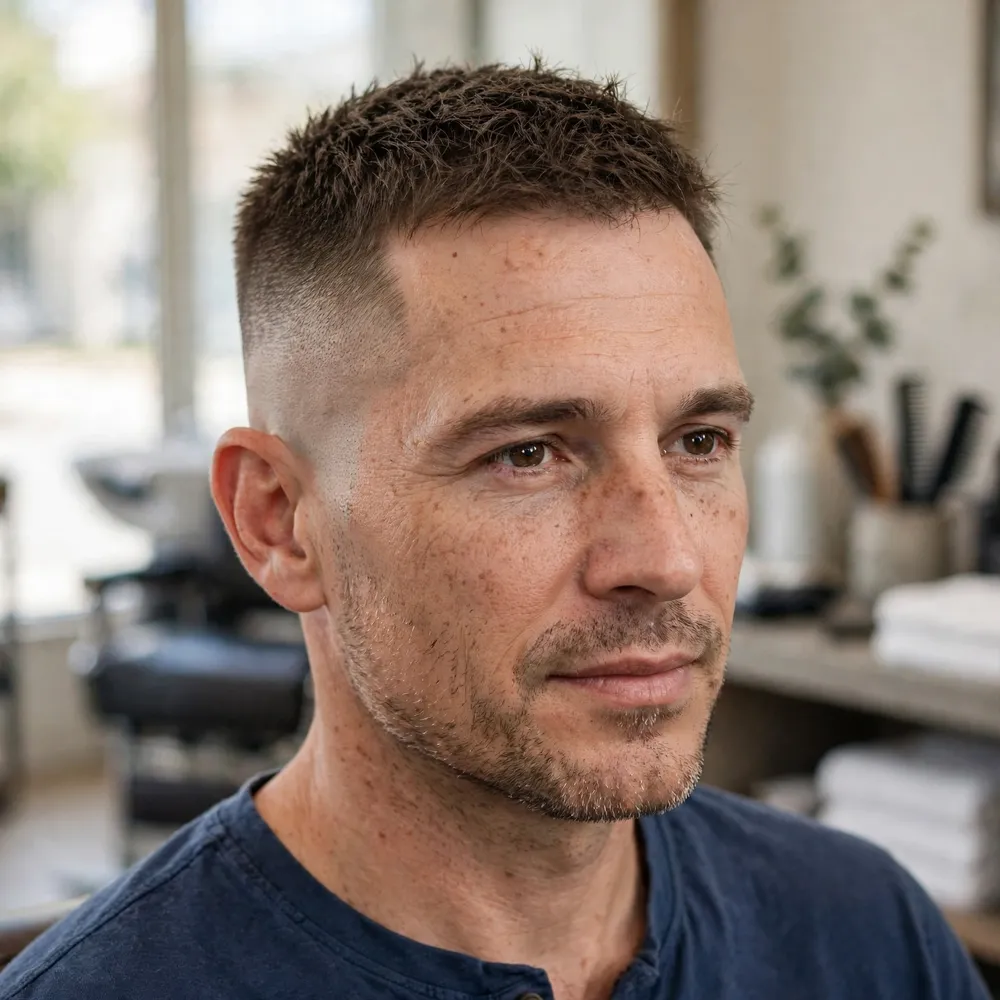
The very low fade is for men who want a fade but barely want anyone to notice it. The blend starts right above the ears — lower than a standard low fade — and the fade zone is so short the contrast is whisper-quiet, more tidy-up than statement. It suits every face shape, and it is the safest fade for conservative workplaces or first-timers. Ask for a very low fade with a #2 guard at the bottom blending up to a #4, and the top left at whatever length you already like. Product depends on the top, so a light cream or matte paste is usually enough. Maintenance is the easiest of any fade here: the grow-out is almost invisible, so four to five weeks between cuts works.
12. Stylish Low Taper Fade
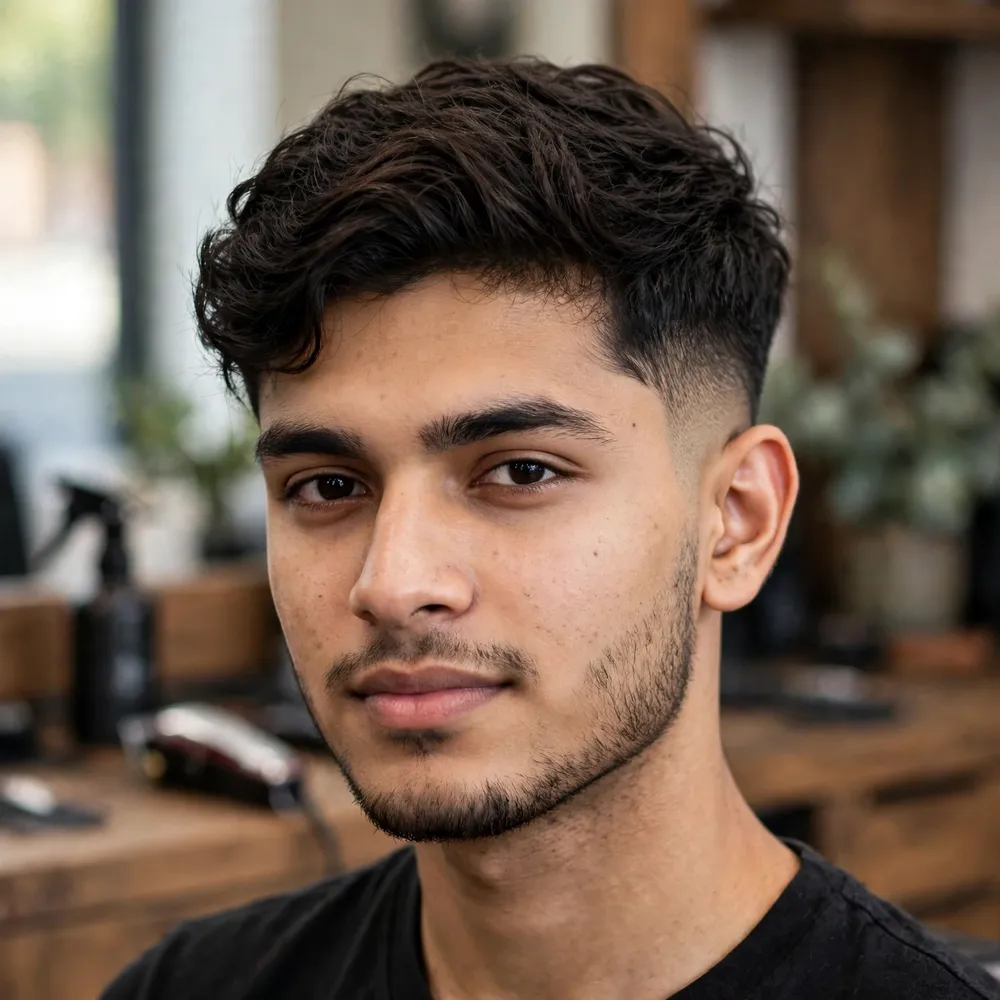
The low taper is the 2026 trend for a reason: it cleans up the two places that make hair look untidy — around the ears and the neckline — while leaving the rest alone, so it grows out without a visible line. It blends hair into hair, never touches skin, and holds for three to five weeks — the longest of any fade here. It suits every face shape and hair type, and it is the best choice if you like longer sides or are growing the top out. Ask for a low taper fade with a #2 guard at the bottom around the ears and neckline, blending up to a #4. A light cream or a touch of matte clay is all the product it needs.
Skin, Bald & Temp Fades
This group is where the low fade gets sharper. Skin and bald fades drop to bare skin at the bottom, temp fades work only around the temples — either way, the contrast is stronger and the upkeep is more frequent. What you pay in barber visits, you get back in how clean the cut looks.
13. Low Skin Fade
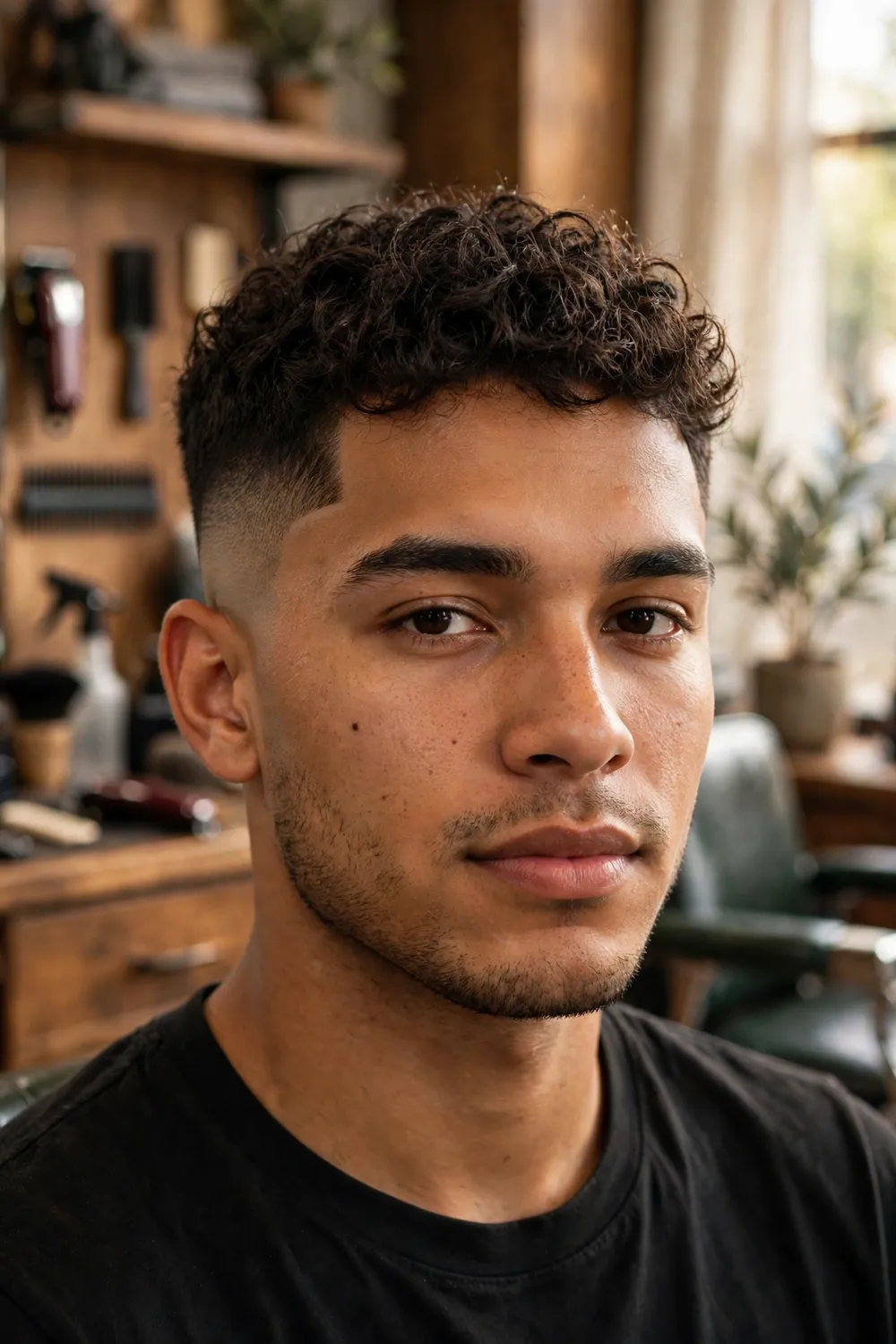
The low skin fade is the sharpest finish in this list, and our pick for the cleanest look overall. The sides blend down to bare skin just above the ear, so the top stands out with real contrast, and the skin line gives a precision no taper can match. It suits oval and square faces best, and straight or wavy hair shows the blend most clearly. Ask for a low skin fade, foil-shaved at the bottom, blending from skin up through a #1 to a #3 guard — and say “skin” clearly. Style the top with a matte clay for texture, or a light pomade if you want shine. The honest cost is maintenance: the skin line blurs after 10 to 14 days, so this is a fortnightly cut.
14. Low Temp Fade
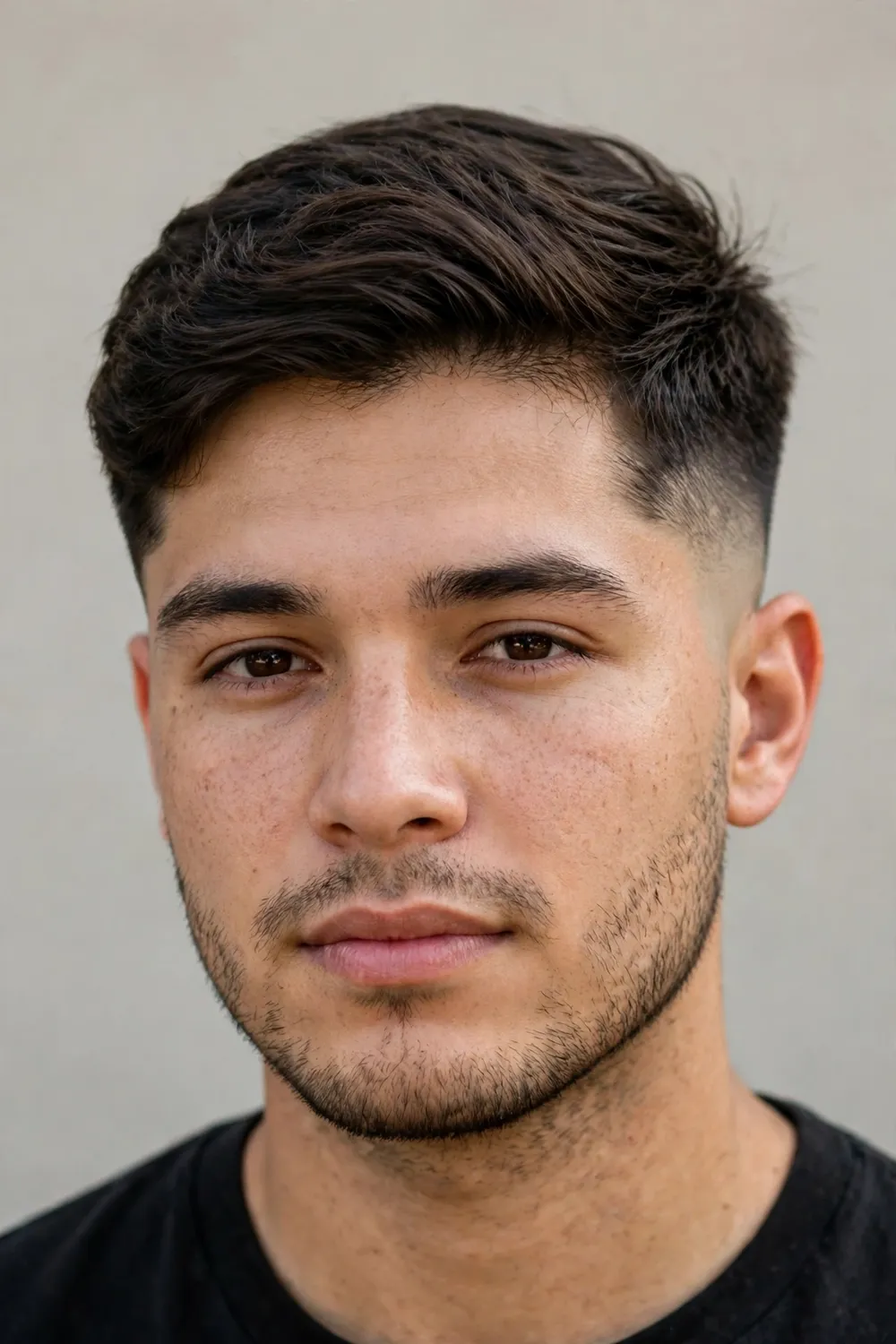
A temp fade only fades the hair around the temples, leaving the rest of the sides and back at their natural length. It is the subtlest skin fade there is: a small detail that cleans up the hairline and frames the face. It suits every face shape, and it is a smart choice for curly or coily hair, waves, or braids — it sharpens the edges while the top keeps its texture. Ask for a low temp fade with the temples blended to skin or a #0, and the back left alone. Product is whatever your top needs — curl cream for curls, light pomade for straight hair — since the fade needs nothing. The temples grow out fast, so a shape-up every two weeks keeps it crisp, though the rest lasts three to four weeks.
15. Trendy Short Hair with Low Skin Fade
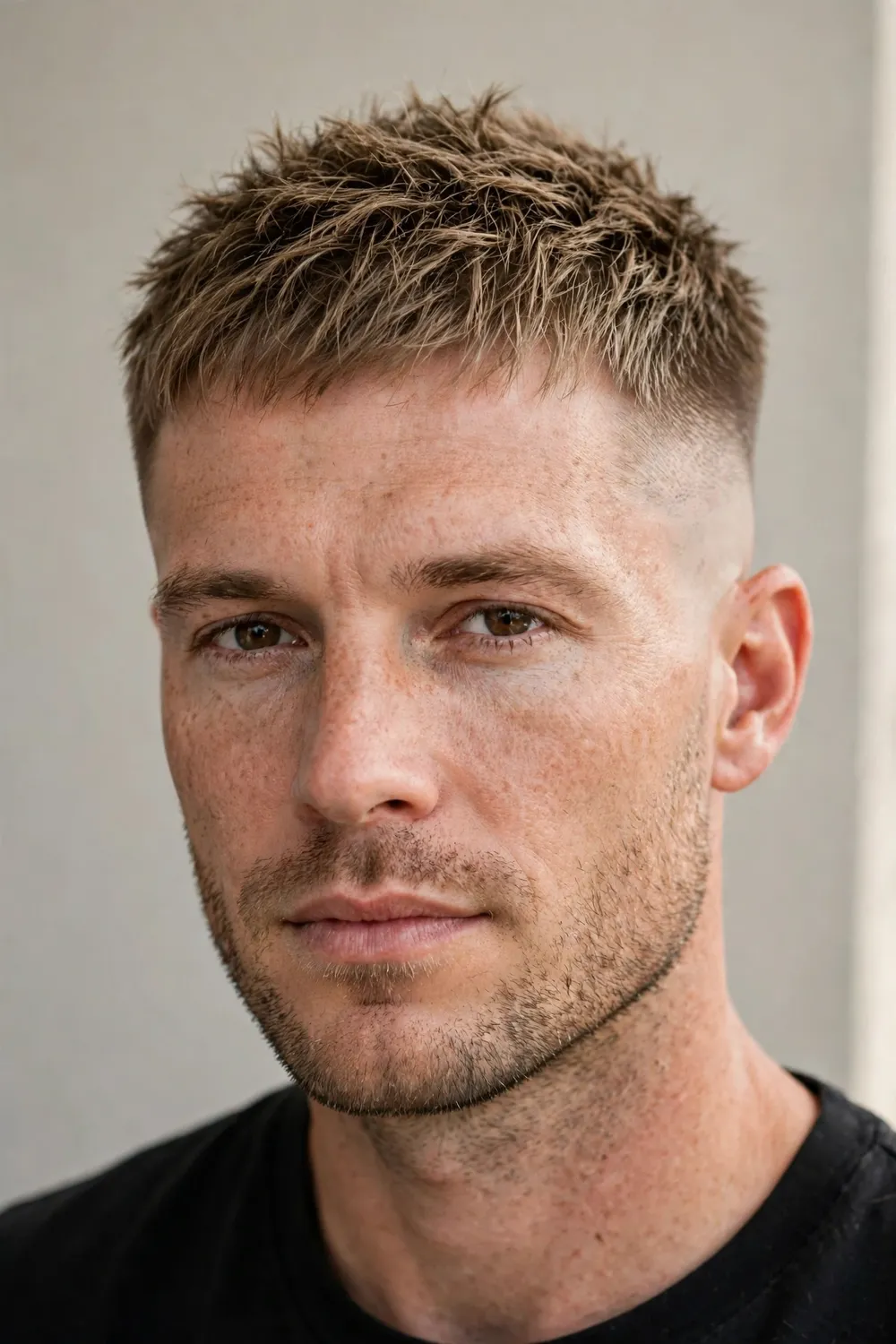
This is the short-hair version of the skin fade: a textured top of about an inch and a half, cropped close and slightly messy. The contrast does the styling for you — the top looks deliberately tousled, the sides razor-clean — and the whole thing reads modern without trying hard. It suits oval, square, and round faces; straight or wavy hair takes the texture best, and thick hair gives the top more presence. Ask for short textured hair on top with a low skin fade, foil-shaved at the bottom, and the top point-cut. A matte clay or texture powder gives the top its messy finish — work it through with your fingers and leave it alone. Maintenance is the usual skin-fade deal: a clean-up every 10 to 14 days, and two minutes of styling each morning.
16. Thick Textured Brush Back with Low Bald Fade
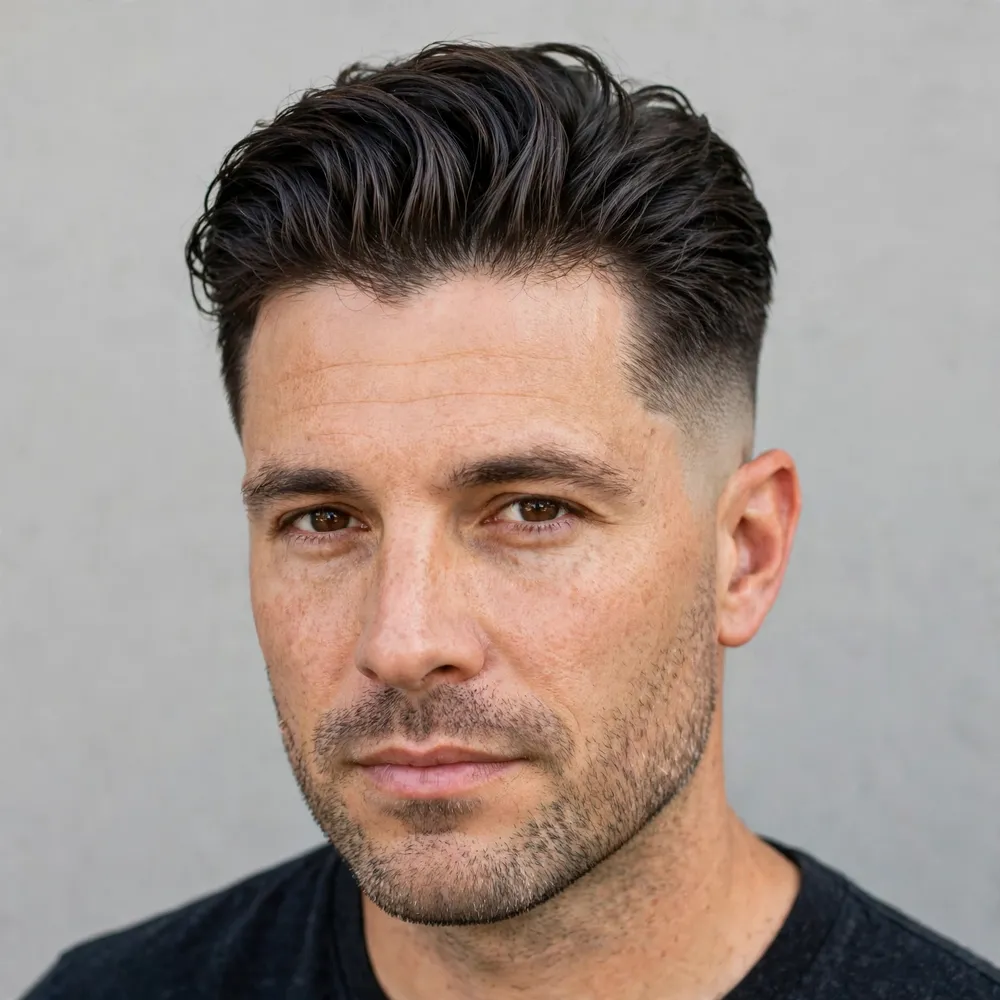
Thick hair and a bald fade are a natural pairing: the top has the weight to brush back and stay there, and the bald fade gives the sides a clean edge. The top runs three to four inches, brushed straight back with texture, while the fade stays low. It suits oval and square faces, and it genuinely needs thick hair — fine hair will not hold the brush-back and falls flat by lunchtime. Ask for a low bald fade, foil-shaved at the bottom, with the top point-cut for texture and left long enough to brush back. A strong-hold matte clay, blow-dried back on damp hair, is the product; shine will make thick hair look heavy. Maintenance is moderate to high: the bald fade needs a visit every two weeks, and the brush-back takes five minutes.
17. Thick Tousled Brush Up with Low Skin Fade and Beard
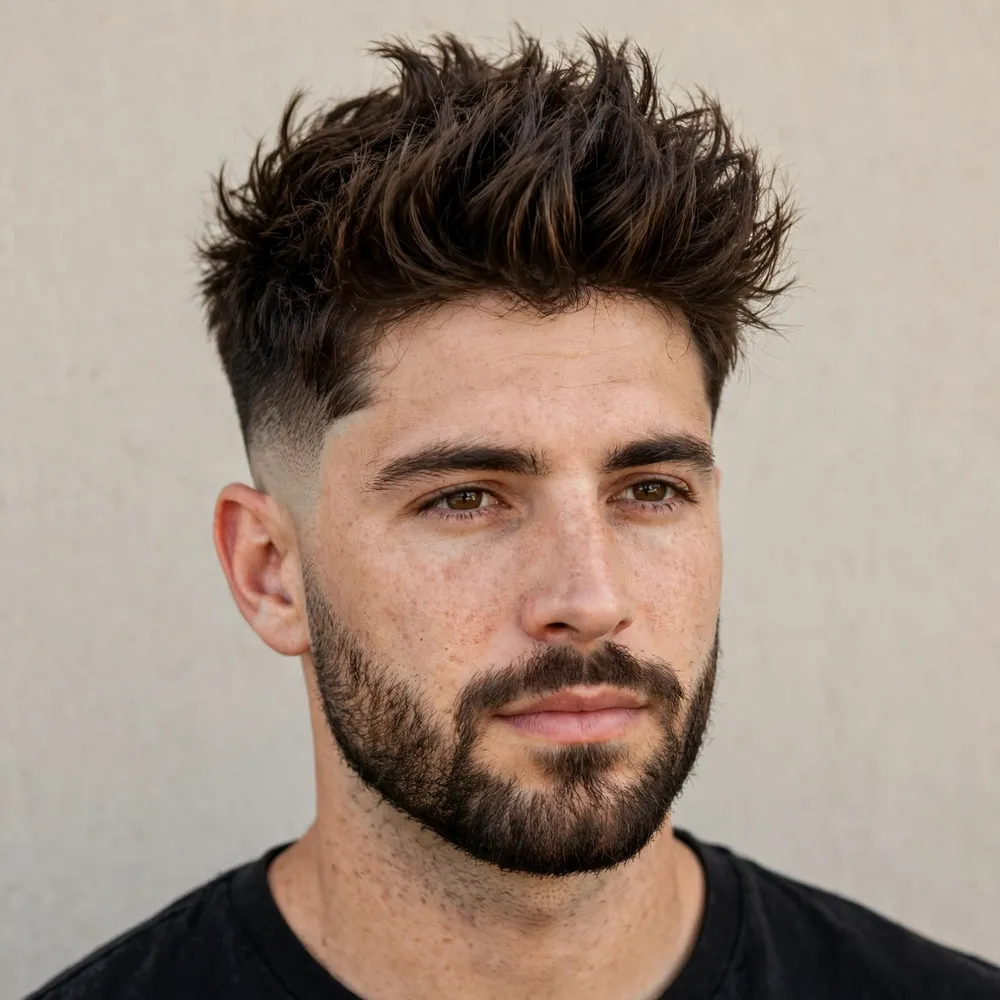
This cut is built around controlled mess: thick hair brushed up and tousled on top, a low skin fade, and a full beard the fade melts into. The top is three inches or so, pushed up and left slightly uneven, while the skin fade keeps the sides sharp. It suits square and oval faces, and needs thick, straight to wavy hair — the tousle only works with enough hair to push around. Ask for a low skin fade that blends into the beard, the top point-cut for texture, and the beard shaped to connect with the fade. A matte clay or sea salt spray gives the top its tousled hold; beard oil keeps the beard soft and the blend intentional. Maintenance is high, honestly: skin fade every two weeks, beard shaping weekly, and five minutes of styling each morning.
18. Waves Buzz Cut with Low Temp Fade
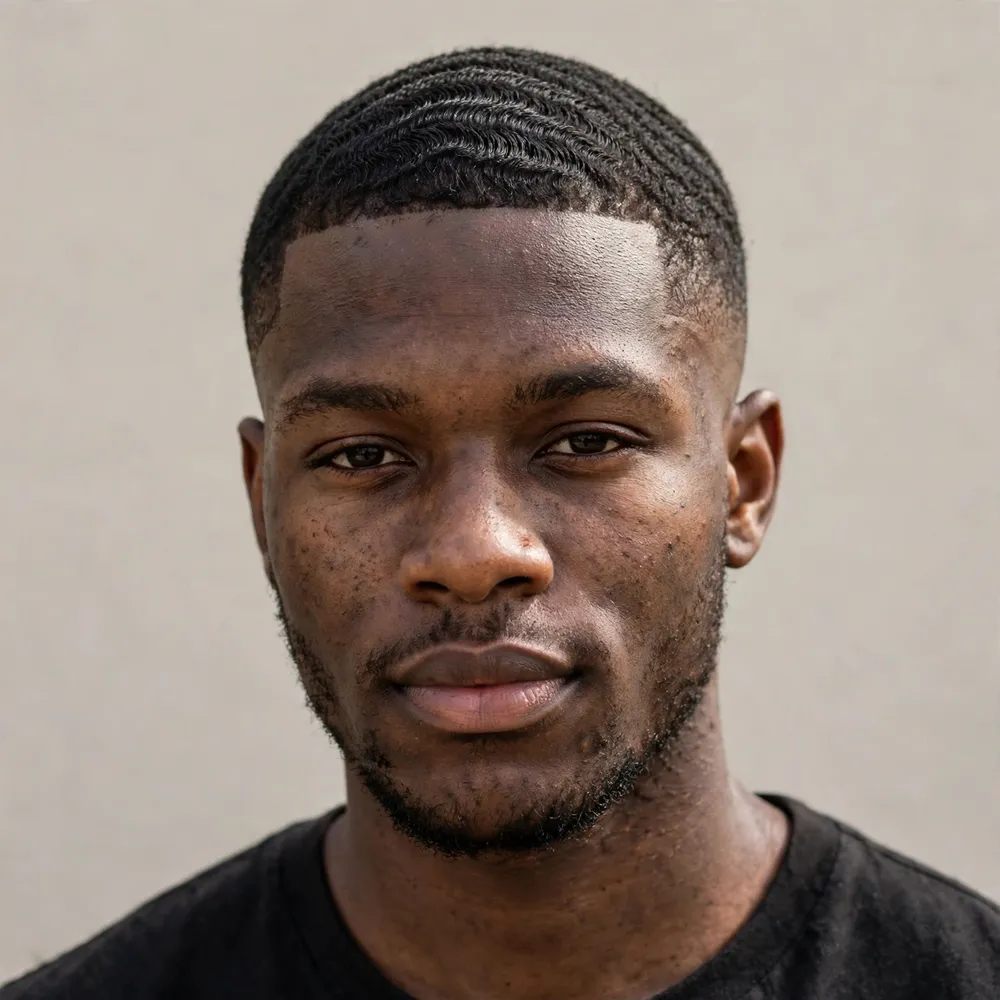
Waves — the short, rippled pattern brushed into coily hair — look best with razor-sharp edges, and the low temp fade is the tool for that. The top is kept very short and brushed into waves with a wave brush and a durag at night, while the temp fade blends the temples to skin. It suits oval and round faces, and is made for coily and Black hair; the wave pattern takes a few weeks of brushing to train. Ask for a waves buzz cut with a low temp fade, the temples faded to skin, and a shape-up on the hairline. A wave pomade or light moisturiser, plus a wave brush, is the kit — no heavy product. Maintenance is daily brushing, a shape-up every one to two weeks, and a fade tidy every two weeks.
Drop, Burst & Design Fades
These six play with the shape of the fade itself. A drop fade dips lower at the back, a burst fade curves around the ear, and a design adds a shaved line or pattern — all ways to make a low fade feel personal rather than off the shelf.
19. Low Burst Fade
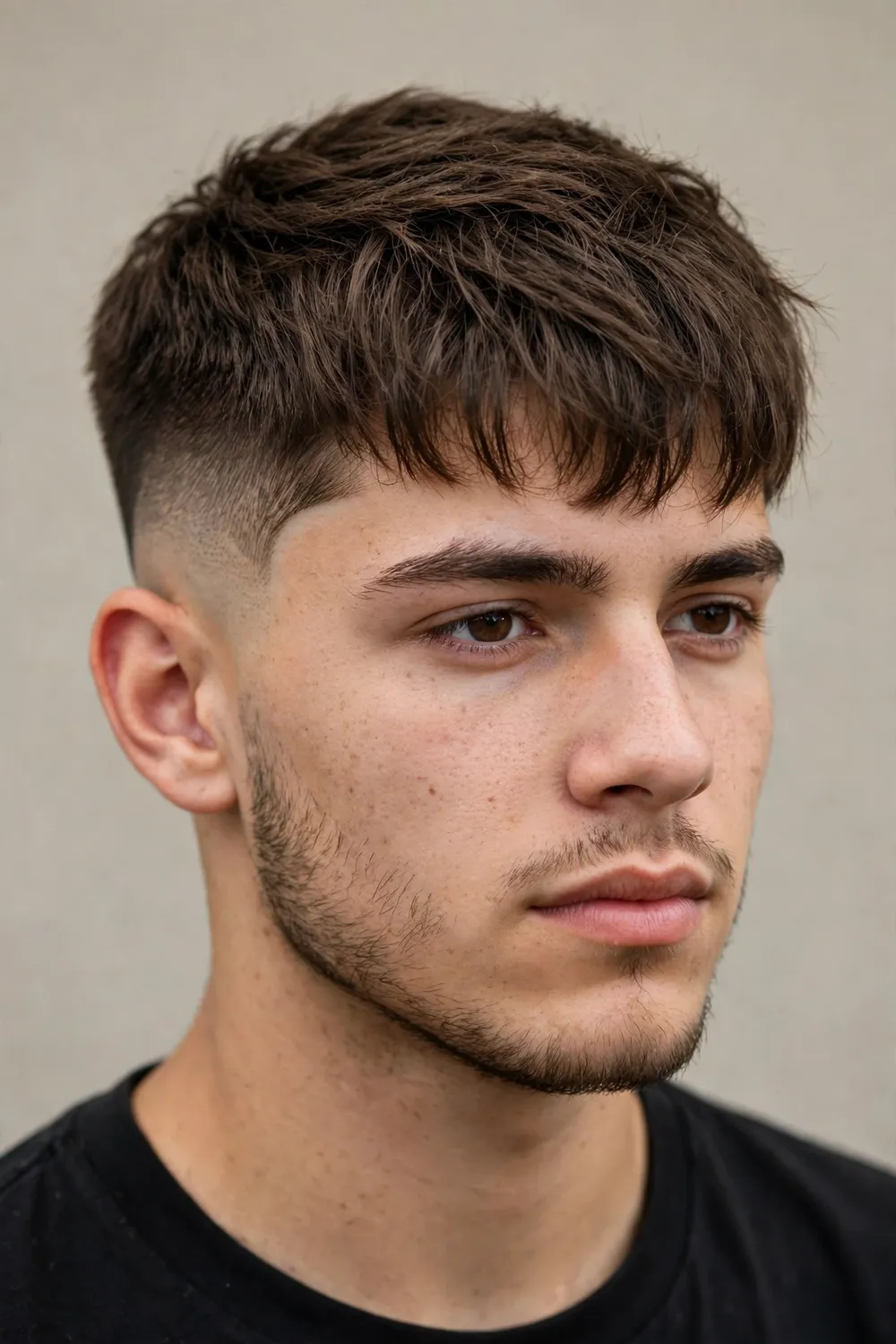
The burst fade curves in a half-circle around the ear, fading out from the temple and round the back of it, giving the sides a rounded shape instead of a straight line. It suits oval and round faces, and works with any hair on top — short crops, curls, mohawks — because the burst is about the fade’s shape. Ask for a low burst fade following the curve of the ear, and agree whether the bottom goes to skin or stays at a #1. Product depends on the top: a matte clay for texture, or a curl cream for curls. Maintenance is moderate: the curve grows out more visibly than a straight fade, so a tidy every two to three weeks keeps it crisp. It is a small detail that makes a cut feel custom, and it photographs well.
20. Low Drop Fade
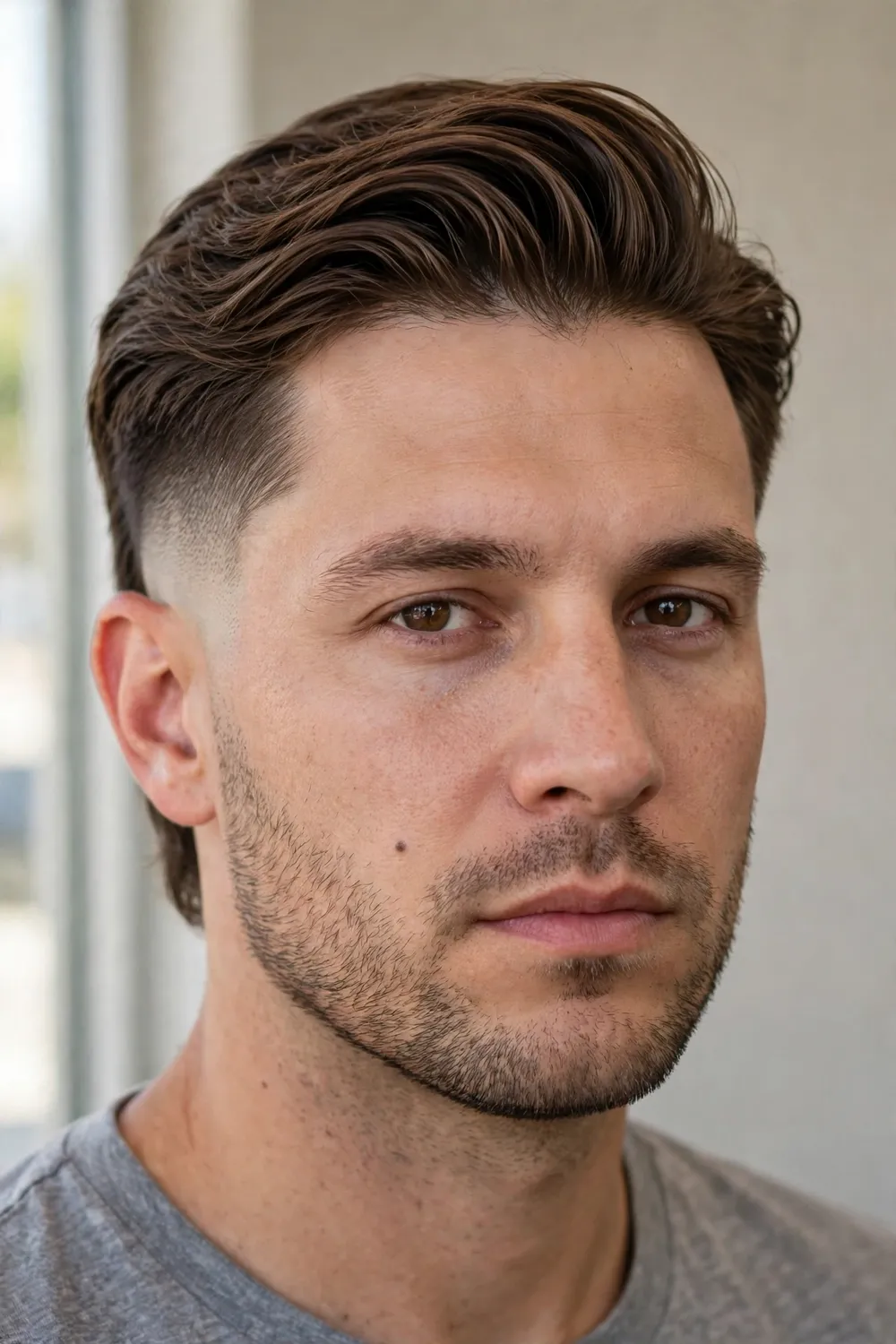
A drop fade does what its name says: instead of running straight around the head, the fade line drops lower behind the ears, following the curve of the skull. The effect is subtle from the front — it looks like a normal low fade — and more interesting from the side, where the dip adds shape. It suits oval and square faces; straight or wavy hair shows the drop line most clearly. Ask for a low drop fade dipping behind the ears, with a #1 or #2 guard at the bottom blending up to a #3 or #4. A light pomade or matte paste handles the top, depending on how neat you want it. Maintenance is moderate: the dropped line softens after two to three weeks, so regular tidies keep it looking deliberate.
21. Brush Back with Low Drop Fade
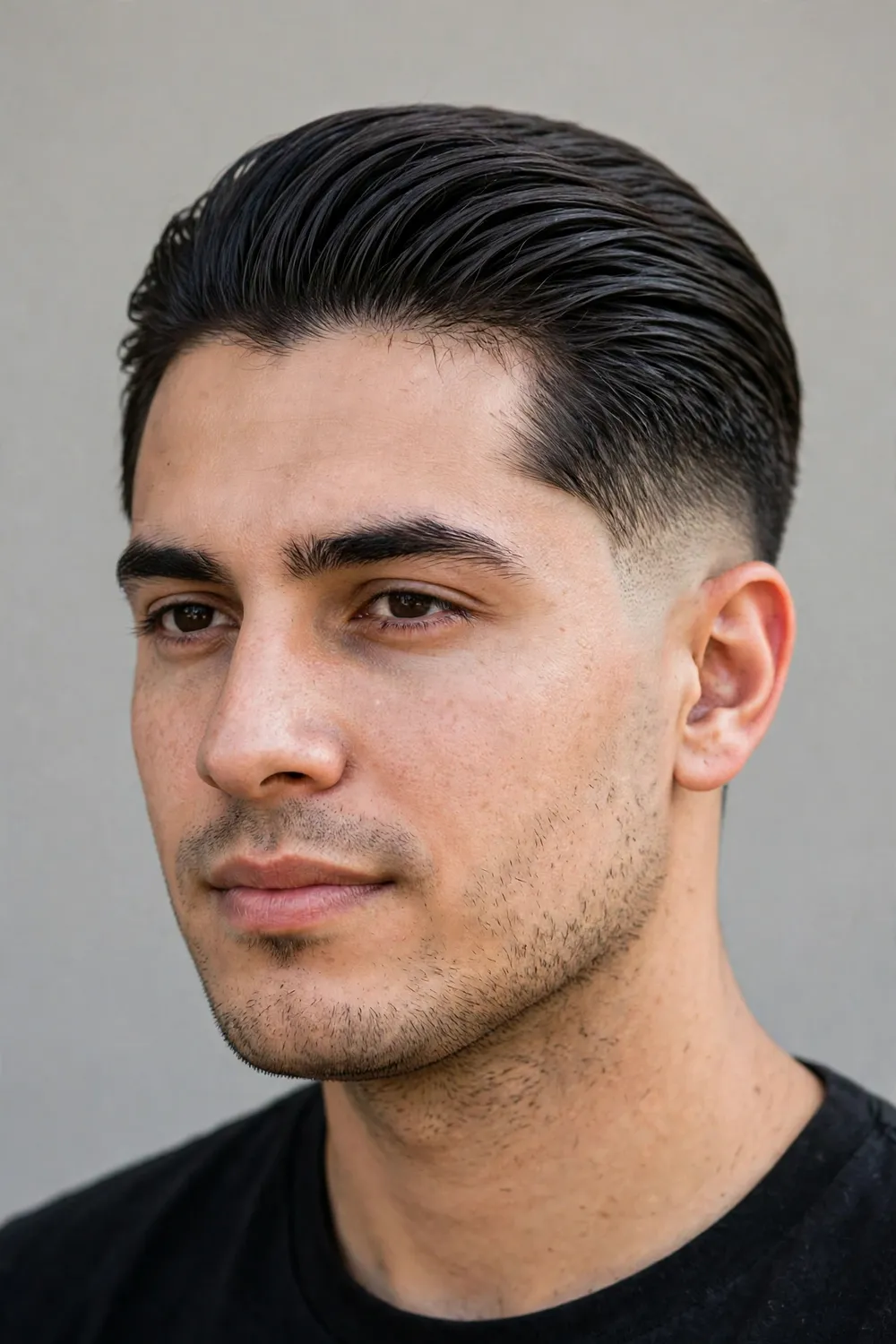
This one combines two classic ideas: hair brushed straight back on top, and a low drop fade dipping behind the ears to follow the head’s shape. The top runs three to four inches, brushed back with texture so it does not look slicked flat, while the drop fade keeps the sides clean. It suits oval and square faces; thick, straight to wavy hair holds the brush-back best, and fine hair can work with a volumising powder underneath. Ask for a low drop fade with the top left long enough to brush back, point-cut for texture, and the back tapered. A matte clay, blow-dried back on damp hair, gives it hold without shine. Maintenance is moderate: a fade tidy every two to three weeks, and three to five minutes of styling each morning.
22. Low Fade with Design
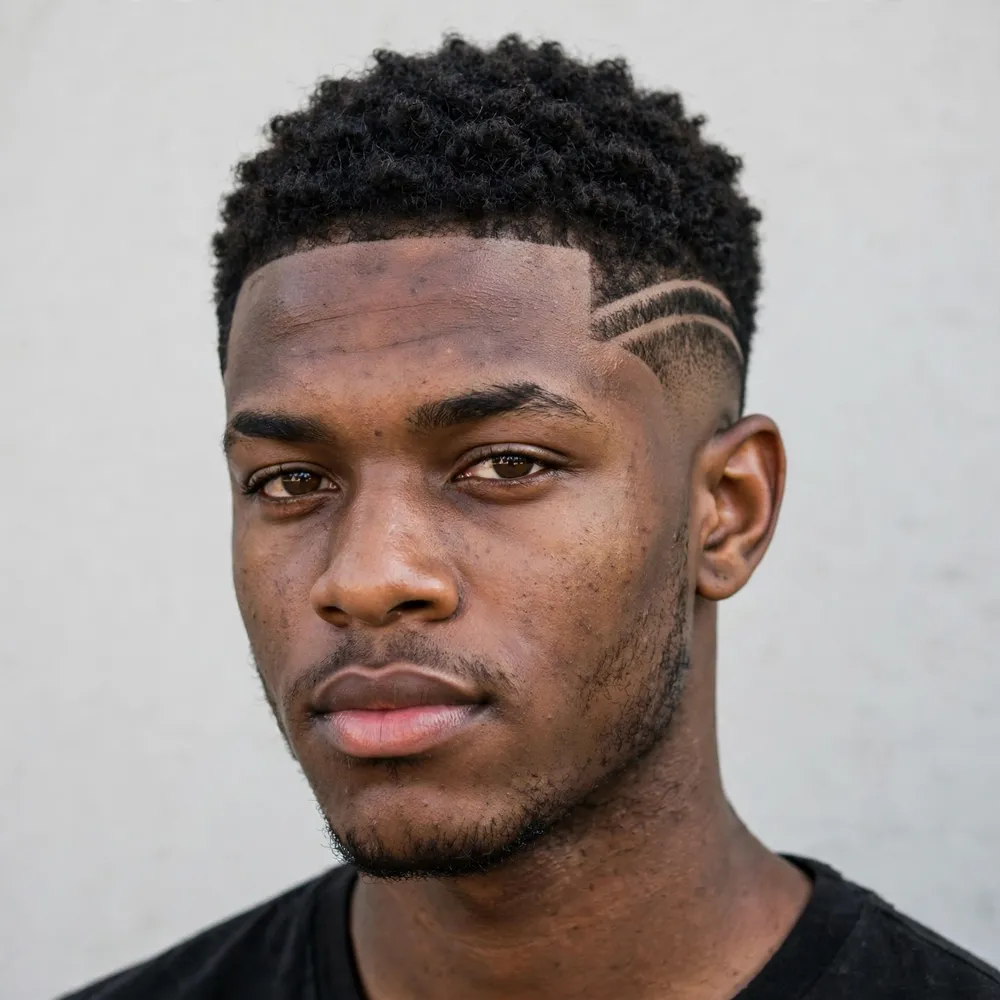
A fade with a design is a low fade plus a shaved line, curve, or pattern in the faded area — a line above the ear, parallel lines, a star. The design sits in the fade zone, so it shows best on a skin or bald fade; the top can be anything from a buzz to curls. It suits younger faces and anyone who treats their haircut as self-expression — not a conservative office. Ask for a low fade with a design and a skin or #0 bottom so the lines stay visible — agree the design first, and show a photo. No product is needed for the design itself; style the top as usual. Maintenance is the catch: designs grow out in about a week, so a weekly tidy keeps them sharp.
23. Edgy Short Mohawk with Clean Low Burst Fade
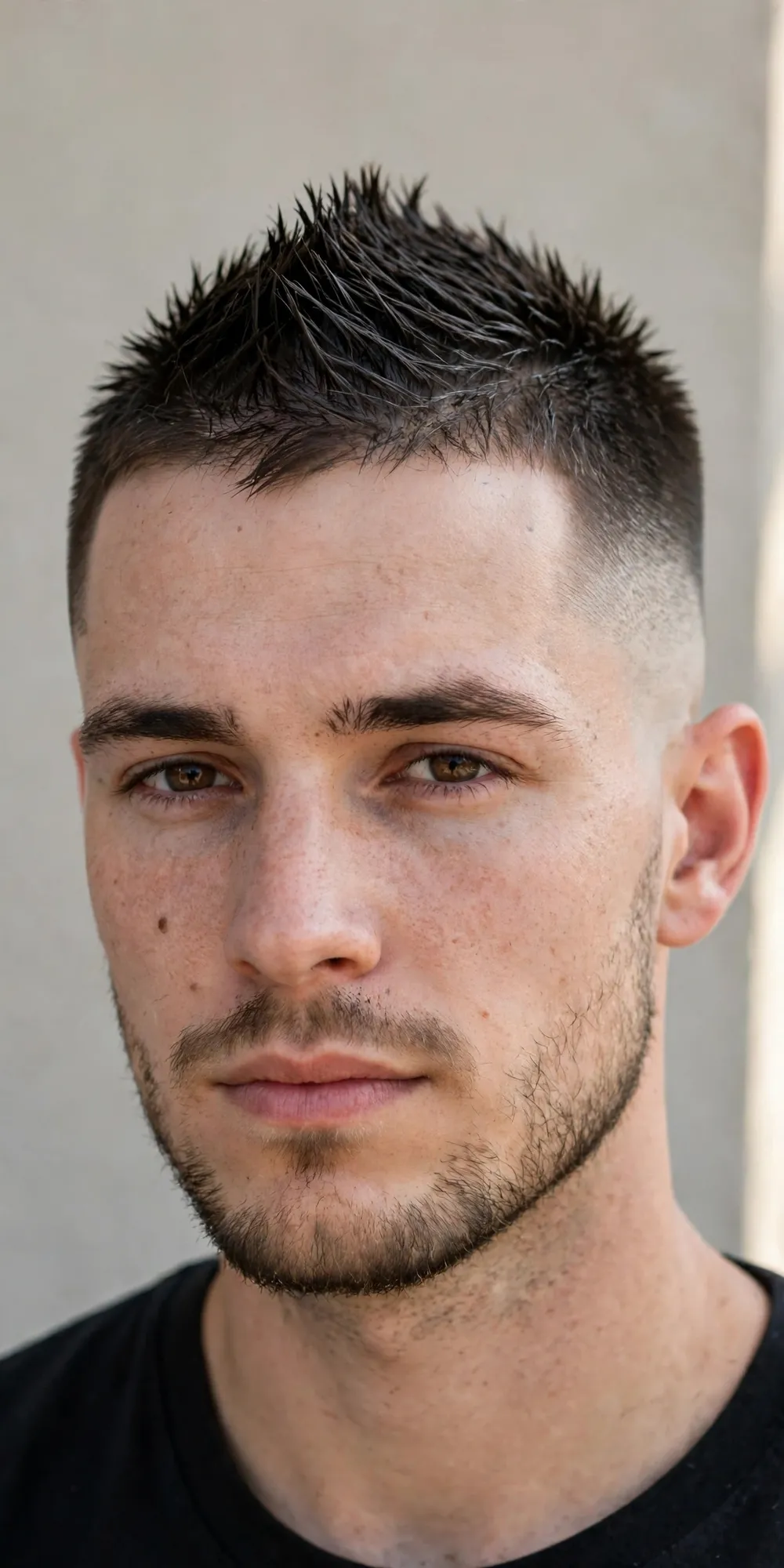
This is a mohawk for men who do not want the punk-gig look: a short strip down the centre, about two inches wide, with a clean low burst fade curving around the ears. The burst shape softens the mohawk’s hard edges, so it reads edgy rather than extreme, and works with straight, wavy, or curly hair. It suits oval and square faces, and is best on men with strong hair density — thin hair looks sparse rather than bold. Ask for a short mohawk with a low burst fade, the centre strip left about an inch long, and the burst faded to skin. A strong-hold matte clay keeps the strip upright, and a little hairspray helps on windy days. Maintenance is moderate to high: the strip needs trimming every two weeks, the burst every two to three.
24. Loose Curly Mohawk Fade

The loose curly mohawk keeps the mohawk’s shape — a strip down the centre — but lets the curls do the talking instead of the height. The curls sit loose and natural on top, about two to three inches, while the low fade keeps the sides tidy. It suits oval and round faces, and is made for naturally curly or coily hair; curling straight hair into this shape is a losing battle. Ask for a loose curly mohawk with a low fade, the curls left long in the centre and the sides faded low. A curl cream, scrunched into damp curls and left to air-dry, is the product — avoid heavy gels. Maintenance is moderate: a fade tidy every two to three weeks, a little cream each morning, and the cut grows out gracefully.
Group D — Texture, Fringe & Curls
25. Blunt French Crop with Low Fade
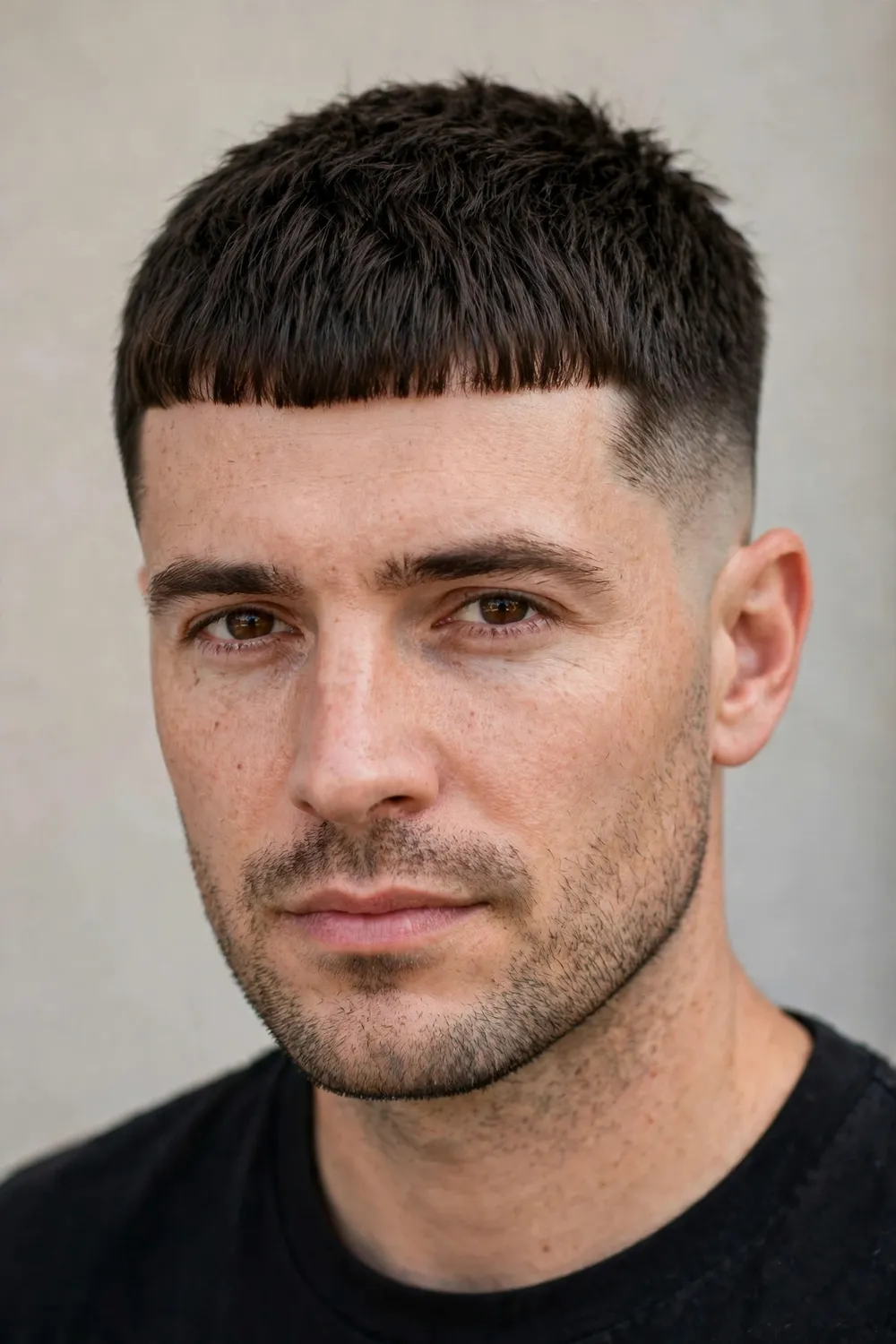
The French crop is one of those cuts that looks far more deliberate than the effort it takes. The top stays short, maybe an inch or two, and the fringe is cut straight across the forehead in a clean, blunt line, while the low fade keeps the sides tidy without stealing attention from that sharp front edge. It suits oval and longer faces best, since the fringe shortens the forehead, and it works on straight or slightly wavy hair that lies flat naturally. Ask your barber for a short textured crop with a blunt fringe and a low fade starting just above the ear, blended with a #2 up to a #3. A pea-sized amount of matte clay gives the top grip without shine. Maintenance is easy — a trim every three weeks keeps the fringe line honest, and it dries in about two minutes.
26. Heavy Fringe with Low Fade
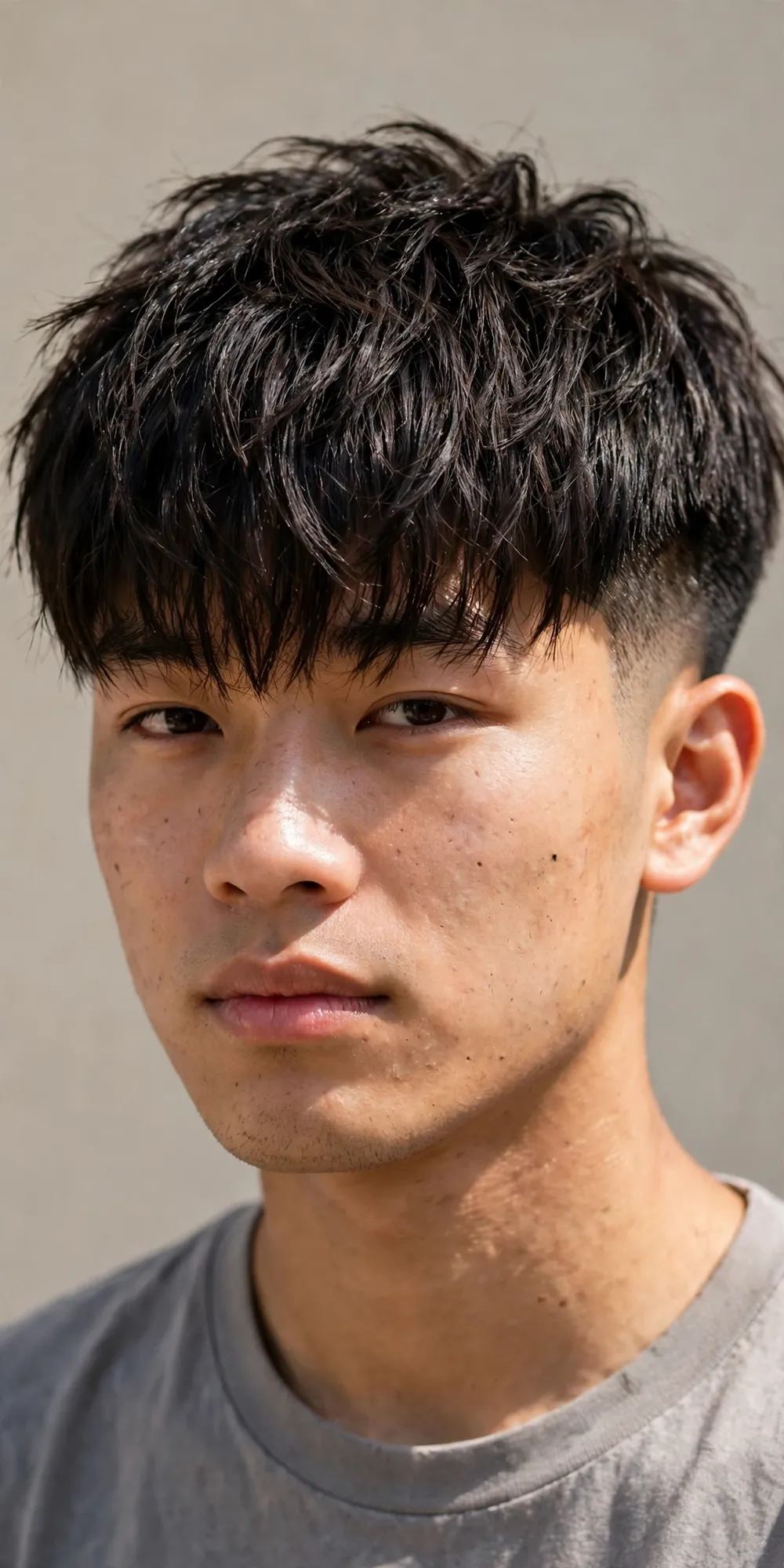
A heavy fringe is a bold move, and the low fade is what stops it from looking messy. The top is left long and thick, combed forward so the fringe covers most of the forehead, while the sides fade low and clean to give the whole cut a frame. It suits guys with thick, straight hair and a longer face, because the weight of the fringe balances out the length of the face — thin hair will just look limp here, so be honest about density before committing. Ask for a heavy forward fringe with texture cut into the ends and a low fade on the sides, guards #1 to #3. Work a little matte paste through damp hair and push it forward with your fingers. Expect a trim every two to three weeks, because once the fringe hits your eyebrows the look loses its edge.
27. Textured Spiky Hair with Sharp Low Fade

Spiky hair grew up. This version is not the gelled-up spikes of the early 2000s — the top is cut with lots of point-cut texture, around two inches long, and pushed up into short, separated spikes that look deliberately messy rather than stiff. The sharp low fade underneath is what makes it work in 2026: the contrast between the clean sides and the rough top keeps it modern. It suits oval and square faces and straight to slightly wavy hair with medium thickness; very curly hair will fight the spikes. Ask for a textured top with a low skin fade, bottom guard 0, blending up to a #2. Rub matte clay between your palms and pinch the ends upward. It needs a cut every three weeks or the spikes start falling flat.
28. Short Messy Waves with Low Fade
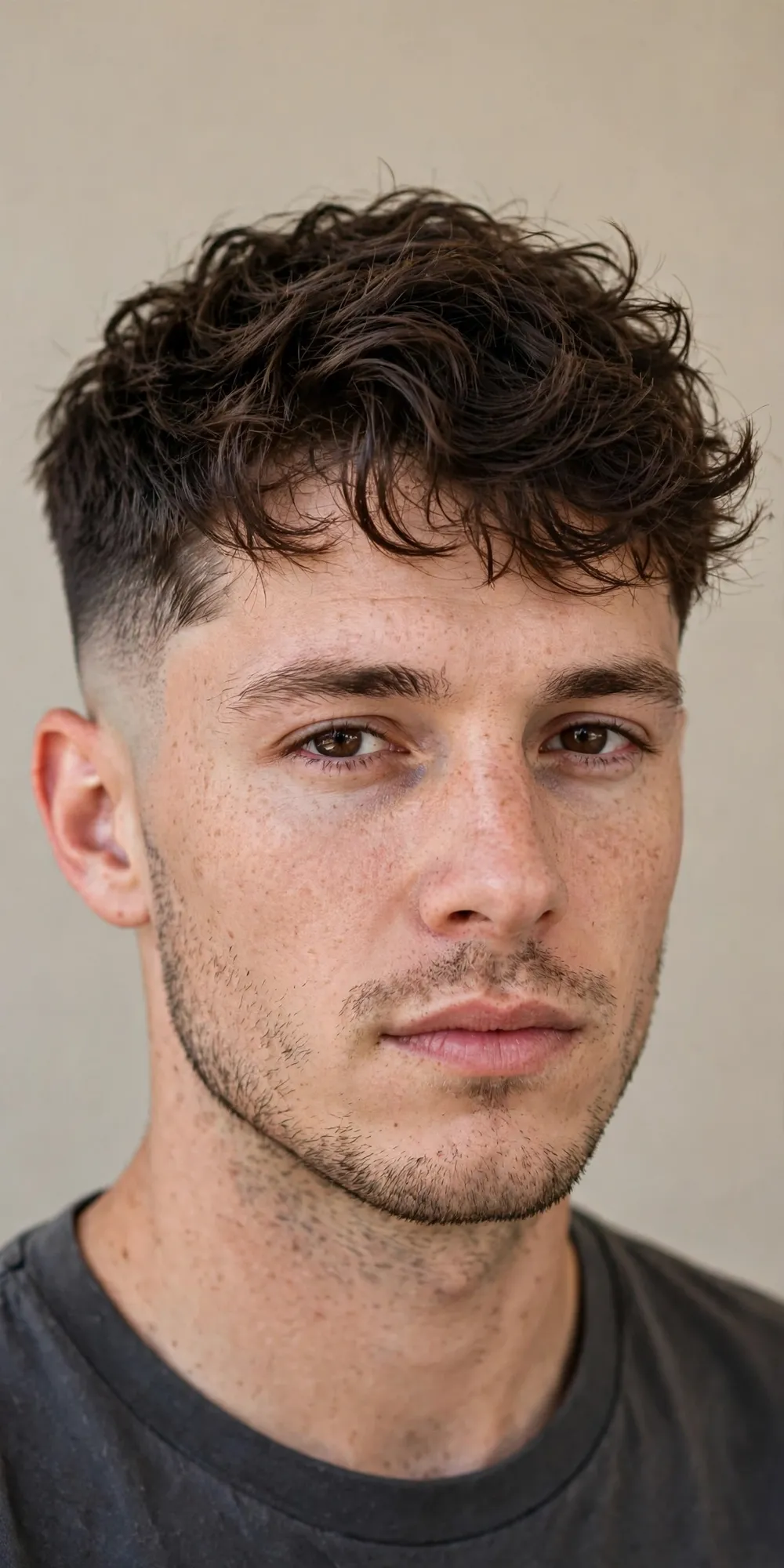
If your hair has a natural wave, this cut lets it do the work. The top is kept short — an inch and a half to two inches — with texture cut in so the waves separate instead of clumping into one heavy mass, and the low fade keeps the sides neat while the top stays deliberately undone. It suits oval, square and heart-shaped faces, and it is one of the best low fades for naturally wavy hair, because the wave gives you free texture no product can fake. Ask your barber for a short textured top with a low fade, #1 to #3, and to thin out any bulk at the crown. A dab of sea salt spray on damp hair, scrunched and left to air-dry, is all the styling this needs. Trim every three to four weeks.
29. Medium, Layered and Straight
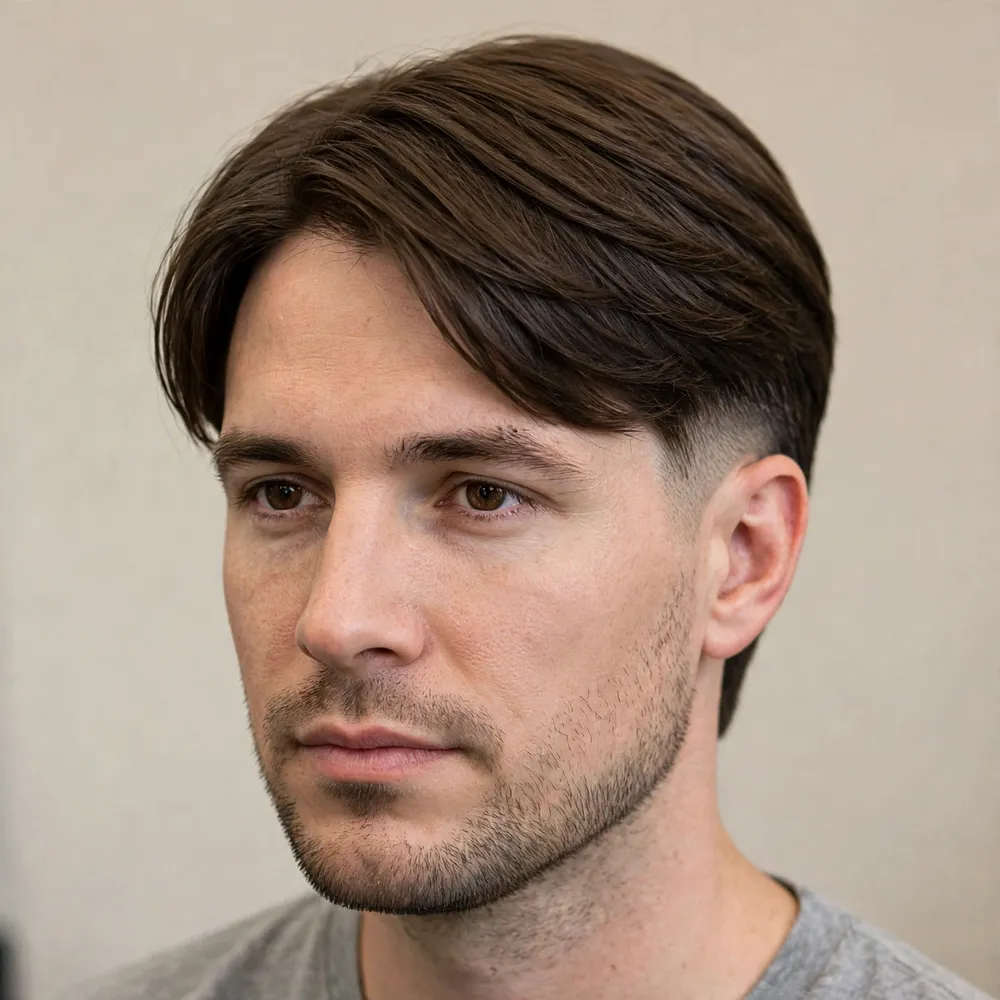
Not every low fade needs a short top. This one keeps the top at medium length — three to four inches — with soft layers cut through it so straight hair moves instead of hanging like a curtain, and the low fade underneath keeps the sides from getting bulky. It suits guys with straight, medium-to-thick hair and oval or square faces; fine hair can work too if the layers are kept light, since too much layering thins it out further. Ask for medium length on top with long layers and a low taper fade around the ears and neckline — a taper rather than a skin fade keeps the whole thing softer, closer in spirit to a classic low taper fade. A light pomade gives a natural sheen, or leave it bare for a matte finish. Expect a trim every four to five weeks, plus a quick blow-dry if you want the layers to sit properly.
30. Thick Fluffy Hair with Low Temp Fade
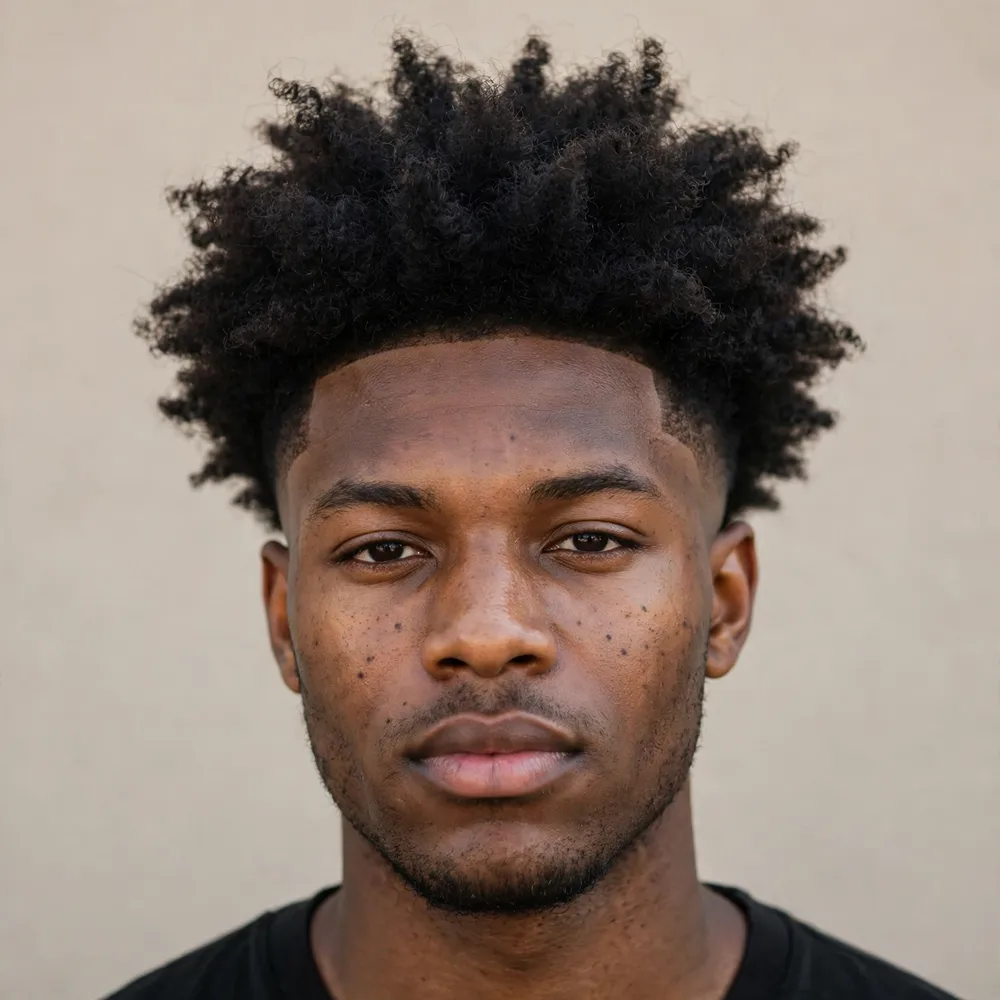
Thick hair that stands up on its own is a gift — this cut just gives it a shape. The top is left long and full, brushed up and slightly back so the natural volume does the talking, while the temp fade only cleans up the temples and sideburns, leaving the rest of the sides with some weight. That restraint matters: a full fade on very thick hair can make the top look disconnected. It suits oval and round faces — the height on top lengthens a rounder face — and thick, straight or wavy hair. Ask for volume on top with texture to remove bulk, and a low temp fade at the temples only. A little matte clay through the roots holds the lift without making it crunchy. Maintenance is moderate: a trim every three to four weeks, and a blow-dryer on low heat helps on humid days.
31. Textured Crop with Low Fade and Groomed Beard

This is the cut for guys who want the top and the beard to look like one plan, not two accidents. The top is a short, choppy textured crop, the low fade blends down the sides and straight into a shaped beard, so there is no awkward line where the hair ends and the beard begins. It suits square and oval faces, and it works on most hair types, straight or wavy, as long as the beard is thick enough to shape — patchy beards will show the gap. Ask your barber for a textured crop with a low fade that blends into the beard, and to shape the beard neckline while he is at it. Matte clay on top, beard oil below. The fade needs a touch-up every two to three weeks and the beard a weekly tidy, so this one asks a bit more of you — but the payoff is a genuinely finished look.
32. Short Curly Hair Fade with Line Up
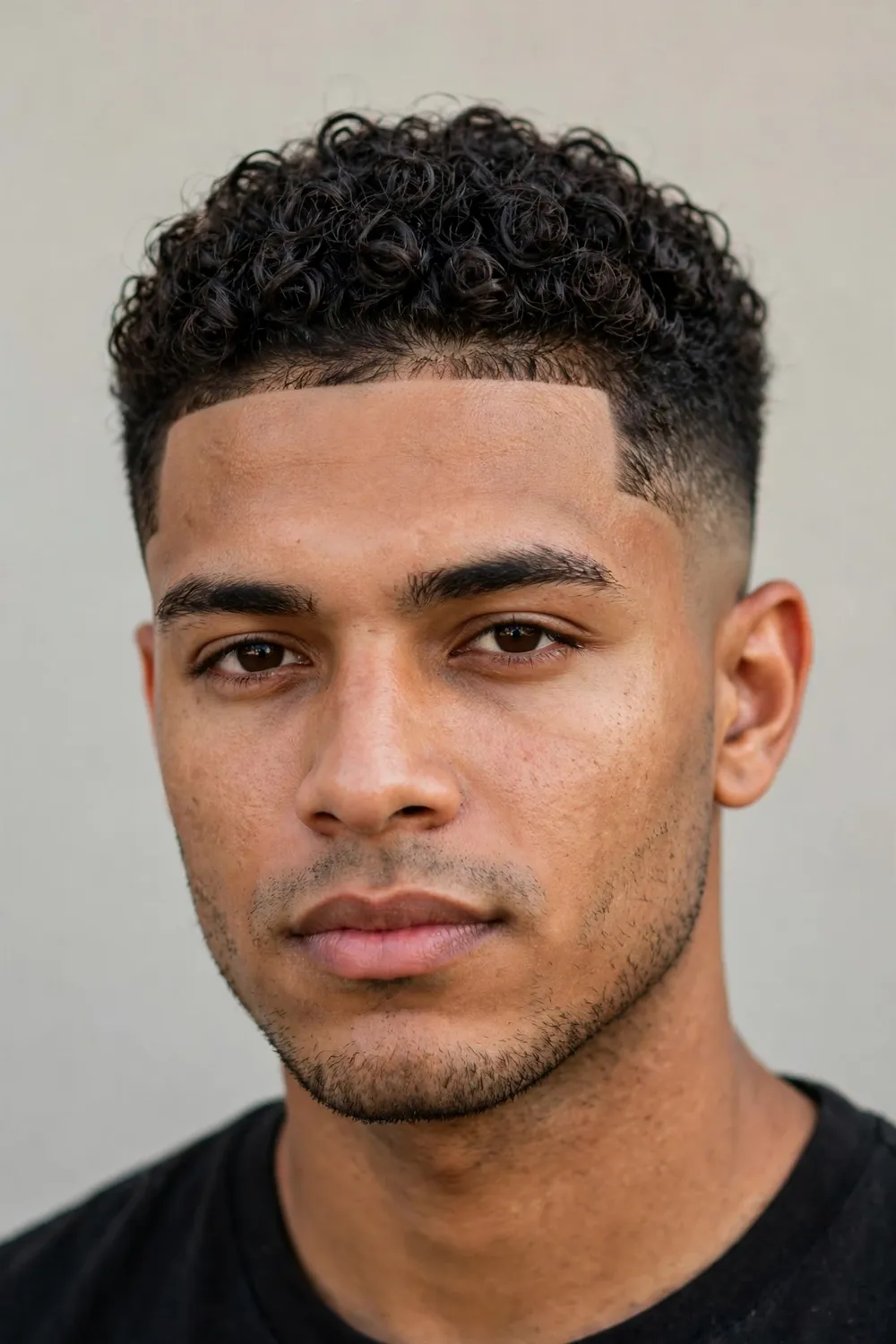
Short curls plus a crisp line up is one of the sharpest combinations a barber can do. The curls stay short on top, about an inch, so they form tight, defined coils instead of frizzing out, the low fade cleans the sides, and the line up carves a razor-straight edge along the forehead and temples. It suits round and square faces — the straight front line adds structure — and naturally curly or coily hair. Ask for short curls on top with a low fade, #1 to #2, and a sharp line up at the front; bring a photo, because every barber draws the line slightly differently. Curl cream on damp hair keeps the coils defined with a soft finish. The line up is the catch: it blurs within a week, so budget a weekly edge-up if you want it razor sharp.
33. Long Curly Hair with Low Fade

Long curls and a low fade should not work together on paper — one is wild, the other is precise — but in practice the fade is exactly what tames the volume. The top keeps its length, four inches or more, so the curls can fall naturally, while the low fade takes the bulk off the sides and stops the whole head from widening into a triangle. It suits oval and longer faces, and it is built for naturally curly hair; trying to curl straight hair into this will be a daily fight. Ask for length kept on top with layers to shape the curls, and a low fade on the sides, #1 up to #3. Curl cream is your best friend here — work it through wet hair and let it air-dry. Trims every five to six weeks, and a silk pillowcase genuinely helps with morning frizz. For more curly ideas, our guide to curly hairstyles for men covers the full range.
34. Low Fade with Curls

This is the everyday version of the curly low fade: curls on top at a medium length, not too long, not too short, with a clean low fade on the sides that keeps the silhouette tight. There is nothing fussy about it, which is the point — the curls are the feature, and the fade just frames them. It suits most face shapes, especially oval and square, and works on loose curls and tighter coils alike; the length on top is the variable, and your barber should adjust it to how tight your curl pattern is. Ask for a low fade, #1 to #3, with the curls left long enough to show their shape, usually two to three inches. A little curl cream, scrunched in while the hair is damp, gives definition without crunch. Maintenance is low — a trim every four weeks and a decent conditioner will carry this cut a long way.
Group E — Black Men, Beards & Statement Styles
35. Low Fade for Black Men
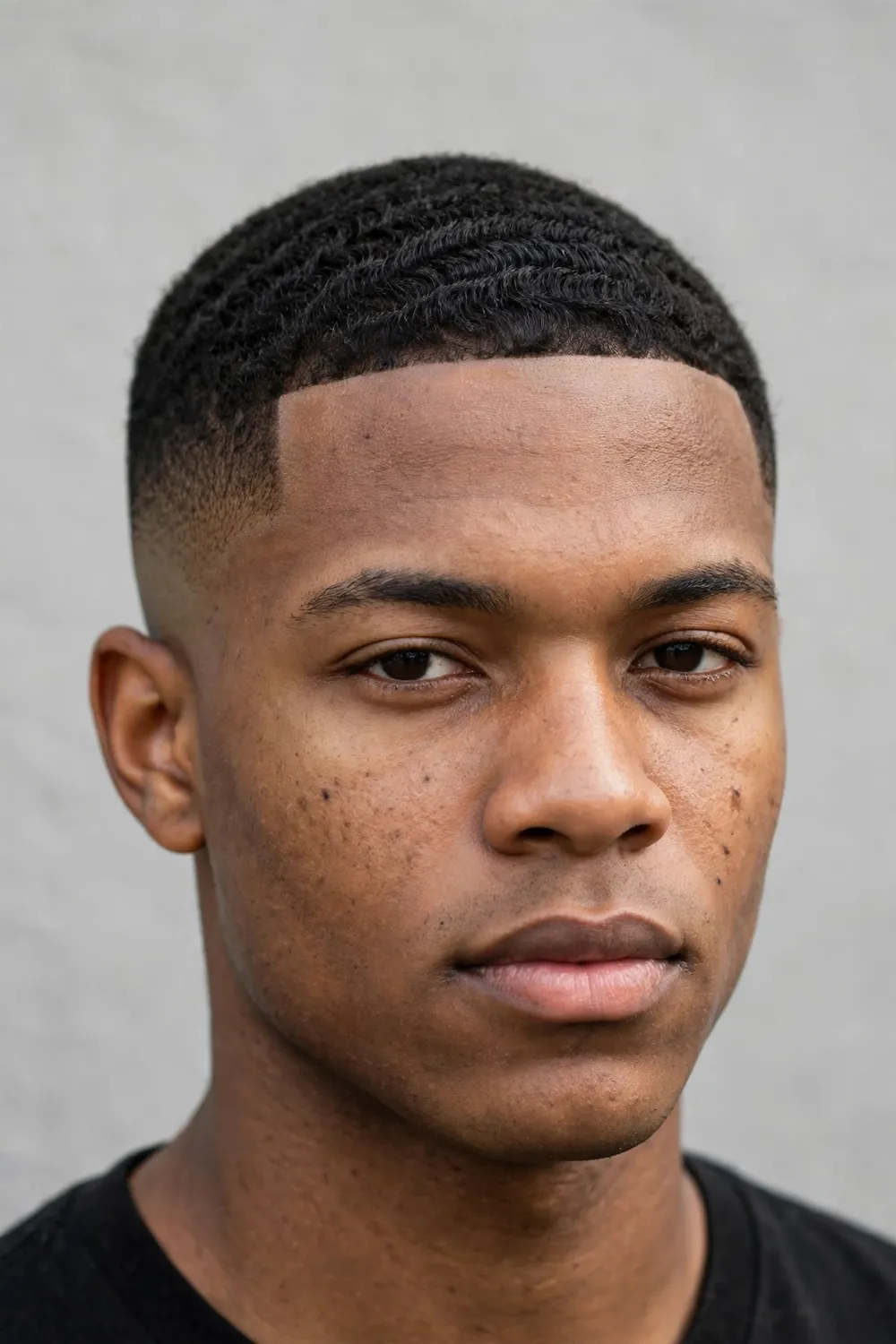
The low fade has been a staple in Black barbering for years, and for good reason: it is clean, it grows out gracefully, and it works with almost anything on top. Waves, a short afro, twists or a sponge curl — the low fade underneath stays the same, fading gently just above the ear and keeping the outline sharp. It suits every face shape, and it is one of the most forgiving fades for coily and kinky hair because the fade zone is small and the blend is subtle. Ask your barber for a low fade, #1 to #2 at the bottom, with the top left to your preference and a line up if you like a crisp hairline. A little wave pomade or curl cream on top, depending on the style. A shape-up every week or two keeps it looking fresh between full cuts.
36. Low Fade with Beard
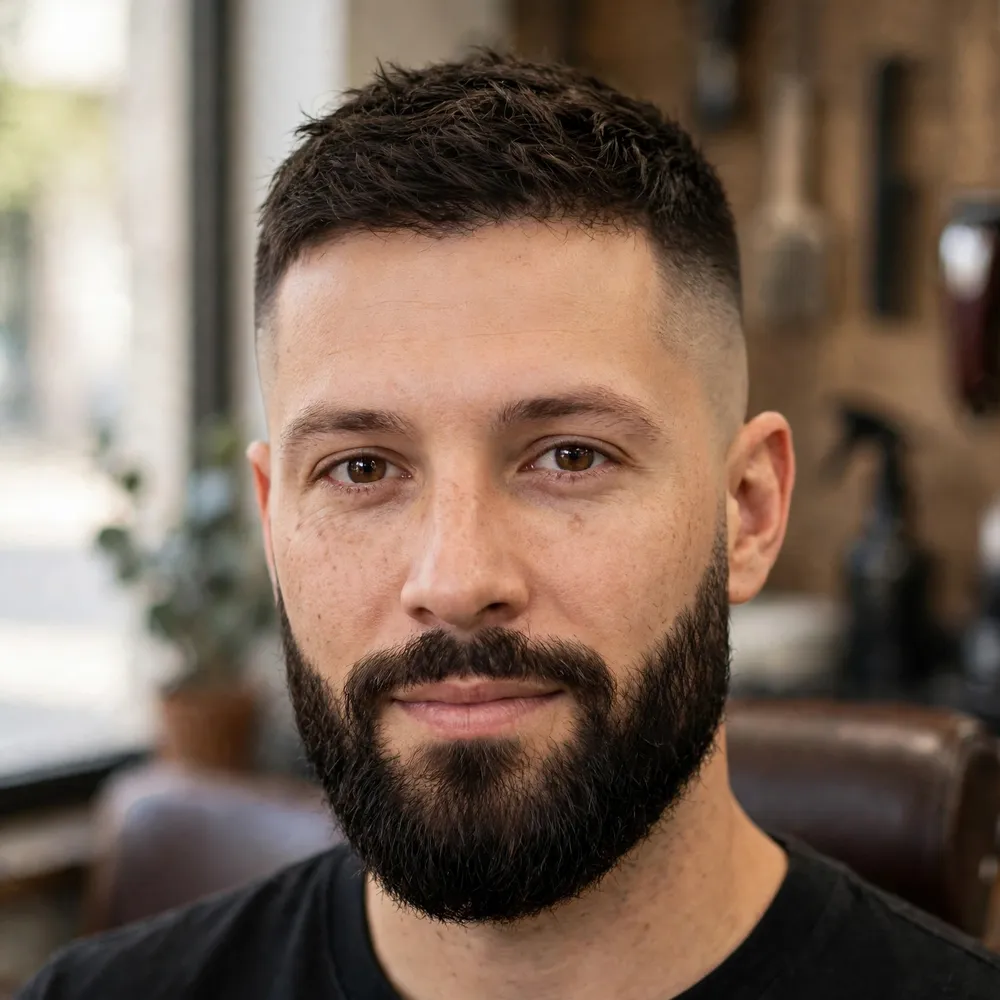
A low fade and a beard are natural partners because the fade can melt straight into the facial hair. The sides fade down low, the beard is shaped to meet the fade at the sideburns, and the result is one continuous line from the top of the head to the jaw — no gap, no harsh step. It suits square and oval faces, and it works best when the beard is full enough to shape; a thin or patchy beard will not hide behind a fade. Ask your barber to blend the fade into the beard and to clean up the cheek line and neckline — most barbers will do the beard shaping as part of the same cut if you ask. Matte clay for the top, beard oil and a boar-bristle brush for the beard. The fade needs a trim every two to three weeks, the beard a quick tidy every week.
37. Low Fade with Dreadlocks
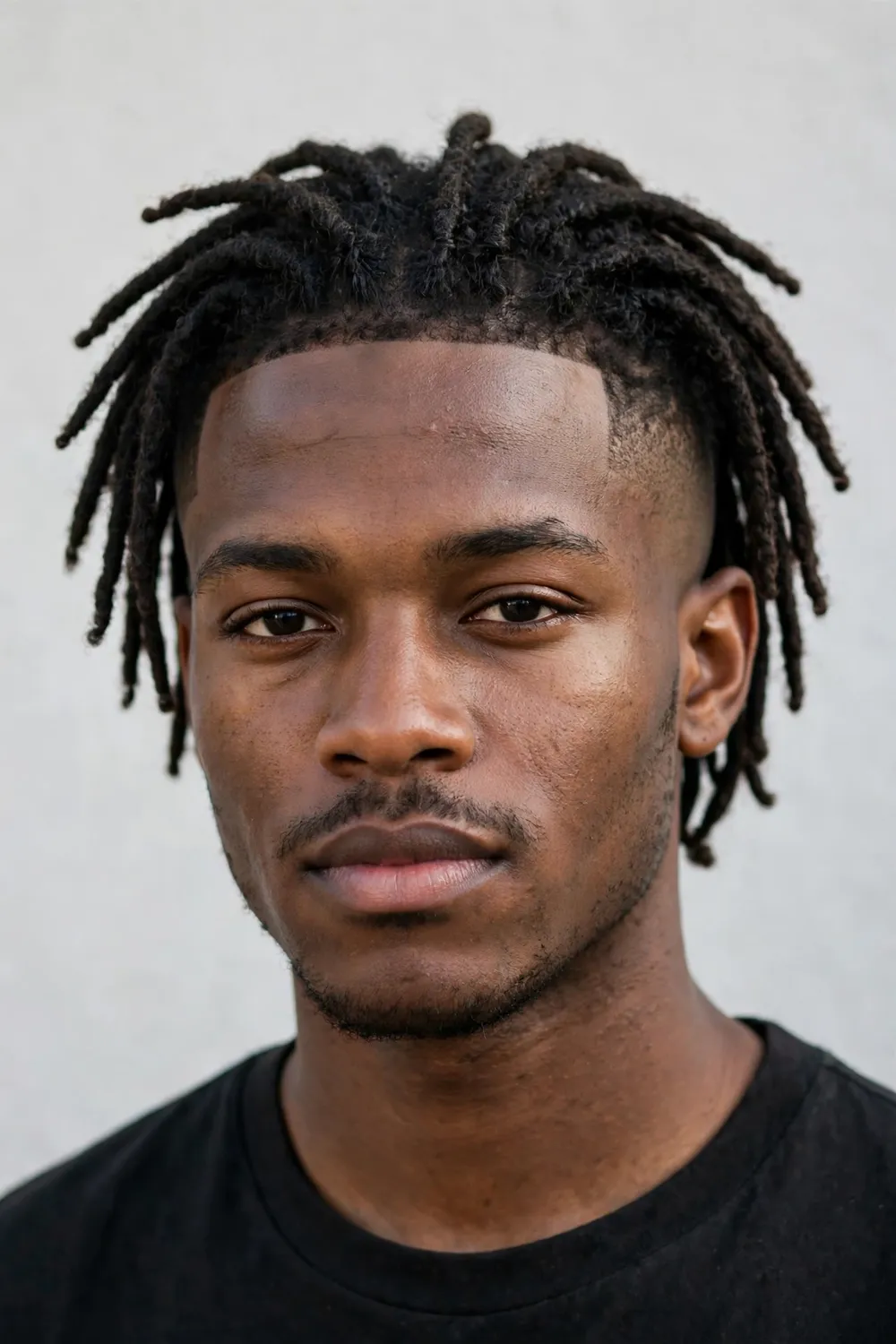
Dreadlocks carry a lot of visual weight, and the low fade is what keeps them from overwhelming the head. The sides fade low and clean, the locs stay long on top — tied back, hanging loose or gathered into a ponytail — and the contrast between the neat fade and the textured locs is what makes the style. It suits oval and square faces, and it is built for hair that is already locked; starting locs just for this cut is a long commitment, so this one is for guys who already have them. Ask for a low fade, #1 to #2, with the hairline shaped and the locs left untouched — a barber who knows locs will not run clippers near them. Keep the scalp moisturised and the locs retwisted on your usual schedule. The fade needs a touch-up every two to three weeks.
38. Low Drop Fade for Black Men
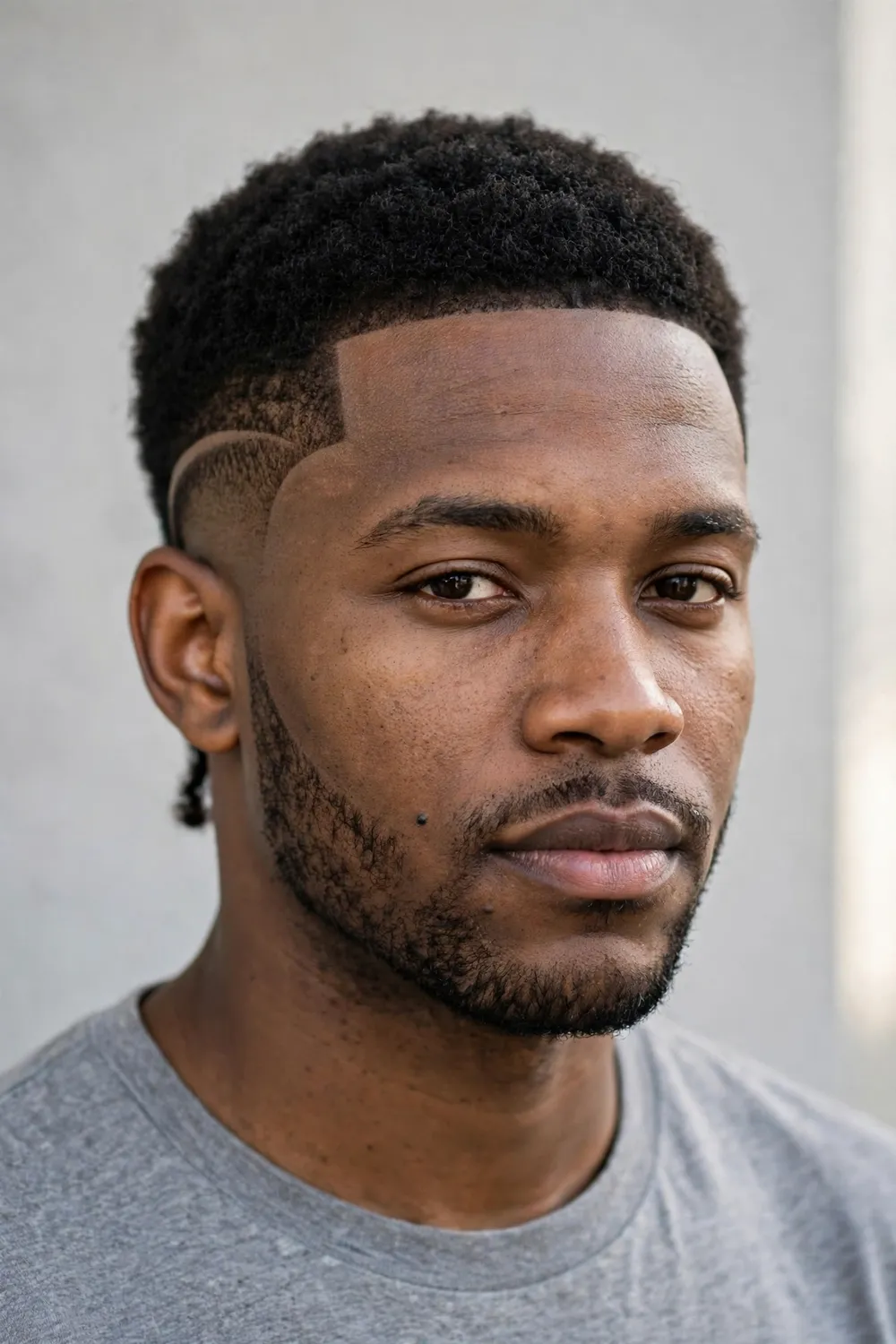
The drop fade adds a curve to the classic low fade: instead of running straight around the head, the fade line dips lower behind the ears, following the shape of the skull. On Black men it pairs beautifully with an afro, waves or twists on top, because the curved fade line echoes the rounded shape of the hair above it. It suits round and square faces especially well, since the dip creates a subtle lengthening effect. Ask your barber specifically for a low drop fade — not a regular low fade — with the fade dipping behind the ear, and a line up if you want the hairline sharp. Wave pomade for waves, curl cream for twists or an afro. Like most fades it needs a cut every two to three weeks, and the drop line is harder to maintain at home, so do not try to touch it up yourself.
39. Low Fade with Sponge Curls
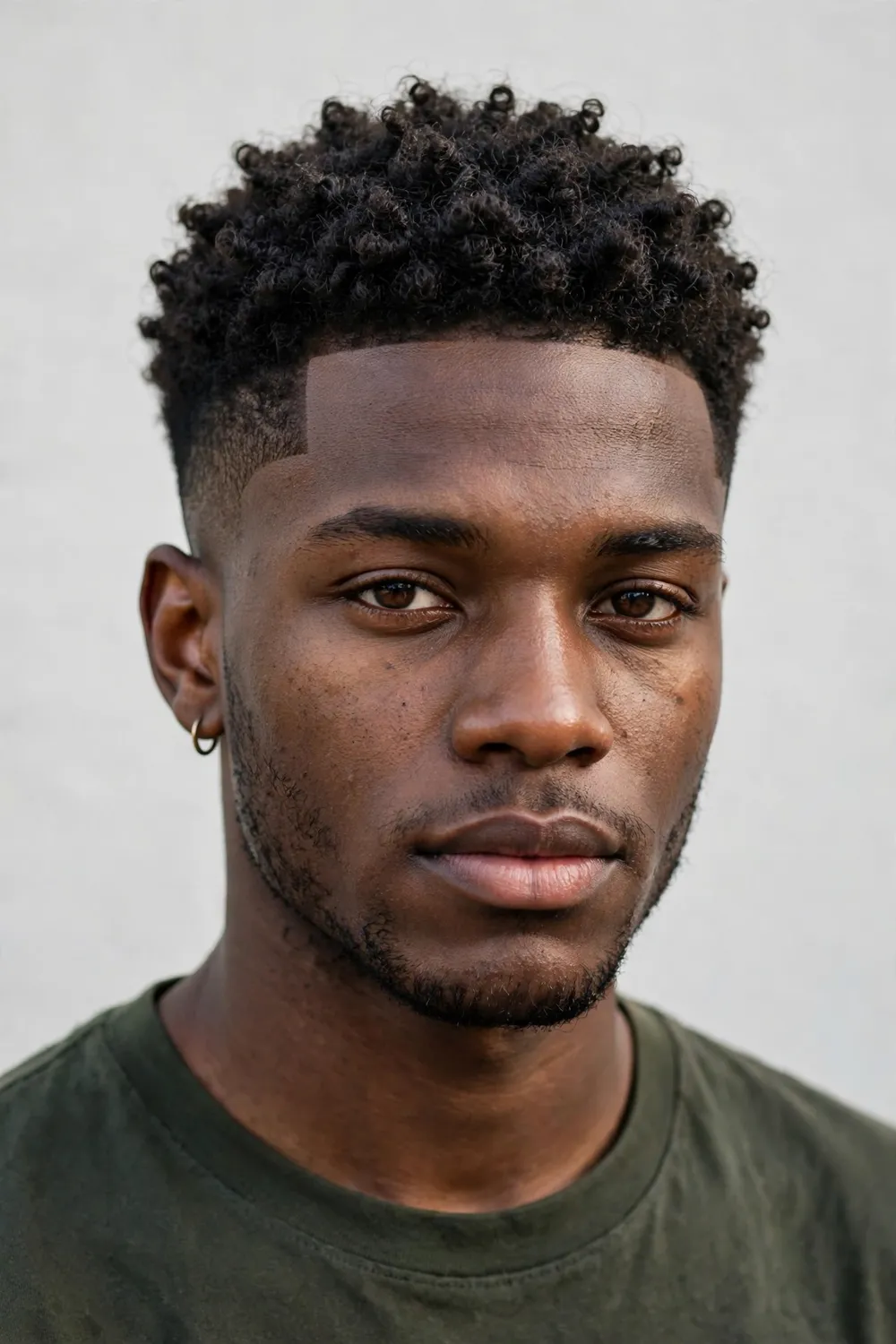
Sponge curls are the quickest way to get defined curls on short coily hair: a curl sponge twisted over the top for a few minutes creates tight, even coils, and the low fade underneath keeps the whole thing clean and intentional. The top only needs an inch or two of length, so this is a great first step if you are growing your hair out but want something styled in the meantime. It suits most face shapes and works on coily and kinky hair types — the sponge does the shaping, not the scissors. Ask for a low fade, #1 to #2, with the top left long enough to sponge, and a line up for a sharp finish. A little curl cream before sponging helps the coils hold. Maintenance is light: re-sponge every morning, fade touch-up every two to three weeks.
40. Low Fade Undercut
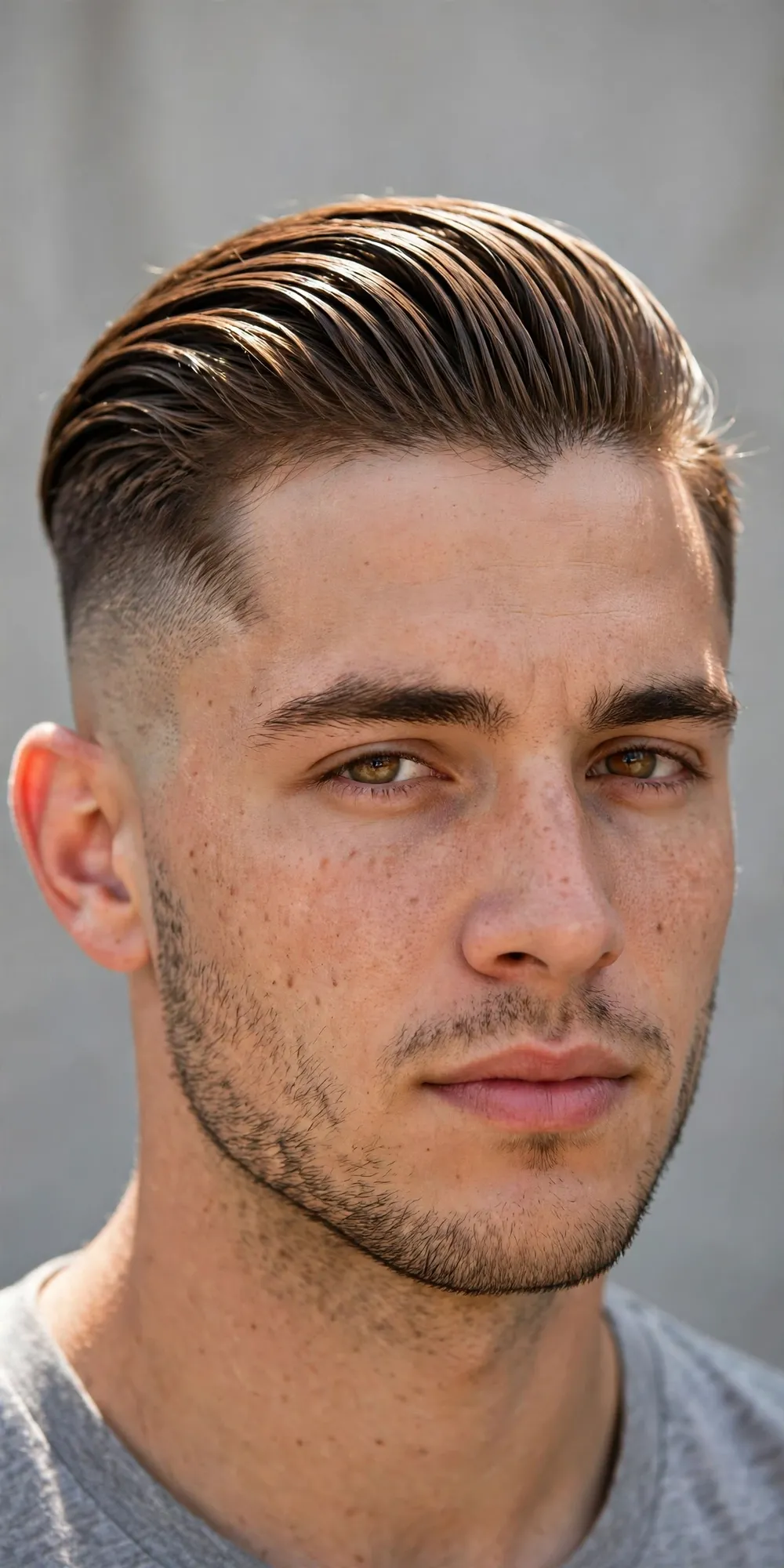
The undercut version of a low fade trades blending for contrast. Instead of the fade melting gradually into the top, there is a clear disconnect: the top stays long, the sides are faded low, and the line where they meet is sharp and obvious. It suits guys with thick, straight or wavy hair and oval or square faces, because the disconnect needs enough length on top — three to five inches — to look deliberate rather than accidental. Ask for a disconnected undercut with a low fade on the sides, bottom guard 0 or 1, and tell the barber how hard you want the part line to read. Light pomade gives the top a slick, controlled finish, or matte clay if you prefer texture. This is a higher-maintenance cut: the contrast shows regrowth fast, so plan on a trim every two weeks.
41. Modern Low Fade Mullet

The modern mullet has left its 1980s reputation behind. Today’s version keeps the top textured and the back long — usually to the collar or just past it — but the low fade on the sides replaces the old shaggy bulk, so the cut reads intentional instead of neglected. It suits oval and longer faces, and it works on straight, wavy or curly hair, since the texture on top does the heavy lifting. Ask your barber for a textured top, a low fade on the sides, and length kept at the back, and be specific about how long you want the back — “to the collar” is clearer than “long”. Matte clay keeps the top piecey without shine. Maintenance is moderate: the fade needs attention every three weeks, and the back needs a trim every six weeks or it starts looking like you forgot to book an appointment.
42. Low Fade Faux Hawk

The faux hawk is the mohawk’s wearable cousin: height through the centre, faded low on the sides, and no shaved strip in sight. The hair in the middle is left longer — two to three inches — and pushed up and slightly forward, while the low fade keeps the sides clean enough that the centre strip reads as a style, not a mistake. It suits oval and square faces and straight to wavy hair; very curly hair can work too if the centre is kept shorter. Ask for a faux hawk with a low fade, #1 to #2 on the sides, and the centre left long enough to spike up. Matte clay gives the centre hold with a natural finish — gel will make it look like a costume. It needs a trim every two to three weeks, because once the sides grow out the hawk shape disappears.
Group F — 13 New Ideas We Add
43. Low Fade Quiff
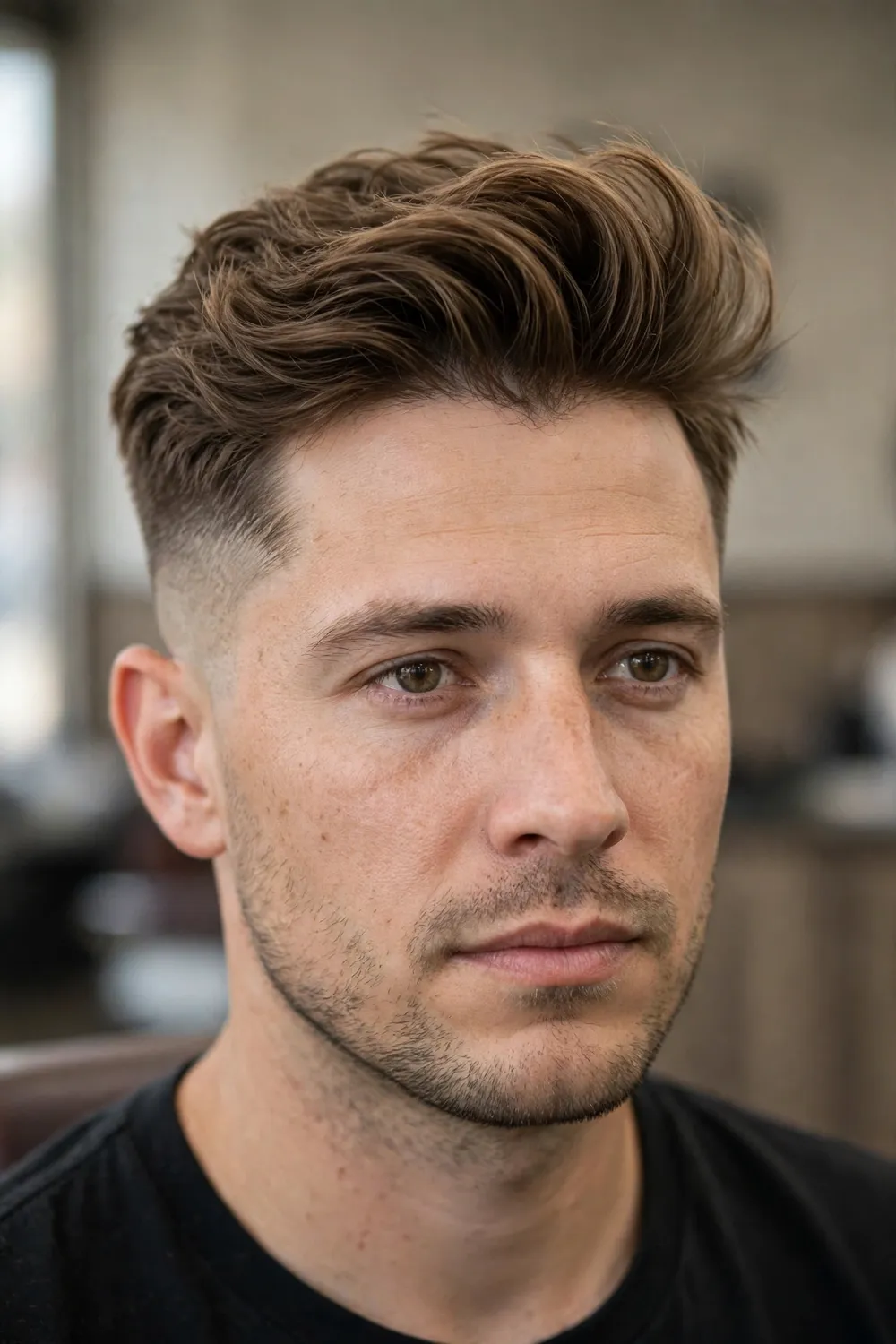
The quiff is the low fade’s best everyday partner. The front is swept up and back with real volume — three to four inches at the front, shorter toward the crown — and the low fade keeps the sides quiet so all the attention goes to the lift up front. It suits oval, square and longer faces, since the height adds balance, and it works on straight or wavy hair with medium thickness; very fine hair will struggle to hold the volume without a blow-dryer. Ask for a quiff with a low fade, #1 up to a #3, and the front left long enough to sweep up. Blow-dry the front upward with a round brush, then finish with matte clay for hold that still moves. Plan on a trim every three weeks and two minutes of styling each morning — this one rewards a little effort.
44. Low Fade with Afro

A rounded afro with a low fade is a classic for a reason: the fade takes the bulk off the sides so the afro keeps its shape instead of spreading wide, and the result is a clean, intentional silhouette. The top is picked out to a rounded shape, the fade starts low just above the ear, and the hairline can be shaped or left natural. It suits round and square faces — the height on top adds length — and it is made for coily and kinky hair. Ask your barber for an afro shape with a low fade, #1 to #2, and a shape-up if you like a crisp edge. Pick it out daily, moisturise with a leave-in conditioner, and use a little curl cream for definition. A shape-up every one to two weeks keeps the edges clean; a full cut every three to four.
45. Low Fade with Wavy Top
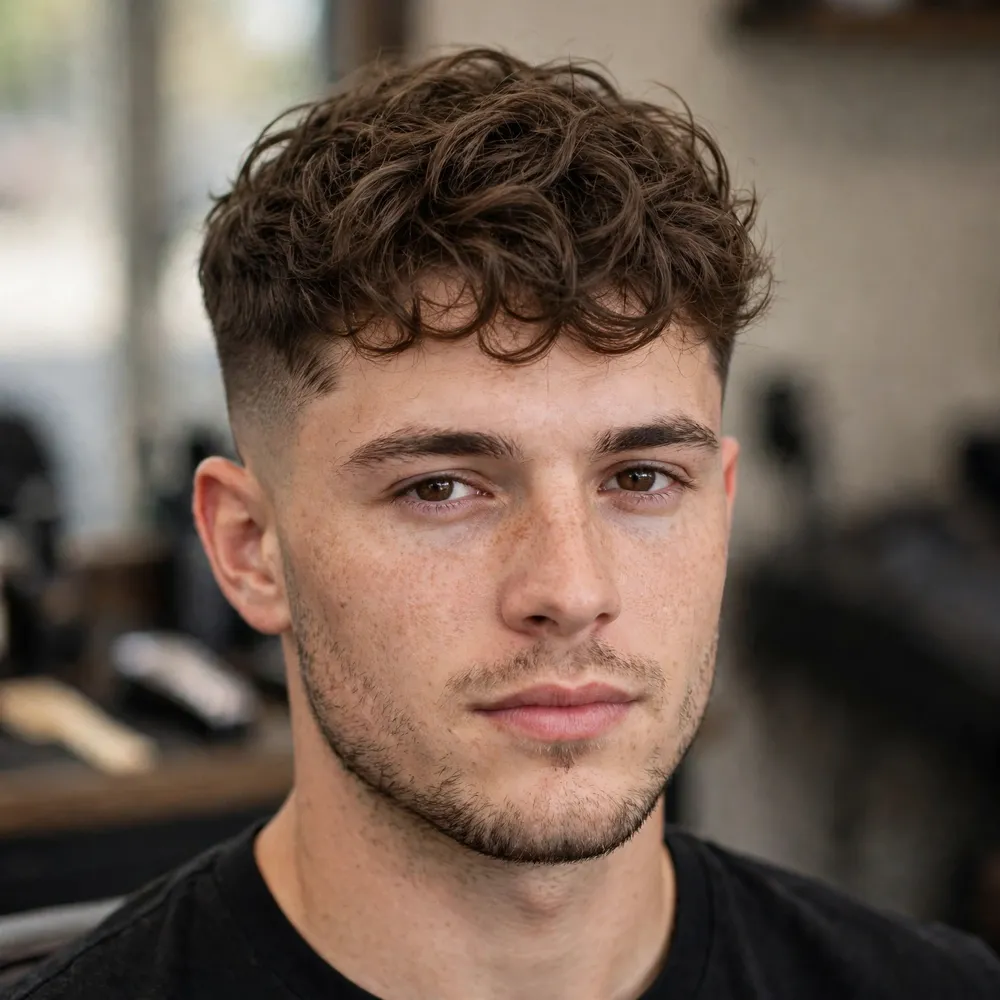
If your hair waves naturally, you do not need to fight it into a style — this cut just frames it. The top stays medium length, two to three inches, so the waves have room to form, the low fade keeps the sides tidy, and the whole thing looks like you woke up with good hair. It suits oval and square faces, and it is one of the easiest low fades to live with if your hair has any natural wave at all. Ask for a wavy top with a low fade, #1 to #3, and ask the barber to cut the waves dry if possible — wet wavy hair shrinks as it dries, and a dry cut shows the true length. Sea salt spray on damp hair, scrunched and air-dried, is the only product you need. Trim every four weeks and you are done.
46. Low Fade Edgar Cut

The Edgar is not a subtle cut, and that is the point. The top is short with a straight, blunt fringe cut hard across the forehead, the sides are faded low and tight, and the whole thing has a sharp, graphic edge that reads confident rather than safe. It suits oval and square faces and straight, thick hair — the blunt fringe needs hair that lies flat and holds a line. Ask for a short Edgar with a blunt fringe and a low skin fade, bottom guard 0, blending to a #2, and tell the barber how straight you want the fringe line. A tiny amount of matte clay keeps the top in place without shine. The catch is upkeep: the fringe line grows out visibly within two weeks, so this one commits you to regular barber visits.
47. Low Fade with Man Bun
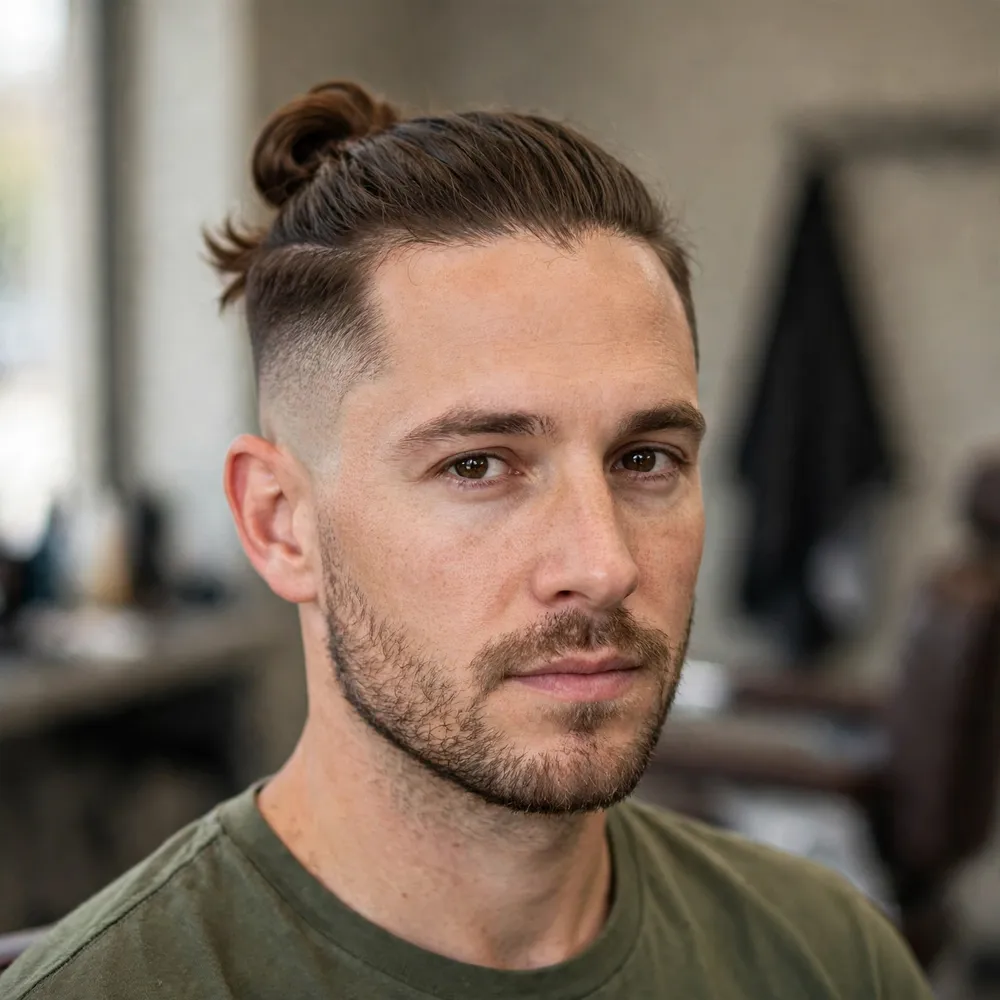
Long hair and a low fade are a better match than most people expect. The top is grown long — six inches or more — and tied back into a bun, while the low fade keeps the sides and back clean, so the bun looks deliberate instead of like you gave up on haircuts. It suits oval and longer faces, and it works on straight, wavy or curly hair as long as the top is long enough to gather. Ask for a low fade on the sides and back, #1 to #2, with the top left long and untouched — and be clear you are growing it, or an over-eager barber may thin it out. A little leave-in conditioner keeps the bun smooth, and a hair tie that does not snag is worth buying. Fade touch-ups every two to three weeks; the bun itself needs nothing but patience.
48. Low Fade with Long Flow
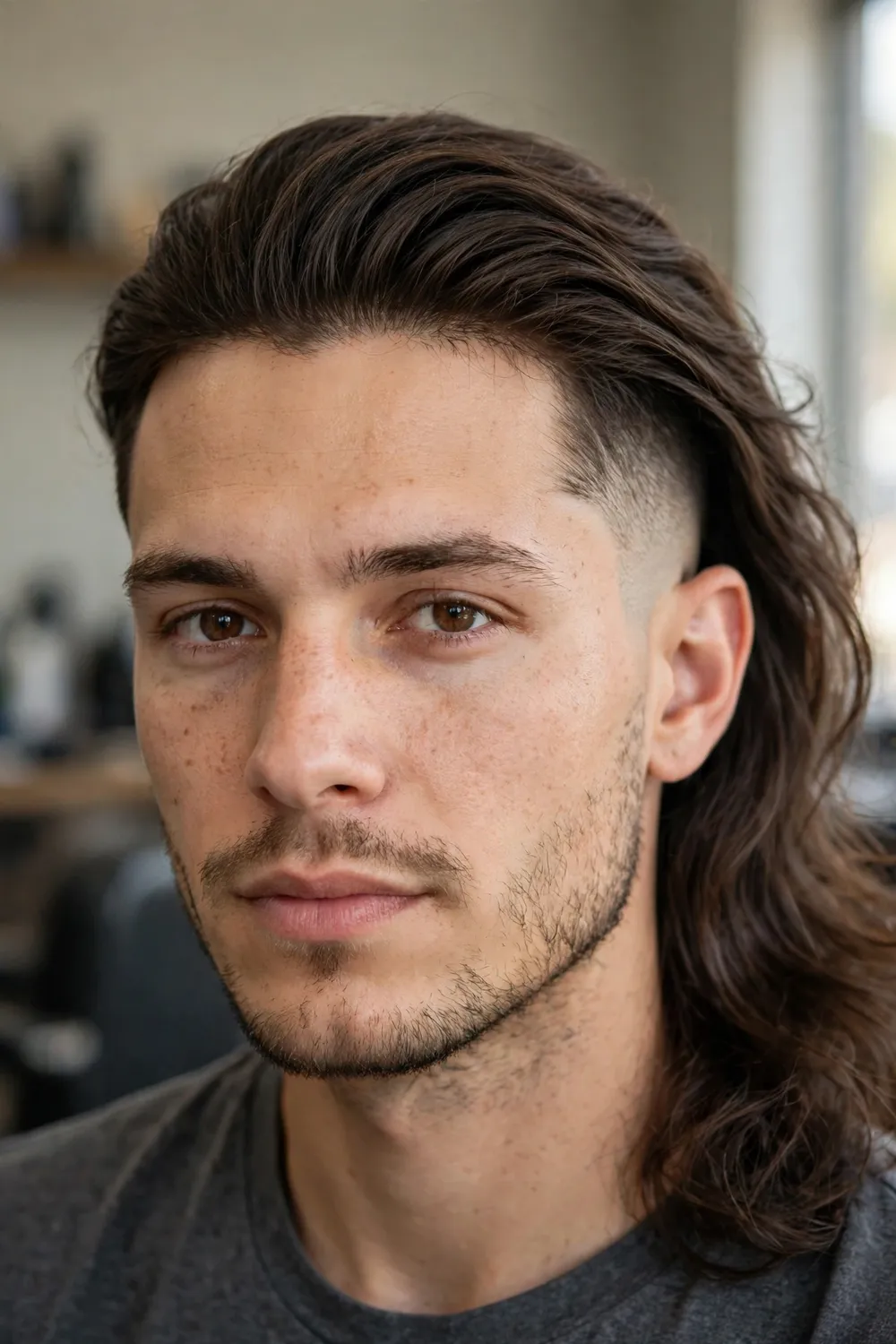
Long flow is hair worn loose and long, pushed back off the face, with a low fade underneath to stop the sides from getting heavy. The top and back flow past the collar, the fade starts just above the ear, and the contrast between the free-flowing length and the clean sides is what makes it look styled rather than grown out. It suits oval and square faces and straight or wavy hair — curly hair can work, but the flow will read more as volume than as length. Ask for a low fade, #1 to #2, with the length on top and back kept, and long layers to stop the ends from looking blunt. A light leave-in conditioner or a touch of light pomade keeps the flow smooth without weighing it down. Trim the ends every six to eight weeks, fade every three.
49. Low Fade with Slicked Back Top
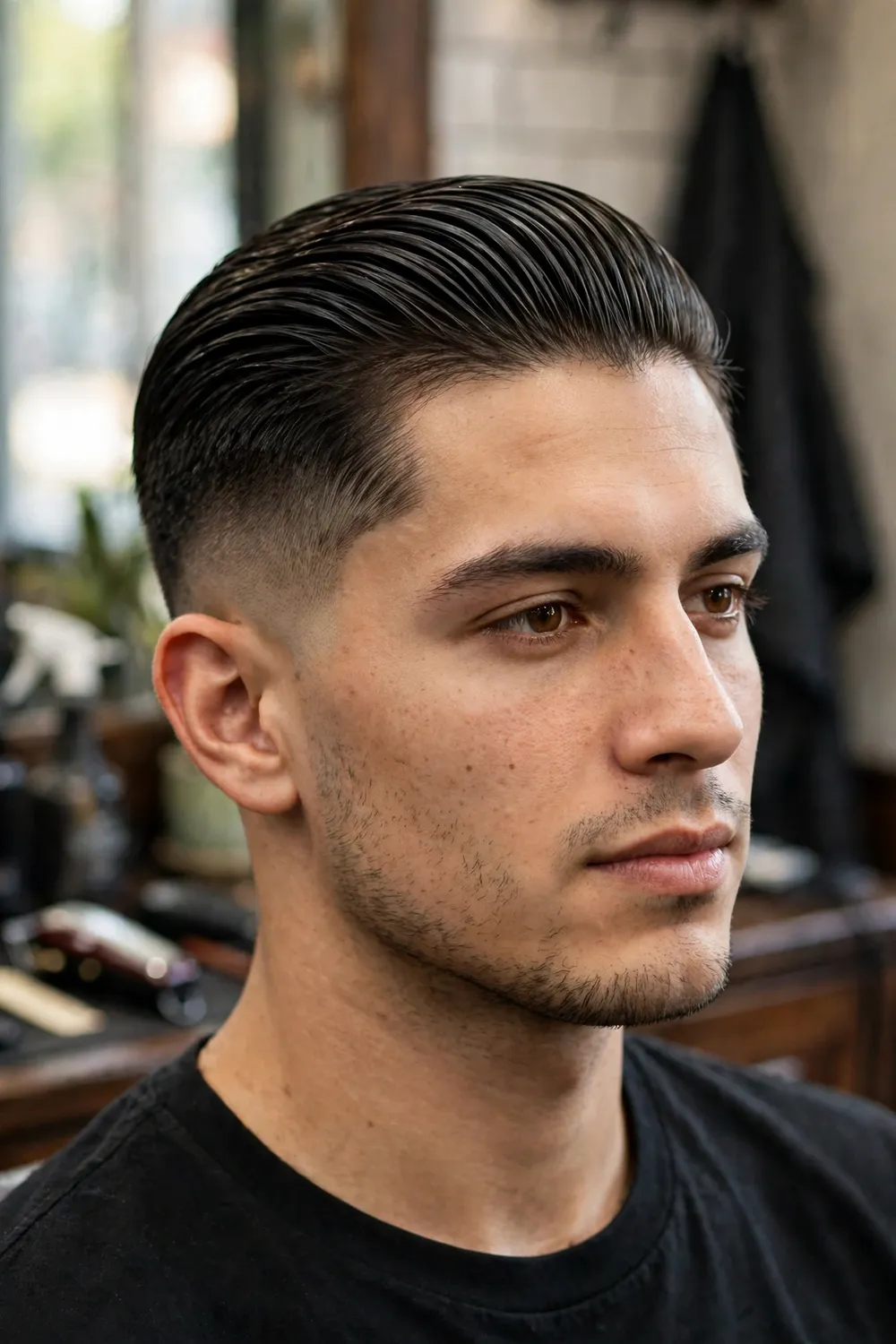
Slicked back with a low fade is the cleaner, calmer cousin of the pompadour. The top is combed straight back, medium length, with a smooth finish, and the low fade keeps the sides from competing with the sweep. It suits oval and square faces and straight or slightly wavy hair with medium thickness; it is also a good option if your hairline is starting to move back, since the backward sweep works with it rather than against it. Ask for a slicked-back top with a low fade, #1 up to a #3, and the top left long enough to comb back — three to four inches at the front. A light pomade gives the classic sheen; matte clay gives the same shape with a modern finish. If you want more swept-back options, our slick back hairstyles for men guide has the full range. A trim every three weeks keeps the sweep sitting right.
50. Low Fade with Shape-Up
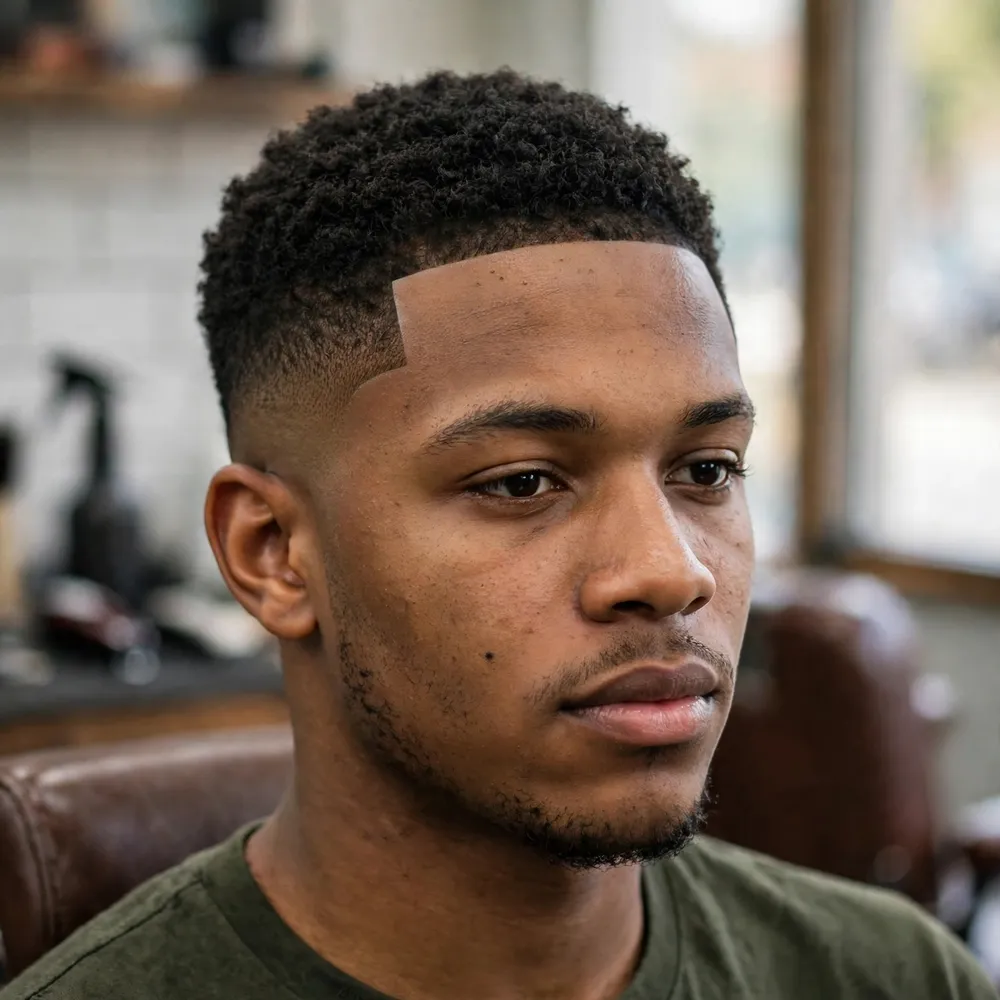
The shape-up is the detail that makes a simple low fade look like a fresh cut even a week later. The fade itself stays low and subtle, but the hairline is carved into a crisp, geometric edge — straight across the forehead, sharp corners at the temples — with a razor or trimmer. It suits every face shape, and it is especially popular with short hair, waves and curls, where the sharp edge is the whole point. Ask your barber for a low fade with a shape-up, and be specific about the hairline: straight across, or slightly rounded at the corners, because a shape-up carved too deep is hard to undo. A little moisturiser or oil on the hairline keeps the skin happy. The trade-off is maintenance — the edge softens in about a week, so a weekly touch-up is part of the deal.
51. Low Fade with Textured Top
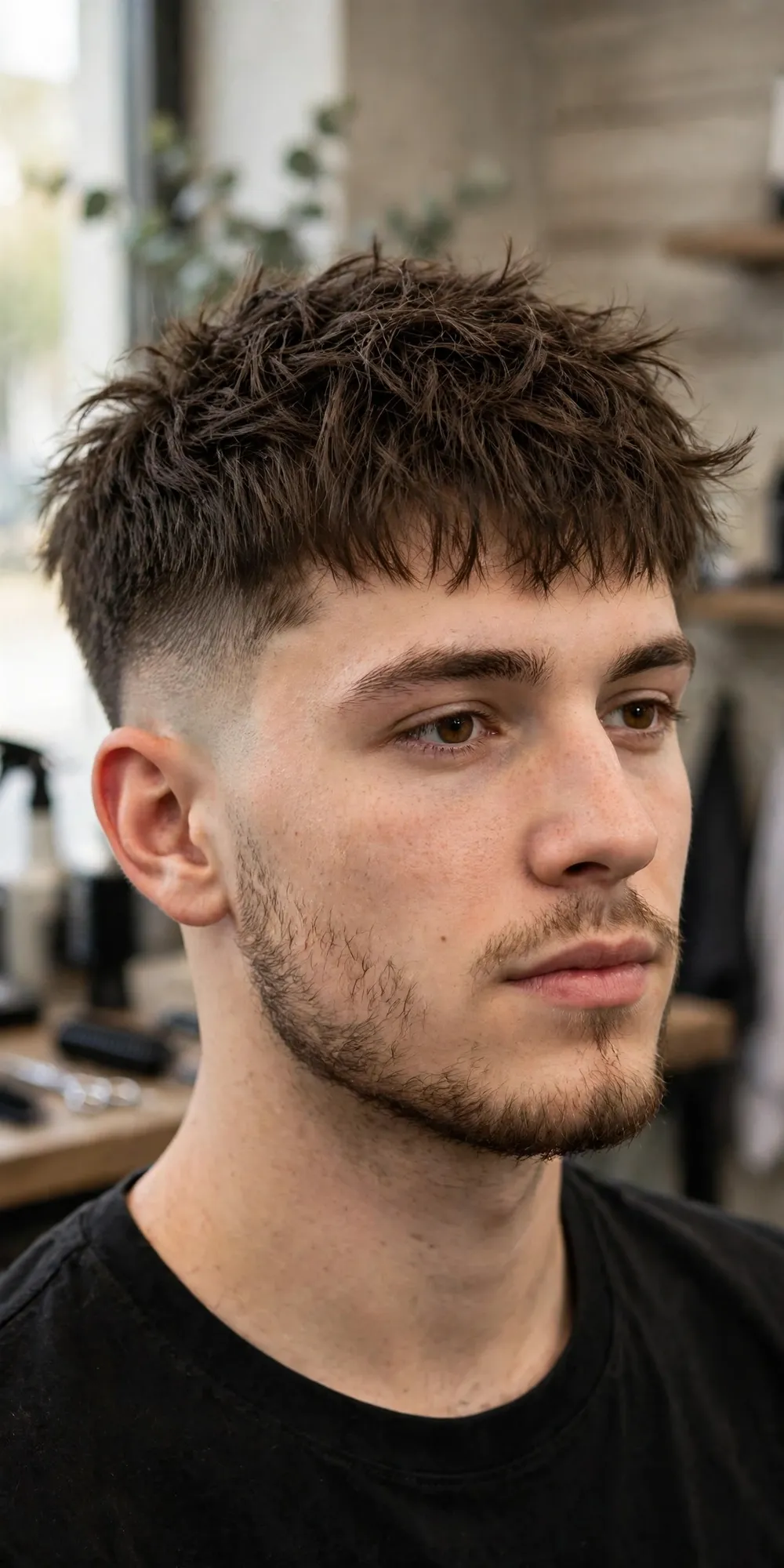
When you do not know what to ask for, ask for this. A textured top — two to three inches, cut with point-cutting so the ends separate — over a clean low fade is the most versatile cut on this list: it works dressed up or down, it suits almost every face shape, and it flatters straight, wavy and loosely curly hair alike. The texture is what stops it from looking like a plain short back and sides; it gives the top movement and makes bedhead look intentional. Ask for a textured top with a low fade, #1 up to a #3, and tell the barber whether you part it or push it forward. Matte clay is the default product, or sea salt spray if you like it messier. It holds its shape for three to four weeks, which is as low-maintenance as a styled cut gets.
52. Low Fade with Cornrows
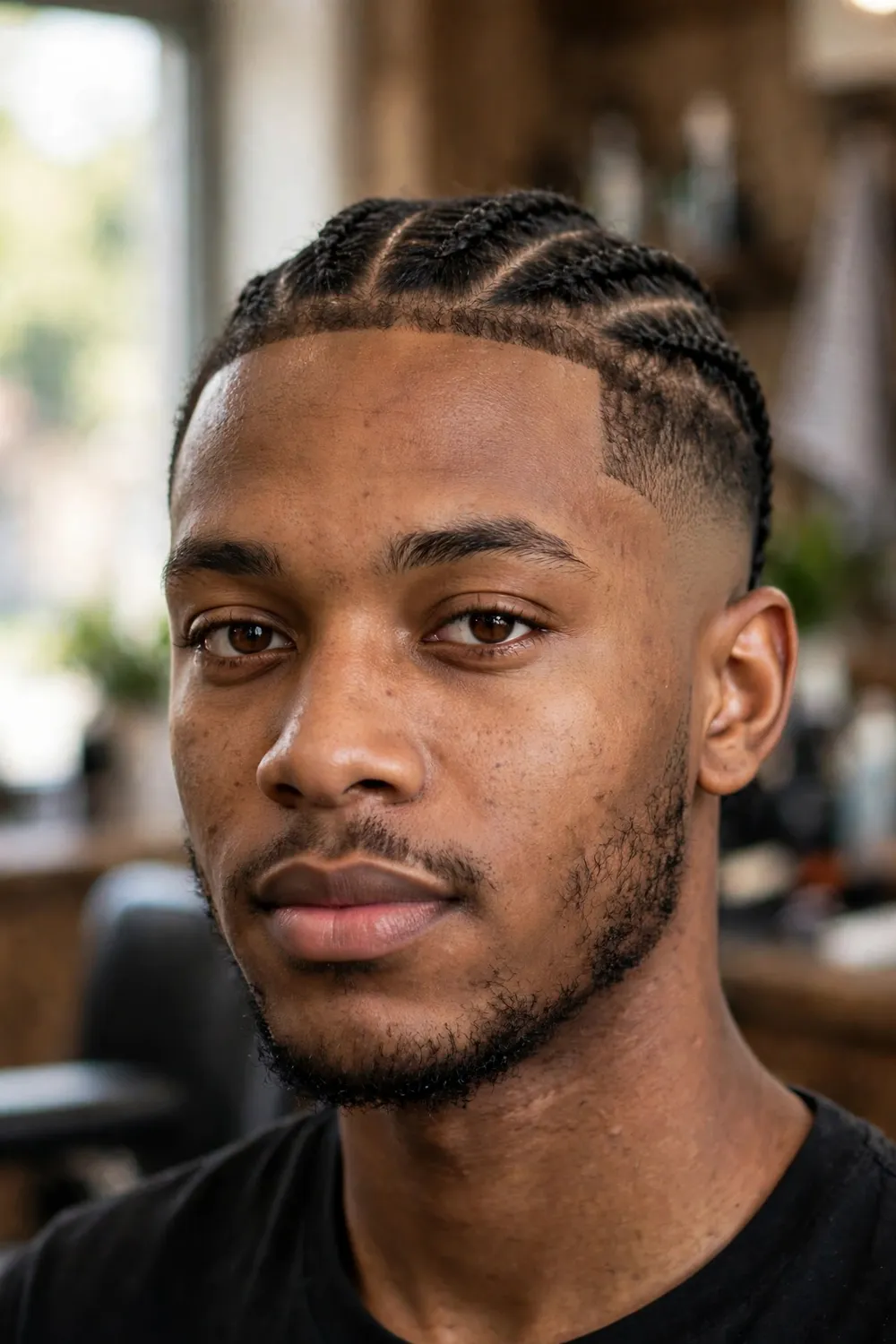
Cornrows with a low fade are a clean, sharp combination: the braids run back in neat rows on top, the fade takes the sides down low, and the contrast makes both elements stand out. The braids can be simple straight-back rows or a more detailed pattern — the fade underneath stays the same either way. It suits oval and square faces and is made for coily and kinky hair long enough to braid, usually at least two to three inches. Ask your barber or braider for cornrows on top with a low fade on the sides, #1 to #2, and agree on the pattern before the braiding starts. Keep the scalp moisturised and the braids in for two to four weeks. The fade will need a touch-up while the braids are still in, so ask for a fade-only visit in between.
53. Low Fade with Two-Strand Twists
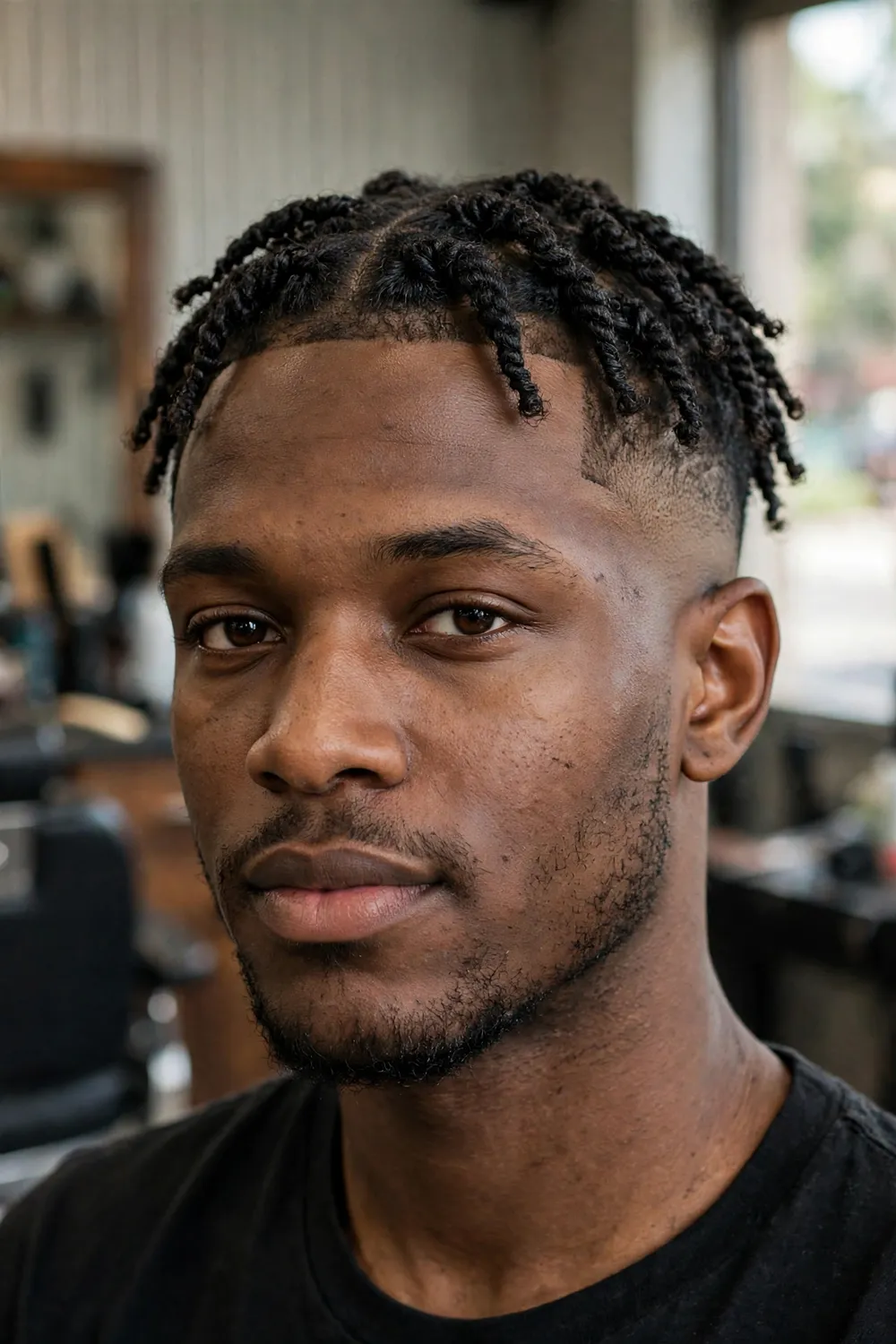
Two-strand twists are one of the most versatile protective styles, and the low fade gives them a sharp frame. The twists sit on top — short twists for a neat look, longer ones for more movement — while the fade keeps the sides clean and the whole style looking finished. It suits most face shapes and works on coily and kinky hair with at least two to three inches of length. Ask for two-strand twists on top with a low fade, #1 to #2, and decide the twist size with your barber or loctician: smaller twists last longer, bigger ones are quicker to install. A light leave-in conditioner keeps the twists from drying out, and a durag at night protects them. Twists last two to four weeks; the fade needs its usual two-to-three-week touch-up.
54. Low Fade for a Receding Hairline
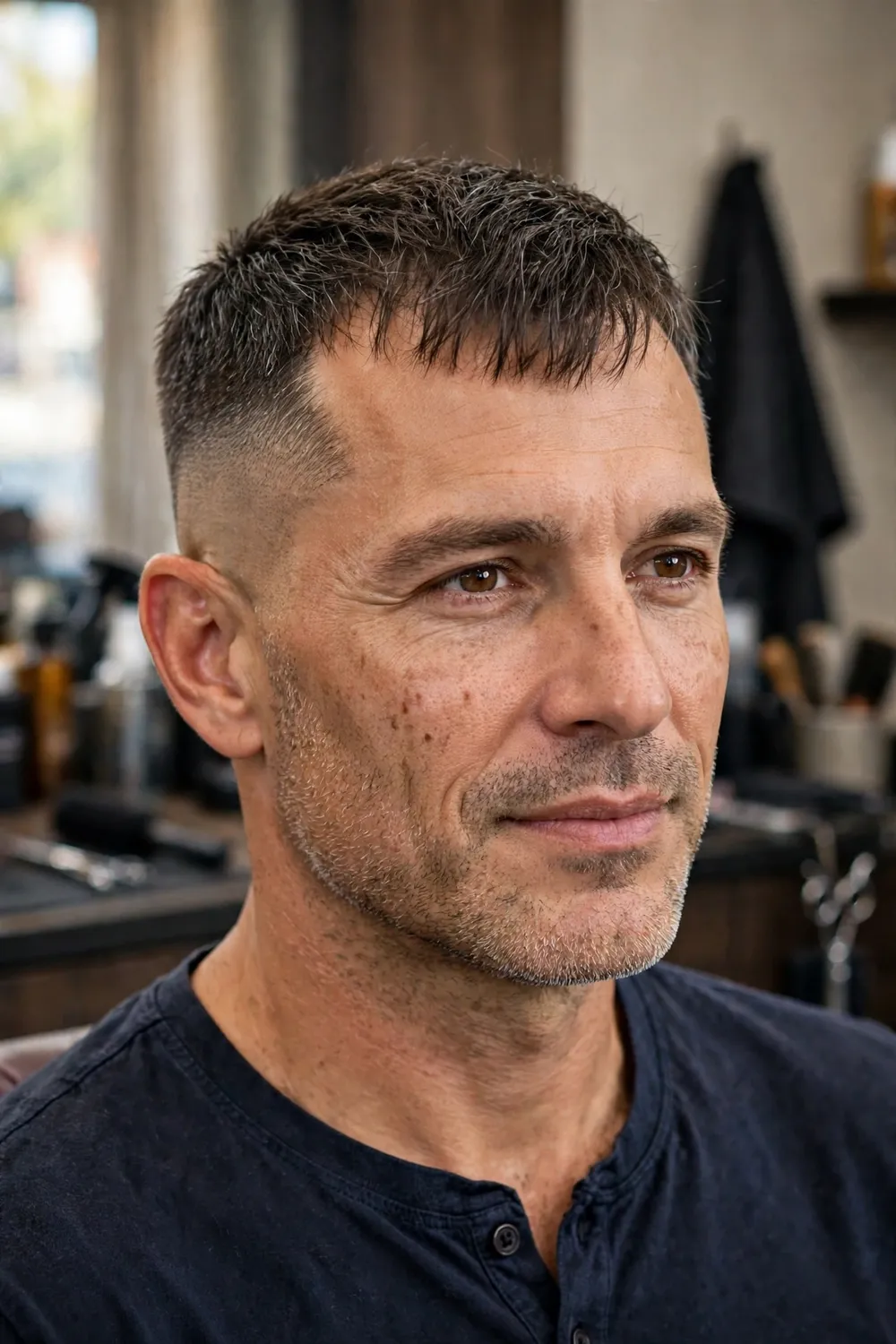
A receding hairline does not mean giving up on a good cut — it means choosing one that works with it. A short textured top, kept close and slightly forward, draws the eye to the texture instead of the hairline, and the low fade keeps the sides clean without exposing more forehead than necessary. It suits guys whose hairline is moving back at the temples, and it works on straight, wavy or thinning hair, because the short length adds the illusion of density. Ask for a short textured top, pushed slightly forward, with a low fade, #1 to #2 — and avoid asking for a hard line up, which only highlights the recession. Matte clay gives grip without shine, and heavy shiny products are the enemy here: they separate thin hair and show scalp. A trim every three weeks keeps it looking intentional.
55. Low Fade with Curtain Fringe
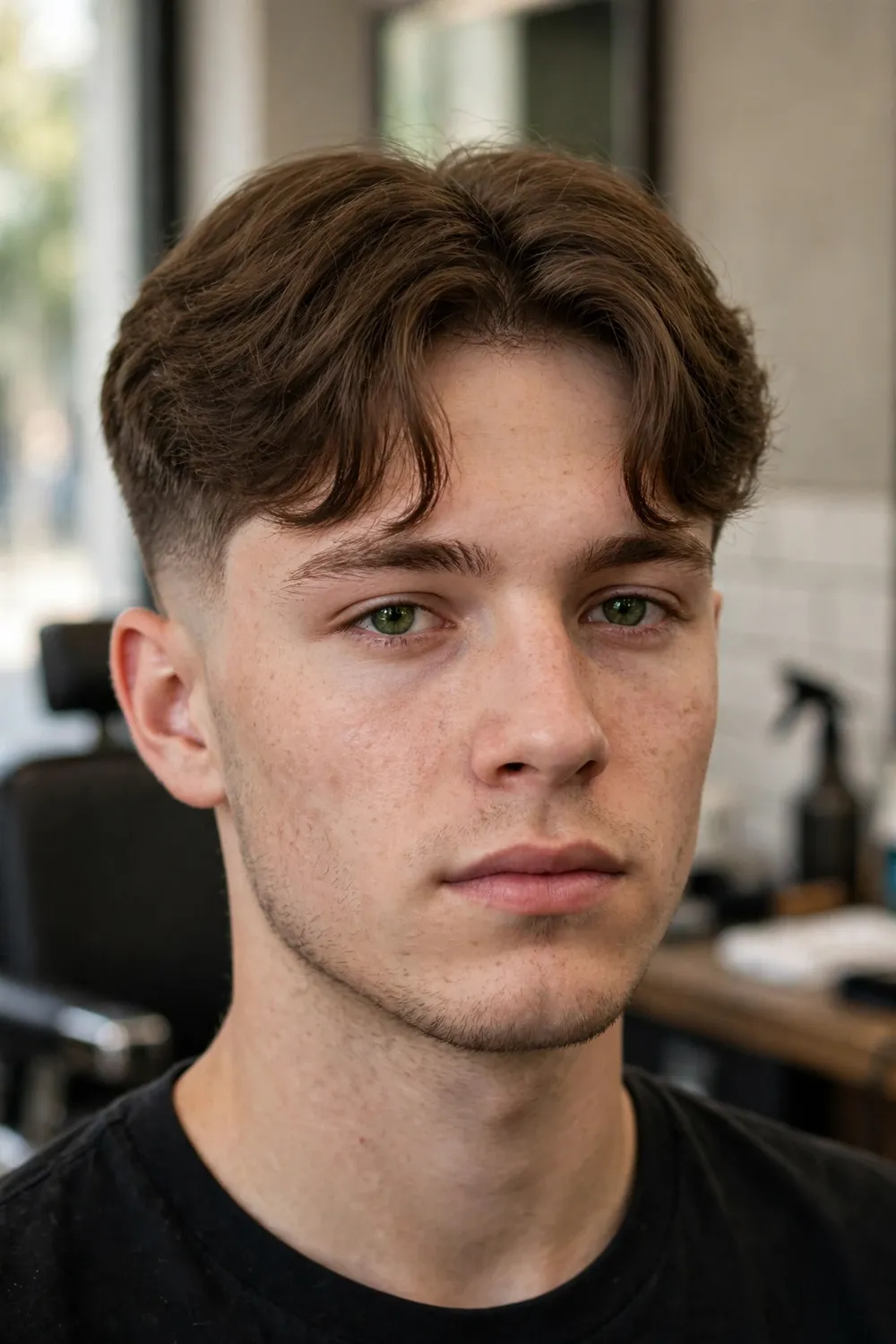
The curtain fringe is the 90s cut that came back properly. The top is centre-parted, medium length — three to four inches — with the fringe falling on either side of the forehead like curtains, and the low fade keeps the sides from getting heavy while the fringe does the work. It suits oval, square and heart-shaped faces, and it is best on straight or slightly wavy hair; very curly hair will not fall into curtains without a fight. Ask for a centre-parted curtain fringe with a low fade, #1 to #3, and the front left long enough to tuck behind the ears if you want. A little sea salt spray or light pomade gives the fringe movement without stiffness. It needs a trim every three to four weeks, and a quick blow-dry with the part in place makes mornings much easier.
How to Ask Your Barber for a Low Fade
The difference between a great low fade and a disappointing one is usually the conversation before the clippers start. Barbers hear “give me a fade” a dozen times a day, and that phrase alone tells them almost nothing — so go in with specifics. Start with the height: say “low fade” and point to just above your ear, about half an inch up, so your barber knows exactly where the blend should start. Then name the finish. A low taper fade never touches skin — it blends hair into hair, using a #1 or #2 at the bottom, and it grows out gracefully for three to five weeks. A low skin fade goes down to bare skin with a 0 guard, looks sharper, and needs a visit every ten to fourteen days. Say which one you want out loud: “low taper” or “low skin” — do not leave it to guesswork.
Give guard numbers for the fade zone: the bottom guard (0 for skin, 1 or 2 for a taper) and the top of the fade zone, usually a #3 or #4, where the fade meets the longer hair. Then describe the top: how long, which direction it goes, and whether you want texture. A photo of the exact cut helps more than any description — show it, then talk through what would change for your hair type. And if your barber suggests something different, listen: a good barber will tell you when a style will not work with your hair, and that honesty is worth more than a yes.
Low Fade vs Mid Fade vs High Fade
| Low Fade | Mid Fade | High Fade | |
|---|---|---|---|
| Fade starts | Just above the ear (~half an inch) | Around the temple, mid-head | High up, near the crown |
| Look | Subtle, classic, understated | Balanced, modern, versatile | Bold, sharp, high contrast |
| Best for | First fades, offices, round faces | Most face shapes, everyday wear | Strong jawlines, statement styles |
| Grow-out | Most forgiving (taper: 3–5 weeks) | Moderate (2–3 weeks) | Shows regrowth fastest |
| Maintenance | Lowest of the three | Medium | Highest |
The low fade is the safest of the three and the easiest to live with, which is why it is usually the right first fade. A mid fade sits in the middle — literally — and gives you more contrast without the drama of a high fade. If you are torn between low and mid, start low: you can always go higher at the next cut, but you cannot put hair back. Our hub guide to haircuts for men compares the main families side by side if you want the wider picture.
Maintenance & Products
A low fade is low maintenance by fade standards, but the finish you choose sets the schedule. A low skin fade starts to lose its sharpness after about ten days and really needs a cut every ten to fourteen days. A low taper fade is far more forgiving — the blend grows out softly, so three to five weeks between cuts is realistic, with a quick neckline tidy in between if your barber offers it.
Products depend on your hair type. Straight or fine hair does best with matte clay — it adds grip and texture without shine or weight, and a pea-sized amount is enough. Wavy hair loves sea salt spray: spray it on damp hair, scrunch, and let it air-dry for natural texture. Curly hair needs curl cream, worked through wet hair to define the curls without crunch. Thick hair can handle a light pomade for a controlled, slightly polished finish, but keep it light — a heavy, shiny product on any hair type flattens the style and shows the scalp. Wash with a gentle shampoo two to three times a week, condition every wash, and do not overdo the product: most low fades need less than you think.
Mistakes to Avoid
Asking for “a fade” with no height. “Fade” is not a style — it is a technique. Without saying low, mid or high, you are letting the barber guess, and the guess is often higher than you wanted. Always name the height.
Going too high on the first try. If you have never had a fade, start low. A high fade changes your whole silhouette, and if you hate it, you are waiting weeks for it to grow back. Low is reversible; high is a commitment.
Skipping neckline cleanups. The neckline is the first place a fade looks untidy. A quick tidy between full cuts — many barbers do it cheaply or free — keeps the whole cut looking fresh for an extra week.
Heavy, shiny product on thin hair. Thick pomades and gels separate thin hair into strands and show the scalp underneath. Matte clay or a light cream gives the same hold without the shine.
Letting a design grow out. A shaved design, a line up or a shape-up looks sharp for about a week. After that it blurs into a smudge. If you get a design, budget the touch-ups — or skip it and keep the clean fade.
Frequently Asked Questions
What is a low fade haircut?
A low fade is a haircut where the hair on the sides and back gradually shortens down toward the skin, with the fade starting low on the head — about half an inch above the ear. It is the subtlest of the three fade heights, which makes it the most versatile: it works in an office, at a wedding, or on a night out, and it suits almost every face shape and hair type. The top can be anything from a buzz cut to long curls — the low fade just frames it.
How often should I trim a low fade?
It depends on the finish. A low skin fade, where the sides go down to bare skin, needs a trim every ten to fourteen days to stay sharp, because even a millimetre of regrowth shows against skin. A low taper fade is much more forgiving and can go three to five weeks between cuts, since hair blends into hair rather than skin. A quick neckline tidy between full cuts stretches either version by another week.
What is the difference between a low fade and a low taper fade?
A low taper fade blends the hair gradually shorter around the ears and neckline but never goes down to bare skin — the shortest length is still hair, usually a #1 or #2 guard. A low fade is the broader term, and when people say “low fade” they often mean a low skin fade, where the sides blend all the way down to the skin with a 0 guard. The taper looks softer and grows out more gracefully; the skin fade looks sharper and needs more upkeep.
What hair types work best with a low fade?
Almost all of them — that is the point of the cut. Straight hair gets clean lines, wavy hair gets free texture, curly and coily hair gets a tidy frame that stops the volume spreading wide. Very fine hair suits a shorter top with matte product, and very thick hair suits a taper rather than a skin fade so the blend stays soft. One honest note: very tight, pulled-back styles worn constantly can stress the hairline over time, so if you wear your fade with a tight bun or braids, give your hair a break now and then. The American Academy of Dermatology explains how hairstyles and hair loss can be connected — worth a read if you wear tight styles often.
What products are recommended for low fade hairstyles?
Match the product to the top, not the fade. Matte clay is the best all-rounder for straight and fine hair — grip and texture with no shine. Sea salt spray suits wavy hair and gives a natural, undone finish. Curl cream is the right choice for curly and coily hair, defining the curl without crunch. A light pomade works for slicked-back or combed-over tops if you want a little sheen. Start with a pea-sized amount; you can always add more, and most low fades need less product than you expect.
Does a low fade suit a round face?
Yes — it is one of the better fades for a round face. Because the fade stays low, it does not add width at the sides, and you can add height on top — a quiff, a textured crop or a pompadour — which lengthens the face visually. Avoid a low fade with a very flat, wide top, since that adds width where you do not want it. Keep the top taller than the sides and the cut will flatter a rounder face shape.
Low fade vs mid fade — which one should I choose?
Choose a low fade if you want something subtle, classic and easy to maintain — it is the best first fade, the safest for work, and the most forgiving as it grows out. Choose a mid fade if you want more contrast and a more modern look, and you do not mind a cut every two to three weeks. The mid fade starts around the temple, so it shows more skin and makes more of a statement. If you are unsure, start low: you can always ask for a mid fade at your next appointment, but you cannot undo a fade that went too high.
Final Word
Fifty-five cuts, one rule: the low fade works because it stays out of the way and lets the top do the talking. Pick the one that matches your hair type and your patience for upkeep, take a photo to your barber, and say the words — low taper or low skin — out loud. If you want to compare it against the rest of the field first, browse the full blog and our hub guide to haircuts for men before you book.