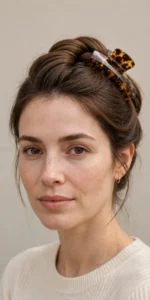


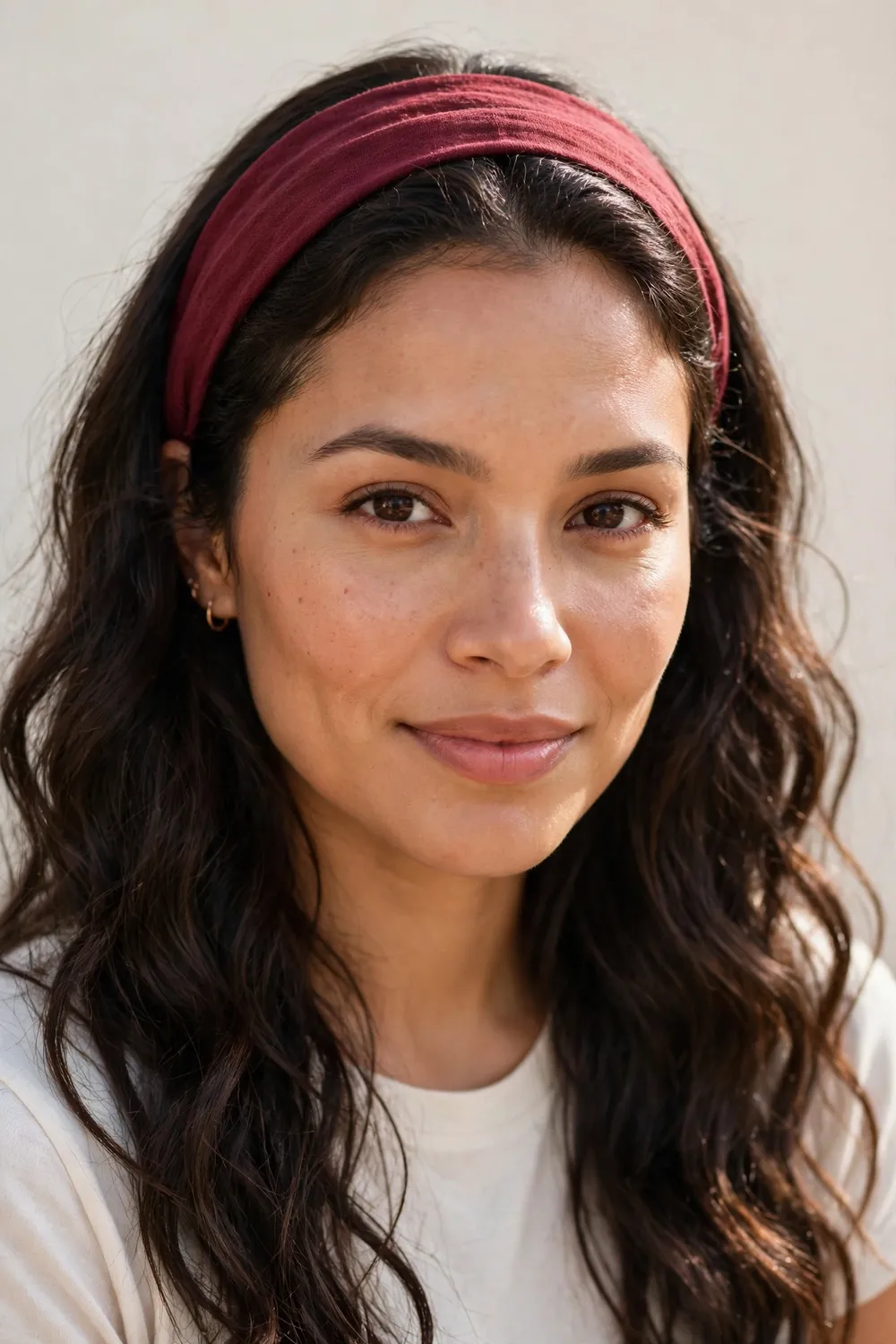
The best headband hairstyles take a look you already wear and make it feel finished in about thirty seconds — no heat, no extra tools, just the right band in the right place. If you’re starting from scratch, begin with Loose Waves, the Low Bun, or the Half-Up Twist: all three work on most hair lengths, suit a weekday as easily as a wedding guest outfit, and forgive a band that isn’t sitting perfectly.
The 47 Best Headband Hairstyles
1. Loose Waves with Headband
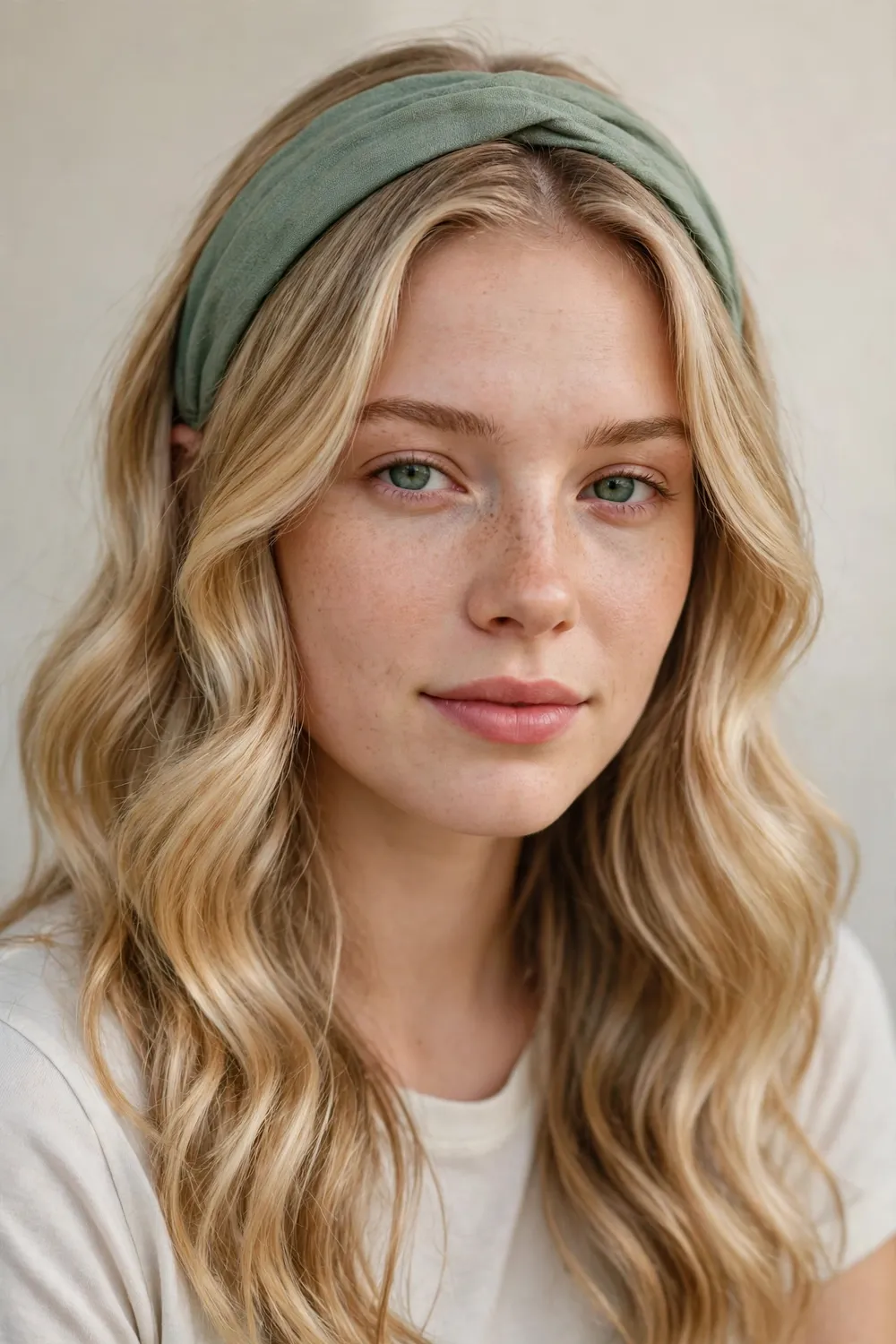
This is the one to reach for when you want to look like you tried without actually trying very hard. Curl the hair in big sections with a 32mm tong, brush everything out with your fingers once it’s cool, and push a medium fabric band back about two centimetres from the hairline so a little root lift shows. It suits medium to long hair best, especially fine hair that falls flat by lunchtime, because the band adds height at the front. A pea-sized dab of texturising cream through the ends keeps the waves from going limp. Maintenance is minimal: a quick shake and a scrunch in the morning, and you’re done.
2. Low Bun with Headband
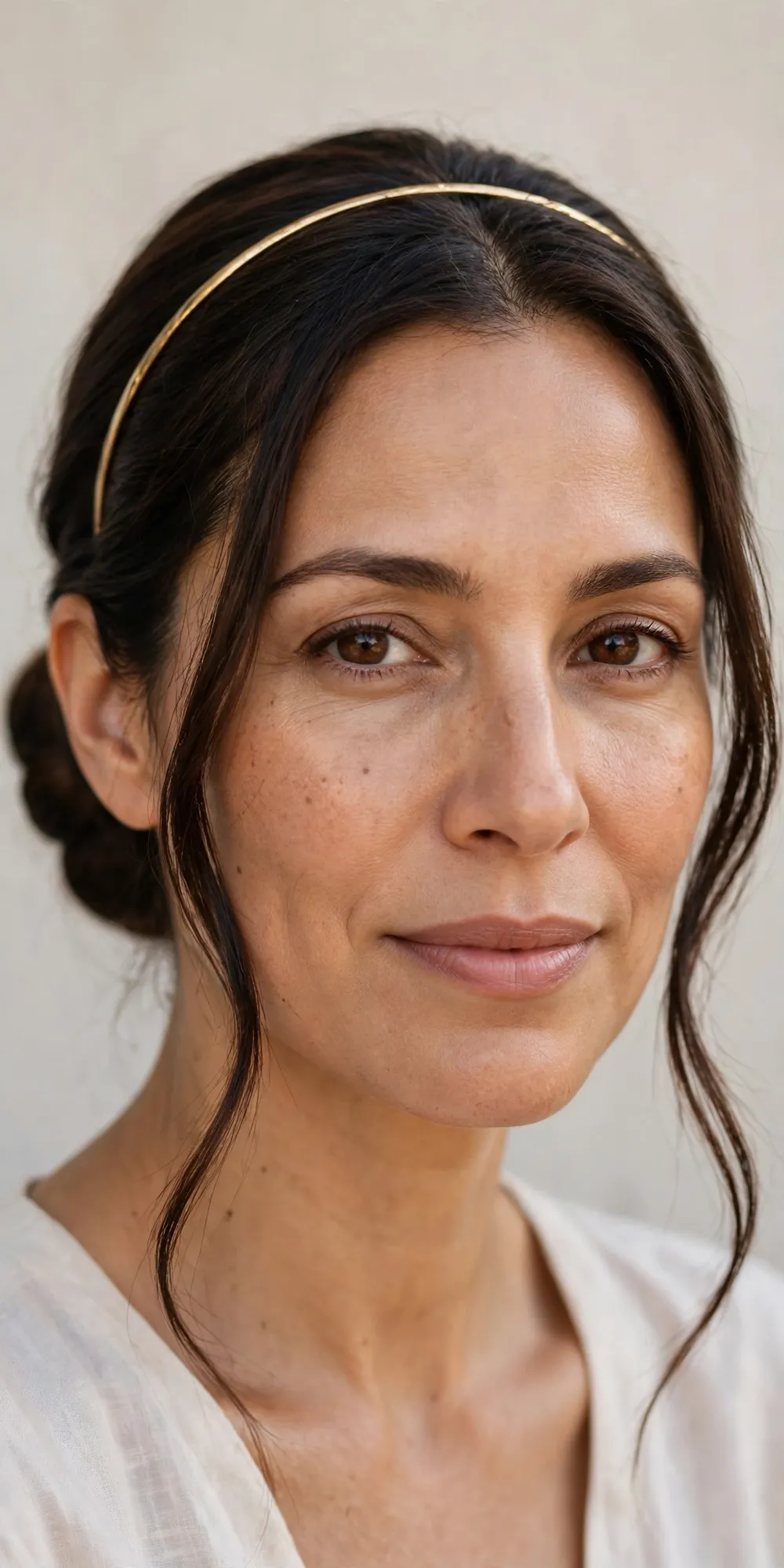
A low bun with a thin band is the closest thing to a guaranteed polished look, and it takes about five minutes once you’ve done it twice. Gather the hair at the nape, twist it into a small bun and pin it, then slide the band on and pull two soft pieces free around your face. It works beautifully on straight or slightly wavy hair and is a lifesaver on second-day hair — a little dry shampoo at the roots first sorts out any grease. Keep the bun loose rather than scraped tight; a tight band plus a tight bun is a headache by mid-afternoon. A light-hold hairspray finishes it without making it crunchy.
3. High Ponytail with Headband
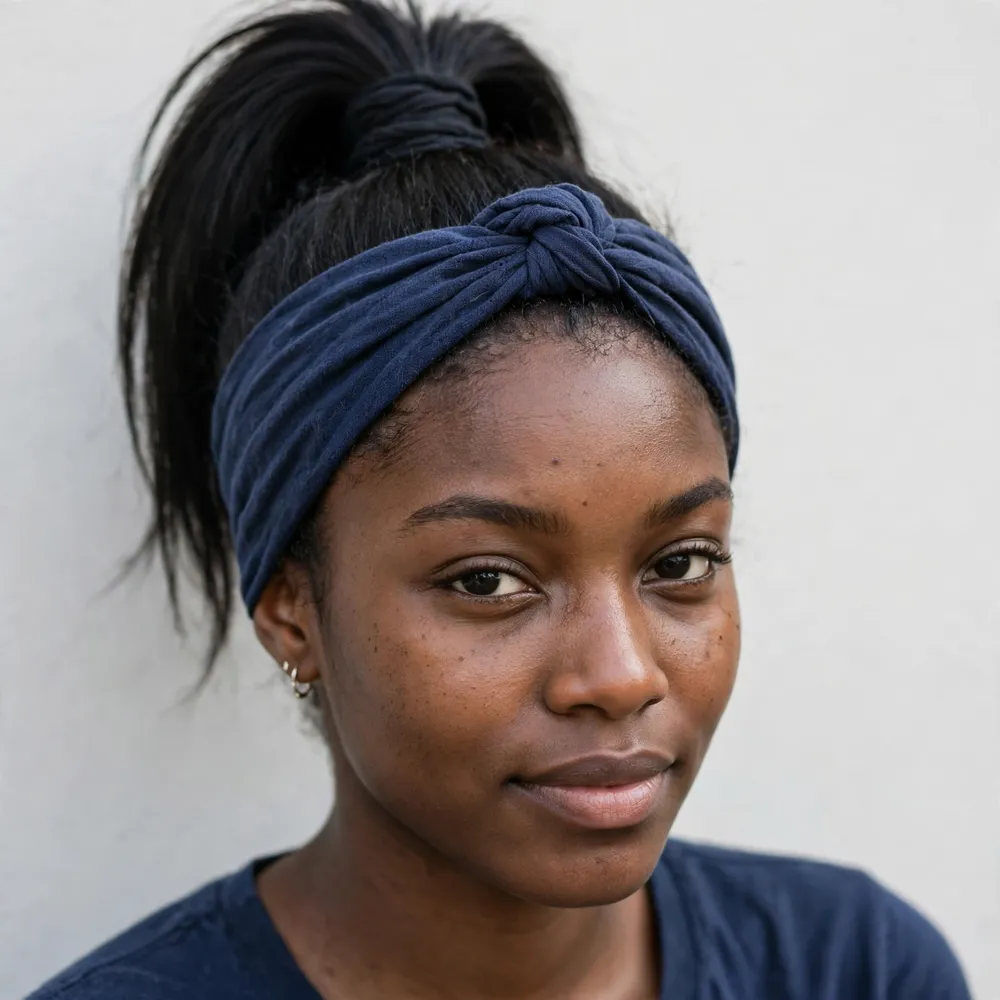
The high ponytail gets its lift from a padded or knotted band sitting just behind the hairline, which stops the whole thing sliding backwards. Brush the hair up high — aim for the crown, not the middle of the head — secure it with a strong elastic, then wrap a strand around the base to hide it. This suits oval and heart-shaped faces particularly well, and it’s a good pick for thick hair that weighs a low ponytail down. Be honest with yourself about tension: if your scalp aches after an hour, loosen the elastic a notch. It holds all day on textured hair; on very silky hair, add a little dry shampoo for grip first.
4. Soft Curls with Headband
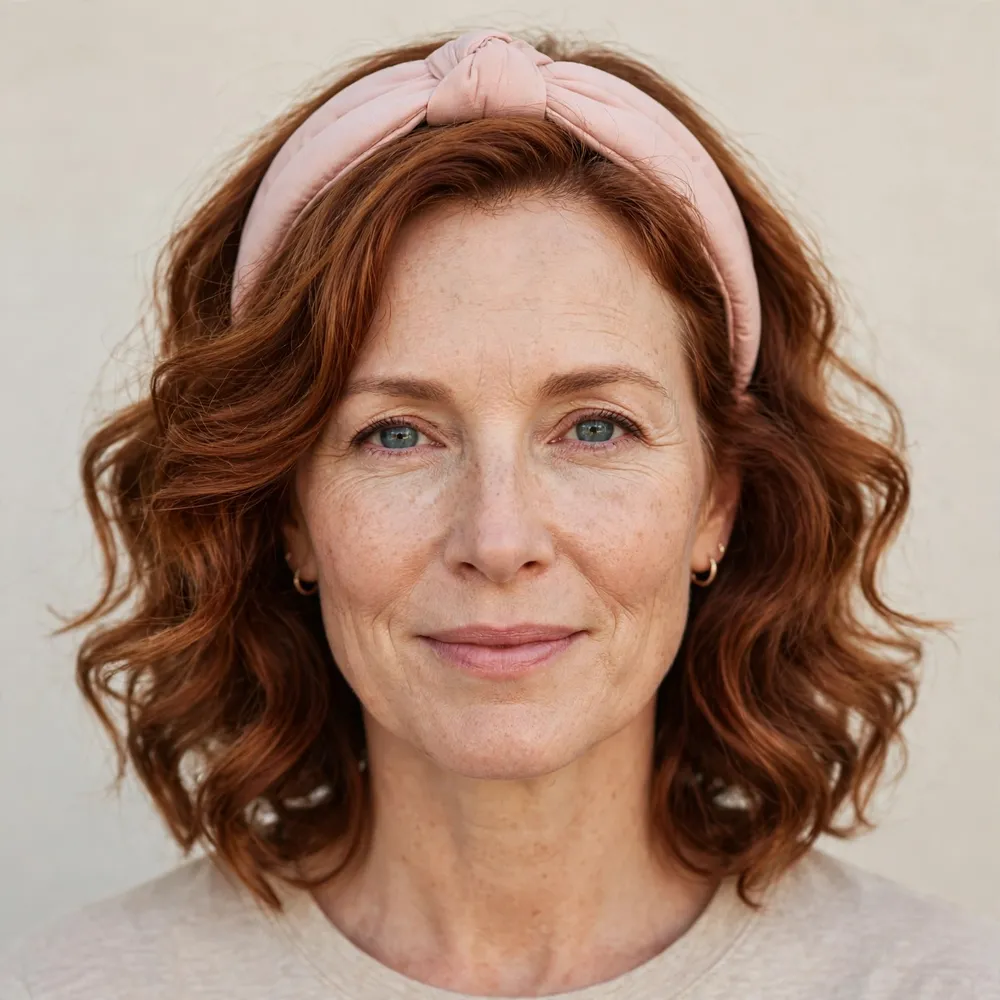
Soft curls and a padded fabric band are a forgiving pair — the band hides any unevenness at the front while the curls do the talking at the back. Use a large-barrel curling iron, curl away from the face, and let each curl cool before you touch it; brushing through too early turns it into frizz. A padded band works better than a thin metal one here because it sits on top of the volume instead of cutting through it. This is a strong choice for medium-length hair and for anyone whose curls drop out fast — the band keeps the front tidy even when the back relaxes. A flexible-hold spray keeps movement without stiffness.
5. Sleek Straight Hair with Headband
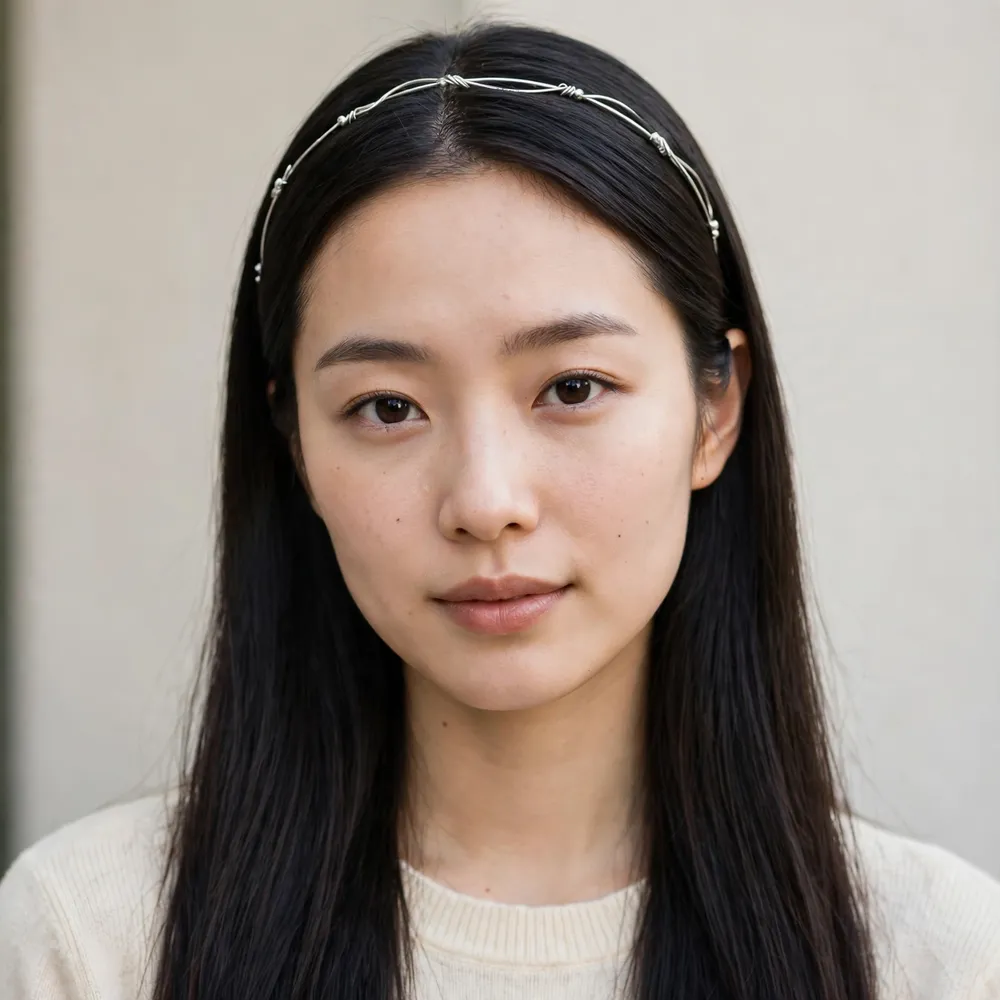
When the hair is pin-straight and glossy, a thin metal band works like jewellery — it doesn’t need to do anything except sit there and catch the light. Run a flat iron through in slow, even passes, then a drop of shine serum over the top layer only; too much product and the band will slide straight off. This look suits fine, straight hair and sharp cuts best, and it flatters a centre or side part equally. Keep the band snug but not tight, and take it off before bed — pressure in the same spot every night can snap fine hair.
6. Pixie Cut with Headband
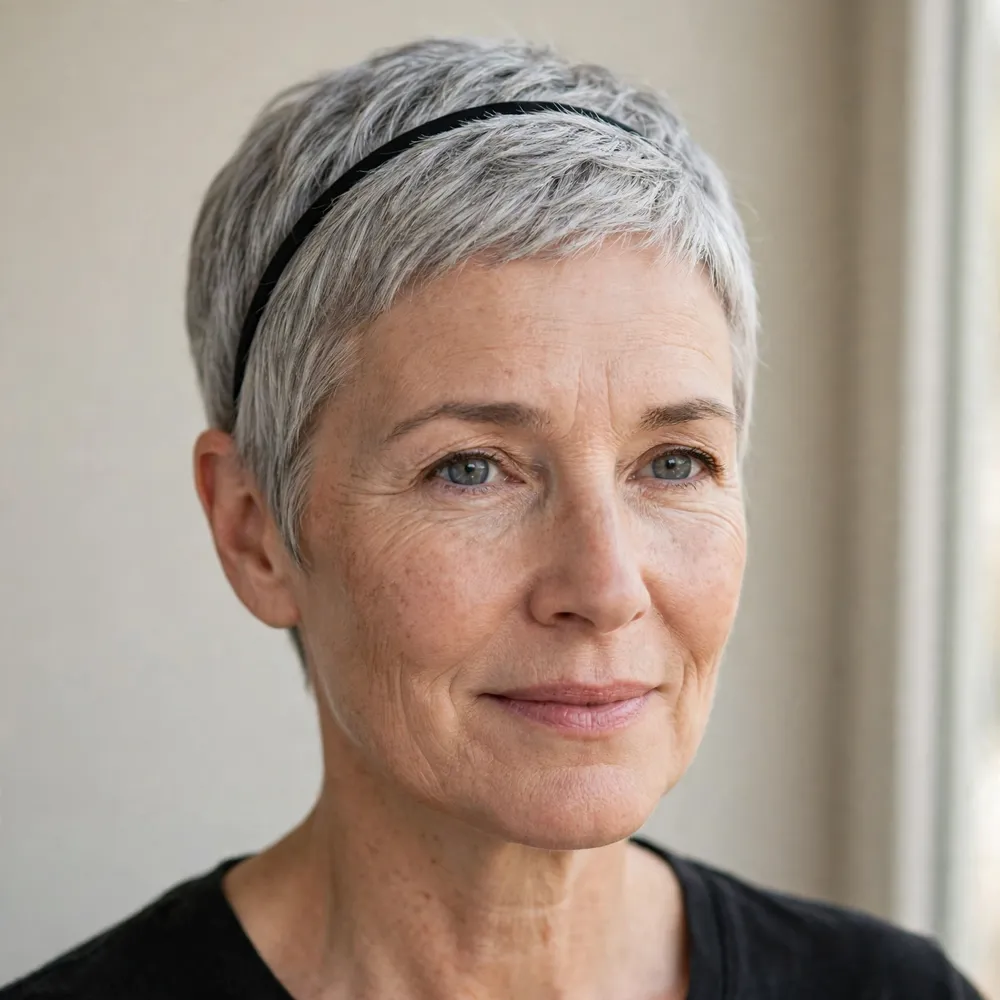
A pixie and a headband are a natural match because the band shows off the shape of the cut instead of hiding it. Work a small amount of styling wax through the top with your fingertips, push the front pieces slightly to one side, then settle a thin band a couple of centimetres back from the hairline. It suits short cuts with a bit of length on top — very cropped pixies have nothing for the band to sit against, so ask your stylist to leave the top slightly longer if you love this look. The style takes under two minutes in the morning, and a fabric band with a little grip stops it slipping on smooth, short hair.
7. Classic Bob with Headband
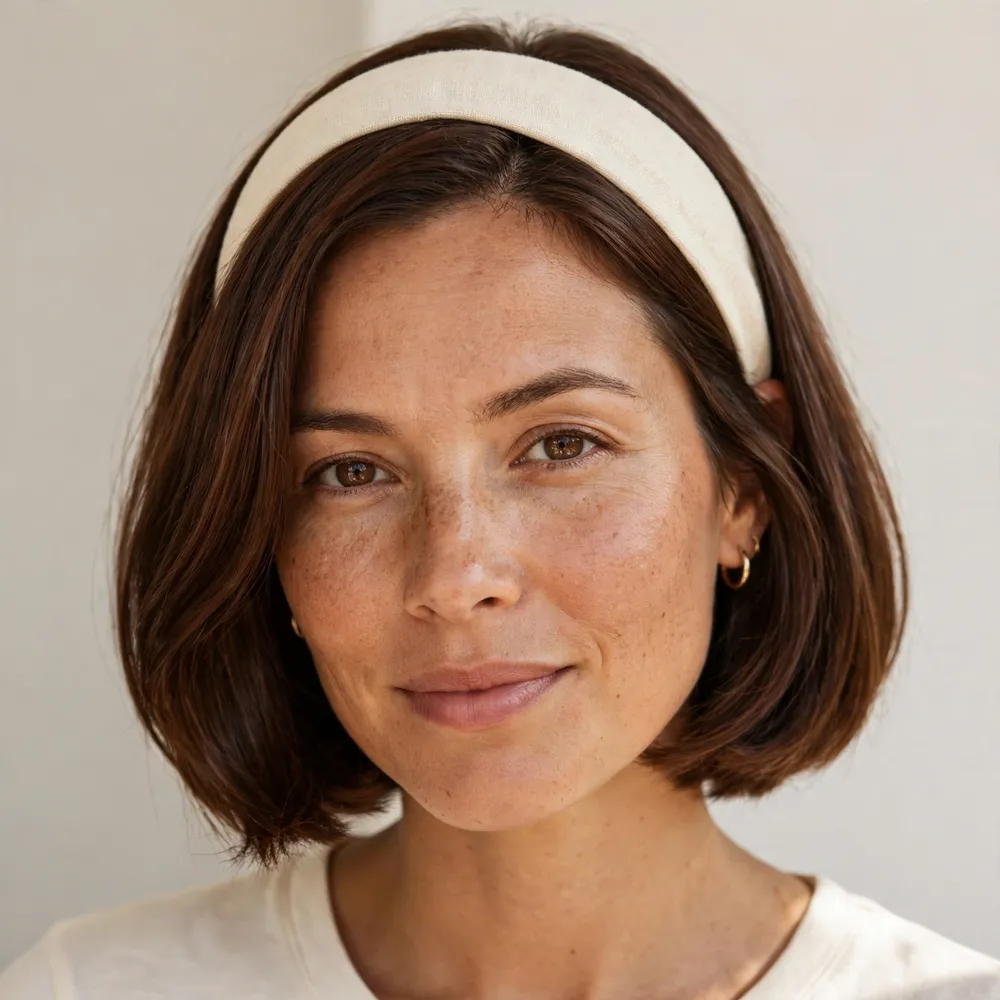
A chin-length bob with a medium band looks neat without looking done-up, which is exactly why it works for the office and for weekends. Blow-dry the bob under with a round brush so the ends tuck in, then place the band so it sits just behind the front section — too far forward and it flattens the fringe area; too far back and it disappears. This suits straight or gently wavy bobs and is kind to round faces, since the band adds a little height at the crown. A pea-sized amount of smoothing cream keeps the ends from flicking out by midday. The only real upkeep is keeping the band clean, because it picks up product from the hairline fast.
8. Messy Bun with Headband
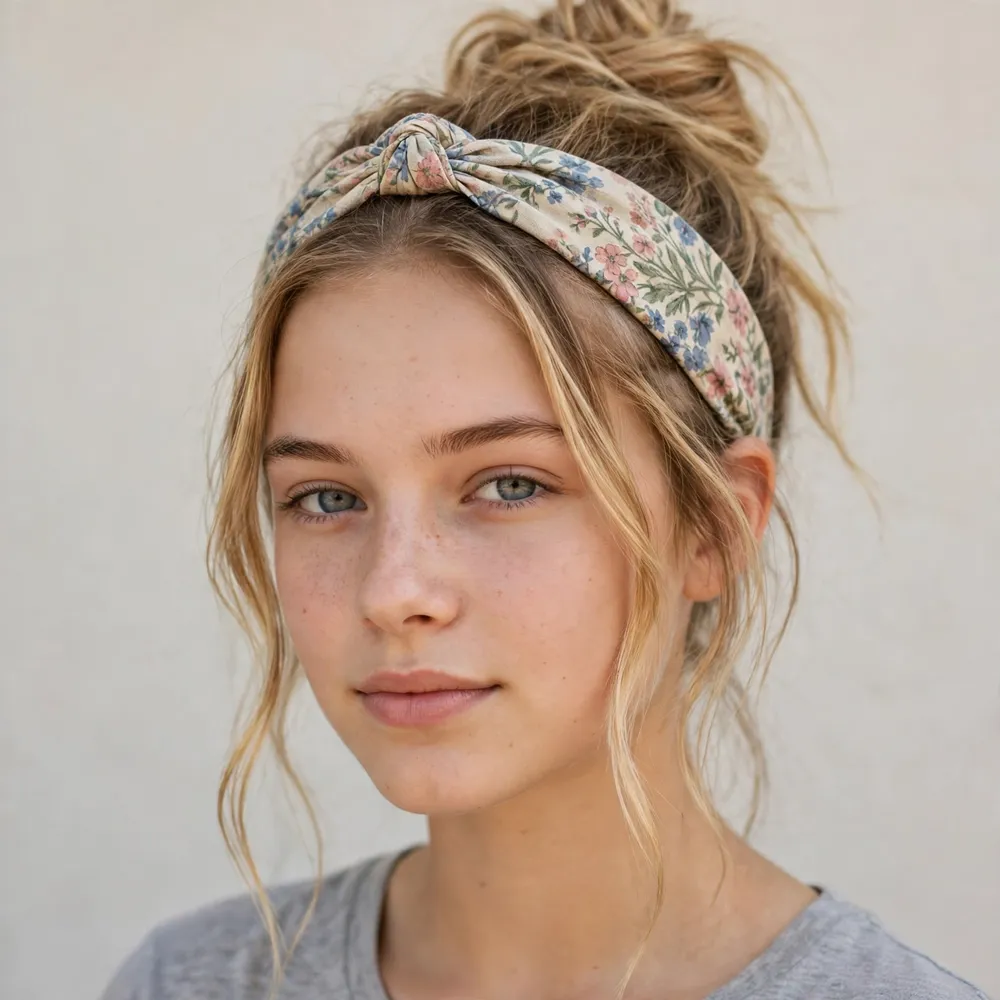
The messy bun is supposed to look effortless, and the knotted band is what makes it look intentional rather than accidental. Pull the hair into a high, loose bun, tug out a few pieces around the face and at the nape, then slide the band on and let it sit slightly forward so it frames the face. It suits second- or third-day hair best — the natural texture holds the bun together, whereas freshly washed hair slips out of the pins. If you’re after more easy hairstyles that work on unwashed hair, this one belongs near the top of the list. A texturising spray before you start gives fine hair the grip it needs.
9. French Braid with Headband
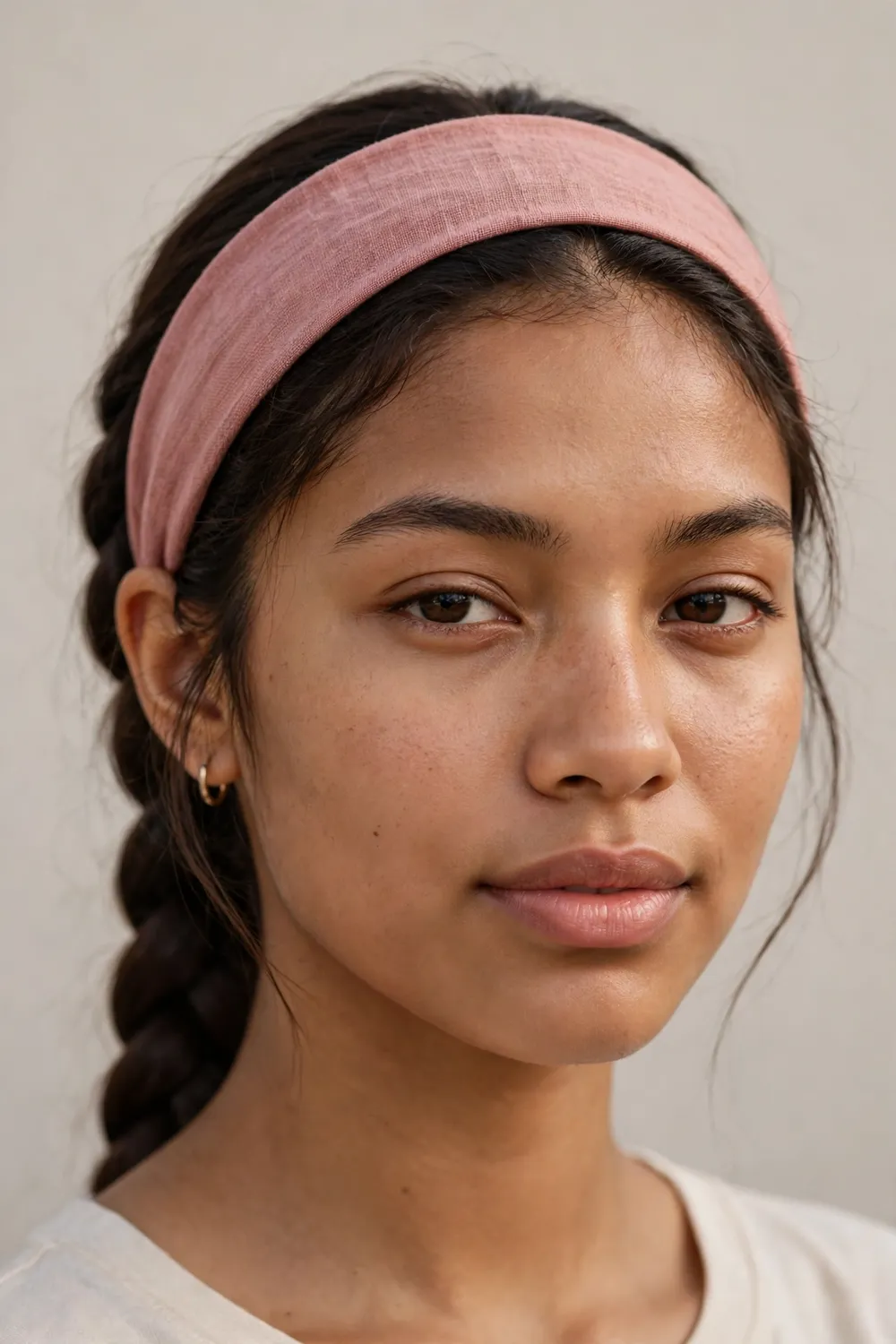
A French braid with a fabric band at the front keeps the hairline tidy while the braid handles the length, so nothing escapes by the afternoon. Start the braid just behind the band, adding sections as you work down the back, and secure the end with a small elastic. This is a good choice for school runs, workouts and anyone growing out layers — the band holds the short front pieces the braid can’t reach. It suits thick hair especially well, since the braid distributes the weight. A little styling cream smoothed over the braid keeps flyaways down without making it stiff.
10. Fishtail Braid with Headband

The fishtail looks far more complicated than it is: two sections, small pieces crossed over, repeat until you reach the end. Pair it with a thin band and the whole thing reads boho without trying too hard. It works best on long hair with a bit of texture — very silky hair slips through your fingers, so a spritz of sea-salt spray beforehand helps enormously. Once the braid is tied off, gently pull at the edges to widen it; that’s what gives it the soft, full look instead of a skinny rope. A thin band keeps the front neat without competing with the braid’s detail. It holds up well through a full day, and the second-day version, slightly loosened, often looks better than the first.
11. Half-Up Twist with Headband
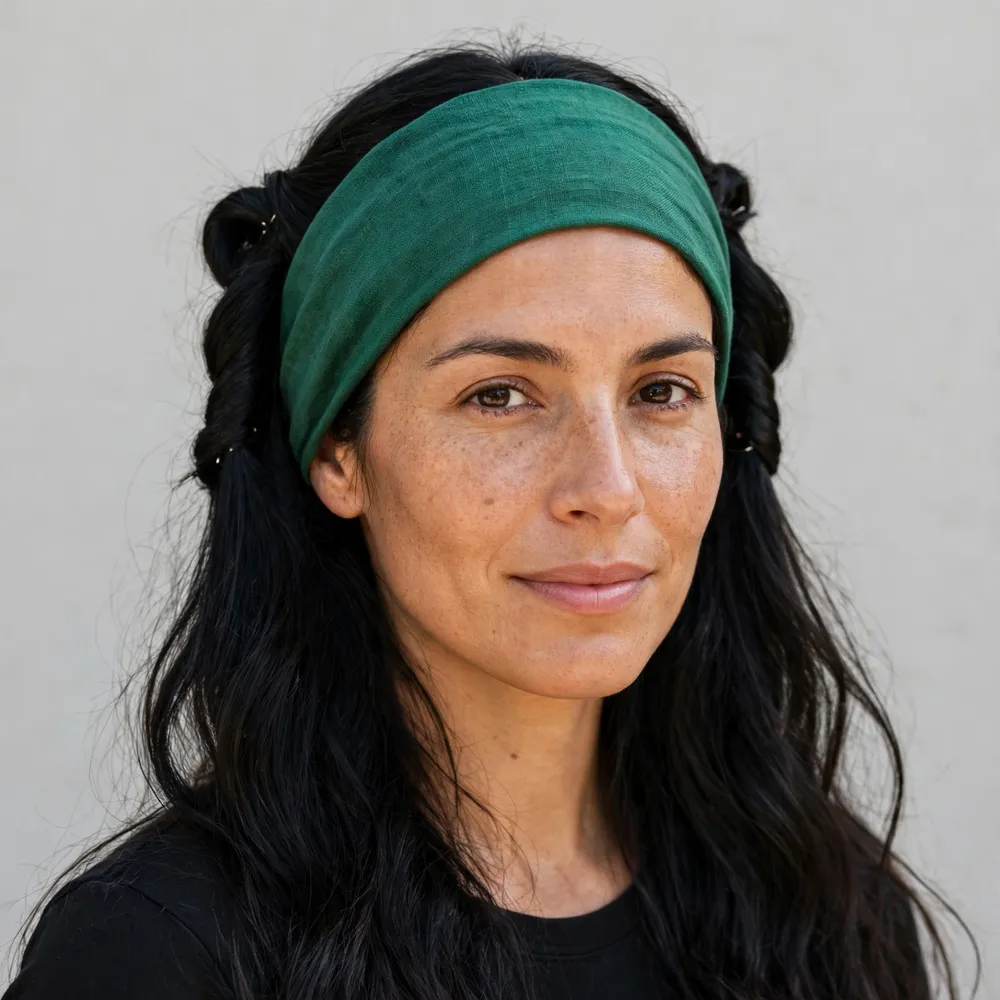
Two front sections twisted back and pinned, the rest left loose, a medium band over the top — this is the style people ask about most, and it’s genuinely a five-minute job. Take a section from each temple, twist them towards the back, cross them over and pin where they meet, then settle the band just in front of the pins so it hides them. It suits almost every face shape and every length from shoulder down, and it’s the best of both worlds when you want hair off your face but still want it down. A light mist of hairspray keeps the twists from unravelling; skip heavy product or the twists go limp. It also photographs beautifully at weddings.
12. Curtain Bangs with Headband
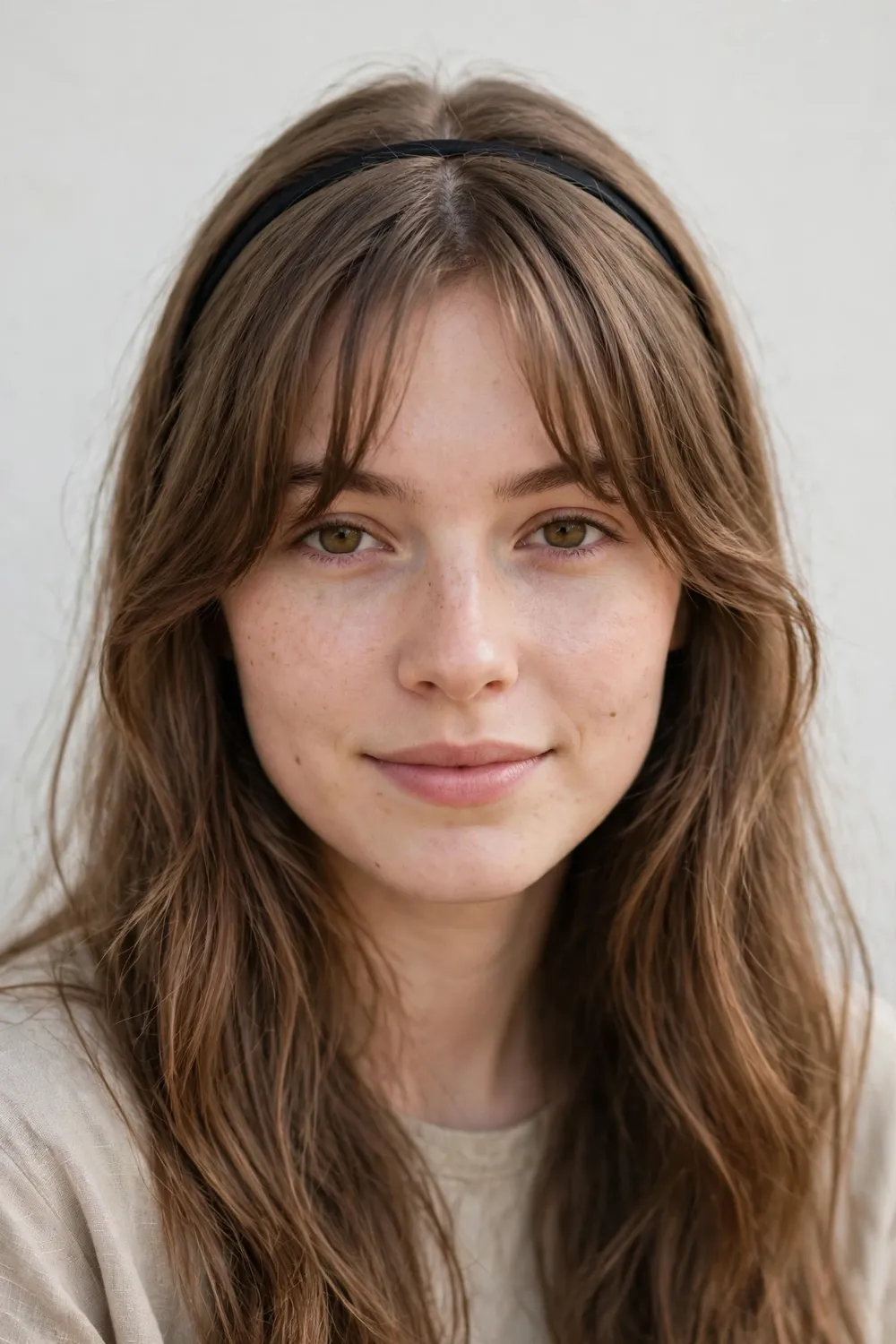
Curtain bangs and a headband need to agree on who goes in front — the answer is the bangs. Part the hair in the middle, let the bangs fall either side of the face, then slide a thin band on behind them so it holds the rest of the hair back while the bangs frame your face. It suits oval and heart-shaped faces especially well, and it works on straight or wavy hair as long as the bangs are long enough to reach the cheekbone. Blow-dry the bangs with a round brush, curving them away from the face, and they’ll sit properly all day. Dry shampoo at the roots keeps the bangs from going limp by evening.
13. Low Ponytail with Headband

A smooth low ponytail with a thin metal band is quiet, grown-up and surprisingly flattering — the band does the decorating so the ponytail can stay simple. Brush the hair back low at the nape, secure it, then smooth the top with a bristle brush and a touch of serum so there’s no bump. Face-framing layers left loose in front stop it looking severe, which is worth doing if your face is long or angular. It suits straight and wavy hair and is a solid work look because it stays put for eight hours without fuss. The honest downside: on very fine hair it can look flat by the afternoon, so backcomb the crown lightly before you brush it back.
14. Top Knot with Headband
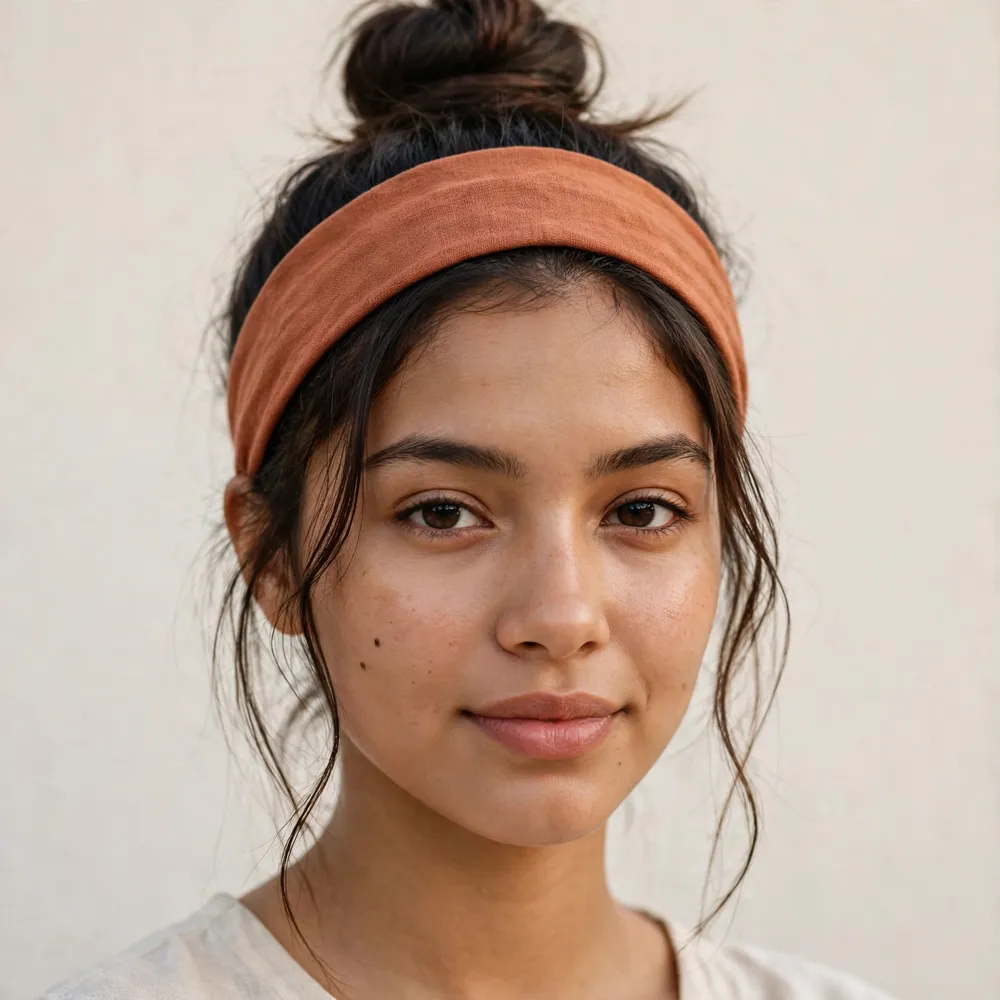
The top knot is the fastest updo there is, and a fabric band turns it from gym hair into an actual style. Gather the hair high, twist it around itself and pin it, then leave a few pieces loose at the front before sliding the band on behind them. It suits thick hair that would drag a lower bun down, and it’s kind to round faces because the height on top lengthens the silhouette. If your knot keeps sagging, use a hair doughnut for structure and pin through it — it takes an extra minute and holds all day. The maintenance is near zero, though the knot will need re-pinning after a few hours if your hair is heavy.
15. Side Braid with Headband

Sweep everything over one shoulder, braid it loosely, and let a thin band hold the front in place — the side braid is one of the easiest ways to make long hair look styled. It suits wavy and curly hair particularly well, since the texture gives the braid body, and it’s flattering on most face shapes because the diagonal line softens a strong jaw. Start the braid behind the ear on the opposite side so it sits naturally over the shoulder, and tie it off with a clear elastic you can hide under a strand. Pull the braid’s edges out gently for fullness, but don’t overdo it or it falls apart. It also hides a bad hair day better than almost any other style here.
16. Beach Waves with Headband
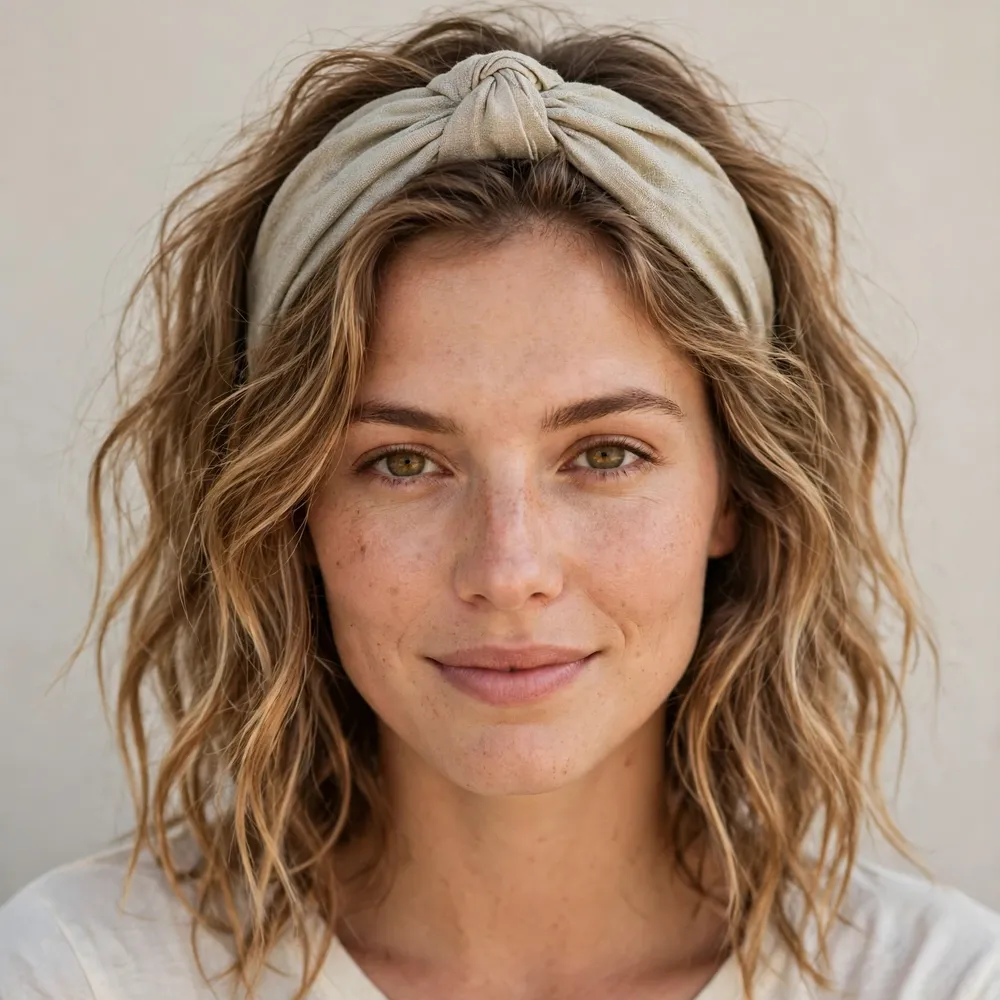
Beach waves and a knotted band belong together — the band adds the polish that stops the waves looking like you just woke up. Curl alternate sections in opposite directions with a wand, leave the ends straight, then scrunch in sea-salt spray and let it air-dry. A knotted band sitting slightly forward gives the look its shape and keeps the front pieces out of your eyes on a windy day. It suits medium to long hair and is especially good on hair that already has a natural wave — you’re enhancing what’s there, not fighting it. A quick refresh the next day is just a spritz of water and a scrunch.
17. Textured Lob with Headband

The textured lob — shoulder-length, piece-y ends, plenty of movement — gets an instant lift from a medium band, which adds a focal point to a cut that can otherwise look unfinished. Blow-dry with a round brush, flicking the ends in different directions, then work a small amount of texture paste through the ends with your fingers. The band sits best about two centimetres back from the hairline, showing off the layers at the front. It suits fine to medium hair and is a good choice if you’re growing out a bob, since the band disguises the awkward in-between stage. A light spray holds the pieces without weighing them down.
18. Braided Crown with Headband
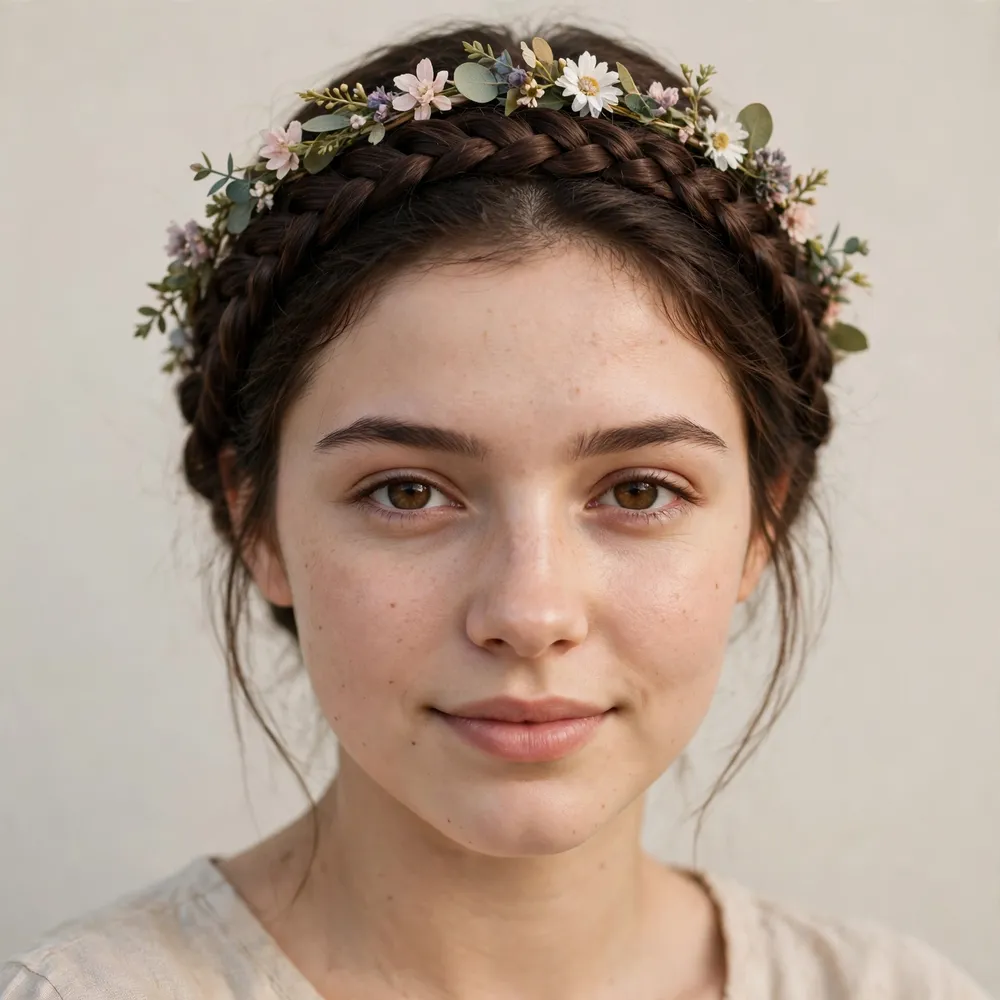
A braid wrapped across the crown like a halo, finished with a floral band, is the most romantic style in this list — and the one most likely to get compliments at a summer wedding. Braid a section from behind one ear, bring it across the top of the head and pin it behind the other ear, then place the floral band just in front of the braid so the two sit together. It suits long hair with some length to spare, and it works on straight or wavy textures. The trick is keeping the braid loose and a little messy; a tight, neat braid looks severe next to flowers. It’s not a five-minute style — allow twenty.
19. Voluminous Blowout with Headband
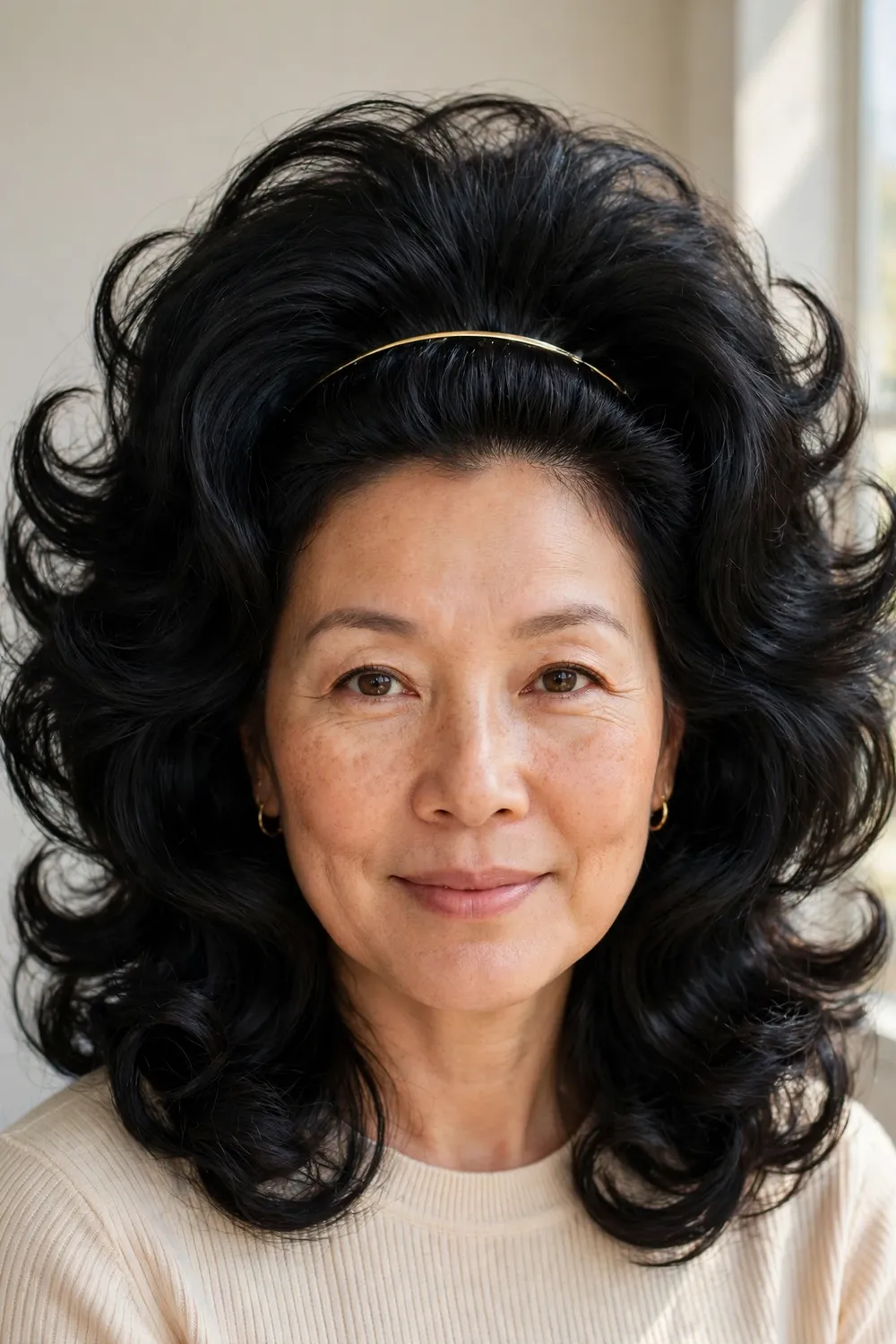
A big bouncy blowout with a thin metal band is the closest you can get to salon hair at home, and the band is doing more work than it looks — it keeps the front section controlled while the rest moves. Blow-dry in sections with a large round brush, rolling the brush away from the face, then let the hair cool before you touch it. A thin metal band won’t flatten the volume the way a wide fabric one would, which is why it’s the right choice here. This suits medium to long hair and anyone with naturally thick hair; fine hair can get there too, but it needs mousse at the roots first. It’s a weekend or event style, not a Tuesday-morning one.
20. Chignon with Headband
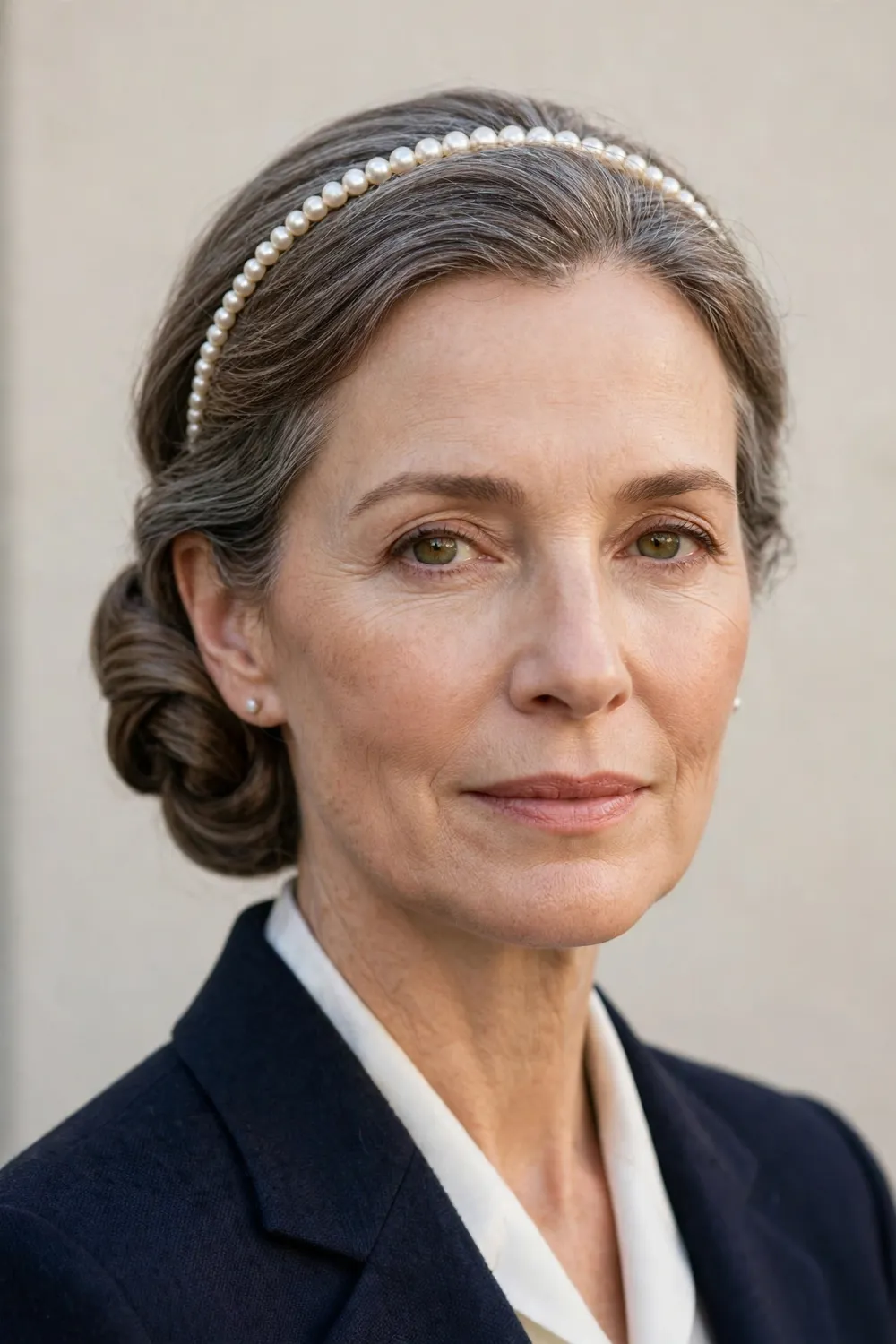
The chignon is the formal end of the headband spectrum: a low, elegant roll at the nape with a pearl band doing the jewellery work. Twist the hair into a low loop, tuck the ends under and pin securely, then place the pearl band a couple of centimetres back so it catches the light. It suits straight or slightly wavy hair and is a natural pick for weddings, dinners and anything with a dress code. The pearl band matters here — a plain fabric band would make the whole thing look like office hair, while pearls lift it into occasion territory. It takes practice to get the roll even; your first attempt will take fifteen minutes, your fifth will take five.
21. Dutch Braid with Headband
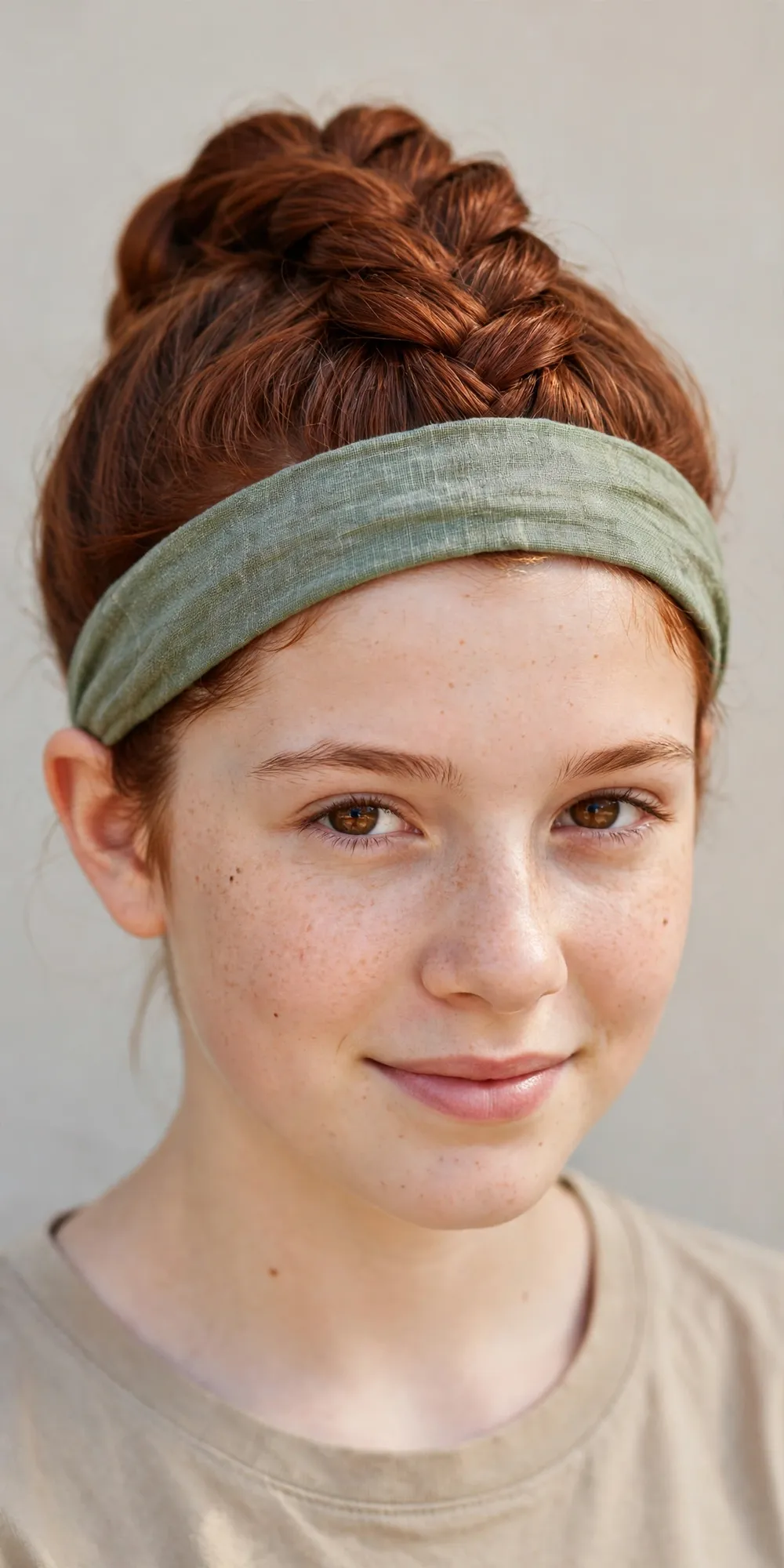
The Dutch braid — the inside-out braid that sits raised on the head — looks striking with a fabric band keeping the front tidy, and it’s the most secure style in this list. Braid from the hairline backwards, crossing sections under rather than over, and let the band sit just in front of where the braid starts so the short front layers don’t escape. It suits thick hair and active days: gym, travel, long shifts — nothing moves. The braid takes ten minutes once you’ve got the rhythm, and it’s worth learning because it holds for two days. A fabric band is the right partner; metal slides on the braid’s raised surface.
22. Bubble Ponytail with Headband
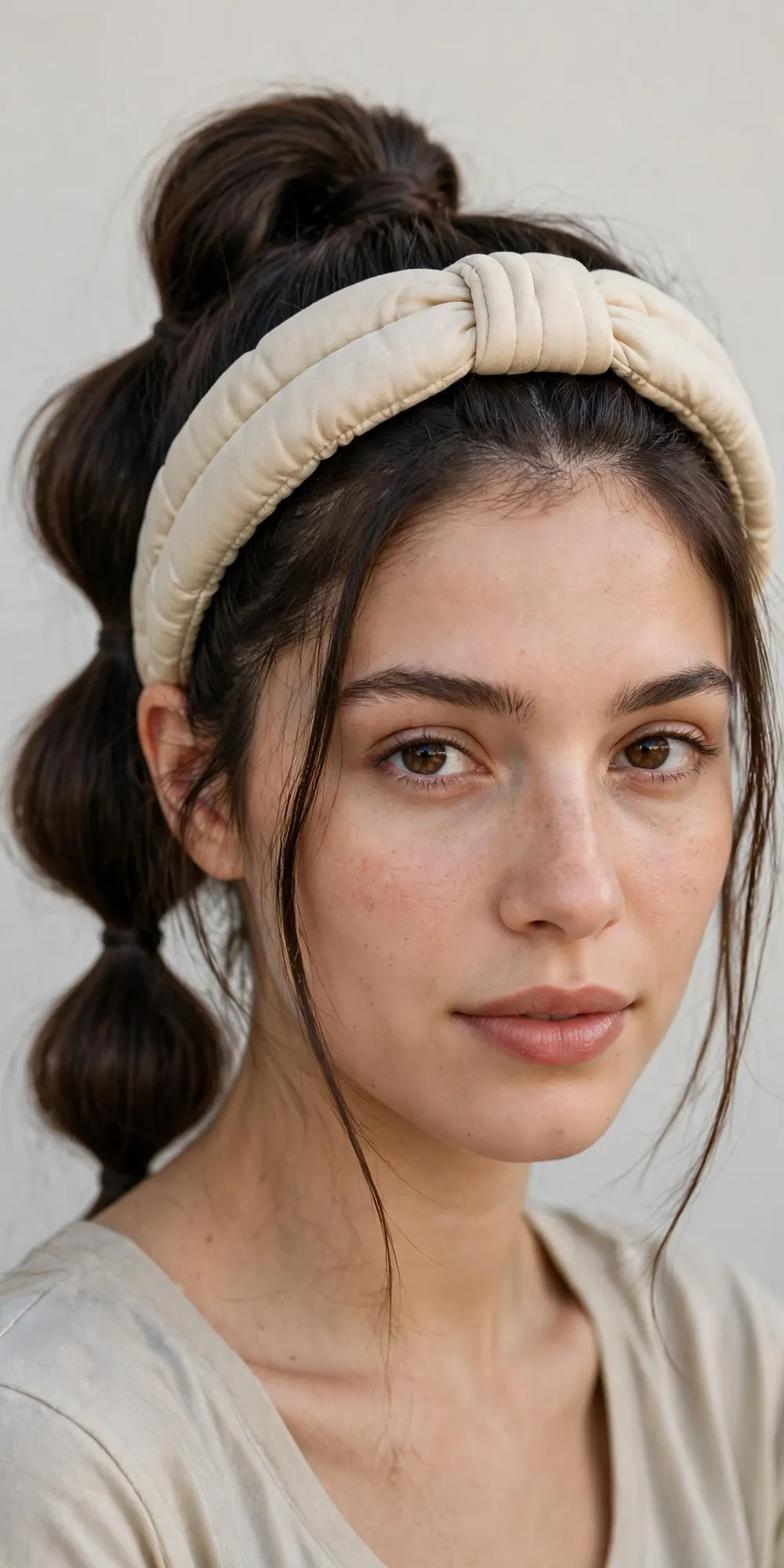
The bubble ponytail is pure fun: a high ponytail divided into puffs with elastics, a padded band at the front, and a look that gets noticed. Tie the ponytail high, add elastics every five or six centimetres down its length, then gently pull each section outwards to puff it up. It suits long, thick hair best — short hair won’t make more than two bubbles — and it’s one of those cute hairstyles that works for parties, festivals and anyone who likes a playful style. A padded band balances the volume of the ponytail instead of getting lost under it. It takes about ten minutes and survives a full evening out.
23. Deep Side Part with Headband

A deep side part with a band holding the heavy side back is one of the most flattering things you can do with straight hair — the asymmetry adds drama without any effort. Part the hair well to one side, smooth the heavy side over, and let the band sit just behind the hairline to hold it in place while the lighter side falls naturally. It suits oval and square faces especially well, and it works on any length from a bob to long layers. A little shine serum on the top layer gives it the glossy finish this look needs.
24. Shag Cut with Headband

The shag — layers, choppy ends, lived-in texture — and a thin band are a low-effort match, because the cut does most of the work and the band just keeps the front out of your face. Scrunch in a little texture cream while the hair is damp, let it air-dry or diffuse it, then slide a thin band on and let the layers fall around it naturally. It suits wavy and curly hair best, and it’s kind to anyone who hates blow-drying — the messier the finish, the better it looks. Wash-and-go is genuinely possible with this one, which is more than most styles on this list can claim.
25. Romantic Updo with Headband
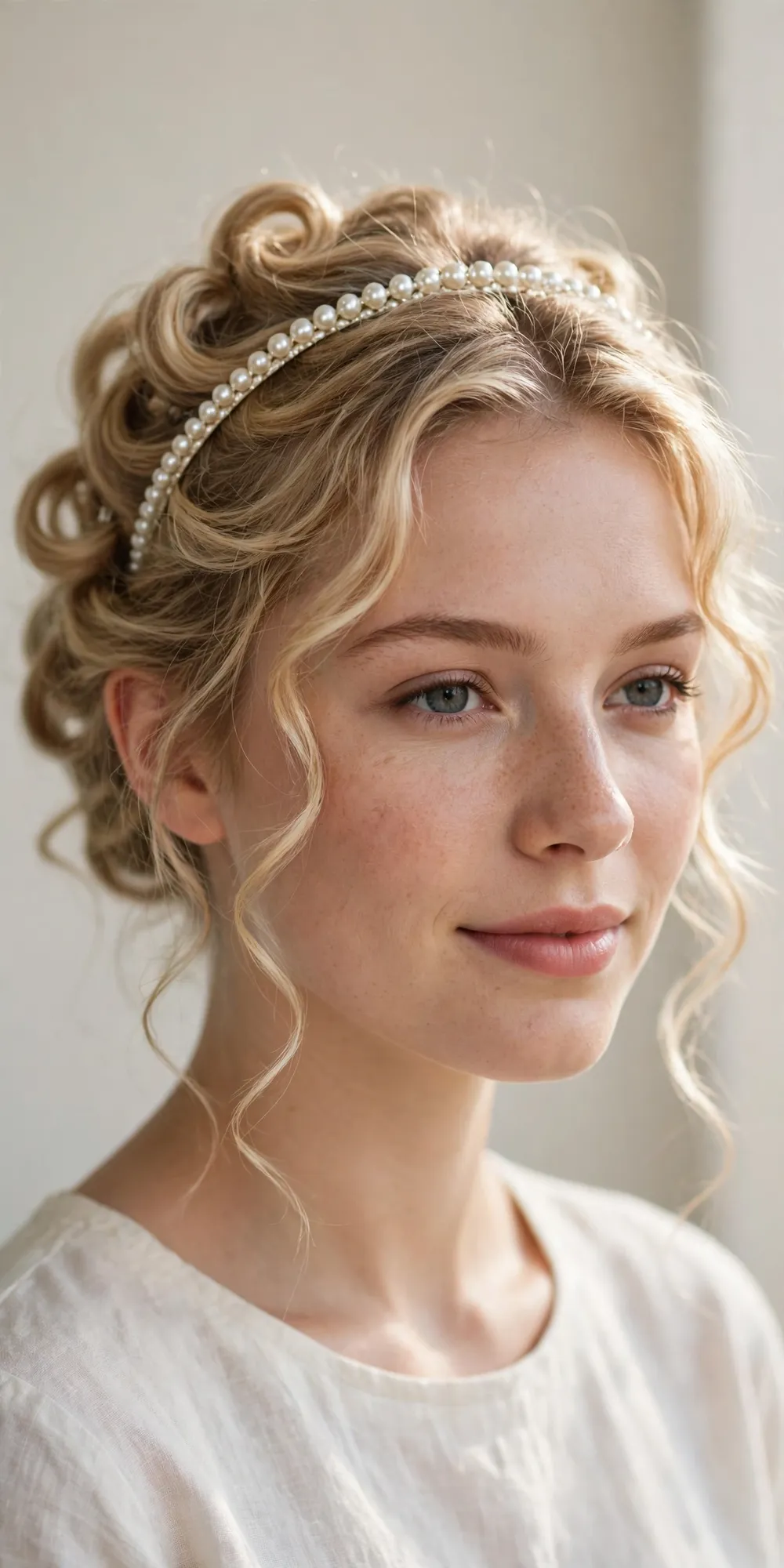
A romantic updo is curls pinned up softly, not pulled tight, with a pearl headband sitting just behind the hairline and a few tendrils left loose around the face. It suits weddings, engagements and any evening where you want to look polished without looking stiff. Curl the hair in large sections first, then gather it loosely at the back and pin in small twists, leaving the front pieces out. The pearl band goes on last so it rests on top of the style instead of being buried under it. It takes about 25 minutes and holds best on second-day hair with texture spray worked through first. Take the band off before bed — sleeping in a pearl band is a quick way to snap hairs at the hairline.
26. Boho Braid with Headband

The boho braid is a loose three-strand braid with pieces gently pulled out along its length, finished with a floral headband that does most of the decorating. It works best on medium to long hair with some natural wave, and it is a natural fit for festivals, holidays and outdoor weddings. Braid loosely from just behind one ear, pancake the edges by tugging small sections outward, and secure the end with a clear elastic hidden under a wrapped strand. The floral band sits a couple of centimetres back from the hairline so it frames the face instead of flattening the fringe. Expect it to loosen over the day — that is part of the look — but carry two spare pins for any section that escapes completely.
27. Short Curly Cut with Headband
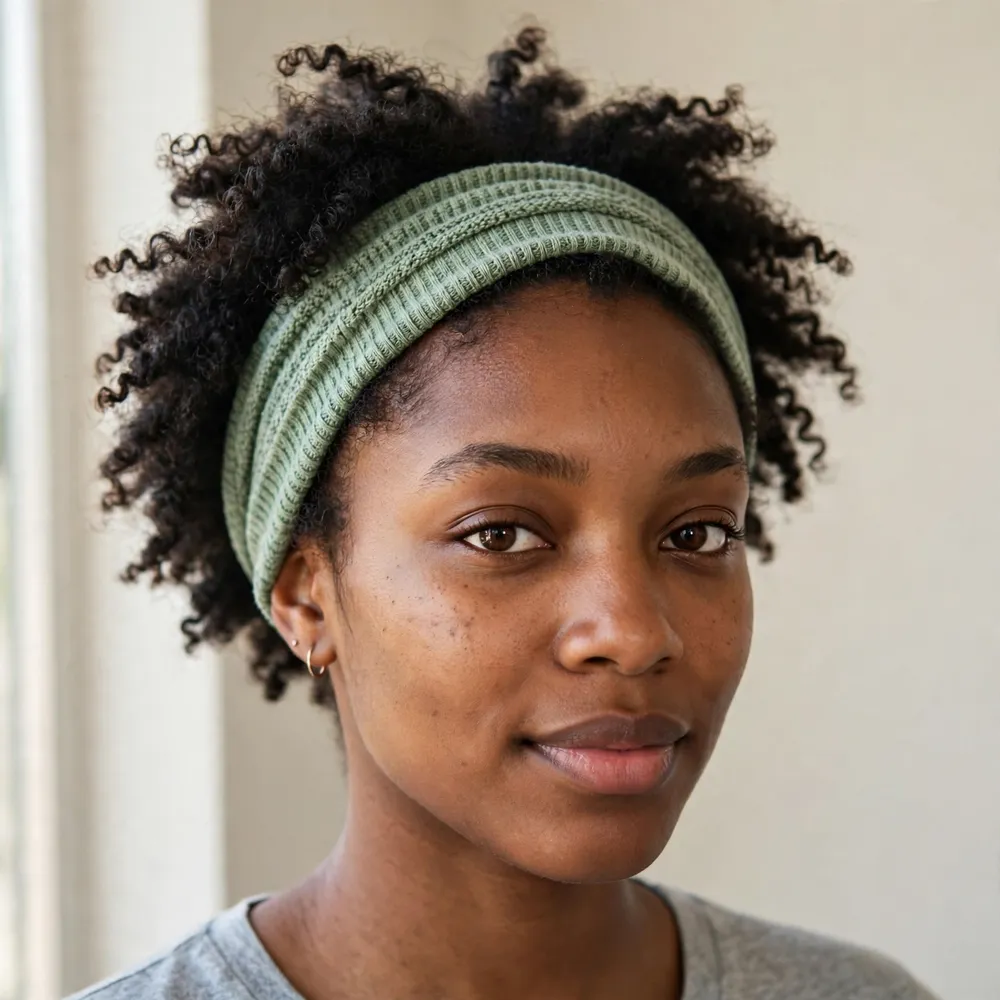
Short curls and headbands are a great match, as long as the band is stretchy fabric rather than hard metal. A wide, soft band holds the front curls back without squashing the volume on top, which is the usual problem with a rigid band on curly hair. It suits anyone with a short natural curl pattern who wants the hair out of their face without reaching for pins. Style the curls as usual with a curl cream, let them dry most of the way, then slide the band on from the front and push it back until it sits comfortably behind the ears. Rotate where it sits day to day, and never wear a tight band overnight.
28. Long Layered Cut with Headband

Long layers already have movement built in, so a medium headband simply keeps the front sections tidy while the rest falls past the shoulders. This is one of the easiest combinations on the list and it suits almost every face shape, since the layers soften the line the band creates. Blow-dry the layers with a round brush or leave them to air-dry with a little leave-in conditioner, then place the band about two centimetres back from the hairline. The layers around the face should fall in front of the band, not behind it — that is what keeps the look soft instead of severe. It needs almost no maintenance during the day, though a quick brush-through at lunchtime revives the ends.
29. Old Hollywood Waves with Headband

Old Hollywood waves are sculpted, glossy, side-parted waves with a jewelled headband as the finishing touch — red-carpet hair, but doable at home with patience. It suits formal events, black-tie evenings and anyone with medium to long hair who does not mind spending 40 minutes on styling. Curl all the hair in the same direction with a large-barrel iron, brush the curls out into one smooth wave, and set the shape with clips while it cools. The jewelled band goes on last, sitting just behind the hairline on the deep side part. The band should be comfortable, not tight — a heavy jewelled band worn too tight will give you a headache within the hour.
30. Sleek Centre Part with Headband
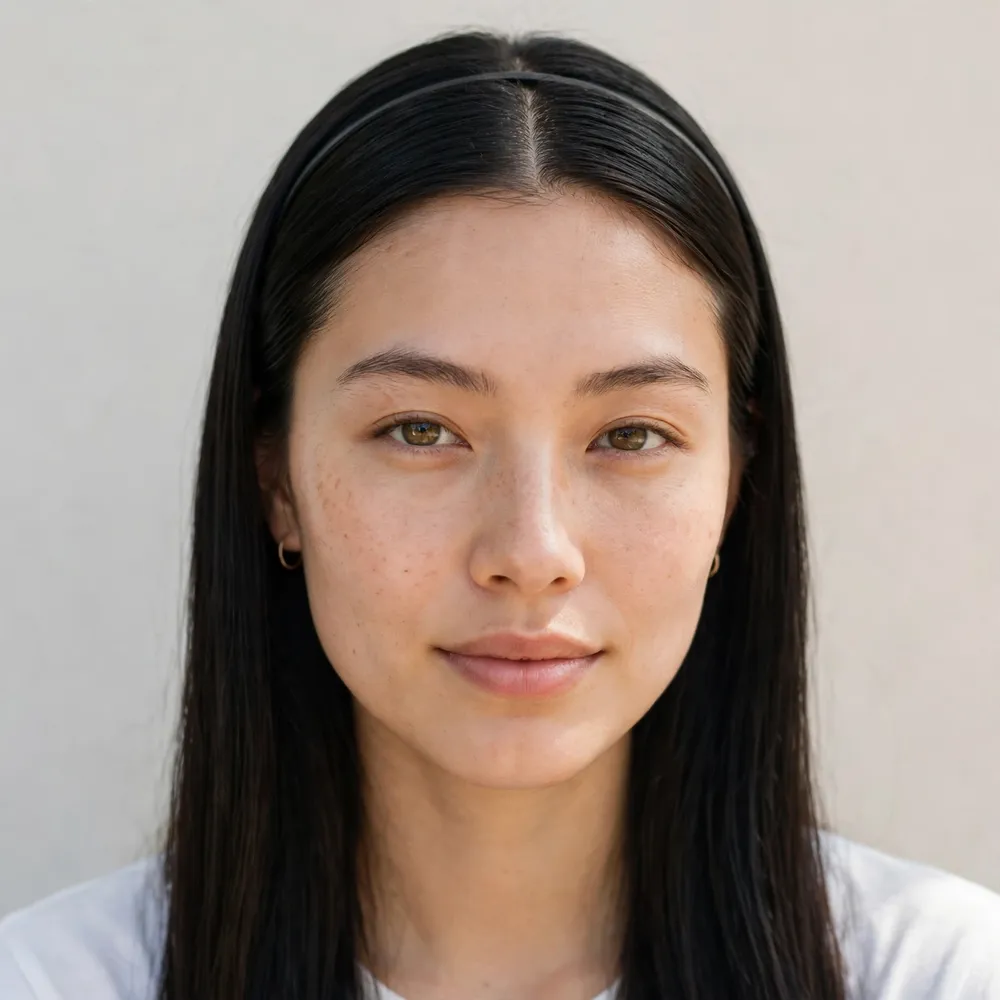
A centre part, pin-straight hair and a thin headband is about as minimal as a headband style gets, and that is exactly why it works. It suits oval and heart-shaped faces best, and it is a strong choice for work, interviews or any day you want to look deliberate rather than decorated. Straighten the hair in sections with a flat iron, run a drop of serum through the lengths, and part it cleanly down the middle with the tail of a comb. The band sits just behind the hairline, framing the part symmetrically — if it sits crooked, the whole look is off, so check it in the mirror from the front. Freshly washed hair is slippery under a metal band, so a little dry shampoo at the roots gives it grip.
31. Half-Up Ponytail with Headband
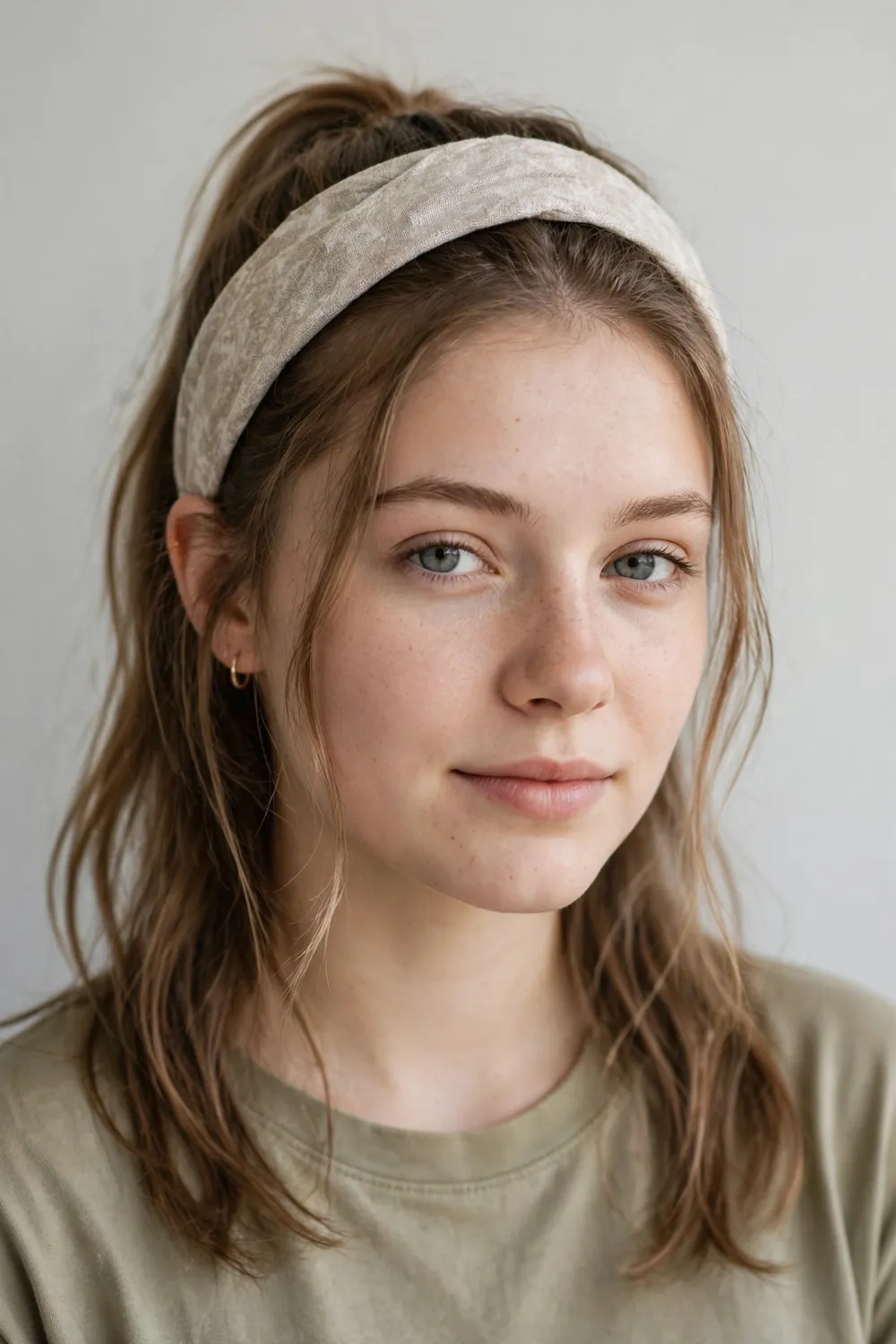
A half-up ponytail keeps the top section out of your face while the bottom half stays loose, and a fabric headband ties the two halves together visually. It suits medium to long hair and works for school runs, office days and casual weekends alike. Gather the top half from temple to temple, secure it at the crown with an elastic, and wrap a small strand of hair around the elastic to hide it. The band goes on in front of the ponytail, pushed back just enough to show the hairline. Leave the bottom half natural — a few waves through the ends with a curling iron stop it looking flat next to the lifted top. Vary the band’s position from day to day so the same spot is not always under tension.
32. Knotted Headband with Loose Hair
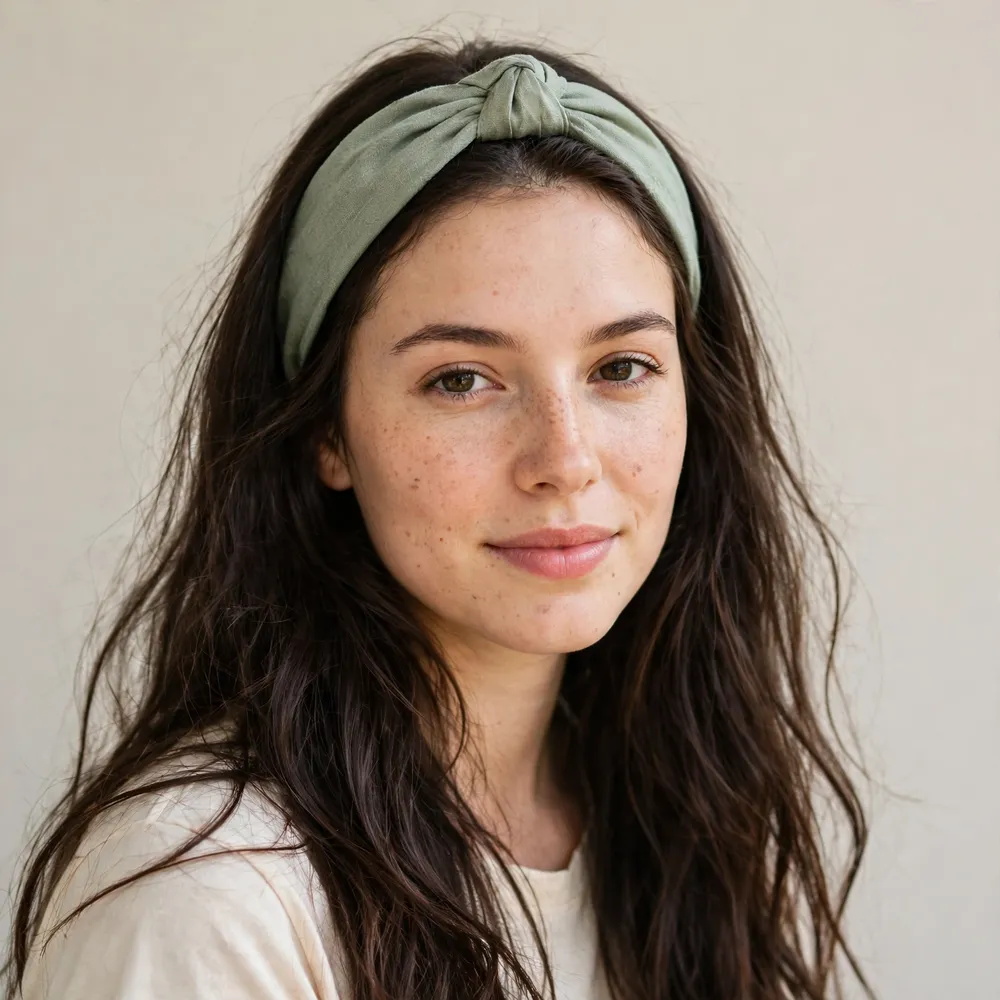
Sometimes the headband is the whole outfit. A knotted band — fabric twisted into a knot at the top — turns plain loose hair into a finished look in about ten seconds, which is why it is a staple for busy mornings. It suits every hair length from a lob upwards, and it works particularly well on hair with a bit of natural texture, since the knot adds structure the hair does not need to provide. Brush the hair out, add a little texture spray if it is very fine, and slide the band on so the knot sits at the crown, not on the forehead. Take it off at night and give your hairline a break.
33. Tucked French Twist with Headband
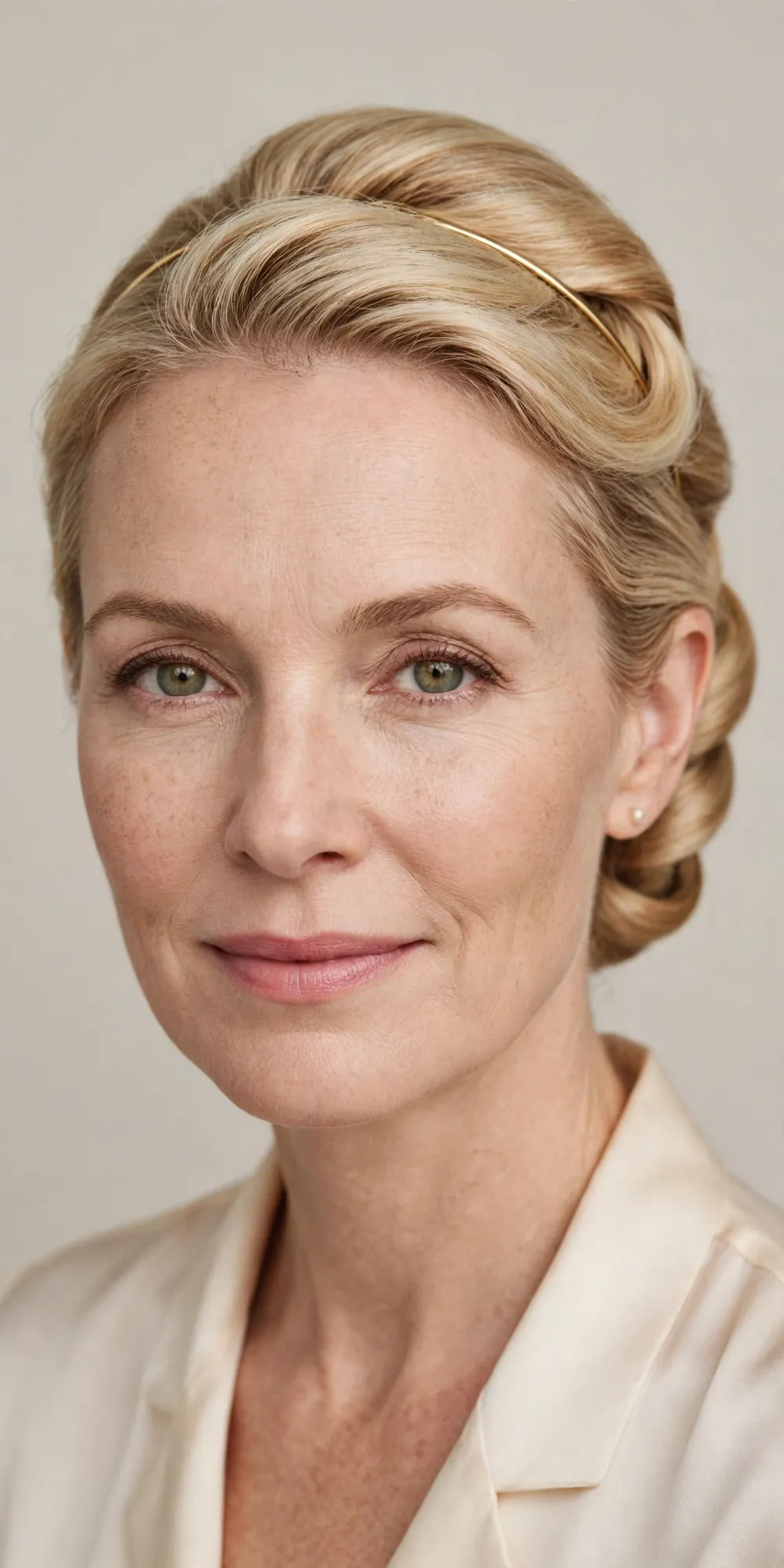
A French twist is hair swept up and tucked into a vertical roll at the back of the head, and a thin headband peeking above it adds a soft, feminine edge to a very classic shape. It suits formal occasions, work events and anyone with medium to long hair who wants an updo that is not a bun. Gather the hair low, twist it upward against the head and tuck the ends inside, securing with long pins pushed vertically along the roll. The band goes on after the twist is secure, sitting just behind the hairline so it frames the face without competing with the roll. Do not wear it pulled drum-tight; a twist that tugs at the hairline all day is a headache waiting to happen.
34. Silk Scarf Wrap with Headband
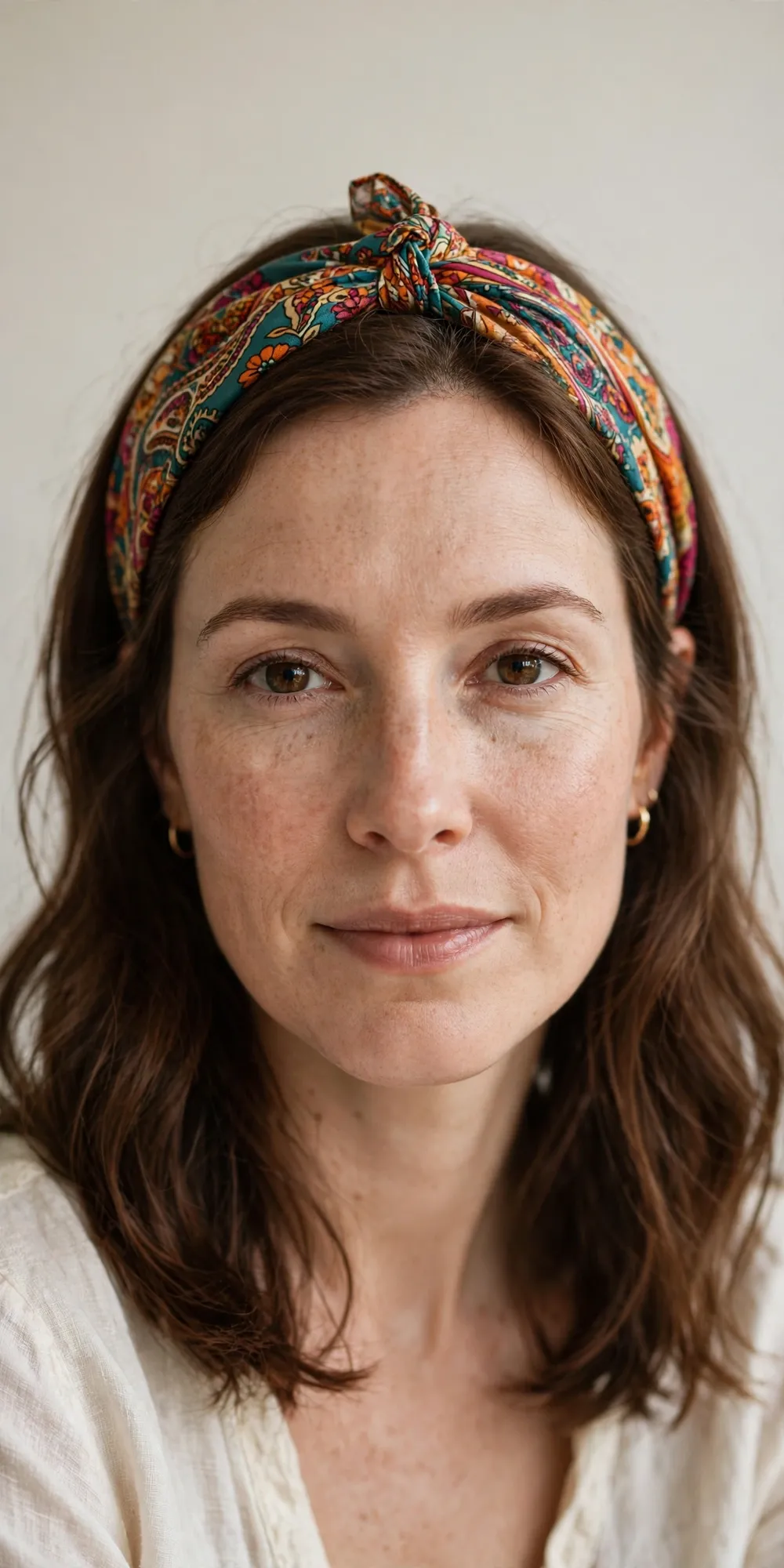
A silk scarf worn as a headband turns an accessory you already own into the statement piece, with colour and pattern doing the work instead of jewellery. It suits anyone who likes vintage or boho styling, and it is a clever fix for a bad hair day — the scarf covers the roots while the rest of the hair stays down. Fold a square scarf into a band about five centimetres wide, place the centre at the nape and tie it at the top or side of the head, tucking the ends under. Wash the scarf regularly — it sits against your hairline all day and picks up oil and product fast.
35. Sporty Braids with Headband
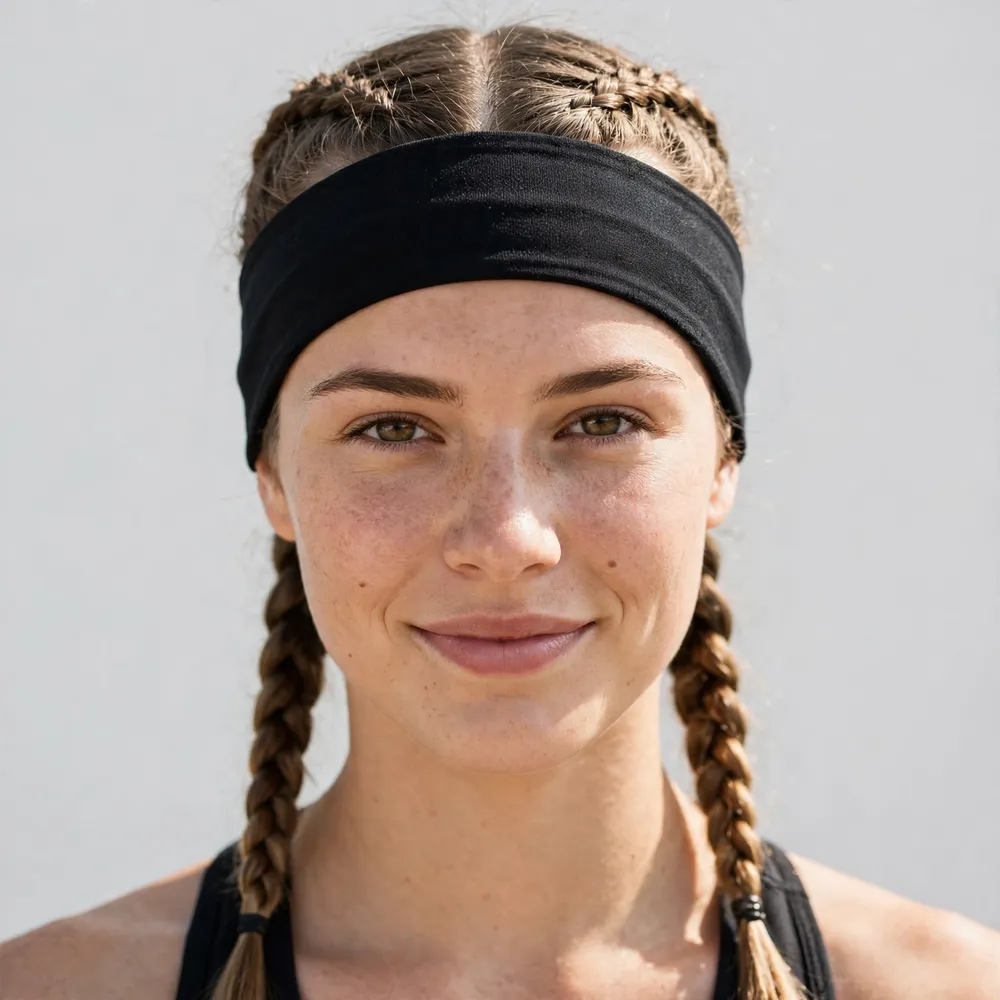
Two tight braids under a wide stretchy sports band is the style that actually stays put through a workout, a match or a long run. It suits anyone active, and it is a lifesaver for volleyball hairstyles and other sports where loose hair is a distraction. Part the hair down the middle, braid each side tightly from the hairline to the nape, and secure with small elastics. The wide band goes on last, sitting across the forehead to catch sweat and keep flyaways down — push it back a couple of centimetres once you are moving so it does not slide into your eyes. A band with silicone grip on the inside is worth the extra cost here; plain fabric slides once you start sweating.
36. Glam Evening Updo with Headband
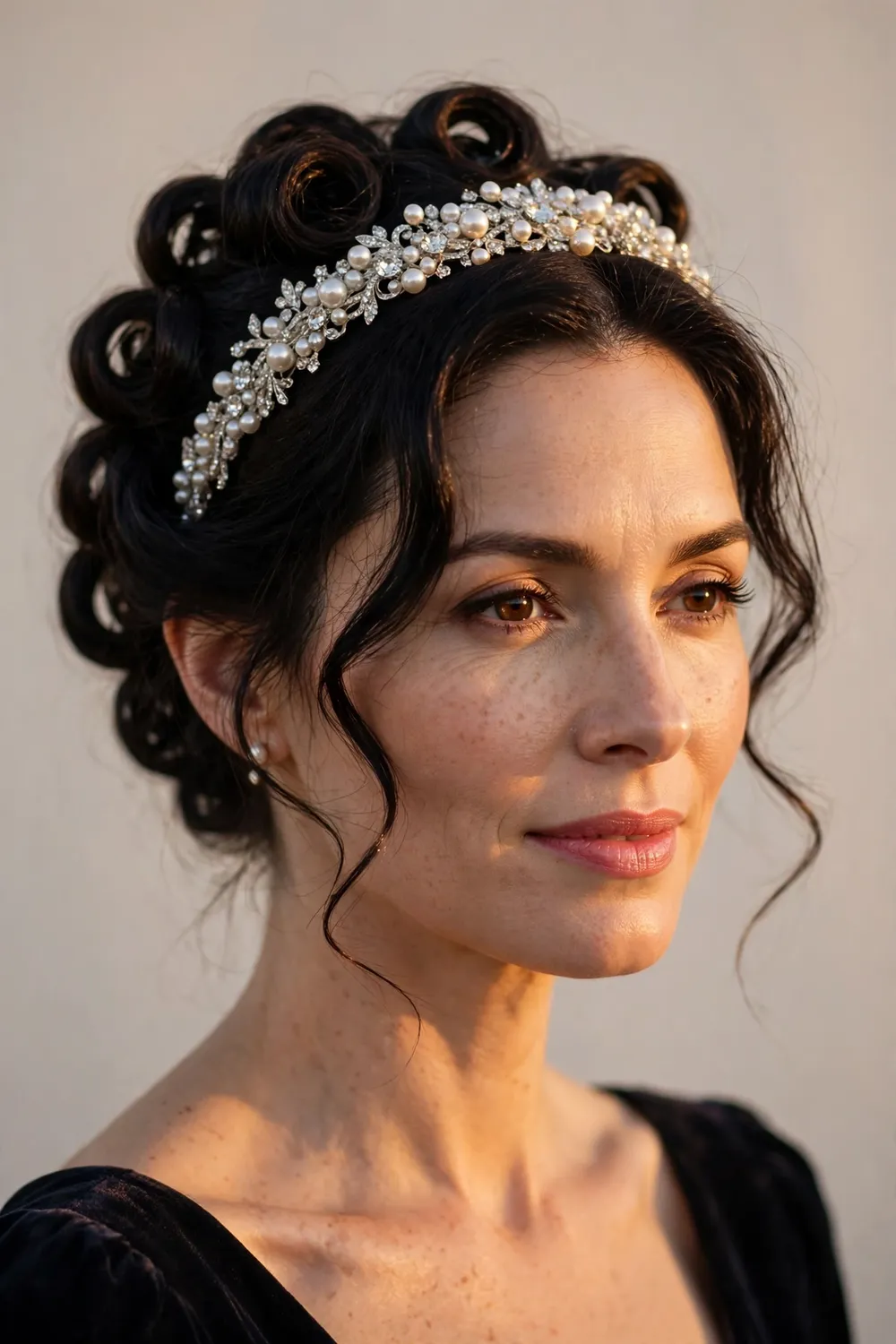
A glam evening updo is swept-up pinned curls with height at the crown and a jewelled or pearl band catching the light — the kind of style that photographs beautifully under evening lighting. It suits black-tie events, formal dinners and wedding receptions, and it works best on medium to long hair with enough length to pin. Curl the hair, backcomb the crown lightly, then pin the curls up in sections, leaving a few face-framing pieces out. The jewelled band goes on last and should sit securely without needing to be forced — if it is sliding, the updo underneath is too smooth, and a little texture spray at the roots will fix it. A heavy band worn very tight can trigger a headache, so loosen it slightly once you are seated.
37. Pearl Headband with Open Hair
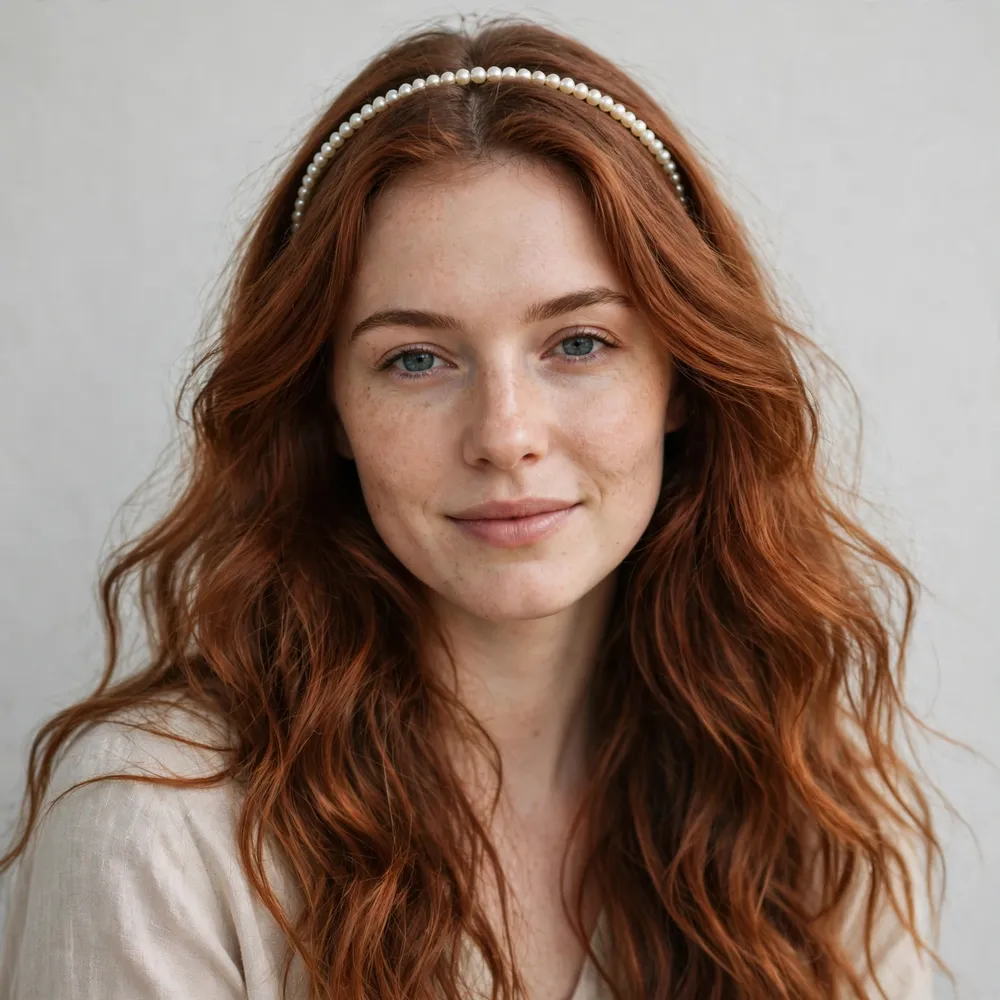
Open hair with a pearl headband is the simplest way to make everyday hair look occasion-ready — the pearls do the dressing up while your hair just has to be clean and brushed. It suits every length from a bob upwards and every face shape, which is why it is one of the most pinned headband looks around. Blow-dry or straighten the hair as usual, add a little shine serum through the mid-lengths, and place the pearl band just behind the hairline so the pearls catch the light. The band should sit flat against the head; if it wobbles, your hair is too slippery, and a pinch of dry shampoo at the roots will anchor it.
38. Floral Headband with Long Hair
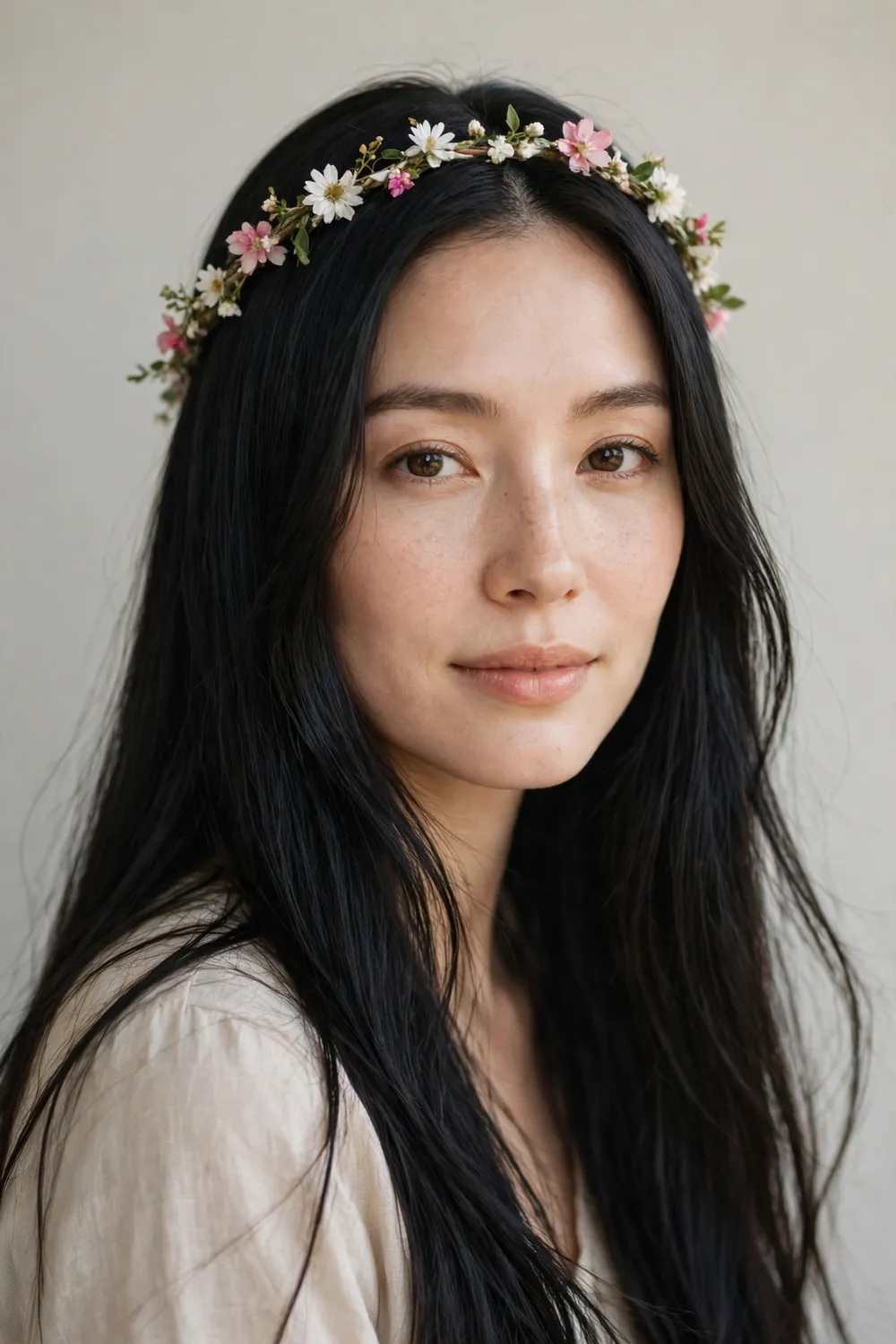
A floral headband with long hair worn down is soft, romantic and unashamedly pretty — the look for garden parties, spring weddings and holiday photos. It suits long, wavy or curly hair best, since the length balances the fullness of the flowers. Let the hair fall naturally with a few waves through the ends, then rest the floral band on top, pushed back just far enough that the flowers sit above the forehead rather than on it. If you are making your own, real flowers wilt within hours — good-quality faux flowers look the same in photos and survive the whole day. Take the band off before bed and brush the hair through to remove any petals or snags.
39. DIY Braided Headband
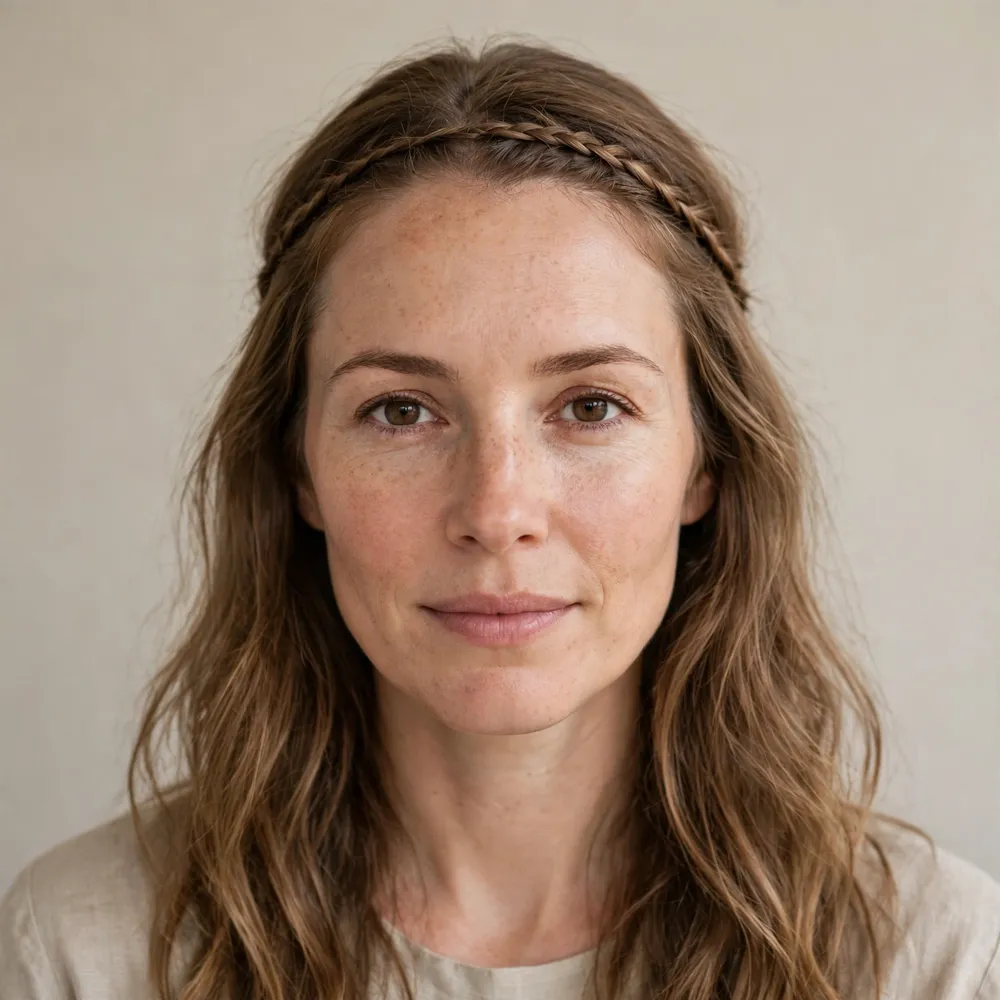
A DIY braided headband is a braid made from your own hair, swept across the hairline like a band — no accessory needed at all. It suits medium to long hair, and it is perfect for anyone who loves the headband look but hates how bands feel after a few hours. Take a section of hair from behind one ear, braid it in a simple three-strand plait, then bring it across the front of your head and pin it behind the opposite ear, tucking the end underneath. Pull the braid out slightly to make it look fuller, and leave a few face-framing pieces loose in front of it. The braid will loosen over the day, so carry two bobby pins.
40. Afro Puff with Headband
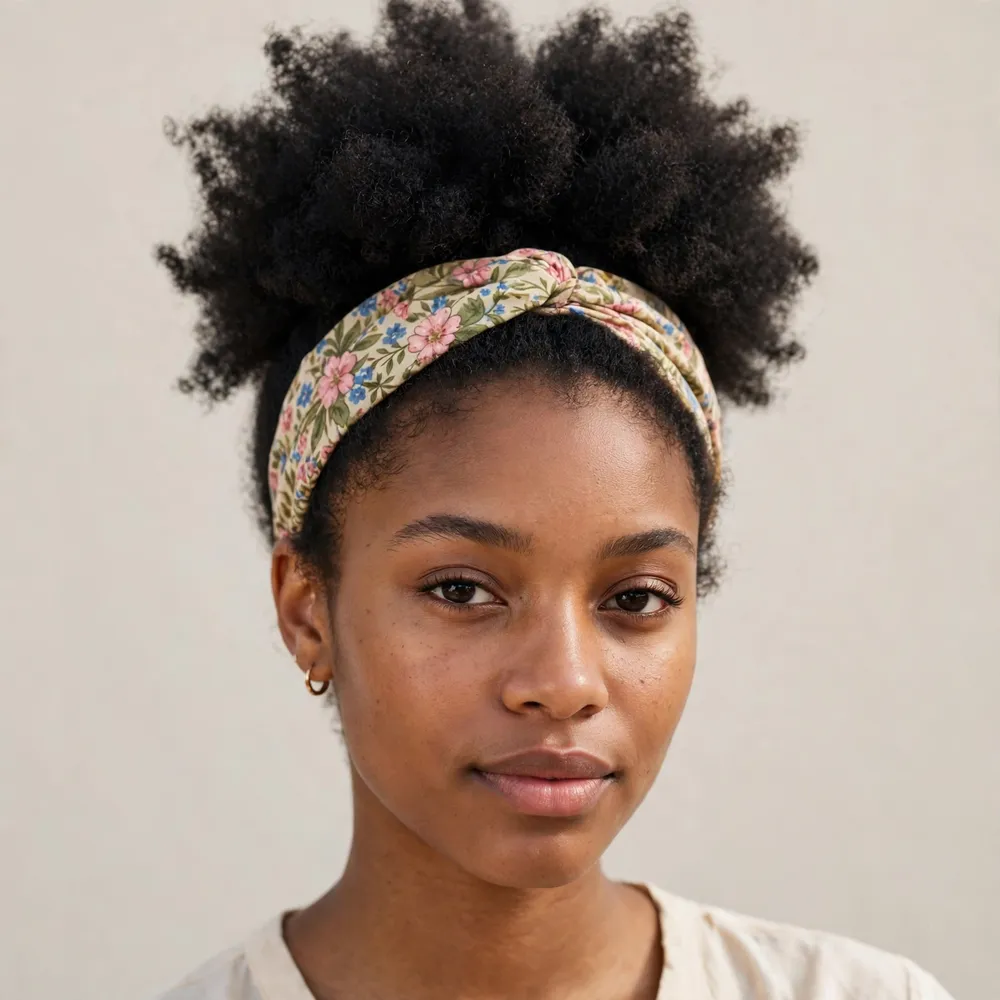
A high afro puff with a floral or fabric band at the hairline is joyful, bold and practical — the band keeps the edges neat while the puff does the talking. It suits natural hair worn in a puff and works for everyday wear, parties and celebrations alike. Gather the hair into a high puff with a satin scrunchie or elastic, shape it with your hands, and smooth the edges with a little edge control. The band sits right at the hairline, framing the puff without pressing it flat — a stretchy fabric band is the best choice, since a rigid one will dig in and distort the shape. Swap the band’s position occasionally and never sleep in it.
41. Beehive with Fabric Headband
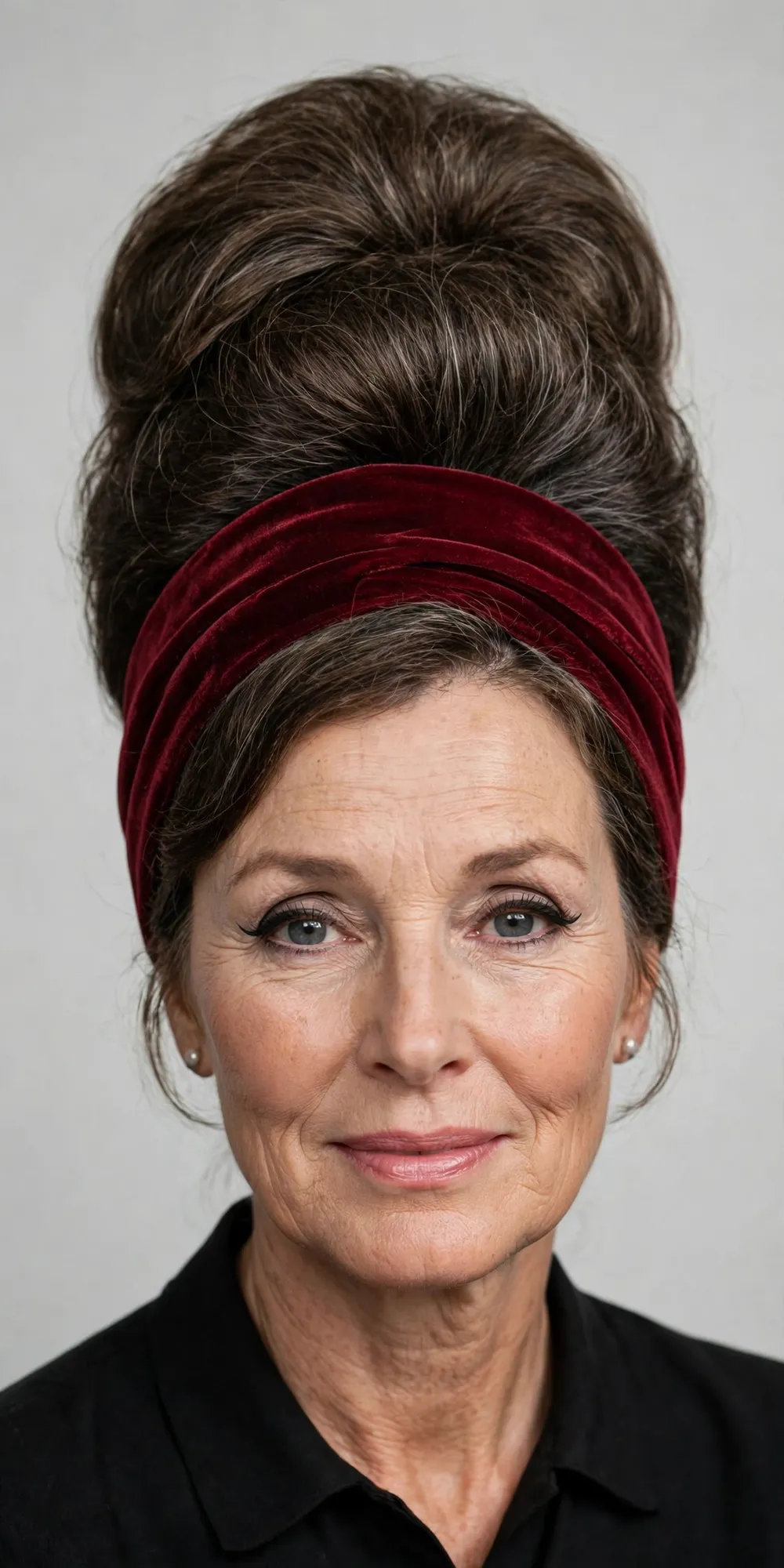
The beehive is retro volume piled high at the crown, and a wide fabric band at its base keeps the whole thing looking intentional rather than like a bad hair day. It suits themed parties, vintage photoshoots and anyone with medium to long hair who enjoys a statement style. Backcomb the crown section in small layers, smooth the top layer over it, and pin the shape in place before adding the wide fabric band across the front to anchor the look. Strong-hold spray is essential — a beehive without it will slump within the hour. A wide band also spreads the pressure across the hairline, which is kinder than a thin one for such a heavy style.
42. Slicked-Back Wet-Look Hair with Headband
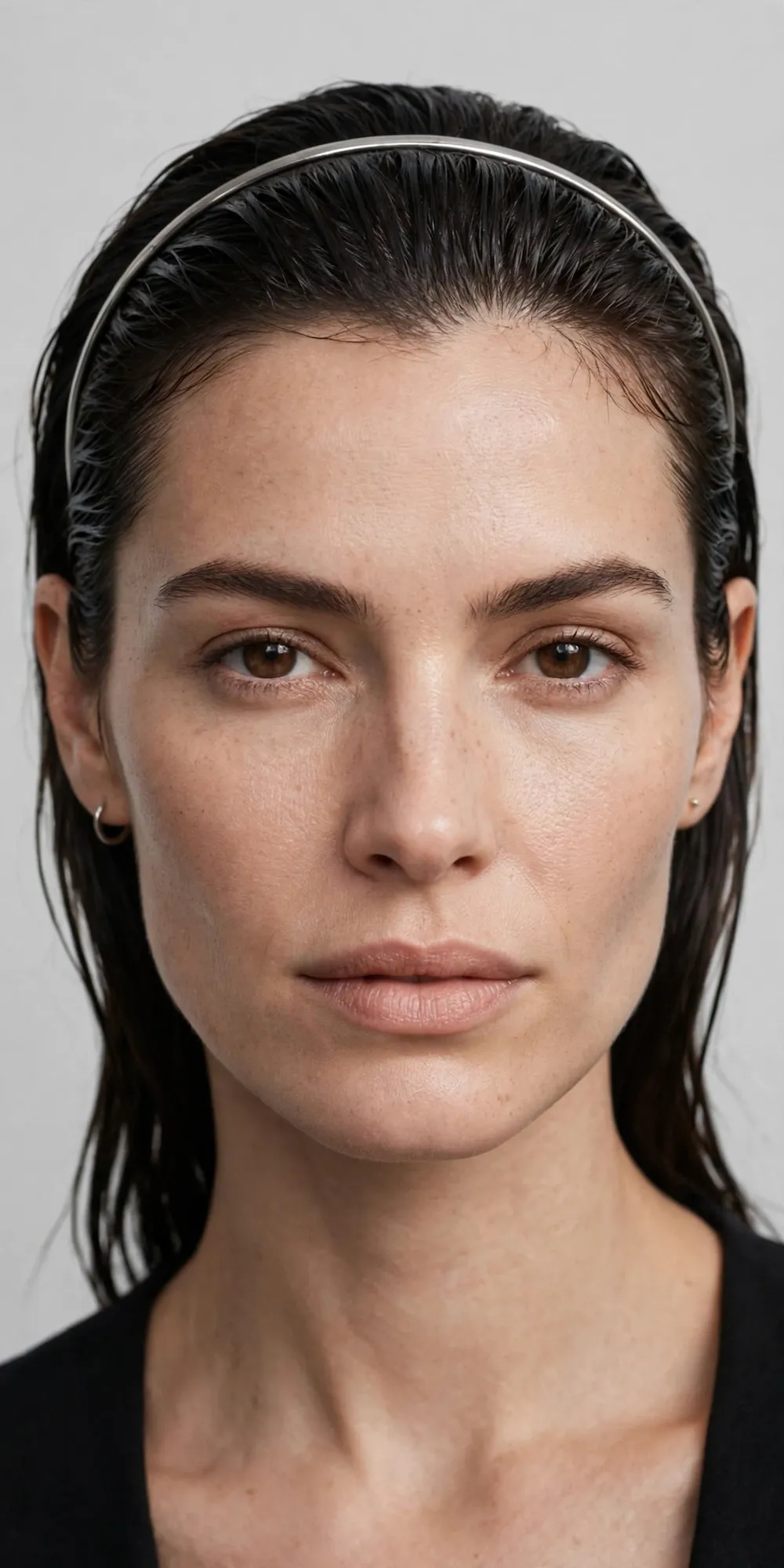
Slicked-back wet-look hair with a thin metal band is sharp, editorial and surprisingly wearable — the band breaks up the severity of the slicked-back shape and adds a jewellery-like finish. It suits straight or wavy hair, strong bone structure, and evenings out or fashion-forward work looks. Work a strong-hold gel through damp hair from front to back, comb it smooth with a fine-tooth comb, and let it set before adding the thin metal band just behind the hairline. The key is using enough product: too little gel and the hair frizzes out of the slick by midday. Wash it out properly at night — gel left in overnight dries the hair out — and give your scalp a break from tight bands the next day.
43. Half-Up Claw Clip Twist with Headband
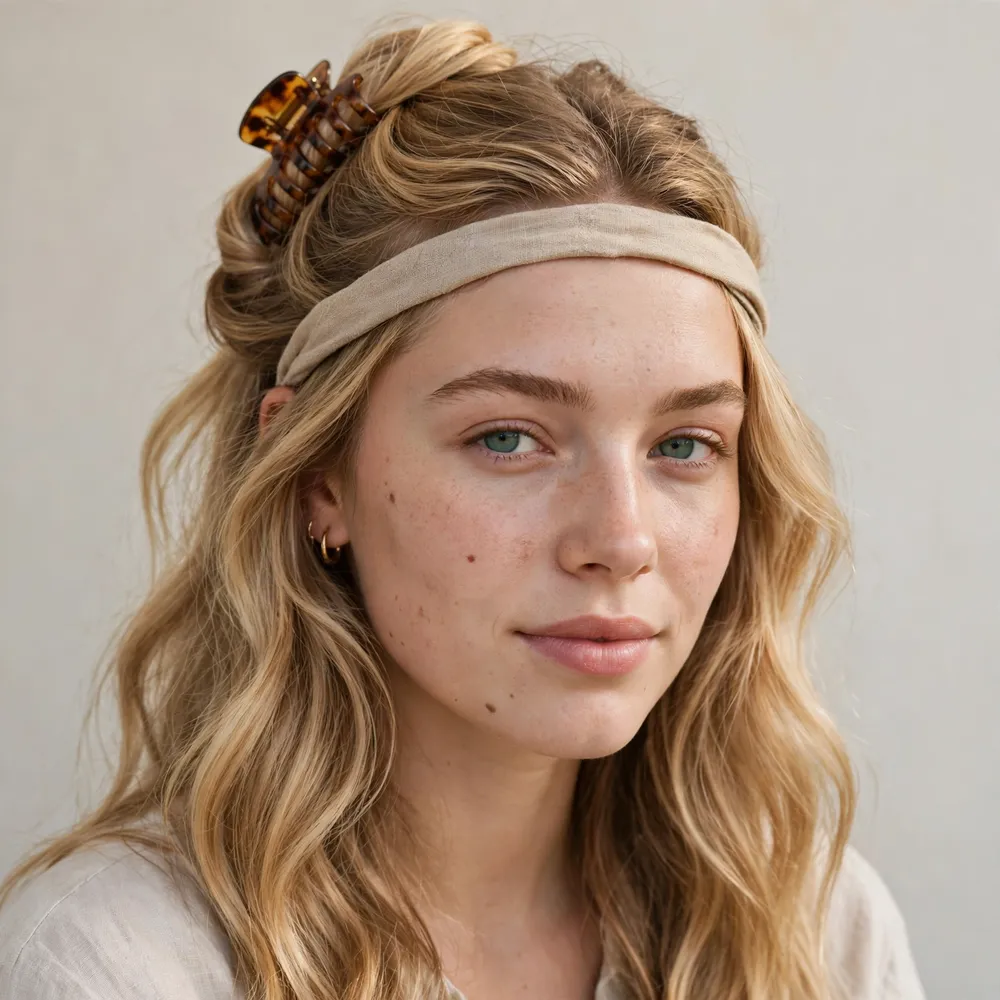
A half-up twist held by a claw clip, with a headband sitting in front of it, combines two of the most useful hair tools in one style. It suits medium to long hair and is ideal for busy days when you want the hair off your face but still want it down. Twist the top section back from both temples, meet it at the crown and secure it with a medium claw clip, then place the band just in front of the clip. The clip does the holding, so the band can be a light fabric or thin metal one — it does not need to work hard. For more claw clip combinations, see our guide to claw clip hairstyles.
44. Double Dutch Braids with Headband
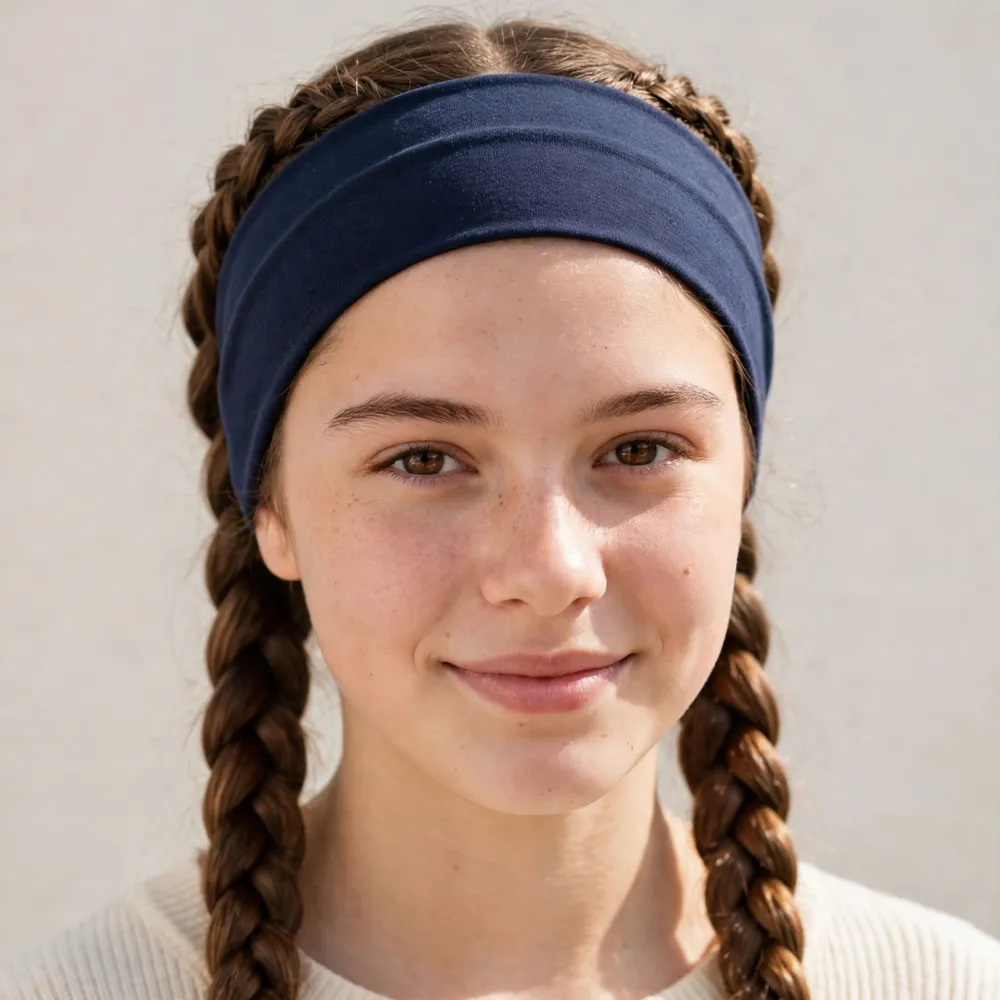
Double Dutch braids — boxer braids — under a stretchy band are the most secure headband style on this list, which is why they are a go-to for the gym, cycling and long active days. They suit medium to long hair and work on straight, wavy and curly textures. Part the hair cleanly down the middle, Dutch-braid each side by crossing the strands under rather than over, and secure the ends with small elastics. The stretchy band sits across the forehead at first, then gets pushed back once the braids are in so it frames the face instead of covering it. The braids take 10 to 15 minutes once you have the technique down, and they hold for a full day without needing a single touch-up.
45. Wavy Bob with Headband
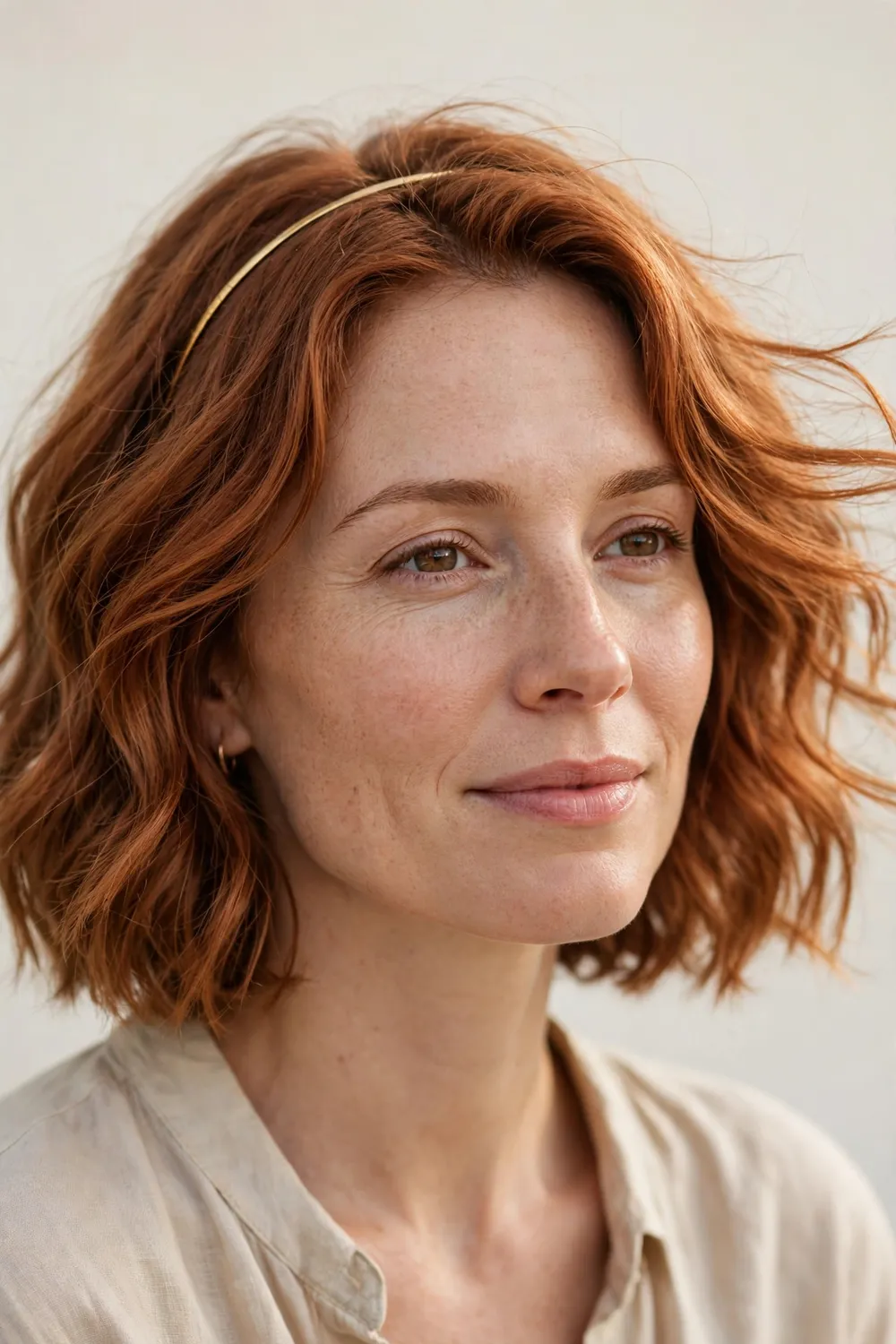
A chin-length wavy bob with a thin headband is one of the easiest styles here, and it suits anyone whose bob has a natural bend or wave. The band keeps the front sections out of your eyes while the waves give the cut its shape. Scrunch a little mousse or wave spray through damp hair, let it air-dry or diffuse it, then slide the thin band on so it sits just behind the hairline. The waves around the face should fall in front of the band to keep the look soft. A thin band is the right call for this length — a wide one overwhelms a short cut and can make the bob look shorter than it is.
46. Space Buns with Headband
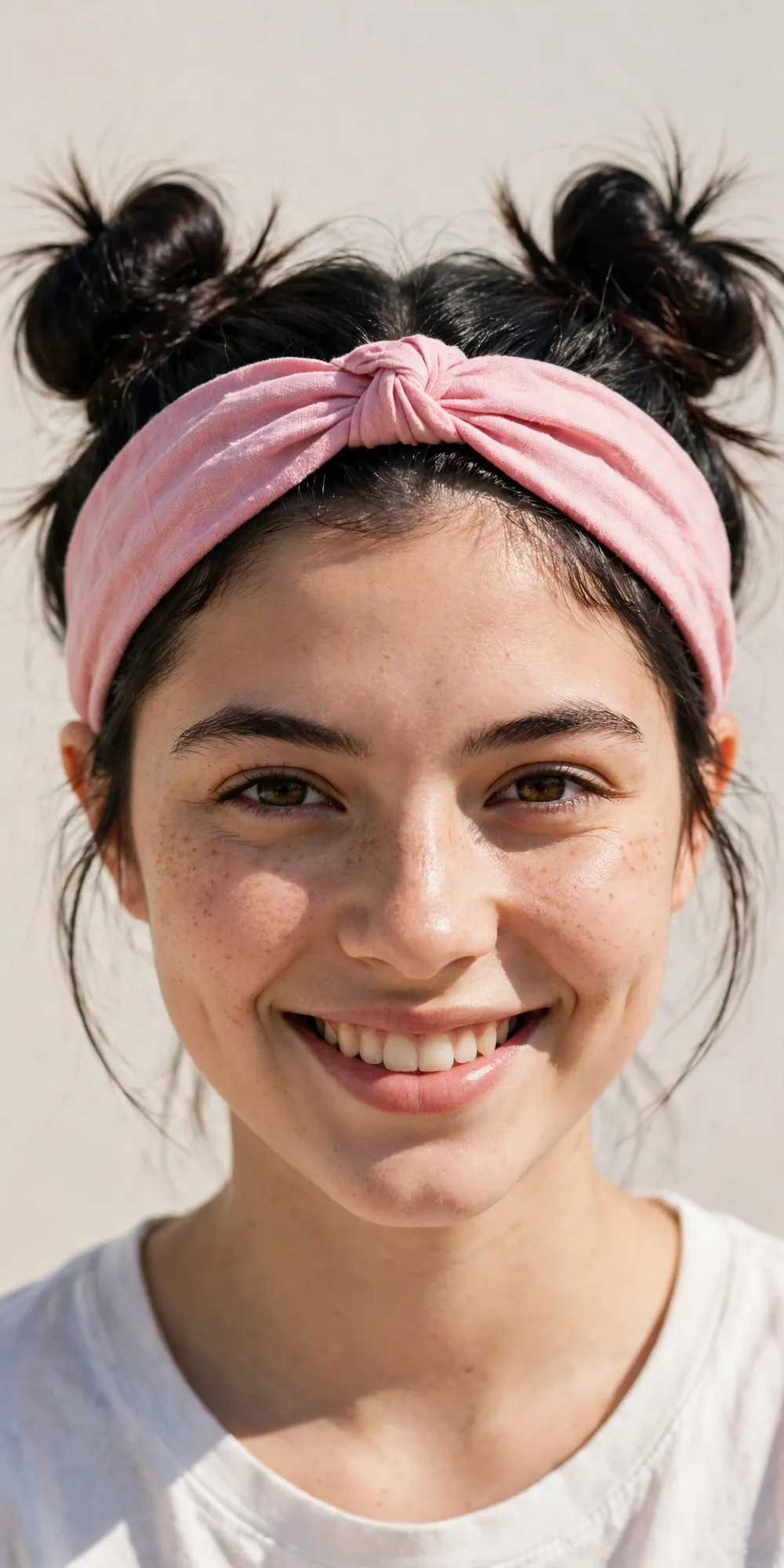
Two space buns with a knotted band across the front are playful, youthful and perfect for festivals, concerts and fun weekends. They suit medium to long hair and work best on hair with some texture, since very silky hair lets the buns slide. Part the hair down the middle, gather each side into a high ponytail, twist each one into a bun and pin it in place. The knotted band goes on last, sitting across the forehead and framing both buns. A little texture spray before styling gives the buns grip, and strong elastics are essential because each bun carries the weight of half your hair. Take the buns down gently and vary where the band sits next time.
47. Curly Bob with Headband

A bouncy curly bob with a fabric band is proof that headbands and curls get along — as long as the band is soft and stretchy rather than hard and narrow. It suits anyone with a natural curl pattern at bob length who wants the front curls out of their face without flattening the volume. Apply curl cream to damp hair, let the curls dry naturally or diffuse on low heat, then ease the fabric band on from the front and push it back until it sits comfortably. The band should rest on the hair, not press into it — if it leaves a dent in your curls, it is too tight.
How to Choose the Right Headband for Your Face Shape
Width matters more than most people realise. A thin band of around half a centimetre reads as jewellery — subtle, elegant, and best on oval and heart-shaped faces where you do not need the band to do any balancing work. A medium band of one to two centimetres is the all-rounder: it holds hair back properly, suits most face shapes, and works with everything from a bob to long layers. A wide band of three centimetres or more makes a statement and adds height at the crown, which flatters round faces by lengthening them visually — but it can overwhelm a very small face, so try it before committing to an all-day wear.
For face shapes specifically: round faces benefit from a band pushed slightly further back to create height, and from medium or wide bands rather than thin ones that disappear. Oval faces can wear anything, though a thin metal band shows off the balance best. Square faces suit a softer fabric band with a little volume at the crown to soften the jawline. Heart-shaped faces look great with a medium band and a few face-framing pieces left out in front of it. The headband itself has a long history as both a practical tool and a fashion accessory — the Wikipedia entry on the headband traces how it moved from sport and workwear into everyday style. Whatever your face shape, the test is simple: wear the band for ten minutes at home first. If it hurts, slides, or leaves a dent, it is the wrong one.
How to Keep a Headband From Slipping All Day
A slipping headband is almost always a preparation problem, not a band problem. Start with texture: a headband grips far better on hair with a little dry shampoo, texture spray or second-day natural oils than on freshly washed, silky hair. If you have just washed it, rough up the roots with a little dry shampoo before the band goes on.
Next, placement. Slide the band on from the front, then push it back about two centimetres from the hairline. That small gap is the sweet spot — too far forward and it slides down your forehead, too far back and it creeps forward and flattens the crown. Bands with a silicone or velvet grip lining stay put far better than smooth ones, so look for that lining when you buy. If your band has no grip, a couple of bobby pins crossed over the band behind each ear will anchor it invisibly. And if a band keeps sliding no matter what, it is probably too loose for your head — try a size down rather than fighting it all day.
Fabric vs Metal vs Padded Headbands: Which One Suits You?
Fabric bands are the comfortable all-rounders. They come in every colour and pattern, they are gentle on the hairline, and stretchy versions suit curly and thick hair well. Their weakness is grip — on very smooth hair they slide, and they absorb sweat and oil, so they need regular washing. Metal bands are the elegant option: thin, jewellery-like, and perfect for sleek styles and formal occasions. They grip better than fabric on smooth hair, but a rigid metal band can pinch, dent the hair, and hurt after a few hours if it is too tight. Padded bands give height and a soft, retro feel — great for adding volume at the crown and for framing the face. They are the most comfortable for long wear, but they can look too much with an already voluminous style. If you can only own three bands, make them a medium fabric one, a thin metal one and a padded one — that covers almost every look in this guide.
Headbands for Short Hair vs Long Hair
Short hair and headbands are a natural pair, because the band does the work that length cannot — it keeps the front tidy and adds interest to a cut that has fewer styling options. On a pixie or bob, a thin or medium band works best; wide bands can swallow a short cut and make it look shorter. The band should sit close to the hairline so it frames the face, and a little texture spray stops it sliding on short, smooth hair. Long hair gives you more choice: the band can be wide, knotted or padded, and it can sit further back because the length balances it. The trade-off is weight — a heavy band on very long, thick hair can creep forward as the day goes on, so a grip lining matters more. For long hair, the band also pairs beautifully with an updo: a low bun with a thin band is one of the most flattering combinations in this guide, and you can find more updo ideas in our bun hairstyles guide. Whichever length you have, the rule is the same: the band should complement the cut, not fight it.
Styling a Headband Around Bangs and Layers
Bangs and headbands need a little negotiation, because the band naturally wants to push everything back while bangs want to fall forward. The fix is simple: put the band on first, then arrange the bangs in front of it. With curtain bangs, part them in the middle and let them fall on either side of the band. With a full fringe, sit the band just behind the fringe line so the fringe stays visible and the band peeks out above it. If your fringe is growing out, the band is your best friend — it holds the awkward length back while it still looks intentional.
Layers work the same way: the shorter face-framing layers should fall in front of the band, not get trapped behind it. After placing the band, pull a few pieces out around the face and let them sit naturally. If a layer keeps slipping behind the band, a tiny bit of pomade on the ends will weigh it down just enough. Avoid placing the band directly over the shortest layer — it will stick up oddly and need constant fixing.
Headbands for Workouts and Sweaty Days
A headband earns its keep at the gym, but only if you pick the right one. Wide, stretchy fabric bands with a silicone grip lining are the best choice — they absorb sweat, stay put, and do not dig in during a long session. Thin metal bands are the worst option for a workout: they slide the moment you sweat, and they can pinch. Padded bands absorb sweat but take a long time to dry, so save them for low-intensity days.
Style-wise, braids are your best friend for exercise — two tight braids or a single French braid under a wide band will survive almost anything, and the band keeps the baby hairs and flyaways out of your face. A high ponytail with a band also works if the ponytail is secured tightly. After the workout, take the band off, rinse it, and let it dry before wearing it again — a damp band left in a gym bag breeds bacteria and smells. And wash your hair or at least rinse the sweat out of the roots the same day; dried sweat plus a tight band is a recipe for breakage at the hairline.
5 Headband Mistakes to Avoid
- Wearing it too far forward. A band sitting on your forehead instead of behind the hairline looks accidental and slides down constantly. Push it back two centimetres and it stays put.
- Choosing the wrong size. A band that is too tight causes headaches and breakage at the hairline; one that is too loose slides all day. If you are between sizes, go for the one with a little stretch.
- Putting it on slippery, freshly washed hair. A band has nothing to grip on silky clean hair. A pinch of dry shampoo or texture spray at the roots before the band goes on makes all the difference.
- Hiding the band completely. If you bury the band under layers of hair, you lose the point of wearing it. Let it show — pull the face-framing pieces in front of it, not over it.
- Never washing it. A fabric band absorbs sweat, oil and product every time you wear it. Wash it regularly — hand-wash fabric bands and wipe metal ones down — or it will irritate your hairline and smell.
Frequently Asked Questions
Do headbands work on all hair types?
Yes, with the right band. Straight hair needs a band with grip — silicone lining or velvet — because smooth hair lets bands slide. Wavy and curly hair holds bands easily, but needs a soft, stretchy fabric band that will not flatten the curl pattern. Thick hair needs a wider or stretchier band, while fine hair suits a thin or medium one. Coily and afro-textured hair works best with a wide fabric band that sits at the hairline without pressing the volume flat. The band that fails is usually the wrong width or material for the hair, not a sign that headbands do not work for you.
How do I stop my headband from slipping?
Add texture first: dry shampoo or texture spray at the roots gives the band something to grip, especially on freshly washed hair. Place the band about two centimetres back from the hairline, and choose a band with a silicone or velvet grip lining. If it still slides, anchor it with two bobby pins crossed over the band behind each ear. A band that keeps slipping despite all of this is probably too loose — try a smaller size or a stretchier style.
Can I wear a headband with short hair?
Absolutely — headbands are one of the best accessories for short hair. A thin or medium band suits a pixie or bob best, keeping the front tidy and adding interest to a cut with fewer styling options. Wide bands can overwhelm a short cut, so stick to slimmer styles and sit the band close to the hairline. A little texture spray stops it sliding on short, smooth hair.
Are headbands bad for your hair?
Not if you wear them correctly. The problems come from bands that are too tight, worn in the same spot every day, or left on overnight — that repeated pressure can cause breakage at the hairline and even headaches. Choose a band that fits comfortably, vary where it sits, take it off at night, and wash fabric bands regularly so they do not irritate your scalp. Soft fabric and padded bands are the gentlest options for daily wear.
Which headband width suits a round face?
A medium band of one to two centimetres, or a wide band of three centimetres or more, suits a round face best. The width adds height and structure at the crown, which lengthens the face visually. Push the band slightly further back from the hairline to create more height on top, and leave a few face-framing pieces loose in front of it. Thin bands can disappear on a round face and do little to balance the proportions.
Can I wear a headband to the gym?
Yes, and it is one of the best uses for one. Choose a wide, stretchy fabric band with a silicone grip lining — it absorbs sweat and stays put. Pair it with braids or a secure ponytail for the most hold. Avoid thin metal bands, which slide once you sweat, and padded bands, which take too long to dry. Rinse the band after your workout and let it dry before wearing it again.
Are padded headbands still in style?
Yes. Padded headbands have stayed popular since their comeback because they are comfortable, add flattering height at the crown, and work with everything from loose waves to a low bun. They suit both casual and formal looks depending on the fabric — velvet or satin reads dressy, cotton or linen reads everyday. If the very wide, oversized padded look feels too much for you, a medium padded band gives the same comfort and height in a subtler form.
Final Word
A headband is the smallest change you can make to your hair with the biggest payoff — it takes a style you already wear and makes it look finished in seconds. Start with one medium fabric band and one thin metal one, try a few looks from this list, and you will quickly find the two or three that become your everyday defaults. And if you want more ideas beyond headbands, you will find more hairstyle guides on our blog.