


The best volleyball hairstyles stay locked in through serves, dives and full five-set matches — no loose strands in your eyes, no ponytail sliding south by the second set. If you want three picks right now: Double Dutch Braids for the tightest hold on long hair, High Ponytail with Braided Wrap for a polished match-day look that takes five minutes, and Bubble Ponytail for something fun that still survives every rally. Below you’ll find all 33, sorted from the classics every setter swears by to fresh styles from the 2026 season, plus a picker guide so you can match the style to your hair length, hair type and position on court. Our full braided hairstyles guide covers the braid techniques in more depth if you want to practise the basics first.
How to Pick the Right Volleyball Hairstyle for Your Hair
Start with length. Short hair (above the shoulders) does best with mini braids at the hairline, a headband and strong pins — there isn’t enough length for a full braid to grip. Medium hair sits in the sweet spot: one French or Dutch braid into a ponytail holds everything without much bulk. Long hair needs structure, not just an elastic — two braids, a braided ponytail or a bun will outlast a plain ponytail every time.
Then think about the day. Practice is the time to try something new; match day is the time to wear the style you’ve already tested. Team photos call for the polished versions — a slicked bun or a wrapped ponytail photographs far better than a messy knot. And run the hold test before you leave the house: ten jumps and a practice dive. If nothing has slipped, it survives a match.
The 33 Best Volleyball Hairstyles
1. High Ponytail with Braided Wrap

A high ponytail gets an instant upgrade when you wrap a thin braid around its base instead of showing an elastic. It suits medium to long hair, straight or wavy, and works for every position — liberos love it because nothing swings into their face on a dig. Brush the hair up to the crown, secure it with a strong elastic, then take a small section from underneath, braid it in three passes and wind it around the base, pinning the end underneath. A dab of edge gel smooths the hairline and a light mist of hairspray locks it in. The classic ponytail has been a sport staple for decades: it keeps hair high and clear of the collar. It holds a full match; a quick re-pin between sets fixes any loosening at the nape.
2. Double Dutch Braids
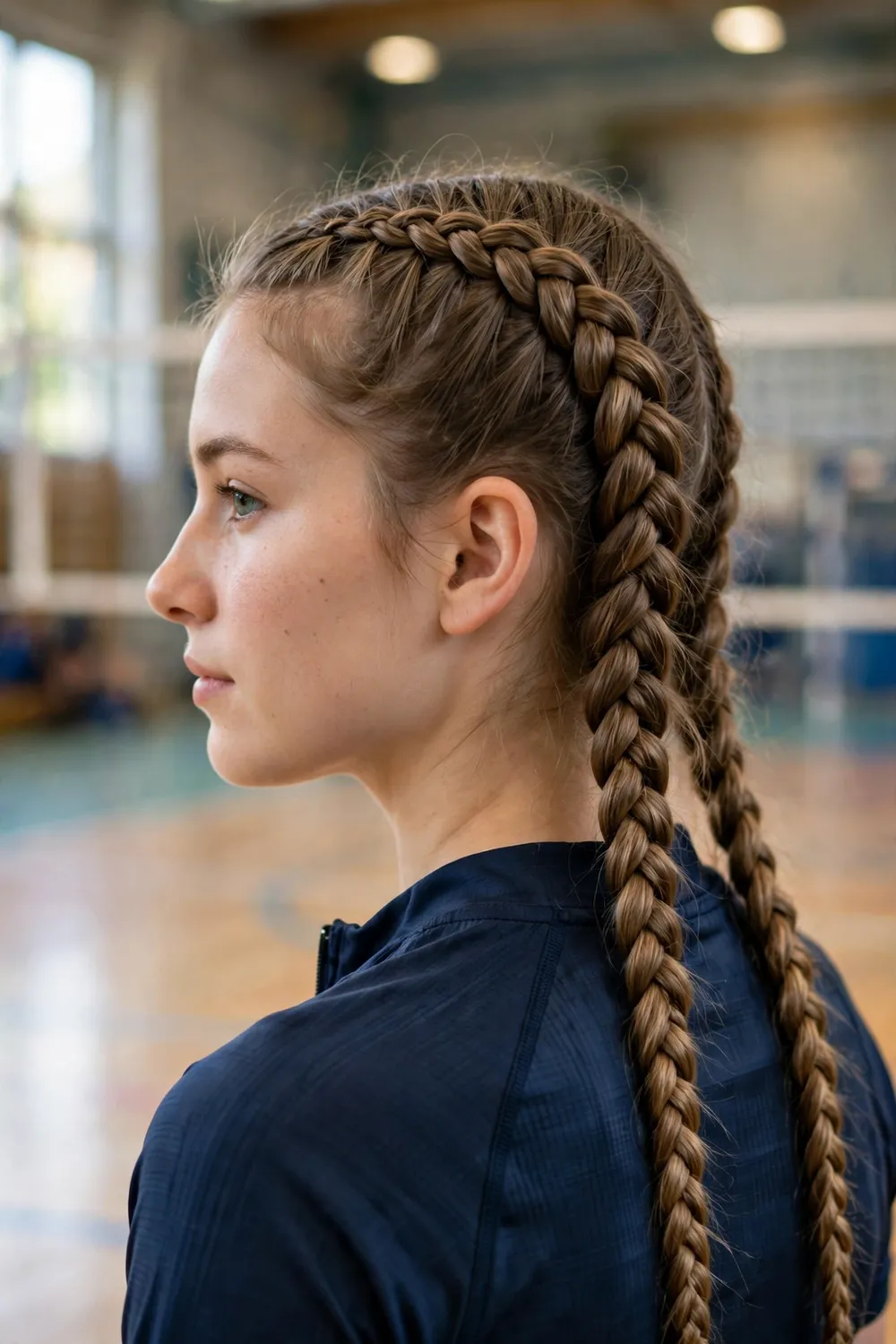
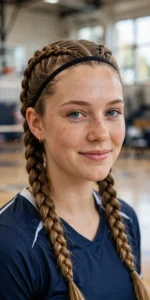
Two Dutch braids, one on each side of a centre part, are the gold standard for volleyball hold. Dutch braiding — crossing strands under instead of over — makes the braids sit raised and tight against the scalp, so they don’t shift when you dive. This is the pick for long, thick hair and for hitters and blockers who jump constantly. Part the hair cleanly down the middle, Dutch-braid each side from the hairline to the nape, then tie the ends together or let them hang as two tails. Damp hair grips better than slippery clean hair, so braid on day-old or lightly misted hair. Once braided, they stay put for the whole match and even a second game, with only the odd flyaway needing a smoothing swipe.
3. Bubble Ponytail
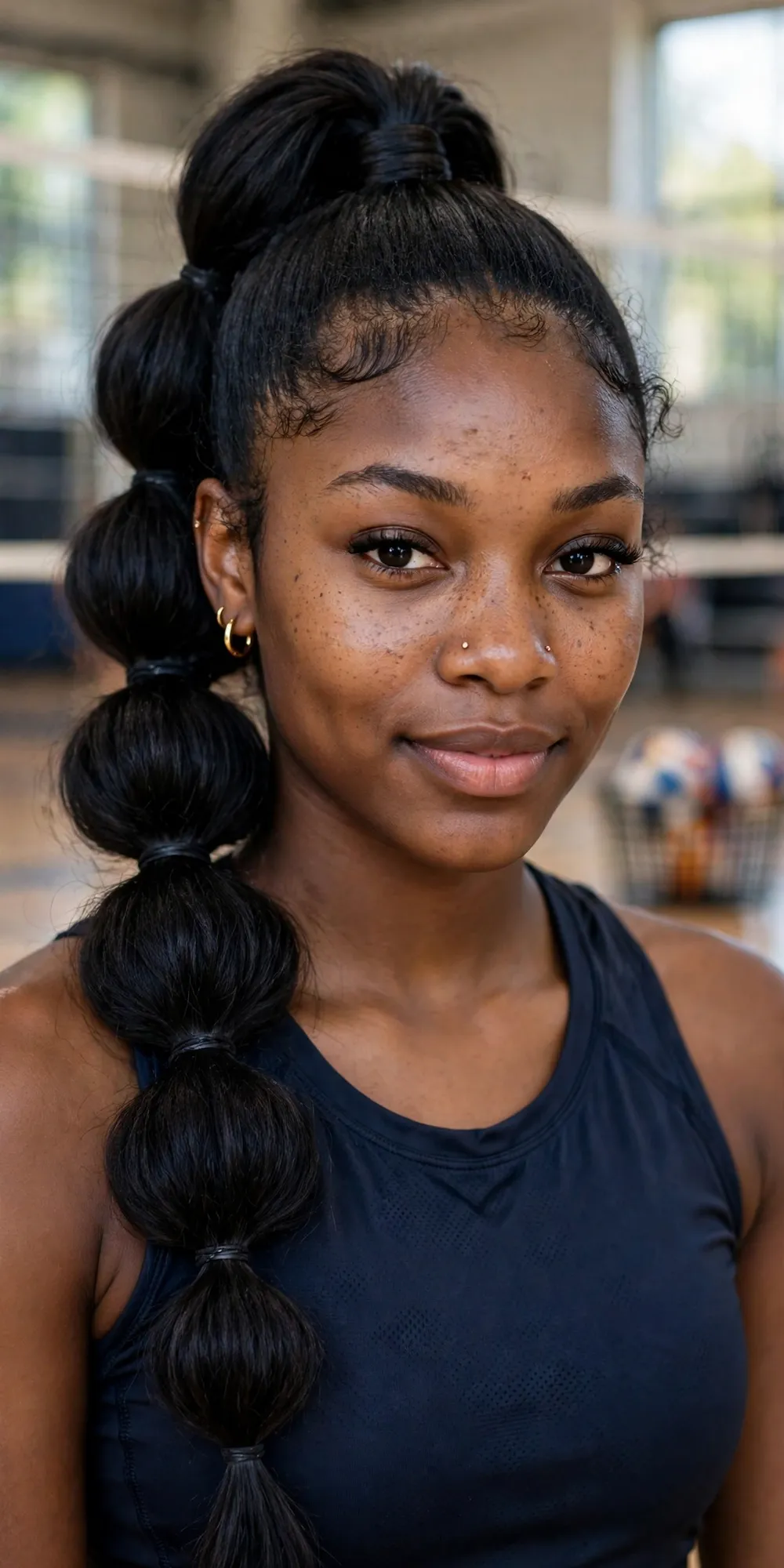
Playful, bouncy and surprisingly secure, the bubble ponytail turns a high ponytail into a string of rounded sections. It works best on medium to long hair — the longer the tail, the more bubbles you get — and suits outside hitters who want personality without loose hair flying around. Gather the hair high, secure it, then place small elastics every 5–7 cm down the tail, gently pulling each section outward to puff it into a bubble. A touch of texturising spray gives the bubbles grip and stops them sliding flat. The style holds well because the weight is distributed across several elastics instead of one, though very fine hair may need a little backcombing inside each bubble to keep the volume.
4. Low Braided Ponytail

When a high ponytail feels too bouncy mid-rally, drop it to the nape and braid the tail. The low braided ponytail keeps hair completely contained, which makes it a favourite for setters — nothing swings forward when they reach overhead. It suits medium to long hair of any texture, and the braid itself stops the tail whipping around on dives. Brush everything back smoothly, secure it low with a strong elastic, then plait the tail in a simple three-strand braid and tie the end. The whole thing takes about three minutes and needs zero attention during play. If your hair is very thick, use two elastics at the base; one will slowly creep down over a long match.
5. Sleek High Bun

Nothing beats a bun for total hair control, and the sleek high version is the tidiest of the lot. Every strand is swept up and pinned away from the face and neck, which matters on hot gym days and for middle blockers who jump at the net constantly. Best on medium to long hair, straight or wavy — very curly hair needs extra pins and a strong-hold gel. Gather the hair at the crown, twist it into a tight coil, wrap it around its own base and pin in a circle with bobby pins. Our guide to bun hairstyles has more variations if you want to rotate looks. Once pinned, a sleek bun genuinely does not move for an entire match, though the hairline may need a gel touch-up after warmups.
6. French Braid into Ponytail

Half braid, half ponytail — and the best of both. A French braid controls the top of the head and the hairline, then releases into a free-swinging ponytail at the crown, so you get hold where it matters and movement where it doesn’t. It suits medium to long hair and works brilliantly for setters and defensive specialists, whose front hair is the first thing to fall loose. Start braiding at the forehead, picking up sections as you travel back, and stop at the crown to gather everything into an elastic. Keep the braid snug against the scalp. A little mousse on damp hair before braiding adds grip. The ponytail tail will swing, but the braided top stays locked all match, and re-tying the elastic once between sets is all the maintenance it asks.
7. Braided Headband Ponytail
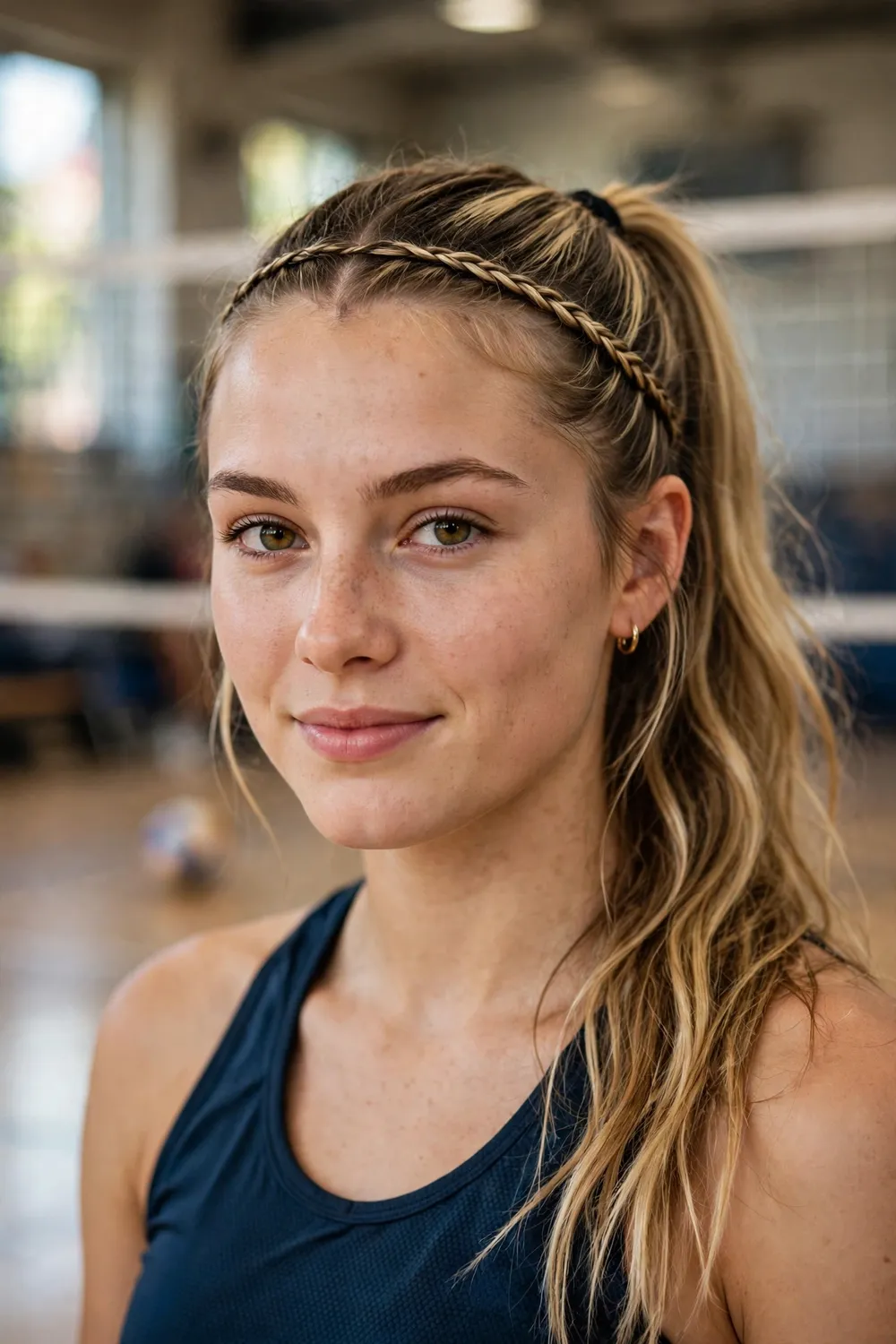
A braid that runs across the hairline like a built-in headband, with the rest of the hair pulled into a ponytail behind it. It solves the number-one volleyball hair problem — front pieces falling into your eyes — without needing an actual headband that can slip. Ideal for medium to long hair, and for players with face-framing layers that never stay pinned. Take a section from behind one ear, braid it across the forehead to the other side, pin it behind the ear, then gather the rest into a ponytail. The braid itself acts as the anchor, so no clips are needed at the front. It holds well through a full match, though very fine hair should be pinned at both ends of the braid, since it can loosen when the ponytail gets tugged.
8. Half-Up Braided Ponytail
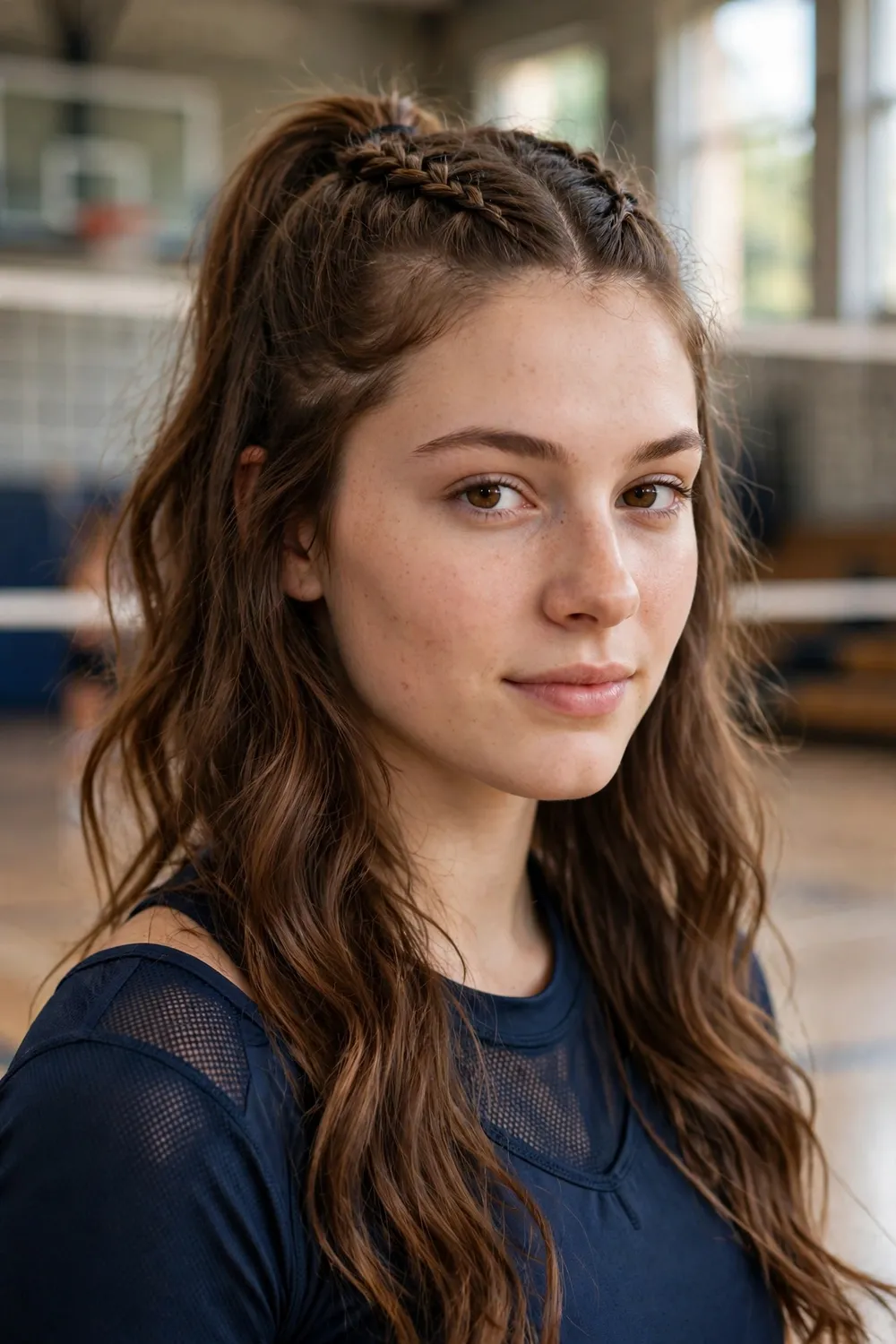
For players who like some hair down but can’t have it in their face, the half-up braided ponytail splits the difference. The top section is braided back and tied into a ponytail while the rest flows free underneath — best for practice, warmups and team photos rather than a full-contact match, since the loose layer can still swing. It suits medium to long hair, straight or wavy, and looks great on outside hitters in pre-game photos. Section off the top third from ear to ear, braid it loosely back to the crown and secure it, leaving the rest down. During play the braided top stays put, but expect the bottom layer to need a quick brush-out after the match — and skip this one if you’re diving a lot.
9. Boxer Braids

Boxer braids are simply two tight Dutch braids worn close to the scalp, built for high-energy rallies and floor dives. The difference from a softer double braid is the tension: these are braided firmly from the hairline all the way down, so they barely move even when you hit the floor. They suit long hair best, though medium hair works if the braids reach past the shoulders. Part down the centre, Dutch-braid each side tightly, feeding in hair as you go, and secure the ends with small elastics. Braid on slightly damp hair — clean, slippery hair fights you the whole way. Once in, boxer braids are the closest thing to set-and-forget: they survive warmups, a full match and the bus ride home without a single re-do.
10. Messy Top Knot

The messy top knot is the practice-day hero: fast, forgiving and comfortable when you’re drilling for two hours. It piles the hair into a relaxed knot at the crown, keeping it off the neck without demanding a mirror-perfect finish. Best for medium to long hair — short hair won’t wrap into a knot without a dozen pins — and any hair type, since the messy texture actually helps it grip. Flip the head forward, gather the hair high, twist it loosely and wrap it into a knot, securing with a scrunchie or pins. It won’t survive a competitive match as well as a braid — expect loosening by the third set — but for practice, warmups and drills it’s comfortable, cool and takes under a minute.
11. Side Braid Ponytail
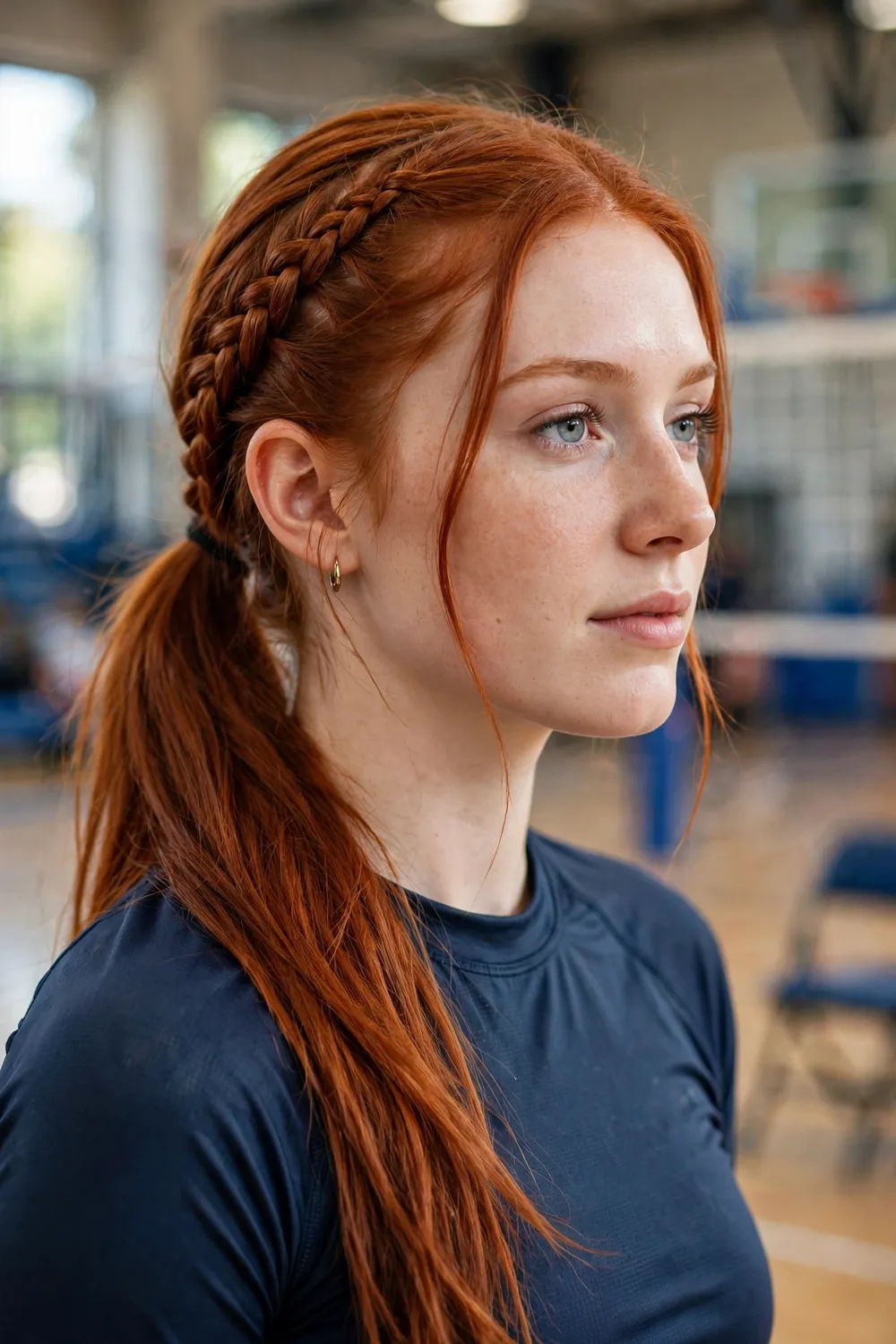
A braid that starts on one side of the head and sweeps diagonally into a ponytail at the back gives you asymmetric interest with the same hold as a standard braided ponytail. It suits medium to long hair and looks particularly good on players with a side part, since the braid follows the natural fall of the hair. Start a French or Dutch braid at the temple on the heavier side, work it across and down toward the opposite side of the nape, then gather everything into a ponytail. The diagonal line keeps the braid tight against the head, which is why it holds better than a straight-back braid on fine hair. It stays secure through a full match, and the side-swept shape photographs nicely — a solid game-day choice when you want something different.
12. Cornrow Ponytail
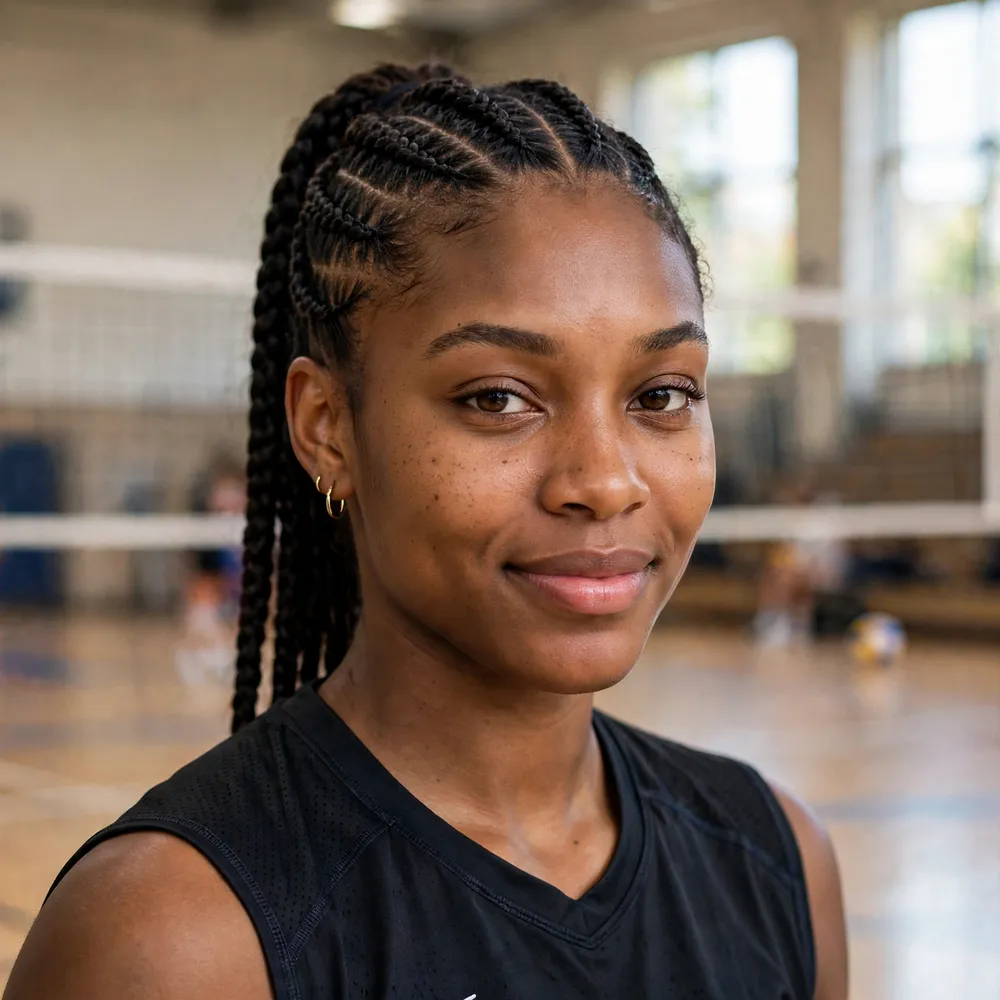
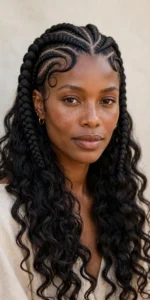
Cornrows guide the hair back from the hairline in tight, flat rows, then release into a single ponytail — maximum scalp control with a clean finish. This is one of the most secure styles in the whole list, and a strong pick for textured, coily or thick hair, where cornrows grip naturally and last for days, not just one match. Braid the cornrows from the front hairline toward the crown, feeding in small sections, then gather the unbraided length into a ponytail at the back. Edge control along the hairline keeps the finish sharp. Our cornrow hairstyles guide breaks down the technique if you’re learning it. The style holds through multiple matches with almost no maintenance — just re-tie the ponytail elastic and smooth the edges between games.
13. Low Bubble Braid
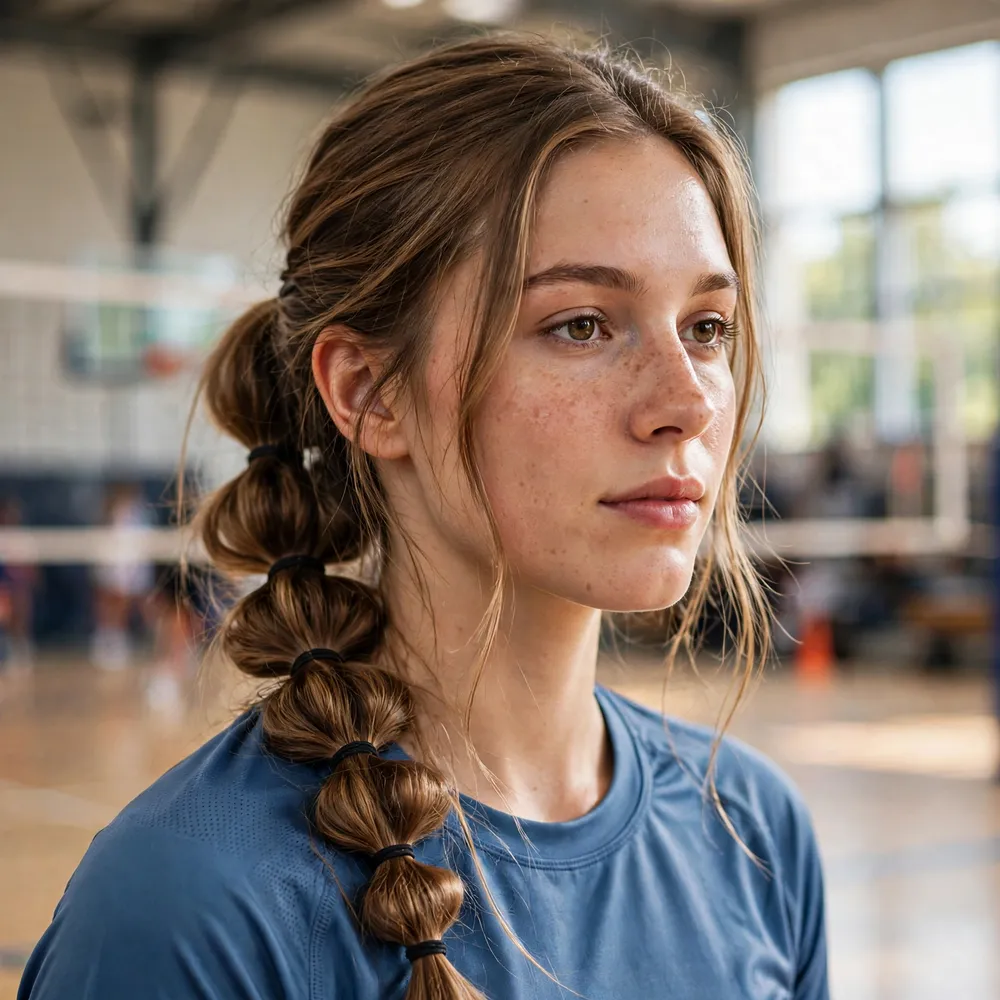
The low bubble braid takes the bubble ponytail’s playfulness and anchors it at the nape, where the weight sits closer to the head and swings less. That’s the key difference: a low bubble braid barely moves during dives, while a high one bounces. It suits medium to long hair and is a good pick for liberos and defensive specialists who spend a lot of time low and fast. Secure a low ponytail, then band elastics every 5–7 cm down the tail, puffing each section gently into a bubble. A little texturising spray stops fine hair sliding out of the sections. The style holds a full match comfortably, and if a bubble does flatten, one quick tug from the sides re-inflates it between sets.
14. Fishtail Braid
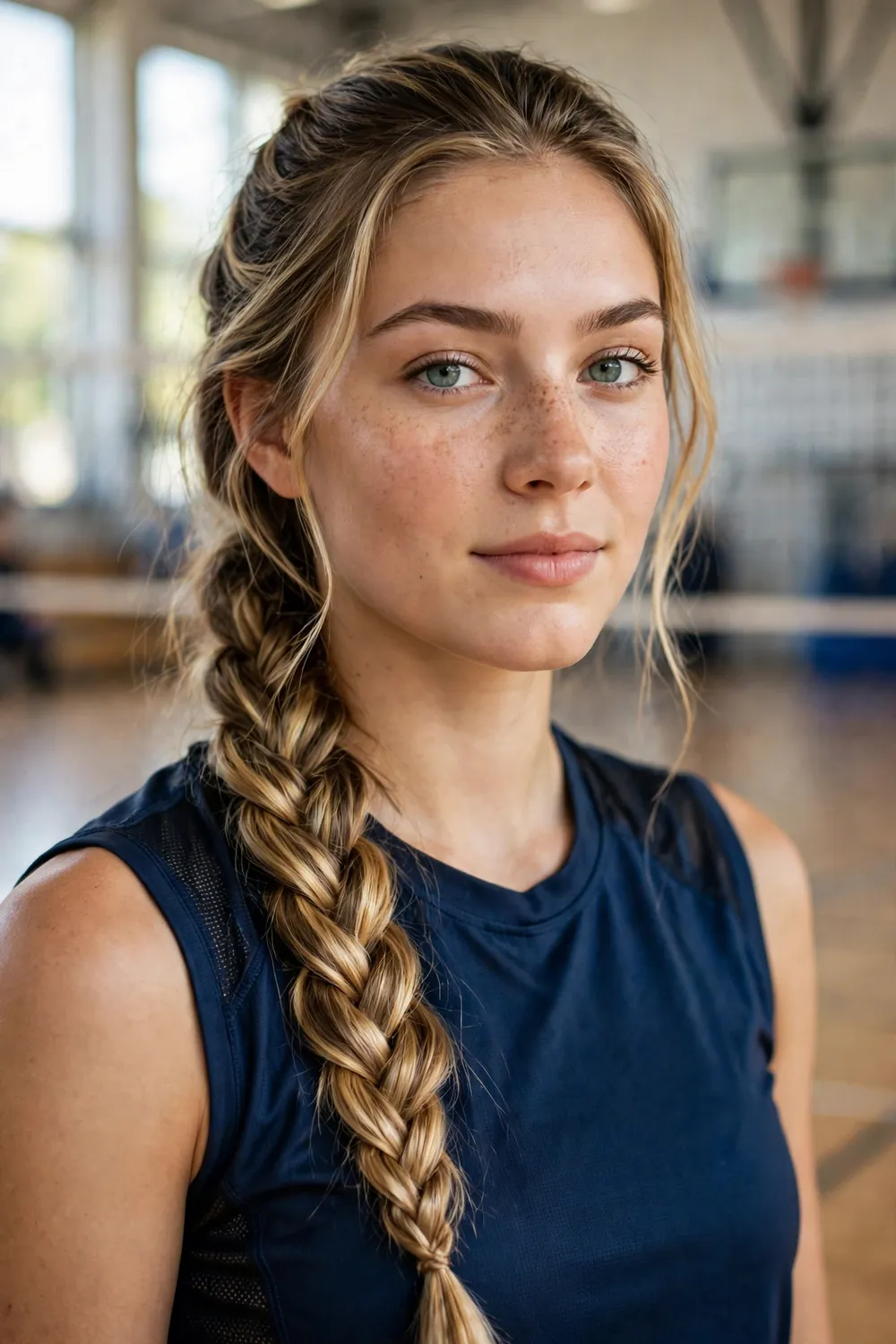
A fishtail braid looks intricate — fine, interlocking strands running the length of the hair — but it’s really just two sections crossed over each other, again and again. It holds long hair together beautifully through a match because the many small crossovers distribute tension evenly. Best on long, straight or wavy hair; it needs length to show the pattern, and very thick hair takes a while to finish. Split the ponytail into two halves, take a thin strand from the outside of one half and cross it to the inside of the other, alternating sides all the way down. A light-hold spray keeps flyaways down without stiffening it. It survives a match well, though the tail end can loosen — tie it off with two small elastics, not one.
15. Claw Clip Warmup Twist

Twist the hair up, clip it, done — the claw clip warmup twist is a thirty-second style for stretching, serving practice and the walk to the gym. It is not a match style: a claw clip can pop open on a dive and, worse, the clip itself is hard plastic against the floor. Save it for warmups, then switch to a braid or ponytail before the first serve. It suits medium to long hair of any texture. Gather the hair at the back, twist it upward, fold the ends in and clamp a large claw clip over the twist. For warmups it holds fine and keeps hair completely off the neck. Remember the rule: clip for the warmup, braid for the game — and keep a spare elastic in your bag for the swap.
16. High Ponytail with Headband
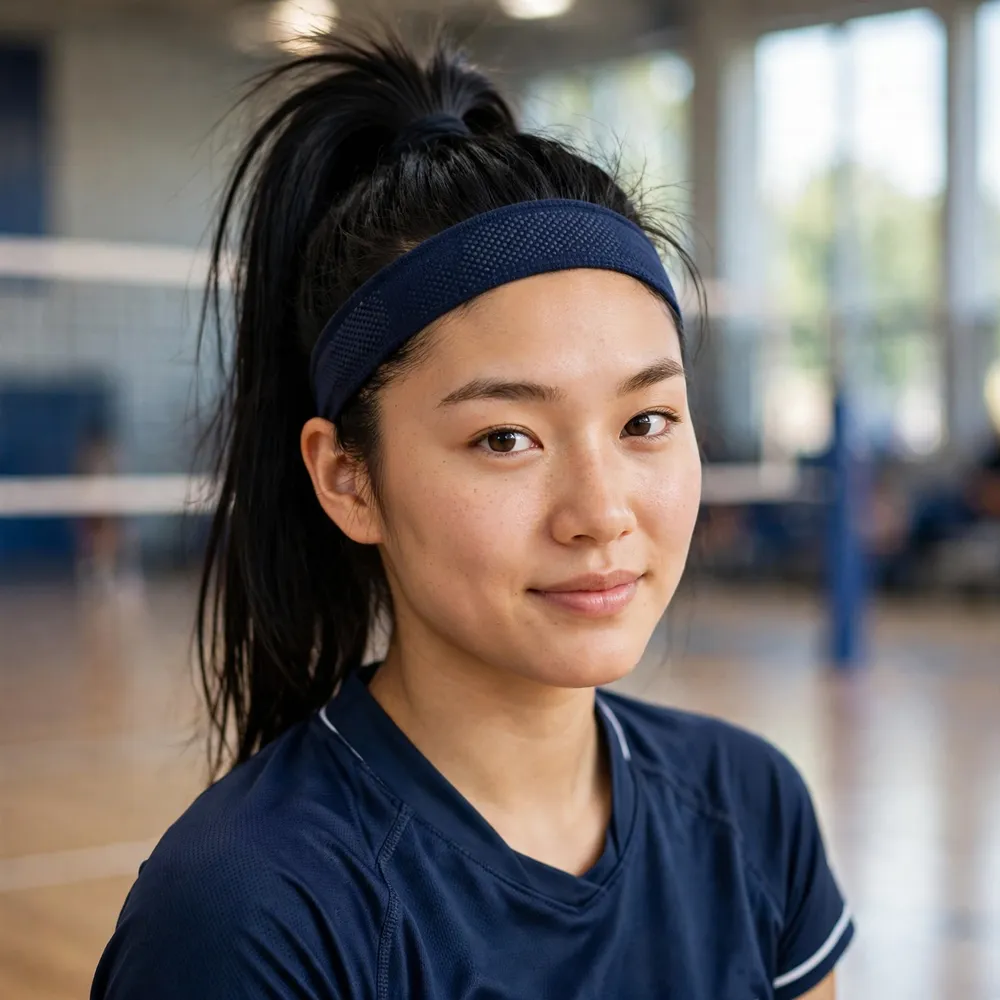
Sometimes the simplest answer is the right one: a high ponytail plus a no-slip athletic headband. The headband does the job the ponytail can’t — it pins down the baby hairs and short layers around the hairline that always escape during play. It suits every hair length from medium upward and every position, and it’s the fastest match-day style on this list at under two minutes. Brush the hair high, secure it with a strong elastic, then slide a wide athletic headband on about 2 cm back from the hairline. Choose a headband with silicone grip on the inside; fabric-only bands slide off once you start sweating. The ponytail will bounce, but the hairline stays clean all match. Re-tighten the elastic once at half-time if your hair is heavy.
17. Braided Low Bun

A braid wrapped into a neat low bun sits close to the head, so it never catches on a jersey collar or swings into your face when you look up for a set. It’s a calm, polished style that suits medium to long hair and works especially well for setters, who need a clear view overhead. Braid the hair into a single three-strand plait from the nape, then coil the braid around its own base and pin it flat against the head with bobby pins. The braid gives the bun texture and extra grip compared with a plain twisted bun, so it needs fewer pins. Once pinned, it’s rock solid for a full match — no re-dos, no stray pieces — and it comes out with barely a tangle after a long tournament day.
18. Curly Pineapple Ponytail
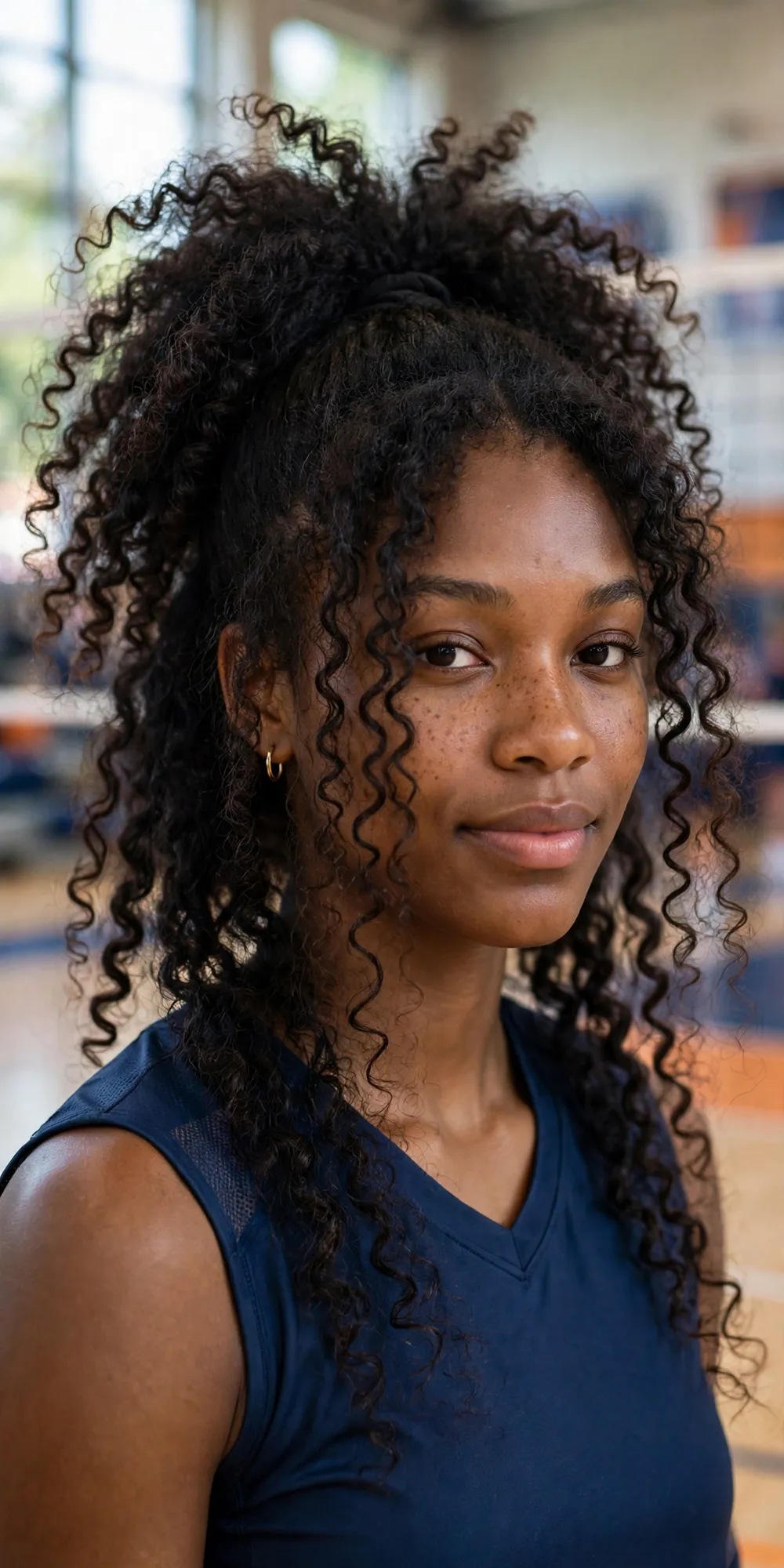
If you have natural curls, fighting them flat before a match is a losing battle — work with them instead. Gather everything high on the crown and secure it with a loose, fabric-covered elastic so the curl pattern stays intact. The height keeps curls off your neck and out of your eyeline when you jump for a block, and gravity pulls the front pieces back, not forward. It suits medium to long curly and coily hair best, and it’s a favourite with liberos who dive a lot, since nothing drags on the floor. Leave a couple of curls loose at the hairline for softness, smooth the edges with a dab of curl cream, and skip heavy gel — it goes crunchy under sweat.
19. Rope Braid Ponytail
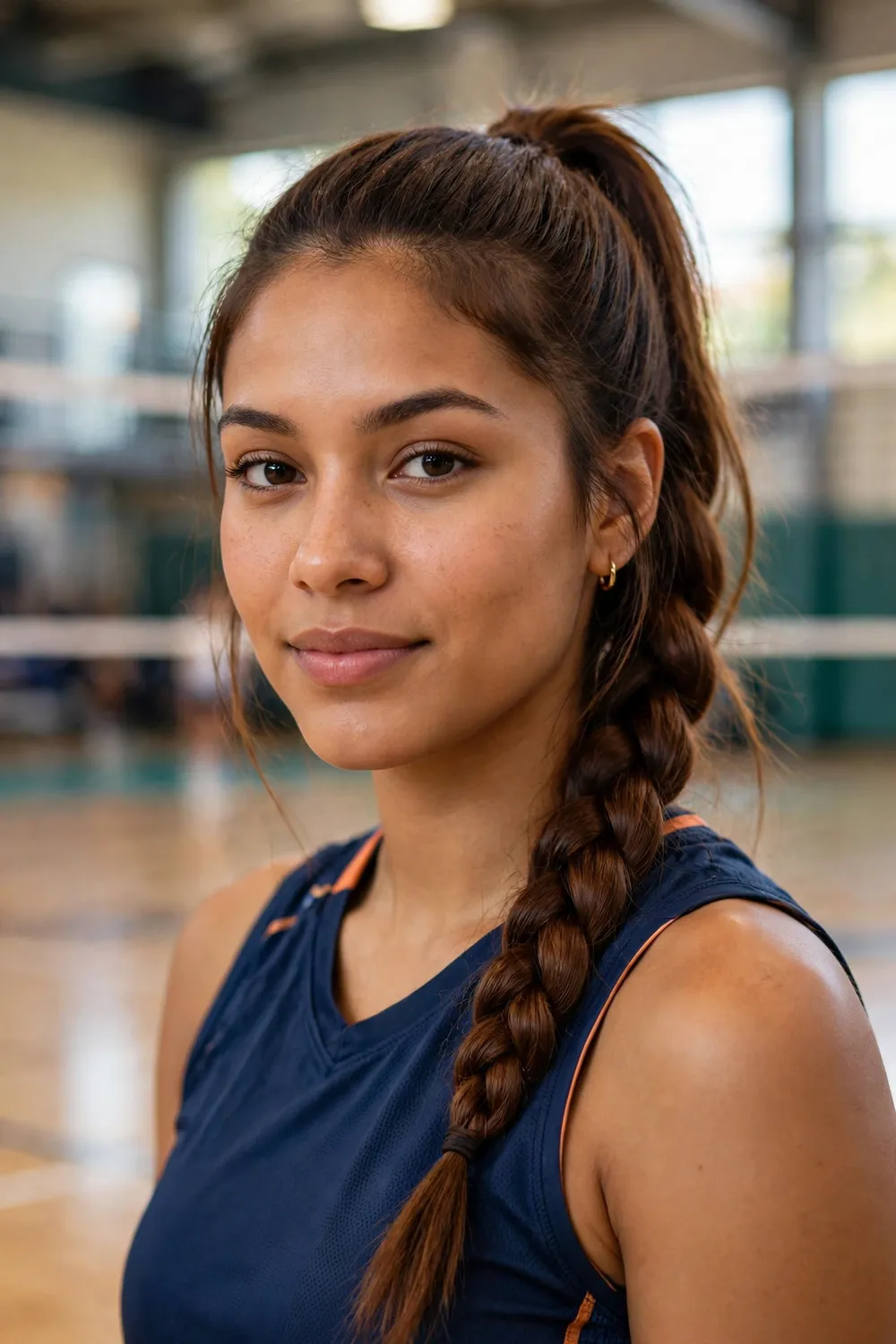
Two sections, one twist, zero fuss — the rope braid is the fastest secure style in this list. Pull your hair into a high ponytail first, split the tail in two, twist each half in the same direction, then wind them around each other the opposite way and tie off. The opposing twists lock the braid shut, so it won’t unravel mid-rally the way a loose three-strand braid sometimes does. Long, straight or wavy hair holds it best; fine hair benefits from a little texturising spray before you start, or the twist slides apart. Setters and outside hitters love it because the tail stays as one neat rope instead of whipping around. Finish with a light-hold spray and a second elastic at the end. Takes about three minutes once you’ve done it twice.
20. Dutch Braid Bun

Start with a Dutch braid at the front hairline, work it back over the crown, and once you reach the nape, coil the remaining length into a bun and pin it flat. You get the front control of a braid and the tidy finish of a bun in one style, which is why it shows up on so many tournament teams. It works for medium to long hair of any texture, and it’s especially good for middle blockers, whose hair has to stay put through repeated jumps at the net. Ask your stylist for a braid that sits close to the scalp — a loose one pulls free at the sides. Use a strong elastic for the bun, tuck the ends under, and add two crossed bobby pins. It holds through a full five-set match without a touch-up.
21. Two Low Braids
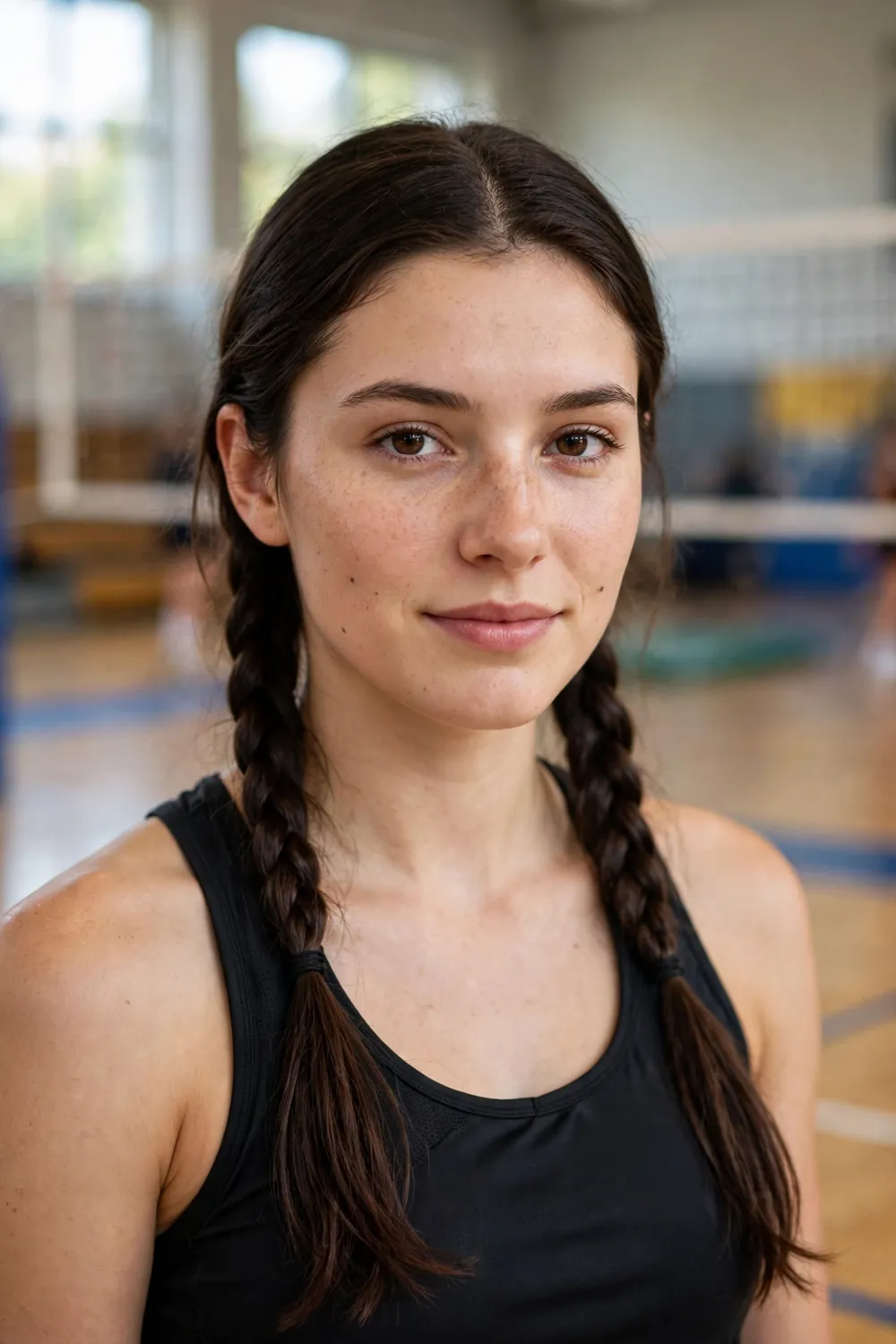
Sometimes the simplest answer is the right one. Part your hair down the middle, braid each side low behind the ears, and tie off at the ends. Nothing sits on top of your head, nothing swings, and nothing needs pinning — the braids just lie flat against your shoulders while you play. Long hair of any type works, and it’s a kind option for thick hair that makes high ponytails ache after an hour. Defensive specialists and back-row players rate it because it never catches on a jersey or a knee pad during a dive. Braid firmly but not so tight it pulls at your temples, and use snag-free elastics at the ends. If a few wisps escape, they stay at the sides where they can’t block your vision.
22. Slicked-Back Ponytail
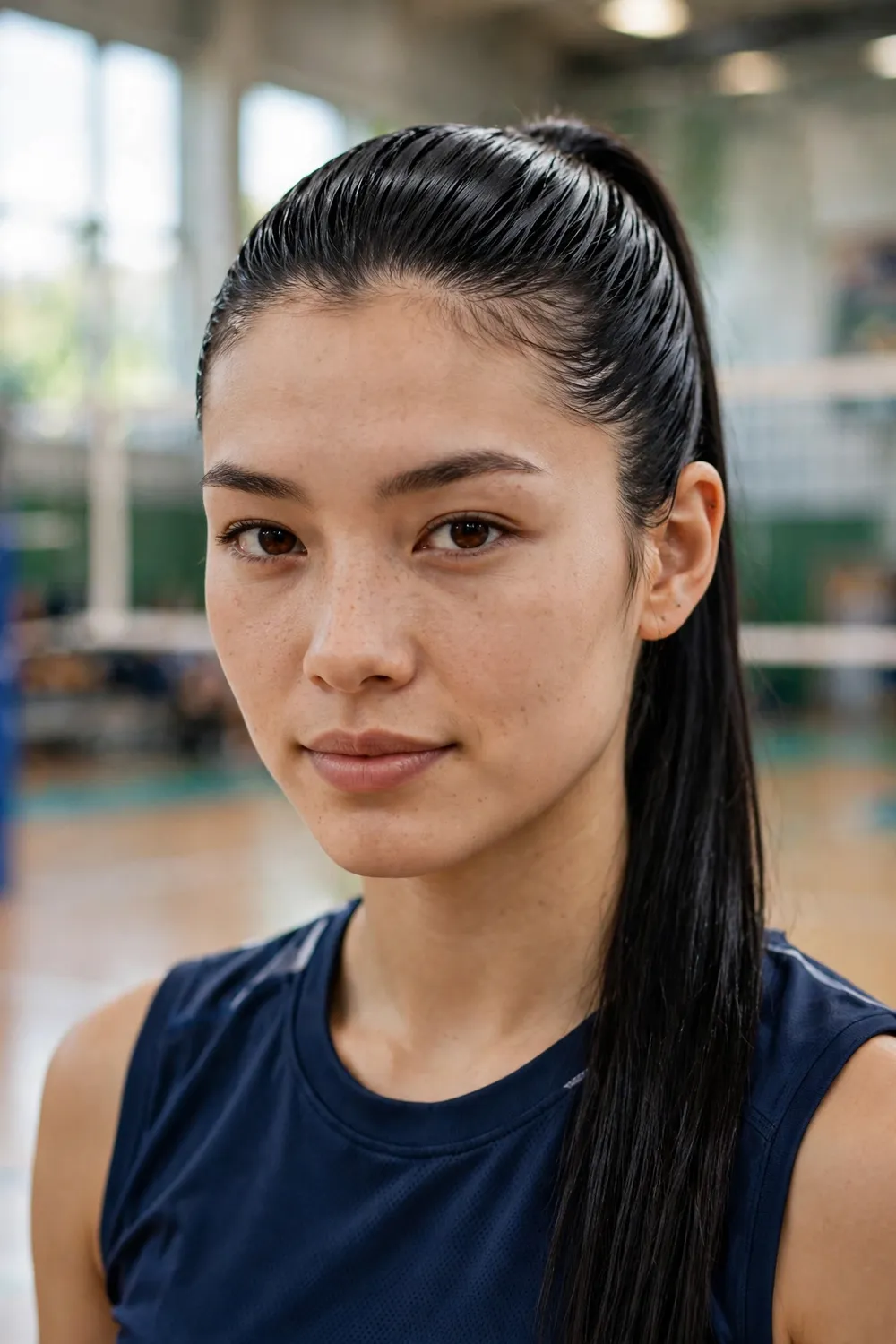
Match day, clean lines, nothing out of place. Brush all your hair straight back from the forehead, smooth it with a strong-hold gel or edge control, and pull it into a high or mid ponytail. The gelled finish is what makes it different from an everyday ponytail — every strand is glued down, so sweat and movement can’t loosen the front. It suits straight and wavy hair best; very curly hair needs a heavier gel and a boar-bristle brush to get the same flat result. Captains and players who like a sharp, uniform team look reach for this one. Wrap a small section of hair around the elastic to hide it. The trade-off is real: you’ll want a proper wash afterwards, because gel plus sweat is not a combination to sleep on.
23. Braided Pigtails
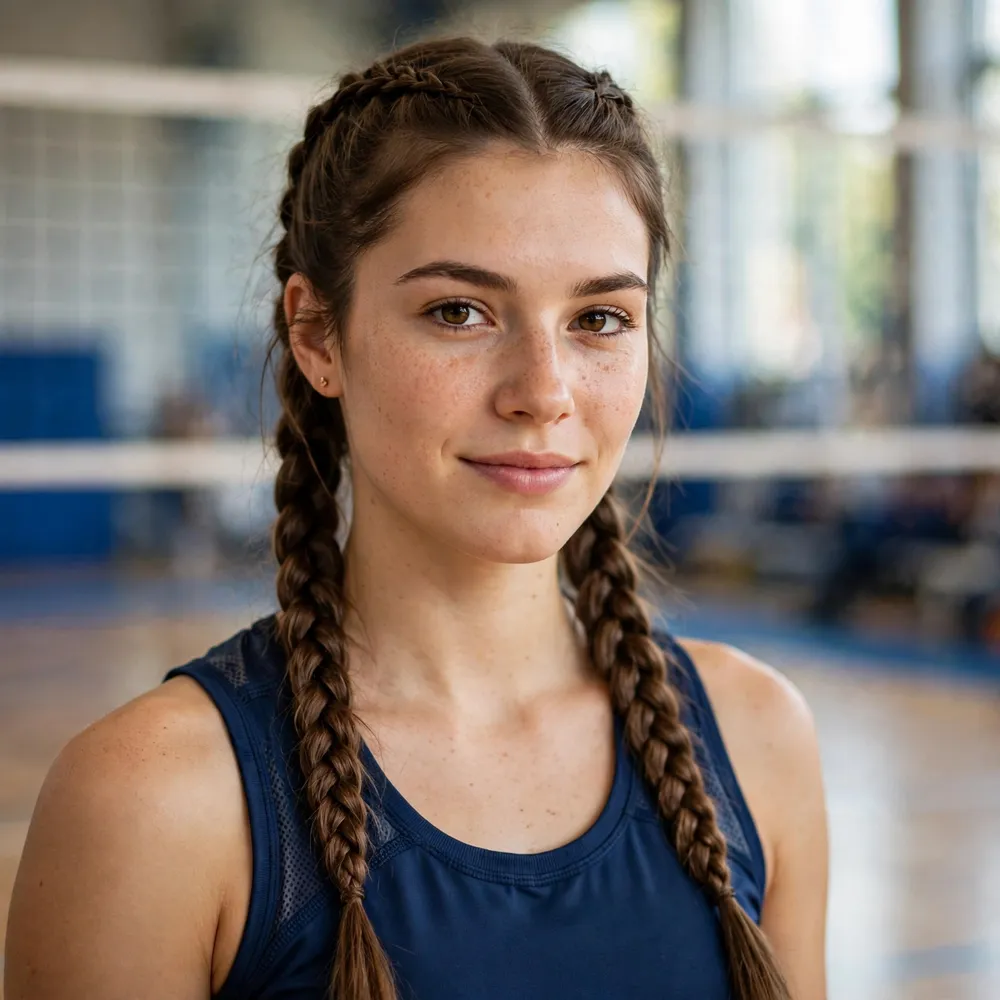
Split the hair down the middle and braid each side into a pigtail, starting high near the crown or lower behind the ears depending on your preference. Dividing the hair in two spreads the weight evenly, which stops the headache a single heavy ponytail can cause by the third set. Medium to long hair holds the braids best, and wavy or textured hair grips naturally without much product. It’s a solid pick for younger players and for anyone who finds one ponytail too bouncy when serving. Braid both sides the same tightness or the style looks lopsided in team photos — a mirror check from behind helps. Tie the ends with matching elastics, add a quick mist of hairspray, and you’re set for the whole match.
24. Scarf-Wrapped Ponytail
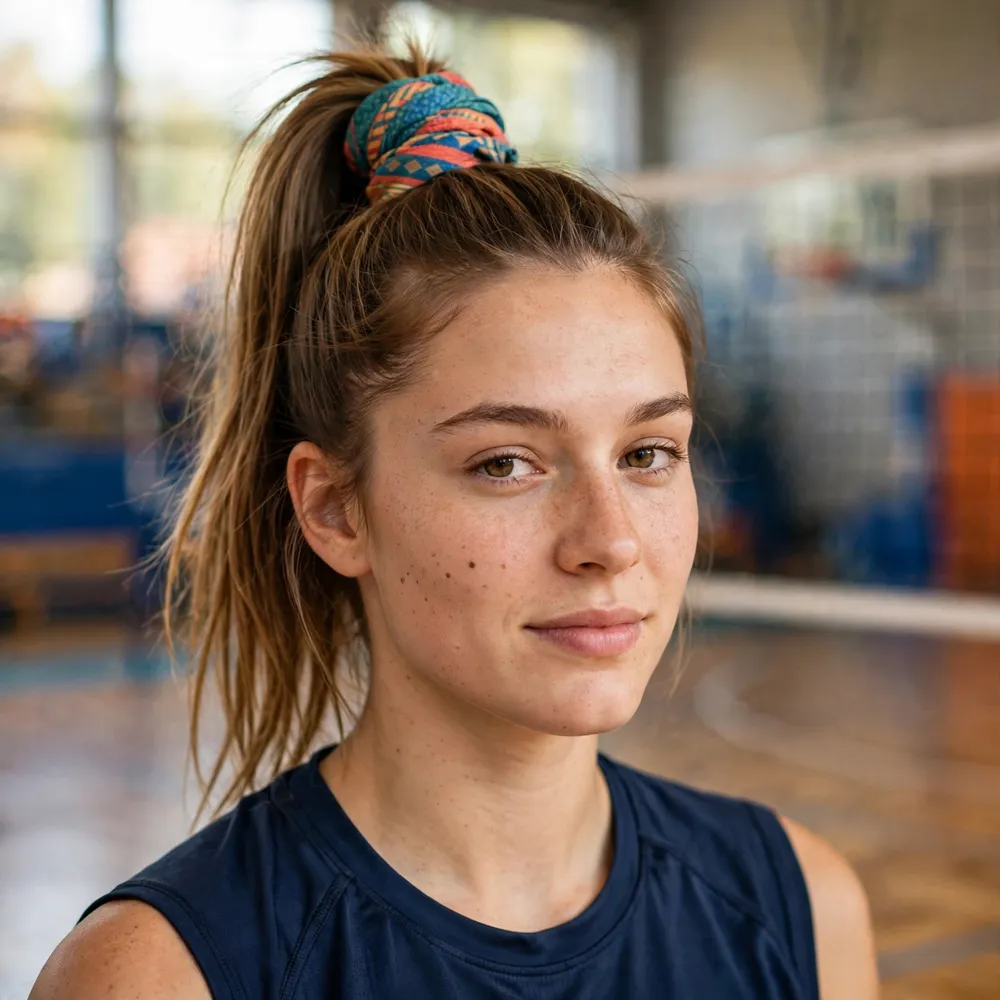
Save this one for warmups, team photos and the walk into the gym — it’s style with a team-spirit twist. Tie a regular high ponytail, then wrap a slim scarf in your team colours around the base a few times and knot it underneath. The scarf hides the elastic, adds colour, and looks great in photos, but it is not a match-day style: a knotted scarf can work loose during a dive and become a distraction. It works on any hair length that reaches a ponytail, and straight hair shows the wrap off best. Keep the scarf short and light — a long silk one flaps around and gets in the way. If your team has matching scarves, this is an easy way to look coordinated without anyone spending extra time on their hair.
25. Short Hair Mini Braids
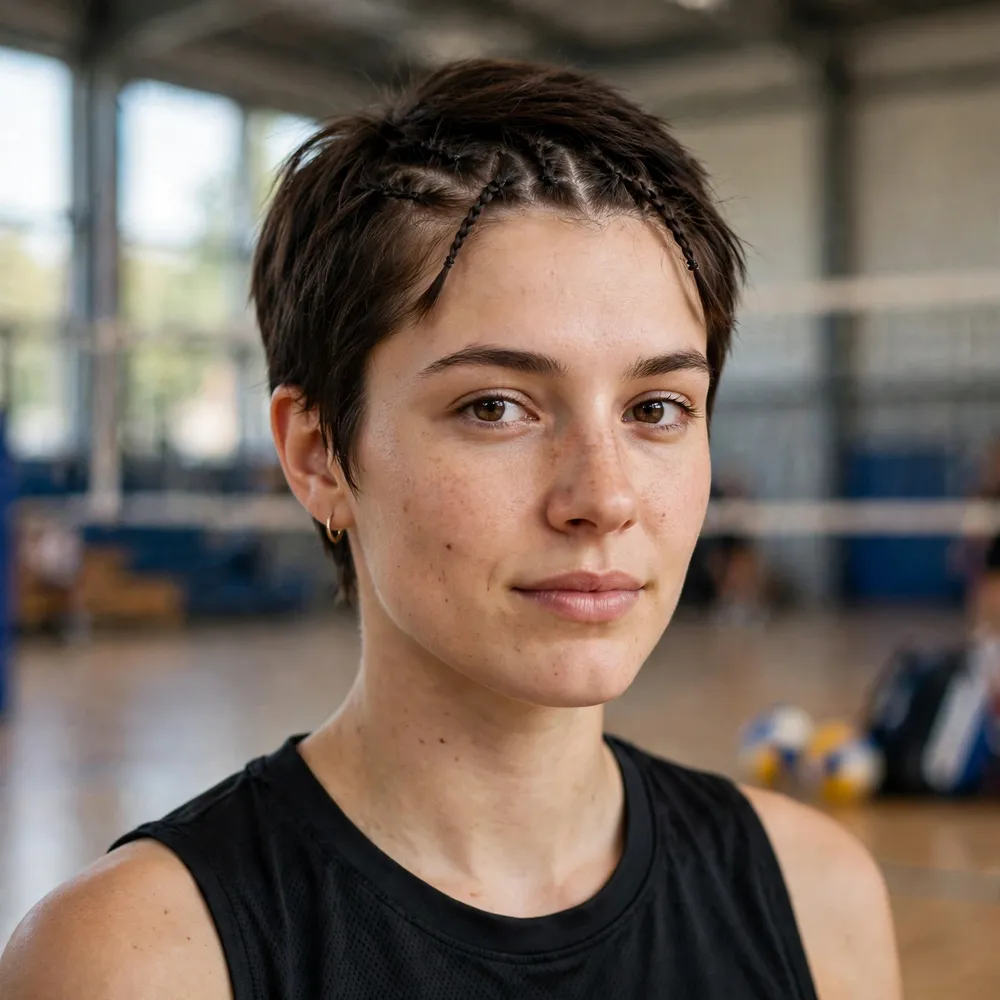
Short hair doesn’t reach a ponytail, but the front pieces still fall into your eyes when you look up to receive a serve. The fix is two or three tiny braids, each starting at the hairline and running back a few centimetres before you pin them flat. They only need to control the fringe and the layers around your temples — the rest of your hair stays exactly as it is. This is the go-to for bobs, pixie cuts growing out, and anyone with a short cut who plays front row. Use clear mini elastics and flat bobby pins that sit flush against the scalp so a headband or a dive can’t dislodge them. A dab of pomade on the braid keeps flyaways down. Five minutes, no mirror gymnastics, and your vision stays clear.
26. Banded Mid-Height Ponytail

A mid-height ponytail with extra elastics spaced down the tail, turning it into neat banded sections. The bands stop the tail from whipping across your face when you turn quickly, which is the main complaint about a plain ponytail during fast rallies. It suits long, thick hair especially well — the bands distribute the weight so the style doesn’t sag by the second set. Tie your ponytail at the crown, then add an elastic every five or six centimetres, gently pulling each section out a little for fullness. Use thin elastics that match your hair colour so the bands look deliberate, not improvised. Setters love it because the tail stays compact and predictable. Re-tighten the top elastic once at half-time if your hair is heavy.
27. Four Braids into a High Bun
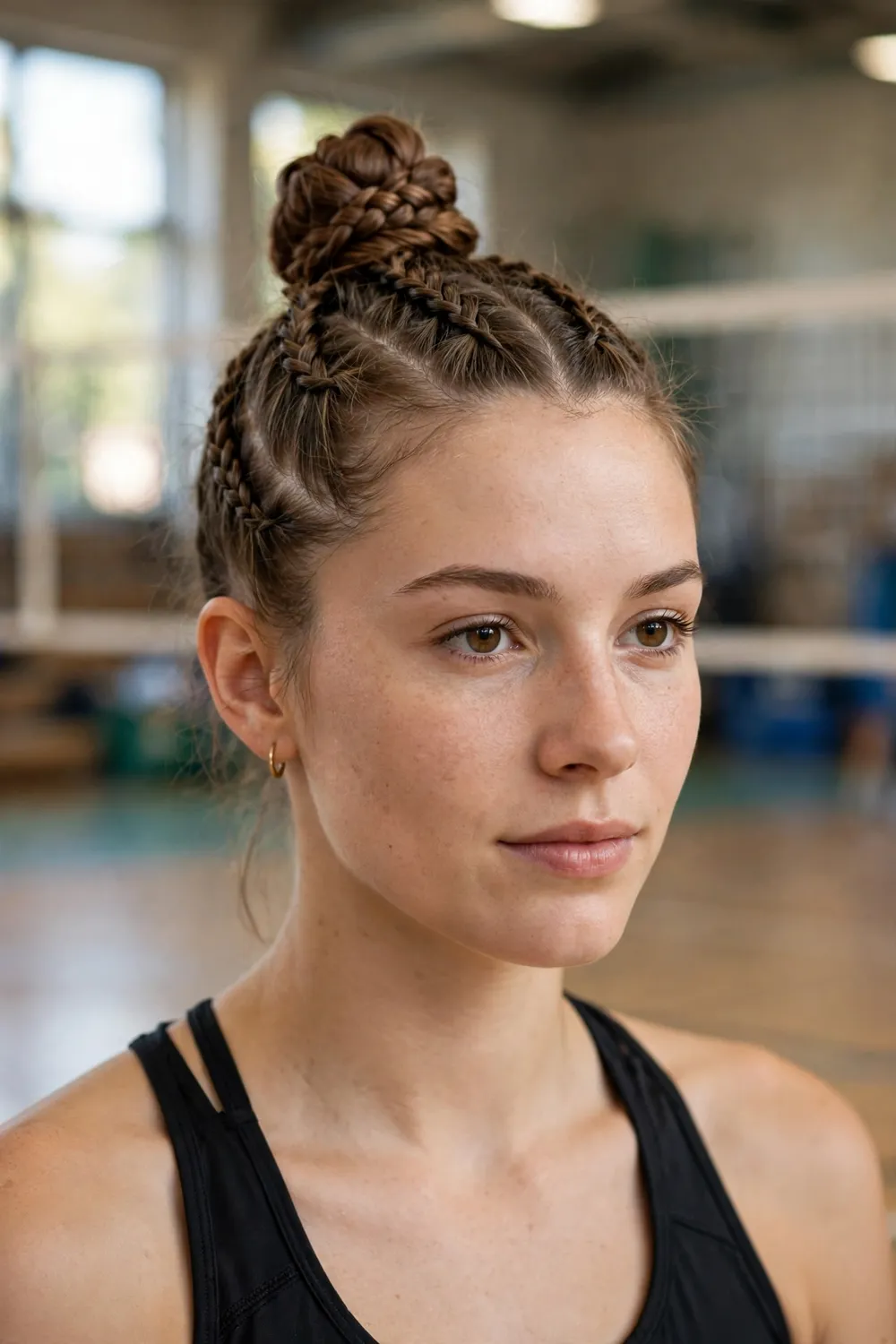
Four slim braids, gathered up and twisted into one high bun — a style that looks elaborate but holds like armour. Part your hair into four sections, braid each one back toward the crown, then gather all four tails together, twist them into a bun and pin it securely. The multiple braids spread the tension across your scalp, so it feels lighter than a single tight braid pulling from one direction. Long, thick hair is ideal; fine hair can manage it too if you braid with a little mousse for grip. Tournament players pick this one for finals day, when they want something that won’t need a single fix between sets. For more bun inspiration, our guide to bun hairstyles covers the basics. Allow fifteen minutes and a hand mirror for the back sections.
28. Two Dutch Braids into Bubble Braid
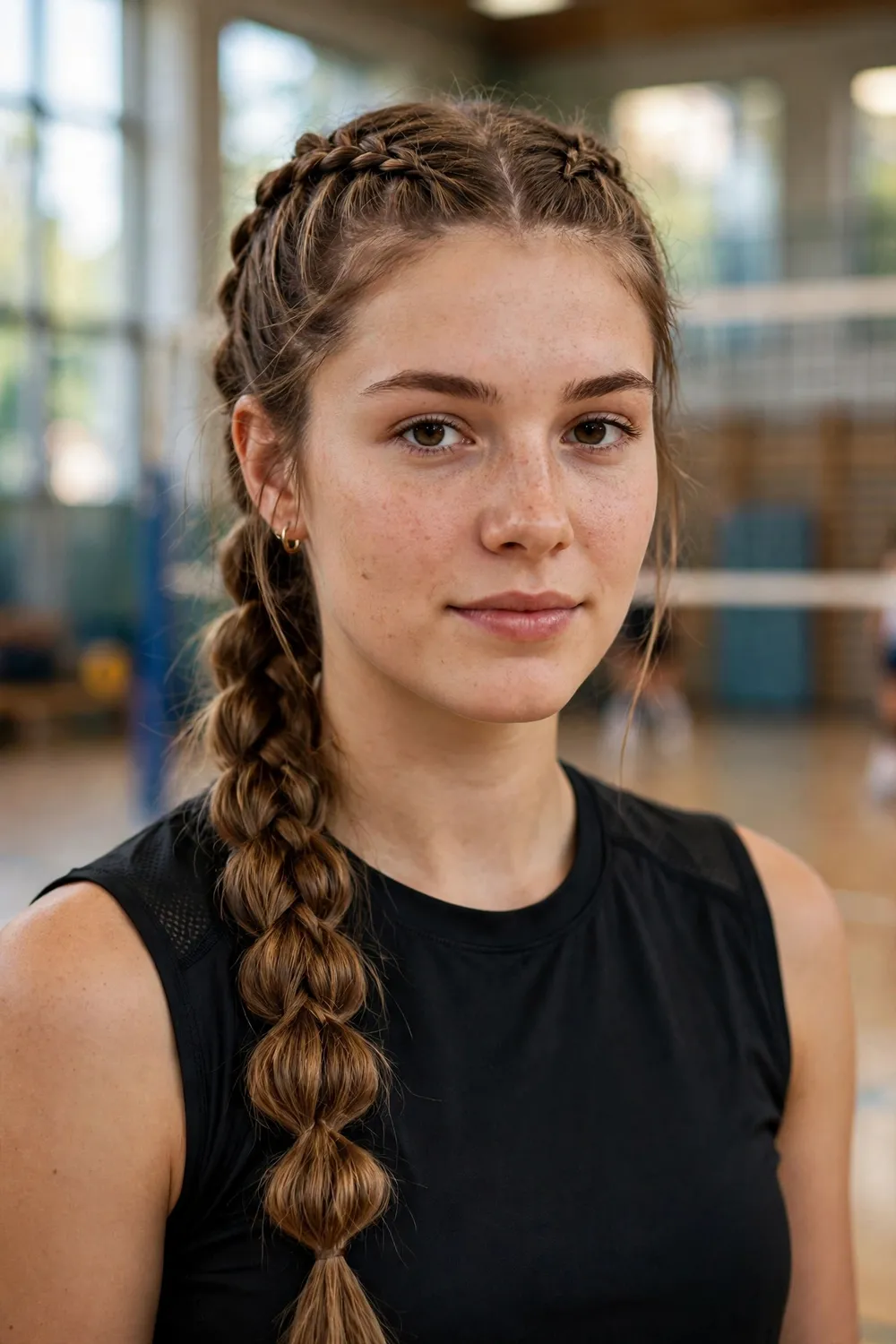
Two Dutch braids run from the front to the nape, then feed into one low bubble braid made by banding the tail with elastics and puffing out each section. It’s the best of both worlds: the Dutch braids lock the front down tight, while the bubble section keeps the length under control without a long, swinging tail. Long hair is a must here — you need enough length for the bubbles to show — and it flatters wavy and straight textures equally. Outside hitters like it because the tail stays close to the body during a jump serve. Braid the Dutch sections firmly, tie the ponytail at the nape, then space your elastics evenly and fluff each bubble gently. A light hairspray keeps the bubbles from collapsing.
29. Two Dutch Braids into Low Buns
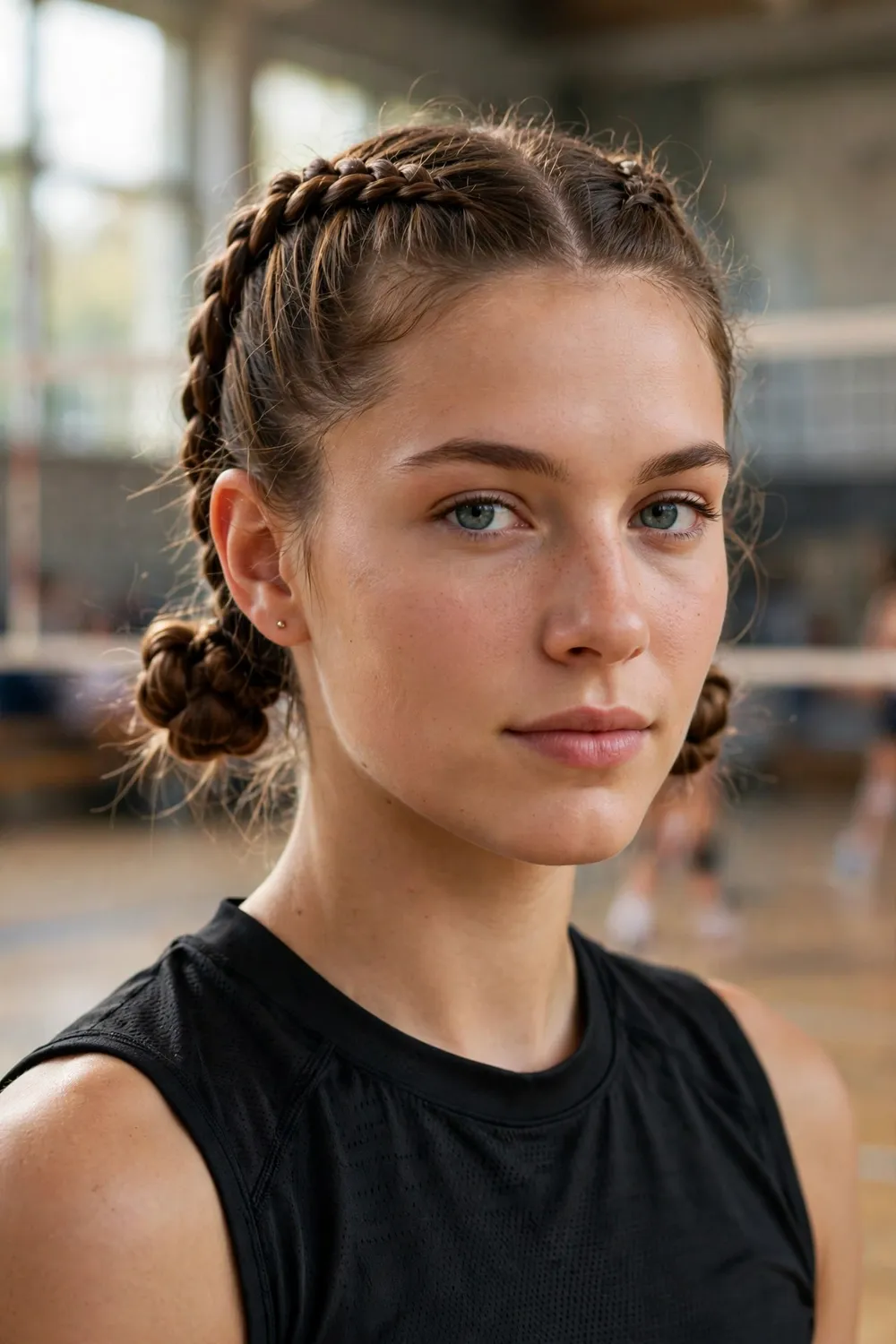
The double-bun classic, done properly: two Dutch braids running back from the hairline, each ending in its own low bun at the nape. Everything is pinned close to the head, so there’s nothing to swing, snag or come loose when you hit the floor for a dig. It’s one of the most secure styles in this whole list, and it suits medium to long hair, all textures. Middle blockers and liberos — the players who spend the most time on the floor — swear by it. Keep the two buns symmetrical by checking them in a mirror from behind, and use the same number of pins on each side. The style takes ten minutes with practice, survives a full match untouched, and still looks neat enough for the team photo afterwards.
30. Five Boxer Braids into High Bun
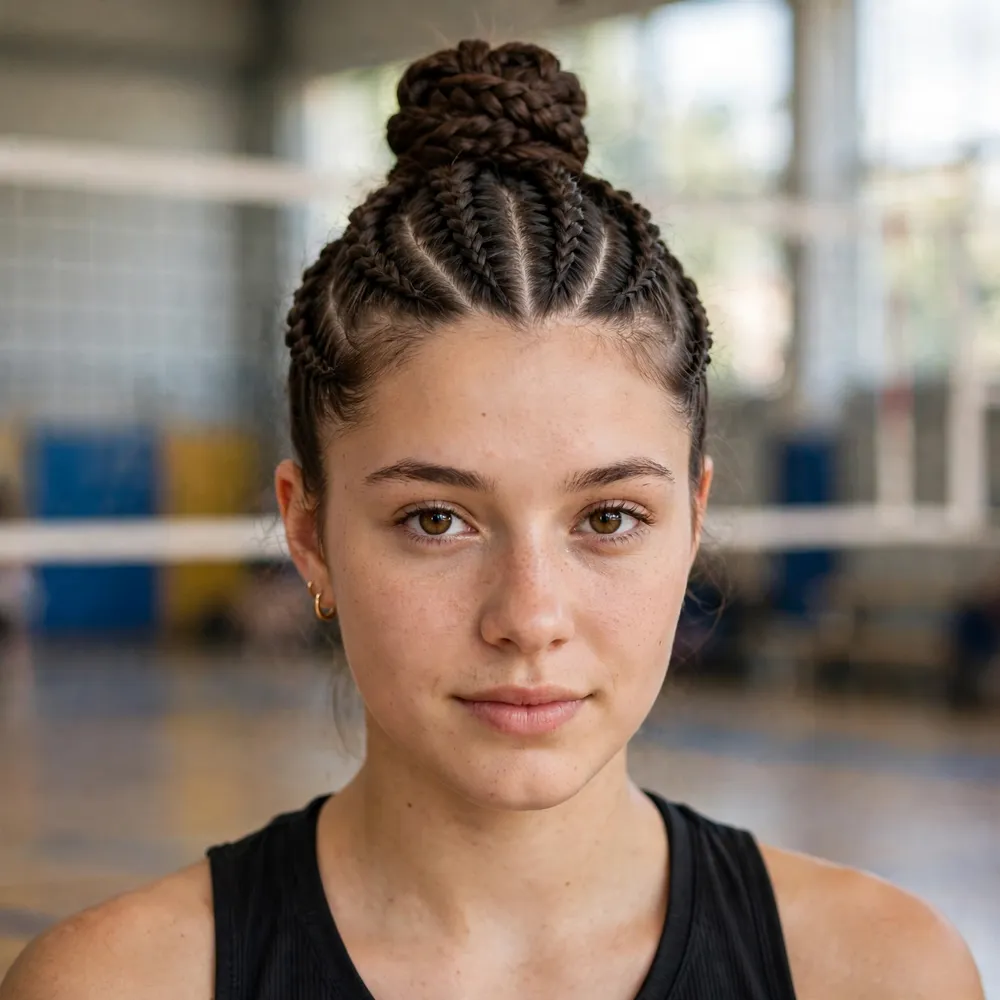
Five narrow boxer braids crossed over the crown and gathered into a single high bun — the most locked-down style on this list. Each braid runs from the hairline to the crown, so no section of hair is left free to escape, and the bun at the top keeps everything off your neck. It’s built for thick, long hair; if your hair is fine, five braids can look thin, so add a little texturising powder at the roots first. This is the style for tournament finals and long, hot days in a stuffy gym. Braid each section tightly and evenly, gather the tails at the crown, twist into a bun and anchor it with a strong elastic plus crossed pins. It takes twenty minutes and a patient hand, but it will not move all day.
31. Three Braids into a Ponytail

Three braids — one down the centre, one on each side — gathered into a single ponytail at the back. It takes only a few minutes longer than a plain ponytail but holds far better, because the braids anchor the front and sides before the tail even starts. Medium to long hair works best, and it’s forgiving on wavy hair that won’t sit neatly in a single braid. All-rounders and utility players like it as an everyday match style: secure enough for a full game, quick enough to do in the changing room. Braid the centre section first, then the sides, and gather all three tails with one strong elastic at the crown. Smooth the partings with a little gel, add a second elastic for thick hair, and you’re done.
32. Half-Up Cornrow Braids

Cornrows on the top half of the head only, with the rest of the hair left loose underneath. The cornrows pull the front and crown back tightly — exactly the sections that fall into your eyes — while the loose length underneath keeps the look softer and more relaxed than a full cornrow style. It suits medium to long hair and works beautifully on textured and curly hair, where cornrows grip naturally. It’s a good choice for practice sessions and casual games rather than a full-contact final, since the loose section can swing. Our cornrow hairstyles guide covers the technique in detail if you want to learn it properly. Braid the top rows neatly, tie or pin them at the crown, and let the rest fall free.
33. Four Lace Dutch Braids

Four fine lace Dutch braids — hair is only added from one side as you braid — running back from the hairline into a ponytail. The lace technique makes the braids look delicate and detailed, almost like a headband made of hair, while still keeping the front completely under control. It needs medium to long hair with enough length for the braids to travel, and it shows up best on straight or slightly wavy hair where the braid pattern is visible. This is a team-photo favourite and a strong match-day option too, since the braids sit flat and can’t be pulled loose by a dive. Work slowly and keep your sections even, or the braids drift out of line. Tie everything into a ponytail at the back, mist with hairspray, and the detail holds all match.
How to Keep Your Hair Secure During a Match in 6 Steps
- Start with slightly damp or day-old hair. Freshly washed, slippery hair slides out of braids and elastics. A light mist of water — or hair that hasn’t been washed today — gives braids something to grip.
- Section cleanly. Straight, even partings make braids sit flat and last longer. Use a tail comb and take your time; messy sections are the first thing to come loose.
- Braid or band the front first. The hairline is where styles fail. Lock the front sections down before you deal with the rest, so nothing can creep into your eyes mid-rally.
- Double up elastics. One elastic is rarely enough for thick or long hair. Use two at the base of every ponytail or braid, and check the top one again after warmups.
- Pin short layers. Layers around the face and nape escape first. Cross two bobby pins over each short section so they stay put through jumps and dives.
- Finish with light hairspray. A flexible-hold spray seals flyaways without turning your hair stiff or sticky. Spray from about 20 centimetres away, and never use a heavy product that will sweat into a mess.
5 Mistakes That Ruin Volleyball Hair
- Learning a new braid on match day. A style you’ve never tried will take twice as long and fall apart under pressure. Practise any new braid at least twice in training first.
- One elastic for thick hair. A single thin elastic stretches out by the second set, and then the whole style sags. Thick hair needs two strong elastics at the base, minimum.
- Heavy products that turn sticky with sweat. Thick waxes and heavy gels feel secure at first, then melt into a sticky mess once you start sweating. Stick to light gels, mousses and flexible sprays.
- Loose face pieces. A few strands framing your face look great in photos and terrible in a rally. If a piece can’t be pinned back securely, it doesn’t belong in a match-day style.
- Claw clips during full-contact play. Clips are fine for warmups, but a hard clip can dig in, snap or fly off during a dive. Save them for stretching and use braids or elastics once the whistle blows.
Game-Day Hair Kit: What to Pack
- Strong no-slip elastics (at least four — one always snaps)
- Bobby pins in your hair colour
- A mini claw clip for warmups only
- Edge control or light gel for flyaways
- Light-hold hairspray
- An athletic no-slip headband
- A spare scrunchie for after the match
- A small brush or comb for quick fixes between sets
For styles you can throw together in minutes before practice, our easy hairstyles guide is worth a look — and if you play after school, the school hairstyles roundup has plenty of quick options that work on court too.
Frequently Asked Questions
What is the best volleyball hairstyle for long hair?
Double Dutch braids or a bubble ponytail. Both keep long hair fully controlled, spread the weight so nothing pulls, and survive dives and jump serves without needing a fix between sets.
What volleyball hairstyle works best for short hair?
Mini braids at the hairline, pinned back with flat bobby pins, plus a no-slip headband. If your hair is too short to braid, a headband and a little pomade will keep the front out of your eyes.
How can I keep my hair secure during a volleyball game?
Start with day-old or slightly damp hair, braid or band the front first, double up your elastics, pin short layers, and finish with light hairspray. Always do the jump-and-dive test before the match starts.
Are braids good for volleyball?
Yes — they’re the most reliable option. Braids keep hair close to the scalp, can’t swing into your face, and hold through sweat and contact better than any ponytail alone.
What hairstyle should I wear for volleyball practice?
Something quick and comfortable: a messy top knot, a simple high ponytail with a headband, or two low braids. Save the tighter, more time-consuming braids for match day.
Can I wear a claw clip during volleyball?
For warmups and stretching, yes. During a full match, no — a hard clip can dig into your scalp, snap, or fly off when you dive. Use braids or strong elastics instead.
How do I stop flyaways during volleyball?
Smooth a pea-sized amount of edge control or light gel along the hairline before you style, then finish with a flexible-hold hairspray. Avoid heavy products — they turn sticky once you start sweating.
Final Word
The best volleyball hairstyle is the one you forget about once the match starts. Pick a style that matches your hair length and texture, practise it in training before you trust it on match day, and pack your kit the night before so nothing is rushed. Try a couple of options from this list, find the one that holds through your hardest rallies, and stick with it. For more ideas, check out more hairstyle guides on our blog.