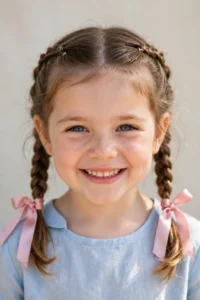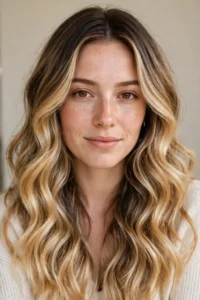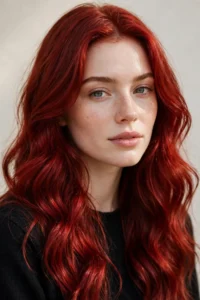




A french braid is the classic three-strand braid worked into the scalp, adding a little hair to each section as you cross it over, so the braid sits flat and neat instead of hanging loose. This guide covers 33 styles — classic, side, crown, double and half-up — and my top three picks are the Classic Center-Back, the Side-Swept and the Half-Up Cascade. Start with one of those and you will not go wrong.
1. Classic Center-Back French Braid
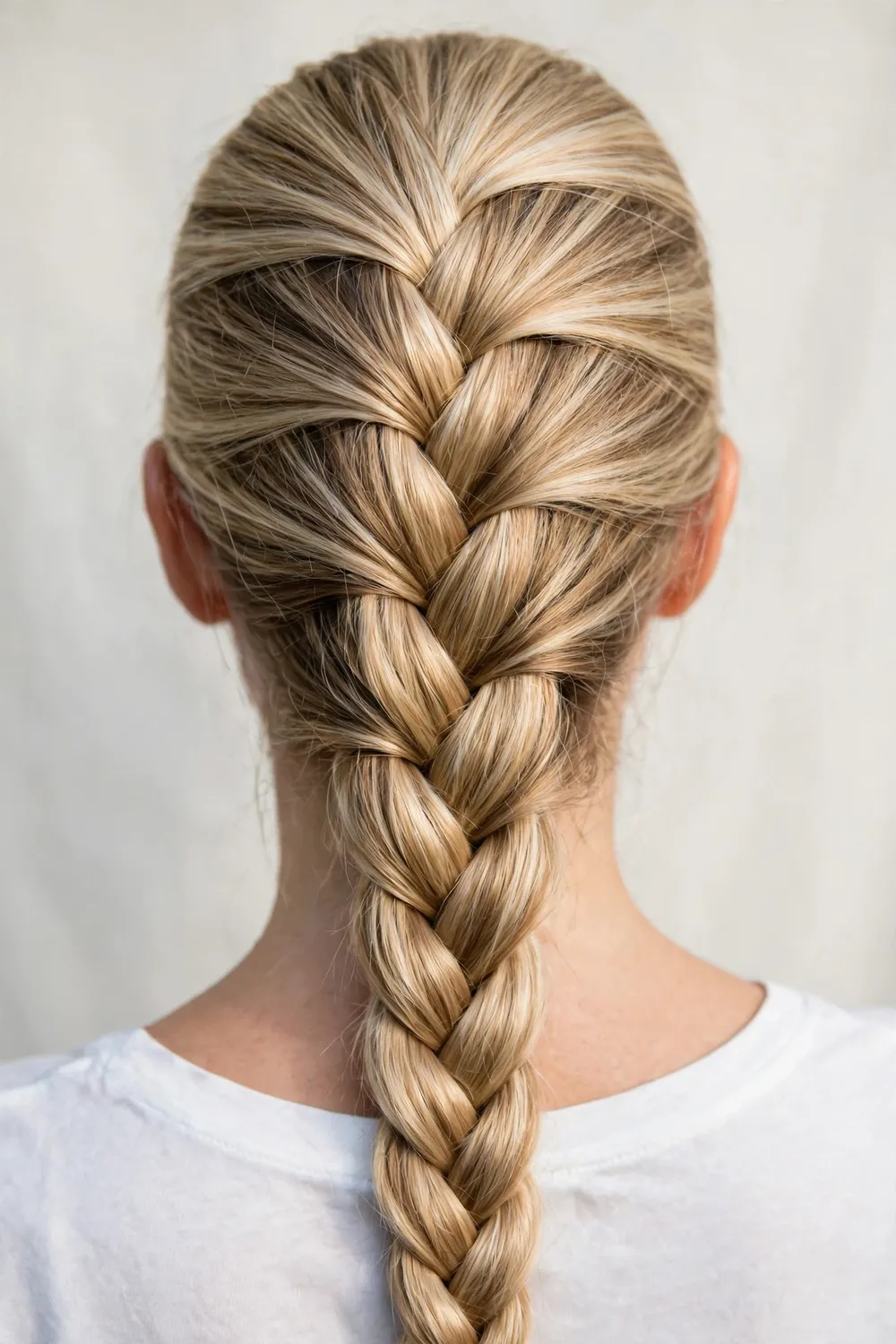
A classic French braid crosses three sections of hair into the scalp as you work down, adding a little hair to each outer section before it crosses over. It suits nearly everyone with medium to long hair, and it works best on freshly washed, textured hair rather than slippery just-dried strands. Tell your stylist you want a centre part with the braid running straight down the middle, kept tight at the crown and easing toward the ends. A pea-sized amount of smoothing cream or light pomade tames flyaways without stiffening the braid, and a soft-hold hairspray finishes it. Maintenance is simple: it holds all day, survives a workout pinned at the nape, and sleeping in a loose version gives soft waves the next morning.
2. Deep Side-Part French Braid
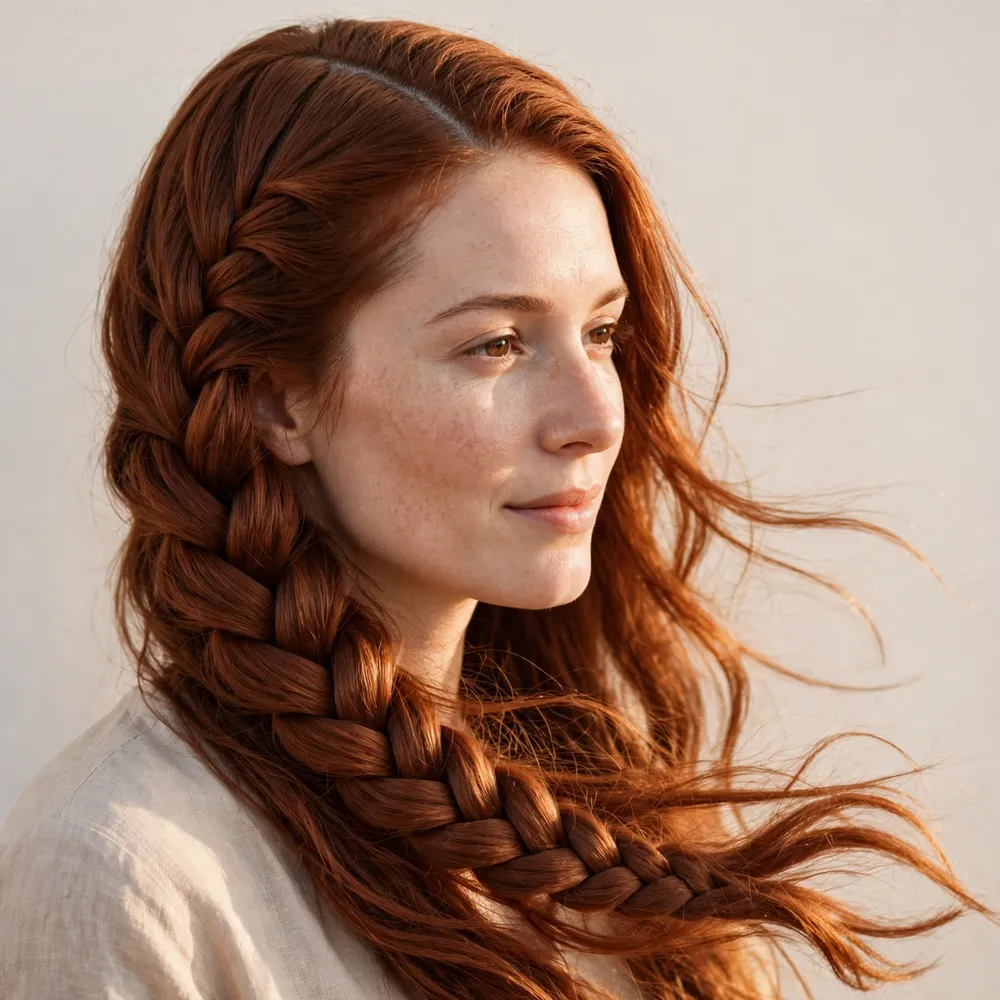
A deep side part shifts the braid off-centre, so the style falls with a soft sweep instead of a straight line down the back. It suits oval and longer faces especially well, because the diagonal weight breaks up the length, and it works on straight, wavy or lightly layered hair. Ask your stylist for a part two inches off-centre, the braid starting at the heavier side and travelling toward the opposite shoulder. A little texture spray at the roots keeps the part from sliding back, and a light cream smooths the longer side. Maintenance is easy: it stays neat all day, though fine hair may need a bobby pin at the temple by evening, and it refreshes well on day two with a quick spritz of dry shampoo.
3. Low Nape French Braid
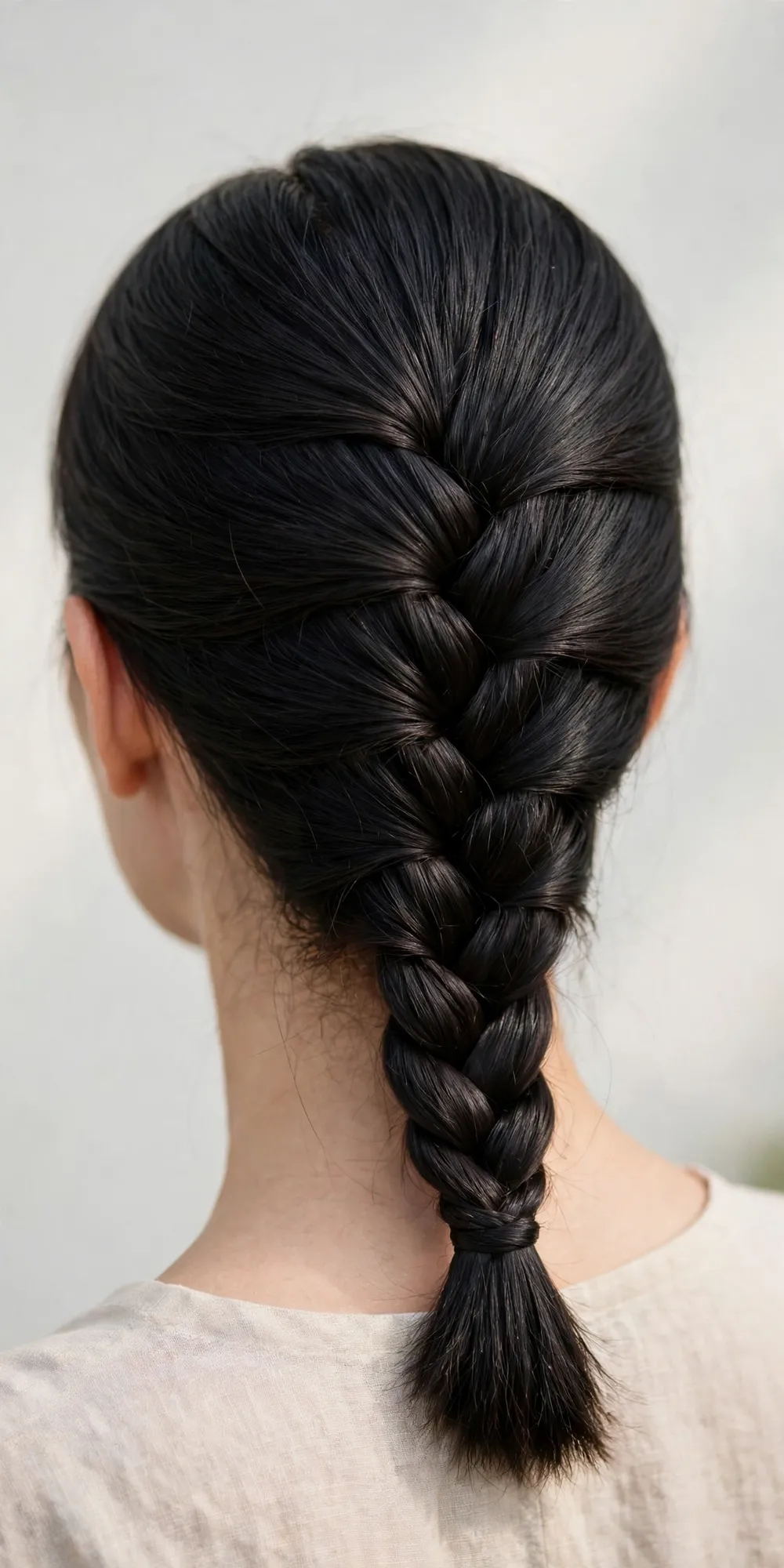
A low nape braid begins at the crown and finishes low at the neck, giving a calm, tidy shape that never fights with a collar or a scarf. It suits anyone who wants hair fully off the face without the drama of a high style, and it flatters round faces because the length draws the eye downward. Tell your stylist you want the braid started high but kept relaxed, with the tail secured low and flat against the nape. A drop of hair oil on the ends stops frizzing, and a soft elastic avoids the dent a tight band leaves. Maintenance is minimal: it holds through a workday and a commute, and it is one of few braids that still looks intentional after a night’s sleep.
4. Crown-Lift French Braid
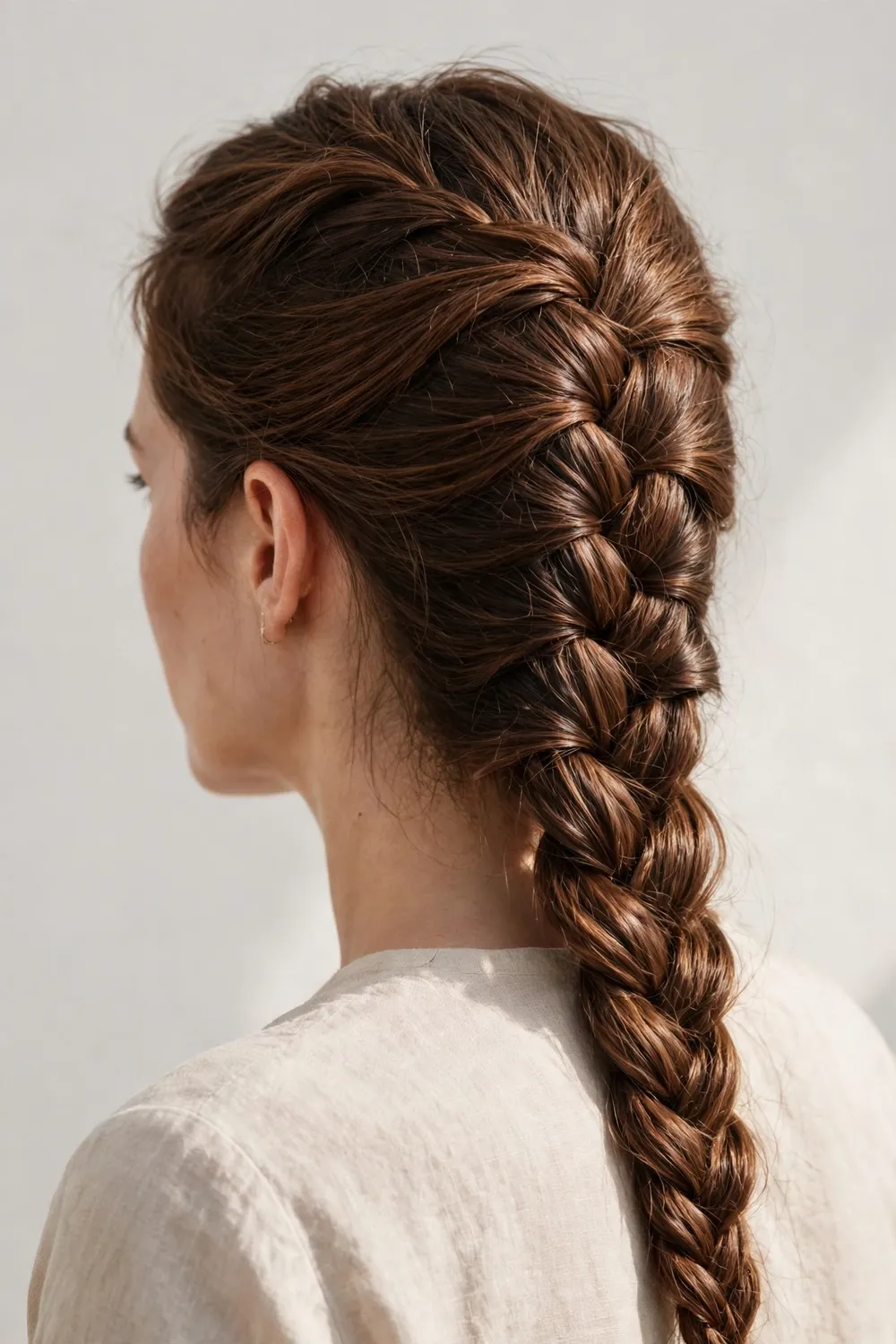
A crown-lift braid adds gentle height at the top before the braid runs down the back, so the silhouette looks fuller instead of flat against the head. It suits fine or flat hair best, and it flatters longer faces by adding width up top rather than length. Ask your stylist to backcomb lightly at the crown, then start the braid a little further back so the lift stays visible. A volumising mousse worked through damp roots gives the lift something to hold onto, and a light-hold spray keeps it from sinking by lunchtime. Maintenance is honest: the lift softens after a few hours on fine hair, so carry two bobby pins for a quick rescue, and expect to re-fluff the crown rather than redo the whole braid.
5. French Braid into a Low Ponytail
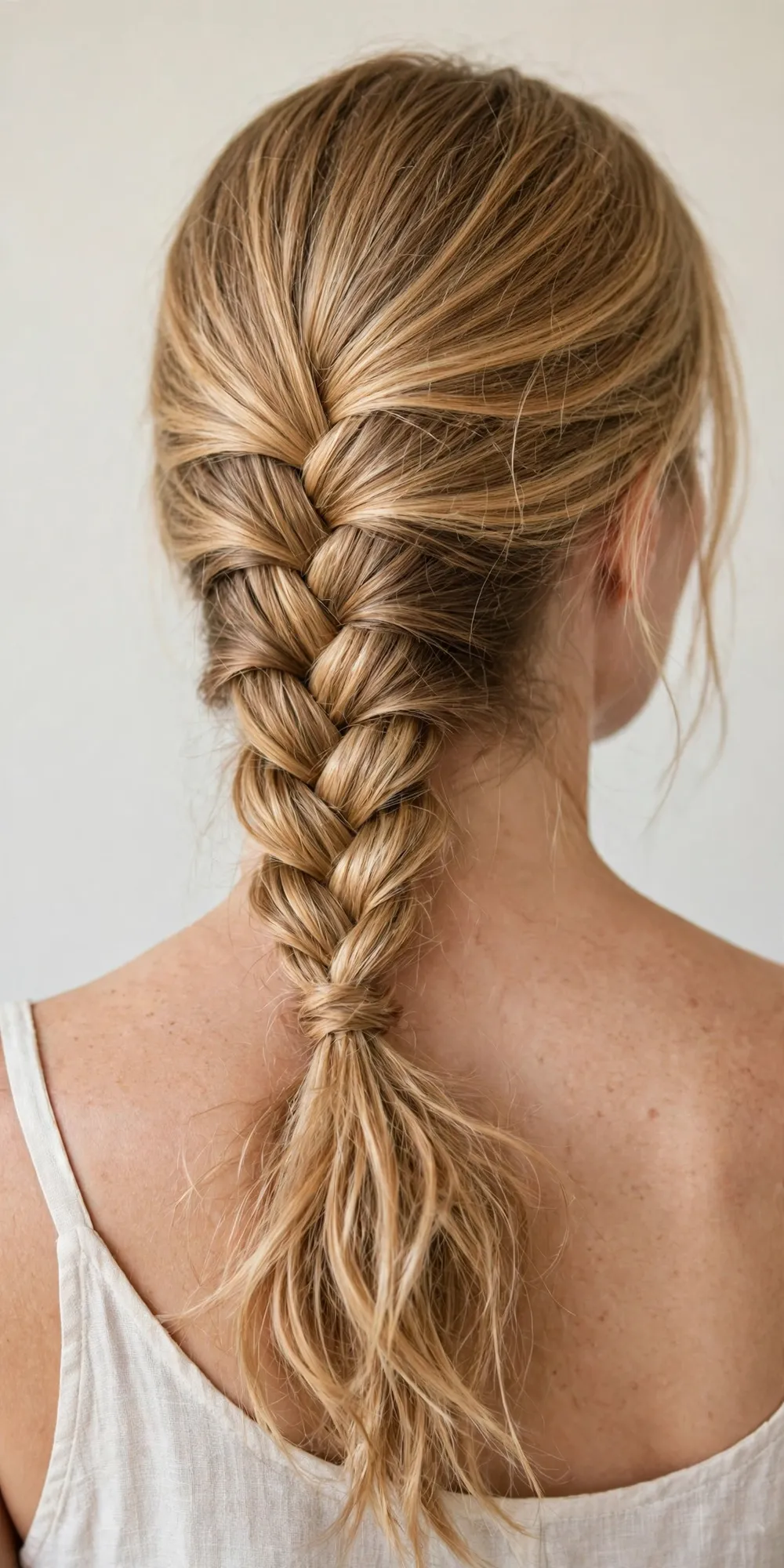
This style braids down the back, then leaves the remaining length loose in a low ponytail — the control of a braid with the movement of a pony. It suits thick hair that escapes from a plain ponytail, and it works for gym sessions, workdays and school runs alike. Tell your stylist you want the braid to stop at the nape, the tail gathered low, a small strand wrapped around the elastic to hide it. A smoothing serum keeps the tail sleek, and a spritz of flexible spray stops the braid from loosening at the sides. Maintenance is easy: the ponytail re-ties in seconds without touching the braid, and it holds up well into a second day with dry shampoo at the roots.
6. French Braid into a Sleek Bun
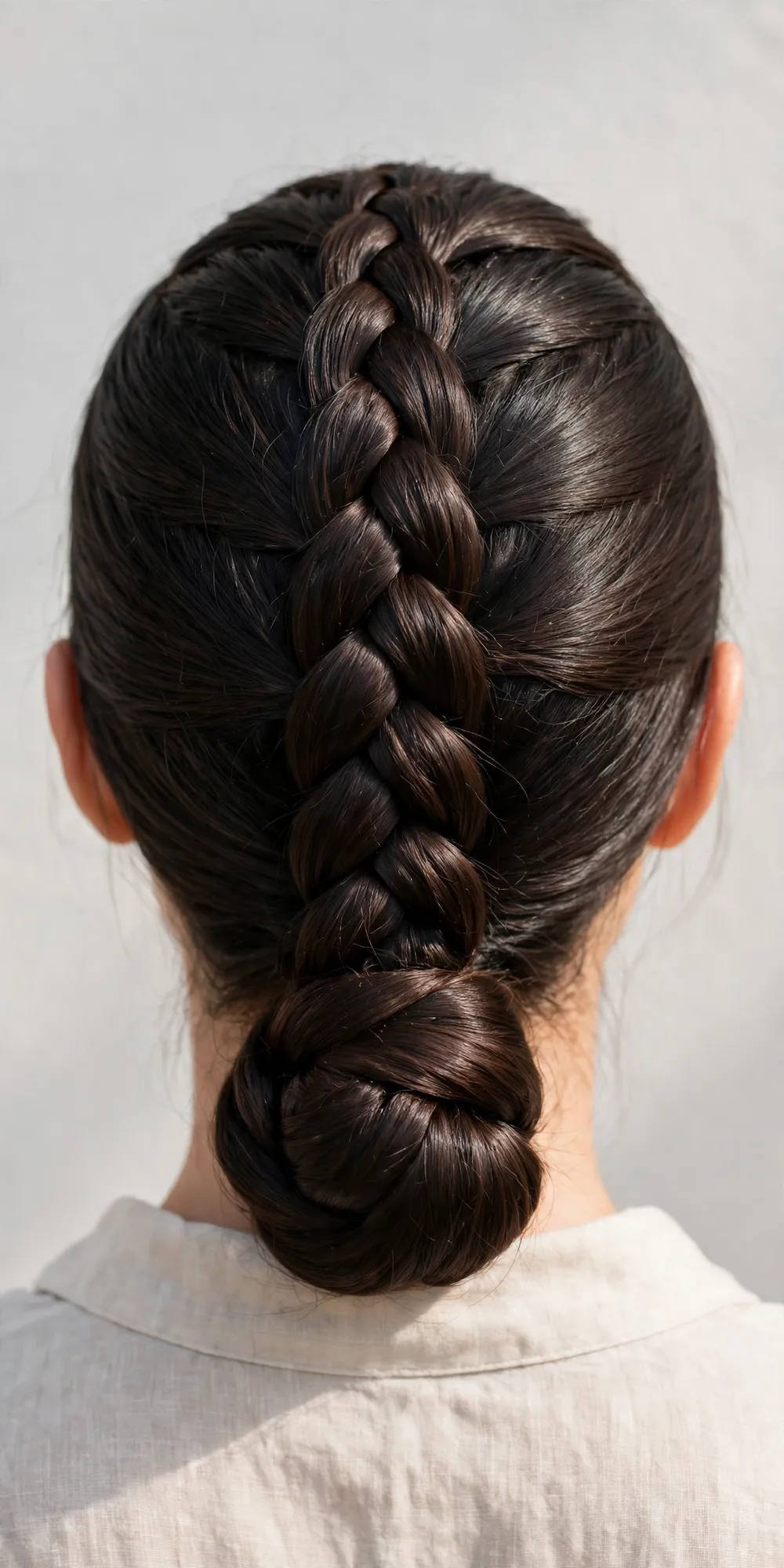
Here the braid builds control down the back of the head, and the tail coils into a neat bun at the nape — polished enough for weddings and job interviews. It suits medium to long hair with some weight, and it flatters oval and heart-shaped faces because nothing competes with the face. Ask your stylist for a smooth braid with no loose pieces, then a bun pinned flat rather than puffed out. Strong-hold gel at the hairline keeps the edges clean, and a shine spray gives the bun a finished gleam. Maintenance is low: once pinned, it stays put for hours, though keep a few extra pins in your bag if the bun is heavy, and it comes out with gentle waves next day.
7. Half-Up French Braid Cascade
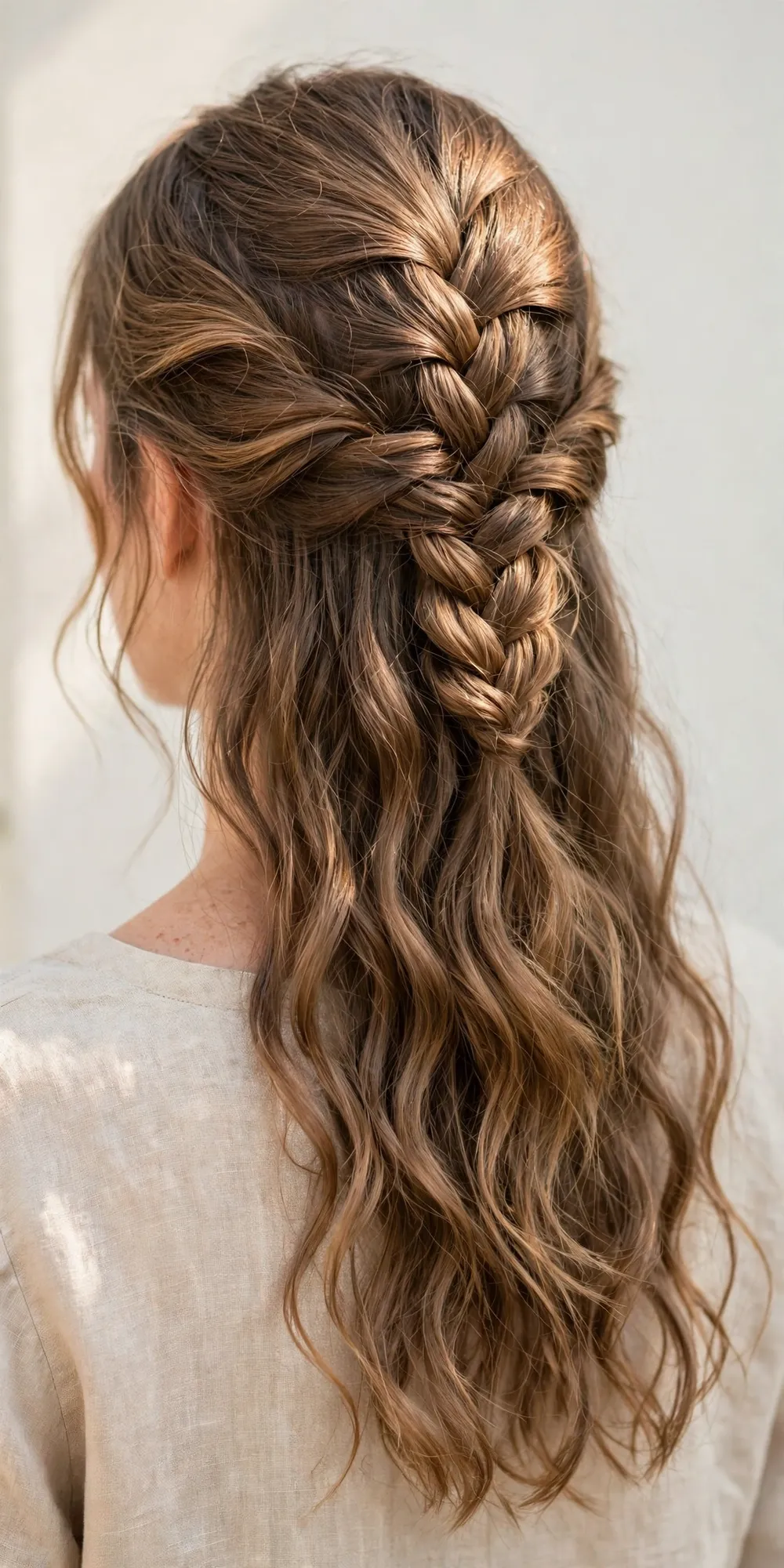
A half-up cascade braids only the upper half, letting the rest fall loose, so the style feels light and romantic rather than fully tied back. It suits wavy and curly hair beautifully, and it flatters rounder faces because the loose length frames the cheeks. Tell your stylist you want the braid fed from the temples and stopped at the crown, with the ends pinned softly and the rest left natural. A curl cream or sea-salt spray gives the loose hair some shape, and a single clear elastic keeps the join invisible. Maintenance is simple: the loose half may need a quick brush-through by evening, but the braid itself holds, and it is one of the easiest styles to refresh with a few drops of oil.
8. Twin Temple French Braids
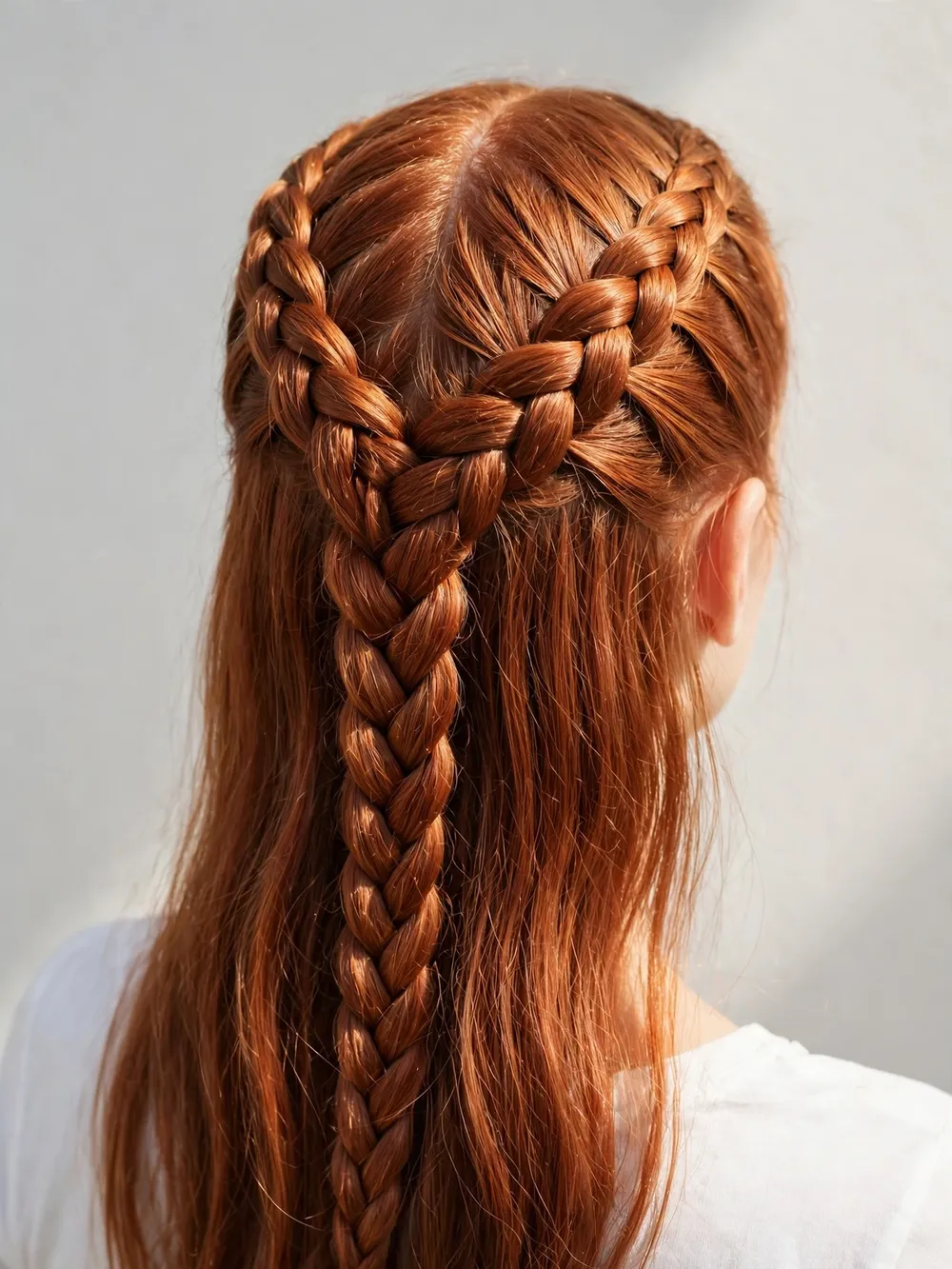
Two braids start at each temple and meet at the crown, a symmetrical frame that feels both sporty and pretty. It suits thick hair and active days, and it works well on younger faces and anyone who likes their hair fully out of the way. Ask your stylist for two even sections from the temples, braided back and joined with a small elastic or a clip at the crown. A little pomade on the part lines keeps them crisp, and a light spray stops wisps from escaping around the ears. Maintenance is straightforward: the pair holds through a workout or a long day, though the two sides can loosen unevenly, so check the mirror once in the afternoon and tighten the looser side with a pin.
9. Diagonal Sweep French Braid

A diagonal sweep braid travels from one temple across to the opposite shoulder, so the whole style has movement instead of sitting straight down the back. It suits long hair best, and it flatters square and oval faces because the diagonal line softens strong angles. Tell your stylist you want the braid started high on one side and guided across the back, keeping the sections even so the line stays clean. A texture spray gives grip while you braid, and a soft-hold spray keeps the diagonal from sliding toward the centre. Maintenance is moderate: the angle can drift on very smooth hair, so a couple of hidden pins at the nape help, and it still looks good loosened slightly by evening.
10. French Braid Headband
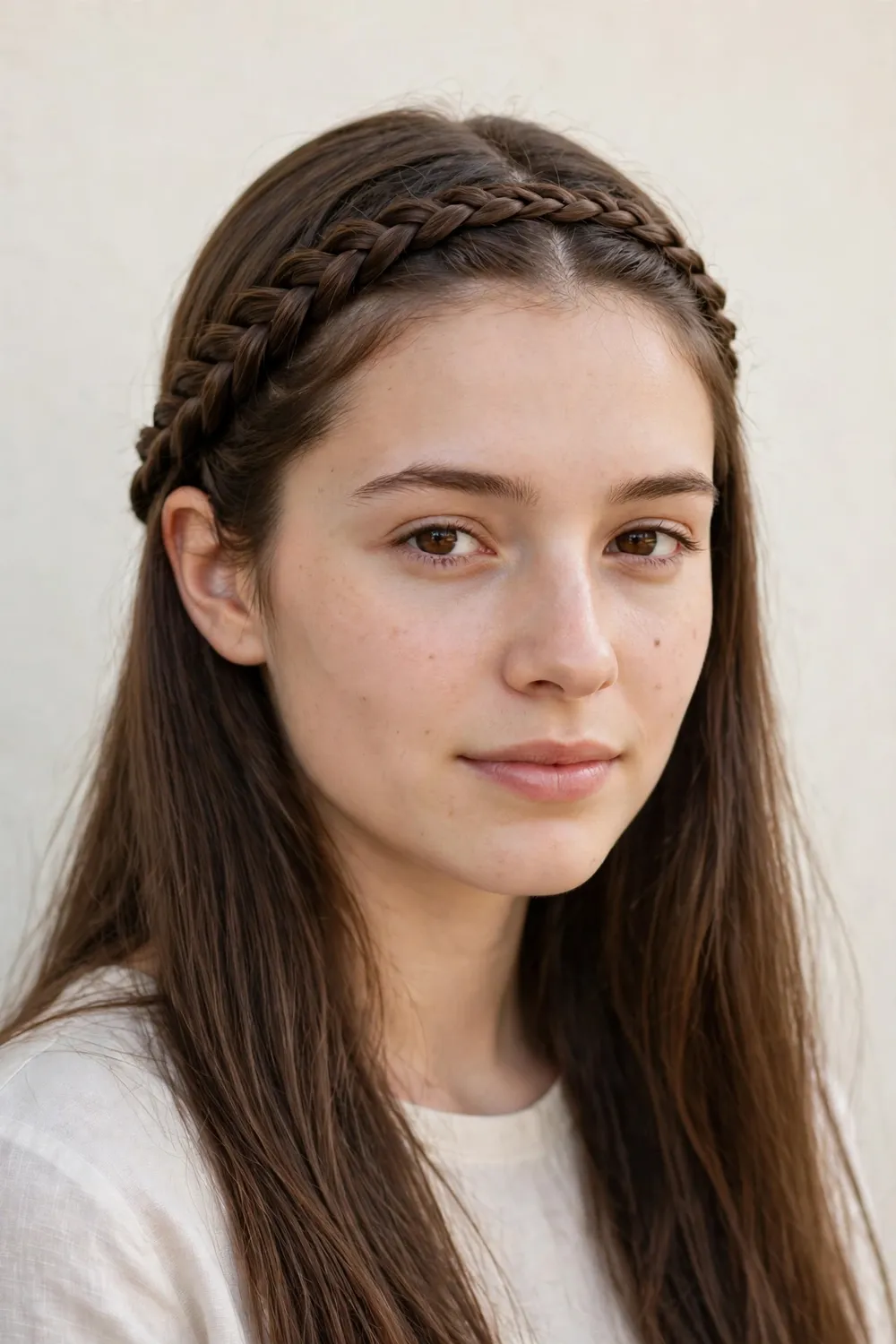
A headband braid crosses the hairline like a band, pulling the front hair back while the rest stays loose — no accessory needed. It suits anyone growing out a fringe, and it works on straight or wavy hair from chin length upward. Ask your stylist for a braid that starts behind one ear, follows the hairline and is pinned behind the other ear, with the braid kept slim. A small amount of pomade keeps the hairline smooth, and a light spray holds the braid against the head. Maintenance is easy: it lasts all day on most hair types, though very fine hair may need the braid re-pinned by evening, and it pairs well with a low ponytail or loose waves for a fuller look.
11. Halo Crown French Braid
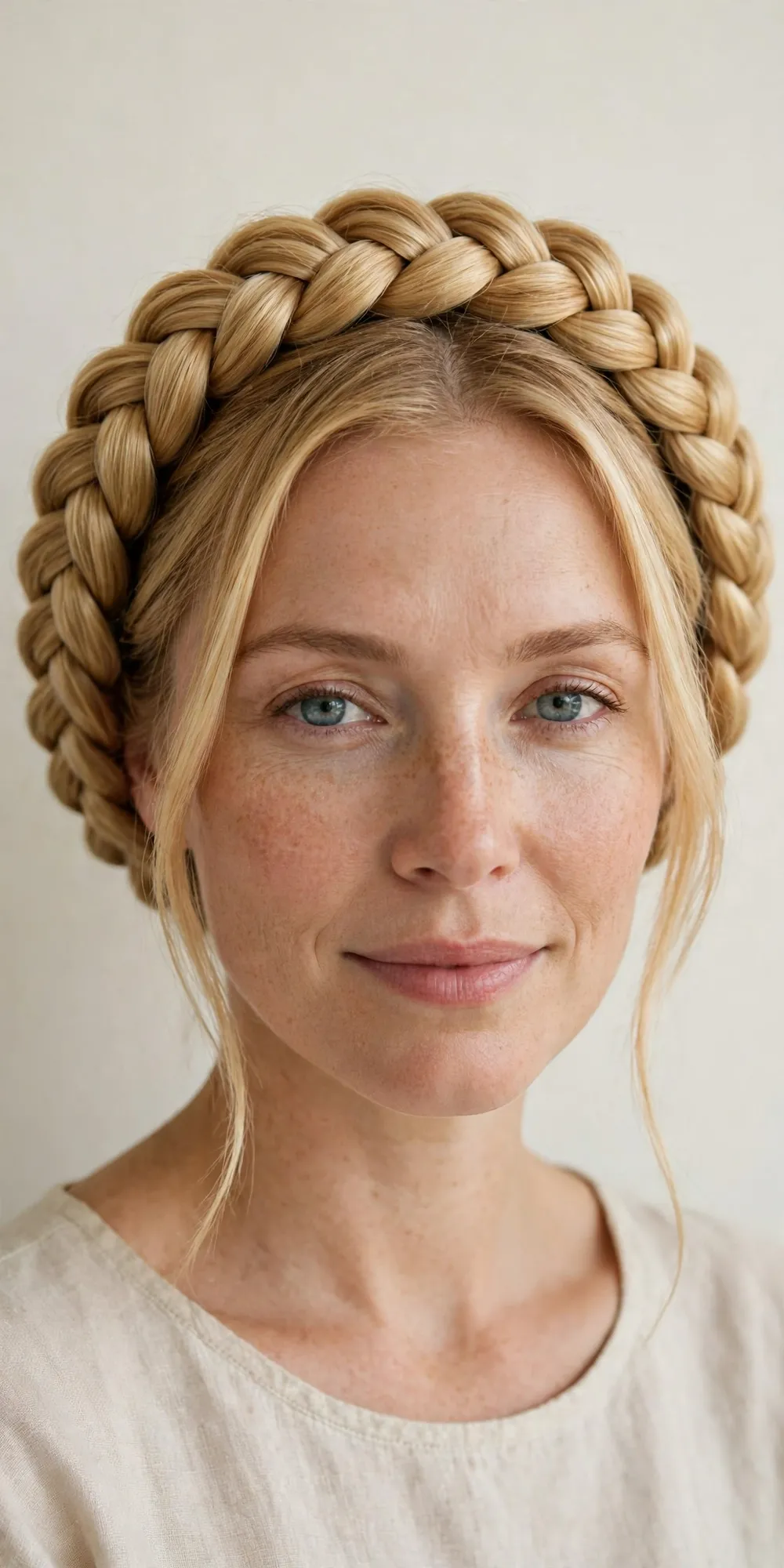
A halo crown braid wraps around the whole head in a soft ring, giving an elegant, almost regal finish that suits weddings and festivals alike. It works best on long, thick hair with enough length to circle the head, and it flatters oval and heart-shaped faces because the ring frames the face evenly. Tell your stylist you want the braid started at one side and worked all the way around, with the ends tucked under and pinned flat. A strong-hold spray and plenty of bobby pins are essential — this is not a style to rush. Maintenance is the honest part: it needs checking after a few hours, and sleeping in it is not recommended, but for a special day it is worth the effort.
12. French Braid with Curtain Pieces
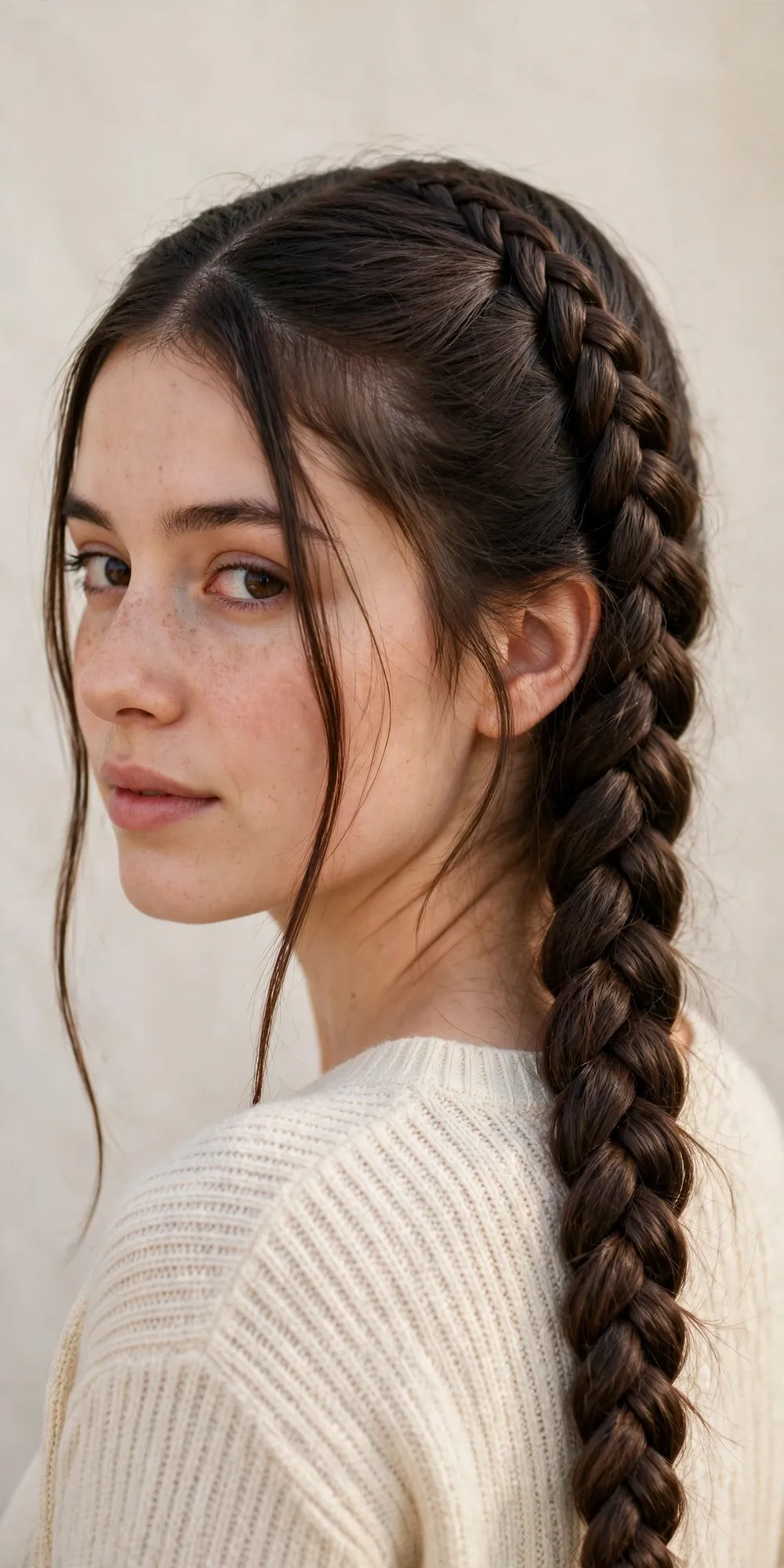
Two narrow face-framing pieces are left out at the front while the rest of the hair is braided back, softening the whole style. It suits square and round faces especially well, because the curtain pieces break up the width at the cheeks, and it works on layered hair of any texture. Ask your stylist to pull out two slim sections before braiding, roughly an inch wide, and to keep the braid itself smooth and centred. A curling iron can add a slight bend to the front pieces, and a light cream keeps them from frizzing. Maintenance is low: the pieces may need a quick re-curl by evening, but the braid holds, and the look survives a second day with dry shampoo at the roots.
13. Pancaked French Braid
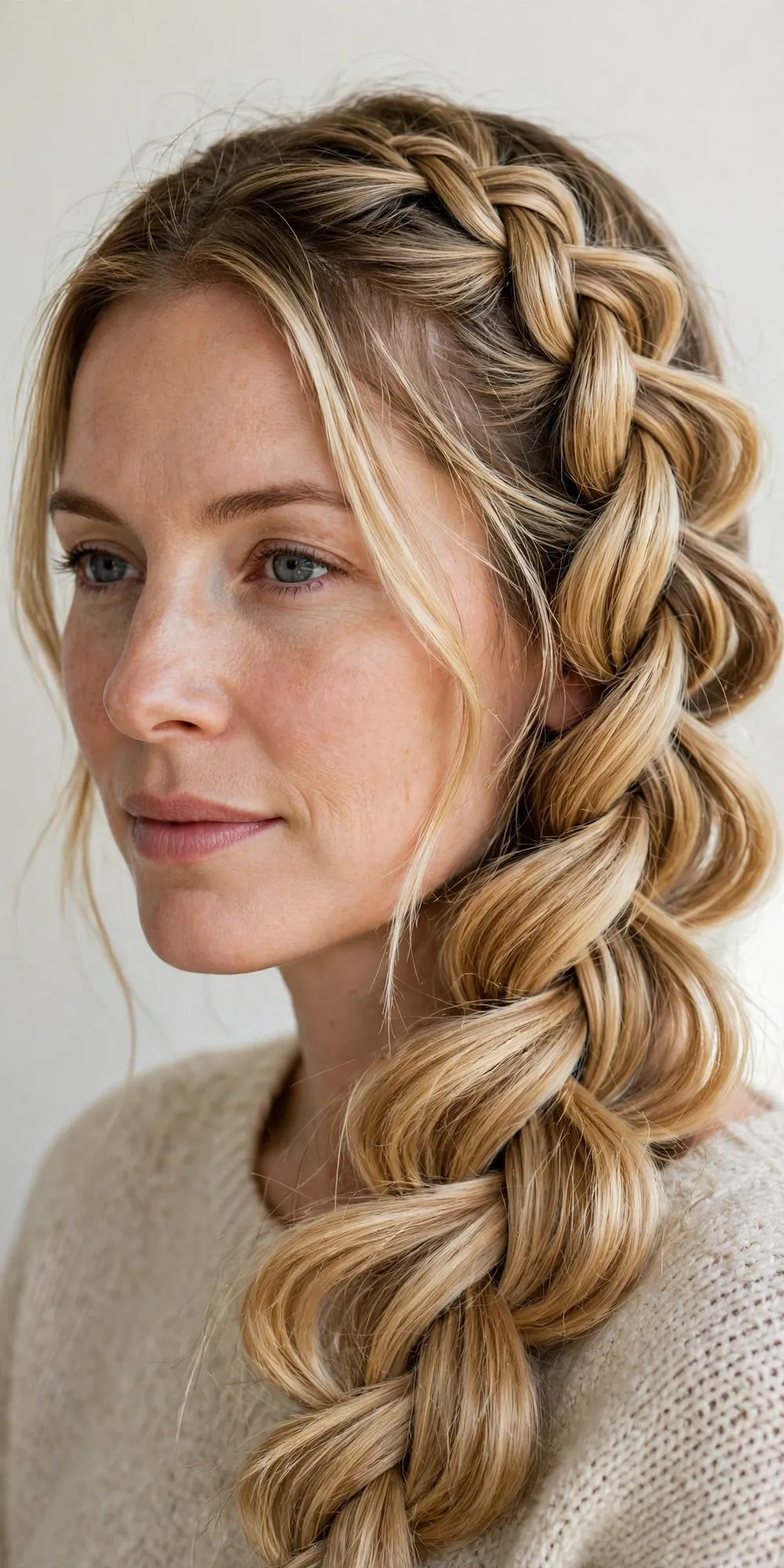
Pancaking means gently pulling the outer loops of the braid wide, so a normal braid turns into a full, ribbon-like shape. It suits fine or thin hair best, because it creates the illusion of thickness, and it flatters longer faces by adding width. Tell your stylist you want the braid finished first and then pancaked slowly, starting at the bottom and working up, so the shape stays even. A texture spray before braiding gives the loops something to grip, and a light-hold spray locks the widened shape. Maintenance is the catch: pancaked braids loosen faster than tight ones, so expect to re-pinch a few loops by afternoon, and avoid wearing it overnight if you want the fullness to survive.
14. French Braid with a Rope-Twist Tail
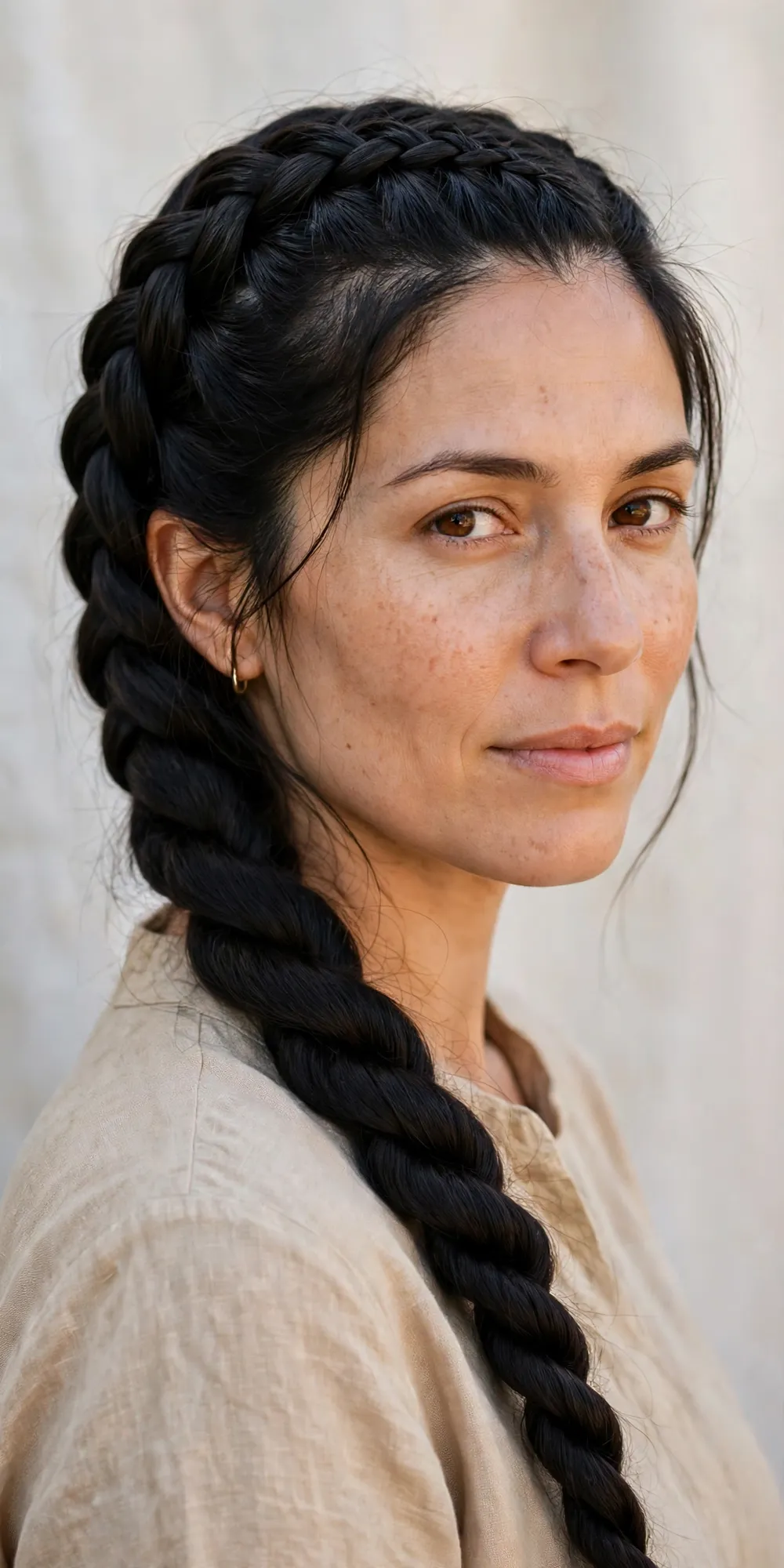
This style keeps a French braid on top and twists the loose length into a rope — two textures in one look. It suits thick, wavy hair that holds a twist well, and it works for anyone who finds a plain braid tail a little dull. Ask your stylist to braid to the nape, split the tail in two, twist each section the same way and wind them together, securing with a small elastic. A smoothing cream keeps the rope from fraying, and a drop of oil on the ends adds shine. Maintenance is easy: the rope holds its shape for hours, and if it loosens you can re-twist it in under a minute without undoing the braid, making it a practical second-day style too.
15. French Braid Mohawk
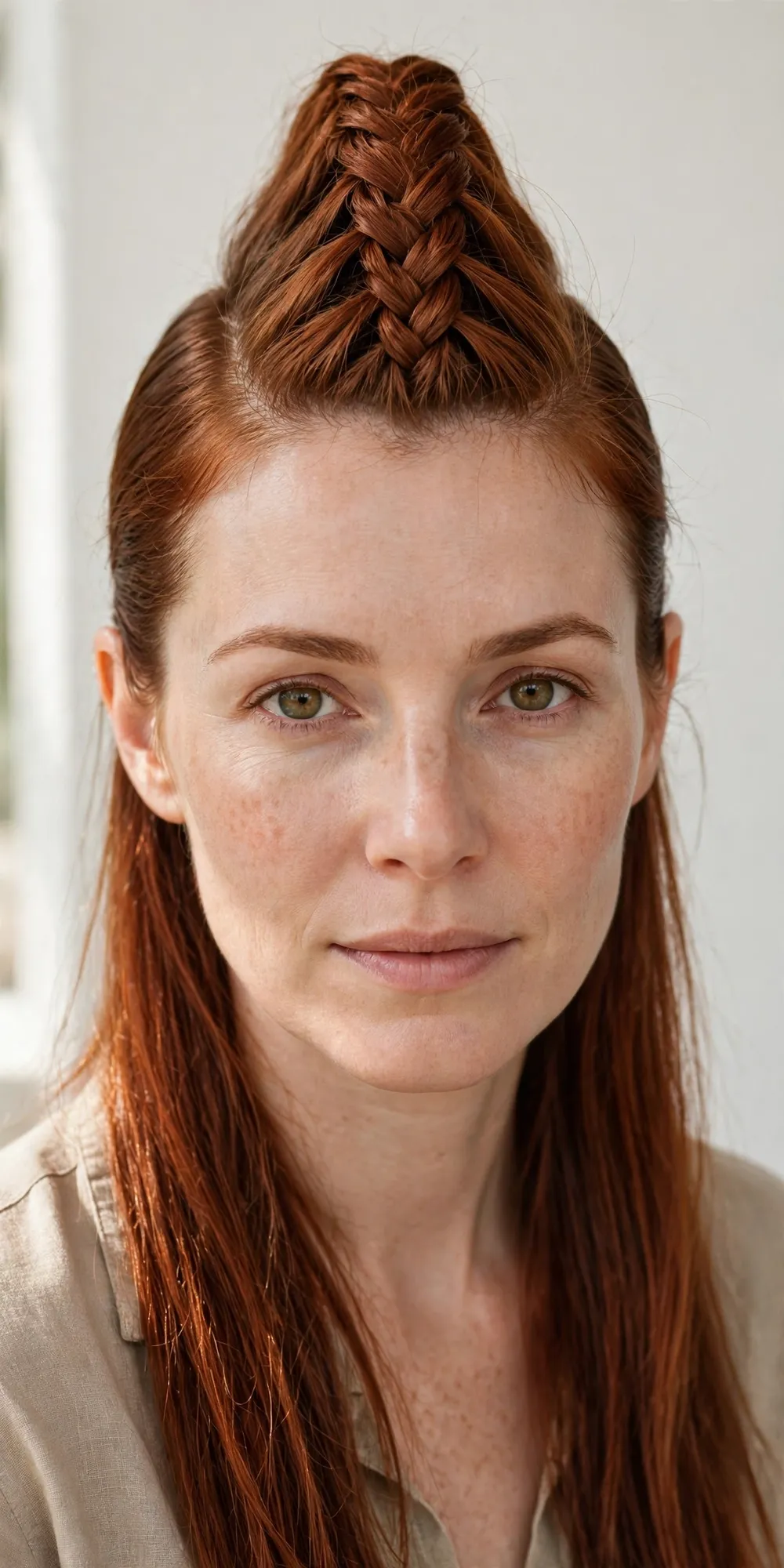
A French braid mohawk runs one strong centre braid down the middle while the sides are kept sleek and pinned flat, giving an edgy shape without shaving anything. It suits bold personalities and thick hair, and it flatters oval and longer faces because the height on top balances the length. Tell your stylist you want the sides smoothed back with gel and pinned close to the head, then a firm braid down the centre with the loops pulled slightly wide. A strong-hold gel and a firm spray are non-negotiable here. Maintenance is honest: the sides need the most attention, so carry pins and a small gel tube, and plan on redoing it the next day rather than sleeping in it.
16. Zigzag-Part French Braid
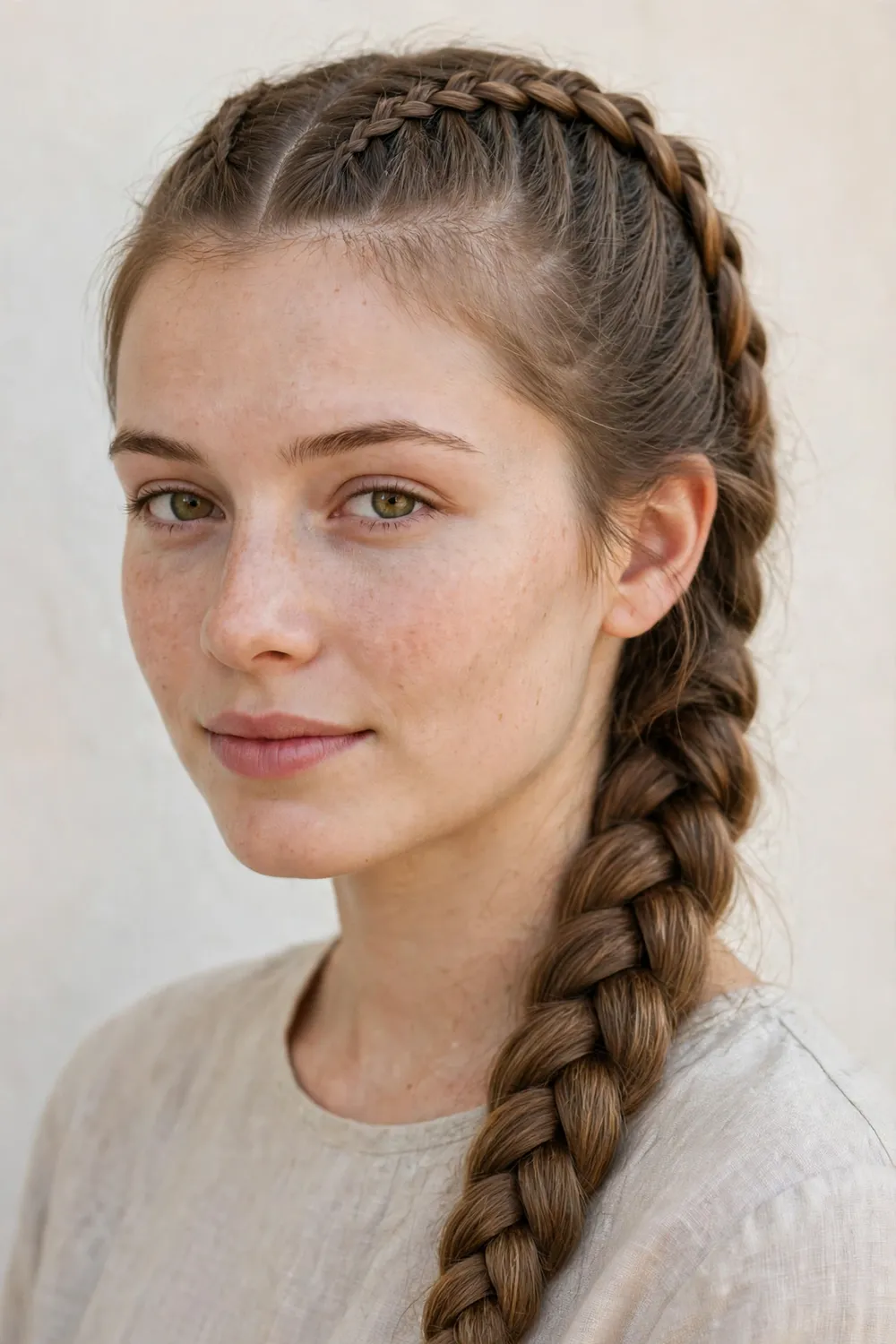
A zigzag parting line runs through the hair before the braid follows right behind it, adding a playful detail to an otherwise classic style. It suits younger wearers and anyone who likes a small twist on a familiar braid, and it works on straight or wavy hair. Ask your stylist to create the zigzag with the tail of a comb, keeping the angles sharp, then braid directly behind the part so the line stays visible. A little pomade on the part keeps it crisp, and a light spray holds the braid in place. Maintenance is simple: the part can blur by evening on fine hair, so a quick comb-through in the morning restores it, and the braid itself holds well all day.
17. French Braid Pigtails

Two low, broad braids sit at the back of the head — grown-up and relaxed, not childish, when they are kept wide and a little loose. They suit thick hair and casual days, and they flatter round and heart-shaped faces because the two braids balance the width of the face. Tell your stylist you want a centre part with two even braids starting behind the ears, kept broad and finished with soft elastics. A texture spray gives grip, and a light cream smooths the part line. Maintenance is easy: pigtails hold through a workout or a full day out, they survive sleeping in better than most braids, and they look just as good slightly loosened on day two with a touch of dry shampoo.
18. Lace French Braid
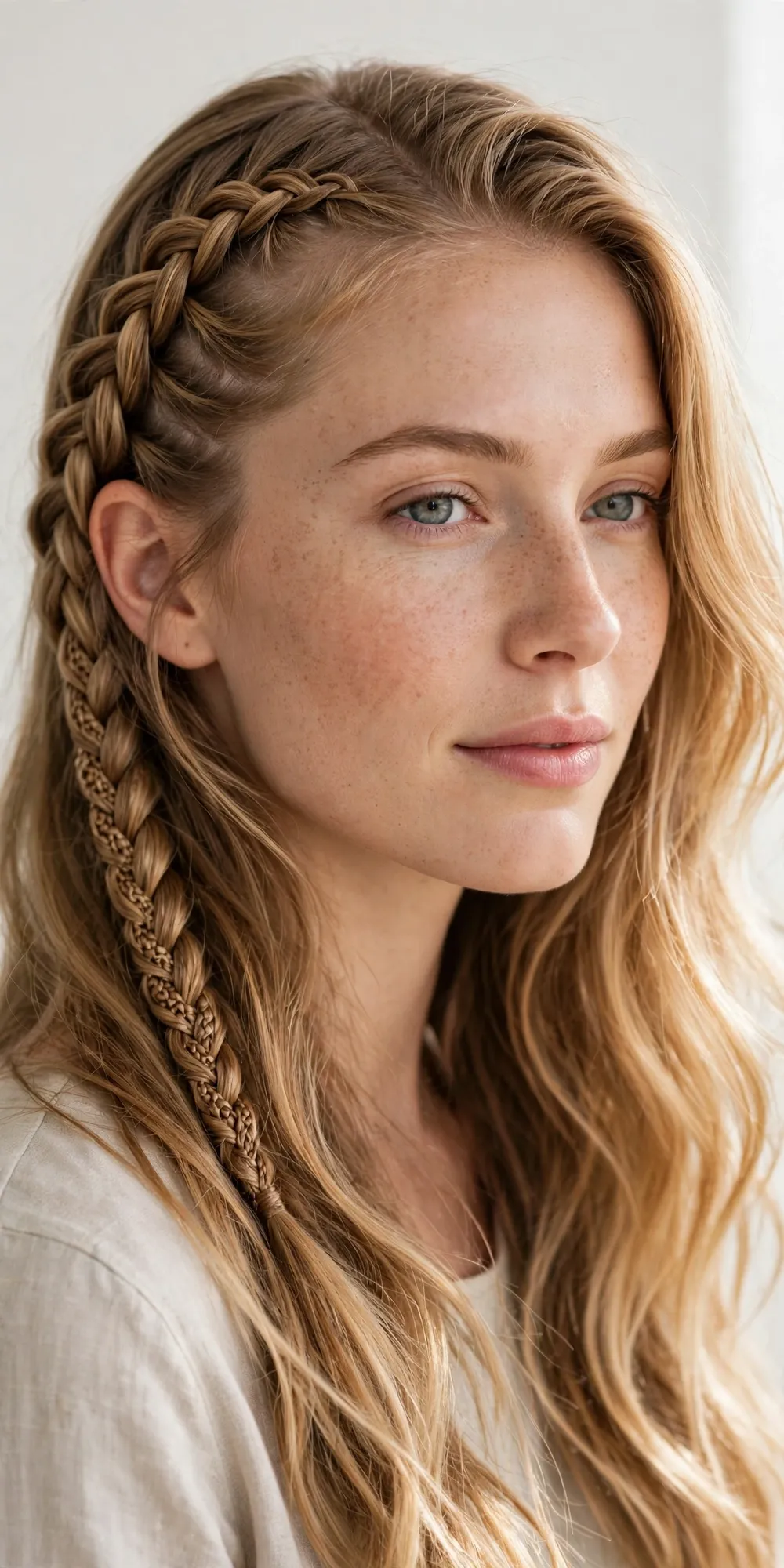
A lace braid feeds hair in from only one side, so the braid sits close to the scalp while the rest of your hair stays loose and free. It works best on fine to medium hair and flatters oval and longer faces, because the single-sided detail draws the eye sideways instead of pulling everything back. Ask your stylist for a one-sided feed-in starting at the temple and running along the hairline, with the far side left untouched. A light texturising spray before you start gives the strands something to hold onto, and styling cream smooths flyaways without stiffening the braid. The honest catch is grip: on very silky hair it can loosen within hours, so add a couple of hidden bobby pins at the anchor point before you leave.
19. French Braid into a Low Chignon

This one takes the classic French braid and coils the tail into a flat, neat knot at the nape, so it reads as polished rather than sporty. It suits medium to thick hair best, and it is a strong choice for round or square faces because the braid’s vertical line lengthens the silhouette. Ask for a standard French braid worked down to the nape, then twisted and pinned into a low chignon with U-pins rather than a bulky elastic. A smoothing cream keeps the coil tidy, and a light-hold hairspray finishes it without a crunchy feel. Maintenance is minimal once it is pinned well. Very heavy hair may need an extra pin by evening, and sleeping on it flattens the knot, so treat it as a daytime style.
20. French Braid with Braided Ends
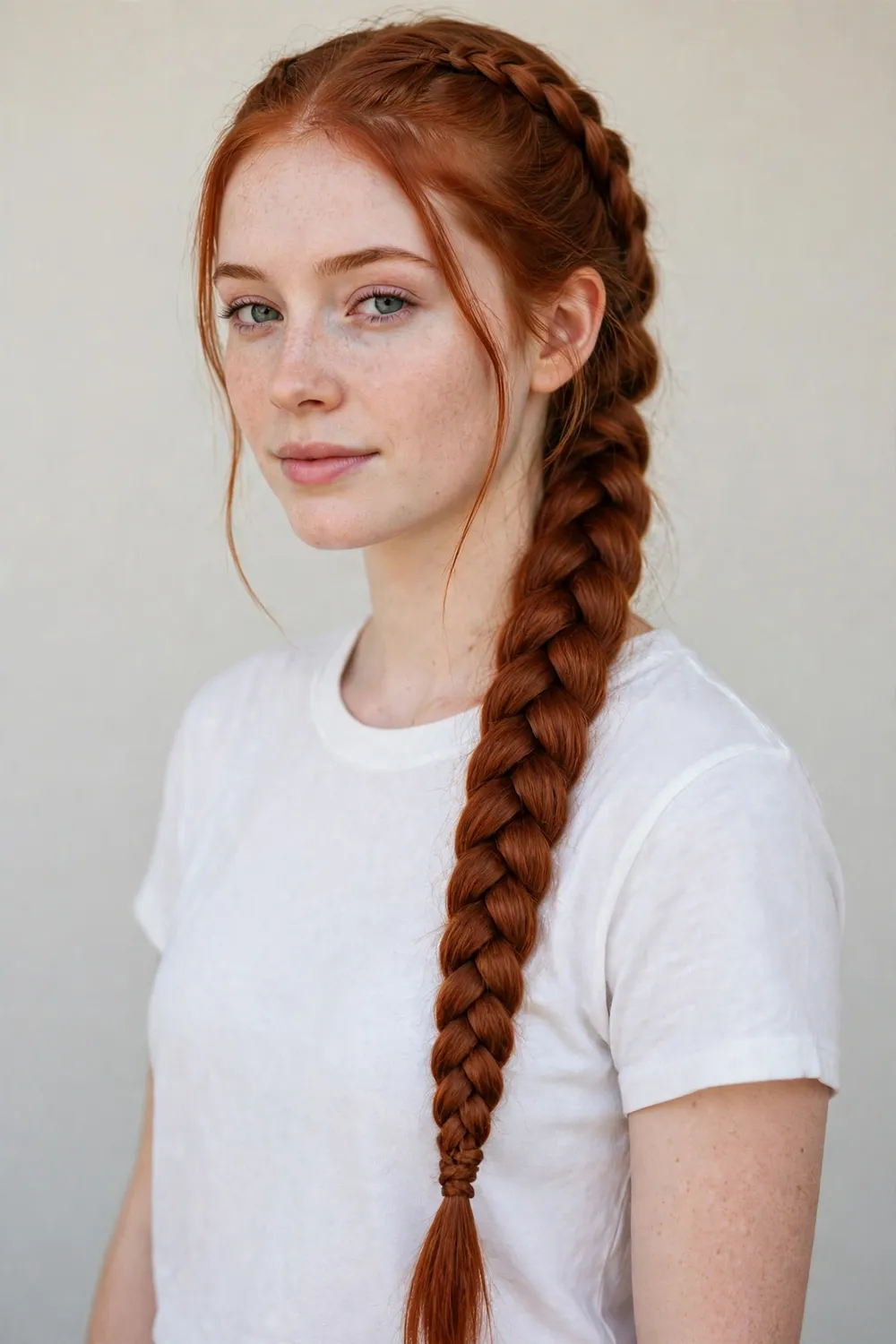
Here the braid runs unbroken from the crown right down to the very tips, with no loose tail left dangling at the end. It suits long, straight or gently wavy hair and works well on oval and heart-shaped faces, since the continuous line keeps the whole look tidy. Ask your stylist to keep feeding sections in until the nape, then carry the same three-strand pattern to the ends and secure it with a small snag-free elastic. A pea-sized amount of styling cream stops the ends from frizzing, and a quick brush beforehand keeps the braid smooth. The trade-off is time: braiding to the tips takes a few extra minutes, and thin ends can look wispy, so gently pancake the last few inches for a fuller finish.
21. Side-Swept French Braid
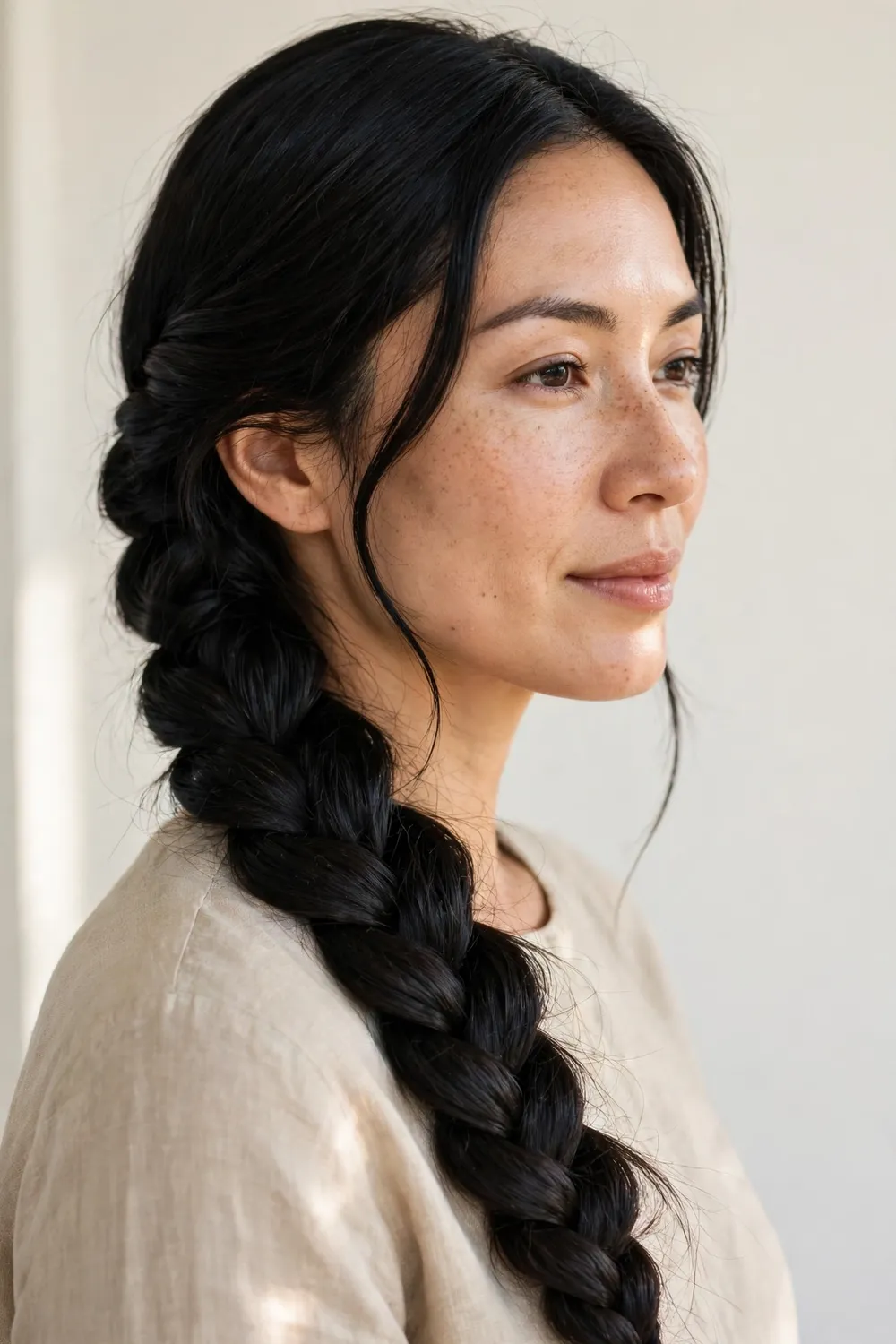
The side-swept French braid starts at one temple and travels across the head, falling softly over the opposite shoulder. It suits almost every face shape, but longer faces and strong jawlines benefit most, since the diagonal line breaks up vertical length and softens the outline. Ask for a deep side part, the braid worked across the crown and over one shoulder, with the first feed-ins kept loose so the front stays soft. Texturising spray adds grip on fine hair, and a light mist of flexible hairspray holds the shape without freezing it. Check it after putting on a coat, since the shoulder section can catch on collars. If you love the swept shape but want something tighter and longer-lasting, lemonade braids use the same sweep in cornrows.
22. French Braid with a Scarf Woven In
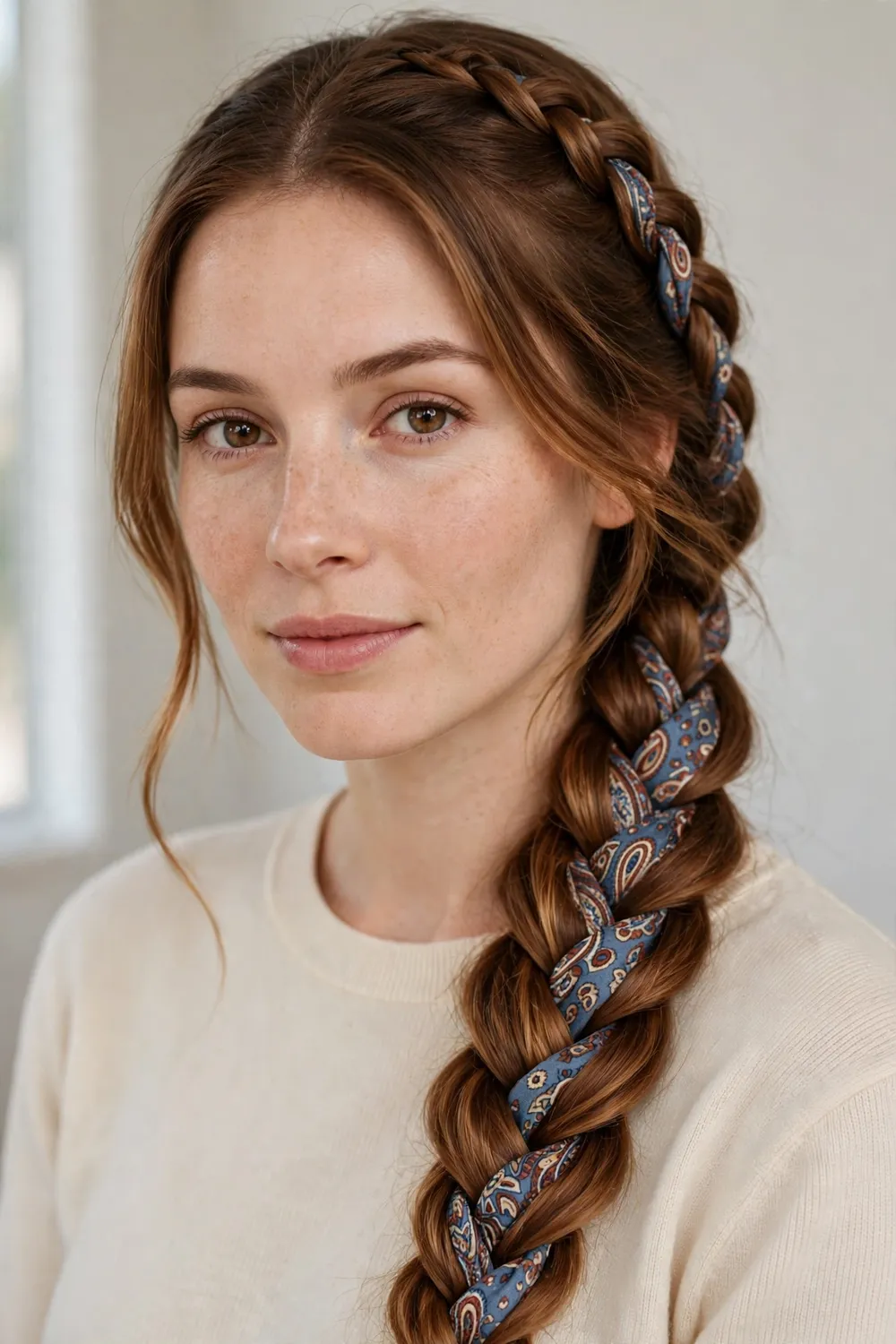
A narrow scarf folded into one of the braid sections turns a plain French braid into something that looks deliberately styled, with a ribbon of colour running through the plait. It suits medium to long hair and every face shape. Ask your stylist to fold a slim silk or cotton scarf lengthways, tuck it into the outer section at the crown, and braid it in as if it were hair. No heavy product is needed; a touch of styling cream on the lengths keeps flyaways down while the scarf does the talking. Keep the scarf light and narrow, because a wide or heavy one drags the braid sideways, and tie the ends neatly so they sit flat against the tail.
23. French Braid with Beaded Ends
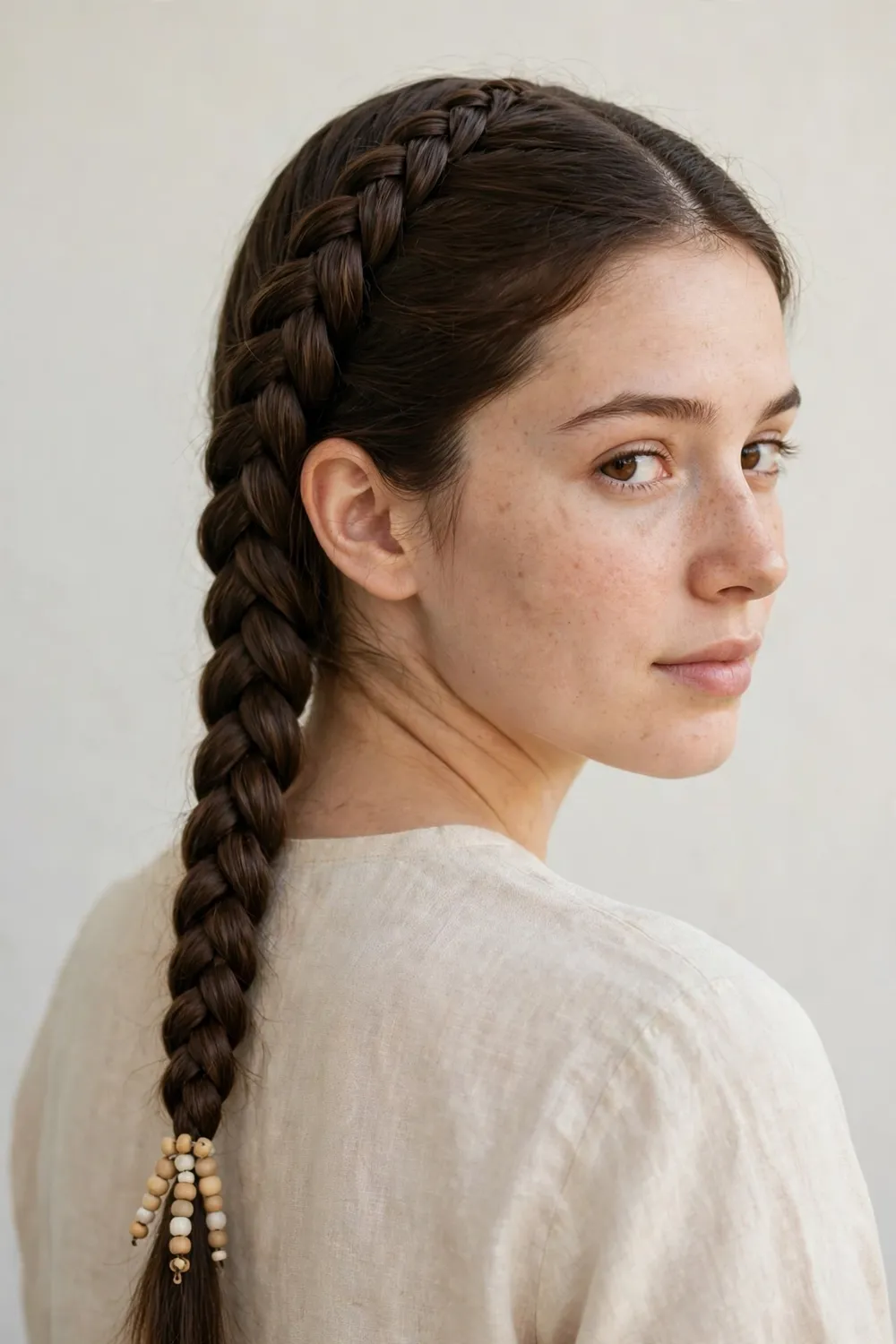
Lightweight beads or metal cuffs threaded onto the secured tail give a classic French braid a finished, decorative edge without changing the braid itself. This suits medium to thick hair best, since fine hair can struggle to carry the weight, and it flatters oval and round faces. Ask for a standard French braid with the tail secured low, then slide two or three small cuffs onto the end, or thread beads onto the last inch of hair before the elastic. A dab of styling cream keeps the tail smooth so the beads sit cleanly, and a flexible-hold spray stops flyaways around them. Choose light beads only, because heavy ones pull the braid down and tug at the scalp, and remove them before bed.
24. French Braid Pulled Back with a Clip

This style braids the hair back as usual, then folds the tail up and locks it in place with a claw clip, so the braid becomes a neat, lifted shape instead of a hanging plait. It suits thick or heavy hair particularly well, because the clip takes the weight off the nape. Ask your stylist for a French braid worked to the nape, then fold the tail upward and secure it with a medium claw clip, tucking the ends underneath. A light texturising spray beforehand gives the clip something to grip, and a smoothing cream keeps the crown tidy. The clip does most of the work, so upkeep is easy, but check the grip after a few hours, since very silky hair can slide, and carry a spare clip.
25. French Braid with Loose Waves
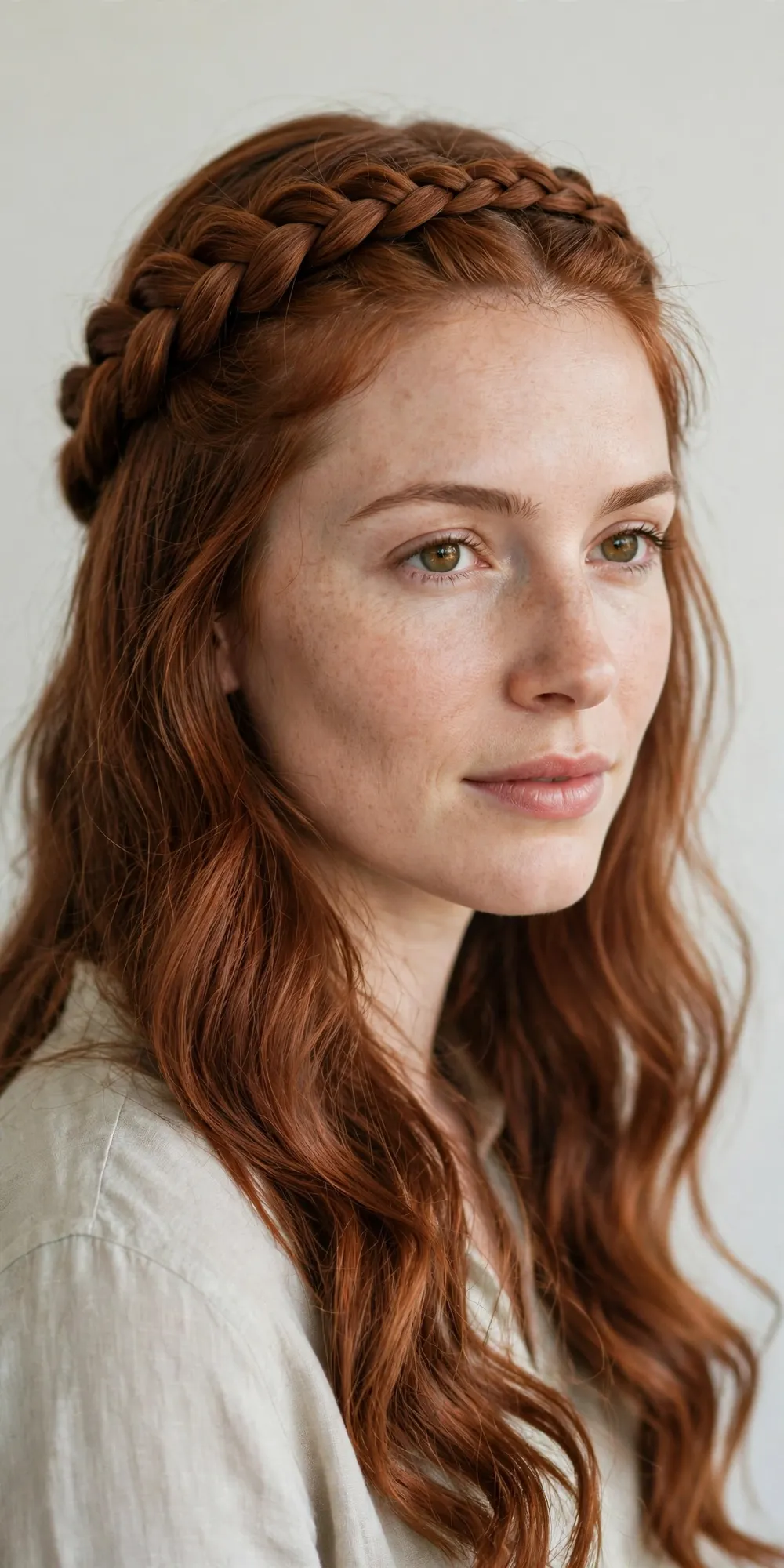
A French braid across the crown with the bottom half left in soft waves gives you the control of a braid and the movement of loose hair in one style. It suits medium to long hair with natural wave or a curling iron, and it flatters oval, round and heart-shaped faces. Ask for a French braid worked from the hairline to the crown, secured at the back of the head, with the remaining length curled in loose, brushed-out waves. Heat protectant goes on before curling, and texturising spray keeps the waves from falling flat. On day two the waves need a quick refresh with a curling iron or mousse, while the braid usually stays neat. For an even looser, festival feel, our boho braids guide leans further into undone texture.
26. French Braid into a High Ponytail
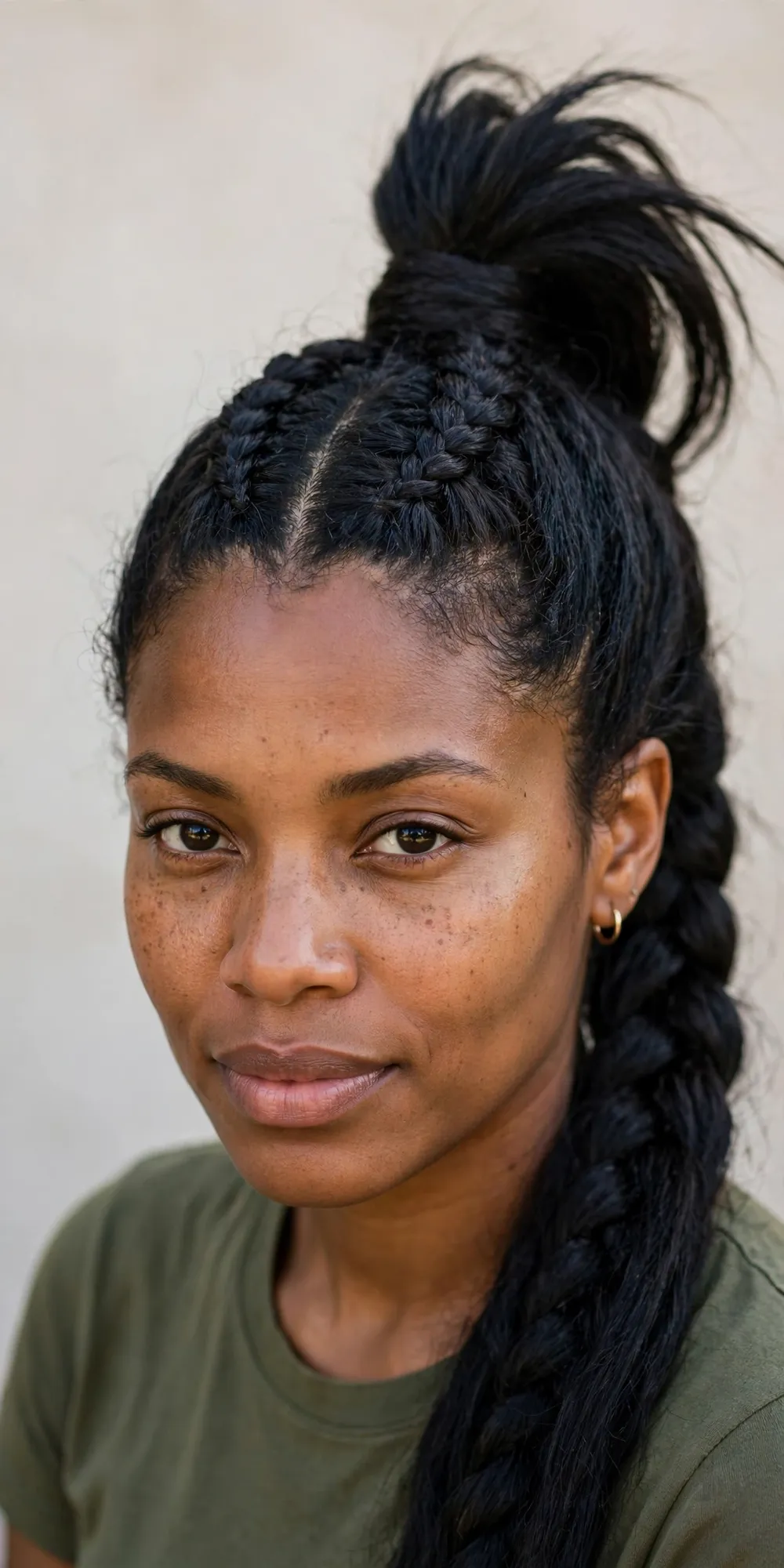
A French braid worked down the crown and lifted into a high ponytail feels sporty and polished at the same time, with the braid adding detail to an otherwise simple updo. It suits long, thick hair and flatters oval and heart-shaped faces, since the height opens up the face and shows off the braid. Ask your stylist to braid from the hairline straight back, gathering the tail into a high ponytail at the crown and wrapping a strand of hair around the elastic to hide it. A smoothing cream tames the crown, and a firm-hold elastic keeps the height in place. It is comfortable for workouts, though the weight can pull at the front hairline, so loosen the first inch and avoid wearing it this tight every day.
27. French Braid with Fishtail Tail
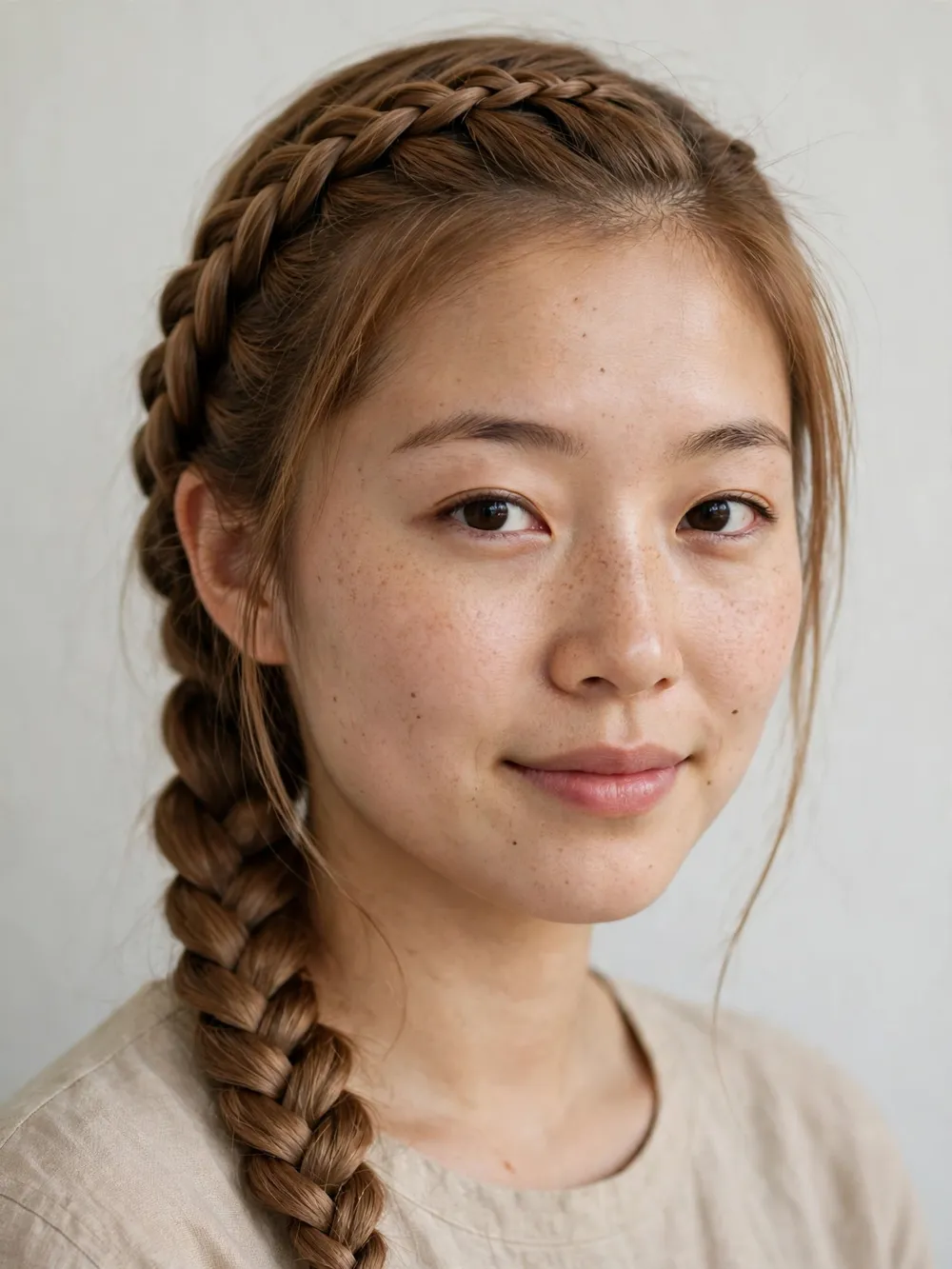
This hybrid starts as a French braid at the top and switches to a fishtail at the ends, so you get control up top and fine, woven texture at the ends. It suits long, straight or wavy hair and oval and longer faces, where the narrow fishtail finish keeps the tail slim. Ask your stylist to French braid to the nape, then split the tail in two and fishtail the rest, securing it with a small elastic. Styling cream smooths the switch-over point, and a gentle pancake makes the fishtail look fuller. It takes a little longer than a plain braid, and the fishtail can loosen on slippery hair, so use texturising spray first. If two-strand styles appeal, twist braids offer a similar woven feel.
28. French Braid Bob

A French braid on shoulder-length or bob-length hair proves you do not need waist-length hair to wear one — the braid simply runs shorter and finishes sooner. It suits fine to medium hair and flatters oval and round faces, because the braid adds texture to a cut that can sit flat. Ask your stylist for a French braid worked from the hairline to the nape with small, tight feed-ins, then secure the short tail with a mini elastic and tuck it under. Texturising spray is almost essential here, since short layers slip out easily, and bobby pins at the nape keep the ends in place. Short braids need checking in the mirror through the day, and a light mist of hairspray in the morning saves a lot of re-tucking.
29. French Braid with Ribbon Woven In
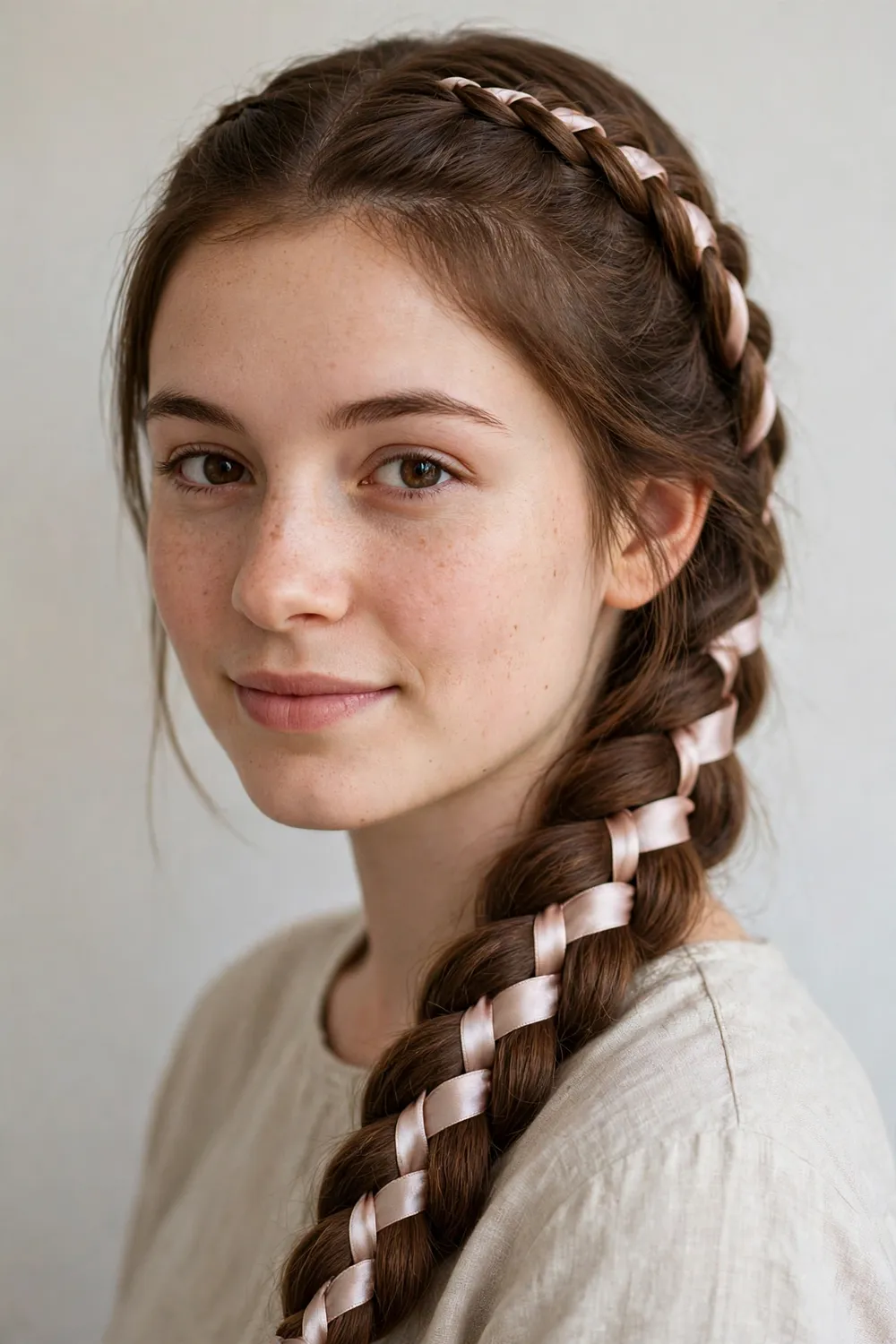
A narrow ribbon threaded through a French braid adds a soft line of colour that follows every cross of the plait, like the scarf version but lighter and more delicate. It suits medium to long hair and every face shape, and it works beautifully for weddings, school events or any day you want the braid to feel special. Ask your stylist to anchor a slim ribbon at the crown, braid it in as part of the centre section, and let the ends trail just past the elastic. Styling cream keeps flyaways down while the ribbon stays visible. Choose a ribbon no wider than a centimetre, because anything broader bunches inside the braid, and tie the ends in a small knot so they finish neatly.
30. French Braid into a Messy Bun
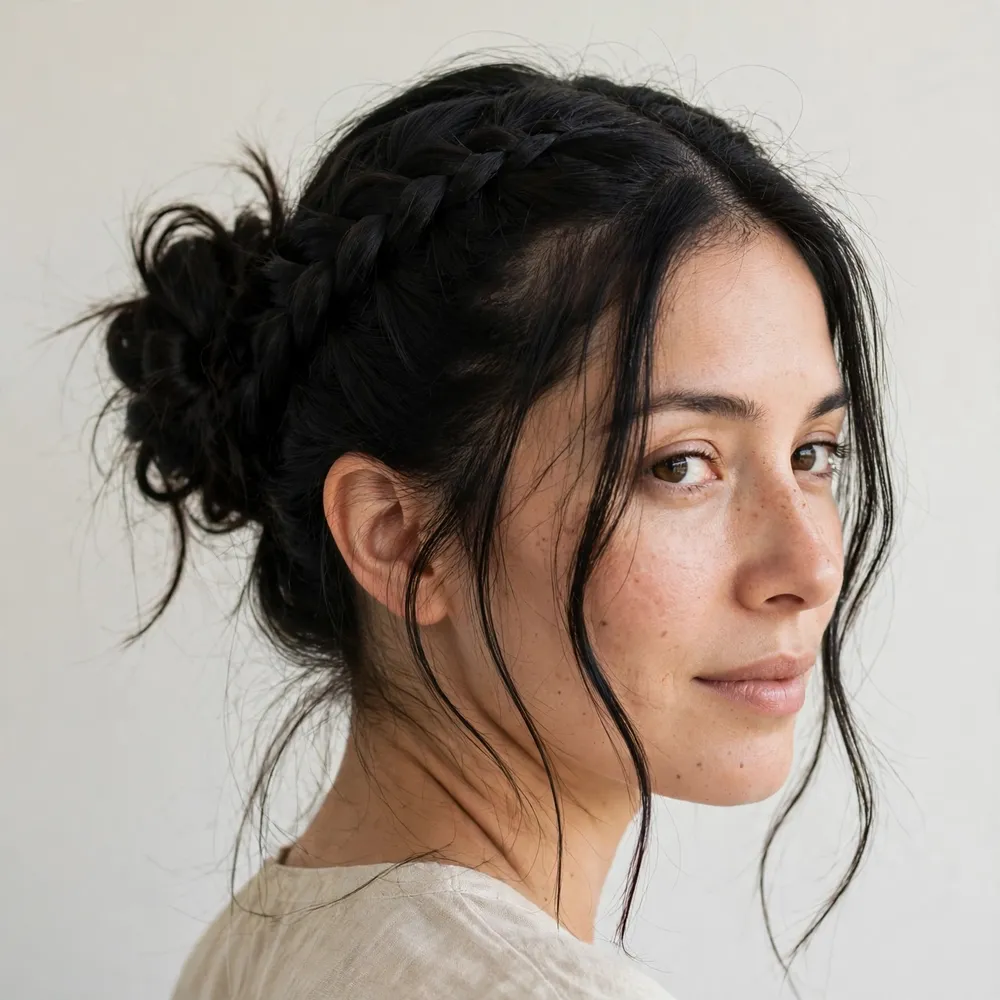
A relaxed French braid coiled into a soft, messy bun is the off-duty version of the polished chignon — same technique, looser hands, more texture. It suits medium to thick hair with a bit of natural wave and flatters oval and round faces, because the softness at the hairline keeps it from looking severe. Ask for a loosely worked French braid, then gather the tail into a low bun, pin it with U-pins and pull a few face-framing pieces free. Texturising spray gives the bun grip and volume, and light-hold spray keeps loose pieces out of your eyes. It looks better slightly undone, though very fine hair may need backcombing at the crown first, and sleeping on it flattens the bun, so save it for daytime.
31. French Braid for Little Girls
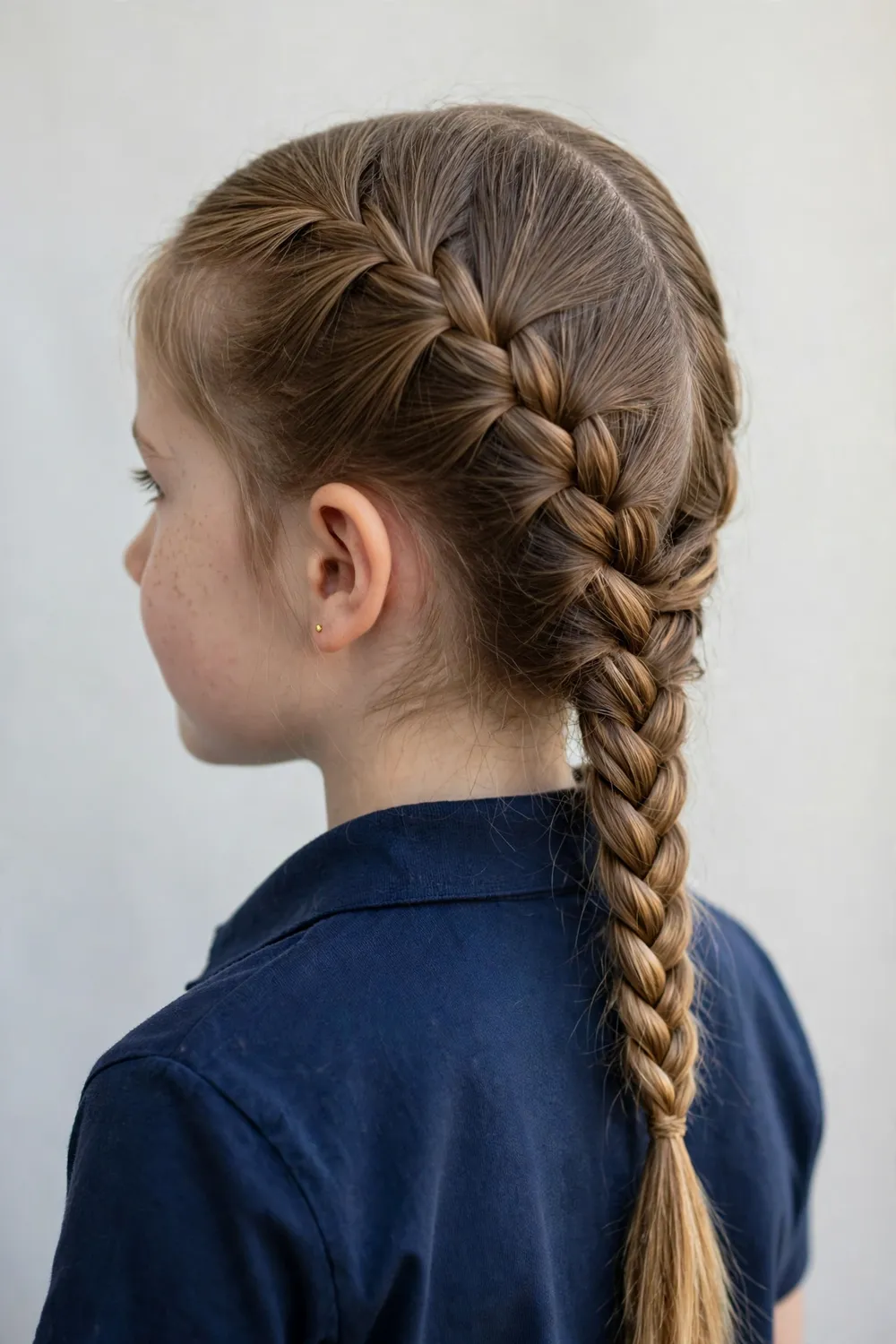
A gentle, low-tension French braid is one of the kindest styles for children: it keeps hair out of the face at school without pulling at the scalp. It suits fine, straight or wavy hair and works for any face shape, and it lasts through playtime and lessons. Ask for a loose French braid starting at the crown, with soft feed-ins and a snag-free elastic at the end, keeping the first inch relaxed so nothing tugs. A little detangling spray is all the product you need, and a soft brush keeps the braid smooth. Braid slowly with a light hand, check in with her about any pulling, and redo it loosely rather than yanking a tight section — a comfortable braid is one she will keep in all day.
32. French Braid with Curly Ends
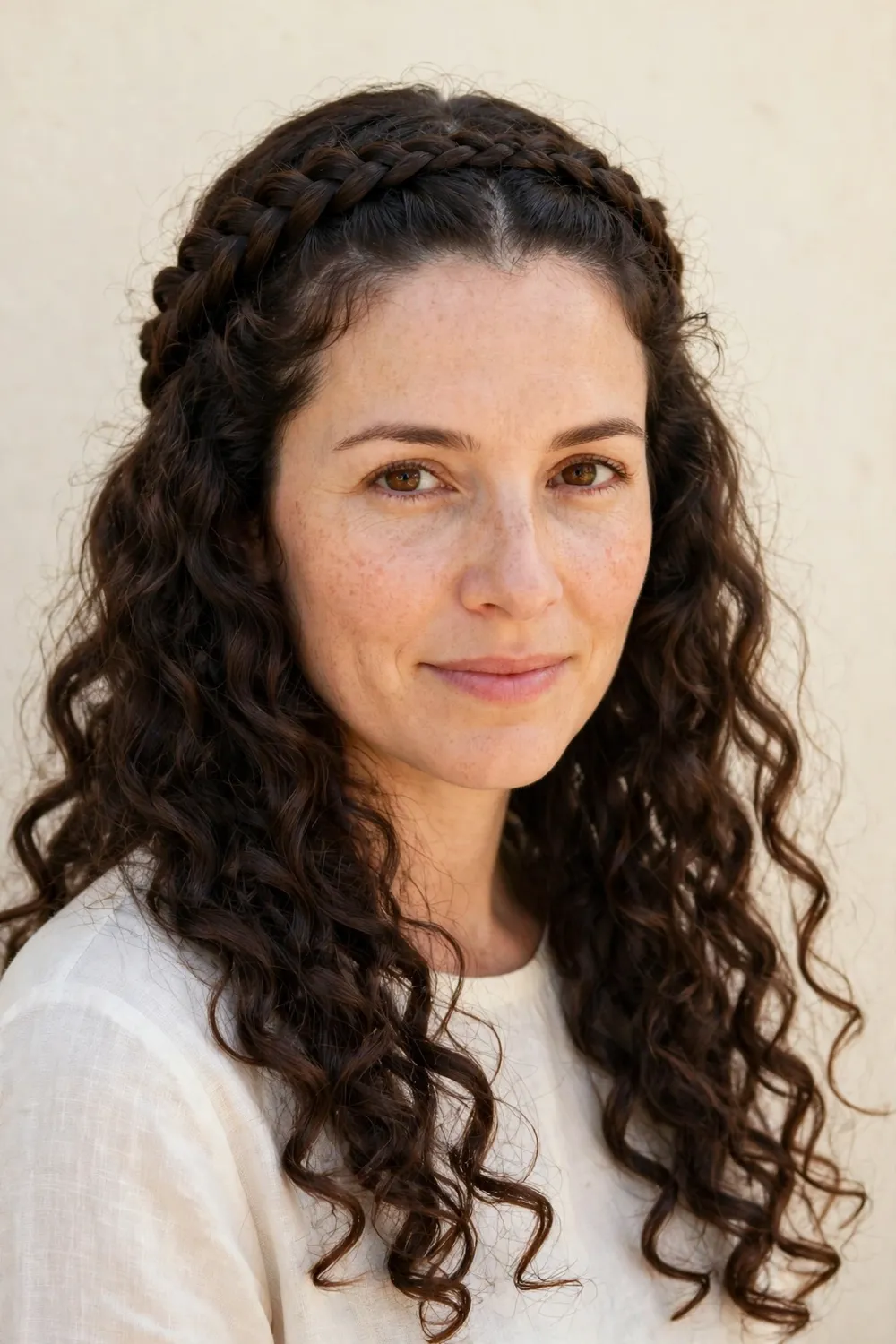
A French braid on top with the ends left in defined curls gives you structure at the crown and bounce below, which suits naturally curly hair and wavy hair that holds a curl well. It flatters oval and heart-shaped faces, since the curls add width around the jaw while the braid keeps the top smooth. Ask your stylist to French braid from hairline to nape, secure it there, and leave the remaining length in its natural curls, defined with curl cream and scrunched gently. Leave-in conditioner before braiding keeps the top from frizzing, and light gel on the ends holds the curl pattern. On day two refresh the curls with water and cream, while the braid usually survives, so touch up the ends rather than redoing the whole style.
33. Bridal French Braid
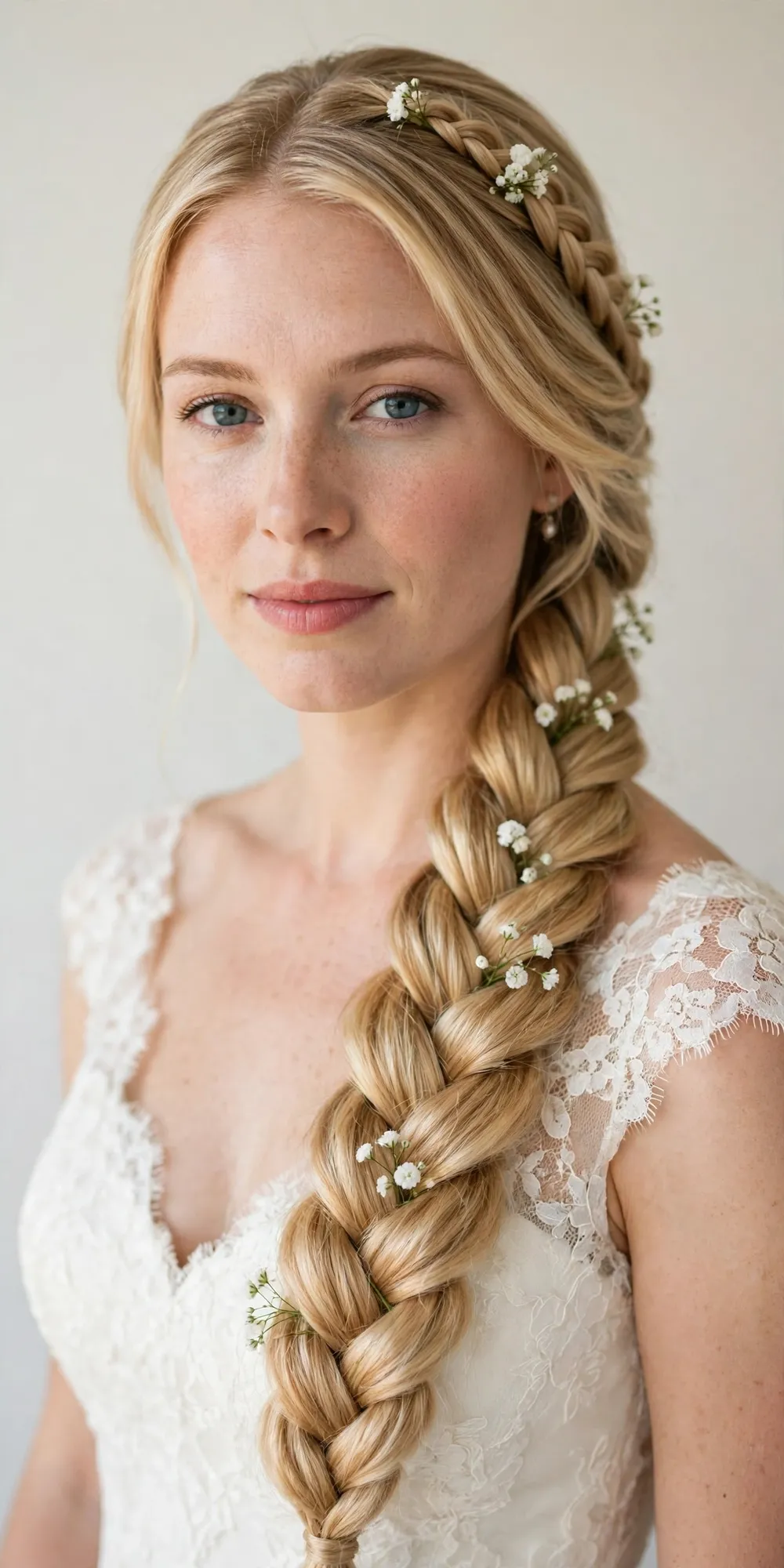
A bridal French braid is the most polished version of the style: smooth, secure and soft at the same time, built to look beautiful in photographs and hold through a long day. It suits medium to thick hair and flatters oval and heart-shaped faces, with gentle face-framing pieces keeping the look romantic. Ask your stylist for a French braid with even, relaxed feed-ins, softly pancaked for fullness, and finished with the tail coiled or left long depending on your dress. Smoothing cream and flexible-hold hairspray keep everything in place without stiffness, and a few U-pins anchor it invisibly. Do a trial run before the wedding, and bring your veil or hairpiece so the braid is built around it.
How Do You Choose the Right French Braid Placement?
Start with your face shape. If your face leans longer, a side or diagonal placement breaks up the vertical line and stops the braid from stretching you out further — the side-swept version is the safest first try. If you want softness at the cheeks, leave two narrow face-framing pieces out at the front, or loosen the first few feed-ins so the braid does not pull everything flat against your head. Dense or heavy hair suits a centre-back placement best, because the weight hangs evenly and the braid is less likely to drift to one side. And if you wear glasses or big earrings, keep the braid’s starting point above the ear line and avoid bulky accessories at the nape, so nothing competes with your frames or catches on an earring. When in doubt, try the placement in the mirror before committing, since moving a braid’s starting point by an inch changes the whole look.
What Tools Make Braiding Long Hair Easier?
- Rat-tail comb — for clean, straight partings and sectioning without snagging.
- Paddle brush — to smooth the lengths before you start and detangle without breakage.
- Sectioning clips — to hold the loose hair out of the way while you work on one side.
- Snag-free elastics — small, seamless bands that hold the tail without denting or tearing hair.
- Texturising spray or dry shampoo — for grip on slippery, freshly washed hair.
- Mousse or styling cream — to smooth flyaways and give the braid a polished finish.
- Bobby pins and U-pins — for anchoring the tail, tucking in layers and securing updos.
- Hand mirror — to check the back of the braid and catch uneven sections before you finish.
5 French Braid Mistakes That Flatten the Shape
- Pulling the first inch too tight. Starting with a death grip at the hairline flattens the crown and gives you a headache by lunchtime. Keep the first few crosses loose, then tighten gradually as you move down.
- Uneven feed-ins. Taking a thick section on one side and a thin one on the other makes the braid wander off-centre. Match each new section to the one before it, roughly the same width every time.
- No grip on slippery hair. Braiding freshly washed, silky hair is like braiding wet ribbon — it slides apart. A blast of texturising spray or dry shampoo before you start makes all the difference.
- Ignoring layers near the face. Short layers poking out of the braid look messy rather than relaxed. Either leave them out deliberately as face-framing pieces or pin them in with bobby pins at the start.
- Leaving the end unsecured. A braid with a loose, unsecured tail unravels from the bottom up. Always finish with a snag-free elastic and, if the ends are wispy, a tiny dab of styling cream to seal them.
How to Keep a French Braid Neat Overnight
Start with a dry scalp: never sleep on a braid made from damp hair, because it dries unevenly and wakes up frizzy. Secure the ends properly with a snag-free elastic so the tail cannot unravel while you move in your sleep, and tuck the braid over a satin bonnet or onto a silk pillowcase, which cuts friction and keeps the surface smooth. In the morning, refresh the braid with a light mist of water or leave-in spray, smooth any flyaways with a touch of cream, and re-pin anything that has worked loose. If the braid pulls at your hairline or feels tight when you wake up, take it down rather than suffering through it — a sore scalp is a sign the tension was too high, and a looser re-braid the next day will look just as good.
Frequently Asked Questions
Will a French braid flatter an oval face, or does it make the face look longer?
It flatters an oval face very well, and the trick is placement. A centre-back braid can add length visually, so if that worries you, choose a side-swept or diagonal braid, or leave soft pieces out at the front to break up the vertical line. A gently pancaked braid also adds width, which balances the length nicely.
Should I braid long hair when it’s damp or completely dry?
Dry hair is the safer choice for most people. Damp hair stretches as you braid and then shrinks as it dries, which can make the braid feel tight and look uneven by morning. If your hair is very slippery, a little texturising spray on dry hair gives you the grip you need without the risks of braiding wet hair.
How do I keep layers from slipping out of a French braid?
Work with small, even feed-ins and keep the sections close to the scalp so shorter layers get caught in the braid early. A texturising spray before you start helps, and bobby pins placed at the nape and around the face will hold the stubborn pieces. If a layer keeps escaping, leave it out on purpose as a face-framing piece instead of fighting it.
What’s the easiest French braid style for a beginner with long hair?
Start with a low side braid, since you can see what your hands are doing and the angle is forgiving. Practise the three-strand cross first without feeding in new hair, then add small sections once the rhythm feels natural. The lace braid is another gentle starting point, because you only feed hair in from one side.
How do I make my French braid look thicker?
Pancaking is the quickest fix: once the braid is secured, gently pull the outer loops wider, starting at the bottom and working up. Texturising spray or dry shampoo at the roots adds volume before you braid, and braiding slightly looser from the start gives the braid a fuller shape. For fine hair, a volumising mousse worked through damp hair before drying also helps.
Can French braids count as a protective style?
Yes, with a caveat. A French braid keeps the ends tucked away and reduces daily manipulation, which is the core idea of a protective style. But a braid worn too tight, or left in for many days without washing and moisturising, can cause tension and breakage instead. Keep it comfortable, take it down regularly, and your hair gets the benefit without the damage. If you want a longer-lasting protective option, our guide to cornrow hairstyles explains how tighter, scalp-hugging braids are worn for weeks at a time.
How long does a French braid last, and how do I keep it neat overnight?
A French braid usually looks neat for one to two days, depending on your hair texture and how tightly it was braided. Sleep with the ends secured, use a satin bonnet or silk pillowcase, and refresh it in the morning with a light mist and a touch of styling cream. If it starts to frizz badly or pulls at your scalp, take it down and re-braid rather than trying to rescue it.
Final Word
A French braid is one of those rare styles that is simple to learn, kind to your hair and endlessly adaptable — from a neat centre-back plait for work to a soft, ribbon-threaded braid for a wedding. The technique itself is ancient; the history of the braid stretches back thousands of years, yet it still shows up on runways and school runs alike. If you enjoyed these styles, there is plenty more where they came from — explore more hairstyle guides and find your next look. For bolder braided inspiration, our round-up of braided hairstyles covers everything from fishtails to crown braids, and if you prefer a looser, festival feel, the boho braids guide is a good next stop.