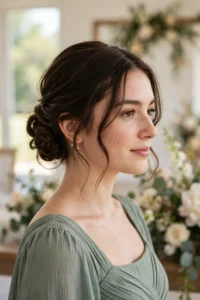



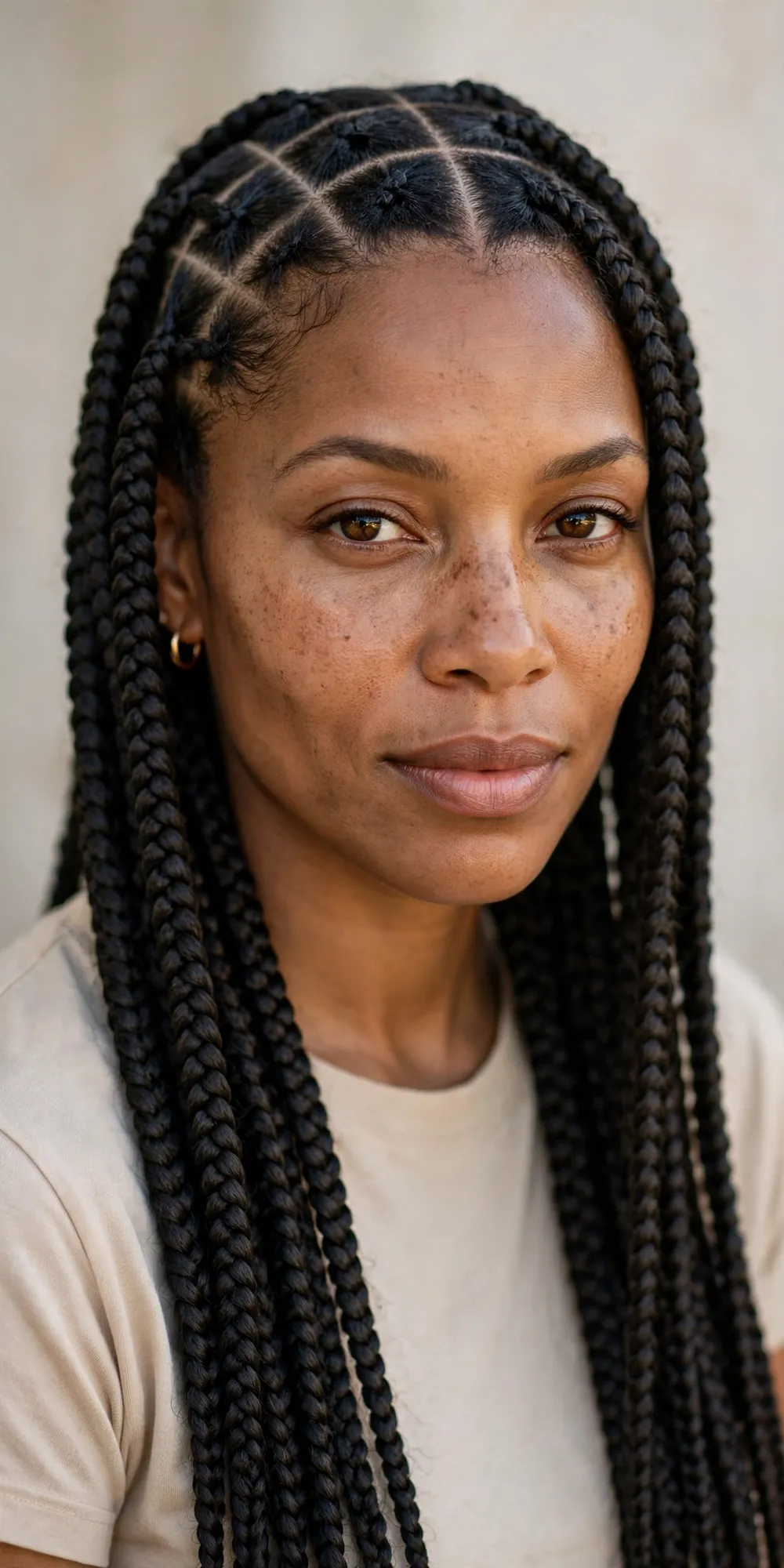
Braided hairstyles are plaits worked close to the scalp or left loose, and they protect your natural hair by tucking the ends away from daily friction, heat and weather. The practice is older than most people realise — hair braiding in Africa goes back roughly 5,000 years, as the history of the braid shows — and today’s versions keep that heritage while adding softer, lower-tension finishes. If you only remember three names, make them these: Classic Box Braids for the reliable all-rounder that suits almost everyone, Bohemian Knotless Braids for the comfort and softness of a painless feed-in base, and Fulani-Inspired Stitch Braids for the look that turns heads. The rest of this list moves from those proven favourites through playful cornrow variations and romantic boho braids, so there is something here whether you want two weeks of easy mornings or two months of set-and-forget hair.
1. Classic Box Braids

Box braids are the protective style every other one gets measured against: clean square parts, extensions fed in at the root, and plaits that fall past the shoulders. They suit coily and curly hair best, and medium length works on oval, round and square faces alike. Ask your stylist for medium box braids, shoulder length, with the edges laid but not pulled tight. A light mousse or braid spray keeps flyaways down without gel’s heavy build-up, and a satin scarf at night stops the frizz that kills the look early. Expect six to eight weeks of wear, needing a root tidy-up after four. The honest catch is the install: five to seven hours in the chair, and small parts mean more tension — speak up if your scalp stings.
2. Bohemian Knotless Braids
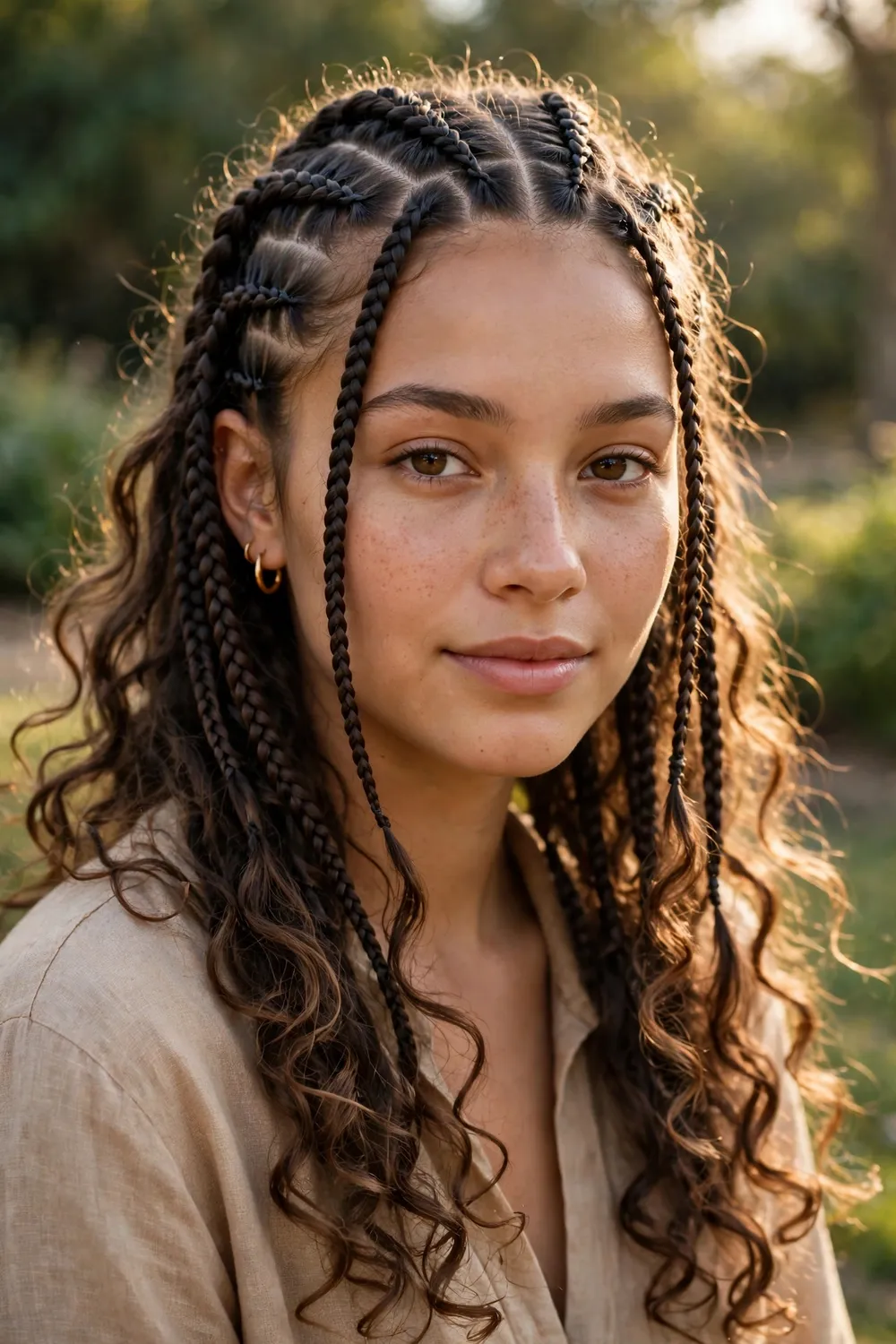
Bohemian knotless braids start with a feed-in base — no knot at the root — so the scalp stays relaxed, and loose curls are left free at the ends for a soft, romantic movement. They flatter almost every face shape, and they are a kind choice for fine or thinning hair because there is no heavy anchor pulling at the hairline. Ask for medium knotless braids with curly ends, waist length, with the curls left unsealed. Curl spray and a light scalp oil keep it fresh; skip heavy creams, which weigh the curls flat. They last six to eight weeks, though the curly ends frizz faster. For the full deep dive — lengths, partings and styling — our Boho Braids guide covers it end to end.
3. Fulani-Inspired Stitch Braids
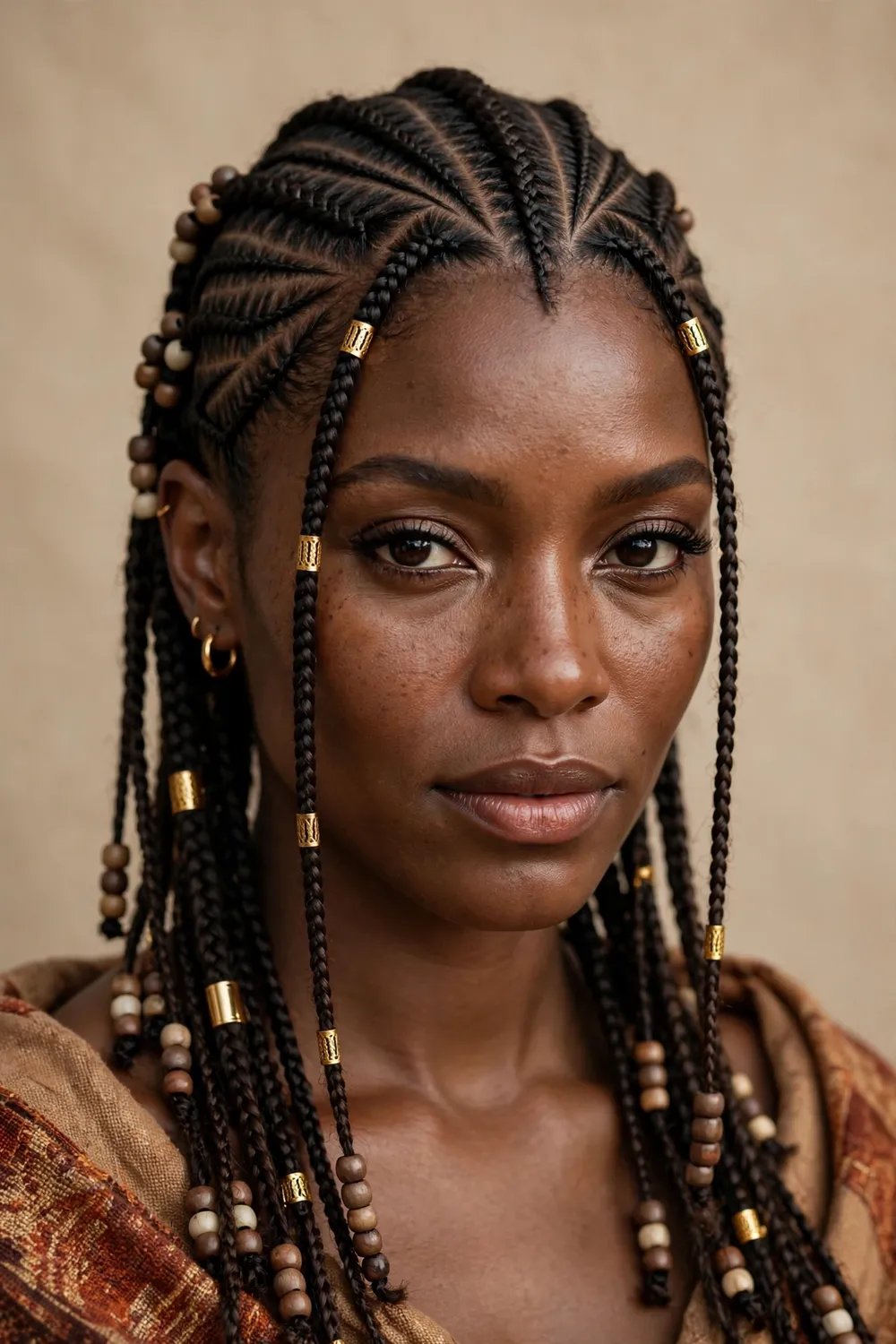
Fulani-inspired stitch braids pair sharp geometric stitch lines with a central cornrow, finished with beads and cuffs for a regal West African feel. They work best on coily hair with enough length to hold the stitch pattern, and the central part flatters oval and long faces. Ask your stylist for stitch braids with a centre part, two side cornrows and beads at the ends. Edge control and a little shine spray give the pattern its crisp finish; a silk scarf at night keeps the beads from tangling the braids. Plan on two to four weeks of wear, since the stitch detail loosens faster than box braids. It is a statement style, so expect compliments — and a longer install than the simple look suggests.
4. Jumbo Triangle Braids
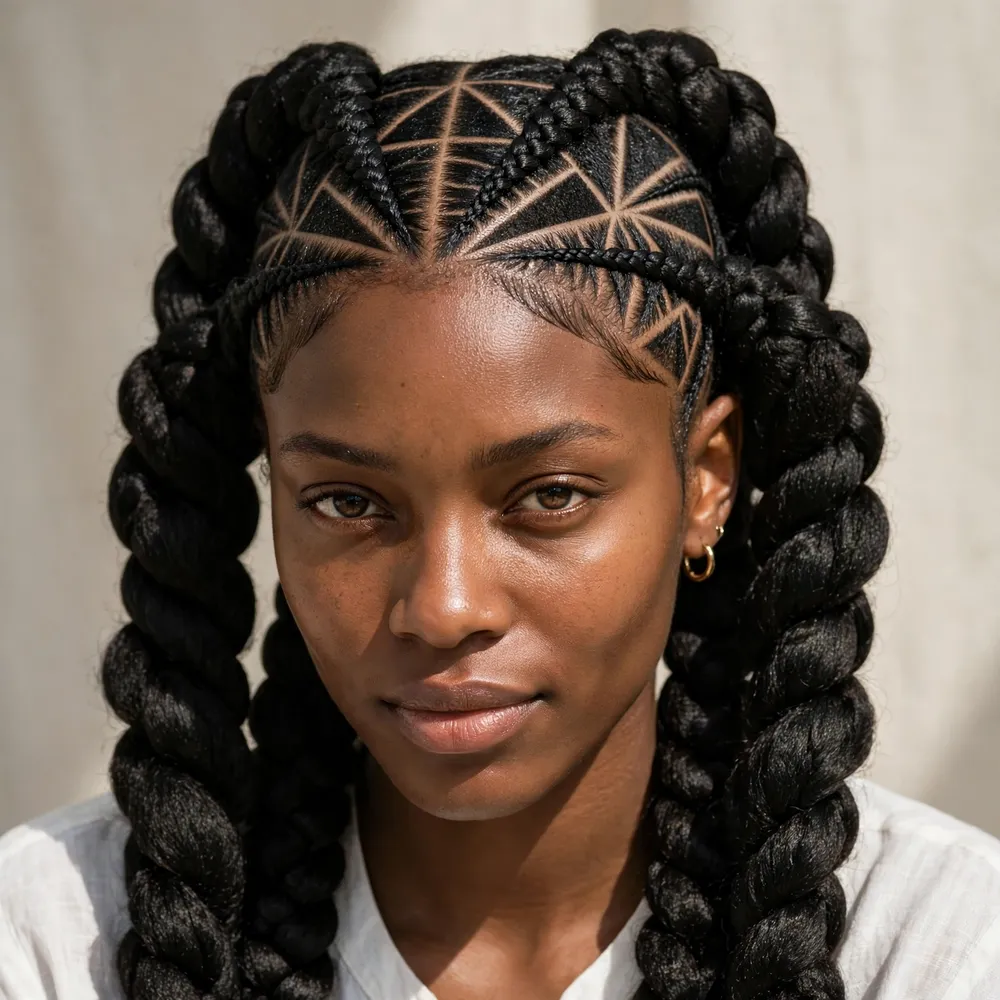
Jumbo triangle braids swap the usual square parts for oversized triangles, with bold geometric scalp art. They are ideal if you want a big look without a big time commitment — the chunky size cuts the install down to two or three hours — and they suit thick hair that would take forever in small parts. Ask for large triangle parts, mid-back length, with the braids kept thick enough to show the pattern clearly. A braid spray and a light sheen finish the look; heavy oils sit on top of jumbo braids and make them look greasy. They last four to six weeks, though the large parts show new growth sooner. One warning: jumbo braids are heavy, so fine hair or a sensitive scalp should ask for fewer braids.
5. Goddess Locs Braids
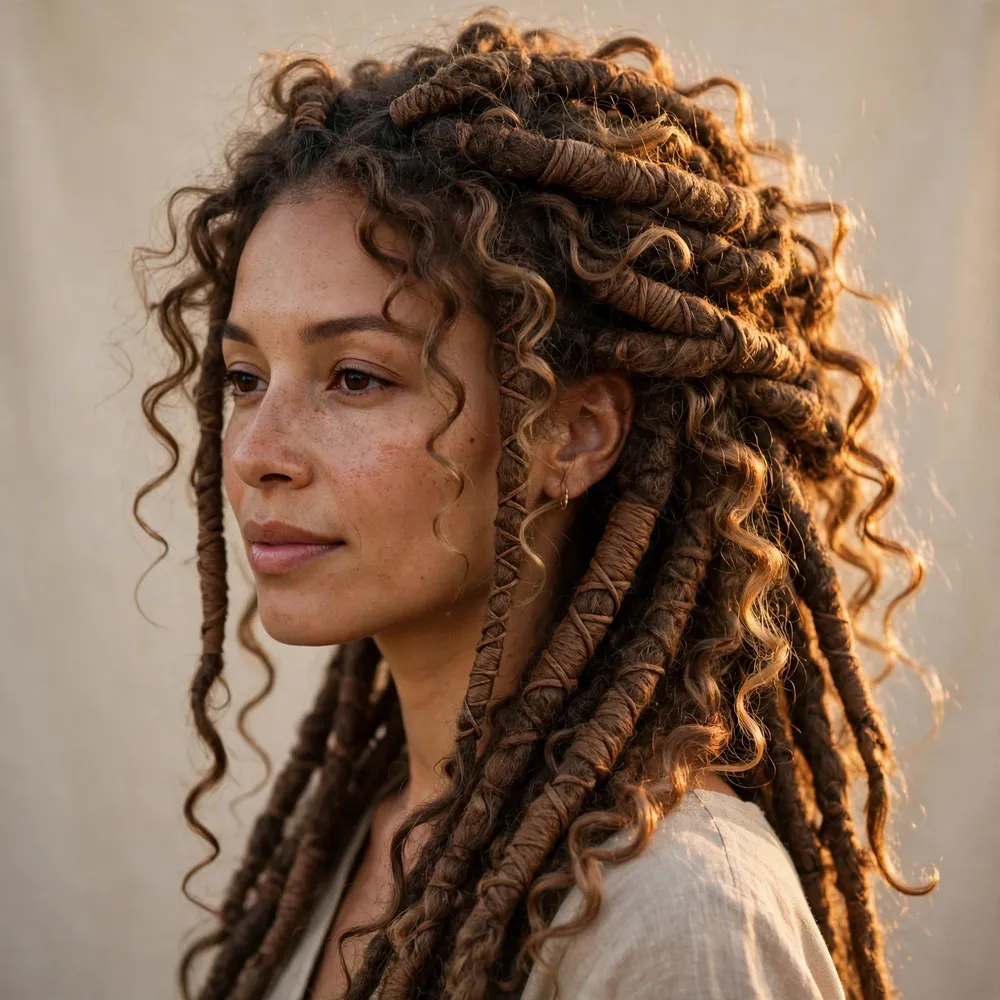
Goddess locs are wrapped faux locs with loose bohemian curls woven through, giving a soft, almost mythical texture that reads softer than traditional locs. They suit anyone who loves the loc look but wants movement — the curls stop the style feeling stiff — and they flatter round and square faces because the loose pieces soften the jawline. Ask for mid-back goddess locs with curly pieces left out at the ends and through the lengths, not just at the tips. A light mousse holds the wrap without crunch, and a scalp oil keeps the roots comfortable between washes. Expect six to eight weeks, with the curls needing a refresh around week four. The trade-off is weight and bulk: this is not a light style, and removing wrapped locs takes patience.
6. Cornrow Feed-In Pigtails
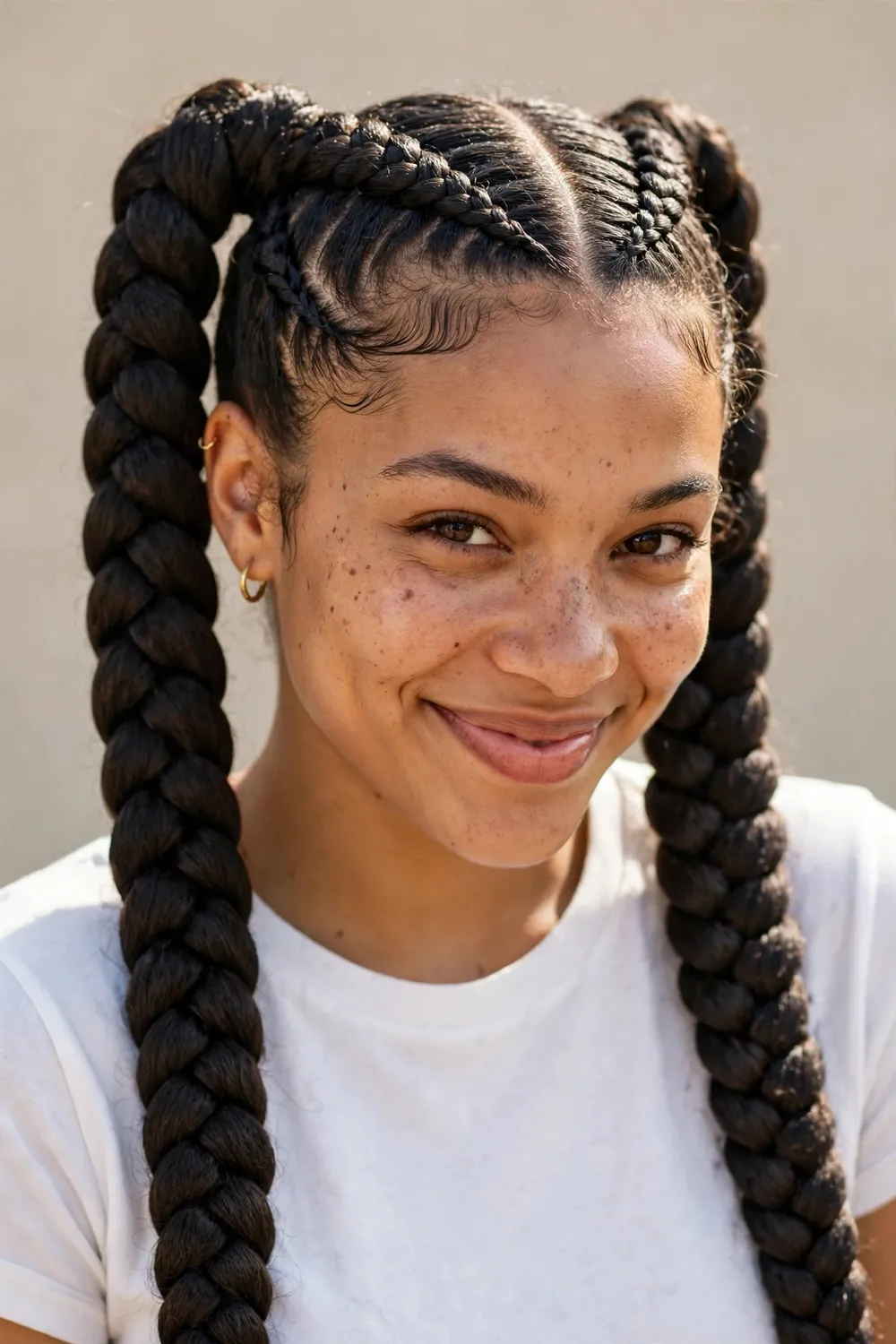
Two chunky feed-in cornrows pulled into long pigtails are the playful side of braids — face-clearing, sporty and oddly flattering on everyone. They work on most hair types, and the centre part suits oval and heart-shaped faces best, while the height of the pigtails can be adjusted to lengthen a round face. Ask for two feed-in cornrows, thick and even, gathered into pigtails at the crown, with the ends braided or curled. Edge control and a spritz of shine spray keep the scalp lines crisp. They last one to two weeks, which is short, but the install is quick and the style is cheap to redo. For the full cornrow deep dive — partings, stitch technique and every variation — our Cornrow Hairstyles guide has the complete picture.
7. Chunky Lemonade Braids
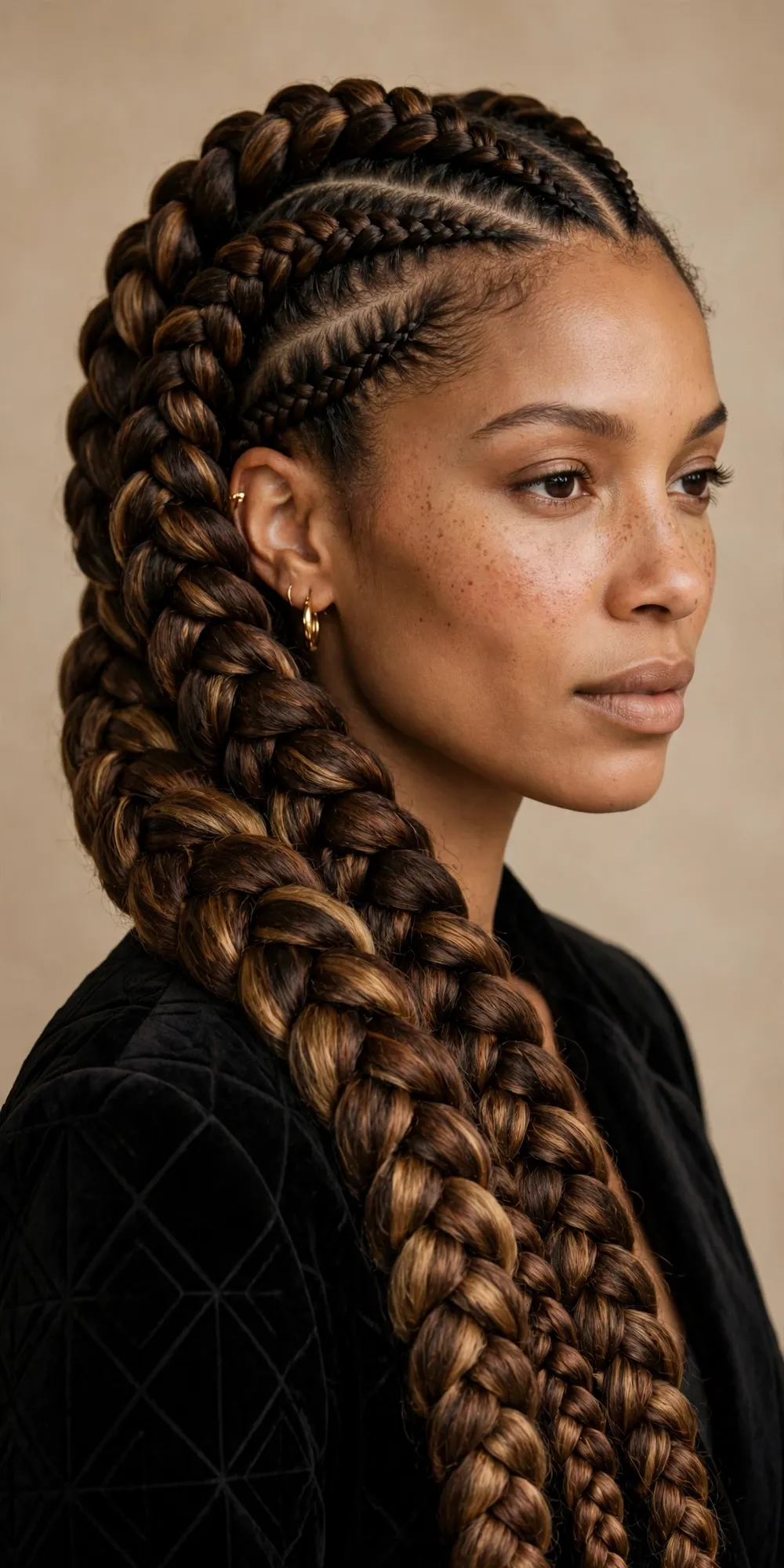
Chunky lemonade braids sweep oversized cornrows to one side so they cascade over a single shoulder — bold, red-carpet geometry with a surprisingly easy install. They suit thick hair and strong features, and the deep side part flatters round faces by breaking up the symmetry. Ask for large side-swept feed-in cornrows, all falling to one side, with the ends finished straight or with a slight curl. A little edge control at the part and a shine spray along the plaits keep the geometry sharp. They last two to three weeks, and the side sweep hides new growth better than a centre part does. The only real downside is the weight sitting on one side — if that bothers you, ask for a slightly shorter length.
8. Micro Braids with Curled Ends
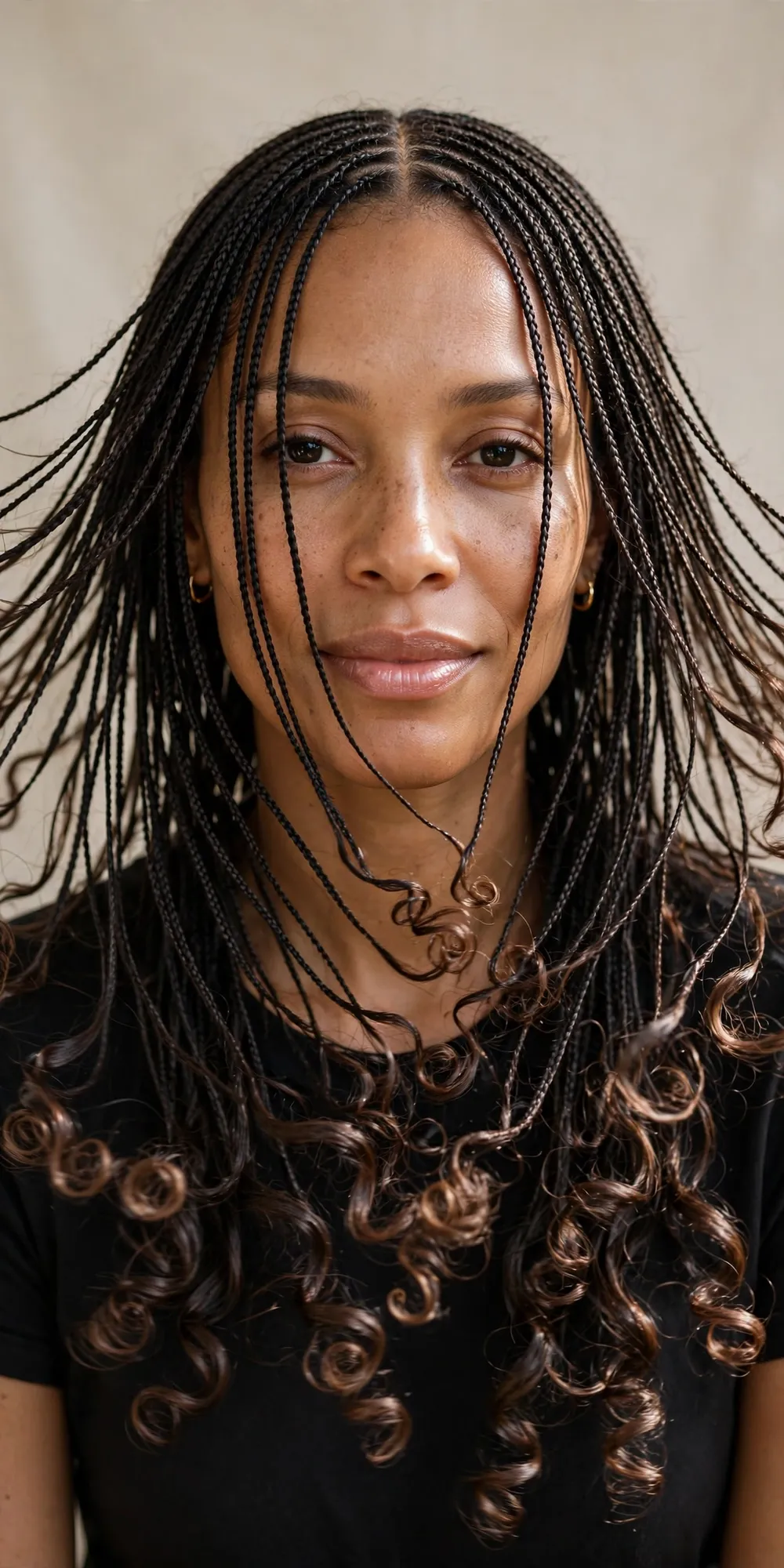
Micro braids are impossibly fine plaits that end in soft pre-curled waves, so the whole head swings like loose hair. They are best on thick, healthy hair — fine hair struggles under hundreds of tiny braids — and they suit anyone who wants versatility, since the fine size lets you wear them up, down or parted anywhere. Ask for micro braids with curled ends, shoulder length or longer, and be clear about how fine you want them; smaller means more hours and more cost. A light leave-in keeps the curled ends soft, and a satin bonnet is non-negotiable at night. They can last up to six weeks, but the install runs eight hours or more. Be honest about your patience — and your budget — before you book this one.
9. Ghana Braids with Twisted Roots
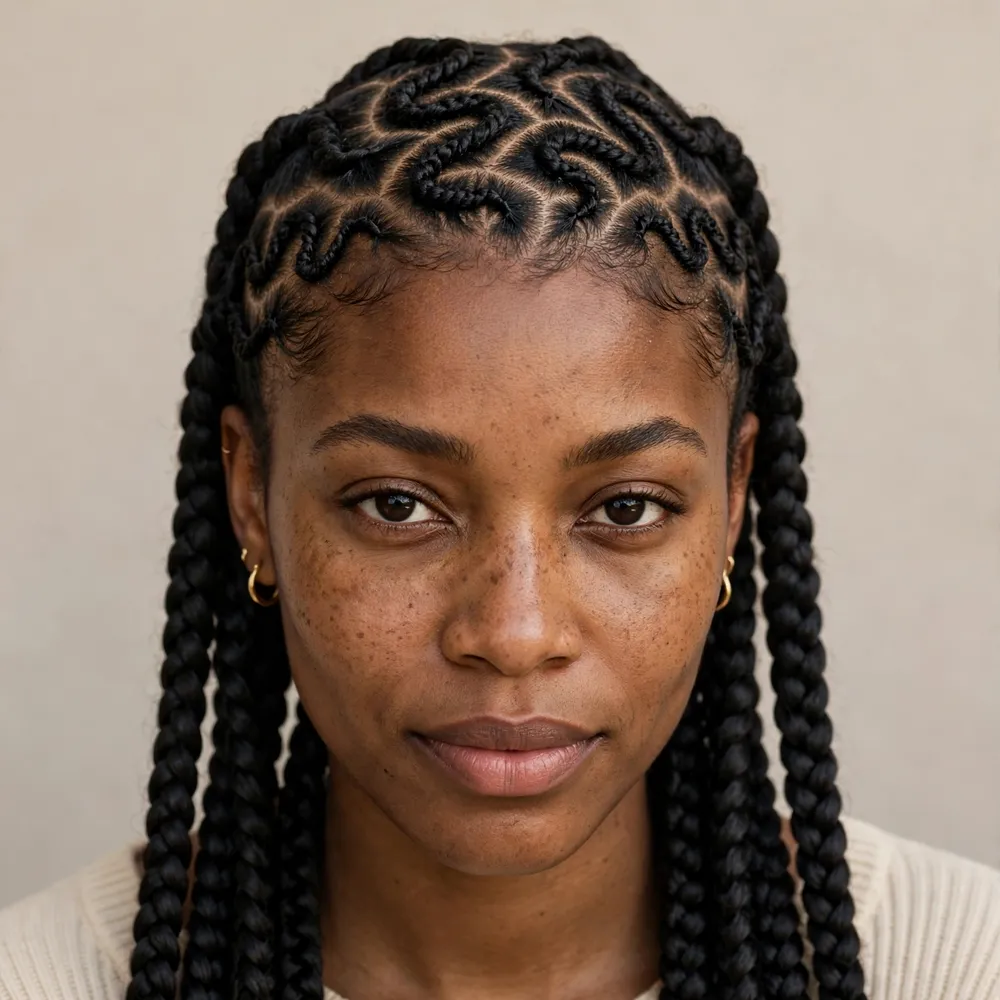
Ghana braids with twisted roots start as two-strand twists at the scalp, then feed into sleek plaits, for a dimensional, snake-like scalp pattern. They suit coily hair and anyone who wants cornrows with more texture than the flat classic, and the raised pattern flatters round faces by adding height at the crown. Ask for Ghana braids with twisted roots, five or six braids swept back, with short twist sections. Edge control defines the pattern, and a braid spray keeps the plaits smooth. They last two to four weeks, and the twisted roots loosen sooner than a standard cornrow, so book a touch-up if you need the full month. It is a skilled style, so choose a braider who has done Ghana braids before.
10. Boho Half-Up Half-Down Braids
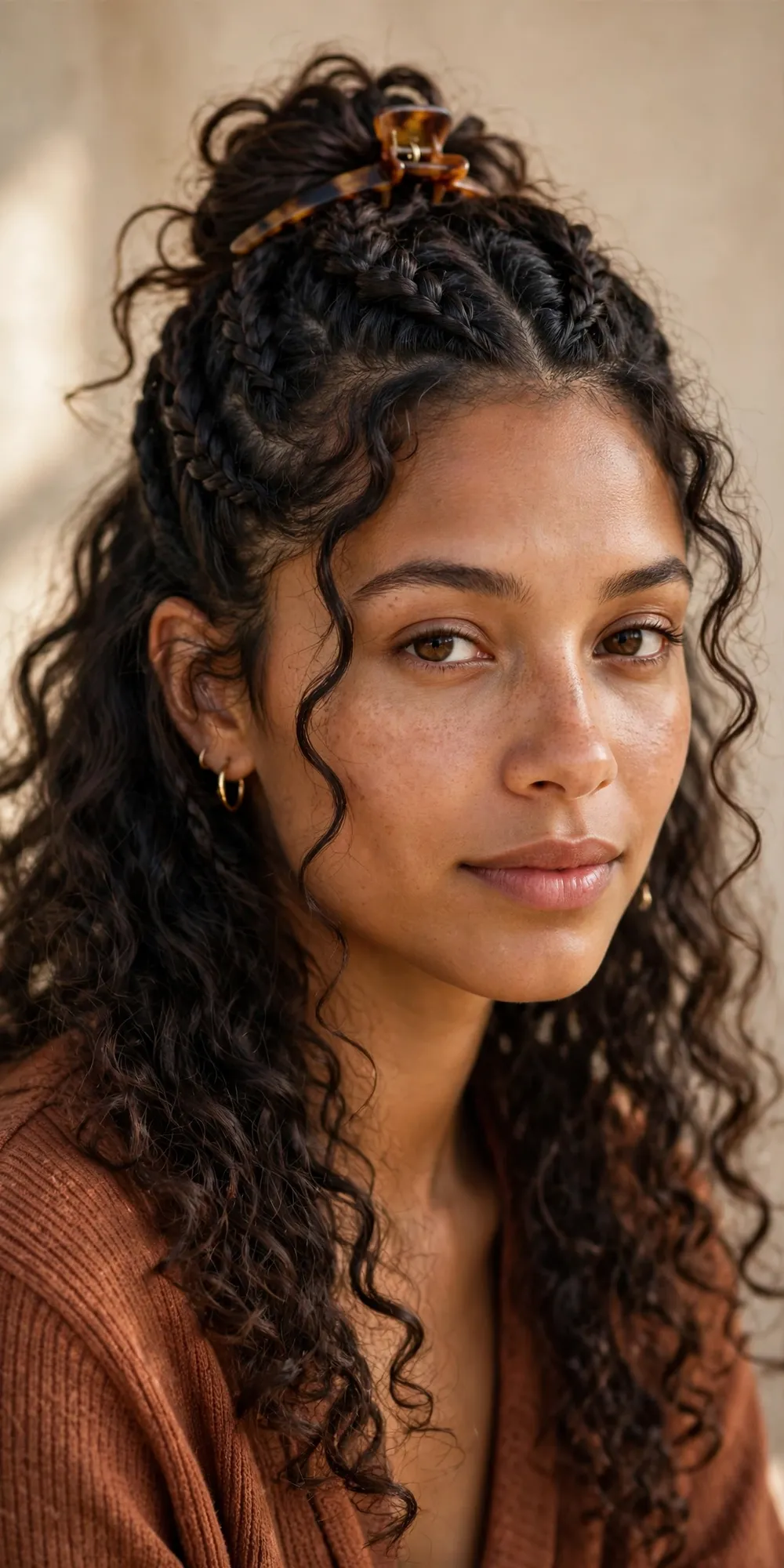
Boho half-up half-down braids take the top half of knotless braids, clip them up, and let the curly lengths flow free — relaxed at the front, romantic at the back. They suit almost every face shape, and they are a lovely option for anyone who finds full-length braids heavy. Ask for medium knotless braids with curly ends, then have the top half gathered into a small bun or claw clip, leaving the rest loose. A curl cream on the free ends keeps them defined, and a light oil on the scalp stops itching. They last six to eight weeks as braids, though the half-up look is best before the roots grow out. For every boho variation — lengths, partings and accessories — our Boho Braids guide goes deeper.
11. Zig-Zag Parting Braids
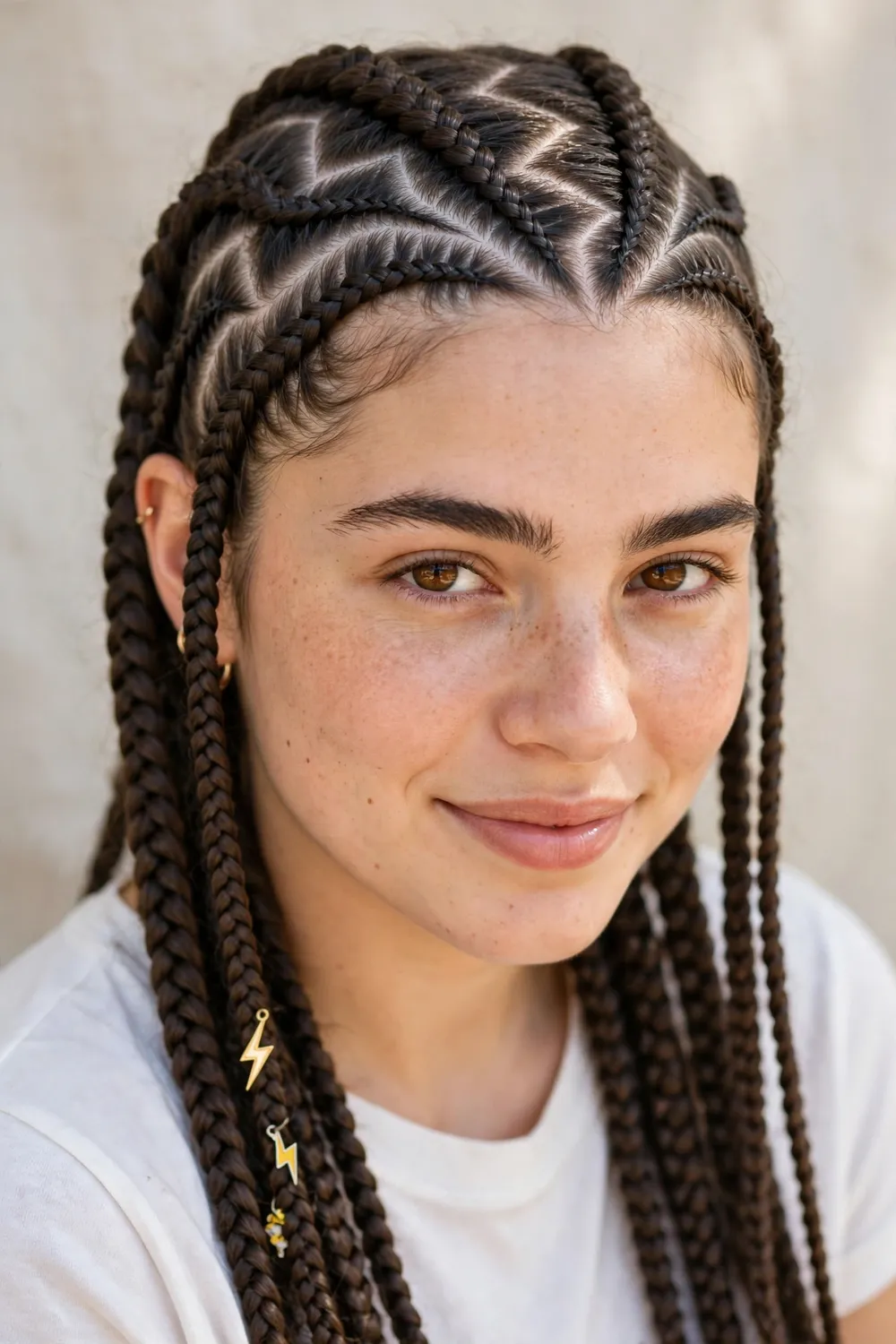
Zig-zag parting braids hide a lightning-bolt parting under otherwise simple braids, so the fun only shows when you lift the hair or tie it up. They are a great pick if you want something different without committing to a loud style, and they work on most hair types and lengths. Ask for a zig-zag part with medium box braids or cornrows, and make sure your braider is confident with angled parts, since a wobbly line ruins the effect. A little edge control and a shine spray keep the angles visible. Wear time follows the braid type underneath — two weeks for cornrows, up to eight for box braids. The zig-zag itself needs no special care, which is the point: maximum personality for almost no extra effort.
12. Passion Twist Mid-Length Bob
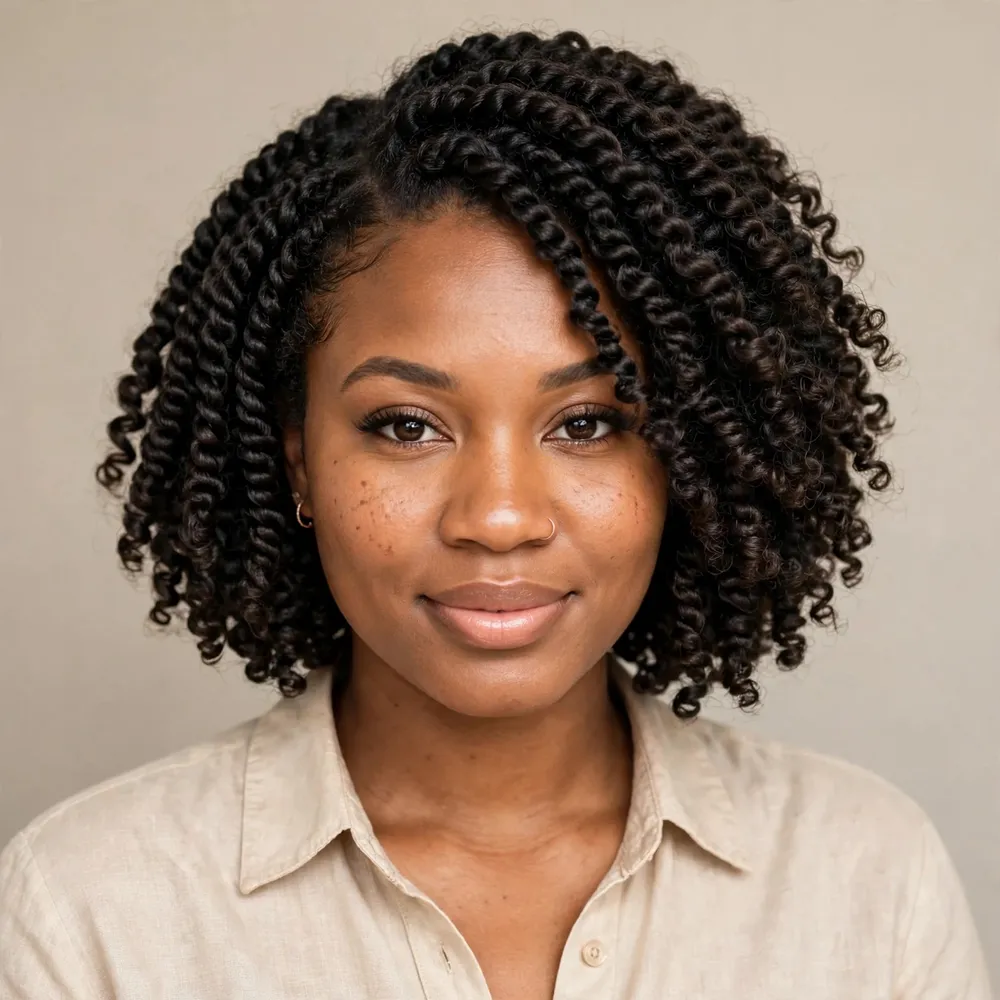
A passion twist bob cuts springy water-wave twists to a chin-grazing length, with bounce and a shape that works in an office as easily as on holiday. It suits fine to medium hair best — the twists are light, so they do not drag — and the bob length flatters round and square faces by framing the jaw without adding bulk. Ask for passion twists cut to bob length, with the twists kept springy rather than pulled tight, and a centre or side part to suit your face. A mousse holds the spring without stiffness, and a silk scarf at night stops the twists unravelling at the ends. Expect four to six weeks of wear; the ends need a re-twist around week three. It is low-maintenance and grows out gracefully.
13. Curved Invisible Cornrows
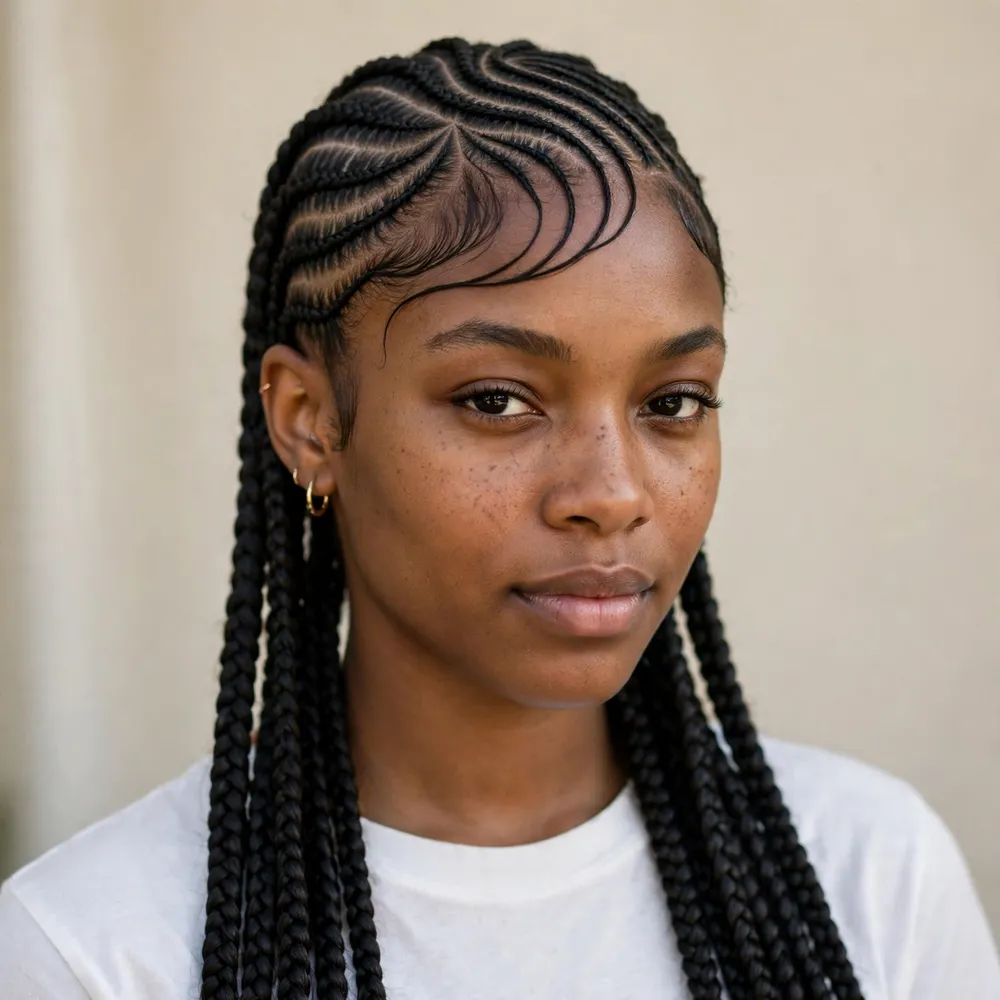
Curved invisible cornrows feed the extensions underneath the braid, so no knots show and the scalp lines sweep in smooth, elegant curves. They suit anyone who wants cornrows that look polished rather than sporty, and the curved lines flatter long faces by breaking up vertical length. Ask for invisible cornrows with curved partings, swept back or to one side, and stress that you want the feed-in hidden — that is the whole point of the technique. Edge control and a shine spray give the finish its sleek look. They last two to four weeks, and the curves grow out visibly, so the tidy window is shorter than straight cornrows. For the complete cornrow guide — stitch technique, partings and styling — see our Cornrow Hairstyles post.
14. Butterfly Locs
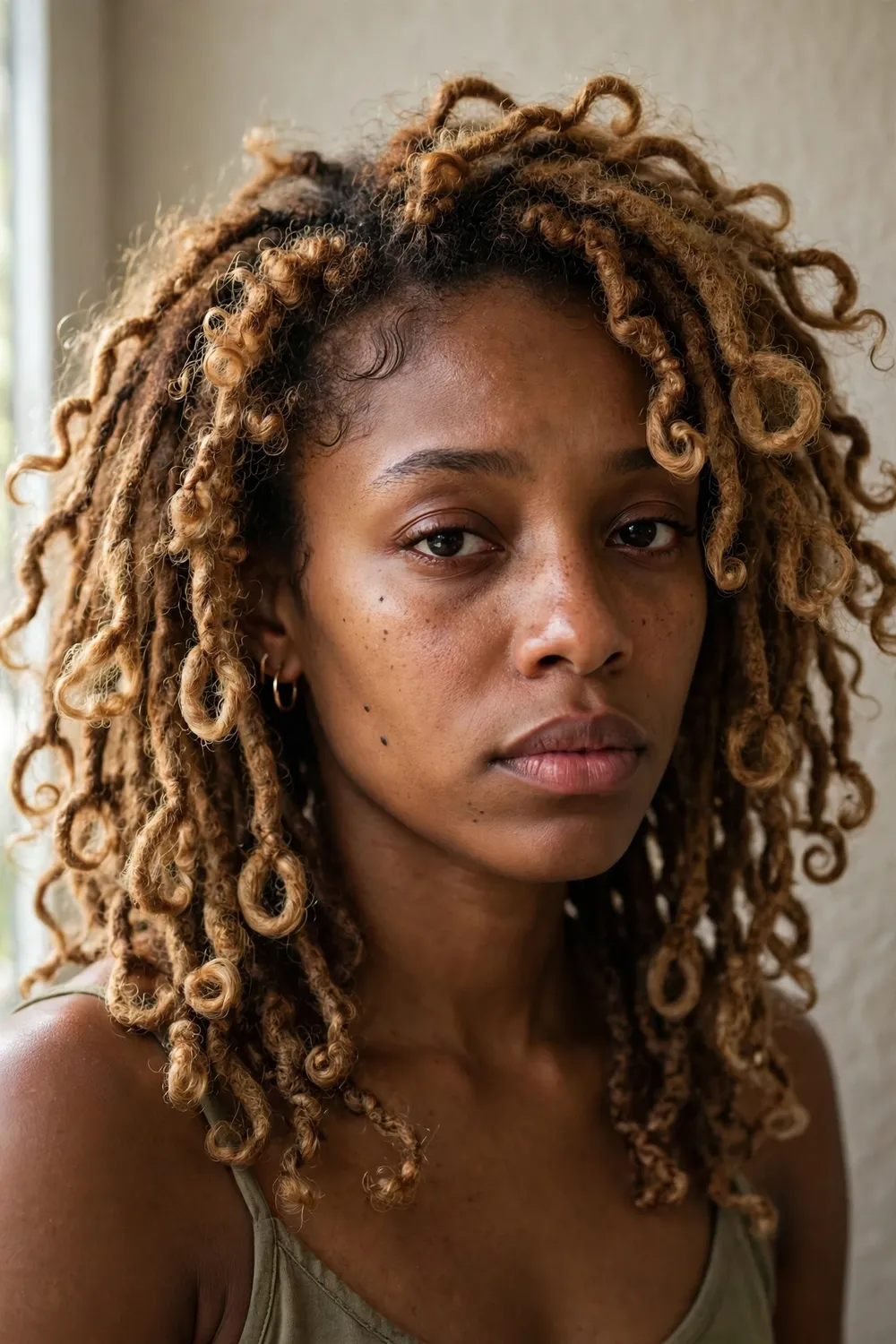
Butterfly locs are distressed, looped faux locs with a deliberately messy boho texture — and the messiness hides new growth better than any neat braid. They suit anyone who wants the loc look without the commitment, and they flatter most face shapes since the loops add softness around the face. Ask for butterfly locs, mid-back length, with the loops kept uneven for that lived-in texture, and decide up front whether you want the ends sealed or left wispy. A light mousse keeps the loops defined without crunch, and a scalp oil handles itching. They last six to eight weeks, and they age better than most styles on this list. The only catch is removal: the loops tangle, so set aside an hour and a good conditioner for takedown.
15. Tribal Braids with Cuffs
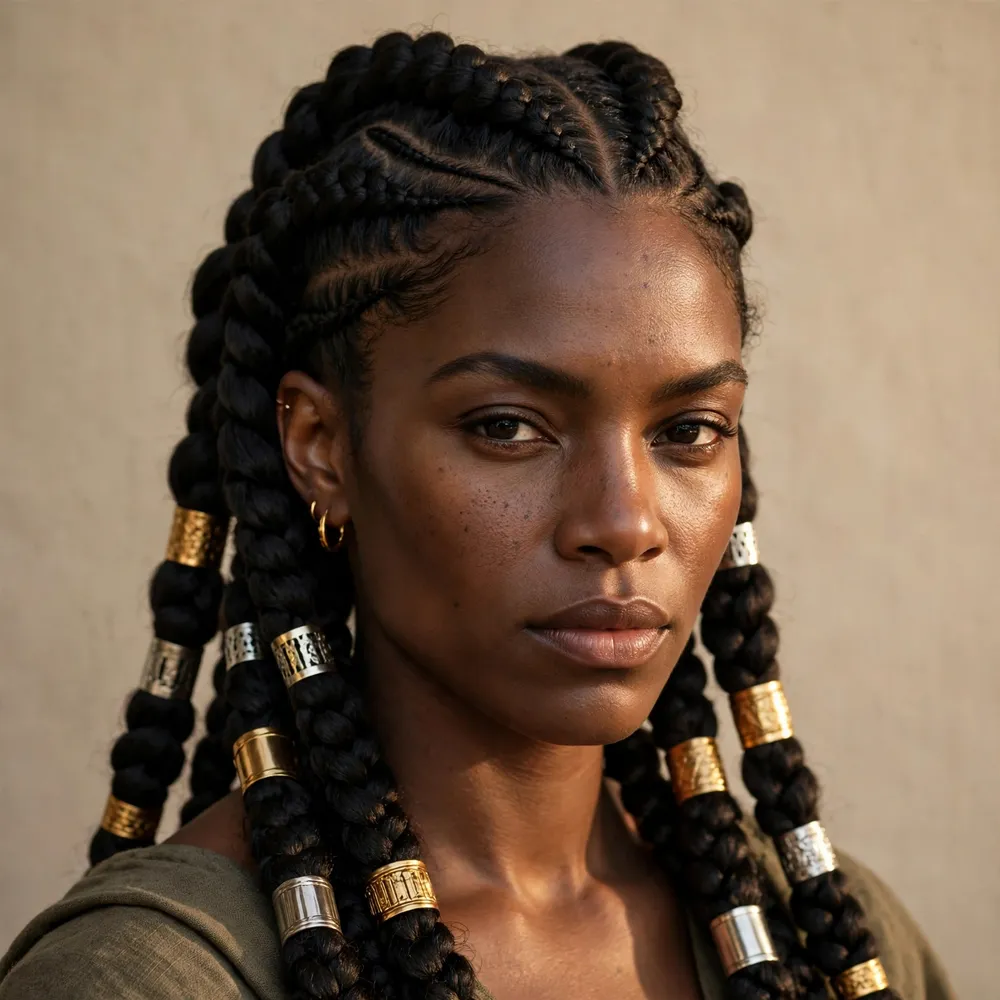
Tribal braids with cuffs are chunky feed-in cornrows capped with gold or silver cuffs, giving a regal, warrior energy that photographs beautifully. They work best on thick, coily hair that holds the chunky pattern, and the height at the crown flatters round faces. Ask for chunky feed-in cornrows with cuffs at the ends — bring your own if you want a specific metal — and keep the parts clean so the pattern reads clearly. Edge control and a shine spray finish the look; a silk scarf at night stops the cuffs catching on fabric. They last two to four weeks, and the cuffs can be reused on your next install. One practical note: metal cuffs set off airport scanners, so keep that in mind before a flight.
16. Long Sleek Middle-Part Braids
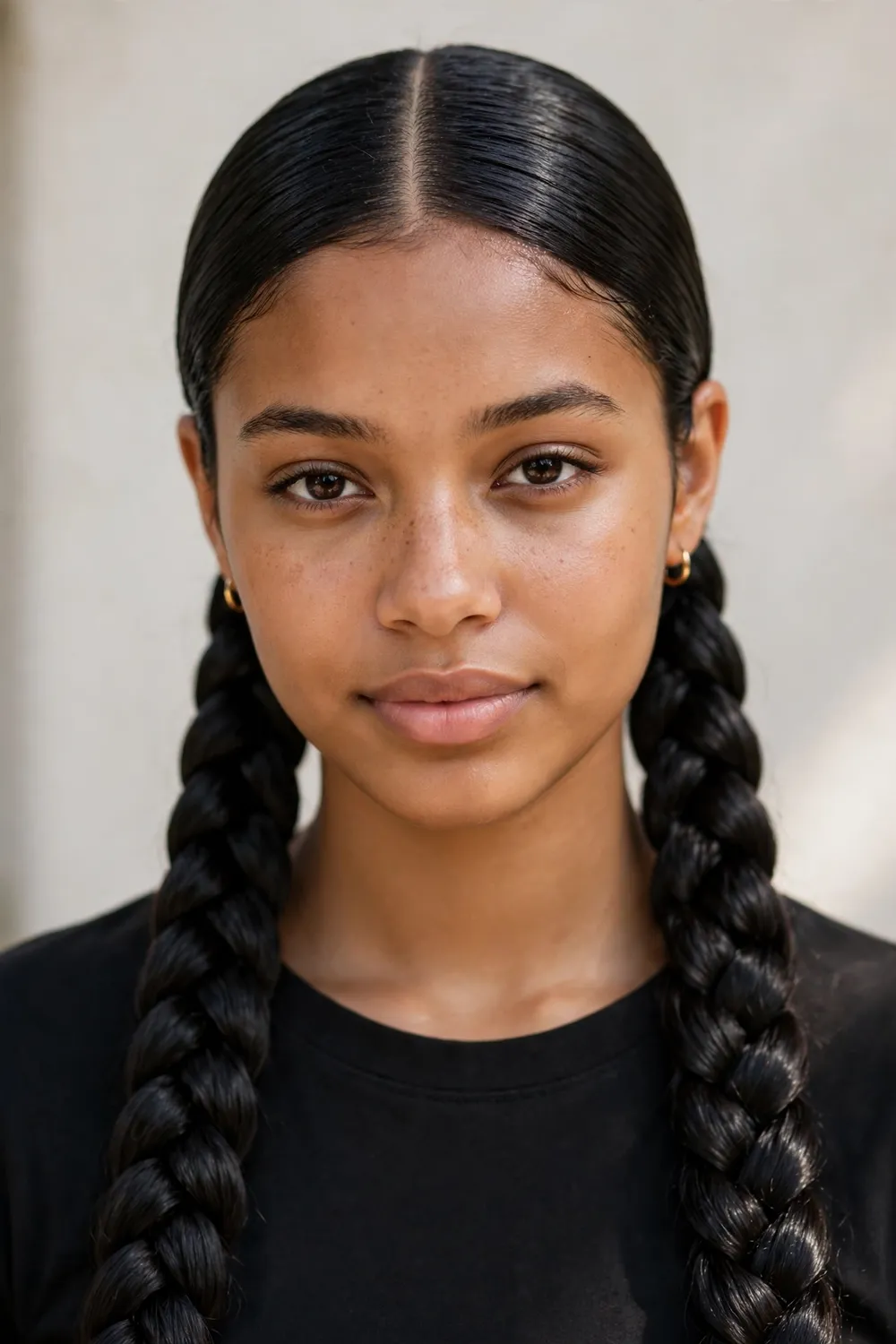
Long sleek middle-part braids use a razor-sharp centre part to split tailbone-length braids into two perfect curtains — simple, symmetrical and quietly dramatic. They suit oval and heart-shaped faces best, since the centre part highlights symmetry, and they need enough natural length or extensions to carry the weight evenly. Ask for waist- or tailbone-length box braids with a clean middle part, and have the edges laid flat so the part stays crisp. A shine spray along the lengths and a satin scarf at night keep the braids smooth. They last six to eight weeks, though the length means more weight on the scalp, so speak up about tension at install. The look is minimal, which is exactly why it works — there is nowhere for a sloppy part to hide.
17. Bubble Ponytail Braids
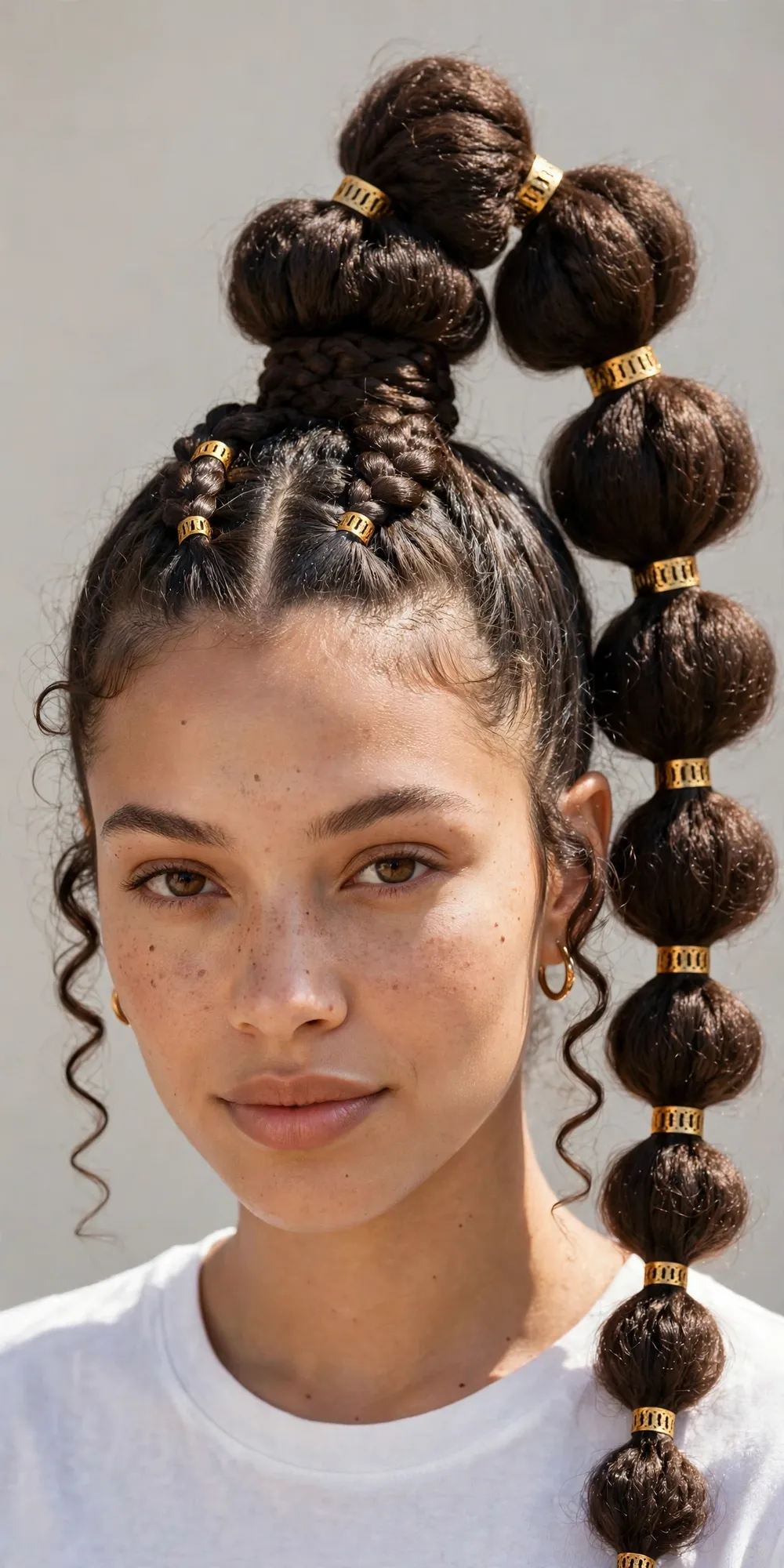
Bubble ponytail braids sweep chunky braids high, then segment the ponytail into puffy bubbles with elastics — sculptural, playful party hair with real height. They suit thick hair and anyone who wants volume without a wig, and the height flatters round faces by lengthening the silhouette, while oval faces can wear the ponytail as high as they like. Ask for braids gathered into a high ponytail, then sectioned with clear elastics into bubbles, with the bubbles gently pulled apart for fullness. A strong-hold edge control keeps the front smooth, and a shine spray finishes the bubbles. This is a one- to three-day style rather than a protective install, so treat it as occasion hair. The bubbles collapse overnight, so it is best saved for the day you actually need it.
18. Braided Mohawk with Shaved Sides

A braided mohawk with shaved sides frames a towering central strip of vertical braids between closely faded sides — punk energy meets scalp art. It suits confident wearers with an oval or round face, since the height lengthens the face, and it works on coily hair that holds vertical braids firmly. Ask for faded or shaved sides with a central strip of feed-in braids running front to back, flat or raised into a mohawk shape. Edge control keeps the fade line sharp, and braid spray maintains the centre strip. The braids last two to four weeks, but the shaved sides need a tidy-up every week or two to stay crisp. It is the boldest style here — shaved sides take months to grow out, so be sure you love it.
19. Color Melt Ombré Braids
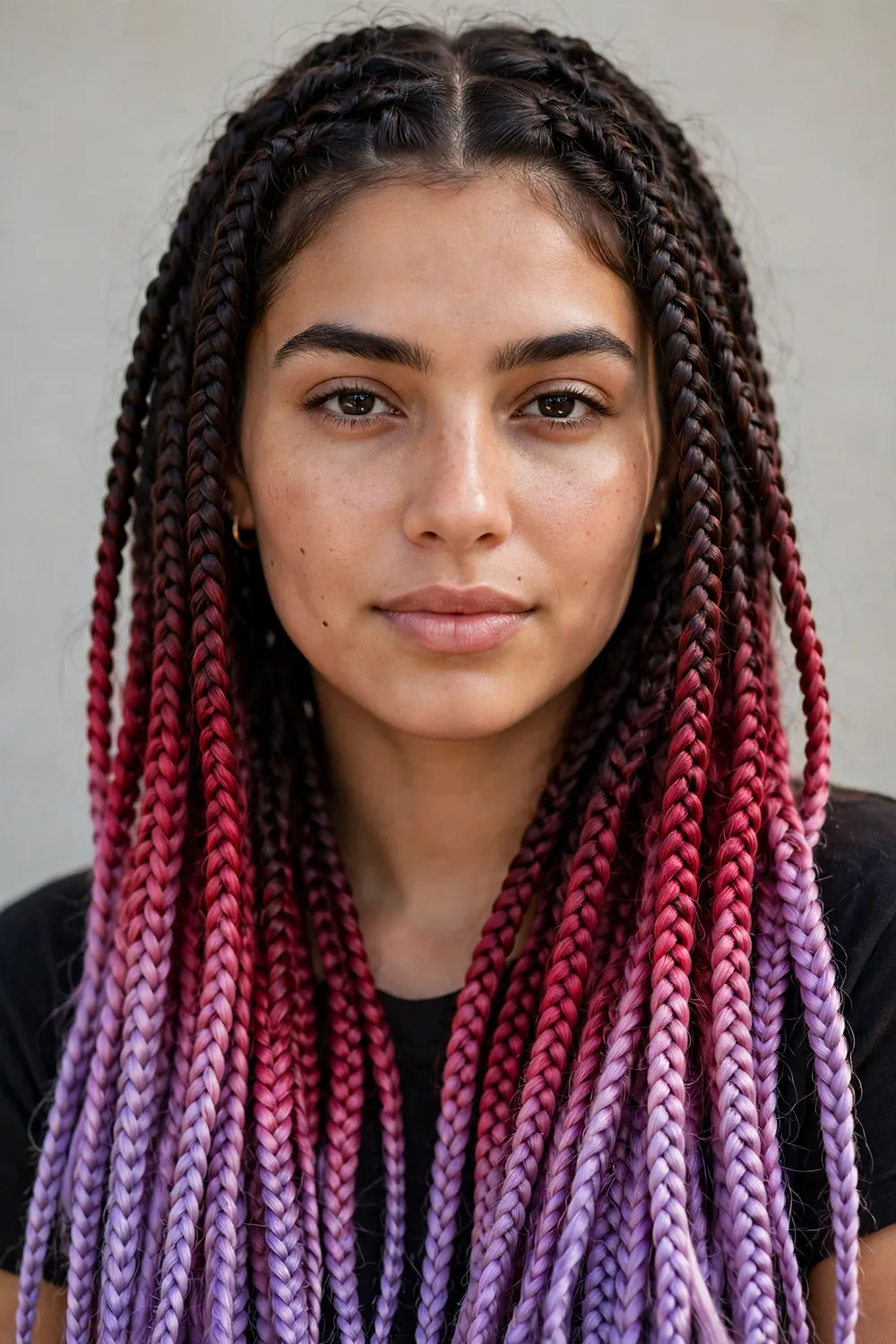
A colour melt blends one shade into the next so softly you can’t spot where espresso ends and cherry, blue or lavender begins, with braiders feeding pre-coloured extensions in gradually for a seamless root-to-tip gradient. It suits anyone who wants colour without dyeing their own hair, and looks especially striking on medium to long braids, where the gradient has room to travel. Ask for a melt rather than a hard two-tone block, and bring reference photos, since “cherry melt” means something different to every braider. Finish with a light shine spray rather than heavy gel, which dulls colour and hides the blend. The colour lives in the extensions, so there’s no regrowth to chase, but bright shades fade faster in strong sun, so a silk scarf outdoors helps.
20. Double-Stacked Feed-In Braids
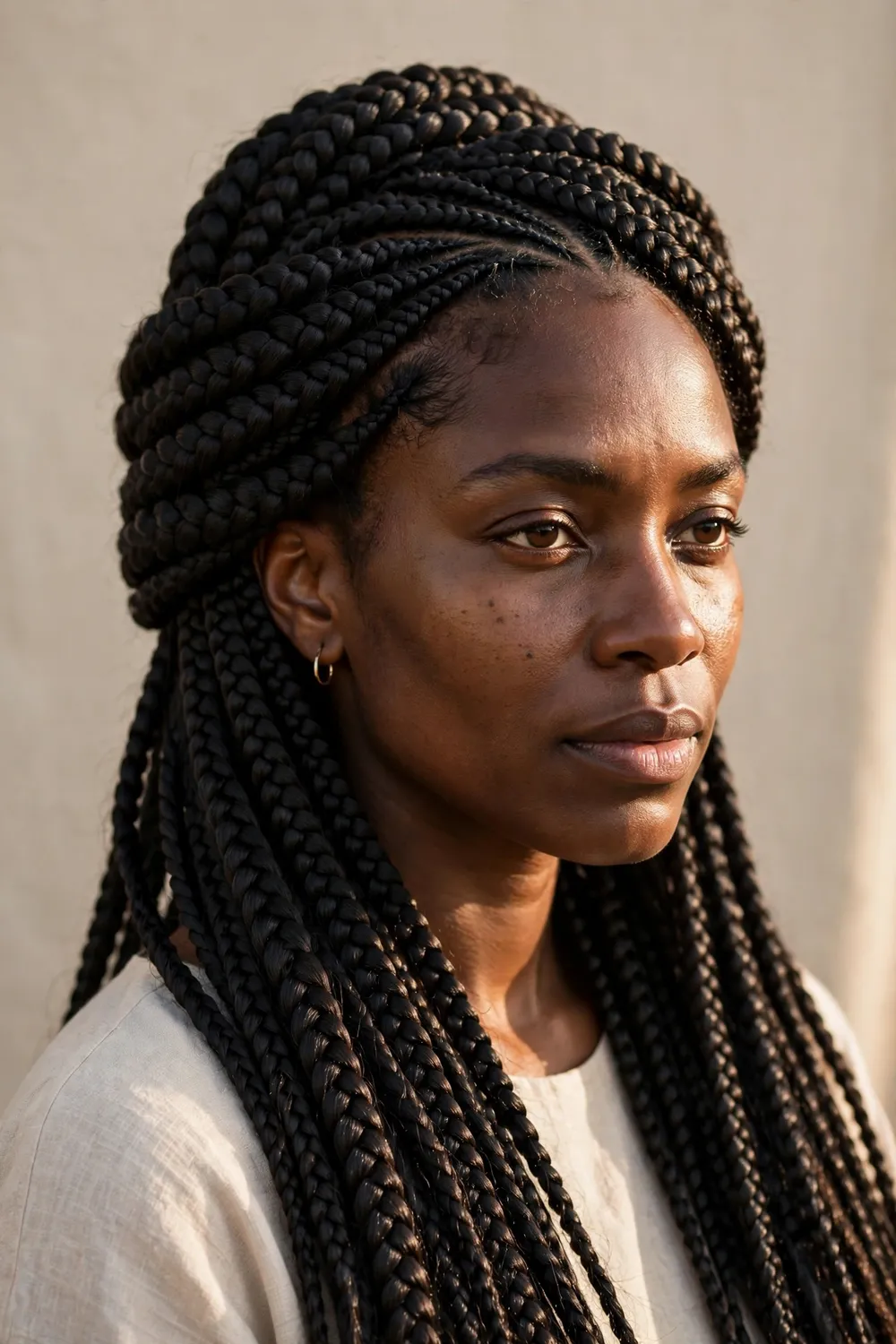
Double-stacked feed-ins are a clever illusion: two layered sets of cornrows braided so the finished style looks far denser than the hair underneath actually is. The lower layer sits close to the scalp while a second, slightly offset layer runs over it, giving the fullness that normally needs twice the extensions. It’s a good pick for fine or medium-density hair, and for anyone who loves thick cornrows but doesn’t want jumbo braids pulling at their edges. Ask for staggered partings so the layers don’t sit directly on top of each other, since that spacing sells the density without adding bulk at the roots. The trade-off is install time — two layers take noticeably longer than one — so tell your braider immediately if anything feels tight.
21. Bandana-Wrapped Crown Braid
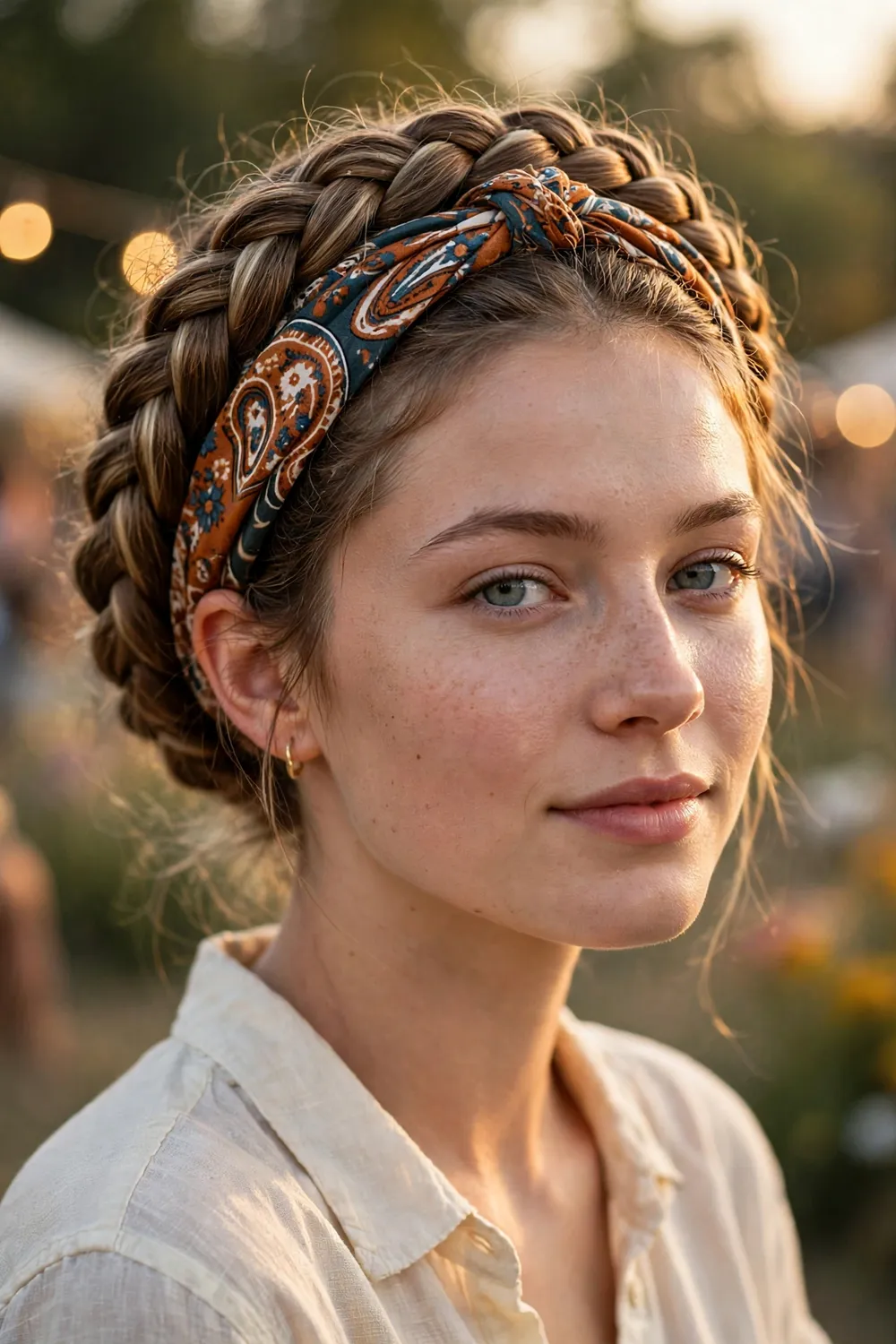
This one is pure summer festival energy: braids wrapped around the head like a halo, sitting over a silk bandana that peeks out underneath. The bandana does real work, not just decoration — it protects the hairline from sun, keeps flyaways tucked, and adds a pop of colour that ties the whole look together. It suits medium to long hair best, though shorter hair can manage a half-crown version pinned at the sides. Ask your braider for a loose crown braid rather than a tight Dutch, so it sits comfortably all day, and choose silk or satin over cotton, which absorbs moisture from your hair. Maintenance is minimal: pin loose ends before bed, sleep on a silk pillowcase, and re-tie the bandana each morning.
22. Blonde Honeycomb Braids
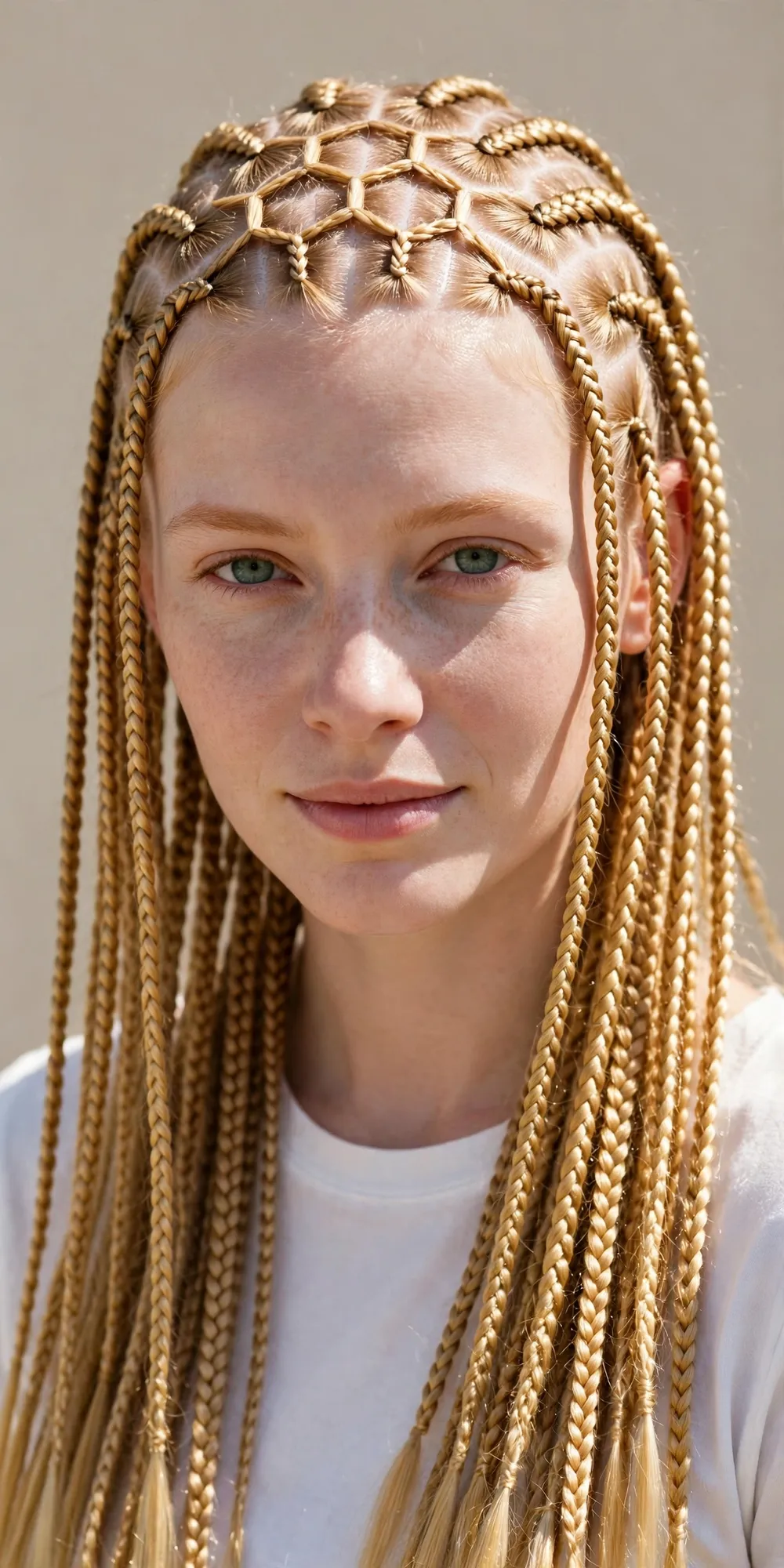
Honeycomb partings turn the scalp itself into the artwork: neat hexagonal sections, each feeding a braid, so the finished head looks like a golden honeycomb catching the light. In bright blonde the geometry shows up beautifully, but it works in any colour if the parts are crisp. It suits confident wearers who don’t mind attention, and medium to thick hair holds the pattern best — very fine hair can struggle to keep the hexagons defined. Ask your braider to map the partings with a rat-tail comb before starting, because the whole effect depends on even, symmetrical sections. The honest downside is upkeep: as hair grows the hexagons blur, so this is a two-to-four-week style, not a long protective install.
23. Tree Braids Curly Hybrid
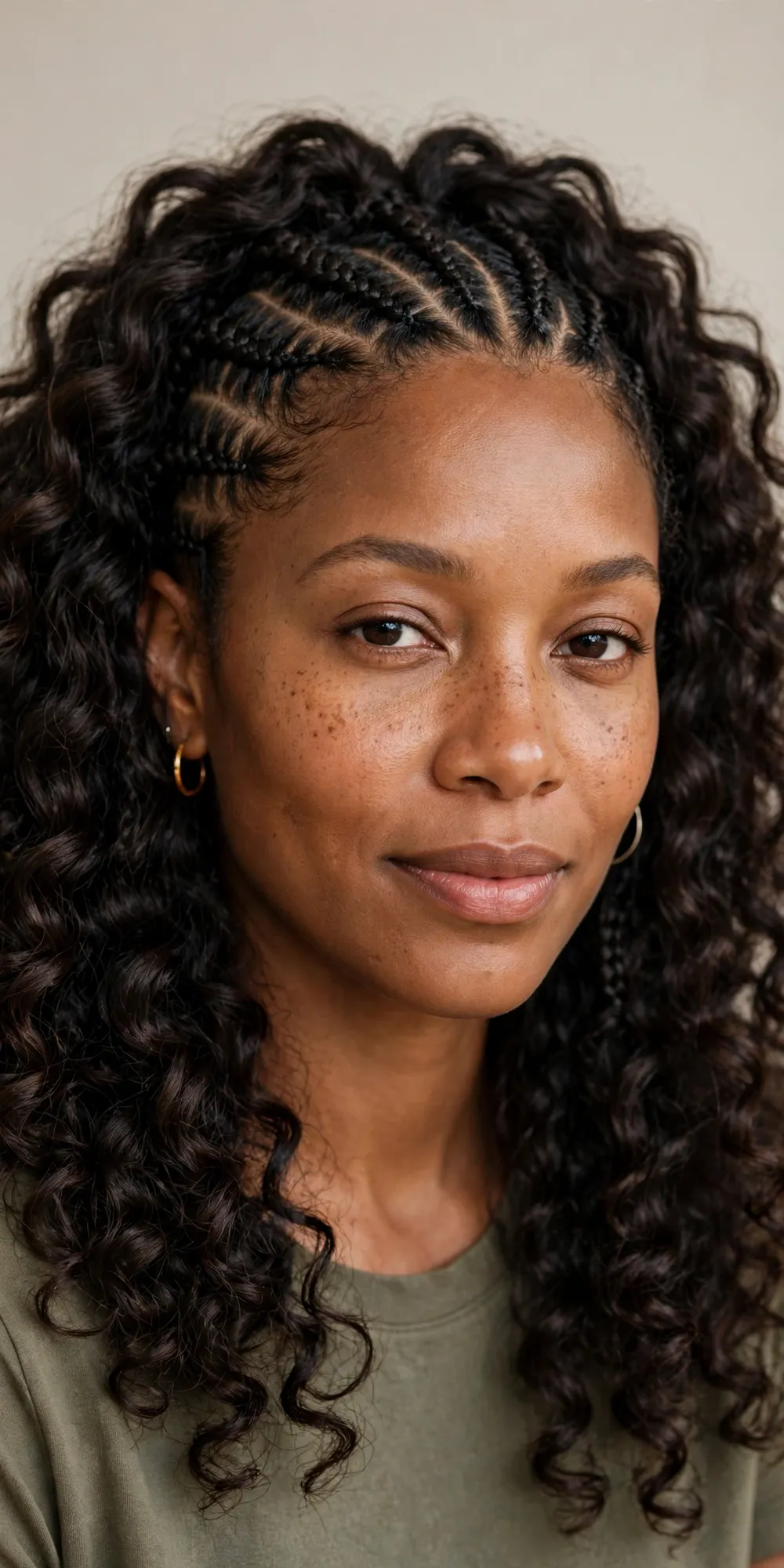
Tree braids give you a silk-press look without heat: hidden cornrowed roots anchor billowing loose curls, so from the front it reads as a full head of flowing hair. The braider cornrows small sections at the scalp and pulls curly extensions through, leaving most of the length free and unbraided. It suits all face shapes and natural hair that needs a break from daily styling, since the roots stay protected while the curls do the talking. Ask for a curl pattern close to your own texture if you want it to blend, or go bolder with a defined curl for a glam finish. A curl-defining cream keeps the loose lengths from frizzing — use a wide-tooth comb, never a brush — and expect about four weeks of wear.
24. Backless Front Stitch Braids
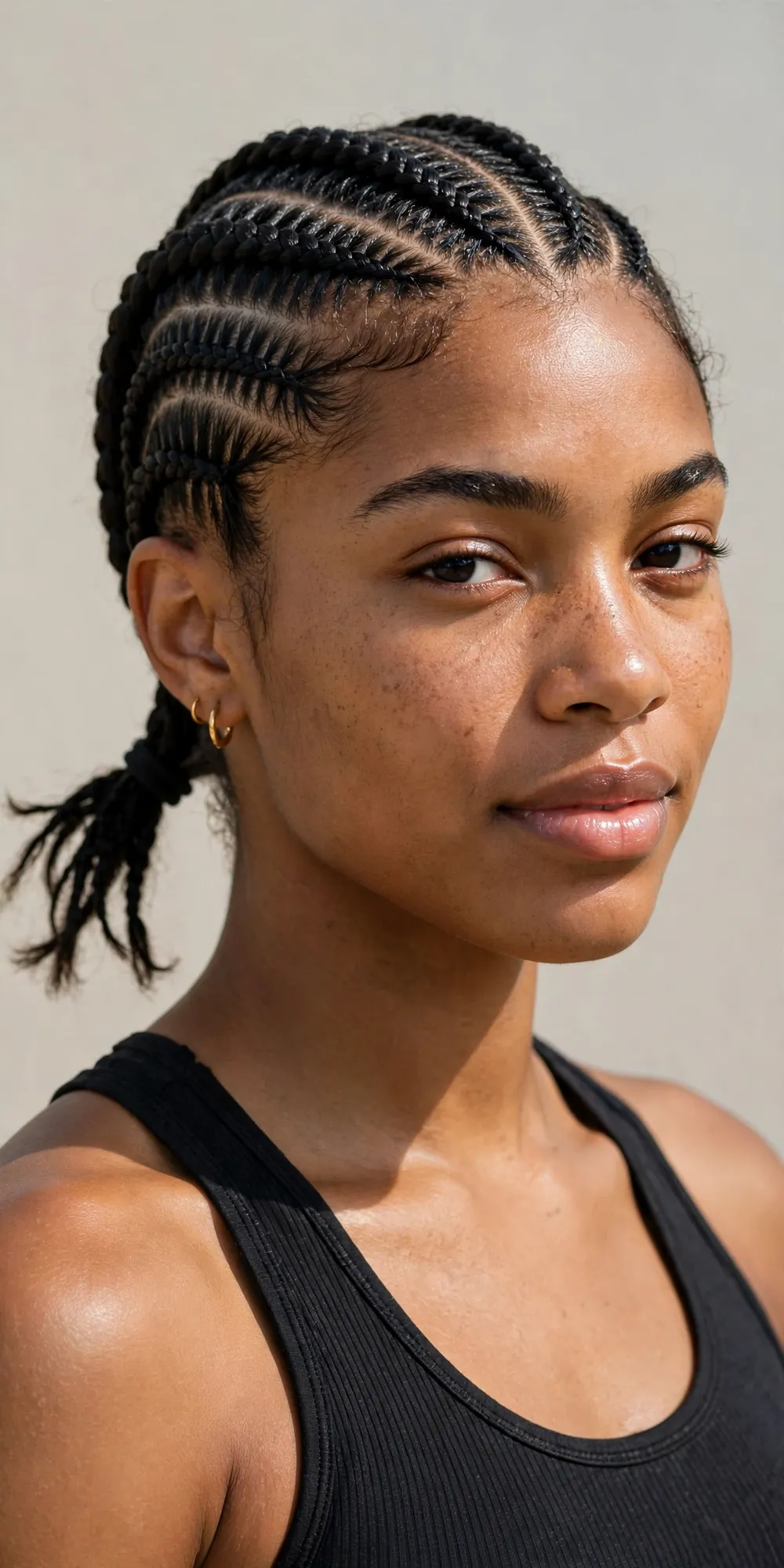
Front stitch braids put all the detail up front: precise stitch patterns across the forehead, while the back is left loose, tied short, or gathered into a low puff. The result feels light and athletic, a favourite for gym-goers and anyone who finds full-head braids too heavy in warm weather. It suits oval and long faces well, since the detailed front frames the face without adding bulk at the back. Ask for clean stitch lines and a defined centre or side part, and decide the back length first — short reads sporty, longer leans glamorous. The trade-off is wear time: edge control and a silk scarf keep the front crisp, but with less hair braided the style loosens faster, so plan on two to three weeks.
25. Criss-Cross Underground Cornrows
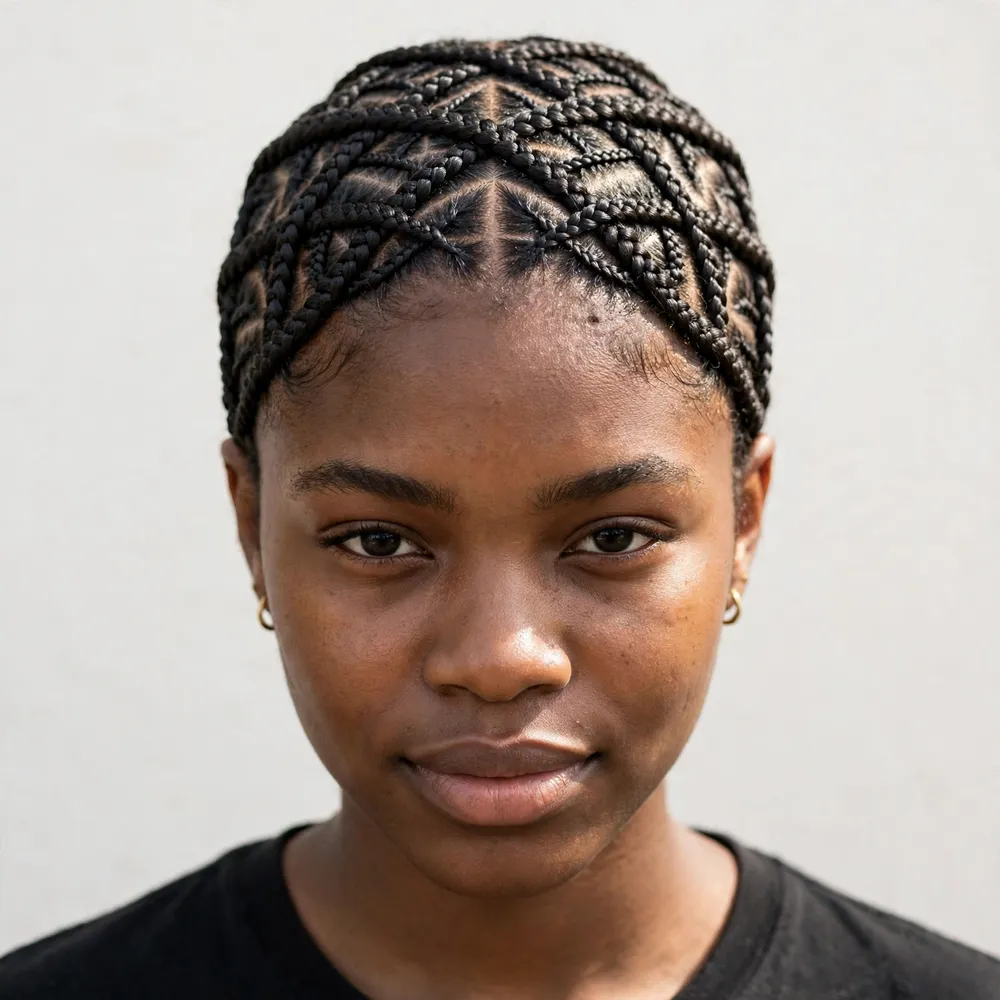
Criss-cross underground cornrows are woven like a basket: underhand crossover braids create raised ridges and futuristic geometry across the scalp. It’s a technique-heavy style, so it needs a braider who genuinely knows cornrowing — the crossover must stay even or the pattern drifts within days. It suits medium to thick hair and anyone who wants a statement style flat enough for hats and headwraps. Ask for the crossover to be kept loose at the hairline, since weaving puts more tension on the edges, and finish with a light oil sheen rather than heavy gel, which flakes in the ridges. This is a cornrow technique variant, so for classic patterns, sizing and wear times, see our Cornrow Hairstyles guide — and expect two to four weeks of wear.
26. Accessorized String and Bead Braids

Sometimes the braids are only half the look: bright embroidery thread woven through the plaits, with wooden beads and cowrie shells at the ends, turns a simple style into something personal. This suits every hair type and length, because the accessories do the heavy lifting — even basic three-strand braids look intentional with the right beads. Ask your braider to thread the string as they braid rather than wrapping it on afterwards, and choose lightweight wooden or plastic beads over heavy metal ones for long wear. Clear nail polish on thread ends stops fraying, and a light oil keeps the braids from drying out. The honest catch is noise and weight: beads click when you move and catch on scarves, so keep them lighter at the nape.
27. Side-Swept Dutch Braid Bun
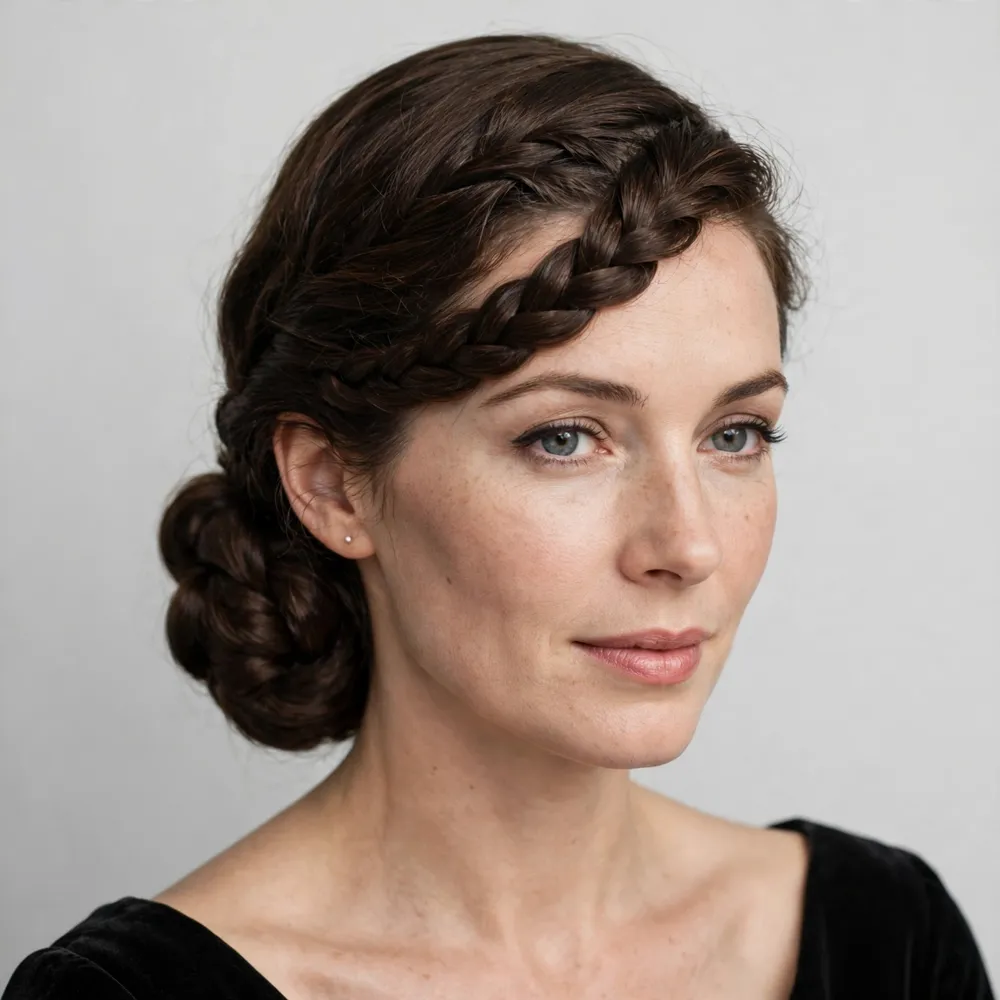
Old-Hollywood elegance, braided: an inverted Dutch braid sweeps across the forehead and gathers into a low chignon at the nape. The raised Dutch texture gives the sweep real dimension, while the bun keeps everything polished enough for a wedding or a formal evening. It suits medium to long hair, all textures, and works beautifully on oval and long faces, where the diagonal line softens length. Ask your stylist to braid with the head tilted slightly so the sweep sits naturally, and to pin the bun with U-pins rather than a tight elastic, which flattens the shape. Finish with light-hold hairspray and a few face-framing wisps — pulled out before spraying, not after — and take it down before bed, since this is a special-occasion style, not a protective install.
28. Classic French Braid
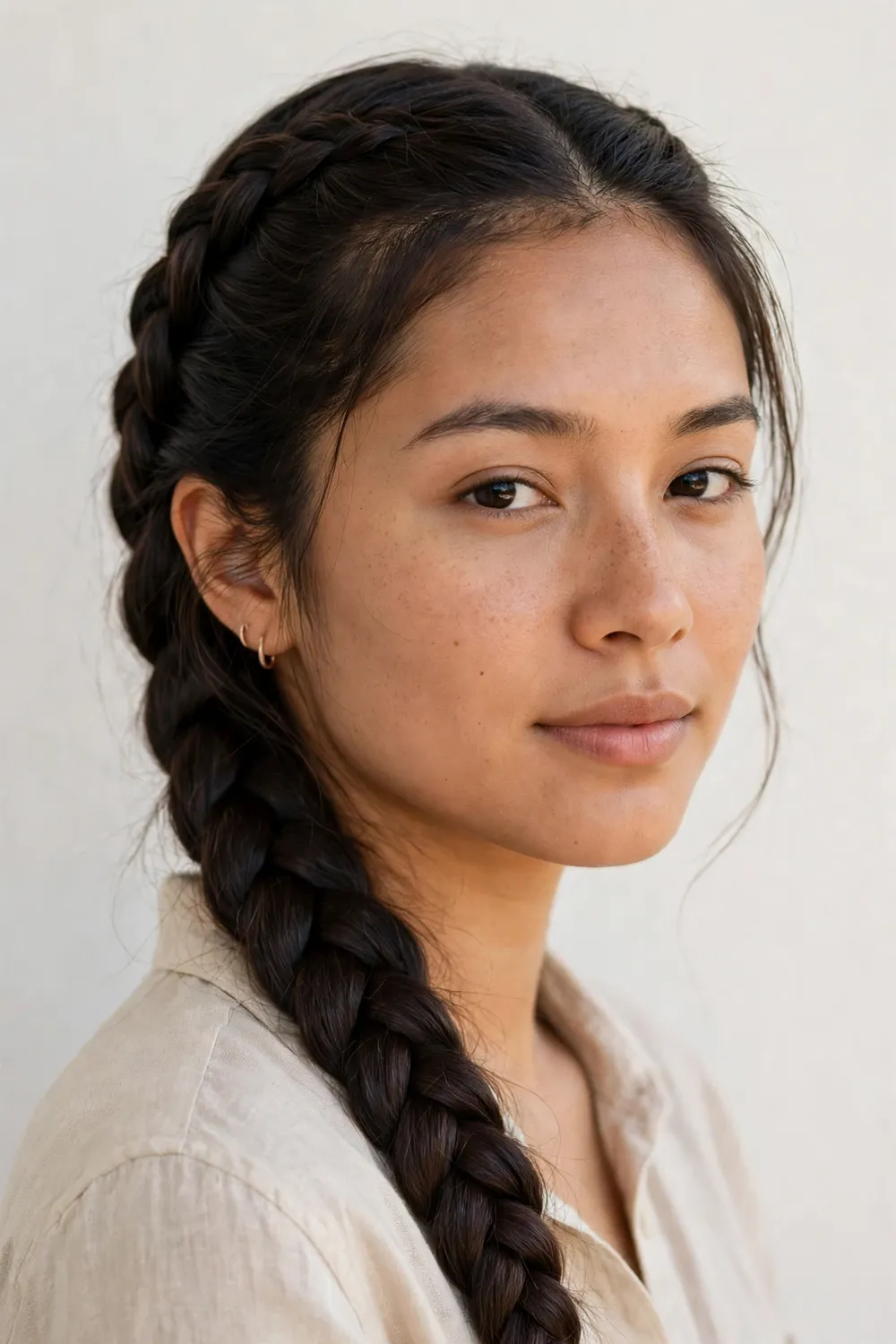
The original three-strand plait, woven down the head, is still the braid every other braid is measured against. It takes five minutes and needs no extensions, no appointment and no products beyond a hair tie — which is why it never goes out of style. It suits everyone: straight, wavy or curly hair, short layers that need taming, long hair that needs containing. For a neat finish, start with detangled, slightly damp hair and keep sections even; rushing is what makes one side thicker than the other. A pea-sized amount of smoothing cream tames flyaways, and the braid lasts a day — maybe two with a silk bonnet. For more everyday options in the same spirit, our Easy Hairstyles round-up is full of five-minute styles like this one.
29. Dutch Braid
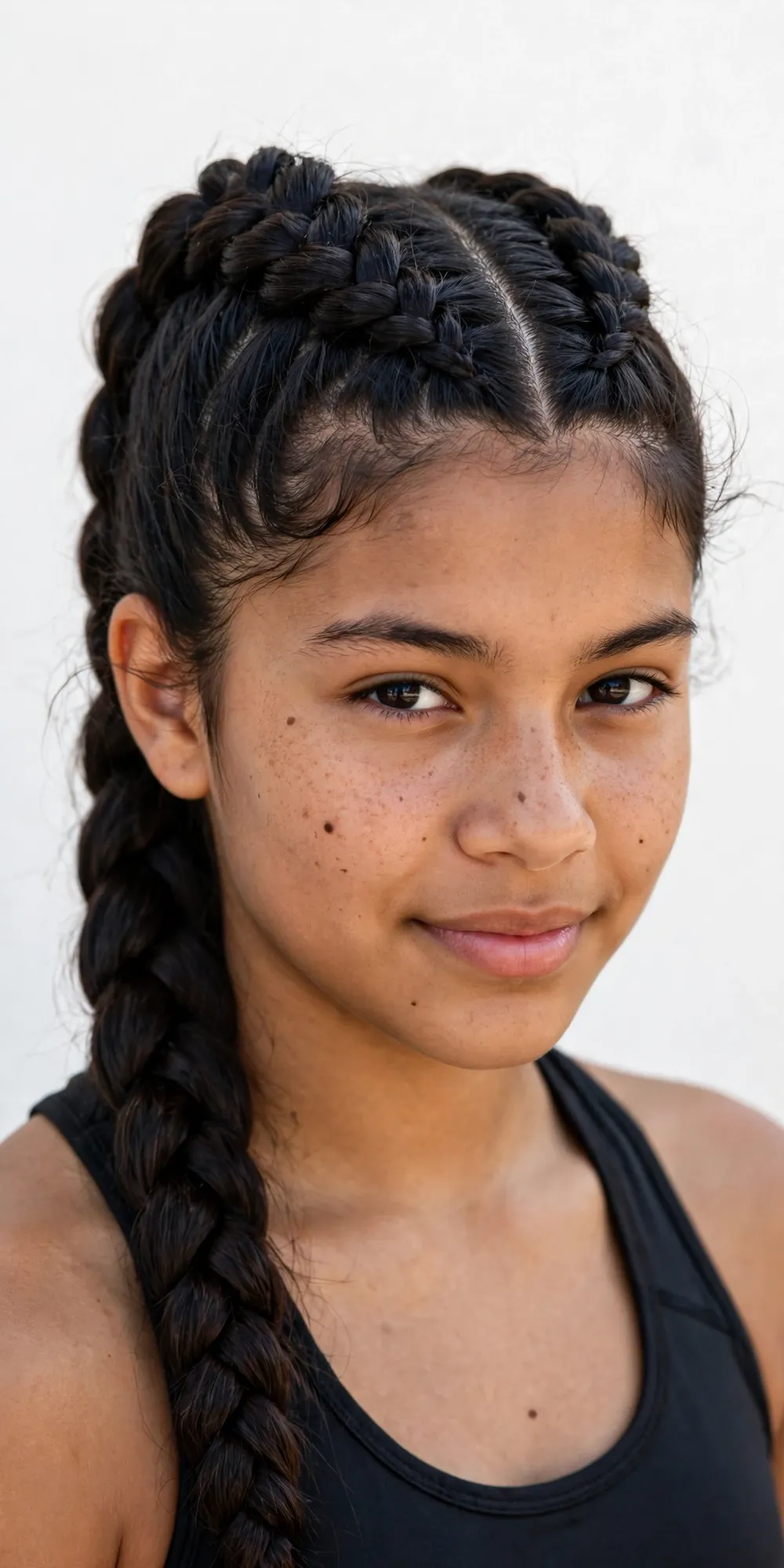
A Dutch braid is a French braid in reverse: cross strands under instead of over, so the plait sits bold and raised on the scalp with a 3D texture you can see from across the room. It’s the sportier sibling — more secure during workouts, more visible in photos, and more forgiving on thick hair. It suits medium to long hair best, and rescues wavy or curly textures that slip out of a regular French braid. Keep each under-cross snug but not yanking, and pull the braid gently wider at the end for a fuller, softer finish. A light texturising spray gives grip on freshly washed hair, when Dutch braids slip most — wear it for a day, or double it into two braids for a gym-proof style.
30. Fishtail Braid
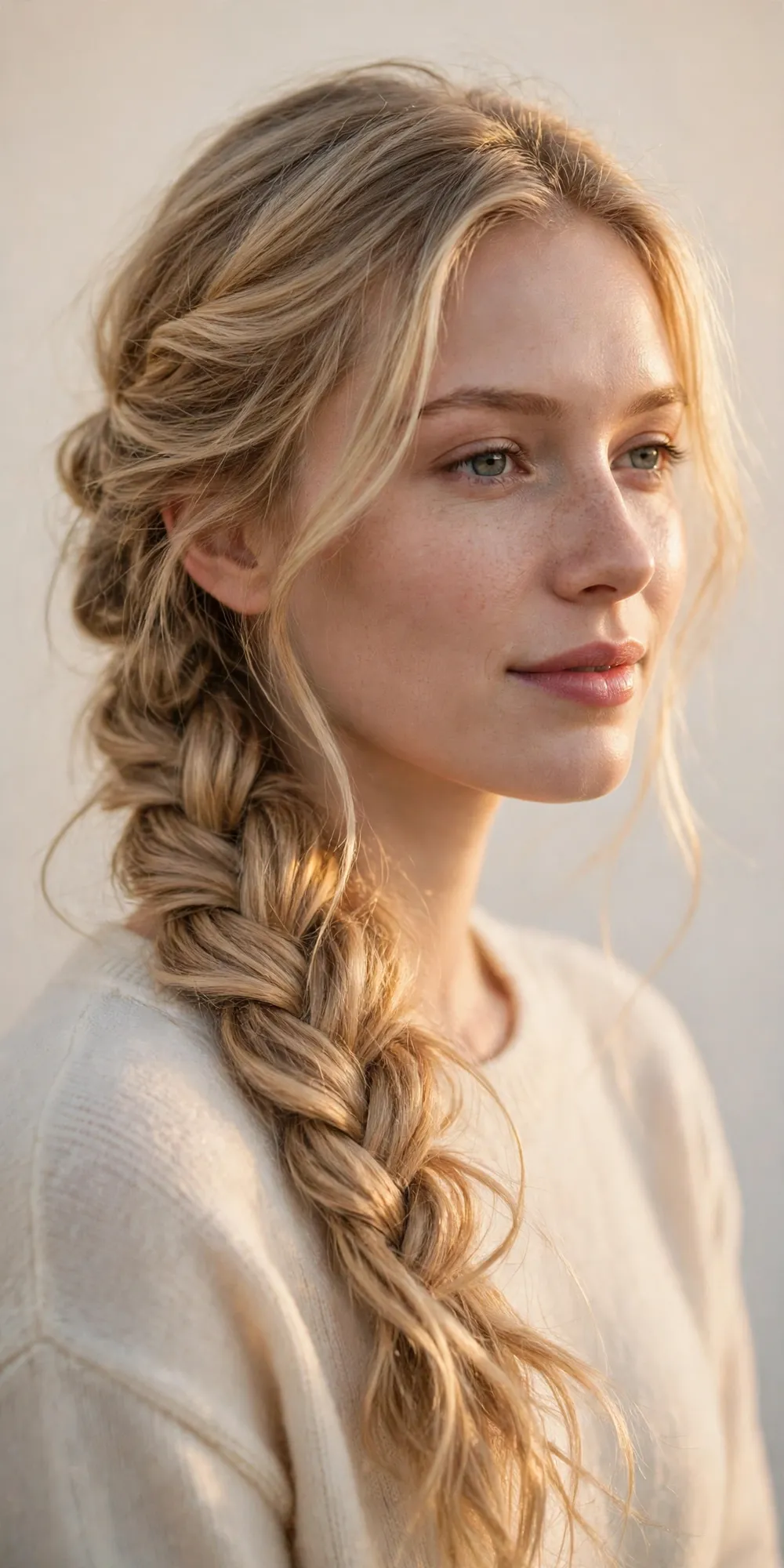
The fishtail looks far more intricate than it is: two strands, small pieces crossed from the outside in, build a herringbone weave that reads delicate and romantic when pulled loose. It suits long hair best — you need length for the pattern to show — and it flatters wavy and curly textures, where the natural movement softens the weave. Keep the crossed pieces small and even; chunky pieces make it look like a regular plait, while tiny pieces give that fine, woven finish. Work on second-day hair or add a little dry shampoo first, because slippery clean hair makes fishtails unravel. Pull the edges out gently once it’s tied for a soft, lived-in shape, finish with a flexible-hold spray, and give it ten minutes once your hands learn the rhythm.
31. Knotless Criss-Cross Braids
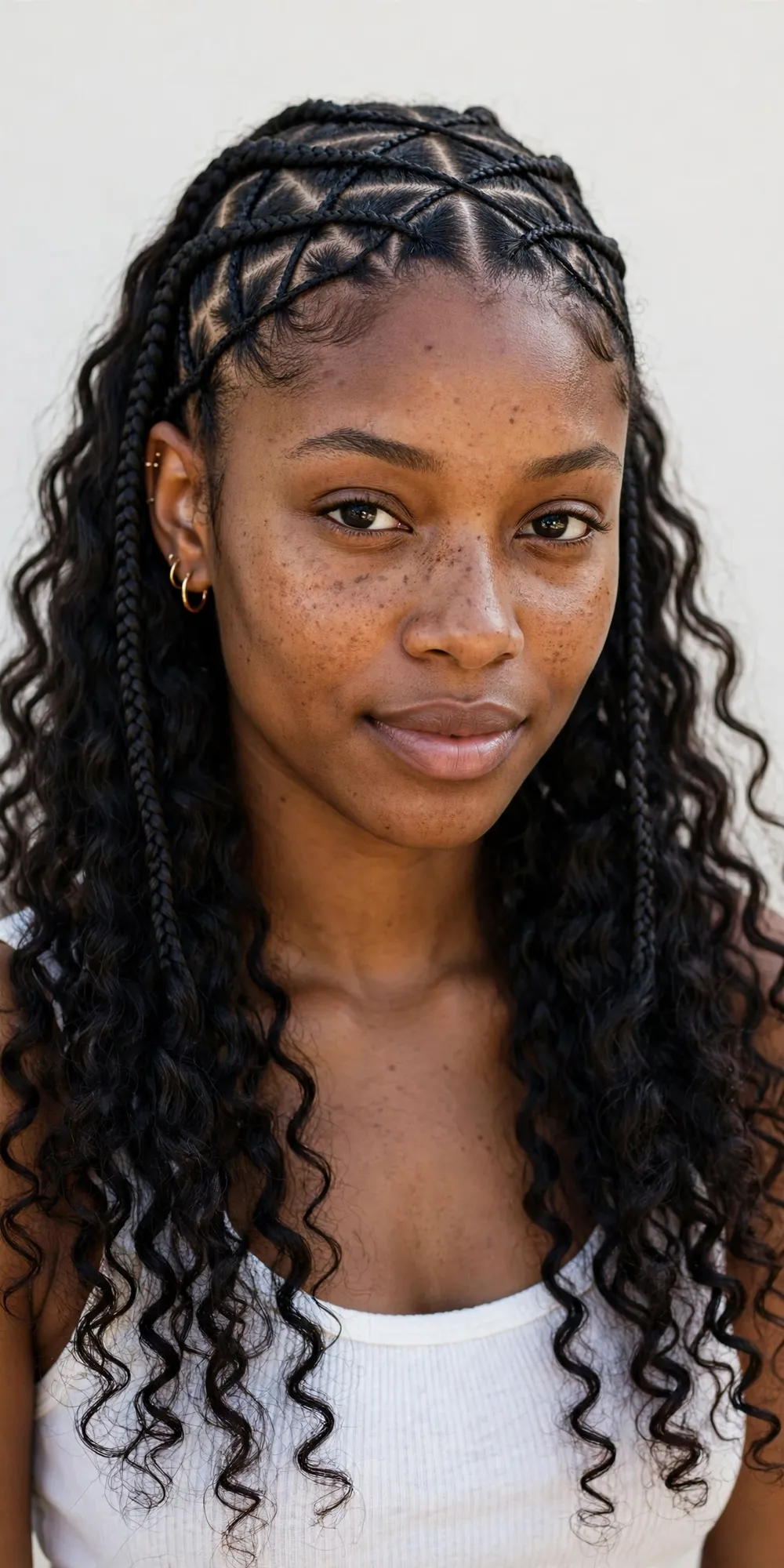
If one style sums up 2026, it’s this one: geometric criss-cross roots flowing into free, curly goddess ends, all built on a painless knotless base. The criss-cross roots give the scalp detail that photographs beautifully, while the loose ends keep it soft and light — no heavy braids dragging at your neck. It suits medium to long hair and most face shapes, and the knotless start makes it one of the gentlest extension styles for tender scalps and fine hair. Ask your braider for small, even criss-cross sections and curly ends left unsealed, so they move freely. A curl cream on the ends and a light scalp oil keep it fresh, a silk bonnet stops the curls tangling overnight, and expect six to eight weeks of wear.
32. Sleek Feed-In Ponytail
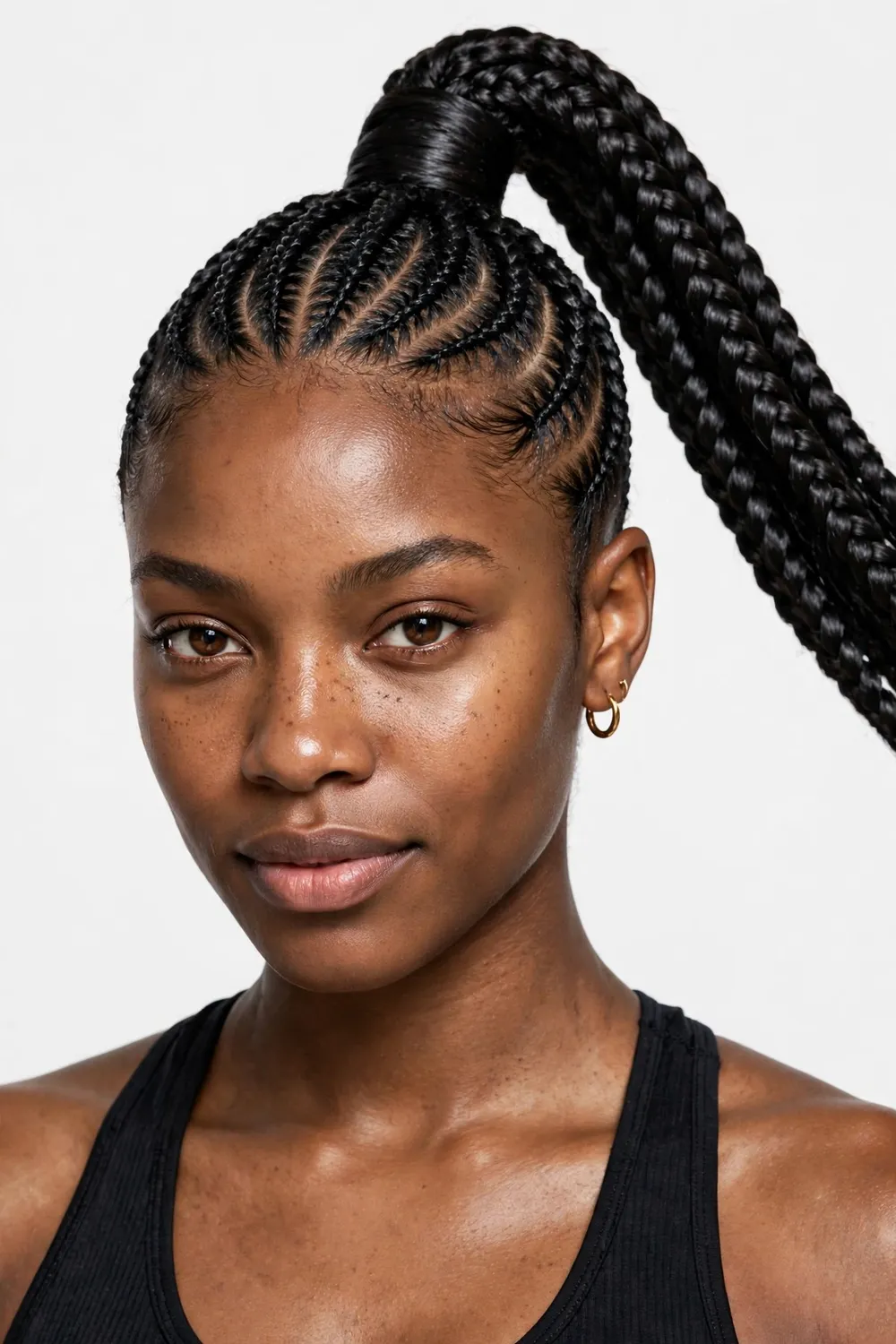
Feed-in cornrows gathered into one long, sleek high ponytail is the sharpest way to wear braids when you want polish rather than volume. The cornrows keep the front immaculate, the high placement lifts the face, and the ponytail swings with clean, gym-proof confidence. It suits oval and round faces especially well, and it’s brilliant for workouts, dance, or any day you need hair completely out of the way. Ask for feed-ins that start small at the hairline and build gradually — that taper keeps the front flat — and for the ponytail to sit at the crown, not the back of the head. Edge control and a shine spray finish the look; wrap extension around the base to hide the elastic, and give your edges a break between installs.
33. Senegalese Twists
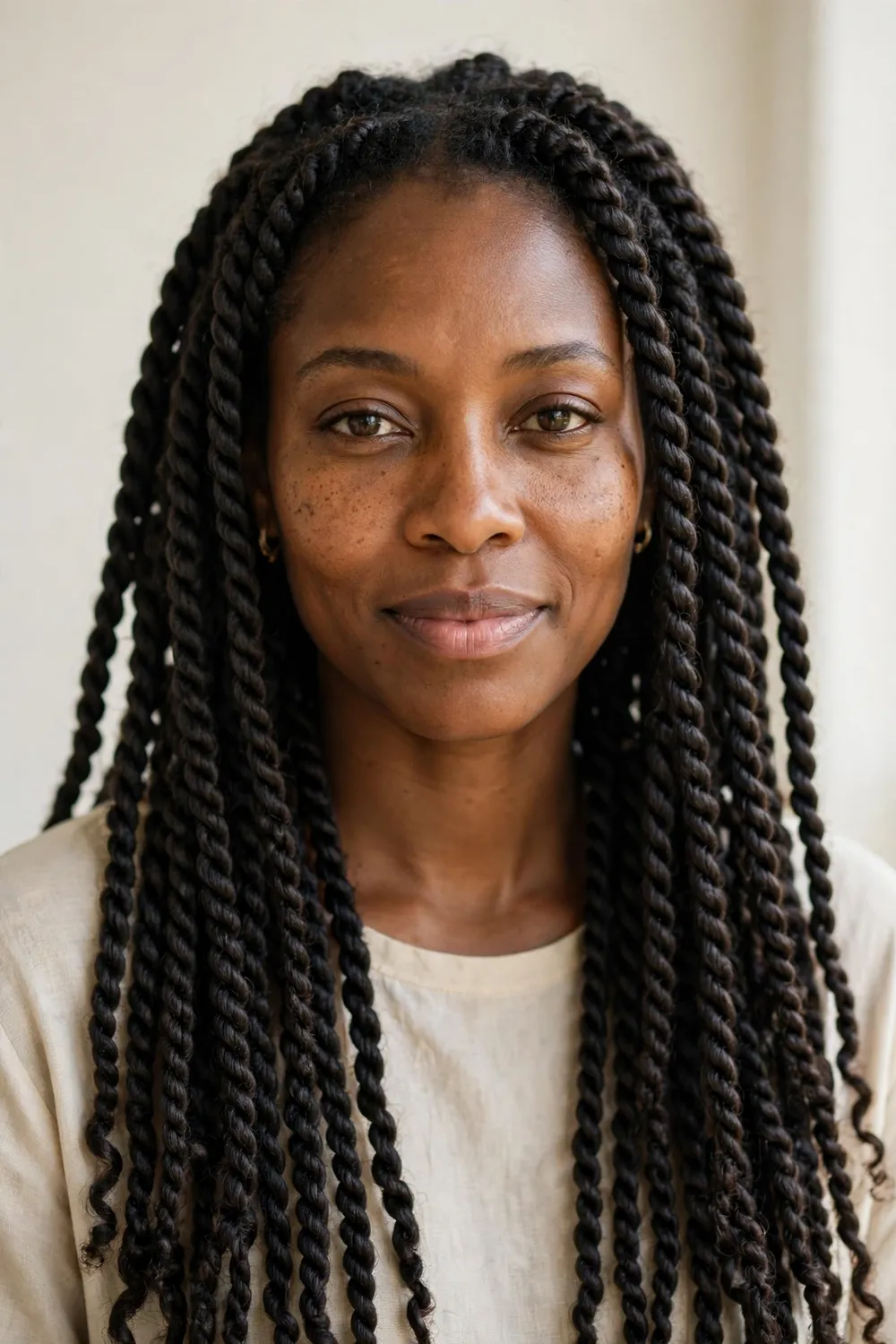
Senegalese twists are smooth two-strand rope twists, lightweight and low-tension, that swing beautifully past the shoulders. Each twist uses only two strands, so they install faster than box braids and put less strain on the scalp — ideal if your edges are fragile or you’re new to extensions. They suit all hair types, and medium to long lengths show the rope texture best. Ask for a knotless or feed-in start rather than a knotted base, which adds bulk and tension at the root, and choose a twist size that matches your hair density — chunky twists on fine hair look sparse. A light mousse sets the twists without stiffness, a scalp oil keeps the parts comfortable, and expect four to six weeks of wear — unravel them gently from the ends.
34. French Curl Braids
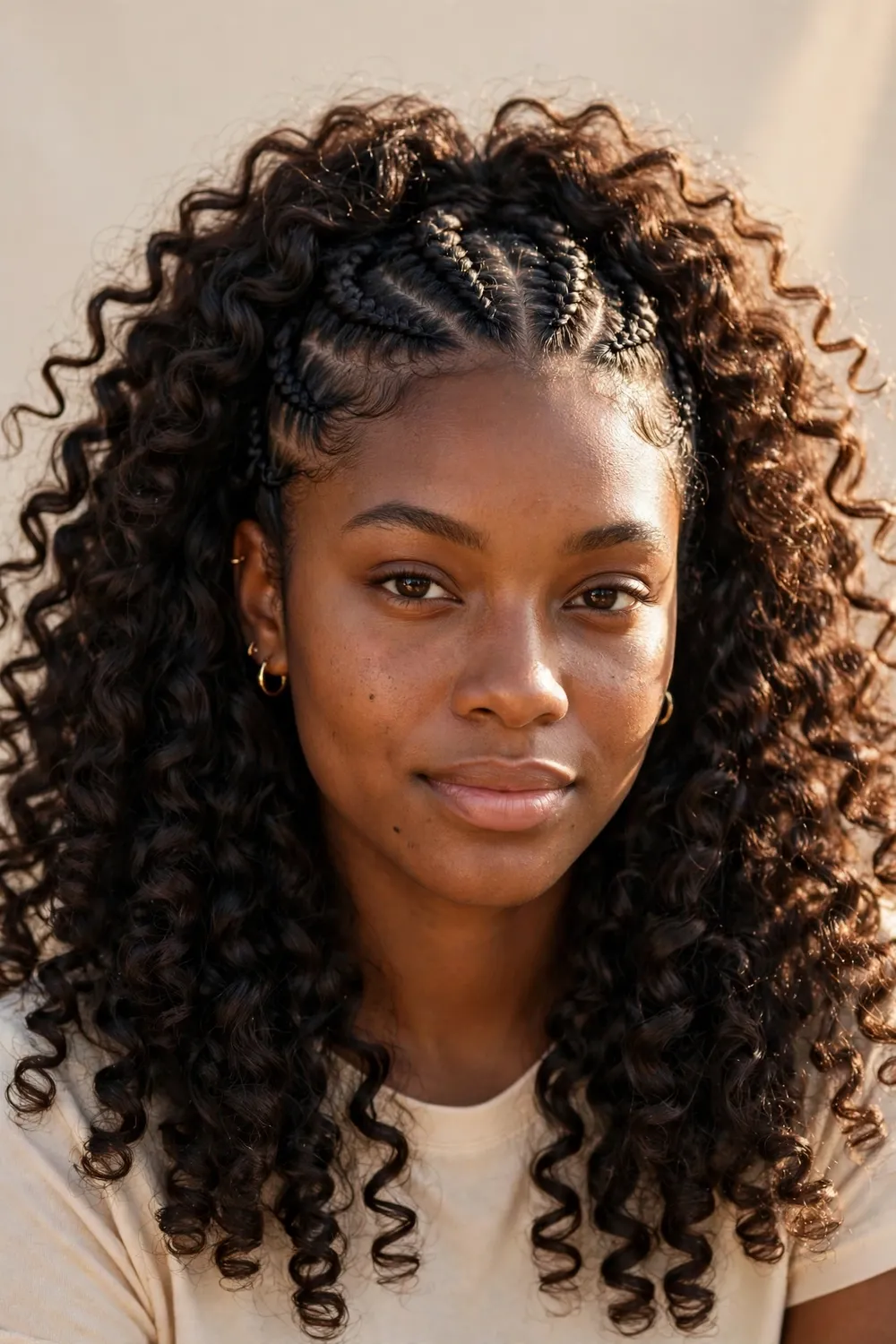
French curl braids give you the best of both worlds: braided roots that stay neat for weeks, melting into bouncy French curls. The braided base does the protective work while the curls carry the glamour, which is why it turns up at weddings and holidays. It suits medium to long hair and all face shapes, and flatters round faces especially, where the curl volume at the sides adds balance. Ask your braider to leave the curls unsealed, in a pattern that matches the volume you want — tighter curls read polished, looser ones read romantic. A curl-defining cream on the ends, refreshed with a water spritz, keeps them bouncy, and a silk bonnet stops them matting — but the braided roots still give six weeks of wear.
35. Cowgirl Braids
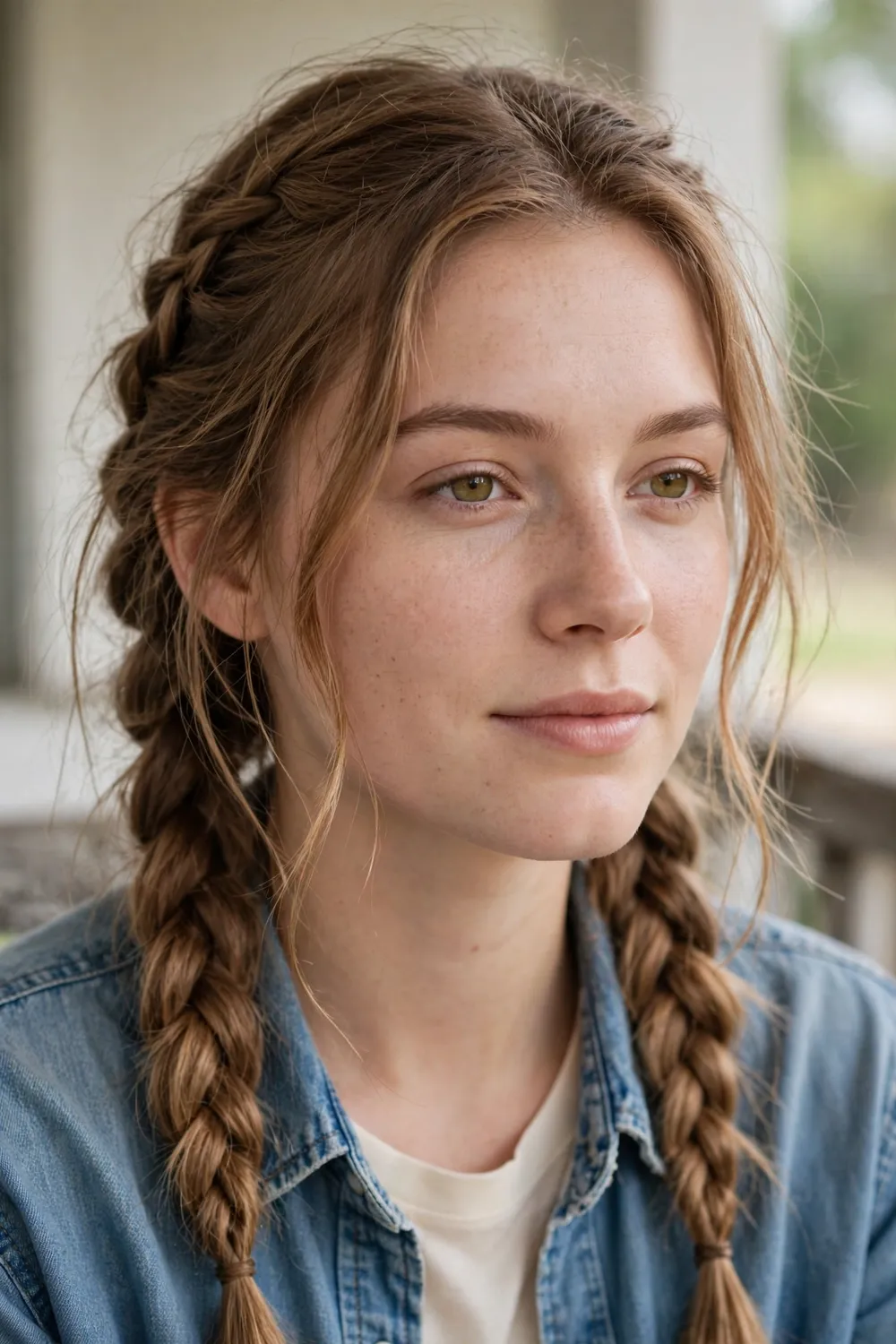
Cowgirl braids are 2026’s casual breakout: relaxed double braids with a lived-in finish, worn loose and a little undone on purpose. Think two low plaits, pulled slightly wide, with soft pieces framing the face — a style that looks better after a few hours than fresh from the mirror. It suits straight to wavy hair best, and flatters long and oval faces, where the double plaits balance length. Braid loosely, tie low, and don’t chase perfection — the charm is in the imperfection. A texturising spray adds grip and that dusty, lived-in texture; it’s a one-day style, and it comes out in seconds. For a softer take, try the same loose finish as the Butterfly Haircut — relaxed layers and movement over rigid structure.
36. Halo Crown Braid
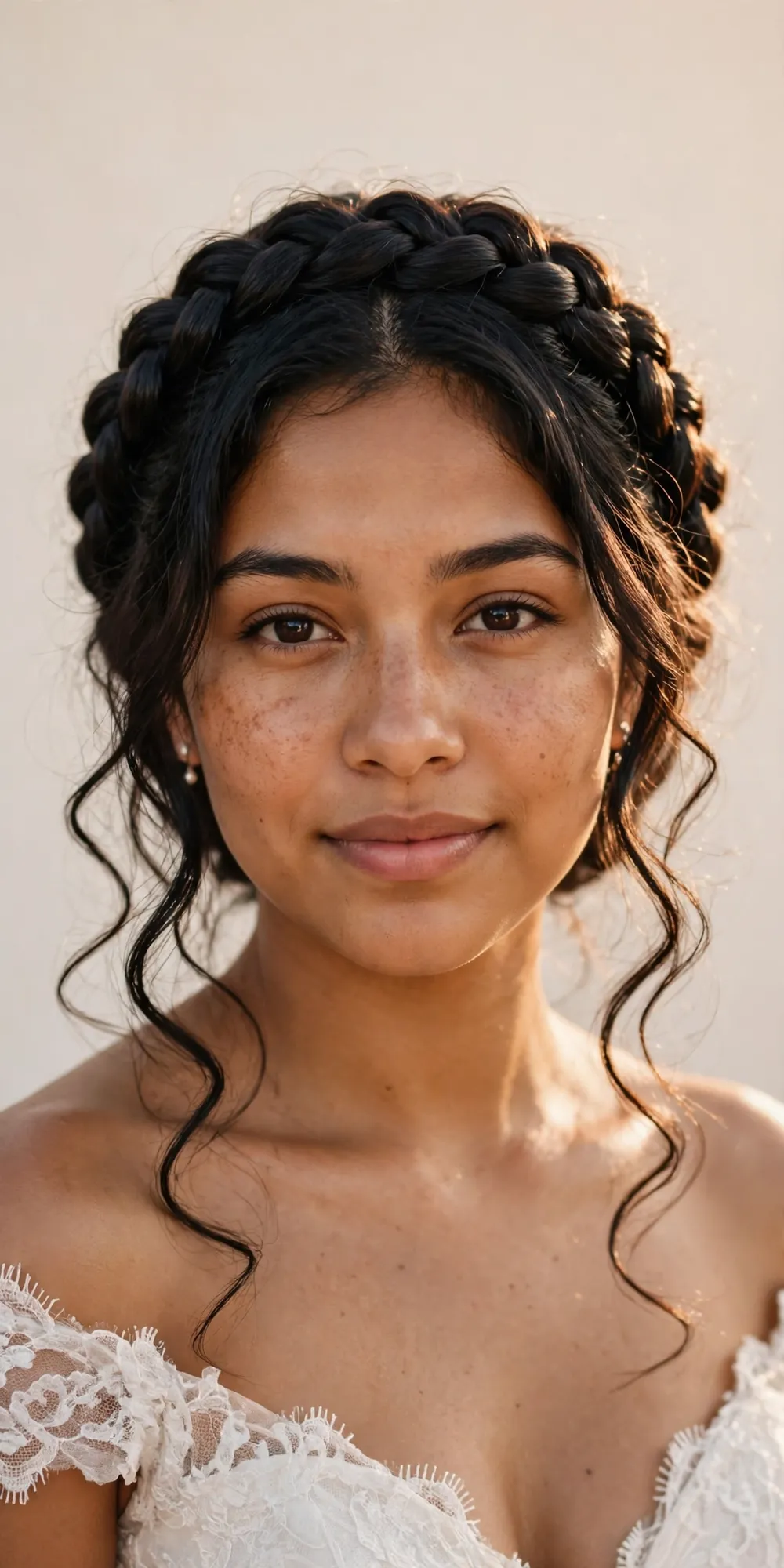
One continuous braid circling the head like a crown is the most romantic way to wear braids — a long-standing bridal favourite. The halo frames the face from every angle, keeps hair off the neck, and photographs beautifully — there’s no bad side. It suits medium to long hair and all textures, and works for oval, round and long faces alike. Ask your stylist to braid around the head in one direction, pinning as they go, and to pancake the braid gently for a fuller crown. Finish with flexible-hold spray and U-pins, since bobby pins slip in a halo, and add loose tendrils at the temples to soften it for a wedding. It’s a one-day style, so take it down before bed — but for that day, nothing else looks quite like it.
Braided Hairstyles at a Glance: Which Style Lasts Longest?
| Style | Typical wear time | Install time | Tension level | Best for |
|---|---|---|---|---|
| Cornrows / feed-ins | 2–6 weeks | 1–3 hours | Medium–high | Short-term protective style, active lifestyles |
| Box braids | 6–8 weeks | 4–8 hours | Medium | Long protective wear, versatile styling |
| Knotless braids | 6–8 weeks | 4–8 hours | Low–medium | Sensitive scalps, fine hair, comfort |
| Micro braids | Up to 6 weeks max | 6–10 hours | Medium | Fine, detailed styles, natural movement |
| French / Dutch / fishtail | 1 day | 5–20 minutes | Low | Everyday styling, no extensions |
| Senegalese twists | 4–6 weeks | 3–6 hours | Low | Low-tension protective wear |
The pattern is simple: the longer a style lasts, the more it asks of your scalp and your schedule. Micro braids look effortless but take the longest to install, while a French braid takes five minutes and lasts a day. Use the table to match the style to your calendar, not just your mood — if you have a holiday in three weeks, a six-week install is wasted, and if you need two months of low maintenance, a daily braid will drive you mad. And follow the dermatology guidance that runs through the 2026 advice: the American Academy of Dermatology advises wearing braids no longer than 6–8 weeks, and alternating tight styles with looser ones so your hairline gets a break. If a style hurts, it is too tight, however good it looks — pain is not part of the process.
Which Braid Suits Your Face Shape and Hair Type?
Start with your face, then your hair. Round faces do best with height and length — high ponytails, long box braids, a halo crown pulled slightly up — anything that adds vertical line rather than width at the cheeks. Square faces soften with movement: boho ends, French curls, a side-swept Dutch braid, all of which break up a strong jawline. Oval faces can wear almost anything, which is both a blessing and a trap — use the freedom to pick by lifestyle instead, and try the bolder patterns like honeycomb or criss-cross. Long faces need width: side parts, bubble ponytails, cowgirl braids worn low and wide, anything that adds horizontal balance.
Hair type matters just as much. Fine hair needs lightweight, low-tension styles — knotless braids, Senegalese twists, micro braids in moderation — and should avoid heavy jumbo braids that pull at the roots. Thick hair can carry the big styles: jumbo triangles, chunky lemonade braids, double-stacked feed-ins. Coily hair is the natural home of protective braiding, and it holds cornrows, box braids and twists beautifully, but it also needs the most moisture — oil the scalp, don’t skip wash day, and never let a style stay in past its time. If you’re still building your routine around natural texture, our Natural Hairstyles for Black Women guide covers wash-day care and styling that pairs well with every braid in this list.
How to Keep Braids Fresh: Care and Maintenance
- Cleanse the scalp weekly. Dilute shampoo with water in an applicator bottle, work it gently into the parts with your fingertips — never your nails — and rinse thoroughly. A clean scalp is what makes braids last; dirty roots itch, flake and loosen.
- Moisturise the roots, not the lengths. A light leave-in or scalp oil on the parts and hairline keeps the new growth soft. Heavy creams on the braids themselves cause build-up and dull the finish.
- Protect them at night. A silk scarf or bonnet is non-negotiable — cotton pillowcases pull moisture out of braids and frizz the edges overnight. Tie the scarf snugly but not tight.
- Refresh the edges every few days. A small amount of edge control, smoothed with a soft brush, brings a two-week-old install back to life in minutes. Don’t reapply daily; build-up is the enemy.
- Take them down on time, by week 6–8 at the latest. However good they still look, old braids trap shed hair, tighten as roots grow, and stress the hairline. Detangle gently as you unravel each braid, and give your hair a proper wash and deep condition before the next install.
5 Mistakes to Avoid with Braided Hairstyles
- Sitting through pain. If your scalp burns, throbs or feels tight enough to give you a headache, the braids are too tight. Speak up in the chair — a good braider will loosen the work, and a bad one isn’t worth your edges.
- Leaving braids in too long. Past eight weeks, shed hair mats at the roots, tension increases as new growth pulls, and takedown turns into a detangling marathon. The style may still look fine from the front; your scalp knows otherwise.
- Skipping wash day. Braids are not a reason to stop washing your hair. A dirty, itchy scalp leads to scratching, which leads to breakage — and to infections if it goes far enough. Weekly diluted shampoo is enough.
- Loading on heavy products. Thick gels, waxes and butters build up fast in braids, flake white on the parts, and attract dust. Light oils, a little mousse, a little edge control — that is the whole kit.
- Ripping braids out at takedown. Yanking extensions off tangles your own hair into the braid and snaps it. Unravel slowly from the ends, detangle each section as you go, and cut the extension — never your hair — if a knot won’t budge.
FAQs
How long do braids last?
It depends on the style. Cornrows and feed-ins last 2–6 weeks, box and knotless braids 6–8 weeks, micro braids up to 6 weeks at most, and everyday styles like a French braid last a day. The American Academy of Dermatology advises not wearing braids longer than 6–8 weeks, so plan your takedown date when you book the install, not when the style starts looking tired.
What is the difference between knotless braids and box braids?
Box braids start with a knot of extension hair at the root, which gives a firm grip but can pull and hurt, especially on tender scalps. Knotless braids feed the extension in gradually, so there’s no knot, less tension, and a flatter, more natural-looking root. Knotless usually costs a little more and takes a similar amount of time, but most people find them far more comfortable for the first few days.
How often should you wash braids?
Once a week is the sweet spot for most people. Use diluted shampoo in an applicator bottle, massage gently into the scalp and parts, rinse well, and let the braids air-dry fully — damp braids left under a bonnet can develop a musty smell. If you work out daily or sweat heavily, a midweek scalp rinse with diluted shampoo keeps things fresh without over-washing.
Do braids help your hair grow?
Braids don’t make hair grow faster — growth happens at the scalp, at its own pace, whatever style you wear. What they do is protect the length you already have: tucked-away ends break less, and you’re not heat-styling or brushing daily, so you keep more of what grows. Think of braids as length retention, not a growth treatment, and be wary of anyone promising inches in weeks.
Which braids are best for thin or fine hair?
Knotless braids and Senegalese twists are the safest bets, because both start without a tight knot and distribute weight more evenly. Small to medium sizes work better than jumbo braids, which can overwhelm fine hair and pull at the roots. Avoid micro braids done too tightly, and tell your braider upfront that your hair is fine — a good one will adjust the extension weight and the tension accordingly.
How do you sleep with braids so they last longer?
Gather the braids loosely — a low, loose ponytail or a single loose braid — then cover them with a silk or satin bonnet, or sleep on a silk pillowcase. The silk stops friction, which is what frizzes edges and loosens parts overnight. Never sleep with braids pulled tight, wet, or piled under your head, and re-tie the bonnet if it slips — one unprotected night can undo a week of neatness.
Can braids damage your hairline?
Yes, they can — but only when they’re installed too tightly, left in too long, or redone back-to-back without a break. The warning signs are bumps, soreness, itching at the edges, or baby hairs that stop growing back. If you notice any of those, take the style down, give your edges weeks to recover, and choose a looser style next time, like knotless braids or twists.
Final Word
Thirty-six styles, one through-line: the best braid is the one that fits your hair, your face and your life right now, not the one trending hardest this week. Start with comfort — if it hurts, it isn’t right — then pick for wear time, then for the look. And when you’re ready for your next style, or just want to browse what’s new, you’ll find the rest of our guides on the Hair Groom blog.