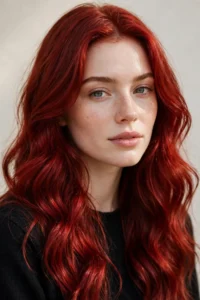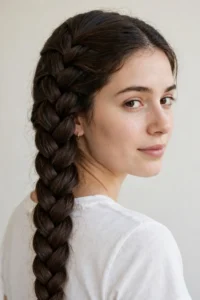


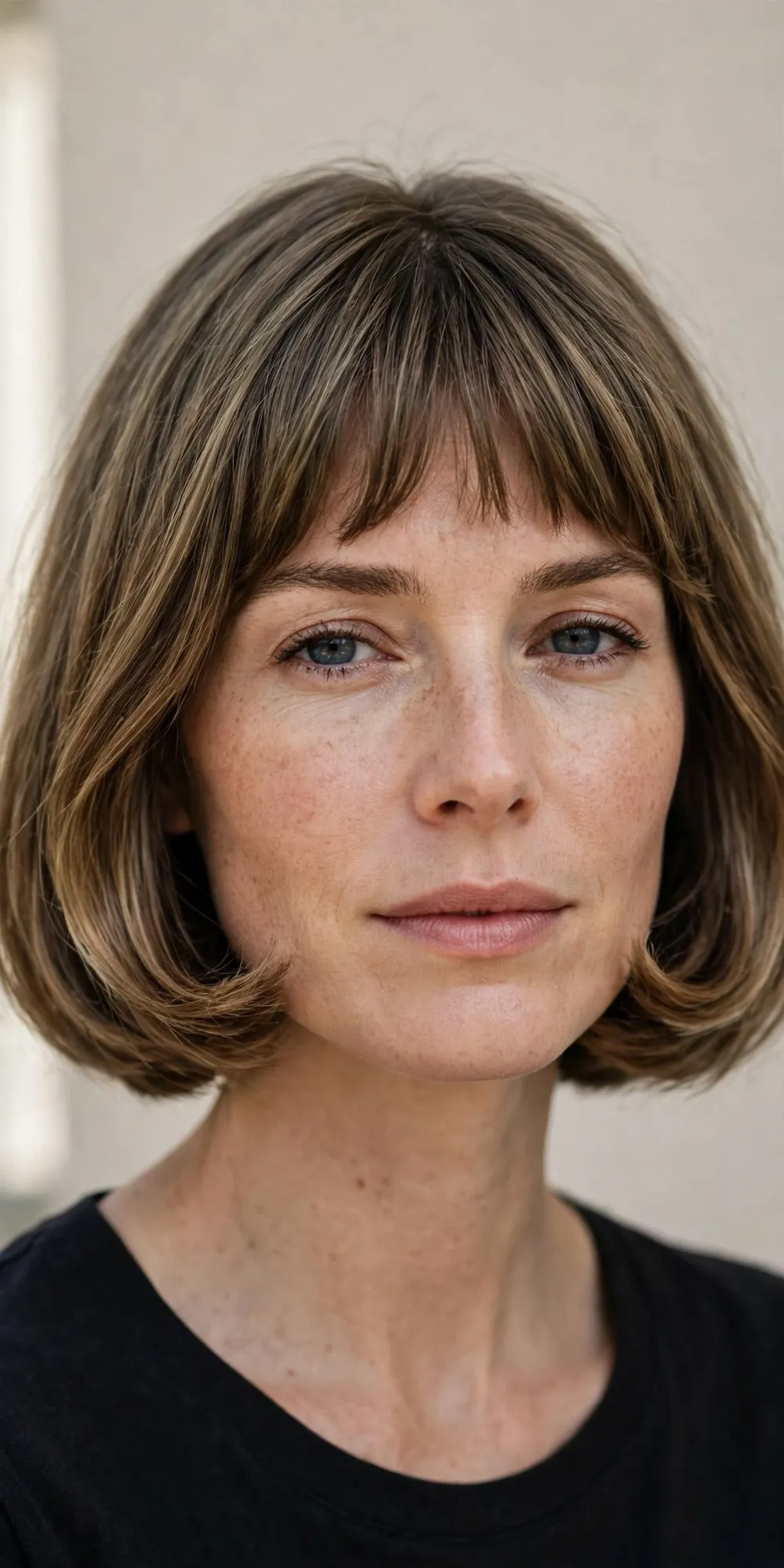
A French bob is a short, jaw-length bob with soft, often blunt ends and a fringe, worn with a deliberately undone, Parisian finish. If you only look at three of these 33 styles, start with the Classic French Bob with Full Bangs (#26), the Curly French Bob with Curtain Bangs (#2), and the Wavy French Bob (#27) — together they cover the look’s three best versions: polished, curly and effortless.
What Is a French Bob?
A French bob is a short bob cut to the jaw or just below it, usually paired with bangs and finished with soft, inward-curving ends rather than a sharp, graphic edge. It traces back to 1920s Paris, where it became the haircut of the moment — short, confident and low-maintenance at a time when most women still wore their hair long. The classic version sits at the jawline with a full, brow-skimming fringe and ends that flick gently under, but the modern French bob is less strict: it can be blunt, tousled, curly or wavy, as long as it keeps that short length and easy, lived-in feel.
The bob cut has been reinvented many times since, and the French version is the softest of the family. A classic bob is usually longer, straighter and more polished, with a clean, even line that can fall anywhere from the chin to the shoulders. An Italian bob is fuller and more voluminous, with a rounded, blow-dried shape that sits higher on the head. The French bob is the quieter cousin: shorter, lighter, a little undone, and happiest when it looks like you didn’t try too hard. If you want to see how the wider family compares, our guide to Bob Hairstyles walks through every length and finish.
How to Choose the Right French Bob
The right French bob depends on your face shape and your hair’s natural behaviour — the same cut can look completely different on two people, so start with the length and fringe that suit you.
| Face shape | Length to ask for | Fringe to ask for |
|---|---|---|
| Oval | Jaw-length, the classic version | Full bangs or a soft curtain fringe |
| Round | Jaw-length or just below, with a side part | A longer side fringe or bottleneck bangs to add length |
| Heart | Chin-length with volume at the jaw | Wispy or curtain bangs to soften a wide forehead |
| Long | Chin-length or shorter, with width at the cheeks | A full, brow-skimming fringe to shorten the face |
| Square | Jaw-length with soft, curved ends | A side-swept or bottleneck fringe to soften the jawline |
Hair type matters just as much. Fine hair looks best with a blunt, solid line — it makes the ends look thicker and stops the cut going wispy. Thick hair needs hidden internal layers so the shape stays light instead of turning into a helmet. Curly hair should be cut dry, curl by curl, because it springs up several centimetres once it dries — always agree the length on dry hair with your stylist. Wavy hair is the easiest starting point: the natural bend does half the styling for you. Straight hair suits the crispest versions of the cut, like the blunt and micro French bobs, but will need a round brush or a bend from a straightener to stop the ends sitting flat. If you like the idea but the jaw length feels like a big jump, the longer end of the family — collarbone-grazing versions like ideas 13 and 25 — are a safer first step; see our Long Bob Hairstyles for the full range.
The 33 Best French Bob Hairstyles (2026)
1. Jaw-Skimming French Bob with Air-Dried Ends

This is the French bob at its most honest: a clean jaw-length line, ends left to bend wherever they want, and no blow-dry in sight. It suits straight to wavy hair best, and it flatters oval and heart-shaped faces because the jawline length draws attention to the cheekbones. Ask your stylist for a blunt jaw-length cut with the very ends softened by point-cutting, and tell them you plan to air-dry it — that way they won’t cut it too short while it’s wet. After washing, scrunch in a pea-sized amount of leave-in cream and leave it alone; touching it while it dries creates frizz. A trim every six weeks keeps the line crisp, and this is genuinely a wash-and-go style on good hair days.
2. Curly French Bob with Curtain Bangs

Curls and a French bob are a natural match, and a curtain fringe makes the whole thing softer — the bangs part in the middle and sweep towards the cheeks, framing the face instead of covering it. This works on loose to tight curls, and it is especially kind to round and square faces because the fringe opens the forehead while the curls add width where you want it. Ask for a dry cut, curl by curl, with the fringe cut at least an inch longer than you think you need — curls shrink as they dry, and a fringe cut too short on wet hair will bounce above the brow. Style with curl cream on soaking-wet hair, then diffuse or air-dry without touching. See our Curtain Bangs guide for more ways to wear it.
3. Deep Side-Part French Bob

Throwing all the weight to one side changes a French bob completely: you get instant lift at the crown, a diagonal line across the forehead, and a shape that looks polished with almost no effort. It suits straight and wavy hair, and it works beautifully on round and square faces because the diagonal breaks up symmetry and lengthens the face. Ask for a jaw-length bob with the part set about two fingers from your natural centre part, and a slightly longer front on the heavy side so it sweeps rather than flips. Style by blow-drying the roots forward on the heavy side, then sweeping them over with a round brush. Trim every five to six weeks, since a side part shows an uneven line sooner.
4. Chin-Length French Bob with Invisible Layers
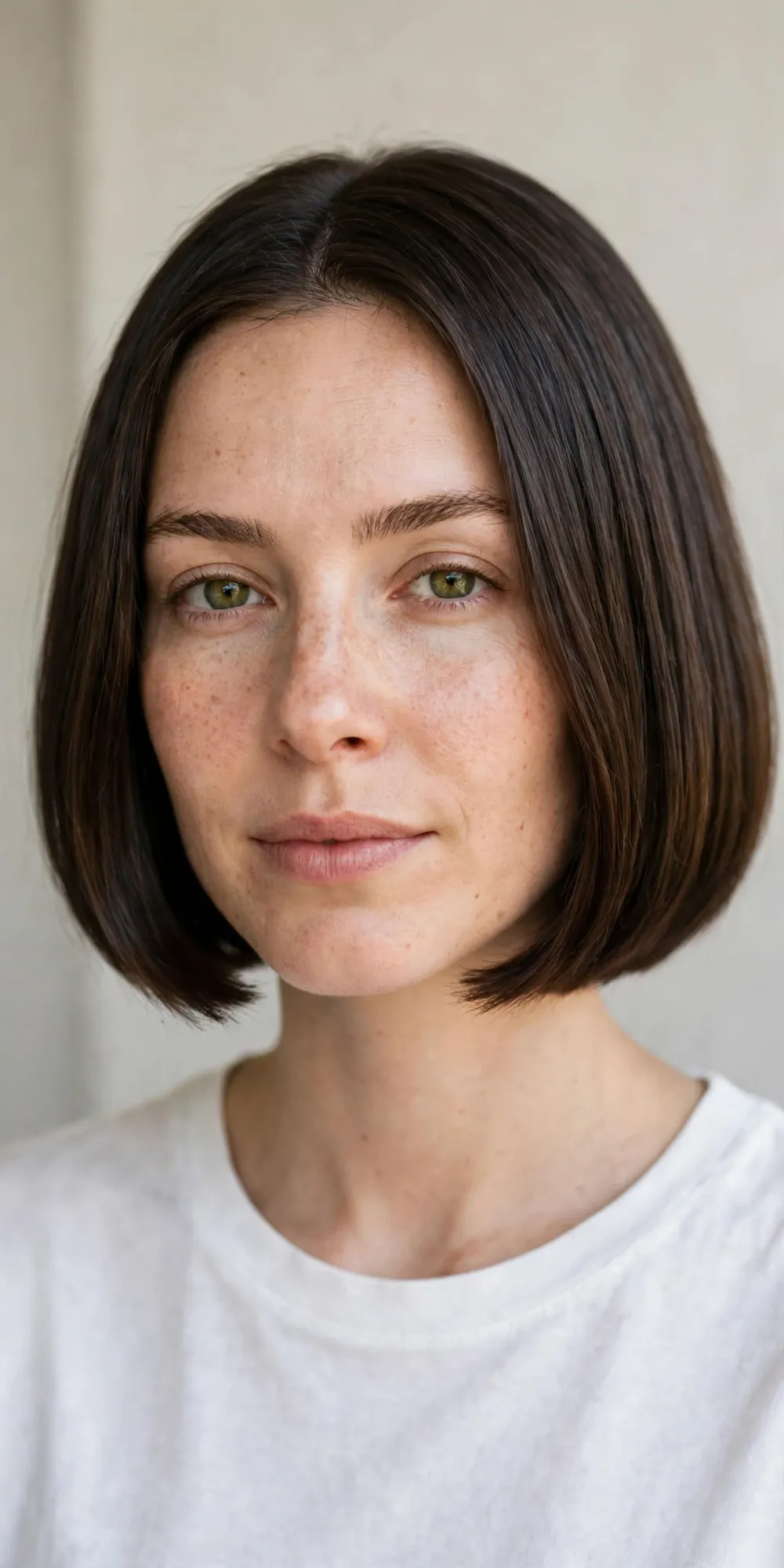
From the outside this looks like a plain, clean bob — but inside, hidden layers remove bulk and let the hair move. It is the best French bob for thick or heavy hair that would otherwise sit like a solid block, and it suits every face shape because the length is neutral and the shape stays soft. Ask for a chin-length perimeter with internal layers cut short underneath the top layer, never breaking through the outline. Your stylist should be able to lift the top section and show you the layers hiding beneath it. Styling is simple: a little smoothing cream, a quick pass with a round brush, and the ends will curve under on their own. The cut grows out gracefully, so trims every seven or eight weeks are enough.
5. Shaggy French Bob for Tighter Curls

Tight curls need a bob that works with their volume, not against it — this version breaks up the interior so the curls can move around the jaw and neck instead of stacking into a triangle. It suits 3B to 4A curls best, and it flatters long and oval faces because the width it creates balances the length. Ask for a dry cut with the interior layered and the perimeter left soft — no blunt line, since a blunt edge on tight curls looks heavy and square. Use a curl-defining cream on wet hair, scrunch, and diffuse on low heat or let it air-dry. A satin pillowcase at night keeps the shape for a second day. The broken-up shape hides growth, so trims every ten weeks are enough.
6. Micro French Bob with Cheekbone Fringe
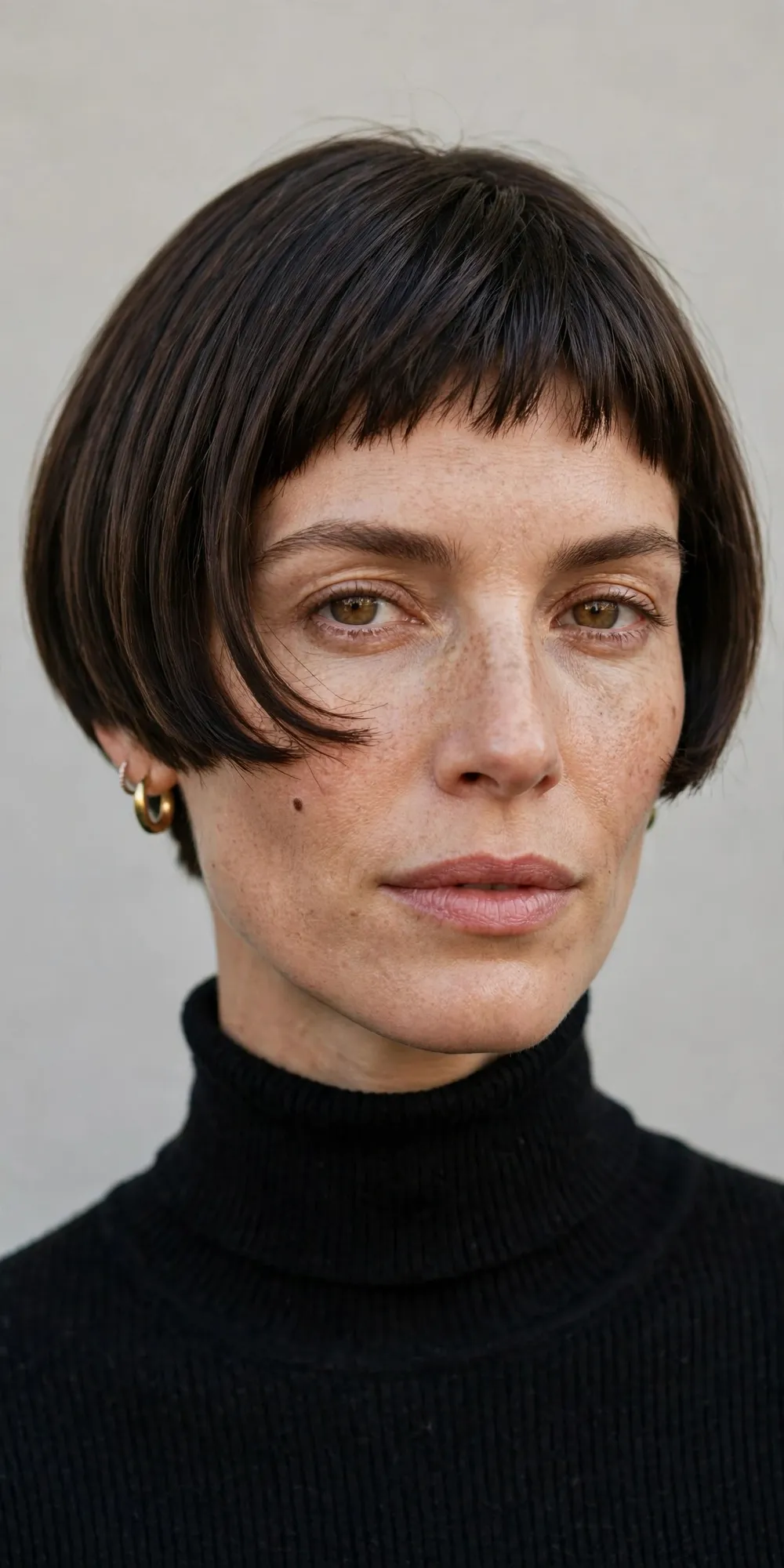
Shorter than the classic and bolder for it, the micro French bob ends above the jaw with a fringe that hits the cheekbone. It suits confident wearers with straight or slightly wavy hair, and it is gorgeous on oval and heart-shaped faces, where the short length shows off the cheekbones. Ask for a crop a finger’s width above the jawline, with the fringe feathered at the ends so it doesn’t look like a solid block. Style with a small round brush to bend the ends under, or tuck one side behind the ear for a casual finish. The catch is upkeep: two weeks of growth changes the shape at this length, so book trims every four to five weeks. Considering an even shorter crop? Our Pixie Hairstyles guide is a good next read.
7. Soft Rounded French Bob

This version trades the bob’s usual straight edge for a gentle arc that wraps around the jaw, with no hard line anywhere. It suits straight and wavy hair, and it is one of the kindest options for square and round faces because the curve softens angles and adds width at the cheekbones. Ask for a jaw-length cut with the corners rounded off and the ends point-cut so the perimeter looks soft rather than blunt. A large round brush is your best friend here: blow-dry the ends under in sections and the arc forms naturally. A pea-sized amount of smoothing cream keeps flyaways down without flattening the shape. It needs a trim every six weeks to hold the arc, but even grown out a little, it still reads as intentional.
8. Blunt French Bob for Loose Waves
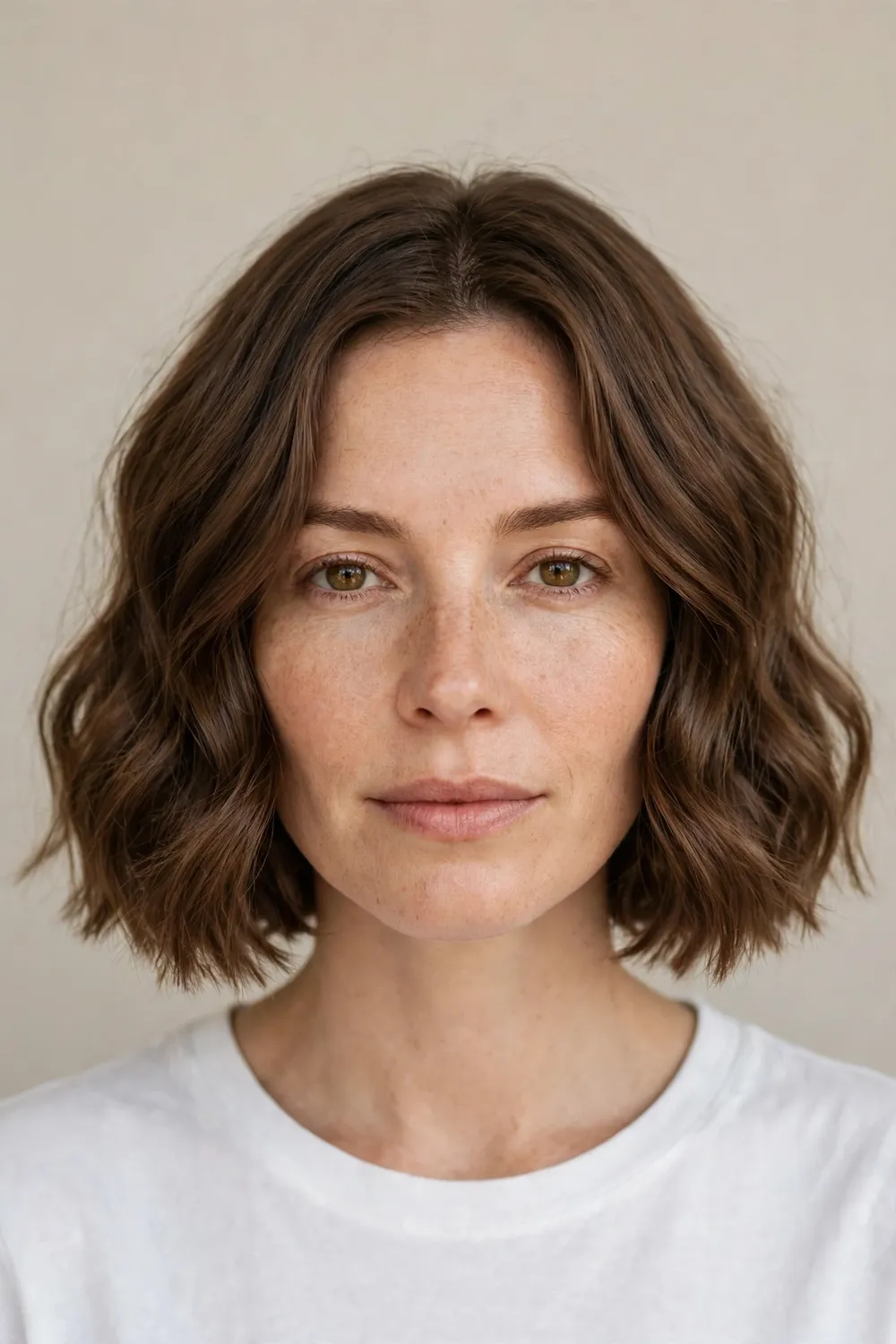
A crisp blunt line on loose 2B to 2C waves gives you the best of both worlds: structure from the cut, movement from the texture. It suits wavy hair with a natural bend, and it flatters oval and long faces because the strong horizontal line adds width. Ask for a jaw-length blunt cut with no layers at all — the waves provide the movement, so layering would only thin the ends. Let the hair air-dry with a little sea-salt spray or curl cream scrunched in, and don’t brush it once it’s dry or the waves will turn to frizz. A wide-tooth comb in the shower is the only detangling you need. The blunt ends look deliberate even as it grows, so trims every seven to eight weeks are plenty.
9. Tapered Nape French Bob
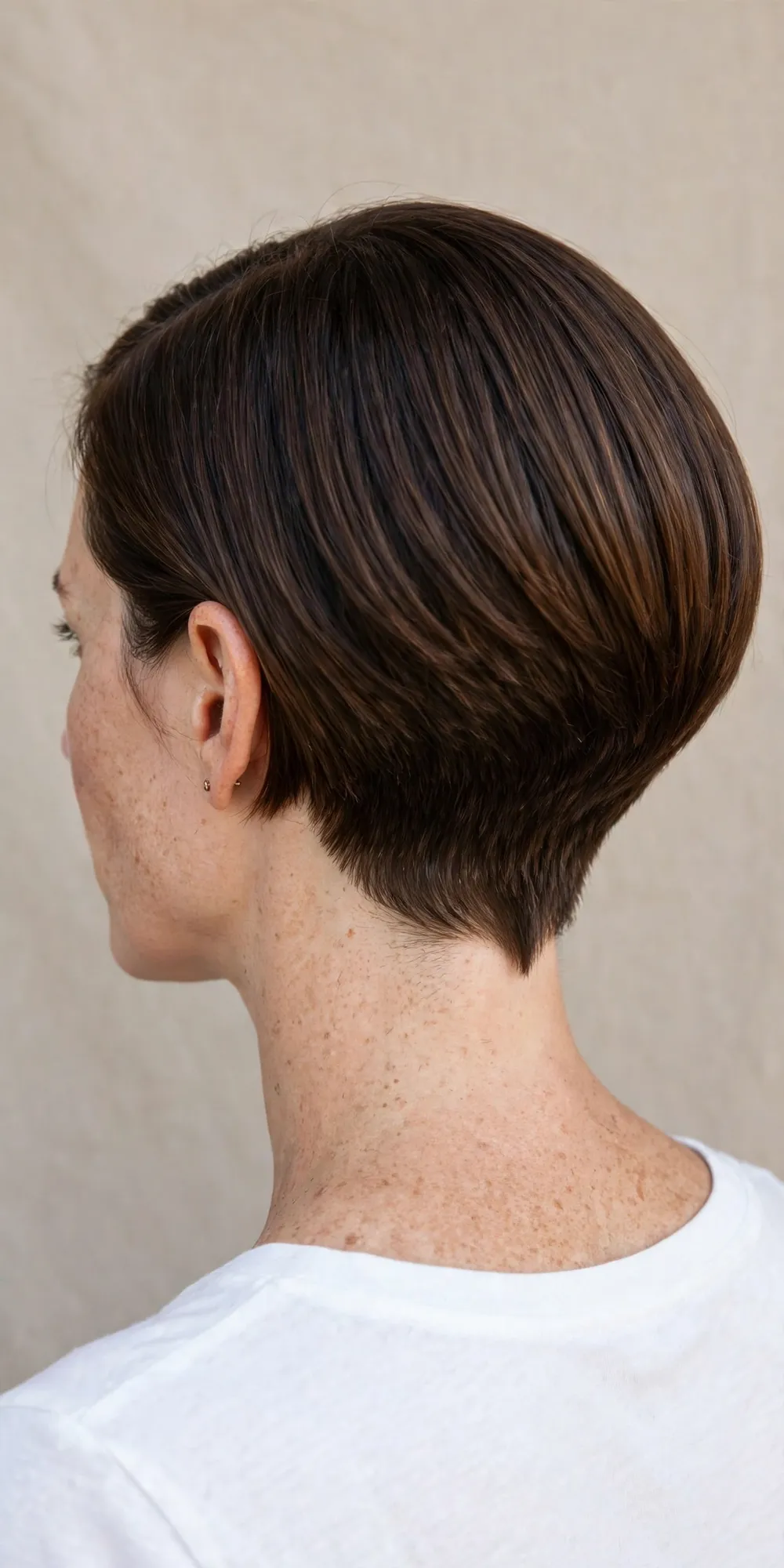
The tapered nape is the detail nobody sees from the front but everyone notices from behind: the hair at the back of the neck is cut narrower, so the shape looks compact and clean instead of flaring out. It suits thick hair especially well, and it works on every face shape because the front stays a classic French bob. Ask your stylist to taper the nape while keeping the jaw-length front — the back should sit close to the neck, with the weight taken out underneath. Bring a photo of the back view too, since this cut rewards a good stylist. Styling is easy: the taper does the work, so a quick blow-dry with a round brush is enough. It needs trims every five weeks, because the nape is the first place growth shows.
10. French Bob with Bottleneck Bangs

Bottleneck bangs are narrow at the brow and widen towards the cheekbones, like the neck of a bottle — and on a French bob they create a fringe that feels soft and open rather than heavy. They suit straight and wavy hair, and they are a smart choice for round and heart-shaped faces because the shape lengthens the forehead while framing the cheeks. Ask for a fringe that starts narrow in the centre and graduates longer towards the sides, cut into a jaw-length bob. Style the bangs with a small round brush, rolling them away from the face so they curve outwards, and keep the rest of the bob simple — the fringe is the feature here. A light dry shampoo on day two keeps it fresh. Trim the bangs every three to four weeks.
11. French Bob with Long Side Fringe
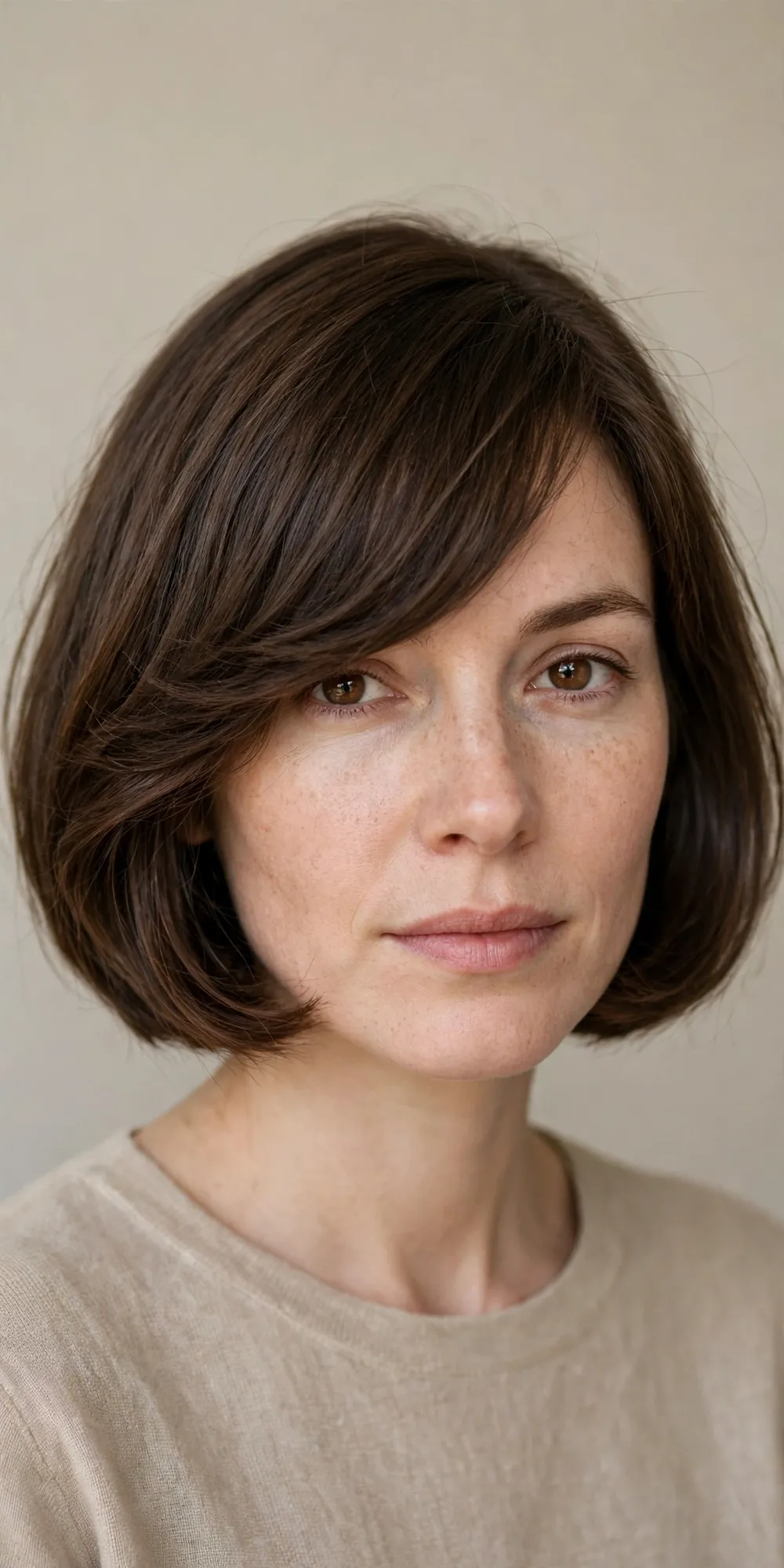
A long diagonal fringe sweeping across the forehead gives the French bob a softer, more grown-up feel — it reads elegant rather than girlish, and it doubles as a face-framing layer. It suits straight and wavy hair, and it is especially flattering on round and square faces because the diagonal line adds length and breaks up width. Ask for a jaw-length bob with a fringe cut from a deep side part, long enough to tuck behind the ear on the short side. Style by blow-drying the fringe across the forehead with a round brush, then letting it fall naturally — a little texturising spray keeps it from sliding flat. This fringe grows out gracefully, so you can go eight weeks between trims, and it is the easiest fringe to grow out entirely.
12. Ringlet-Defined French Bob
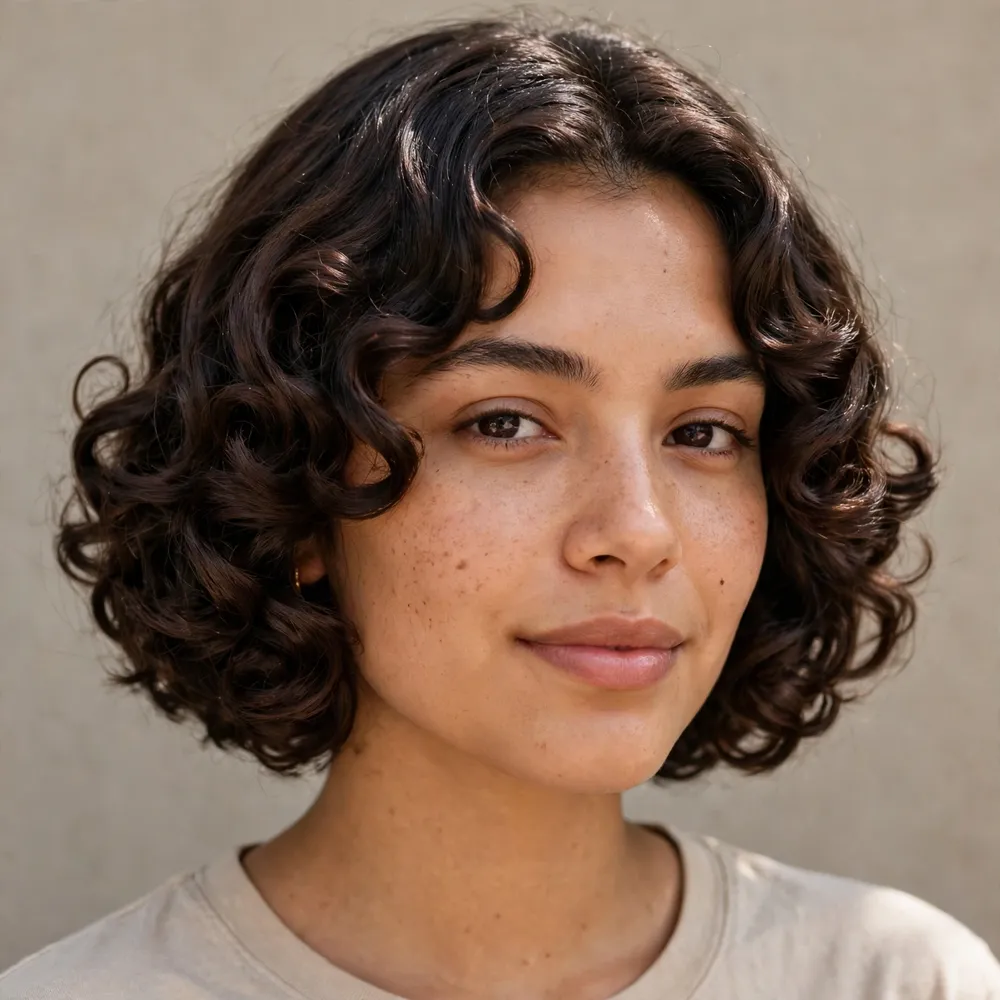
This is the French bob for people whose curls form neat spirals: each ringlet is cut individually while dry, so the shape is built curl by curl and nothing gets chopped off by accident. It suits 3A to 3B curls best, and it flatters oval and heart-shaped faces because the defined ringlets frame the face evenly on both sides. Ask for a dry cut with each curl trimmed at its natural end — and be clear that you want the length judged on dry, styled hair, since wet curls hang much longer than they will once they spring up. Style with a curl cream applied to soaking-wet hair, then scrunch and diffuse. The definition lasts two to three days with a pineapple ponytail at night.
13. Collarbone-Grazing French Bob
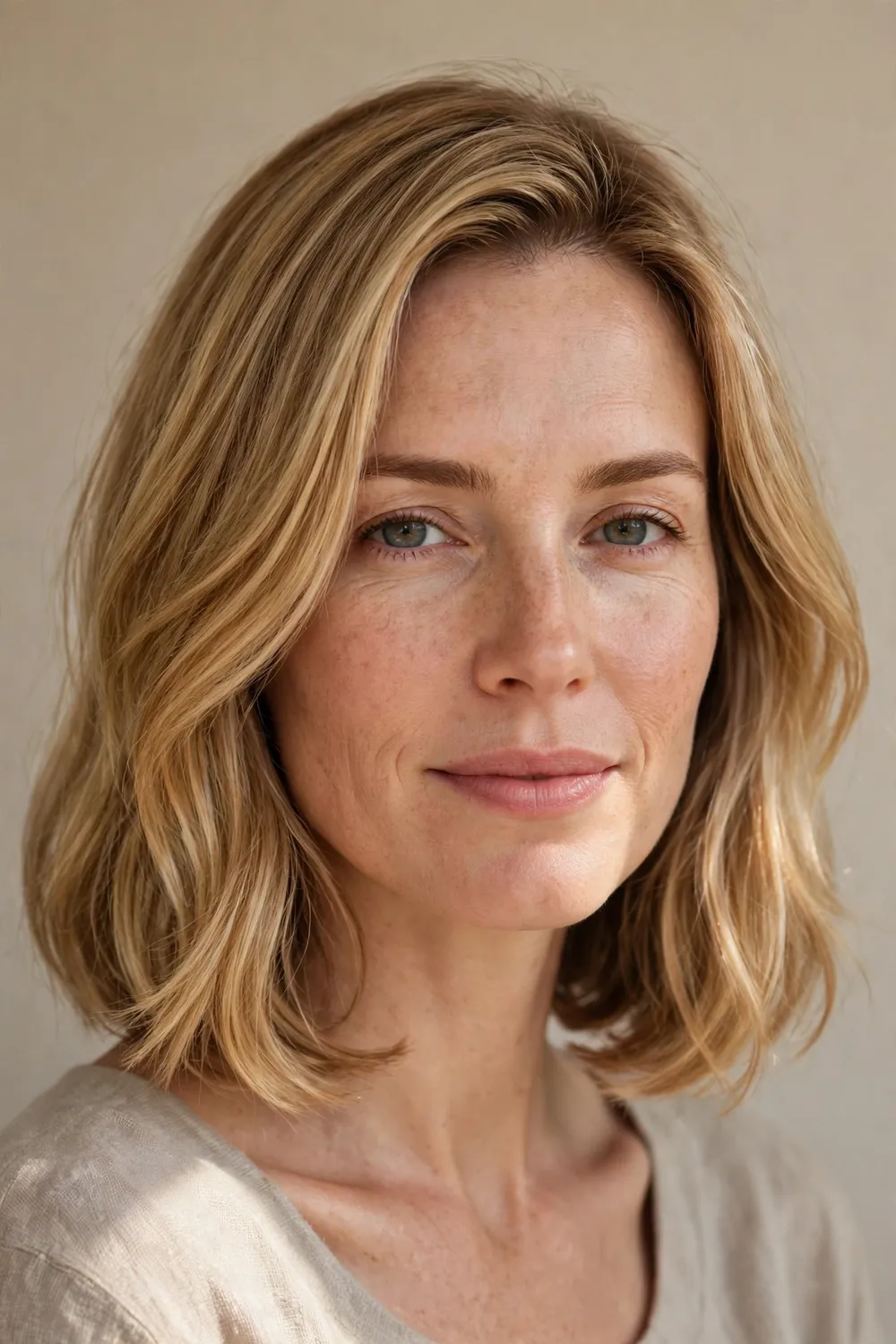
Longer than the classic but still unmistakably a bob, this version grazes the collarbone and is the safest way into the French bob family if jaw-length feels like too much. It suits all hair types, and it is a good choice for long faces because the extra length adds width at the shoulders rather than the jaw. Ask for a bob shape — same soft ends, same undone finish — cut to collarbone length, with the fringe kept full or curtain-style so it still reads French. Styling is the same as the classic: air-dry with cream for texture, or a round brush for a smoother finish. The longer length means you can still tie it back on bad hair days, which the jaw-length version won’t allow.
14. Tousled French Bob with Piecey Ends

This is the French bob for people who want to look like they just came back from the beach: a lived-in perimeter with the ends broken into small curl families, so nothing looks too neat. It suits wavy and curly hair best, and it flatters every face shape because the texture does the softening. Ask for a jaw-length cut with the ends point-cut and separated, and tell your stylist you want it to look undone — they should avoid any hard line. Style with a salt spray or texture spray on damp hair, scrunch, and air-dry; a flat iron can add a bend to any piece that falls too straight. It looks better slightly messy, and trims every seven to eight weeks are enough because the piecey ends hide growth well.
15. Center-Part French Bob
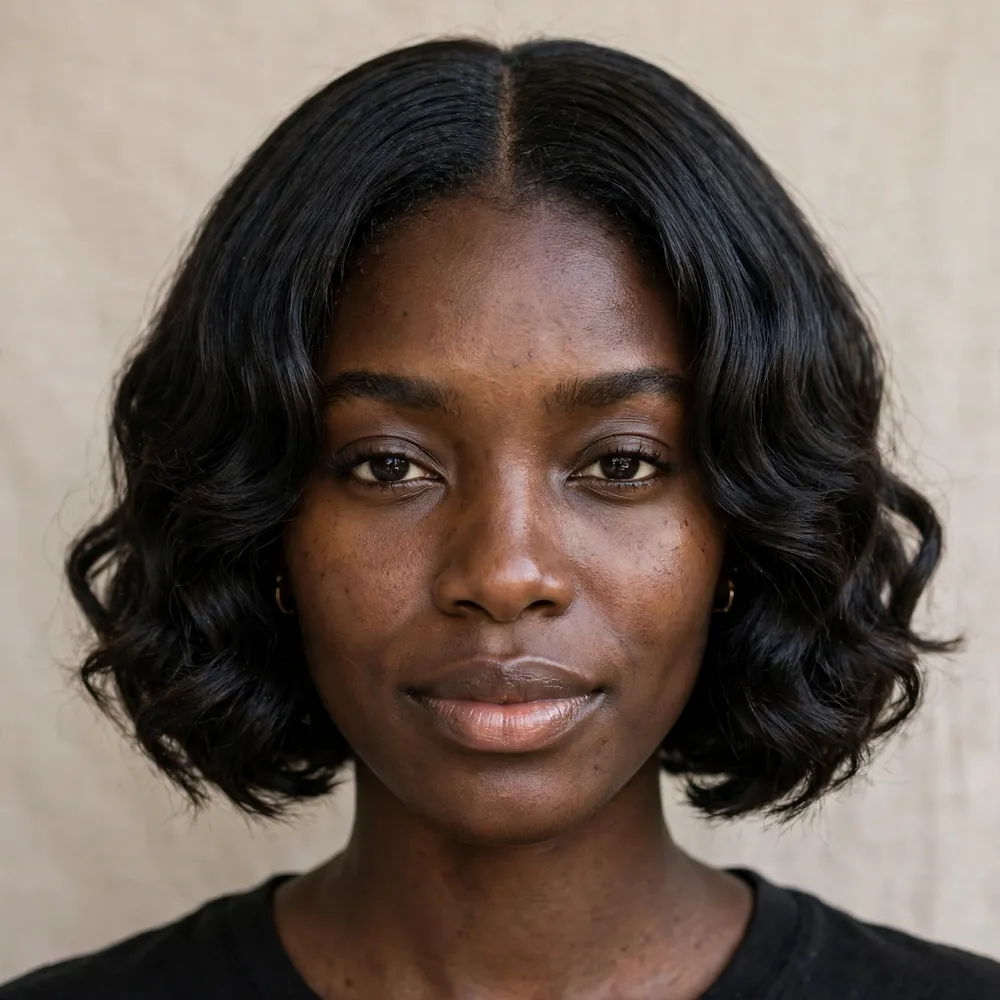
A middle part gives the French bob a calm, symmetrical shape, with soft vertical curl lines falling evenly on both sides. It suits straight and wavy hair, and it is most flattering on oval and heart-shaped faces, where the symmetry highlights the cheekbones. Ask for a jaw-length cut with a clean centre part and ends that curve gently under — the symmetry means any unevenness shows, so this one needs a precise cut. Style by parting the hair in the middle while it’s damp, then blow-drying each side under with a round brush, or letting it air-dry for a softer result. A middle part can feel severe if the hair is very flat, so a little root lift spray helps. Trim every six weeks.
16. French Bob with a Slight A-Line
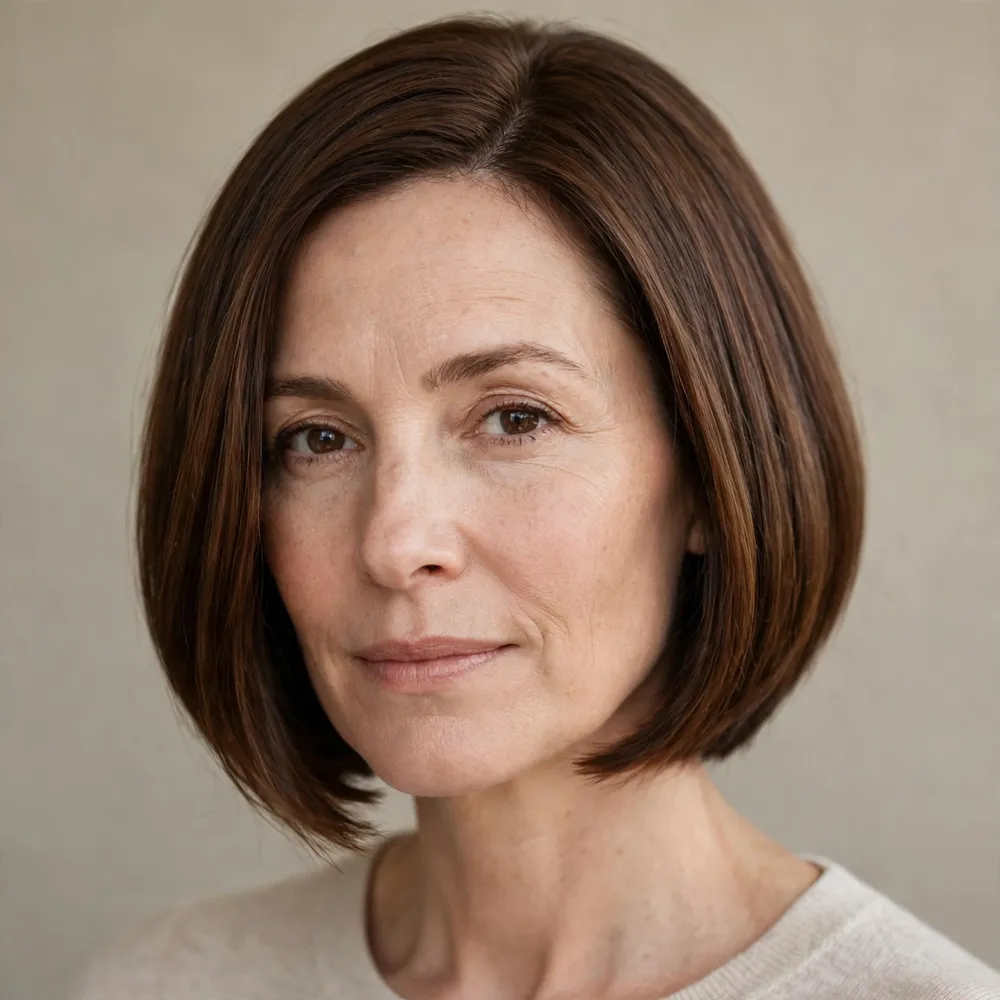
In this version the front sits about half an inch longer than the back, giving the bob a subtle forward angle without turning it into a dramatic statement cut. It suits straight and wavy hair, and it works well on round and square faces because the longer front pieces elongate the face. Ask for a jaw-length bob in the back with the front pieces kept half an inch longer, and the angle kept gentle — this is a whisper of an A-line, not a sharp one. Style with a round brush, curving the front pieces under so the angle reads clearly, or air-dry for a softer take. The longer front means the cut grows out gracefully, and trims every six to seven weeks keep the angle neat.
17. French Bob with Baby Bangs

Baby bangs — a short, retro fringe that sits above the brow — give the French bob a playful, vintage edge, while the longer bob body keeps it wearable. They suit straight hair best, since curls will shrink a short fringe even shorter, and they flatter oval and long faces, where the open forehead balances the proportions. Ask for a fringe cut a finger’s width above the brow, with the bob itself kept at jaw length and the ends soft. Be honest with your stylist about your forehead and your patience: baby bangs need styling every morning, a quick pass with a round brush or flat iron, and trims every three weeks to hold the length. They are not a low-maintenance choice, but they are one of the most striking.
18. Wet-Look Curly French Bob

This one leans into shine. The crown sits smooth and sleek while the curls fall in defined, glossy clumps around the jaw, so the whole cut looks polished rather than puffy. It suits tight curls and coils best, and it works beautifully for evenings out or weddings. Ask your stylist for a jaw-length French bob cut dry, curl by curl, with the top smoothed down and the ends left heavy enough to clump. At home, rake a strong-hold gel through soaking-wet hair, scrunch gently, and let it dry without touching it. Scrunch out the crunch once it is fully dry. The finish lasts a day or two, though humidity can soften the gloss.
19. Diffused Volume French Bob
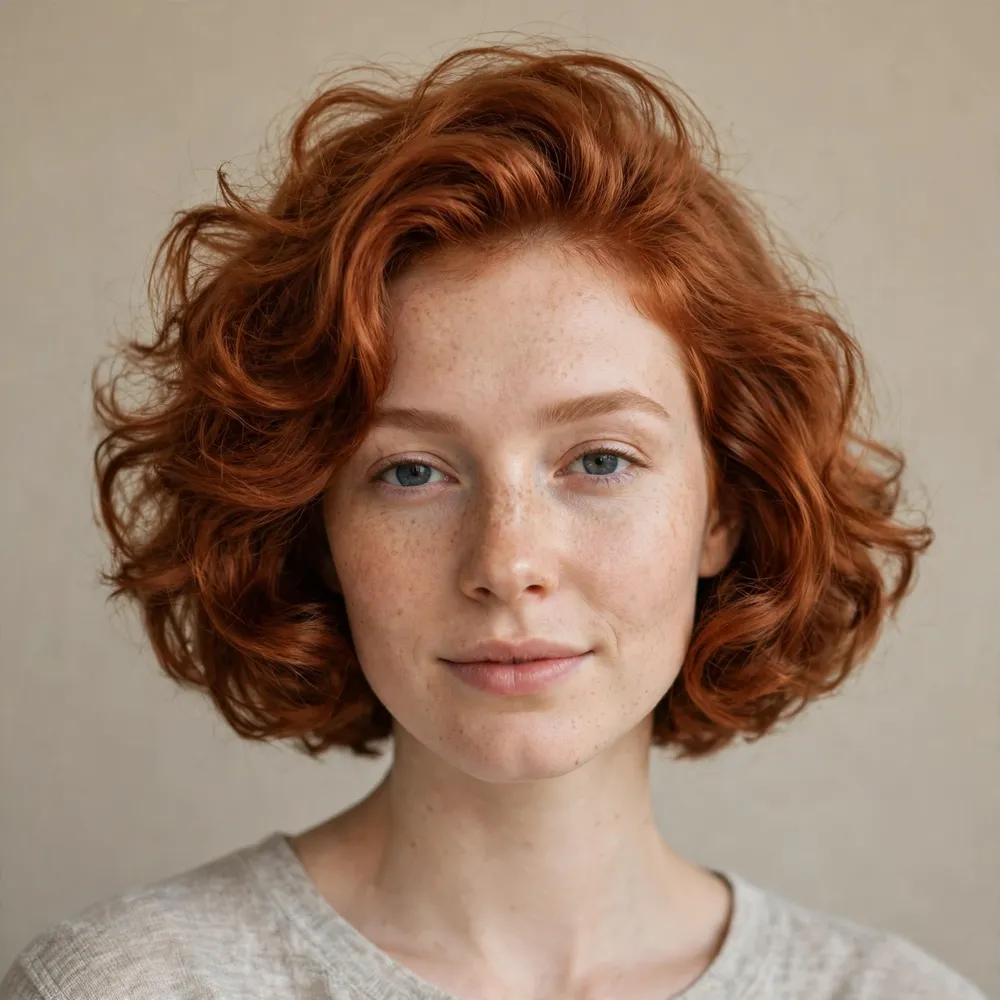
If your curls fall flat at the roots, this version fixes that without making the sides balloon out. The crown gets real lift while the perimeter stays controlled, so the shape stays a bob instead of turning into a triangle. It suits wavy and curly hair that needs height, and it flatters longer faces. Ask for a jaw-length cut with light interior layers just at the crown, and tell your stylist you want volume, not width. Dry with a diffuser on low heat, cupping sections up toward the roots, and finish with a light volumising mousse worked in at the roots only. It takes about ten minutes, and the lift usually holds until the next wash.
20. Razor-Soft French Bob
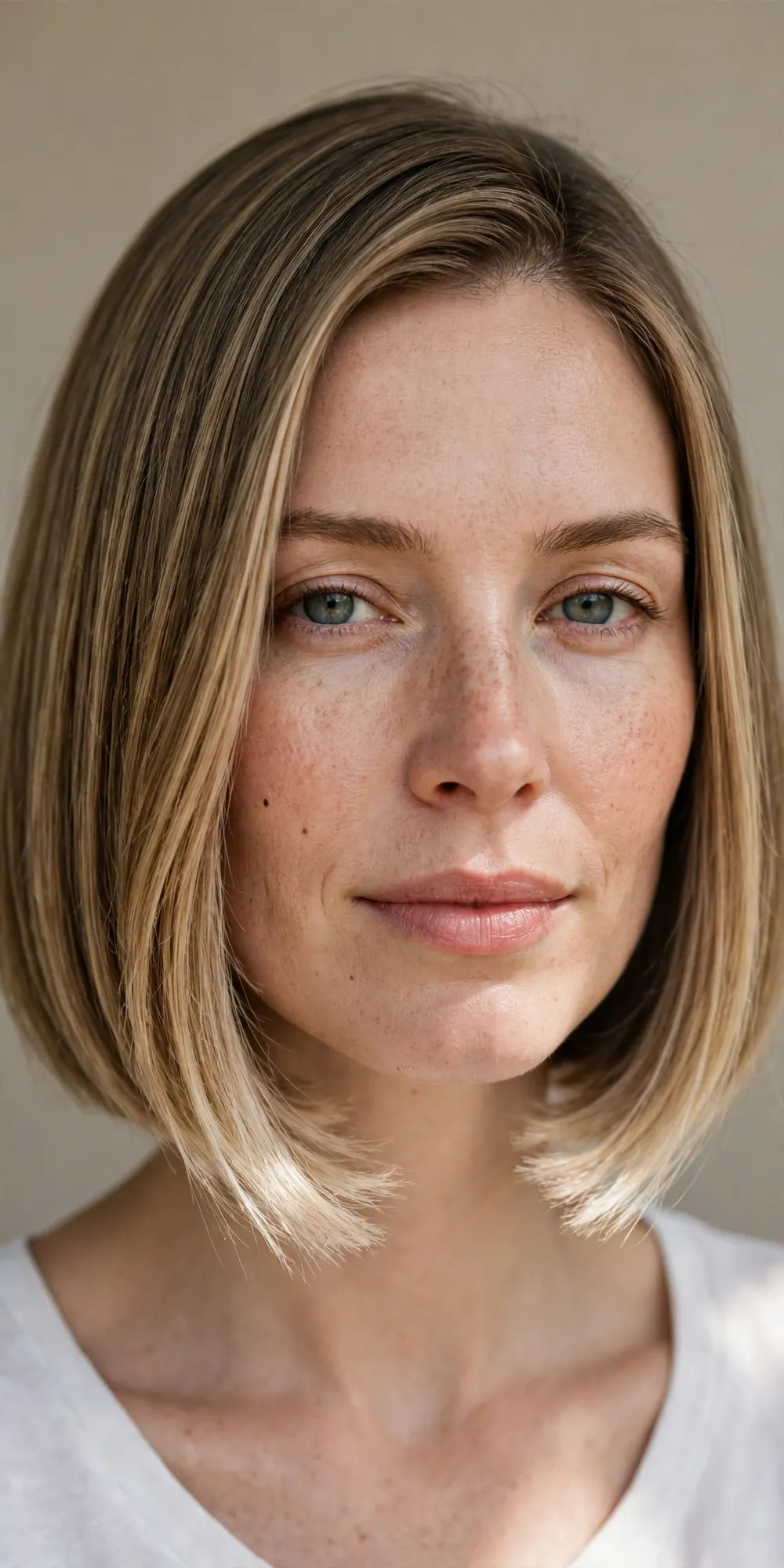
A razor cut gives this bob its soft, feathered edge. The outline still reads as a French bob, but the ends move instead of sitting in one blunt line, which makes it a good pick if a blunt cut ever feels too severe on you. It suits straight and wavy hair best, and medium-density hair that needs movement without losing shape. Ask your stylist to cut the jaw-length outline first, then soften just the last centimetre of the ends with a razor, keeping the perimeter intact. Style with a pea-sized amount of smoothing cream, blow-dried with a round brush, or simply air-dried for a softer finish. Trim every five to six weeks, because razor-cut ends can fray faster than scissor-cut ones.
21. Side-Tucked French Bob

This is less a separate cut and more a way of wearing the classic French bob, and it changes the whole mood. One side tucks neatly behind the ear while the other falls loose over the cheek, which opens up the face and shows off earrings beautifully. It suits almost everyone, and it is especially handy if your bob is growing out unevenly. Ask for the standard jaw-length French bob with a soft fringe, then tuck one side behind your ear and pin it flat with a single bobby pin hidden under the hair. A little texturising spray keeps the loose side from sliding forward. It takes about thirty seconds, and the tuck hides a multitude of sins.
22. Curly French Bob with Face-Framing Crescents

The crescent pieces are the star here: two curved sections that hug the cheeks and soften the jawline, while the rest of the bob sits at the jaw. It suits round and square faces particularly well, because the curves break up the width without adding length. Curly and wavy hair does this naturally; straight hair can manage it with a flat iron. Ask your stylist to cut the bob to the jaw, then carve two crescent-shaped pieces at the front, starting at the cheekbone and curving inward. Style by wrapping those front pieces around a round brush and rolling them toward your face. The crescents need a small trim every four weeks or they lose their curve.
23. French Bob with Hidden Undercut
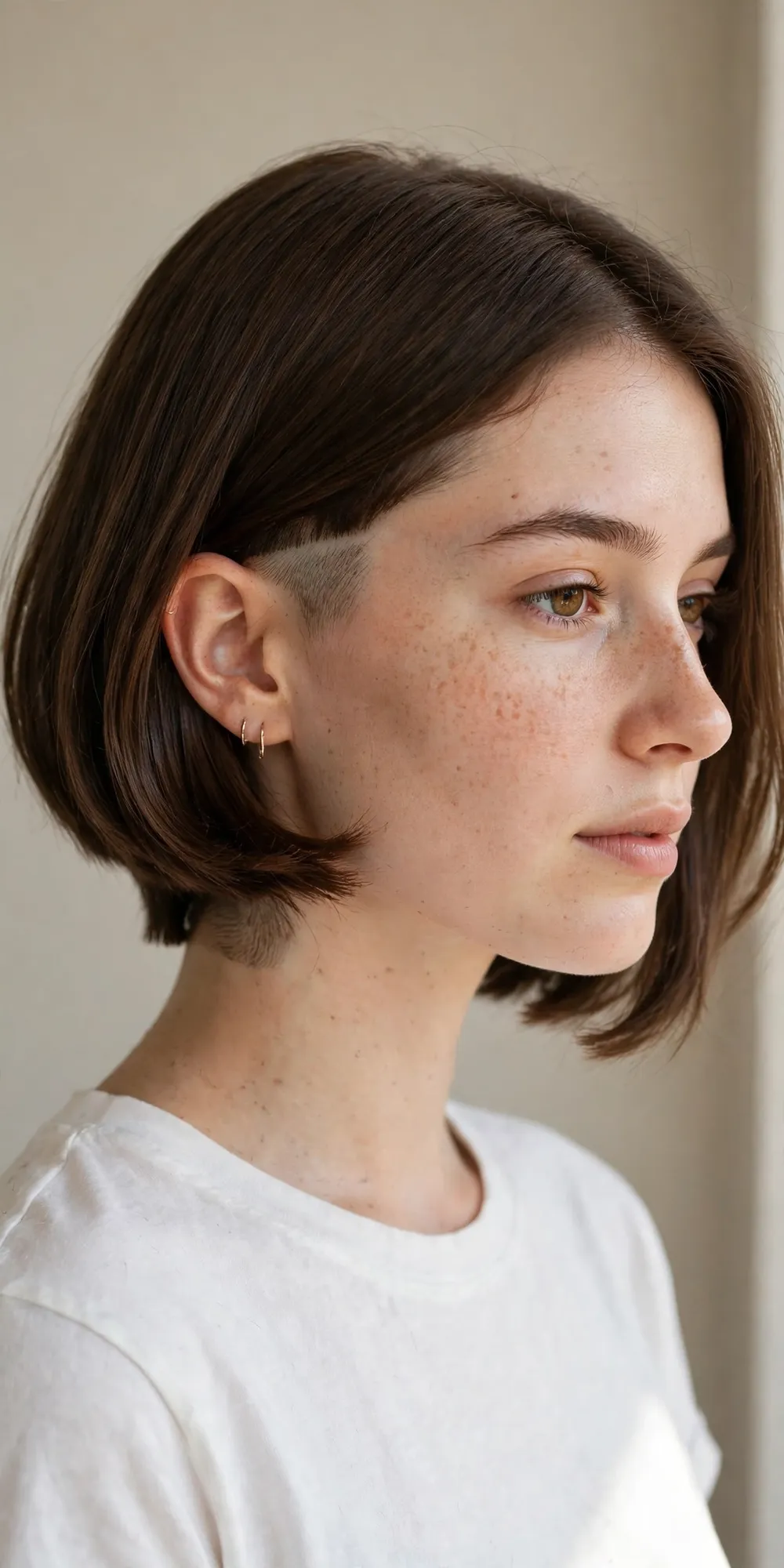
A hidden undercut is the secret weapon for thick hair. The weight is removed underneath at the nape while the top layer stays completely intact, so from the front and sides it looks like a normal French bob, just lighter and less bulky. It suits thick, heavy hair that tends to puff out at the back. Ask your stylist for a discreet undercut at the nape only, no higher than two fingers above the hairline, with the top layer left long enough to cover it fully. You style it exactly like a normal bob, and nobody sees the undercut unless you lift the top layer. The only upkeep is a quick undercut tidy every four to five weeks.
24. Salt-Spray French Bob for Loose Texture
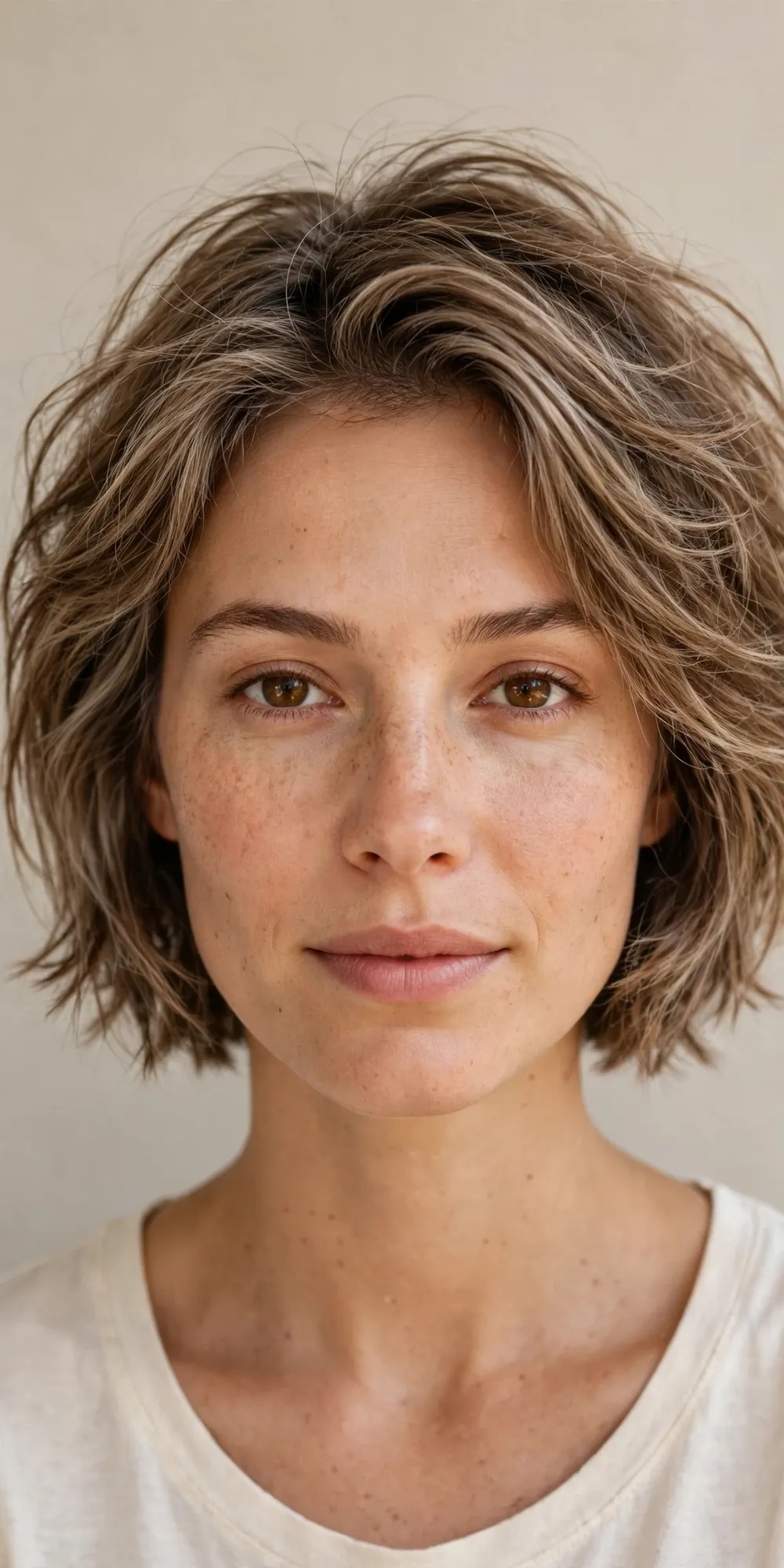
This is the beach-day version of the French bob: breezy, piecey, and deliberately undone. The salt spray gives loose waves a bit of grip and separation, so the bob looks lived-in rather than freshly styled. It suits wavy and straight hair best, and it is perfect for holidays and weekends. Ask for a jaw-length bob with light, invisible layers through the ends so the pieces can separate. Mist salt spray through damp hair, scrunch, and air-dry, then pinch a few ends apart with your fingers. Salt spray can dry hair out if used daily, so follow with a leave-in conditioner on wash days.
25. Grow-Out Friendly French Bob Lob

Not ready to commit to jaw length? This longer version sits at the collarbone and still keeps the French bob spirit: soft fringe, inward-curving ends, and that effortless Parisian feel. It suits anyone nervous about going short, and anyone who has hated the grow-out phase before. Ask for a collarbone-length bob with a brow-skimming fringe and ends that curve under, and tell your stylist you want it to grow out gracefully. Styling is simple: air-dry or blow-dry with a round brush, and a little smoothing cream keeps the ends tidy. Because it is longer, you can stretch trims to seven or eight weeks, and when you do cut it shorter, the shape is already there waiting.
26. Classic French Bob with Full Bangs

This is the original, the one from 1920s Paris: jaw-length, with a full brow-skimming fringe and ends that curve gently inward. It suits oval and long faces beautifully, and gives straight and slightly wavy hair a sharp frame. If your hair is very curly, ask for the fringe cut longer, since curls spring up as they dry. Tell your stylist you want the classic French bob, jaw length, with a full fringe that sits just at the brows and a clean, blunt perimeter. Style it by blow-drying the fringe forward with a small round brush, then tucking the ends under. It needs a fringe trim every three to four weeks, but the bob itself holds its shape well.
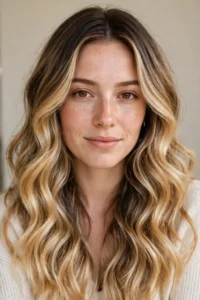
27. Wavy French Bob

Soft S-waves through a jaw-length bob are what make this one feel so easy. Nothing is over-styled; the waves just bend where they want to, and the whole cut looks like you woke up with good hair. It suits naturally wavy hair best, though straight hair can fake it with a flat iron, and it flatters most face shapes. Ask for a jaw-length French bob with a few long, invisible layers so the waves have room to move. At home, scrunch a little mousse into damp hair and air-dry, or twist two or three sections into loose braids overnight. Second-day hair often looks even better than fresh, since the waves settle into a softer pattern.
28. French Bob with Wispy Bangs
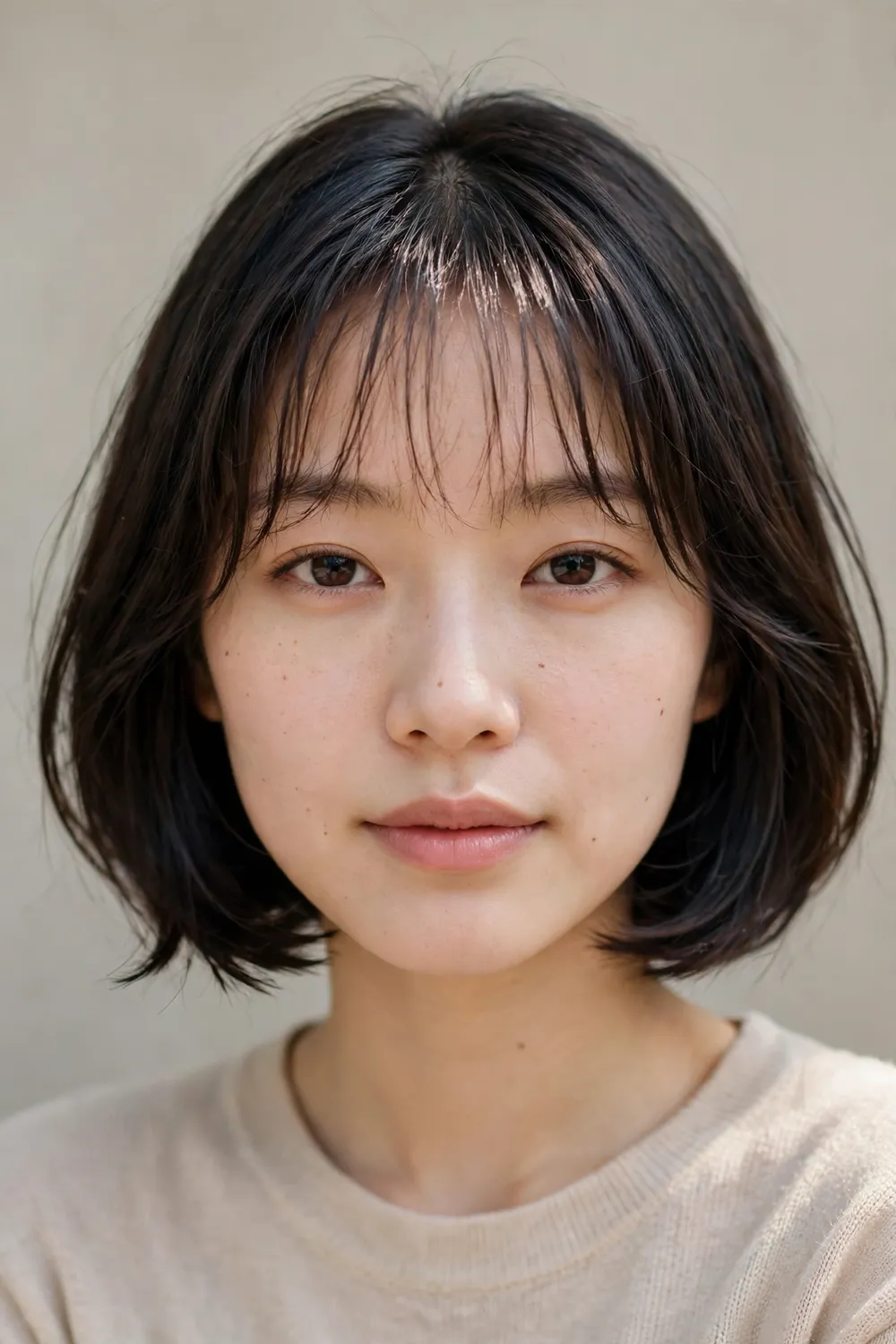
Wispy bangs are the gentlest way into a fringe. The see-through texture softens the forehead without the commitment of a full, heavy bang, so it suits anyone who has been unsure about bangs, and it works beautifully on fine hair that cannot support a thick fringe. It flatters a high forehead without closing the face in. Ask your stylist for a jaw-length French bob with a light, feathered fringe that you can still see skin through, cut just at the brows. Style the bangs by blow-drying them forward with your fingers, or just letting them fall naturally as they air-dry. They grow out gracefully, so you can stretch trims to five or six weeks.
29. French Bob for Fine Hair

Fine hair and French bobs are a natural match, because the short length and solid blunt line make the ends look thicker than they are. The trick is keeping the perimeter clean and avoiding layers that thin the ends further. It suits fine, straight or slightly wavy hair, and gives the impression of density longer fine hair rarely manages. Ask your stylist for a blunt jaw-length bob with no thinning at the ends and only the lightest interior layering, if any. Blow-dry with a round brush for lift at the roots, and use a light volumising mousse rather than anything heavy. Trim every five weeks to keep that thick-looking edge, since fine hair shows split ends quickly.
30. French Bob with Highlights
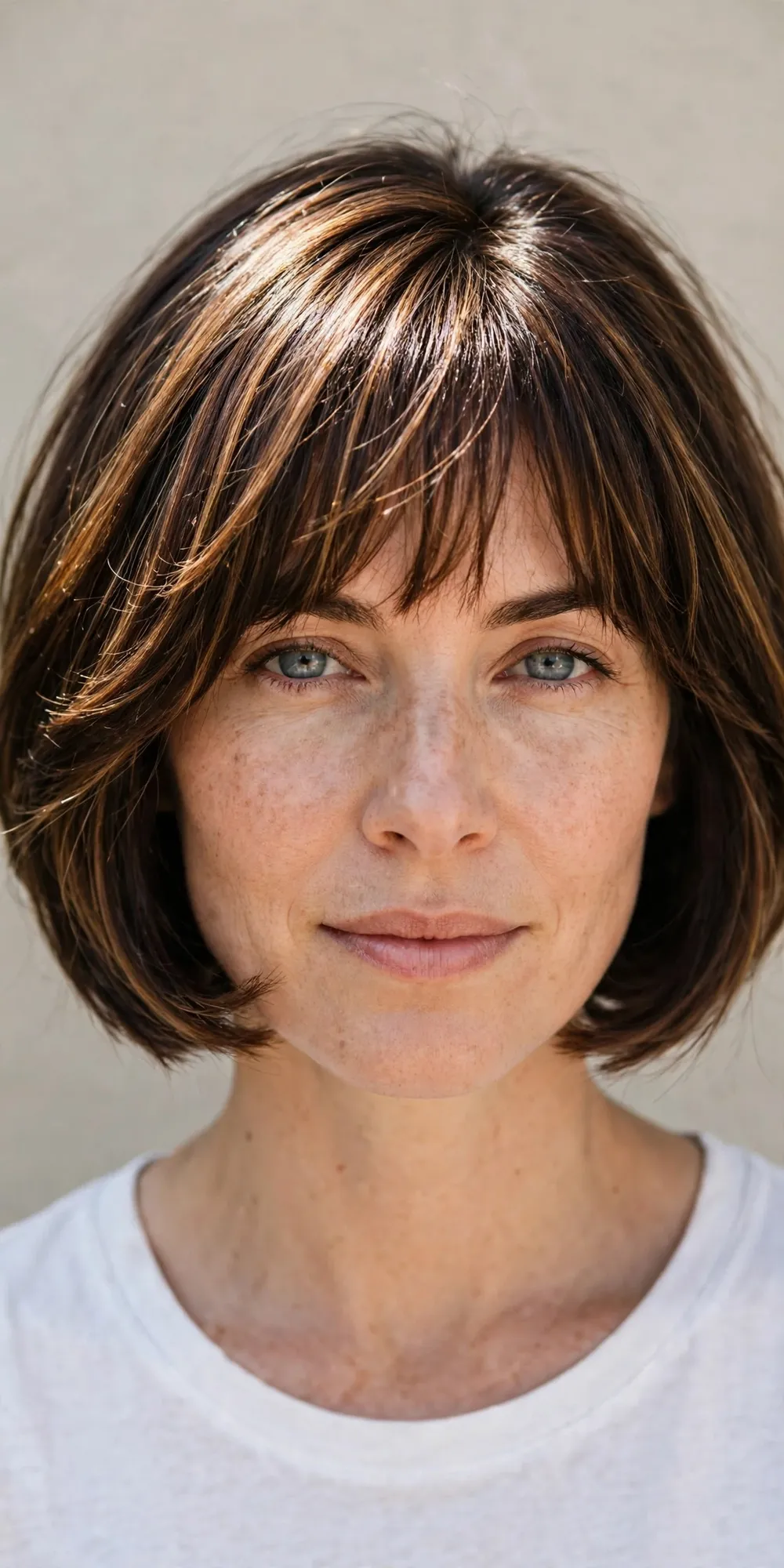
Highlights bring a French bob to life by adding dimension to a short cut, where every strand shows. Soft, face-framing pieces or a gentle balayage through the ends catch the light and make the bob look fuller. It suits most hair colours, though the effect is strongest on medium brown and dark blonde hair. Ask your colourist for dimensional highlights that are two shades lighter than your base, concentrated around the face and through the mid-lengths rather than at the roots. Keep the cut itself classic: jaw length, soft fringe, ends curving under. Use a colour-safe shampoo and a gloss treatment every six weeks, and plan a refresh every eight to ten weeks.
31. French Bob for Thick Hair
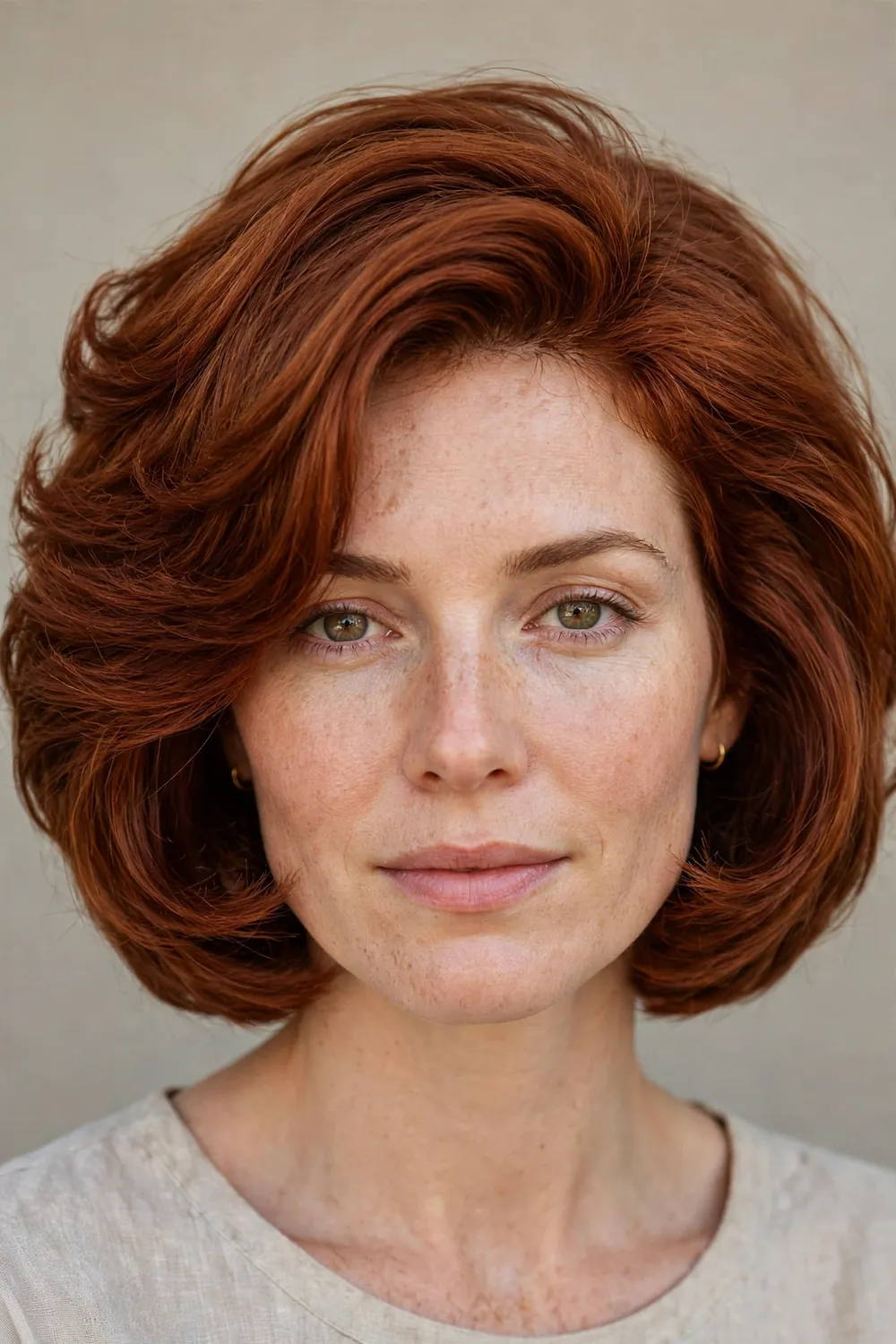
Thick hair can turn a French bob into a helmet if the bulk is not handled, so this version debulks the interior while keeping a clean outside line. The result still reads as a French bob, but it sits closer to the head and moves properly. It suits thick straight, wavy, or curly hair, and hair that has always felt too heavy for short cuts. Ask your stylist to remove weight from the interior with thinning shears or a hidden undercut, while keeping the perimeter blunt and jaw-length. Style with a smoothing cream and a round brush, or air-dry with a leave-in. Trims every six weeks keep the shape from widening, and your stylist should check the bulk at every appointment.
32. French Bob for Women Over 50

A slightly shorter French bob lifts the face in a way longer hair often cannot, and the soft, undone texture keeps it modern rather than severe. It suits women over 50 who want something chic but easy, and it works with grey, silver, or coloured hair alike. Ask your stylist for a bob that sits just above the jaw, with a soft fringe and textured ends rather than a hard blunt line. Style it with a little texturising spray and your fingers, or a quick round-brush blow-dry for more polish. If you are weighing up short styles generally, our guide to hairstyles for short hair has more options in the same easy-to-wear spirit. Trims every five weeks keep the lift.
33. Asymmetrical French Bob

One side longer than the other gives the classic French bob a sharp, modern edge. The difference is usually about an inch, but it changes the whole feel, adding drama without losing the Parisian softness. It suits straight and wavy hair best, since the line needs to read clearly, and it flatters round faces by creating a diagonal. Ask your stylist for a jaw-length French bob with one side an inch longer, and decide together which side based on your parting. Blow-dry the ends under with a round brush, keeping the longer side smooth. If you like short cuts with an edge, our pixie hairstyles guide has more bold short ideas. Trim every four to five weeks, or the two sides start to even out.
What to Ask for at the Salon
Walk in with a clear sentence, not just a photo. Try this: “I want a French bob, jaw length, with a soft fringe and ends that curve under. Please keep the perimeter blunt and don’t thin the ends too much.” That one sentence covers length, fringe, finish, and the most common mistake, all at once.
Bring two or three photos of bobs you like, and one of a bob you do not like, so your stylist can see the difference. Photos show the shape; your words explain what you want to live with day to day. Mention how you actually style your hair at home, because a cut that needs a round brush every morning is no good if you air-dry.
If your hair is curly, talk about shrinkage before the scissors come out. Curls can spring up by two to five centimetres as they dry, so a fringe cut to the brow while wet can end up well above it. Ask your stylist to cut your curls dry, or at least to cut the fringe longer than you think you need, then check it once it is dry. A good stylist will be glad you raised it.
How to Style a French Bob at Home
A French bob is meant to look easy, and most days it is. Start with clean, damp hair and a pea-sized amount of leave-in conditioner or light mousse. For an air-dried finish, scrunch gently and leave it alone until it is dry; touching it while it dries creates frizz. For curly hair, use a diffuser on low heat and low speed, cupping sections up toward the roots and holding for a few seconds at a time.
If you want a smoother finish, use a medium round brush and a hairdryer on medium heat, rolling the ends under as you dry. Work in small sections and keep the brush moving so you do not overheat one spot. Finish with a drop of hair oil on the ends only, never at the roots.
The 5-minute routine: towel-dry, work in a little mousse, blow-dry the fringe forward for one minute, then either diffuse or round-brush the rest for three minutes. Pinch the ends into place with your fingers and go.
Tools worth having: a diffuser attachment, a medium round brush, a wide-tooth comb, a light mousse or curl cream, a salt spray for texture days, and a silk pillowcase if your bob frizzes overnight.
5 Mistakes That Ruin a French Bob
1. Cutting too short at the cheeks. The bob should sit at the jaw, not halfway up the cheek. Once it is cut too short at the sides, there is nothing to do but grow it out, so always ask your stylist to cut long first and take more off only after you have seen it dry.
2. Over-thinning the ends. Thinning shears can make a French bob look wispy and weak, especially on fine hair. The blunt perimeter is what gives the cut its shape, so ask your stylist to keep the ends solid and remove bulk from the interior instead.
3. Heavy products. Thick creams, oils, and butters weigh a short bob down and make it look greasy by midday. Use light products, start with less than you think you need, and keep oils to the very ends.
4. Fringe cut too short for shrinkage. This is the classic curly-hair mistake. A fringe cut to the brow while wet can spring up to the middle of the forehead once dry. Always cut curly fringes longer than the target length, then trim a little more once dry if needed.
5. Skipping trims. A French bob loses its shape fast. Go more than eight weeks without a trim and the ends flip out, the fringe falls into your eyes, and the whole cut looks grown out rather than effortless. Book your next trim before you leave the salon.
Frequently Asked Questions
What is a French bob?
A French bob is a short, jaw-length bob with a soft fringe and ends that curve gently inward, inspired by the 1920s Parisian style. It is shorter and softer than a classic bob, with a lived-in, effortless finish rather than a sharp, polished edge.
What is the difference between a French bob and a classic bob?
A classic bob is usually longer, sitting at the chin or just below, with a blunter, more structured shape and often no fringe. A French bob is shorter, ending at the jaw, and almost always has a fringe, with softer, more textured ends and a relaxed feel.
Does a French bob suit a round face?
Yes, it can, with the right adjustments. Ask for a slightly longer length that sits just below the jaw, a side part or long side fringe to create a diagonal line, and face-framing pieces that lengthen the face. Avoid a very short, blunt bob with a heavy straight fringe, which can make a round face look wider.
Does a French bob work on curly hair?
Yes, curly hair is one of the best matches for a French bob, because the short length lets curls spring up and hold their shape. The key is cutting it dry, curl by curl, and cutting the fringe longer than you think, since curls shrink as they dry. A curly French bob needs regular trims to keep its shape.
How often does a French bob need a trim?
Every four to six weeks for most people, and every three to four weeks if you have a fringe that needs to stay out of your eyes. The short length means growth shows quickly, so regular trims are what keep the bob looking intentional rather than grown out.
Can you wear a French bob without bangs?
Yes. A French bob without bangs works well with a centre part or a deep side part, and it suits people who do not want the upkeep of a fringe. The jaw-length shape and inward-curving ends still give it the French feel, and it is easier to grow out.
How long does it take to grow out a French bob?
Growing a jaw-length bob to shoulder length usually takes about six to nine months, since hair grows roughly one centimetre a month. The grow-out is easier if you keep the shape tidy with trims every seven to eight weeks, and the longer collarbone version in this guide makes a good stepping stone.
Final Word
A French bob is one of those rare cuts that looks both timeless and completely current, and with 33 versions to choose from, there is one here for your face shape, your hair type, and the amount of time you actually want to spend styling it. Pick the version that fits your life, take the photos and the wording to your stylist, and give it a few weeks to settle in. For more ideas in the same spirit, explore more hairstyle guides on our blog and find your next look.