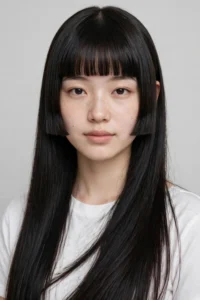


A hime cut is a Japanese “princess cut” with three sharp, disconnected levels: a blunt fringe, cheek-length sidelocks and very long, straight hair down the back. If you want the best of it in 2026, start with the Classic Long, the Layered, or the Hime Bob — the three styles below that suit the most faces and hair types. It is the cut that inspired the jellyfish haircut, but where the jellyfish is deliberately wild, the hime is precise, polished and unmistakably elegant.
What Is a Hime Cut?
The hime cut goes back to the Heian period (794–1185 CE), when noblewomen at the Imperial court wore their hair in long, straight lengths — and the Hime cut tradition traces the style’s roots to that era, including the binsogi ceremony, in which a girl’s hair was cut shorter around the ears at sixteen. It stayed a formal, courtly look for centuries, then came roaring back in the 1970s, when idol Megumi Asaoka made it a pop-culture signature across Japan. Now it is having another moment in 2026, helped by actress Suzy wearing a hime in the K-drama Doona!, and it ranks as one of the year’s top-ten Korean hair trends.
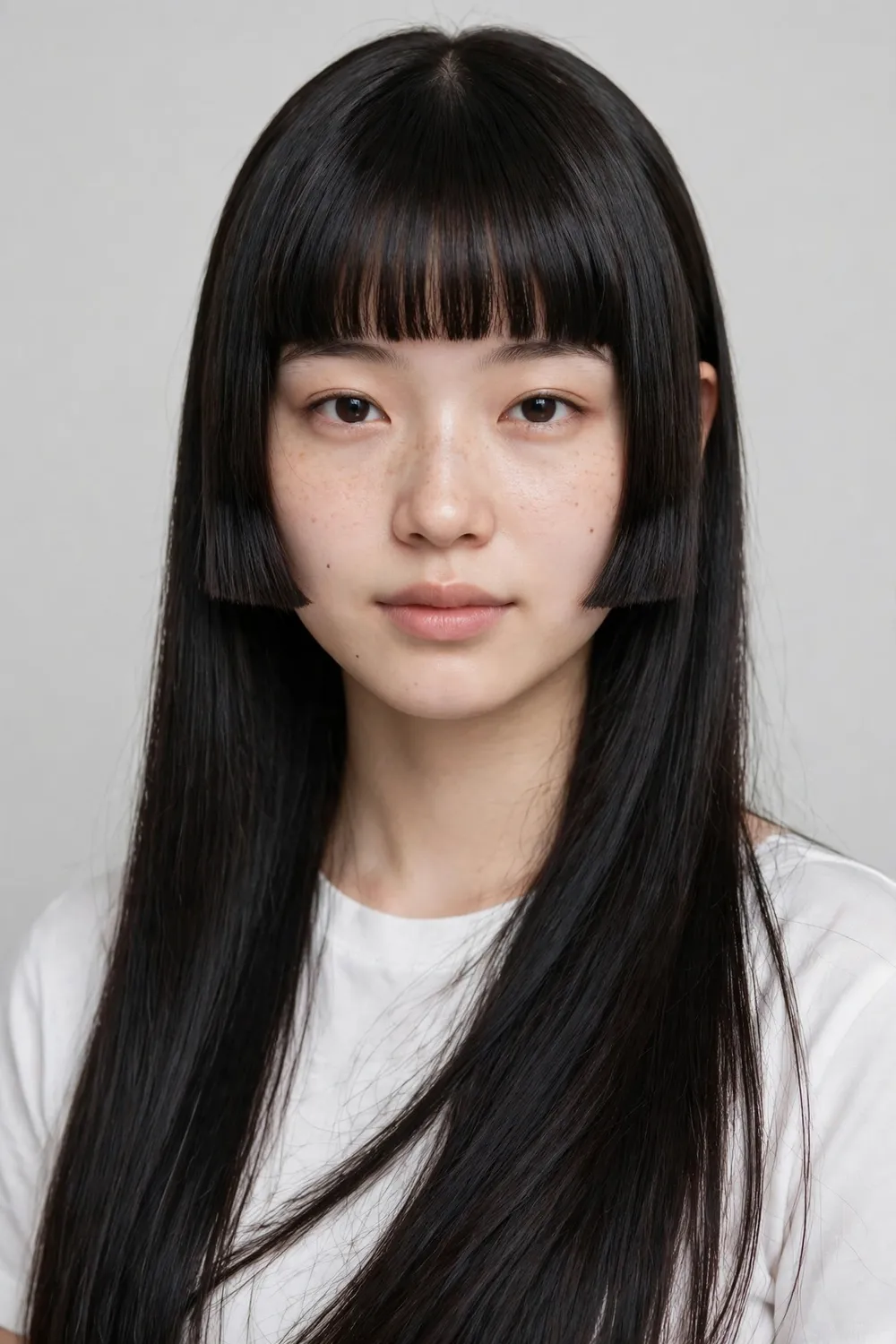
The cut itself is simple to describe and hard to get right. It has three levels, and each one is cut blunt, with no blending between them. First, a straight fringe that sits at or just above the eyebrows. Second, the sidelocks — called hime-ge — cut blunt at cheek or jaw length, framing the face like a curtain. Third, the back: long, straight hair, usually past the shoulders and often to the waist. That contrast between the short, graphic front and the long, sleek back is the whole point. Get the lengths wrong and it looks like a grown-out bob; get them right and it looks like a deliberate, sculptural frame for your face.
The 17 Best Hime Cut Hairstyles (2026)
1. Classic Long Hime Cut
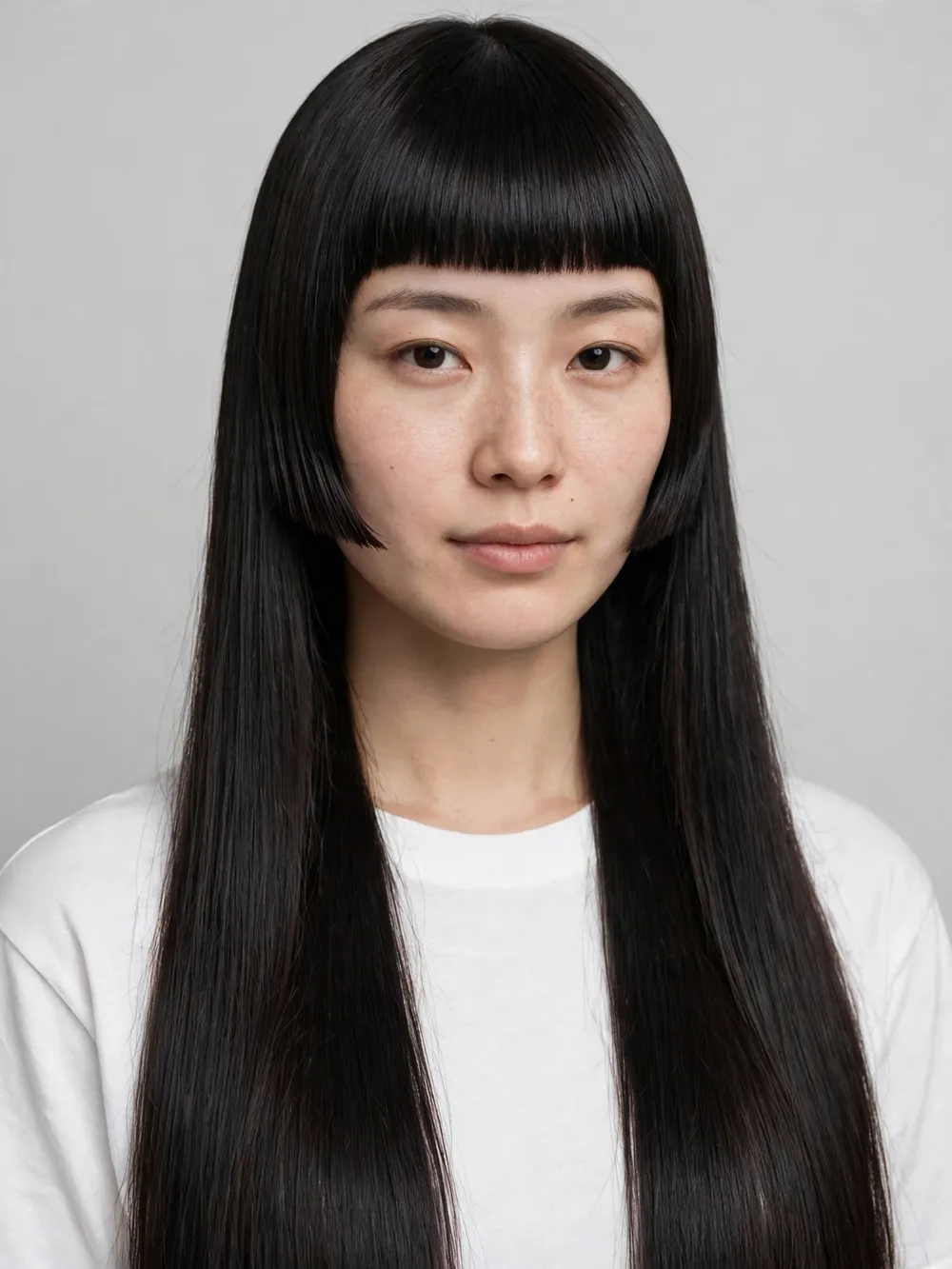
This is the hime in its purest form. A blunt fringe sits just above the eyebrows, the sidelocks hit exactly at cheekbone level, and the back falls long and ruler-straight, usually past the shoulder blades. It suits straight, medium-to-thick hair best, and it flatters round faces, because those hard, angular lines give a soft face definition it would not otherwise have. Ask your stylist for a disconnected cut: blunt fringe, blunt sidelocks at the cheek, and a long back with no layers. Finish with a flat iron and a drop of smoothing serum, so the lengths catch the light in one clean sheet. The fringe needs trimming every two to four weeks, the sidelocks every six to eight, or the sharp edges blur and the cut starts looking accidental.
2. Layered Hime Cut for Long Hair
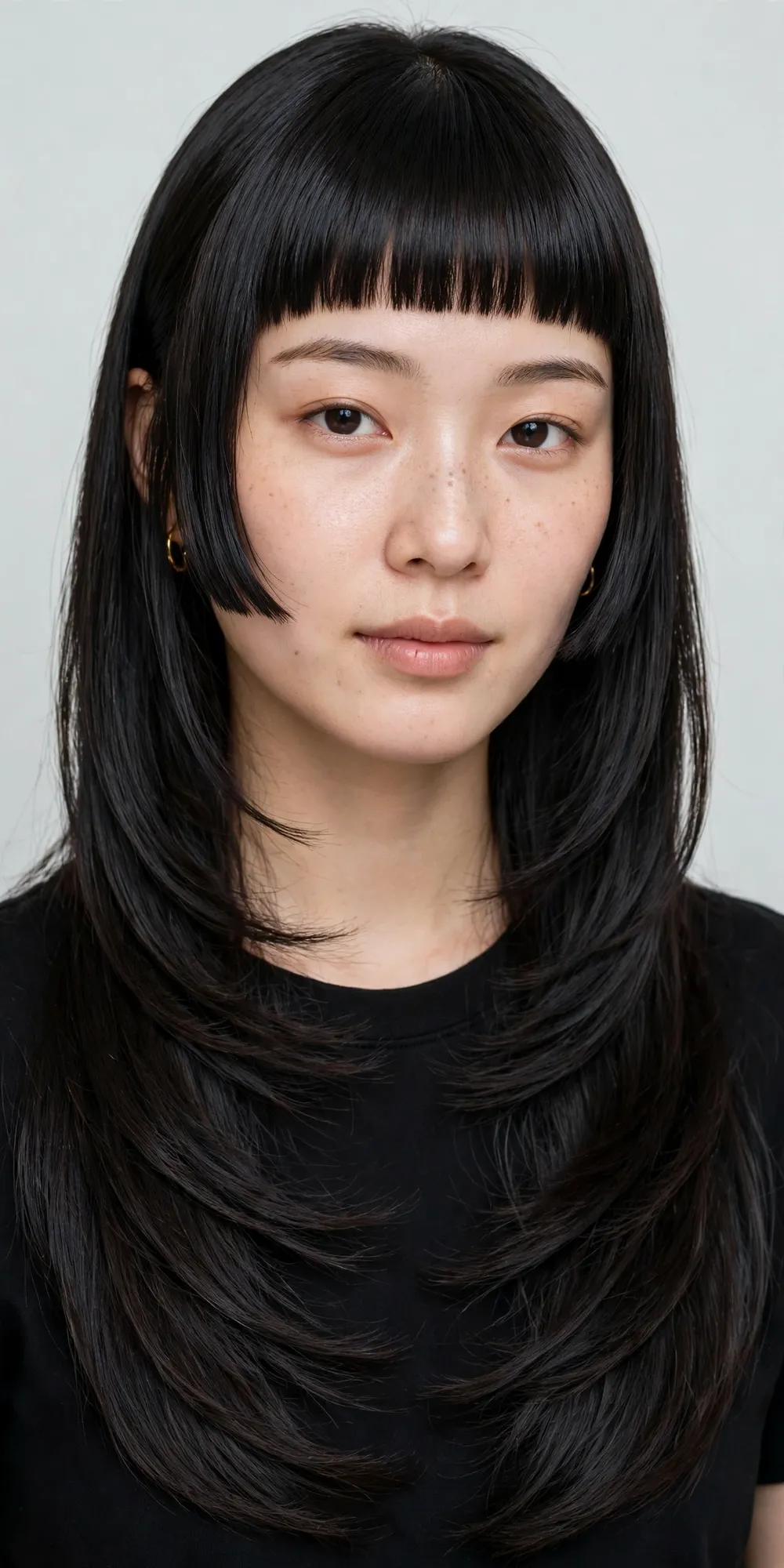
This version keeps the classic front — blunt fringe, blunt cheek-length sidelocks — but adds graduated layers through the long back only. The layers start around the collarbone and get shorter toward the ends, so the back gains movement and a soft, feathered edge. It is the best choice for thick or heavy hair, because it removes bulk without touching the graphic front that makes the cut a hime. Ask for the classic hime front first, then graduated layers through the back only, and be clear the sidelocks stay blunt and disconnected. Style with a round brush, flipping the layered ends out slightly, then smooth the front with a flat iron and a little serum. The layered back is forgiving if you stretch a haircut.
3. Hime Cut with Bangs

Here the fringe is the whole personality of the cut: full and blunt, straight across at eyebrow level, with no wispy bits and no side-sweeping. It works best on straight hair with a fairly even hairline, and it suits long faces especially well, because the heavy fringe shortens the forehead and balances the length. Ask for a blunt, full fringe cut dry, so your stylist sees exactly where it falls. Keep it sleek with a flat iron and a little smoothing cream, and skip heavy oils at the roots, which make a blunt fringe look greasy by lunchtime. The trade-off is real: this fringe needs trimming every two to three weeks, and a quick pass with the straighteners most mornings.
4. Double Sidelocks Hime Cut

The double sidelock version adds a second, shorter pair of sidelocks in front of the first — one pair at cheekbone level, another slightly shorter, closer to the temple. The effect is a stepped, almost architectural frame around the face, and it reads bolder and more fashion-forward than the single-sidelock classic. It suits people who like a strong, graphic look and have straight, fine-to-medium hair, because the layers stay crisp and visible rather than puffing out. Ask for two disconnected sidelock lengths. A flat iron is non-negotiable: run smoothing serum through the sidelocks and press each level straight, section by section. Both sidelock lengths need shaping every six weeks, and the fringe still needs its regular trim, so this is a cut for someone who enjoys the salon.
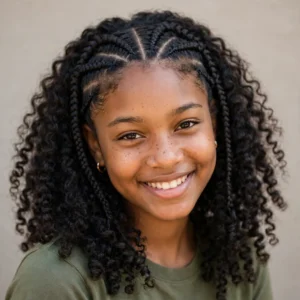
5. Curly Hime Cut for Long Hair
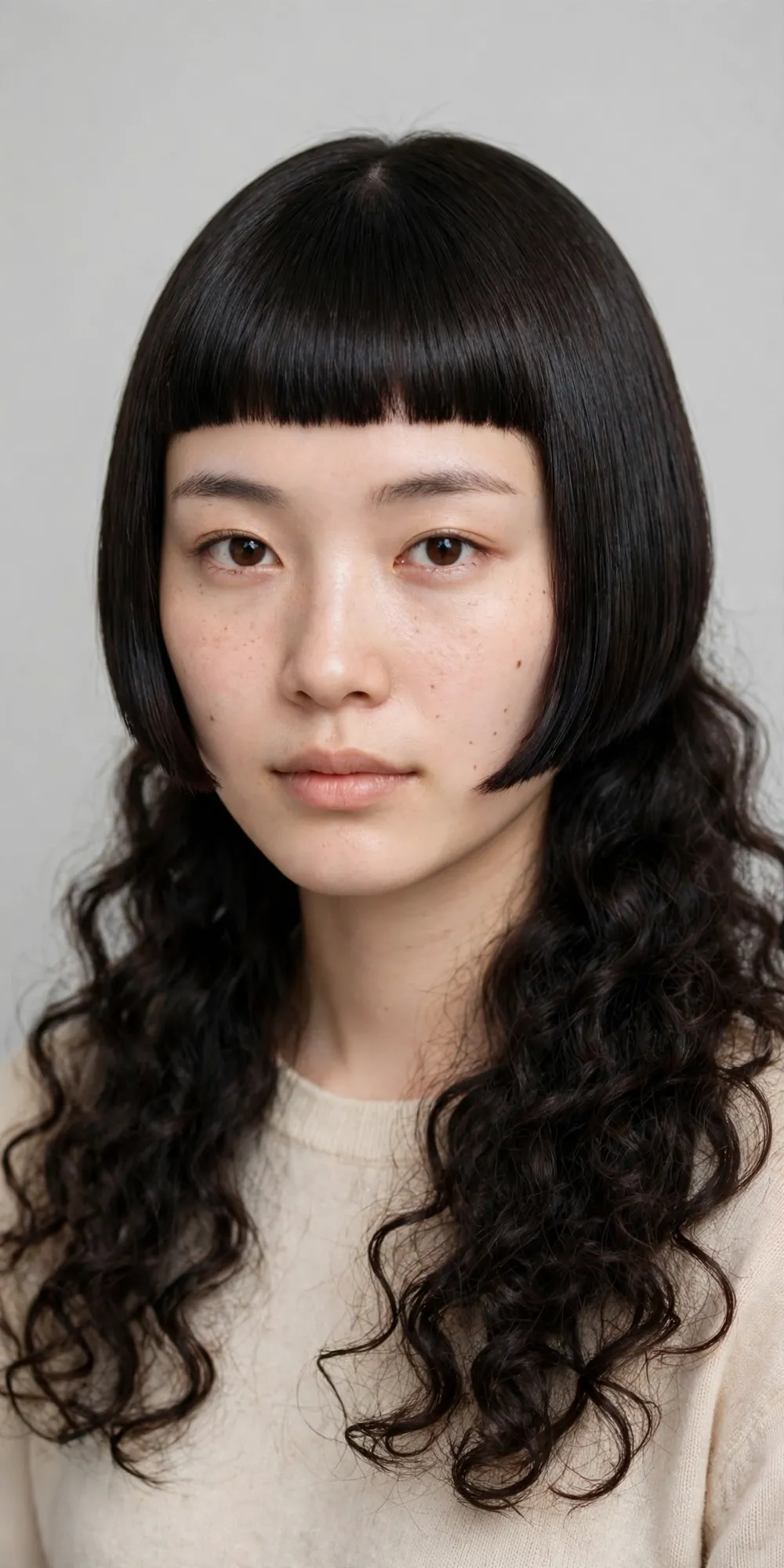
A hime on curly hair works — with one rule: the front is straightened while the back keeps its curl. The fringe and sidelocks are cut blunt and worn smooth, giving you the graphic hime frame, while the long back stays in its natural curl. It suits loose waves to tight ringlets, as long as the front is cut longer than it looks dry, to allow for shrinkage. Ask for the fringe and sidelocks cut while your hair is straightened, or an inch longer than the target length. At home, flat-iron the front each morning after heat protectant, and scrunch curl cream through the back. The catch is daily effort: humidity will try to curl the front, so this version asks the most of you on damp days.
6. Hime Cut with Layers

Unlike the Layered Hime Cut, which layers the back alone, this version layers the whole cut, so the sharp edges soften into something gentler and more blended. The fringe keeps its blunt spirit but with feathered corners, the sidelocks taper instead of ending in a hard line, and the back has soft face-framing layers. It is the best starting point if you love the idea but worry the classic will look too severe on you. It suits fine hair well, because the layers add volume, and it flatters oval and heart-shaped faces. Ask for soft layers throughout, with the sidelocks blended lightly into the back. Style with a round brush for a gentle bend and a light texturising spray; trims can stretch to five or six weeks.
7. Colorful Hime Cut Styles

Colour is where the hime cut really shows off, because its blunt, separated levels turn into perfect panels for bold shades. Think cherry red, pastel pink, vivid violet, or a deep blue-black. The most striking versions keep the fringe and sidelocks one shade and the long back another, so the three levels become three blocks of colour. This suits anyone with healthy, straight hair who is happy to commit to upkeep, and it looks best on the classic long length. Ask your colourist to place the colour by section, and use a semi-permanent shade to try it without full commitment. Finish with a gloss serum and a flat iron; vivid shades fade in two to four weeks, so expect frequent salon visits.
8. Soft Hime Look

The soft hime is the gentle cousin of the classic: same three levels, but every edge is eased. The fringe is slightly longer and feathered at the corners, the sidelocks curve toward the chin, and the back has a light bend. It suits people who want the hime silhouette without the severity, and it is kind to round and square faces, because the curved sidelocks soften the jaw. It also works well on fine hair, since the softer lines do not demand the thickness a blunt cut needs to look intentional. Ask for a hime with softened edges — a feathered fringe, sidelocks curved inward, and a gentle bend through the back. Style with a large round brush and a low-heat blow-dry; the fringe can go four weeks between trims.
9. Hime Cut with Side Bangs

Swapping the blunt fringe for side-swept bangs changes the whole mood of the hime — pick this if a straight-across fringe has never worked for you. The bangs sweep diagonally from a deep side part, blending into the sidelock on one side, while the other sidelock stays blunt and short. It suits oval and long faces, and uneven hairlines, since the fringe falls to one side anyway. Ask for a side part, bangs cut diagonally to the cheekbone, and blunt sidelocks so the hime frame stays obvious. Blow-dry the bangs across the forehead with a round brush, then flat-iron the sidelocks straight. Side bangs grow out far more gracefully than a blunt fringe, so you can stretch trims to five or six weeks.
10. Short Hush Blend Hime Cut

This one softens the hime cut without losing its shape. The sidelocks end just below the cheekbone, the fringe stays blunt, and the back is kept shorter, with a feathered blend where the levels meet instead of hard lines. It suits anyone who loves the princess-cut look but finds the classic version too severe, and it works especially well on finer hair that needs movement. Ask your stylist for a short hime cut with a hushed blend through the sidelocks, keeping the fringe sharp. Finish with smoothing cream and a quick flat-iron pass, just enough to keep the ends clean. The softer blend grows out more gracefully than a blunt cut, so you can stretch trims a little longer, though the fringe still needs attention every few weeks.
11. Brown Hue Hime Cut

A warm brown shade makes the hime cut’s three levels read beautifully, because the light catches each section differently. The fringe, the sidelocks and the long back all sit in slightly different light, so the cut looks dimensional even without layers. This suits warm skin tones best, and it’s a good first colour if you’ve never dyed your hair — brown is forgiving on roots and easy to maintain. Ask your colourist for a warm chocolate or chestnut brown, all-over colour rather than highlights, so the blunt lines stay clean. A colour-safe shampoo and a weekly gloss treatment keep the shade rich. The only honest catch: brown fades a little warm and brassy over time, so a cool-toned gloss every six weeks keeps it looking expensive rather than tired.
12. Asymmetrical Hime Cut

One sidelock longer than the other — one side cheek-length, the other jaw-length — the asymmetrical hime cut is the boldest version on this list, and it works because the base shape is already so graphic. It suits confident dressers — the uneven line draws the eye and frames the face in a deliberately off-balance way. Ask your stylist which side should carry the longer lock, and have them cut it dry so you can see exactly where each level falls. Style it dead straight so the asymmetry reads clearly; any wave blurs the effect. The trade-off is maintenance: the shorter side grows into the longer one fast, so book a tidy-up every three to four weeks or the shape turns into a regular uneven cut.
13. Two-Tone Hime Cut

Colour does the talking here. The classic hime shape stays the same, but the sidelocks are dyed a contrasting shade — blonde against black, copper against brown, or a pastel against dark hair — so the cheek-length sections pop out from the rest. It suits anyone who wants a statement look without committing to a full head of vivid colour, and the sidelocks are small enough that growing it out is painless. Ask your colourist to keep the two-tone sections strictly inside the sidelocks, with clean partings, so the colour doesn’t bleed into the fringe or the back. Use colour-safe products and a heat protectant every time you iron. Expect root touch-ups on the coloured sections every four to six weeks if you chose a light shade over dark hair.
14. Hime Bob

The hime bob keeps the princess-cut DNA — blunt fringe, sharp sidelocks — but the back ends at the shoulder or collarbone instead of running down your back. It’s the quickest hime cut to style and the best pick if long hair feels heavy. Ask your stylist for a hime cut with the back cut to collarbone length, blunt ends, and sidelocks just below the cheek. A flat iron pass takes minutes at this length; a drop of serum keeps the ends glossy. If you’re weighing up shorter styles, our guide to hairstyles for short hair has options that pair well with a blunt fringe. Trim the fringe every two to three weeks and the bob holds its shape with very little effort.
15. Wavy Hime Cut

Soft waves through the back give the hime cut a gentler feel, while the fringe and sidelocks stay straight so the three levels still read clearly. Pick this if your hair has a natural wave — you only straighten the front sections, and the back does its own thing. Ask your stylist for a hime cut with the back left long enough to hold a wave, and keep the sidelocks long enough that they don’t spring up once they dry. Style the front with a flat iron, then run a large-barrel curling iron through the back for soft movement. A light texturising spray holds the wave without stiffness. On humid days the waves can frizz, so smoothing serum on the front sections is non-negotiable.
16. Hime Cut with Braids

Thin braids woven into the long back — or along one sidelock — turn the hime cut into something playful without touching the sharp front shape. It works for festivals or holidays, and it suits long hair best, since you need enough length for the braids to show. Ask your stylist to cut the hime first, then add the braids as a styling detail rather than part of the cut itself. At home, take two thin sections from the back, braid them loosely, and secure with small clear elastics. A little texturising spray keeps the braids from slipping. The braids are temporary, so take them out at night and brush through gently. Don’t sleep in tight braids — they’ll kink the straight lengths and undo your flat-iron work.
17. Long Sidelocks Hime Cut

Here the sidelocks run past the chin and curve gently in towards the lips, softening the whole cut and making it far more forgiving than the blunt classic. It’s a great pick for strong jaws — the longer length draws the eye down, balancing the face, and it suits anyone growing out a shorter hime cut — let the sidelocks grow while the fringe stays put. Ask your stylist for sidelocks cut past the chin with the ends curved inward, with the fringe blunt. Style with a flat iron, turning the sidelock ends under slightly as you go. Smoothing serum keeps the curve glossy rather than fluffy. The longer sidelocks grow out gracefully, so six to eight weeks between trims is fine, though the fringe still needs its regular tidy-up.
How Do You Ask Your Stylist for a Hime Cut?
Book a consultation first, and bring a front-facing reference photo — not a side profile — so your stylist can see the sidelock width and length clearly. Say this: “I want a hime cut — blunt fringe, disconnected sidelocks at cheek or jaw length, and long straight hair at the back. Please cut the sidelocks as separate, disconnected sections, not blended into the back.”
That word, disconnected, is what makes it a hime cut rather than a layered cut with face-framing pieces. Agree on the sidelock length before any cutting starts: cheek-length for a sharper look, jaw-length or longer if you have a strong jaw or want something softer. Point at the photo and confirm the width too — thick sidelocks look bolder, thin ones look lighter. If you wear your fringe a particular way, say so now, because the fringe sets the whole shape. A good stylist will cut the fringe and sidelocks dry or nearly dry, so they can see exactly where the blunt lines fall.
How to Style and Maintain a Hime Cut
The daily routine is simple but not optional. After washing, apply a heat protectant through the mid-lengths and ends, then rough-dry until the hair is about 80% dry. Flat iron in small sections, starting with the fringe, then the sidelocks, then the back — slow, single passes beat fast repeated ones. Finish with a drop of smoothing serum on the ends only, never at the roots.
Trim the bangs every two to four weeks, and the sidelocks every six to eight weeks. Let either grow out and the whole shape collapses: long bangs fall into your eyes, long sidelocks blend into the back. Humidity is the real enemy, so on damp days, add an extra pump of serum and avoid touching the front sections — hands transfer moisture and frizz. A silk pillowcase helps too, since it stops the fringe kinking overnight. If your fringe needs a refresh between washes, a little dry shampoo at the roots lifts it without a full restyle. For more fringe ideas, see our guide to curtain bangs.
Who Does a Hime Cut Suit?
Round faces suit a hime cut well — the straight lines and sharp angles add definition where roundness softens everything. Long faces benefit too, because the blunt fringe shortens the forehead and balances the length. Inverted-triangle faces, with a wider forehead and narrower chin, also wear it beautifully; the sidelocks fill in the sides and even out the proportions.
Hair type matters as much as face shape. Naturally straight hair is the easiest match — the cut was designed for it, and the lines hold with minimal effort. Thick hair works too, but it needs light layers through the back so the length doesn’t sit like a curtain; our butterfly haircut guide shows how layered long hair can move without losing shape. Curly or wavy hair can absolutely wear a hime cut, but only if you’re willing to straighten the fringe and sidelocks regularly — those front sections are the whole look, and if they curl up, the shape disappears. If daily heat styling sounds like a chore, this probably isn’t your cut.
5 Mistakes to Avoid with a Hime Cut
- Trimming the sidelocks yourself. The blunt line is the whole point, and one uneven snip at home throws the symmetry off. Leave it to your stylist — the trim takes ten minutes in the chair.
- Skipping heat protectant. A hime cut lives on the flat iron, and unprotected daily heat turns the ends dry and frayed fast. Protectant every single time, no exceptions.
- Choosing the wrong sidelock length for your jaw. Cheek-length sidelocks on a strong jaw draw attention straight to it. Go longer if your jaw is square, and let the length soften the line.
- Letting the bangs grow out. A fringe that’s past your eyebrows stops looking deliberate and starts looking neglected. Book the trim before it reaches your lashes.
- Using a heavy volumiser. Big, bouncy volume breaks the sleek, graphic lines that make a hime cut work. Keep products light — smoothing serum, not root-lifting mousse.
Frequently Asked Questions
What is a hime cut?
A hime cut is a Japanese “princess cut” with three levels: a blunt frontal fringe, blunt cheek-to-jaw sidelocks, and long straight hair down the back. It dates back to the Heian-period Imperial court and became popular again in the 1970s, then went viral once more in 2026.
What face shape suits a hime cut?
Round, long and inverted-triangle faces suit it best. The angular lines define round faces, the fringe shortens long faces, and the sidelocks balance an inverted triangle. Strong jaws should keep the sidelocks longer for a softer frame.
Can you get a hime cut with curly or wavy hair?
Yes, but the fringe and sidelocks need to be kept long enough to allow for shrinkage, and the front sections need straightening. If you’re happy to flat iron the front regularly, it works — the back can keep its natural texture, as the wavy version above shows.
How do you style a hime cut at home?
Apply heat protectant, rough-dry to about 80%, then flat iron in small sections — fringe first, then sidelocks, then the back. Finish with smoothing serum on the ends. The whole routine takes ten to fifteen minutes once you’ve done it a few times.
How often does a hime cut need trimming?
The bangs need trimming every two to four weeks, and the sidelocks every six to eight weeks. The back can go longer between cuts, but once the fringe or sidelocks grow out, the shape loses its sharpness quickly.
Is the hime cut still popular in 2026?
Yes — it’s one of the biggest hair trends of 2026, helped by its appearance in the K-drama Doona! and its ranking as a top-10 Korean trend for the year. Salons report steady demand, and the many modern versions on this list show it’s still evolving.
What is the difference between a hime cut and a jellyfish haircut?
The jellyfish haircut grew out of the hime cut, but it’s a different shape: a short, rounded bob-like cap sits on top of much longer lengths underneath, with a clear disconnected step between the two. The hime cut has three levels — fringe, sidelocks and long back — rather than two. Read our full comparison in the guide to the jellyfish haircut.
Final Word
The hime cut is a bold look, but it’s also a surprisingly practical one — the shape does most of the work, and ten minutes with a flat iron keeps it looking sharp. Start with the classic or the hime bob if you’re trying it for the first time, and let the sidelocks grow longer if you want a softer version. Browse more hairstyle guides on our blog to find your next look.