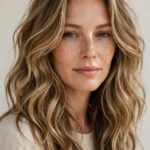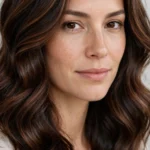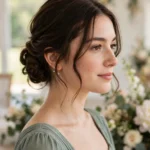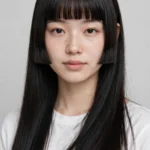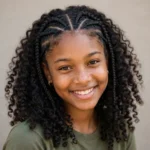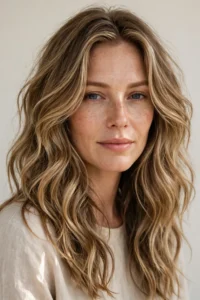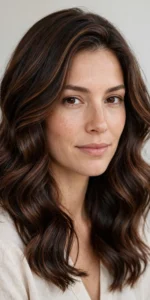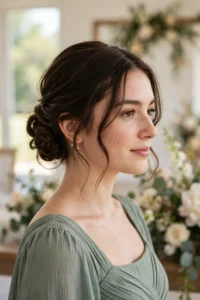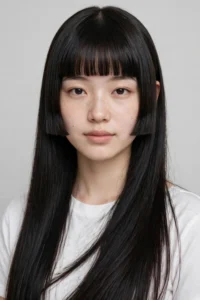



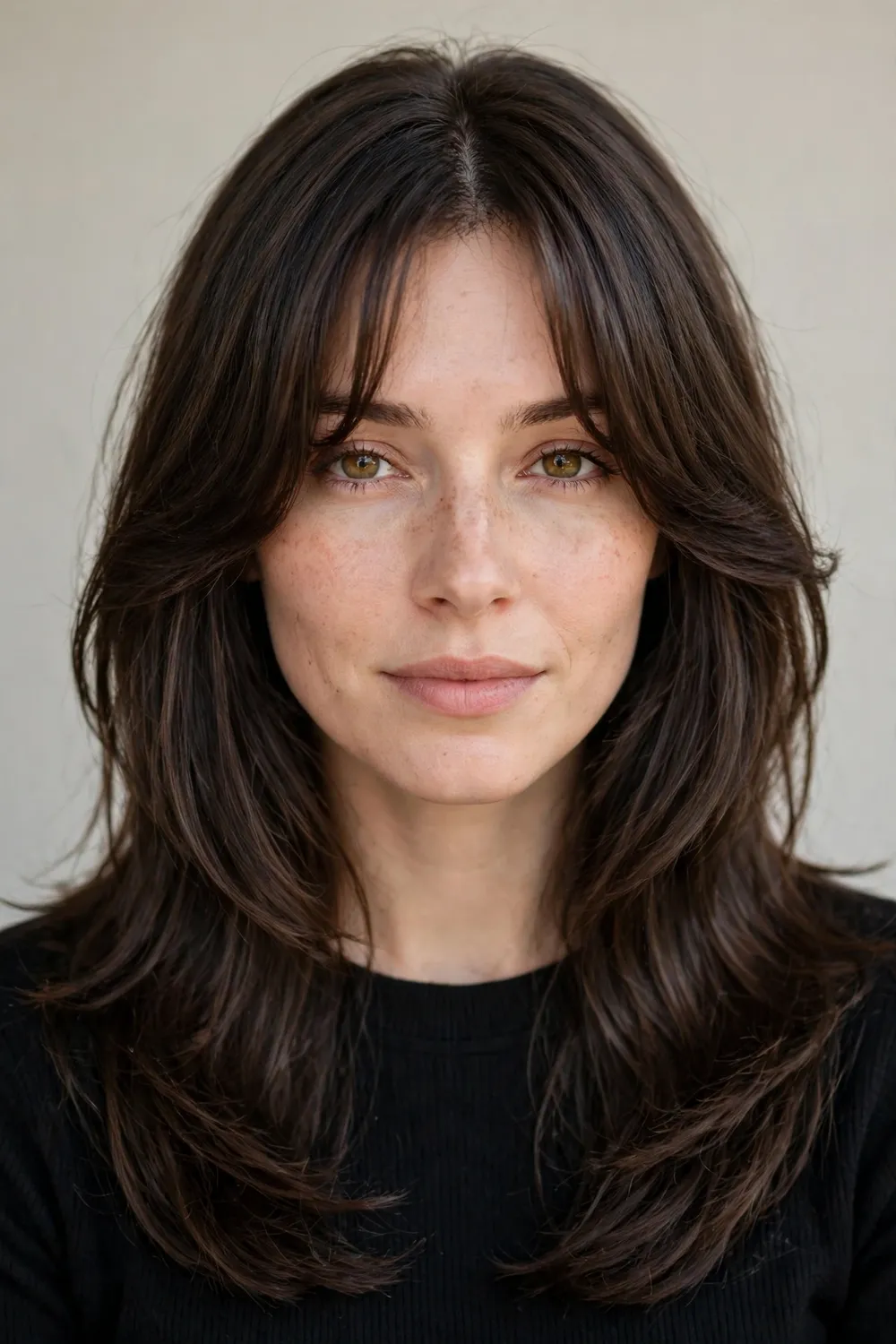
Curtain bangs are the softest way to change your hair without losing any length — a face-framing fringe that opens up in the middle like a curtain and blends into the rest of your cut. Our top three picks up front: the Classic Soft Sweeping, the safest and most flattering starting point; the Wispy Fluffy Layered, the best choice for fine hair that needs volume; and the Butterfly Cut with Face Frame Bangs, the bounciest, most on-trend option of the three.
What Are Curtain Bangs?
Curtain bangs are a fringe parted in the centre, shorter in the middle and longer toward the sides, with feathered ends that blend into the layers around your face instead of sitting in a straight line. The look traces back to Brigitte Bardot in the 1960s and 70s, whose soft, tousled fringe made the style famous — and it’s the same relaxed, slightly undone feel that keeps it popular today. They suit almost every face shape because the centre part opens up the face and the longer side pieces can be adjusted to soften a wide forehead, balance a round face or add width to a long one. The honest catch is upkeep: plan a trim every 4–6 weeks, because once the shortest point grows past your cheekbones, the curtain effect starts to disappear.
Classic & Soft Curtain Bangs
1. Classic Soft Sweeping Curtain Bangs
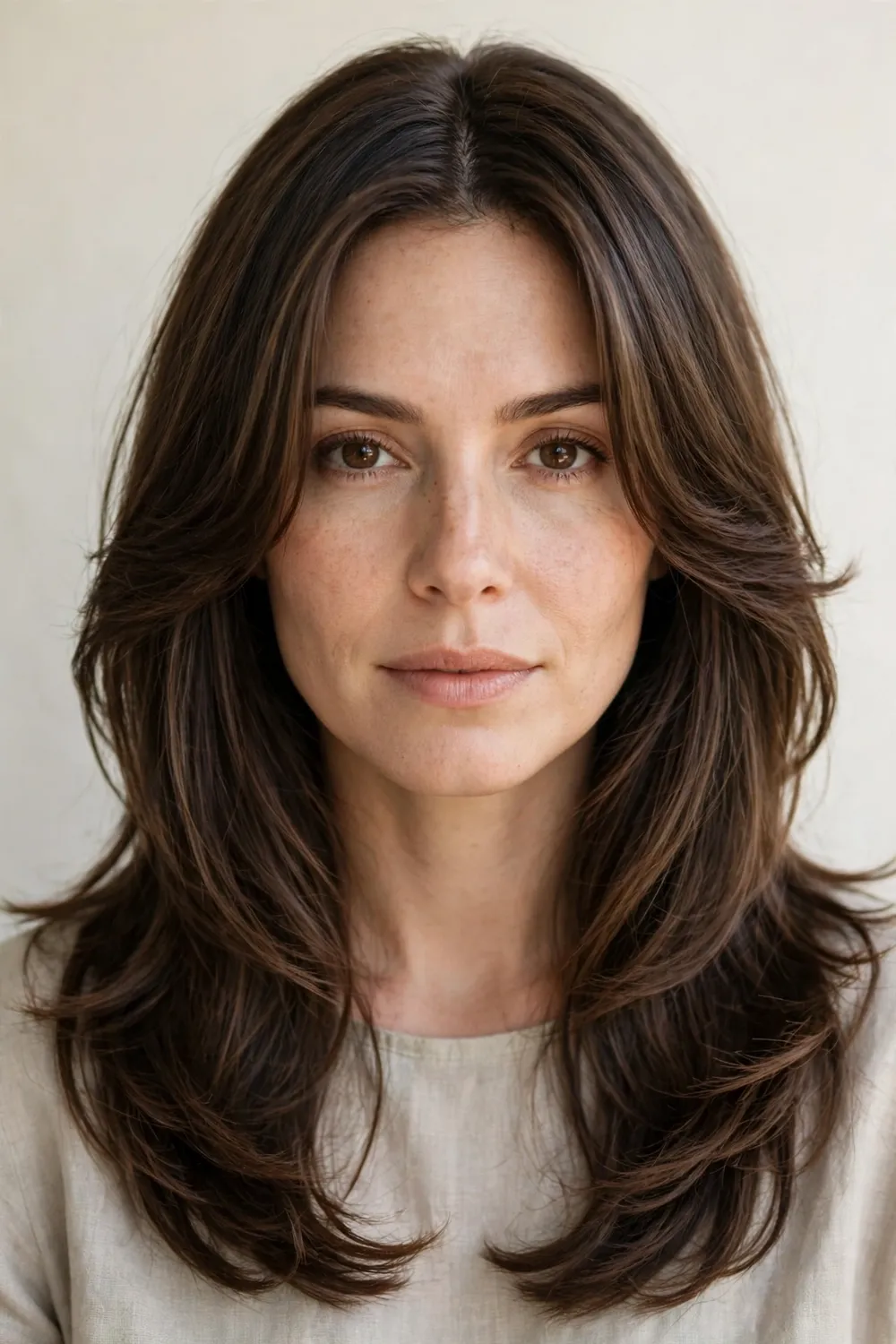
This is the original curtain bang and still the one most women should start with: a gentle sweep that begins around the cheekbones and melts into long layers. It suits oval, round and heart-shaped faces, and works on straight, wavy or lightly textured hair — very curly hair can make the sweep spring up. Ask your stylist for curtain bangs with the shortest point at the cheekbone, cut with a centre part, and the ends feathered so they disappear into your layers. A round brush and a little smoothing cream give the classic sweep, and a pea-sized drop of serum keeps it glossy. Maintenance is kind: a trim every 4–6 weeks and a quick two-minute blow-dry on wash days.
2. Wispy Fluffy Layered Curtain Bangs
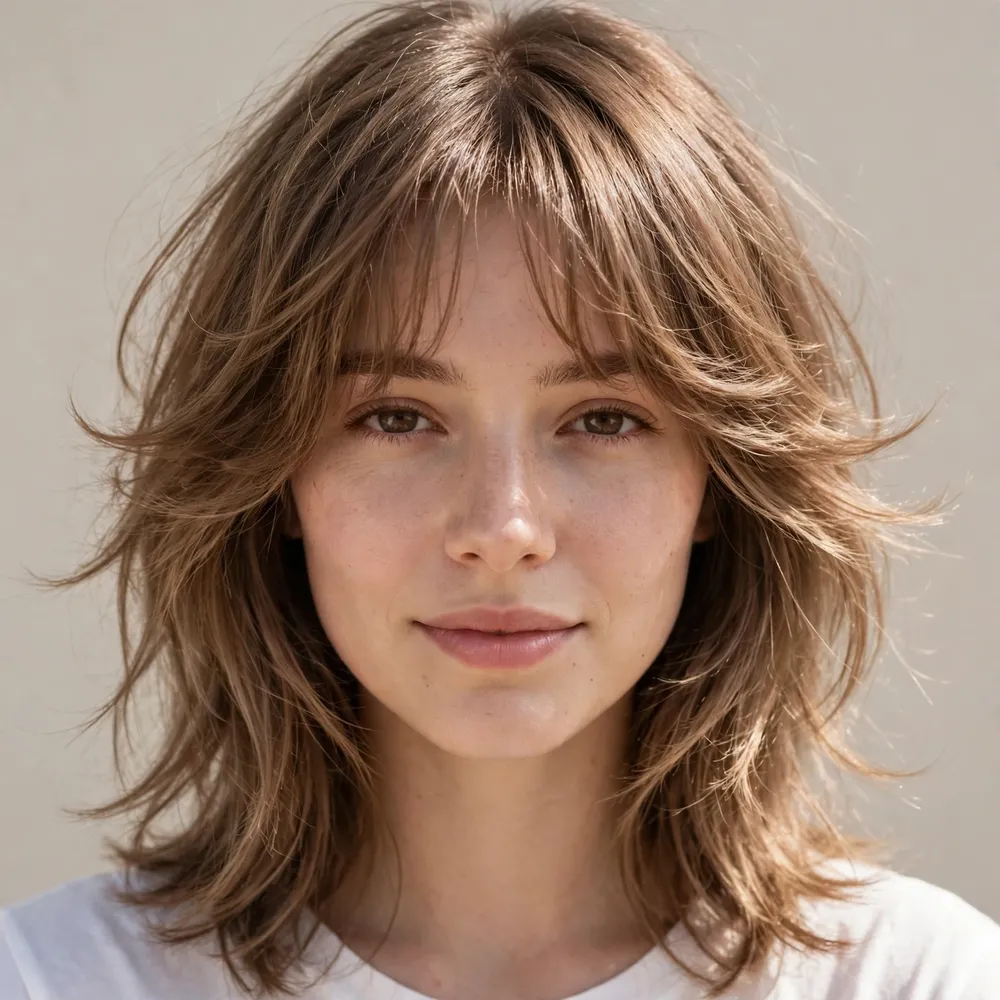
If your hair is fine and flat, this is the version of curtain bangs made for you: light, airy pieces cut in soft layers so the fringe looks full and bouncy instead of thin and stringy. It suits oval and long faces especially well, because the fluff adds width around the cheekbones, and it flatters fine or medium hair far more than thick hair. Ask your stylist for wispy bangs with the shortest point at the nose, point-cut ends for softness, and light layering through the front to build movement. Blow-dry with a round brush, lifting at the roots, and finish with a touch of volumising mousse or light texturising spray — never a heavy oil, which collapses the fluff. Maintenance is easy: a trim every 5 weeks and dry shampoo on day two to keep the lift.
3. Long Layered Honey Blonde Curtain Bangs
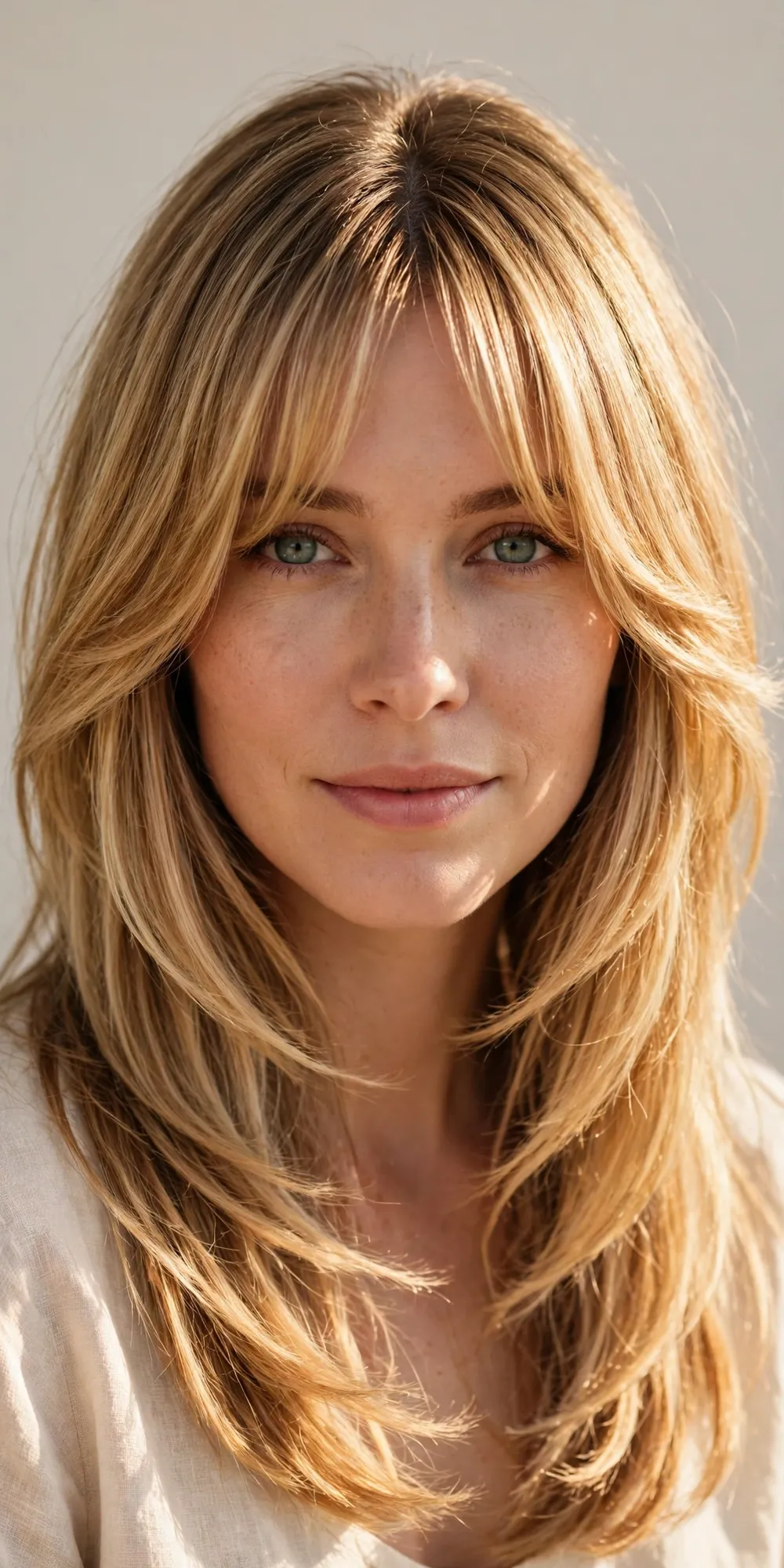
Honey blonde and curtain bangs are a natural match — the warm, sun-kissed colour catches the light exactly where the bangs sweep across your face, so the whole style glows. It suits warm skin tones best, and it flatters medium to long hair, because the bangs need length to fall gracefully below the cheekbone. Ask your stylist for curtain bangs with the shortest point at the cheekbone, blended into long layers, with honey blonde balayage painted through the bangs and face frame so the colour looks sunlit rather than striped. Style with a large round brush for a soft bend, and finish with a shine spray or a drop of lightweight oil on the ends. Maintenance is the trade-off: a trim every 4–6 weeks, and a gloss or toner every 6–8 weeks to stop the honey turning brassy.
4. Birkin Inspired Textured Curtain Bangs
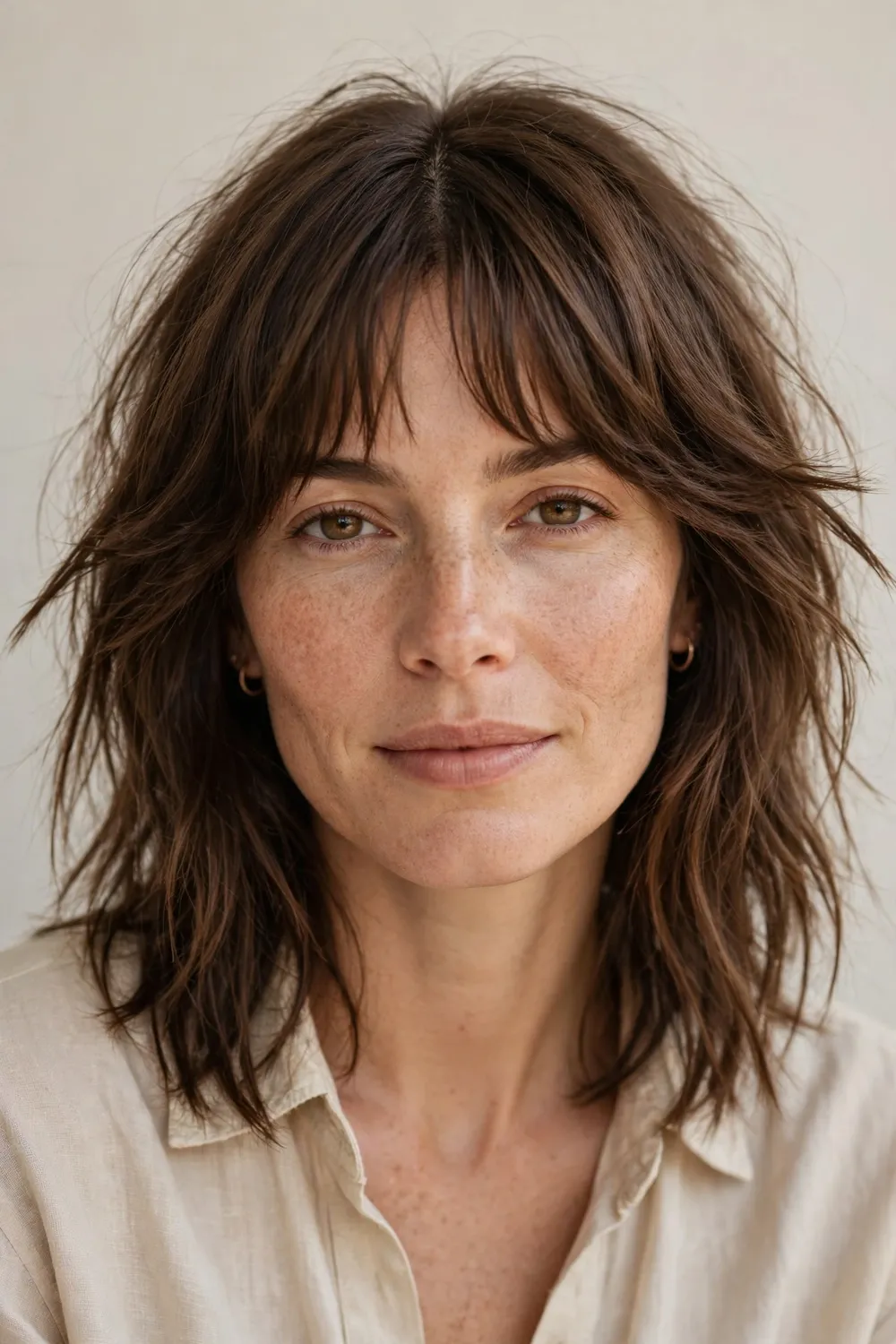
Jane Birkin’s fringe was never perfect — it was piece-y, slightly jagged and a little undone — and that’s exactly the charm of this version. The texture gives the bangs a French-girl, just-rolled-out-of-bed feel that suits women who don’t want their hair to look too polished. It flatters oval and heart-shaped faces, and it works best on straight to wavy hair with a bit of natural movement; very thick hair can make the texture look bulky rather than breezy. Ask your stylist for curtain bangs with the shortest point between the nose and cheekbone, point-cut and slightly uneven on purpose, with the ends thinned so they separate into pieces. A little texturising spray scrunched through damp hair is all the styling it needs — no round brush required. Maintenance is refreshingly low: the undone edge hides grow-out well, so trims can stretch to 6 weeks.
Textured & Edgy Curtain Bangs
5. Voluminous Curly Curtain Bangs
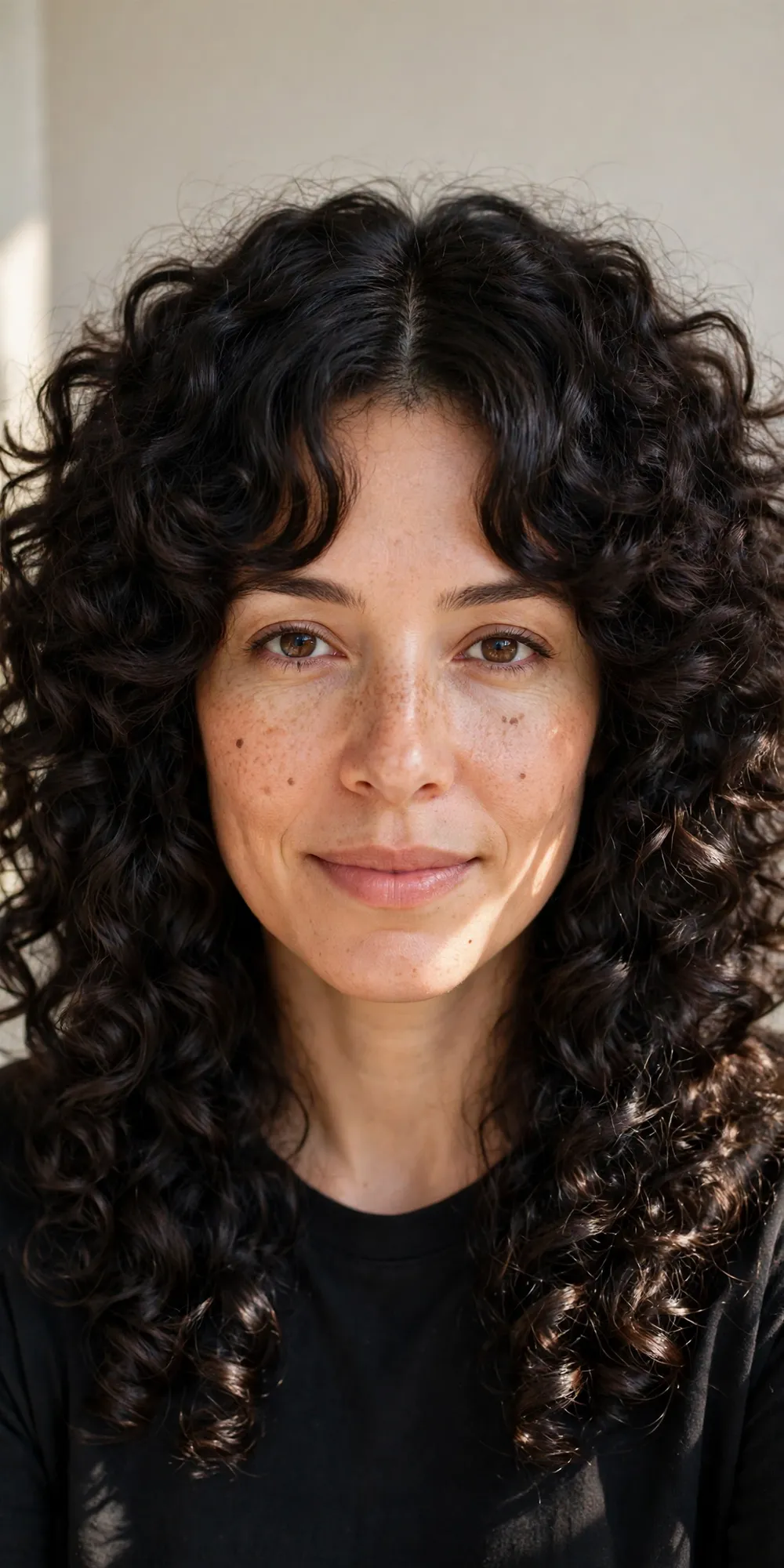
Curtain bangs and curly hair can absolutely work together — the trick is cutting them dry, so the stylist sees exactly where each curl lands once it springs up. The result is a halo of defined curls framing your face, softer and more romantic than a straight-across curly fringe. It suits round and square faces beautifully, because the curls add height and movement around the cheekbones, and it needs naturally curly or coily hair — this isn’t a look to fake with a curling iron every morning. Ask your stylist for a dry cut with the shortest point at the nose, remembering curls shrink, so the bangs are left longer than they look when wet. Scrunch in a curl cream and let them air-dry or diffuse on low heat. Maintenance is gentle: a trim every 6–8 weeks and a refresh with water and curl cream between washes.
6. Choppy Edgy Shaggy Curtain Bangs
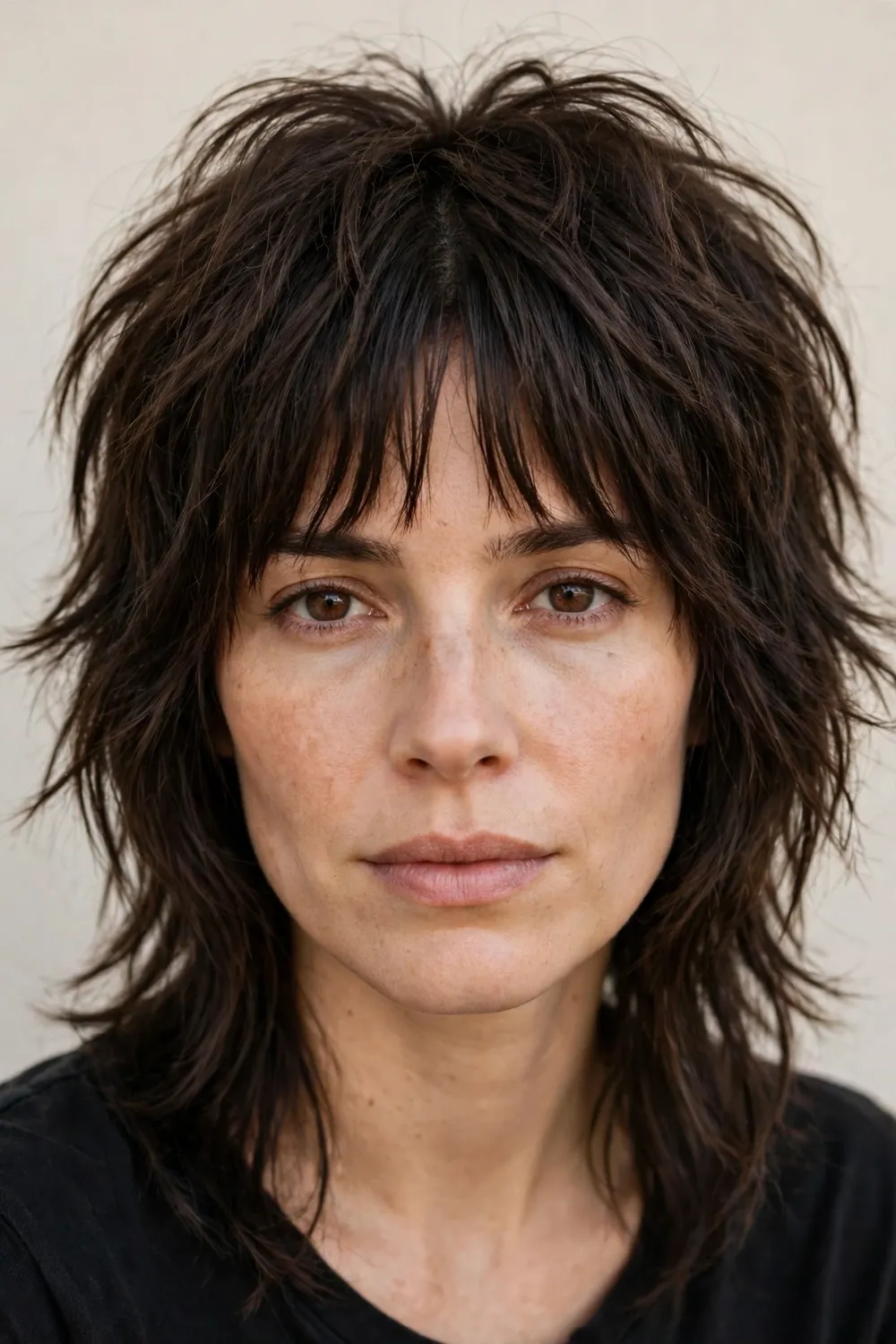
This is curtain bangs with a rock-and-roll edge: heavily textured, piece-y and deliberately uneven, with the shaggy layers around it doing half the work. It suits women who like their hair to look lived-in rather than salon-perfect, and it flatters oval and long faces, because the choppy pieces break up length. It works best on medium to thick hair with natural wave or texture — fine hair can end up looking thin when it’s cut this choppy. Ask your stylist for curtain bangs with the shortest point at the cheekbone, razor-cut or point-cut for a jagged edge, and shaggy layers through the front so the bangs blend into the cut. A sea salt spray or texturising paste gives the pieces definition. Maintenance is forgiving: the choppy finish hides grow-out, so you can stretch trims to 6–7 weeks, though the layers need a tidy-up every couple of months.
7. Blonde Money Piece Curtain Bangs
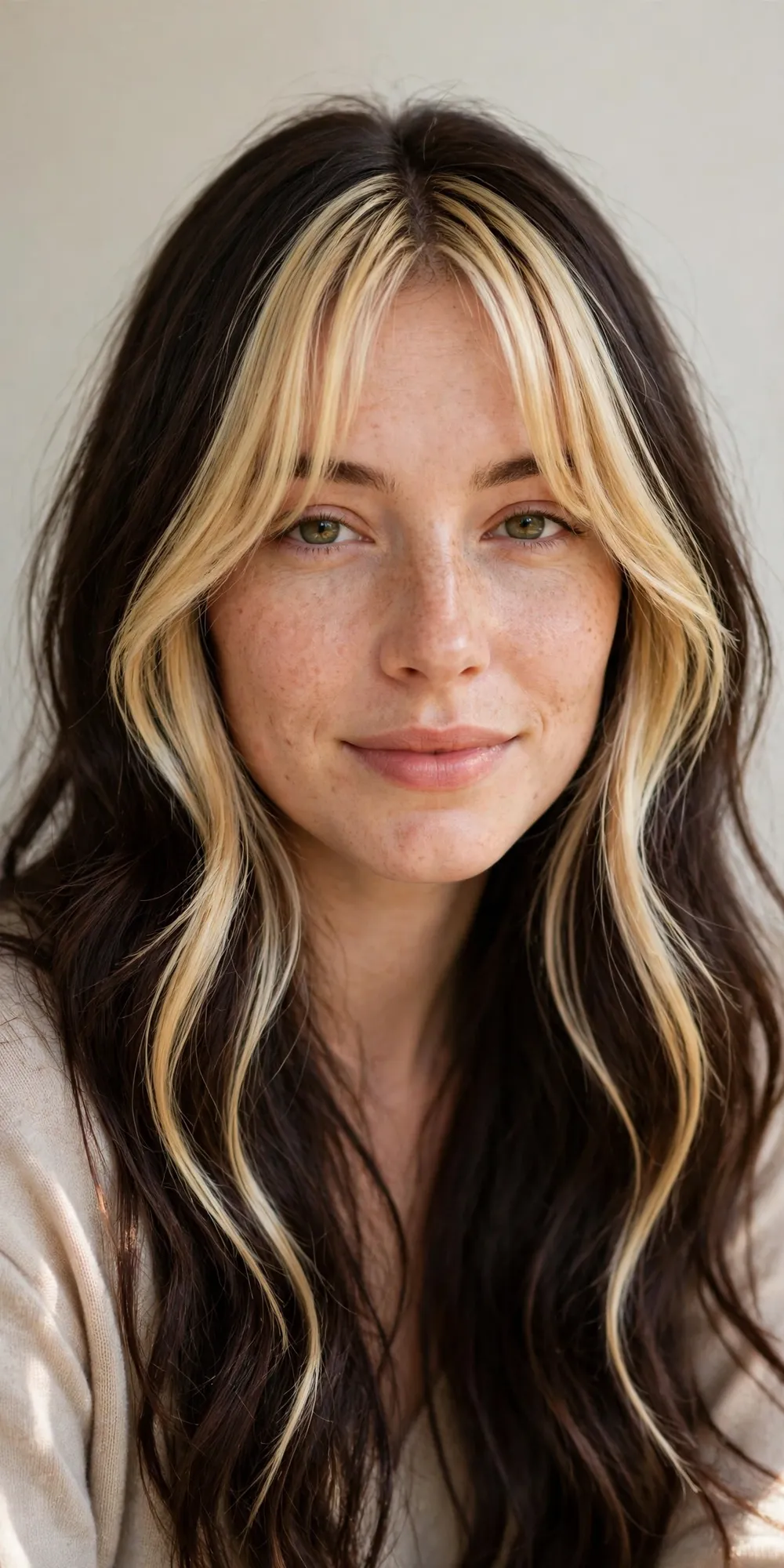
A money piece is a bright blonde strip painted right along the face frame, and paired with soft curtain bangs it lights up your whole face. It suits almost every face shape, because the brightness draws the eye to your features, and it works on any hair colour from dark brown to blonde, though the contrast is boldest on brunettes. Ask your stylist for curtain bangs with the shortest point at the cheekbone, plus a money piece — a face-framing highlight about two fingers wide on each side, lifted two to three shades brighter than the rest. Style the bangs with a round brush so they sweep away from the face and show off the colour. Maintenance is real: the money piece needs a toner every 4–6 weeks to stay bright, and purple shampoo once a week keeps it from going yellow.
Curtain Bangs with Short & Medium Cuts
8. Shoulder Length Bob Curtain Bangs

A shoulder-length bob can look severe on its own, but curtain bangs soften the whole thing — the sweeping fringe breaks up the blunt line and makes the bob feel light and modern. It suits round and square faces especially well, because the bangs add length to the face while the bob adds structure, and it works on straight or slightly wavy hair. It’s also a lovely option among short hairstyles for women over 50 — the face-framing sweep is flattering without trying too hard. Ask your stylist for a bob that sits at the collarbone, with curtain bangs whose shortest point is at the cheekbone, blended into the bob’s front layers. Blow-dry with a round brush, tucking the ends under slightly, and finish with a smoothing cream. Maintenance is moderate: the bob needs a trim every 5–6 weeks to hold its shape.
Curtain Bangs by Hair Colour
9. Copper Red Long Face Frame Bangs
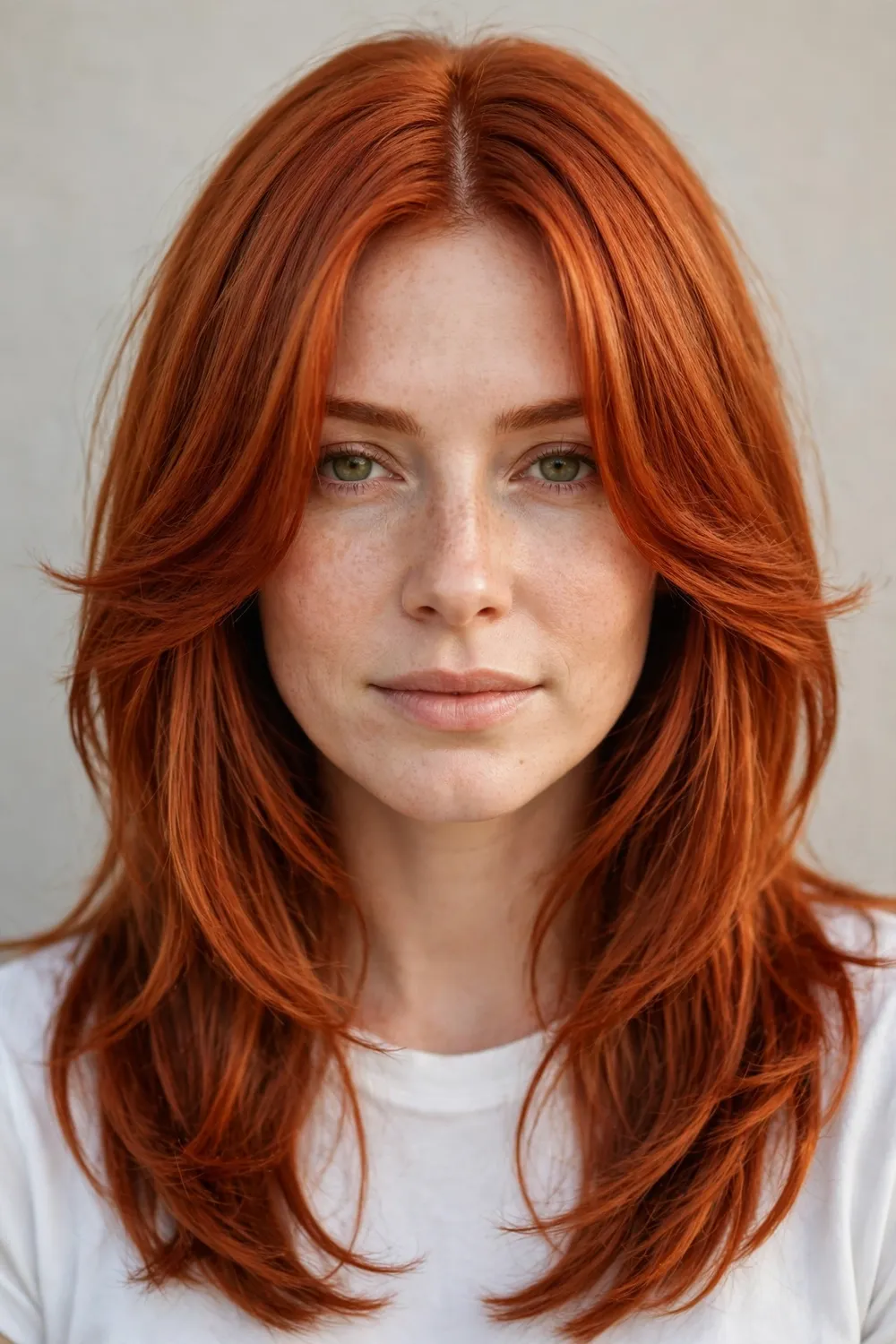
Copper is the warmest colour on this list, and long curtain bangs are the perfect way to wear it — the red sweeps past your cheekbones and makes your skin look lit from within. It suits fair to medium skin tones with warm undertones best, and it flatters medium to long hair, because the bangs need length to carry the colour gracefully. Ask your stylist for curtain bangs with the shortest point just below the cheekbone, blended into long layers, coloured in a rich copper — not orange, not auburn — with the colour painted through the face frame so it looks dimensional. Style with a large round brush for a soft bend, and finish with a colour-protecting shine spray. Maintenance is the honest part: copper fades faster than any other colour, so expect a gloss every 4–5 weeks and colour-safe shampoo every wash.
Bold, Textured & Long Curtain Bangs
10. Piece-y Straight Hair Curtain Bangs
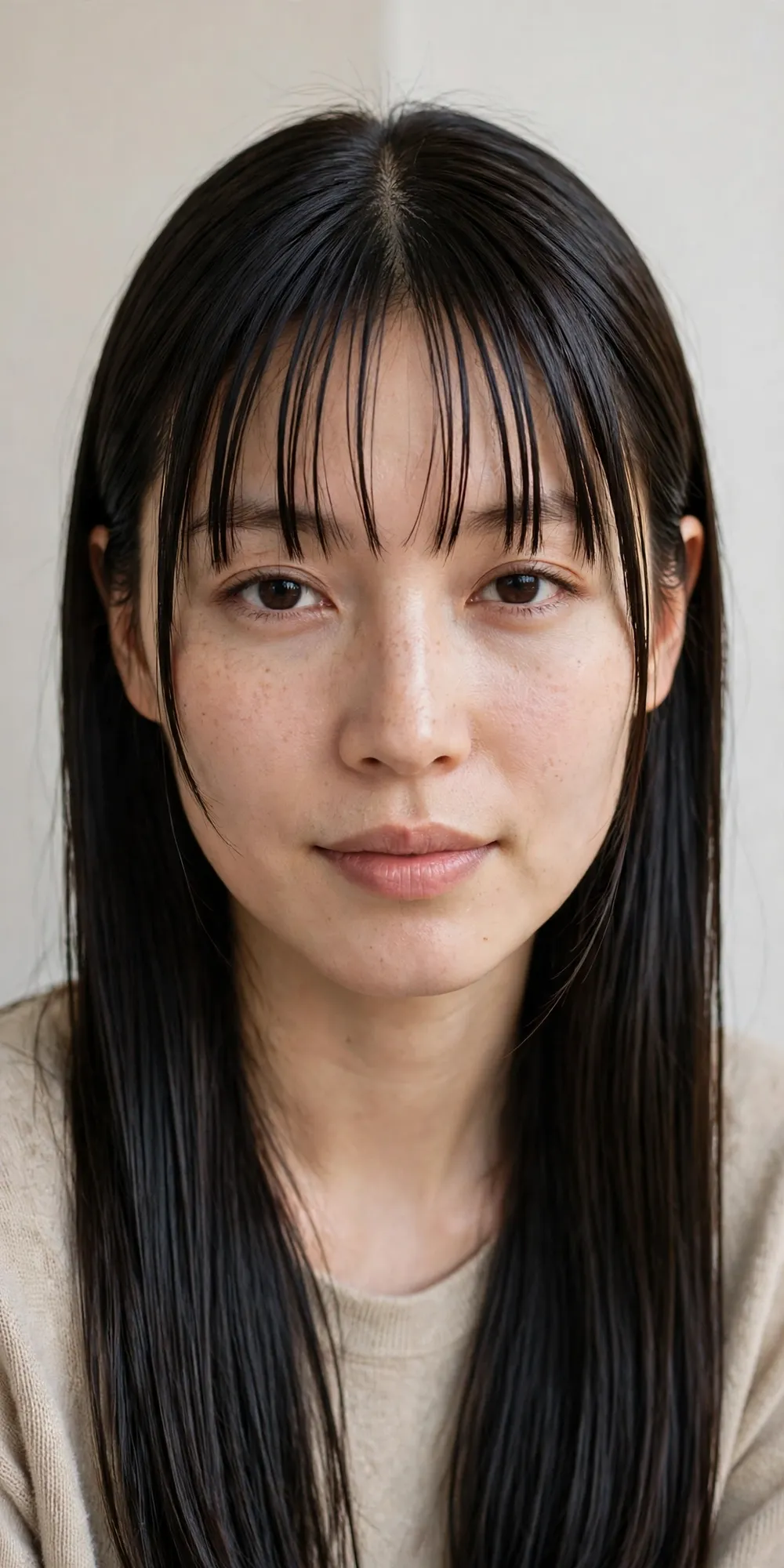
If your hair is pin-straight, this is how curtain bangs look their sharpest: sleek bangs thinned into distinct, separated pieces that fall cleanly on either side of a centre part. It suits oval and heart-shaped faces, and it works best on straight hair — wavy hair will need a flat iron to get the same separated, piece-y finish. Ask your stylist for curtain bangs with the shortest point at the nose, cut with a centre part and thinned at the ends so the pieces separate naturally instead of clumping into one sheet. Run a flat iron through the bangs with a slight outward flick, and finish with a tiny amount of texturising paste rubbed between your fingers and pinched through the ends. Maintenance is easy: the pieces hide grow-out well, so trims can wait 5–6 weeks, and a quick flat-iron pass takes under a minute.
11. Thick Full Volume Curtain Bangs
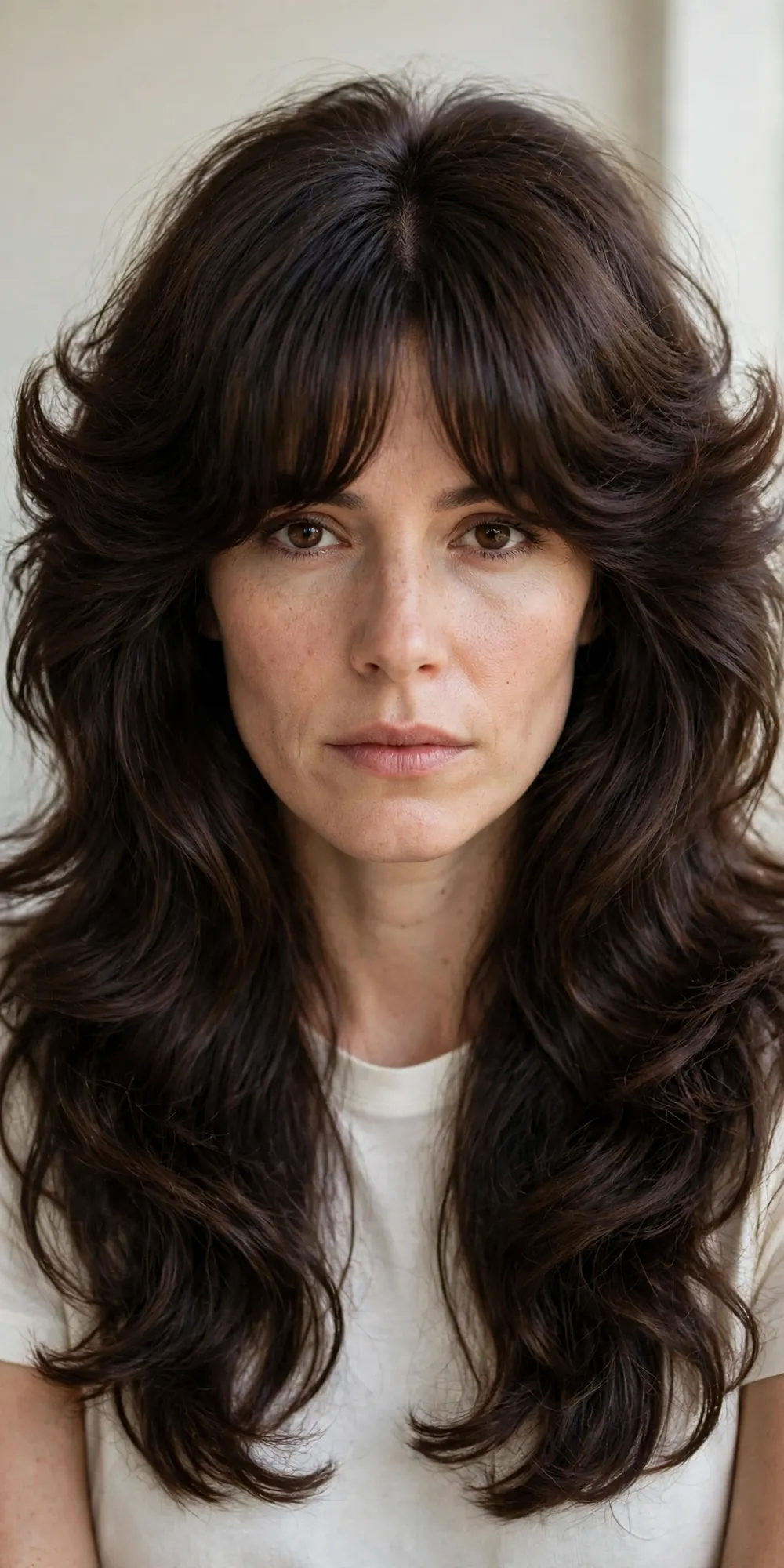
This is the boldest curtain bang on the list — a dense, full fringe with serious lift and bounce, for women who want their bangs to be the star of the haircut. It suits oval and long faces best, because the volume adds width, and it needs thick hair to work; fine hair simply won’t hold this much fullness. Ask your stylist for curtain bangs with the shortest point at the cheekbone, kept dense rather than thinned, with long layers underneath to support the volume. Blow-dry with a large round brush, lifting at the roots, and set the shape with velcro rollers for five minutes while you do your makeup. A volumising mousse at the roots helps the lift last. Maintenance is moderate: a trim every 4–5 weeks, and the blow-dry takes a few minutes longer than a wispy version.
12. Butterfly Cut with Face Frame Bangs
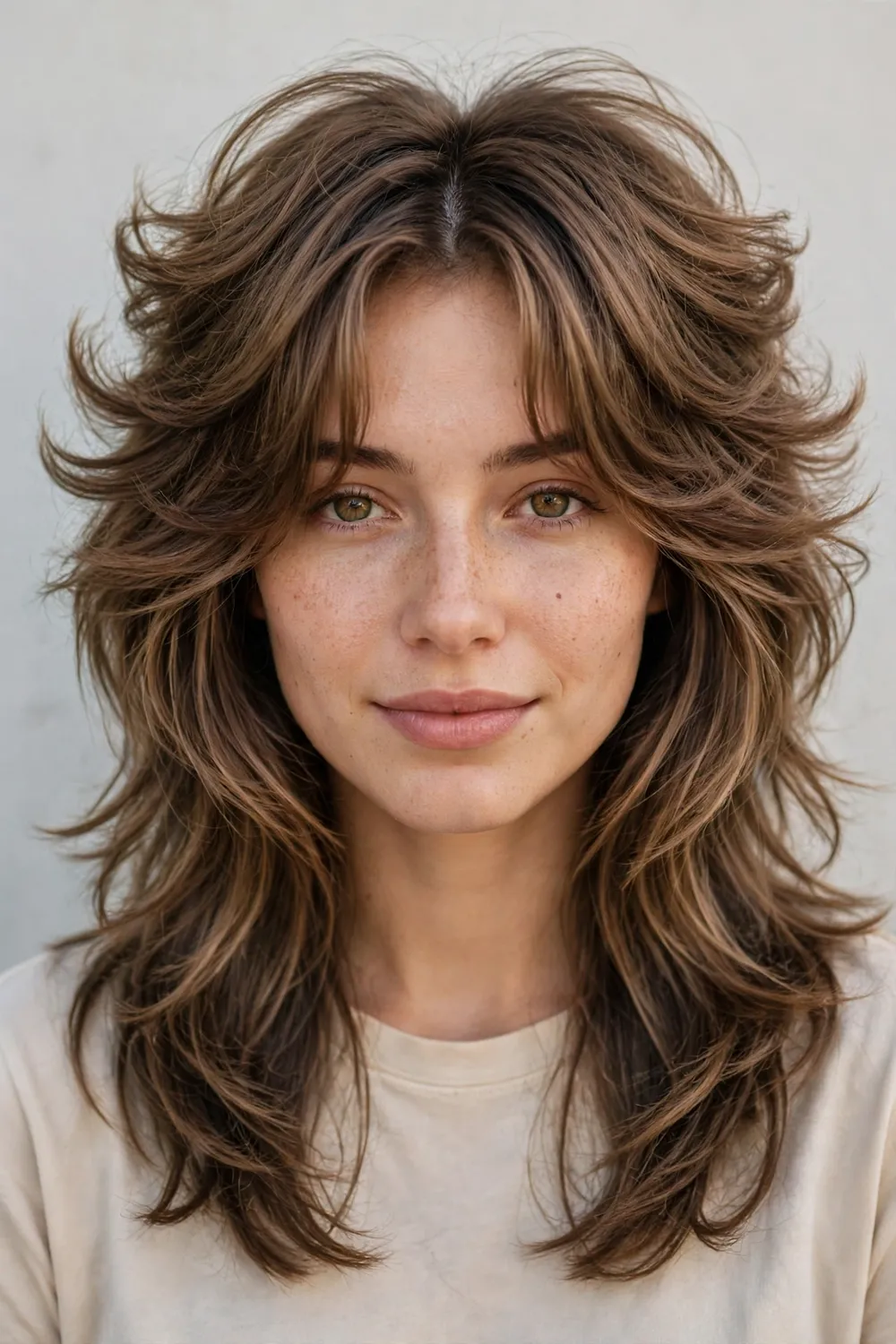
The butterfly cut is the bounciest haircut of 2026 — short, feathery layers on top that fan out like wings, with longer layers underneath — and curtain bangs are what tie the whole thing together. It suits oval and heart-shaped faces, and it flatters medium to thick hair, because the layers need enough hair to create that fluttery movement. Ask your stylist for a butterfly cut with the top layers cut to chin length, the bottom layers left long, and curtain bangs with the shortest point at the cheekbone blending into the shortest top layer. Blow-dry each layer with a round brush, flicking the ends outward, and finish with a light texturising spray. Maintenance is moderate: the layers need a trim every 6 weeks to keep their bounce, and the bangs need their own trim every 4–5 weeks so the face frame stays crisp.
13. Wavy Beach Texture Curtain Bangs
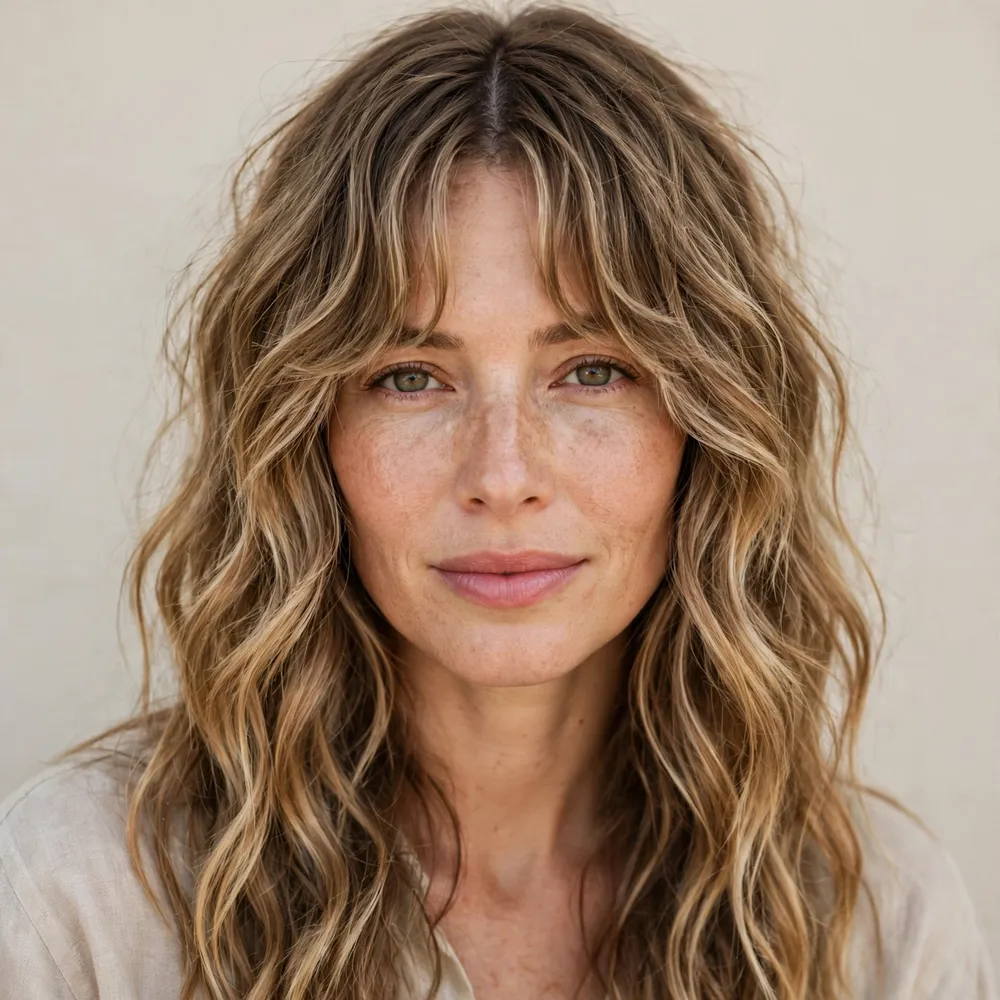
This is the holiday version of curtain bangs: relaxed, beachy bends with a bit of sea-salt texture, sitting at mid-cheek length. It suits almost every face shape, and it works best on naturally wavy hair — straight hair can get there with a curling iron. Ask your stylist for curtain bangs with the shortest point at the cheekbone, cut with a centre part and point-cut ends so the waves fall in soft pieces. Scrunch a sea salt spray through damp hair and let it air-dry, or twist sections around a curling iron away from your face for a more polished wave. Maintenance is the easiest on this list: the undone texture hides grow-out, trims can stretch to 6–7 weeks, and second-day hair actually looks better than freshly washed. It’s also one of the simplest hairstyles for school — a quick scrunch of salt spray and you’re out the door.
14. Short Micro Curtain Bangs
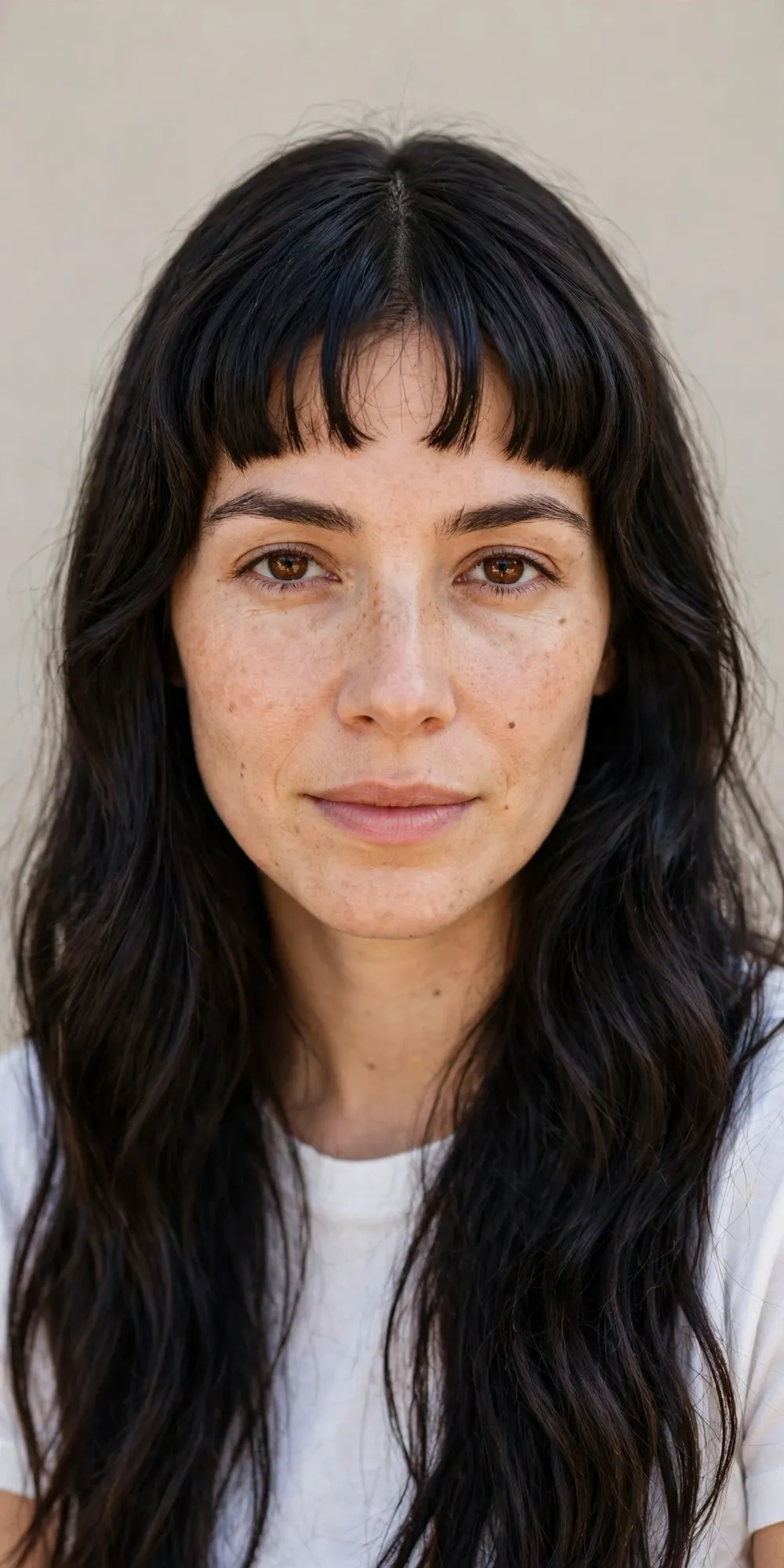
Micro curtain bangs are the boldest length on this list — a forehead-length fringe split down the middle, with the classic curtain shape kept in miniature. It’s a statement look, and it suits oval and heart-shaped faces best, because the short length shows off the whole face rather than hiding any of it. It works on straight or slightly wavy hair; curly hair will spring these up shorter than planned, so ask for a dry cut if your hair curls. Ask your stylist for curtain bangs with the shortest point at mid-forehead, cut with a centre part and the sides angled down toward the temples. Style with a small round brush or a flat iron, bending the ends slightly outward. Maintenance is the trade-off: the short length grows out fast, so plan a trim every 3–4 weeks, and keep a little dry shampoo handy for the days between washes.
15. Icy White Blonde Curtain Bangs
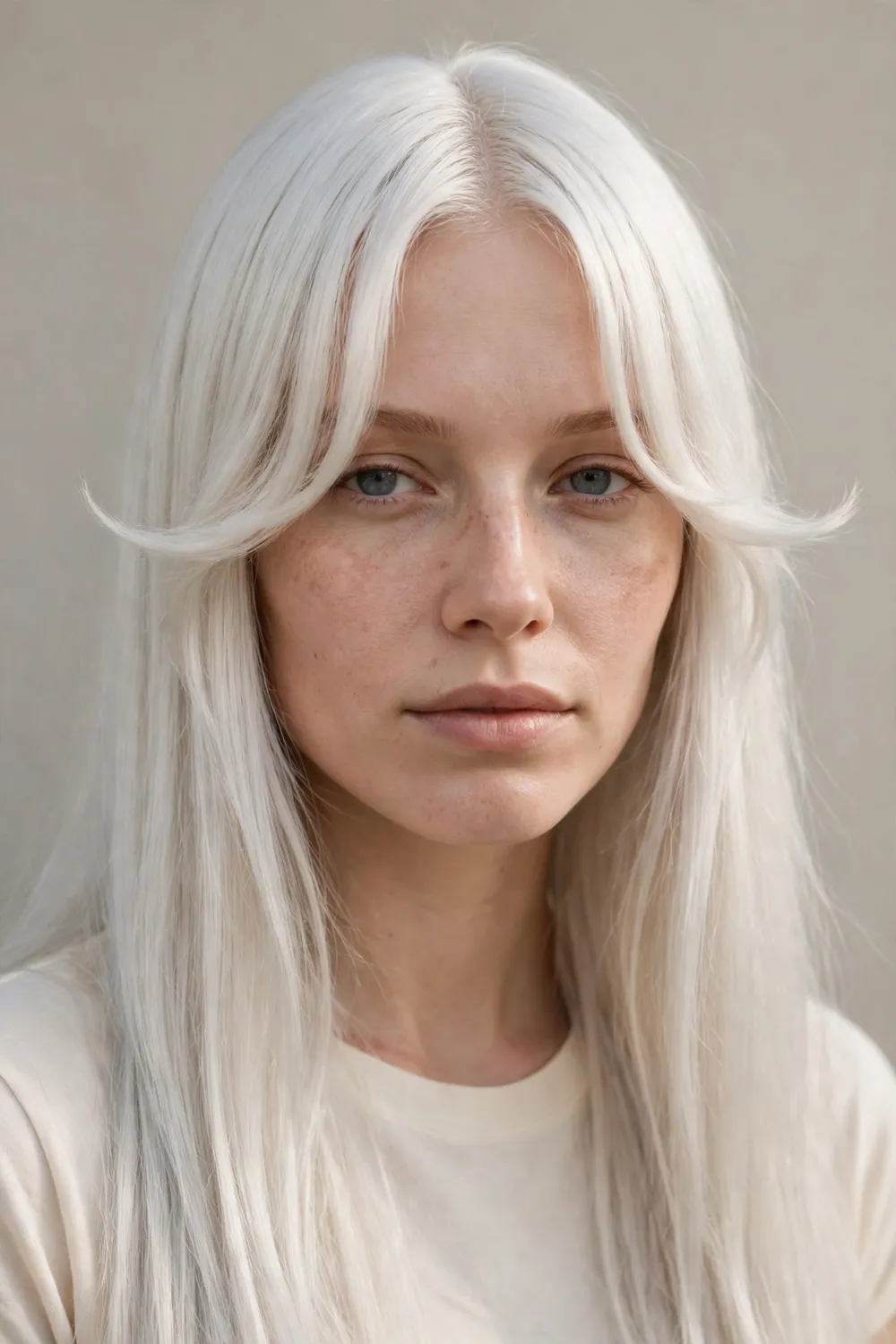
Icy white blonde is the most dramatic colour on this list, and curtain bangs show it off beautifully — the pale fringe frames your face like a halo, with a slight outward bend that keeps it from looking flat. It suits cool skin tones best, and it flatters medium to long hair, because the bangs need length to carry that icy, glassy finish. Ask your stylist for curtain bangs with the shortest point at the cheekbone, lifted to a level 10 blonde and toned to a true icy white, with the ends bent slightly outward. Style with a round brush and finish with a shine spray — the colour does the talking, so keep the styling simple. Maintenance is serious: purple shampoo twice a week, a toner every 4 weeks, and regular bond-building treatments, because hair this light needs real care to stay healthy.
16. Bardot Inspired Volume Curtain Bangs
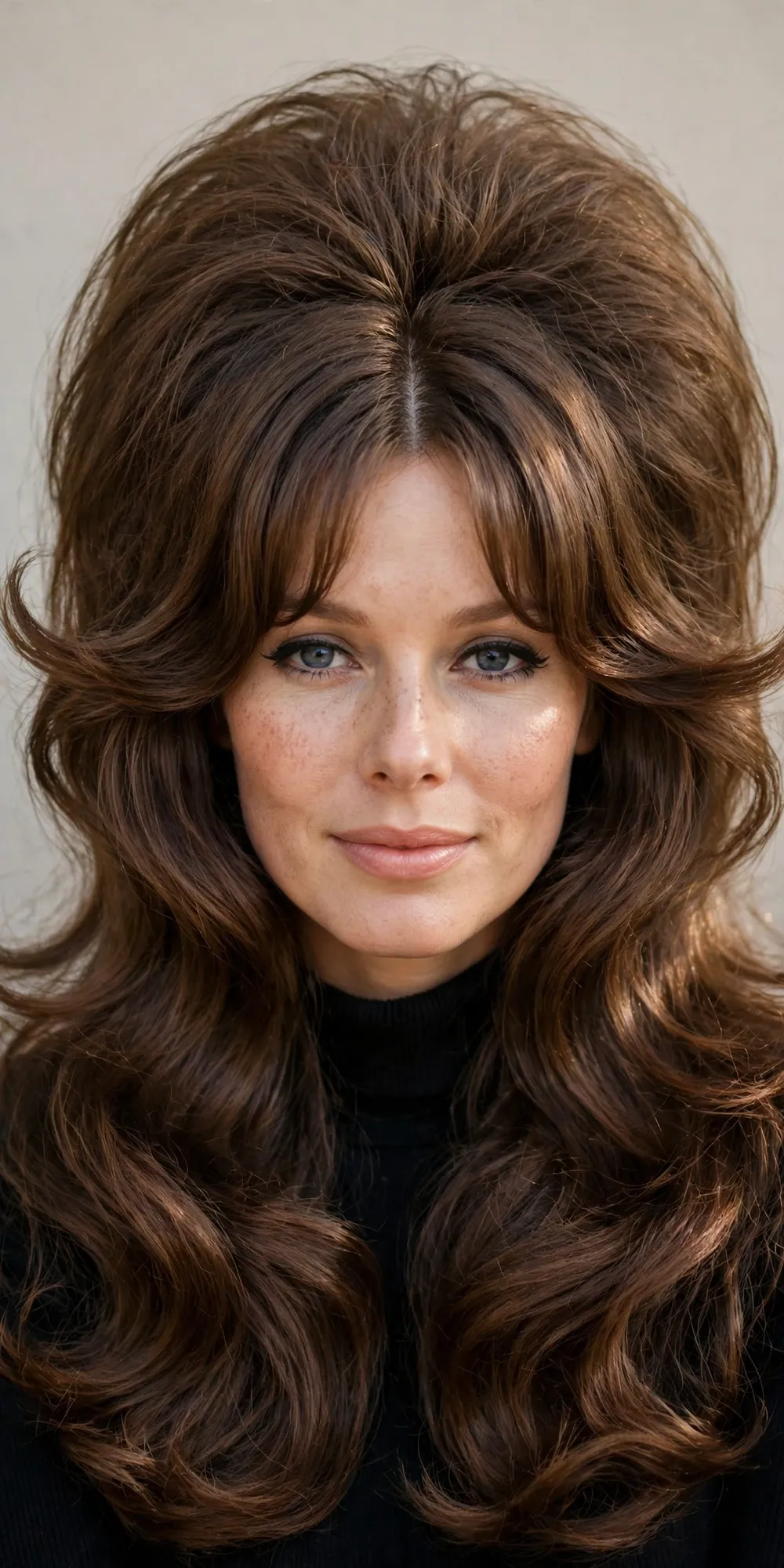
This is the full sixties glamour version — height at the crown, lift through the bangs and a voluminous halo that frames the whole face. It’s Brigitte Bardot’s signature, and it suits women who love a bit of drama in their hair. It flatters oval and long faces especially well, because the volume adds width, and it works best on medium to thick hair that can hold a blow-dry. Ask your stylist for curtain bangs with the shortest point at the cheekbone, cut with a centre part, plus long layers and a little extra length at the front to support the volume. Blow-dry with a large round brush, then set the bangs in velcro rollers for ten minutes for maximum lift, and finish with a flexible-hold hairspray. Maintenance is moderate: a trim every 4–6 weeks, and the blow-dry takes about ten minutes.
17. Face Framing Wolf Cut Bangs
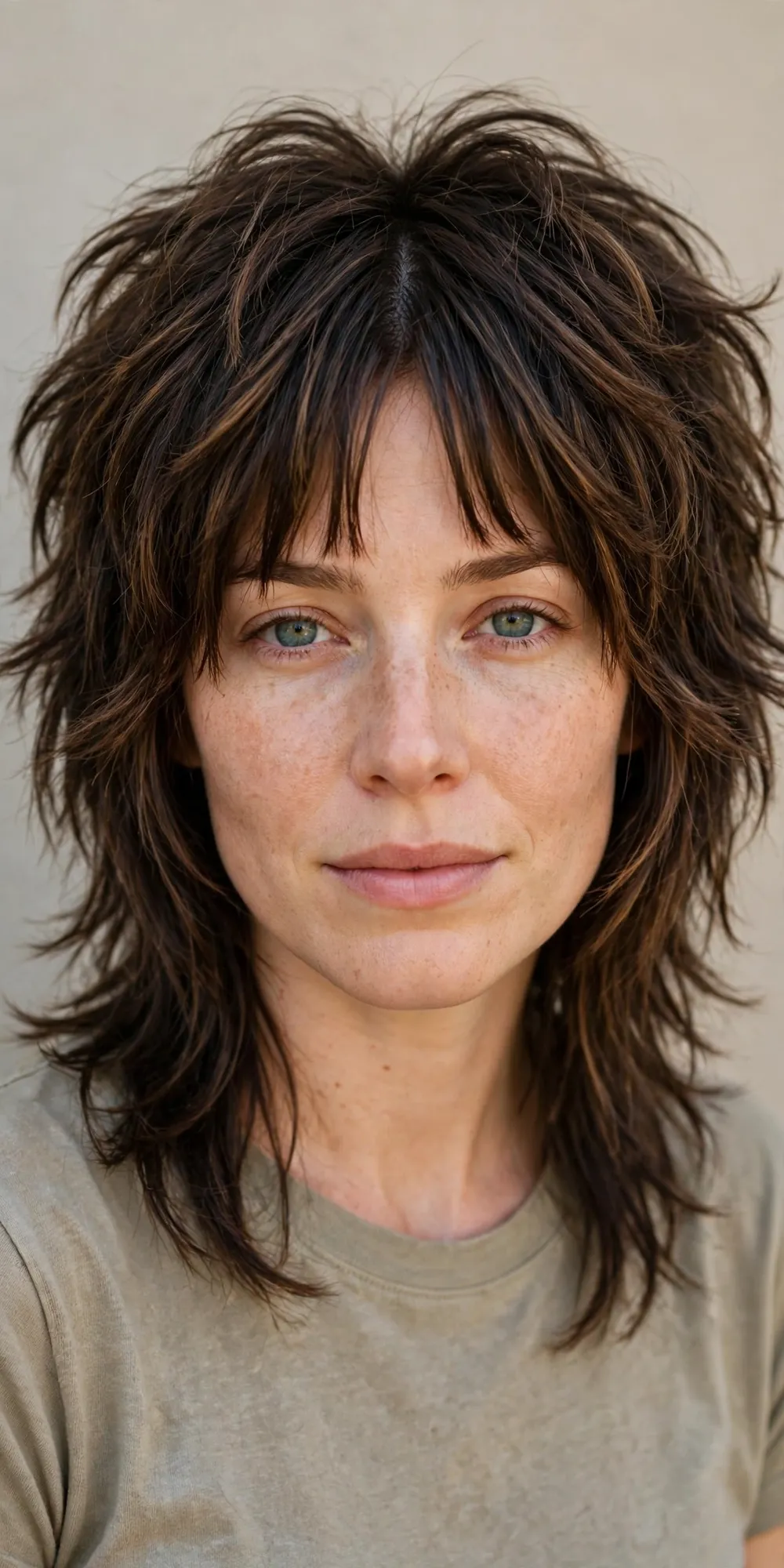
The wolf cut is a shaggy mix of a mullet and a shag, and its curtain bangs are point-cut and piece-y, framing the face while the layers get wilder toward the back. It’s the most alternative look on this list, and it suits women who want their hair to feel edgy rather than polished. It flatters oval and heart-shaped faces, and it works best on wavy or curly hair with natural texture — straight hair can wear it, but it needs texturising spray to stop it looking flat. Ask your stylist for a wolf cut with short layers on top, longer layers at the back, and curtain bangs with the shortest point at the nose, point-cut so they fall in separated pieces. Scrunch in texturising spray and let it air-dry. Maintenance is forgiving: the shaggy finish hides grow-out, so trims can wait 6–8 weeks.
Curtain Bangs with Long Hair & Layers
18. Seamless Blend Long Layers Bangs
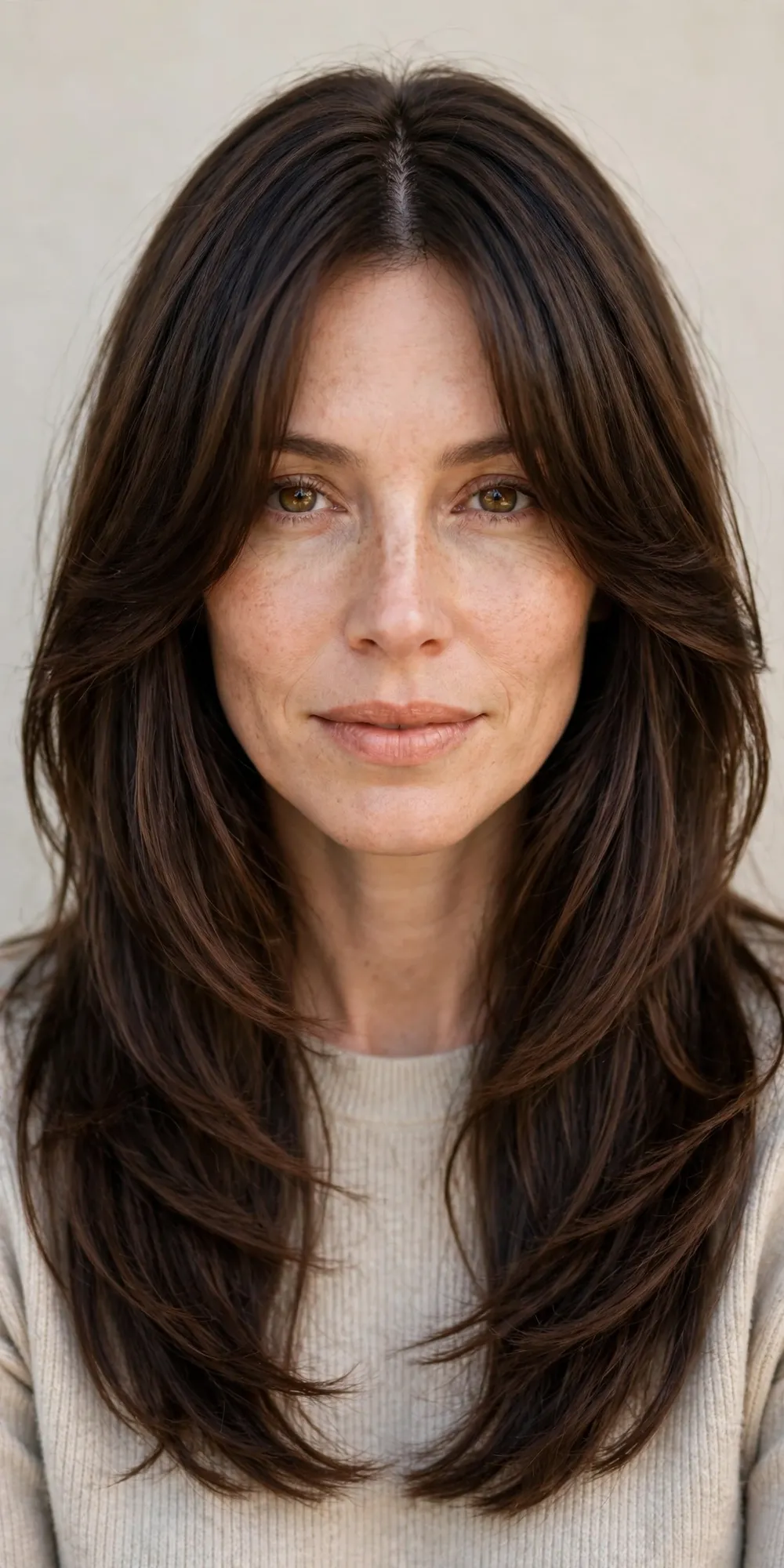
This is curtain bangs at their most invisible — in the best way. The bangs start at the cheekbones and melt into the long layers below, with no hard line anywhere, so the whole cut reads as one continuous shape. It suits long hair best, especially thick or medium-density hair, and flatters oval, heart, and long faces because the soft graduation balances length. Ask your stylist for curtain bangs starting at cheekbone length, point-cut, and blended into long layers that begin at the collarbone — the key word is “seamless.” A lightweight leave-in cream and a quick blow-dry with a round brush keep the blend smooth. Maintenance is gentle: trims every five to six weeks, and no daily styling beyond a brush-through on most days.
Curtain Bangs by Hair Colour
19. Rose Gold Tinted Curtain Bangs
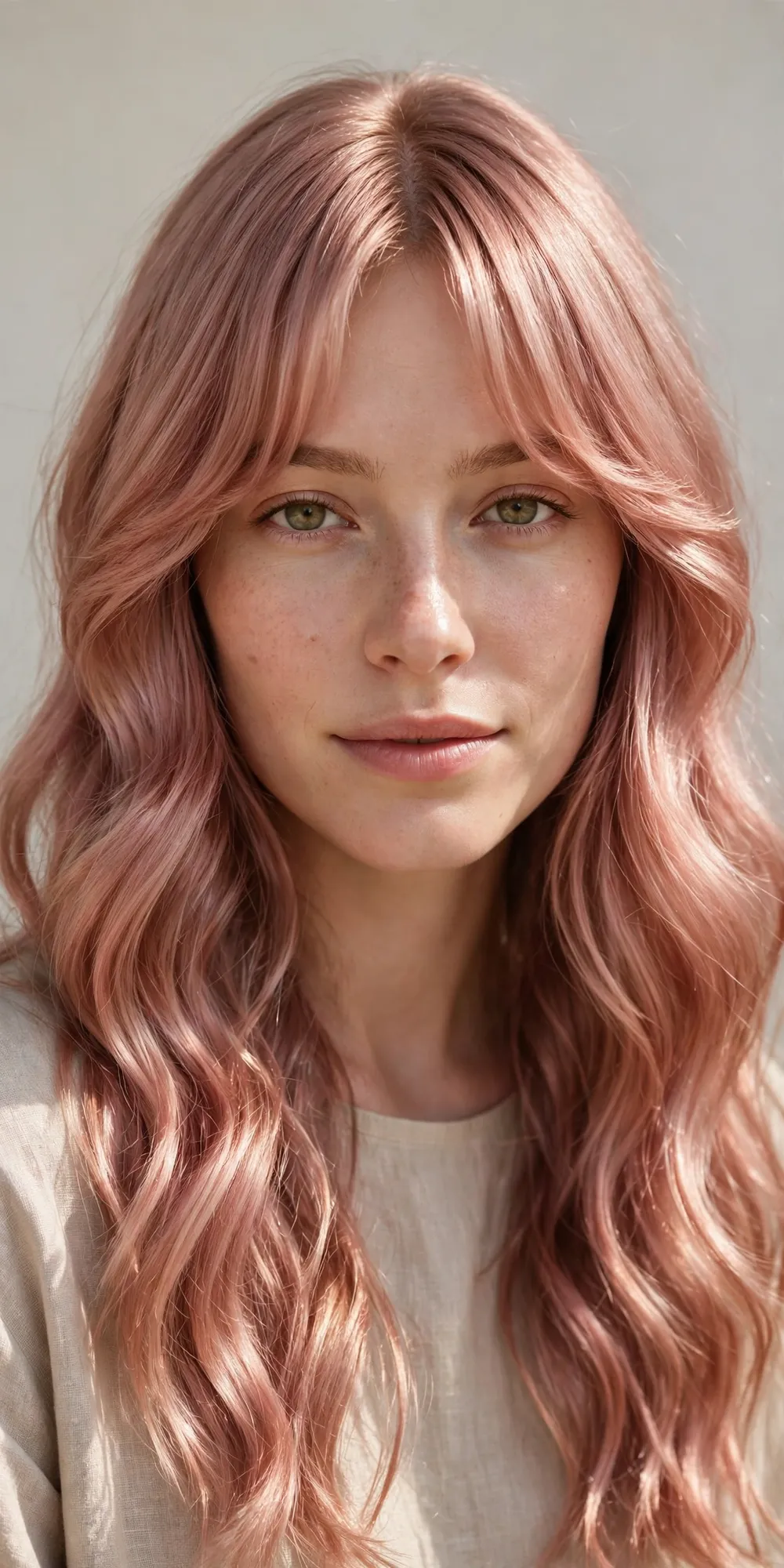
A soft pink-gold tint on the bangs only, catching the light every time you turn your head, while the rest of the hair stays its natural colour. The effect is romantic without being loud — the metallic rose sheen reads like jewellery for your face. It suits fair to medium skin tones beautifully, especially with warm undertones, and works on straight, wavy, or lightly curled hair at any length past the chin. Ask your colourist for a rose gold gloss or semi-permanent tint on the bangs and the first face-framing pieces, with the shortest point at the nose. A colour-safe shampoo and a weekly pink-toning mask keep the tint from fading to a flat peach. The honest catch: rose gold fades in three to four weeks, so budget for regular glossing if you want it to stay rosy.
20. Peekaboo Colored Accent Bangs
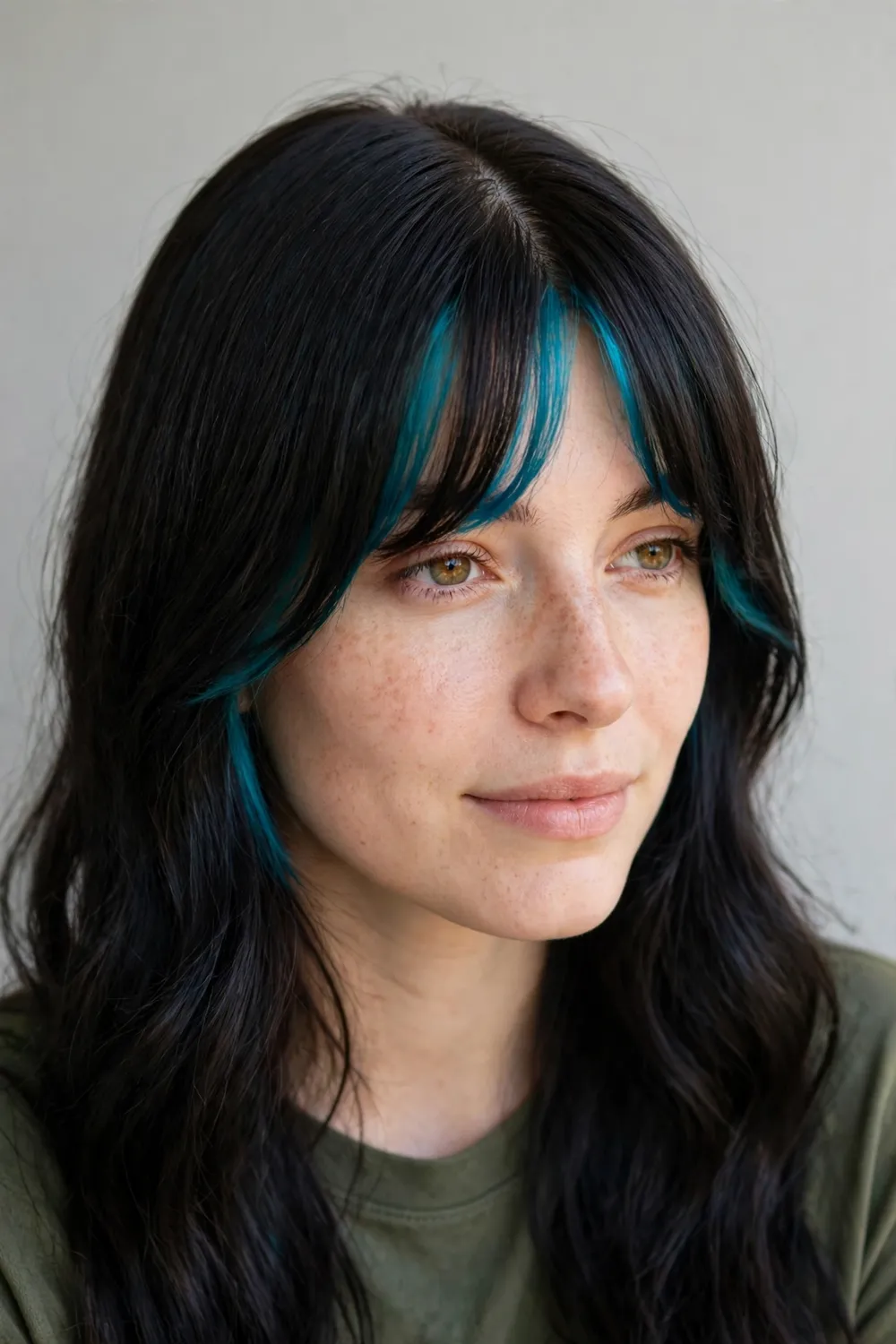
A flash of bright colour — violet, teal, hot pink, whatever you fancy — hidden underneath the top layer of the bangs, so it only shows when the hair moves or you tuck a piece back. It is the most fun you can have with bangs without committing your whole head to colour. It suits anyone who wants a playful edge, and it works on all face shapes and hair types, because the colour sits in the under-layer rather than changing the cut itself. Ask for classic curtain bangs with the shortest point at the cheekbones, then have your colourist apply the vivid shade to the underneath section of the bangs only, leaving the top layer natural. A sulphate-free shampoo and cool water keep the colour from washing out too fast. The shade needs refreshing every four to six weeks, and it will stain light pillowcases for the first few washes.
Sleek, Lived-In & Bold Curtain Bangs
21. Middle Part Straight Sleek Curtain Bangs
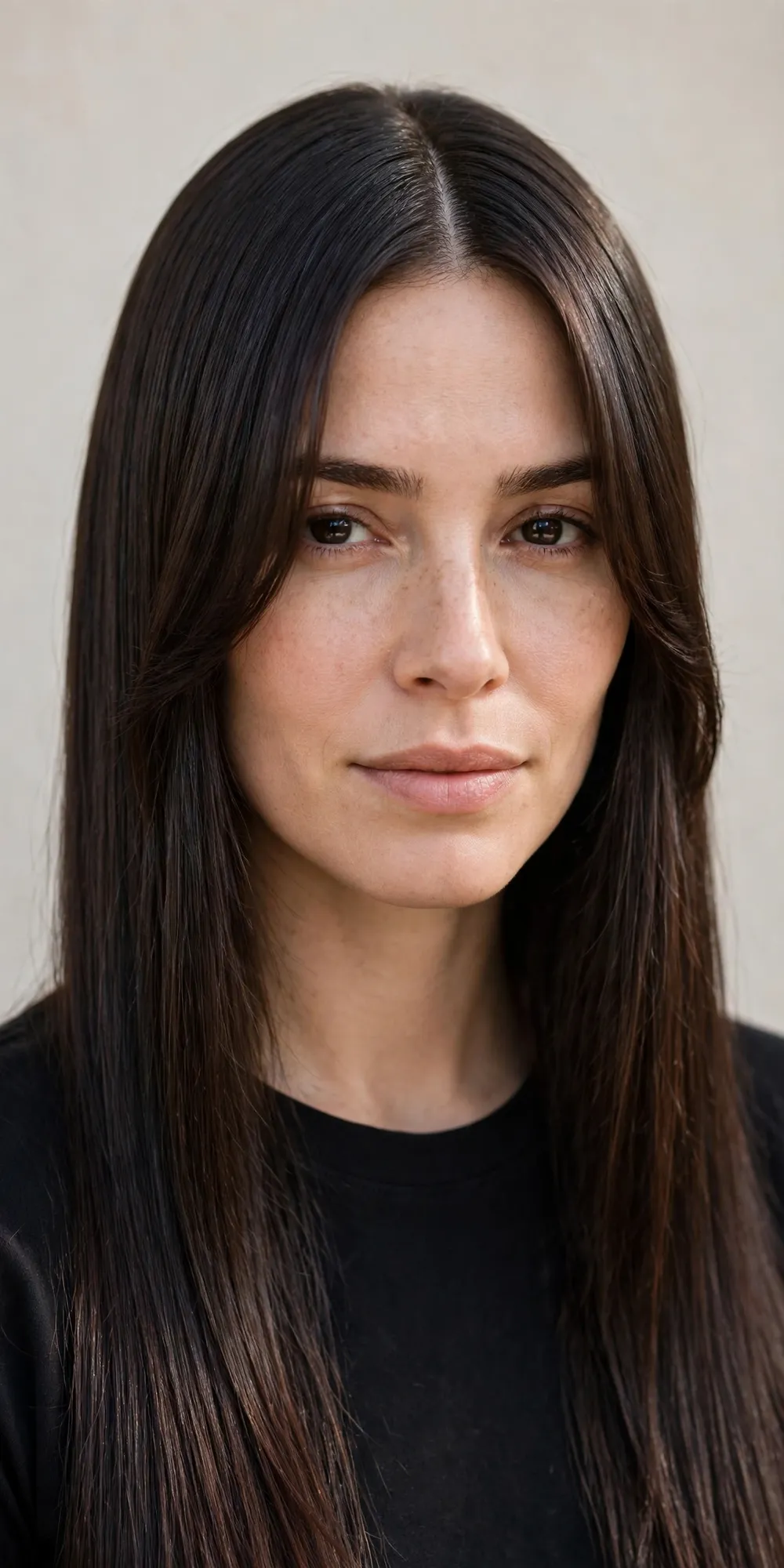
Polished, flat-ironed bangs splitting cleanly down the middle, falling in two smooth ribbons past the cheekbones — the most put-together version of curtain bangs there is. It suits straight hair best, especially fine to medium hair that lies flat naturally, and flatters oval and heart-shaped faces, where the symmetry of the centre part works with the bone structure. Ask your stylist for curtain bangs cut with the shortest point at the nose, the ends reaching the jawline, and the layers point-cut so they fall in clean, separate strands rather than a solid sheet. A heat protectant and a flat iron on a low setting give the glassy finish, with a drop of serum on the ends. The trade-off is upkeep: sleek bangs show oil fast, so dry shampoo on day two is almost mandatory, and humidity will fight you — keep a mini straightener in your bag if you live somewhere damp.
22. Lived-In Relaxed Texture Curtain Bangs

Air-dried, slightly undone, bangs that look like they just happen to fall that way — the lowest-effort style in this whole list. The texture comes from the cut itself: soft layers and point-cut ends that sit naturally instead of needing to be coaxed into shape. It suits wavy and slightly curly hair best, on any face shape — the relaxed finish softens strong jawlines and adds movement to rounder faces. Ask for curtain bangs with the shortest point at the cheekbones, cut with a razor or point-cutting for a feathered edge, and tell your stylist you want to air-dry them — that changes how they cut. A pea-sized amount of sea-salt spray or texture cream scrunched in while damp is all the product you need. It grows out gracefully, so trims can stretch to six or eight weeks — though very straight hair may need a little help from a round brush.
23. Cool Toned Brunette Curtain Bangs
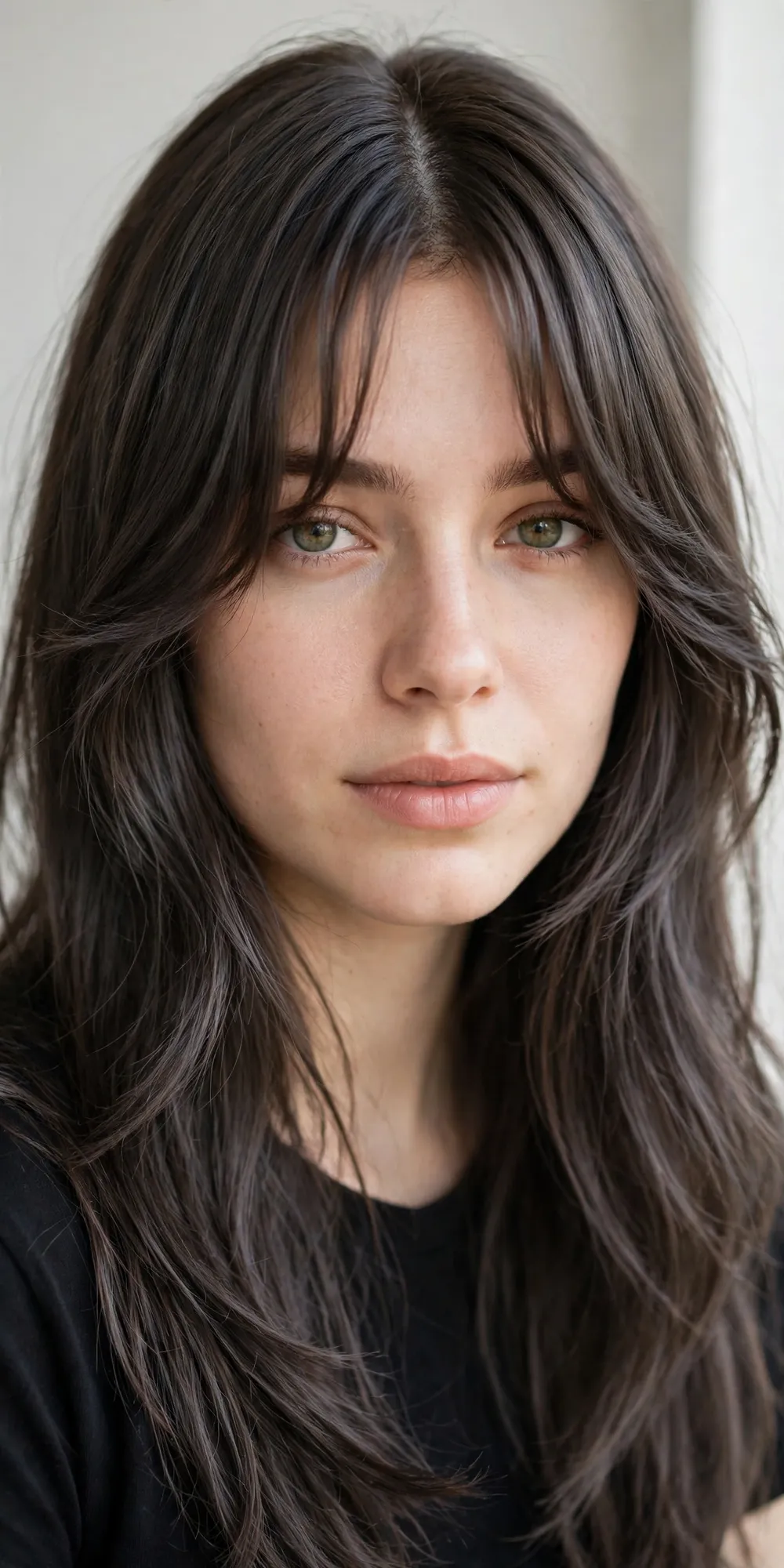
Ash-toned brunette bangs with depth and a cool, almost smoky finish — the opposite of the warm copper and honey shades elsewhere in this guide. The cool tone gives the face frame a sleek, expensive look, and it pairs beautifully with dark eyes and cool skin undertones. It suits medium to dark brown hair best, straight or wavy, and flatters oval, square, and heart-shaped faces, where the cool colour adds definition without warmth softening the edges. Ask your colourist for an ash-brown gloss over the bangs and face frame, with the bangs cut to cheekbone length and the ends feathered into the layers. A blue or purple-toning shampoo once a week keeps brassiness from creeping in — brown hair goes warm faster than people expect. The ash tone needs a gloss refresh every five to six weeks, while the cut itself is forgiving between trims.
24. Vintage 70s Inspired Flip Bangs

Short bangs with a pronounced outward flip at the ends, pure seventies — think Farrah Fawcett’s feathered flicks, updated just enough to feel wearable now. The flip gives the face instant lift and movement, and it looks best with a bit of volume through the crown. It suits medium to long hair with a natural wave or a willingness to use a round brush, and flatters oval and heart-shaped faces especially, where the outward sweep opens up the cheekbones. Ask your stylist for curtain bangs with the shortest point at the nose, cut a touch shorter than usual, and shaped so the ends kick outward — the flip is in the cut, not just the styling. A round brush and a blow-dryer, brushing the ends away from the face, create the flick, and a light-hold hairspray keeps it there. The catch: without the blow-dry, the flip disappears, so allow five minutes each morning.
25. Soft Blended End Curtain Bangs
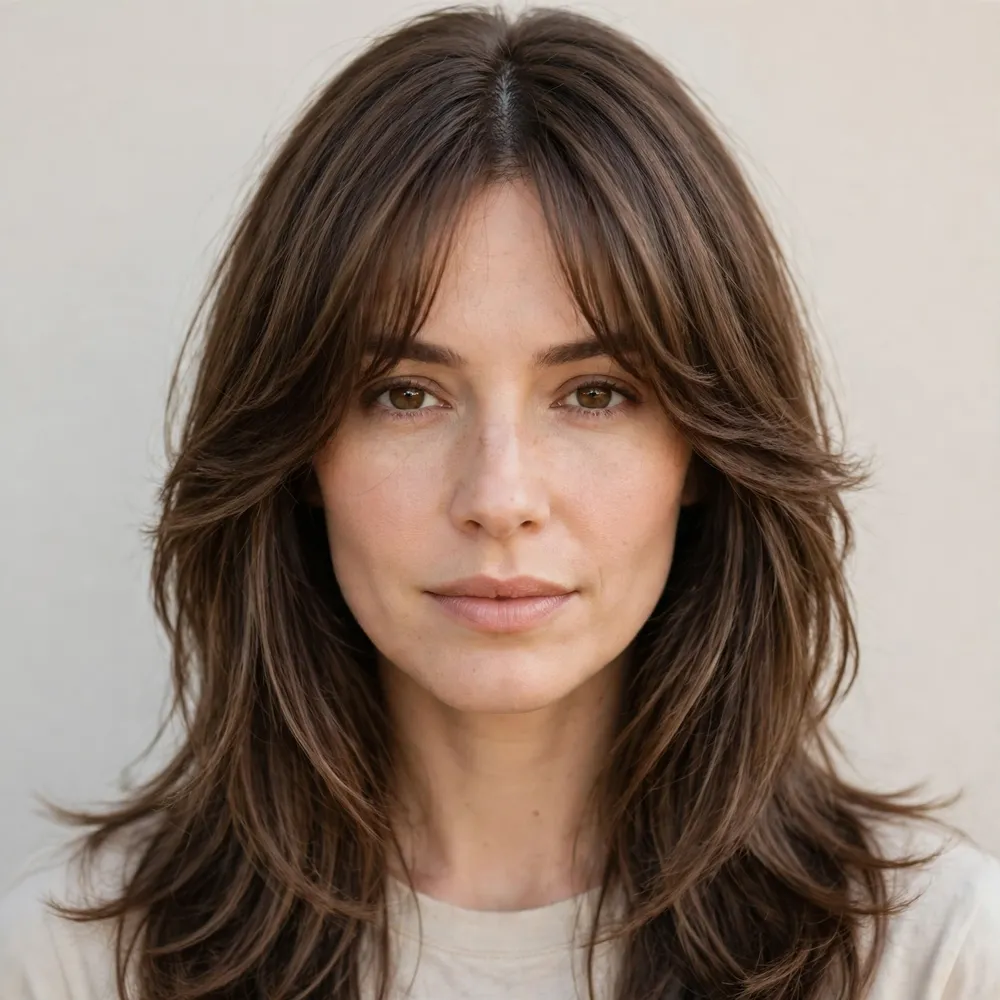
Feathered ends that disappear into the rest of the hair — no line, no step, just bangs that seem to end wherever they feel like it. It is the quietest, most natural-looking style here, and the one most likely to make people ask whether you even have bangs. It suits fine to medium hair best, because the feathering stops thin ends looking wispy and weak, and it works on every face shape. Ask your stylist for curtain bangs with the shortest point at the cheekbones, thinned and point-cut at the ends so they blend into the layers below, and cut dry if your hair has any wave — wet cutting makes feathered ends hard to judge. A light mousse and a quick rough-dry give the ends their soft movement. The blend hides growth, so trims can wait six to eight weeks.
Curtain Bangs with Updos & Styling
26. Long Curtain Bangs with a High Ponytail
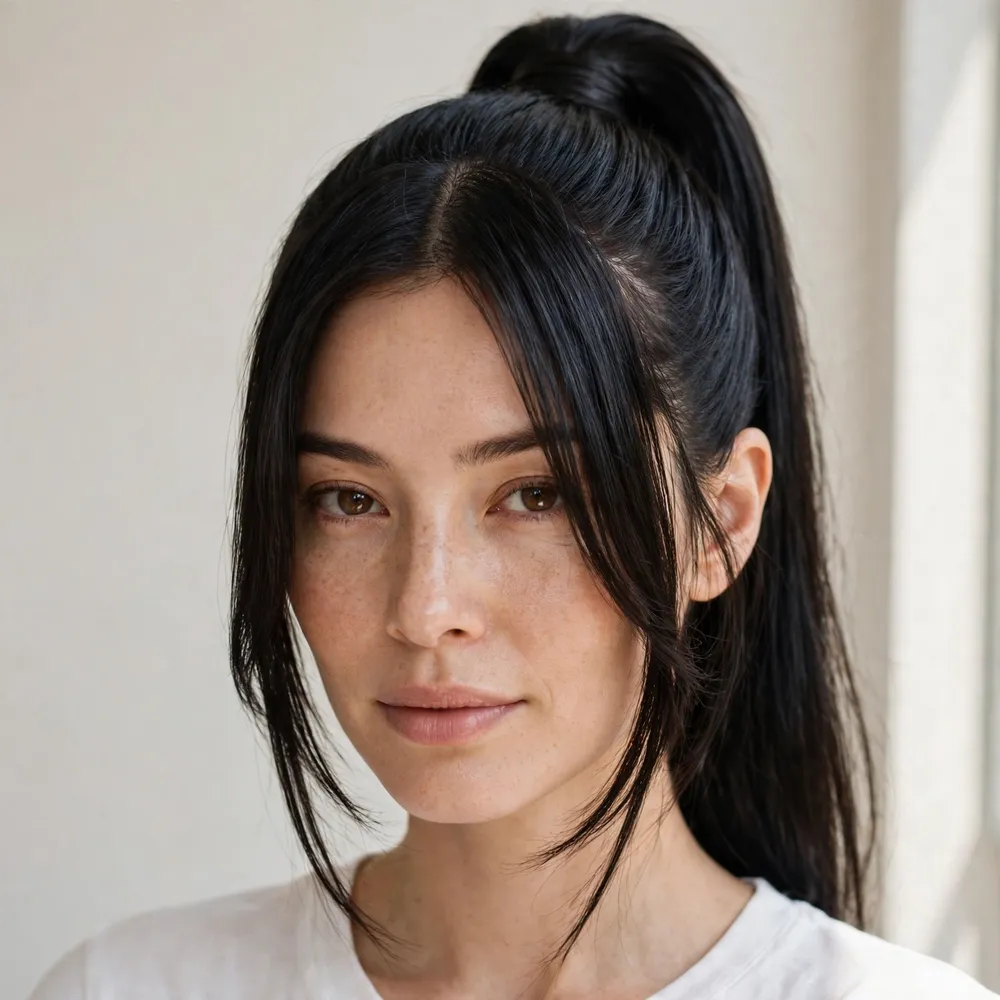
A sleek high ponytail can look severe on its own — add long curtain bangs and the whole thing softens instantly. The face-framing pieces fall past the cheekbones while the rest of the hair is pulled up and back. It suits long hair best, straight or wavy, and flatters oval, heart, and square faces. Ask your stylist for curtain bangs with the shortest point at the nose and the ends reaching the jawline, so they still frame the face once the ponytail is up. To style it, gather the hair high at the crown, pull the bangs forward, and add a soft bend with a curling wand. If you want more updo inspiration, our guide to ponytail hairstyles has plenty of variations. Trim every four to five weeks so the bangs frame the face without tangling in the elastic.
27. Curtain Bangs with a Messy Bun
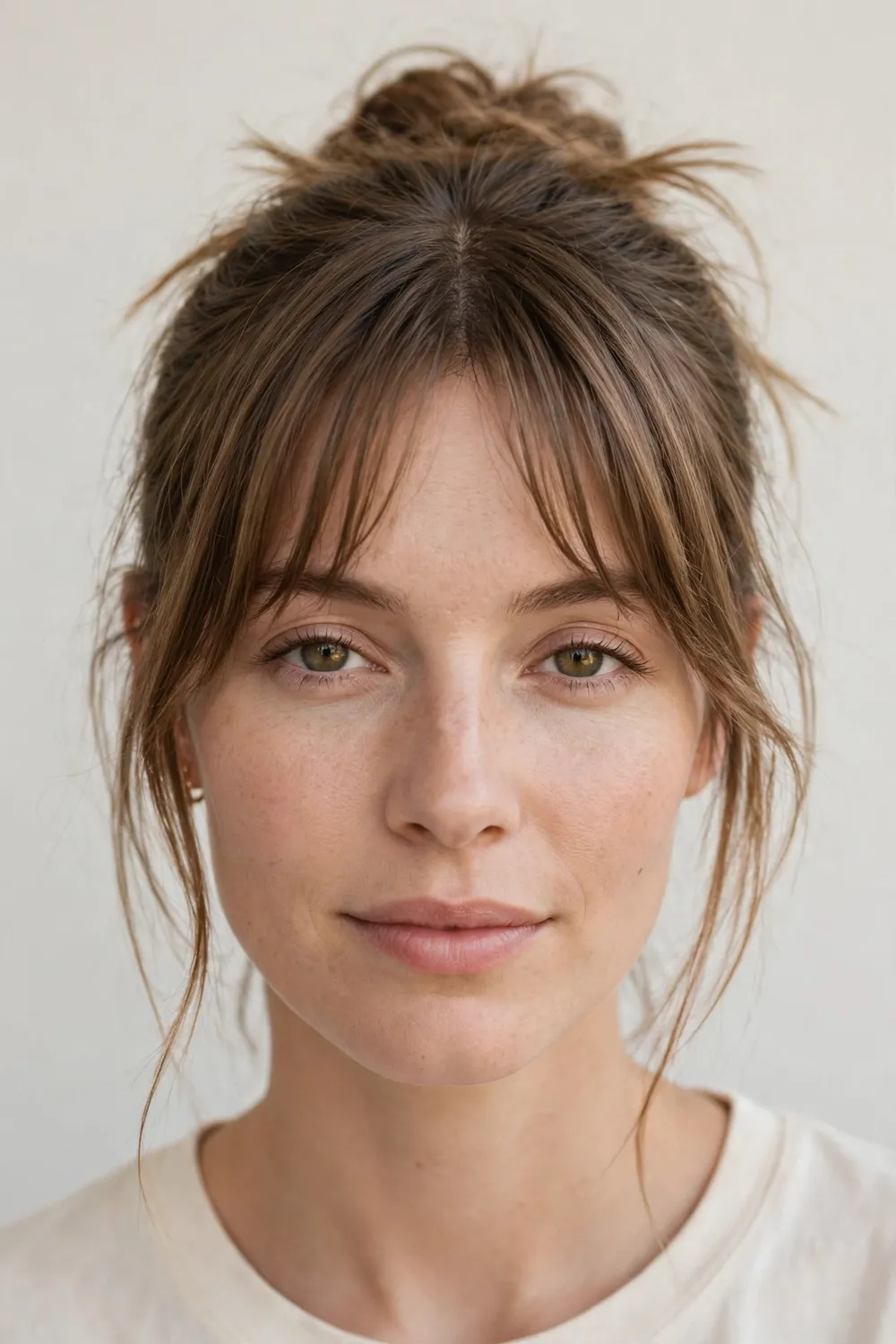
The messy bun is already the most forgiving updo there is, and curtain bangs make it better — the loose face-framing pieces stop the bun looking like you simply gave up. It suits medium to long hair with any texture, and every face shape, because the bangs do the framing while the bun does whatever it wants. Ask for curtain bangs with the shortest point at the cheekbones and the ends feathered, so they sit softly rather than in stiff strands. To style it, twist the hair into a bun at the crown or nape, leave the bangs out, and pull a couple of extra wisps free around the ears. A texturising spray gives the bun grip and the bangs a little separation. This is a style that actually improves when the bangs are a week past their trim.
28. Curtain Bangs with a Half-Up Hairstyle
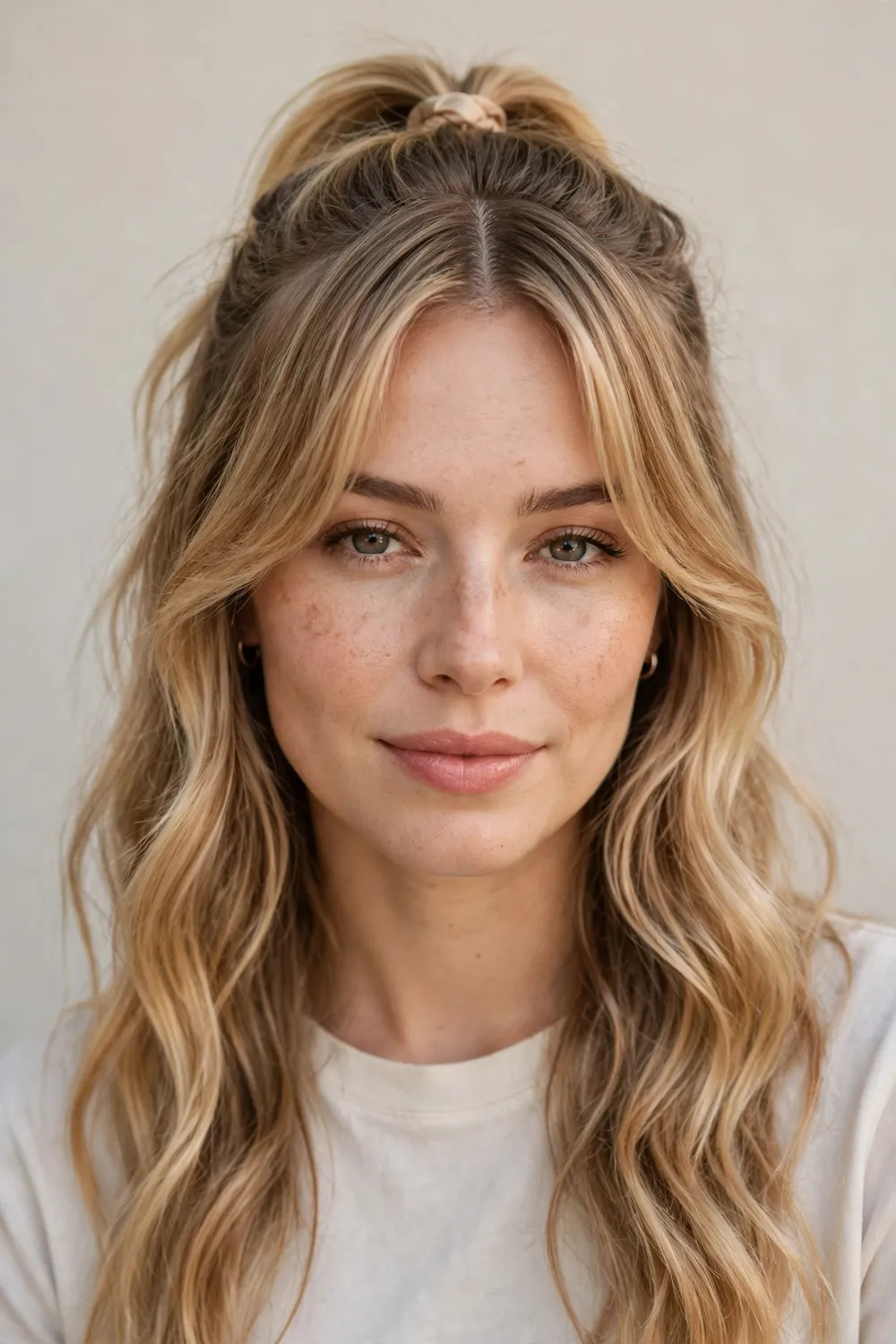
Half-up hair with soft bangs framing the face is the sweet spot between wearing your hair down and putting it up — polished enough for a dinner, relaxed enough for a school run. The top section is pulled back while the bangs and the lower layers stay loose. It suits medium to long hair, straight or wavy, and flatters round and square faces especially, where the height at the crown and the loose pieces together lengthen the face. Ask your stylist for curtain bangs starting at the nose, with the ends blending into the layers at jaw length, so the bangs and the loose lower hair read as one continuous frame. To style it, gather the top half at the crown, secure it with a clip or elastic, and let the bangs fall forward — a quick curl through the ends adds polish. Trim the bangs every four to six weeks.
29. Curtain Bangs with a Claw Clip Updo

The claw clip updo is the five-second hairstyle that looks like you tried, and curtain bangs are what sell it — the wispy pieces left out around the face turn a practical twist-and-clip into something styled. It suits medium to long hair, any texture, and every face shape. Ask for curtain bangs with the shortest point at the cheekbones, with a few extra wispy pieces cut shorter around the temples to pull out with the clip. To style it, twist the hair up at the back of the head, secure it with a large claw clip, then pull the bangs and a couple of face-framing strands loose and let them fall. A little texture spray before clipping stops the hair sliding out. Fine hair can slip out of a claw clip by midday, so carry a spare — the bangs need only a trim every five weeks.
30. Curtain Bangs with a Side Sweep
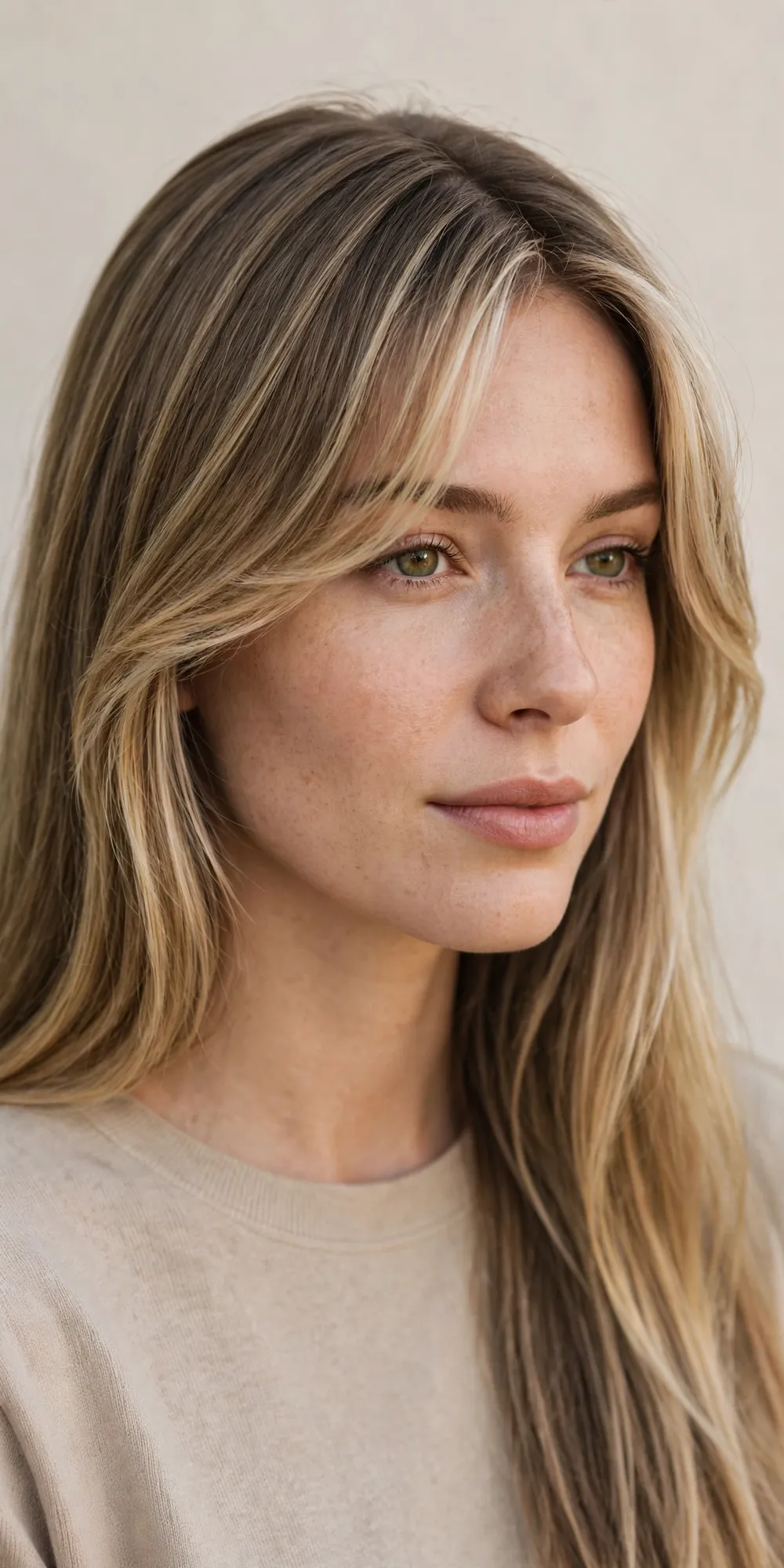
Same bangs, different part — sweep them to one side instead of splitting them down the middle, and the whole look changes. The off-centre part gives the face an asymmetrical softness the centre part does not, and it is a lifesaver for anyone whose hair refuses to part in the middle. It suits all face shapes, but it is especially kind to round faces, where the diagonal line adds length. Ask your stylist for curtain bangs with the shortest point at the nose, cut so they can fall either way — a versatile cut, not one locked to a centre part. To style it, part the hair about two fingers off-centre and sweep the longer side across the forehead, tucking the shorter side behind the ear if you like. A round brush helps the sweep hold its curve. Trim every four to six weeks, with a little dry shampoo at the roots if the sweep starts to fall flat.
31. Bottleneck Curtain Bangs
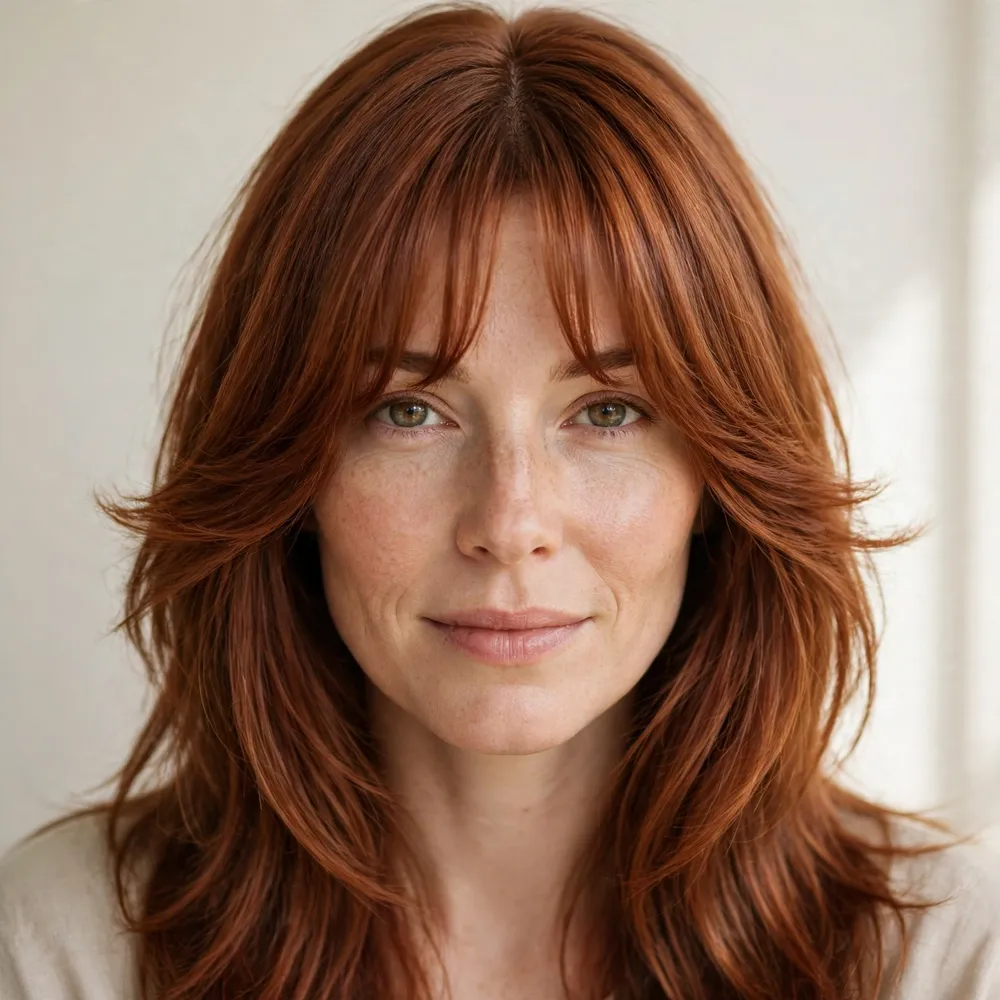
Narrow at the brow, widening toward the cheekbones — like the neck of a bottle, hence the name. The short centre pieces sit just above the eyebrows while the sides sweep out longer, so you get a hint of a full fringe in the middle and the softness of curtain bangs at the edges. It suits oval and heart-shaped faces best, and works on straight or wavy hair, medium to long. Ask your stylist specifically for bottleneck bangs: the shortest point at the brow, not the nose, with the sides lengthening gradually to the cheekbones, and the ends point-cut so the widening looks gradual rather than stepped. A round brush and a blow-dryer, curving the centre pieces slightly under and the sides outward, give the shape its definition. The centre pieces grow into your eyes fast, so plan a trim every three to four weeks.
32. Balayage Curtain Bangs
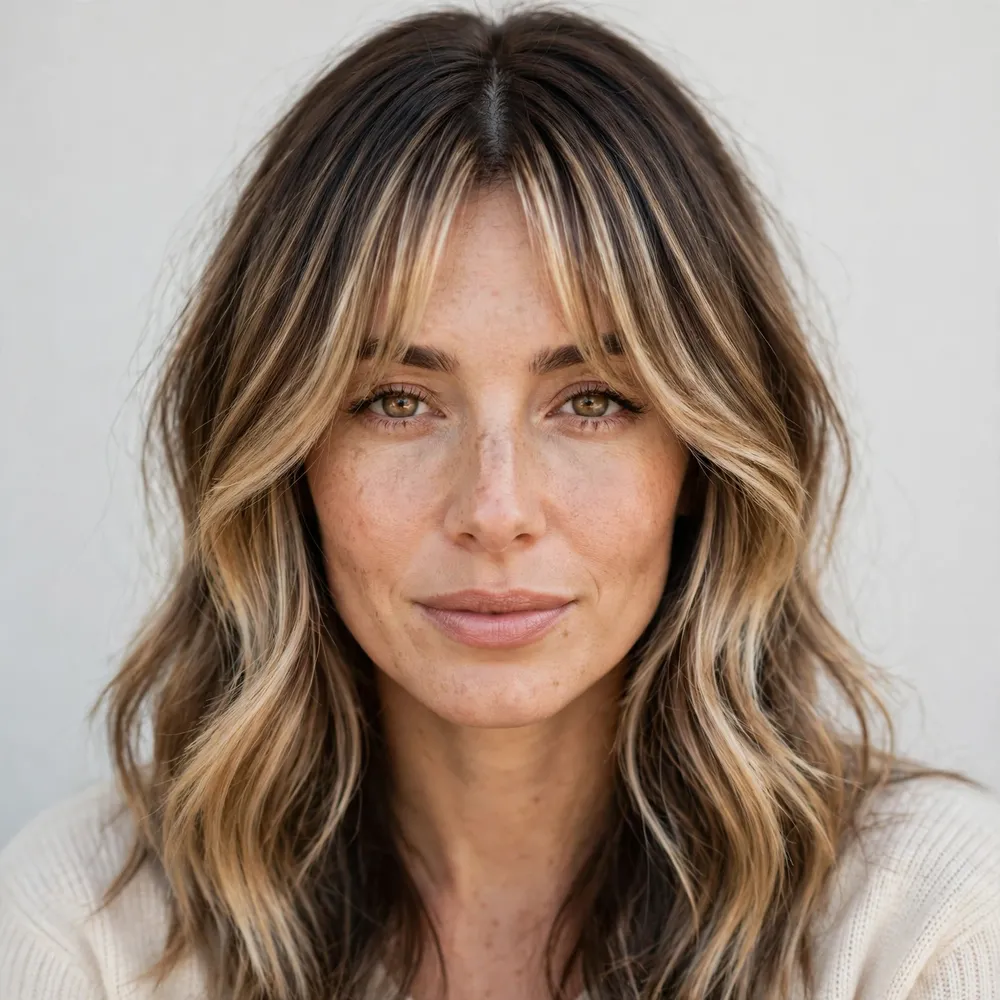
Hand-painted balayage lightening the bangs and the face frame, so the lightest pieces sit exactly where the light hits your face. The effect is sun-kissed and dimensional without the commitment of full highlights, and the bangs carry the colour beautifully because they are the first thing anyone sees. It suits medium to long hair, straight or wavy, and every face shape — the lightness around the face brightens the complexion, especially on medium and dark brown hair. Ask your colourist for balayage on the bangs and the first two face-framing sections, with the lightest pieces at the ends and a soft, blended root — no harsh lines. A purple or blue-toning shampoo, depending on how light you go, keeps the tone from turning brassy. The real advantage: balayage grows out softly, so you can go eight to ten weeks between colour appointments, even while the cut itself needs trimming every five weeks.
33. Curtain Bangs with a Braided Hairstyle
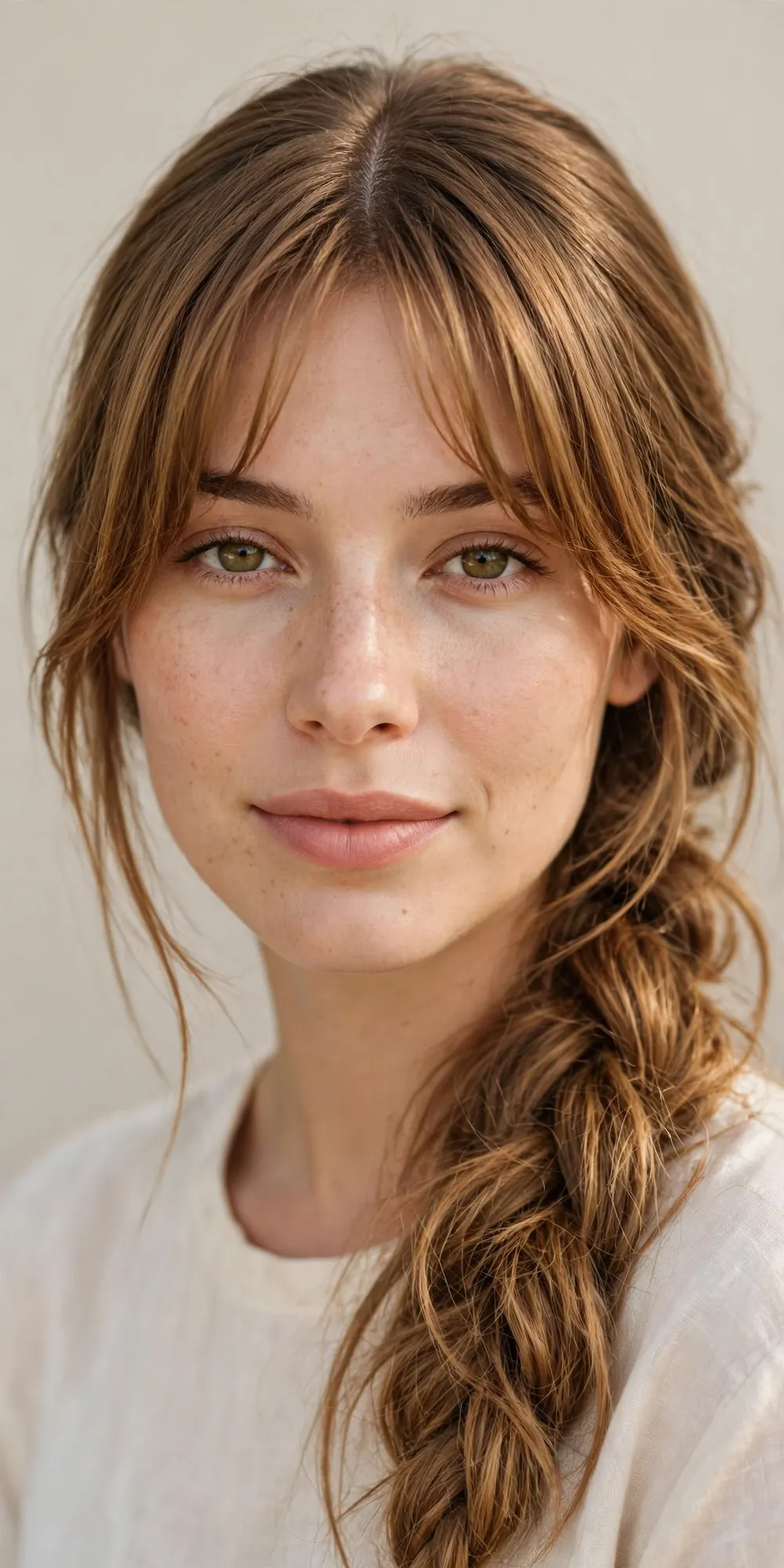
Soft bangs framing a loose braid is the most romantic combination in this guide — the braid gives structure, the bangs give softness. It works with a side braid, a crown braid, or a simple loose plait down the back, and the bangs stop the style looking too neat or too severe. It suits medium to long hair with enough length to braid, any texture, and flatters oval and heart-shaped faces. Ask for curtain bangs with the shortest point at the cheekbones and the ends reaching the jaw, so they stay loose and visible once the braid is in. To style it, braid loosely and pull a few pieces out for softness, then let the bangs fall naturally — a curling wand on the ends adds a gentle bend. For a formal version, our guide to prom hairstyles has braided updos that pair beautifully with these bangs. Trim every four to six weeks.
How to Ask Your Stylist for Curtain Bangs
Three things, said clearly, will get you the bangs you actually want. First, name the shortest point: “shortest at my nose” for a classic sweep, or “shortest at my cheekbones” for something longer and softer — this one measurement decides how the whole cut sits. Second, say you want a centre part, so the bangs are cut to fall in two even halves rather than as a single fringe. Third, explain how the ends should blend: “feathered into my layers” if you want a seamless finish, or “piece-y and separated” if you like definition. Bring a photo on your phone — one clear picture of the exact style is worth five minutes of describing, and it stops the classic misunderstanding where you say “curtain bangs” and your stylist hears “full fringe.” If your hair is curly, ask for a dry cut: curls shrink as they dry, and bangs cut wet can end up two inches shorter than planned once they spring up. A good stylist will cut a little long first and refine after drying — let them.
How to Style Curtain Bangs at Home
Five minutes is all it takes, once you know the method. The round brush method is the classic: while the bangs are still damp, wrap them around a medium round brush, blow-dry on medium heat, and roll the brush away from your face so the ends flick outward. For more volume, velcro rollers are the lazy genius option — roll the damp bangs up in two large rollers, leave them in while you do your makeup, and take them out to find bouncy, swept bangs with almost no effort. The air-dry method works best on wavy hair: scrunch a pea-sized amount of mousse or texture cream through the damp bangs, part them in the middle, and let them dry untouched — no touching, no brushing, or the frizz arrives. Between washes, a quick puff of dry shampoo at the roots keeps the bangs from going limp and oily, which they do faster than the rest of your hair because they sit against your forehead all day.
5 Mistakes That Ruin Curtain Bangs
1. Cutting them wet and too short. Wet hair hangs longer than dry hair, so bangs cut wet spring up shorter once they dry — sometimes dramatically shorter. Always ask for a dry cut, or at least a cut that leaves them longer than you think you want.
2. Skipping the centre part. Curtain bangs are built around a centre part. Part them to the side every day and the two halves grow uneven, the shape collapses, and you end up with a lopsided fringe instead of a sweep.
3. Too much product. A handful of mousse or a heavy serum weighs bangs down and makes them look greasy by lunchtime. Use a pea-sized amount, applied to the mid-lengths and ends only — never at the roots.
4. Ignoring cowlicks. A cowlick at the hairline will push your bangs in whatever direction it pleases, no matter how well they were cut. Tell your stylist about it before they start, and style the bangs while they are still damp — once a cowlick dries in the wrong direction, it takes a full re-wet to fix.
5. Waiting too long between trims. Bangs grow about a centimetre a month, and curtain bangs lose their shape fast once the shortest point passes your cheekbones. Book a trim every four to six weeks — a five-minute bang trim between full haircuts is cheaper than growing out a shape you no longer like.
Curtain Bangs FAQs
What are curtain bangs?
Curtain bangs are a fringe parted in the middle, shorter at the centre and longer toward the sides, with feathered ends that sweep away from the face like curtains. They get their name from the way the two halves frame the face, and they became famous in the 1960s and 70s thanks to Brigitte Bardot. Unlike a blunt fringe, they blend into the rest of the hair, which is why they suit so many face shapes and grow out gracefully.
Do curtain bangs suit round faces?
Yes — they are one of the best fringe choices for round faces. The centre part and the longer, sweeping sides create vertical lines that lengthen the face, and the soft pieces at the cheekbones add definition without adding width. Ask for the shortest point at the nose or cheekbones rather than the brow, and keep the ends sweeping outward rather than curling under, which can make the face look rounder.
How often should I trim curtain bangs?
Every four to six weeks is the sweet spot for most people. Bangs grow roughly a centimetre a month, and once the shortest point passes your cheekbones the shape starts to disappear into the rest of your hair. Styles with a short centre, like bottleneck bangs, need a trim every three to four weeks, while longer, blended styles can stretch to six or eight weeks. Many salons offer a quick bang trim between full appointments, often for a small fee or even free.
Can I get curtain bangs with curly hair?
Absolutely, and they can look wonderful — but the cut matters more than with straight hair. Ask for a dry cut, because curls shrink as they dry and bangs cut wet can end up far shorter than planned. Your stylist should cut the curls in their natural pattern, leaving the shortest point a little longer than you think you need. Expect a slightly longer, softer version of curtain bangs, and use a curl cream to keep the pieces defined rather than frizzy.
How do I style curtain bangs at home?
The quickest method is the round brush and blow-dryer: while the bangs are damp, wrap them around a medium round brush and roll away from your face. Velcro rollers work just as well — roll the damp bangs up, leave them in for ten minutes, and take them out for a soft, bouncy sweep. If your hair is wavy, you can often just scrunch in a little mousse and let them air-dry. Dry shampoo at the roots between washes keeps them fresh.
Are curtain bangs still in style in 2026?
Yes — curtain bangs are still one of the most requested fringe styles in 2026, and they have stayed popular for several years now rather than fading as a passing trend. Their staying power comes from how versatile they are: they work on short bobs and long layers, straight and curly hair, and they grow out gracefully, so they are a low-risk change. The 2026 versions tend to be softer and more blended than the sharper cuts of a few years ago.
How long do curtain bangs take to grow out?
It depends on how short the shortest point is, but as a rough guide, hair grows about one to one and a half centimetres a month. Bangs that start at the cheekbones take roughly two to three months to reach chin length and blend fully into the rest of your hair. The good news is that curtain bangs grow out far more gracefully than a blunt fringe — because they are already layered and blended, the awkward in-between stage is barely noticeable.
Final Word
Curtain bangs are the rare haircut that flatters almost everyone, grows out gracefully, and takes five minutes to style — which is exactly why they have stayed in style for decades. With 33 styles in this guide, from a classic soft sweep to a rose gold tint or a braided finish, there is a version for your face shape, your hair type, and your patience level. Pick one, show your stylist the photo, and give it two weeks before you judge it — most women who try curtain bangs wonder why they waited so long. And if you want more ideas worth trying, you will find them on the blog, where we cover the styles that actually work, one honest guide at a time.