


The simplest fix for hair that feels heavy, flat or shapeless is layered haircuts for men — the barber cuts the hair at graduated lengths so the top stays long and the bulk underneath is taken away, which gives it movement instead of weight. They work on almost every hair type, from dead-straight to curly, and they make medium-length hair look deliberate rather than grown-out. If you’re short on time, start with these three: Medium Flow with Layers for easy, natural movement, Layered Quiff for lift that still looks smart, and Layered Modern Mullet for the boldest version of the trend.
| Style | Best for | Daily effort | Trim interval |
|---|---|---|---|
| Medium Flow with Layers | Thick, wavy hair; oval and square faces | Low — air-dry and go | 6–8 weeks |
| Layered Quiff | Straight to wavy hair; round and oval faces | Medium — blow-dry, 5 minutes | 4–5 weeks |
| Layered Modern Mullet | Thick, straight or wavy hair; confident dressers | Low–medium — a little texture product | 5–6 weeks |
What Is a Layered Haircut for Men?
A layered haircut is exactly what it sounds like: the hair is cut in sections of different lengths, with the shortest pieces usually on top and around the face, and the longest at the bottom. The technique — layered hair — has been around for decades, and the reason it keeps coming back is that it solves a real problem. Thick hair cut to one length falls into a heavy triangle shape; layers remove the weight from underneath so the hair can actually move, and the top layers sit over the bottom ones instead of competing with them.
It is not the same thing as a fade. A fade shapes the sides from the bottom up, going from skin to longer hair. Layers shape the top and the overall silhouette. The two work brilliantly together — plenty of cuts in this list pair layers on top with a fade on the sides — but they are separate ideas, and you can have one without the other.
The practical payoff is what matters. Layers make thick hair lighter, give wavy hair definition instead of a shapeless puff, and stop long hair from looking like a curtain. They also grow out gracefully: because the lengths are already staggered, a layered cut still holds its shape a couple of weeks past its trim date in a way a blunt cut rarely does.
Who Should Get Layers — and Who Should Skip Them?
Layers are a great choice if your hair is thick, heavy or wavy, if it grows out into a triangle, or if you want longer hair that still has a shape. Curly hair benefits too, because staggered lengths stop the bulk from piling up at the sides. And if you have been growing your hair out and it has reached that awkward stage where it does nothing, layers are often the difference between looking scruffy and looking like you meant it.
Be more careful if your hair is very fine or very thin. On fine hair, aggressive layers can take away what little density you have and leave the ends looking wispy — shorter, subtler layers or a blunt cut with light texturing usually flatters it more. The same goes for very short hair: there simply isn’t enough length to layer, so a crop or a crew cut does the job better. And if you never touch your hair in the morning and want a cut that looks identical every day, a layered style that relies on movement will need at least a minute of product or a quick blow-dry to look its best.
The honest test is simple. If your hair feels too heavy, falls flat or puffs up when it grows, layers will help. If your problem is thinness rather than bulk, ask your barber about light texturing instead of full layers.
28 Best Layered Haircuts for Men (2026)
1. Layered French Crop with Low Fade
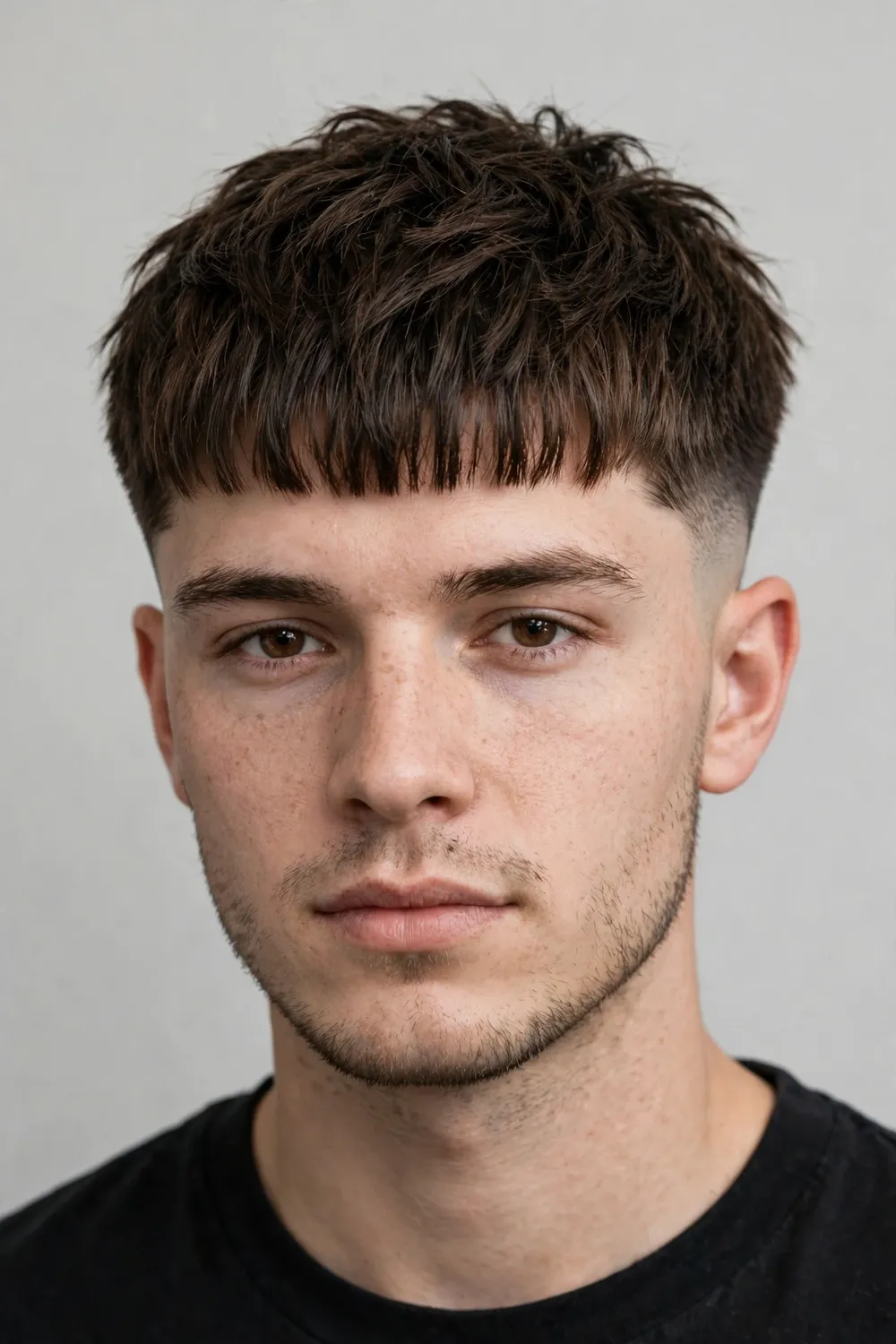
The French crop is already one of the easiest cuts a man can wear, and layers make it better. The top is cut into short, choppy layers with a blunt fringe just above the eyebrows, while a low fade keeps the sides clean without going aggressive. It suits straight and slightly wavy hair and most face shapes. At the barber, say: “A French crop with choppy layers on top, a blunt fringe, and a low fade on the sides.” Style with a pea-sized amount of matte clay pushed forward with your fingers — no comb, no blow-dry, about thirty seconds. The fringe is the catch: once it pokes at your eyebrows, expect a trim every three to four weeks.
2. Medium Flow with Layers
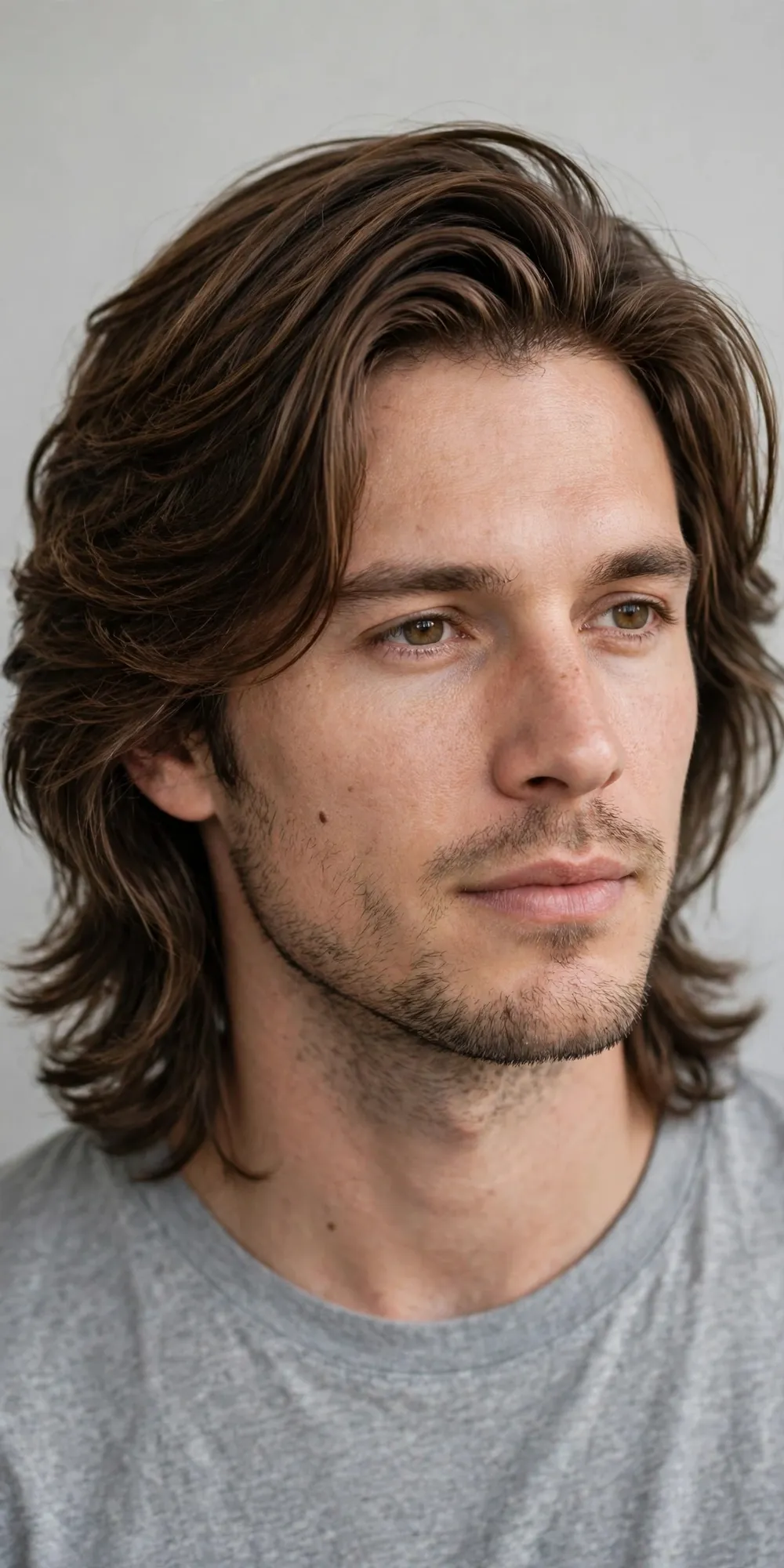
This is the cut most men picture when they say they want longer hair that still looks put together. The hair reaches just past the ears and collar, cut in feathered layers that let it fall naturally. It suits thick, wavy hair best and flatters oval, square and heart-shaped faces. At the barber, say: “Medium length with layers through the back and sides, keep the length, and just take the weight out so it flows.” If you are still deciding between medium and short, our guide to [medium length hairstyles for men](/medium-length-hairstyles-for-men/) will help you pick. Styling is almost nothing: towel-dry, work in a little sea salt spray or light cream, and let it air-dry. Trims every six to eight weeks keep the shape.
3. Burst Fade Mohawk
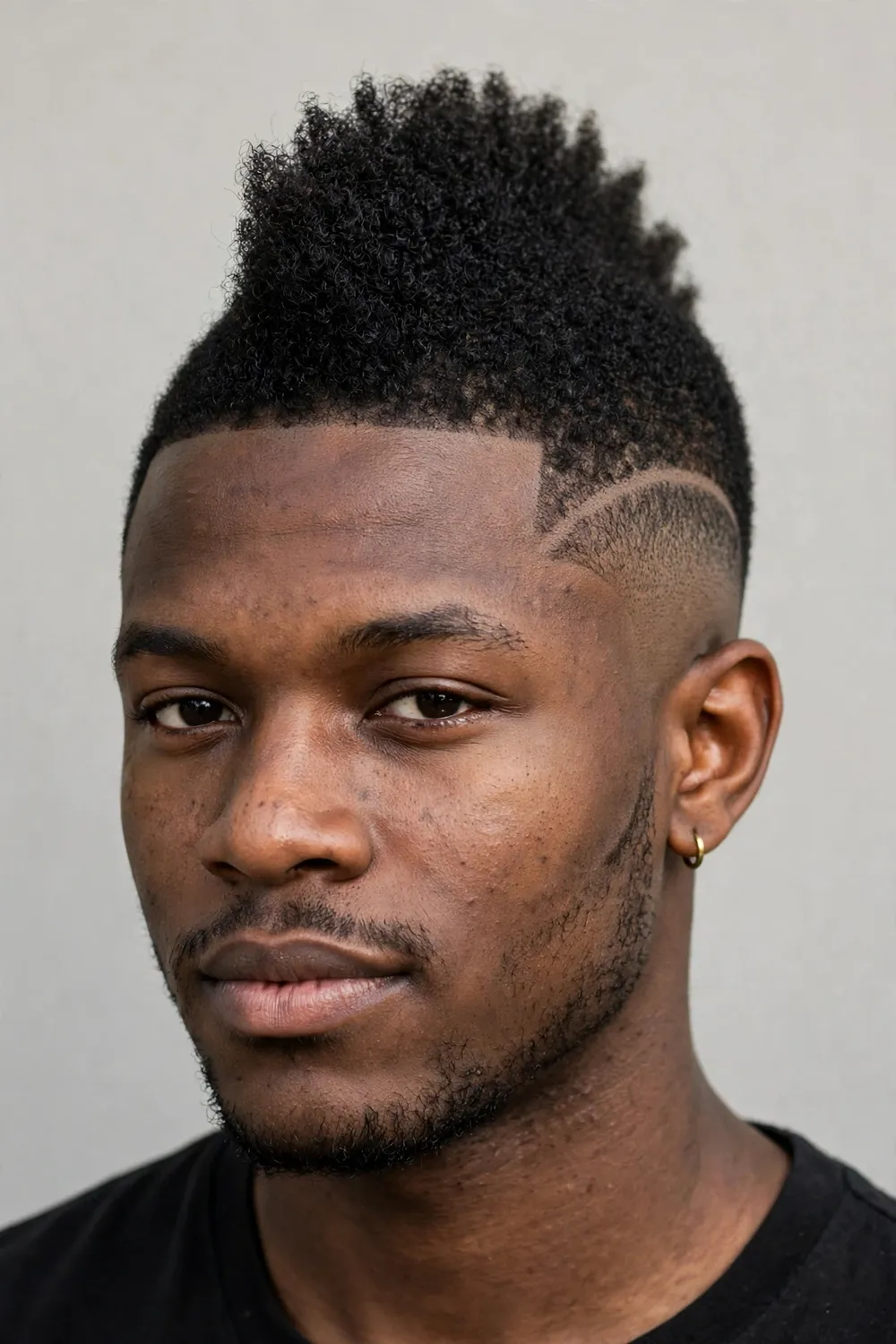
The burst fade mohawk sounds like a statement cut, and it is, but the layers are what make it wearable. The fade arcs around the ear in a semicircle, leaving a strip of tall, textured hair down the middle that is cut in layers so it has height without looking like a solid helmet. It suits thick, straight or wavy hair and works best on oval and square faces. At the barber, say: “A burst fade around the ears with a layered mohawk on top — keep it textured, not solid.” Style with a strong-hold matte paste, pushing the hair up and slightly forward. Maintenance is the trade-off: the fade needs a refresh every two to three weeks to stay sharp, and the top needs daily styling.
4. Layered Curls

If your curls have only ever been cut straight across, layers will feel like a revelation. Without them, curls stack on top of each other and the hair grows outward into a triangle. Layered curls are cut in staggered lengths so each curl has room to form, the bulk disappears, and the shape stays rounded. It suits any curl pattern, from loose waves to tight coils. At the barber, say: “Cut my curls in layers, dry if you can, and take the bulk out of the sides — I want the curls to sit, not puff out.” Style on damp hair with a curl cream, scrunching upward, then air-dry or diffuse on low heat. A trim every six to eight weeks is all it needs.
5. Messy Layered Comb Over with Tapered Sides
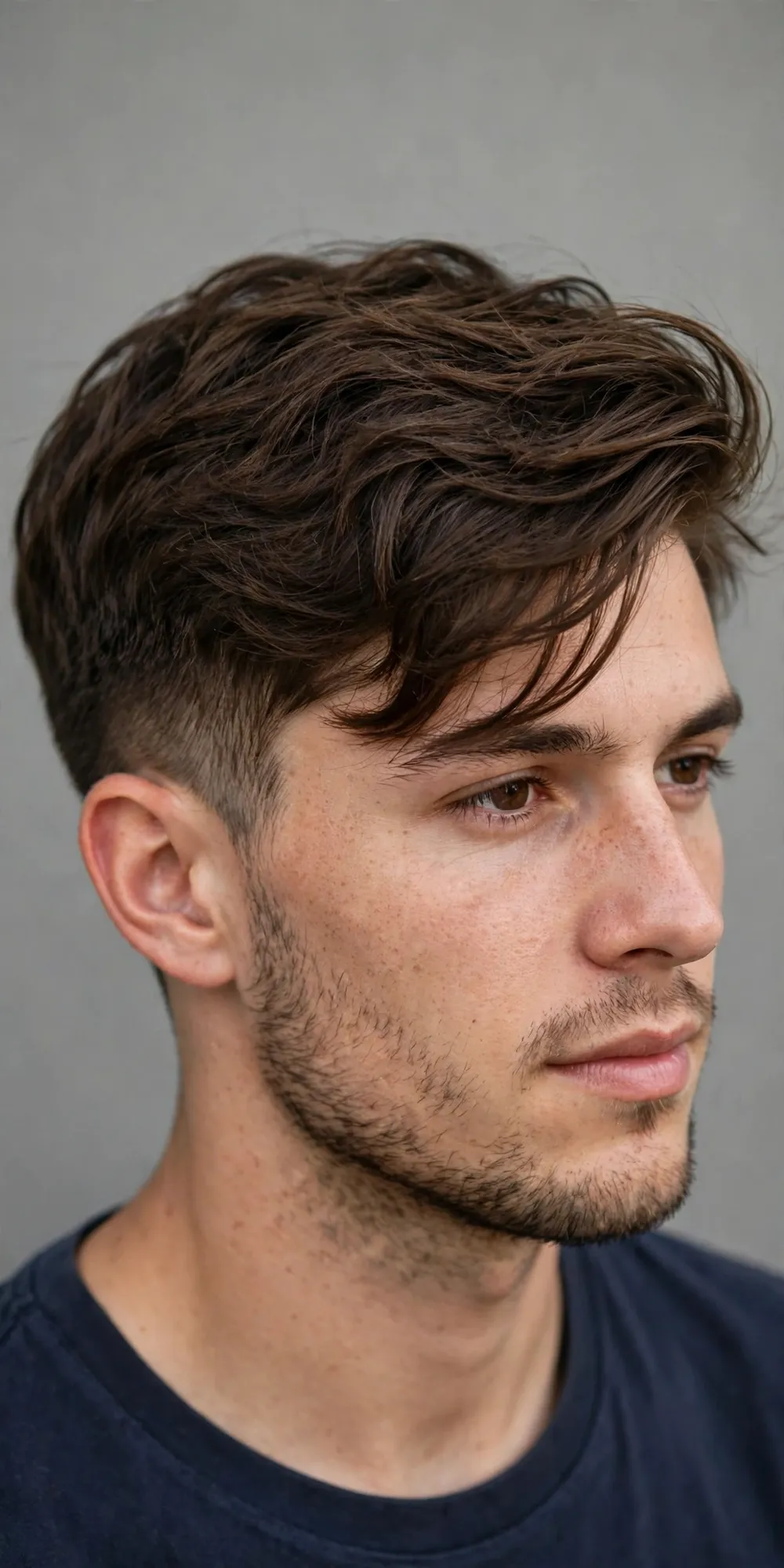
The comb over gets a bad reputation from the version that hides a receding hairline. This one is nothing like that. The top is layered and swept across with texture, the sides are tapered rather than faded, and the whole thing is finished messy on purpose. It suits straight to wavy hair, and it is a strong option for men with a slightly receding hairline. At the barber, say: “A textured comb over with layers on top and a taper on the sides — messy finish, nothing too neat.” Style with a little matte paste or clay, sweeping the hair across with your fingers. The taper grows out softly, so trims can stretch to four or five weeks. On very fine hair, a light hairspray stops the sweep separating.
6. Thick Shaggy Hair with Layers
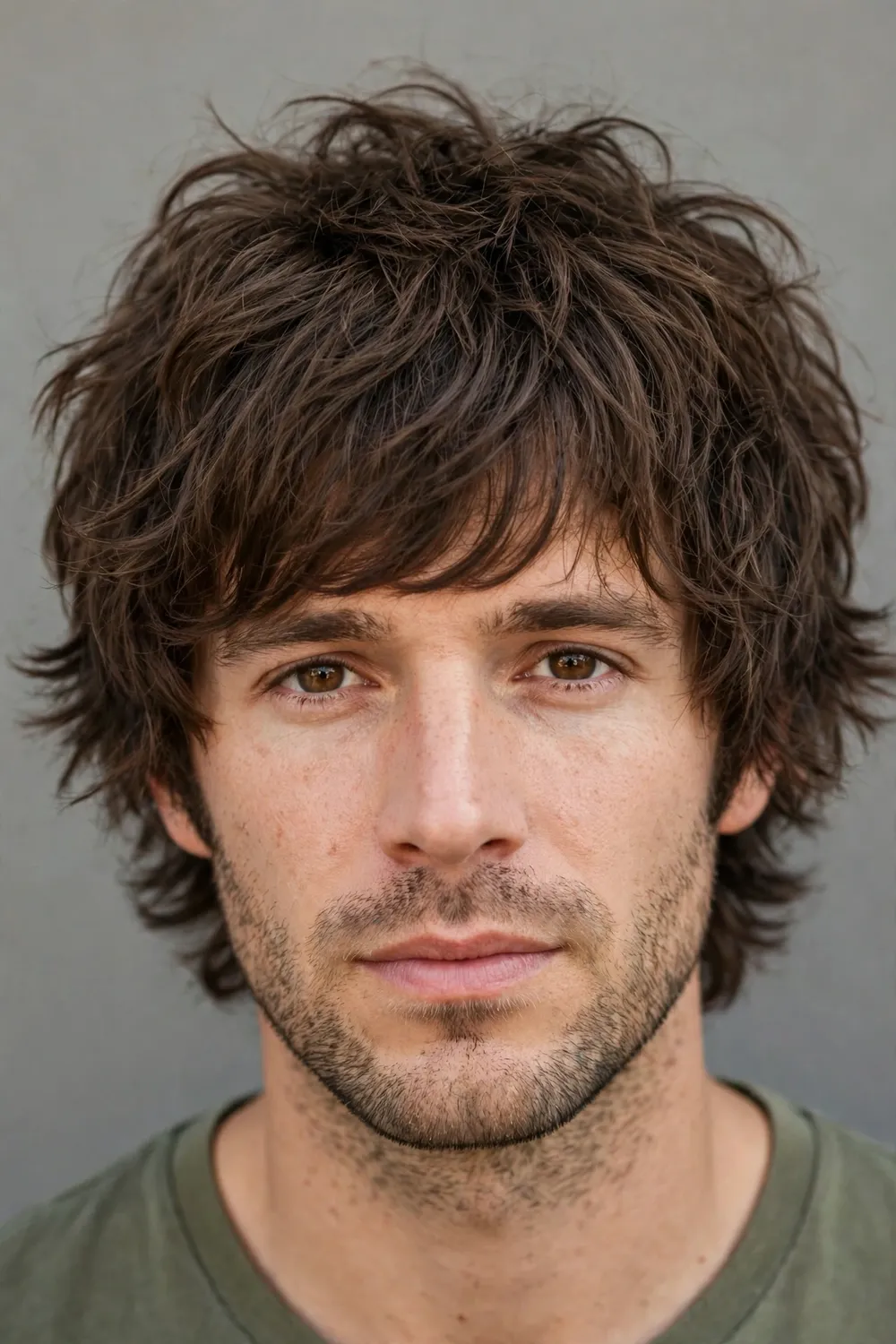
The shag is the carefree one on this list — big volume, uneven layers, and a finish that looks better slightly messy than perfectly neat. Layers at different lengths stop thick hair becoming one solid mass, and the fringe falls over the forehead. It suits thick, wavy or straight hair and works best on oval and oblong faces, where the volume on the sides balances the length. At the barber, say: “A shaggy cut with uneven layers all through, keep the fringe long, and don’t make it too tidy.” Styling takes almost nothing: a little texture spray on damp hair, scrunch it, and leave it alone. It won’t look sharp in a suit, but that is not the point. Trims every six to eight weeks keep the shape.
7. Full Brush Back

The full brush back is the grown-up version of the slick back: all the hair swept back from the forehead, but with layers cut through it so it has air and volume instead of sitting flat against the head. It suits straight and wavy hair, and it is especially flattering on men with a strong jawline or a square face. At the barber, say: “Brush it all back with layers through the top so it has volume — not flat and not greasy.” Style on damp hair with a blow-dryer and a round brush, brushing back and slightly up, then finish with a medium-hold cream or pomade. It takes a few minutes and a hairdryer. Trims every four to five weeks keep the back from getting heavy.
8. Side Part with Taper Fade
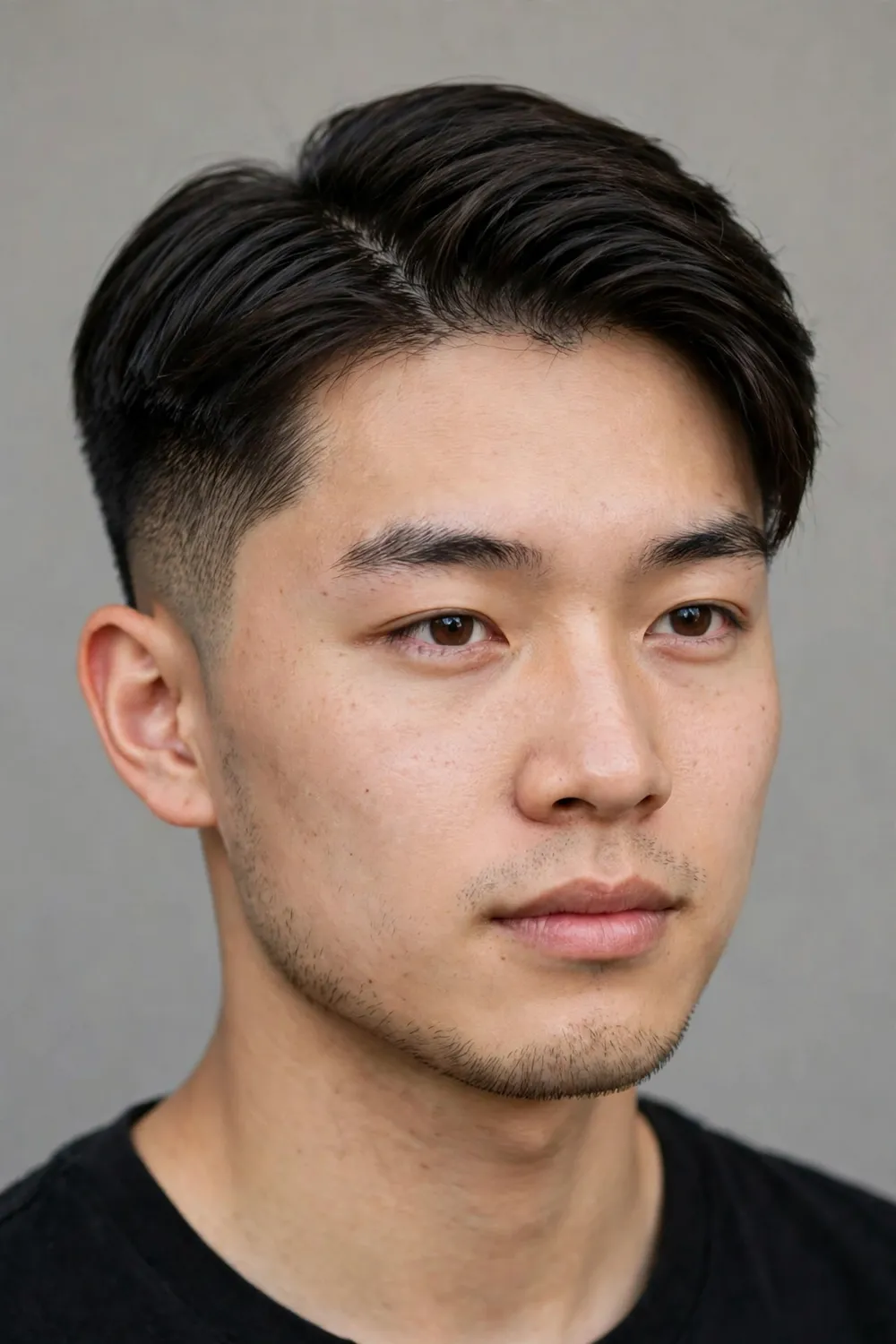
Some cuts never go out of fashion, and the layered side part is one of them. The top is parted to one side, with layers cut through it so the hair has movement instead of lying flat. The taper fade keeps the sides tidy and gradually shorter toward the ears. It suits straight and slightly wavy hair and almost every face shape. At the barber, say: “A side part with layers on top and a taper fade on the sides — classic, but keep the texture.” Style with a comb and a dab of pomade, parting the hair while it is damp. It takes two minutes and looks smart anywhere. The taper needs attention every three to four weeks, but the layered top grows out well.
9. Long Layered Crew Cut with High Taper Fade
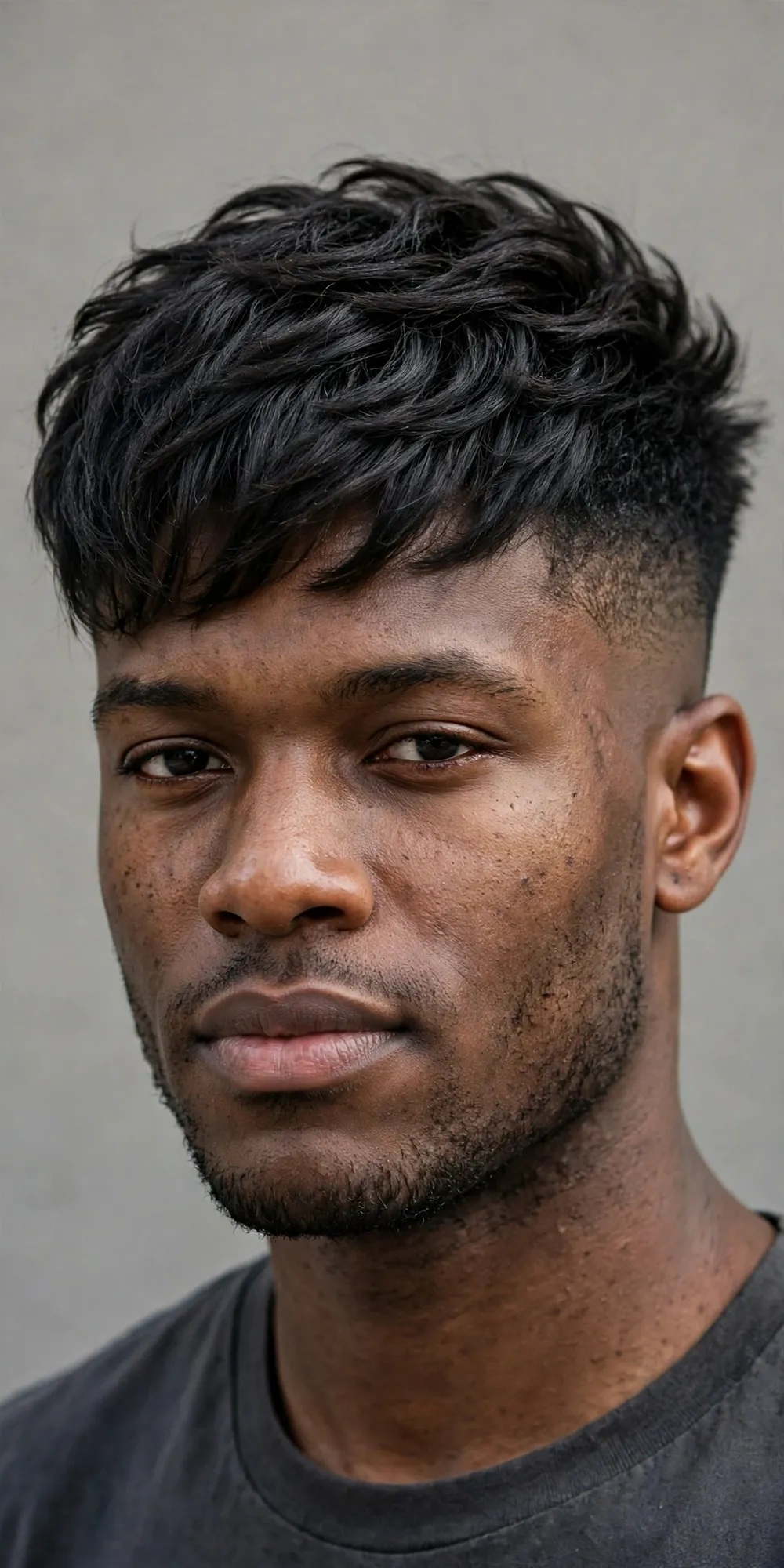
This is a crew cut for men who like the idea of one but want more hair on top than the traditional version allows. The top is left longer and cut in feathered layers, so it has texture instead of the usual uniform bristle, and the high taper fade gives the sides a sharp finish. It suits straight and wavy hair and most face shapes. At the barber, say: “A crew cut but longer on top with layers, and a high taper fade on the sides.” Styling is minimal: a little matte clay worked through the top, pushed forward or slightly to one side. Our guide to [short haircuts for men](/short-haircuts-for-men/) has more options in this length. The fade needs a refresh every three weeks to stay crisp.
10. Messy Layered Curly Hair

Not every curly cut needs to be neat. This one leans into the mess: medium-length curls cut in staggered layers, left tousled, with the bulk taken out so the curls move freely instead of clumping into a heavy shape. It suits wavy to curly hair and men who like a relaxed look and don’t want to fight their natural texture. At the barber, say: “Keep the curls medium length, layer them so they don’t puff out, and don’t make it too tidy — I want it messy.” Style with curl cream on damp hair, scrunching and letting it air-dry; a diffuser adds definition if you have time. It looks best when you stop trying so hard — over-styling kills the point. Trims every six to eight weeks keep the shape.
11. Layered Modern Mullet
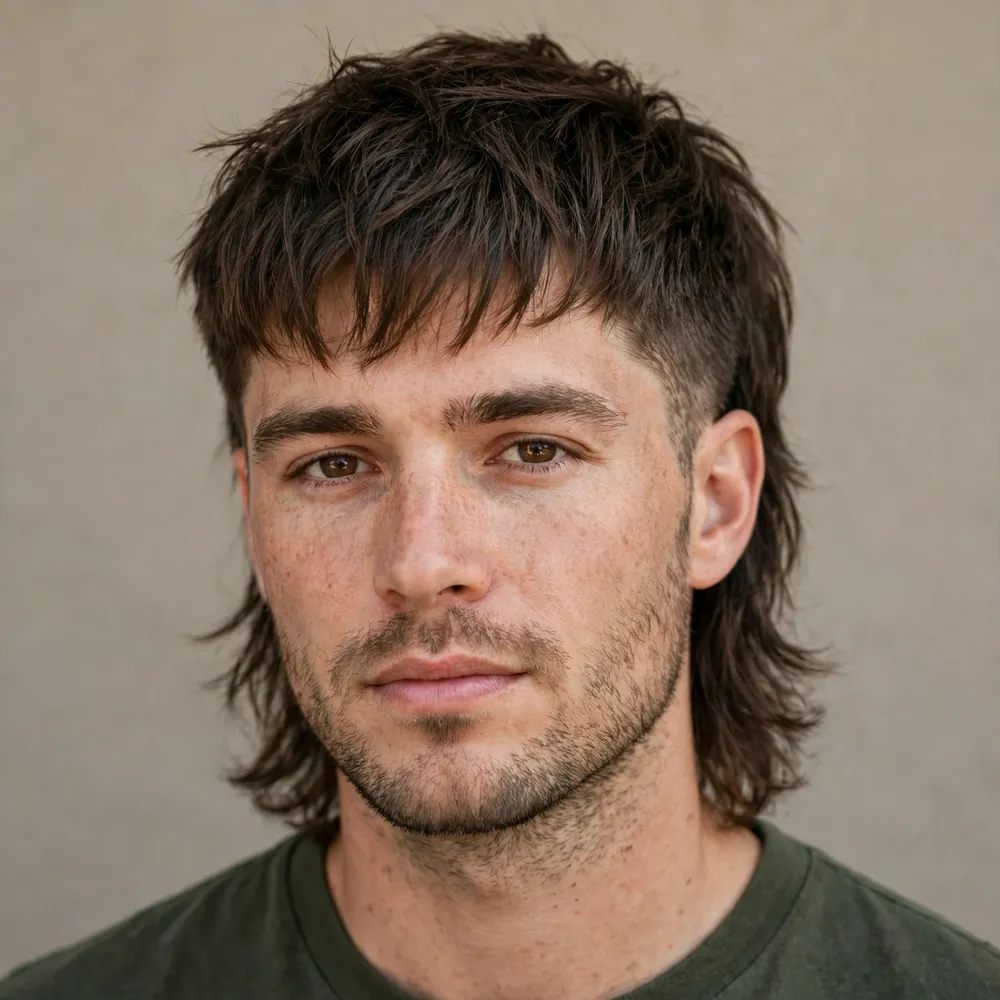
The modern mullet is the mullet done properly: shorter, choppy layers at the front and crown, tapered sides, and a longer layered back that falls to the collar rather than halfway down it. The layers separate it from the joke version — they give the back movement and texture so it reads as deliberate. It suits thick, straight or wavy hair and works best on oval, square and heart-shaped faces. At the barber, say: “A modern mullet — short and choppy on top, tapered sides, layered length at the back to the collar, nothing too long.” Style with texture spray or matte paste, working the top forward. It is low-effort day to day but needs a trim every five to six weeks — once the back passes the collar, it stops looking intentional.
12. Long and Layered
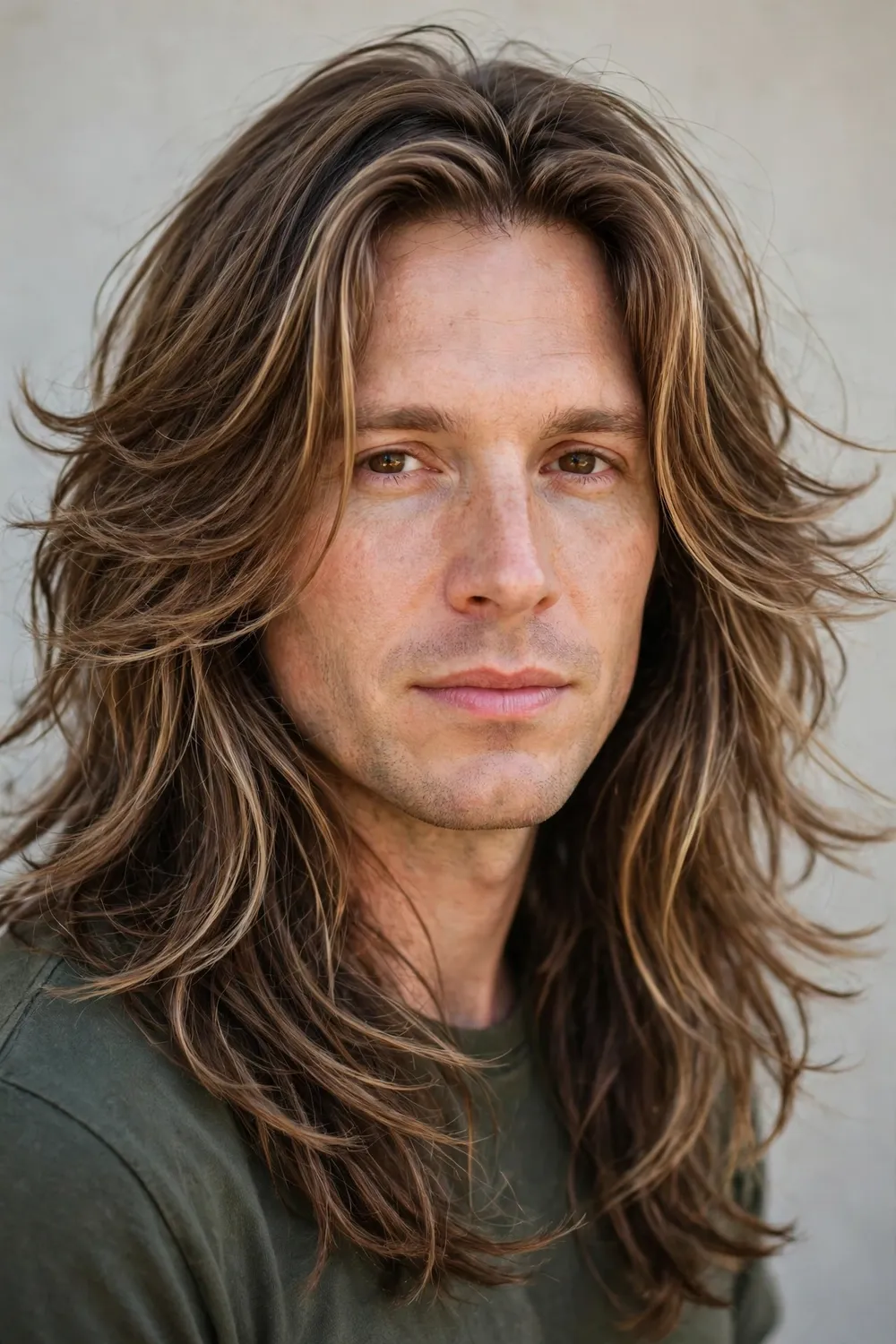
This is the simplest idea on the list and, for the right man, the best-looking. Hair worn long, past the shoulders or close to it, with layers cut through so the ends feather and frame the face. The layers are the whole trick: without them, long hair looks flat and shapeless; with them, it has movement and a deliberate shape. It suits thick, wavy and straight hair, and it flatters most face shapes, since the front layers can be adjusted to suit yours. At the barber, say: “Keep the length, cut layers through it, and frame the front around my face.” Styling is minimal — a little leave-in conditioner or light oil on the ends, air-dry, done. The commitment is maintenance: trims every eight weeks and regular conditioning against split ends.
13. Thick Curly Taper Fade
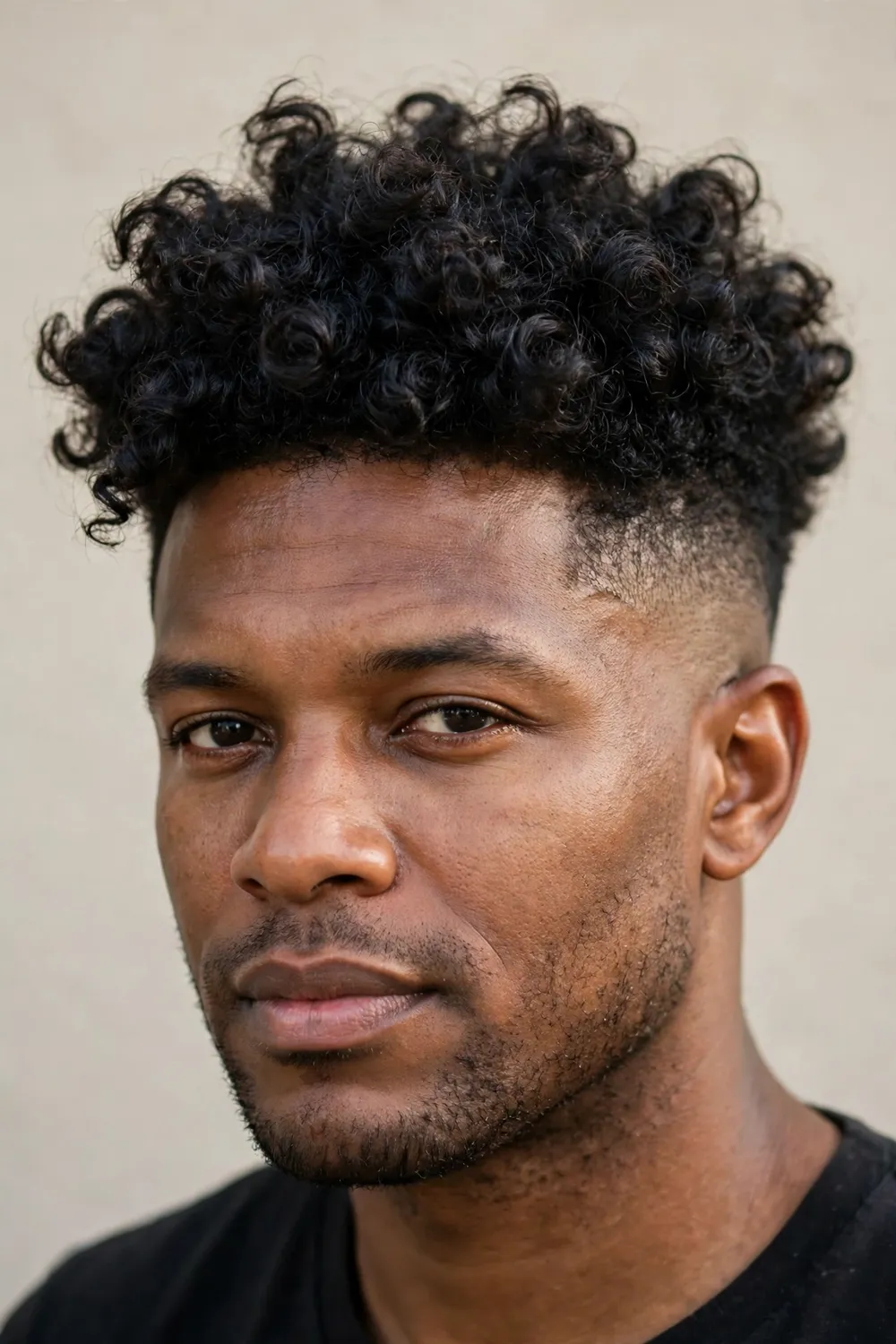
This cut pairs the best of two worlds: full, thick curls on top and clean tapered sides that keep the shape under control. Layers on top remove bulk and let each curl form, while the taper fade takes the sides down so the curls don’t puff out. It suits thick curly and coily hair, and it works on most face shapes, since the height on top can be adjusted to your face shape. At the barber, say: “Keep the curls full on top with layers to take the bulk out, and a taper fade on the sides.” Style with curl cream on damp hair and let it air-dry or diffuse. The fade needs a refresh every three to four weeks to stay sharp, but the top is low-maintenance and grows out well.
14. Short Layers with Blunt Fringe and Fade
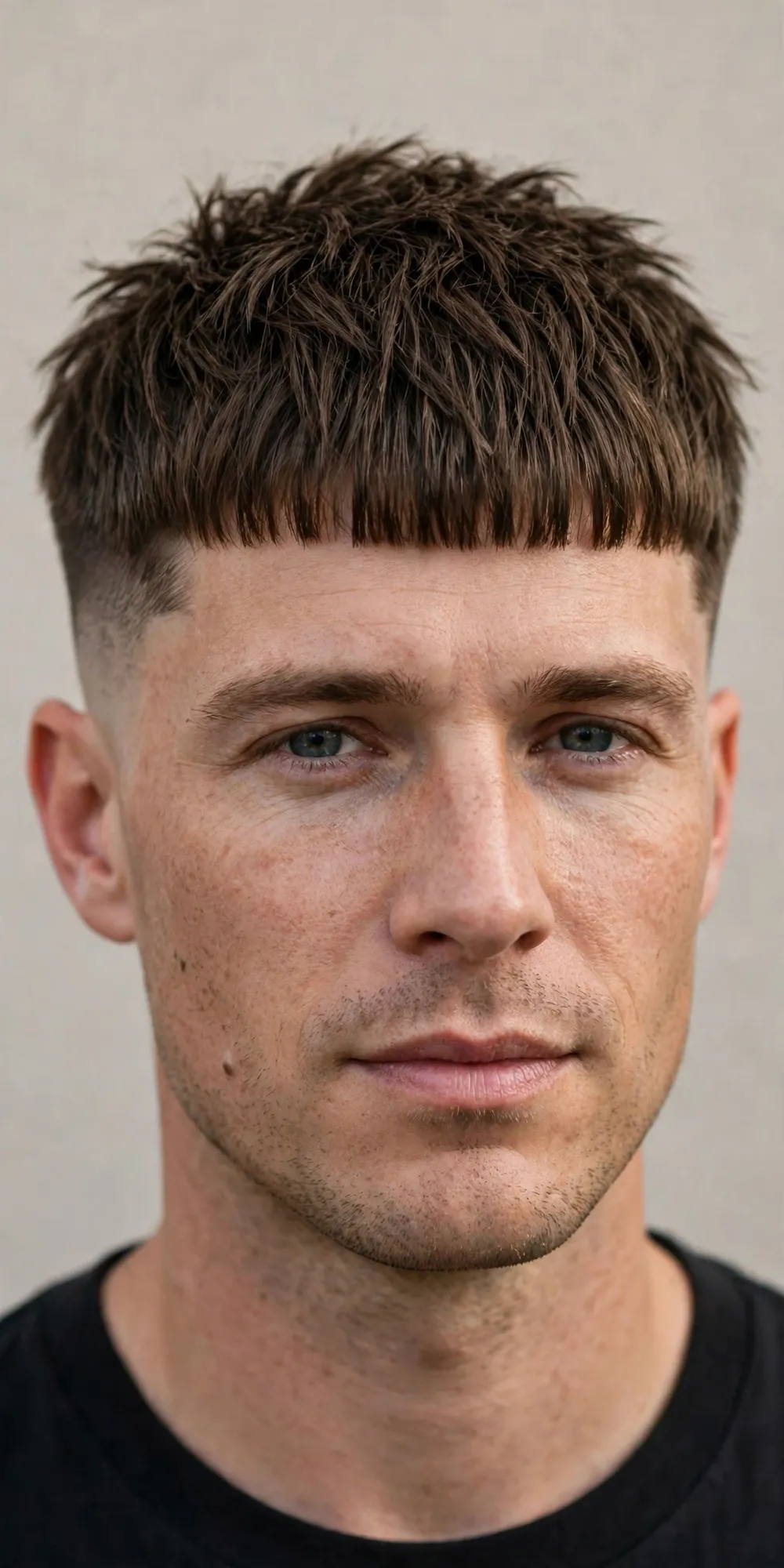
This is the boldest short cut on the list. The top is cropped and cut in choppy, short layers, the fringe is left blunt and straight across the forehead, and the fade on the sides keeps everything sharp. It suits straight hair best — the blunt fringe needs a fairly straight texture to sit cleanly — and oval and square faces. At the barber, say: “Short choppy layers on top, a blunt straight fringe, and a clean fade on the sides.” Style it with a small amount of matte clay, pushing the top forward and letting the fringe sit where it falls. It takes under a minute in the morning. The catch is the fringe: it grows fast, so this cut needs the most frequent trims on the list — every three weeks or so.
Layered Mod with Heavy Texture
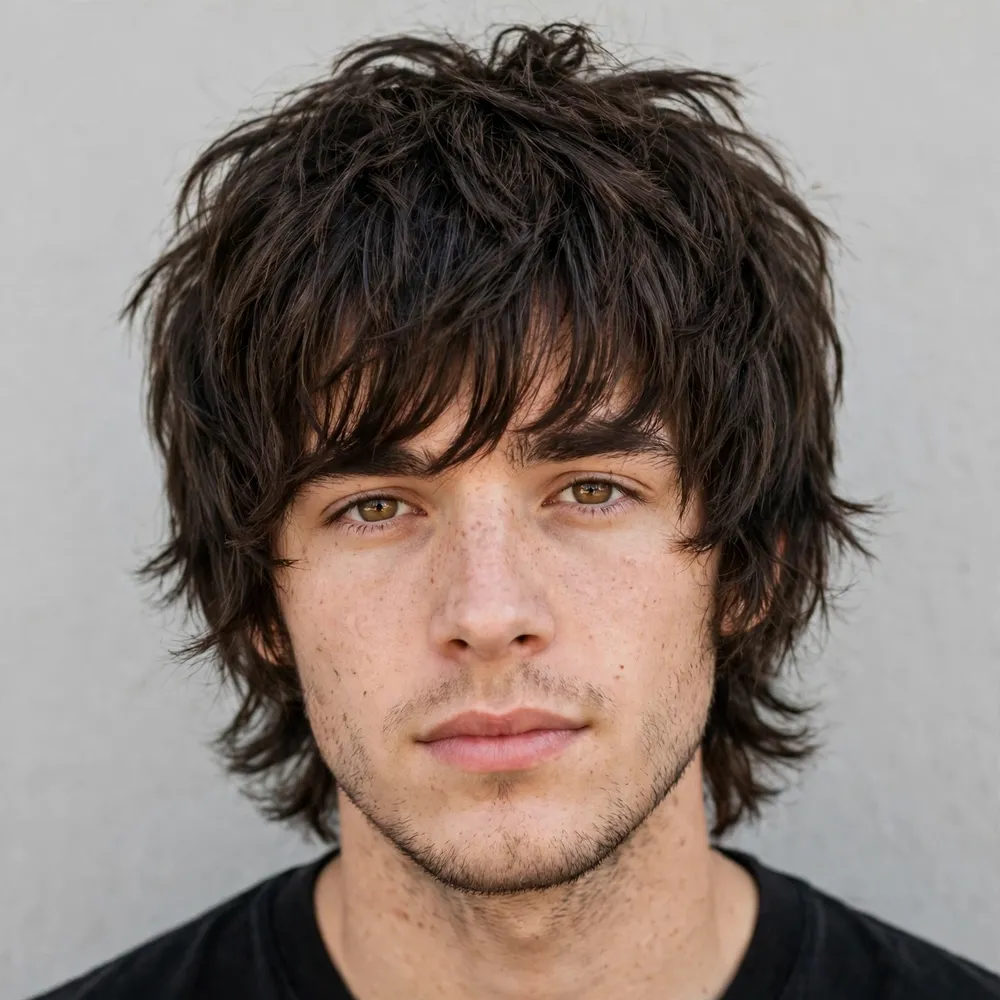
This one leans straight into the sixties. Choppy layers all through the top, a fringe that falls just above the eyebrows, with enough crown texture that it moves when you do. It works best on straight to slightly wavy hair with medium density — too fine and it falls flat, too thick and it turns into a helmet. It suits oval and longer faces — the fringe shortens the face a touch. Ask your barber for “a mod cut with heavy texture, fringe to the brows, layers kept choppy, not blended smooth.” Finish with a light matte clay, scrunched through with your fingers rather than combed. It needs a trim every four to five weeks, and the fringe will want a quick tidy between visits.
Layered Slick Back

A slick back with layers is a different animal from the flat version from decades past. The layers break up the weight, so the hair sweeps back with lift instead of lying glued to your head. It suits medium-length straight or wavy hair, and it flatters square and oval faces — the height on top balances a strong jaw nicely. Ask for “layers through the top so it sweeps back with volume, sides neat but not skin-faded.” Blow-dry it back with a round brush for lift, then work a medium-hold pomade or cream through while it’s still slightly damp. It holds all day and restyles easily with wet hands. Trim every four to six weeks, and expect a few minutes of styling each morning — this isn’t a wash-and-go cut.
Short Brushed Forward Waves with Low Taper

If you like your hair short but hate the flat, military look, this is your cut. Short waves are brushed forward in loose, layered pieces, and the low taper keeps the sides tidy without going too severe. It suits straight and wavy hair, and it’s genuinely kind to round faces — the forward texture adds length to the look of the face. Ask your barber for “short layered waves brushed forward, low taper on the sides, keep the top textured.” A dab of matte paste is all you need; push it forward with your fingers and leave the ends slightly piecey. It dries in minutes, needs almost no effort, and stays neat for three to four weeks before the taper starts to lose its edge.
Long Side Swept Hair
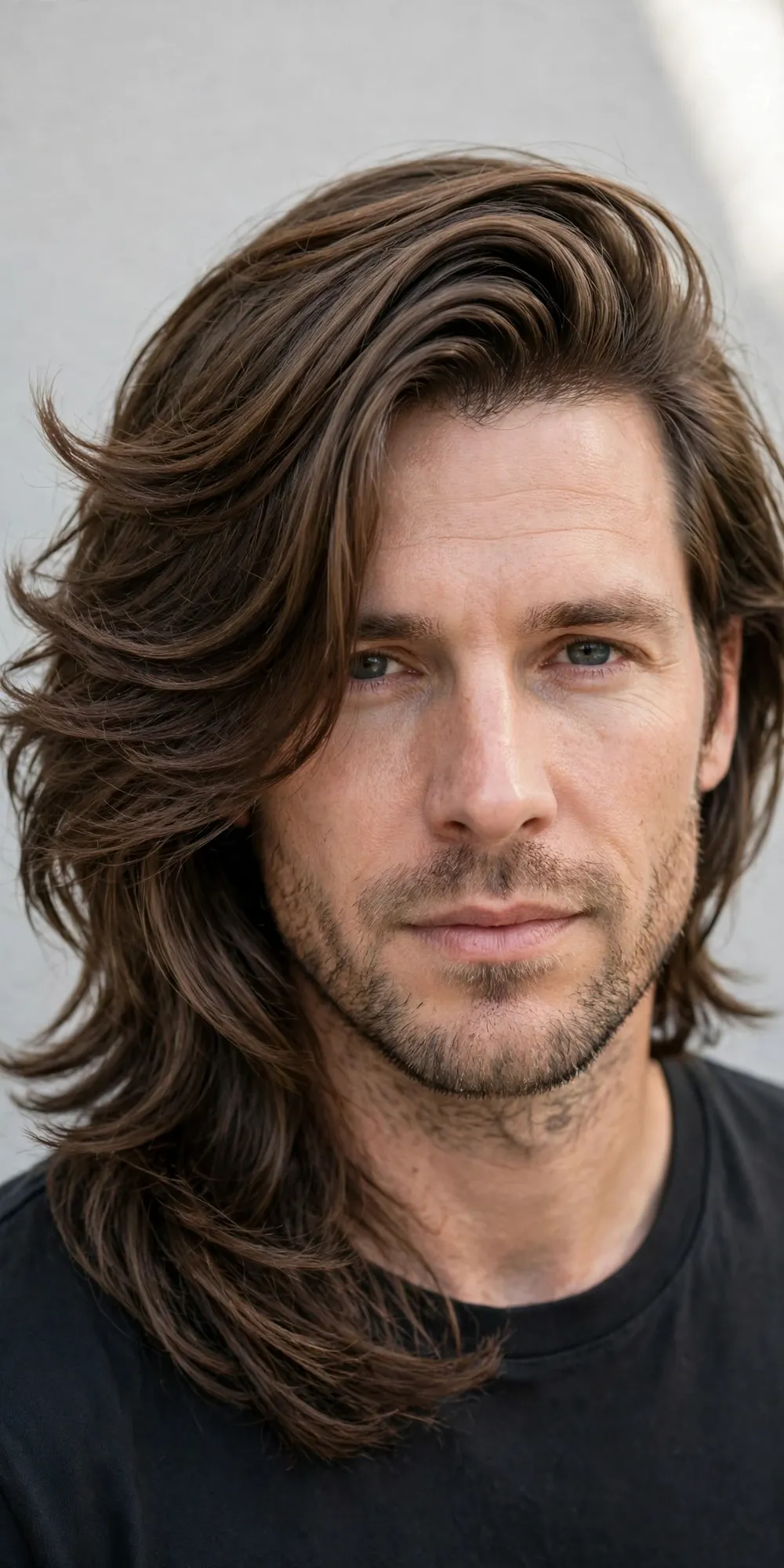
The grown-out look done properly: medium to long hair, layered so it sweeps to one side with soft structure instead of hanging like a curtain. It works beautifully on straight and wavy hair with medium density, and the side sweep flatters most face shapes — it breaks up a wide forehead and balances a long face. Ask your stylist for “long layers, swept to the side, with face-framing pieces at the front.” Dry it with a side part using your fingers, then finish with a lightweight cream so the layers stay separated rather than clumping. The catch is the awkward in-between stage: growing in from a shorter cut takes two to three months of patience, with a trim every six to eight weeks to keep the shape.
Layered Quiff Hairstyle
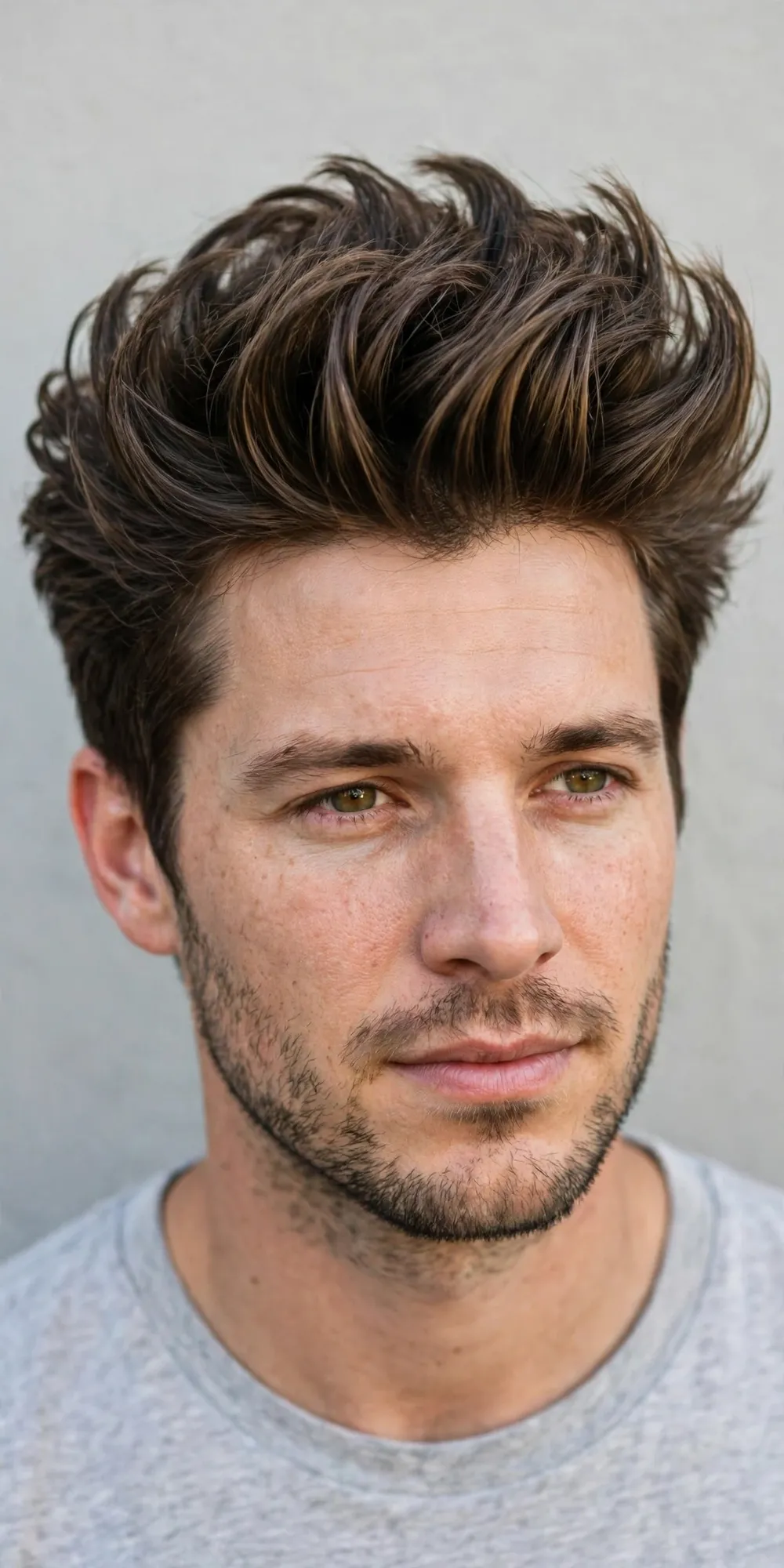
The quiff never really goes away, and layers keep the modern version from looking like a stiff wave of hairspray. The top is layered so it lifts up and back with texture, while the sides stay short enough to show off the height. It suits straight and wavy hair best, and it’s a strong choice for round faces, since the height lengthens the face. Ask for “a textured quiff with layers through the top, sides faded or tapered.” Blow-dry it upward with a vent brush, then add a matte clay for hold without shine. Five minutes of styling each morning, and a trim every four weeks keeps the proportions right — let it grow and the quiff starts to flop.
Layered Undercut with Fade
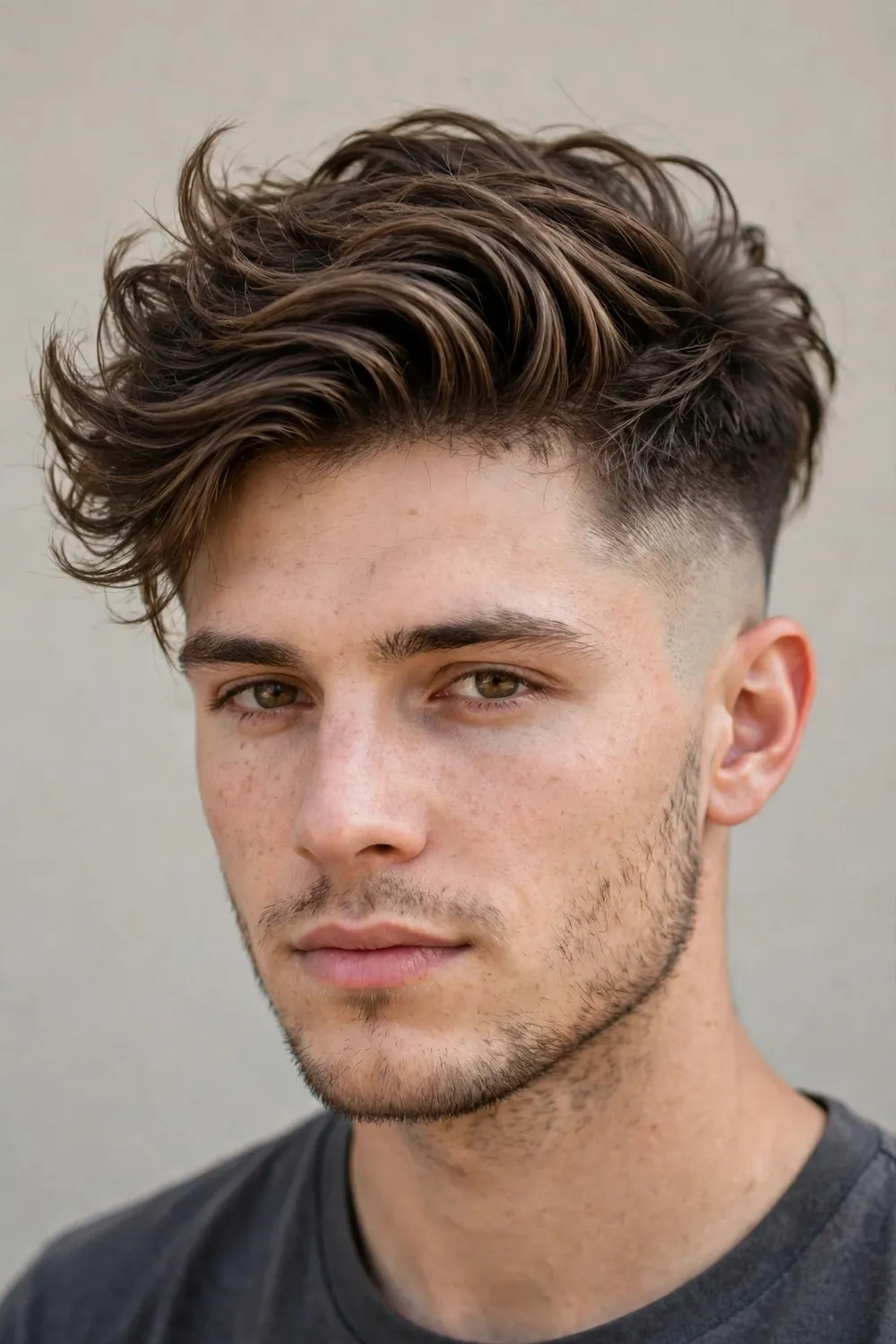
This one is all contrast: the sides are taken short with an undercut and a fade, while the top stays long and layered, full of volume and movement. It suits thick hair best — the layers stop the top turning into one heavy slab — and it works on straight, wavy and lightly curly hair. It flatters oval and square faces, and the sharp sides give structure to rounder ones. Ask your barber for “a layered top, long enough to push back or sweep, with a skin fade underneath.” Style it with a sea salt spray on damp hair, then blow-dry back for height. The fade needs upkeep every three to four weeks, and the top a light trim every six so the layers don’t get ragged.
Layered Shag Cut for Men
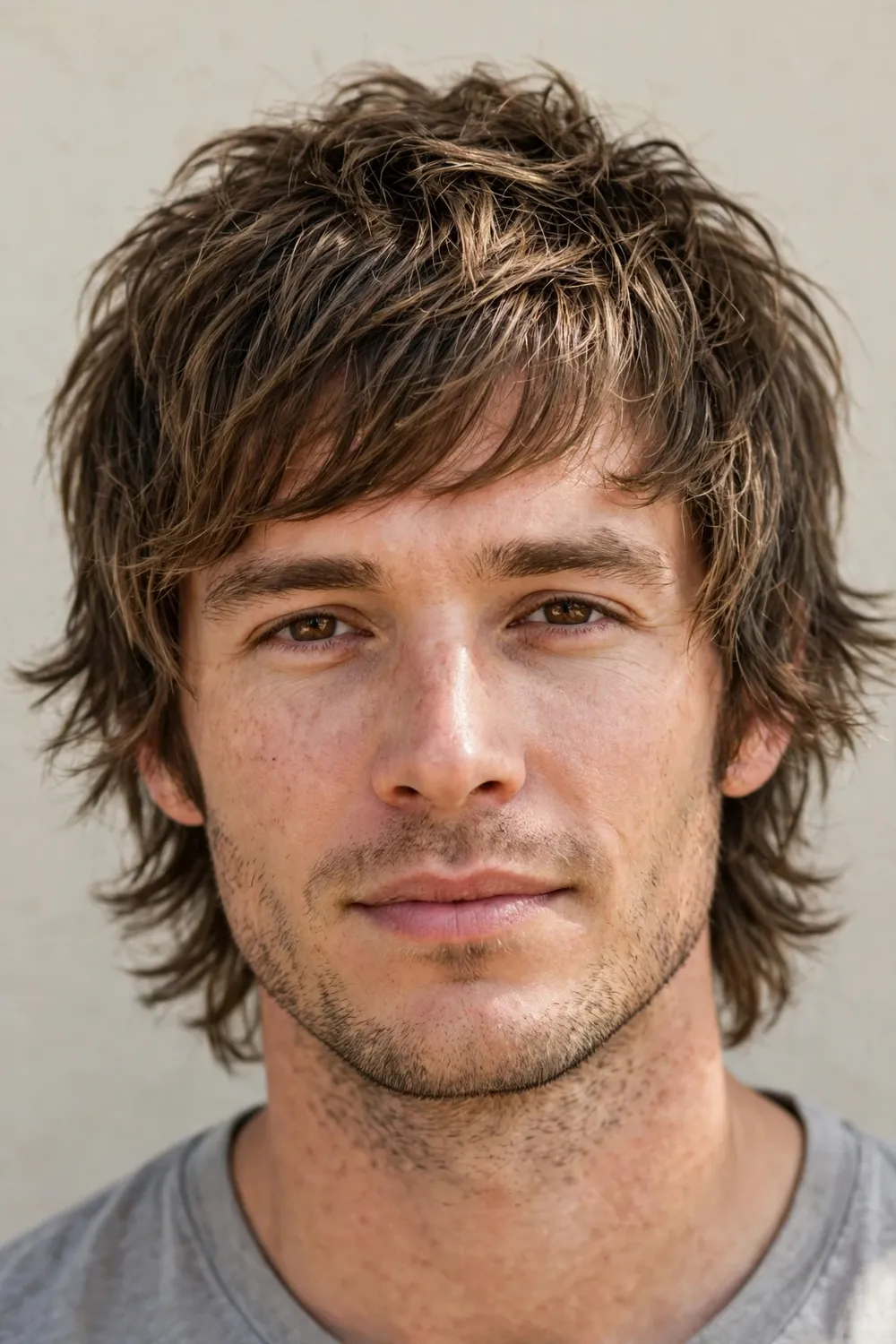
The shag has been everywhere lately, for good reason: shorter layers on the crown, longer ones at the bottom, and a whole lot of messy volume in between. It suits wavy and curly hair especially well — the layers let the natural texture do the work — and it flatters most face shapes, the uneven pieces breaking up strong features nicely. Ask for “a shag with short crown layers and longer bottom layers, lots of texture, no blunt lines.” Scrunch curl cream or sea salt spray through damp hair and let it air dry; the messier, the better. Maintenance is low — a trim every six to eight weeks — but very straight hair needs a little styling effort, because the shag needs texture to earn its keep.
Layered Textured Fringe

A textured fringe is the easiest way to make a short cut interesting. The fringe is cut in choppy, layered pieces that sit across the forehead, while the crown gets short layers for movement. It suits straight and wavy hair, and it’s a lifesaver for men with a high hairline or a long forehead — the fringe brings the face into proportion. Ask your barber for “a choppy layered fringe, textured through the crown, sides kept short and clean.” Styling is a thirty-second job: a pea-sized amount of matte paste, pushed through with your fingers, and you’re out the door. It grows out gracefully too, so a trim every four to five weeks is plenty, and you can stretch it further if you don’t mind the fringe getting longer.
Layered Curtain Hair
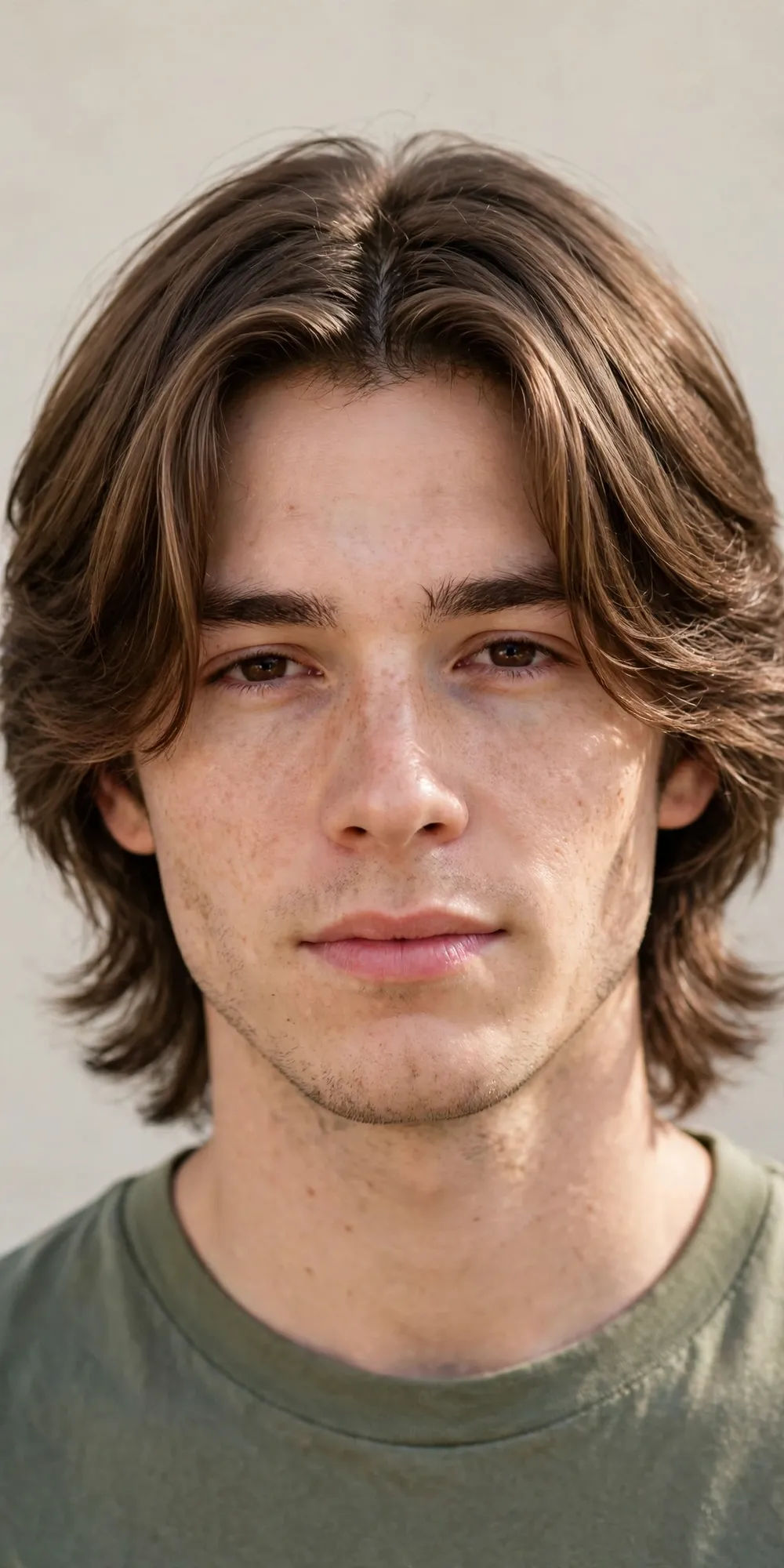
Curtains are back, and the layered version is the one that actually works on real hair: a centre part with face-framing layers falling softly on both sides, long enough to tuck behind the ears. It suits straight and wavy hair with medium density, and flatters oval and square faces especially — the framing pieces soften a strong jaw and balance a wide forehead. Ask for “centre-parted curtains with face-framing layers, length to the cheekbones.” Dry it with the part in place, using your fingers, and finish with a light cream. It needs a trim every six to eight weeks, and the first few weeks of growing it out can feel awkward — push through, because once the front pieces reach cheekbone length, the style clicks.
Layered Wolf Cut
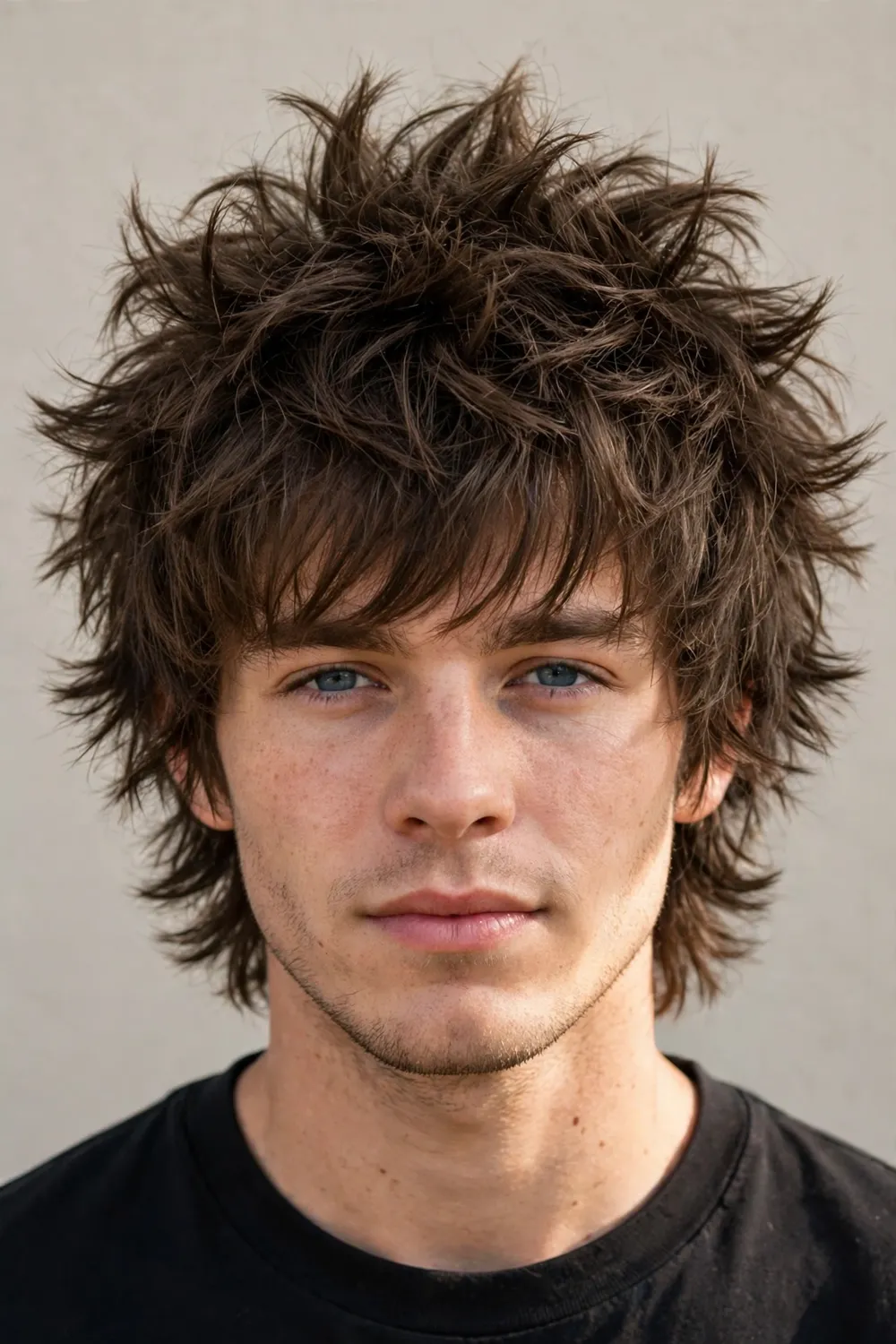
The wolf cut is the shag’s wilder cousin: heavy texture on the crown, disconnected layers, and tapered ends that give it that deliberately untamed shape. It suits thick, wavy and curly hair best — the layers remove bulk and let the texture explode — and it’s bold for oval and longer faces, since the volume on top adds width. Ask your barber for “a wolf cut with heavy crown texture, disconnected layers, tapered ends.” Style with sea salt spray on damp hair, scrunched and left to air dry; a diffuser helps curly hair. Be honest before committing: this cut needs confidence, a trim every six to eight weeks, and enough density — on very fine hair it can fall flat, so ask your barber to be straight with you first.
Layered Surfer Hair
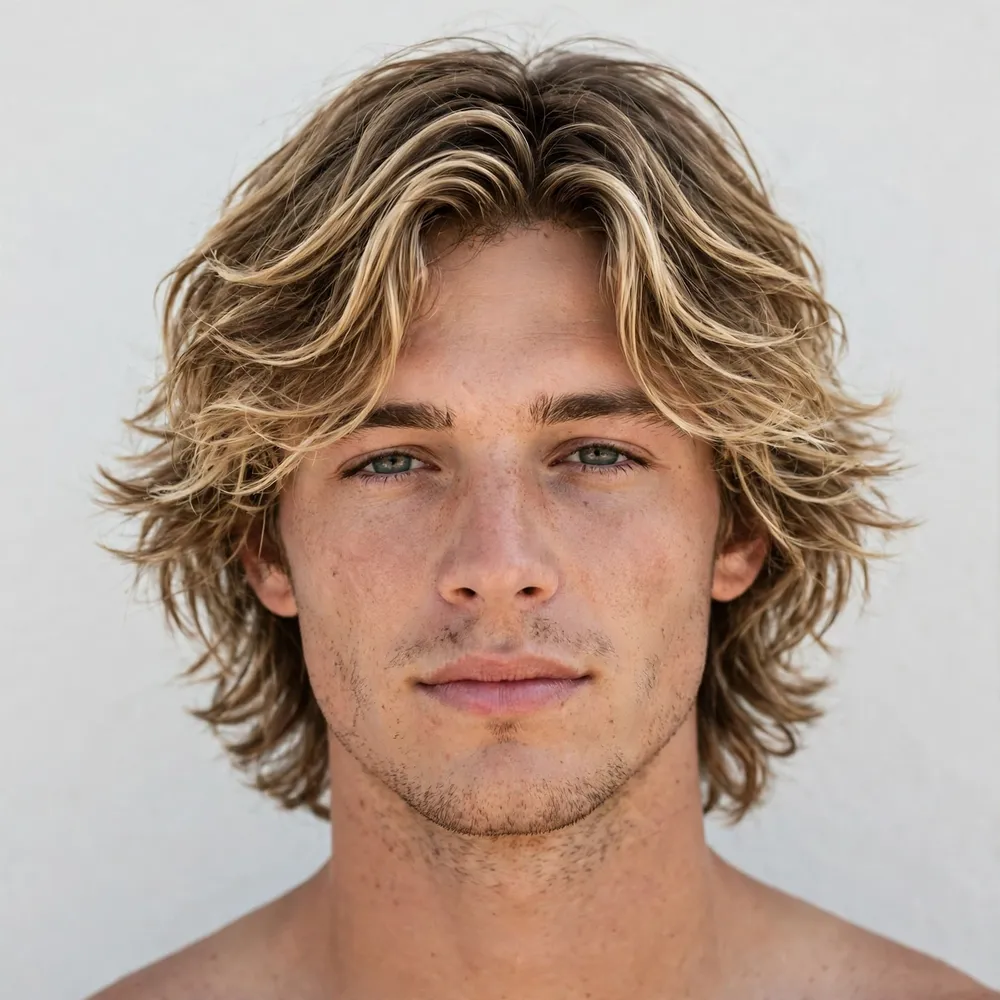
Surfer hair is the look of a summer that never ends: sun-bleached layers, loose natural waves, and a finish that says you didn’t try too hard. Layers keep medium-length wavy hair from turning into a heavy triangle, while the natural fall of the waves does most of the work. It suits wavy and slightly curly hair best, and flatters most face shapes, especially longer ones. Ask for “long layers with natural texture, nothing too polished, ends kept lived-in.” Sea salt spray is the only product you really need: apply to damp hair and leave it to air dry. Trim every six to eight weeks, and a little sun does what no product can — but protect your hair from chlorine and too much sun if you’re actually in the water.
Layered Ivy League
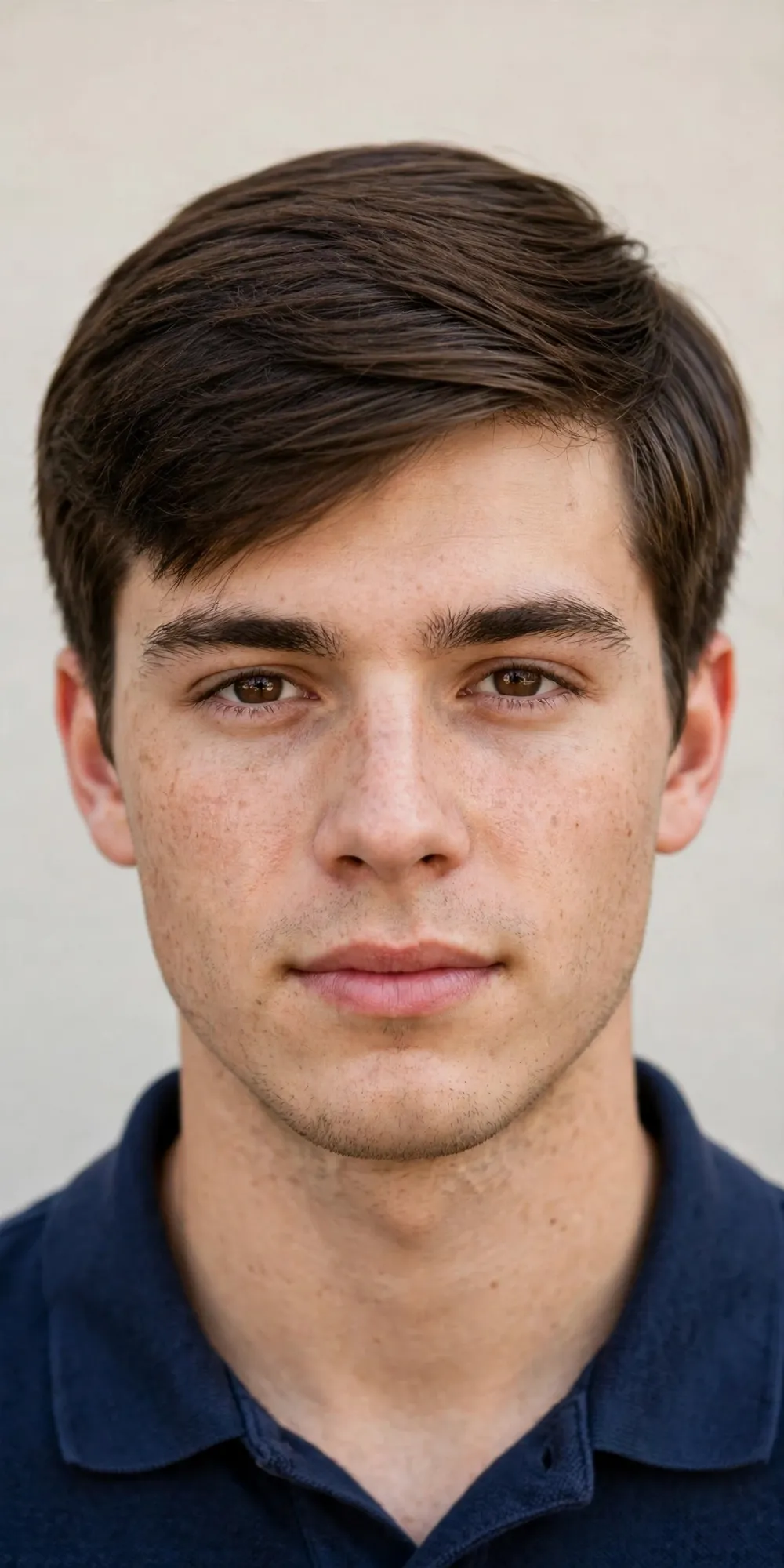
The Ivy League is the quiet, polished end of layered cuts — short, neat and smart, never stiff. Subtle layers give it movement; the side-swept finish keeps it looking considered. It suits straight and wavy hair, and it’s safe for round and square faces — the side sweep adds flattering asymmetry. Ask for “a short Ivy League with subtle layers, side-swept top, tapered sides.” A little light-hold cream combed to the side is all it takes — two minutes in the morning. Trim every three to four weeks to keep it sharp; let it grow and it drifts into a longer, softer cut — a different look, not a worse one. If you’re weighing it against other tidy short styles, our [short haircuts for men](/short-haircuts-for-men/) guide is worth a read.
Layered Mid Fade with Textured Top
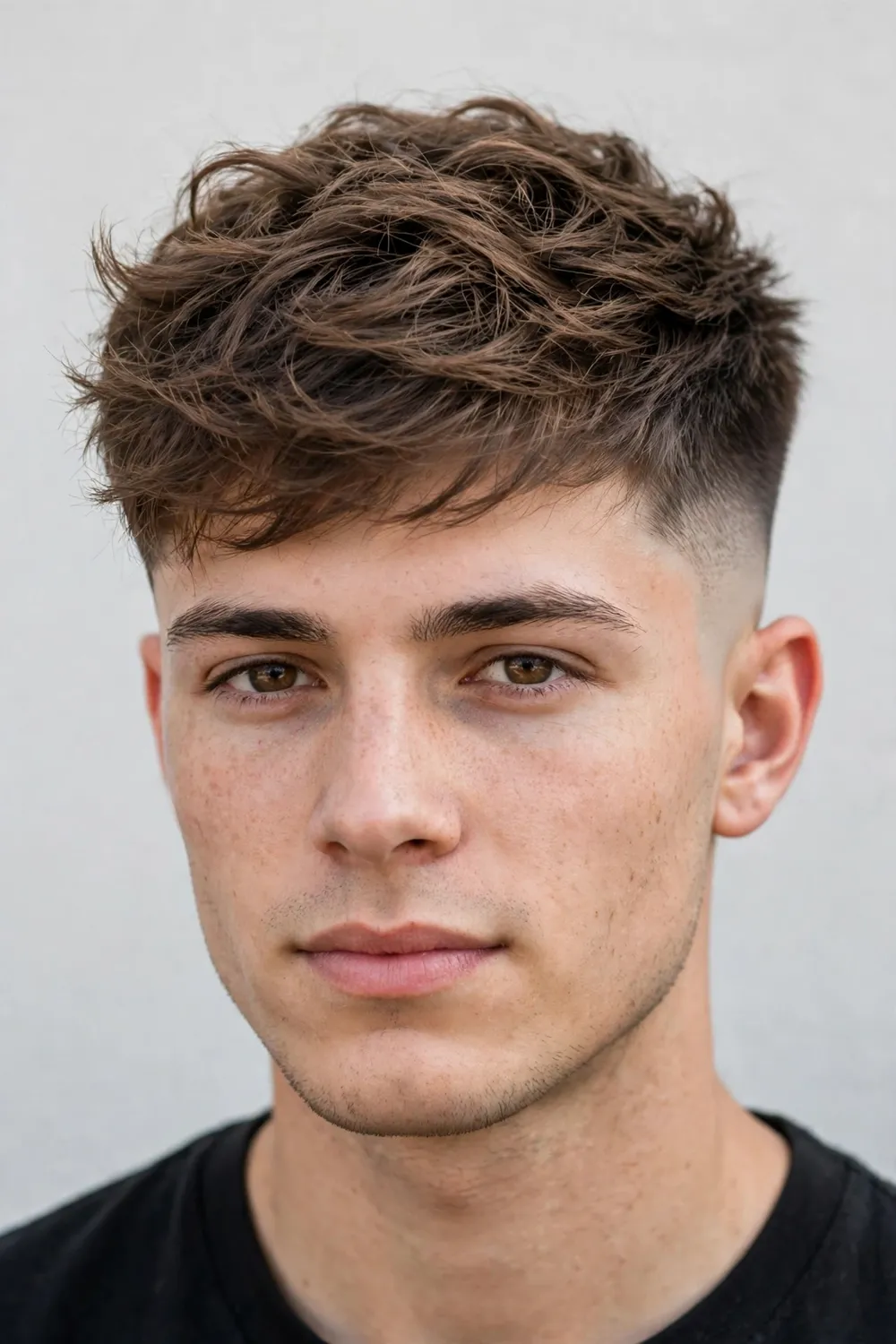
The mid fade is the sweet spot between a low fade’s subtlety and a high fade’s drama — with a choppy layered top, it’s one of the most versatile cuts a man can wear. Starting around the temple, it gives clean definition while the layered top keeps the texture. It suits straight, wavy and curly hair, and nearly every face shape — the fade adds structure, the layers add softness. Ask for “a mid fade with a choppy layered top, blended.” Style it with matte clay for texture, or light pomade for a bit of shine. The fade is the upkeep — every three to four weeks, or the contrast fades and the cut loses its edge. Compare it with the [low fade haircuts](/low-fade-haircuts/) if you’re still deciding fade height.
Layered Spiky Textured Top
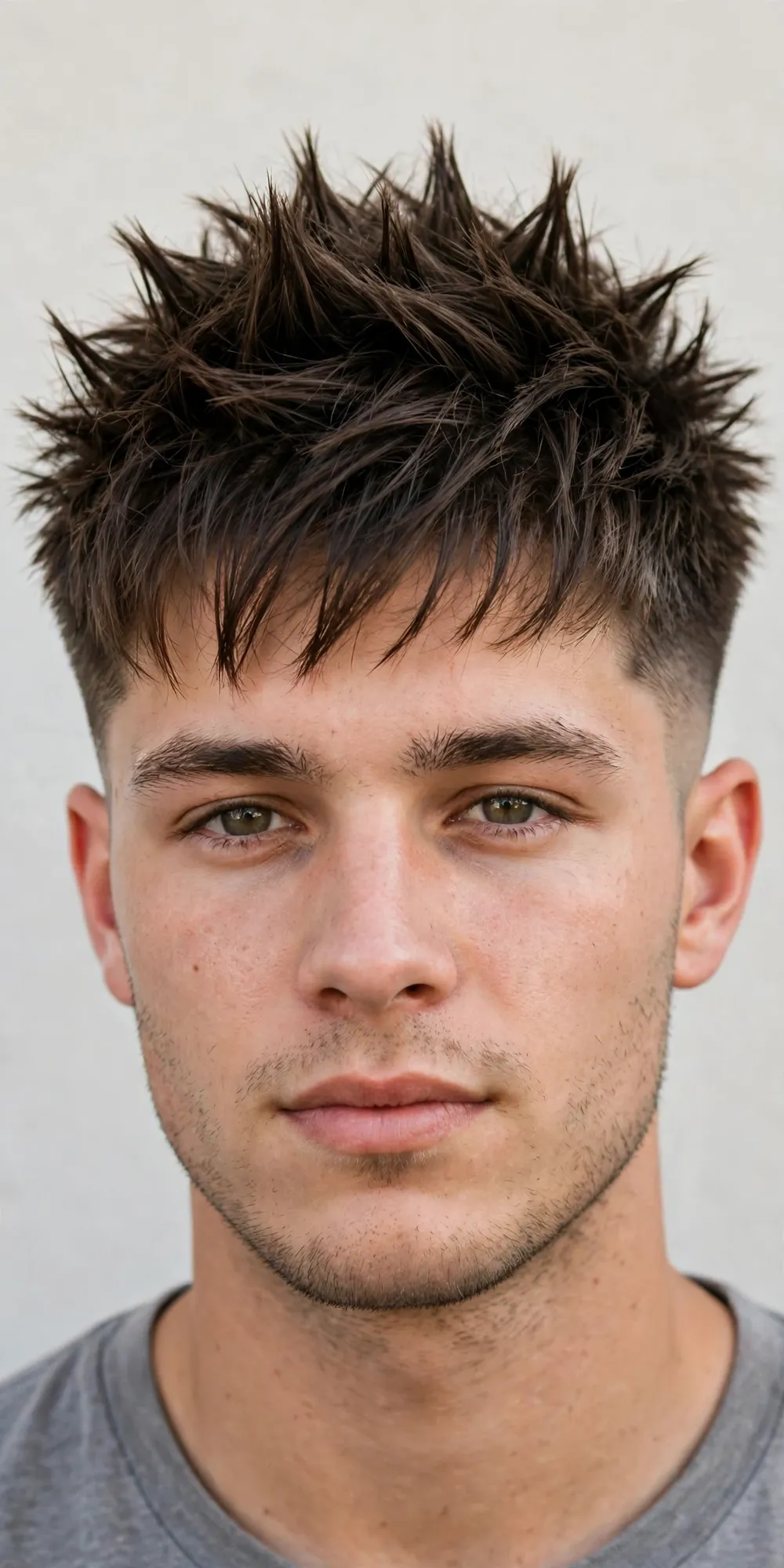
Spiky hair grew up. The modern version isn’t the stiff, gelled spikes of the early 2000s — it’s a layered top with short, separated pieces that point upward with texture, not crunch. It suits straight and slightly wavy hair, and it’s a great pick for round faces, since the height on top adds length to the face. Ask your barber for “short layered spikes on top, textured and piecey, faded sides.” Work a matte paste through dry hair, pinching small sections upward rather than raking it one way — that keeps it looking intentional, not accidental. It holds all day, washes out easily, and needs a trim every three to four weeks. If your hair is very fine, keep the spikes short; too much length and they flop before lunchtime.
How to Ask Your Barber for Layers
Walking in and saying “give me layers” is how you end up with a cut you didn’t want. Layers mean different things to different barbers, so describe the outcome you want, not just the technique. Start with the problem: “My hair feels too heavy on the sides,” or “It goes flat and I want movement.” Then describe the result: “I want it to fall naturally with texture, not look thinned out.”
Before the scissors come out, agree on three things. First, the shortest piece — usually the front, around the cheekbones or brows, depending on length. Second, how much weight comes off: “Take the bulk out but keep the length.” Third, how the sides are finished: faded, tapered, or left natural. Bring a photo, by all means, but talk through it — tell your barber what you like about the photo and what you’d change. A good barber will check in halfway through; if yours doesn’t, ask to see the back and the length before they finish. Five minutes of conversation at the start saves weeks of growing out a misunderstanding.
How to Style and Maintain a Layered Cut
Layered hair is easier to style than most men expect, because the cut does half the work. The layers create separation on their own; your job is just to enhance it. Start with damp hair and a product that matches your hair type: sea salt spray for waves and texture, matte clay for hold and definition, a light cream for longer or finer hair. Blow-drying with your fingers gives volume and movement; a round brush gives polish. Air-drying works too, especially on wavy and curly hair — just scrunch a little product through and leave it alone.
Wash two to three times a week rather than daily, so the natural oils keep the layers from going fluffy. Use a conditioner on the ends, where layers are thinnest and most likely to dry out. And keep up with trims, because layers grow out unevenly and the shape collapses without them: short cuts every three to four weeks, most layered cuts every four to six weeks, and longer styles every six to eight weeks. A trim isn’t just shorter hair — it’s the layers being reset so the cut keeps doing what you paid for.
5 Mistakes to Avoid with Layered Haircuts
- Over-thinning at the roots. Thinning shears feel like a quick fix for heavy hair, but used too close to the roots they leave wispy, flyaway pieces that stick up and never lie flat. Ask your barber to thin from the mid-lengths down, never at the scalp.
- Layers cut too short on thin hair. Short layers on fine hair remove the very density that makes it look full, leaving it stringy. If your hair is thin, keep the layers long and subtle — the goal is movement, not removing hair you can’t spare.
- Skipping trims. Layers are a shape, and shapes grow out. Miss two trim cycles and the layers merge into one heavy length, the ends split, and you’re back to the triangle you were trying to escape.
- Using the wrong product weight. Heavy wax or strong pomade crushes layered hair flat and makes it look greasy. Layers need light products — clay, cream, or sea salt spray — that let the pieces separate.
- Showing only a photo, with no discussion. A photo is a starting point, not an order. Your hair type, face shape and growth pattern are different from the model’s, so talk through what to keep and what to change — otherwise you’ll get a copy that doesn’t suit you.
FAQs About Layered Haircuts for Men
Are layered haircuts good for men?
Yes — for most men, they’re one of the most versatile cuts available. Layers remove weight, add movement and stop medium and long hair from hanging flat or puffing out into a triangle. They work on straight, wavy and curly hair, and they suit almost every face shape, as long as the layers are cut to match your hair’s density and texture. The only men who should be cautious are those with very fine hair, where layers need to stay long and subtle.
Do layered haircuts make thin hair look thicker?
It depends on how they’re cut. Long, subtle layers can make thin hair look fuller by creating movement and separation, which catches light and adds the illusion of volume. But short, choppy layers on thin hair do the opposite — they remove density and make it look stringy. If your hair is thin, tell your barber to keep the layers long, avoid heavy thinning, and use a volumising product like a light mousse rather than anything heavy.
Are layered haircuts good for curly hair?
They’re one of the best cuts for curly hair. Without layers, curly hair grows into a pyramid — flat on top, wide at the bottom. Layers remove bulk from the sides and let the curls stack in a shape that actually flatters your face. Ask your barber to cut your curls dry or only slightly damp, since curls shrink as they dry, and keep the layers long enough that the curls can form properly.
How do I ask my barber for a layered haircut?
Describe the outcome, not just the word “layers.” Tell your barber what bothers you about your hair now — too heavy, too flat, no movement — and what you want it to do. Agree on the shortest piece before cutting starts, say how much length you want to keep, and show a photo while explaining what you like and what you’d change. A good barber will check your hair’s texture and density first and tell you honestly if your idea suits it.
How often should I get a layered haircut trimmed?
Most layered cuts need a trim every four to six weeks to keep the shape. Short layered cuts need it sooner — every three to four weeks — because the shape shows growth quickly. Longer layered styles can stretch to six to eight weeks between visits. If the ends start splitting or the layers blend into one heavy length, you’re overdue.
Can you combine a layered haircut with a fade?
Yes, and it’s one of the most popular combinations in men’s hair right now. The fade shapes the sides from the bottom up, while the layers shape the top — they do different jobs, so they work together rather than conflicting. A low fade keeps the look subtle, a mid fade adds definition, and a high fade makes it bold. Just make sure the transition between the fade and the layered top is blended, or you’ll get a harsh line where the two meet.
What is the difference between a layered haircut and a textured haircut?
They’re related but not the same thing. Layering is a cutting technique: hair is cut at graduated lengths to remove weight and create shape. Texturing is a finishing technique: the ends are point-cut or thinned to create separation and movement within the layers. Most good modern cuts use both — layers for the shape, texturing for the finish. A layered cut without texturing can look too neat; a textured cut without layers can look messy without structure.
Final Word
Layers are one of the simplest upgrades a man can make to his hair — they take the same length you’ve already got and make it move, breathe and actually suit your face. The best next step is a proper conversation with your barber, armed with a photo and a clear idea of what you want. And if you’re still exploring, there are plenty more [more haircut guides on our blog](/blog/) to help you find the cut that fits.