

The best long hairstyles for men in 2026 are the ones that work with your natural texture instead of fighting it — layered cuts, relaxed flow and tied styles that look deliberate rather than accidental. Growing your hair out takes patience, but the payoff is a look with far more range than a short cut: wear it loose, tie it back, or sweep it up, all from the same length. If you want a shortcut to the answer, start with our three favourites. Long Layered Hair is the most versatile cut of the lot, Bro Flow is the easiest to live with day to day, and the Man Bun is the smartest way to keep long hair out of your face. The other 43 styles below cover every texture, face shape and mood — from surfer waves to sharp undercut contrasts — so pick the one that matches how much effort you actually want to spend each morning.
Which Long Hairstyle Matches Your Face Shape?
| Face shape | Best long styles | Styles to avoid | Why it works |
|---|---|---|---|
| Oval | Almost anything — layered hair, bro flow, man bun | Very heavy fringe that hides the face | Balanced proportions suit most lengths |
| Round | Long layered hair, slicked-back length, low ponytail | Wide mop tops, full curtain bangs | Vertical length and height slim the face |
| Square | Surfer waves, textured shag, half up half down | Slicked-back styles with hard edges | Soft texture balances a strong jaw |
| Oblong | Bro flow, curtain bangs, shoulder-length flow | Slicked-back length, tall pompadours | Width at the sides shortens the face visually |
| Heart | Long side part, layered hair, messy low bun | Heavy volume on top with nothing at the sides | Side-swept length balances a wider forehead |
| Diamond | Curtain bangs, long shag, wavy flow | Severe centre parts with flat sides | Fringe and width soften sharp cheekbones |
Before you sit in the chair, decide three things: your length goal (collarbone, shoulder or beyond), whether you want layers or a blunt outline, and how you want the neckline finished — natural, tapered or squared. Tell your barber your texture honestly, because a cut that works on thick straight hair will behave very differently on fine or curly hair.
The 46 Best Long Hairstyles for Men
1. Long Layered Hair
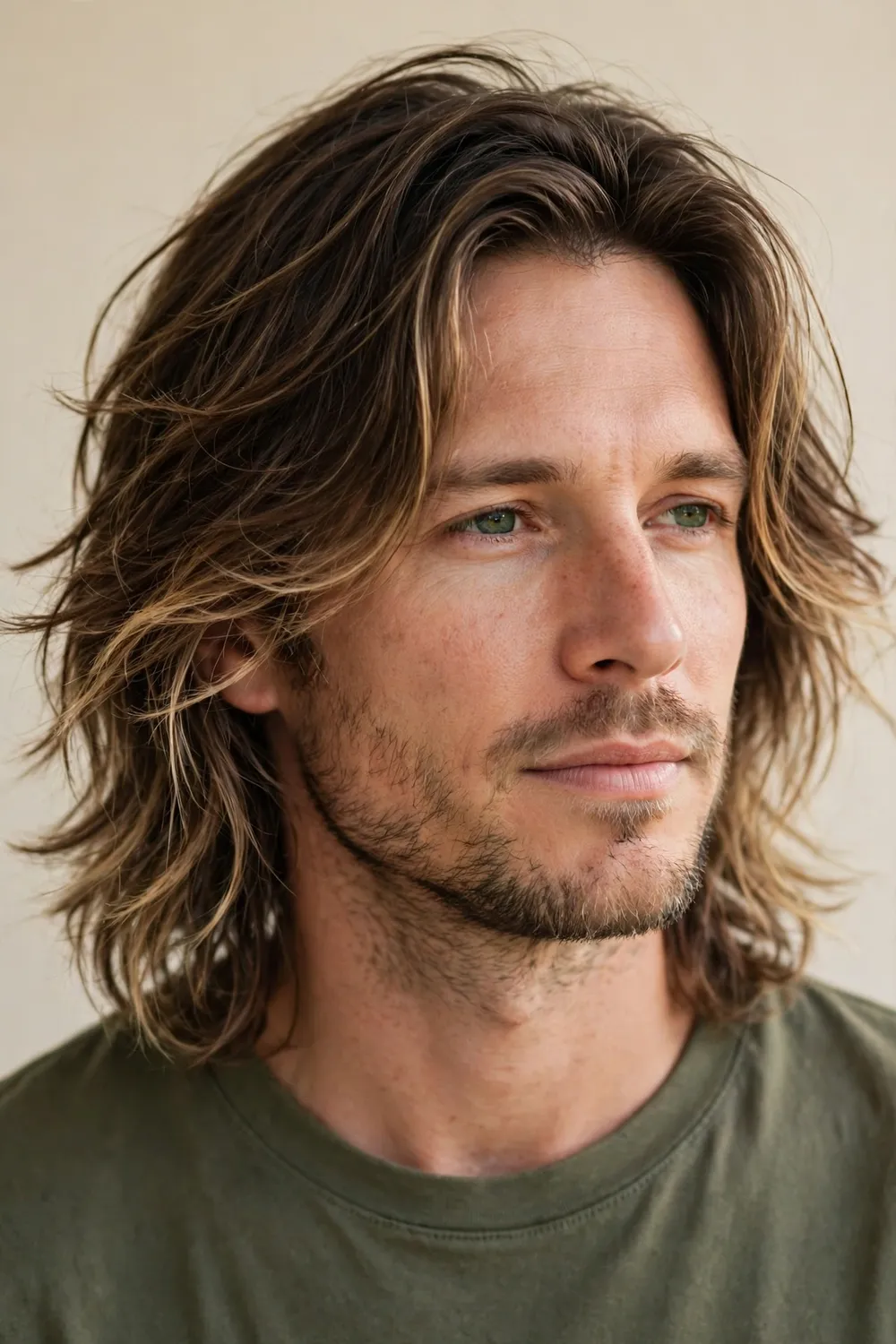
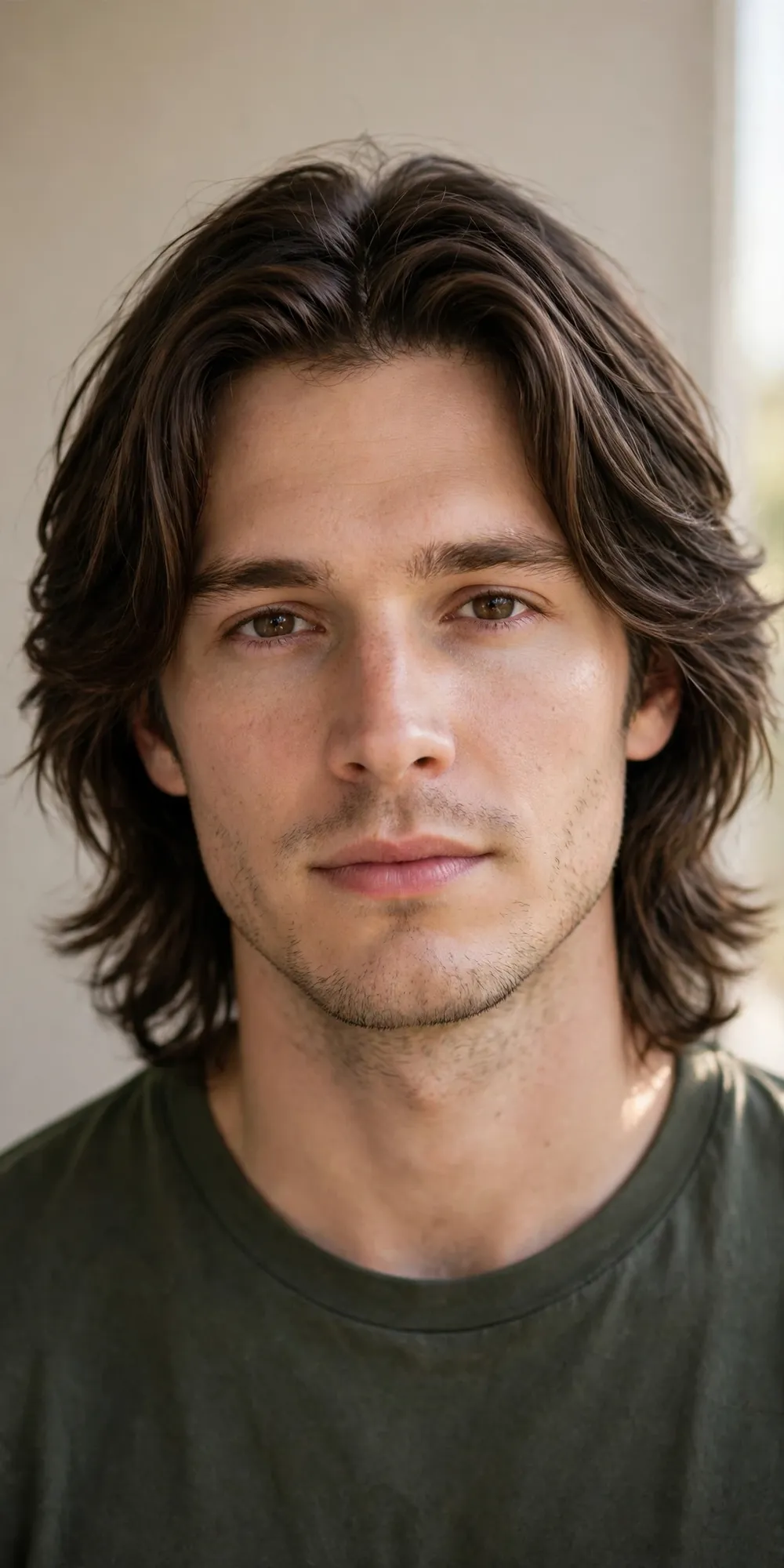
This is the default long cut for a reason: layers cut through the bulk so shoulder-length hair moves instead of hanging like a curtain. It suits almost every face shape, and it works on straight, wavy and lightly curly hair alike. Ask your barber for long layers starting around the cheekbone, with the shortest layer no higher than chin length, and keep the ends textured rather than blunt. A pea-sized amount of sea salt spray on damp hair, scrunched and left to air-dry, gives it that lived-in finish without any stiffness. Maintenance is honest but manageable — a shaping trim every eight to ten weeks keeps the layers from growing out unevenly, and a light leave-in conditioner stops the ends going dry. If you only try one long style, make it this one.
2. Bro Flow

Bro flow is long hair swept back off the face with relaxed, natural volume — the look that made growing your hair out feel worth it in the first place. It suits thick and medium hair best, and it flatters oval, square and heart-shaped faces because the swept-back shape opens the face up. Ask your barber to keep the length past the ears, and to leave the front long enough to push back without falling forward. Style it with a small amount of matte cream worked through damp hair, then comb it back and let it dry naturally. The upkeep is light: wash two or three times a week, trim every ten weeks, and accept that windy days will rearrange it. It is the lowest-effort long style that still looks intentional.
3. Shoulder-Length Flow

Shoulder-length flow is the even, all-one-length version of long hair — no dramatic layers, just soft ends and a clean, easy part. It suits straight and wavy hair particularly well, and it is a strong choice for round and oblong faces because the length draws the eye downward. Ask your barber for an even cut to the shoulders with the ends point-cut for softness, and a natural part where your hair already falls. A drop of lightweight hair oil on the mid-lengths keeps it smooth, and a wide-tooth comb is all you need for styling. The trade-off is that it needs regular trims — every eight weeks — or the ends start to look thin and straggly. It is simple, clean and quietly confident, and it grows out gracefully.
4. Long Straight Hair

Long straight hair is all about the finish: sleek, smooth length with a clean centre or side part and not a flyaway in sight. It suits naturally straight hair and oval or square faces, and looks especially sharp on thick hair that holds its weight. Ask your stylist for a blunt or barely-layered cut past the shoulders, with the part placed where your hair naturally splits. Blow-dry with a paddle brush and a little heat protectant, then finish with a smoothing serum — a flat iron is only needed if your hair has a natural wave. The honest catch is the maintenance: straight long hair shows split ends and greasiness faster than textured styles, so expect trims every eight weeks and washing every other day. Done well, it looks expensive.
5. Long Side Part

A deep side part turns long hair into something polished and deliberate, with the top swept across the forehead in one clean movement. It suits straight and wavy hair, and it is one of the best long styles for round faces because the diagonal line breaks up the width. Ask your barber for a deep side part, the longer side falling past the cheekbone, the shorter side tucked behind the ear. Work a matte pomade through damp hair, comb the part in while it is wet, and let it set — a quick blast of the dryer on low heat locks it in. Maintenance is easy: trims every ten weeks and a weekly deep condition for the longer side. It reads smart without trying too hard, from the office to a night out.
6. Slicked-Back Long Hair

Slicked-back long hair combs every strand straight back from the forehead, giving a polished, high-shine finish that looks sharp in a suit. It suits thick straight or wavy hair and oval or square faces, and it pairs naturally with a beard. Ask your barber to keep the back and sides long enough to slick, with light layering so the hair lies flat instead of puffing out. Apply a strong-hold pomade to damp hair, comb it straight back with a fine-tooth comb, and finish with a light mist of hairspray if you need it to survive a long day. The upkeep is real: it needs daily styling, and you will wash it most days because product builds up fast. But for evenings and formal occasions, few long styles look this put-together.
7. Long Brush Back

The brush back is slicked-back hair’s softer cousin — length pushed back with lift at the front and a natural, touchable finish instead of a hard shine. It suits medium to thick hair with a slight wave, flattering oval and oblong faces because the height at the front adds structure. Ask your barber for length through the top with soft layers, and a front section long enough to brush back without collapsing. Blow-dry it backwards with a round brush, then work a matte clay through the roots for hold that still moves. You will need a dryer most mornings — the main commitment — plus a trim every nine or ten weeks. It is the style to pick when you want the slicked-back look without the slicked-back stiffness.
8. Long Hair with Deep Middle Part

A sharp centre part with long hair falling evenly on both sides is a bold, symmetrical look that has come roaring back. It suits oval and diamond faces best, and it works on straight or gently wavy hair that can hold a clean line. Ask your stylist for a precise centre part with even length on both sides, and layers that start at the cheekbone to frame the face. Style it by parting damp hair down the middle with a tail comb, then air-drying or blow-drying with a brush. The honest truth is that a centre part is unforgiving — it shows uneven growth, a crooked hairline and split ends, so keep trims regular at eight-week intervals. When your hair is healthy and even, though, it looks striking.
9. Long Shag
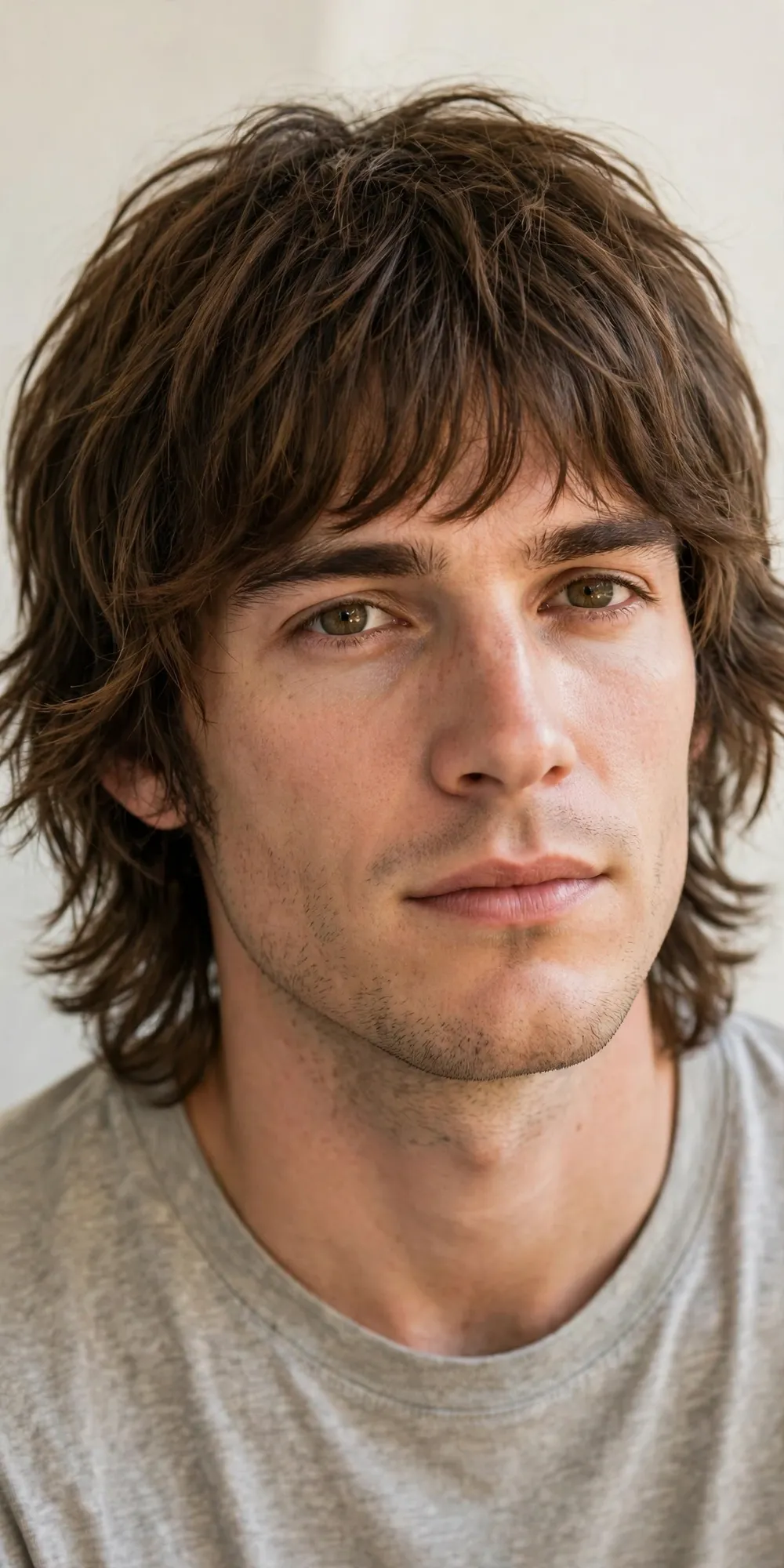
The long shag is choppy layers, a soft fringe and lived-in texture — the cut that looks like you just came back from a good weekend. It suits wavy and curly hair best, and suits square and heart-shaped faces because the layers soften strong features. Ask your barber for disconnected layers through the crown and a textured fringe that falls just above the eyebrows. A sea salt spray scrunched into damp hair is usually the whole routine, and air-drying beats a dryer for this one. Maintenance is forgiving: the choppy shape hides uneven growth, so you can stretch trims to ten or twelve weeks. If you want the full version of this texture, our shaggy hairstyles for men guide covers the shorter takes on the same idea.
10. Wolf Cut (Long)
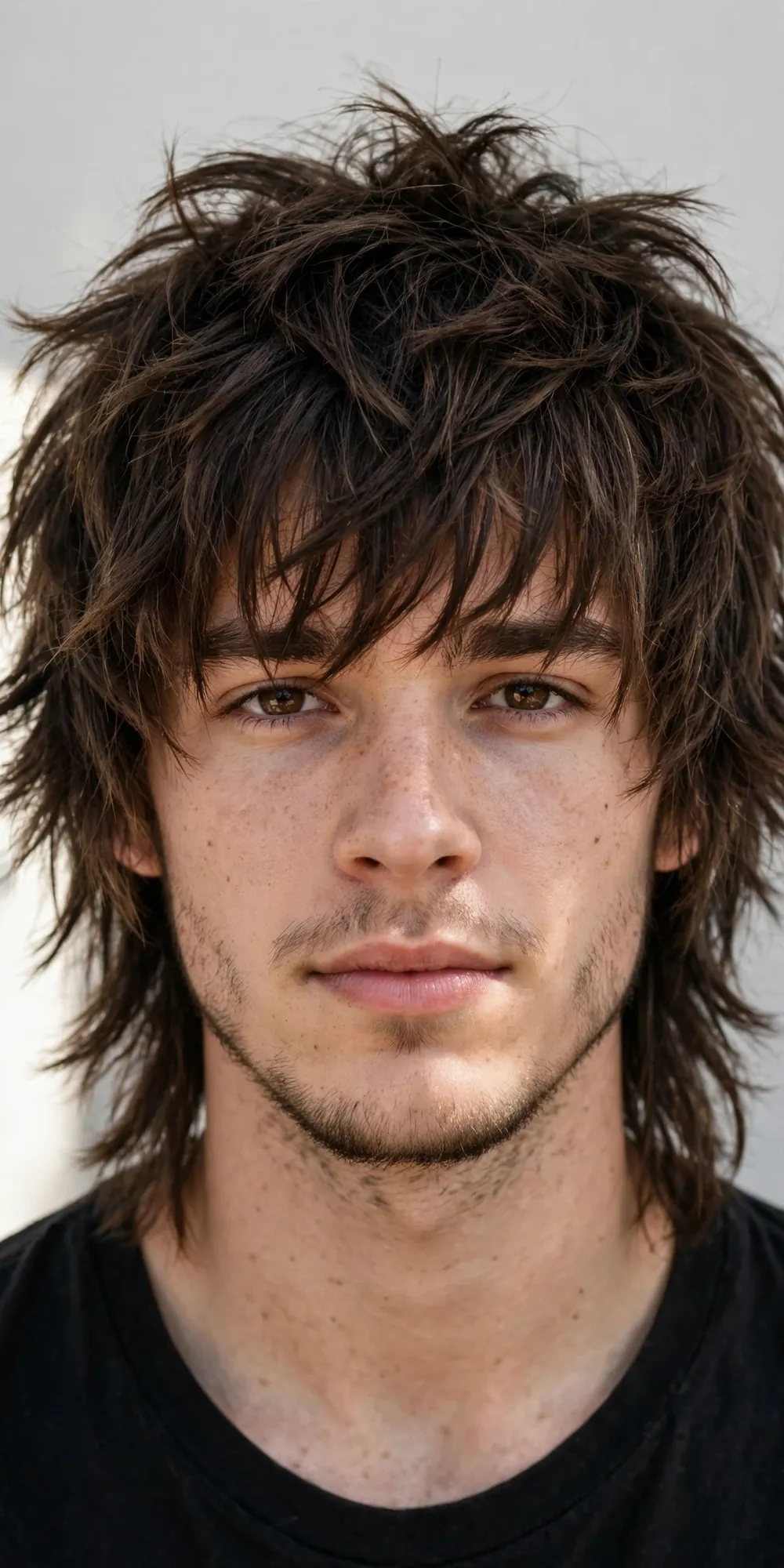
The long wolf cut stretches the wild, layered energy of the wolf cut to shoulder length — heavy texture on top, wispy ends, a shape that refuses to sit still. It suits thick wavy or curly hair and oval or diamond faces, and men who like their hair to have attitude. Ask your stylist for short, choppy layers at the crown blending into long, thinned ends, with a curtain-style fringe. Style it with a texturising spray and your fingers, nothing more precise — a brush will kill the whole point. Daily effort is low, but the cut needs a skilled hand, so find a stylist who has done wolf cuts before and revisit every eight weeks. See our wolf cut hairstyles for men guide for the full range.
11. Surfer Waves

Surfer waves are loose, sun-bleached-looking waves with that just-off-the-beach texture — relaxed, a little messy, and very hard to dislike. They suit naturally wavy hair and oval, square or heart-shaped faces, and they look best on medium to thick hair that can hold a wave. Ask your barber for long layers that encourage the wave pattern, with the ends thinned so they move freely. Sea salt spray is the obvious product here: spray it into damp hair, scrunch, and let the air do the rest. The upkeep is genuinely light — trims every ten to twelve weeks and a weekly hydrating mask to stop the ends drying out. If your hair is dead straight, you will be fighting it daily, so this one is honest about needing the right texture.
12. Curtain Bangs

Curtain bangs are a long, centre-parted fringe framing both sides of the face — soft, flattering and far easier to grow out than a blunt fringe. They suit straight and wavy hair, and oblong and diamond faces, because the fringe breaks up a long forehead. Ask your barber for a fringe that starts at the centre part and falls to cheekbone length on each side, blending into the longer layers. Blow-dry the fringe forward and out with a round brush, or just let it fall naturally with a dab of cream. Daily effort is small, but the fringe needs a tidy-up every four to six weeks or it starts poking you in the eyes. It is a low-risk way to change a long cut without losing any length.
13. Long Mop Top

The long mop top is a full, rounded shape with a heavy fringe — a retro cut with a 1960s spirit and a modern, textured finish. It suits thick straight or wavy hair and oval or oblong faces, and hair with enough density to hold the rounded shape. Ask your barber for a heavy fringe sitting just above the eyebrows, rounded sides, and length that covers the ears. A light styling cream keeps it in shape without flattening the volume, and a quick blow-dry with a round brush gives it that full, bouncy outline. The fringe grows into your eyes fast, so plan a tidy-up every five or six weeks. It is a statement cut, so wear it if you like being noticed — not a style for blending in.
14. 90s Grunge Hair

Nineties grunge hair is grown-out, messy and deliberately undone — long layers, raw texture and a fringe that falls where it wants. It suits wavy and straight hair with natural texture, and it flatters square and oval faces because the messiness softens everything. Ask your barber for long, uneven layers with a grown-out fringe, and tell them you want it to look unstyled — the cut should do the work, not the products. A little texturising powder or dry shampoo at the roots is usually enough, and finger-combing beats a brush every time. The best part is the maintenance: this style actually looks better slightly overgrown, so trims every twelve weeks are fine. If you hate spending time on your hair, grunge is your friend.
15. Modern Mod (Long)

The modern mod is a clean, rounded long cut with a neat fringe — think classic mod shape, updated with softer texture and less stiffness. It suits straight and gently wavy hair, oval or heart-shaped faces, and medium to thick hair. Ask your barber for a rounded silhouette with a fringe that sits just above the brow and length that covers the ears, keeping the edges soft rather than blunt. Blow-dry with a round brush for the smooth, curved finish, and use a light cream to hold the shape without shine. The fringe is the commitment: a trim every four to five weeks keeps it out of your eyes. It is a tidy, retro-leaning style that still feels current, and it pairs well with smart-casual clothes.
16. Man Bun

The man bun is the classic tied style: full-length hair gathered into a bun at the crown, practical and sharp. It suits most face shapes — oval and square especially — and straight, wavy and curly hair once you have enough length to tie it back. Ask your barber for even length with light layers — uneven ends make a lumpy bun. To tie it, gather the hair high on the crown, twist it once, loop it through a fabric hair tie and tuck the ends in — never use a tight elastic, which snaps hair. Daily effort is tiny, but do not wear it tight every day: constant tension can cause breakage and traction damage at the hairline. Loosen it, vary the position, and let your hair down sometimes.
17. Samurai Top Knot
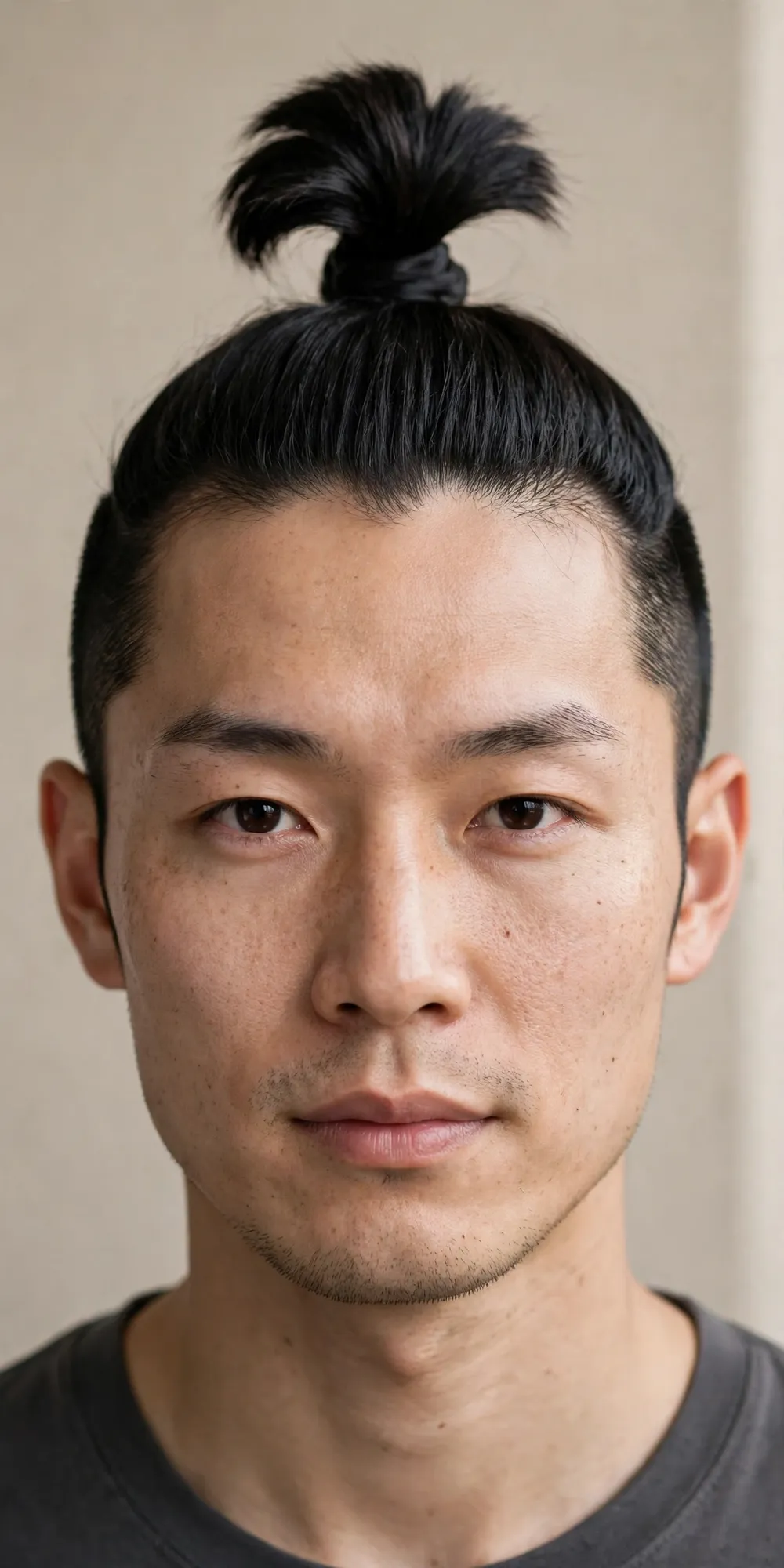
The samurai top knot is a high, tight knot worn right on top of the head — sharper and more deliberate than a regular man bun. It suits thick straight or wavy hair and oval or square faces, and hair long enough to pull up cleanly. Ask your barber for length through the top with the sides kept long or lightly tapered, depending on how bold you want it. Gather the top section high, twist it tight, and secure it with a small elastic, leaving the back length loose or tied separately. The knot needs daily tying and a little product for flyaways, but the cut itself is low-maintenance. Keep the tension moderate — a knot pulled too tight every day will thin the hairline over time.
18. Low Ponytail
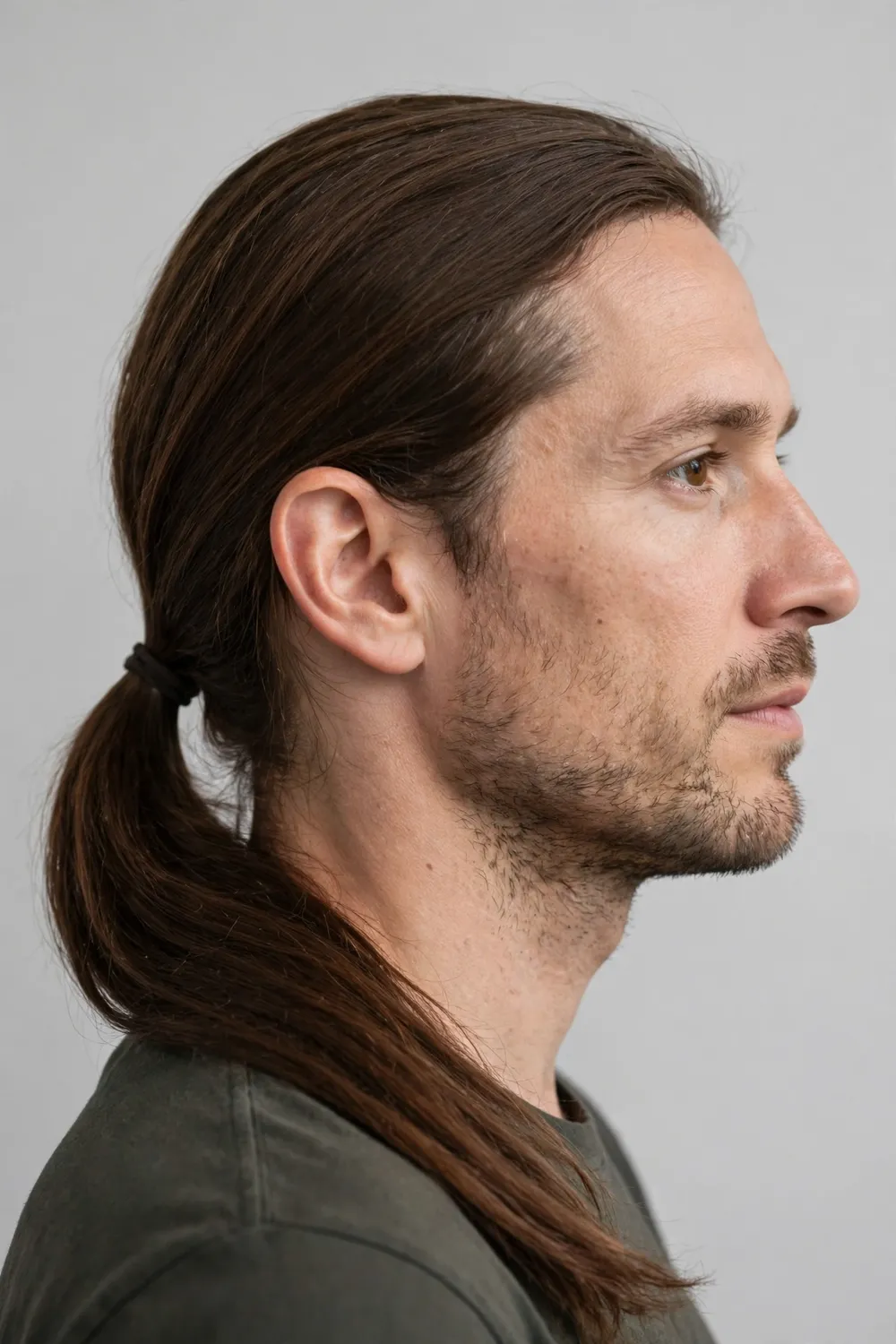
The low ponytail is long hair gathered at the nape — neat, simple and quietly professional. It suits every hair type and almost every face shape — the go-to tied style for men who need their hair out of the way without making a statement. Ask your barber for an even cut with the ends blunt enough to sit neatly in the tie. Gather the hair low, smooth the top with a brush, and secure it with a fabric-covered tie; a wrap of hair around the elastic hides it. Daily effort is close to zero, and the only rule is the same as any tied style: keep it loose enough not to pull at the hairline. The most underrated long hairstyle there is — boring on paper, excellent in real life.
19. Half Up Half Down

Half up half down ties the top section back while the rest falls loose — the best of both worlds when you want your hair off your face but the length still on show. It suits wavy and straight hair and oval, heart and diamond faces, and works well while you are still growing the lower layers out. Ask your barber for long layers, the top section long enough to reach a small knot or tie at the crown. Section off the hair above the ears, pull it back, and secure it with a small elastic or clip — a dab of cream tames flyaways around the part. It hides uneven growth well, and trims every ten weeks keep it tidy. It reads relaxed and a little bohemian.
20. Messy Low Bun
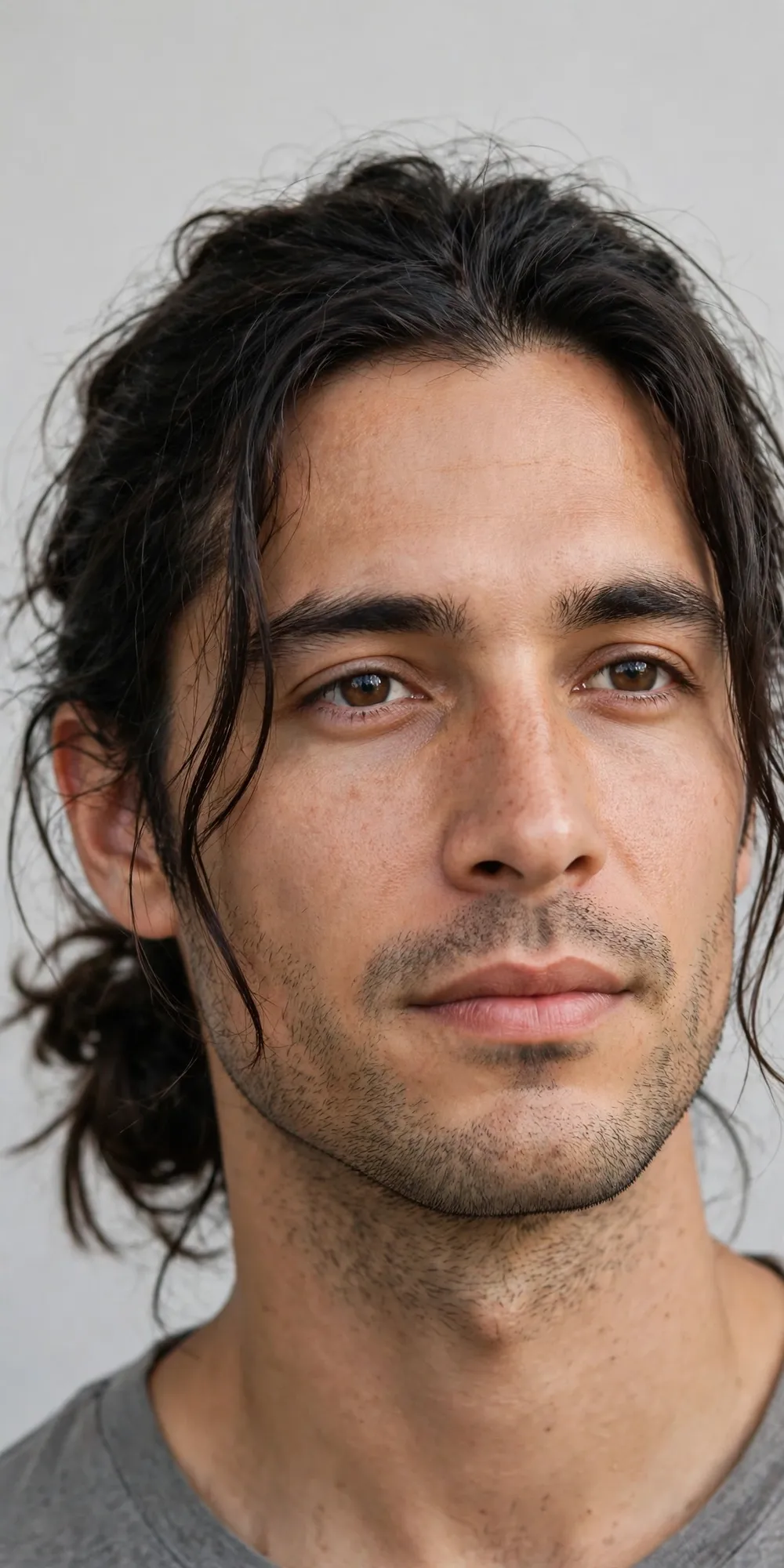
The messy low bun is a loose, undone knot at the nape with soft pieces left out around the face — effortless on purpose, and easy to do. It suits wavy and textured hair best, flattering oval, square and heart-shaped faces because the loose pieces soften the jawline. Ask your barber for face-framing layers around the front — those loose pieces are the whole point of the style. Gather the hair low, twist it loosely, pin it in place and pull a few strands free — it should look like it took thirty seconds. Upkeep is minimal, though you will want a light-hold spray if it must last through a long day. Like any bun, keep it loose: a tight bun worn daily puts real strain on the hairline.
21. Man Bun with Undercut

A man bun with an undercut pairs full length on top with shaved sides — maximum contrast, a bun that stands out instead of blending in. It suits thick hair and oval or square faces — the boldest of the tied styles. Ask your barber for a high undercut with the top left long enough to bun comfortably, and decide whether you want a hard disconnect or a softer blend. Tie the top into a bun at the crown and keep the sides clean with clippers at home between barber visits. The undercut is the maintenance cost here: it needs a refresh every two to three weeks or the contrast goes soft. For the undercut itself, our undercut haircut guide covers the variations and how to ask for them.
22. Ponytail with Taper Fade
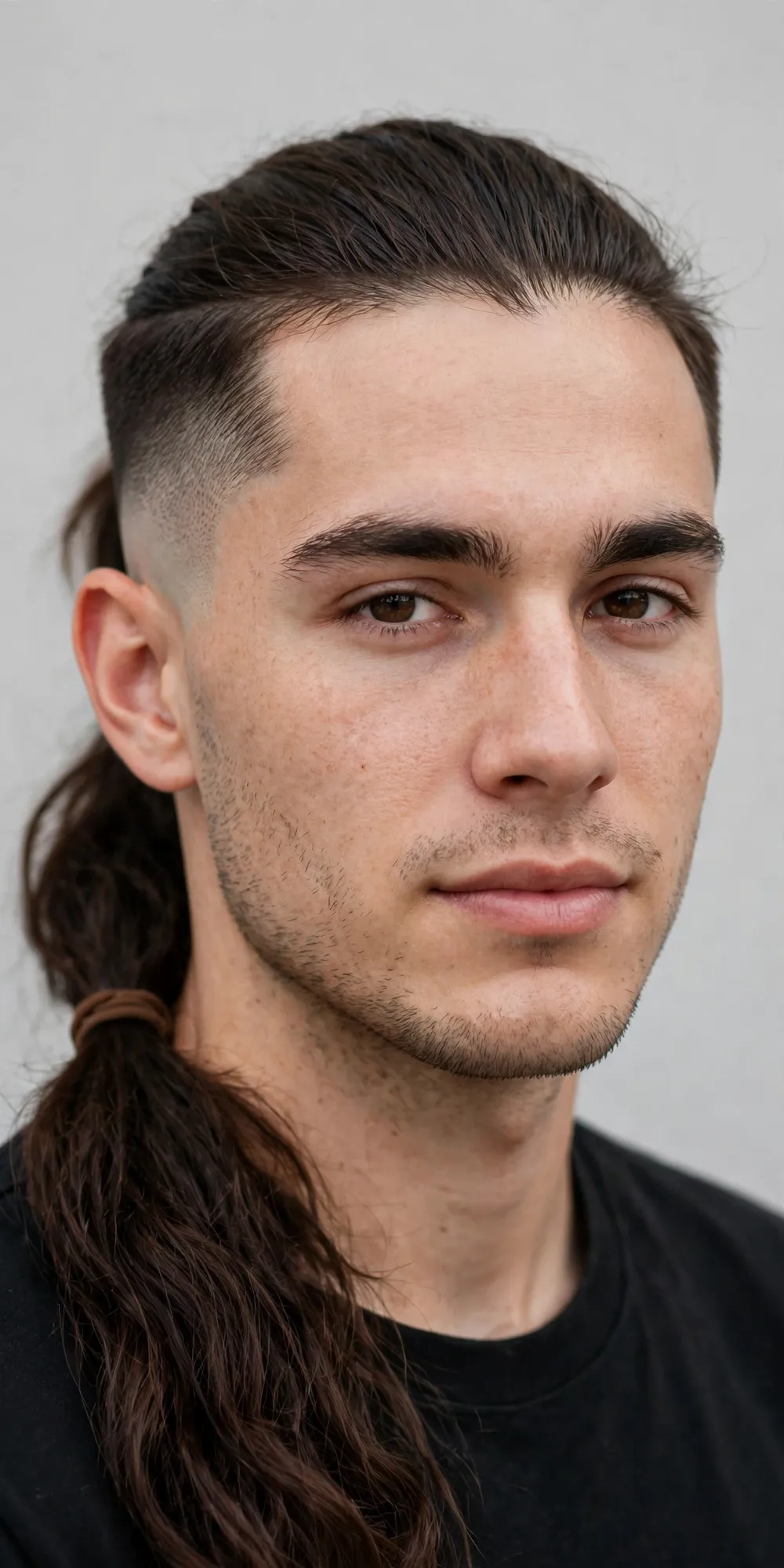
A ponytail with a taper fade keeps the length tied back while the sides fade cleanly from skin to hair — tidy, modern, far sharper than a plain ponytail. It suits straight and wavy hair and oval or square faces — a strong choice if you want long hair that still looks groomed. Ask your barber for a low or mid taper fade on the sides and back, the top left long enough to gather into a ponytail at the crown or nape. Tie it back with a fabric tie and smooth the top with a little cream. The fade needs a touch-up every two to three weeks — the real commitment — while the ponytail itself takes seconds. It is the long style that works best where a neat appearance is expected.
23. Long Curly Hair
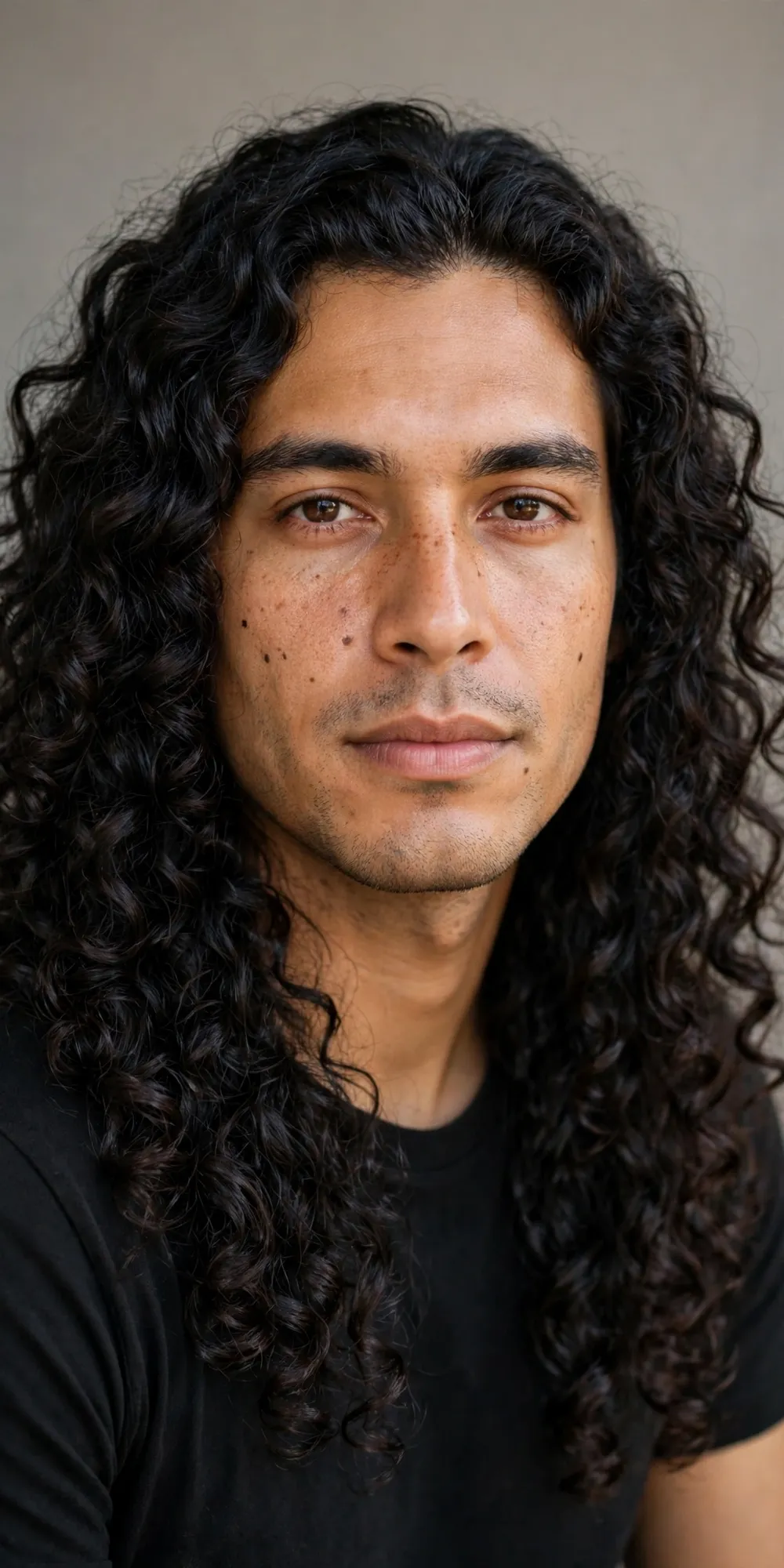
Long curly hair is full, defined curls at shoulder length or beyond — volume, movement and personality no straight style can match. It suits naturally curly and coily hair of every face shape, though round faces benefit from length falling past the chin. Ask your stylist for a dry cut with layers shaped to your curl pattern, and never let anyone thin it with a razor — that creates frizz. Wash with a sulphate-free shampoo, condition generously, and apply a curl cream to soaking-wet hair, scrunching upward and letting it air-dry or diffusing on low heat. Maintenance runs higher than straight styles: weekly deep conditioning, trims every ten weeks to stop the ends tangling, and a silk pillowcase helps. But the result is worth every minute.
24. Long Wavy Hair
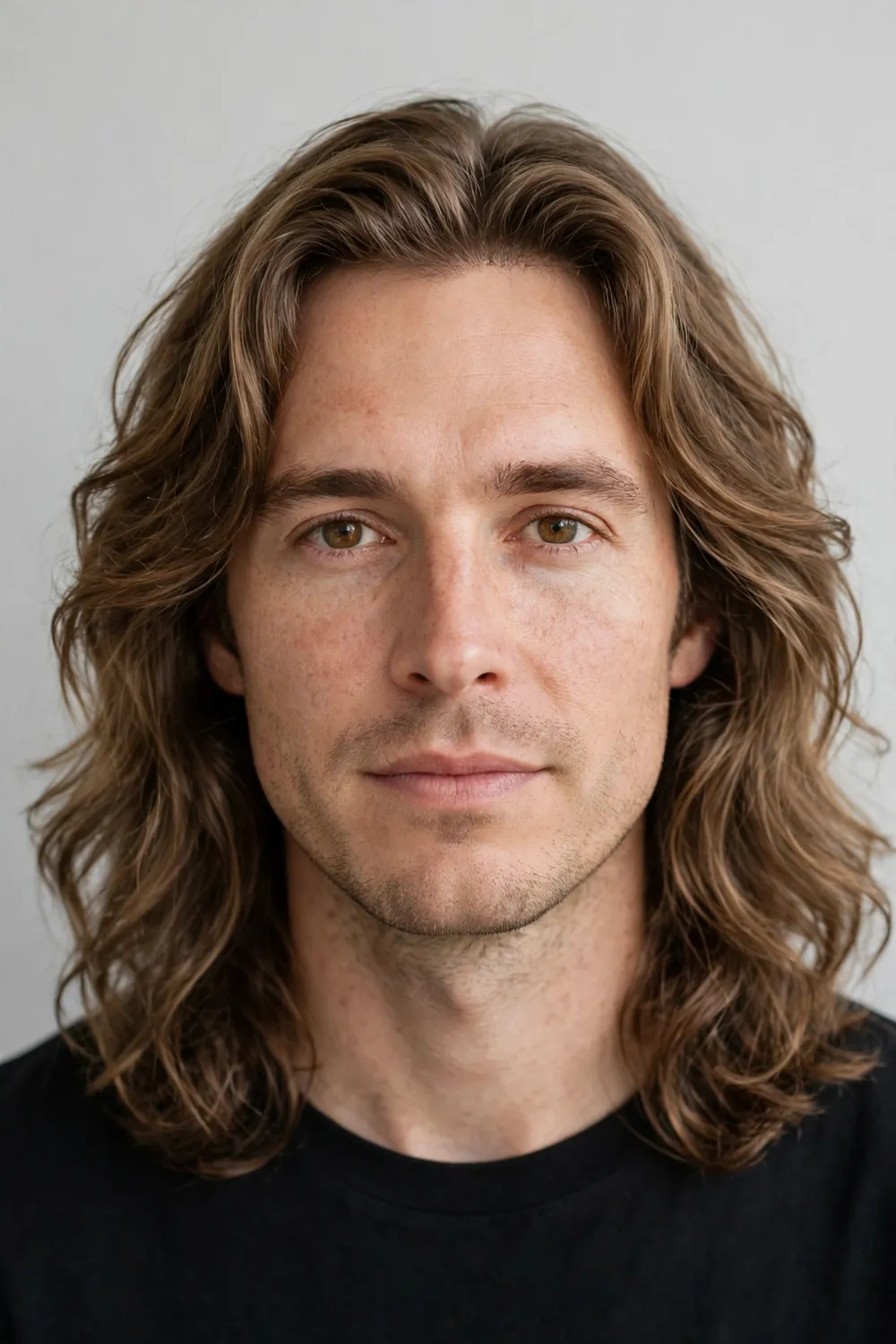
Waves do half the styling for you, which is why this is one of the easiest long looks to live with. The cut is simple — shoulder-length hair with long layers that let the natural bend fall where it wants, rather than fighting it into a shape. It suits oval and square faces best, and works on fine to thick hair. Ask your barber for long layers with no hard lines. A pea-sized amount of sea salt spray on damp hair, scrunched and left to air dry, gives you the finish. Maintenance is honest: a trim every ten weeks keeps the shape, and a weekly deep condition stops the ends going dry and frizzy.
25. Long Afro

A long afro is a statement of volume, and it only works when the hair is healthy underneath all that shape. The cut is rounded and picked out to its full width, with the length built up over months rather than cut in. It suits round and oval faces particularly well, balancing softer features with height and width, and it needs naturally coily or kinky hair. Tell your barber you want a rounded afro shape with even length all round, and ask them to shape it dry so they can see the true volume. Pick it out with a wide-tooth comb or afro pick, and use a leave-in conditioner plus a light oil to keep it soft. Expect a proper wash-day routine and regular trims.
26. Dreadlocks
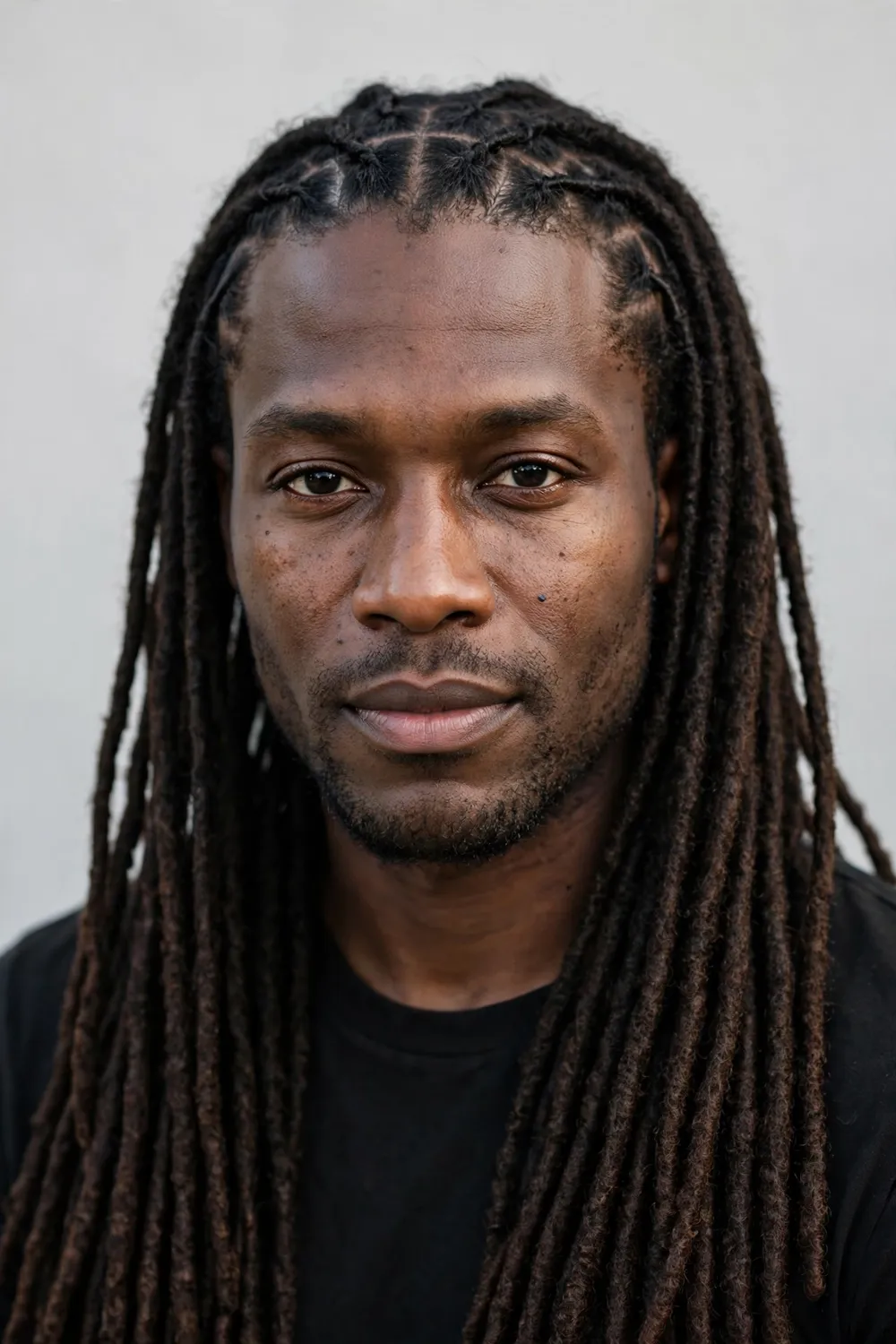
Long dreadlocks are a commitment, not a haircut — once they’re in, you’re looking after them for years, and that’s part of the appeal. The locs fall naturally past the shoulders, with neat parts at the roots. They suit every face shape, though a longer face benefits from a bit of width at the sides, and they work best on coily and kinky hair that locks readily. Ask a loctician — not a regular barber — for the starting method that suits your hair, whether that’s twists, coils or interlocking. Wash with a residue-free shampoo, retwist the roots every four to six weeks, and keep them dry overnight. The first year takes patience, and undoing them is a bigger job than starting them.
27. Cornrows
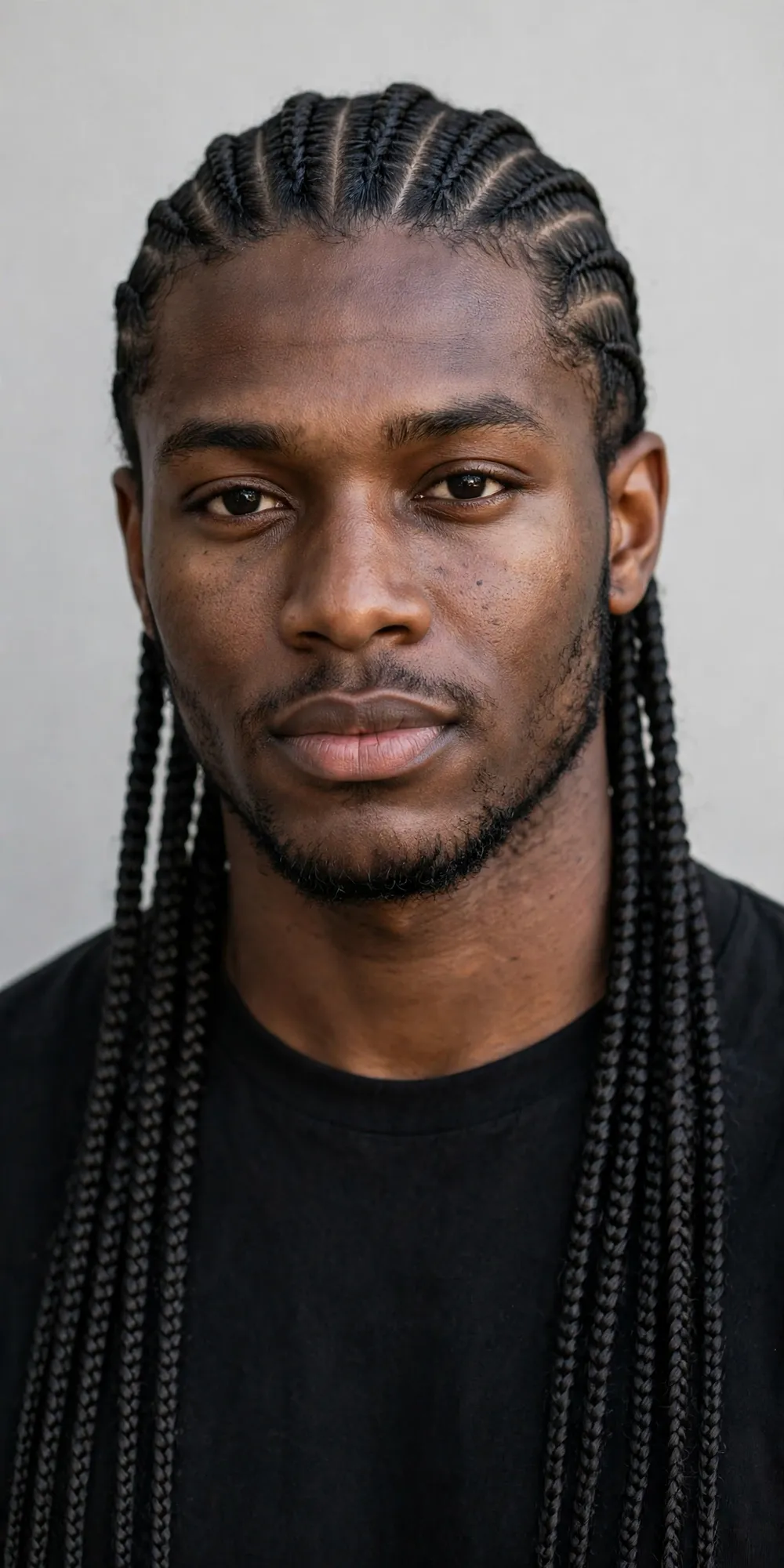
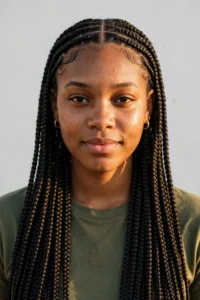
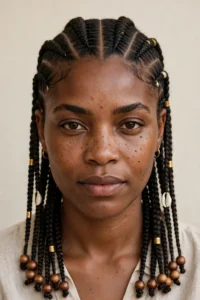
Cornrows turn long hair into something sharp, tidy and completely hands-off for weeks at a time. The braids run in clean straight lines from the hairline to the nape. They suit oval, square and heart-shaped faces, and they work on coily, kinky and tightly curled hair that holds a braid. Ask your braider for straight-back cornrows with medium parts — not too small, or the take-down is miserable — and agree on the braid size before they start. Keep the scalp moisturised with a light oil, sleep in a durag or silk scarf, and don’t leave them in longer than four weeks. One warning: braids pulled too tight can damage the hairline, so speak up if it hurts. See our full guide to cornrow hairstyles for more patterns and aftercare.
28. Box Braids

Box braids give you long hair with almost no daily effort — the length is there, it just happens to be braided. Medium square parts keep the look clean without the marathon install that tiny braids demand, and the braids fall past the shoulders with a bit of swing. They suit every face shape, and they are one of the best protective styles for coily and kinky hair. Ask your braider for medium box braids at shoulder length or longer, with the parts neat and the tension comfortable at the hairline. A light scalp oil every few days and a silk scarf at night are the whole routine, and the style lasts four to six weeks. Our box braids hairstyles guide covers sizes, lengths and upkeep in full.
29. Rope Twists
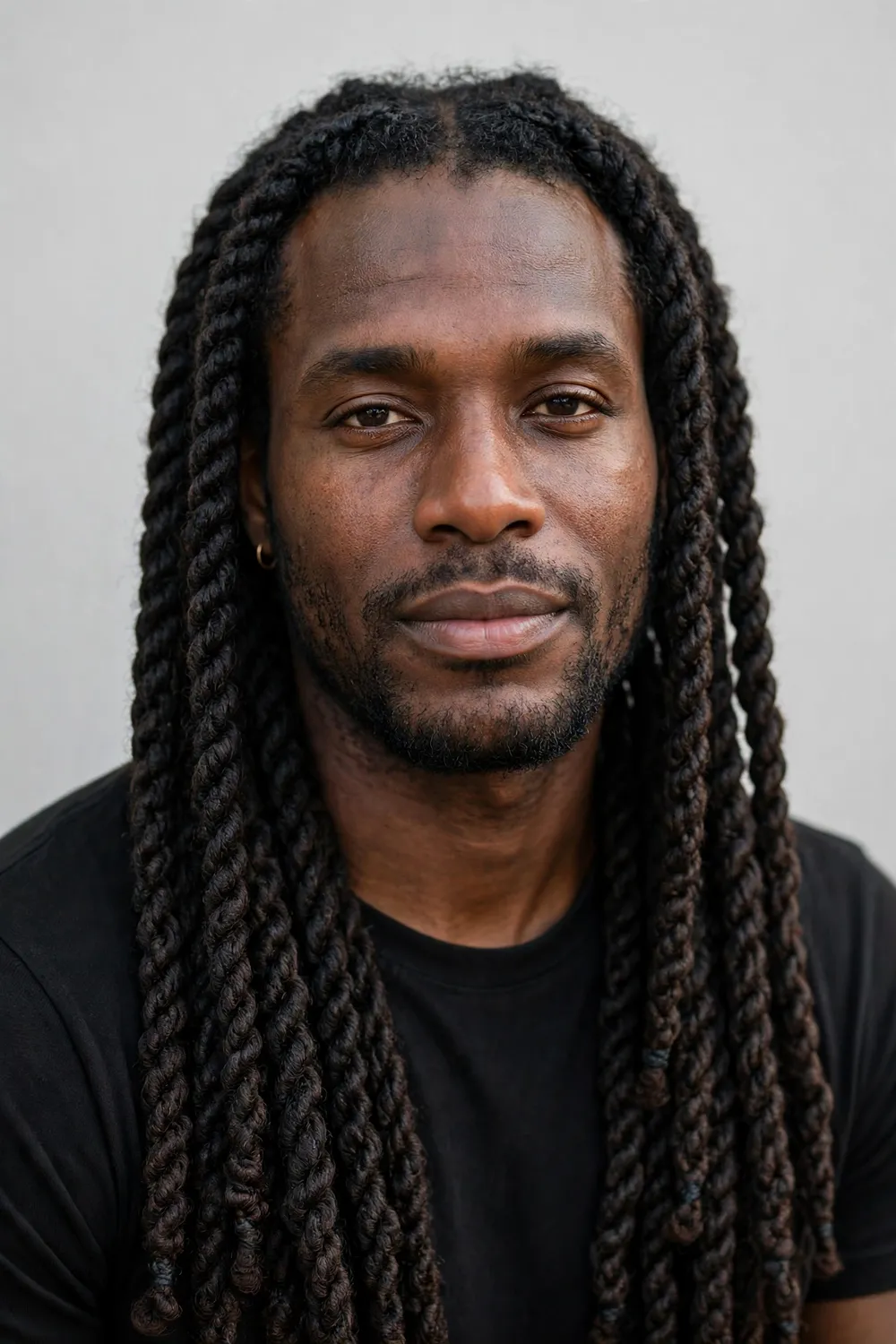
Rope twists sit somewhere between braids and loose hair — two strands wound around each other into a clean, rope-like length that moves more freely than a braid. The look is softer than cornrows and less heavy than box braids, with a natural sheen that catches the light. It suits oval and square faces well, and works best on coily or kinky hair. Ask your stylist for medium two-strand rope twists at shoulder length, with the roots neat and the ends sealed so they don’t unravel. A curl cream or light butter helps the twists stay defined, and a satin bonnet at night stops frizz creeping in. They last three to four weeks.
30. Long Hair with Undercut
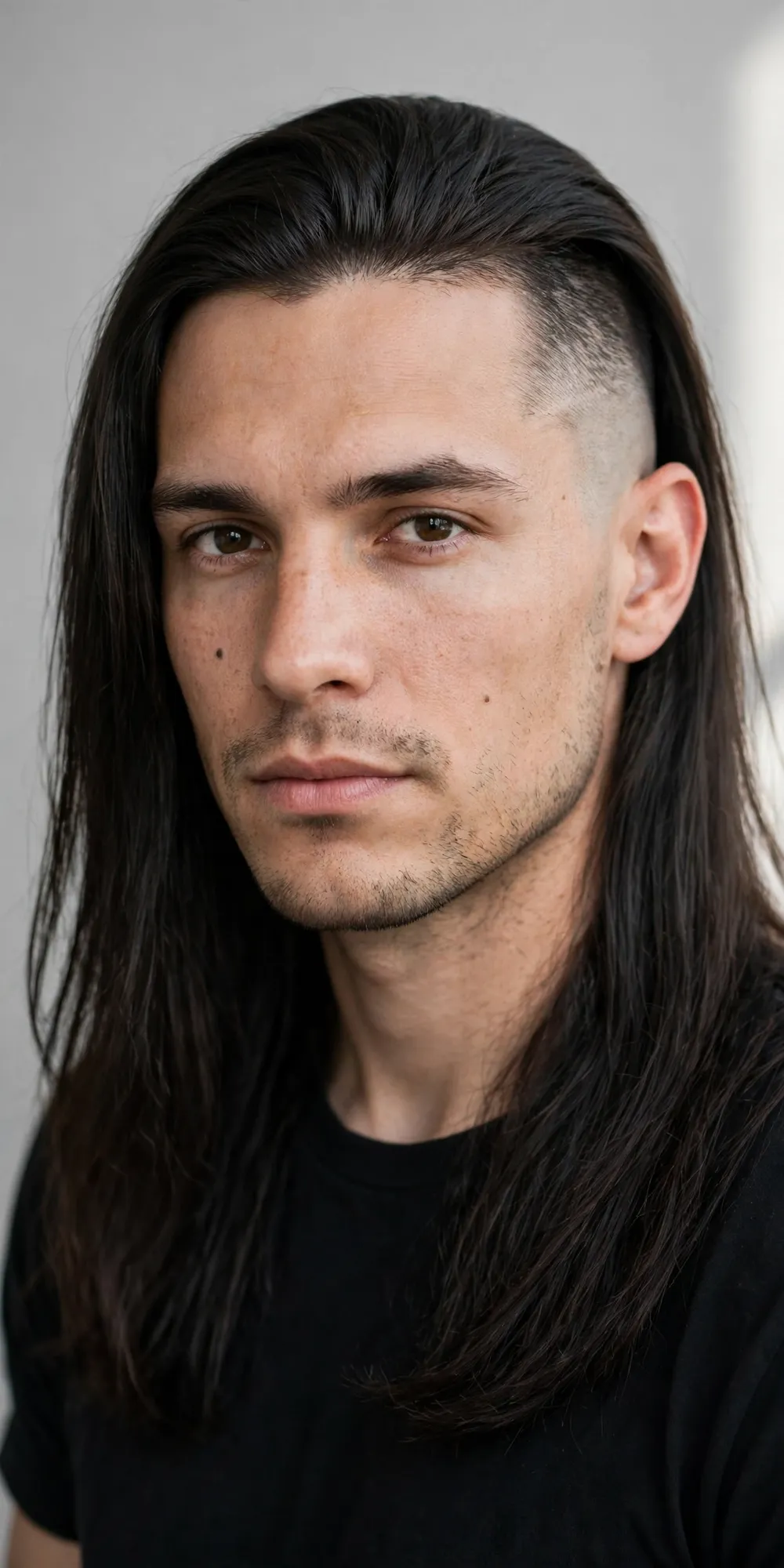
This is the cut for men who want long hair without the weight — all the length on top, nothing at the sides. The undercut is clipped short or shaved right up to a hard line, so the long top stands out. It suits square and oval faces best, adding structure where long hair alone can look shapeless, and it works on straight, wavy and thick hair. Tell your barber you want a disconnected undercut with the top left long, and decide together how high the shaved section should go. A matte paste or light clay gives the top some grip without shine. The trade-off: the undercut needs a tidy-up every two to three weeks or the contrast goes soft. More on the cut itself in our undercut haircut guide.
31. Long Hair with Fade
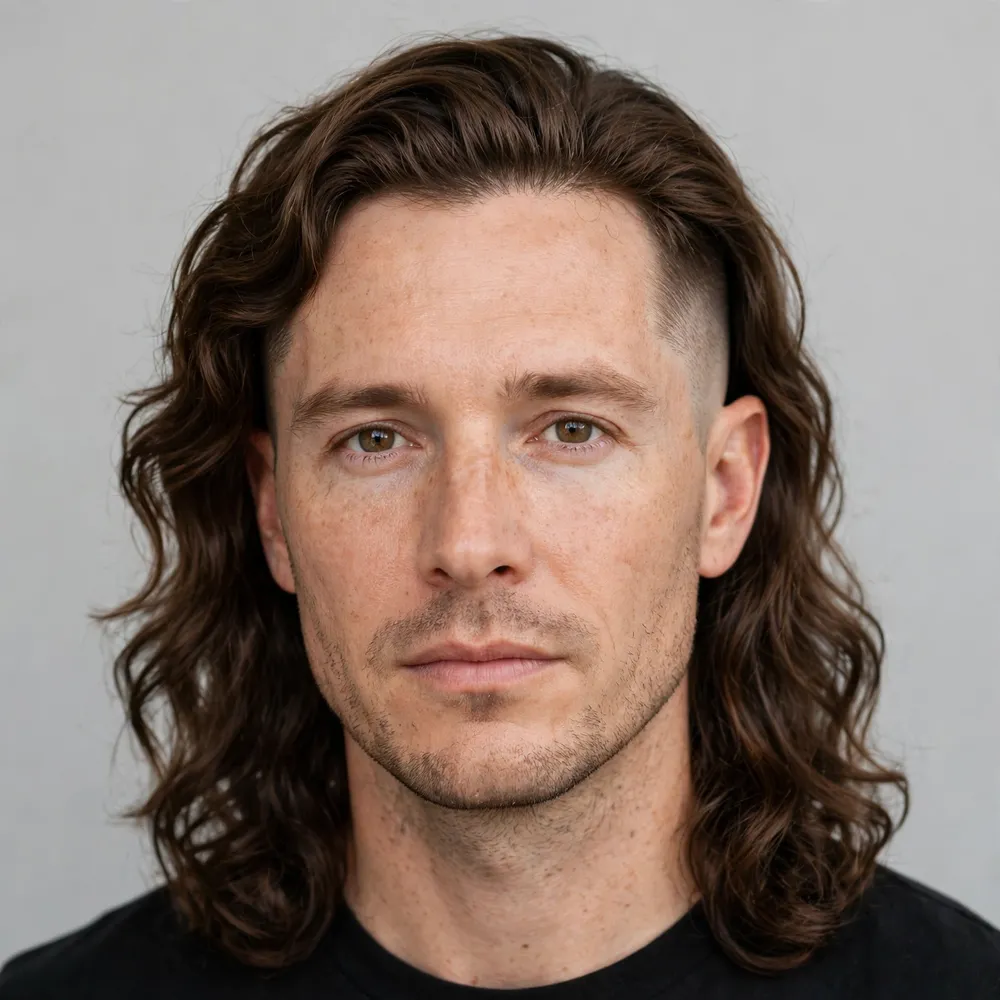
A fade softens the undercut idea into something you can wear anywhere — long on top, blending down to skin at the sides, with no hard line. The contrast is still there, but it reads polished rather than punk. It suits most face shapes, and it is especially good on thick hair, where the fade takes out bulk at the sides and lets the top move. Ask for a low or mid fade with the top left at full length, and be specific about the blend you want. Style the top with a light cream or sea salt spray. The catch is the same as any fade: it grows out in about three weeks, so book the barber regularly or the clean edge disappears.
32. Modern Long Mullet

The modern mullet has left the 80s behind — the front is short and textured, the back is long, and the whole thing is cut with intention rather than neglect. It suits oval and heart-shaped faces, where the shorter front opens the face up and the length at the back adds attitude, and it works on straight, wavy and curly hair alike. Ask your barber for a textured top with a faded or tapered side and a long, layered back. A matte clay or texture powder gives the front some grit. The mullet grows out gracefully, but it needs a shape-up every four to five weeks or the front starts to swallow the look. Our mullet haircut guide covers the fade, burst and curly versions.
33. Long Pompadour
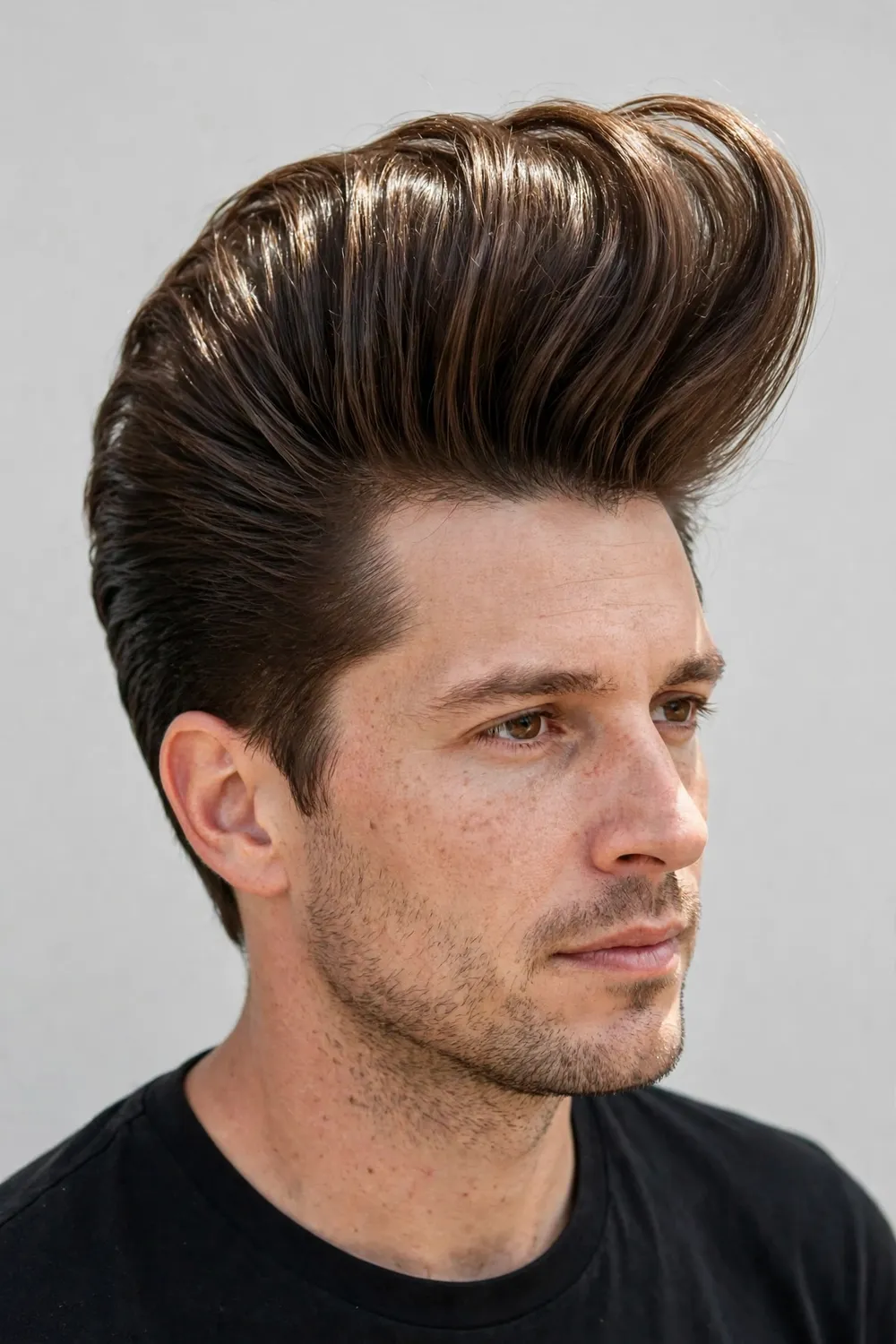
A long pompadour takes the classic swept-up shape and gives it real height — the front is pushed up and back into a tall wave, with the length falling behind the ears. It is a confident, old-school look that still turns heads, and it works best on thick, straight to wavy hair that can hold volume. Round faces benefit most, since the height lengthens the face, while longer faces should keep the height moderate. Ask your barber for long length on top with the sides tapered short, and the front left longest so it can be swept up. Blow-dry the front upwards, then lock it in with a strong-hold pomade or a matte paste, depending on whether you want shine or texture. This one takes ten minutes every morning.
34. Two-Block
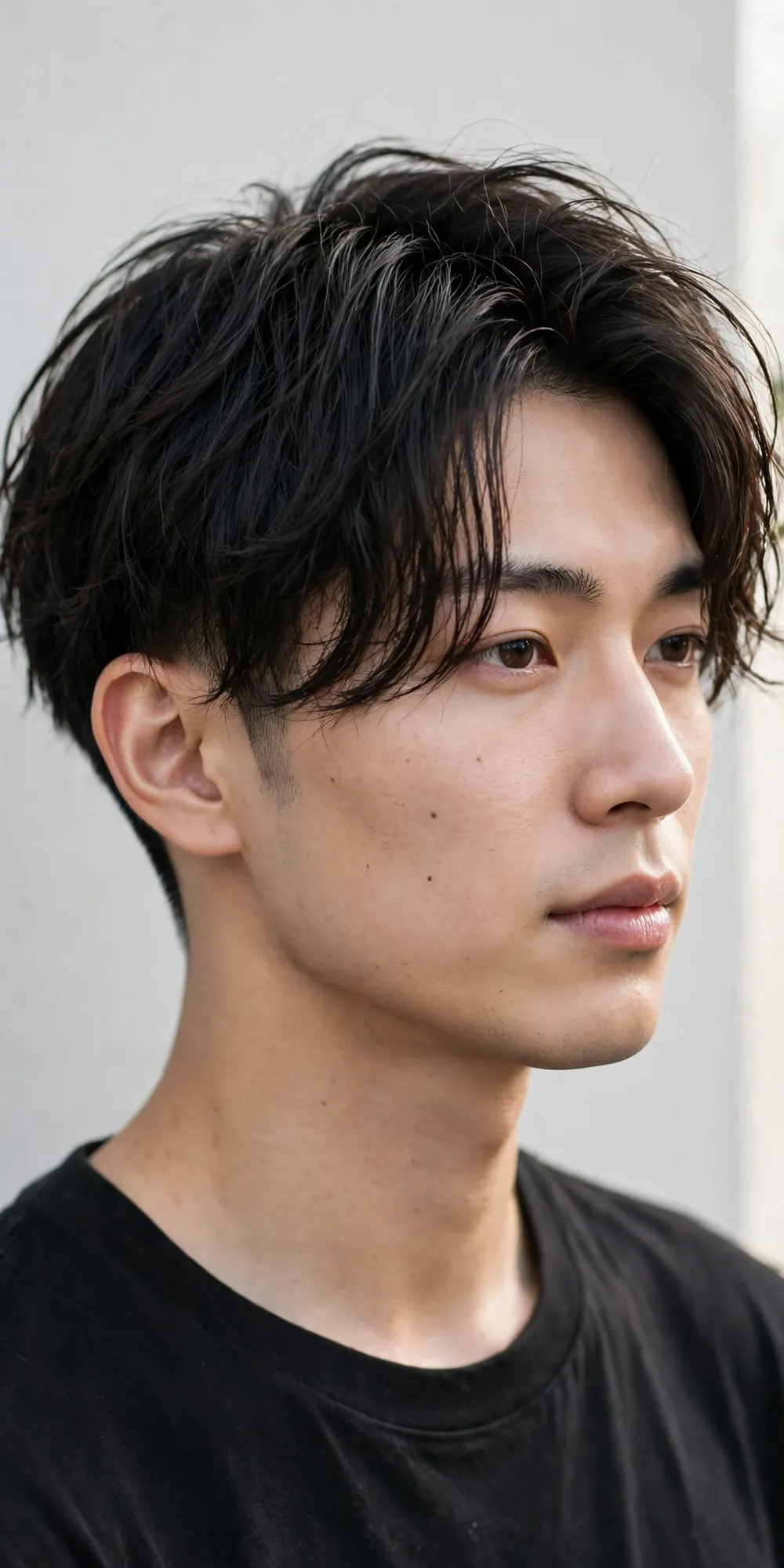
The two-block is a Korean barbershop staple that has gone global for good reason — the top is long and heavy, the sides and back are cut short in a separate block, and the contrast does all the work. It suits oval and round faces, and it works on straight and wavy hair that falls naturally. Tell your barber you want a two-block with the top left long enough to reach the ears, and the sides faded or undercut. Style it with a light cream, and let the weight of the top create the shape. It grows out well, but the sides need a clean-up every three weeks or the block blurs. See our two block haircut guide for the shorter versions.
35. Long Hair with Disconnected Waves
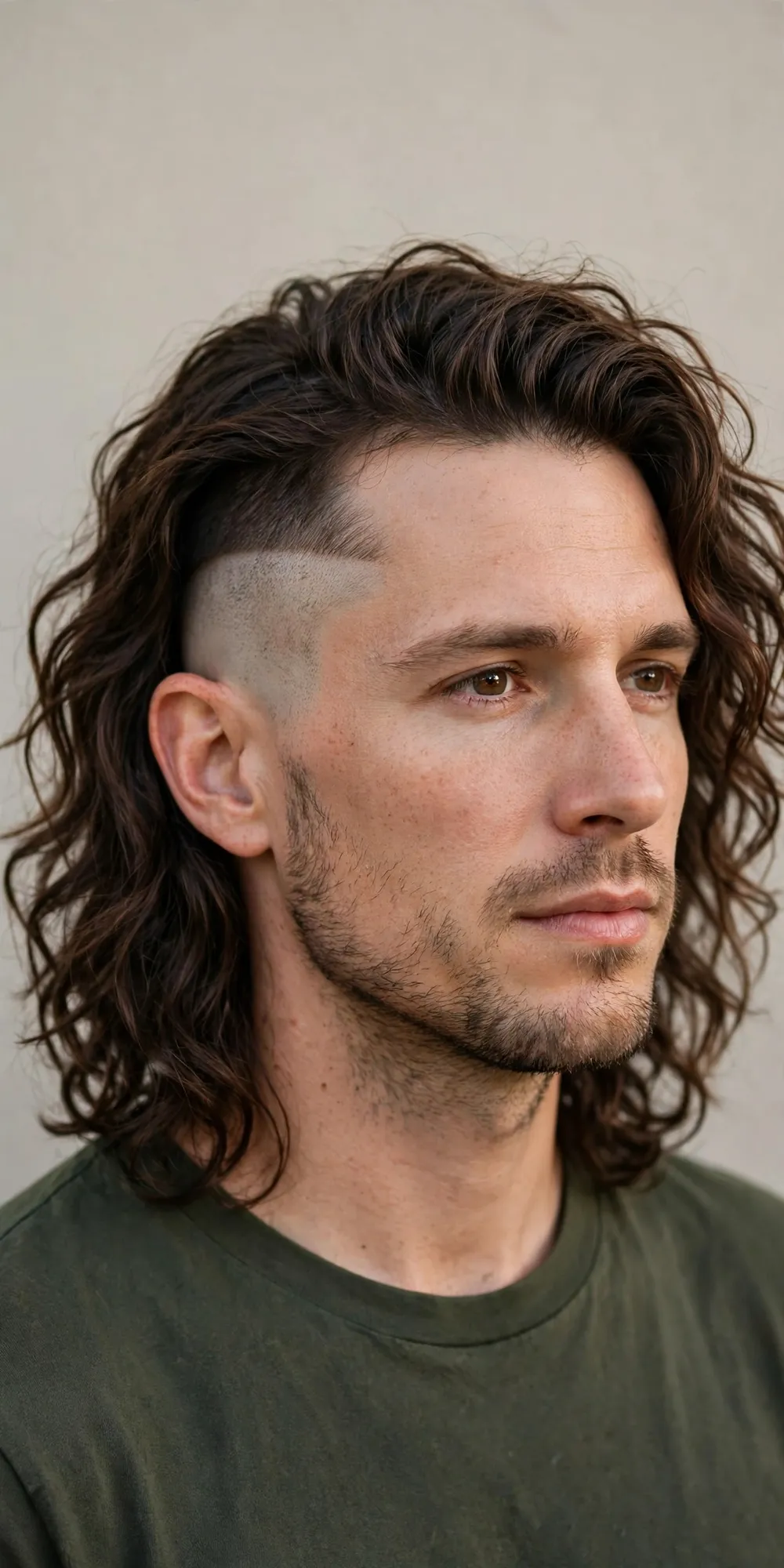
Disconnected waves are for men who like their long hair a little unruly — the top is long and wavy with no blending into the sides, so the two sections sit apart on purpose. The result is a relaxed, textured look, and it works best on naturally wavy or curly hair that already has a bend to it. Oval and square faces carry it well. Ask your barber for a disconnected cut with the sides clipped short and the wavy top left long, with no attempt to blend the two. A sea salt spray scrunched into damp hair is all the styling it needs, and air drying keeps the waves natural. The disconnect grows out unevenly, so a tidy-up every three to four weeks keeps it looking deliberate.
36. Viking Long Hair with Braids

Viking hair is long hair with a story — full length past the shoulders, with a few small braids woven in at the temples or through the top to break up the flow. It suits strong, angular faces and thick hair that can carry the weight. The base cut is simple: long layers all over, grown out evenly, with the braids added as detail rather than the main event. Ask your barber to keep the length even and the layers long, then have a braider add two or three thin braids at the front or sides. A light oil keeps the braids and the loose hair from drying out. Long, thick hair is always some work, but the braids themselves are easy to redo.
37. Long Hair with a Full Beard

Long hair and a full beard belong together — the two frame the face as one shape, and when both are shaped well the effect is far greater than either alone. The hair sits at shoulder length with soft layers, and the beard is kept full but tidy. It suits square and oval faces best. Tell your barber you want the hair and beard shaped as a pair, not two separate jobs, and agree on where the beard meets the sideburns. Beard oil daily, a balm for shape, and a trim every two weeks keep it from going wild. It is two routines, not one, but for men who can grow both it is one of the strongest looks on this list.
38. Long E-Boy Hair

E-boy hair is the long centre-parted look that took over social media — a curtain fringe falling either side of the face, with the rest of the hair grown to the collar or shoulders. It suits oval and heart-shaped faces, where the centre part and the fringe soften the forehead, and it works best on straight to slightly wavy hair that falls flat naturally. Ask your barber for a centre part with long curtain bangs that reach the cheekbones, and the back left long with soft layers. The styling is minimal: a little texture cream on damp hair, parted down the middle, and left to dry. If you are under thirty and your hair is straight, it is one of the easiest long styles to pull off.
39. Long Hair with Highlights
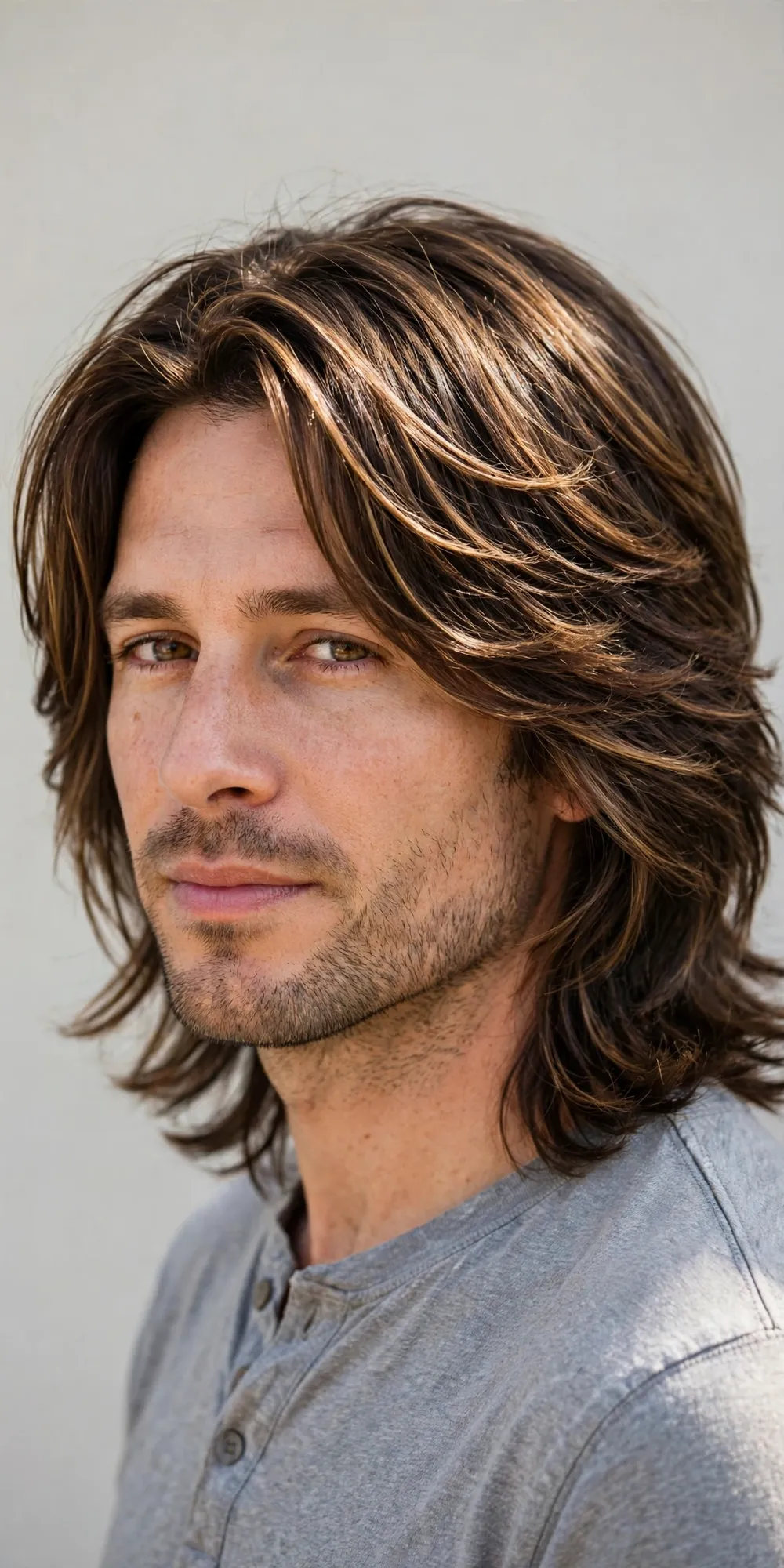
Highlights give long hair something it often lacks: dimension. A few subtle lighter strands through the layers catch the light and make the length look thicker and more alive. They suit every face shape, since the cut underneath stays the same, and they work on straight, wavy and curly hair — though the effect is most visible on darker hair with a few shades of lift. Ask your colourist for balayage or freehand highlights a couple of shades lighter than your natural colour. Use a colour-safe shampoo and a weekly mask, and expect a refresh every eight to twelve weeks as the colour grows out. Highlights are a salon job, not a home experiment — do a patch test first.
40. Long Wet-Look Hair
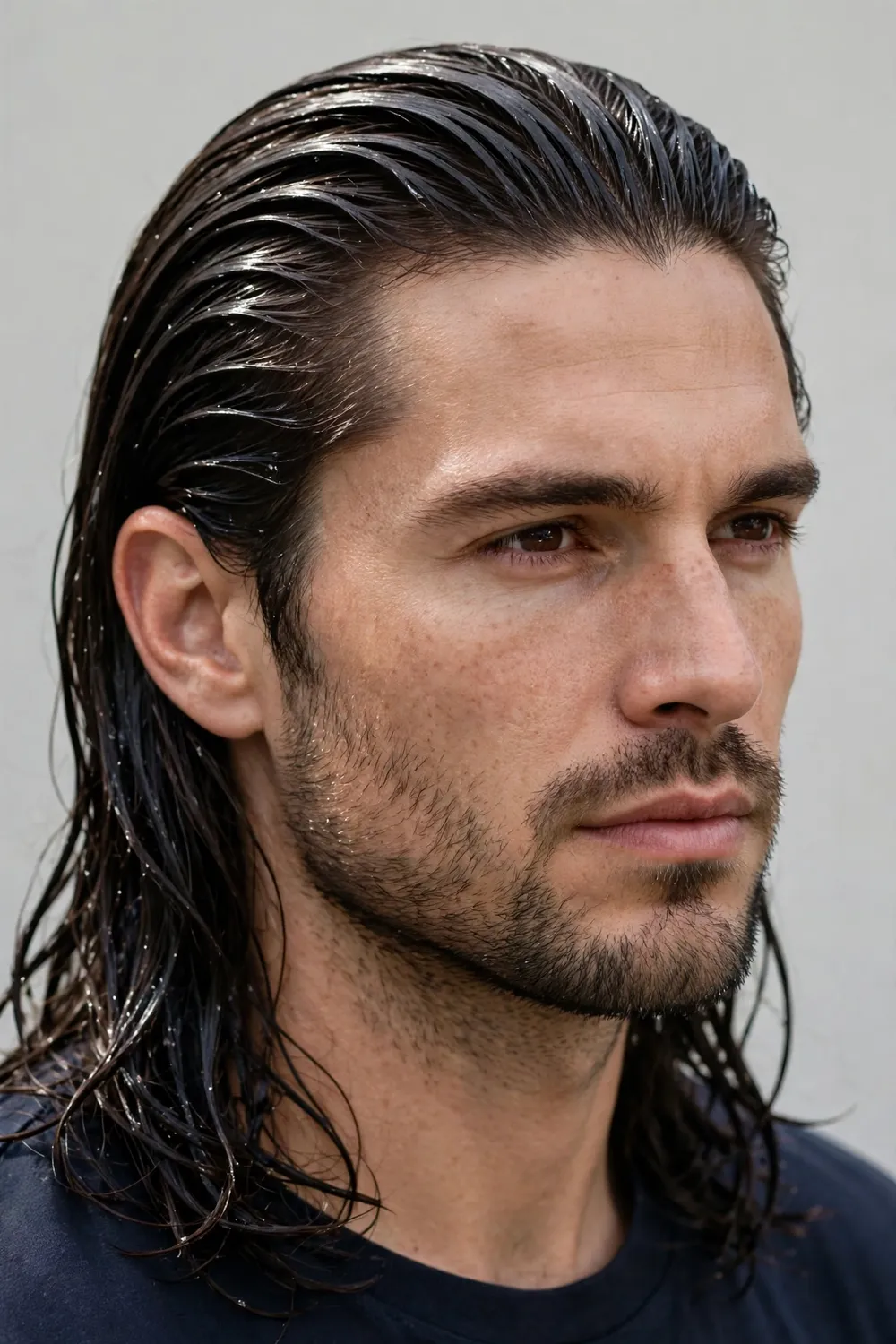
The wet look is long hair at its glossiest — slicked back or swept to the side with a high-shine finish. It suits evenings, photos and nights out more than a day at the office, and works on straight and wavy hair. Round and square faces carry it well, since the slicked-back shape opens the face up. Ask your barber for long, even length with the ends kept blunt, so the hair falls in a clean sheet rather than in wisps. Work a strong-hold gel or a wet-look pomade through damp hair, comb it back, and leave it alone — touching it breaks the finish. The products build up fast, so wash it out properly the same night.
41. Long Hair with Side-Swept Bangs

Side-swept bangs are the gentlest way to wear long hair — the fringe falls across the forehead instead of hanging in your eyes, and the rest of the length sits at the shoulders. It suits round and square faces particularly well, and it works on straight and wavy hair. Ask your barber for long layers with a side-swept fringe that reaches the cheekbone, cut so it falls naturally without you having to pin it. A little styling cream on damp hair, swept to one side with your fingers, is the whole routine — no brush needed. Maintenance is light: a trim every eight weeks keeps the fringe out of your eyes.
42. Long Hair for Thinning Hair
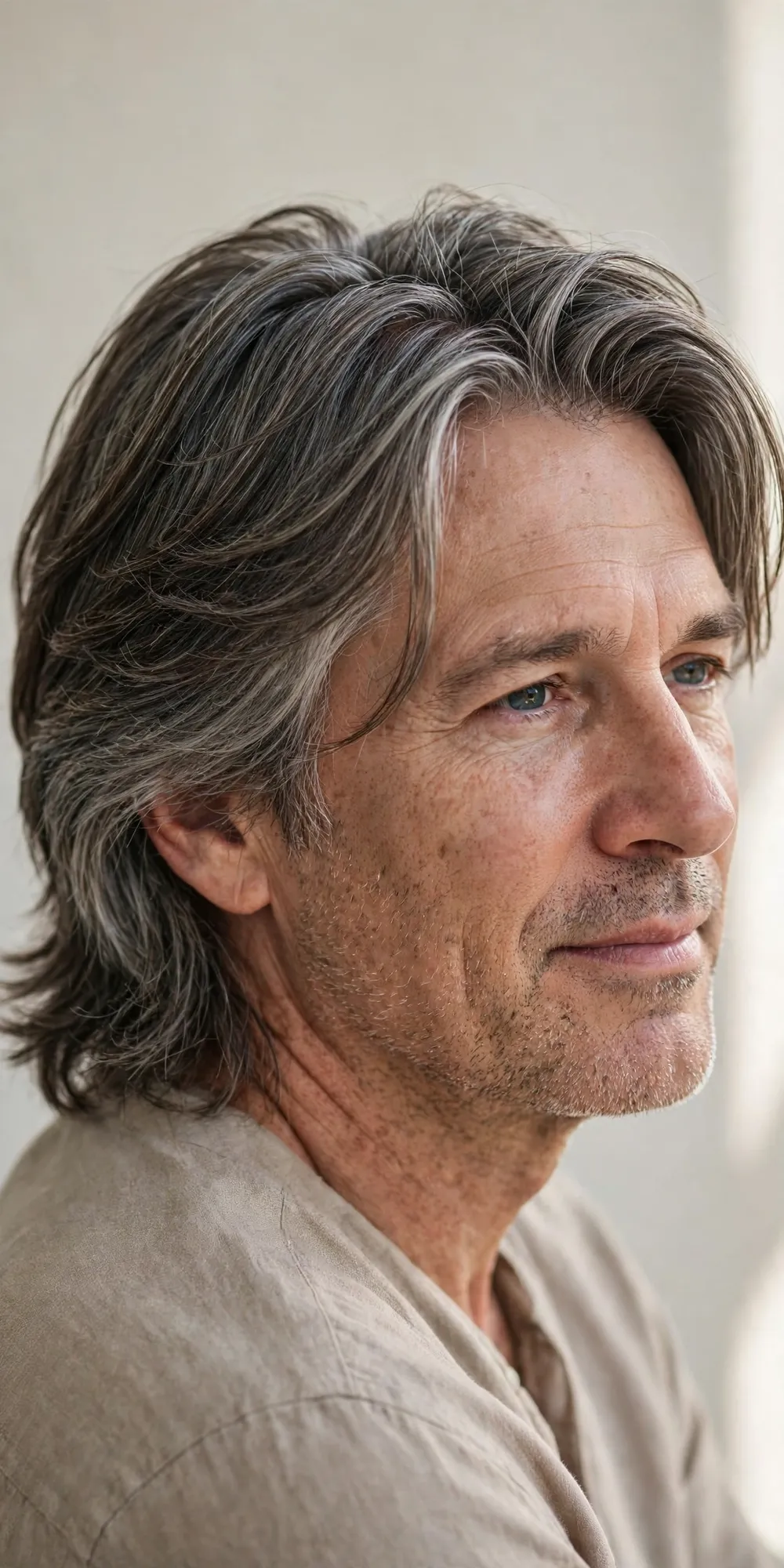
Long hair and thinning hair can work together, but only with the right cut — the trick is layers and texture that hide a thin crown instead of exposing it. The hair is kept at shoulder length with textured layers that create the illusion of fullness. It suits men with early thinning at the crown or temples, and it works on fine hair that still has decent density at the sides. Ask your barber for textured layers, and be honest about the thinning so they can work with it. A volumising powder at the roots adds lift, and a matte finish hides more than a shiny one. If the thinning is advanced, shorter hair will look fuller — but for early-stage thinning, this cut buys you time and confidence.
43. Long Permed Hair
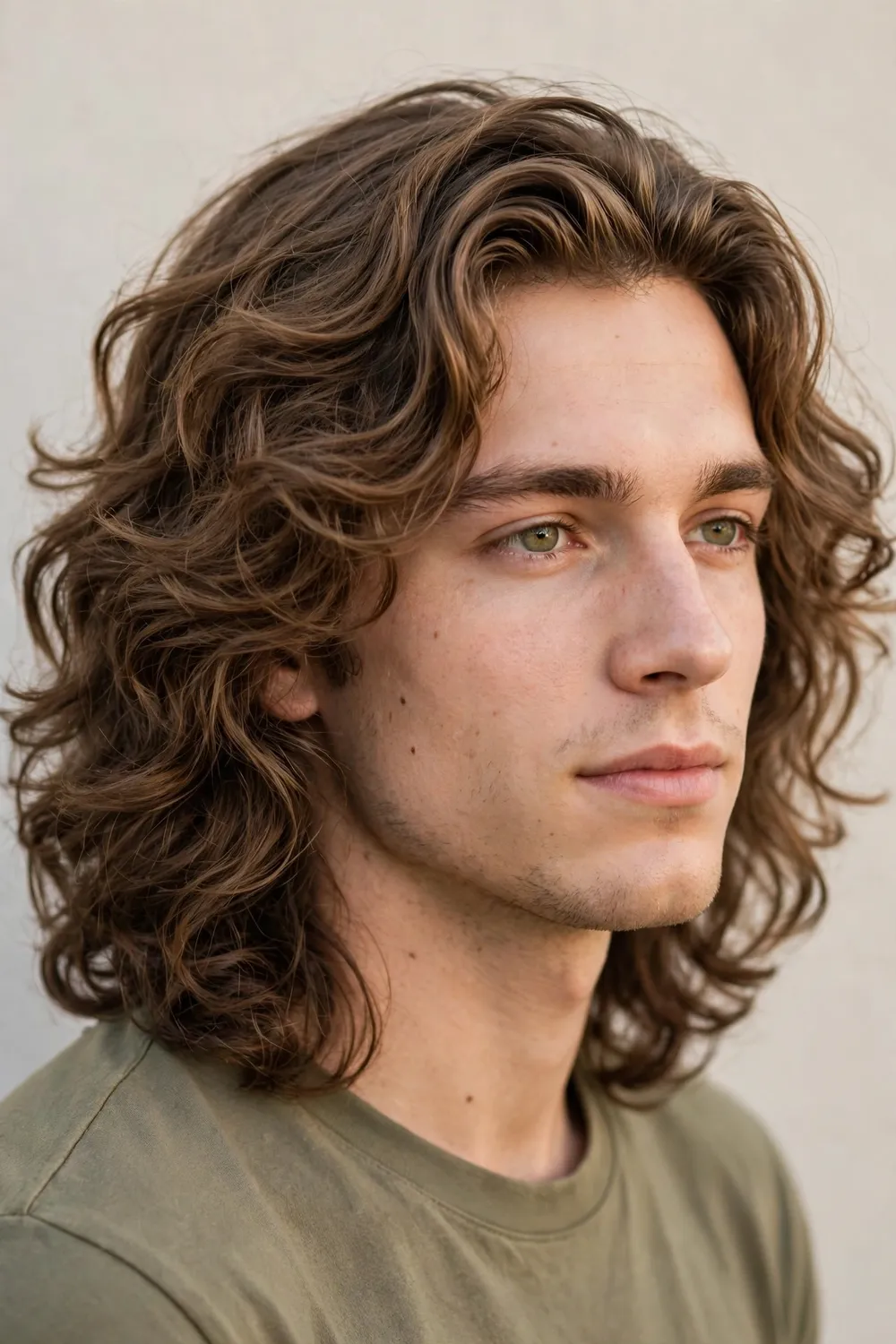
A perm is the shortcut to long wavy or curly hair for men whose natural hair is straight — soft, even waves from root to tip. It suits oval and square faces, and it works on hair that is at least shoulder length and healthy enough to take a chemical treatment. Ask your stylist for a loose, large-rod perm rather than tight curls, and have them assess your hair first — damaged or very fine hair may not take it well. Afterwards, use a sulphate-free shampoo and a leave-in conditioner, and let the hair air dry. The waves last three to six months, and the grow-out is gentle since the curl loosens gradually. Do a patch test first, and never perm hair that has just been bleached or coloured.
44. Long Two-Strand Twists
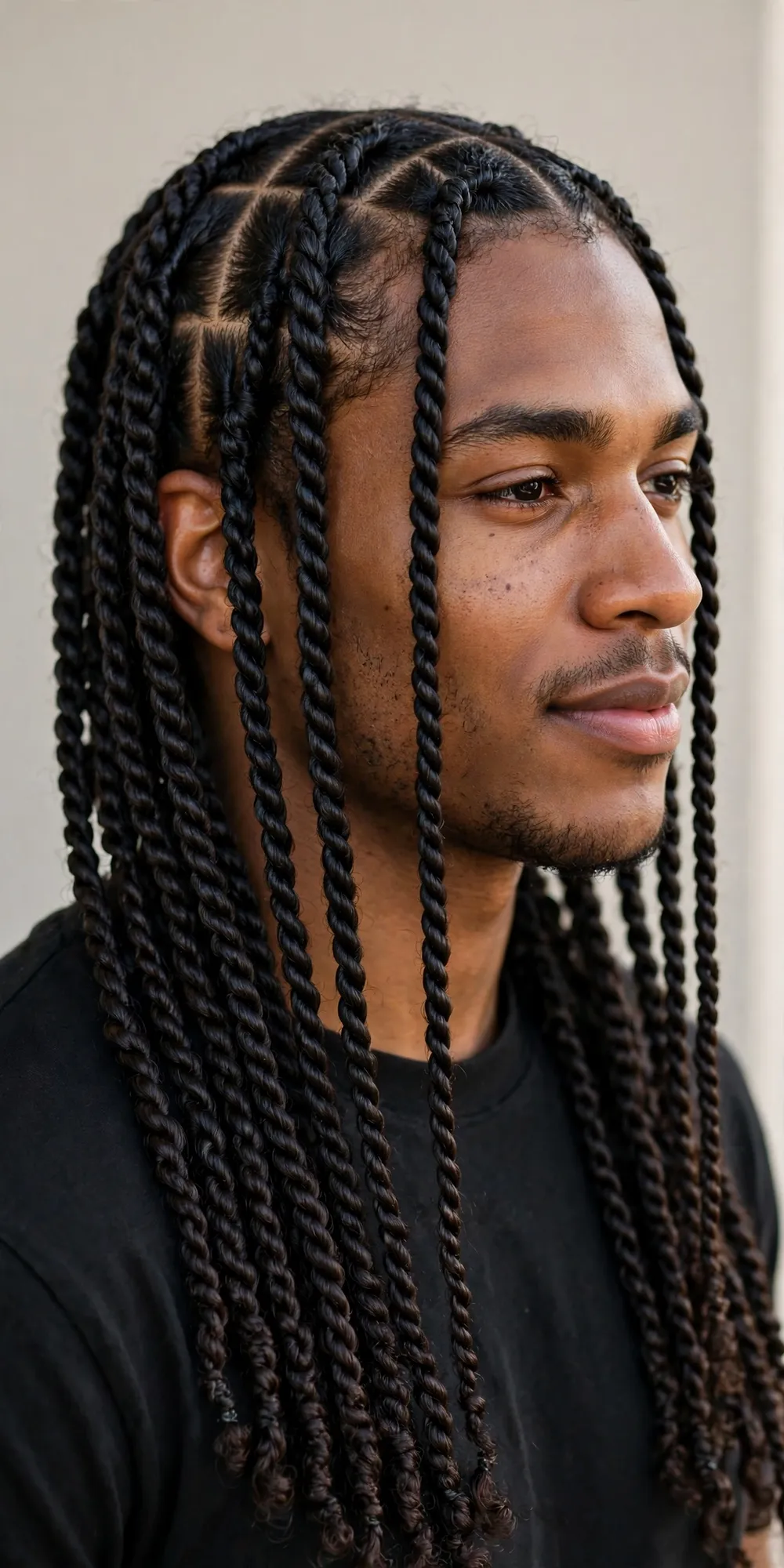
Two-strand twists are a protective style that doubles as a look in its own right — each section of hair is twisted into a neat rope that falls past the shoulders, with a soft, uniform texture. They suit every face shape, and they are one of the kindest styles for coily and kinky hair, since the hair is tucked away and left alone. Ask your stylist for medium two-strand twists at shoulder length, with the parts clean and the tension comfortable — twists should never pull at the hairline. A curl cream or butter helps them stay defined, and a silk scarf at night keeps them neat for three to four weeks. Keep the install gentle and the timeline short — tight twists left in too long can cause breakage.
45. Long Braided Ponytail

A long braided ponytail is the most practical way to wear serious length — all the hair gathered back into a single braid that sits neatly down the back. It suits oval and square faces, and it works on any hair type long enough to braid, from straight to coily. The cut underneath is simple: even long layers. Ask your barber to keep the ends blunt for a full-looking braid, then gather the hair at the crown or nape and braid it in three strands, securing it with a snag-free tie. A little oil on the braid keeps it smooth, and it lasts a day or several. It is one of the best styles for sport, work and hot weather — long hair, zero fuss.
46. Long Hair with Tapered Sides
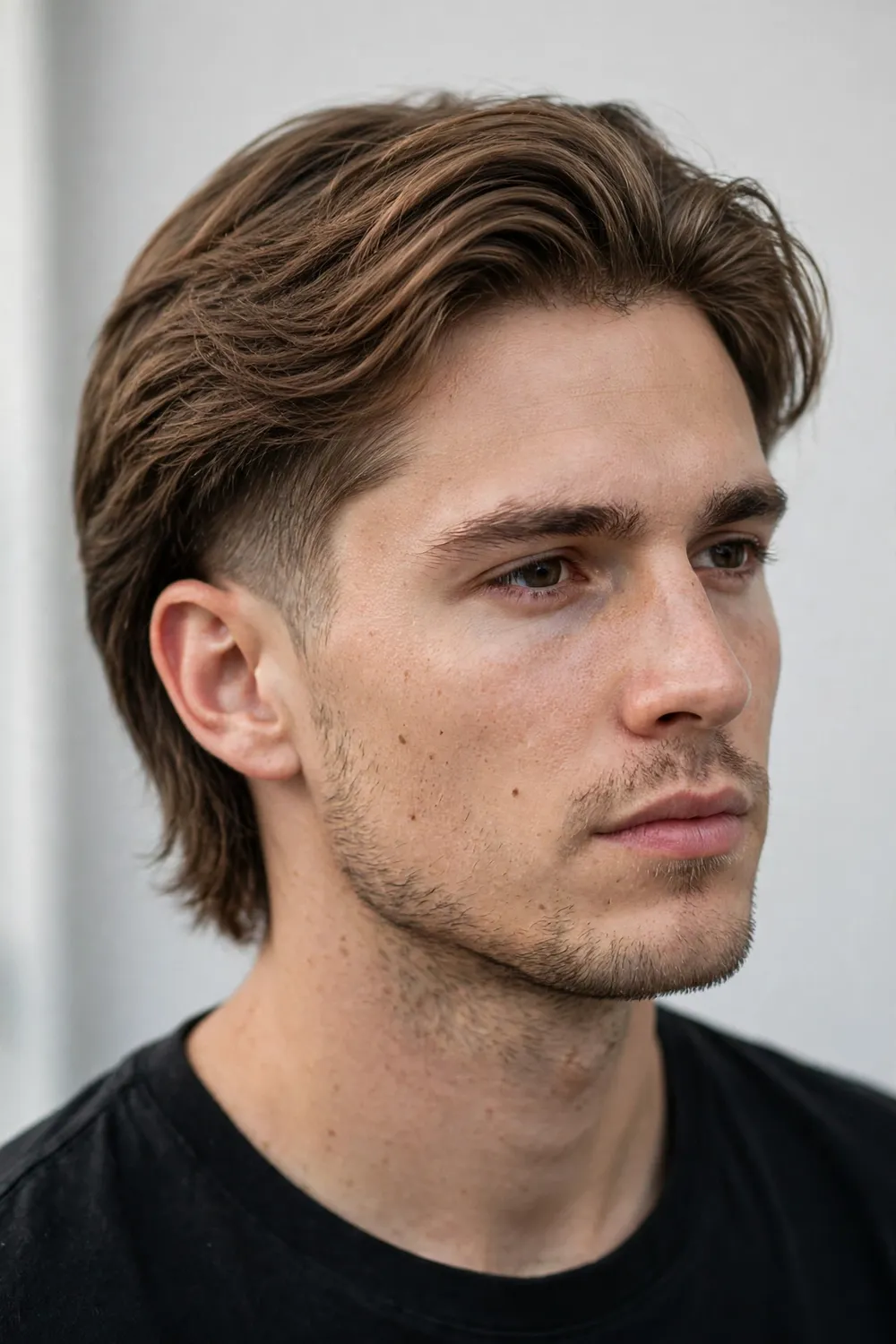
Tapered sides are the quiet, grown-up version of the fade — the long top stays, the sides gradually shorten towards the neckline, and the whole shape looks tidy without any drama. It suits most face shapes and most hair types. Ask your barber for a taper on the sides and back with the top left at full length, and be clear that you want a gradual taper rather than a skin fade. Style the top with a light cream or a little sea salt spray, and the taper takes care of the neatness on its own. The grow-out is forgiving — a taper looks fine for five or six weeks — so this is the lowest-maintenance contrast cut on the list.
How to Grow It Out / Getting Through the Awkward Stage
Growing long hair is mostly a waiting game, and the awkward stage is the part nobody warns you about. Hair grows roughly half an inch a month, so going from a short cut to shoulder length takes around twelve to eighteen months — there is no product or trick that changes that maths. The hard stretch runs from about month three to month nine, when the hair is too long to style short and too short to tie back, and it sticks out at the sides in ways you did not ask for.
A few things make it bearable. Book a shaping trim every eight to twelve weeks — not a cut, just a tidy of the neckline and the worst of the bulk, so the shape holds while the length builds. Wear a hat, a headband or a little styling cream on the bad days, and stop comparing your progress to photos of men who have been growing theirs for years. Around month nine the hair starts to sit down under its own weight, and from there it only gets easier. If you are starting from a shorter cut, our guide to medium length hairstyles for men is a useful halfway house — it covers the styles that work while you are still on the way to full length.
Month by month, roughly: months one to three, it just looks a bit overgrown; months four to six, the sides flare and the fringe falls in your eyes; months seven to nine, it starts to lie flat; months ten to twelve, you can tie the top back; and by month twelve to eighteen, you are at the shoulders. Patience is the product here.
Styling & Maintenance Routine
Long hair rewards a simple routine done consistently, and punishes overdoing it. Wash two to three times a week, not every day — daily shampoo strips the natural oils that long hair needs, and the ends dry out first. Always follow with conditioner, worked through the mid-lengths and ends rather than the roots, and once a week swap it for a deep-conditioning mask if your hair is thick, curly or colour-treated.
Drying matters more than most men expect. Pat the hair with a towel instead of rubbing it, and let it air dry whenever you can; if you use a hairdryer, keep it on a low heat with a nozzle, and use a heat protectant first. For products, match the texture: a light cream or sea salt spray for straight and wavy hair, a leave-in conditioner or curl cream for curls and coils, and a matte clay or paste when you want hold without shine. A pea-sized amount is usually enough — long hair shows excess product fast.
Tying it back is where damage creeps in. Use a fabric-covered tie or a scrunchie, never a bare elastic band, and vary where you tie it so the same spot is not stressed every day. Keep buns and ponytails loose rather than yanked tight — constant tension at the hairline can cause breakage and, over time, traction damage. At night, a loose braid or a silk pillowcase keeps tangles and frizz down, and it takes about thirty seconds.
5 Mistakes to Avoid with Long Hair
1. Skipping trims altogether. The myth is that trims slow growth — they do not, because hair grows from the roots. What skipping trims does is let split ends travel up the hair shaft, so you eventually have to cut off more than you would have. A small trim every eight to twelve weeks keeps the ends healthy.
2. Over-washing. Shampooing every day strips the oils that protect long hair, leaving the ends dry and the scalp overproducing oil to compensate. Two to three washes a week is enough for most men; on the days between, water alone or a little dry shampoo does the job.
3. Tight ties, every day. A bun or ponytail pulled drum-tight looks sharp for a day and costs you hair at the hairline over months. Keep ties loose, change their position, and give your hair a day down whenever you can.
4. Heavy products. Thick waxes and heavy pomades weigh long hair down, make it look greasy by midday, and are a pain to wash out. Long hair needs light products — creams, sprays and oils in small amounts — and the roots should stay almost product-free.
5. Heat without protection. A hairdryer or straightener on bare hair dries it out and snaps the ends. If you use heat, use a protectant every time, keep the temperature low, and let the hair air dry on the days you can. For the cultural and practical background on why men have worn their hair long for centuries, the history of long hair on Wikipedia is a surprisingly good read.
FAQs
How long does it take to grow long hair for men?
From a short cut, reaching shoulder length takes roughly twelve to eighteen months, since hair grows about half an inch per month. That timeline varies with genetics and how often you trim, but no shampoo, supplement or oil changes the basic rate in any meaningful way. The honest answer is that it takes a year of patience, with shaping trims along the way to keep it looking deliberate rather than neglected.
How do you get through the awkward stage when growing out men’s hair?
The awkward stage, roughly months three to nine, is when the hair is too long to style short and too short to tie back. Get a shaping trim every eight to twelve weeks to control the sides and neckline, use a little styling cream or a hat on bad days, and try a headband or a small clip to keep the fringe out of your eyes. Once the hair reaches about nine months of growth it starts to sit down under its own weight, and the worst is over.
How often should men trim long hair?
Every eight to twelve weeks is the right rhythm for most long hair. The trim is small — a quarter to half an inch, just enough to remove split ends — and it keeps the shape while the length builds. Men with curly or coily hair can stretch it a little longer, while fine or damaged hair may need a trim closer to every eight weeks. Skipping trims entirely does not make hair grow faster; it just means a bigger cut later when the split ends have travelled up.
What is the best long hairstyle for a round face?
Long layered hair and the bro flow are the strongest choices for a round face, because the length and the layers add vertical lines that make the face look longer. A centre part with long layers works well too, and so does a long pompadour, where the height on top balances the width. What to avoid is volume at the sides — a wide afro or a mop top can make a round face look rounder — so keep the sides controlled and let the length do the lengthening.
How do you tie a man bun?
Gather all the hair at the crown with your fingers, smoothing the sides back as you go, and hold it in one hand. Wrap a fabric-covered hair tie around the gathered hair once, then twist the tie and loop it again, catching the hair into a bun on the second pass. For a looser, messier bun, pull the loop only halfway through on the final pass so some hair folds over. Keep the bun loose rather than yanked tight — a tight bun every day can damage the hairline — and use a tie that will not snag.
Is long hair professional for men?
Yes, as long as it is clean, tidy and worn in a way that suits the setting. A neat low ponytail, a slicked-back style or a tidy man bun all read professional, and plenty of men in offices, law firms and client-facing roles wear their hair long. What reads unprofessional is not the length but the condition — greasy, tangled or unkempt hair. If your workplace is conservative, keep it tied back and the beard shaped; for the full picture, see our guide to professional hairstyles for men.
How do you stop long hair from frizzing?
Frizz is usually dryness, so the fix starts with moisture: conditioner after every wash, a leave-in conditioner or a few drops of hair oil on the ends, and a weekly deep-conditioning mask if your hair is thick or curly. Dry the hair gently — pat, do not rub, with a towel — and avoid brushing dry hair, which breaks up the cuticle and creates frizz; use a wide-tooth comb on damp hair instead. A silk pillowcase helps overnight, and on humid days a light anti-frizz cream or a drop of oil smoothed over the surface keeps flyaways down.
Final Word
Long hair is not a single style — it is a year of patience that ends with forty-six ways to wear it, from the easy flow of layered hair to the sharp contrast of a fade. Pick the version that fits your hair type and your life, find a barber who understands long cuts, and give it the time it needs. And when you are ready for your next idea, there is plenty more waiting on the Hair Groom blog.