

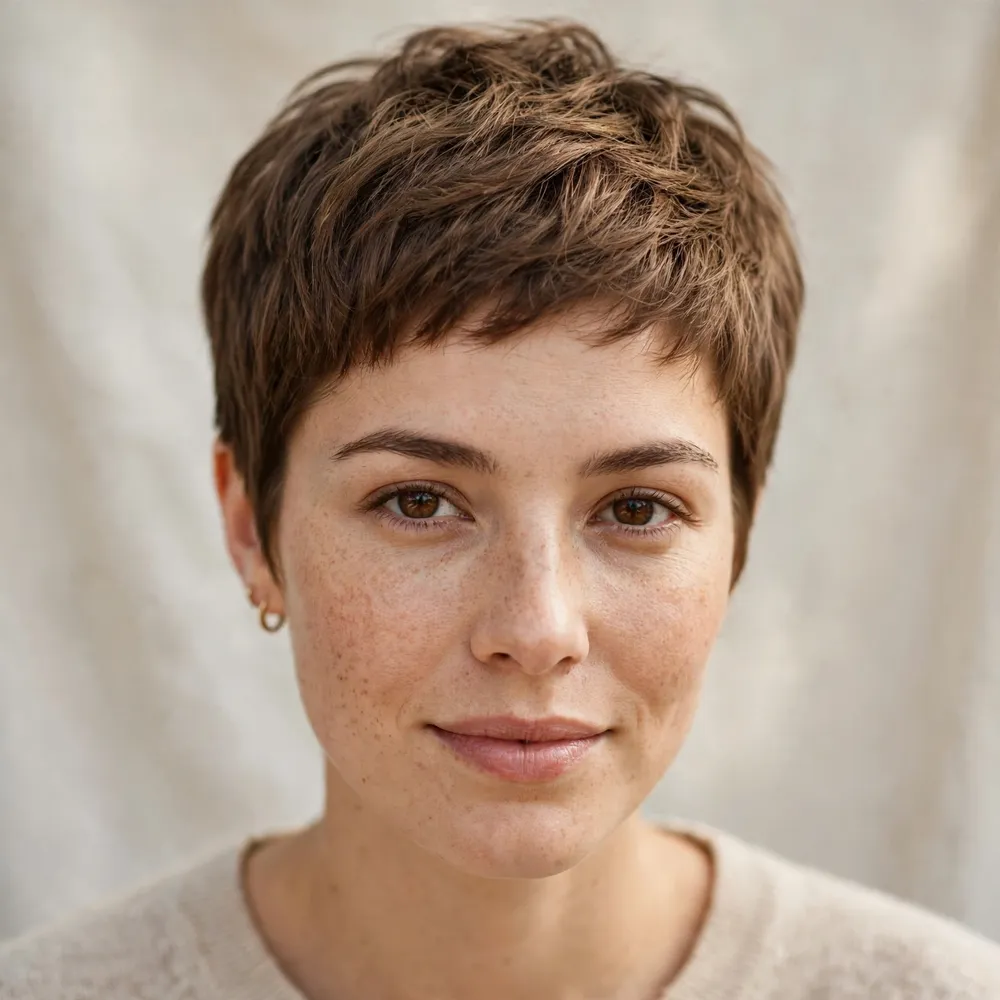
A pixie is the shortest women’s haircut there is: close at the back and sides, with enough length left on top to style. It has been around since the 1950s, it suits more people than most expect, and when the cut matches your face shape and hair type, it does the hard work for you. If you want the shortlist, start with these three — the Classic Short Pixie Cut, the Long Pixie With Side Bangs, and the Curly Pixie Cut — then browse the full 39 pixie hairstyles below to find the one that fits your hair, your routine, and your nerve.
What is a pixie cut?
A pixie cut is a short women’s cut that sits close to the head at the back and sides, usually no longer than a couple of inches, while the top keeps a little more length for styling. It takes its name from the mythical pixie — small, sharp, a bit mischievous — and the cut earned its fame in the 1950s and 60s, when Audrey Hepburn and Mia Farrow made short hair look like the boldest choice in the room rather than the safe one.
It suits more faces than people assume. Oval faces can wear almost any version. Round faces do well with height on top and short sides. Square faces soften with a side sweep or feathered fringe. The cut works on straight, wavy and curly hair alike — what changes is how the stylist shapes it, not whether it works at all. It is especially flattering if you have strong cheekbones or a good jawline, because there is nothing left to hide behind. Short hair puts your face front and centre, and that is the point.
So how does it differ from a bob or a crop? A bob is longer — chin-length or thereabouts, with weight at the jawline. A pixie is shorter everywhere, and the back is usually tapered or clipped rather than blunt. A crop is the vaguer cousin: any short cut, often unisex, and often cut with clippers all over. A pixie is the most deliberate of the three — shaped, layered, and styled on top rather than simply cut short.
How to pick the right pixie
There is no single best pixie. The right one depends on your face shape, your hair’s natural texture, and how much time you honestly want to spend on it in the morning. Use this quick picker, then check the matching ideas in the list below.
| Face shape / hair type | Best pixie styles | What to ask your stylist for |
|---|---|---|
| Oval face | Almost any pixie — classic, textured, sleek | Keep the top soft and the sides neat; let the cut do the work |
| Round face | Height on top, short sides, side-swept fringe | Volume at the crown, no width at the cheeks |
| Square face | Feathered pixie, side-swept bangs, soft layers | Texture around the jawline, avoid a blunt straight fringe |
| Heart face | Long pixie, side-swept length, curtain bangs | Length past the cheekbones to balance a wider forehead |
| Long face | Pixie with a fringe, wavy or curly texture | A fringe to shorten the face visually, width at the sides |
| Fine hair | Textured pixie, choppy layers, short crop | Choppy ends and a matte paste for the illusion of fullness |
| Thick hair | Layered pixie, undercut, thinned-out crop | Weight removed underneath so the top sits flat and shaped |
| Curly hair | Curly pixie, tapered sides, rounded crop | Shape the curls dry, keep the sides tapered, never razor-thin the curls |
| Low maintenance | Classic short pixie, sleek pixie, micro pixie | A cut that air-dries into shape with almost no product |
One honest rule before you book: bring a photo of the exact cut you want, not just the word “pixie”. The word covers everything from a two-inch crop to a jaw-skimming bixie, and a photo closes that gap in seconds.
The 39 pixie hairstyles
1. Classic Short Pixie Cut

This is the one most people picture when they hear “pixie”: short all over, neat tapered sides, and a soft sweep of length across the top. It is the easiest pixie to live with and the hardest to get wrong. It suits oval and heart-shaped faces best, but it flatters almost anyone with good cheekbones. Ask your stylist for short tapered sides, a little length left on top — about two inches — and a soft, textured fringe rather than a blunt one. Finish with a pea-sized amount of matte paste rubbed between your palms and pushed through the top. Maintenance is honest but light: a trim every four to six weeks keeps the shape, and the cut air-dries in minutes.
2. Long Pixie With Side Bangs
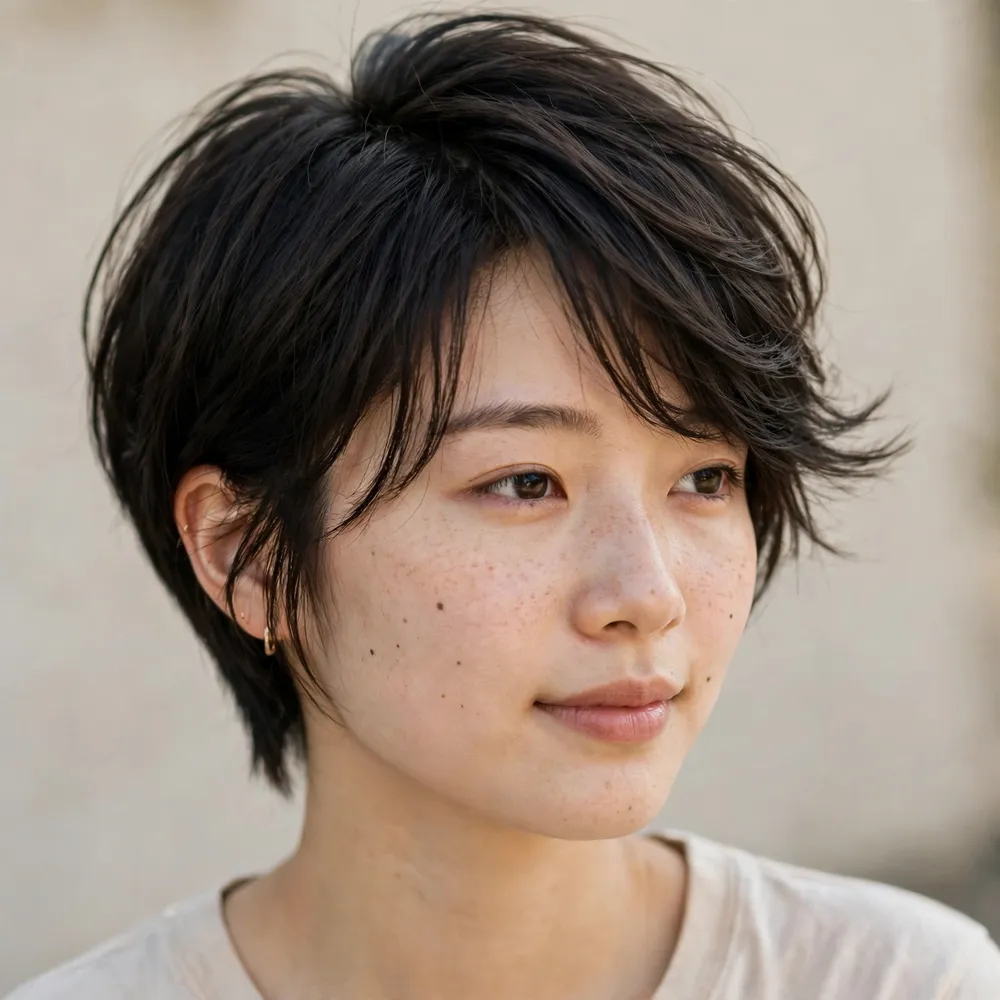
The long pixie is the gentle way into short hair. The top and fringe stay long enough to sweep across the forehead, while the back and sides stay short and tapered. It reads softer than a classic pixie and feels less like a leap if you have never gone short before. It suits round and square faces particularly well, because the diagonal sweep breaks up the width of the face. Ask for the fringe to reach the cheekbone on one side and the crown to stay long enough to tuck behind an ear. A light styling cream gives it movement without stiffness. It grows out more gracefully than most pixies, so trims can stretch to six weeks, and on lazy mornings you can pin the fringe back and go.
3. Textured Pixie Cut
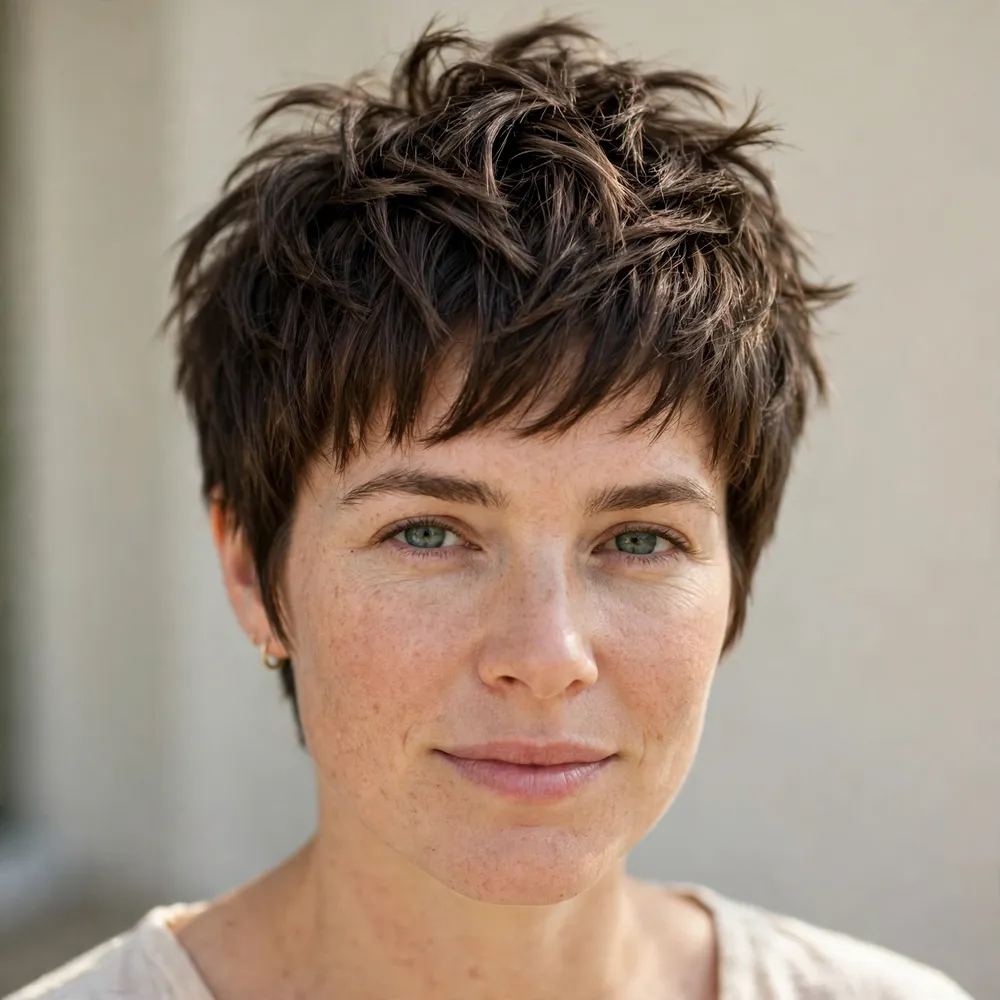
The textured pixie is all about choppy, piecey layers through the crown that give the cut movement even when you do nothing to it. It is the pixie for people who hate fussing with their hair but still want it to look deliberate. It works beautifully on straight and slightly wavy hair, and it is one of the best options for fine hair, because the layers create the illusion of fullness. Ask your stylist to point-cut the ends rather than cutting them blunt, and to leave the top long enough to piece apart with your fingers. A small dab of texturising paste or sea-salt spray is all the styling it needs. Trims every five weeks keep the layers crisp, and second-day hair actually looks better than freshly washed.
4. Choppy Pixie Hairstyle
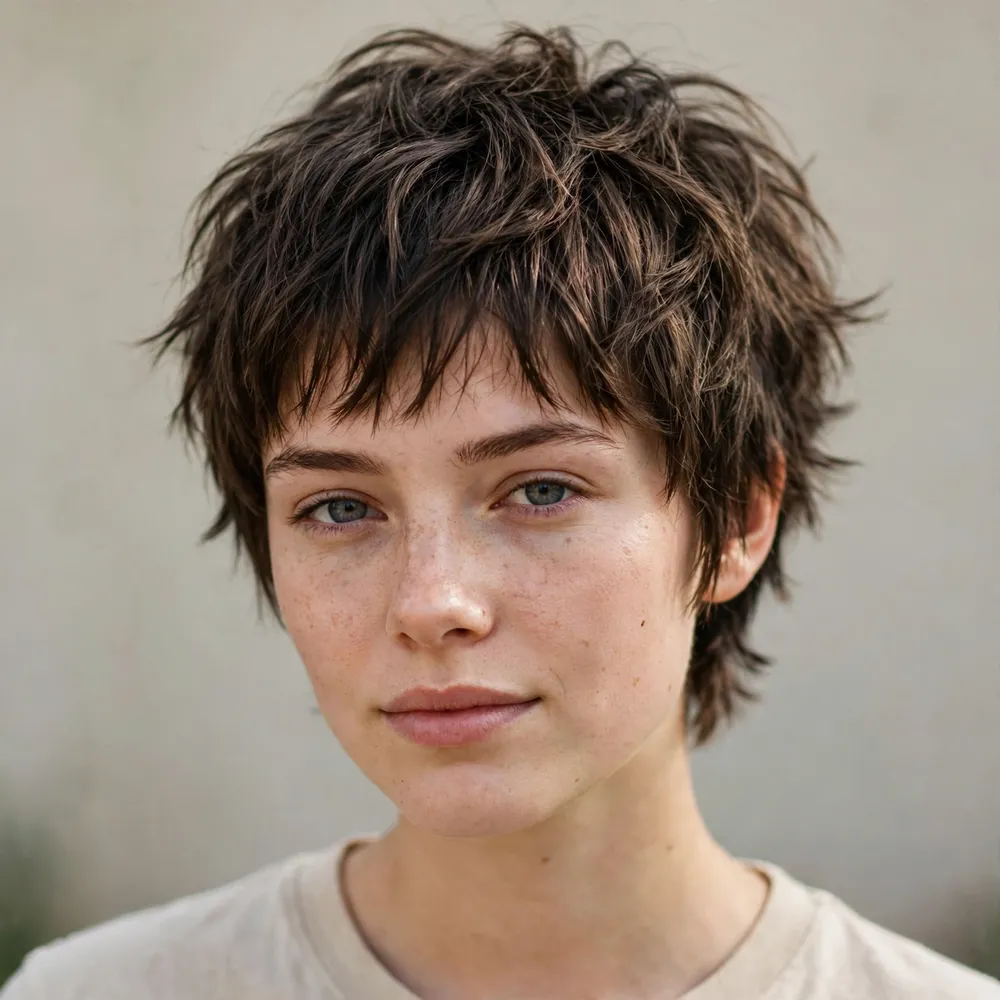
The choppy pixie takes texture a step further: uneven, deliberately ragged ends and layers cut at different lengths so the whole cut looks lived-in from the moment you leave the salon. It suits people with a bit of attitude in their style, and it works on straight and wavy hair alike. Round faces benefit because the uneven pieces break up symmetry, and fine hair looks thicker thanks to the varied lengths. Ask for a razor or point-cut finish and uneven lengths through the top, with the sides kept short but not shaved. Scrunch in a little texturising cream while the hair is damp and let it dry naturally. It is forgiving as it grows out — the choppiness hides regrowth — so six-week trims are plenty.
5. Layered Pixie Cut
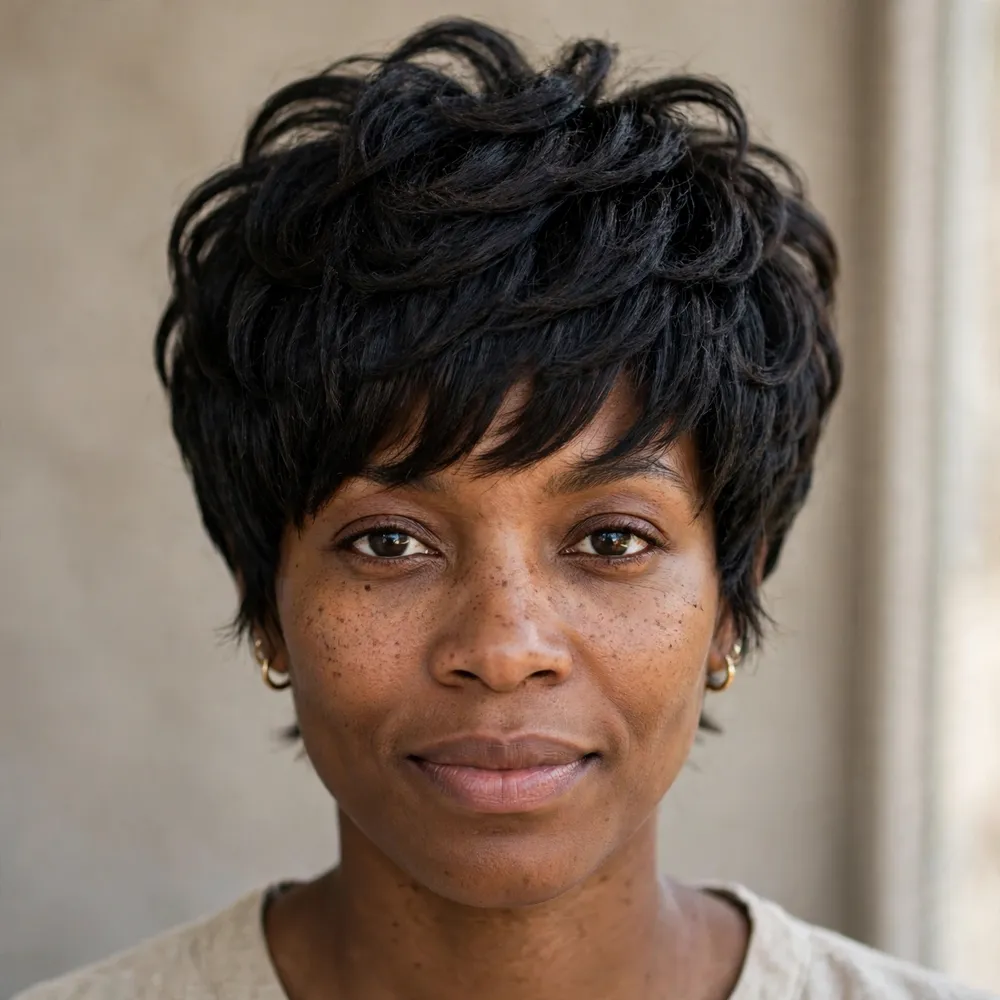
Layers are what stop a pixie from sitting flat against your head, and this cut leans into them fully. Stacked layers through the back and crown build volume and give the cut its shape, so it suits thick hair that needs weight removed and fine hair that needs lift. It flatters oval and long faces, and it is a good pick if your hair is naturally straight and tends to fall limp. Ask your stylist for stacked layers at the back, shorter underneath and longer on top, with the crown left full. Blow-dry the crown upward with your fingers and a round brush for lift, then finish with a light-hold spray. Expect a trim every four to five weeks, since layers lose their shape faster than a blunt cut.
6. Pixie Cut With Curtain Bangs
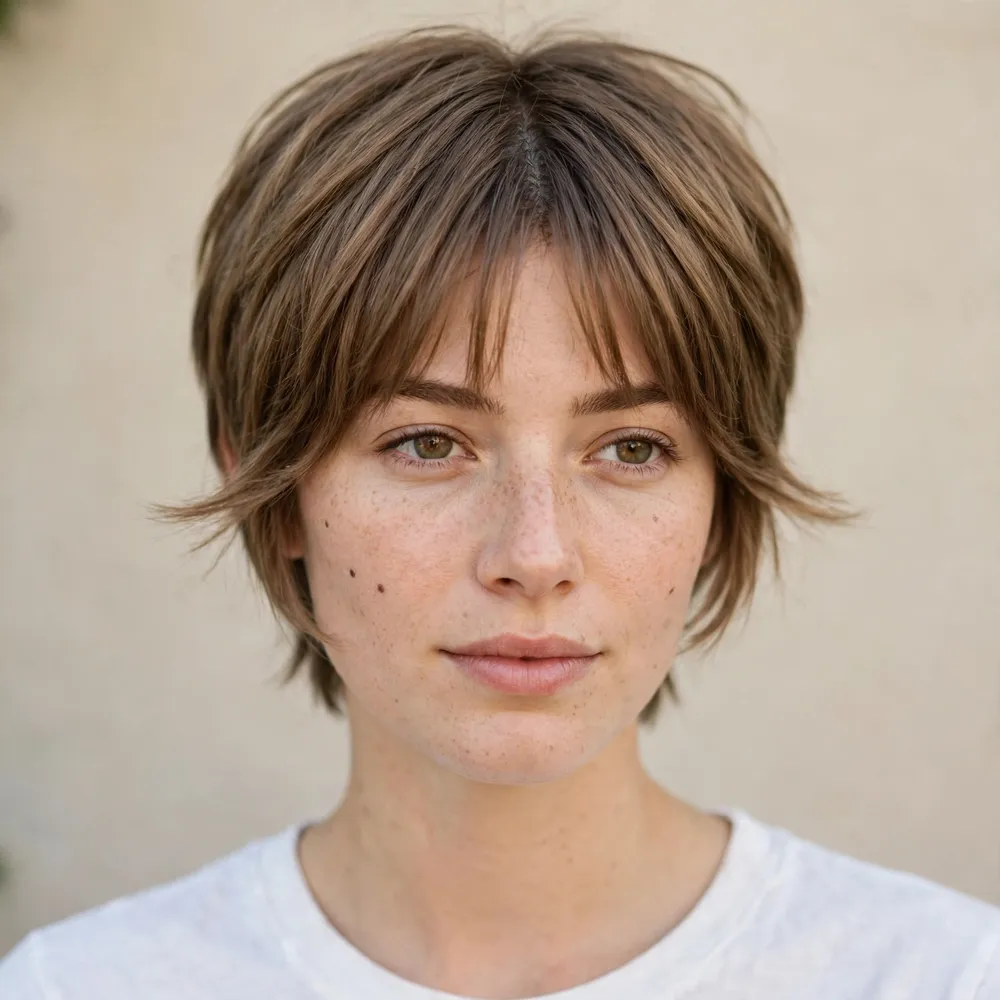
Curtain bangs meet the pixie here. The fringe parts in the middle and sweeps to both sides, framing the face like a curtain, while the rest of the cut stays short and neat. It suits heart-shaped and oval faces beautifully, and it is a kind way to soften a strong forehead. If you already like curtain bangs, this is the short-hair version. Ask for the fringe to fall to cheekbone length, parted in the centre, with the sides kept tapered. Blow-dry the fringe away from the face with a small round brush for that feathered sweep. It needs a fringe trim every three to four weeks, but the rest of the cut is low fuss.
7. Asymmetrical Pixie Cut
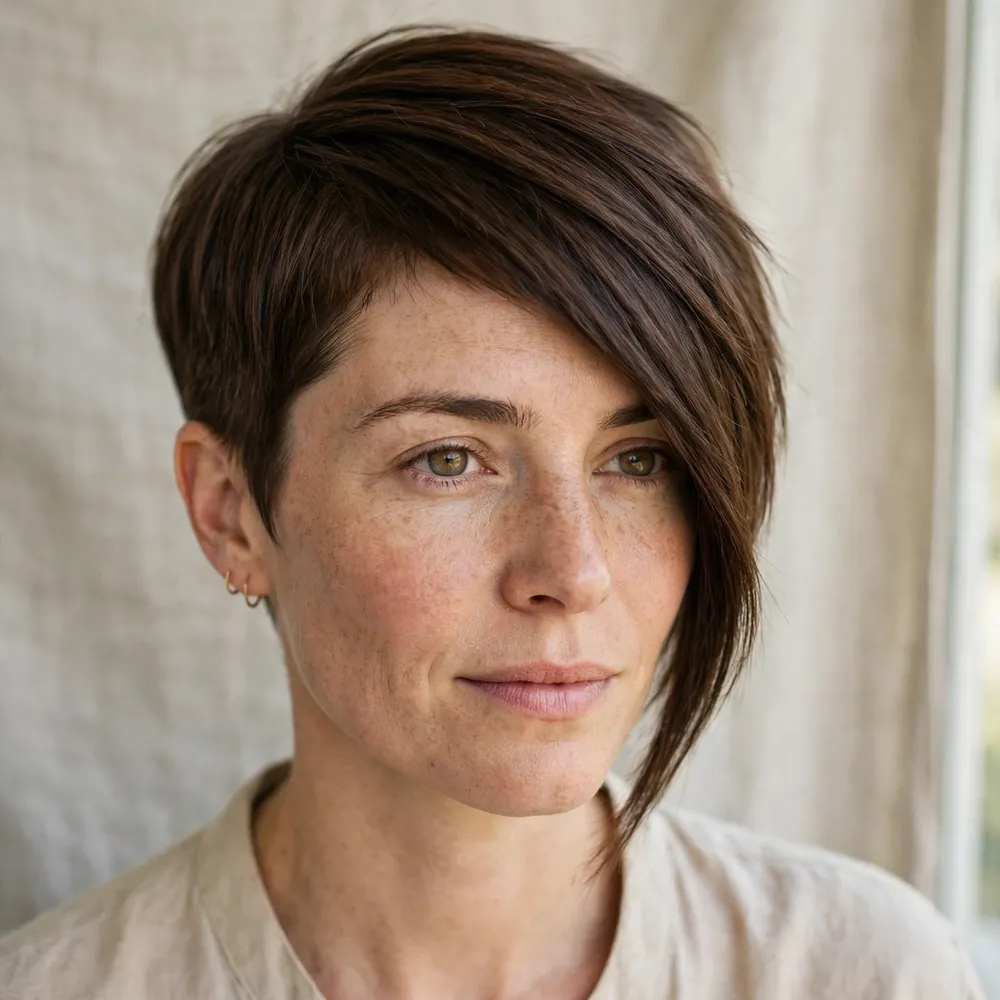
One side longer than the other, a sharp diagonal line across the forehead — the asymmetrical pixie is the most striking cut on this list, and it knows it. It suits oval and heart-shaped faces, and it is a strong choice if you want short hair with a fashion edge rather than a classic look. Ask your stylist for one side kept at cheekbone length and the other tapered short, with a deep side part to show off the angle. A flat iron on the longer side keeps the line crisp, and a shine serum stops it looking fuzzy. It is the highest-maintenance pixie here: the asymmetry shows regrowth quickly, so book a trim every three to four weeks, and be ready to style it every morning.
8. Undercut Pixie Hairstyle
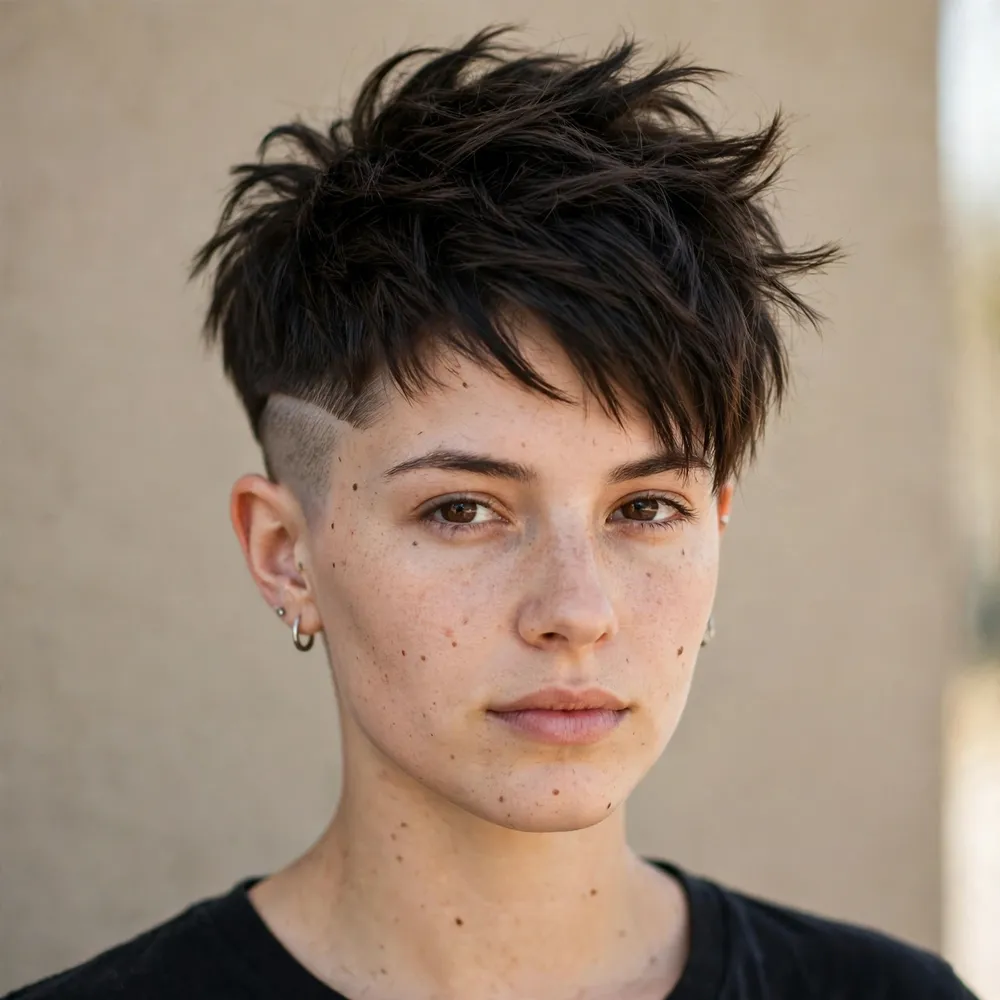
The undercut pixie keeps length on top and takes the sides — one or both — down to a clipper cut. The contrast is the whole point: soft on top, sharp underneath. It suits thick hair especially well, because the undercut removes bulk where you do not need it, and it flatters oval and square faces. Ask for the undercut to sit just above the ear on one or both sides, with the top left long enough to sweep over it or show it off. A matte clay gives the top hold without shine. Maintenance is the trade-off: the clipped section needs tidying every two to three weeks or it grows out into an awkward in-between length. If you like an edgy look, though, it is worth the upkeep.
9. Curly Pixie Cut
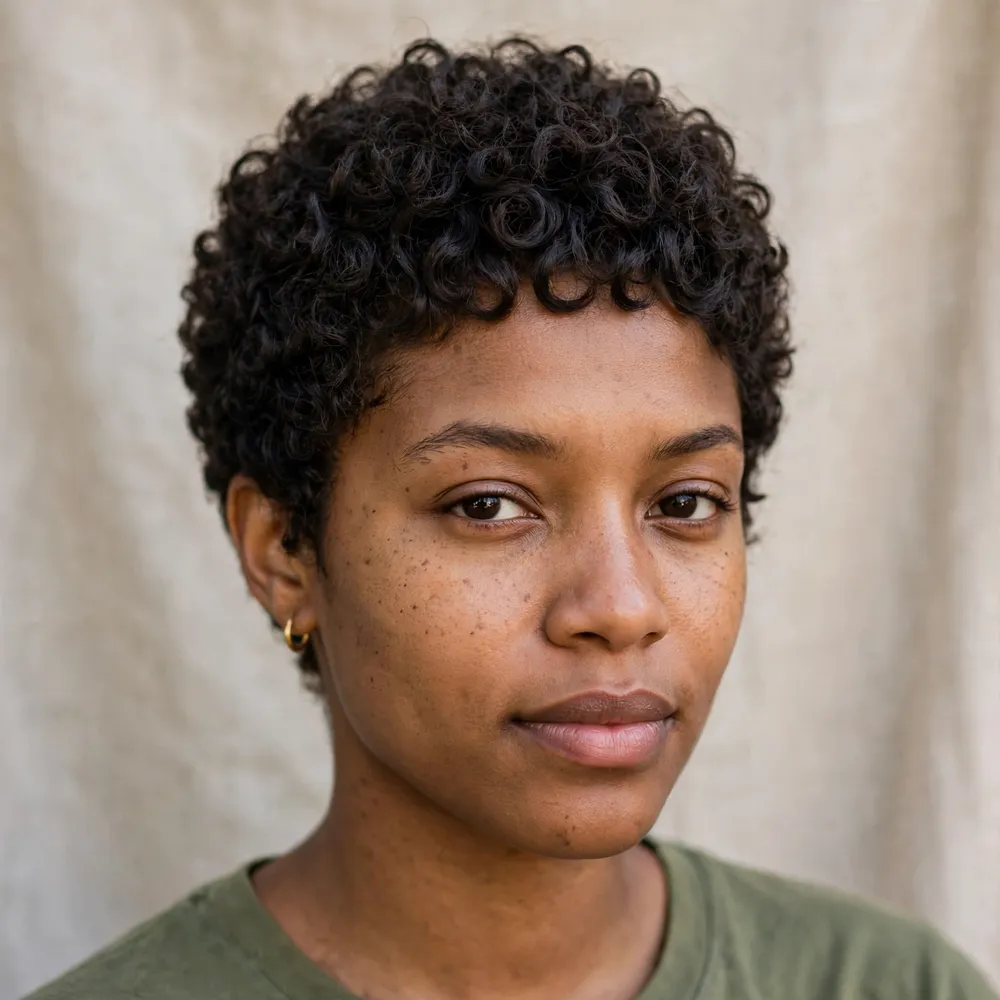
A curly pixie works with your curls instead of fighting them. The hair is shaped into a rounded crop that lets the curls sit where they naturally want to, with tapered sides and a fuller crown. It suits oval, round and heart-shaped faces, and it is one of the most flattering cuts for natural curls, because the shape shows off the texture rather than hiding it. Ask your stylist to cut your curls dry — this matters, since curls shrink as they dry — and to keep the sides tapered rather than bulky. Scrunch in a curl cream while damp and let it air-dry or diffuse on low. Trims every six to eight weeks are enough, and the cut actually looks better as the curls settle over the first few days.
10. Wavy Pixie Hairstyle
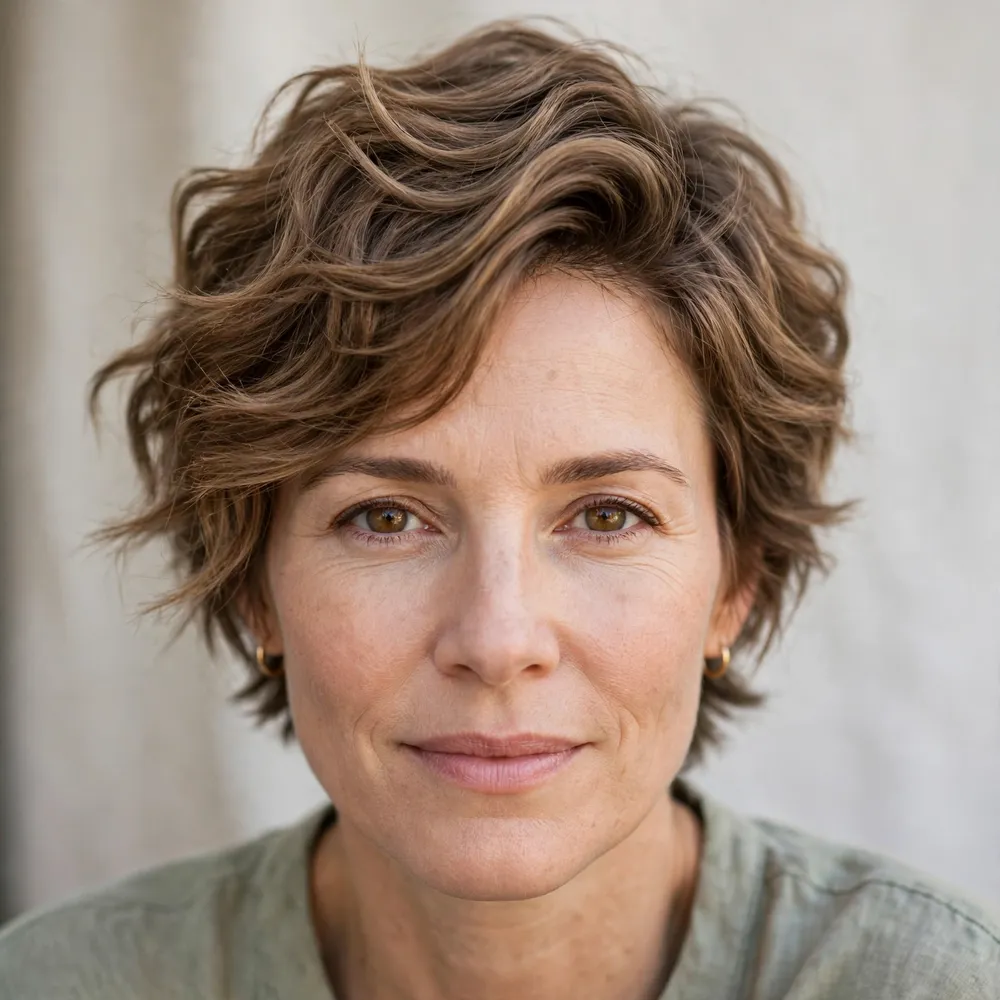
If your hair has a natural wave, this pixie lets it do the talking. The cut keeps enough length on top for the waves to form, while the sides stay short and neat so the shape stays clean. It suits almost every face shape, and it is a lovely middle ground if straight pixies feel too severe and curly ones feel too bold. Ask for layers cut to follow your wave pattern, with the top left long enough to tousle. A sea-salt spray scrunched into damp hair brings out the wave; a quick finger-comb is the only styling tool you need. It is one of the easiest pixies to maintain — the wave hides regrowth well — so trims every five to six weeks will do, and it air-dries beautifully.
11. Pixie Bob Hairstyle

The pixie bob — often called the bixie — sits halfway between a pixie and a bob. The back and sides are short like a pixie, but the top and front keep enough length to graze the jawline. It suits people who want short hair without losing all their length, and it flatters round and square faces because the longer front pieces slim the face. Ask for a pixie-shaped back with bob-length pieces at the front, around chin level. A round brush and a light smoothing cream give it a polished finish. It grows out more gracefully than a true pixie, so trims every six weeks are fine, and it is one of the easiest short cuts to style two different ways.
12. Shaggy Pixie Cut
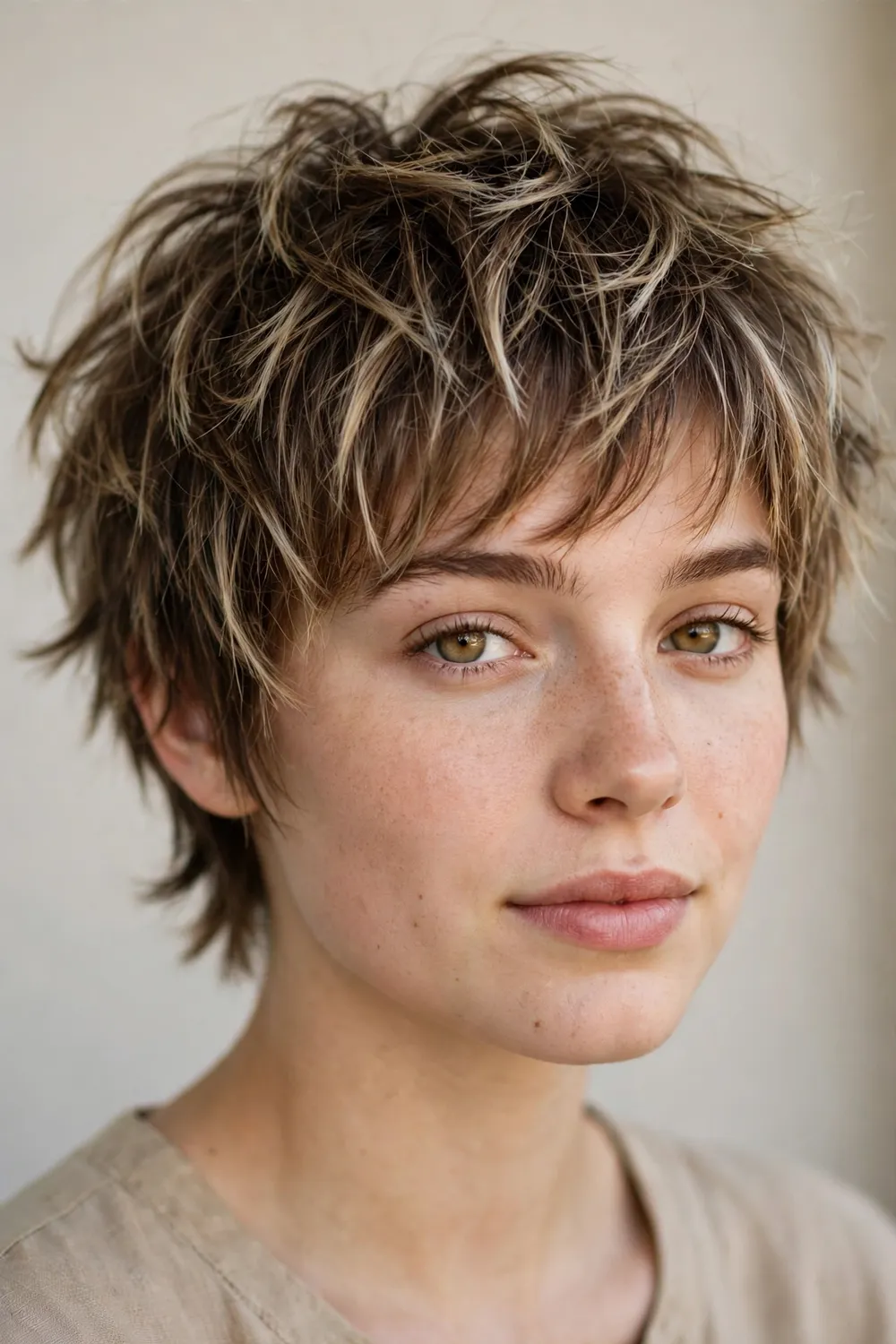
The shaggy pixie borrows the shag’s feathered layers and choppy ends and shrinks them into a short cut. The result is effortless and a little rock-and-roll, with layers that fall where they like. It suits wavy and straight hair, and it is a great pick for thick hair because the layers remove weight. Oval and long faces wear it best. Ask for shag-style layers through the crown and around the ears, with feathered ends and a wispy fringe. A texturising spray and a quick scrunch is all the styling it needs — the messier it looks, the better it works. It is very forgiving as it grows out, so six-week trims are enough, and it suits anyone who wants a cut that looks styled with almost no effort.
13. Spiky Pixie Hairstyle
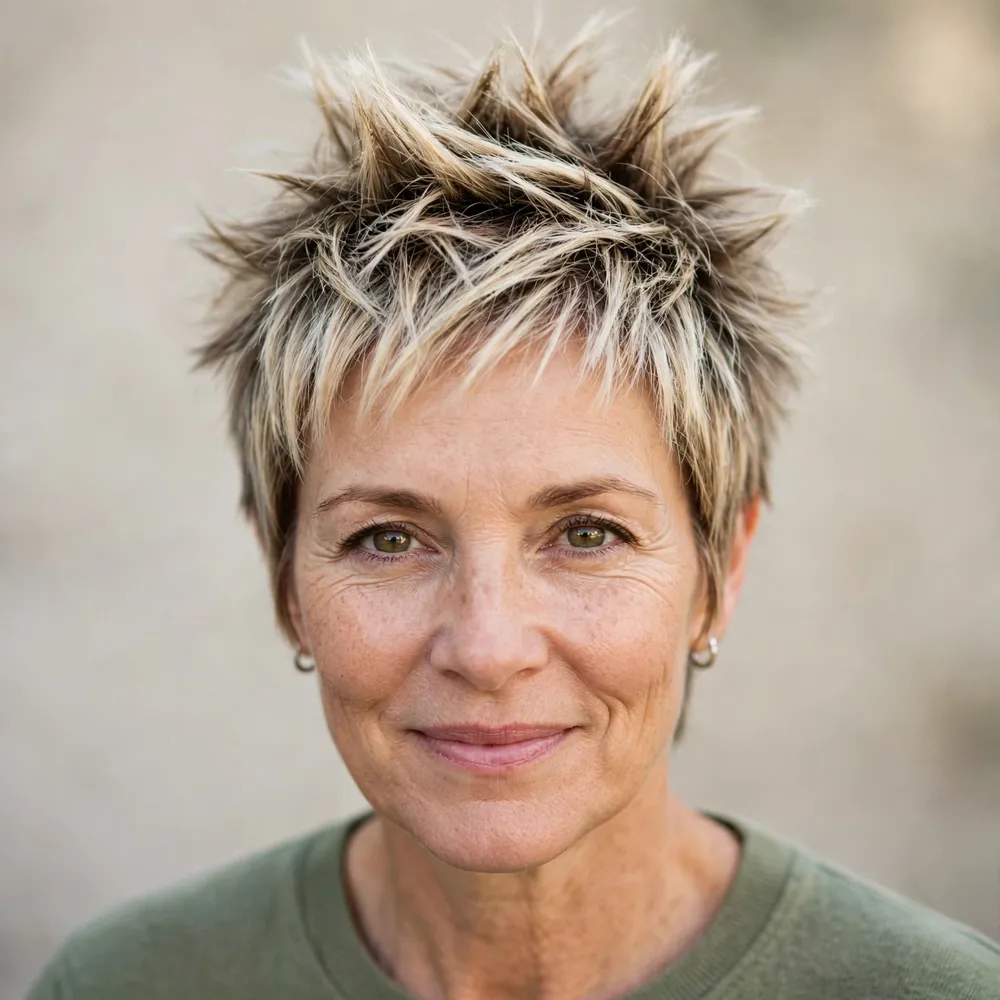
The spiky pixie is the playful one: short layers on top lifted into soft spikes, with neat tapered sides underneath. It is bold without being extreme, and it suits oval and heart-shaped faces best. It works on straight and slightly wavy hair, and it is a fun option if you have fine hair, because the spikes create height and the illusion of volume. Ask for short, choppy layers on top with enough length to spike — about two inches — and tapered sides. Rub a strong-hold wax between your palms and pinch the ends upward; a little goes a long way. It needs a trim every four weeks to keep the spikes sitting right, and it does need styling each morning, but the routine takes about two minutes.
14. Sleek Pixie Cut
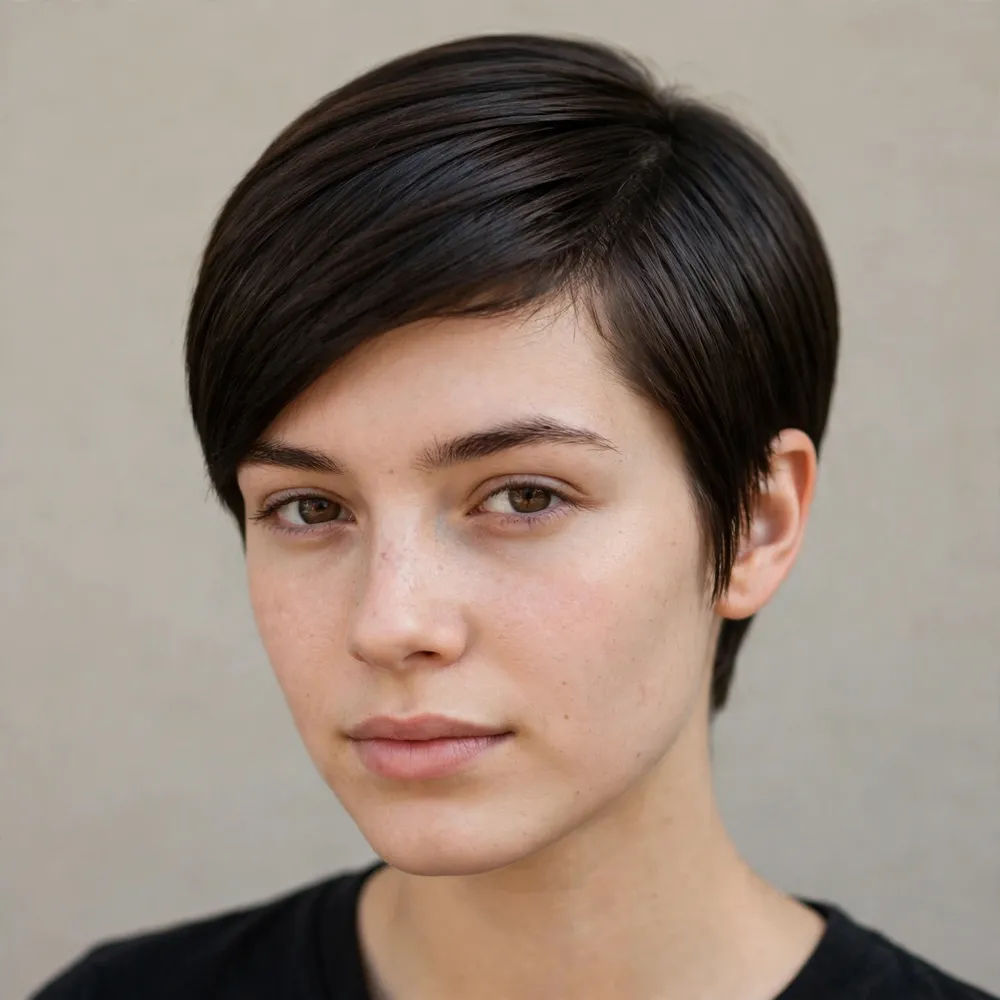
The sleek pixie is the polished end of the spectrum: smooth, glossy, and precisely shaped, with every strand sitting where it should. It suits straight hair best, and it flatters oval and square faces, especially with strong bone structure. This is the pixie for formal occasions, the office, or anyone who likes a put-together look. Ask for a smooth, blunt-cut top with tapered sides and a side part, and have the ends thinned slightly so they lie flat. A flat iron and a shine serum are the tools; a smoothing cream on damp hair before blow-drying keeps frizz away. It needs a trim every four weeks to stay sharp, and it shows regrowth sooner than textured cuts, but the payoff is a look that reads expensive with very little effort.
15. Feathered Pixie Hairstyle
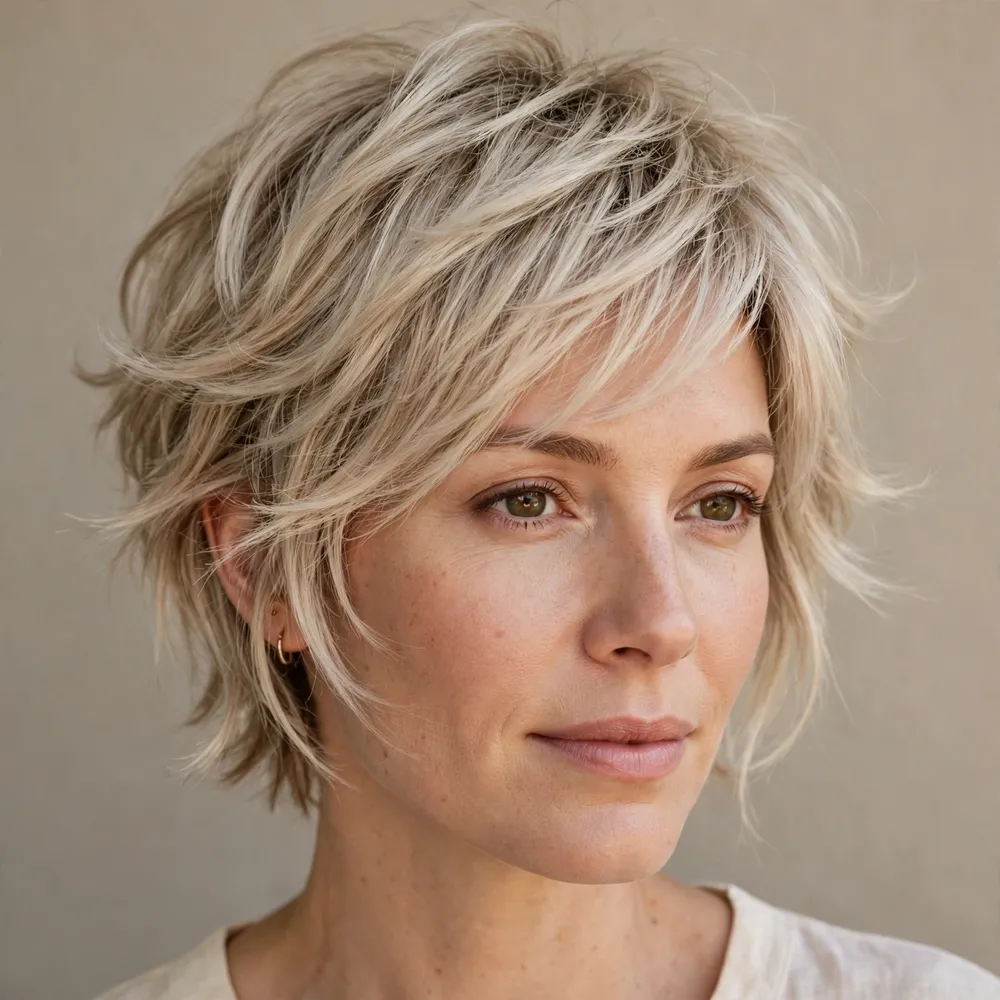
Feathered layers give this pixie a light, airy feel — the ends are cut at an angle so they flick outward softly instead of sitting heavy. It is a gentle, feminine take on short hair, and it suits fine and medium hair especially well. Round and heart-shaped faces benefit from the softness around the cheeks. Ask your stylist for feathered layers through the top and sides, with the ends razored for that wispy finish. Blow-dry with a small round brush, flicking the ends outward, and finish with a light-hold spray — heavy products will weigh the feathering down. Trims every five weeks keep the layers airy, and it grows out gracefully because the feathered ends disguise the regrowth.
16. Blonde Pixie Cut
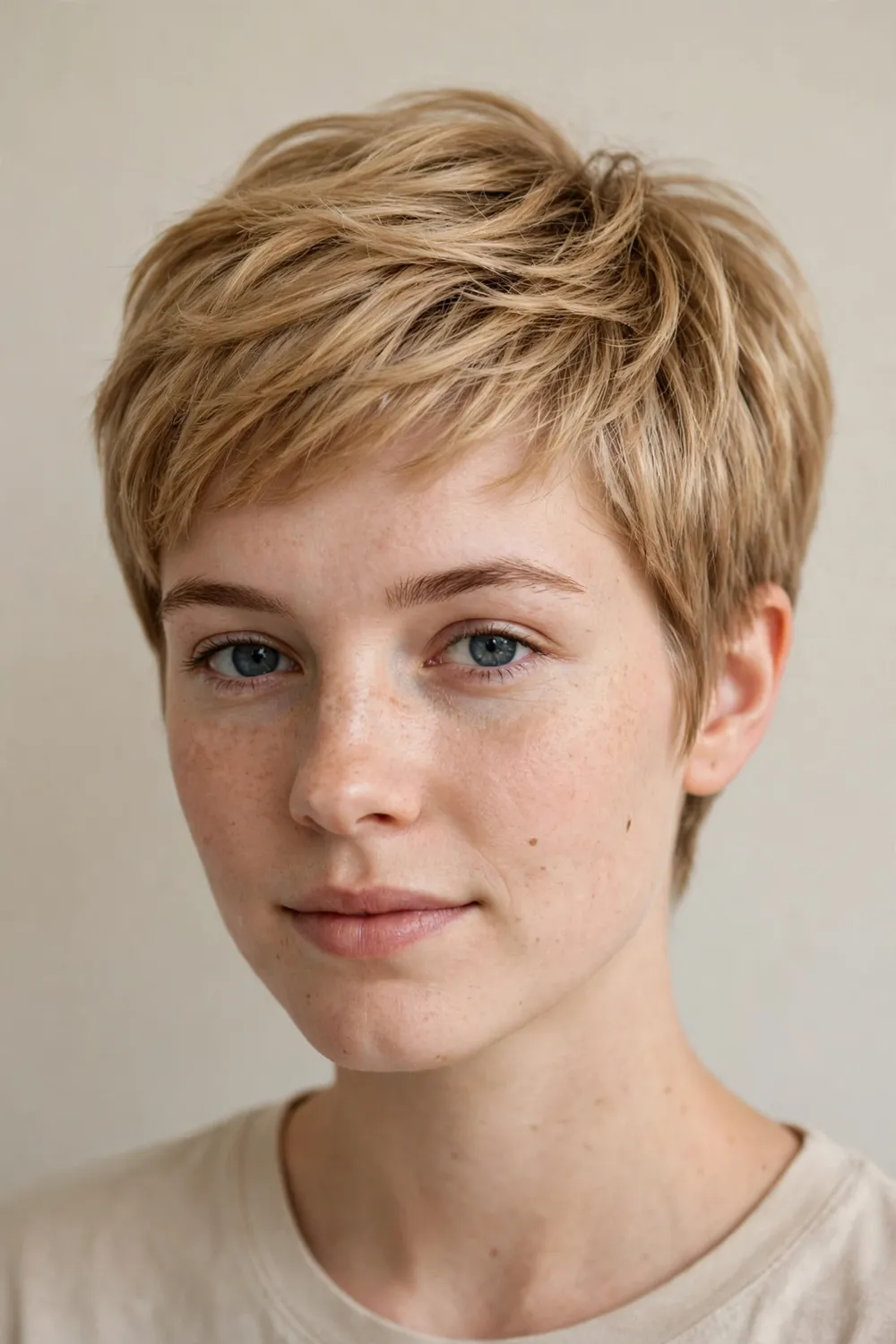
A warm blonde shade on a pixie cut does two things at once: it lights up the face and it makes the texture of the cut visible, since every layer catches the light differently. It suits warm and neutral skin tones best, and it works on any pixie shape — classic, textured, or long. Ask your colourist for a warm blonde with dimension, such as balayage or soft lowlights, rather than a flat all-over shade. The colour will need a root touch-up every four to six weeks, which conveniently lines up with your cut, and a purple shampoo once a week keeps brassiness away. Use a colour-safe shampoo and a weekly mask, because bleached hair dries out faster. The upkeep is real, but the glow is worth it.
17. Platinum Pixie Hairstyle
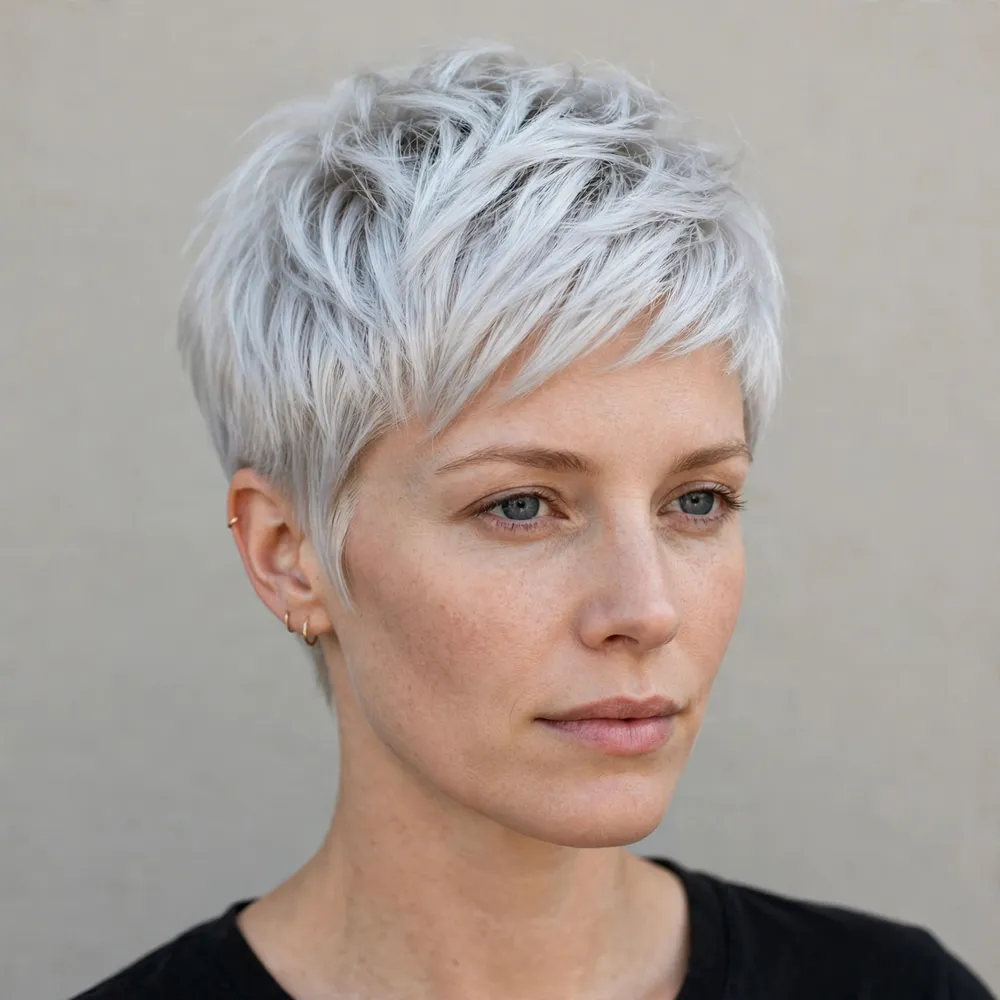
Platinum is the most high-impact colour you can put on a pixie, and short hair is the easiest way to wear it — there is less hair to bleach, and the regrowth is part of the look. Icy, almost-white blonde suits cool skin tones and makes the cut’s shape razor-sharp. Ask your colourist for a platinum toner over pre-lightened hair, and be honest about your hair’s history — previously coloured hair may need more than one session. Maintenance is the commitment: roots every three to four weeks, purple shampoo twice a week, and a deep-conditioning mask weekly to keep the hair from going straw-like. It is the highest-upkeep colour here, but on a pixie it is also the most forgiving, because damaged ends get trimmed away fast.
18. Brunette Pixie Cut
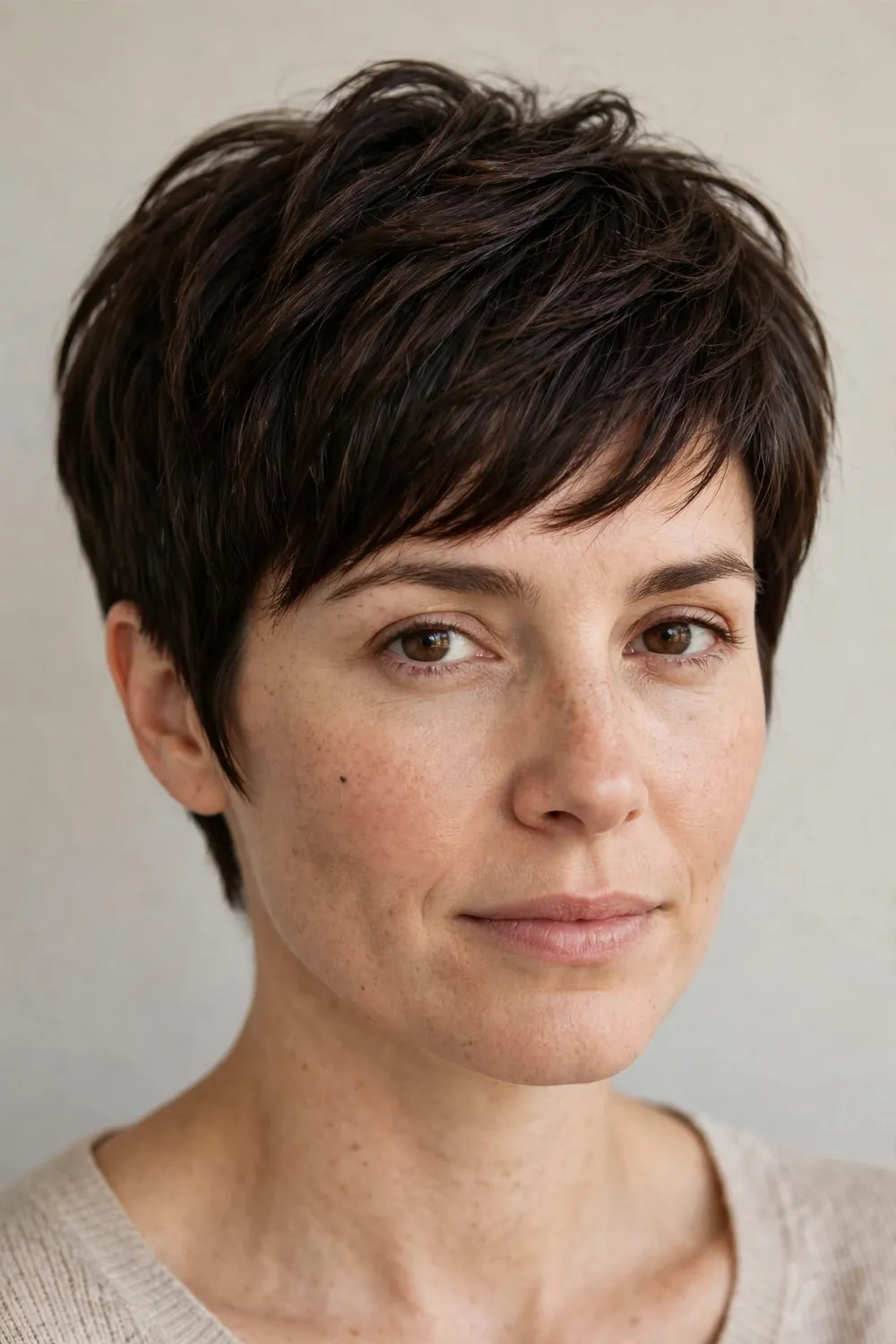
A rich brunette pixie is proof that short hair does not need bold colour to make an impact. Deep brown with glossy dimension looks expensive and suits almost every skin tone, especially warm and olive complexions. It works on any pixie shape, but it shines on sleek and layered cuts where the shine shows. Ask your colourist for a multi-dimensional brown — a dark base with a shade or two of caramel or chestnut woven through — so the colour has depth rather than sitting flat. Colour upkeep is gentle: a gloss every six to eight weeks keeps the shine, and roots are far less obvious than with blonde. Use a shine serum on the ends and you are done; this is the lowest-maintenance colour on the list.
19. Gray Pixie Hairstyle
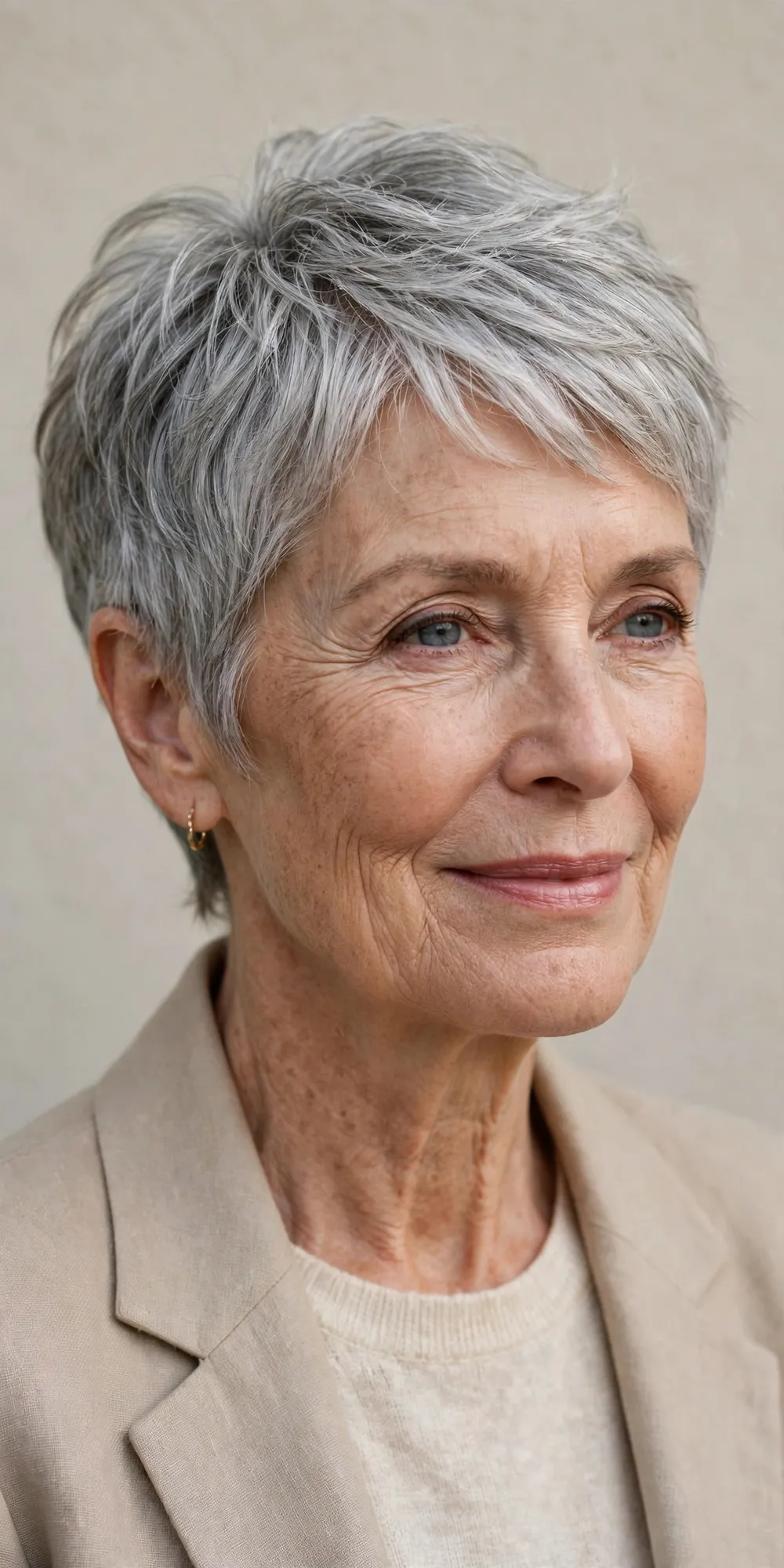
Letting your natural grey show in a pixie is one of the most elegant choices on this list. Short grey hair looks modern and intentional rather than neglected, and the silver tones catch the light beautifully. It suits every face shape, and it is especially flattering on mature skin, because the soft silver brightens the complexion. Ask your stylist for a textured or layered pixie that shows off the natural variation in your grey — a flat, one-length cut hides it. A purple shampoo once a week keeps the silver bright and stops it yellowing, and a lightweight oil on the ends adds shine. Trims every five weeks keep the shape, and the best part is there is no colour upkeep at all — the grey is the colour.
20. Pixie Cut With Highlights
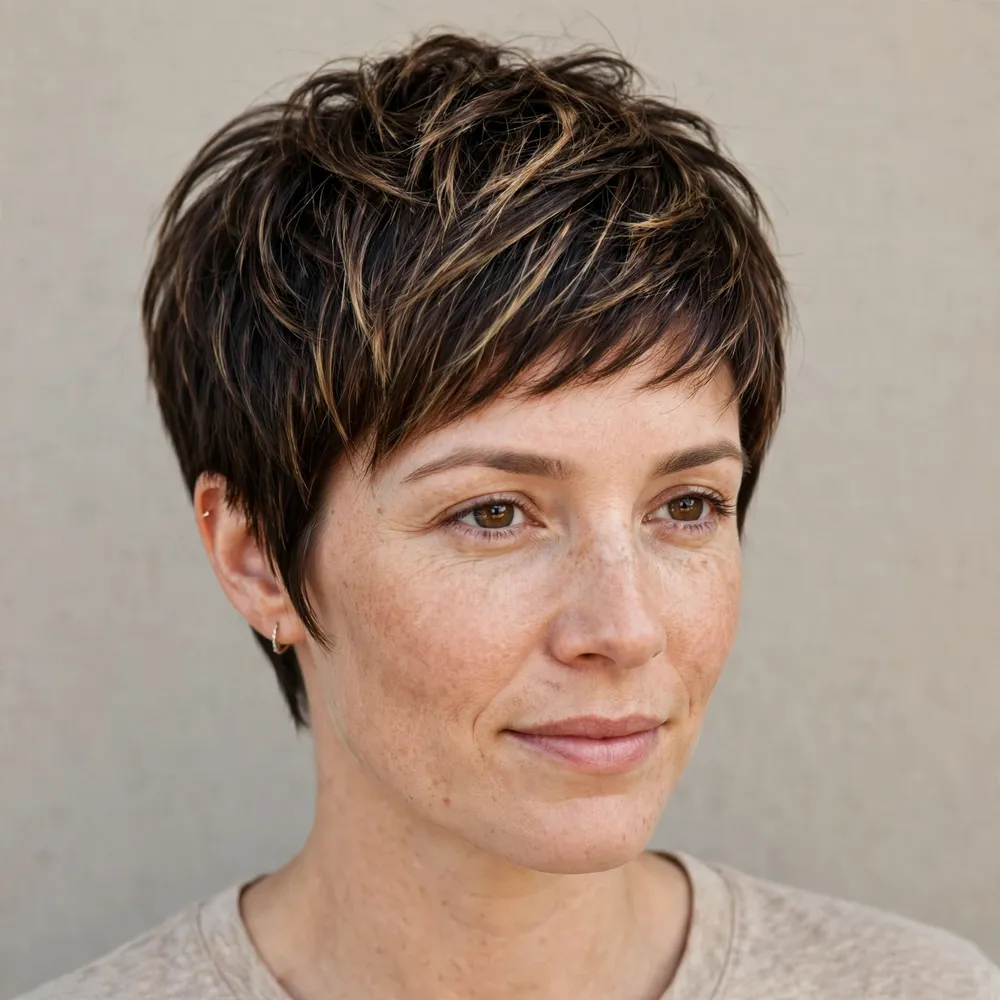
Highlights are the low-commitment way to add dimension to a pixie. A few lighter pieces through the top catch the light and make the layers look deeper, without the upkeep of an all-over colour. They suit every skin tone — the trick is choosing the right shade, warm caramel for warm skin, cool ash for cool skin. Ask your colourist for fine, face-framing highlights through the crown and fringe, not a heavy foil job. They grow out softly, so you can stretch touch-ups to eight weeks, and a colour-safe shampoo keeps them bright. It is the easiest colour option here, and it works on any pixie shape, from classic to choppy. If you are colour-curious but commitment-shy, start here.
21. Pixie Cut for Fine Hair
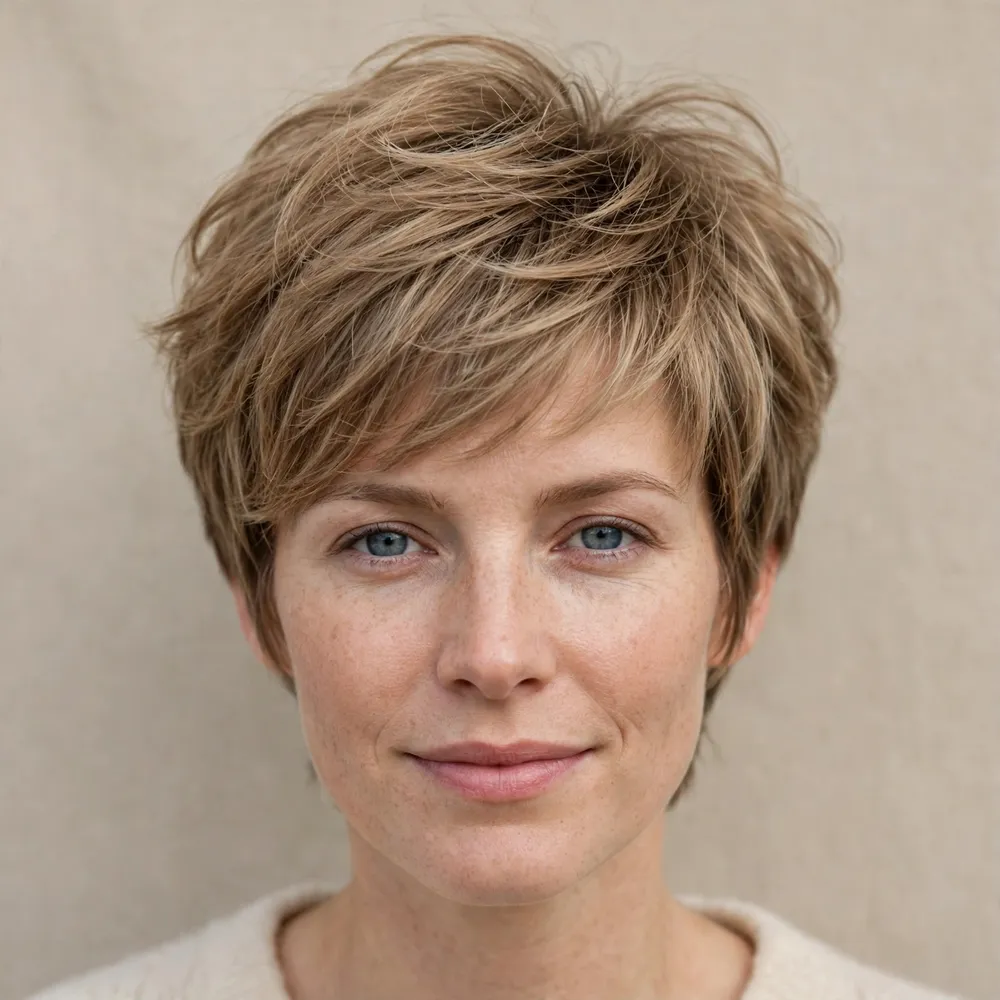
Fine hair suits a pixie better than most people expect, because the cut removes the weight that drags fine hair flat. Short, stacked layers through the crown create the illusion of density, while a slightly longer textured fringe gives the front something to work with. It suits women whose hair goes limp by midday, or anyone who has watched long fine hair sit lifeless. Ask for a layered pixie with point-cut ends, the crown a touch longer than the sides, and volume without heavy thinning. A volumising mousse at damp roots does most of the styling, with a dab of light paste on the ends for separation — and since fine hair shows growth fast, trims every four to five weeks stop it going straggly, with dry shampoo on day two keeping the roots from clumping.
22. Pixie Cut for Thick Hair
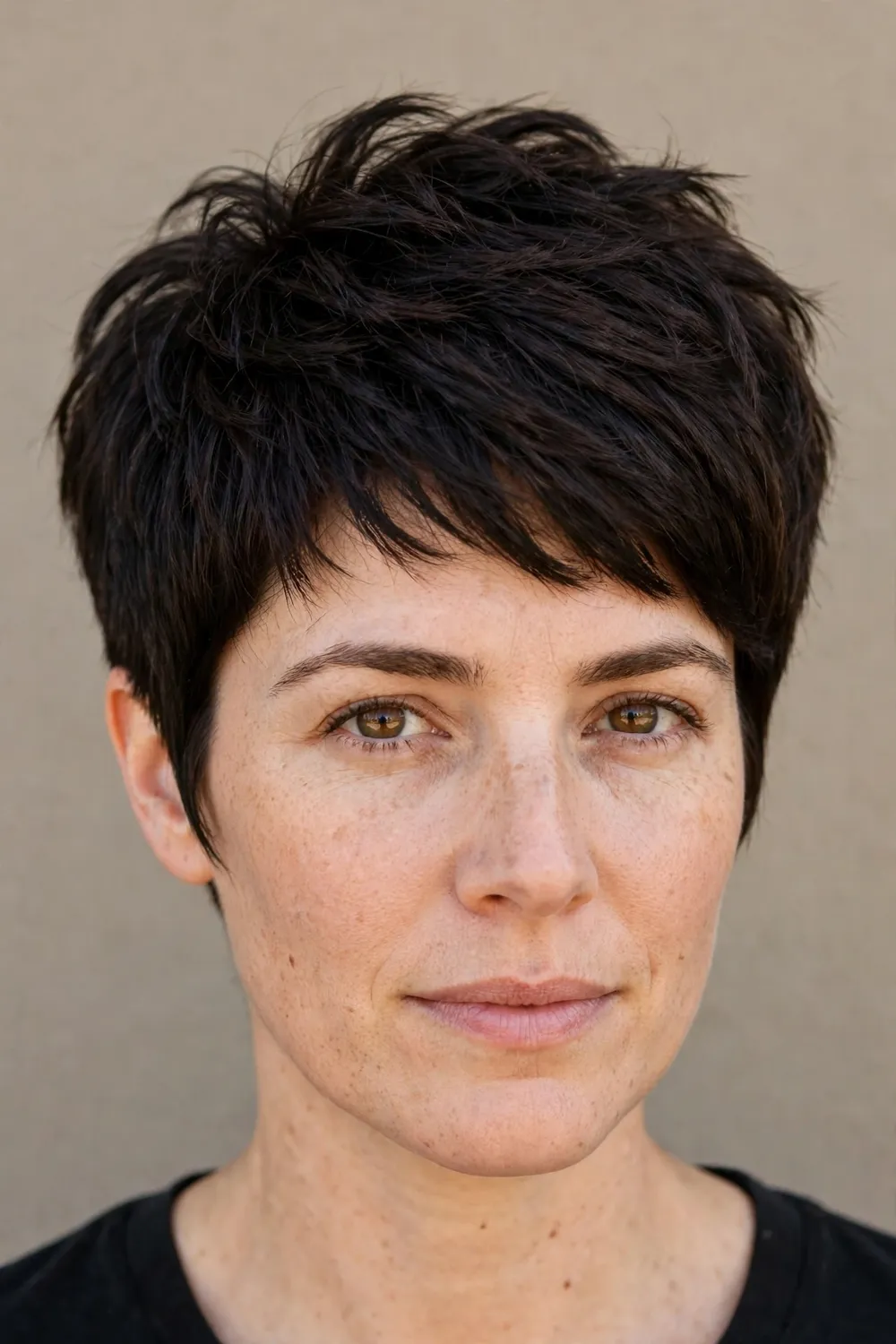
Thick hair can make a pixie feel like a helmet if it is cut blunt, so this version is all about removing weight in the right places. Thinning the interior and a graduated nape keep the silhouette neat, while the top stays long enough to fall naturally instead of puffing out. It suits women with dense, heavy hair who are tired of long blow-dries, on straight hair or a slight wave. Ask your stylist to thin and shape the interior, not just cut the outline shorter, and leave the crown long enough to lie flat on its own. A light smoothing cream tames flyaways, and a round brush is only needed on the front if you want a soft sweep. Expect a trim every five to six weeks, thinning included — that is what stops the cut growing into a triangle.
23. Pixie Cut for Round Face
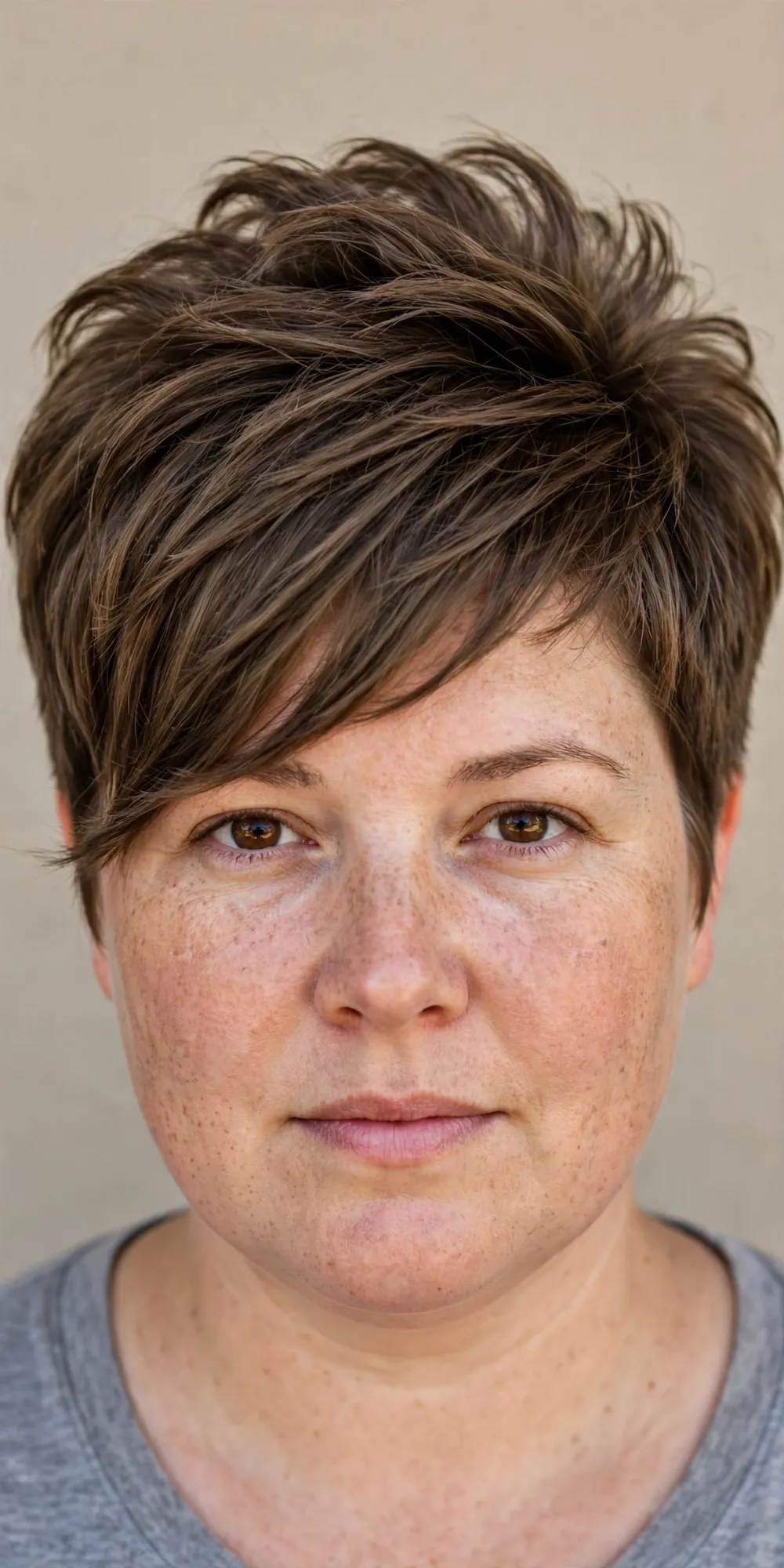
The round-face pixie is built around one idea: height on top, short at the sides. Volume at the crown stretches the face visually, while tapered sides keep everything from widening at the cheekbones, and a side-swept fringe helps even more by drawing the eye diagonally instead of straight across. It suits anyone with full cheeks who has been told pixies would not work — that advice is usually about the wrong pixie, not the cut itself. Ask for height at the crown, tapered sides, and a long side fringe ending around the cheekbone. Style it by blow-drying the crown upwards with your fingers and a little volumising spray, then smoothing the sides down with a dab of cream. Trims every four to six weeks matter most here, because once the sides bulk out, the lengthening effect disappears fast.
24. Pixie Cut for Older Women
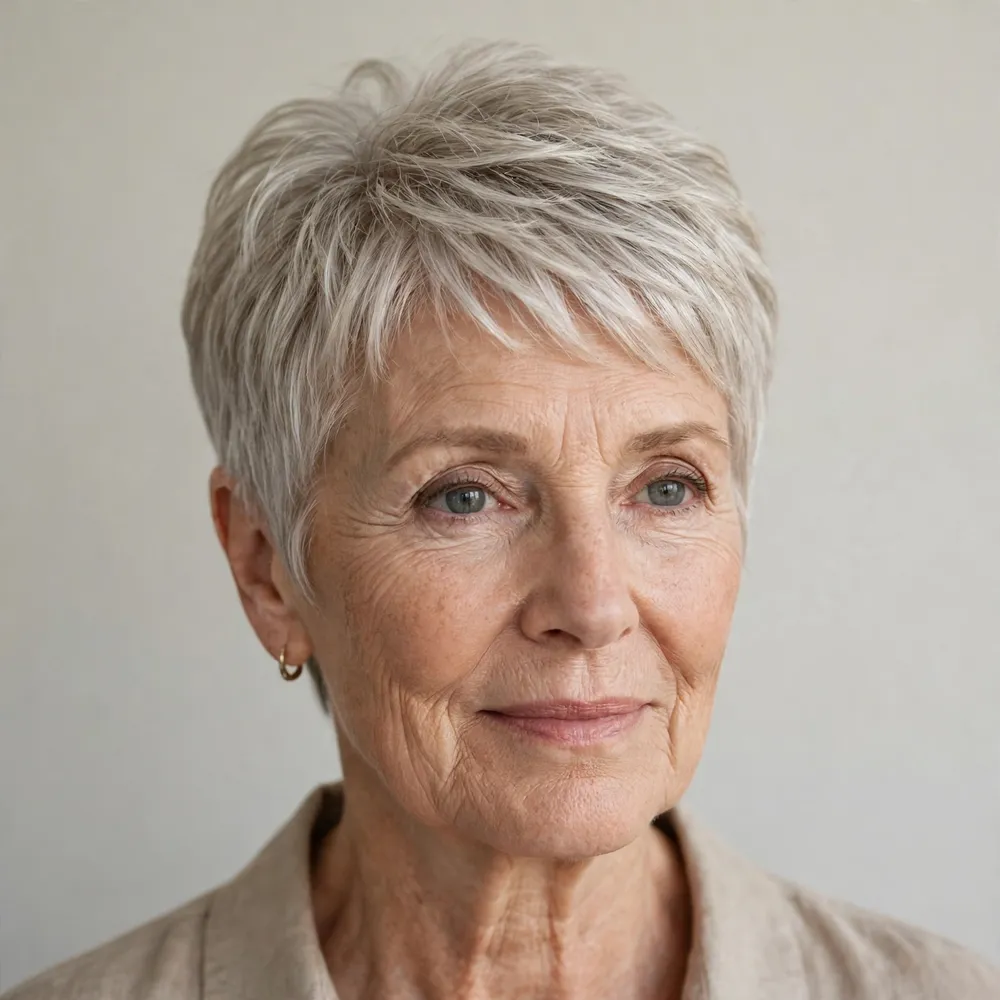
This is the pixie that quietly takes years off without trying to look young — soft layers, a gentle fringe, and a shape that lifts the face instead of dragging it down. Shorter hair draws attention to the eyes and cheekbones, and a feathered edge around the face flatters far more than a hard, blunt line at any age. It suits women over fifty who want something low-effort but polished, and it is kind to hair that has thinned a little, since short layers read fuller than long strands. Ask for a soft pixie with a wispy fringe and layers that move, not a severe crop, and talk about whether a subtle highlight would lift your skin. A light mousse and a quick finger-style is usually the whole routine — just keep up with trims every five weeks, and a good conditioner, since shorter hair shows dryness quickly.
25. French Pixie Crop
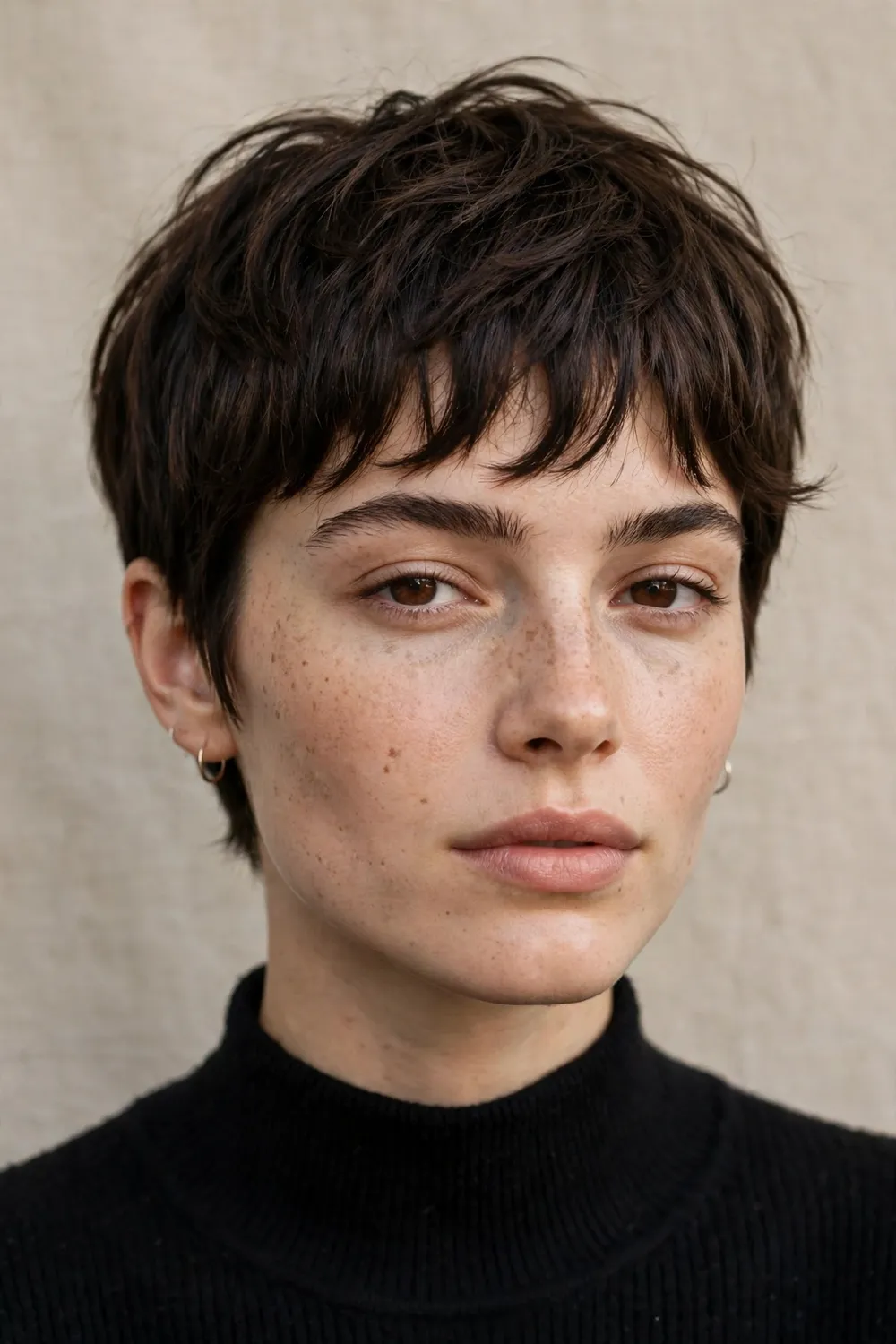
The French pixie looks like you woke up in Paris and did not bother trying — a short crop with a soft, slightly grown-out fringe and deliberately undone edges. It is shorter at the back, with length on top that can be pushed to one side or left to fall where it wants, and it never looks over-styled. It suits women who like an effortless, slightly androgynous look and do not want to spend more than two minutes on their hair. Ask for a French crop with a soft fringe just above the brows and textured ends throughout — and say you want it to look good messy, because that is the brief. A little matte paste rubbed between your palms and scrunched through the top is all it needs, no brush or dryer most days. The grow-out is forgiving too, so you can stretch trims to six weeks and it still looks intentional.
26. Pixie Mullet

The pixie mullet — the mixie — keeps the short front and crown of a pixie and lets the back grow longer, to the nape or just past it. It is a deliberate, fashion-forward shape, not a growing-out accident, and it reads edgy rather than retro when the back stays textured instead of heavy. It suits anyone with confidence and a modern-leaning wardrobe, and it works on straight, wavy or curly hair — curls make the back look especially good. Ask for a pixie on top with a longer, layered back, and be specific about how long you want it, because an inch makes a real difference here. Style the top with texturising paste and let the back do its own thing, with a touch of curl cream if your hair waves. The shape only works while the contrast is clear, so trims every four weeks stop the top swallowing the back.
27. Micro Pixie
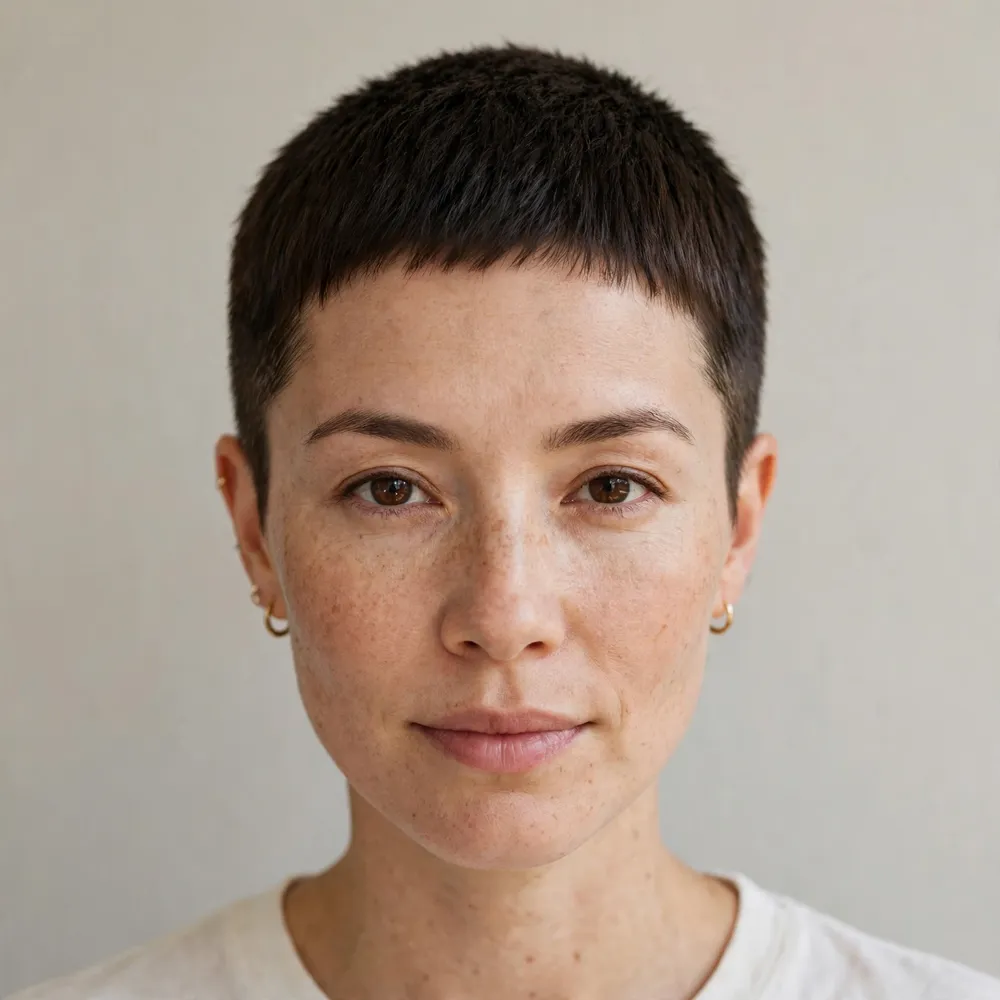
The micro pixie is the boldest cut on this list — a close crop all over, sometimes just an inch or two on top, with the head shape and facial features fully on show. There is nowhere to hide with this one, which is exactly why it looks so striking: it frames the eyes, cheekbones and jawline like nothing else, and it photographs beautifully. It suits women with strong bone structure and the confidence to let their face do the talking, and it is a brilliant choice if you have always wanted very short hair but hate the awkward in-between stages. Ask for a close tapered pixie, and talk through how short you want the sides — a skin fade at the edges is an option if you want it sharper. Styling is almost nothing: a fingertip of pomade for a little texture, or nothing at all. The trade-off is upkeep, since the shape blurs fast — plan on a trim every three to four weeks, and a good scalp sunscreen if you are outdoors a lot.
28. Pixie With Baby Bangs
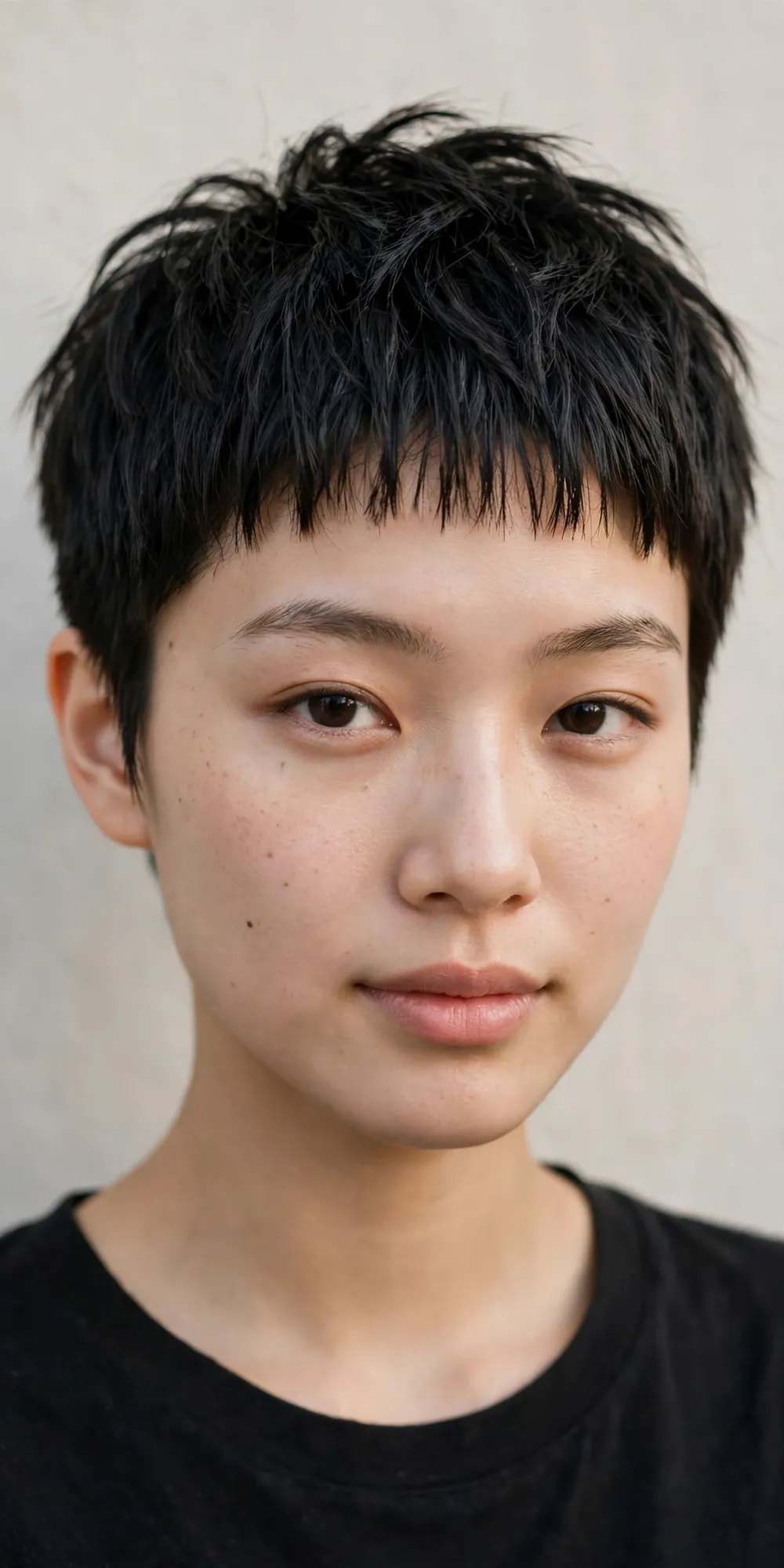
Baby bangs — a tiny, straight fringe ending well above the brows — give a pixie an instant fashion-editor feel. The short fringe opens up the face and makes the eyes the focal point, while the rest of the cut can be anything from sleek to choppy underneath. It suits women with a longer forehead or an oval face best, and anyone who likes a look with a bit of attitude; on very round faces it can make the face look wider, so the sides need to stay tapered. Ask for a micro fringe cut straight across, about an inch above the brows, and be clear you want it blunt rather than wispy — the graphic line is the whole point. Keep it smooth with a flat iron pass if your hair kinks, and a drop of serum keeps the ends looking sharp. Baby bangs grow out faster than any other fringe, so expect a fringe trim every two to three weeks, with the full cut every five.
29. Finger Wave Pixie
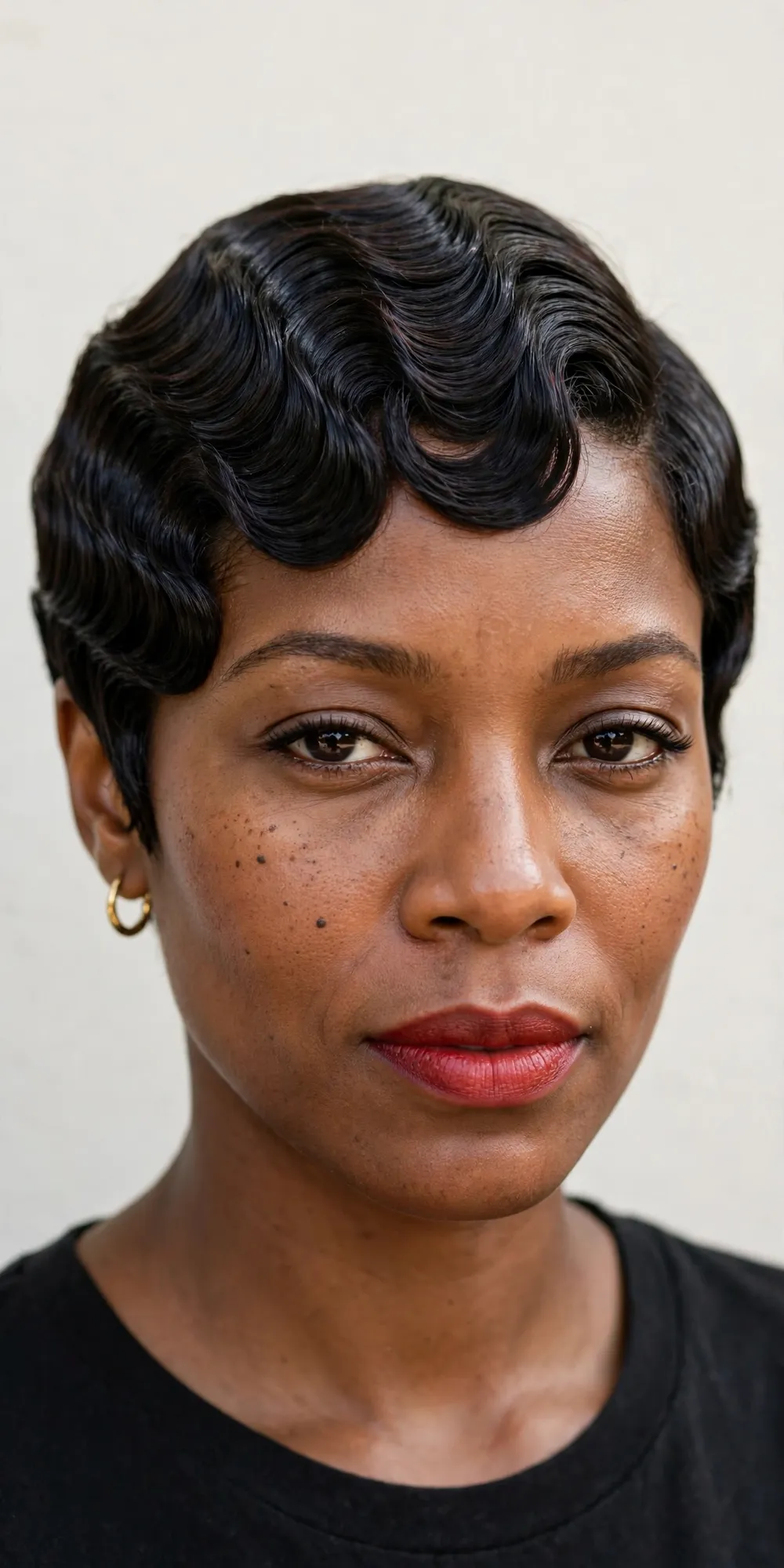
The finger wave pixie borrows its glamour from the 1920s — sculpted S-shaped waves set close to the head, glossy and deliberate, with the short length keeping it modern rather than costume. It is a show-stopper for weddings, parties or anyone who loves vintage styling, and it looks especially good on dark hair where the shine shows off the wave pattern. It suits straight or slightly wavy hair that holds a set; very curly hair will need more work to get the waves to lie flat. Ask for a sleek pixie with enough length on top and at the sides to sculpt the waves, and mention you want a finger-wave finish rather than a general sleek cut. At home, set it with a strong-hold gel and a fine comb while damp, then let it dry completely before touching it — patience is the whole technique. It is not an everyday style for most people, but as an occasion look it is unmatched, and a silk scarf at night keeps the waves intact for a second day.
30. Slicked-Back Wet-Look Pixie
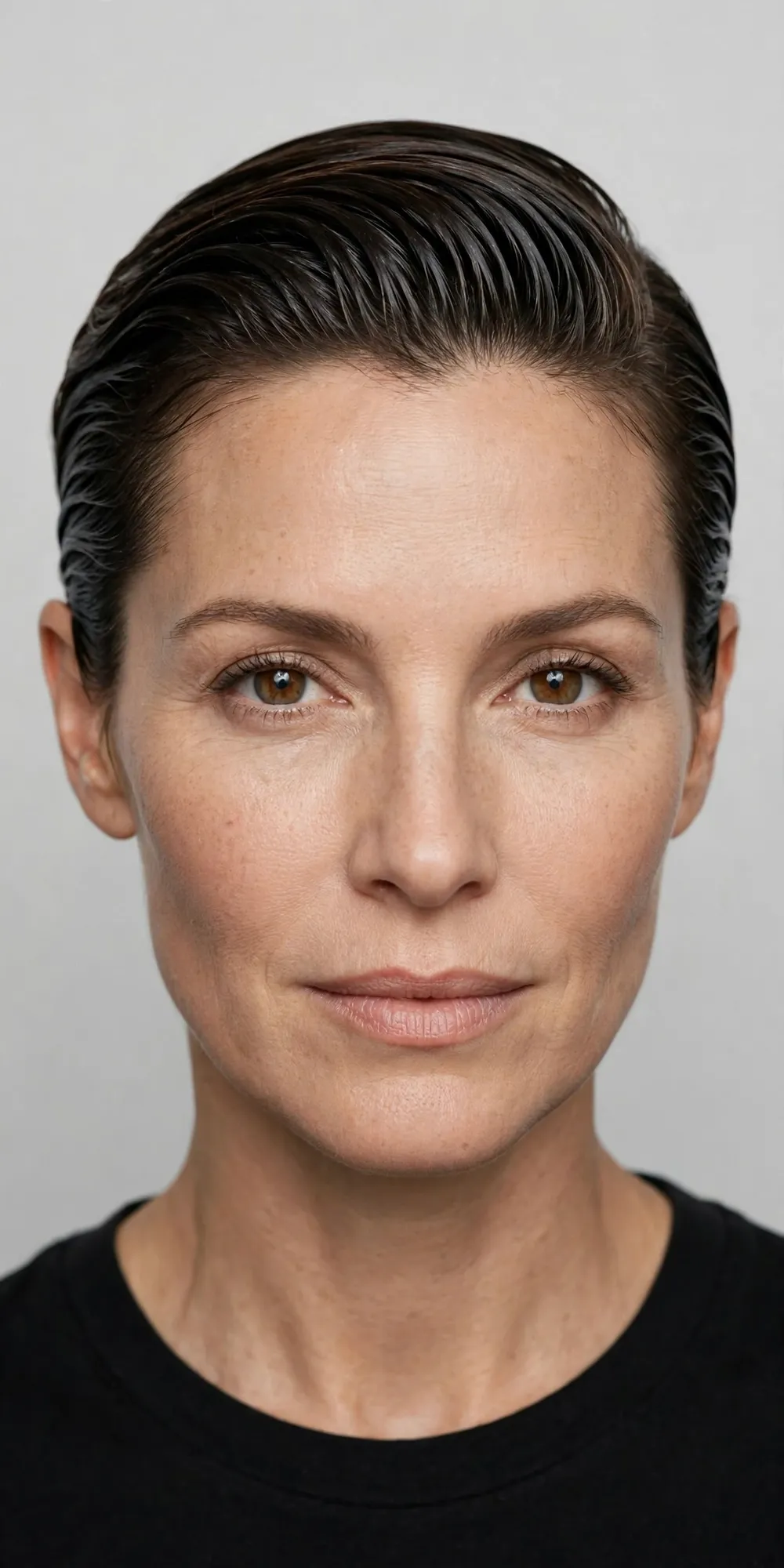
Combed straight back with a high-shine finish, the wet-look pixie is the red-carpet version of short hair — severe, glossy and completely confident. Everything goes back off the face, which makes the cheekbones and jawline the centre of attention, and the shine gives it a polished, almost editorial quality. It suits evenings out, formal events, or anyone with strong features who wants a look that reads as intentional rather than casual. Ask for a pixie with enough length on top to comb back smoothly, with tapered sides that do not bulk out when pushed behind the ears. The product matters here: a wet-look gel or strong-hold pomade worked through damp hair, combed back with a fine-tooth comb, then left to set. It is high-impact but not wash-and-go, and it needs a clarifying shampoo now and then to stop product build-up dulling the shine.
31. Tapered Pixie With Volume on Top
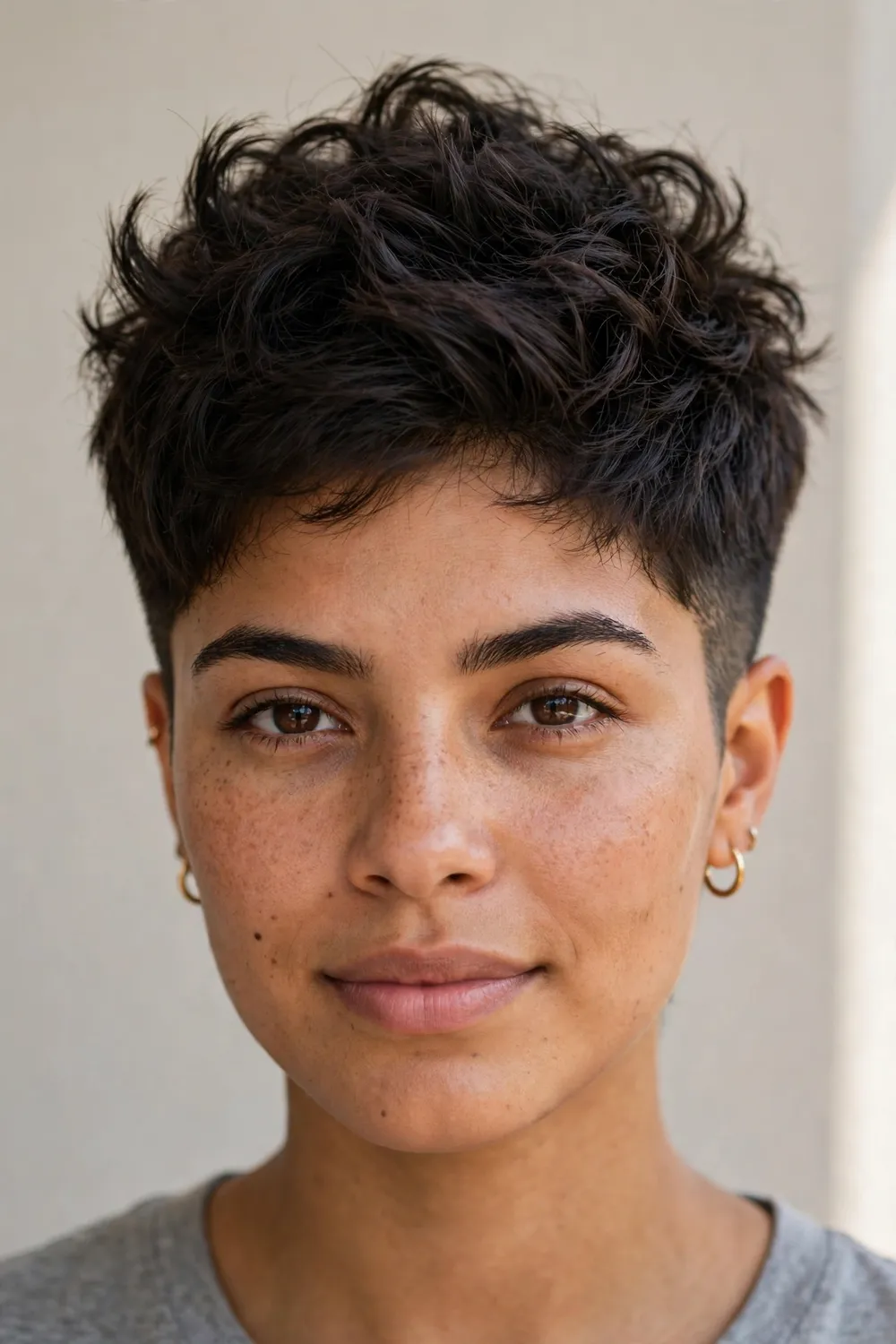
This is the pixie for women who want drama at the crown and neatness everywhere else — closely tapered sides and back, with a full, voluminous top that can be styled up, swept over, or left tousled. The contrast between the clean taper and the height on top gives the cut its shape, and it flatters most face shapes because the volume can be directed where it is needed. It suits thick or medium hair best, since fine hair may struggle to hold the height without product, and it is a strong choice if you like a cut that looks sharp from every angle. Ask for a tight taper on the sides and back with the crown left long enough to lift — around three to four inches is a good starting point. Blow-dry the top upwards with a round brush and a root-lifting spray, then set it with a light-hold hairspray. Keep the taper fresh with a trim every four weeks, or the neat contrast that makes the cut work starts to blur.
32. Disconnected Pixie
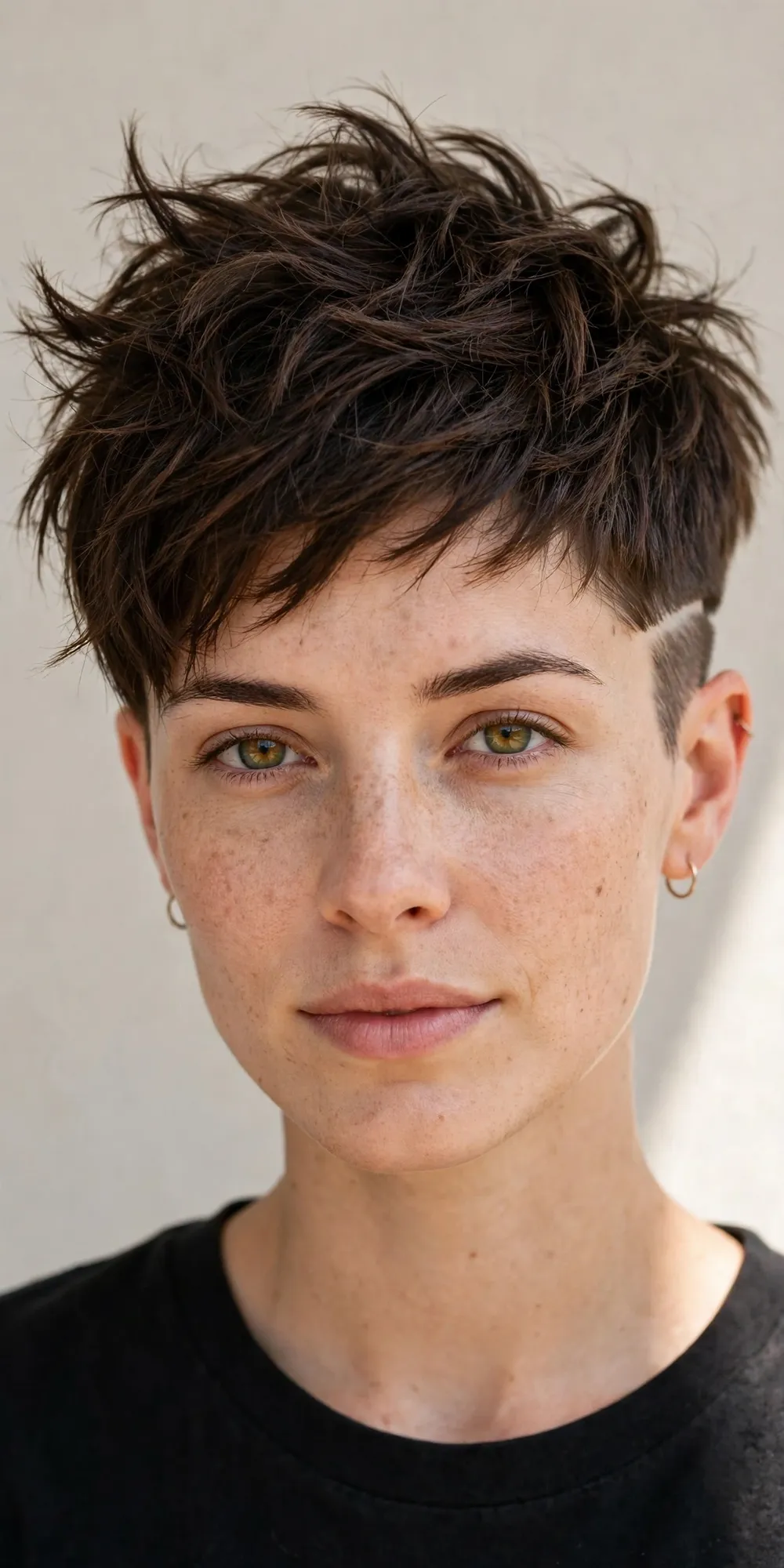
The disconnected pixie is built on contrast: a long, heavy top sitting over very short sides, with no blending between the two — a visible line where one length meets the other. It is bold, graphic and unmistakably modern, and it gives you two looks in one, since the long top can be swept to the side, pushed up, or worn forward over the short sides. It suits women who like an edgy, editorial cut and have the confidence to wear something that gets noticed; it works on straight hair best, where the line stays crisp. Ask specifically for a disconnected cut with a long top and short sides, and agree on how dramatic the contrast should be — a subtle disconnect is very different from a severe one. Style the top with a texturising paste for definition, and keep the sides smooth so the line stays visible. Trims every four weeks are essential, because the moment the sides grow out, the disconnect disappears.
33. Fade Pixie With Design Lines
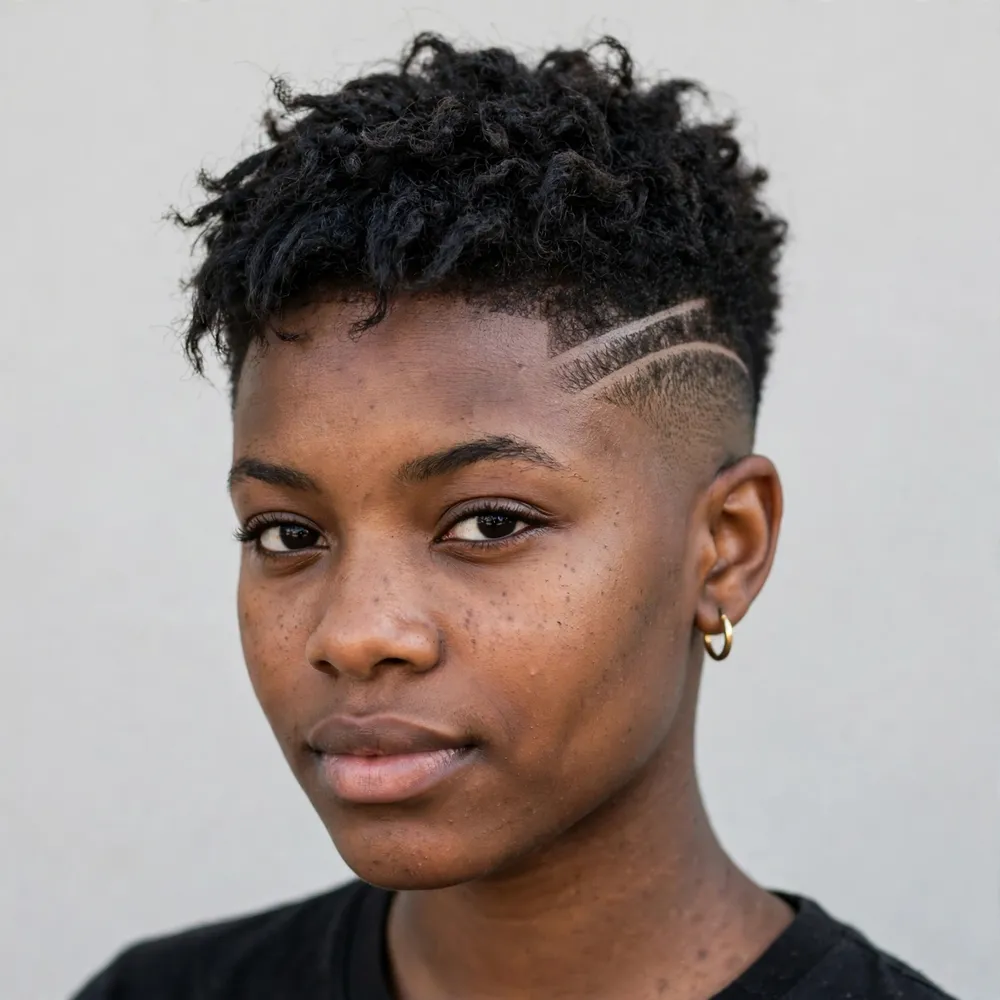
This is the pixie with an edge — a close fade on the sides, finished with one or two shaved lines or a small geometric detail carved into the fade. The design turns an already sharp cut into something personal, whether it is a single clean line above the ear or a more detailed pattern. It suits anyone who likes a bold, modern look and is happy for their haircut to be a conversation starter; it works best on dark hair, where the shaved lines show up clearly against the fade. Ask your stylist or barber for a skin fade with a design line, and bring a photo of the exact line you want — designs are hard to describe and easy to get wrong. Keep the top textured and a little longer so the contrast with the faded sides stays strong. The design grows out in about two weeks, so this is the highest-maintenance cut on the list if you want the lines crisp; if you let them grow out, the fade underneath still looks good on its own.
34. Auburn Pixie
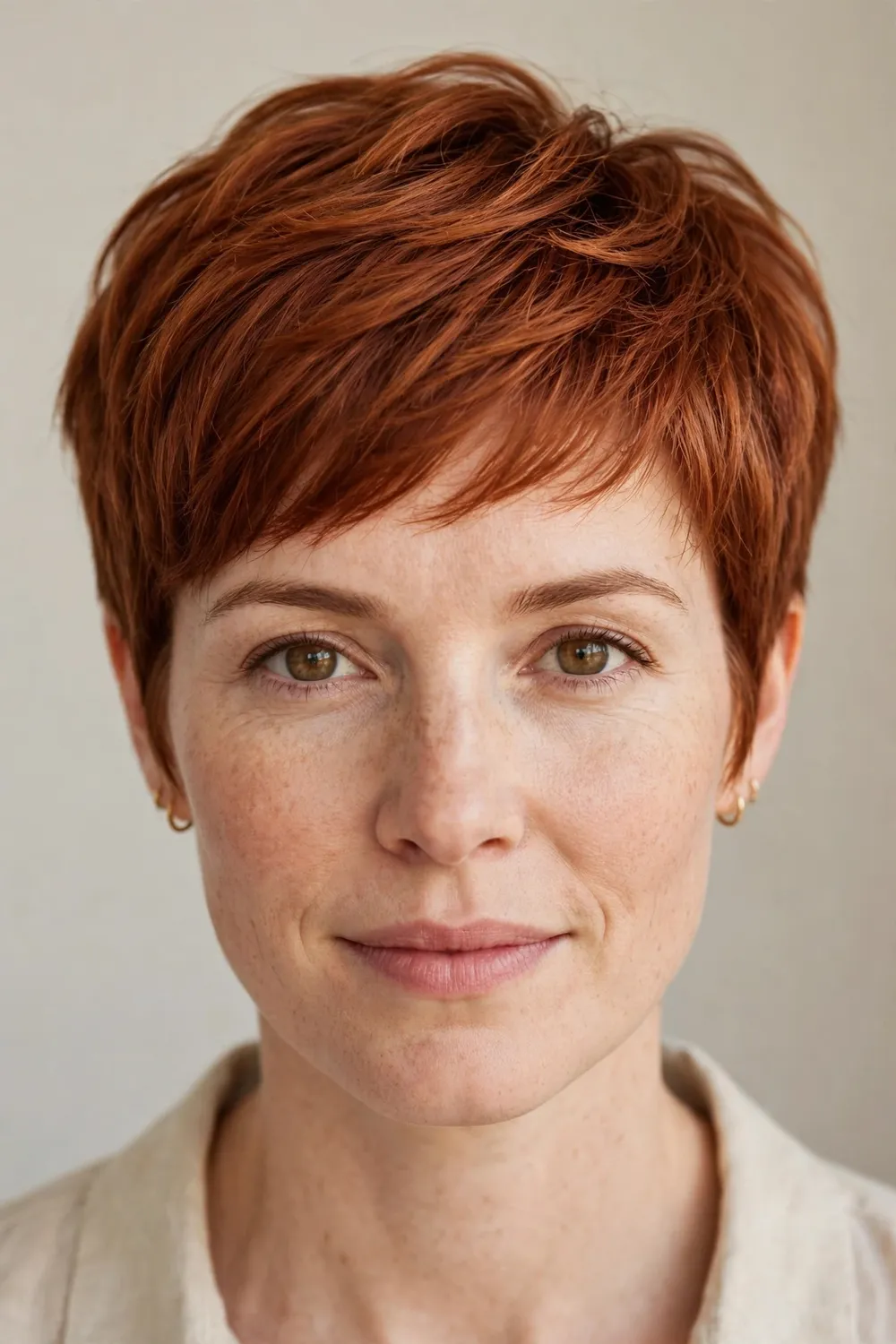
Auburn — warm copper with a red-brown depth — makes a pixie glow in a way few other colours manage, because the short length lets the colour sit close to the face and catch the light from every angle. It suits warm skin tones especially well, and it is a lovely choice for women with green or hazel eyes, since the copper tones make them stand out. It also works beautifully on a pixie because the colour does not need long lengths to show its dimension; even a short crop shows the warmth. Ask your colourist for a rich auburn with copper tones rather than a flat red, and talk about whether you want it all-over or with a slightly deeper root for dimension. A colour-safe shampoo and a weekly gloss or conditioning mask keep the copper from fading to a dull orange. Expect a colour refresh every five to six weeks alongside your trim, and keep heat styling gentle so the tone stays rich.
35. Silver Pixie

The silver pixie is proof that grey hair can be the feature, not something to hide — soft silver with volume, luminous rather than flat, and modern rather than matronly. The key is tone: a good silver has dimension, with slightly brighter pieces around the face and a cooler, even base, rather than one flat shade. It suits women who are going grey naturally and want to own it, and it looks striking on any skin tone once the tone is right. Ask for a silver with dimension — a gloss or a few lighter pieces through the crown — and mention you want to avoid any yellow cast. Purple shampoo once a week keeps the silver bright, and a volumising mousse gives the soft layers their lift. Colour maintenance is gentle here: a tone refresh every six to eight weeks is usually enough, and the cut itself needs its usual four-to-six-week trim.
36. Pixie Cut for Square Face
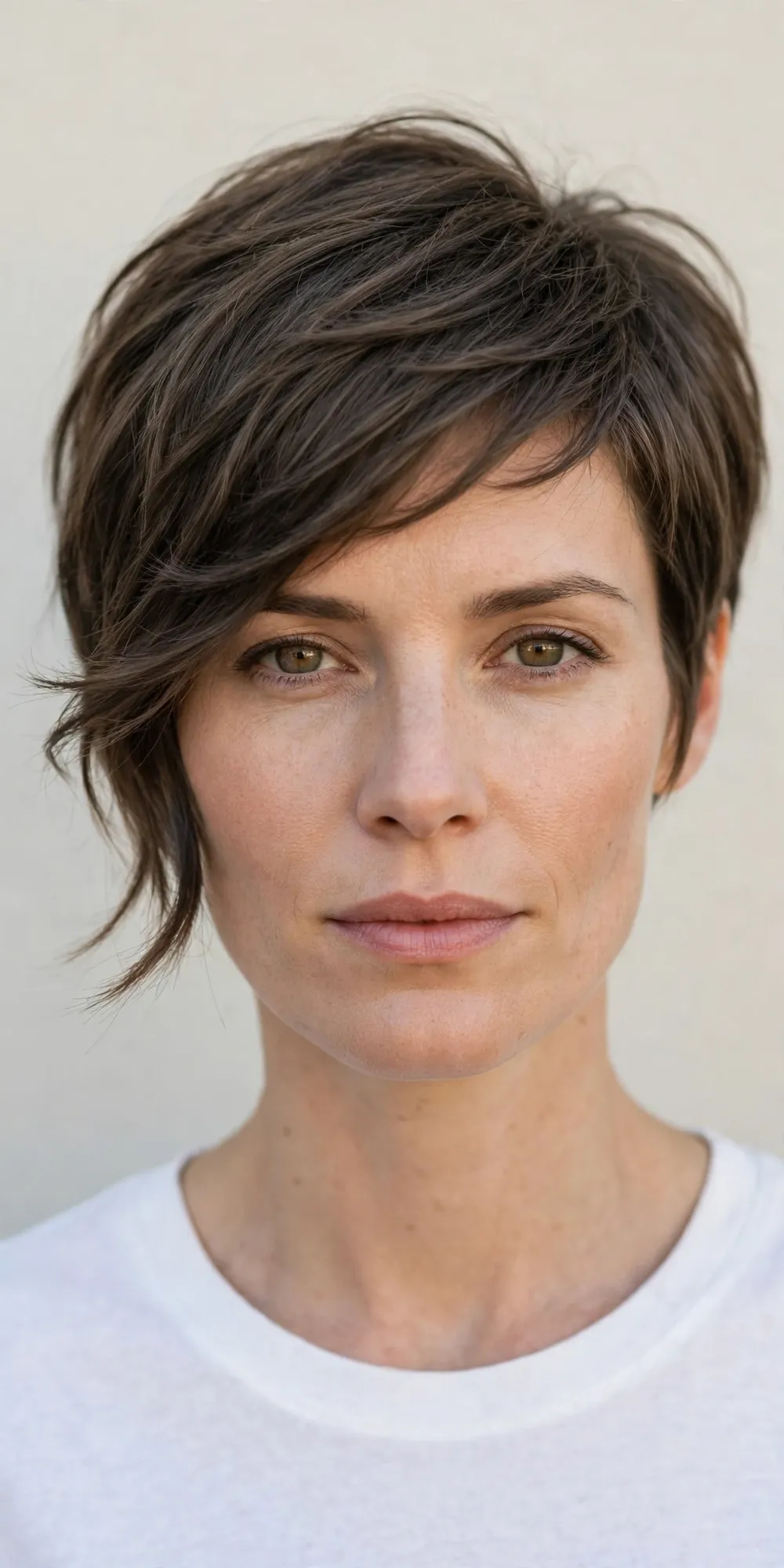
A square face — strong jawline, broad forehead — needs a pixie that softens rather than sharpens, so this version leans on texture and movement instead of blunt lines. Wispy layers around the temples and a side-swept fringe break up the angles, while keeping some length at the front draws the eye away from the jaw. It suits women with a defined jaw who have been warned off short hair; the right pixie actually flatters a square face beautifully, as long as it avoids a hard, straight-across fringe. Ask for a textured pixie with a side fringe and soft, feathered pieces at the temples, and avoid anything too geometric. Style it with a texturising cream and your fingers, keeping the pieces around the face slightly forward rather than tucked back. Trims every five weeks keep the soft layers from growing into a blocky shape, and a little root volume at the crown helps balance the jawline.
37. Pixie Cut for Heart Face
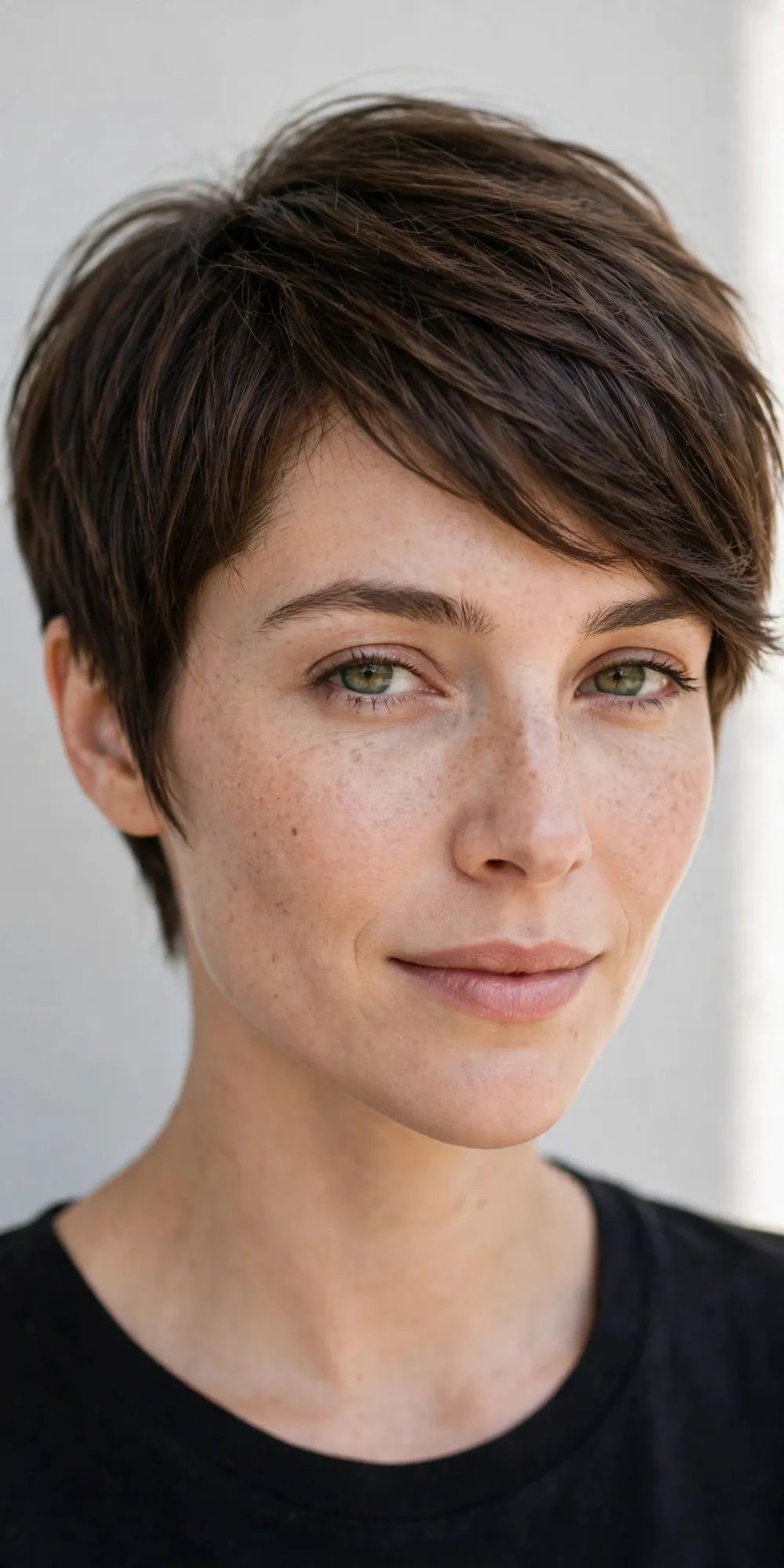
A heart-shaped face — wider forehead, narrower chin — suits a pixie with side-swept length, because the fringe fills in the forehead while the shorter sides keep the focus away from a pointed chin. A long side fringe that falls across the brow is the hero here, softening the forehead and creating a diagonal line that balances the whole face. It suits anyone with a prominent forehead and a delicate chin, and it is one of the easiest face shapes to flatter with a pixie because the cut naturally does what the face needs. Ask for a pixie with a long side-swept fringe and textured layers, with the sides kept neat but not too short — you want balance, not severity. A little texturising paste on the fringe keeps it in place without stiffness, and a quick finger-style is usually enough. Keep the fringe trimmed every three to four weeks, since a fringe that grows past the cheekbone starts to hide the eyes instead of framing them.
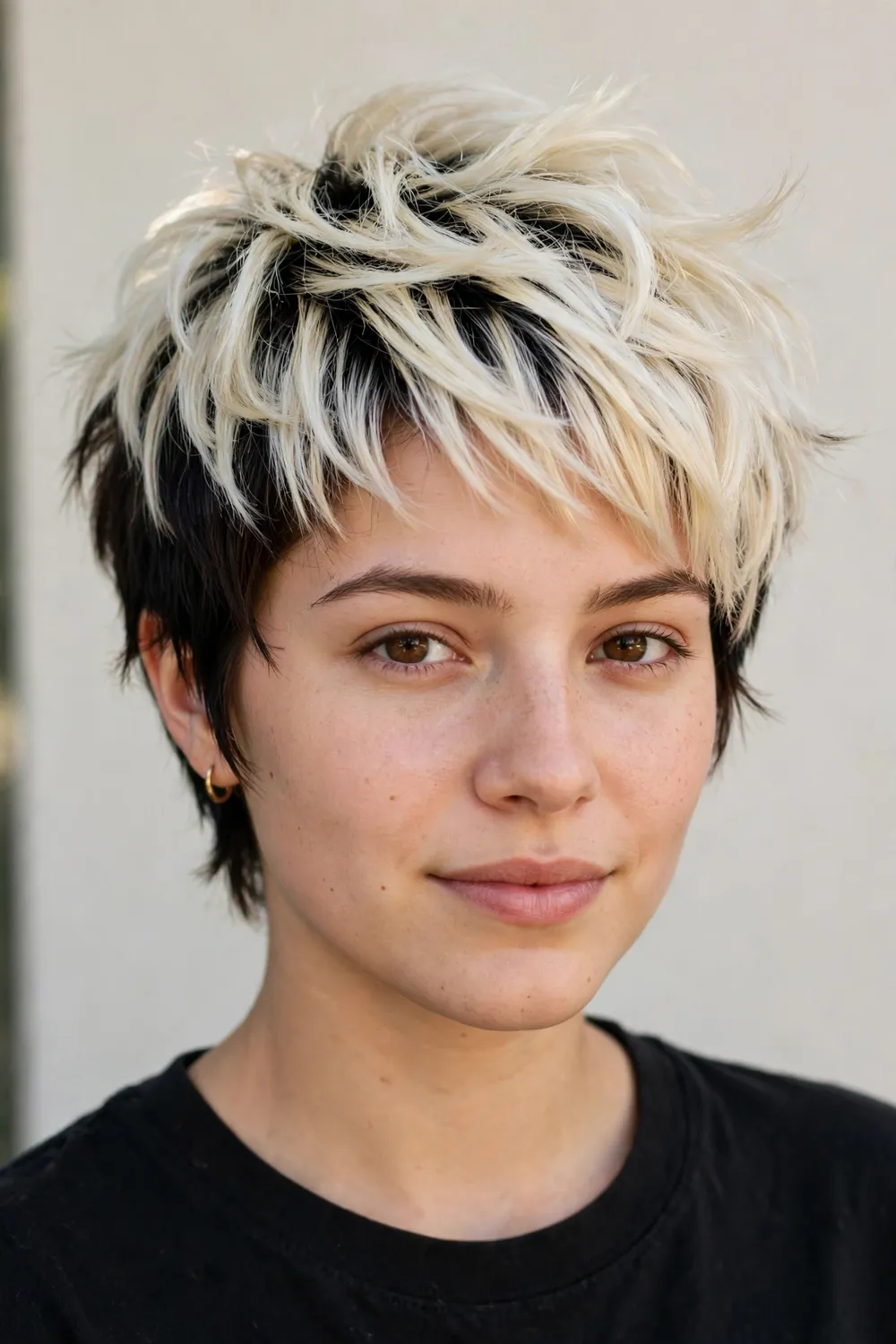
38. Two-Tone Pixie
Two-tone colour on a pixie is bold colour play at its best — two contrasting shades, like platinum on top with dark underneath, or a vivid colour against a natural base, with the short length making the contrast crisp and graphic. Because a pixie has so little length, the colour split reads as a deliberate design rather than a grown-out dye job, and it is a great way to try a vivid shade without committing your whole head to it. It suits anyone who likes statement colour and is happy with the upkeep, and it works especially well on a disconnected or undercut pixie, where the cut itself already separates the two sections. Ask your colourist for two tones with a clear division — say exactly where you want the split — and discuss which shade goes where, since the lighter tone on top usually reads brightest. Colour-safe shampoo is non-negotiable, and a vivid top shade will need a refresh every four weeks. The cut needs its usual trim, but the colour is the real commitment here.
39. Sculpted Pixie

The sculpted pixie is the polished end of the spectrum — a neat, defined shape with smooth lines, a clean silhouette and not a hair out of place. It is the cut for women who like their short hair to look finished rather than tousled, and it works beautifully for work, formal occasions, or anyone who prefers structure to mess. It suits straight or slightly wavy hair best, since the smooth finish relies on the hair lying flat, and it flatters oval and heart-shaped faces particularly well. Ask for a sculpted pixie with a smooth, rounded shape and a clean nape, and mention you want it polished rather than textured — the cutting technique is different. Style it with a smoothing cream and a blow-dryer, finishing with a light-hold spray and a shine serum on the surface. It needs a trim every four weeks to keep the shape crisp, and it rewards a silk pillowcase, since even one night of friction can ruffle the smooth finish.
How to style a pixie cut at home
A pixie looks effortless when it is done right, and the good news is that the whole routine takes about five minutes once you know the steps.
- Wash and towel-dry gently. Shampoo, condition lightly, and blot — never rub — with a towel or an old t-shirt. Pixie hair is short, so it dries fast, and rough towel-drying is what creates the frizz you will spend the next five minutes fighting.
- Work product through damp hair. A pea-sized amount of mousse, cream or paste, depending on your finish, rubbed between your palms and worked through from roots to ends. Less is more — you can always add a touch more, but too much product on short hair is hard to undo.
- Use your fingers, not a brush. A brush flattens a pixie and kills the texture. Lift the crown with your fingertips, push the fringe where you want it, and pinch the ends to create separation. Your hands are the best styling tool a pixie has.
- Finish with a light hold. A quick mist of light-hold hairspray or a drop of serum smoothed over the surface locks the shape without making it stiff. If you want a sleek finish, this is the moment for a flat iron pass on the top section only.
- Refresh on day two. A spritz of water or dry shampoo at the roots, a quick finger restyle, and you are done. Most pixies look better on day two anyway, once the hair has settled into its shape.
5 mistakes to avoid with pixie cuts
- Cutting it yourself between appointments. A pixie is a precision cut, and one wrong snip at the fringe or nape can take weeks to grow out. Book the trim, even if it is just a fringe tidy-up — it is cheaper than fixing a home cut.
- Using too much product. Short hair needs far less product than you think. Overloading it with wax or gel makes it greasy, heavy and flat, and it is almost impossible to wash out without a full rewash.
- Brushing it like long hair. A brush drags a pixie flat and destroys the texture the cut was designed to show. Fingers, a wide-tooth comb, or nothing at all — those are the tools that work.
- Skipping trims to “grow it out faster”. A pixie that is growing out still needs shaping, or it turns into an awkward, shapeless in-between stage. Regular trims keep the grow-out looking deliberate, and your stylist can reshape it towards a bob hairstyles as it gets longer.
- Choosing the wrong pixie for your face shape. A blunt micro fringe on a round face or a severe crop on a strong jaw can fight your features instead of flattering them. Take a photo to your stylist, talk about your face shape honestly, and let them adapt the cut — the right pixie is always a slightly custom one.
FAQs
What face shape suits a pixie cut best?
An oval face suits almost any pixie, because its balanced proportions can carry both a close crop and a longer, textured top without the cut fighting the face. Heart-shaped faces do well too, especially with a side-swept fringe that softens a wider forehead. Square faces suit a textured pixie with soft pieces around the temples, while round faces need height on top and tapered sides — and that version works beautifully when it is cut right. The honest answer is that most face shapes can wear a pixie; the cut just needs to be adapted, so a good consultation with your stylist matters more than any face-shape rule.
How often does a pixie cut need trimming?
Every four to six weeks, and that is not a suggestion — it is what keeps a pixie looking like a pixie. Short hair shows growth fast: a few millimetres at the nape or around the ears can blur the shape completely, and a fringe grows out of line even faster. Very short styles like the micro pixie may need a tidy-up every three to four weeks, while a longer, softer pixie can sometimes stretch to six. Booking your next trim before you leave the salon is the easiest way to stay on top of it, and it is much cheaper than letting the cut grow out and needing a full reshape.
Can a pixie cut suit a round face?
Yes — a pixie can suit a round face very well, as long as it is the right pixie. The key is height on top and short, tapered sides, which lengthen the face visually instead of widening it. A side-swept fringe helps even more by drawing the eye diagonally, and keeping the sides neat stops the cut from adding width at the cheekbones. What does not work is a pixie with a blunt, straight-across fringe and fullness at the sides, which emphasises roundness. So if you have a round face and love the idea of a pixie, take a photo of a height-on-top style to your stylist and ask for exactly that.
How long does it take to grow out a pixie cut?
Growing a pixie out to a chin-length bob takes about six to twelve months, because hair grows roughly half an inch a month and there is a lot of length to gain. The awkward middle stage — around three to five months in, when the top is long but the back is not — is the hardest part, and regular trims that reshape the cut as it grows make it far more bearable. Many women grow a pixie into a bob hairstyles or a longer hairstyles for short hair style as an intermediate step, which keeps things looking deliberate instead of neglected. Patience and a stylist who knows how to shape a grow-out are the two things that get you through it.
Is a pixie cut high maintenance?
It depends on what you mean by maintenance. Daily styling is very low — most pixies take five minutes with your fingers and a little product, far less than long hair. But salon maintenance is higher: you will need a trim every four to six weeks to keep the shape, compared with every eight to twelve weeks for longer hair. Colour, if you have it, also needs more frequent refreshing because regrowth shows quickly on short hair. So a pixie is low-effort at home and higher-commitment at the salon — a trade-off most pixie wearers happily make for the freedom of the cut.
What is the difference between a pixie cut and a bob?
Length is the main difference. A pixie is a short cut, usually one to four inches on top, with closely tapered sides and back. A bob sits at chin length or just above it, with enough length to frame the face and often a blunt or layered outline. A pixie feels lighter, edgier and more dramatic, while a bob is softer and more versatile — it can be tied back, tucked behind the ears, or worn with more styling options. Between the two sits the pixie bob, or bixie, which blends pixie shortness with bob length. If you are torn between the two, a longer pixie is a good halfway point, and you can always grow it into one of our bob hairstyles later.
How do I style a pixie cut at home?
Start with damp, towel-dried hair and work a small amount of product — mousse for volume, paste for texture, cream for smoothness — through from roots to ends. Use your fingers to lift the crown and place the fringe, not a brush, which flattens the cut. Finish with a light mist of hairspray or a drop of serum, and refresh on day two with dry shampoo at the roots and a quick finger restyle. If you want a full step-by-step, the five steps in the “How to style a pixie cut at home” section above walk through the whole routine, and most pixies take about five minutes from start to finish.
Final Word
A pixie is one of those cuts that looks like a big decision and feels like a small one once you have it — five minutes of styling, no hair in your face, and a shape that shows off your features instead of hiding them. Whether you go classic, curly, or all the way to a micro crop, the best pixie is the one cut for your face, your hair type and your life, so take your favourite from this list to your stylist and let them make it yours. And if short hair has you hooked, there is plenty more where this came from — cute hairstyles and easy hairstyles for low-effort days, curtain bangs if you want to soften a pixie with a fringe, and plenty more ideas on our blog.