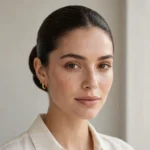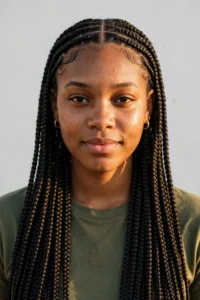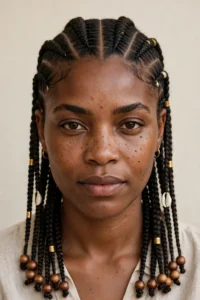


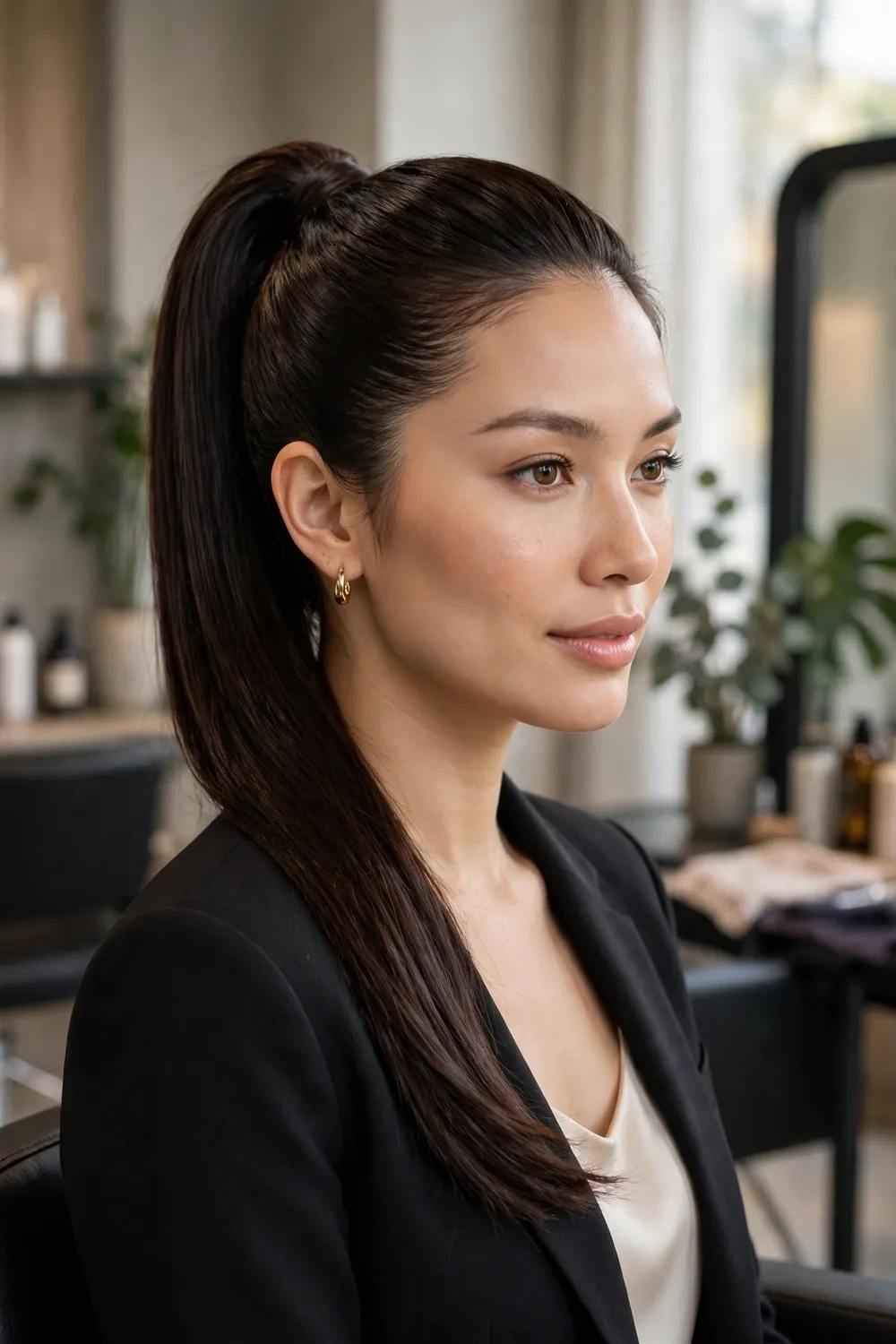
A ponytail hairstyle is any style where the hair is gathered and secured at the back or side of the head — and it is far more versatile than the quick gym tie-up most people picture. Change the height, the finish or one small detail and the same basic ponytail becomes a sleek office look, a romantic wedding style or a five-minute school-morning fix. If you only learn three from this list, start with the sleek high ponytail for polish, the bubble ponytail for fun without heat, and the low wavy ponytail for anything dressy.
Below are 34 ponytail hairstyles that cover every hair type and length, from short bobs to extra-long hair, with the occasion each one suits and a practical tip that actually makes it work. First, the base technique — because almost every style on this list stands or falls on how smooth (or how textured) you build the base.
How to Get a Smooth Ponytail Base
Every good ponytail starts before the elastic goes in. You need surprisingly little: a paddle brush for detangling, a boar-bristle brush for smoothing, a fine-tooth comb for parts and bumps, snag-free elastics (plus small clear elastics for bubble and braided styles), bobby pins, an edge brush or clean toothbrush, and a light styling cream or gel. A satin scrunchie is worth owning too — it holds hair with far less friction than a bare elastic.
For a sleek base, work on dry, detangled hair and brush in the direction the ponytail will sit, in small sections, not one big sweep. Smooth a pea-sized amount of gel or styling cream over the surface, gather the hair at your chosen height, and before you tie, run the bristle brush over the crown one last time — this is when bumps show themselves. The trick professionals use for a truly bump-free finish is the two-layer method: secure the back and sides first, then sweep the front section over the top and tie everything together with a second elastic. Finish flyaways with the edge brush and a touch of product rather than more hairspray, which only makes hair stiff.
For a textured base, do the opposite. Add grip before you tie: dry shampoo or texture spray at the roots, even on clean hair, because freshly washed hair is slippery and slides out of elastics. Tease the crown lightly with the fine-tooth comb, gather the hair with your fingers instead of a brush so the texture survives, and tie it looser than feels safe. Then pull a few pieces out around the face and tug gently at the crown sections to build the shape. Textured ponytails actually look better on second-day hair, so plan them for non-wash days.
One rule applies to both finishes: never tie a ponytail in exactly the same tight spot every day. Rotating the height and using soft ties spreads the tension, which is how you avoid the breakage and sore scalp that give ponytails a bad name.
34 Best Ponytail Hairstyles
Every style below starts from the same base technique. Find your hair length and the occasion you are dressing for, read the tip under each photo, and save the ones you want to try this week.
1. Sleek High Ponytail
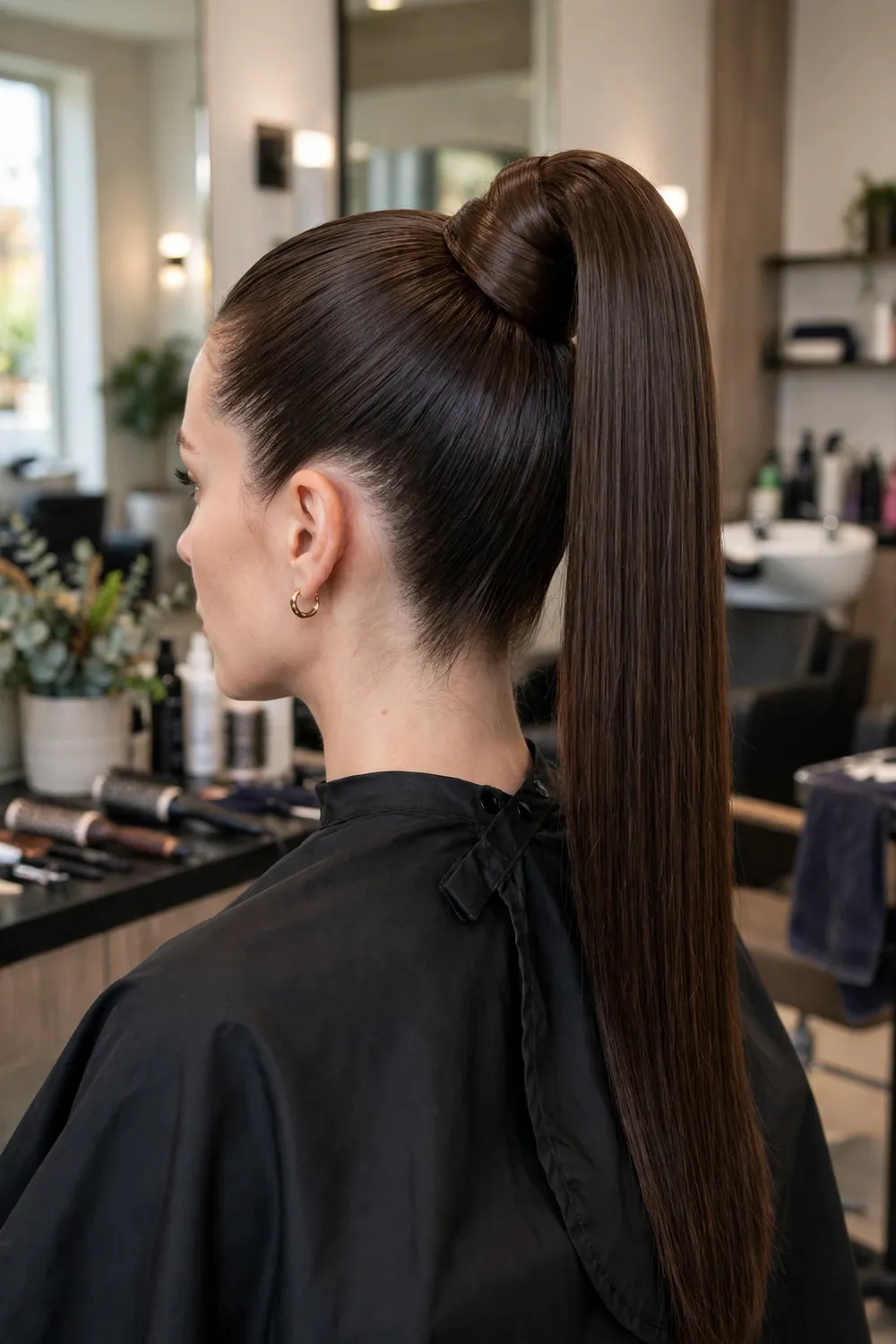
The sleek high ponytail sits at or just above the crown, brushed completely smooth, and it is the style that makes a face look lifted — the upward line draws the eye to the cheekbones. It is the go-to for parties, photos, nights out and any day you want to look deliberately polished. It works best on straight or straightened hair and on relaxed hair, at medium length or longer. Build it with the two-layer method from the basics section, wrap a thin strand of hair around the elastic and pin it underneath, and finish with a light shine spray. If your hair is very thick, tilt your head back while you tie — gravity helps the underside sit flat.
2. Classic Low Ponytail
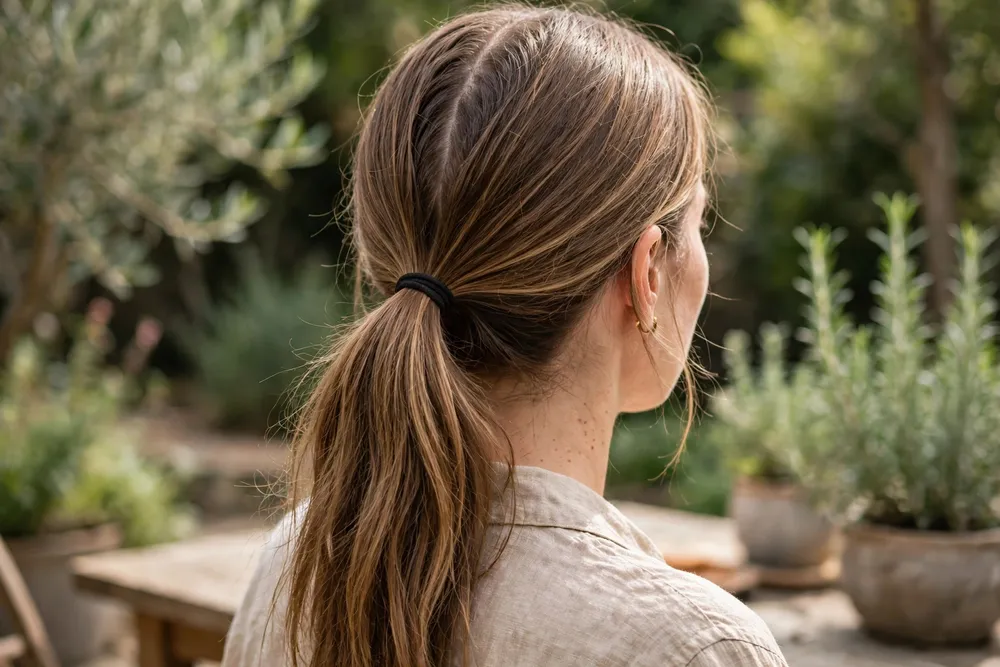
The classic low ponytail is gathered at the nape of the neck over a middle or side part, and it is the easiest ponytail a beginner can learn — brush, one elastic, done in under two minutes. It suits school, work, errands and simple evenings, and it works on long, medium and even shoulder-length hair. Because it sits low, it never pulls at the front hairline, which makes it the kindest everyday option. Keep it smooth for a refined finish or loosen the sides slightly with your fingertips for a softer one. A satin ribbon or a simple metal clip at the base dresses it up without any extra styling.
3. Bubble Ponytail
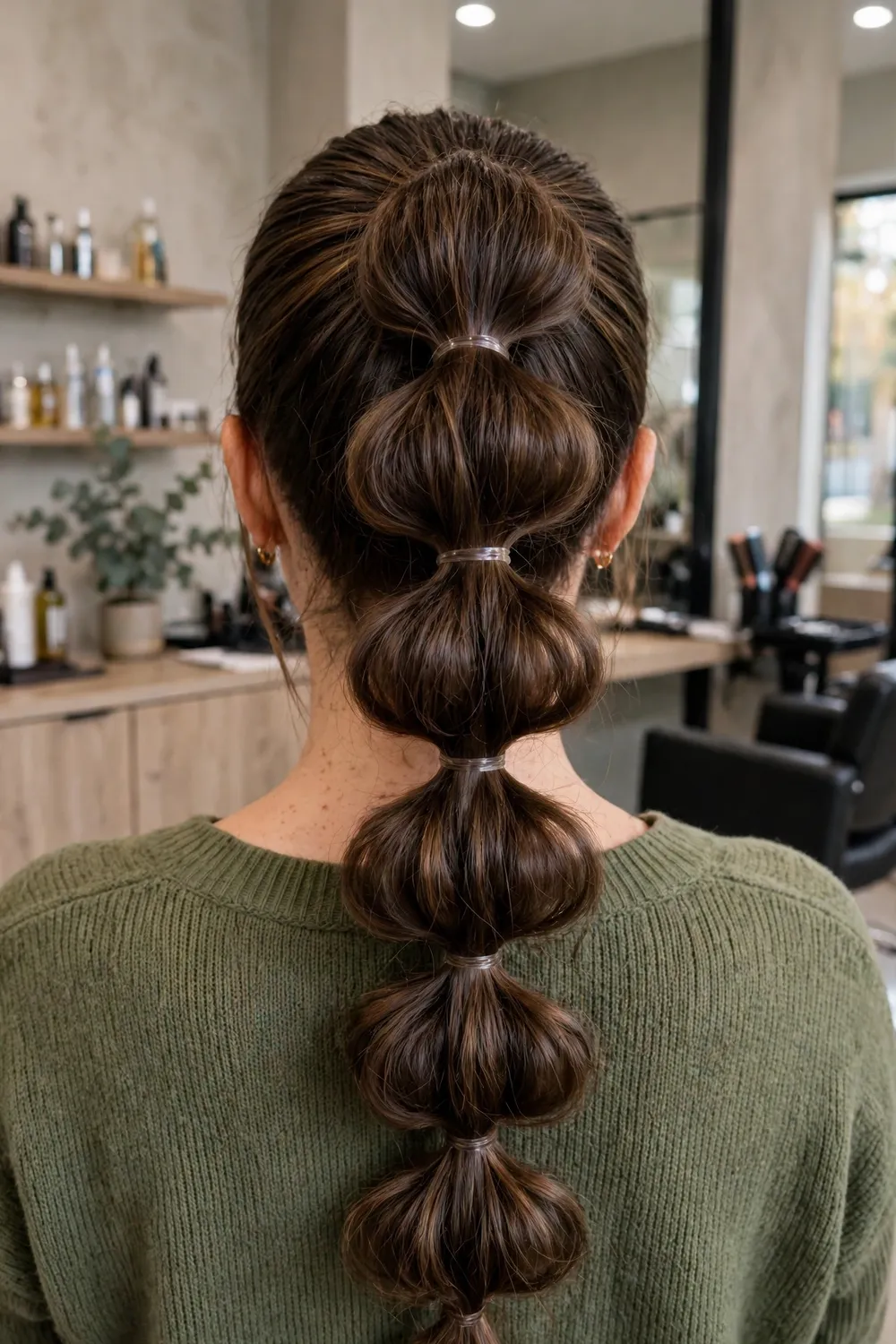
The bubble ponytail turns a plain long ponytail into a row of rounded sections using nothing but small elastics — no heat, no braiding skill. Tie a regular ponytail first (high or mid looks best), add a clear elastic every two to three inches down the tail, then gently pull each section outward with your thumbs until it puffs into a bubble. It needs long hair, or extensions, to fit at least three bubbles; on medium hair, two bigger bubbles still work. This one is made for festivals, parties, summer days and photos, and it is a favourite for girls because it looks complicated and takes five minutes. Mist the tail with a little water first if your hair is frizzy, so the bubbles look smooth instead of fluffy.
4. Braided Ponytail

A braided ponytail is a normal ponytail with the tail braided — and that one change makes it stay neat for hours, which is why it is the default for workouts, sports, busy workdays and travel. Use a simple three-strand braid for speed, or swap in a fishtail or rope braid from further down this list when you want detail. Braid it tight for a sleek, sporty finish or loose and slightly pulled apart for a softer one. It suits long and medium-long hair of every texture, and on curly and coily hair it doubles as gentle protective styling. Secure the end with a small clear elastic, not a thick band — a bulky tie at the end ruins the line of the braid.
5. Curly High Ponytail
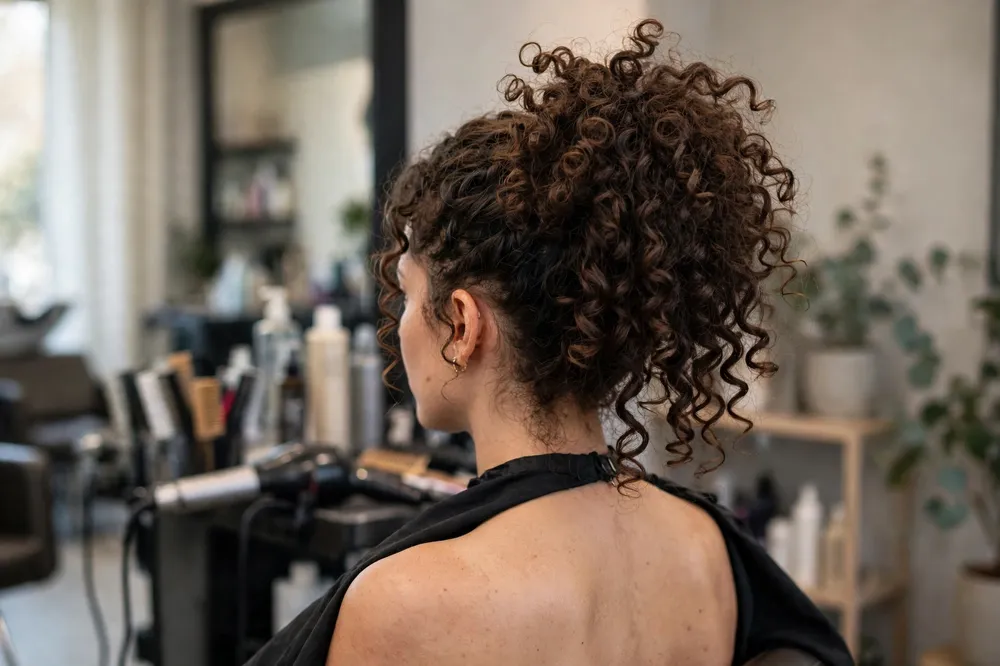
The curly high ponytail lets curls do what they do best: pile up at the crown with bounce and volume instead of being flattened. Gather the hair upward on stretched or fully dry curls, secure it near the crown with a soft, stretchy tie, and let the curls fall where they want around the head and shoulders. Scrunch in curl cream or a light mousse beforehand so the curls read as defined rather than frizzy, and leave two or three loose curls at the temples for a romantic frame. It suits medium to long curly and coily hair, and it is a brilliant second- or third-day style because the texture hides everything. Never brush dry curls into this one — finger-gather only, or you will trade definition for frizz.
6. Low Wavy Ponytail
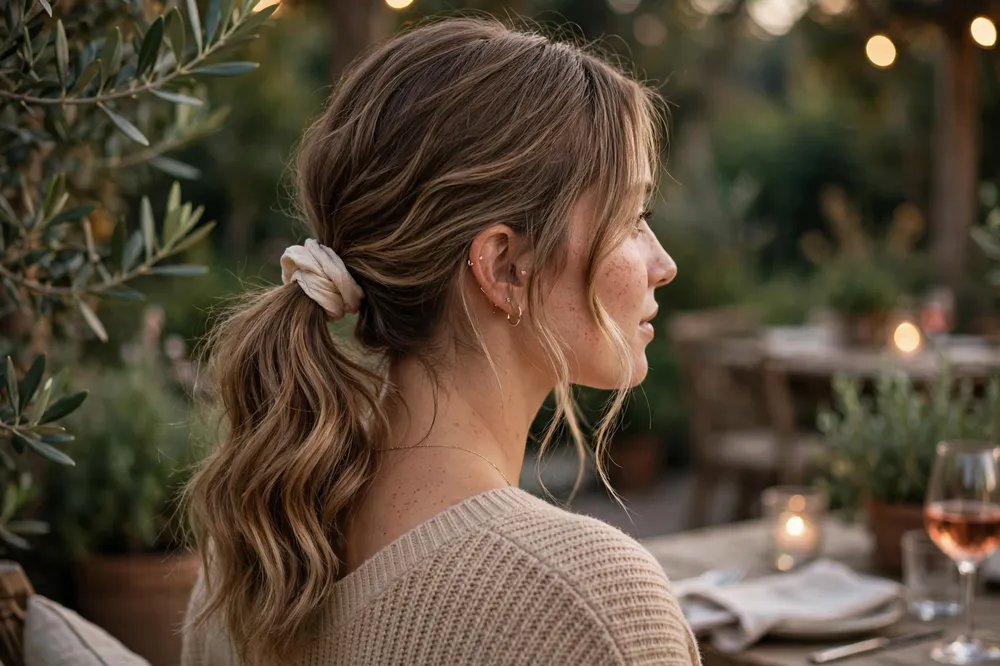
Soft waves plus a low, smooth base is the most romantic combination on this list, and the one most often chosen for date nights, weddings and dressy dinners. Create the waves first with a large-barrel curler or overnight braids, brush them through once for that soft finish, then tie the hair loosely at the nape. Pull out two slim face-framing pieces and curl them away from the face. The base should stay smooth and close to the head so the waves in the tail do all the talking. It works on medium and long wavy or straight hair, and a pearl pin or silk bow pushed in above the elastic turns it into a proper occasion style.
7. Side Ponytail
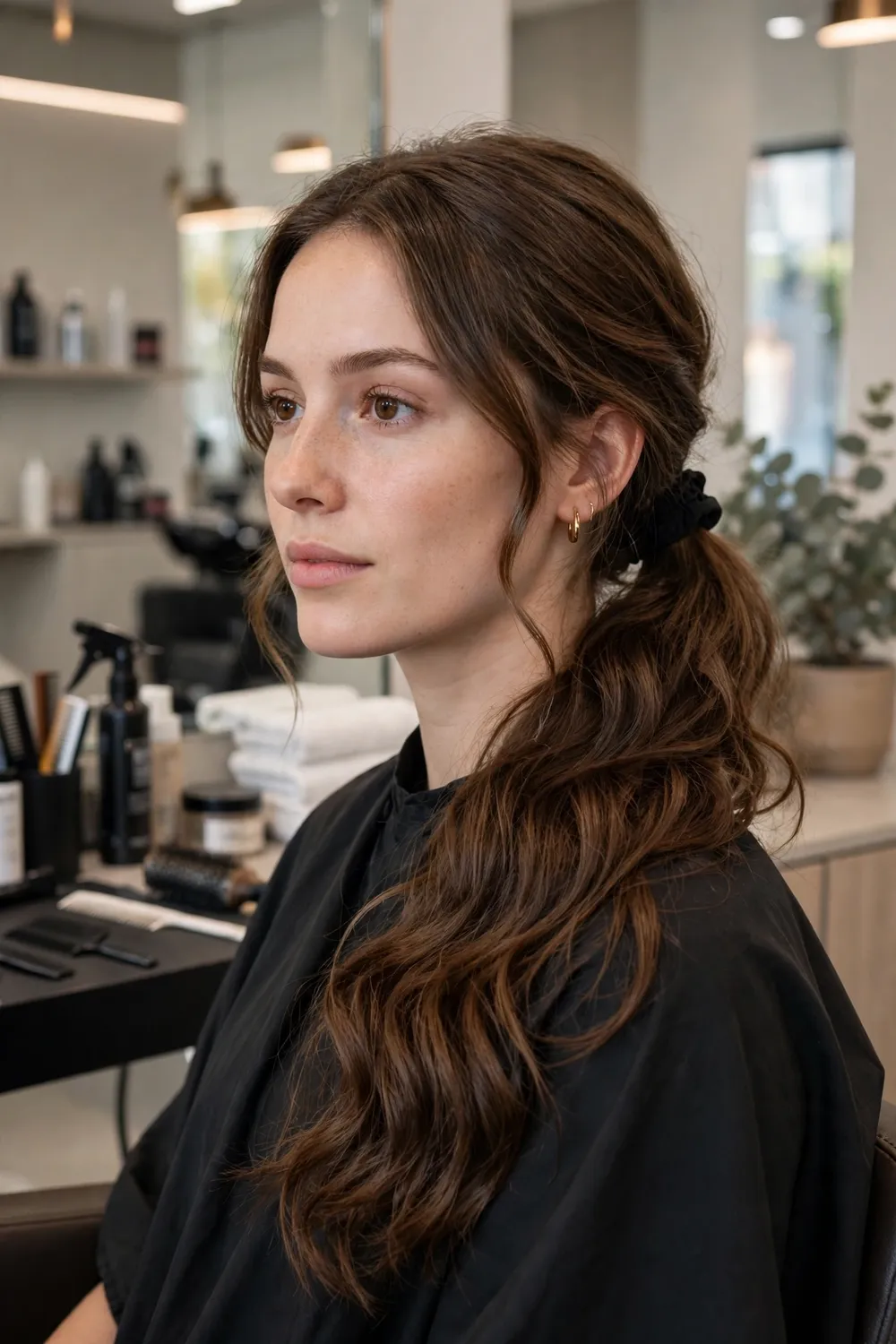
The side ponytail is secured low, just below one ear, so the tail drapes over the shoulder where everyone can see it. That visibility is the whole point — it shows off length, colour and wave better than any back ponytail. Keep it sleek for a polished, almost retro finish, or add loose waves for the softer version in the photo. It suits medium and long hair, pairs beautifully with side-swept bangs, and because it bares one side of the neck it is the natural partner for statement earrings. One practical warning: a side ponytail slides toward the back as you move, so anchor it with two crossed bobby pins just behind the ear.
8. Messy Ponytail
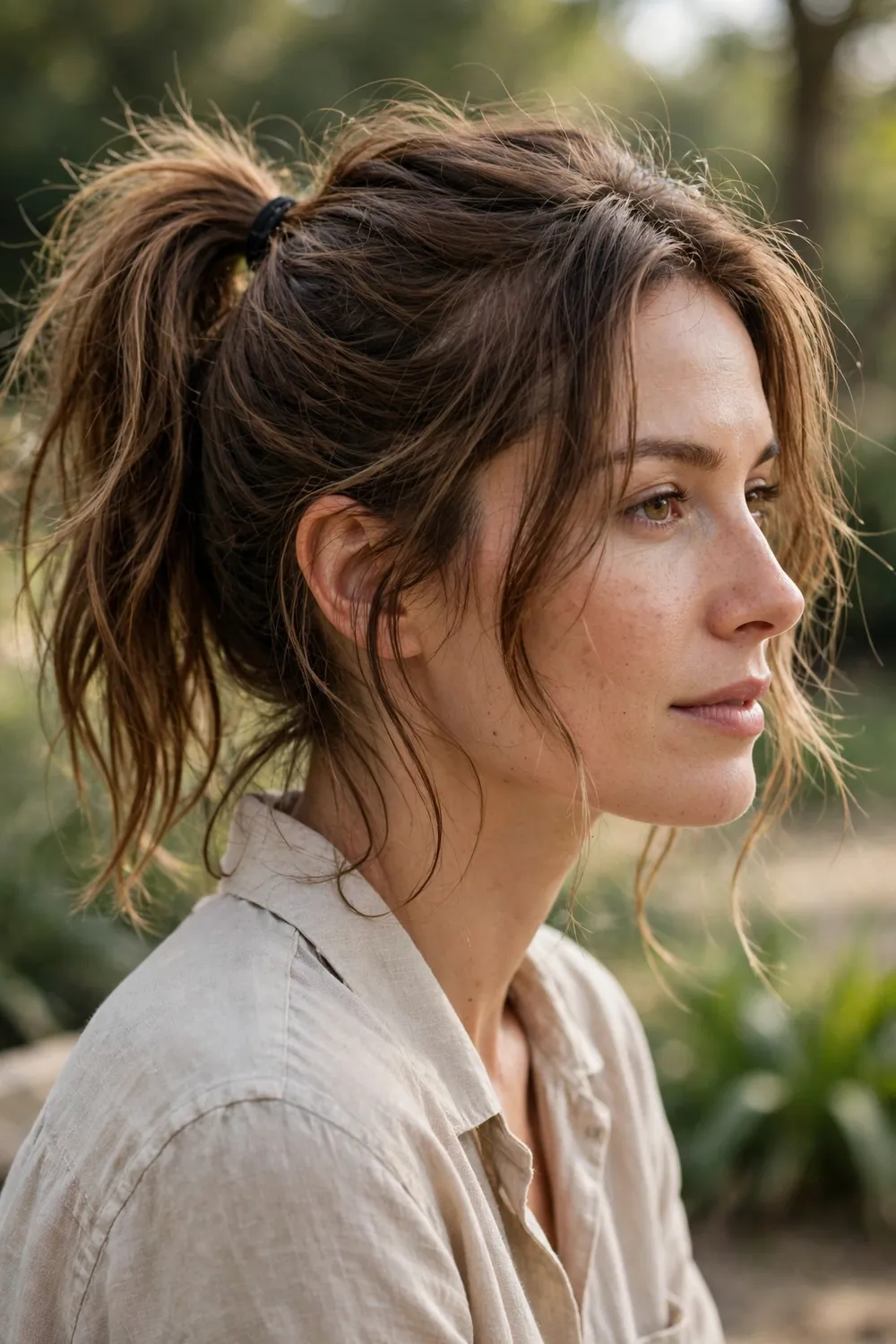
The messy ponytail is deliberately undone: loose texture, a slightly lifted crown and a few strands escaping around the face. It is the weekend, coffee-run, travel-day and school-run hero because it takes ninety seconds and hides unwashed hair better than any other style here. Start with texture spray or dry shampoo for grip, gather the hair with your fingers at mid or high height, tie it loosely, then tug small sections at the crown upward to build the messy volume. The difference between messy and scruffy is balance — if pieces fall on one side, pull a matching piece out on the other. It works on every hair type and length past the shoulders, and it is the best first ponytail for anyone whose sleek attempts always end in bumps.
9. Half-Up Ponytail
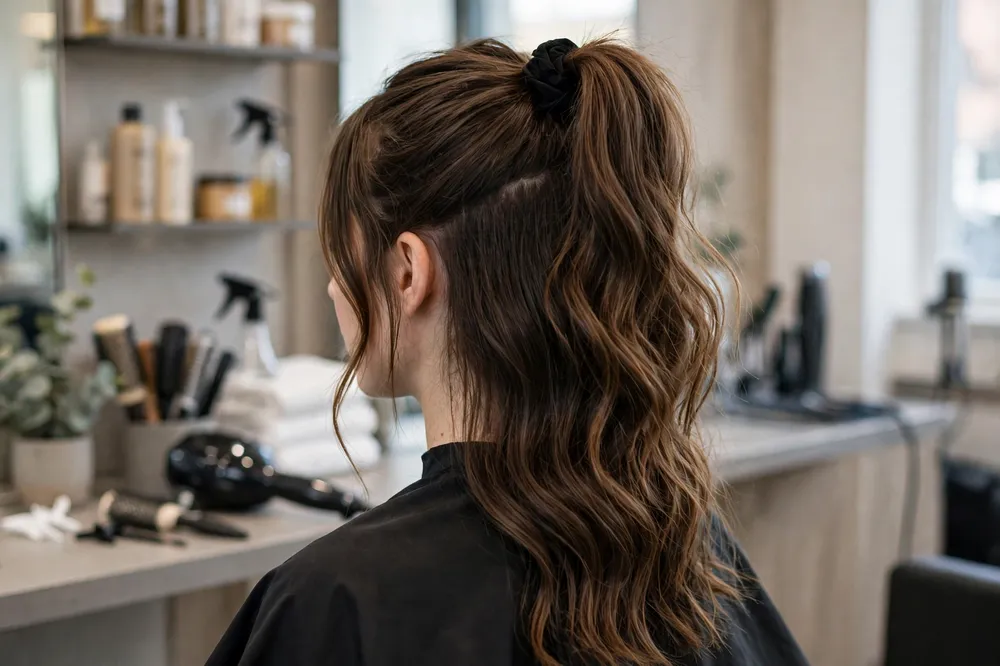
The half-up ponytail ties only the top section of hair — roughly everything above the ears — into a small ponytail at the crown, and leaves the rest down. You get the lifted, face-opening effect of a high ponytail while still showing your length, which is why it flatters short, medium and long hair alike. For the most flattering line, take the section from above the temples rather than the whole top of the head, and angle the ponytail slightly back. Curl the loose ends for a soft, flirty finish or keep them straight for a cleaner one. It is a smart pick for thick hair that feels too heavy in a full ponytail, and for anyone growing out bangs they want off their face.
10. Wrapped Ponytail
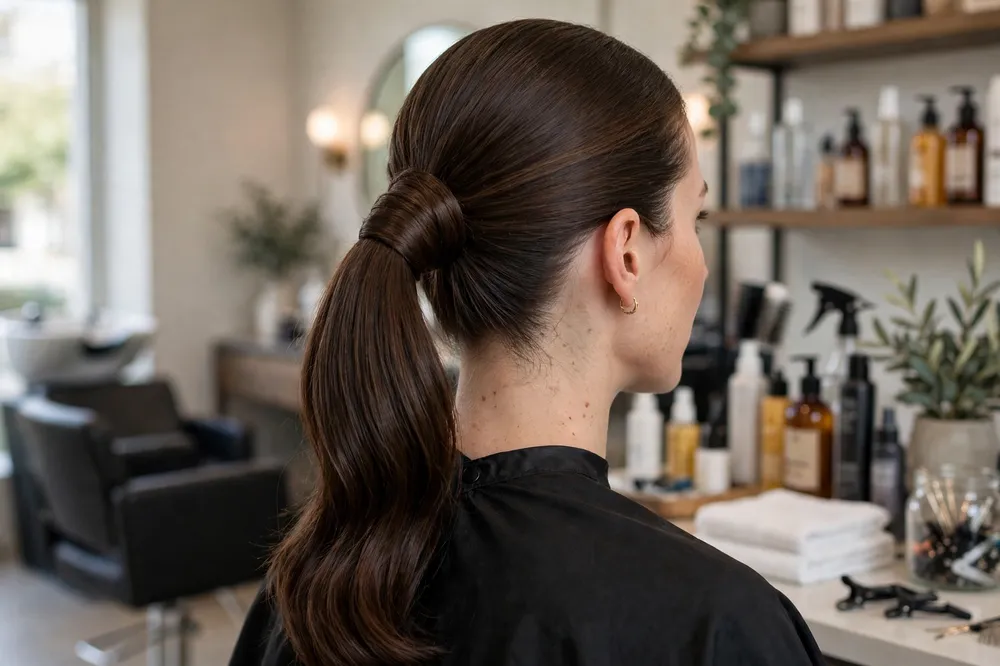
The wrapped ponytail is any ponytail — high, mid or low — finished by wrapping a thin strand of hair around the base to hide the elastic. It is the single trick that separates a home ponytail from a salon one, and it costs you one bobby pin. Take the strand from underneath the tail, about a finger’s width, wrap it around the elastic two or three times, and pin the end underneath where nobody sees it. A dab of gel on the strand stops it unravelling on slippery straight hair. Wear it to work, interviews, events and photos — anywhere the elastic would cheapen the look. It works at every height and on every hair type with enough length to spare a strand.
11. Ponytail with Curtain Bangs
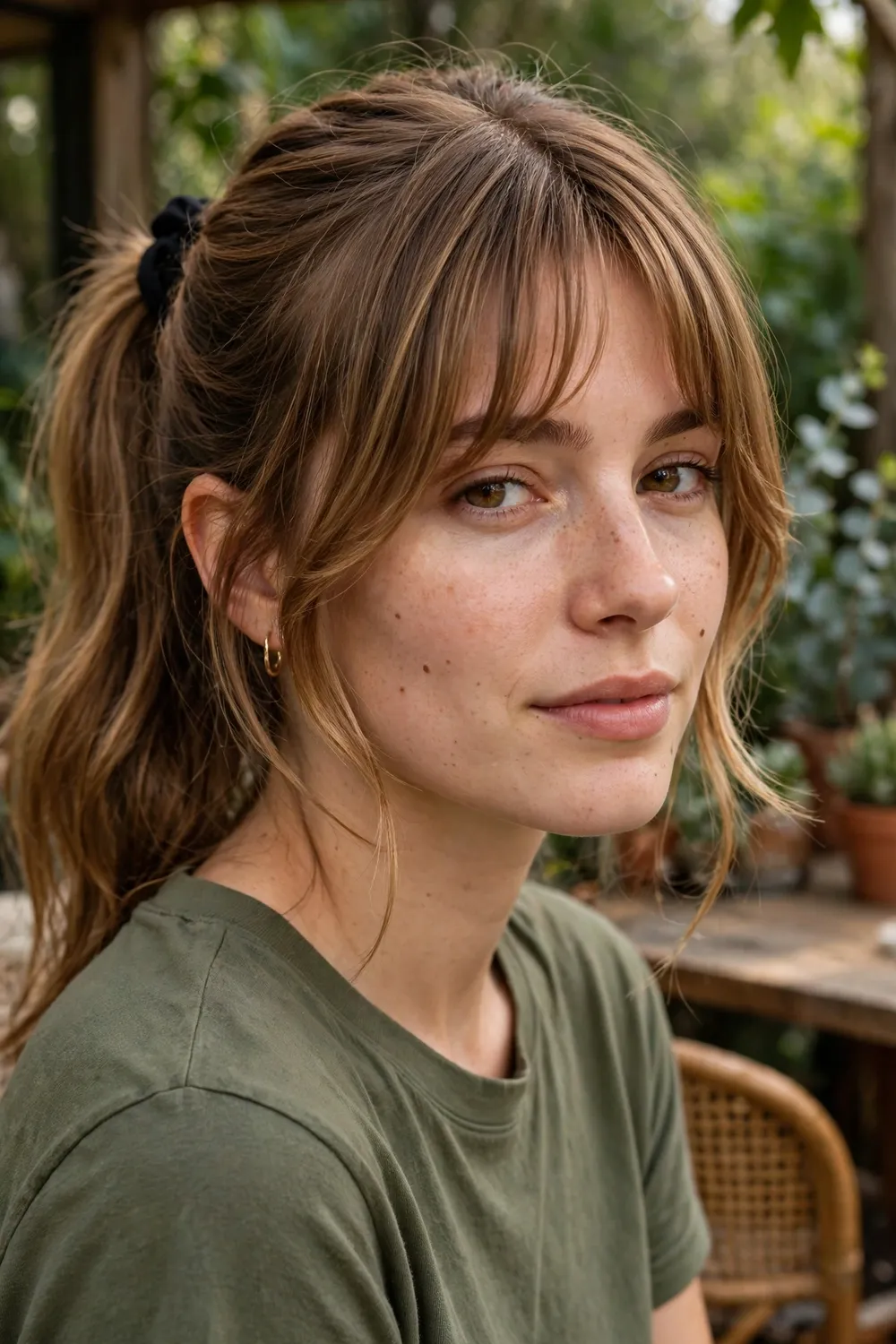
Curtain bangs change a ponytail completely: instead of a bare, pulled-back front, the face keeps its soft frame while the rest of the hair is up. It pairs with high, mid and low ponytails and with straight, wavy and loosely curled hair. The bangs need their own two minutes of styling — blow-dry them forward first, then sweep them outward with a round brush so they open like curtains; styling them backward with the rest of the hair makes them stick straight up. This is the ponytail to choose if a plain pulled-back style makes your face feel exposed, and it flatters round and heart-shaped faces especially well because the bangs break up width at the cheeks.
12. Ponytail with Face-Framing Pieces
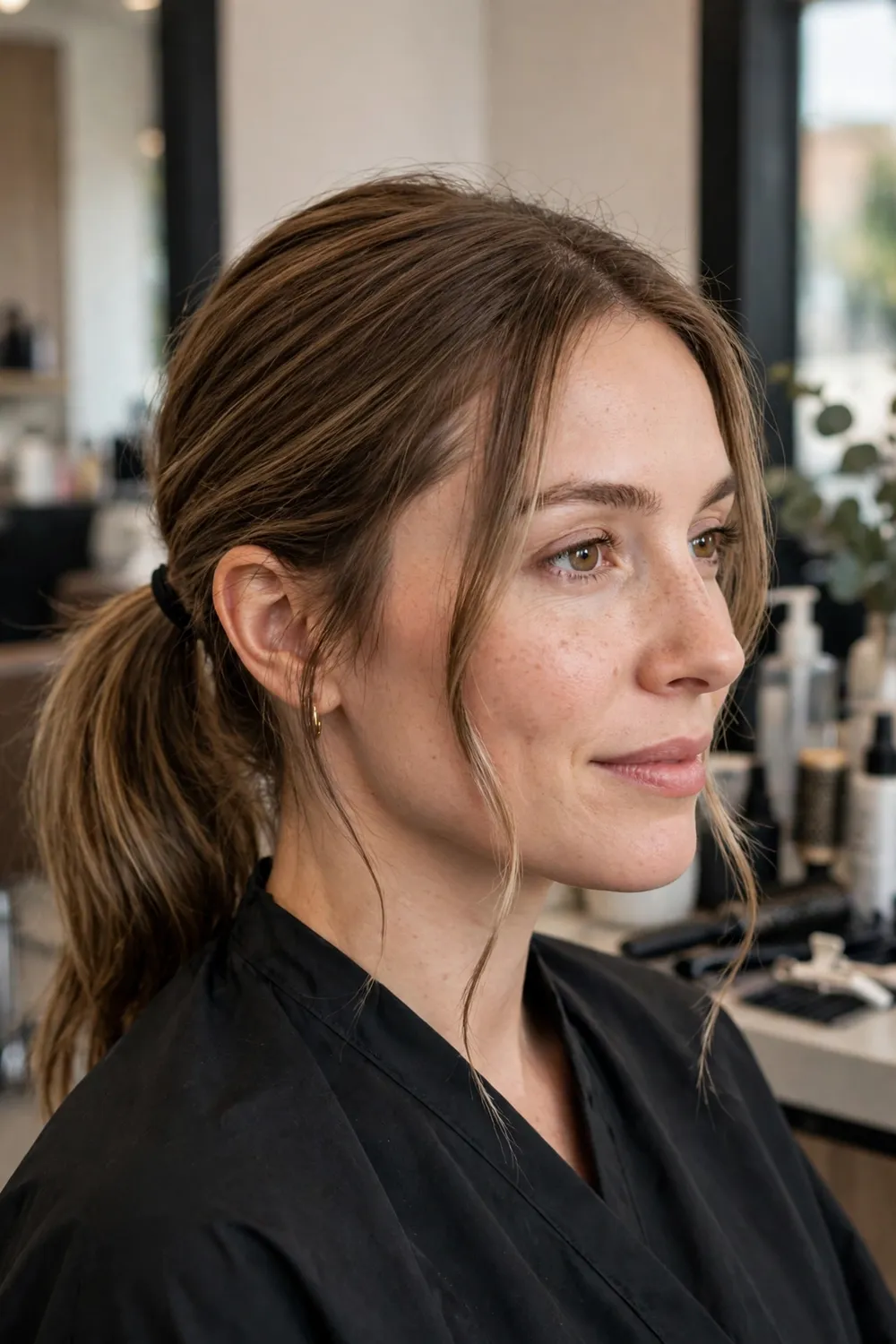
Two slim sections left loose at the front — the so-called money pieces — soften any ponytail and make it look styled rather than scraped back. Before you tie, section out two pieces about a centimetre wide at each temple, tie the rest, then curl or straighten the loose pieces to match the tail. Keep them slim: thick front sections read as hair that escaped by accident, thin ones read as a decision. This detail works on sleek, messy, curly and wavy ponytails alike, and it is the fastest rescue for a ponytail that looks too severe. If your hair is layered, your shortest front layers will do this job on their own — just coax them out with your fingers after tying.
13. High Ponytail with Waves

Where the sleek high ponytail is all smoothness, this version keeps the base tidy but lets the tail fall in big, soft waves — glamorous without tipping into formal. Tie the ponytail high first, then curl the tail in large sections and brush the curls through once with a paddle brush so they merge into waves. Curling after tying is faster and gives the waves a natural shared direction. It needs long hair, or clip-in extensions, to keep the waves from eating all the length, and a tease of backcombing at the crown stops the front looking flat against the drama behind. This is the party, prom and photo ponytail — the one that moves when you do.
14. Low Ponytail with Middle Part
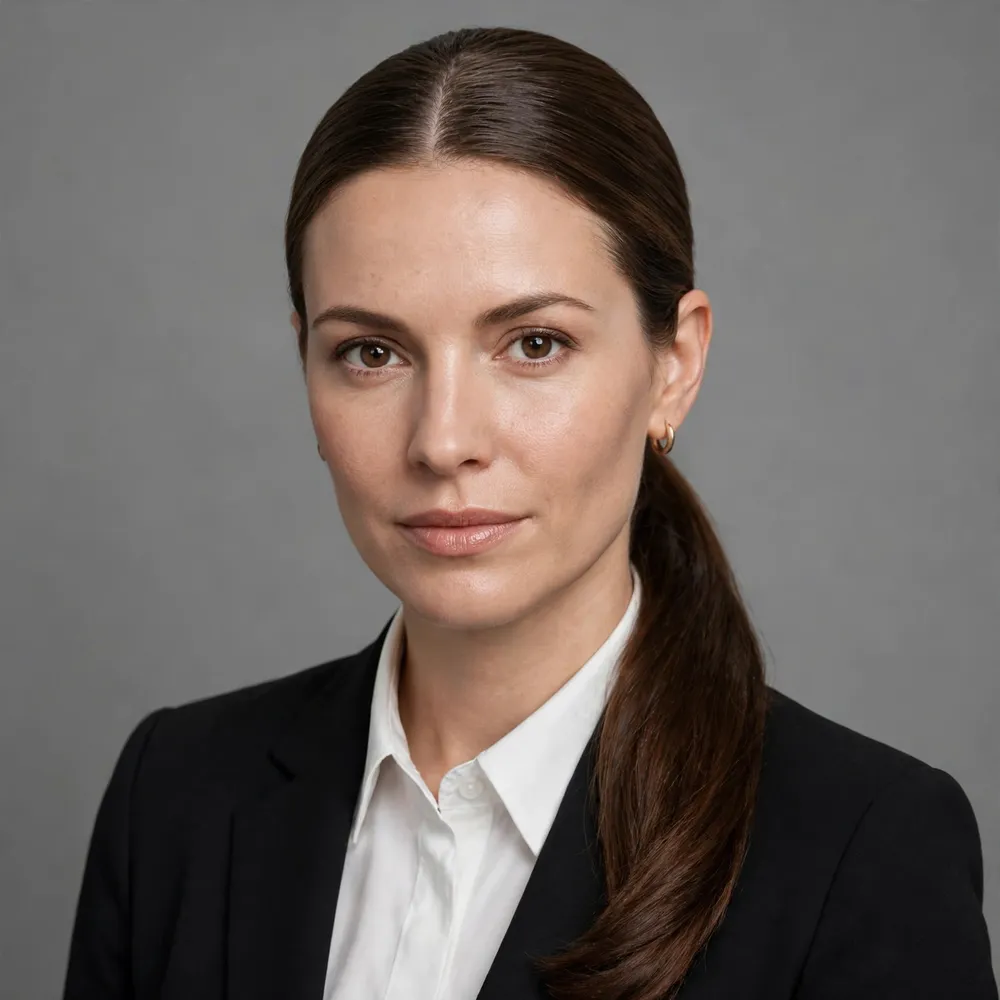
A sharp middle part plus a low, smooth ponytail is the most modern minimal look on this list — clean, balanced and quietly expensive-looking. Draw the part with the tail of a fine-tooth comb from hairline to crown before any product goes on, smooth both sides down flat, and secure the hair low at the nape with a tight elastic. Edge control or a light styling cream along the part keeps it crisp all day. It suits straight and straightened wavy hair best, and it pairs with blazers, shirts and minimal jewellery for work, dinners and formal days. Centre parts widen nothing and hide nothing, so if your part is uneven by nature, take an extra ten seconds to draw it exactly — the whole style rests on that one line.
15. Low Ponytail with Side Part
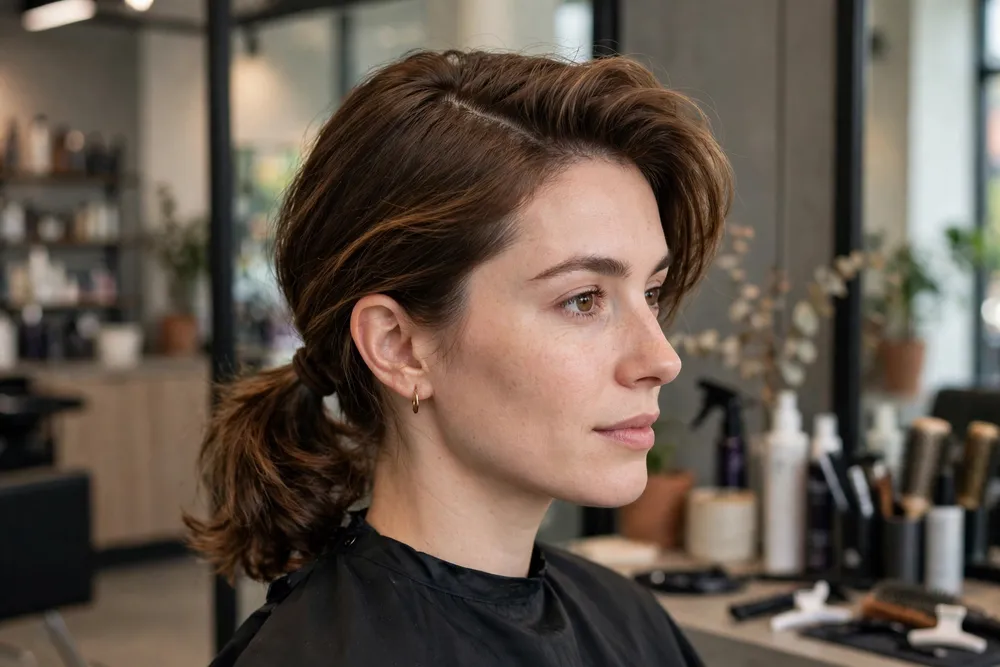
Swap the middle part for a deep side part and the low ponytail changes personality: softer, a little dramatic, and noticeably kinder to thin hair, because sweeping the front diagonally creates the illusion of fullness at the roots. Part above the outer third of one eyebrow, smooth the larger side down and let the smaller side tuck neatly behind the ear, then tie at the nape. It works for formal events, professional settings and evenings, on straight and wavy hair of medium length or more. Add soft waves to the tail if the front feels too flat. Match the part to your natural growth direction where you can — a part forced against the cowlick lifts at the root by lunchtime.
16. Textured Ponytail
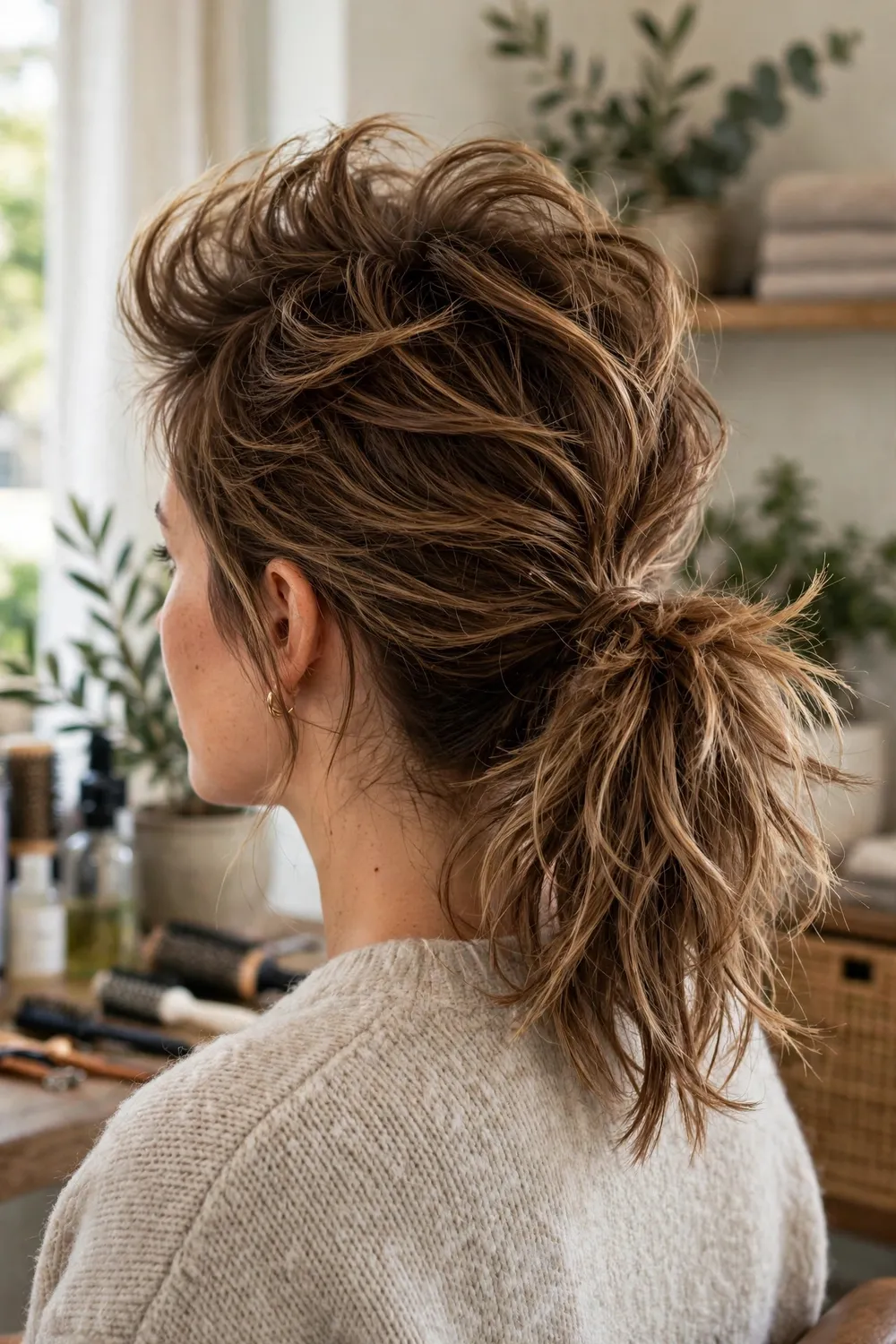
The textured ponytail is built for the days clean hair refuses to hold anything: texture spray or dry shampoo first, light teasing at the crown, then a mid-height tie with piecey, separated ends. It is the best friend of layered haircuts, because the layers that poke out of sleek styles become the movement here. Work a pinch of texture powder or matte paste through the tail and pinch the ends apart with your fingers for that deliberate, separated finish. It suits fine hair that needs body, thick hair that needs its weight broken up, and everything between, at any length past the chin. Keep the crown teasing gentle and brush the surface smooth over it — visible backcombing reads as damage, hidden backcombing reads as volume.
17. Ponytail with a Scrunchie
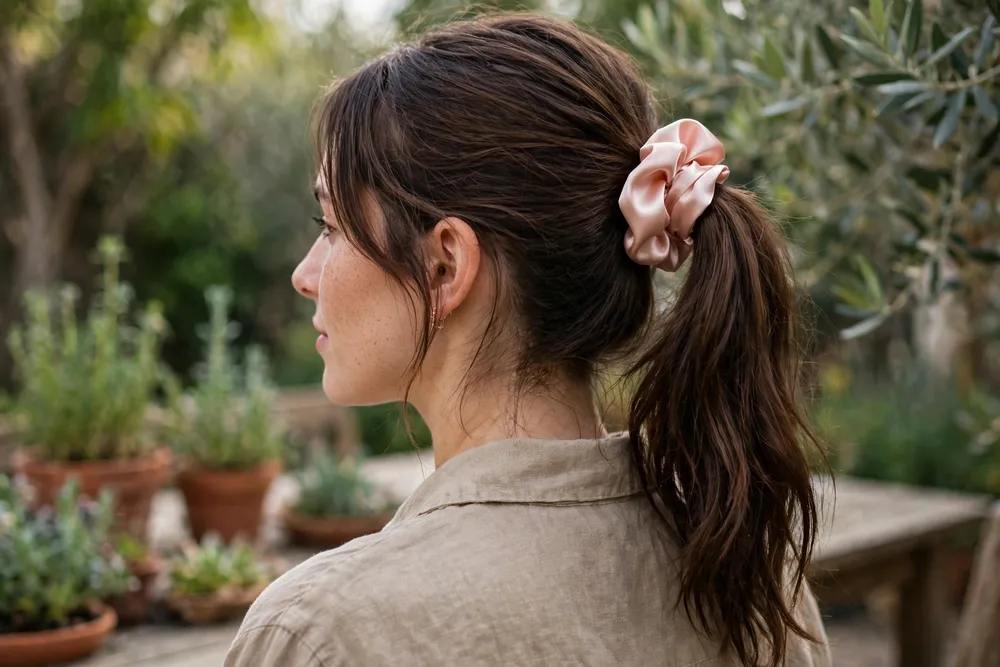
A scrunchie is not just an accessory — the fabric layer means no sharp elastic edge against the hair shaft, so a scrunchie ponytail is genuinely the gentlest way to tie hair up daily. Satin and silk scrunchies reduce friction the most, which matters if you wear a ponytail to sleep or your hair is fine, bleached or breakage-prone. Velvet grips slippery hair better; an oversized scrunchie makes even a plain low ponytail look like an outfit choice. Use one on high, low, half-up and messy ponytails, and match or deliberately clash the colour with your clothes. One caution: a scrunchie alone will not hold a high ponytail through a workout — tie a slim elastic underneath first and let the scrunchie be the decoration.
18. Ponytail with a Ribbon
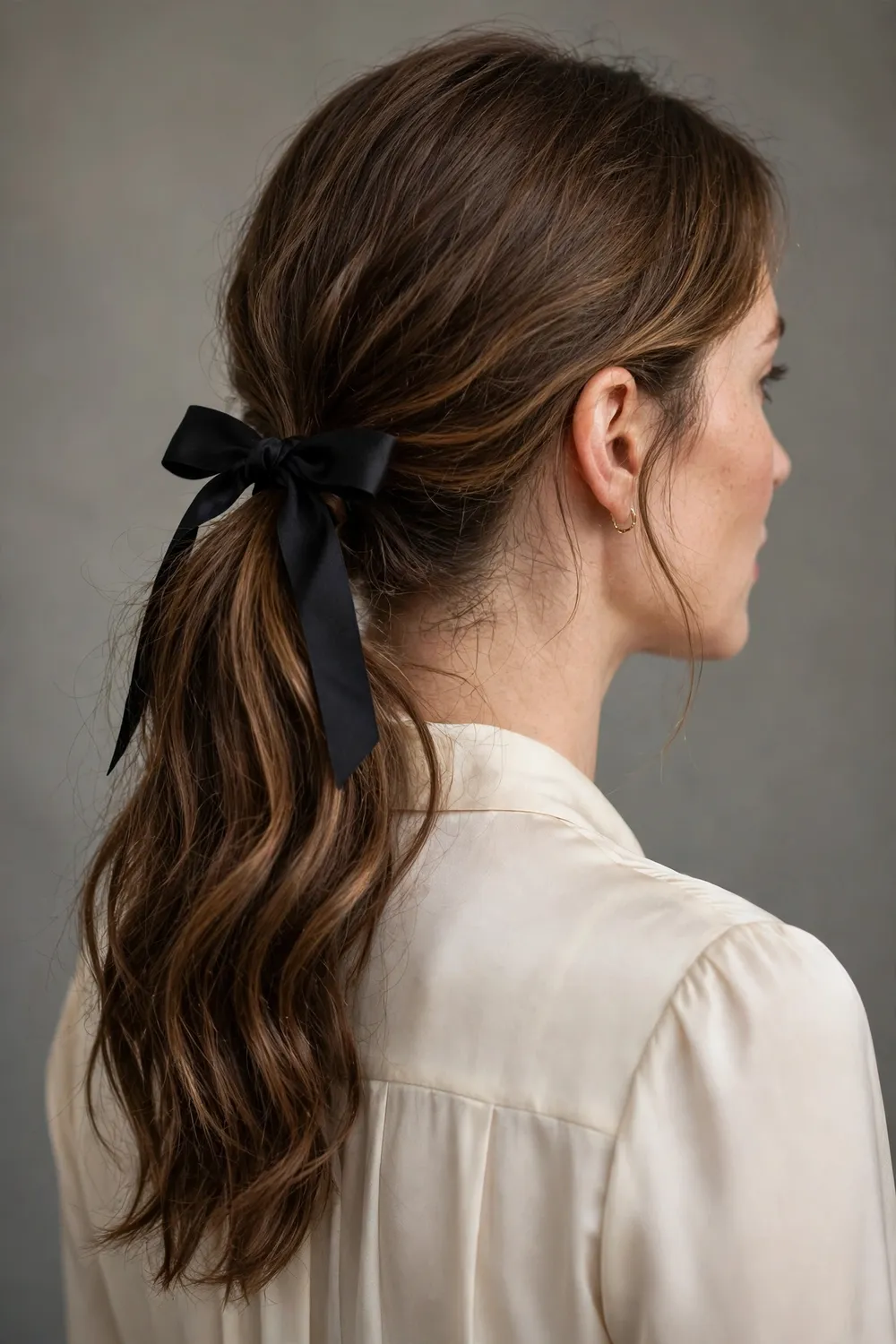
A ribbon tied at the base turns a two-minute low or mid ponytail into something that looks planned — birthdays, brunches, holidays, photos and romantic outfits all suit it. Tie the ponytail with a normal elastic first, then knot the ribbon over it and let the tails hang down mixed in with the hair; the tails should end at different lengths from the hair itself or it looks like a mistake. Black ribbon is the classic, grown-up choice, pastels are softer, and a thin velvet ribbon survives windy days better than slippery satin. Keep the rest of the style simple — smooth base, soft tail — because the ribbon is the whole decoration. On girls this is also the fastest way to make a school ponytail feel special for a photo day.
19. Fishtail Ponytail

The fishtail ponytail ties the hair up first, then fishtail-braids the tail — tying first is what makes it beginner-friendly, because the elastic holds the base steady while you work. Split the tail in two, cross a small piece from the outside of one half over to the other, and repeat, keeping the pieces small and even. Once secured, pinch and pull the braid edges gently to pancake it wider; a fishtail always looks better slightly loosened. It needs long hair to show the herringbone pattern properly, and it holds all day, which is why it is a festival, beach and holiday favourite. If your layers keep escaping, braid on slightly damp hair or with a smoothing cream worked through the tail first.
20. Rope Braid Ponytail
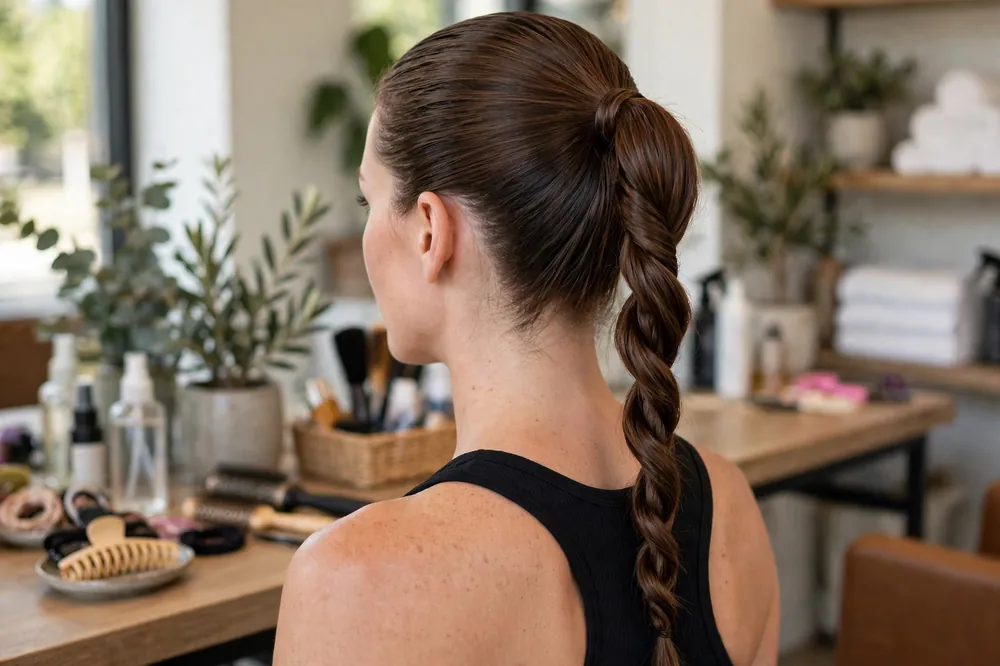
The rope braid is the fastest braid that exists: split the ponytail in two, twist both sections in the same direction, then wrap them around each other in the opposite direction and tie the end. The counter-twist is what locks it — skip that detail and it unwinds within the hour. The result is a clean, sculptural twist that reads sleeker and more modern than a regular braid, and it is exceptionally secure, so runners and gym-goers love it. It suits long, straight or smoothed hair best; on very curly hair the twist pattern gets lost. Because the rope compresses the hair, it also makes a thick ponytail look slimmer and longer.
21. Ponytail with Styled Baby Hairs
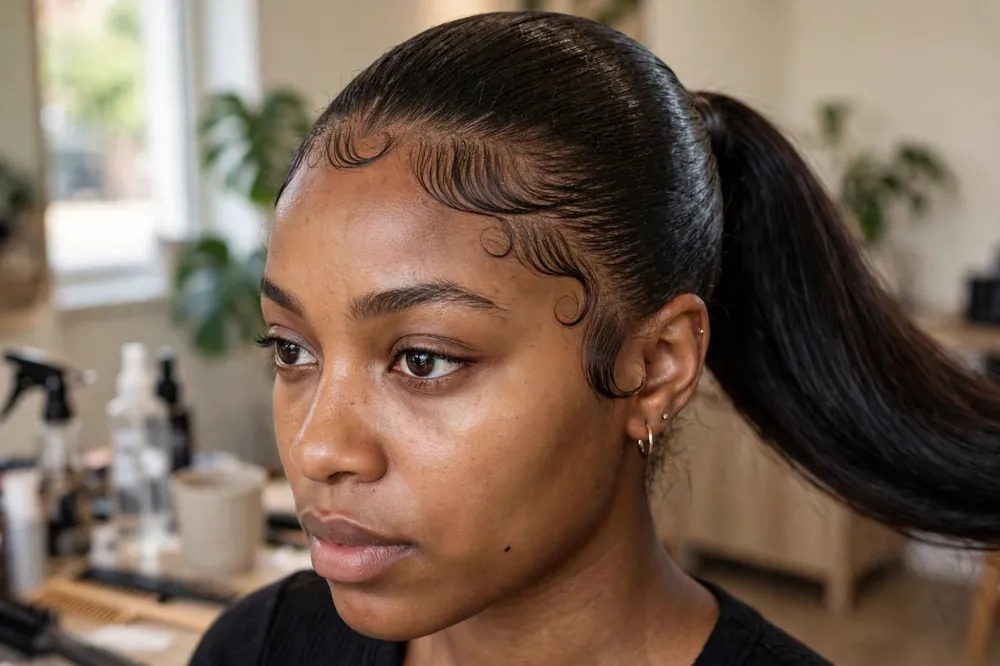
Styled baby hairs turn the hairline itself into the detail: after tying your ponytail — sleek, curly or braided all work — shape the fine hairs along the forehead and temples into soft swoops and waves with edge control and a small edge brush. Work on a pea-sized amount of product at a time and lay each swoop flat with the back of the brush; the style should look glossy and deliberate, not gelled into spikes. This finish belongs to natural and relaxed hair traditions and it frames the face beautifully with a high or slicked ponytail. The hold lasts longest on freshly washed, fully dried edges — applying edge control over yesterday’s product just slides off.
22. Voluminous Ponytail
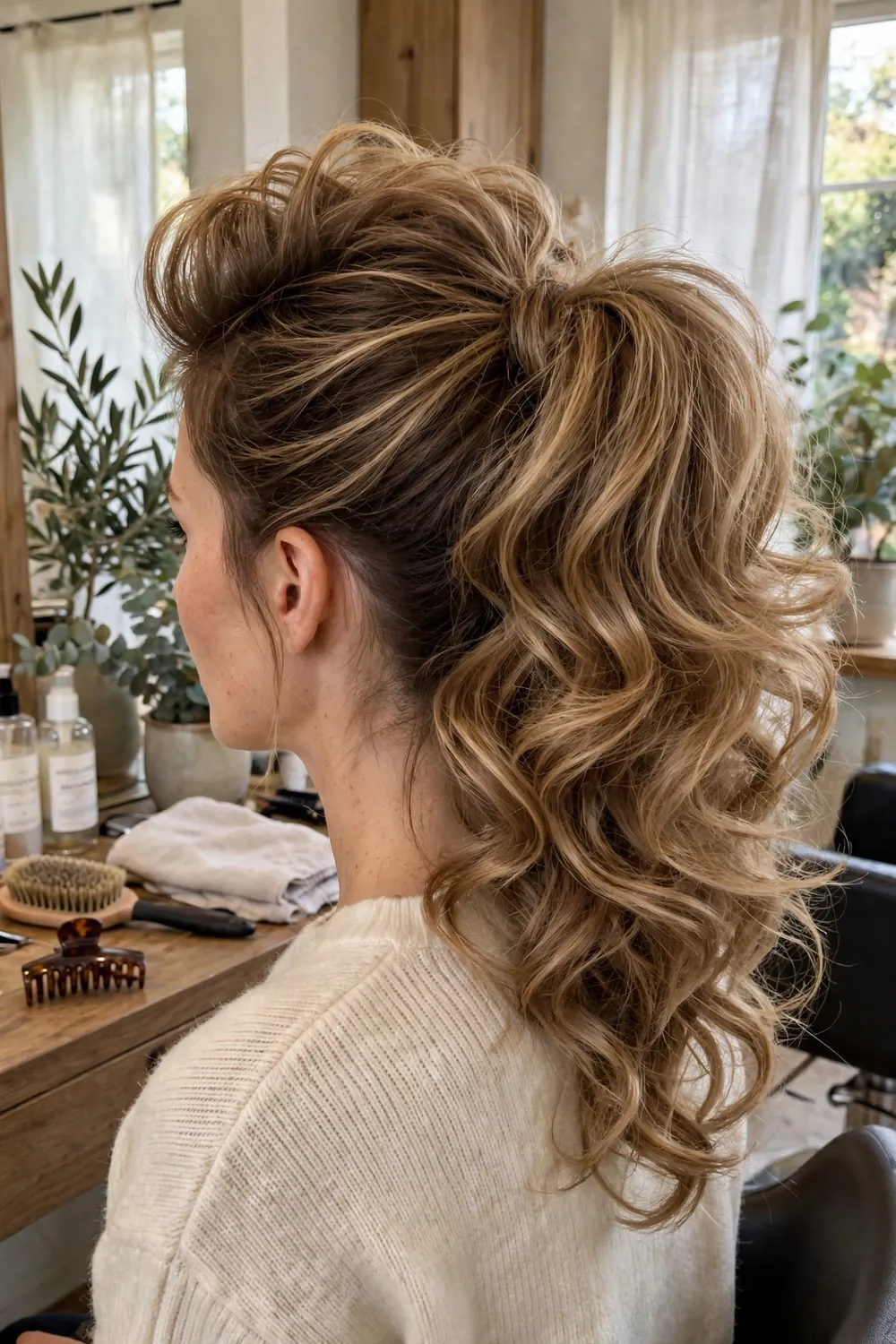
The voluminous ponytail is engineered fullness: teased crown, a tail that has been backcombed or curled for width, and a strong elastic holding a shape that fine hair could never make on its own. Tease the crown and the top layer of the tail, smooth the surface over with a brush so the teasing stays invisible, and finish with flexible — never stiff — hairspray so the bounce survives. The cheat version works just as well: the double stacked ponytail further down this list fakes the same body with no teasing at all. Wear this one to events and photos, on fine, thin or layered hair, and anywhere a flat ponytail makes your whole look feel flat.
23. Ponytail with Extensions
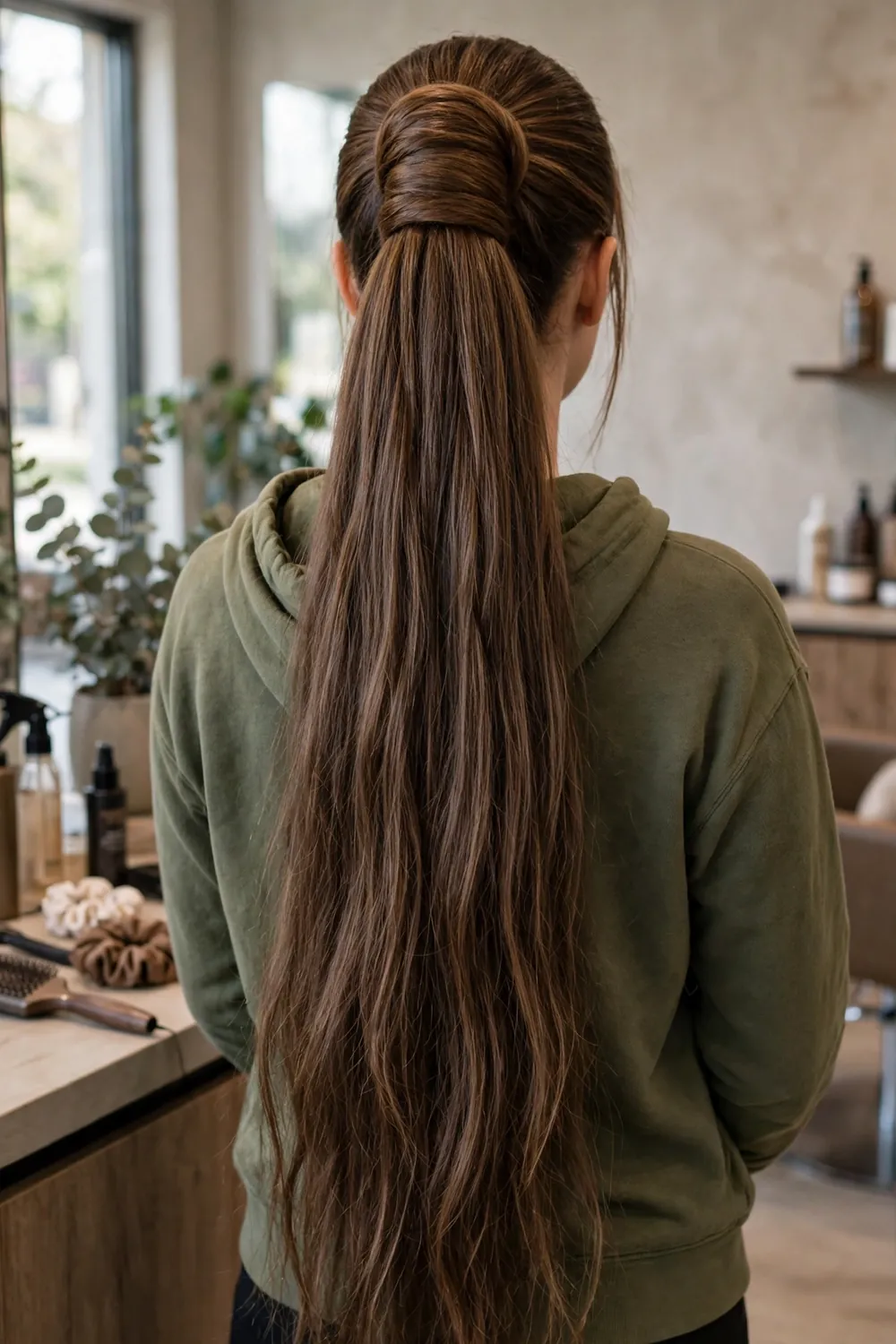
Extensions are how short-on-length hair gets the dramatic ponytails on this list: clip-ins built into your own ponytail, a wrap-around piece that velcros over your base, or a drawstring ponytail that cinches over a small bun. The non-negotiable is the match — texture first, colour second; a straight extension over curly natural hair shows at the base no matter how well the colours blend. Hide the join by wrapping your own hair (or the wrap strip provided) around the base, and style your hair and the extension together so they move as one. Human-hair pieces can be curled and straightened with your own tools; most synthetic pieces cannot take heat unless they are labelled heat-friendly, so check before the curler touches them.
24. Short Hair Ponytail
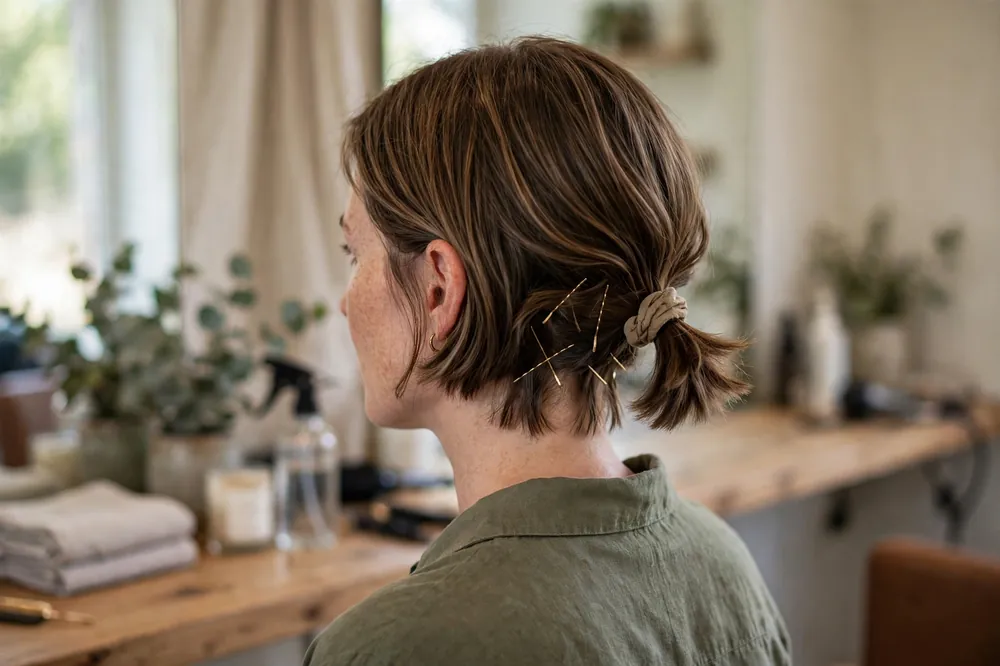
Yes, bob and lob lengths can wear a ponytail — a small, low one at the nape, and it looks cleaner than you expect. Gather everything that reaches, tie it low with a small elastic, and pin the short nape pieces that escape with two bobby pins crossed in an X, which holds twice as well as a single pin. A little texture spray beforehand gives fine, slippery short hair the grip to stay put. Letting a few front pieces fall on purpose turns the escapes into a style. It is a practical pick for gym days, hot weather and growing-out phases, and for school mornings it keeps shorter hair tidy all day — our guide to hairstyles for school has more quick ideas at this length. Expect to re-pin once during the day; that is normal at this length, not a failure.
25. Wet Look Ponytail
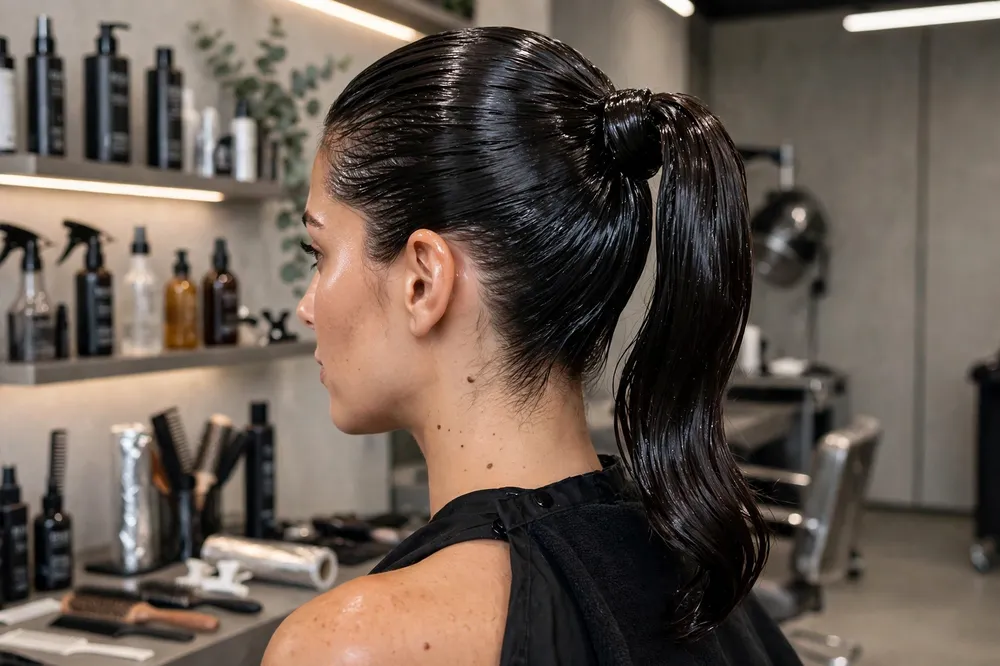
The wet look ponytail is a runway finish: hair combed back with gel through the roots and mid-lengths so it looks freshly, glossily damp, then tied high or low. Apply a strong-hold gel or glossy styling cream section by section and comb everything back tightly before you tie — patchy application is what makes home versions look greasy instead of wet. Keep the tail straight or in one soft wave so the contrast between the slick base and the dry-looking ends reads as intentional. It suits nights out, shoots and fashion-forward outfits, on straight and wavy hair. Be honest about the wash afterwards: this much gel needs a proper clarifying wash, so save it for evenings, not a Tuesday before work.
26. Claw Clip Ponytail
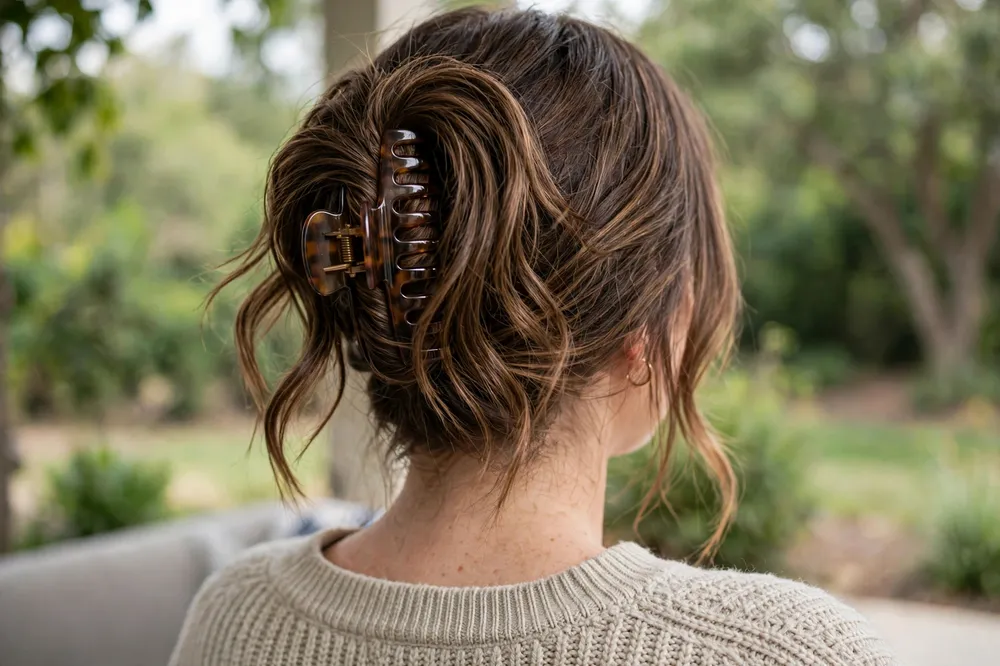
The claw clip ponytail replaces or reinforces the elastic with a claw clip: twist the hair upward as if for a French twist, clip it at the back, and let the ends spill over the top of the clip into a soft ponytail shape. It lifts the hair like a high ponytail but with zero elastic tension, which is why it is the comfort pick for long work-from-home days, errands and headaches-prone scalps. Size the clip honestly — thick, long hair needs a large clip or it will spit the hair out by noon, while fine hair disappears inside a clip that is too big. Tying a slim elastic first and clipping over it gives the look with much better hold for active days.
27. Double Stacked Ponytail
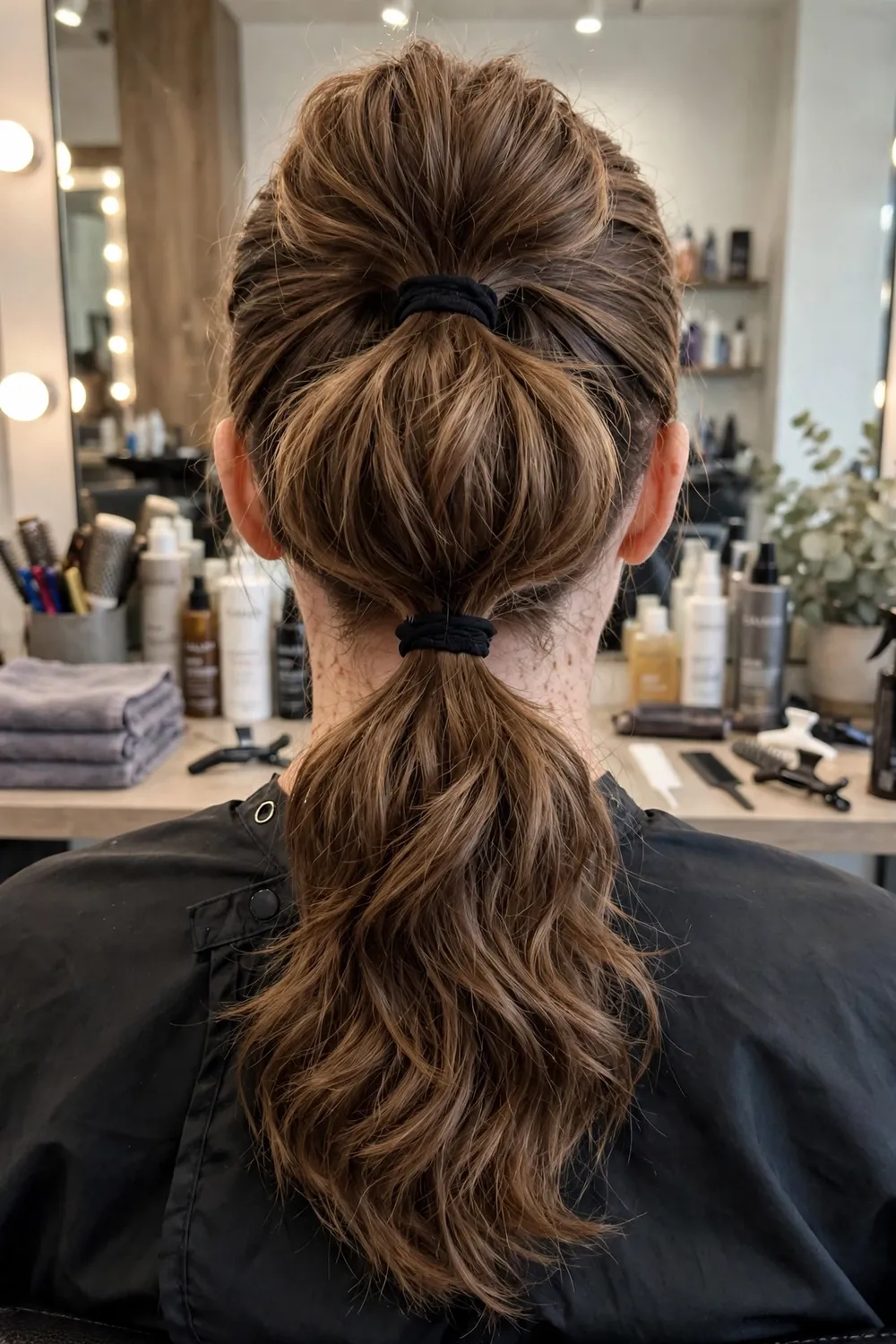
The double stacked ponytail is a genuine optical illusion: tie the top half of your hair into a high ponytail, then tie the remaining bottom half into a second ponytail an inch or two directly below it. The top tail falls over the lower one, hiding the join, and together they read as one ponytail that is noticeably longer and fuller than your hair actually is. It is the best trick on this list for medium-length hair that feels too short for a dramatic ponytail, and for fine hair that needs body without teasing. Keep both ponytails in a straight vertical line and curl or wave the combined tail so the two sections blend. From the front it simply looks like a great high ponytail.
28. Twisted Ponytail
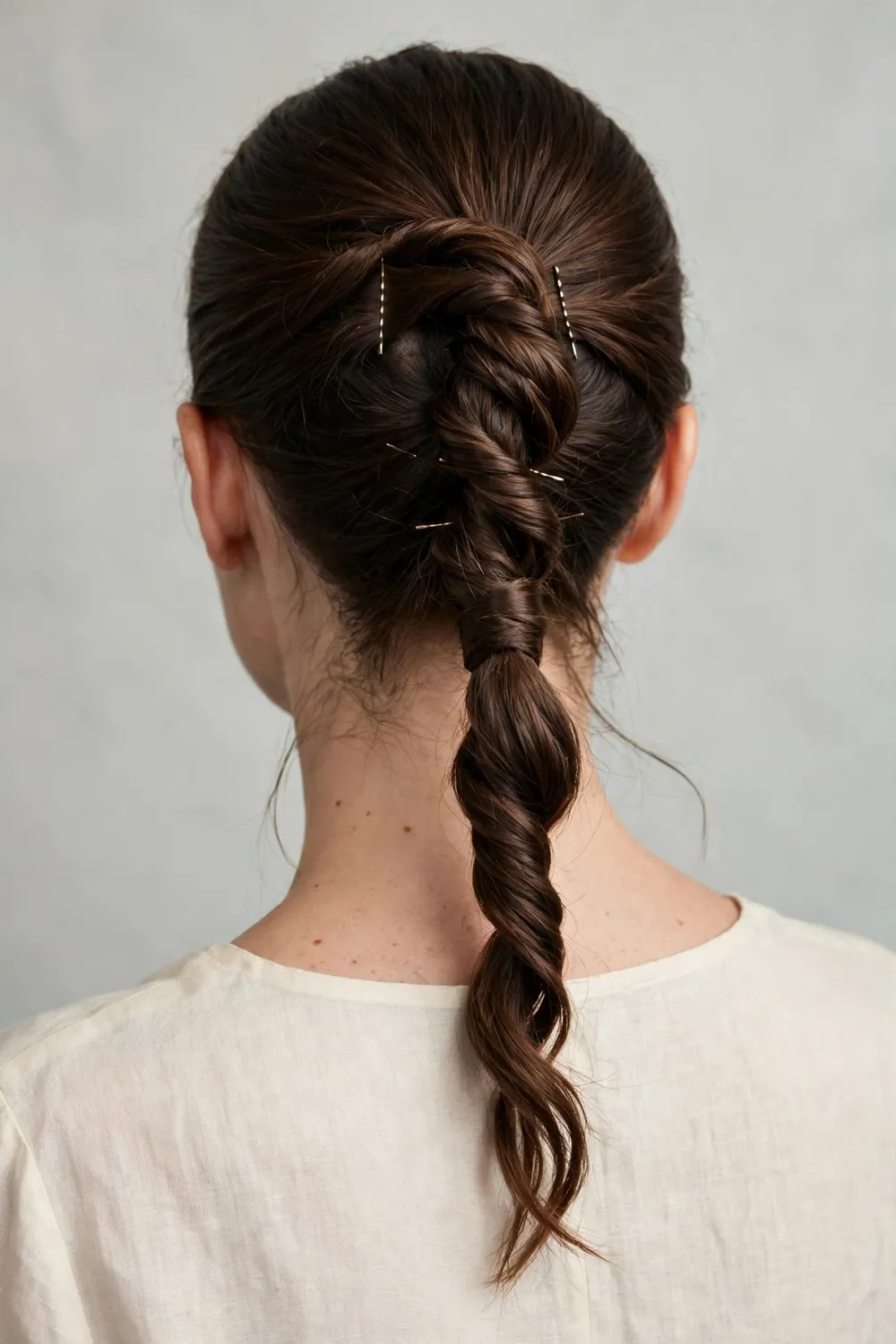
The twisted ponytail replaces braiding with simple twists: split the hair into two sections at the nape, twist each one, cross them over each other down the back, pinning as you go, and tie the ends together. The overlapping twists create a woven, rope-like column that looks intricate and takes about four minutes once your hands know the motion. It holds surprisingly well because every cross is pinned, and it suits medium and long hair of any texture — on wavy hair the twists look especially soft. Wear it for dinners, weddings as a guest, and workdays when a plain low ponytail feels too plain. Finish by tugging the twists slightly wider with your fingers; tight, skinny twists look severe, loosened ones look romantic.
29. Dutch Braid Ponytail
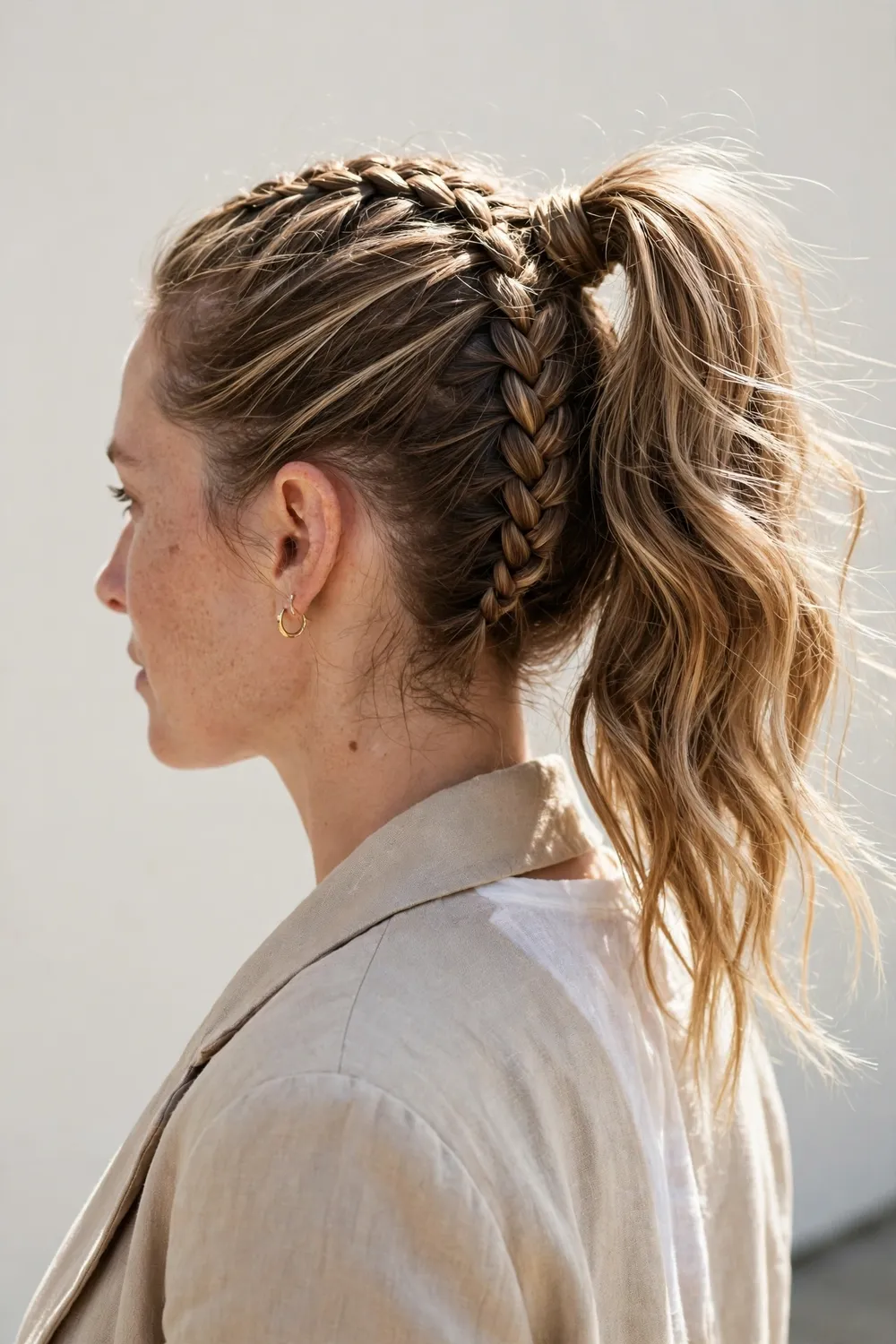
A Dutch braid crosses the strands under instead of over, so the braid stands up on top of the hair in a raised 3D ridge — and running that ridge from the hairline back into a high ponytail gives you detail and security in one style. Braid from the front hairline toward the crown, and when you reach the spot where the ponytail should sit, stop braiding, gather everything and tie. It suits medium and long hair, keeps every strand off the face through sports and dance, and looks far more skilled than it is. Keep your hands close to the head while braiding and feed in small sections; big sections make a lumpy ridge. Pancake the braid edges afterwards for the full, wide effect in the photo.
30. Ponytail with a Hair Scarf
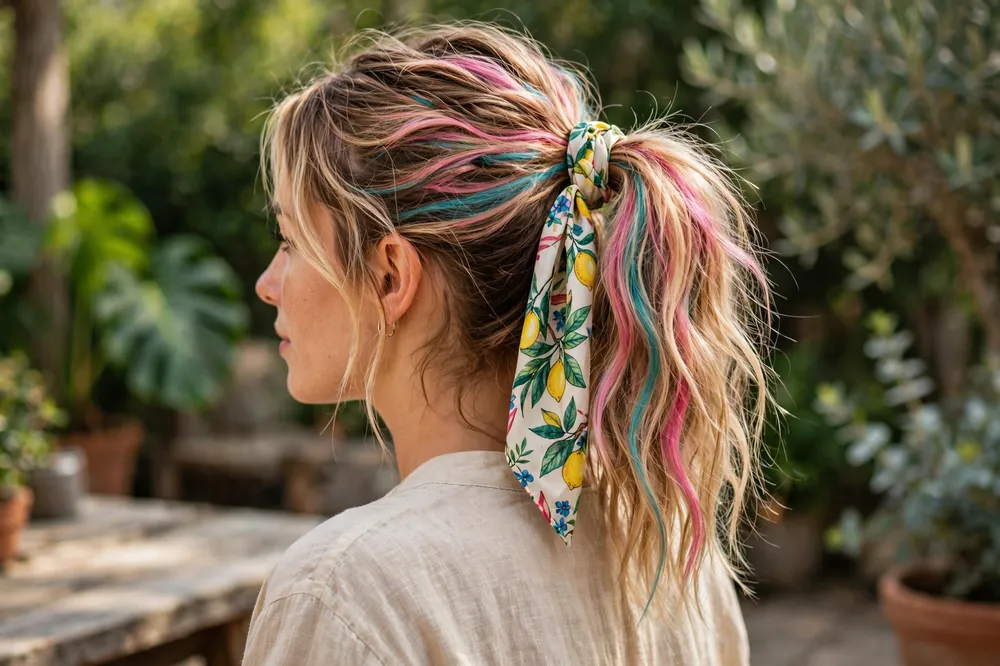
A scarf threaded through or tied over a ponytail does three jobs at once: it decorates, it hides a plain elastic, and on silk or satin scarves it is gentler on the hair than a bare band. The easiest version ties a folded scarf in a knot or bow over the elastic of a low or mid ponytail and lets the ends hang with the tail; the woven version braids a slim scarf into a braided ponytail for a streak of colour through the braid. It is a summer, holiday and festival staple, and a quick rescue for hair that is misbehaving — the scarf draws every eye. Tie the ponytail securely with a real elastic underneath; a scarf alone will slowly slide off smooth hair.
31. French Twist Ponytail
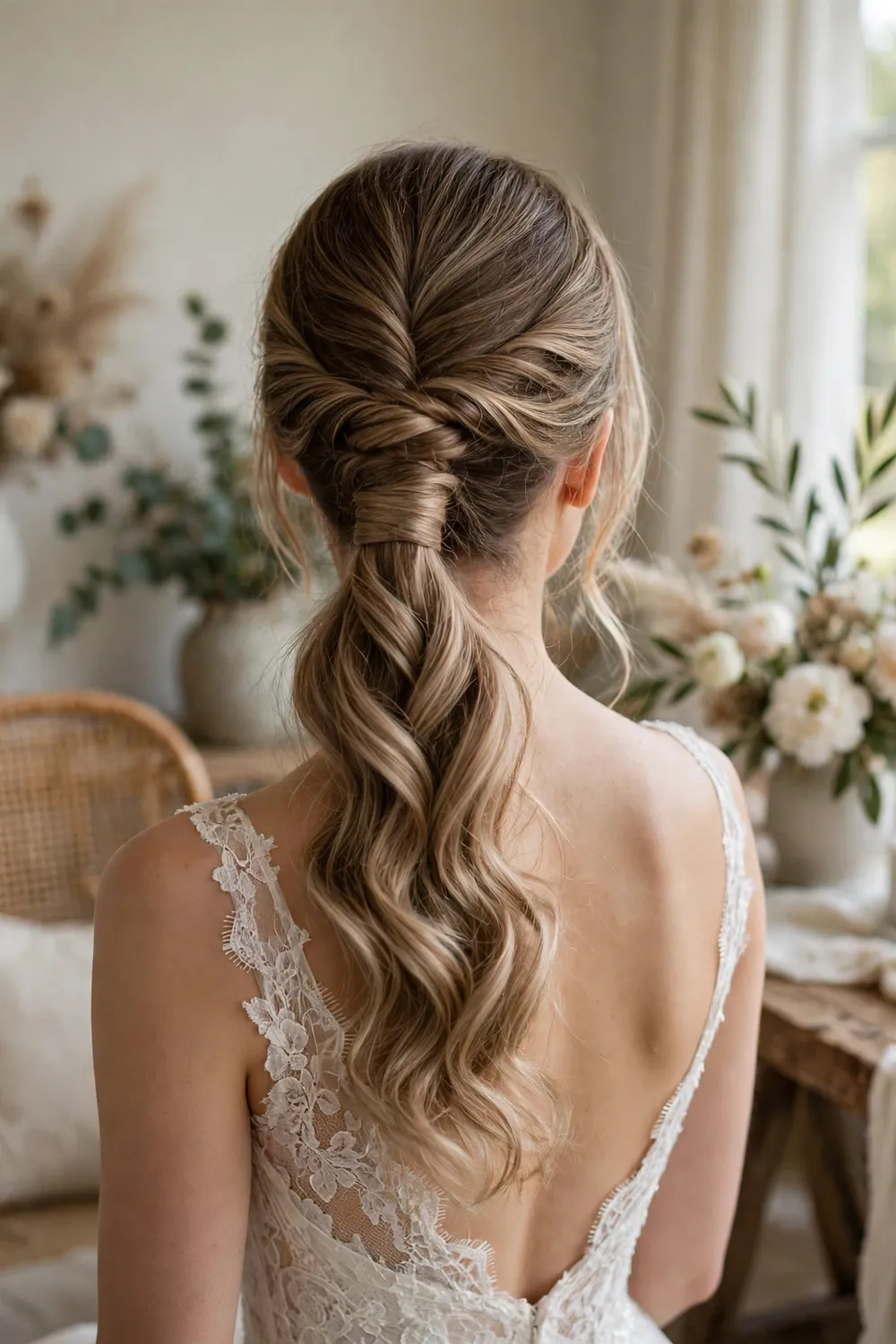
The French twist ponytail takes the most elegant updo in the book and relaxes it: gather the hair low, twist it upward into the classic vertical roll, pin the twist — but instead of tucking the ends away, let them fall free as a ponytail. You get the polished, structured back of a French twist with the softness and movement a full updo lacks. It suits medium and long hair, straight or smoothed wavy textures, and it is a beautiful choice for weddings, formal dinners and photographs because it looks considered from every angle. This one repays five practice minutes in front of a mirror before the event; the twist direction and pin placement become obvious by the second try.
32. Knot Ponytail
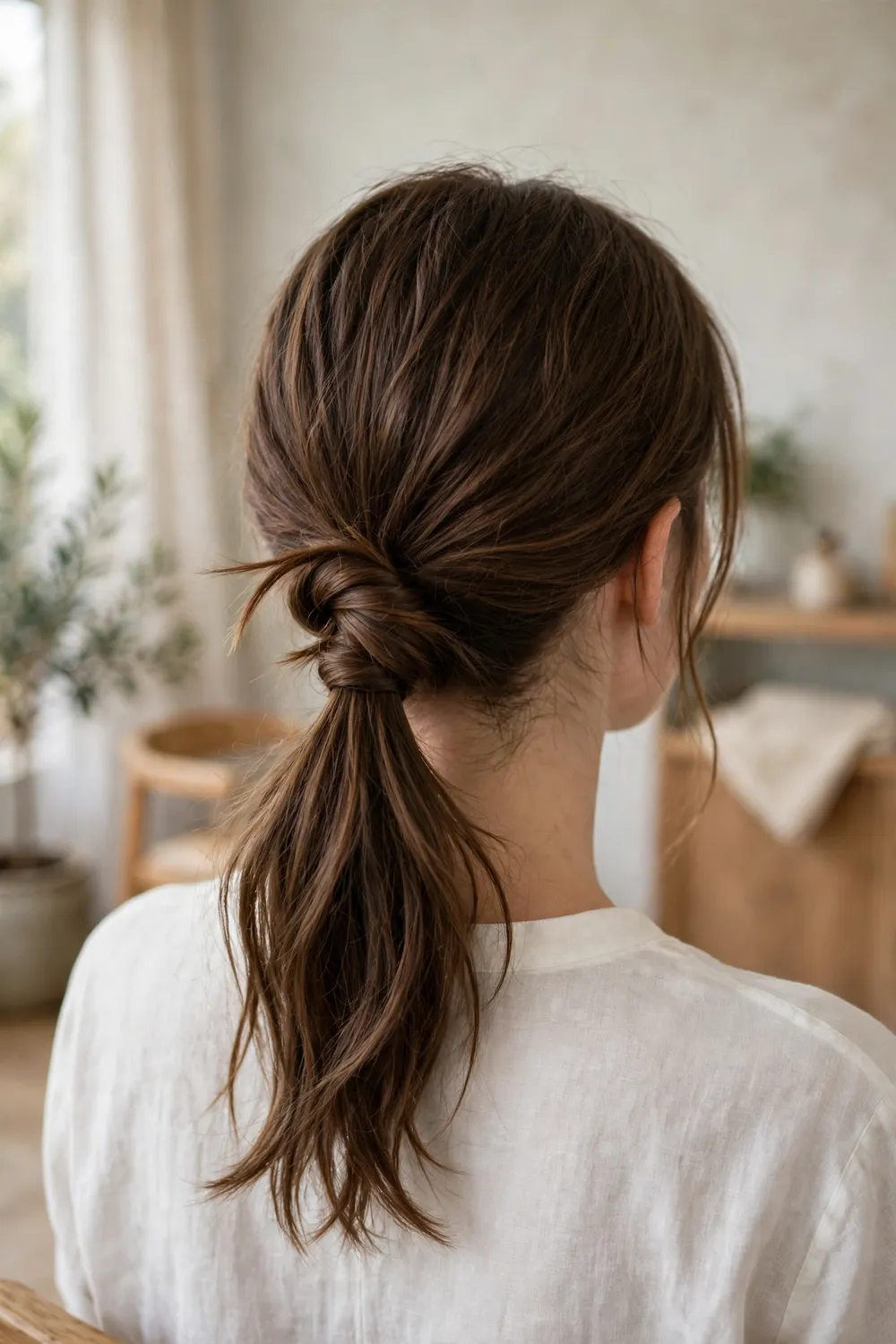
The knot ponytail skips the elastic at the base entirely: split the gathered hair into two sections and tie them in a simple knot — once for a loose finish, twice for hold — then secure only the ends below the knot with a small clear elastic or pins. The knot itself becomes the detail, a minimalist twist that looks like a design choice rather than a missing hair tie. It needs medium-long to long hair with enough slip to knot without tangling; very curly or dry, rough-textured hair resists knotting and is better pinned instead. Wear it low for the cleanest effect, and smooth a drop of serum over the two sections first so the knot slides into shape instead of gripping halfway.
33. Upside-Down French Braid Ponytail
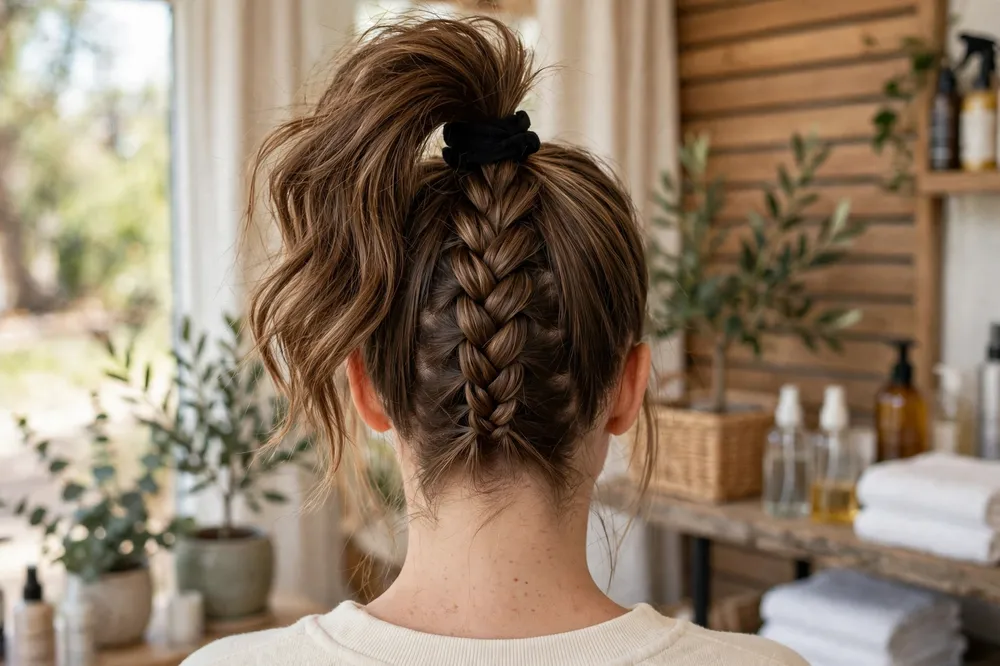
This one braids from the nape upward: flip your head over, French braid from the bottom hairline up to the crown, then stand up, gather everything and tie a high ponytail over the braid’s end. The braid climbs the back of the head where nobody expects detail, so the style looks interesting from behind and clean from the front — a favourite for gym photos, dance and festivals. It suits medium and long hair and genuinely holds: the braid anchors the underside layers that usually escape from high ponytails. Braid tightly and keep your fingers against the scalp, because a loose upside-down braid sags the moment you stand upright. A hand mirror check at the back before you leave is worth the ten seconds.
34. Ponytail with a Bow

A bow at the base is the simplest finishing touch in this whole list: tie any ponytail — high and perky or low and soft — and clip or tie a bow right over the elastic. Barrette bows, ribbon bows and velvet bows all work; match the bow size to the ponytail, because an oversized bow on a tiny ponytail tips from cute to costume. It is a party, photo-day and celebration staple for girls, and on adults a slim black or velvet bow on a low ponytail reads classic rather than childish. If you are making the bow from ribbon, tie it onto a hair elastic first rather than around the hair directly — it stays put all day and comes out without pulling.
Ponytail Mistakes to Avoid
- Tying in the exact same spot, tightly, every day. Constant tension at one point causes breakage at the base and a sore scalp. Rotate between high, mid and low, and take rest days with the hair down or in a loose braid.
- Using thin elastics with metal clasps. The metal join snags and cuts strands every time you pull the tie out. Use snag-free elastics, fabric ties or a scrunchie, and never rip a tie out — unwind it or snip a stuck elastic carefully.
- Building a sleek ponytail on un-detangled hair. Knots brushed over become bumps that no amount of gel will flatten. Detangle fully first, then smooth in sections.
- Skipping product on the base but drowning the tail. A sleek ponytail needs product at the roots and surface, not weighed-down lengths. Gel and cream go on the head; the tail needs only a light finish.
- Tying wet hair up tight. Hair is weakest and most stretchy when wet, and a tight tie on wet hair invites breakage and a musty scalp. Dry at least the roots before any firm ponytail.
- Expecting one elastic to hold thick hair all day. Heavy hair needs a strong elastic doubled up, a bungee-style tie, or the two-layer method at the base. A ponytail that slides is usually an elastic problem, not a hair problem.
- Forgetting the underside. The nape is where short layers escape and where most people never brush. Brush upward from the nape when gathering, and check the back with a hand mirror for formal styles.
Ponytail Hairstyles FAQs
What is the easiest ponytail hairstyle for beginners? The classic low ponytail. Part the hair in the middle or on the side, brush it down to the nape and secure it with one elastic — no technique to learn, and lows are forgiving because gravity is not fighting you. Once that feels easy, the messy ponytail is the natural second step.
Which ponytail makes the face look lifted? A sleek high ponytail. Sitting at or above the crown, it pulls the eye upward toward the cheekbones and eyes, and the smooth, tight base enhances the effect. The high ponytail with waves gives the same lift with a softer finish.
How can I make my ponytail look fuller? Build volume in three places: tease the crown before tying, backcomb or curl the tail itself, and smooth the surface over the top so the fullness looks natural. The double stacked ponytail fakes length and thickness with no teasing at all, and extensions are the permanent upgrade for fine hair.
What ponytail works best for short hair? A small, low ponytail at the nape. Gather what reaches, tie it low, and pin the escaping nape pieces with two crossed bobby pins. Texture spray before you start gives short, slippery hair the grip it needs, and letting a couple of front pieces fall on purpose makes the short length look intentional.
How do I stop bumps in a sleek ponytail? Detangle completely, then brush in small sections in the direction of the tie. The real fix is the two-layer method: secure the back and sides first, then sweep the front section smoothly over the top and tie again. A boar-bristle brush, not a paddle brush, is the tool that actually flattens the surface.
Which ponytail style is best for a formal event? The low wavy ponytail, the wrapped ponytail and the sleek low ponytail are the proven formal choices — clean bases, soft or glossy tails, nothing that will unravel during the event. The French twist ponytail is the most elegant option of all when you have a few extra minutes.
Can curly hair wear a ponytail every day? Curly hair can wear ponytails often, but not the same tight one daily. Use soft, stretchy ties or satin scrunchies, avoid pulling the edges tight, and change the height so tension does not sit on the same strands. A loose, high curly ponytail on a satin scrunchie is the safest regular version.
How can I make a ponytail last all day? Start with grip — texture spray or dry shampoo on slippery hair — and use an elastic that genuinely matches your hair’s weight. Set the base with a light mist of hairspray, pin a bobby pin vertically through the base underneath the tail for hidden support, and carry one spare tie. Sleek styles last longest when the two-layer method holds the base.
Final Word
The ponytail earns its place as the most-worn hairstyle in the world because it is never just one hairstyle: it is a sleek high pony for confidence, a low wavy one for romance, a braided one that survives the gym, and a ninety-second messy one that saves a bad hair day. Pick the version that matches your hair and your plans today, build the base the way the basics section describes, and the rest is one elastic. For more everyday ideas in this series, see our hairstyles for school guide, and browse our latest women’s hairstyle guides for braids, buns and occasion styles to try next.