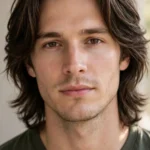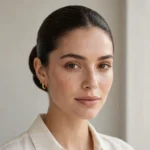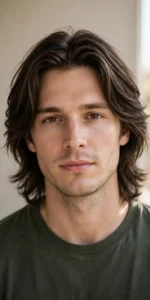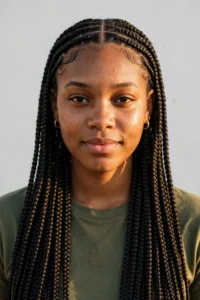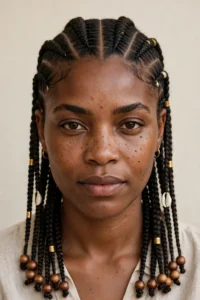


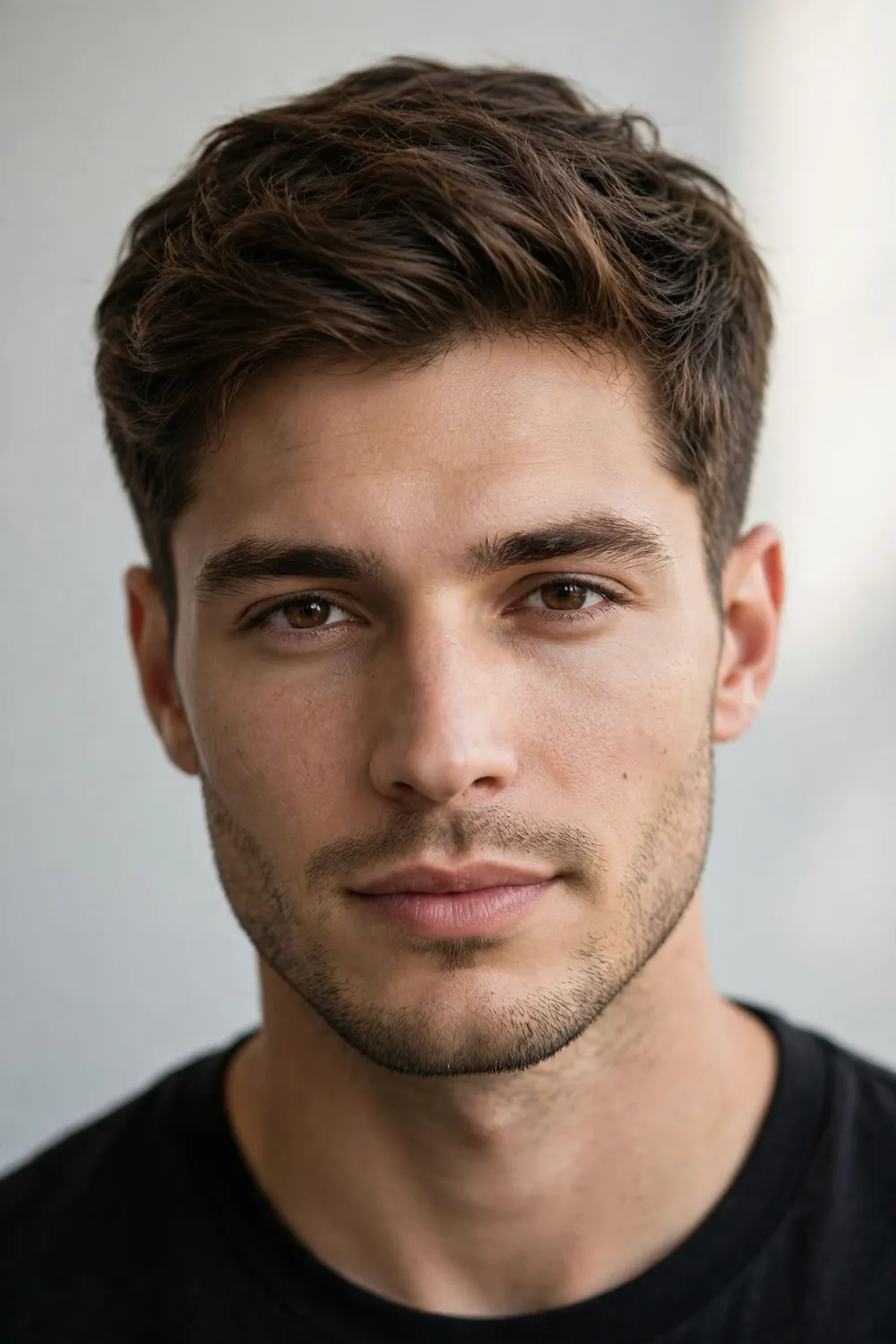
If you have an oval face, you have the easiest head of hair to cut. An oval face is roughly one and a half times longer than it is wide, with cheekbones as the widest point and no sharp angles anywhere — and because those proportions are already balanced, almost every haircut works on you. The short answer: pick a textured crop, a classic side part or a moderate quiff and you cannot really go wrong. The only way to mess up an oval face is to fight its balance — stacking extreme height on top or hiding the forehead under a heavy fringe. The 26 haircuts below are ordered from shortest to longest, with the exact lengths and barber tips for each, so you can choose by your hair type and how much morning effort you actually enjoy.
How to Tell If You Have an Oval Face
Plenty of men guess their face shape and guess wrong, so measure before you commit to a cut. You only need a phone camera or a flexible tape and thirty seconds.
Stand in front of a mirror with your hair pushed back off your face. Measure four things: your face length (hairline to the tip of your chin), your cheekbone width (across the fullest part of your cheeks), your forehead width, and your jaw width. An oval face has a clear pattern:
- Face length is about 1.4 to 1.6 times the cheekbone width — most guides round it to 1.5 times.
- The cheekbones are the widest of the three width measurements.
- The forehead is a little wider than the jaw, and both taper gently rather than ending in angles.
- The jawline and chin are rounded, not squared off or pointed.
No tape? Use the mirror test. Trace the outline of your face on the mirror with a bar of soap or a dry-erase marker, step back, and look at the shape. An oval reads like an egg standing on its narrower end: wider through the middle, softly narrowing at the top and bottom, with no corners.
One warning, because it catches a lot of men out: oval and oblong are close cousins. If your face length comes out at 1.7 times the width or more, and the sides of your face run fairly straight and parallel instead of curving, you are oblong, not oval. That distinction matters — oblong faces need width added at the sides and height kept down, while oval faces need neither. Everything in this guide assumes a true oval.
What Makes a Haircut Work for an Oval Face
Most face shapes need a haircut that corrects something: round faces need height, square faces need softening, long faces need width. An oval face needs none of that. Your haircut has one job only — do not break what is already balanced. Four simple rules do that.
Keep the proportions, not a specific style. A useful guideline is to keep the top no more than roughly twice the length of the sides. Four inches on top over two-inch tapered sides looks right; five inches of pompadour over shaved-zero sides stretches the whole head upward and drags the face toward oblong.
Show the forehead. The gentle taper of an oval forehead is part of what makes the shape read as balanced. Styles that keep the hairline open — side parts, quiffs, slick backs, short textured fringes — flatter it. A thick fringe cut straight across at eyebrow level hides that taper and makes the face look rounder and shorter than it is.
Let hair type make the final call. Because the shape permits nearly everything, the real filter is your hair. Straight hair holds sharp parts and blunt geometry. Wavy hair wants movement and layers. Curly and coily hair wants volume kept where it helps and bulk removed where it puffs. Ideas 18 to 20 below are organised exactly this way.
Texture over height. The cuts that look best on oval faces in 2026 share one thing: a matte, textured finish rather than tall, shiny styling. Texture adds interest at normal proportions; height just adds length your face does not need.
26 Best Haircuts for Oval Face Men
Every cut below suits an oval face. They run from a ten-minute buzz to long, tied-up hair, and each one lists the length to ask for and who it suits best. Save the photo of the one you like — showing your barber beats describing every time.
1. Textured Crop
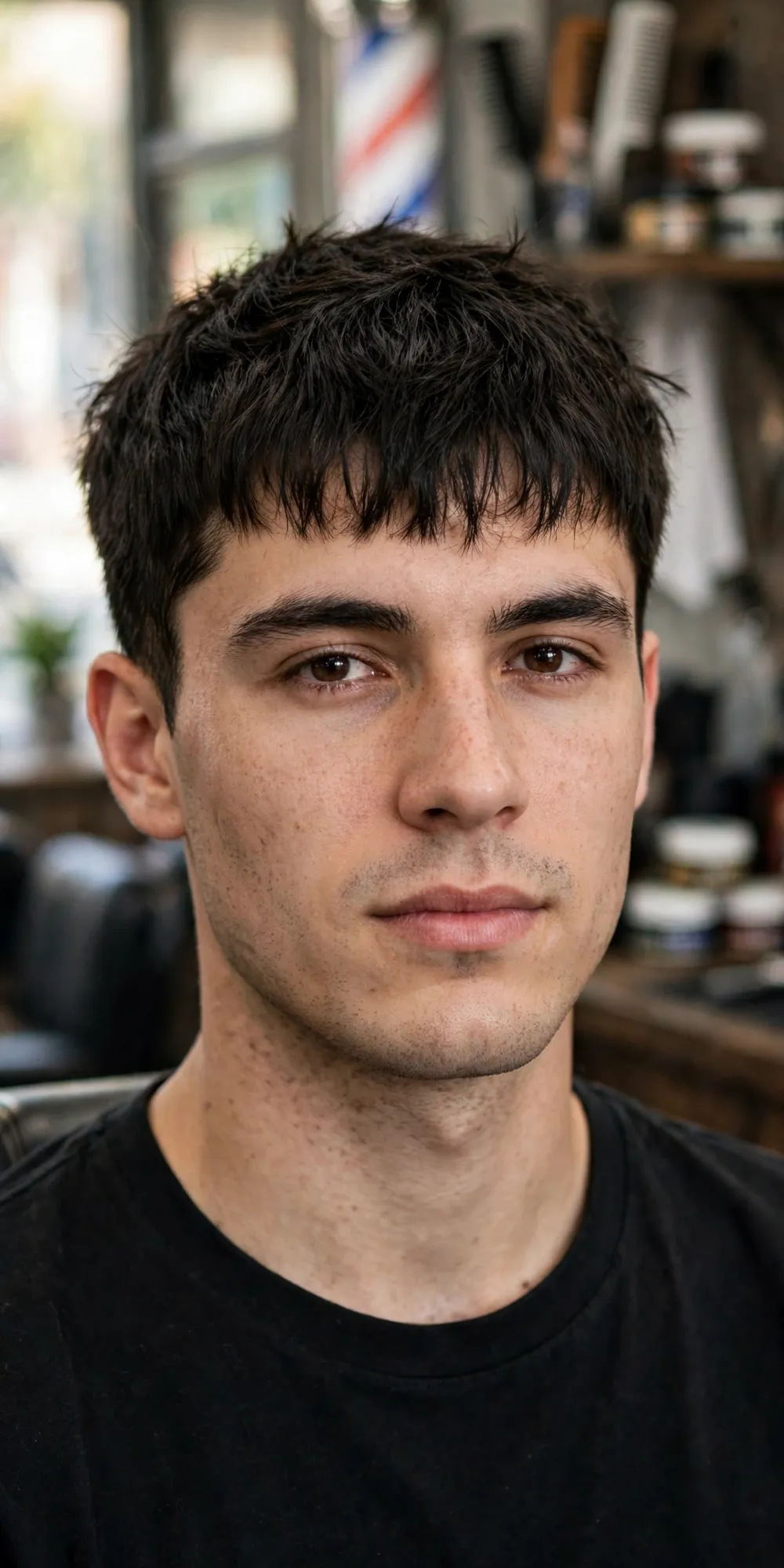
The textured crop is the most requested men’s cut of 2026, and on an oval face it is close to foolproof. The top is cut to about 1.5 to 2 inches, point-cut or razor-textured so it sits in separated pieces, and worn forward into a short, broken fringe that stops high on the forehead. That short fringe line is exactly why it works for oval faces: it frames the forehead without covering it. Ask for a taper or a low-to-mid fade on the sides, and style it with matte clay worked through dry hair with your fingers — a comb makes it look too neat and too flat.
2. Crew Cut
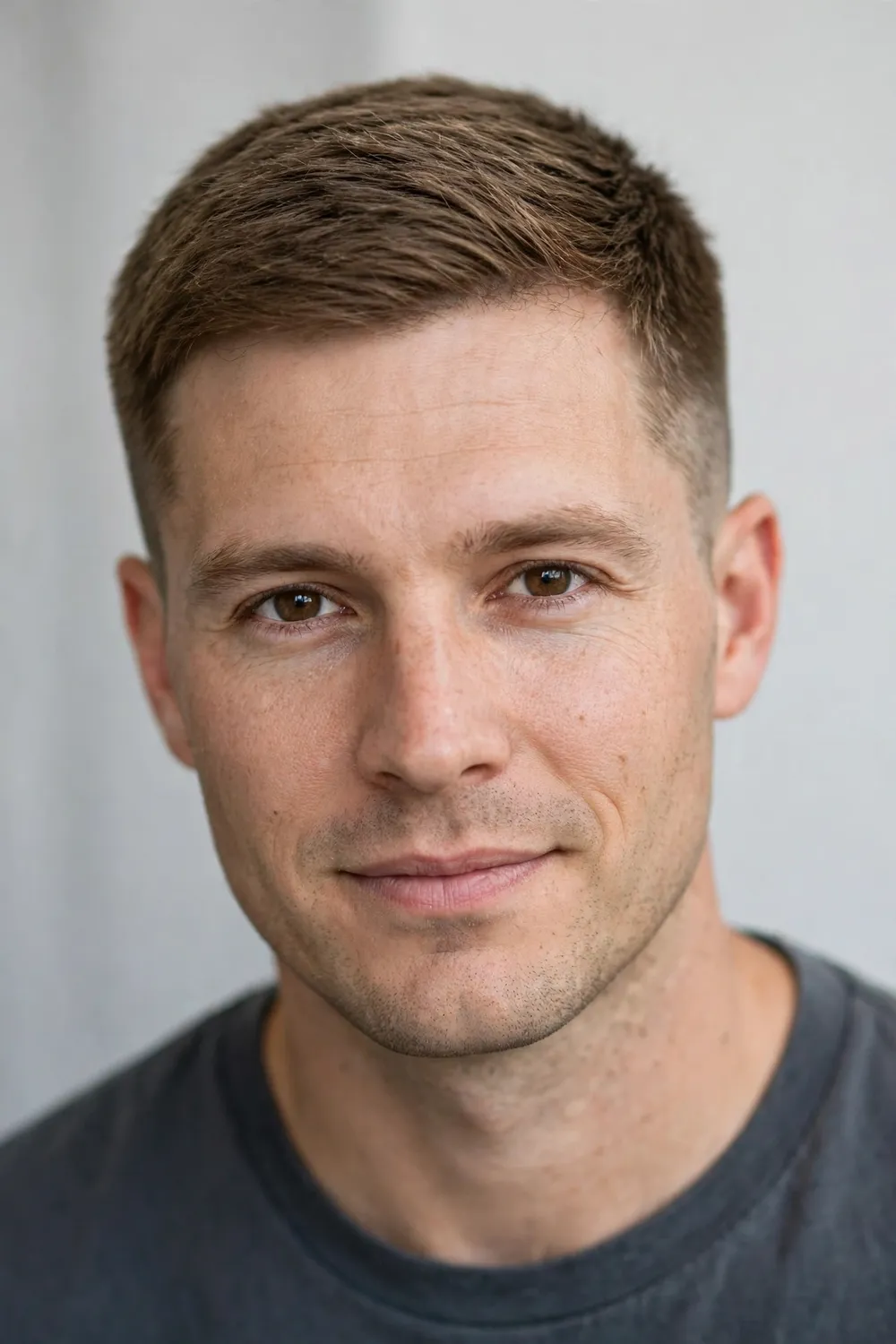
The crew cut keeps the top short and slightly longer at the front, fading down toward the crown, with the sides blended short. On an oval face it simply steps aside and lets the bone structure show — there is nothing to correct, so there is nothing for the cut to fight. Ask for 1 to 1.5 inches on top, scissor-cut if you want it to hold a direction, with a #2 blended down to a #1 at the edges. It grows out evenly for three to four weeks and needs no product at all, which is why it stays the default recommendation for men who want to think about their hair as little as possible.
3. Buzz Cut
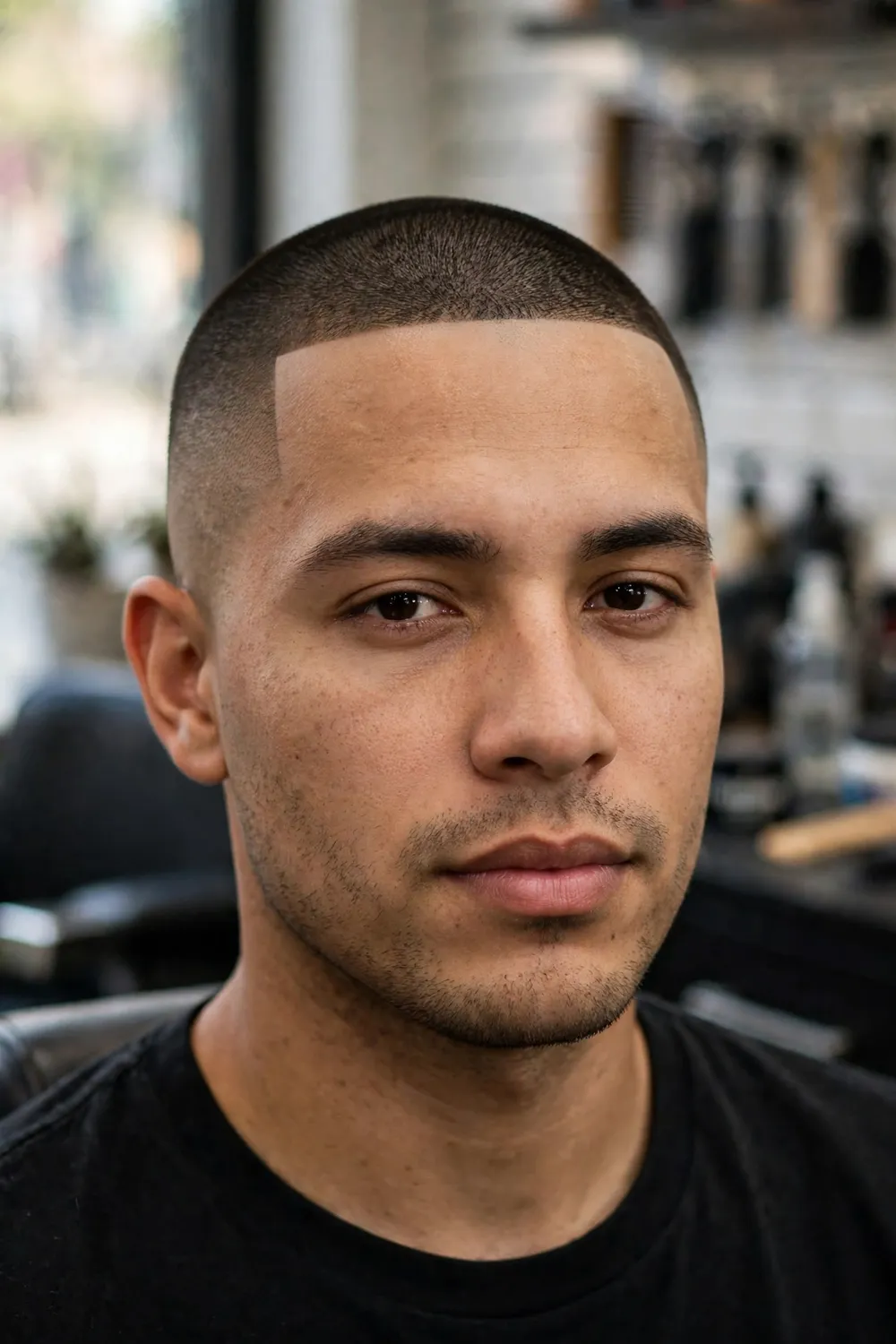
A buzz cut is a gamble on most face shapes because there is no hair left to adjust the proportions with. On an oval face it is not a gamble at all — the forehead, cheekbones and jaw are already in the right ratio, so stripping the hair back just displays them. A #3 or #4 all over keeps a little shadow of length that shows the head shape better than a severe #1. Add a clean line up along the front hairline if yours is naturally tidy, and skip the line up if your hairline is uneven — the buzz will expose it either way, so choose before the clippers start.
4. Caesar Cut
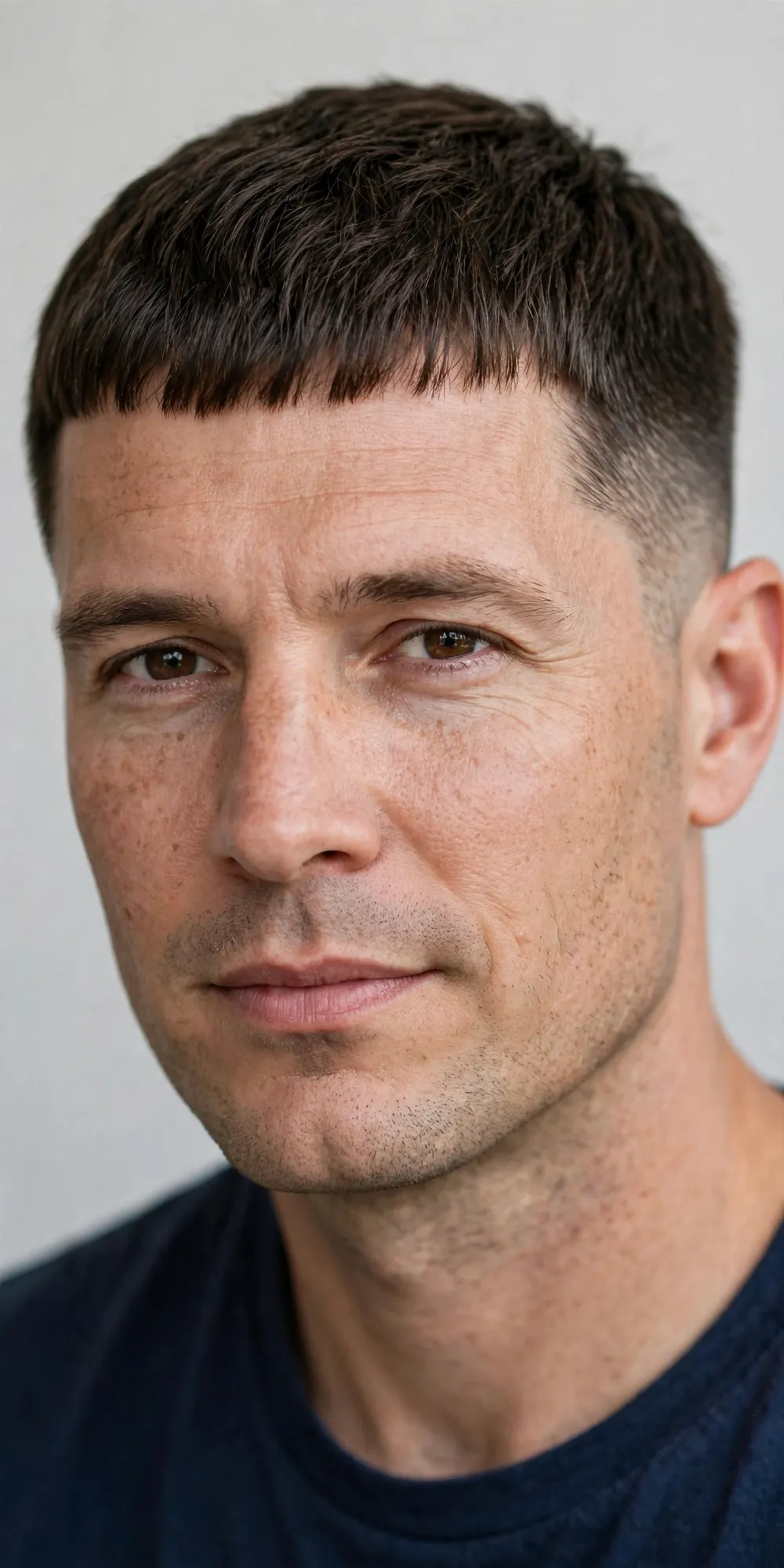
The Caesar keeps everything short and even — around an inch to an inch and a half all over the top — and finishes with a short horizontal fringe. George Clooney wore it through the nineties and it has never really left. The modern version swaps the blunt fringe for a textured, slightly broken one, which suits an oval face better because it frames the forehead instead of drawing a hard line across it. It suits straight and wavy hair, thinner hair included, and it is one of the few cuts that looks almost identical on day one and day twenty. Push it forward with a fingertip of light styling cream and you are done.
5. Skin Fade with Textured Top
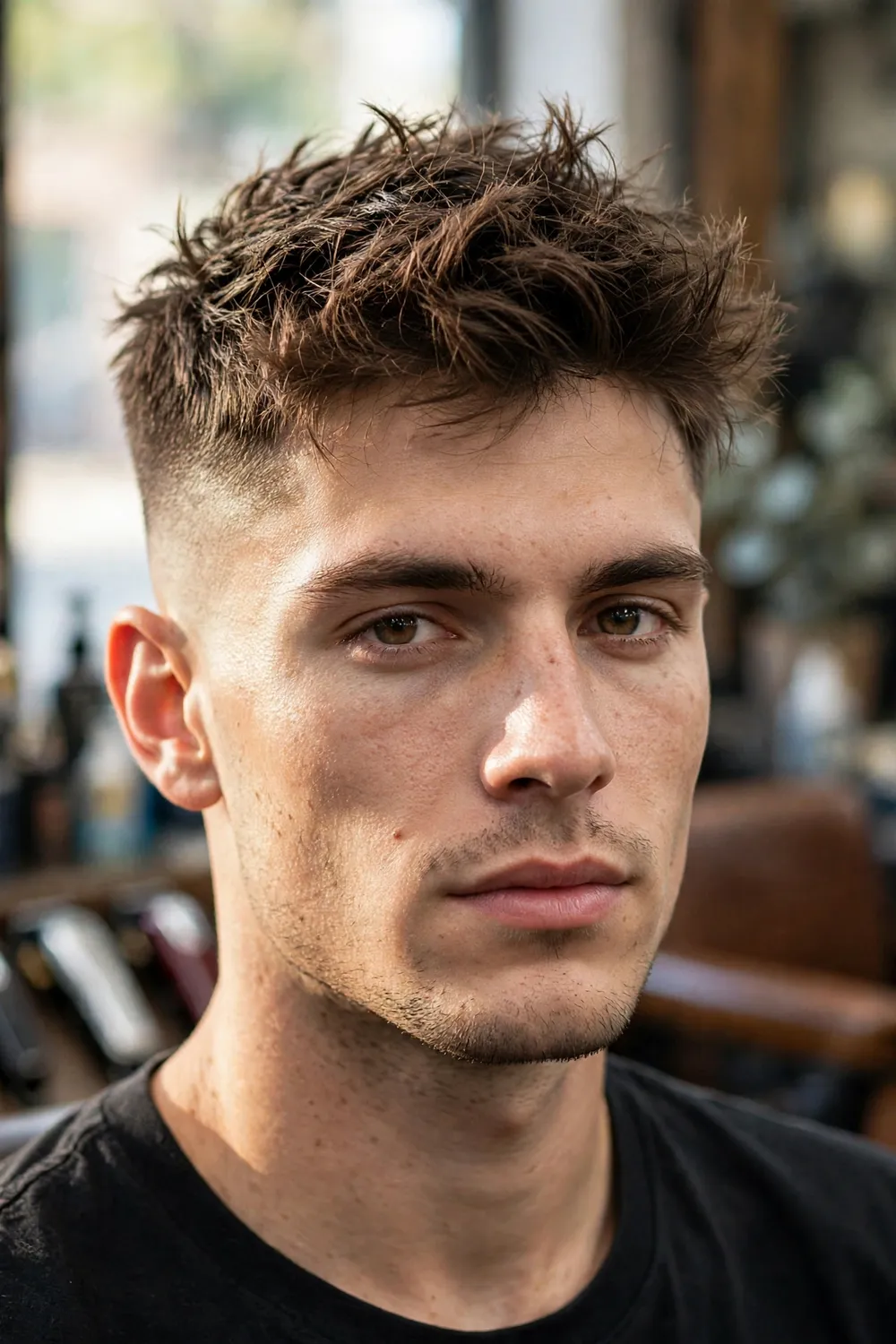
If you like contrast, this is the sharpest cut on the list that still respects an oval face. The sides are faded right down to skin, while the top keeps 2 to 3 inches of chopped texture. The high contrast throws the cheekbones and jaw forward, which are the features an oval face wants to show. The catch is upkeep: a skin fade starts losing its edge around week two, so budget for fortnightly visits. Prefer a softer version with less contrast and longer between appointments? A low taper fade keeps the same textured top idea with a much gentler blend at the edges.
6. Faux Hawk
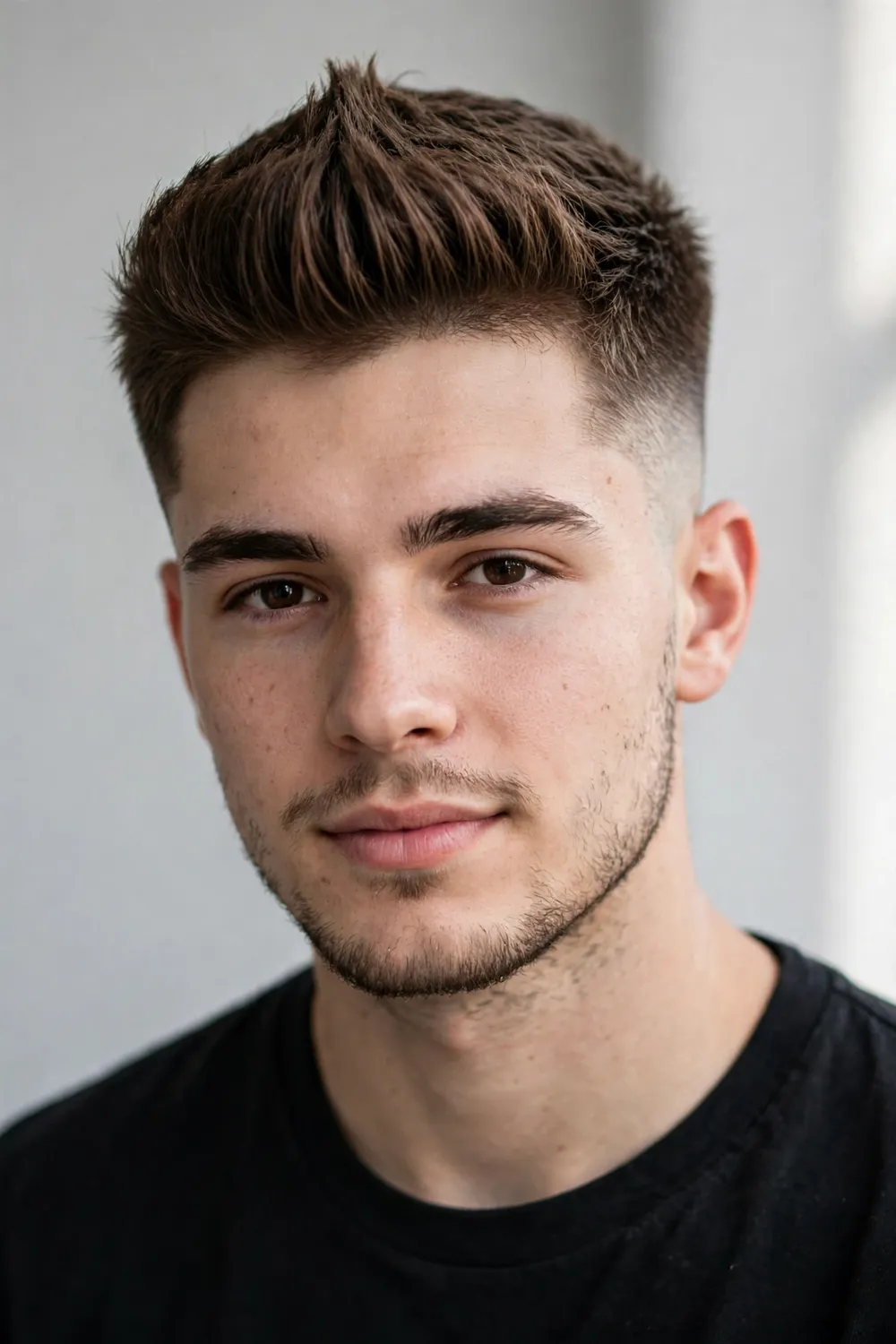
A faux hawk runs a strip of longer hair down the centre of the head and fades the sides, then styles the strip up and slightly forward. On an oval face the trick is restraint: keep the centre strip at 2 to 3 inches, not five. At that height it reads as a deliberate, edgy shape; much taller and it starts dragging the face long. It needs thick hair to hold the centre without heavy product, and a mid or high fade to make the strip read clearly. Style it with matte clay on damp hair, pushing everything toward the middle and up.
7. Classic Side Part
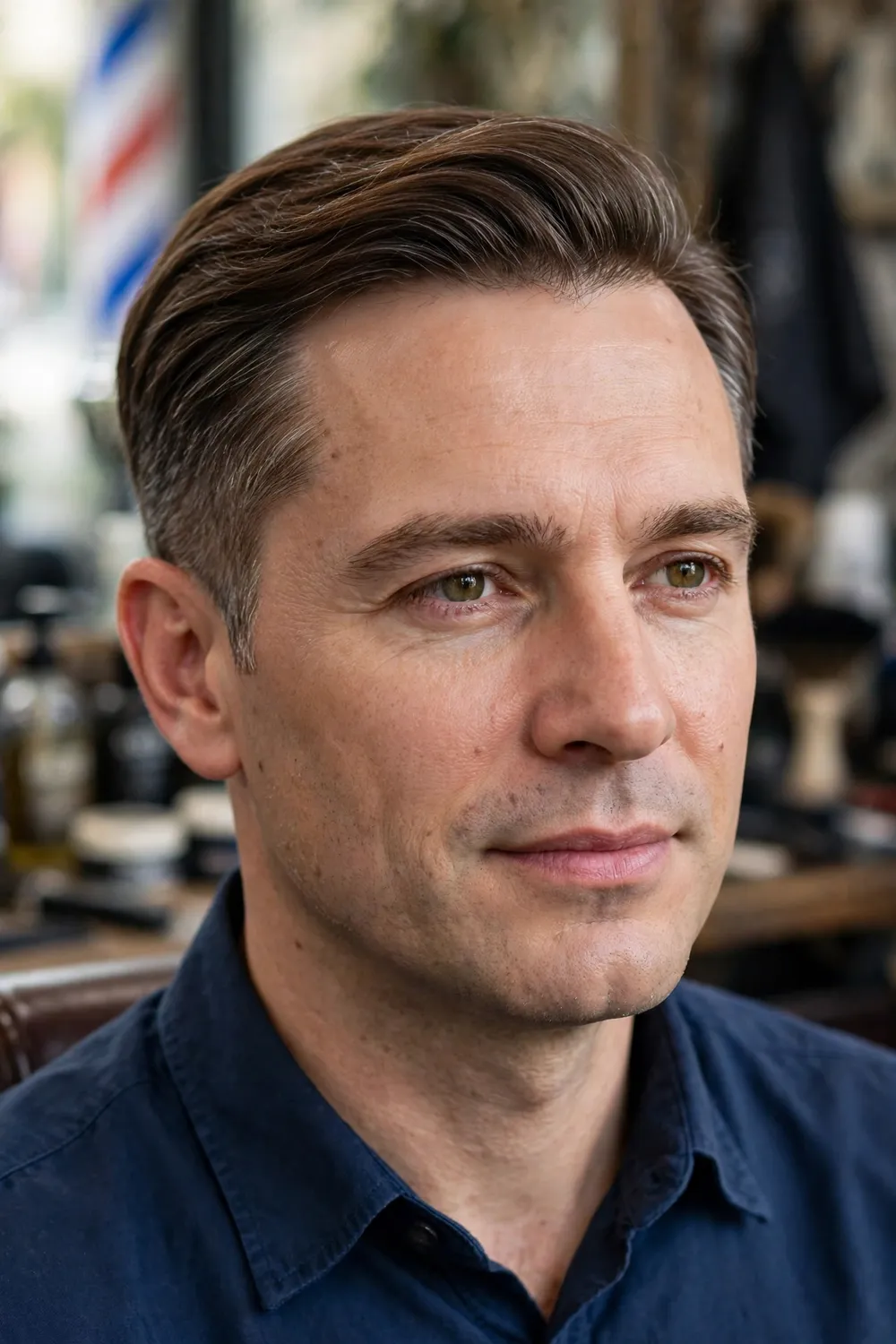
The side part is the most reliable haircut an oval-faced man can wear, full stop. Three to four inches on top, a natural part found where your hair already wants to split, and tapered — not skin-faded — sides. The diagonal of the part adds just enough structure to an already balanced face without disturbing the proportions, which is why it has been the default for everyone from Ryan Gosling on red carpets to men who have never thought about face shapes at all. It suits straight and slightly wavy hair best, grows out gracefully for four weeks, and asks for nothing more than a light pomade or cream combed through in the morning.
8. Modern Quiff
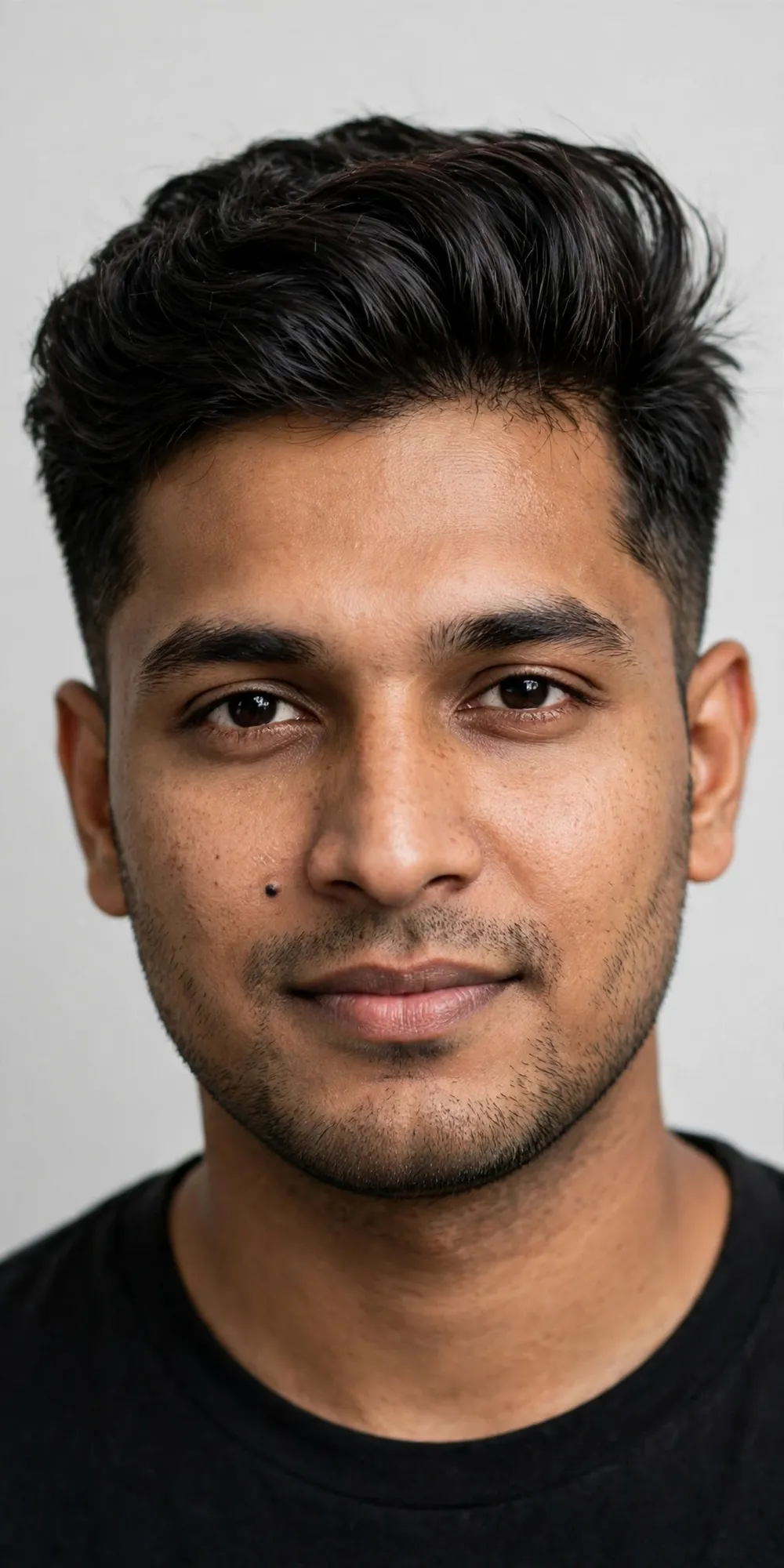
The modern quiff brushes the front of the hair up and back into a soft wave of volume, then lets it settle lower toward the crown. It is the pompadour’s more relaxed relative, and the better choice for most oval faces because the height stays proportionate. Keep the lift at the front under about 3 inches — past that, you are building a pompadour and borrowing its problems. The technique matters more than the product: blow-dry the front upward and back from the roots first, then set it with matte clay. Men with thick or wavy hair get this almost for free; fine hair needs a volumising mousse before drying or the quiff collapses by lunch.
9. Controlled Pompadour
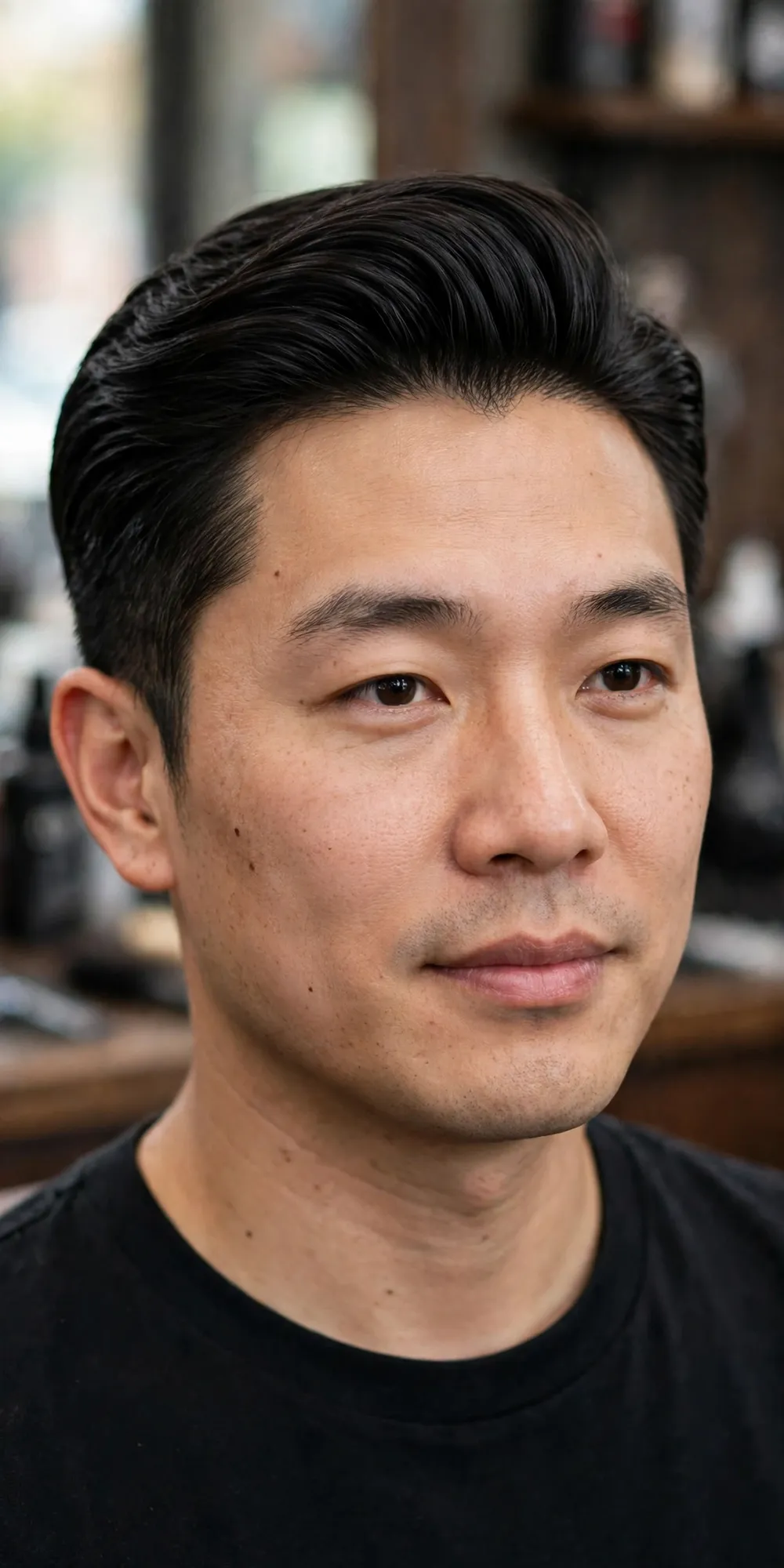
The pompadour can absolutely work on an oval face — in its controlled form. The style is named after Madame de Pompadour, and its whole identity is volume swept up and back from the forehead, which is precisely why the size of that volume decides everything here. At around 3 inches of swept-back height, worn by men like Bruno Mars, it looks deliberate and polished. At 5 or 6 inches it stretches an oval face into oblong territory. Ask for at least 3 to 4 inches of length on top, a low-to-mid taper rather than a skin fade so the sides keep some visual weight, and style with matte wax instead of high-shine pomade — the lift should come from blow-drying the roots up and back, not from grease.
10. Curtain Hairstyle (Middle Part)
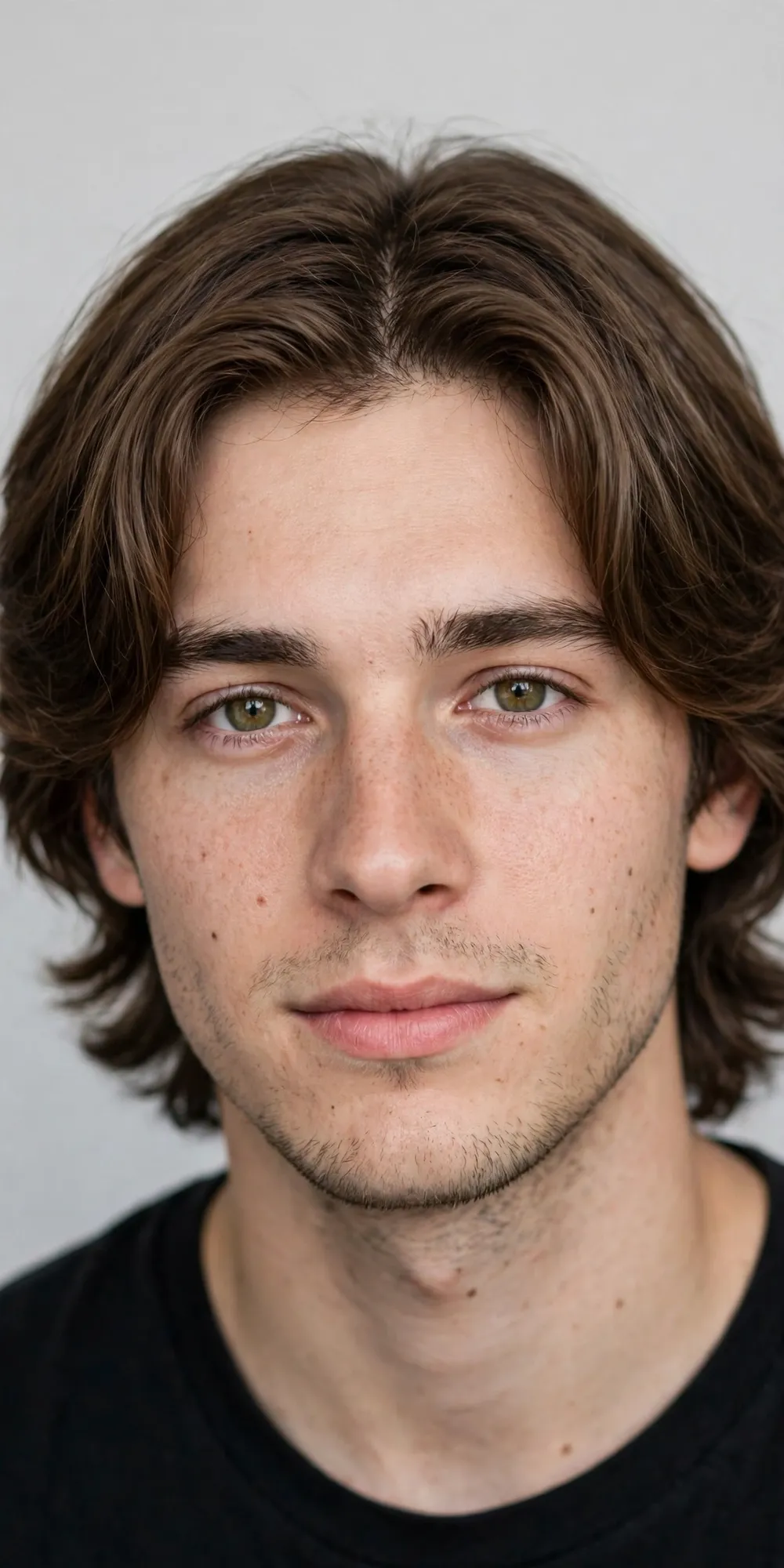
Curtains split the hair at a centre or slightly off-centre part and let it fall forward and to both sides of the forehead. On an oval face the symmetry of the fall matches the symmetry of the shape, which is why the style looks so natural on oval-faced men from Justin Bieber to Cole Sprouse. You need medium length — the front should reach at least to the cheekbones — and straight to wavy hair that falls on its own without much product. One adjustment worth making: if your oval leans long, let the curtains sit a little flatter and wider rather than tall and narrow at the part, so they add width instead of height.
11. Undercut with Volume on Top
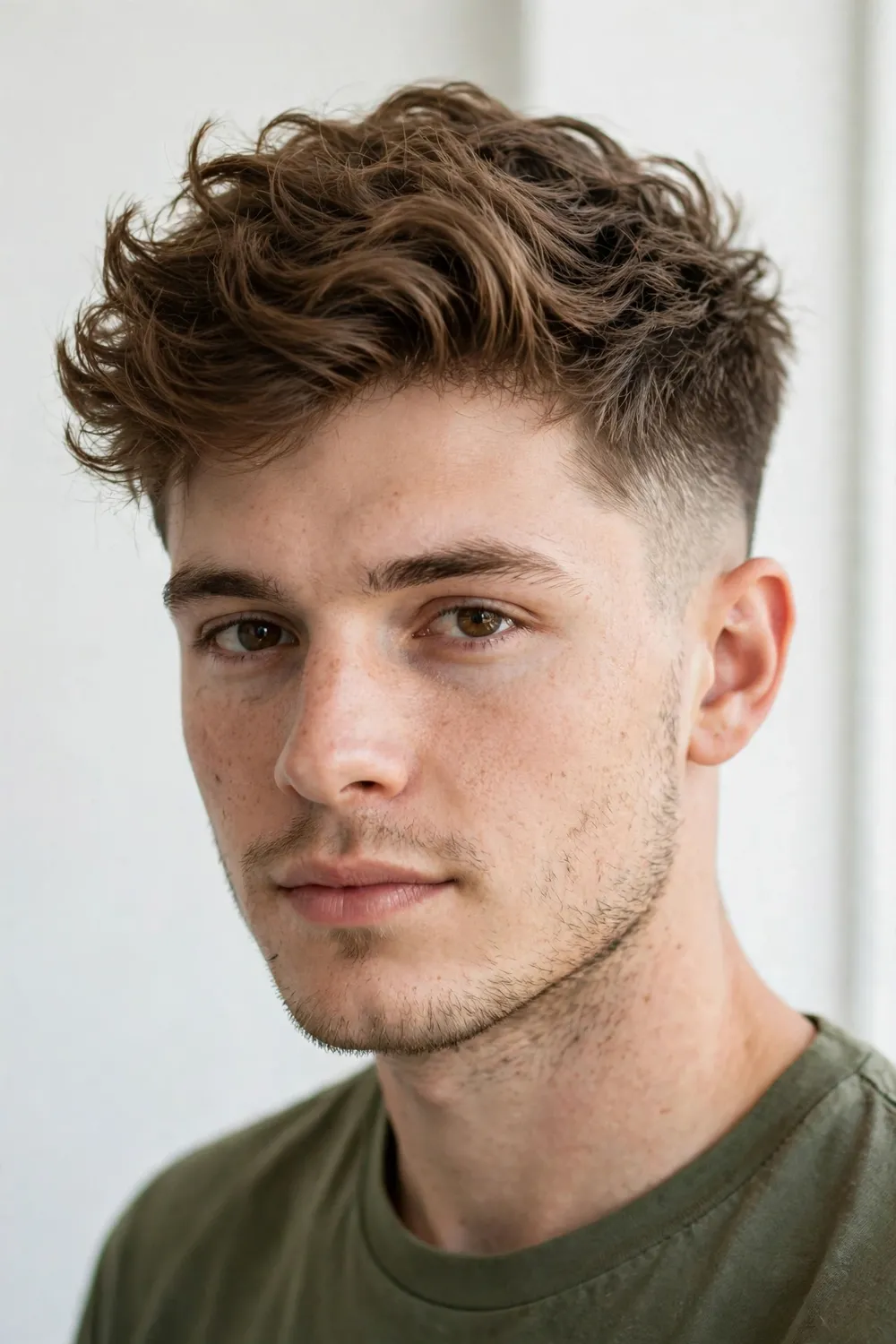
The undercut clips the sides short and leaves the top long enough to style with real volume, with little or no blending between the two. Oval faces can carry the contrast, but one detail separates the flattering version from the mistake: keep the disconnection moderate. Shaved-bare sides under a long top strip away the width your face needs at the temples; a #1 or #2 on the sides instead of a zero keeps the head in proportion. Thick, wavy hair fills the top with the least effort. Style the top sideways or diagonally rather than straight back — it reads softer and keeps the height where it flatters.
12. Warrior Cut (Textured Spiky Layers)

The warrior cut is the aggressive end of textured styling: short tapered sides and 3 to 4 inches of heavily layered, spiked-up hair on top. On a balanced oval face the messy, directional top adds personality without needing to correct anything, and the spikes sit at angles rather than straight up, which keeps the overall height honest. It needs medium to thick hair — fine hair cannot hold spiky layers without a lot of product and patience. Work matte clay through damp hair first, then a pinch of styling powder at the roots for grip, and pull the pieces up and forward with your fingers rather than combing them into place.
13. Ivy League Cut
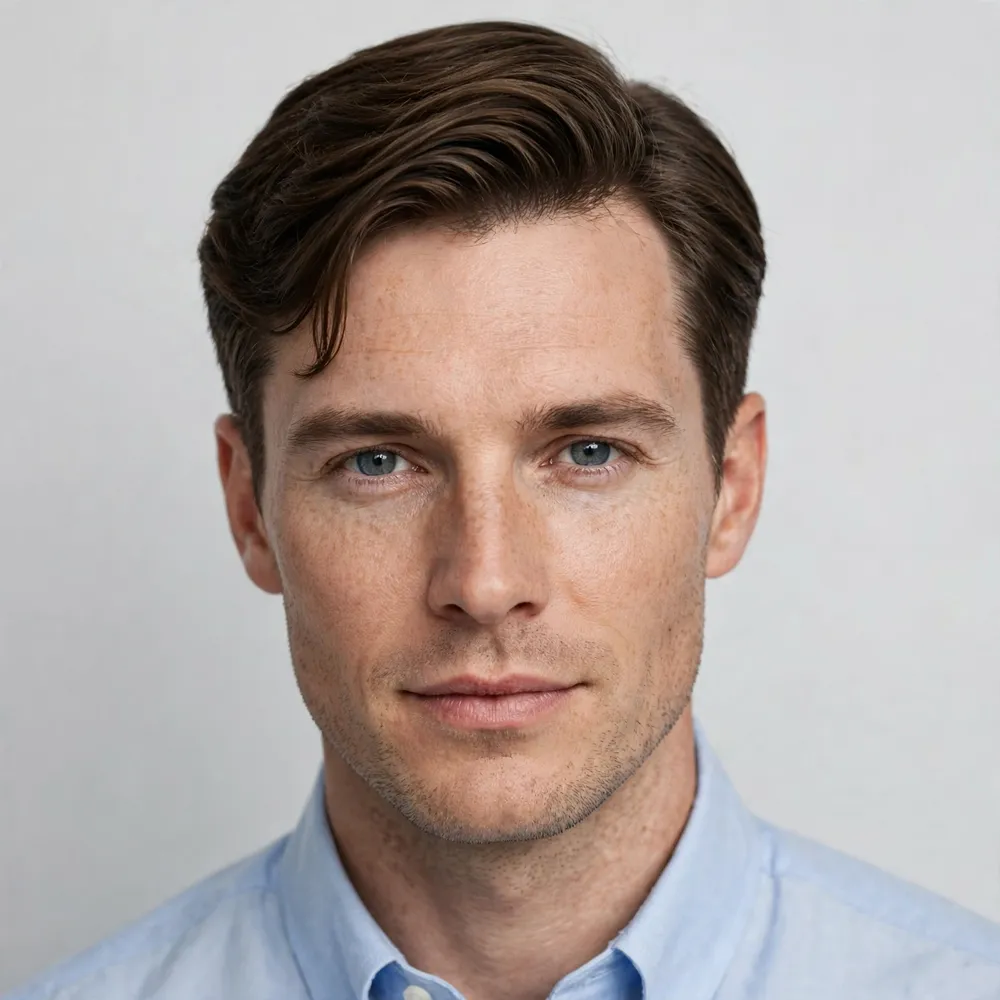
Think of the Ivy League as a crew cut that kept just enough length to have options: 2 to 3 inches on top, longest at the front, with scissor-tapered sides and the option of a small side part or a gentle forward sweep. For an oval face it is the lowest-effort professional cut there is — it follows the head’s natural proportions, never looks like it is trying, and grows out gracefully for a full four weeks. Chris Evans keeps returning to this structure and just adjusts the length with the season, which tells you how dependable it is. Straight and wavy hair wear it best; a light pomade is all it ever asks for.
14. Slick Back with Taper
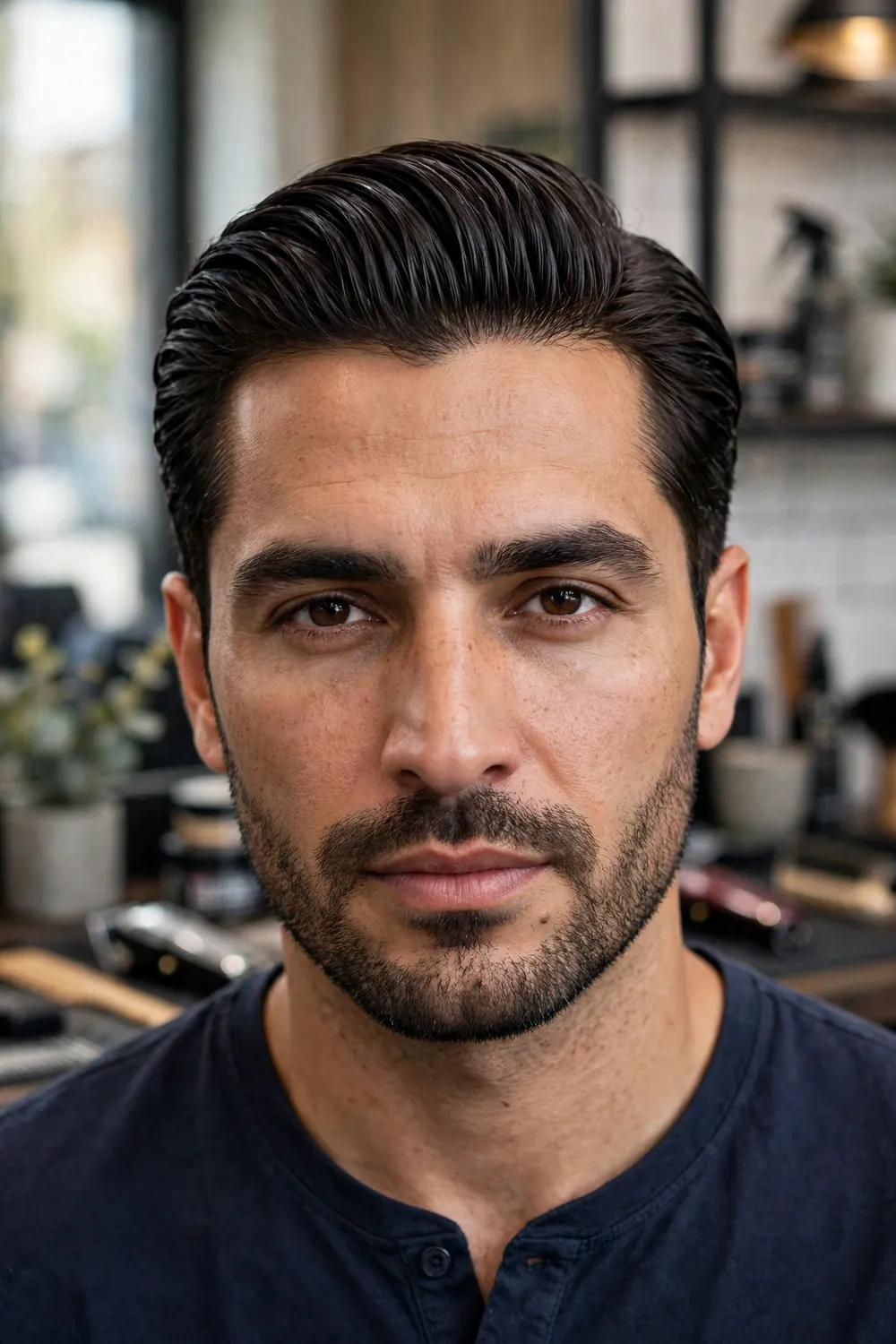
A slick back sweeps everything off the forehead and backwards, which puts an oval face’s proportions on full display — there is nowhere for an unbalanced shape to hide, and yours does not need to hide. The detail that makes it work is the taper rather than a fade on the sides: leaving some length and weight at the sides stops the head from looking too narrow and keeps the top and sides in balance. You need at least 4 inches on top to lay it back properly. Blow-dry backward from the roots, then use a medium-shine pomade — this is the one style on the list where the polished shine is the point, not a mistake.
15. Medium-Length Layers with Movement
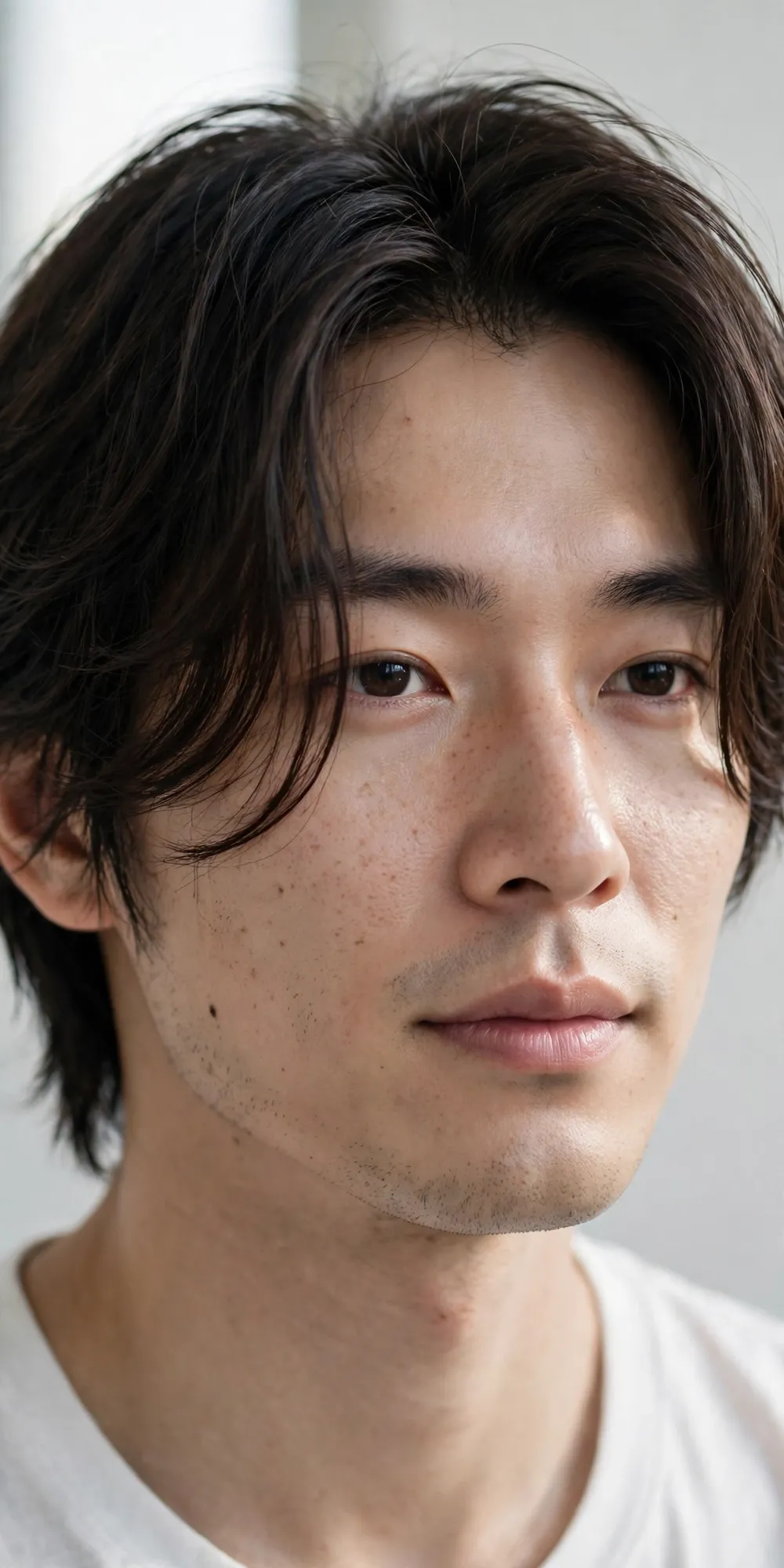
At 3 to 4 inches all over with proper layering, this cut builds movement in every direction instead of stacking volume in one place. The layers should start around cheekbone level, so the texture spreads across the widest part of the face and softens it, rather than sitting on the crown and adding height. It is the best medium option for wavy and thick hair, because those textures turn layers into natural movement without any product at all. Ask your barber for textured, feathered ends rather than blunt ones — blunt ends on a layered cut make it sit like a helmet. Expect five to six weeks between cuts.
16. Bro Flow
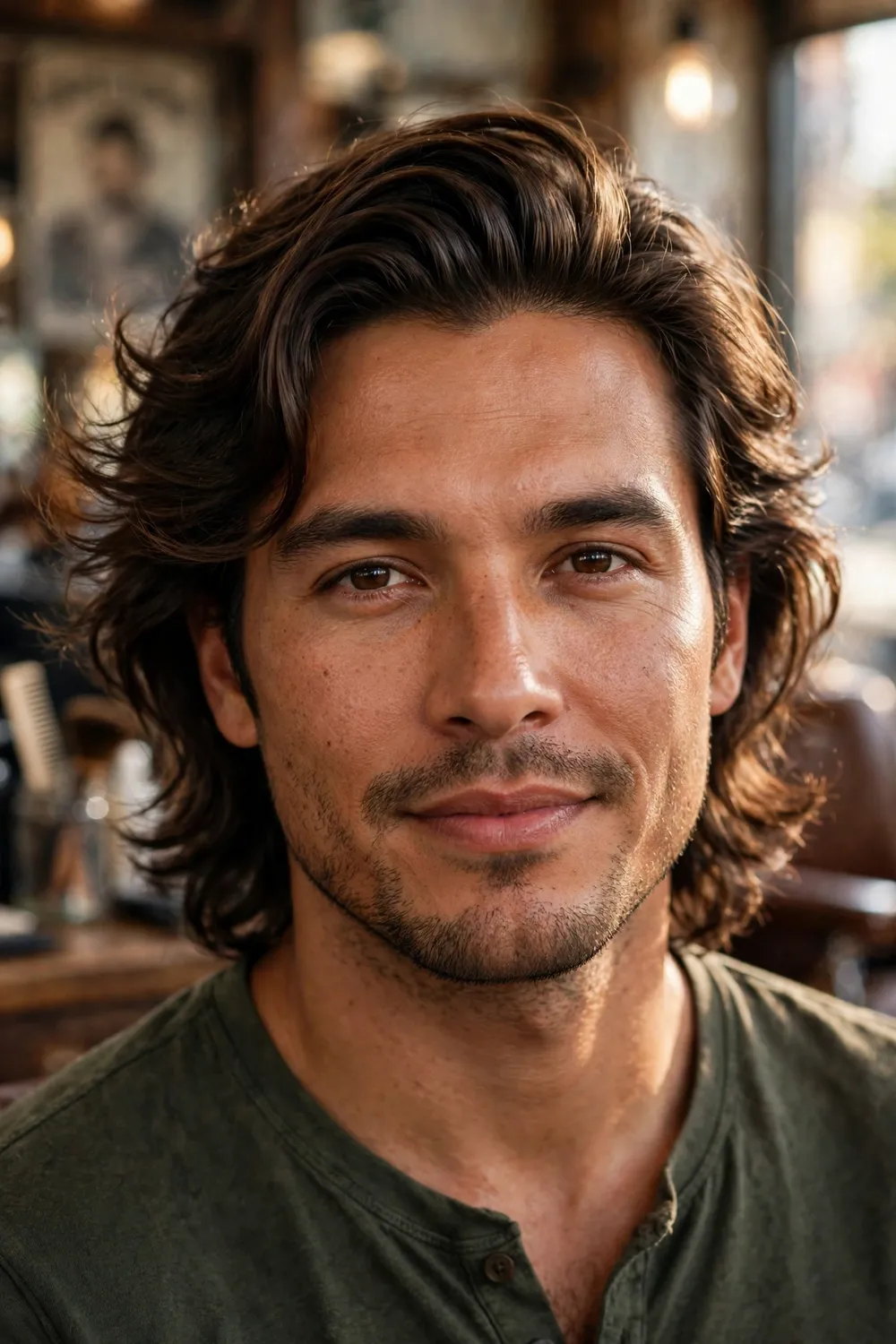
The bro flow is medium-to-long hair left to do what it naturally does: grow out, develop its wave, and fall back off the face with no hard lines and no fade — just a gradual scissor taper to keep the edges civilised. Dev Patel wears the definitive version, and it works because the length frames prominent cheekbones instead of competing with them. Oval faces are one of the few shapes that can carry this much unstructured hair, since the proportions stay balanced even as the outline gets softer. Keep the routine minimal: sea salt spray on damp hair, air-dry, tuck behind the ears. The less you do to a bro flow, the better it looks.
17. Man Bun with Tapered Sides
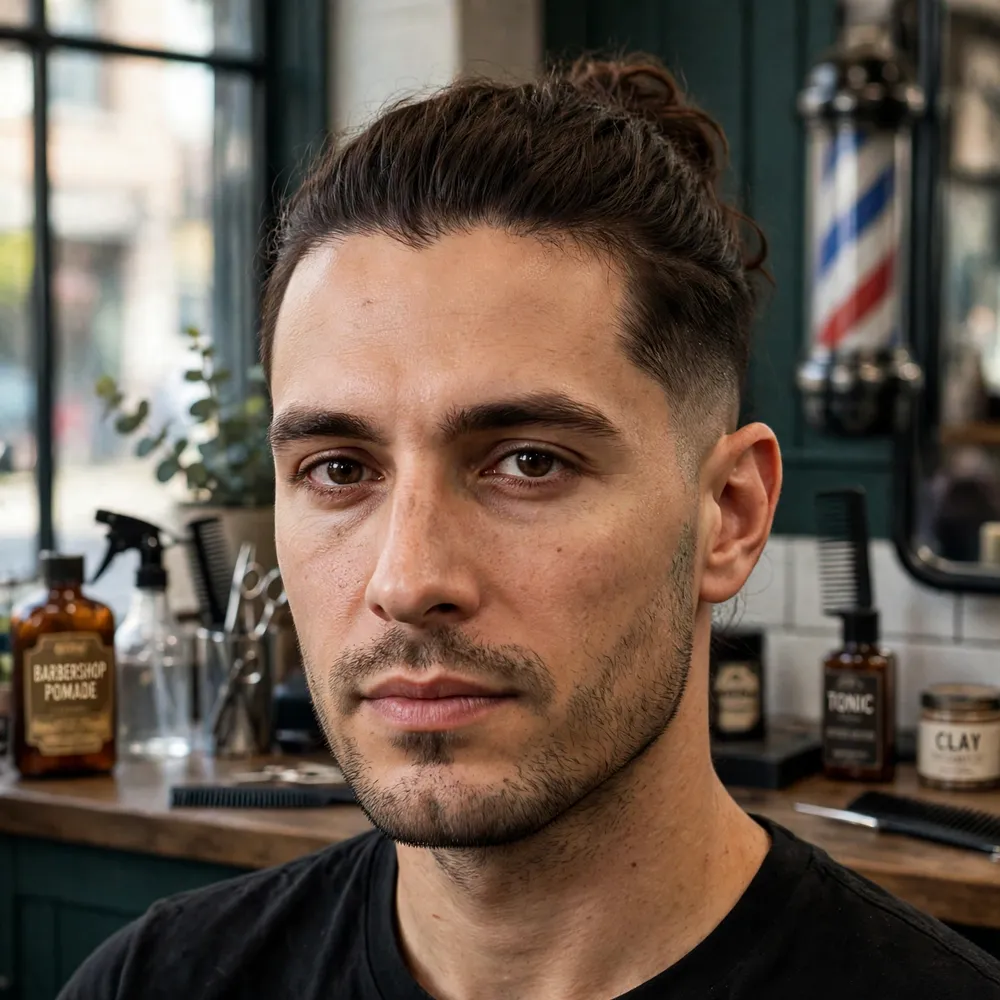
Long hair tied up exposes the entire face and jawline, so it only works when the proportions underneath are good — which is the oval face’s whole advantage. You need at least 6 inches on top to tie a bun at the crown properly. Keep the sides tapered or lightly undercut and maintained every four to five weeks, because the contrast between a neat bun and scruffy, grown-out sides is what makes this style look neglected on most men. A small amount of smoothing cream before you tie it keeps flyaways down, and tie it at the crown rather than the back of the head — a high bun keeps the profile balanced, a low one drags the face down.
18. Best Styles for Straight Hair
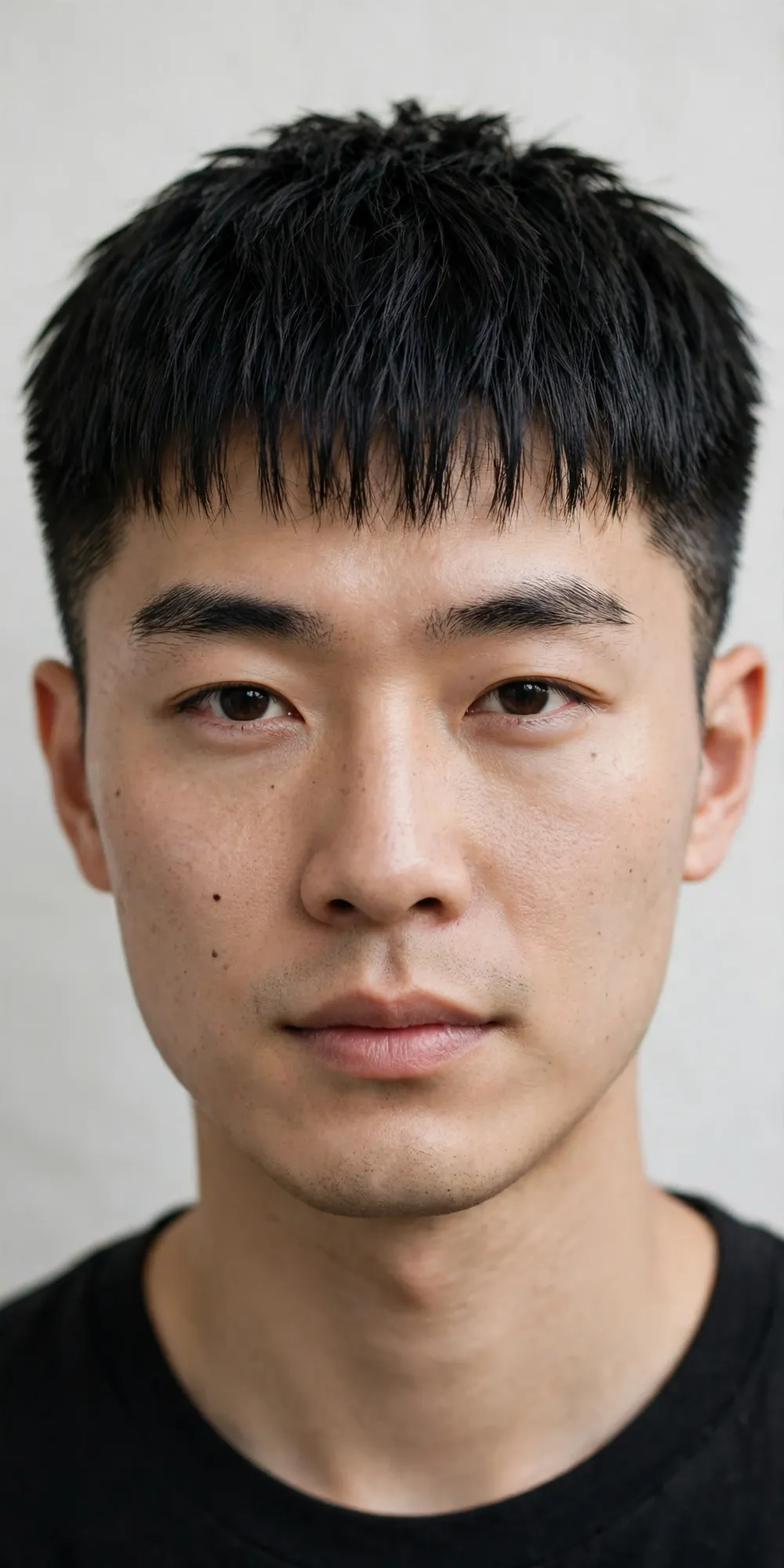
Straight hair is the precision texture: it holds part lines, blunt shapes and geometry with a sharpness no other hair type can match, so the geometric cuts on this list — side part, Ivy League, Caesar, textured crop — all reach their cleanest form on it. The one trap is flatness. Straight hair cut blunt lies like a sheet and makes the whole style look lifeless. The fix is in the cutting, not the styling: ask your barber to point-cut the top so the ends are broken up, then use matte clay for separation. If your hair is straight and fine, stay at the shorter end of this list, where the cuts create their own texture.
19. Best Styles for Wavy Hair
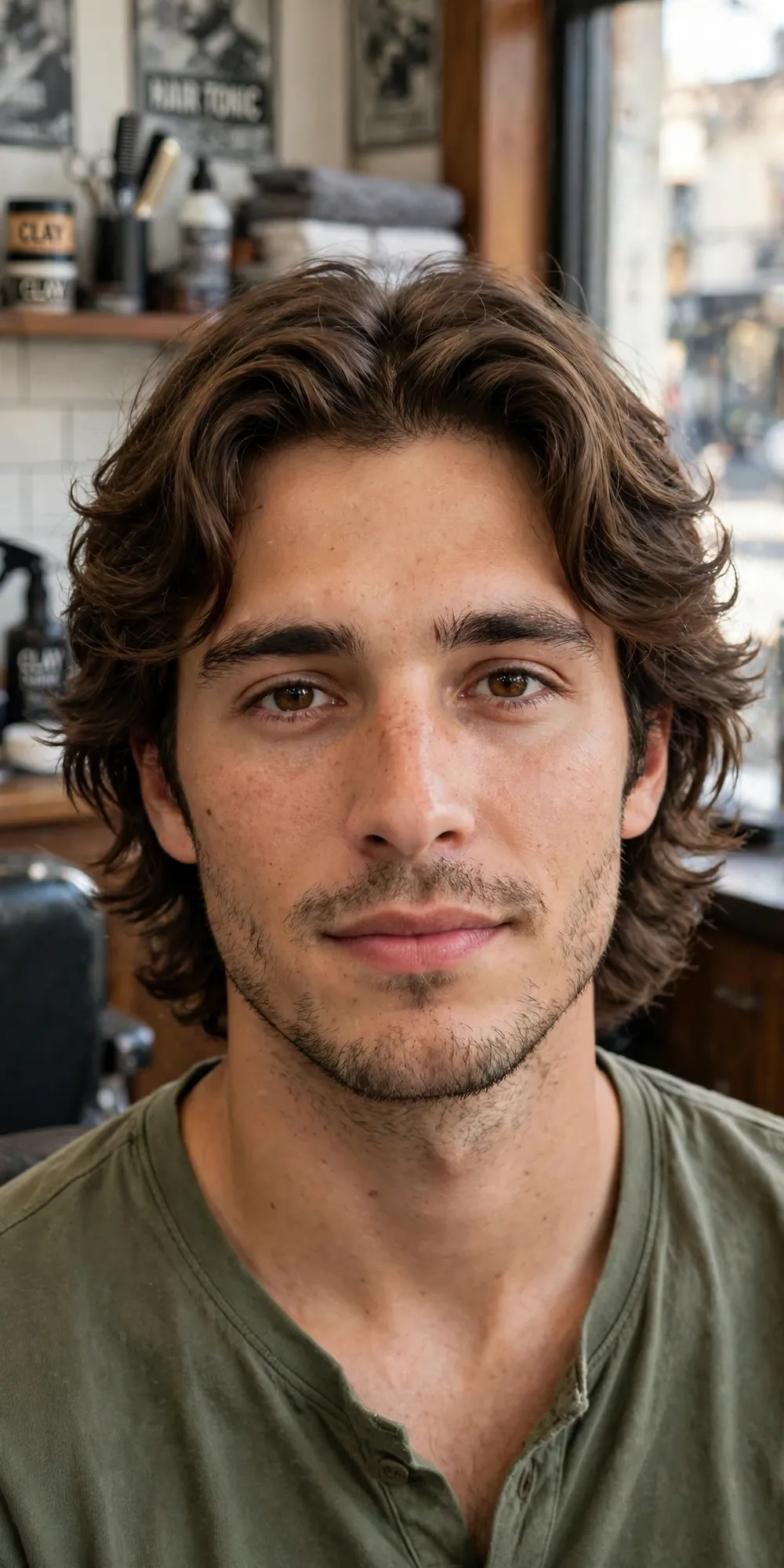
Wavy hair is arguably the natural partner for an oval face: the curves of the wave echo the curves of the face, and the movement adds dimension without a drop of product. Curtains, bro flow, medium layers and the modern quiff all get visibly better with a natural wave doing half the styling work. Sea salt spray before drying brings the wave out; a light cream keeps it from puffing. The mistake to avoid is fighting the texture flat with heat and heavy product — a flattened wave removes exactly the dimension that makes wavy hair flattering on this face shape in the first place.
20. Best Styles for Curly Hair
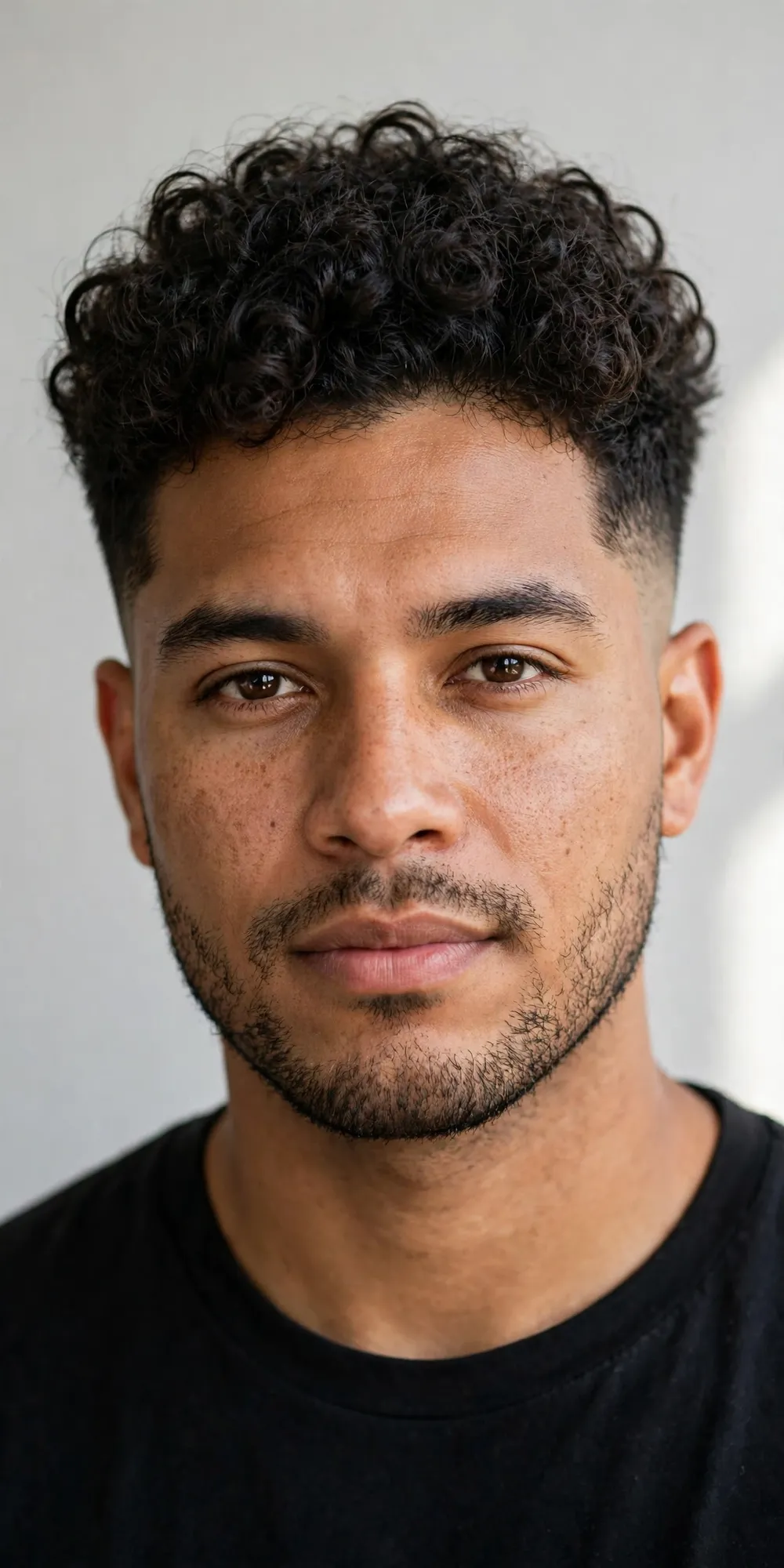
Curls bring their own volume in every direction, and on an oval face that volume frames the cheekbones and jaw instead of overwhelming them. The proportion rule still applies, though: choose a low or mid fade rather than a high skin fade, so the sides keep enough fullness to balance the curls on top. For Black men with oval faces, a short afro with trimmed, tapered sides follows the same logic — a fully grown-out afro expands sideways at exactly cheekbone height and can make the face read rounder than it is. Keep curls defined with leave-in conditioner between washes and skip heavy gels, which weigh the curls down and delete the volume the style depends on. The curls lead; the barber shapes around them.
21. French Crop with Low Skin Fade
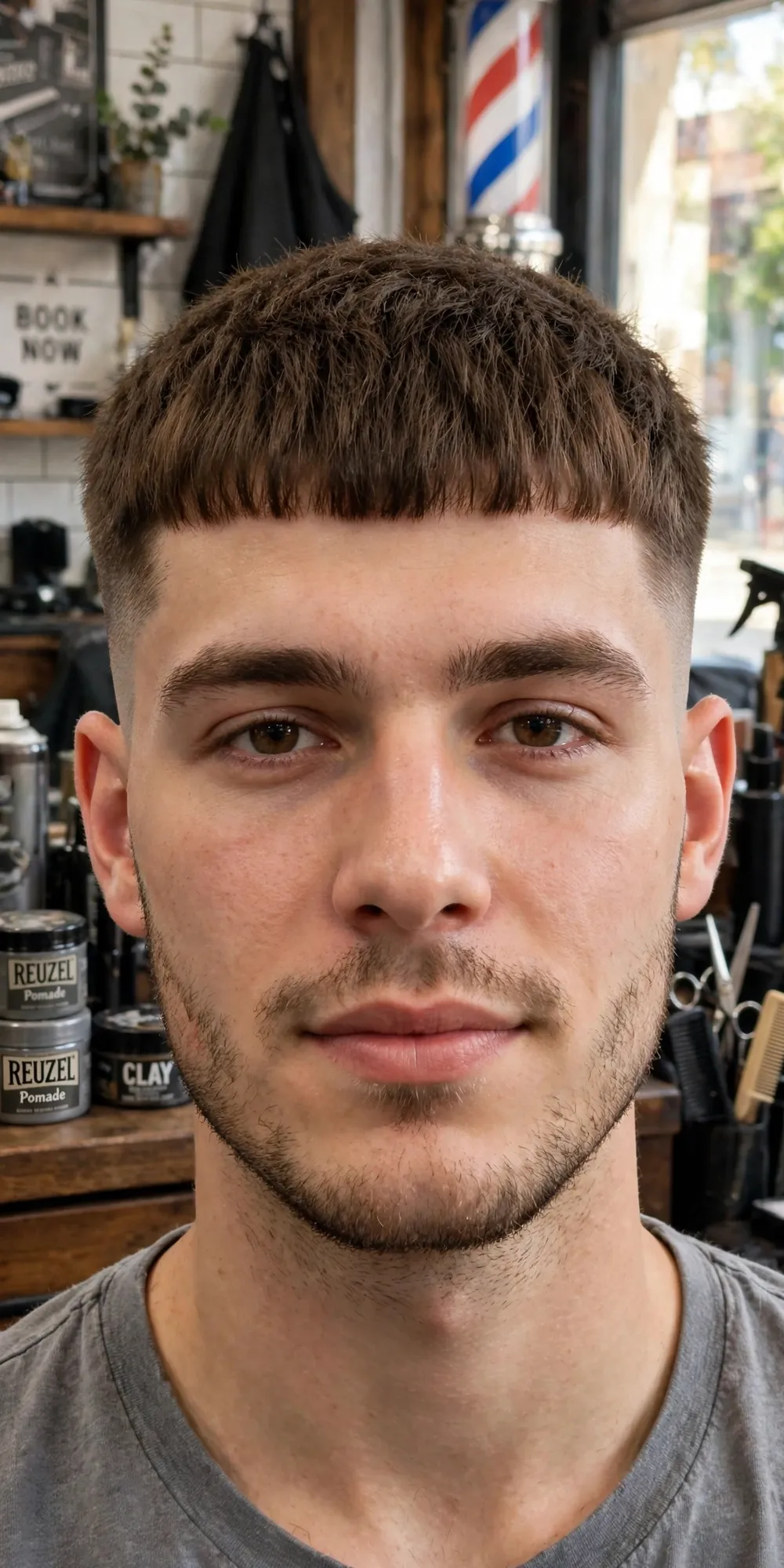
The French crop is the textured crop’s sharper French cousin: about 1.5 to 2 inches on top pushed forward into a short fringe, but finished with a low skin fade and a fringe line kept straighter and cleaner. It earns its own spot because that defined fringe edge softens a taller forehead beautifully while still stopping well short of the eyebrows — frame, not cover. It is one of the best cuts here for straight hair, thick hair, and men whose hair grows fast, because the shape survives four or five weeks of growth. Style it forward with matte paste and nothing else; the fringe should never be styled upward.
22. Brush Back with Mid Taper
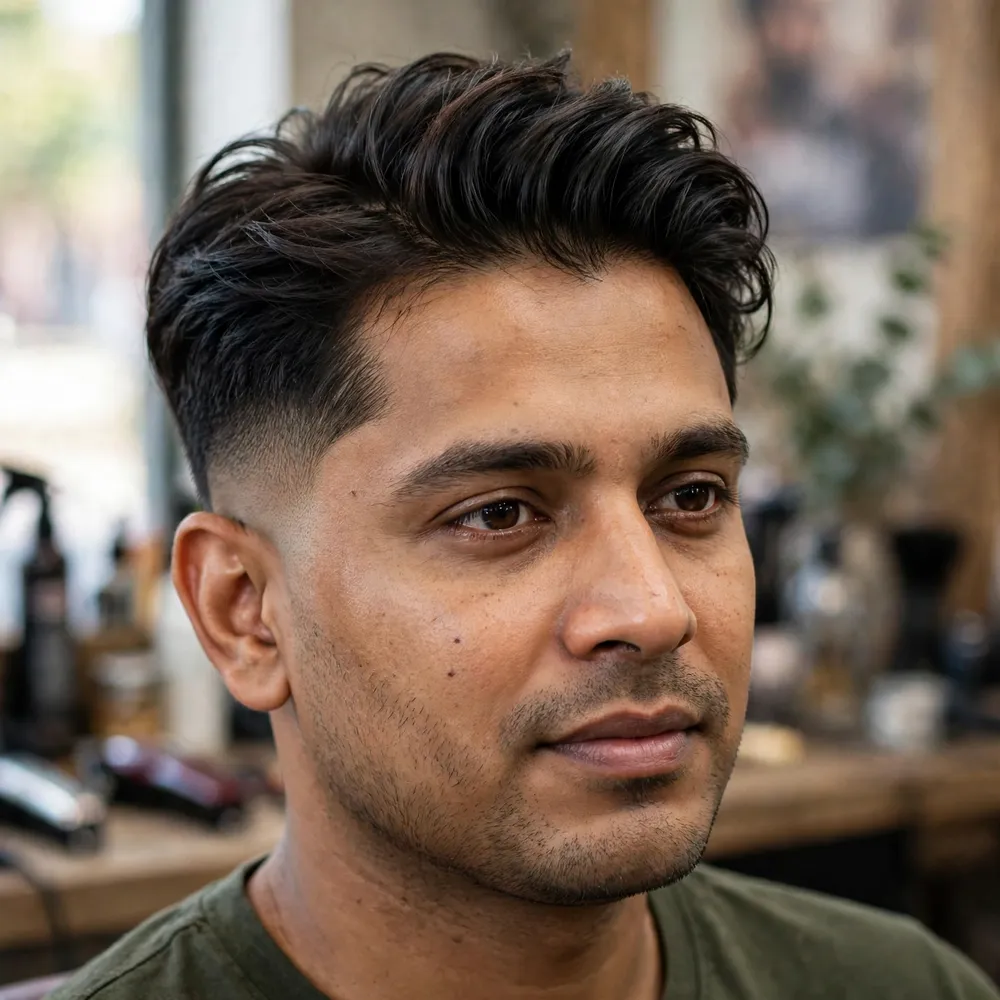
The brush back sweeps medium-length hair up off the forehead and back in one continuous movement — no part, no sweep to the side. It sits between the quiff and the slick back: more relaxed than a slick back, more polished than a quiff. A mid taper keeps the sides clean while leaving enough weight to stop the swept top looking top-heavy on an oval face. Blow-dry the hair up and back in sections with a vent brush, working from the front hairline backwards, then finish with a light cream or soft clay. If your hair falls forward again within the hour, it is almost always too long at the front or dried in the wrong direction, not a product problem.
23. Short Afro with Tapered Sides
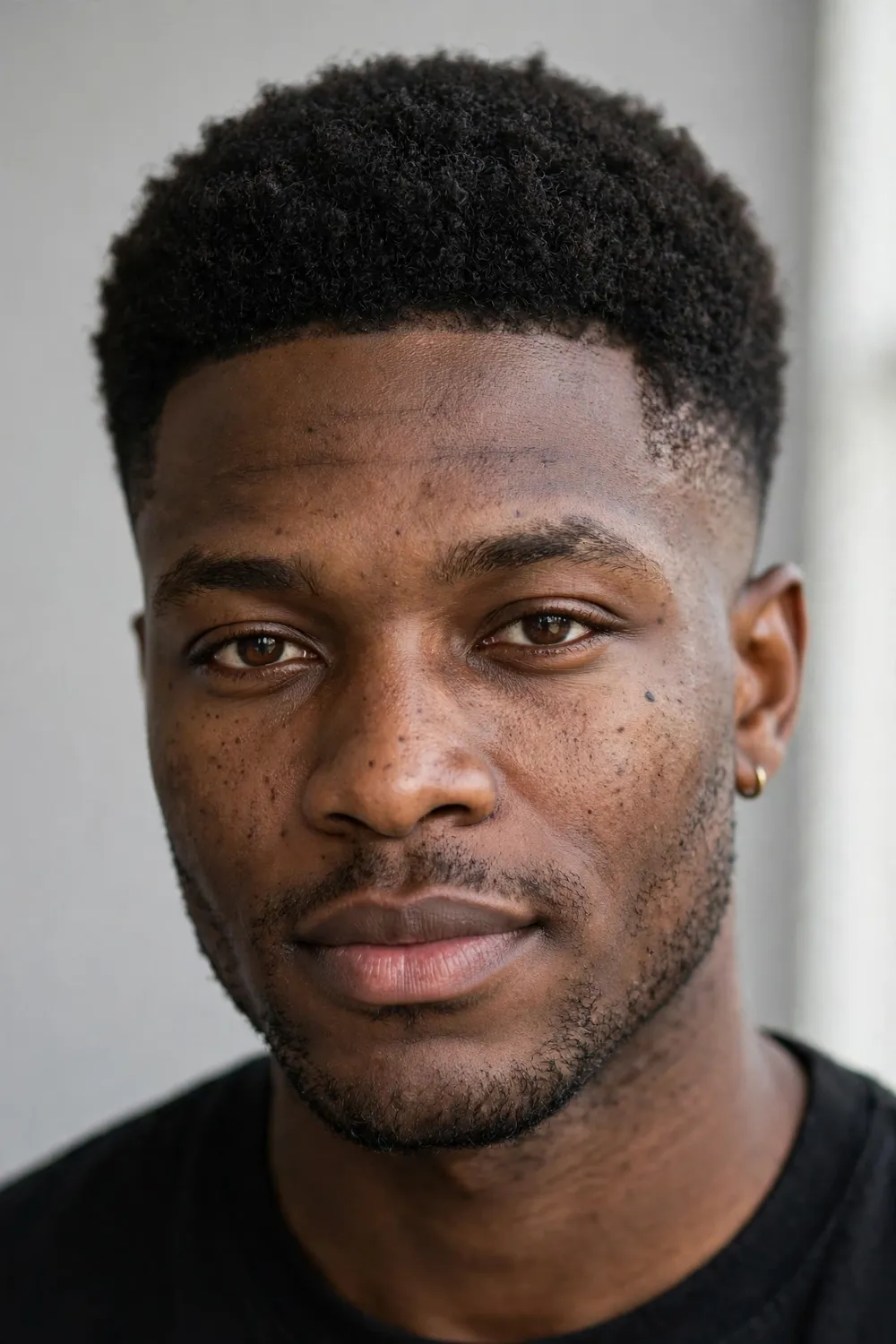
A short afro, kept to a rounded one to two inches and cleaned up with tapered sides and a shape up, is one of the cleanest styles a Black man with an oval face can wear. The rounded silhouette of the afro follows the same curves as the face itself, and keeping the sides shorter than the top preserves the face’s natural length instead of letting the hair widen it. Ask your barber to shape it freehand rather than with a stencil-straight line up if you want it to look natural, and moisturise daily — short coily hair shows dryness fast. A light shea-based cream and picking it out gently in the morning is the whole routine.
24. Modern Mullet
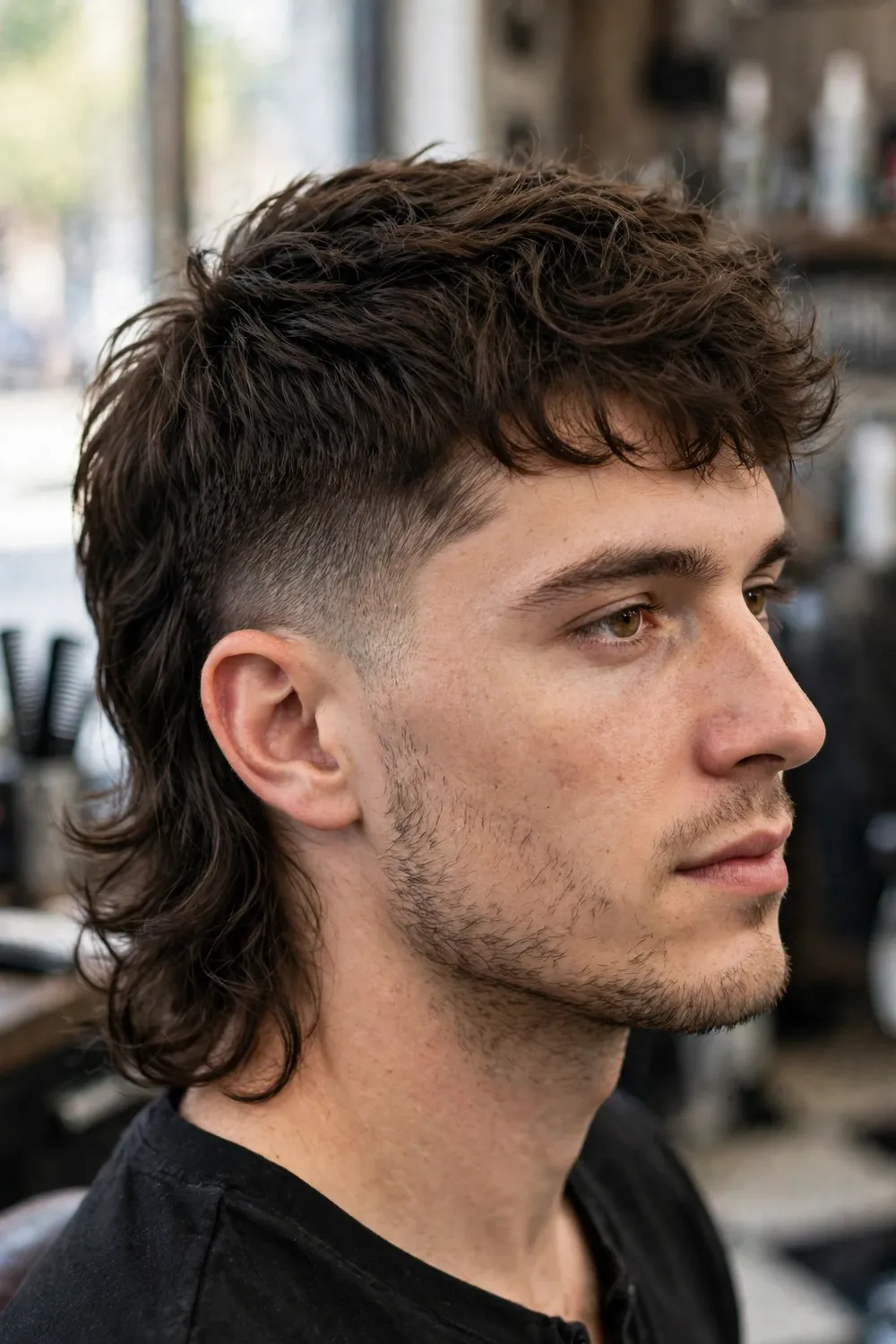
The modern mullet — textured and shorter on top, tapered around the ears, length kept at the back — is a genuine 2026 barbershop staple, and oval and square faces carry it best. The reason it works here is the same as everywhere else on this list: the face needs no correction, so a cut with a strong silhouette reads as a style choice rather than a fix. Keep the back length modest and the top heavily textured, or it slides from “modern” into costume. Wavy hair wears it best. Book a tidy-up every three weeks, because the mullet’s whole appeal lives in the contrast between the neat front and the longer back, and that contrast fades fast.
25. Comb Over Fade
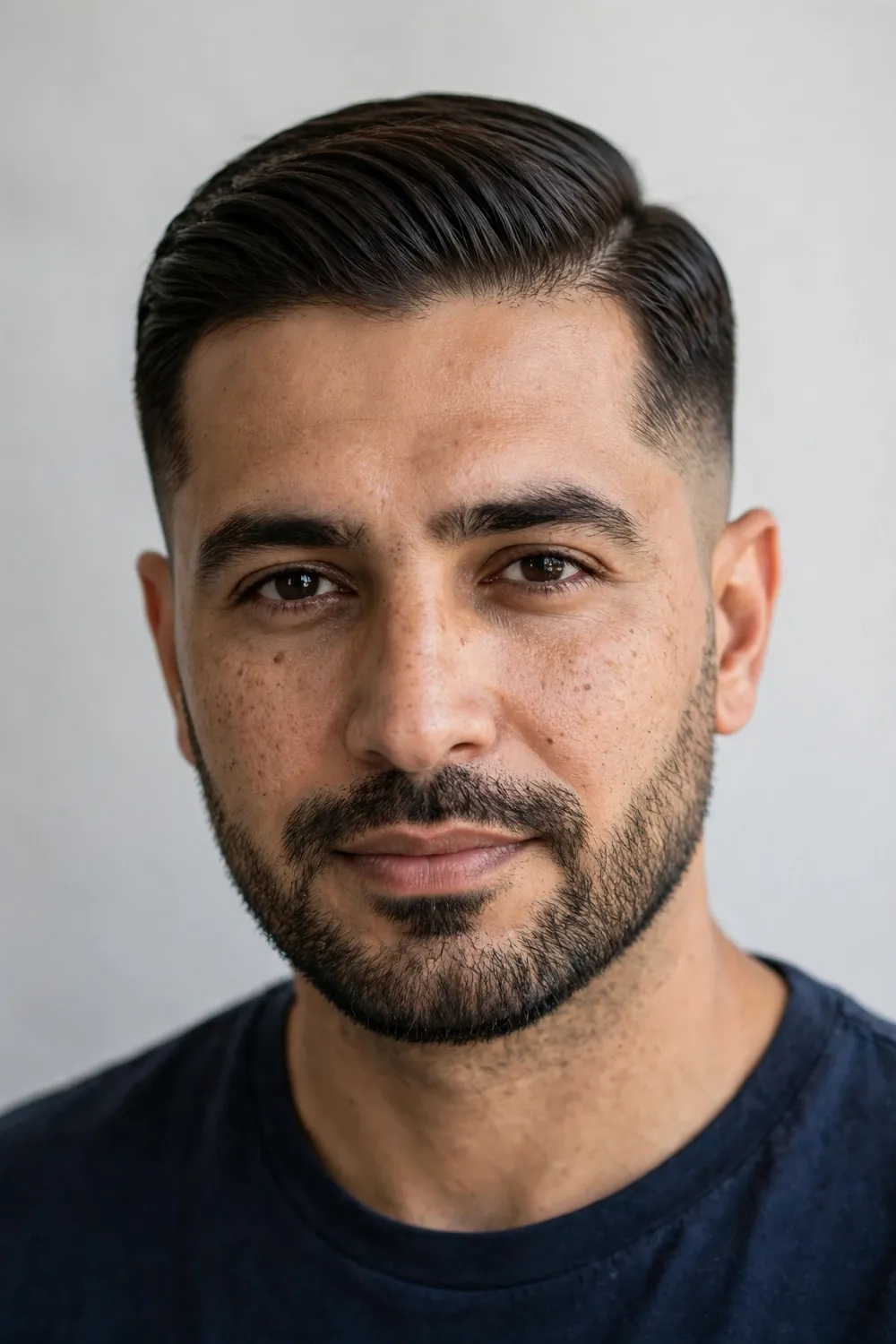
The comb over fade is the side part’s more casual sibling: the top is combed across from a natural side part, but the sides are faded — usually low or mid — instead of tapered. On an oval face it gives you the same flattering diagonal line as a side part with a cleaner, more modern edge underneath. It is a forgiving cut for hair that is starting to thin at the front, too, because combing across adds coverage without any trickery. Ask for 3 to 4 inches on top so it actually lies across, find the part by combing the hair back and seeing where it splits on its own, and keep the finish matte — a shiny comb over is the version that looks dated.
26. 360 Waves with Low Taper
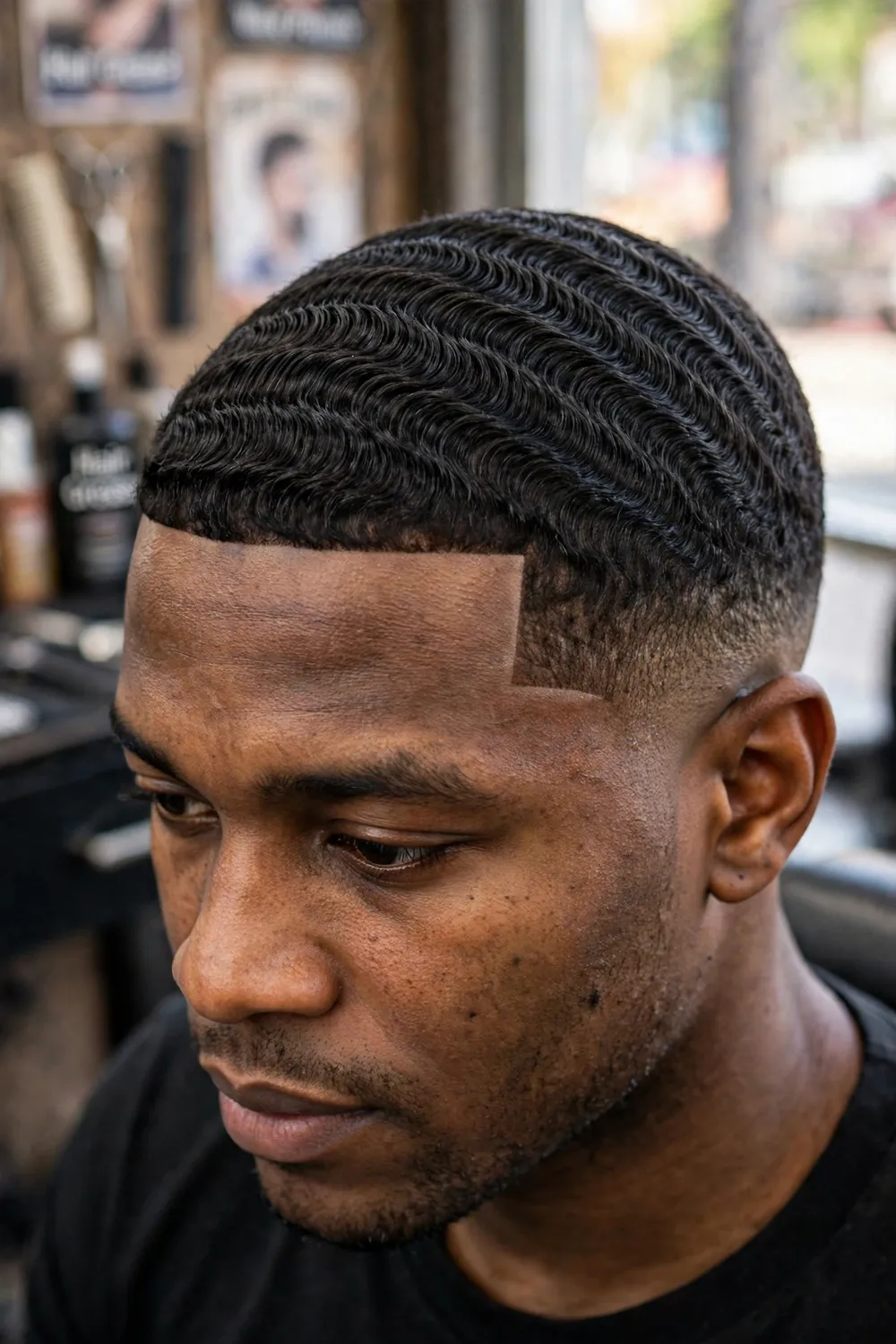
For men with coily hair who prefer it short and patterned, 360 waves over a low taper fade is the sharpest option on this list. The wave pattern adds texture and direction across the whole head without adding any height, so the oval proportions stay exactly as they are — and a low taper keeps the edges soft enough that the waves remain the focus. This one is a routine, not just a haircut: daily brushing sessions, a wave cream or natural pomade, and a durag at night are what lay the pattern down, and it takes most men four to eight weeks of consistent brushing before the waves connect properly. Keep the cut itself at a #1.5 to #2 with the grain — cutting too low too early can wash out progress you have already made.
Haircuts Oval Face Men Should Avoid
“Almost anything works” still has limits. These are the cuts and styling choices that consistently fight an oval face’s balance:
- Sky-high pompadours and quiffs over a skin fade. Three inches of swept height flatters; five or six stretches the face past its natural 1.5:1 ratio and makes it look oblong. The shaved sides make it worse by removing all width at the same time.
- Heavy fringes cut straight across at the eyebrows. A thick, blunt fringe hides the forehead’s gentle taper entirely, and the face instantly reads shorter and rounder. Short, broken, textured fringes are fine — it is the heavy curtain of hair that does the damage.
- The mop top. Uniform, unlayered length falling around the face has no structure at all. It hides your proportions instead of showing them, and it is the one “easy” style that makes an oval face look worse than a shorter cut would.
- Very long, flat hair with no layers. Length itself is fine — the bro flow proves that. Length with no layers, worn flat and centre-parted, drags the face downward visually and reads oblong.
- Ultra-tight sides with a short, flat top. A skin fade needs enough top length to balance it. Skin-tight sides under a flat, cropped top narrow the head and strip out the width that keeps an oval face looking oval.
- Volume piled at cheekbone level. The cheekbones are already your widest point. Hair that bulks out widest exactly there — wide, untapered sides on a medium cut, for example — makes the face look wider than its natural balance.
Notice the pattern: every mistake either adds length you do not need or hides width and forehead you should be showing. If a style you like does neither, it will almost certainly work on you.
How to Ask Your Barber for an Oval Face Haircut
Barbers do not need a lecture on face geometry — they need four clear pieces of information. Give them in this order:
- Name the style and show the photo. “Textured crop, like this” with a picture from this guide beats any verbal description. The photo settles the top length, the side finish and the fringe in one glance.
- Give the top length in inches. Most cuts on this list live between 1.5 and 4 inches on top. Say the number. “Short but not too short” gets interpreted differently in every shop.
- Name the side finish and fade height. Taper, low fade, mid fade or skin fade are different haircuts. For oval faces the safe defaults are a taper or a low-to-mid fade; say which one you want and how short — a #1, #2 or down to skin.
- Say what you are protecting. Tell the barber you have an oval face and want to keep the balance: no extra height, forehead kept open. A good barber will adjust fringe length and fade height around that brief.
- Ask how it grows out. Before you leave, ask what the cut will look like at week three and when to rebook. Oval-face cuts hold their shape well, but fades and fringes each have their own expiry date — roughly two weeks for a skin fade’s sharpness, three to four weeks for most tapers and crops.
Oval Face Haircut FAQs
What is the best haircut for an oval face male? There is no single winner, which is the luxury of this face shape — but the three that suit the widest range of oval faces are the textured crop (best for straight to wavy hair and low effort), the classic side part (best for professional settings and fine hair), and the modern quiff (best for thick hair that holds volume). Choose by your hair type and styling time, not by trend.
Is an oval face the same as an oblong face? No, and the difference decides your haircut. An oval face is about 1.4 to 1.6 times longer than wide with curved sides and cheekbones clearly the widest point. An oblong face measures 1.7 times or longer with straighter, more parallel sides. Oblong faces need width added and height avoided; oval faces need neither, so a cut chosen for the wrong shape can make a long face look longer.
What fade height works best for an oval face? All of them work, but the taper and the low-to-mid fade are the safest defaults because they keep some length and width at the sides, which protects the face’s balance. A high skin fade also suits oval faces as long as the top keeps enough length to match it — skin-tight sides under a very short, flat top is the combination to avoid.
Does a beard suit an oval face? Yes, but treat it as decoration, not correction. On round or square faces a beard does a job — adding length or angle. An oval face needs neither, so a classic full beard kept neat, or a short boxed beard, both work well. Just avoid styles that grow wide and bushy at the cheeks, which add width at exactly the point your face is already widest.
Can an oval face pull off a buzz cut without a beard? Yes — the oval is the one face shape where a buzz cut works completely on its own. Other shapes often need facial hair to add the structure the haircut removed; an oval face’s proportions are already balanced, so there is nothing to compensate for. A #3 or #4 buzz with a clean edge looks better on most men than a severe #1.
Does hair type matter more than face shape for oval faces? Honestly, yes. Face shape tells you what to avoid — extreme height, heavy fringes — and for oval faces that list is short. After that, hair type runs the decision: straight hair performs best in geometric cuts like the side part and Ivy League, wavy hair in curtains, layers and flows, and curly or coily hair in volume-forward styles like a curly top with a low fade or a short afro with tapered sides.
Final Word
An oval face does not need a haircut that fixes anything, and that is exactly what makes choosing one simple once you know the two or three things that break the balance. Start with the cut that matches your hair type from the list above, keep the height moderate, keep the forehead open, and your face shape will do the rest of the work for you. If you want the single lowest-maintenance route in, our guide to low taper fade haircuts pairs with nearly every top on this page. And for more styles by length, hair type and trend, browse the rest of our men’s haircut guides.