

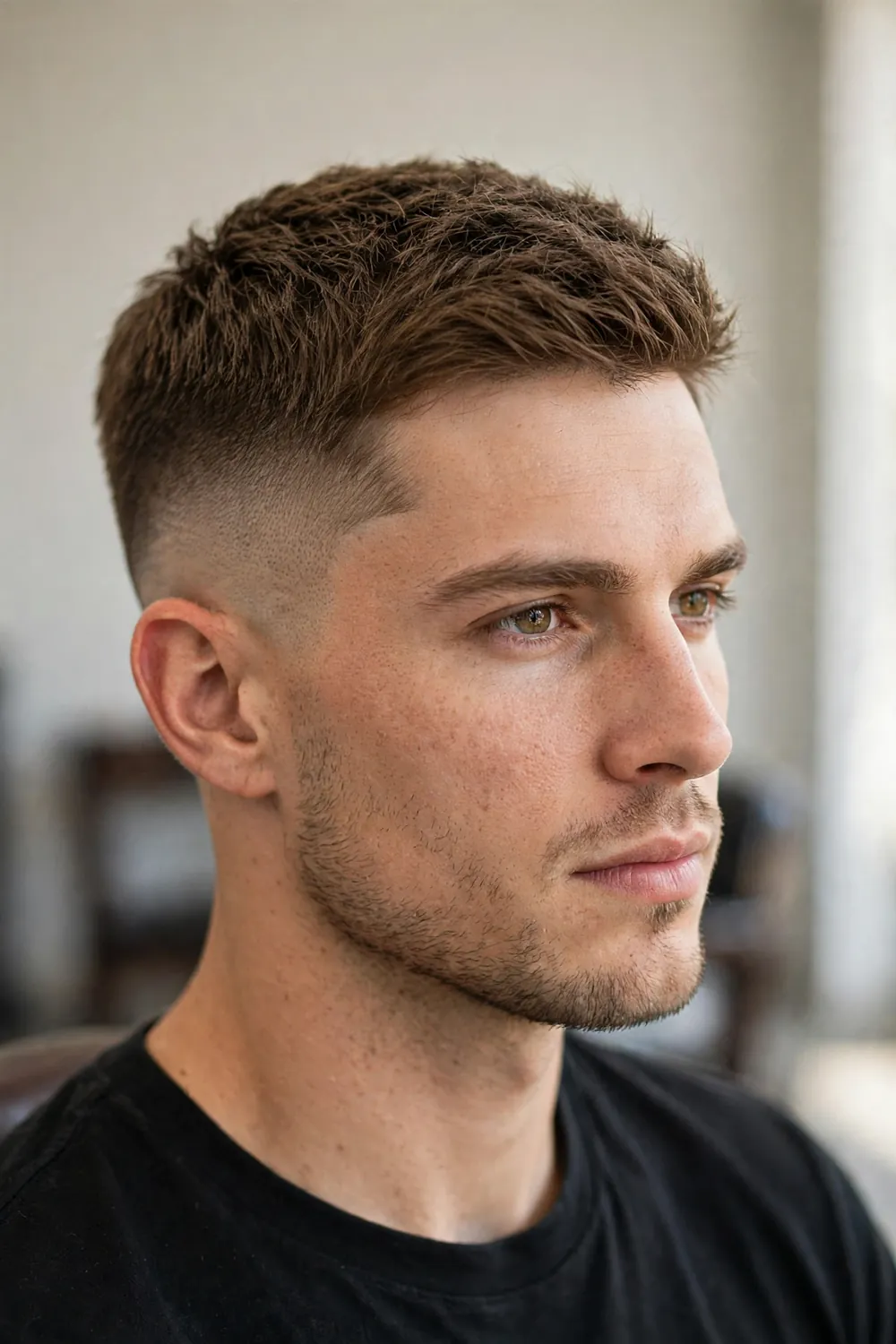
The low taper fade haircut is a clean, natural-looking fade that only tapers the hair around the sideburns and neckline, leaving most of your length on the sides and top. It is popular because it looks sharp without looking severe, it grows out softly, and it works on straight, wavy, curly and coily hair alike. Whether your hair is short and neat or long and textured, there is a version of this cut below that fits you, your face shape and your routine.
What Is a Low Taper Fade?
A low taper fade is a gradual blend that sits low on the head. Instead of the fade climbing high up the sides like a skin fade or a high fade, the taper only cleans up the very bottom edges: around the ears, the sideburns and the nape of the neck. Above that small faded zone, your hair keeps its natural length and fullness, so the overall shape still looks like a classic, grown-in haircut rather than a bold fade. It belongs to the wider fade haircut family — cuts where the sides blend gradually from short to shorter — but the low taper keeps that blend lower and softer than a skin fade.
Because the fade stays low, the transition between the top and the sides is gentle. There is no harsh line and no sudden jump from skin to long hair. This is exactly why the cut grows out so well: as the weeks pass, the taper simply melts back into your natural hair, and the style keeps a tidy outline for much longer than an aggressive fade. Most men get three to four weeks of clean wear from a low taper fade before the edges need a refresh, and even then it never looks messy in between appointments.
You can pair a low taper fade with almost any top: a textured crop, a comb over, curls, waves, a slick back or even long hair. That flexibility, plus the soft grow-out, is why barbers recommend it to first-time fade clients and to anyone who wants a professional look that never feels overdone.
Low Taper Fade vs Low Skin Fade
These two cuts get mixed up all the time, but they are not the same. A low taper fade keeps a short layer of hair at the edges and blends it upward, while a low skin fade is shaved right down to the skin in the faded area. Here is the quick comparison:
| Feature | Low Taper Fade | Low Skin Fade |
|---|---|---|
| Lowest point | Short hair, usually a #0.5 to #1 guard blended up | Bald/skin, taken down with foil shavers or a razor |
| Where the fade sits | Only around sideburns, ears and neckline | Low on the sides and back, but fully skin-tight |
| Overall look | Soft, natural, classic | Sharper, higher contrast, edgier |
| Grow-out | Very forgiving, stays neat for 3–4 weeks | Shows regrowth fast, needs a cleanup every 1–2 weeks |
| Best for | First fade, office-friendly styles, all hair types | Bold looks, very thick hair, maximum contrast |
| Maintenance | Low | Medium to high |
If you want the cleanest possible edges with the least upkeep, choose the taper. If you want that crisp, skin-tight contrast, choose the skin fade and accept the extra barber visits.
46 Best Low Taper Fade Haircuts
Every style below keeps the same low taper on the edges and changes what happens on top. Find your hair type, read the tip under each photo, and save the one you want to show your barber.
1. Side-Swept Short Hair with Low Taper Fade
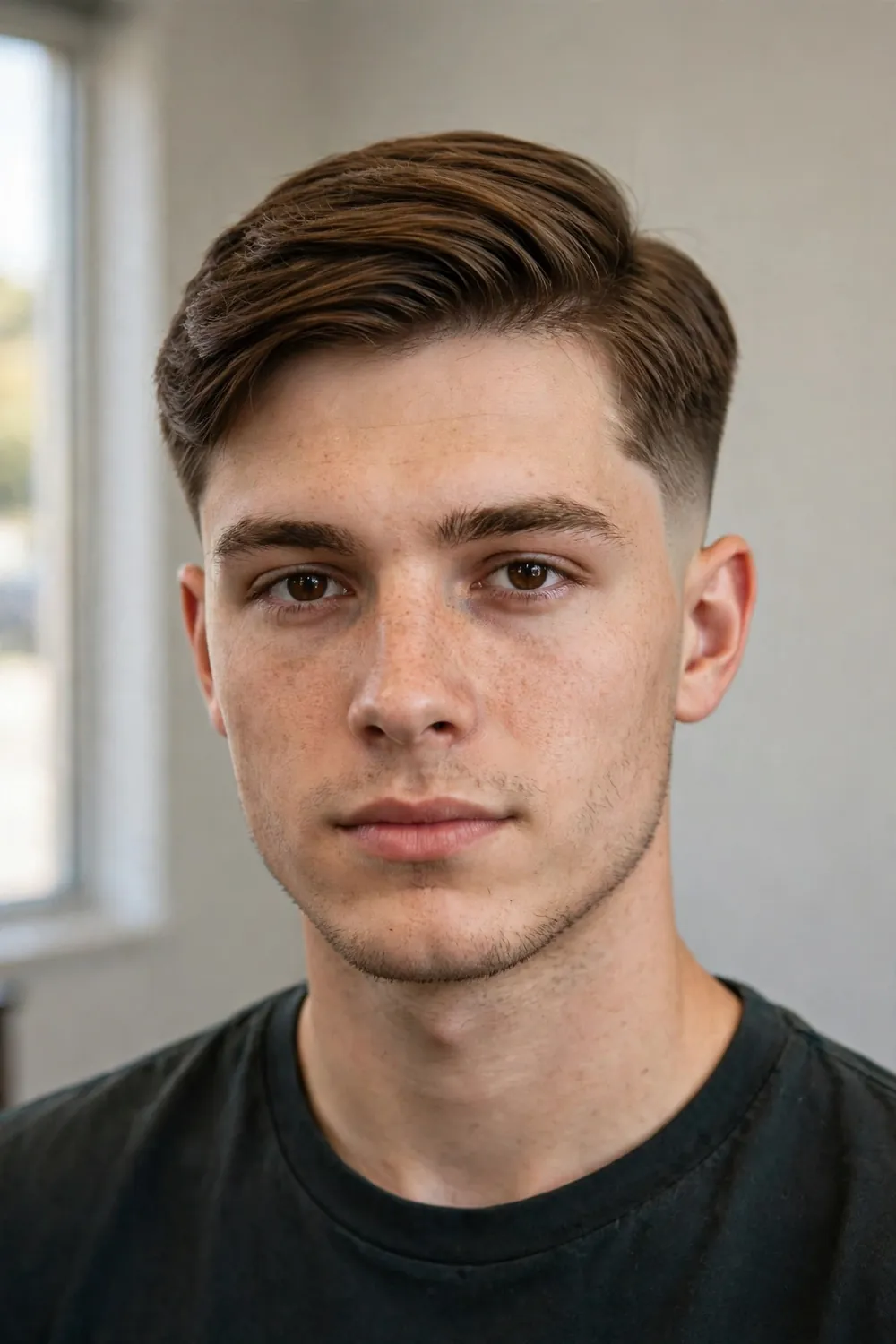
Short hair brushed diagonally across the forehead gives this cut a relaxed, tidy feel that suits almost any face shape. It is a great pick for straight and slightly wavy hair because the sweep follows your natural growth direction. Ask your barber to keep two to three inches on top so the sweep has something to hold, and finish with a pea-sized amount of matte paste worked through dry hair.
2. Low Taper Fade with Undercut
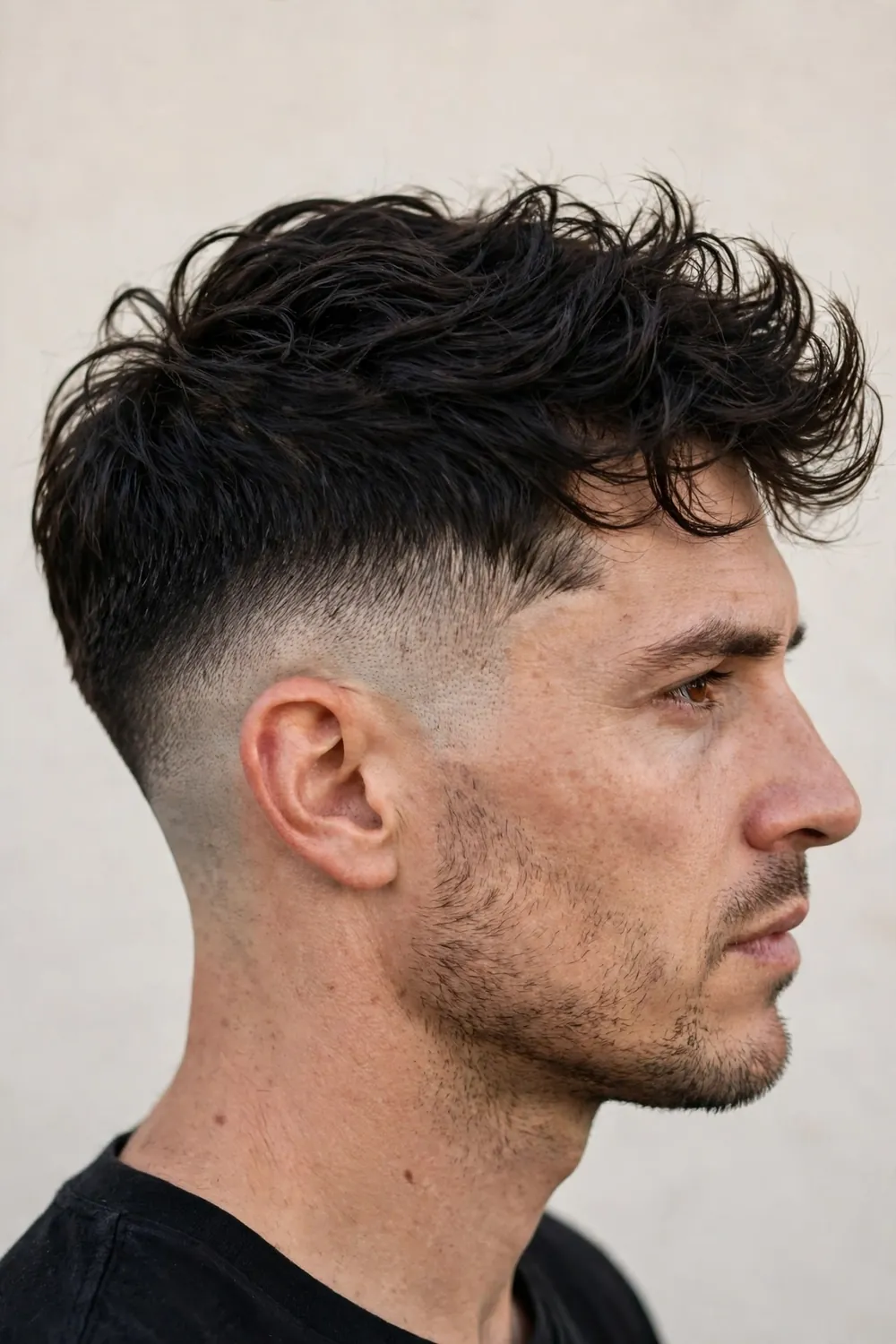
Here the top is left noticeably longer than the sides, creating a deliberate contrast, while the taper keeps the very edges soft instead of shaved bare. It suits men with thick, straight or wavy hair who like a bold shape but still want a clean finish around the ears. Tell your barber exactly where you want the disconnect to start, because once that line is cut in, the style depends on it.
3. Brush Up with Low Taper Fade
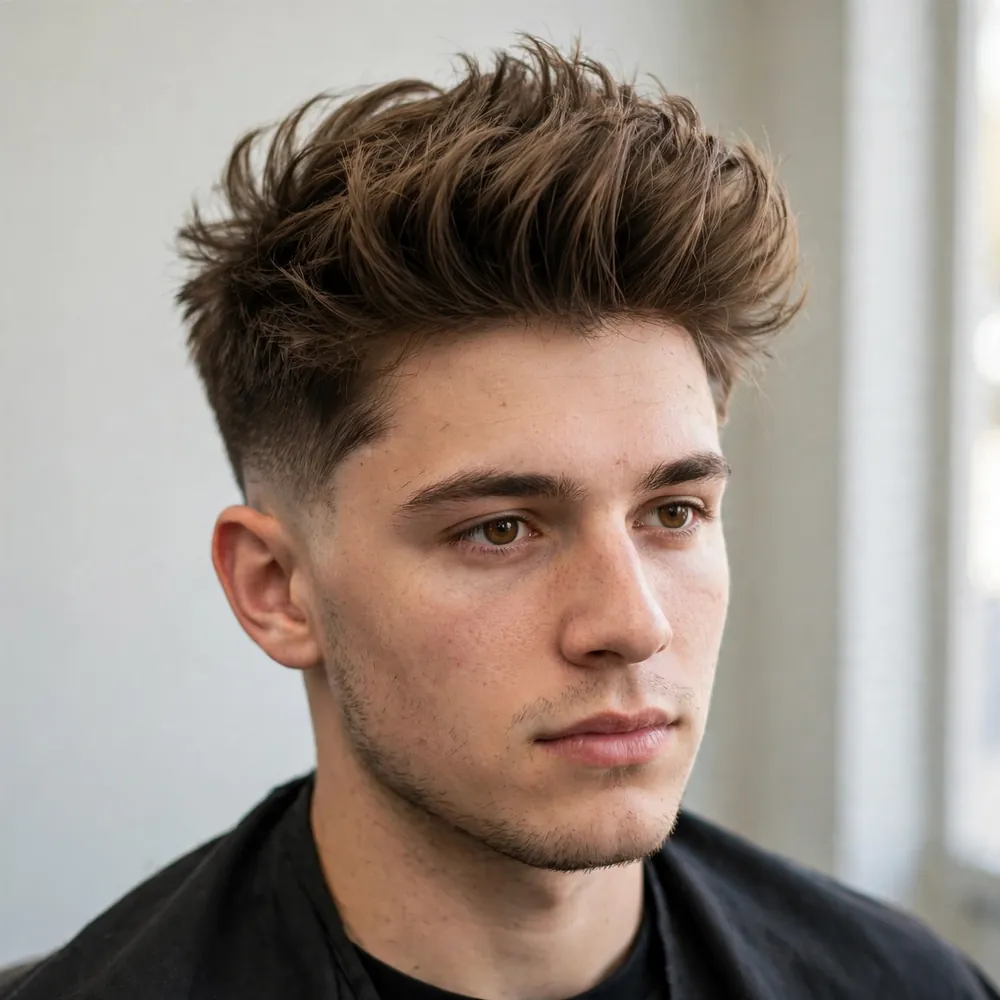
The brush up lifts the front of the hair upward and slightly back, adding height that flatters round and square faces. It works best on medium-length hair with some natural body; very fine hair can do it too with the right product. Blow-dry the top upward with a vent brush first, then lock it in with a matte clay — styling on wet hair is the main reason this look falls flat by midday.
4. Low Drop Taper Fade with Messy Top
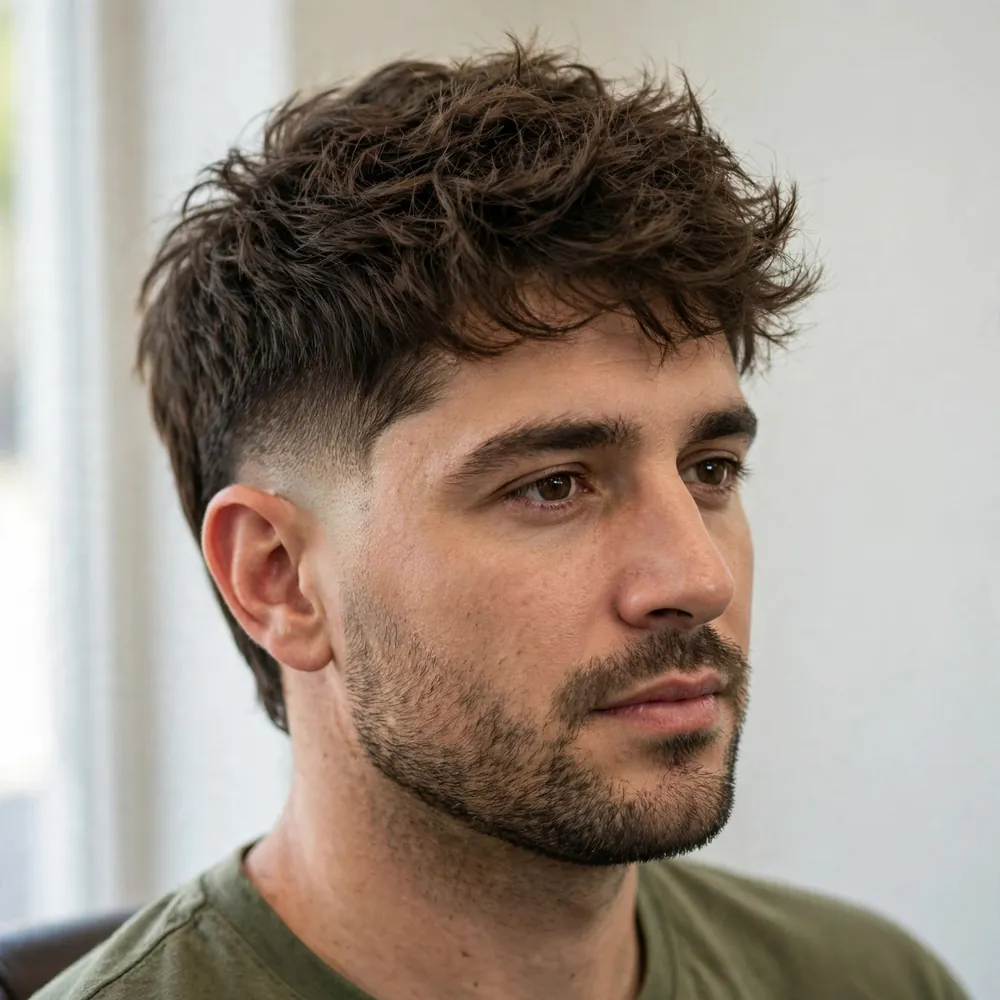
A drop taper curves down behind the ear instead of following a straight line, which gives the back of the head a more natural shape. Paired with a messy, piecey top, it is a relaxed style that suits wavy and thick hair especially well. Scrunch a small amount of sea salt spray or texture powder into the top rather than combing it, and let it air-dry for that undone finish. For more undone looks like this one, see our 51 Best Messy Hairstyles for Men guide.
5. Textured French Crop with Low Taper Fade
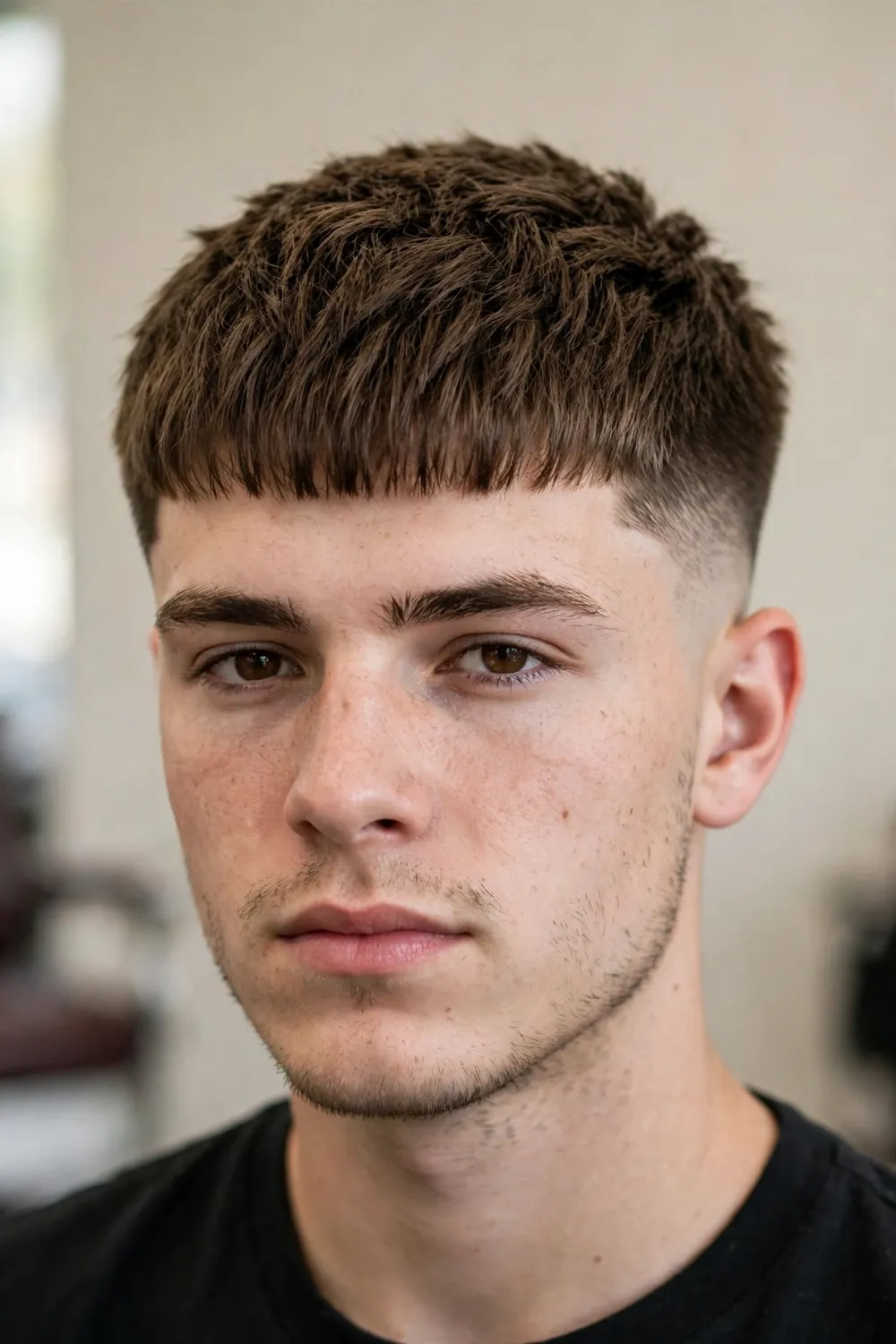
The French crop pushes a short, blunt fringe forward over the forehead, and heavy texture on top stops it from looking flat. It is one of the best low taper fade haircut options for men with a larger forehead or a hairline they want to soften, because the fringe covers the front edge. Ask for point-cutting on top for texture, and style with matte product pushed forward, never back.
6. Textured Short Hair with Low Taper Fade
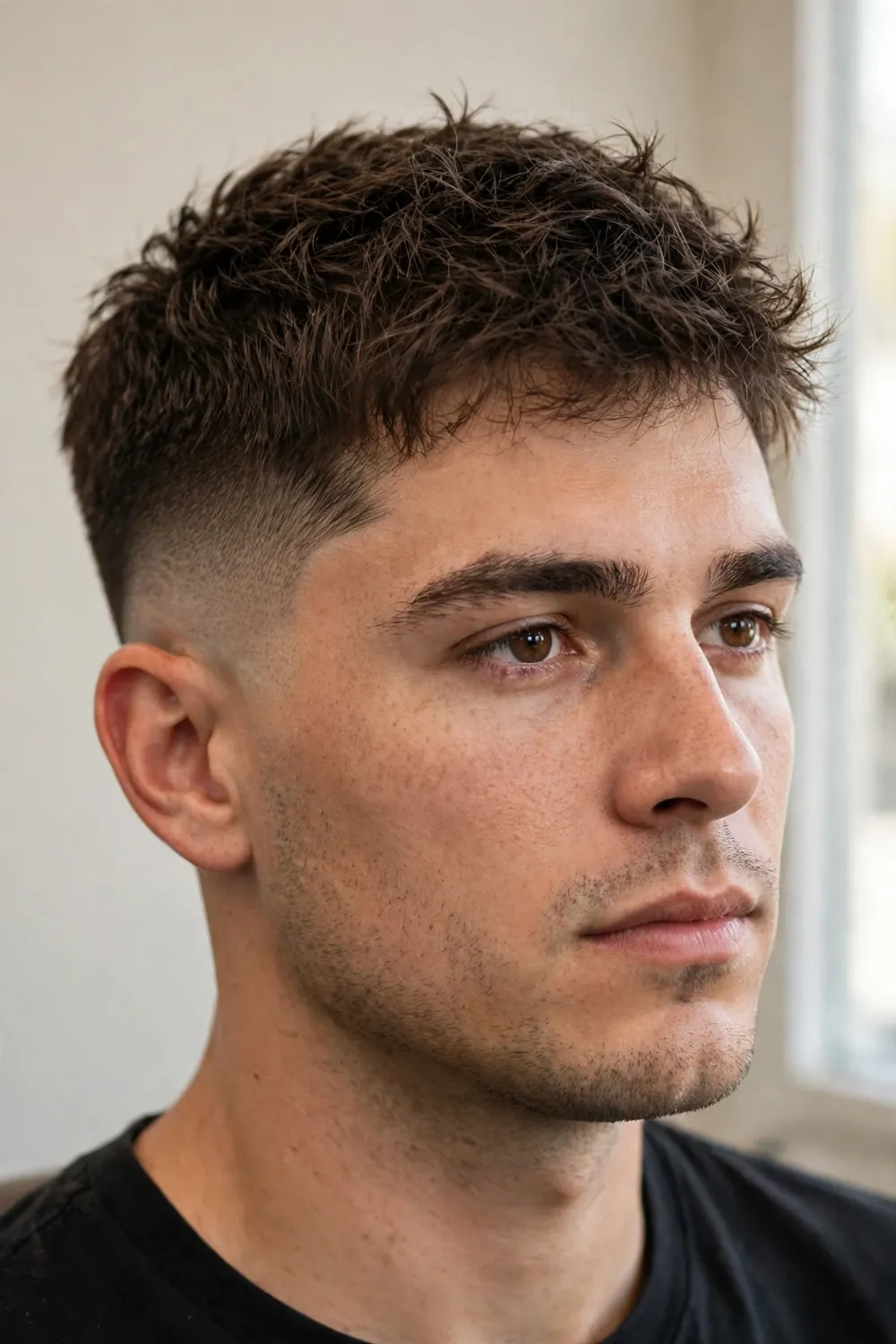
This is the safe, do-everything version: short hair all over, chopped texture on top, and a smooth taper cleaning up the edges. It suits every hair type and every age, and it needs almost no styling beyond a quick towel-dry. If your hair is thinning slightly on top, the texture and short length actually help it look fuller than a longer style would.
7. Brush Back with Low Taper Fade and Line Up
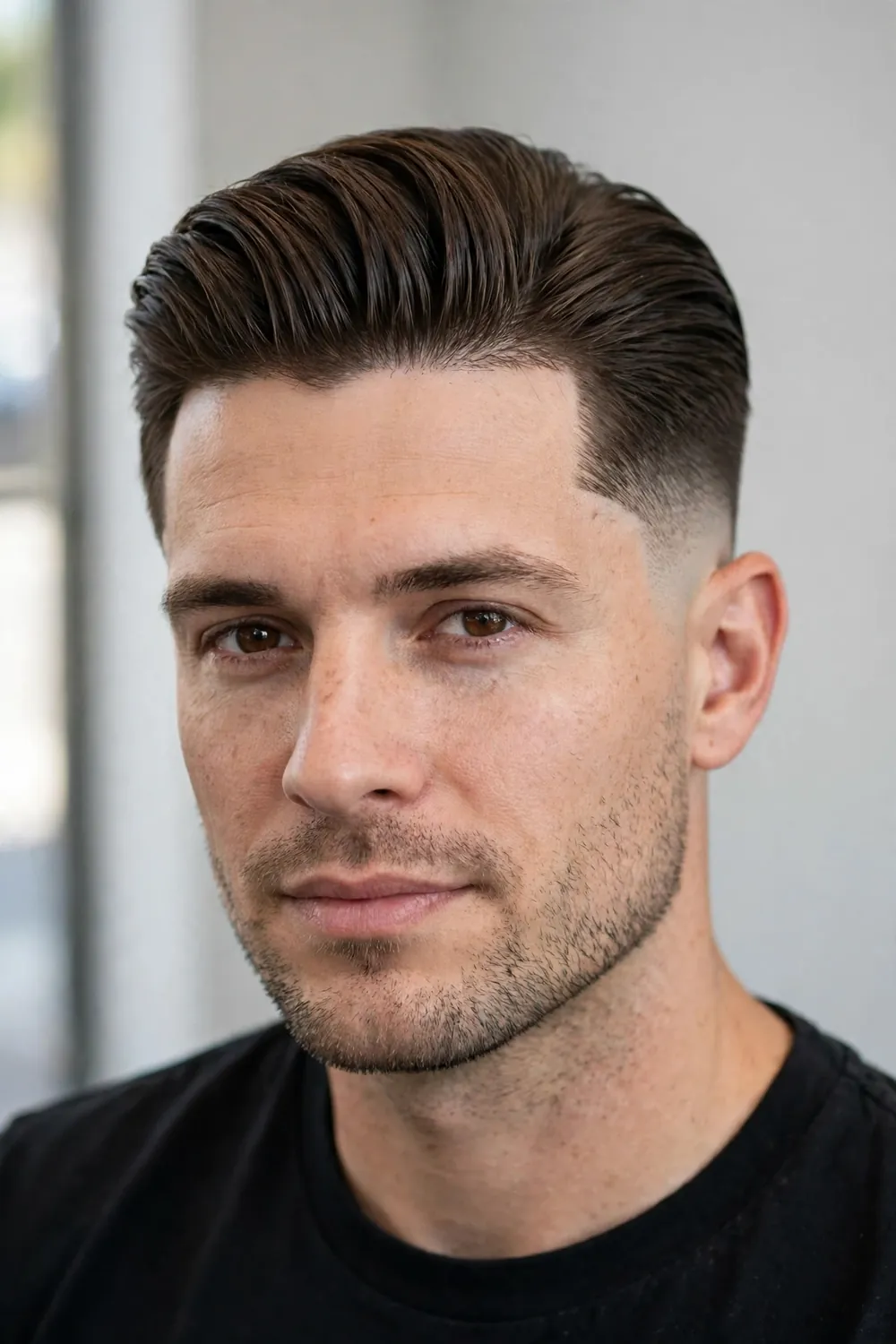
Brushing the top straight back gives a confident, swept silhouette, and the line up carves the front hairline and temples into crisp angles. This one suits men with straight or wavy hair and a naturally straight hairline they want to show off. A line up only stays sharp for about a week, so plan on quick edge cleanups between full cuts if you want to keep that razor finish.
8. Low Taper Fade with Messy Curls
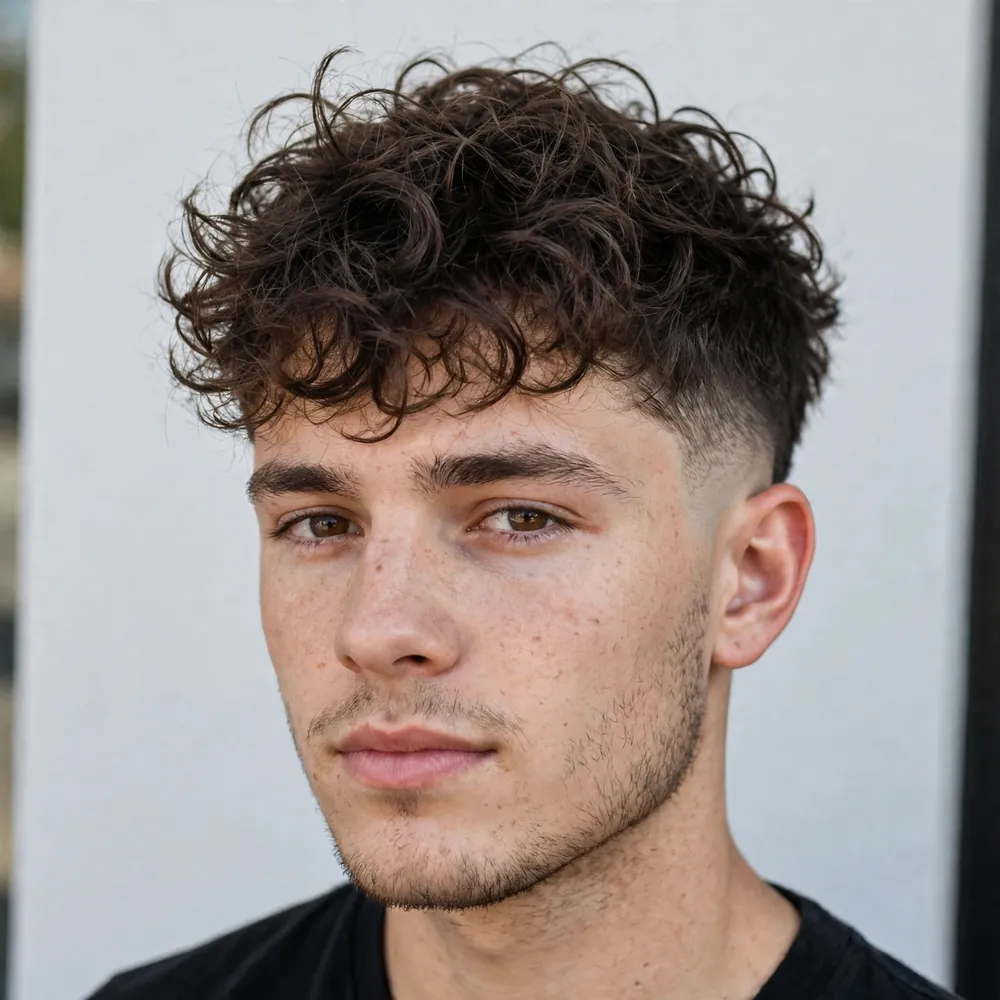
Letting curls sit loose and a little wild on top, while the taper keeps the perimeter tidy, is the easiest way to wear curly hair without fighting it. The taper removes the bulky, wide look curls can get at the sides. Use a leave-in conditioner and a light curl cream on damp hair, then hands off while it dries — touching curls as they dry is what creates frizz.
9. Thick Fluffy Blowout with Low Taper Fade
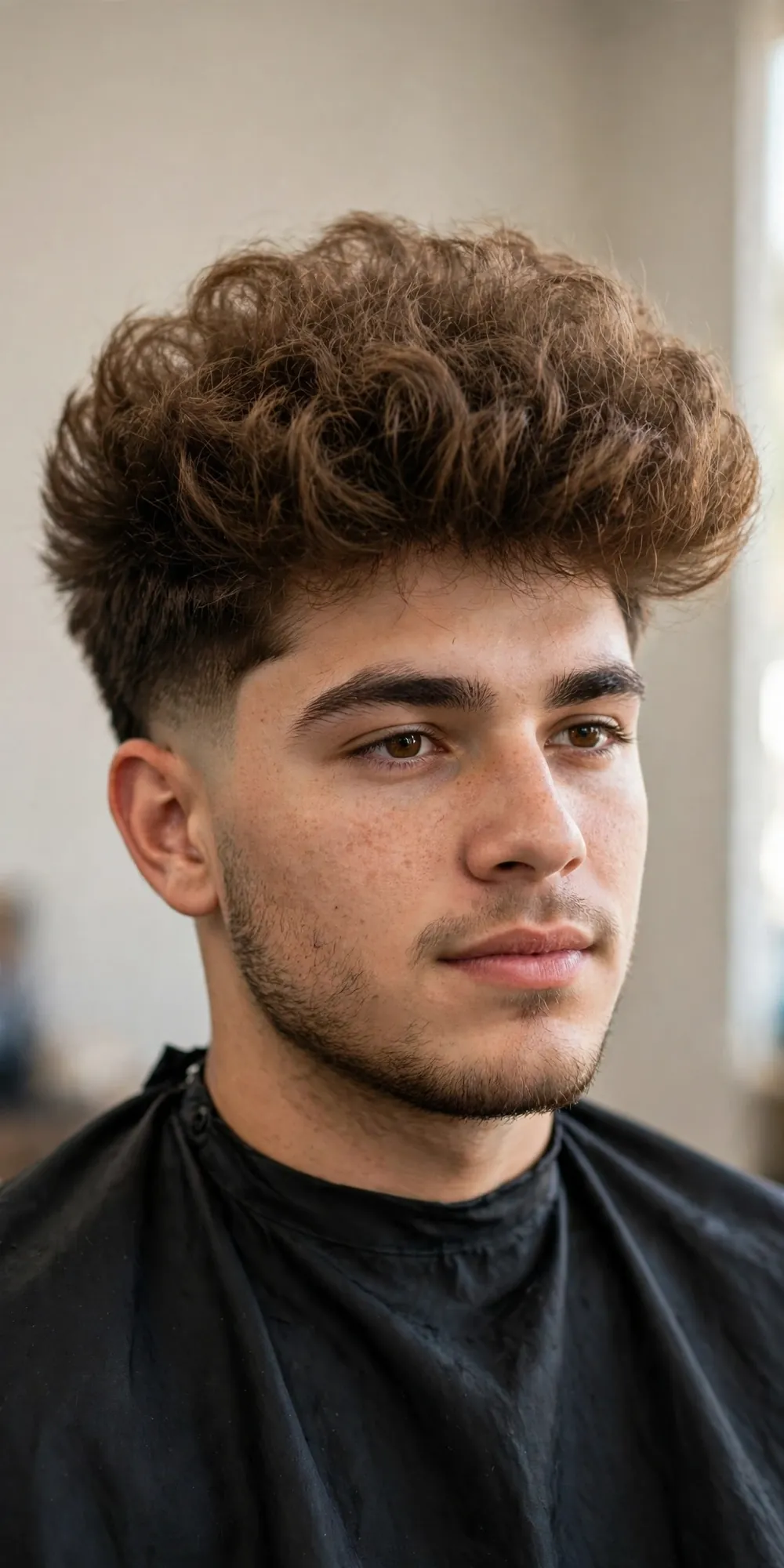
Big, airy volume on top with soft, clean edges — the blowout taper is built for men with very thick hair who want it to look full but controlled. It suits straight and wavy hair with real density; fine hair rarely holds this much lift. You will need a blow dryer and a round brush for two or three minutes in the morning, lifting the roots up and back before adding a light volumising mousse.
10. Low Taper Mullet
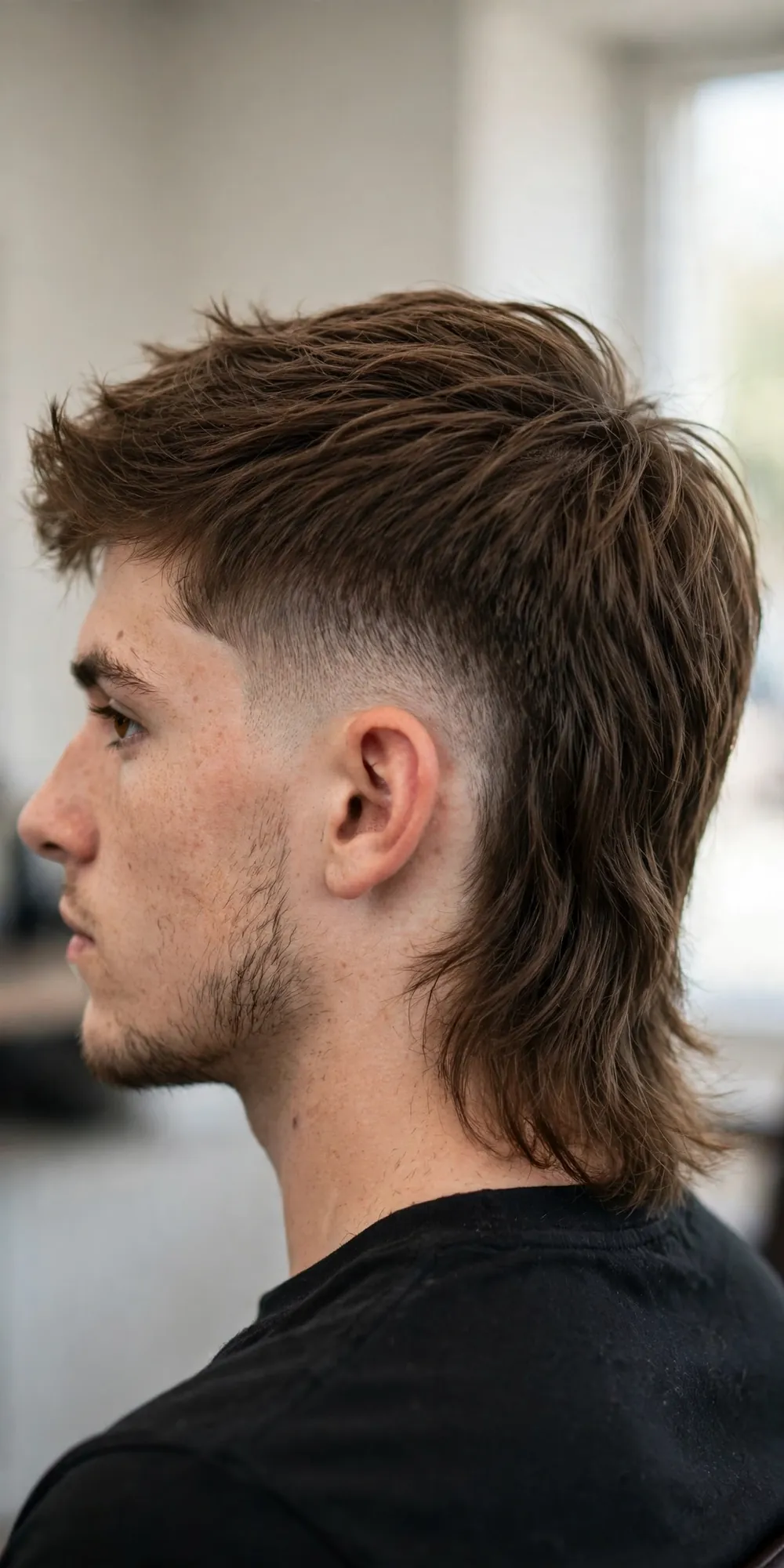
The modern mullet keeps length flowing at the back while the taper keeps the sides around the ears tight and clean. It is a statement cut that suits wavy and curly hair best, because the back looks better with some natural movement. Be honest with your barber about how long you want the back to be, and expect a trim every three weeks to stop the tail from looking scruffy.
11. Faux Hawk with Low Taper Fade and Hair Design
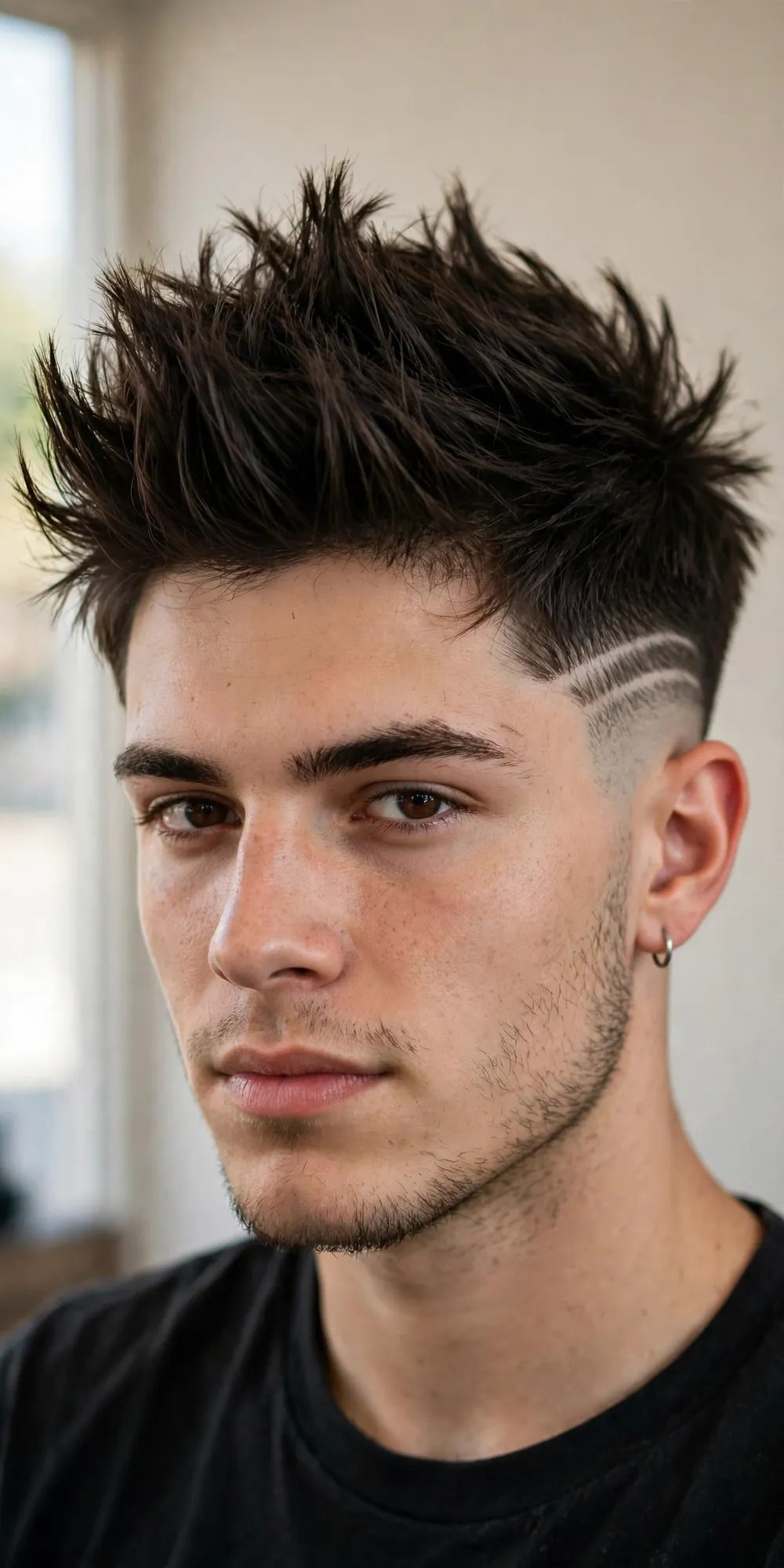
The centre strip is styled up and slightly forward like a mohawk, but the sides keep enough length to stay versatile, and a shaved design adds a personal detail. This suits younger guys and anyone with thick, straight hair that holds a shape. Keep in mind that shaved designs grow out within about ten days, so they are a short-term detail, not a permanent feature of the cut.
12. Buzz Cut with Low Taper Fade
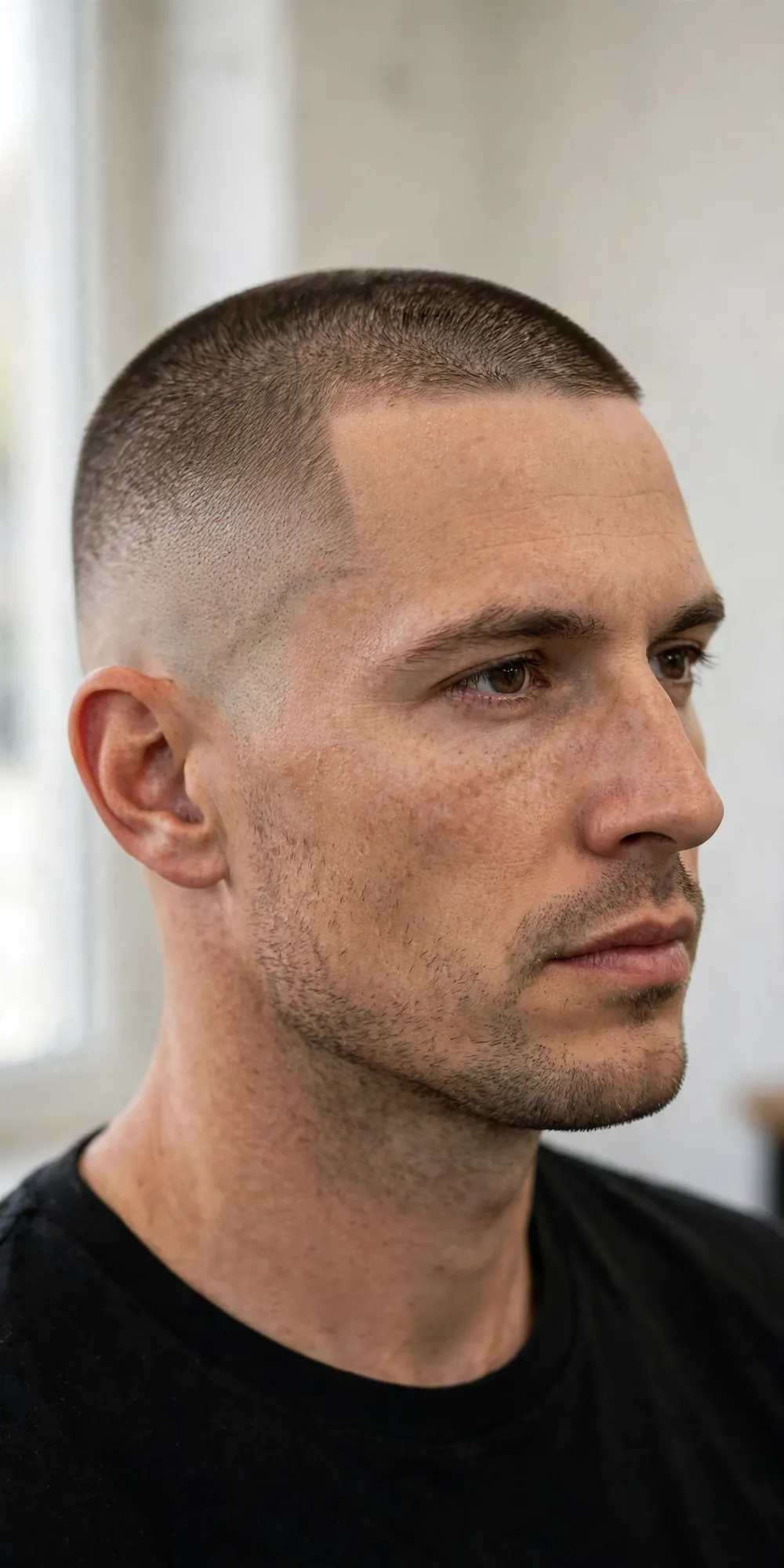
A uniform buzz on top blended into a low taper is the sharpest low-maintenance haircut a man can get. The taper is what separates it from a plain home clipper cut — it gives the buzz a finished, barbered outline. It suits strong jawlines and anyone who wants a wash-and-go routine; ask for a #2 or #3 on top depending on how much scalp you are comfortable showing.
13. Broccoli Cut with Low Taper Fade
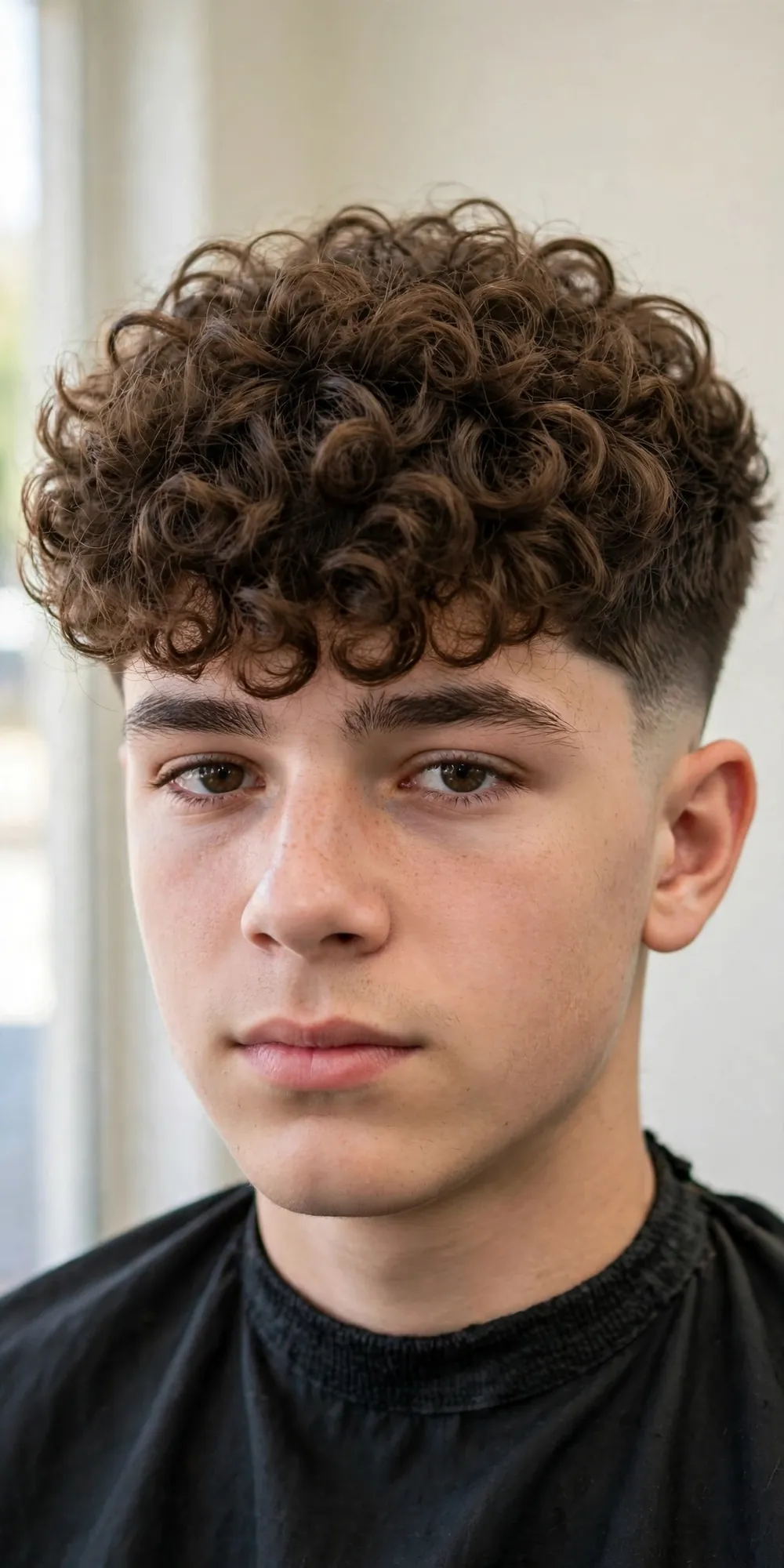
Heavy, forward-falling curls or perm texture piled on top with tight tapered sides — the broccoli cut is the defining teen and young men’s style of the moment. It works on naturally curly hair or on permed hair, and it hides a high forehead completely. The top needs moisture to keep the curls defined, so a curl cream is non-negotiable; without it the shape turns into a dry puff.
14. Low Taper Fade with Thick Curls
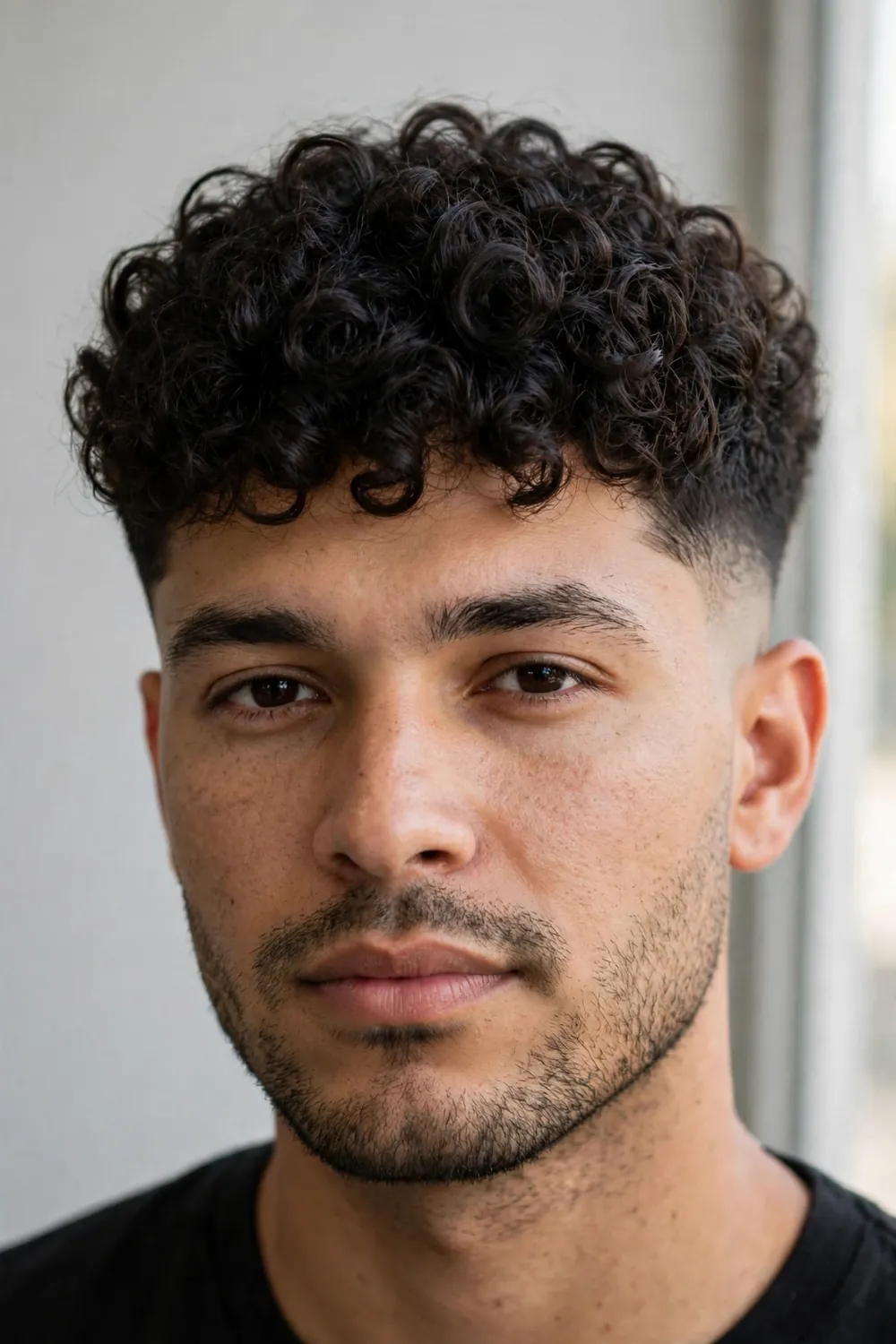
Instead of cropping curls down, this version keeps them full and defined on top and only cleans up the outline with the taper. It is ideal for men with dense, coily or tightly curled hair who like volume but hate the mushroom shape that comes with untrimmed sides. Ask your barber to cut the top dry or with curl-by-curl shaping, because wet-cutting curls often ends up shorter than planned once they spring back.
15. Top Knot with Low Taper Fade
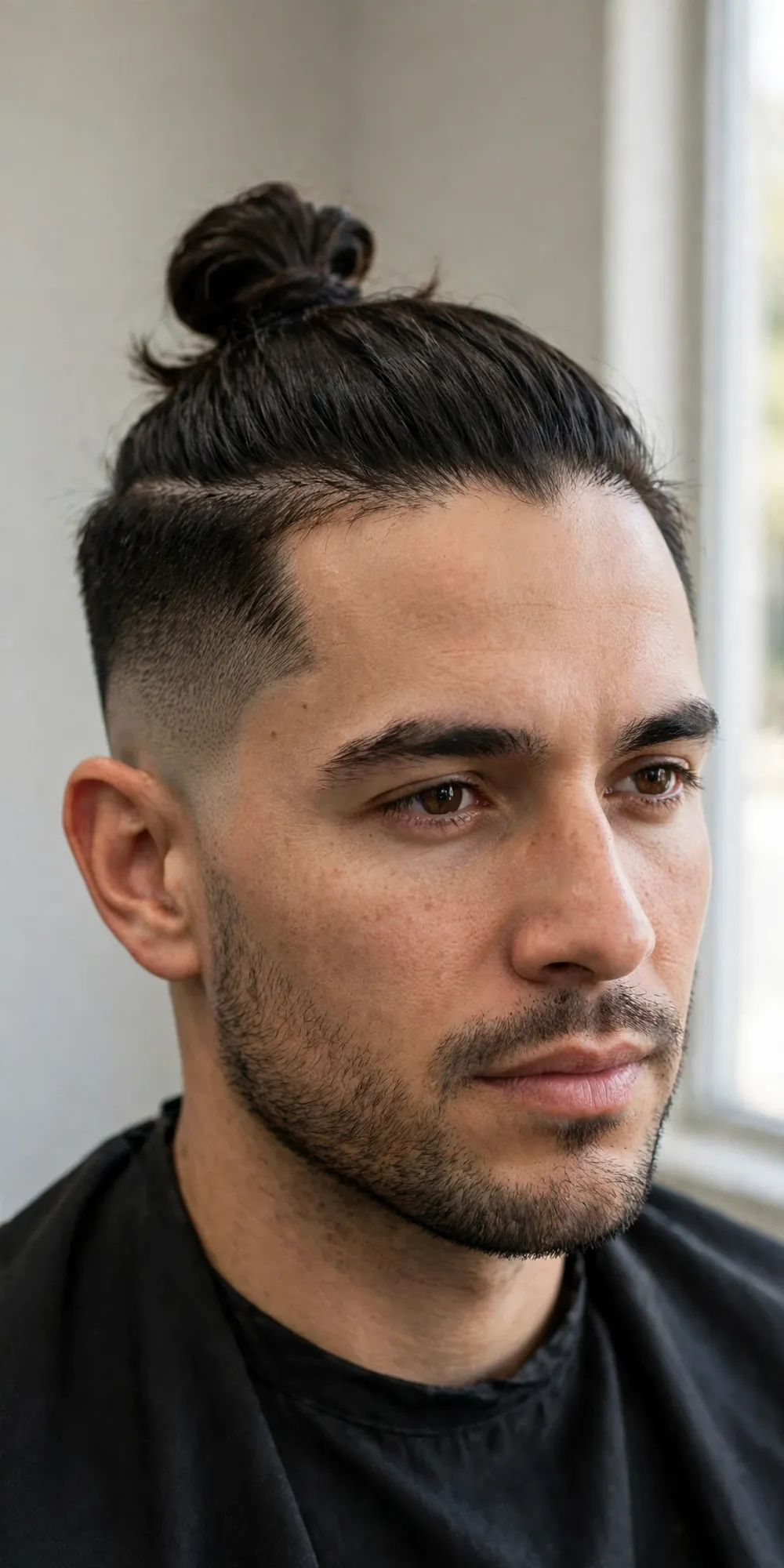
Long hair gathered into a knot on the crown, with the taper keeping the under-layer and edges neat so it never looks scruffy. This suits men growing their hair out who still need a tidy finish for work. The taper also stops the sides from puffing out when the hair is tied up; keep the knot positioned at the crown, not the back of the head, for the cleanest profile.
16. High Top with Low Taper Fade
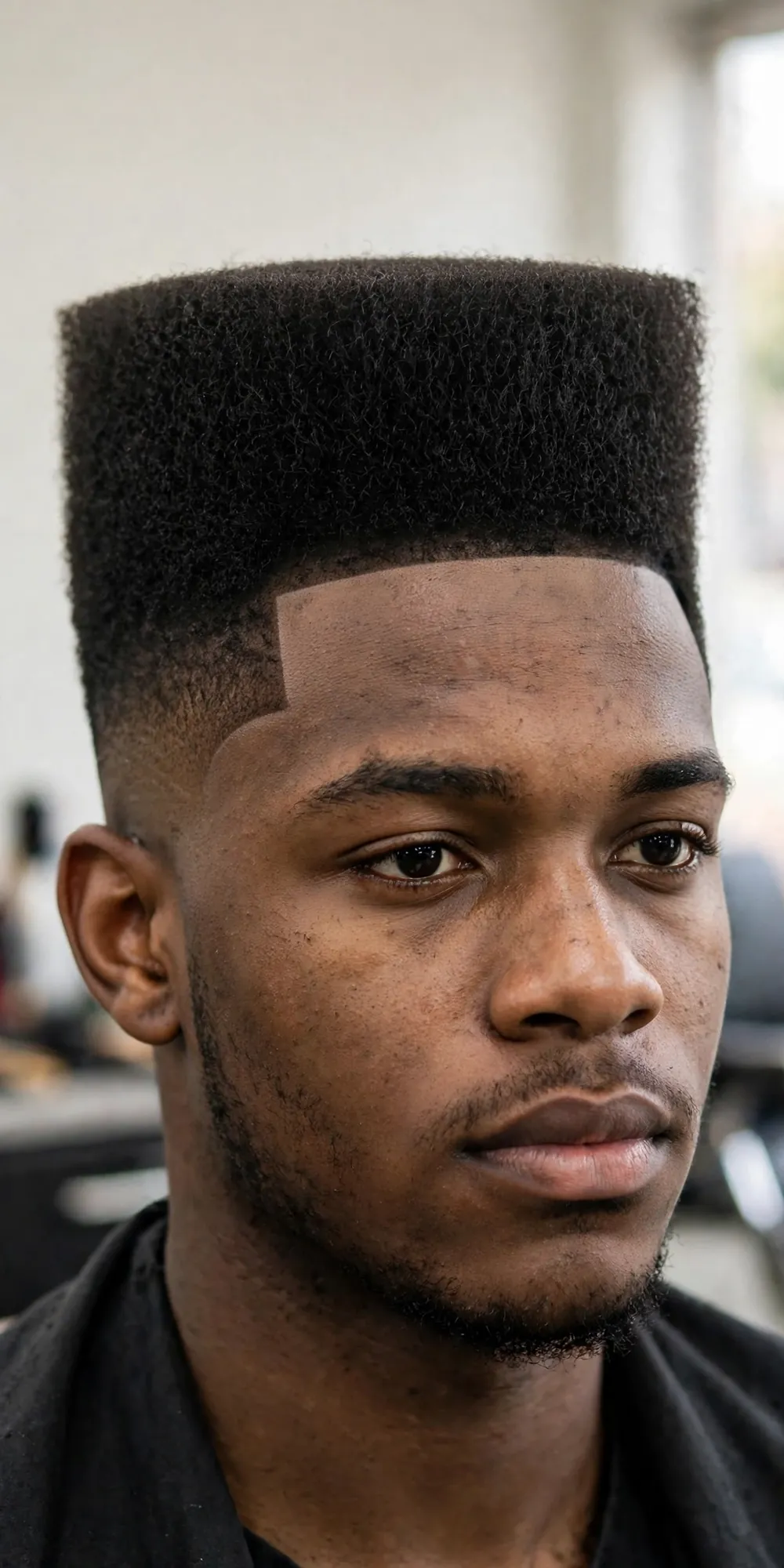
The high top stands tall and flat across the top with sculpted sides, and the low taper softens the bottom edge so the shape looks modern instead of boxy. It is made for coily hair with enough length and density to hold height. Regular shaping keeps the silhouette even, and a light sheen product plus a wide pick helps lift the hair without pulling it apart.
17. Afro with Low Taper Fade
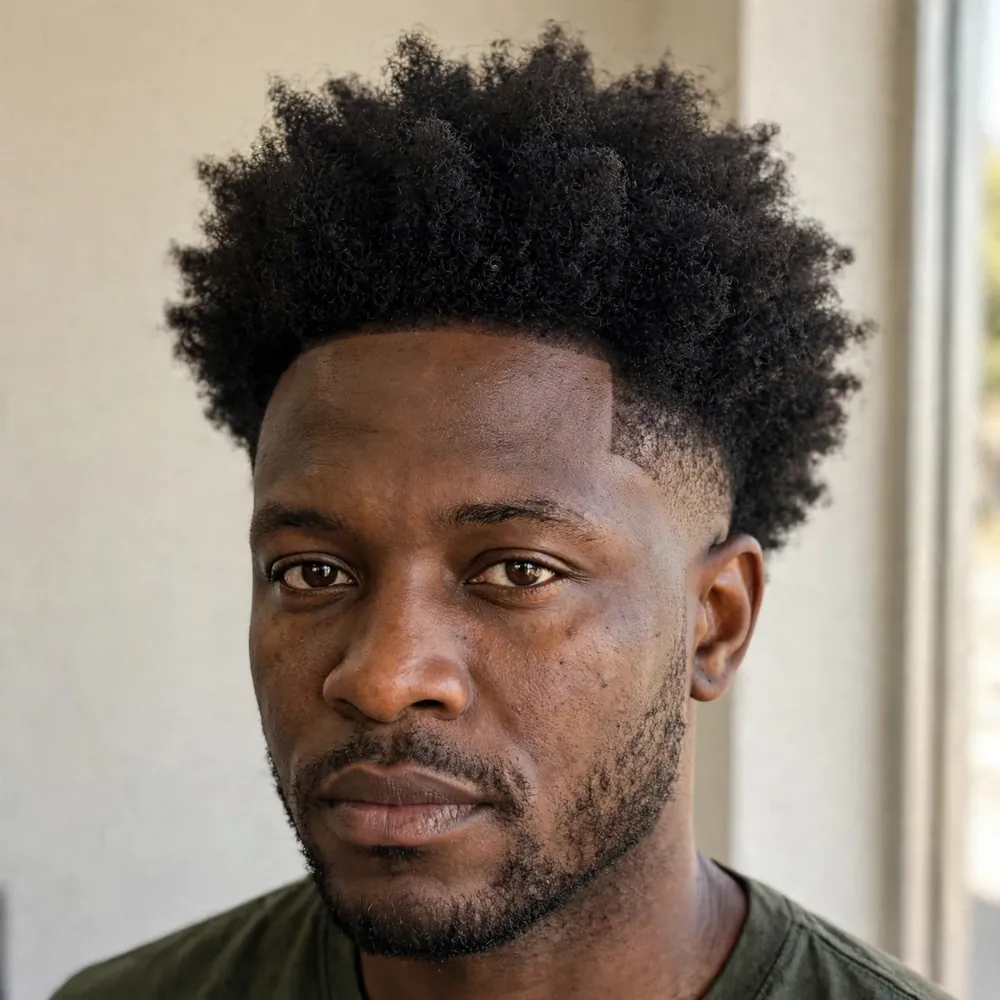
A full, rounded afro gets a clean frame from the taper and a crisp shape up along the hairline. This is the best of both worlds for natural hair: maximum volume and texture up top, zero bulk or stray hairs around the edges. Moisturise daily with a light oil or leave-in, and ask your barber to shape the afro freehand so it follows your head shape rather than a rigid template.
18. Hard Part with Low Taper Fade
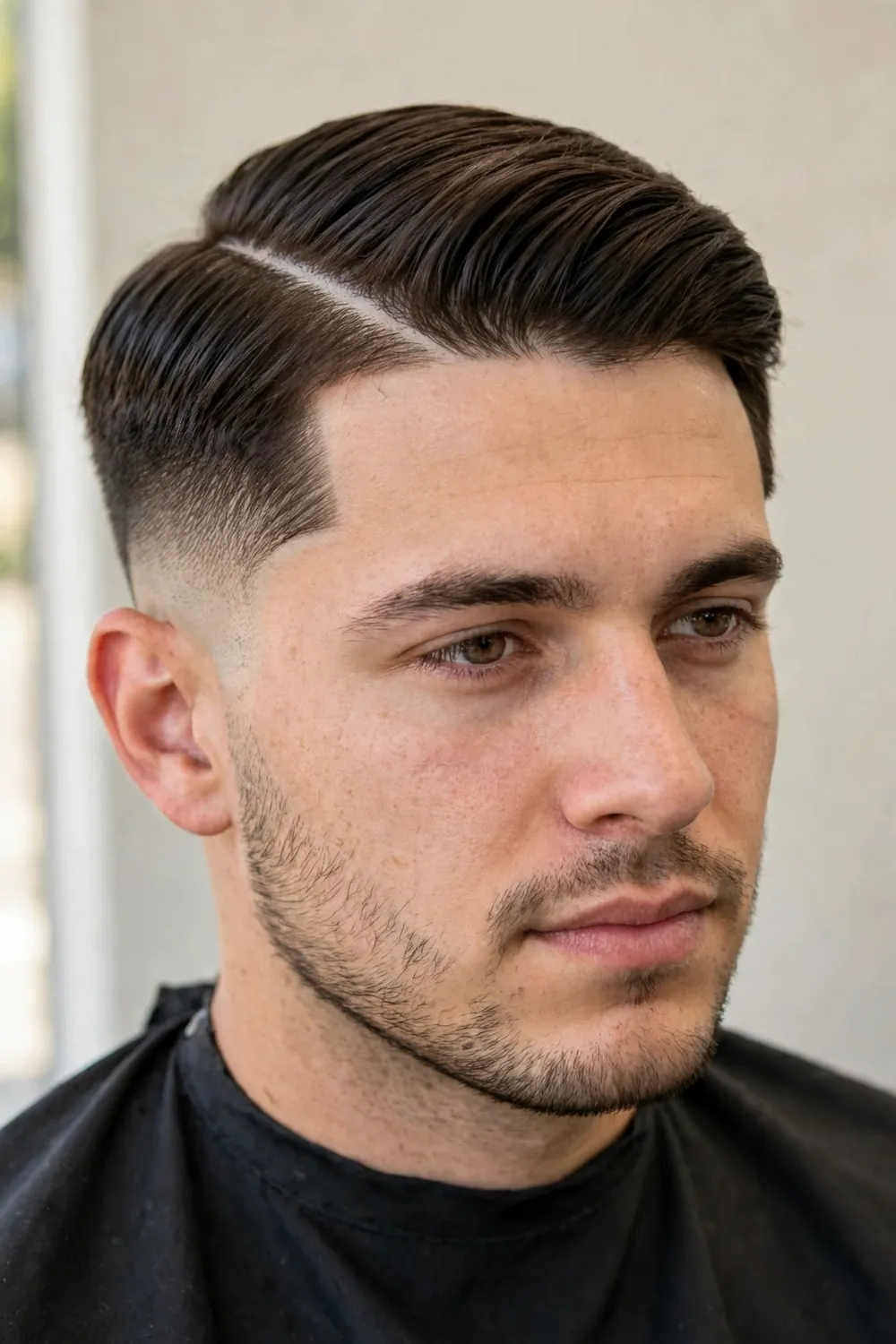
A hard part is a thin line shaved into the hair where the natural parting sits, giving a comb over or side sweep a sharp, deliberate divide. It suits straight and wavy hair and looks especially clean in professional settings. The line needs re-cutting roughly every two weeks to stay visible, so factor that small cleanup into your routine before choosing it.
19. Classic Low Taper Fade with Long Top
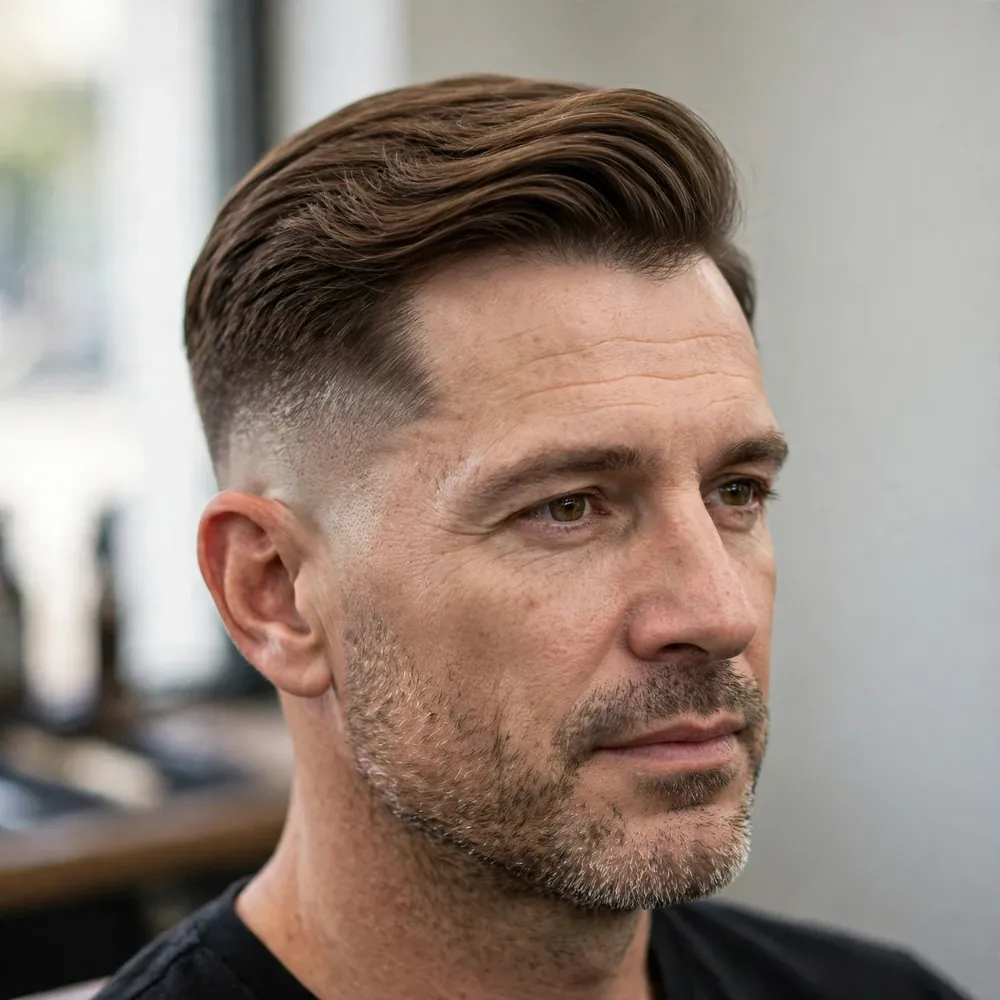
Four to six inches on top, swept loosely to the side, with the taper doing quiet work at the edges — this is the timeless barbershop version of the cut. It suits almost every face and hair type and can be styled neat for work or messy for weekends. Because the top is long, ask your barber to remove weight with texture rather than length, so it lies flat instead of ballooning at the sides.
20. Short Hair with Low Taper Fade
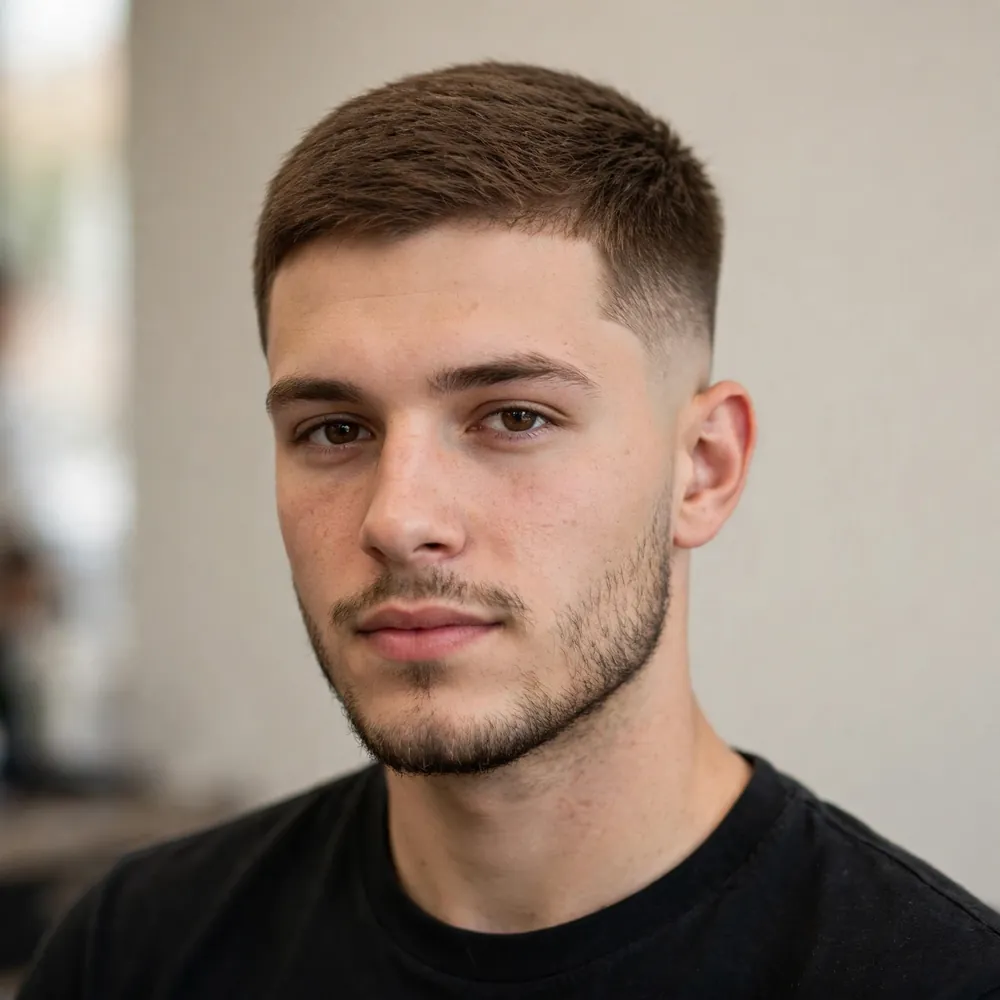
No theme, no styling tricks — just clean short hair with a proper taper finish. This is the haircut for men who want to look groomed without thinking about their hair at all, and it flatters every age group. Keep a small tub of matte paste for the days you want a touch of separation on top, but most mornings you can genuinely do nothing.
21. Low Taper Fade with Straight Hair
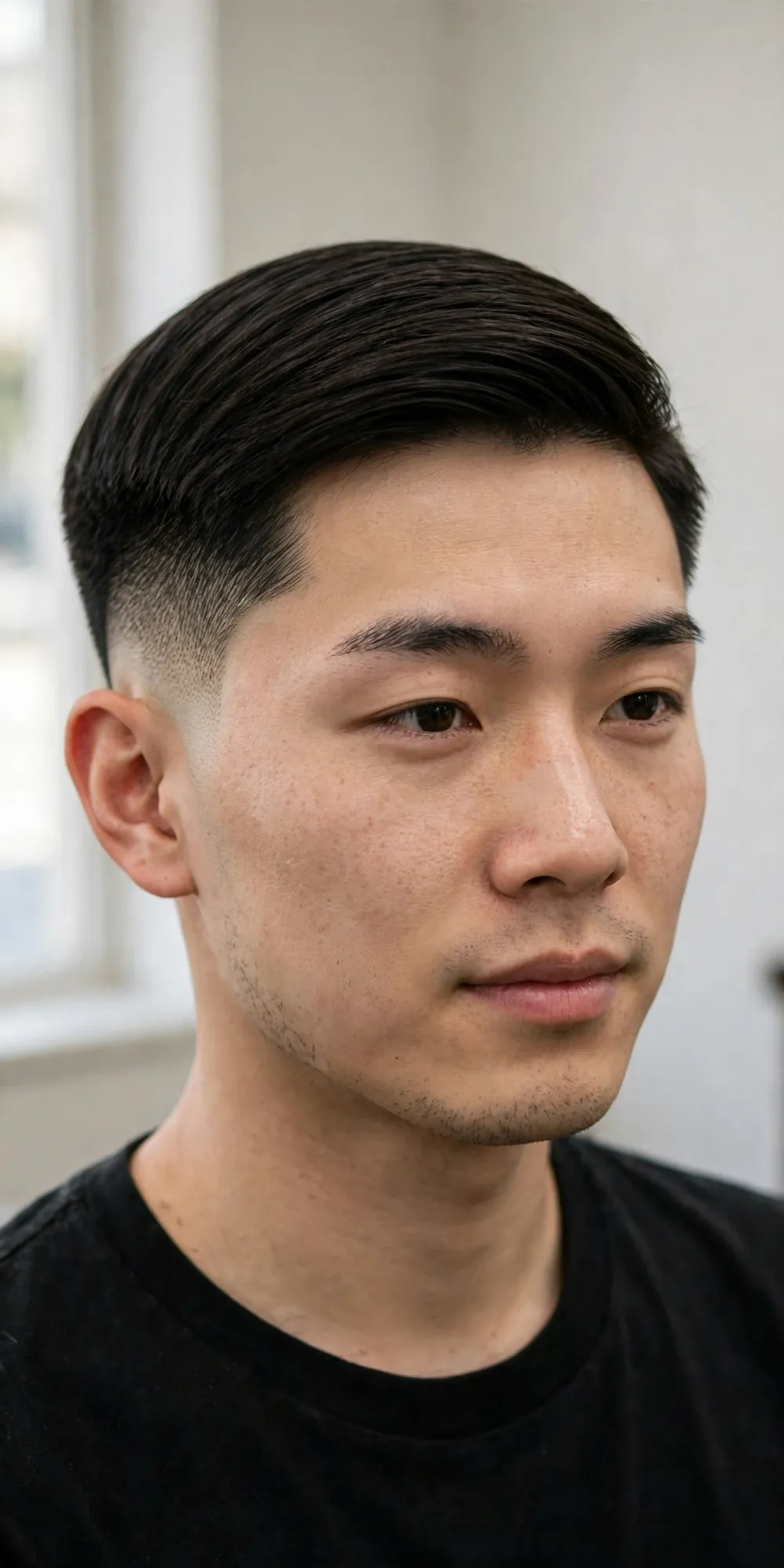
Straight hair shows every imperfection in a blend, so a well-executed taper on straight hair looks exceptionally smooth and polished. The key is keeping a little length on the sides above the taper so the hair lies flat instead of sticking straight out. If your straight hair is very stiff, ask the barber for a slightly longer taper — cutting the sides too short is what makes straight hair spike at awkward angles.
22. Low Taper Fade with Line Designs
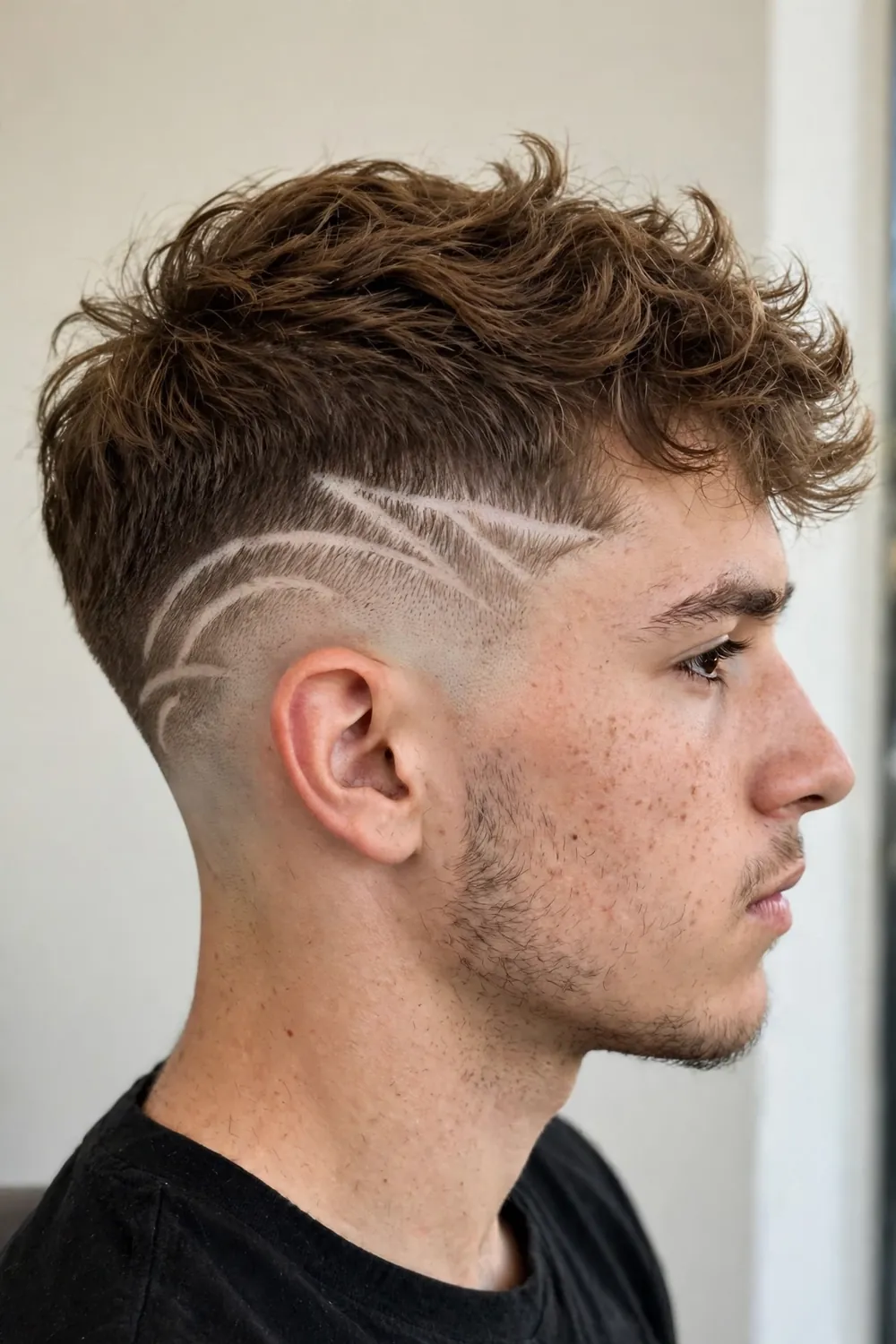
One or two clean shaved lines carved above the ear or along the taper turn a quiet haircut into a custom one. Line designs suit any top length and are popular with younger men and athletes who want detail without changing the whole style. Choose a simple single line for your first design — it grows out more gracefully than complex patterns and is easy for any barber to refresh.
23. Low Taper Fade with Fluffy Fringe
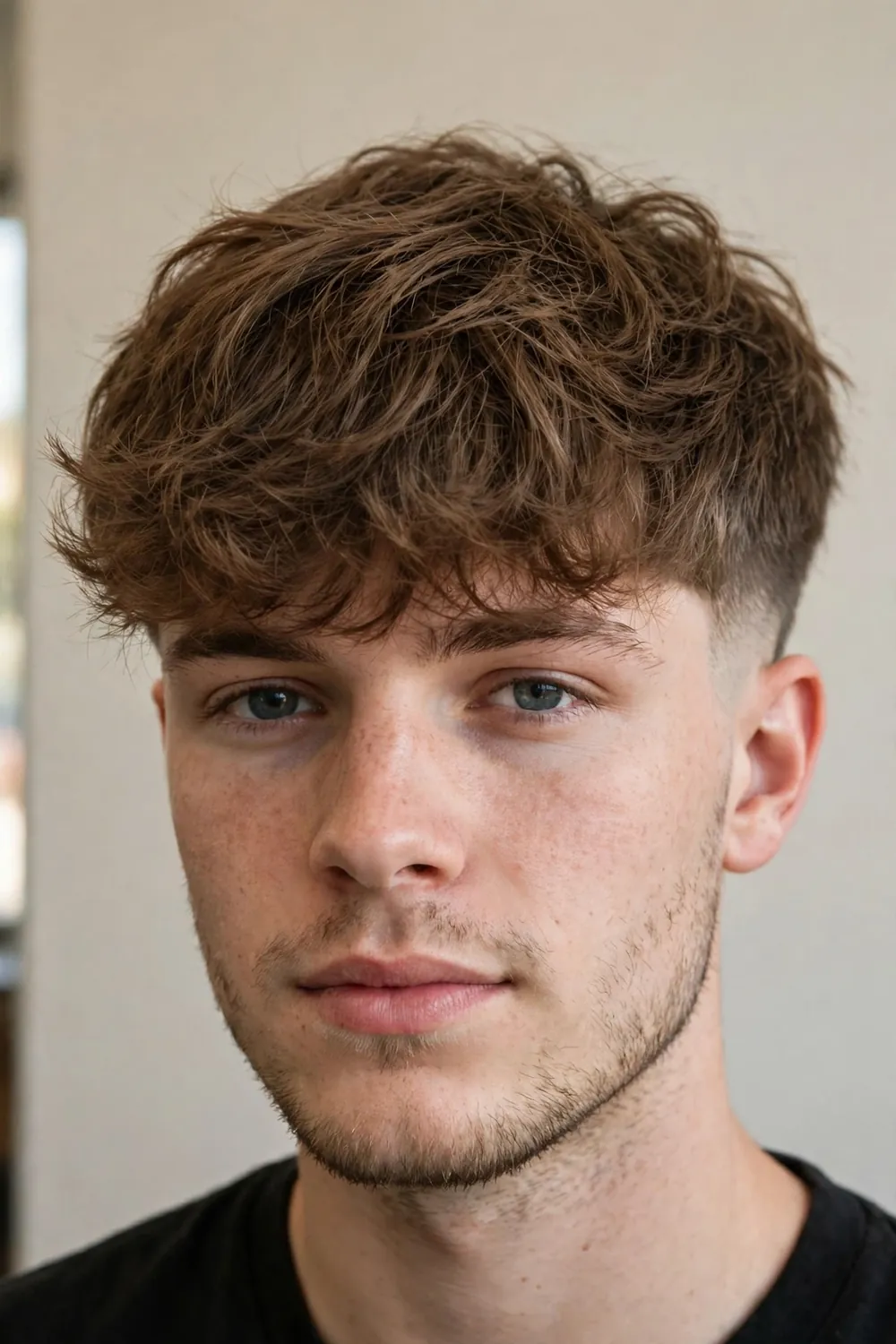
A soft, voluminous fringe falling forward over the forehead gives this cut a youthful, relaxed character. It suits thick, wavy hair with natural loft, and it is forgiving for hairlines that are not perfectly straight. Blow-dry the fringe forward and down with your fingers rather than a brush, and avoid heavy waxes — weight is the enemy of fluff.
24. Crew Cut with Low Taper Fade
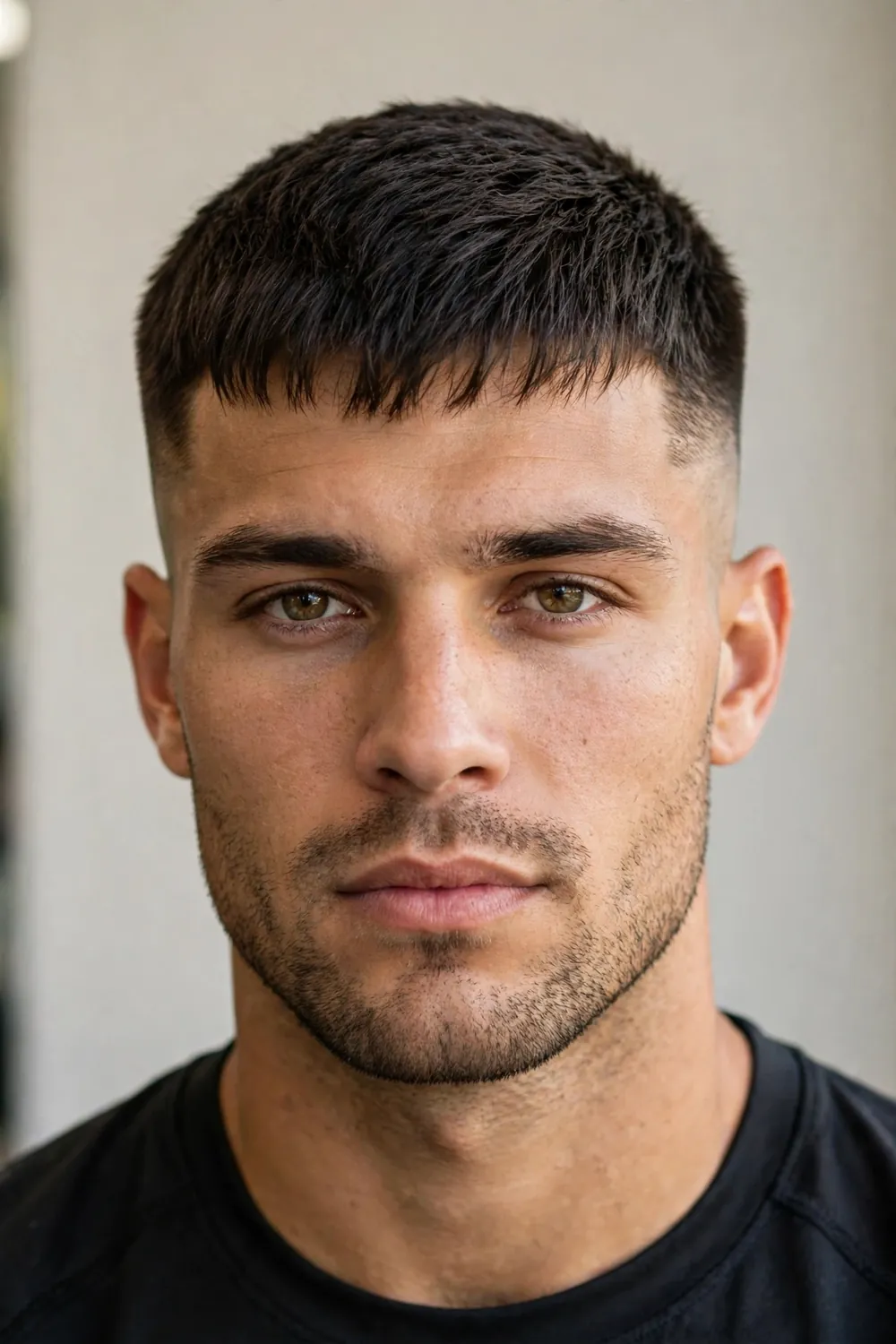
The crew cut keeps the top short and slightly longer at the front, and the taper gives it a sharper outline than the basic barracks version. It is an athletic, no-fuss style that suits oval and square faces and every hair type, including thinning hair, because the short uniform length makes density look even. A fingertip of matte product brushed forward is all the styling it ever needs.
25. Classic Low Drop Taper Fade
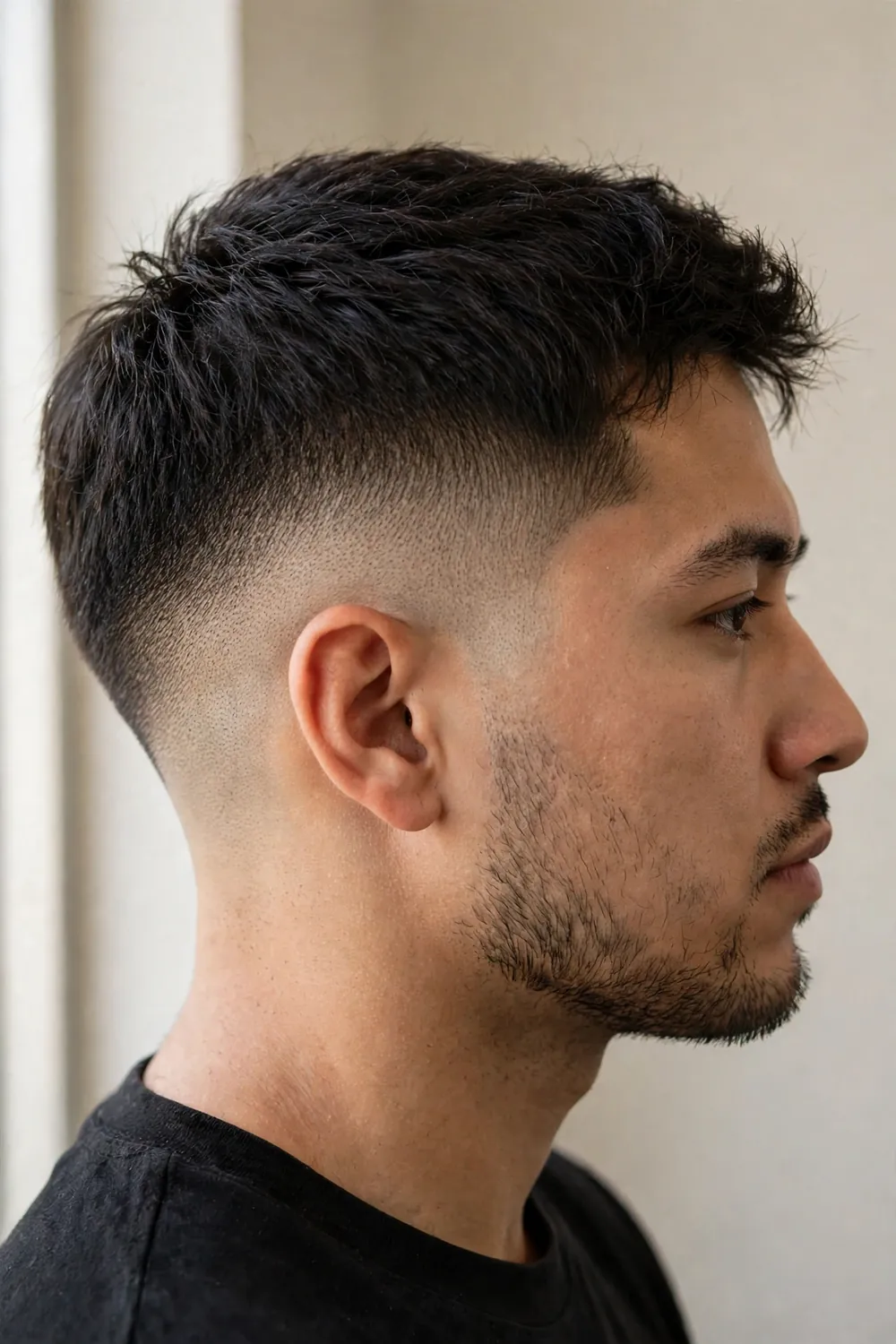
The drop version of the taper follows the natural curve of your head, dipping lower behind the ear and at the back. On its own with a simple short top, it reads as a clean, classic men’s haircut that flatters rounder head shapes because the curve adds structure. Make sure your barber checks the drop from the back view — the arc should mirror on both sides.
26. Low Taper Fade with Curly Hair
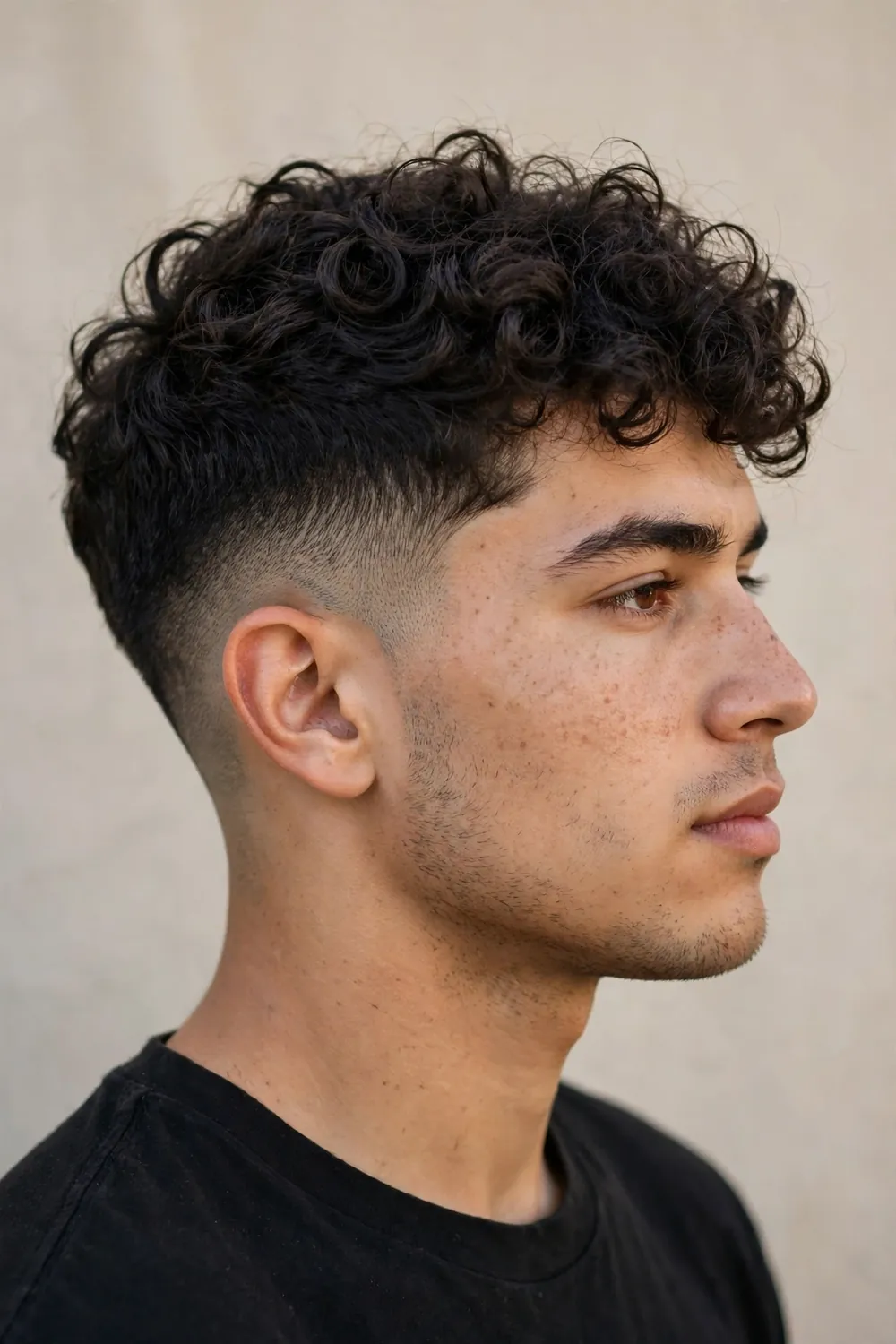
Medium-length curls on top with a tidy tapered outline is the balanced everyday option for curly hair — not cropped down, not overgrown. It works across curl types 2C to 4A as long as the top is shaped to remove bulk at the crown. Define the curls with a leave-in and gel on soaking-wet hair, then let them dry fully before breaking the cast with your hands for softness.
27. Spiky Hair with Low Taper Fade
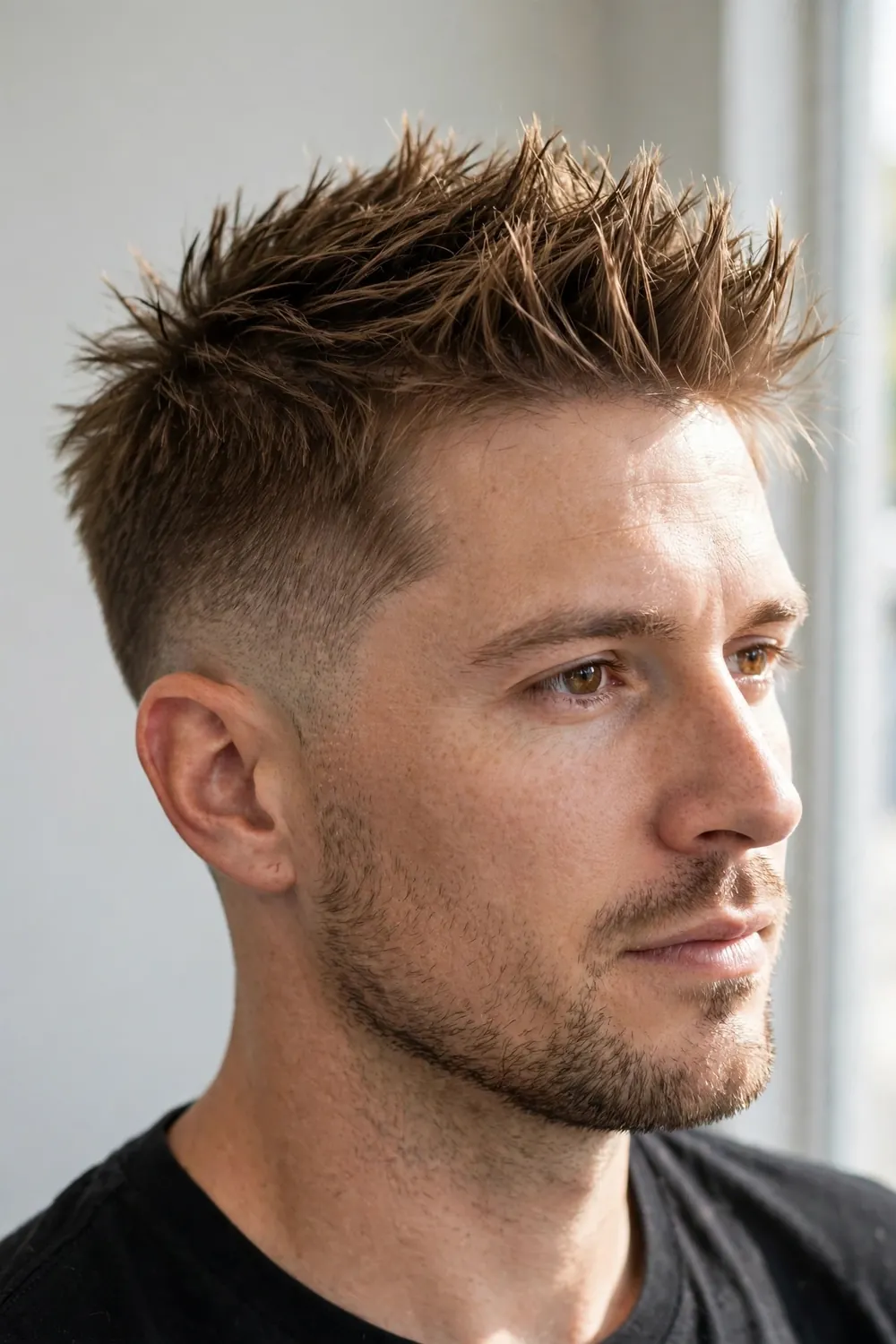
Short spikes with lots of separation bring back a classic textured look, and the taper keeps it current instead of dated. It suits straight, thick hair that naturally wants to stand up, and it is a smart choice for men with fine hair too, because spiking adds the look of density. Use a dry matte clay and pinch the ends rather than gel — wet-look gel spikes are what make this style look old-fashioned.
28. Slick Back with Low Taper Fade
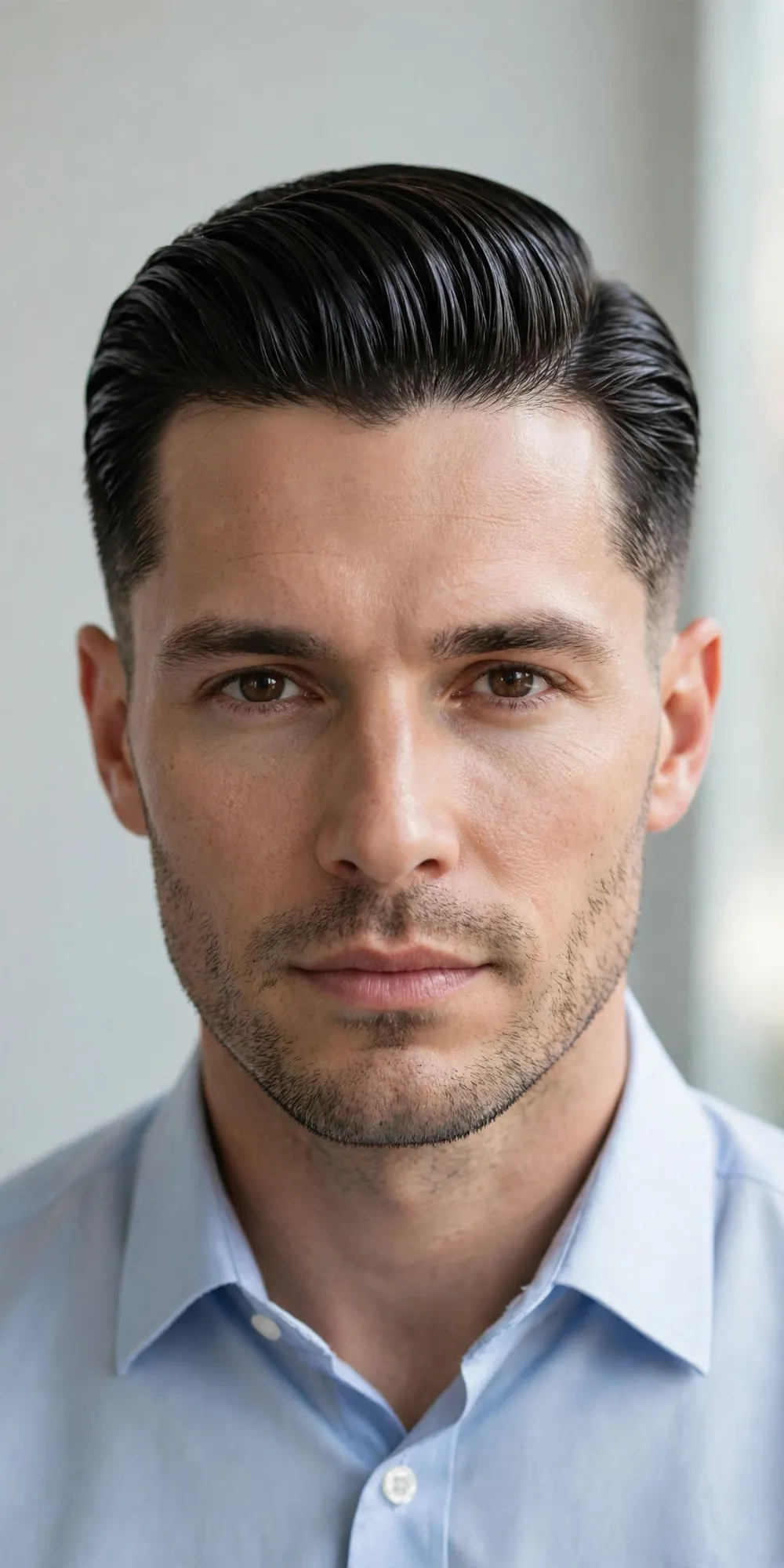
All the hair combed straight back with a smooth finish is the most polished way to wear a low taper fade, ideal for formal settings and longer tops. It suits straight and wavy hair; very curly hair usually fights the direction. Work a medium-hold pomade through towel-dried hair and comb it back in one pass — repeated combing breaks the smooth sheet of hair into separated strands.
29. Fringe with Low Taper Fade
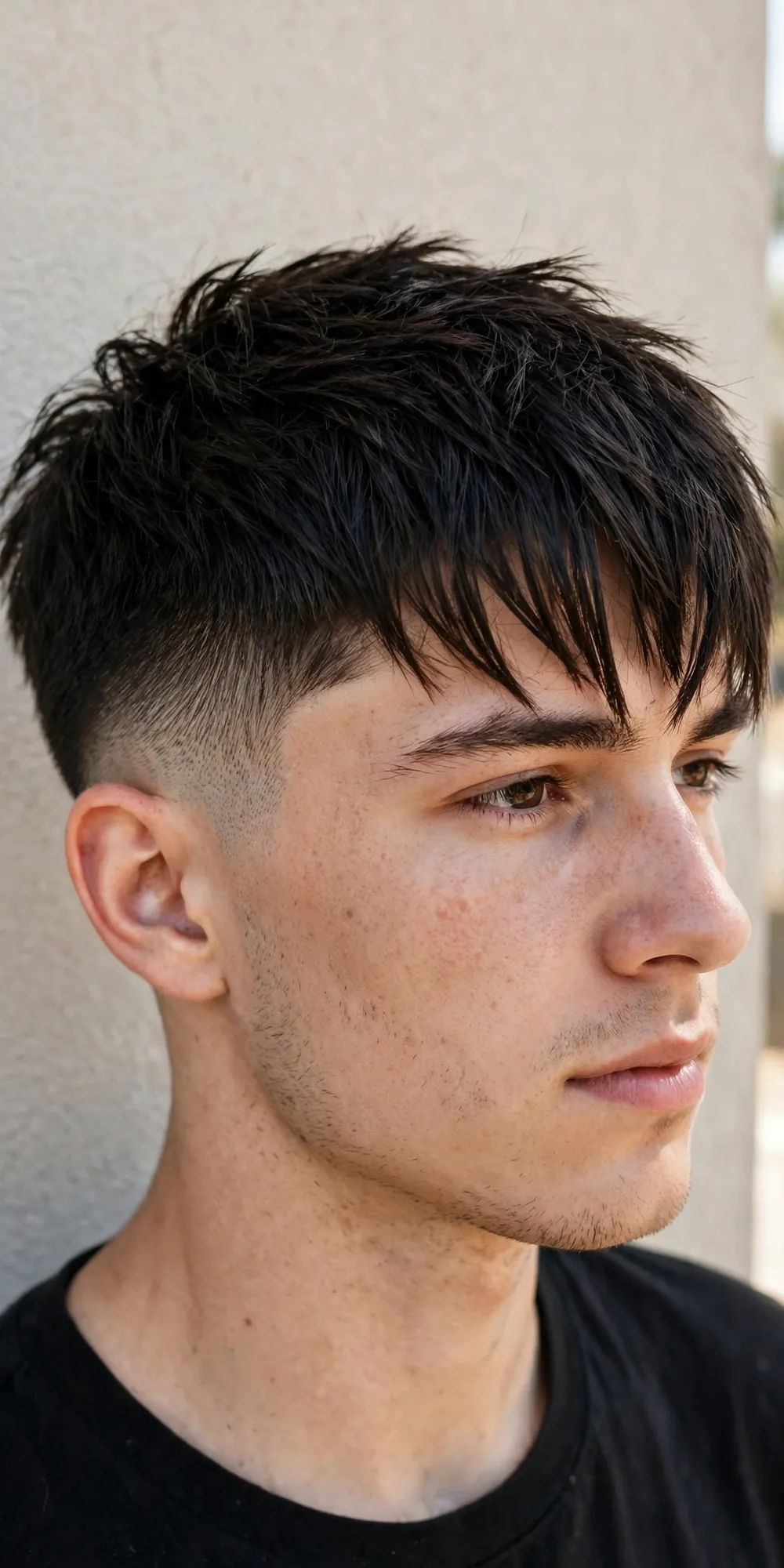
An angular fringe cut on a diagonal line adds a deliberate, fashion-forward edge to the front of the haircut. It suits men with strong brows and straight or slightly wavy hair, and it can visually shorten a longer face. Because the angle is the whole point of the style, it needs the front line re-trimmed regularly — ask for fringe touch-ups between full haircuts.
30. Long Hair with Low Taper Fade
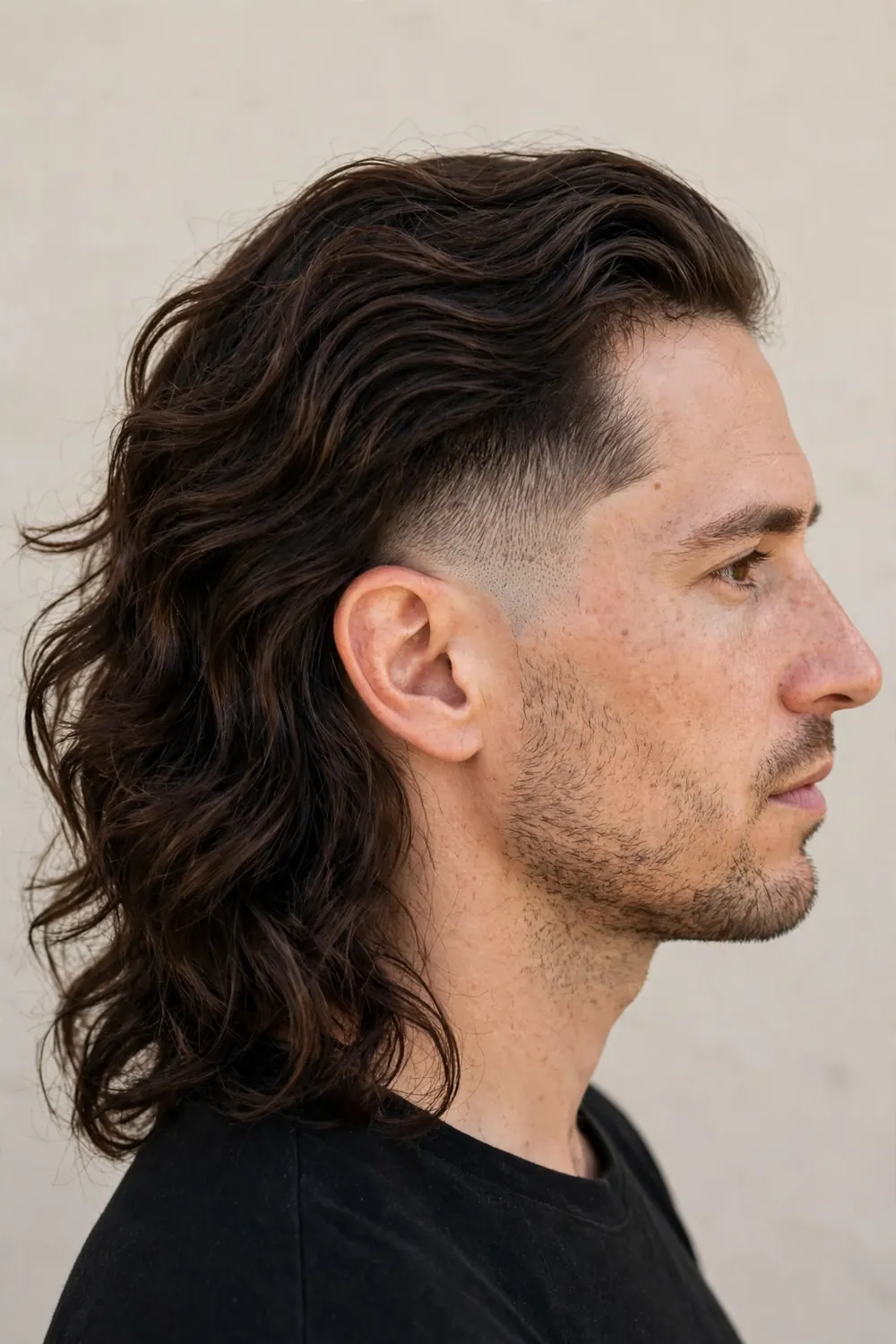
Yes, a taper works with genuinely long hair: the length flows on top and at the back while the taper keeps the area around the ears and neckline from turning into a shapeless curtain. It suits men growing their hair out or wearing it past the ears who still want barbered edges. Condition the lengths regularly, because long hair with a fresh taper only looks good when the ends are healthy, not split.
31. Comb Over with Low Taper Fade

Hair swept across from a natural side part gives a neat, mature result that pairs perfectly with the softness of a low taper. It is also a practical option for early thinning at the crown or temples, since the sweep adds light coverage without looking like it is hiding anything. Keep the product light and matte — a shiny, stiff comb over reads dated very quickly.
32. Short Blonde Waves with Low Taper Fade
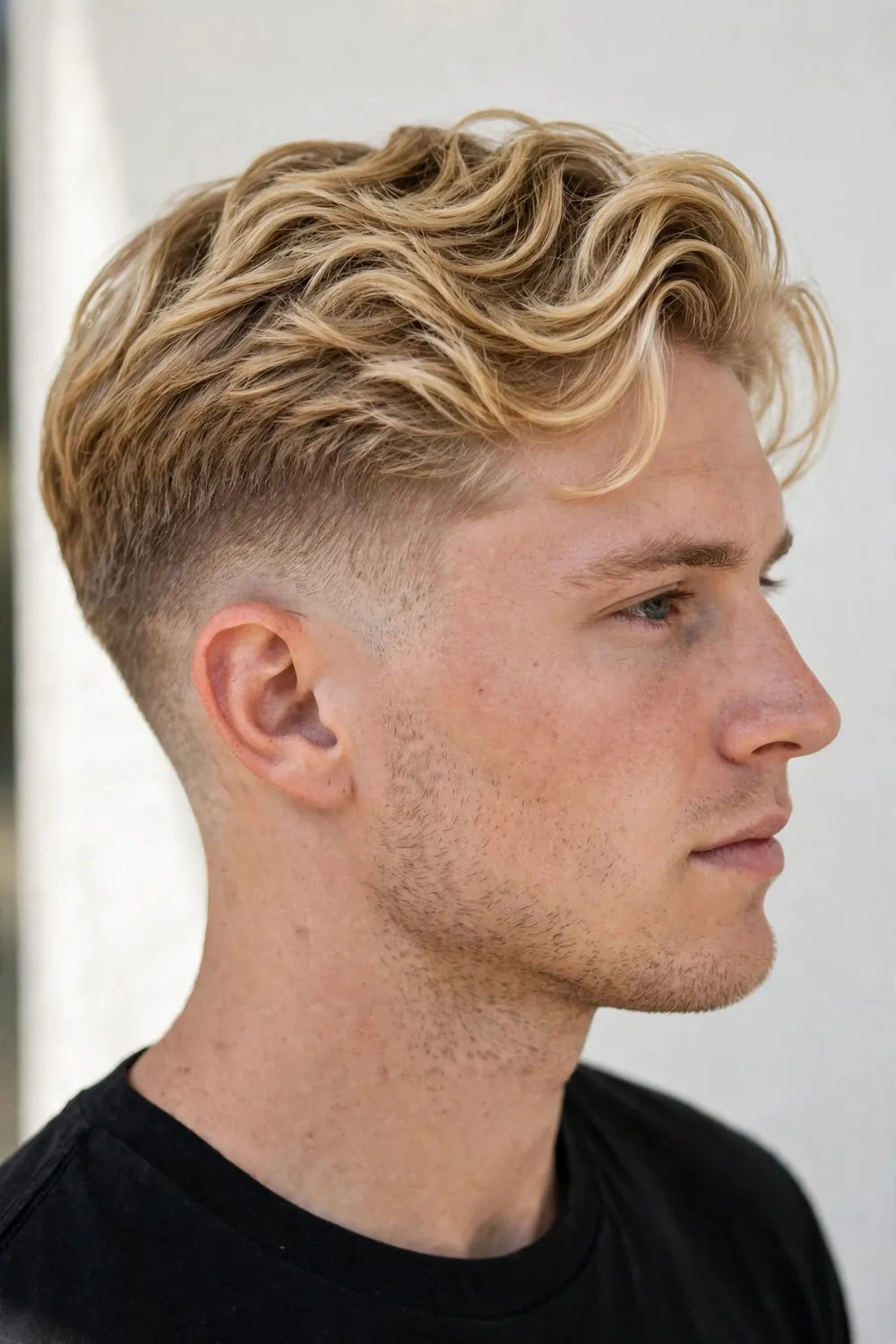
Light waves on top show off blonde tones and natural highlights better than any other length, and the tapered sides stop the colour from looking grown-out. This suits naturally blonde or lightened hair with a soft wave. If your blonde is dyed, use a purple shampoo once a week to stop brassiness, and tell your barber you are growing the colour out evenly so they blend the taper accordingly.
33. Low Temple Taper Fade
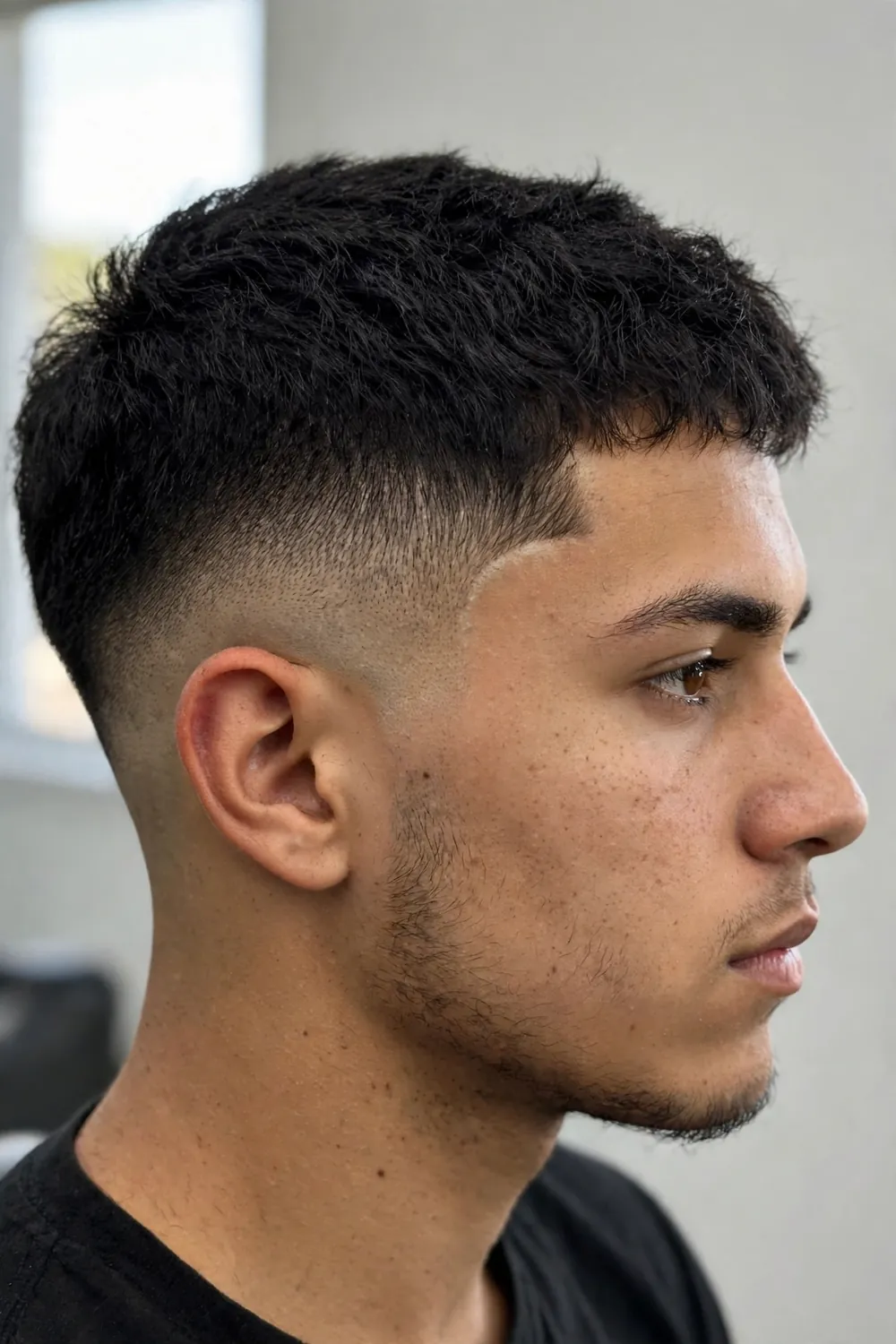
The temple taper is the most minimal version of all: the blend happens only at the temples and the very bottom of the neckline, leaving the sides almost untouched. It is perfect for men who like their hair fuller at the sides or who are easing into fades for the first time. Because so little hair is removed, it also grows out almost invisibly — the lowest-maintenance fade that exists.
34. Low Taper Fade with Beard
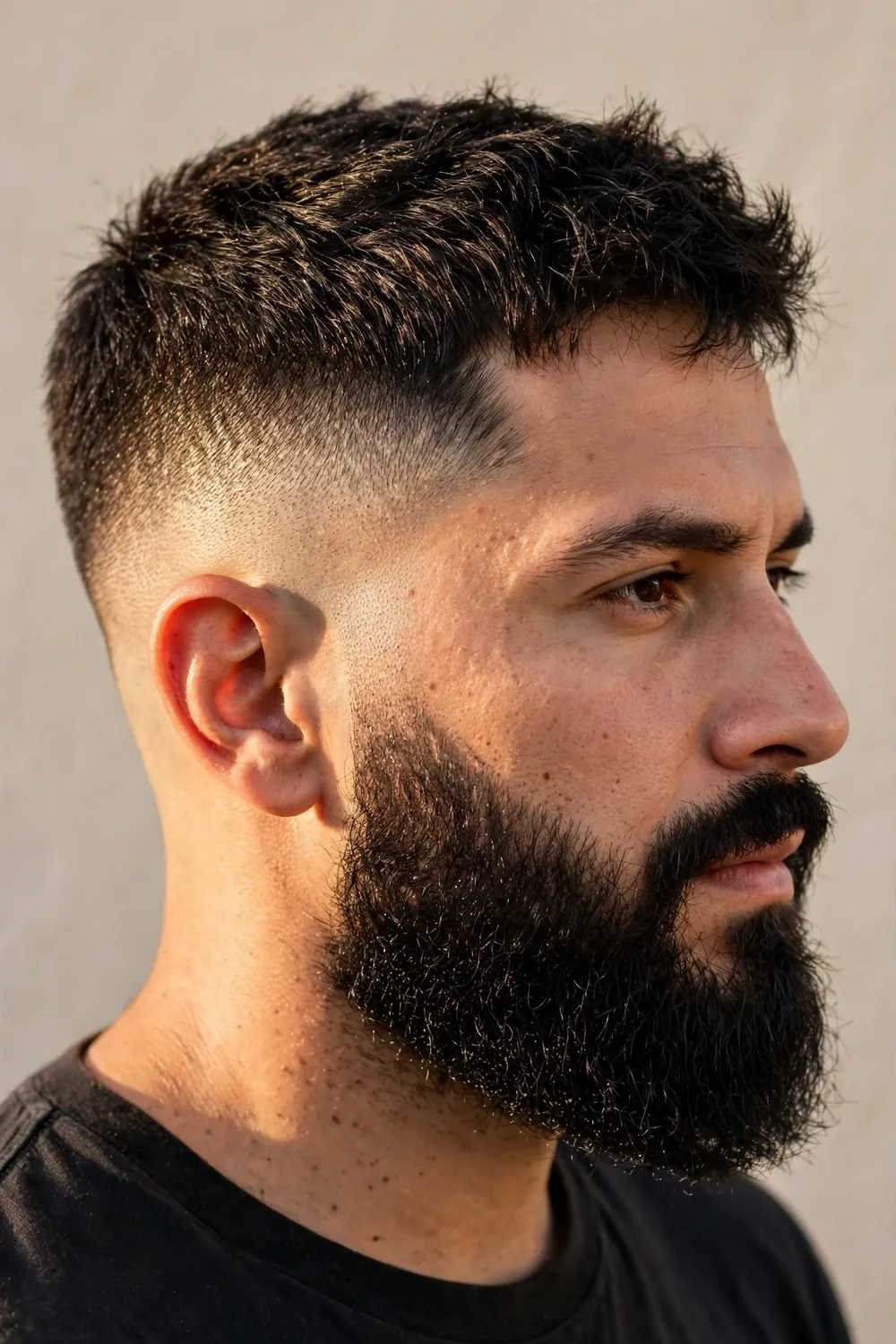
When the taper blends straight into the sideburns and beard, the whole head reads as one connected, deliberate style. It suits men with a medium to full beard and any top length, and it balances strong facial hair so the haircut does not look top-heavy. Ask your barber to blend the sideburn transition rather than cutting a hard line — that small gradient is what separates a good hair-and-beard combo from two separate cuts.
35. Modern Pompadour with Low Taper Fade
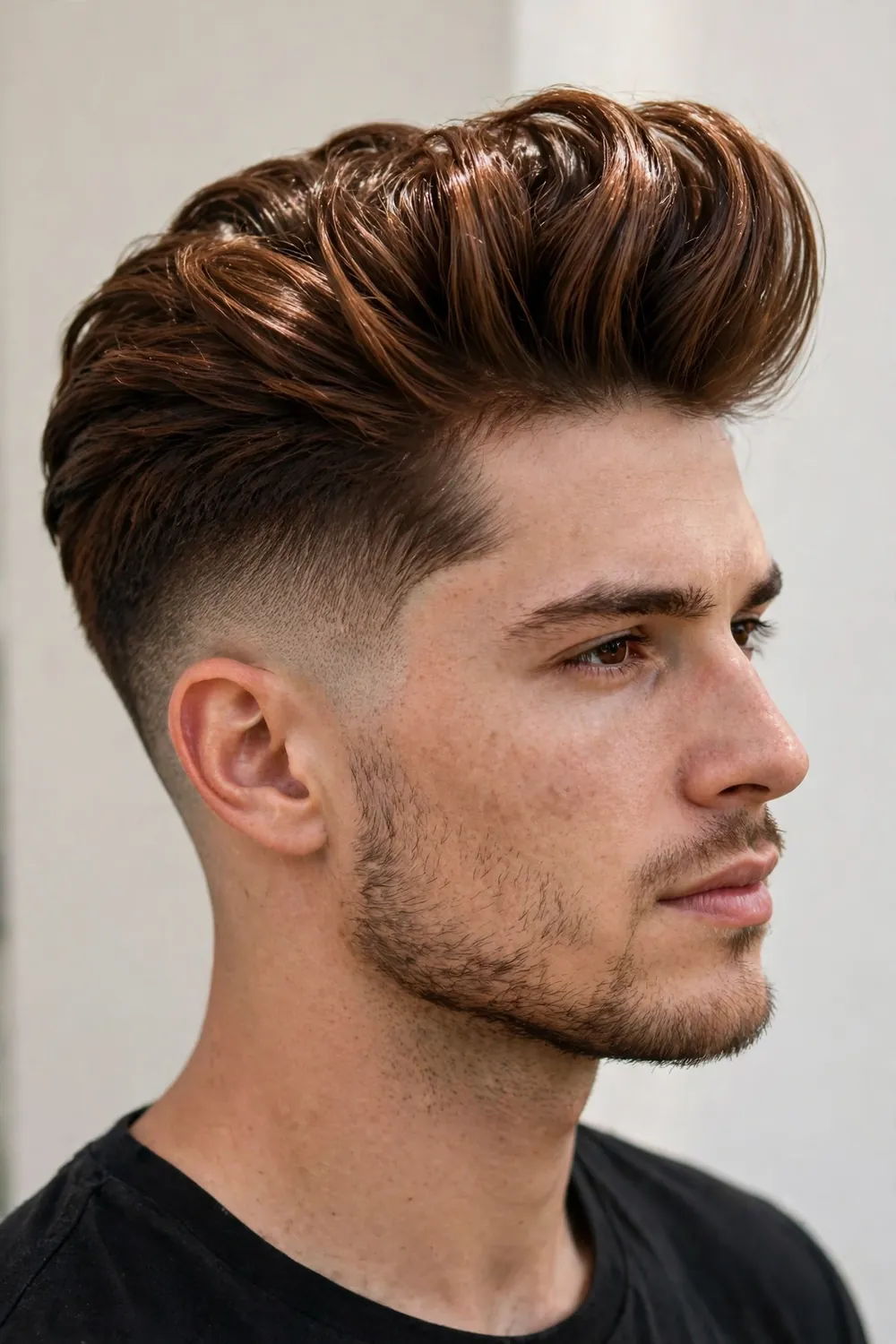
The modern pompadour rolls the front up and back into a soft wave of volume, and keeping the fade low lets the pomp stay the star. It suits oval and square faces and straight or wavy hair with at least four inches on top. Blow-dry the front upward with a round brush before applying pomade; trying to build pompadour height with product alone never lasts past lunchtime.
36. Low Taper Fade with 360 Waves
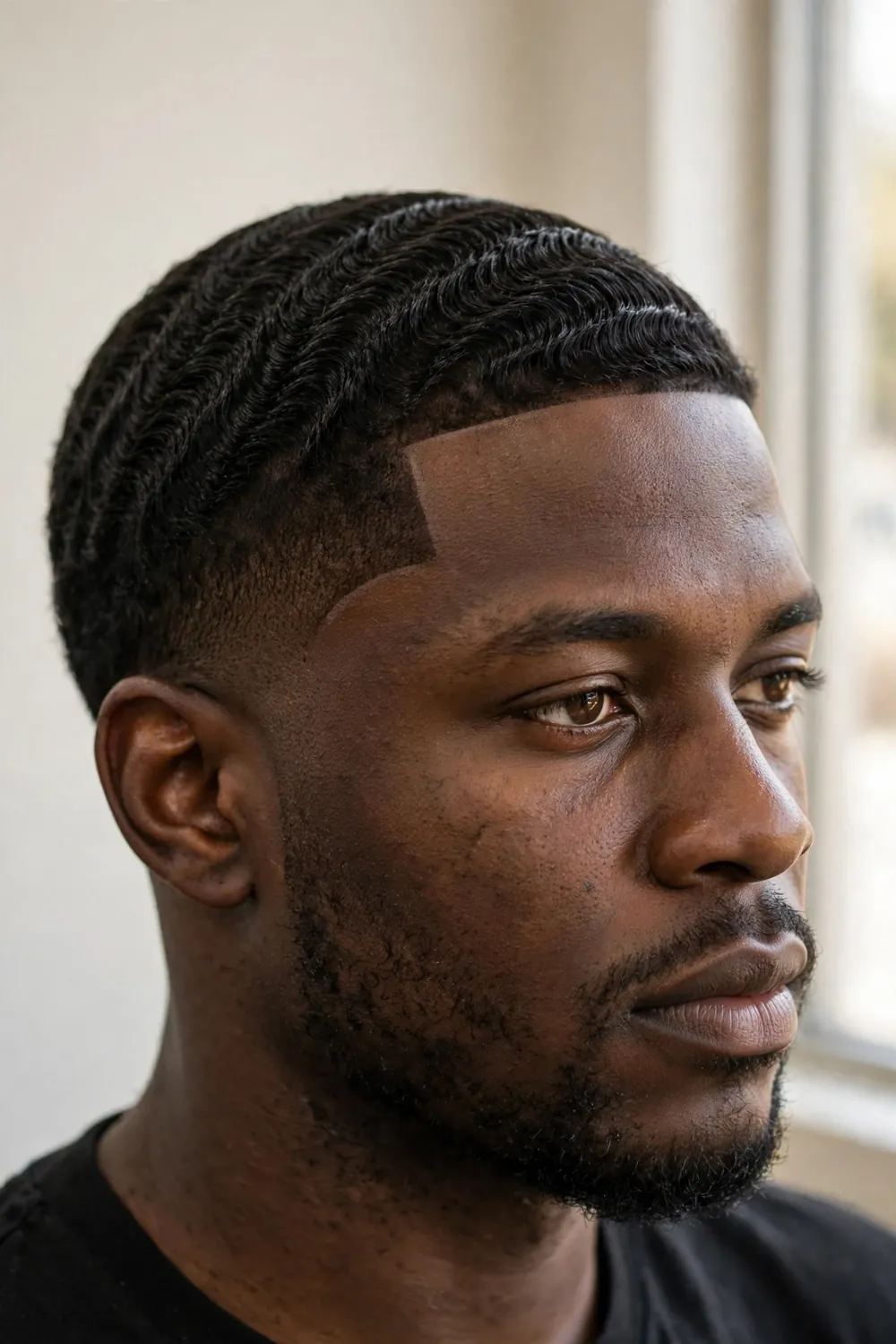
A taper is the natural partner for 360 waves because it cleans the edges without cutting into the wave pattern on the crown. The low placement keeps the blend below where the waves form, so the ripples stay unbroken all the way around. Keep brushing daily and wear a durag at night — waves are trained, not cut, and the taper only frames the work you put in.
37. Side Part with Low Taper Fade
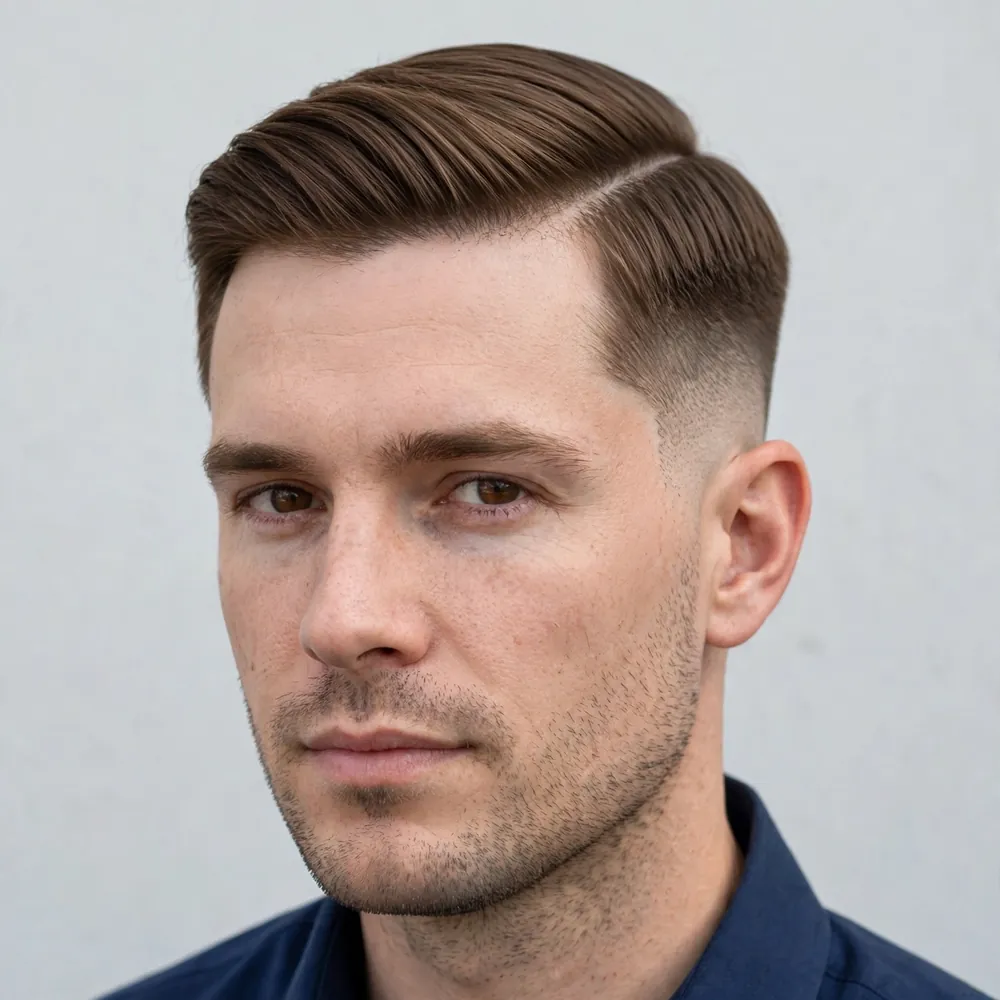
A defined natural part with the hair combed to each side is the most office-friendly style on this list, and the low taper keeps it fresh rather than severe. It works on straight and wavy hair and on men of any age. Find your part by combing wet hair straight back and pushing it slightly forward — the hair will split at its natural parting point, which is where your barber should set it.
38. Low Taper Fade for a Receding Hairline

This version keeps the top textured and slightly forward, with no high, tight fade pulling attention to the temples. A low taper is genuinely one of the better fades for a receding hairline because it does not expose the corners the way a skin fade does. Avoid slicking the top straight back, choose matte products over shiny ones, and keep the front textured — shine and swept-back styling both emphasise recession.
39. Caesar Cut with Low Taper Fade
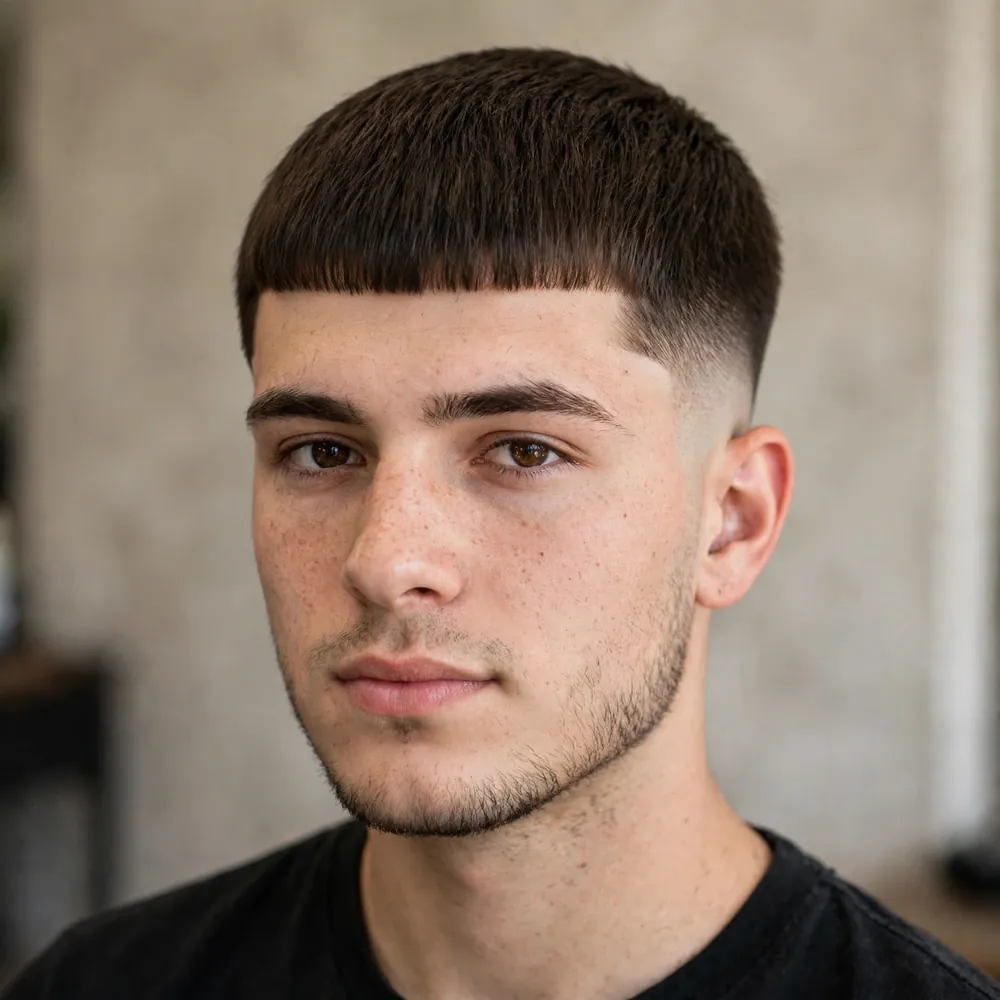
The Caesar keeps everything short and uniform with a straight, horizontal fringe pushed forward. It is a strong choice for men with straight or thinning hair, busy schedules, or smaller foreheads, and it grows out very evenly. Style it by pushing the top forward with a tiny amount of matte paste; the whole routine takes under a minute.
40. Low Taper Fade with Long Fringe
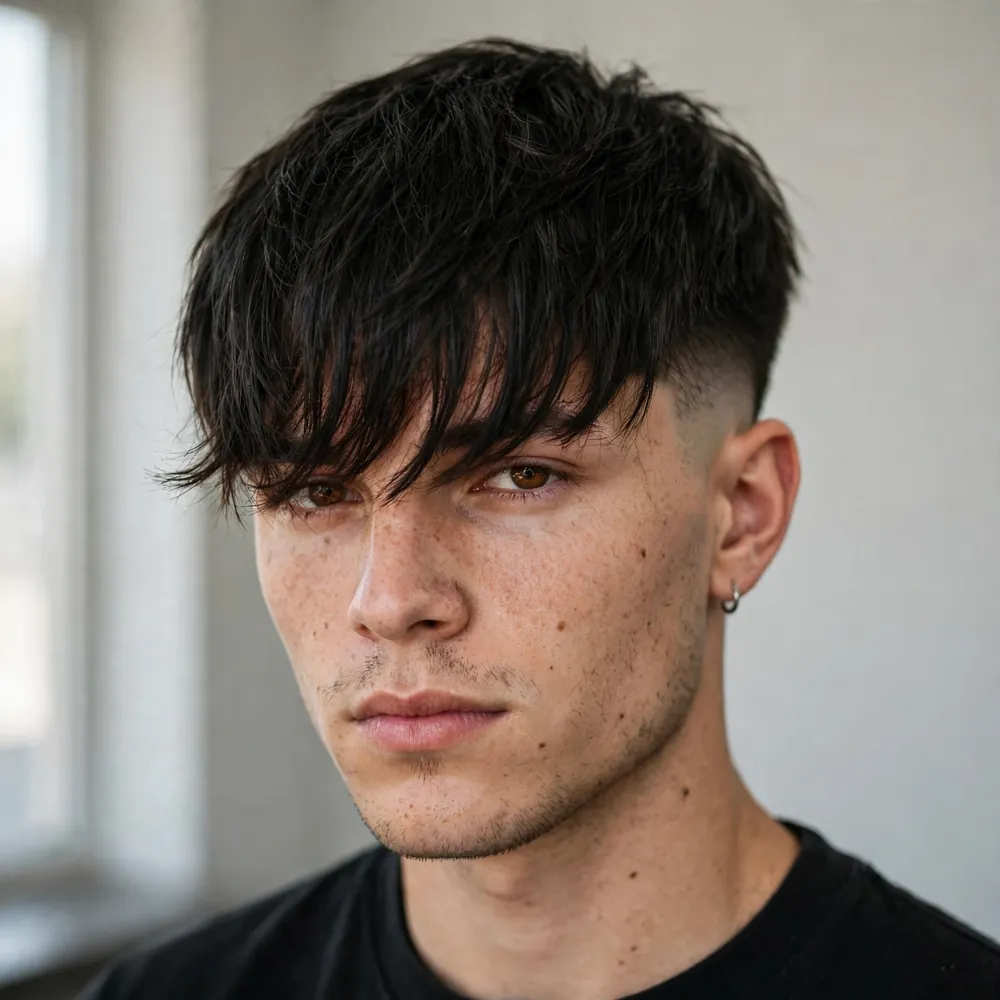
A fringe that falls to the eyebrows or beyond, contrasted with tight tapered edges, gives a moody, modern look popular in K-fashion and indie styles. It suits straight and wavy hair with enough length on top — usually five inches or more. Be ready for the upkeep: a long fringe needs its front line trimmed every two to three weeks and daily heat-free styling to keep it lying flat.
41. Mohawk with Low Taper Fade
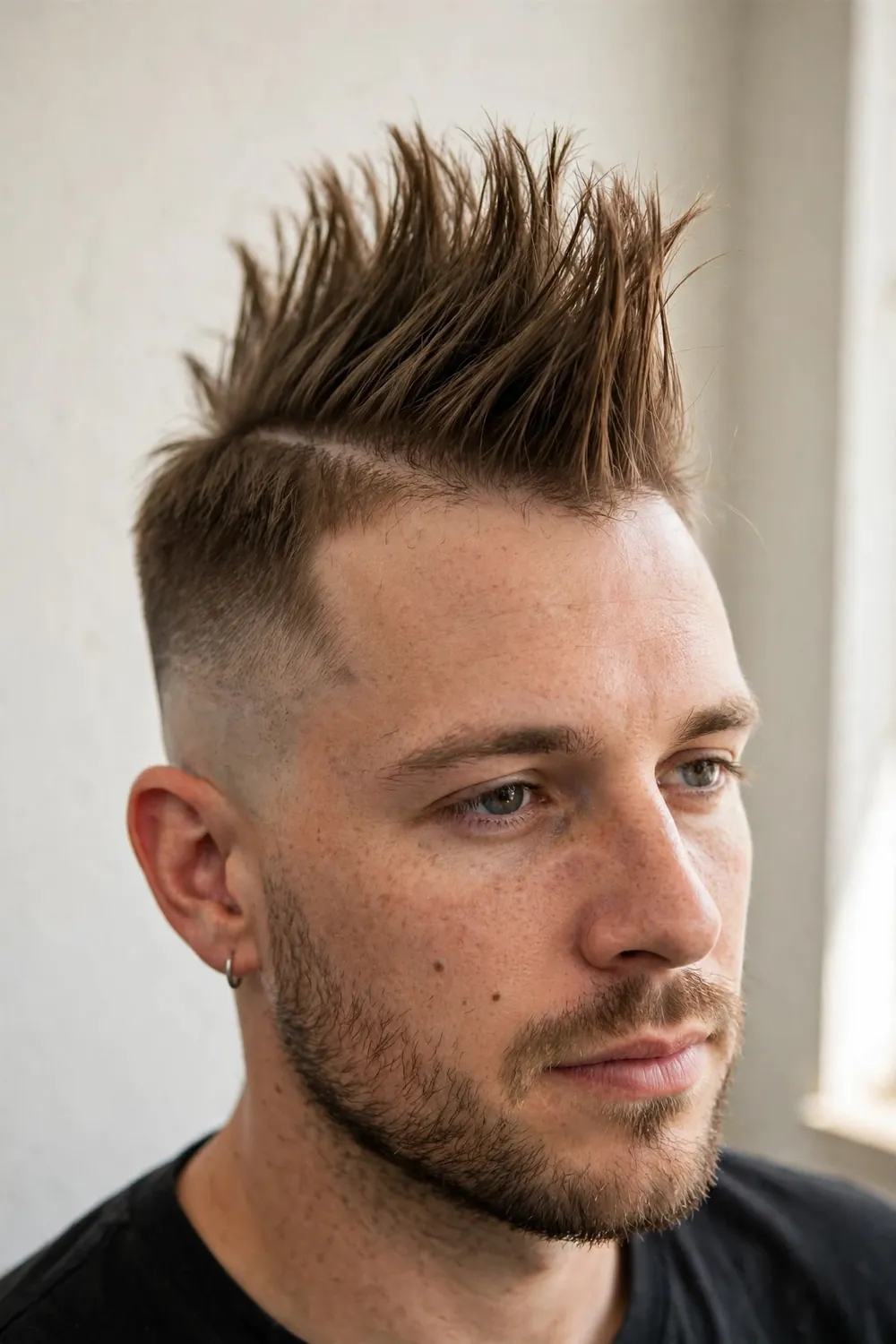
A true mohawk strip down the centre, but with the sides tapered instead of shaved to the skin, so the look stays wearable and can even be styled down. It suits thick hair and confident wearers, and it is a good middle step if you are not ready for a full skin-shaved mohawk. Agree the strip width with your barber before the first cut — narrower reads edgier, wider reads more like a faux hawk.
42. Low Taper Fade with V-Shaped Neckline
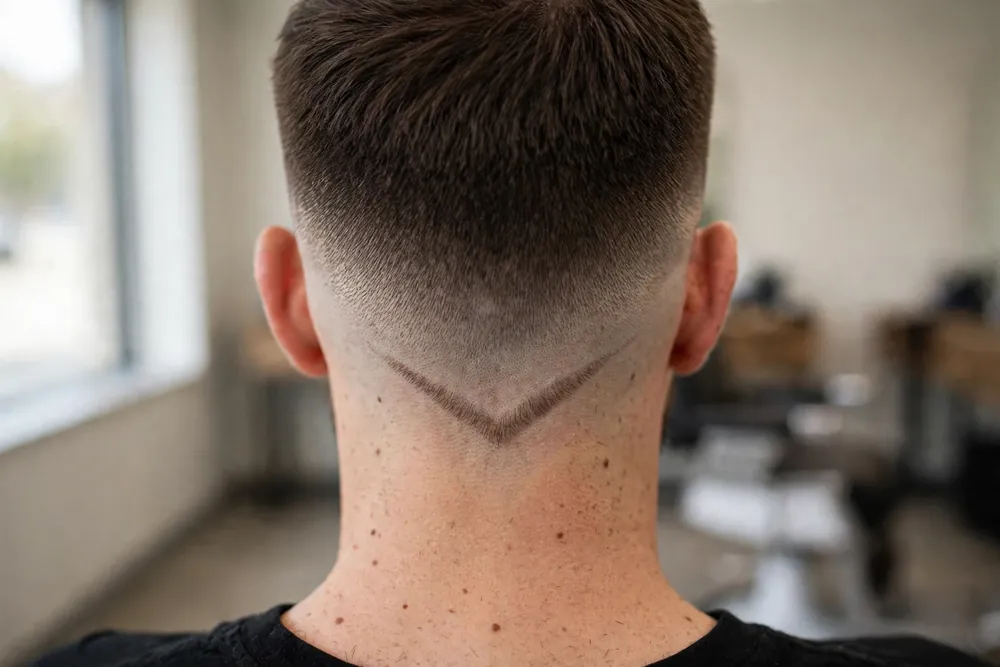
Instead of a natural or squared neckline, the back is finished into a subtle V point that follows the taper down the nape. It is a small detail most people only notice up close, but it gives the back of the haircut a designed finish. The V needs the neckline refreshed as it grows out, so it pairs best with men who already visit the barber every two to three weeks.
43. Disconnected Low Taper Fade
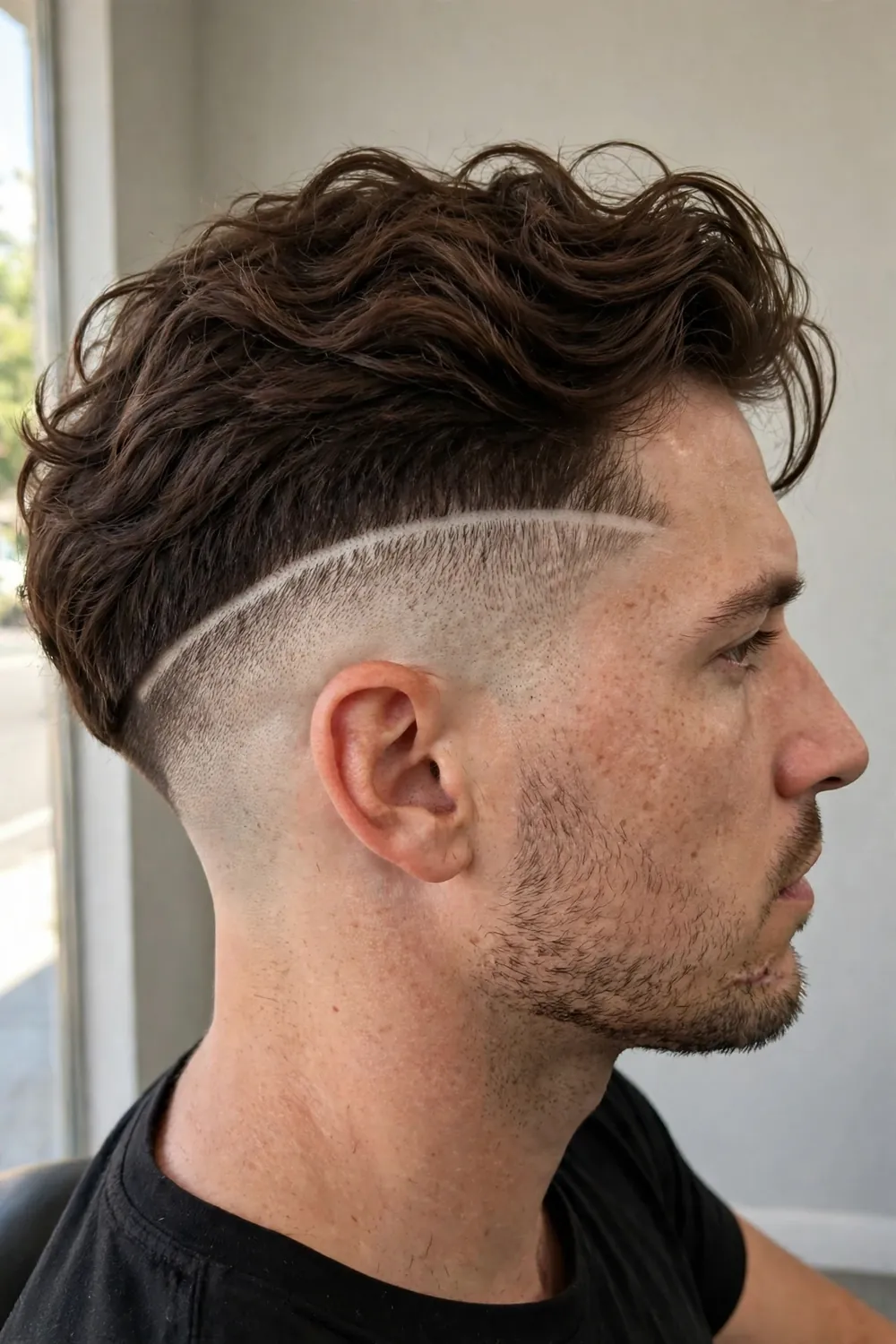
Here the top is left long enough to hang over the point where the taper starts, creating a visible shelf of contrast instead of a smooth blend. It suits men who like the drama of an undercut but want to keep the soft, low edges of a taper. This style only works if the top is genuinely long — with short hair there is nothing to disconnect, so grow the top out first.
44. Low Taper Fade with Double Line Design
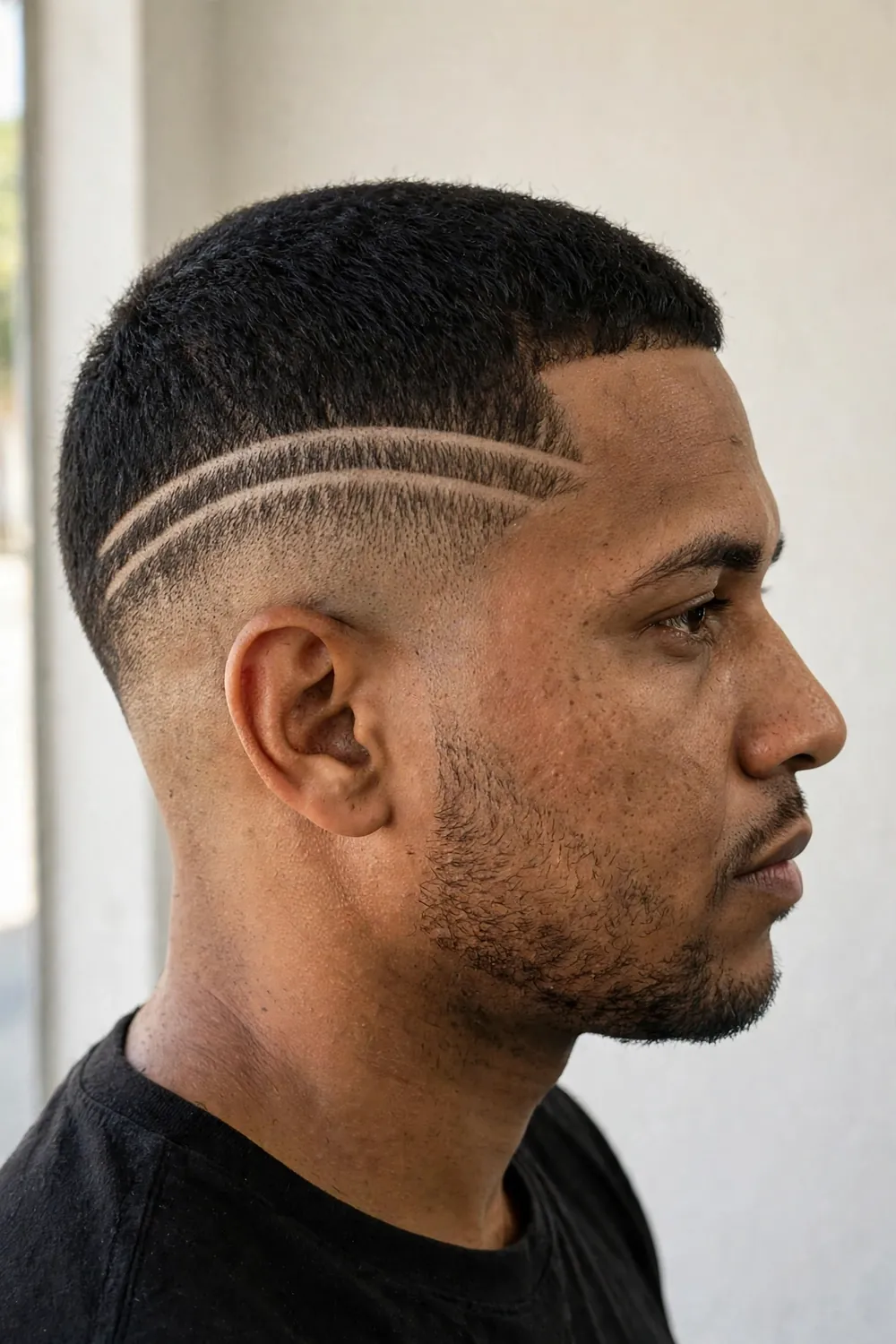
Two parallel shaved lines, usually placed above the ear or running into the taper, double the detail of a single-line design. It is a favourite with younger men and anyone who changes their hair design regularly. Keep both lines thin and evenly spaced — thick, uneven double lines are the version that looks like a mistake rather than a design.
45. Low Taper Fade for Teen Boys
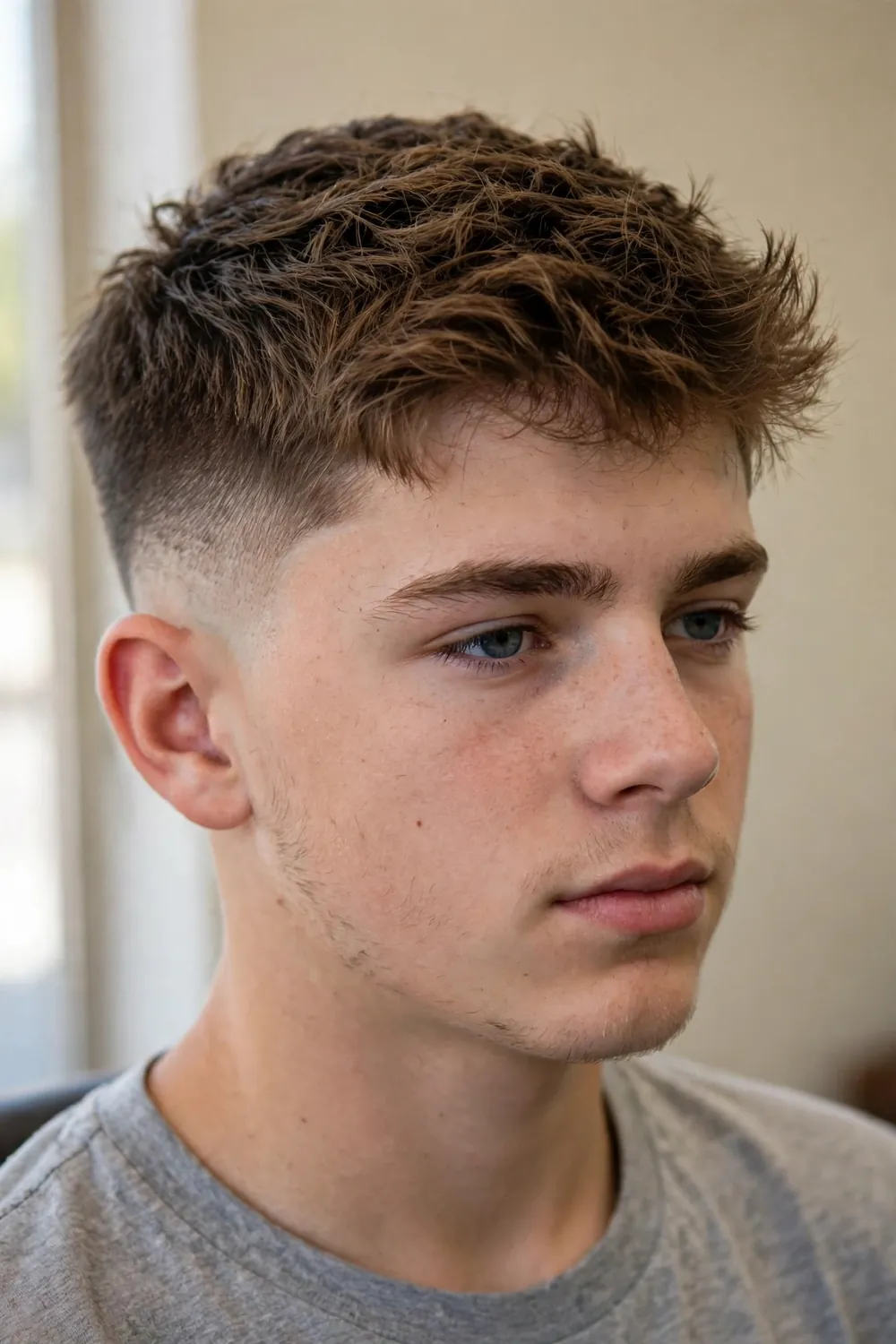
For teens, the low taper fade is the sweet spot: it looks current at school, passes stricter dress codes more easily than skin fades, and needs almost no styling on rushed mornings. A textured or slightly messy top is the most popular pairing. Parents should know it also grows out kindly, which stretches the time — and cost — between barber visits compared with sharper fades.
46. Middle Part Curtains with Low Taper Fade
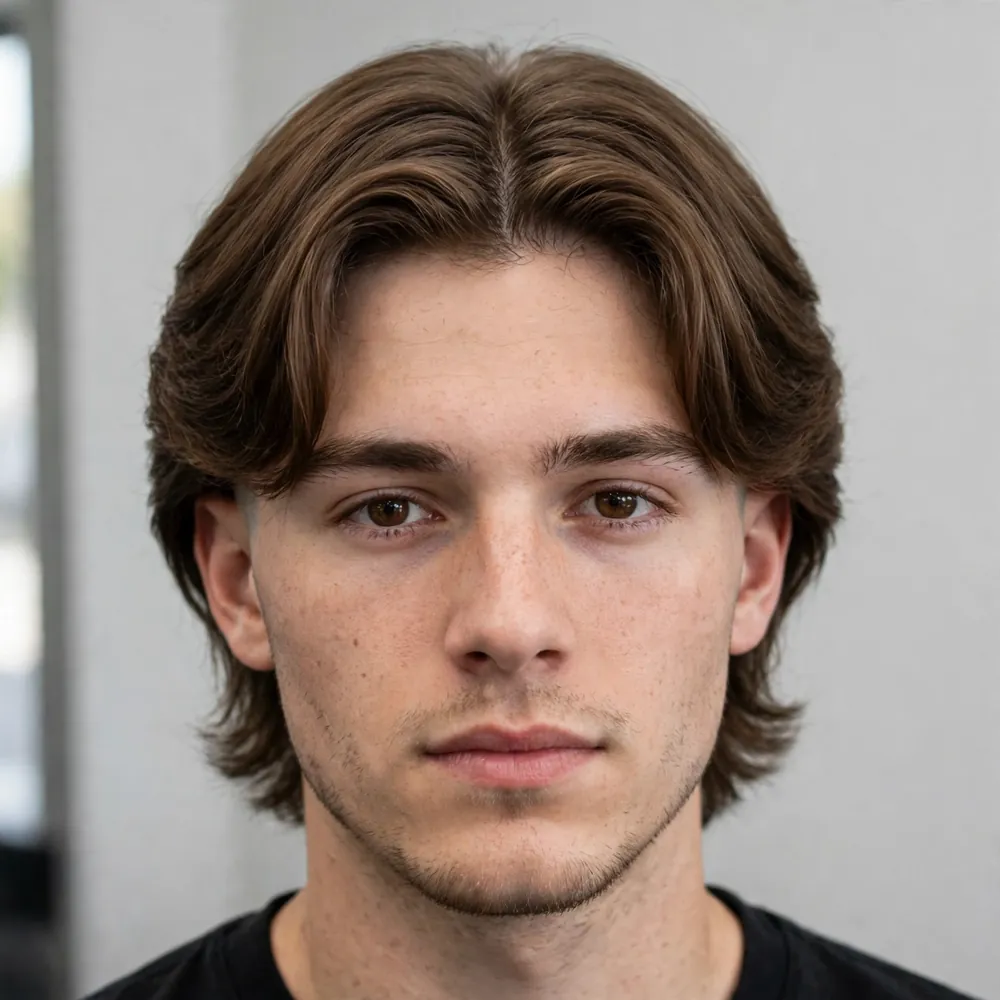
Curtains parted in the middle and falling to both sides bring a relaxed 90s feel, and the low taper stops the sides from bulking out as the curtains grow. It suits straight and wavy hair at medium length and oval or longer faces. Train the part by blow-drying the hair forward first, then parting and pushing each side back — this small trick stops curtains from falling flat against the forehead.
How to Ask Your Barber for a Low Taper Fade
Walking in and just saying “taper fade” can get you anything from a temple taper to a skin fade, depending on the shop. Say it like this instead:
- Name the fade clearly. Say “low taper fade” — all three words. Low tells the barber where it sits, taper tells them it is a gradual edge cleanup rather than a full fade up the sides.
- Give the guard lengths. A typical request is a #1 or #2 at the very bottom edge (around the sideburns and neckline) blended up into the natural length. If you want it even softer and more subtle, ask for a #2 as the shortest guard; if you want it a touch cleaner, a #0.5 or #1 at the edge is fine. Never ask for “skin” unless you actually want a skin fade.
- Describe the top separately. The taper only covers the edges, so decide the top on its own: how many inches to keep, and whether you want texture, a fringe, a sweep, a part or length left for a specific style from the list above.
- Bring a photo. A picture of the exact style from this guide removes all guesswork. Barbers genuinely prefer it — it shows the top length, the edge height and the finish in one glance.
- Agree the neckline and hairline. Say whether you want the neckline left natural, squared or tapered out, and whether you want a line up on the front hairline or your edges left natural. Natural edges suit the soft character of this cut.
- Ask about the grow-out. A good barber will tell you honestly how the cut will look in three weeks and when to come back for an edge cleanup versus a full cut. If they say the cleanup is quick and cheap, you have found the right pairing of cut and shop.
How to Style a Low Taper Fade at Home
The taper itself needs no styling — that is the point of it. Your only job is the top, and it takes two to five minutes:
- Start on towel-dried, slightly damp hair. Most styles set better when shaped damp and finished dry. Working on soaking-wet hair dilutes your product; working on bone-dry hair makes it fight you.
- Pre-style if your style needs volume. For brush ups, blowouts and pompadours, blow-dry first, directing the hair the way you want it to sit (up, back or forward) before any product goes in. For crops and fringes, you can skip the dryer entirely.
- Use less product than you think. Start with a pea-sized amount, warm it fully between your palms until it is invisible, and work it through from back to front so the front does not get overloaded.
- Match the product to your hair type. Straight hair: matte paste or clay for texture, light pomade for slick styles. Wavy hair: a light cream or low-hold pomade to control without crunch. Curly hair: leave-in conditioner plus curl cream, applied to damp hair — skip dry styling products altogether. Coily hair and waves: a moisturising cream or light pomade, plus your brush routine and a durag at night.
- Finish with your fingers, not a comb, unless you are wearing a slick back, comb over or side part. Finger-finishing keeps the texture that makes the top look modern.
- Keep the edges fresh between cuts. A careful pass with a trimmer around the neckline (or a cheap barber cleanup visit at week two or three) stretches the life of the whole haircut far more than restyling the top ever will.
Mistakes to Avoid
- Saying just “fade.” Without “low” and “taper,” many barbers will default to a mid skin fade, which is a completely different haircut with much faster, messier grow-out.
- Asking for the taper too high. If the blend climbs above the ears and into the sides, it is no longer a low taper — you lose the natural, full look that makes this cut forgiving.
- Cutting the top too short for the style. A comb over, curtains or a disconnect need real length. Decide the style first, then protect the length it requires, even if that means one awkward growing-out phase.
- Using heavy, shiny product on textured styles. Wet-look gels and greasy pomades collapse texture and make crops, fringes and spikes look dated. Matte and dry-finish products suit most low taper styles better.
- Skipping the photo. Describing “a bit off the sides, longer on top” gets interpreted differently in every barbershop. One saved photo on your phone fixes the whole conversation.
- Ignoring the neckline. Letting the back grow wild while the rest still looks fresh is the fastest way to make a good cut look overdue. Keep the neckline clean between appointments.
How Long Does a Low Taper Fade Last?
A low taper fade looks at its sharpest for the first two weeks, stays genuinely neat through week three, and still looks presentable in week four because the grow-out is so gradual. There is no harsh line to betray you — the tapered edges simply feather back into your natural hair.
Plan on a full haircut every three to four weeks to keep the shape and top length right. If you like a cleaner finish, a quick edge cleanup (neckline, around the ears, sideburns) at the two-week mark costs less and takes ten minutes, and it can stretch the full cut to week five. Men with very fast-growing or very thick hair usually settle on a three-week rhythm; men with slower growth and a temple taper can stretch to five weeks comfortably.
Low Taper Fade FAQs
What exactly is a low taper fade?
It is a haircut where only the lowest edges — around the sideburns, ears and neckline — are gradually blended shorter, while the sides and top keep most of their natural length. The fade never climbs high up the head, which is why it looks soft and grows out cleanly.
How much does a low taper fade cost?
Prices vary a lot by city and shop, but in most places it costs the same as a standard men’s haircut, since it is done in one normal appointment. Edge cleanups between full cuts usually cost noticeably less than the full haircut.
Does a low taper fade suit curly hair?
Yes — it is one of the best fades for curly hair. The taper tidies the outline and removes side bulk while leaving your curls full on top, and because so little length is taken from the sides, it works from loose waves (2C) through to tight coils (4C).
Does a low taper fade work for a round face?
Yes. Keep some height or volume on top (a brush up, textured crop or pompadour) to lengthen the face visually, and let the clean tapered edges slim the sides. Avoid very flat, wide tops, which can make a round face look rounder.
How often does a low taper fade need a cleanup?
Most men refresh the edges every two to three weeks and get the full cut every three to four weeks. It is one of the lowest-maintenance fades precisely because the grow-out stays tidy between visits.
What is the difference between a low taper fade and a low skin fade?
A low taper fade leaves a short layer of hair at the edges and blends upward, so the finish is soft and natural. A low skin fade is shaved down to the skin in the faded zone, looks sharper and higher-contrast, and needs more frequent cleanups because the regrowth shows quickly.
Final Word
The low taper fade haircut earns its popularity honestly: it is clean without being flashy, forgiving as it grows out, and flexible enough to carry everything from a buzz cut to curtains to 360 waves. Pick the version above that matches your hair type and how much effort you actually enjoy putting in each morning, take the photo to your barber, and ask for it by its full name. Get those three things right and this is one of the easiest great haircuts a man can wear.
Ready to compare fade heights? Our 47 Best Mid Fade Haircuts guide covers the bolder sibling of this cut. Browse our latest men’s haircut guides for more styles like these, and learn more about Hair Groom and what we do.