


A wolf cut is a layered haircut that mixes a shaggy top with a longer, mullet-style back — and it works on far more hair types than most men expect. Top 3 picks: the Wavy Curtain Wolf Cut is the best all-rounder, the Sleek Korean Wolf Cut is the cleanest everyday version, and the Shaggy Curly Wolf Cut is the best option if your hair curls naturally.
How to Match Wolf Cut Layers to Your Hair Texture
The right layering depends on what your hair does naturally — our guide to layered haircuts for men covers the basics, but here’s the short version for wolf cuts.
- Wavy hair: You’re in luck — waves do half the styling for you. Ask for longer layers through the back so the natural bend creates the shape, and keep the fringe light so it falls into place rather than sitting flat.
- Straight hair: This is where layering does the heavy lifting. Shorter, choppier layers on top add the movement straight hair lacks, and a texture spray or matte paste keeps the ends from looking limp by midday.
- Curly hair: Go longer on top and let the curls set the silhouette. Heavy layering on the crown stops the cut from puffing out into a triangle, while the wispy neck keeps the back from looking bulky.
- Thick vs fine hair: Thick hair needs thinning and deep layering to stop the wolf cut turning into a helmet. Fine hair needs the opposite — shorter, stacked layers that build volume instead of removing it.
33 Best Wolf Cut Hairstyles for Men
1. Wavy Curtain Wolf Cut
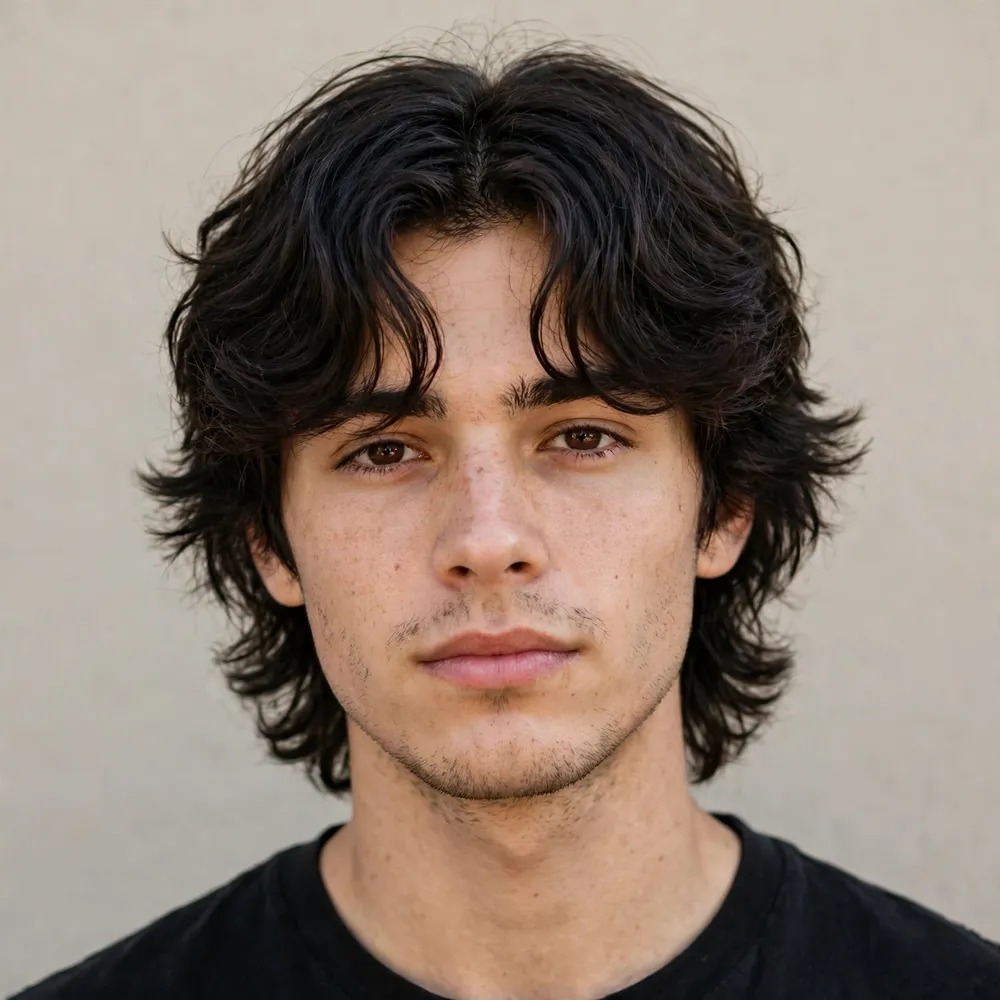
This is the wolf cut most men picture first. Dark, wavy hair falls forward into a curtain fringe while longer layers sit at the ears and neck, so it looks deliberate, not styled. It suits natural waves best, and it flatters oval, square and oblong faces because the fringe breaks up the forehead while the length softens the jaw. Ask your barber for a centre-parted curtain fringe, wavy layers that start at cheekbone level, and a tapered — not blunt — nape. Finish with a pea-sized amount of sea salt cream worked through damp hair, then let it air dry. Maintenance is easy: trim every six to eight weeks to keep the fringe out of your eyes, and on lazy days you can genuinely just get up and go.
2. Medium Shaggy Wolf Cut

The medium shaggy wolf cut is the one to pick when you want visible layers but still need to look tidy at work. The top stays full and layered, the ends behind the ear turn wispy and choppy, and a swept fringe keeps the whole thing from reading as a mullet. It works best on medium-density wavy or slightly curly hair, and it suits round and square faces because the height on top lengthens the face. Tell your barber you want a shaggy layered top with point-cut ends, a swept fringe just above the brows, and the back left just past the collar. A matte clay gives it texture without shine. You’ll need a trim every five to seven weeks — the wispy ends lose their shape first.
3. Choppy Feathered Wolf Cut
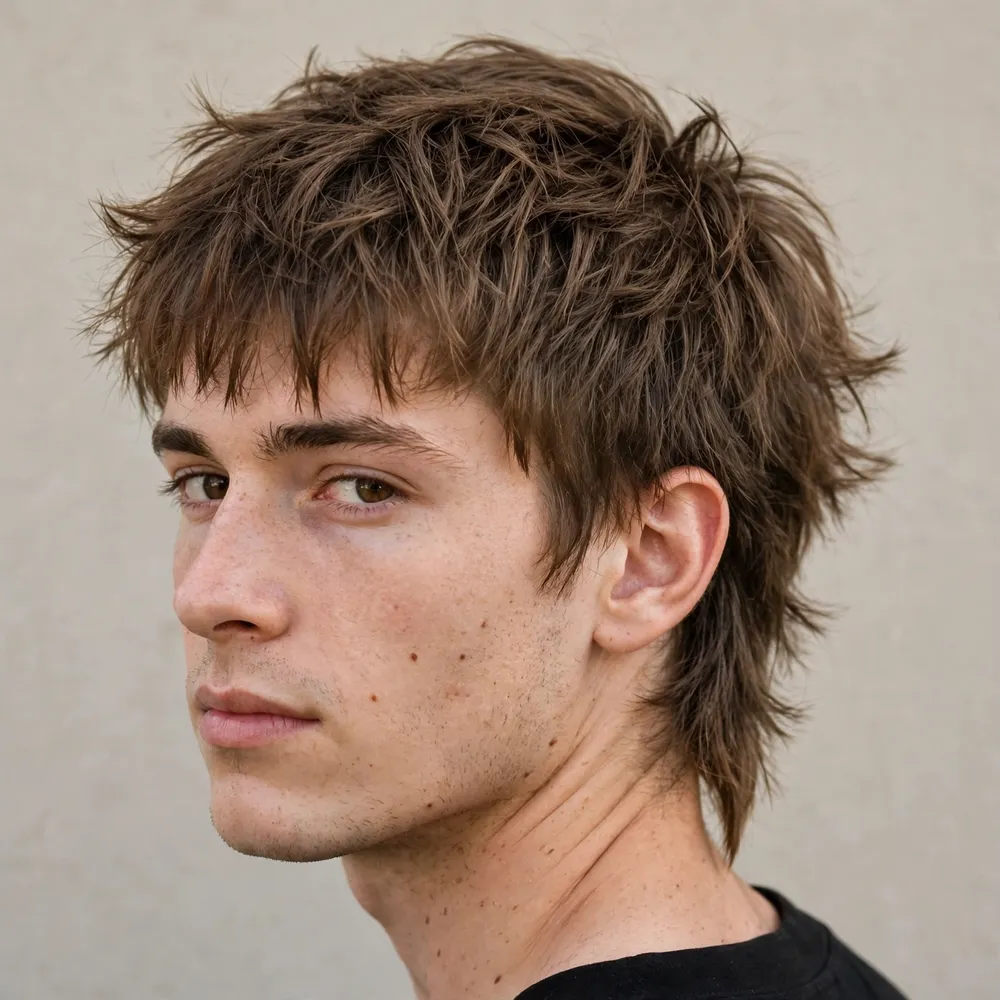
Choppy feathered layers are the answer for straight hair that usually lies flat and does nothing. Uneven, feathered layers lift the crown and give the hair somewhere to go, while a textured fringe and a pointed nape keep the silhouette wolf-like rather than bowl-like. This one suits straight to slightly wavy hair and works well on oval and heart-shaped faces, since the fringe softens a wide forehead. Ask for heavily point-cut layers through the top and sides, a textured fringe, and a nape that’s tapered into a soft point — not squared off. Blow-dry the top forward with your fingers, then finish with texture spray. Expect a trim every four to six weeks, because choppy layers grow out unevenly faster than blunt ones.
4. Long Wolf Cut With Side Fringe

If you’ve already got length, this version makes the most of it. The back runs past the neck in long layers while a side-swept fringe keeps the front from feeling heavy, so the cut reads more rock star than unkempt. It suits thick wavy or straight hair that can hold weight without collapsing, and it flatters long and oval faces best — the side fringe adds width where a long face needs it. Ask your barber to keep the length but carve long layers from the crown down, with the fringe swept to your stronger side. A light leave-in cream stops the ends frizzing without weighing them down. Maintenance is mostly about the ends: a dusting trim every eight weeks, and a little patience while the layers settle in.
5. Soft Flowing Middle Part

The soft flowing middle part is the gentlest wolf cut on this list, and it’s the one that photographs best. A centre part lets smooth waves curtain the face on both sides, and the jaw-length tips flick out just enough to show the layers. It suits wavy hair with a bit of natural bend, and it works particularly well on oval and diamond faces because the symmetry frames the cheekbones. Ask for a centre part, face-framing layers starting at the cheekbones, and soft, flicked ends rather than anything choppy. A drop of hair oil on the ends keeps the flicks smooth. This is a low-effort cut day to day — air dry, a quick finger-comb, and you’re done — with a trim every seven weeks or so.
6. Tousled Fringe Wolf Cut
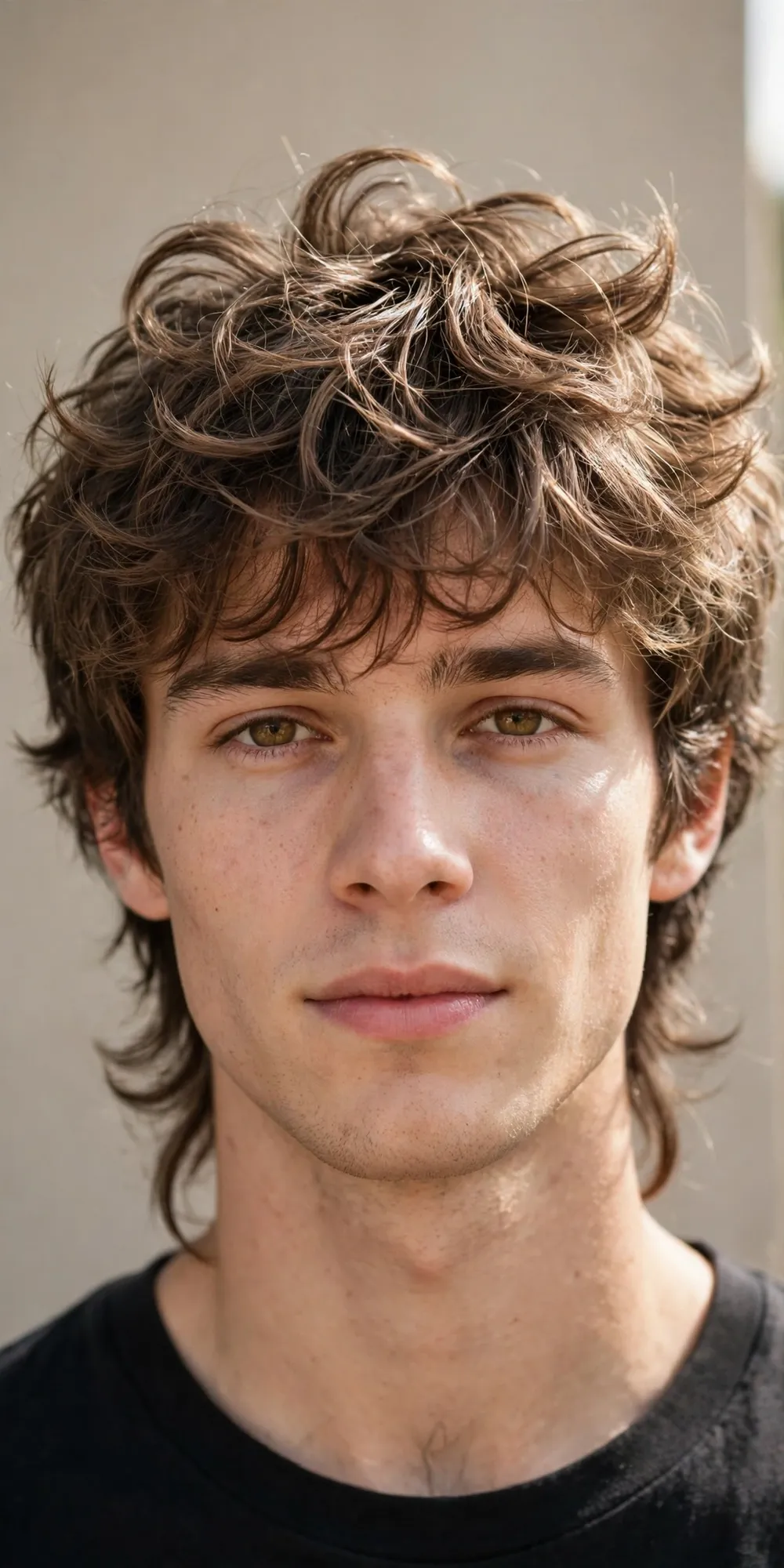
The tousled fringe wolf cut is for men who like their hair to look effortless — even though it took a little work. The top stays high and airy with a wavy texture, a wispy fringe drops over the brow, and a thin tail at the neck adds the wolf-cut edge. It suits wavy or fine hair that needs volume, and flatters square and round faces because the height and fringe add balance. Ask your barber for a layered, airy top with point-cut ends, a wispy fringe cut just above the eyebrows, and a feathered tail left long at the nape. Rough-dry with your fingers and finish with a light texture paste. Book a trim every five weeks — the fringe grows out fastest and starts poking your eyes.
7. Wolf Cut for Straight Hair

Straight hair can pull off a wolf cut — it needs the right layering to stop it looking like a grown-out bowl cut. This version uses a layered shape with a centre-parted brow fringe and a dry, rough finish, so the hair has texture even though it doesn’t curl. It suits straight, medium-density hair and works well on oval and rectangular faces, where the fringe shortens the forehead nicely. Tell your barber you want short layers on top that graduate longer towards the back, a brow-length fringe split in the middle, and a dry, point-cut finish. The styling secret is a matte texture powder or spray at the roots. Plan on a trim every five to six weeks; straight hair shows grown-out layers more obviously than wavy hair does.
8. Warm Brown Wolf Cut

Warm brown is the colour that makes wolf-cut layers readable — the lighter ends catch the light and each layer shows up instead of blending into one dark mass. The cut itself is classic: warm brown layered hair with lighter ends and a short side-swept fringe that keeps the front tidy. It suits wavy or straight hair, and it flatters warm skin tones and oval or square faces in particular. Ask your barber for layered length with a short side-swept fringe, and ask your colourist for a warm brown with subtly lighter ends — nothing stripey. A colour-protecting shampoo keeps the warmth from going brassy. Colour appointments every eight to ten weeks will keep the tone fresh, and the cut itself needs a trim on roughly the same schedule.
9. Short Fringe + Layered Nape
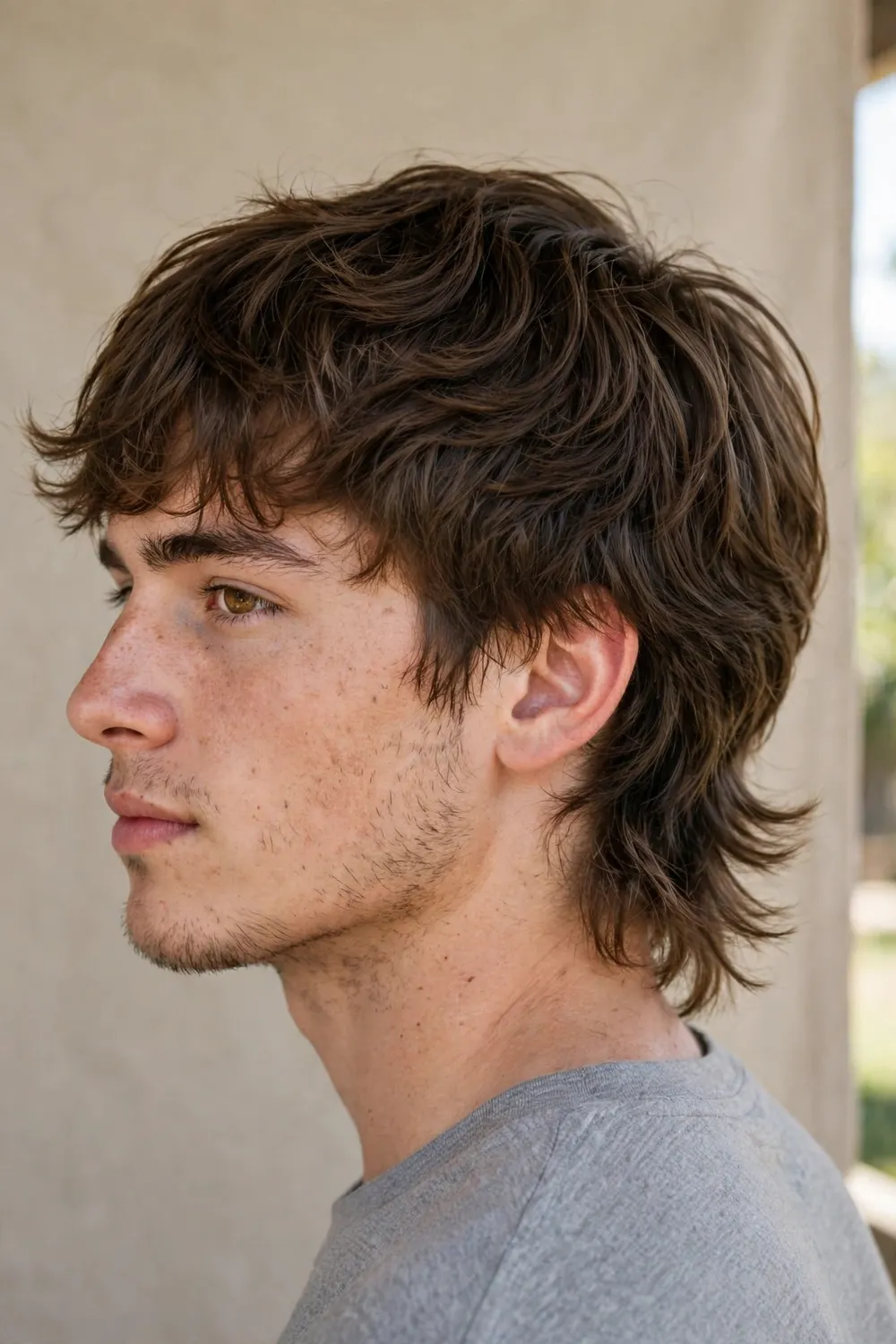
This one balances a short, neat front with a wilder back — a short brow fringe up top, a wavy crown flowing backwards, and a feathered tail at the nape. It’s a good middle ground if you like the wolf cut’s shape but aren’t ready for a long fringe. It suits wavy hair best, and it flatters round and heart-shaped faces because the short fringe opens up the face while the length at the back adds edge. Ask for a fringe cut just above the brows, wavy layers flowing back from the crown, and a feathered, pointed nape. A small amount of styling cream keeps the fringe in place without making it stiff. The fringe needs attention every four weeks — it’s short, so regrowth shows quickly.
10. Wolf Cut Back View
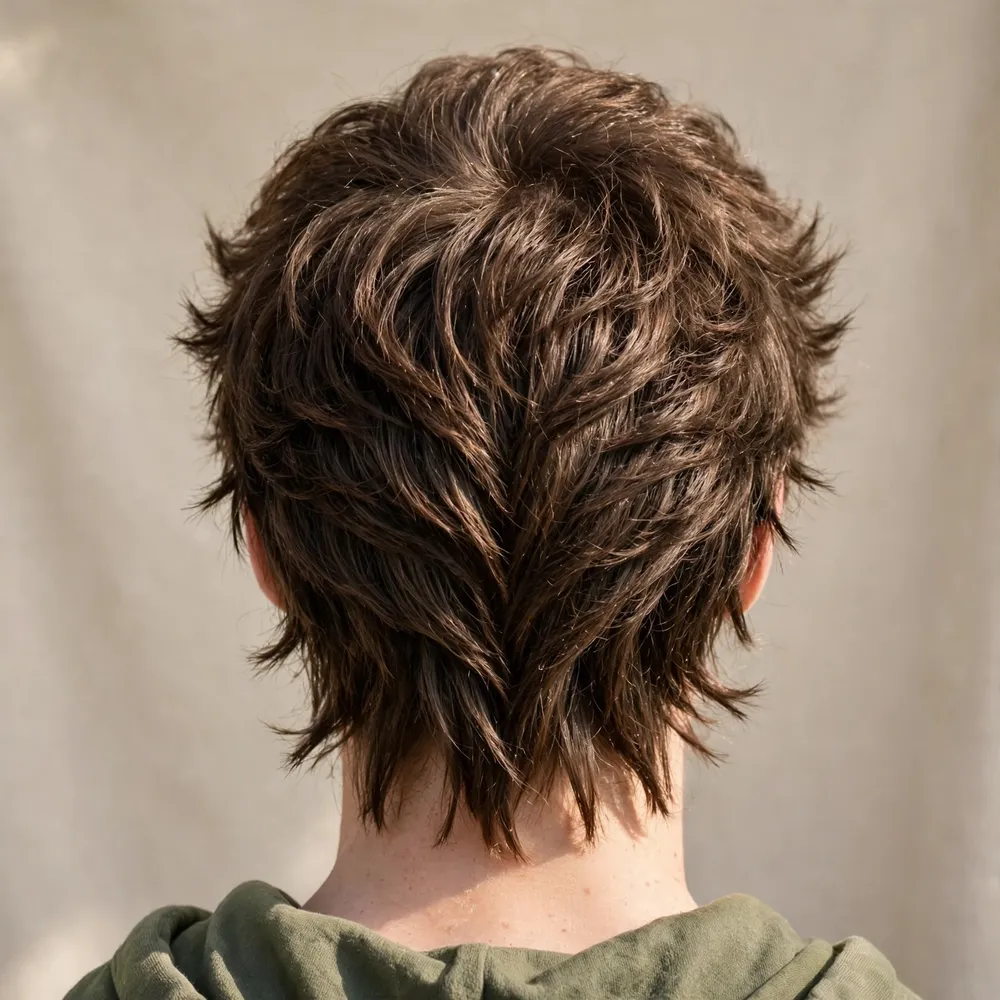
The back of a wolf cut matters more than most men realise — it’s what people see when you walk away. This version shows a rounded, full crown with V-shaped layers stepping down to pointed, uneven ends, which is the shape your barber should be building towards. It suits wavy and thick hair that can hold the layered shape, and works with any face shape — the back view is about silhouette, not features. Ask your barber to show you the back in a mirror before you leave — you want a clear V shape, not a straight-across cut. Styling is simple: a little cream through the ends stops them flicking outwards. Get the back re-shaped every six weeks — the layers there grow into a blunt line fastest.
11. Sleek Modern Wolf Cut

The sleek modern wolf cut strips away the shag and keeps the shape — straight black hair with a lifted crown and a long side-swept fringe. It’s the most office-friendly wolf cut here, and it has a similar clean feel to a Korean two block haircut, just with more length at the back. It suits straight, medium-to-thick hair and flatters oval and square faces, where the lifted crown adds height and the fringe softens the forehead. Ask your barber for a lifted, layered crown, a long fringe swept to one side, and a nape that tapers into soft points. Blow-dry the crown up and back, then finish with a light pomade for a soft shine. Trim every five weeks to keep the fringe from covering your eyes.
12. Face Framing Wolf Cut

If your goal is a cut that makes your face look its best, start here. A heavy curtain fringe opens in the middle, long face-framing layers run down both sides, and sharp tips at the neck keep the wolf-cut energy. It suits wavy or straight hair with enough density to frame the face properly, and it’s especially good on round and square faces because the long front layers slim and lengthen the face. Ask for a heavy curtain fringe parted in the middle, face-framing layers starting at the cheekbones, and pointed ends at the neck. A round brush and a quick blow-dry give the front layers their shape. You’ll need a trim every six weeks — the face-framing pieces lose their line first when they grow out.
13. Glossy Layered Wolf Cut

Shine is the whole point of this one. Smooth, glossy straight black hair with curtain pieces at the front and a soft tail at the back — the layers are there, but they read as polish rather than mess. It suits straight, healthy hair that already has natural shine, and it flatters oval and heart-shaped faces because the curtain pieces frame the cheekbones. Ask your barber for smooth, graduated layers, curtain pieces that sit at cheekbone level, and a soft, feathered tail. The finish comes from a shine serum or light oil on the mid-lengths and ends — a tiny amount goes a long way. Keep it looking this good with a trim every six weeks and a deep-conditioning treatment once a month.
14. Short Tapered Wolf Cut

The short tapered wolf cut is the starter version for men who want the shape without committing to long hair. The back sits above the collar, there’s height on top, and a brow fringe ties it together — the layered wolf silhouette in a cut that fits under a cap. It suits straight or wavy hair and works well on round and oval faces, where the height on top adds length. Ask for a tapered back ending above the collar, stacked layers on the crown for height, and a brow-length fringe. Style it with a matte paste, pushing the top up and forward. It’s the easiest wolf cut to maintain — a trim every four weeks keeps the taper sharp, and it grows out well if you go longer.
15. Messy, Wispy Wolf Cut

Messy and wispy is the wolf cut at its most relaxed — an airy black top with an off-centre part and ends that flick out around the jaw. Nothing is symmetrical, nothing is neat, and that’s exactly why it works. It suits fine to medium wavy hair that needs texture, and it flatters oval and long faces because the off-centre part and flicked ends add width. Ask your barber for wispy, point-cut layers throughout, an off-centre part, and ends left long enough to flick at the jaw. The styling is a handful of texture spray and a rough-dry — genuinely two minutes. The trade-off is upkeep: wispy layers go scruffy fast, so book a trim every four to five weeks to keep the mess intentional.
16. Wet Look Wolf Cut
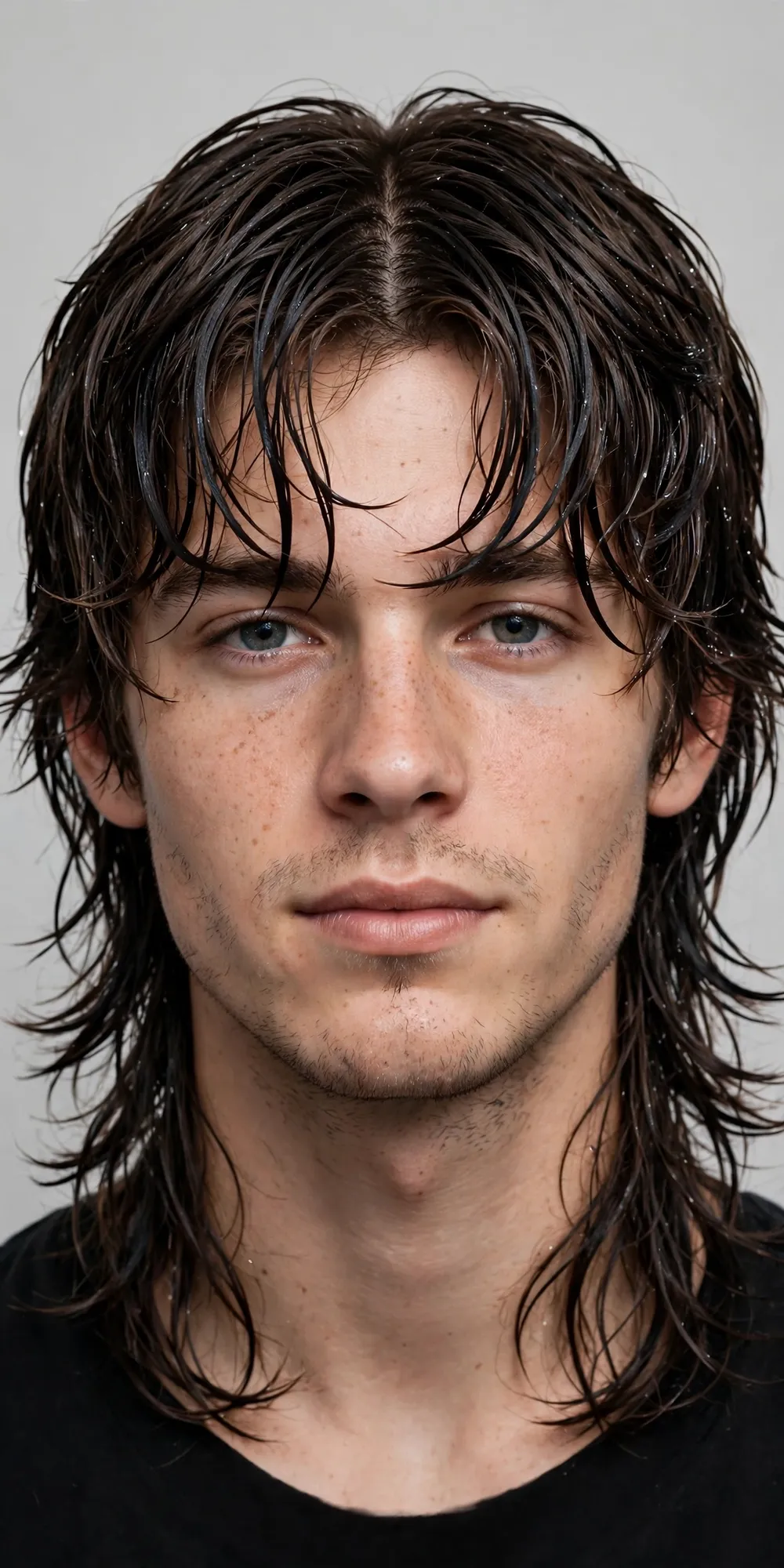
The wet look wolf cut is the boldest version here, and it only works if you commit to the finish. A middle part, long wavy strands with a slick shine, and flicked ends at the neck — it reads more editorial than everyday, which is the point. It suits wavy hair with enough length to slick back, and it flatters strong jawlines and oval faces because the slicked-back top puts your bone structure on display. Ask your barber for long layered length with a centre part and flicked neck ends. Style it with a wet-look gel or pomade combed through damp hair, and don’t touch it once it sets. Wash it out properly at night — product build-up is the main maintenance issue — and trim every six weeks.
17. Pointed Nape Wolf Cut

The pointed nape is the detail that separates a real wolf cut from a layered haircut with a long back. Stacked crown layers step down through the back to uneven, pointed ends at the nape, giving the cut its signature V shape from behind. It suits thick or wavy hair that can hold the stacked layers, and it works with any face shape since the drama is all at the back. Ask your barber specifically for stacked layers at the crown, a graduated back, and a pointed, uneven nape — bring a photo of the back view so there’s no misunderstanding. A dab of cream on the nape ends keeps the points defined. The nape grows out quickest, so a shape-up every five weeks keeps the point sharp.
18. Eye Length Fringe Wolf Cut

This one is all about the fringe. It sits long enough to brush over one eye, worn slightly off-centre so it never feels symmetrical or neat. The crown is stacked with short layers for lift, while the back reaches collar length in wispy, uneven ends. It suits straight to slightly wavy hair best, and works especially well on oval and long faces, where the fringe breaks up the length. Tell your barber you want the fringe left at eye length with point-cut ends, the crown layered short, and the back kept shaggy rather than blunt. A pea-sized amount of matte paste scrunched through the fringe keeps it in place without stiffness. Maintenance is honest: the fringe grows into your eyes fast, so plan a tidy-up every four weeks, or learn to trim a millimetre off the longest pieces yourself between visits.
19. Middle Part Wolf Cut
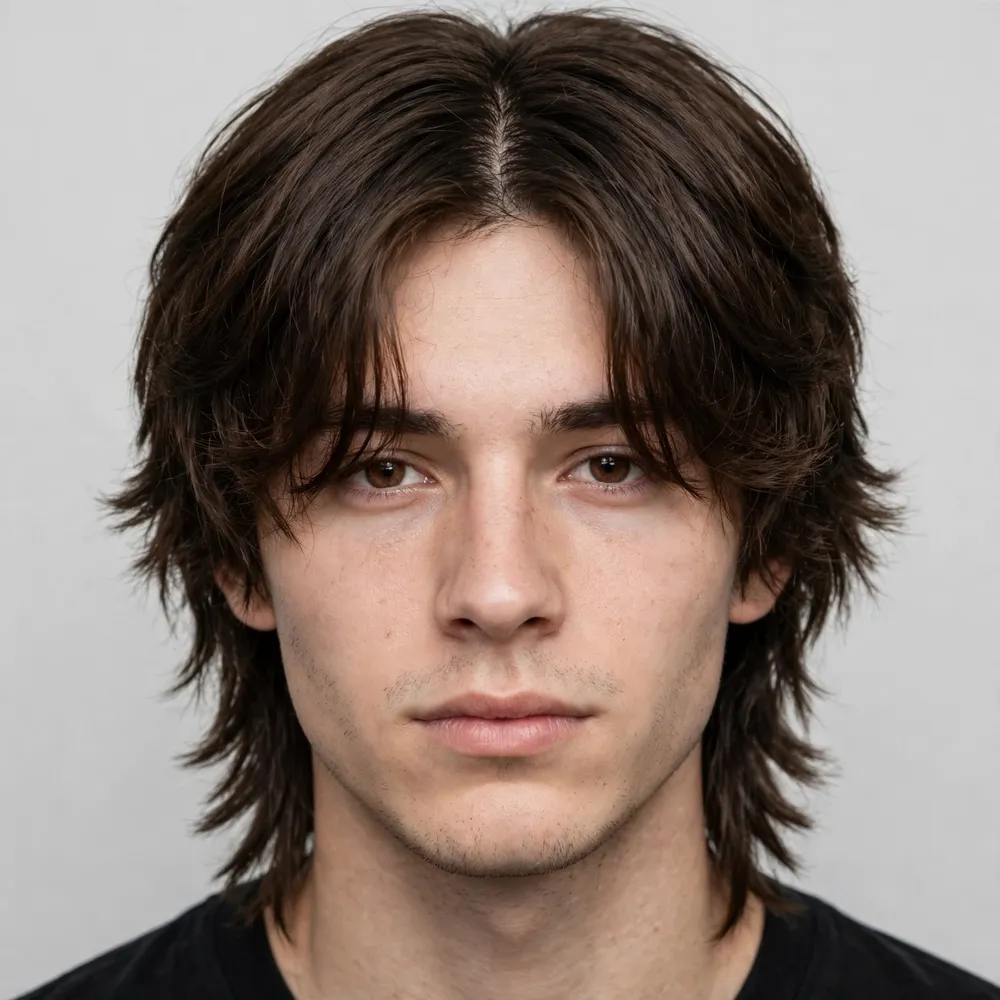
The middle part is what gives this wolf cut its calm, balanced look. Hair splits from the centre, with curtain pieces falling past the eyes on both sides and feathering down toward a pointed neck. It flatters wavy and straight hair, and it is one of the best versions for round faces, because the long front pieces slim the cheeks. Ask your barber for a centre-parted wolf cut with the fringe left long enough to reach the cheekbones and the back point-cut into a soft V. Blow-dry the front pieces forward and outward with a round brush, then finish with a light texture spray — you want movement, not crunch. It needs a little daily attention to keep the part sitting straight, but the grow-out is forgiving, since the layers just get longer and softer.
20. Shaggy Curly Wolf Cut
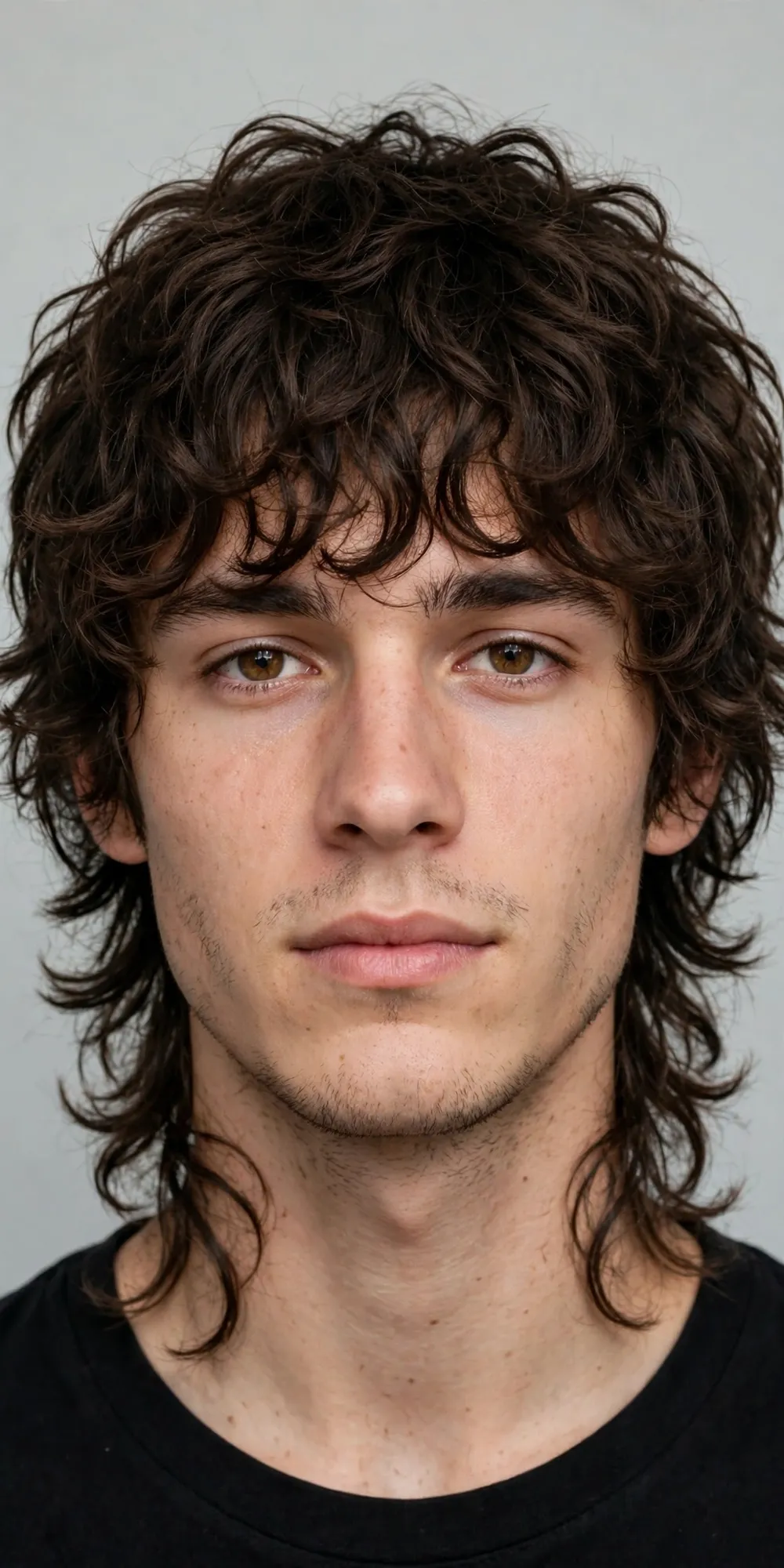
Curls and the wolf cut were made for each other, and this shaggy version proves it. Loose dark curls tumble over the forehead in a natural fringe, while wispy, thinned-out ends at the neck stop the shape from going triangular. It suits anyone with loose to medium curls, and it softens square and angular faces nicely. The barber ask matters here: request a dry cut on your natural curl pattern, with the crown layered short for volume and the ends thinned rather than blunted. Use a curl cream scrunched in while the hair is damp, then leave it alone — touching curls as they dry is what creates frizz. Wash days need a bit of patience, but the cut itself is low-effort day to day, and it grows out into an even softer shape.
21. Long Feathered Wolf Cut

If you have the length, this is the wolf cut that shows it off most. Choppy layers run past the shoulders, feathered so the ends flick out instead of hanging heavy, with a thick side-swept fringe balancing the weight at the front. It works best on wavy to straight hair with medium thickness; very fine hair can look stringy at this length. Ask your barber for long layers with the ends thinned and feathered, the fringe swept to one side at cheekbone length, and no blunt lines anywhere. A sea salt spray through damp hair gives it that lived-in texture, and a quick rough-dry with your fingers is usually enough. The trade-off is upkeep: long layers tangle more easily and the ends need a dusting every six weeks to stay healthy.
22. Wolf Cut for Thick Curly Hair
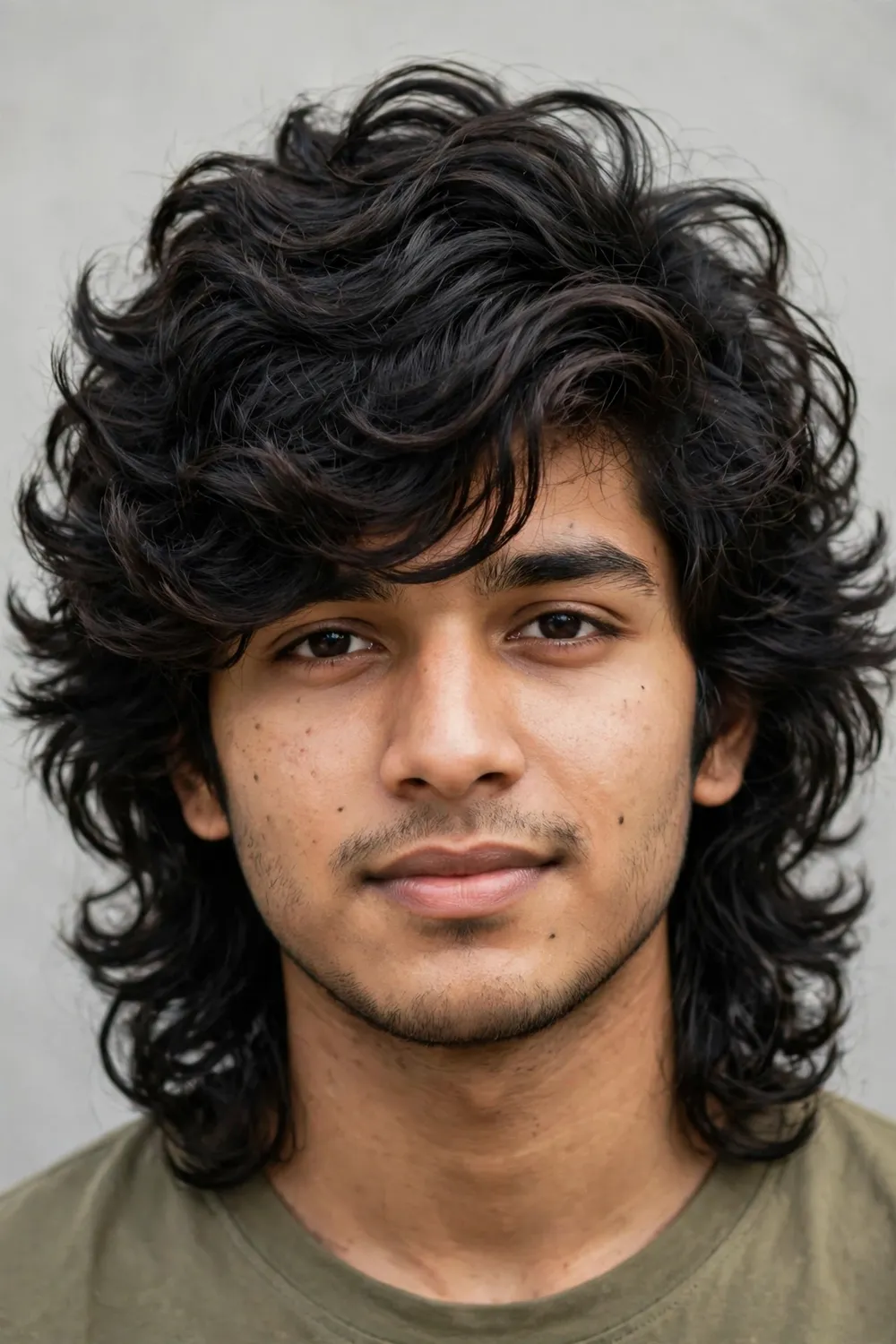
Thick curly hair can swallow a bad cut whole, but this version uses the weight to its advantage. Shoulder-length glossy curls sit over high crown layers that lift the top, while a side-swept fringe keeps the front from falling into your face. It suits dense, springy curls and works on most face shapes, though it is particularly good on longer faces, where the width balances the length. Tell your barber to cut it dry, curl by curl, thinning the bulk underneath rather than taking length off the top. A leave-in conditioner followed by curl cream defines the shape without weighing it down. Expect a longer wash-and-dry routine than a short cut, but the shape holds for weeks, and the layers mean it never grows out into a shapeless block.
23. Tight Ringlet Wolf Cut
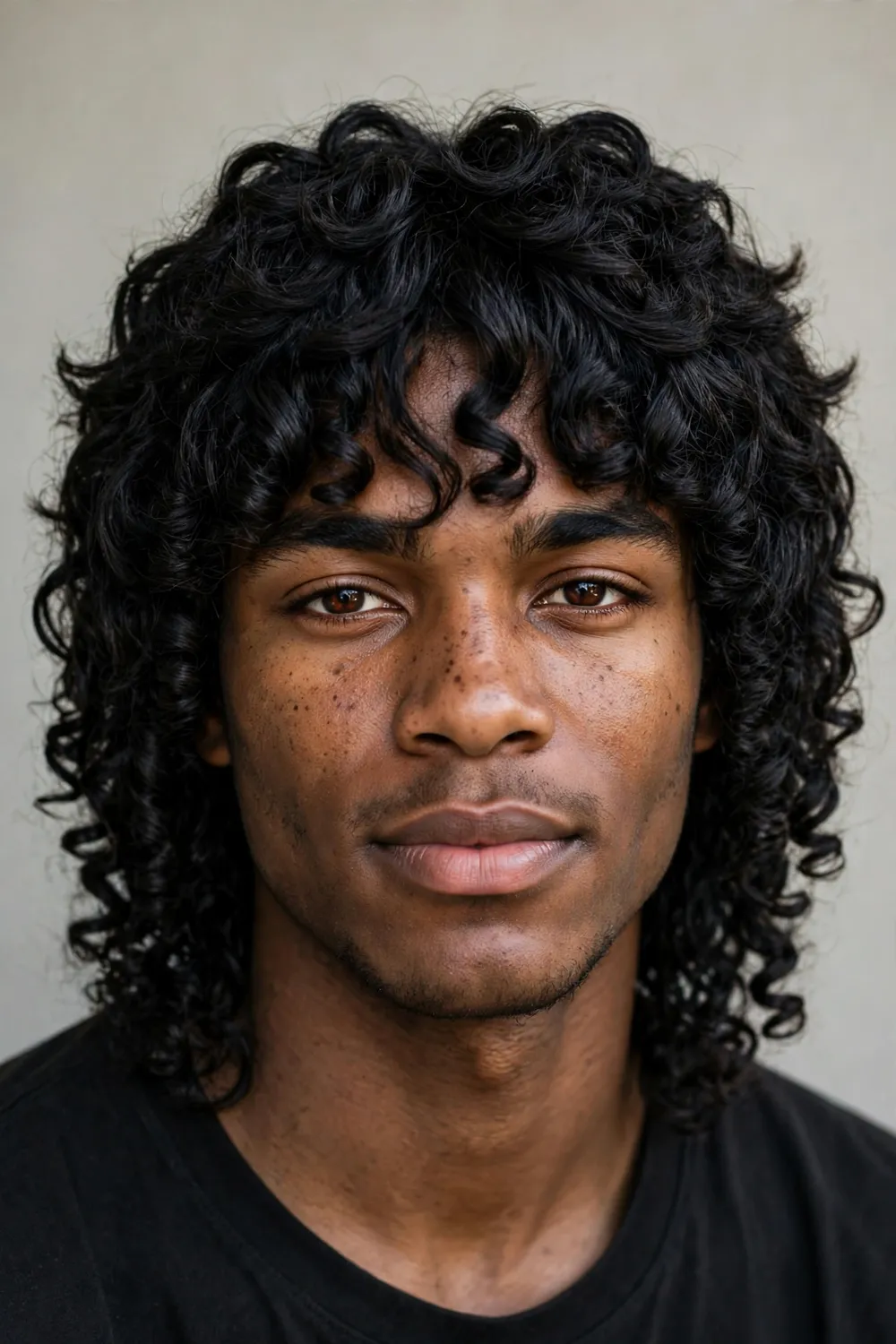
Tight ringlets give the wolf cut a completely different energy — structured on top, springy and full through the lengths. Stacked layers keep the crown from flattening under the curl weight, and the cut falls to shoulder length with a natural, rounded silhouette. This one is for men with genuinely tight curls; looser waves will not hold the shape. Oval and heart-shaped faces suit it best, since the volume frames the face without overwhelming it. Ask for a dry curl-by-curl cut with short stacked layers on top and the length left to spring up naturally. Curl cream is essential, applied to soaking-wet hair, and a diffuser on low heat keeps the ringlets defined. It is the highest-maintenance style in this list, but when the curls are right, nothing else looks like it.
24. Loose Curls With Curtain Bangs
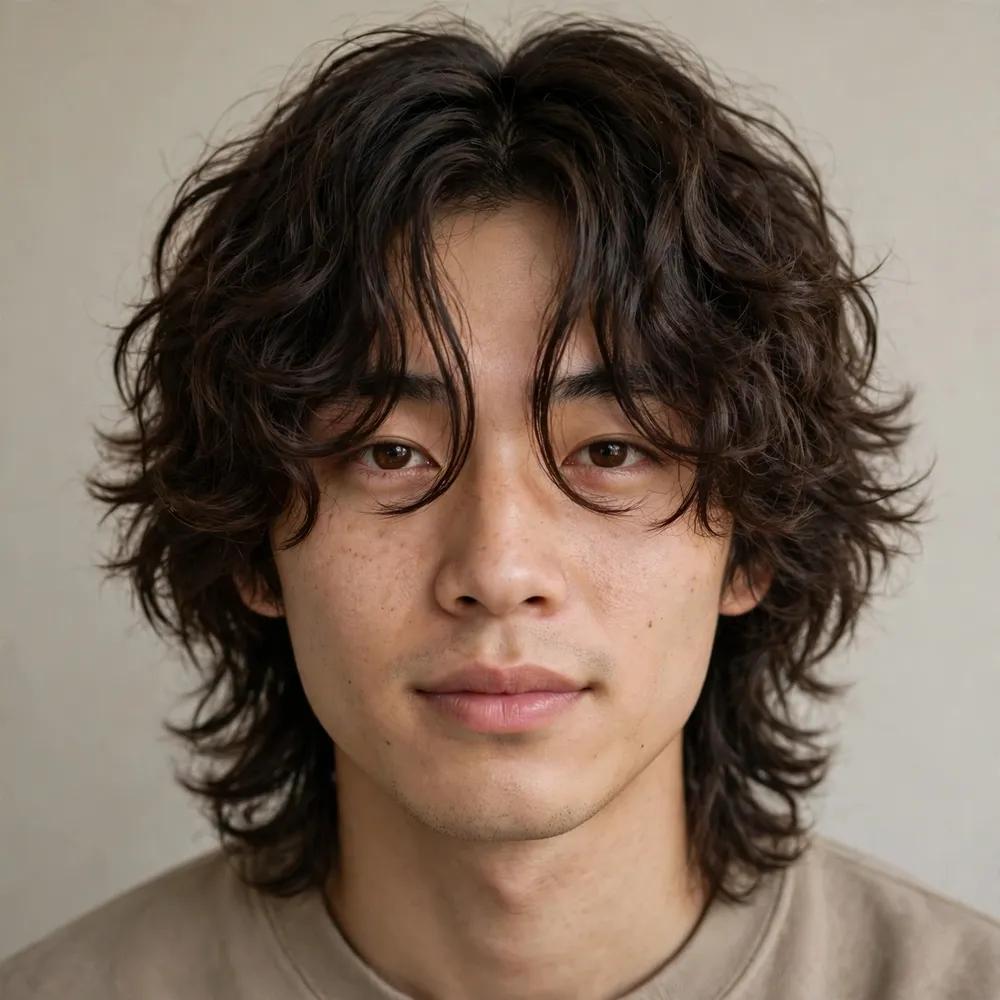
Soft loose curls meet a centre-split curtain bang in a combination that feels relaxed rather than styled. The bangs fall past the eyes on both sides, blending into the longer layers, so the whole cut reads as one flowing shape. It suits loose curls and soft waves, and it is a strong choice for men with wider or rounder faces, because the long front pieces draw the eye downward. Ask your barber for a curtain bang split at the centre, cut just below the eyes so the curls spring up to the right length, with the back layered and feathered. Scrunch in curl cream while damp and let it air-dry where you can. The bangs need a trim every five weeks or so, but the rest of the cut grows out gracefully.
25. Swept-Back Curls Wolf Cut

Chin-length curls swept back off the face give this wolf cut a grown-up, deliberate feel — and it pairs brilliantly with a short full beard, which balances the volume on top. The layers are kept long enough to push back, with the nape left wispy so the shape stays light. It suits medium to thick curly or wavy hair, and it works well on square and oval faces. Tell your barber you want the curls left long enough to sweep back, layered through the crown, with the sides kept full rather than faded. A little curl cream combed back through damp hair, then a diffuser or a few minutes of air-drying, sets the shape. The beard needs its own upkeep, but the hair itself is easy: refresh the curls with water and a dab of cream on day two.
26. Wolf Cut With Low Taper Fade
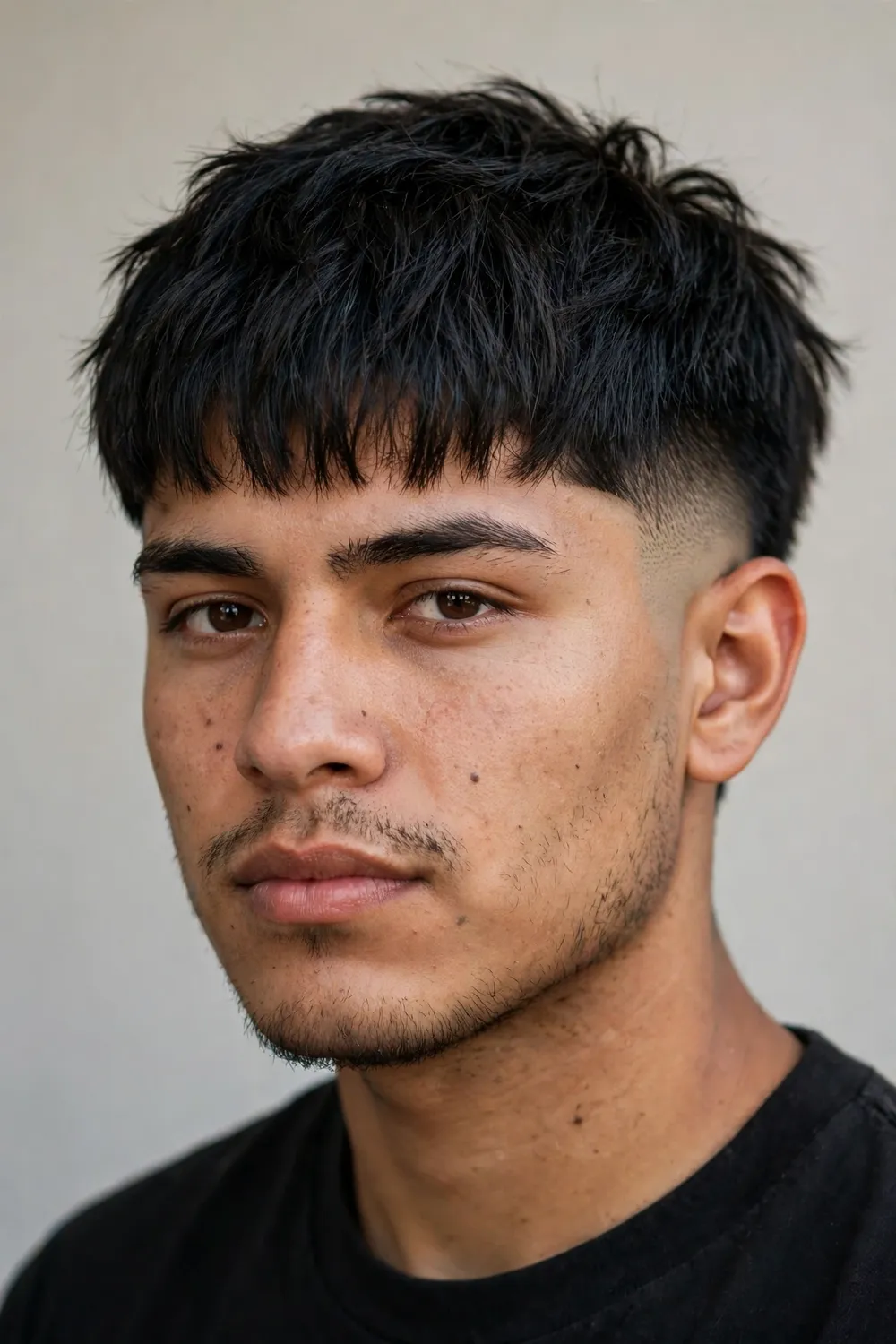
This is the wolf cut for men who want the shaggy top but a cleaner finish around the ears. Choppy black layers do all the talking up top, while a low taper fade keeps the sides tidy without touching the length at the back. It suits straight to wavy hair, and it is one of the most forgiving versions for round faces, since the height on top lengthens the face. Ask your barber for a wolf cut on top with a low taper at the ears and nape — faded, not skin-tight, so it still blends with the longer back. Style it with a small amount of matte paste, pushing the layers forward and apart with your fingers. The fade is the catch: it grows out in about two to three weeks, so book a quick tidy-up between full cuts to keep the clean edge.
27. Choppy Wolf Cut With Faded Sides
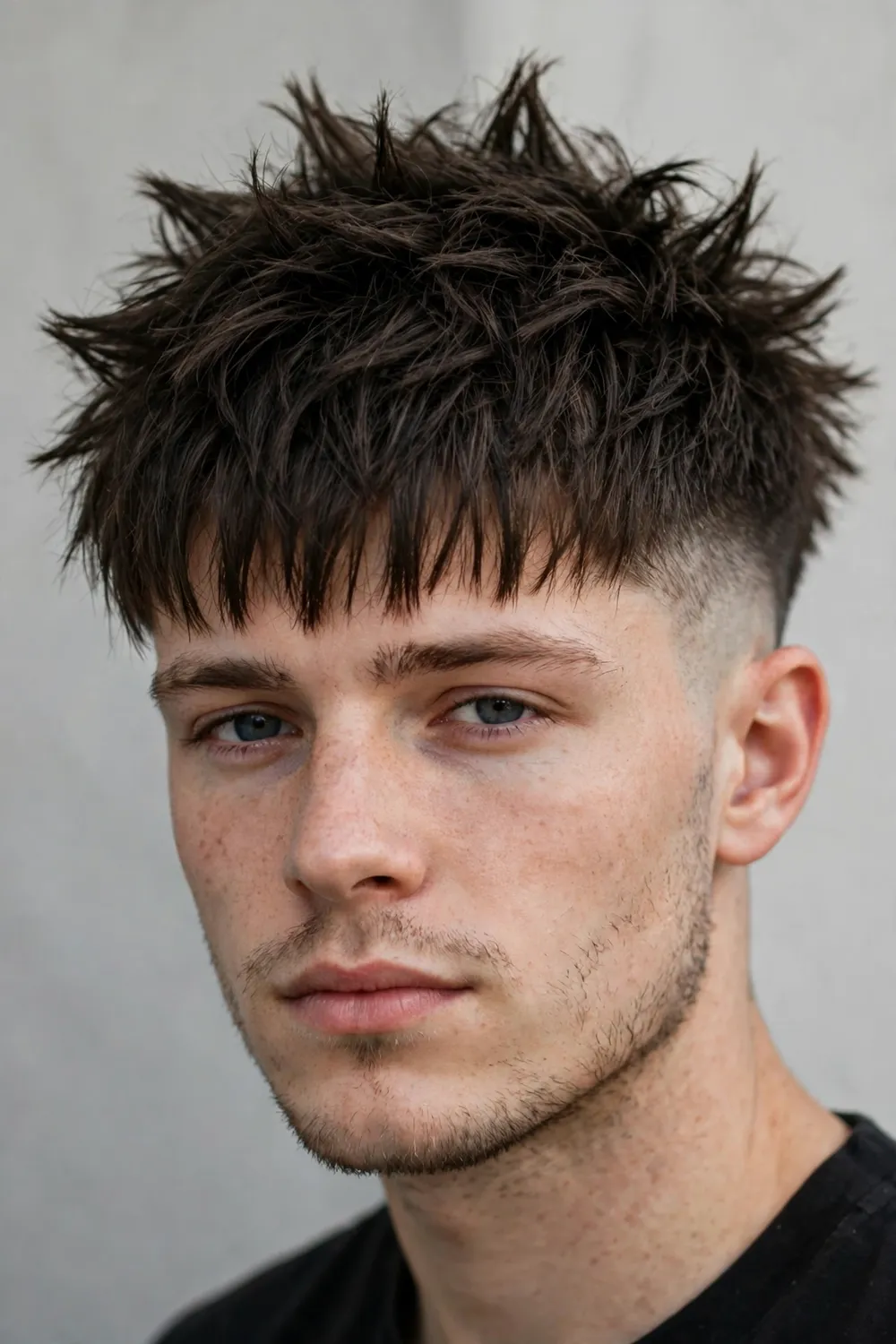
Thick, spiky layers on top, a jagged fringe, and close faded sides — this is the boldest wolf cut in the list. The contrast between the faded sides and the heavy crown is what makes it work, so the top needs real texture to hold its own. It suits thick straight or wavy hair best, and it flatters oval and square faces. Tell your barber you want a mid to high fade on the sides with the top left long and heavily point-cut, the fringe jagged rather than straight. A strong-hold matte clay worked through dry hair gives the spikes their separation. Maintenance is the highest of the faded styles here: the fade needs attention every two weeks, and the top only looks its best with a minute of styling each morning. Skip it if you want a wash-and-go cut.
28. Sleek Korean Wolf Cut

The Korean take on the wolf cut trades messiness for polish. Smooth jet-black layers fall cleanly, a long wispy fringe brushes the brows, and the neckline feathers out instead of ending in a hard line. It suits straight hair with a fine to medium texture, and it is especially flattering on oval and heart-shaped faces. Ask your barber for a Korean-style wolf cut with soft, even layers, the fringe left long and wispy, and the back feathered — no harsh steps between lengths. A light hair oil or serum smoothed through the lengths gives the shine this style depends on, and a quick pass with a straightener on the fringe keeps it sitting right. It needs regular trims to stay sleek, but the daily styling is minimal if your hair is naturally straight. For more on this style family, see our guide to the Korean two block haircut.
29. Rounded Wolf Cut With Wispy Neckline

This version softens the wolf cut’s usual sharpness into something rounder and gentler. A full rounded crown carries the volume, then the shape narrows gradually into thin, feathered ends at the neck — no pointed tail, no hard edges. It suits wavy and straight hair of medium thickness, and it is a good pick for men with longer faces, since the width at the crown balances the length. Ask your barber for a rounded wolf cut with the crown kept full, the layers blended smoothly, and the neckline thinned into wispy ends. A light cream worked through damp hair, rough-dried with your fingers, is all it needs. The shape is forgiving as it grows out, so you can stretch trims to seven or eight weeks without it falling apart.
30. Long Layered Wolf Cut With Curtain Fringe
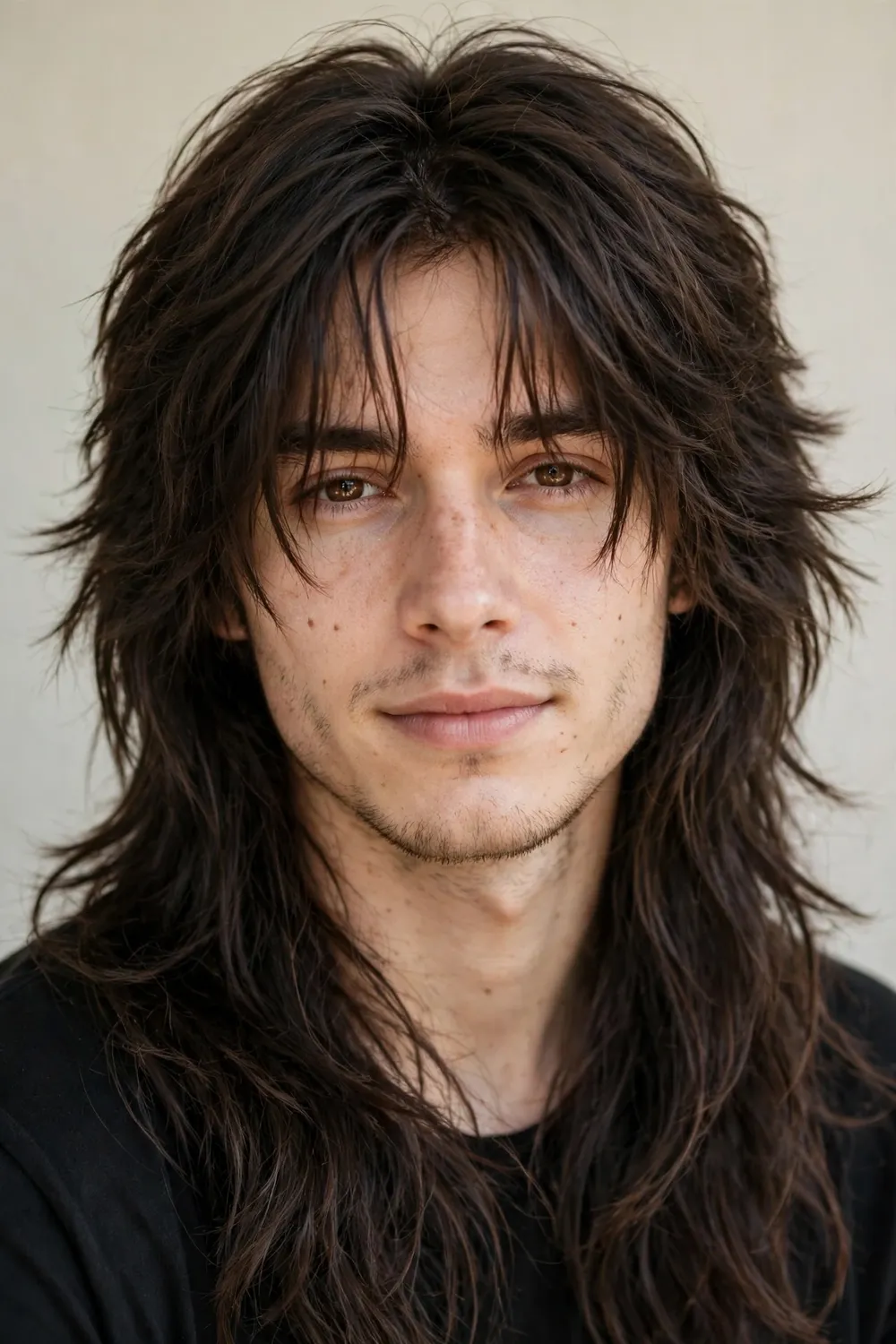
Long dark strands, loose layers, and a curtain fringe that sits near the eyes — this is the wolf cut at its most relaxed. The fringe splits in the middle and blends into the face-framing layers, so nothing about it looks forced. It suits wavy hair best, and it works on most face shapes, though men with naturally thick hair will get the fullest result. Tell your barber you want long layers with a curtain fringe cut to eye level, the front pieces left long enough to tuck behind the ears, and the ends feathered. Sea salt spray on damp hair, scrunched and left to air-dry, gives the right texture. It is a genuinely low-effort style day to day, but long hair means more tangles and more conditioner, and the fringe needs a trim before it starts poking your eyes.
31. Wolf Cut With Undercut

The undercut takes the wolf cut in a sharper direction. The sides are clipped short and disconnected from the top, so the long layered wolf shape on top and at the back stands out in full contrast. It suits thick straight or wavy hair, and it works best on oval and square faces that can carry the hard line. Ask your barber for a disconnected undercut with the top and back left long in wolf-cut layers, and decide together how high the undercut should sit — higher means bolder. Style the top with matte paste, pushing it forward or to the side depending on your fringe. The undercut grows out fast and the line blurs within three weeks, so this is a cut for men happy to visit the barber regularly. If you prefer softer sides, the tapered versions in this list are the safer bet.
32. Wolf Cut With Blonde Highlights

Highlights are the wolf cut’s best friend, because the layers give the colour somewhere to show. Dark hair with blonde highlights running through the top layers makes every flick and feather visible, and the contrast is what sells the shape. It suits any hair type that takes the wolf cut well, and it works on most face shapes — the colour does the work, not the face shape. Ask your barber for a wolf cut first, then have the highlights painted through the top layers and the fringe, keeping them fine rather than chunky. A colour-safe shampoo and a weekly conditioning treatment keep the blonde from going brassy. This is the most expensive style here, between the cut and the colour upkeep, and the roots will need touching up every six to eight weeks. But if you want your layers noticed, nothing else in this list does it better.
33. Short Wolf Cut for First-Timers
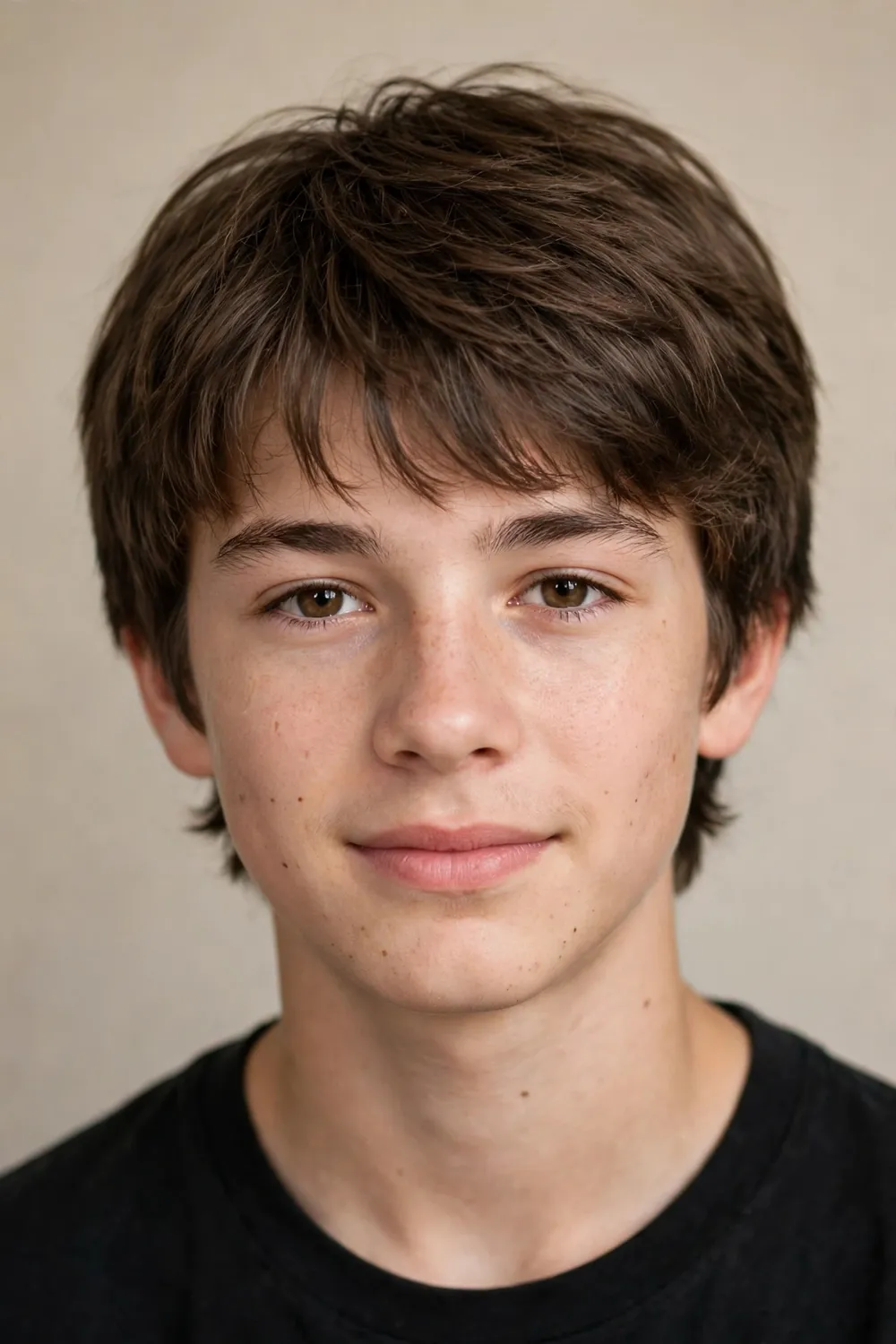
Not sure the wolf cut is for you? Start here. This starter-length version keeps the soft layers and the shaggy feel, but at a shorter length that is easy to grow out if you change your mind. It suits every hair type, which is exactly why it works as a first step — your barber can read how your hair behaves in layers before going longer. Ask for a short wolf cut with soft, blended layers, a light fringe, and the back just touching the collar. A dab of texture cream is enough to style it, and most days you can get away with nothing at all. Maintenance is the easiest in this list: trims every six weeks, no special products, and if you decide you love it, growing it into one of the longer styles in this guide is straightforward. If you are still deciding between lengths, our roundup of medium length hairstyles for men shows how the wolf cut sits alongside other mid-length options.
How to Ask Your Barber for a Wolf Cut
The words matter less than the pictures. Before your appointment, save three or four photos of the exact wolf cut you want: one from the front, one from the side, and one from the back. The back view is the one most men forget, and it is the one your barber needs most, because the layers and the shape of the nape are what make a wolf cut a wolf cut rather than a shag. Show the photos first, then describe it in plain language: “short layered crown, longer shaggy back, fringe at this length.” Be specific about the two things that go wrong most often — tell them how long you want the fringe, and whether you want the back left long or tapered. And say how much length you are willing to lose, because a wolf cut needs a starting point: roughly four to five inches on top and at least collar length at the back. If your hair is shorter than that, ask what is realistic now and how long the grow-out will take.
How to Style a Wolf Cut at Home
The wolf cut is designed to look slightly undone, which means the styling routine is shorter than you might expect. The key is rough-drying: no round brushes, no neat partings, just your fingers and the right product for your texture.
- Start with damp, towel-dried hair — not dripping, not dry.
- Work the product through from roots to ends. Use a curl cream for waves and curls, or a texture spray or light paste for straight hair.
- Rough-dry with a hairdryer on medium heat, scrunching and lifting sections with your fingers as you go. Point the dryer downward to keep frizz down.
- Once it is about 80% dry, stop. Let the last of the moisture air-dry so the layers settle naturally.
- Finish by pinching a few ends apart with your fingers, and add a tiny bit more product only where a piece is flying away.
That is the whole routine. On second-day hair, a spritz of water and a quick scrunch usually brings it back without a full wash.
5 Mistakes to Avoid With a Wolf Cut
- Getting it cut too short on top. The crown layers are what give the wolf cut its shape. If they are cut too short, the top goes flat and the back looks like a mullet instead of a layered cut. Ask your barber to err on the long side first — length can always come off, but it cannot go back on.
- Skipping the back-view photo. Without a reference for the back, most barbers will default to whatever they are used to, which is often a neater, shorter nape. The wolf cut lives or dies on its back shape, so bring the photo.
- Over-styling it. Heavy gel, too much product, or a flat iron on every section kills the texture the cut is built around. The wolf cut should look lived-in. If your hair looks stiff, you have used too much product.
- Letting the fringe grow unchecked. A wolf cut fringe goes from stylish to in-your-eyes in about two weeks. Book a fringe trim between full cuts, or it will drag the whole shape down.
- Choosing the wrong version for your hair type. A sleek Korean wolf cut will not hold on tight curls, and a shaggy curly version will fall flat on fine straight hair. Match the version to your texture, not just to the photo you liked.
Frequently Asked Questions
What is a wolf cut for men?
A wolf cut is a layered haircut that combines a shaggy top with a longer, textured back — short choppy layers on the crown, a fringe at the front, and wispy length through the nape. It borrows from the shag and the mullet but stays softer and more blended than either, which is why it works on so many hair types and lengths.
Does a wolf cut work on straight hair?
Yes, but it needs the right version. Straight hair shows every layer, so the cut depends on good point-cutting and texturising to create movement. The choppy feathered, sleek Korean, and short tapered versions in this guide are the best bets for straight hair, and a texture spray or matte paste does the rest. Without any product, straight wolf cuts can look flat, so a little styling is part of the deal.
Can men with curly hair get a wolf cut?
Absolutely — curly hair is one of the best matches for a wolf cut. The layers remove weight, stop the shape from going triangular, and let the curls sit naturally. The key is finding a barber who cuts curls dry, curl by curl, because cutting curly hair wet leads to layers that spring up shorter than expected. The shaggy curly and tight ringlet versions above are good starting points.
How long does my hair need to be for a wolf cut?
You need roughly four to five inches of length on top and hair that reaches at least the collar at the back. That gives the barber enough to layer the crown and shape the nape. If your hair is shorter, you can still start with the short first-timer version in this guide and grow it out — most men need two to three months of growth from a short cut to reach a full wolf cut.
How do you style a wolf cut?
Start with damp hair and work in a product that suits your texture — curl cream for waves and curls, texture spray or light paste for straight hair. Rough-dry with your fingers, scrunching and lifting as you go, and stop at about 80% dry so the layers settle naturally. Finish by pinching a few ends apart. The whole routine takes five minutes, and second-day hair usually just needs water and a quick scrunch.
How often should I trim a wolf cut?
Every five to seven weeks for a full trim, depending on how fast your hair grows and how long your version is. The fringe will need attention sooner — every three to four weeks — because it grows into your eyes quickly. If your version has a fade or an undercut, those sides need a tidy-up every two to three weeks to keep the contrast sharp.
What is the difference between a wolf cut and a mullet?
Both are short on top and long at the back, but a wolf cut is softer and more blended. The layers run through the whole cut, the fringe is longer and shaggier, and the back is feathered rather than left as one solid block of length. A classic mullet has a sharper disconnect between the short top and the long back. Think of the wolf cut as a mullet with the edges taken off — if you want a fuller comparison of lengths and shapes, see our short haircuts for men guide for how shorter cuts balance the same idea.
Final Word
That is 33 ways into the wolf cut, from a cautious first-timer length to full shaggy curls — and the right one is the version that matches your hair, not just the photo you liked best. Pick your top three from this list, save the photos, and take them to your barber. Browse more men’s haircut guides on our blog.