

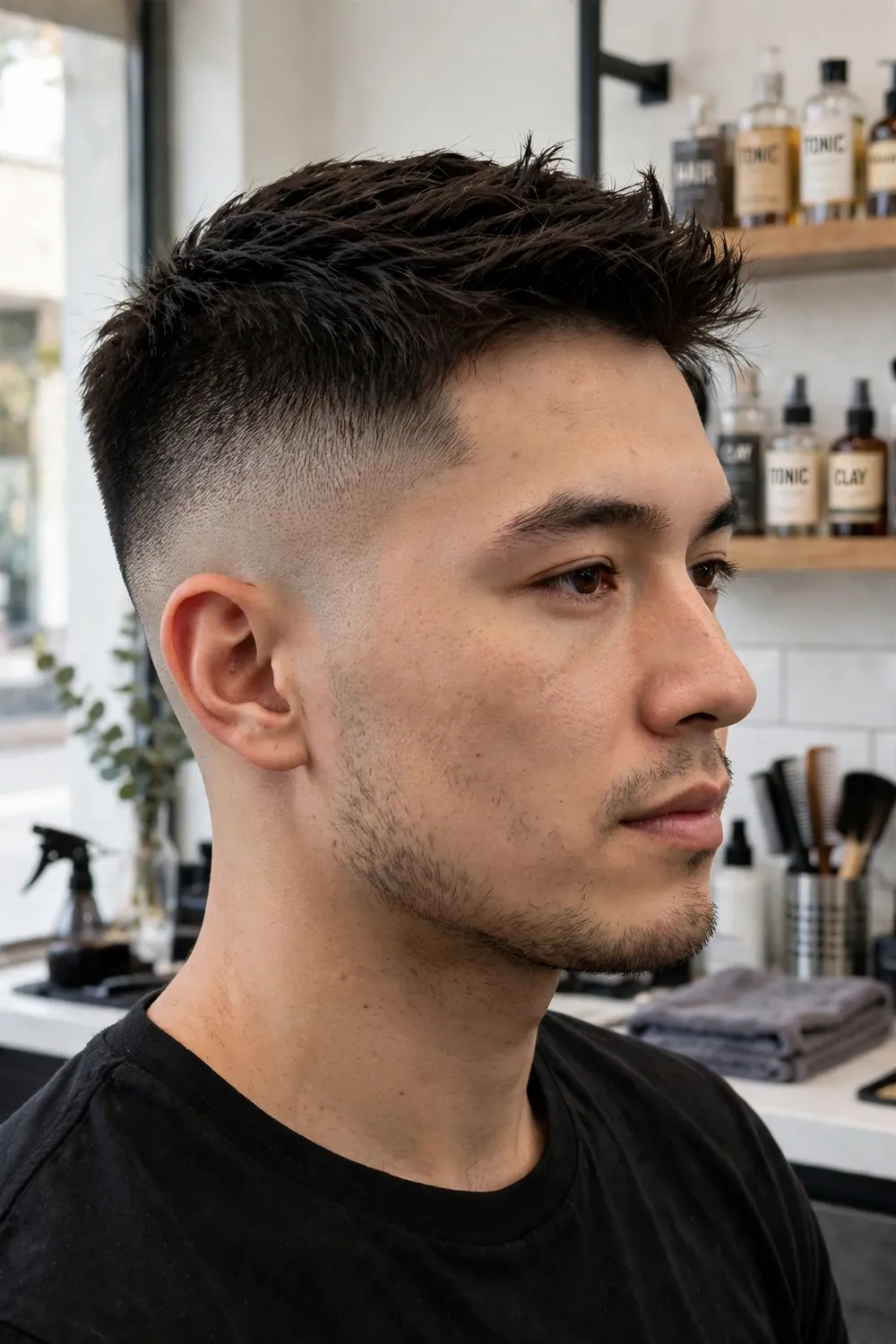
The mid fade haircut starts its blend at temple level — halfway between the subtle low fade and the bold high fade — and it is the fade most barbers cut more than any other. It gives you clear, visible contrast on the sides while leaving enough hair above the fade to blend into almost any top: a crop, a quiff, curls, waves, even a mullet. Below are 47 versions worth asking for, with the guard numbers, who each one suits, and how often it needs a refresh.
What Is a Mid Fade?
A mid fade is a fade whose shortest point sits around the middle of the sides of the head, roughly level with the temples and the top of the ears. Below that line the hair is clipped very short — down to a #0.5 or #1 on a standard mid fade, or right down to skin on a mid skin fade — and above it the hair gradually lengthens until it meets the top. It belongs to the wider fade haircut family, and you will also hear it called a medium fade. They are the same cut; barbers use both names.
That midway starting point is the whole point of the cut. A low fade only cleans up the edges, so the effect is quiet. A high fade climbs close to the crown and removes most of the side, which looks stark. The mid fade sits between them: the gradient is easy to see from the front and the side, it makes the top look thicker and more deliberate, and it still grows out in a predictable way over two to three weeks. Because it works on straight, wavy, curly and coily hair — and on round, square and oval faces alike — it has become the default answer when a client sits down and just says “a fade, please.”
One thing worth knowing before you book: “mid” describes where the fade starts, not how short it finishes. Two mid fades can look very different depending on whether the base goes to skin or stops at a #1. That choice — plus whether the line runs straight around the head or drops behind the ear — is what creates most of the 47 variations below.
Mid Fade vs Low Fade vs High Fade
All three fades use the same blending technique. The difference is purely the height where the shortest part begins, and that one decision changes the contrast, the grow-out and the upkeep.
| Feature | Low Fade | Mid Fade | High Fade |
|---|---|---|---|
| Where the fade starts | Just above the ear and at the neckline | Around the temple, middle of the sides | Above the temple, near the crown |
| How much of the side goes short | Very little — edges only | About half of the side | Most of the side |
| Contrast | Soft and subtle | Balanced and clearly visible | Bold, maximum contrast |
| Best for | Natural, conservative looks; first fade | Most men, most top styles | Strong statements, very thick hair |
| How long it stays sharp | About 3 weeks, gentle grow-out | 2–3 weeks | About 2 weeks, shows regrowth fastest |
| Maintenance | Low | Low to medium | Medium to high |
Short version: pick the low fade if you want the fade to whisper, the high fade if you want it to shout, and the mid fade if you want it to speak clearly. It is the only one of the three that looks equally right with a boardroom comb over and a weekend textured crop, which is why it outsells the other two in most barbershops.
47 Best Mid Fade Haircuts for Men
Every cut below uses the same mid-height fade and changes the finish or the top. Find your hair type first, then read the barber tip under the styles you like — and take a screenshot of your favourite to the shop. A photo settles the “how high is mid?” argument faster than any description.
1. Classic Mid Fade
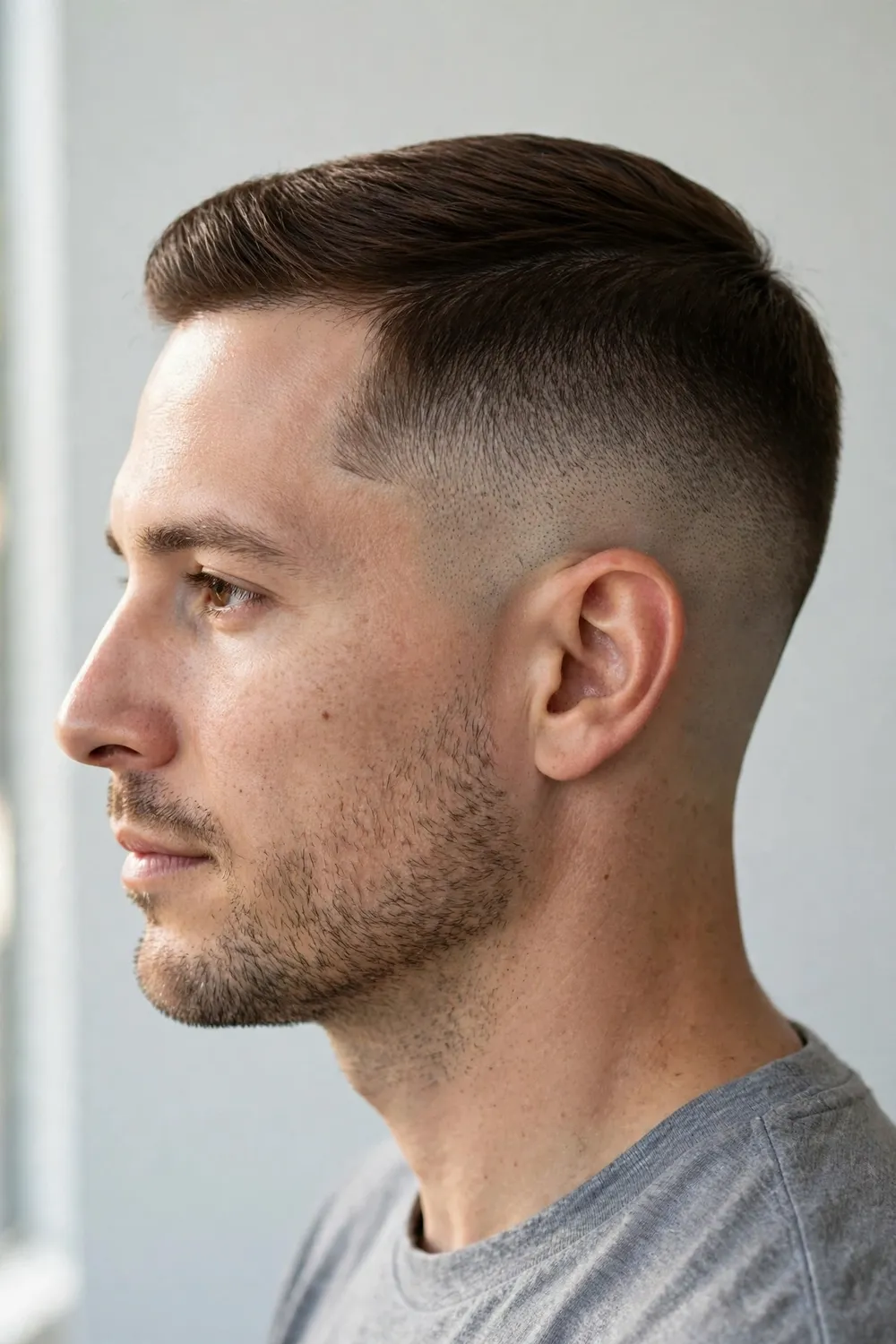
This is the reference version: the fade starts at the temple, runs at an even height all the way around the head, and blends from about a #1 at the base up into a scissor-cut top of around two inches. It suits every face shape and every hair type, which is why barbers treat it as the safe first fade. Ask for “a classic mid fade, #1 at the base, blended up, about two inches left on top” and book again in two to three weeks.
2. Mid Skin Fade
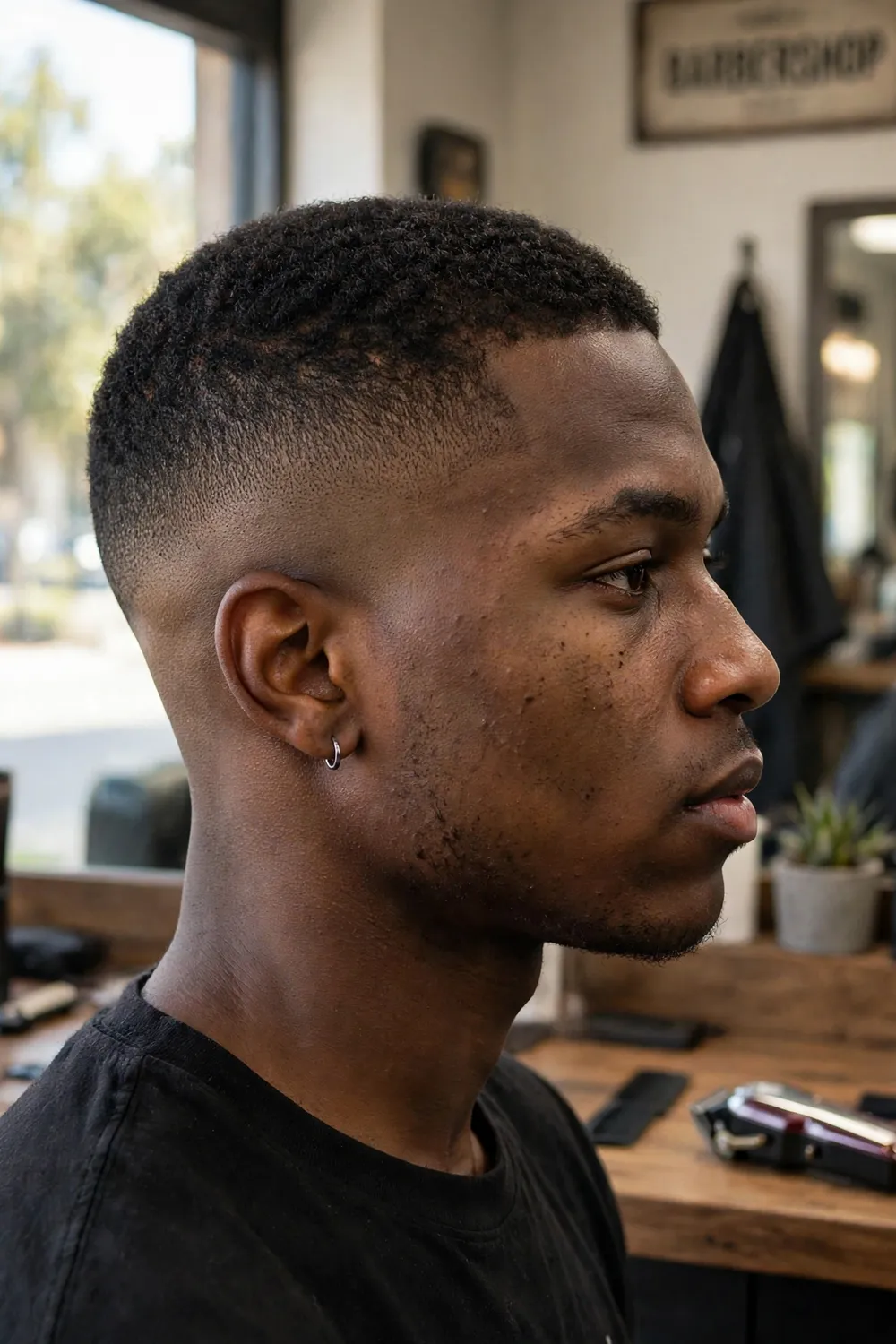
Here the base of the fade goes all the way to bare skin, usually finished with a foil shaver, so the contrast between the pale skin band and the darker top is as strong as a mid fade can get. It looks best on thick, dense hair; on fine or thinning hair the skin showing at temple height can make the sides look sparse. Expect the sharpest week-one result of any style on this list — and the fastest fade-out, with a cleanup needed every one to two weeks.
3. Mid Taper Fade
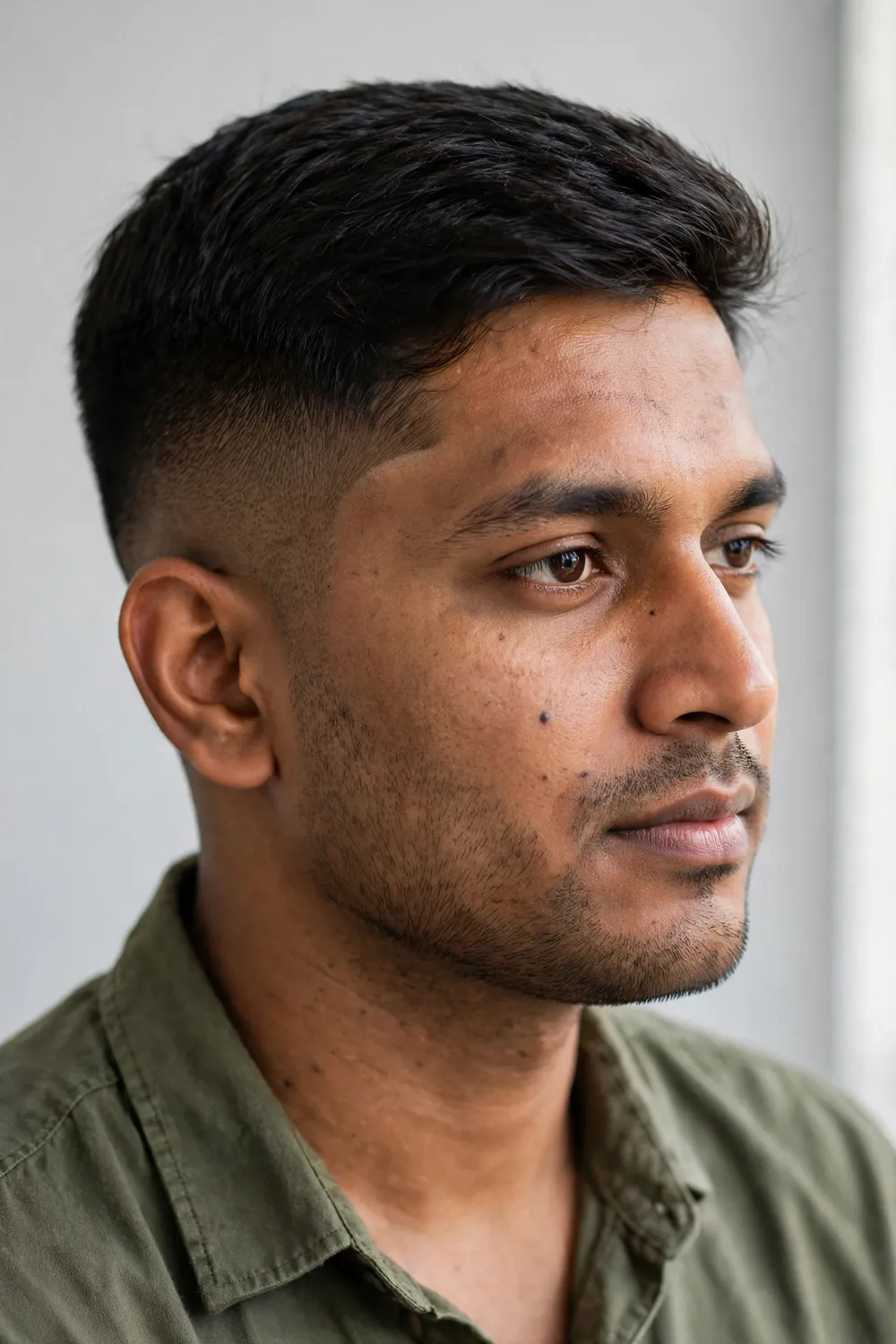
The taper version starts at the same temple height but never reaches skin — the base stops at a #1 or #1.5, so a short layer of hair always covers the scalp. That makes it the kindest mid fade for fine or thin hair and for conservative workplaces, and it grows out the most gracefully of all, because new growth merges into the existing length instead of showing a line. A three-week cycle is realistic. If you are nervous about your first mid fade, start here and go shorter next time.
4. Mid Drop Fade
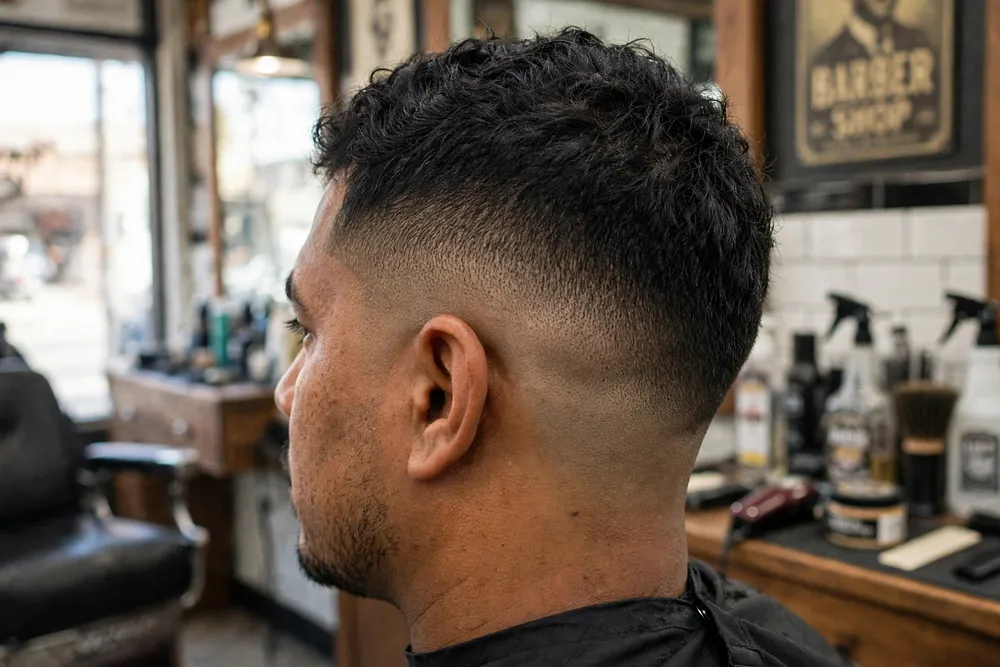
From the front, a drop fade looks identical to a classic mid fade. The difference shows in profile and from behind: instead of running level, the fade line dips down behind the ear, following the natural curve of the head. That arc adds shape to the silhouette and works particularly well with curly and wavy tops, because it follows the direction the hair already grows. Tell your barber “temple level at the front, and let the line drop behind the ear” so they don’t run it straight by habit.
5. Mid Burst Fade
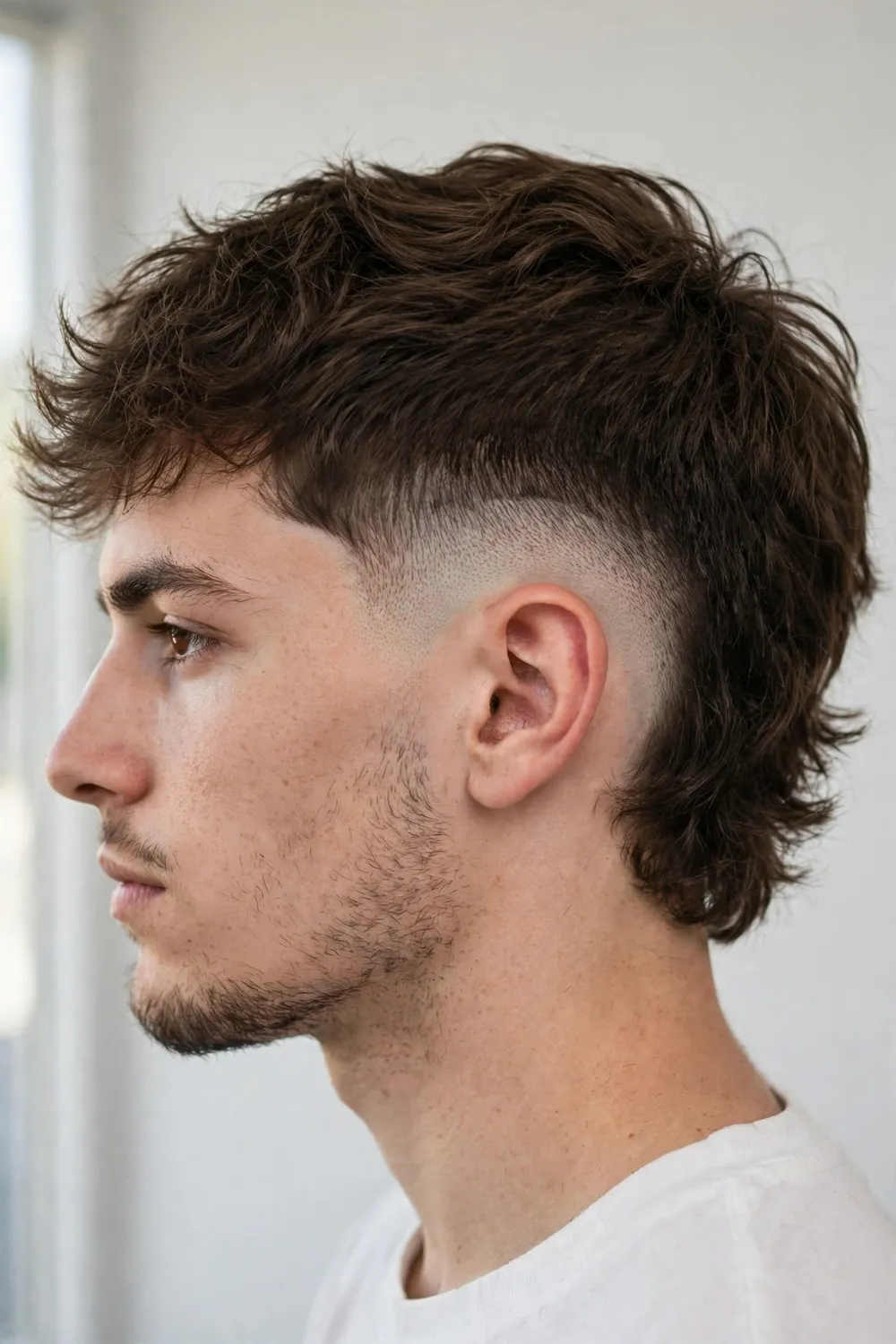
The burst fade concentrates the blend in a semicircle around the ear and leaves the back of the head noticeably longer. It was made for tops that need framing rather than full short sides — mohawks, faux hawks and natural curly styles all sit better inside that arc. On coily hair it keeps the back full while still looking sharp from the side. Ask for the arc at temple level and be clear that the back stays long, because an inattentive barber may fade the back by default.
6. Mid Temp Fade
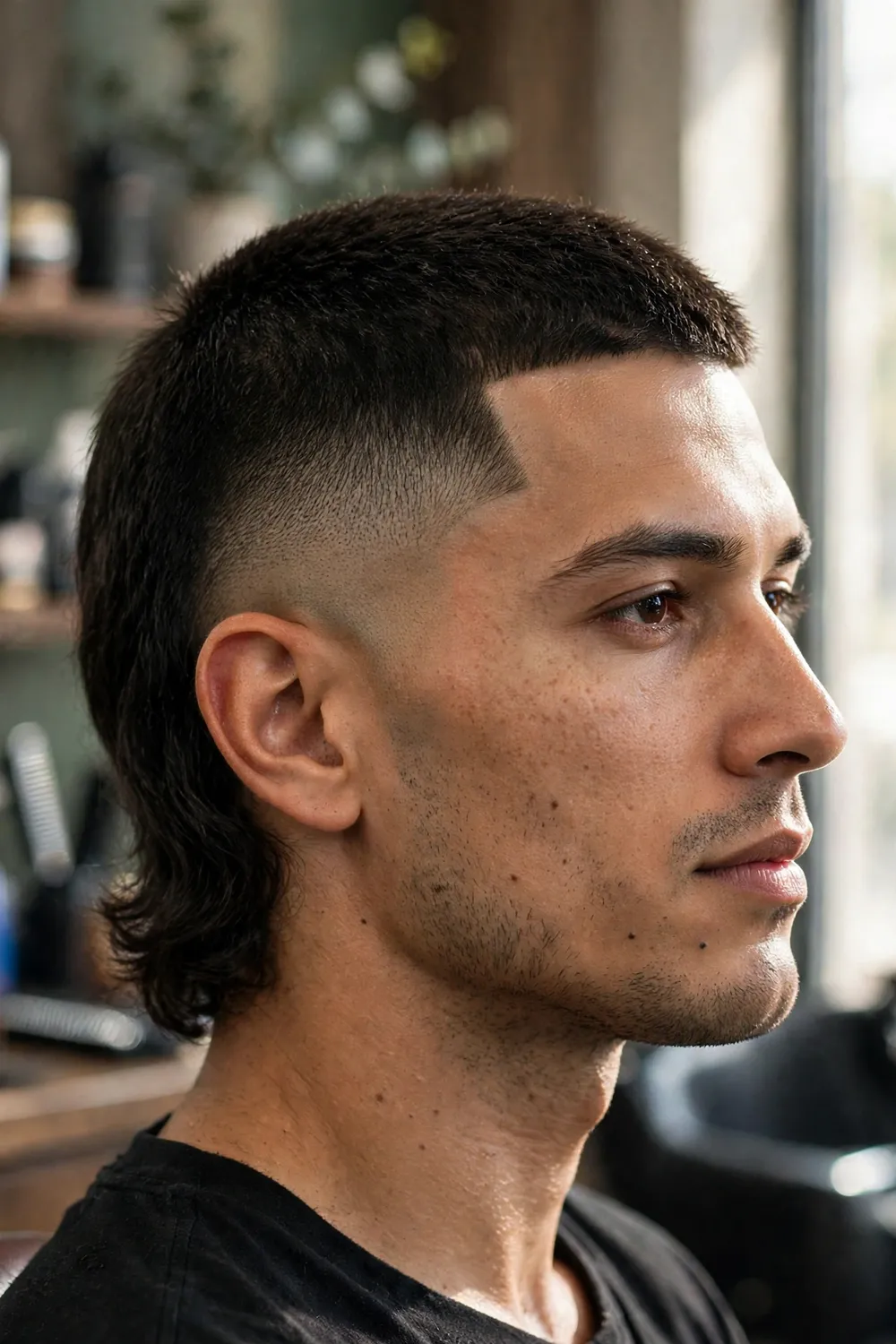
A temp (temple) fade at mid height only fades the areas around the temples and the front hairline, leaving the sides and back much longer than a full mid fade. The result is a crisp, lined-up front with a softer overall profile — a staple with short textured cuts and afros, especially on Black hair where the lineup does most of the visual work. It is also the least committal style here: if you later want a full mid fade, your barber simply extends what is already started.
7. Mid Fade with Curly Hair
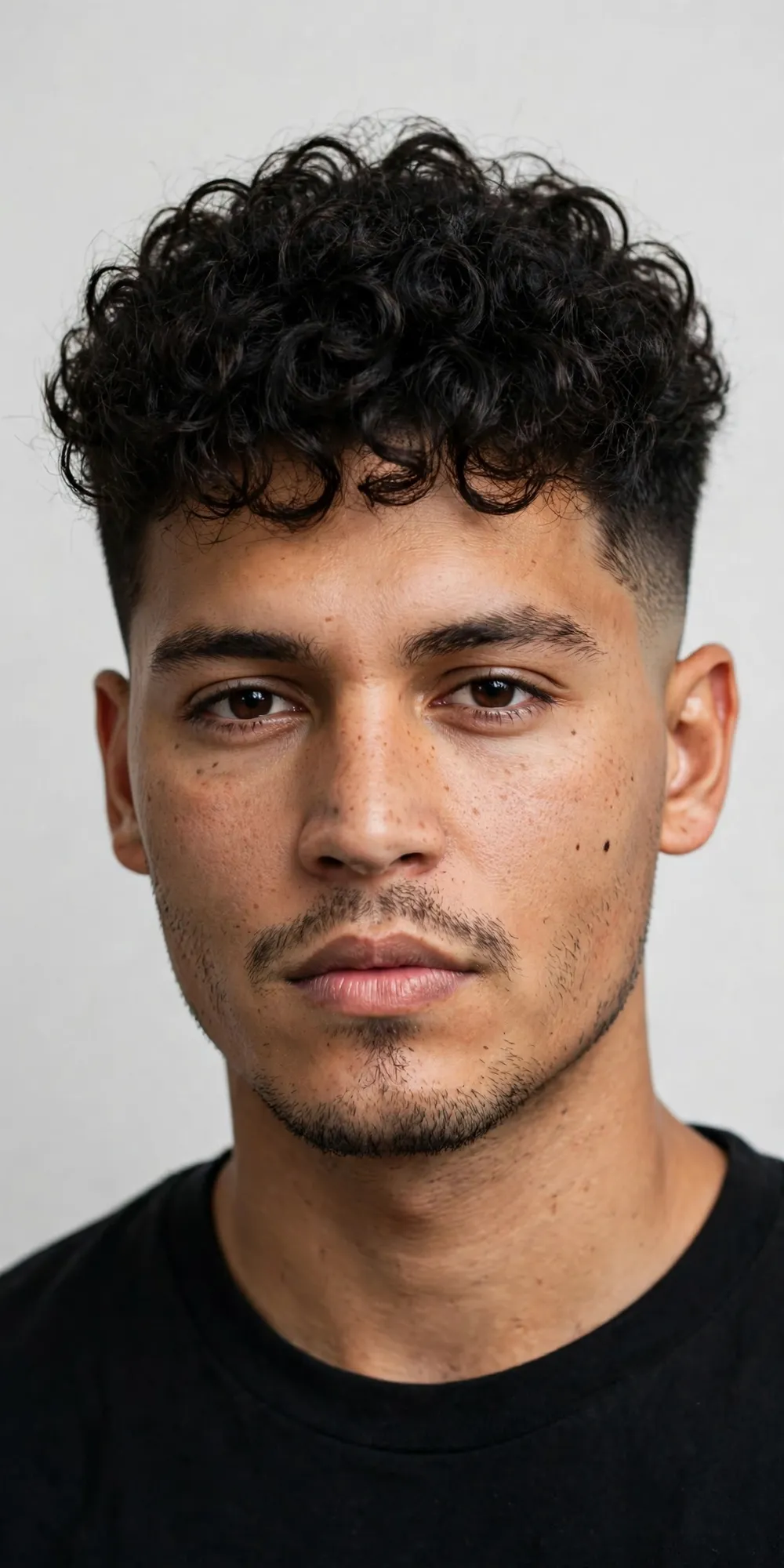
Curls and mid fades pair well, with one catch every curly-haired man learns once: curls shrink as they dry, so a fade set at the temple on wet hair can sit visibly higher by the time you leave the shop. Ask your barber to judge the height on dry hair, and to blend the top edge with scissor-over-comb rather than clippers alone, which avoids a hard shelf where the curls meet the fade. Drop and burst versions follow the curl pattern best. Keep three to five inches of curl on top so the texture stays the headline.
8. Mid Fade with Wavy Hair
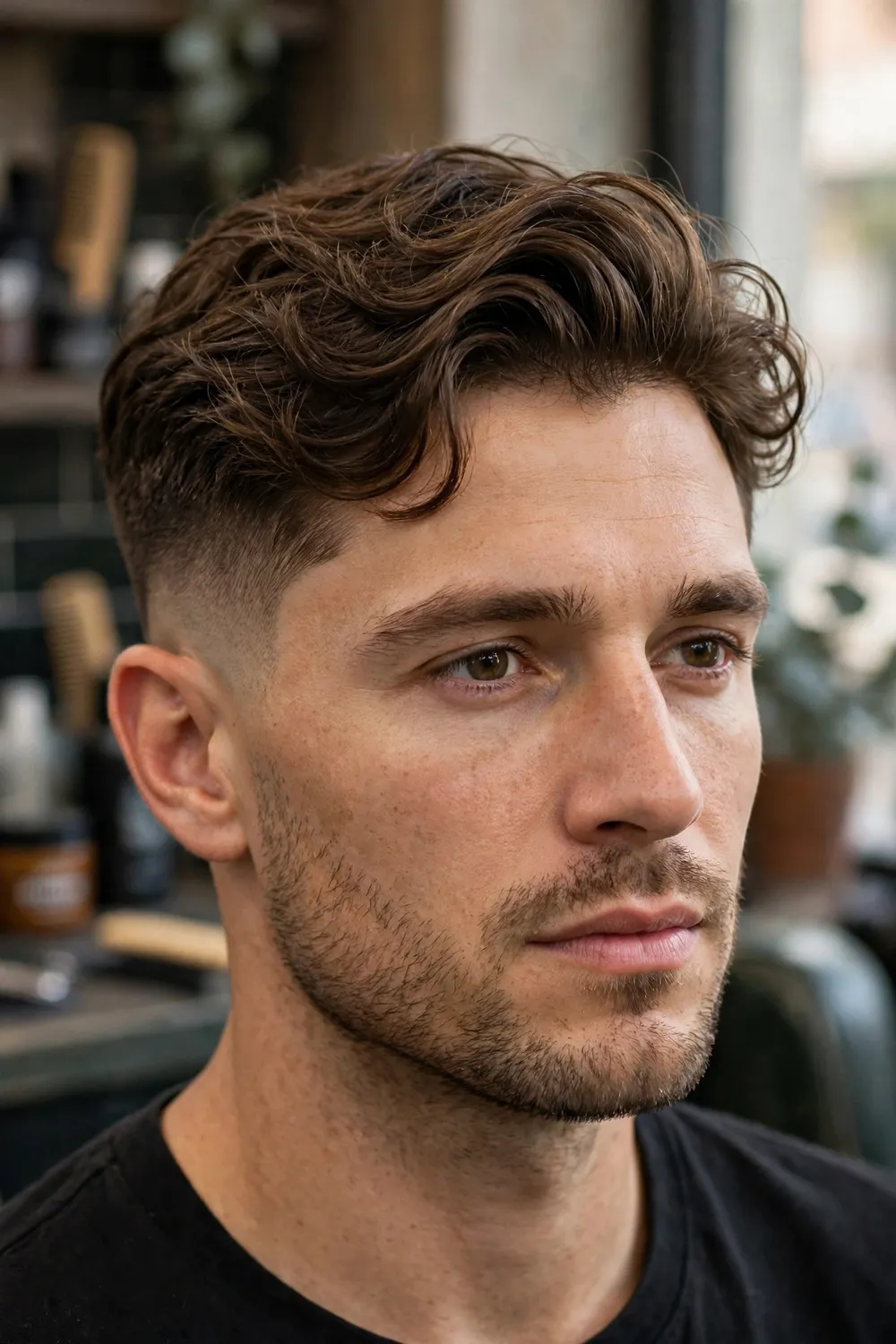
Wavy hair is arguably the easiest texture to pair with a mid fade: the waves give the top built-in movement, and the faded sides stop that movement from looking untidy. Leave at least two and a half to three inches on top so the S-pattern can actually form — cut waves too short and they just look like straight hair with fuzz. A mid drop fade follows the wave direction instead of cutting against it. Style with a light cream rather than a heavy gel, which would glue the waves flat.
9. Mid Fade with Straight Hair
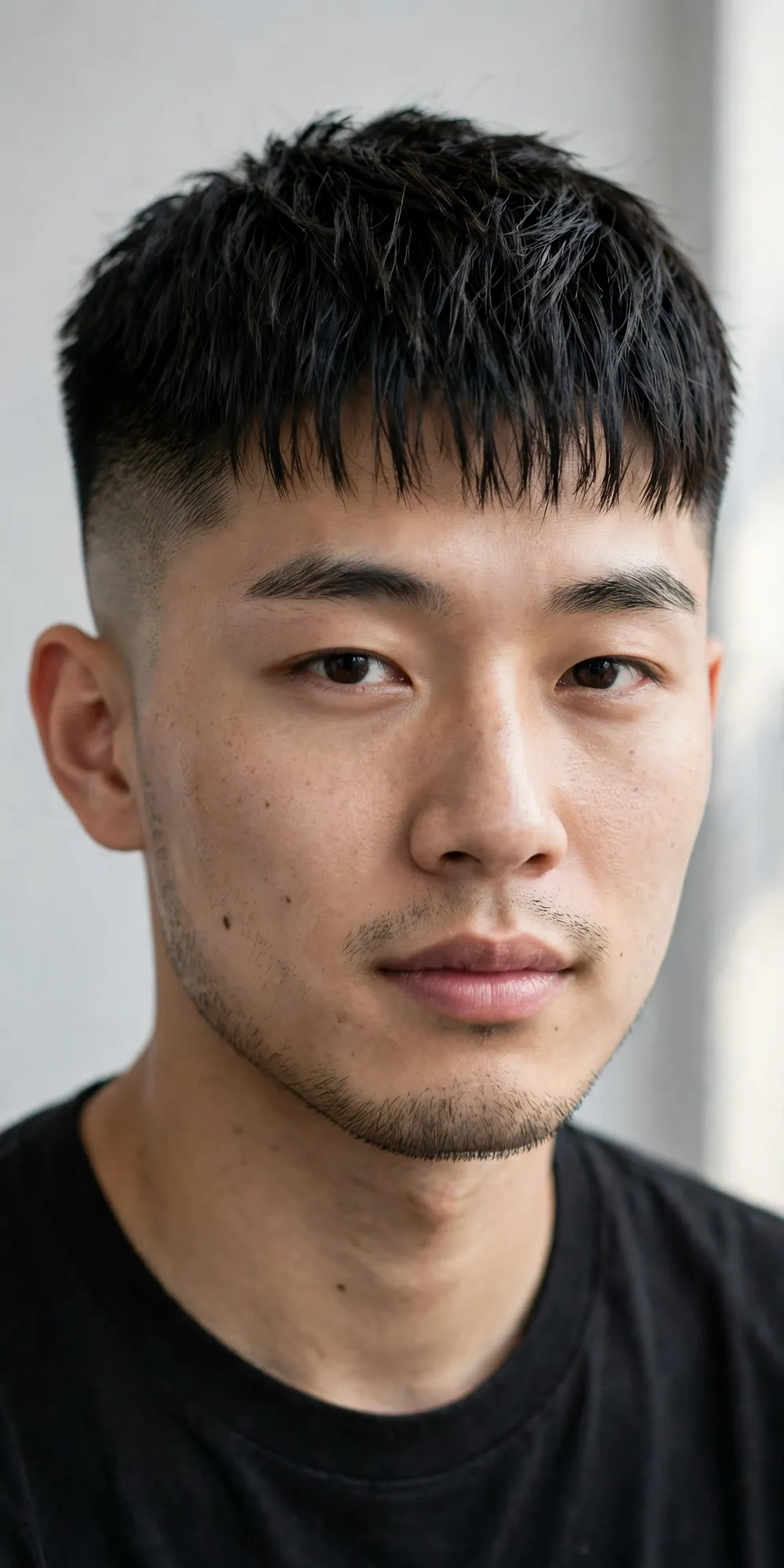
Straight hair shows the cleanest fade work of any texture, because there is no curl to blur the gradient — every step of the blend is visible, in a good way when the barber is skilled. The trade-off is that grow-out also shows sooner, and a blunt-cut top can sit flat and heavy. Ask for point cutting on top to break up the ends and create artificial texture, and keep a matte paste at home: straight hair styled with anything shiny tends to look greasy by afternoon.
10. Mid Fade Textured Crop
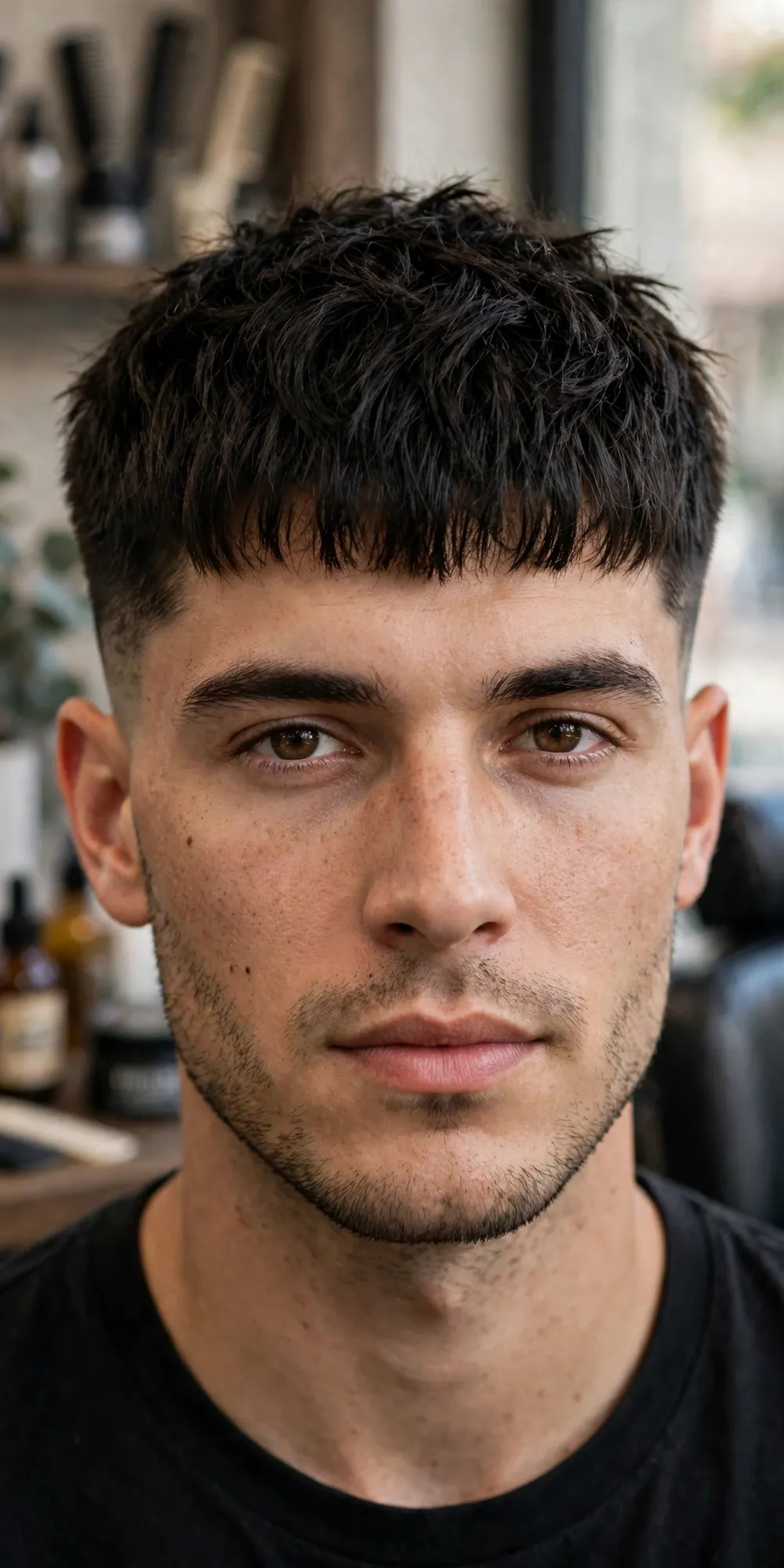
The textured crop is the most-booked top on this list for a reason: choppy, point-cut layers pushed forward, a short fringe, and tight mid fade sides that stop thick hair from ballooning. It flatters round and square faces because the forward fringe shortens the face while the faded sides slim it. Ask for the fringe point-cut rather than blunt, and plan two clocks — the fade needs refreshing every two to three weeks, but the crop on top can go five to six. A pinch of texture powder in the morning is all the styling it asks for.
11. Mid Fade French Crop
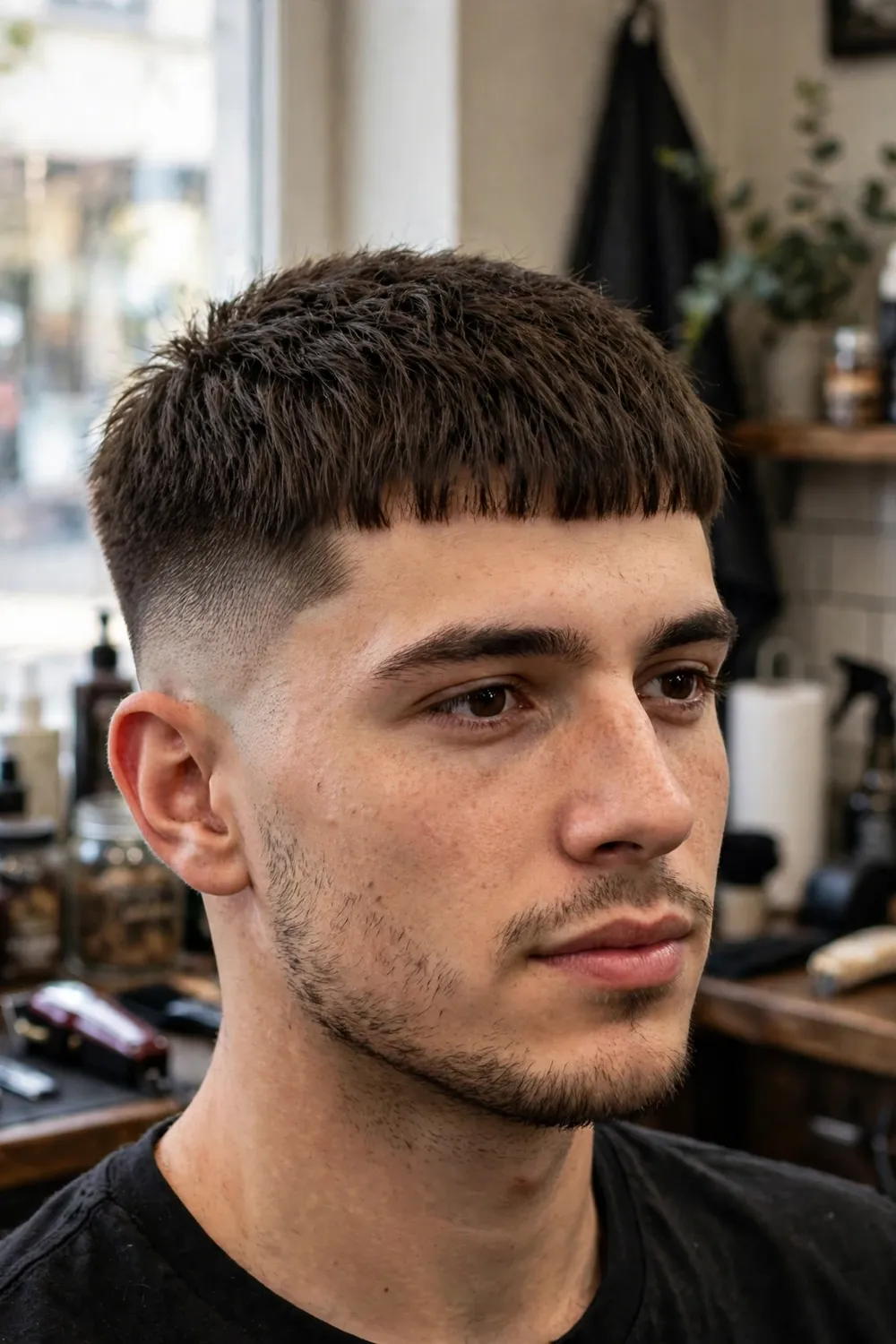
The French crop is the textured crop’s tidier cousin: same short top and mid fade, but the fringe is cut straight across in one clean horizontal line just above the eyebrows. That straight line adds width across the forehead, which balances longer and narrower faces nicely, and the whole cut sits flat with almost no styling. If the textured crop looks too messy for your workplace, this is the version to ask for — “French crop on top, blunt fringe, mid fade on the sides.”
12. Mid Fade Pompadour
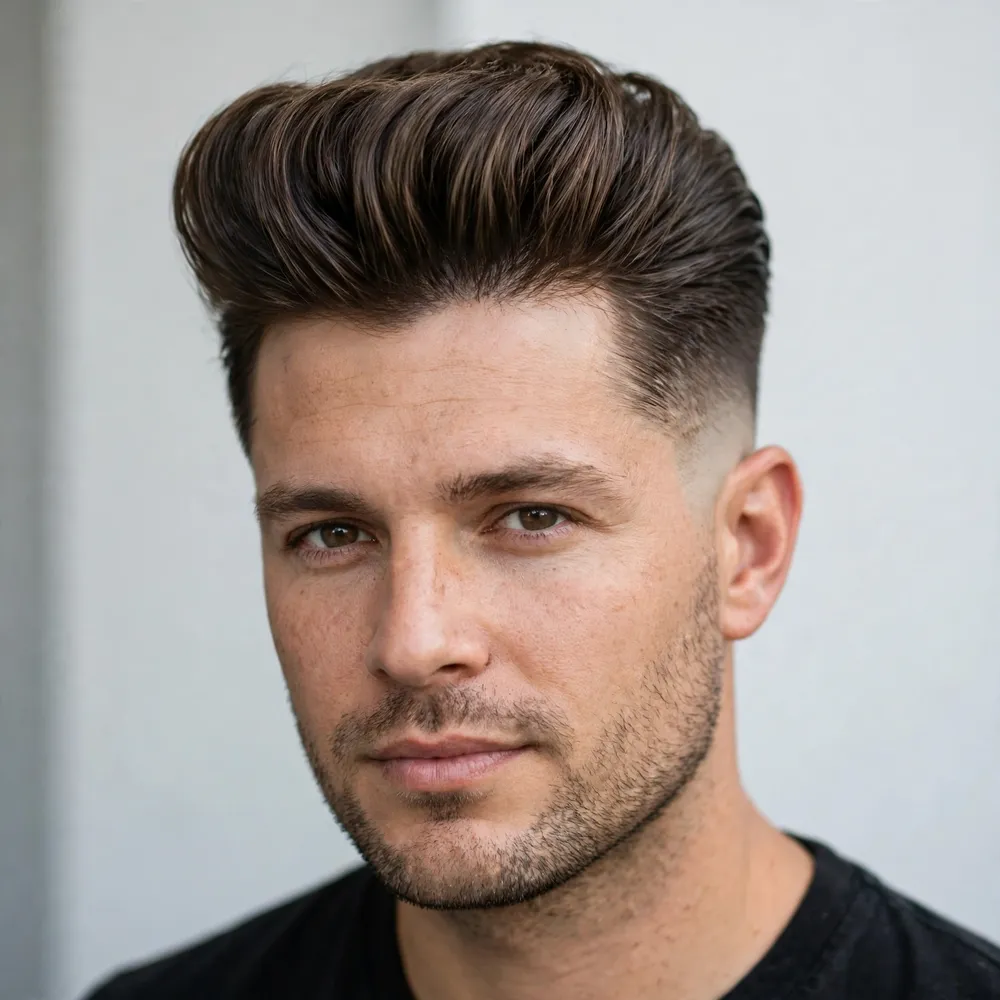
A pompadour needs height at the front and length to sweep back — three to four inches minimum — and the mid fade gives it stronger contrast than a low fade because the short zone starts higher, right where the pomp’s volume begins. It suits rectangular and diamond faces and thick hair that can hold the shape. Blow-dry the front upward and back with a round brush before any product goes in; a pompadour built on wet hair with pomade alone collapses by lunchtime. Fade refresh every two to three weeks keeps the contrast honest.
13. Mid Fade Quiff
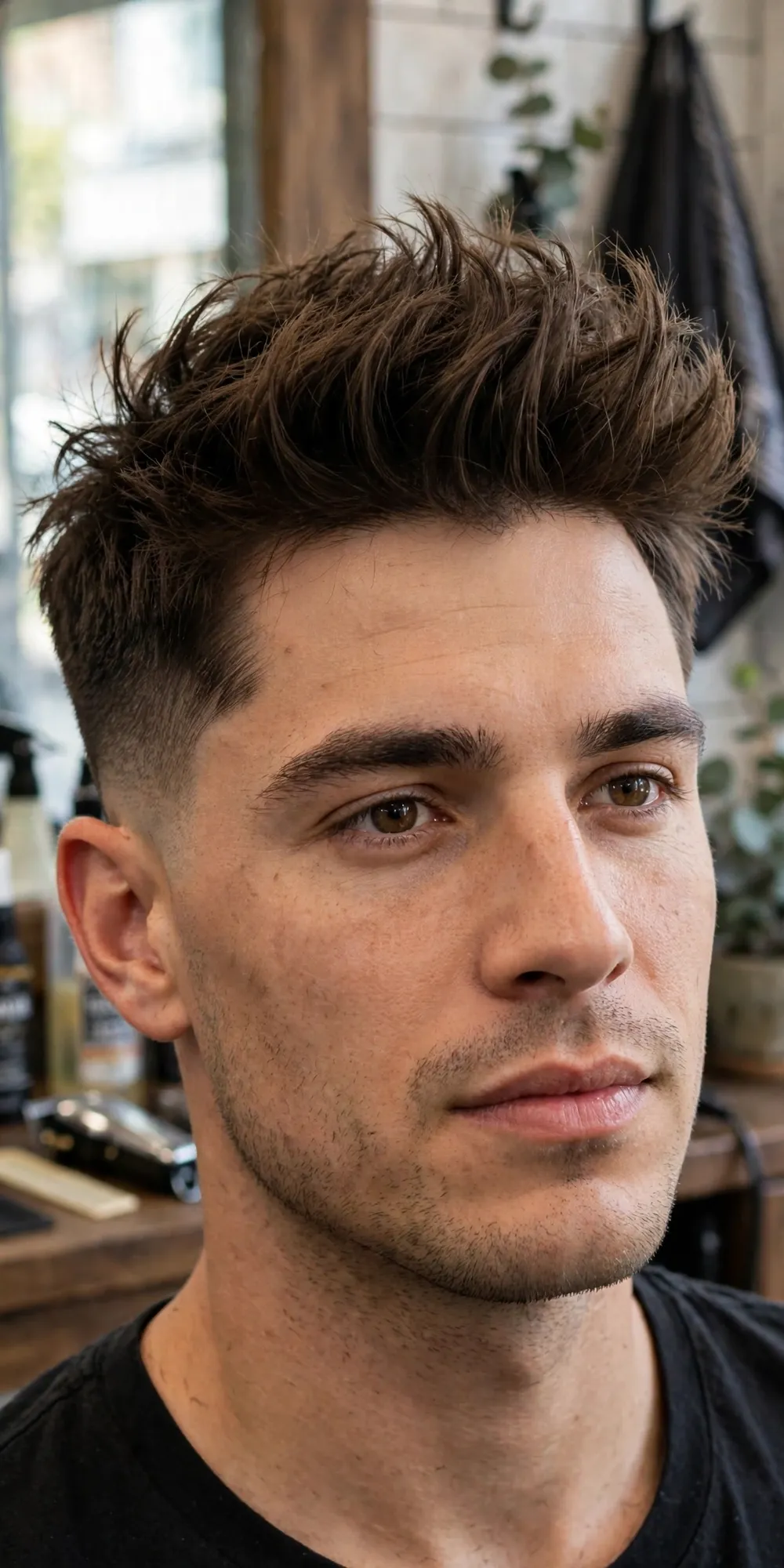
The quiff is the pompadour’s relaxed relative: the front is pushed up and slightly forward rather than swept straight back, with the length grading shorter toward the crown. Two and a half to three inches at the front is the working range. The mid fade earns its place here because the higher start separates the quiff from the sides, so the lift reads as deliberate rather than grown-out. It works on oval, square and round faces, and on wavy hair it practically styles itself — blow-dry forward, then push up and back with matte clay.
14. Mid Fade Side Part

No razor line, no drama: the hair is parted where it naturally wants to fall and combed to one side, with a mid fade cleaning up both sides. It is softer than a comb over and more forgiving as it grows, which makes it the everyday office pick on this list. Ask your barber to follow your natural growth direction when placing the part — a part forced against the cowlick will fight you every single morning. Suits oval, square and heart-shaped faces, and straight-to-wavy hair best.
15. Mid Fade Comb Over
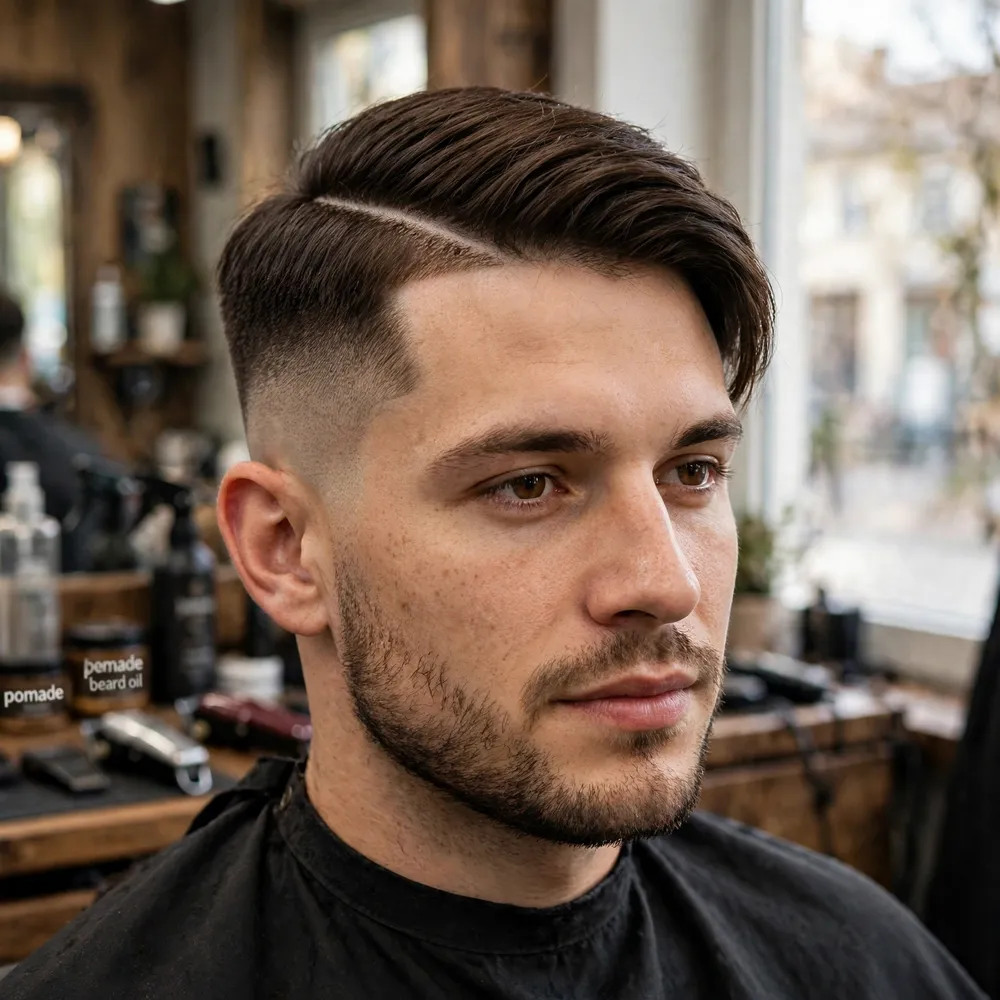
Take the side part and sharpen it: a hard part shaved in with a razor where the hair divides, the top combed firmly across, and a mid fade under both sides. The shaved line is what turns a neat cut into a precise one. It suits oval, square and heart-shaped faces and is a smart choice for men whose hair is thinner on top, because combing across maximises coverage. One warning: the hard part line softens within about two weeks, faster than the fade itself, so this style lives on a two-week tidy-up rhythm.
16. Mid Fade Slick Back
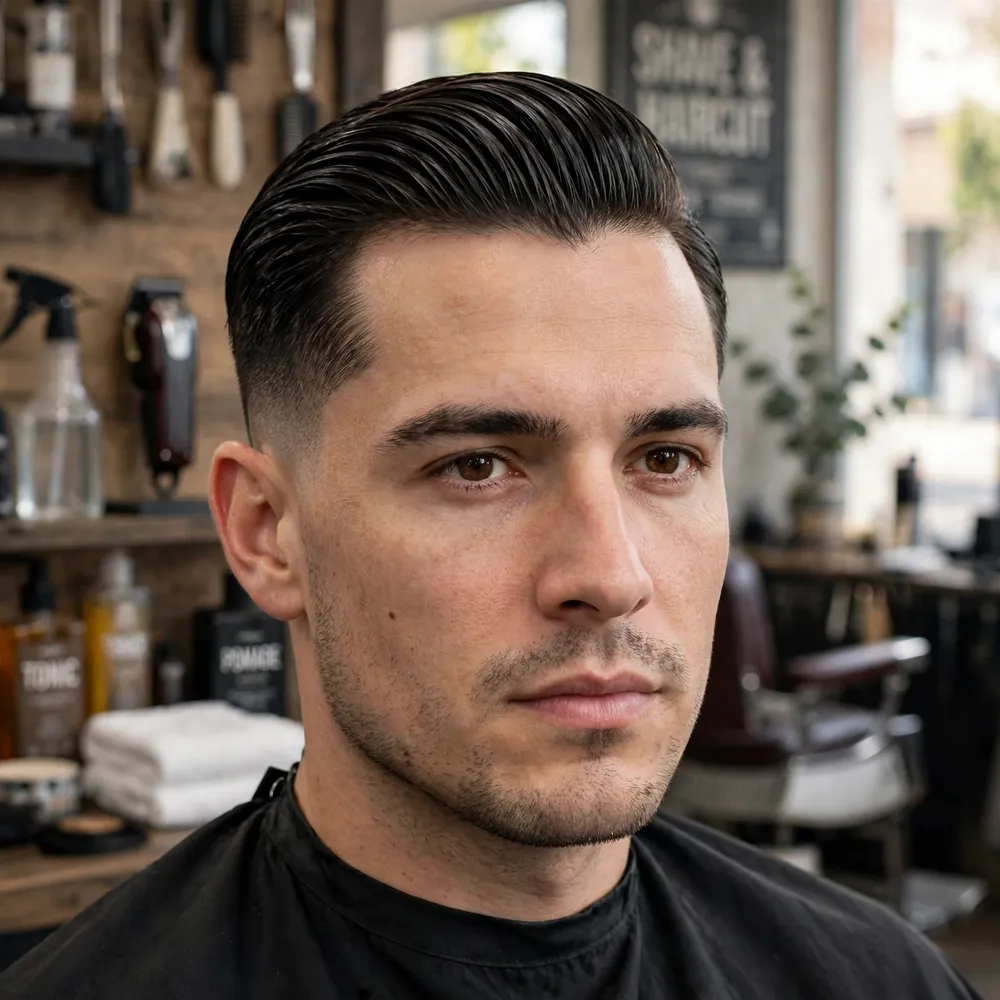
Hair combed straight back over tight faded sides is one of the highest-contrast looks a mid fade can carry, because the smooth top and the short sides pull in opposite directions. You need three to four inches on top, and straight or slightly wavy hair — strong curls will not slick without a fight. Choose your finish on purpose: a water-based pomade gives the classic glossy version, a matte paste gives the modern dry one. Rectangular and oval faces wear it best, since the swept-back top adds length.
17. Mid Fade Brush Back
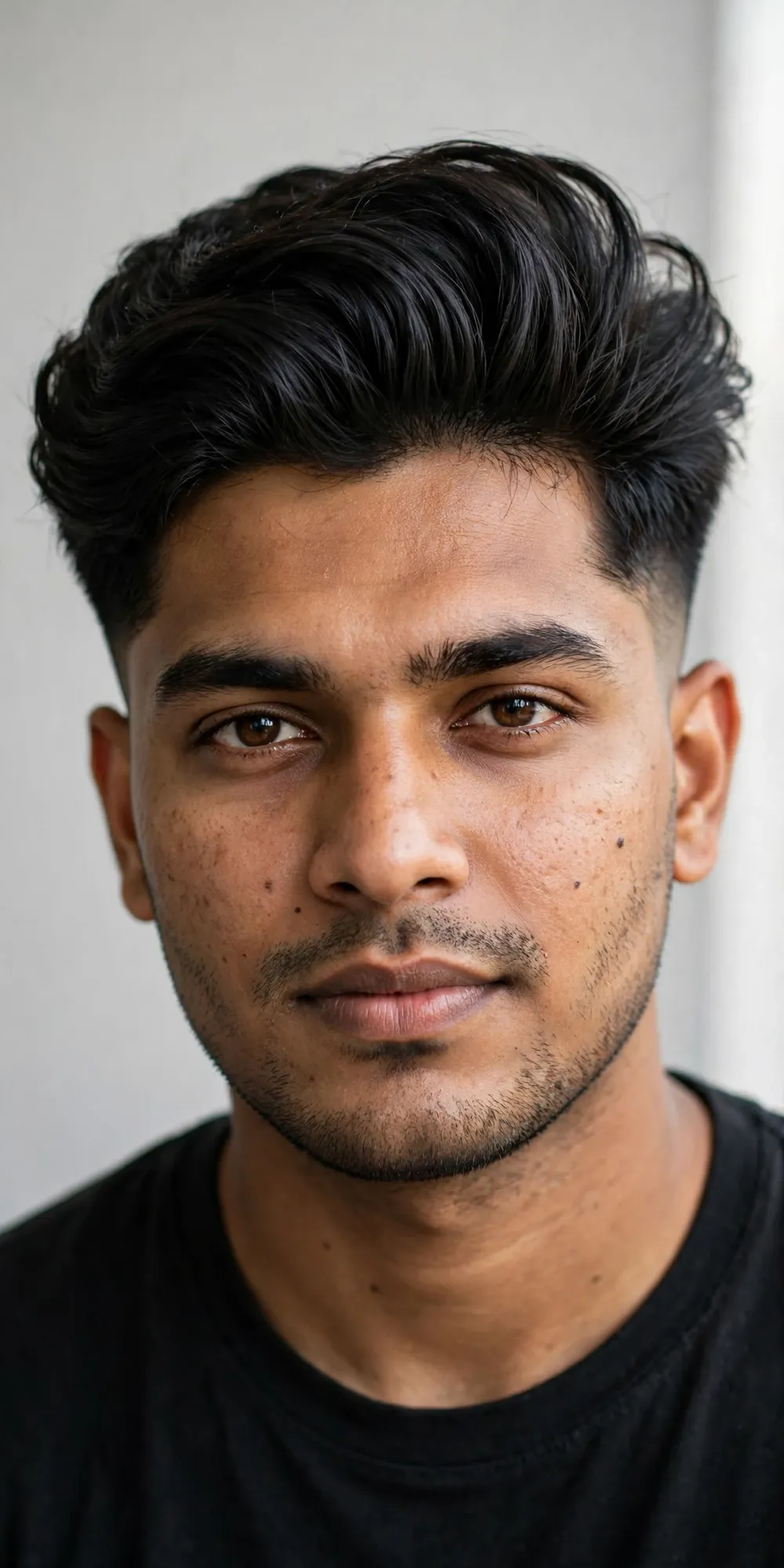
Men mix this up with the slick back, but the method is different: instead of combing the hair flat against the head, you blow-dry it up and back so it keeps volume and visible texture. The mid fade keeps the sides compact so all that lift looks intentional rather than wild. It suits thick to medium hair — fine hair can do it with a pre-styling mousse, but expect less height. Two minutes with a dryer and a vent brush, then a fingertip of matte paste raked through the ends.
18. Mid Fade Hard Part
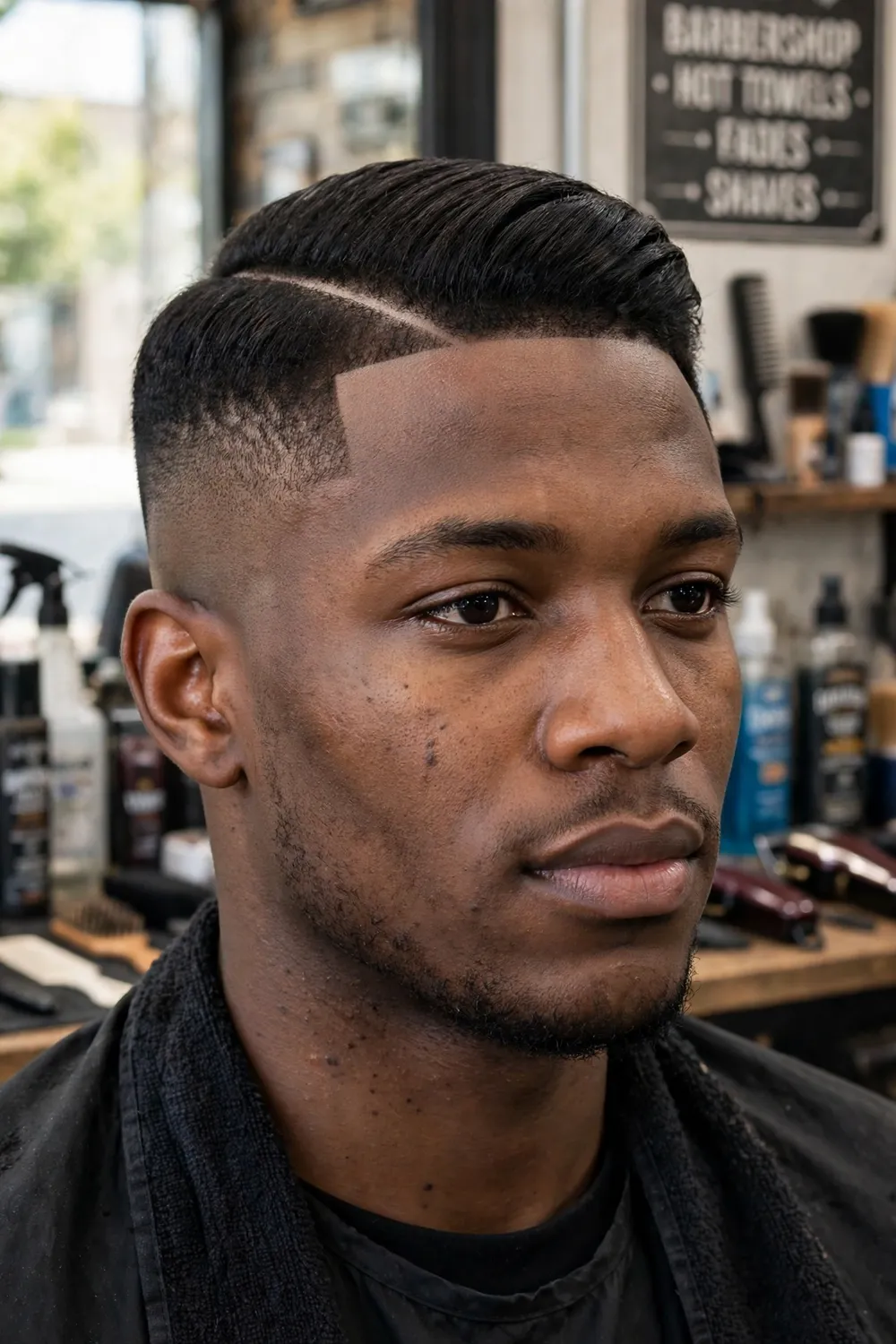
Here the hard part is the headline rather than a detail of another style: a razor-cut line placed about an inch back from the hairline, with a mid fade wrapping both sides and whatever tidy top you prefer above it. It sharpens crops, comb overs and side parts alike, and it photographs extremely well when fresh. Budget for reality, though — the line blurs in roughly two weeks, well before the fade grows out, so this is a style for men who already visit the barber fortnightly.
19. Mid Fade Crew Cut
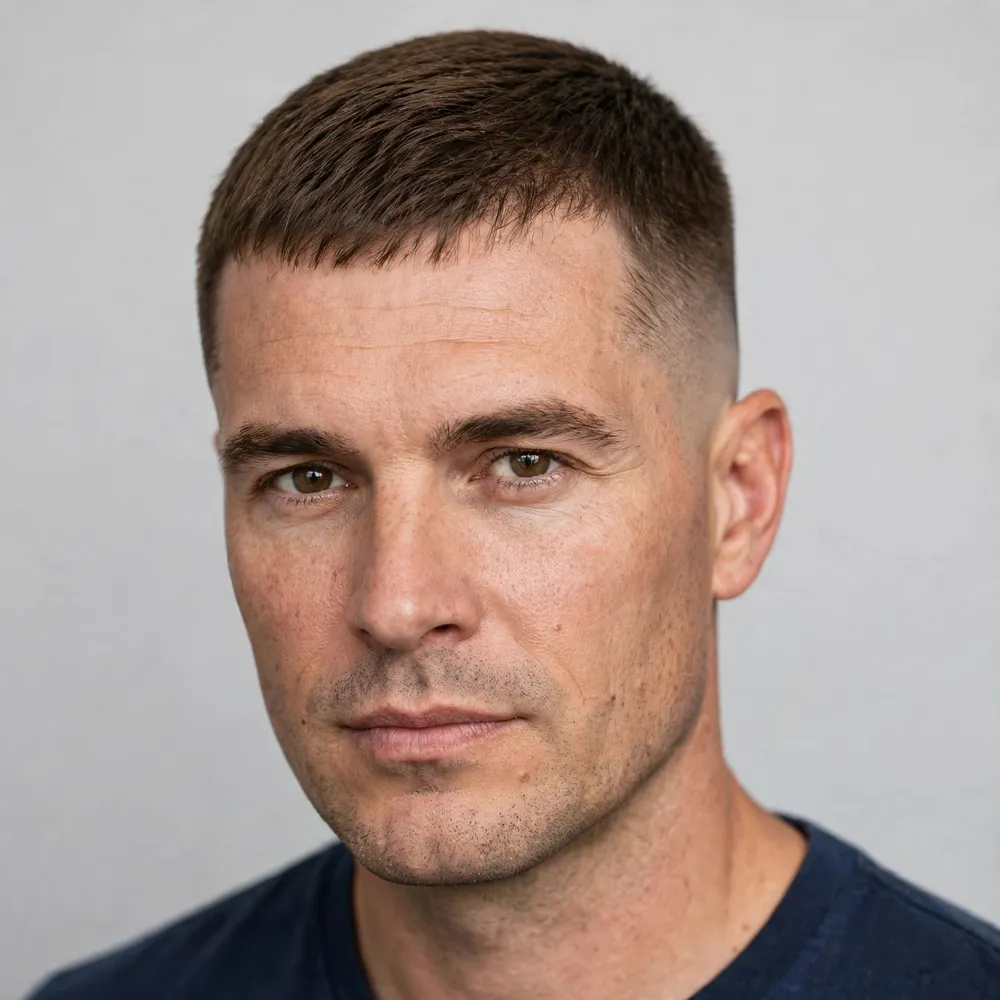
The crew cut keeps the top short and even, a touch longer at the front and tapering toward the crown, and the mid fade gives it a crisper outline than the low fade version most men grew up with. There is effectively no daily styling — towel dry and go — which is why it remains the default for office workers, athletes and anyone posted somewhere hot. It suits every face shape. Ask for “crew cut on top, longer at the front, mid fade on the sides” and expect a two-to-three-week cycle.
20. Mid Fade Buzz Cut
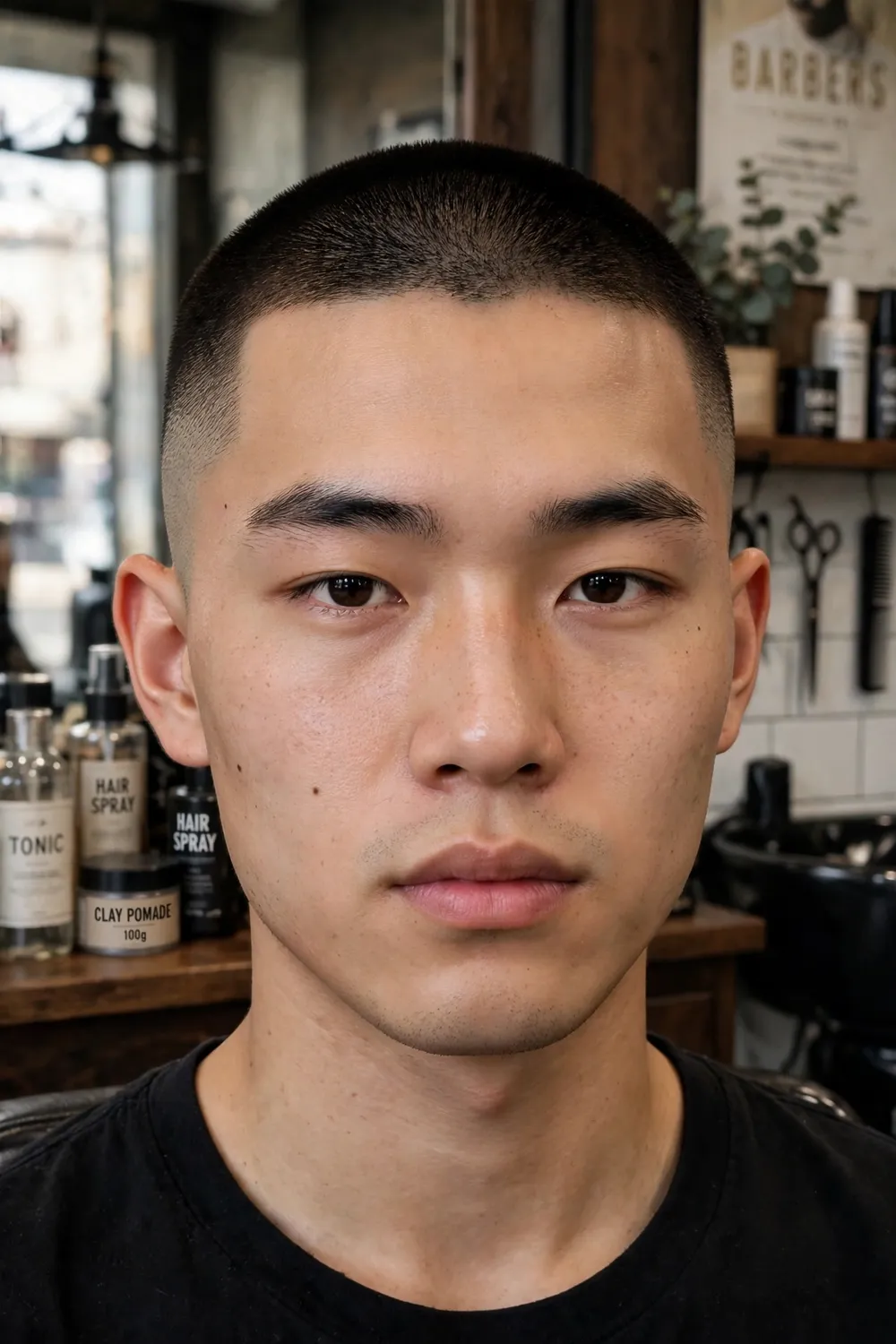
A #2 or #3 all over, blended into a mid fade, sounds simple — but the fade is what separates this from a bathroom-clipper buzz. Starting the blend at the temple gives the head a defined, athletic silhouette instead of a uniform dome. It suits strong jawlines and is the lowest-effort cut here: no product, no dryer, no mirror time. Because everything is short, regrowth is visible sooner than the calendar suggests, so most men rebook at two weeks to keep it looking deliberate.
21. Mid Fade with Beard
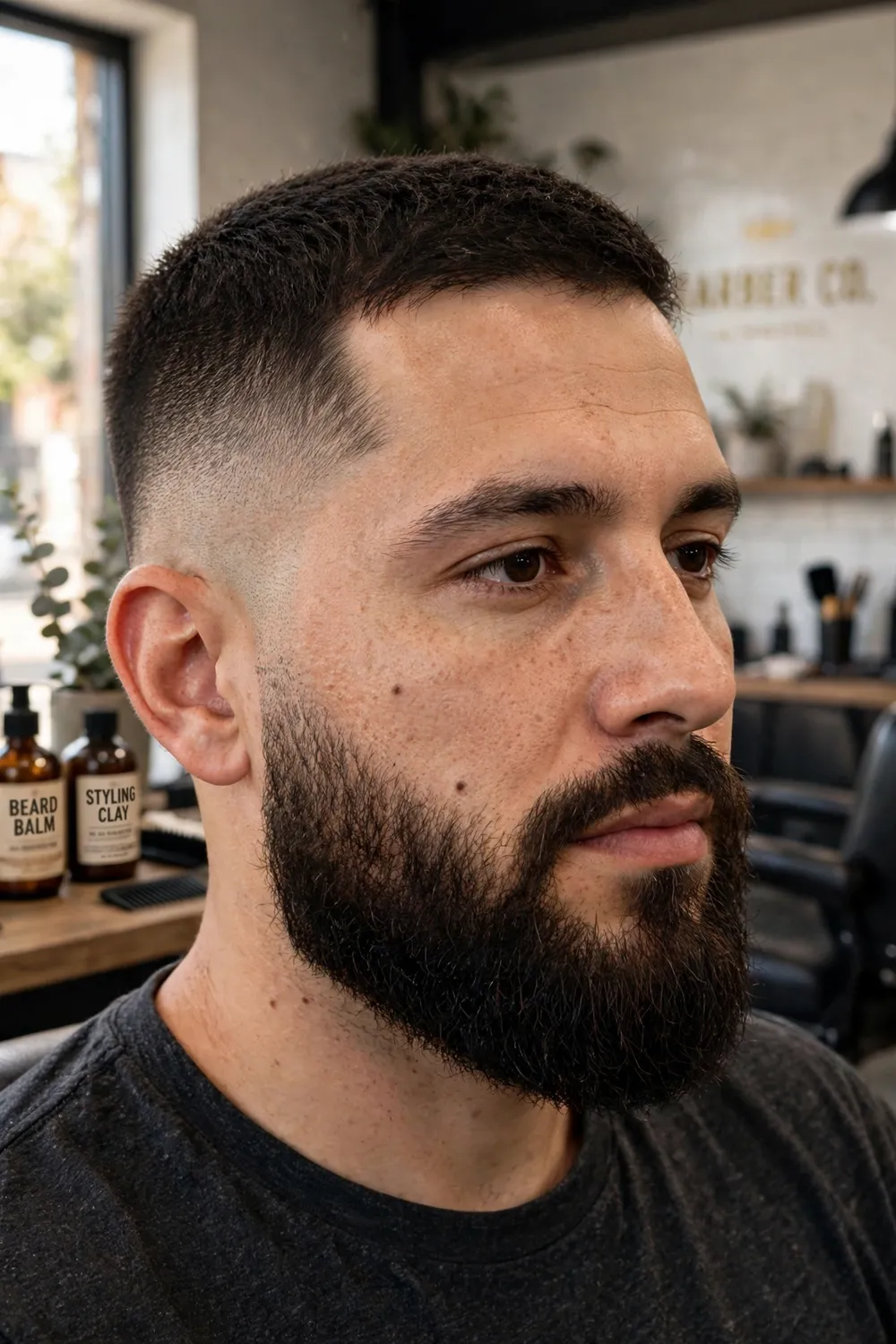
The beard changes the geometry of a mid fade: because the fade starts at the temple, there is a longer stretch of sideburn between the fade line and the beard than with a low fade, and that gap has to be blended on purpose. Left to chance, many barbers leave a hard stop where the fade ends and the beard begins, which looks like two separate haircuts sharing one head. Say the sentence out loud: “Blend the fade down into the beard at the sideburn.” It pairs best with full beards and short boxed beards, and the join needs the same two-to-three-week refresh as the fade.
22. Mid Fade Faux Hawk

The centre strip is left long enough to push up and together, while the mid fade eats into the sides enough to make that strip read as a hawk — without shaving the sides down like a true mohawk, so you can comb it flat on days you need to look ordinary. It suits oval and square faces and thick, straight-ish hair that holds a vertical shape with strong matte product. Ask your barber to leave the centre strip wider than you think; a strip cut too narrow cannot be widened later, only grown out.
23. Mid Fade Mohawk
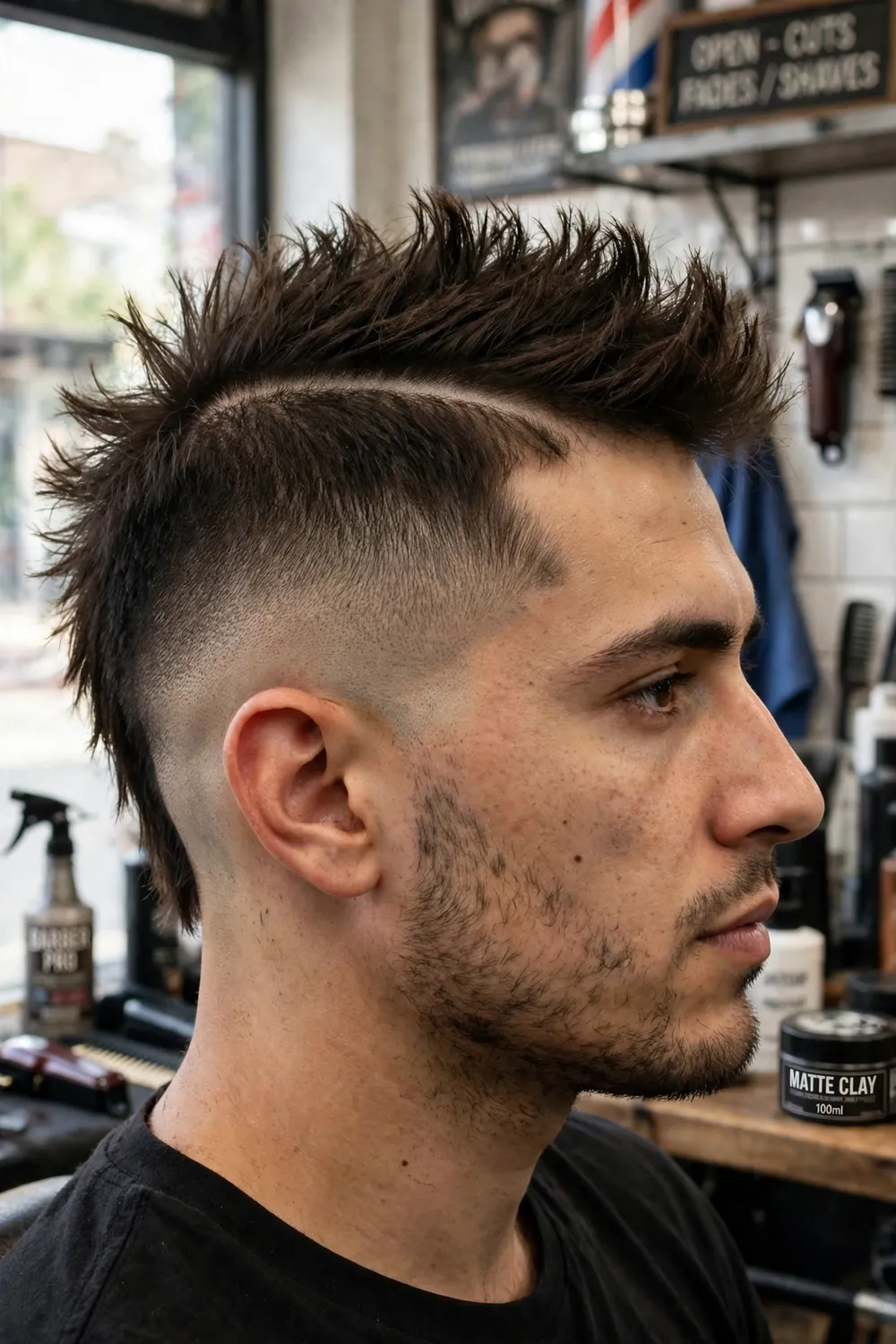
The committed version: a defined strip of length down the centre of the head and a mid fade taking both sides tight, which makes the strip look taller and more prominent than the same mohawk paired with a low fade. It works on oval and oblong faces with thick hair, and it is a two-week-maintenance cut — the moment the sides grow past stubble length, the contrast that sells the look starts to soften. Agree the strip width in the chair before the clippers start; it is the one decision you cannot revise afterwards.
24. Mid Fade Modern Mullet
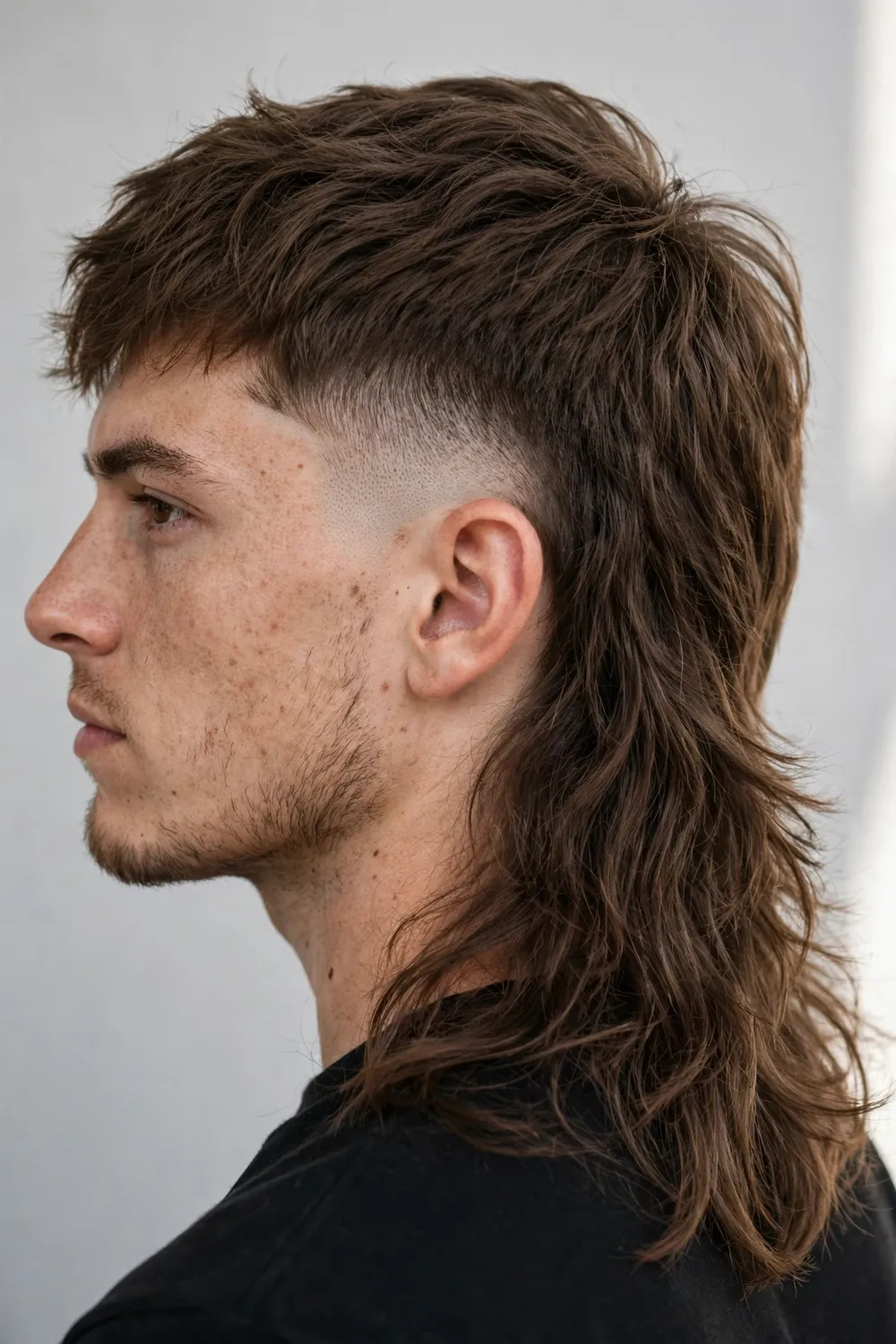
The modern mullet keeps the top shortish, the back long, and uses a mid fade on the sides so the length at the back reads as a choice rather than a missed haircut. The faded sides are what rescue this from fancy-dress territory — they give the silhouette structure and a clean profile around the ears. It suits oval faces and wavy or curly hair, which gives the back section movement. Expect a tidy-up every two to three weeks; the tail needs trimming before it starts to look scraggly, usually around week four.
25. Mid Fade Executive Cut

Also known as the Ivy League: a polished top slightly longer than a crew cut, long enough to hold a natural side part, with a mid fade doing quiet work underneath. Of all 47 styles here, this is the one nobody in a conservative office will ever comment on — it simply looks well-groomed. It suits oval and oblong faces and men who want the fade’s clean grow-out without any visible edge to their look. Ask for “Ivy League on top, natural part, mid fade on the sides, nothing to skin.”
26. Mid Fade Side Swept Fringe
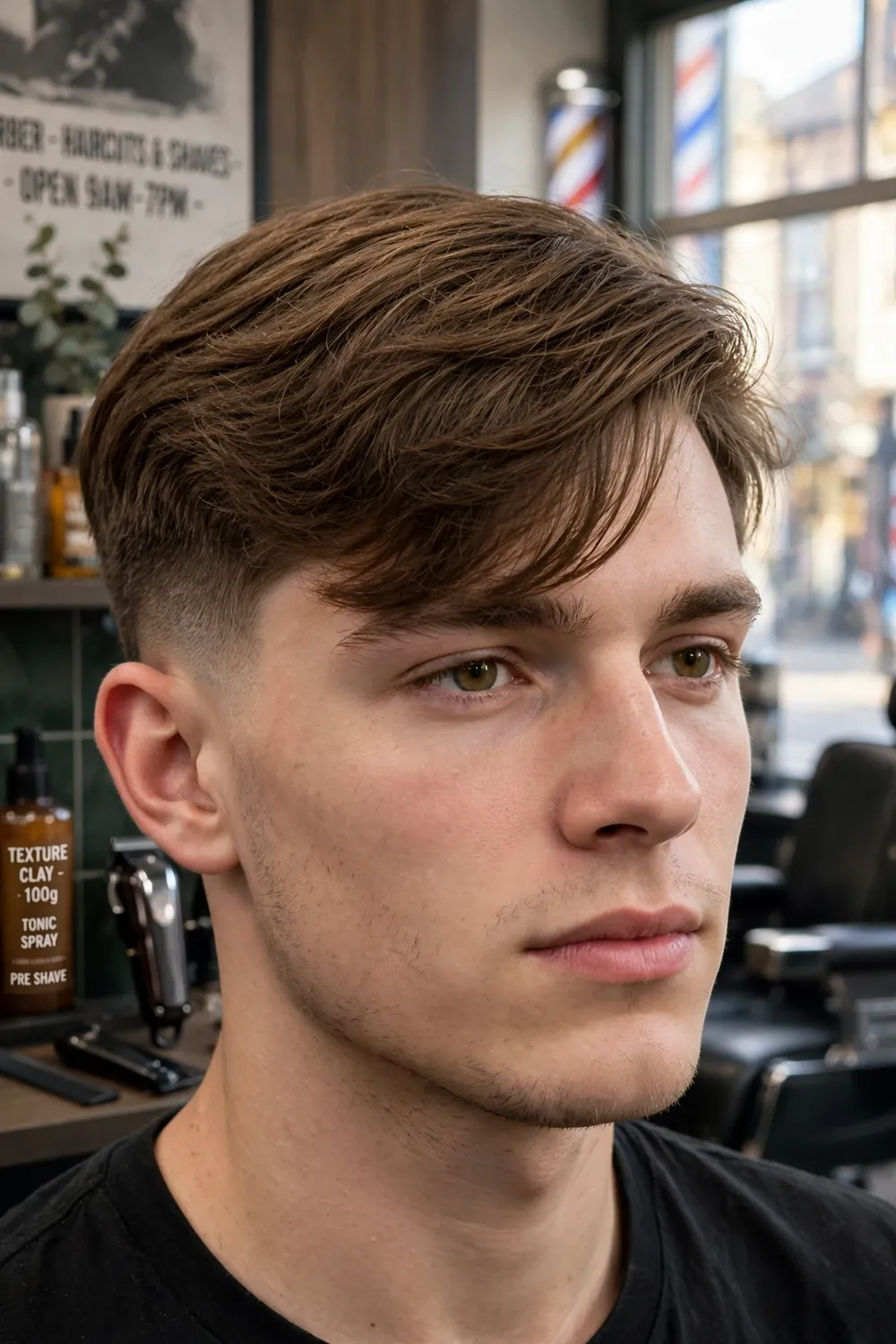
The top falls forward and drifts to one side under its own weight — not combed flat like a side part, not pushed up like a quiff. It is the relaxed end of the mid fade family, and it works because the tight sides stop the soft fringe from looking accidental. Leave enough length on top for the sweep to travel, usually three inches or more. It suits oval and heart-shaped faces and straight-to-wavy hair, and it is one of the few styles here that comfortably stretches to a three-week cycle.
27. Mid Fade Afro
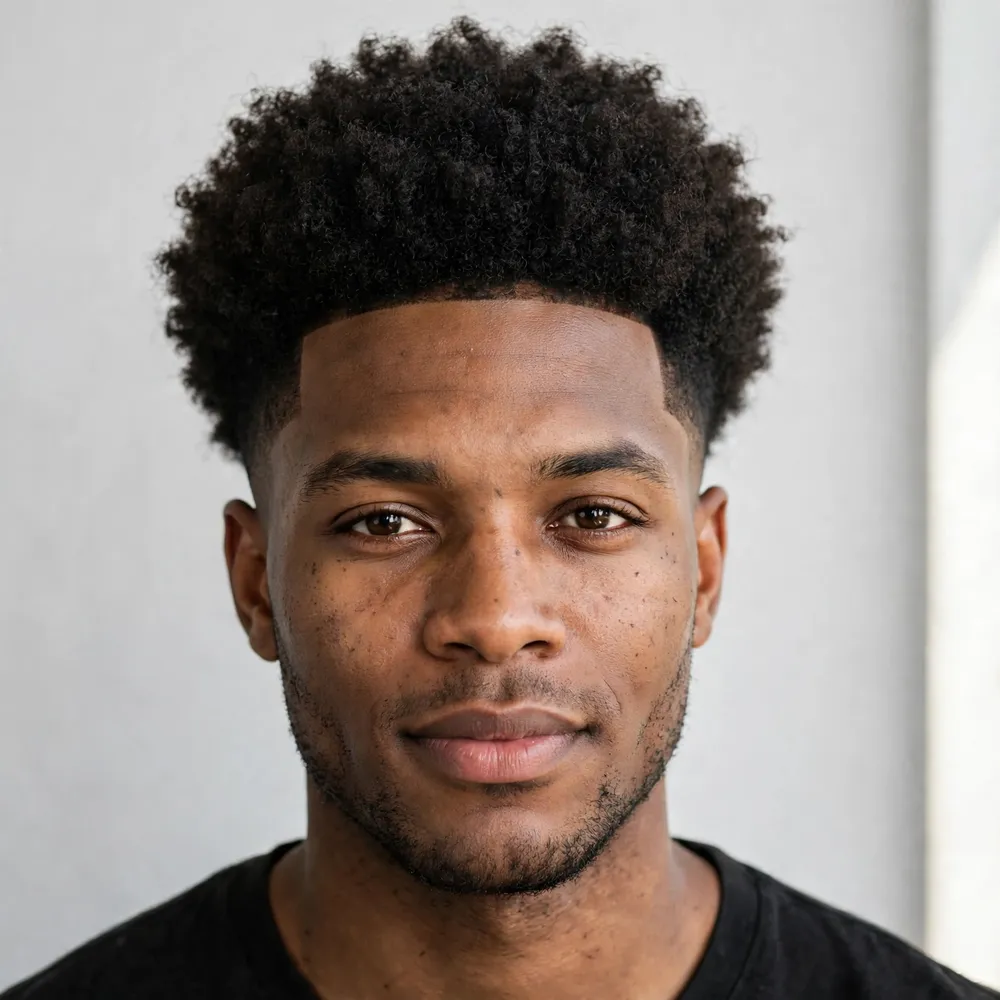
A full, rounded afro on top with a mid fade cleaning up the sides and a crisp lineup along the hairline: maximum natural volume, zero stray bulk around the ears. The mid height works better than a high fade here because it removes enough side weight to shape the silhouette without eating into the afro’s width. It suits coily and 4C hair, and the top should be shaped dry and picked out, not cut wet and flat. Keep the hair moisturised — a dry afro loses its shape long before the fade loses its edge.
28. Mid Fade with Long Hair on Top
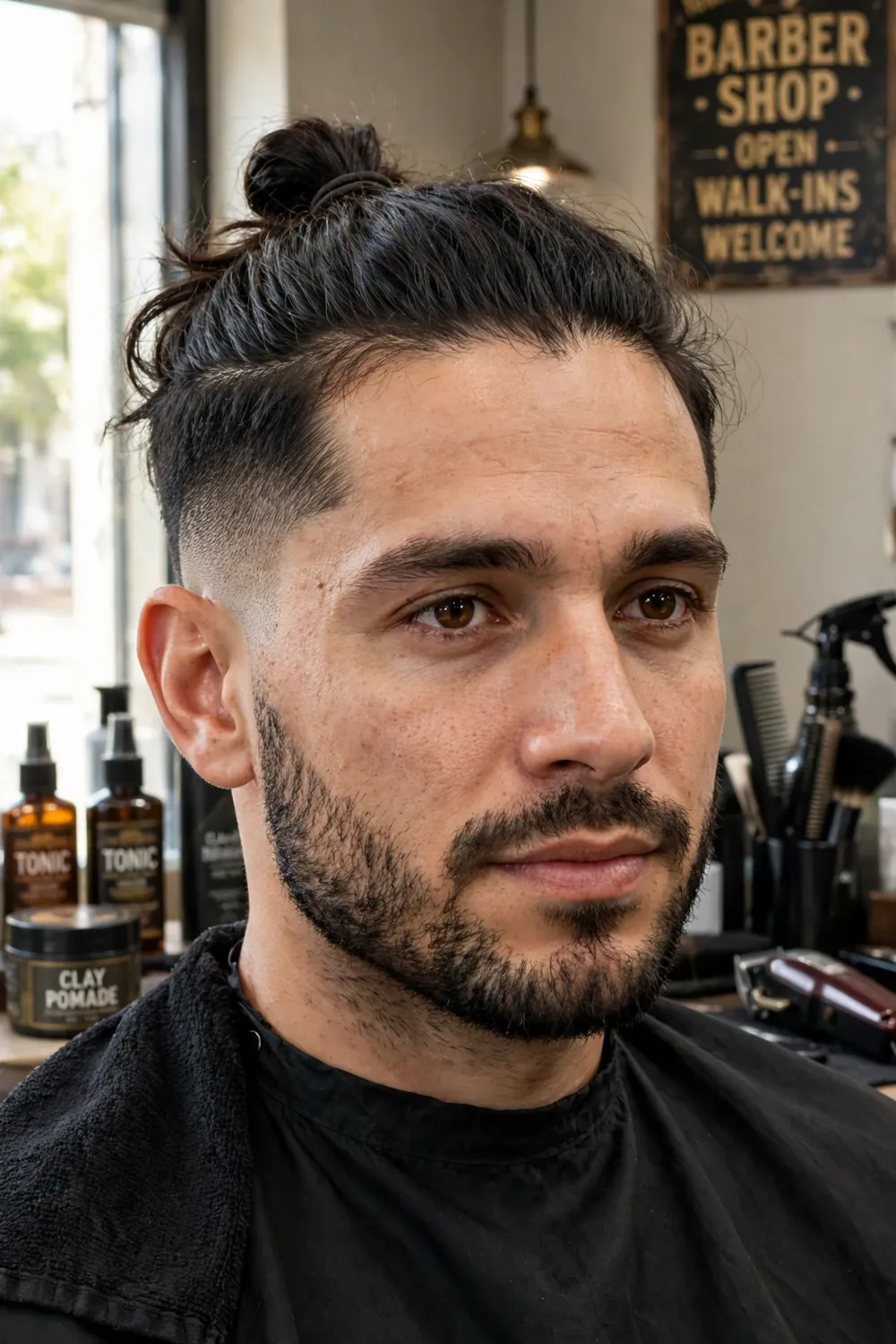
Four to six inches or more on top — long enough to push back, tuck behind the ears or tie into a small knot — balanced by mid fade sides that keep the whole thing looking intentional instead of transitional. This is the grow-out cut: it lets you build length for a year without the awkward in-between stage. It suits straight, wavy and curly hair. Run two appointments in parallel: the fade every three weeks, the top trimmed every eight to ten weeks just to clean the ends.
29. Mid Fade Hi-Top
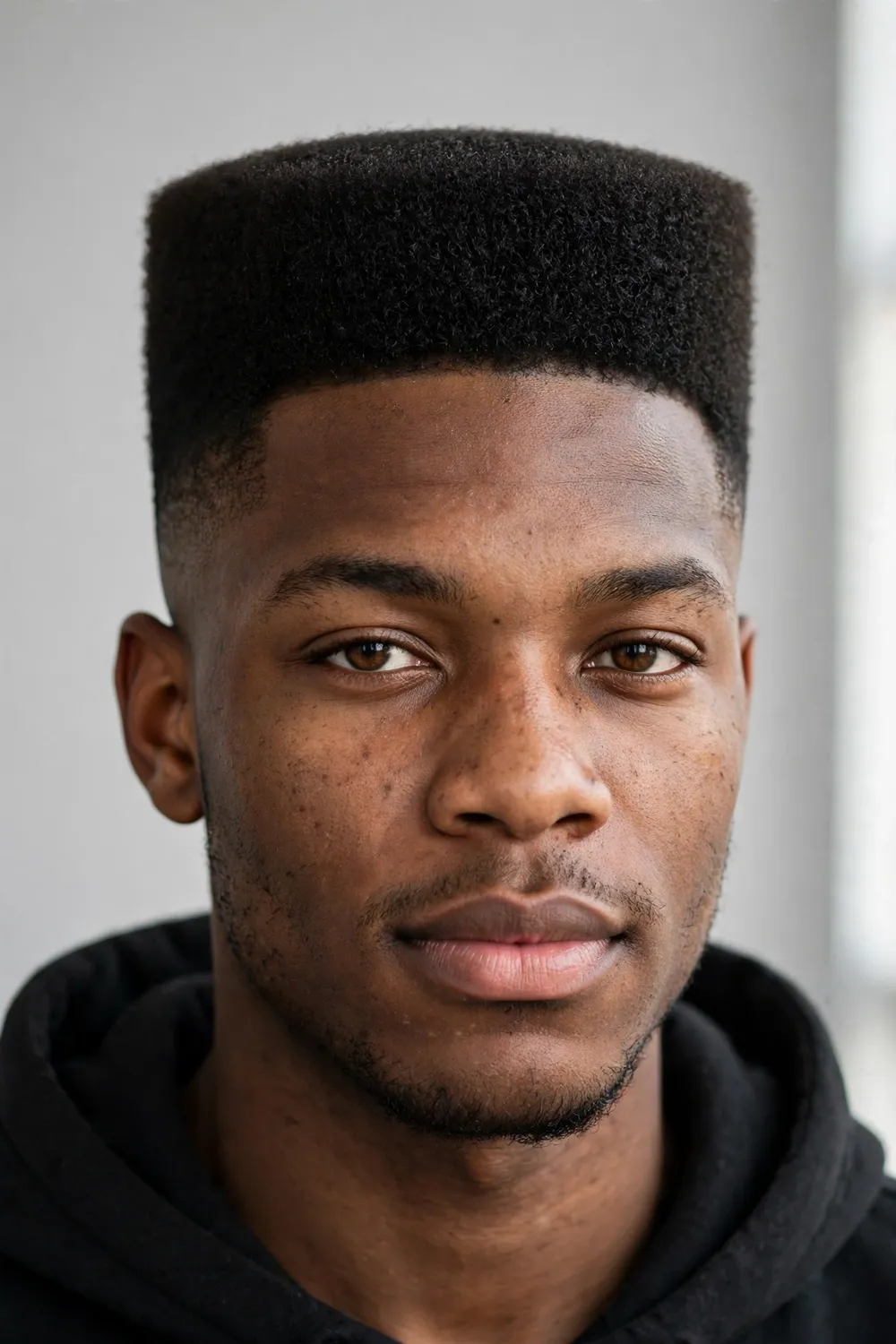
The hi-top stands tall and flat across the top, and the mid fade shapes the sides so the height looks engineered rather than like an accident of growth. It needs coily hair with the density to hold vertical shape, and a barber comfortable cutting it level — ask to see it from the side before you leave the chair, because uneven height only shows in profile. It is a retro-modern look that lives on a two-week cycle: the flat top needs re-levelling as soon as one side outgrows the other.
30. Mid Fade Edgar Cut
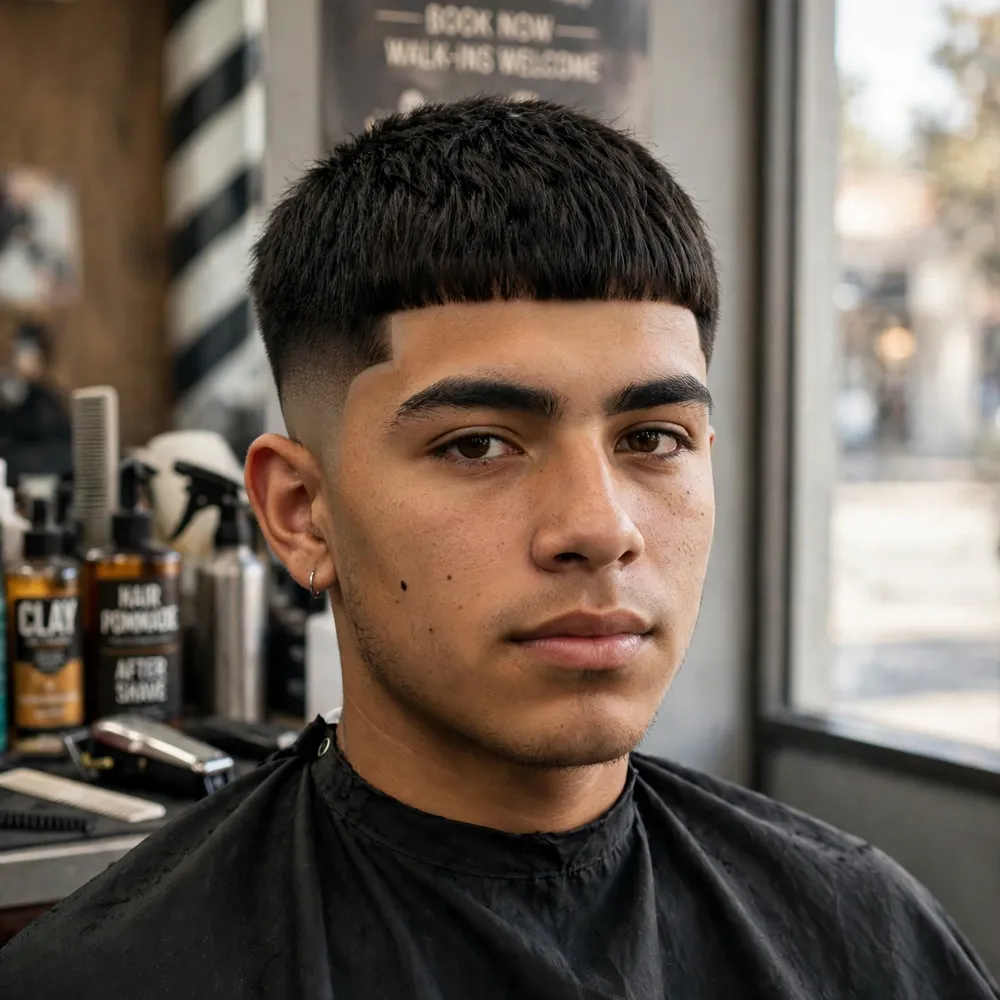
The Edgar pairs the bluntest possible fringe — cut straight across the forehead in one graphic line — with a tight mid fade, and the contrast between that hard horizontal edge and the blended sides is the entire look. It works best on thick, straight hair that will hold the line, and on oval and oblong faces. There is no soft version of this cut and no hiding a bad one, so go to a barber who cuts Edgars regularly. The fringe line needs re-cutting about every two weeks to stay graphic.
31. Mid Fade with Hair Design
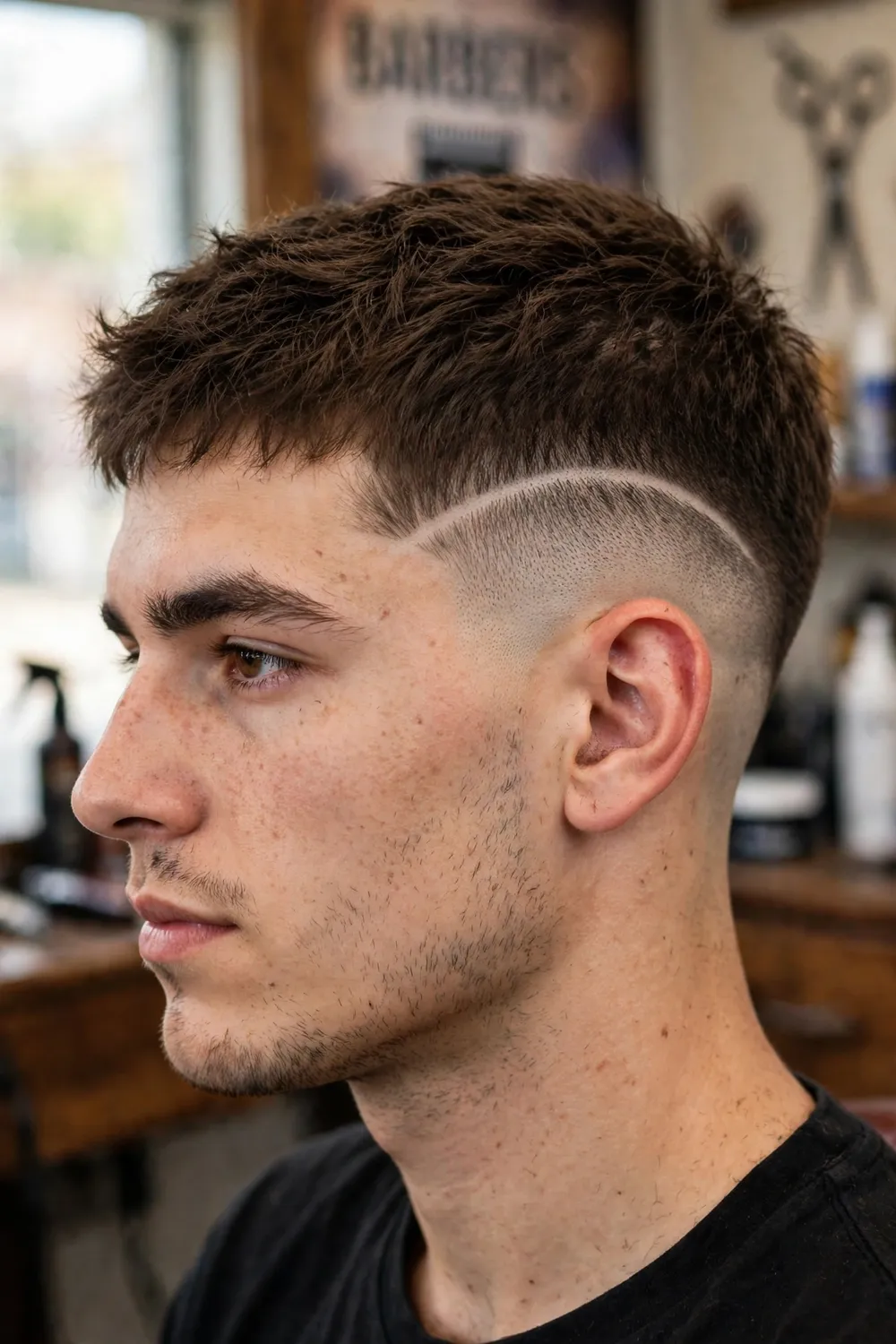
A design — a single curved line, a double stripe, a small geometric shape — shaved into the faded zone, usually just above the ear where the blend is shortest and the line reads cleanest. The mid fade gives designs a bigger canvas than a low fade, because the short area reaches higher up the side. Treat it as a short-term detail: a crisp line softens within ten days and is gone by the third week, so designs suit men already on a two-week barber rhythm, or anyone booking before an event or photos.
32. Mid Fade Caesar Cut
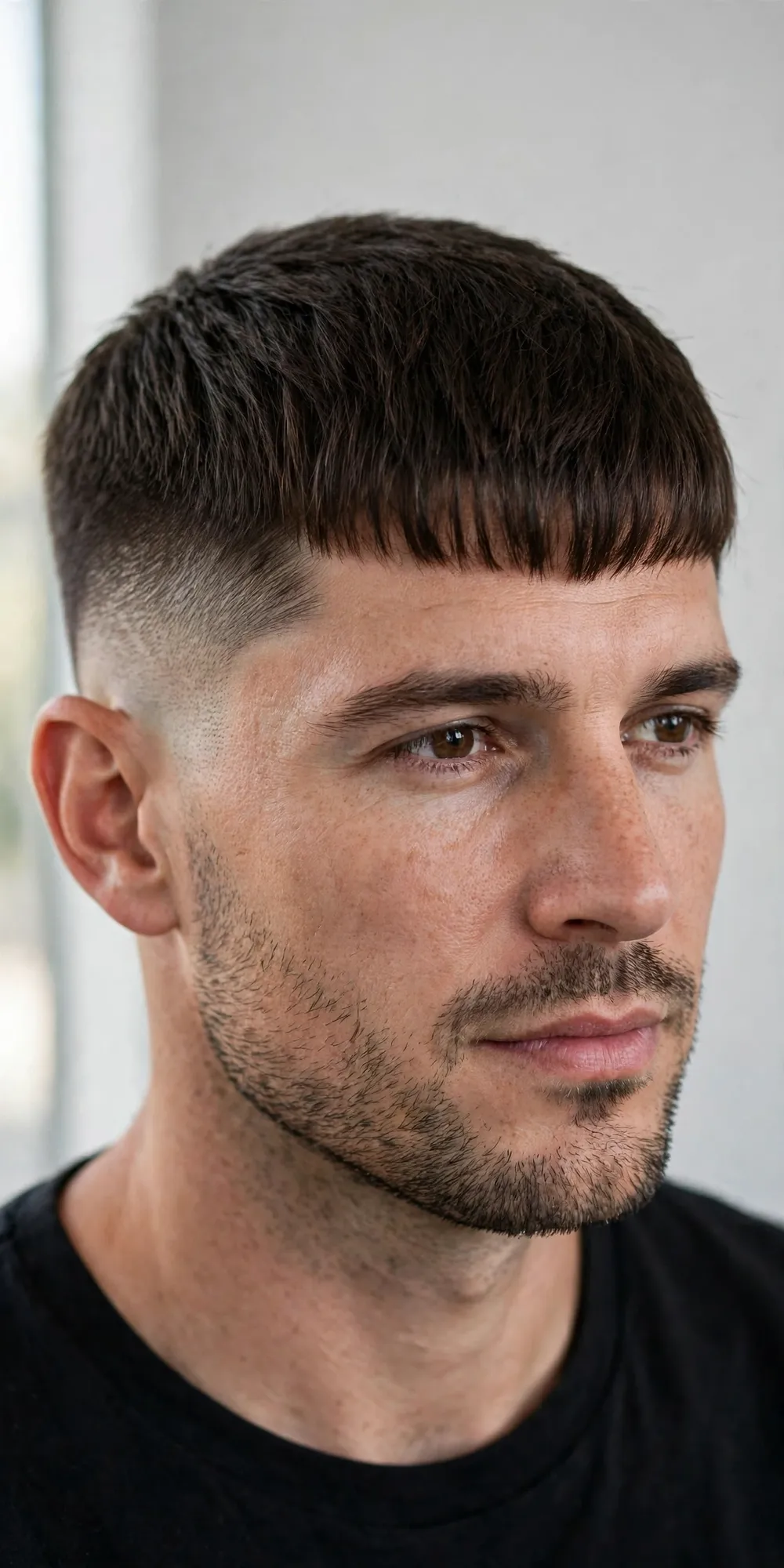
The Caesar keeps everything short: a cropped top with a short horizontal fringe brushed forward, finished with a mid fade that sharpens the outline. It is one of the most forgiving cuts for a receding hairline, because the forward fringe covers the temples instead of exposing them, and it needs no styling beyond a fingertip of matte product — many men wear it with none. Ask for the fringe short and straight, not textured, and the fade at mid height so the silhouette stays compact.
33. Mid Skin Drop Fade
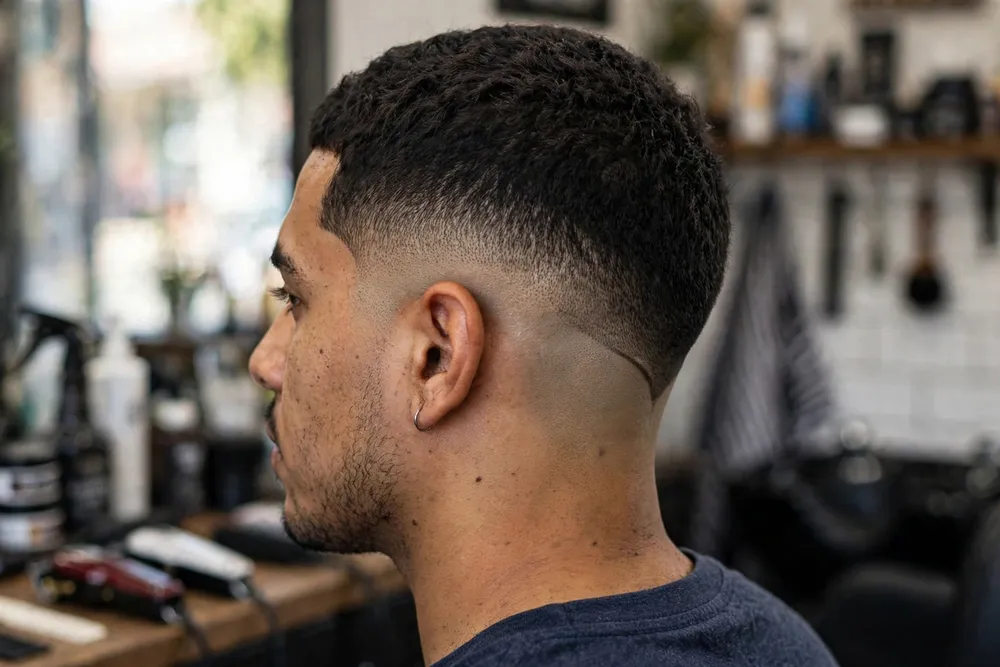
Two upgrades at once: the base goes to skin like a mid skin fade, and the line drops behind the ear like a mid drop fade. It is the sharpest version of the mid fade for curly and wavy hair, because the skin finish gives maximum contrast while the dropped arc stops the back from looking bulky where the hair is densest. It is also high-maintenance in both directions — skin regrowth and the dropped outline both show early, so plan on every two weeks, no stretching.
34. Mid Fade with 360 Waves
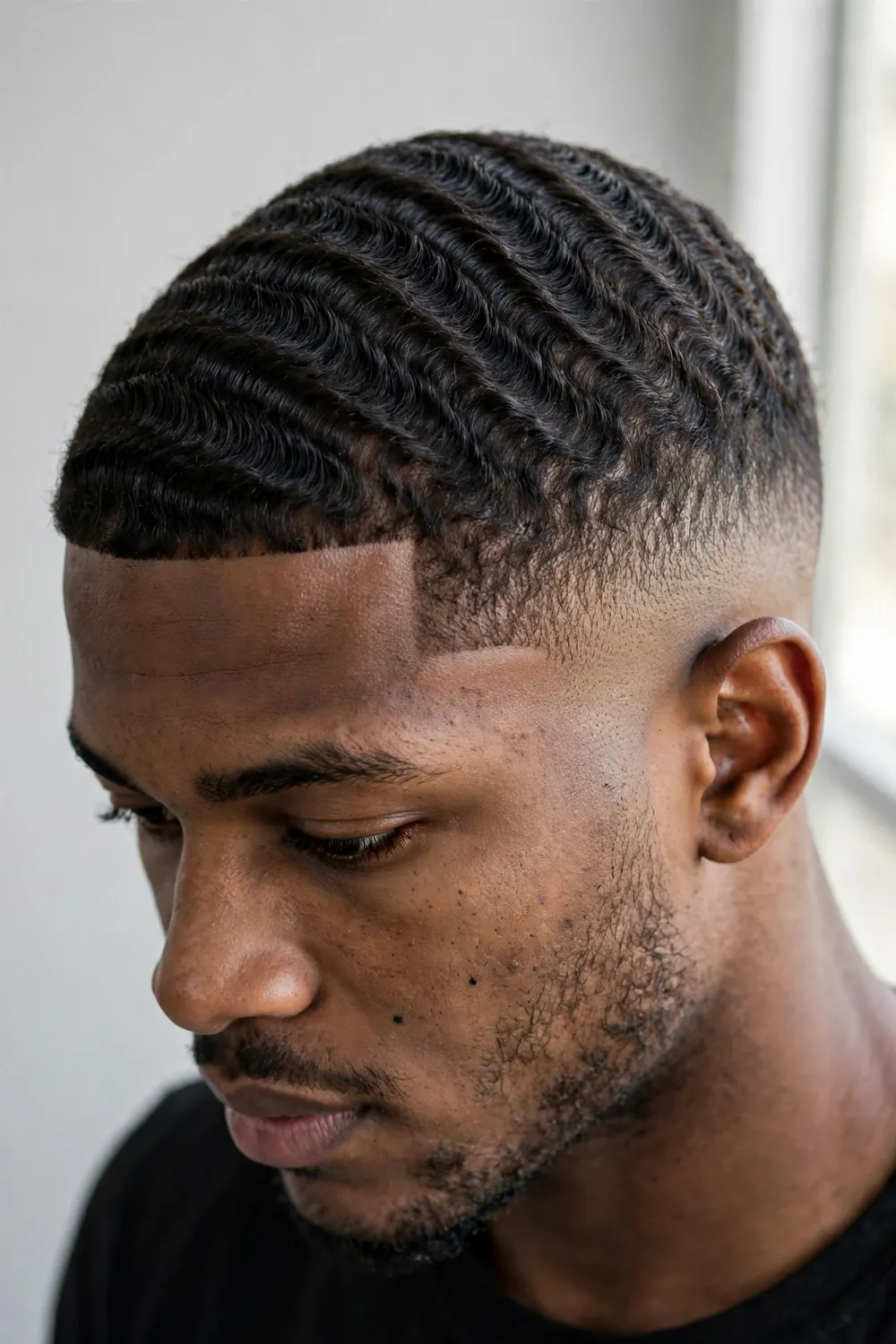
For wavers, the mid fade is the frame around the pattern: the top is cut to wave length (usually a #1.5 or #2 with the grain), brushed into full 360 waves, and the fade cleans the sides without climbing into the pattern itself. The mid height is popular because it leaves enough hair above the ears for the waves to connect around the head — go too high and you cut the pattern off at the sides. Your side of the bargain is the brush work and a durag at night; the fade itself needs refreshing every two weeks.
35. Mid Fade with Line Up
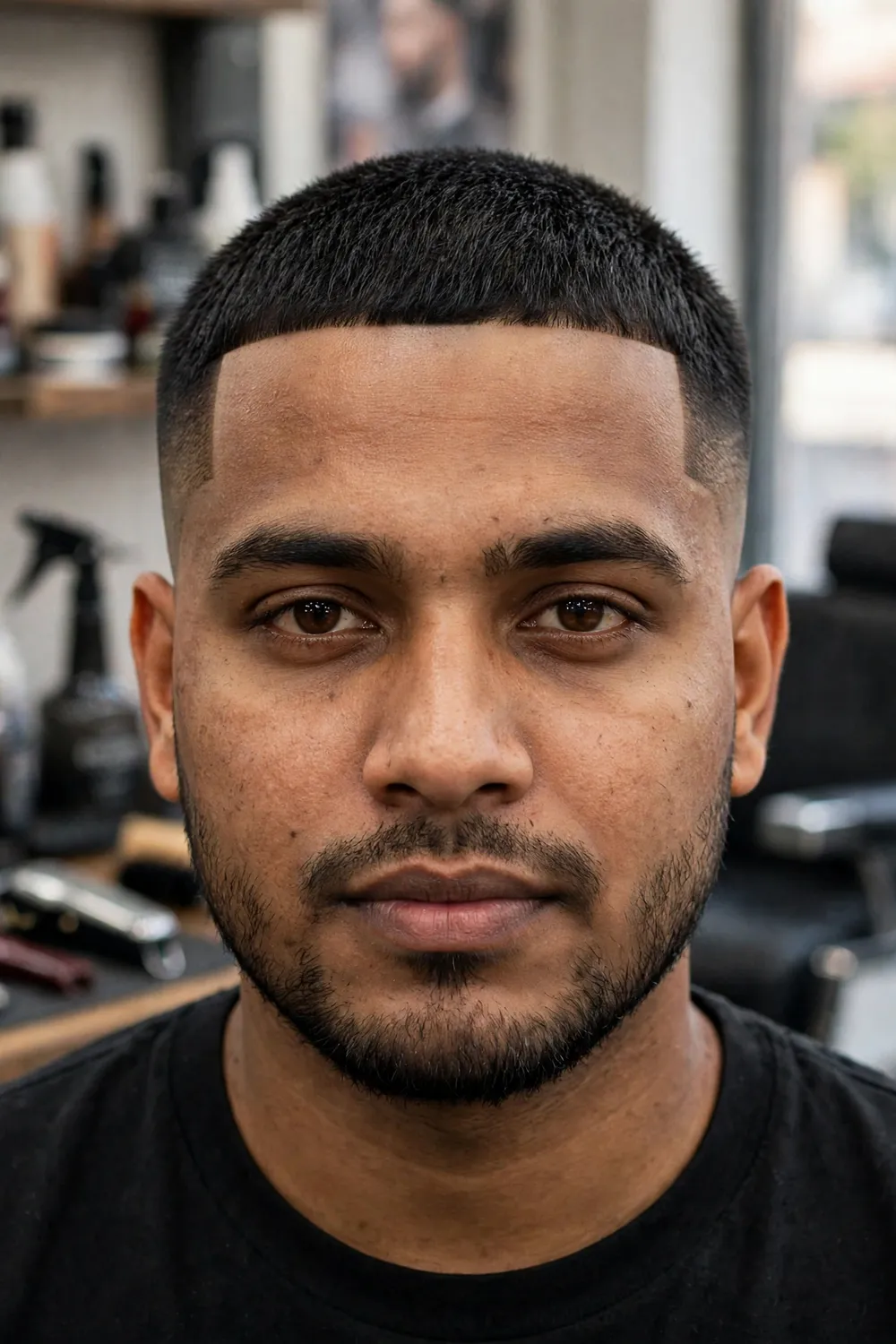
A line up (shape up) squares off the front hairline and temples with straight, sharp edges, and paired with a mid fade it produces the crispest outline in this whole list. It suits naturally straight hairlines best and is a standard finish on coily hair, where it defines the whole cut. Be honest about the upkeep before you commit: a lineup starts to soften in seven to ten days, the fastest-fading detail in barbering. Many men book a lineup-only visit between full cuts, which is quick and usually cheap.
36. Mid Fade for Round Face
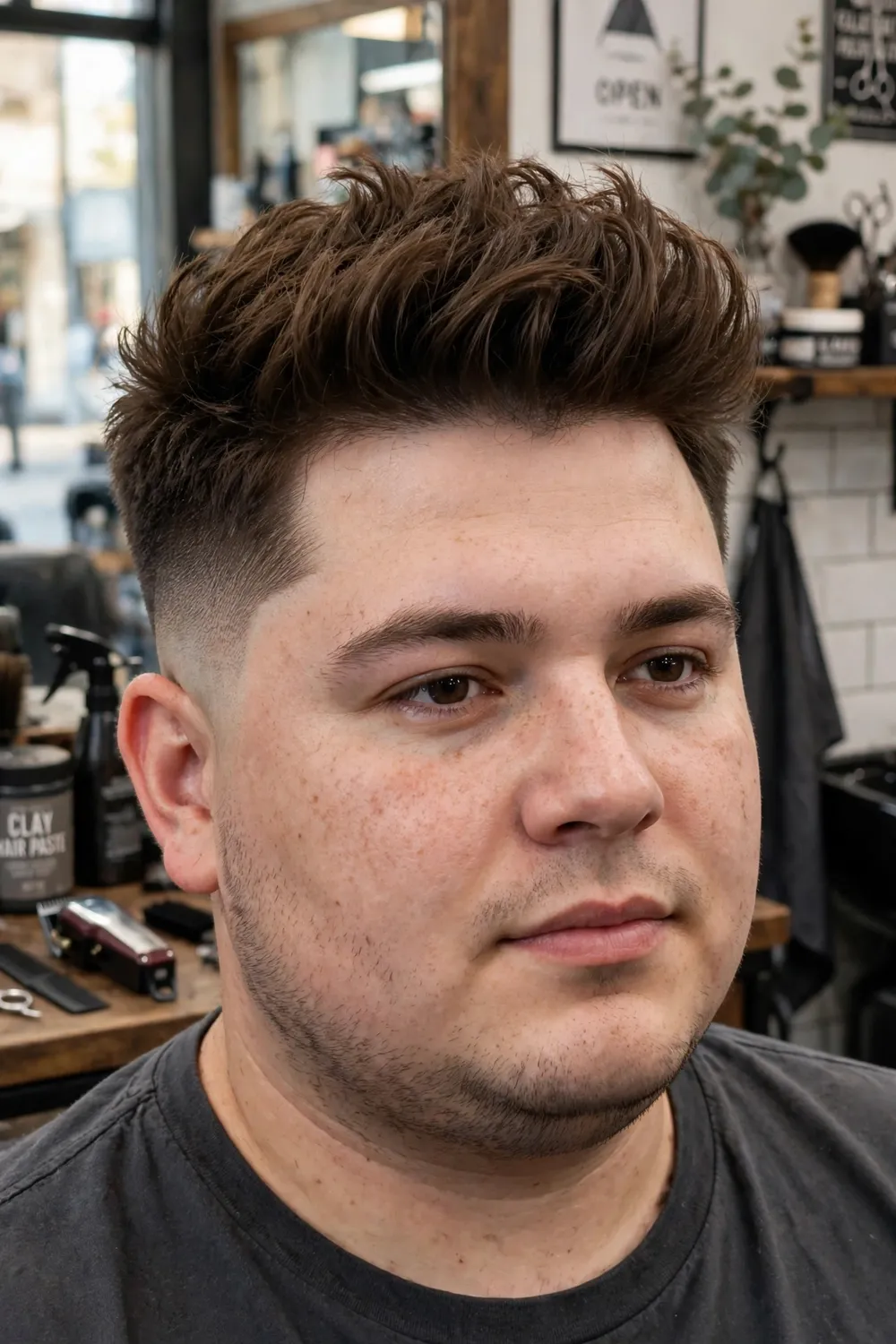
If your face is round, the mid fade is your friend — but the top decides everything. The faded sides remove width at the widest point of the face, and height on top (a quiff, brush back or textured crop with volume) adds length, so the face reads more oval. The version to avoid is a flat, wide top, which adds width back exactly where you removed it. Ask for a mid skin fade or classic mid fade, two to three inches on top, styled up rather than across. Square and angular product-free texture helps too; anything that rounds the silhouette works against you.
37. Mid Fade for Teen Boys
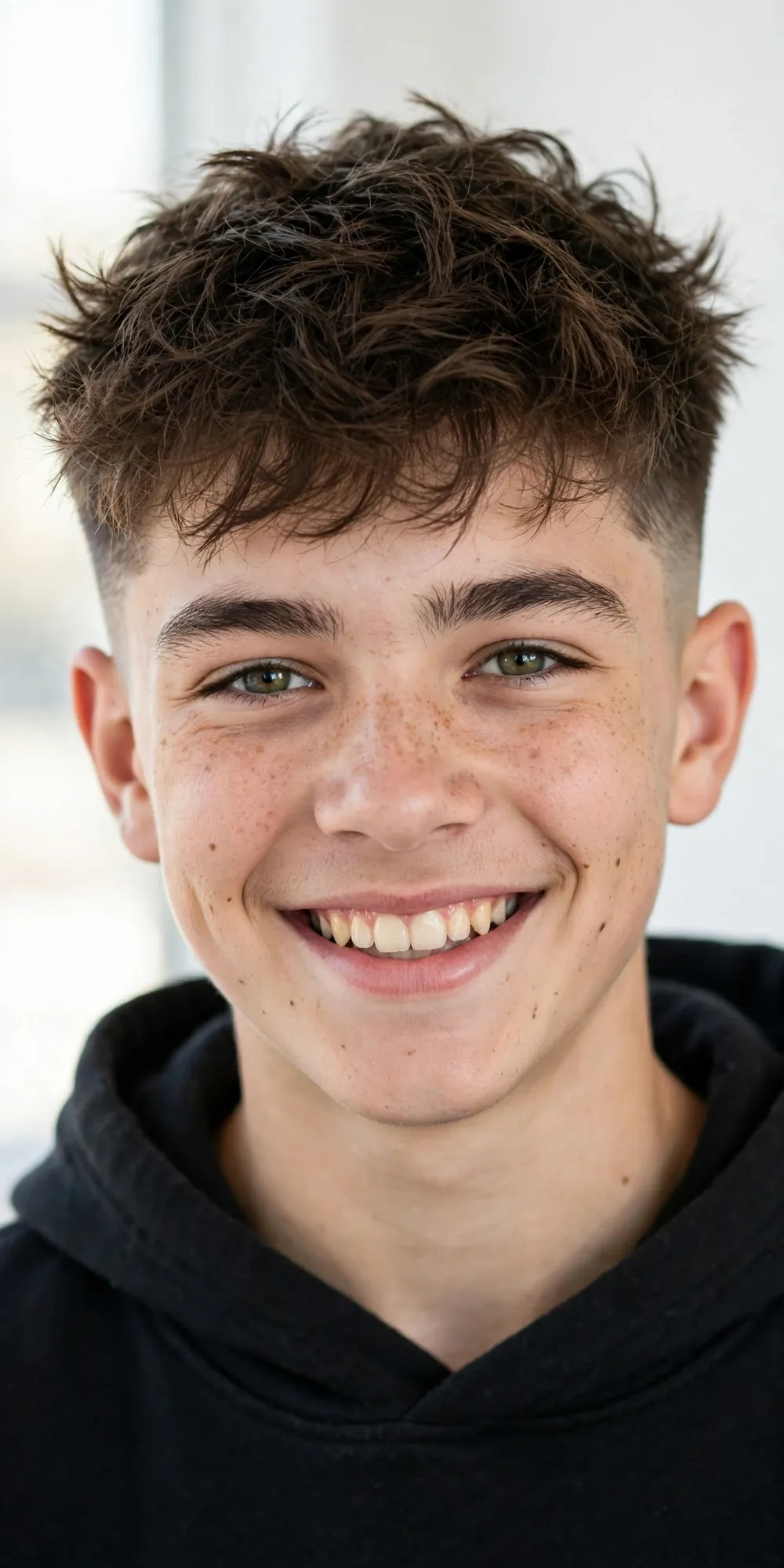
The mid fade is the most-requested cut in the teen age group for practical reasons: it works with school dress codes at the classic and taper end, it survives sport, and a textured crop or fringe on top needs thirty seconds of styling on a school morning. Parents should know the one real cost — it is a two-to-three-week haircut, not a six-week one, so budget the appointments, not just the first cut. For younger teens, the mid taper version is the safer start; it grows out gently if the next visit slips.
38. Mid Fade for Thinning Hair
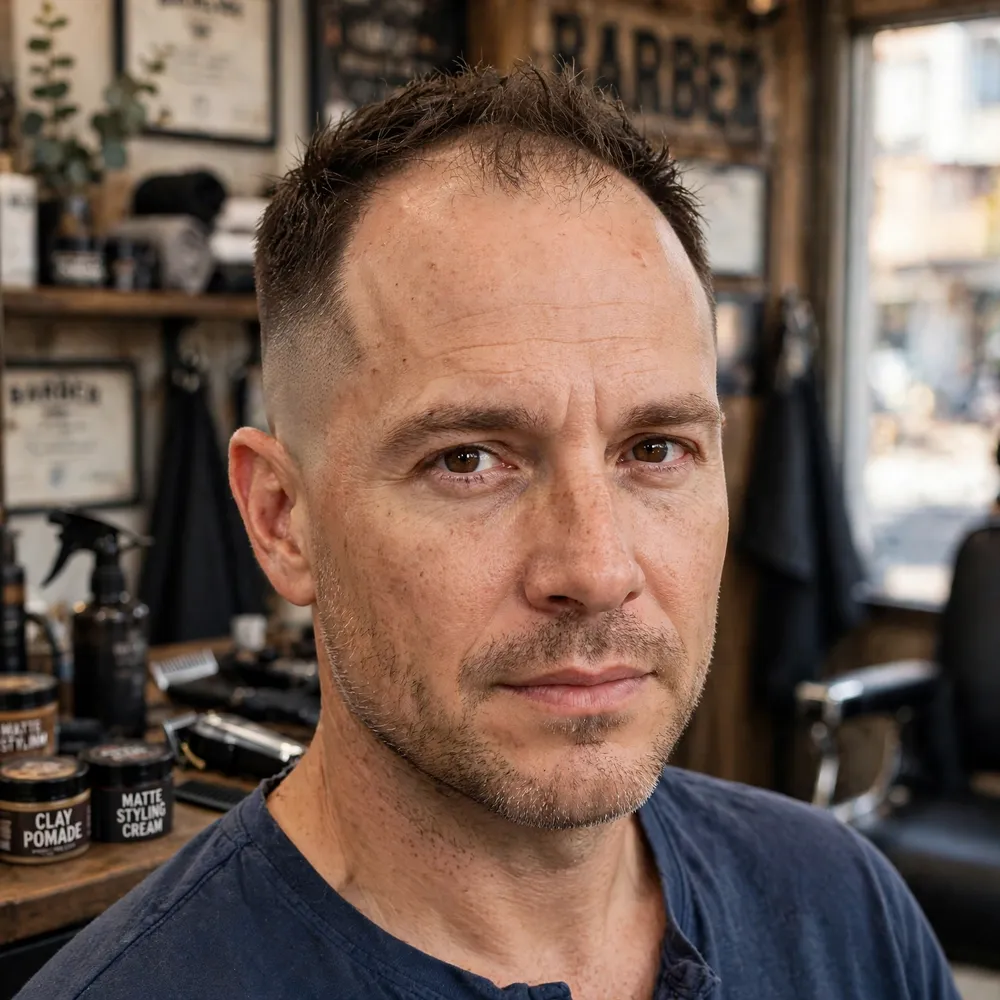
Thinning hair and fades get along better than most men expect, with two rules. First, choose the mid taper version: taking the sides to skin at temple height creates a hard contrast that can make the thinner top look thinner by comparison, while a taper’s softer blend keeps the whole head in balance. Second, keep the top short and textured — a short crop brushed forward covers a thinning crown far better than longer hair combed back, which separates and shows scalp. This is styling advice, not a fix for hair loss; if your hair is shedding noticeably or in patches, that is worth a conversation with a doctor rather than a barber.
39. Mid Fade with Twists on Top
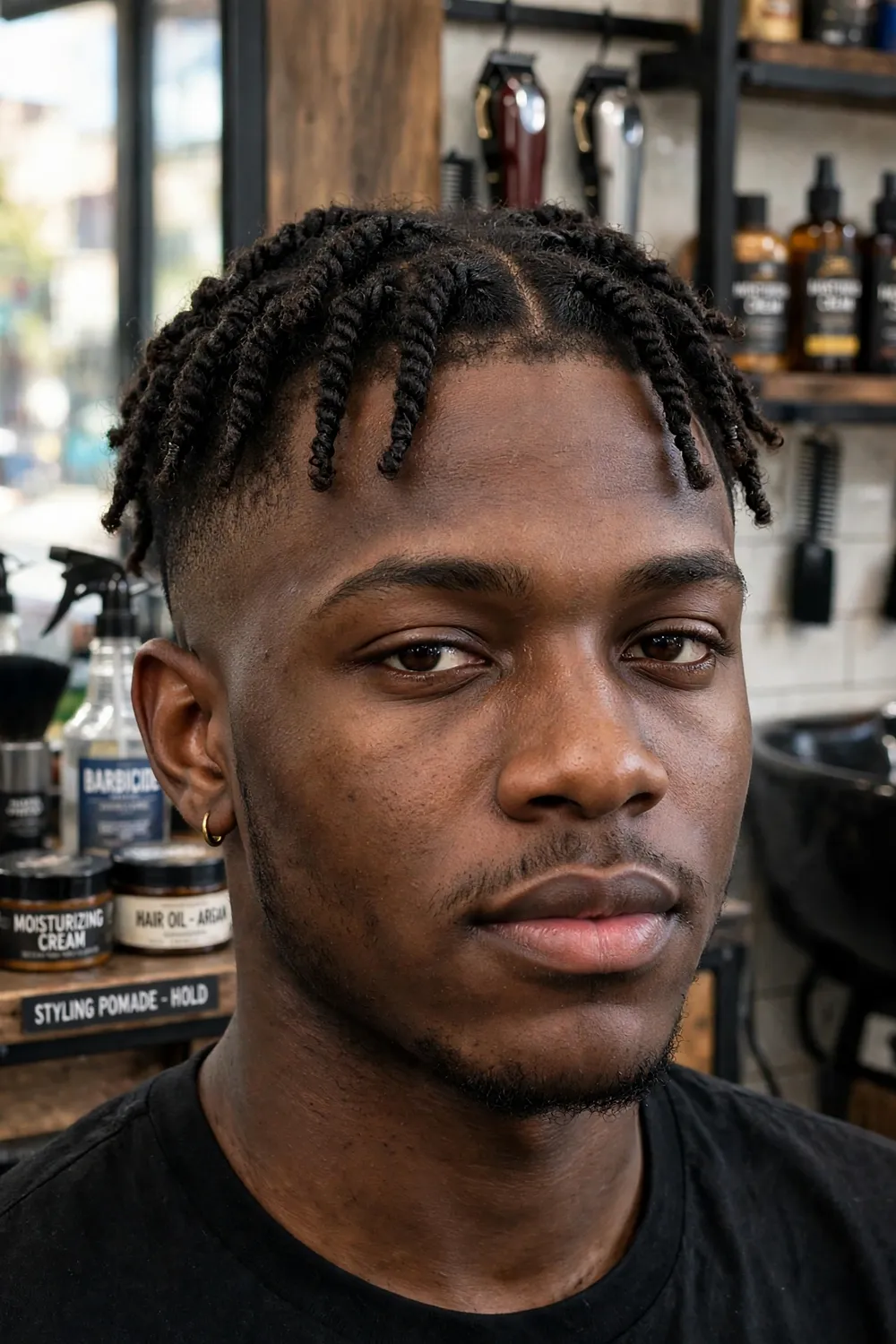
Two-strand twists (or short starter locs) on top with a mid fade below gives natural hair a defined, styled finish that lasts for weeks between re-twists. The fade does the tidiness work, so the twists can stay longer and fuller without the sides looking wild. Ask your barber to fade around the twists without clipping into the base of them, and keep the twisted section moisturised with a light oil. It suits coily hair of any density, and the edges can be lined up or left natural depending on how sharp you want the frame.
40. Mid Fade with Spiky Hair
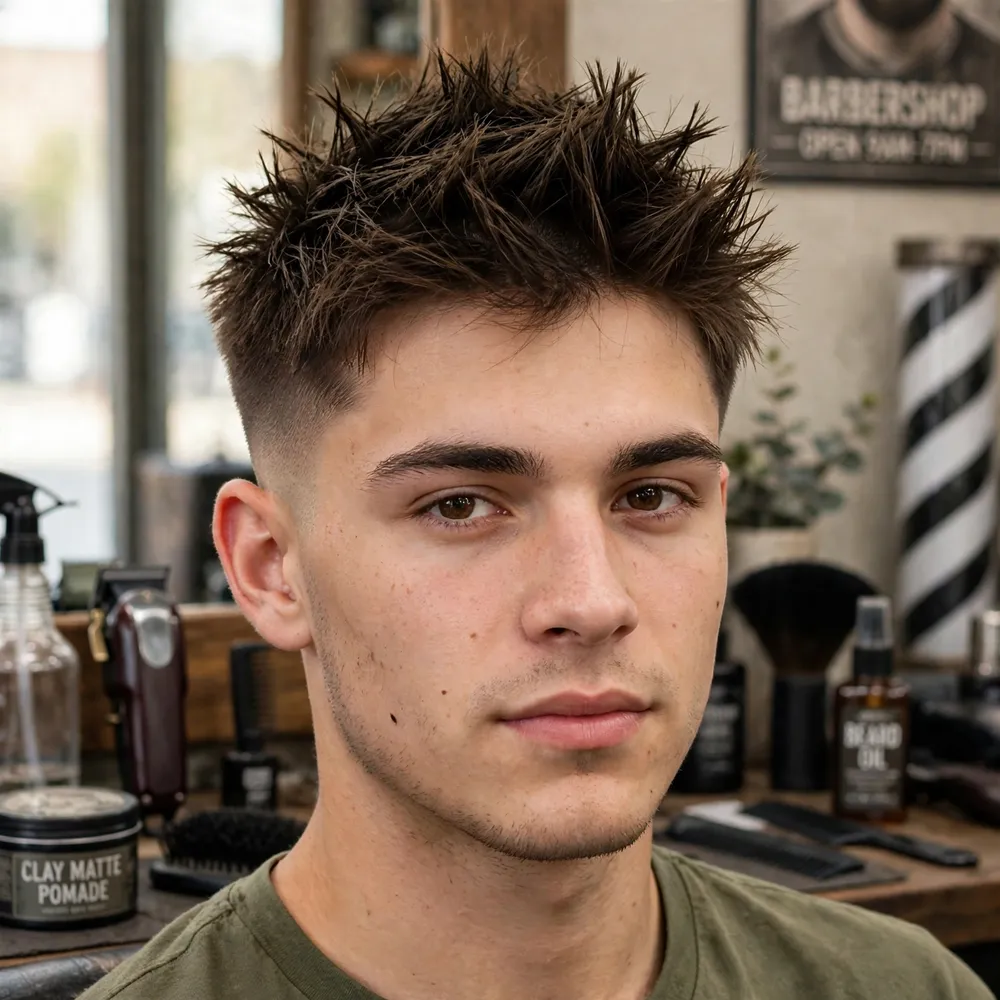
Short spikes pieced up on top, with the mid fade keeping the sides tight so the texture does all the talking. It suits straight to slightly wavy hair with real thickness — the spikes need density to stand in separated pieces rather than wisps — and it reads young and athletic on oval and square faces. Ask for one and a half to two inches on top, point-cut for separation, and style it by pinching matte wax through the ends in different directions; spikes combed into one neat row are the dated version. The fade needs its usual two-to-three-week refresh, and the spikes themselves take under a minute each morning.
41. Mid Fade with Undercut
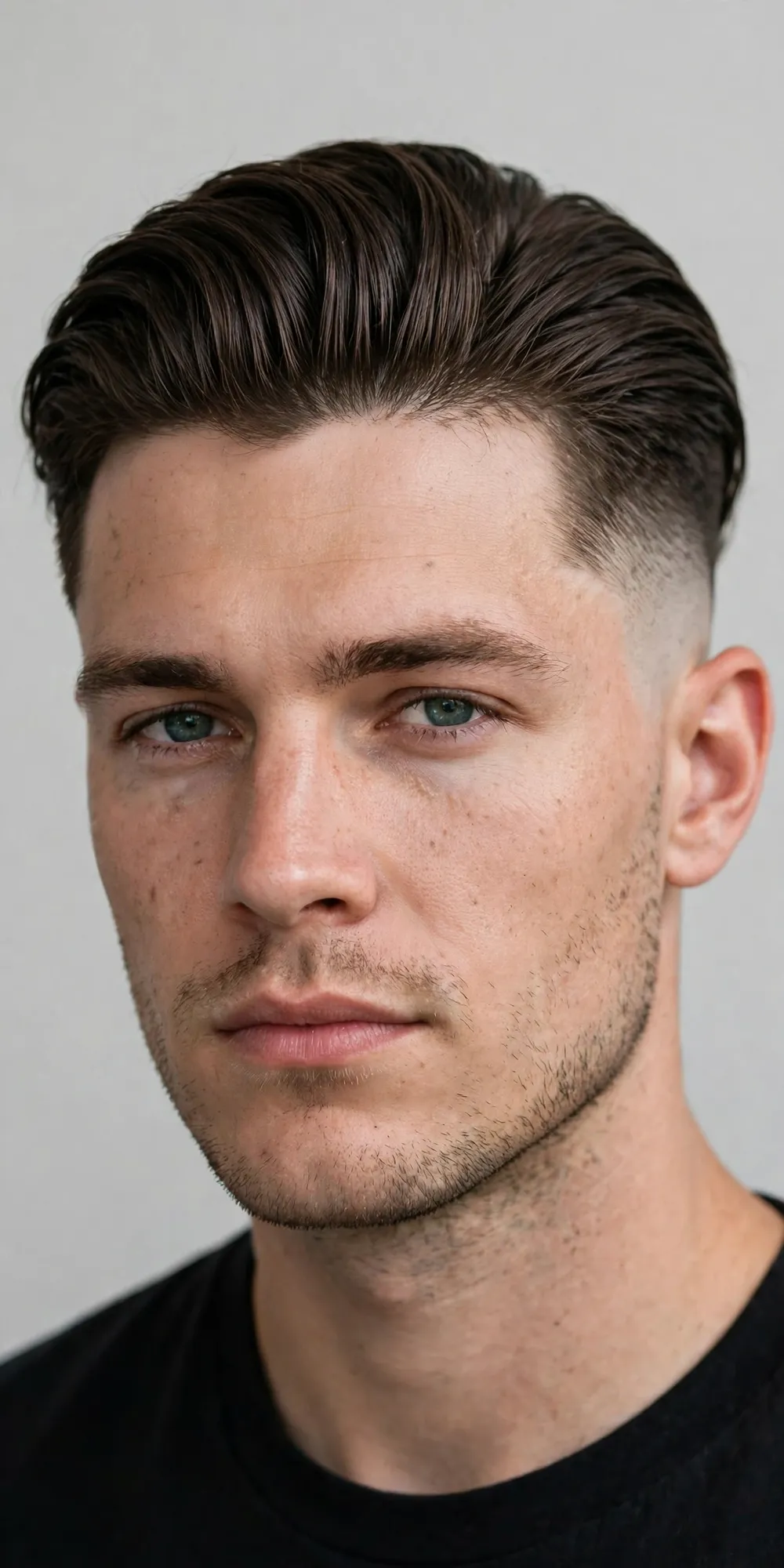
An undercut keeps the top long — four inches or more — and deliberately disconnects it from the sides, but here the sides are blended as a mid fade instead of being clipped to one uniform length, so the contrast is strong without the harsh shelf a classic undercut leaves. It suits men growing their hair out, or anyone who styles the top several ways: swept back on workdays, loose and forward on weekends. The practical catch is commitment — that disconnect only looks deliberate while the fade underneath stays fresh, so plan on a tidy-up every two weeks and agree the exact point where the top separates from the fade before your barber starts.
42. Mid Fade with Messy Texture
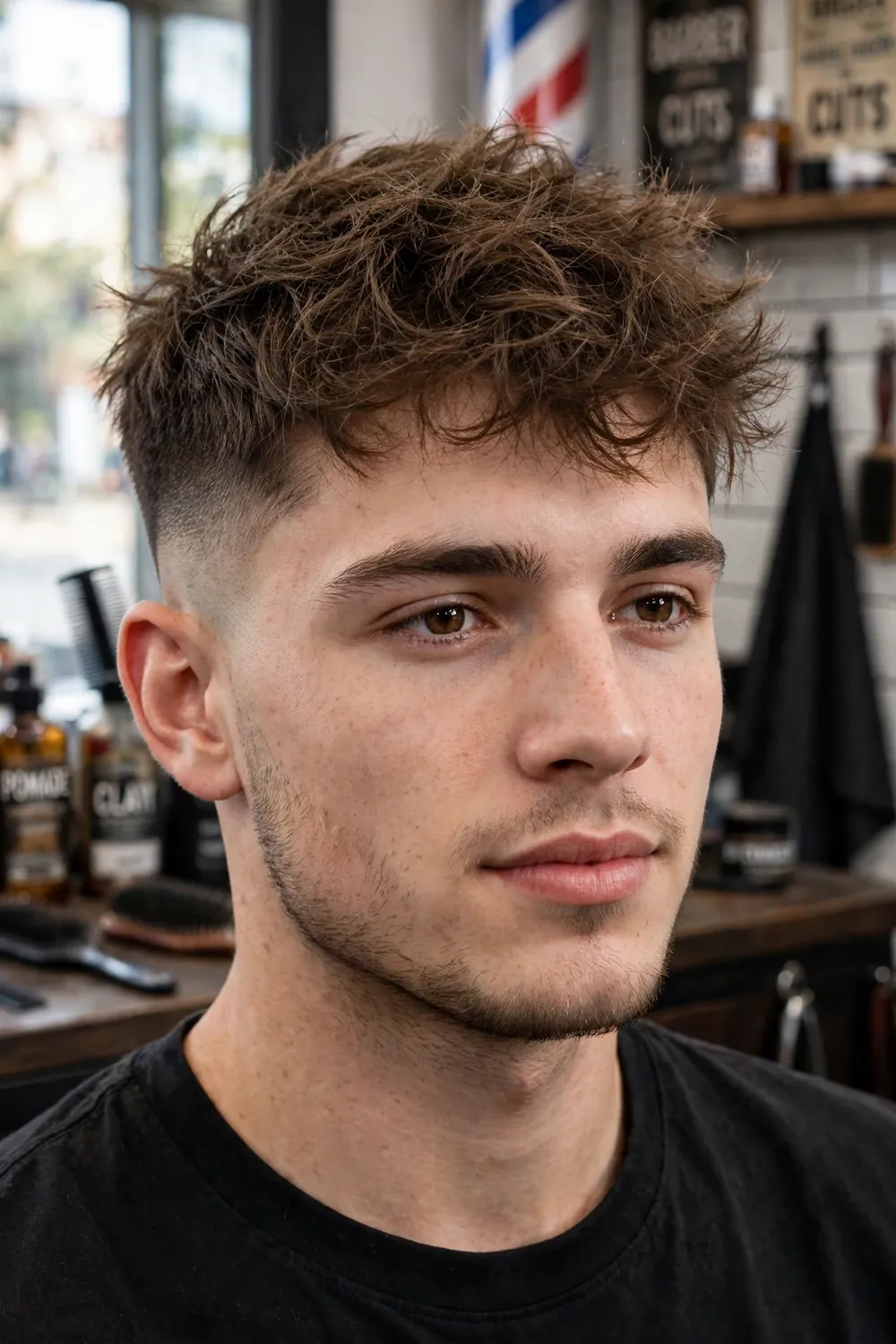
The top is cut into choppy layers and styled deliberately loose — pushed around with the fingers, never combed into place — while the mid fade underneath stays crisp, and that contrast between messy top and clean sides is the entire style. It suits wavy and thick straight hair, which hold a tousled shape without collapsing, and it is the most forgiving cut here for men who hate morning routines. Ask for heavy point cutting or razor texture through the top two to three inches, then work a pea of matte clay or texture powder through dry hair and leave it alone; over-styling is the only way to ruin it. Fade refresh every two to three weeks keeps the mess looking intentional. For the full messy-hair playbook, see our 51 Best Messy Hairstyles for Men guide.
43. Mid Fade with Tapered Back
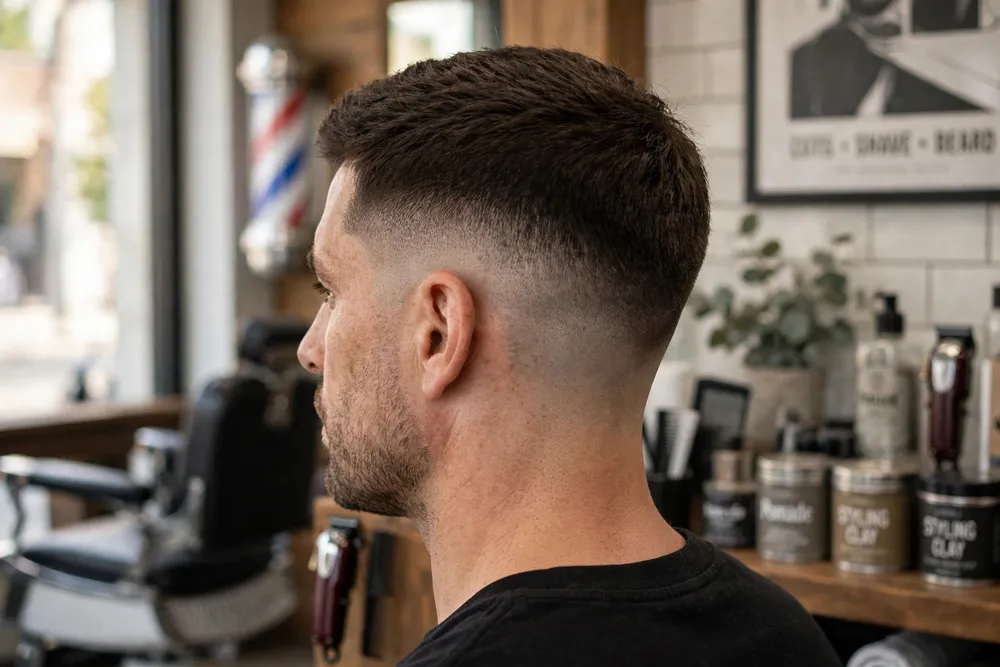
From the front and sides this is a standard mid fade; the detail is at the back, where instead of a blocked or squared-off neckline the hair tapers gradually into the nape, so the whole haircut fades out softly with no hard line anywhere. It suits men who dislike the sharp, drawn-on look of a lined-up neckline, and anyone whose neck hair grows in swirls that make straight edges grow out untidily within days. Ask your barber to taper the back rather than block it — those are the exact words — and expect the neckline to stay presentable a week longer than a squared one, comfortably stretching the cut to a three-to-four-week cycle.
44. Mid Fade with Brushed Forward Waves
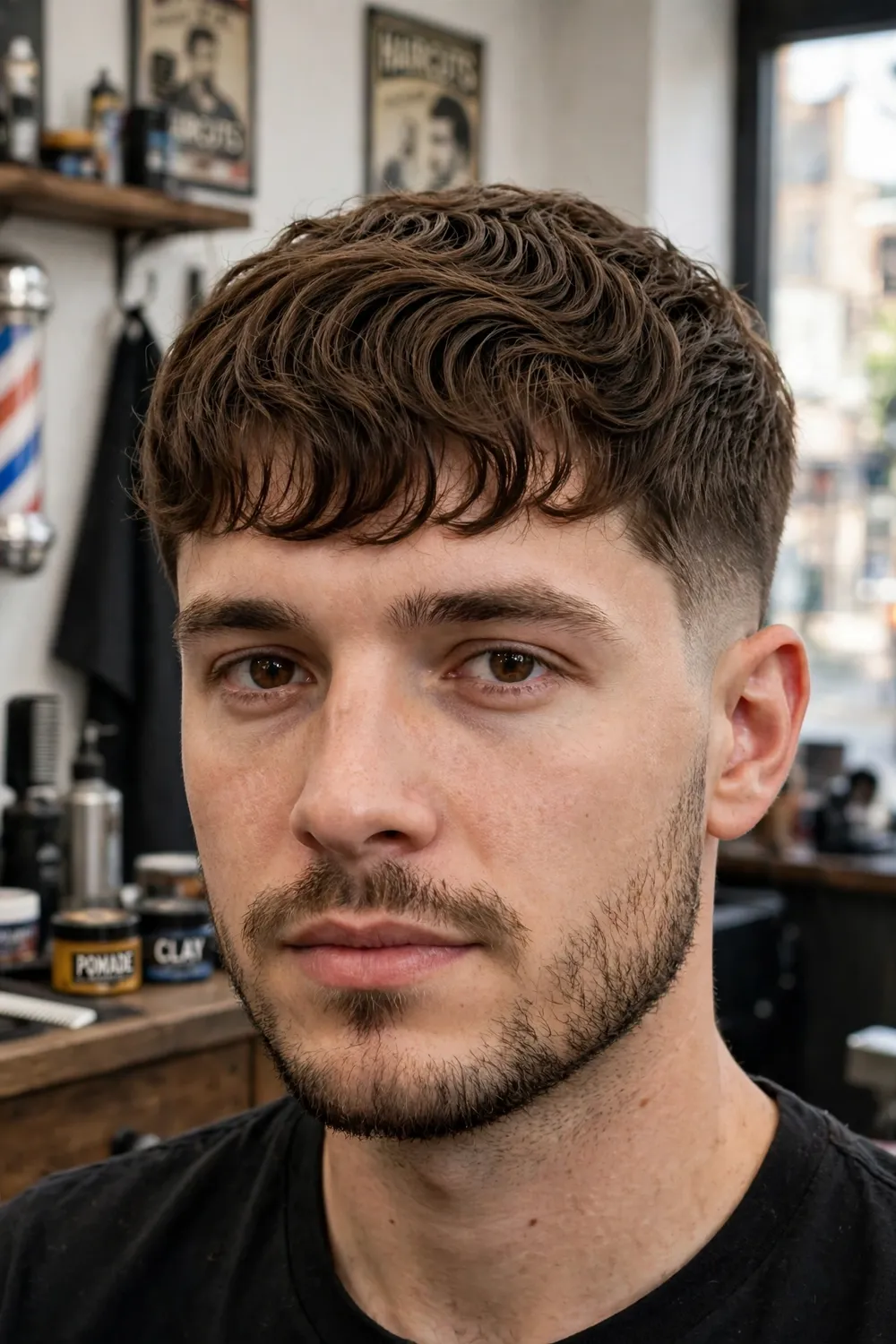
Instead of pushing wavy hair back or to the side, this version brushes it forward toward the forehead, so the waves stack into visible ripples across the top and finish in a soft, broken edge above the brows. It suits natural 2A to 2C waves and men who want the texture visible from the front — it also shortens a longer forehead, which makes it a quiet favourite for higher hairlines. Keep two and a half to three inches on top so the wave pattern has room to form, style with a light cream or a mist of sea salt spray scrunched in by hand, and never brush it once it is dry or the waves break into frizz. The fade follows the normal two-to-three-week rhythm.
45. Mid Fade with Long Textured Fringe

A longer fringe — three to four inches at the front — falls forward and slightly across the forehead in broken, textured pieces, while the mid fade keeps the sides and back tight enough that the length on top looks styled rather than grown out. It suits straight and wavy hair, longer and oval faces that can carry the coverage, and men whose hairline they would rather not put on display. The fringe is the maintenance: it needs a quick front trim roughly every three weeks, because once it passes the eyebrows the style tips from deliberate to shaggy. Style it forward with matte paste on the ends only, and let it dry mostly on its own so the texture stays separated.
46. High Volume Brush Back with Mid Skin Fade and Beard
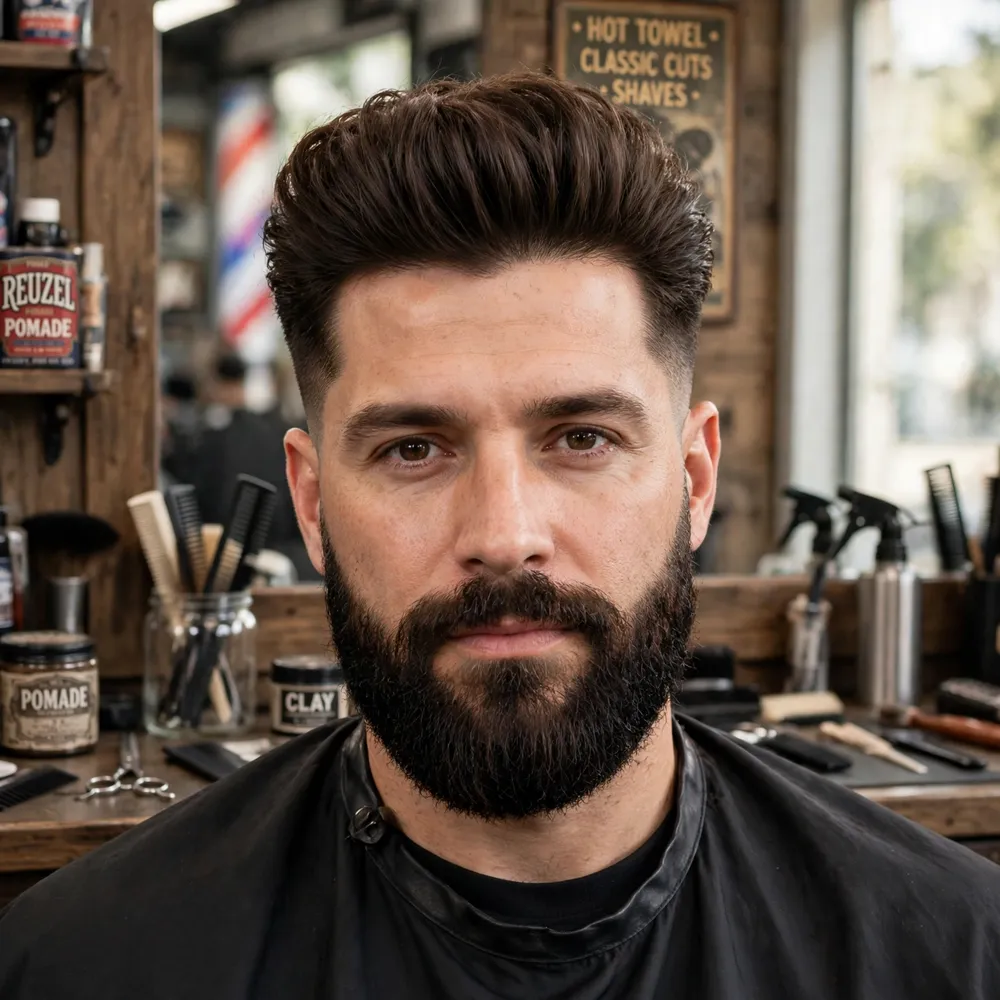
Three elements stacked for maximum presence: a thick top blow-dried up and back into real volume, a mid fade taken down to skin so the contrast under that volume is as sharp as it gets, and a full beard underneath to balance the proportions. It suits men with genuinely thick hair and the face length to carry height — on shorter or rounder faces, ask for the volume kept moderate or the whole stack overwhelms. The beard join matters as much as the fade: have your barber blend the skin fade into the beard at the sideburn rather than leaving them as two separate features. Skin fades show regrowth fastest of all, so this is a two-week tidy-up cut, beard edges included.
47. Buzz Cut with Mid Fade and Beard
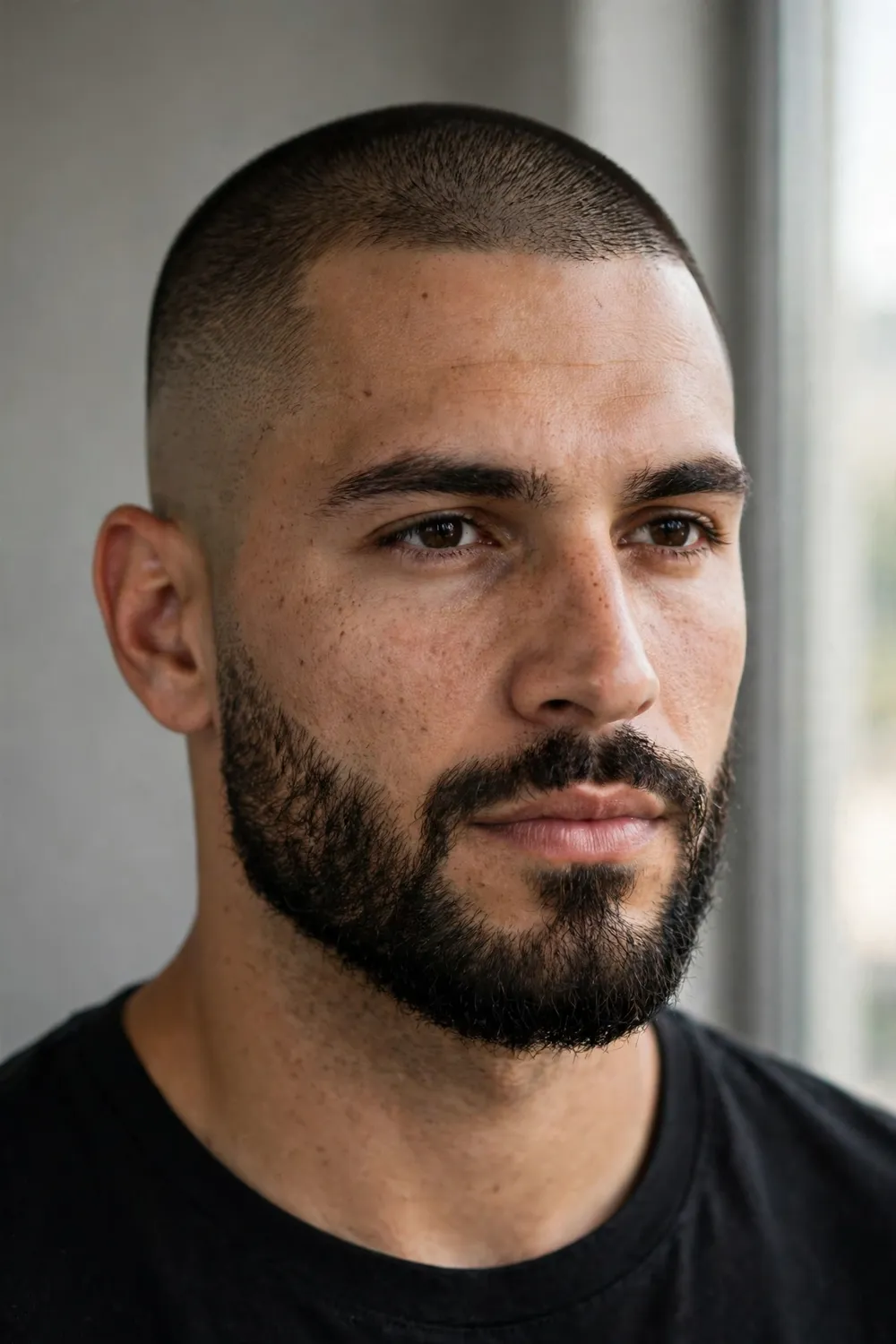
A uniform buzz on top gains its shape from two partners: the mid fade, which carves a defined outline around the temples and ears instead of a plain dome, and a full beard, which returns the visual weight the short top gives up. It suits men with strong jawlines and even head shapes, and it is the lowest-effort pairing on this whole list — no product, no dryer, nothing. Run the top at a #3 or #4 and have the beard shaped in the same visit so the two grow out on roughly the same clock; a fresh fade against a three-week-old beard shape looks mismatched. Expect to rebook every two weeks, mostly for the fade and the beard line.
How to Ask Your Barber for a Mid Fade
“Mid fade” on its own leaves three decisions open, and different barbers fill them in differently. Cover all three and the top, like this:
- Name the height. Say “mid fade, starting at the temple.” That one landmark — the temple, midway up the side — is what separates mid from low (above the ear) and high (near the crown). If the barber starts blending and it looks higher than you pictured, say so in the first minute, not the last.
- Say how short the base goes. For a classic mid fade, ask for a #0.5 or #1 at the base blended through a #2 up to a #3 where it meets the top. For a mid skin fade, say “skin at the base, foil finish.” For a mid taper fade, say “keep hair at the base — nothing shorter than a #1.”
- Pick the shape of the line. “Straight all the way around” gives the classic look. “Drop it behind the ear” gives the drop fade. “Just the temples” gives a temp fade. Same height, three different silhouettes.
- Describe the top in inches and direction. “Two inches on top, textured, pushed forward” or “three to four inches, I’ll slick it back” leaves nothing to interpretation. Guard numbers only describe the sides — the top is measured in length and styling direction.
- Bring a photo. One screenshot from this page shows the height, the base length and the top in a single glance. Barbers consistently say it is the most useful thing a client can do.
- Settle the extras before the cut starts. Beard blend at the sideburn, hard part, line up, design — each is a separate decision with its own upkeep. Agree them in the chair, not as an afterthought at the till.
How to Style and Maintain a Mid Fade
Styling a mid fade is mostly about the top; the faded sides look after themselves. Two to four minutes covers most versions:
- Start on damp, towel-dried hair. Shape the top while it is damp and let the product set as it dries. Bone-dry hair resists; soaking-wet hair dilutes everything you put in it.
- Blow-dry only the styles that need height. Quiffs, pompadours and brush backs need two minutes of warm air aimed in the direction of the final shape, ideally with a vent brush lifting the front. Crops, fringes, crew cuts and buzz cuts skip this step entirely.
- Use a pea-to-fingertip amount of product, warmed in your palms. Matte paste or clay for crops, quiffs and textured tops. Water-based pomade for slick backs and comb overs. Curl cream on damp hair for curls; a light oil or moisturising cream for coils, waves and twists.
- Mind the calendar, not the mirror. A mid fade looks sharpest from about day five to day fourteen. Skin finishes and line ups want a refresh at one to two weeks; classic, drop and burst versions at two to three weeks; mid tapers stretch to three. Booking the next appointment before you leave the shop is how the cut never looks overdue.
- Tidy the neckline between visits. A careful trimmer pass along the back of the neck (or a cheap edge-up visit) buys a mid fade an extra week of looking fresh for almost no money.
- Protect your scalp. The faded zone has little hair cover, so it burns faster than the rest of your head. Sunscreen or a cap on long days outside is a genuine part of maintaining this cut, not an afterthought.
Mistakes to Avoid
- Saying just “fade.” With no height given, most barbers default to their house style — which might be a high skin fade. You will get a fade, just not necessarily the one you pictured.
- Assuming “mid” means the same thing in every shop. It is a range, not a measurement. Anchor it to the temple, every time, until you and your barber have a shared reference from your own previous cuts.
- Going to skin on fine or thinning hair. At temple height, bare skin on the sides removes the hair that was balancing your top. The taper version exists precisely for this hair type.
- Judging the fade height on wet curly hair. Curls spring up as they dry and the fade rides higher with them. If you have curls, the height must be agreed on dry hair.
- Letting the beard float. An unblended gap between the fade and the beard is the most common mid fade flaw. It takes the barber thirty seconds to fix — but only if you ask.
- Stretching a skin fade to four weeks. A classic mid fade forgives a late appointment; a mid skin fade does not. Match the version you choose to the visiting rhythm you will actually keep.
Mid Fade FAQs
What is a mid fade haircut? It is a fade that starts around temple level — the middle of the sides of the head — and blends down to a very short length or to skin at the base. It sits between the subtle low fade and the bold high fade, and it is the most commonly requested fade in most barbershops because it suits nearly every face shape and hair type.
Is a mid fade the same as a medium fade? Yes. Mid fade, medium fade and middle fade are three names for the same height of fade. Barbers understand all of them, so use whichever term your shop uses.
What clipper guard is used for a mid fade? A classic mid fade usually runs from a #0.5 or #1 at the base, blended through a #2, up to a #3 where the sides meet the top. A mid skin fade replaces that base with no guard at all, finished with a foil shaver. A mid taper fade keeps the base at a #1 or #1.5 and never reaches skin.
How long does a mid fade last? Plan on two to three weeks for classic, drop, burst and most top-style versions. Mid skin fades and line ups look their best for one to two weeks, while a mid taper fade still looks tidy at three weeks because it grows out without a visible line.
Can curly hair get a mid fade? Yes — curly hair is one of the mid fade’s best pairings, especially the drop and burst versions, which follow the natural curl direction. The one rule is to set the fade height on dry hair, because curls shrink as they dry and a fade placed on wet hair can end up higher than intended.
What is the difference between a mid fade and a low fade? Starting height. A low fade begins just above the ear and only cleans up the edges, so the look is soft and subtle. A mid fade starts at the temple, removes about half the side, and shows a clearly visible gradient from the front. The mid fade has more contrast and makes the top stand out more; the low fade grows out more gently.
Final Word
The mid fade haircut is popular for a measurable reason: it is the fade height that asks the least compromise. You get real contrast and a sharp outline, but the grow-out stays manageable and the same fade carries a crew cut, a pompadour, curls or a mullet without missing a beat. Choose your version by the two things that actually differ — how short the base goes, and how much upkeep your calendar allows — then say the height, the base and the shape out loud in the chair.
If you would rather start gentler, our guide to low taper fade haircuts covers the softer edge-clean only version in the same detail, and you can browse all our latest guides on the Hair Groom blog.