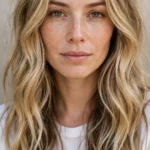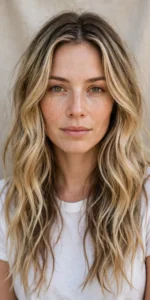



Dirty blonde hair is the in-between shade that refuses to pick a side — a dark blonde or light brown base with natural blonde tones running through it, the colour that looks like summer stayed in your hair. If you’re starting from a mousy base or a brunette that lightens easily, three moves give you the best return for your money: Babylights Sun-Kissed Lift for the most natural, almost invisible brightening; Balayage Low-Maintenance Dimension for painted brightness you can ignore for three months; and Warm Honey Instant Glow when your face needs warmth right now. It suits almost everyone, because dirty blonde hair already sits between light and dark — the trick is matching the undertone of the highlights to your skin, not chasing the lightest shade on the chart. Colour works by lifting or depositing pigment, and the science of how that plays out on real hair is covered well in Wikipedia’s article on Hair coloring.
How to Pick Your Dirty Blonde
Start with your veins. Hold your wrist up in daylight: greenish veins and a tendency to tan gold mean warm undertones, so honey, caramel and golden beige will make you glow; blue-purple veins and skin that burns before it tans mean cool undertones, so ash, mushroom and champagne-beige keep you from looking washed out. Fair skin can carry either, but cool tones flatter pink complexions while warm tones rescue sallow ones. Olive skin sits in the middle — golden and vanilla face-framing pieces warm it without clashing. If your natural colour already lifts to a brassy orange, your colourist will need a toner at the basin, and that costs extra. Expect to pay $350–$800 for a full salon balayage in most cities, with babylights usually landing at the lower end and a root melt add-on pushing it higher. Ask for a patch test before any colour if you’ve never had your hair lightened — an hour in the chair is not the place to discover a sensitivity. And be honest about your home routine: if you won’t use a purple or blue mask once a week, tell your colourist to keep the tone warmer, because cool shades show brass first.
1. Babylights Sun-Kissed Lift
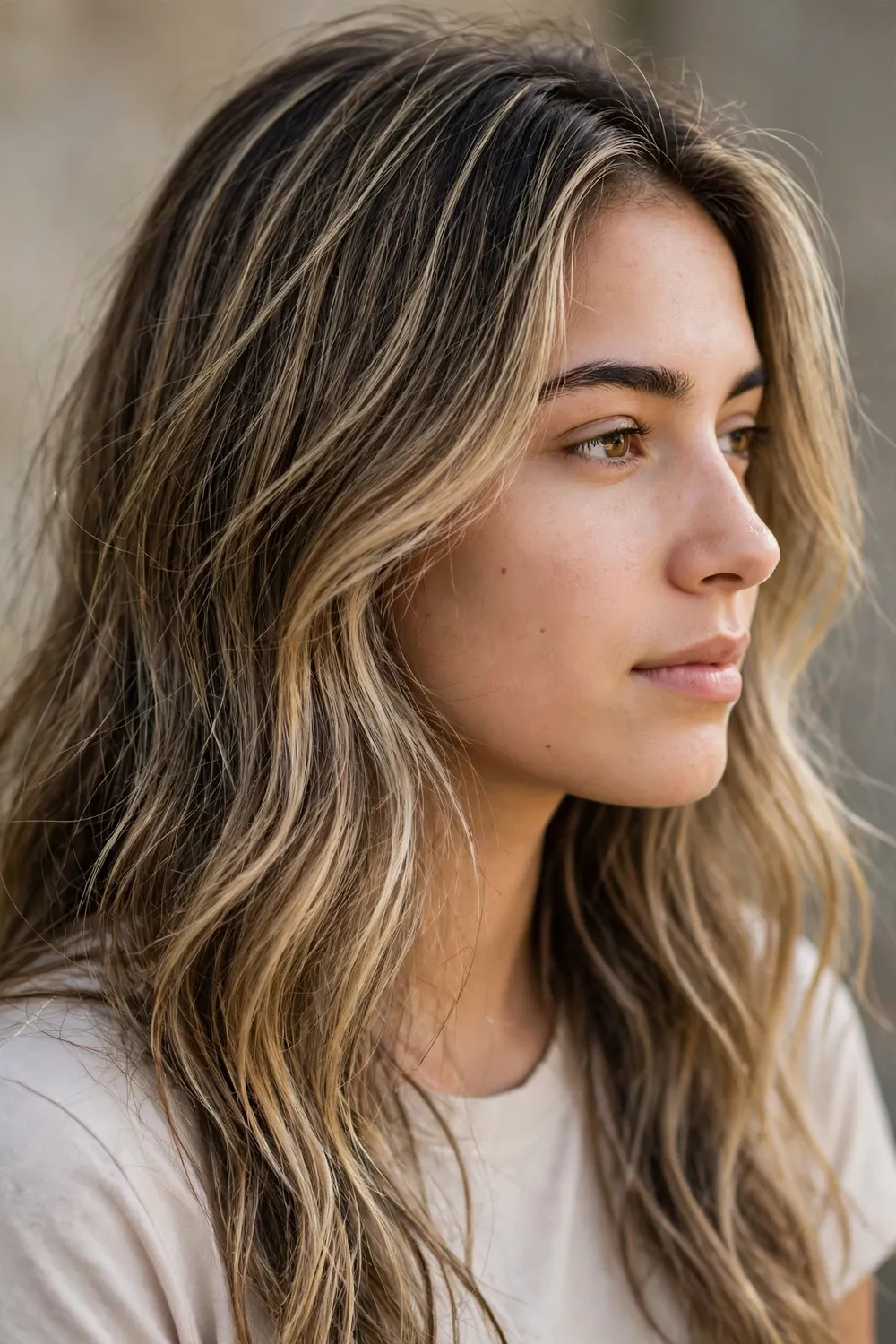
Babylights are the finest highlights in the book — threads so thin they read as the lighter streaks kids get after a summer outdoors, not as colour at all. They suit almost anyone, but they’re at their best on fine to medium hair past the shoulders, where the pieces create depth, not stripes. Warm or cool both work — beige or honey for warmth, ash or mushroom for cool skin. Ask for “micro babylights through the top and around the face, finer than a few hairs per foil, with a gloss to blend.” The finish is soft, shiny and quietly expensive, and with no solid line anywhere the grow-out is forgiving — expect 8–10 weeks before a refresh, with a sulfate-free shampoo in between.
2. Balayage Low-Maintenance Dimension
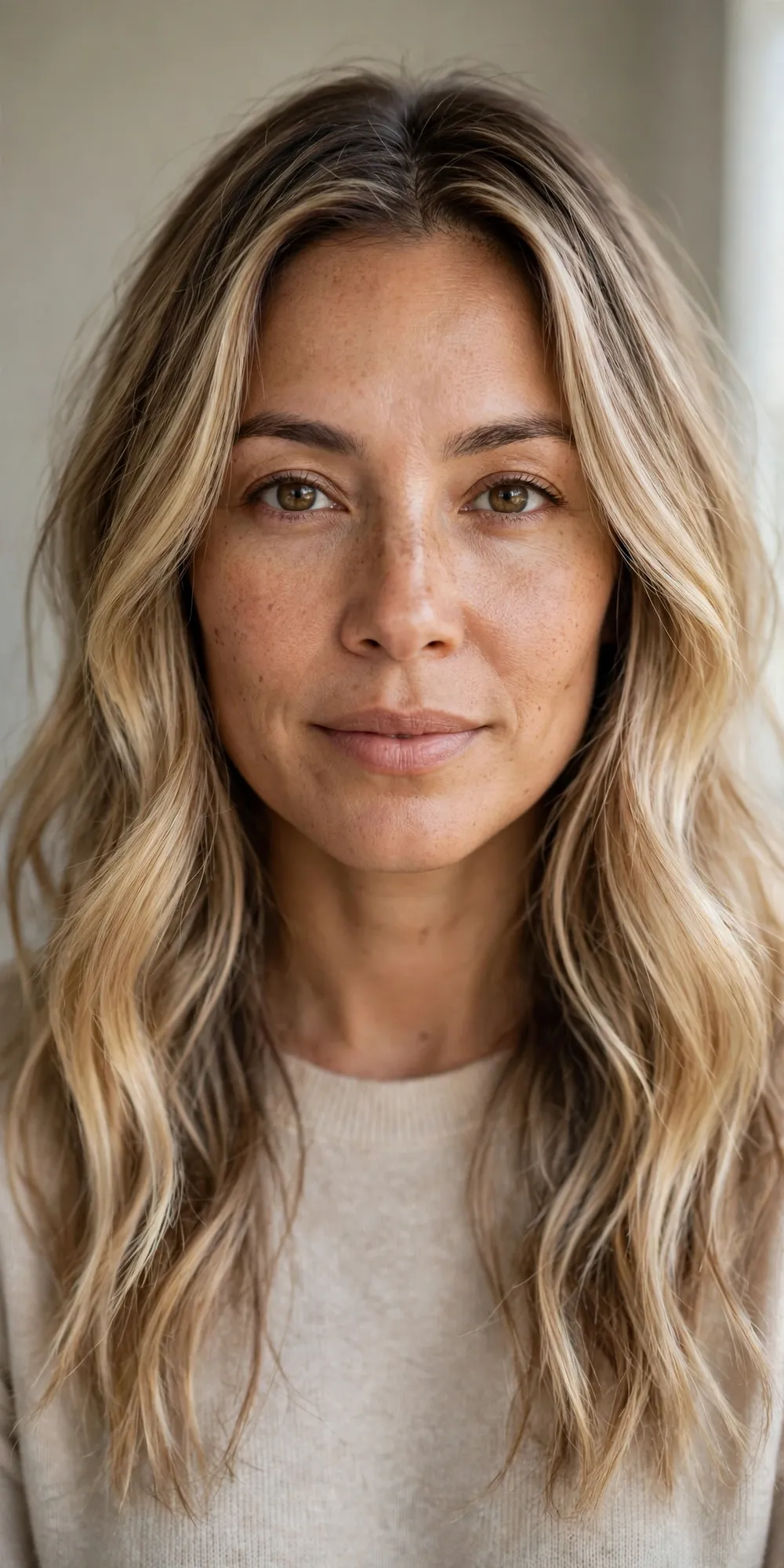
Balayage is painted freehand onto the surface of the hair rather than folded into foils, so the result melts instead of lining up in bands. On a dirty blonde base the colourist can leave your natural root untouched and paint brightness from mid-lengths down, for dimension that looks grown-in. It flatters medium to thick hair at any length past the chin, and suits warm or cool skin — golden caramel for warmth, sandy beige for cool. Ask for “a soft balayage starting at the cheekbones, heavier toward the ends, with a root smudge so nothing looks painted on.” The finish is sunlit at the root, brighter at the ends. Maintenance is the selling point: 12–16 weeks between visits and a toner refresh at 6–8 weeks.
3. Cool Beige Expensive Finish
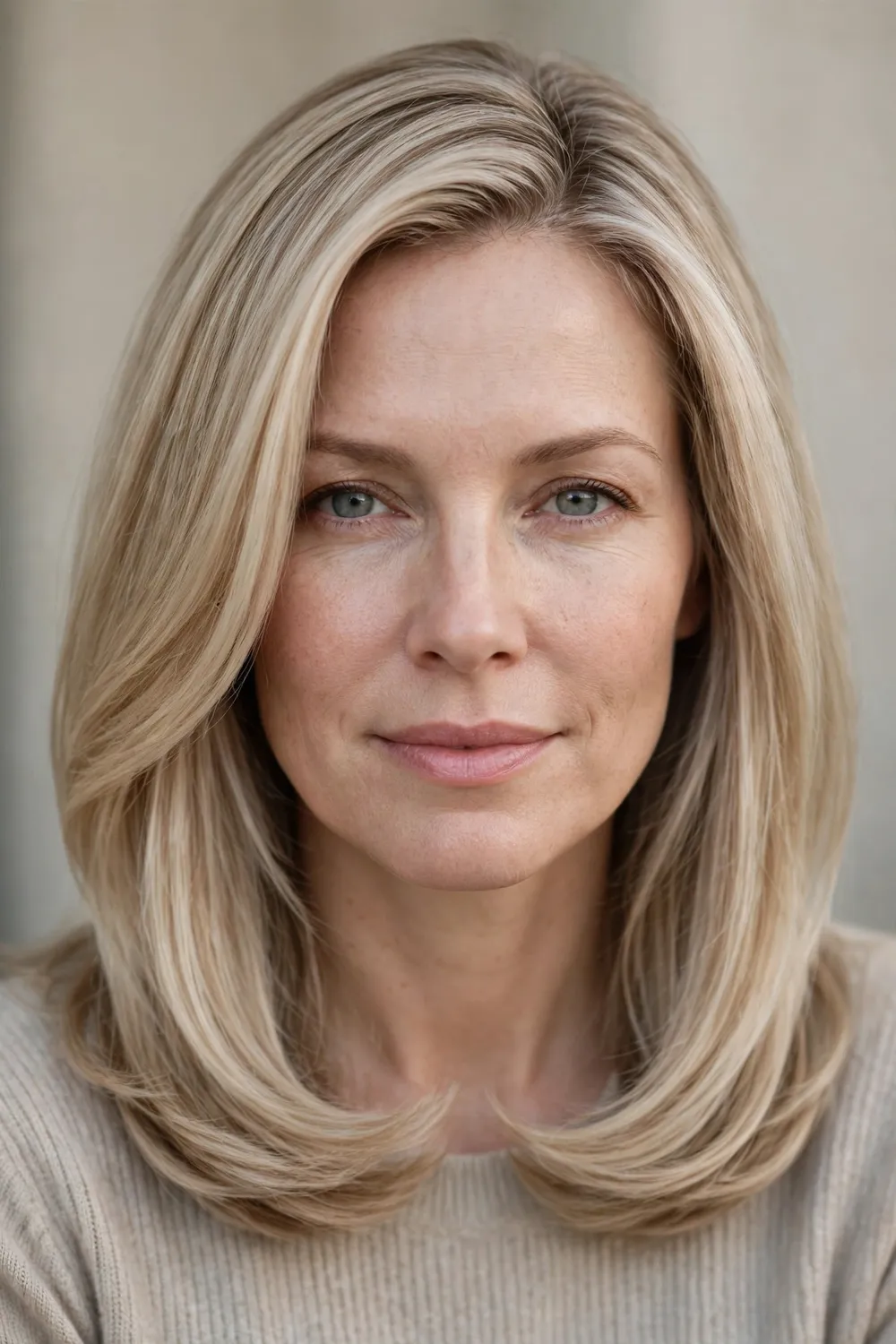
This is the polished, quiet-luxury version of dirty blonde — sandy, mushroom and champagne-beige pieces woven through a base cooled enough to look deliberate, not dull. It suits cool and neutral undertones best, particularly fair to light-medium skin with pink in it, and it looks best on straight or gently waved hair at shoulder length or longer, where the light shows the tonal range. Warm skin can find it flattening, so get a strand test first. Ask for “cool beige babylights and a beige gloss, no grey, with a champagne piece around the face.” The finish is smooth, reflective and salon-fresh. Upkeep is honest: a purple mask once a week, a toner at 6–8 weeks, and heat protectant every time you style — cool tones dull fast on damaged hair.
4. Warm Honey Instant Glow

Warm honey is the quickest way to make dirty blonde look alive — golden, buttery pieces concentrated at the face and ends, like a week somewhere sunny. It suits warm and neutral undertones especially well, and it rescues olive and medium skin that can look tired under ash. Straight, wavy or curly hair all take it, and it works at any length, though a lob or longer shows the golden pieces best. Ask for “honey ribbons face-framing and through the ends, a warm gloss, and keep the root natural.” The finish is glowing and dimensional, your face brighter the moment you leave. Maintenance is easy: warm tones fade gracefully, a sulfate-free shampoo and a honey gloss at 8 weeks are enough, and a full appointment can wait 10–12 weeks.
5. Root Melt Soft Grow-Out

A root melt smudges your natural base colour 2–3 inches down over the highlights, erasing the foil line so the colour looks grown-in. It’s the fix for highlights that went too close to the scalp, and the smartest move if you love your blonde but hate the upkeep. It suits every undertone and skin tone — the melt is matched to your natural base — and works on straight, wavy or curly hair, with longer lengths showing the blend best. Ask for “a root melt in my natural colour, melted 2–3 inches, ends left bright.” The finish is seamless and lived-in, with no hard line as it grows. Upkeep drops to almost nothing: the melt buys up to four months between appointments, with a toner and a trim in between.
6. Soft Long Dirty Blonde Waves
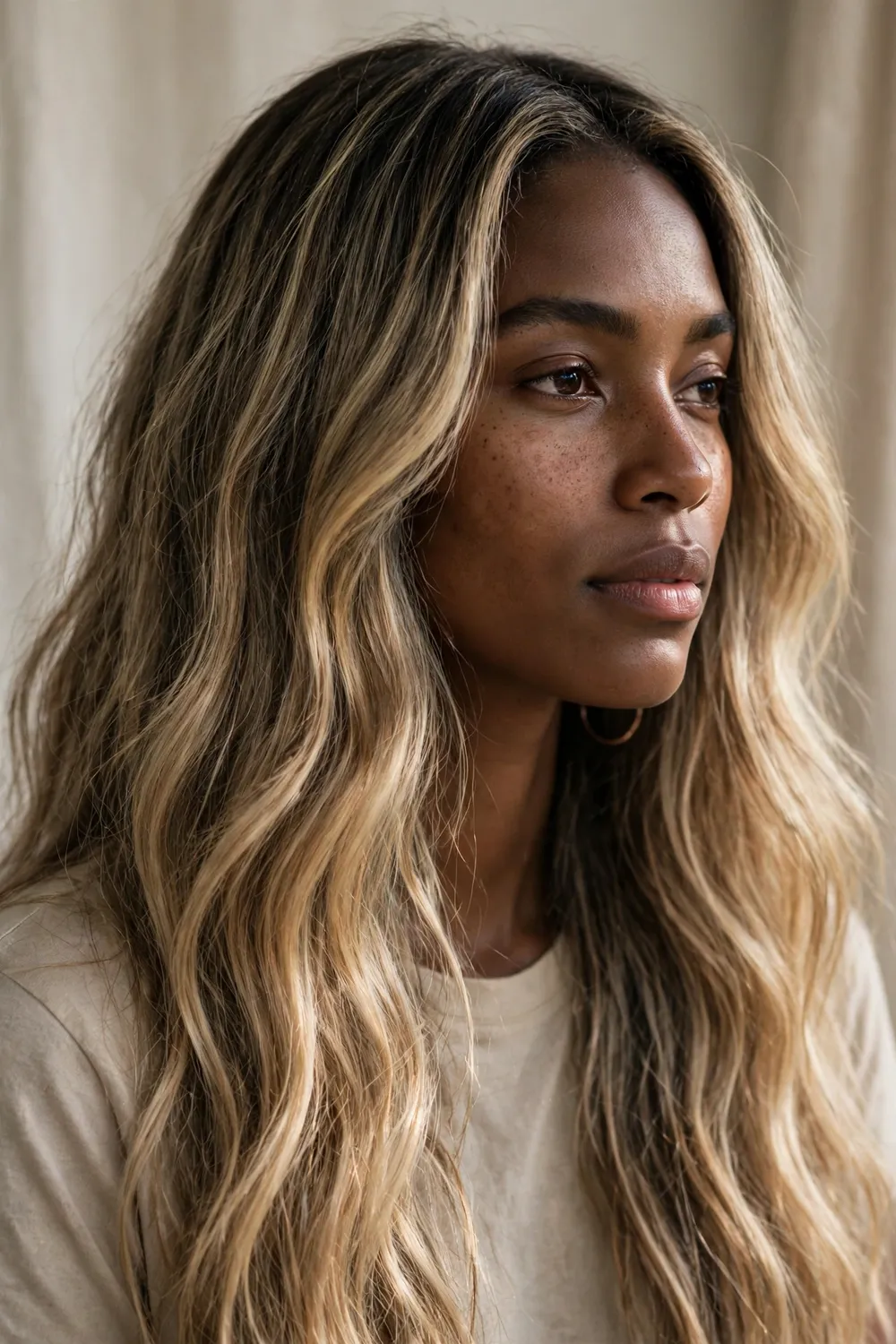
Long waves are where dirty blonde earns its reputation — the colour has enough length to show every shade in it, from the darker base to the sunlit pieces on top. Natural highlights through the mid-lengths and ends do the work here, so this suits medium to thick hair that holds a wave, and it flatters most skin tones — the colourist leans warm or cool with the toner. Oval, round and heart-shaped faces benefit, since the waves soften the jawline. Ask for “soft highlights through the mid-lengths and ends, nothing at the root, with a beige or golden gloss.” The finish is loose and touchable, never stripey. Maintenance is gentle: a gloss at 8 weeks, a trim every 10–12 weeks, and a light oil on the ends before styling.
7. Layered Blowout Golden Ends
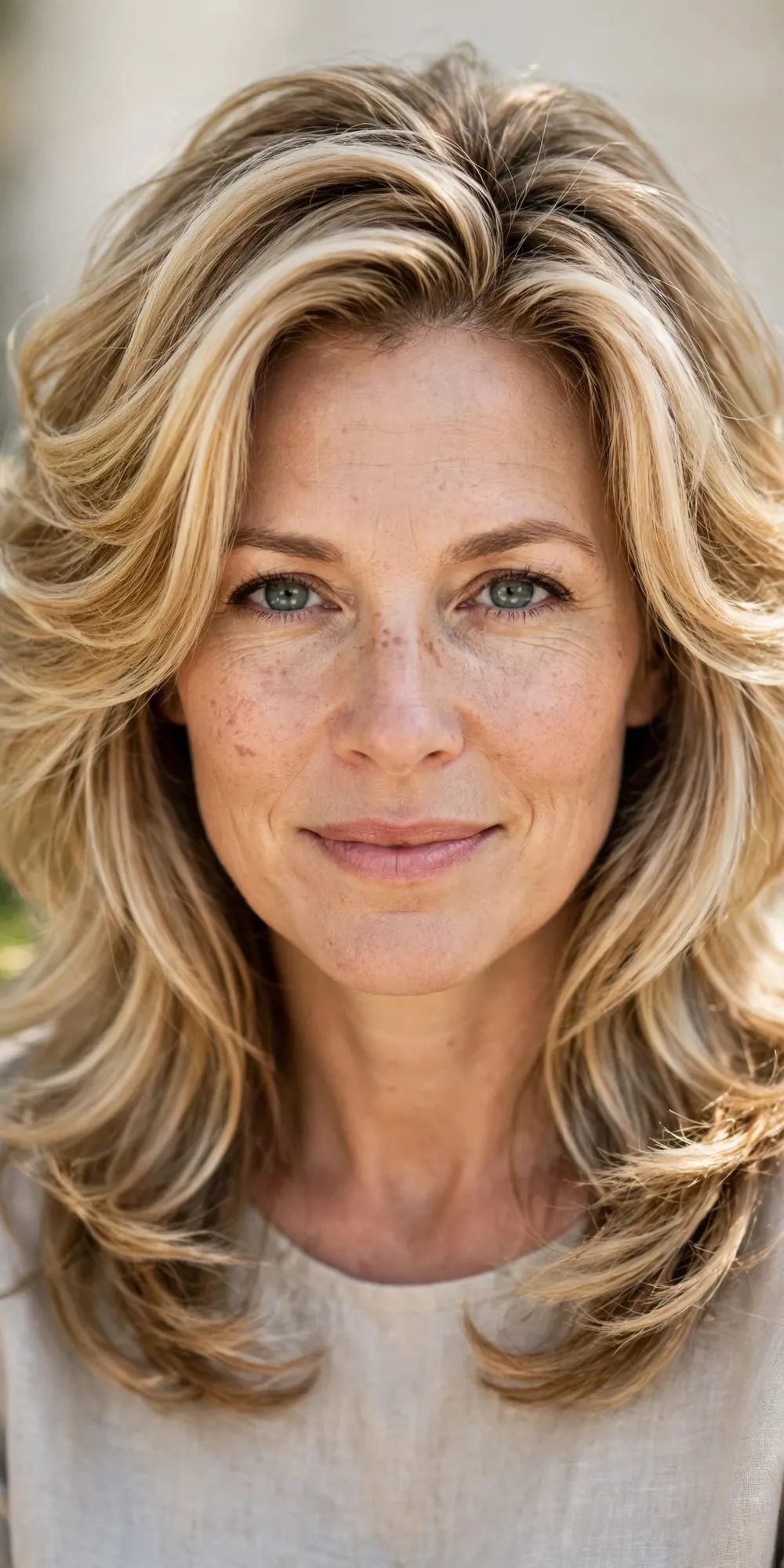
A layered blowout with the highlights concentrated through the ends gives dirty blonde a bouncy, salon-finished look that photographs beautifully. The layers do half the work — they let the lighter pieces peek out as the hair moves — so this suits medium to thick hair at collarbone length or longer, flattering warm undertones and medium skin best — a cool beige version works on fair skin. Ask for “long layers, face-framing pieces at the cheekbones, and golden highlights through the ends only, finished with a round-brush blowout.” The finish is glossy, full of movement and polished. Upkeep is the blowout itself: a good round brush and heat protectant at home, a toner at 6–8 weeks, and a full refresh every 10–12 weeks, because golden ends show fade first.
8. Glam Waves Money Piece

The money piece is a bold, face-framing section of blonde that melts into deeper roots — dirty blonde’s most dramatic version short of going full blonde. It suits anyone wanting a brighter face, and it works on wavy or straight hair past the shoulders, where the bright front meets the deeper back. Warm skin takes a golden money piece beautifully; cool skin needs beige or champagne to avoid clashing. Ask for “a strong money piece, two inches wide each side of the face, melted into a natural root, soft balayage behind it.” The finish is glamorous, the roots keeping it grounded. Maintenance is mostly the front: a toner for the money piece every 6 weeks, the rest waits 12, and a blue or purple mask stops brass.
9. High-Contrast Balayage Waves
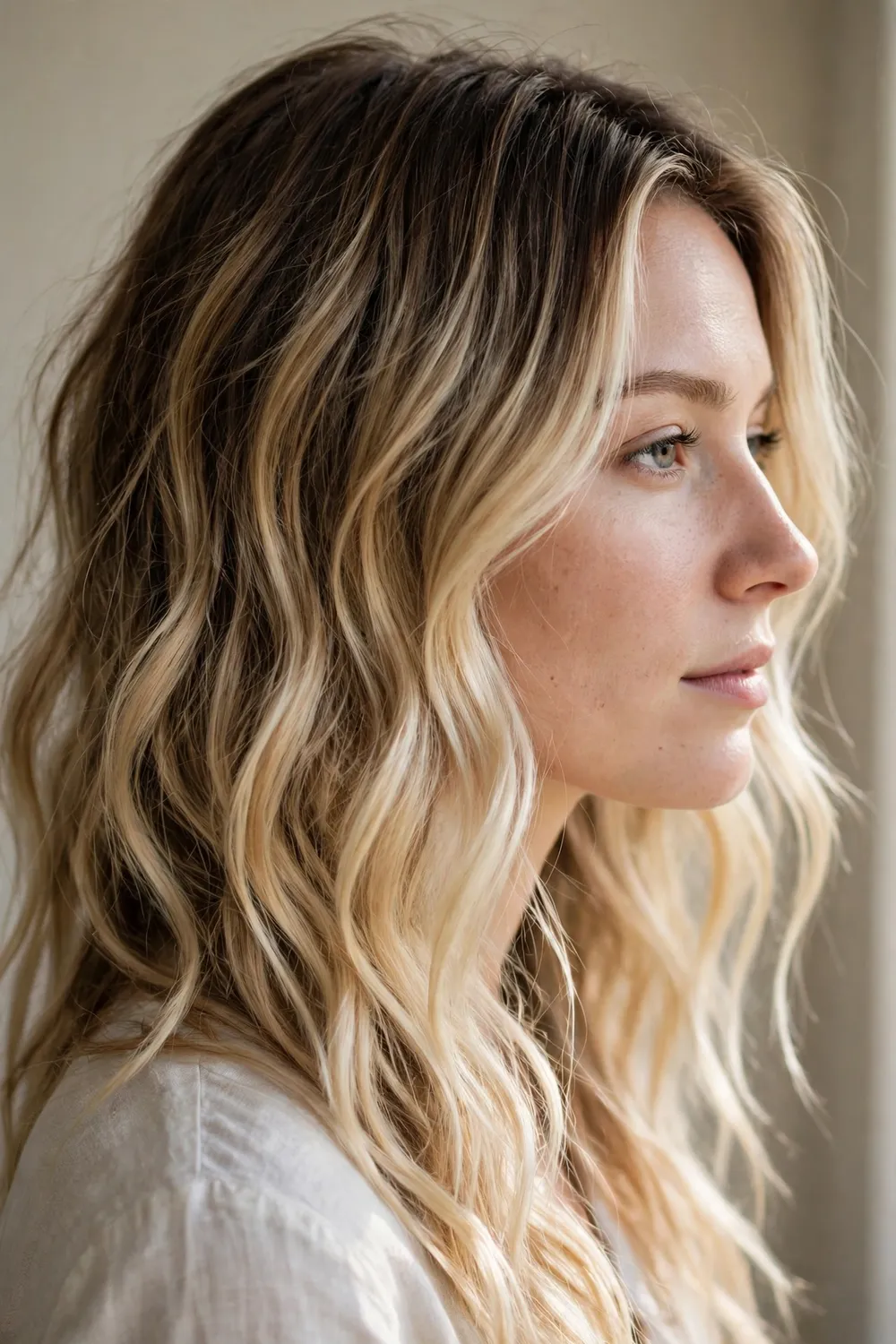
Low-saturation roots deepening into bright blonde ends give dirty blonde its boldest, most editorial shape — the contrast is the point. This suits medium to thick wavy hair past the shoulders, where the waves break the gradient so it never looks dip-dyed. Warm undertones take the golden version; cool undertones, a beige or ashy gradient. It’s strong for round and square faces, because the vertical fall lengthens the face. Ask for “a balayage, root left dark, blonde intensifying toward the ends, no line where the colour starts.” The finish is striking, with real depth at the crown. Upkeep is moderate: the dark root means no urgent regrowth, but the bright ends need a toner every 6 weeks and a deep-conditioning mask — ends that light need moisture.
10. Soft Ashy Shoulder-Length
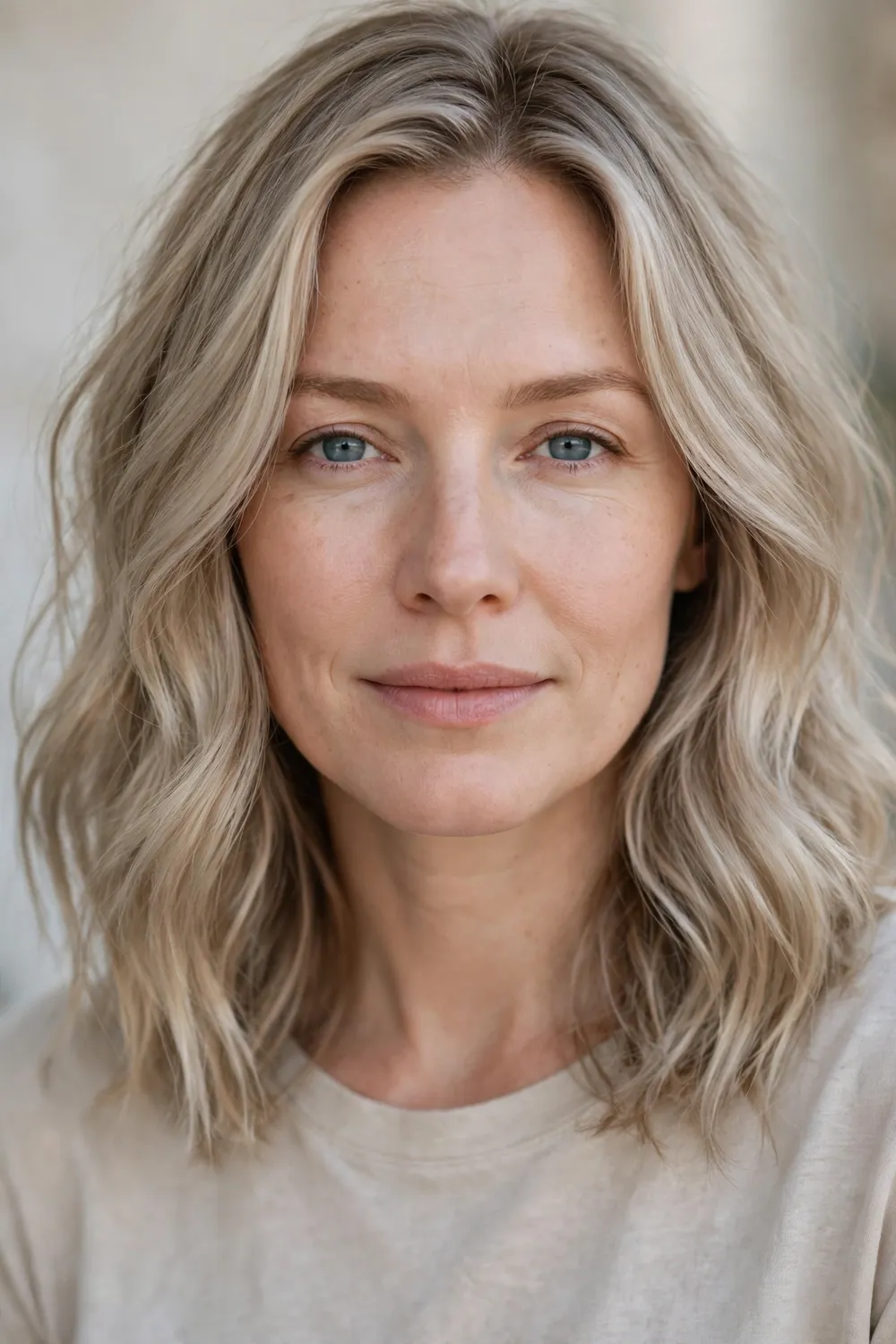
Muted ash on a collarbone cut is dirty blonde at its softest — cool without going grey, calm without looking flat. It suits cool and neutral undertones and fair to light-medium skin, especially pink complexions; warm skin may find it draining — strand-test first. Fine to medium hair takes it best, and shoulder length keeps the ash from dragging the face down. Ask for “soft ash highlights on a collarbone cut, a beige-ash gloss, no silver, root left natural.” The finish is understated, the ash reading as a cool sheen rather than a statement. Maintenance is the honest part: ash fades fastest, so a purple mask weekly and a toner at 6 weeks are non-negotiable, and hard water yellows it — a shower filter helps more than any product.
11. Bouncy Curly Dirty Blonde

Curls turn dirty blonde into a halo — highlights through each curl catch the light as the hair moves, so it changes from every angle. It suits all undertones — warm pieces on warm skin, cool on cool — and works on any curl pattern, from loose waves to tight coils, at any curl-holding length. The key is placement: highlights on the outer curves, not through the middle, so the dimension follows the shape. Ask for “highlights on the outer curls only, a gloss to even the tone, and a curl-by-curl cut.” The finish is bouncy and full of life. Maintenance is curl care first: a sulfate-free shampoo, a deep conditioner weekly, a toner at 8 weeks — and never brush it dry — the highlights frizz into a cloud.
12. Smudged-Root Ashy Melt
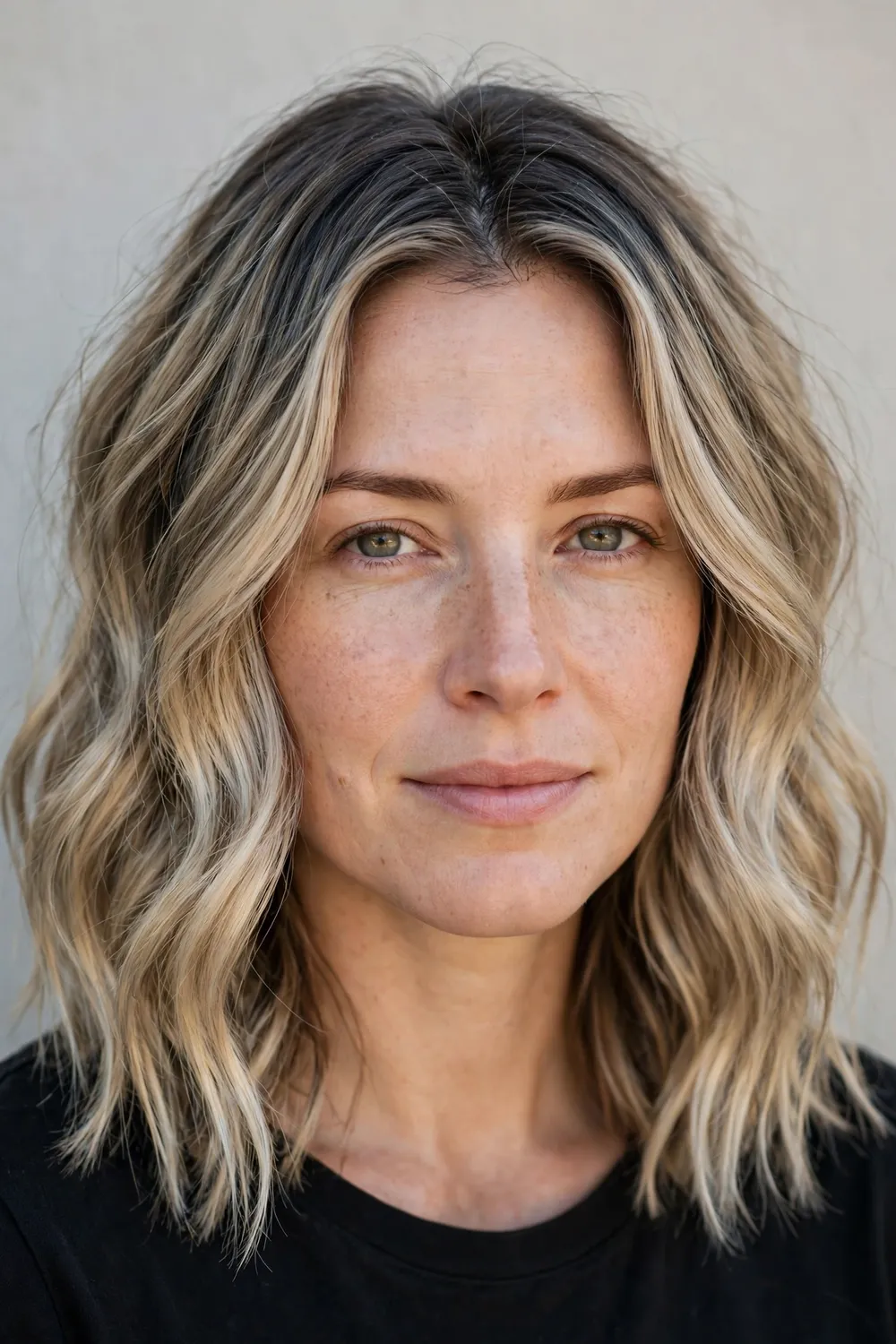
This is ash, lived-in — a melt with the root smudged down so the grow-out looks designed, not accidental. It suits cool undertones and fair to medium skin, and looks best on straight or wavy hair at shoulder length or longer, where the smudge has room to blend. If your natural colour is warm, the base needs toning first, or the ash will fight your roots. Ask for “a smudged root in my natural shade, melted into ash-blonde lengths, cool gloss.” The finish is soft, smoky and modern, with no hard line anywhere. Upkeep is forgiving at the root but demanding on tone: the smudge buys 10–12 weeks between appointments, but a purple mask weekly and a toner at 6–8 weeks keep the ash from sliding into brass.
13. Textured Lob Soft Highlights
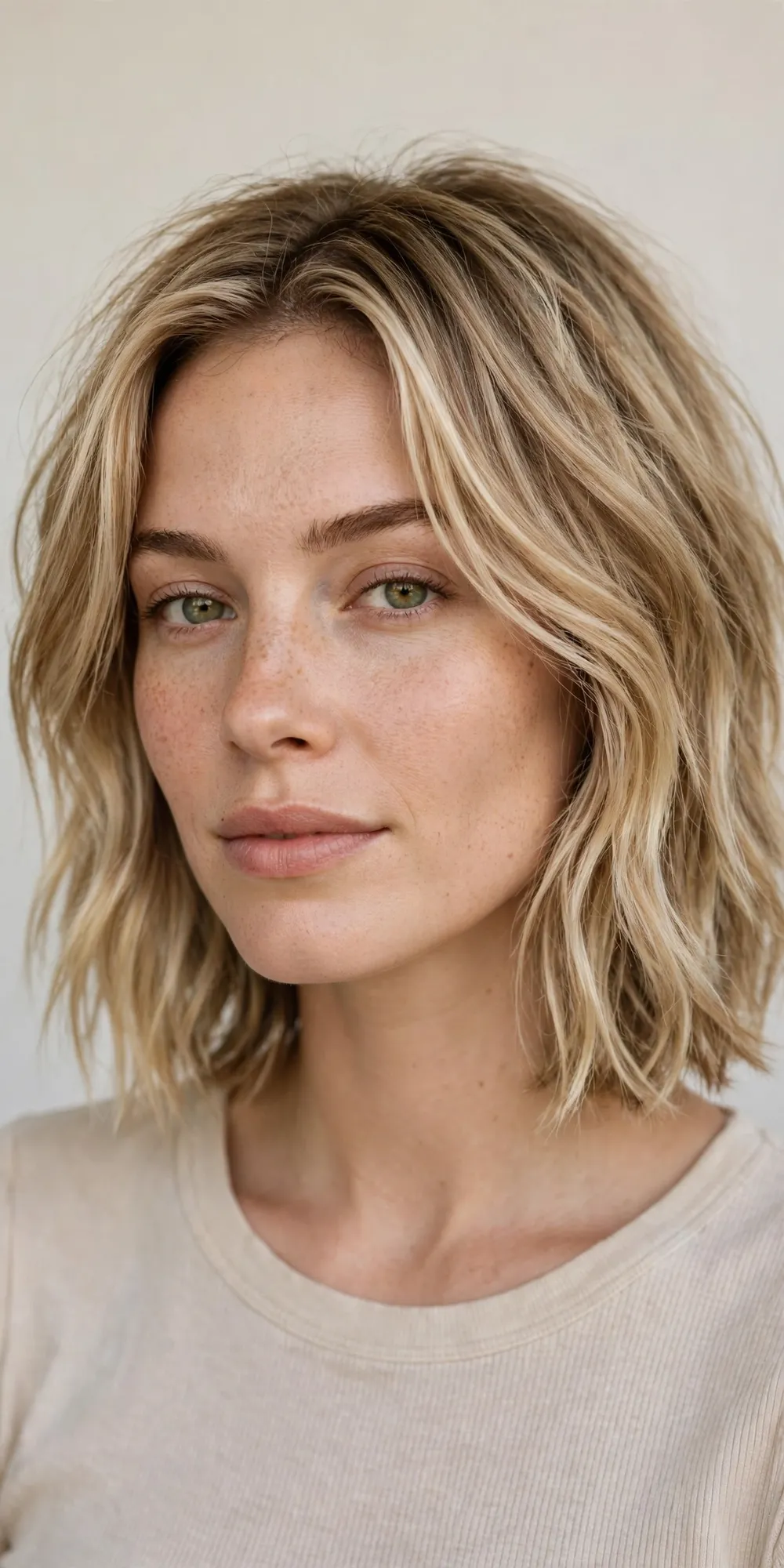
The textured lob is dirty blonde’s most practical cut — collarbone length, piecey ends, soft highlights that make the texture visible, not just felt. It suits every undertone — highlights warm or cool — and works on fine to medium hair that needs the illusion of fullness; the choppy ends do that job. Round and heart-shaped faces benefit most — the length at the front slims the cheeks. Ask for “a textured lob, soft highlights through the ends and around the face, point-cut ends, a gloss matched to my undertone.” The finish is effortless and modern — it looks styled even air-dried. Maintenance is light: a toner at 8 weeks, a trim every 8–10 weeks, and a sea-salt spray or texturising cream for the piecey finish.
14. Lush Golden Mermaid Waves
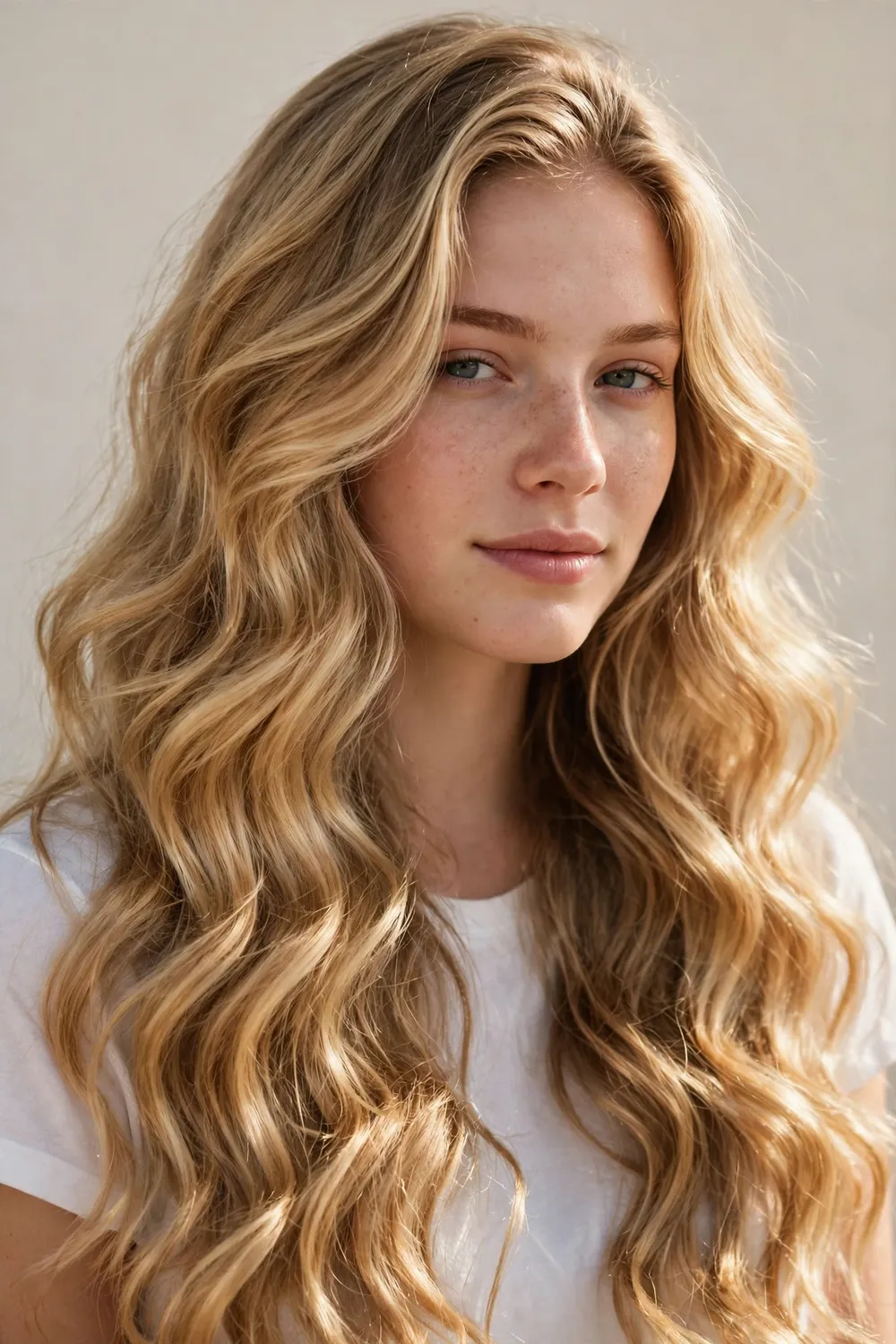
Extra-long golden waves with a sun-dipped finish are dirty blonde at its most romantic — the colour deepens at the crown and brightens toward the ends, like a whole summer by the sea. It suits warm and neutral undertones and medium to olive skin best, and needs medium to thick hair past the chest, because the length sells the gradient. Fine hair works if the pieces stay fine. Ask for “golden balayage through the lengths, brighter at the ends, warm gloss, long layers to show the colour.” The finish is lush, glossy and unmistakably long-hair glamour. Maintenance is real: a weekly deep-conditioning mask, a toner at 6–8 weeks, and a trim every 10–12 weeks, because split ends show first on hair this light and this long.
15. Short Dishwater Blonde Bob

Dishwater blonde — dirty blonde’s cooler, more muted cousin — works beautifully in a short bob, where champagne pieces in a light brown base shape the cut. It suits cool and neutral undertones, fair to light-medium skin, and flatters oval, heart and square faces — the length at the jaw sharpens the outline. Fine to medium hair takes it best; thick hair needs thinned ends so the colour doesn’t look blocky. Ask for “a chin-length bob, champagne blonde in a light brown base, subtle highlights on top, cool gloss.” The finish is chic and low-effort, the colour doing the work. Maintenance is easy: a toner at 6–8 weeks, a trim every 6–8 weeks, and a purple mask if it warms. For more lightening options, see our guide to blonde highlights.
Which Dirty Blonde Idea Fits You?
| Your situation | Best pick |
|---|---|
| First time lightening, want it subtle | Babylights Sun-Kissed Lift |
| Want months between salon visits | Balayage Low-Maintenance Dimension |
| Warm skin, need a glow fast | Warm Honey Instant Glow |
| Cool skin, want a polished finish | Cool Beige Expensive Finish |
| Hiding regrowth between appointments | Root Melt Soft Grow-Out |
| Long hair, love loose waves | Soft Long Dirty Blonde Waves |
| Want a bouncy, salon-finished look | Layered Blowout Golden Ends |
| Want the boldest face-framing | Glam Waves Money Piece |
| Love drama and contrast | High-Contrast Balayage Waves |
| Cool skin, shoulder-length cut | Soft Ashy Shoulder-Length |
| Curly hair, want dimension in every curl | Bouncy Curly Dirty Blonde |
| Cool tone but hate hard regrowth lines | Smudged-Root Ashy Melt |
| Want a low-effort modern cut | Textured Lob Soft Highlights |
| Extra-long hair, golden finish | Lush Golden Mermaid Waves |
| Short hair, cool muted shade | Short Dishwater Blonde Bob |
16. Dirty Blonde for Olive Skin
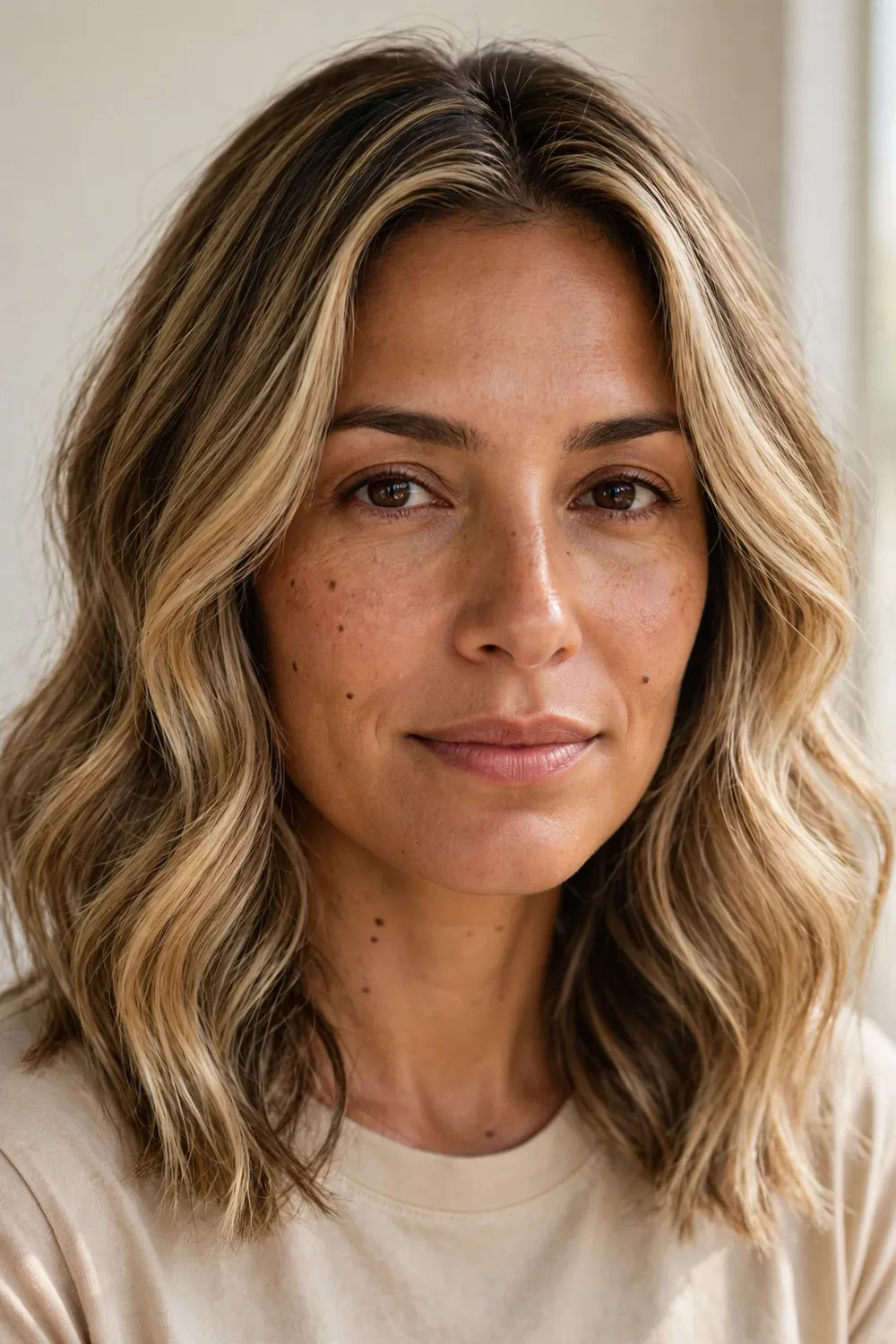
Olive skin has that green-gold undertone that can clash with the wrong blonde, but golden and vanilla face-framing pieces sit on it beautifully. The warmth in the gold picks up the warmth in the skin instead of fighting it, so the colour looks like it belongs rather than like it was painted on. Ask your colourist for a dirty blonde base with fine golden and vanilla babylights framing the face, leaving the back a touch deeper. It suits medium to long hair best — straight or wavy — and works on cool-leaning olive too, because the vanilla pieces keep it from going too yellow. A glossing serum adds shine. A toner refresh every six to eight weeks keeps the vanilla from slipping brassy.
17. Dishwater Balayage on Dark Hair
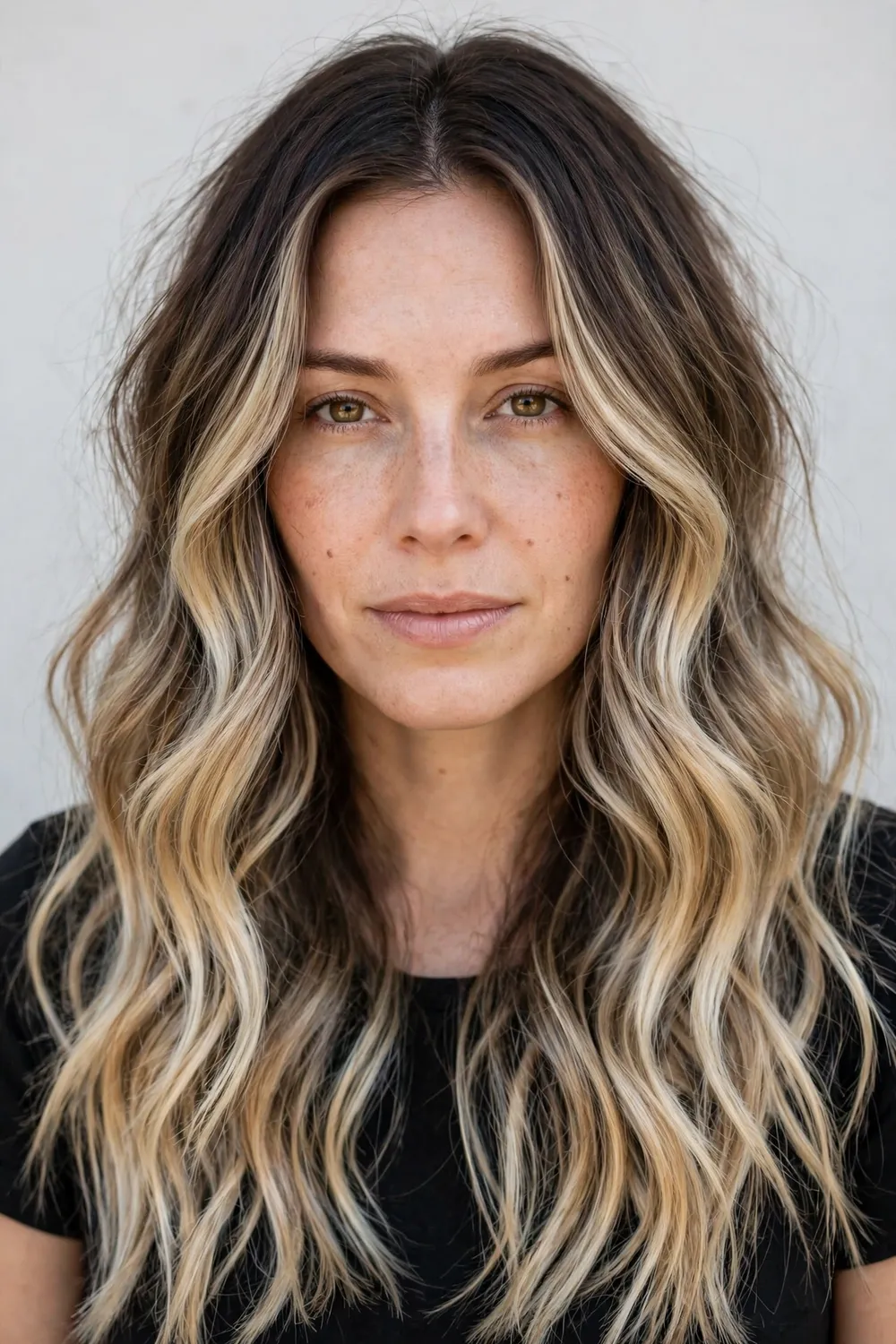
If your natural hair is dark brown or near-black, jumping straight to blonde is a long afternoon in the chair — this balayage lifts dark hair into dirty blonde territory in one softer step. The colourist hand-paints lightness from the mid-lengths down, leaving your dark roots intact, so the grow-out is kind and the contrast looks intentional. It suits thick hair especially well, since the depth at the roots keeps the volume from looking washed out. Ask for a neutral-to-warm balayage with the lightest pieces a couple of shades below your ends, and expect a toner to pull any orange out. Maintenance is easy: balayage touch-ups every twelve to sixteen weeks, sulfate-free shampoo, and a blue mask if the ends start pulling warm.
18. Light Dishwater Ombre
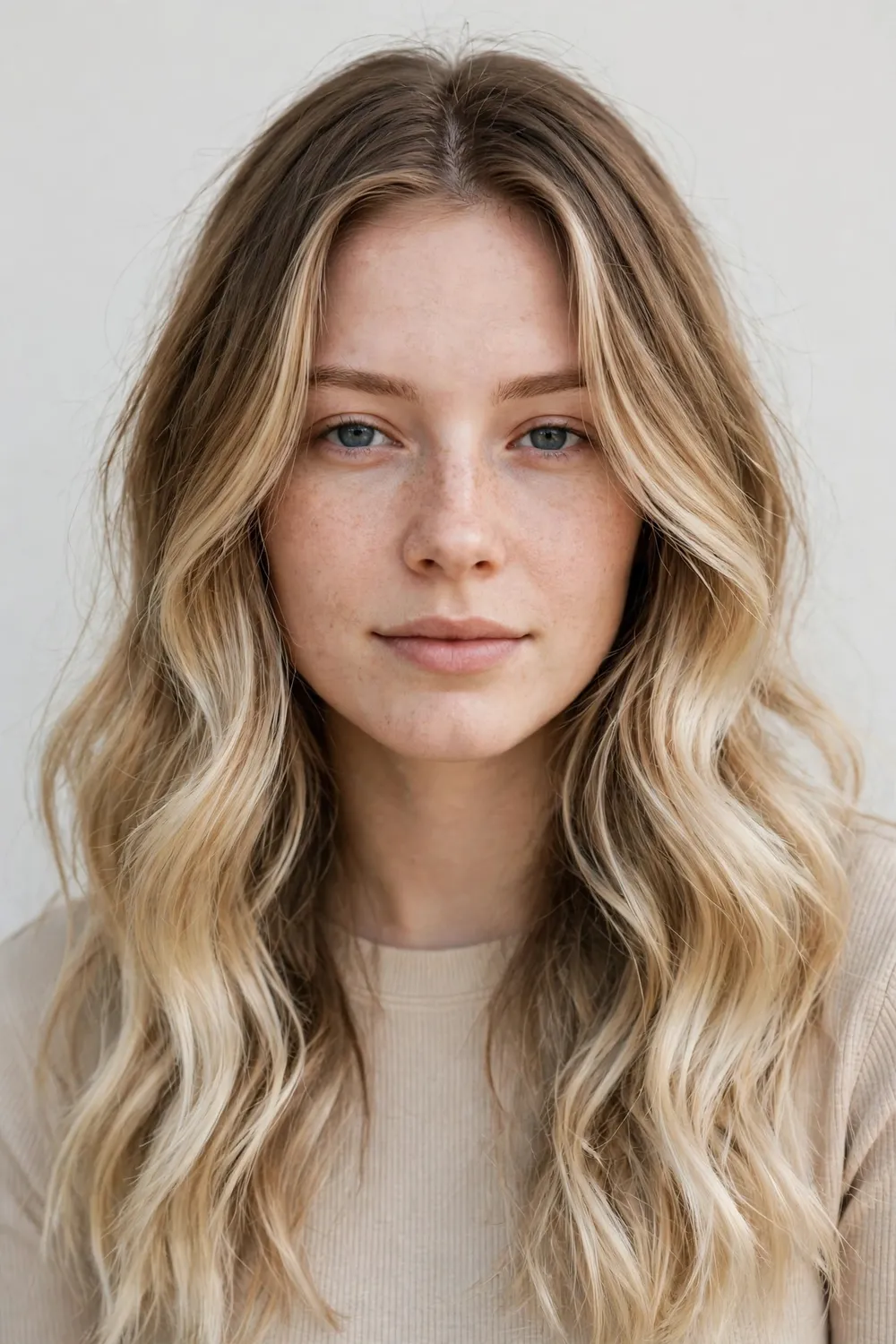
Ombre gets a bad name from the harsh two-tone versions of a decade ago, but a light dishwater ombre done softly is a different thing entirely. The root stays your deeper natural shade and melts gradually into light dishwater ends, with no hard line anywhere. It suits long hair best — there’s enough length for the fade to travel — and works on straight or gently waved hair, where the gradient reads cleanly. Ask for a root melt over the transition zone so the blend is seamless, and keep the lightest ends a cool-neutral dishwater rather than platinum. Grow-out is the whole point: you can go four months between visits. A weekly purple mask keeps the ends from yellowing, and regular trims stop the lightened tips looking frayed.
19. Dark Blonde Long Pixie
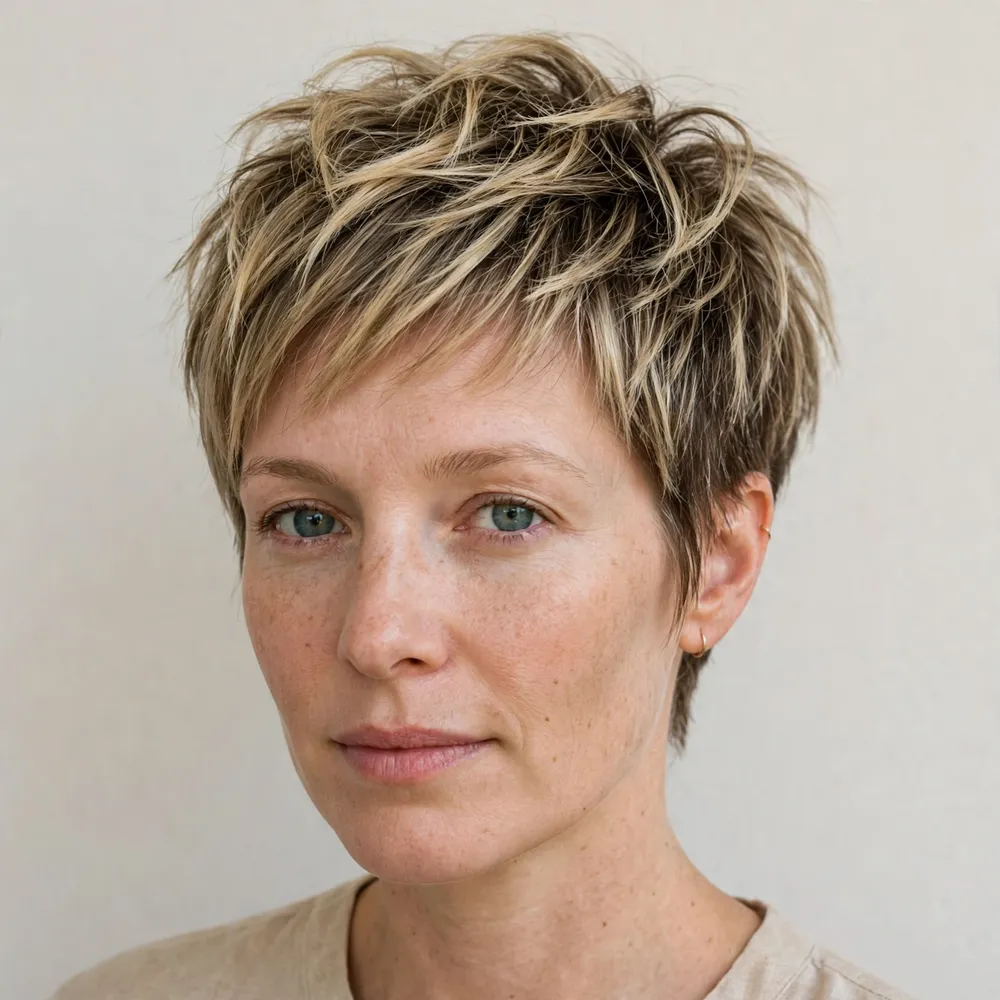
A long pixie in dark blonde is the quiet answer if you want short hair without going icy. Lighter pieces scattered through the top layers give the crop dimension, so the cut reads textured rather than flat — and the dark blonde base keeps it wearable for warm and neutral undertones alike. It suits fine hair particularly well: the colour contrast creates the illusion of fullness through the crown. Ask your stylist for a long pixie with choppy layers and hand-painted lighter pieces on top only, keeping the sides and nape deeper. A dab of matte paste, tousled, finishes it. Upkeep is mostly the cut — a trim every four to five weeks — with a toner refresh every six to eight weeks to keep the top pieces from dulling.
20. Platinum Color Melt
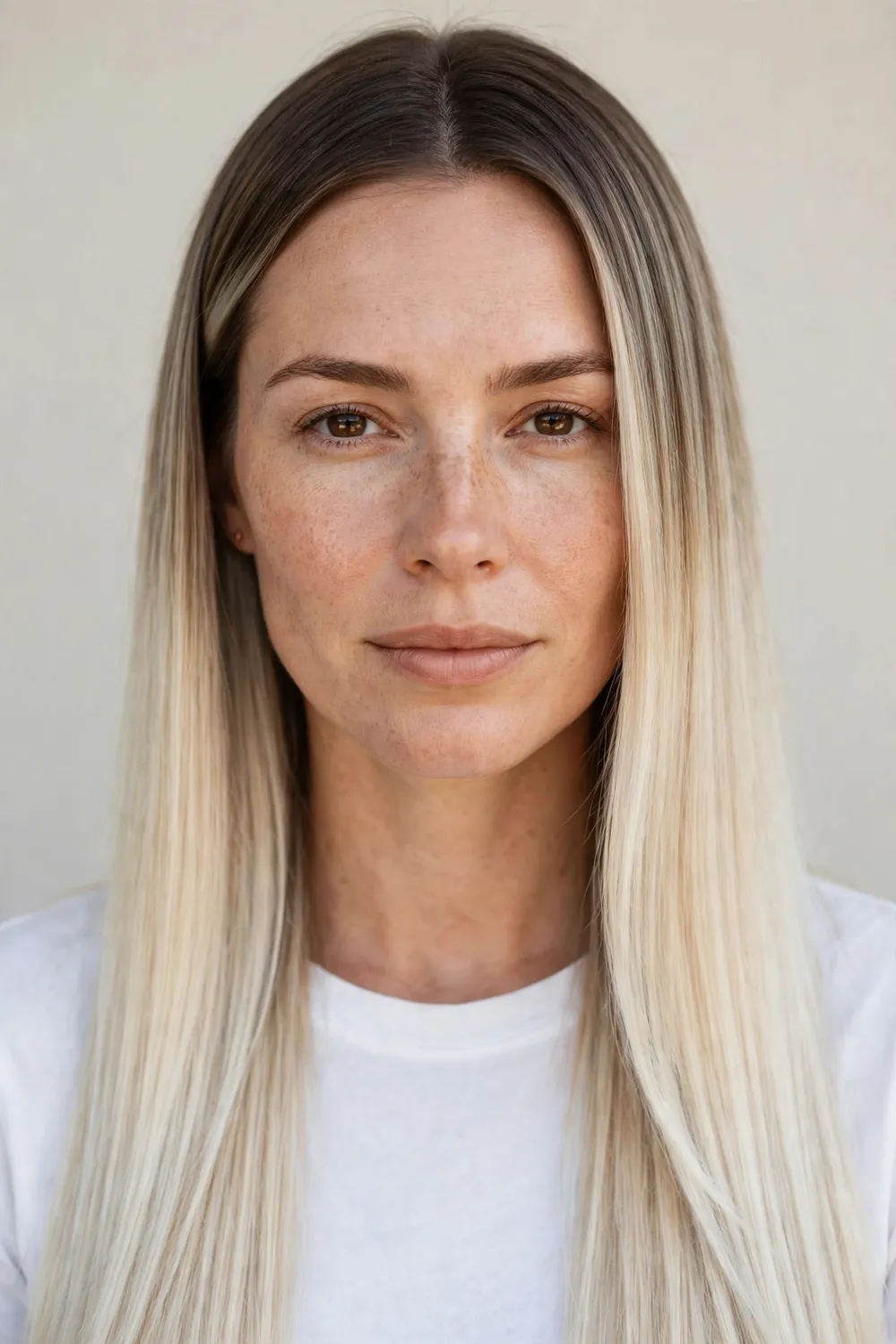
This is the boldest idea on the list, and it works because the root melt does the hard work. A cool brown root smudges down two or three inches and melts into platinum blonde lengths, so there’s no harsh regrowth line even as it grows out. It suits cool and neutral undertones and longer hair, where the melt has room to breathe — on short hair the transition can look rushed. Ask for a shadow root in a cool brown, platinum lengths with a pearl or ash toner, and a bond-building treatment during the lightening. Maintenance is the honest part: toner every six to eight weeks, purple shampoo weekly, and a proper mask — lightened hair dries out fast if you skip it. Worth it if you love high-impact blonde.
21. Long Loose Waves Blonde Highlights
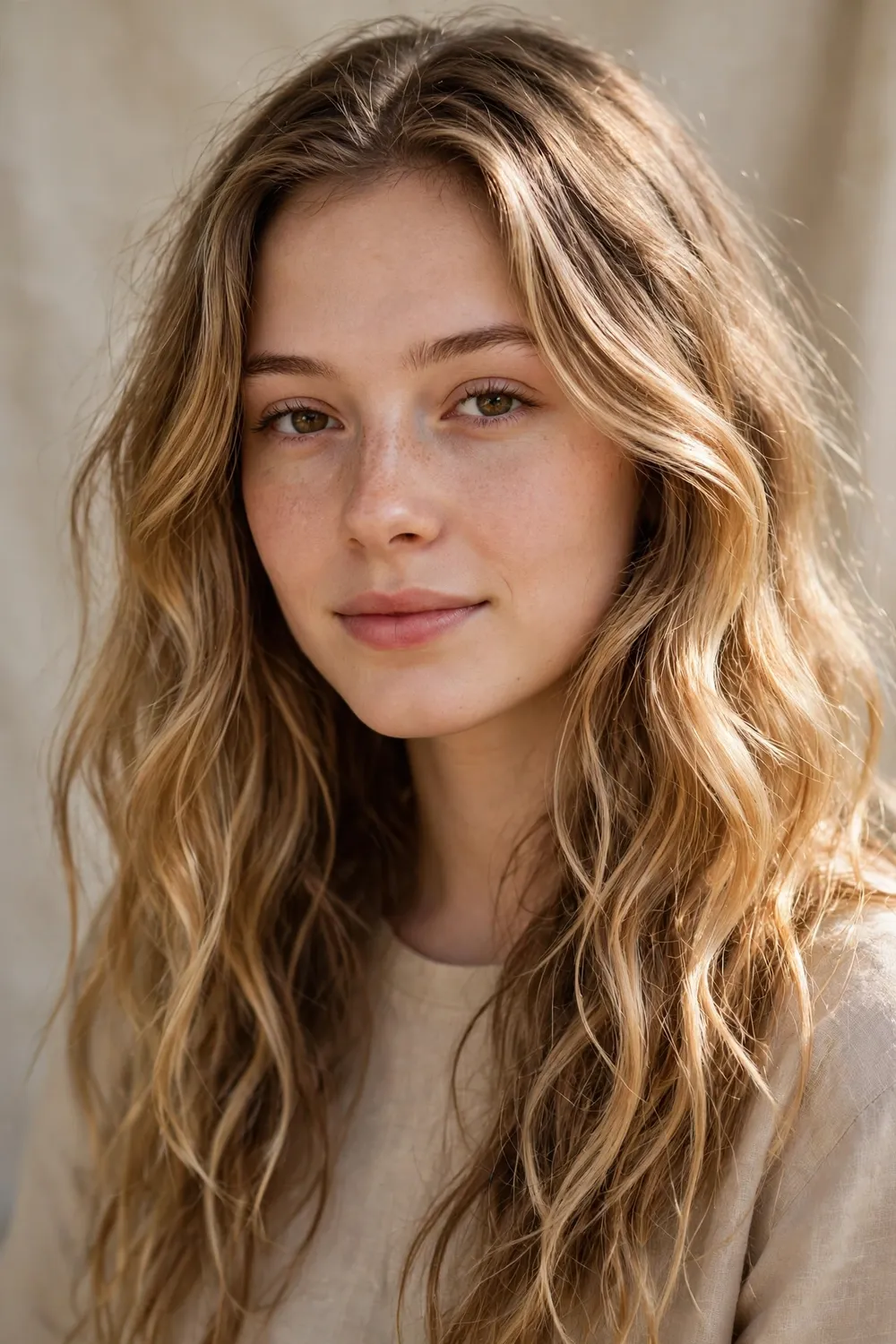
Sun-kissed loose waves with warmer blonde highlights is the look people picture when they say “beachy” — and it’s genuinely low effort once the colour is in. The highlights are woven through the lengths rather than stacked at the front, so the waves catch light as they move. It suits medium to long hair, all textures from straight to naturally wavy, and warm or neutral undertones best. Ask for woven highlights a shade or two lighter than your base, concentrated through the mid-lengths and ends, with a warm golden toner. Style with a large-barrel wand, alternating direction, and a salt spray for texture. A honey blonde hair glaze between appointments keeps the warmth golden instead of brassy, and trims every eight weeks stop the ends thinning out.
22. Subtle Highlights Face Frame
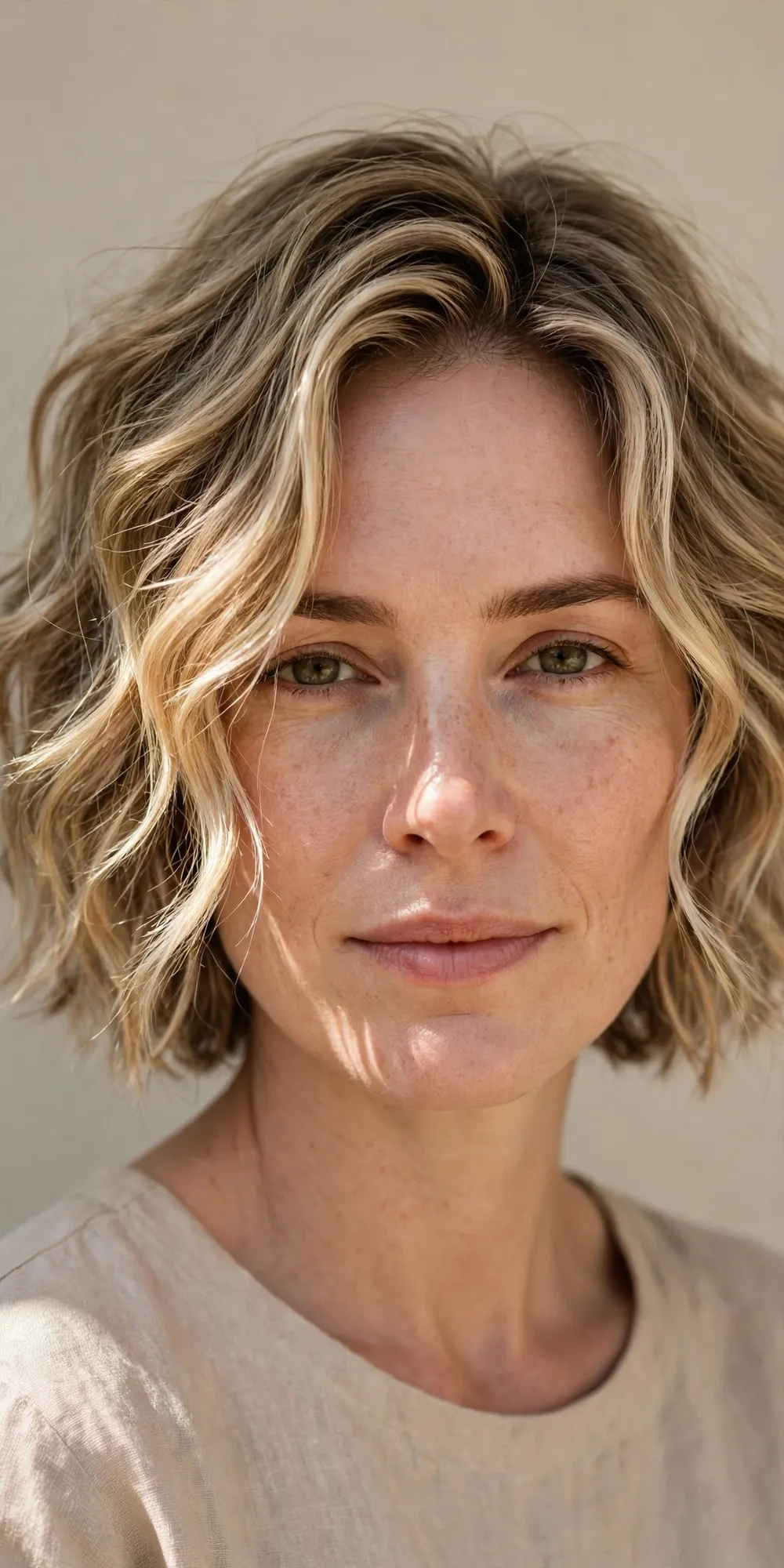
Sometimes the whole head doesn’t need lifting — a few fine highlights around the face do the job. These subtle pieces sit on short wavy hair and brighten the face without changing your overall colour, which is exactly why it’s such a good first step if you’re colour-shy. It suits short to shoulder-length cuts, fine to medium hair, and every undertone: your colourist picks the tone — golden for warm, beige for cool. Ask for fine face-framing babylights, just the front two or three inches, with a gloss to blend. The finish is effortless: air-dry with a little cream, or a quick wave with a flat iron. Touch-ups every eight to ten weeks keep the frame bright, and because so little hair is lightened, the upkeep is genuinely minimal.
23. Golden Blonde Tones
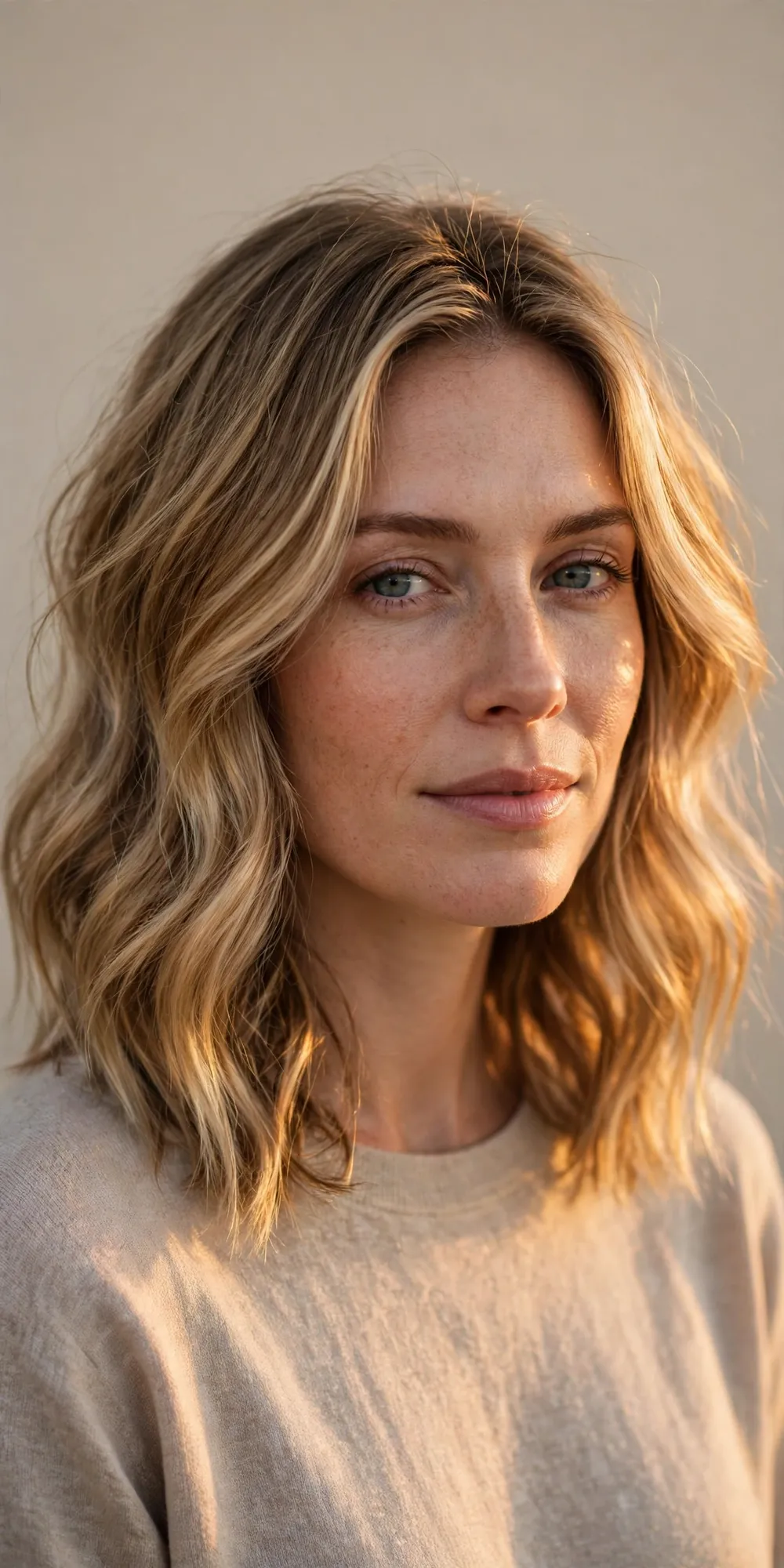
Warm golden tones woven through a dirty blonde base are what stop the shade reading flat or muddy. The gold sits in fine ribbons through the lengths, catching the light on straight hair and adding depth to waves, and it flatters warm and neutral undertones — if your skin runs cool, ask for the gold kept to the ends rather than the face. It suits medium to long hair, and it’s one of the kindest options for hair that’s been coloured before, because the golden toner disguises old unevenness. Ask for woven golden highlights with a warm gloss over the top. A shine spray finishes it; heavy oils can dull gold. A toner refresh every six to eight weeks keeps the gold from sliding into orange.
24. Chic Long Hair Curtain Bangs
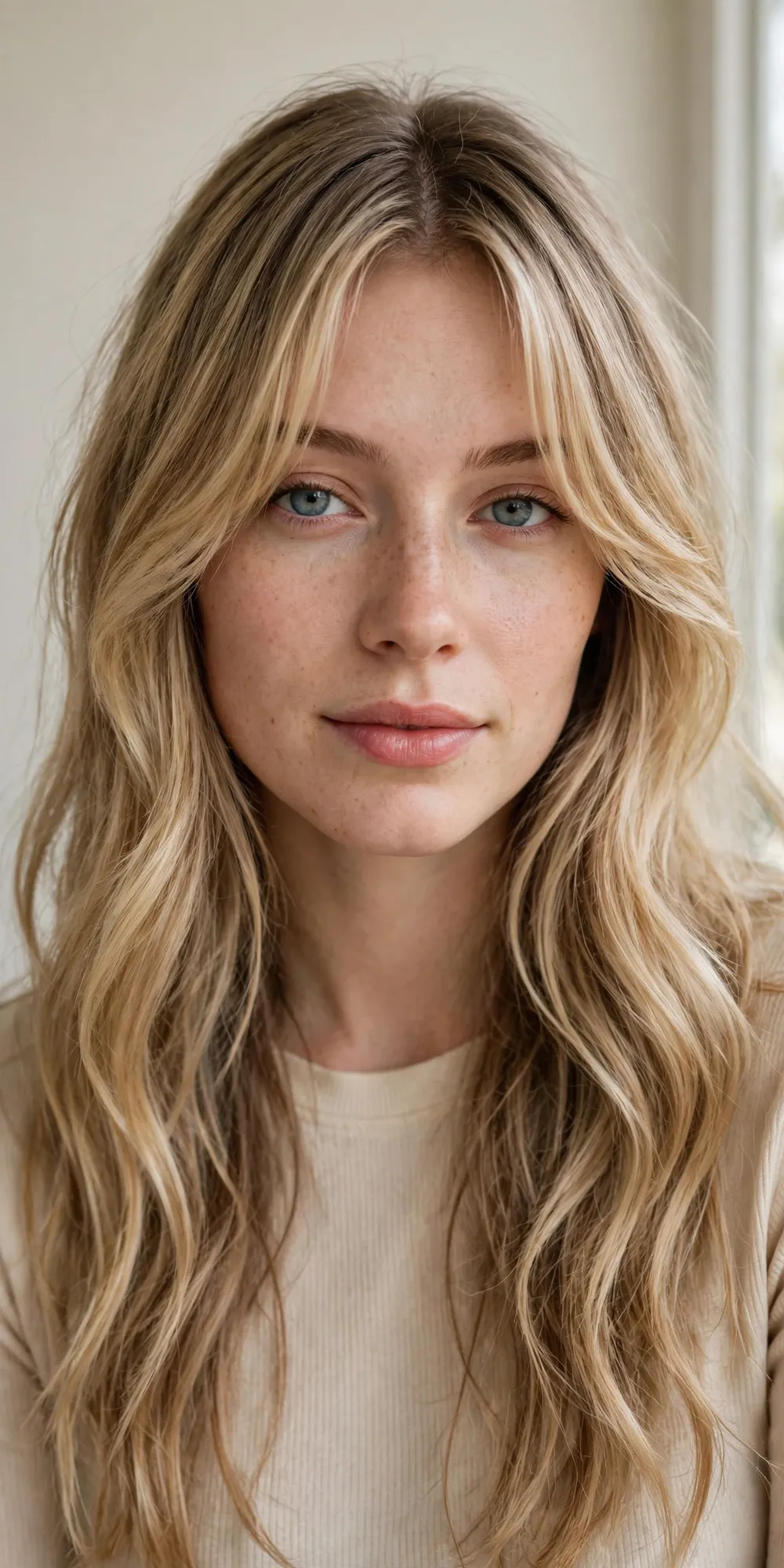
Curtain bangs are doing a lot of the work here: they frame the cheekbones, soften a long face, and give the whole cut a shape even when the rest is simply long and straight. The dirty blonde base stays dimensional thanks to face-framing layers that lighten slightly toward the ends, so the bangs blend rather than sitting like a separate piece. It suits long hair, oval and heart-shaped faces especially, and medium to thick textures — very fine hair can struggle to hold the parted bang shape. Ask for curtain bangs that hit at cheekbone length with face-framing layers from the chin down. Blow-dry the bangs with a round brush, flicked outward. Trim the bangs every three to four weeks; the colour needs a toner only every eight weeks.
25. Lived-In Golden Blonde
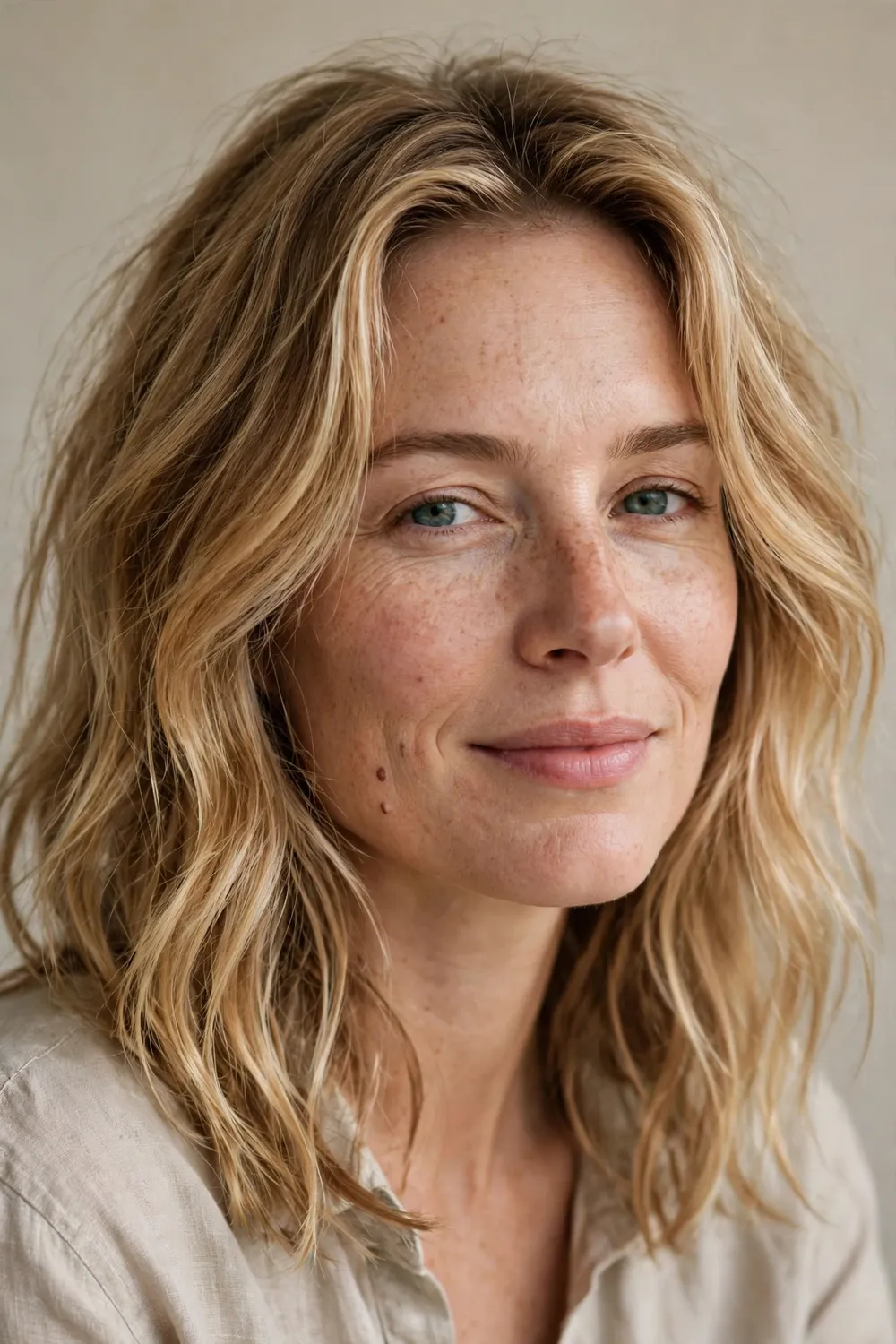
Lived-in golden blonde is the colour for people who hate the salon chair: a soft golden base with lighter front pieces and no harsh root line, so it grows out looking like it was always meant to. The base sits close to your natural dirty blonde and the brightness lives around the face and through the ends, which means regrowth is invisible for months. It suits every undertone — the gold can lean honey for warm skin or vanilla for cool — and medium to long hair in any texture. Ask for a root melt over fine babylights, with the lightest pieces at the front. A lightweight cream and a soft blow-dry finish it. Touch-ups stretch to twelve to sixteen weeks, with a monthly purple mask keeping the gold clean.
26. Caramel Blonde Balayage
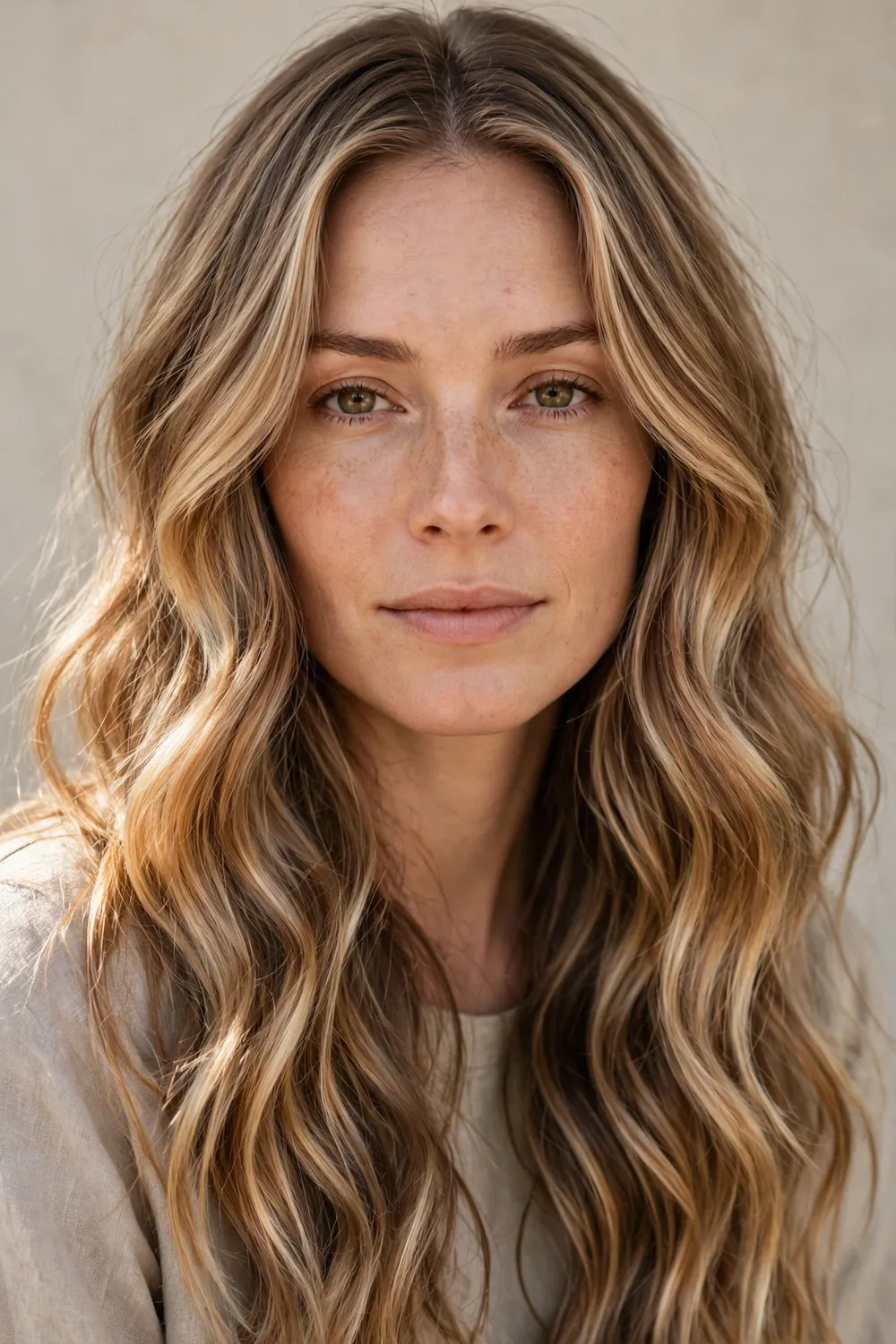
Caramel ribbons painted through dirty blonde lengths add warmth without tipping the whole head golden. The colourist hand-paints the caramel in soft, uneven ribbons — thicker through the ends, finer near the face — so the result looks like sunlight rather than stripes. It suits warm and neutral undertones, medium to long hair, and thicker textures where the ribbons have room to show. If your skin runs very cool, ask for the caramel kept low and away from the face. The salon ask is simple: a caramel balayage with a gloss to marry the tones, on a dirty blonde base. Finish with a shine serum for that glossy, expensive look. Balayage means twelve to sixteen weeks between visits, and a blue mask handles any orange creeping into the caramel.
27. Honey Balayage Ribbons
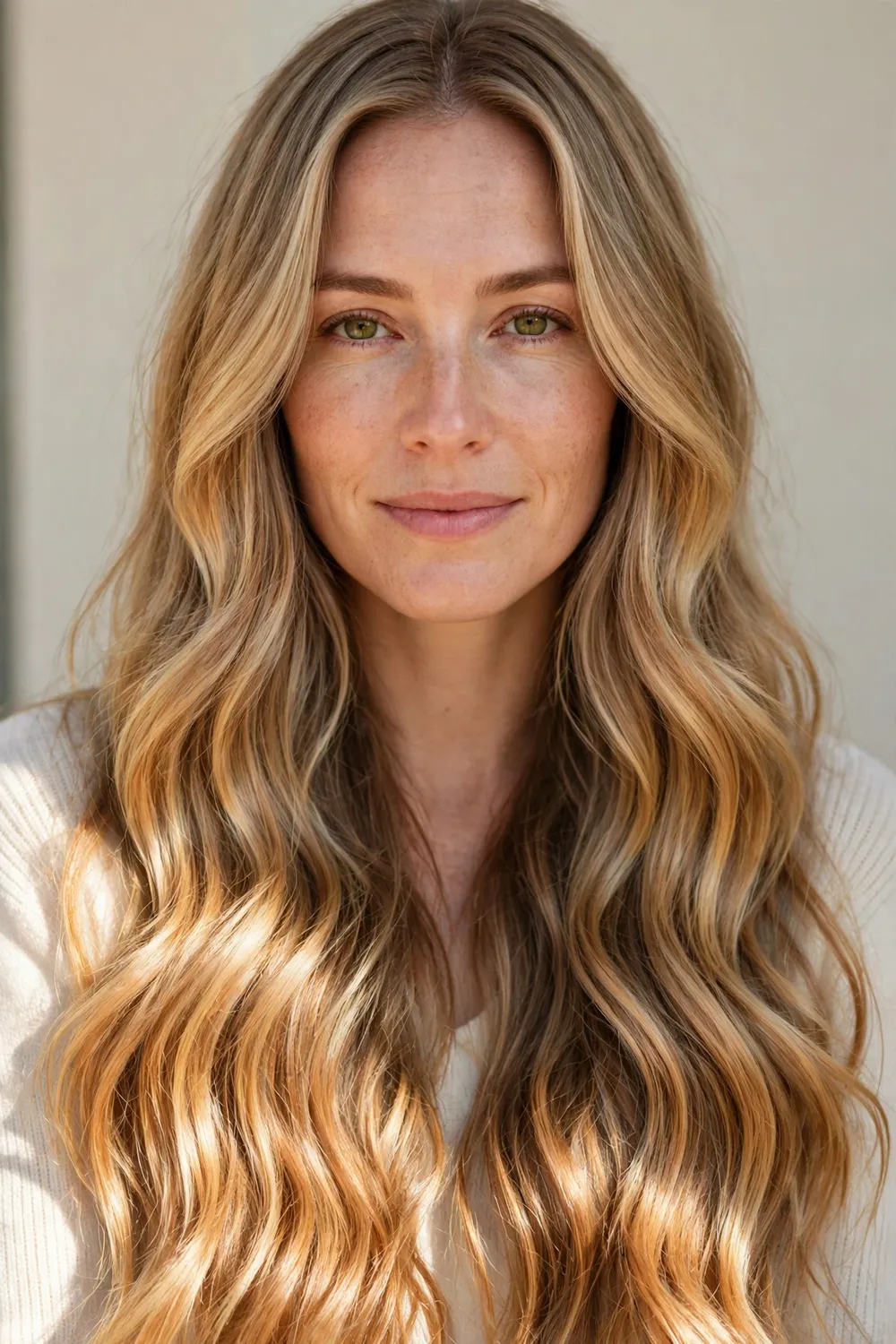
Honey is caramel’s warmer, deeper cousin — richer, more golden, and unmistakably sunny. These ribbons run through the lengths in a slightly denser pattern than caramel, so the overall effect is a warmer head of hair, not just warm streaks. It suits warm undertones best and looks especially good on medium to dark dirty blonde bases, where the contrast reads clearly. On very cool skin it can pull brassy, so be honest with your colourist about your undertone before committing. Ask for honey balayage with a warm gloss, the lightest ribbons through the ends. Maintenance follows the balayage rhythm — twelve to sixteen weeks — with a sulfate-free shampoo and a purple mask to keep the honey from yellowing.
28. Ash Blonde Balayage
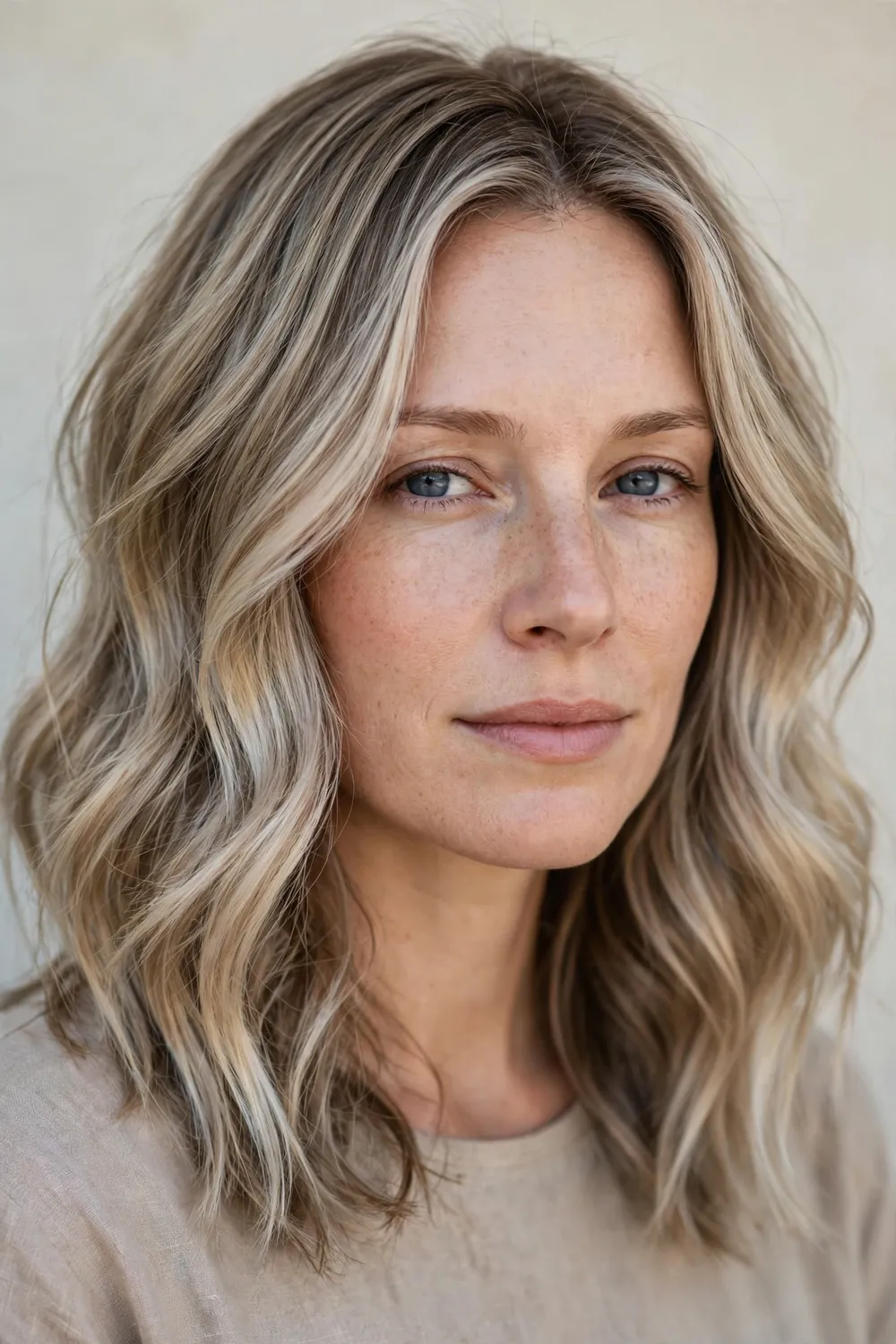
Ash is the colour to reach for when your dirty blonde keeps pulling warm no matter what you do. Cool ashy sweeps are painted through the lengths, pulling the brass out of the base and leaving a smoky, muted blonde that looks deliberately cool rather than grey. It suits cool and neutral undertones and medium to long hair, and it’s a lifesaver for anyone whose natural hair goes orange when lightened. Ask for an ash balayage with a cool toner — and be clear you want ash, not silver, or the shade tips into grey. Finish with a lightweight oil on the ends only. Toner refreshes every six to eight weeks are non-negotiable; ash fades fast, and a weekly purple shampoo holds the cool.
29. Bronde Balayage
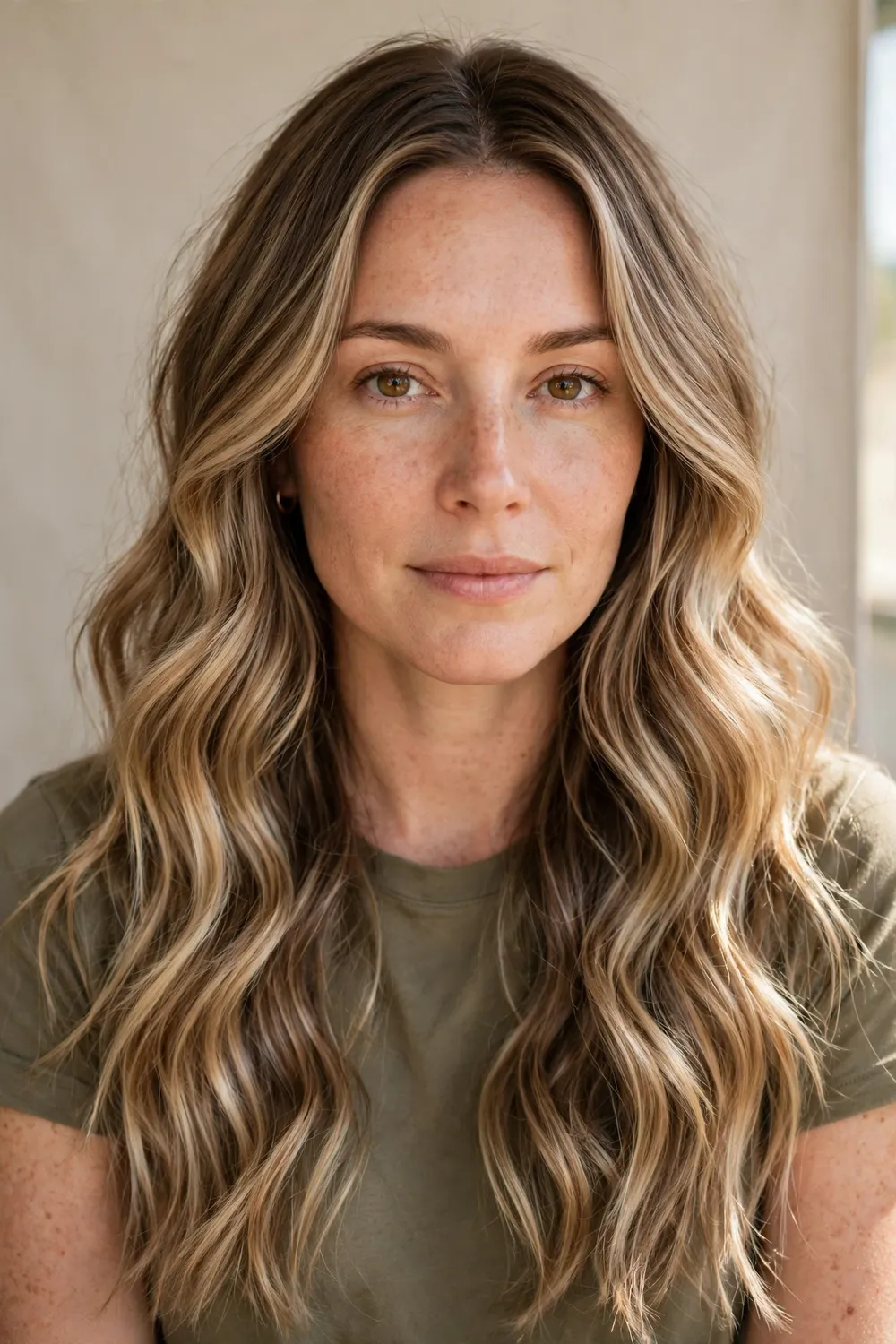
Bronde is the middle ground that makes dirty blonde make sense: brown and blonde in one colour, soft and dimensional, with neither side shouting. The balayage blends the two so gradually that the eye can’t tell where brown ends and blonde begins, which is exactly the point — it looks like expensive, healthy hair rather than a colour job. It suits every undertone and almost every length, and it’s the safest first step from brunette toward blonde. If you’re coming from the darker side, our brunette hair color ideas show how the transition can look. Ask for a bronde balayage with a neutral gloss. Upkeep is the balayage standard — twelve to sixteen weeks — and the blend is so forgiving that even a late appointment still looks fine.
30. Champagne Blonde Ends
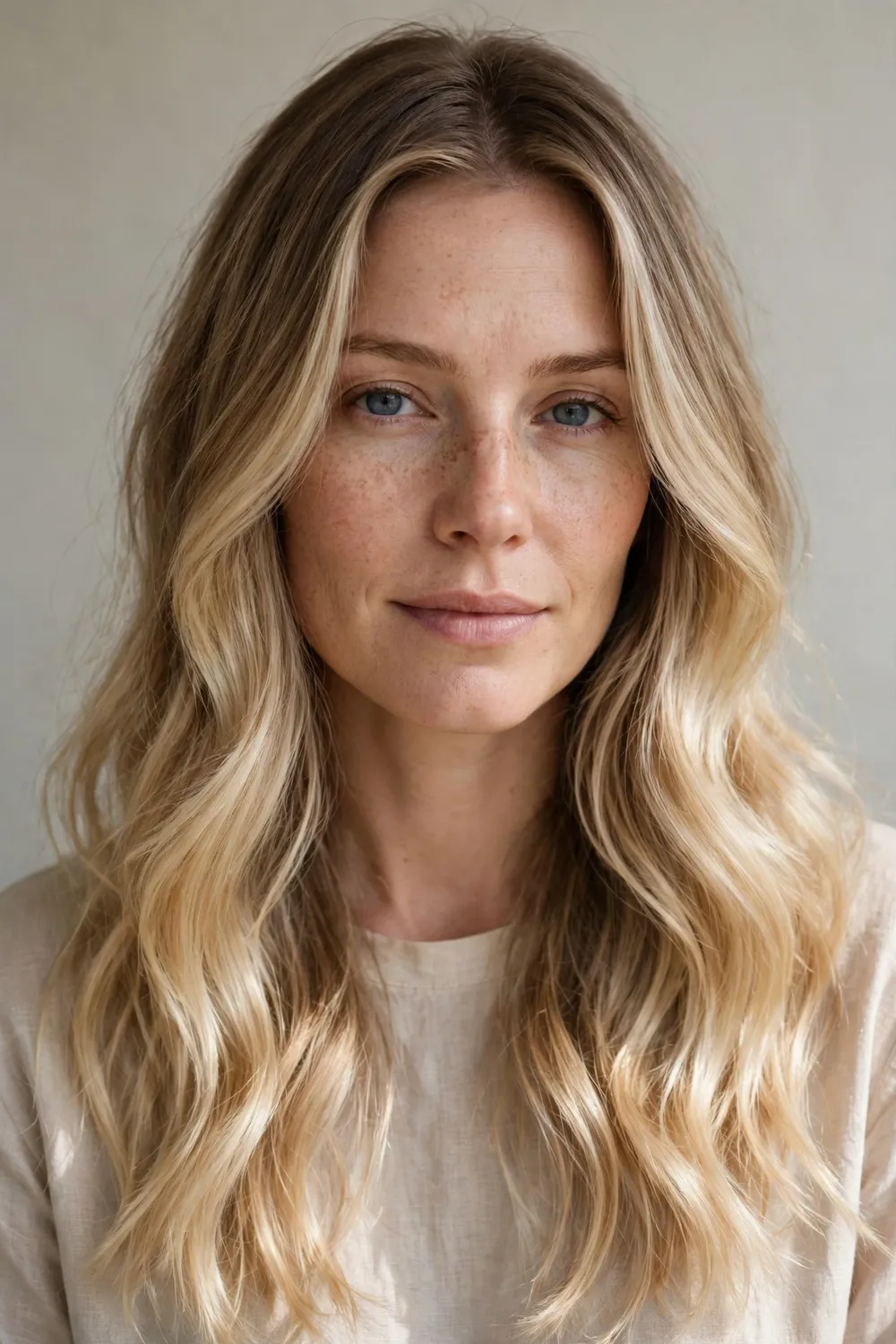
Bright champagne pieces concentrated through the ends give dirty blonde its party finish: the roots stay natural and low-maintenance while the ends sparkle. The champagne tone is cooler than honey and softer than platinum, so it flatters most undertones — warm skin gets a lift from the brightness, cool skin gets a tone that doesn’t clash. It suits medium to long hair best, where the ends have enough length to carry the lightness, and straight or wavy textures that show off the shine. Ask for champagne balayage or a light ombre through the last few inches only, with a pearl gloss. The ends take the most damage, so a weekly mask and heat protectant matter. Toner every six to eight weeks keeps the champagne from going yellow.
Looking After Dirty Blonde Hair
Dirty blonde is a low-maintenance colour by design, but it still needs a routine — the difference between hair that looks expensive for months and hair that goes brassy in three weeks is mostly upkeep. Toner refreshes every six to eight weeks keep the tone where your colourist left it; babylights need attention every eight to ten weeks, balayage stretches to twelve to sixteen, and a root melt can carry you up to four months between visits. Wash with a sulfate-free shampoo and cooler water, which strips less colour than hot water, and lean on a purple mask when the blonde starts pulling yellow or a blue mask when it leans orange. One safety note: always patch-test colour products before a full application, especially if you’re trying a new toner or dye at home — a small test behind the ear is worth the twenty-four hours it takes.
5 Mistakes to Avoid with Dirty Blonde Hair
- Letting ash go grey. Ash toner fades fast, and piling on more ash to compensate can tip the whole head into a flat, grey cast. Ask your colourist to mix a touch of beige or gold into the toner so the cool stays soft, not steely.
- Honey on the wrong undertone. Honey looks like sunshine on warm skin and like brass on cool skin. Check your undertone first — veins that look green mean warm, blue means cool — and pick your gold accordingly.
- Stripey foils. Thick, evenly spaced foils are how you end up with zebra hair. Fine, woven babylights or hand-painted balayage blend; chunky foils don’t, and they grow out with an obvious line.
- Balayage painted too high. When the lightness starts right at the root, you lose the whole point of balayage — the soft grow-out. The painted sections should start at least a few inches down, with the brightest pieces at the ends.
- Skipping toner refreshes. Dirty blonde without toner is just lightened hair, and lightened hair goes brassy. Six to eight weeks between refreshes is the rhythm; stretch it and you’ll be fighting yellow with purple shampoo instead of enjoying the colour.
Frequently Asked Questions
What highlights look best on dirty blonde hair?
Babylights, balayage, honey and beige pieces all work, and the best pick depends on your undertone. Warm skin loves honey and golden babylights, cool skin suits beige and ash, and a root melt ties any of them together with a soft grow-out. If you’re unsure, babylights are the safest first move — fine, subtle, and easy to build on later.
Is dirty blonde hair warm or cool?
It can be either, and that’s the point. The base itself sits between dark blonde and light brown, and the toner decides the temperature — warm honey and caramel for a golden finish, or ash and beige for a cool one. Your colourist should match the tone to your skin’s undertone rather than defaulting to one or the other.
Does dirty blonde hair suit olive skin?
Yes — olive skin is one of its best matches. Golden and vanilla face-framing pieces flatter the green-gold undertone in olive complexions, warming the face without turning brassy. Keep the gold around the face and a touch deeper at the back, and avoid flat ash, which can make olive skin look washed out.
How often do dirty blonde highlights need touch-ups?
It depends on the technique: toner refreshes every six to eight weeks, babylights every eight to ten weeks, balayage every twelve to sixteen weeks, and a root melt can stretch to four months. Balayage and root melts are the lowest-maintenance options because the grow-out is designed to look intentional.
Can I highlight dirty blonde hair at home?
Some of it, carefully. Balayage and face-framing highlights are the most DIY-friendly because the painted technique is forgiving and the grow-out hides mistakes — but full-head babylights and platinum work belong in the salon. Always patch-test first, and if your hair has been coloured before, talk to a colourist before lifting it at home.
Will highlights make my dirty blonde hair look blonder overall?
Only if you want them to. Fine, sparse babylights add dimension without changing your overall depth, while denser, brighter highlights through the lengths will lift the whole head lighter. Tell your colourist whether you want a subtle lift or a genuinely blonder result before they start — the foil pattern decides it.
How do I stop dirty blonde highlights going brassy?
Start with the right toner — ash or beige for cool skin, a balanced gold for warm — then maintain it with a purple mask for yellow brass or a blue mask for orange, used once a week. Check the colour in daylight, not bathroom light, so you catch brass early, and book a toner refresh every six to eight weeks rather than waiting until the brass is obvious.
Final Word
Dirty blonde is the shade that rewards patience: pick your undertone, choose one technique to start with, and let the colour grow out gracefully instead of chasing perfection every few weeks. For more ideas across the whole colour spectrum, browse our more hair colour guides and find the shade that fits you next.