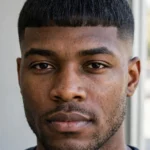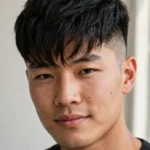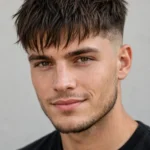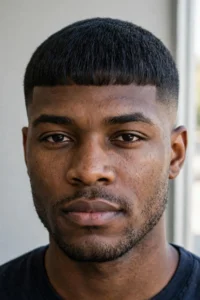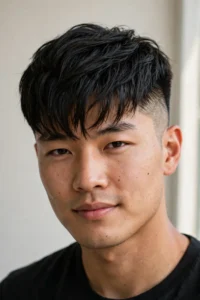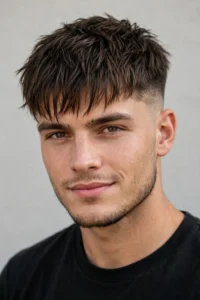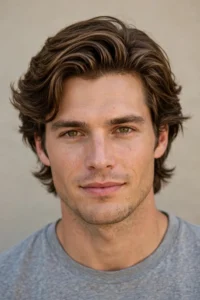


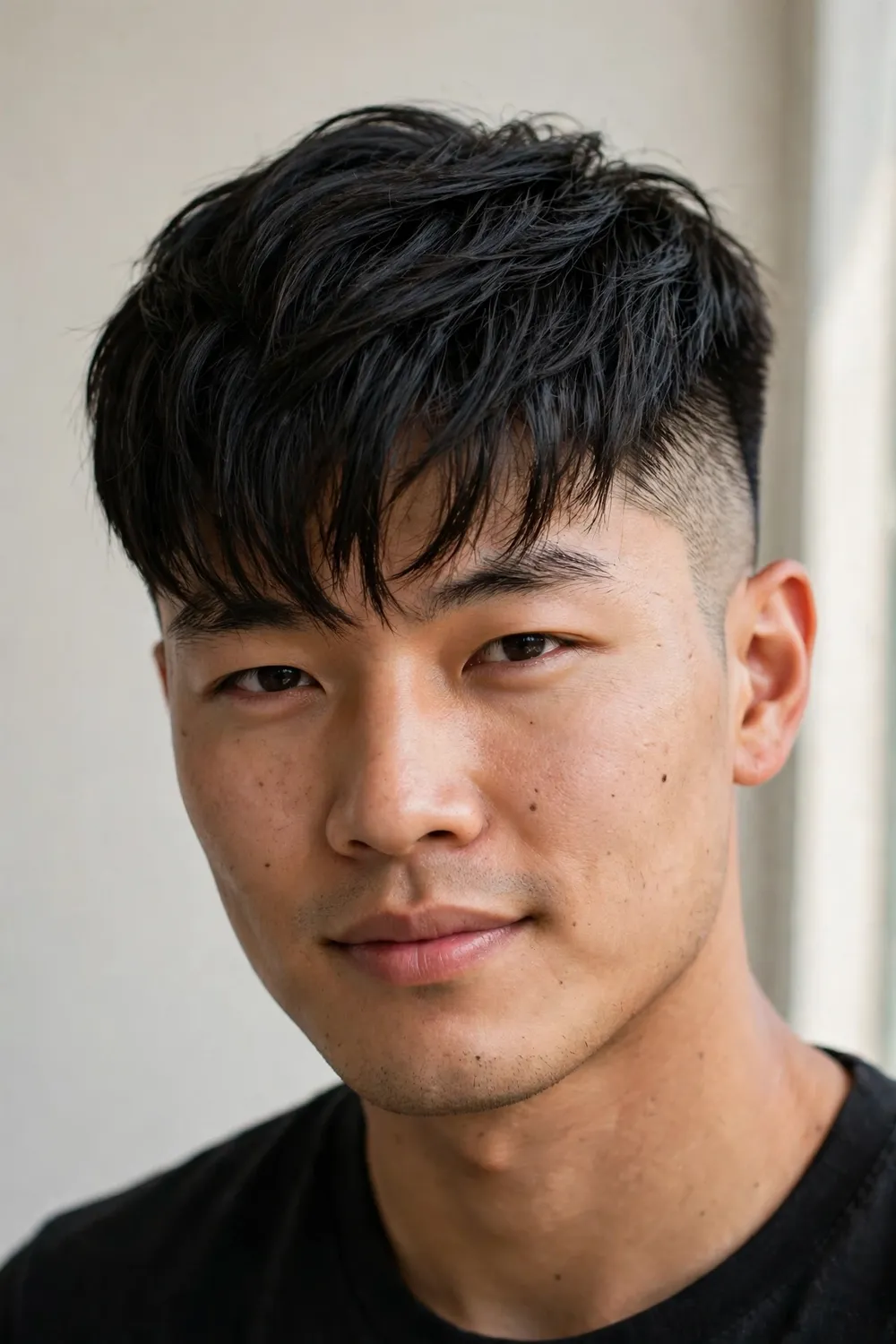
If you want one cut that just works, start with the Two Block. Comma Hair is the best choice when you like a fringe with a bit of shape to it, and the Korean Middle Part suits longer hair that you actually want to show off. The 39 haircuts for Asian men below cover every length and every kind of thick, straight hair — so whatever your face shape, there’s something here that fits.
How to pick the right cut for thick, straight Asian hair
Asian hair tends to be thick, straight and heavy, and it grows outwards rather than falling flat. That one fact decides more than anything else — a cut that looks great on fine, wavy hair can puff up into a helmet on you. So first, be honest about your face shape. Round faces need height on top and tighter sides; long faces look better with some fringe to break up the length; square jaws can carry almost anything, but softer texture keeps the angles from looking too harsh.
Then think about thickness. If your hair is really dense, ask your barber to thin it out with point cutting or a razor — that stops the sides from sticking out sideways between cuts. And finally, be realistic about styling time. A two block or a crop needs five minutes and a dab of clay. A blowout or a permed style needs a dryer and ten minutes you might not have on a Monday morning. Pick the cut that matches the morning you actually have, not the one you wish you had.
1. Two Block
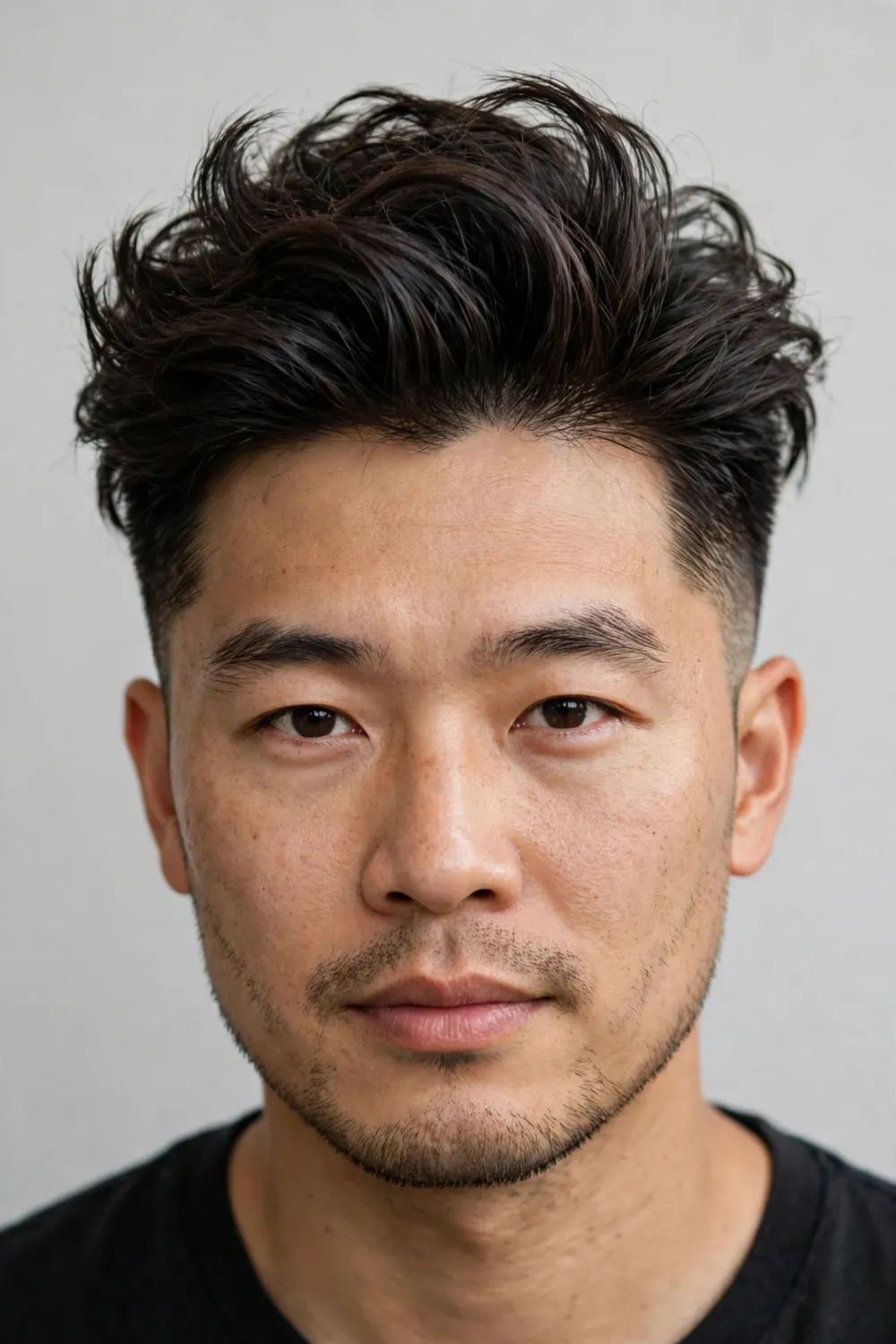
The two block made Korean barbershops famous, and it is still the safest first choice for Asian men. The sides and back are faded or undercut short, while the top stays long enough to push forward or sweep to the side. It suits nearly every face shape, especially round and square ones, since the height on top stretches the face out. Ask your barber for a mid fade on the sides with the top left around 8–10 cm, thinned through so it does not sit like a solid slab. Finish with matte clay worked through with your fingers for a dry, natural look. A trim every three weeks keeps the fade crisp, and the top grows into a longer version of the same cut.
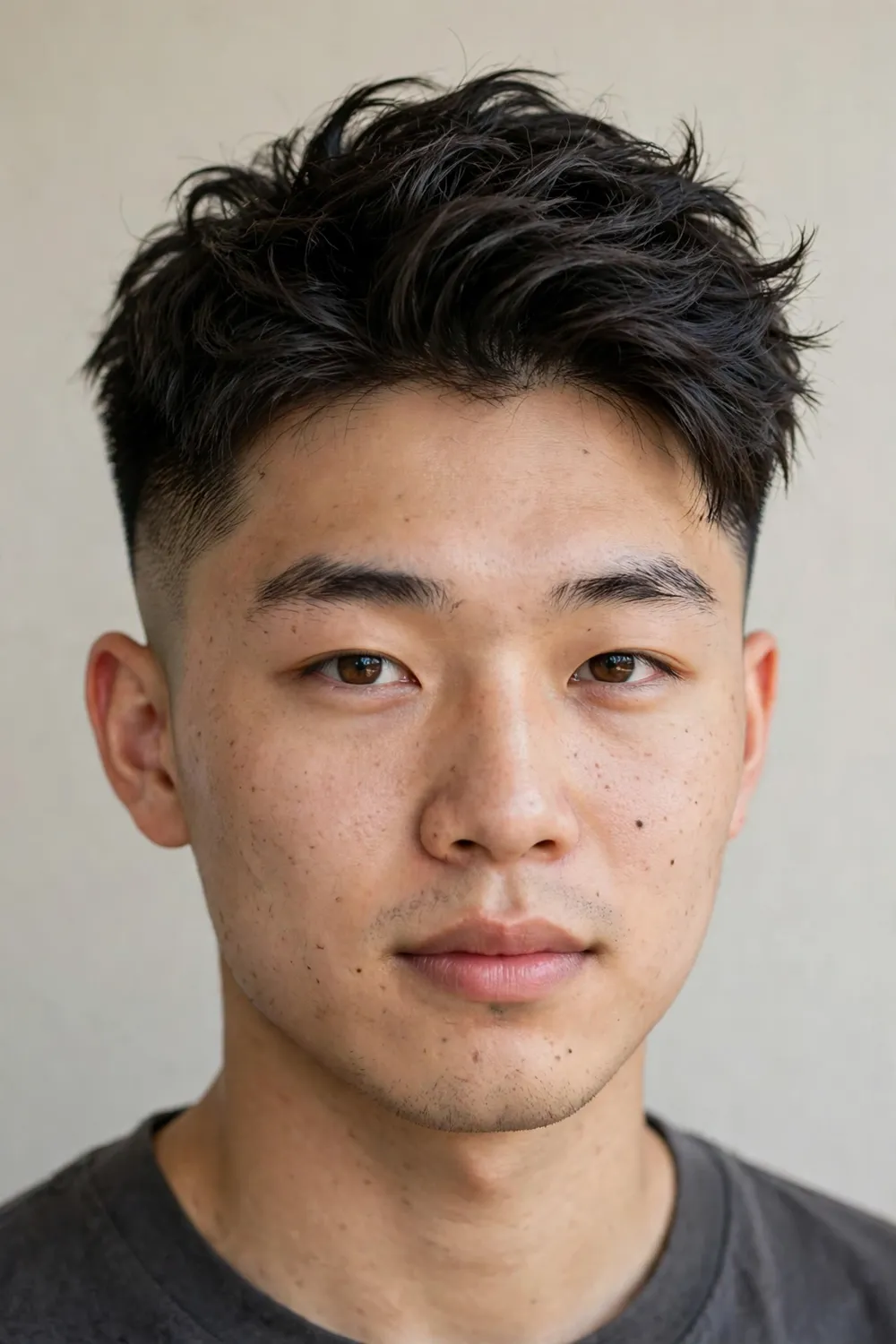
2. Comma Hair
Comma hair gets its name from the fringe, which curls over the forehead in the shape of a comma. The sides stay short and neat, usually a low taper or a soft fade, while the front is left long enough to bend across the forehead. It works best on oval and longer faces, since the curved fringe shortens the face, and it flatters straight hair that holds a bend. Ask your barber for a comma fringe with tapered sides and the top thinned at the ends — most barbers who do Korean cuts know exactly what that means. A light-hold wax and a blast of hot air sets the curl. It needs a touch of styling every morning, but no more than two or three minutes.
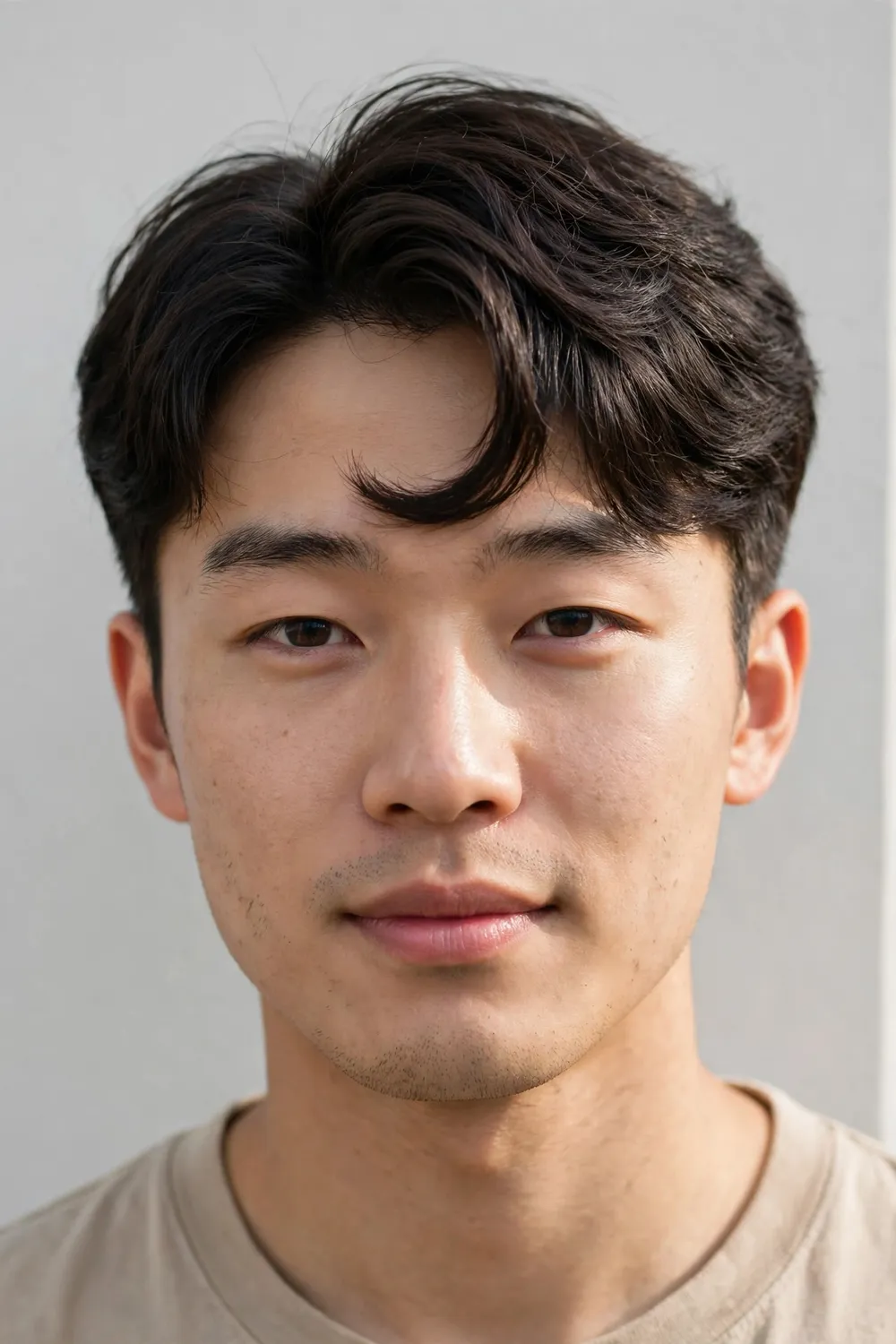
3. Korean Middle Part
The Korean middle part is the softer, grown-out cousin of the curtain cut — hair parted in the centre and falling in loose lengths on both sides of the face. It suits men with medium to thick hair who will grow the top past their eyebrows, and flatters longer and oval faces. Ask your barber to keep the length on top, taper the sides lightly and thin the ends so the hair falls instead of puffing out. A down perm helps if your hair sticks out, keeping the sides flat without touching the top. Style it with sea salt spray on damp hair, then air dry or blow dry on low heat. It needs trims every four to five weeks to keep the shape.
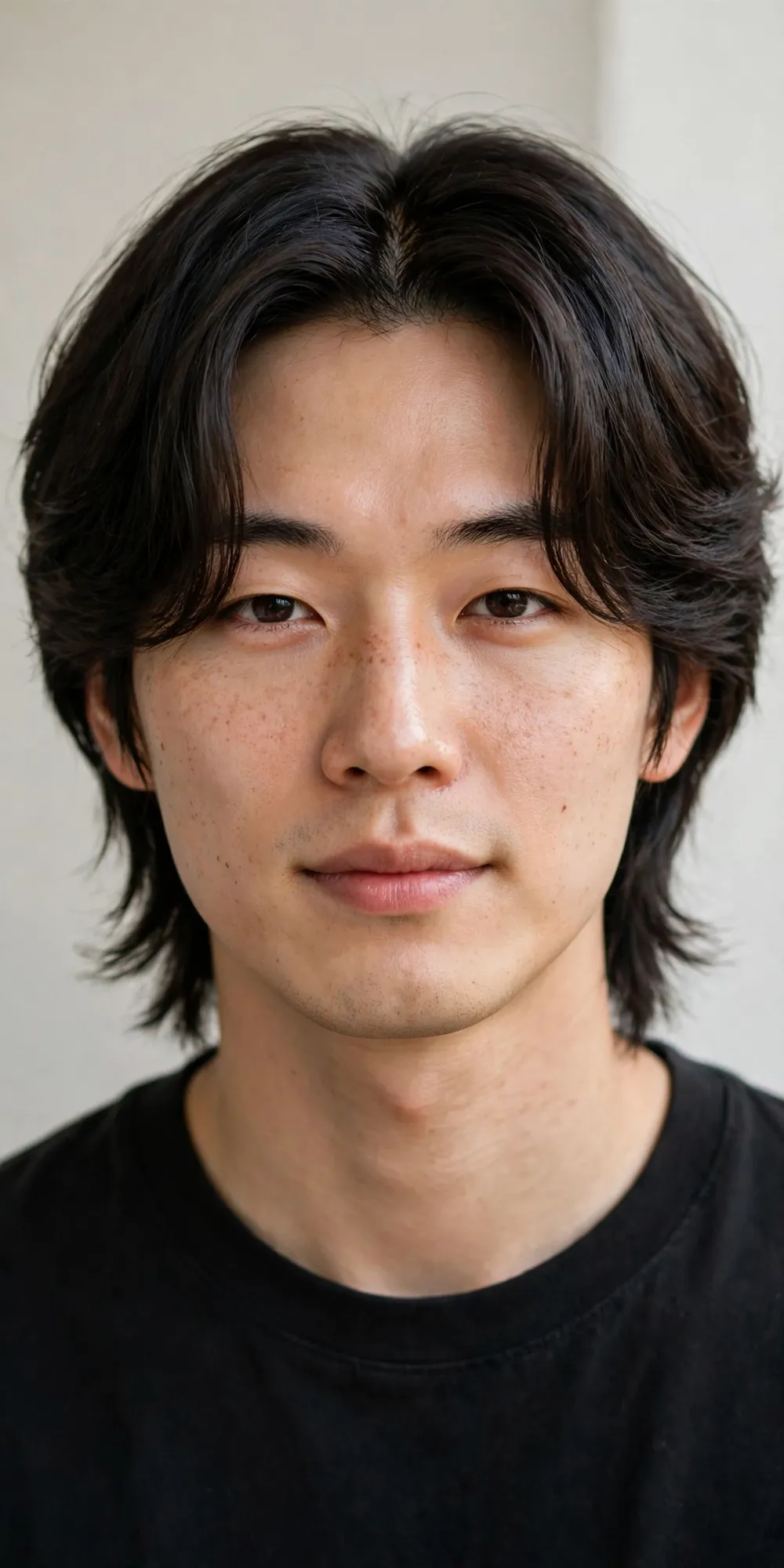
4. Curtain Fringe
The curtain fringe is the relaxed, everyday version of the middle part — hair parted in the middle and falling either side of the face, shorter and choppier than the full Korean curtain. It works on most face shapes — a good middle ground if you like the curtain look but not the length. Thick, straight hair suits it well, since the texture stops the fringe lying flat. Ask your barber for a centre part, the fringe just above the eyebrows, textured ends and the sides blended rather than faded hard. A pea-sized amount of matte clay, scrunched into slightly damp hair, gives it a lived-in finish. A trim every four weeks is enough, though the fringe may need a tidy-up if it starts poking your eyes.
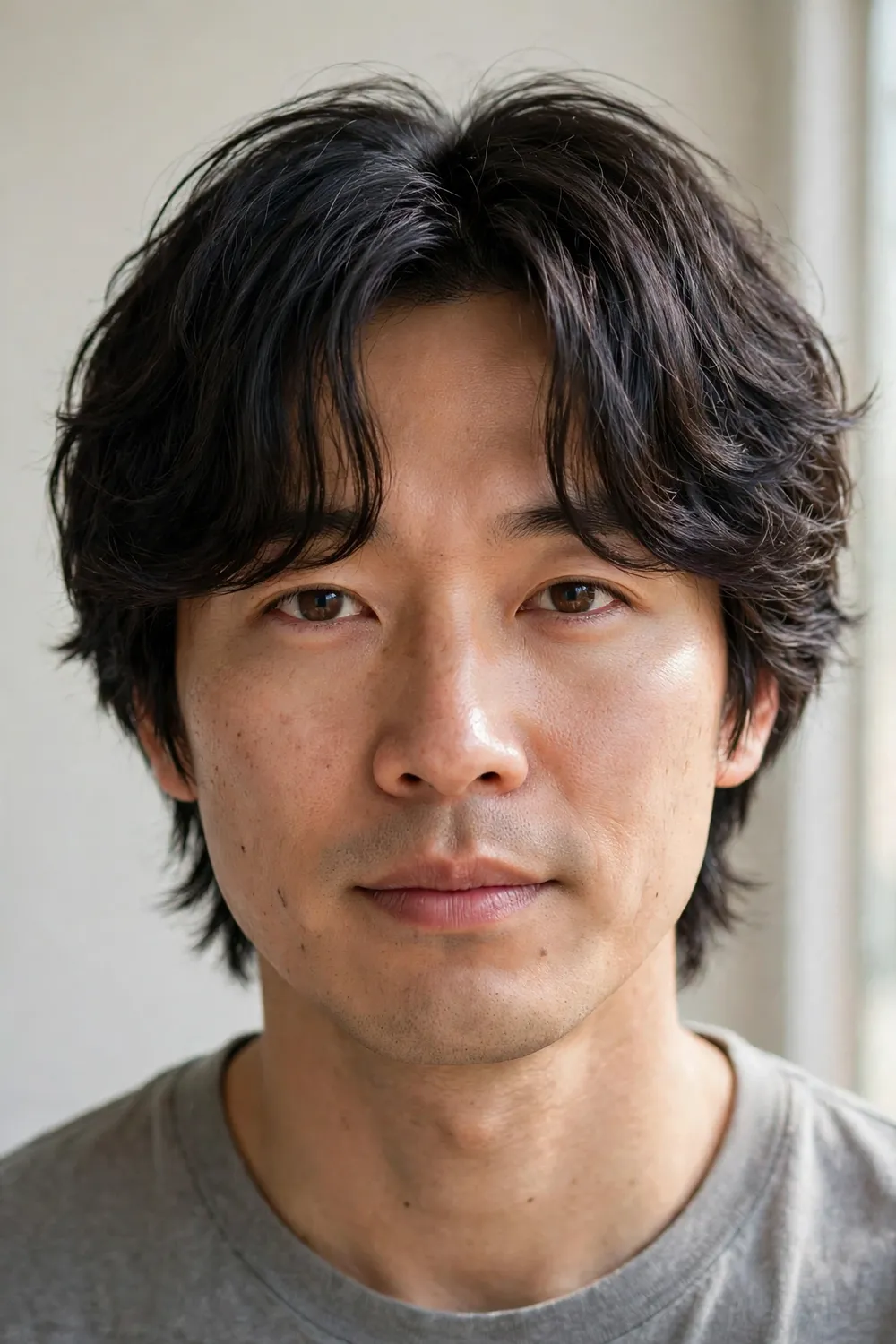
5. K-Mullet (Wolf Perm)
The K-mullet, also called a wolf perm, is the wildest cut on this list — a mullet given a perm so the layers go big and textured. The top and sides are layered and permed for volume, while the back grows long and wispy. It suits younger guys with a strong sense of style, and works best on oval or heart-shaped faces. Ask your barber for a wolf cut with a perm, the back kept around the nape and the layers choppy rather than neat. Sea salt spray is your best friend here — spray it into damp hair and scrunch. It needs a perm touch-up every couple of months and regular trims, so the back looks deliberately messy rather than scruffy.
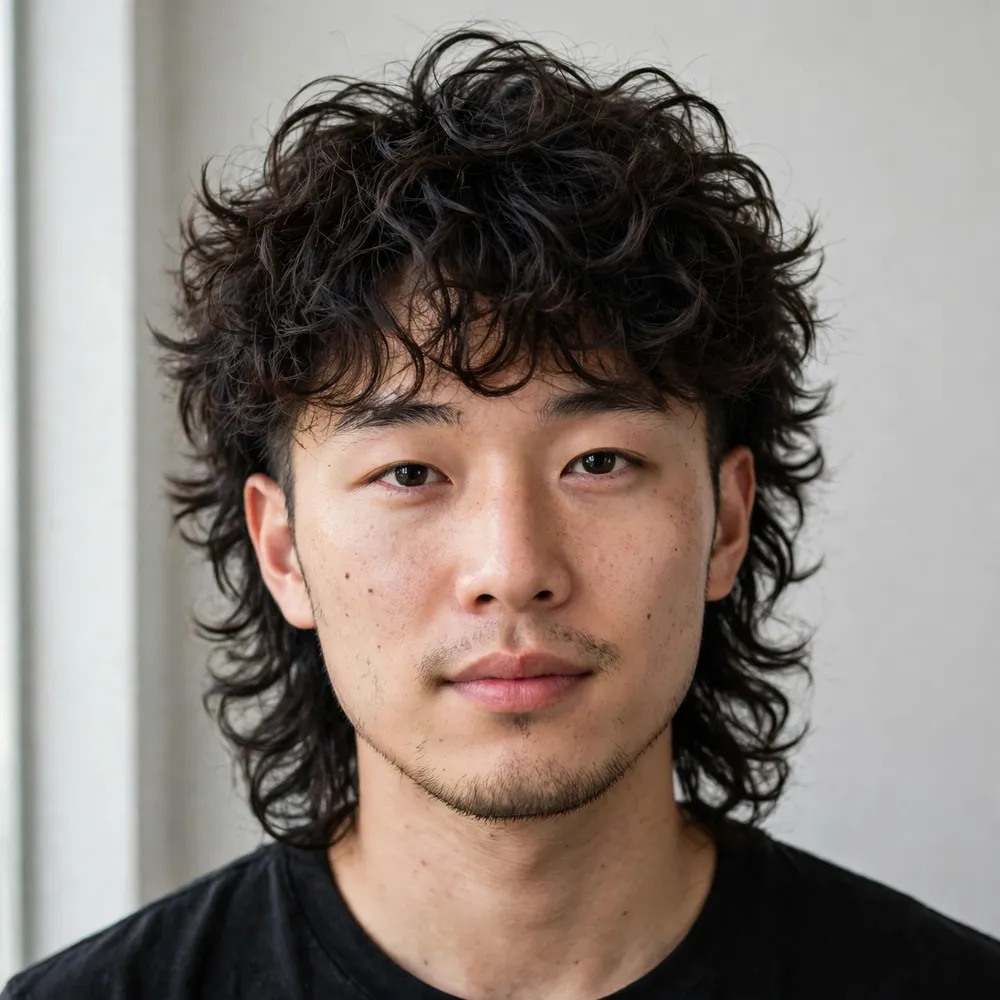
6. Japanese Soft Wolf
The Japanese soft wolf is the gentler version of the wolf cut — layered and a bit shaggy, but with soft edges instead of the sharp, spiky Korean finish. The layers sit close to the head, giving movement and volume without the drama. It suits men with medium-length hair who want something interesting but office-friendly, and it flatters round faces, since the layers falling around the cheeks slim things down. Ask your barber for a soft layered wolf cut, the back kept to collar length and the ends feathered, not blunt. A light styling cream worked through with your hands is enough. It grows out gracefully, so you can stretch trims to five or six weeks without it falling apart.
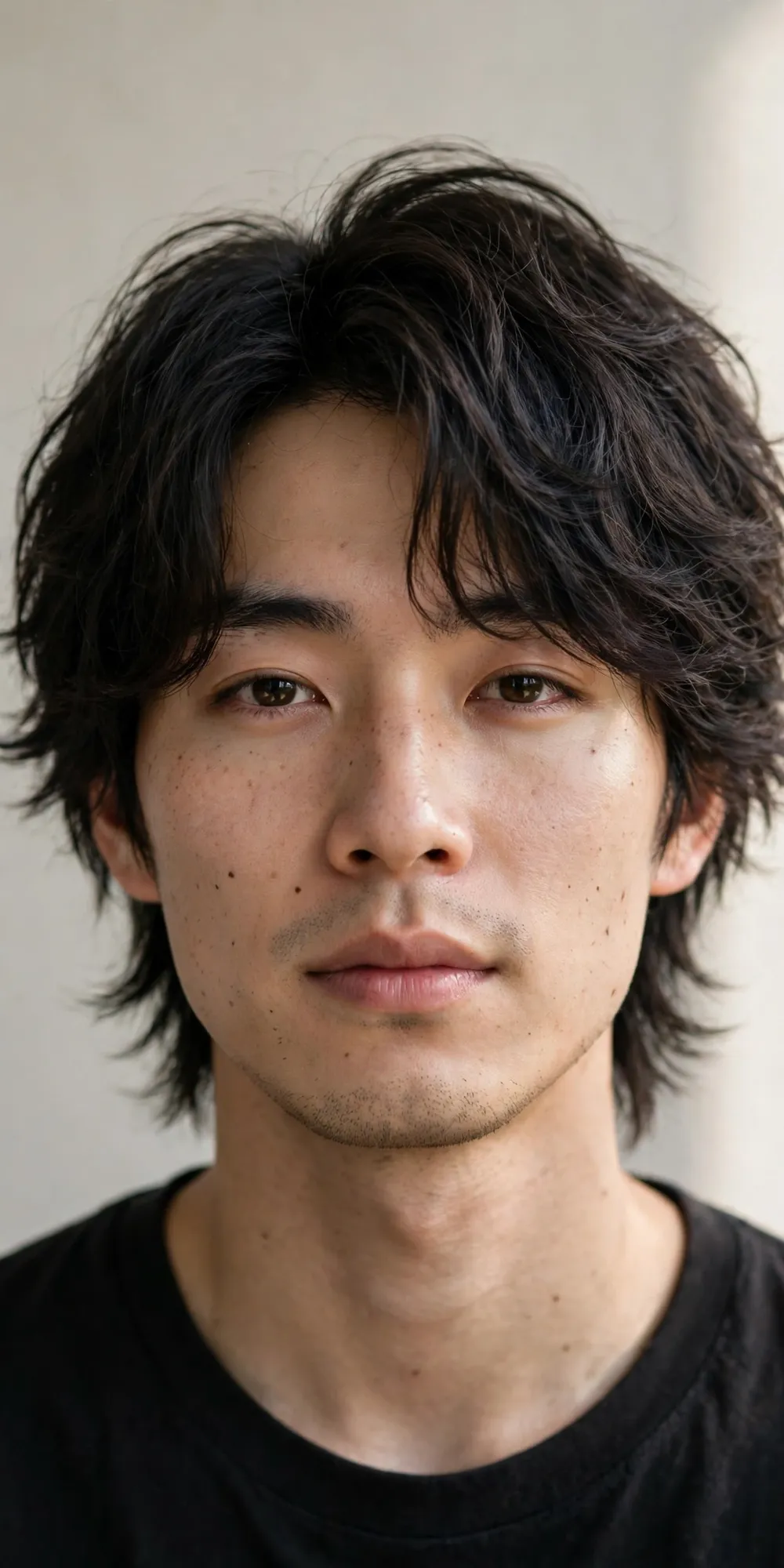
7. Mash Cut
The mash cut is a modern mushroom — a rounded silhouette with a soft fringe curving around the forehead and ears. It looks old-fashioned at first glance, but textured ends and a tapered back keep it current. It suits younger men with a round or oval face, since the rounded shape frames the face nicely, and thick hair holds the shape on its own. Ask your barber for a mash cut with a soft, curved fringe and the back tapered into the neck, not left square. Style it with a little matte clay pushed forward with your fingers, and let the hair’s natural weight do the rest. It is low-effort day to day, but the fringe grows fast, so book a trim every three to four weeks.
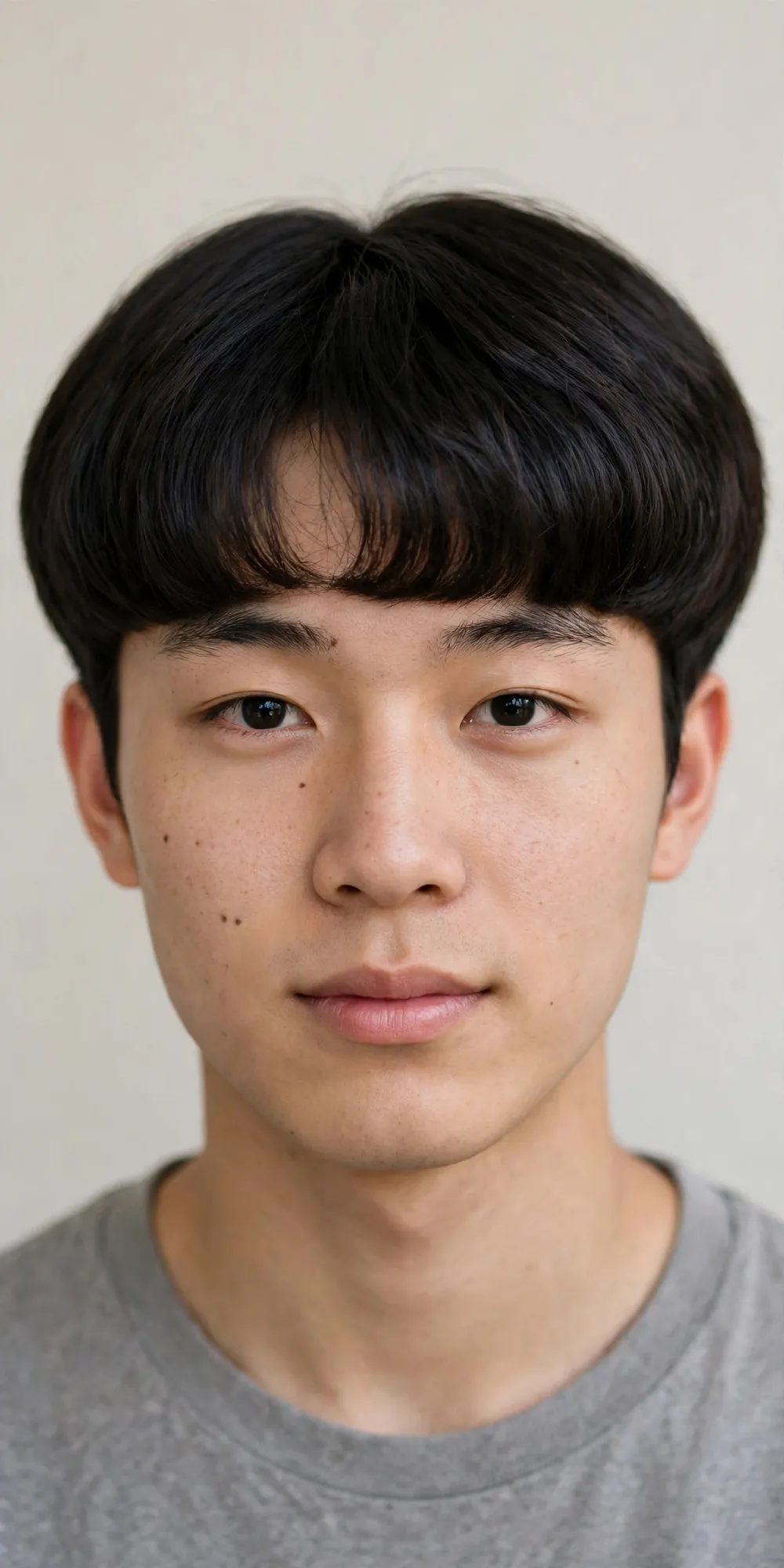
8. Center-Parted Curtain (J-Drama)
This is the cut behind the lead actor’s hair in a Japanese drama — a centre part with long, soft curtain lengths. The top is left long, usually past the eyebrows, and parted dead centre so it falls in two smooth panels — best on oval and long faces with hair long enough to drape. Ask your barber for a J-drama centre curtain, the top kept long and the sides blended short but not faded, with the ends thinned so they move. A down perm on the sides is worth considering if your hair puffs out. Style with sea salt spray and a quick blow dry, parting with your fingers. It takes a while to grow out, and trims every five weeks keep it tidy.
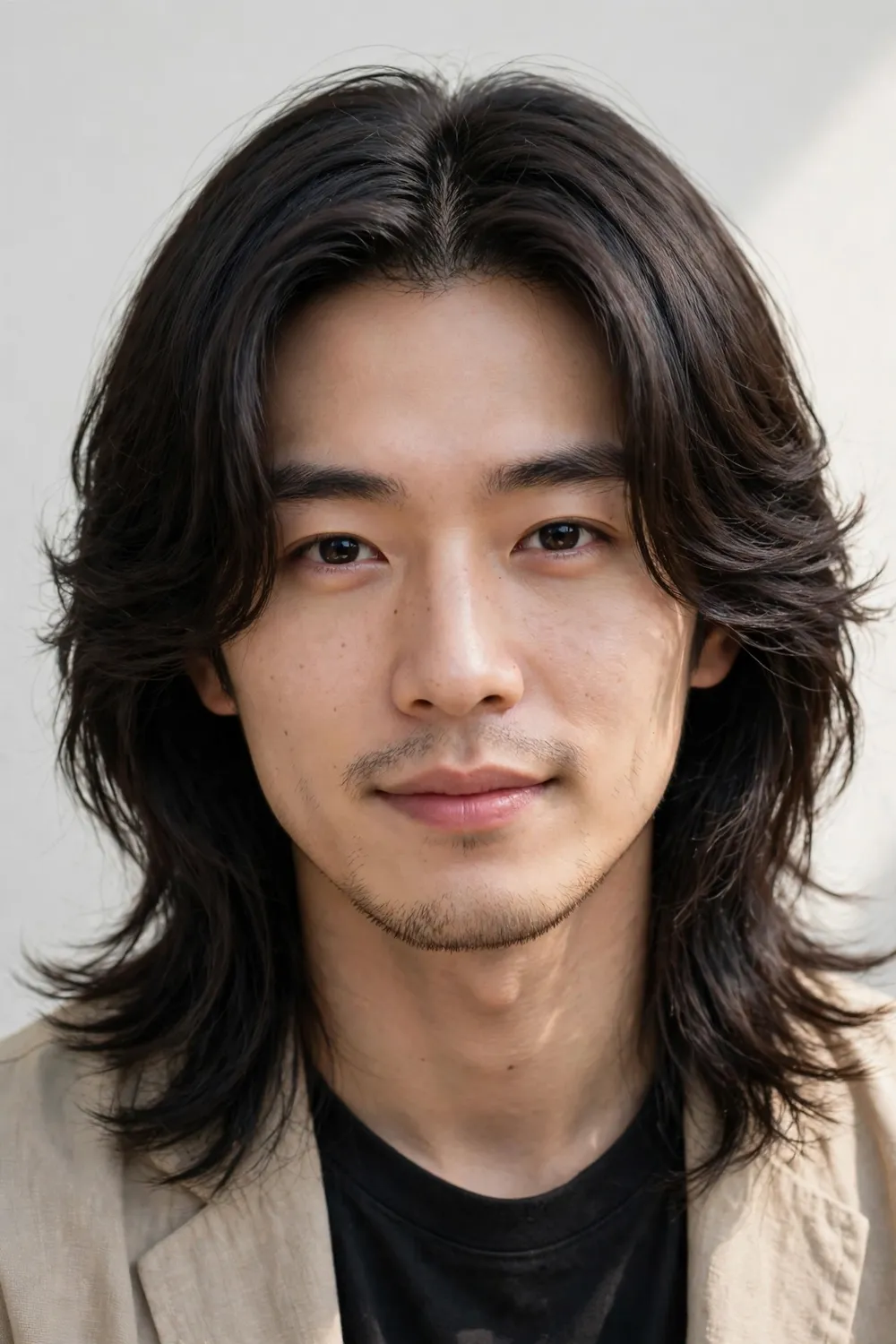
9. Chinese Cinema Undercut
The Chinese cinema undercut is the sharp, dramatic look from period dramas and C-dramas — sides shaved tight, top left long and slicked back with a glossy finish. It is a bold cut, suiting men with strong features and a square or oval face — the slicked top adds height and the tight sides sharpen the jawline. Ask your barber for a high undercut with the top kept at least 10 cm, and make clear you want the contrast sharp — no blending between sides and top. A medium-shine pomade gives it that cinematic polish; comb it back while damp and let it set. The trade-off is upkeep: the undercut grows out fast, so expect a tidy-up every two to three weeks to keep the lines clean.
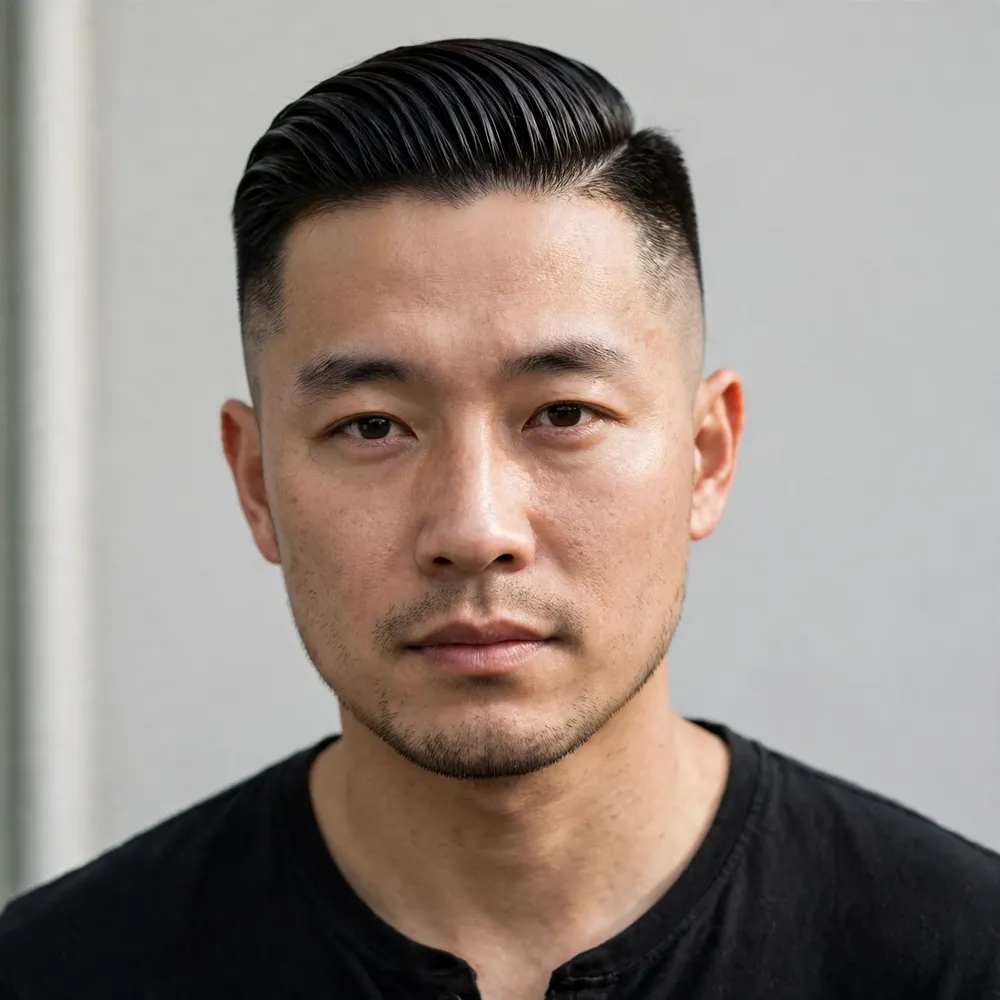
10. Sharp Side Part
The sharp side part is the classic gentleman’s cut — clean, simple and hard to get wrong. The hair is parted hard to one side, the top swept over neatly, and the sides tapered or faded to keep everything crisp. It suits almost every face shape, but shines on square and oval faces, where the clean lines sharpen things up. Ask your barber for a side part with a low taper, the top left around 7–8 cm and a defined parting — a razor line is optional if you want it extra sharp. A water-based pomade gives it shine without stiffness. It is one of the easiest cuts to maintain — a comb in the morning, a trim every three to four weeks, and you are done.
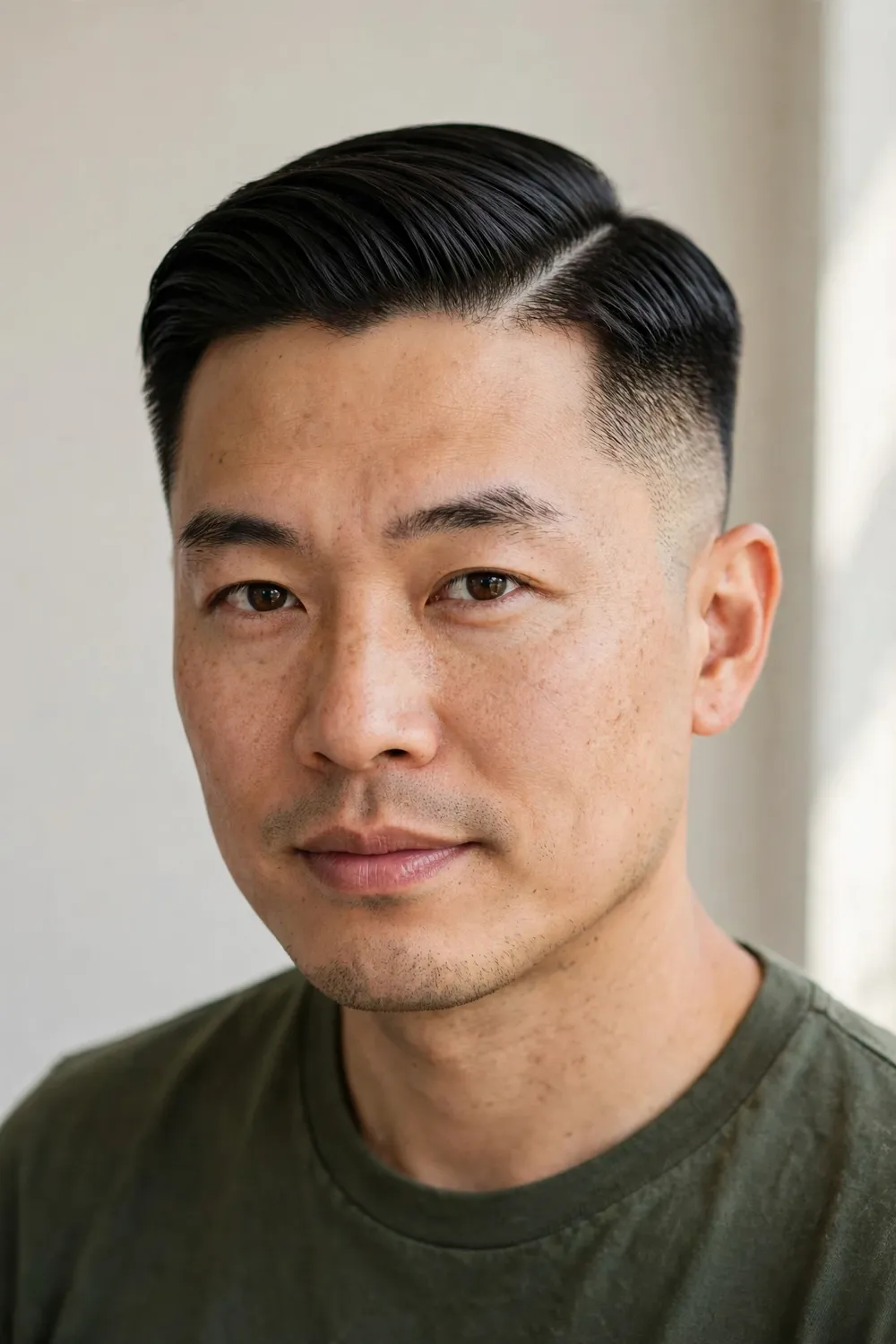
11. Mid Fade with Textured Top
The mid fade with a textured top is the cut you see everywhere — modern, clean and flattering on pretty much everyone. The fade starts halfway up the sides and blends into a choppy, textured top you can push forward, sweep aside or spike up. It is a great option for thick hair, since the texture takes the weight out of the top. Ask your barber for a mid fade with the top point-cut for texture, leaving around 6–8 cm of length. Matte clay is the usual finish — work it in with your fingers and mess the top up for a natural look. The fade needs a refresh every three weeks, but the top is forgiving if you stretch it a little longer.
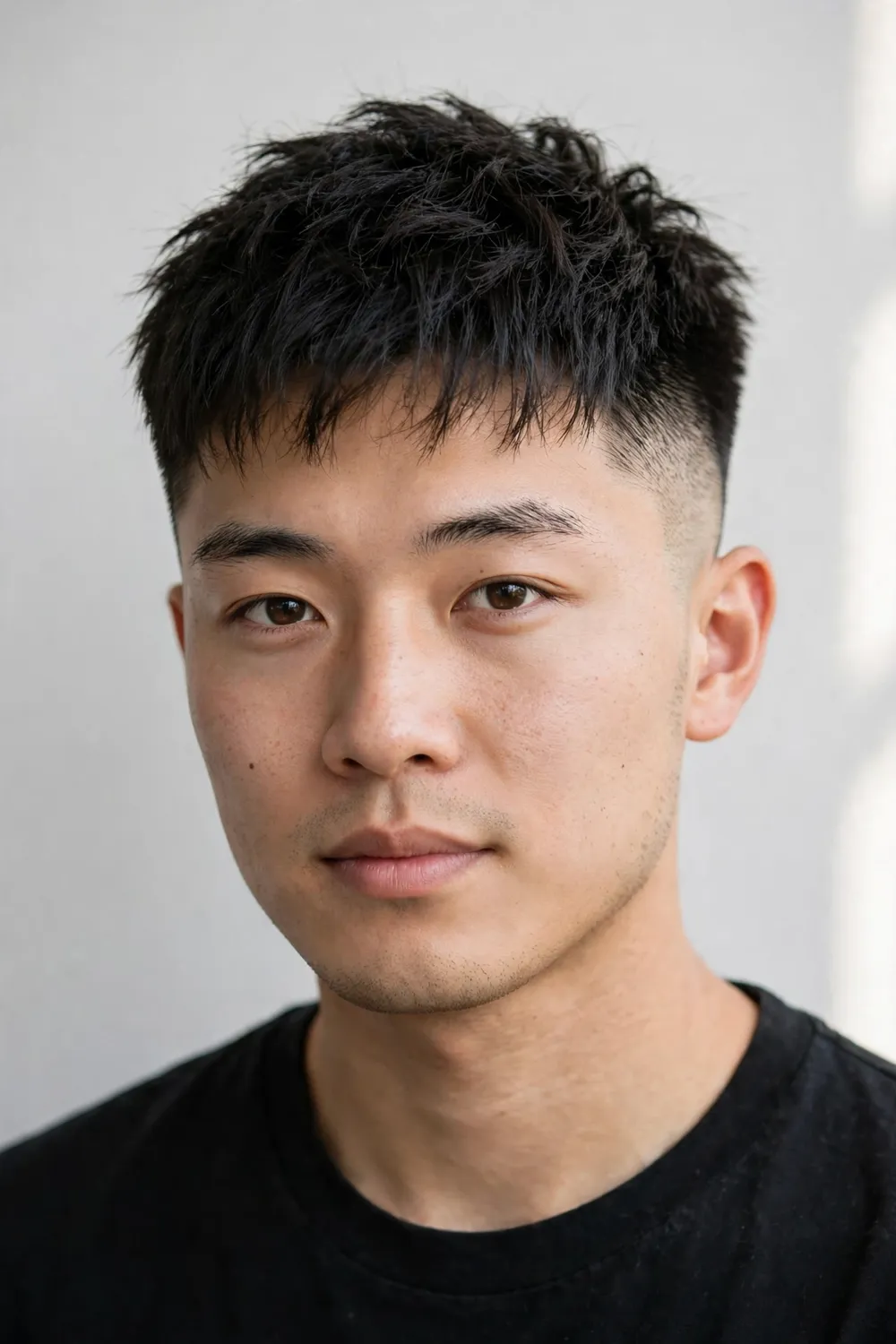
12. Low Taper with Fringe
The low taper with a fringe is the quiet achiever of this list — nothing flashy, just a clean, tidy cut. The taper stays low around the ears and neckline, keeping the sides neat, while the fringe sits softly on the forehead. It suits men who want a low-key style, and works well on round faces, where the fringe adds structure up top. Ask your barber for a low taper with a textured fringe, cut just above the eyebrows and thinned at the ends so it does not sit heavy. A little styling cream is all you need — most days you can push it into place with your hands. A trim every four weeks is enough, and the taper grows out without looking messy.
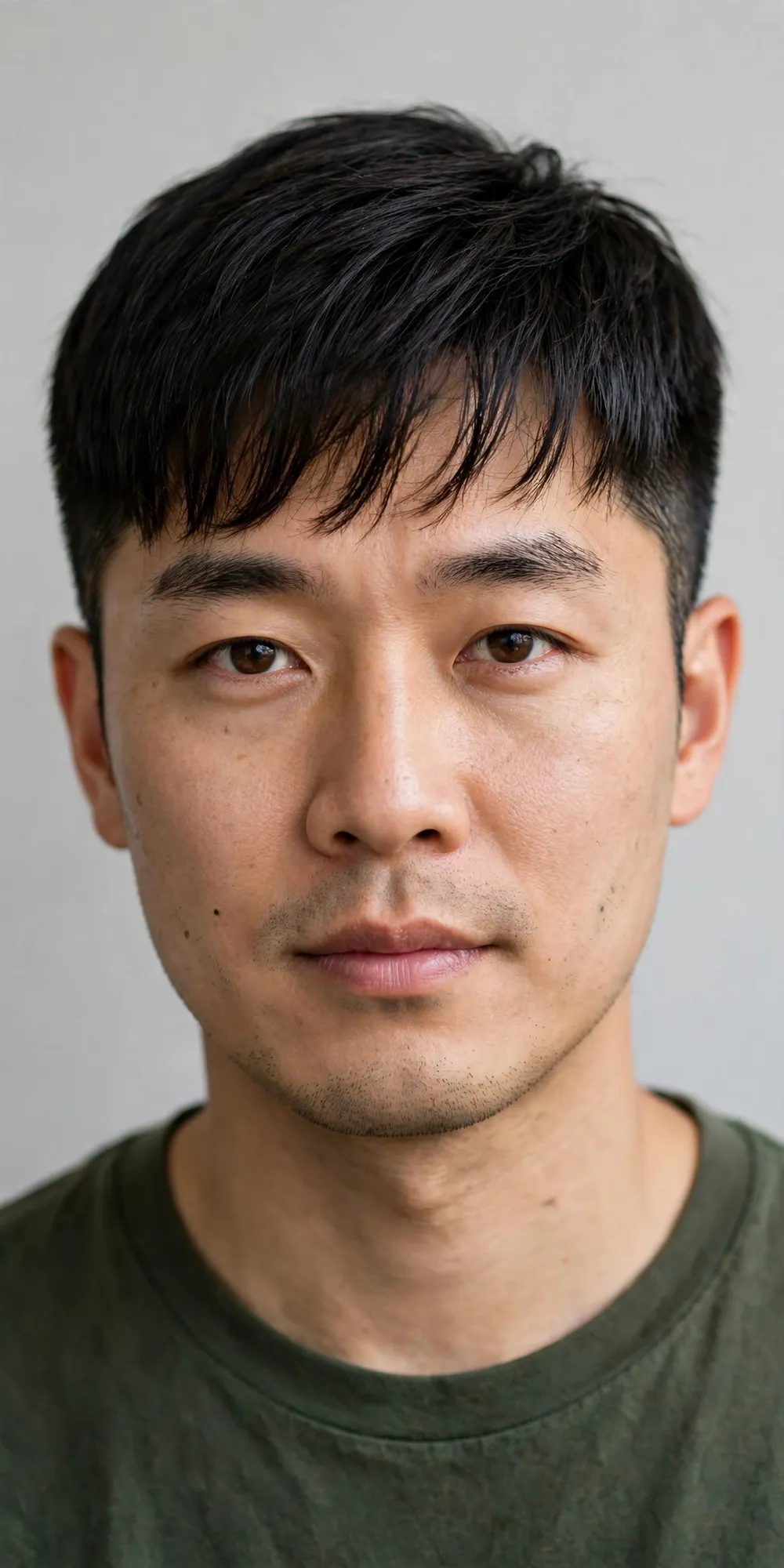
13. Textured Fringe with Low Fade
The textured fringe with a low fade gives the classic fringe a modern edge — the fringe is cut choppy and uneven, so it looks lived-in rather than neat, while the low fade keeps the sides tidy. It is a great choice for thick hair: the texture removes bulk and stops the fringe sitting like a solid curtain. It suits round and oval faces, since the fringe shortens the forehead. Ask your barber for a choppy textured fringe with a low fade, the ends point-cut so the fringe has movement. Matte clay scrunched in with your fingers gives the right finish — messy on purpose, not actually messy. It needs a trim every three to four weeks to keep the fade and fringe in shape.
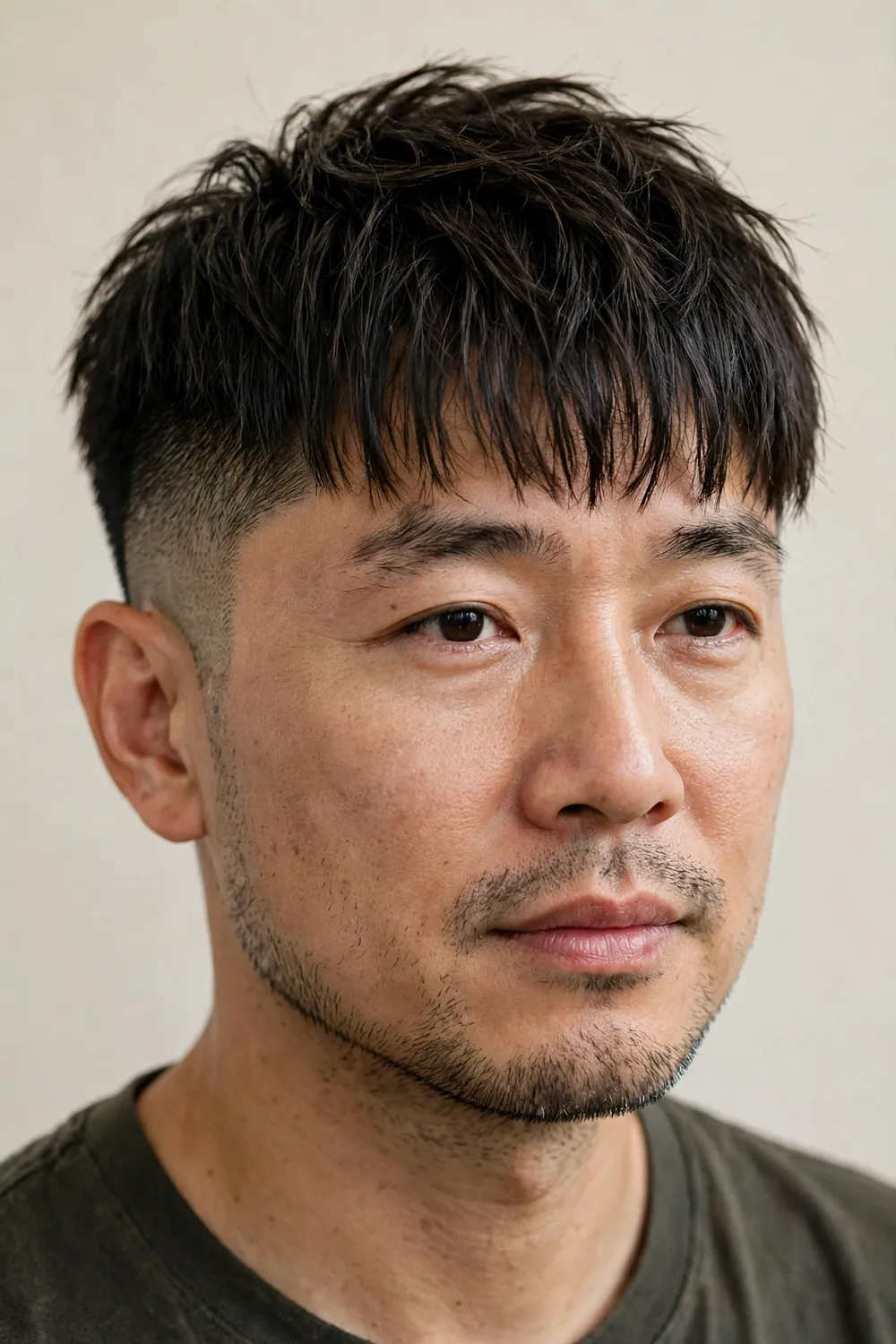
14. Asian Buzz Cut with Soft Taper
The buzz cut with a soft taper is the simplest cut on this list. The hair is clipped short all over, but the taper around the ears and neckline is blended softly, so it looks intentional rather than home-done. It suits men with a good head shape and strong features — a lifesaver in summer. Ask your barber for a number 3 or 4 on top with a soft taper — no hard lines, just a gentle blend. There is no product and no styling — which is the whole point — though a bit of scalp moisturiser keeps things comfortable. It needs a clipper pass every two to three weeks, or you can do it yourself once you know the guard size.
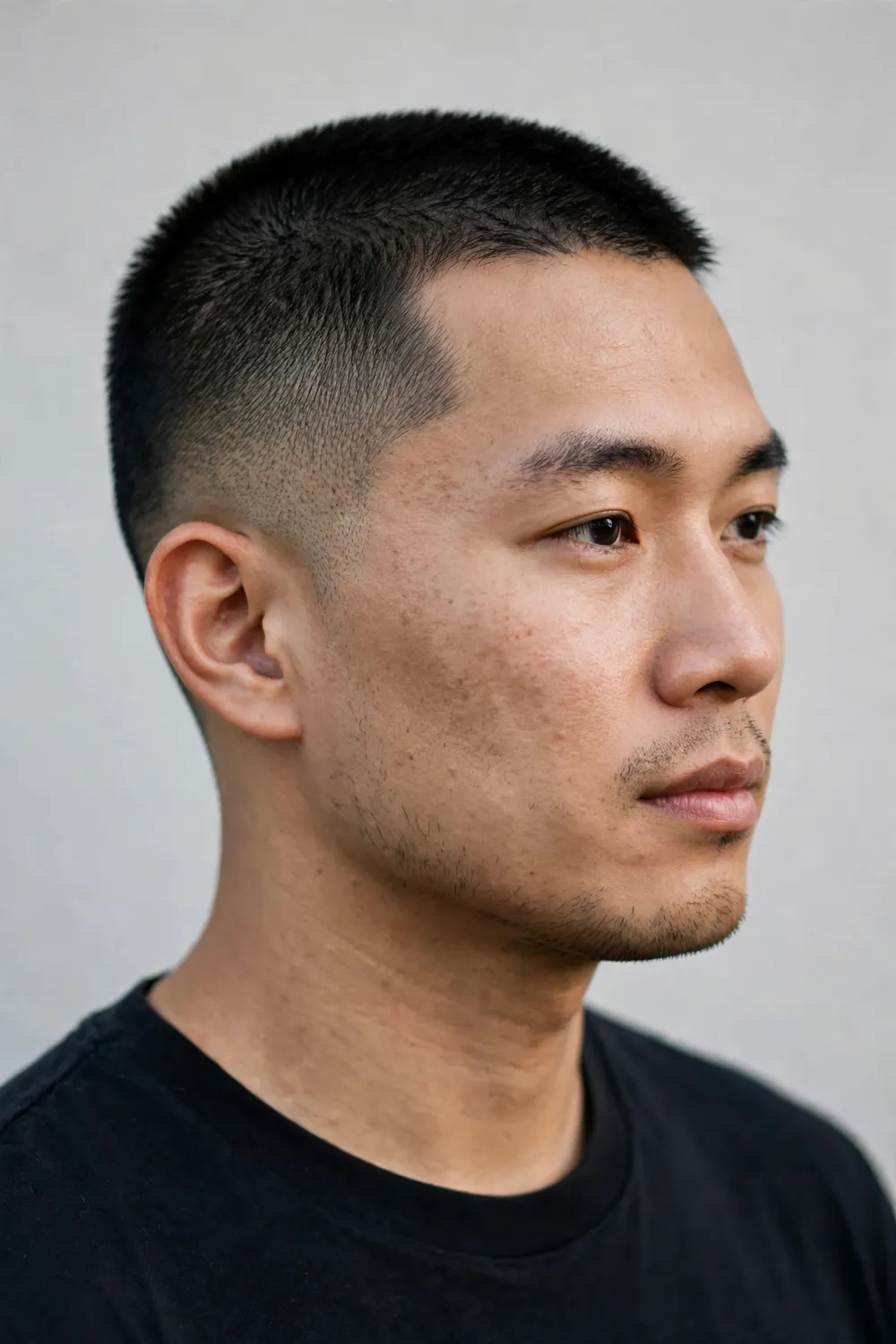
15. Buzz Cut with Skin Fade
If the soft-taper buzz is the relaxed version, the skin fade buzz is the sharp one — the same short top, but the sides fade right down to bare skin for a crisp, high-contrast finish. It suits men with a well-shaped head and a strong jawline, and looks particularly good on darker hair, where the fade gradient really shows. Ask your barber for a buzz on top, a number 2 or 3, with a skin fade on the sides and back, blended with no visible lines. No product needed — the cut is the style. The trade-off is upkeep: a skin fade looks grown out after about ten days, so you will be back in the chair every two weeks to keep it sharp.
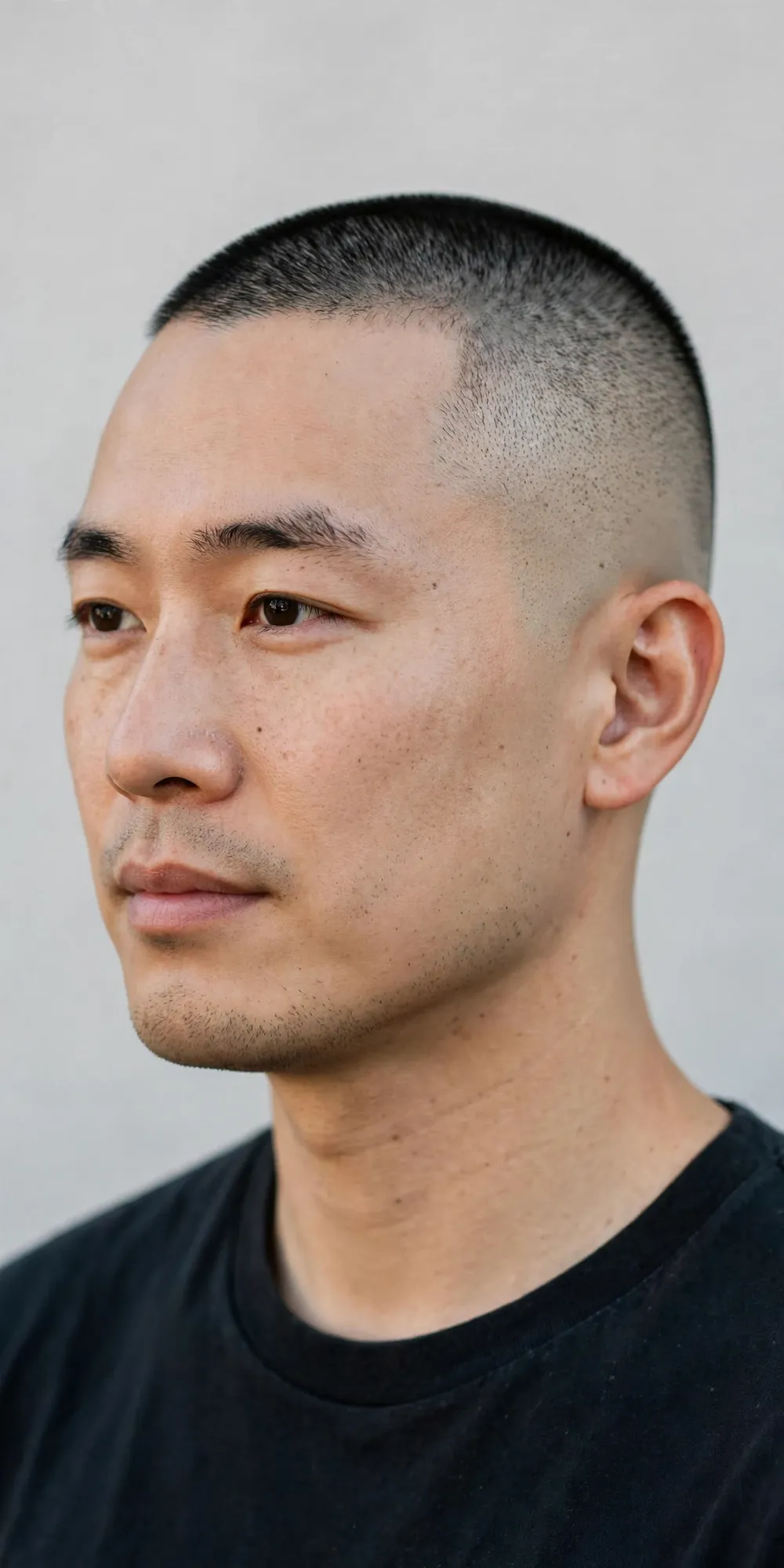
16. Korean Textured Crop
The Korean textured crop is a short, punchy cut — the top kept short and choppy, pushed forward into a light fringe, with faded or tapered sides. It is one of the most popular cuts in Korean barbershops right now. It suits oval and square faces, and it is ideal for thick hair, since the texture breaks up the weight. Ask your barber for a textured crop with the fringe forward, the top point-cut, and a mid or low fade on the sides. A little matte clay pushed forward with your fingers is all it takes — two minutes and you are out the door. It needs a trim every three weeks, mostly to keep the fade fresh — the top grows out without much fuss.
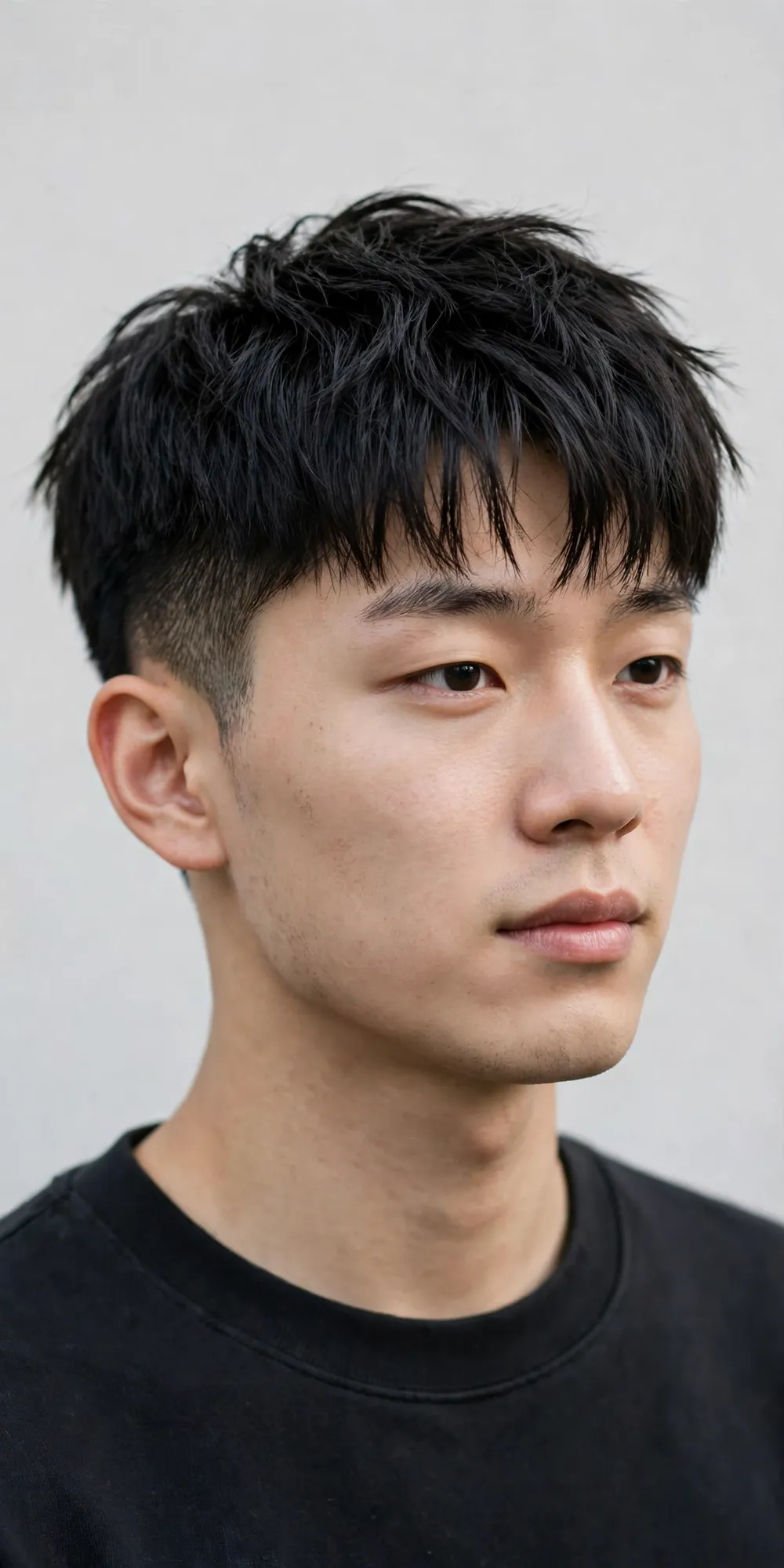
17. Asian French Crop
The French crop is a short cut with a blunt, straight fringe across the forehead, and it works beautifully on Asian hair because thick, straight hair holds that clean line so well. The sides are faded or tapered, and the top kept short with enough texture to stop it looking flat. It suits men with longer faces, since the fringe shortens the forehead, and it covers a receding hairline neatly. Ask your barber for a French crop with a blunt fringe cut straight across, textured on top, and a low fade on the sides. Matte clay pushed forward finishes it. It is genuinely low-maintenance: trims every three to four weeks, and the fringe only needs a quick tidy if it starts creeping into your eyes.
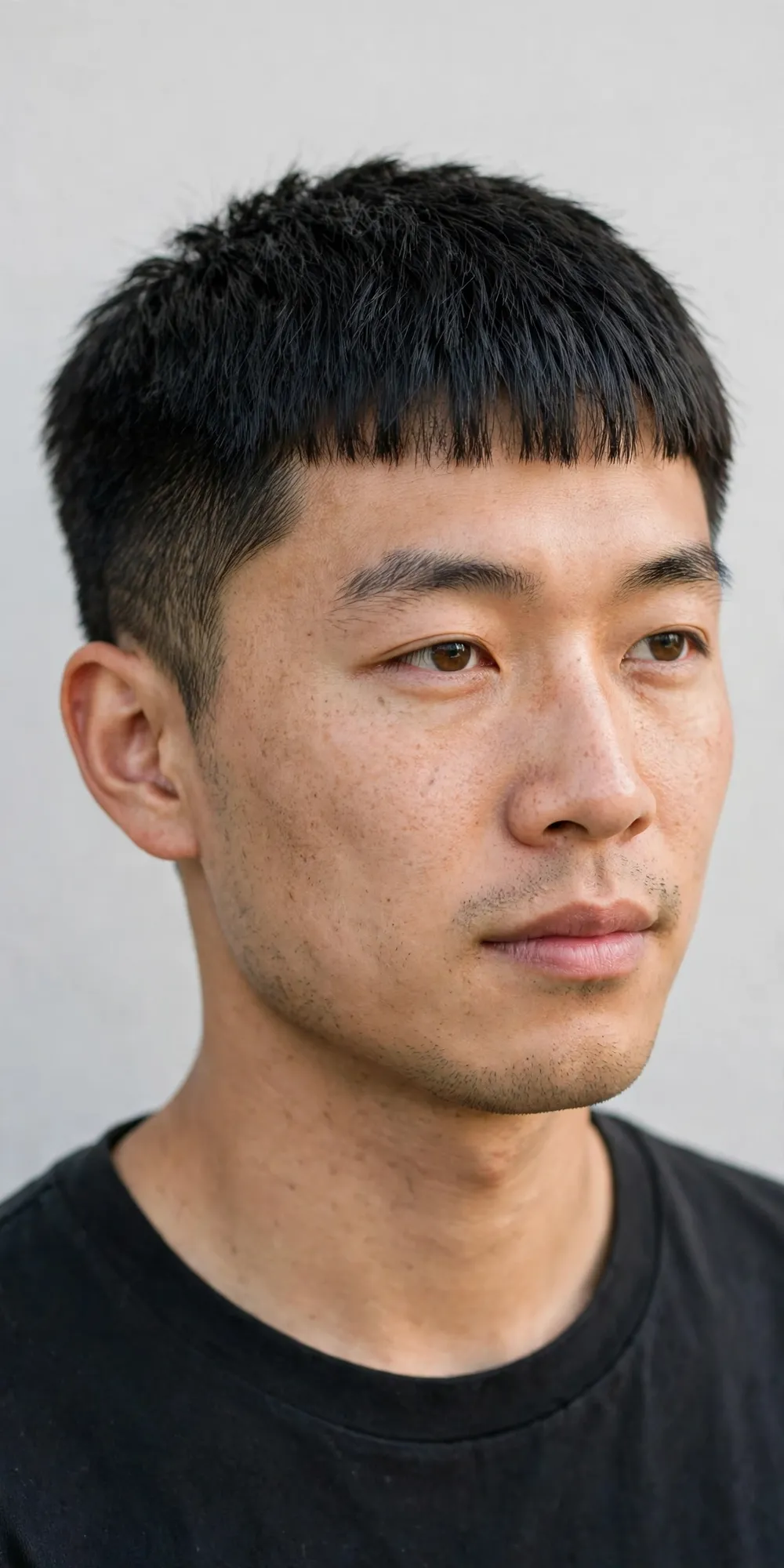
18. Korean Edgar Crop
The Korean Edgar crop takes the French crop and makes it sharper — the fringe cut in a dead-straight line across the forehead, the sides faded high and tight, and the whole thing bold and graphic. It is a statement cut for younger men with oval or square faces who do not mind standing out a little. Thick hair helps — the fringe needs weight to sit in that straight line. Ask your barber for an Edgar with a straight fringe, a high fade, and the top left short but textured so it is not completely flat. Matte clay keeps the fringe in place; anything shiny would soften the sharp look. The fringe line grows out fast, so expect a trim every two to three weeks.
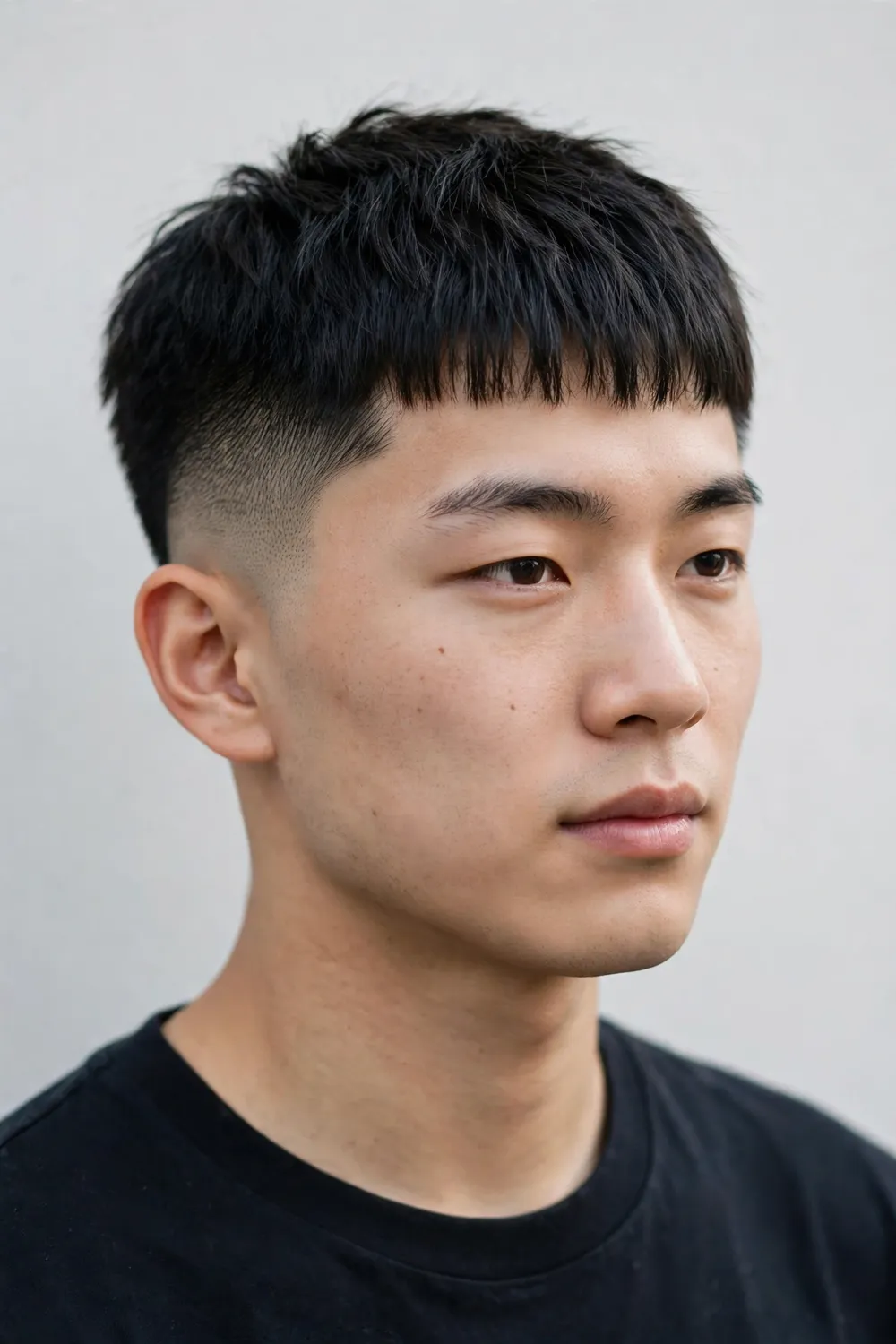
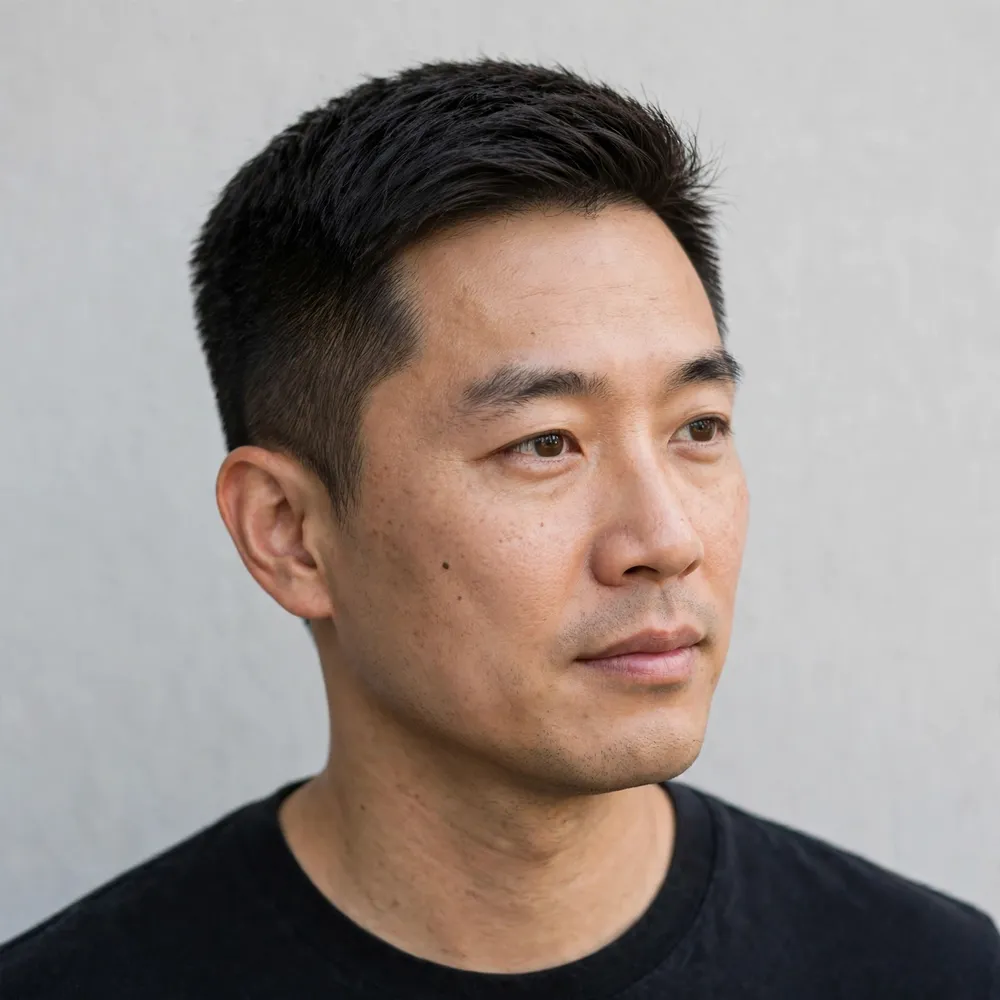
19. Classic Crew Cut
The classic crew cut has been around forever because it is neat, masculine and completely fuss-free. The top is cut short, slightly longer at the front, with the sides tapered close — a cut that looks good in a suit, a uniform or a t-shirt. It suits almost every face shape, and it is a smart pick for thick hair — no more fighting volume every morning. Ask your barber for a crew cut with a short taper, the top around 2–3 cm and the front left just a touch longer. No product needed, though a little light cream can smooth down stray hairs. A trim every three to four weeks is enough, and if you own clippers you can tidy the sides yourself between visits.
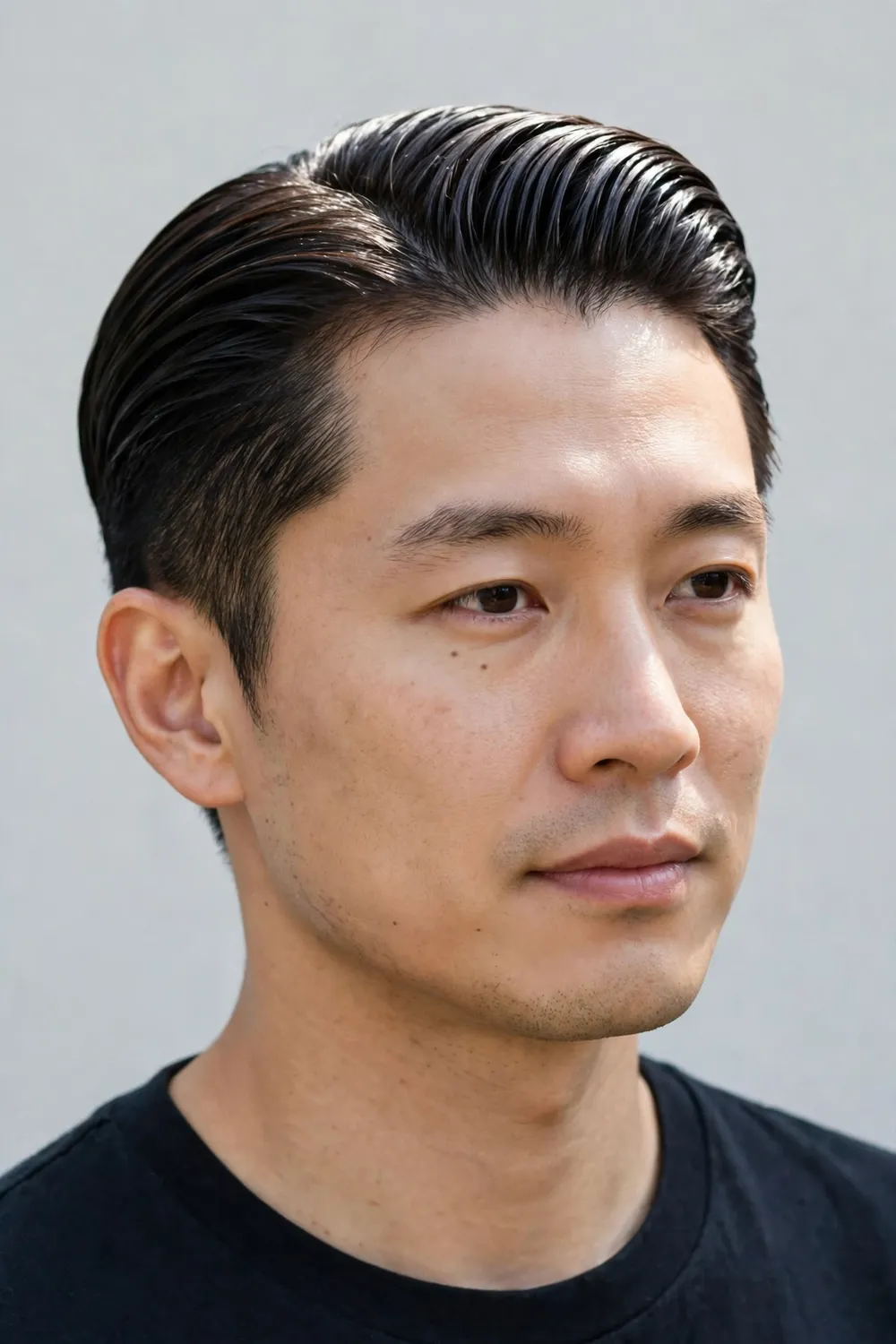
20. Slicked-Back Cinema
The slicked-back cinema cut is pure old-Hollywood polish — the top left long and combed straight back, the sides kept short and clean, finished with a shine straight out of a film. It suits men with thicker hair and a longer face, since the swept-back top adds height without width. Ask your barber for a slicked-back cut with the top at 10 cm or more, the sides tapered and the back blended rather than squared off. A medium-hold pomade with some shine is the right product — work it through damp hair, comb it back and let it set. The honest catch is the styling time: five to ten minutes with a comb and a dryer, and a trim every three weeks to keep the shape.
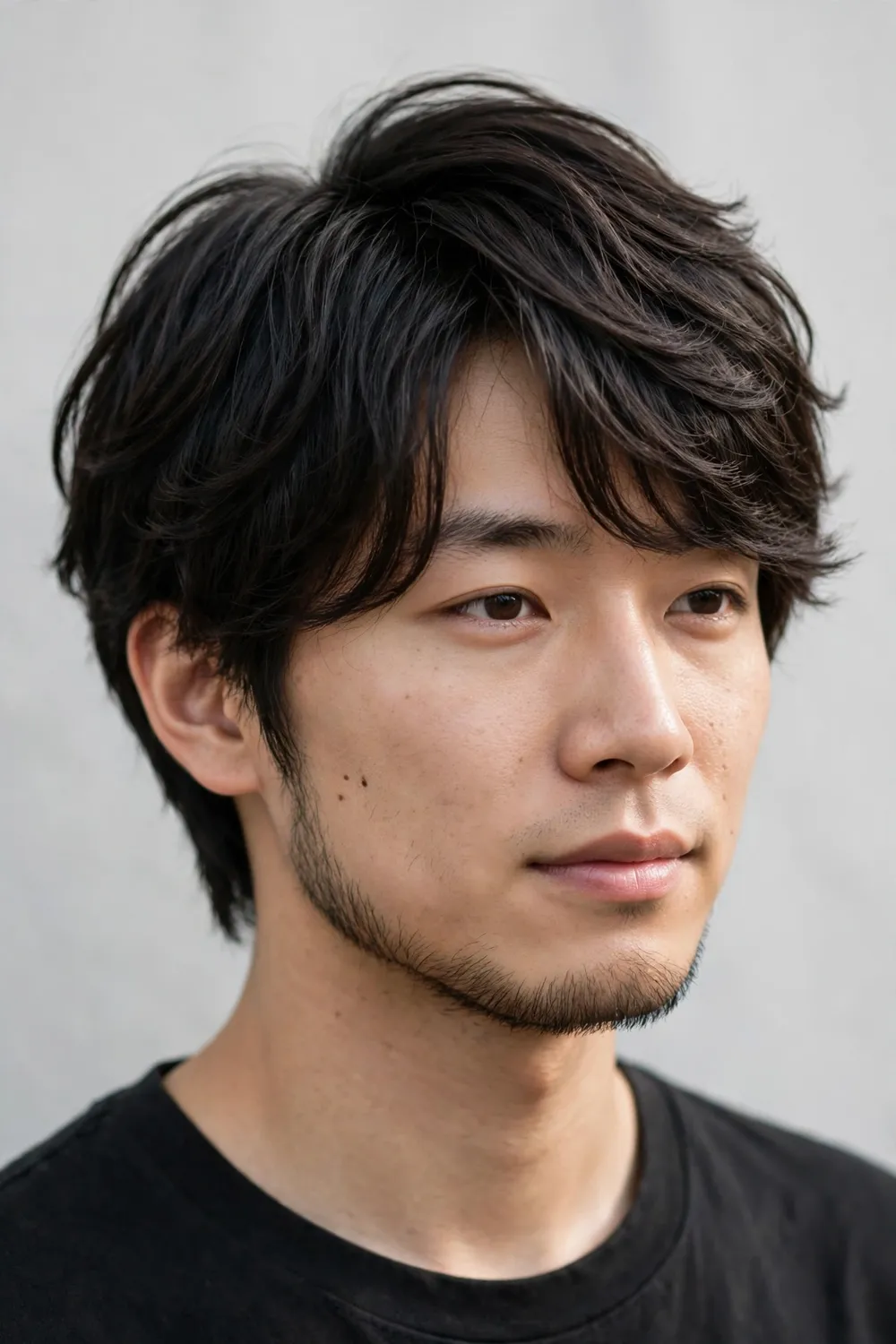
21. Leaf Cut
The leaf cut gets its name from the shape it makes — layers that curve inward like a leaf, with a soft fringe that hugs the forehead instead of hanging straight. It is a quieter, more grown-up alternative to the mash cut, and it works best on thick, straight hair that holds a bend, suiting oval and longer faces by adding width at the cheekbones. Ask your barber for layered length on top with the fringe cut in a curved line, soft tapered sides, and thinning so it does not puff out. Blow-dry the fringe forward and inward with a round brush, then add a little light cream. It needs a trim every four to five weeks, because the shape goes flat once the layers pass the cheekbones.
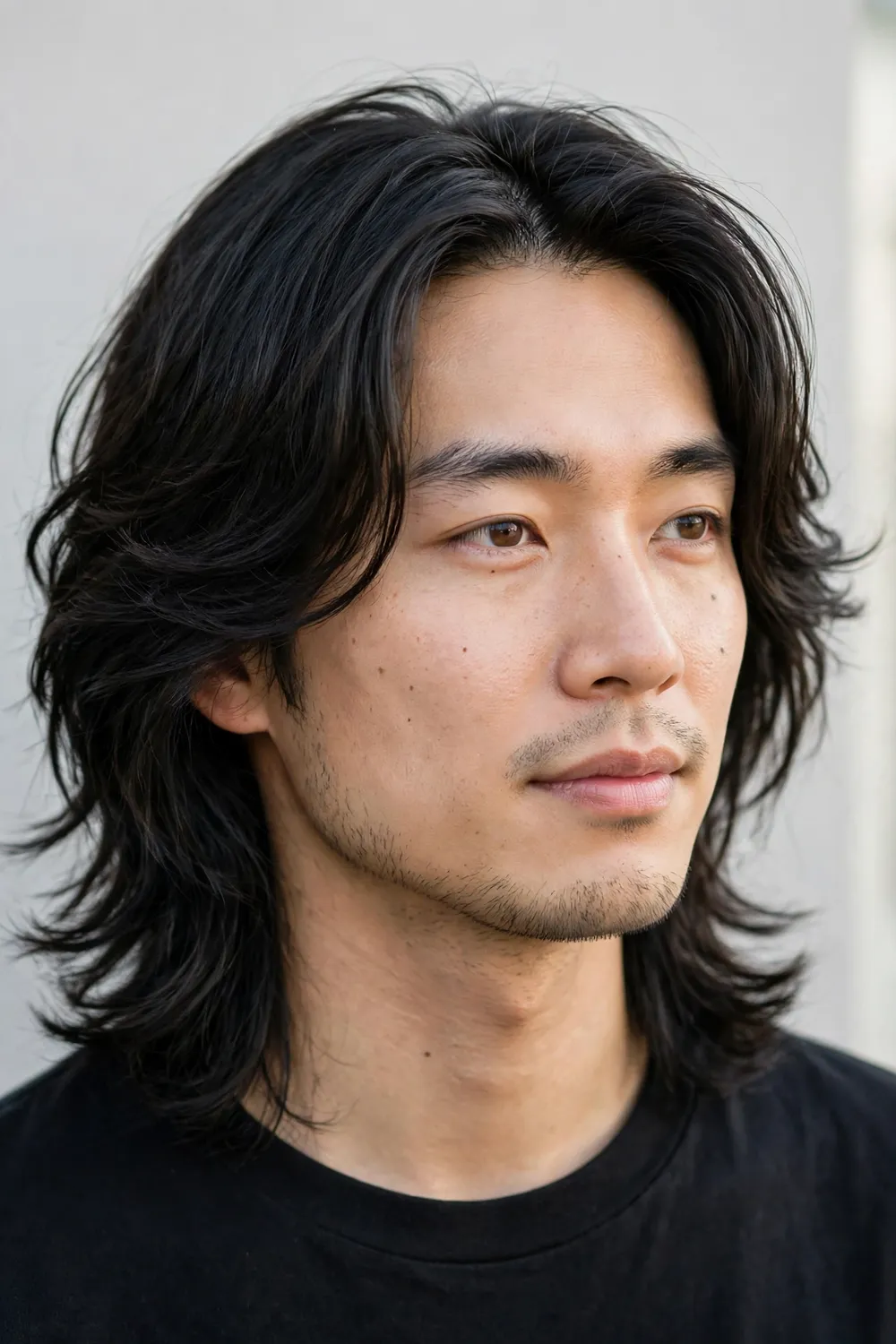
22. Mid-Length Flow Cut
The flow cut is for the guy who wants his hair long but still looks put together — length that sits around the ears and brushes the collar, with enough layering to move instead of hanging like a curtain. It suits thick Asian hair well, since the weight of the length helps it lie down, and longer and oval faces carry it best. Ask your barber to keep the length through the back and sides, add long layers to remove bulk, and leave the front long enough to tuck behind the ears. Sea salt spray scrunched into damp hair adds texture without stiffness, and air-drying works fine most days. Trim it every six to eight weeks to keep the ends healthy and the shape from going triangular.
23. K-Blowout
The K-blowout is the big, brushed-back style you see on Korean actors at award shows — serious volume on top, sides swept back, and a finish that looks expensive without looking stiff. It needs three to four inches of length on top, and it suits square and oval faces that can carry the height. Ask your barber for a low taper on the sides with the top left long and layered, and mention you want it blow-dried back. At home, use a pre-styling spray and a round brush, blowing the hair up and back, then lock it with a medium-hold matte clay. This is not a five-minute style — budget ten minutes and a hairdryer. It collapses in humidity, so keep a small tin of clay in your bag.
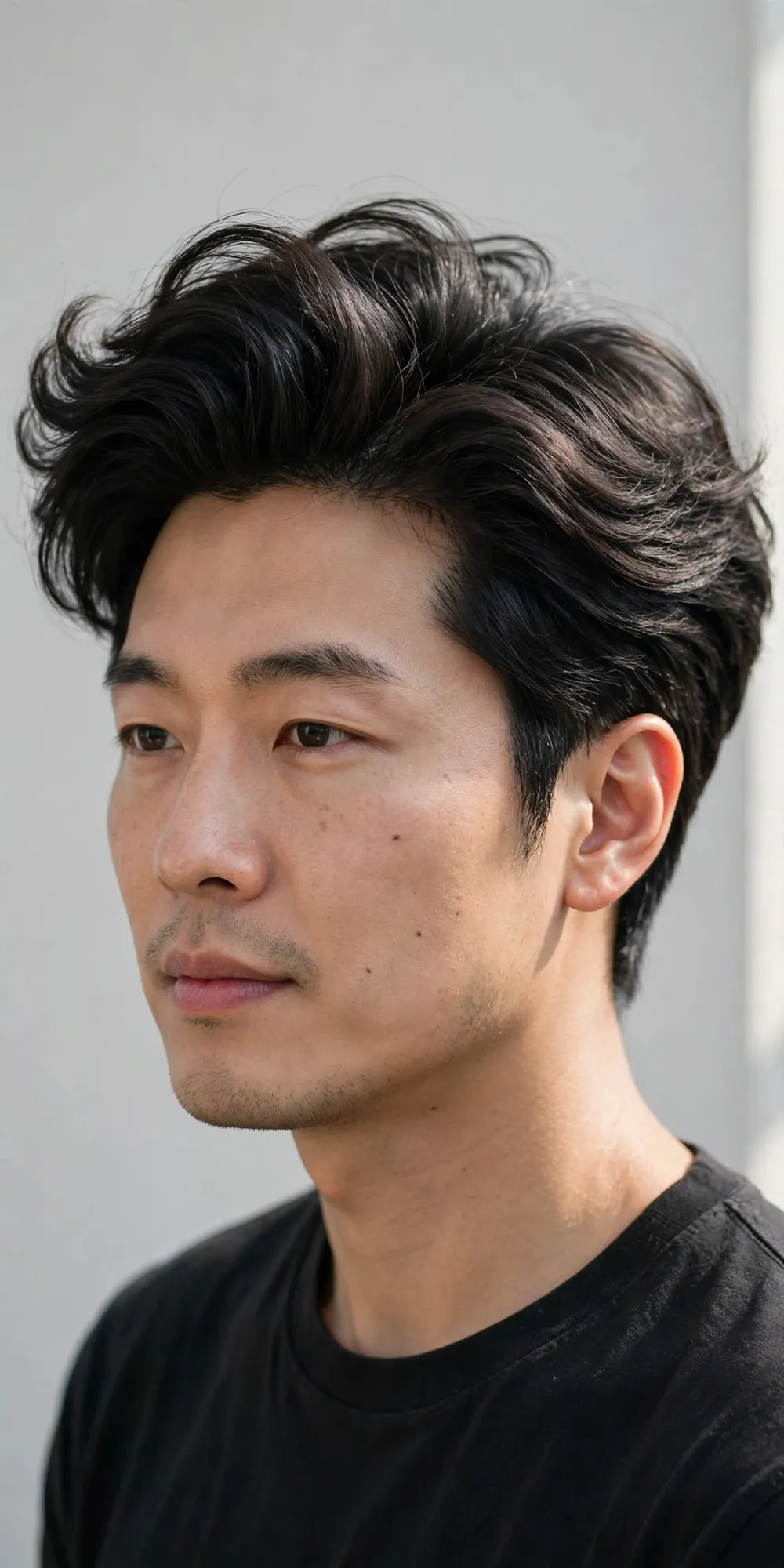
24. Modern Pompadour with Texture
The modern pompadour keeps the classic height but drops the greasy, helmet-like finish — instead, the top is point-cut and textured so it looks lived-in. It suits thick hair and a strong jawline, and it flatters rounder faces because the height lengthens them. Ask your barber for a taper on the sides, three to four inches of textured length on top, and weight removed from the crown so it does not sit too heavy. Blow-dry it up and back with a vented brush, then work a matte paste through from the roots — avoid anything shiny or you slide into the 1950s. It needs a cut every three to four weeks to keep the sides tight, and it will not survive a windy day without product.
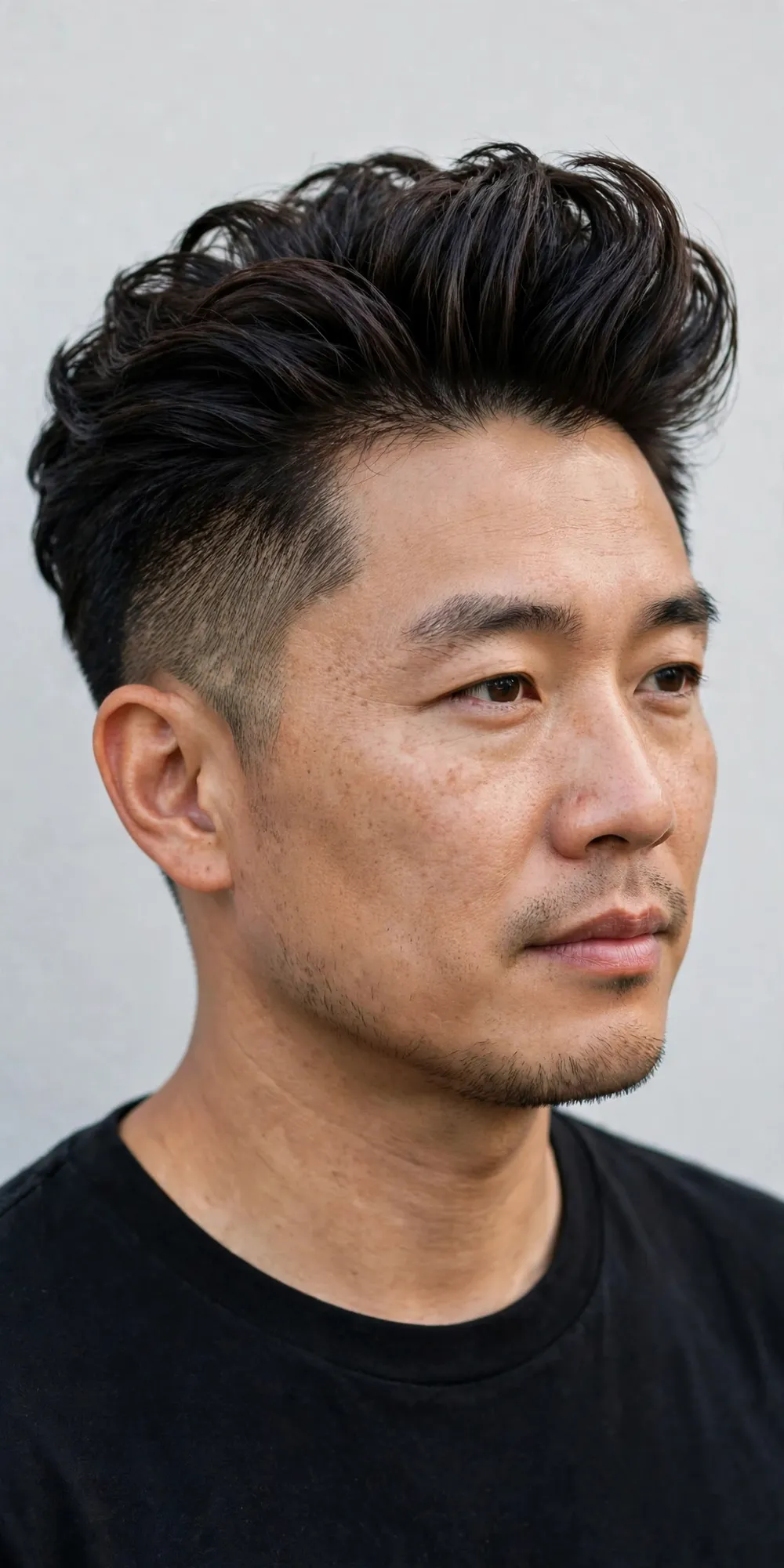
25. Slick Back with Low Taper
The slick back with a low taper is the office-safe version of the slicked-back look — the top is combed straight back, but the taper keeps the sides tidy instead of heavy. It works best on thick, straight hair with some length on top, suiting oval and square faces. Ask your barber for a low taper, keeping the top around three inches, and have the crown thinned slightly so the hair lies flat instead of springing up. Apply a water-based pomade to damp hair and comb it back — a matte finish looks more current than high shine. It is low effort on good hair days and frustrating on bad ones, because straight hair that grows outward will fight you until it passes the crown.
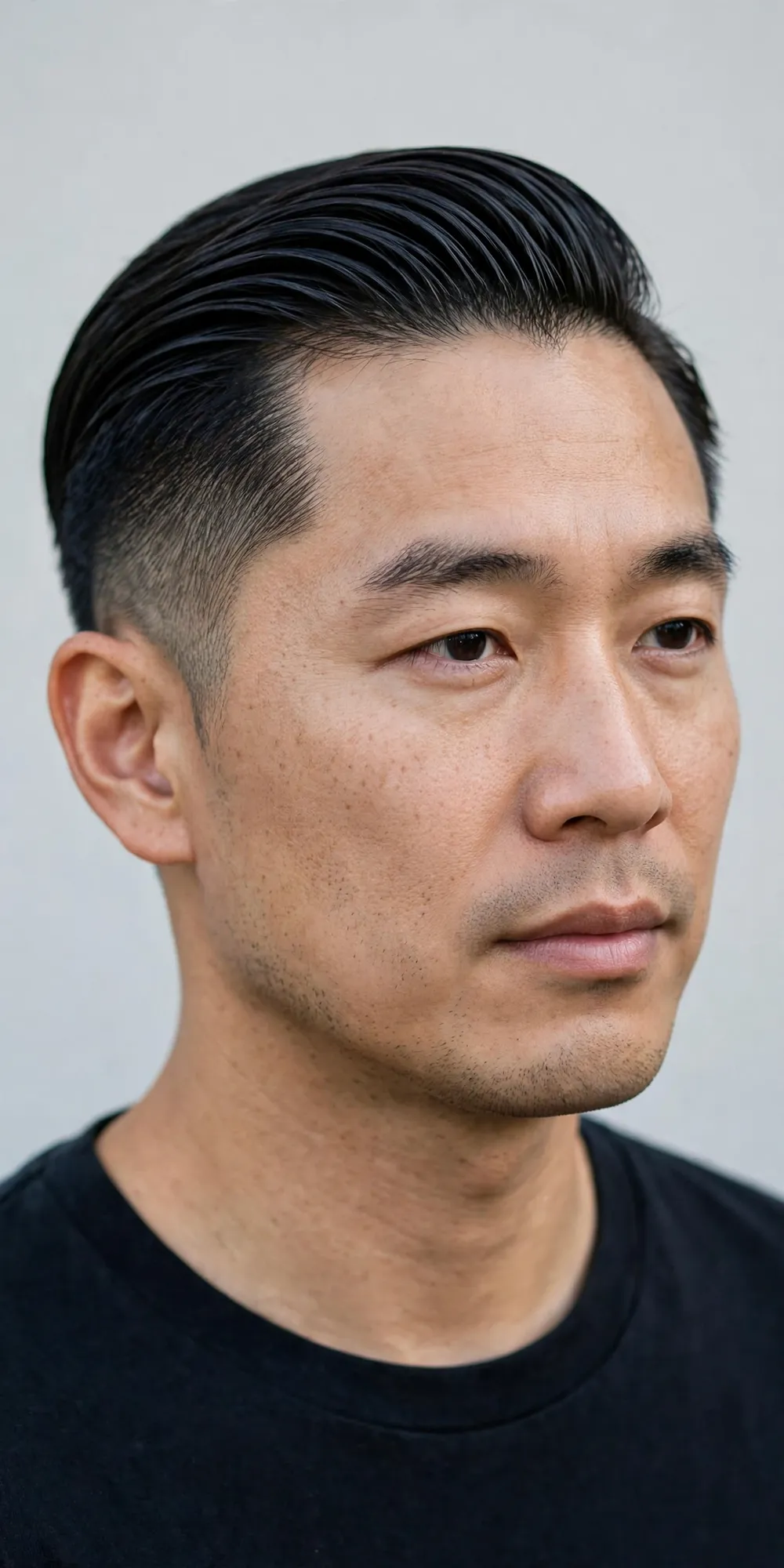
26. Soft Korean Perm Waves
Soft Korean perm waves add gentle, loose movement to hair that normally refuses to bend — think relaxed S-curves rather than tight curls. It is one of the best options for straight hair that falls flat and will not hold a style, and it suits most face shapes because the waves soften strong features. Ask your stylist for a soft digital perm on the top only, keeping the sides tapered short, and say you want loose waves, not curls. Styling is simple: a curl cream scrunched into damp hair, then air-dry or diffuse on low heat. The perm lasts two to three months, and the regrowth blends in naturally since the waves fade gradually. Use a sulphate-free shampoo to keep the perm from drying out.
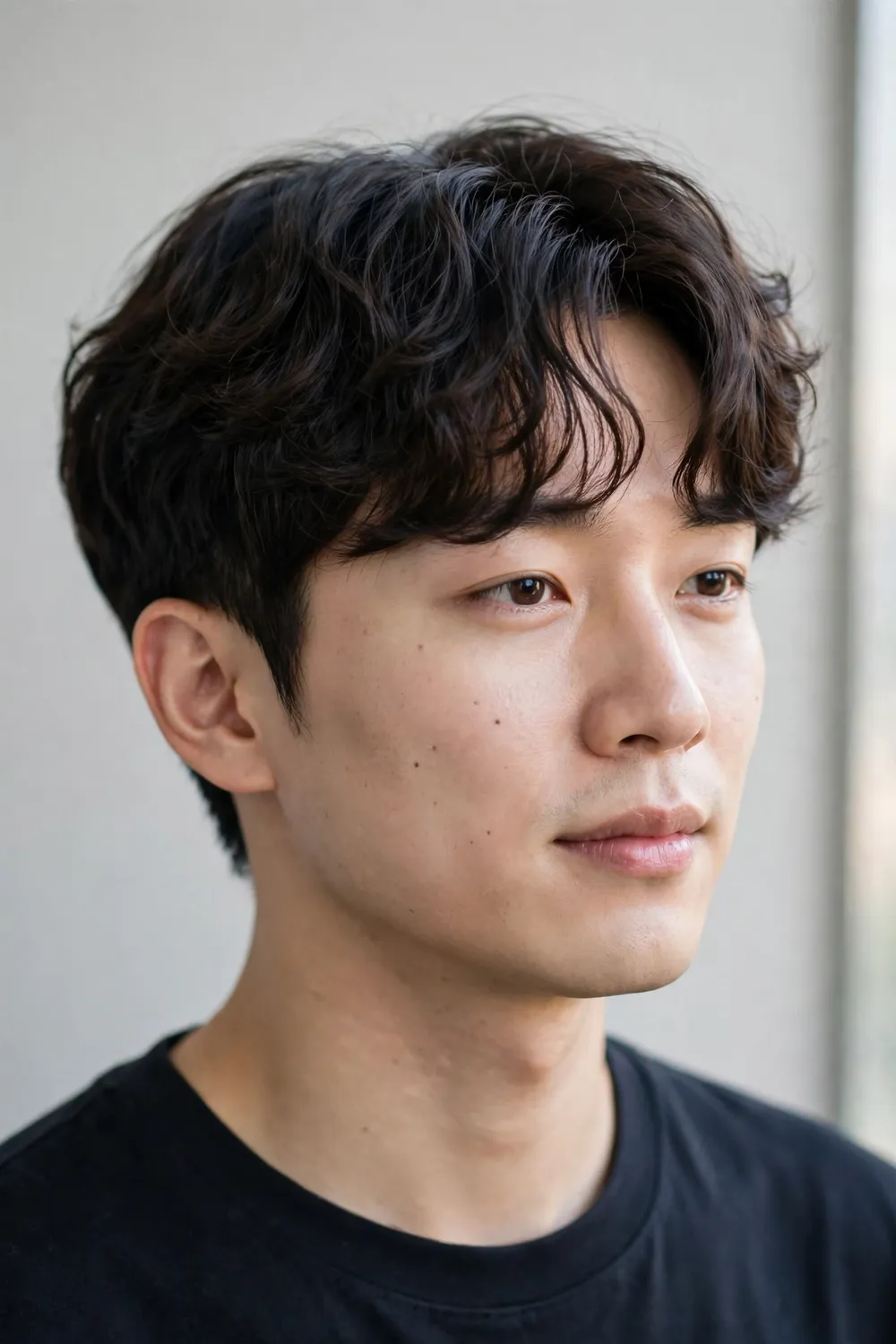
27. Down Perm with Clean Profile
A down perm is the secret weapon behind most Korean hairstyles — a treatment that flattens the sides so they lie tight against the head instead of sticking out. Paired with a clean profile and textured length on top, it completely changes how Asian hair behaves. It suits anyone whose sides puff out within a week of a haircut. Ask your stylist for a down perm on the sides and back, with the top cut to your chosen style — it pairs beautifully with a Korean two block haircut or a comma fringe. No daily product is needed on the sides. The effect lasts six to eight weeks and grows out without a harsh line — one of the lowest-maintenance upgrades you can get.
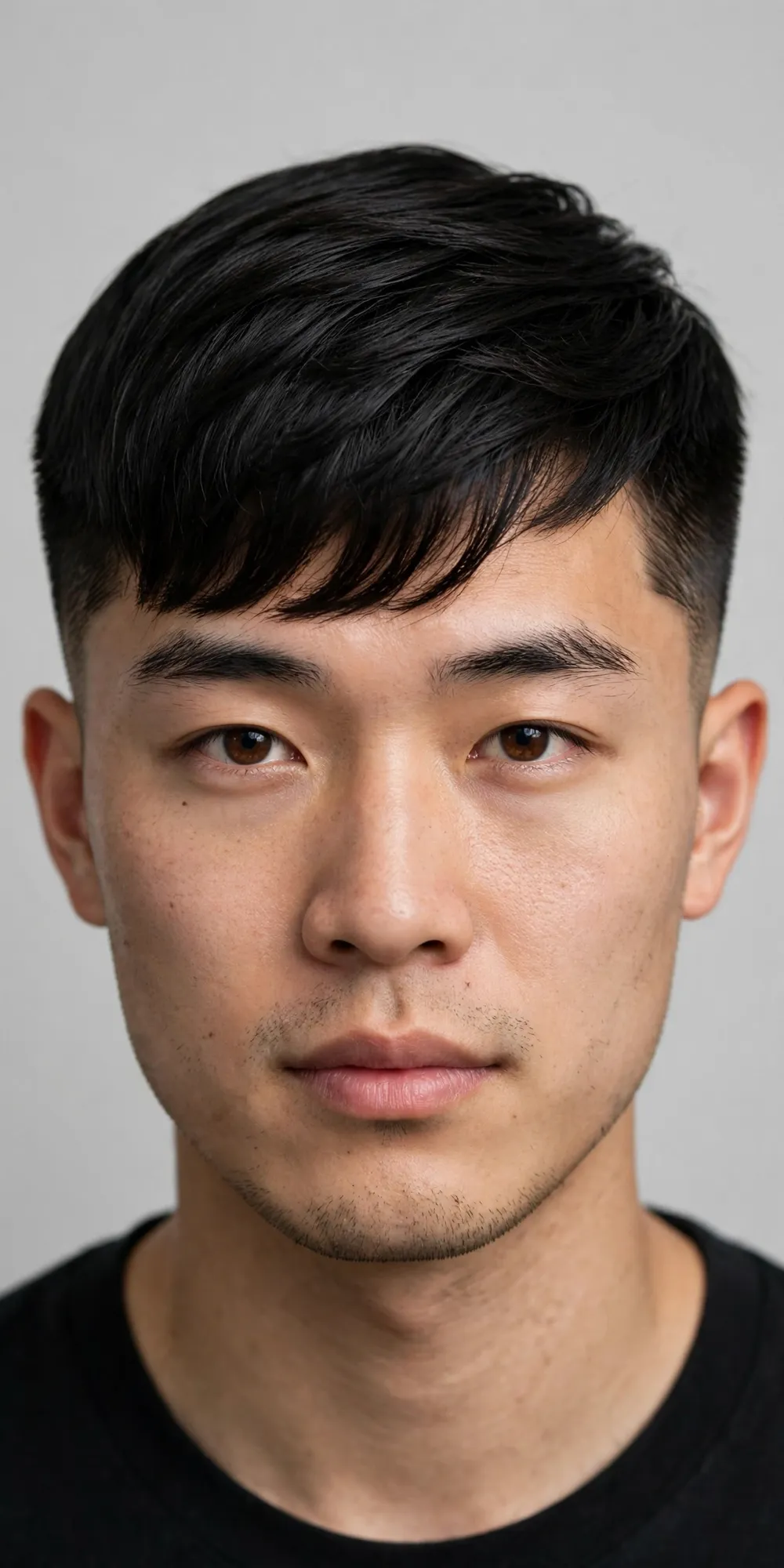
28. Spiky Quiff
The spiky quiff is the louder cousin of the textured crop — the front is lifted and pushed up into defined spikes, while the back stays short and clean. It suits younger guys and rounder faces, because the height up front adds length. It needs thick hair with some natural stiffness; very fine hair will flop before lunch. Ask your barber for a mid or low fade, two to three inches on top with the front left longest, and heavy point-cutting so the spikes separate naturally. Work a strong-hold matte clay through dry hair, pinching sections upward. It is a high-product style — skip the clay and it falls flat — and it needs a trim every three weeks to stop the spikes turning into a mop.
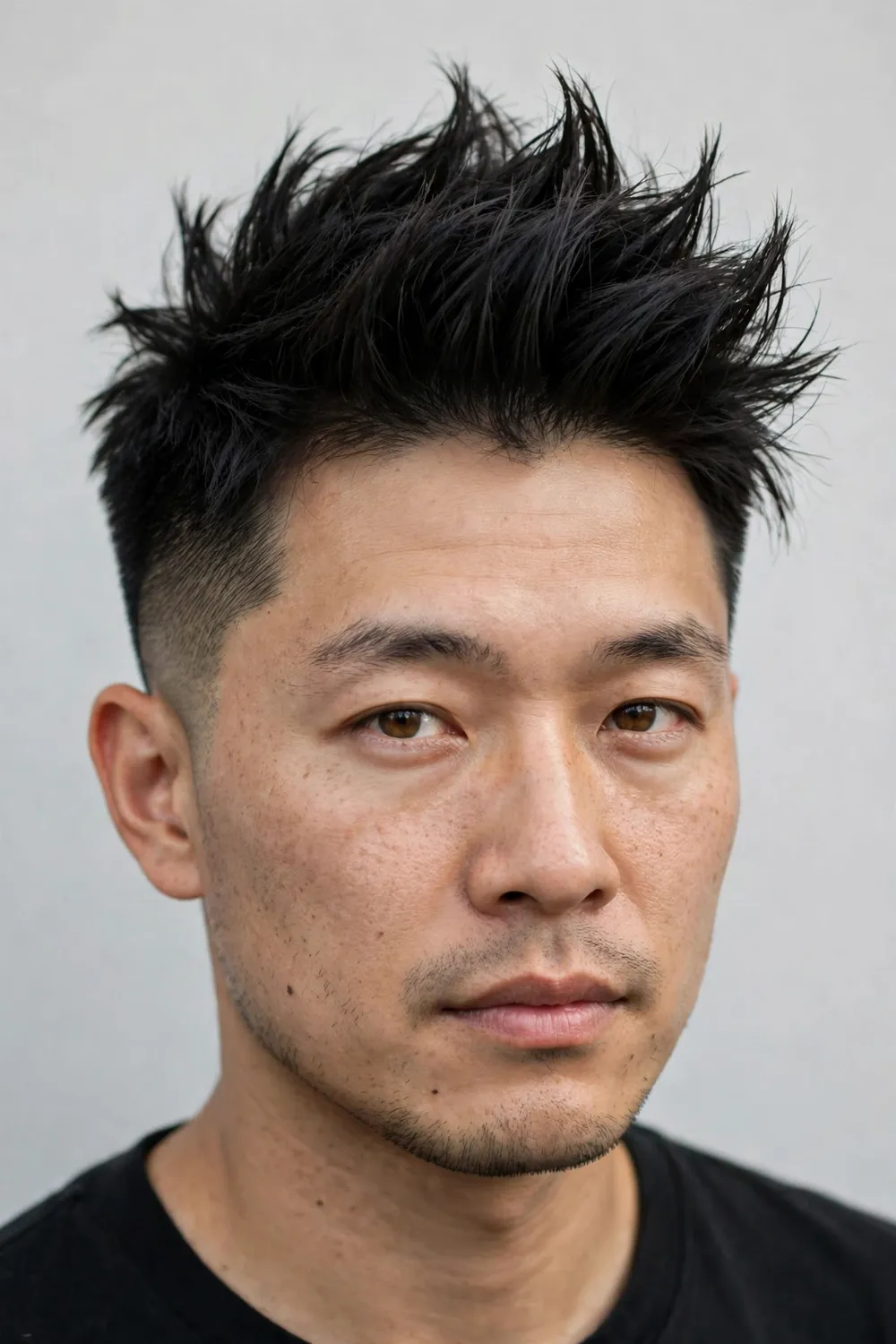
29. Top Knot with Low Fade
The top knot with a low fade is the cleanest way to wear long hair — the length is gathered into a knot at the crown, the faded sides keeping it sharp instead of scruffy. It suits guys who have grown their hair past six inches and want it out of their face; it works on oval and square faces. Ask your barber for a low fade, the top left long enough to tie, and the back blended rather than buzzed. Tie it high on the crown with a snag-free tie, and smooth flyaways with a little matte paste. The trade-off is the grow-out: the awkward in-between length takes months, and the fade needs a touch-up every two to three weeks while the top grows.
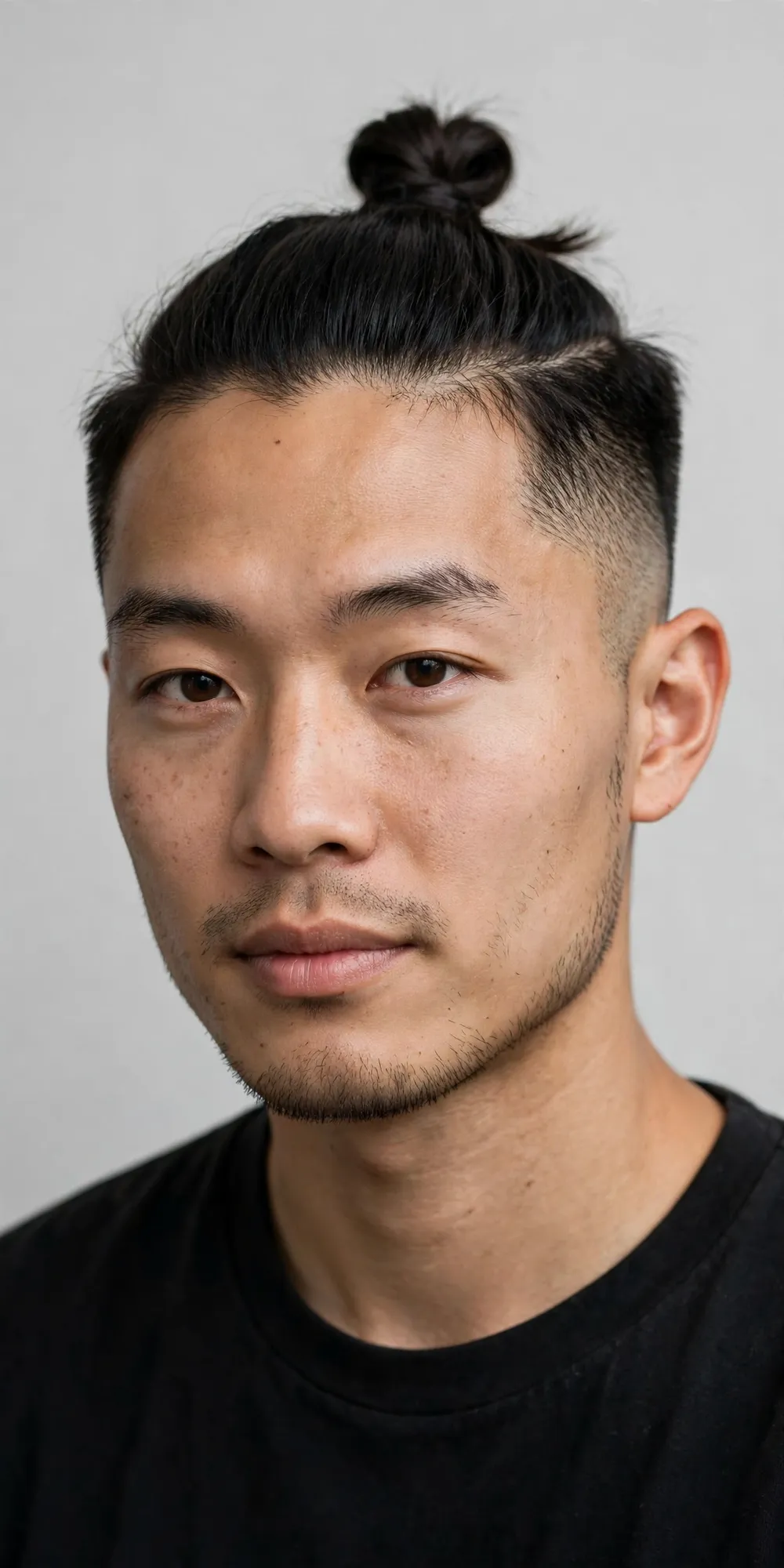
30. Mullet Fade
The mullet fade is the modern mullet — business in the front, party in the back, but with faded sides that make it look deliberate. It suits thick hair that holds shape at the back, and it flatters longer faces because the nape length balances the proportions. Our mullet haircut guide breaks down the variations. Ask your barber for a mid fade, a short textured top, and length kept through the back, with the nape point-cut so it tapers instead of ending in a blunt line. Style the top forward with matte clay and let the back do its own thing. It needs a fade refresh every three weeks, and be honest with yourself — this cut gets comments, good and bad, so wear it with confidence.
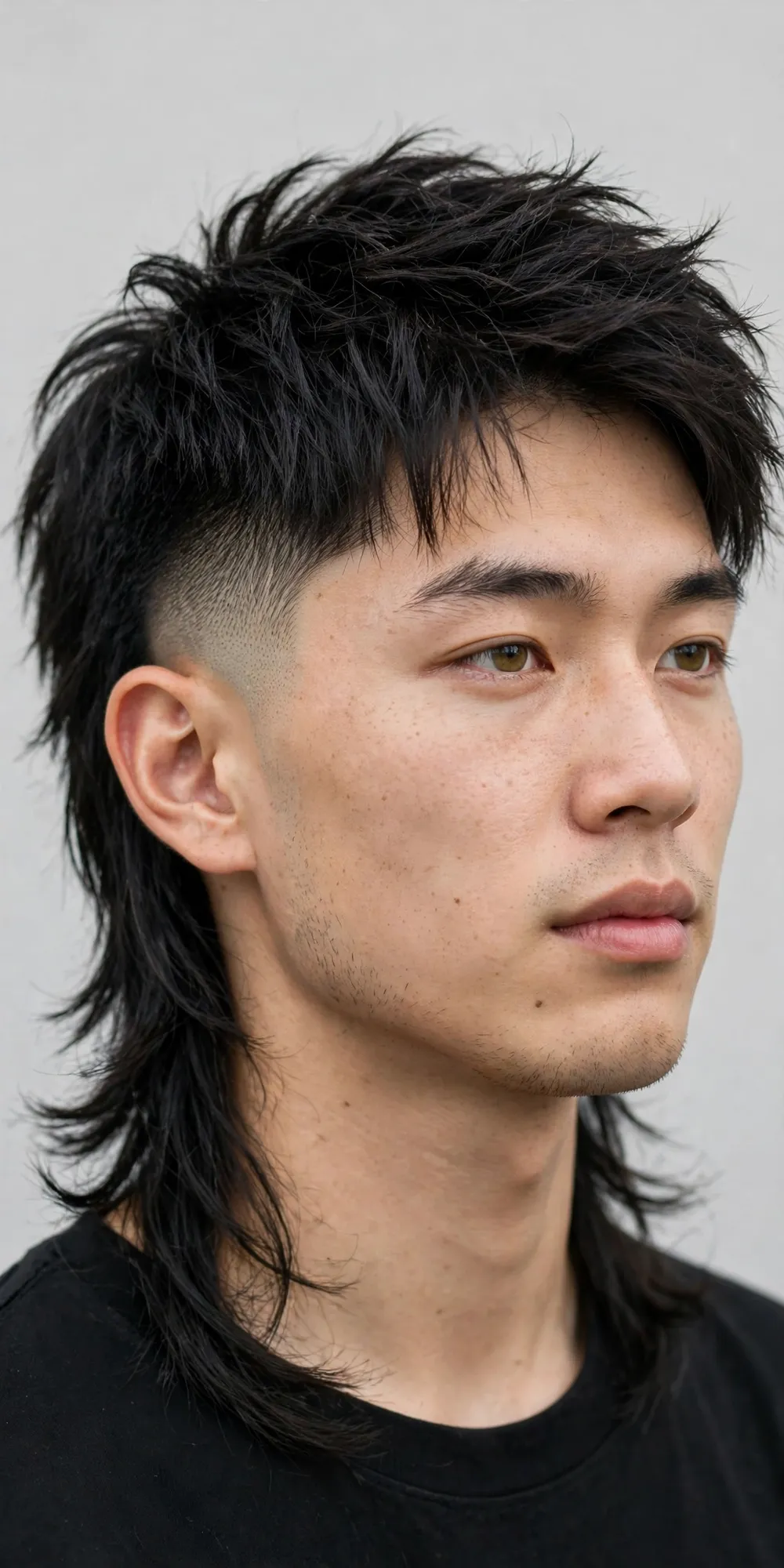
31. Textured Crop with Hard Part
The textured crop with a hard part takes the simple crop and adds a sharp edge — a razor-cut line separating the top from the side. It suits guys who like structure and clean lines, especially square faces and strong jawlines. The hard part also helps thick Asian hair, because it gives the top a clear direction to fall. Ask your barber for a low fade, a short textured crop with a forward fringe, and a hard part shaved on your natural parting — bring a photo, because the placement matters. Style it with a pea-sized amount of matte clay, pushed forward. The catch is upkeep: the hard part grows out in about a week, so it needs a line-up every seven to ten days.
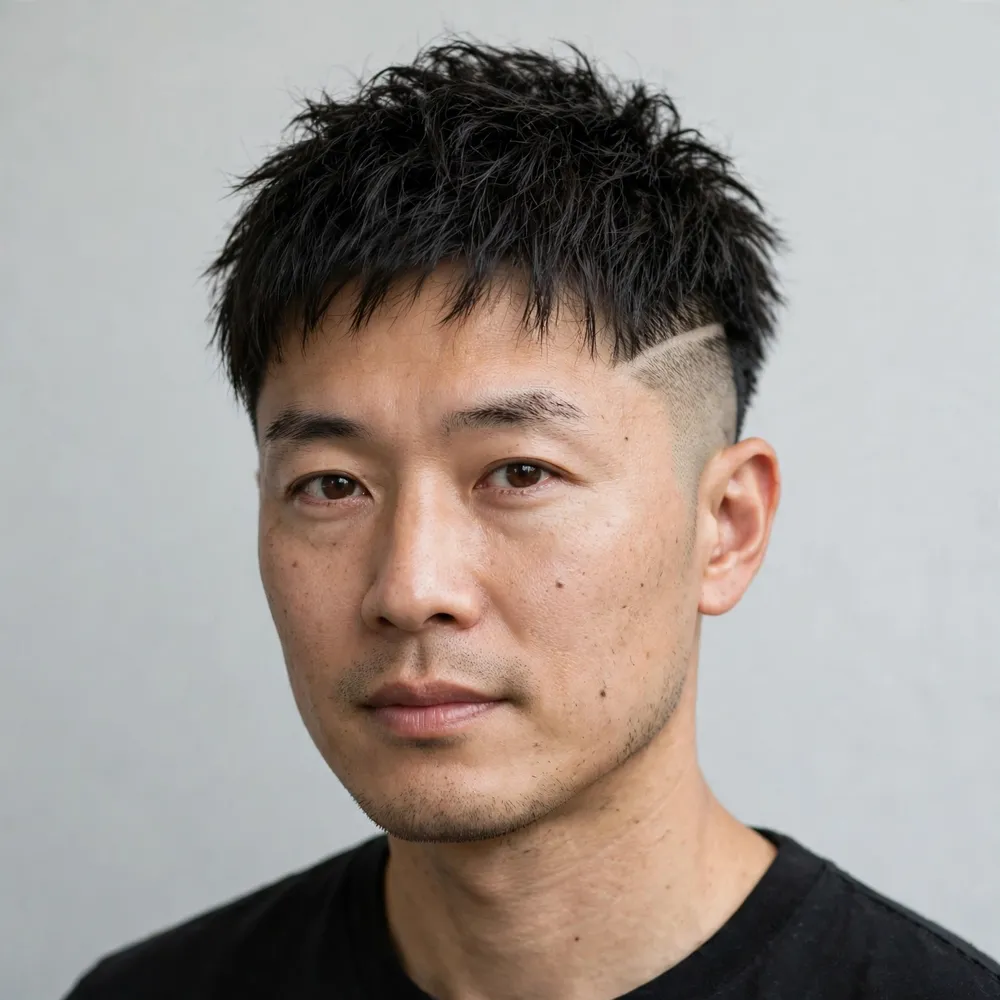
32. Side-Swept Undercut
The side-swept undercut pairs a disconnected undercut with a long top swept to one side — dramatic, but wearable every day. It suits thick hair with length on top, around three to four inches, and it flatters oval and longer faces because the sweep adds width. Ask your barber for a high undercut with no blending, the top left long and layered, and the front cut so it falls naturally to your preferred side. Blow-dry it across with a vented brush and finish with a medium-hold cream for movement rather than stiffness. The undercut needs a buzz every two to three weeks to stay sharp, and the disconnect means there is no hiding a bad grow-out — keep the appointments regular or the style loses its edge fast.
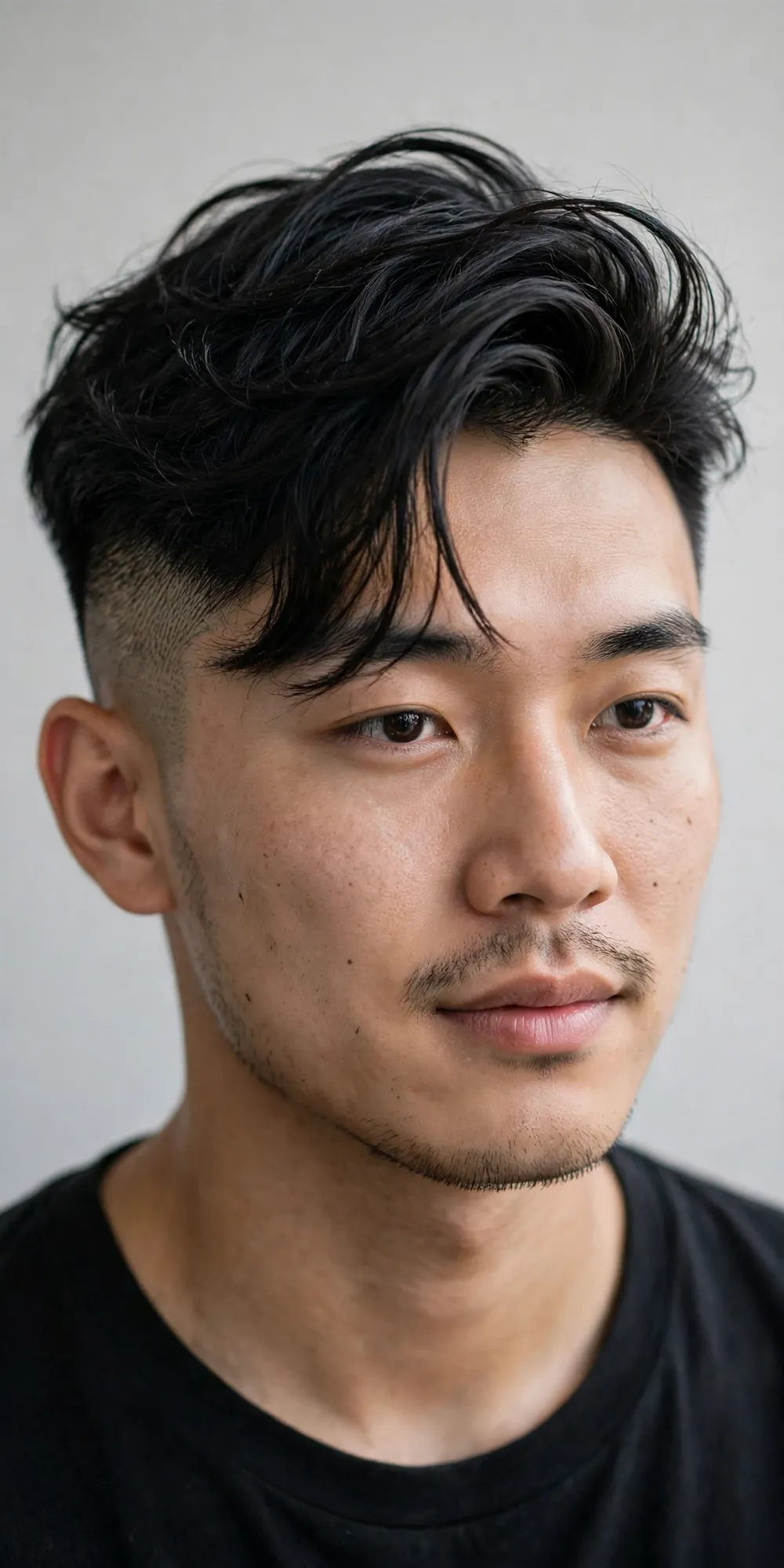
33. Korean Perm Fringe
The Korean perm fringe takes a straight fringe and gives it soft, natural-looking curls — a gentle bend that makes the fringe sit properly instead of poking your eyes. It is ideal when your fringe refuses to lie flat and keeps flipping up, and it suits rounder faces because the curls add texture without bulk. Ask your stylist for a soft perm through the fringe and front only, keeping the sides tapered, and say you want loose curls, not a tight wave. A curl cream on damp hair is all the styling it needs, and it air-dries well. The perm lasts two to three months, and because only the front is permed, the regrowth is easy — just let it grow out and re-perm when the curls relax.
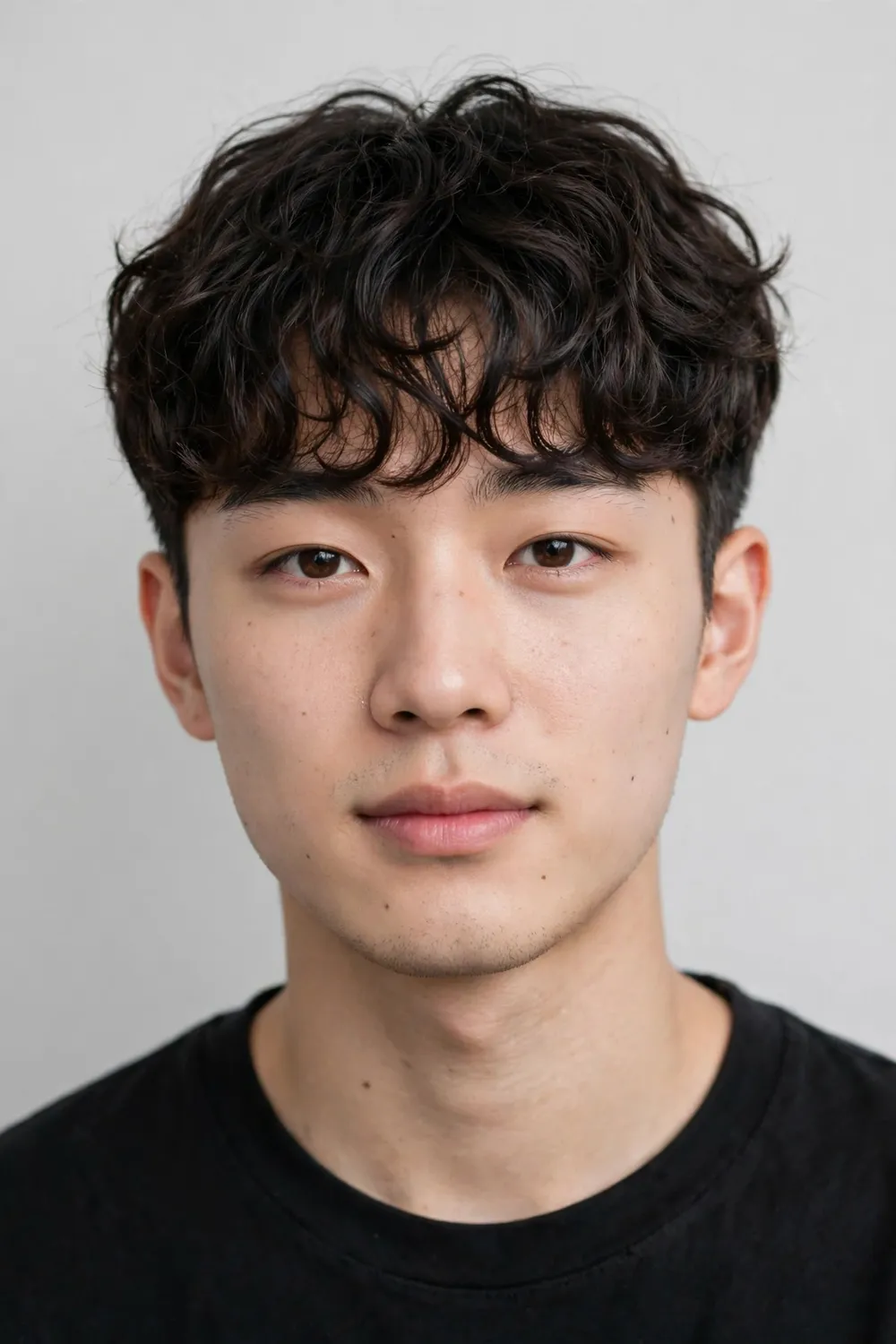
34. Modern Caesar Cut
The modern Caesar is a short, no-nonsense cut with a straight fringe line across the forehead, updated with texture on top so it does not look like a Roman statue. It suits guys who want something low effort but still styled, and it works on most face shapes — especially rounder ones, since the short fringe does not shorten the face. Ask your barber for a low fade or taper, a short crop on top with a blunt but textured fringe, and minimal length at the corners. Style it with a tiny amount of matte paste, pushing everything forward. Maintenance is easy: a trim every three to four weeks, and it still looks fine a week past its best.
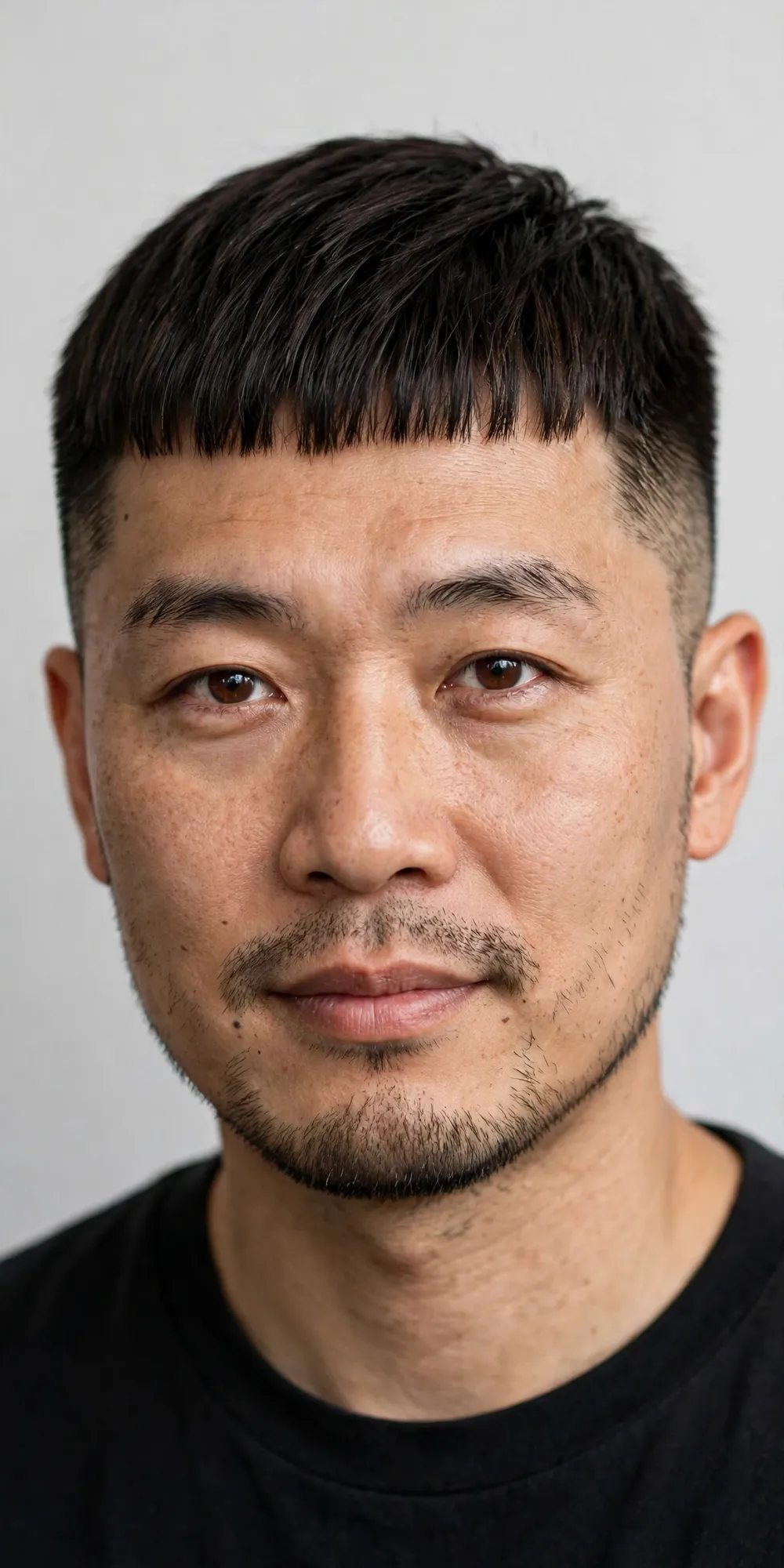
35. Curtain with Textured Fringe
The curtain with textured fringe blends two trends — a centre part framing the face, with a choppy, piecey fringe that keeps it from looking too neat. It suits thick hair with around three inches at the front, and it flatters oval and square faces. If you like fringe-forward styles, our fringe haircut guide covers more options. Ask your barber for a centre part with the fringe point-cut for texture, tapered sides, and weight removed so the curtain does not puff out. A sea salt spray on damp hair separates the pieces, and a quick finger blow-dry is enough. It needs a trim every four to five weeks, and the parting takes a few days to train if you have always parted to one side.
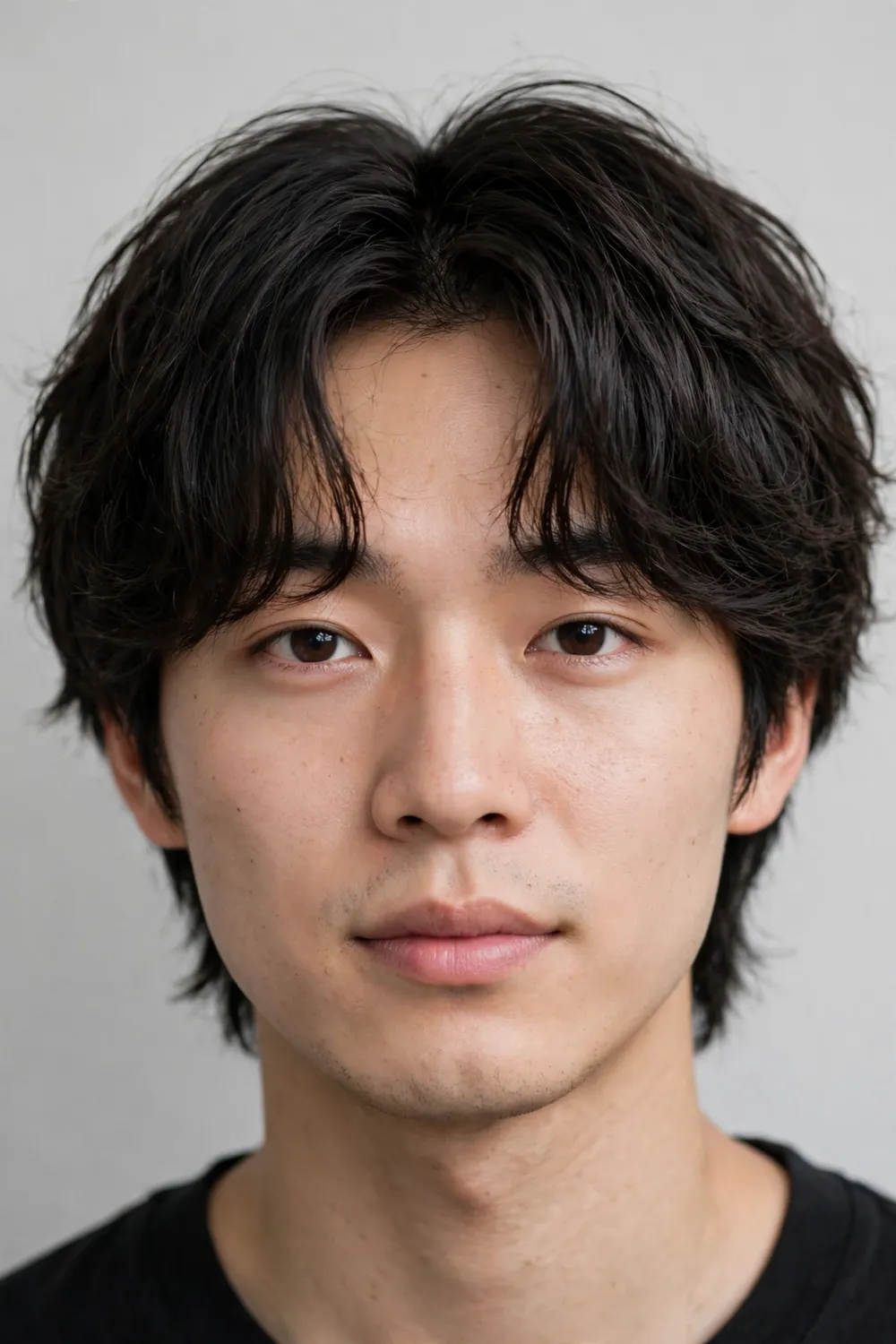
36. Low Fade with Comma Fringe
The low fade with comma fringe is the smart, wearable version of comma hair — the curved fringe does the talking, the low fade keeps the sides clean. It suits most face shapes, and thick, straight hair that holds a bend after a quick blow-dry. It gives you the Korean look without the high-maintenance sides of a two block — see our low fade haircuts for men guide. Ask your barber for a low fade, a curved comma fringe across the forehead, and light thinning so it curves instead of sticking out. Blow-dry the fringe into a curve with a round brush and finish with a light cream. It needs a cut every three to four weeks, because the contrast fades as it grows out.
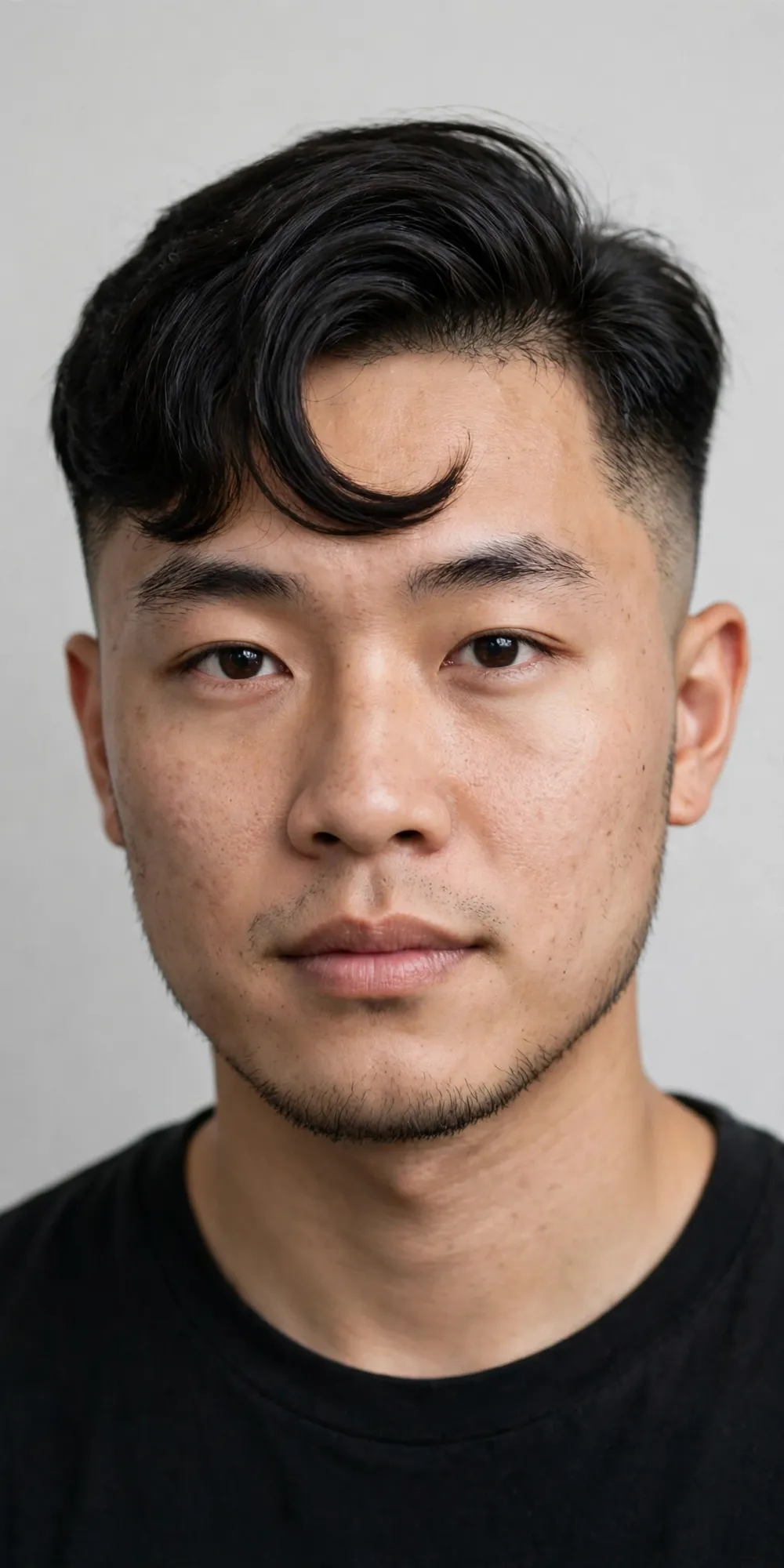
37. Soft Spikes with Low Taper
Soft spikes with a low taper are the grown-up version of the spiky look — the top is lifted into gentle, separated spikes, but the taper keeps the sides neat. It suits guys who want texture without shouting about it, and it works on oval and square faces with medium-thick hair. Ask your barber for a low taper, two inches of textured length on top, and point-cutting through the front so the spikes form naturally. A small amount of matte clay worked through dry hair is enough — use too much and the spikes turn into a helmet. It is one of the easier styles to maintain: a trim every four weeks, and it still looks decent on day two without restyling.
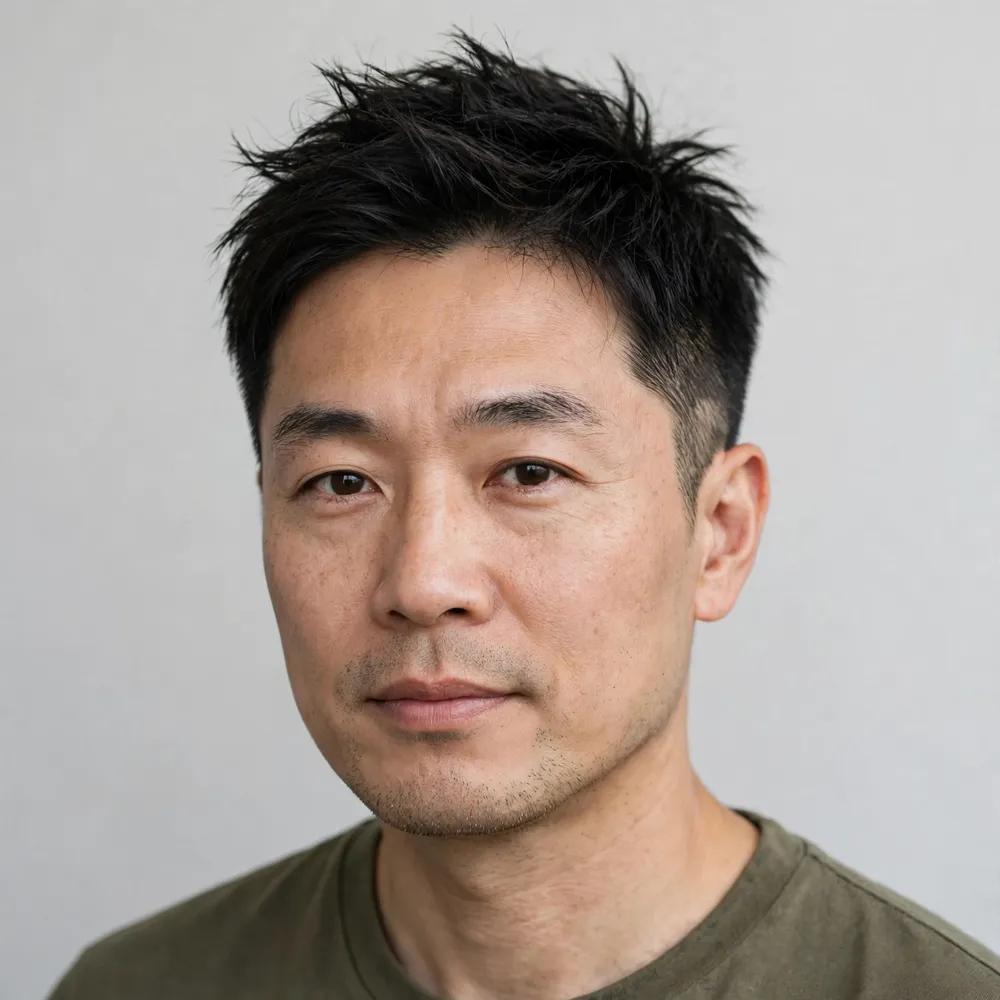
38. Two-Block with Skin Fade
The two-block with a skin fade is the boldest version of the two block — the sides are faded right down to the skin, which makes the longer top look more dramatic. It suits confident guys with thick hair and a strong jawline, flattering square and oval faces. It is the sharpest two-block — if you are new to the style, start with the classic version. Ask your barber for a skin fade, the top long and textured, with a clean disconnect where the two meet. Style the top with matte clay for mess or a light pomade for slick. The catch is the skin fade — it needs a refresh every two weeks or the contrast fades and the cut looks half-finished.
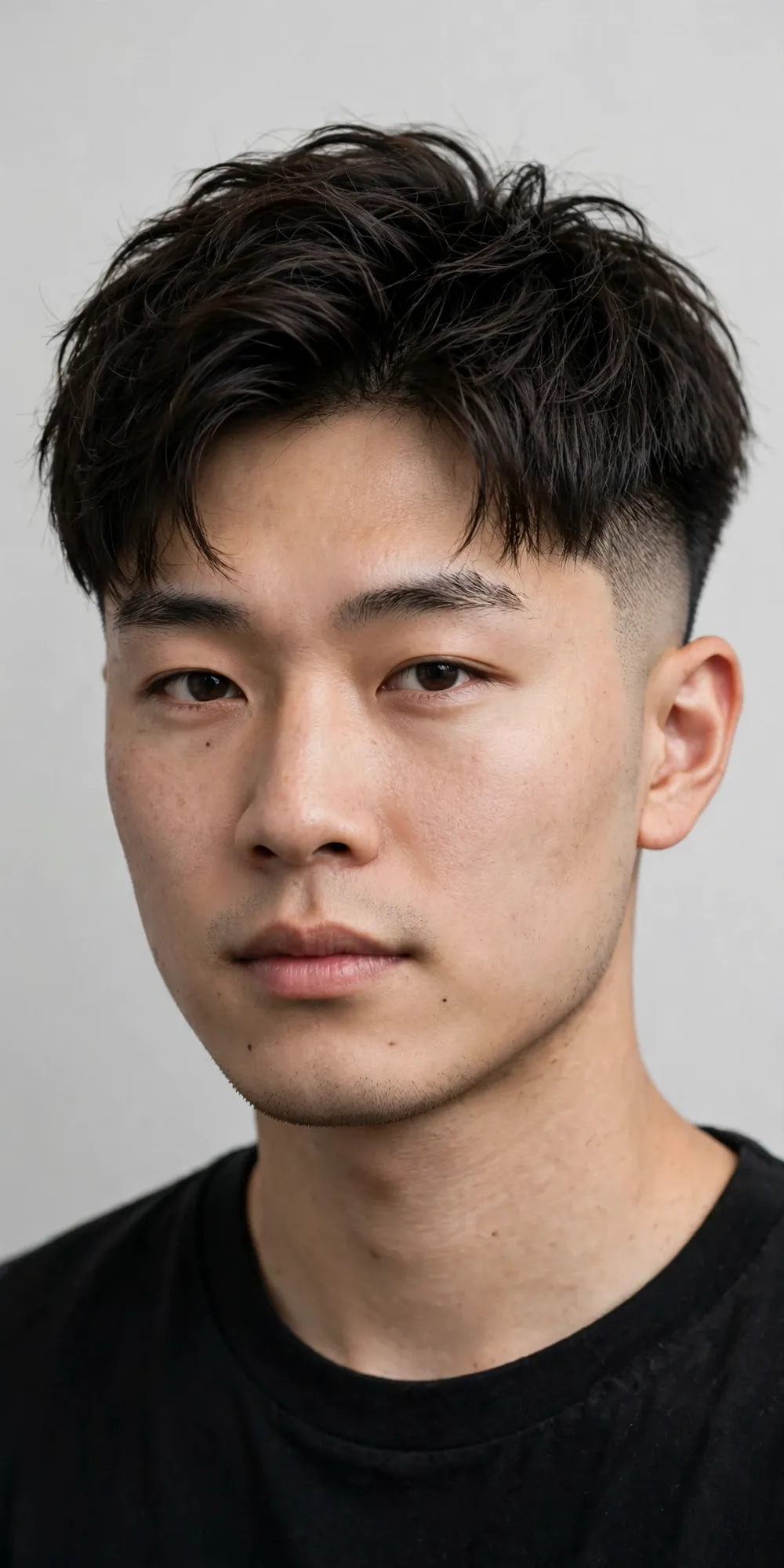
39. Textured Quiff with Taper
The textured quiff with a taper is the everyday pompadour — lifted at the front, messy and piecey, with tapered sides that keep it relaxed. It suits almost every face shape, making it a safe first choice, and it works on thick hair with natural volume. For more textured options, browse our textured haircuts for men guide. Ask your barber for a taper, two to three inches on top with the front longest, and heavy texturising so the quiff separates into pieces. Blow-dry it up and forward with your fingers, then work matte clay through the roots. It needs a trim every three to four weeks, and it is forgiving on bad hair days — a quick finger-comb and a little product usually brings it back.
How to Ask Your Barber for a Korean-Style Cut
The single best thing you can do is show a photo. Korean cuts live in the details — the exact length of the fringe, how the sides sit, how much texture is in the top — and words alone rarely capture all of that. Save two or three photos of the same cut from different angles, and point at what you like in each one. Korean styles are only the latest chapter in a long story — the hairstyle has been reinvented in every era, and today’s two block and comma cuts are just the current version of that. Then name the cut: “two block”, “comma hair”, “down perm” — most barbers who cut Asian hair will know these terms, and if yours does not, that is useful information too. Point at the sides and say whether you want them faded, tapered, or disconnected, because that one choice changes the whole look. Mention your hair’s behaviour as well — “my sides stick out”, “my fringe flips up” — so the barber can thin, texturise, or suggest a down perm. And be honest about how much time you will spend styling it each morning; a great barber will adjust the cut to your real routine, not the one you wish you had.
Styling Thick Asian Hair — Products That Actually Work
Thick, straight Asian hair ignores most products, so the ones that work are the ones with real grip. Matte clay is the workhorse — it holds a quiff or a textured crop all day without shine, and a pea-sized amount is enough for most styles. Sea salt spray is the second essential: spray it into damp hair before blow-drying and it adds the texture and grip that straight hair lacks, which makes every other product work better. A light hair cream is what you want for comma hair and curtain styles, where you need control without stiffness. What to skip: anything labelled “high shine” unless you are deliberately going for a slick look, and heavy waxes that weigh the hair down and make it look greasy by midday. And if your sides stick out no matter what you use, no product will fix that — a down perm will, and it costs less than a year’s worth of clay.
5 Mistakes Asian Men Make With Their Haircut
- Cutting the sides too short. A skin fade looks sharp on day one, but on thick hair that grows outward, the sides start sticking out within a week. A taper or a down perm keeps the profile clean for much longer.
- Skipping texture. Blunt-cut thick hair sits like a helmet. Asking for point-cutting or thinning through the top is what makes the cut move, and it is the difference between a good cut and a great one.
- Getting the fringe length wrong. Too short and it sticks straight up; too long and it falls in your eyes all day. The right length sits just above the eyebrows and curves naturally with a quick blow-dry.
- Using no product at all. Straight Asian hair rarely holds a style on its own. Even a tiny amount of clay or cream is the difference between the cut you left the barbershop with and the hair you actually walk around in.
- Growing it out with no plan. Going from short to long takes months of awkward stages, and most guys give up halfway. Book trims every six weeks during the grow-out to shape the in-between lengths instead of suffering through them.
FAQs
What is the best haircut for Asian men?
There is no single best cut, because it depends on your hair and your routine. If you want the safest all-rounder, the two block works on most face shapes and most hair types, and it is the cut Korean barbers know best. If your hair is very thick and straight, a textured crop or a comma fringe will be easier to live with day to day. And if you hate styling your hair in the morning, a buzz cut with a soft taper or a classic crew cut will save you the trouble entirely. The honest answer is that the best cut is the one you will actually maintain — pick the one that matches how much time you are willing to spend on it.
What is a two block haircut?
A two block is a cut where the sides and back are clipped short while the top is left long, creating two distinct “blocks” of length with a visible disconnect between them. It originated in Korea and became the default men’s cut there because it suits thick, straight hair so well — the short sides remove the bulk that makes Asian hair stick out, while the long top gives you plenty to style. You can wear the top messy, slicked, fringed, or parted, which is why the same cut shows up in so many different styles. The classic version uses a taper on the sides; the bolder version uses a skin fade.
What is comma hair?
Comma hair is a Korean hairstyle named after the shape the fringe makes — it curves across the forehead like a comma, usually sweeping to one side. The fringe is cut longer at one end and blow-dried into a curve, with the sides kept short and clean, often as a two block or a low fade. It suits guys with thick, straight hair that can hold the curve, and it works on most face shapes because the sweep softens the forehead. To get it, ask your barber for a curved comma fringe with faded or tapered sides, and be ready to spend two minutes with a hairdryer and a round brush each morning — the curve does not happen on its own.
What is a down perm?
A down perm is a chemical treatment that flattens the sides and back of the hair so they lie tight against the head instead of sticking out. It is extremely common in Korea, where it is often the invisible step behind a clean-looking two block or comma cut. The treatment takes about 20 to 30 minutes at the salon, lasts six to eight weeks, and grows out gradually without a harsh line. It does not change the top of your hair at all — it only tames the sides. If your hair puffs out sideways within days of a haircut, a down perm will do more for you than any product or styling trick.
Do Asian men suit a fade?
Yes — fades suit Asian men very well, and they are one of the most popular choices for exactly that reason. A fade removes the bulk at the sides that makes thick hair stick out, and it creates a clean contrast with a longer, textured top. A low fade is the safest starting point because it keeps the change subtle, while a mid fade works well with quiffs and textured crops. The one thing to watch is regrowth: a skin fade loses its sharpness in about two weeks, so it needs more frequent visits than a taper. If you want the fade look with less upkeep, ask for a low taper instead.
How do I ask my barber for a Korean haircut?
Bring a photo — that is the most important step, because Korean cuts are defined by small details that are hard to describe in words. Save two or three photos of the cut you want from different angles and show them before the barber picks up the clippers. Name the style if you know it: “two block”, “comma hair”, “down perm”, “K-mullet”. Then point at the sides and say whether you want them faded, tapered, or disconnected, and tell the barber how your hair behaves — where it sticks out, where it falls flat. Finally, be honest about your styling routine, so the cut is built for the mornings you actually have, not the ones you imagine.
How often should Asian men get a haircut?
It depends on the cut. Skin fades and hard parts need attention every two weeks to stay sharp. Most short styles — two blocks, textured crops, quiffs, comma fringes — hold their shape for three to four weeks before the sides start to lose definition. Medium-length styles like the curtain or the flow cut can stretch to six to eight weeks between trims. The honest rule is that thick Asian hair grows outward as much as it grows down, so the sides will tell you when it is time: when they start sticking out instead of lying flat, book the appointment. Waiting an extra week past that point is what turns a good cut into a shapeless one.
Final Word
Thirty-nine cuts is a lot of choice, but the decision is simpler than it looks: pick the one that suits your hair’s natural behaviour and the mornings you actually have. Thick, straight Asian hair rewards cuts that work with it — texture, tapers, and the occasional down perm — and punishes the ones that fight it. Start with a two block, a comma fringe, or a textured quiff if you are unsure, bring a photo to your barber, and give the cut two weeks before you judge it. And if you want more ideas for your next visit, browse our more hairstyle guides — there is a cut in there for every length, face shape, and level of effort.