

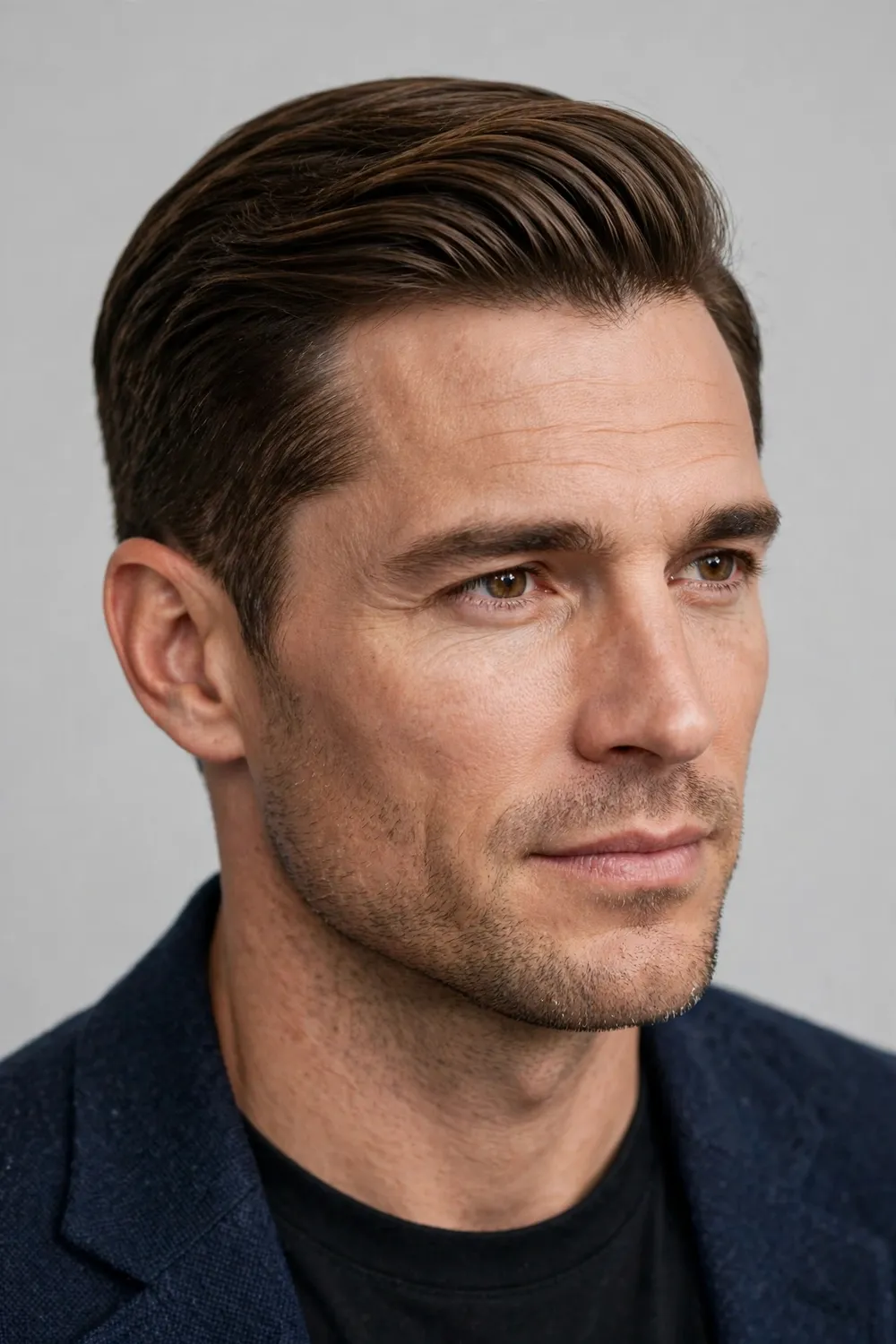
A classic comb over haircut is a side part with the top swept to one side and the sides kept shorter — you need at least two inches on top for the sweep to sit properly. It has survived a century of trends because it flatters almost every face and works in an office, at a wedding, or on a weekend. If you want a starting point, the top three are hard to beat: the Classic for timeless polish, the Textured for a softer modern feel, and the Low Fade for the cleanest everyday version.
1. Classic Comb Over

This is the one every other comb over is measured against. The top sits at two to three inches, combed smoothly to one side from a natural side part, while the sides are tapered short without any harsh line. It suits oval and square faces best, and straight or slightly wavy hair holds the shape with the least effort. Ask your barber for a classic side-part comb over with a tapered back and sides and a scissor-cut top. A medium-hold pomade with a natural shine finishes it, combed through damp hair and set with a fine-tooth comb. Maintenance is honest and light: a trim every three to four weeks, thirty seconds of styling each morning, and a wash every day or two so the product never builds up.
2. Slick Classic Comb Over
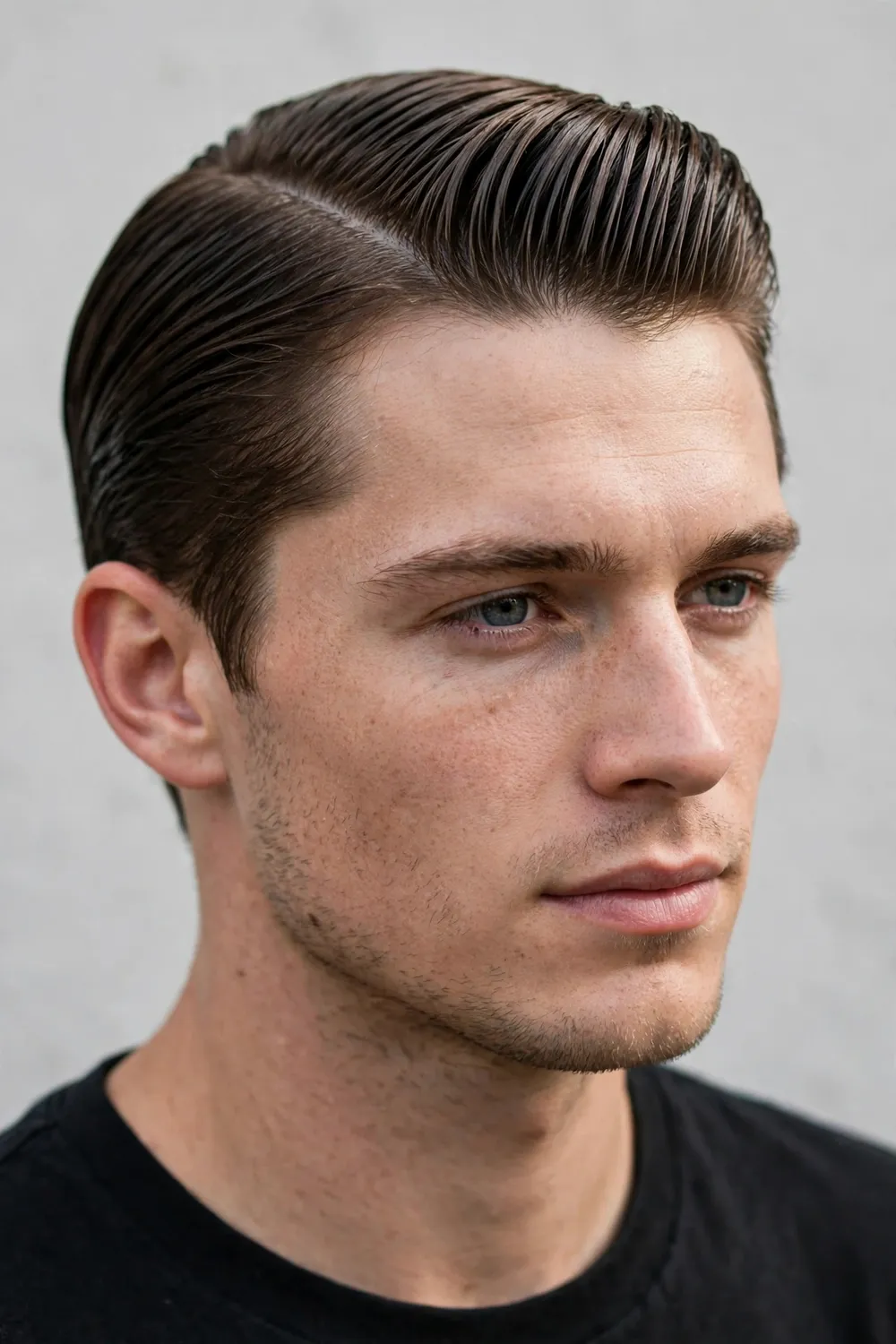
The slick version takes the classic shape and presses every strand flat, so you can see the comb lines running through the top like a barbershop photograph. It works best on straight, medium-thick hair; curls will fight the flatness all day. Oval, square, and oblong faces carry it well because the low profile adds nothing to the width. Ask for a scissor-cut top at two and a half inches with a clean taper on the sides, and tell the barber you want it slicked, not textured. Work a high-shine pomade through towel-dried hair, comb it straight back and over, then press the sides down with your palms. The upkeep is real: it needs daily pomade, a comb in your pocket for touch-ups, and a wash every night.
3. Textured Classic Comb Over
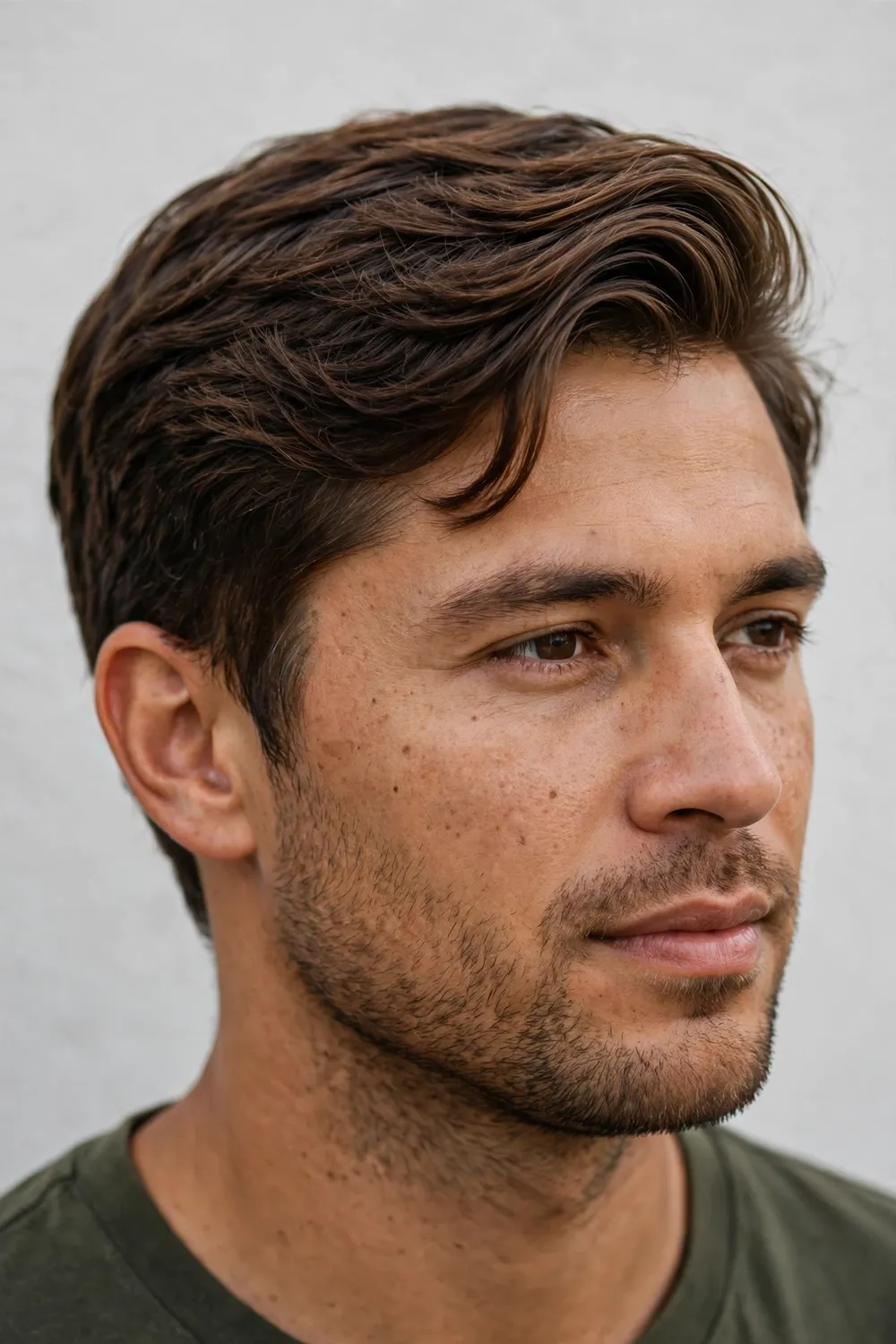
If the slick version feels too stiff for you, this is the modern answer. The top is point-cut into choppy layers so it moves, the part is softer, and the finish is matte rather than shiny. It suits wavy and thick hair especially well, and it forgives a cowlick that would ruin a slick style. Round and square faces benefit most, since the broken-up texture stops the head looking flat and wide. Ask your barber for a textured comb over with point-cutting on top and a low taper, and say you want the part soft, not razor-sharp. A matte clay rubbed between your palms and pushed through damp hair does the work — no comb needed, fingers are better. Trims every four weeks keep the texture from turning shaggy.
4. Modern Comb Over
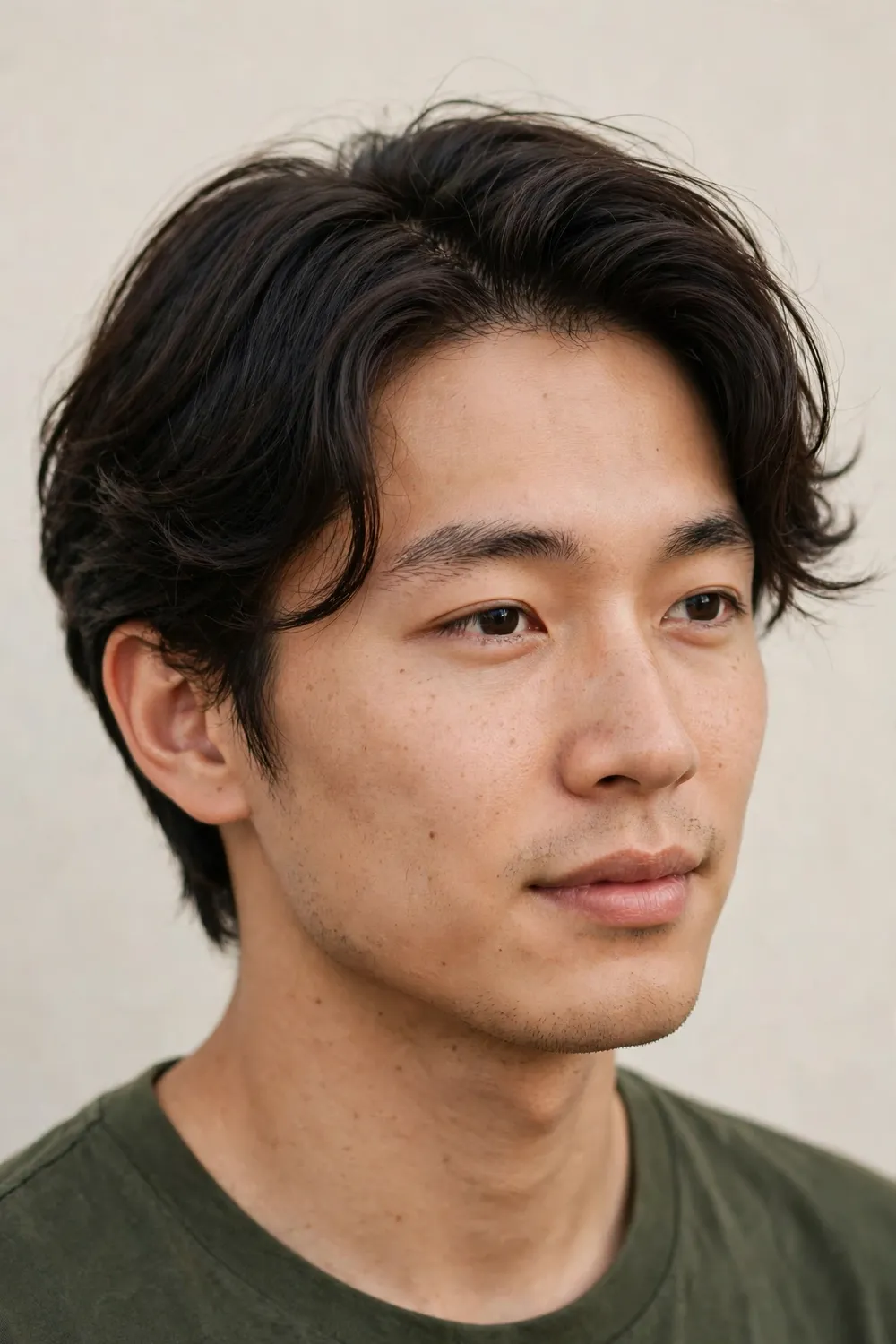
The modern comb over loosens everything up. Instead of a hard part and flat sweep, the hair flows in one direction with a barely-there part and plenty of natural movement. It is the easiest comb over to live with, which is why first-timers tend to land here. It flatters most face shapes, and it works on straight, wavy, and even slightly curly hair as long as the top is long enough to direct. Ask for a comb over with a soft, natural part, tapered sides, and the top left long enough to move — around three inches. A light styling paste gives gentle hold; blow-dry the top in the direction you want it to fall. Maintenance is close to zero: wash, paste, go, with a trim every four to five weeks.
5. Natural Comb Over

This is the comb over for men who hate styling products. The hair simply follows its natural part, swept to one side with no pomade, clay, or paste at all. It only works if your hair already falls that way — fine or cowlicked hair will struggle. Oval and oblong faces suit it best, and wavy hair adds a nice natural bend. Ask your barber for a classic comb over cut to your natural part with tapered sides, and be clear you want it to work with zero product. The cut does everything, so the barber’s scissor work matters more than usual. Upkeep is just washing and combing, plus a trim every four weeks to stop the sides puffing out.
6. Vintage Comb Over
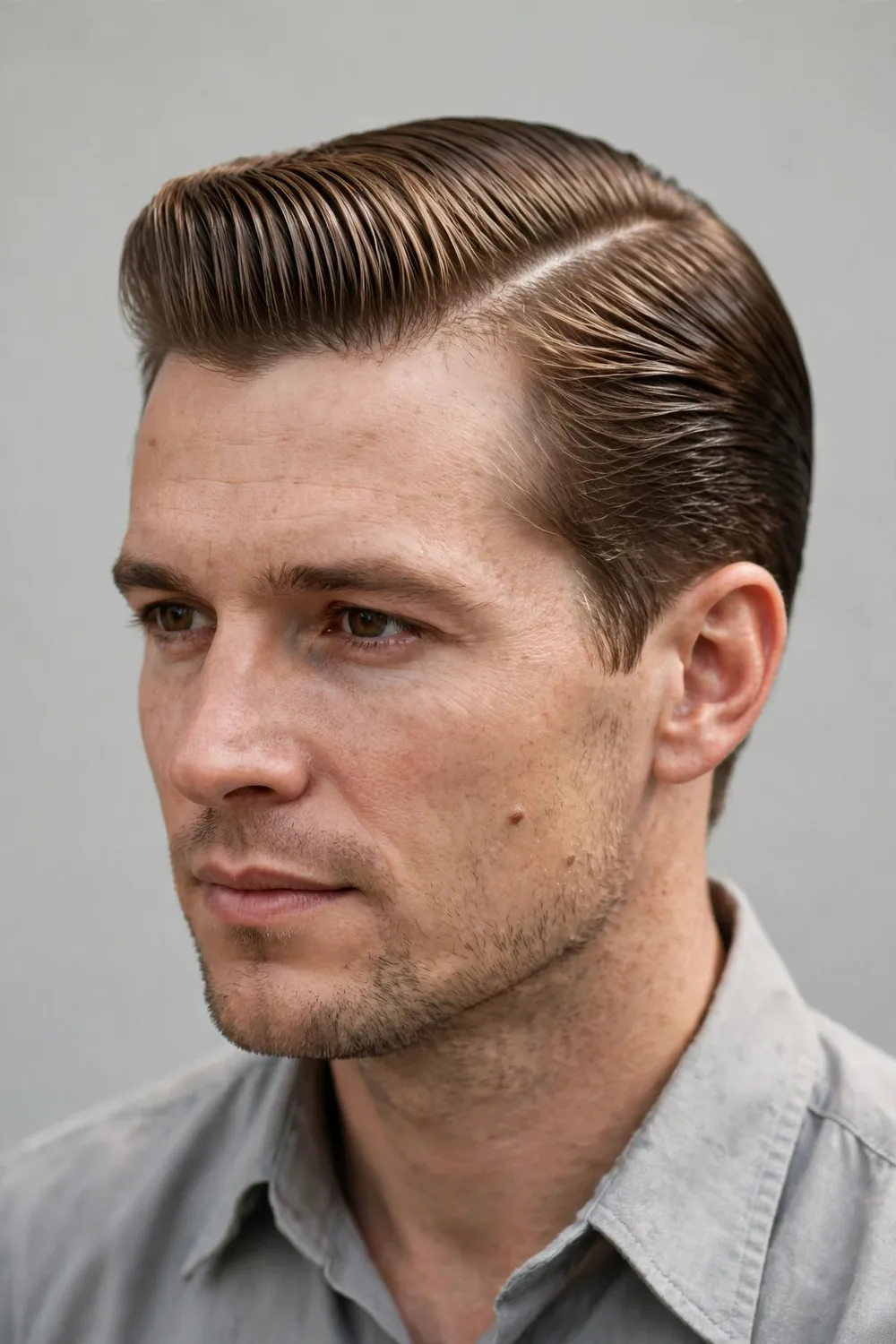
The vintage comb over is a 1950s barbershop cut, full stop: a pronounced side part, flat comb lines you can count, and a high shine that catches the light. It suits men who like a deliberate, dressed-up look. Straight hair takes it best; wavy hair needs more pomade to stay flat. Square and oval faces carry the sharpness well. Ask for a vintage side part with a hard part line, a scissor-cut top, and a taper that stays neat above the ears. A water-based pomade with a strong hold and high shine is the right product — work it through damp hair and comb it in sections. It demands daily styling and a trim every two to three weeks to keep the lines crisp.
7. Ivy League Comb Over
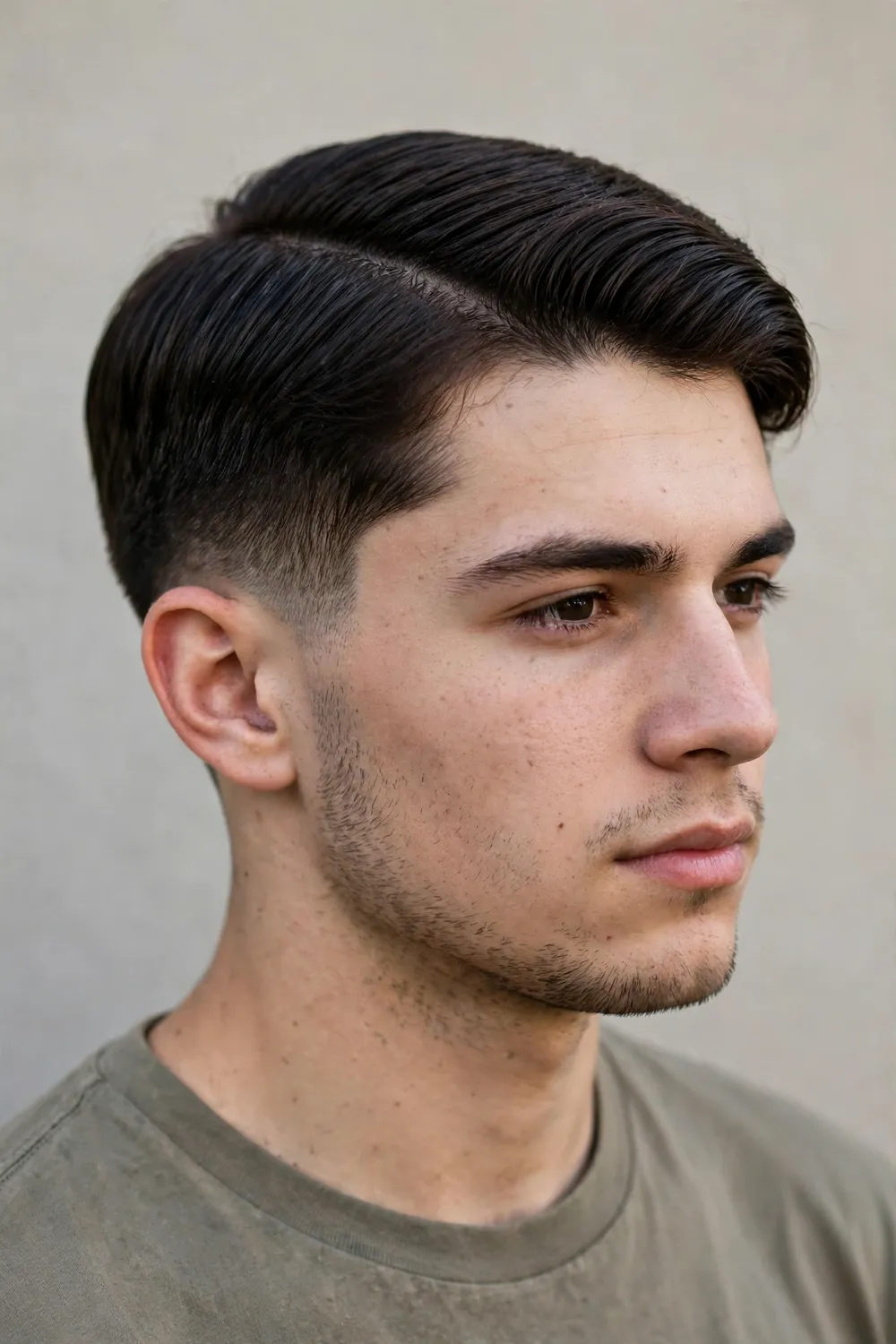
The Ivy League comb over is the short, tidy cousin of the classic — a crew-cut-length top with a soft side part, so it reads as a comb over without the length. It is ideal for men who want the style but not the styling time, and it suits thicker hair that would bulk up at longer lengths. Oval, square, and round faces all work, though round faces should keep a little height on top. Ask your barber for an Ivy League cut with a side part, about an inch and a quarter on top, tapered sides, and no hard part line. A dab of matte paste is enough; many men skip product entirely. Maintenance is the easiest on this list: wash, comb once, trim every three weeks.
8. Deep Side Part Comb Over
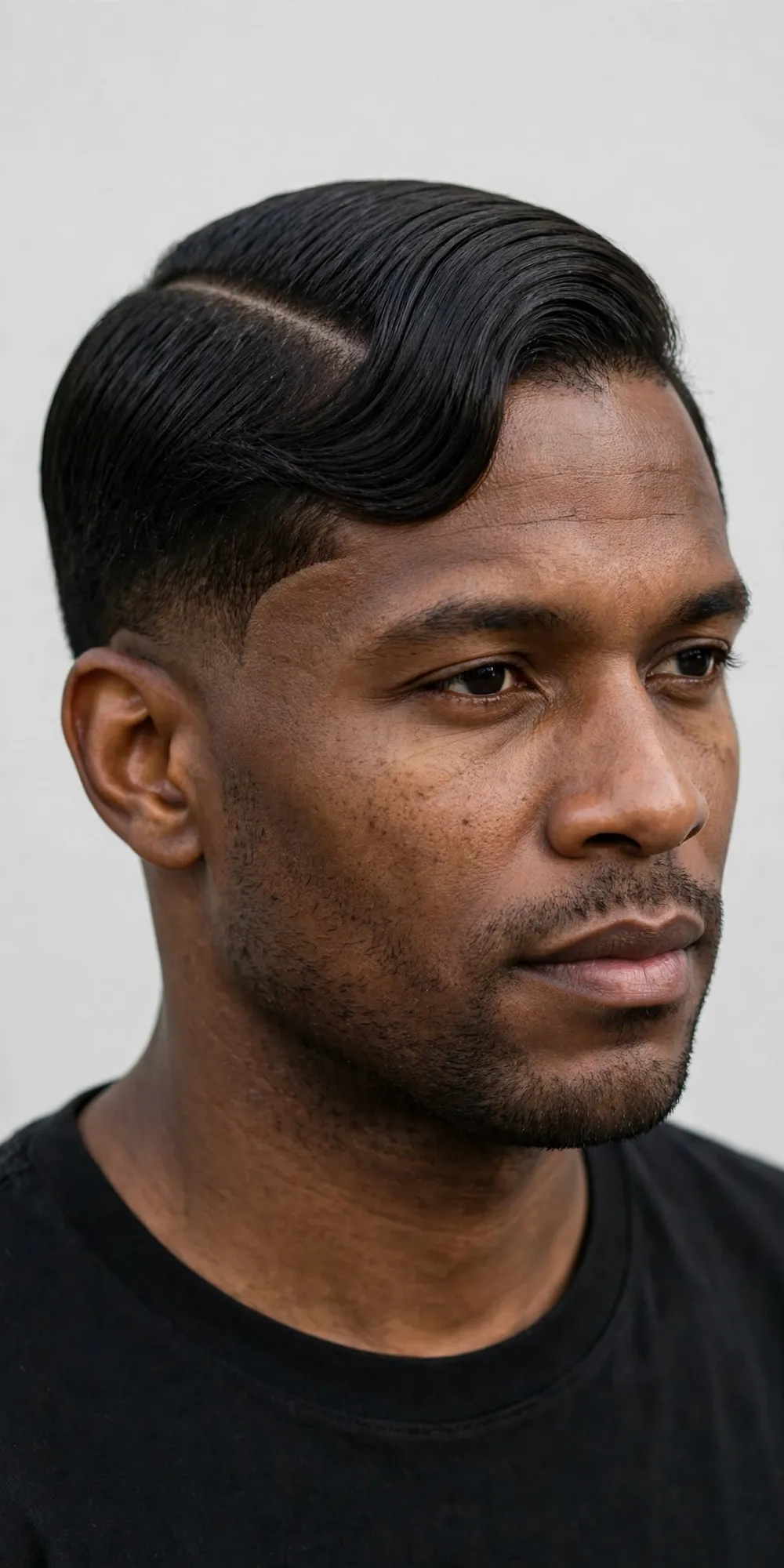
Moving the part further from the hairline changes the whole look. The deep side part creates a long, dramatic sweep across the forehead, which shortens a long face and adds instant drama to an otherwise plain cut. It suits oblong and oval faces best, and it works on straight or wavy hair with enough length to cross the head — three inches minimum. Ask your barber to find your part at the far corner of your hairline and cut the top to fall across, with a taper on the sides that keeps the focus up top. A medium-hold pomade gives the sweep weight and control. The trade-off is upkeep: the sweep needs resetting after a hat or a windy walk, and it takes a few minutes each morning, not thirty seconds.
9. Short Classic Comb Over

At one to one and a half inches on top, this is the shortest swept comb over you can get, and it is the right pick if you like the style but not the fuss. The short length means the sweep sits close to the head, so wind barely disturbs it. It suits most face shapes, and it is a strong option for men with thinning hair, since short length hides nothing and reveals nothing. Ask for a short comb over with a side part, a taper on the sides, and the top scissor-cut so it still has direction. A small amount of matte paste is all you need, or nothing at all. Trims every two to three weeks matter more here, because even a little growth changes the shape quickly.
10. Medium Length Comb Over
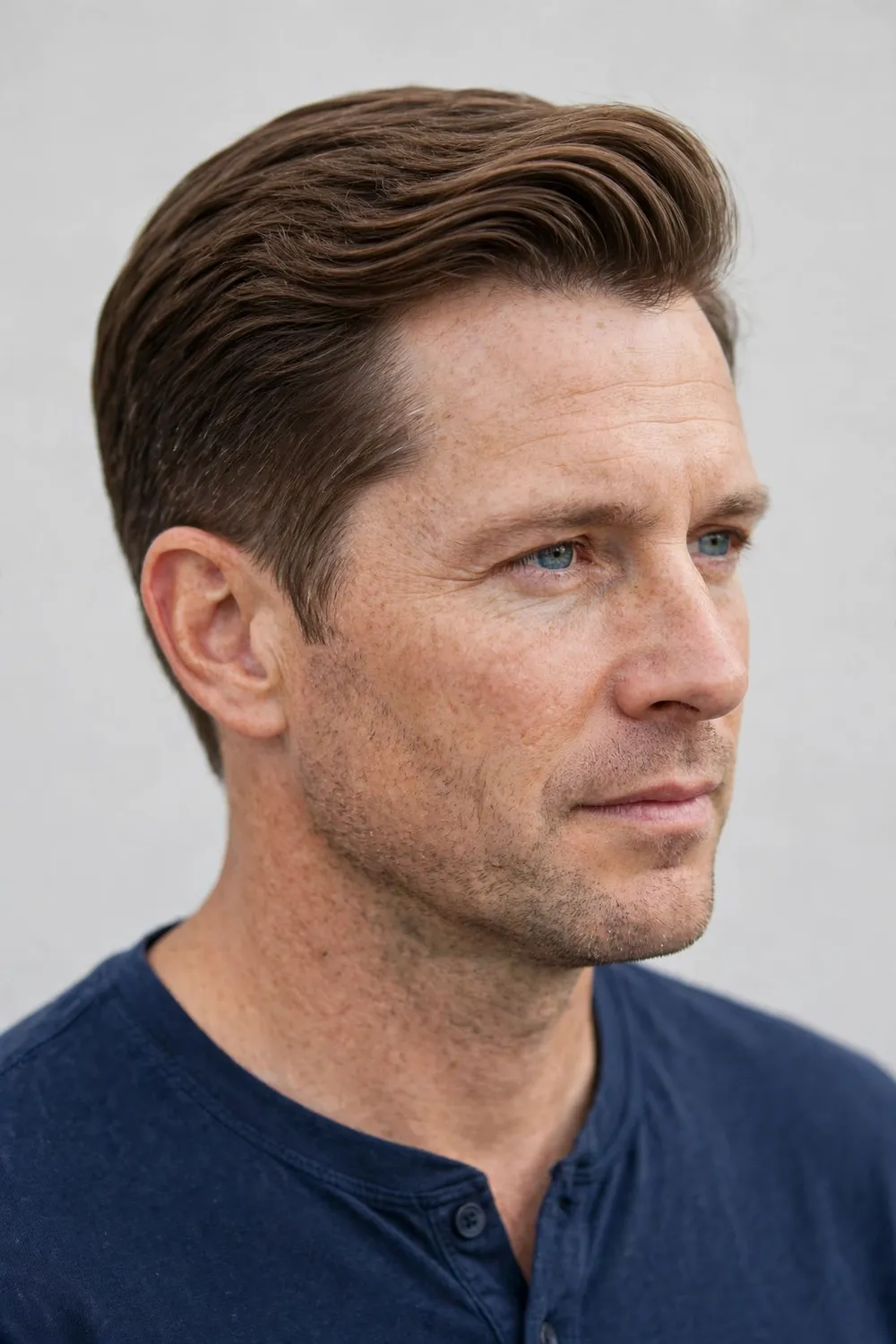
Two to three inches on top is the sweet spot, and the medium length comb over is the version most barbers cut most often. It has enough length for real volume and a clean sweep, but it is short enough to style in under a minute. Straight, wavy, and thick hair all work, and it flatters oval, square, and round faces alike. Ask your barber for a medium-length comb over with a natural side part and tapered sides, and mention whether you want a slick or textured finish so the cutting matches. A medium-hold pomade or paste works, combed through damp hair and left to set naturally. Expect a trim every three to four weeks, and a quick re-comb at midday if your hair is heavy.
11. Long Hair Comb Over
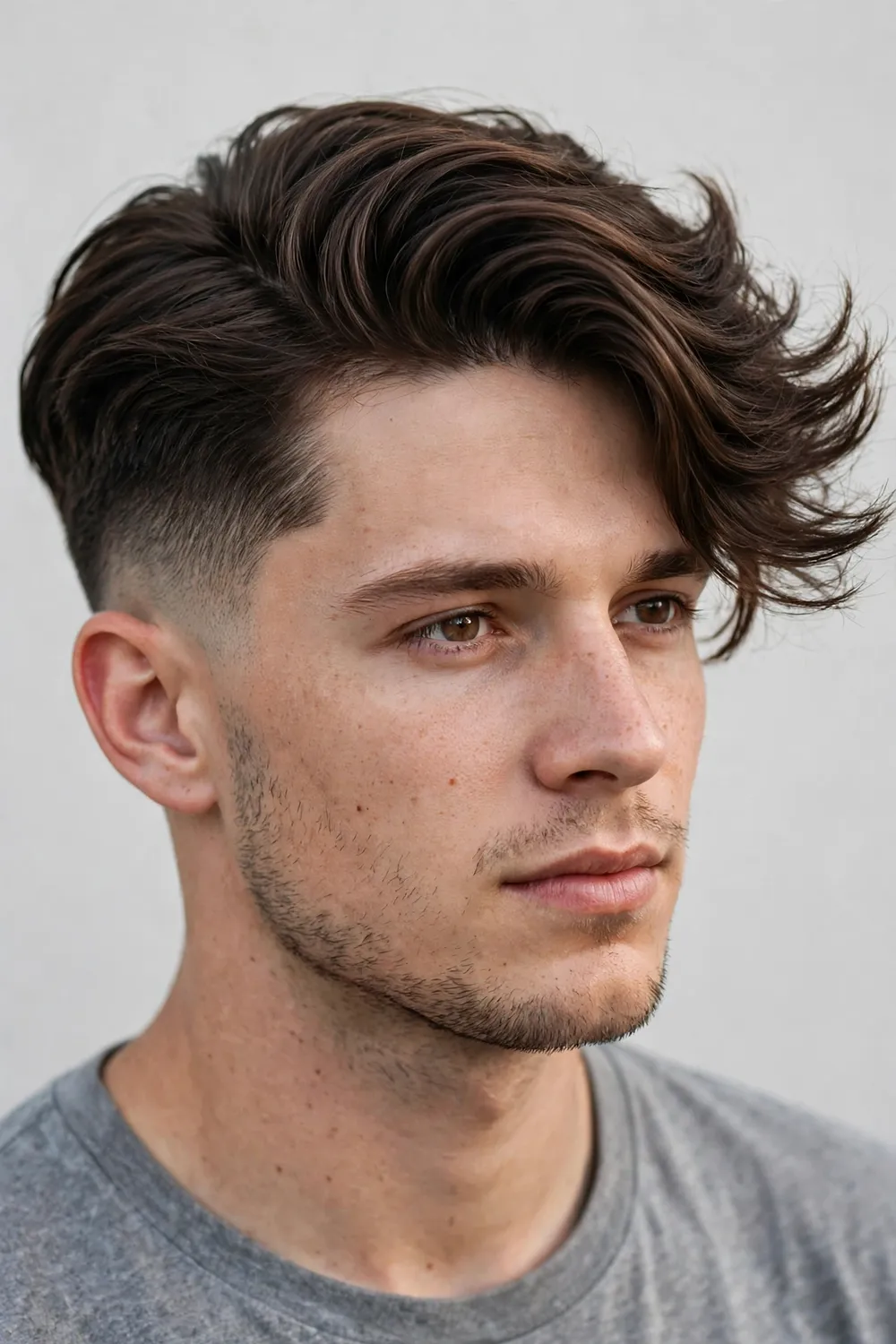
Four inches or more on top turns the comb over into something dramatic — a long sweep with real flow that moves when you do. It needs a mid or high fade on the sides, otherwise the top overwhelms the cut. This one suits men with thick, straight, or wavy hair who are happy to spend a few minutes styling; fine hair will go limp by lunchtime. Oval and oblong faces carry the length best. Ask for a long comb over with a fade on the sides and the top left long and layered so it sweeps without bulk. Blow-dry the top in the sweep direction with a round brush, then finish with a medium-hold paste. It is high maintenance: daily styling and regular trims to control the weight.
12. Classic Comb Over with Low Fade
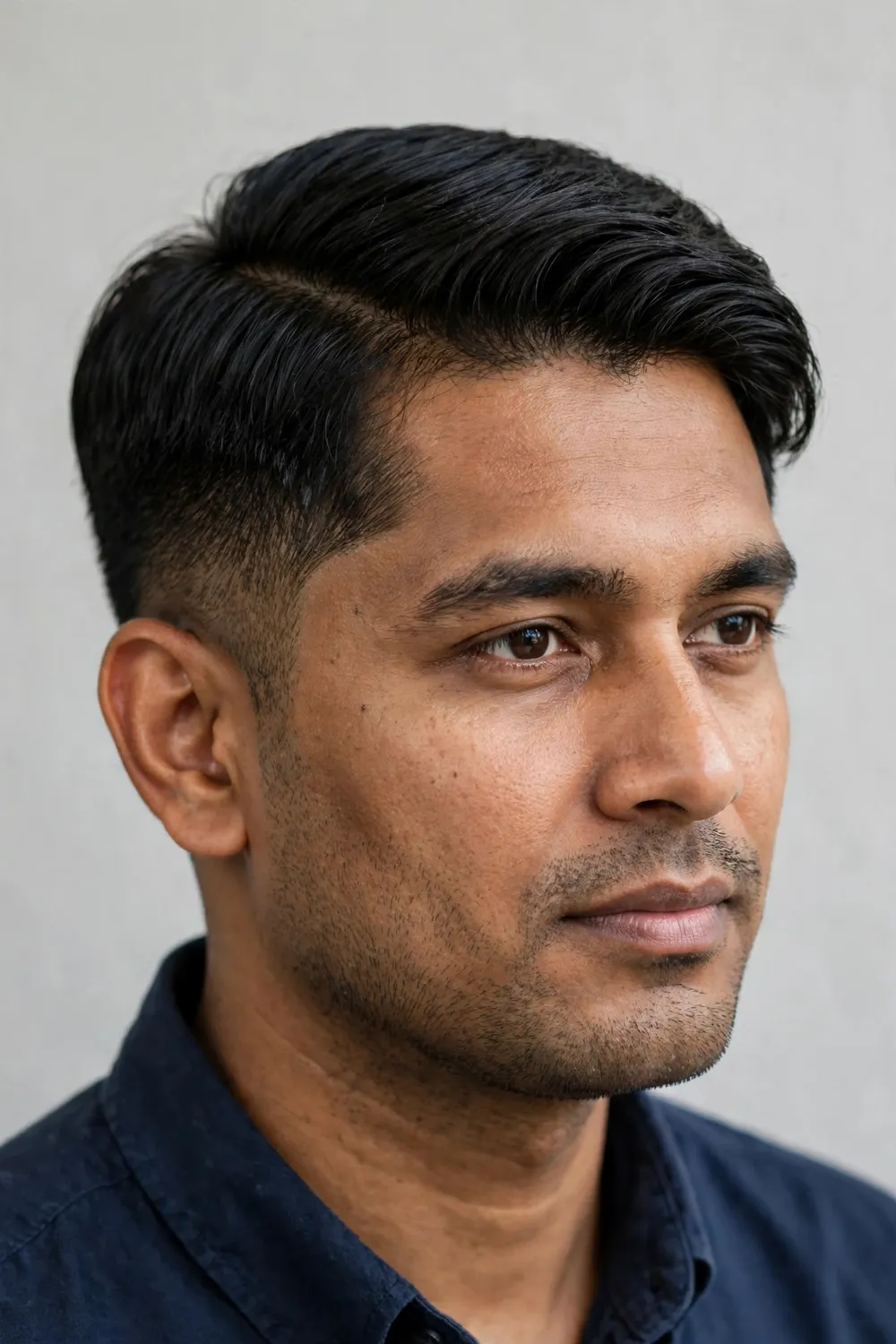
The low fade sits just above the ear, which makes this the subtlest and most office-friendly fade combination on the list. The sides stay neat and short without shouting about it, and the top keeps the full classic shape. It works on every face shape and most hair types, and it is a safe first fade if you have never had one. Ask your barber for a classic comb over with a low fade, and be specific that you want the fade kept low — some barbers drift upward if you do not say so. A medium-hold pomade finishes the top, and the fade itself needs nothing. The fade grows out faster than a taper, so book a trim every two to three weeks to keep the line clean.
13. Classic Comb Over with Mid Fade
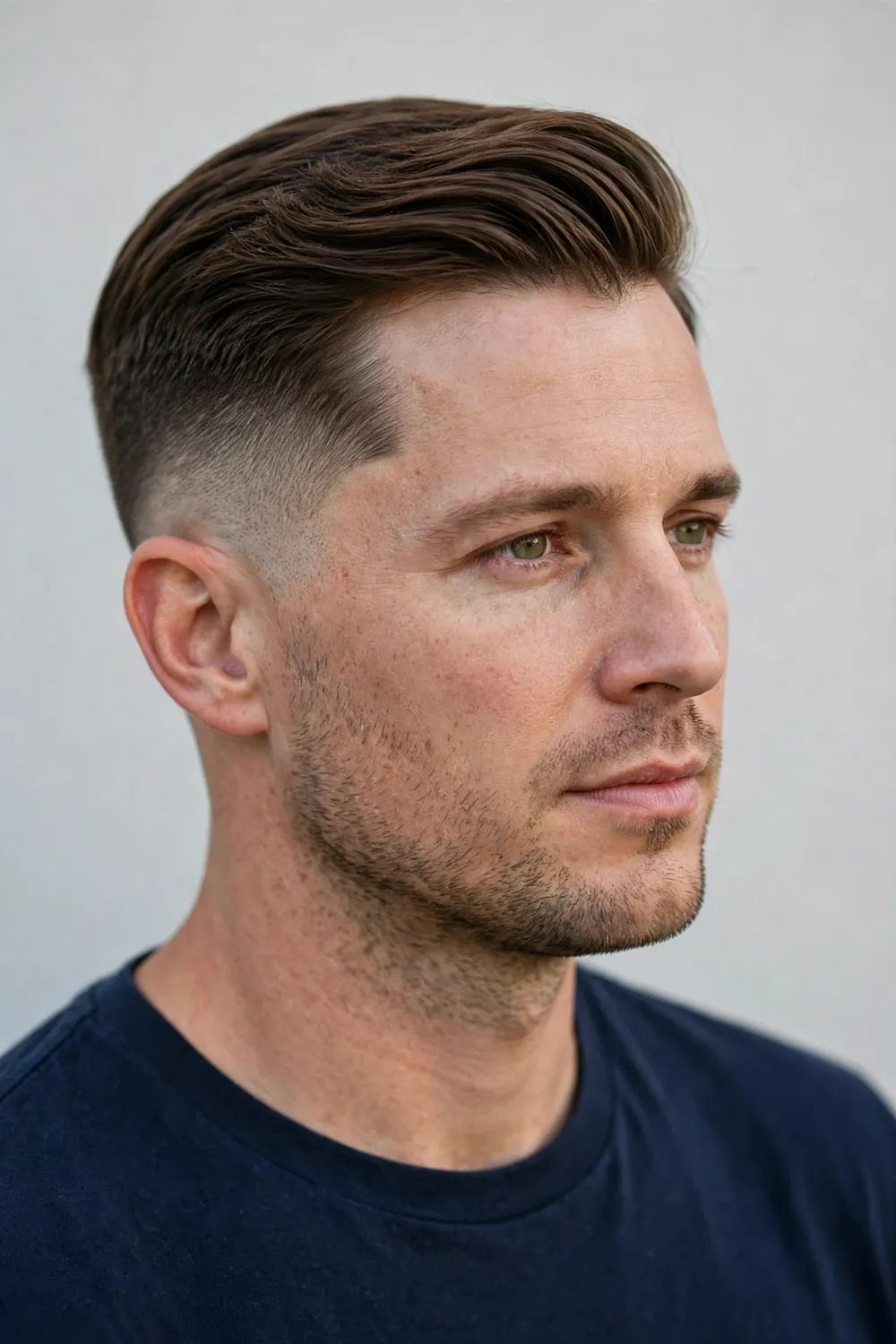
The mid fade hits at temple level, and that balance is why it is the most popular fade pairing with a comb over. It is sharp enough to look deliberate and soft enough to wear anywhere, from a client meeting to a family dinner. It suits oval, square, and round faces, and it works with straight, wavy, or thick hair on top. Ask for a classic comb over with a mid fade, blended cleanly into the top so there is no shelf where the two meet. Style the top with a matte clay or medium pomade, depending on whether you want shine. The mid fade shows regrowth after about two weeks, so plan on a trim every three weeks, or learn to tidy the edges yourself between visits.
14. Classic Comb Over with High Fade
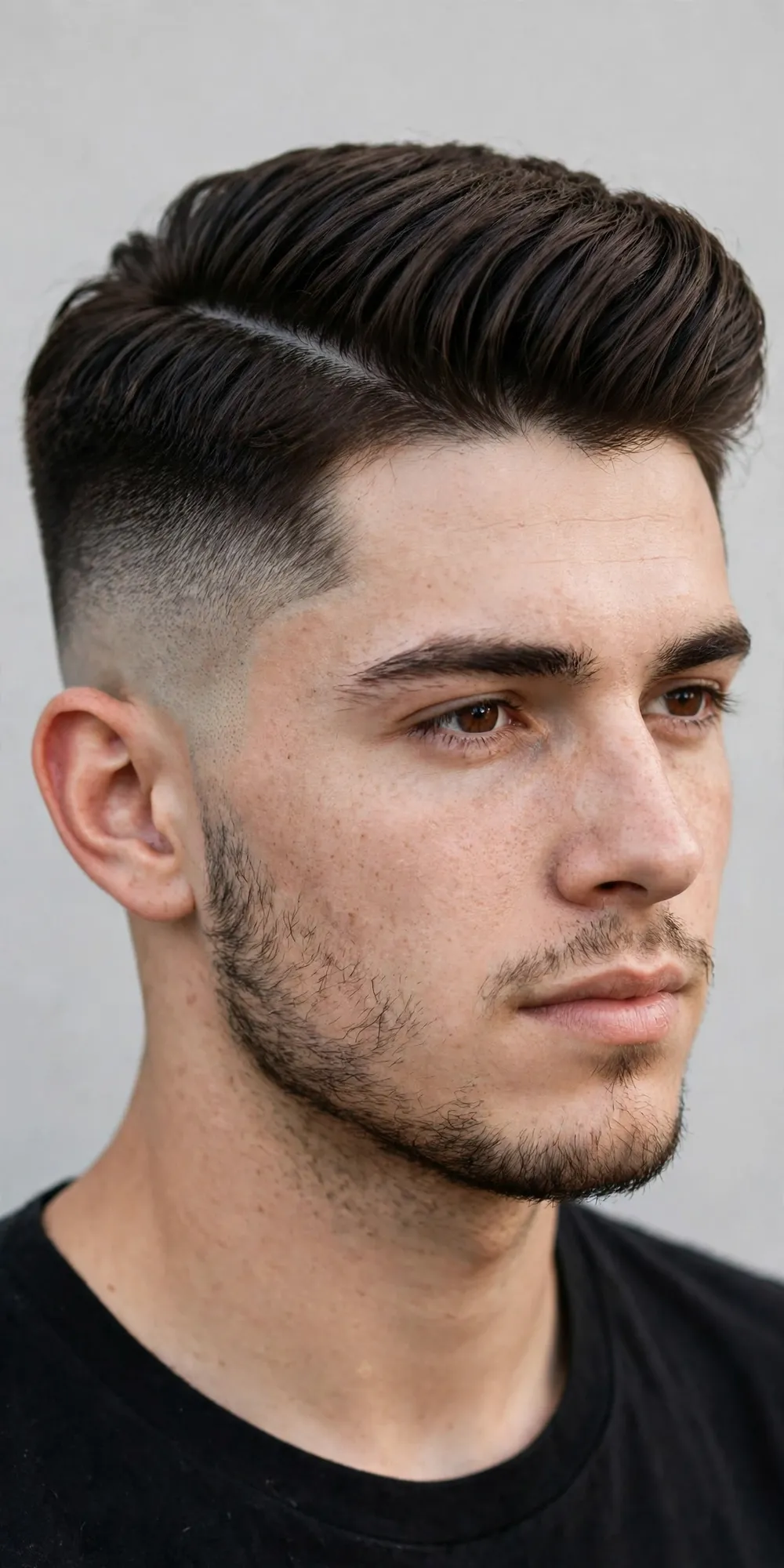
A high fade climbs above the temples, and the contrast it creates against a swept top is the boldest of the standard fade combinations. It gives the comb over a modern, sharp edge that the low and mid fades do not. It suits square and oval faces best, and it is a strong choice for thick hair, since the high fade removes a lot of side bulk. Ask your barber for a classic comb over with a high fade, and check the blend in the mirror before you leave — a bad high fade is hard to hide. A strong-hold clay or pomade keeps the top in place against the short sides. This is a high-maintenance cut: the fade blurs within ten days, so expect a visit every two weeks.
15. Classic Comb Over with Skin Fade
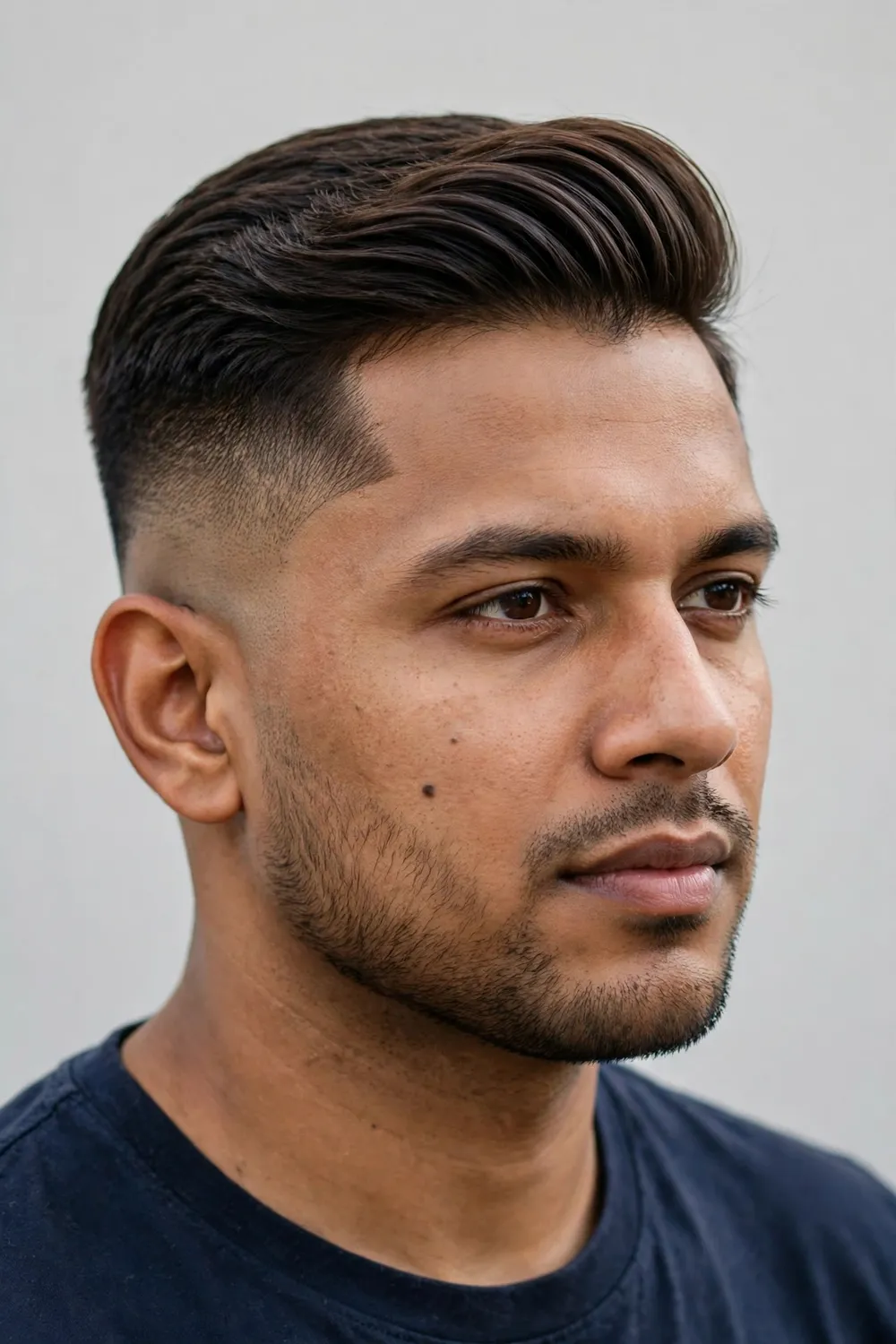
Fading the sides down to bare skin gives the sharpest contrast a comb over can get. The top looks longer and fuller by comparison, and the skin fade reads clean from every angle. It suits men who like a crisp, precise look and do not mind frequent barber visits. Square and oval faces carry it well; round faces should keep some height on top to balance the short sides. Ask for a classic comb over with a skin fade, and say whether you want the fade low, mid, or high, because the height changes the whole cut. The top needs a medium to strong-hold product, combed neatly. Honest warning: a skin fade lasts about a week before the stubble shows, so this is a two-weekly cut at most.
16. Classic Comb Over with Taper Fade
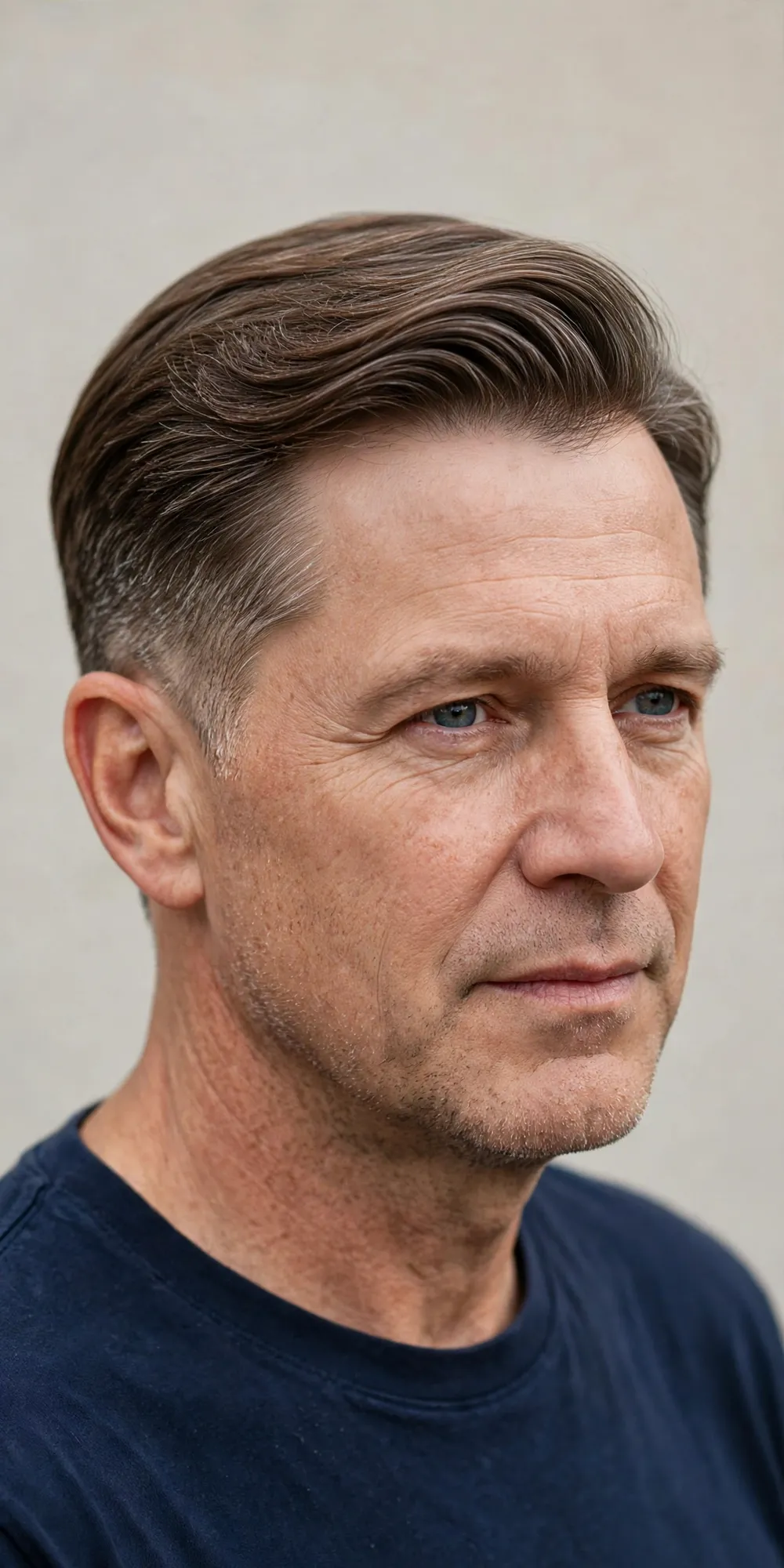
The taper fade shortens gradually toward the neckline but never goes down to skin, which makes it the most conservative side option here. It keeps the classic spirit of the comb over intact — neat, grown-up, and unshowy — while still looking clean around the ears and neck. It suits every face shape and every age, and it is the best choice if your workplace frowns on fades. Ask your barber for a classic comb over with a taper fade, keeping the sides long enough to blend rather than clip short. A medium-hold pomade with a natural shine finishes the top. Maintenance is gentle: the taper grows out gracefully, so four weeks between cuts is realistic, and daily styling takes under a minute.
17. Classic Comb Over with Drop Fade
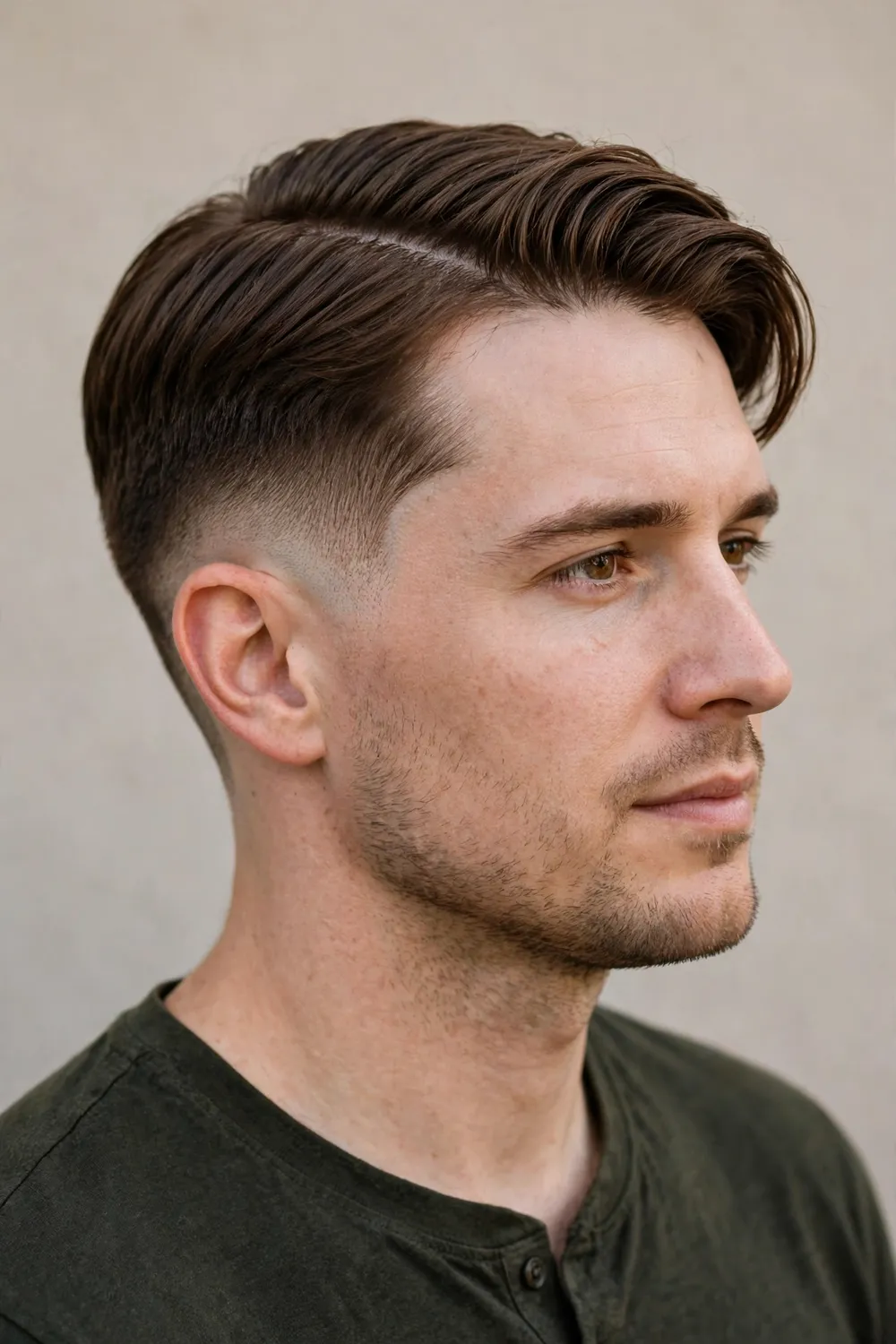
A drop fade follows a curved line that dips down behind the ear, so the back profile looks sculpted rather than straight across. Paired with a comb over, it adds a subtle detail that people notice from behind without changing the classic front view. It suits oval and square faces, and it works best on straight or wavy hair where the fade line reads clearly. Ask your barber for a classic comb over with a drop fade, and make sure the curve is symmetrical on both sides before you leave the chair. Style the top with a medium-hold pomade, and keep the fade’s line in mind when you comb. The drop fade grows out unevenly, so a trim every two to three weeks keeps the curve visible.
18. Classic Comb Over with Burst Fade
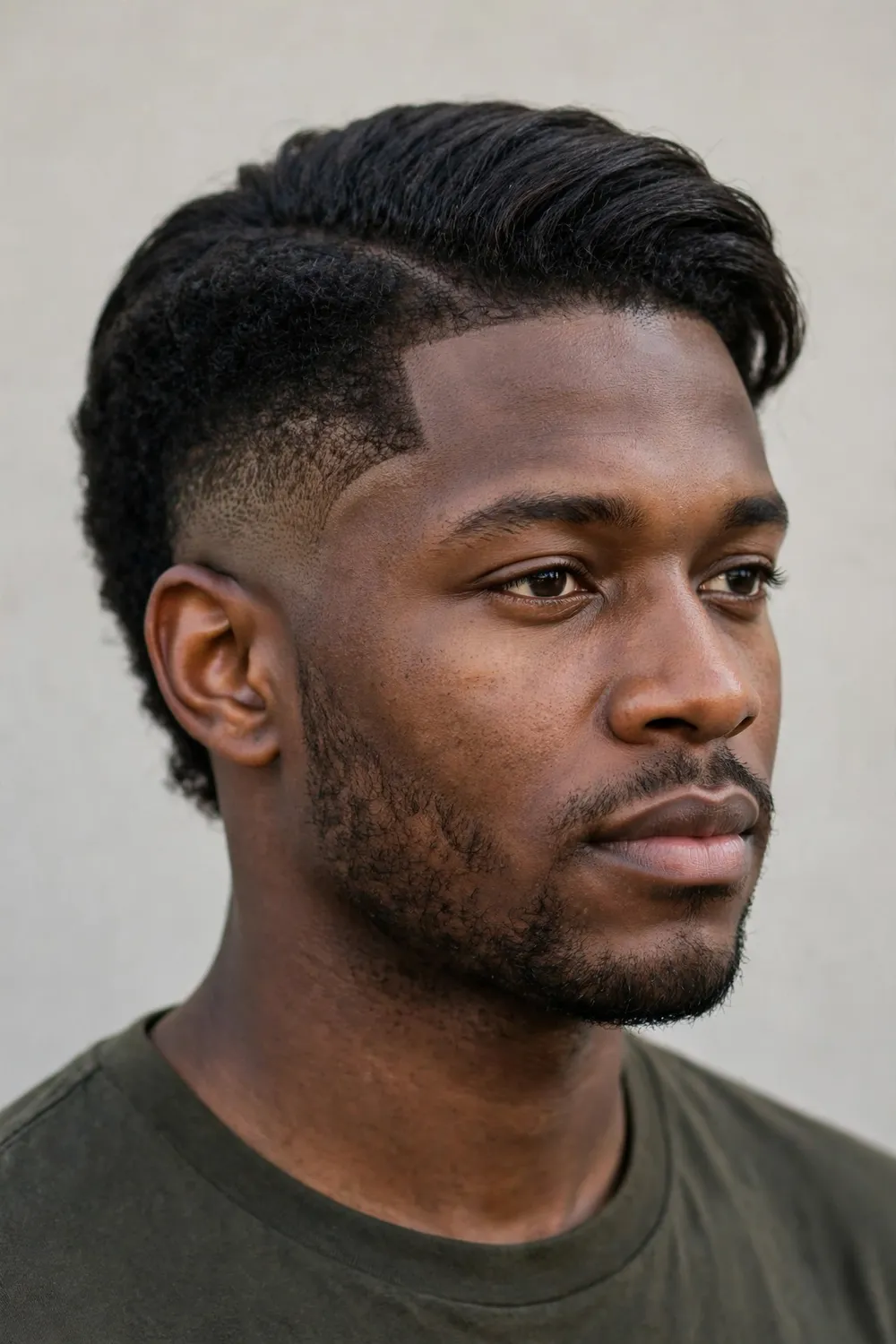
The burst fade arcs around the ear in a semicircle while the back stays slightly longer, which gives the comb over a distinctive silhouette from the side. It is a bolder choice than a standard fade, and it suits men who want their cut to have a bit of personality without going extreme. It works well on thick and wavy hair, and it flatters square and oval faces. Ask for a classic comb over with a burst fade, and tell the barber how much length you want left at the back — that is what separates a burst fade from a regular one. A matte clay holds the top without weighing it down. The arc needs tidying every two weeks, or it loses its shape fast.
19. Classic Comb Over Undercut
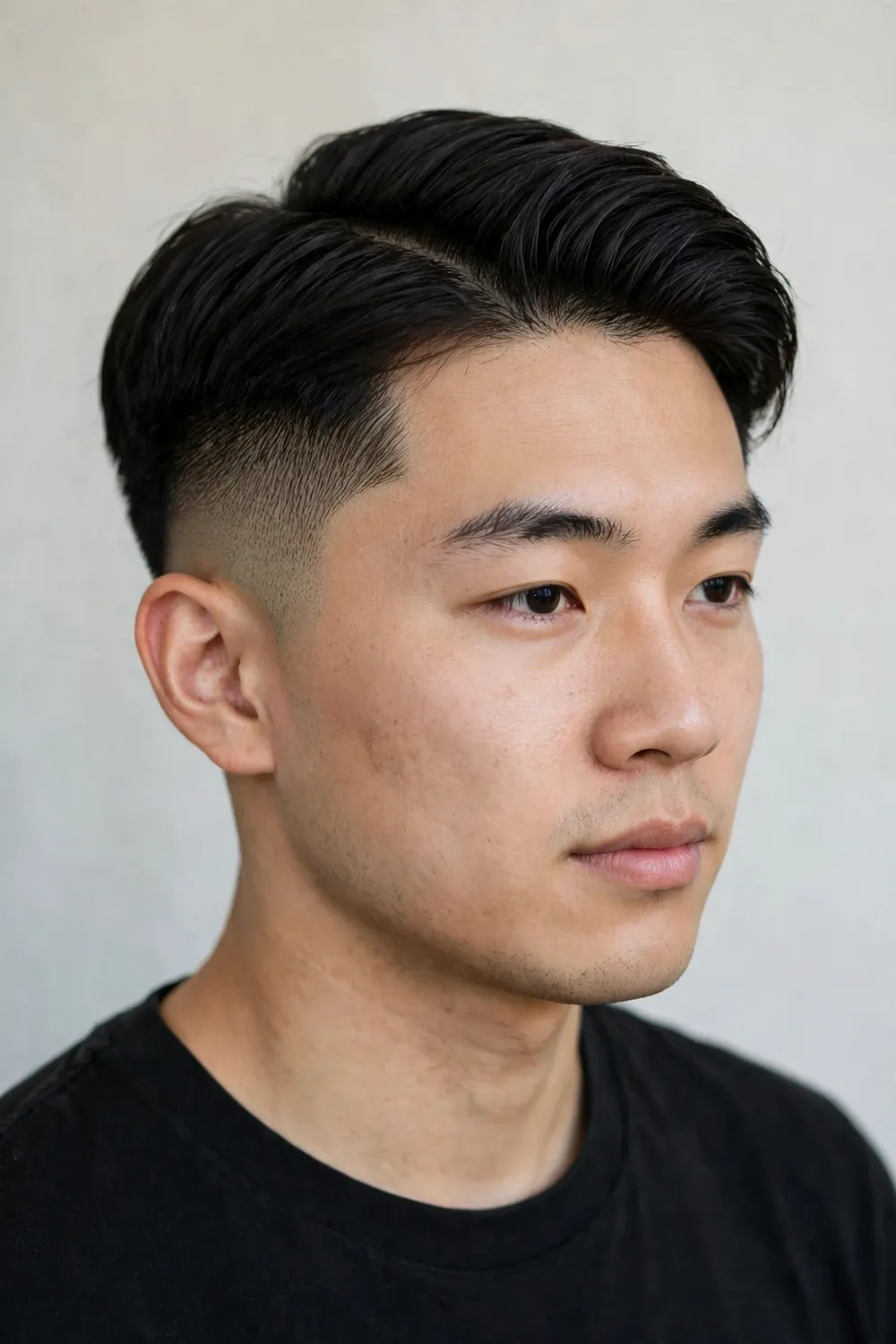
The undercut takes the sides down short with no blend at all, so all the weight and attention stays on the swept top. It turns a quiet classic into something with real attitude, and it is a good option for thick hair, since the undercut removes the bulk that would otherwise puff out at the sides. Oval and square faces suit it best. Ask your barber for a comb over with an undercut, sides clipped to a number one or two, and the top left long enough to sweep — at least three inches. A strong-hold pomade keeps the top controlled against the short sides. Maintenance is twofold: the undercut grows out visibly within two weeks, and the top needs daily product, so this is not a low-effort cut.
20. Disconnected Comb Over
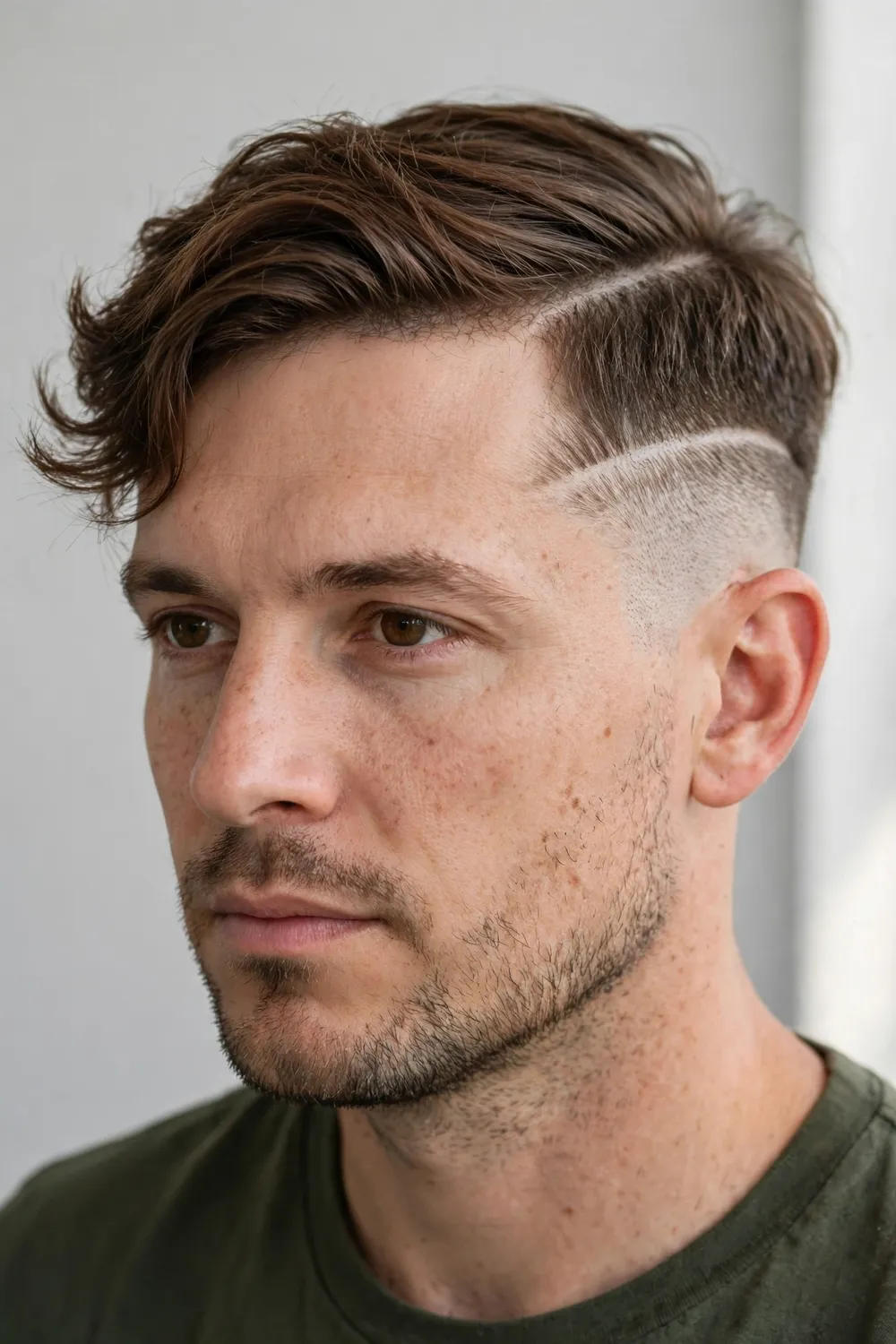
The disconnected comb over draws a hard, visible line between the long top and the short sides, with no blending whatsoever. It is the most dramatic version of the style, and it suits men who want the contrast to be the point. Thick, straight hair shows the line off best; fine hair can look thin where the line falls. Ask your barber for a disconnected comb over with a clear part line and the sides faded or clipped short, and be ready to commit — growing the line out takes weeks. A strong-hold clay or pomade keeps the top in place. The line needs refreshing every two weeks, and the top needs daily styling, so this is a cut for men who enjoy the routine.
21. Hard Part Comb Over
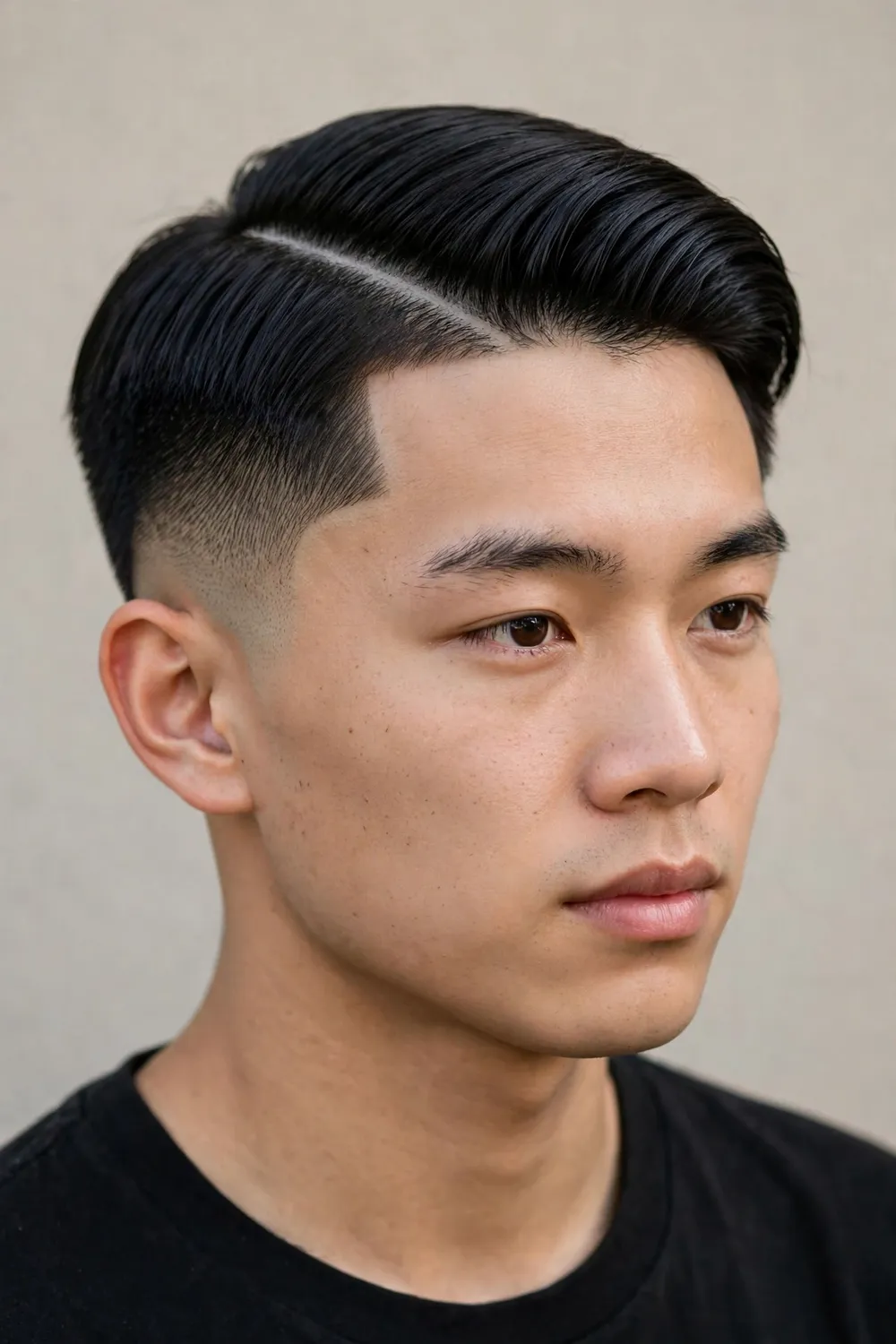
A hard part is shaved into the hair with a razor, giving the most defined, precise part line available. It makes the comb over look sharp and intentional from across the room, and it is a favourite for weddings and formal events. It suits straight and wavy hair, and it flatters square and oval faces where the sharpness matches the bone structure. Ask your barber to razor in a hard part at your natural part line, with a classic comb over on top and a taper or fade on the sides. A high-shine pomade suits the precision of the cut. The part grows back within a week, so the line needs re-shaving every one to two weeks if you want it to stay crisp.
22. Comb Over with Design
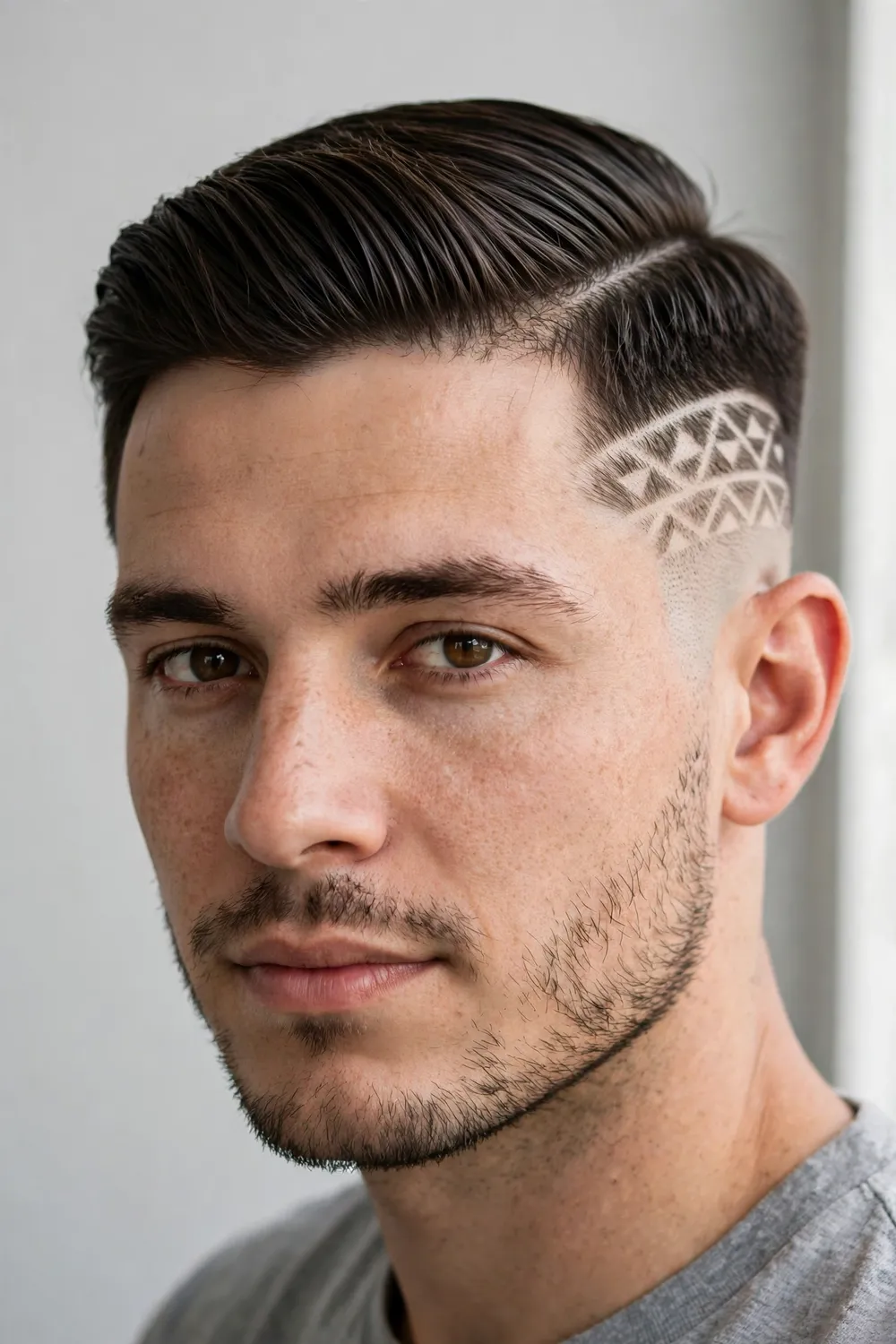
Shaved lines or patterns in the faded sides add a personal touch while the comb over on top stays classic. A single line, a double line, or a geometric shape — the design is your choice, and the barber’s skill is what makes it work. It suits younger men and anyone who wants their haircut to start a conversation. It works with any hair type on top, since the design lives in the fade. Ask your barber for a comb over with a fade and a simple shaved design, and agree on the design before the clippers come out. The top needs only your usual pomade or clay. The design fades within a week, so it needs refreshing every one to two weeks, which makes it a commitment, not a one-off.
23. Side Sweep Comb Over

The side sweep skips the defined part altogether and lets the hair fall in one loose, directional sweep, finger-combed rather than combed flat. It is the most relaxed comb over on this list, and it suits men who like the direction of the style without the formality. Wavy hair is ideal, since the natural bend does half the work, and it flatters oval and round faces. Ask your barber for a side sweep comb over with a soft, undefined part and tapered sides, and say you want it finger-styled. A light paste or a sea-salt spray gives it hold without stiffness. Maintenance is minimal: wash, finger-comb, go, with a trim every four to five weeks.
24. Rolling Comb Over
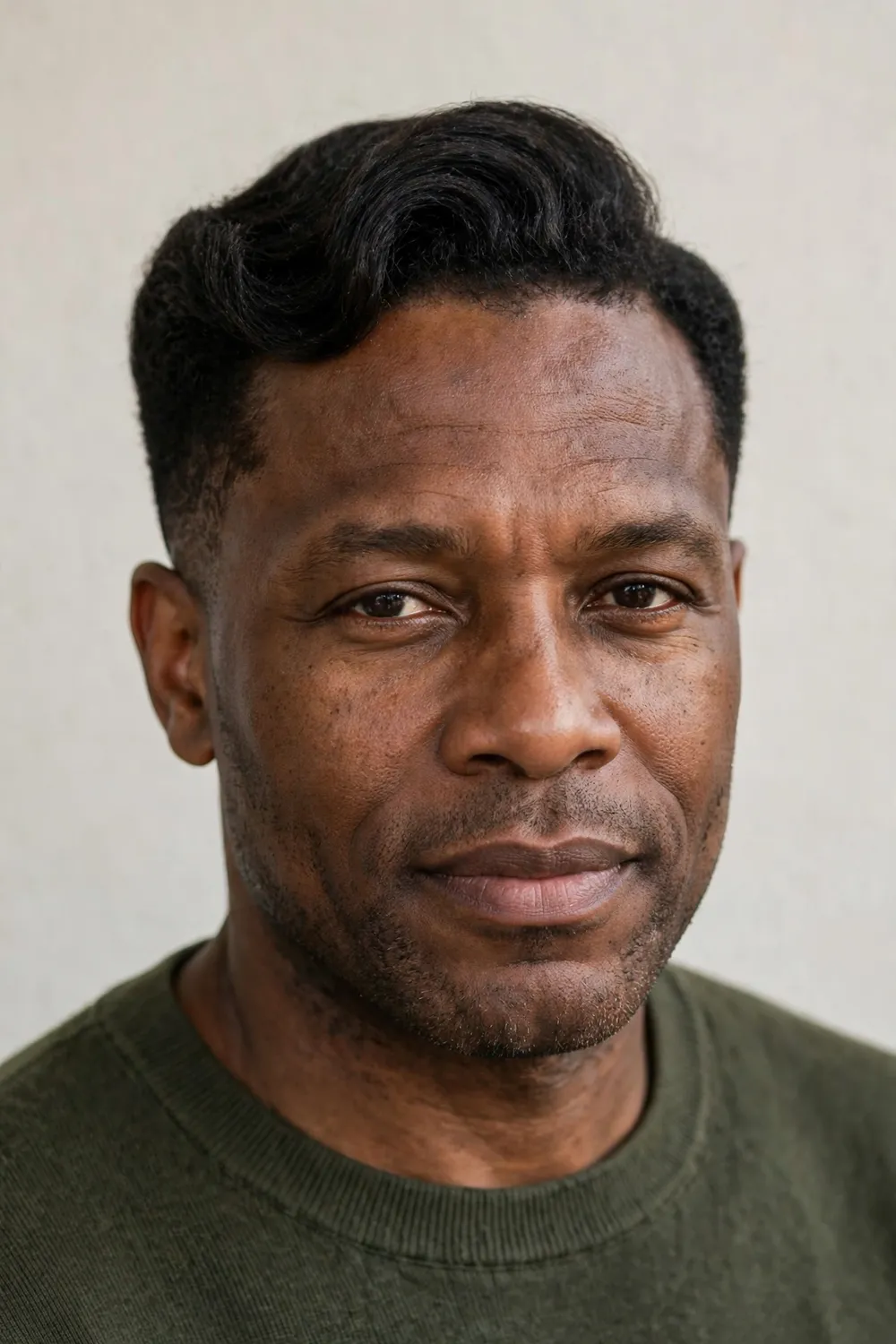
The rolling comb over arches the hair in a gentle roll over the crown instead of sweeping it flat, so the top has a soft, curved shape with no hard lines. It is an old-school look with a modern softness, and it suits men with thick or wavy hair that naturally wants to curve. Oval and oblong faces carry the roll well. Ask your barber for a rolling comb over, with the top left long enough to roll — three inches at least — and tapered sides. A medium-hold pomade worked through damp hair, then combed up and over in a curve, sets the roll. It takes a little practice each morning, and a trim every three to four weeks keeps the roll from collapsing into a flat sweep.
25. Comb Over Pompadour

The comb over pompadour takes the height of a pompadour and sweeps it back and to one side, so you get volume and direction in the same cut. It suits men who like a bold, noticeable hairstyle and have the hair to support it — thick, straight, or wavy, with at least four inches on top. Oval and square faces carry the height best. Ask your barber for a pompadour swept to one side, with the sides tapered or faded short and the front left longest. Blow-dry the top up and over with a round brush, then lock it in with a strong-hold pomade. This is a high-effort style: it takes five to ten minutes each morning, and it needs a trim every three weeks to hold its shape.
26. Comb Over Quiff
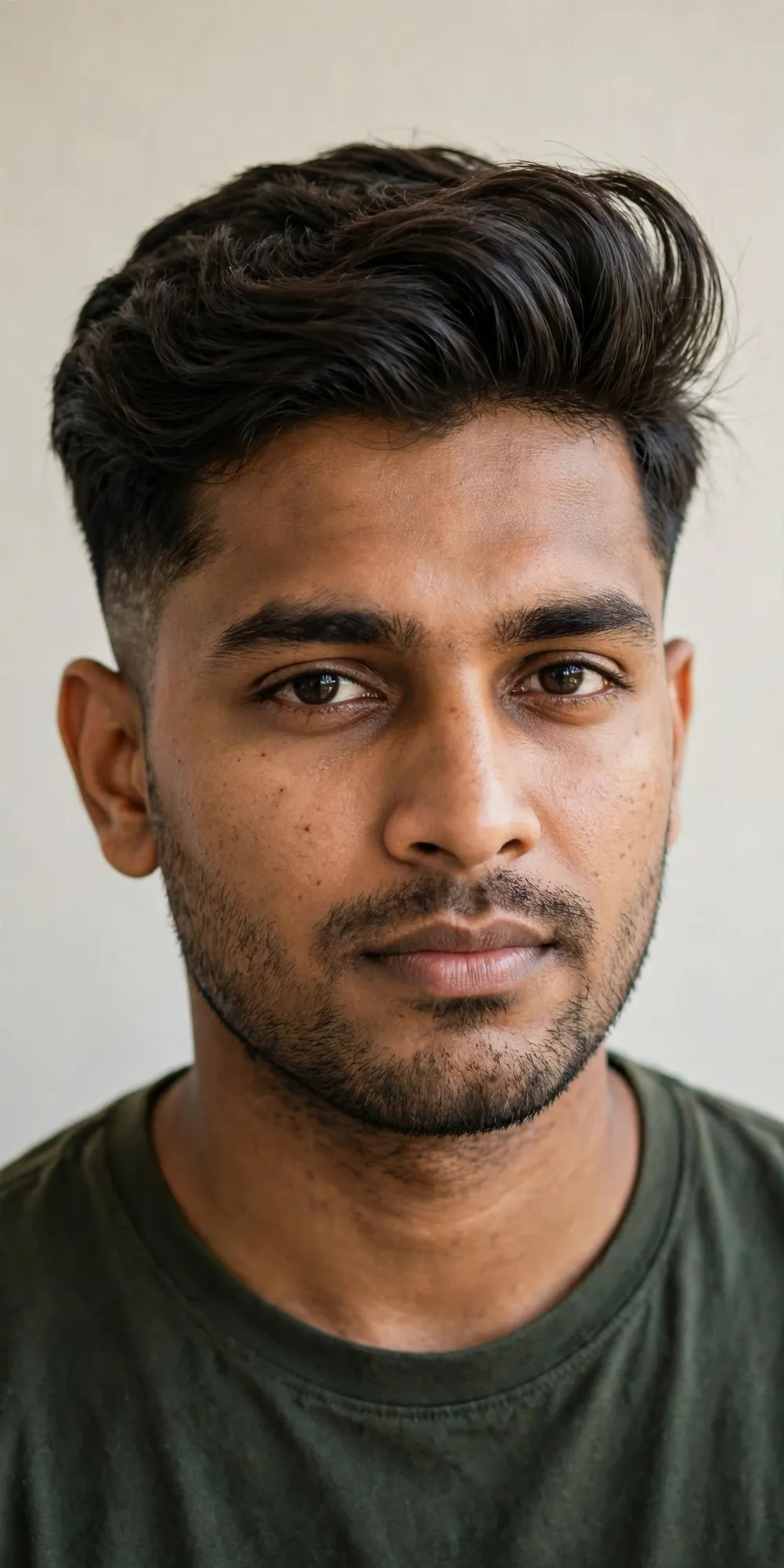
The comb over quiff pushes the volume forward and up at the front, then directs it to one side, which gives the classic sweep a younger, more energetic feel. It suits men with thick or wavy hair and a bit of natural lift at the front, and it flatters oval, square, and round faces. Ask your barber for a quiff with a side sweep, the front left longest at three to four inches, and the sides tapered or faded. Blow-dry the front up and over with your fingers or a brush, then finish with a matte clay for texture and hold. The quiff needs daily styling and a trim every three weeks, but it is more forgiving than a pompadour when the wind gets to it.
27. Comb Over Mohawk
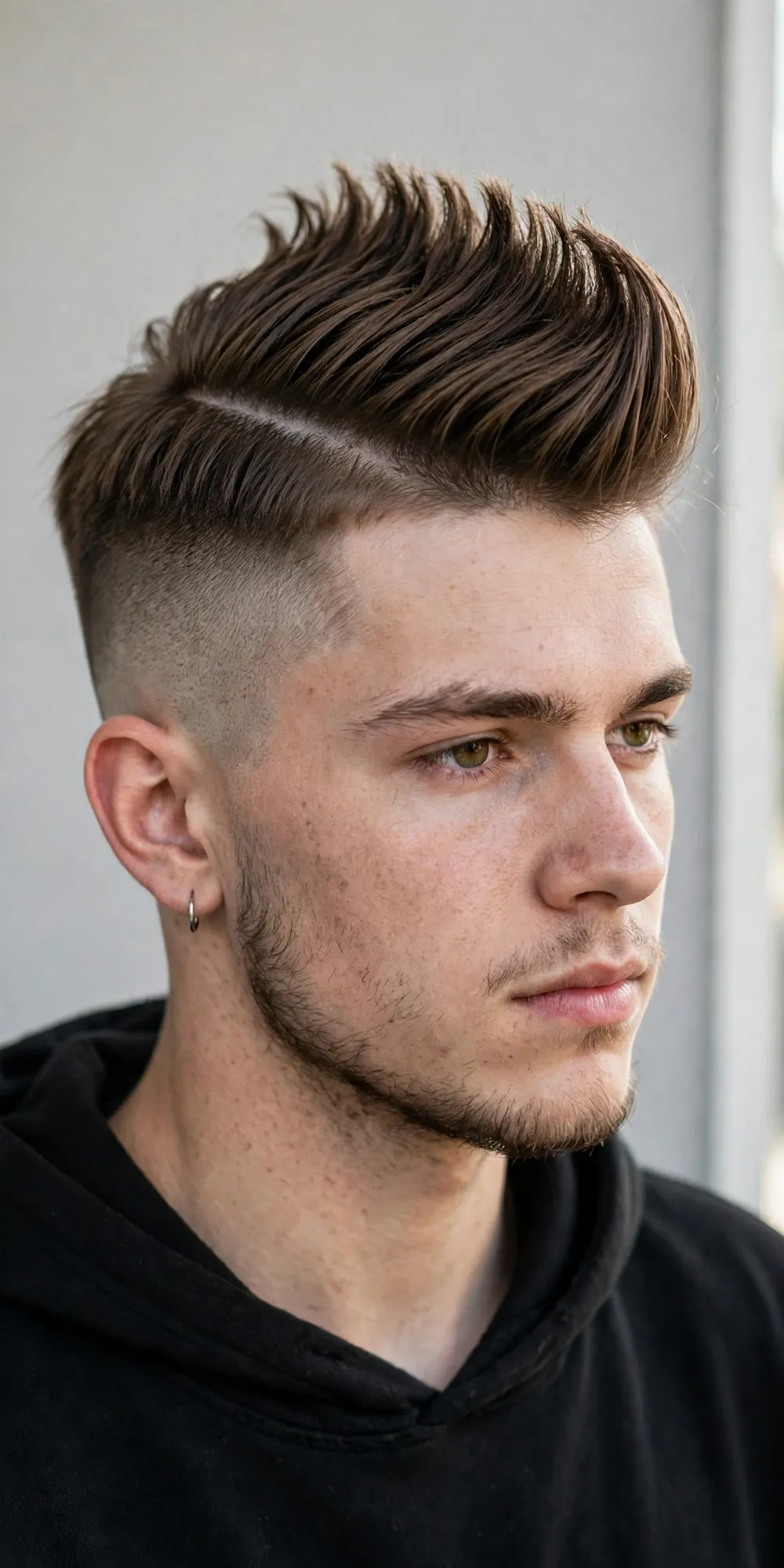
This is the comb over for men who want an edge. A central strip of length is combed to one side while the sides are faded tight, so the cut reads as a mohawk from the front and a comb over from the side. It suits younger men and anyone comfortable with a bold look, and it works best on thick, straight hair that holds its shape. Ask your barber for a mohawk strip combed to one side with a mid or high fade, and agree on the width of the strip first — narrower reads bolder. A strong-hold clay keeps the strip in place. The fade needs tidying every two weeks, and the strip needs daily product, so it is a commitment.
28. Comb Over Mullet
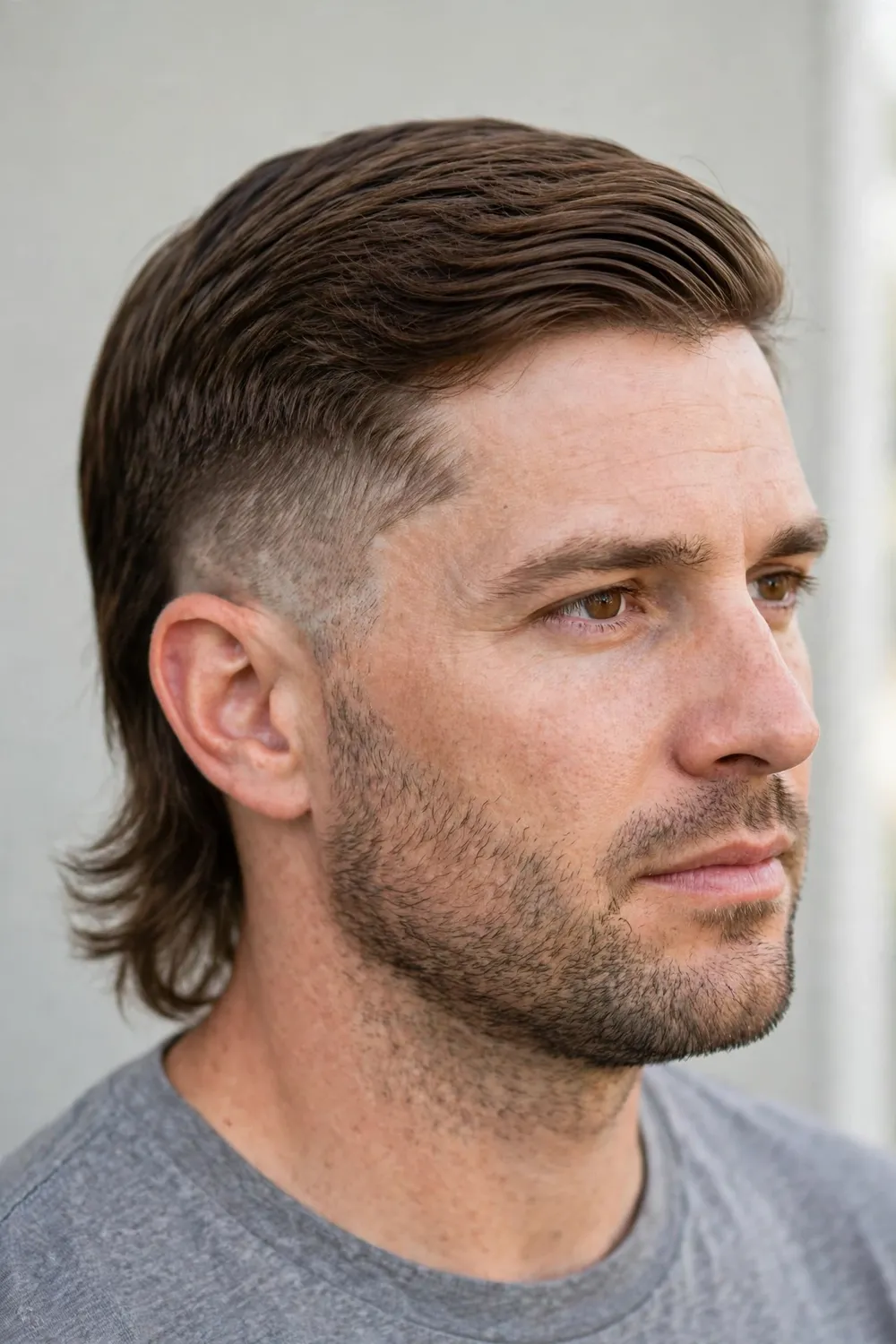
The comb over mullet keeps the top swept to one side and lets the back grow long, so you get a mullet silhouette with a comb over direction. It suits men who like retro styles and have the patience to grow the back out. Straight and wavy hair both work, and it flatters oval and square faces. Ask your barber for a comb over on top with the back left long and the sides tapered or faded, and be clear about how long you want the back — that is the whole cut. A medium-hold paste or clay styles the top, while the back just needs conditioning. The top needs a trim every three to four weeks, but the back can grow freely between visits.
29. High and Tight Comb Over
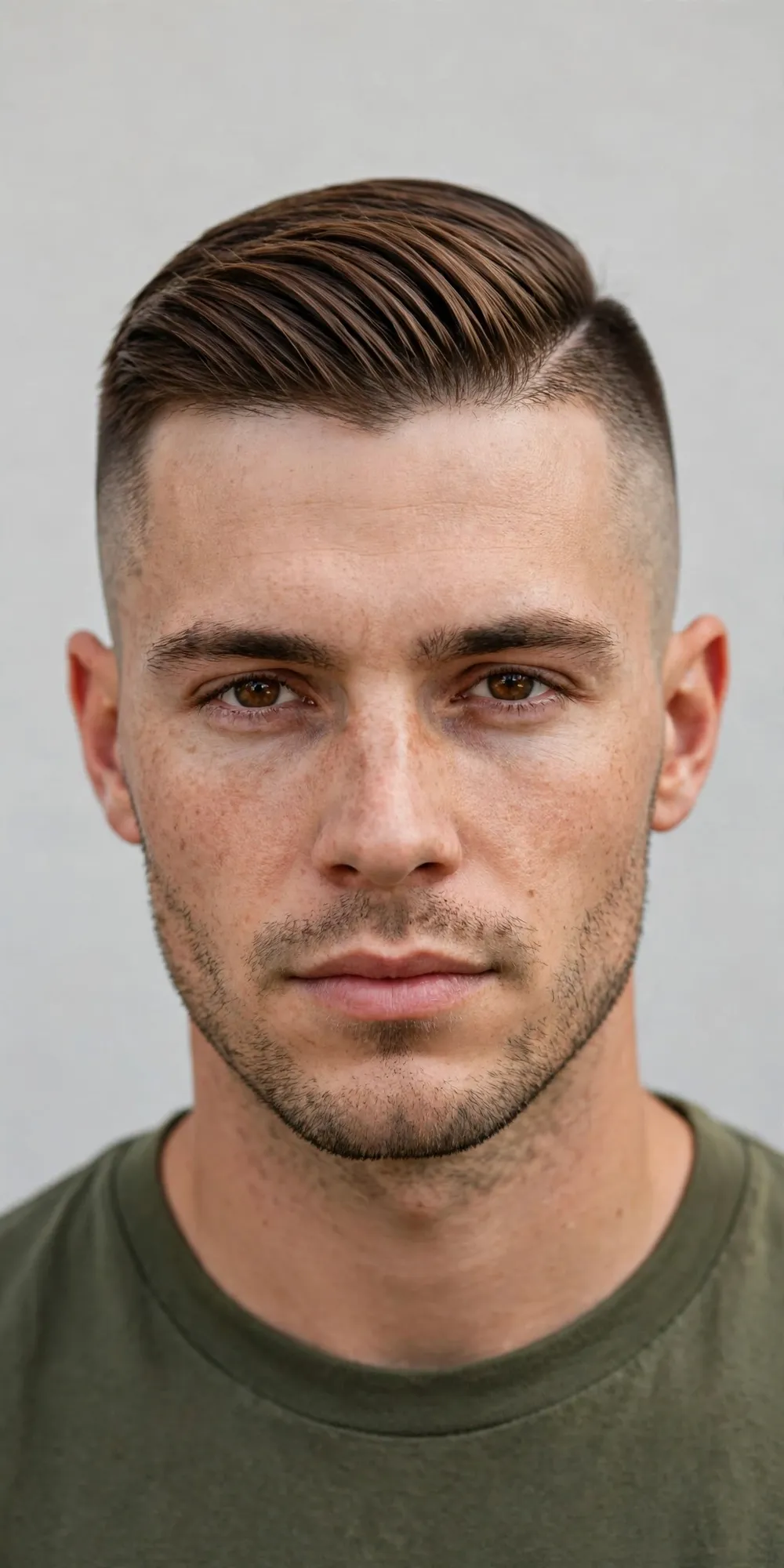
Borrowed from the military, the high and tight comb over pairs very tight sides with a longer swept top and a side part. It is clean, disciplined, and practical, and it suits men who want a sharp cut with almost no styling. It works on most hair types, and it flatters square and oval faces especially well. Ask your barber for a high and tight with the sides faded or clipped to a one, and the top left long enough to sweep — two to three inches. A small amount of matte paste is enough, and many men skip product entirely. Maintenance is easy on top and frequent on the sides: the tight fade needs a trim every two weeks to stay sharp.
30. Spiky Comb Over

The spiky comb over directs textured spikes to one side, giving the classic style a younger, casual feel. It suits teenagers and men in their twenties, and it works best on thick or wavy hair that holds texture without collapsing. Oval and round faces carry it well. Ask your barber for a textured comb over with spiky, point-cut ends and a low fade or taper on the sides, and say you want the spikes directed to one side, not standing straight up. A strong-hold matte clay, worked through damp hair and pinched into spikes, does the job. It needs daily styling and a trim every three weeks, since the spikes lose their shape as the hair grows.
31. Brushed Up Comb Over
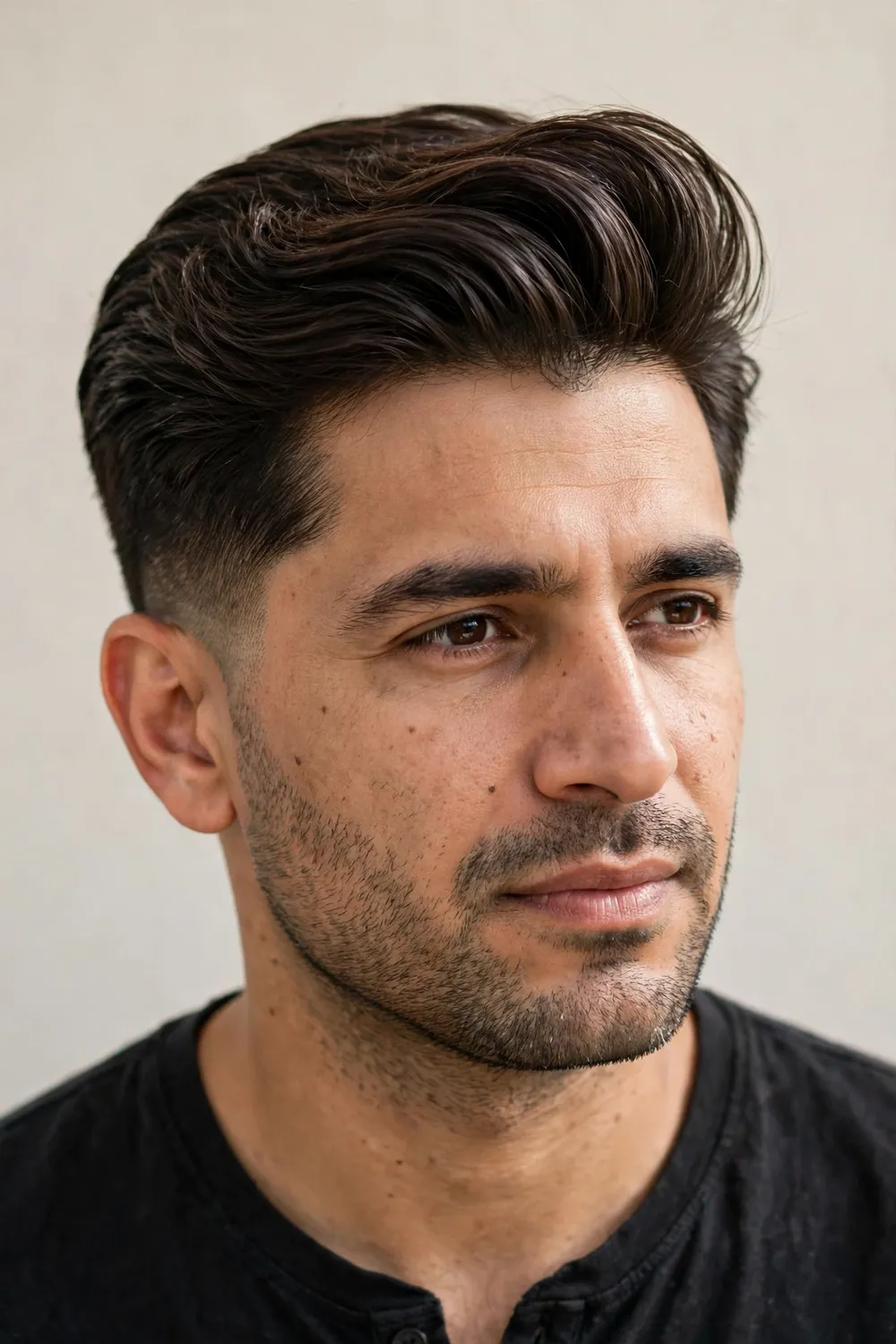
This one starts with a blow dryer, not a comb. The top is lifted up and across with a round brush, so the sweep has height before it settles to one side. It suits oval and round faces especially well, since the vertical lift lengthens the face rather than widening it. Ask your barber for a mid taper on the sides and two to three inches on top with the front left longest, so the brush has something to work with. A light mousse or volumising spray goes in on damp hair; finish with a dab of matte paste. It takes five minutes with a dryer — skip the blow-dry and it falls flat, so this is a cut for men who don’t mind a morning routine.
32. Classic Comb Over for Straight Hair
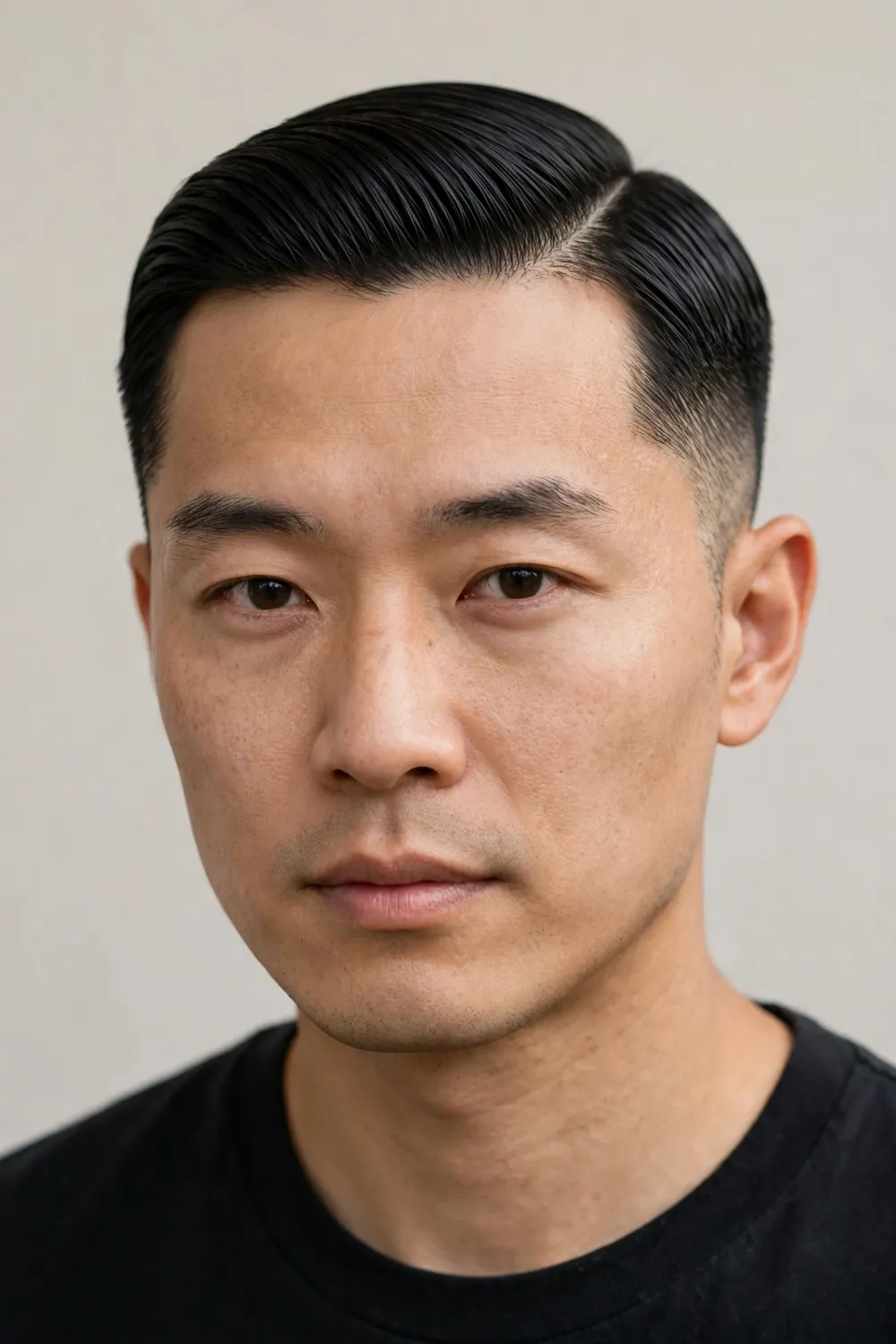
Straight hair is where the comb over looks most precise. Every strand lies exactly where you put it, so the part line stays crisp and the sweep looks clean from every angle. It suits men with fine to medium straight hair and any face shape, though a low taper flatters round faces best. Ask for a classic taper on the sides and two inches on top, point-cut lightly at the ends to stop it looking blunt. A water-based pomade gives a neat medium shine, or clay if you prefer matte. Maintenance is easy: one pass with a comb in the morning and it holds. The only real risk is looking too flat, so ask the barber for a touch of texture on top.
33. Classic Comb Over for Wavy Hair
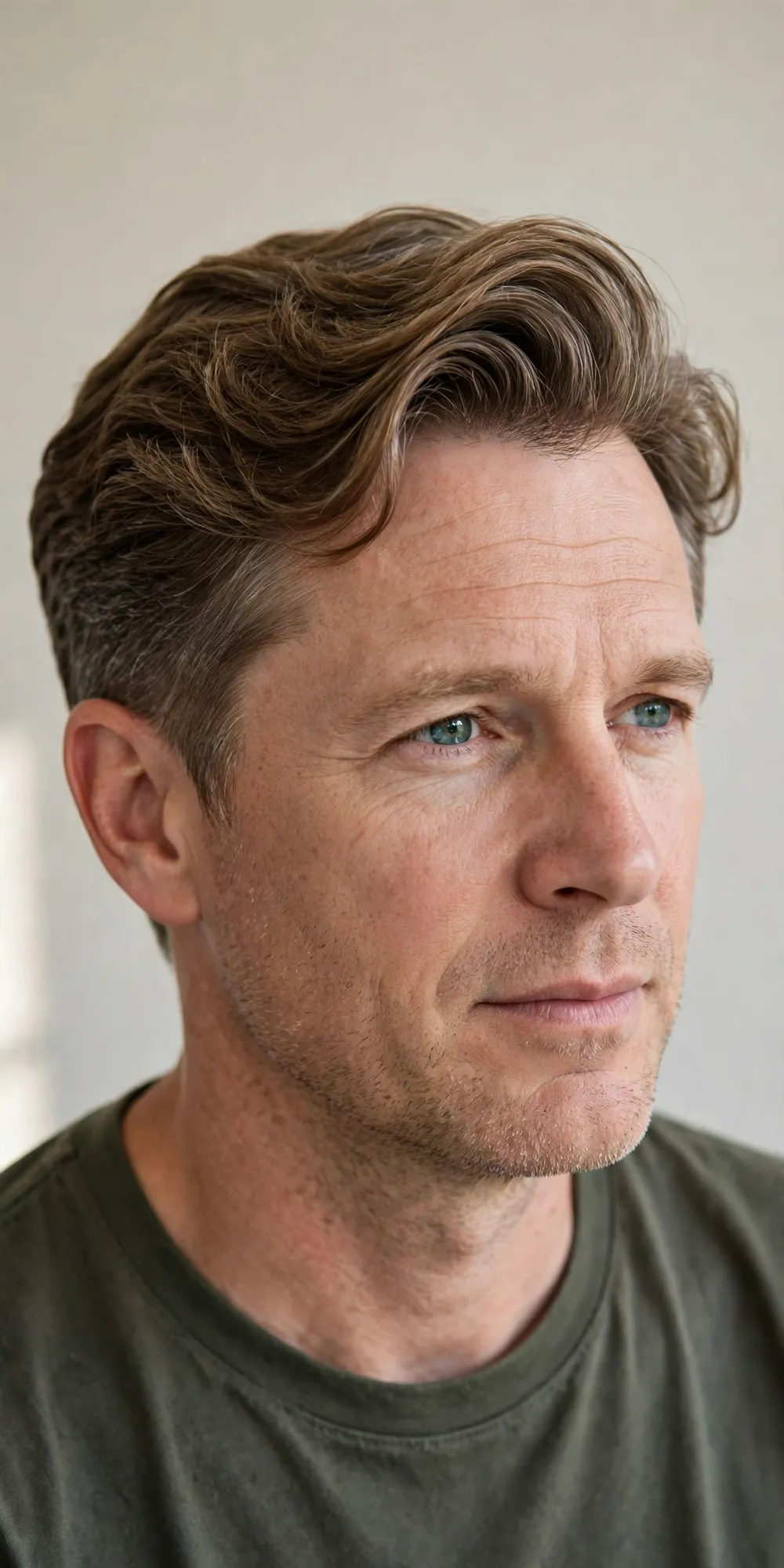
Wavy hair gives a comb over something straight hair never can: built-in movement. The wave lifts the sweep off the head and keeps it from looking pasted down, which is exactly why a textured finish works better here than a slick one. It suits almost every face shape, and thick wavy hair holds the direction for hours without much product. Ask for a mid or low fade on the sides and three inches on top, layered so the wave sits naturally. Work in a sea-salt spray or light cream while damp, then let it air-dry. A comb over with wavy hair needs a trim every four weeks — let it grow too long and the wave turns into a flop.
34. Classic Comb Over for Curly Hair
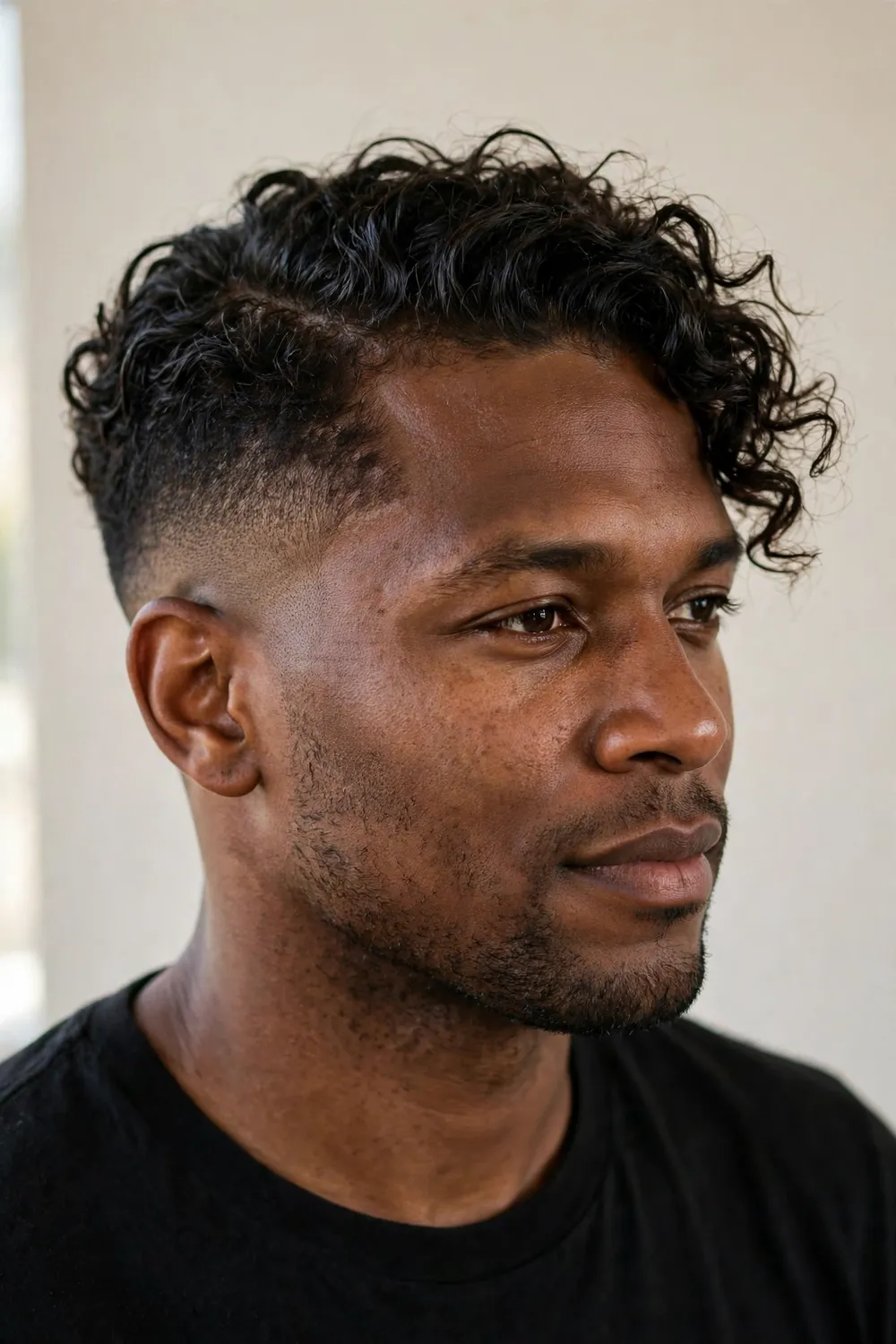
A comb over on curly hair is less a part and more a direction. The curls stay visible, loosely swept to one side, and the result reads relaxed rather than formal. It works best on loose curls or waves with medium length on top; tight coils fight the sweep and look better as a shorter crop. Ask your barber for a low taper on the sides and three inches on top, cut curl by curl rather than clipped straight, so the shape holds. A curl cream or light hold paste keeps the definition without crunch. Finger-comb it — a fine comb just creates frizz. Wash-and-go most days, with a trim every four to five weeks to keep the sides from puffing out.
35. Classic Comb Over for Thick Hair
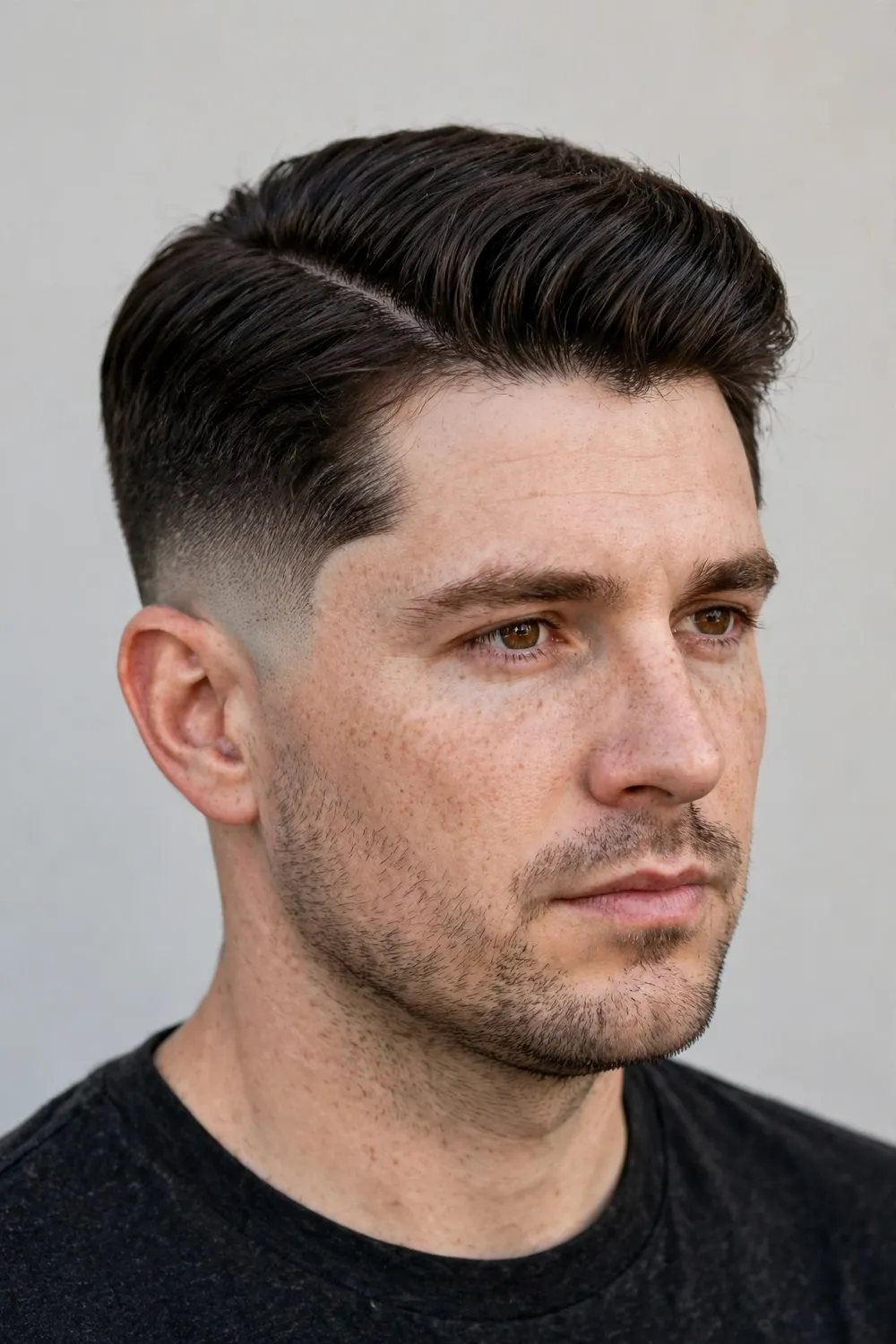
Thick hair holds a comb over beautifully once the bulk is managed — the problem is never hold, it’s weight. A mid or high fade strips the sides down so the top can sit cleanly without the whole head looking boxy. It suits men with dense, coarse hair and suits oval and square faces best. Ask for a fade on the sides and three inches on top, thinned through the crown so the sweep lies flat instead of ballooning. Clay is the right product: strong hold, matte finish, and it grips thick hair all day. You’ll need a cut every three to four weeks, because thick hair grows out of shape faster than fine hair and the fade loses its edge quickly.
36. Classic Comb Over for Fine or Thin Hair
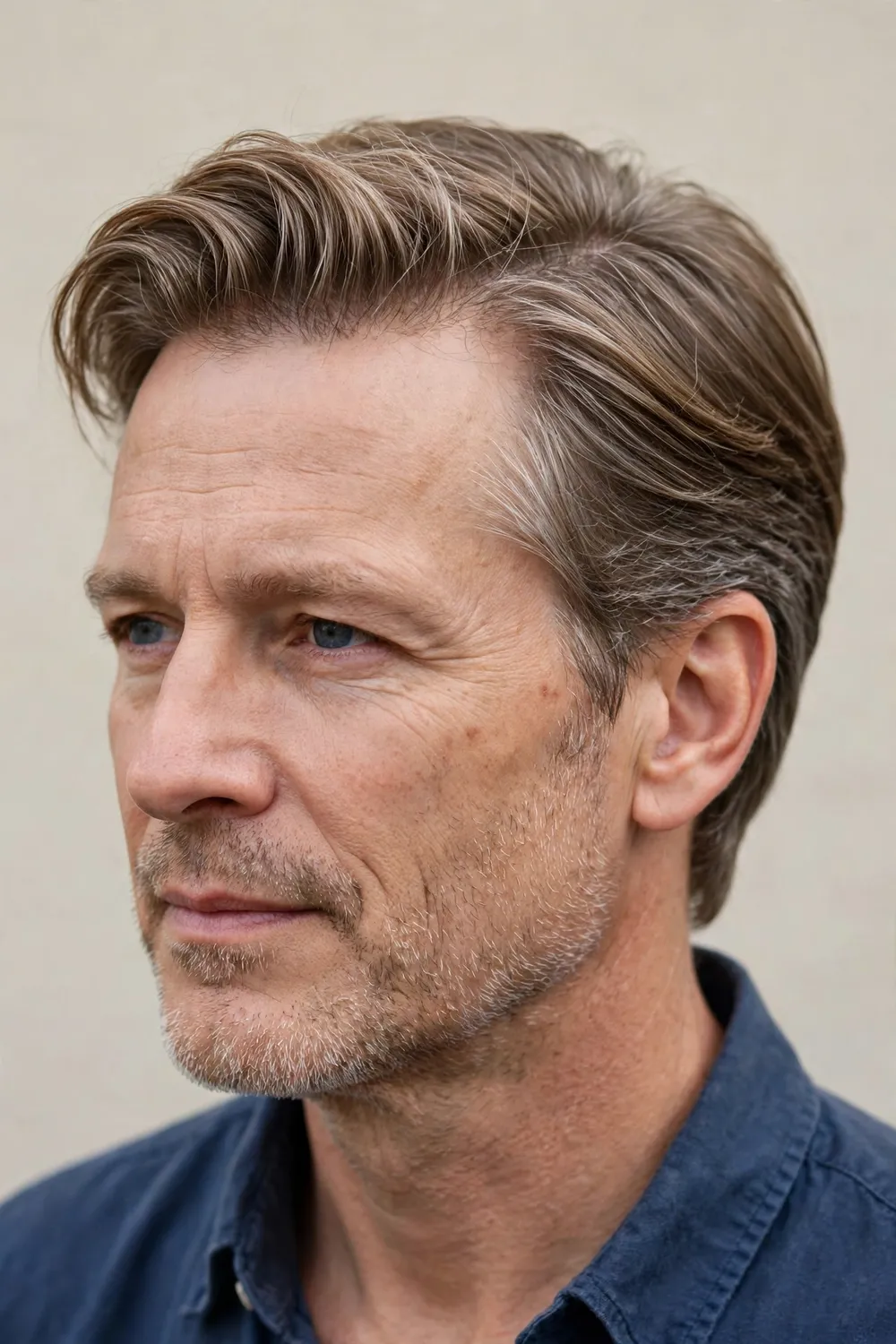
Fine hair and a comb over can work together, but the sides matter more than the top. A low taper instead of a hard fade keeps what density you have, while a fade would expose the scalp and make the top look thinner by contrast. It suits men with fine or thinning hair, especially with a slight recession — the sweep covers it without looking like a cover-up. Ask for a low taper, two inches on top, and a soft, natural part. Blow-dry with volumising mousse before styling; a light fibre paste adds grip without weight. Avoid heavy pomade — it flattens fine hair instantly. This version needs the least product and the most drying, but the payoff is a fuller-looking head of hair.
37. Classic Comb Over for Round Face
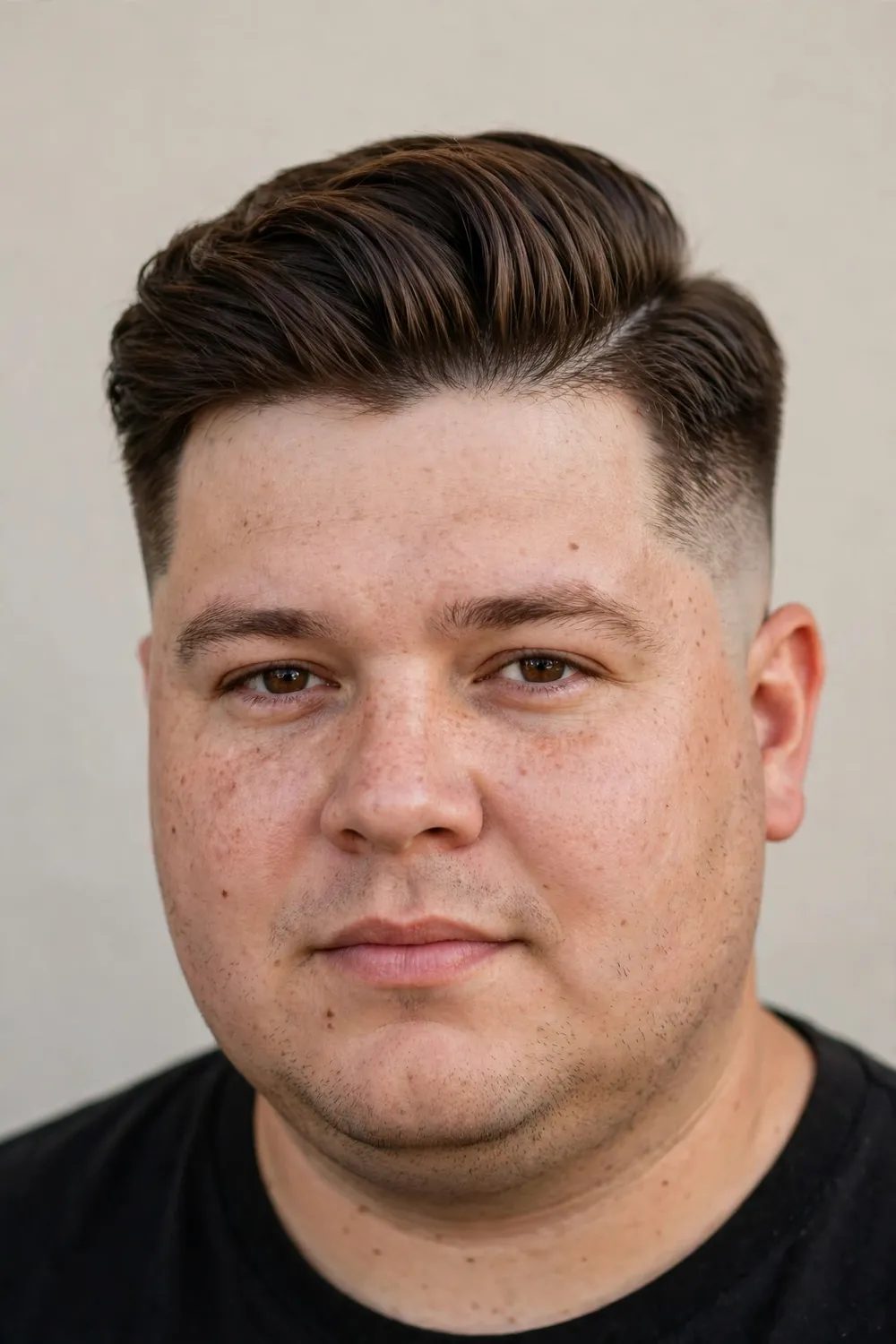
The fix for a round face is height. A mid or high fade on the sides plus volume on top draws the eye upward and adds visual length, which is exactly what a round face needs. Keep the sweep slightly off-centre rather than flat across, so the face reads longer instead of wider. Ask your barber for a high fade, three inches on top, and a part set above the temple. Blow-dry the top upward before sweeping it across, and use a matte clay so the height holds without shine flattening it out. Skip a low fade here — it adds width at the sides and makes the face look rounder. A trim every three weeks keeps the fade sharp and the proportions right.
38. Classic Comb Over for Square Face
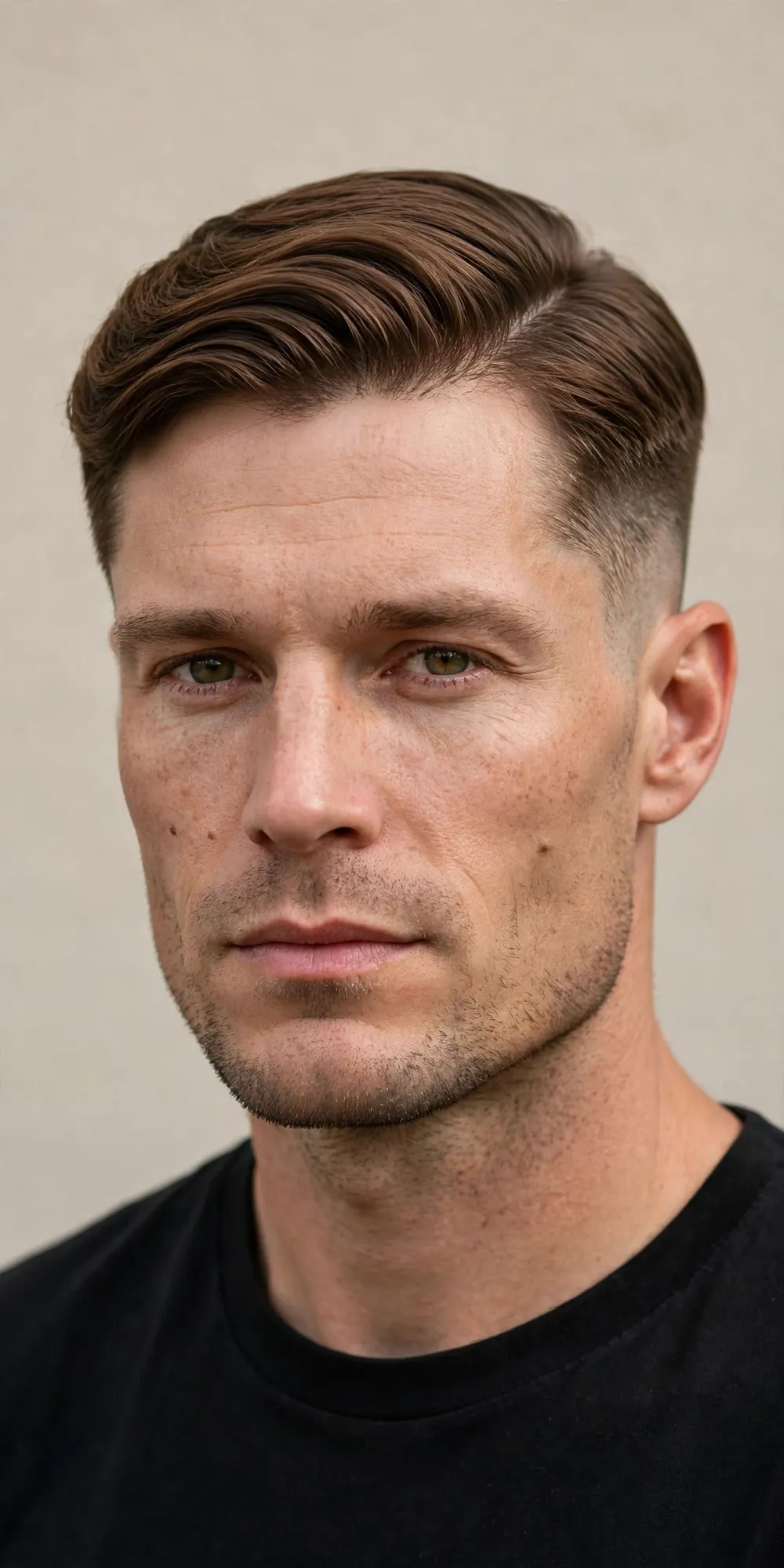
A square face already has strong lines, so the comb over should soften them rather than add more angles. A low or mid fade with a soft, natural part works best: the lateral sweep across the forehead balances the jaw without making the face look boxed in. Ask for a taper or low fade on the sides and two to three inches on top, with the part left natural rather than razor-cut — a hard part can make a square face look severe. A light pomade gives a neat finish with a little shine. Maintenance is simple: comb it across each morning and you’re done. Avoid very high fades, which exaggerate the jawline, and avoid a severe slick finish on formal days.
39. Classic Comb Over for Oblong Face
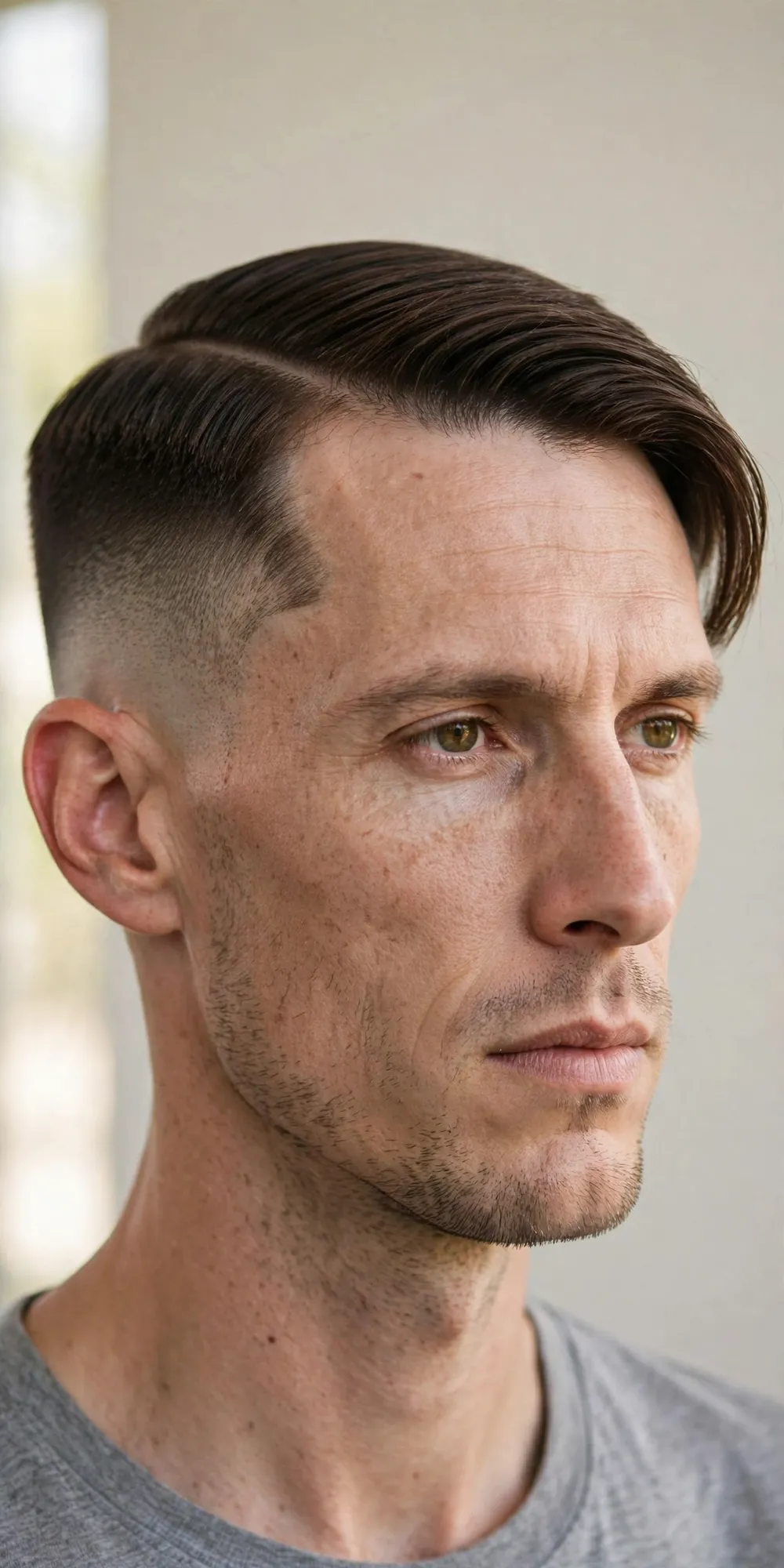
An oblong face is already long, so the comb over needs to add width, not height. A low taper or low fade keeps the sides full enough to widen the face, while the top stays flat — the sweep runs across rather than up. Ask your barber for a low taper, two inches on top, and a side part set close to the temple so the sweep covers more of the forehead. Use a light cream or low-hold paste and finger-comb the top into place; blow-drying upward is the one thing to avoid here. It’s a low-effort cut that suits men who want a classic look without the morning routine. Just keep the top short — extra length with extra height is the wrong direction for this face shape.
40. Classic Comb Over for Receding Hairline

The trick here is honesty: the part follows the hairline you actually have, not the one you wish you had. Setting the part at your natural recession frames the face and looks intentional, while forcing a part across a receding corner just draws attention to it. It suits men with early recession at the temples and suits most face shapes. Ask for a low taper on the sides and two to three inches on top, with the part placed where the hair naturally separates. A matte paste or clay gives a natural finish — shine makes thin areas more visible. Keep the top shorter than you think; longer hair at the temples looks stringy. For more ideas on working with a changing hairline, see our guide to hairstyles for hiding a receding hairline.
41. Classic Comb Over for Older Men

This is the comb over in its natural home. A natural part, low taper, and medium hold — nothing forced, nothing trying to look twenty years younger. It suits men over fifty with grey or salt-and-pepper hair especially well, because the part line shows off the silver. Ask your barber for a classic low taper, two inches on top, and a part that follows your hair’s natural fall. A medium-hold cream or light pomade keeps it neat without stiffness, and grey hair tends to hold a comb over better than you’d expect thanks to its coarser texture. It’s a two-minute style each morning and a trim every four weeks. Avoid heavy gel — it makes grey hair look yellow under bright light.
42. Classic Comb Over for Balding Men

Let’s be clear about what this is: a styled cut that works with the hair you have, not a disguise. Two to three inches on top with a low taper, swept in the direction the hair naturally grows, reads as a deliberate style rather than a cover-up. It suits men with thinning on top and a still-solid hairline. Ask for a short top, low taper, and a soft part — and ask the barber to be honest about how much length the top can actually carry. A matte fibre or clay adds texture and makes thin hair look fuller. Keep it short; long strands combed across a bald patch are exactly the look this cut is trying to avoid. A fresh cut every three weeks keeps the edges clean.
43. Classic Comb Over with Beard
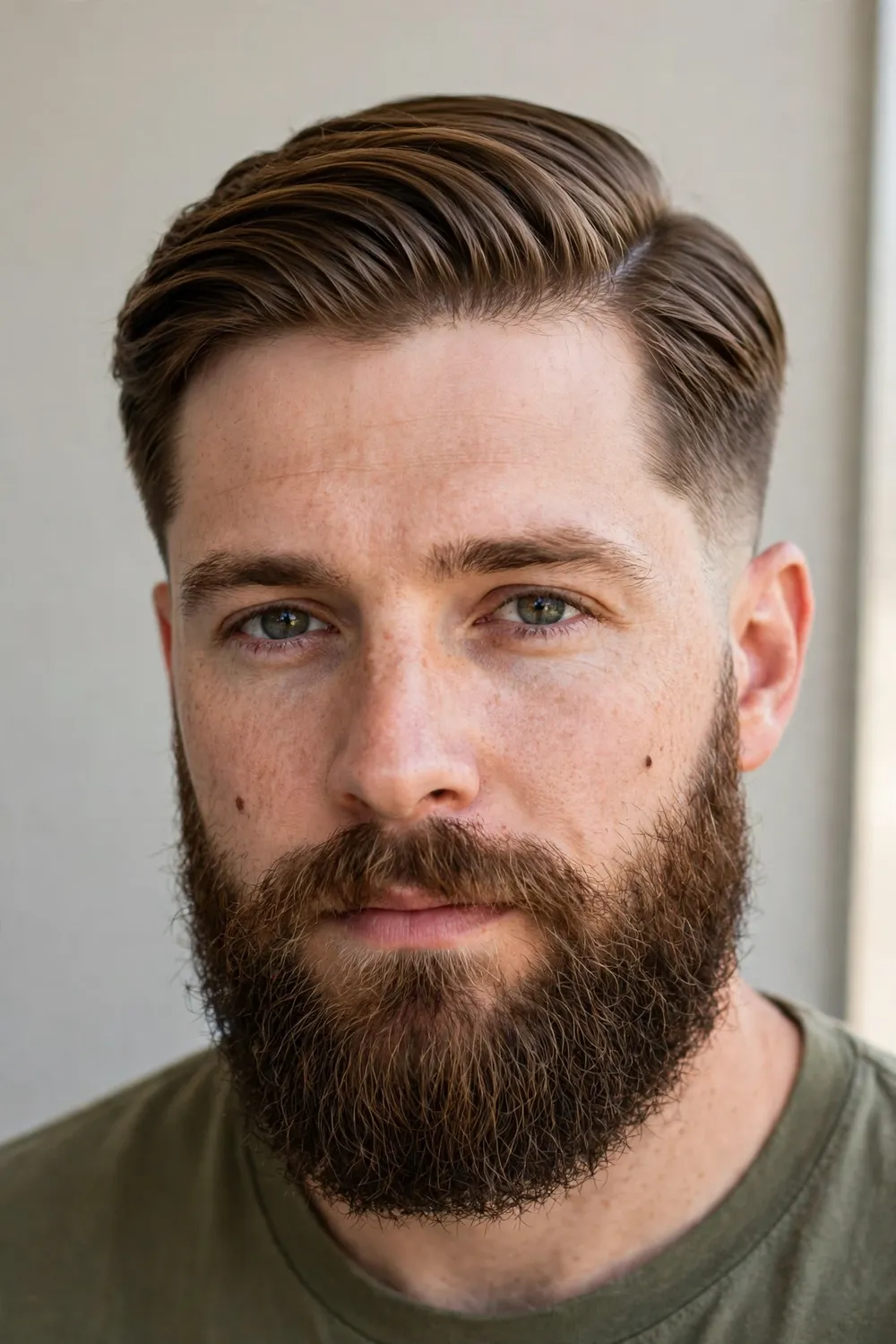
The fade is the whole point of this pairing. When the fade runs down into the beard at the sideburn, there’s no hard gap between the cut and the beard — the two blend into one continuous shape. It suits men with a full beard and works on most face shapes, especially square and oval. Ask your barber for a mid fade that connects into the beard, with the beard shaped to match the fade’s angle. Use a light beard oil and a matte paste on top so the textures don’t clash. The beard needs a line-up every two weeks or the blend disappears; the top is the easy part. If your beard is patchy at the cheeks, ask for a lower fade connection so the blend starts where the beard is actually full.
44. Classic Comb Over with Stubble

Three to five days of stubble gives the comb over some structure without the commitment of a full beard. It’s the easiest version of the cut-and-beard pairing: the stubble frames the jaw, the comb over handles the top, and neither needs much upkeep. It suits men who want a slightly rugged edge on a classic cut, and it flatters oval and square faces. Ask for a low taper on the sides and a clean, sharp neckline so the stubble reads as deliberate rather than lazy. Keep the stubble at an even length with a trimmer every two or three days. Style the top with a light pomade for a neat finish. The contrast between the neat top and the rough stubble is what makes this one work.
45. Asian Comb Over
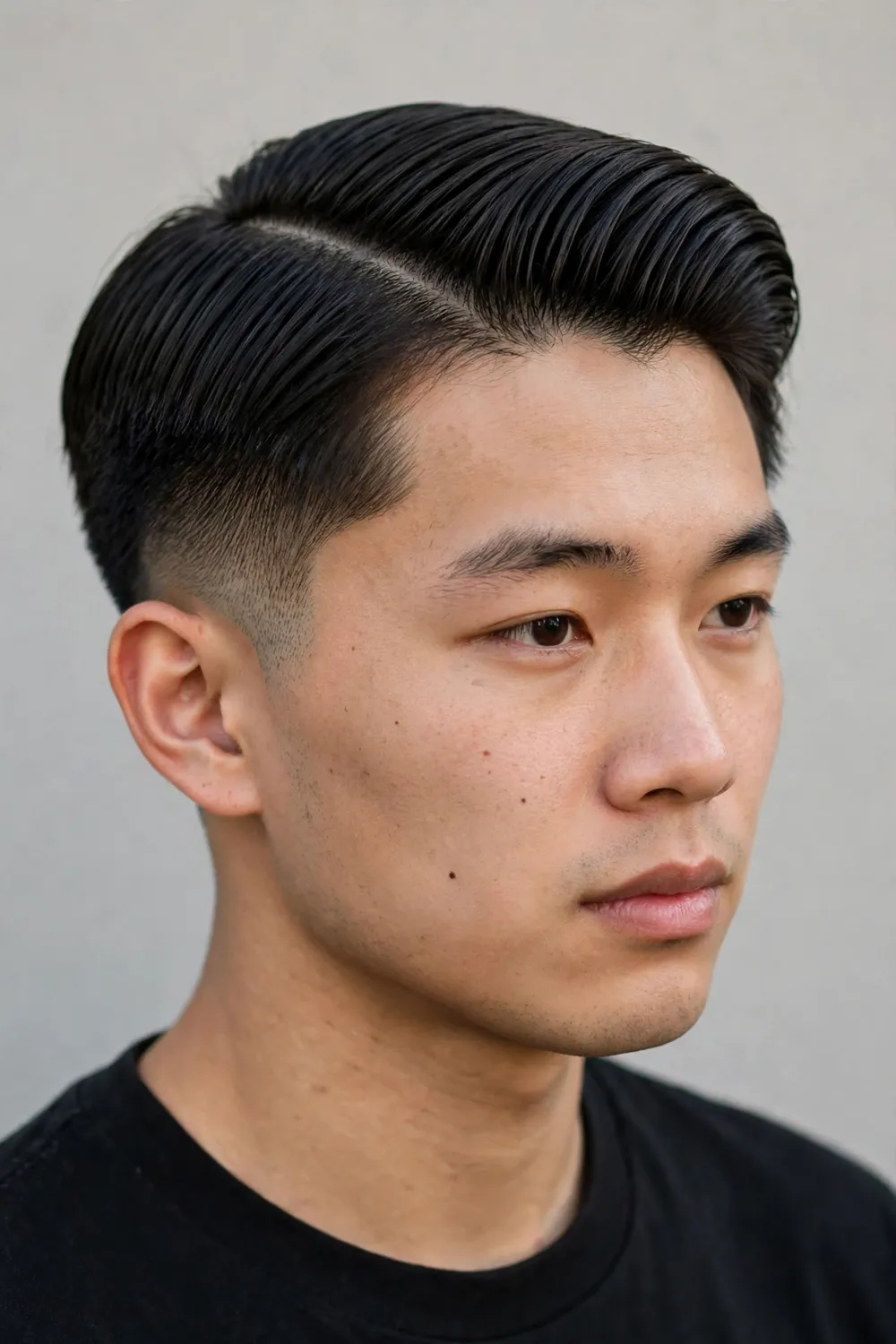
Straight, thick Asian hair takes a hard part cleaner than any other hair type — the strands are coarse enough to hold the line and straight enough to lie perfectly flat. The result is the sharpest comb over in this list, with a razor-defined part and a sweep that doesn’t move all day. It suits men with thick, straight hair and suits oval and square faces. Ask for a hard part with a low or mid fade and two to three inches on top. A strong-hold pomade or clay locks the sweep in place; the hair’s natural weight does the rest. The downside is growth: thick straight hair grows out of shape fast, so book a cut every three weeks. Skip the textured version — this hair type looks best when it’s sharp.
46. Messy Comb Over
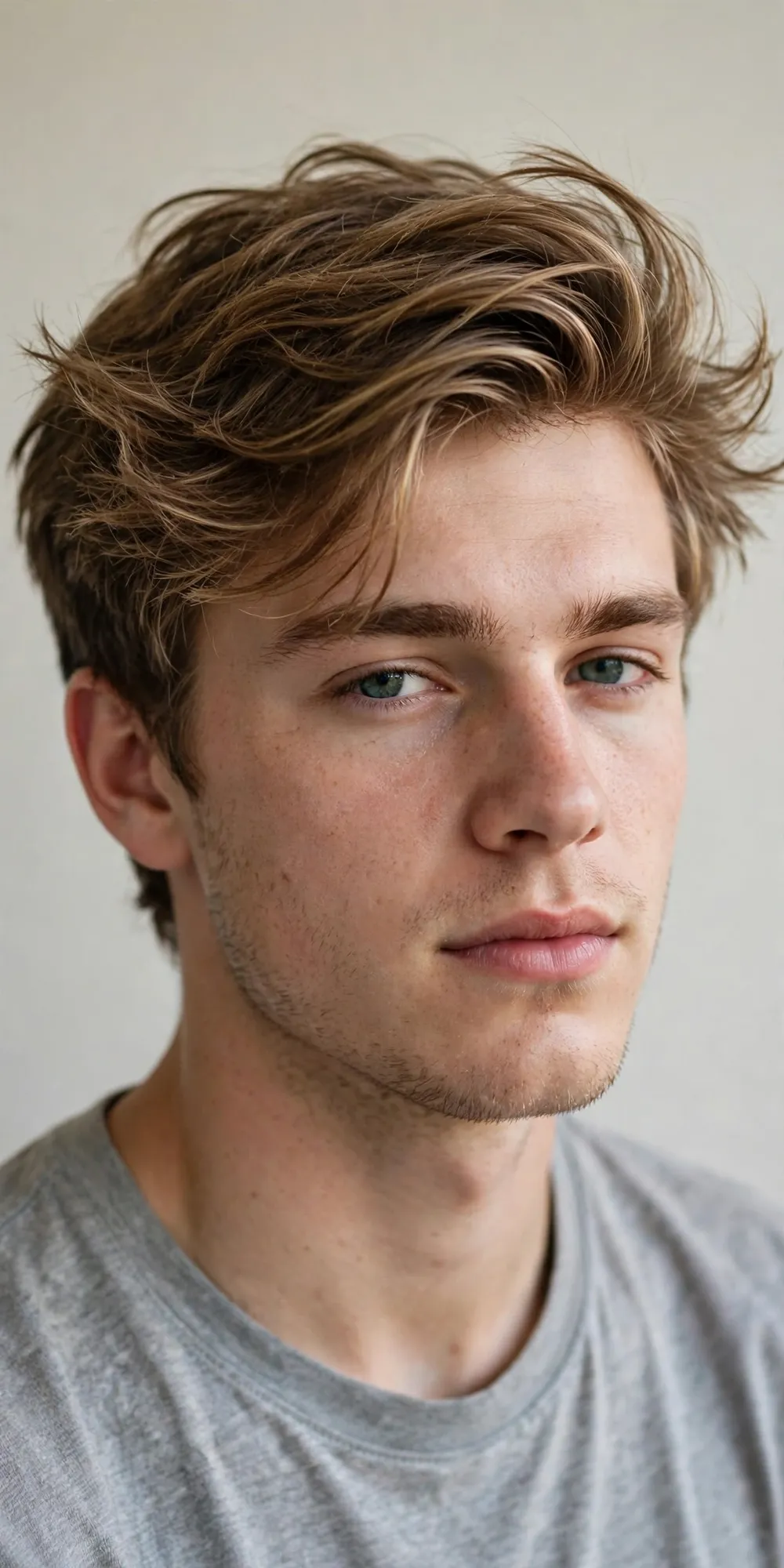
This is the comb over for men who hate combing. The sweep is there, but it’s lived-in and deliberately undone — texture and movement instead of comb lines, like the cut has been worn in for a day. It suits younger men and casual settings, and it works best on wavy or thick hair that has natural body. Ask for a textured cut on top with a low fade, and tell the barber you want it messy, not neat — point-cutting through the top is what creates the separation. A matte clay or texturising spray, worked in with fingers, is all it needs. The maintenance is almost zero, which is the point. Just don’t let it grow too long, or messy turns into unkempt and the shape disappears.
47. Wet Look Comb Over
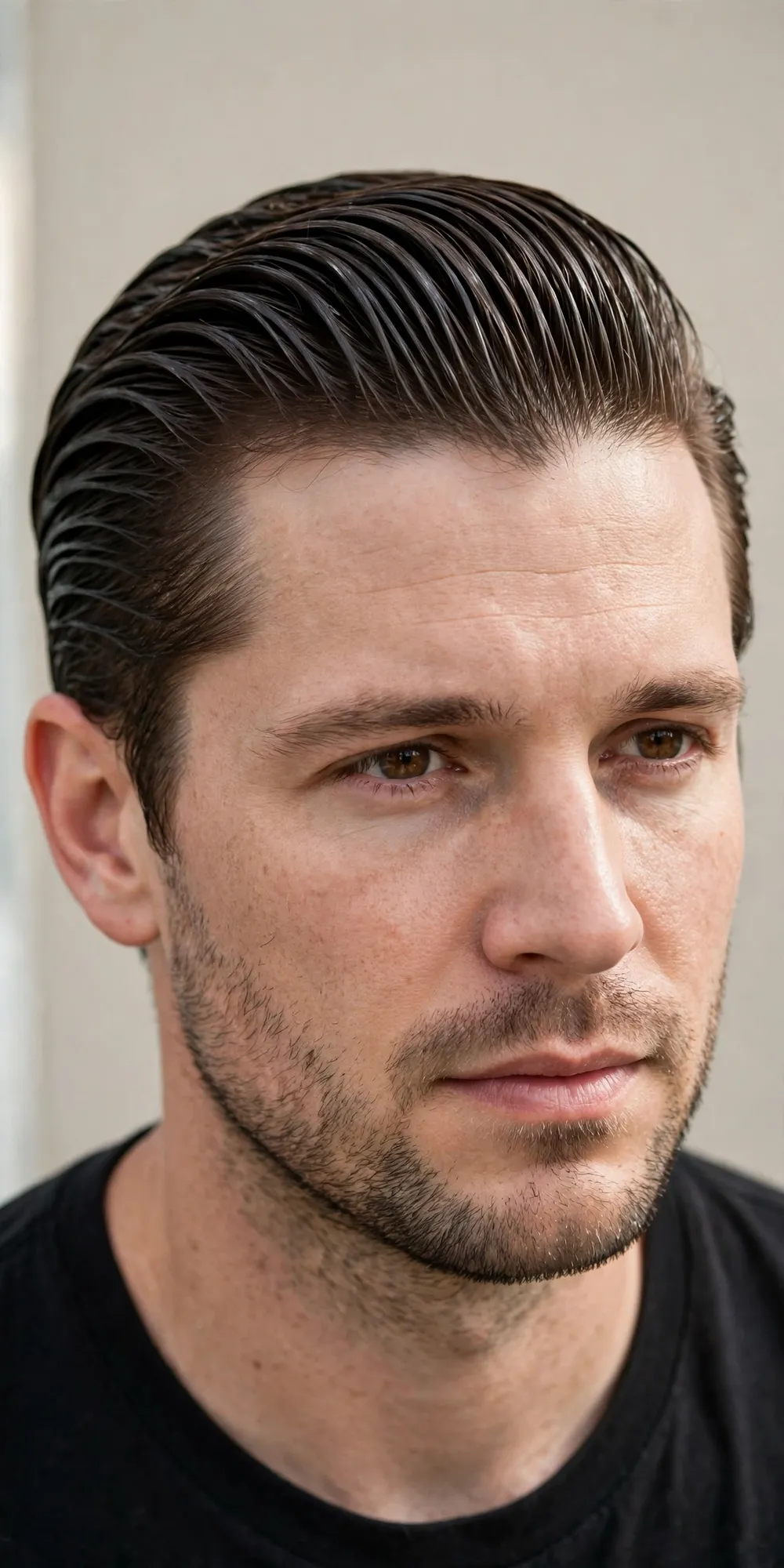
High shine, every strand locked in place, the kind of finish you notice from across the room. The wet look suits evening events, weddings, and men who like a polished, deliberate style — it’s the most formal comb over in this list. It works on straight and wavy hair and suits oval and square faces. Ask for a classic taper on the sides and two to three inches on top, then style with a wet-look pomade or gel combed through damp hair. The shine fades as the product dries, so carry a small amount for a mid-evening touch-up. It takes more product than any other version here, and it needs a proper wash at night — don’t sleep in gel. Use it for occasions, not every day.
48. Comb Over with Temple Fade
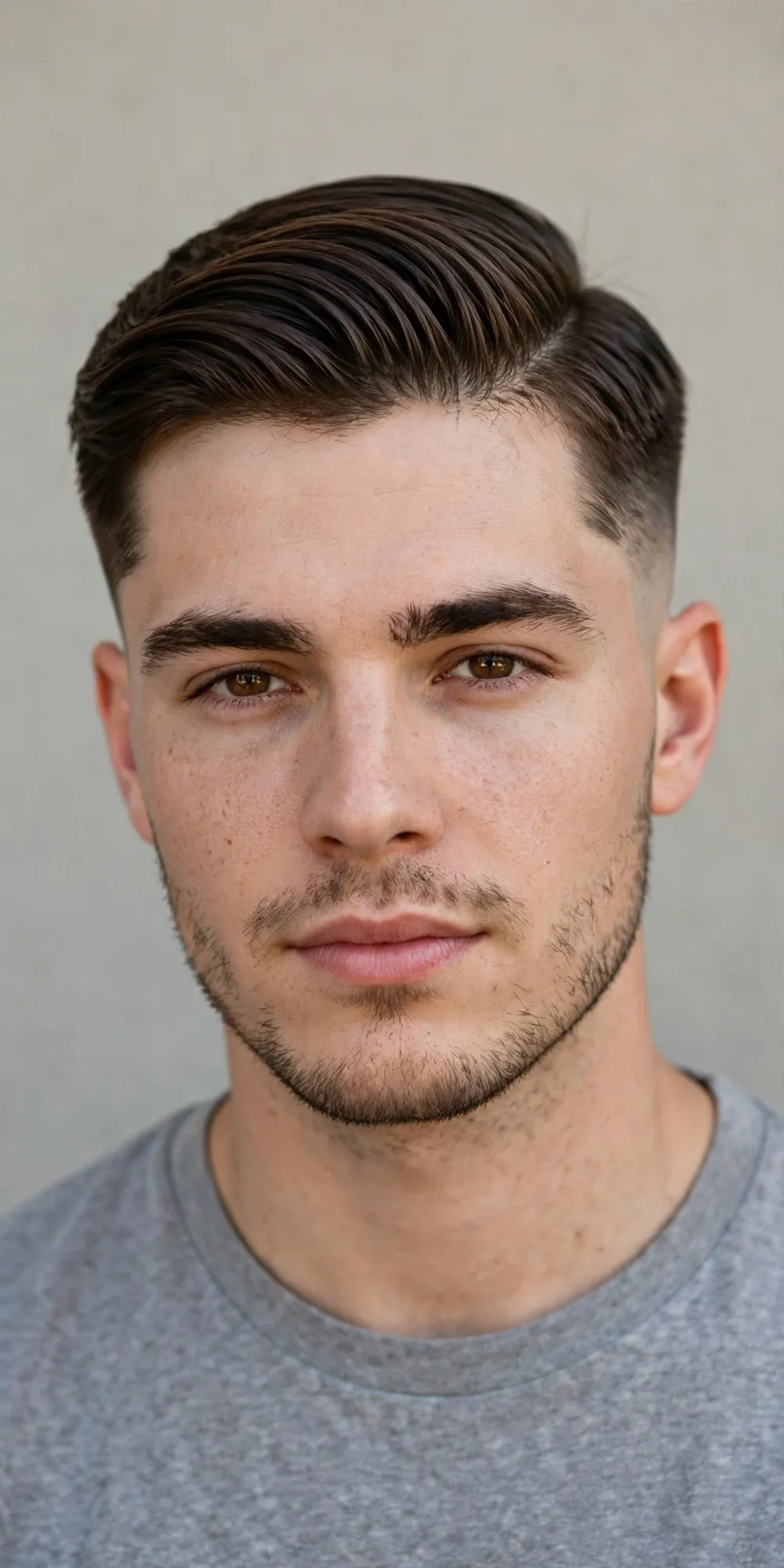
The fade is focused right at the temples, which keeps the edges razor-sharp and the hairline clean while the rest of the sides stay longer. It’s a subtle fade — you notice the clean temple line more than the fade itself — and it suits men who want a tidy cut without a big contrast between top and sides. Ask for a temple fade with a low taper at the back and two to three inches on top. A light pomade keeps the top neat. The temple fade grows out faster than a full fade, so you’ll want a line-up every two weeks to keep the edges crisp. It pairs well with a short beard or stubble, since the clean temples frame the face. Good choice if a full fade feels too bold for your workplace.
49. Comb Over with Shadow Fade
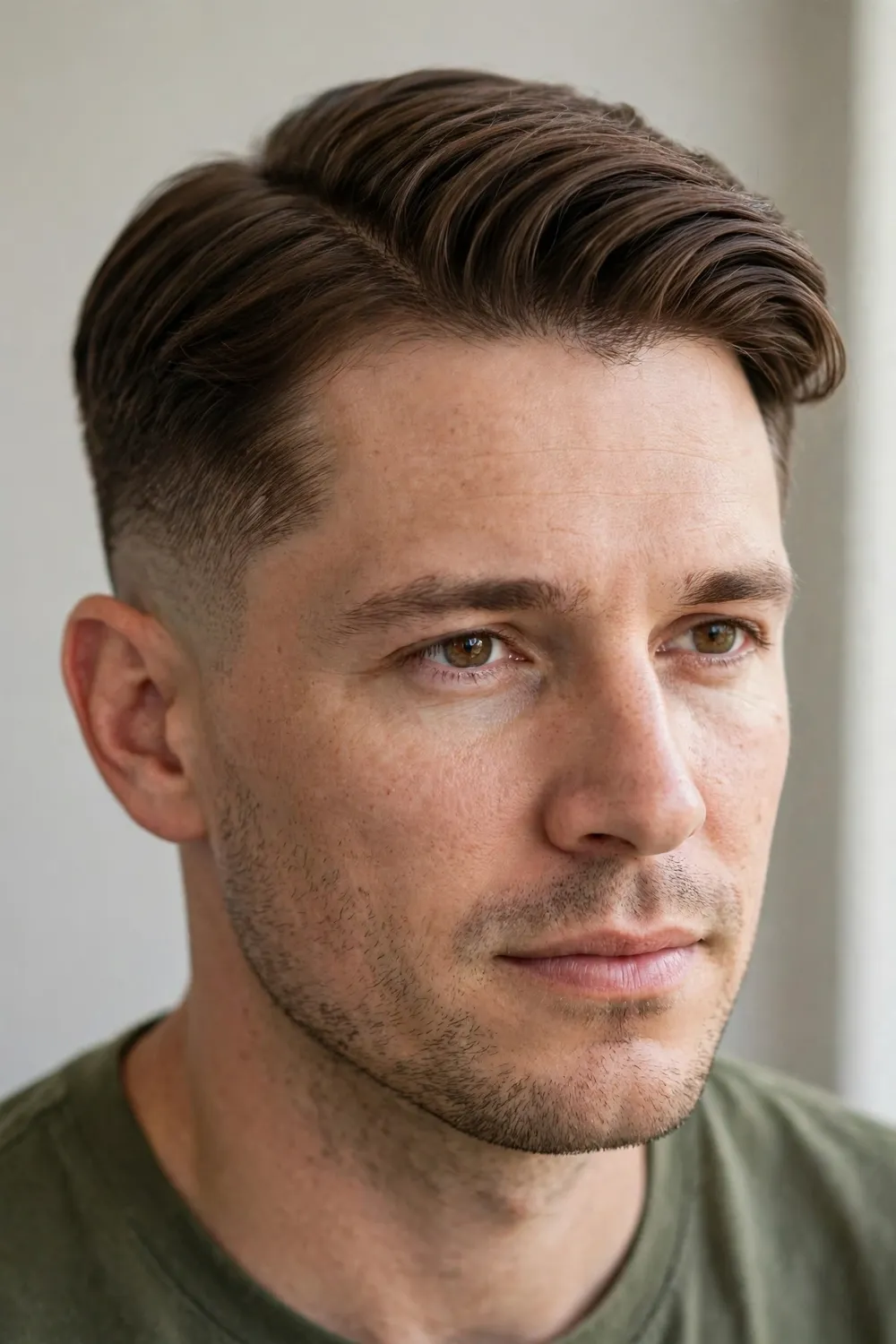
The gentlest fade in this list. A shadow fade blends so gradually that you barely see where the short hair ends and the longer hair begins — it’s more of a soft gradient than a fade. It suits men who want a clean cut without visible contrast, and it works in the most conservative offices. Ask for a shadow fade on the sides and two to three inches on top, with the barber blending with a longer guard so the transition stays soft. A light cream or paste is enough product. Because the blend is so gradual, it grows out gracefully — you can stretch cuts to five weeks. The trade-off is impact: if you want the fade to be noticed, this isn’t the one. It’s a quiet, polished cut.
50. Comb Over with Razor Fade
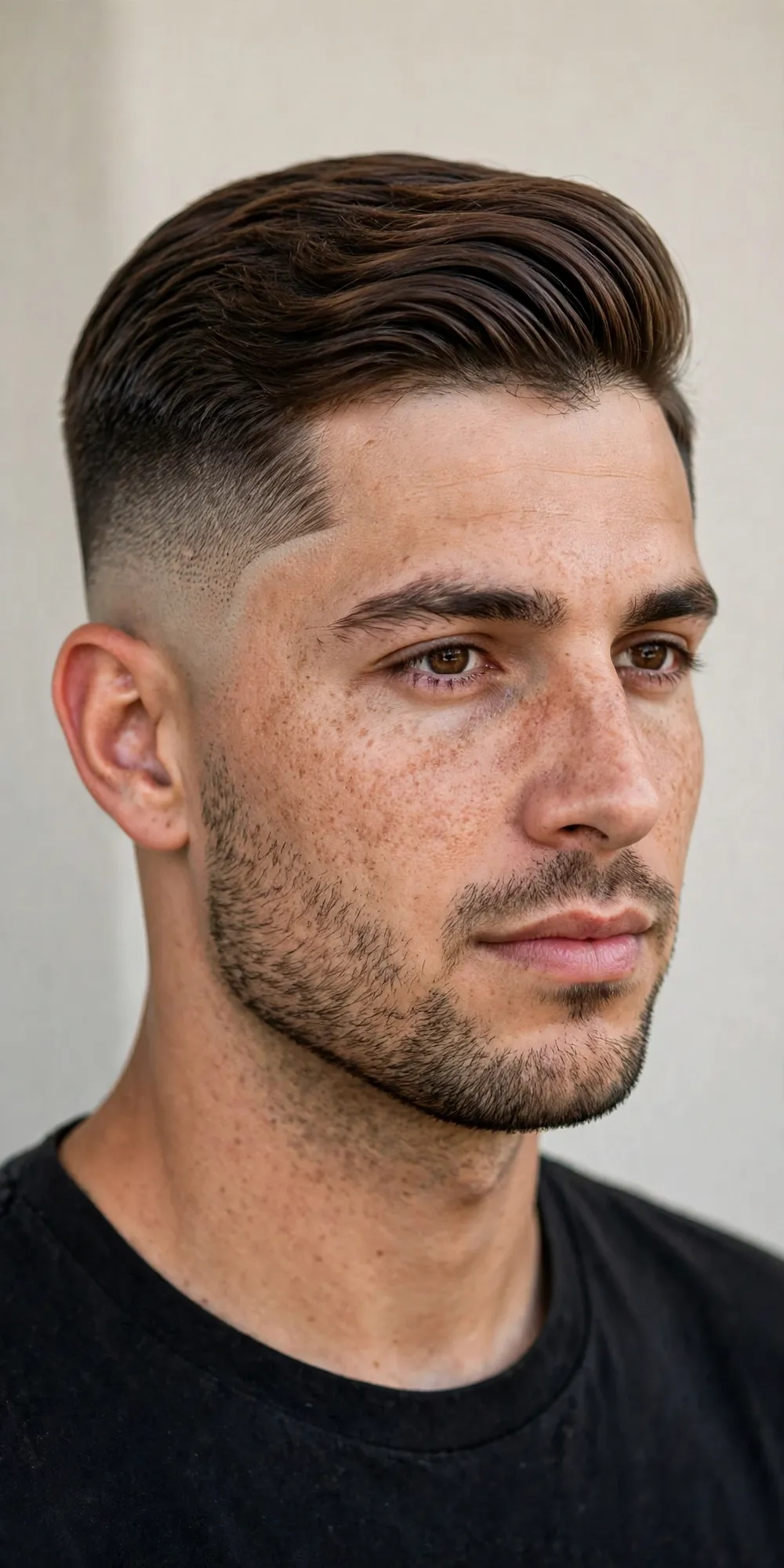
A razor fade is finished with a straight razor, which takes the sides down to bare skin with the cleanest, sharpest line a fade can get. The contrast against the swept top is dramatic — this is the boldest fade pairing in the list. It suits men who want maximum definition and suits oval and square faces best. Ask for a razor fade on the sides and two to three inches on top, and expect the cut to take a few minutes longer than a clipper fade. A matte clay keeps the top’s texture against the razor-sharp sides. It grows out fast — the razor line blurs within a week — so plan on a cut every two weeks. Not a low-maintenance choice, but nothing in this list looks sharper fresh out of the chair.
51. Comb Over for Grey Hair

Grey hair is a gift to the comb over. The silver strands catch the light along the part line, so the sweep itself becomes the feature — no product trickery needed. It suits men with grey, silver, or salt-and-pepper hair and any face shape, though a low taper keeps the look classic. Ask for a low taper on the sides and two inches on top, with the part set where the hair naturally falls. A light cream or matte paste is enough; heavy pomade can make grey hair look yellow, and purple-toned shampoo once a week keeps the silver bright. Maintenance is minimal — the coarser texture of grey hair holds a sweep well. This is one of the strongest mature styles in this list, and it only gets better as the grey spreads.
52. Comb Over with Highlights
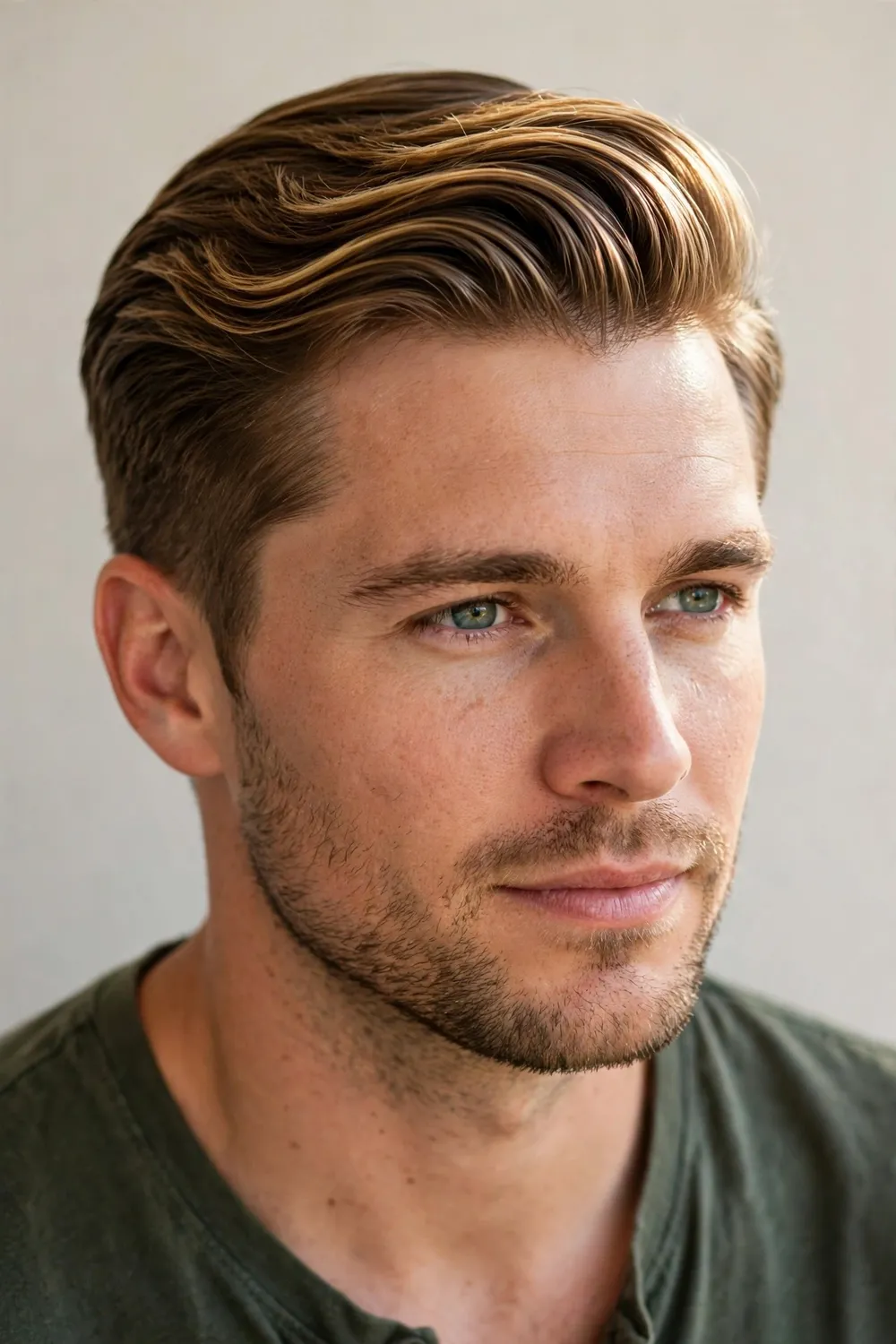
Highlights follow the part. When the lighter strands run through the swept top, they trace the direction of the comb over and add dimension you can’t get from a single colour. It suits men with medium to dark hair who want a sun-kissed, lived-in look, and it flatters oval and square faces. Ask your barber or colourist for subtle, fine highlights through the top only — two or three shades lighter than your base — and keep the sides natural. A light cream keeps the highlighted hair from looking dry. Highlights need a refresh every six to eight weeks as they grow out, and a colour-safe shampoo protects them. Keep them subtle; chunky highlights on a comb over look dated fast.
53. Comb Over for Heart Face
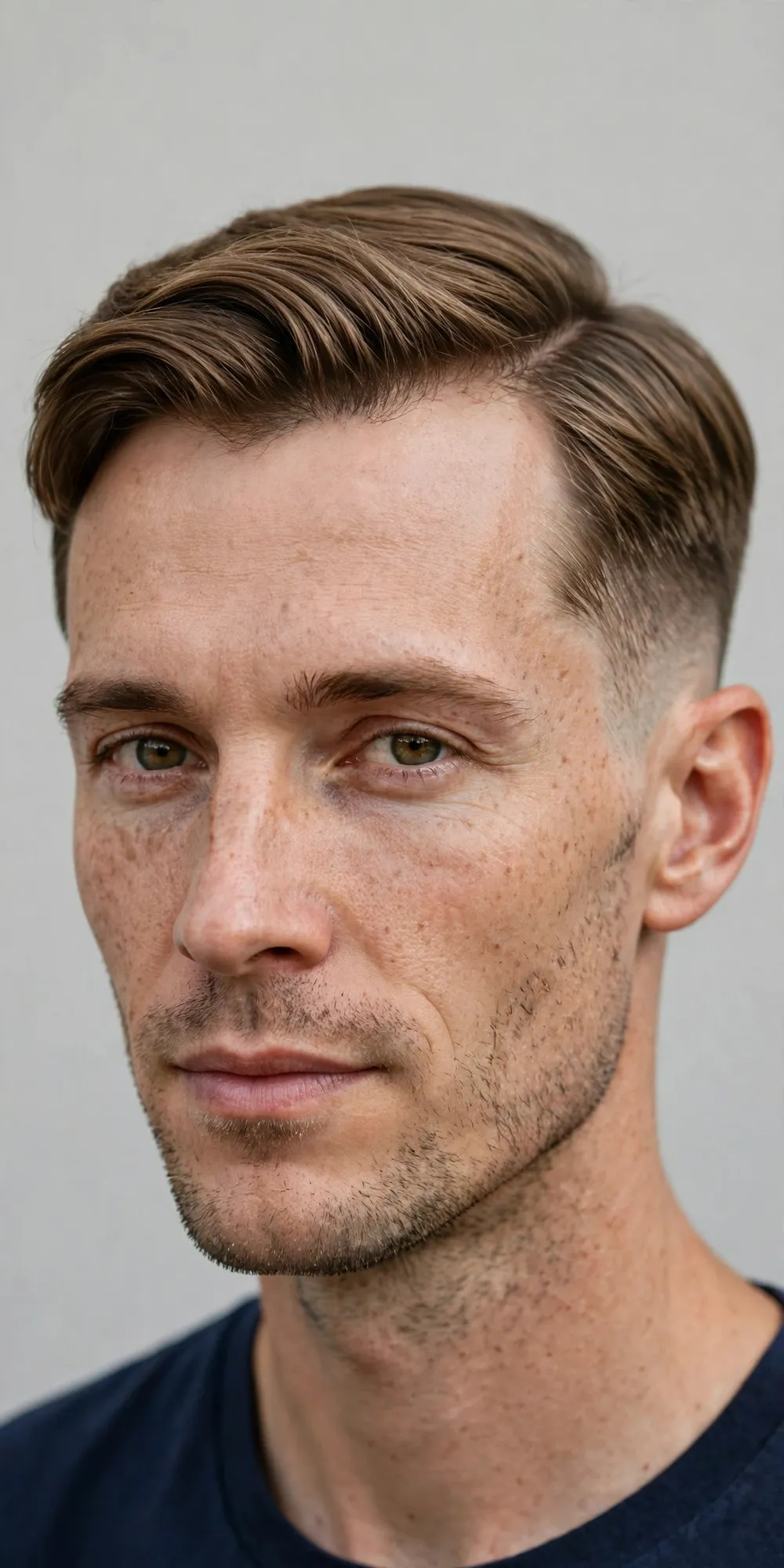
A heart-shaped face is wider at the forehead and narrower at the chin, so the comb over needs to balance rather than emphasise the top. A soft part and a low fade do exactly that: the sweep adds a little width low down, while the low fade keeps the sides from adding bulk at the forehead. Ask for a low fade, two inches on top, and a soft natural part — avoid a hard part, which draws the eye straight to the forehead. A light paste gives a natural finish. The key is keeping the top flat rather than voluminous; height at the crown only makes a heart face look top-heavy. It’s a simple, flattering cut that needs nothing more than a comb and a dab of product each morning.
54. Comb Over for Diamond Face
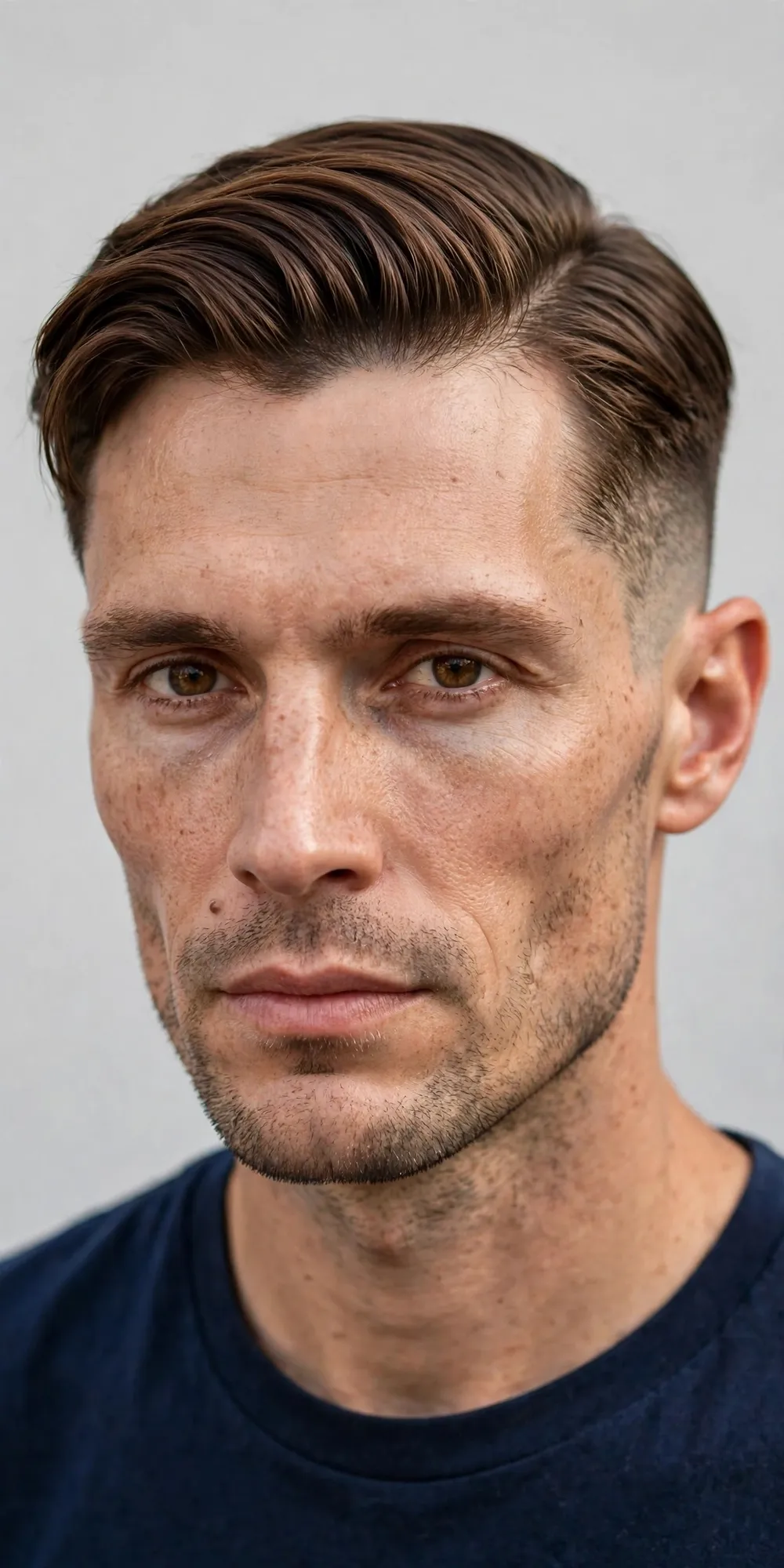
Diamond faces have high cheekbones and a narrow forehead and chin, so the comb over’s job is to keep the side width balanced against the cheekbones. A mid fade with a medium top does that — the sides stay full enough to widen the face at the temples, while the sweep adds softness across the forehead. Ask for a mid fade, two to three inches on top, and a soft part set just off-centre. A light pomade or cream keeps the finish natural. Avoid a very high fade, which exposes the cheekbones and makes the face look sharper than it is. A trim every four weeks keeps the proportions in place. It’s one of the easier face shapes to cut for, since the comb over’s natural direction already does most of the balancing work.
55. Comb Over Wedding Style
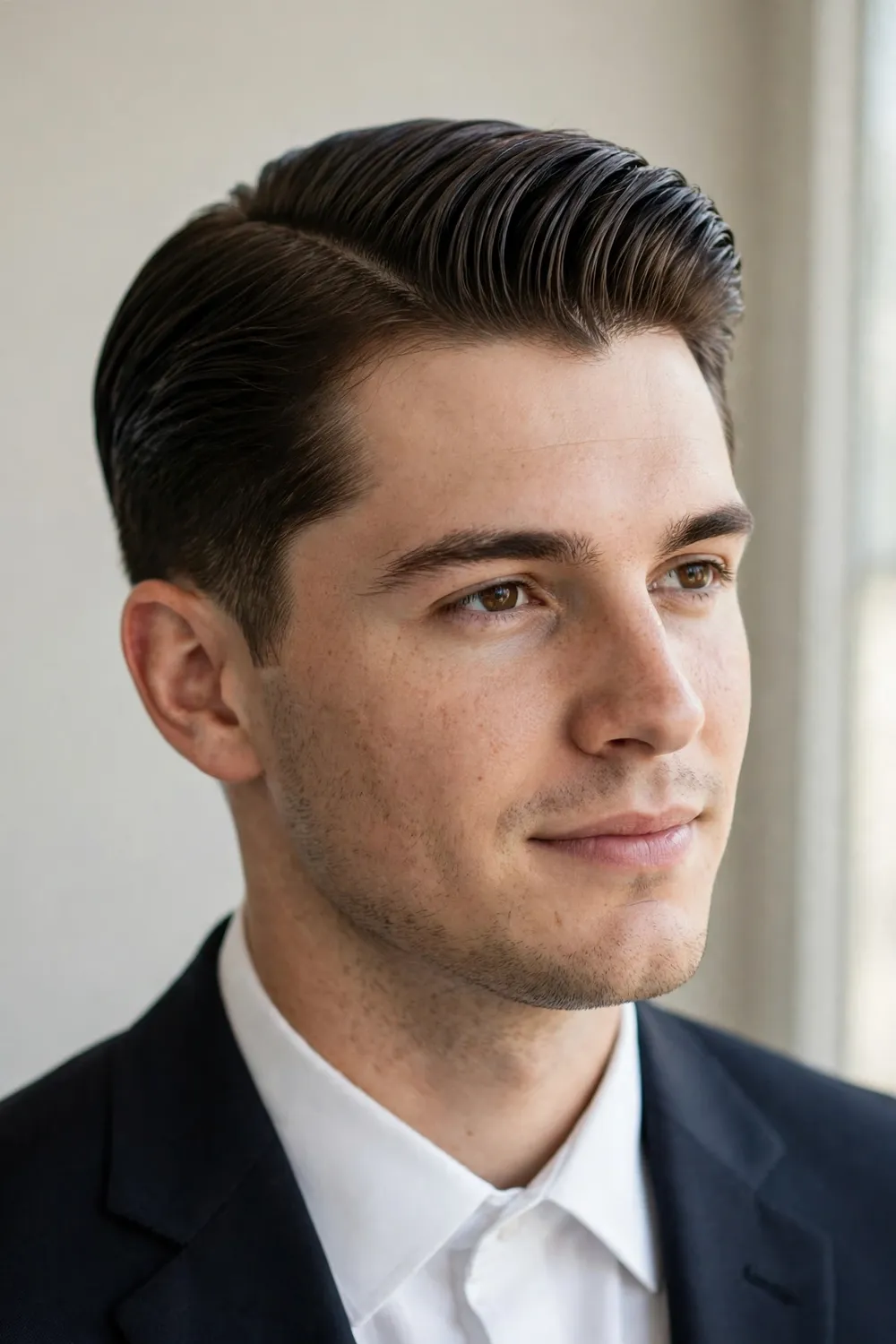
This is the comb over dressed for the camera. A slick finish, hard part, and neat taper — everything polished, nothing out of place, built to survive a full day of photos. It suits grooms and wedding guests alike and works on straight and wavy hair. Ask your barber for a hard part, classic taper, and two to three inches on top, and get the cut two or three days before the wedding so it settles. Style with a strong-hold pomade for shine that lasts, and carry a pocket comb for touch-ups between photos. Book a trial run a few weeks before the big day so there are no surprises. It’s the most formal version of the comb over in this list, and it photographs beautifully.
56. Comb Over for Teenagers
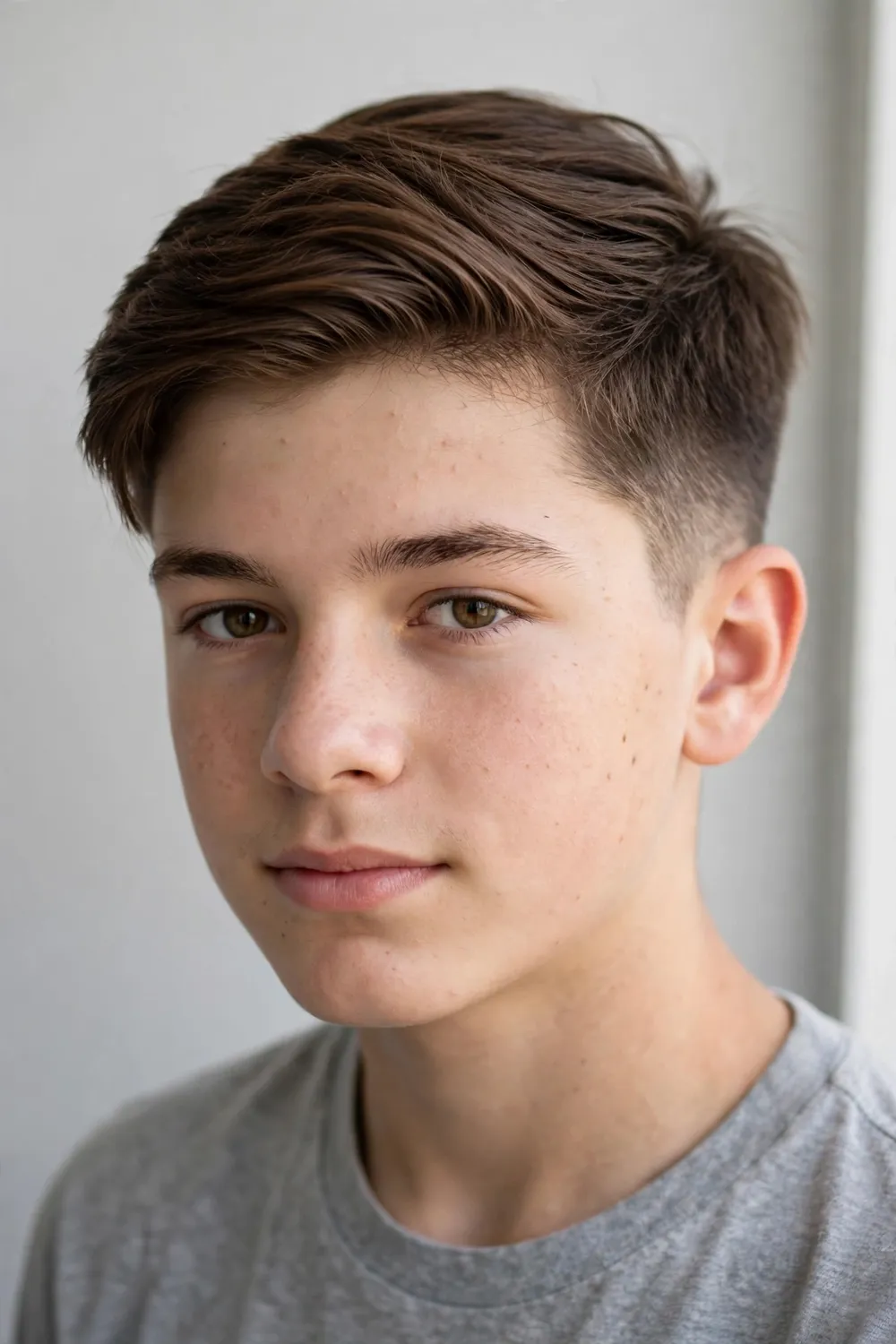
The teenage comb over is the modern version: a textured top, low fade, and an easy sweep that doesn’t look like dad’s haircut. It suits school and casual settings, and it works on straight, wavy, and thick hair. Ask for a low fade on the sides and two to three inches on top, textured through the crown so the sweep has movement. A light paste or clay, worked in with fingers, is all the product it needs — no comb required, which is usually the point for a teenager. It’s a low-effort cut that still looks put-together, and it grows out well between cuts. Avoid a hard part here; a soft, natural part keeps it young and relaxed. A trim every four to five weeks is plenty.
57. Comb Over with Buzzed Sides
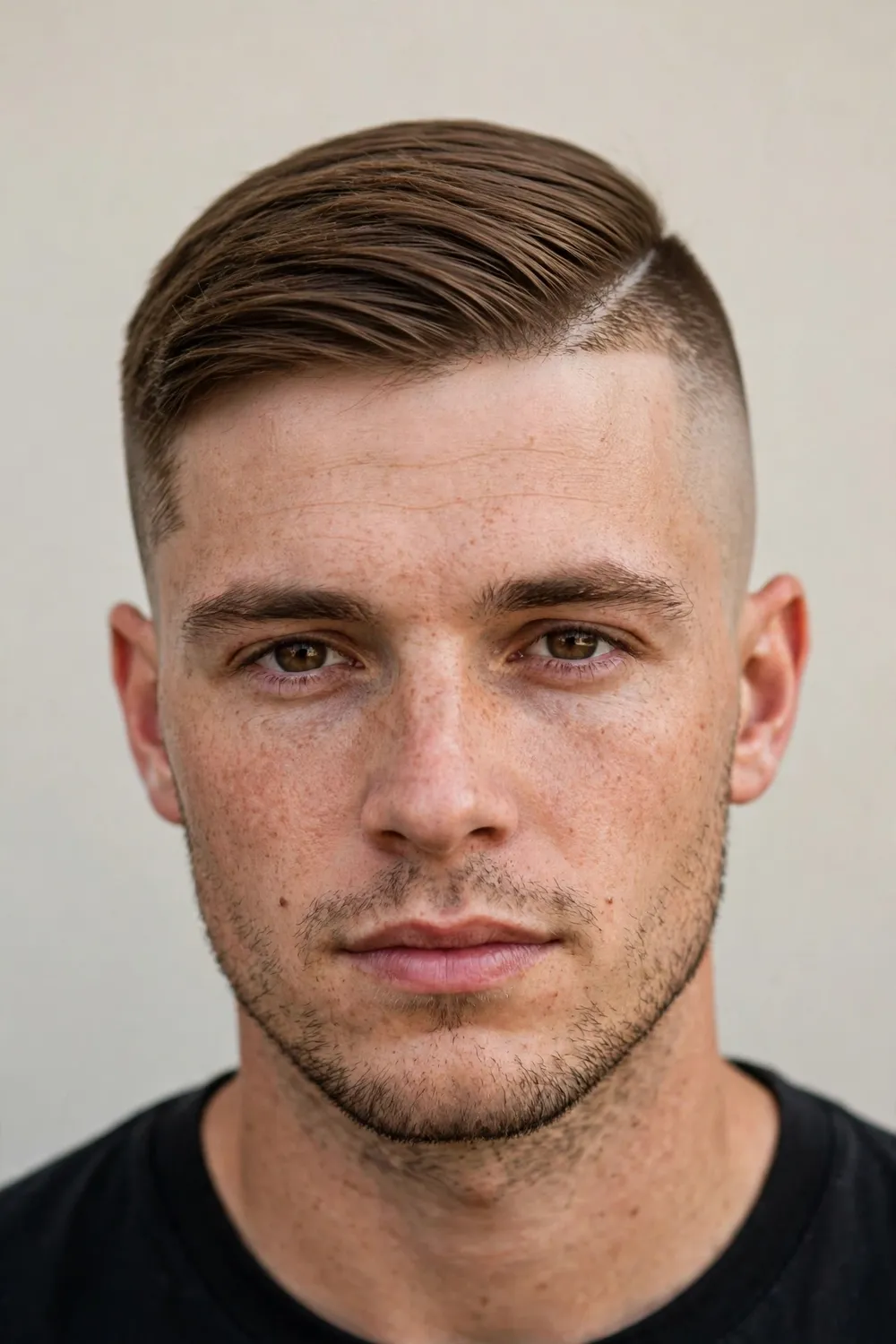
The sides are buzzed to one short length — no fade, no blend, just a clean, uniform buzz against a swept top. The contrast is the whole point: maximum difference between the top and the sides with zero blending to soften it. It suits men who like a bold, modern edge and works on oval and square faces. Ask for the sides buzzed to a number one or two and two to three inches on top, with a clear line where the buzz meets the sweep. A matte clay holds the top in place. The buzzed sides grow out in a week, so this one needs a cut every two weeks to stay sharp. It’s not a subtle cut, but if you want the top to be the star, nothing in this list frames it better.
58. Comb Over with Two Block Sides
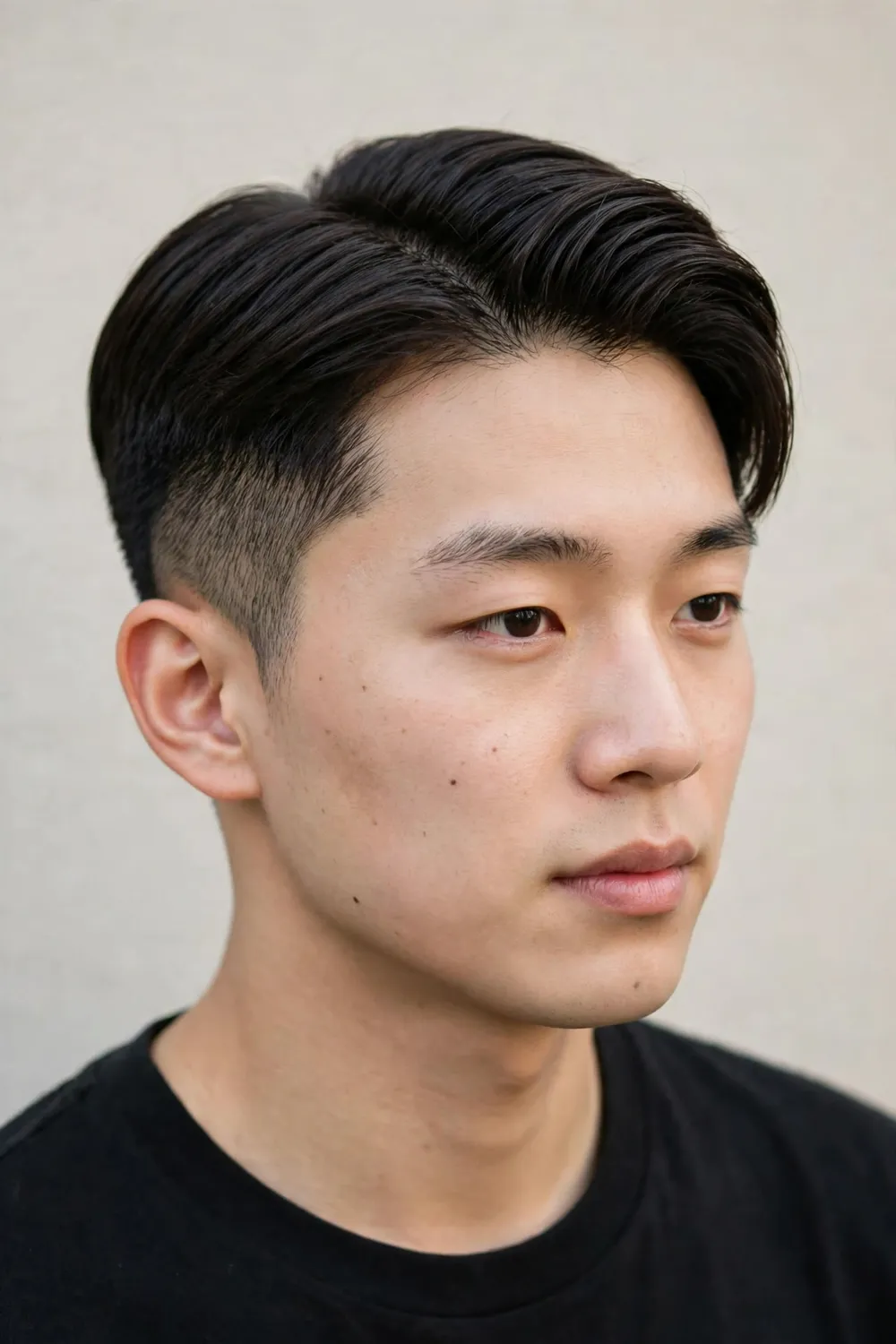
The two-block cut comes from Korean barbering: short back and sides with a longer swept top, the two lengths clearly separated rather than blended. It gives the comb over a modern, K-style edge while keeping the classic sweep on top. It suits men with thick, straight hair and suits oval and round faces. Ask for two-block sides — clipped short at the back and sides with the top left at two to three inches — and a soft part rather than a hard one, so the look stays current instead of severe. A light paste or cream keeps the top natural. The sides need a tidy-up every three weeks. It’s a good bridge between a classic comb over and a trendier cut, and it works well with a textured top.
59. Comb Over with Textured Fringe
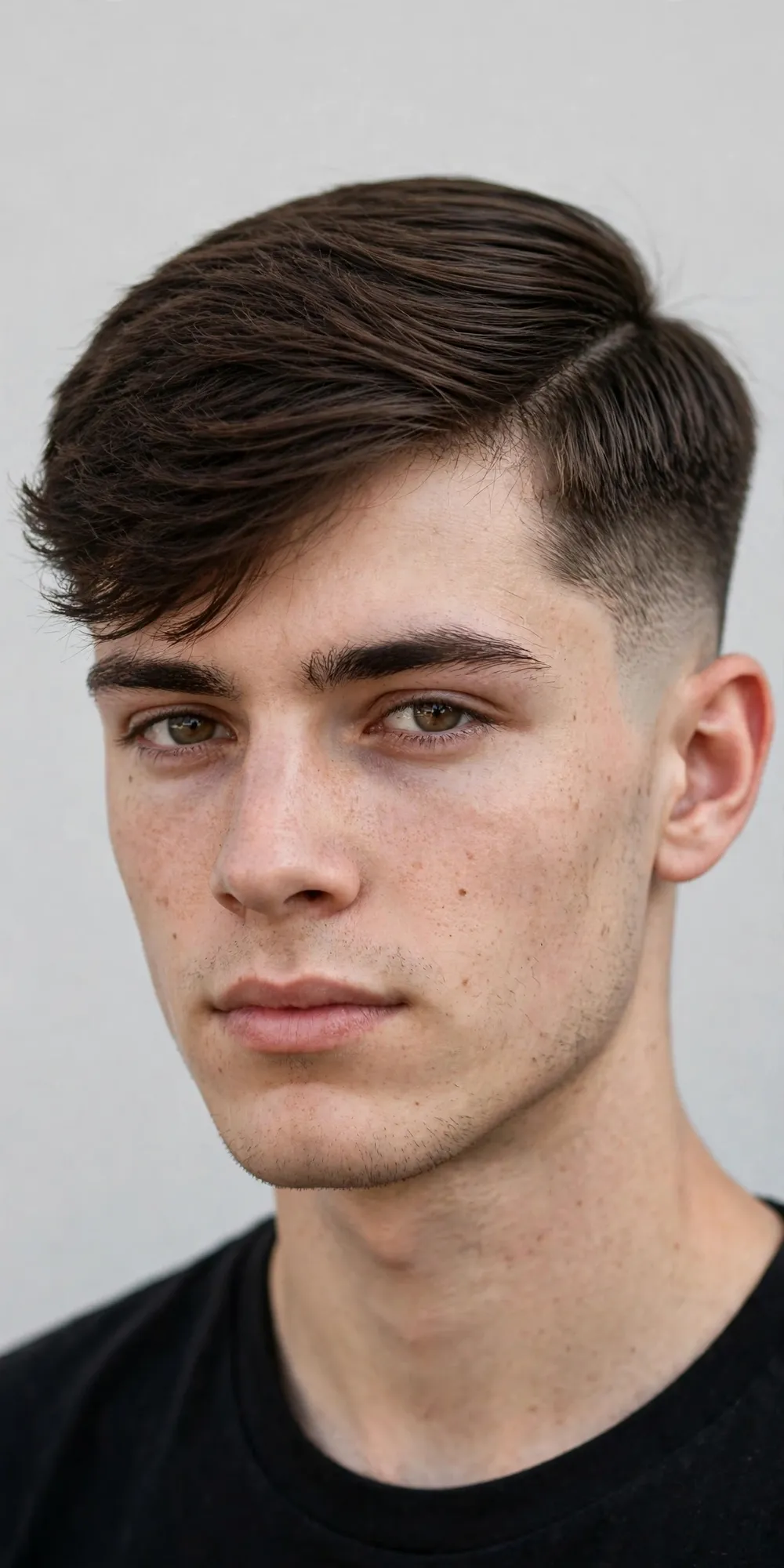
The comb over meets the modern fringe. A short, textured fringe is swept to one side, so you get the direction of a comb over with the relaxed, youthful edge of a fringe cut. It suits men who want a current look without a full fade — the fringe keeps it casual while the side sweep keeps it classic. Ask for a textured fringe cut short across the forehead, swept to one side, with a low taper on the sides. A matte clay or texturising spray, worked in with fingers, gives the fringe its separation. It’s an easy morning style — two minutes, no comb. The fringe needs a trim every three to four weeks or it starts falling into the eyes. For a similar balance of classic and modern, compare it with the quiff haircut, which pushes the front up instead of across.
How Do You Choose the Right Classic Comb Over?
Start with your face shape, then your hair type. The same sweep looks completely different depending on the frame it sits on, and picking the wrong fade is the fastest way to a cut that fights your face.
| Face shape | Best comb over | Why it works |
|---|---|---|
| Oval | Any version | Balanced proportions suit every fade and part |
| Round | Mid or high fade, height on top | Adds length and draws the eye upward |
| Square | Low or mid fade, soft natural part | Lateral sweep softens a strong jaw |
| Oblong | Low taper or low fade, flat top | Adds width without adding height |
| Heart | Soft part, low fade | Balances a wide forehead against a narrow chin |
| Diamond | Mid fade, medium top | Keeps side width balanced against cheekbones |
| Hair type | Best comb over | Product to use |
|---|---|---|
| Straight | Classic or slick, hard part | Pomade for shine, clay for matte |
| Wavy | Textured or modern | Sea-salt spray or light cream |
| Curly | Loose sweep, low taper | Curl cream or light hold paste |
| Thick | Mid or high fade | Clay for strong hold |
| Fine or thin | Low taper, never a hard fade | Volumising mousse, light fibre paste |
| Grey | Natural part, low taper | Light cream; purple shampoo weekly |
If you’re torn between two versions, take the safer one — a low taper and a soft part rarely look wrong on anyone. You can always go bolder at the next cut. For more on choosing between related classic cuts, our guides to slick back hairstyles and the Ivy League haircut cover the closest alternatives.
What Products Does a Classic Comb Over Need?
You don’t need a shelf full of products — you need the right one for your hair and the finish you want.
Pomade is the classic choice. Water-based pomade gives a neat medium-to-high shine and a flexible hold, and it washes out easily. It suits straight hair and formal, slick versions of the comb over. Oil-based pomade holds stronger and shines more, but it’s harder to wash out — save it for special occasions.
Clay is the modern workhorse. Strong hold, matte finish, and it grips thick hair all day. Use it for textured comb overs, high fades, and any version where you want the sweep to stay put without shine. Warm a pea-sized amount between your palms before working it through.
Paste sits between the two. Medium hold, low shine, and the easiest to restyle during the day. It’s the best all-rounder for a natural or modern comb over, and it works on fine hair where pomade would be too heavy.
Mousse is for volume, not hold. Work it through damp hair before blow-drying — it’s the product that makes fine or thin hair look fuller and gives a brushed-up comb over its lift. On its own it won’t hold a sweep all day, so pair it with a paste or clay after drying. The comb over has been styled with all four of these for decades, and the right pick is the one that matches your hair, not the one with the best label.
5 Mistakes to Avoid With a Comb Over
- Forcing a part where your hair doesn’t want one. If your hair naturally separates on the left, don’t fight it to the right because a photo looked good. A forced part collapses by midday and leaves a cowlick fighting the sweep. Find your natural part and build the cut around it.
- Going too long on top to hide thinning. Long strands combed across a thin patch look worse than a shorter, honest cut. Two to three inches is the sweet spot for most men — anything longer just highlights what you’re trying to hide.
- Pairing a hard fade with fine hair. A high or skin fade next to a thin top makes the top look even thinner by contrast. Fine hair needs a low taper that keeps density on the sides. If you’re unsure, a low fade haircut for men is the safer middle ground.
- Using too much product. A comb over needs a pea-sized amount of pomade or clay, not a finger-full. Overloading the hair makes it greasy, heavy, and flat — and it stains collars. Start small; you can always add more.
- Skipping the blow-dry on a style that needs one. Brushed-up and textured versions rely on a dryer for their lift. Air-drying those cuts and expecting the same result is the most common reason a comb over looks flat at home when it looked great in the chair.
Frequently Asked Questions
What is a classic comb over haircut?
A classic comb over is a men’s haircut with a side part, the top swept to one side, and shorter tapered or faded sides. The top is usually two to three inches long, styled with a comb and a light-to-medium hold product. It suits almost every face shape and hair type, which is why it has stayed popular for decades.
Is a classic comb over outdated?
No. The comb over is one of the longest-running men’s cuts precisely because it adapts — the modern versions use softer parts, matte finishes, and fades instead of the stiff, shiny style of the 1950s. Worn with a textured top and a low fade, it looks current, not dated.
How long does hair need to be for a classic comb over?
You need at least two inches on top for a proper comb over, so the hair has enough length to sweep across and stay in place. Shorter than that and the sweep won’t hold its direction. Three inches gives more styling options, including texture and a brushed-up finish.
What is the difference between a classic comb over and a modern comb over?
The classic version has a defined side part, a neat swept top, and a tapered or faded side, usually with a polished finish. The modern version softens all of that: a barely-there part, a matte finish, more movement in the top, and often a fade. Same direction, looser execution.
Can a classic comb over work on curly hair?
Yes, as a loose sweep rather than a sharp part. The curls stay visible and are directed generally to one side, with a low taper on the sides to keep the shape clean. It works best on loose curls or wavy hair — tight coils fight the sweep and suit a shorter cut better. Use a curl cream and finger-comb it, never a fine comb.
What is the best classic comb over for older men?
The strongest mature version is a natural part with a low taper and a medium-hold product. It looks intentional and polished without trying to look young, and grey or salt-and-pepper hair makes the part line stand out nicely. Keep the top around two inches and avoid heavy gel, which can make grey hair look yellow.
How do I ask my barber for a comb over?
Tell your barber three things: where you want the part, how long you want the top, and what finish you want on the sides. A good script is: “A classic comb over — side part on the left, two to three inches on top, low taper on the sides, matte finish.” Bring a photo if you have a specific version in mind, and mention your hair type so the barber can adjust the cut.
Final Word
The classic comb over has lasted this long because it does the basics better than almost any other men’s cut — a clean part, a neat sweep, and sides that frame the face. Pick the version that fits your hair and your face, keep the top at two to three inches, and let the cut do the work. For more ideas, browse more hairstyle guides and find the next cut worth trying.