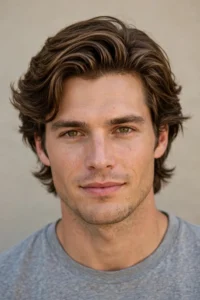


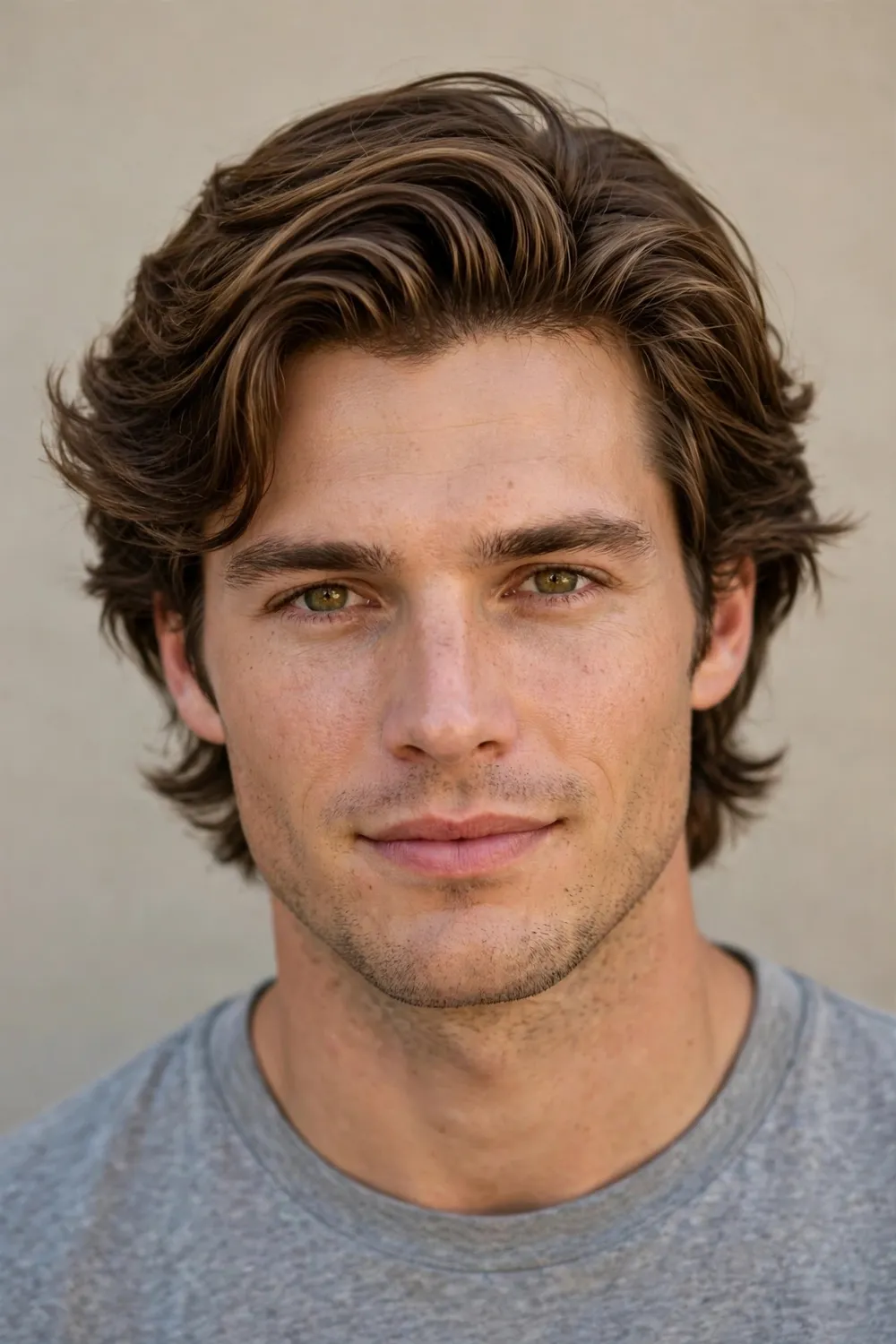
A bro flow haircut is a medium-length layered cut where the hair is swept back and to the sides, with enough natural movement that it looks like it just fell into place. You need roughly four inches on top before it starts to work properly, and the look is also known as a hockey flow — the same style players have worn for decades, long enough to curl out from under a helmet. If you want somewhere to start, my top three picks are the Classic, the Wavy, and the Surfer, and the other 39 styles below cover every hair type, face shape, and level of effort in between.
1. Classic Bro Flow
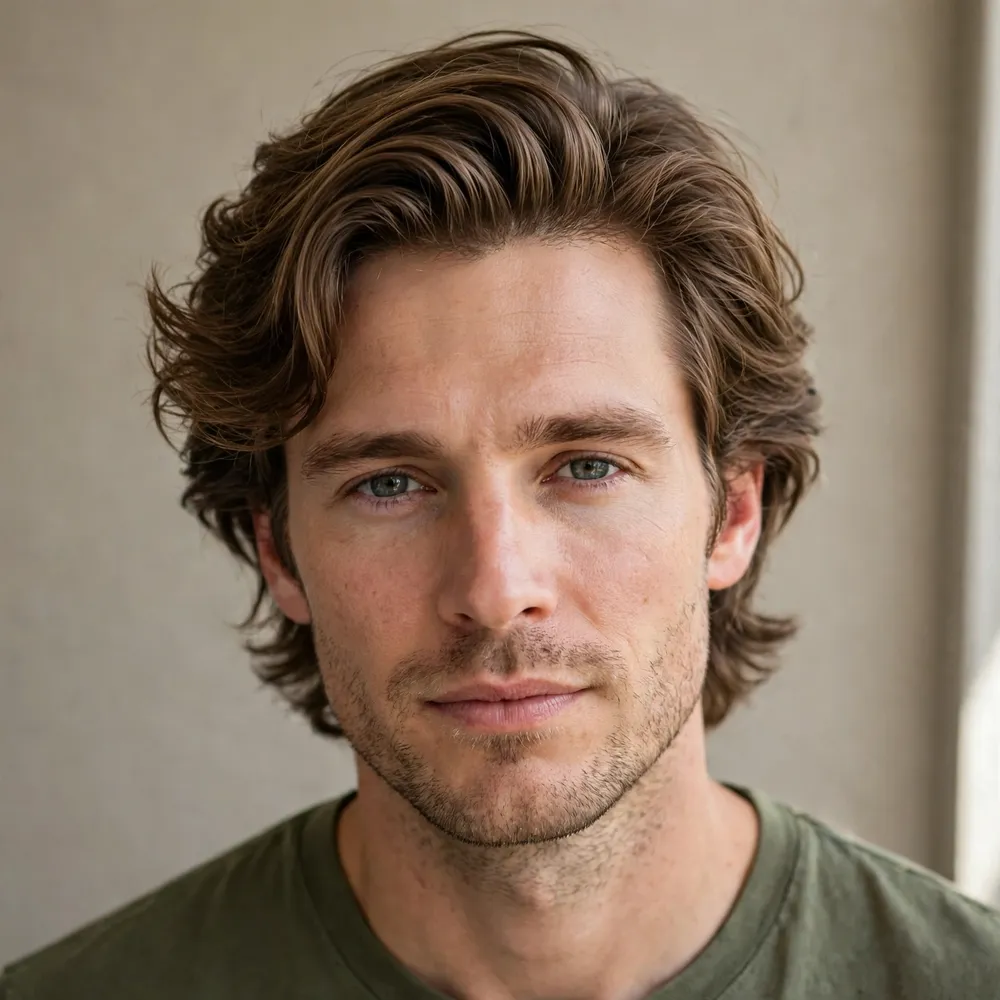
The Classic is the version everything else is measured against. Medium layers through the top and sides, brushed back and slightly to the side, with the back just touching the collar. It suits oval, square, and heart-shaped faces best, and it works on straight to slightly wavy hair with medium density. Ask your barber for layered medium length on top, around four to five inches, with the sides blended into the flow rather than cut short. A pea-sized amount of light cream gives it hold without stiffness, and a quick blow-dry backwards sets the shape. Maintenance is honest and light: a trim every six to eight weeks keeps the layers from collapsing, and on lazy mornings a bit of water and a comb is genuinely enough.
2. Wavy Bro Flow
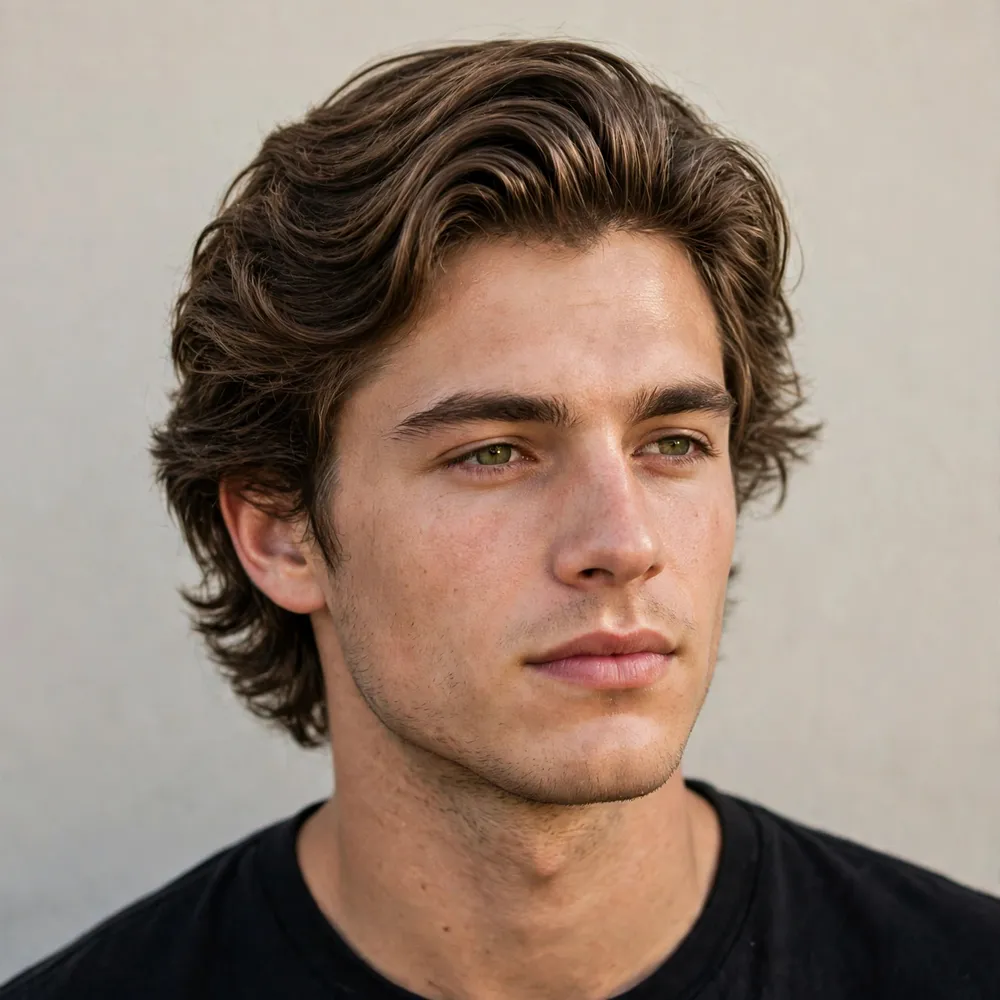
The Wavy Bro Flow is the one that looks effortless because the hair does most of the work. Natural waves give the cut its shape, so the layers just need to sit at different lengths and let the texture show. It suits oval and oblong faces particularly well, since the width of the waves balances a longer face, and it is made for naturally wavy or wavy-straight hair. Ask your barber for long layers that follow your wave pattern, with the weight taken out of the bulk so the waves can actually move. Sea salt spray on damp hair, scrunched in and left to air-dry, is all the styling this needs. Trim every six weeks or so, and accept that no two days will look identical — that is the whole point of it.
3. Curly Bro Flow
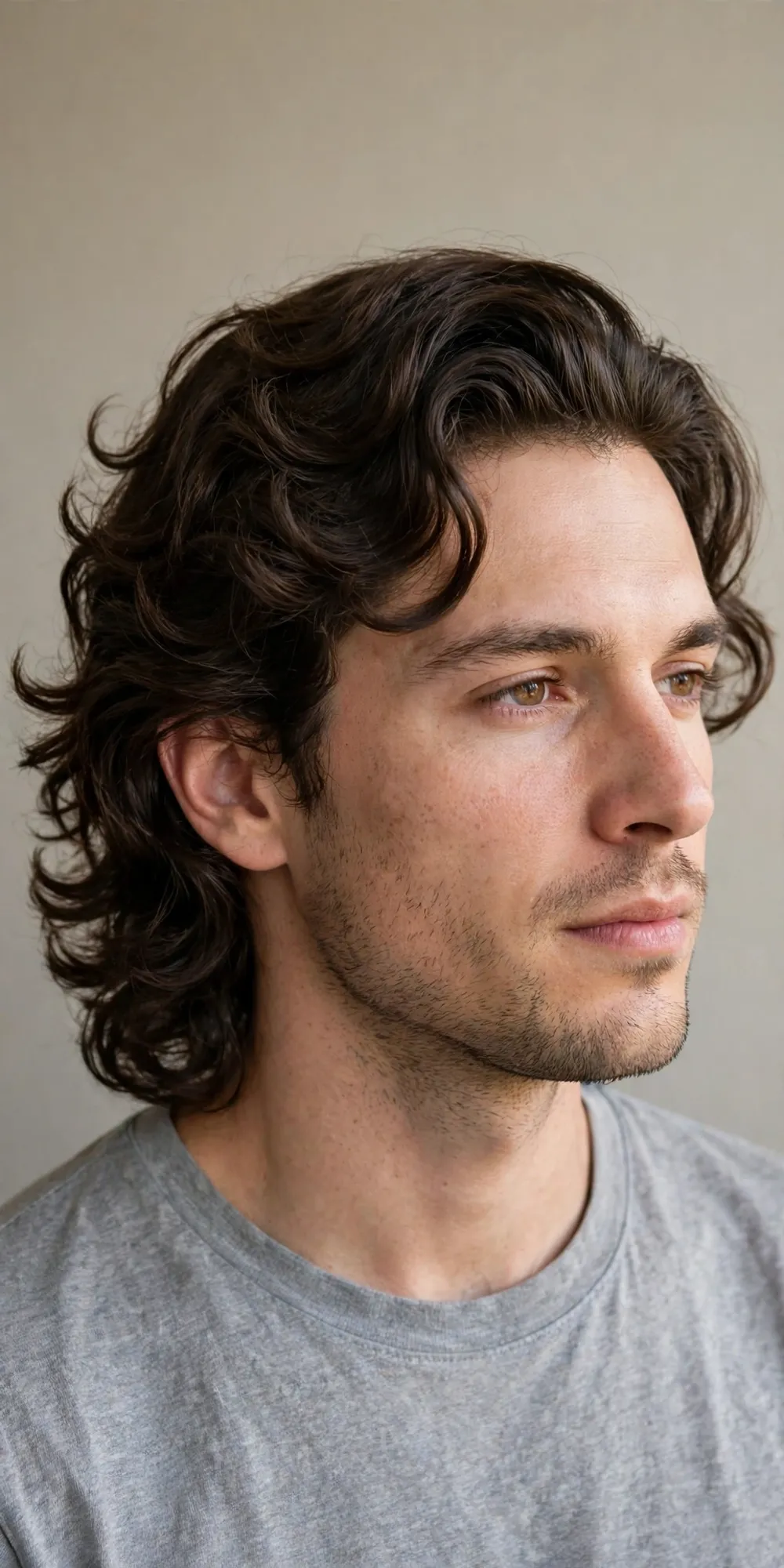
A Curly Bro Flow keeps curls long on top and layers them so they fall backwards instead of puffing out sideways. The trick is weight: too much bulk and it becomes a round shape, too little and the curls lose their character. It suits round and square faces well, since the backward direction adds length to the face, and it is built for medium to tight curls. Ask your barber to cut your hair dry or mostly dry, curl by curl, leaving the length on top and thinning the sides gradually. A curl cream worked through damp hair, then left alone — no brushing — keeps the pattern defined. Expect a trim every eight weeks, and plan on a few extra minutes of product each morning, because curls reward routine.
4. Straight Hair Bro Flow
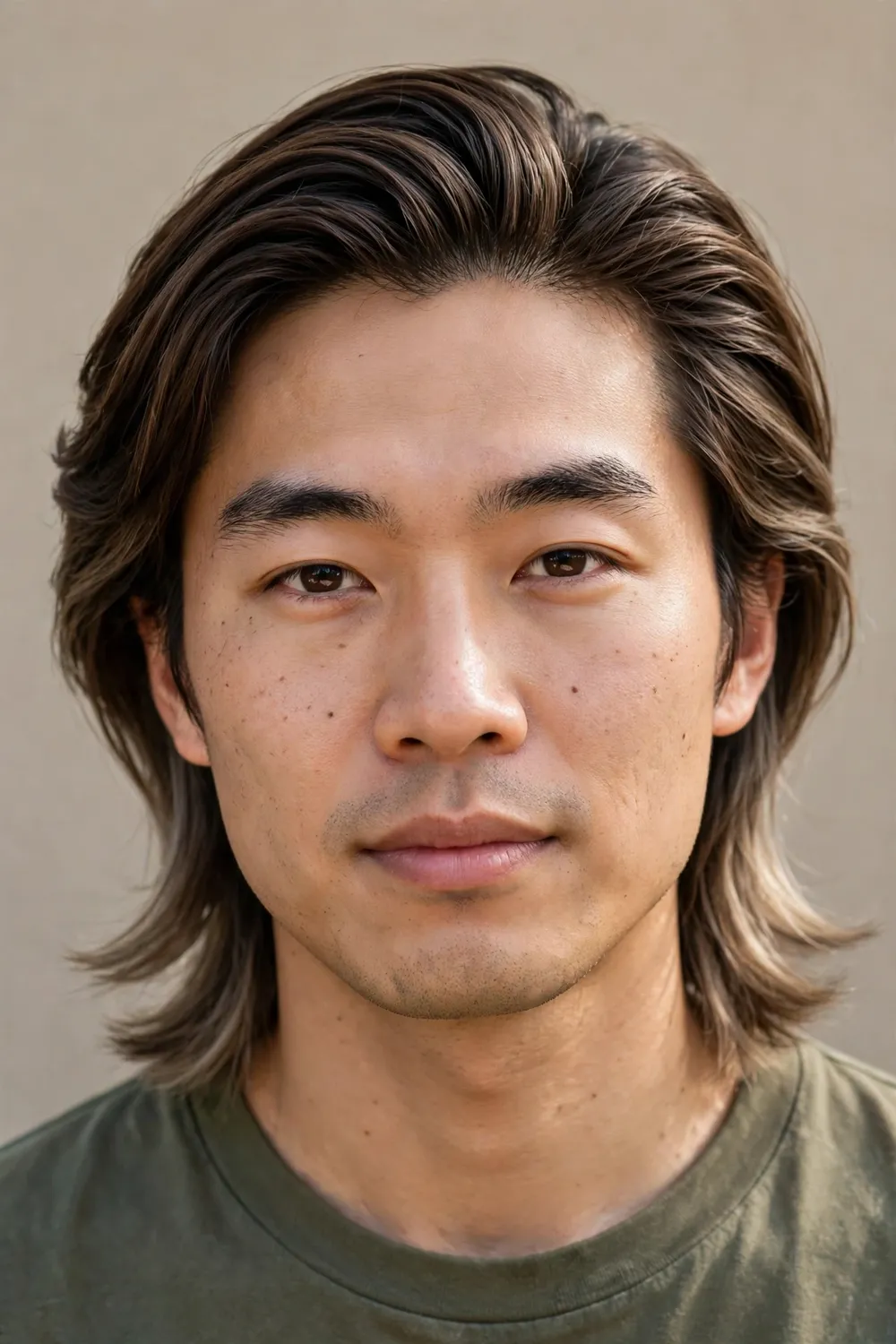
Straight hair can absolutely flow, but it needs deliberate layering or it just hangs flat. This version uses point-cut layers through the length so the ends move separately instead of falling in one heavy sheet. It suits oval and heart-shaped faces, and it works best on straight hair with medium thickness — very fine hair can look stringy at this length. Ask your barber for medium layers with point-cut ends, the front kept long enough to tuck or sweep, and a soft taper at the neckline. A light styling cream or a dab of matte paste adds texture without weight, and a blow-dryer pointed backwards gives it lift at the roots. Maintenance is simple: trims every five to six weeks, and avoid heavy waxes, which will drag straight hair down by lunchtime.
5. Layered Bro Flow
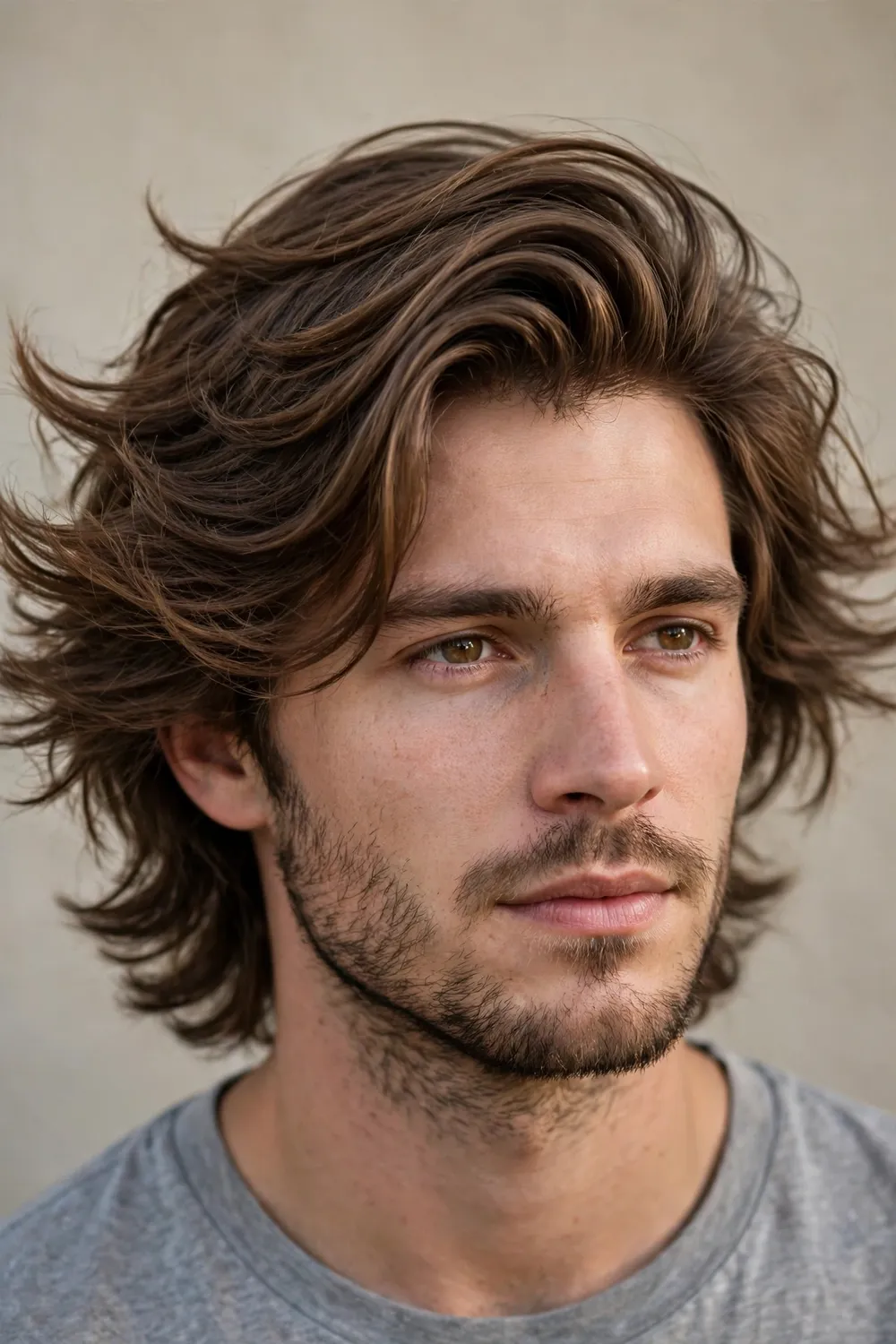
If movement is the whole reason you want a flow, this is the cut to ask for. Deliberate layers run through the entire length, so the hair separates into strands that shift when you move your head. It suits most face shapes, though it flatters oval and square faces most, and it works on straight, wavy, and loosely curly hair alike. Ask your barber for disconnected layers — short ones near the crown, longer ones toward the ends — with the sides layered into the top rather than undercut. A little sea salt spray or texture spray on damp hair brings out the separation, and a rough blow-dry with your fingers does the rest. Trim every six weeks, since grown-out layers are the first thing that makes a flow look untidy.
6. Textured Bro Flow
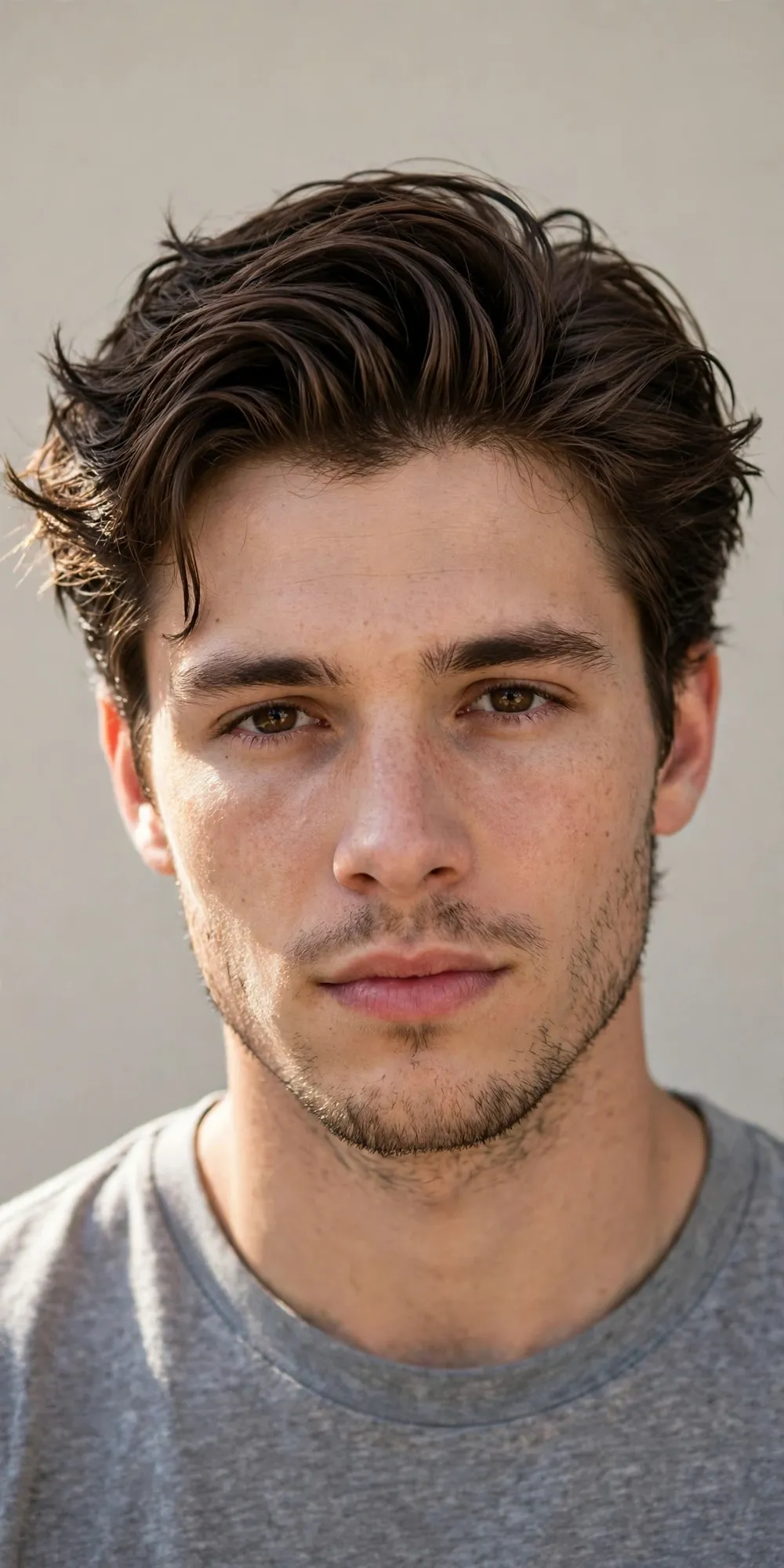
The Textured Bro Flow trades polish for edge. Choppy point-cut texture through the top breaks the hair into pieces, and a matte finish keeps it looking modern rather than slick. It suits square and angular faces well, because the roughness softens strong jawlines, and it works best on thick or medium-density hair that can hold the texture. Ask your barber for heavy point cutting and texturising through the top, with the sides kept a touch shorter so the texture reads clearly. Work a small amount of matte clay through dry hair, pinching pieces apart with your fingers. Maintenance is forgiving — the messier it gets, the better it looks — but a trim every five to six weeks stops the texture from turning into bulk.
7. Surfer Bro Flow
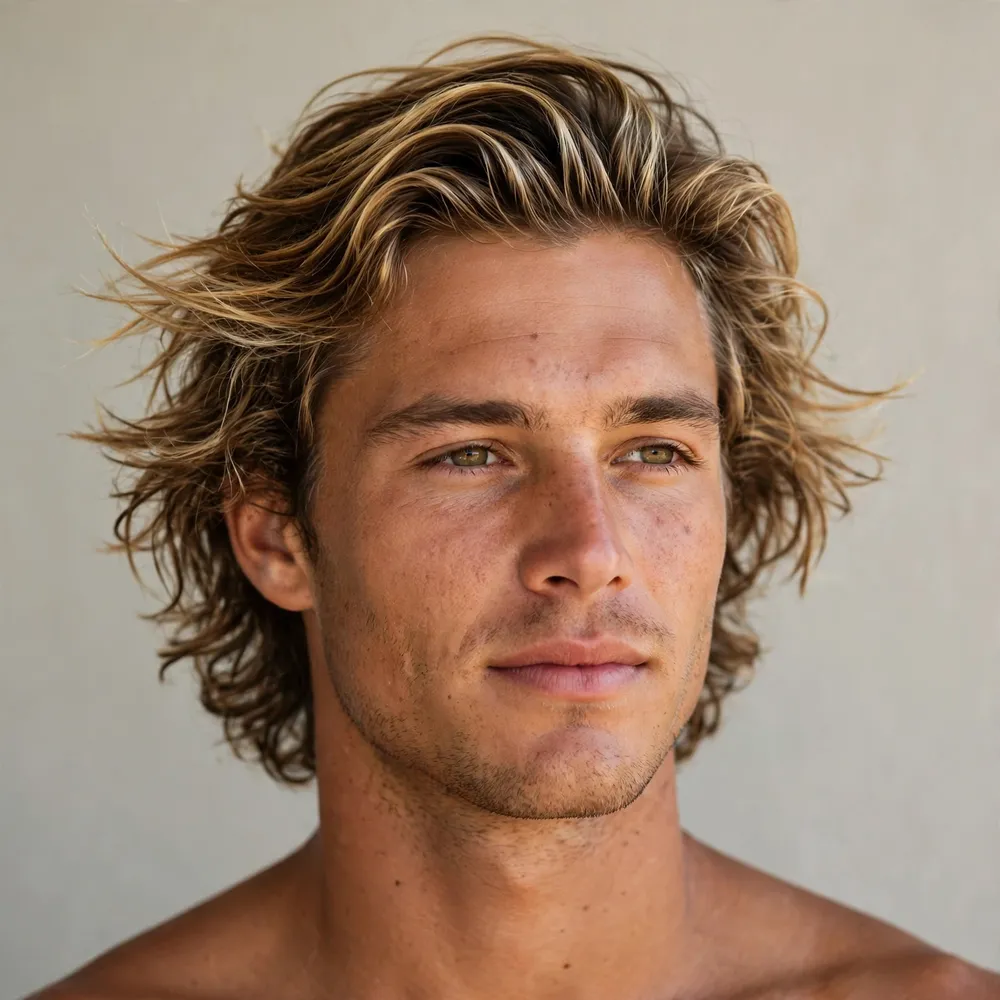
The Surfer is the beachiest flow there is: sun-lightened ends, loose waves, and a finish that looks like you spent the day in salt water. It suits oval, square, and diamond faces, and it is at its best on naturally wavy hair, though straight hair can be coaxed into it with the right product. Ask your barber for long layers with soft, almost invisible ends — nothing blunt — and mention you want the length to flick out at the collar. Sea salt spray is non-negotiable here: spray it into damp hair, scrunch, and let it air-dry. If your hair is not naturally sun-bleached, a few subtle highlights around the face sell the look. Trims every seven to eight weeks are enough, and honestly, the less you fuss over it, the better it looks.
8. Hockey Flow
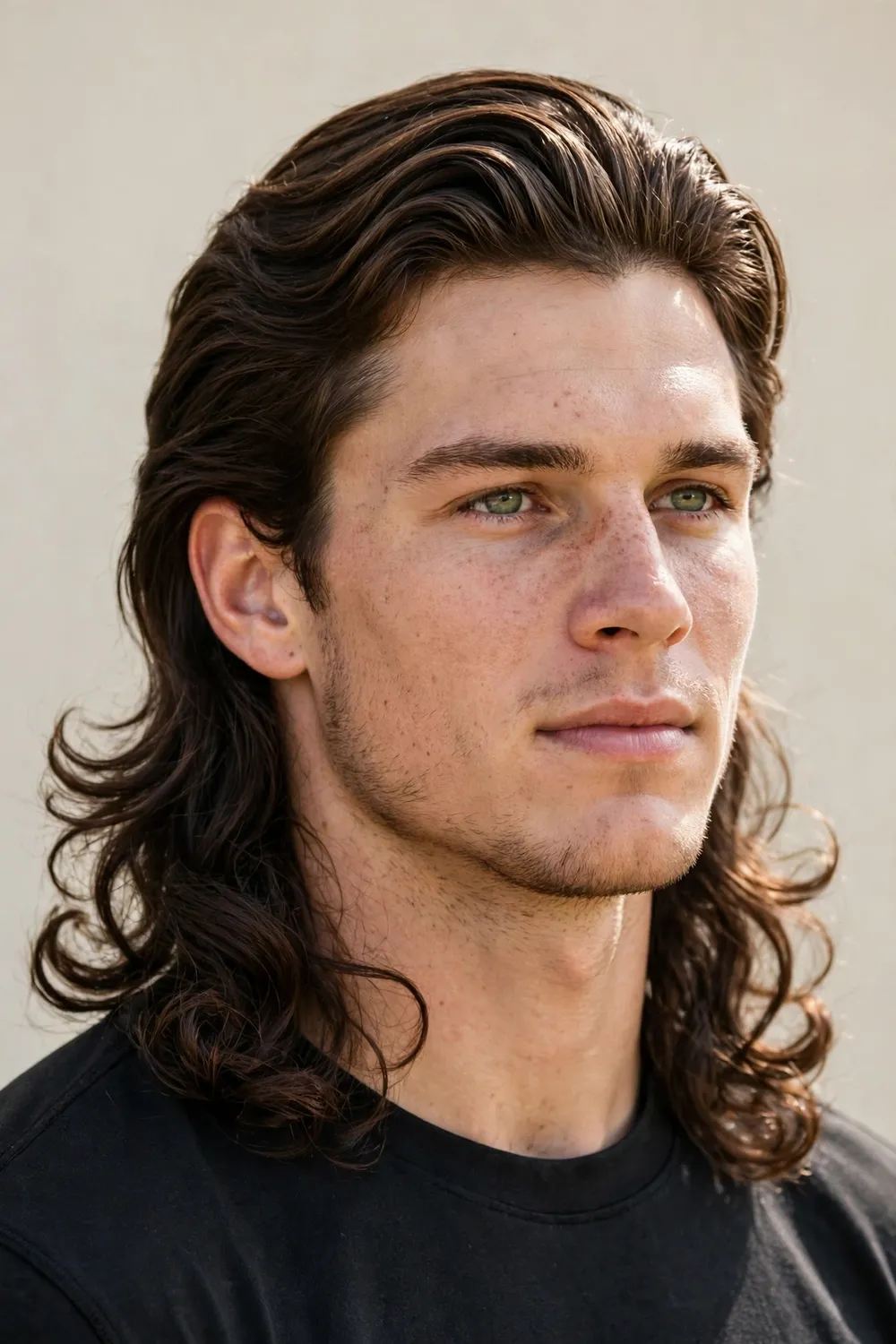
This is the original flow, the one the whole style is named after. It is grown long enough to curl out from under a helmet, with the back reaching the collar and the front long enough to push back. It suits oval and oblong faces, and it works on any hair type with enough density to hold the length — fine hair can struggle to keep its shape here. Ask your barber to leave the length alone and only clean up the layers and the neckline, keeping the natural curl at the ends. A light cream is all the product it needs; over-styling kills the whole idea. Maintenance is mostly patience — growing it out takes months — plus a tidy-up every eight weeks.
9. Short Bro Flow

The Short Bro Flow is the easiest way into the style. It has just enough length to sweep back — around three to four inches on top — so you get the shape of a flow without the months of growing it out. It suits nearly every face shape, and it is a good choice for straight or slightly wavy hair, or for anyone trying a longer style for the first time. Ask your barber for a medium-length top with layered sides, keeping the back just off the collar. A small amount of matte paste worked through damp hair and combed back is the whole routine, and it takes about thirty seconds. Trims every four to five weeks keep it from tipping into shaggy territory.
10. Long Bro Flow
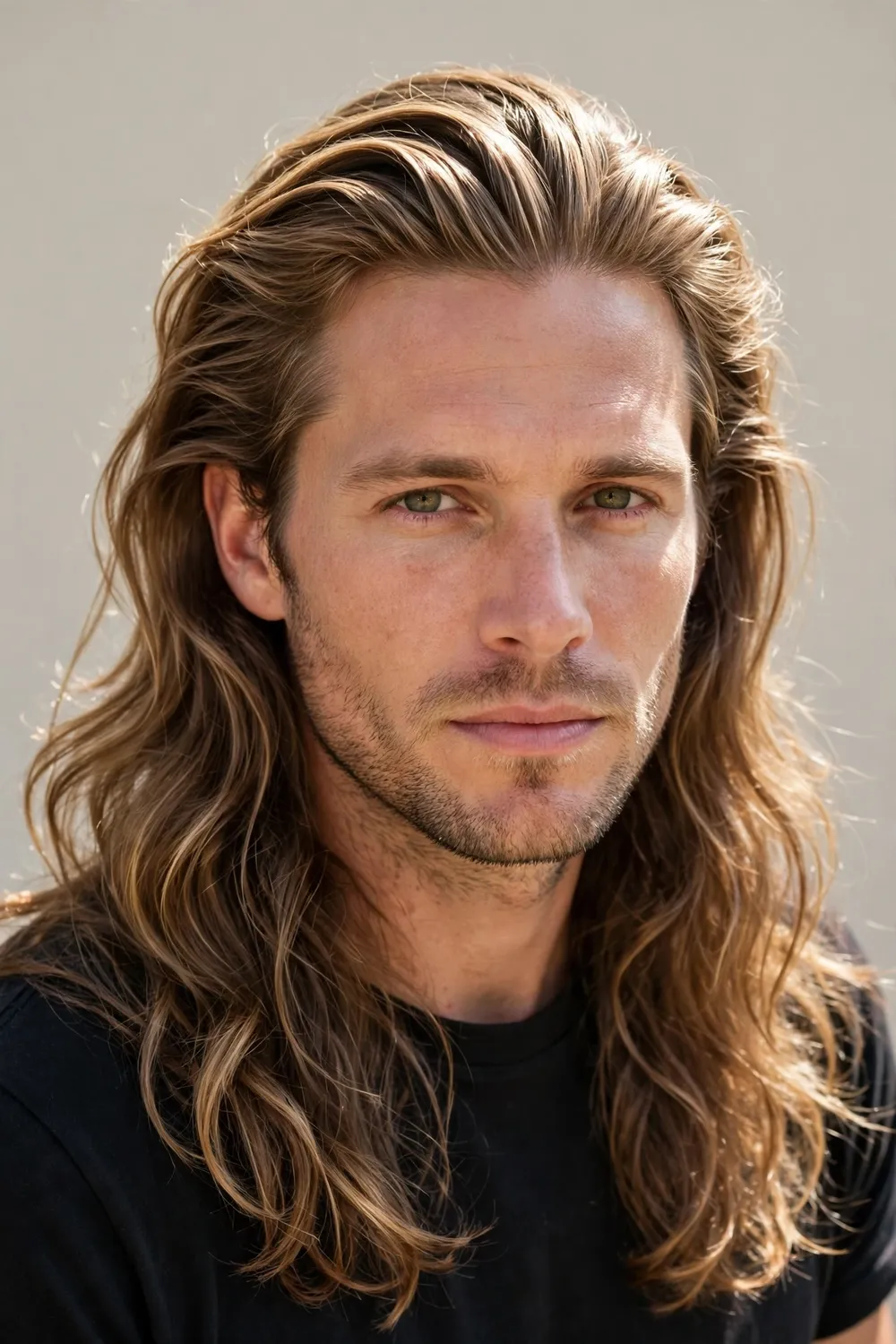
The Long Bro Flow goes all in: eight inches or more on top, flowing past the ears and well past the collar. It suits oval and square faces, and it needs thick or medium-density hair — thin hair at this length tends to look flat and stringy. Ask your barber to keep the length and focus on internal layers that remove weight, so the hair moves instead of sitting in one heavy mass. A light cream or a leave-in conditioner keeps it manageable, and a wide-tooth comb is your best friend — never a fine brush on this length. Maintenance is real: expect a trim every eight weeks, regular conditioning, and a couple of minutes of styling each morning. It is a commitment, but nothing else moves quite like a genuinely long flow.
11. Medium Length Bro Flow

Four to six inches on top makes this the most common flow length, and there is a reason for that: it is balanced, easy to style, and suits almost everyone. It works on oval, square, and heart-shaped faces, and on straight, wavy, and loosely curly hair. Ask your barber for layered medium length with the sides blended down and the back kept just above the collar. A pea-sized amount of styling cream or a spritz of sea salt spray is enough, and a quick blow-dry backwards sets the shape in under two minutes. Maintenance is the easiest of any flow here — a trim every six weeks, minimal product, and it still looks decent on the days you do nothing at all.
12. Bro Flow with Taper
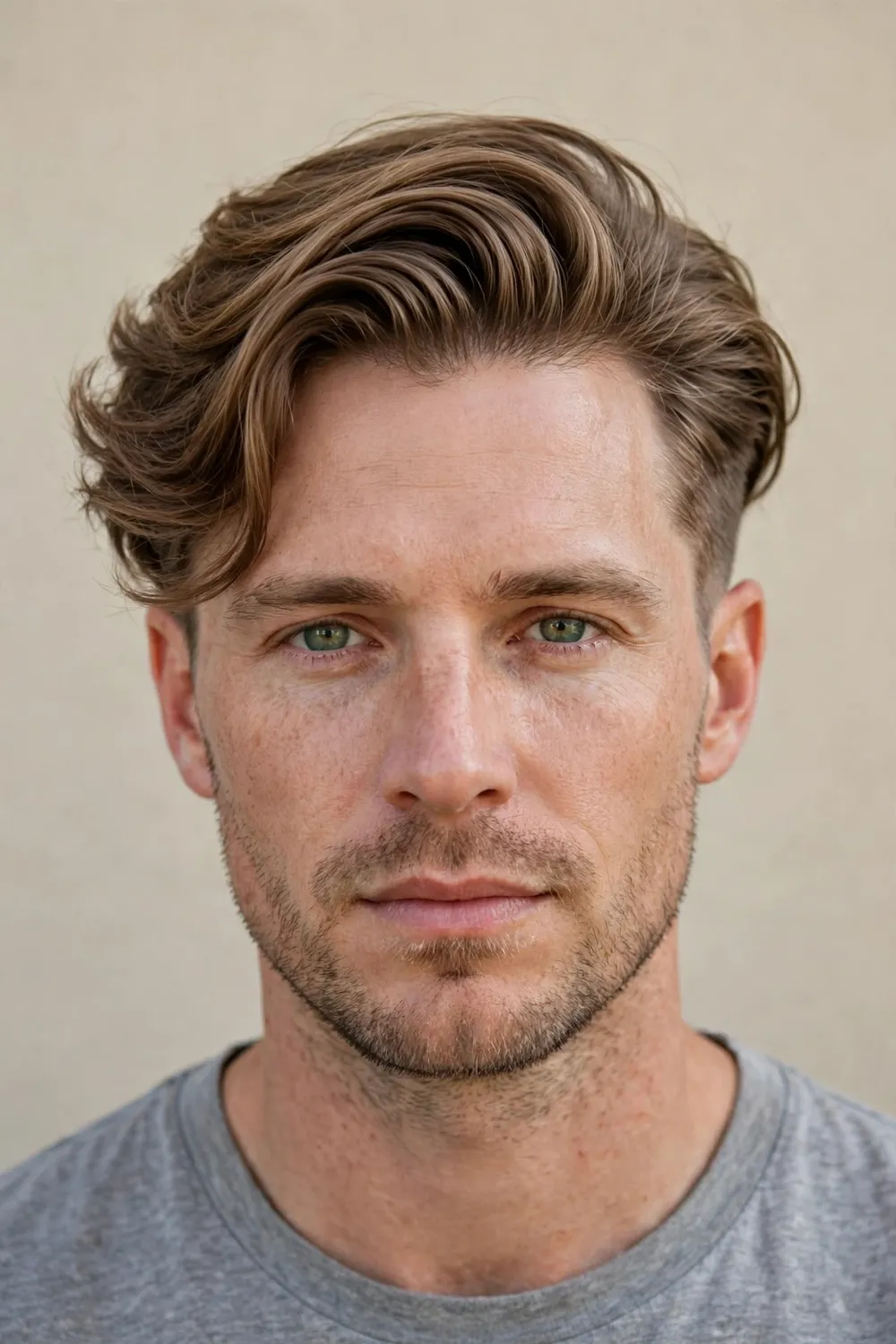
Adding a taper gives the flow a clean frame without shortening the top. The sides and neckline are gradually tapered down while the length on top stays untouched, so the cut looks deliberate rather than just grown out. It suits round and square faces especially well, since the tidier sides add structure, and it works on most hair types. Ask your barber for a taper on the sides and back — not a fade, just a gradual shortening — with the top left at full flow length. A light cream or matte paste finishes it, and the taper means you can go a little longer between full cuts if you keep the neckline tidy. Trim the top every six to eight weeks and clean up the taper every three to four.
13. Bro Flow with Low Taper Fade
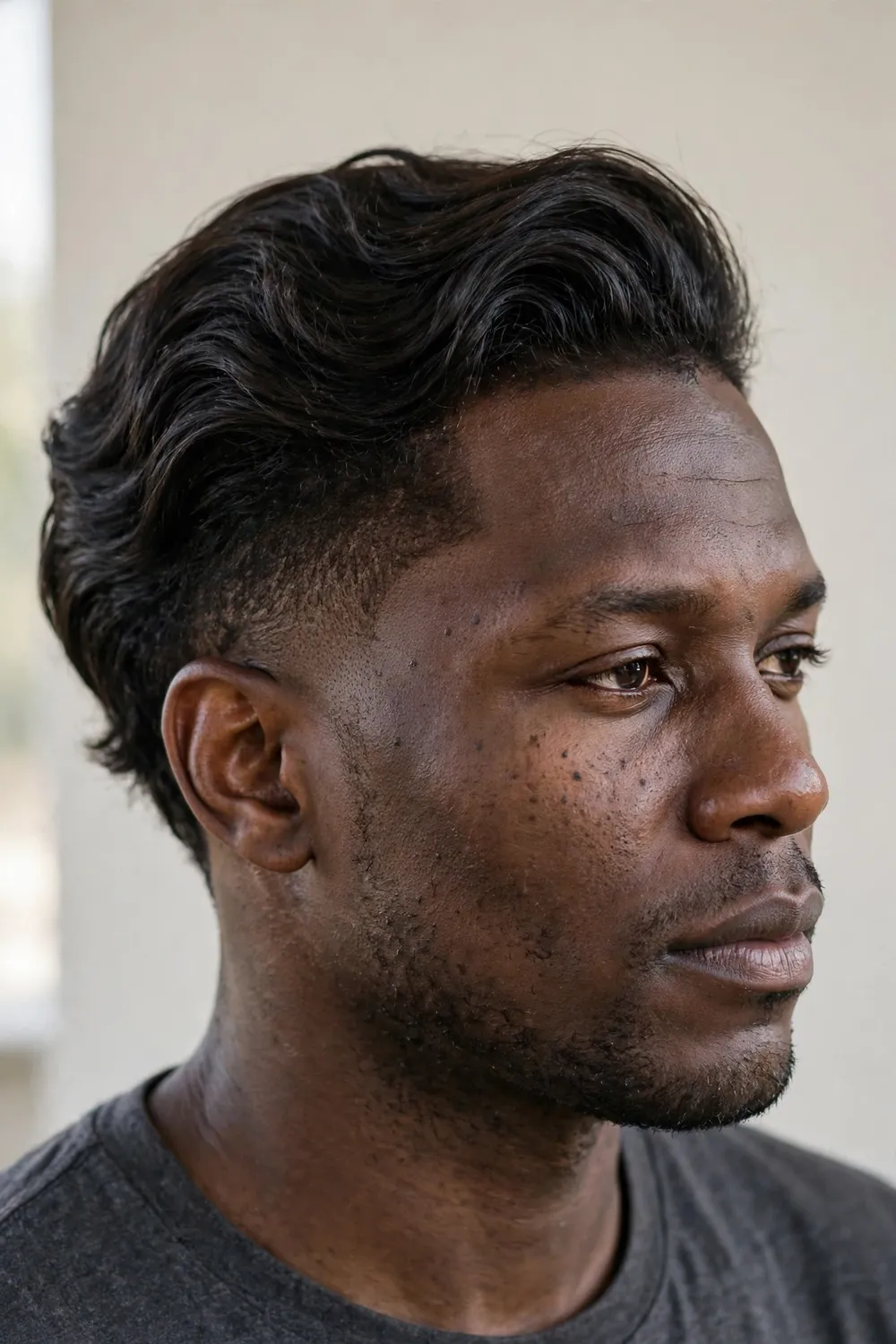
The low taper fade is the subtlest fade you can put under a flow. It sits just above the ear and around the neckline, fading out low while the bulk of the side stays long enough to blend into the top. It suits oval and square faces, and it is a smart choice for thick hair, where the fade removes bulk exactly where it tends to build up. Ask your barber for a low taper fade — faded to skin or a zero at the very bottom, blending up within an inch — with the flow length untouched on top. Style the top as usual, and keep the fade crisp with a touch-up every three weeks. The top only needs a trim every six to eight weeks.
14. Bro Flow with Undercut
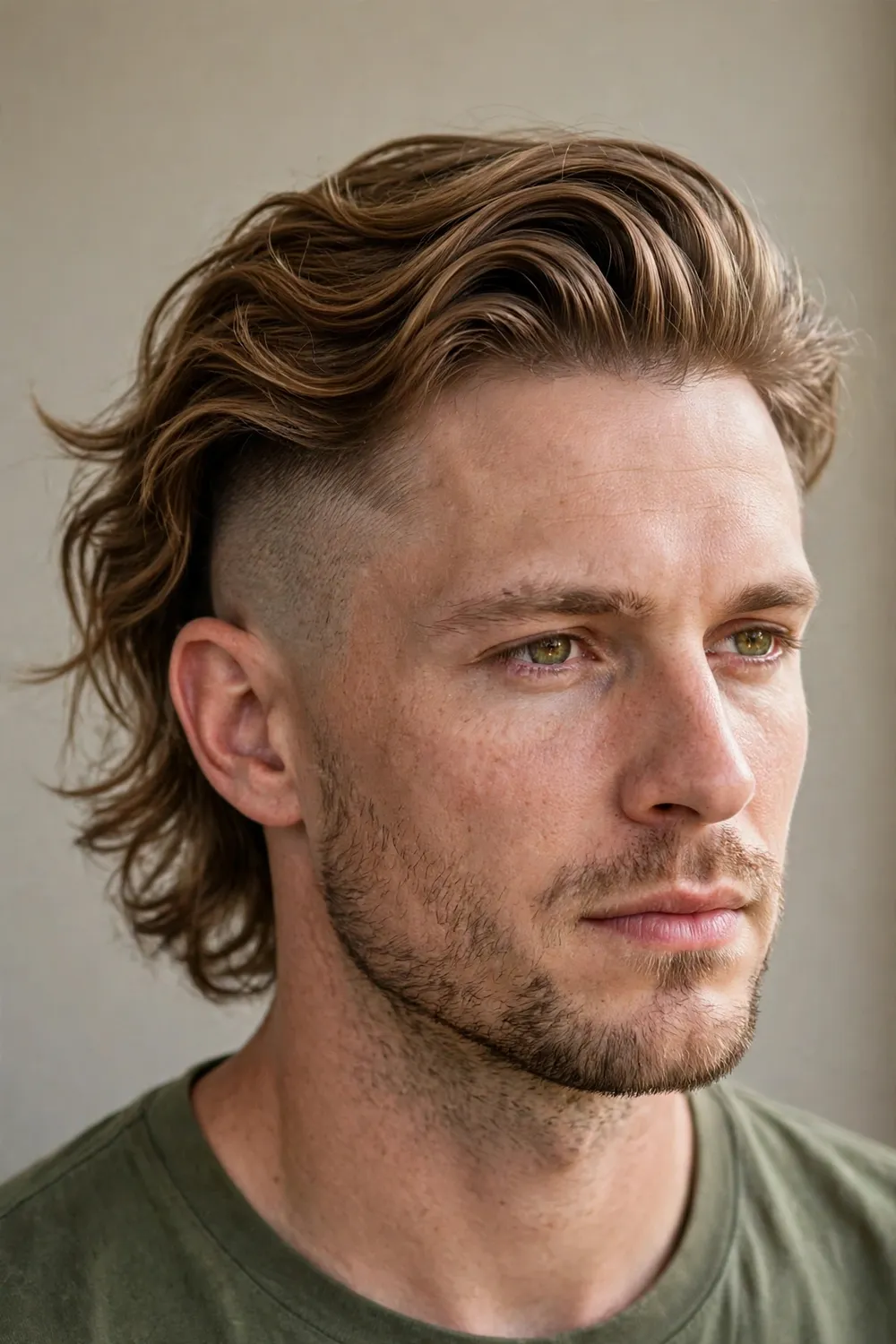
The undercut is the boldest contrast in this list: sides clipped short with no blend at all, while the flow stays long on top. It suits oval and square faces, and it works best on thick, straight, or wavy hair that can hold the weight of the top without the sides to support it. Ask your barber for a disconnected undercut — short on the sides and back, with a hard line where it meets the longer top — and be clear about how high you want the undercut to sit. A strong-hold matte clay keeps the top in place, since there is no side hair to anchor it. Maintenance is the trade-off: the undercut needs a clipper clean-up every two to three weeks, or the contrast disappears.
15. Bro Flow with Middle Part
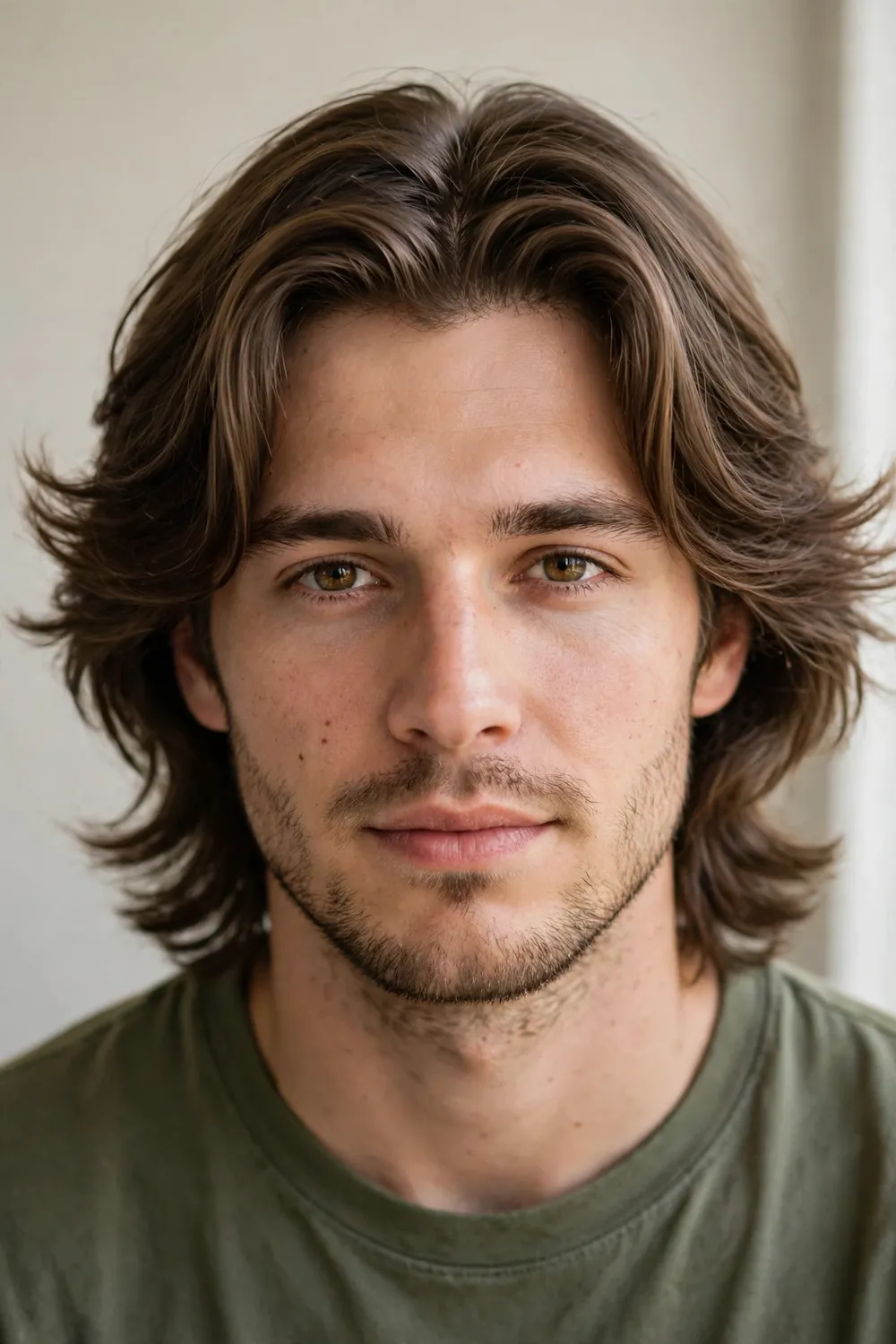
A centre part turns the flow into its curtain-style cousin, with length falling evenly on both sides of the face. It suits oval and oblong faces best — it can widen a round face, so be cautious there — and it works on straight and wavy hair with enough length to reach the cheekbones. Ask your barber for a centre part with long, face-framing layers, the front longest at the sides and shorter toward the crown. A light cream smoothed through damp hair, parted in the middle with a comb, sets it up; let it dry naturally for the softest fall. Trim every six weeks, and be ready to re-part it after sleeping on it, since a centre part wanders overnight.
16. Side Part Bro Flow
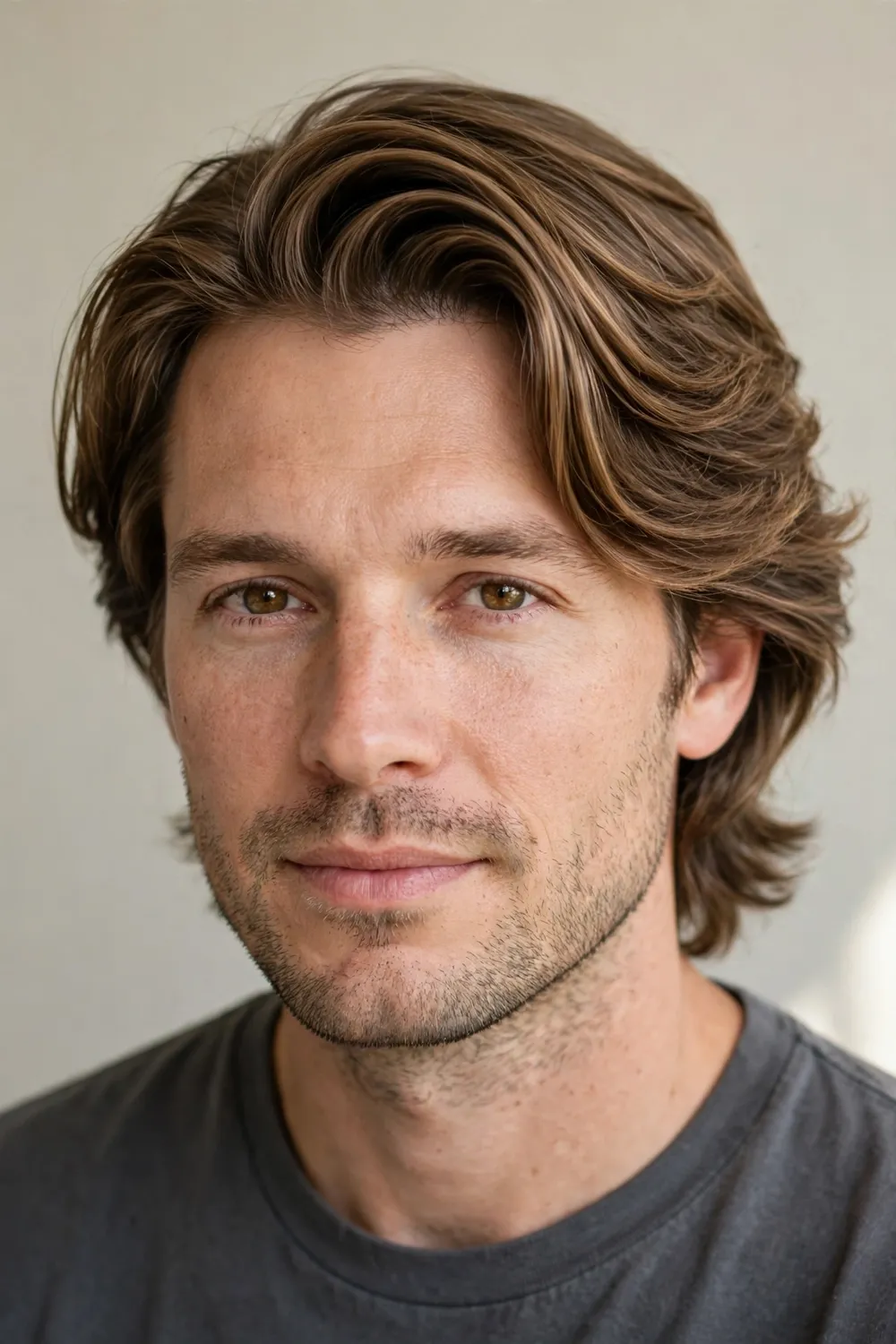
The side part is the tidier, more grown-up version of the flow. An off-centre part sends the bulk of the hair sweeping to one side, which gives the cut direction and makes it easier to control. It suits round and square faces particularly well, since the diagonal sweep breaks up symmetry, and it works on straight and wavy hair. Ask your barber for a side part on your natural parting side, with the longer side layered to sweep and the shorter side kept neat. A dab of light pomade or cream, combed into place while damp, gives it hold with a natural shine. Maintenance is straightforward: trims every five to six weeks, and a quick comb-through in the morning. It is also the most office-friendly flow on this list, if that matters to you.
17. Messy Bro Flow

The Messy Bro Flow is bedhead made deliberate: tousled layers, no neat part, and texture doing all the talking. It suits oval and square faces, and it is easiest on wavy or thick hair that holds a tousle — very straight hair will need more product to keep the shape. Ask your barber for choppy layers with plenty of point cutting, and tell them you want it to look undone rather than polished. Work texture spray or matte paste through dry hair with your fingers, pushing pieces in different directions. The honest truth is that this one needs more styling time than it looks like it does — about three to five minutes of scrunching and pinching. Trim every six weeks.
18. Brushed Back Bro Flow
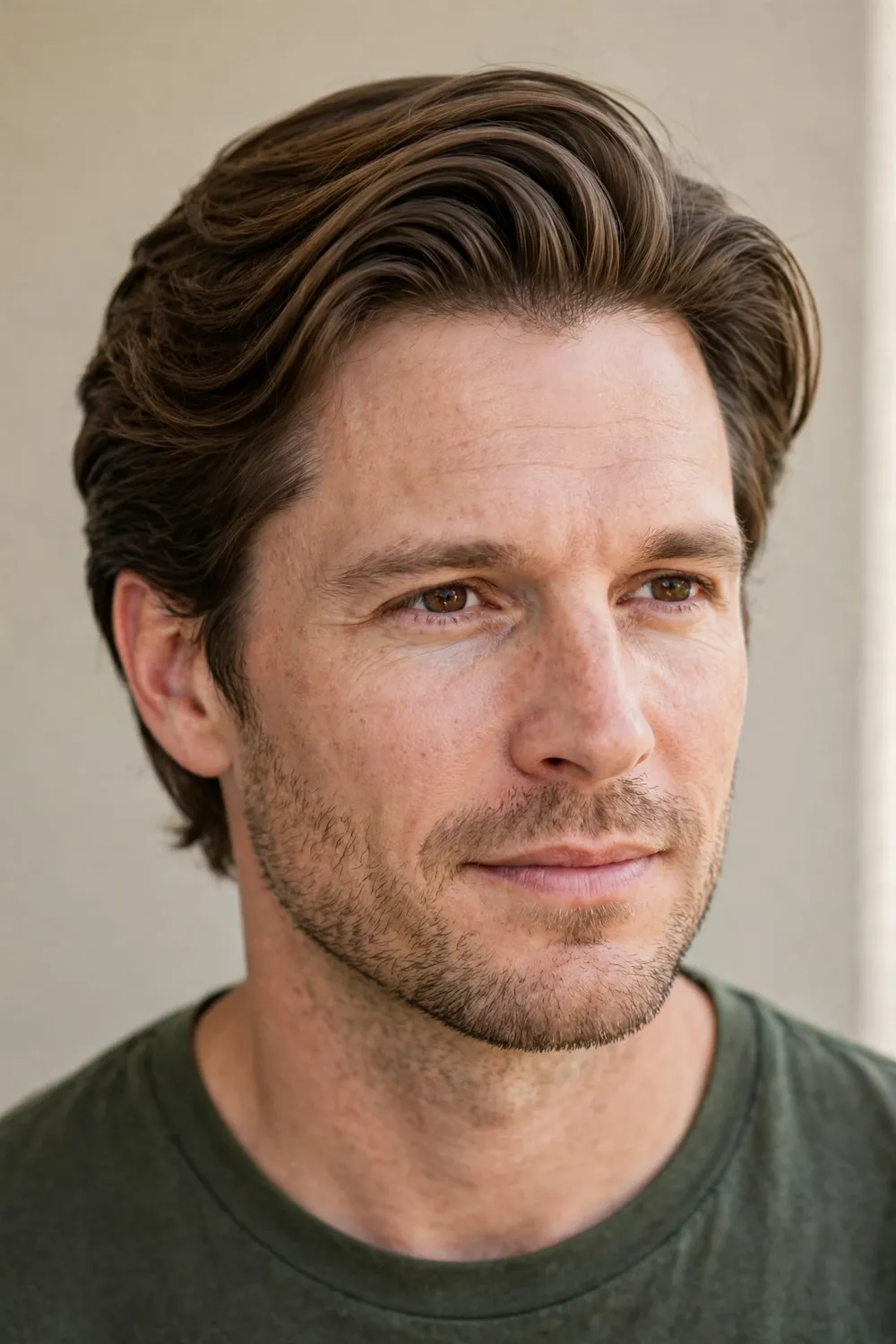
The Brushed Back flow is the polished end of the spectrum: hair blow-dried straight back with volume at the crown, every strand heading the same way. It suits oval and square faces, and it works best on thick, straight, or wavy hair that can hold height at the front. Ask your barber for layered length with a slightly shorter crown area so the volume has something to grip, and keep the sides blended. Blow-dry backwards with a round brush or your fingers, then finish with a medium-hold cream or a light pomade for shine. Maintenance is the highest among the classic flows — a trim every five weeks, plus a few minutes with a dryer every morning, because this one falls flat without the blow-dry.
19. Bro Flow with Beard
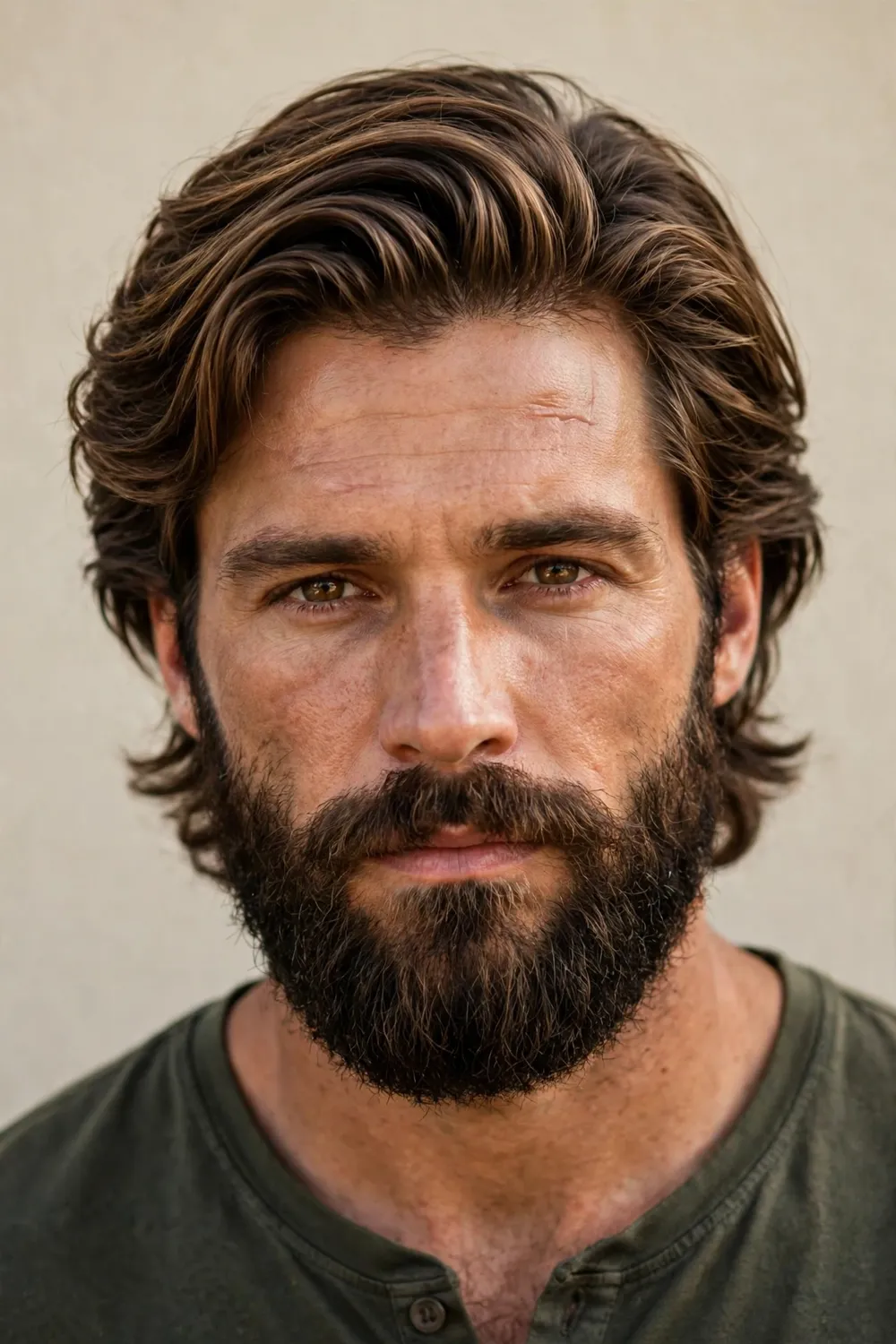
Flow on top and a beard below is the classic rugged pairing, and it works because the two balance each other: length up top, length down below, with the face framed in between. It suits square and oval faces best, and it works with any hair type, since the beard does half the visual work. Ask your barber to keep the flow at medium length and to shape the beard so the cheek line is clean and the neckline sits just above the Adam’s apple. A light beard oil and a dab of styling cream for the hair is the whole routine, and brushing the beard daily keeps it from looking wild. Trim the flow every six weeks and shape the beard every two to three, and keep the edges tidy.
20. Bro Flow with Full Beard
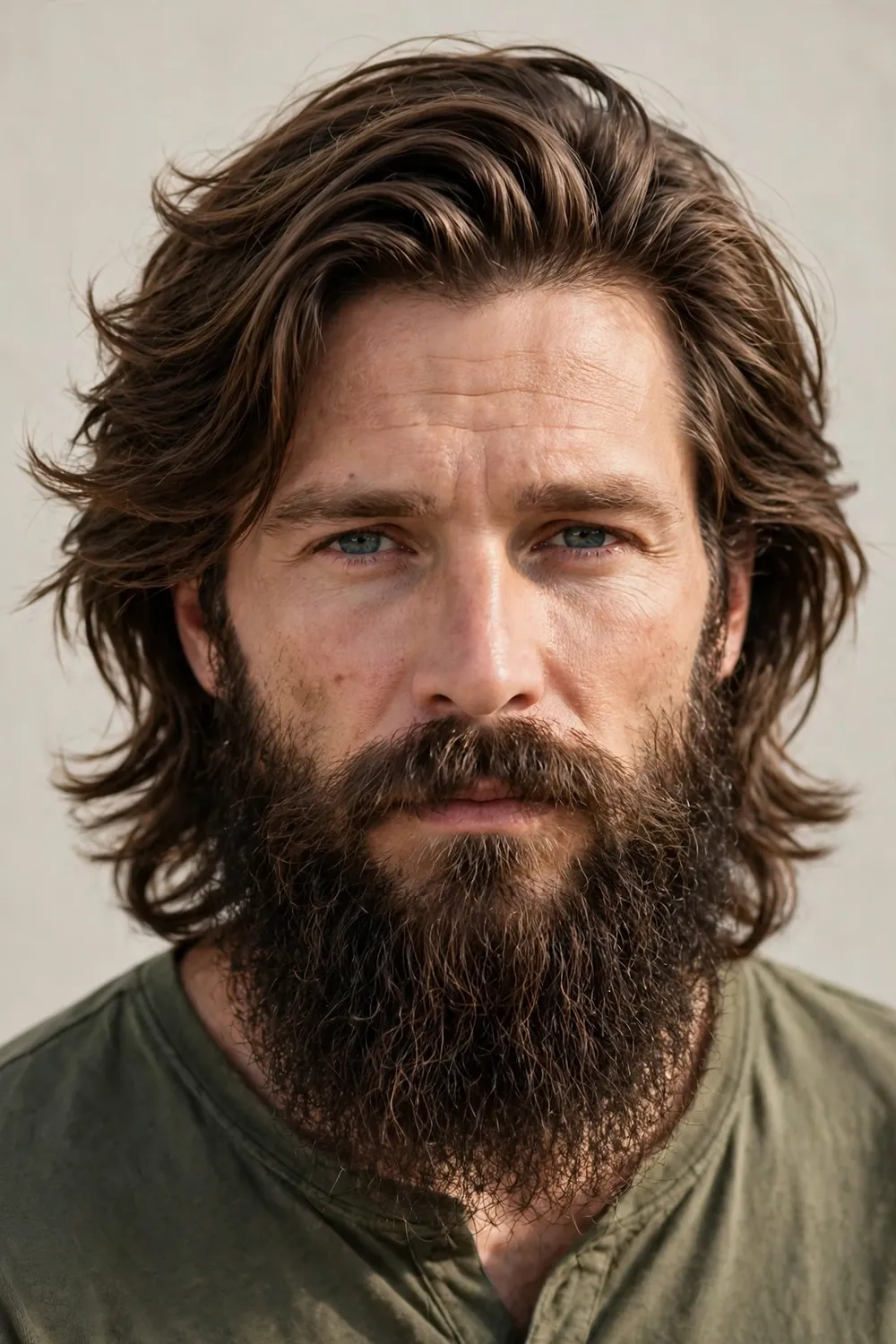
This is the boldest combination on the list: a long flow plus a grown-out full beard. It suits square and oval faces with strong jawlines, and it needs thick hair and a beard that actually grows in full — patchy beards will not carry this look. Ask your barber for a long, layered flow and a beard shaped with a defined cheek line and a tapered neck, keeping the length but removing the bulk. Beard oil is essential here, daily, and a boar bristle brush keeps the beard sitting flat rather than puffing out. Maintenance is significant: the flow needs a trim every seven to eight weeks, the beard needs shaping every two weeks, and both need washing and conditioning properly.
21. Bro Flow with Short Beard

The short beard is the balanced, office-safe version of the flow-and-beard pairing. A neat, boxed short beard frames the jaw without competing with the hair, so the flow stays the star of the look. It suits most face shapes, and it is a good option if your beard grows patchy at length but fills in fine when kept short. Ask your barber for a medium flow on top and a short boxed beard — trimmed to an even length, with sharp cheek and neck lines. A little beard balm keeps the short beard soft and in place, and a light cream handles the hair. Trim the beard weekly to hold the shape, and the flow every six weeks.
22. Thick Hair Bro Flow
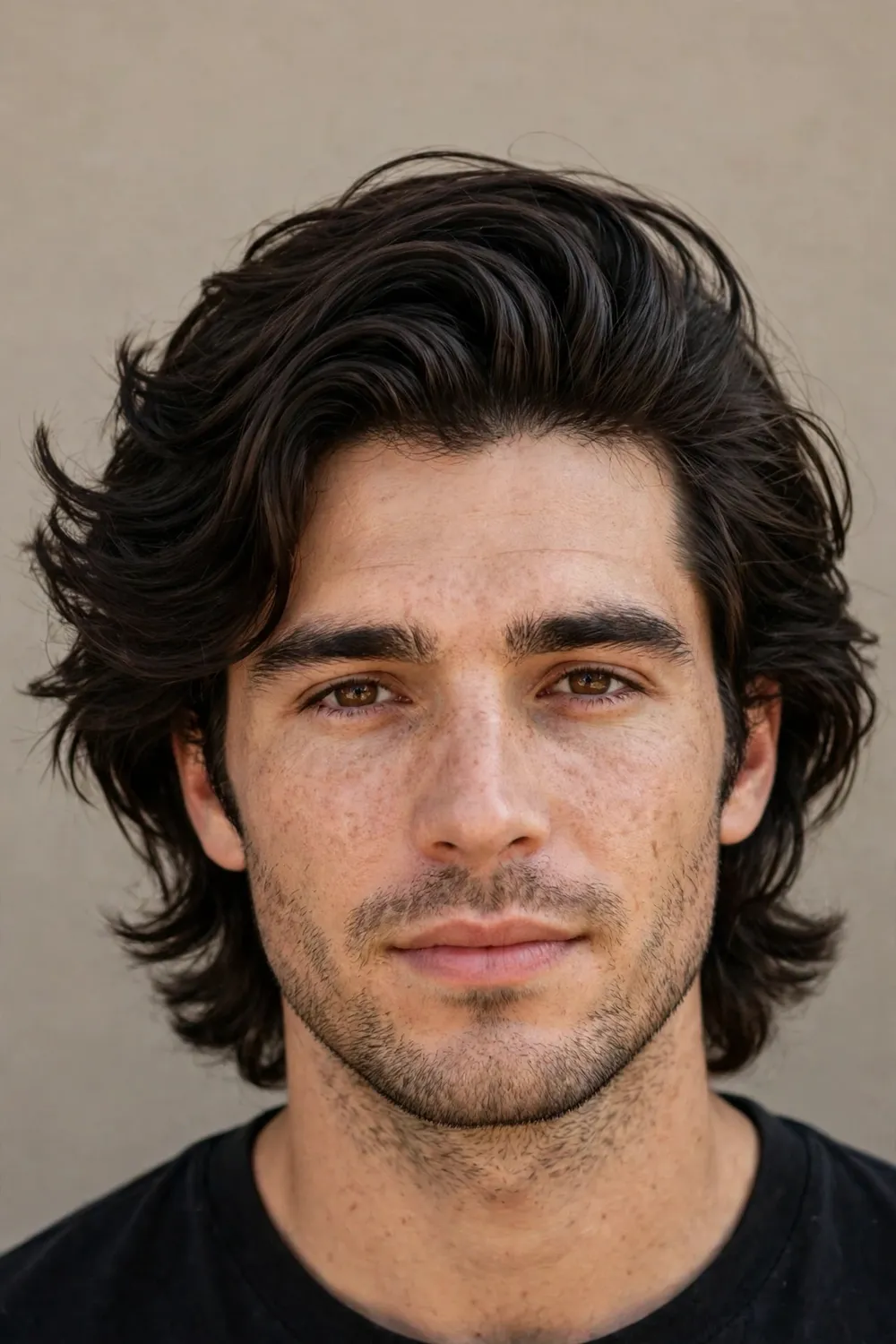
Thick hair is the bro flow’s best friend and its biggest problem in one. Left alone, it sits like a helmet — heavy, wide, and refusing to move. Thinned properly, it’s the best version of this cut: full, strong, and holding its shape all day. The secret is thinning shears through the bulk underneath, not short layers on top. Ask for “a bro flow with weight removed underneath, layers kept long, and the sides thinned so it sits close.” It suits oval, square, and round faces, since the length narrows a wider face. A dab of matte clay through damp hair gives hold without shine. The catch: thick hair regrows its bulk fast, so book thinning every five to six weeks.
23. Fine Hair Bro Flow
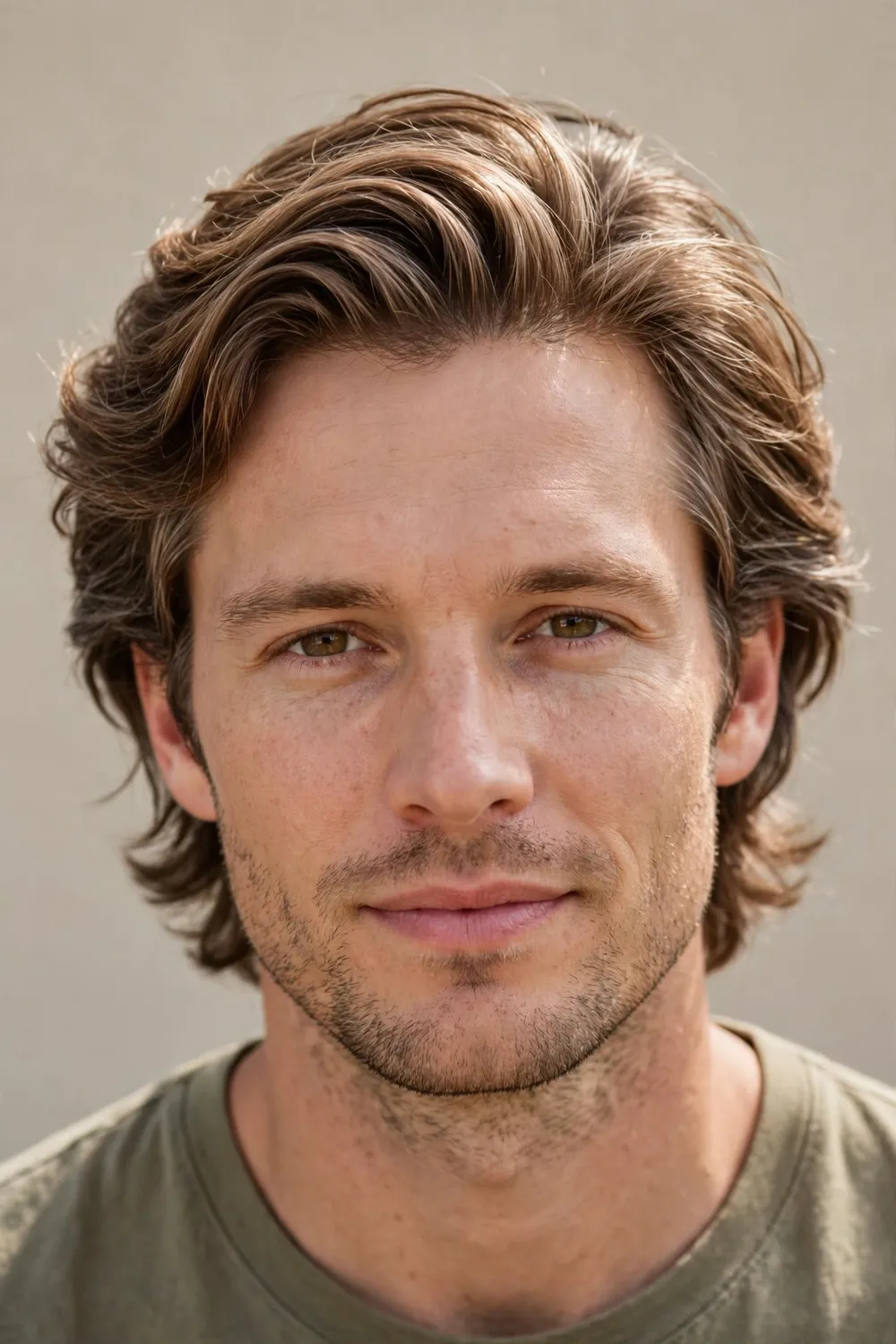
Fine hair and a bro flow sounds like a mismatch, but it works when the cut is built around volume. Shorter layers stack on each other, each one propping up the next, so the cut reads fuller than it is. Ask for “a medium flow with stacked layers for volume, nothing thinned, and a clean taper at the neck.” Keep the length at four to five inches and don’t thin the sides, or the scalp will show through. It suits oval and long faces best, since the added width balances a narrow face. Style it with sea salt spray on damp hair, rough-dried with your fingers. The catch: fine hair goes limp in humidity, so keep dry shampoo handy for day two.
24. Thin Hair Bro Flow

Thinning hair needs a flow that’s honest about what it’s working with. Go too long and the scalp shows through; go too short and there’s no flow at all. The sweet spot is around four inches on top, with choppy texture that breaks up the hairline. Ask for “a textured bro flow, medium length, point-cut ends, no heavy thinning, sides just long enough to blend.” It suits oval and square faces, and works best when thinning sits at the crown or temples. A light matte clay, used sparingly, adds grip without clumping strands and revealing scalp. The catch: it won’t hide advanced thinning, and it needs a trim every four weeks.
25. Bro Flow for Receding Hairline
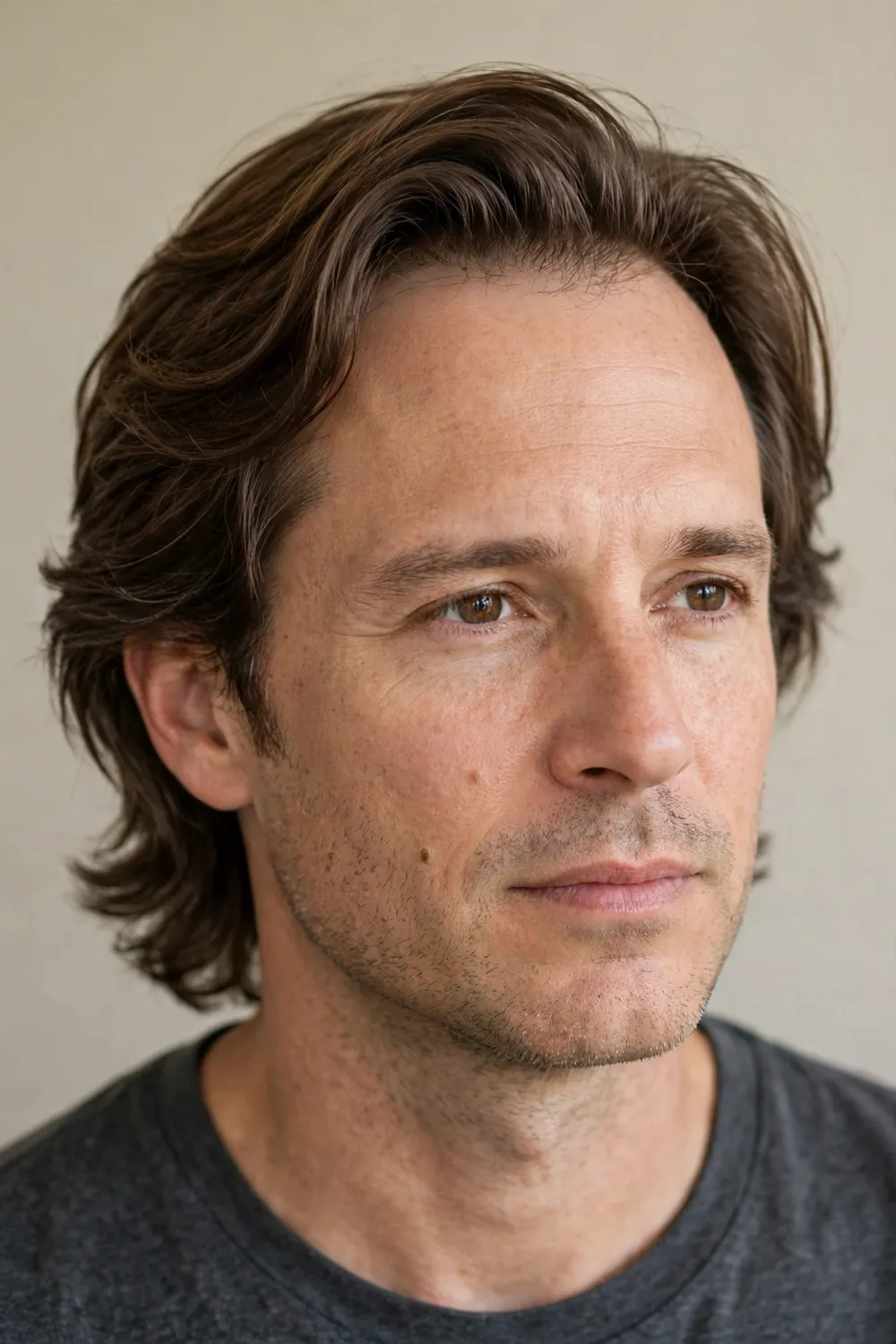
A receding hairline doesn’t mean giving up on a flow — it means using the flow to work with it. Longer front layers swept back create natural coverage over the temples. Because the hair moves, the eye never settles on the hairline itself. Ask for “a bro flow with the front kept long and swept back, corners left full, no hard taper at the temples.” It suits oval, square, and heart-shaped faces, and pairs well with a short beard, which draws the eye downward. Style it with a light cream on damp hair, brushed back and slightly to one side. The catch: this only works while the recession is mild to moderate — past that, go shorter.
26. Windswept Bro Flow
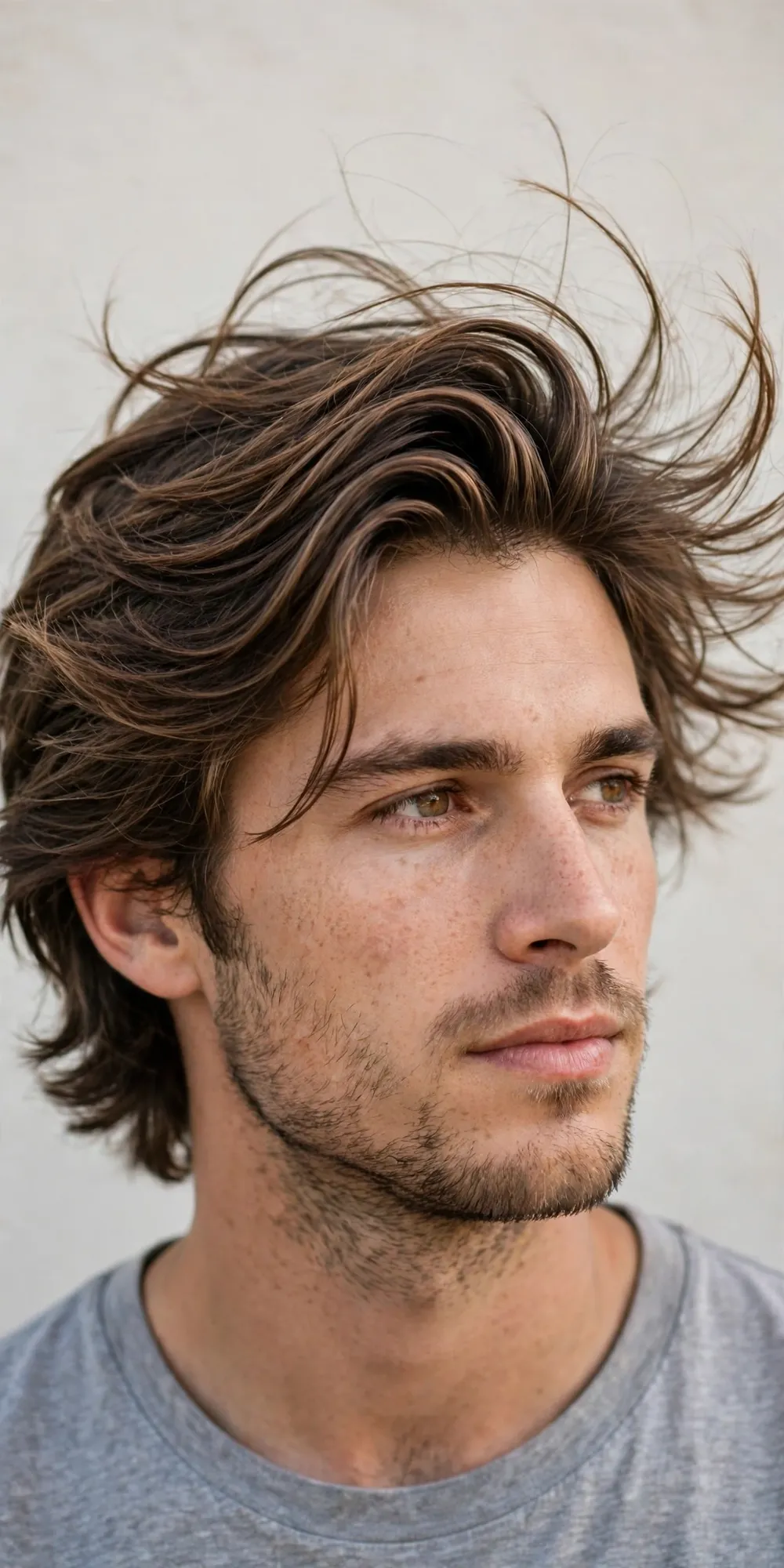
The windswept flow is the bro flow at its most dramatic — hair pushed back as if you’ve just stepped out of a convertible. It works best on naturally straight or slightly wavy hair, because the cut relies on direction, not texture. Long layers are all trained backwards, with extra length at the front so the hair can lift and fall. Ask for “a windswept flow, all layers directed back, extra length at the front, and a soft taper at the sides.” It suits oval and long faces especially well, since the backward sweep adds height. Blow-dry backwards with a vent brush while the hair is damp, then finish with a pea-sized amount of matte clay. The catch: a strong gust can undo an hour’s work, and it needs a blow dryer every morning.
27. Bro Flow with Highlights
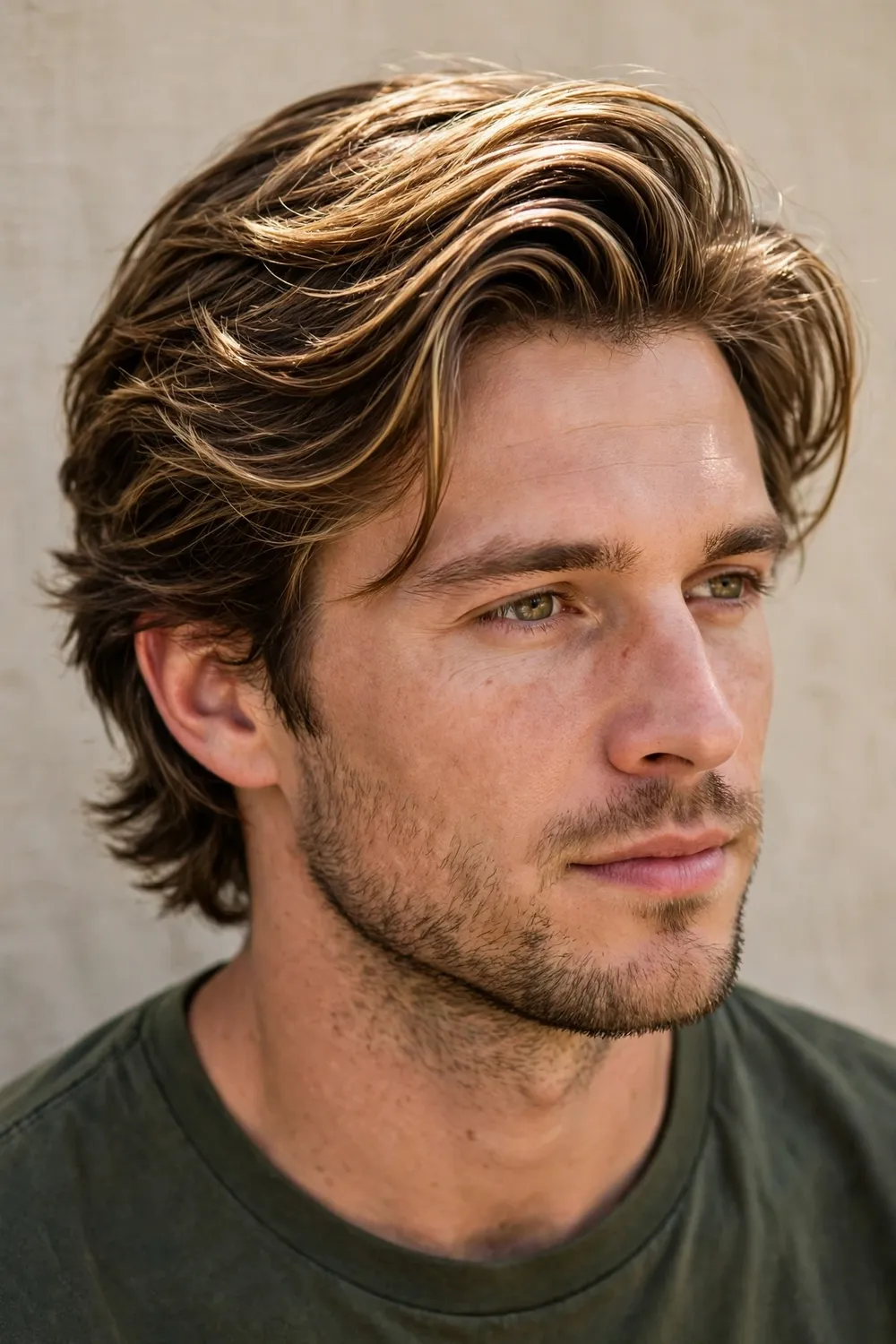
Highlights are what make a bro flow’s layers visible. Without them, long layered hair can read as one solid block of colour; with a few lighter pieces woven through, every layer gains definition. The trick is subtlety — sun-kissed pieces a shade or two lighter than your base, on the top layers and around the face. Ask for “balayage-style highlights through the top layers, natural and sun-kissed, nothing stripey.” It suits every face shape and works on brown, dark blonde, and even black hair. Use a sulfate-free shampoo, a purple shampoo once a week if the highlights run warm, and a toner refresh every eight to ten weeks. The catch: highlights add cost and dry the hair out, so add a leave-in conditioner — but if your flow looks flat in photos, this is the fix.
28. Blonde Bro Flow
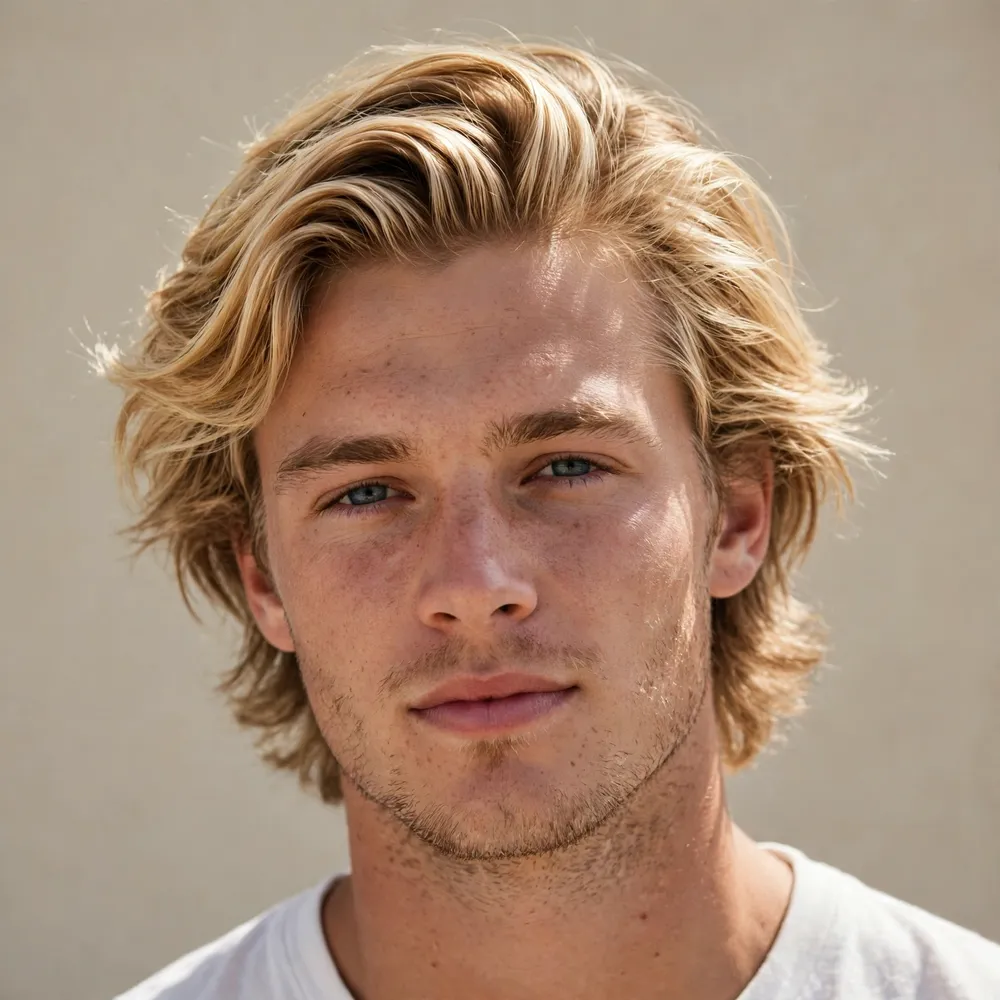
Blonde is the bro flow’s natural home — the surfer look, the beach look, the one that makes people assume you own a surfboard. The cut is a classic medium flow with soft layers, but the colour does half the work: blonde catches light and shows every wave. Going blonde from a darker base? Ask for a balayage or full-head lightening with a slightly darker root, so the grow-out stays subtle. Naturally blonde? Just ask for “a classic flow, soft layers, ends left natural.” It suits oval, square, and heart-shaped faces, and it looks best with a bit of sun in it. Sea salt spray and air-drying are all the styling it needs. The catch: blonde needs purple shampoo to stay bright, and bleached hair needs a good conditioner and a trim every six weeks.
29. Bro Flow with Widow’s Peak
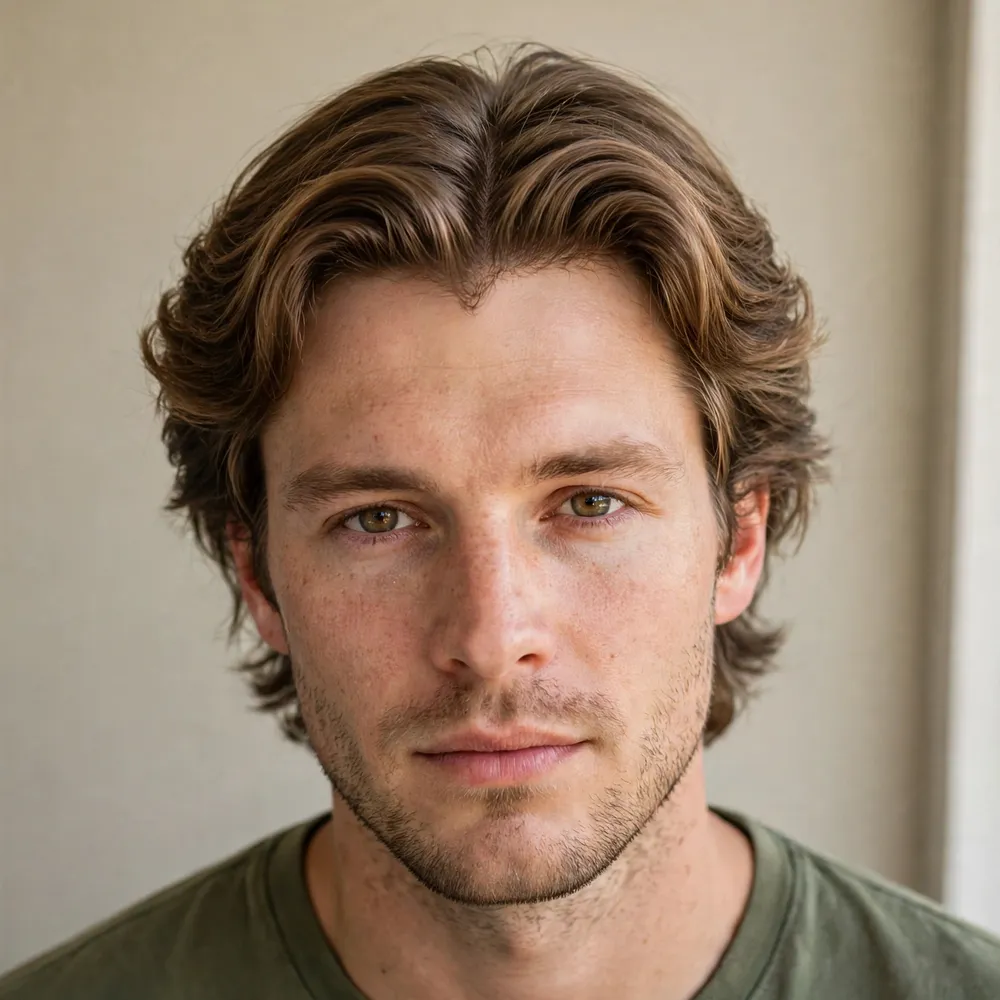
A widow’s peak is one of those features most guys try to hide — with a bro flow, you can make it the centrepiece instead. The peak gives you a natural parting point: the hair falls away from it on both sides, which is exactly what a flow wants to do. The trick is not fighting it. Ask for “a bro flow with a centre part following my widow’s peak, even length both sides, front layers long enough to fall.” It suits oval and square faces best, and looks particularly good with slightly wavy hair, which softens the point. Style it with a light cream, parted at the peak and pushed back. The catch: force the hair against the peak and it’ll spring back within an hour — work with the growth pattern, not against it.
30. Ear Tuck Bro Flow
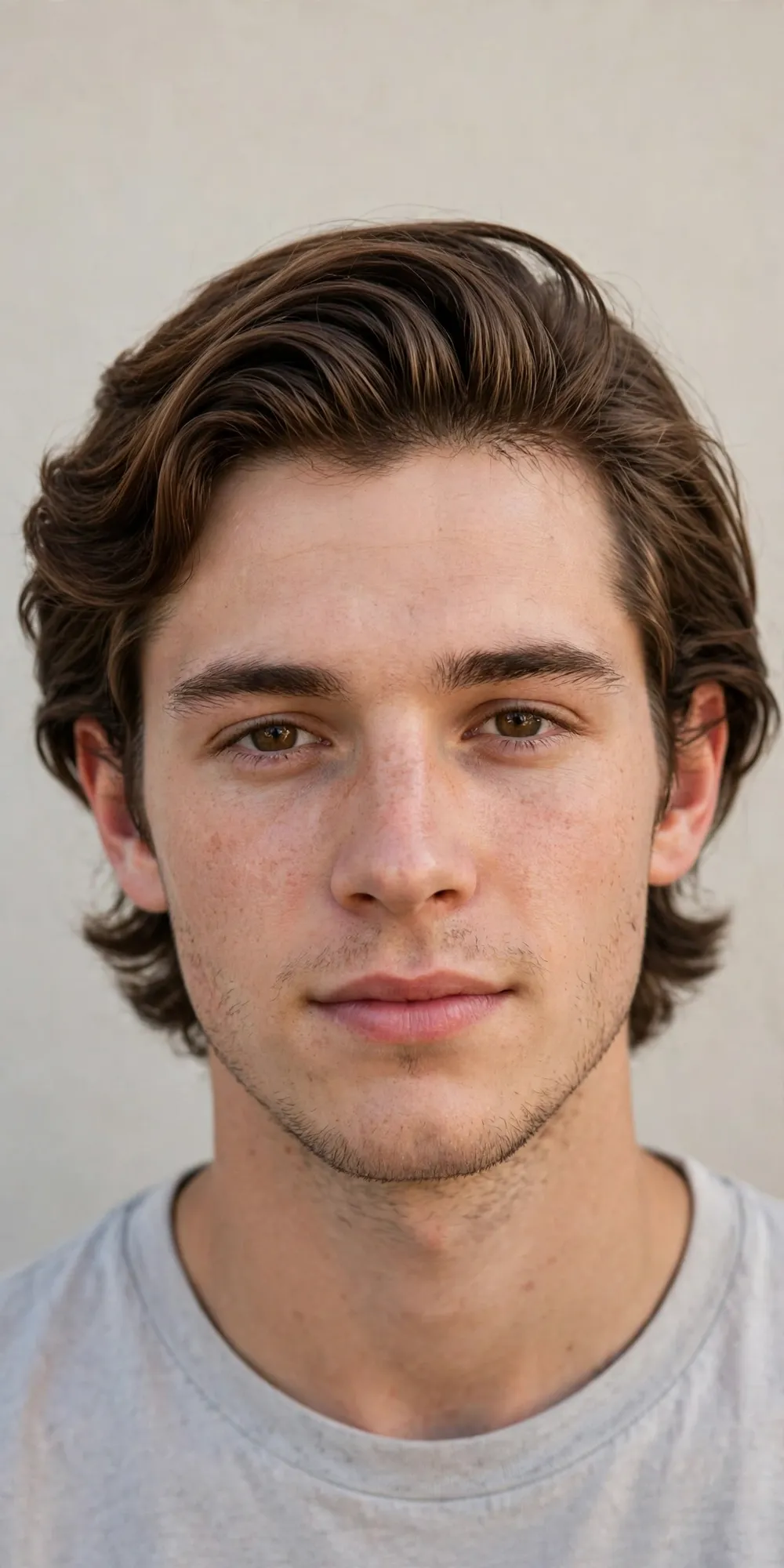
The ear tuck is the bro flow’s retro cousin — front length tucked behind the ears, face fully open, neat where the messier flows are not. It reads a little 70s, a little preppy, and frames the face with a clean line. You need around five inches at the front for the tuck to hold, and sides long enough to sit behind the ear. Ask for “a bro flow with the front long enough to tuck behind the ears, soft layers, and a clean neckline.” It suits oval and long faces, and looks best on straight or slightly wavy hair. A light cream keeps it in place, and the tuck itself does most of the styling. The catch: too short or too curly and the tuck won’t hold, and an overgrown front turns into a curtain.
31. Bro Flow with Curtain Fringe

The curtain fringe turns a bro flow into two cuts in one: a parted fringe at the front, flowing length behind. It’s bold, but it works — the fringe frames the face while the back keeps the flow’s movement. You need five to six inches at the front so the fringe can part and fall, with soft layers to blend the sections. Ask for “a bro flow with a curtain fringe, centre part at the front, length blended into the flow behind.” It suits oval, heart-shaped, and long faces, and loves wavy hair, which gives the fringe a natural bend. Style it with sea salt spray, parted in the middle — see our medium length hairstyles for men for more. The catch: it needs a blow dryer to sit right, and on humid days it can collapse into your eyes.
32. Flow Mullet
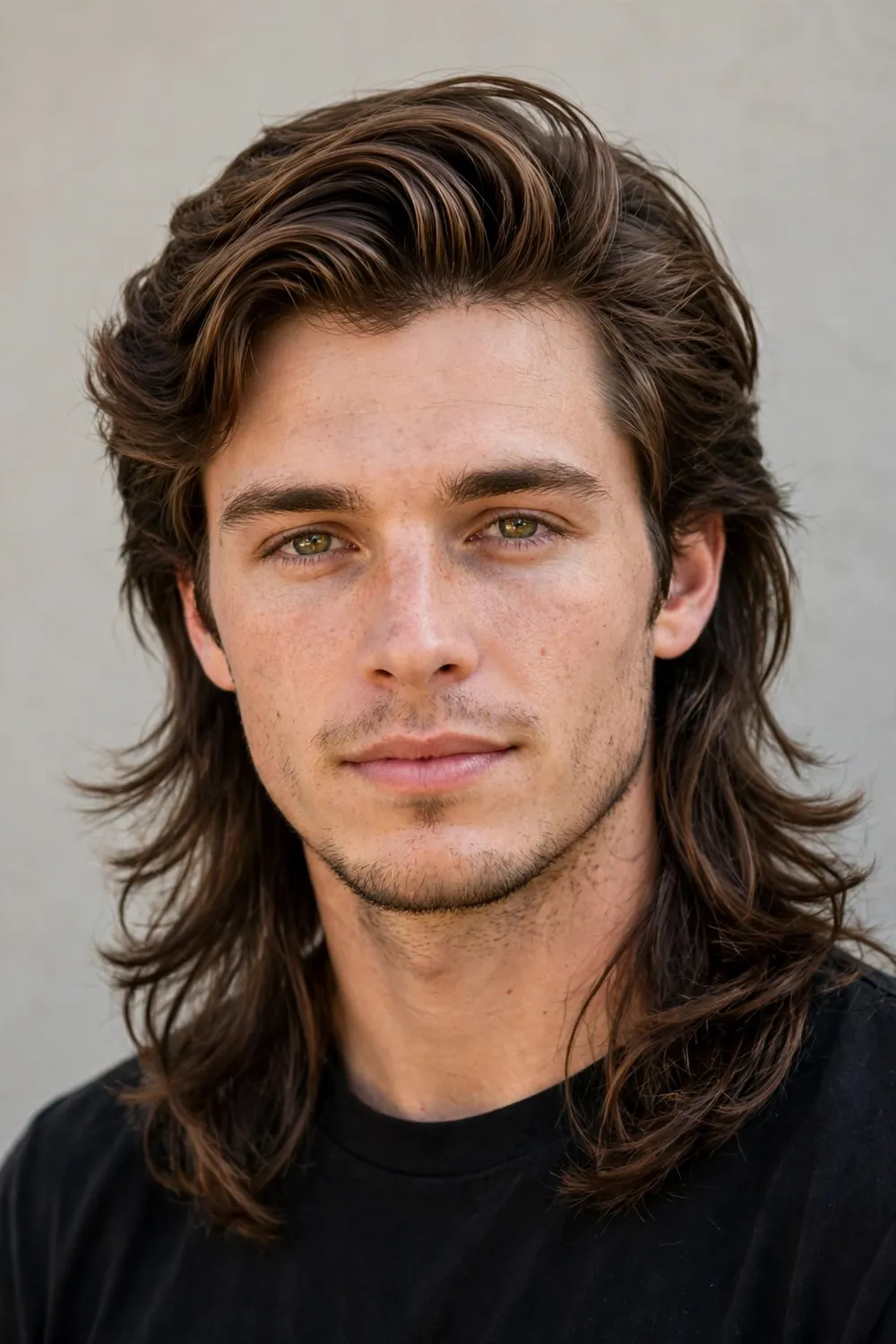
The flow mullet is the bro flow’s wilder sibling — all the swept-back movement on top, plus real length at the back. It’s not a joke mullet: the modern version keeps the transition smooth, layers lengthening gradually toward the nape. Ask for “a flow mullet — bro flow on top with the back grown out to the collar, blended, not disconnected.” It suits oval and square faces, and works best on thick or wavy hair that can carry the extra length. A matte clay through the top keeps the flow in place while the back does its own thing. If longer hair appeals, our long hairstyles for men roundup covers the full-length versions. The catch: it grows out unevenly, so the back needs shaping every six weeks or it turns into a plain long cut.
33. Faux Hawk Flow
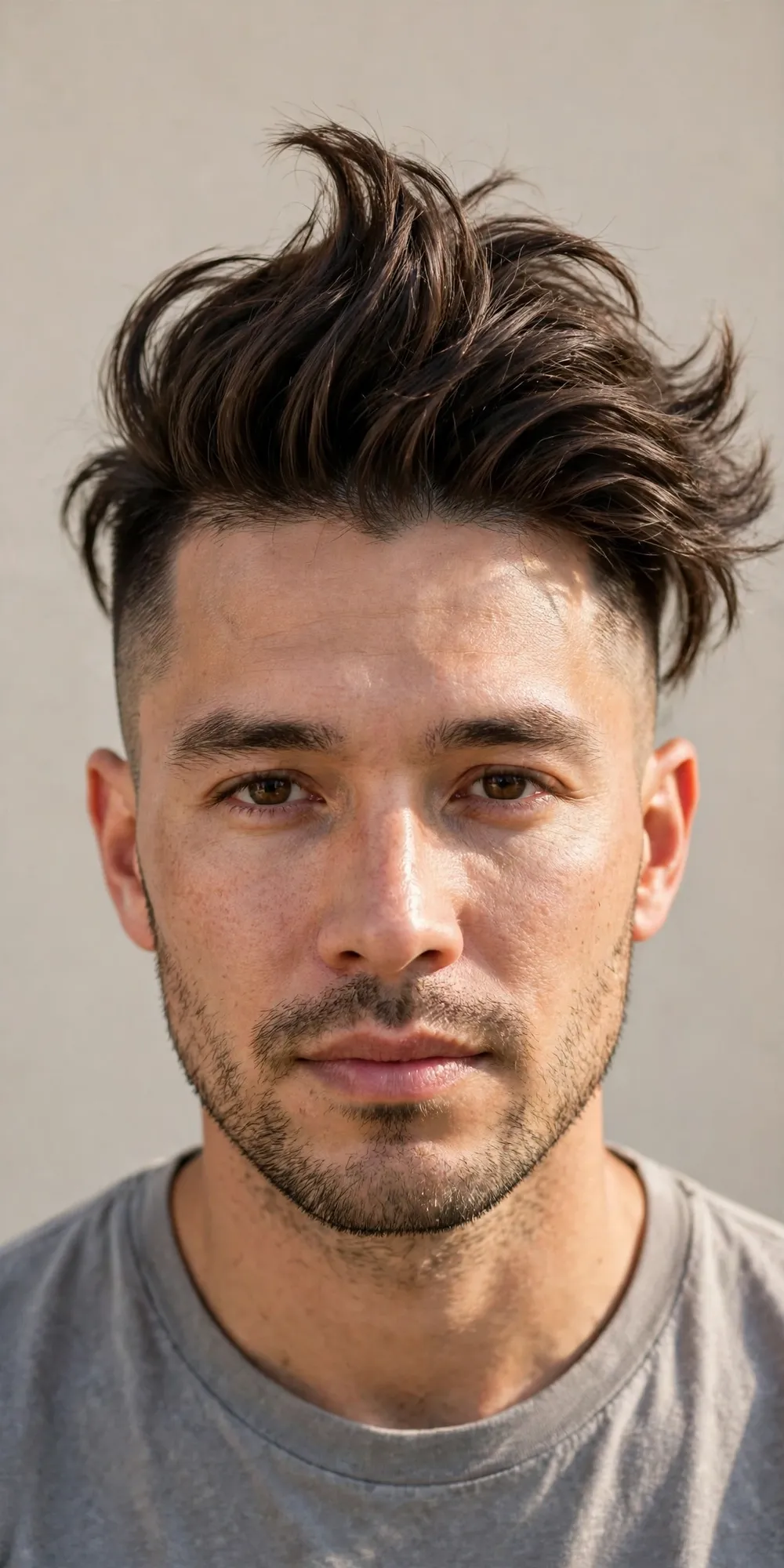
The faux hawk flow is what happens when a bro flow meets a mohawk and they compromise. Instead of shaved sides, you get a centre strip of longer hair pushed up and back, with the sides short enough to blend. Ask for “a faux hawk flow — centre strip kept long and pushed back, sides tapered short, no hard lines.” It suits oval, round, and square faces, since the height on top lengthens the face. It works best on thick or textured hair that can hold the lift — style it with matte clay, pushing the strip up and back with your fingers. The catch: this is the highest-maintenance flow here — it needs product and a blow dryer every morning, and skipping a day just looks like a bad haircut.
34. Bro Flow for Older Men
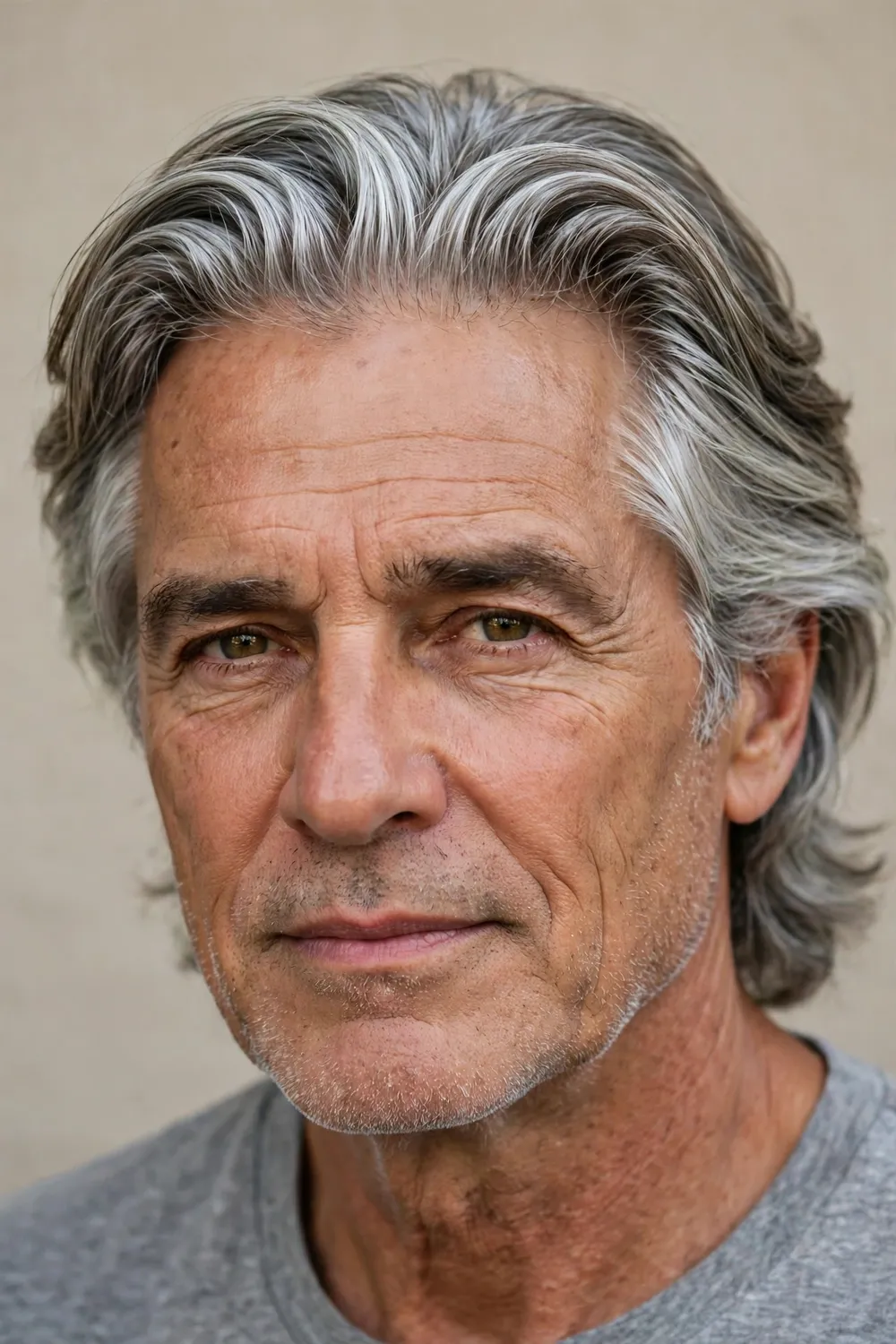
A bro flow doesn’t have an age limit — it just needs cutting for a grown man rather than a college kid. The mature version keeps the same swept-back movement but with neater layers, a cleaner neckline, and no attempt to look twenty-five. Silver and salt-and-pepper hair suits this cut brilliantly: grey catches light and shows off the layers. Ask for “a neat bro flow — medium length, clean layers, tidy neckline, nothing too shaggy.” It suits every face shape, and flatters strong jawlines especially, since swept-back hair opens the face up. A light cream gives control without stiffness, and a silver-enhancing shampoo keeps grey bright instead of yellow. The catch: it needs a trim every four to five weeks, because overgrown grey hair reads scruffy fast.
35. Bro Flow for Teenage Guys

For teenage guys, the bro flow is the perfect first longer cut — effortless, school-friendly, and forgiving every morning. The teen version sits at a medium length, four to six inches on top, with soft layers and a clean but not severe neckline. Ask for “a medium bro flow, soft layers, nothing too short on the sides, and a clean neckline.” It suits every face shape at this age, and works on straight, wavy, and curly hair alike. Styling is as simple as it gets: towel-dry, a spritz of sea salt spray, and let it air-dry. The catch: teenage hair grows fast, so the flow can turn shaggy within a month — but it’s easy to grow out if you change your mind.
36. Professional Bro Flow
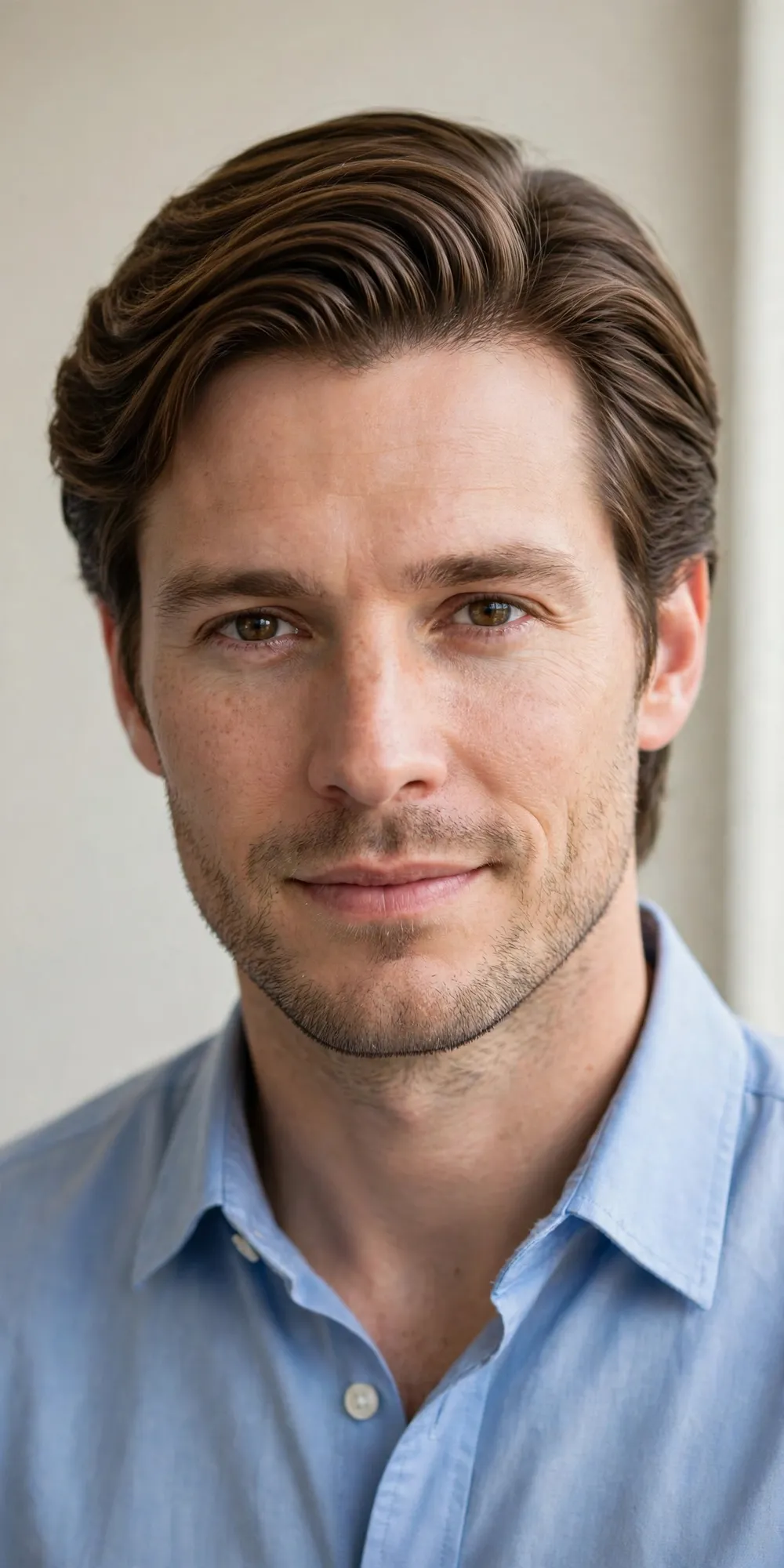
Yes, you can wear a bro flow to the office — you just need the professional version. The difference is control: a neat part, layers that stay in place, a clean neckline, and a polished rather than beachy finish. The length stays medium, four to five inches, with the sides tapered just enough to look intentional. Ask for “a professional bro flow — neat side part, controlled layers, clean taper at the sides and neckline, nothing messy.” It suits oval, square, and heart-shaped faces, and pairs well with a short, tidy beard or clean-shaven. Style it with a light cream or a little matte clay, combed into place while damp, with a quick blow-dry to finish. The catch: it needs a trim every four weeks to stay office-ready — past that, it slides back into surfer territory.
37. Wet Look Bro Flow
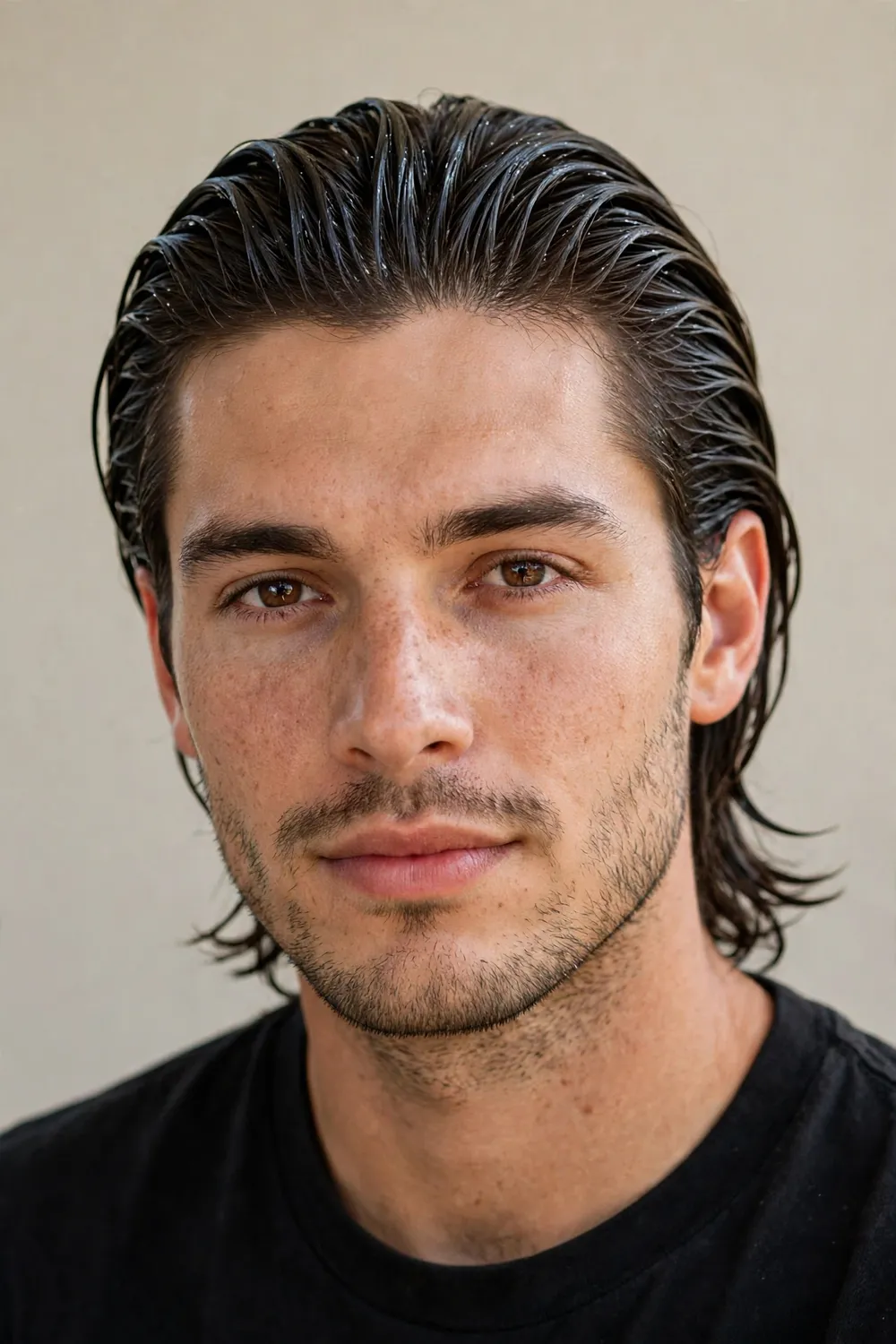
The wet look flow is the bro flow dressed up for the evening — high shine, combed back, every strand in place. It’s achieved with product, not water: strong-hold gel or water-based pomade worked through damp hair and combed straight back. The cut underneath is a classic medium flow with clean layers — the shine does the talking. Ask for “a classic bro flow, medium length, clean layers, sides tapered enough to keep it sharp.” It suits oval and square faces, and looks best on straight or slightly wavy hair that can be combed flat. Apply the product to damp hair, comb it back, and don’t touch it while it sets. The catch: gel-heavy hair feels crunchy, needs washing out every night, and can go greasy fast in summer heat.
38. Bro Flow with Drop Fade
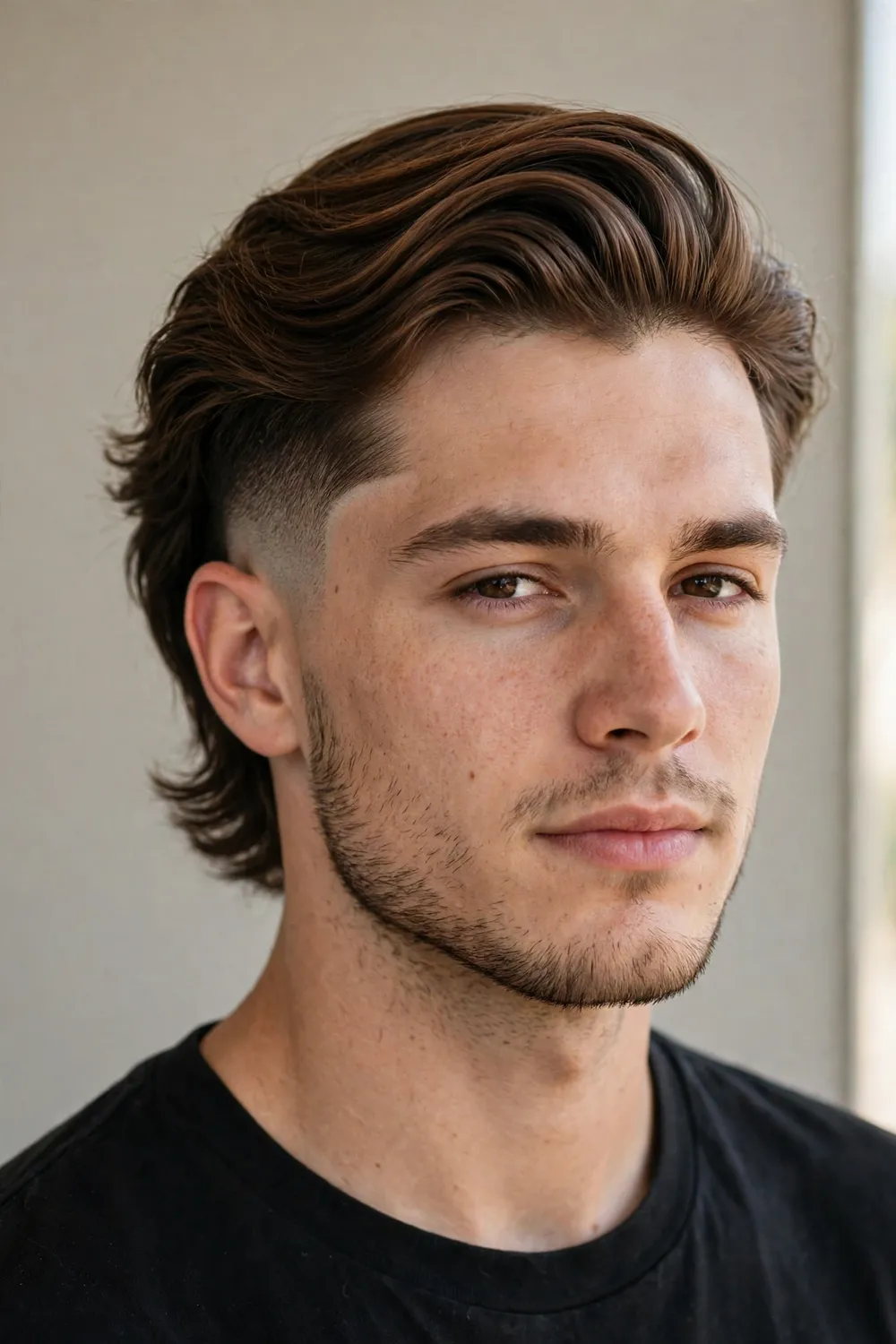
The drop fade is the most sculpted way to wear a flow. Unlike a regular fade, the fade line curves down behind the ear, following the head’s shape — a clean, tailored outline under long, flowing length. Ask for “a bro flow with a drop fade — mid drop fade, clean line behind the ear, top kept long with layers.” It suits oval, square, and round faces, since the fade’s curve adds structure, and it works on every hair type. Styling is simple: matte clay through the top, swept back — and our textured haircuts for men guide has more cuts pairing texture with sharp sides. The catch: a drop fade grows out visibly within two weeks, so expect a barber visit every fortnight to keep it sharp.
39. Bro Flow with Skin Fade
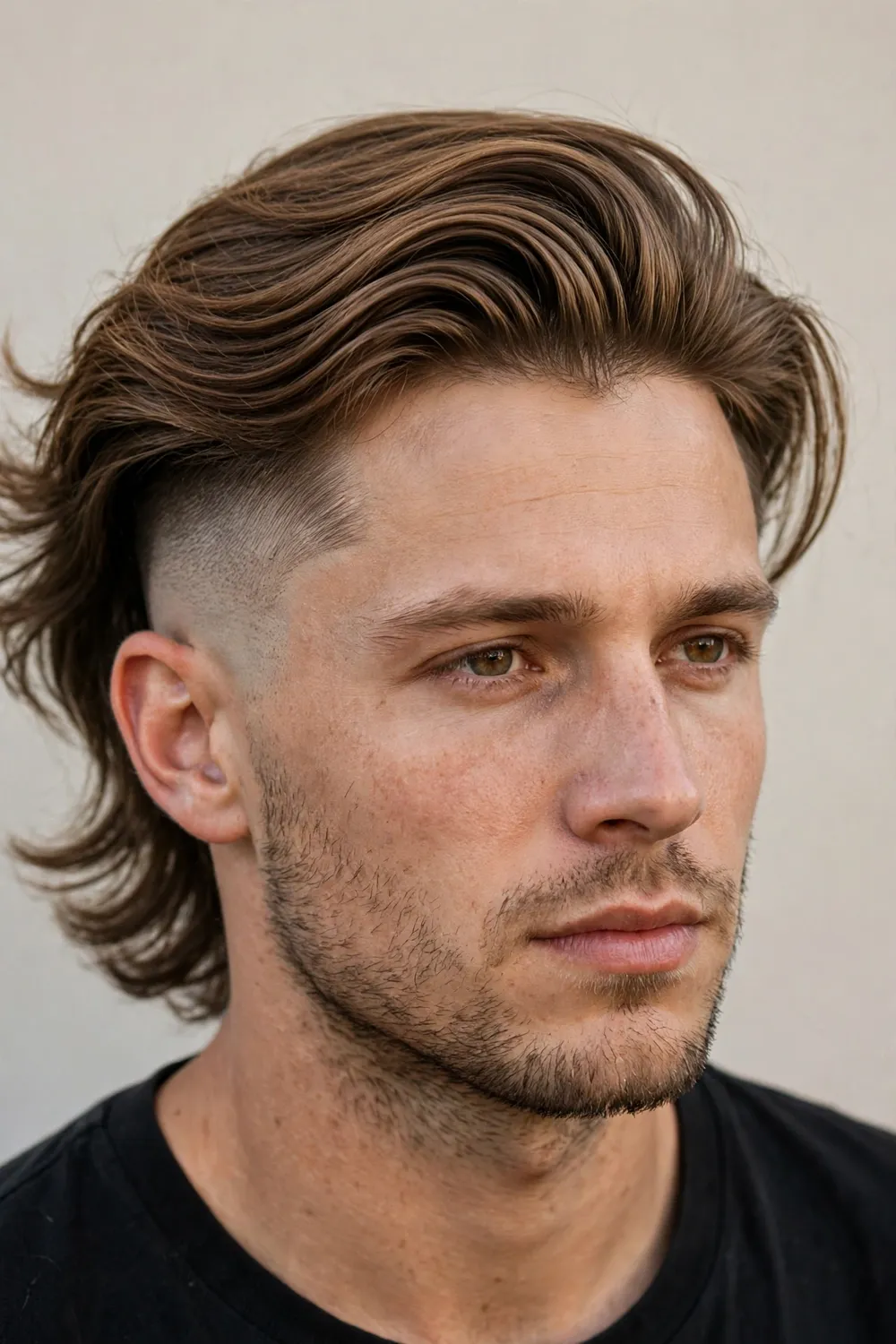
If the drop fade is sculpted, the skin fade is the sharpest version of the flow — sides faded right down to the skin. The contrast is dramatic, and that’s why it works: the fade frames the flow and makes the length look intentional. Ask for “a bro flow with a skin fade — mid skin fade, blended up into the top, length kept long on top with layers.” It suits oval and square faces best, and looks great with a beard, since the fade can blend into facial hair. Style the top with matte clay, swept back, and keep the fade crisp. The catch: a skin fade shows growth within a week, so you’re looking at a barber visit every seven to ten days.
40. Slicked Back Flow
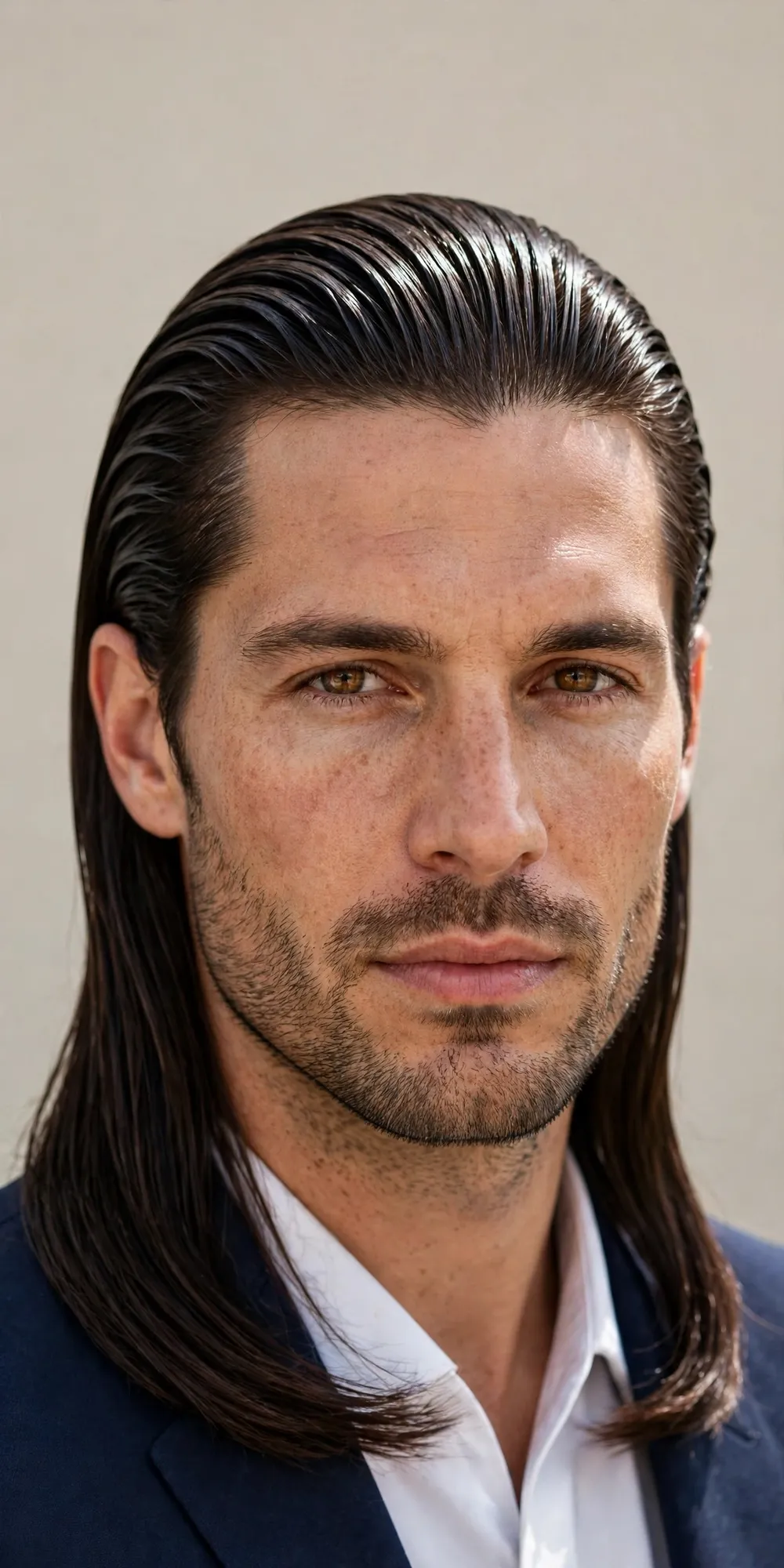
The slicked back flow is the bro flow at its most formal — all the length, none of the mess. The hair is combed straight back and held flat, with a high-shine finish that reads classic rather than casual. The styling defines it: pomade or strong-hold cream through damp hair, combed back with a fine-tooth comb. Ask for “a slicked back flow — medium length, even layers, sides tapered short enough to sit flat.” It suits oval, square, and heart-shaped faces, and works best on straight or slightly wavy hair. This is the flow for weddings, job interviews, and anywhere you need to look put-together. The catch: it’s product-heavy, needs washing out every night, and can look severe on very long faces.
41. Bro Flow with Side Sweep
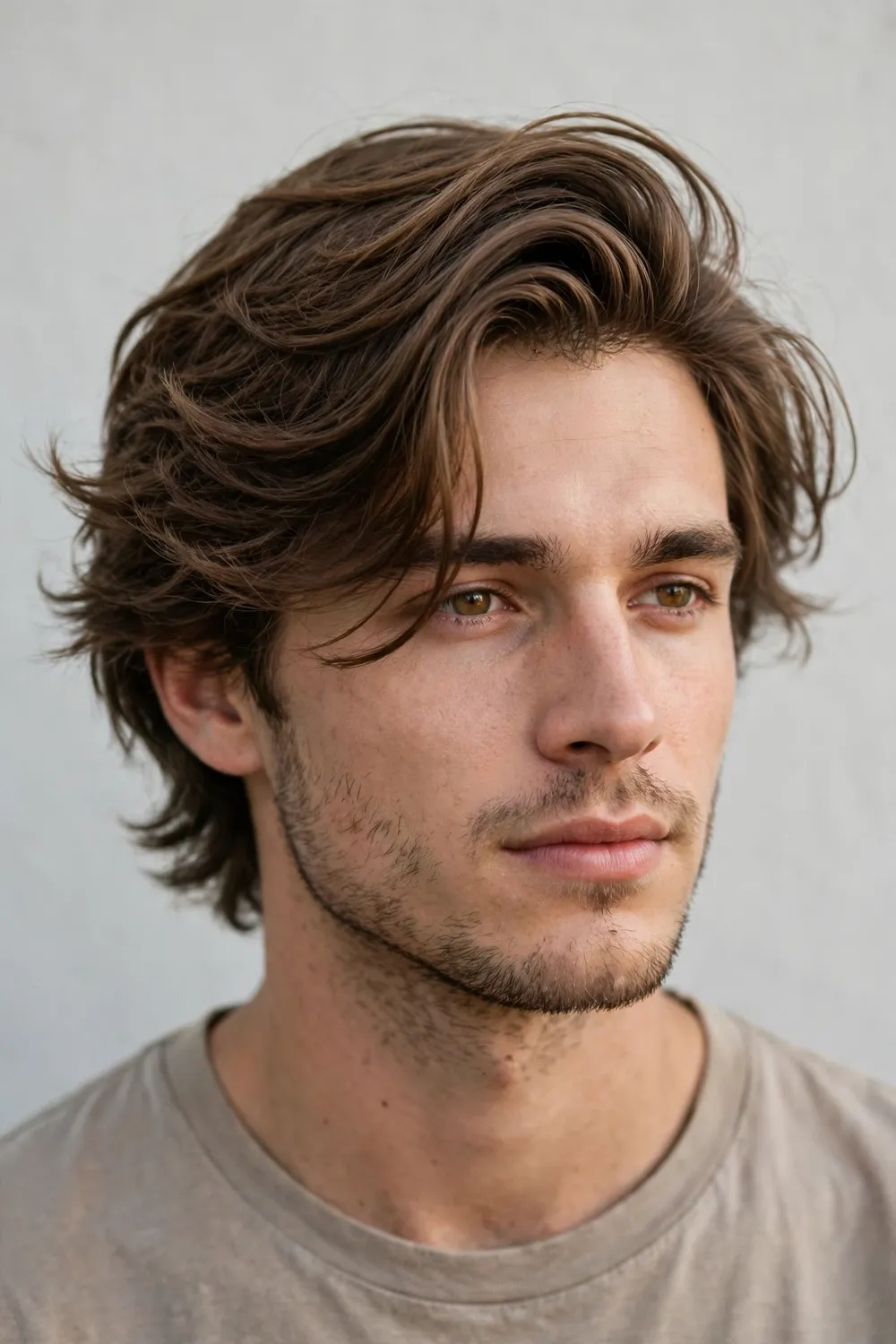
The side sweep is the gentlest flow here — one loose sweep across the forehead, soft and face-framing. It’s the flow for guys who want length and movement without the drama of a swept-back style — see our shaggy hairstyles for men for softer shapes. The cut is a medium flow with the front left longer, around five inches, tapering back through the layers. Ask for “a bro flow with a side sweep — front kept long and swept across, soft layers through the rest.” It suits oval, heart-shaped, and long faces, since the sweep shortens a longer face. Style it with a light cream on damp hair, pushing the front across with your fingers. The catch: the sweep needs daily attention — but it’s the easiest flow to grow out, with no hard shape to maintain.
42. Shoulder Length Bro Flow
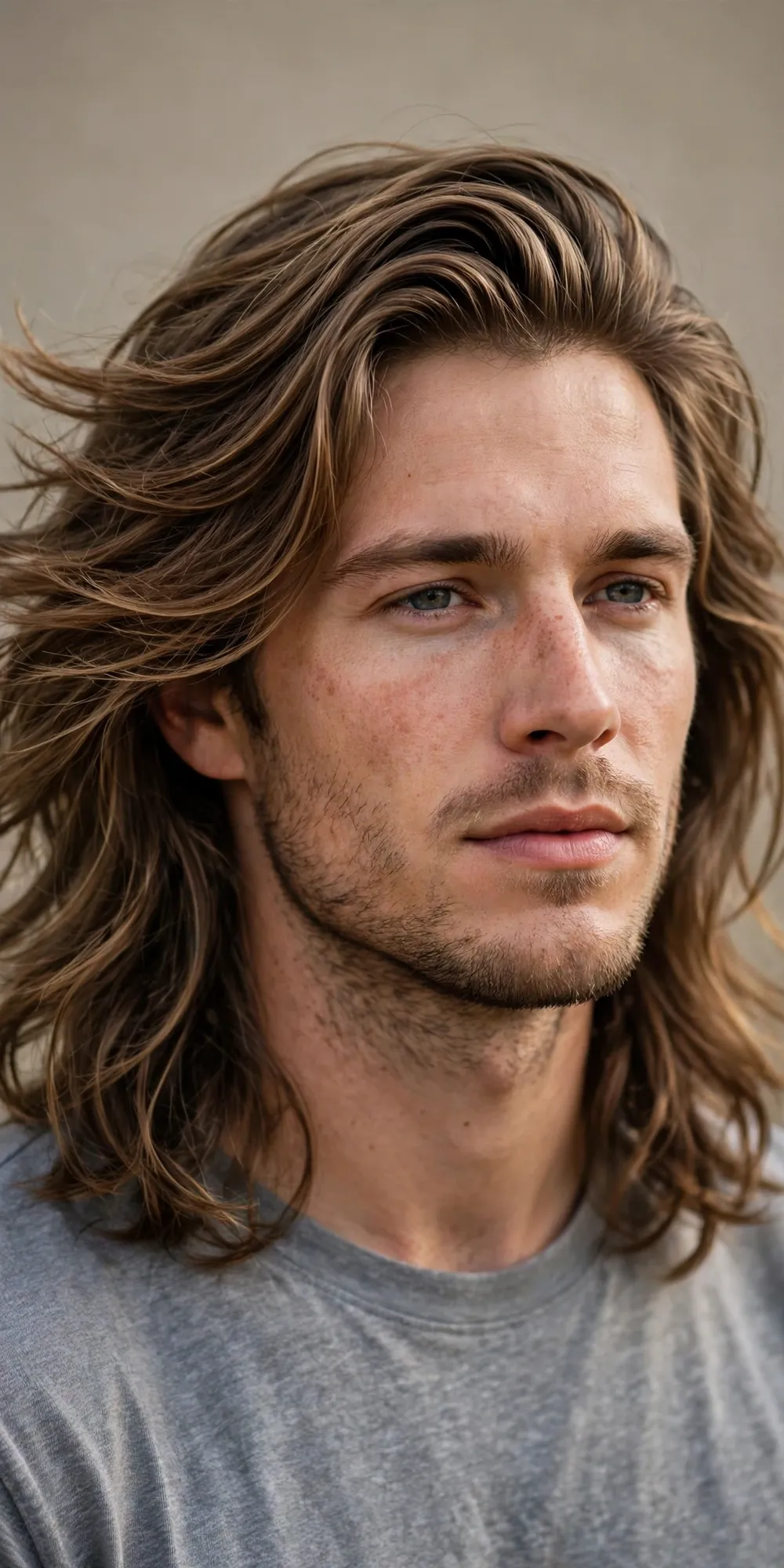
The shoulder length flow is the bro flow taken as far as it goes — hair to the shoulders, layered throughout, maximum movement. It’s not for the faint-hearted: getting here takes a year or more, and the awkward stages test your patience. But once it arrives, it’s the definitive flow. Ask for “a shoulder length flow — long layers throughout, ends kept healthy, neckline shaped not cut short.” It suits oval and square faces best, and thick, wavy, and curly hair that can carry the weight. A leave-in conditioner is essential, and sea salt spray adds movement without weight. Our wolf cut hairstyles for men guide covers another long layered shape worth comparing. The catch: this length needs real commitment — conditioning, regular trims, and a hair tie for workouts.
How Do You Choose the Right Bro Flow?
The bro flow is a forgiving cut, but the version that suits you depends on two things: your face shape and your hair type. Get those two right and the rest is styling. The history of the hairstyle shows the flow’s ancestors everywhere — from 70s rock to 90s curtains — but the modern version works because it’s cut to the person wearing it, not copied from a photo.
By face shape
| Face shape | Best bro flow | Why it works |
|---|---|---|
| Oval | Any flow — classic, surfer, or textured | Balanced proportions suit every version |
| Square | Classic or layered flow | Soft layers balance a strong jawline |
| Round | Brushed back or windswept flow | Height on top lengthens the face |
| Long | Side sweep or ear tuck flow | Width and a fringe shorten the face |
| Heart-shaped | Middle part or curtain fringe flow | Volume at the sides balances a narrow chin |
| Diamond | Medium length flow with soft layers | Even volume fills out narrow forehead and jaw |
By hair type
| Hair type | Best bro flow | What to ask for |
|---|---|---|
| Thick | Thick hair flow, flow mullet | Weight removed underneath, long layers kept |
| Fine | Fine hair flow, layered flow | Stacked layers for volume, no heavy thinning |
| Thin | Thin hair flow, textured flow | Choppy texture, medium length, light product |
| Wavy | Wavy flow, surfer flow | Let the waves do the work, minimal product |
| Curly | Curly flow, shoulder length flow | Layers that let curls fall back, not puff out |
| Straight | Straight hair flow, slicked back flow | Point-cut layers for movement, cream finish |
If you’re between two shapes or types, go with the longer, softer option — it’s easier to take length off than to grow it back, and a flow that’s slightly too long still looks like a flow, while one that’s too short just looks like a haircut that hasn’t grown out yet.
What Products Does a Bro Flow Need?
You don’t need a shelf full of products — four will cover every flow on this list.
Sea salt spray is the bro flow’s signature product. Sprayed into damp hair before air-drying or blow-drying, it adds texture, grip, and that beachy separation that makes layers visible. It’s the single most useful product for wavy, surfer, and messy flows, and it works on every hair type except very fine hair, where it can weigh things down if overused.
Matte clay is for hold without shine. A pea-sized amount warmed between your palms and worked through damp or dry hair gives the flow structure — it stays where you put it but still moves when you do. Use it for textured, brushed-back, and faux hawk flows, and for any version that needs to survive a long day.
Light cream is the quiet workhorse. It smooths flyaways, adds a little control, and leaves a natural, low-shine finish. It’s the right choice for professional, ear tuck, and older men’s flows — anywhere you want polish without stiffness. If you only buy one product, buy this one.
Blow dryer — not a product, but the tool that makes the difference between a flow and a mop. Drying backwards with your fingers or a vent brush trains the hair to fall the way you want it, adds volume at the crown, and sets the shape so it holds all day. Even two minutes of blow-drying beats ten minutes of product.
5 Mistakes to Avoid With a Bro Flow
1. Growing it without trims. A flow isn’t a “stop cutting your hair” project. Without a trim every five to six weeks, the ends split, the shape goes boxy, and the flow turns into a shapeless mop. Regular shaping is what keeps it a haircut.
2. Using too much product. A bro flow lives on movement, and heavy product kills it. If your hair feels crunchy, greasy, or glued together, you’re using twice what you need. Start with half a pea-sized amount and add more only if the hair still won’t hold.
3. Choosing the wrong length for your hair type. Fine hair at shoulder length goes limp; thick hair at four inches goes wide. Match the length to what your hair can actually carry — medium for fine hair, longer for thick and wavy — and the flow will mostly style itself.
4. Fighting your natural texture. A straight-haired guy trying to force waves with a curling iron every morning, or a curly-haired guy flat-ironing his flow daily, is working against the cut. Pick the version that suits the hair you have, not the hair you wish you had.
5. Skipping the blow dryer. Air-drying works for surfer and messy flows, but for brushed-back, windswept, and professional versions, the blow dryer is what sets the direction. Two minutes of drying backwards is the difference between a flow that holds and one that collapses by lunchtime.
Frequently Asked Questions
What is a bro flow haircut?
A bro flow haircut is a medium to long layered cut for men, where the hair on top is grown to at least four inches and swept back and to the sides with natural movement. It’s also called a hockey flow, because hockey players made it famous by growing their hair out under their helmets. The cut is defined by its flow — the hair moves freely rather than being held in a rigid shape — and it works on straight, wavy, and curly hair alike.
How long does hair need to be for a bro flow?
You need at least four inches of length on top for a proper bro flow — that’s the minimum for the hair to actually fall back and move. Most versions sit between four and eight inches, with the longest flows reaching the shoulders. If your hair is shorter than four inches, grow it out for two to three months first, getting the sides and back trimmed while the top catches up.
Is a bro flow the same as a hockey flow?
Yes, they’re the same cut with different names. “Hockey flow” is the original term, from hockey players who grew their hair long enough to curl out from under their helmets. “Bro flow” is the broader, modern name for the same style — medium-long layered hair swept back. The hockey version tends to be a little longer at the back, but the cut and the styling are identical.
Can a bro flow work on straight hair?
Absolutely — straight hair makes one of the cleanest, most polished versions of the flow. The key is point-cut layers, which give straight hair movement it doesn’t have naturally, and a light cream or sea salt spray for texture. Straight-haired flows look best at a medium length with a brushed-back or slicked finish, and they need a blow dryer to set the direction.
How do I style a bro flow at home?
Start with damp hair. Work in a small amount of sea salt spray or light cream, then blow-dry backwards with your fingers or a vent brush to set the direction and add volume. For a textured look, scrunch the hair while it dries; for a polished look, comb it back and let it set. Finish with a tiny amount of matte clay if you need extra hold. The whole routine takes five minutes once you know your hair.
What face shapes suit a bro flow?
Almost every face shape suits a bro flow — it’s one of the most versatile men’s cuts. Oval faces can wear any version. Square faces suit soft, layered flows that balance a strong jaw. Round faces benefit from height on top, like a brushed-back or windswept flow. Long faces suit side sweeps and ear tucks that add width. Heart-shaped faces suit middle parts and curtain fringes that add volume at the sides.
How often should I get a bro flow trimmed?
Every five to six weeks is the sweet spot for most flows — enough to keep the shape and remove split ends without losing length. Faded versions need more frequent visits: a drop fade every two weeks, a skin fade every seven to ten days. If you’re growing your flow out to shoulder length, book a shaping trim every six to eight weeks and tell your barber you’re growing it, so they only take off the damaged ends.
Final Word
The bro flow earns its place as one of the best men’s haircuts of 2026 because it asks so little and gives so much back — a cut that works on almost every face shape and hair type, that looks better the more naturally you wear it, and that only gets better as it grows. Whether you go classic, surfer, textured, or all the way to shoulder length, the formula stays the same: enough length to move, layers that let it fall, and a barber who knows how to shape it. Pick the version that fits your hair, commit to a trim every five or six weeks, and let the flow do the rest. For more men’s haircut ideas and guides, browse the rest of our men’s hairstyle guides and find the next cut worth growing into.