


A mullet haircut is short at the front and sides with noticeably longer hair down the back — the “business in the front, party in the back” cut, rebuilt for 2026 with cleaner fades, softer texture and a lot less 80s costume. The modern versions work best on men with some natural movement in their hair and a bit of confidence, because the cut is meant to be seen. If you only try one thing from this list, start with the Classic Modern Mullet for the safest entry point, the Fade Mullet for the sharpest finish, or the Curly Mullet if your curls can do half the work for you.
The reason the mullet came back at all is that barbers fixed the two things that made the old one look dated: the front got shorter and tidier, and the sides stopped being a cliff edge. A taper or a fade now connects the short front to the long back, so the shape reads deliberate rather than grown out by accident. It also suits more face shapes than most people expect — oval and square faces carry it easily, round faces benefit from the height on top, and the back length gives longer faces a break from the usual advice to keep everything short.
What Is a Mullet Haircut?
A mullet is defined by contrast: the front is kept short enough to show the forehead and the sides are cropped or faded, while the back is left long enough to reach the collar or beyond. The exact split is what separates one version from another — a short mullet might only reach the nape, while a long one can brush the shoulders. According to Wikipedia’s entry on the mullet, the style has cycled in and out of fashion for decades, but the current revival is its most wearable yet, because modern barbers blend the transition instead of leaving a hard step.
It is often confused with two cousins. A shag is all-over layered and shaggy with no short-long contrast, and a wolf cut is a wilder, more disconnected mix of shag and mullet. Our guide to Shaggy Hairstyles for Men covers the full shag, and the Wolf Cut Hairstyles for Men guide breaks down that wilder hybrid — the table below shows where each one sits.
| Cut | Layers | Fringe | Back |
|---|---|---|---|
| Mullet | Short front, long back | Short, neat | Long, often past the collar |
| Shag | Even, choppy all over | Curtain or feathered | Layered, medium length |
| Wolf Cut | Disconnected, voluminous | Heavy, textured | Long and jagged |
1. Classic Modern Mullet

This is the version to book if you like the idea of a mullet but don’t want it announced from across the street. The front stays neat, the top carries light texture, and the back is layered so it sits flat. It suits oval and square faces best, and works on straight to slightly wavy hair that behaves without much product. Ask your barber for a short textured top, tapered sides, and a layered back ending just past the collar. A pea-sized amount of matte clay, worked through damp hair, gives a clean finish without shine. A tidy-up every four to five weeks keeps the front sharp, while the back can grow for months before it looks scruffy.
2. Textured Modern Mullet

Texture is what stops this mullet from looking like a helmet. The top is cut with choppy, piece-y layers that break up the weight, and the back is feathered so the ends move. It suits fine or medium hair best, because layering creates volume that isn’t really there, and it flatters square and oblong faces. Ask your barber for point-cut texture on top, a light taper on the sides, and a back thinned at the ends. Sea salt spray on damp hair, scrunched in and air-dried, is all the styling this one needs. Keep it trimmed every four weeks or the layers grow into each other and the texture disappears, though it grows out gracefully.
3. Curly Mullet

If you already have curls, a mullet is the easiest bold cut you can get. Defined curls on top give the front its structure, and the back is long enough for the curls to bounce and stack. It suits round and oval faces, since height on top lengthens the face, and it is a gift for thick curly hair. Ask your barber for a dry cut, with the sides tapered and the back shaped rather than thinned. Curls shrink as they dry, so a wet cut almost always ends up shorter than planned. Curl cream scrunched into damp hair keeps the definition without crunch. Expect a shape-up every five to six weeks, and a little frizz on humid days is part of the deal.
4. Short Mullet

The short mullet is for people who want the silhouette without committing to serious length. The front and sides are cropped close, and the back is only a couple of inches past the nape. It suits nearly every face shape, but it is especially kind to round faces, because short sides slim the cheeks. Straight and wavy hair both work, and fine hair holds this shape well since there is less weight dragging it down. Ask for a cropped textured top, short tapered sides, and a back ending just below the collar with a soft edge. A dab of matte paste is enough to style it, and it dries in minutes. Trims every three to four weeks keep it crisp, though the grow-out is painless if you skip one.
5. Fade Mullet

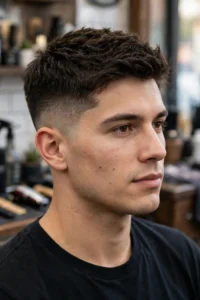
The fade mullet is the sharpest version on this list, and probably the one you will see most in barbershops right now. A crisp mid fade runs up the sides, and the contrast with the long back is the whole point of the cut. It suits oval, square and heart-shaped faces, and works best on straight or wavy hair, where the fade line stays visible. Ask your barber for a mid skin fade, a textured top with some length, and a back that stays full and layered. Style the top with matte clay for a natural finish, or a light pomade for a bit of shine. The catch is upkeep: the fade needs refreshing every two to three weeks, so budget for frequent visits.
6. Burst Fade Mullet
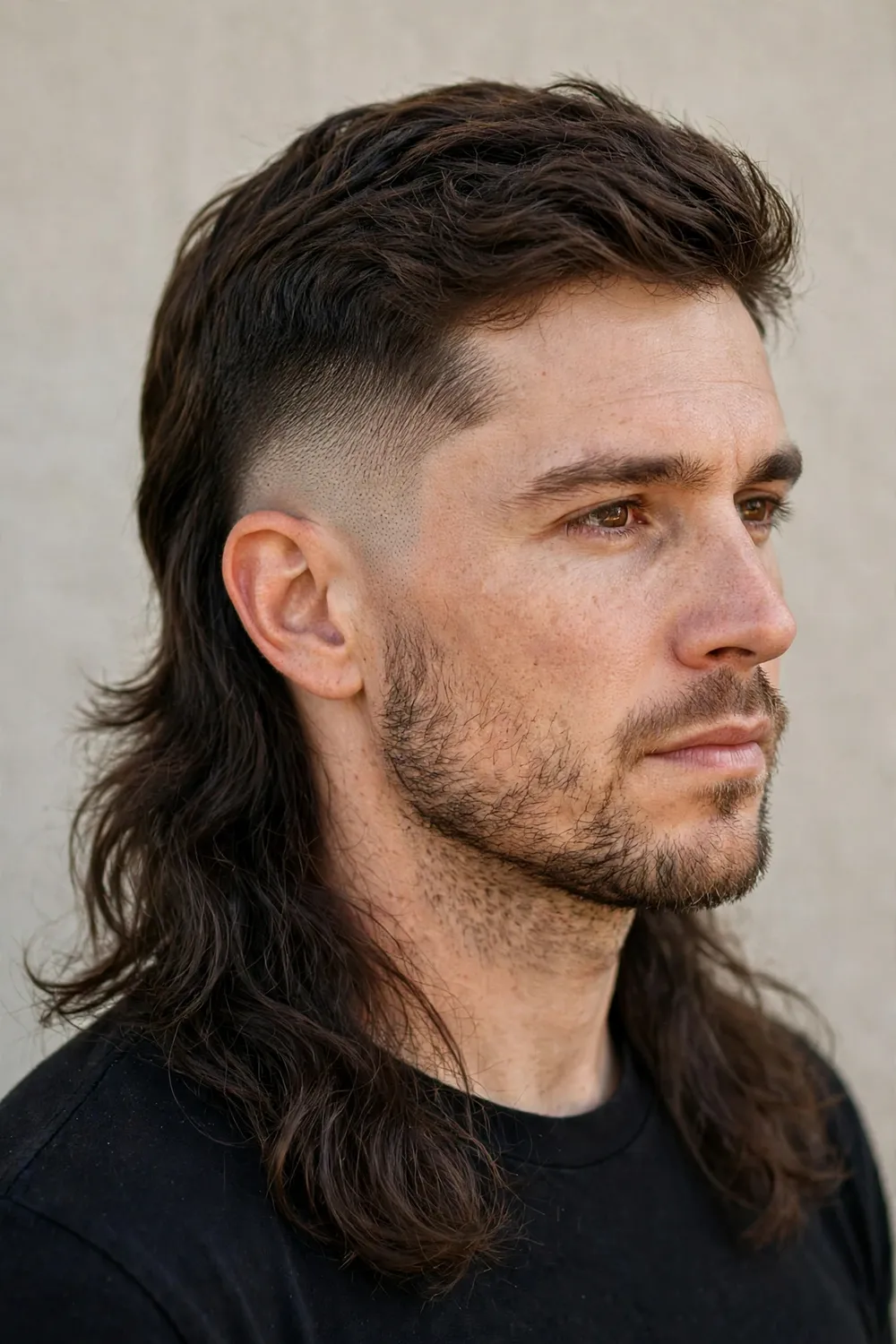
A burst fade curves around the ear in a semicircle, leaving length at the back of the neck while the sides melt away. On a mullet that shape makes perfect sense, because the back keeps its weight exactly where it needs it. It suits round and square faces, since the curved fade softens the jaw without losing structure. It looks best on straight to wavy hair, where the fade line reads clearly. Ask your barber for a burst fade arcing around the ear, a textured top, and a back left long and layered. Sea salt spray gives the top some grip, and the back just needs a comb-through. The fade needs a touch-up every two to three weeks, but the back can run for two months between cuts.
7. Taper Fade Mullet

The taper fade mullet is the quiet professional of the family. Instead of a hard fade, the sides graduate gently, which keeps the whole cut looking polished rather than dramatic. It suits men who need a mullet that can sit in an office, and it flatters oval and oblong faces. Straight, wavy and lightly curly hair all work, because the taper does not depend on a crisp line. Ask your barber for a low taper on the sides and neckline, a neat textured top, and a back layered to the collar. A matte paste or a light cream gives a tidy, natural finish — nothing glossy, nothing stiff. A tidy every four to five weeks is enough, and the taper grows out far more gracefully than a skin fade.
8. Messy Mullet

The messy mullet looks like you didn’t try — which is the whole point. The top is cut with uneven, tousled texture, the sides are kept loose, and the back is long enough to move. It suits oval and square faces, and it is made for wavy or unruly hair — if your hair has a mind of its own, this cut lets it. Ask your barber for choppy layers on top, a light taper or natural sides, and a back point-cut for movement. Sea salt spray on damp hair, a quick scrunch, and air dry — that is the whole routine. Don’t overwork it: the moment it looks too neat, it stops being a messy mullet. Trim every four to five weeks to keep the texture from turning into bulk.
9. Shaggy Mullet

The shaggy mullet borrows the feathered layers and curtain fringe of a shag and grafts them onto a mullet silhouette. You get softness at the front and real length at the back, which is a combination few cuts offer. It suits heart-shaped and oval faces, because the curtain fringe balances a wider forehead, and it works on wavy or fine hair. Ask your barber for feathered layers through the top and sides, a curtain fringe parting in the middle, and a long back with soft ends. A light styling cream, worked through damp hair and left to dry, keeps the layers defined — avoid heavy waxes, which kill the feathering. The shape holds for five to six weeks, and the grow-out is forgiving — a shaggy cut is supposed to look wild.
10. Wolf Cut Mullet

The wolf cut mullet is the loudest cut on this list, and it knows it. Choppy, disconnected layers stack up a voluminous crown, and the back is left long and jagged. It suits oval and heart-shaped faces best, and thick wavy or curly hair is ideal — fine hair can struggle to hold the volume. Ask your barber for short, disconnected layers on the crown, a textured fringe, and a long back razored for jagged ends. Sea salt spray and a diffuser give the crown its lift; the back just needs to be left alone. Maintenance is more involved than most mullets, with a shape-up every four weeks to stop the layers collapsing into a blob. It is not a subtle cut — but if you want presence, this is it.
11. Long Mullet

The long mullet is the full commitment: a tidy, controlled front with a back that reaches the shoulders or just past them. It suits oval and square faces, and it needs medium to thick hair — fine hair can look stringy at this length. Straight hair shows every uneven inch, so the layering has to be precise. Ask your barber for a neat, textured top, tapered or faded sides, and a back layered to remove bulk while keeping the length. A leave-in conditioner keeps the ends from drying out, and a wide-tooth comb is kinder than a brush. The back can grow for months untouched, but the front needs a trim every four to five weeks to stop it creeping over your eyes.
12. Mid-Length Mullet

The mid-length mullet is the sensible middle of the range: the back reaches the collar, the top is layered, and the proportions stay balanced. It suits almost every face shape, but it is especially good for longer faces, because the collar-length back adds width where it is needed. Straight, wavy and curly hair all work, since the length is modest enough to manage. Ask your barber for a layered top, a taper or light fade on the sides, and a back ending at the collar with soft ends. A matte clay on the top and a little leave-in conditioner on the back is the whole routine. Trim the front every four to five weeks and the back every eight, and the cut will hold its shape without much fuss.
13. Side-Part Mullet

The side-part mullet takes a classic gentleman’s part and puts it on a cut that is anything but gentlemanly. A defined part runs through the top, the hair sweeps to one side, and the back flows long behind it. It suits oval, square and heart-shaped faces, and straight or slightly wavy hair holds the part best. Ask your barber for a clear side part, a swept textured top, tapered sides, and a long layered back. A light pomade, combed through damp hair along the part line, gives a polished finish with hold. The part needs a comb and about thirty seconds each morning, which is the only real effort this cut asks of you. Trim every four weeks to keep the part line sharp; the back can go longer between cuts.
14. Slick Back Mullet

The slick back mullet is the most polished version here, because the front and back do opposite jobs. The front is combed smoothly back with real shine, and the tail behind it stays long and loose. It suits square and oval faces, and it needs straight or wavy hair with enough density to slick without showing scalp. Ask your barber for a slickable top with some length, tight tapered sides, and a long back layered so the tail moves. A water-based pomade, combed through damp hair and slicked straight back, is the product for this one. Expect to restyle it daily, and to wash the pomade out properly each night. Trim every three to four weeks, and keep the contrast sharp — that is what you are paying for.
15. Curly Top Mullet
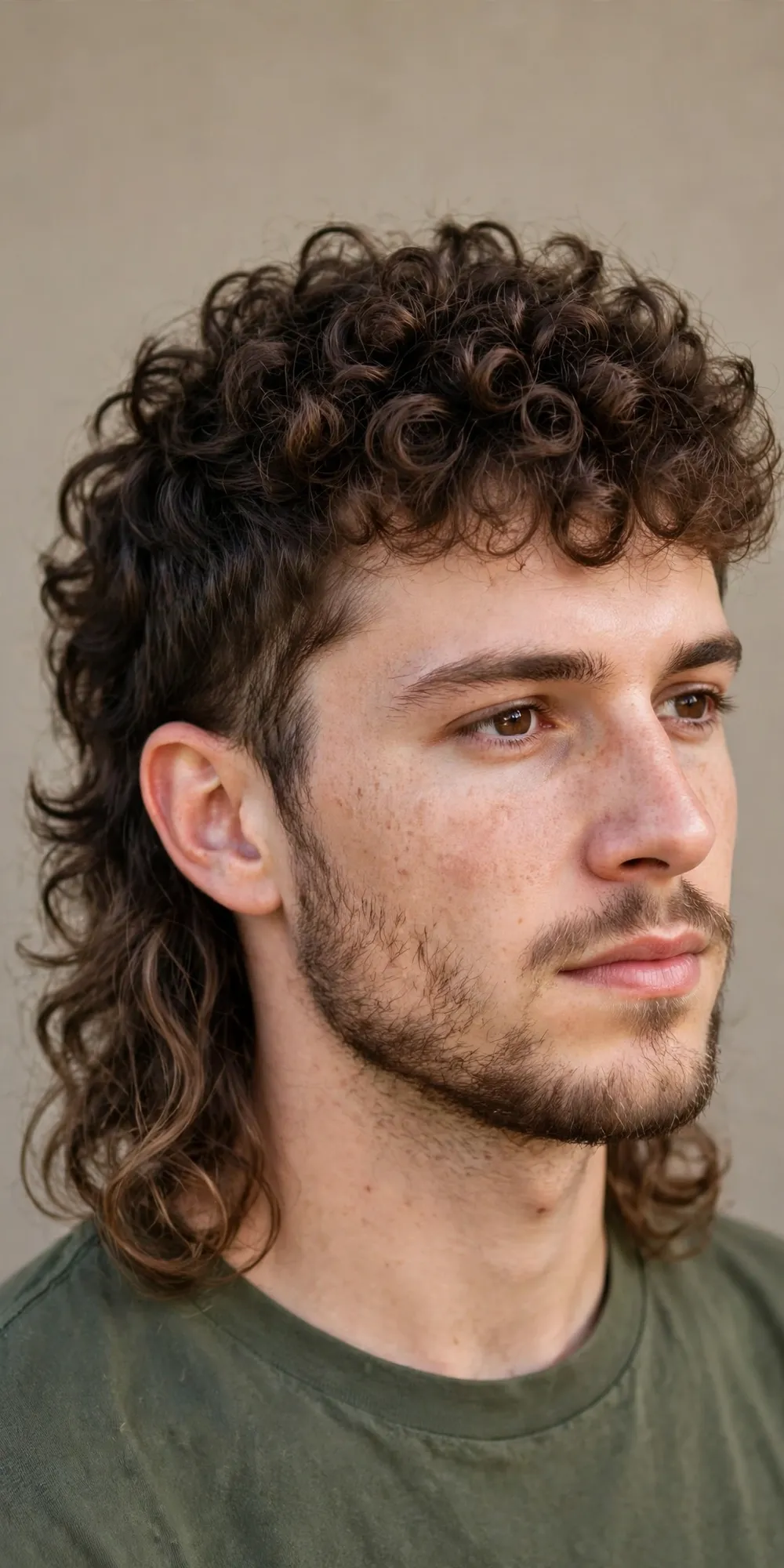
The curly top mullet puts the curls where everyone can see them — tight, voluminous curls on the crown. The back is left looser and wavier, so the shape reads as a deliberate gradient rather than a single texture. It suits round and oval faces, since the height on top adds length to the face, and it is ideal for naturally curly or permed hair. Ask your barber for a dry cut with the crown left full and shaped, tapered sides, and a back kept wavy and layered. A curl cream on damp hair, scrunched in and diffused or air-dried, keeps the top defined without frizz. The back needs less product — a little leave-in conditioner is enough. Shape it up every five to six weeks, and sleep on a silk pillowcase.
16. Straight Hair Mullet

Straight hair and mullets are a trickier pairing than most people assume, because straight strands show every uneven layer. Done right, the result is the sleekest mullet on this list: sharp lines at the front and a back that falls in a clean sheet. It suits oval and square faces best, and it needs straight hair with at least medium thickness. Ask your barber for clean, sharp layers through the top and back, a neat taper on the sides, and ends point-cut so the back doesn’t look like a curtain. A light styling cream or a tiny amount of serum keeps flyaways down without adding weight. The layers need a trim every four weeks or the shape goes blunt, and the back needs regular conditioning to stay sleek.
17. Wavy Mullet

The wavy mullet is the easiest mullet to live with, because natural waves do most of the styling work. The top has soft, beachy movement, the sides are kept loose, and the back flows with the same relaxed wave. It suits oval, square and heart-shaped faces, and it is made for naturally wavy hair. Straight hair can be coaxed into it with salt spray, but it will never quite match the real thing. Ask your barber for long layers on top, a light taper on the sides, and a back point-cut to let the waves form naturally. Sea salt spray on damp hair, scrunched and air-dried, is the whole routine — a diffuser adds definition on flat days. Trim every five to six weeks to keep the waves from turning heavy.
18. Afro Mullet
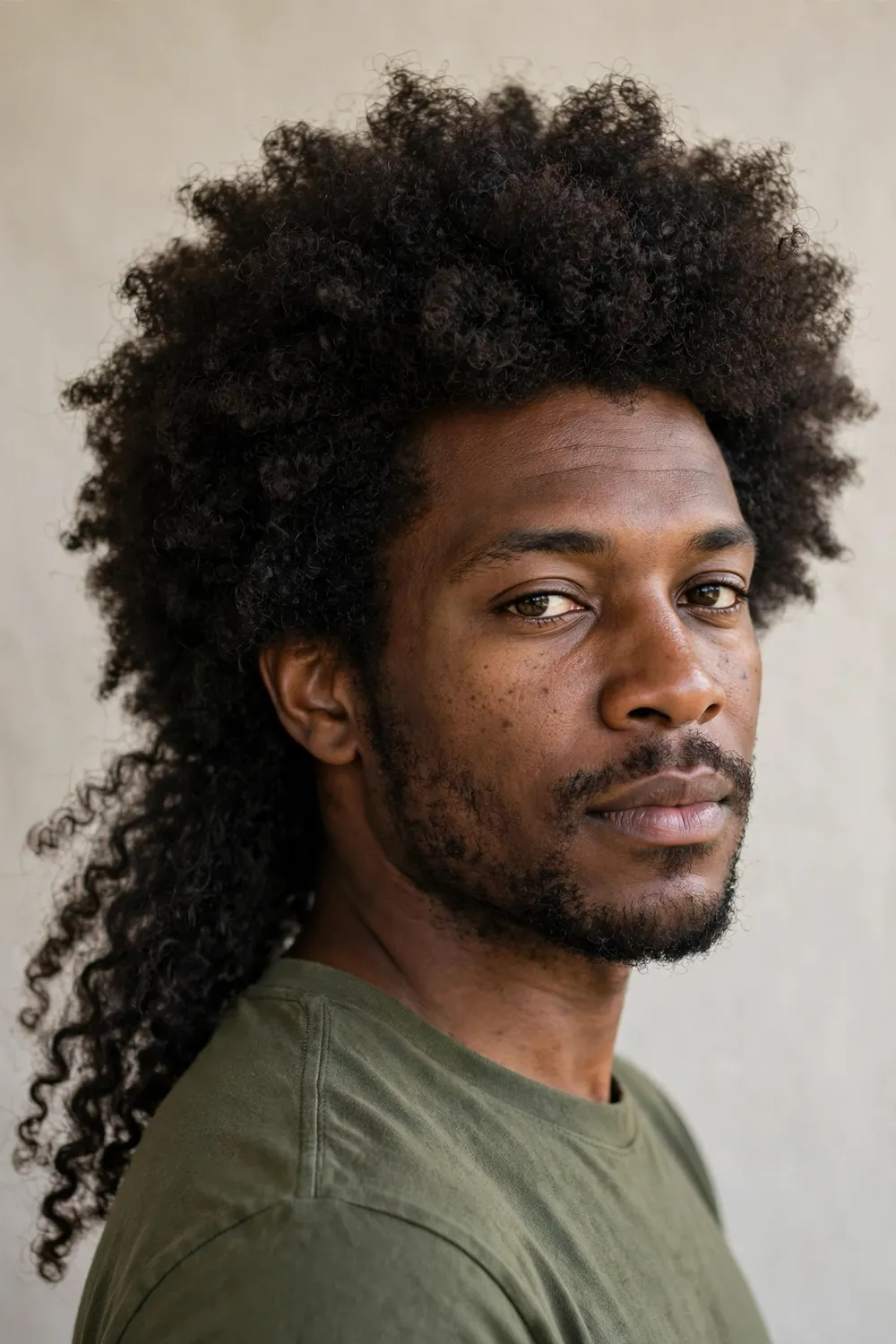
The afro mullet pairs a full, shaped crown with a long back, and the volume on top is the whole point. The crown is picked out into a rounded silhouette, the sides are tapered, and the back is left long with natural texture. It suits oval and round faces, and it is made for coily and afro-textured hair. Ask your barber for a shaped crown with a defined outline, a taper or light fade on the sides, and a back with soft, shaped ends. A curl cream or light butter, worked through damp hair, keeps the texture defined. Regular deep conditioning is not optional at this length. Shape it up every three to four weeks, and sleep on a satin pillowcase to protect the crown overnight.
19. Two-Block Mullet

The two-block mullet borrows its top from the Korean two-block cut: a heavy, rounded block of hair over a disconnected, shorter section. The mullet length runs down the back, and the rounded top against the sharp disconnect gives it its silhouette. It suits oval and heart-shaped faces, and straight to wavy hair holds the rounded top best. Ask your barber for a heavy rounded top with a clean undercut-style disconnect below it, and a back that stays long and layered. A matte clay or a light wax gives the top its hold without shine, and the disconnect needs a comb-through to keep the line visible. Trim the sides every three to four weeks to keep the two blocks distinct; once they blend, the cut loses its point.
20. Skater Mullet

The skater mullet is the laid-back cousin of the family — medium shaggy layers and a relaxed flow. The top is layered and loose, the sides are kept natural rather than faded, and the back flows just past the collar. It suits oval and square faces, and wavy or straight hair with a bit of natural movement is ideal. Ask your barber for medium-length shaggy layers, natural sides with no hard fade, and a back ending around the collar with textured ends. Sea salt spray on damp hair, air-dried, is genuinely all it needs — the whole point is that it looks undone. Trim every five to six weeks, and don’t fight the grow-out: a skater mullet only gets better as it gets longer.
21. Rocker Mullet

The rocker mullet turns the volume all the way up. Think big, teased crown, choppy layers on top and a long, wild back that moves when you do. It suits thick or wavy hair best — fine hair needs product help to hold the height — and it flatters oval and square faces, since the crown lift lengthens the face. Ask your barber for a layered top with plenty of texture, short-to-mid sides that stay disconnected from the back, and length left through the nape. Finish with a volumising powder or matte clay, blow-dried upward at the crown, and leave the back light so it keeps its movement. Daily styling on top is essential, and a trim every three weeks keeps the shape from going flat.
22. Business Mullet

Yes, a mullet can pass in an office — this is the one that does it. It looks like a neat, tapered cut from the front and only reveals itself from the side or behind, where a discreet length sits at the nape. It works on most hair types and suits every face shape. Ask your barber for a classic short back and sides with a taper, a clean fringe or side sweep up front, and just an inch or two of extra length left at the back. A light cream or a dab of pomade gives a soft, natural finish. Trim every three to four weeks to keep the front sharp; the back can grow a little longer between visits without looking messy.
23. Mohawk Mullet

The mohawk mullet takes the raised centre strip of a mohawk and lets it flow into a long back instead of stopping at the crown. It’s bold, loud and not trying to be anything else — the sides are shaved or faded tight, the strip runs front to back, and the tail keeps the mullet identity. It reads best on oval and heart-shaped faces and on thick hair that can hold height. Tell your barber you want a centre strip about two fingers wide, faded or shaved sides, and the back left long and textured rather than cut into the strip. Style it with strong-hold gel or fibre, pushing the strip up and slightly back. It demands daily styling and a fade refresh every two weeks.
24. Undercut Mullet
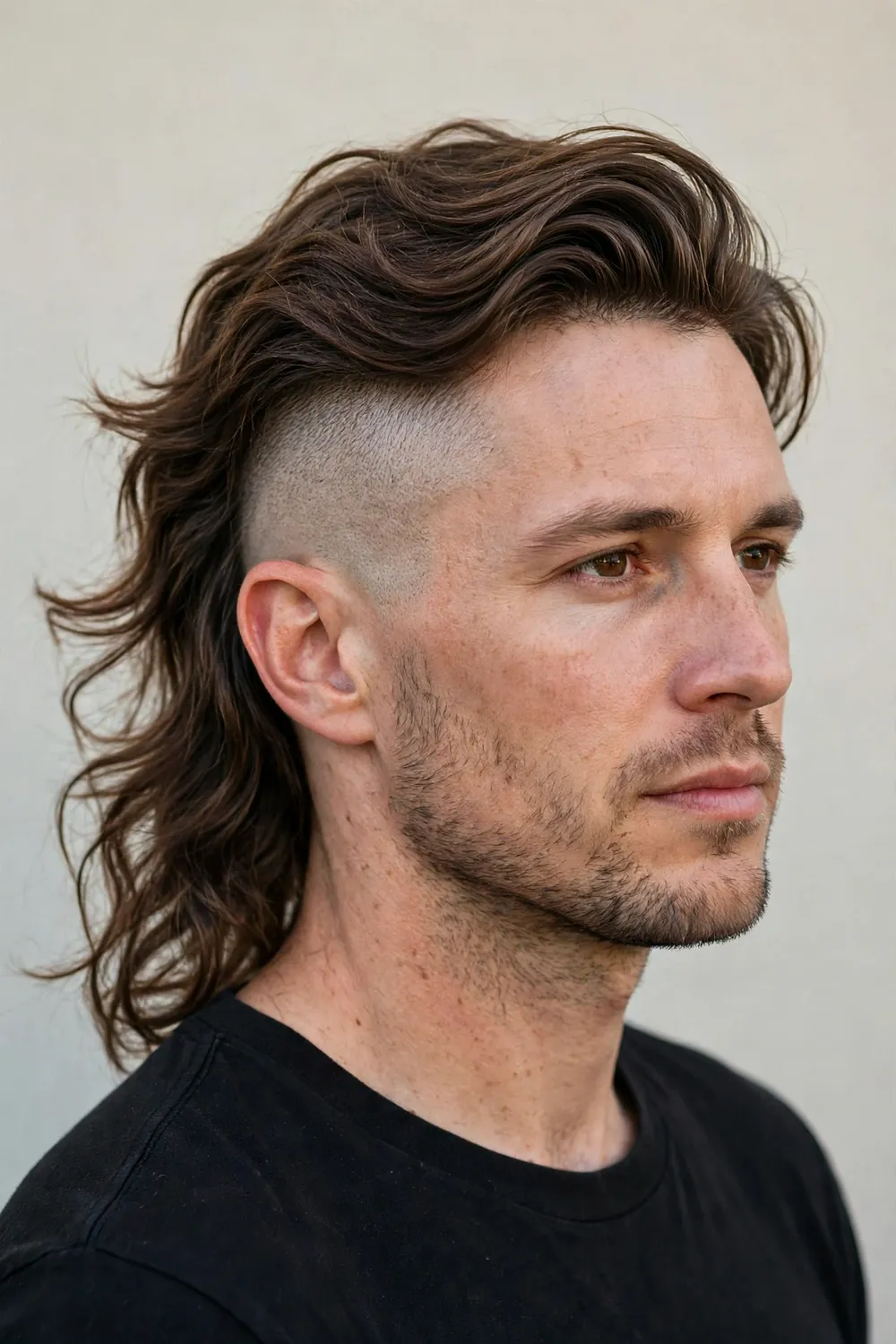
An undercut mullet is all about contrast: the sides are shaved or cut very short and disconnected, while the top stays long and flows into the back. No blending — the sharp line is the point. It suits thick, straight or wavy hair, and it flatters oval, square and heart-shaped faces because the volume on top balances the jaw. Ask your barber for a disconnected undercut on the sides, length kept through the crown and nape, and texture cut into the ends so the back doesn’t look heavy. A matte clay or paste gives a lived-in finish; avoid anything too shiny, which fights the raw look. The shaved sides grow out fast, so a tidy-up every two to three weeks keeps it sharp.
25. Low Fade Mullet
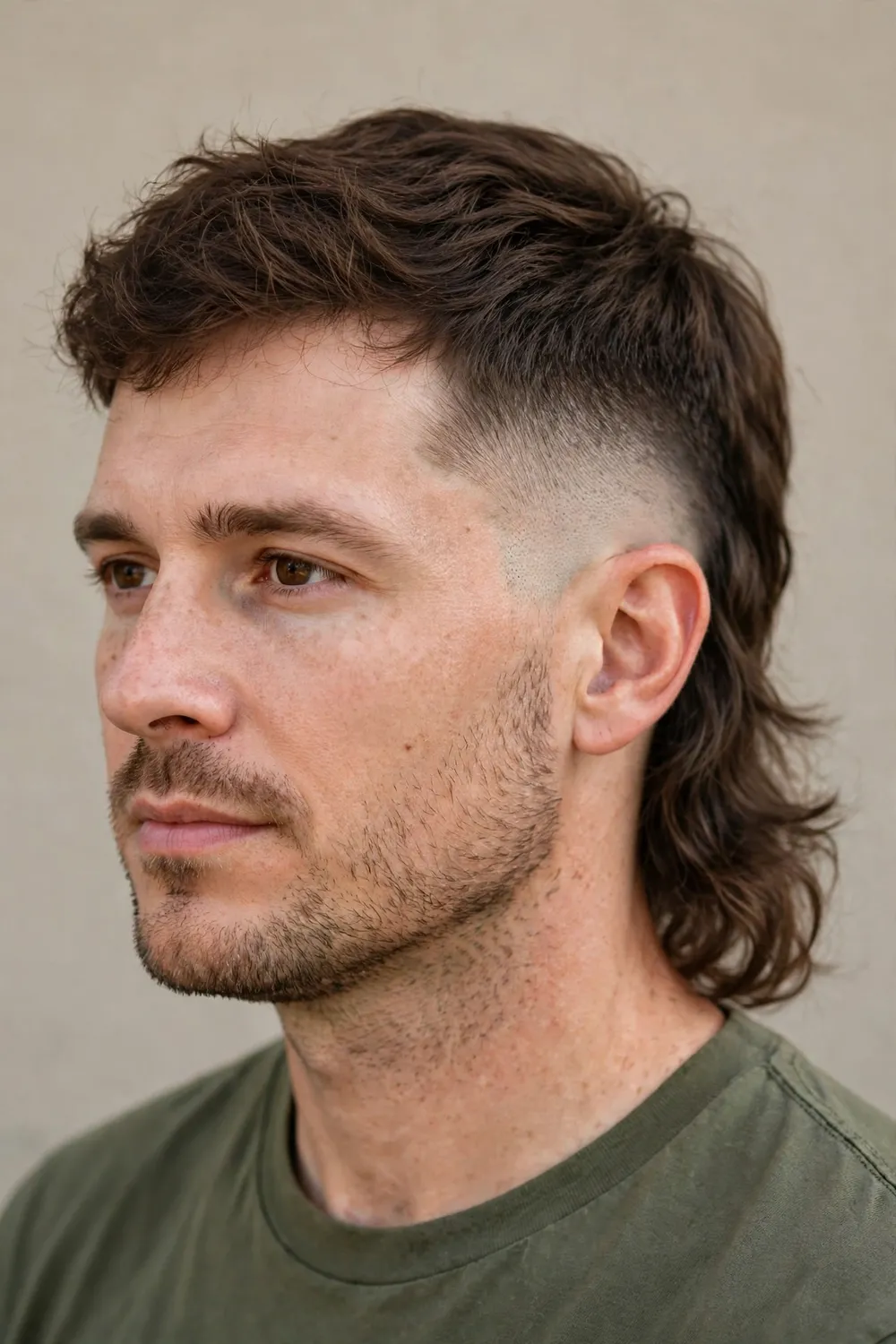
The low fade mullet is the quiet achiever of the fade family. The fade starts just above the ears and stays low, so most of the sides keep their length and the back keeps its full flow — the clean bit is subtle, the mullet bit is front and centre. It works on straight, wavy and curly hair alike. It suits round and square faces particularly well, since the low fade keeps weight where it softens the jaw. Ask your barber for a low skin or taper fade, a textured top, and the back left long with light layering. Style with a sea salt spray or light cream for a natural finish. Trim every three to four weeks to keep the fade from growing fuzzy.
26. High Fade Mullet

If the low fade whispers, the high fade shouts. Here the fade climbs well above the temples, leaving a stark contrast between the bare sides and the long, flowing back — it’s one of the most dramatic versions of the cut and it looks it. It works best on thick or wavy hair that gives the top and back real presence against the faded sides, and it flatters oval and oblong faces by adding width where the sides are bare. Ask your barber for a high skin fade, keep the top textured and the back long and layered. A matte paste or clay keeps the top in place without shine. The trade-off is maintenance: a refresh every two weeks, or the cut loses its punch.
27. Blonde Mullet

Colour changes everything, and a blonde mullet is the clearest proof. The bleached tone picks out every layer and texture in the cut, so the shape reads sharper and more deliberate than it would in a natural shade. It shows best on textured or wavy hair, where the lighter ends catch the light. Ask your barber or colourist for a full bleach or heavy highlights on top and through the back, with the cut kept textured so the colour has layers to work with. A weekly purple shampoo stops brassiness; a light matte product keeps the finish natural. The catch is upkeep: roots show within four to six weeks, bleached hair needs conditioning, and skip the toning step and blonde turns yellow.
28. Layered Mullet

The layered mullet is the version built on graduation — layers cascade from the crown down to the nape so the back moves instead of hanging in one heavy block. It suits medium to thick hair with a bit of natural wave best; very straight hair can work too, but it needs texture cutting to stop the layers looking flat. Ask your barber for graduated layers through the back, a textured top and sides that blend into the length rather than stopping abruptly. A light cream or sea salt spray is all the product you need — the layers do the work, so keep the finish soft. Trim every four to five weeks to keep the graduation tidy, and it grows out more gracefully than most versions.
29. Feathered Mullet

The feathered mullet is the soft version: the ends are thinned and feathered so the whole cut looks light, wispy and a little bit 70s. It takes the hard edges off the classic shape and replaces them with movement. It suits fine to medium hair best — feathering gives thin hair the illusion of more texture — and it flatters oval and heart-shaped faces. Ask your barber for feathered, point-cut ends through the back and sides, a light fringe and plenty of texture on top. Style with a small amount of styling cream, blow-dried with a round brush for a gentle flick. It needs a trim every four weeks, because feathered ends split and frizz faster than blunt ones.
30. Disconnected Mullet
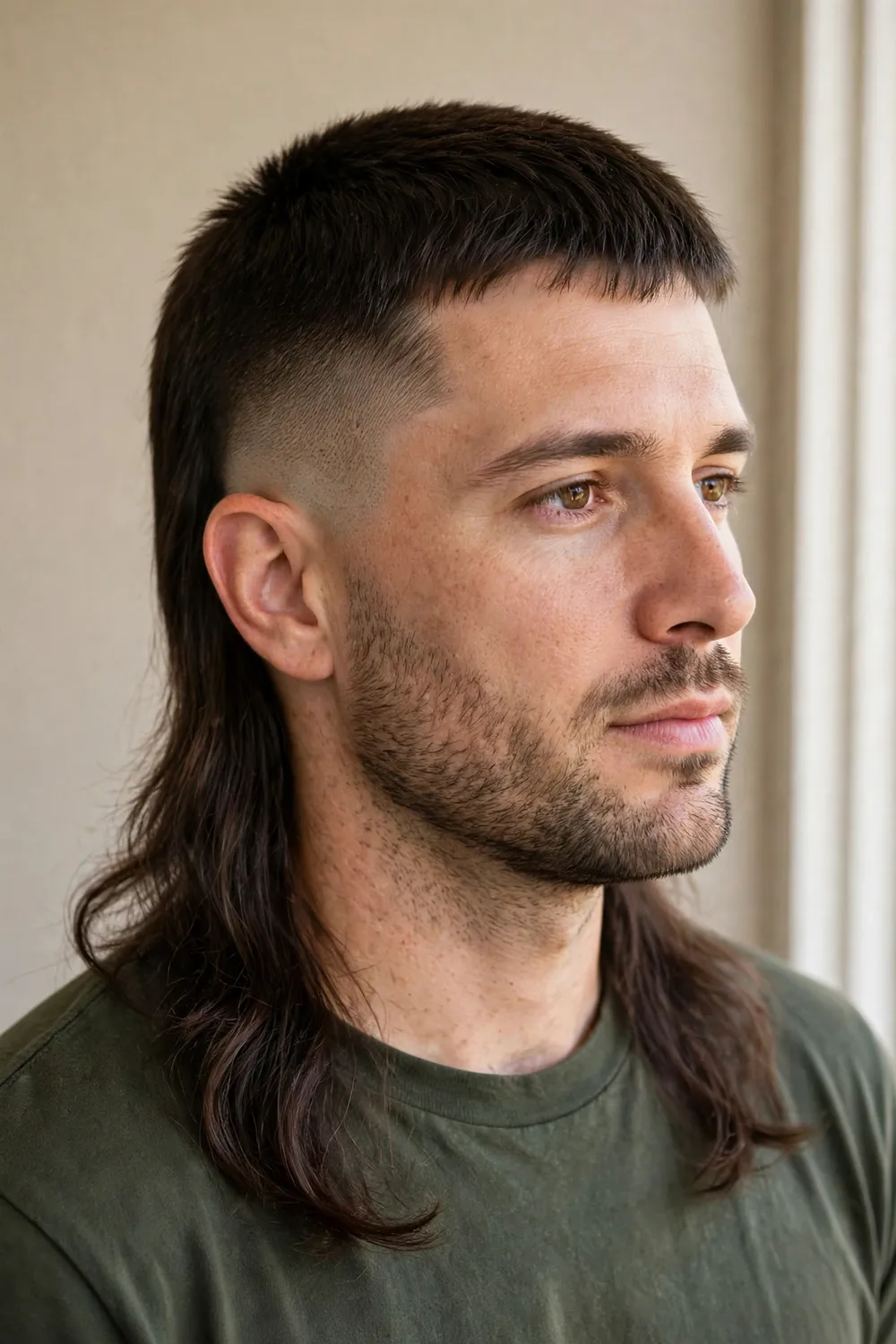
The disconnected mullet skips blending entirely: a short, structured top sits above a sudden drop into a long back, and the line between the two is meant to be seen. It’s a deliberately sharp, graphic cut, and it works best on thick, straight hair that holds a clean line. It suits oval and square faces. Tell your barber you want the top cut short and textured, the sides tight, and the back left completely disconnected from the crown — no blending, no taper, just a clear break. A matte clay defines the top without weighing it down, and the back needs only a touch of cream to stop flyaways. A trim every three weeks keeps the line crisp; once it grows out, the point of the cut disappears.
31. Permed Mullet

A permed mullet is the answer if your hair is straight and you want the curls and waves a natural curly mullet gets for free. The perm adds texture through the top and back, giving the cut volume and movement straight hair can’t produce. It suits oval and round faces — the curls add width at the sides, which balances a longer face — Ask your barber for a mullet shape first, then a loose perm on top and through the back — the goal is texture, not a 1980s perm. Use a curl cream and scrunch while damp, then leave it alone — touching it creates frizz. A perm lasts two to three months, but the cut itself still needs a trim every four weeks.
32. Buzz Cut Mullet

The buzz cut mullet is the lowest-effort version of the style: the front and sides are buzzed short and the back is simply left to grow. It’s a mullet with training wheels — the contrast does the work, so there’s almost nothing to style in the morning. It suits every face shape and every hair type, since the buzzed top is so short that texture hardly matters. Ask your barber for a number 2 or 3 on top and sides, with the back left long and the edges cleaned up at the nape. No product needed on top; a little beard oil on the back if it gets dry is plenty. The buzz needs a refresh every one to two weeks if you want it sharp.
33. Mid Fade Mullet

The mid fade mullet sits between the subtle low fade and the dramatic high one, and that balance is exactly why it works for so many people. The fade starts around the temples, giving a clean, professional-looking blend on the sides while the back keeps its full mullet length. It suits straight, wavy and curly hair, and it flatters most face shapes. Ask your barber for a mid skin or taper fade, a textured top and a layered back, and say where you want the fade line to sit. A matte paste gives a clean finish without shine. Like the other fades, it needs a refresh every three weeks to stay crisp, though the mid version grows out more forgivingly than a high fade.
34. Drop Fade Mullet

The drop fade mullet is a small detail that changes the whole look. Instead of running straight around the head, the fade curves down behind the ear, following the shape of the skull — and it frames the longer back beautifully. It works on straight and wavy hair, where the curve stays visible. It suits oval and square faces. Ask your barber specifically for a drop fade — not just a fade — with the curve dropping behind the ear and the back left long and textured. Style the top with a light clay and leave the back natural. The drop fade needs a tidy-up every two to three weeks, or the curve blurs and the effect is lost.
35. French Crop Mullet

The French crop mullet pairs a blunt, short fringe up front with mullet length behind — two very different ideas in one cut, and they work surprisingly well together. The fringe gives the front a clean, structured edge while the back keeps the flow, It suits straight or slightly wavy hair best, and it flatters oval and oblong faces by shortening the forehead. Ask your barber for a short blunt fringe, textured on top, faded or tapered sides, and the back left long with light layers. A tiny amount of matte paste keeps the fringe in place; anything heavier will drag it down. Trim the fringe every three weeks — it grows over the eyes fast.
36. Edgar Mullet

The Edgar mullet takes the straight, sharp fringe of the Edgar cut and attaches it to a mullet back. The result is a bold, graphic shape: a hard line across the forehead, faded sides, and length flowing down the back. It works best on thick, straight hair that can hold the blunt fringe, and it flatters oval and square faces where the strong lines add definition. Ask your barber for a straight Edgar fringe cut across the forehead, a mid or high fade on the sides, and the back left long and layered. A matte clay holds the fringe flat without shine. The fringe and the fade both need attention every two to three weeks — this is one of the highest-maintenance versions here.
37. Braided Mullet

A braided mullet adds a braid — or a few — into the top or back of the cut, turning a familiar silhouette into something personal. It suits longer hair with enough length to braid, and it works across hair types, though thick or textured hair holds braids best. Ask your barber or braider for the mullet shape first, then decide where the braids go: a centre braid through the back is the classic move. Keep the unbraided sections soft with a light cream, and use a little oil on the braids to stop frizz. The cut needs a trim every four weeks, but the braids themselves can last a few days and be redone at home once you’ve learned the pattern.
38. Mullet with Beard

A mullet with a beard is really a pairing, and when the two are shaped together they balance each other: the length at the back and the fullness at the jaw create one continuous silhouette. It suits men who can grow a decent beard, and it flatters square and oval faces by adding width at the jaw. Ask your barber for your chosen mullet version plus a beard shaped to match — clean cheek lines, a defined neckline, and the sideburns blended into the cut. Use beard oil daily and a balm for shape. Both the hair and the beard need attention on the same schedule: a trim every three weeks keeps the pairing looking intentional rather than accidental.
39. 80s Retro Mullet

The 80s retro mullet is the full throwback: big feathered volume on top, layers flicked out at the sides and a long, flowing back. It only works if you commit to the volume — half-hearted is just a messy mullet. Thick or wavy hair holds the shape best, It suits oval and square faces, since the height on top lengthens the face. Ask your barber for heavy feathered layers, a textured crown and a long back with flicked ends, and keep the sides light rather than faded — the retro look needs the volume. Style with a volumising mousse, blow-dried with a round brush, and finish with a light-hold spray. It’s high-effort daily, but that’s the point: this cut is a statement, not a convenience.
How to Ask Your Barber for a Mullet Haircut
The single biggest reason mullet haircuts go wrong is a vague request. “Give me a mullet” means something different to every barber, so walk in with reference photos — two or three, saved on your phone, showing the front, the side and the back of the version you want. Photos settle in seconds what words take ten minutes to explain, and they give your barber something concrete to aim at.
Then say three things clearly. First, the front and side length: how short you want the fringe and whether the sides should be faded, tapered or left natural. Second, the back length: collar, shoulder or longer — and whether you want it layered or left blunt. Third, the texture: choppy and messy, or smooth and neat. Those three answers define the cut.
On the sides, know the difference before you choose. A fade gives a clean, graduated blend from skin to length and needs the most upkeep. A taper is gentler — shorter at the edges, longer higher up — and grows out more forgivingly. Natural sides mean no fade at all, just the hair cut to shape, which suits the classic and rocker versions best. If you’re unsure, ask your barber which one suits your hair — a good barber will tell you honestly rather than just doing what you asked.
How to Style a Mullet Haircut at Home
Styling a mullet at home is simpler than it looks, and it starts with damp hair. Towel-dry until it’s no longer dripping, then work your product into the top first — that’s where the shape lives. A pea-sized amount of matte clay or styling cream is enough for most versions; rub it between your palms, push it through the crown and fringe, and shape the top before you touch the back.
The back is the part most people overdo. Leave it light — a tiny amount of cream smoothed through the ends is plenty, and for wavy or curly versions a sea salt spray on damp hair does the job on its own. Loading the back with product kills the movement that makes the cut work.
If you want volume, blow-dry the top with your fingers or a round brush, lifting at the roots and directing the air upward. For a relaxed finish, skip the dryer and let it air-dry, then scrunch the back once. The whole routine takes five minutes once you’ve done it a few times — the mullet rewards a light hand, not a heavy one.
5 Mistakes That Ruin a Mullet
- Asking for it with no reference photos. You and your barber may picture completely different cuts. Photos are the only way to make sure you both mean the same thing.
- Letting the sides grow out of control. The front and sides are what keep a mullet looking like a cut instead of an accident. Once they go shaggy, the shape collapses.
- Using too much product on the back. Heavy wax or gel turns the tail into a stiff, greasy clump. The back should move — keep product minimal and light.
- Skipping trims for months. A mullet doesn’t grow out gracefully the way a longer cut does. Six weeks without a trim and the proportions are gone.
- Choosing the wrong version for your hair. A feathered mullet on very thick, coarse hair or a slicked-back one on fine hair will fight you every morning. Match the version to what your hair actually does.
How Often Should You Trim a Mullet?
It depends on the version, and the honest answer is more often than you’d think. Faded versions — the high fade, mid fade, drop fade and Edgar — need a refresh every two to three weeks, because the fade is the first thing to blur. The classic, business and layered versions are more forgiving and can go three to four weeks. The low fade and the longer styles, like the long mullet and the 80s retro, stretch to four or five weeks between visits.
The back itself is the easy part: it can keep growing while the front and sides get tidied, which is why so many barbers will do a quick neckline and side clean-up between full cuts. If you’re growing one out, expect three to six months before the shape is really clear — the back needs time to reach a length that reads as a mullet rather than just long hair, and the awkward middle stage is normal. Stick with it, keep the front trimmed while the back grows, and the cut will settle into itself.
Frequently Asked Questions
What is a mullet haircut?
A mullet haircut is short at the front and sides and long at the back. The modern versions keep the same shape but add fades, tapers and texture, so the cut looks deliberate rather than accidental. It works on straight, wavy and curly hair, and there are dozens of variations — from the tidy business mullet to the full 80s retro.
Is the mullet haircut good for curly hair?
Yes — curly hair is one of the best matches for a mullet. The curls give the top and back natural volume and movement, and the shape works with the curl pattern instead of fighting it. A curly mullet needs a curl cream and minimal touching while it dries, plus regular trims to keep the shape from going triangular.
How do I ask my barber for a mullet?
Bring two or three reference photos showing the front, side and back of the version you want. Then tell your barber three things: how short you want the front and sides, how long you want the back, and whether you want it textured or smooth. Mention fade, taper or natural sides so there’s no guesswork.
How long does hair need to be for a mullet?
You need at least three to four inches at the back to get a visible mullet shape, and more is better — five to six inches gives a clear, deliberate look. The front can stay short throughout, so you don’t need to grow the whole head out. If your hair is currently very short, expect two to three months of growing the back before the cut looks right.
How do you maintain a mullet haircut?
Keep the front and sides trimmed every three to four weeks, use a light product on top and almost nothing on the back, and wash with a shampoo that suits your hair type. Faded versions need more frequent barber visits. Between trims, a quick tidy of the neckline keeps the whole cut looking fresh.
Which face shapes suit a mullet?
Almost all of them — the trick is picking the right version. Oval faces suit nearly every style. Round faces benefit from volume on top, like the rocker or textured mullet. Square faces look good with softer, layered versions. Heart-shaped faces suit styles with some width at the sides, like the curly or feathered mullet.
Is the mullet still in style in 2026?
Yes. The mullet has moved from a throwback joke to a genuinely popular cut, and the modern versions — fades, tapers, textured tops — are everywhere in 2026, from barbershops to runways. It’s no longer a costume; it’s a mainstream style with enough variations that most men can find a version that works for them.
Final Word
The mullet has earned its place in 2026 because it’s not one haircut — it’s a family of them, and there’s a version for nearly every face, hair type and comfort level. Pick the one that matches what your hair actually does, bring photos to your barber, and give it a few weeks to settle in before you judge it. If you want more ideas before you book, browse our more haircut guides on our blog — you’ll find everything from Buzz Cut Hairstyles for Men and Blowout Haircuts for Men to Low Fade Haircuts for Men, each with the same honest barber asks and styling detail.