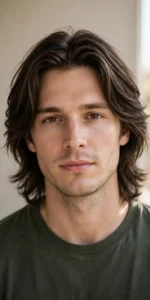



The best short haircuts for men keep the sides tight and leave just enough length on top to show texture. That’s it — that’s the whole formula, and every cut on this list follows it in a different way.
Our top 3 picks: French Crop (#1) — the easiest stylish short cut, a textured top with a straight fringe that needs almost no styling. Textured Crop (#42) — the best everyday modern look, short sides with a choppy, lived-in top. Classic Buzz Cut (#13) — zero-effort sharp finish, one even length all over, always clean.
Quick Picks
| Your goal | Best pick | Idea # |
|---|---|---|
| Easiest cut to style every day | French Crop | #1 |
| Most modern everyday look | Textured Crop | #42 |
| Zero styling, always sharp | Classic Buzz Cut | #13 |
| Best for a round face | Short Quiff | #11 |
| Best for thick hair | Thick Textured Top | #25 |
| Best for curly hair | Short Curly Hair | #10 |
| Best for thinning hair | Buzz Cut Fade | #34 |
| Best with a beard | Fade with Full Beard | #59 |
| Best for the office | Side Part Fade | #2 |
| Best bold statement | Burst Fade Mohawk | #8 |
| Best low-maintenance fade | Low Fade Buzz Cut | #49 |
| Best for wavy hair | Long Wavy Fringe with Taper Fade | #28 |
How to Choose the Right Short Haircut
Start with your face shape. Round faces look better with height on top — a quiff or a textured crop pulls the eye upward and adds length to the face. Square faces can handle almost anything, but softer, textured tops keep the jaw from looking too heavy. Oval faces are the lucky ones: most short cuts work, so pick by hair type instead. Long faces should avoid too much height on top and keep the sides from going too tight, or the face looks even longer.
Then look at your hair. Thick hair needs thinning or texture, or it puffs out at the sides — ask your barber to point-cut the top and keep the sides short. Fine hair suits shorter tops with a matte finish, because heavy product and shine make thin hair look thinner. Curly hair works best when the top keeps some length and the sides are tapered, not shaved to the skin. Straight hair takes sharp lines and clean parts better than any other type.
Finally, be honest about your mornings. If you have two minutes, a buzz cut or a French crop is your friend. If you enjoy five minutes with a blow dryer, a quiff or a pompadour will reward you. And if you hate visiting the barber, pick a cut with a taper instead of a skin fade — it grows out far more gracefully between appointments.
Group A — Classic Short Cuts
1. French Crop
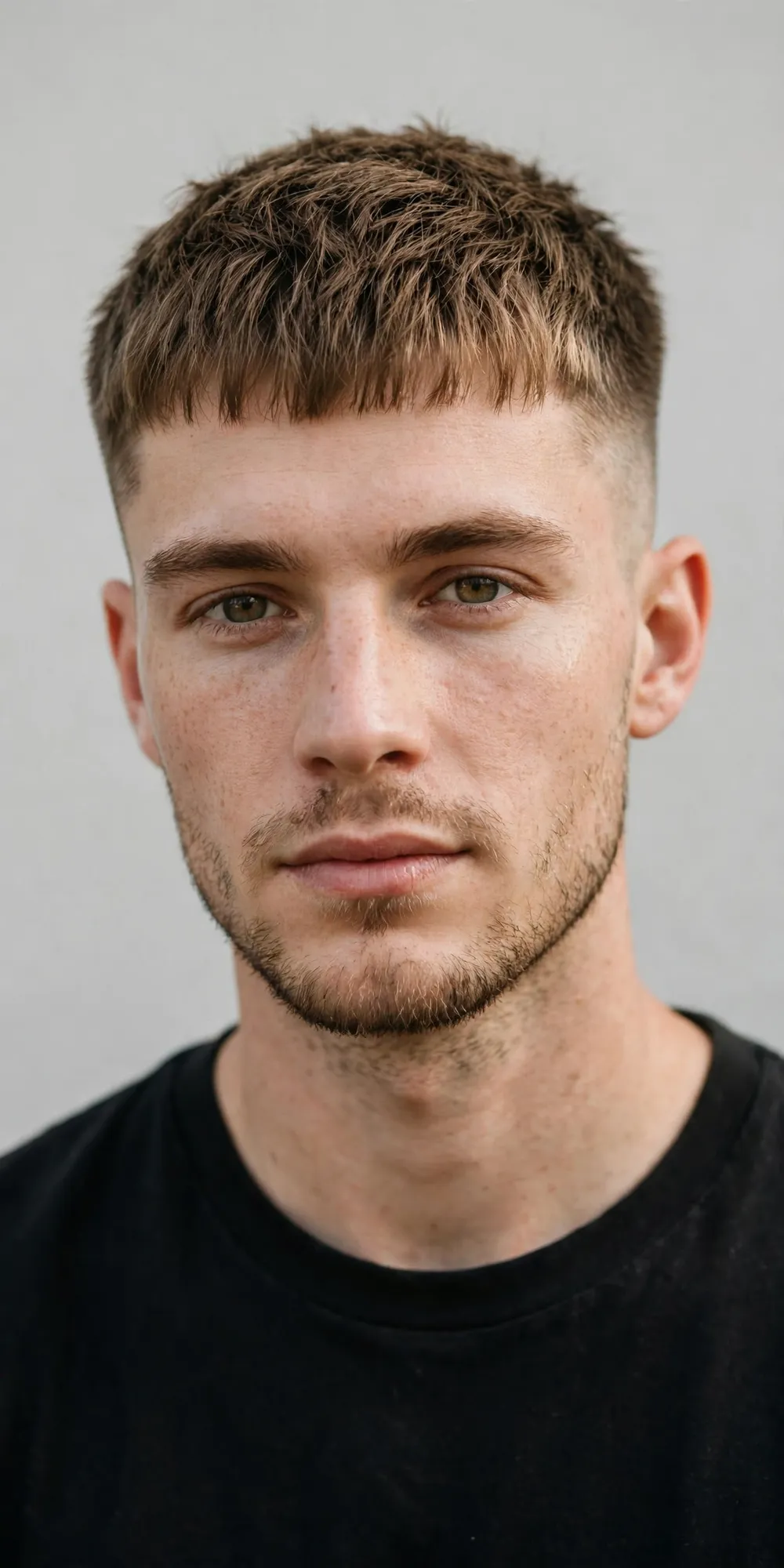
The French crop is a short textured top with a straight fringe that sits across the forehead, and the sides are faded or tapered short. It suits oval, square and heart-shaped faces best, and it works with straight, wavy and slightly curly hair, hiding a receding hairline well. Ask your barber for a textured crop with a blunt fringe, about two to three centimetres on top, with a low or mid fade on the sides. A pea-sized amount of matte clay pushed forward through the fringe is all the styling this needs, and the finish should stay matte and natural. Maintenance is easy: a trim every three to four weeks keeps the fringe from creeping over your eyebrows, and it still looks decent a week past its best.
2. Side Part Fade
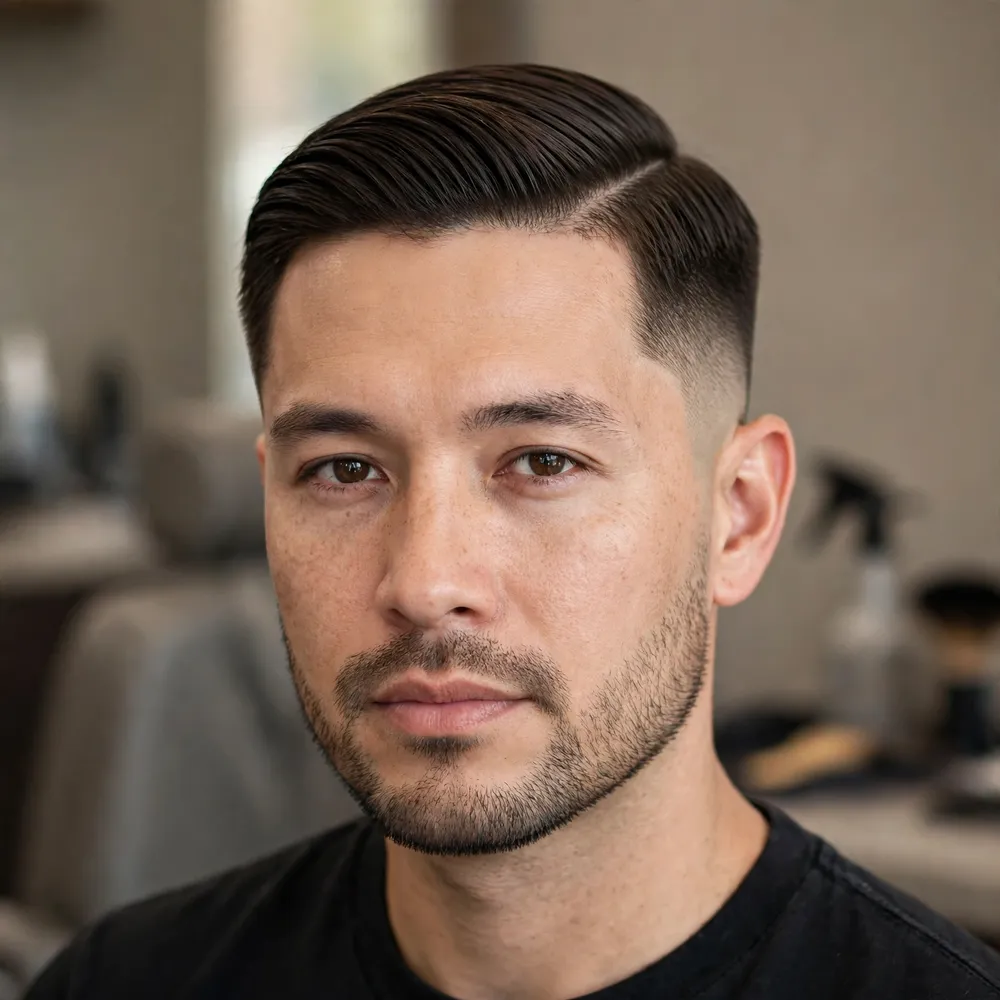
The side part fade is the office classic: a neat part on one side, a longer top swept across, and sides that fade cleanly from skin to the top. It flatters oval and square faces most, and it is at its best on straight or slightly wavy hair that lies flat. Ask for a mid fade with a defined side part and four to five centimetres on top, and say whether you want the part cut in with a razor or left natural. A light pomade gives a polished shine for formal days, while matte clay keeps it smart but relaxed. Comb it through damp in the morning and it holds all day. Book a cleanup every two to three weeks, because a grown-out fade around the ears makes this cut look tired.
3. Messy Brush Up
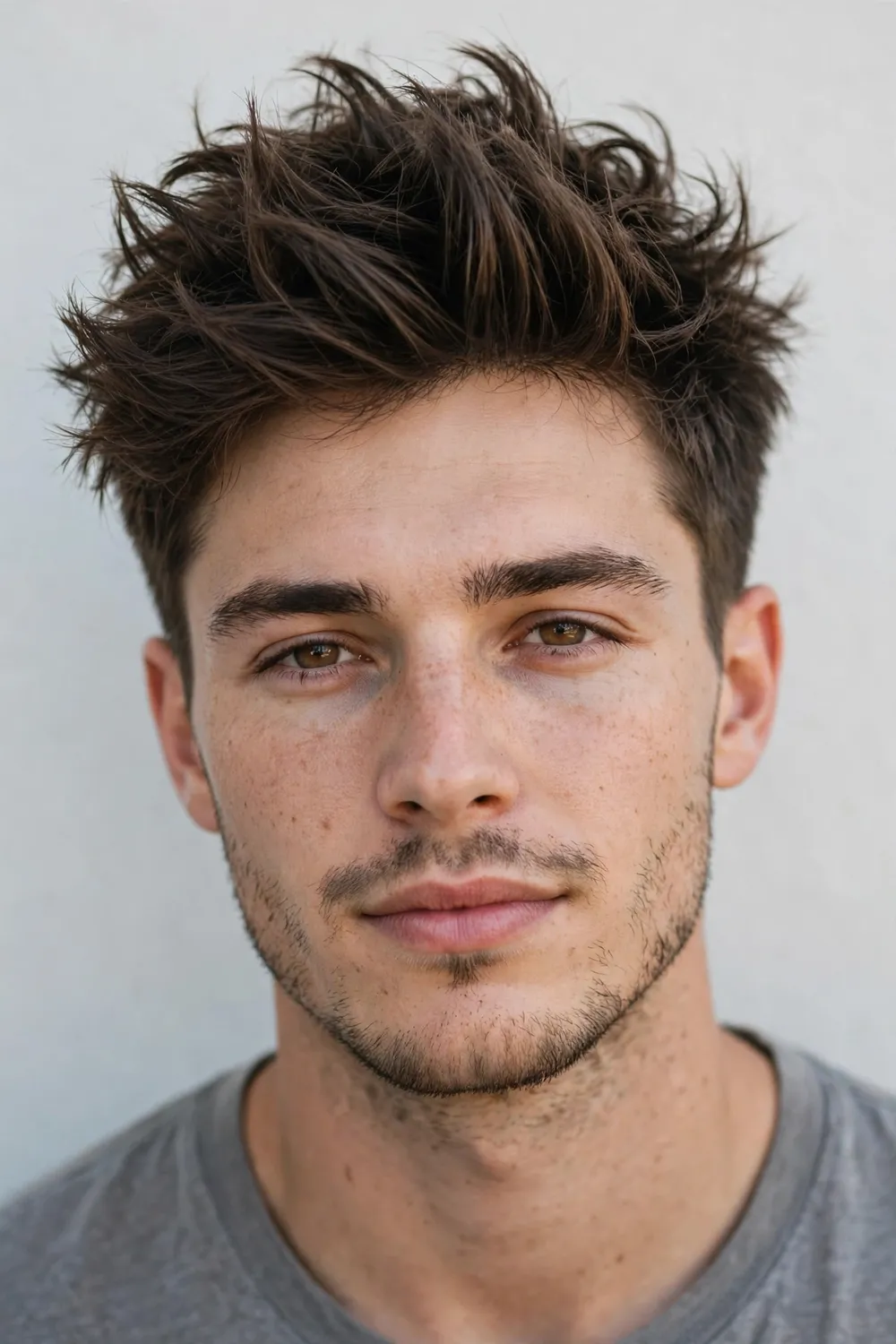
The messy brush up takes a short textured top and pushes it upward and slightly back, leaving the finish deliberately undone. It suits oval, round and square faces, because the height on top lengthens the face a little, and it works best on straight to wavy hair with medium thickness. Ask your barber for a textured top of about five centimetres with a low taper or mid fade on the sides, and ask them to point-cut the ends so the top breaks apart naturally. Work a small amount of matte paste or sea salt spray into towel-dried hair, push it up with your fingers, and leave it — no comb, no mirror-checking. It grows out well and needs a trim only every three to four weeks, which makes it a forgiving choice if you skip appointments.
4. Messy Textured Top with Short Sides and Beard

This cut pairs a messy, choppy top with short faded sides and a full beard, so the whole look feels rugged and balanced rather than random. It suits square and oval faces especially well, and the beard adds structure that flatters a softer jawline or a round face. Medium to thick straight or wavy hair gives the best texture, though fine hair can work if the top is kept shorter. Ask for heavy texture on top with a mid fade, and tell your barber to blend the sideburns into the beard so the two connect cleanly. Matte clay gives the top grip without shine, and a drop of beard oil keeps the beard soft. Maintenance is moderate: trim the hair every three weeks and shape the beard weekly, or the look drifts from rugged into untidy.
5. Casual Medium Short Hairstyle

The casual medium short cut is a scissor-cut style with slightly longer, textured length on top and softer sides that are not faded to the skin. It suits nearly every face shape, which is why barbers reach for it so often, and it works with straight, wavy and lightly curly hair alike. Ask for a scissor cut all over with the top left around five to six centimetres and the sides tapered naturally, with texture added through the ends. A light styling cream gives a soft, natural finish with a hint of movement, and you can wear it pushed back, to the side, or roughly forward depending on the day. Styling takes about two minutes with your fingers. Maintenance is low: it grows out gracefully, so a trim every four to five weeks is plenty.
6. Short Crew Cut

The short crew cut is a tidy classic: the top is cut short and slightly longer at the front, blending into faded or tapered sides. It flatters oval, square and round faces, and it is one of the best choices for thick hair, because the short length stops it puffing out. Ask for a #3 or #4 guard on top with a taper or low fade on the sides, and a clean, natural hairline at the front. A dab of matte clay or nothing is enough — the cut is the style, and it looks the same whether you style it or not. That is the whole appeal: wash, towel dry, walk out. A trim every two to three weeks keeps the shape sharp, and the grow-out is neat, so it forgives a late appointment.
7. Short Spiky Hair with Taper Fade
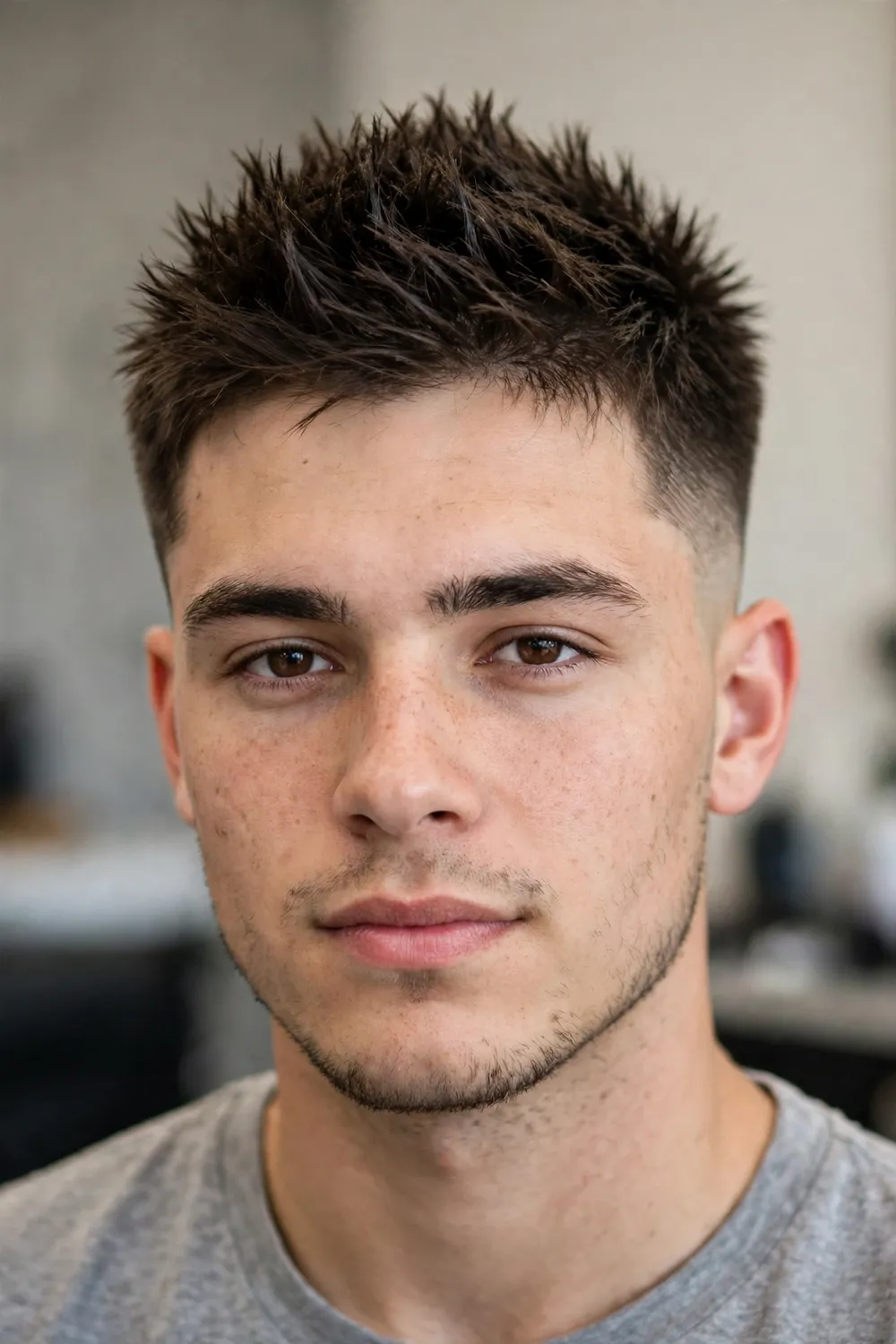
Short spiky hair takes a textured top and lifts it into soft spikes, while a taper fade keeps the sides neat without going skin-tight. It suits oval and square faces best, and it works well on straight or slightly wavy hair with medium thickness — very fine hair may need a little product help to hold the spikes. Ask for a #4 guard on top with texture cut in, and a taper fade that blends gradually down to the sideburns. A strong-hold matte wax is the right product here: warm it in your palms, pinch the ends upward, and the spikes stay put without looking stiff. The finish should be matte, never shiny. Expect a trim every three weeks, and keep the spikes soft rather than gelled into points, or the cut ages badly.
8. Burst Fade Mohawk
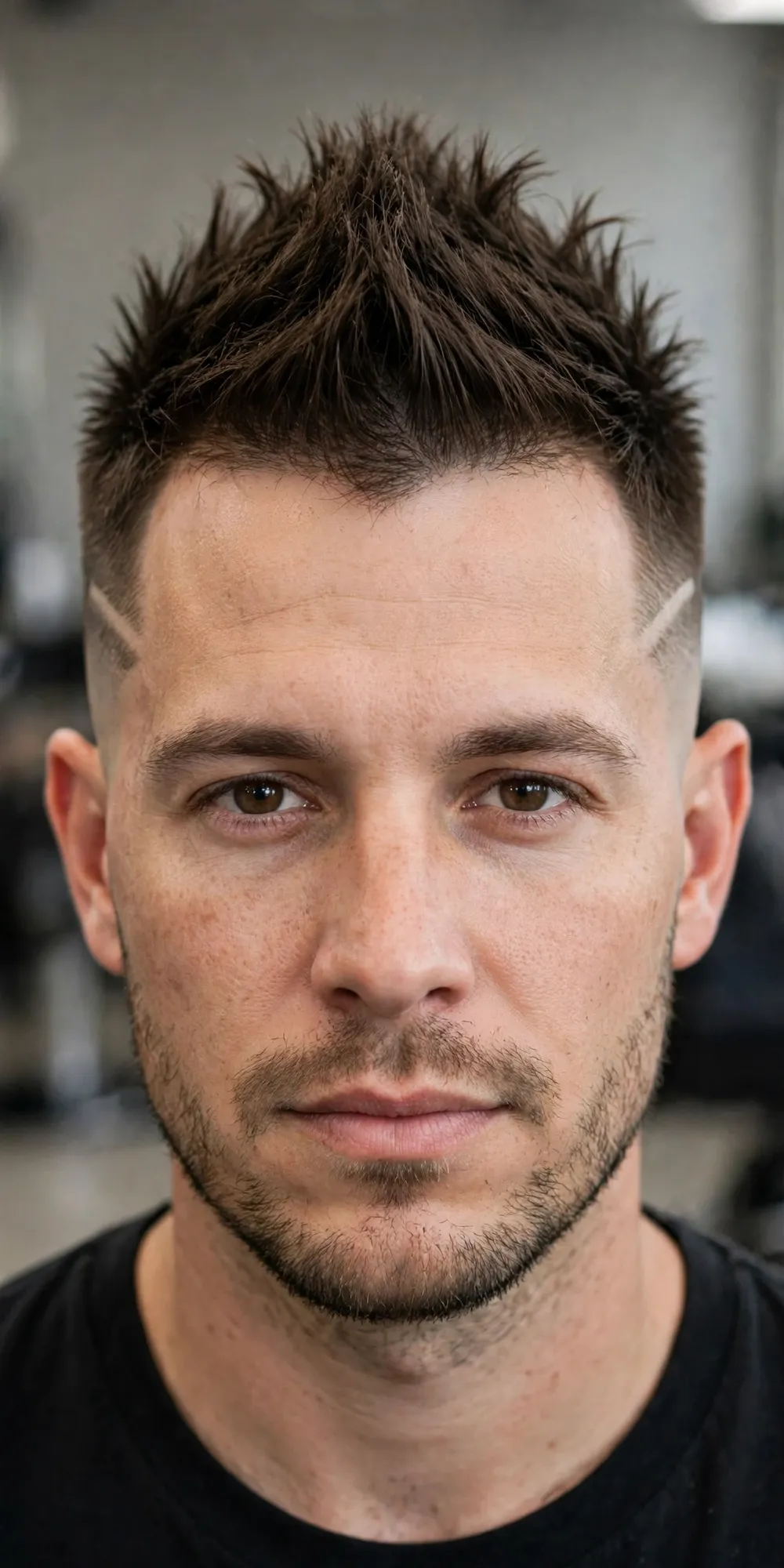
The burst fade mohawk keeps a strip of textured length down the centre of the head and curves a rounded fade around the ears, which makes it bolder than a regular mohawk but still wearable. It suits oval and square faces, and it looks best on thick straight or wavy hair that can hold its shape. Ask your barber for a burst fade — the fade arcs around the ear rather than running straight back — with about five centimetres left on top. A strong matte paste or clay gives the centre strip its lift; work it in with your fingers and push the hair slightly upward and forward. This is a high-maintenance cut: the burst fade blurs fast, so book a cleanup every two weeks, and be ready for the attention it brings.
9. Comb Over

The comb over is the quiet classic: the top is grown a little longer and swept neatly to one side, with tapered sides and a clean finish. It suits oval, square and heart-shaped faces, and it is excellent for straight or slightly wavy hair, including hair that is starting to thin at the front, because the sweep adds coverage. Ask for a low taper on the sides with four to six centimetres on top, and a natural part rather than a razor line unless you want a sharper look. A light pomade gives the traditional polished shine, while a matte cream keeps it modern and soft. Comb it through damp hair and it sets in a minute. A trim every three weeks keeps the sides tight and the top from flopping over the ears.
10. Short Curly Hair
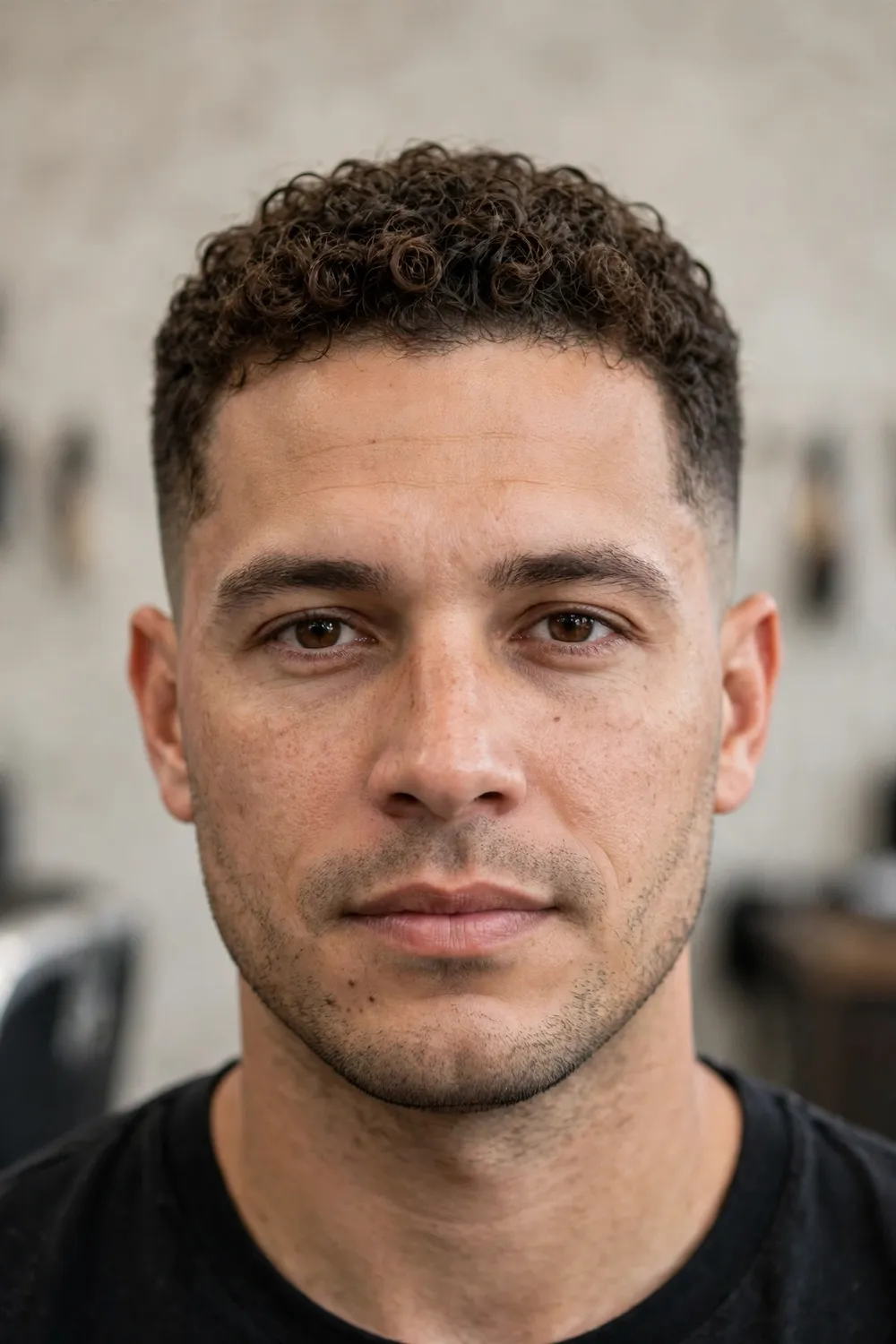
Short curly hair keeps the curls defined on top with tapered sides, so the curls are the feature, not a problem to fight. It suits oval, round and square faces, and it needs curly or wavy hair — the tighter the curl, the shorter the top can go. Ask for a tapered cut that follows your curl pattern, with the top left long enough for the curls to form, and never thinned with a razor. A curl cream worked into damp hair defines the curls without crunch, and the finish should look natural. Maintenance is simple: trim every three to four weeks to stop the sides bulking out, and never brush dry curls. For more curly styles, see our [curly hairstyles for men](/curly-hairstyles-for-men/) guide.
Group B — Modern Short Styles
11. Short Quiff

The short quiff sweeps the front of the hair upward and slightly back, with short sides that make the height the star. It is one of the best choices for a round face, because the volume on top adds length, and it flatters oval and square faces too. Straight or wavy hair with medium thickness holds a quiff best; very fine hair may need a pre-styler. Ask for a low or mid fade with five to seven centimetres at the front, longer than the crown. Blow-dry the front upward with a round brush, then finish with matte clay for a natural look or pomade for shine. It needs five minutes in the morning and a trim every three weeks to keep the front from flopping.
12. Short Mohawk Fade

The short mohawk fade keeps the centre strip shorter than a classic mohawk, with the sides faded to the skin, so it reads bold without looking like a costume. It suits oval and square faces best, and it works on straight, wavy and curly hair as long as the top has enough texture to stand up. Ask for a high skin fade on the sides and a textured strip of about three to five centimetres down the centre, with the back tapered rather than left long. A strong-hold matte paste gives the strip its shape — push it up and slightly forward with your fingers and leave the edges a little rough. Maintenance is high: the skin fade needs a cleanup every one to two weeks, and the look fades fast once the sides start growing back.
13. Classic Buzz Cut

The classic buzz cut is one even length all over the head, cut with clippers and nothing else, and it is the simplest sharp look a man can wear. It suits oval and square faces best, and it works with any hair type — it is also the most flattering option for thinning hair, because an even short length hides patchy density better than longer styles. Ask your barber for a #1, #2 or #3 guard all over; #2 is the safe middle ground for most men, while #1 is bolder and #3 keeps a little softness. No product is needed, and the finish is naturally matte. Maintenance could not be easier: clip it yourself at home or visit the barber every two weeks. It is the definition of zero effort.
14. Short Mullet
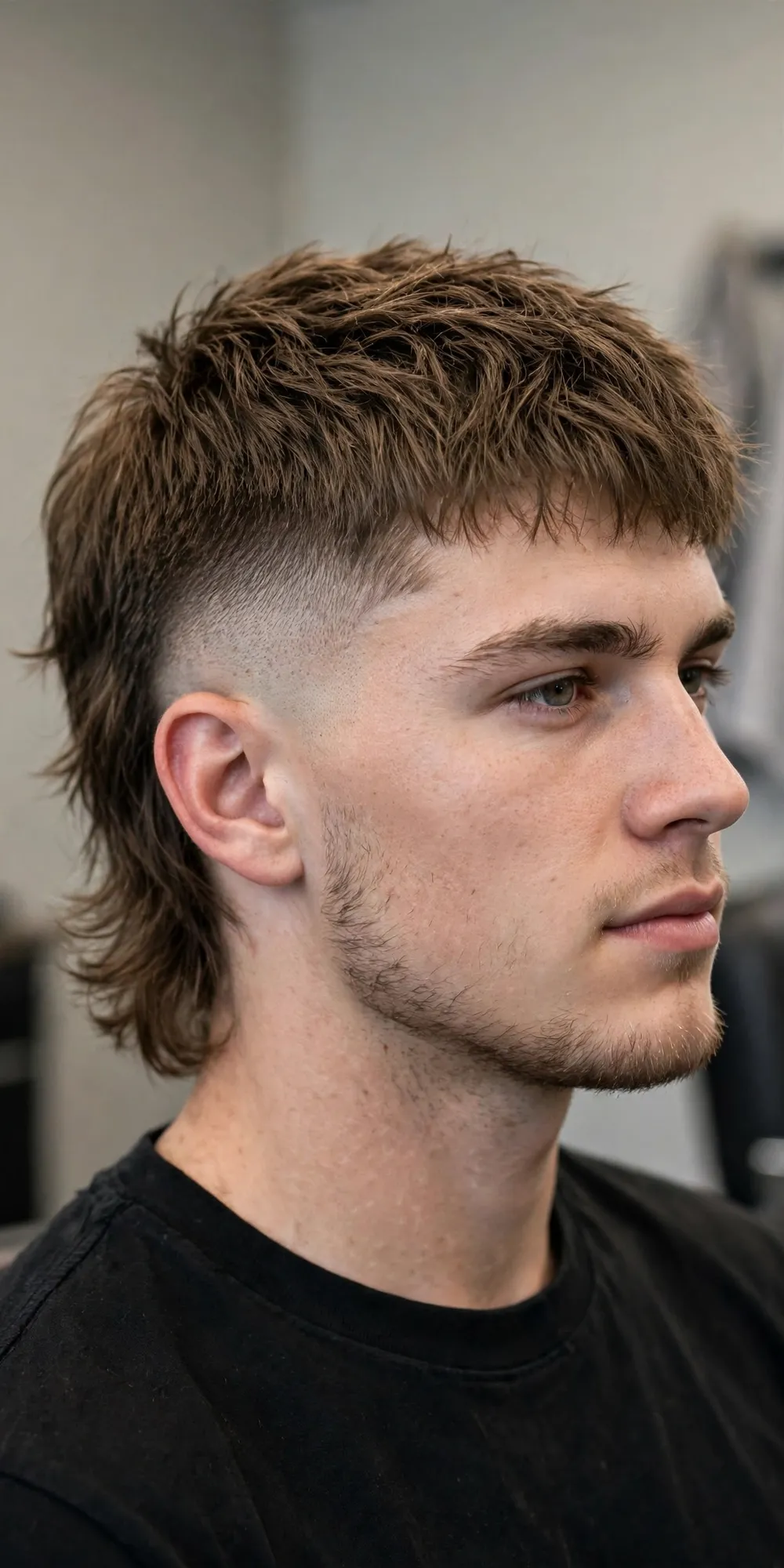
The short mullet keeps the front and sides short while leaving the back a little longer and textured, so it feels modern rather than like a throwback joke. It suits oval and square faces, and it works best on straight or wavy hair with some natural movement — the back needs enough texture to look intentional. Ask your barber for short faded sides, a textured top, and a back that sits just past the collar, with the length blended rather than cut in a hard step. A matte paste or sea salt spray brings out the texture in the back and keeps it from lying flat. Styling takes two minutes with your fingers. The back grows fast, so a trim every three weeks keeps the shape from turning into a full mullet by accident.
15. Modern Caesar Cut
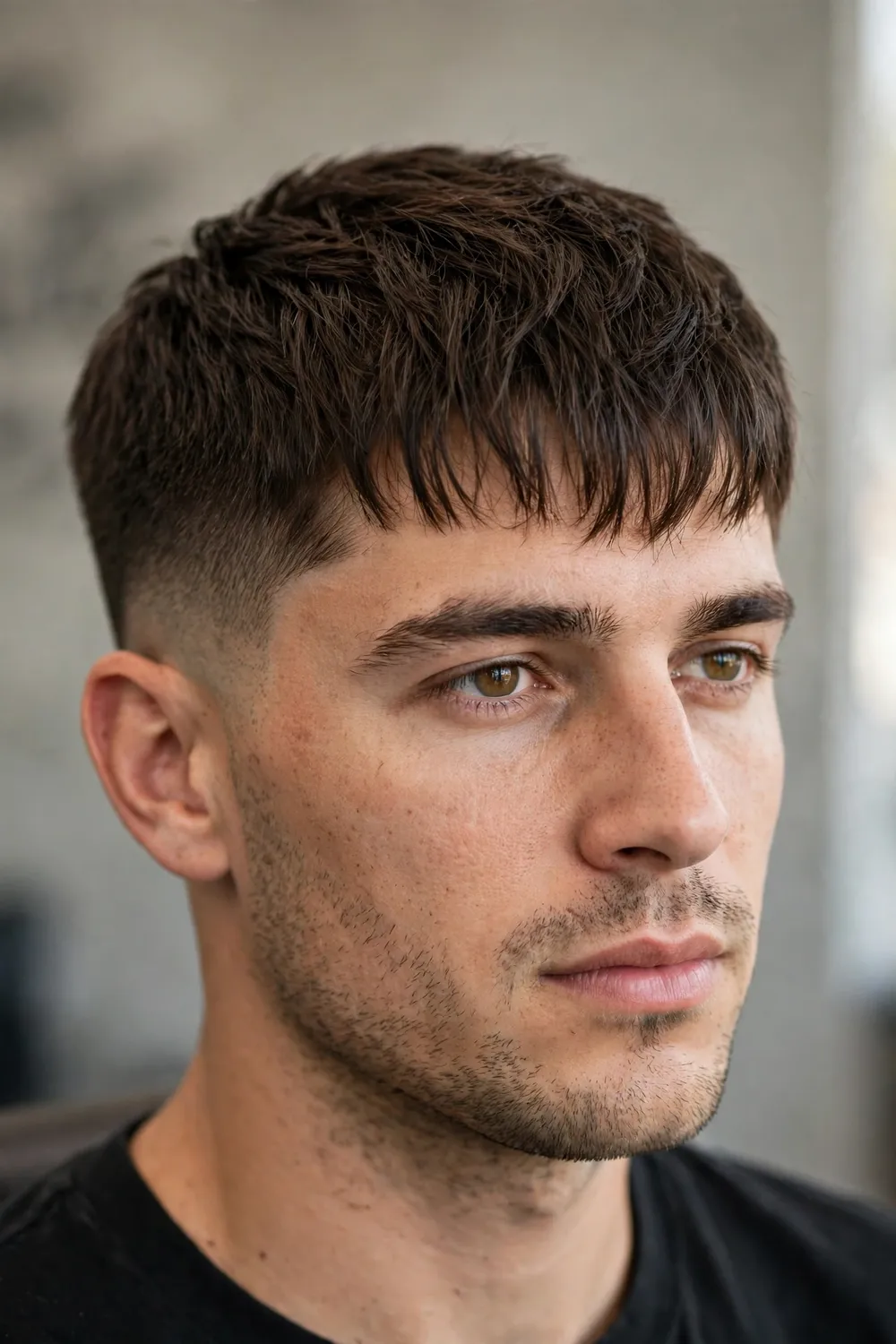
The modern Caesar cut is a short, choppy fringe pushed forward over the forehead, with blended sides and plenty of texture through the top. It suits oval, square and round faces, and it is a smart pick for a receding hairline, because the forward fringe covers the temples. Straight or wavy hair works best, and the cut adds fullness to fine hair. Ask for a textured top of two to three centimetres with the fringe cut straight across and the sides faded or tapered to match. A small amount of matte clay pushed forward through the fringe is all it takes, and the finish should look natural and slightly rough. A trim every three weeks keeps the fringe at the right length — too long and it falls into your eyes.
16. Hard Side Part

The hard side part takes a classic side part and sharpens it with a razor line shaved into the part itself, with faded sides for a crisp, deliberate finish. It suits oval and square faces best, and it looks sharpest on straight hair that lies flat and shows the line. Ask for a hard part cut with a razor or trimmer, a mid or high fade, and four to five centimetres on top swept to the side. A pomade gives the traditional high-shine finish, while matte clay tones it down for everyday wear. Comb the top into place while damp and the part does the rest. The razor line grows out in about a week, so this is high-maintenance — book a cleanup every one to two weeks to keep it looking intentional.
17. Mullet Fade

The mullet fade combines a clean fade on the sides with a longer, textured back, so the contrast between the sharp sides and the flowing back does the talking. It suits oval and square faces, and it needs straight or wavy hair with enough length at the back to show movement. Ask for a mid or high fade on the sides, a short textured top, and the back left long enough to reach the collar, blended gradually rather than cut blunt. Matte paste or sea salt spray adds texture to the back and stops it looking limp. Styling is quick — a rough towel-dry and a little product is enough. Trim the sides every two to three weeks, and let the back grow between cuts so the length difference stays the point of the style.
18. Slick Back with Undercut Fade

The slick back with undercut fade sweeps a longer top straight back over short, faded sides, creating a strong contrast that looks sharp and confident. It suits oval and square faces best, and it works on straight or wavy hair that is thick enough to hold its shape when swept back. Ask for an undercut fade on the sides with seven to nine centimetres on top, and tell your barber you want the top long enough to slick back without falling forward. A strong-hold pomade gives the classic glossy finish, while a matte paste keeps the same shape with a modern, softer look. Blow-dry the top backward for the best hold. Maintenance is moderate: a trim every three weeks, and a fade cleanup in between if the sides start to look soft.
19. Side Swept Hair with Mid Taper Fade

Side swept hair with a mid taper fade takes a layered top swept to one side and pairs it with a fade that starts halfway up the head, so the look is tidy without being severe. It suits oval, square and heart-shaped faces, and it works well on straight or wavy hair with medium thickness. Ask for a mid taper fade and a layered top of five to six centimetres, with the front left slightly longer so it sweeps naturally. A light styling cream or matte clay gives a soft, natural finish with gentle movement — avoid heavy pomade, which can drag the sweep flat. Styling takes about three minutes with a comb or your fingers. A trim every three to four weeks keeps the taper clean and the layers from growing heavy.
20. Long Crew Cut with Low Fade

The long crew cut keeps the classic crew shape but leaves more length on top, with a low fade near the ears. It suits oval, square and round faces, and it is a good choice for thick hair — the extra length gives you styling options the short crew lacks. Ask for a #5 or #6 guard on top, roughly one and a half centimetres, with a low fade that blends gradually and a natural hairline. A little matte clay lets you push the top forward or to the side. The low fade grows out gracefully, so a trim every three to four weeks is enough, and the cut still looks tidy a week late. For more fade options, see our [low fade haircuts](/low-fade-haircuts/) guide.
Group C — Textured & Voluminous
21. Thick Brush Back with Drop Fade
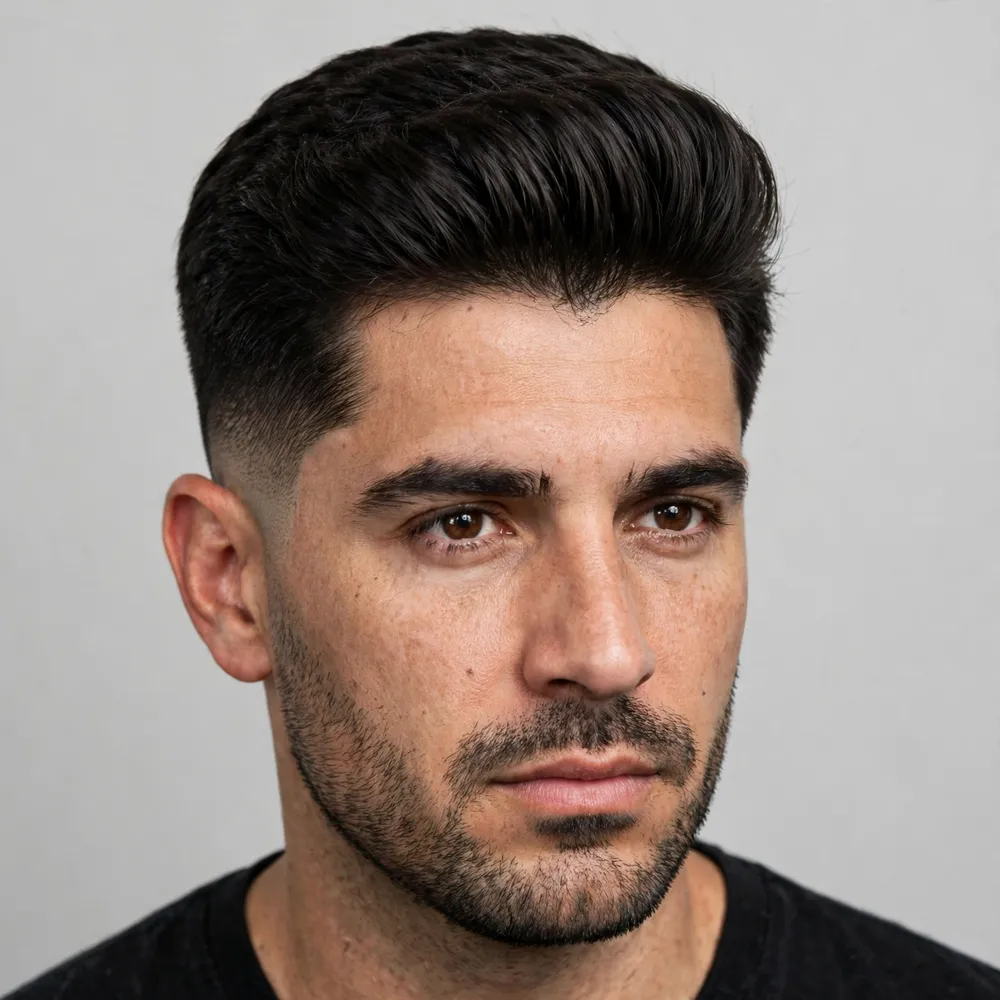
The thick brush back with drop fade takes a full, voluminous top brushed straight back and pairs it with a fade that drops behind the ear, following the curve of the head. It suits oval and square faces, and it needs thick hair — the volume is the whole point, so fine hair will struggle. Ask for a drop fade with six to eight centimetres on top, and have the barber thin the bulk underneath so the top sits back cleanly. Blow-dry the top backward with a vent brush, then finish with medium-hold matte clay or pomade for shine. It takes five minutes to style and a trim every three weeks, because the drop fade loses its curve quickly.
22. Thick Textured Crop Fade with Brushed Up Fringe
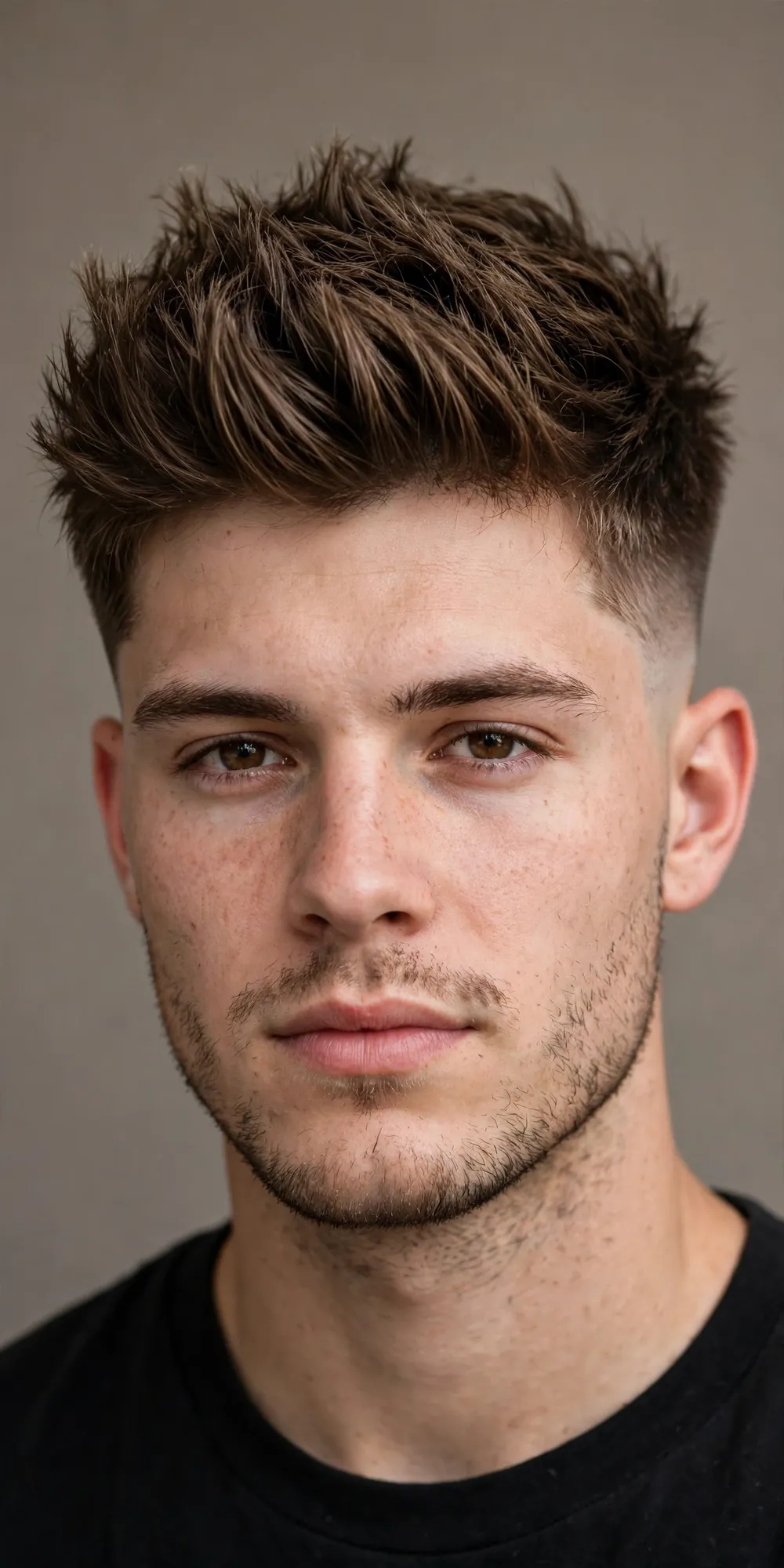
This crop takes a thick, layered top, fades the sides, and brushes the fringe upward so the front has height and texture at the same time. It suits oval and square faces, and it is built for thick straight or wavy hair — the layers stop the top from looking like a solid block. Ask for a mid or high fade with a heavily textured top of four to five centimetres, and a fringe that is brushed up rather than forward. A matte clay or paste worked into dry hair gives the fringe its lift and keeps the finish natural. The cut is forgiving to style: push it up with your fingers and go. Maintenance is moderate, with a trim every three weeks to keep the layers light and the fade sharp.
23. Short Textured Mod Cut
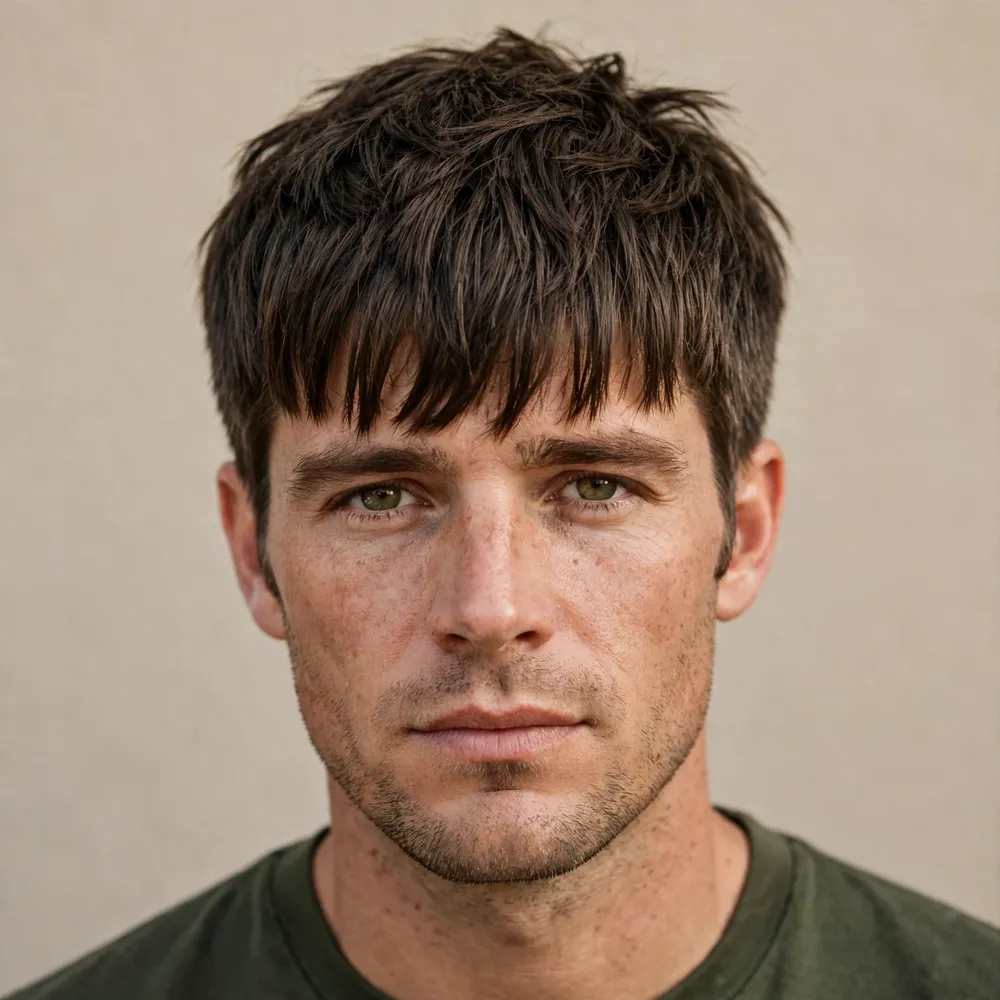
The short textured mod cut borrows its choppy layers and full fringe from the 1960s, updated with a cleaner taper on the sides. It suits oval and heart-shaped faces best, and it works on straight or slightly wavy hair with medium thickness — the layers give fine hair a fuller look. Ask your barber for a textured top of four to five centimetres with a fringe that sits just above the eyebrows and tapered sides that stay soft, not skin-faded. A light styling cream gives a natural, touchable finish, and you can wear the fringe straight down or pushed slightly to the side. Styling takes two minutes. A trim every three to four weeks keeps the layers from growing heavy and the fringe from creeping into your eyes.
24. Modern Pompadour Fade

The modern pompadour fade keeps the high-volume swept-up front of the classic pompadour but pairs it with faded sides, so it looks current instead of costume. It suits oval and square faces, and it needs straight or wavy hair with enough thickness to hold height — very fine hair will need a pre-styler and a strong product. Ask for a high or mid fade with six to eight centimetres at the front, tapering shorter toward the crown. Blow-dry the front upward and back with a round brush, then finish with a medium-hold pomade for shine or matte clay for a softer look. It takes five to ten minutes to style properly, so this is a cut for men who enjoy the routine. A trim every two to three weeks keeps the fade and the volume in balance.
25. Thick Textured Top
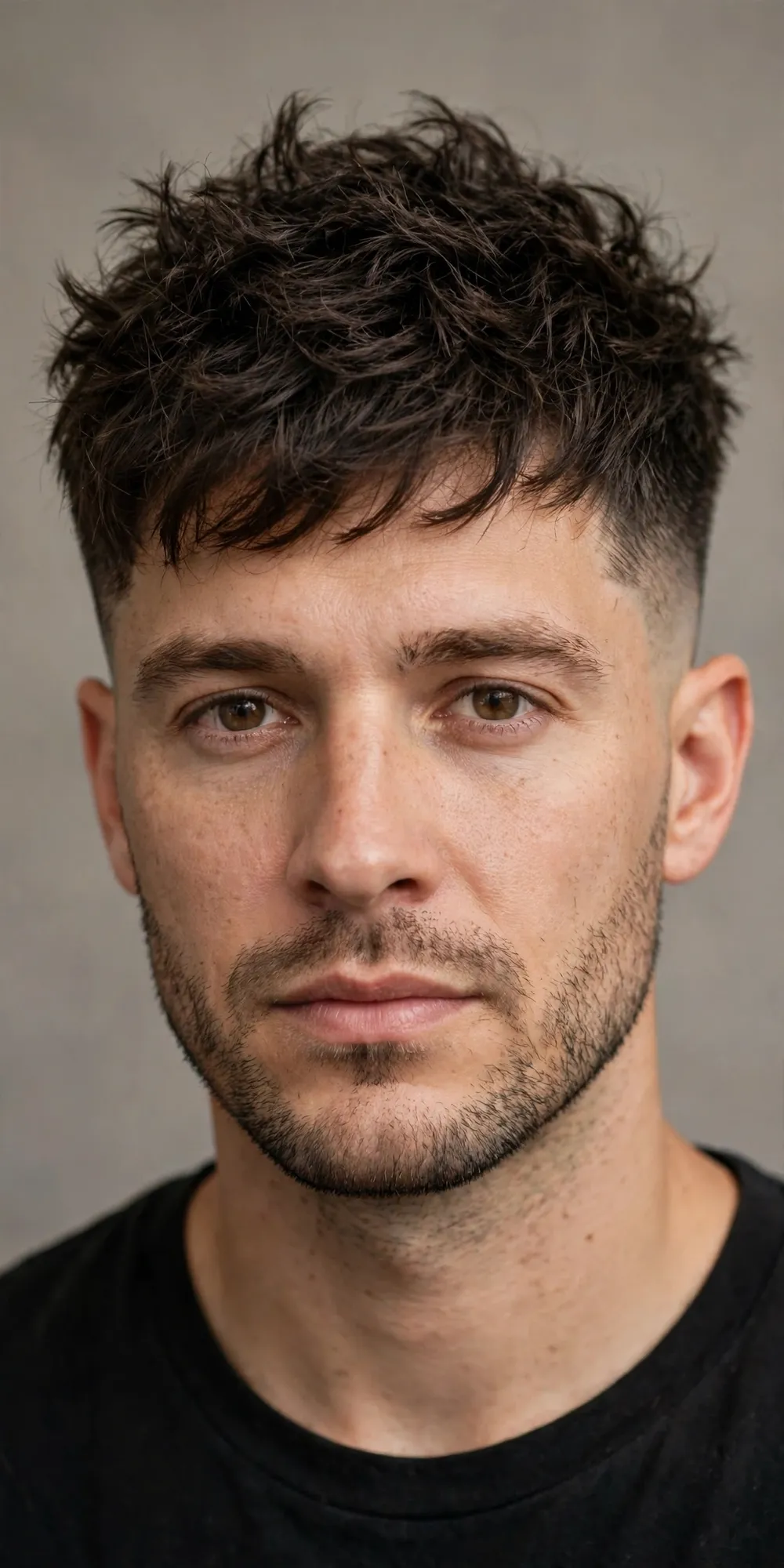
The thick textured top leaves a full, choppy top over short faded sides, letting thick hair show its natural volume instead of being cut down to nothing. It suits oval, square and round faces, and it is made for thick straight or wavy hair — if your hair is fine, a shorter version of this cut will suit you better. Ask your barber to thin the underneath and point-cut the top so it breaks apart, with a mid fade on the sides. A matte clay or sea salt spray gives the top texture and movement without weighing it down, and the finish should look natural and slightly messy. Styling takes three minutes with your fingers. A trim every three weeks keeps the bulk under control, and the cut still looks good as it grows out.
26. Tousled Flow

The tousled flow is a soft, layered cut with a windswept finish — longer on top, short on the sides, and deliberately a little undone. It suits oval and heart-shaped faces, and it works best on wavy or straight hair with natural movement; stick-straight hair may need sea salt spray to find the texture. Ask for layered length of six to seven centimetres on top with tapered sides, and tell your barber you want it to look like it fell into place on its own. A sea salt spray on damp hair, scrunched and left to air-dry, is the whole styling routine. The finish should be matte and touchable. Maintenance is low: it grows out gracefully, so a trim every four to five weeks is enough, and it looks better slightly grown out.
27. Blonde Faux Hawk with High Fade
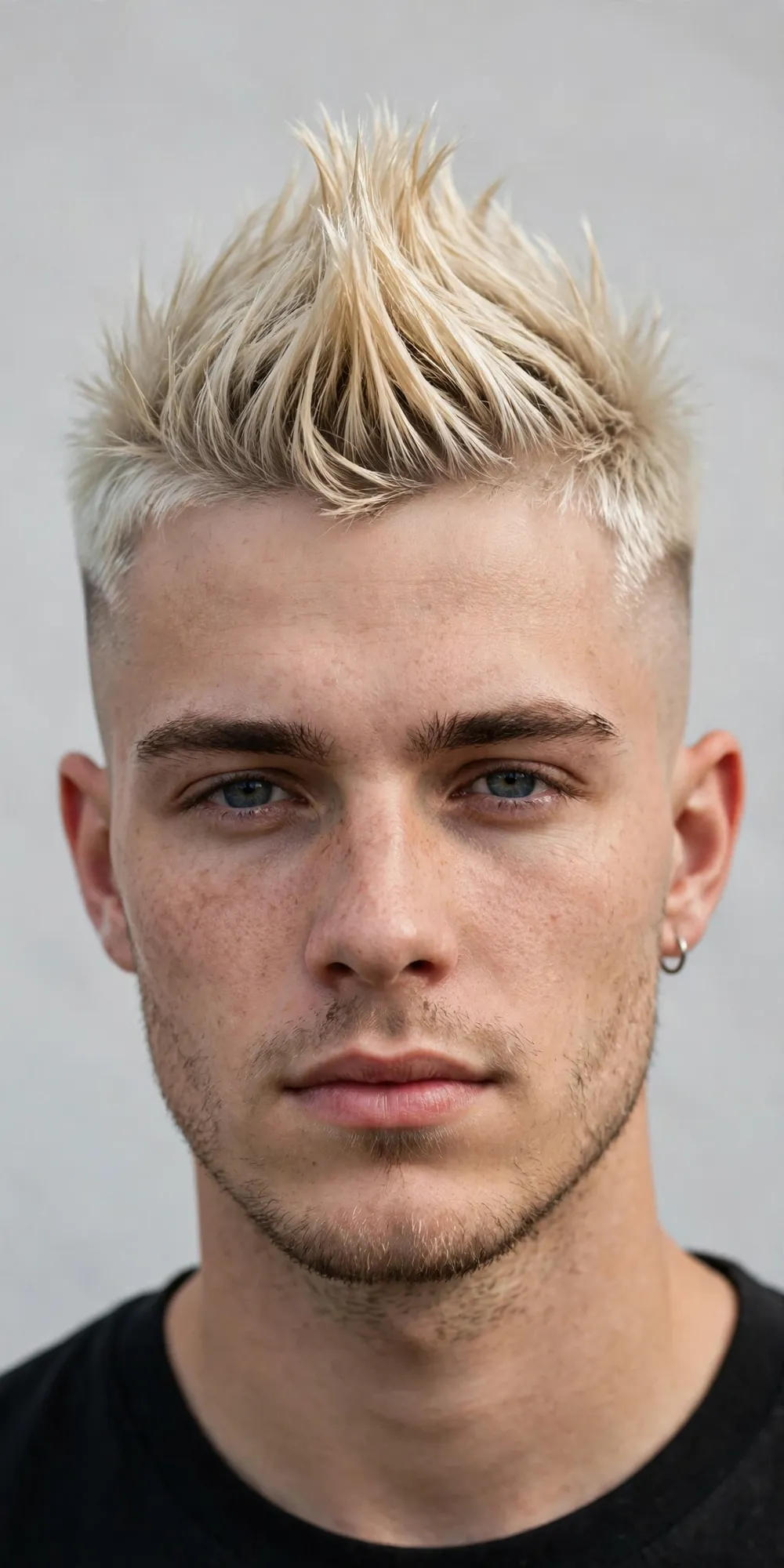
The blonde faux hawk with high fade runs a spiked blonde strip down the centre, with the sides faded high for maximum contrast. It suits oval and square faces, and it works on straight or wavy hair with medium thickness — the blonde is what makes the centre strip stand out, so it suits men who already lighten their hair or are willing to. Ask for a high fade and a textured strip of four to five centimetres, with the blonde kept to the centre so the fade stays dark. A strong-hold matte paste gives the strip its lift; push it up with your fingers and keep the edges slightly rough. The colour needs a tone refresh every four to six weeks and the high fade a cleanup every two weeks, so this is a high-maintenance look.
28. Long Wavy Fringe with Taper Fade
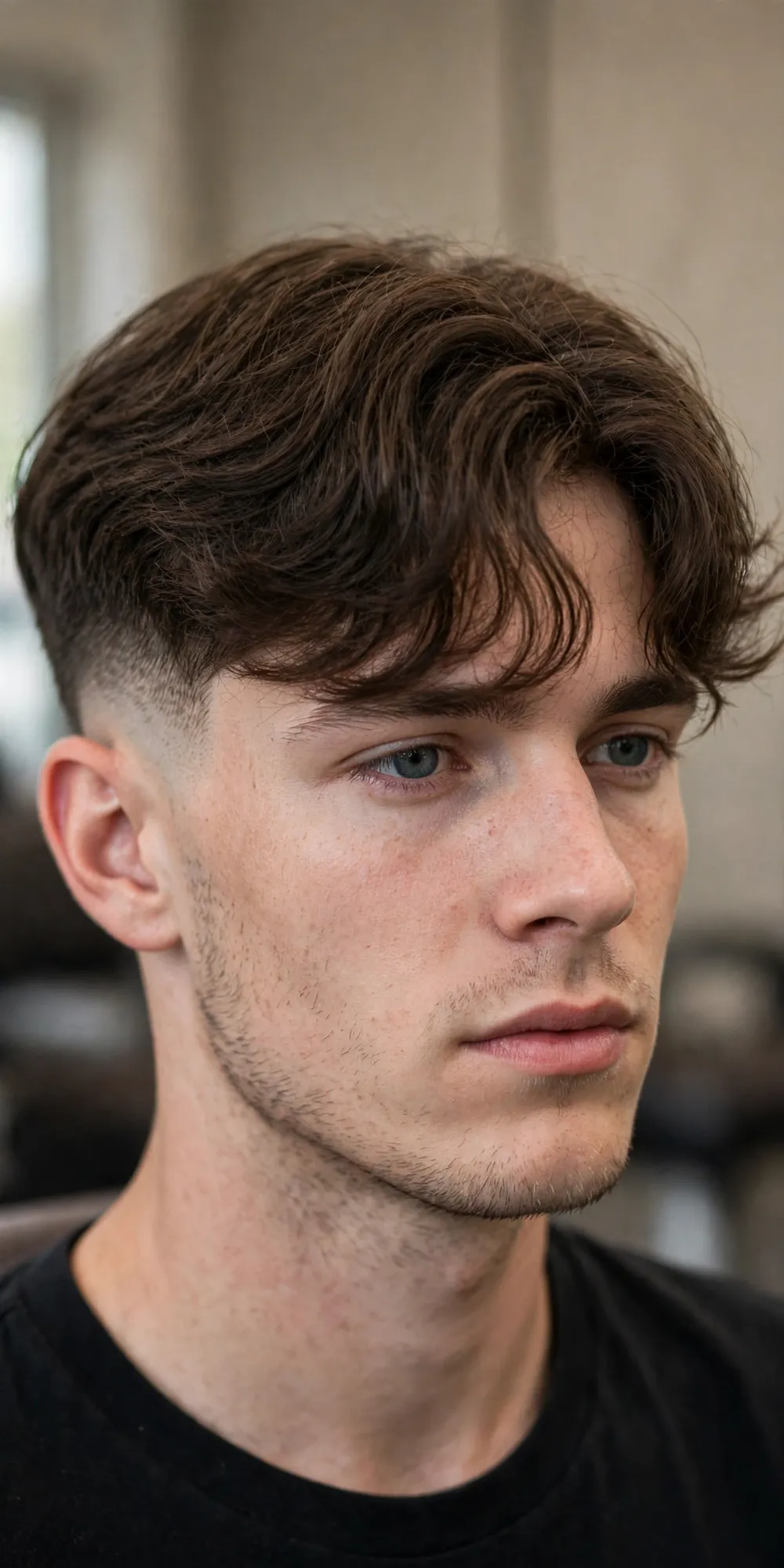
The long wavy fringe with taper fade lets a wave fall naturally across the forehead while the sides stay short and tapered, so the fringe is the feature. It suits oval and heart-shaped faces, and it needs naturally wavy hair — trying to force waves into straight hair will fight you every morning. Ask for a low taper fade and a fringe left long enough to reach the eyebrows, with the top layered so the waves sit naturally. A light curl cream or sea salt spray on damp hair brings out the wave pattern, and the finish should look soft and natural. Styling takes two minutes: scrunch and leave it alone. A trim every four weeks keeps the fringe at the right length and the taper tidy.
29. Brushed Back Undercut

The brushed back undercut keeps a longer top brushed straight back over very short, disconnected sides, creating a bold contrast between the top and the sides. It suits oval and square faces, and it works best on thick straight or wavy hair that can hold its shape when pushed back. Ask for a disconnected undercut — the sides are cut short with no blend into the top — and seven to nine centimetres on top. Blow-dry the top backward and finish with a strong-hold pomade for a glossy look or matte clay for a modern finish. It takes five minutes to style and needs a trim every two to three weeks, because the undercut grows out fast and the contrast is the whole point of the cut.
30. Short Shaggy Curls
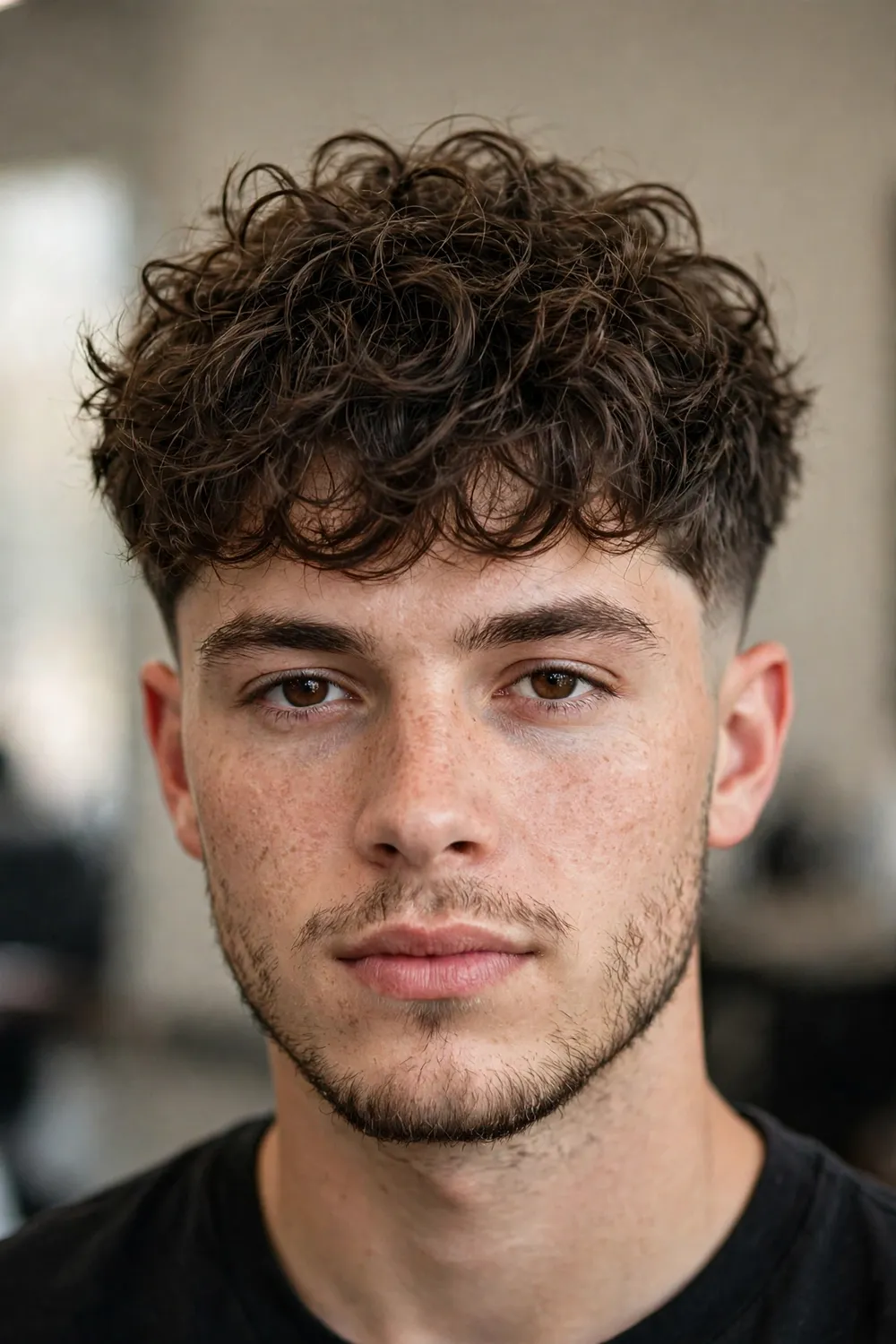
Short shaggy curls keep the curls short, layered and a little wild, with tapered sides that stop the shape going round. It suits oval, round and square faces, and it needs naturally curly or very wavy hair — the layers let each curl sit where it wants, not clump together. Ask for a layered cut with the top left three to five centimetres and the sides tapered, and never let them thin curly hair with a razor. A curl cream worked into damp hair defines the curls, and a diffuser on low heat adds volume without frizz. The finish should look natural and touchable. A trim every three to four weeks keeps the shape, and the cut looks better once the curls settle.
Group D — Layered & Fringe Styles
31. Short Layered Flow
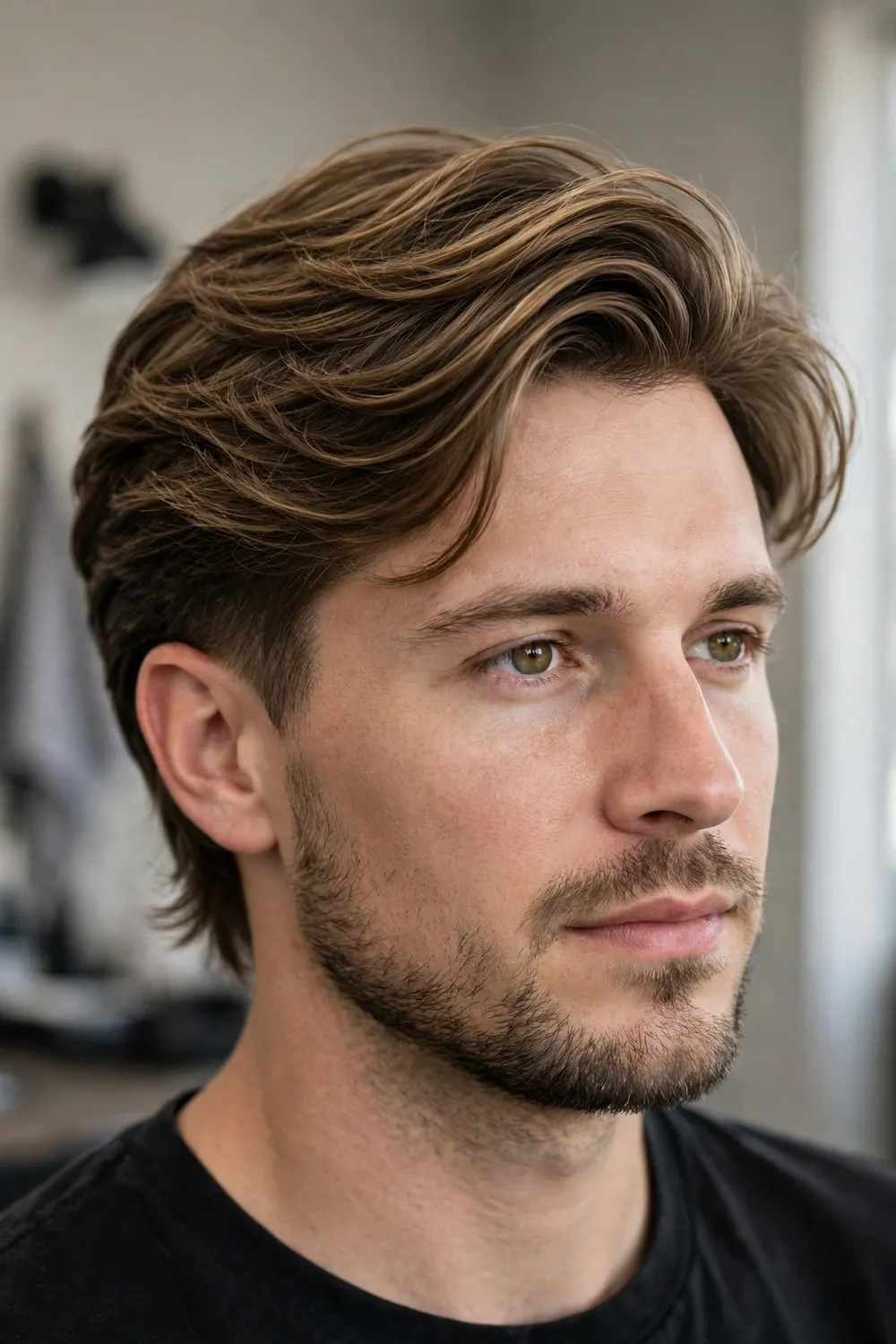
The short layered flow layers the top and back so the hair moves naturally, with short sides that keep the shape clean. It suits oval and heart-shaped faces, and it works well on straight or wavy hair with medium thickness — the layers add movement that a blunt cut cannot. Ask for a layered top of five to six centimetres with tapered sides, and tell your barber you want the back layered too, so the flow continues all the way around. A light styling cream or sea salt spray gives a soft, natural finish with gentle movement. Styling takes two minutes with your fingers, and you can push it back, to the side, or let it fall forward. A trim every four weeks keeps the layers light, and the cut grows out gracefully between appointments.
32. Textured Short Spiky Hair Fade with Blunt Fringe

This cut combines a spiky, textured top with a straight blunt fringe and a fade on the sides, so it looks edgy from the front and clean from the side. It suits oval and square faces, and it works best on straight or slightly wavy hair with medium thickness — the fringe needs hair that lies flat enough to hold a straight line. Ask for a mid fade, a textured top of three to four centimetres, and a fringe cut straight across at the eyebrows. A matte clay or strong paste gives the spikes their lift while the fringe stays flat; push the top up and forward with your fingers and leave the fringe alone. Styling takes three minutes. A trim every three weeks keeps the fringe at the right length and the fade from going soft.
33. Blowout Fade
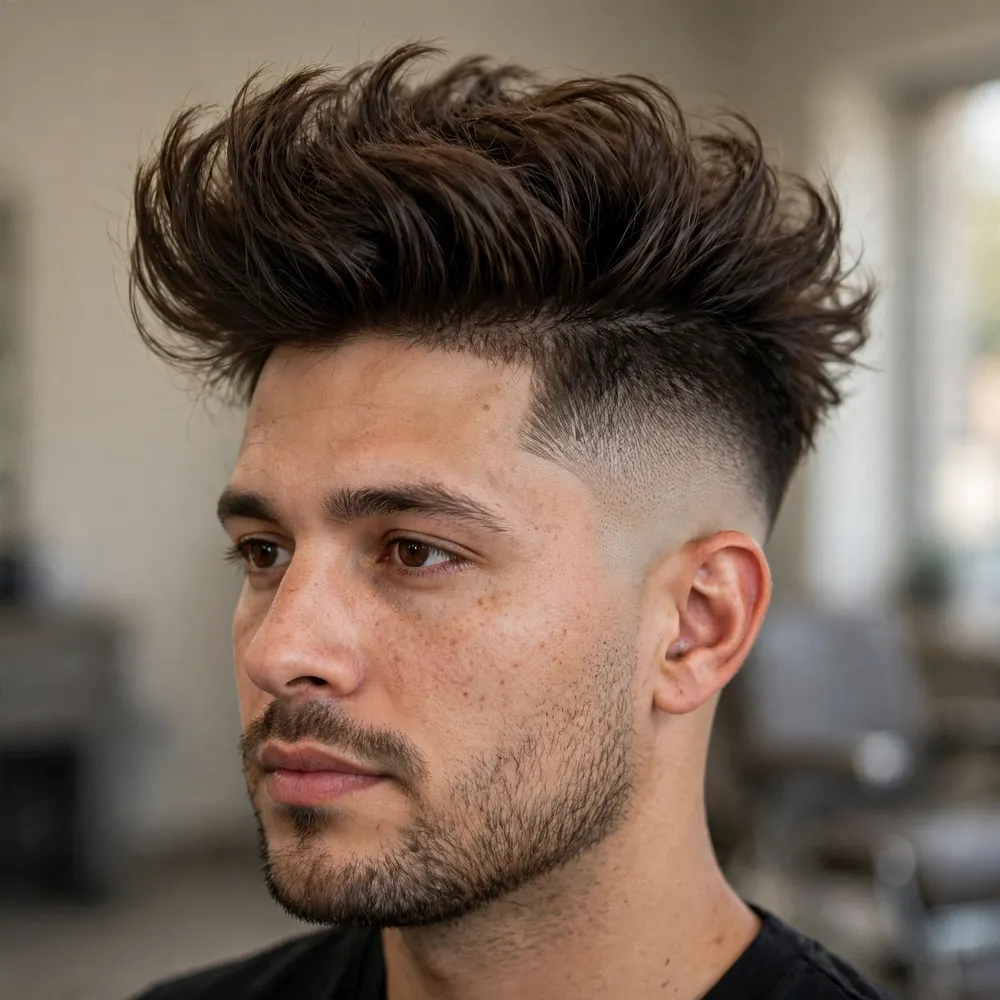
The blowout fade pairs a big, blown-back volume on top with a high fade on the sides, so the contrast between full top and tight sides is dramatic. It suits oval and square faces, and it needs thick straight or wavy hair — the volume is the feature, so fine hair will need a pre-styler and plenty of help. Ask for a high fade with six to eight centimetres on top, long enough to blow back without flopping forward. Blow-dry the top up and back with a round brush, then finish with medium-hold matte clay or a light pomade for shine. It takes five to ten minutes to style, so it suits men who enjoy the routine. A trim every two to three weeks keeps the fade sharp and the volume in proportion.
34. Buzz Cut Fade

The buzz cut fade takes the classic buzz and adds a skin fade on the sides, so the top stays very short while the sides blend down to the skin. It suits oval and square faces, and it is one of the best choices for thinning hair, because the fade draws the eye to the clean sides and the short top hides patchy density. Ask for a #1 or #2 guard on top with a skin fade on the sides, and a sharp lineup at the hairline if you want extra definition. No product is needed, and the finish is naturally matte. Maintenance is the trade-off: the skin fade blurs within a week, so book a cleanup every one to two weeks, or learn to touch up the fade yourself at home with a trimmer.
35. Short Slick Back with High Skin Fade
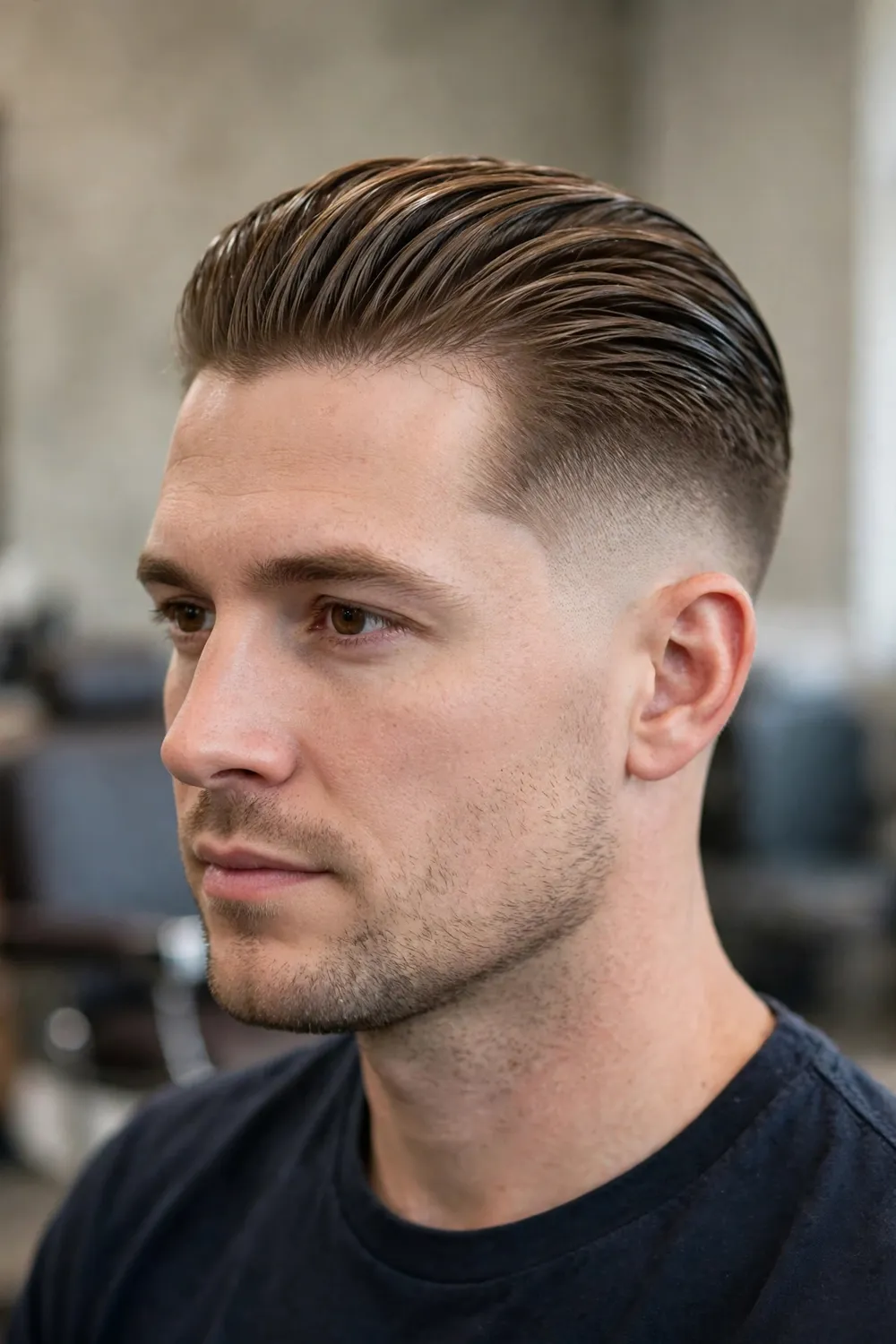
The short slick back with high skin fade sweeps a short top straight back over sides faded high to the skin, giving a sharp, confident finish. It suits oval and square faces best, and it works on straight or wavy hair with medium thickness — the top needs five to six centimetres to slick back. Ask for a high skin fade and a top long enough to comb back without springing forward, with the sides taken tight. A strong-hold pomade gives the classic glossy finish, while a matte paste keeps the same shape, softer and modern. Comb it back while damp and it holds all day. The skin fade needs a cleanup every one to two weeks, and the top needs a trim every three weeks to stay at slicking length.
36. Short Fringe with Tapered Sides

The short fringe with tapered sides keeps a short fringe across the forehead and tapers the sides gradually, so the whole cut feels neat and easy without a hard fade line. It suits oval, square and round faces, and it works on straight or wavy hair with any thickness — the fringe also covers a receding hairline well. Ask for a taper fade on the sides and a fringe of two to three centimetres cut straight across, with texture through the top so it does not look heavy. A small amount of matte clay pushed forward through the fringe is all the styling this needs, and the finish should stay natural. A trim every three to four weeks keeps the fringe above the eyebrows and the taper clean, and the grow-out is forgiving.
37. Short Textured Ivy League with Taper Fade
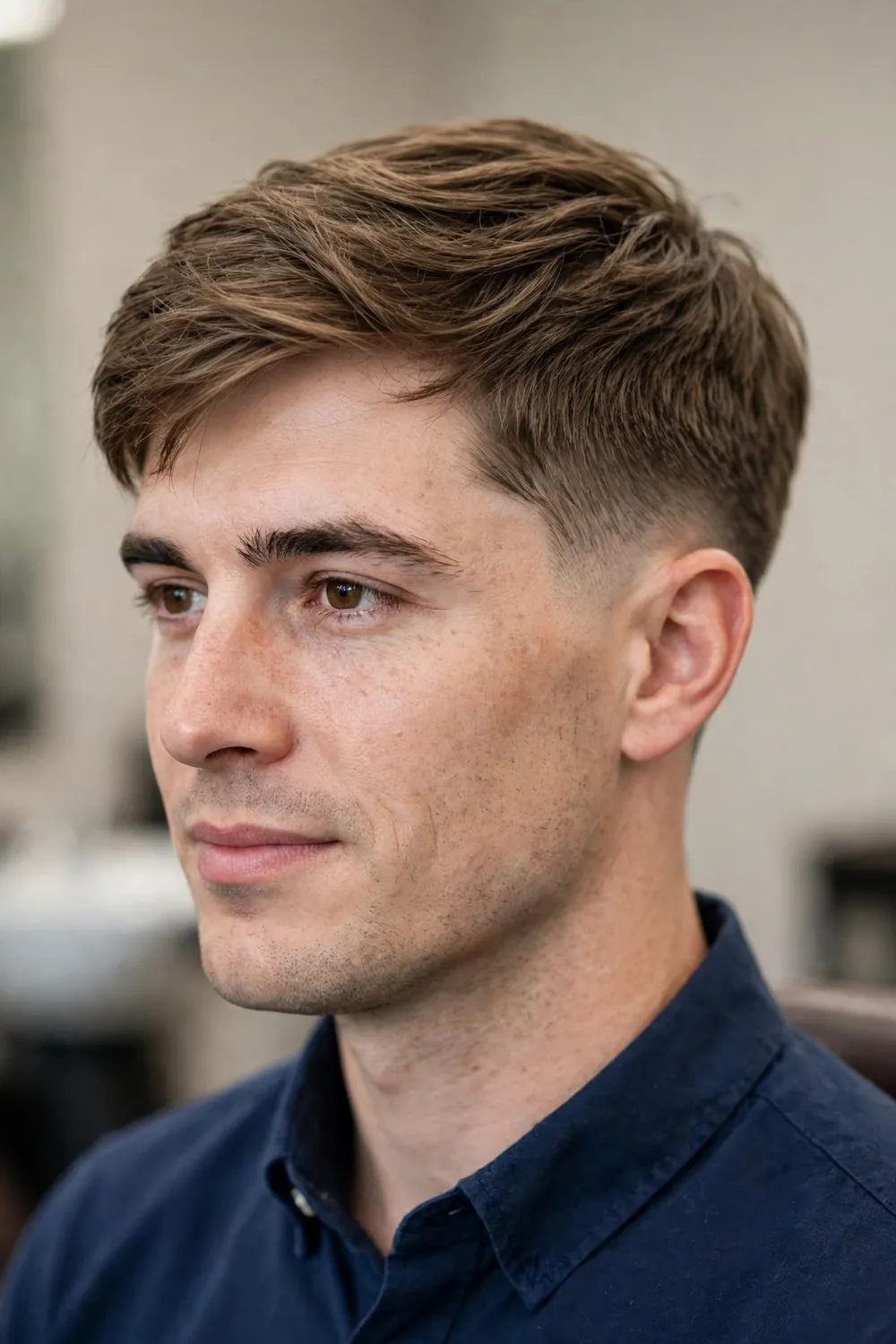
The short textured Ivy League with taper fade is a modern take on the classic: a soft, layered front swept to the side, with a gentle taper fade instead of a hard skin fade. It suits oval, square and heart-shaped faces, and it works on straight or slightly wavy hair with medium thickness. Ask for a taper fade on the sides and a textured top of four to five centimetres, with the front left a little longer so it sweeps naturally. A light styling cream gives a soft, polished finish with natural movement — this is a cut that should look smart without looking stiff. Styling takes two minutes with a comb or your fingers. A trim every three to four weeks keeps the taper tidy and the layers from growing heavy.
38. High and Tight Fade
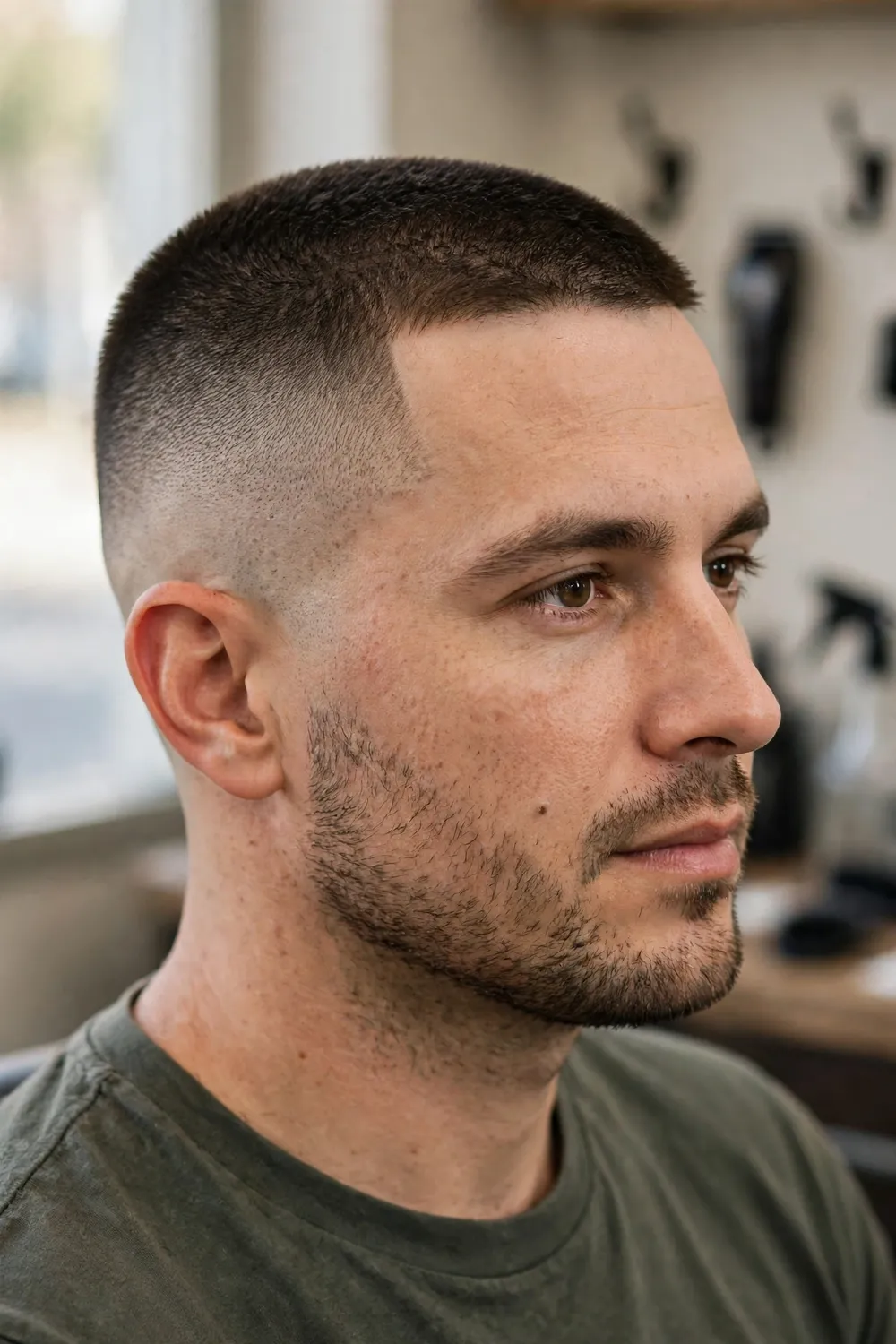
The high and tight is a military classic: a very short top with the sides faded high, leaving a small patch of short hair on top and almost nothing on the sides. It suits oval and square faces best, and it works with any hair type — it is also a strong choice for thinning hair, because there is so little length that density never becomes an issue. Ask for a #1 or #2 guard on top with a high skin fade on the sides, and a clean, straight hairline. No product is needed, and the finish is naturally matte. Maintenance is simple but frequent: the high fade blurs fast, so a cleanup every one to two weeks keeps it looking sharp, though the cut still looks tidy even a few days past its best.
39. Short Mod

The short mod is an even, all-over cut with soft layers and a full fringe, inspired by the 1960s but cleaned up for today. It suits oval and heart-shaped faces, and it works best on straight or slightly wavy hair with medium thickness — the fringe needs hair that falls naturally forward. Ask your barber for an even cut of about four centimetres all over with soft layers through the top and a fringe that sits just above the eyebrows, with tapered sides rather than a hard fade. A light styling cream gives a soft, natural finish, and you can wear the fringe straight down or swept slightly to the side. Styling takes two minutes. A trim every three to four weeks keeps the layers light and the fringe from falling into your eyes.
40. Classic Ivy League
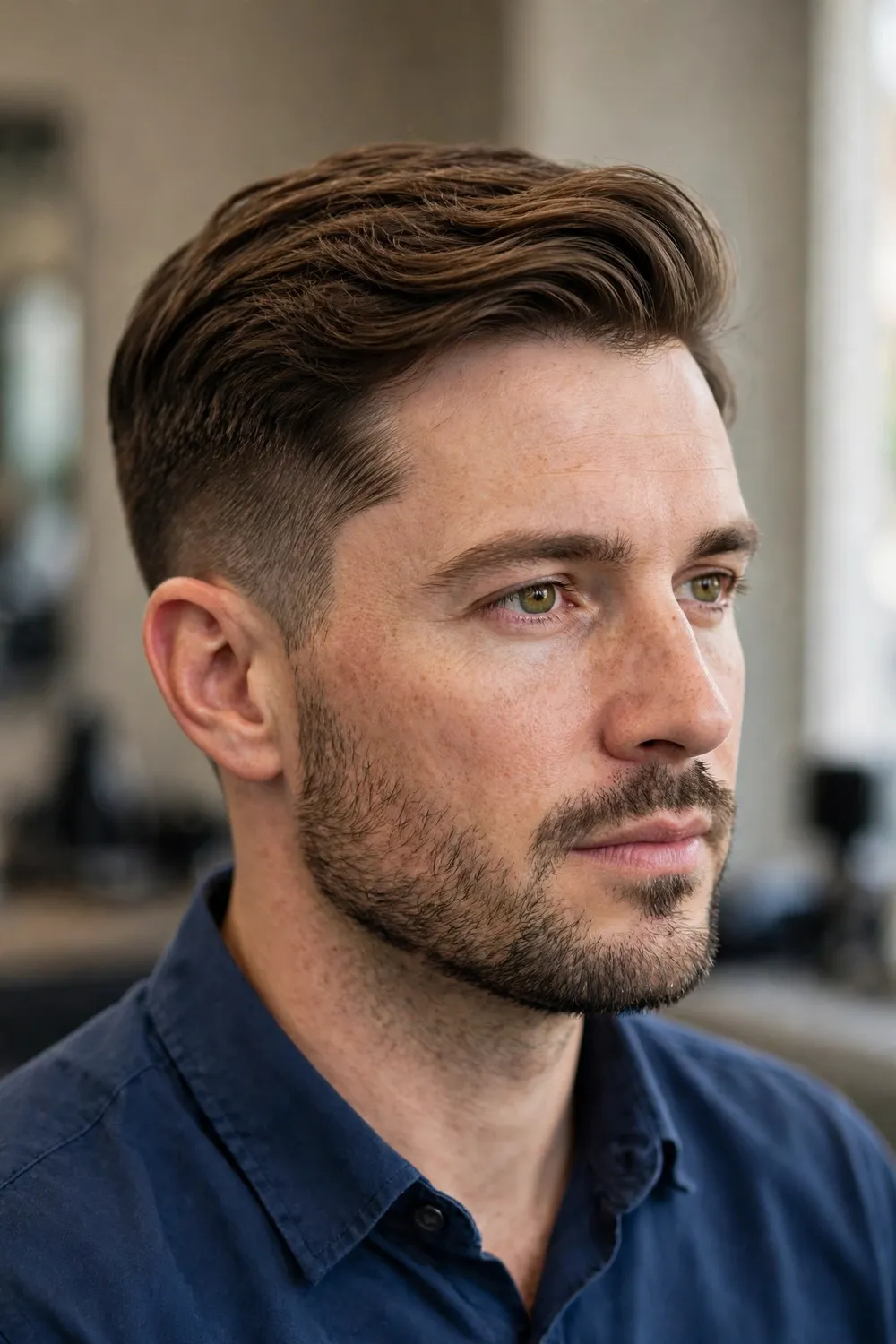
The classic Ivy League is a tapered cut with a textured, side-swept top — short enough to be practical, long enough to look polished. It suits oval, square and heart-shaped faces, and it works on straight or slightly wavy hair with medium thickness. Ask for a taper on the sides and back, with a top of three to four centimetres swept to one side and a natural part, not a razor line. A light styling cream or a little pomade gives a neat, classic finish with a hint of shine. Comb it through damp hair and it sets in a minute, holding its shape all day without touch-ups. A trim every three to four weeks keeps the taper clean, and the cut grows out gracefully — one of the most forgiving short styles.
Group E — Semi-Short & Fade Styles
41. Short Spiky Hair with Low Fade
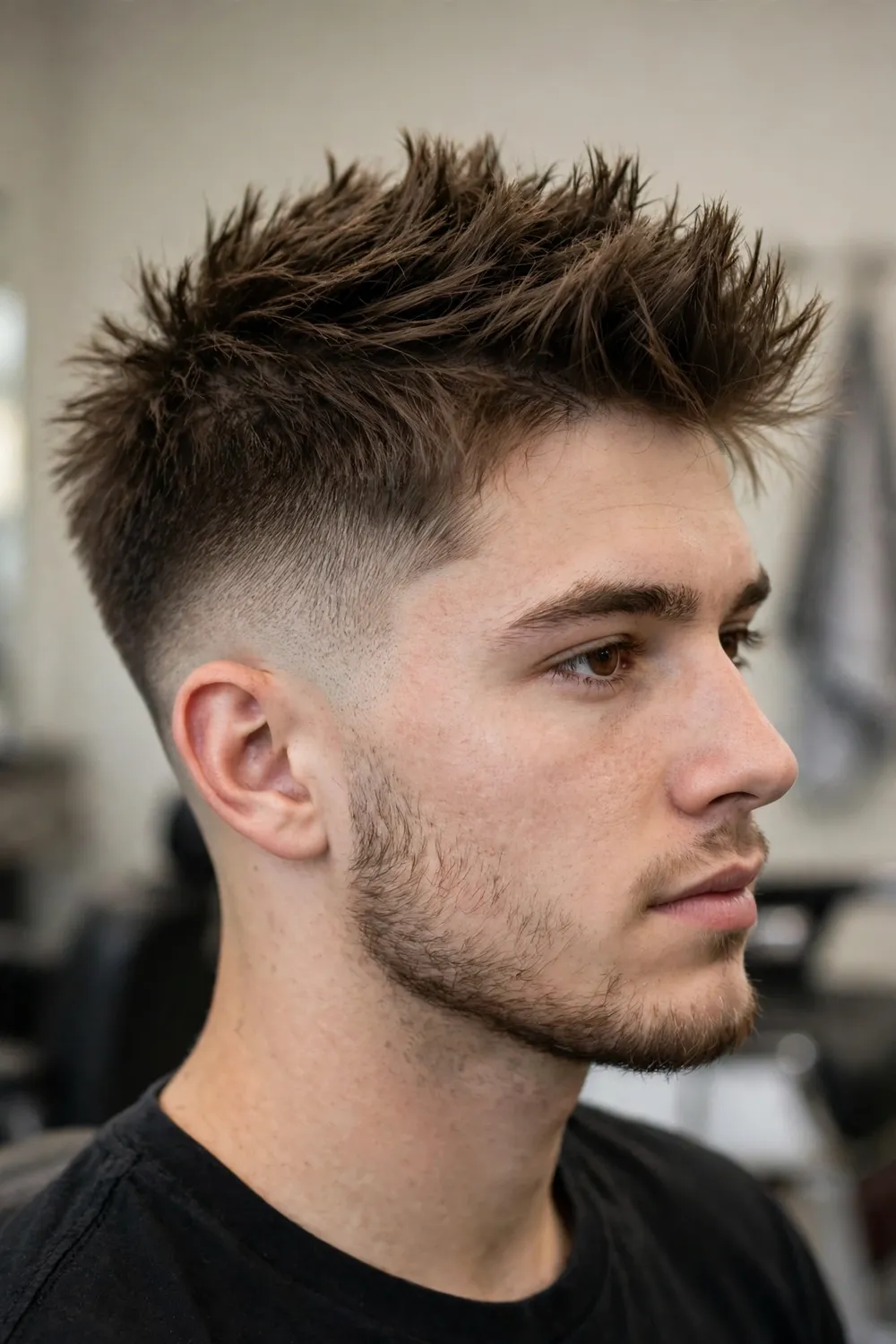
Spikes don’t have to mean a loud, teenage look — this version keeps them short, neat and wearable. The top is cut in choppy layers and pushed up with the fingers, while a low fade keeps the sides tidy without exposing too much skin. It suits straight and slightly wavy hair best, and works well on oval, square and round faces because the height on top adds length to the face. Ask your barber for a #2 or #3 on the sides with a low fade, and about an inch of textured length on top. A pea-sized amount of matte clay gives the spikes hold without shine. Maintenance is easy: a trim every three weeks keeps the fade crisp, and styling takes two minutes with damp hair.
42. Textured Crop
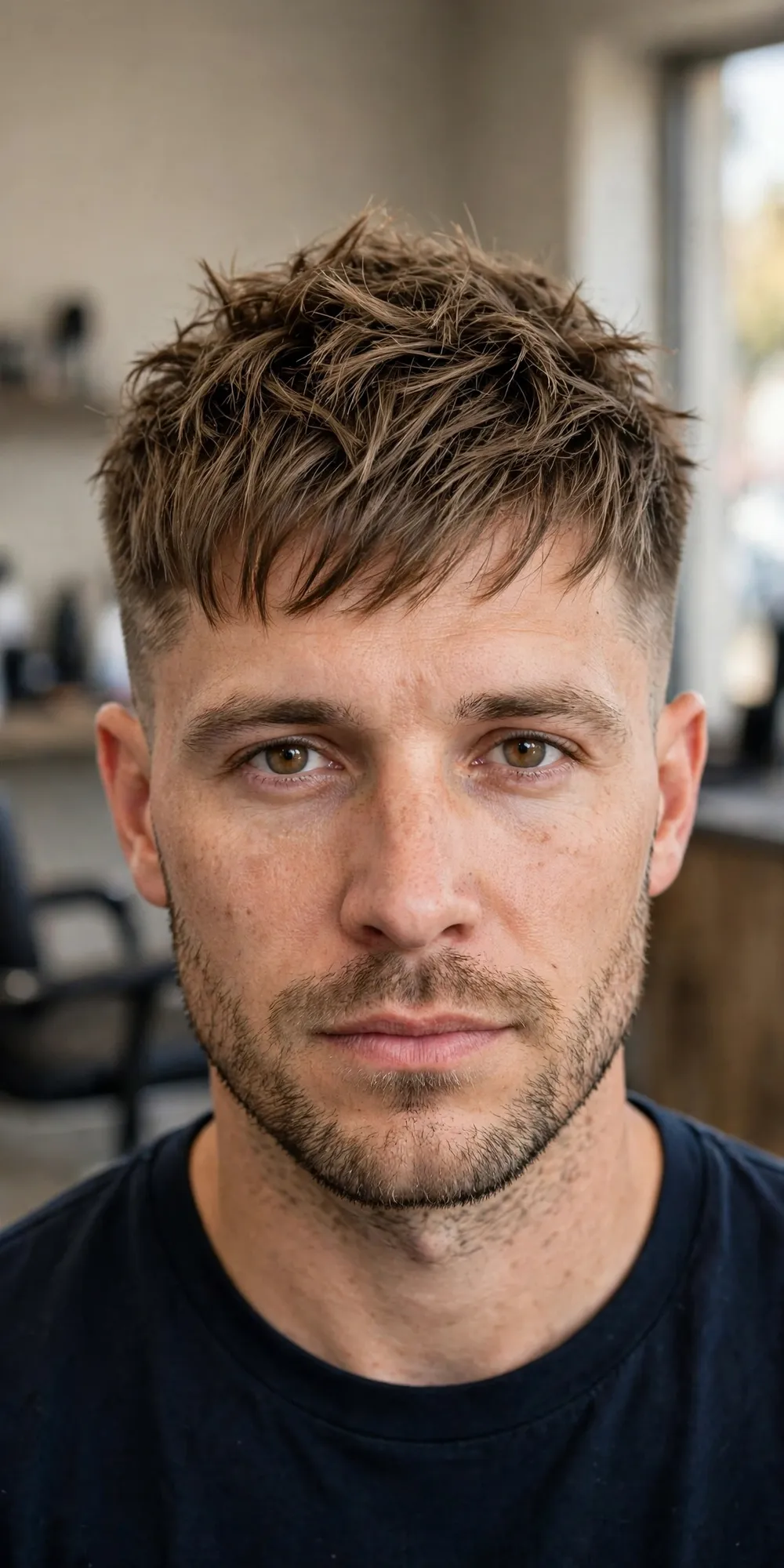
The textured crop is the cut that made short hair fashionable again, and it still earns its place on every best-of list. Short, tapered sides frame a top cut into uneven layers that fall forward, giving natural movement with almost no effort. It suits straight, wavy and slightly curly hair, and flatters most face shapes — especially oval and square — because the forward fringe softens a strong forehead. Ask your barber for a textured crop with a low taper on the sides and point-cutting on top for separation. Rub a little matte clay between your palms and push the hair forward. It grows out gracefully, so a trim every three to four weeks is enough, and it needs no blow-drying at all.
43. Crew Cut Fade

The crew cut fade takes a military classic and gives it a modern finish. The top stays short — just long enough to show some texture — while the sides fade down to the skin, which makes the whole cut look sharper and more deliberate than a plain crew cut. It suits nearly every face shape and works on straight, wavy and thick hair, though very fine hair can look thinner if the top goes too short. Ask for a #3 or #4 on top with a mid or low fade on the sides, and tell your barber where you want the fade to start. The crew cut has been a staple for decades precisely because it asks nothing of you in the morning: a little matte paste if you want definition, or nothing at all. Trim every two to three weeks.
44. Ivy League Cut

Think of the Ivy League as a crew cut that grew up and put on a jacket. It’s a little longer on top — enough to sweep to one side with a comb — with tapered sides that keep it clean around the ears and neckline. The result reads polished and professional without looking stiff, which is why it works so well in offices and formal settings. It suits straight and wavy hair best and flatters oval, square and oblong faces. Ask your barber for a #4 or #5 on top with a classic taper, and a side part you can find with a comb. A dab of light pomade gives a soft shine and light hold. Styling takes three minutes, and a trim every three weeks keeps the part and taper looking intentional.
45. Short Pompadour
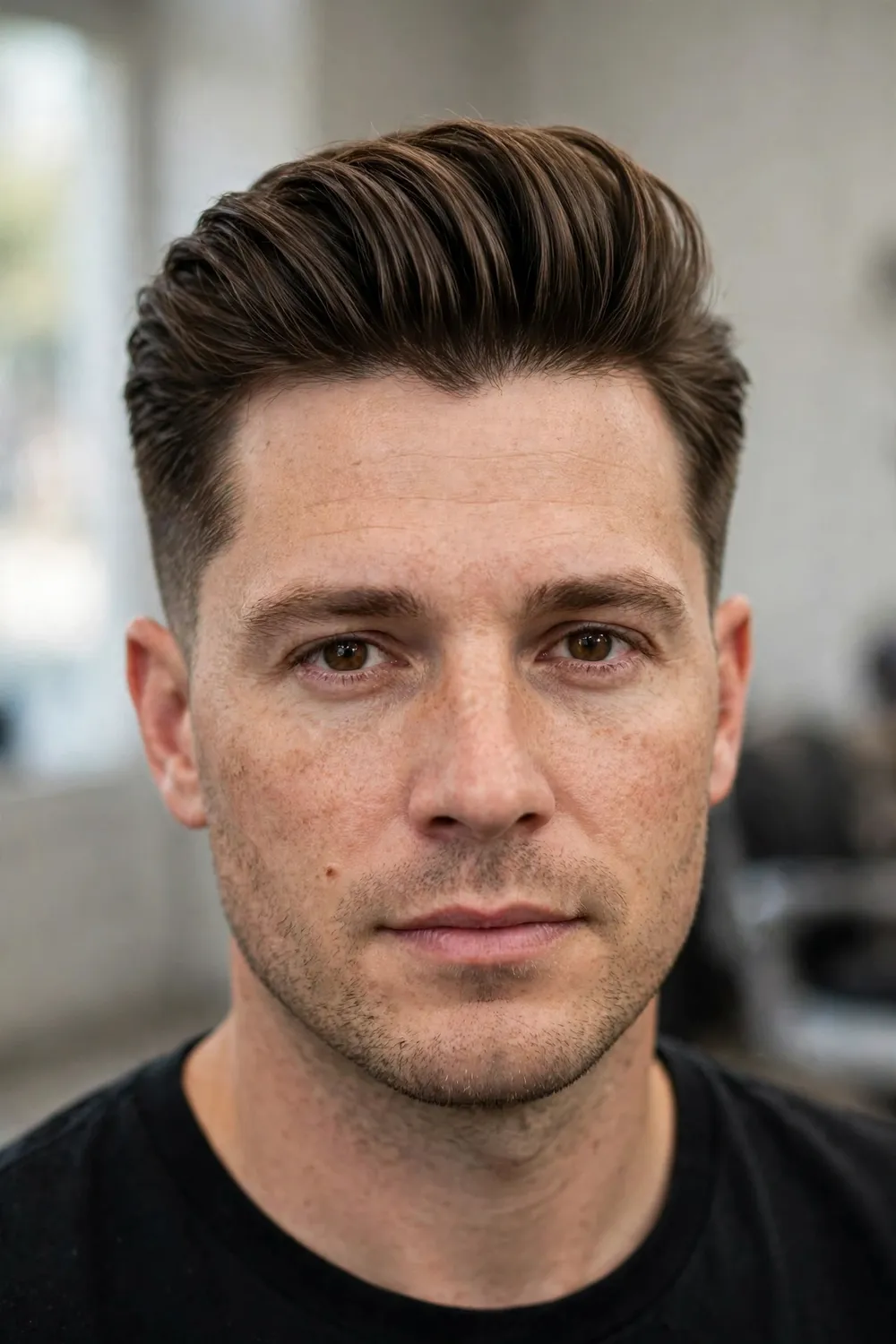
A full pompadour can feel like a commitment, but the short version gives you the same swept-up shape with far less hair to manage. The top is kept to about two inches, swept up and back, while the sides are clipped short or faded so the height stands out. It suits thick, straight and wavy hair, and adds welcome length to round faces; very fine hair may need a volumising product to hold the lift. Ask your barber for a short pompadour with a low fade or taper and enough length on top to push back. Blow-dry the front upward for thirty seconds, then work in a matte clay for a modern finish or a light pomade for shine. Trim every three weeks to keep the shape from going floppy.
46. Skin Fade Crew Cut
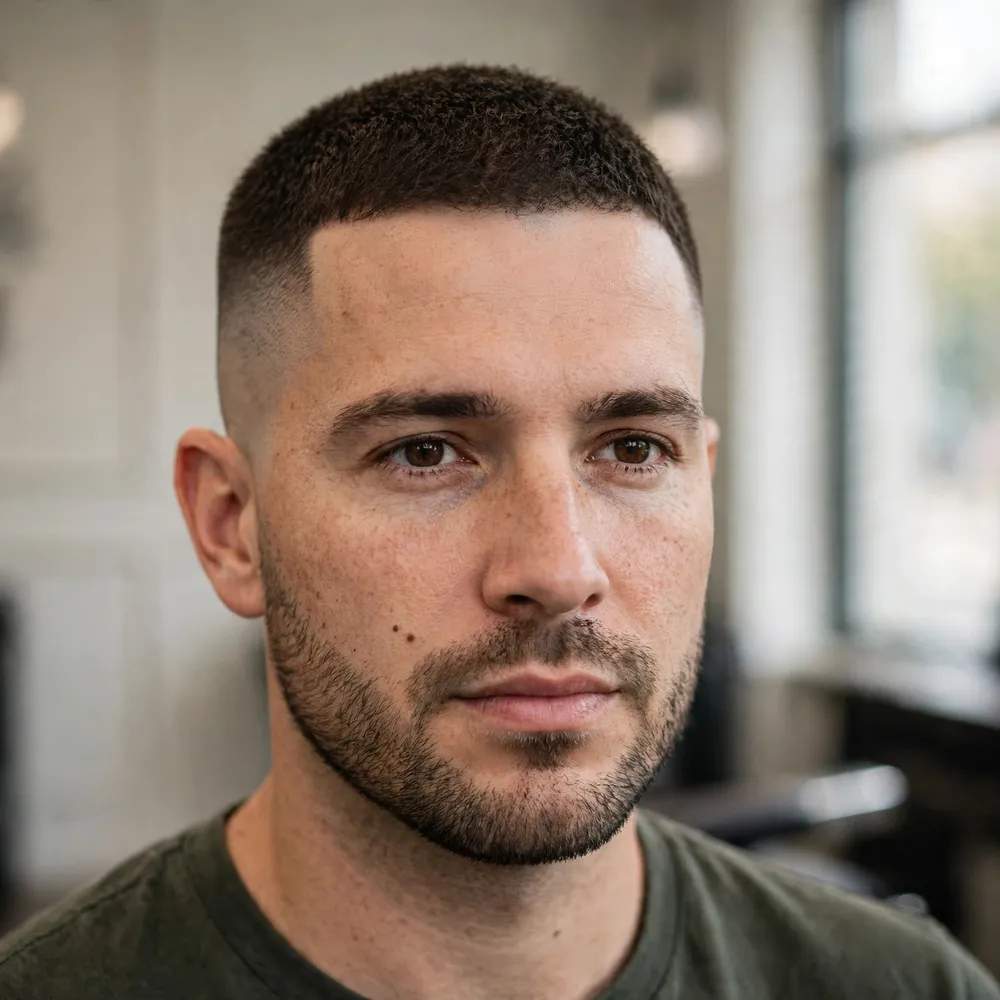
When you want the cleanest possible version of a short cut, this is it. The sides fade all the way down to bare skin, which makes the short crew top look even sharper by contrast. It’s a bold, high-contrast look that suits oval and square faces particularly well, and it works on straight, wavy and thick hair. Ask your barber for a #2 or #3 on top and a skin fade — and say whether you want it low, mid or high, because that changes the whole look. There’s almost no styling involved: a touch of matte paste if you want a little texture, or nothing. The trade-off is upkeep — the skin fade starts to blur after about two weeks, so plan on a trim every fortnight if you want it to stay crisp.
47. Mid Fade Crop
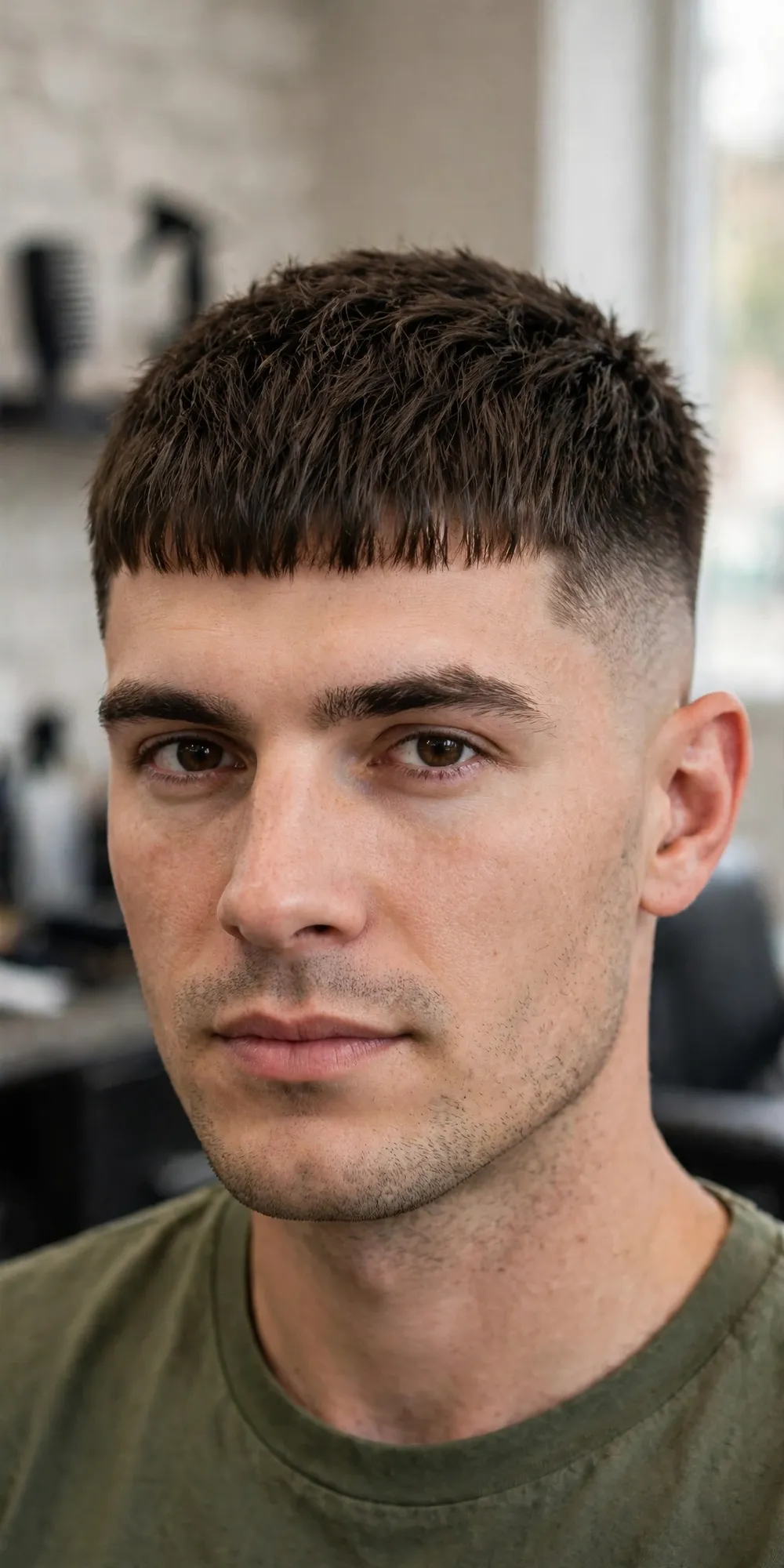
The mid fade crop sits right in the sweet spot between subtle and statement. The fade starts halfway up the sides, giving a clean, visible blend, while the top stays short and choppy with a forward fringe. It’s one of the easiest modern cuts to wear: it suits straight, wavy and thick hair, and the fringe works well for men who want to soften a high forehead or a longer face. Ask your barber for a textured crop on top with a mid fade, and mention whether you want the fade to drop behind the ear or stay straight. A small amount of matte clay, pushed forward with the fingers, is all the styling it needs. For more fade inspiration, see our guide to mid fade haircuts. Trim every three weeks.
48. High Fade Pompadour

This is the pompadour turned up to full volume. A high fade strips the sides right up to the temple, which makes the longer, swept-up top look taller and more dramatic. It suits thick, straight and wavy hair with enough natural volume to hold height, and it flatters round and square faces by adding length up top. Ask your barber for a high fade with two to three inches left on top, and be specific about where the fade should start. Blow-dry the top up and back with a round brush, then finish with a matte clay or a medium-hold pomade depending on how much shine you like. It’s a five-minute style, not a two-minute one, and the high fade needs a trim every two weeks to stay sharp.
49. Low Fade Buzz Cut

If a plain buzz cut feels too stark, the low fade version adds just enough polish to change the whole impression. The top is clipped to one even, very short length, while the sides fade gently near the ears and neckline instead of ending in a hard line. It suits every face shape and works on any hair type, including thinning hair, because the short, even length doesn’t expose patchy areas the way longer styles can. Ask your barber for a #1 or #2 all over with a low fade blended in at the bottom. There’s no product and no styling — wash, towel-dry, done. A trim every two weeks keeps the fade clean, though the buzz itself grows out evenly and forgives a few extra days. It’s the lowest-maintenance sharp look there is — and for more takes on the style, see our low fade haircuts guide.
50. Drop Fade with Waves

A drop fade curves down behind the ear instead of running straight around the head, and that curve follows the natural shape of the skull — which makes it a great match for wavy hair. The waves on top are left long enough to show their pattern, usually an inch or two, while the fade drops low at the back for a clean, rounded finish. It suits wavy and curly hair best and flatters oval, square and round faces. Ask your barber for a drop fade with the top left long enough to wave, and a little texture cut into the ends so the waves don’t clump. A curl cream or sea salt spray, scrunched in while damp, brings out the pattern. Trim every three weeks to keep the drop line crisp.
Group F — Short Cuts for Black Men
51. 360 Waves with Fade

360 waves are less a haircut than a craft — and the fade underneath is what makes them look finished. The hair is brushed in a circular pattern until ripples form all the way around the head, with a clean fade on the sides and a sharp line up at the forehead. It suits coarse, curly and coily hair, and works on most face shapes because the waves themselves add the visual interest. Ask your barber for a low or mid fade with a line up, and keep the top at a #1 or #2 so the wave pattern stays visible. Daily brushing with a medium brush, a durag at night and a light pomade or wave cream keep the pattern deep. It’s a routine, not a one-off, but the result is unmistakable.
52. High Top Fade
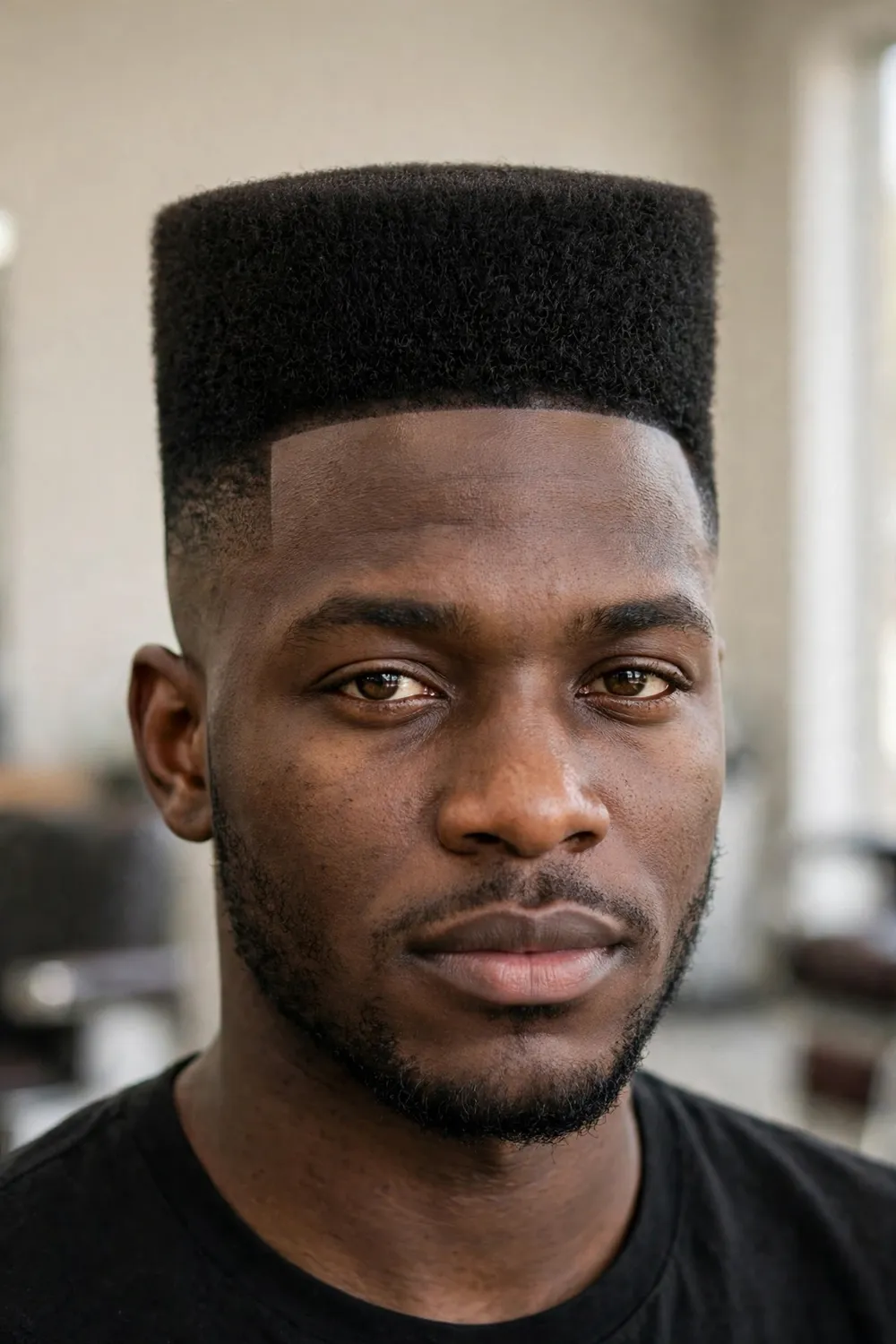
The high top fade is a statement cut with real history behind it. The top is shaped into a flat, level block — sometimes a few inches tall — while the sides fade down to the skin, creating a strong, geometric silhouette. It suits coarse and coily hair that can hold the shape, and it flatters oval and oblong faces by adding height. Ask your barber for a high top with a fade, and say how tall you want the top: shorter is easier to keep, taller is bolder. A pick and a little styling cream keep the shape neat, and a sponge can add texture to the top. Maintenance is real — the shape needs reshaping every one to two weeks — but for a look this distinctive, that’s part of the deal.
53. Temple Fade (Brooklyn Fade)
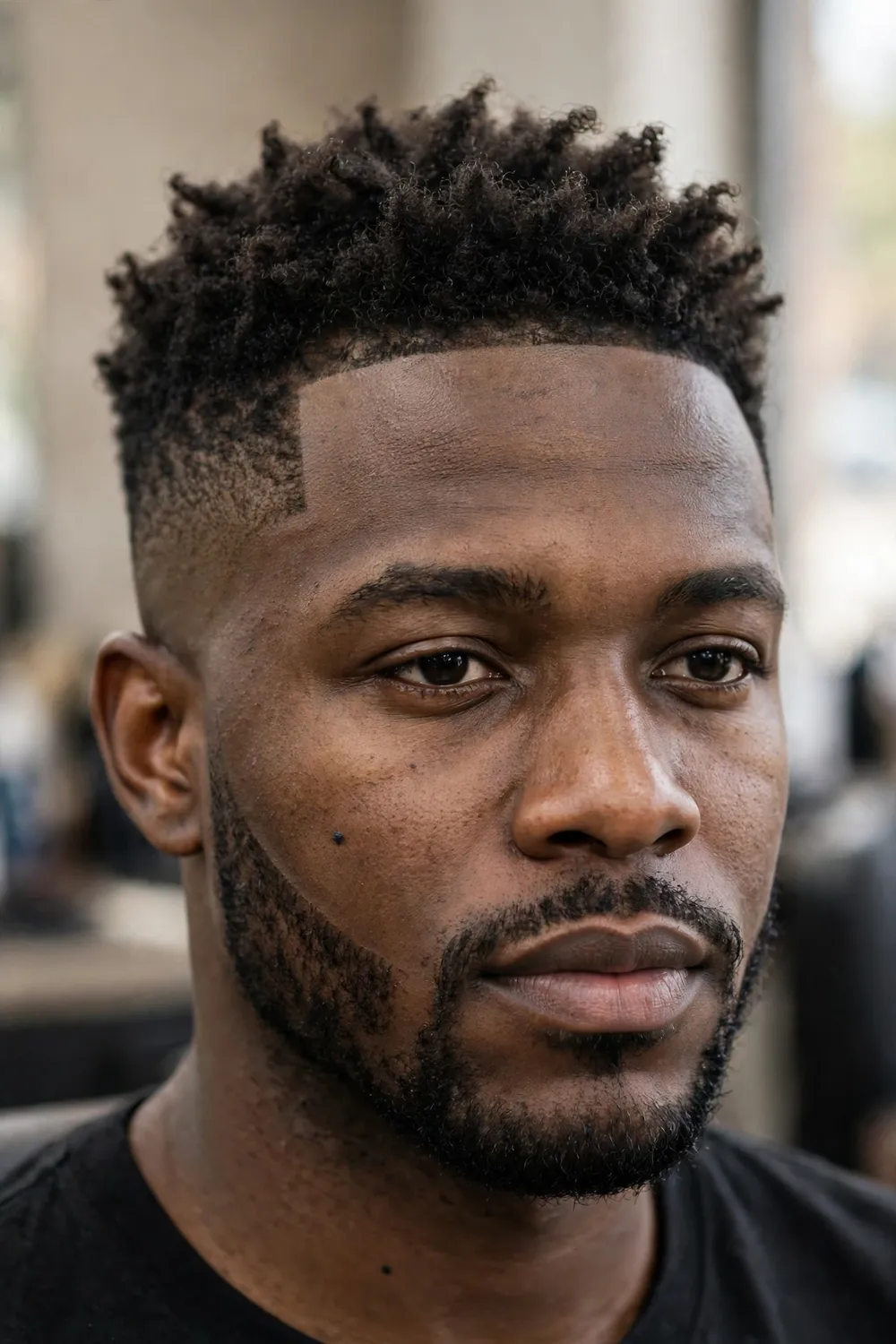
The temple fade, also known as the Brooklyn fade, keeps things subtle where it counts. Only the area around the temples and sideburns is faded, while the rest of the hair stays longer — so you get a clean, sharp edge without committing to a full fade. It suits almost any hair type and works beautifully with curls, coils, waves and short afros left on top. Ask your barber for a temple fade with a line up, and tell them how long you want the top. Styling depends on what’s up there: a curl cream for coils, a light pomade for a comb-over top, or nothing at all. Because only a small area is faded, it grows out more forgivingly than a full fade, and a tidy-up every two to three weeks keeps it looking fresh.
54. Short Afro Fade

The short afro fade lets natural texture do the talking. The top is picked out into a rounded afro shape — kept short, usually an inch or two — while the sides fade down cleanly, giving the afro a defined outline instead of a fuzzy edge. It suits coily and curly hair, and the rounded shape flatters square and oblong faces by softening strong jawlines. Ask your barber for a short afro with a low or mid fade, and say whether you want the shape tight and neat or a little fuller. A pick and a moisturising curl cream keep the shape defined without dryness. Trim every two to three weeks: the fade blurs faster than the afro grows, so the fade sets the schedule.
55. Buzz Cut with Beard Line Up

This cut pairs two sharp things — a very short buzz and a precisely lined-up beard — and the contrast is what makes it work. The buzz is one even length all over, usually a #1 or #2, while the beard is shaped with clean, straight lines at the cheeks and neck so the face looks deliberately groomed rather than just short. It suits most face shapes and works on straight, wavy and coarse hair; it’s especially good for men with strong beards, since the beard becomes the feature. Ask your barber for a buzz with a beard line up, and agree on the cheek line height before they start. No product needed on top — a little beard oil keeps the beard soft. Keep the lines touched up every week or two, or learn to do them at home with a trimmer.
56. Comb Over Fade
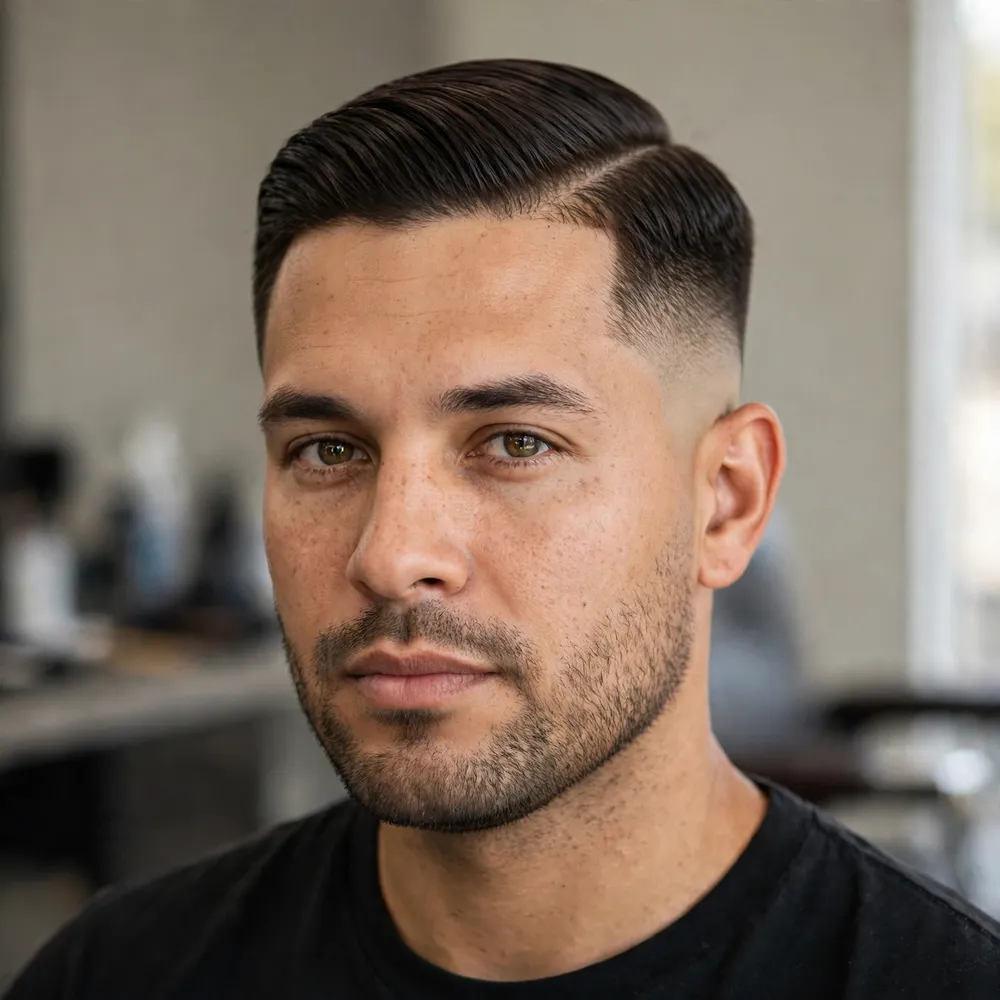
The comb over fade is the classic side-swept style with a modern edge. The top is left long enough to comb to one side — usually two inches — while the sides fade from skin up into the longer top, replacing the old-school taper with a cleaner blend. It suits straight and wavy hair best and flatters oval, square and round faces; it’s also a smart choice for men with thinning hair, since combing across the top adds coverage. Ask your barber for a comb over with a low or mid fade and a defined part. A light pomade gives a polished shine, or a matte clay keeps it more casual. Style it in two minutes with a comb while the hair is slightly damp, and trim every two to three weeks.
57. Short Pompadour Fade
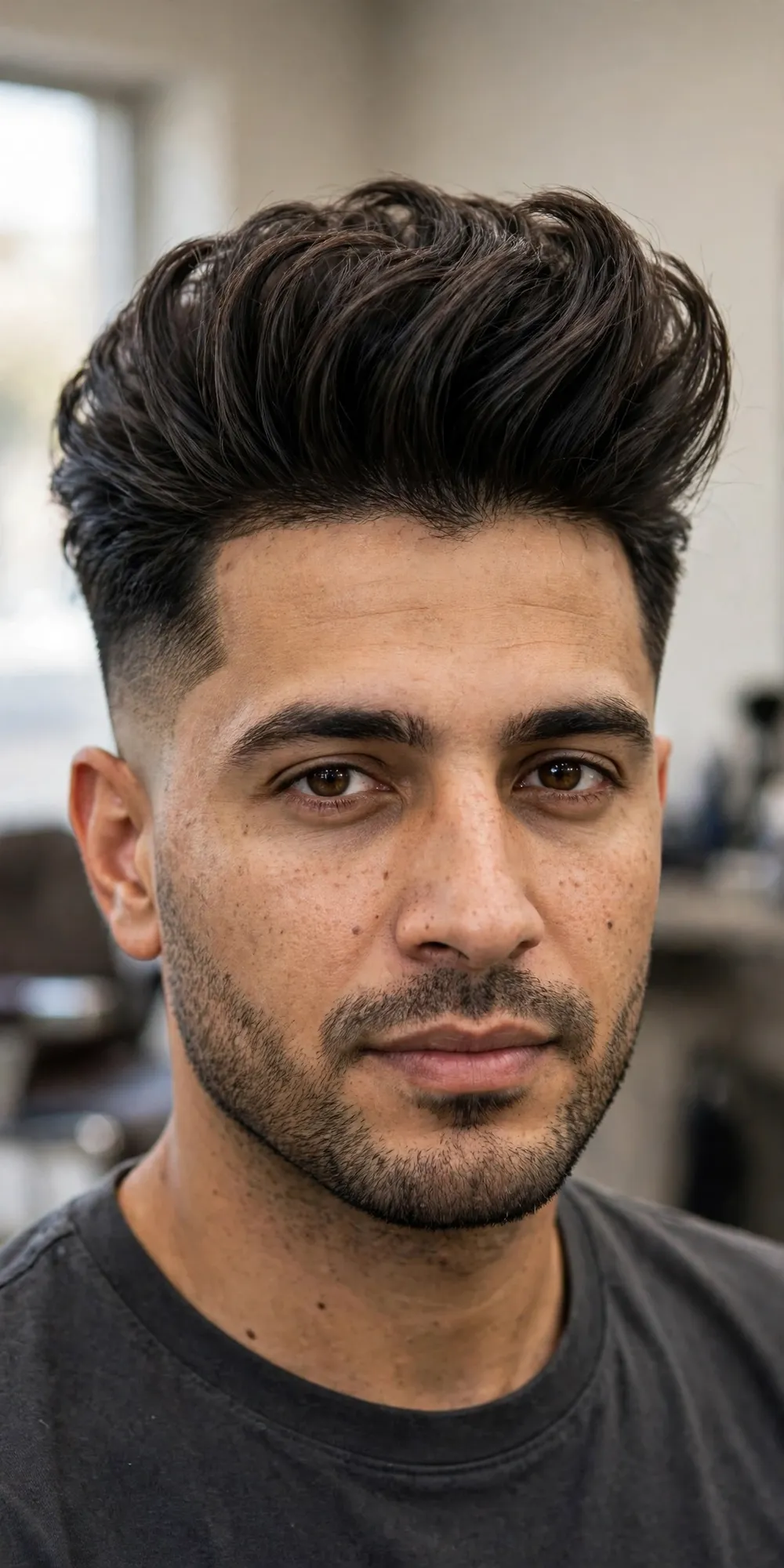
Here’s the pompadour for men who don’t want to spend ten minutes with a blow-dryer. The top is kept short — around an inch and a half — but still swept up and back, while a fade on the sides gives the height something to stand against. It suits thick, straight and wavy hair, and adds length to round faces. Ask your barber for a short pompadour with a mid fade, and enough length on top to push upward with your fingers. Work a small amount of matte clay through damp hair and push it up and back — no blow-dryer needed. It holds well all day on thick hair, and a trim every three weeks keeps the fade and the shape in balance.
58. Short Textured Crop

The short textured crop is the low-effort cousin of the fuller textured crop in this list. Everything is kept shorter — the top is cropped close with choppy, point-cut ends, and the sides are faded or tapered tight. The result is a cut that looks deliberately messy in a good way, with texture you can see from across the room. It suits straight, wavy and thick hair, and works on oval, square and round faces; the short fringe also helps men with a larger forehead. Ask your barber for a short textured crop with a low fade and plenty of texture cut into the top. A pinch of matte clay, scrunched in with the fingers, is the whole styling routine. Trim every three to four weeks — it grows out better than most fades.
Group G — Short Cuts with Beards
59. Fade with Full Beard
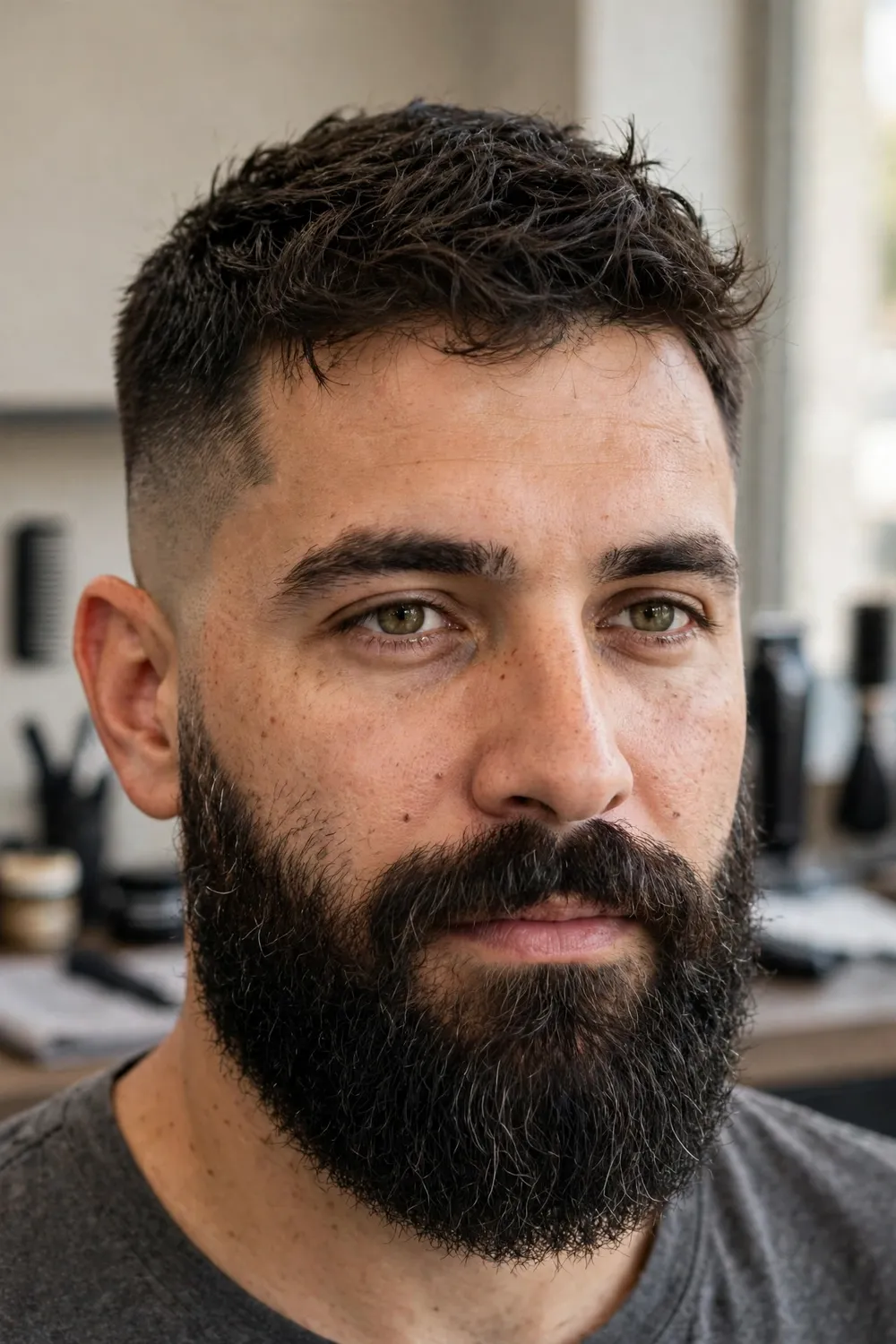
A fade with a full beard is about balance: short, sharp hair on top and a fuller beard below, with the two blended together at the sideburns so nothing looks disconnected. The fade keeps the head clean while the beard adds weight and character to the lower face. It suits most hair types and works especially well on square and oval faces, where the beard can sharpen or soften the jawline as needed. Ask your barber for a low or mid fade with a beard blend — the blend at the temples is the detail that makes it look professional. Style the hair with a little matte clay and keep the beard conditioned with oil. Trim the fade every two to three weeks and shape the beard in the same visit.
60. Short Pompadour with Beard Blend

This cut pairs the height of a short pompadour with a beard that fades into the hairline, so the whole head reads as one connected style. The top is swept up and back, the sides are faded short, and the beard is tapered from the sideburns down into its full length. It suits thick, straight and wavy hair and works on oval, square and round faces — the vertical lift on top balances a fuller beard below. Ask your barber for a short pompadour with a mid fade and a beard blend, and be clear about the beard length you want to keep. A matte clay holds the top; beard oil keeps the blend soft. Budget a trim every three weeks for the hair and a beard tidy in between if it grows fast.
61. Buzz Cut With Stubble Beard
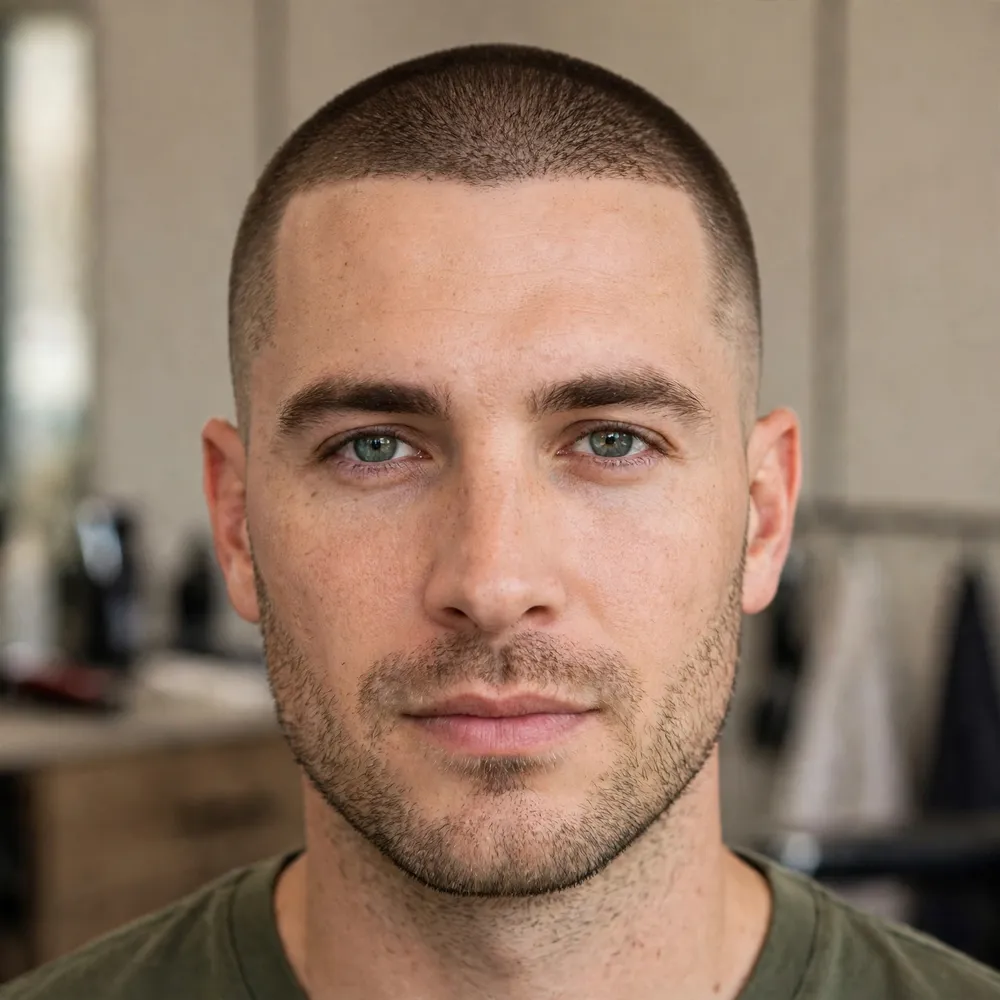
When both the hair and the beard are short, the look is all about clean lines and zero fuss. The buzz is a #1 or #2 all over, and the stubble is kept to a few days’ growth — short enough to show the jawline, long enough to add definition. It suits every face shape and any hair type, and it’s one of the best options for men who want to look groomed without owning a drawer full of products. Ask your barber for a buzz cut with stubble — or just do both at home with a clipper and a trimmer. There’s no styling product involved, just a quick wash. The catch is the upkeep rhythm: stubble looks best at two to four days, so you’ll be trimming the beard more often than the hair.
62. Crew Cut with Beard Fade

The crew cut with a beard fade is a tidy, masculine combination that works in almost any setting. The hair is a classic short crew on top with tapered sides, and the beard is faded from the sideburns down into a fuller length, so the transition looks intentional rather than accidental. It suits straight, wavy and thick hair and flatters oval and square faces particularly well. Ask your barber for a crew cut with a beard fade, and agree on how long the beard should be — a shorter beard keeps the look sharp, a longer one makes it bolder. A little matte paste gives the top some texture, and beard oil keeps the fade from looking dry. Trim every two to three weeks, and keep the neckline clean between visits.
63. Textured Crop With Beard
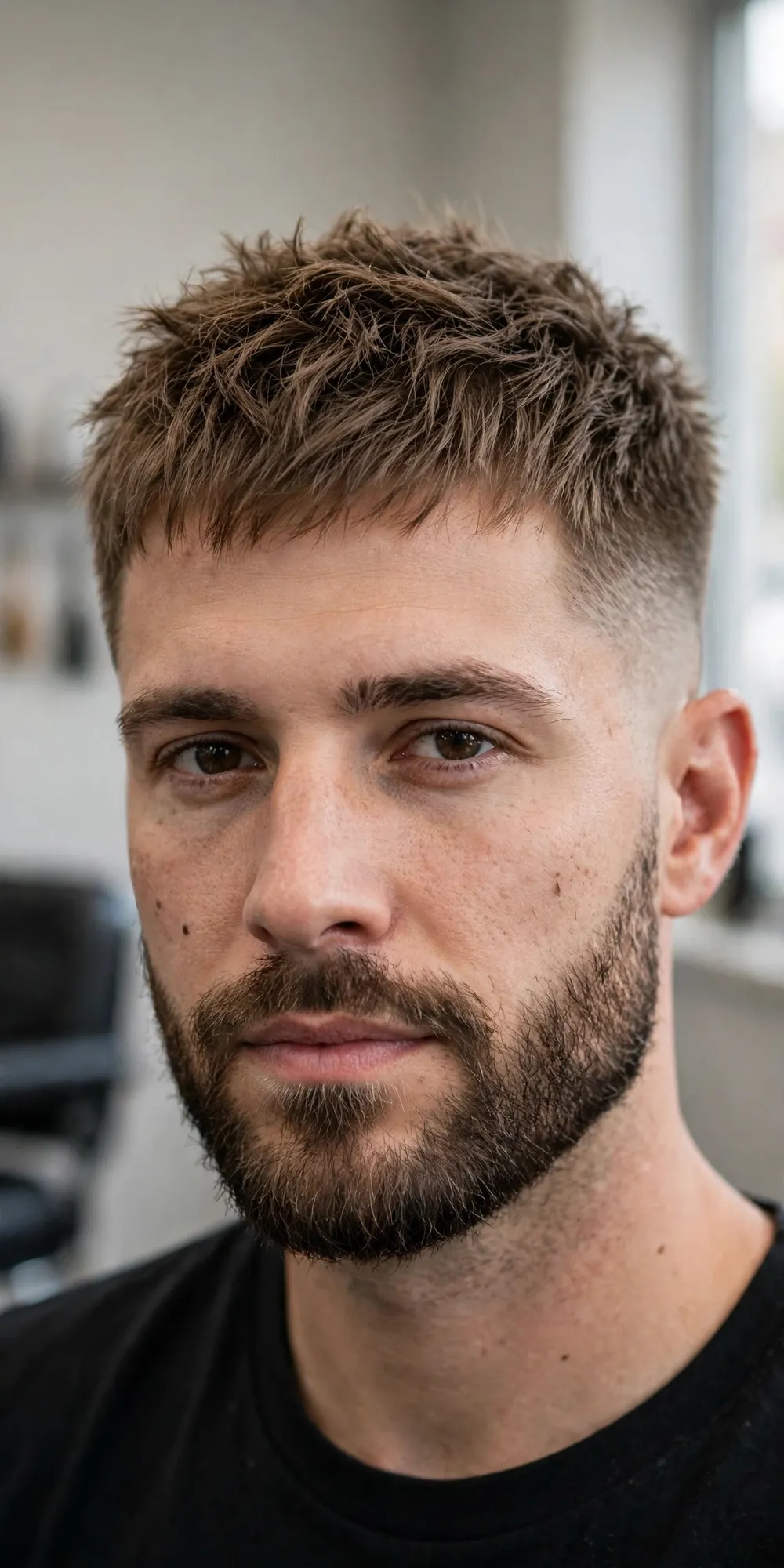
A textured crop already looks modern on its own; add a groomed beard and it gains a whole extra layer of character. The top is choppy and pushed forward, the sides are faded short, and the beard is kept full enough to balance the texture above it. It suits straight, wavy and thick hair, and works well on oval and square faces — the beard adds structure where the crop adds movement. Ask your barber for a textured crop with a low fade and a beard shaped to your jawline. Style the top with matte clay and keep the beard oiled and brushed. The hair needs a trim every three weeks; the beard needs a shape-up in the same visit so the two halves stay in proportion.
Group H — Extra Styles They Don’t Have
64. Classic Taper Cut

The classic taper is the quiet professional of short haircuts — no fade, no hard lines, just a gradual shortening from the top down to the neckline. It’s the cut your grandfather probably wore, and it still looks right today because it never tries too hard. The top is left long enough to part or sweep to the side, and the sides blend down smoothly with scissors. It suits straight and wavy hair and flatters every face shape, which is why barbers reach for it when a client just wants to look tidy. Ask for a classic taper with a side part and scissor-cut sides. A light pomade or a little cream gives a soft, natural finish. It grows out better than any fade, so a trim every four weeks is plenty.
65. Short Edgar Cut
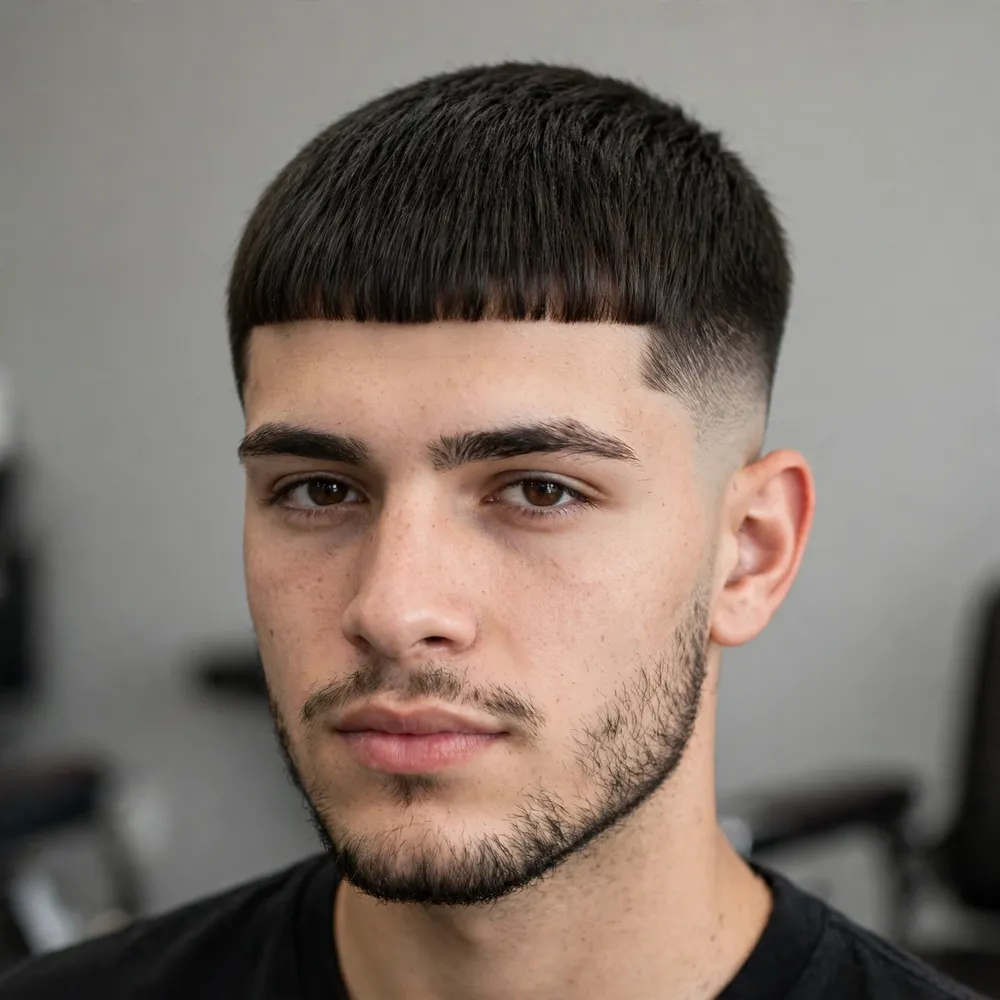
The Edgar cut is bold, graphic and impossible to miss: a straight, blunt fringe cut right across the forehead, with faded sides that make the sharp line stand out even more. It suits straight, thick hair best — the fringe needs to sit flat and straight — and it works on oval, square and round faces, though the straight line draws attention to the forehead. Ask your barber for a short Edgar with a mid or high fade and a blunt, even fringe; the line has to be truly straight, so pick a barber who’s done it before. Style it with a little matte paste to keep the fringe in place, or wear it completely natural. The fringe grows fast, so plan a tidy-up every two weeks to keep the line crisp.
66. Short Textured Fringe with Skin Fade
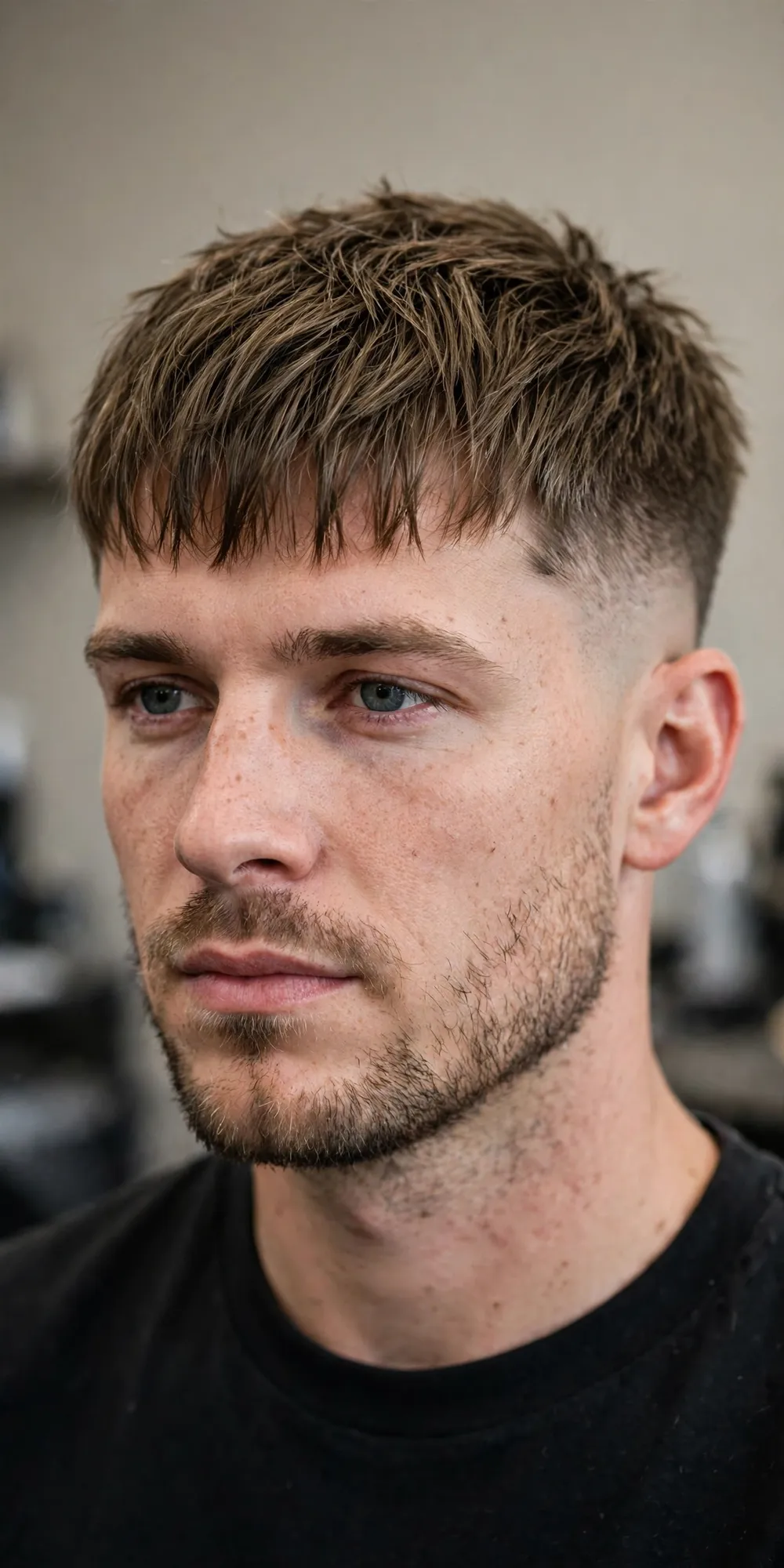
This cut takes the Edgar’s blunt line and softens it into something more wearable. The fringe is choppy and textured instead of ruler-straight, falling across the forehead in uneven pieces, while the sides fade to skin for maximum contrast. It suits straight and wavy hair and flatters oval and square faces; the textured fringe also works well for men who want to downplay a high hairline. Ask your barber for a textured fringe with a skin fade and point-cutting through the front for separation. A pinch of matte clay pushed forward is all it needs. The skin fade is the maintenance driver here — expect a trim every two weeks — but the fringe itself grows out without looking messy.
67. Short Wavy Crop

Men with natural waves often fight them; the short wavy crop works with them instead. The top is cut short enough to stay tidy but long enough for the wave pattern to show, with textured ends that stop the waves from clumping into one heavy mass. The sides are faded or tapered to keep the shape clean. It suits naturally wavy hair best and flatters oval, square and round faces. Ask your barber for a wavy crop with a low taper and texture cut into the top — and don’t let them thin it out too much, or the waves lose their shape. A sea salt spray scrunched into damp hair brings out the pattern. For more wavy inspiration, our messy hairstyles for men guide covers similar texture. Trim every three to four weeks.
68. Short Curly Top with Mid Fade

Curls need length to show their shape, and this cut gives them just enough. The top is left long enough for curls to form — usually an inch or two — while a mid fade keeps the sides and back clean so the curls become the focus. It suits naturally curly and coily hair and flatters oval, square and round faces; the height of the curls also adds length to a round face. Ask your barber for a curly top with a mid fade, and make sure they cut the curls dry or only slightly damp, since wet curls shrink as they dry. A curl cream worked through damp hair defines the pattern without crunch. Trim every three to four weeks, and check our curly hairstyles for men guide for more curl-friendly cuts.
69. Short Faux Hawk with Taper Fade

The faux hawk is the mohawk’s sensible younger brother: a strip of longer hair down the centre, pushed up, with the sides tapered rather than shaved. The short version keeps the centre modest — an inch or so — so it reads as edgy without looking like a costume. It suits straight, wavy and thick hair, and the height works well on round faces. Ask your barber for a short faux hawk with a taper fade and a little extra length left in the centre strip. Push the centre up with matte clay while the hair is slightly damp, and leave the sides alone. It’s a two-minute style once you get the hang of it, and a trim every three weeks keeps the taper and the centre in proportion.
70. Short Side Part with Low Taper

This is the side part at its most understated: a neat part, a short swept top, and a low taper that stays close to the ears and neckline instead of climbing high up the head. It looks smart without looking severe, which makes it a safe choice for work, weddings and anything in between. It suits straight and wavy hair and flatters every face shape; it’s also forgiving on thinning hair, since the swept top adds coverage. Ask your barber for a short side part with a low taper and a natural part line you can find yourself. A light pomade gives a classic shine, or a cream gives a softer, modern finish. Comb it while damp and you’re done in two minutes. Trim every three to four weeks.
71. Short Flat Top
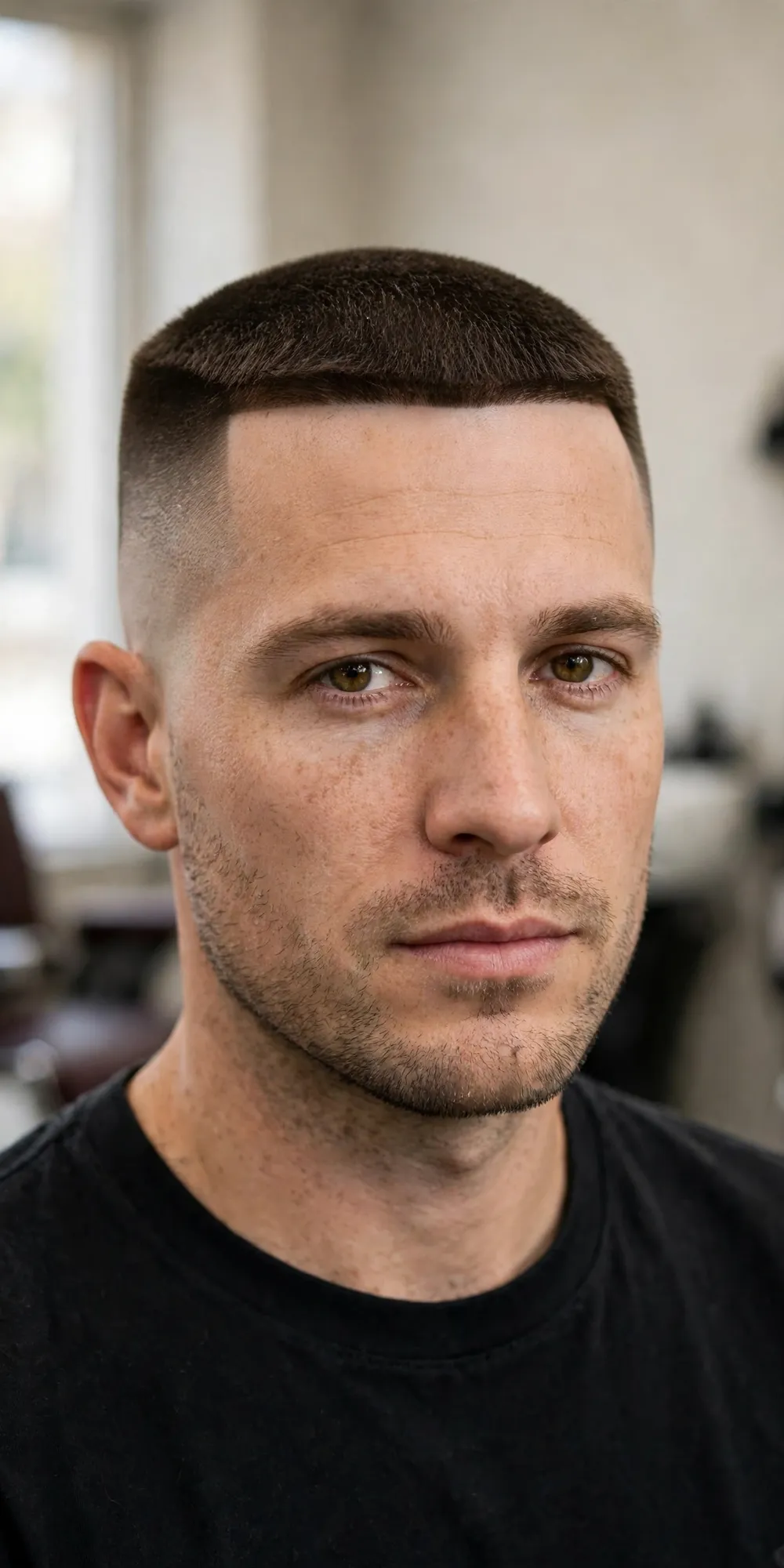
The flat top is a shape cut, not just a length — the top is cut dead level, like a tabletop, with tight faded sides underneath. The short version keeps the top to an inch or less, which makes it much easier to wear than the tall 80s original. It suits coarse, thick and coily hair that can hold a level shape, and it flatters oval and oblong faces. Ask your barber for a short flat top with a fade, and say how square you want the corners — sharper corners look bolder, softer corners look more modern. A little styling cream and a flat brush keep the top level, though the cut does most of the work. The shape is the maintenance: it needs reshaping every one to two weeks, or it starts to round off.
72. Short Brush Cut

The brush cut is what it sounds like: hair cut short all over and brushed forward, flat against the head, like a close-cropped military style with a little more length. It’s one of the simplest cuts a barber can do, and one of the easiest to live with. It suits straight and slightly wavy hair and works on every face shape — there’s nothing about it to clash with. Ask your barber for a short brush cut, usually a #3 or #4 on top with a #2 on the sides, brushed forward. No product, no styling, no decisions in the morning: wash it, brush it forward, go. A trim every three weeks keeps the length even. If you want a cut that never looks wrong, this is the one to try.
73. Short Disconnected Undercut

The disconnected undercut is all about contrast: the sides are clipped very short with no blend at all, and the longer top sits on top of them with a visible, hard line where the two meet. That sharp disconnect is the whole point — it makes even a short top look deliberate and styled. It suits straight, wavy and thick hair, and flatters oval and square faces; the hard line also adds structure to a round face. Ask your barber for a short disconnected undercut with the top left long enough to sweep to one side. A matte clay or light pomade holds the sweep in place. The hard line grows out quickly, so plan a trim every two to three weeks, and expect to style it daily — this one doesn’t look after itself.
74. Short Taper Fade with Line Up

A taper fade plus a line up is the barbershop finish that makes a simple short cut look razor-sharp. The taper fades gradually down the sides and back, while the line up carves clean, straight edges along the forehead and temples. Together they frame the face with precision. It suits every hair type and works especially well on coarse, curly and coily hair, where the line up defines the hairline. Ask your barber for a short taper fade with a line up, and agree on the hairline shape before they start — a straight line looks sharpest, a slightly rounded one looks more natural. No product needed on top, though a little matte paste adds texture. The line up is the upkeep: touch it up every week or two.
75. Short French Crop with Skin Fade
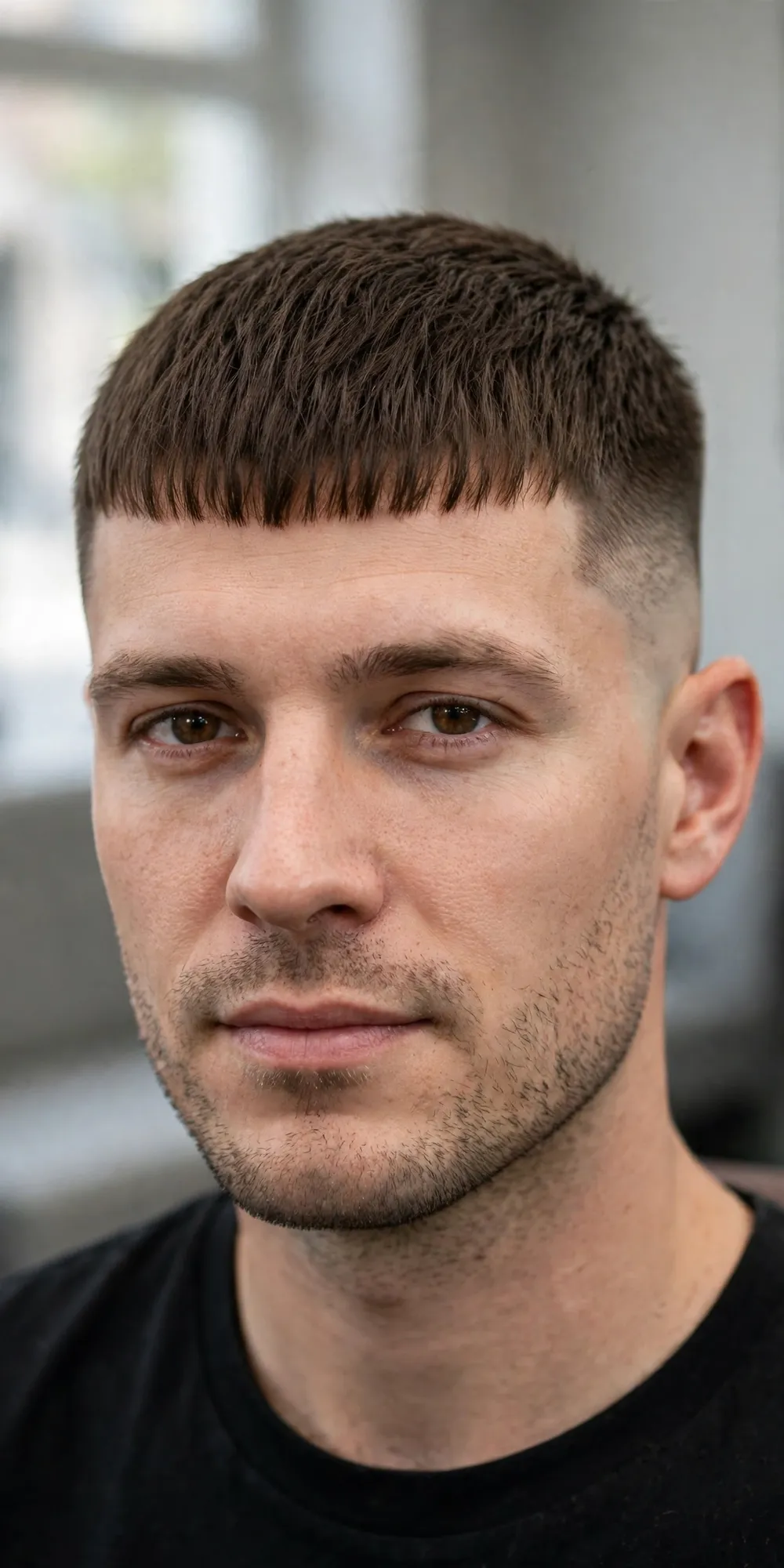
Take the French crop’s short, forward fringe and pair it with a skin fade, and you get one of the sharpest short cuts going. The fringe sits low on the forehead, the top is textured and choppy, and the sides fade to bare skin — maximum contrast with minimum styling. It suits straight, wavy and thick hair, and the fringe works well for men who want to soften a high forehead or a longer face. Ask your barber for a French crop with a skin fade and a textured, point-cut fringe. A pinch of matte clay pushed forward is the whole routine. The skin fade needs attention every two weeks, but the crop itself is forgiving — even as it grows, it still looks intentional.
76. Short Textured Quiff with Low Fade

The quiff usually means volume and a blow-dryer, but this short version keeps the lift modest and the effort low. The front is textured and pushed up just an inch or so, with choppy ends that give it movement, while a low fade keeps the sides neat without stealing attention. It suits straight, wavy and thick hair and flatters round and square faces — the small lift adds length without going over the top. Ask your barber for a short textured quiff with a low fade and point-cutting through the front. Blow-dry the front upward for twenty seconds if you want more height, or just push it up with matte clay on damp hair. Trim every three weeks to keep the fade and the quiff in step.
77. Short Scissor Cut

A scissor cut is the opposite of a clipper cut: no guards, no hard lines, just a barber shaping the hair by hand. The result is softer, more natural and slightly uneven in a good way — it looks like your hair, only better. It’s ideal for men who hate the harsh lines of a fade, and it suits straight, wavy and fine hair especially well, since scissors preserve natural texture. Ask your barber for a short scissor cut all over, with the sides blended by hand rather than clipped. A little cream or a light pomade gives a natural, touchable finish. It grows out better than almost any clipper cut, so a trim every four weeks is enough — and it’s a good choice if you’re growing your hair out.
78. Short Curly Afro Taper

The curly afro taper keeps the natural curl shape but gives it a clean outline. The top is left full enough for the curls to form their rounded shape, while the sides and back taper down gradually — no harsh fade line, just a smooth blend that follows the head. It suits curly and coily hair and flatters oval, square and round faces. Ask your barber for a short curly afro with a taper, and make sure they shape it with the curls dry so the length is right. A curl cream or leave-in moisturiser keeps the curls defined and hydrated. Trim every three to four weeks: the taper sets the schedule, since the curls themselves can go longer between cuts.
79. Short Spiky Fringe

The spiky fringe pushes the front of the hair forward and up in short, separated spikes, while the rest stays short and tidy. It’s a playful cut with a bit of attitude, but kept short it stays well within everyday territory. It suits straight and slightly wavy hair — the spikes need hair that holds a shape — and it works on oval, square and round faces. Ask your barber for a short spiky fringe with a low fade or taper and textured ends through the front. A small amount of matte clay, pinched into the fringe while the hair is damp, creates the spikes. It takes two minutes to style and about three weeks between trims, though the fringe spikes are the first thing to lose their edge as it grows.
80. Short Slicked Side Part

The slicked side part is the polished end of the short-hair spectrum: a clean part, hair combed smoothly to one side, and a soft shine that says you meant it. Unlike a comb over, the whole top is slicked back and to the side in one smooth sweep, with tapered sides keeping it neat. It suits straight and wavy hair with enough density to lie flat, and flatters oval, square and oblong faces. Ask your barber for a short slicked side part with a classic taper and a defined part. Work a light pomade through damp hair and comb it into place — the shine is part of the look, so don’t fight it with matte products. Trim every three weeks to keep the part and taper crisp.
81. Short Military Cut

The military cut is the no-nonsense option: very short all over, usually a #1 or #2, with a clean taper at the edges and nothing left to style. It’s the cut for men who want to stop thinking about their hair entirely — it looks the same every morning, in any weather, with any amount of sleep. It suits every face shape and hair type, including thinning hair, and it’s the best choice for men with very thick hair who are tired of fighting it. Ask your barber for a short military cut, a #2 on top and a #1 on the sides with a tapered neckline. No product, no styling, no comb. A trim every two to three weeks keeps the taper tidy, though the cut is forgiving if you stretch it a week longer. If you’re still weighing up your options, our haircuts for men hub compares the classic short styles side by side.
82. Short Curly Caesar

The curly Caesar takes the ancient Roman fringe and gives it natural texture: short curls brushed forward across the forehead, with tapered sides and a clean, even hairline. The curls do the work that a straight fringe can’t — they add movement and softness to a cut that could otherwise look severe. It suits naturally curly and wavy hair and flatters oval, square and round faces; the forward fringe also helps men with a high hairline. Ask your barber for a short curly Caesar with a taper and the fringe cut while the curls are dry, so the length lands right. A curl cream defines the fringe without weighing it down. It’s an easy cut to live with — two minutes of styling, a trim every three to four weeks — and it looks good on almost everyone with curls.
How to Ask Your Barber for a Short Haircut
The difference between a great short haircut and a disappointing one is usually the conversation before the clippers come out. Start with the length on top, in guard numbers: a buzz cut is a #1 to #3 all over, while a crew cut is a #3 or #4 on top with shorter sides. If you’re getting a fade, say the height explicitly — low, mid or high — because “a fade” on its own means something different to every barber. Mention the finish you want too: tapered and natural, or skin-faded and sharp. Then describe the front: fringe forward, swept to the side, or pushed up. And bring a photo. Show your barber the exact cut from this list on your phone — a picture settles in seconds what five minutes of describing can’t. If you’re trying something new, ask them what they’d change for your hair type and face shape; a good barber will tell you honestly, and you’ll leave with a cut that actually suits you.
Short Haircut Maintenance & Products
Short hair is low-maintenance, not no-maintenance — the shorter the cut, the faster a few millimetres of growth shows. Book a trim every two to four weeks: skin fades and line ups need the two-week end of that range, while scissor cuts and tapers can stretch to four. Between visits, keep the neckline tidy with a trimmer if you have one. For products, match them to your hair type. Thick, straight hair does best with a matte clay — it adds texture and hold without shine. Fine hair needs a light pomade or a volumising cream; anything heavy or shiny will make it look thinner. Wavy hair responds well to a sea salt spray scrunched in while damp, which brings out the pattern without stiffness. Curly and coily hair needs a curl cream or leave-in moisturiser to define the curls and stop dryness. Whatever you use, start with less than you think — a pea-sized amount is usually enough for short hair.
Mistakes to Avoid
The most common mistake is walking in and asking for “short” with no detail — that word means a #1 buzz to one barber and a textured crop to another, so always name the cut, the guard numbers and the fade height. Another is going too short on top when your hair is thin: a #1 or #2 on fine, thinning hair can expose the scalp more than a slightly longer textured top would. Don’t skip neckline cleanups either — a sharp haircut with a fuzzy neckline looks unfinished within a week, so tidy it up or book a quick clean-up between cuts. Avoid heavy, shiny product on fine hair, too: it clumps the strands together and makes thin spots more visible, where a matte clay would add the illusion of thickness. And don’t let a fade grow out past three weeks — once the blend blurs, the whole cut loses its shape, and no amount of styling brings it back. Book the next appointment before you leave the chair.
Frequently Asked Questions
What is the best short haircut for men?
There isn’t one cut that wins for everyone — it depends on your face shape, hair type and how much time you want to spend styling. If you want the easiest stylish option, the French Crop (#1) is hard to beat: it suits most faces, needs no blow-drying and grows out well. For a clean, classic look, a crew cut or a short side part works in almost any setting. And if you want zero effort, a buzz cut is the answer. The best short haircut is the one that fits your hair and your life, so pick from this list based on what you actually have, not what looks good on someone else.
Which short haircut suits a round face?
Cuts with height on top and short sides work best for a round face, because the height adds length and the short sides stop the face looking wider. Good choices from this list include the short quiff (#11), the short pompadour (#45), the high fade pompadour (#48) and the textured crop (#42) — all of them keep the sides tight and put some lift on top. Avoid cuts that are wide and flat on the sides with no height, like a long, even brush cut, since they can make a round face look rounder. If you’re unsure, show your barber a photo of one of these and ask them to adjust the height to your face.
How often should I get a short haircut trimmed?
Most short haircuts need a trim every two to four weeks. Skin fades, high fades and line ups sit at the two-week end — the blend blurs quickly and the sharpness is the whole point. Mid and low fades, crops and textured cuts usually last three weeks. Scissor cuts, classic tapers and longer crops can stretch to four weeks because they grow out more gracefully. The honest test is the mirror: when the neckline looks fuzzy, the fade looks cloudy or the top won’t sit the way it used to, it’s time to book. Booking your next appointment before you leave the barber’s chair keeps you from drifting past the point where the cut still looks good.
What is the difference between a buzz cut and a crew cut?
A buzz cut is one even length all over the head, cut with clippers — usually a #1, #2 or #3 — with no real difference between the top and the sides. A crew cut is longer on top than on the sides: the top is typically a #3 or #4, short enough to stand up slightly, while the sides are tapered or faded shorter. That extra length on top is the whole difference — it gives the crew cut a shape you can see, while the buzz cut is a uniform, flat finish. The buzz needs no styling at all; the crew cut takes about thirty seconds with a little matte paste if you want definition.
Are short haircuts good for thinning hair?
Yes — short haircuts are one of the best options for thinning hair, as long as you don’t go too short on top. A buzz cut, a crew cut or a textured crop all reduce the contrast between thick and thin areas, which is what makes thinning noticeable in longer styles. The trick is keeping a little texture on top rather than clipping it to the scalp, and using a matte product instead of anything shiny, since shine exposes the scalp. What doesn’t work is a long, heavy top combed over a thin spot — it draws the eye straight to the problem. If your hairline is receding, a short textured fringe or a buzz cut will look better than trying to hide it.
How do I ask my barber for a short haircut?
Name the cut, give the guard numbers and describe the finish. For example: “a textured crop, #2 on the sides with a low fade, about an inch textured on top, fringe forward.” Say the fade height explicitly — low, mid or high — and mention whether you want a taper, a skin fade or a natural blend. Bring a photo on your phone: it removes all guesswork and gives the barber something concrete to work from. Then ask what they’d adjust for your hair type and face shape. A good barber will tell you if the cut in the photo won’t work on your hair, and suggest the closest version that will. That’s a conversation worth having before the clippers start.
Do short haircuts work for curly hair?
Yes, and some short cuts are made for curls. The key is leaving enough length on top for the curl pattern to form — usually at least an inch — while keeping the sides short with a fade or taper so the curls become the feature. Good options from this list include the short curly top with mid fade (#68), the short curly Caesar (#82), the short curly afro taper (#78) and the drop fade with waves (#50). The main mistake is cutting curls too short on top, which leaves them looking frizzy instead of defined, or cutting them wet without accounting for shrinkage. Use a curl cream on damp hair, and find a barber who cuts curls dry or nearly dry.
Final Word
Short haircuts work because they ask so little and give so much back: a sharp shape, two minutes of styling, and a look that suits almost every man. Whether you go for the easy French crop, a clean crew cut or one of the bolder fades in this list, the rule is the same — pick the cut that fits your hair, your face and your routine, and tell your barber exactly what you want. And when you’re ready for the next idea, you’ll find more hair guides on our blog — from fades and face-shape cuts to curly styles and grooming routines.