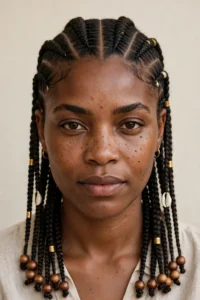


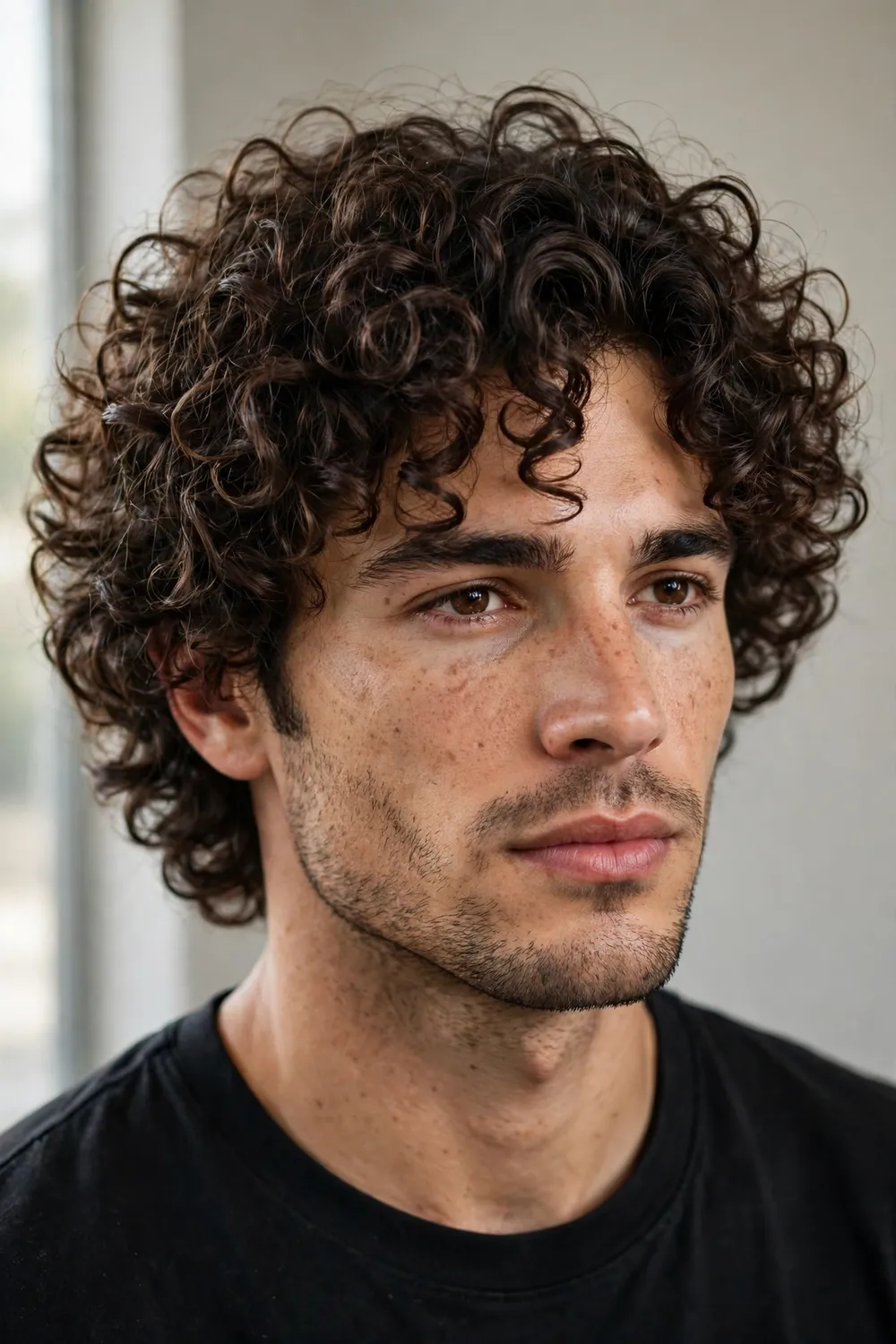
Curly hair is not a problem that needs fixing. It is texture — the same texture straight-haired men pay good money for with a perm. When curls look bad, the hair is rarely to blame; the cut is. A barber who treats curls like straight hair will cut them too short, ignore shrinkage, and leave you with a shape that only behaves for the first day. The 71 cuts below are grouped by length, fade and curl type, and each one tells you who it suits, what to ask for, and how much upkeep it honestly takes. If you just want the safest bets, start with these three: curly hair with a mid fade (#15) for all-round versatility, the messy curly hairstyle (#26) for medium length, and curly hair with a low taper fade (#14) if you want the easiest grow-out in barbering.
Curly Hair Types Explained (2A to 4C)
Most curl advice fails because it treats all curls as the same hair. They are not. The widely used Andre Walker Hair Typing System sorts hair into four families. Type 2 is wavy — loose S-shaped waves from 2A to the almost-curly 2C. Type 3 is true curly hair: defined spirals and corkscrews, from loose 3A loops to springy 3C coils. Type 4 is coily — tight zig-zags and dense coils (4A–4C) that grow up and out rather than down.
Two facts about curls decide almost every haircut. First, shrinkage: a curl that measures six inches stretched may sit at three inches dry, and tighter curl types shrink the most. Any length has to be judged dry, in its natural state. Second, dryness: the scalp’s natural oils travel slowly down a curved strand, so curly hair — type 4 especially — is thirstier than straight hair and needs moisture far more than it needs washing. This is also why curls are often best cut dry, or at least finished dry, by a barber who works with curly hair regularly. A cut that respects your type will nearly style itself; a cut that fights it never will.
How to Choose the Right Curly Hairstyle
Start with your curl type, because it sets your realistic options. Loose waves (type 2) can wear almost anything on this list, including slick backs and side parts, because the hair still lies mostly flat. Type 3 curls have real spring and volume, so they reward cuts with shape built in — crops, fringes, fades and layered medium styles — and punish heavy, blunt cutting. Type 4 coils hold sculpted shapes beautifully (flat tops, high tops, tapered afros) but need length judged with serious shrinkage in mind.
Face shape comes next. Height on top and tighter sides lengthen a face, which is why men with round faces do so well with quiffs, faux hawks and fades — our guide to haircuts for round face men breaks down exactly which shapes slim and lengthen. Square faces can carry the boldest, most angular versions, while longer faces should keep some fullness at the sides instead of fading everything away.
Finally, be honest about upkeep. A skin fade looks razor sharp for about ten days and then needs the barber again; a taper or a scissor-cut style can stretch four weeks or more. Long curls swap barber visits for home care — conditioning, detangling and patience. Pick the cut whose maintenance matches the life you actually live, not the one you wish you lived.
71 Best Curly Hairstyles for Men
Every cut below follows the same logic: work with the curl pattern, never against it. Find your length first, then your curl type, and save a photo of the one you want — showing your barber beats describing every time.
1. Short Curly Crop
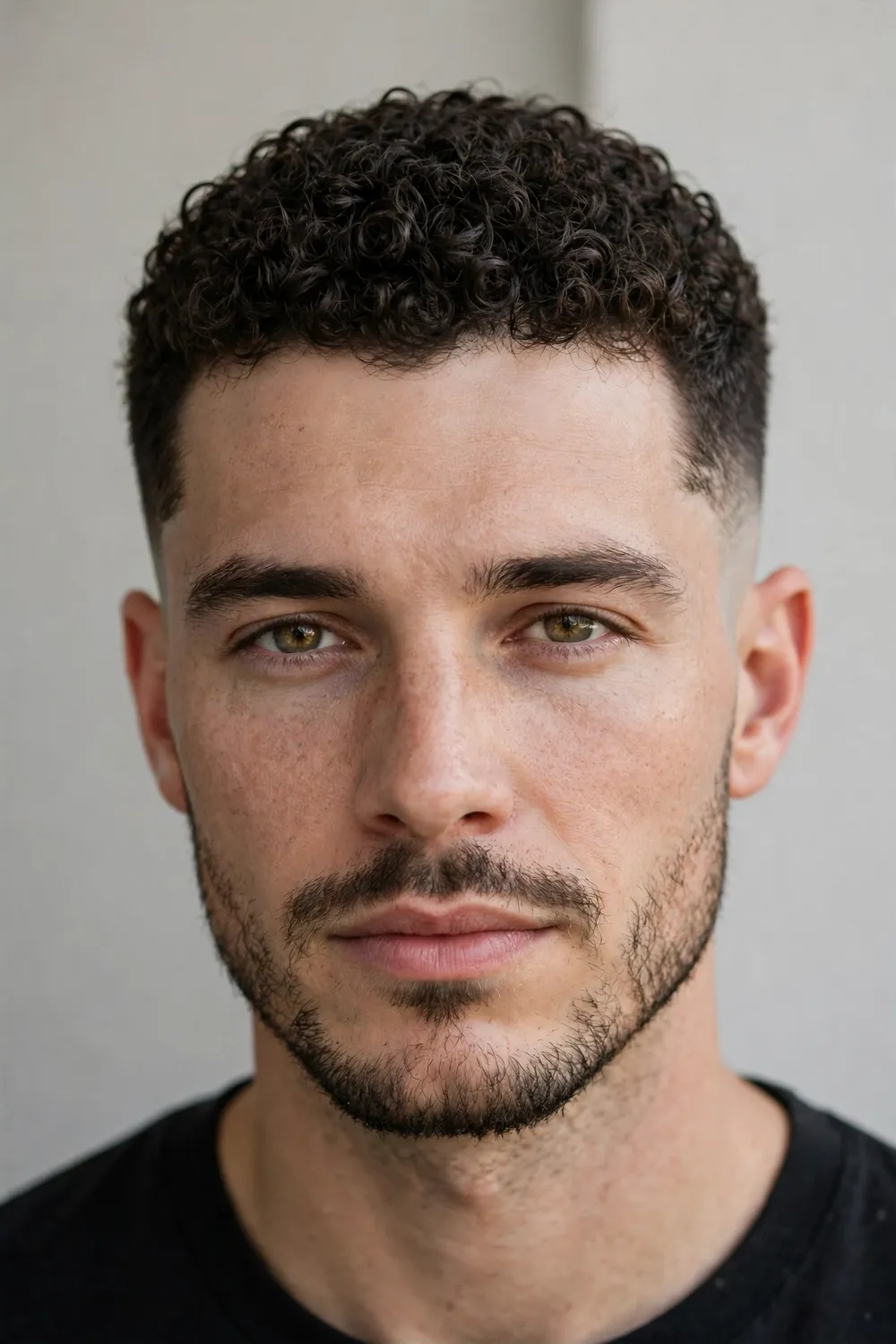
This is the lowest-maintenance curly cut there is: an inch or two of curl on top, cut to follow the natural pattern, with short, tidy sides. Because the top stays short, the curls sit as controlled texture instead of springing into a shape of their own, which makes it ideal for type 2C to 3B hair and for men who want to spend under a minute on their hair. Ask your barber to cut the top with scissors or a long guard and to take out bulk, not length — over-clipping curly tops is how you end up with a helmet. Style it with a pea-sized amount of curl cream worked through damp hair, and book a tidy-up every three to four weeks.
2. Curly French Crop
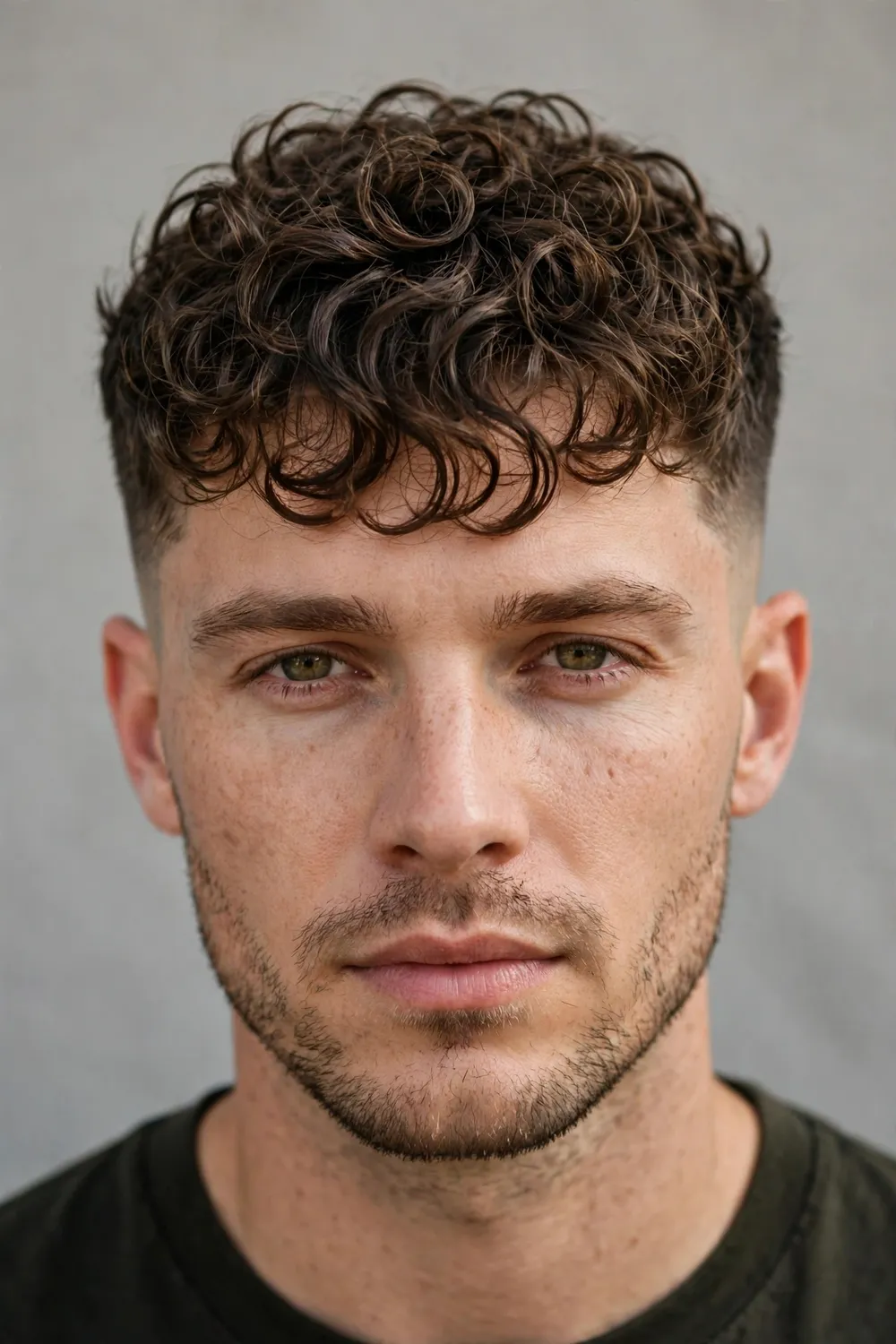
The French crop takes the short crop and pushes everything forward into a short, textured fringe, with the sides faded or tapered. On curly hair the fringe is the whole point: instead of a blunt straight line, the curls break it up into a soft, broken edge that looks deliberate rather than severe. It suits type 3A to 3C best, and it is a kind option for men with a high forehead or early thinning at the corners, because the forward fall covers without looking like it is hiding anything. One warning to give your barber: cut the fringe dry or allow for shrinkage, because a fringe cut wet and stretched will bounce up shorter than planned. A refresh every three weeks keeps it sharp.
3. Curly Caesar Cut
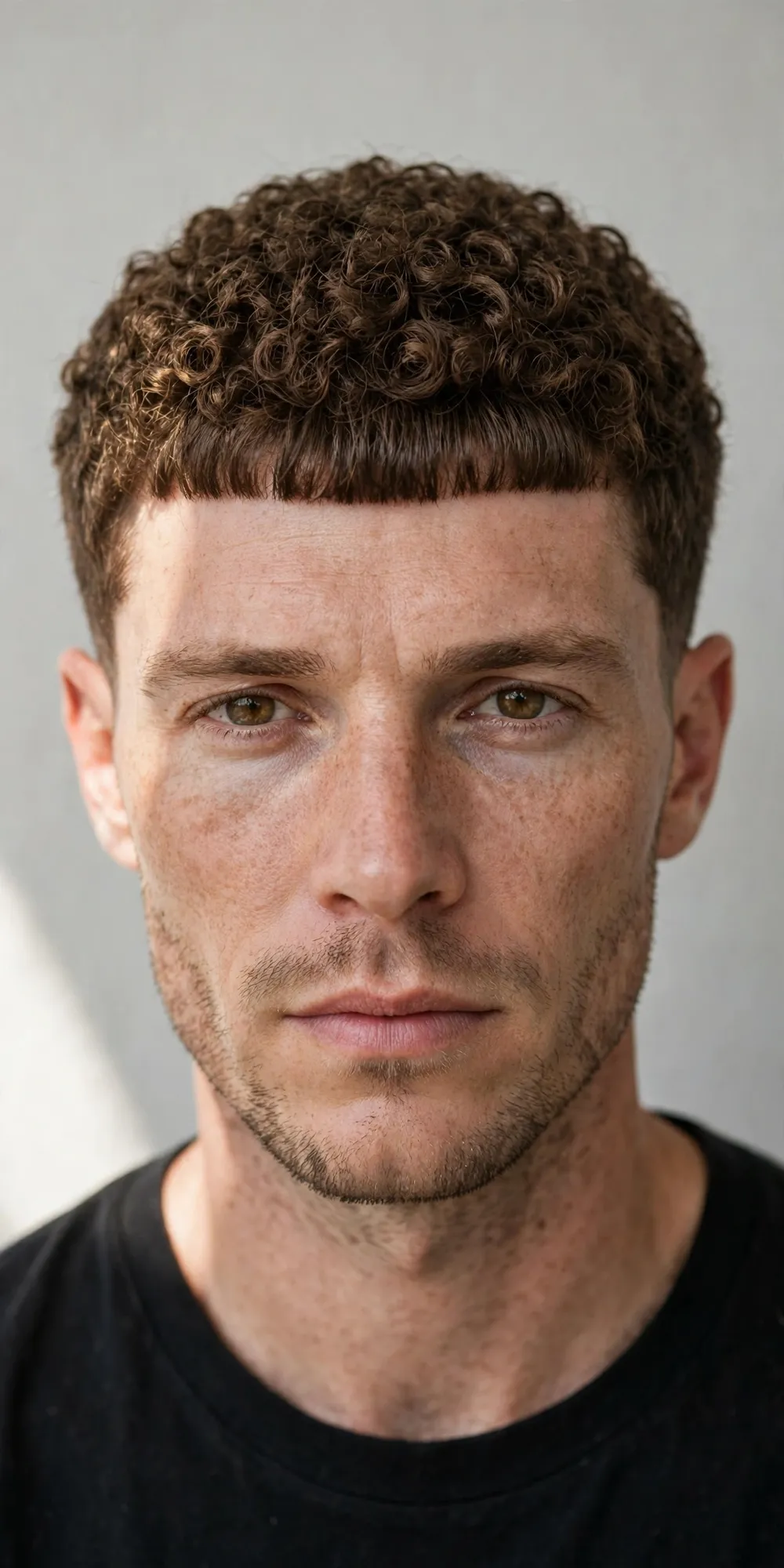
The Caesar keeps one short, even length all over — usually one to two inches — finished with a short horizontal fringe at the front. On curls it reads as neat, masculine and close to effort-free, and because the length is uniform it grows out evenly for about four weeks, longer than most short cuts. It works best on looser curl patterns, type 2C to 3B; on very tight coils the same blueprint shades into a short, shaped afro rather than a true Caesar. Ask for the fringe to be point-cut rather than lined up razor straight, so the curls soften the edge. Styling is optional — a fingertip of matte paste on the days it looks flat is all it ever needs.
4. Short Curly Fringe
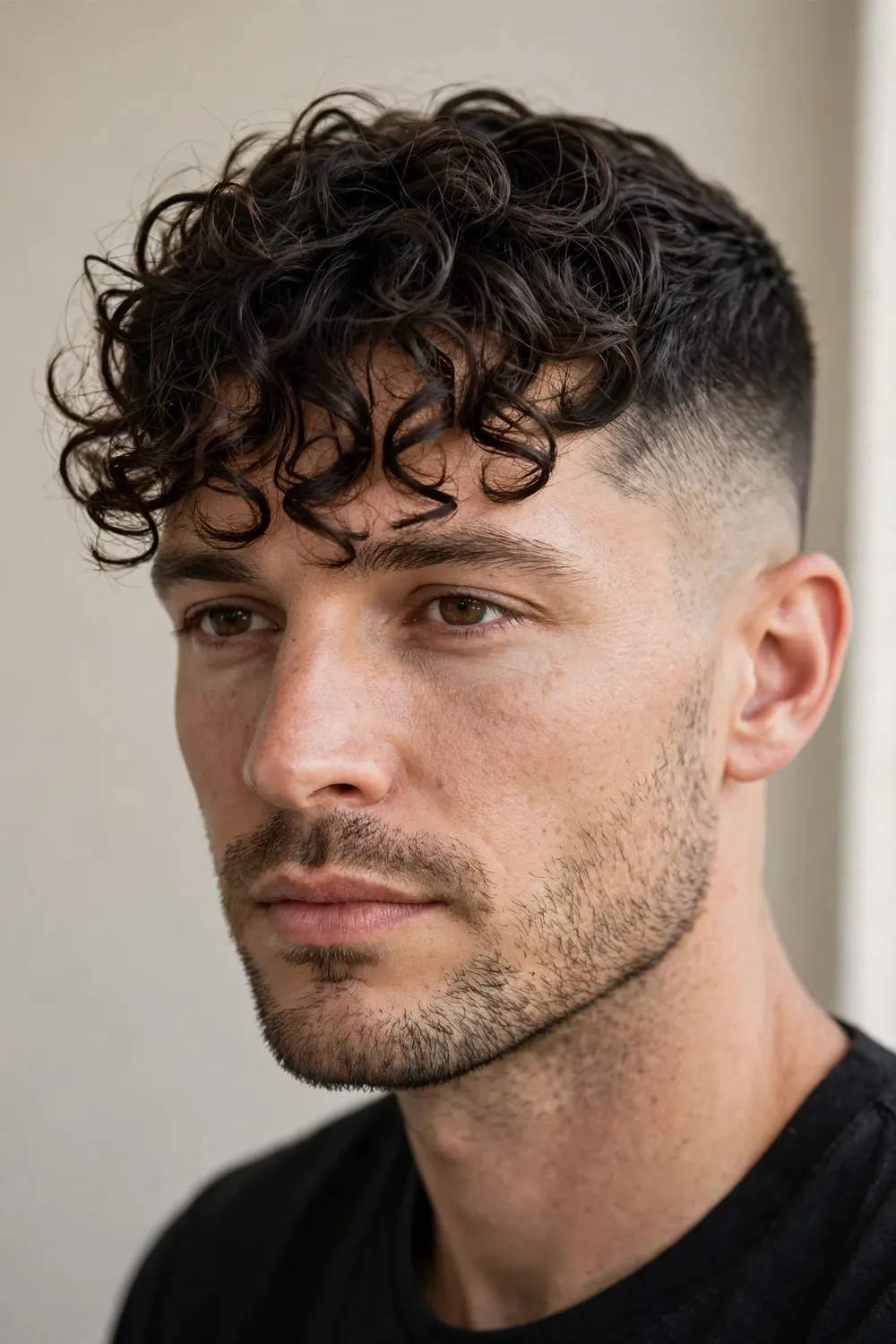
Here the back and sides stay short while the top keeps two to three inches and falls forward as a natural fringe. It is the softest of the short options: the curls do the styling, draping over the forehead in a way that flatters high hairlines and strong brows. Type 3 hair wears it best, since the spirals give the fringe body without product. The cut lives or dies on one decision — the fringe length. Too long and it hangs in your eyes by week two; too short and shrinkage turns it into a tuft. Have it cut dry, at the length you actually want to see in the mirror. Style by pushing it forward with your fingers as it dries, nothing more.
5. Curly Crew Cut
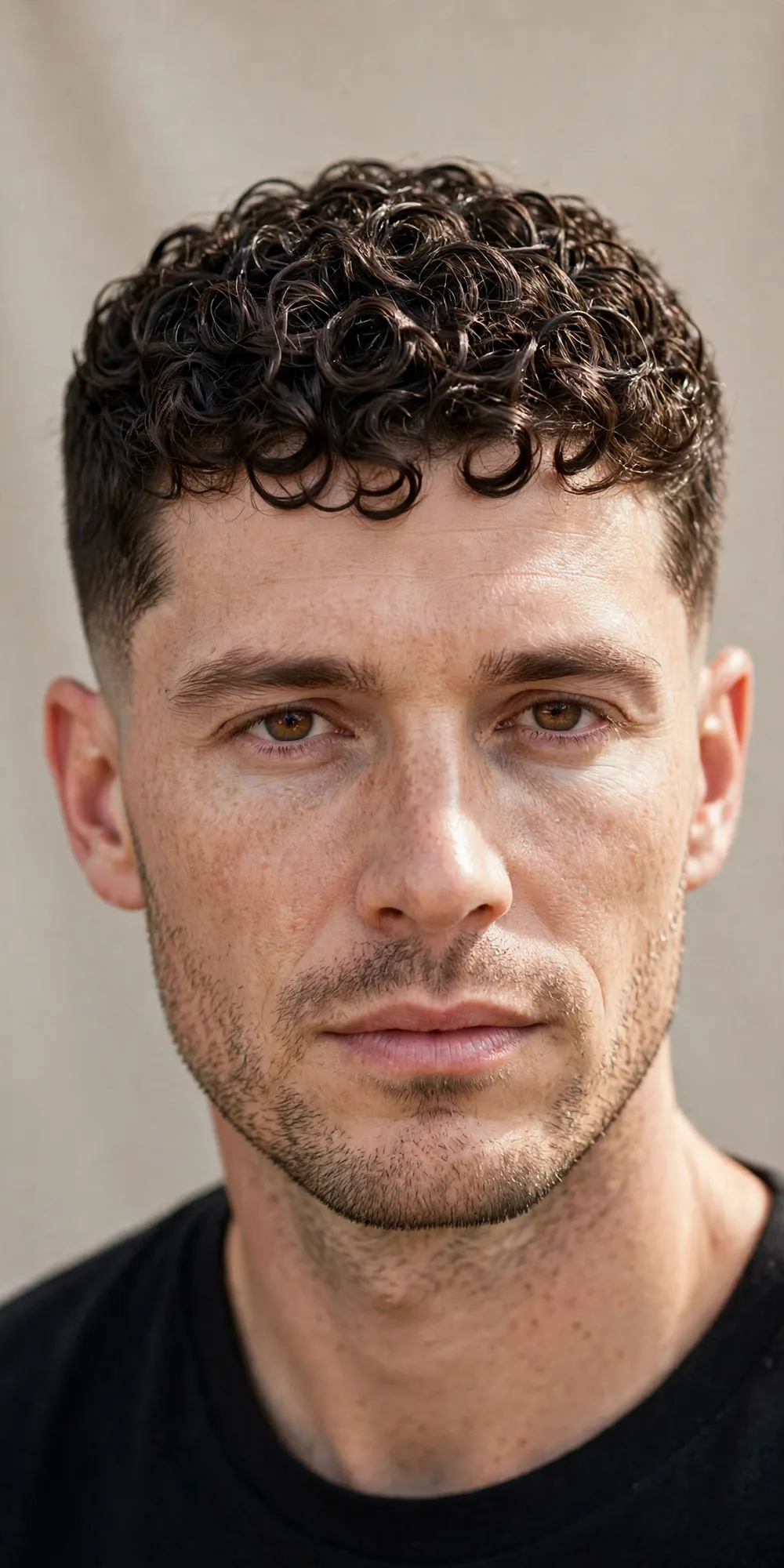
The crew cut graduates from short at the crown to slightly longer at the front, and on curly hair that little extra length at the front is where the curl gets to show itself. It is the most conservative cut on this list — tidy enough for any workplace — yet the texture keeps it from looking plain. It suits type 2 and 3A hair best, because looser curls lie down in the crew’s direction; tighter curls tend to stand up and turn it into a short crop instead. Ask your barber to keep the front long enough to push up slightly with product. A light cream on damp hair, two minutes of drying, and a trim every three weeks is the entire routine.
6. Curly Buzz Cut with Line Up
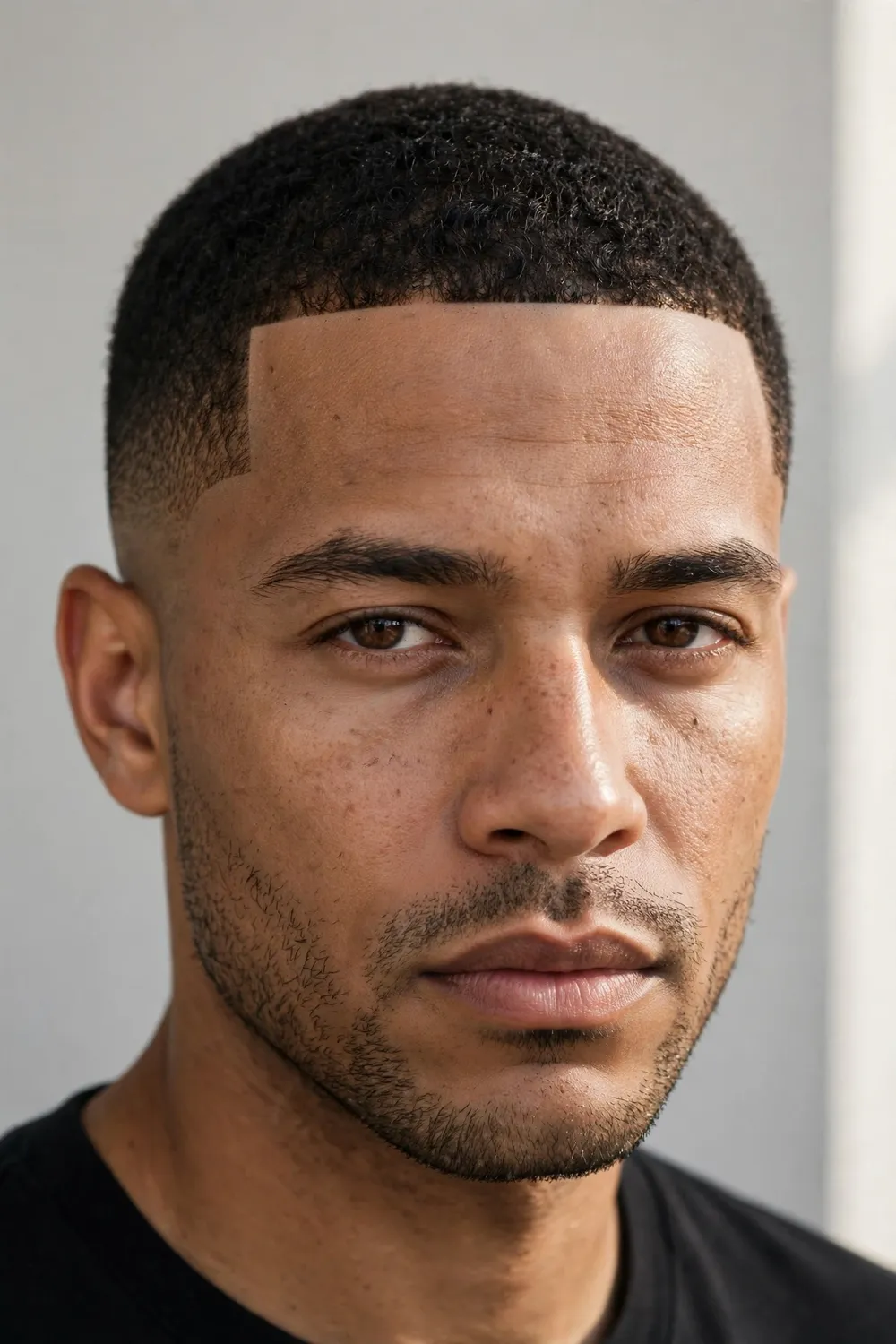
Buzz the curls down to a #2 or #4 guard and the cut becomes all about the edges: a crisp line up along the hairline, temples and beard turns a basic buzz into something barbered. This works best on type 3C to 4C hair, where the curl pattern still reads as texture at very short lengths — looser curls buzzed down simply look like a straight buzz cut, which is fine, but you lose the point of it. The honest trade-off is upkeep. The buzz itself grows out gracefully, but the line up starts softening within a week or two, so you are booking edge-ups between full cuts. In exchange: zero styling, zero product, and the coolest head in summer.
7. Short Back and Sides with Curly Top

The barbershop classic, and still the right answer for a lot of men: scissored short back and sides — no fade, no skin showing — with the curls on top left natural and textured. Because nothing is taken to the bone, it suits professional settings and older heads better than the high-contrast fades around it, and the grow-out is the softest on this list. It suits type 2 and 3 hair of almost any thickness. Ask for the top to be point-cut so the curls separate rather than sitting as one mass, and keep the sides scissored rather than clippered if you want that softer finish. Tidy-ups stretch to four or even five weeks, and a little curl cream is the only product involved.
8. Curly Flat Top

The flat top is a type 4 signature: the coils are grown out, picked into shape and cut level across the top, with the sides faded clean so the silhouette does the talking. Done well, it is architecture — a strong, squared outline that turns coily hair’s natural height into the style itself. This is not a cut to hand to a barber who rarely works with type 4 hair; the top is shaped freehand and judged by eye, and it has to be cut in its picked-out, dry state. At home, the routine is a morning pick-out, a light moisturiser or oil to stop it drying out, and hands off after that. Expect a shape-up every two weeks to keep the lines honest.
9. Short Curls with Skin Fade
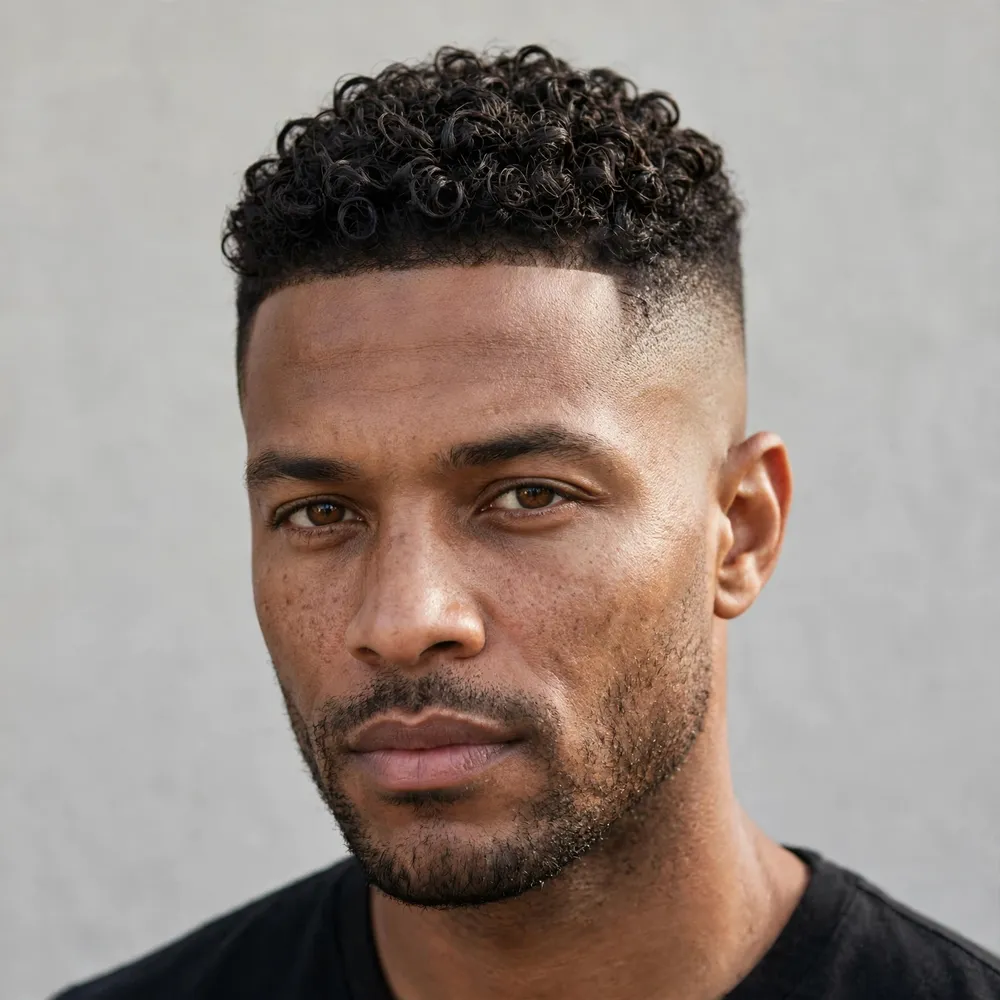
Maximum contrast in a short cut: an inch or two of textured curls on top, taken down to bare skin at the sides. The fade does two favours for curly hair — it removes all the width and bulk at the sides where curls puff out, and by comparison it makes the curls on top look thicker and more defined. It suits every curl type, though type 3 wears the contrast best. The catch is the calendar. A skin fade is at its sharpest for roughly ten days, and by week three the regrowth has blurred the whole effect, so this is a two-to-three-week haircut, full stop. Styling, at least, is nothing: the top is short enough to look after itself with a dab of cream.
10. Short Curls with Temple Fade
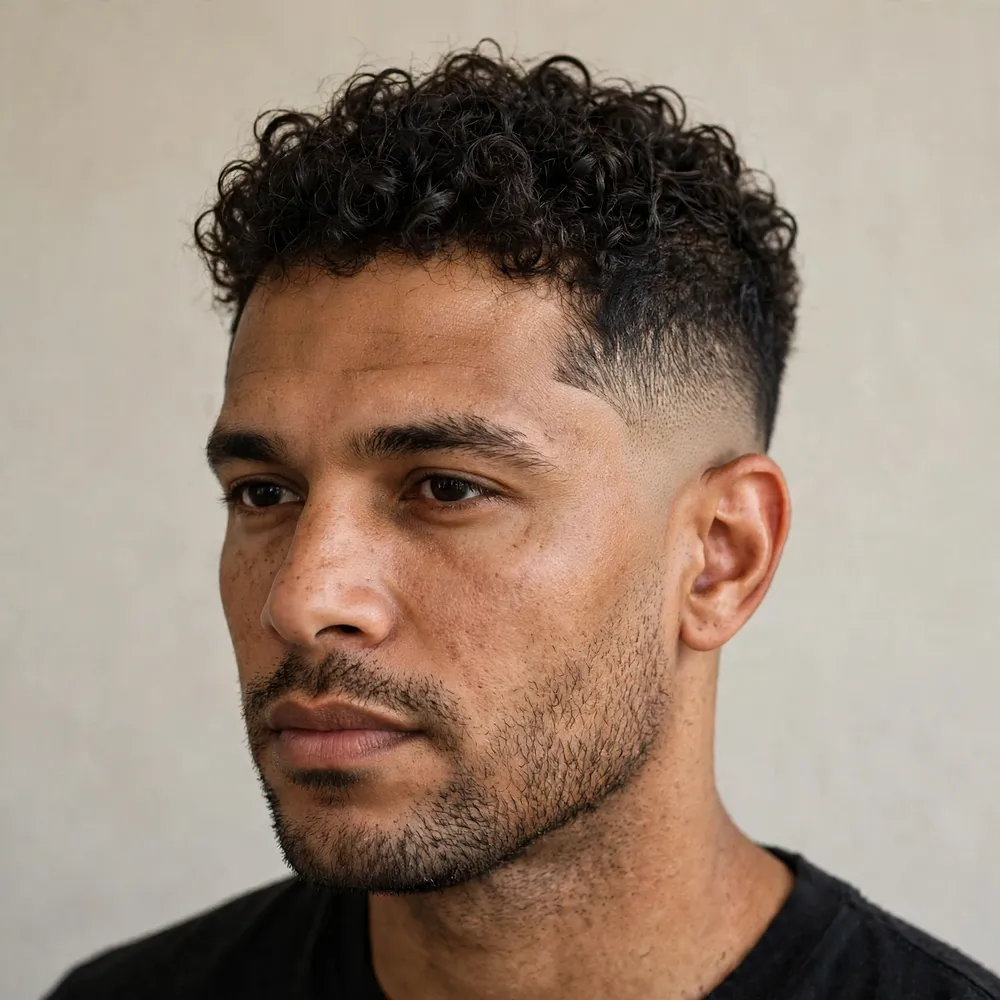
The temple fade (or temp fade) only cleans up the temples and the edges around the ears and hairline, leaving the rest of the sides at a natural length. It is the lowest-commitment fade there is, and for curly hair it is often the smartest first step: you get the sharpened outline without the shock of a full fade or its upkeep. It suits type 3 and 4 hair particularly well, where a big fade can look harsh against dense curls, and it keeps a cut office-safe. Because so little is faded, it blends away as it grows, so four weeks between visits is realistic. Pair it with a line up at the front if you want the finish even crisper.
11. Short Curls with Drop Fade
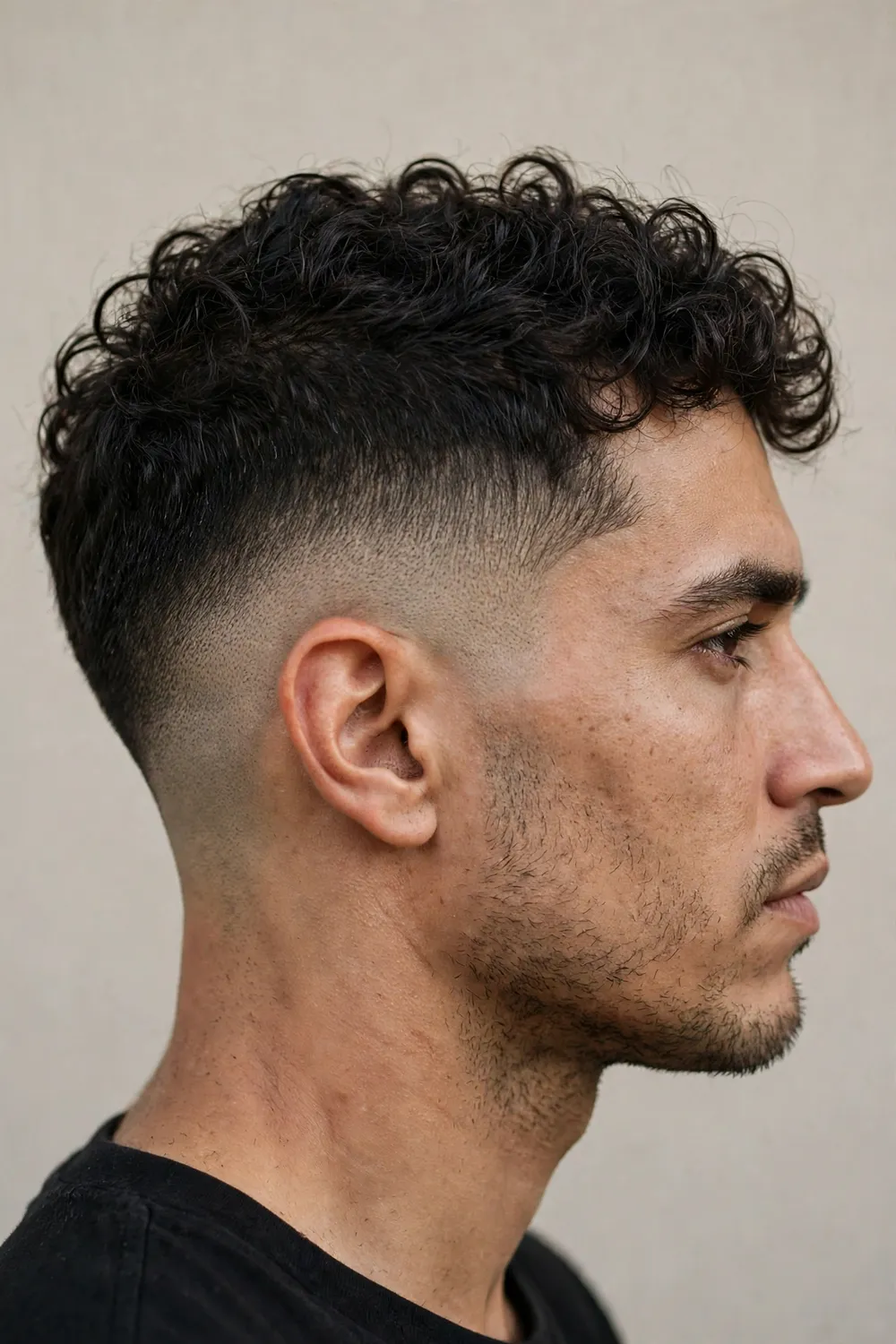
A drop fade arcs downward behind the ear instead of running in a straight line around the head, following the skull’s natural curve. With a short curly top, that arc adds shape to the back and sides without changing anything about the front view, which makes it a good choice for men who find a straight, high fade line too severe from behind. It suits type 2C to 3C well and works on most head shapes, since the barber can place the drop to flatter yours. Tell your barber clearly that you want the fade to drop behind the ear — many will run it level out of habit unless you say otherwise. Refresh it every two to three weeks.
12. Short Curls with Burst Fade
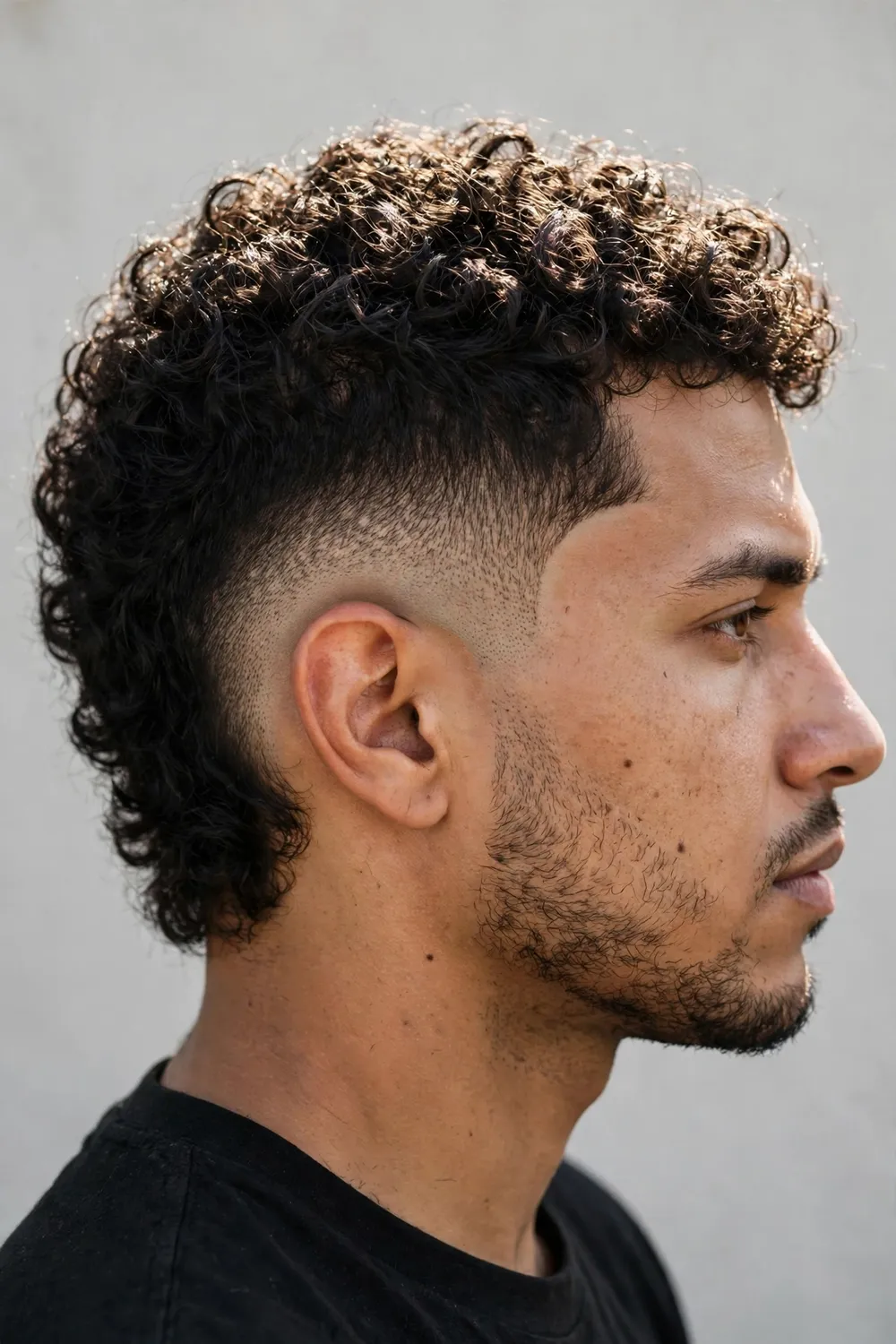
The burst fade concentrates the blend in a semicircle around the ear and leaves the back of the head noticeably longer. Under a short curly top, that means the front stays clean and modern while the back keeps some length and movement — which is exactly why this fade pairs so naturally with curls, and why it is the bridge cut for men thinking about growing into a mullet or a flow later. It suits type 3 hair best, where the kept-longer back still reads as curl rather than bulk. Be specific in the chair: ask for the burst at temple level and say clearly that the back stays long, because a barber on autopilot may fade the back down by default. It needs refreshing every two to three weeks.
13. Curly High Top Fade
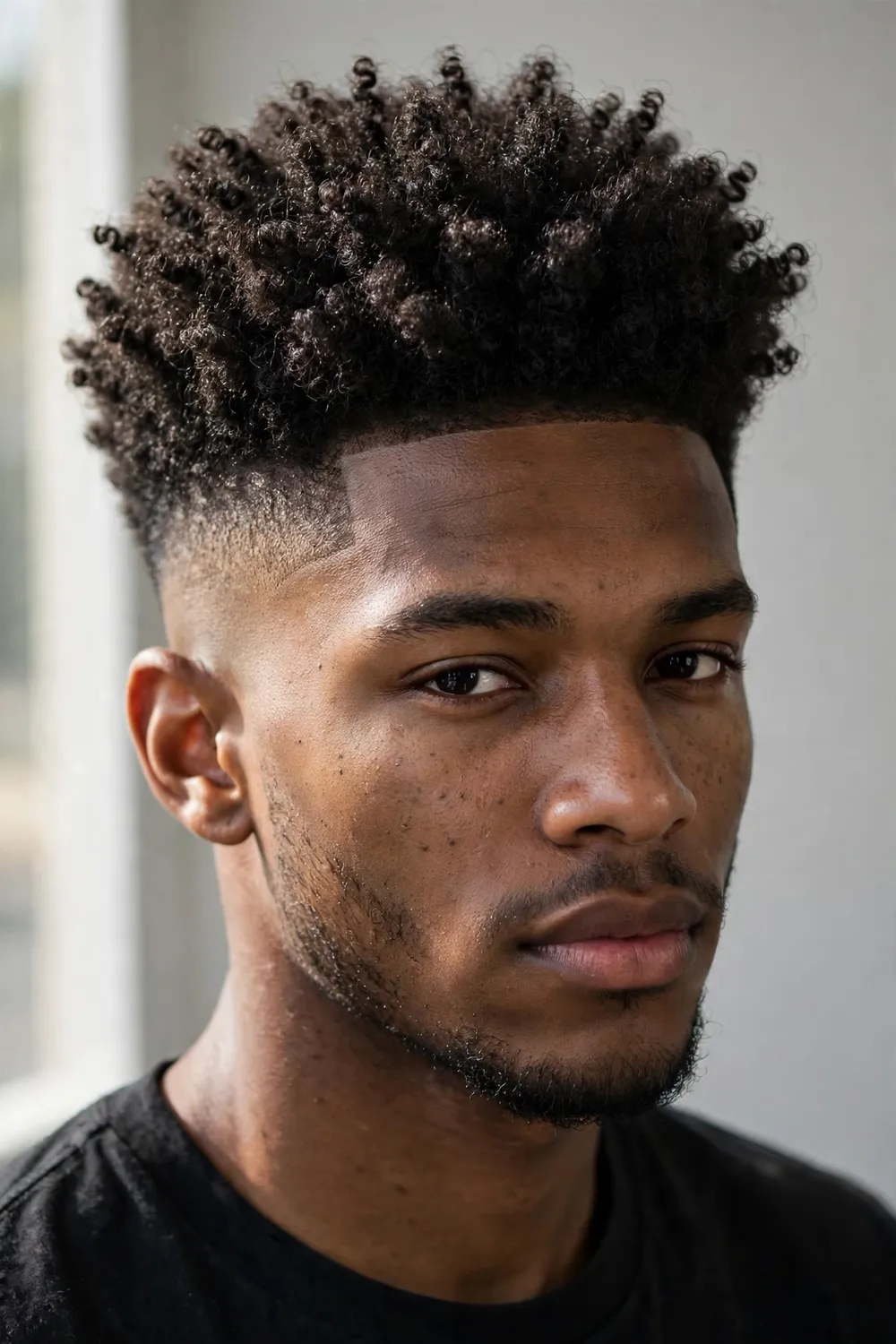
The 90s high top, rebuilt for tight coils: the top is grown to three to six inches and shaped tall and flat-ish, while the sides are faded high and tight. It belongs to type 4 hair, whose coils stand up and hold the height that looser curls simply collapse from. The silhouette is bold and it lengthens the face dramatically, which round-faced men can use. Shaping is everything — the top is picked out and cut by eye, so this needs a barber fluent in coily hair. At home you will pick it out each morning and keep it moisturised, because dry coils lose the shape and start leaning. Book a reshape every two to three weeks; once the outline goes, the whole cut goes.
14. Curly Hair with Low Taper Fade
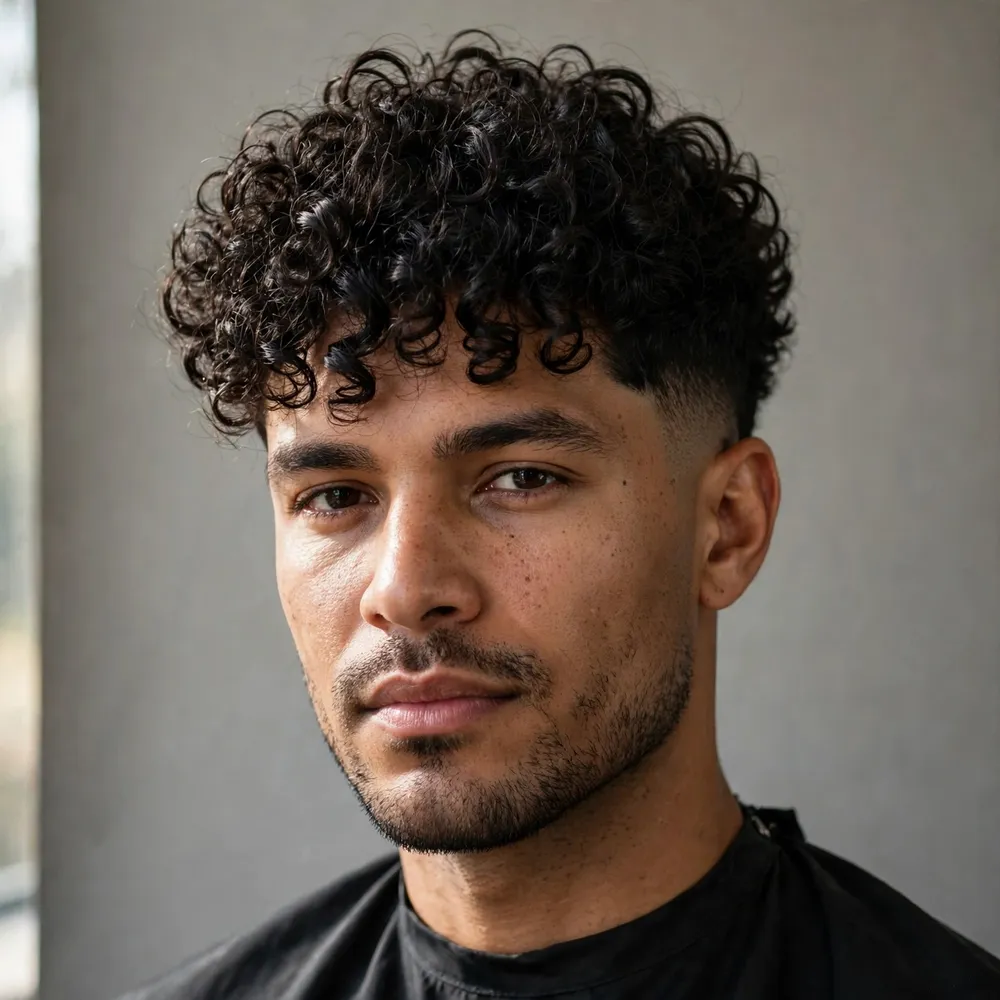
The low taper fade only tapers the very edges — the sideburns, around the ears and the neckline — while the curls on top and the sides keep their natural fullness. Of all the fades, it is the one that grows out most gracefully, because there is no hard line of contrast to blur; our full guide to the low taper fade shows how the same fade behaves across different hair types. For curly hair it is the ideal first fade: professional, subtle, and forgiving if you stretch it to four weeks. It suits every curl type and every face, and it pairs with anything from a short crop to medium curls. If you are not sure which fade to ask for, this is the default answer.
15. Curly Hair with Mid Fade
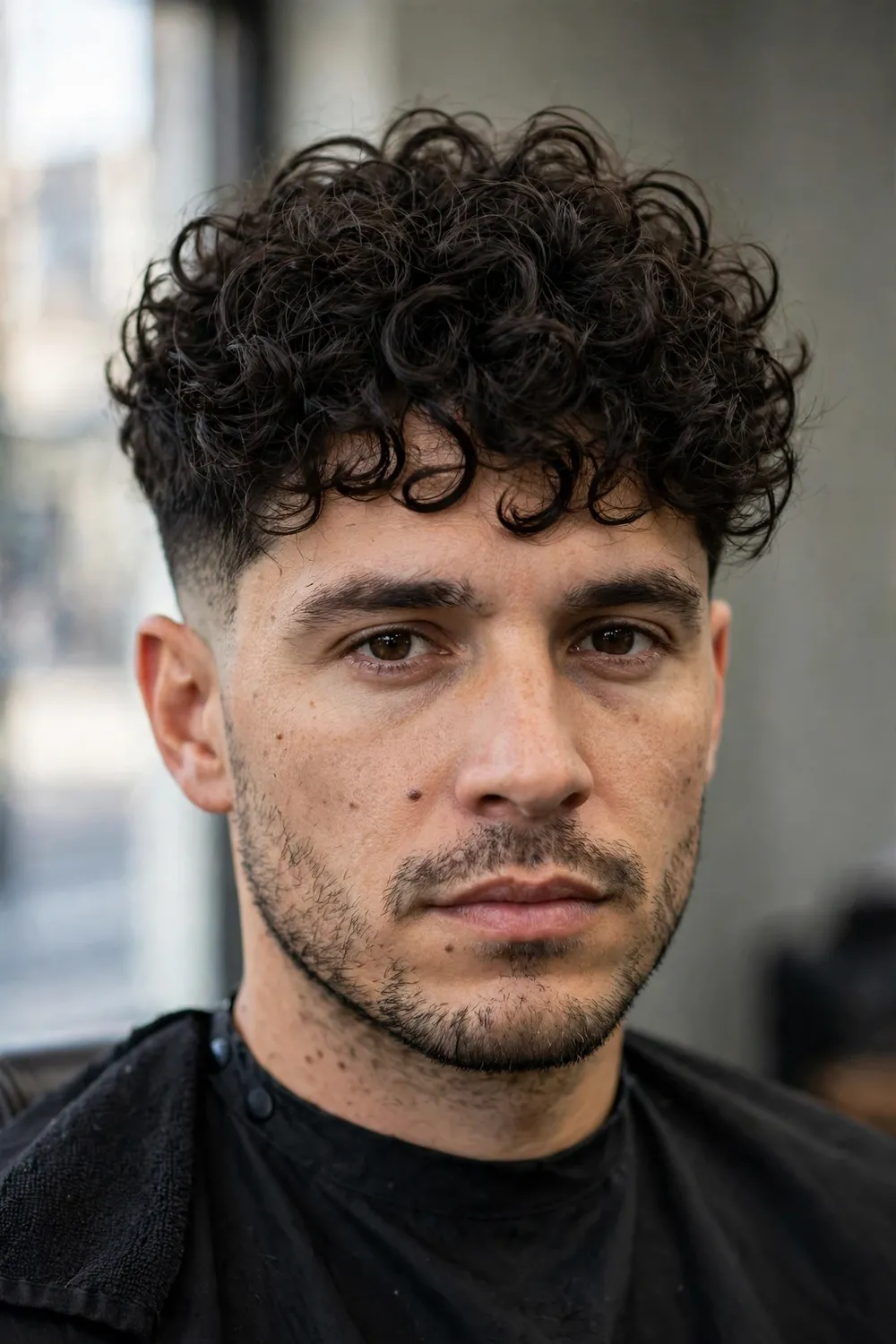
If one fade pairing deserves the word versatile, it is this one. The mid fade starts around temple height, clearing the sides enough to sharpen the outline while leaving the curly top — usually two to four inches — as the clear focus. It balances: cleaner than a low fade, less severe than a high fade, and it makes medium curls look thicker by contrast. It suits type 2C to 3C best and flatters most face shapes; our mid fade haircuts guide covers the variations in more depth. Style the top with curl cream on damp hair and define with your fingers, not a brush. The fade needs refreshing every two to three weeks to hold its line.
16. Curly Hair with High Fade
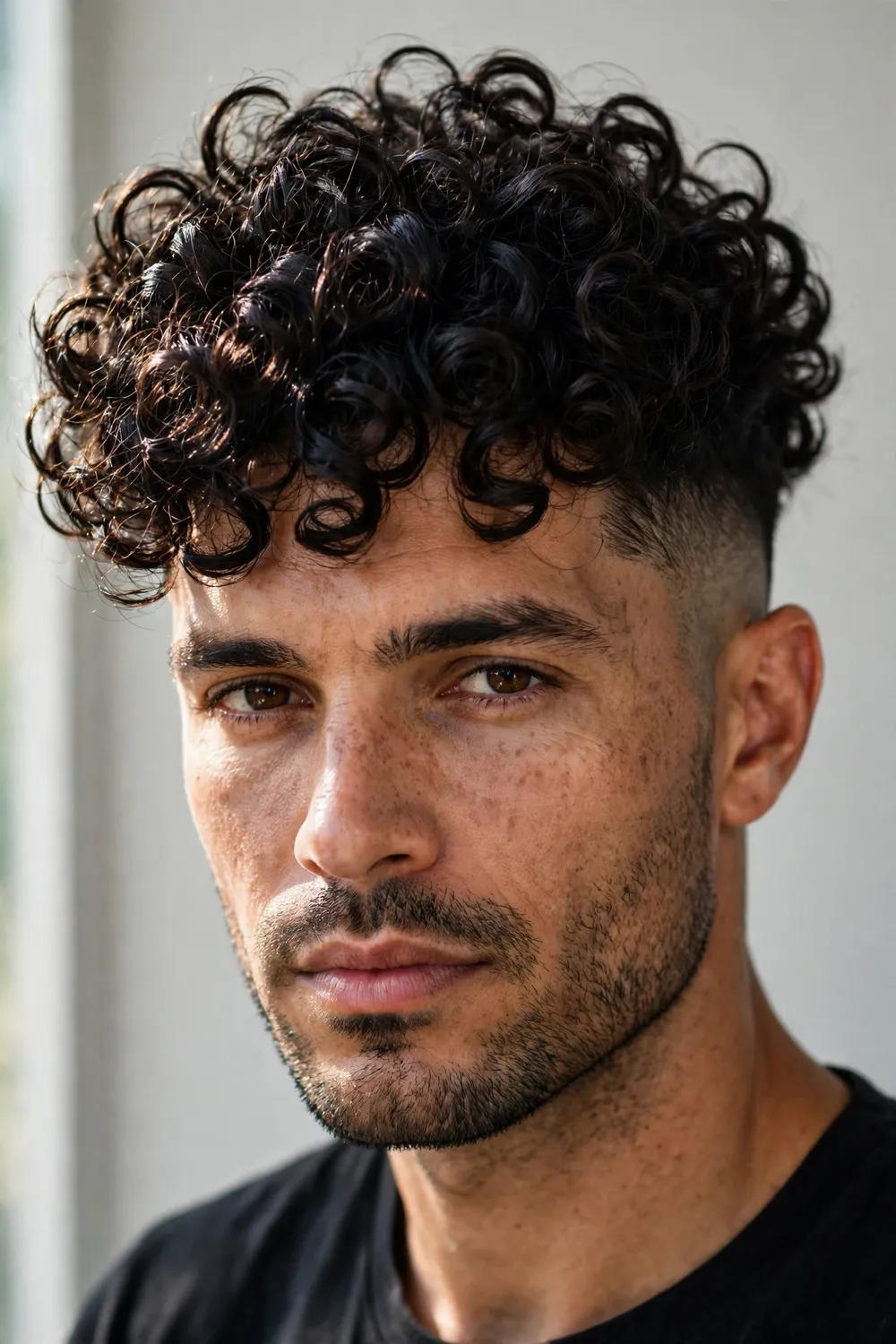
The high fade takes the blend up close to where the top begins, so the full volume of your curls sits on top of tight, clean sides. The contrast is dramatic and deliberate — the curls look bigger, the outline looks sharper, and the face looks longer, which is why this pairing flatters round faces so well. It suits thick type 3 curls best. One honest caution: if your hair is fine or thinning on top, a high fade can isolate the top and make it look sparser by comparison, so a mid or low fade is usually kinder. Keep at least three inches on top so the proportions balance, and expect a tidy-up every two weeks, because high fades show regrowth fastest.
17. Curly Hair with Low Fade
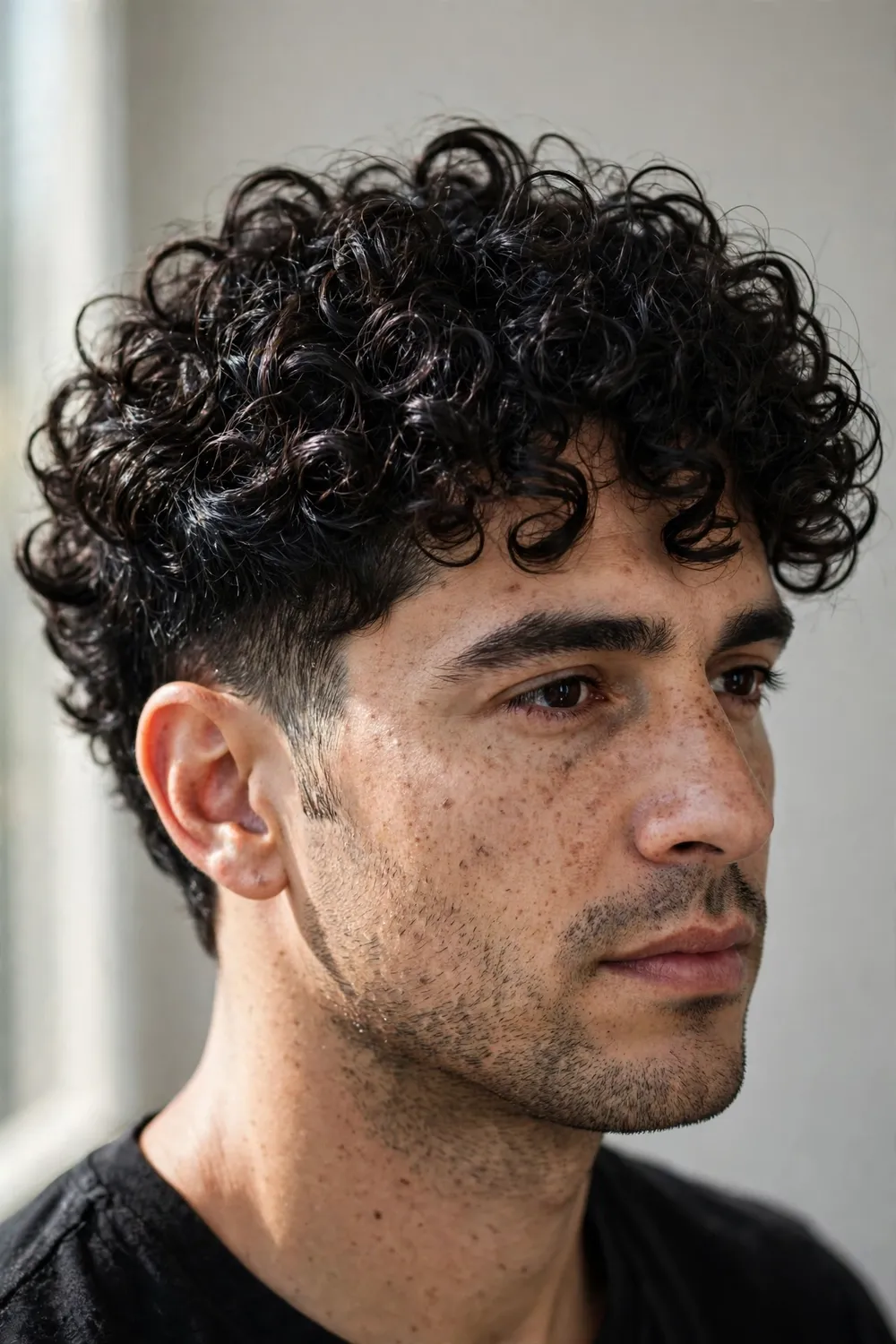
The low fade cleans up only the bottom edge of the sides, leaving the curls fuller and more connected from top to bottom than any skin-tight version. The result reads softer and more natural — a groomed curly cut rather than a statement. It is a strong choice for type 4 hair, where it blends neatly into shorter afro shapes, and for men who want a fade’s clean neckline without the faded look everywhere else. Because the blend sits low, it grows out almost invisibly, so you can stretch appointments to three or four weeks. Ask your barber to keep the fade below the temple and to leave the weight in the sides; that fullness is the whole point of choosing this one.
18. Curly Hair with Taper Fade
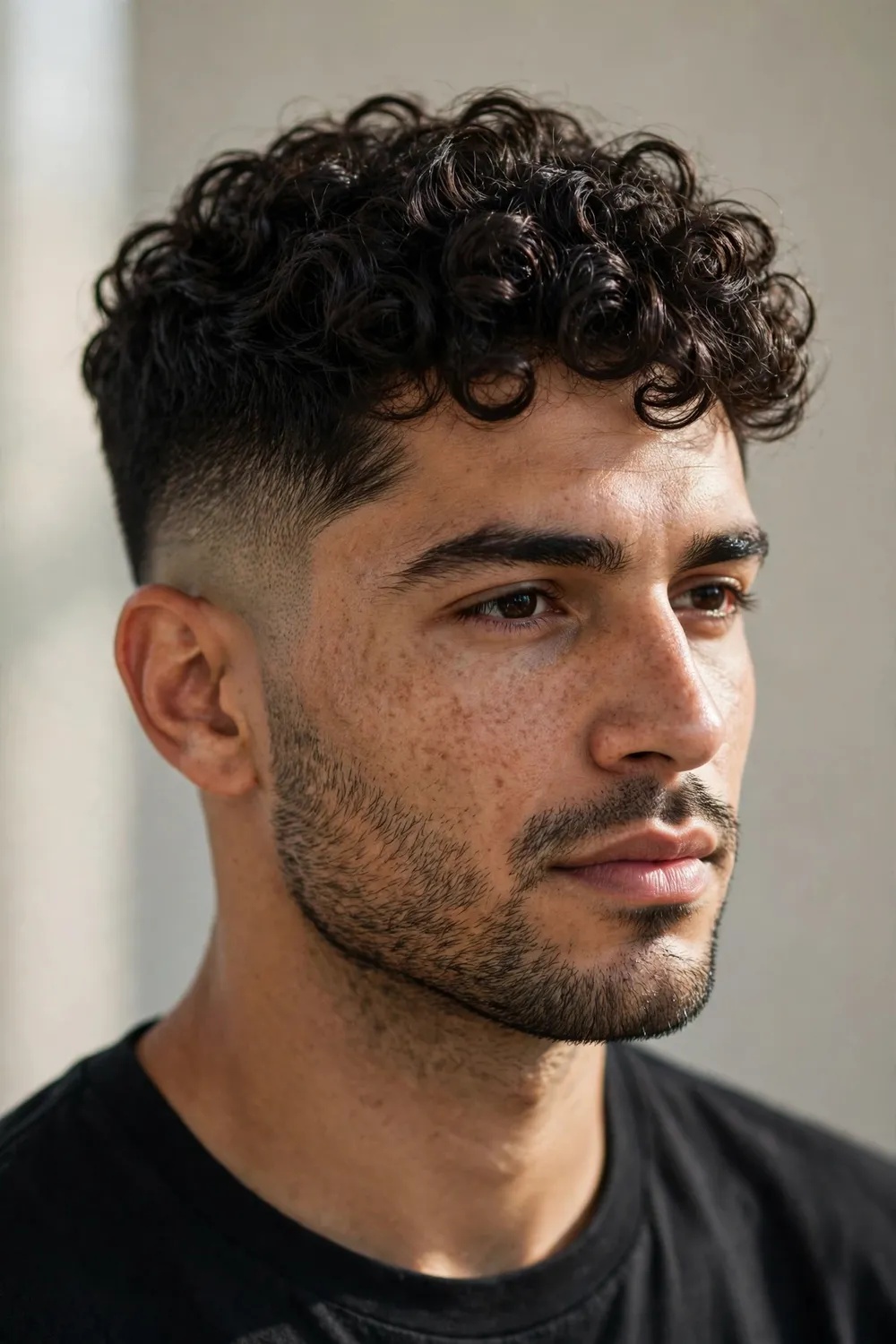
The taper fade is the all-rounder: a gradual blend that shortens toward the sideburns and neckline and fades out at the edges, with no hard line anywhere. Men often confuse it with the low fade — the difference is that a taper fade is about gradual shortening all around the outline, finished with faded edges, rather than a fade line placed low. On curly hair it gives the most natural result of any fade here, and it is the easiest to live with as it grows, because nothing ever looks “expired.” It suits all curl types and all ages, and it is the fade to choose if your workplace is conservative. Three to four weeks between cuts is normal.
19. Curly Hair with Mid Taper Fade
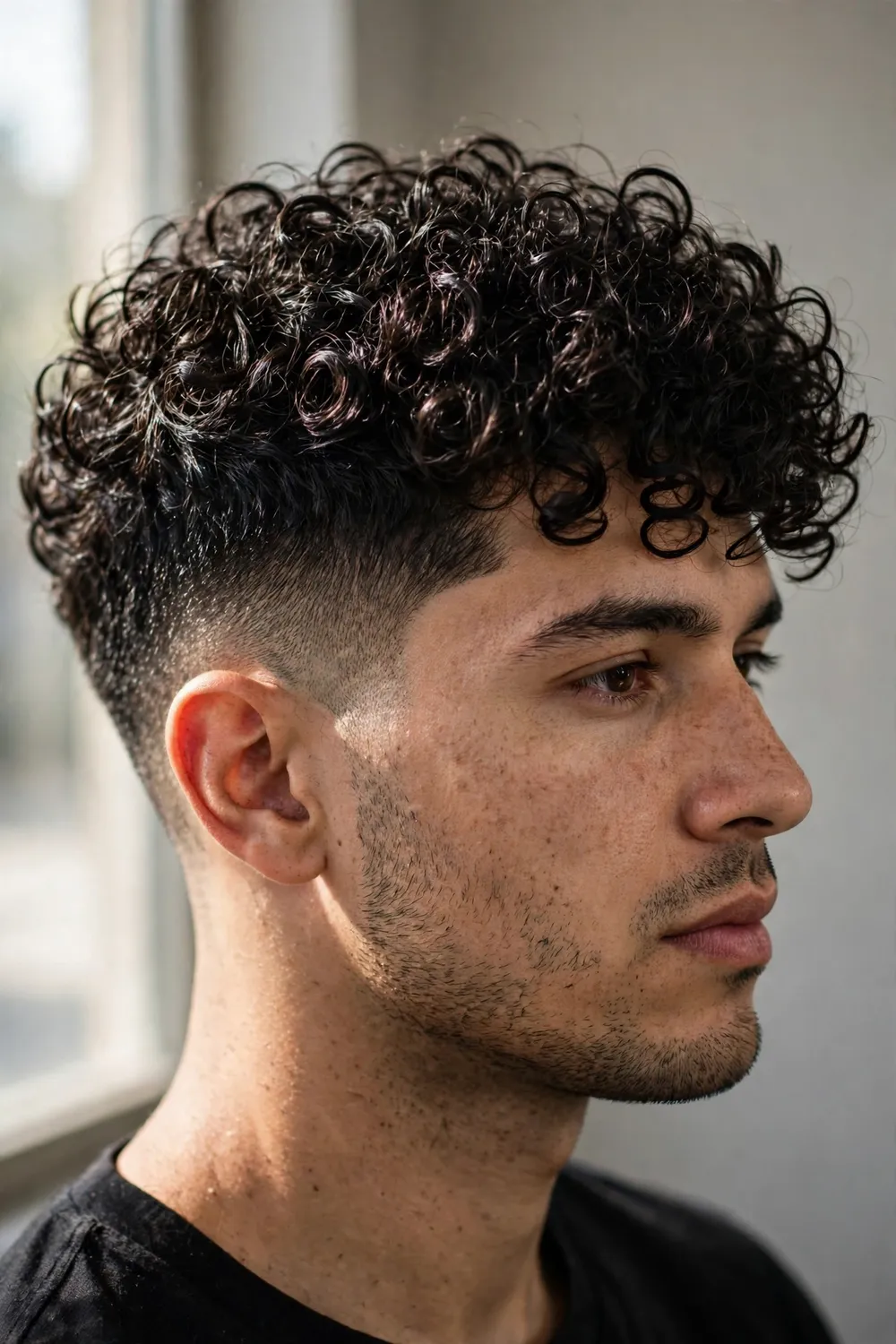
The mid taper sits between the subtle low taper and the statement fades: the taper starts at mid height, so the sides keep their fullness higher up before cleaning down toward the edges. For curly hair that fullness matters — it keeps the top and sides visually connected, so the cut reads as one shape rather than a top sitting on a fade. It suits type 3 curls and men who found a low taper too plain but a mid fade too sharp. It is also a forgiving option for uneven curl patterns, because the kept length hides a lot. Style as you would any medium-short curl — cream on damp hair, fingers only — and refresh every three weeks or so.
20. Curly Undercut
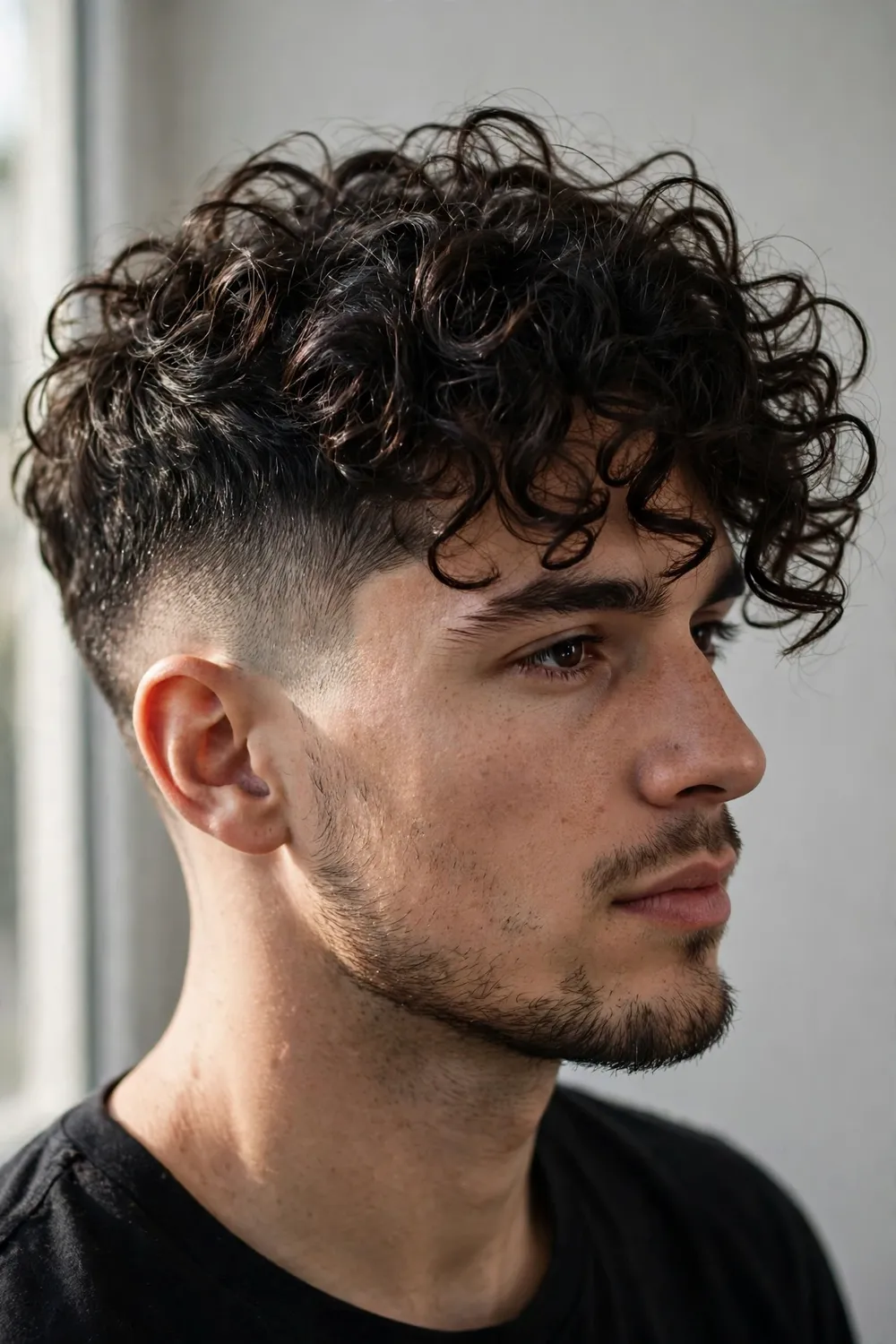
The undercut clips the sides short while the top keeps four inches or more of curl, with a blended transition between the two. The payoff is contrast with options: worn loose, the long top spills over with volume; tied back, the clipped sides give you a top knot or bun with clean edges. It suits thick type 3 curls best, because fine hair can look stringy at that length over bare sides. Ask your barber to blend the transition rather than disconnecting it, unless you want idea #21. Be honest with yourself about the grow-out, too — the clipped sides pass through an awkward sticking-out phase around week four. Tidy the sides every two to three weeks and let the top grow.
21. Curly Disconnected Undercut
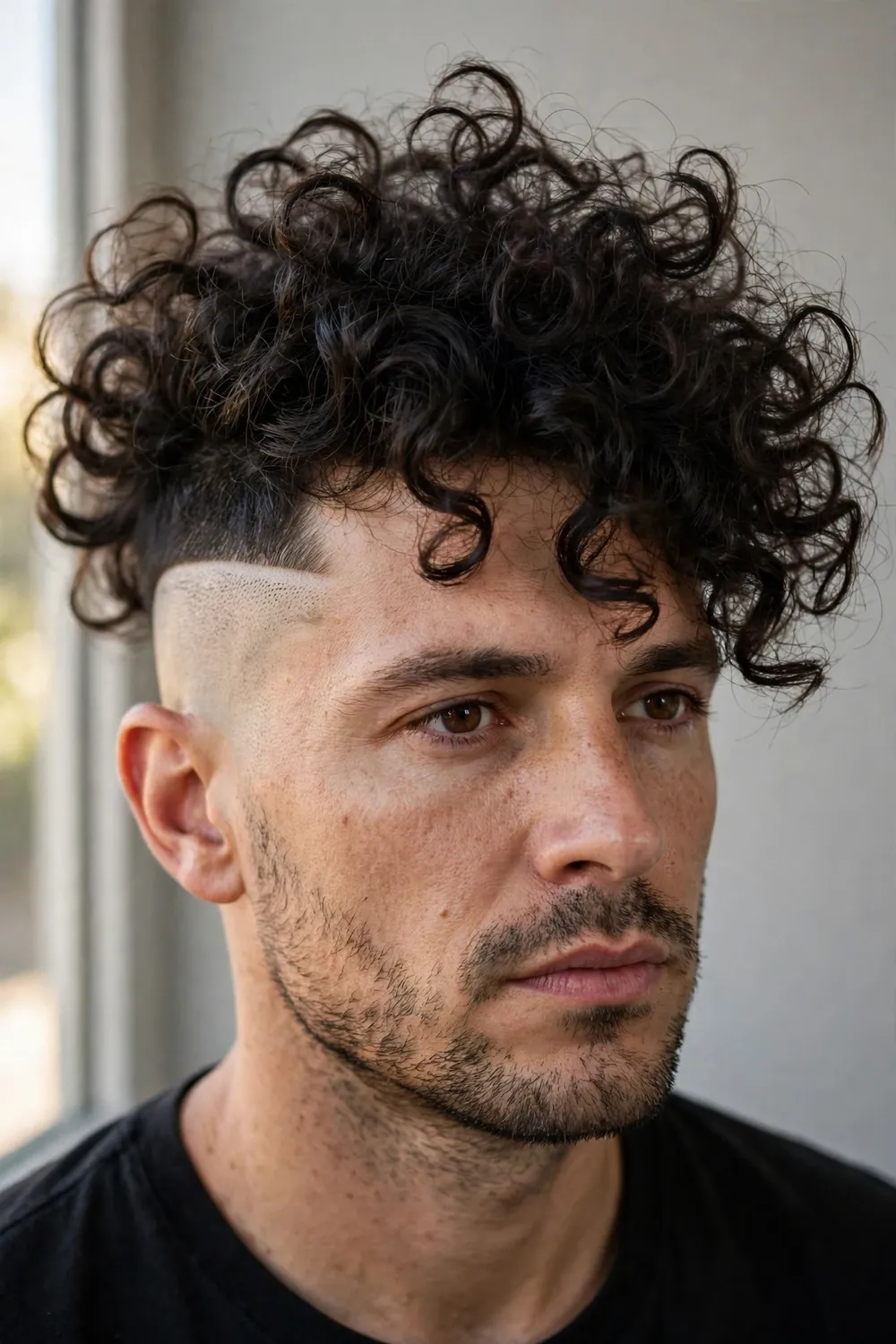
Take the undercut and remove the blend entirely: the long curly top ends at a hard, visible line where the shaved sides begin. It is the sharpest statement cut in this section, and on thick, defined curls — think type 3B and 3C — the curtain of curl dropping over the disconnect looks genuinely dramatic. The commitment is real, though. There is no graduation to soften the grow-out, so the sides need redoing every two weeks, and growing the whole thing out later means months of awkward stages or buzzing it off and starting again. Style the top with a medium-hold cream so the length stays controlled, and keep at least four to five inches up top or the disconnect looks accidental.
22. Curly Fade with Hard Part
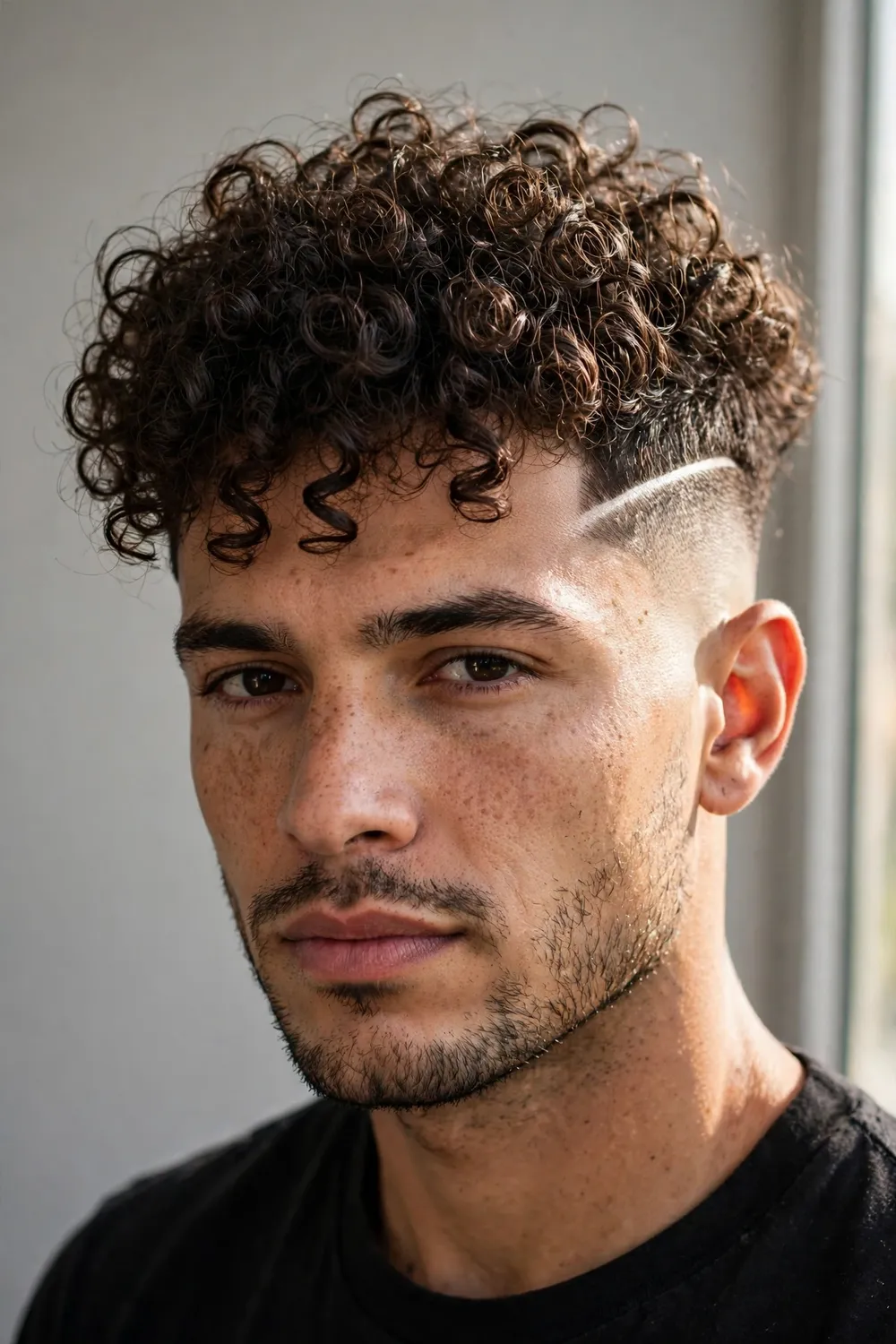
A hard part is a line shaved into the hair where the parting sits, and paired with a fade under a curly top it gives the cut a defined, freshly-barbered finish that a natural part cannot match. It works best when the top is worn swept to one side — pick a curl-friendly side part or comb over and let the shaved line mark the split. It suits type 2 and 3A hair most, because looser curls hold a parting direction; very tight coils tend to ignore partings altogether. The maintenance nobody tells you about: the line grows out in about a week and needs re-shaving at every fade refresh to stay crisp. If you like your barber visits monthly, skip the hard part.
23. Curly Hair with Shadow Fade
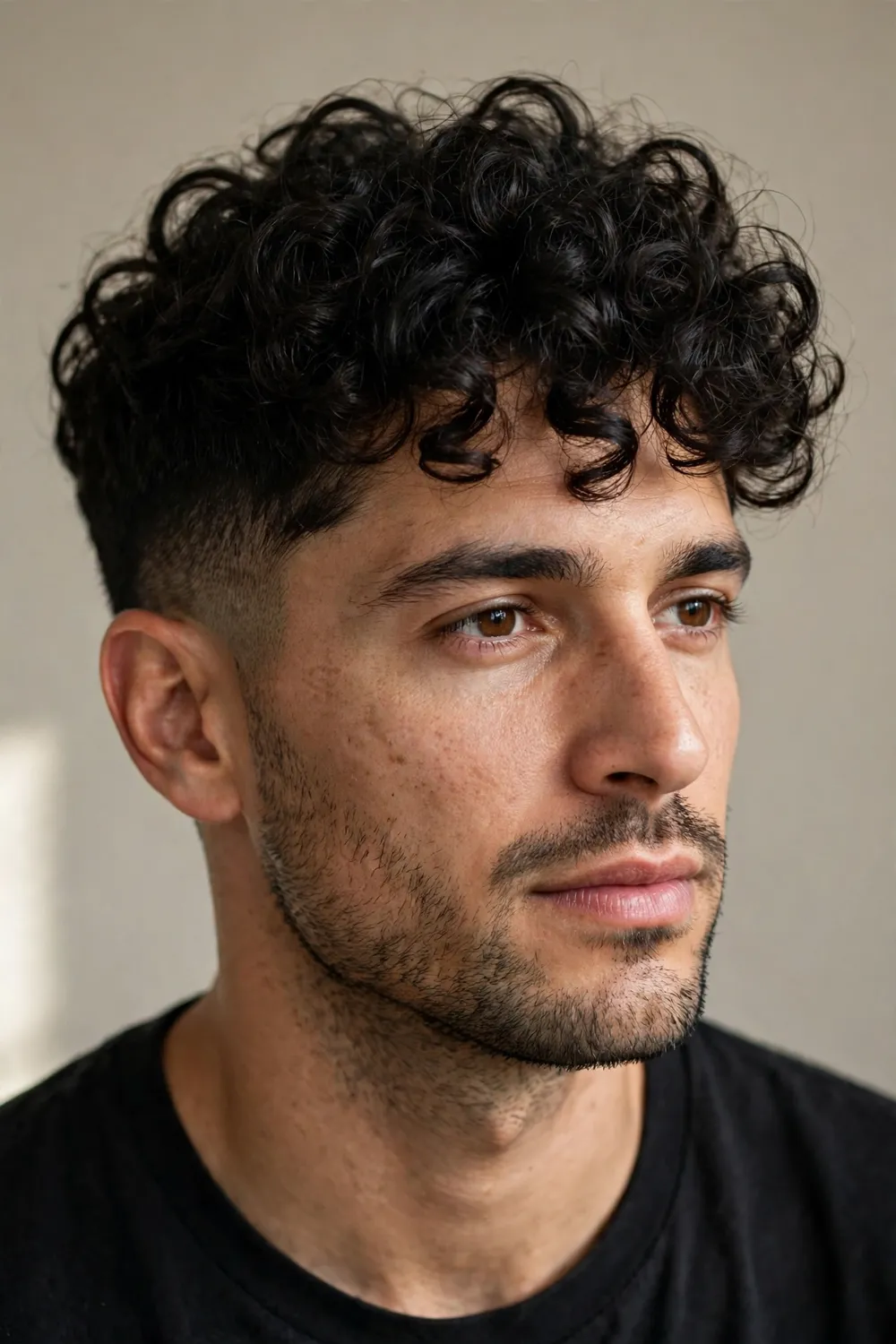
The shadow fade is the low-contrast option: the sides are faded, but a hint of length — a shadow of hair — is left throughout, so nothing goes down to bare skin. For curly hair this is quietly one of the most flattering fades, because the softer transition suits the soft texture on top, and it is forgiving on almost every head shape. It is also the fade to choose if your sides are thinning slightly, since the retained length disguises it better than a skin fade would. First-time fade wearers do well here too. It grows out gently over three to four weeks, and because there is no stark line, nobody will be able to tell exactly when you are due a cut.
24. Curly Faux Hawk
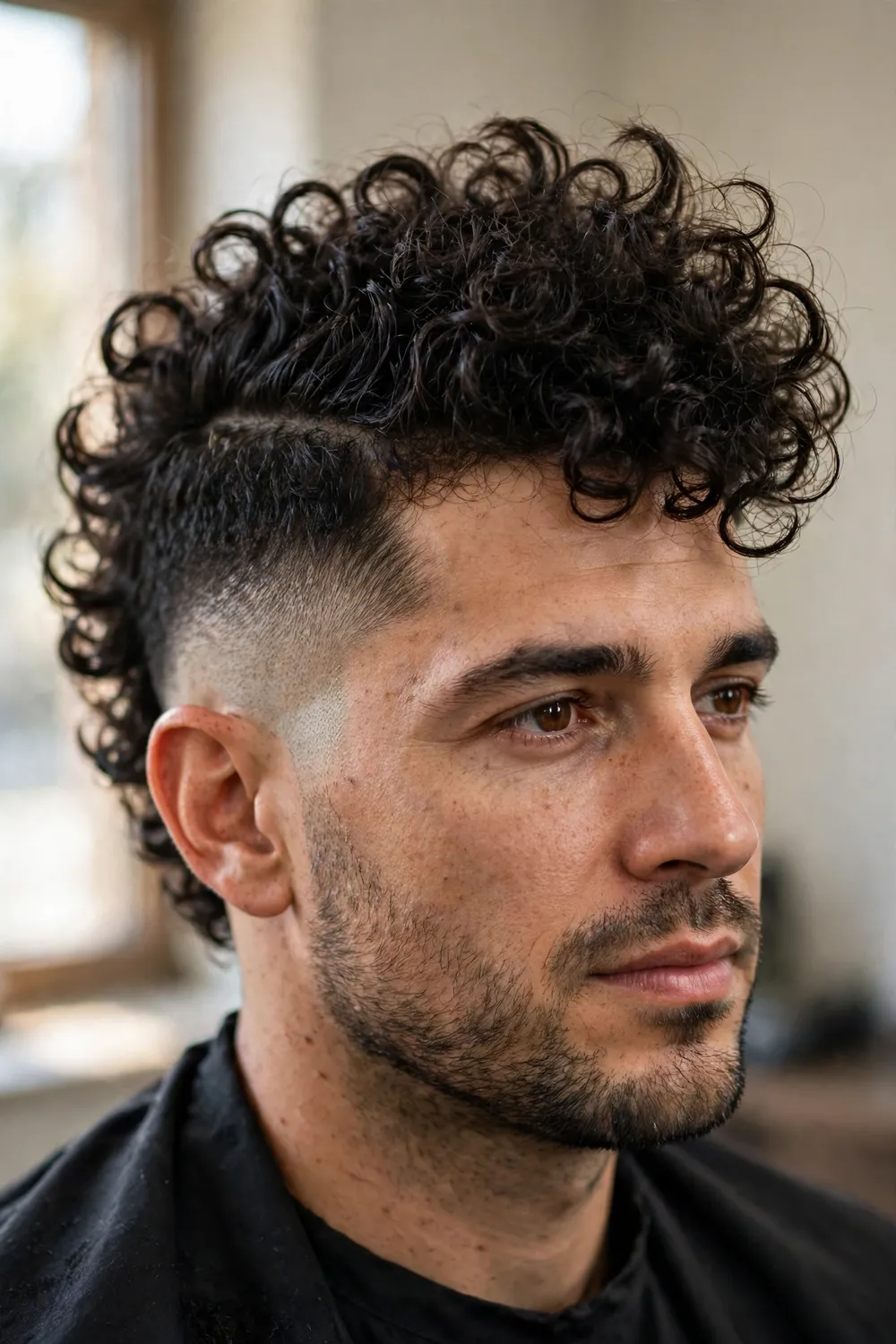
The faux hawk concentrates the curls in a central strip and styles them up and slightly forward, while faded sides create the mohawk silhouette without committing to one. Curly hair is arguably better at this than straight hair — the natural volume and texture build the raised centre with half the product. It suits type 3 curls and younger, bolder dress codes, and the height genuinely lengthens round faces. Ask your barber to keep the centre strip wide enough to read as a style rather than a stripe, and fade the sides to a mid or high level for contrast. Style by pushing the curls up and together with a strong-hold cream on damp hair. The fade needs refreshing every two weeks.
25. Curly Mohawk Fade
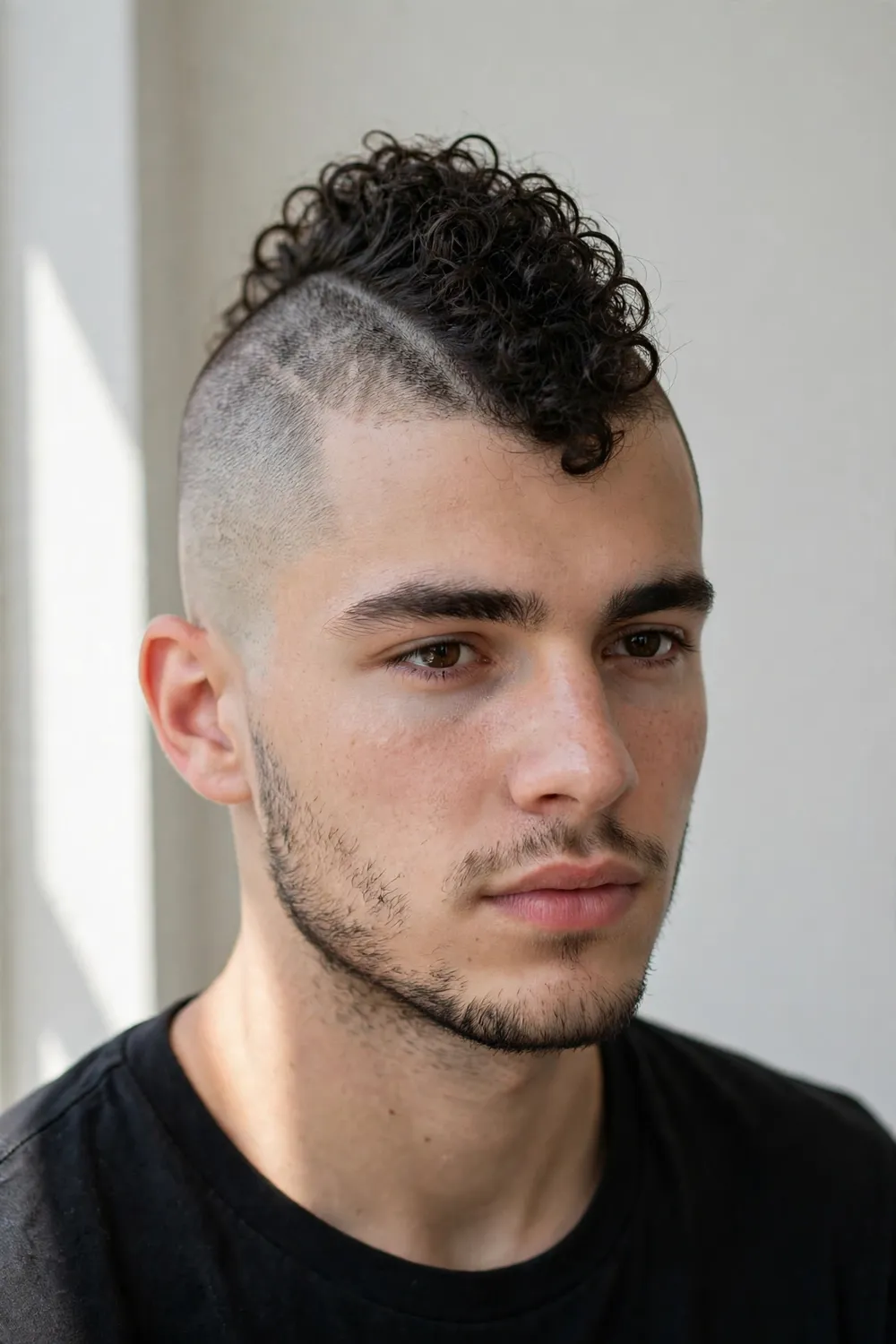
A true mohawk: a band of curls running from the forehead to the nape, with the sides faded right down to little or nothing. Where the faux hawk suggests the shape, this one commits to it — and curly hair holds the strip’s height and texture better than almost any other hair type, especially type 3 and 4. It is unapologetically a statement cut, best suited to creative workplaces and men who enjoy being noticed. The upkeep is the price of admission: the faded sides need attention weekly to fortnightly or the silhouette blurs into a wide strip with fuzzy edges. Keep the band at least three to four inches long so the curls can stand and move, and style with a firm cream scrunched upward.
26. Messy Curly Hairstyle

Messy curls are the medium-length style most men actually picture when they say they want to “just grow it out” — tousled, textured, moving in every direction, but clean underneath the chaos. The secret is that the mess is cut in, not styled on: layers remove the bulk that makes curls puff into a triangle, and what is left can be scrunched into place in two minutes. It suits type 2C to 3B at three to five inches, and it is forgiving of uneven curl patterns because disorder is the brief. Our messy hairstyles for men guide covers the wider undone family if you want variations. Work curl cream or sea salt spray through damp hair, scrunch, air-dry, and then leave it alone — touching drying curls is how frizz is made.
27. Medium Curly Fringe
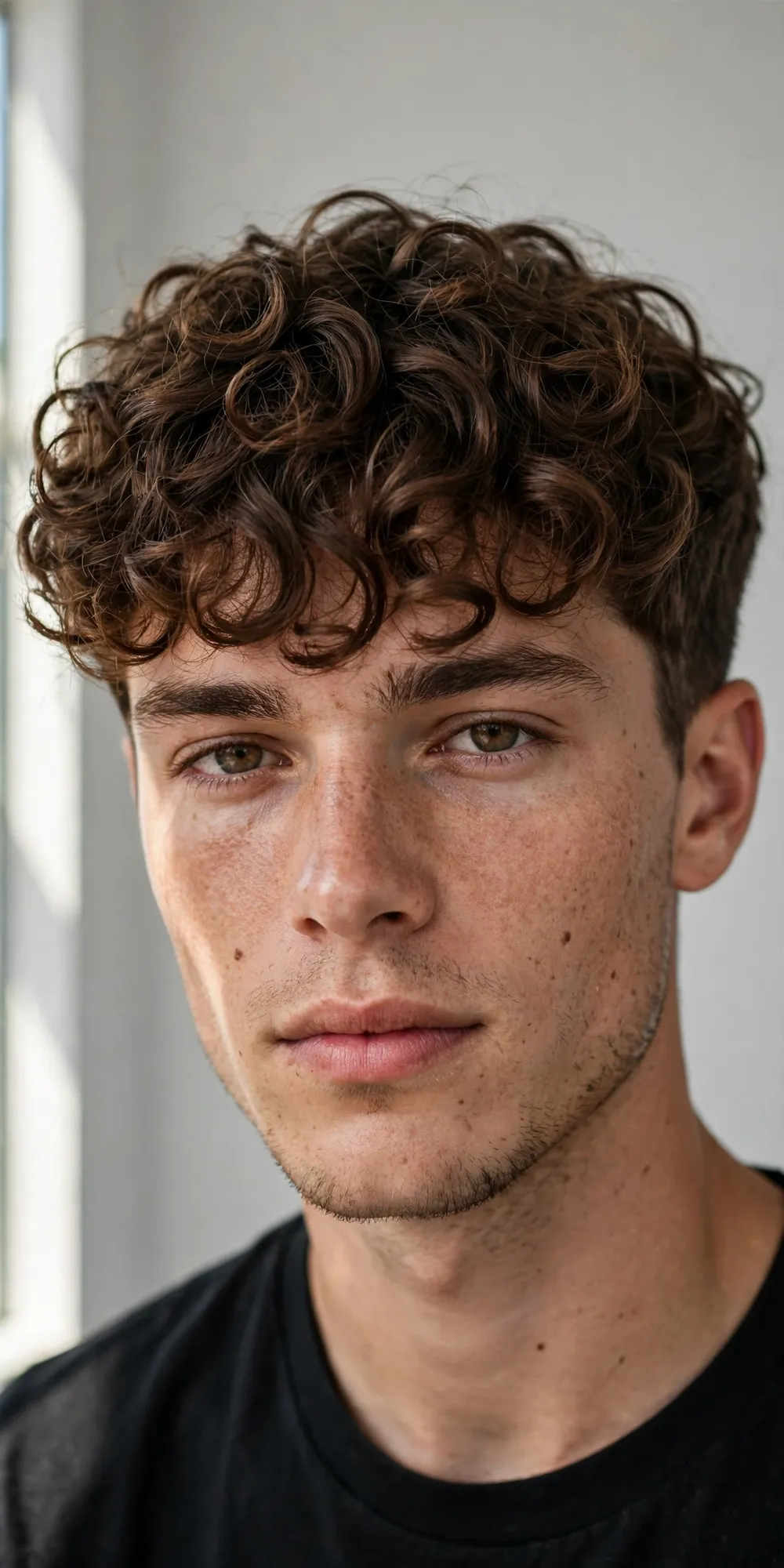
At medium length the fringe becomes a feature rather than an edge: three to five inches of curl worn forward so it falls over the forehead in loose spirals. It softens a strong or receding hairline better than any short cut can, frames the face, and gives type 3 hair a shape that reads romantic rather than severe. The two things to get right are weight and length. The fringe needs light layering so it falls in separated curls instead of one heavy curtain, and it must be cut dry — a fringe cut wet will shrink up a full inch or more above where you wanted it. Style forward with your fingers and a little leave-in conditioner. Trim every four weeks to keep it out of your eyes.
28. Curly Side Part
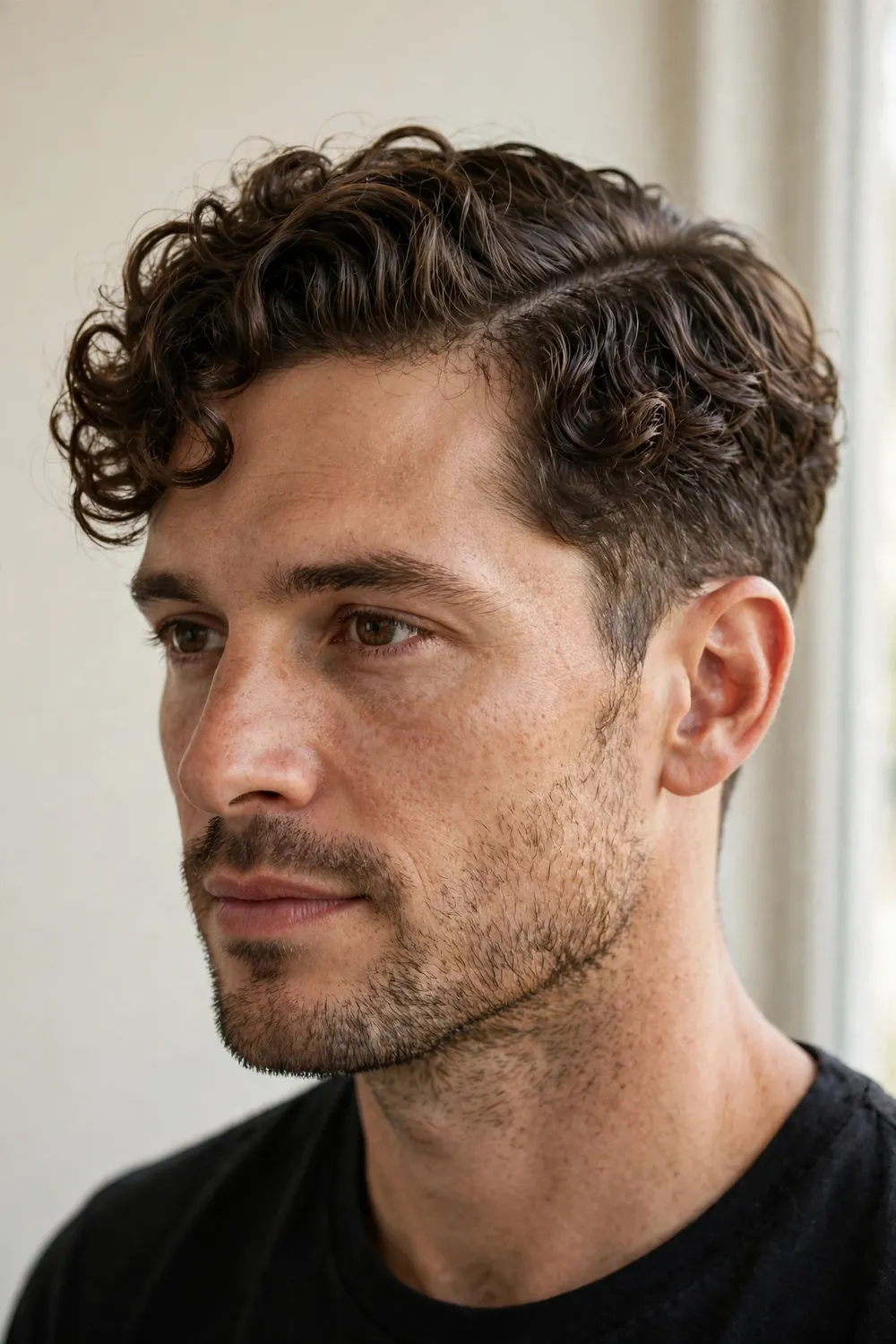
Parting curls to one side gives you the cleanest, most classic silhouette available to curly hair: the volume sweeps across, the parting side sits flatter, and the whole cut reads groomed without hiding the curl pattern. It works best on type 2 and 3A hair, whose looser curls will actually hold a direction; tighter curls can wear it too, but expect the part to soften into a suggestion by midday. Find the part where your hair naturally wants to split — fighting a growth pattern is a daily losing battle. Comb it into place on damp hair with a little cream, then let it dry untouched. It pairs well with tapered or scissored sides for a professional finish, and needs a trim every three to four weeks.
29. Curly Middle Part (Curtains)

Centre-parted curls falling to both sides of the face — the curtain look, translated for textured hair. Where straight curtains hang flat, curly ones stack and frame, giving the style more presence and a softer finish. You need four to six inches on top and type 2 to 3 hair; the front pieces should reach roughly cheekbone level for the proportions to work. Our middle part hairstyles for men guide goes deep on training a part that does not want to stay — the same training method applies here, parting damp hair daily until the direction sticks. One adjustment worth knowing: if your face is round, pair the curtains with tapered or faded sides so the style adds length instead of width at the cheeks.
30. Curly Quiff
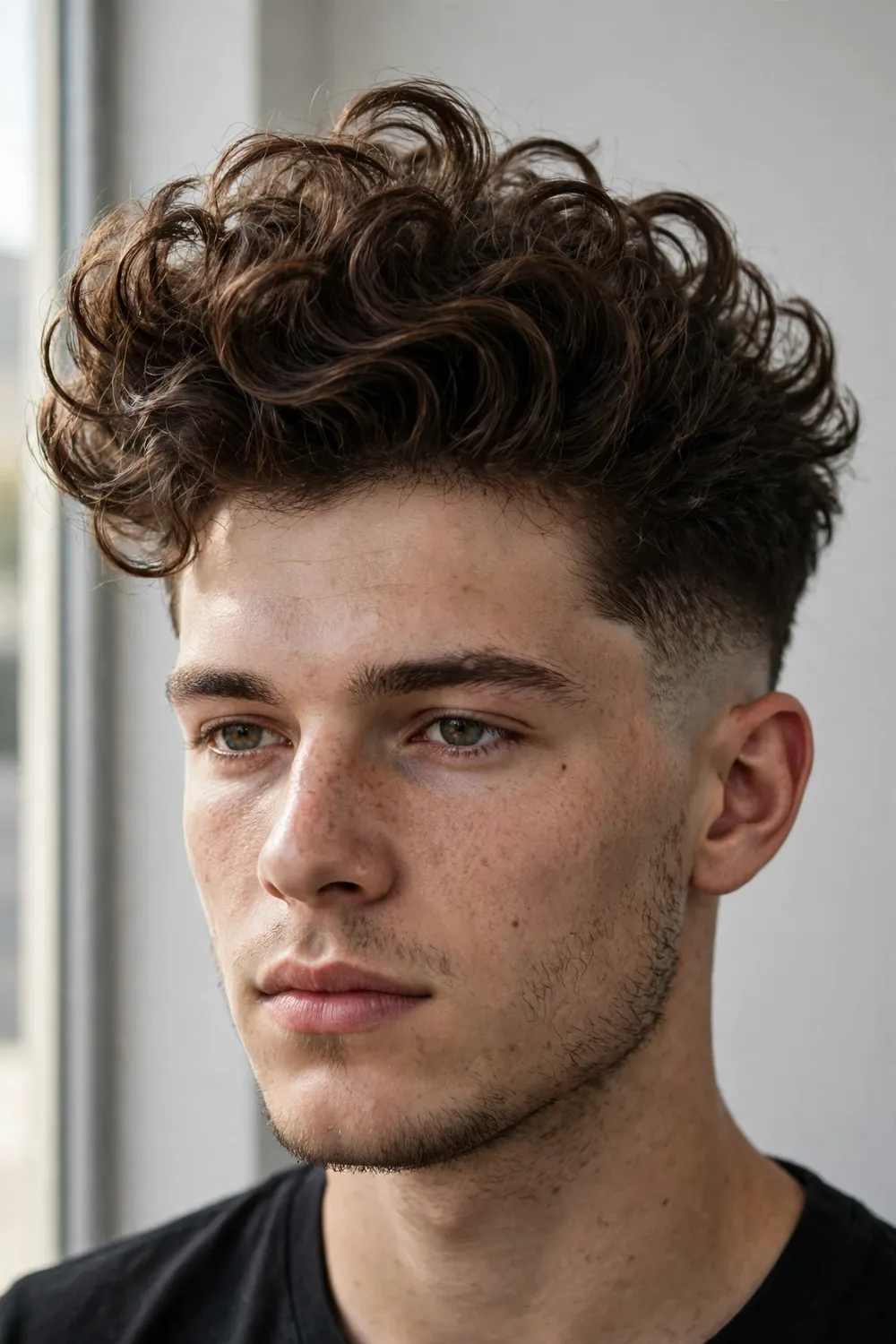
The quiff lifts the front of the hair up and back, and on curls that lift comes with built-in texture that straight-haired men have to fake with product. It suits type 2C to 3B, needs three to four inches at the front, and it is one of the best choices for round faces because all that height at the hairline lengthens the whole face. The styling is in the drying: apply a light mousse or cream to damp hair, then blow-dry the front upward with a diffuser or your fingers while lifting at the roots. Air-drying alone will not give a quiff its height. Keep the sides tapered or mid-faded so the contrast does the sharpening, and expect a trim every three weeks.
31. Curly Pompadour
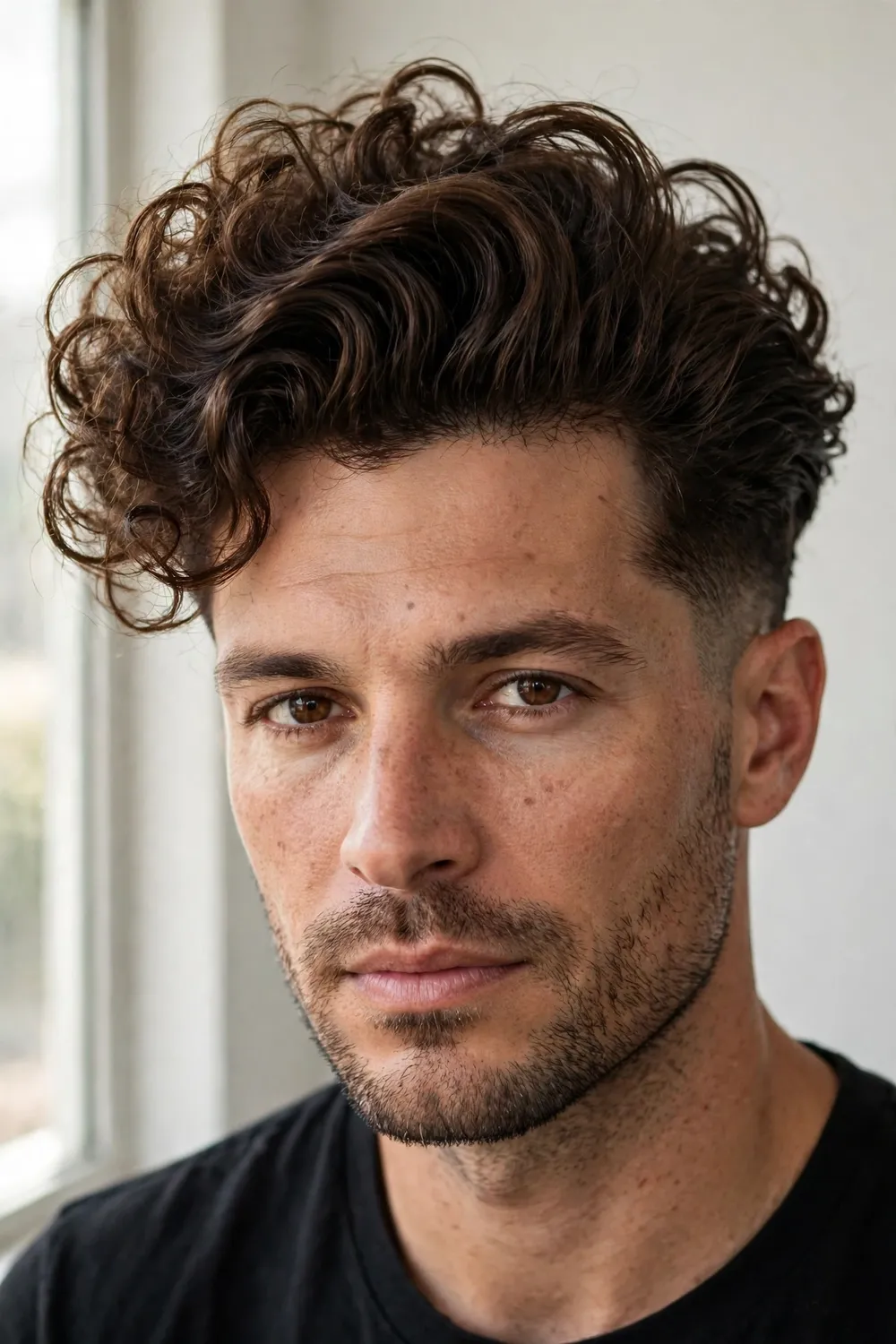
A pompadour built on curls uses the hair’s natural body instead of straightening it out of existence: the front is swept up and back into a rounded volume of defined curl, with shorter tapered or faded sides keeping the outline clean. It suits thick type 3 hair with four or more inches on top — fine or sparse curls will struggle to build the height. Work a medium-hold cream or pomade through damp hair, dry it back and up with a diffuser, and shape the front roll with your fingers rather than a brush, which would tear the curls apart. It is a higher-effort style, ten minutes on a good morning, but few curly cuts make this much of an entrance. Refresh the cut every three weeks.
32. Curly Slick Back

Longer curls combed straight back and held with product give a controlled, polished finish — the curly answer to the classic slick back. It needs at least four inches on top, and honesty matters here: type 2 and 3A hair, whose curls are loose enough to lie back, wears this well, while tight type 3C and 4 hair will spring forward again within the hour no matter what you put in it. Apply a strong curl cream or a gel-cream hybrid to soaking wet hair, comb it all back in one direction, and let it set without touching it. Once dry, it holds a surprisingly formal shape. Worn with tapered sides it reads sharp; with faded sides, sharper. Trim the top every four to five weeks.
33. Curly Comb Over
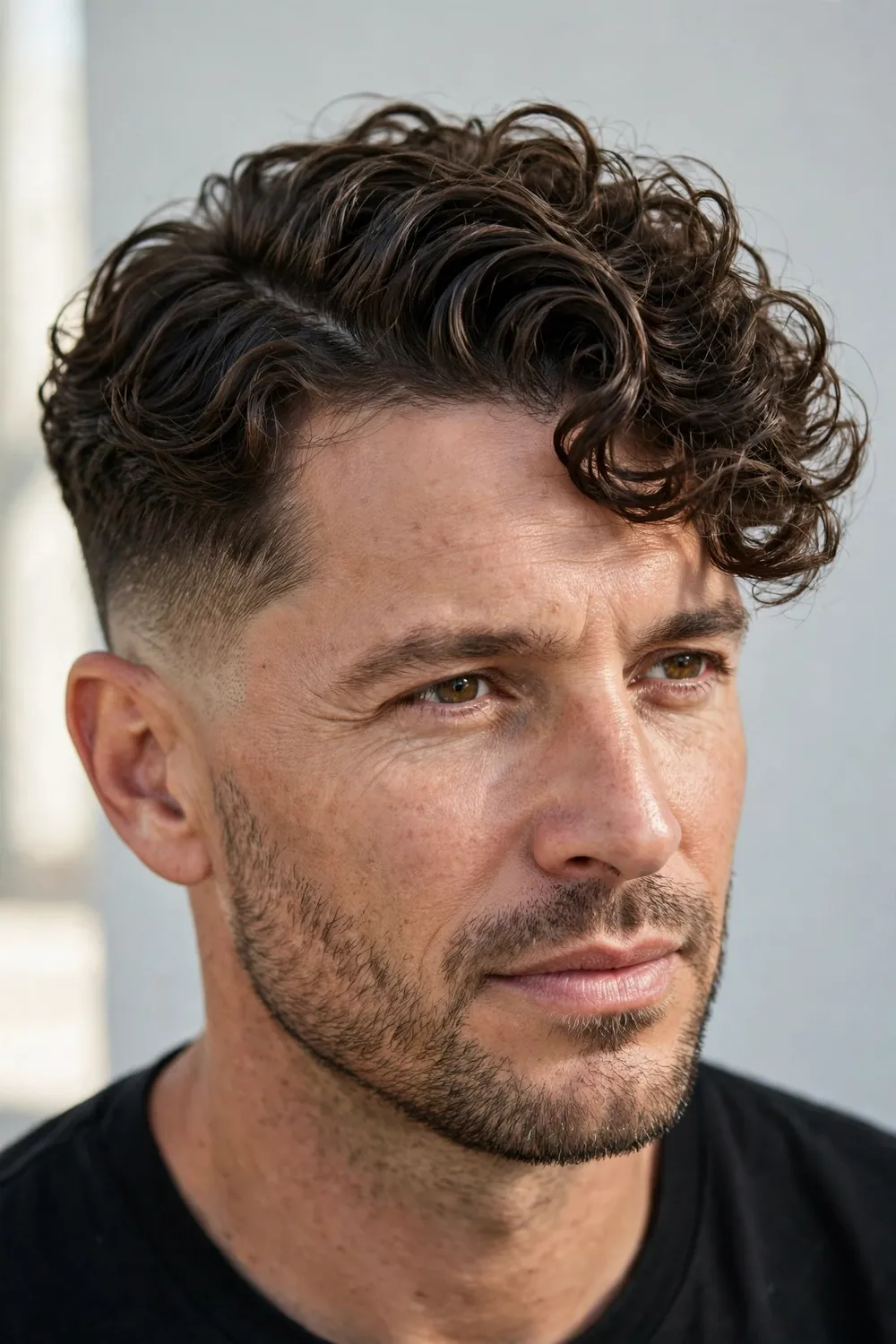
The comb over sweeps the top across to one side over a fade or taper, and on curly hair it earns its place for a practical reason: the sweep adds coverage and direction, which can soften the look of a thinning front or an uneven hairline. Keep it modern by keeping it textured — the curls should look like they are falling across, not lacquered down — and use a light-hold cream rather than anything shiny or stiff. It suits type 2 and 3A hair at three to five inches on top. A word of honesty your barber should echo: a comb over disguises mild thinning, but worn too long and too flat over real recession it draws the eye instead. Keep the length modest and the part natural.
34. Curly Blowout
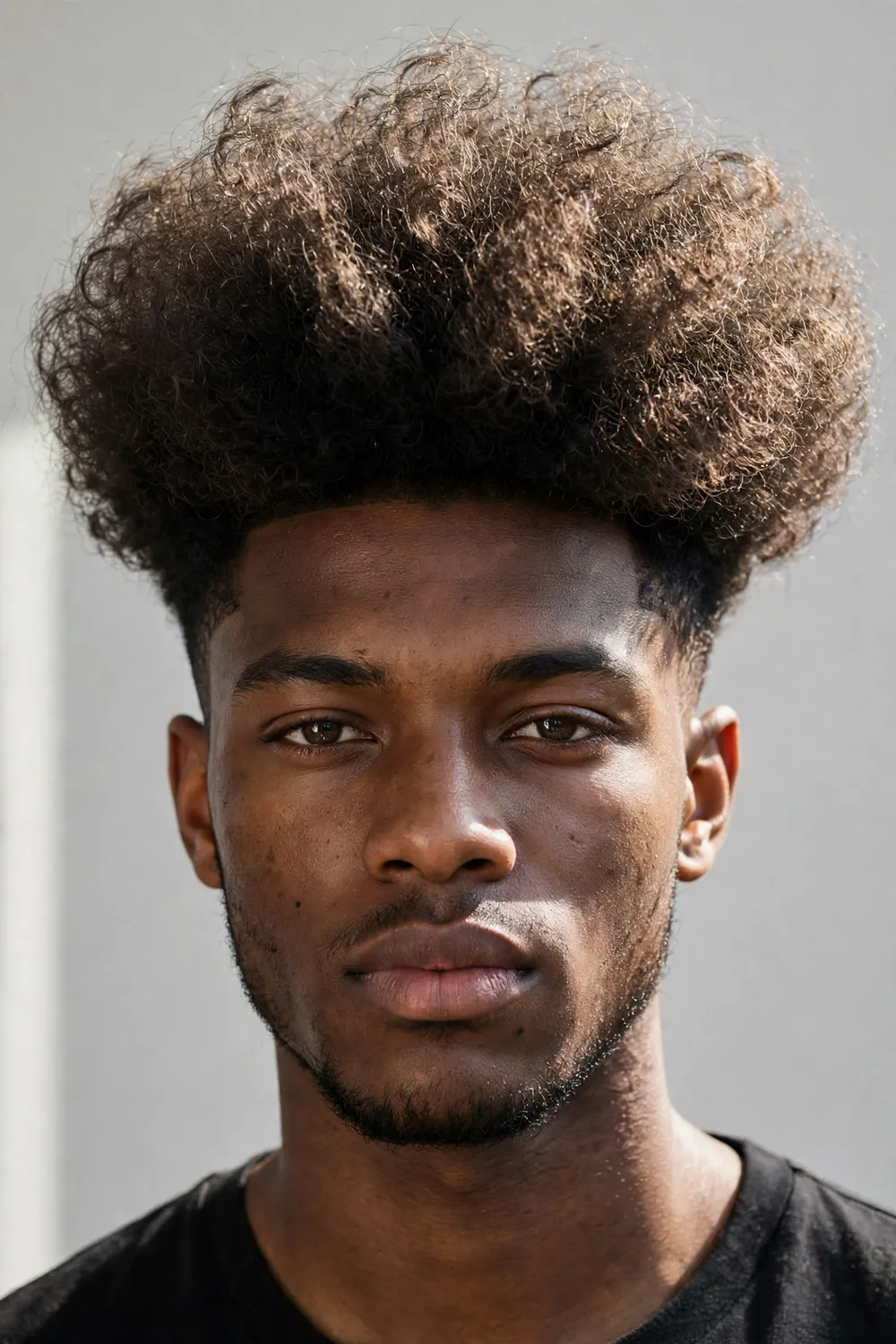
The blowout stretches the curls out with heat and a brush or pick into a full, rounded shape, usually over tapered or faded sides — big texture up top, clean outline underneath. It is most associated with type 4 hair, where the stretched coils build a silhouette no other cut quite copies, though looser curls can wear a softer version. The routine is the style: moisturise first, stretch in sections on medium heat, and pick the shape into place. Heat is the trade-off — done weekly on dry, unprotected hair it will damage the very texture you are showing off, so a heat protectant and deep conditioning are not optional extras. The shape holds two to three days if you protect it at night; the cut needs refreshing every three weeks.
35. Natural Loose Curls
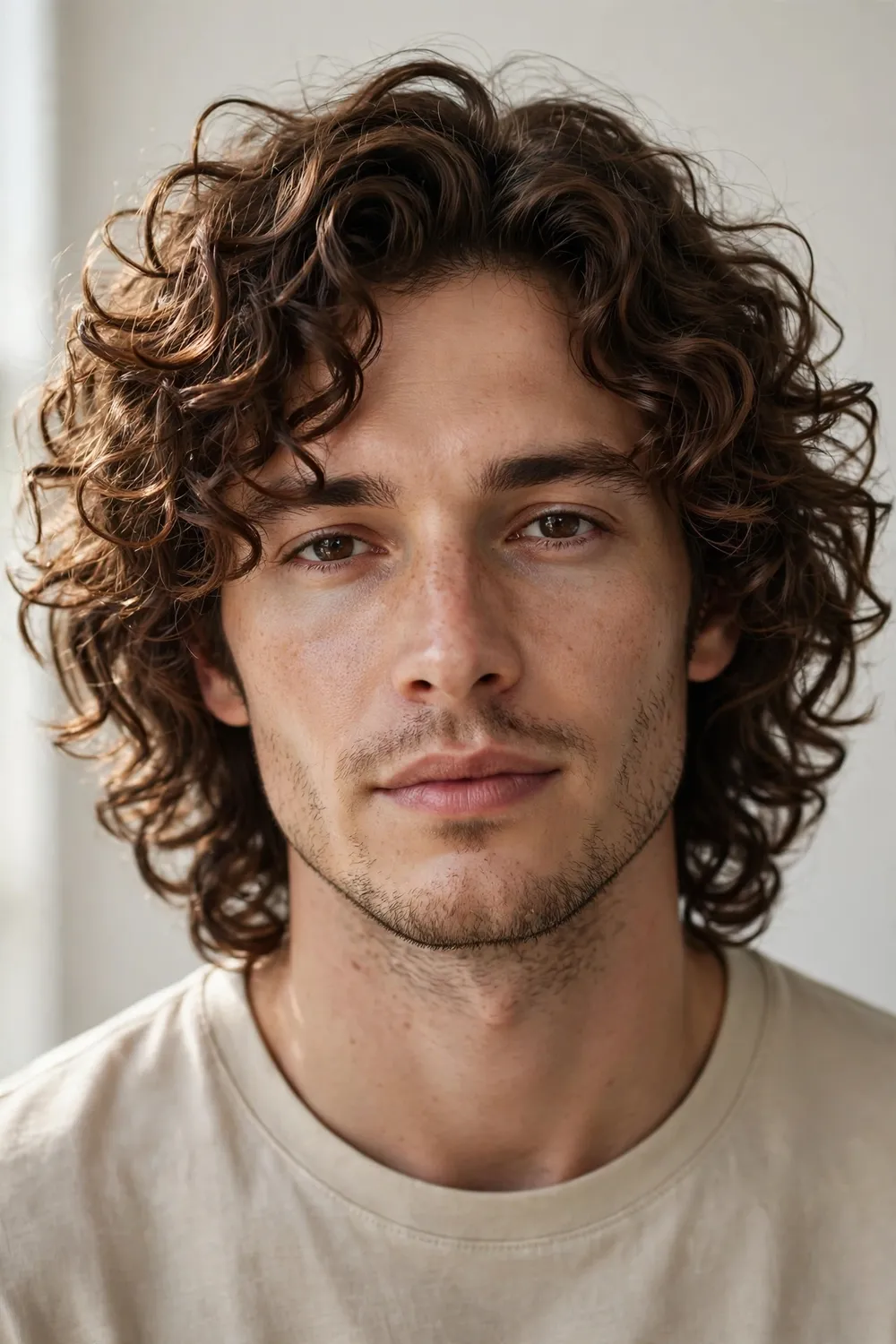
No sculpting, no hard styling — just medium curls worn as they grow, with the work done by the cut and the condition of the hair. This is the style that makes people ask what you “do” to your hair, and the honest answer is: less than they think. The cut needs light layers through the lengths so the curls stack and move instead of forming one solid mass, and the routine is moisture, not product — a leave-in conditioner after washing, a curl cream scrunched into wet hair, then air-dry and hands off. It suits type 3A to 3C in good condition; damaged, over-washed curls will frizz instead of falling loose, so fix the routine before blaming the cut. Trims every six to eight weeks keep the ends — and therefore the whole shape — healthy.
36. Curly Surfer Hairstyle
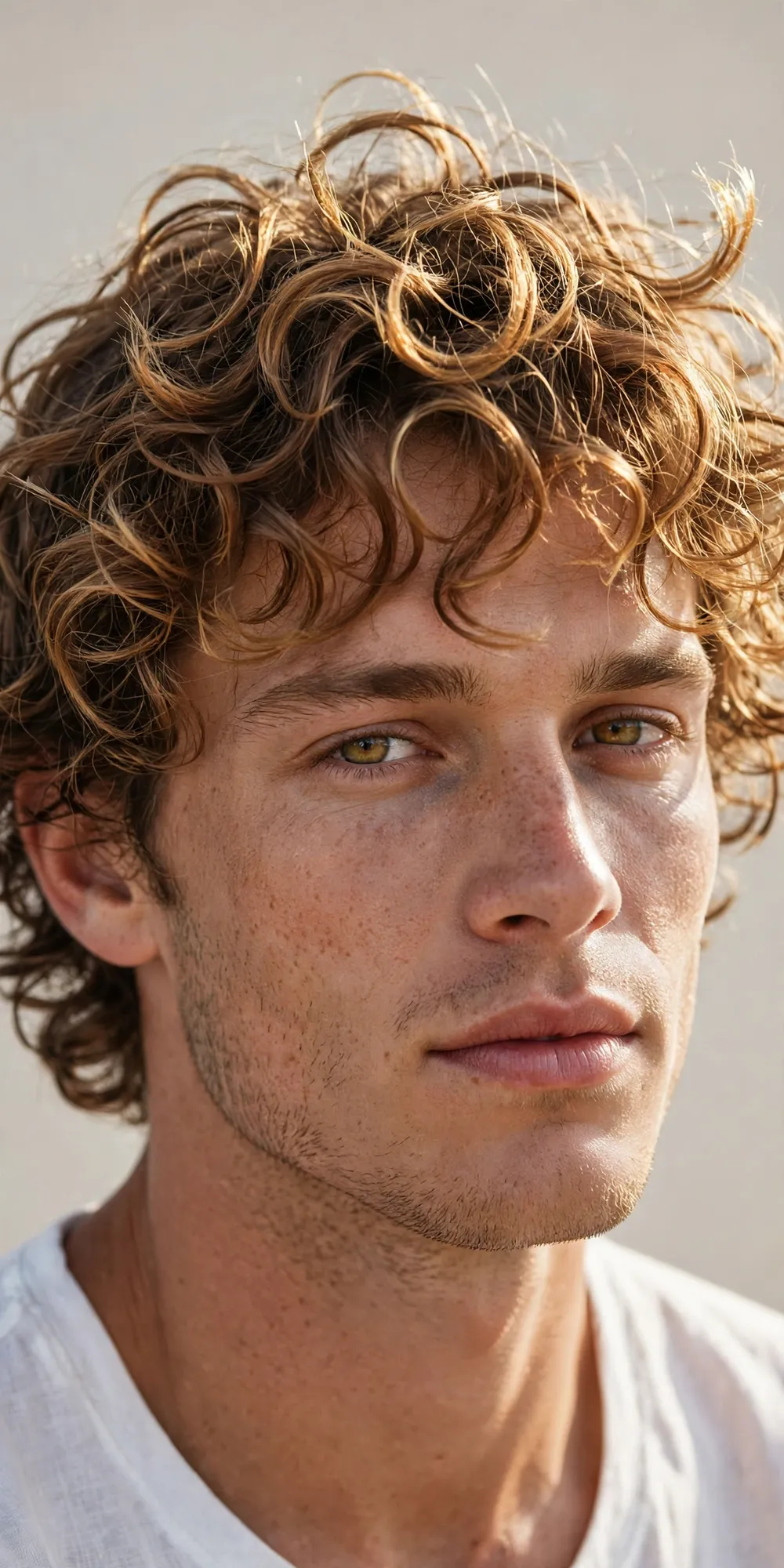
Sun, salt and neglect, bottled: medium curls worn loose and tousled, with lighter ends and a finish that looks like you have just come off the beach. The good news is you do not need the beach. Sea salt spray on damp hair, scrunched and air-dried, reproduces most of the texture, and the cut — medium length, lightly layered, nothing too precise — does the rest. It suits type 2C to 3B best, since the waves and loose curls fall into that relaxed drape naturally. Upkeep is the lowest of any medium style here: the whole point is that it improves slightly undone. What you do need is a trim every six weeks or so to cut the dry ends, because genuinely neglected ends split and frizz in a way that stops reading as surfer and starts reading as tired.
37. Curly Shag
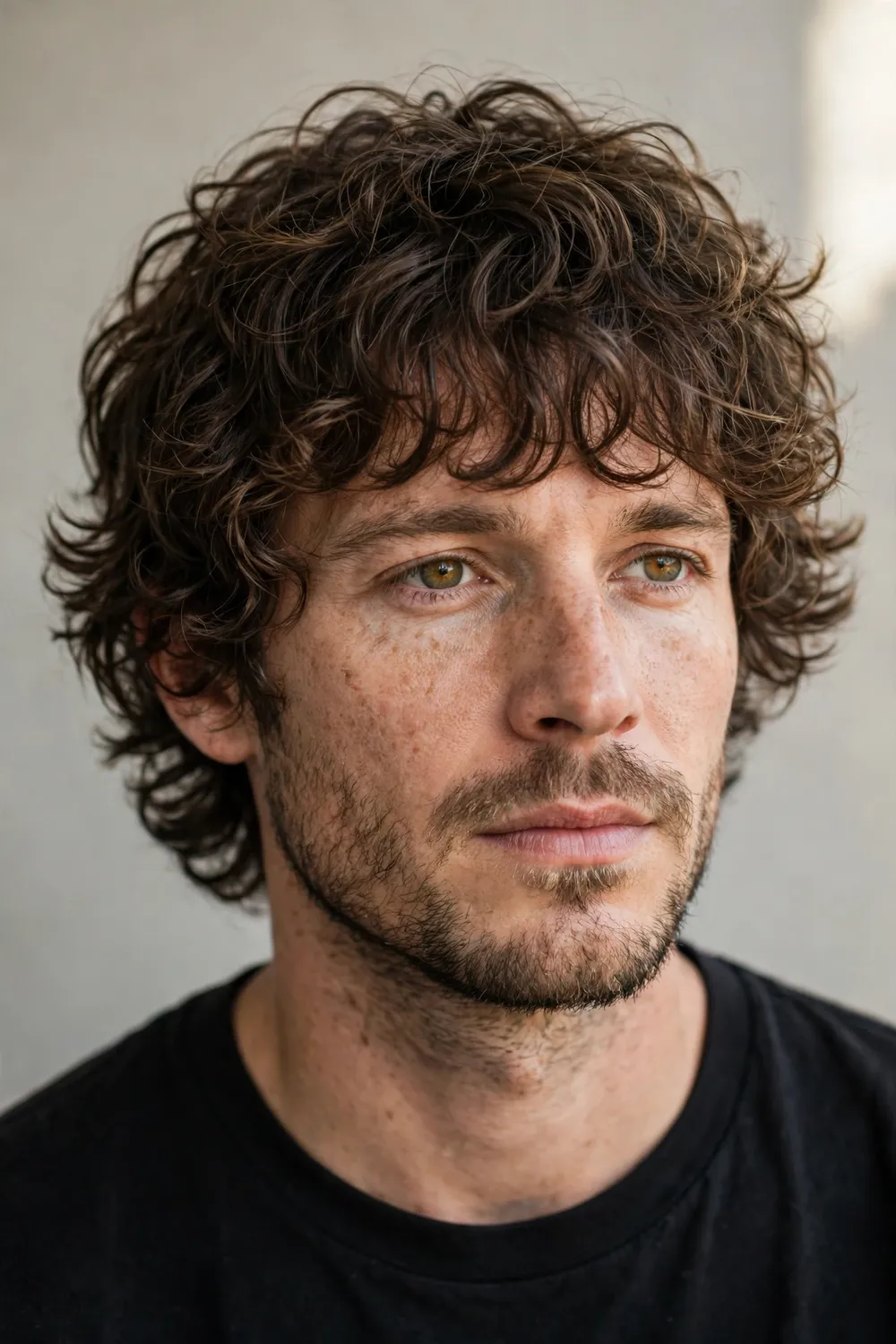
The curly shag is built on layers — lots of them. Your barber cuts choppy, uneven layers through the top and crown so the bulk comes out and the curls fall in separated pieces instead of one heavy mass. Think 70s rock frontman, updated: medium length, fringe grazing the eyebrows, shorter layers around the crown for lift. It suits type 2C to 3B curls best, because looser patterns show off the movement, and it flatters longer faces by adding width at the sides. Ask for razor-cut or point-cut layers, never thinning shears. Style with a light curl cream scrunched into damp hair, then leave it alone. It grows out gracefully, so you can stretch trims to every eight weeks.
38. Curly Mop Top
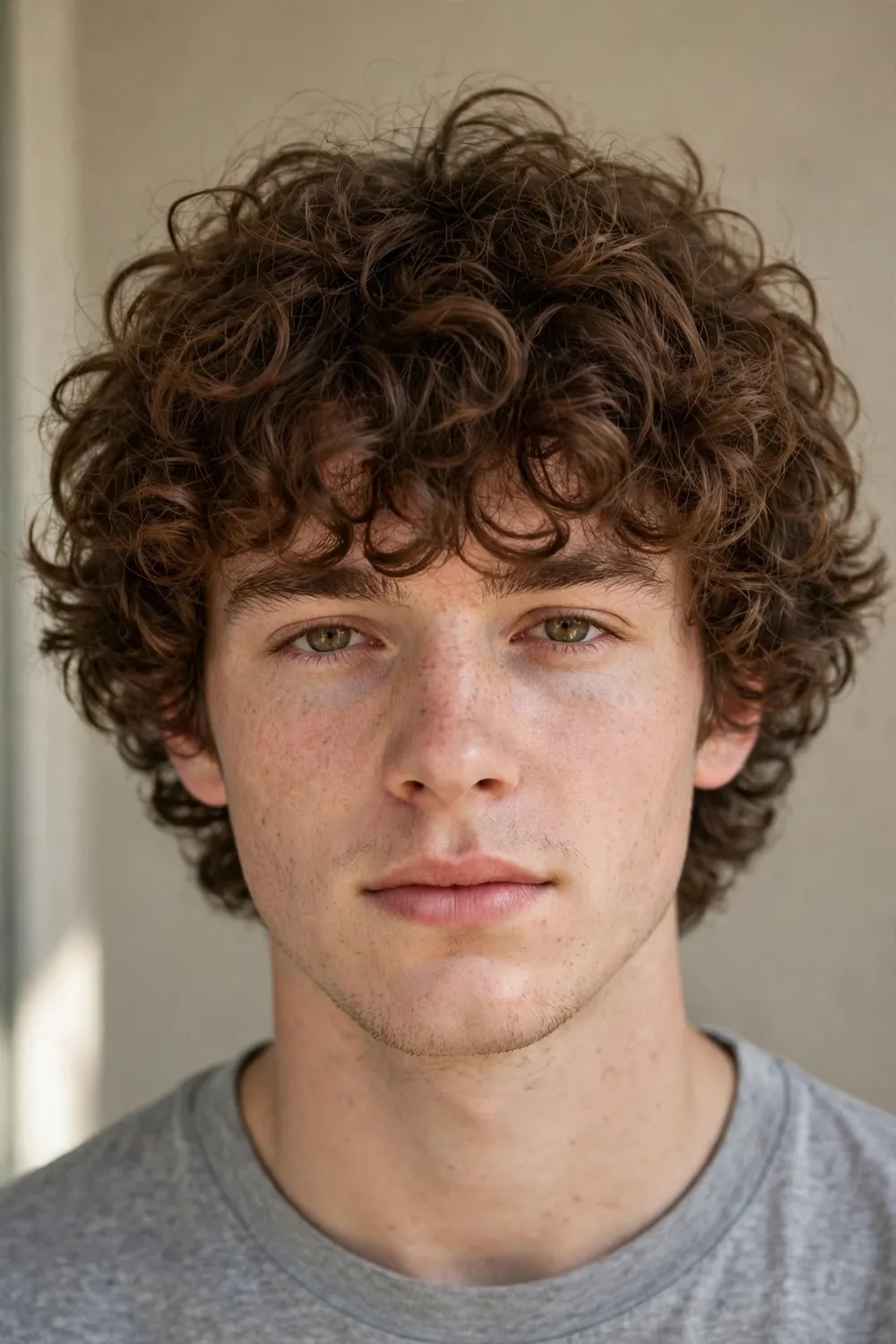
The mop top is exactly what it sounds like: a rounded cap of curls that sits over the forehead and ears, with the fringe falling forward all the way around. It’s deliberately unpolished — the Beatles-meets-skater look — and it works because curly texture stops the shape from looking like an actual bowl. Best on type 2C to 3A hair with medium thickness; very tight coils will puff it out too wide. The cut keeps roughly even length on top with the sides scissored just over the ears. Styling is minimal: a little leave-in conditioner, a shake of the head, and you’re done. The one upkeep item is the fringe — once it hits your eyes, book a tidy-up, usually every five to six weeks.
39. Medium Curls with Tapered Sides
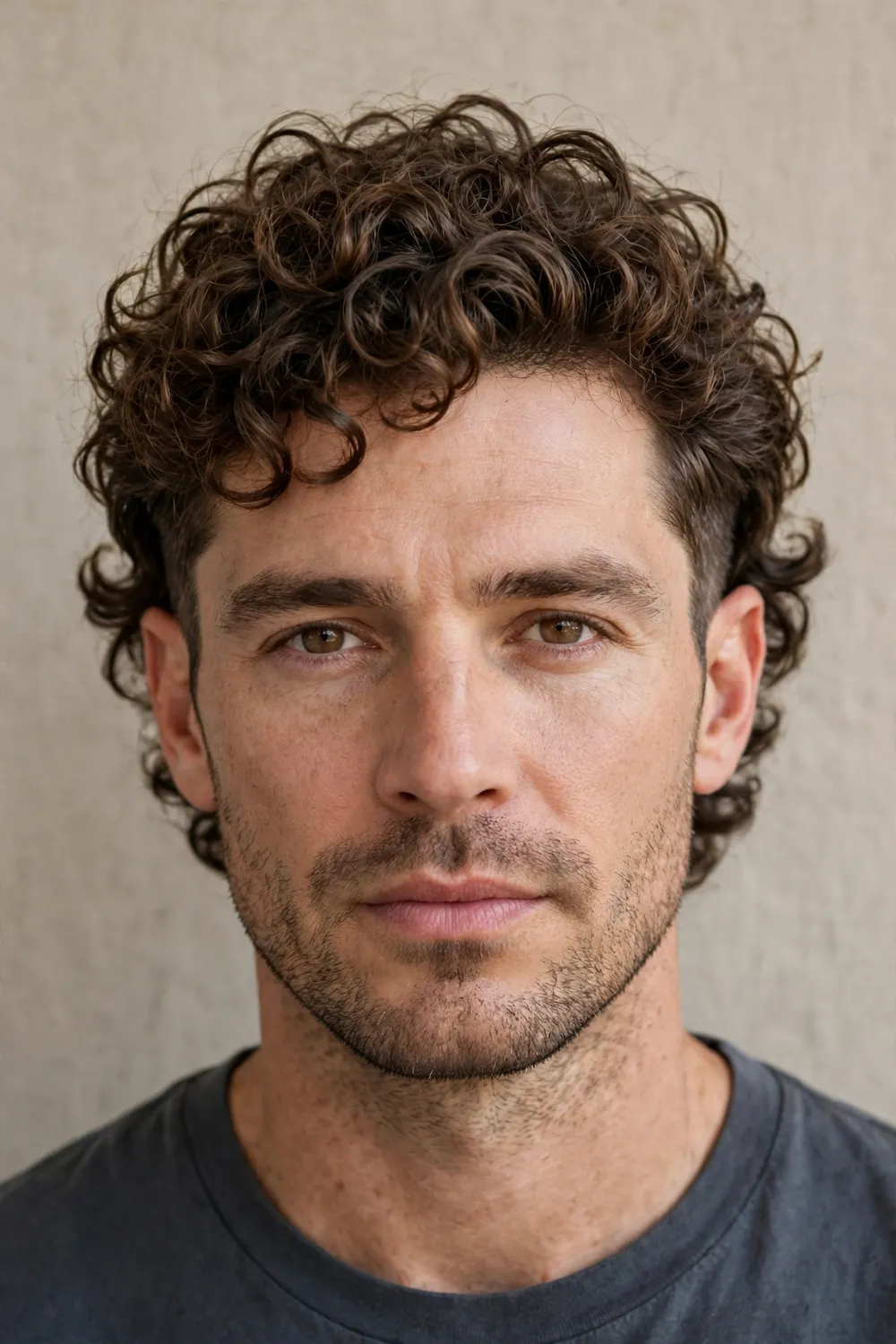
If fades feel too sharp for you, this is the grown-up alternative: medium-length curls on top, with the sides and back tapered by scissors rather than clippers. The taper cleans up the outline around the ears and neckline but leaves a soft, natural finish with no harsh lines or skin showing. It suits almost every curl type from 2C to 3C and is a safe pick for offices and older guys who want texture without trendiness. Ask your barber for a scissor taper, keeping enough side length to lie flat. Style with a pea-sized amount of matte cream worked through dry or nearly dry hair. Because there’s no fade to lose, you can go six weeks between cuts.
40. Long Loose Curls

Growing curls past your shoulders is a commitment — type 3 hair can take 18 months or more to get there because of shrinkage — but worn loose, long curls make a statement no short cut can match. The secret is the cut underneath: long layers through the last few inches stop the ends from stacking into a triangle, and regular dusting trims keep split ends from travelling up. This length suits 2C to 3B patterns; tighter coils can do it too but need more moisture to stay defined at length. Wash twice a week at most, condition heavily, and detangle only when wet with conditioner in. Expect a trim every ten to twelve weeks just to maintain the shape.
41. Shoulder-Length Curls
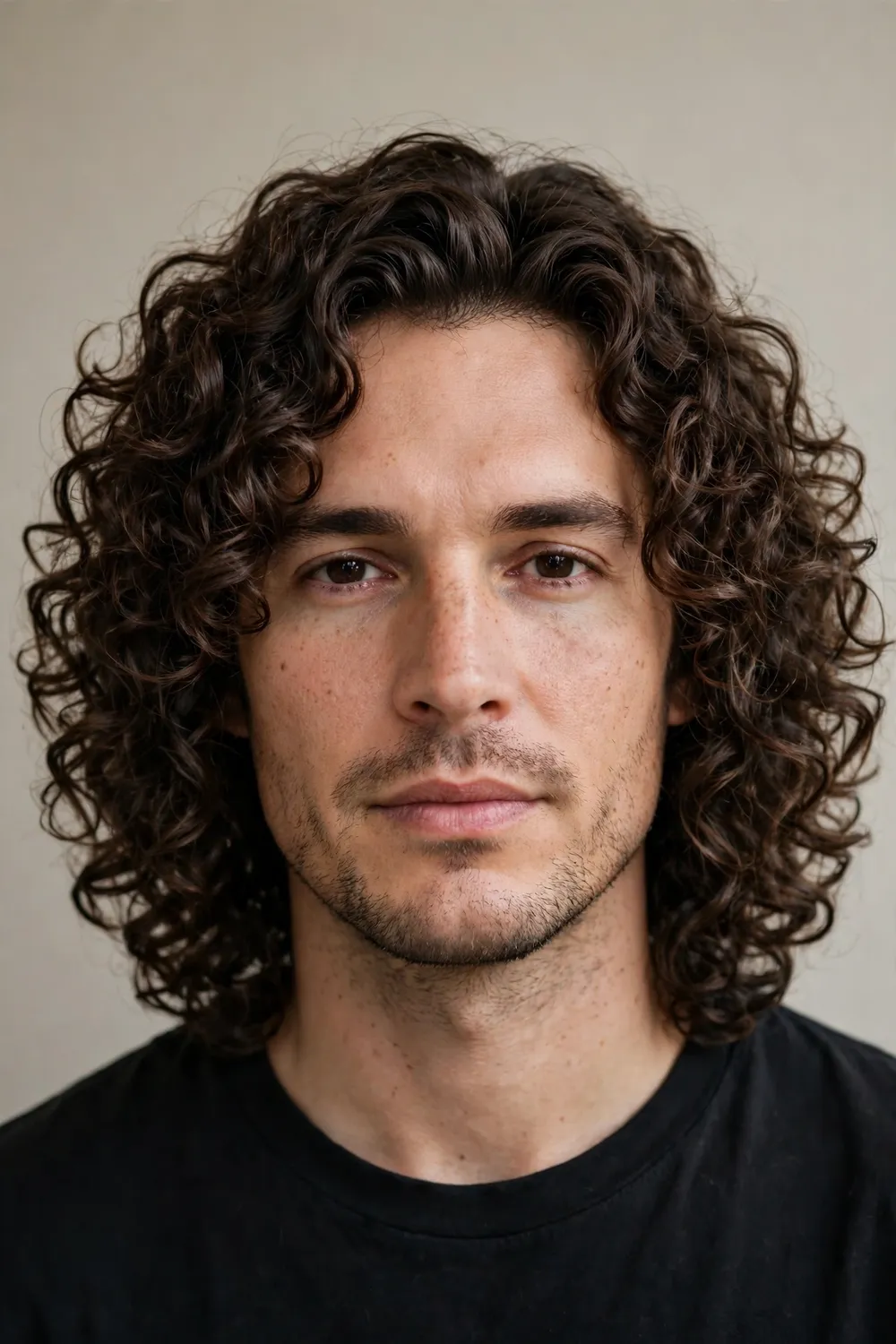
Shoulder-length is the sweet spot for a lot of men growing their curls out: long enough to tie back, short enough to manage in ten minutes. The cut should sit right at the shoulder when dry — remember curls spring up two to three inches shorter than they look wet, so make sure your barber accounts for shrinkage or you’ll end up at chin length. Light layers around the face stop the dreaded triangle silhouette and give the front some movement. Works for type 2C through 3C, and the length weighs down frizz at the crown naturally. Style with leave-in and a light gel cast, scrunch out the crunch once dry. Trim the ends every eight to ten weeks.
42. Long Curly Layers
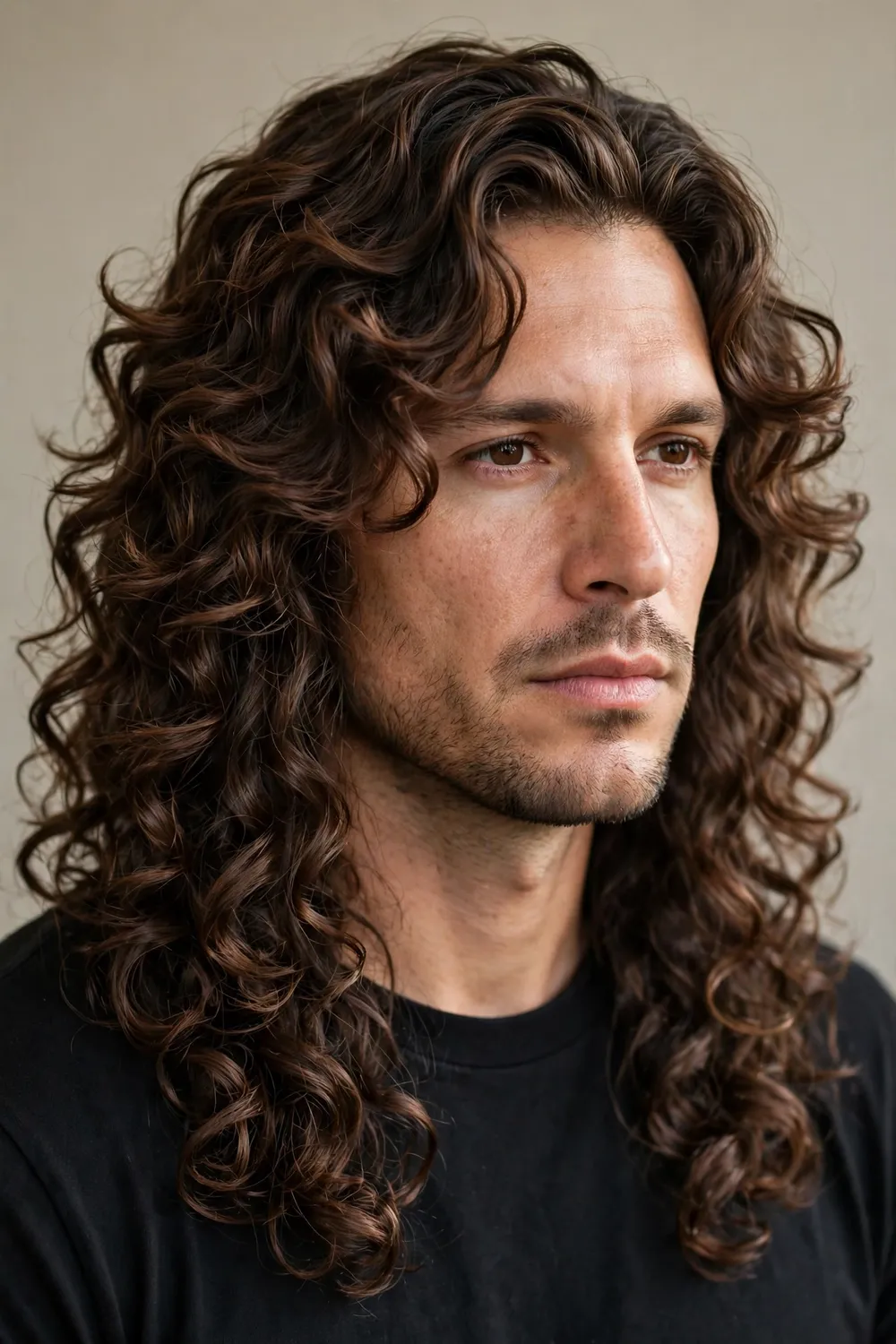
Long hair cut all one length turns into a curtain: heavy, flat at the roots, and wide at the bottom. Long layers fix all three problems. Your barber removes weight from the interior and staggers the lengths so each curl sits in its own space, which creates movement and stops the ends from clumping into a solid shelf. This is the cut to ask for if your long curls feel heavy or look triangular. It suits type 3 and loose type 4 hair worn past the shoulders. Ask for layers that start around cheekbone height, cut dry so the layer placement matches your real curl pattern. Maintenance is mostly moisture: a weekly deep condition keeps layered ends from frizzing.
43. Curly Man Bun

The man bun earns its place because curly hair ties up better than straight hair — the texture grips, so the bun stays put without a dozen pins or constant redoing. You need at least eight to ten inches on top to pull it off comfortably; gather the hair at the crown for a sharper look or at the back of the head for something more relaxed. Any curl type works once there’s enough length. Two practical warnings: always use a fabric or spiral tie, never a rubber band, which snaps curly strands, and don’t pull it drum-tight every day — constant tension at the hairline causes traction thinning over time. Rotate bun days with loose days, and it’s a genuinely low-effort style.
44. Curly Top Knot
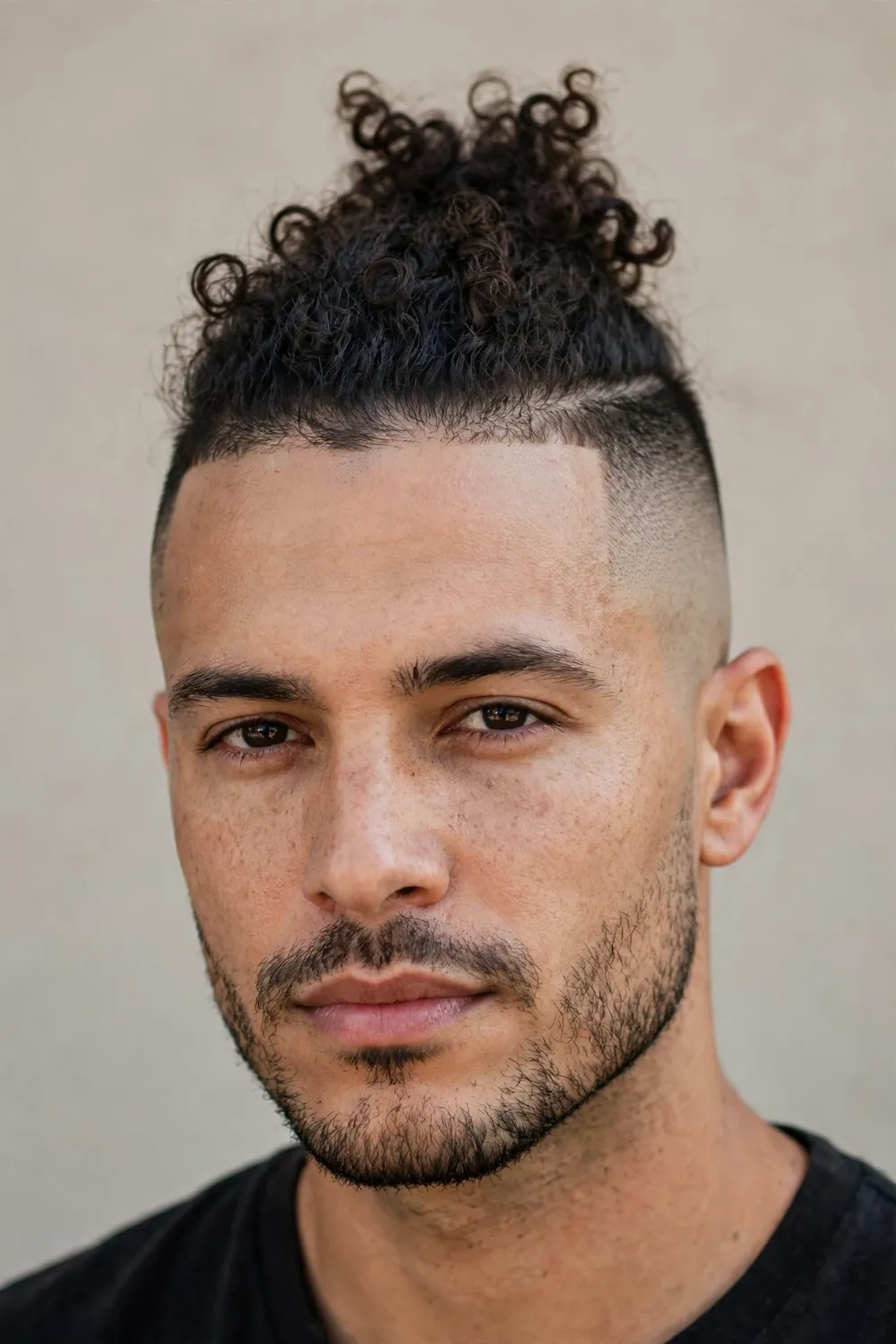
The top knot takes a small section of curls from the crown and ties it into a compact knot, while the sides are undercut or faded so the contrast does the styling work. Because only the top section needs length — six to seven inches is enough to tie — you can wear this months before a full man bun is possible. It suits type 2C to 3B hair and sharper, more angular faces, since the bare sides add definition. Ask for the undercut to start at the temples so the knot section is clearly defined. Wear it loose on off days to avoid tension at the front hairline, and keep the faded sides fresh with a tidy-up every two to three weeks.
45. Curly Ponytail
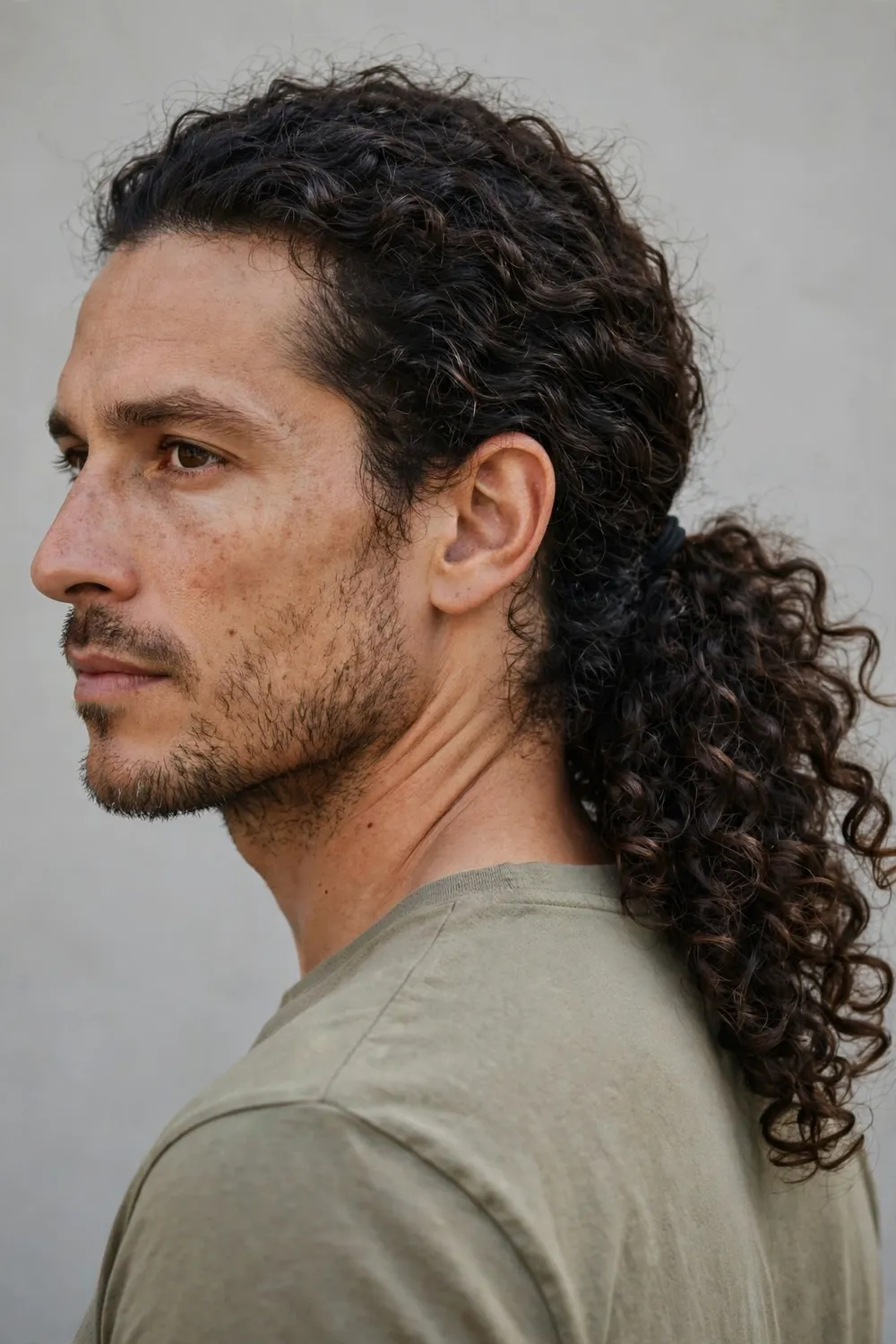
A ponytail is the working man’s answer to long curls: all the length, none of it in your face. Curly hair has a real advantage here, because the texture keeps the tail full and stops it sliding out of the tie by midday. A low ponytail at the nape reads classic and suits most workplaces; a mid-height one looks sportier. Any curl type with eight-plus inches can do it. Smooth the top back with wet hands and a touch of gel on the edges only — don’t brush the tail itself or you’ll turn it into a frizz puff. Let the tail dry fully before tying it up, since tying wet curls traps moisture and stretches them. Low upkeep: just keep the underlying cut trimmed every ten weeks or so.
46. Curly Half Up, Half Down
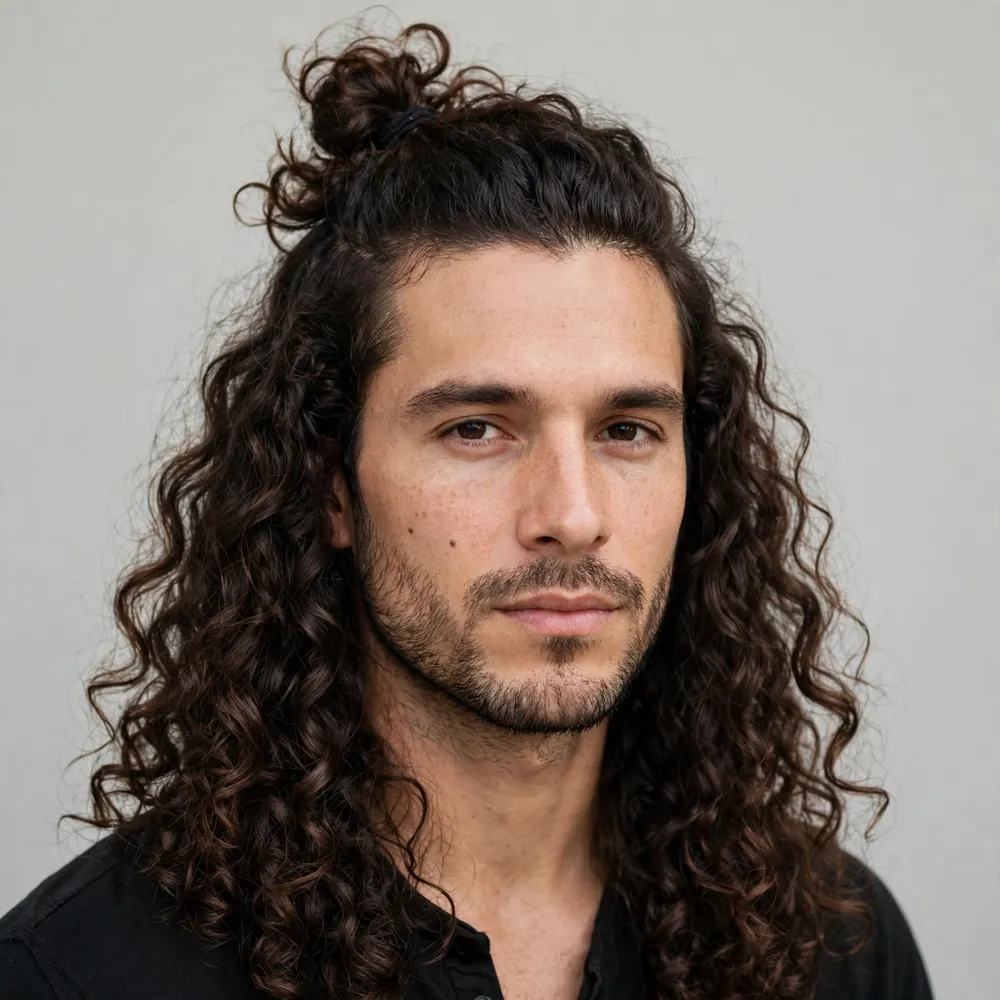
Can’t decide between wearing your curls loose or tied up? Take the top third, tie it back into a small bun or ponytail, and leave the rest falling over your shoulders. You get the clean face-framing of a tied style with the volume of loose hair, and it takes about thirty seconds. This works on any curl type from wavy 2C to coily, as long as the top section is long enough to reach back — roughly seven inches. It’s also a smart grow-out style, because it controls the awkward in-between phase at the front. Keep the tie loose to avoid a dent line, and refresh the loose section with a water-and-leave-in spray rather than re-wetting the whole head.
47. Long Curls with Undercut
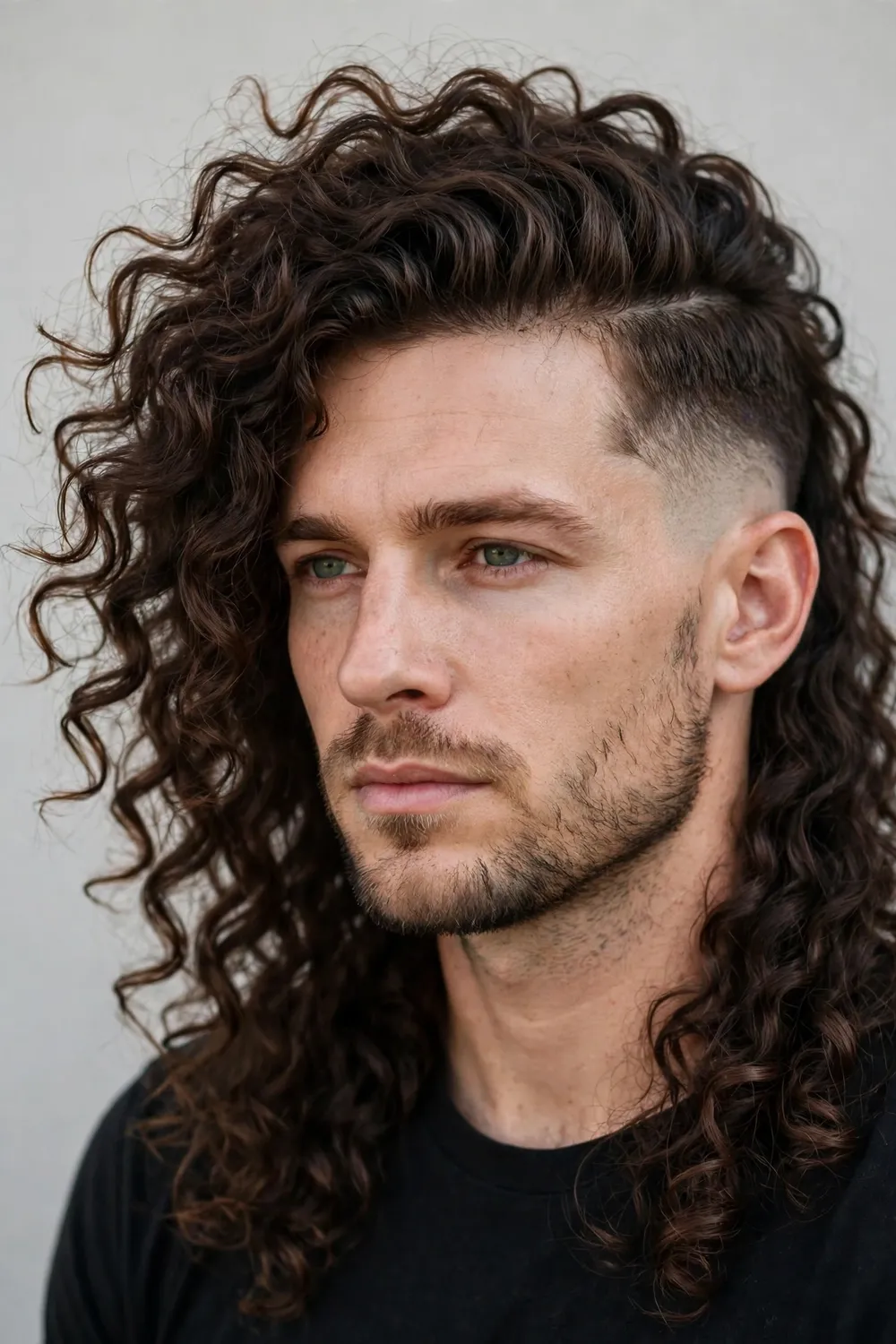
This one hides a surprise: full, long curls on top, but the sides clipped short underneath, so the bulk at the sides disappears and the length falls closer to the head. Worn down, it looks like long hair with a slimmer silhouette; tied up, the undercut shows and the whole thing reads much edgier. It’s a practical pick for type 3 hair that gets too wide at the sides, and for men who overheat under a full head of long curls. Ask your barber to undercut the sides and lower back, keeping the disconnect hidden under the top layer. The trade-off is maintenance: the clipped sections need redoing every three to four weeks even though the top keeps growing.
48. Long Curly Fringe
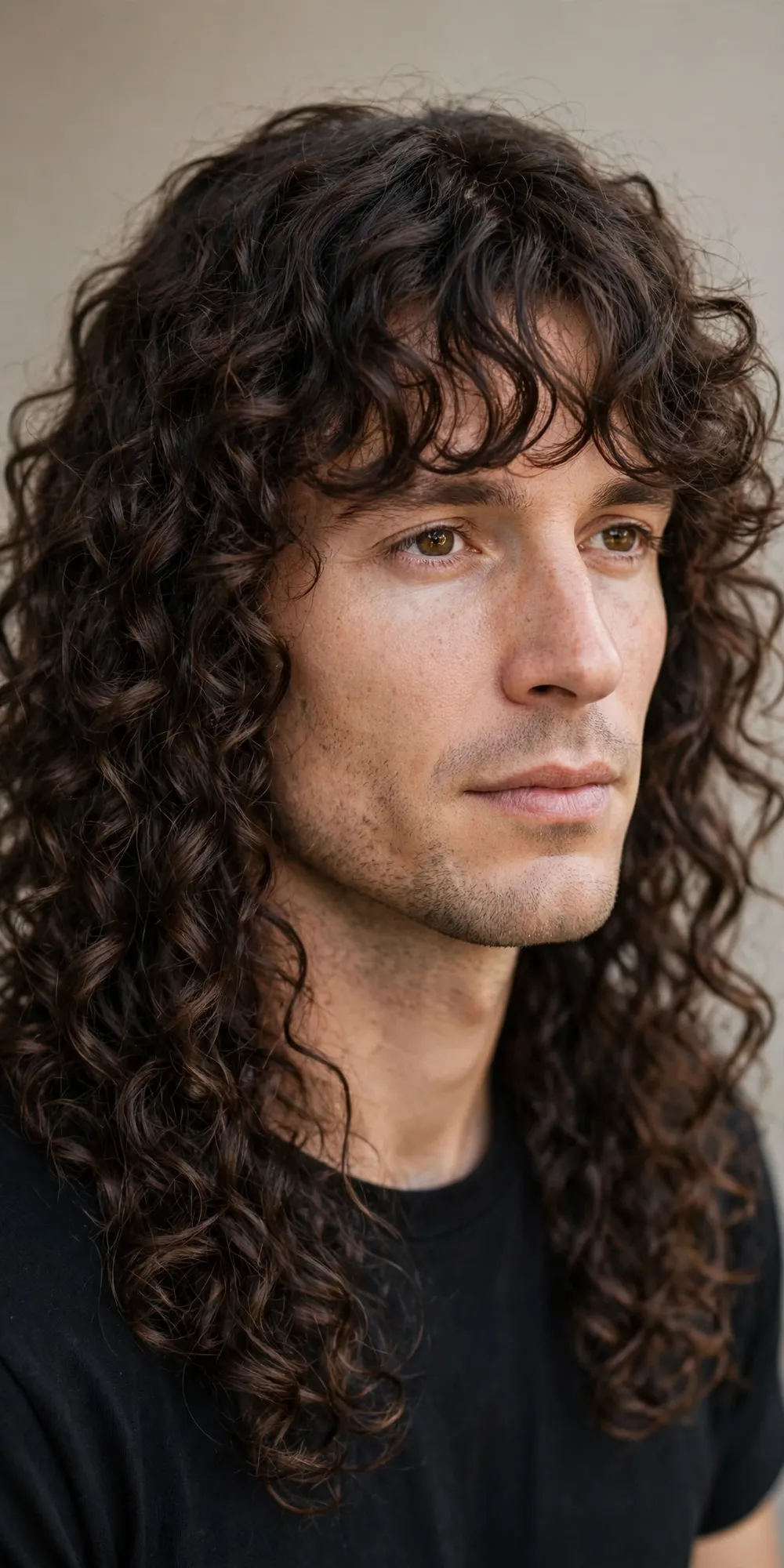
Most long curly styles sweep everything back; this one lets a soft fringe fall over the forehead while the rest of the length flows behind it. It frames the face, softens a tall forehead or a strong hairline, and gives long hair a focal point instead of an all-over mass. The fringe should be cut dry and left longer than you think — around nose length when stretched — because it will spring up several inches. Best on type 2C to 3B curls; very tight coils tend to shrink a fringe into a puff. Style the fringe forward with a small amount of curl cream, separating pieces with your fingers. The fringe needs a trim more often than the back — every six weeks keeps it out of your eyes.
49. Tousled Wavy-Curly Hair (Type 2C)
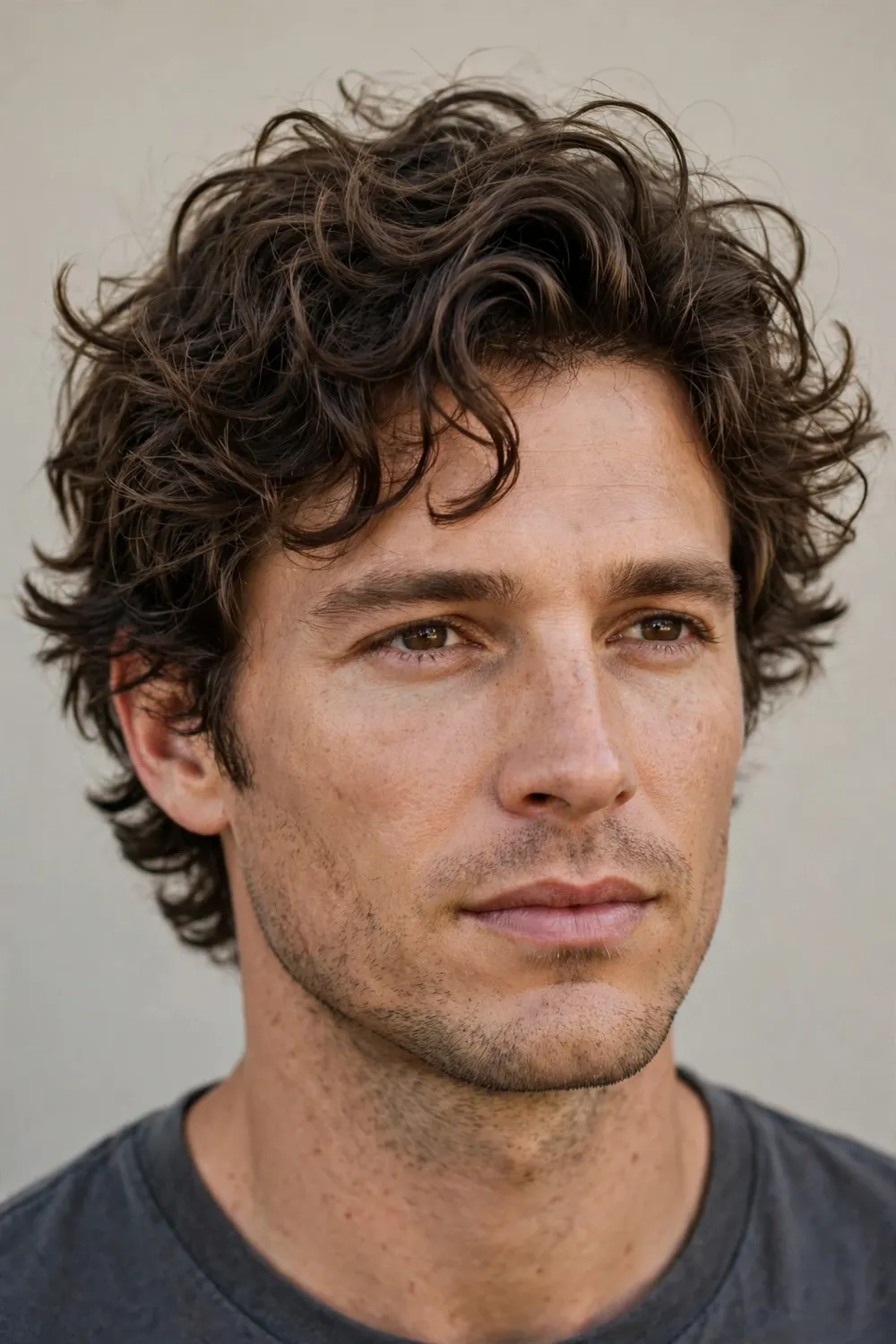
Type 2C sits right on the border: thick waves that are almost curls, with the odd full spiral mixed in. The tousled version keeps three to four inches on top, scissored sides, and zero structure — you style it by pushing it around with your fingers, not combing it into place. It’s the most forgiving cut on this list for men who won’t use more than one product, because 2C texture does most of the work itself. The enemy is flatness at the roots, so apply a light sea-salt spray or mousse to damp hair and scrunch upward. Avoid heavy creams and oils; they’ll pull 2C waves straight and greasy by lunchtime. Trims every five to six weeks keep the shape.
50. Type 3 Curls, Fringe Forward
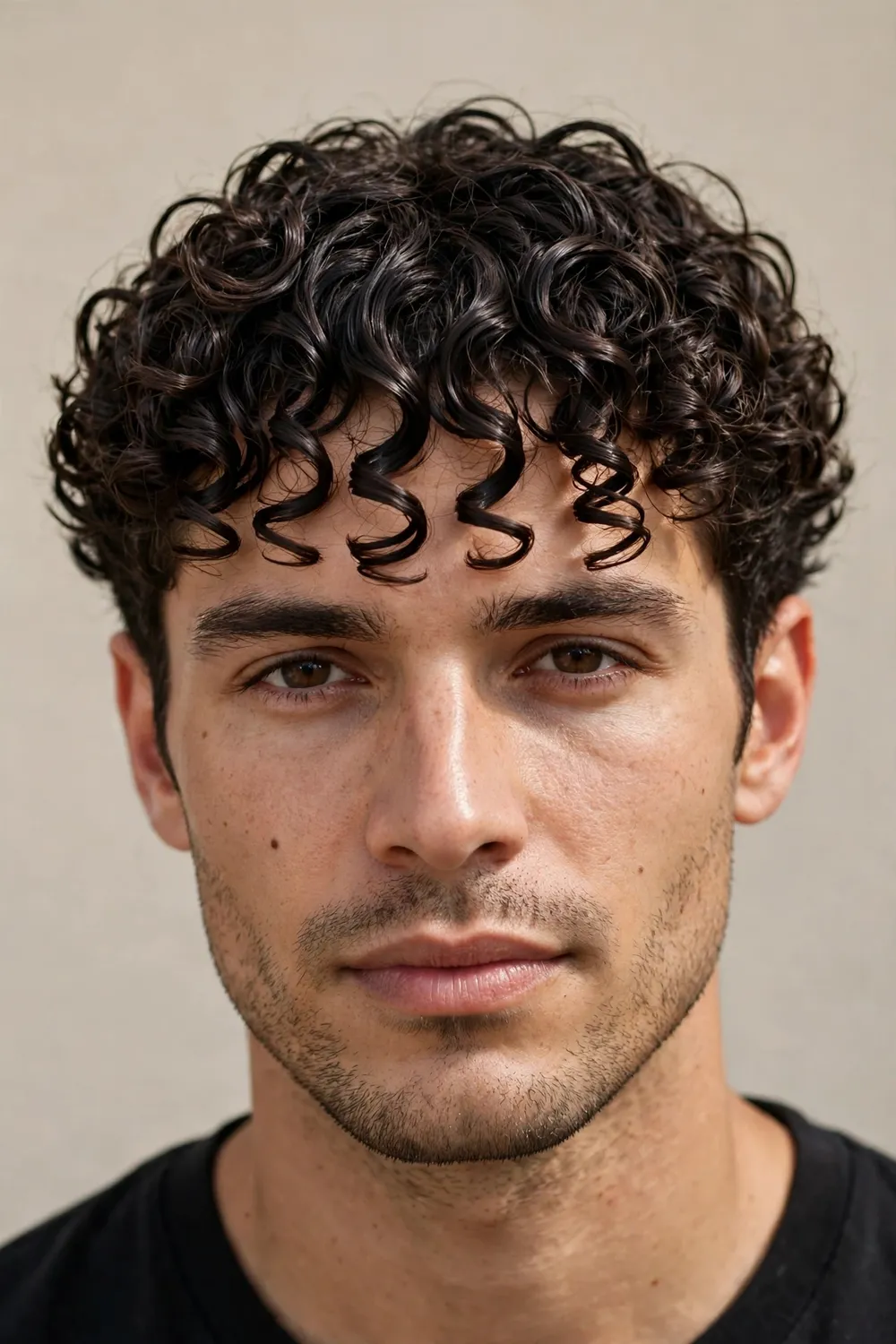
Type 3 hair forms real spirals — 3A loops through to 3C corkscrews — and wearing them forward into a fringe shows the pattern off instead of hiding it. The cut keeps length on top with the fringe cut to sit just above the eyebrows when dry, and the sides tapered or faded to stop width building up at the temples. The key word is shape: a good barber cuts this dry, curl by curl, so the fringe lands evenly once it springs up. Moisture matters more than product choice — leave-in conditioner daily, a light gel for definition if you want it. Never let anyone thin it out with shears; type 3 ends just frizz. Refresh shape every six to eight weeks.
51. Curly Afro
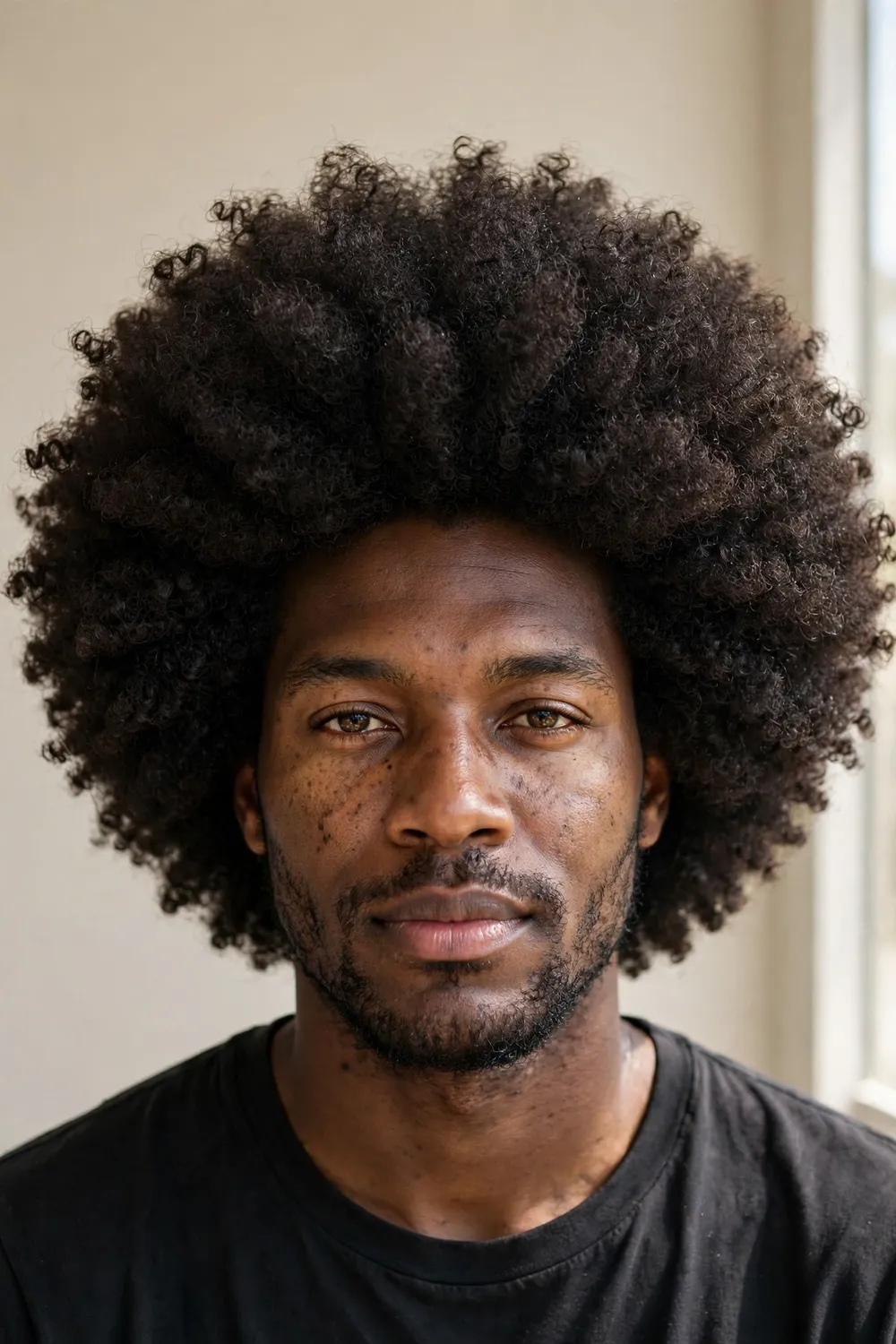
A proper afro is a shaped cut, not just hair left to grow. Type 4 coils are picked or shaped into a rounded silhouette with even volume all around, and the outline is what separates a great afro from an overgrown one. Growing it takes patience — coils shrink up to 75 percent, so six inches of afro might be eighteen inches of actual hair. Keep the shape with regular edge-ups and a shape trim every six to eight weeks, done on dry hair so the barber sees the true silhouette. Moisture is the whole routine: water, leave-in, and a light oil to seal, plus sleeping on satin to stop the shape crushing overnight. Comb only with a wide pick, and only when damp.
52. Tapered Afro
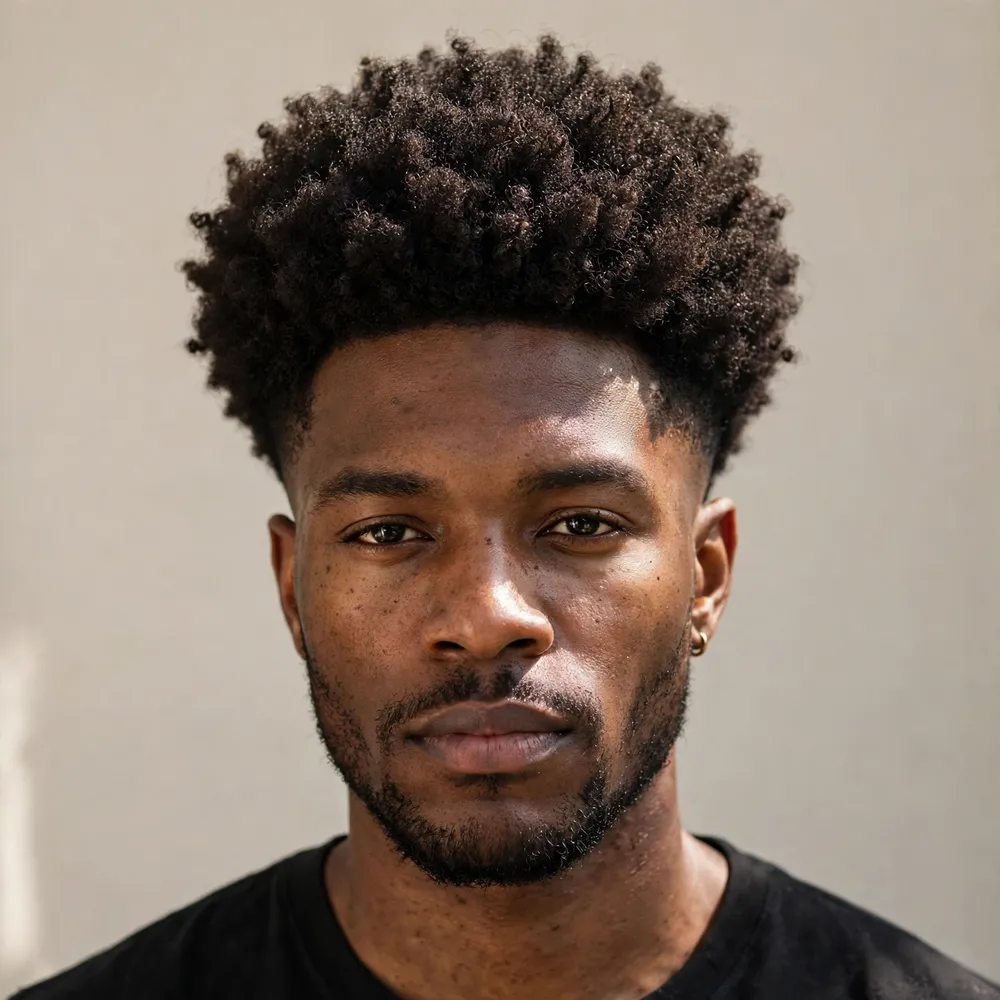
The tapered afro keeps the full, rounded volume on top but graduates the sides and back down to the skin, so the silhouette stays bold without the width of a full afro. It’s the version most men find wearable day to day — the taper sharpens the outline and makes the shape look deliberate rather than grown-out. Suits type 4A to 4C coils, and rounder faces benefit because the tapered sides slim the profile while the height adds length. Ask for the taper to follow the natural shape, not a hard fade line, unless you want a stronger contrast. Maintain the top like a regular afro — moisture and a pick — and get the taper refreshed every two to three weeks.
53. Two-Strand Twists
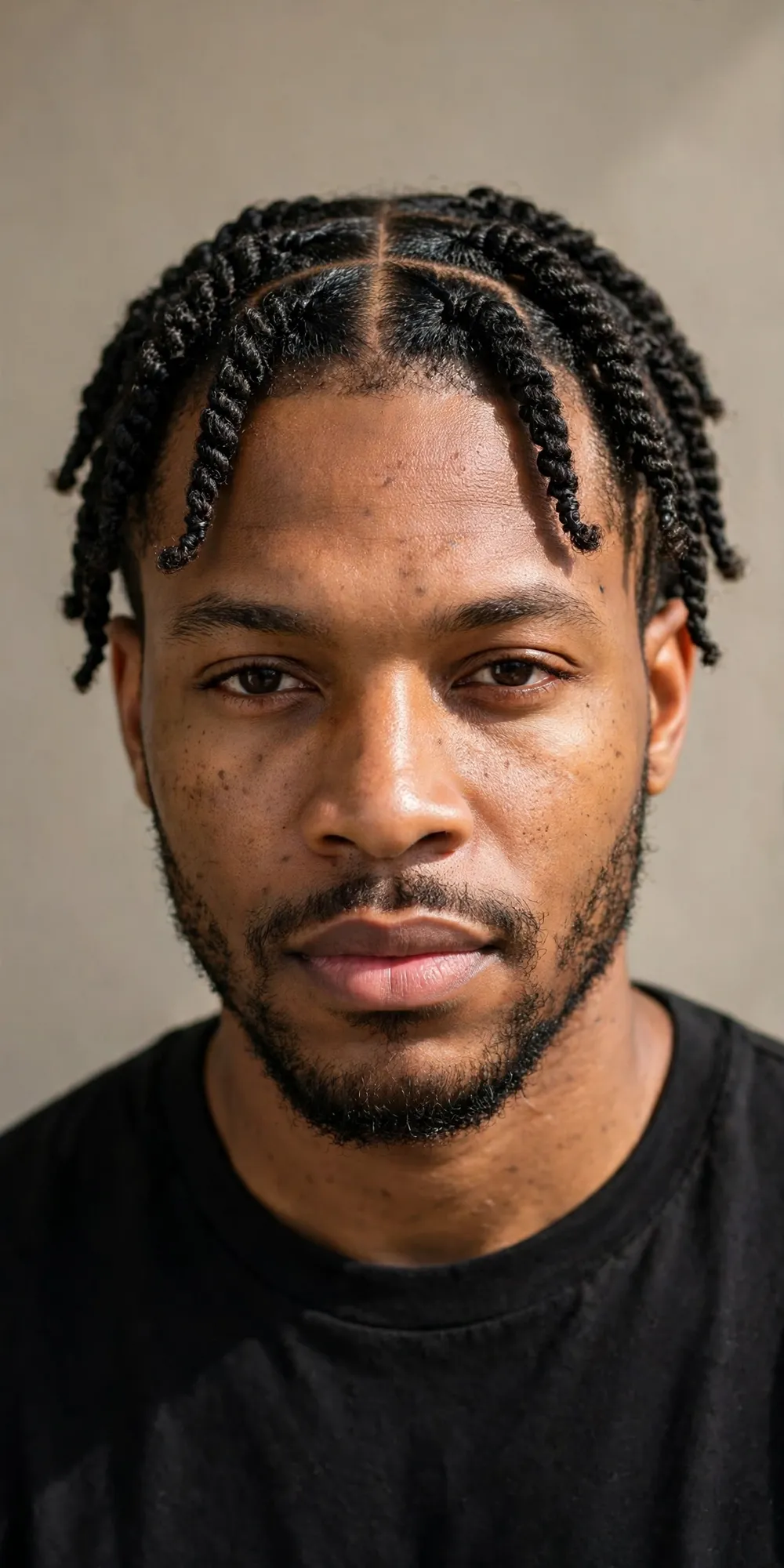
Two-strand twists are a protective style: sections of hair are split in two and twisted around each other, which locks in moisture, stops tangling, and gives type 3C to 4C hair a neat, rope-like finish. They can be worn short and tight or left longer to hang, and a fresh set lasts two to four weeks with almost no daily effort — that’s the appeal. Get them installed on clean, well-conditioned hair, and keep your scalp happy with a light oil every few days. At night, cover them with a durag or satin cap. When you take them down, do it gently on damp hair and expect a twist-out with serious definition for a day or two. Don’t leave them in past a month or the roots start to mat.
54. Finger Coils
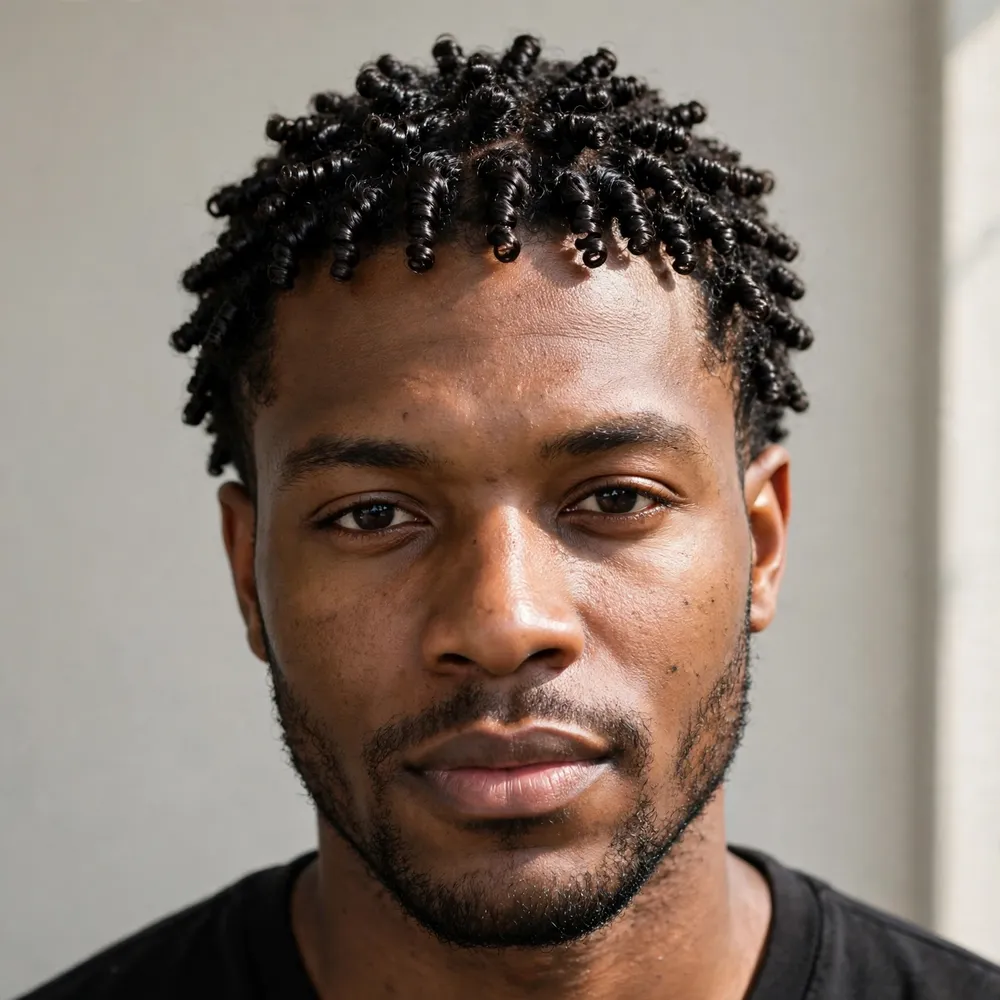
Finger coils are made one by one: a curl cream or gel is worked through small sections of damp hair, and each section is twirled around a finger until it forms a tight, defined coil. The result is the most defined look type 4 hair can wear — uniform, springy coils with real shine. It works best on short hair, one to three inches, because longer sections won’t hold the coil shape evenly. The trade-off is time: a full head can take 30 to 45 minutes to install, though a good set lasts one to two weeks with just a spritz of water and oil in the morning. Sleep in a satin cap or the coils flatten and frizz at the crown first.
55. Sponge Twists
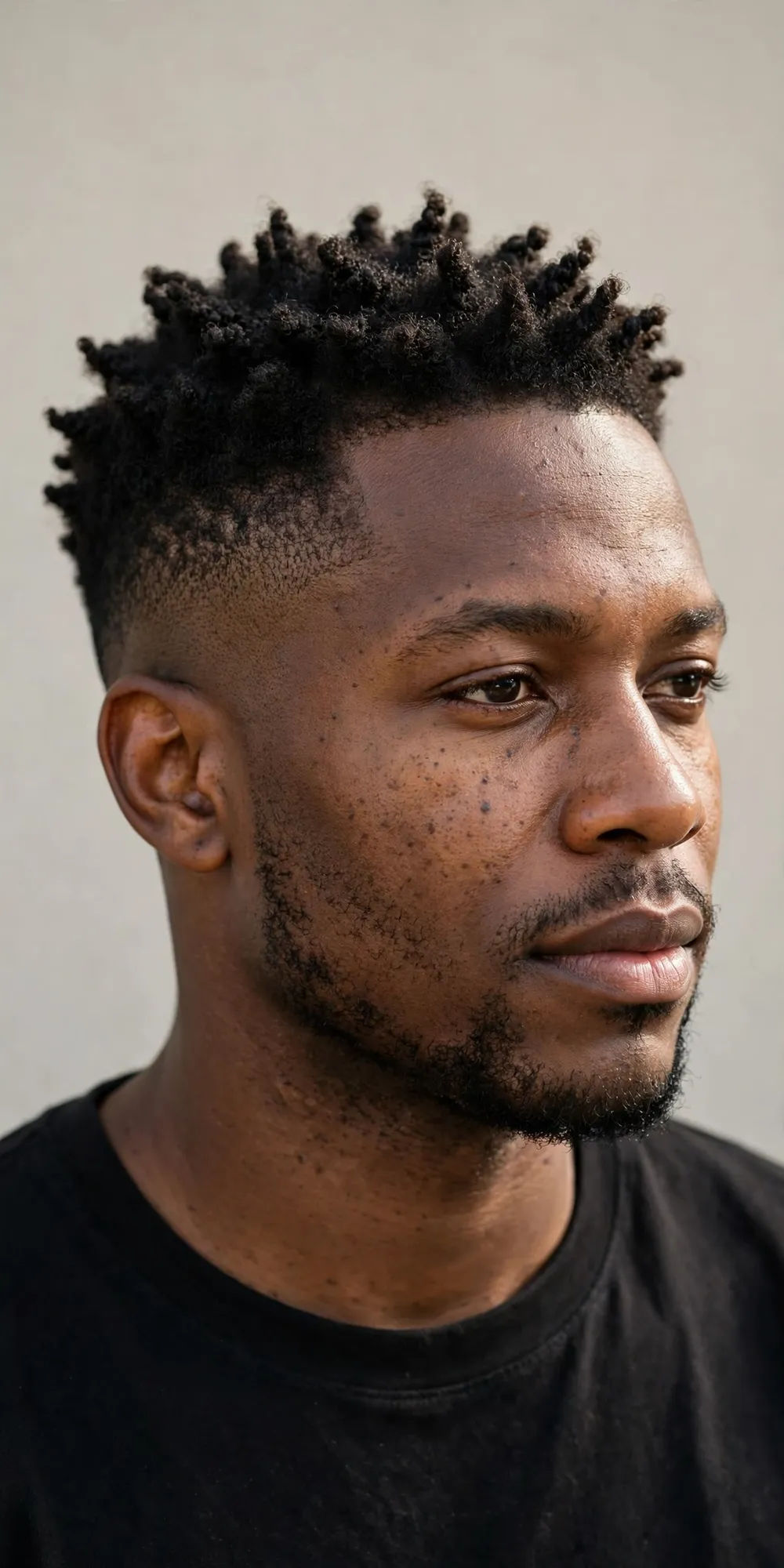
Sponge twists use a curl sponge — a foam pad with holes — rubbed in circles over short, damp, product-coated hair. The holes catch the hair and twist it into small, uniform coils in about five minutes, which is why this is the go-to texture style for short type 4 hair. Pair it with faded or tapered sides and the contrast looks sharp. The technique matters: always rub in one direction, because switching directions unravels the twists and causes frizz, and use a light gel or twist cream first so the coils hold. It suits hair from half an inch to two inches. The style resets every wash, so think of it as a morning routine, not a set-and-forget style.
56. Curly Hair with Braids

Braids and curls work well together because you can braid as much or as little as you like: a couple of cornrows at the front with curls left loose behind, braids on the sides under a curly top, or a full head of box braids once the hair is long enough. Braiding stretched sections also shows off length that shrinkage normally hides. Type 3C to 4C hair grips braids best; looser curls may need the ends left curly rather than braided to the tip. Keep braids moisturised at the roots, don’t get them braided painfully tight — tension at the edges causes breakage — and plan on two to six weeks of wear depending on the size.
57. Curly Locs
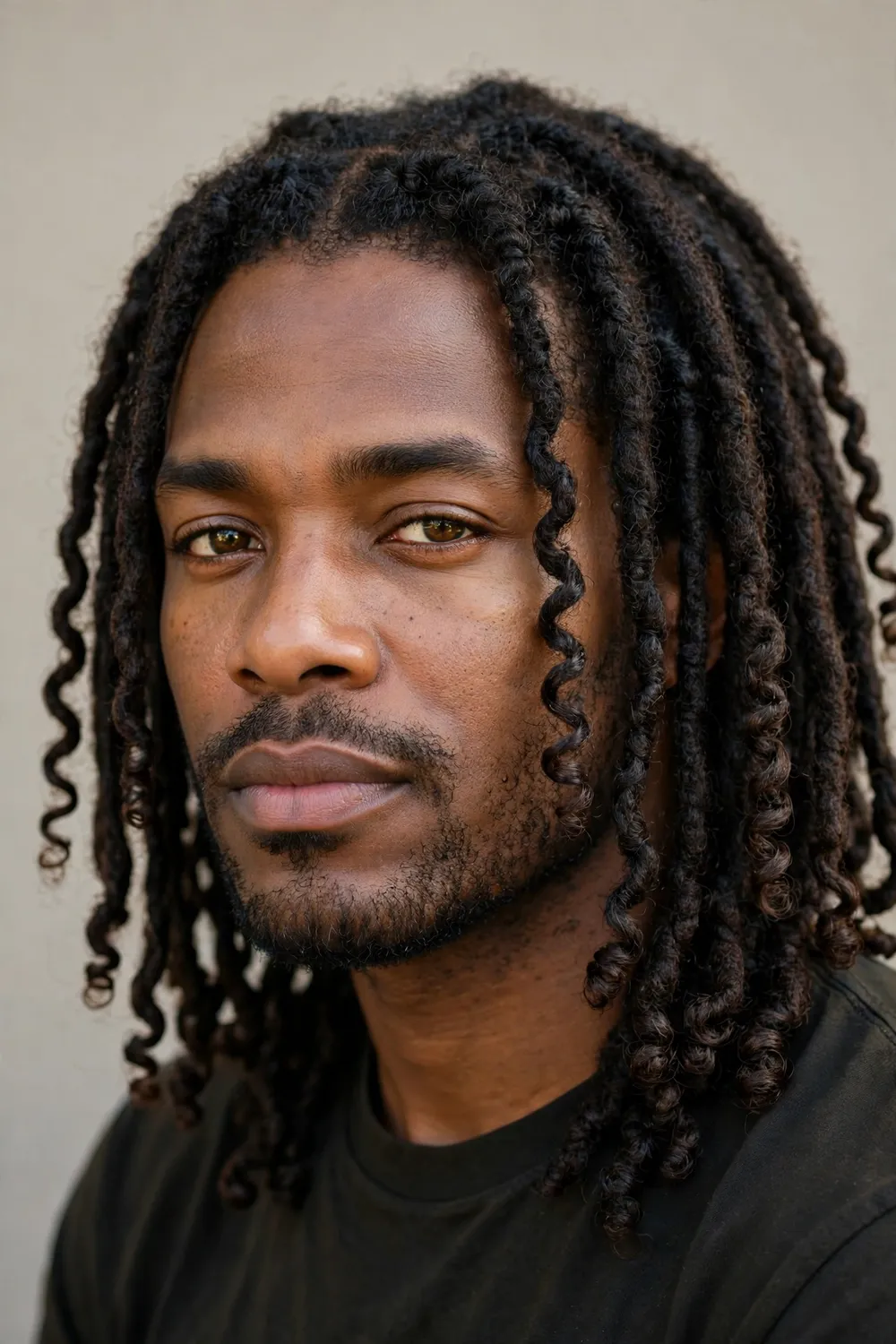
Starting locs on curly hair gives you locs with visible texture at the ends and a softer, less rope-like finish than locs formed from straight hair — for many men that’s exactly the appeal. They can be started with twists, coils, or braiding, and the early months need patience: baby locs frizz, swell, and don’t look like the photos for the first six months. Worn at medium length, they suit type 3C to 4C hair best. Maintenance is retwisting or palm-rolling the new growth every four to six weeks, washing with a residue-free shampoo, and keeping heavy waxes and creams out — buildup inside locs is very hard to remove later. This is a long-term style, so choose a loctitian you trust.
58. Coily Curly Taper
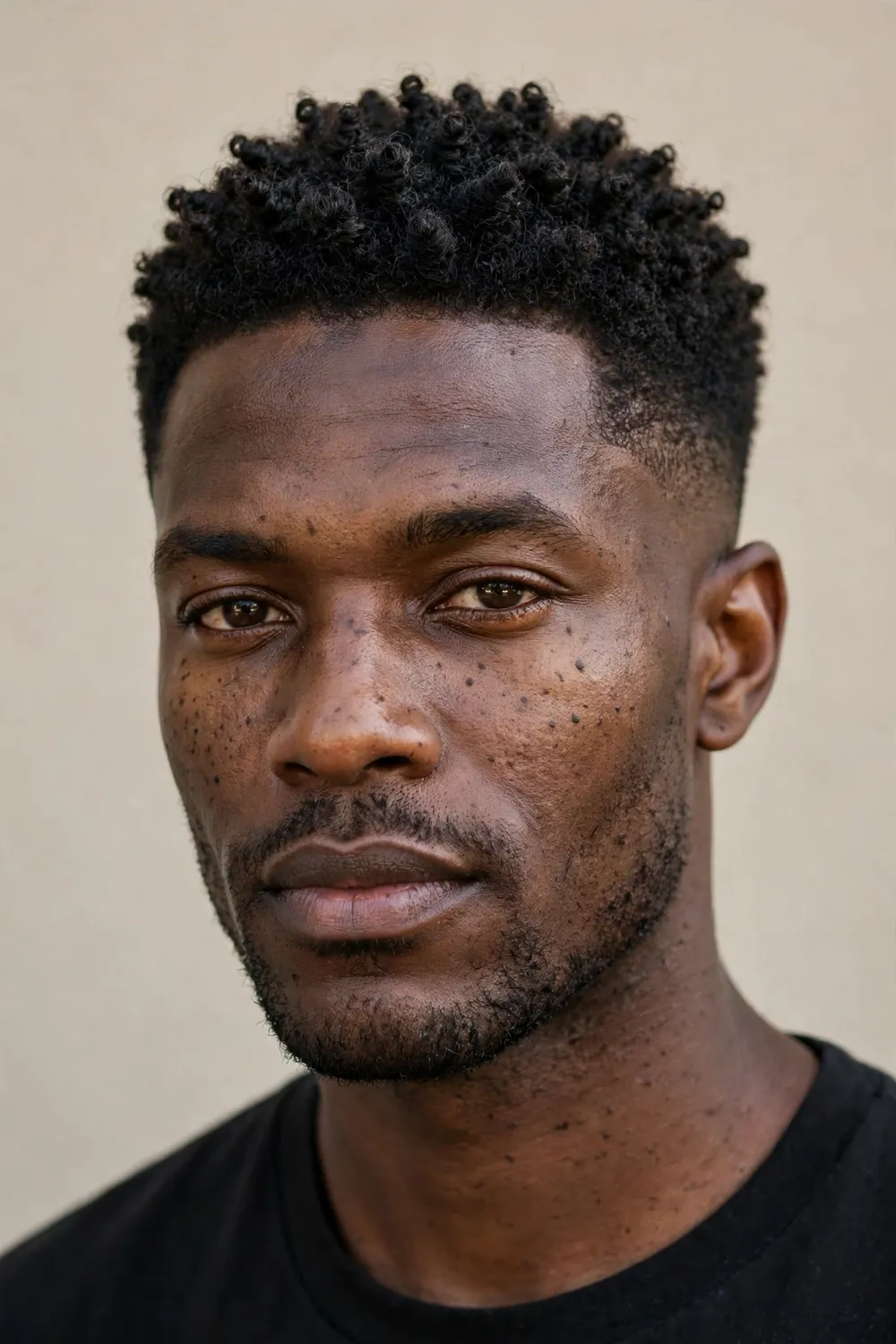
For type 4 hair that you want clean but not faded to nothing, the coily taper keeps one to two inches of tight coils on top, shaped evenly, with the sides and neckline tapered down gradually. You keep the texture that makes coily hair look dense and rich, but the outline stays crisp around the ears and hairline. It’s a strong pick for professional settings and for men growing an afro who want a tidy stage on the way. Ask the barber to shape the top with the grain of your coils and edge it up lightly — too sharp a line-up can look harsh against soft coils. Moisturise daily, refresh the taper every two to three weeks.
59. Curly Mullet
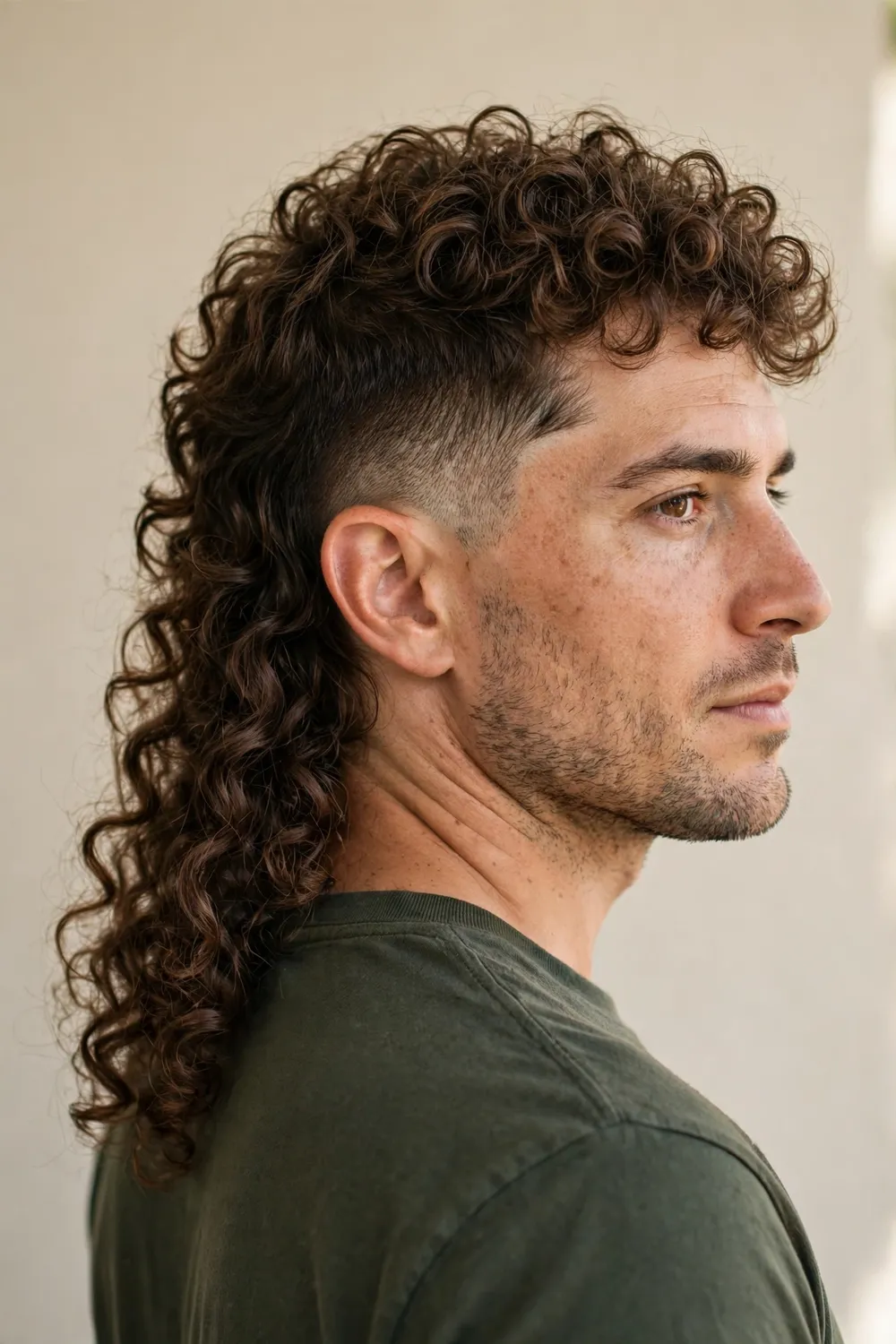
The mullet came back, and curly hair does it better than straight hair does — the texture stops the long back from looking stringy and gives the whole cut volume. The modern version keeps the sides faded or tapered short, a full curly fringe and top, then length at the back reaching the collar. It suits type 2C to 3C best; very tight coils make the back section wide rather than long. Don’t ask for a vintage mullet — ask for a soft disconnect, faded sides, and length left only at the back. It grows out fast at the sides, so plan on a cleanup every three weeks, and style with curl cream pushed forward on top and left natural at the back.
60. Curly Wolf Cut
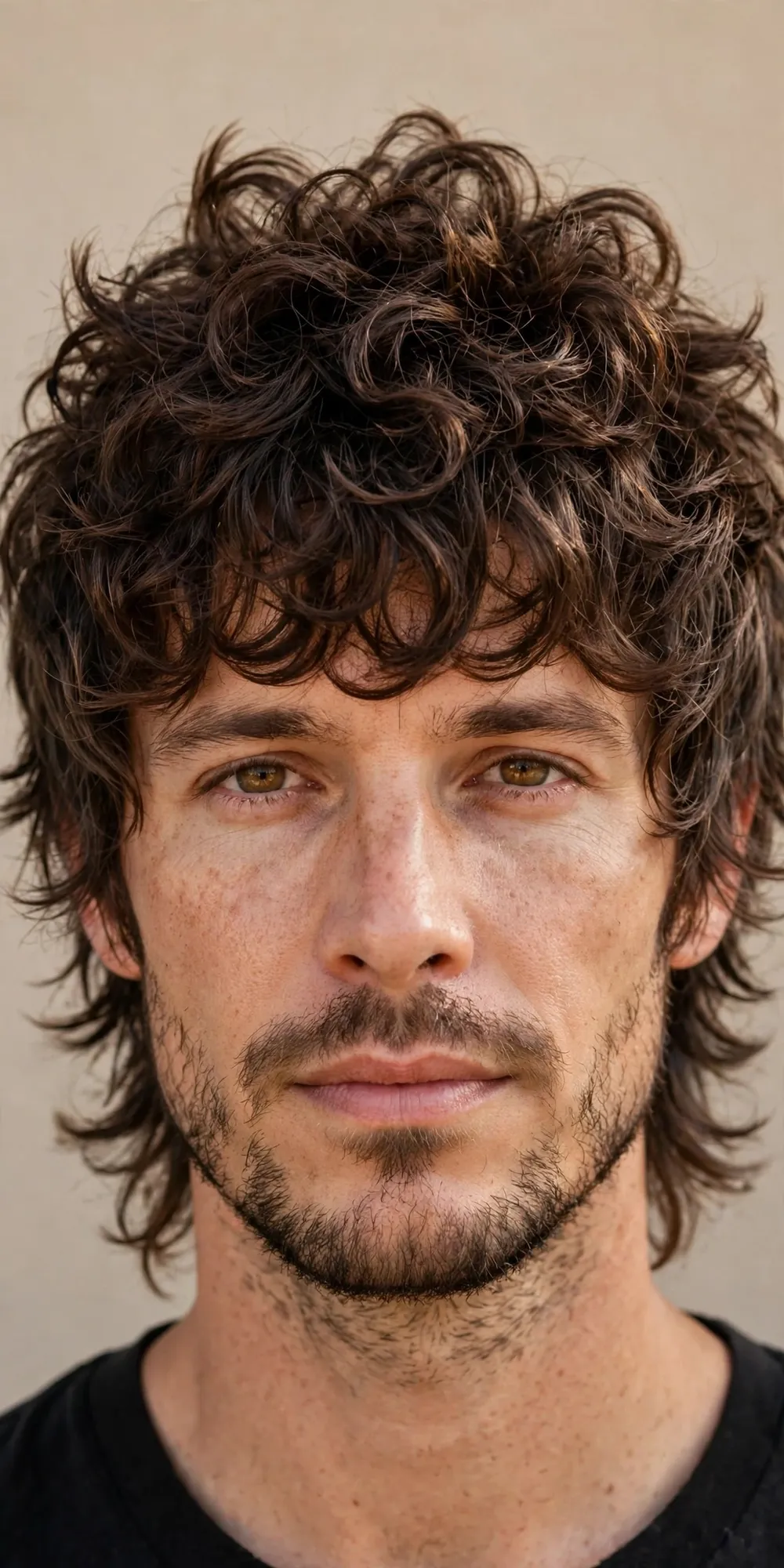
The wolf cut is a shag-mullet hybrid: heavy, choppy layers, maximum volume at the crown, a full fringe, and ends that taper off wispy and thin. On curly hair the layers do double duty — they create that wild shape and remove the weight that would otherwise drag the crown flat. It works best on type 2C to 3B hair with medium thickness, and it’s a statement cut, so expect attention. Ask for short layers at the crown blending into longer lengths, cut dry so the layer fall matches your curls. Styling should look like you didn’t: a little curl cream, scrunched and air-dried. The shape holds about eight weeks before the layers grow into each other.
61. Curly Broccoli Cut
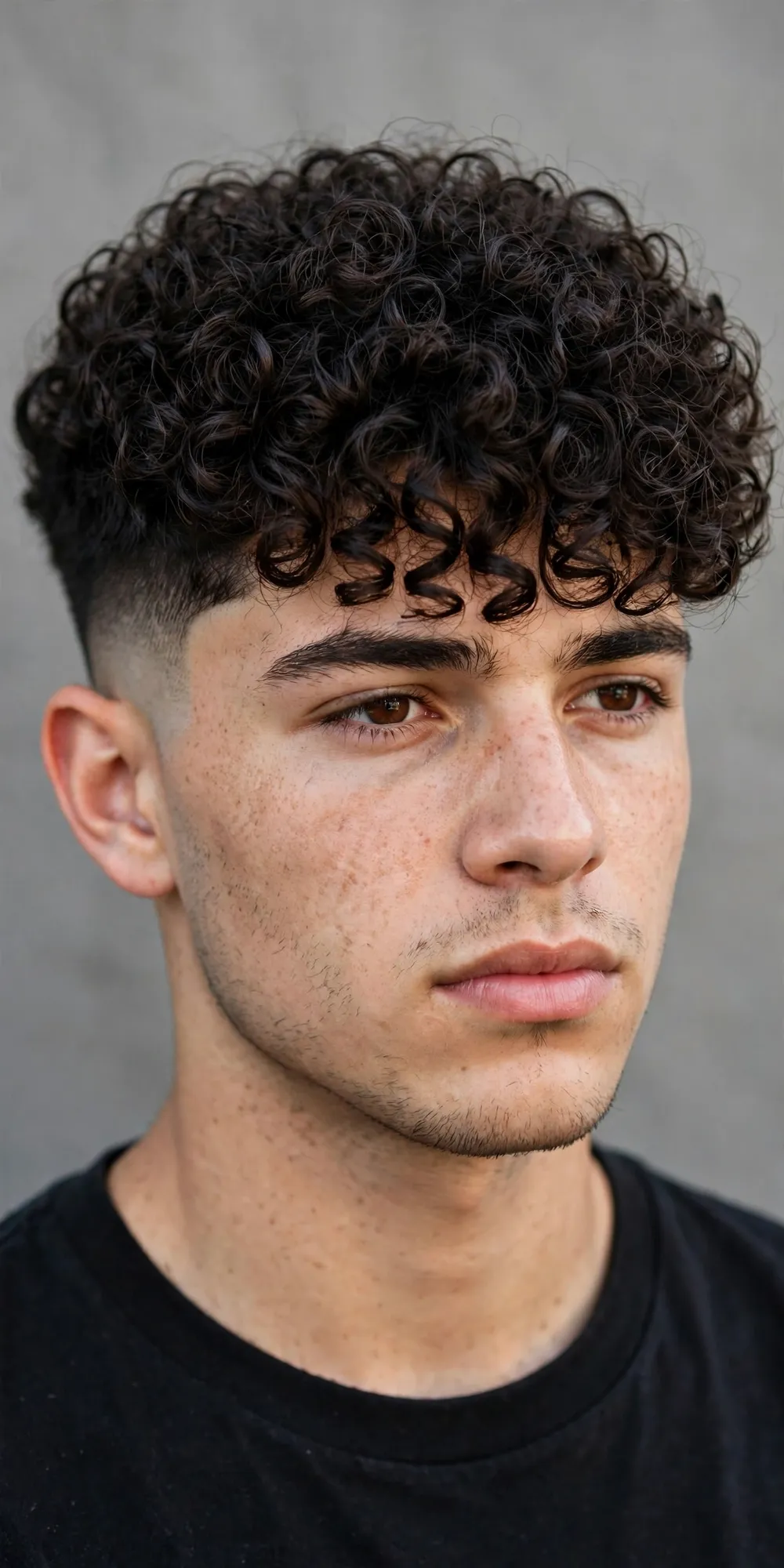
Named (affectionately) because the silhouette resembles a broccoli floret: a dense dome of tight curls and full fringe on top, with a high or mid fade taking the sides down to almost nothing. It’s the defining cut for a lot of teenage and twenty-something curly guys, and it works because the fade removes all the side width, letting the curly top read as pure texture. Suits type 3A to 3C hair that’s thick enough to hold the dome shape. Define the top with a curl cream or light mousse, pushing the fringe forward. The fade is the maintenance item — every two weeks keeps it crisp — while the top just needs moisture and a shape trim every six weeks.
62. Curly E-Boy Curtains
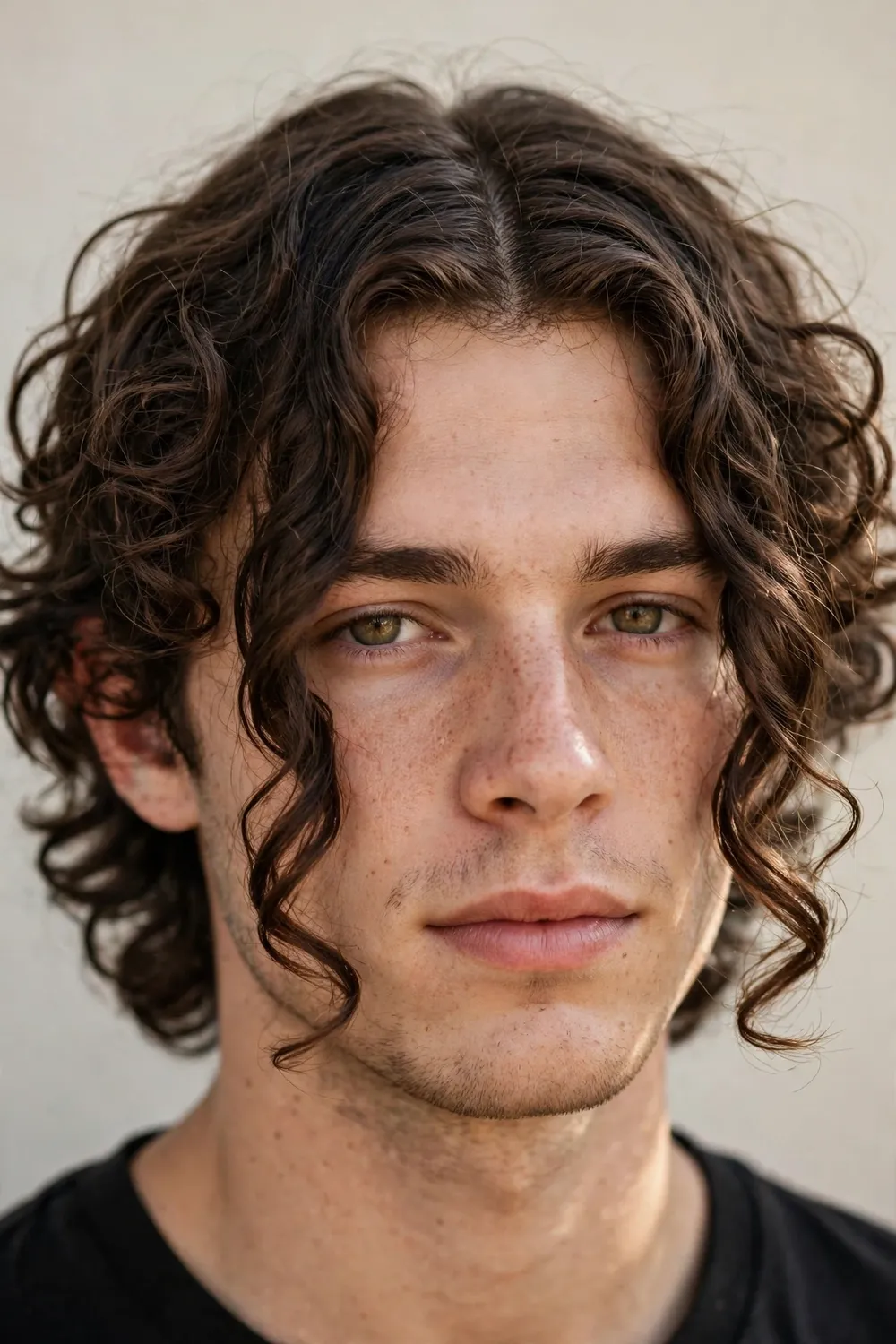
E-boy curtains take the middle part from idea #29 and loosen everything up: longer curtain bangs falling past the cheekbones, a centre part, and a deliberately undone finish — nothing slicked, nothing sharp. On curly hair the curtains frame the face with spirals instead of straight sheets of hair, which reads softer and more natural. You need five to six inches at the front for the bangs to hang properly, and it suits type 2C to 3B patterns and oval or longer faces. Define the part while your hair is wet, let the curtains air-dry, and resist gel — this style dies under a hard finish. Push them back with a light cream on days you need your face clear.
63. Curly Hair with Line Up

A line up doesn’t change your haircut — it finishes it. The barber edges the front hairline, temples, and often the beard line into crisp, straight lines and sharp corners, and the contrast between those geometric edges and soft natural curls on top is what makes the whole head look freshly cut. It works with any curly style on this list, from crops to medium curls, and suits every curl type. The catch is longevity: a line up looks perfect for about a week and visibly softens by week two, so treat it as a one-to-two-week touch-up between full cuts. Ask your barber not to push the line back beyond your natural hairline to make it straighter — that grows out looking worse, not better.
64. Curly Hair with Hair Design
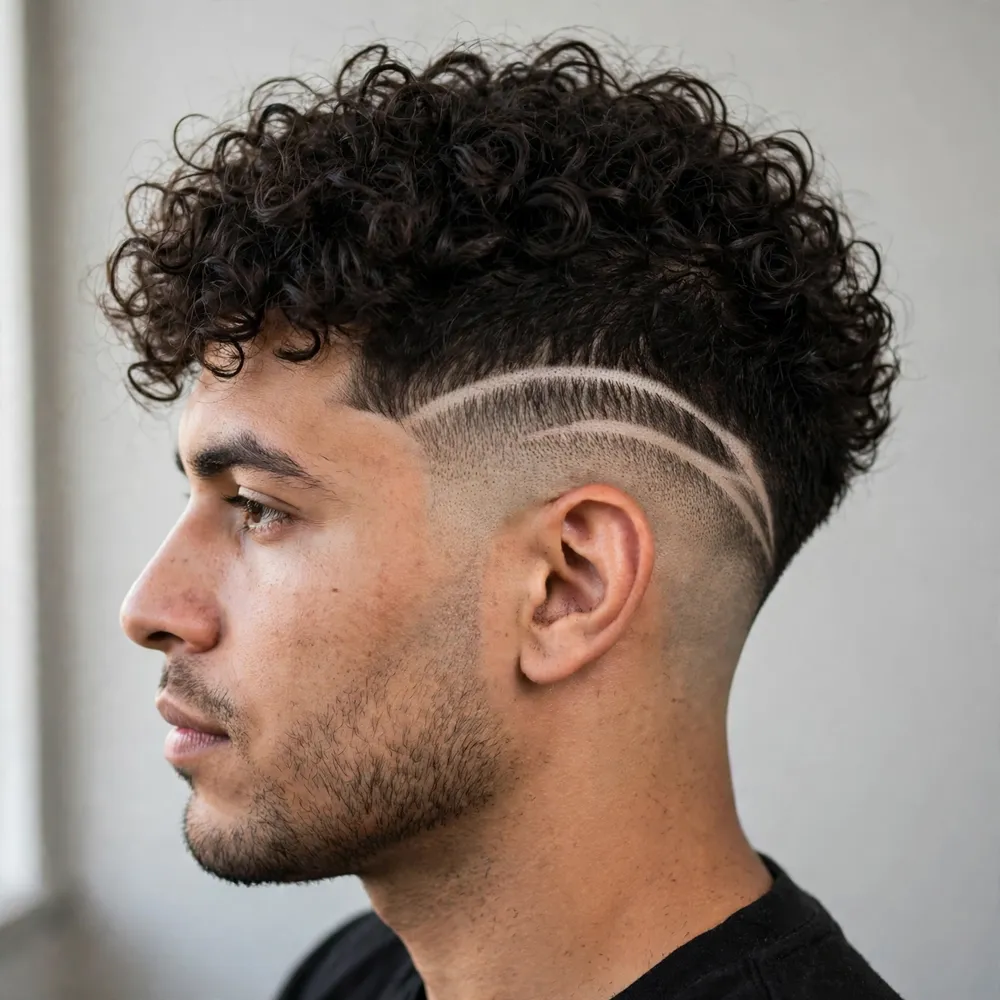
A hair design shaves a line, curve, or pattern into the faded section of your cut — a single slash behind the ear, a curved part-line accent, or something fully custom. The curly top stays natural; the design lives in the fade where the short hair acts like a canvas. It’s best paired with a mid or high fade, because you need enough faded area for the design to read. Any curl type works since the design is independent of the top. Keep expectations realistic about upkeep: designs are the highest-maintenance detail in barbering, growing out and blurring within one to two weeks, and most barbers redraw them at each fade appointment. Start simple — a single clean line ages better than a busy pattern.
65. Curly Wet Look
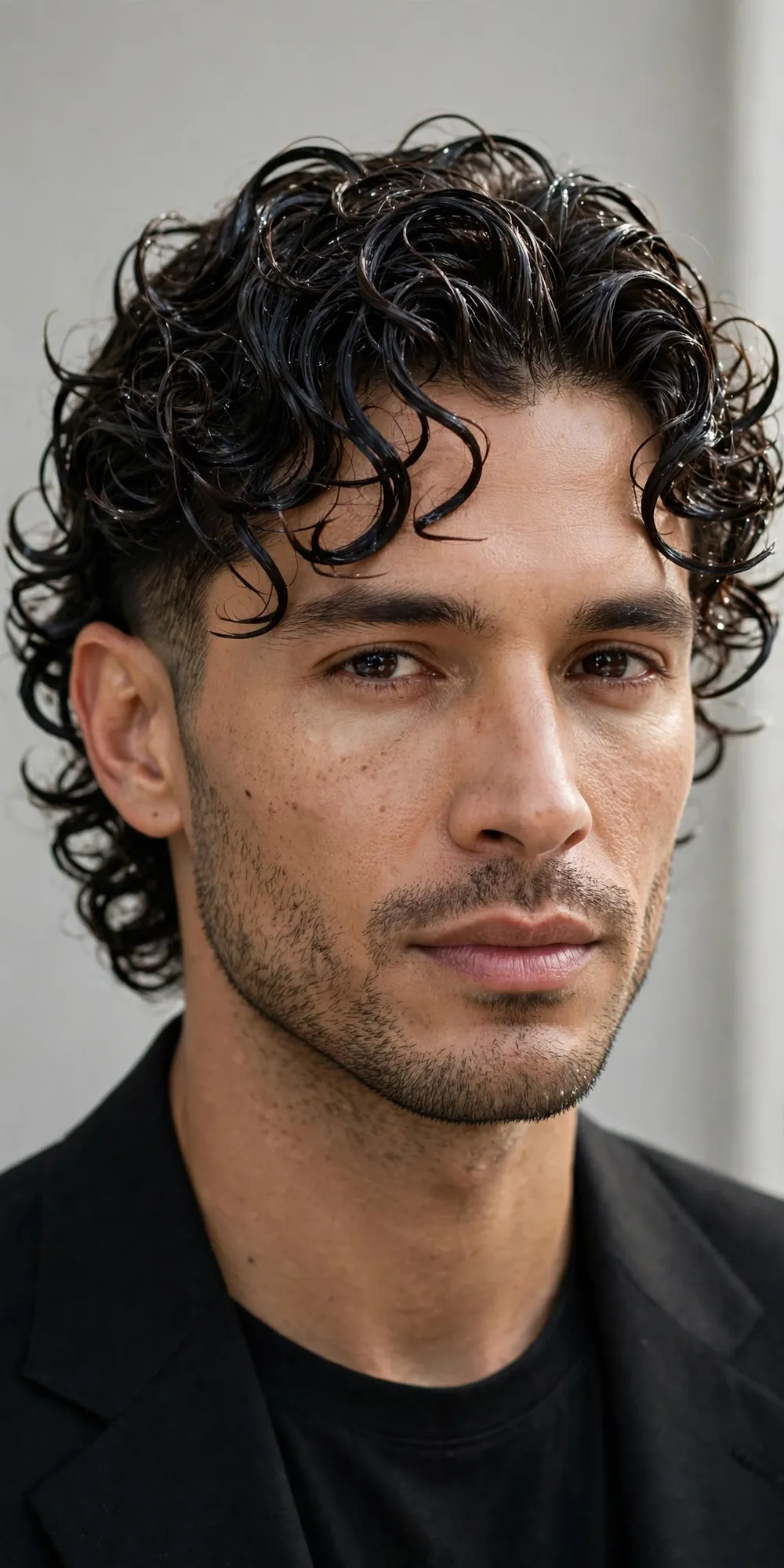
The wet look makes curls appear freshly washed all day: defined, glossy, and slightly darker, with each curl separated and shiny. It’s a red-carpet and evening style rather than an everyday one, because holding that finish takes a generous amount of gel. Work a strong-hold gel or wet-look pomade through soaking-wet hair, define the curls with your fingers, then don’t touch it while it dries — touching breaks the shine coating and invites frizz. It suits type 2C to 3B hair at short to medium length; on type 4 hair the same products give a defined coil look rather than a true wet finish. It washes out in one shampoo, so it’s a zero-commitment way to change your look for an event.
66. Highlighted Curls
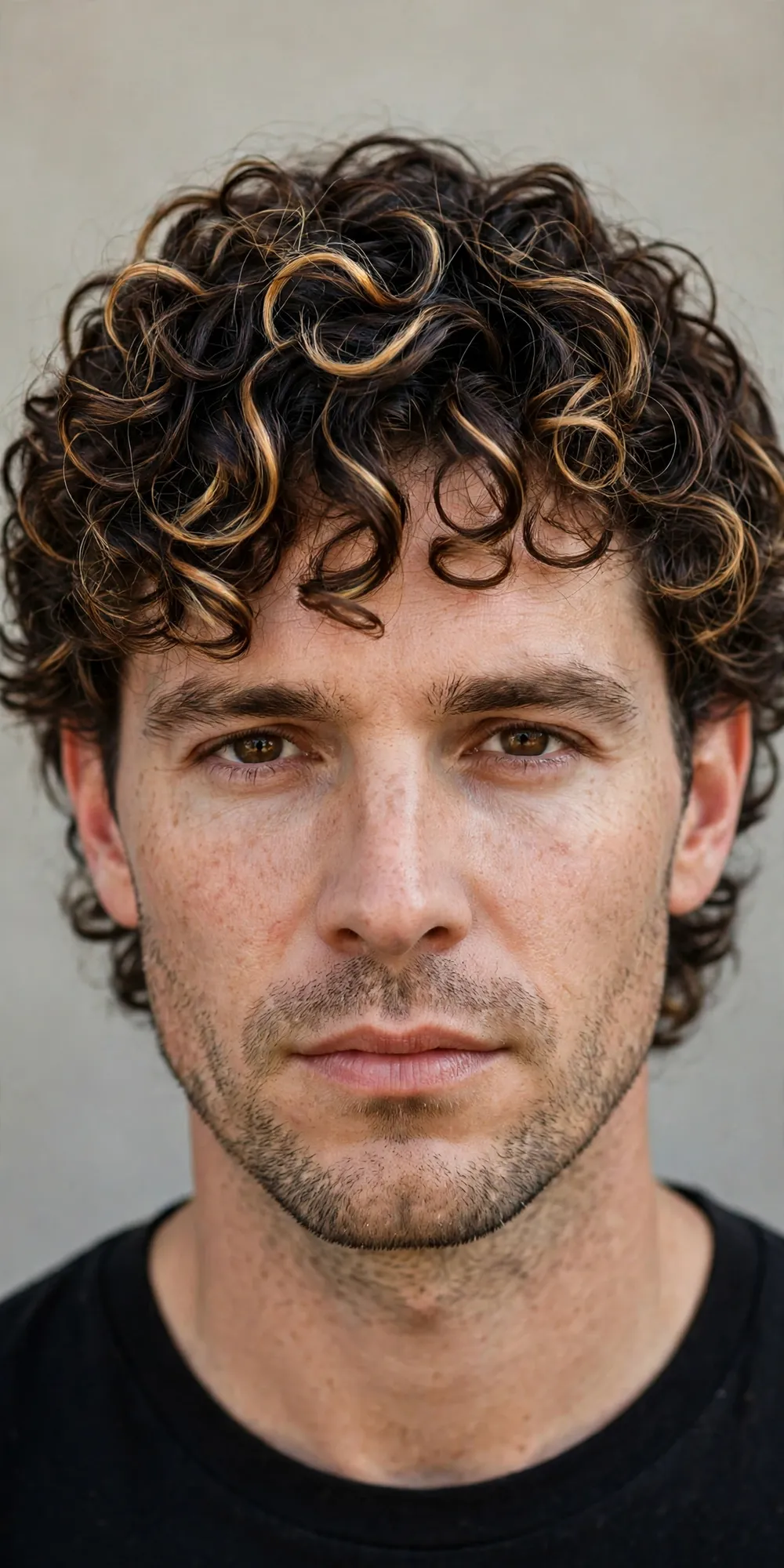
Highlights might do more for curly hair than for any other texture, because colour placed on individual curls makes the spiral pattern visible from across the room — each highlighted curl catches light as it twists. Blonde and caramel are the most requested on dark hair, usually painted on freehand (balayage-style) through the top and front rather than foiled all over, so the grow-out stays soft. Any curl type can carry them, but be honest with yourself about condition: bleach dries hair out, and curly hair is dry to begin with. Budget for a deep-conditioning treatment every week or two and a toner refresh every six to eight weeks. Get the cut first, then the colour, so highlights land on the curls where they’ll actually sit.
67. Curly Hair with Full Beard
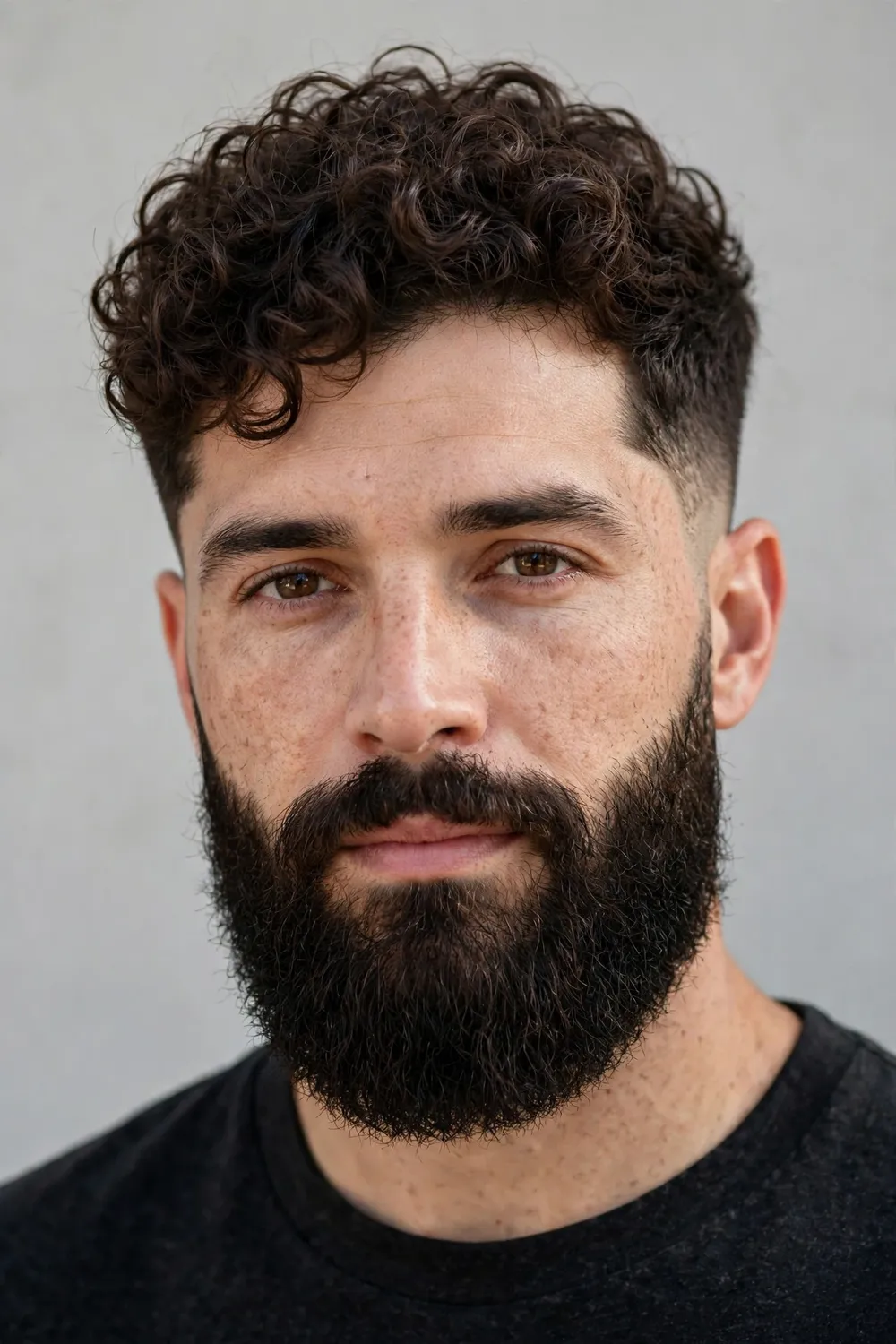
Curls plus a full beard is a lot of texture on one head, and whether it looks sharp or just big comes down to proportions. The rule: if the hair is voluminous, the beard should be shaped and not too long, or the whole silhouette turns into a circle. Keep the beard’s cheek lines clean, fade or taper the sideburns so the beard blends into the haircut instead of colliding with it, and let one of the two be the statement — usually the curls. This pairing suits type 3 and 4 hair and square or oblong faces, where the combined volume adds welcome width. Beard trims every one to two weeks and a boar brush to lay the beard flat keep it looking intentional.
68. Asymmetric Curly Cut

An asymmetric cut deliberately breaks the balance: one side noticeably longer than the other, or a fringe that sweeps long on one side and short on the other. It turns the curl pattern itself into the design, because no two curls fall alike, and it suits men who find every standard cut a bit safe. It works on type 2C to 3B hair at short-to-medium length, where the difference in lengths actually reads. This is a cut to get from a barber whose work you’ve seen — precision matters, and a badly judged asymmetric cut just looks like a mistake. Styling is flexible: push everything toward the long side for maximum effect, or part it conventionally for a subtler version. Reshape every five to six weeks.
69. Curly Ivy League

The Ivy League is the smart end of short haircuts: short back and sides, but enough length left on top — an inch and a half to two inches — to comb into a neat side sweep with a small quiff at the front. The curly version keeps just enough top length for the wave or curl pattern to show, so it reads polished without looking like you’re hiding your texture. It’s made for type 2 and loose 3A curls in formal jobs, and it’s one of the few curly cuts that looks right with a suit. Ask for a scissor cut on top rather than clippers, which preserves the pattern. A fingertip of light pomade on dry hair holds the sweep. Tidy-up every four weeks.
70. Curly Perm Hairstyle
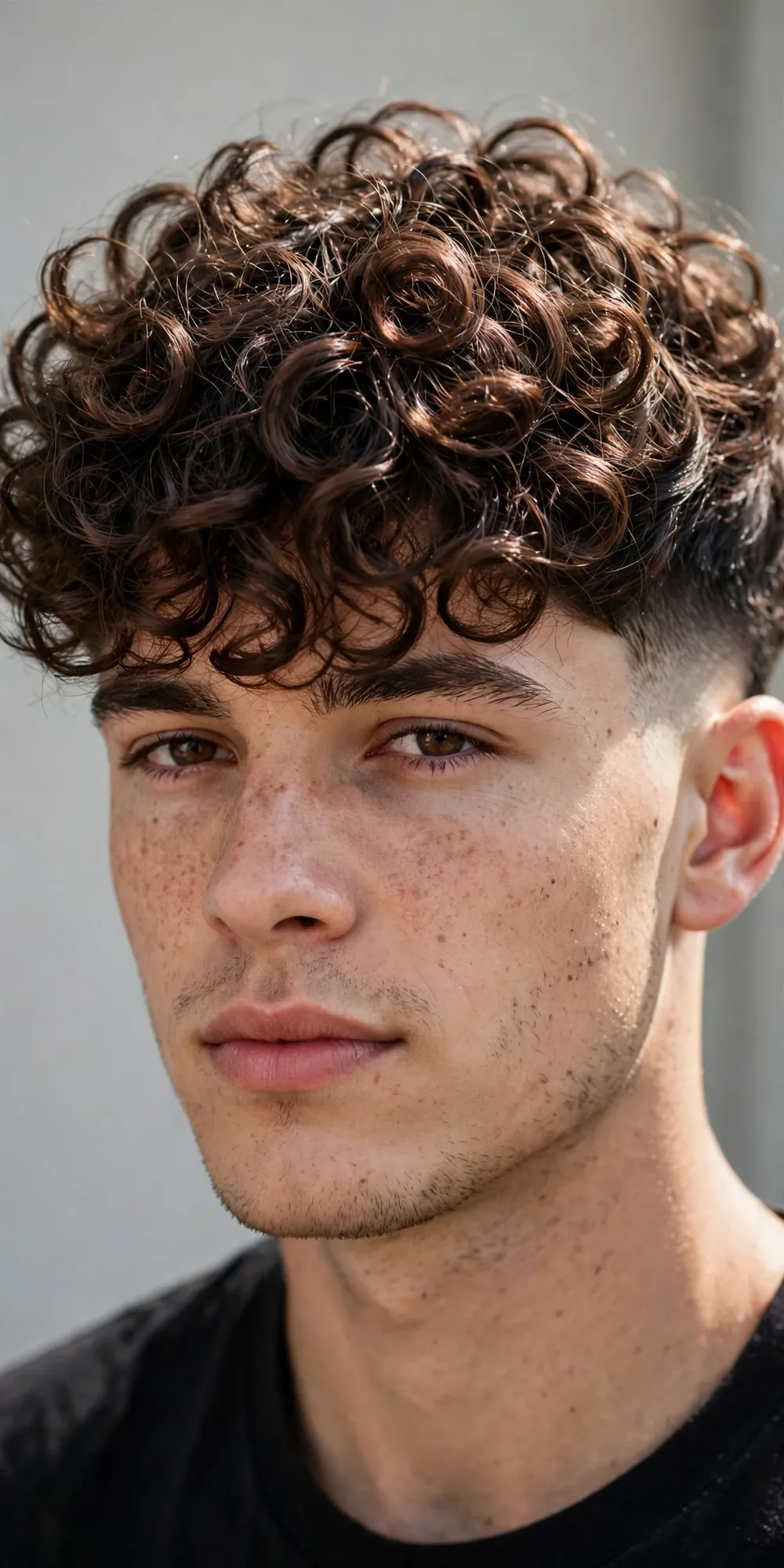
Yes, the perm is back — and plenty of the “natural” curly styles men save on Instagram started as perms on straight or slightly wavy hair. A modern men’s perm uses rods sized to the curl you want, from loose 2C-style waves to tight 3B curls, usually with a fade or taper keeping the sides natural. Be honest about the upkeep before you book: a perm costs real money, takes two to three hours in the chair, grows out over three to six months with a visible straight-root line, and the first 48 hours matter — no washing, no hats, no getting it wet. Chemically treated hair also needs the same moisture routine as natural curls, because perm solution dries hair out. Choose a stylist who shows men’s perm work, not just women’s.
71. Curly Bowl Cut
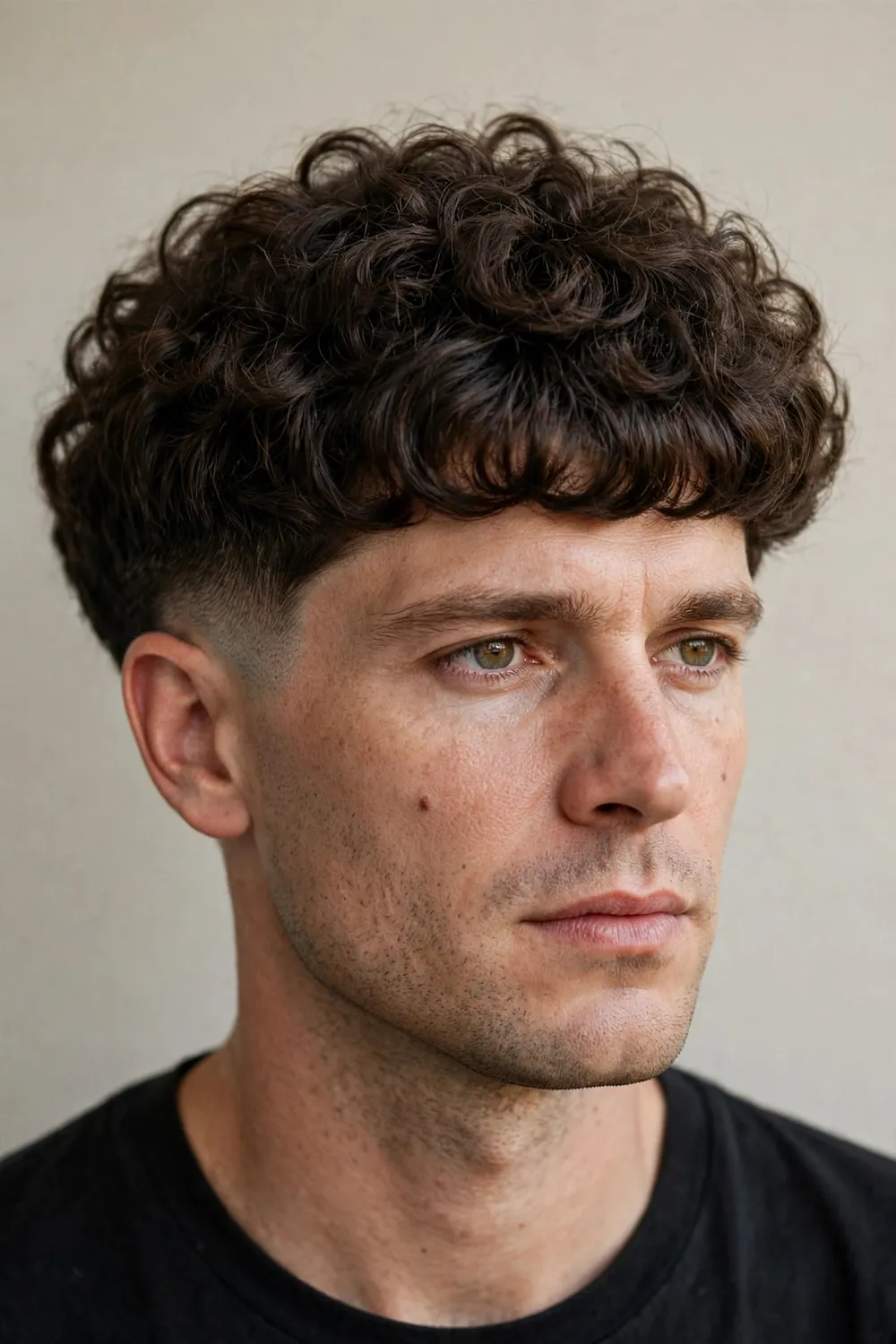
The bowl cut has cycled back as a fashion-forward throwback, and natural curl is what saves it from the childhood-photo version: instead of a straight, helmet-like fringe line, the curls soften the edge into something textured and deliberate. The cut keeps even length around the head at fringe height, usually with the underneath faded or undercut so the bowl shape sits clean. It suits type 2C to 3A hair with decent thickness, and strong, angular faces carry it best. This is a high-fashion risk — on the wrong head it reads costume — so bring photos and talk it through with your barber first. Styling is easy (leave-in, air-dry, push the fringe forward) but the outline needs a trim every four weeks to keep the shape intentional.
How to Style and Maintain Curly Hair
Curly hair doesn’t need a complicated routine — it needs a consistent one. Curls are drier than straight hair because scalp oils travel slowly down a spiral, so nearly everything below is about adding moisture and then not disturbing it.
- Wash less, condition more. Shampoo two to three times a week at most, with a sulphate-free shampoo, and condition every single wash. On non-wash days, rinse with water and conditioner only (a “co-wash”) if your hair feels dirty.
- Detangle wet, never dry. In the shower, with conditioner in, work through tangles with your fingers or a wide-tooth comb. This is the only time a comb should touch your curls.
- Apply products to soaking-wet hair. Leave-in conditioner first, then a curl cream for moisture, then a gel if you want hold and definition. Applying to damp or dry hair gives patchy results and frizz.
- Scrunch, then hands off. Scrunch sections upward with a microfibre towel or an old T-shirt — a rough bath towel roughs up the cuticle and creates frizz. Then air-dry or diffuse on low heat, low speed, and don’t touch until fully dry.
- Scrunch out the crunch. If gel leaves a stiff cast, squeeze the curls gently once they’re 100 percent dry. The cast breaks, the definition stays, and the hair feels soft again.
- Refresh instead of re-washing. On day two or three, mist with water mixed with a little leave-in, smooth it over frizzy sections, and scrunch. Most curls look better on day two than wash day.
- Sleep on satin. A satin pillowcase or cap cuts overnight friction, which means less frizz and less breakage. Long hair can be piled loosely on top of the head (“pineappled”) to protect the curls underneath.
- Keep the trim cycle for your style. Fades and tapers need the barber every two to three weeks; short-to-medium cuts every five to six; long styles every eight to twelve weeks for an ends trim. Dry or damaged ends never recover — cutting them is the fix.
Mistakes to Avoid
- Brushing or combing dry curls — it shatters the curl pattern into a frizzy puff and causes breakage. Detangle wet with conditioner, or use fingers only.
- Washing every day with harsh shampoo — sulphate-heavy shampoo strips oils curly hair can’t replace quickly, leaving it drier and frizzier. Two to three washes a week is plenty for most men.
- Ignoring shrinkage when choosing a length — curls dry two to eight inches shorter than they look wet (tight coils shrink the most). A fringe cut to eyebrow length wet can end up at hairline length dry.
- Skipping layers — one-length curls stack their weight at the bottom and form the dreaded triangle or mushroom shape. Layers are not optional on medium and long curls.
- Using heavy waxes and thick pomades — they weigh curls down, kill volume, and are hard to wash out. Creams, mousses, and gels are built for curls; waxes mostly aren’t.
- Blasting with high heat — hot diffuser air and daily straightening dry curls out and can permanently loosen the pattern. Keep heat low, and use it as the exception, not the routine.
- Letting an inexperienced barber thin your hair out — thinning shears on curls create short, frizzy ends throughout the cut. Ask to see photos of curly clients before you sit in a new chair.
Curly Hairstyles for Men FAQs
What is the best haircut for men with curly hair?
There’s no single winner, but the most versatile is medium curls on top with a mid fade or low taper fade: it keeps the curl pattern as the feature, works in formal and casual settings, and suits most face shapes. If you want one safe first curly cut, make it that — then adjust length and fade height to taste.
How often should men with curly hair get a haircut?
It depends on the style, not the curls. Fades and tapers lose their shape in two to three weeks; short scissor cuts hold five to six; medium and long styles only need the ends tidied every eight to twelve weeks. If your shape goes before your length does, the sides usually need a cleanup between full cuts.
Should curly hair be cut wet or dry?
Dry, ideally — or at least finished dry. Wet curls hang longer and straighter than they’ll ever sit in real life, so a wet cut often ends up too short and uneven once the pattern springs back. Barbers who specialise in curls usually cut on dry hair, curl by curl. At minimum, your barber should check the shape dry before you leave.
How do I stop my curly hair from frizzing?
Frizz is mostly dry hair reaching for moisture in the air, so the fix is hydration plus not disturbing the curls. Condition every wash, use a leave-in, apply products to soaking-wet hair, dry with a microfibre towel or T-shirt, and keep your hands off until it’s fully dry. Brushing dry hair and rough towelling are the two habits that cause the most frizz.
Do fades look good on curly hair?
Yes — fades are one of the best pairings for curls, because the sharp sides contrast with the soft texture on top and stop width building up at the temples. Low and taper fades give a natural, grown-up finish; mid and high fades give a bolder contrast. The only cost is upkeep: most fades need refreshing every two to three weeks.
How can I make my curly hair look less puffy and bulky?
Bulk usually means the weight is sitting in the wrong place. Ask for layers or internal weight removal, keep the sides tapered or faded rather than scissored full, and avoid volumising products. Applying a cream or gel to wet hair also clumps curls together so they hang closer to the head instead of expanding outward.
What products should men with curly hair actually use?
Four products cover almost every man: a sulphate-free shampoo, a good conditioner, a leave-in conditioner, and one styling product matched to your goal — curl cream for moisture and soft definition, mousse for lightweight volume on looser curls, or gel for hold and frizz control. Everything else is optional; if your routine has eight steps, it’s the routine that’s the problem.
Final Word
Curly hair rewards men who work with it instead of against it. Match the cut to your actual curl type — not the one you wish you had — keep the moisture routine simple and consistent, and find a barber who cuts curls dry and can show you curly work they’ve done before. Start with any of the 71 styles above that fits your length and lifestyle, show your barber the photo, and give the cut a few weeks to settle before you judge it.
For more cuts organised by length, face shape and hair type, browse the rest of our guides at hairgroomtips.com/blog.