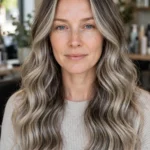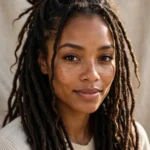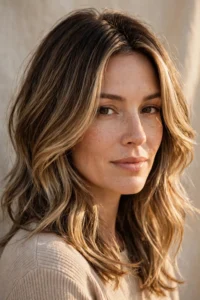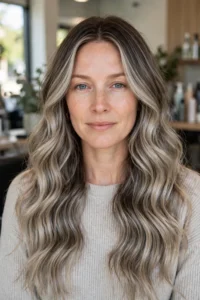



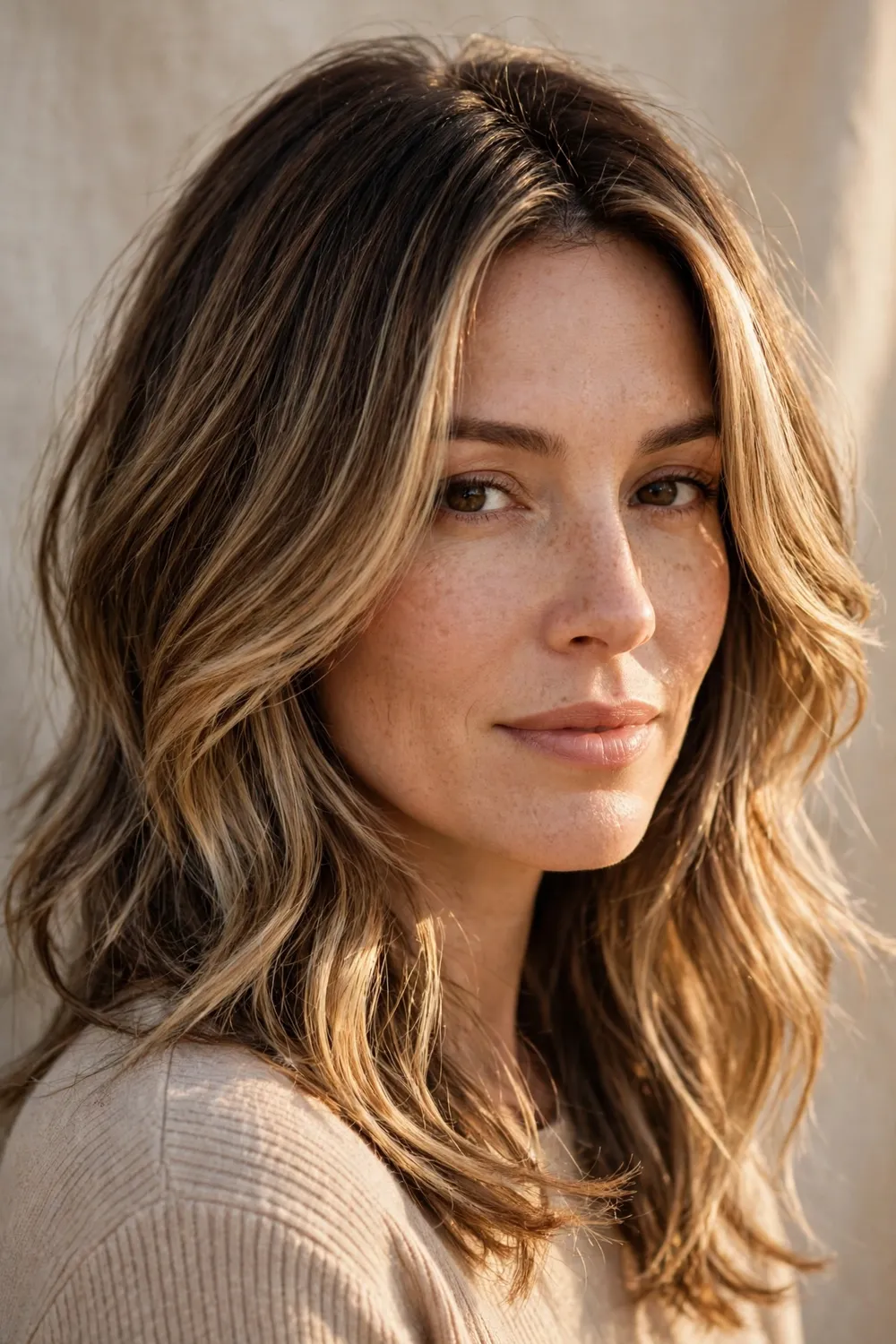
Bronde balayage is the colour brunettes keep coming back to when full blonde feels like too much and plain brown feels like too little. It sits right in the middle — brown roots melting into soft blonde ribbons, painted on by hand so the grow-out stays gentle and the finish looks like sunlight rather than stripes. No harsh lines, no obvious regrowth, just depth that moves when you do.
It works so well on brunettes because the lift stays small. One to three shades lighter than your natural base keeps the colour believable, and the freehand placement means your colourist can put brightness exactly where it flatters your face. If you’re not sure where to start, these three are the safest bets: Soft Mushroom Bronde for cool, smoky dimension, the Caramel Money Piece for instant warmth around the face, and the Ash Bronde Melt for the lowest-maintenance grow-out of the lot. The other thirty ideas below cover every shade in between.
What Is Bronde Balayage?
Bronde is the colour; balayage is the technique. The word bronde comes from brown plus blonde — a blend that usually lives between levels 5 and 8, dark enough to read as brunette in some lights and light enough to catch the blonde in others. Balayage, meanwhile, is the freehand painting method your colourist uses to place that colour, sweeping it onto the surface of the hair instead of wrapping it in foils.
That distinction matters when you’re booking. Asking for “bronde” tells your colourist which shade family you want; asking for “balayage” tells them how to apply it. Keep the lightest pieces just one to three shades above your base and the result stays bronde — push further and you’re in blonde territory, with the upkeep to match. Done right, the blend looks lived-in from day one and grows out without a hard line.
The 33 Best Bronde Balayage Ideas
1. Soft Mushroom Bronde with Center Curtain Layers
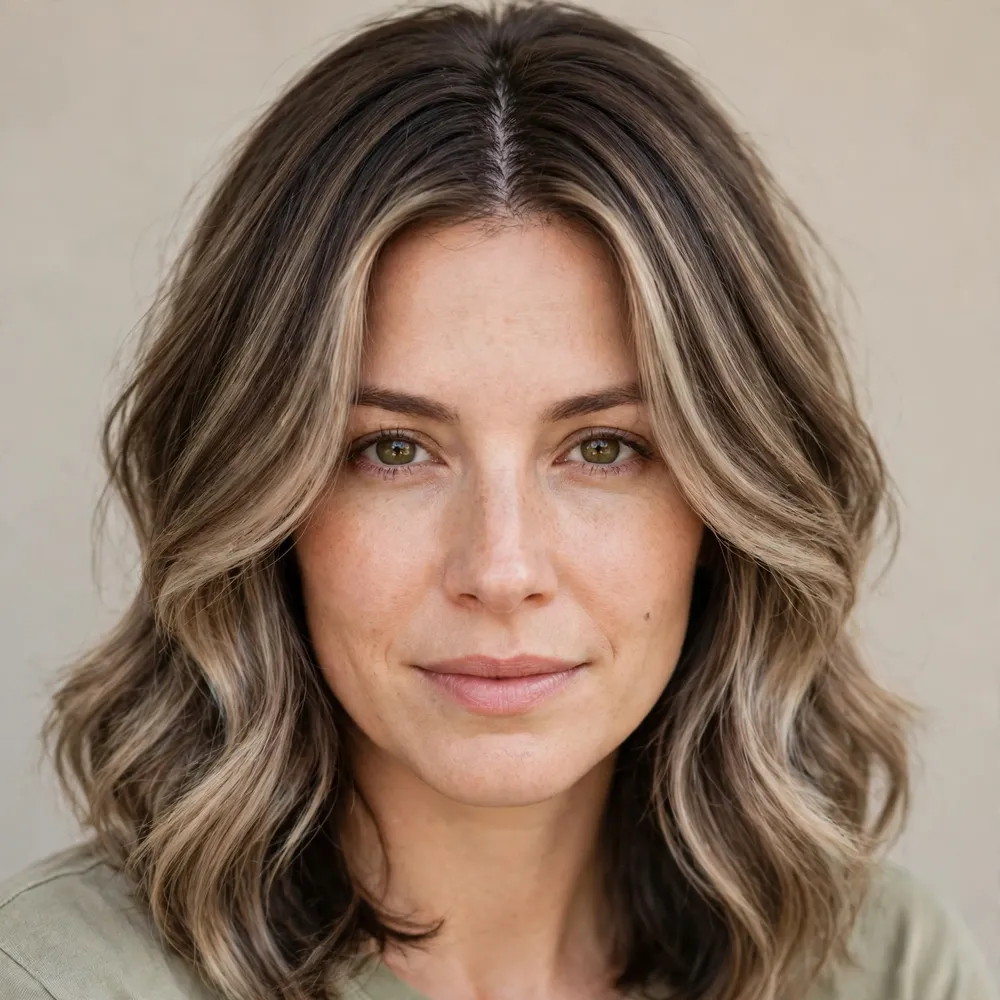
This one is cool, quiet and expensive-looking. A suede-like mushroom beige is swept over a medium brunette base, with centre-parted curtain layers falling from the cheekbones. It suits level 5–6 brunettes best, especially oval and round faces, since the centre part lengthens rather than widens. Medium to long hair shows the mushroom tones off properly; very short hair gives the blend nowhere to travel. Ask for a mushroom beige gloss over a level 6 base, lightest pieces at the mid-lengths and ends, not the root. Finish with smoothing cream and a round brush so the layers swing. A gloss every 6–8 weeks stops the beige going dull, and purple shampoo once every week or two keeps warmth out. Trims every 8–12 weeks keep the curtain shape clean.
2. Caramel Money Piece on Chestnut Brunette Layers
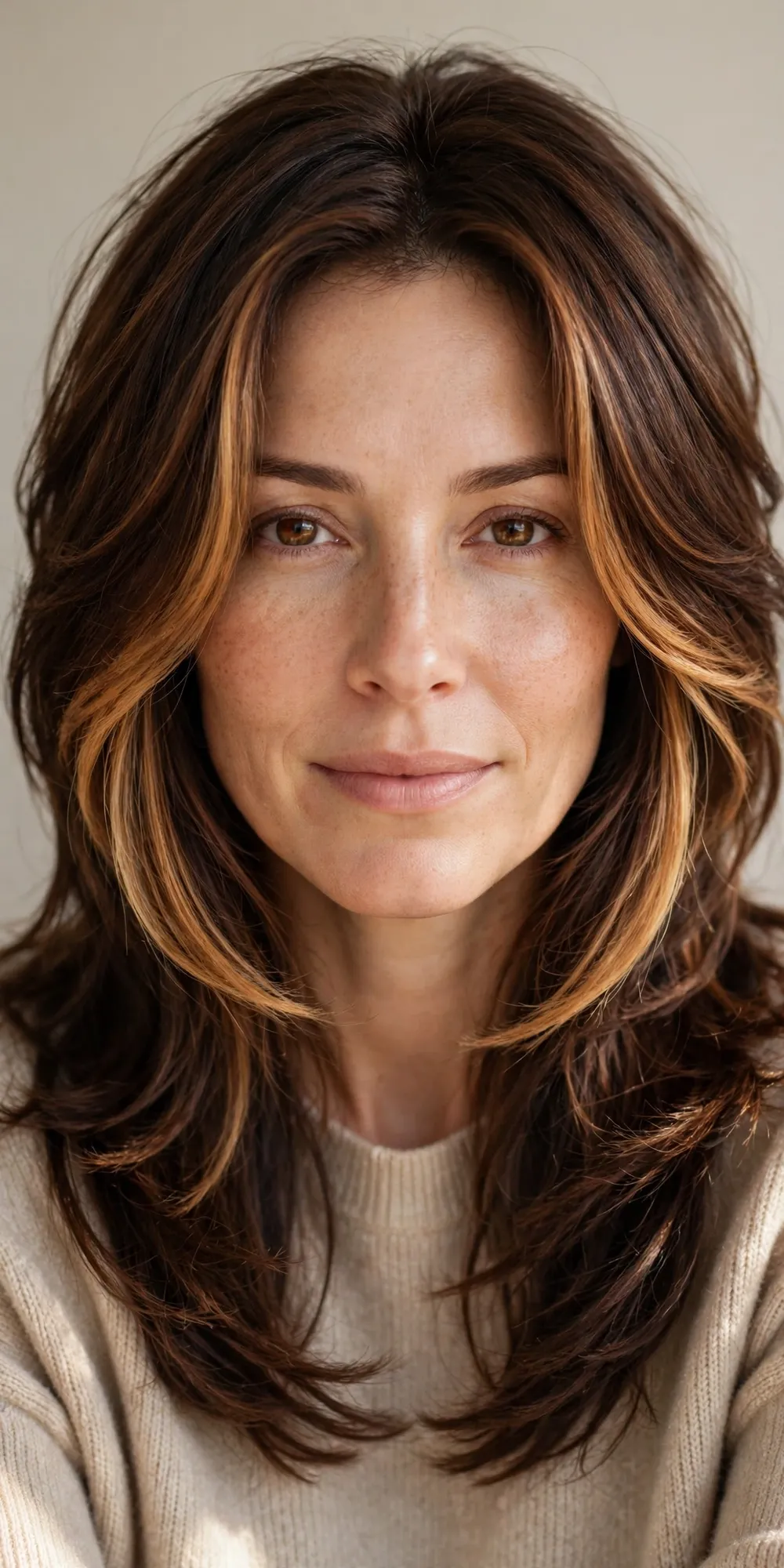
A single caramel ribbon runs down each side of the face on rich chestnut layers, brightening your face without touching the rest of your hair. It flatters level 4–5 brunettes with warm or neutral undertones. Oval, heart and long faces suit it best, because the brightness sits at the front, not the sides. Shoulder-length or longer hair carries it well. Ask for a caramel money piece on a chestnut base, feathered from the cheekbone down — soft, not chunky, about a finger’s width each side. A gloss, not a hard toner, keeps the caramel creamy instead of brassy. Style with a light shine serum and loose waves. The money piece fades fastest, so expect a gloss every 6–8 weeks and leave the rest untouched for 10–14 weeks.
3. Toffee Ribbons with Butterfly Ends
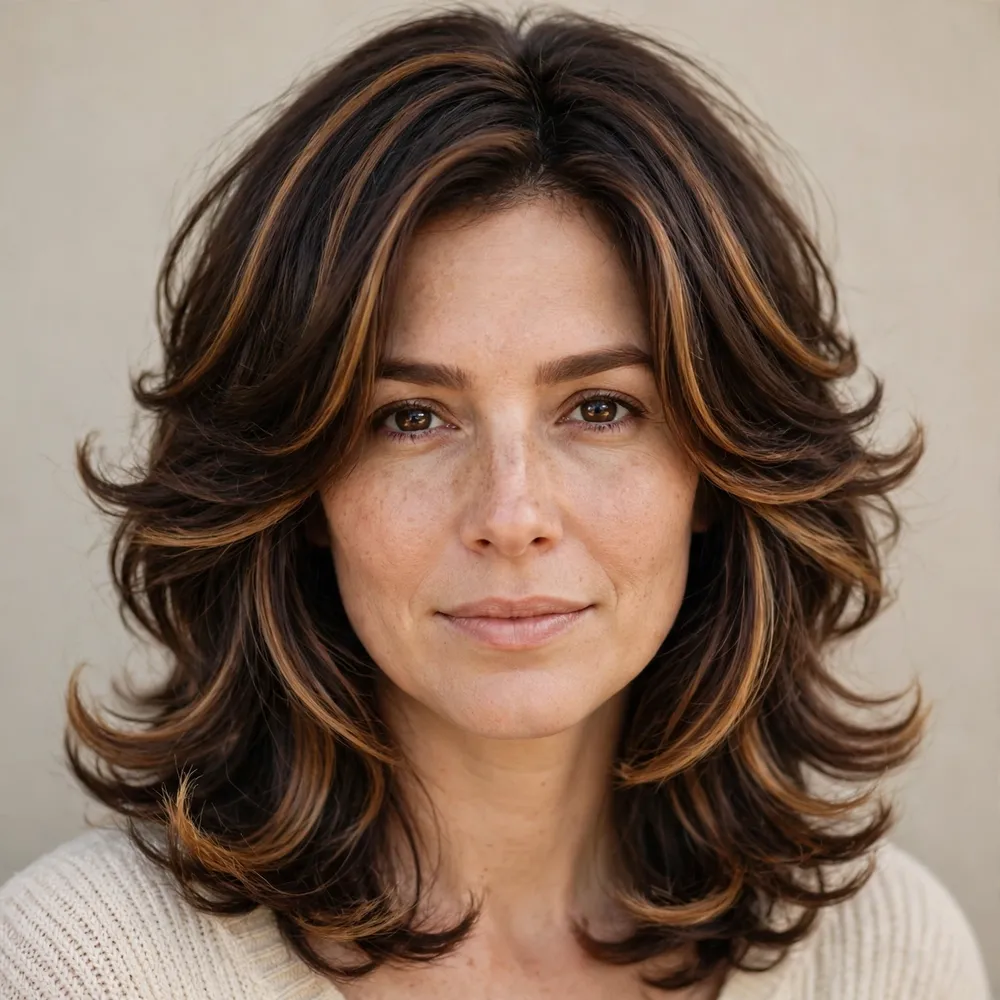
Toffee ribbons through thick butterfly layers give heavy hair the movement it usually lacks. The colour is warm and golden-brown, painted in wide ribbons that follow the flicked-out ends of the butterfly cut. This is made for thick, dense hair at level 5–6; fine hair needs finer ribbons, or the colour overwhelms the cut. Round and square faces benefit most, since the volume sits at the sides and ends rather than the crown. Ask for toffee balayage ribbons through butterfly layers, brightest pieces at the ends, root left untouched. A volumising mousse at the roots and a large round brush give the ends their signature flick. The root stays dark, so refresh every 10–14 weeks, with a gloss at 6–8 weeks to keep the toffee from going flat.
4. Ash Bronde Melt with Grown-Out Roots
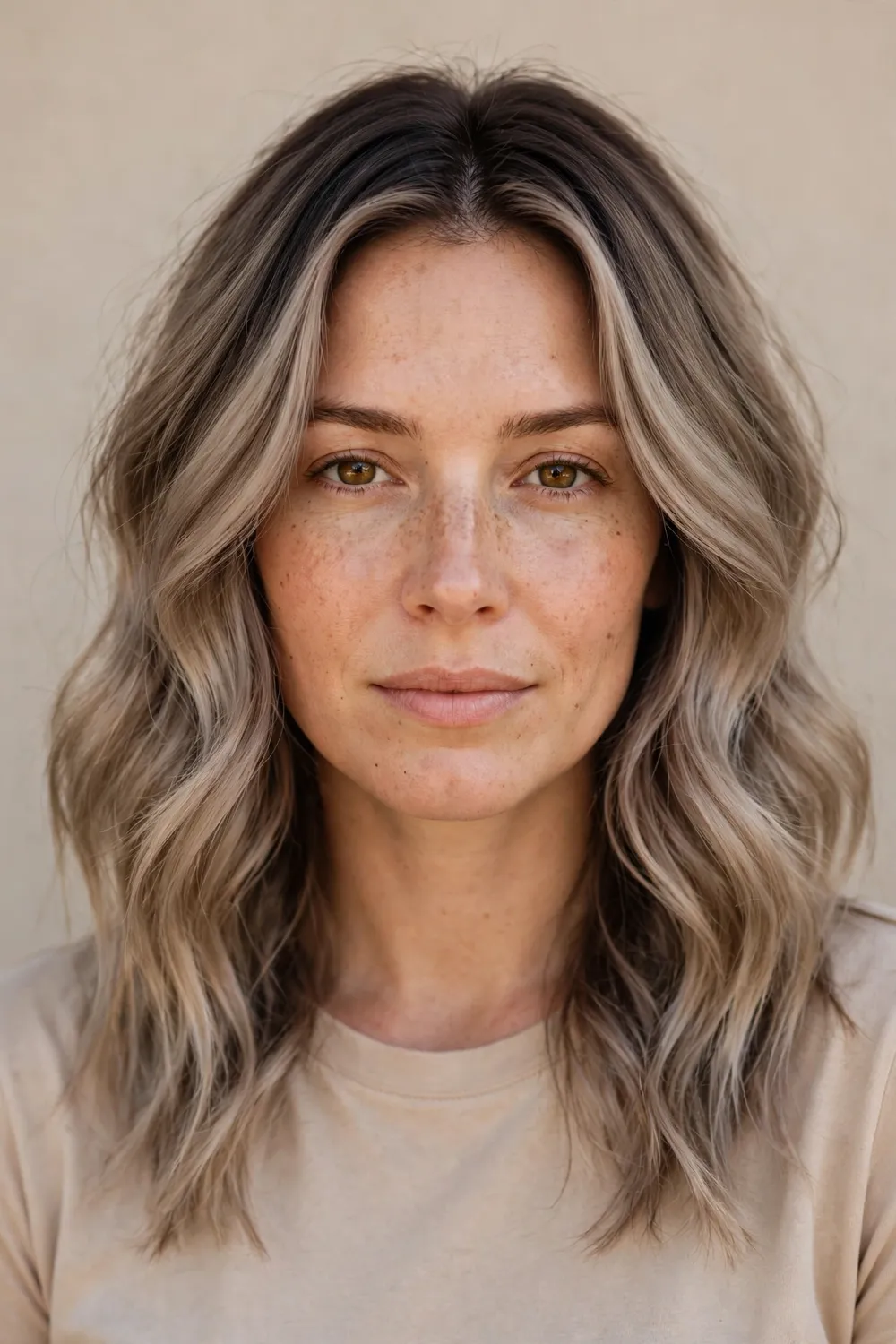
This is the lowest-maintenance bronde on the list, and it shows. A low-contrast ash-taupe melt starts from your natural dark root and fades so gradually into the lengths that regrowth is practically invisible. Level 5–6 brunettes with cool or neutral undertones get the best result; warm skin tones should ask for taupe rather than grey ash. It suits straight and wavy hair best, and any face shape, since the colour is deliberately quiet and the layers do the framing. Ask for an ash-taupe melt with a grown-out root and a gloss to keep the ash from turning muddy. Air-dry with a little leave-in cream and it still looks intentional. The gloss needs topping up every 6–8 weeks, but the balayage itself can go 10–14 weeks or longer between refreshes.
5. Honey Beige Balayage with Wispy Face Framing
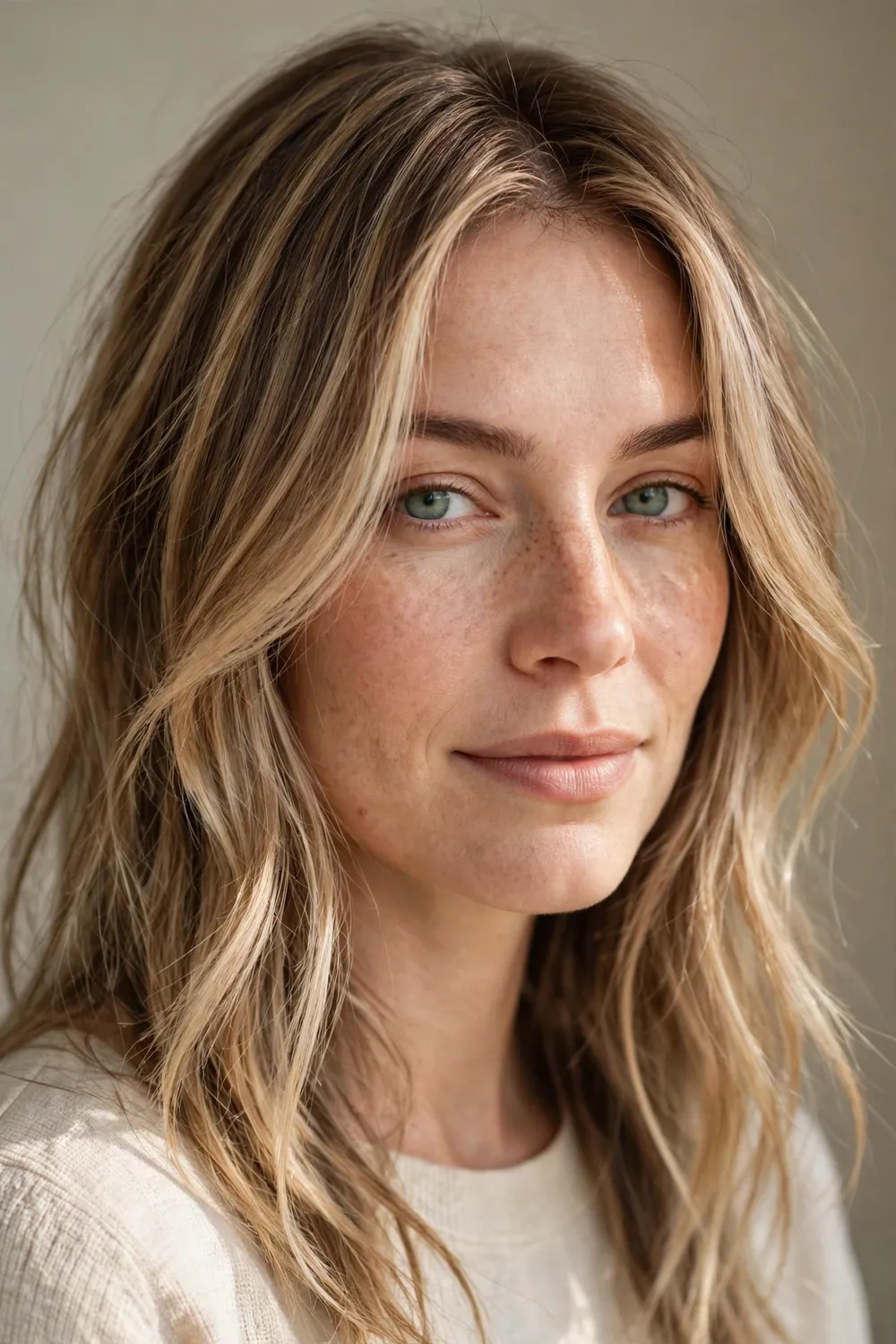
Shiny honey-beige ribbons are painted finely through the hair, with wispy face-framing layers that add softness without removing weight. It suits level 6–7 brunettes, and it flatters oval, heart and long faces, since the wispy pieces break up the length around the jaw. Shoulder-length hair is the sweet spot; much longer and the ribbons get lost. Ask for fine honey-beige balayage with wispy face framing, lightest pieces around the face and through the top layer only. A lightweight volumising spray at the roots and a quick blow-dry with a round brush give the shine and lift this colour needs. Gloss every 6–8 weeks, refresh every 10–14 weeks, and skip heavy oils, which flatten fine hair and dull the honey.
6. Chocolate Cherry Bronde with Soft Front Layers
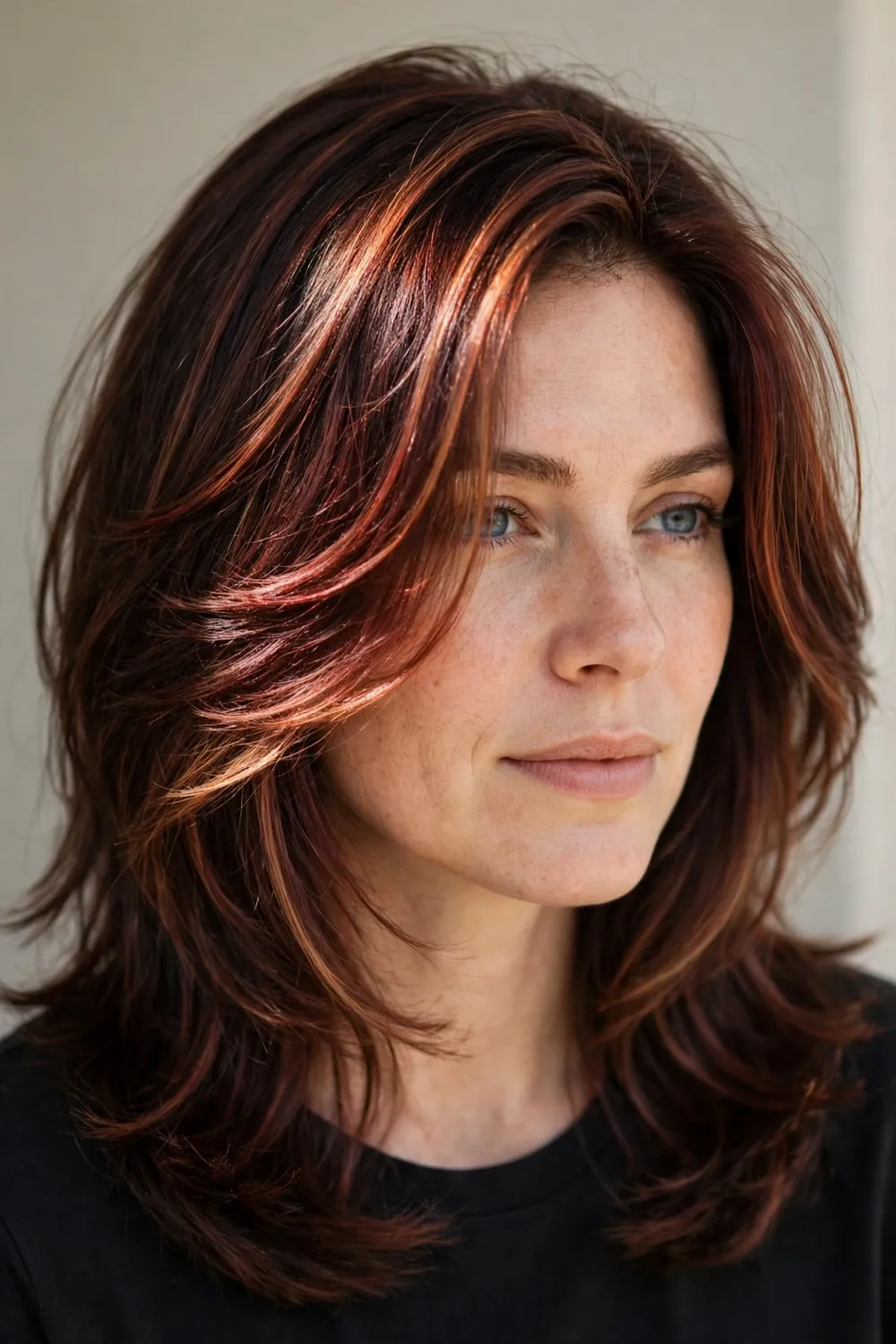
Deep chocolate with a red-brown cherry glow at the front is bronde for people who want drama without going red. The base stays a rich chocolate brown, and the cherry tone is concentrated in the soft front layers, so it reads as a warm flash. Level 4–5 brunettes suit it best, especially those with warm or neutral undertones and medium to thick hair. Oval and heart faces carry the front brightness well. Ask for a chocolate base with a cherry-brown glow through the front layers only. A colour-safe shampoo is non-negotiable here, since red tones fade fastest, and a gloss every 6–8 weeks keeps the cherry alive. Style with a smoothing serum for a glassy finish, and do a patch test before any colour with red pigment.
7. Sunlit Espresso Balayage with Long Sweeping Layers
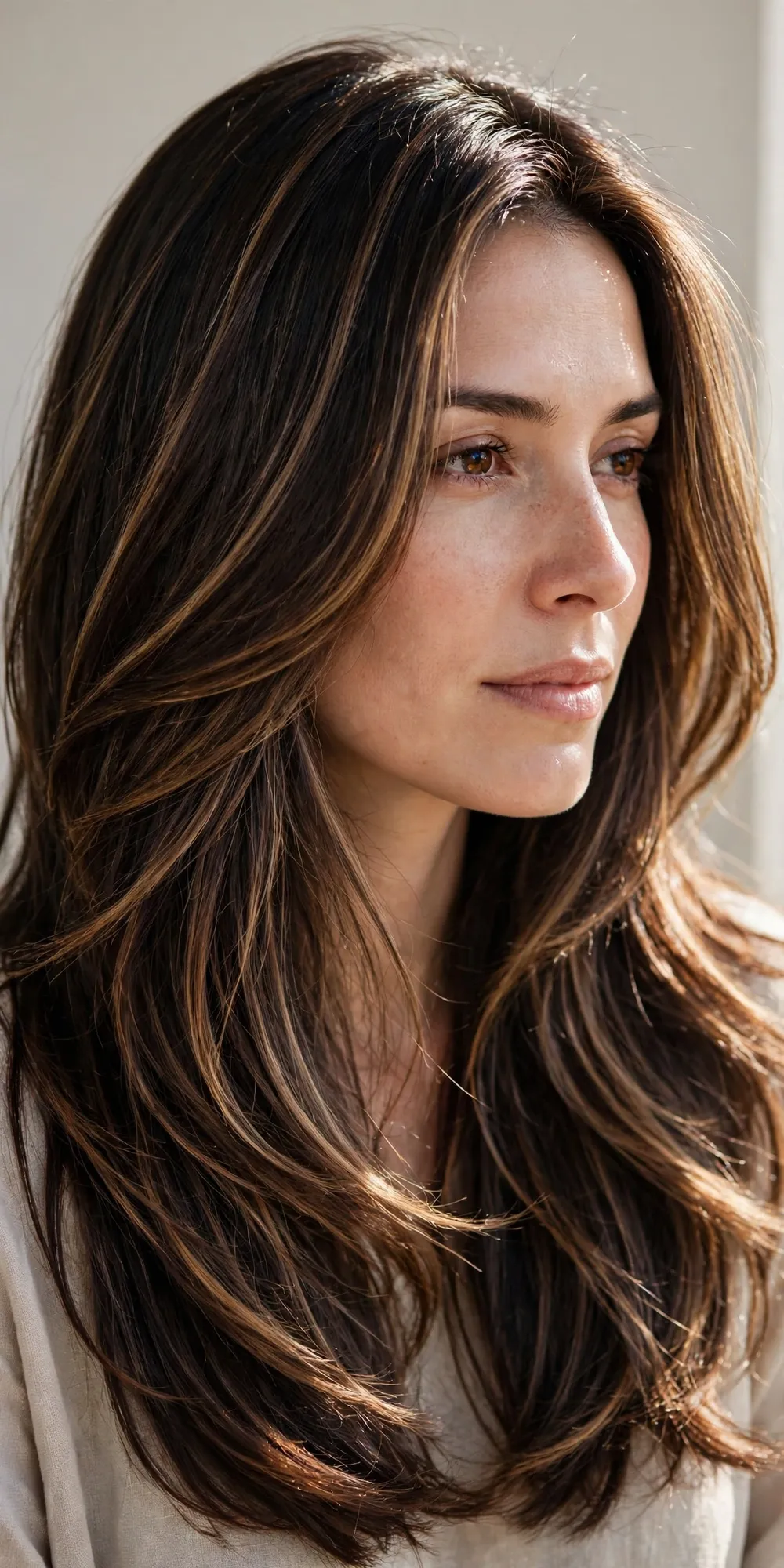
For dark brunettes who don’t want to look lighter, just sunnier. A deep espresso base gets a scattering of lighter ribbons, placed sparsely so the overall impression stays dark and glossy. It suits level 3–4 brunettes beautifully — the darker the base, the more the ribbons pop — and it works on all face shapes. Long hair is ideal; the ribbons need length to travel down. Ask for sunlit balayage on an espresso base, lightest pieces one or two shades above your natural colour, concentrated through the mid-lengths. A shine serum and a loose blow-dry finish the look. The root is untouched and the lift is minimal, so a refresh every 10–14 weeks is plenty, with a gloss at 6–8 weeks. Colour-safe shampoo, and heat protectant always.
8. Beige Mocha Bronde for Collarbone Cuts
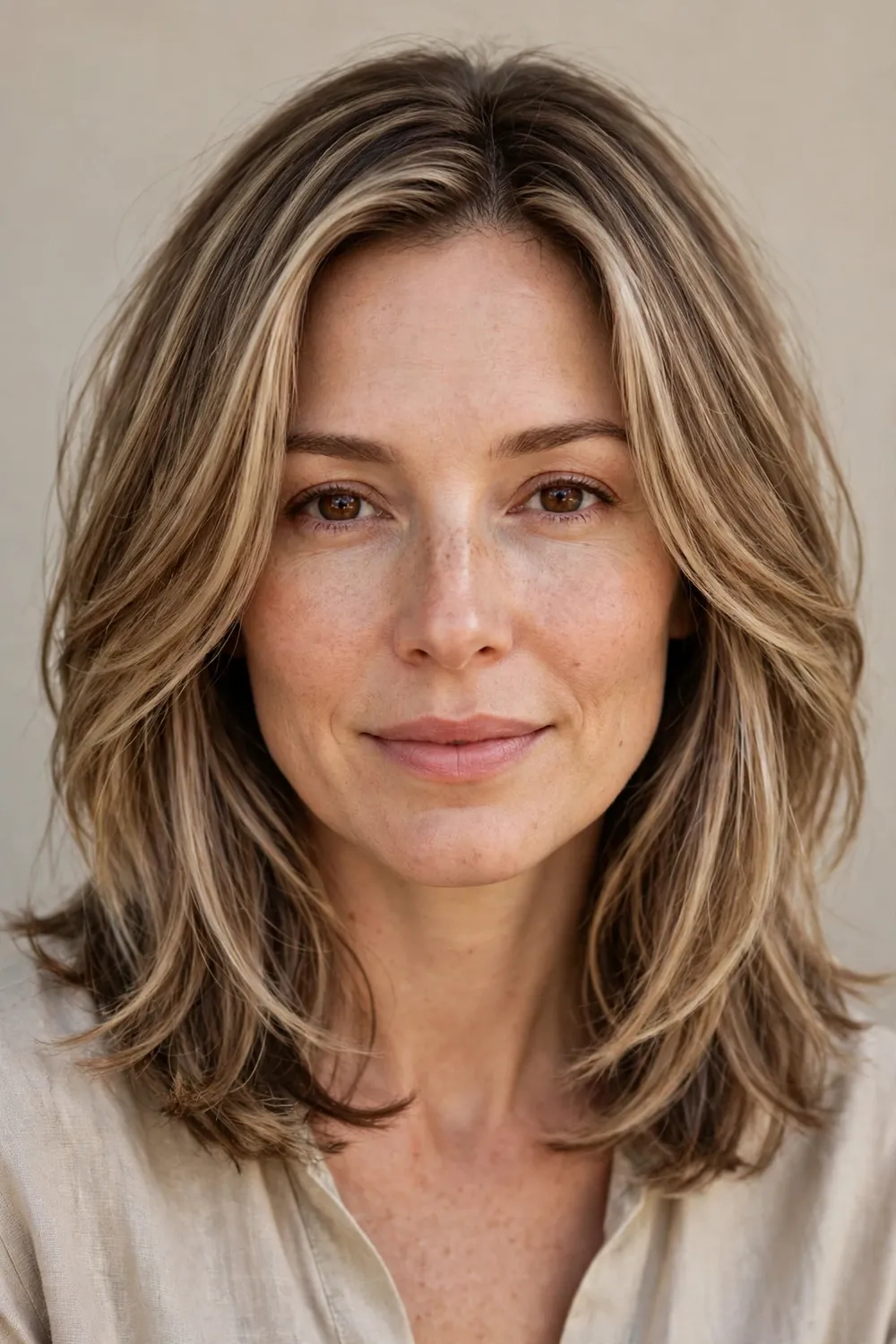
The collarbone cut — a lob that just grazes the shoulders — gets its colour match here. A mid-tone beige mocha is painted over the whole cut, with face-framing layers keeping the front bright and the back softer. It suits level 5–6 brunettes with neutral undertones, and round and square faces do particularly well, because the length sits below the jaw. Straight or slightly wavy hair shows the mocha blend best; very curly hair needs the placement adjusted. Ask for a beige mocha balayage on a collarbone cut, brightest pieces around the face, root left soft rather than covered. A round brush blow-dry with a little smoothing cream gives the ends their swing. Gloss every 6–8 weeks, refresh every 10–14 weeks, and trims every 8–12 weeks to hold the length.
9. Cinnamon Swirl Highlights with Chunkier Face Frame
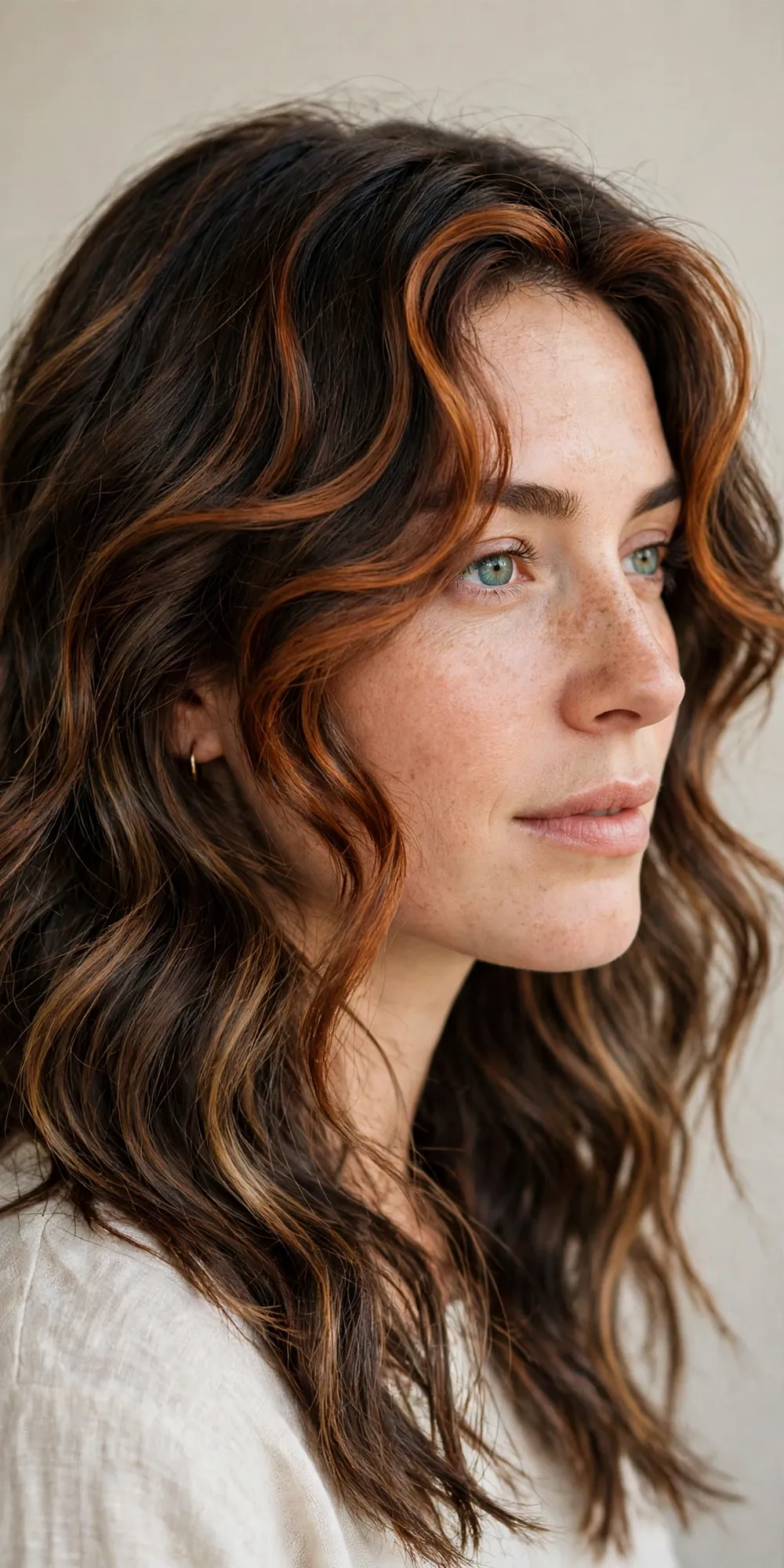
This one leans bolder. The face frame is chunkier — a proper ribbon of cinnamon on each side — while the balayage through the back stays soft and diffused. Level 5–6 brunettes with warm undertones get the richest result; oval, long and heart faces suit it best. Medium to long hair works best; the contrast needs some length to settle into. Ask for a chunkier cinnamon face frame with softer balayage through the back, and agree on the width first — wider than two fingers and it looks like a block. A gloss keeps the cinnamon spicy rather than brassy, and loose waves stop the front pieces looking harsh. The face frame fades first, so budget for a gloss every 6–8 weeks, with the back left alone for 10–14 weeks.
10. Cool Taupe Bronde for Medium Brunettes
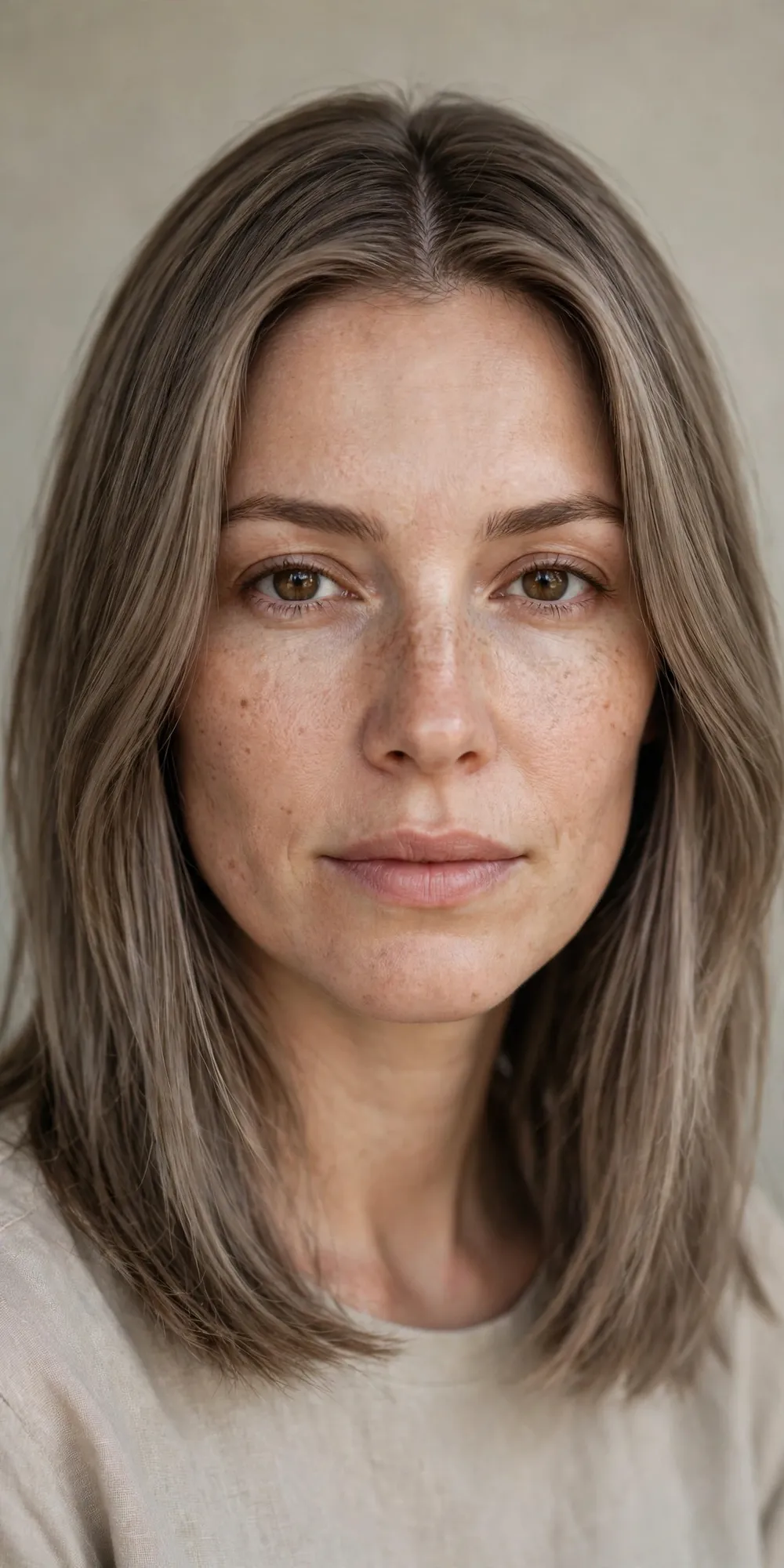
Brass is the enemy of cool brunettes, and this colour is built to fight it. A smoky beige-taupe finish sits over a medium brunette base, cancelling warmth without going grey, and suits a centre or side part. Level 5–6 brunettes with cool or neutral undertones are the natural match, and it flatters every face shape. Straight, wavy or loosely curled hair all carry it well. Ask for a cool taupe bronde with a beige gloss, and be specific: warmth neutralised, not stripped — over-ashing turns taupe muddy. Finish with a smoothing cream and a blow-dry for the smokiest effect. Purple shampoo once every week or two keeps brass at bay, but don’t overdo it — too much pushes taupe towards grey. Gloss every 6–8 weeks, refresh every 10–14 weeks.
11. Golden Biscuit Balayage with Rounded Fringe
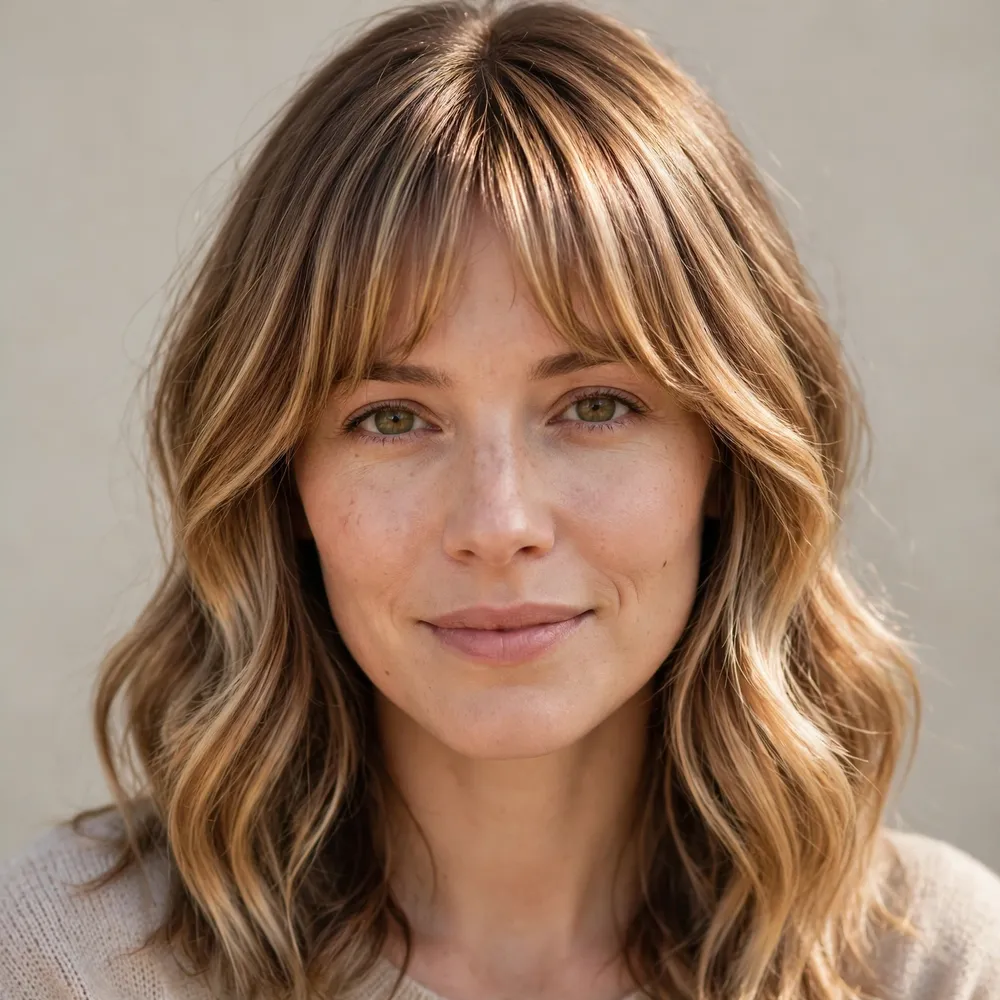
A rounded fringe changes how colour should be placed, and this idea gets it right. Warm golden biscuit highlights follow the curve of a soft rounded fringe, so the brightness frames the forehead and blends into the layers. It suits level 6–7 brunettes with warm undertones, and oval and long faces especially — the fringe shortens a long face. Medium-length hair with a fringe is the natural home for this one. Ask for golden biscuit balayage through the fringe as well as the layers, so the fringe doesn’t look separate. Style the fringe with a round brush — blow it dry forwards, then sweep it to the side. Trims every 8–12 weeks matter more here, and a gloss every 6–8 weeks keeps the biscuit tone from going brassy.
12. Bronze-to-Bronde Melt with Invisible Layers
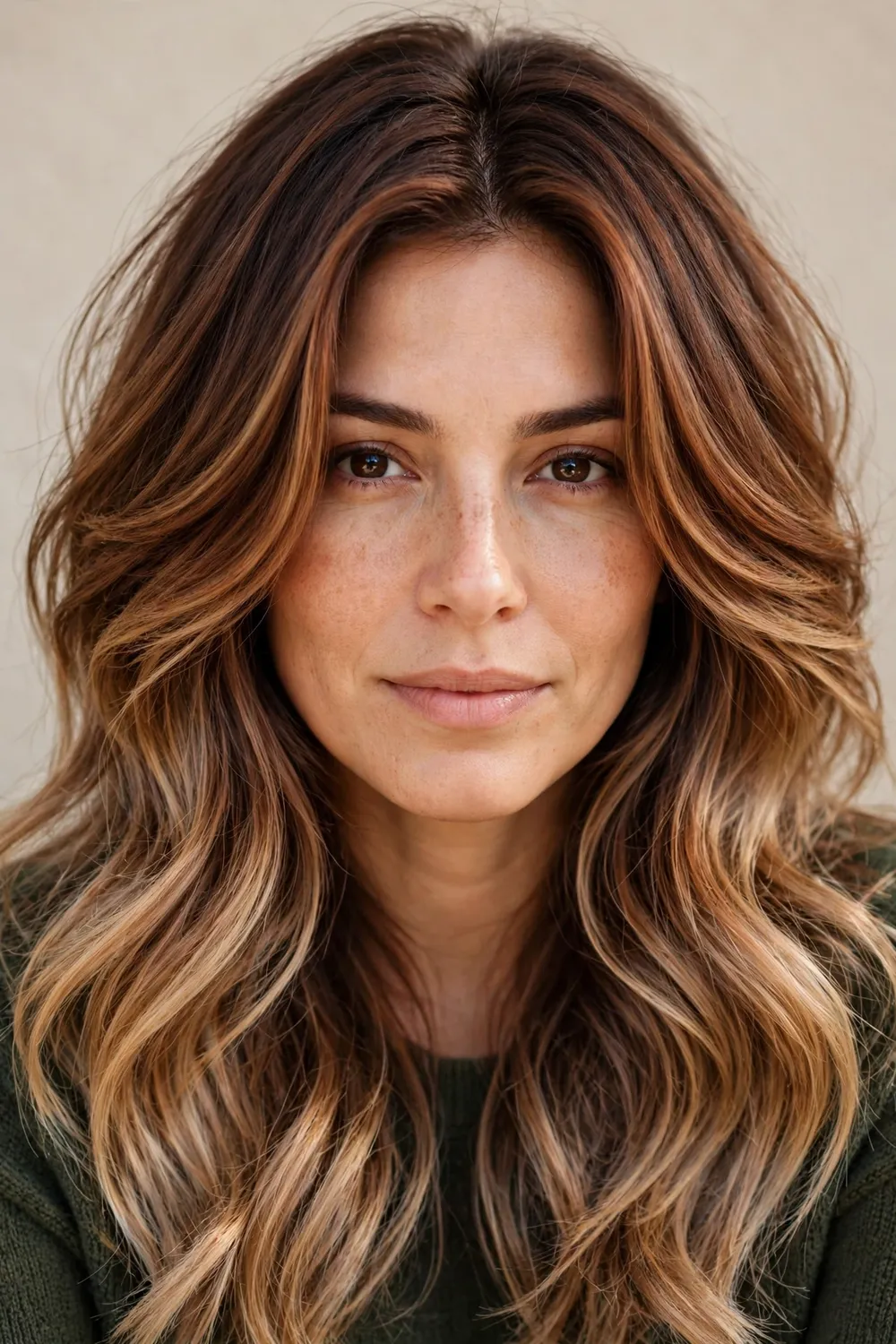
Thick hair that looks like a solid block is the problem this one solves. A slow bronze-to-bronde fade runs from root to ends, while internal invisible layers remove weight from the inside without changing the outline. Level 5–6 brunettes with thick, heavy hair are the obvious match; fine hair doesn’t need invisible layers and can skip this one. Round and square faces benefit because the internal layers stop the sides puffing out. Ask for a bronze-to-bronde melt with invisible internal layers — cut them on the surface and you lose length and shape. A smoothing cream and a blow-dry with a large round brush keep the melt glossy. The root stays dark, so refreshes stretch to 10–14 weeks, with a gloss at 6–8 weeks.
13. Walnut Brown Balayage with Soft S-Curls
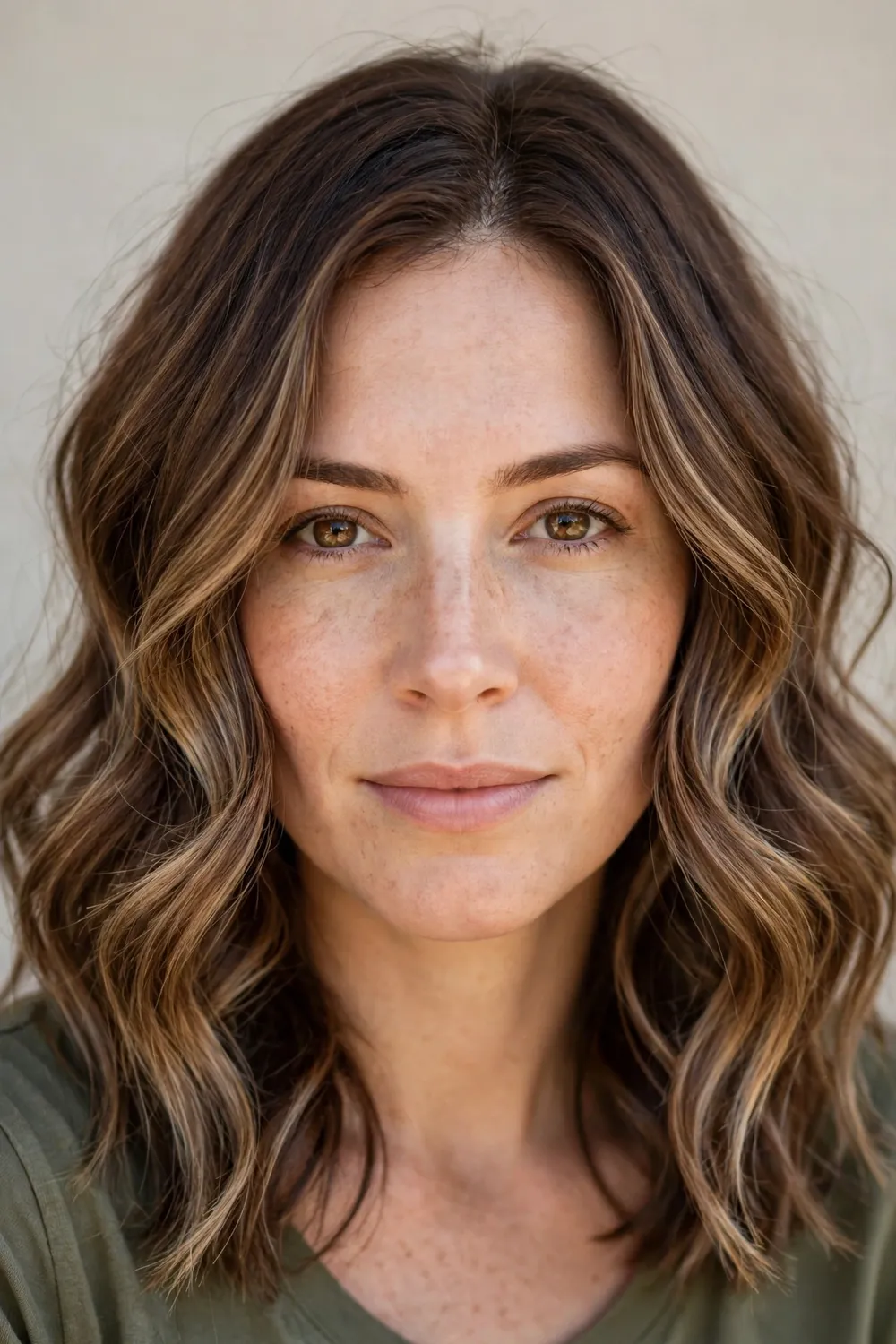
Some colours only make sense with movement, and this is one of them. A walnut brown base gets lighter ribbons that follow soft S-curl bends — darker in the bends, lighter on the crests. Level 5–6 brunettes with naturally wavy hair get the best result; pin-straight hair needs curling to show the point. Oval and heart faces suit it well. Ask for walnut balayage placed to follow your wave pattern, with the lightest ribbons on the outer curves of the bends. Style with a large-barrel curling iron, curling away from the face, and finish with a light texturising spray. A gloss every 6–8 weeks keeps the walnut rich, and a refresh every 10–14 weeks is enough since the root is left alone. Heat protectant before every curling session.
14. Sandalwood Bronde for Thick, Heavy Hair
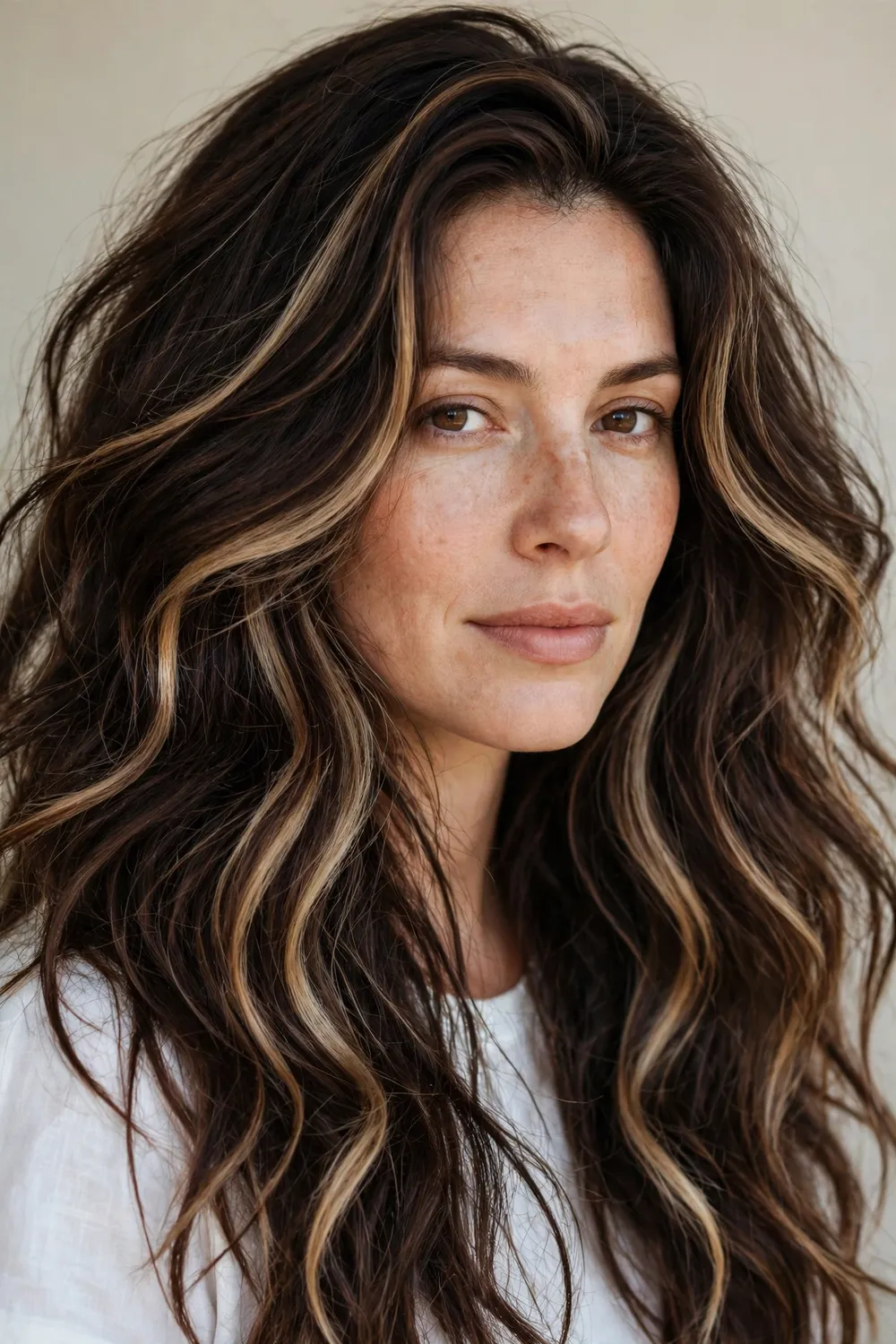
Dense brunette hair swallows colour whole unless the ribbons are placed with intent. Warm beige-tan sandalwood ribbons are painted through thick hair in generous sections, breaking up the density so it reads as dimensional, not one solid mass. Level 5–6 brunettes with thick, heavy hair are the target; fine hair would be overwhelmed by ribbons this wide. All face shapes work, since the ribbons are distributed evenly rather than concentrated at the face. Ask for sandalwood balayage in wide ribbons through the interior and ends, keeping the root dark so the grow-out stays invisible. A smoothing cream and a blow-dry are worth the effort; air-drying thick hair with fresh balayage looks unfinished. Refresh every 10–14 weeks, gloss every 6–8 weeks to keep the sandalwood warm, and trims every 8–12 weeks.
15. Maple Cream Face Frame on Dark Brunettes
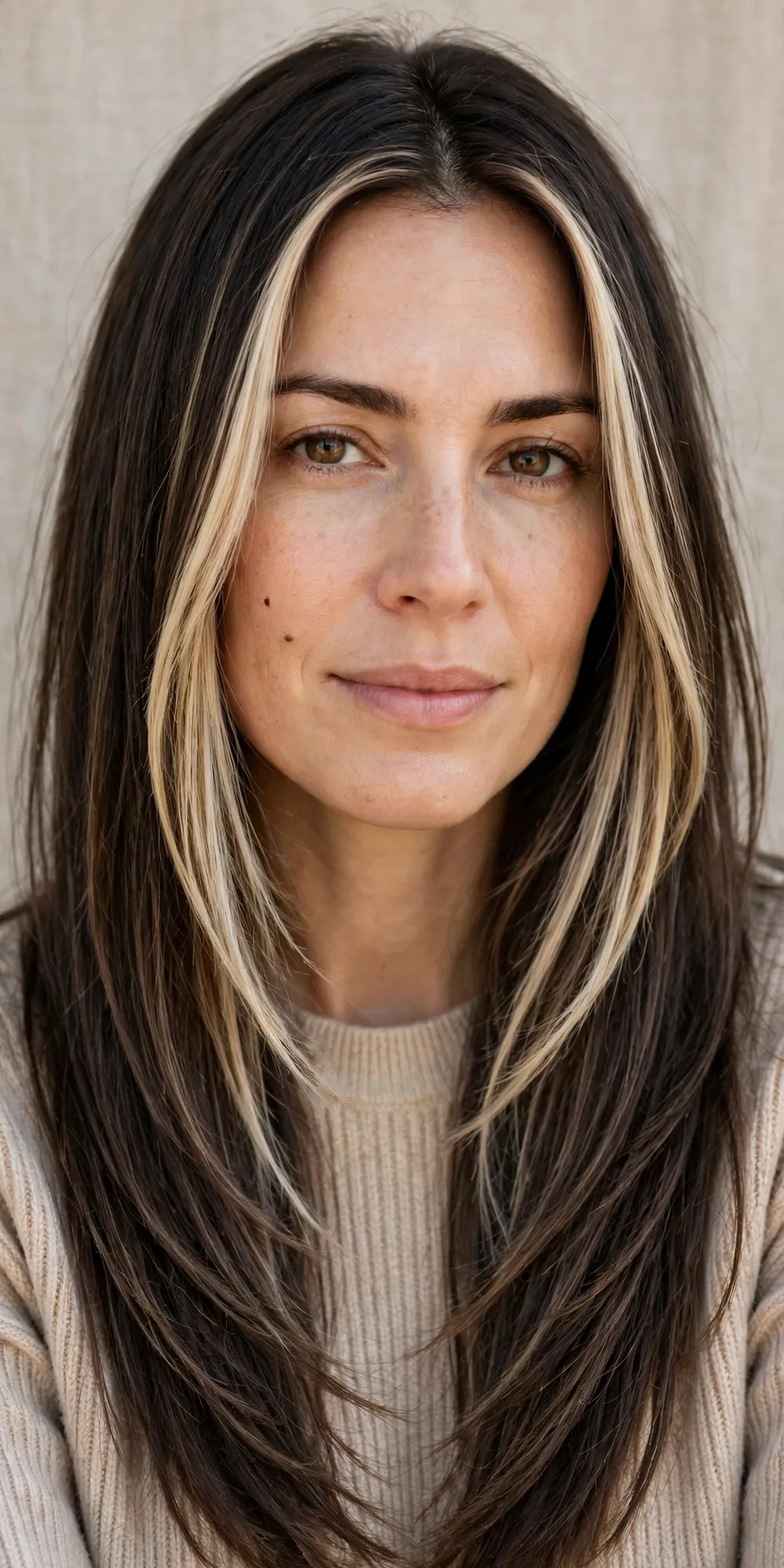
Dark brunettes often assume bronde isn’t for them. This maple-cream face frame proves it is. Two slim, bright pieces at the front on a dark base give the effect of light hitting your face. Level 3–4 brunettes suit it best; the contrast with the dark base is what makes the maple cream glow. It flatters oval, round and heart faces, and it works on any length from a lob up. Ask for a narrow maple-cream face frame, starting at the cheekbone and feathering down, with the rest of the hair left untouched. A gloss, not a hard toner, keeps the maple creamy. Style straight or with a loose wave; either way the frame does the work. The front pieces fade quickest, so a gloss every 6–8 weeks keeps them fresh.
16. Smoky Beige Bronde with Airy Layers
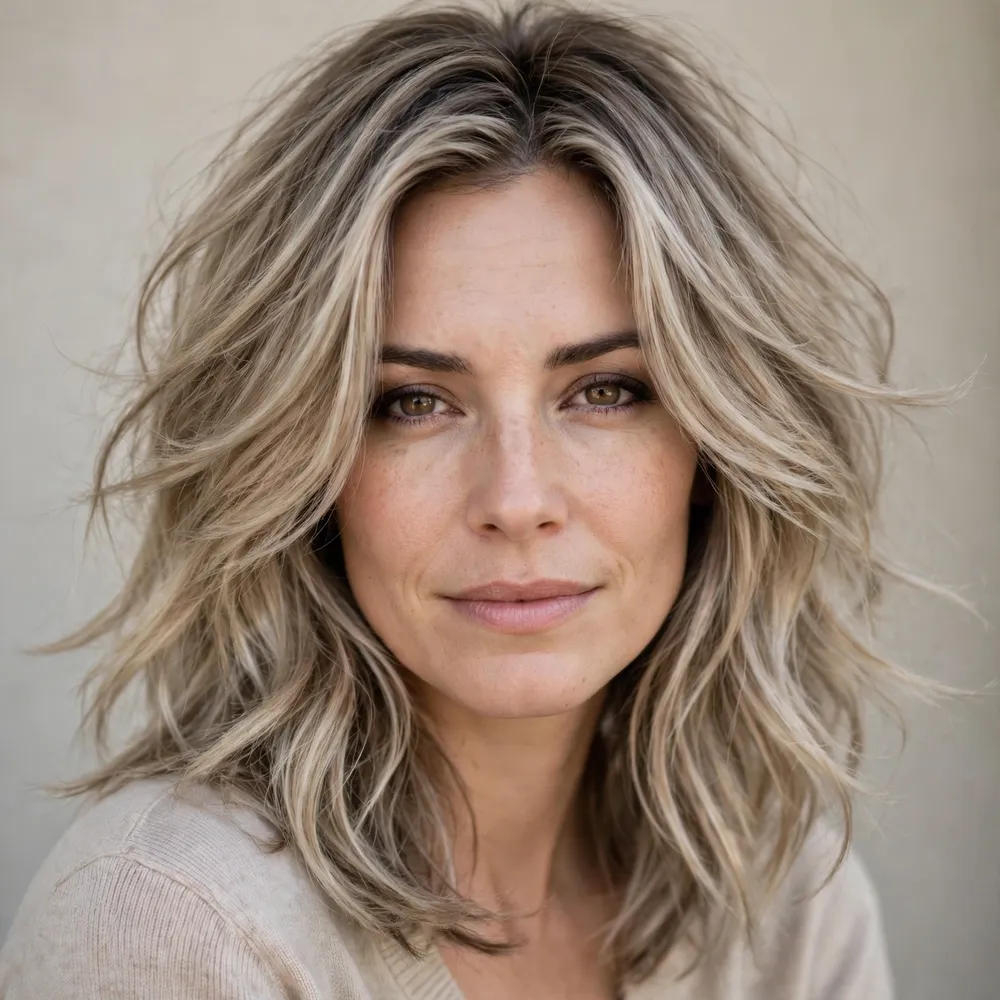
Light, smoky, and undone. A soft smoky beige is painted over the hair, and airy flicked layers give it movement, so the whole look feels breezy rather than polished. Level 6–7 brunettes with cool or neutral undertones get the best result, and it suits oval and long faces, since the airy layers add width at the sides. Shoulder length or longer is needed for the layers to flick properly. Ask for a smoky beige balayage with airy layers, flicked out rather than tucked under. A texturising spray and a quick blow-dry with a round brush give the airy finish; skip heavy serums, which weigh the layers down. A purple shampoo once every week or two keeps the smoky tone from warming up. Gloss every 6–8 weeks, refresh every 10–14 weeks.
17. Honeyed Espresso with Minimal Lift
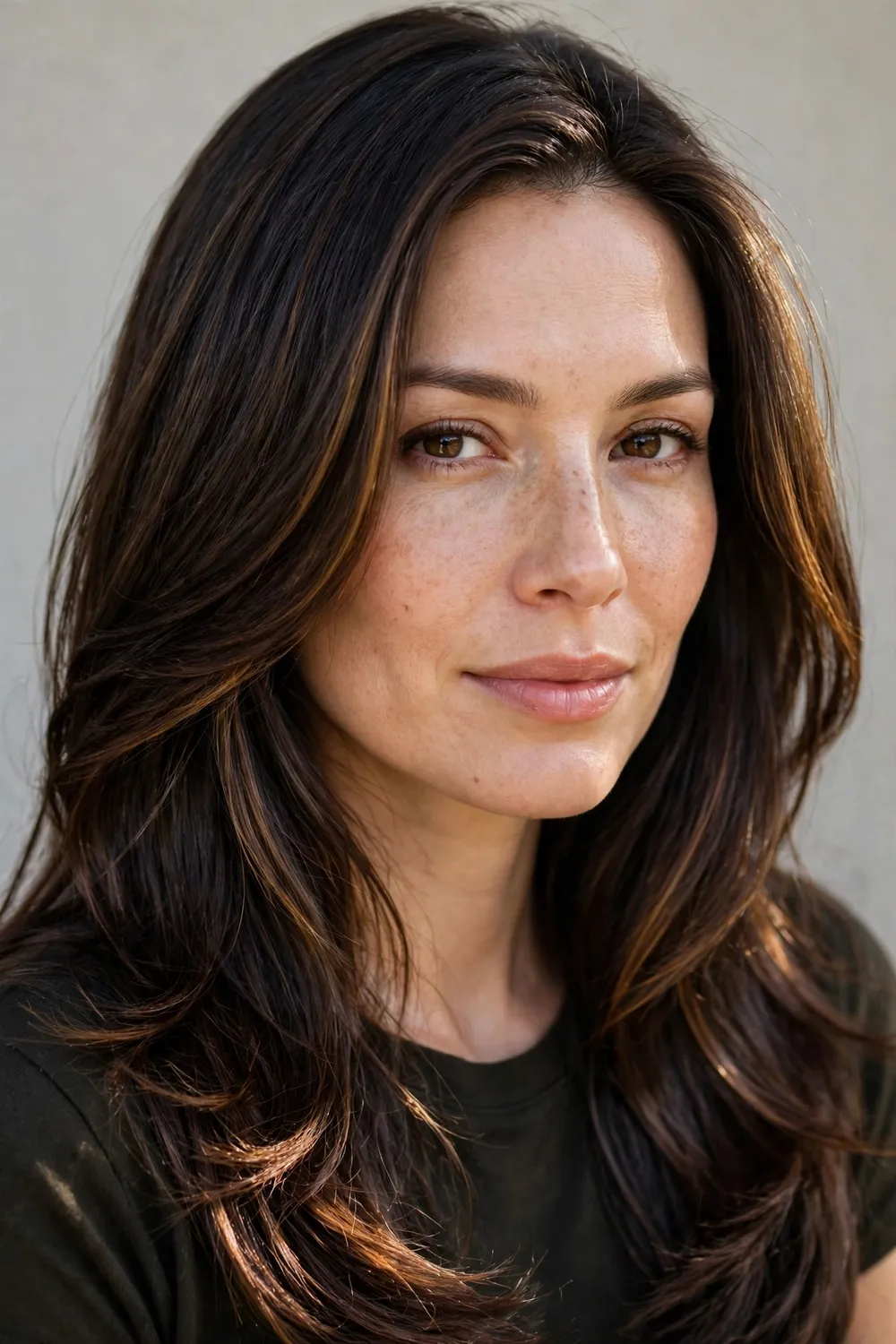
This is bronde at its most subtle — and, for a lot of brunettes, its most wearable. A dark, glossy espresso base gets a honey gloss and just one to two shades of lift, so the hair looks richer and shinier rather than obviously coloured. Level 3–4 brunettes are the natural fit, and it flatters every face shape and hair type, because the change is tonal rather than structural. Ask for honeyed espresso with minimal lift — one to two shades only — and a honey gloss over the top. A shine serum and a smooth blow-dry show the colour off best. The lift is so small that regrowth is barely visible; a gloss every 6–8 weeks keeps the honey glowing, and a refresh every 10–14 weeks is enough.
18. Bronde Lob with Peekaboo Brightening
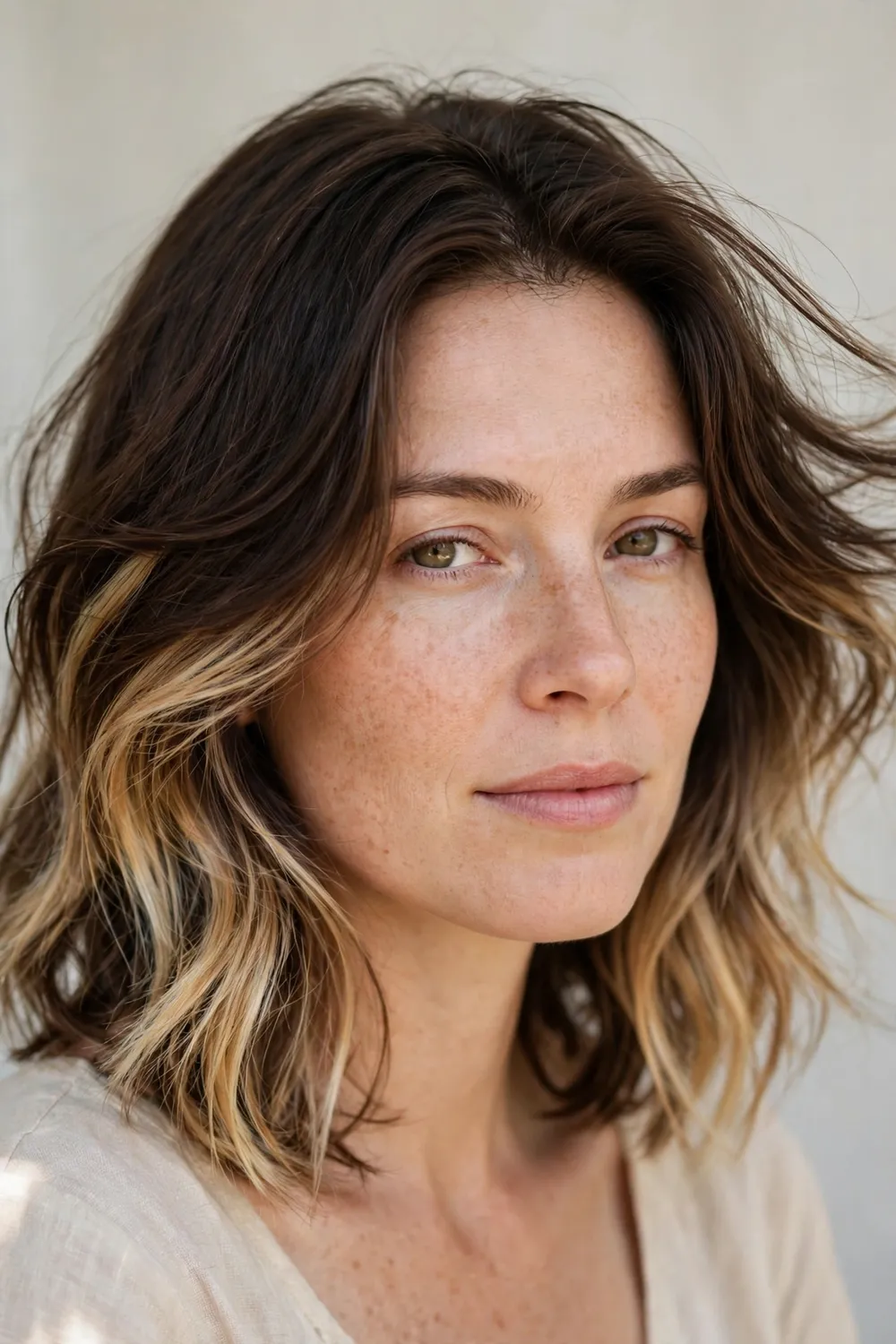
This one plays a clever trick. The top layer of the lob stays close to your natural brunette, while lighter bronde pieces sit underneath, flashing through only when the hair moves, tucks behind an ear, or catches the wind. It suits a level 5–6 base and a collarbone-length cut, and it flatters oval and heart-shaped faces because the brightness sits low, not hard against the cheek. Ask your colourist for hidden ribbons painted through the under-layers, one to two shades lighter than your base, with the top section left untouched. A lightweight smoothing cream and a round-brush blow-dry keep the lob swinging cleanly. Maintenance stays easy — the grow-out is almost invisible, so a refresh every 10–14 weeks is plenty.
19. Beige Caramel Curls with Layered Ends
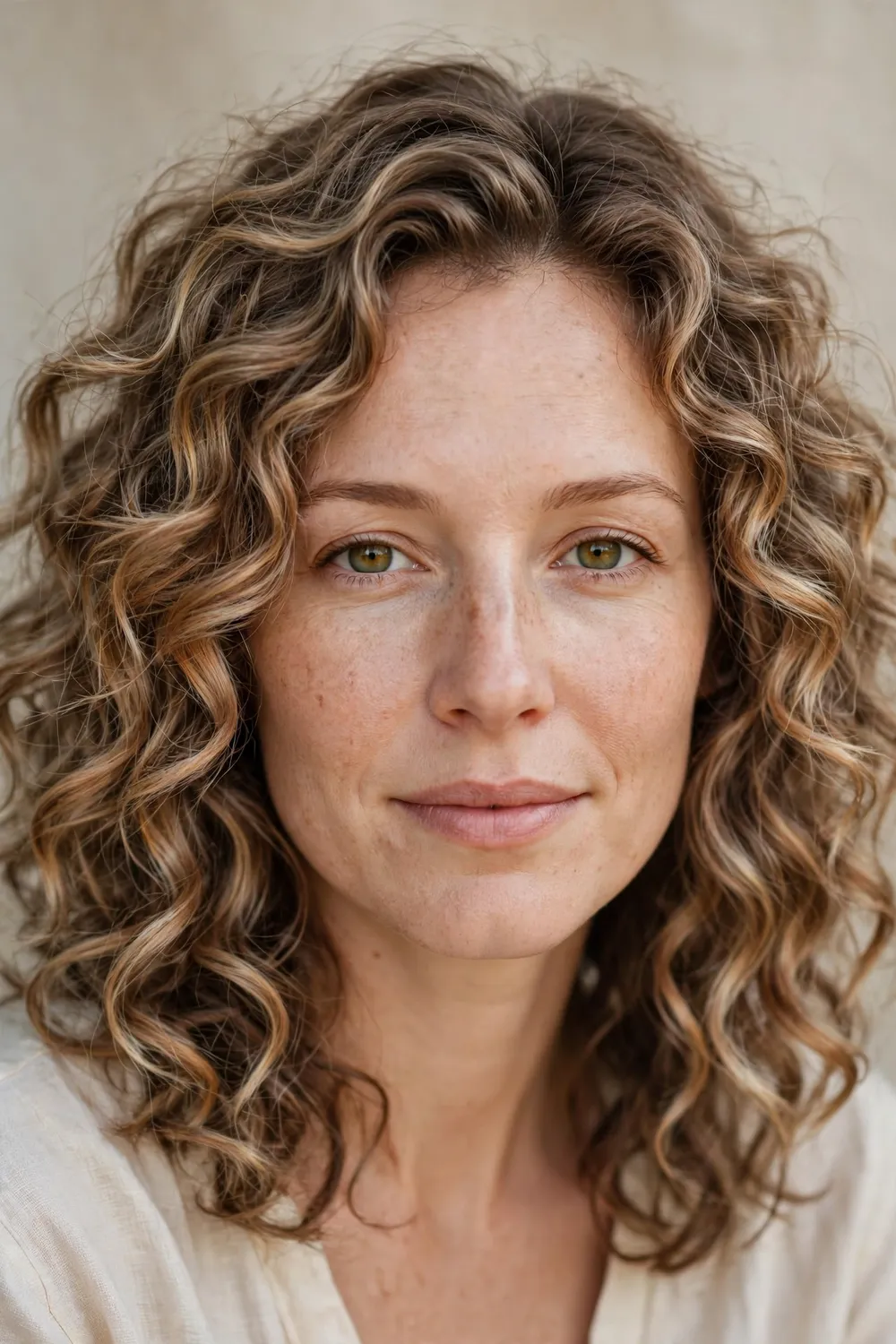
Loose curls and bronde were made for each other, because every bend catches a different ribbon of light. Here beige-caramel pieces wrap through the curls rather than sitting on top of them, and layered ends stop the bottom from turning into a heavy triangle. It works best on medium to thick hair past the shoulders, on a level 5–7 base, and it softens square and long faces nicely. Ask for balayage placed to follow your curl pattern, with the lightest pieces through the mid-lengths and ends, then a cut that removes weight without shortening the shape. Finish with a curl cream scrunched in while damp and a diffuser on low heat. Expect a gloss every 6–8 weeks to keep the caramel from going dull.
20. Rooty Mocha Balayage with Subtle Contrast
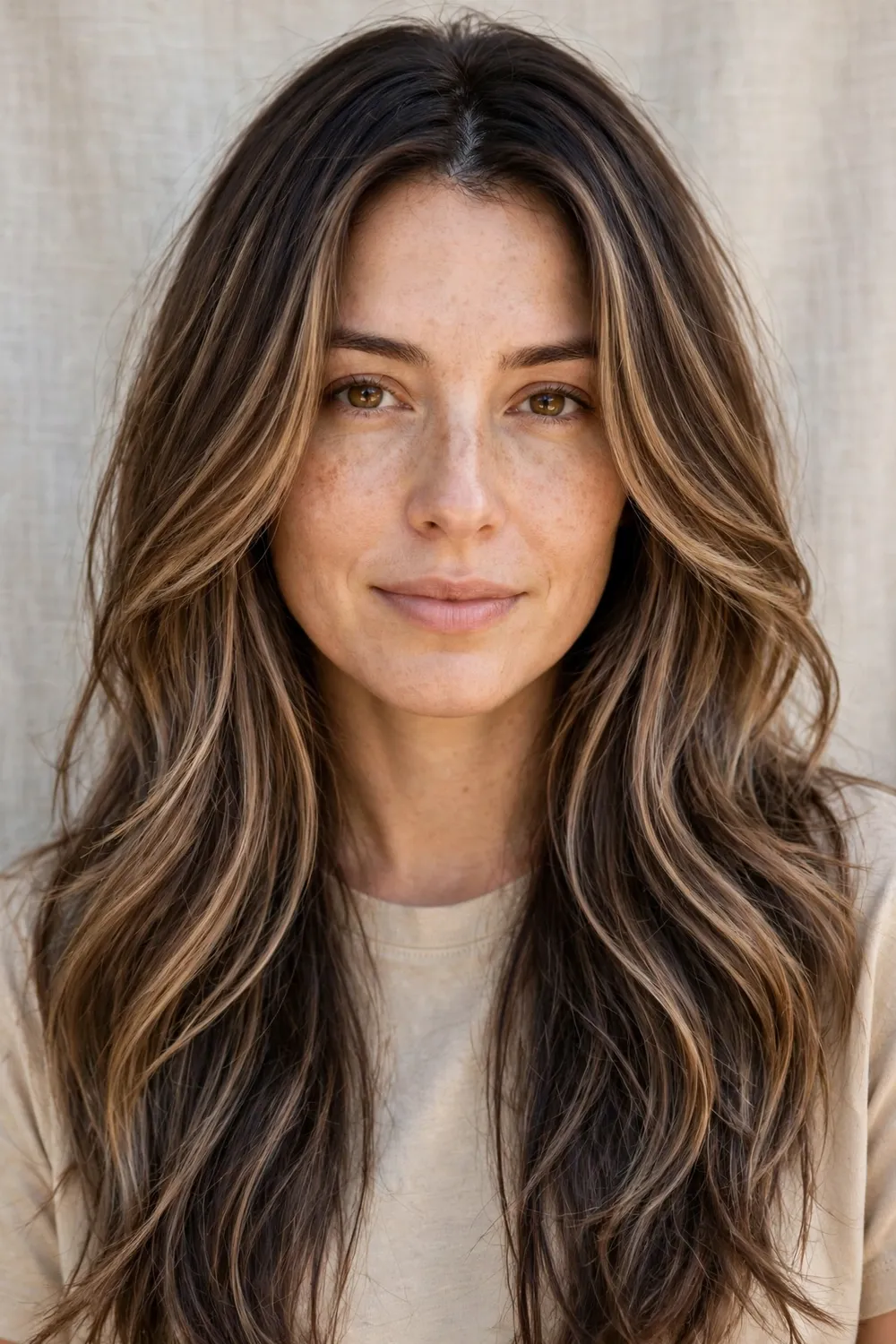
If you hate visible regrowth, this is your version. The dark root is kept on purpose — a good few inches of it — and the brightness lives mainly in the face-framing layers and the ends, so the contrast stays soft rather than stripey. It suits level 4–6 brunettes, straight or wavy hair, and anyone who stretches appointments out. Ask your colourist to keep the root untouched, paint mocha ribbons from the cheekbone down, and blend the transition with a root smudge rather than a hard line. A shine spray or light gloss gives it that expensive, healthy finish. Upkeep is the lowest of any look here: a balayage refresh every 10–14 weeks, and trims every 8–12 weeks to keep the ends tidy.
21. Champagne Bronde with Feathered Curtain Pieces
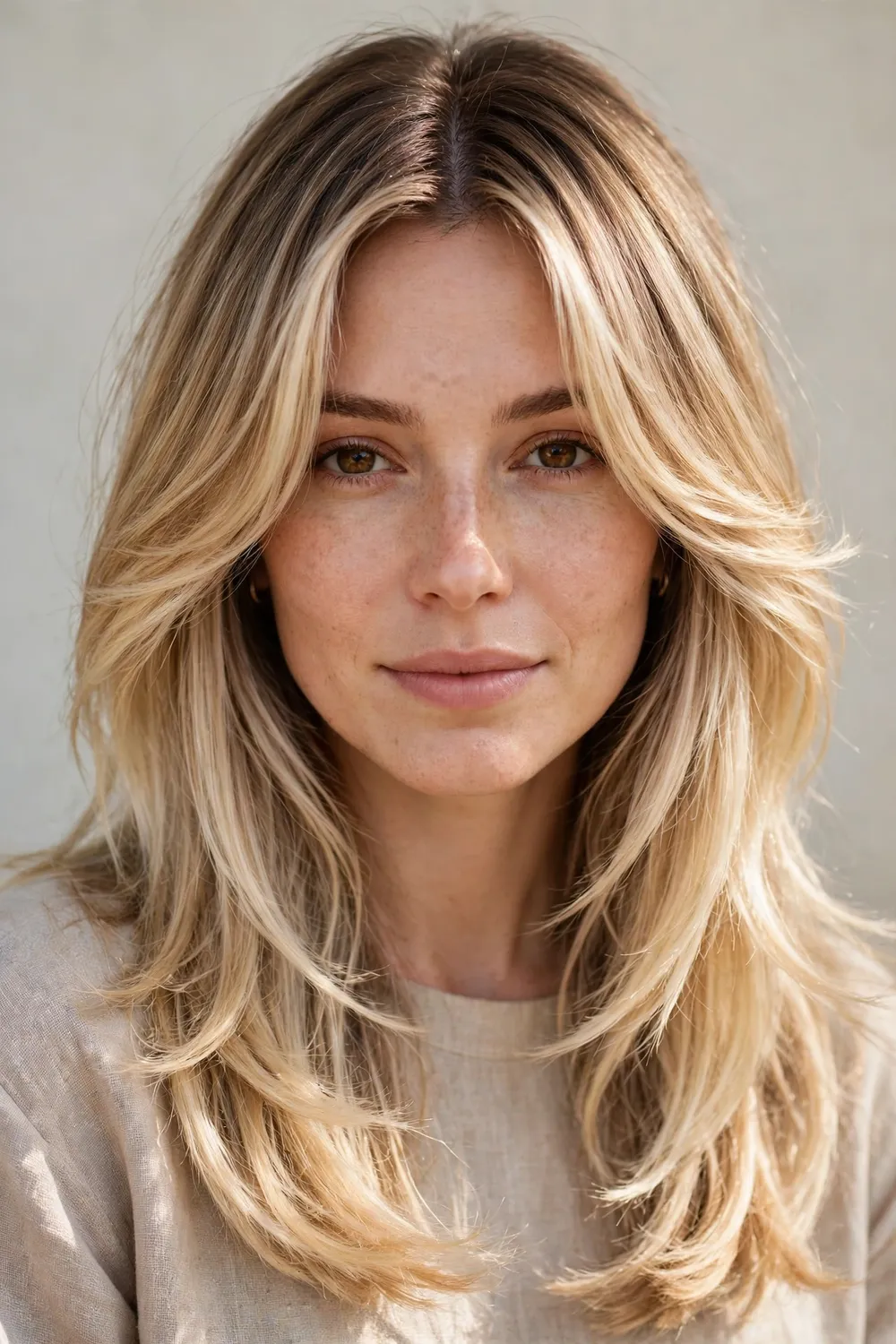
Champagne bronde is the polished end of the spectrum — bright, but still clearly brunette at the root. The colour concentrates toward the ends, while feathered curtain pieces open up the face and keep the whole thing from looking heavy. It suits a level 6–7 base, medium to long hair, and oval or long faces, since the curtain pieces add width where it helps. Ask for a champagne gloss over balayage that starts below the cheekbone, with the curtain pieces feathered rather than cut blunt. Blow-dry the front pieces away from the face with a round brush for that soft, lifted finish. Cool-toned versions need a purple shampoo once every one to two weeks; warm versions can skip it entirely.
22. Cocoa Swirl Balayage with Side-Swept Layers
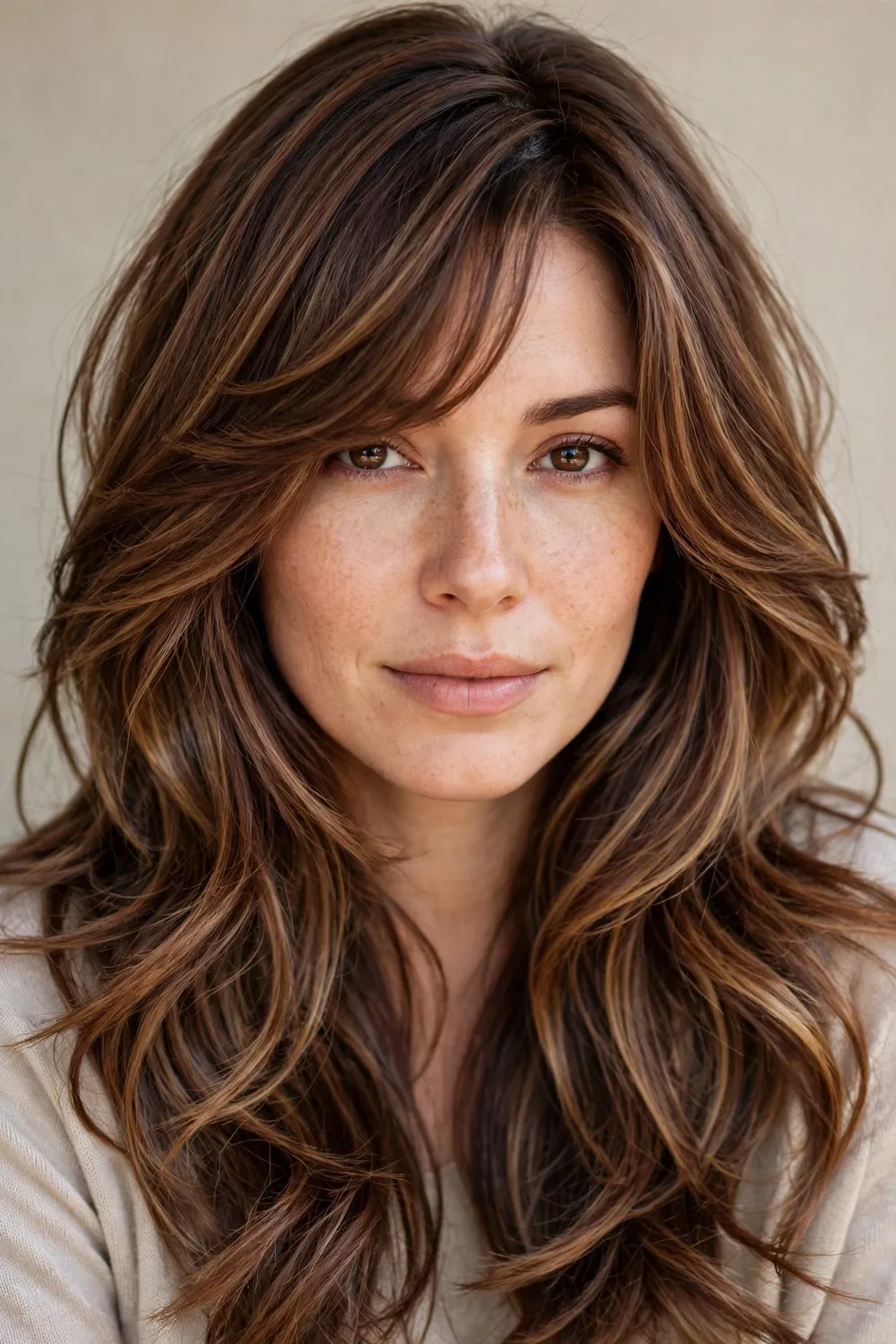
A side part changes everything about how bronde reads, and this look leans into it. Rich cocoa ribbons swirl through a deep brunette base, while the front layer sweeps across the forehead instead of splitting down the middle. It suits level 4–5 bases, thick or wavy hair, and round faces in particular — the diagonal sweep breaks up the width. Ask your colourist to paint the brightest ribbons on the heavier side of your part, keeping the underneath darker for depth, and to cut the front layer long enough to tuck. A texturising spray gives the sweep hold without stiffness. Maintenance is forgiving, with a gloss every 6–8 weeks and a refresh every 10–14 weeks keeping the cocoa warm and glossy.
23. Chestnut Honey Blend for Deep Brunettes
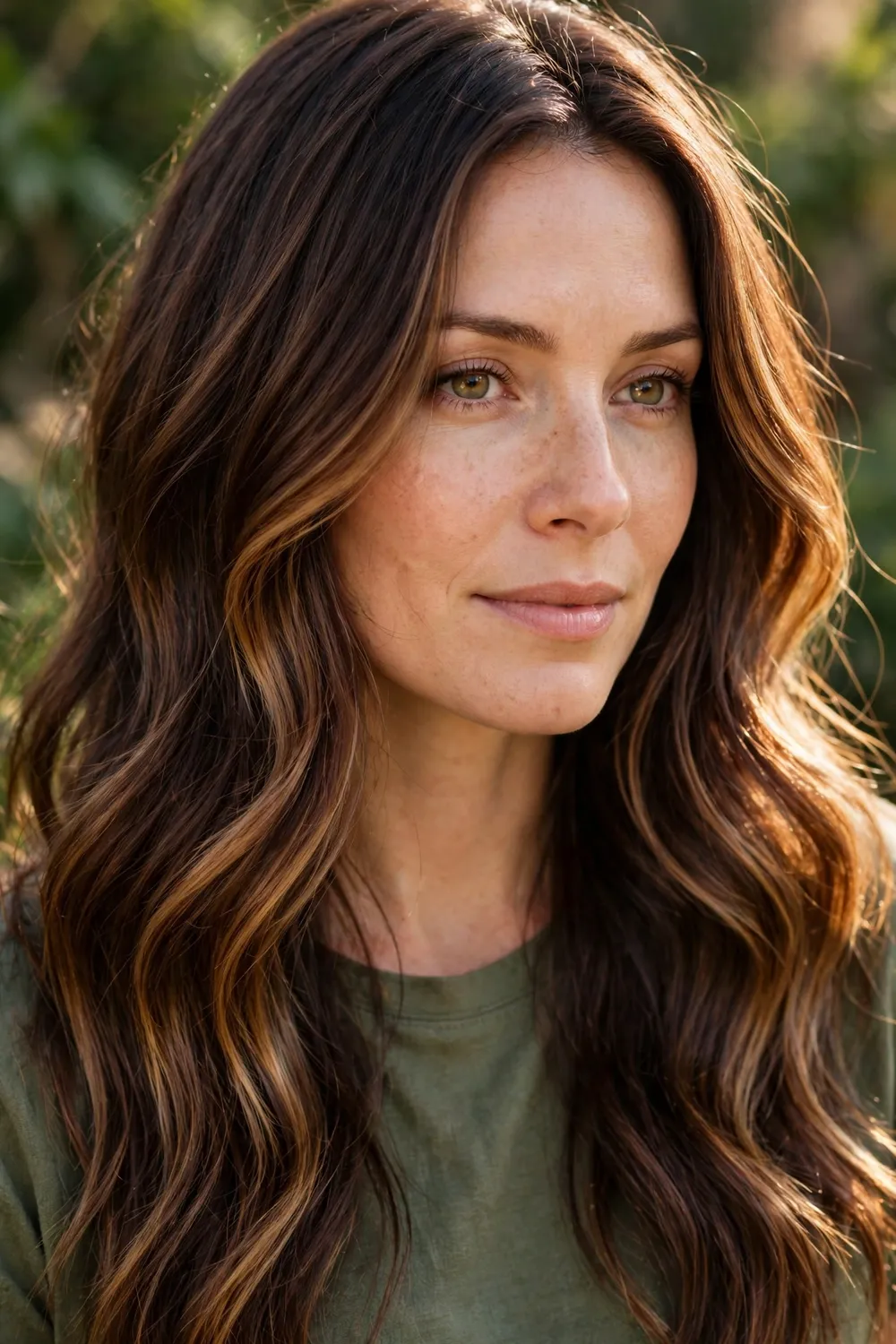
Very dark hair does not need to go blonde to get dimension — it needs warmth and shine. This blend layers honey ribbons over a chestnut base, staying firmly in brunette territory while still catching the light. It suits level 3–4 bases best, and it is one of the kindest options for coarse or thick hair, which can look flat when it is all one dark shade. Ask for honey balayage lifted only one to two shades, concentrated through the mid-lengths, with a warm gloss to seal it. A colour-safe shampoo and a weekly hair mask keep the shine from fading. Because the lift is so gentle, regrowth blends in quietly and a refresh every 10–14 weeks is more than enough.
24. Vanilla Latte Bronde with Sculpted Layers
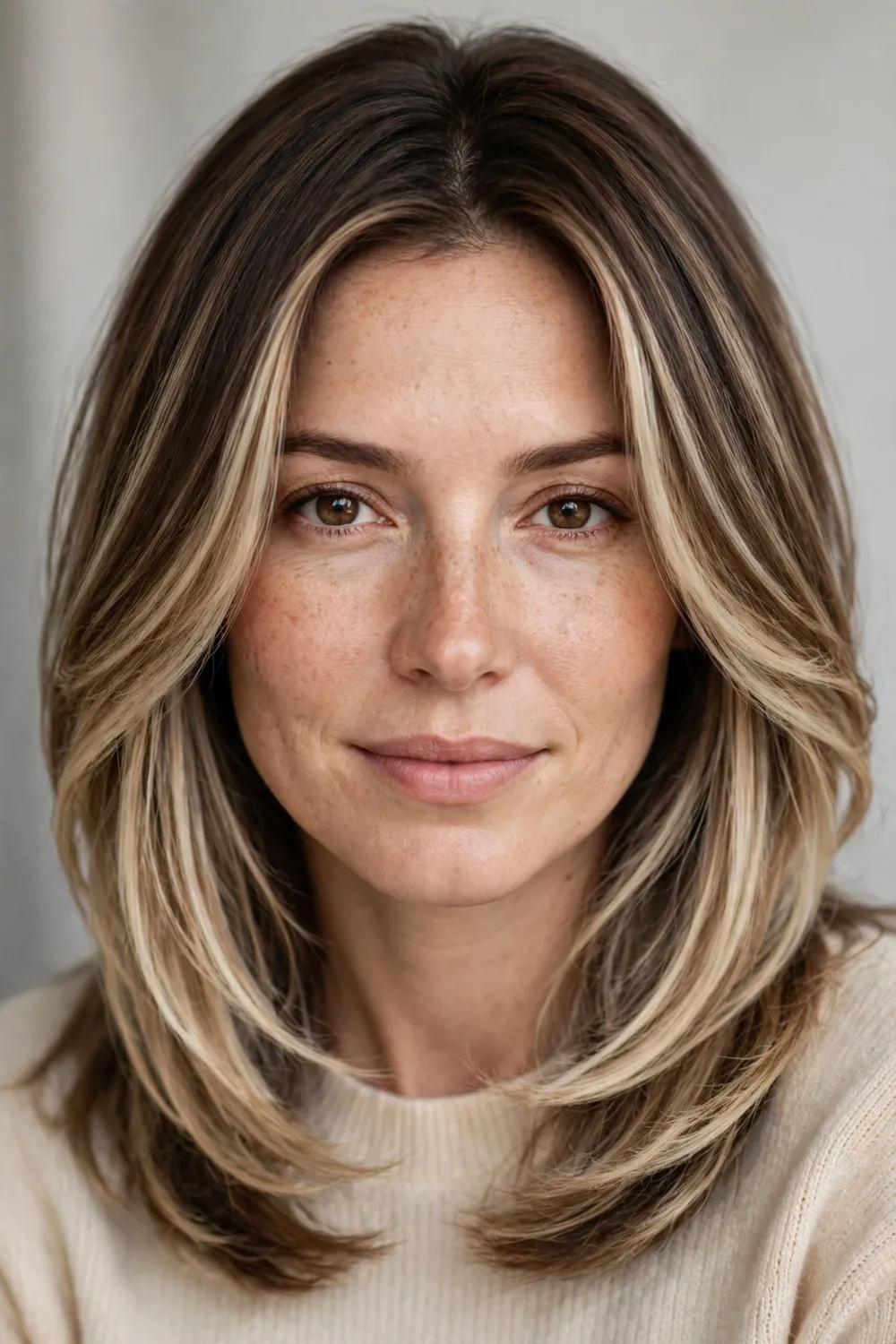
This is the brightest look in the set that still earns the bronde name. Bright beige pieces trace the edges of sculpted layers, while the root stays shaded so the lightness has somewhere to graduate from. It suits a level 6–7 base and medium to long hair with a proper layered cut — without the layers, the vanilla pieces have nothing to sit on. Ask your colourist for beige balayage along the layer edges, a shadow root of at least a few inches, and a cool-neutral gloss so the vanilla does not turn yellow. Style it with a large-barrel tong for soft bends, and use heat protectant every single time. Toning every 6–8 weeks keeps the beige clean rather than brassy.
25. Soft Ember Bronde with Lived-In Shine
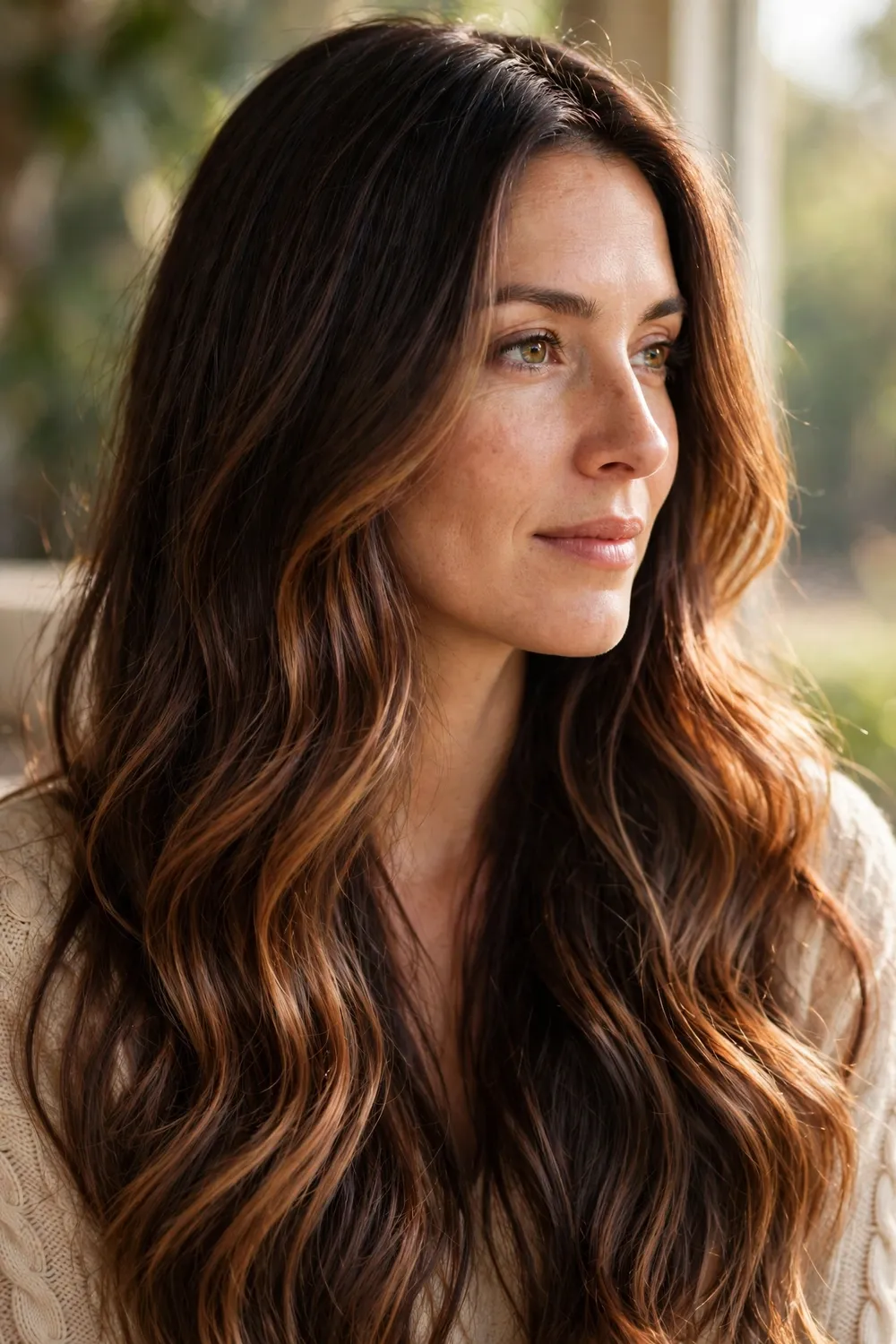
Ember bronde adds a whisper of copper-beige warmth to a deep brunette base — not red, not orange, just a glow that looks like late-afternoon sun. Soft feathered layers carry the colour so it never sits in a block. It suits level 4–6 bases, warm undertones especially, and wavy or straight hair past the shoulders. Ask for copper-beige balayage painted in fine ribbons, feathered at the ends, with a warm gloss over the top. A shine serum on the mid-lengths is all the styling this needs on most days. The lived-in grow-out is the point, so maintenance is light: gloss every 6–8 weeks, refresh every 10–14 weeks, and trims every 8–12 weeks to keep the feathered ends from splitting.
26. Rose Gold Bronde with Soft Face-Framing Layers
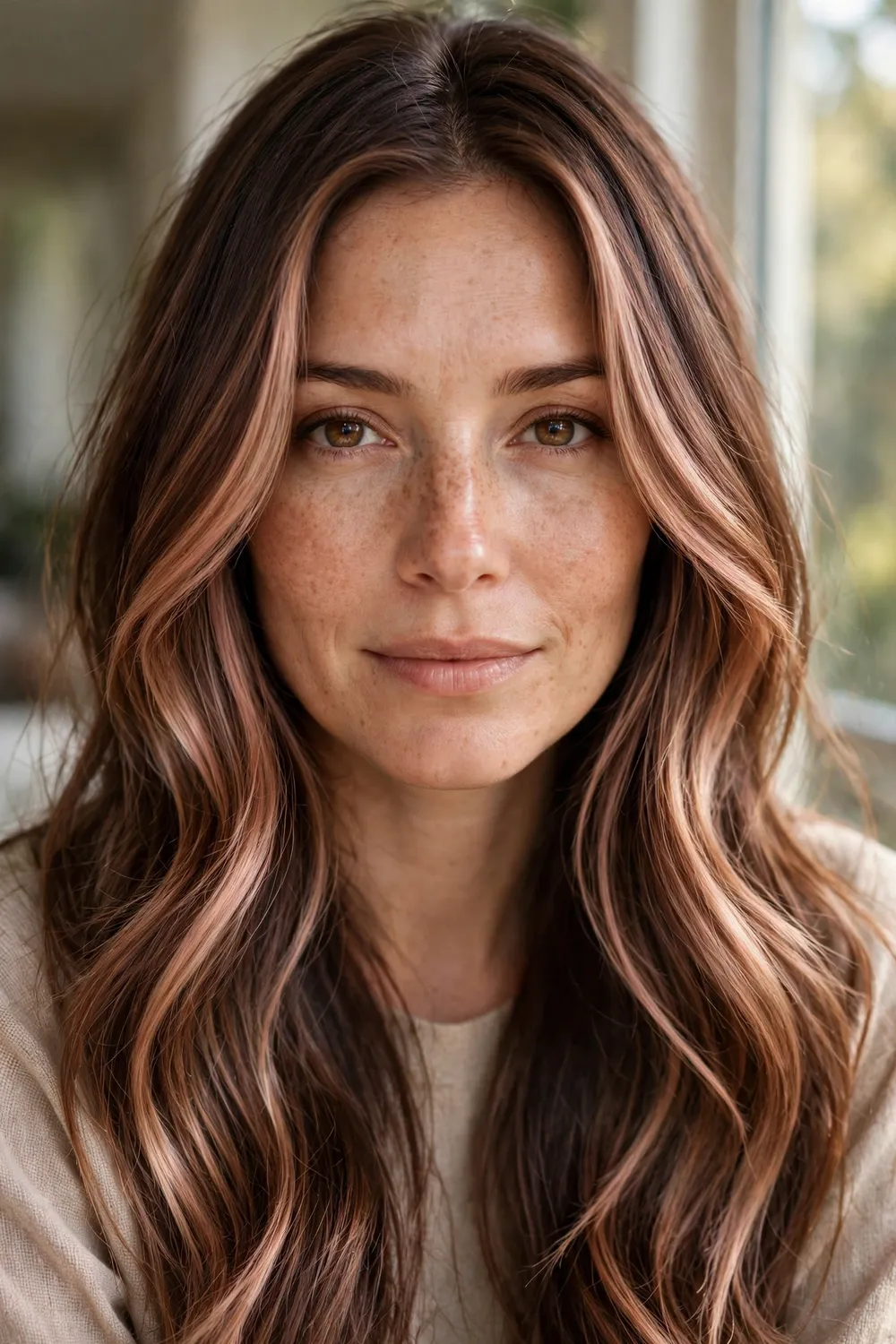
A whisper of rose gold is the most romantic way to wear bronde, and it works because the pink stays in the face frame, not all over the head. The base stays a warm brunette, level 5–6, while the front pieces pick up a soft rosy glow that flatters fair to medium skin and warms up cool complexions. Ask your colourist for rose-gold gloss over fine balayage through the front layers only, with the back kept in plain warm bronde so the pink reads as an accent. Blow-dry the face frame forward and under for a soft, pretty finish. Be honest about upkeep: rose tones fade fastest, so expect a gloss every 6 weeks and a colour-safe shampoo from day one.
27. Bronde Balayage with Shadow Root and Money Piece
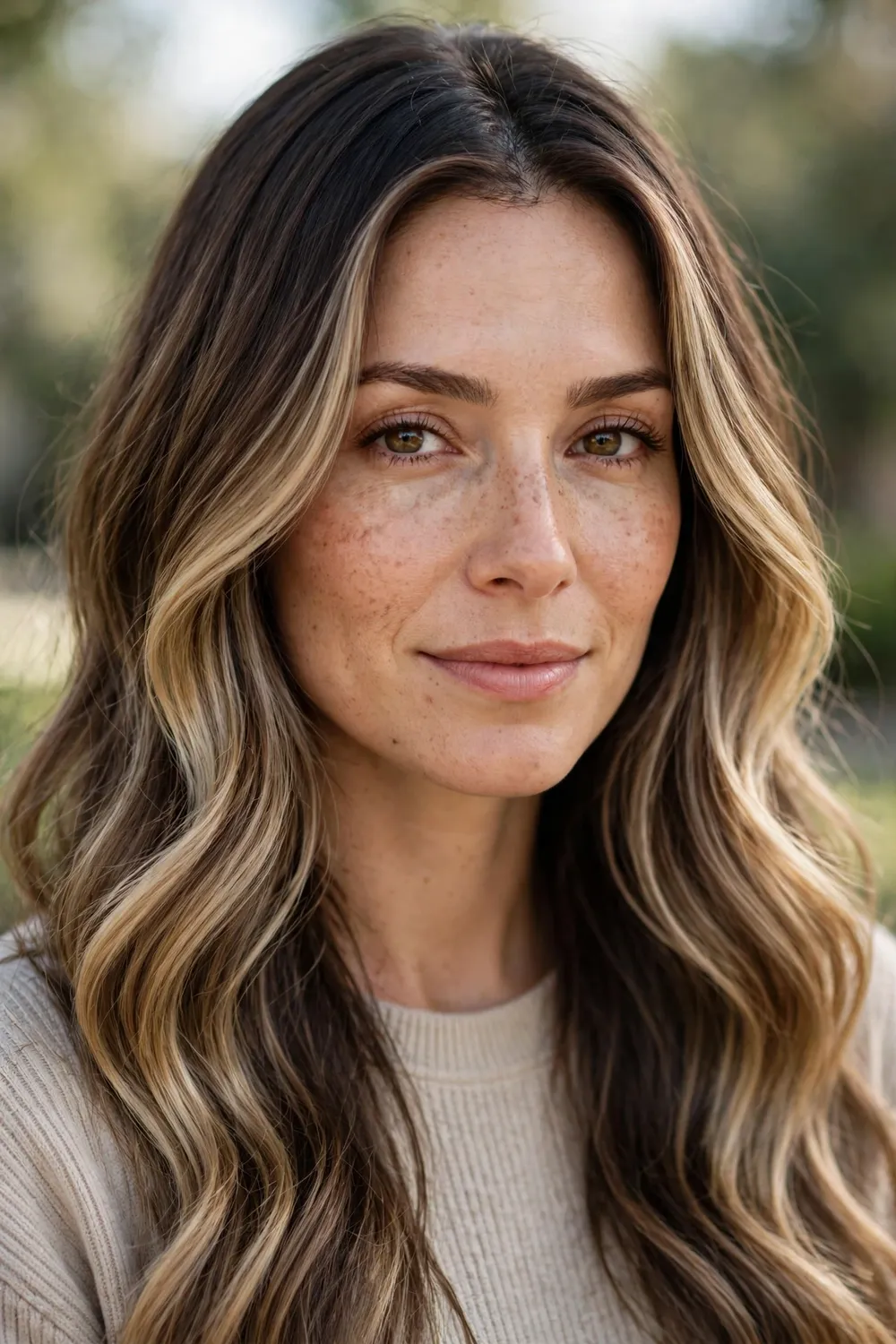
This pairs two ideas. A dark shadow root melts down into the lengths, while a defined-but-soft money piece frames the face — bright enough to notice, narrow enough to avoid that harsh stripe. It suits level 4–6 bases and medium to long hair, and it is a good pick for anyone growing out old highlights, since the shadow root hides the join. Ask for a root shadow of two to three inches, a money piece no wider than about an inch, feathered at the top, and balayage through the lengths one to three shades lighter. Style the front pieces with a slight bend away from the face. A gloss every 6–8 weeks keeps the money piece from going brassy.
28. Bronde Bob with Face-Framing Layers
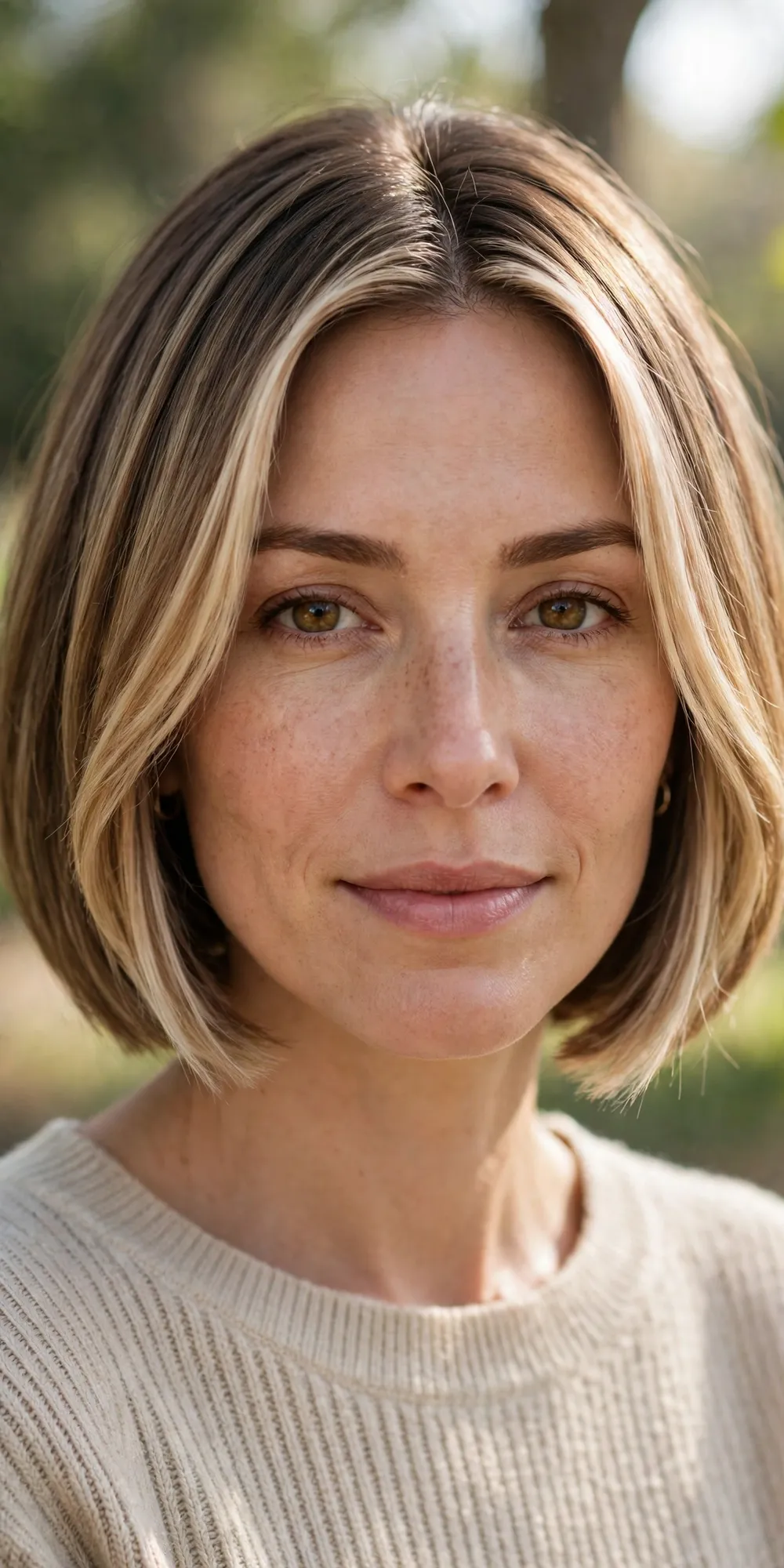
Bronde is not only a long-hair colour — on a bob it looks sharper and more deliberate. The front pieces stay slim and bright, while the back is diffused so the colour does not overwhelm a short cut. It suits a level 5–7 base, fine to medium hair, and oval, square or heart-shaped faces, since the bright front pieces draw the eye forward. Ask for a chin- to jaw-length bob with face-framing layers cut in, balayage brightest at the front and softened toward the back. A flat iron with a slight bend at the ends, plus heat protectant, gives it that polished swing. Short hair shows regrowth sooner, so plan a refresh closer to every 10 weeks and trims every 8 weeks.
29. Bronde Balayage with Curtain Bangs
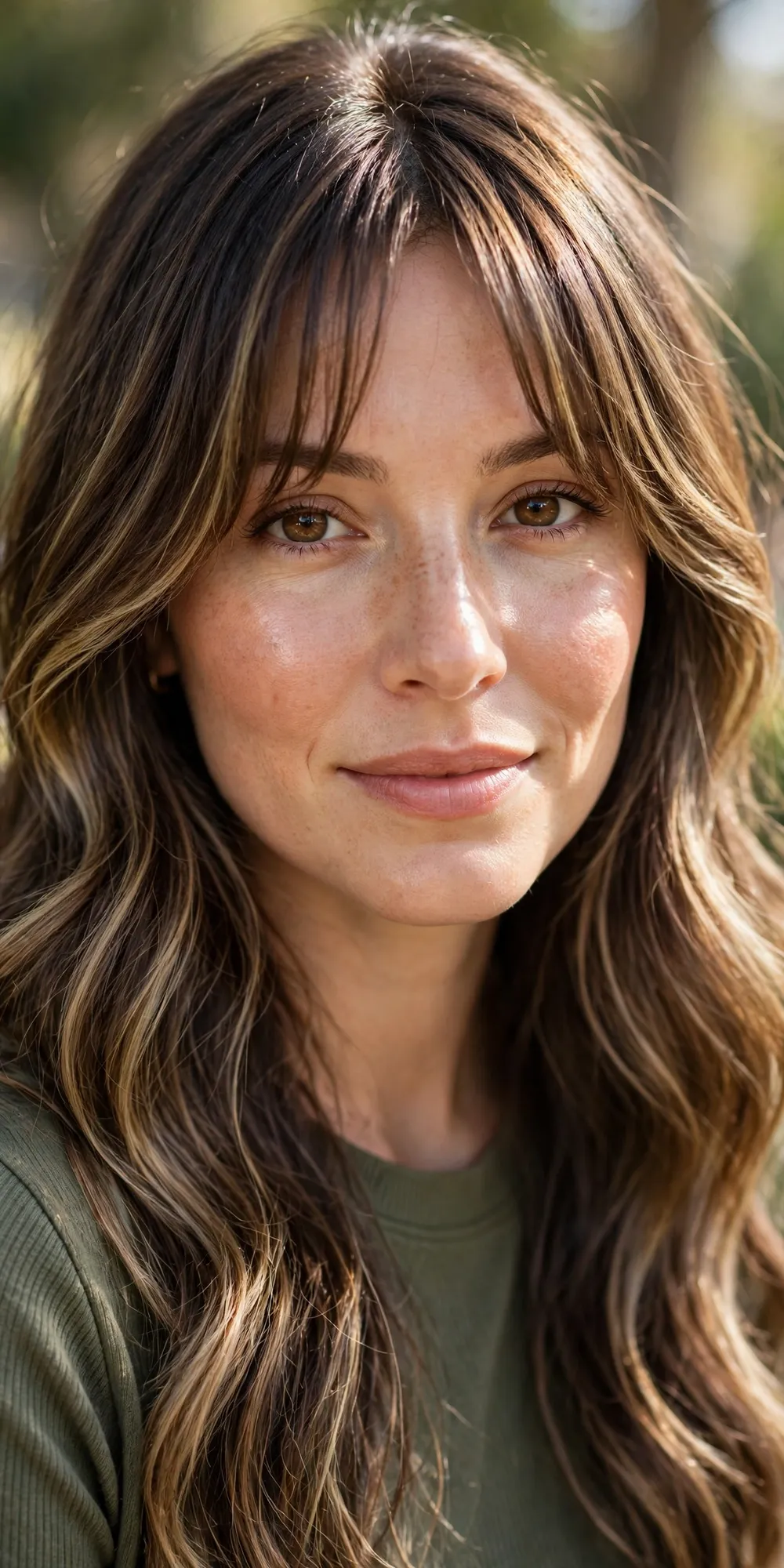
Curtain bangs in bronde do double duty: they frame the cheekbones and carry the brightest colour right where it flatters most. The bangs blend into longer face-framing layers, so there is no hard line as they grow out. This suits a level 5–7 base, medium to long hair, and oval, long or heart-shaped faces — the bangs add width at the cheekbones and soften a high forehead. Ask your colourist to paint the bangs and front pieces brightest, with the balayage starting at the cheekbone, and to cut the bangs long enough to tuck behind the ears. Blow-dry them with a round brush, sweeping each side outward. They need a trim every 6–8 weeks to hold their shape, even if the colour can wait longer.
30. Bronde Ombre with Face-Framing Layers
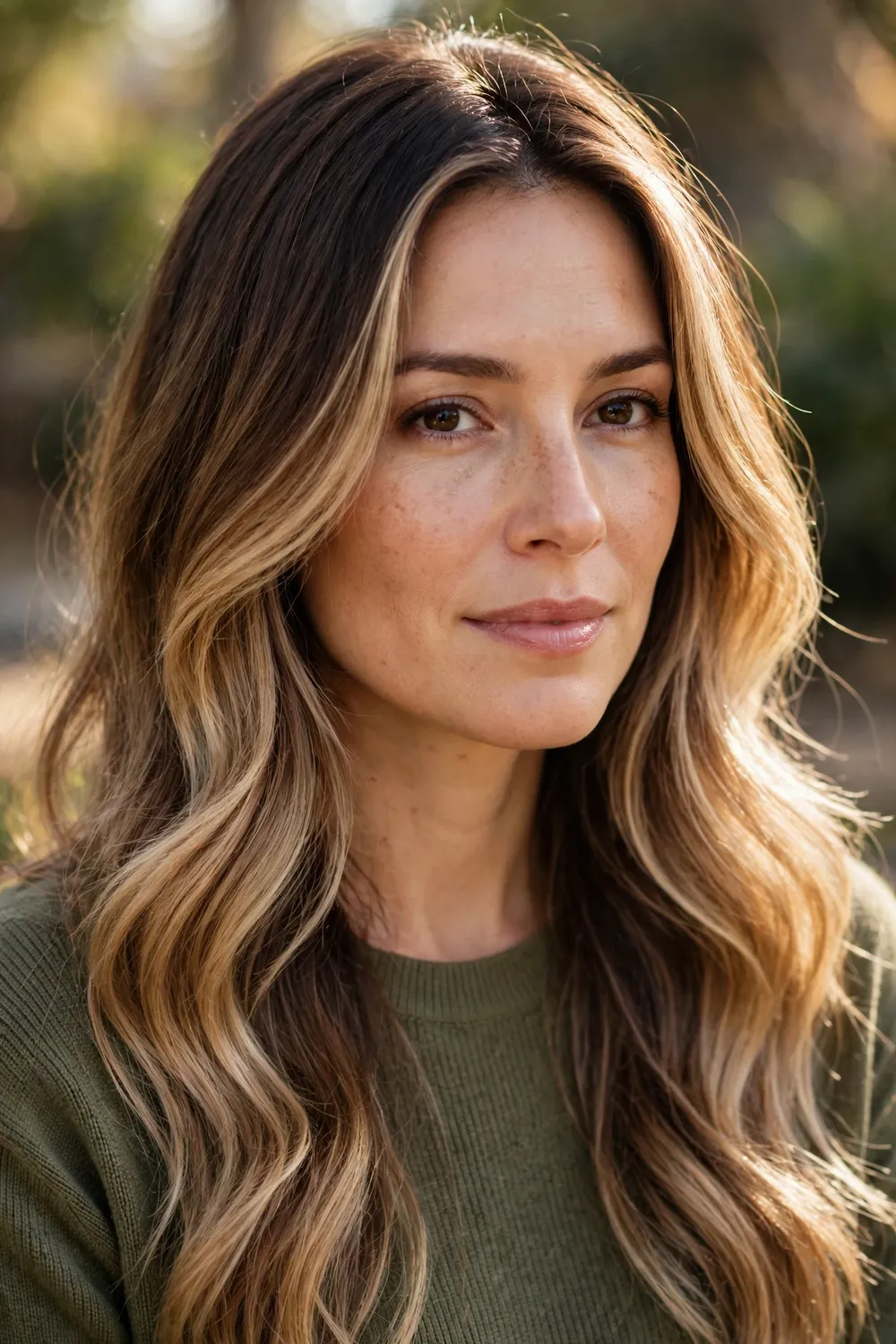
Ombre and balayage are cousins, and this look borrows the best of both: a deeper root-to-end gradient, with the face frame kept brightest. The root stays dark, the ends go lightest, and the front layers tie the two together. It suits level 4–6 bases and long hair best — you need the length for the gradient to unfold — and it flatters most face shapes because the brightness sits low. Ask for a gradual ombre in bronde tones, not a two-tone jump, with the face frame lifted a shade brighter than the ends. A leave-in conditioner and a wide-tooth comb keep the ends from drying out. Refresh every 10–14 weeks, and gloss in between if the ends start looking dull.
31. Bronde Balayage with Lowlights for Extra Dimension
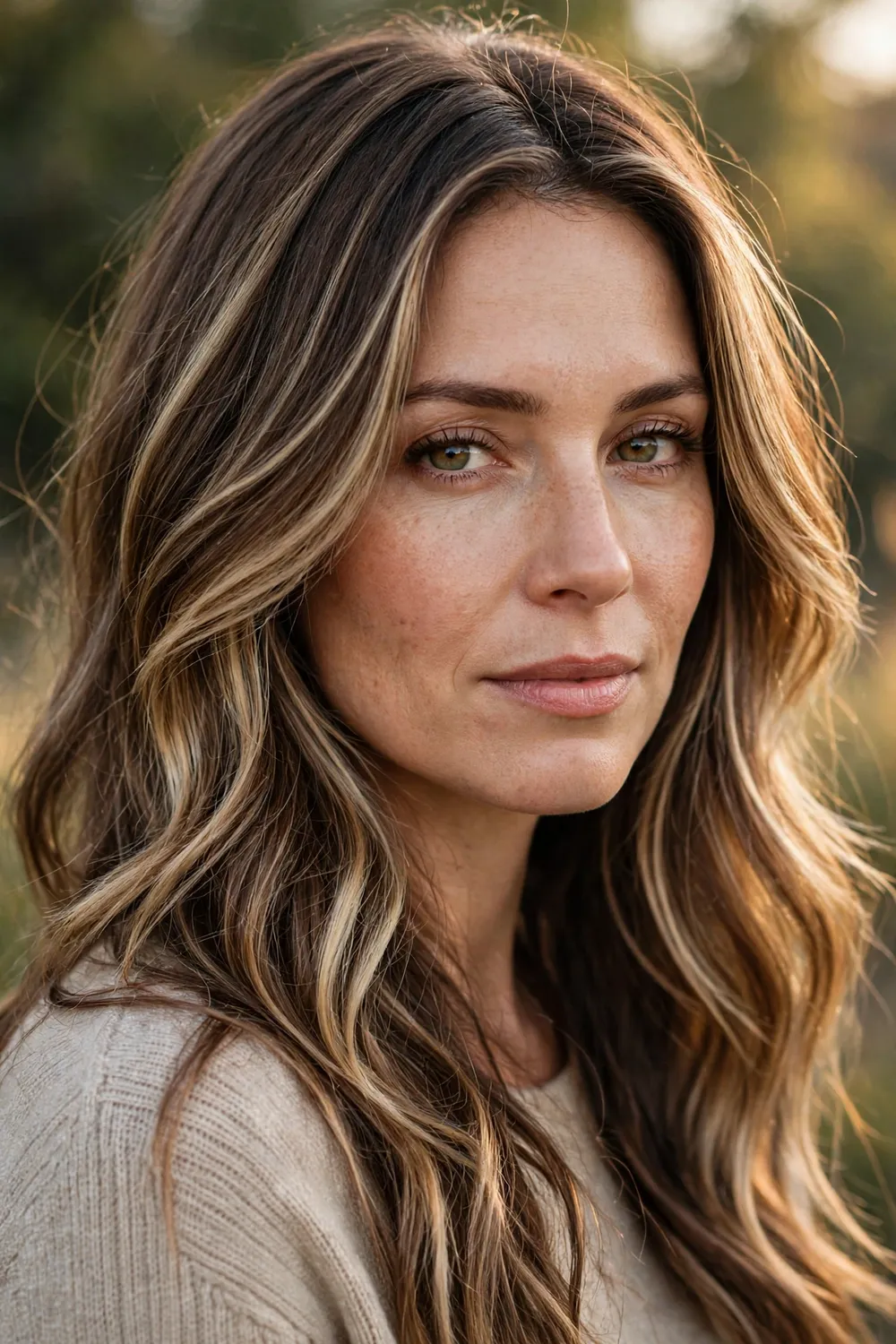
If your bronde ever looks flat or washed out, lowlights are usually the missing piece. Weaving darker ribbons back in between the blonde ones makes the light pieces read deeper and the whole head look thicker. It suits any level 5–7 base, but it helps fine hair most — the contrast creates an illusion of density that a single tone cannot. Ask your colourist to add lowlights one shade darker than your base between the balayage ribbons, especially underneath and through the back, rather than lightening everything further. A volumising mousse at the roots and a soft blow-dry finish the look. Maintenance mirrors standard bronde: gloss every 6–8 weeks, refresh every 10–14 weeks.
32. Bronde Balayage for Curly Hair
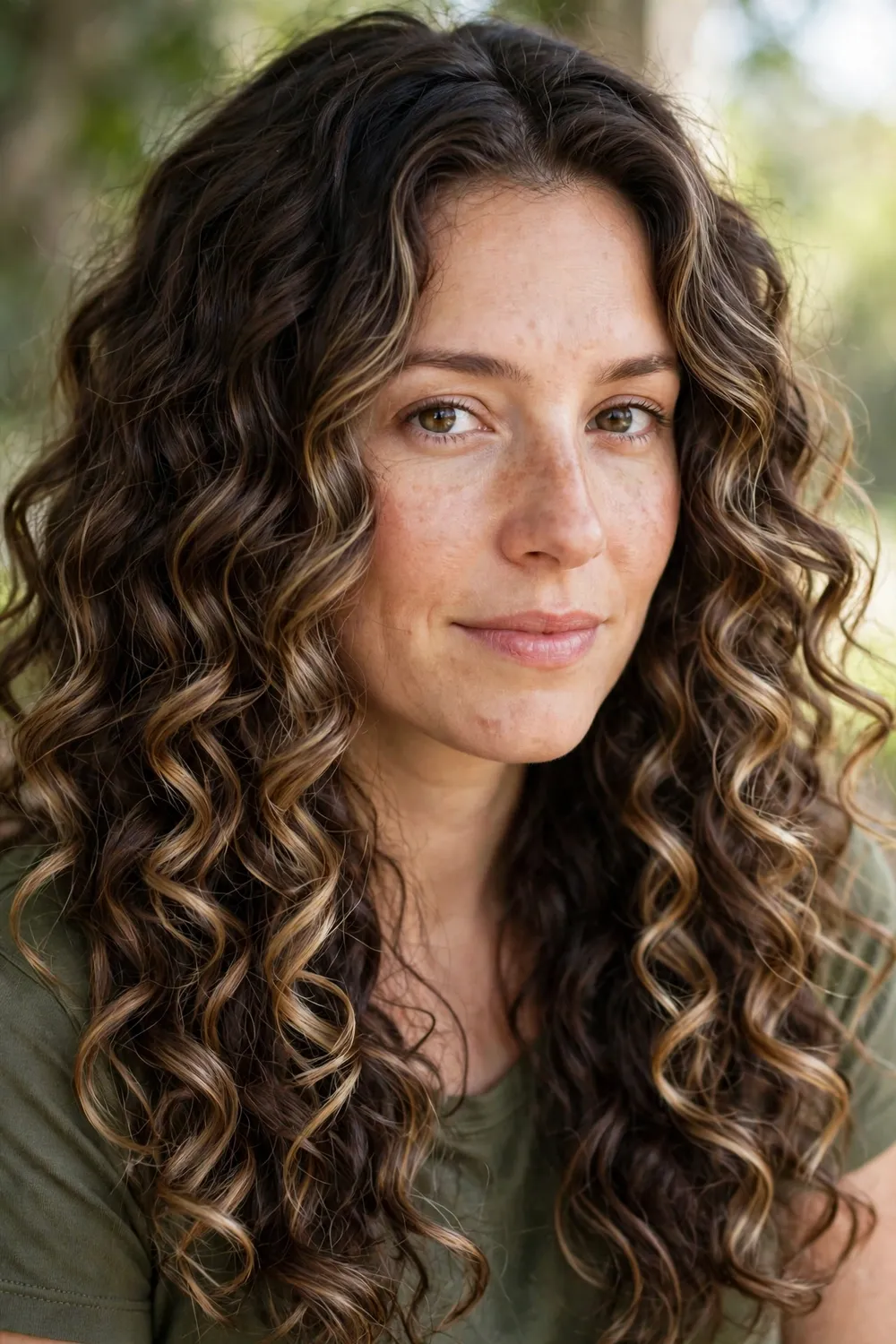
Curly hair needs a different placement plan, because a ribbon painted on straight hair lands somewhere else entirely once the curl springs up. Here the colour follows the curl pattern, with looser, dimensional pieces placed on the outer curves where light naturally hits, and long front layers to keep the shape from going triangular. It suits all curl types on a level 4–7 base, and it is especially good on 3A–3C curls. Ask your colourist to paint on dry, styled curls if possible, keeping the lift to one to three shades, and to cut the layers dry too. Finish with a curl cream and a diffuser. Colour-safe, sulphate-free shampoo matters here more than anywhere — curls dry out fast when the wrong products strip them.
33. Bronde Balayage with Grey Blending
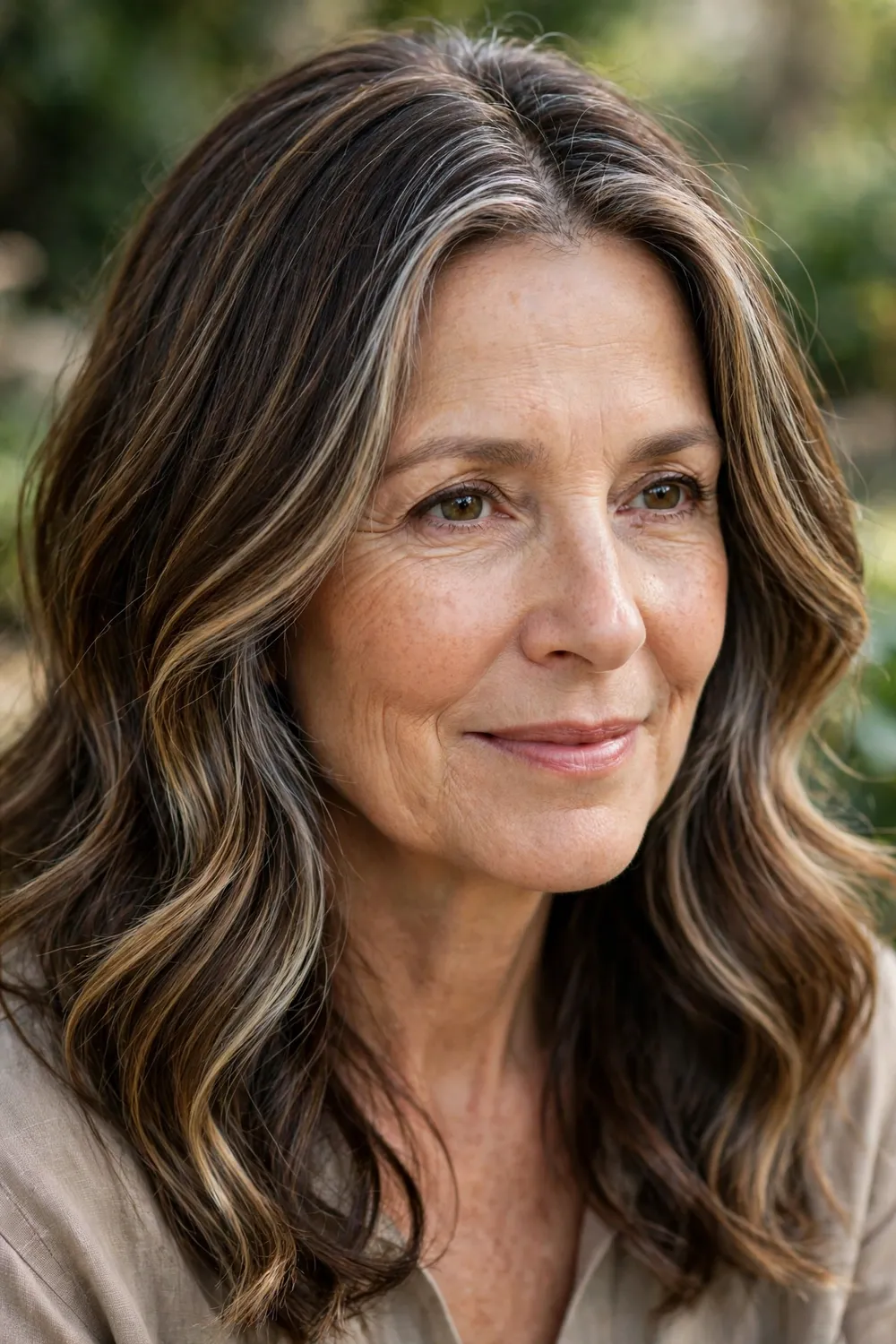
Early greys at the temples and part do not have to mean full coverage — bronde ribbons can soften them so cleverly that nobody can tell where the grey ends and the colour begins. Fine, light pieces woven through the grey-prone areas break up the solid silver line, while the brunette base keeps everything grounded. It suits level 5–7 bases with scattered greys, especially around the face, and straight or wavy hair. Ask for fine balayage concentrated at the temples and part, with a cool-neutral gloss so the blend stays seamless. A gloss every 6–8 weeks keeps the blend soft as more grey comes through. It is the lowest-commitment way to ease into grey without a harsh regrowth line.
How to Pick the Right Bronde Tone
Start with your base level and your skin’s undertone, not with a photo of someone else’s hair. Warm skin — veins that look greenish, gold jewellery that flatters you — takes warm bronde beautifully. Cool skin — veins that look blue, silver jewellery that suits you — needs the cooler families or the whole thing can turn brassy within weeks.
| Your base & undertone | Best tone family |
|---|---|
| Level 5–6, warm undertone | Honey, caramel, toffee |
| Level 5–6, cool undertone | Mushroom, taupe, ash beige |
| Level 6–7, warm undertone | Caramel, toffee, bronze |
| Level 6–7, cool undertone | Ash beige, smoky mocha, mushroom |
| Level 3–4 (deep brunette), any undertone | Honey, chestnut, bronze — keep the lift to 1–2 shades |
Layer placement matters as much as tone. For round faces, start the lightest layers at the cheekbone to add length. For square jaws, start them lower, around the jawline or below, so the brightness does not widen the jaw. If you are unsure, ask your colourist to show you the placement on dry hair before they start painting — it is much easier to adjust then than after the colour is on.
What to Ask Your Colourist
The words you use in the chair decide the result more than the photo you show. Try this exact wording: “I want a narrow, feathered face frame starting from the cheekbone, with bronde balayage one to three shades lighter than my base — and a gloss, not a hard toner, to finish.” That one sentence covers the width, the placement, the lift and the finish, and it steers your colourist away from the thick, high money piece that so often goes wrong.
Bring three photos with you. First, a daylight photo of your current hair, taken outside or by a window — salon lighting flatters everything and hides brassiness. Second, a photo of the front pieces you like, so the width and brightness are clear. Third, a photo showing your usual part, because balayage painted for a centre part looks different when you sweep it to the side. If your colourist suggests going lighter than three shades, that is blonde, not bronde — worth a conversation before they mix anything. And if you have ever reacted to hair colour, ask for a patch test at least 48 hours before your appointment.
How to Keep Bronde Balayage Fresh
Bronde is famously low-maintenance, but “low” is not “none” — a little routine keeps it looking salon-fresh for months. Book a gloss every 6–8 weeks; it refreshes the tone and adds shine without touching your roots. Come back for a proper balayage refresh every 10–14 weeks, when the ends start looking dull or the grow-out line creeps too far down. Trims every 8–12 weeks keep the ends healthy, and healthy ends hold colour far better than split ones.
At home, use a colour-safe shampoo and lukewarm water — hot water strips tone fast. If your bronde is cool-toned, use a purple or blue shampoo once every one to two weeks only; more often than that and it will dull the colour and leave a grey cast. Warm bronde should skip purple shampoo entirely. Always use heat protectant before straighteners, tongs or a hot blow-dry, since heat is the quickest way to fade a gloss. And as with any colour service, ask for a patch test before your first appointment if you have sensitive skin or a history of reactions.
5 Mistakes That Make Bronde Look Stripey
- Making the money piece too wide or too high. A thick, chunky front section painted right up to the root reads as a stripe, not a highlight. Keep it narrow — about an inch — feathered at the top, and starting at the cheekbone.
- Choosing a tone that fights your undertone. Warm caramel on cool skin, or ash mushroom on warm skin, will look off within days. Match the tone family to your undertone first, then pick the shade.
- Skipping the cut. Balayage without layers has nothing to sit on, so the colour pools in a flat block. The cut and the colour are one job — book them together.
- Making the whole head equally bright. Bronde needs darkness to work against. If every section is lifted to the same level, there is no depth left and the result looks flat and wig-like.
- Over-using purple shampoo. It is a maintenance tool, not a daily shampoo. Used too often it builds up, dulls the shine and turns cool bronde grey and muddy.
Frequently Asked Questions
What exactly is bronde balayage?
Bronde is a colour — a blend of brown and blonde, usually sitting between levels 5 and 8 — while balayage is the technique, freehand painting that creates a soft, graduated lightness. Put them together and you get brown hair lifted one to three shades in ribbons that grow out softly, with no harsh root line. It is the in-between shade for brunettes who want lightness without committing to blonde. For the wider history of how hair colouring developed, see Hair coloring.
How light can brunette hair go and still look like bronde?
About one to three shades lighter than your natural base. Go further and the hair reads as blonde, not bronde — the brunette depth that defines the look is gone. Deep brunettes at level 3–4 should stay at the lower end of that range, one to two shades, while level 6–7 bases can push toward three. Your colourist can show you where your base sits on the level chart before you decide.
Can I get bronde balayage without bleach?
Sometimes, but not always. On lighter brunette bases, a high-lift tint or a gentle lightener can reach bronde tones without full bleach. On dark bases, some form of lightener is usually needed to lift one to three shades — there is no tint that lifts dark hair that far on its own. What you can avoid is harsh, high-volume bleach; ask for a low-volume lightener with bond protection, and a gloss rather than a hard toner to finish.
How long does bronde balayage last?
The colour itself lasts until it grows out or fades, but it looks its best for about 10–14 weeks between refreshes, with a gloss every 6–8 weeks in between to keep the tone fresh. Because the root is usually kept dark and the grow-out is soft, you will not get an obvious regrowth line — the look simply gets gradually softer and more lived-in over time.
Will bronde balayage make fine hair look thinner?
Done badly, yes — too much lightness all over can wash fine hair out. Done well, it does the opposite. Fine ribbons of bronde against a darker base create contrast, and contrast reads as depth and thickness. The trick is keeping some darkness underneath and through the back, adding layers for movement, and avoiding an all-over lightening that flattens everything. If your hair is very fine, ask for lowlights woven in as well.
How often do I need to tone bronde balayage?
A gloss or tone every 6–8 weeks is the usual rhythm, and it is the single most useful appointment for keeping bronde looking fresh. Warm tones fade toward brassy, cool tones fade toward dull, and a gloss corrects both without re-lightening anything. If you use purple shampoo on cool bronde, keep it to once every one to two weeks — it is a top-up, not a replacement for toning.
Does bronde balayage work on curly hair?
Yes — it can look spectacular on curls, because every curl catches the light differently and the dimension multiplies. The placement has to follow the curl pattern, though, ideally painted on dry, styled curls so the colour lands where it will actually sit. Keep the lift to one to three shades, ask for long front layers, and use colour-safe, sulphate-free products, since curly hair dries out faster than straight hair once it has been lightened.
Final Word
Bronde balayage works because it meets brunettes where they are — no drastic lift, no harsh regrowth, just light in the right places. Pick the tone that suits your undertone, ask for that narrow feathered face frame, and keep the gloss appointments in the diary. Do that, and the colour will look good on day one and still look good at week ten. If you want more ideas in the same spirit, Browse more hair colour ideas on our blog — from brunette hair colour ideas and blonde highlights to honey blonde hair and ash blonde hairstyles, there is a shade for every brunette ready to go lighter.