

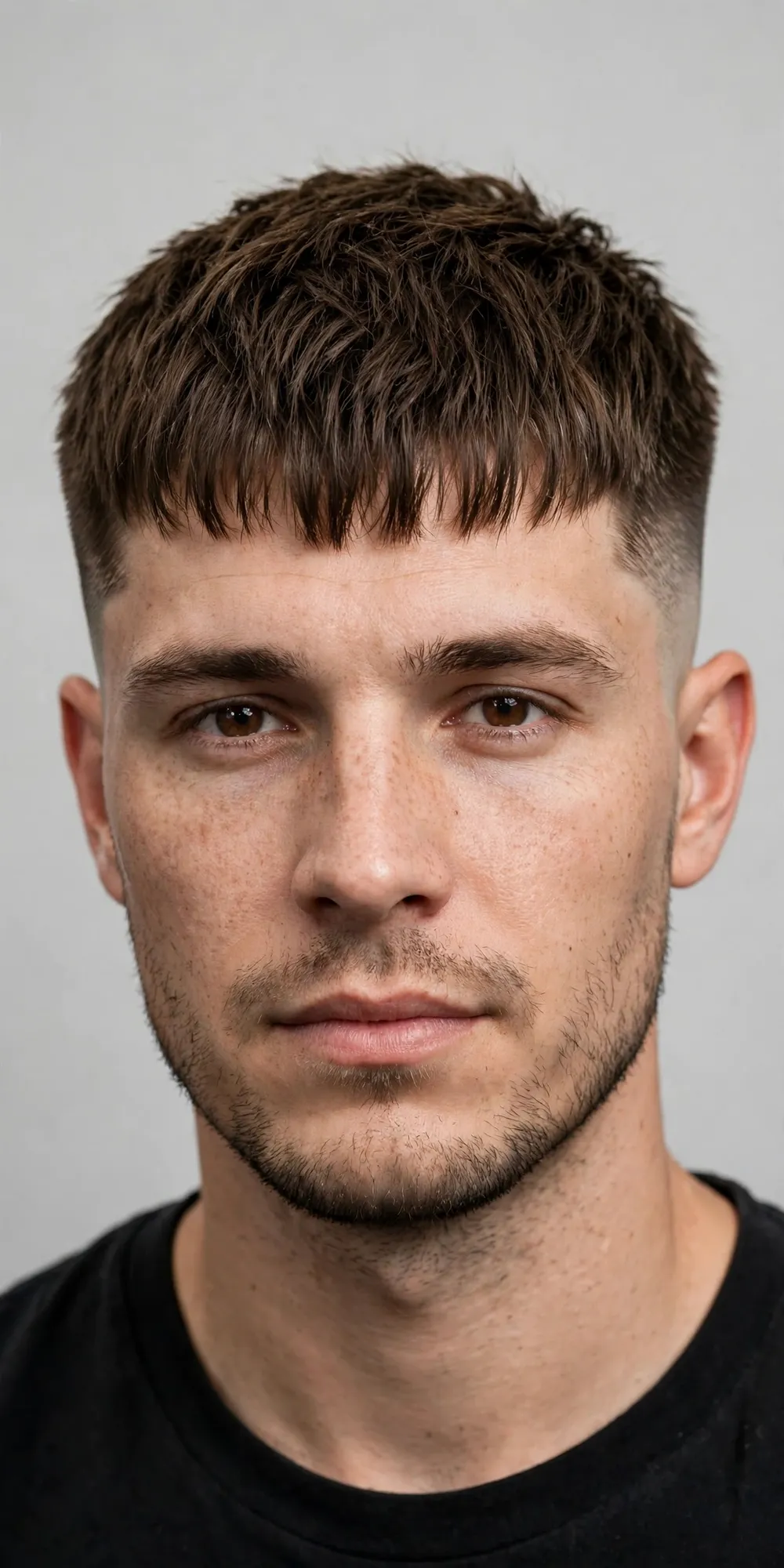
A French crop is a short men’s haircut with faded or tapered sides and a longer textured top pushed forward into a fringe — a 1–2 inch top that takes about five minutes to style and hides a receding hairline better than almost any other cut. Top 3 picks: (1) the Classic French Crop — the safest first crop, (2) the Textured French Crop with Low Skin Fade — the sharpest modern version, and (3) the Curly French Crop — the best option for curly hair.
What Is a French Crop Haircut?
The French crop is one of the oldest short men’s cuts still in heavy rotation, and its staying power comes down to how little it asks of you. The sides and back are faded or tapered close to the head, while the top is left longer — usually 1 to 2 inches — and pushed forward to form a short fringe. That fringe is the whole trick: it adds fullness across the forehead, covers a receding hairline, and frames the face without needing a single drop of product if you’re in a hurry.
It suits most hair types, but it works hardest on straight to slightly wavy hair and on thinning hair, where the textured top creates the illusion of density. Face-shape wise, oval and square faces get the cleanest result, while round faces benefit from a touch of height on top. If you already like [short haircuts for men](/short-haircuts-for-men/) but want something with more personality than a buzz cut, the French crop is the obvious next step. One warning: the fringe needs a trim every three to four weeks, or it starts creeping into your eyes and the whole cut loses its shape.
39 Best French Crop Haircuts for Men
1. Classic French Crop

This is the crop that started it all, and it remains the best place to begin if you’ve never had one. The sides are tapered — not faded to skin, just neatly graded — while the top is left around an inch and a half long with light point-cutting through the ends so the fringe sits naturally. It suits straight and slightly wavy hair, and flatters oval and square faces. Ask your barber: “a classic French crop — tapered sides, about an inch and a half on top, textured fringe pushed forward.” Style it with a pea-sized amount of matte clay, pushed forward with your fingers while the hair is damp. A trim every three to four weeks keeps the fringe off your forehead.
2. Textured French Crop
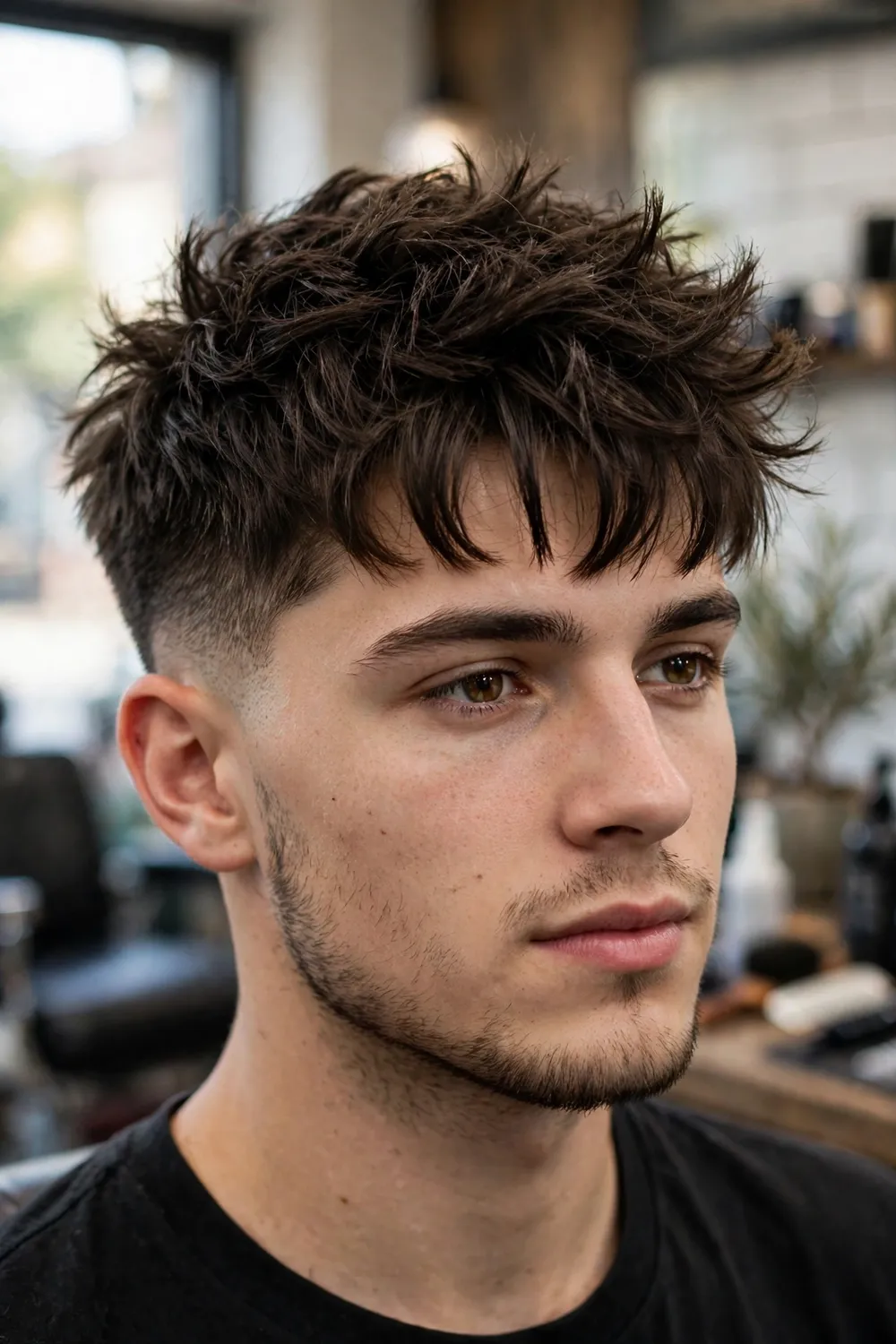
The textured crop takes the classic and roughs it up on purpose. Your barber point-cuts aggressively into the top, creating separated, piecey strands instead of one smooth fringe, which gives the cut movement and makes fine hair look noticeably thicker. This is the version to pick if your hair lies flat and lifeless — the texture does the work your natural volume won’t. It suits straight and wavy hair, and it’s a strong choice for thinning hair. Ask your barber: “a textured French crop — heavy point-cutting on top, piecey fringe, keep the sides a low taper.” Work a small amount of texture paste through damp hair and push it forward. You’ll want a trim every three weeks or the texture grows out and turns into weight.
3. French Crop with Low Fade

The low fade keeps the crop’s character while cleaning up the sides just enough to look sharp in a suit. The fade starts just above the ears and blends in low, so the transition is subtle rather than dramatic — it reads conservative, which is exactly why it’s the most office-friendly version of this cut. It suits nearly every face shape and works well on straight or wavy hair — a good first fade if you’re unsure about high contrast. Ask your barber: “a French crop with a low fade — fade starting just above the ear, keep the top textured and the fringe forward.” Style with a dab of matte clay and a quick finger-comb forward. The low fade grows out gracefully, so four weeks between cuts is fine.
4. French Crop with Mid Fade
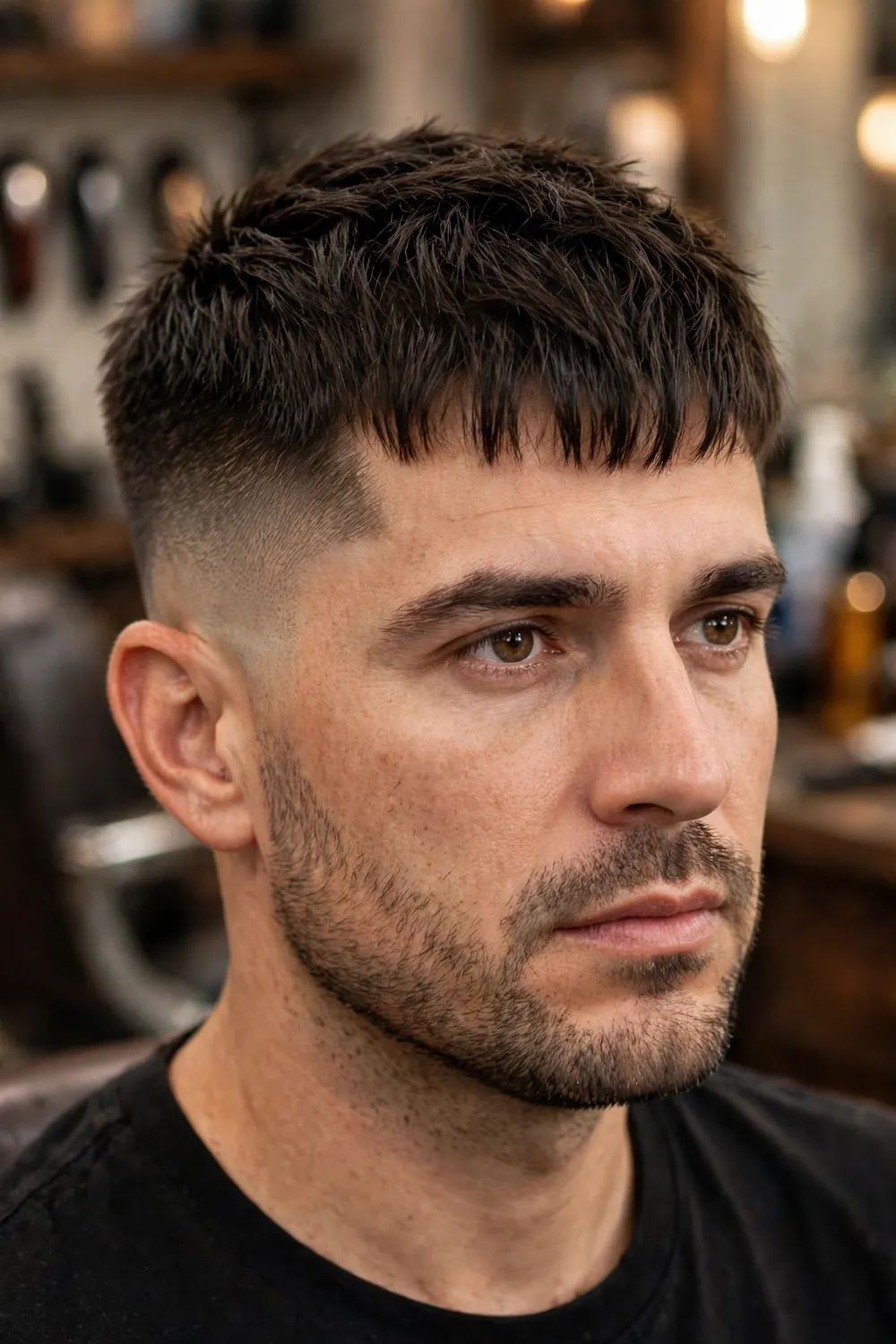
The mid fade is where the French crop starts looking deliberately sharp. The fade climbs to temple height, which draws a clean line around the head and makes the textured top stand out. It suits straight, wavy and thick hair, and works well on round faces — the higher fade and extra height lengthen the face. Ask your barber: “a French crop with a mid fade — fade to the temples, textured top, fringe pushed forward.” Matte clay is all you need; push forward, pinch the ends, done in two minutes. The trade-off is maintenance: the mid fade shows regrowth faster, so book every three weeks if you want it looking crisp.
5. French Crop with High Fade
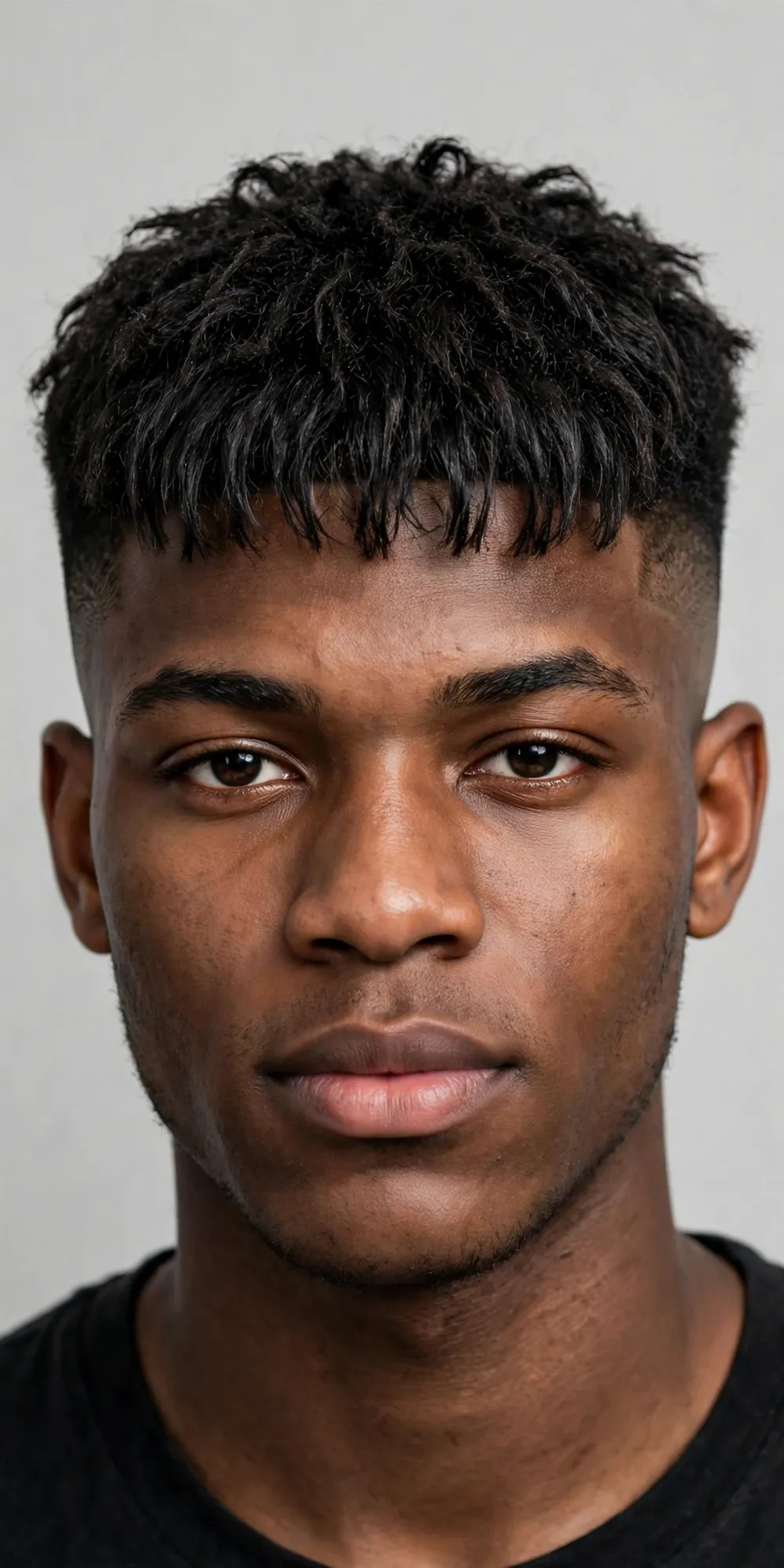
The high fade turns the French crop into a statement. The sides are clipped up high, close to the crown, leaving a bold contrast between the bare fade and the textured top — so the fringe becomes the whole focal point of the cut. It suits straight and thick hair, and it flatters square and oval faces; rounder faces should keep extra length on top. Ask your barber: “a French crop with a high fade — fade up high, sharp blend, textured fringe forward.” Style with matte paste for definition and a dry, modern finish. Honest maintenance note: high fades demand attention. Plan on a touch-up every two weeks if you want the lines to stay clean, or the contrast softens and the cut loses its edge.
6. French Crop with Skin Fade

The skin fade is the cleanest version of the crop, with the sides blending all the way down to bare skin. That razor-smooth gradient makes the textured top look even fuller by contrast. It suits thick and straight hair best, because the weight on top balances the ultra-clean sides, and it works on most face shapes as long as the fringe is kept short and tidy. Ask your barber: “a French crop with a skin fade — zero fade to the skin, crisp blend, textured top with a short fringe.” Use a small amount of matte clay, pushed forward and slightly to one side for a natural finish. It’s the highest-maintenance crop here: stubble shows within days, so expect a barber visit every two weeks.
7. French Crop with Drop Fade
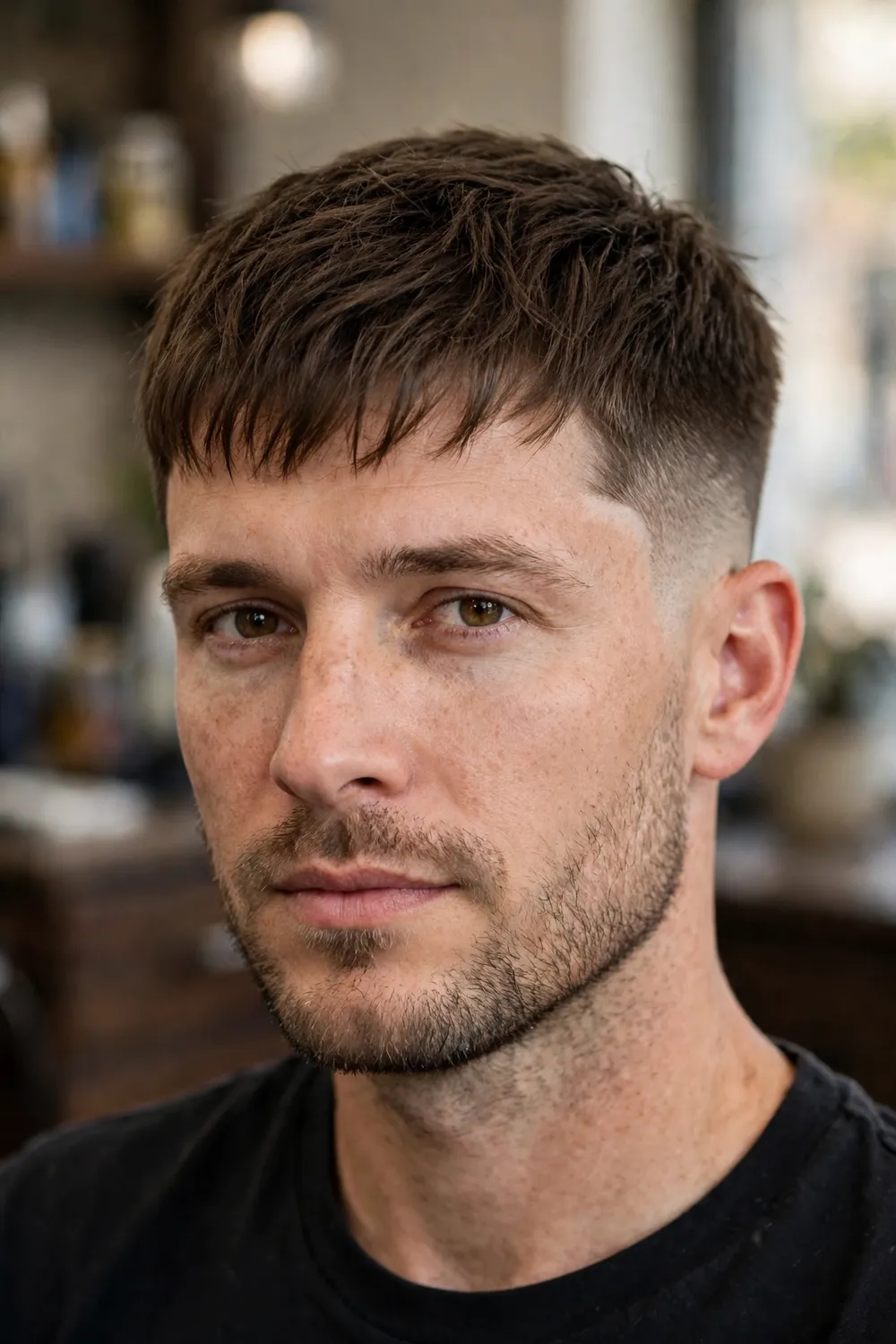
The drop fade adds a subtle curve to the crop — instead of running straight around the head, the fade arcs down behind the ear, following the natural shape of the skull. It’s a small detail, but it gives the cut a custom, tailored feel that a standard fade doesn’t have. It suits most hair types, and it works especially well on rounder heads, where the downward arc creates the illusion of more length through the back. Ask your barber: “a French crop with a drop fade — fade that drops behind the ear, textured top, fringe forward.” Style it the usual way: matte clay, fingers, push forward. The curved line hides regrowth reasonably well, so three to four weeks between cuts is realistic.
8. French Crop with Taper
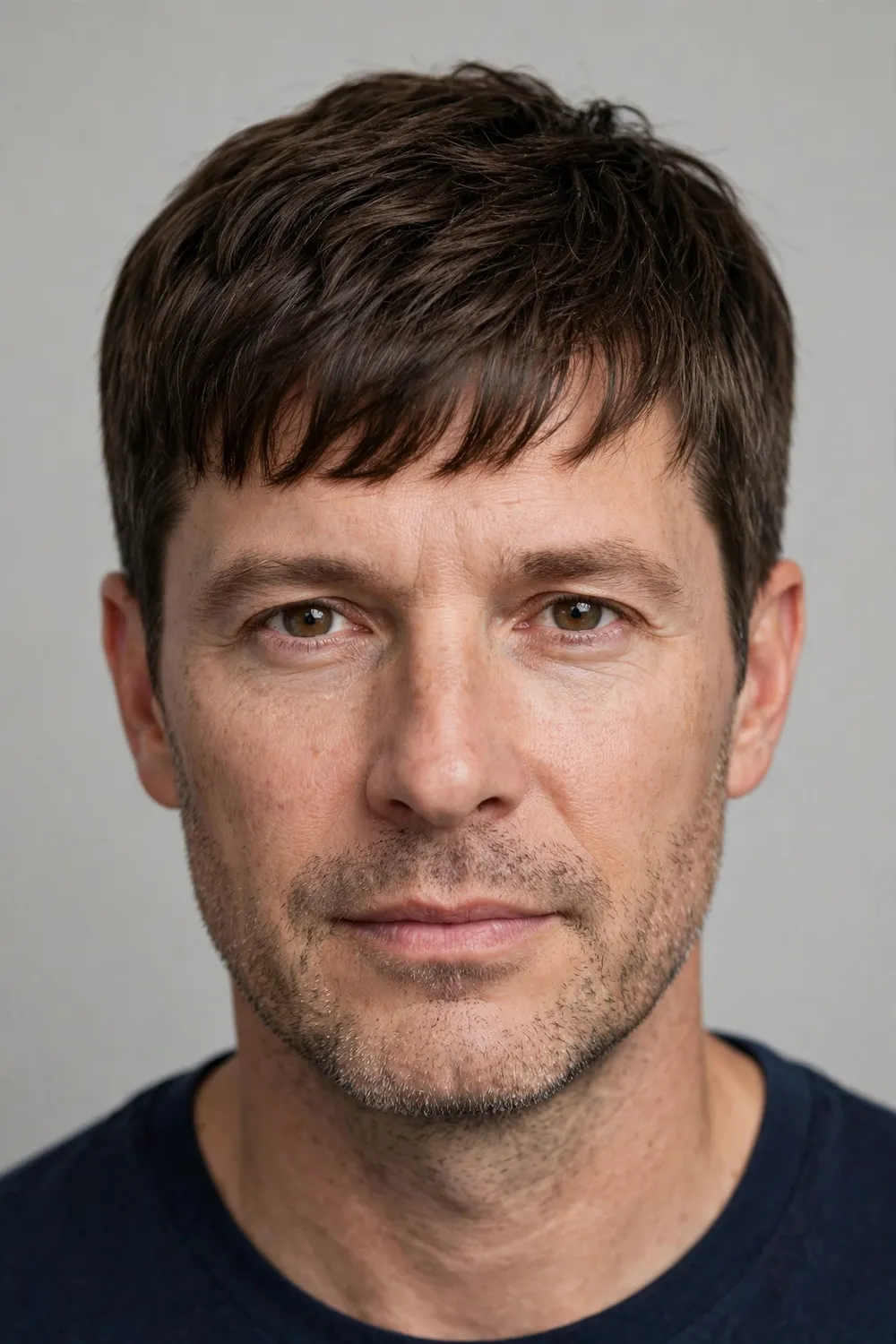
If fades feel too aggressive for you, the tapered crop is the answer. Instead of a fade line, the sides are gradually scissor-tapered so they blend into the top with no hard edge at all — the result is softer, more classic, and noticeably easier to live with. It’s the best French crop for older men, for conservative workplaces, and for anyone whose hair grows fast. It suits straight and wavy hair, and it’s kind on thinning hair too. Ask your barber: “a French crop with a scissor taper — no fade, gradual taper on the sides, textured top.” A light cream or matte clay gives it a neat, natural finish without looking overdone. Four to five weeks between trims is fine — the grow-out stays tidy.
9. Disconnected Undercut Crop

A hard disconnect — a sharp, unblended line — separates the long textured top from the buzzed undercut sides. It’s a statement cut that suits thick, straight hair best, because the weight on top is what makes the disconnect look intentional instead of accidental. Square and oval faces carry it well, and it suits fans of [textured haircuts for men](/textured-haircuts-for-men/) with real attitude. Ask your barber: “a disconnected undercut crop — hard disconnect, clippered undercut, long textured top swept forward.” Style with matte paste for grip and separation, and push the fringe forward with your fingers. Maintenance is real: the disconnect needs a tidy every two to three weeks.
10. Messy Choppy Crop

The messy choppy crop is the French crop for men who don’t want to look like they tried. The top is cut with aggressive, uneven chopping so the fringe falls in different directions, giving it that just-woke-up texture without actually being bedhead. It suits wavy and straight hair best, and it’s a gift for thick hair — the chopping removes weight while creating movement. Ask your barber: “a messy choppy crop — chopped layers on top, uneven fringe, keep the sides a mid fade.” Run a little texture powder or matte paste through dry hair, scrunch it forward, and stop — over-styling kills the effect. The finish should look undone and natural. The messiness hides regrowth, so four weeks between cuts is fine.
11. Blunt Fringe Crop
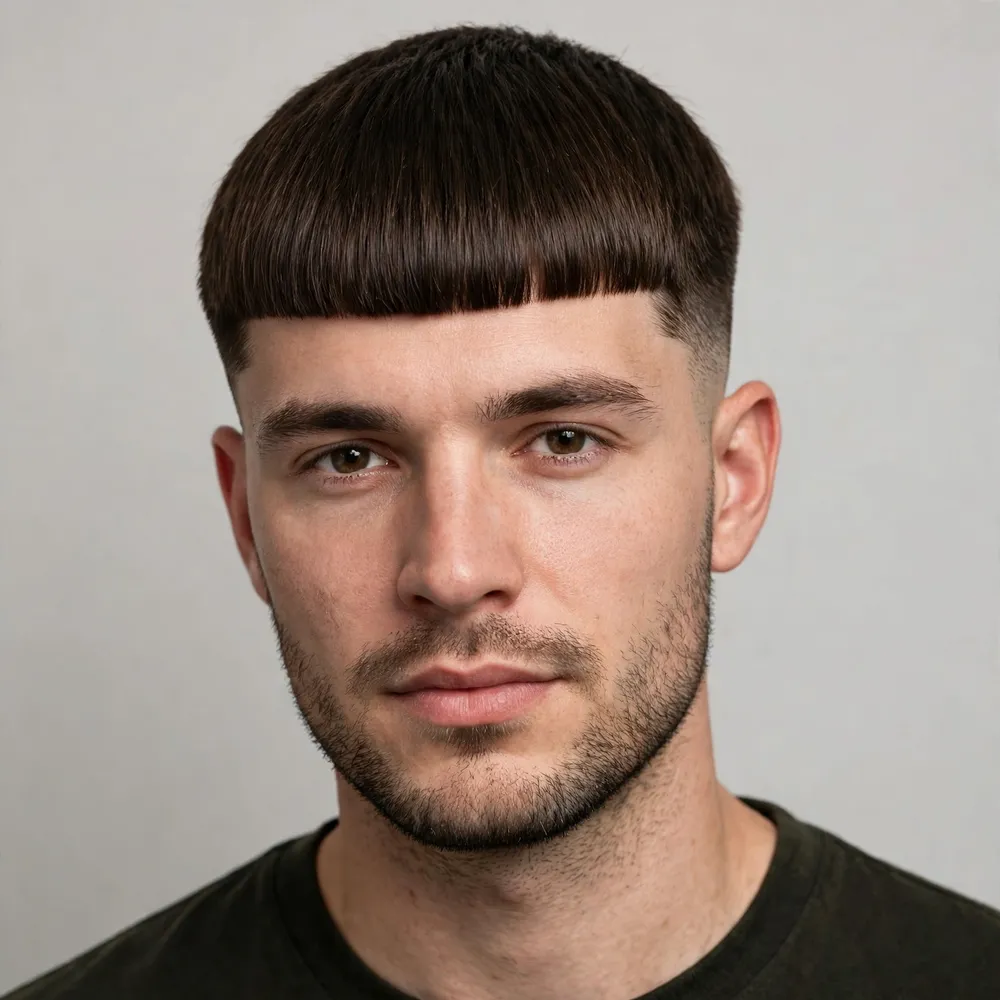
The blunt fringe crop trades the usual textured edge for a heavy, straight-across fringe line that looks deliberately bold. The top is cut to a uniform length and the fringe is left clean and solid, creating a strong horizontal line across the forehead. It suits thick, straight hair best — the weight holds the blunt line — and flatters oval and long faces by shortening the forehead. Ask your barber: “a French crop with a blunt fringe — straight-across heavy fringe, clean line, tapered sides.” Style it with a light hold cream, combed forward and smoothed, for a polished finish. A blunt line shows uneven growth fast, so it needs a trim every two to three weeks to stay sharp.
12. Long Fringe Crop
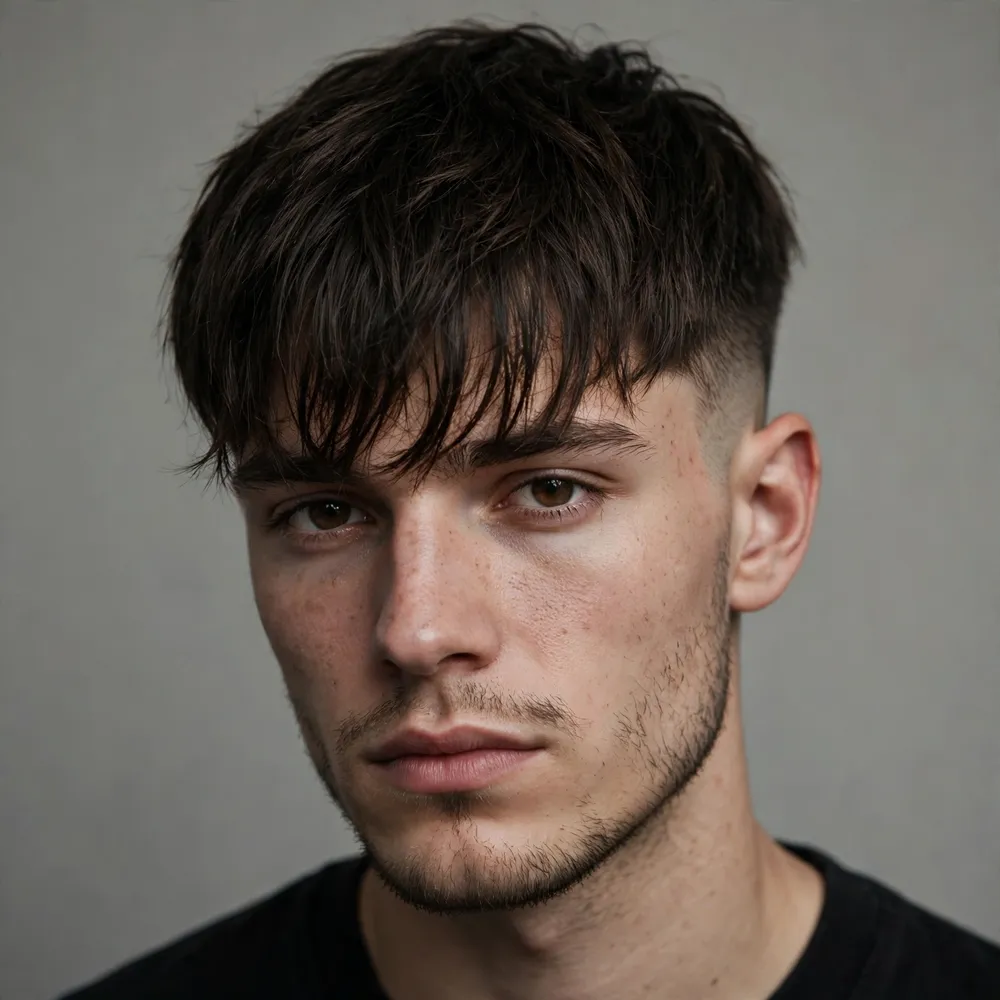
The long fringe crop keeps the French crop’s short sides but lets the fringe grow to brow length, giving it a moodier, more dramatic feel than the standard version. It works best on straight to wavy hair with medium density; very fine hair can struggle to hold the weight, and very curly hair will fight the length. Oval and square faces carry it well. Ask your barber: “a French crop with a long fringe — brow-length fringe, textured ends, faded sides.” Style with a pea-sized amount of matte clay on damp hair, pushing the fringe forward and letting it settle naturally. A trim every three to four weeks keeps it off your eyelashes.
13. Short Micro Crop

The micro crop is the tightest French crop you can get — the top is left barely half an inch long, with just a sliver of a fringe, and the sides are clipped close. It suits straight and wavy hair, and it’s excellent for thinning hair because the ultra-short top removes any contrast between thick and thin areas. Oval, square and round faces all work. Ask your barber: “a micro French crop — half an inch on top, micro fringe, tight sides.” Styling is optional: a tiny amount of matte paste on damp hair adds definition, or you can walk out with nothing at all. A quick clipper pass every two to three weeks keeps it sharp, and it grows out evenly.
14. Side-Swept Crop

The side-swept crop angles the fringe diagonally across the forehead instead of straight down, which gives the classic crop a softer, more versatile feel. The diagonal line slims round faces and breaks up a wide forehead. It suits straight and slightly wavy hair best, and it’s one of the easiest crops to grow out, since the sweep hides uneven lengths. Ask your barber: “a side-swept French crop — fringe angled across the forehead, textured top, tapered sides.” Style with a small amount of cream or matte clay, combing the fringe to your preferred side while the hair is damp. The finish is clean and natural, with just enough direction to look intentional. Maintenance is easy — four weeks between cuts.
15. Curly French Crop
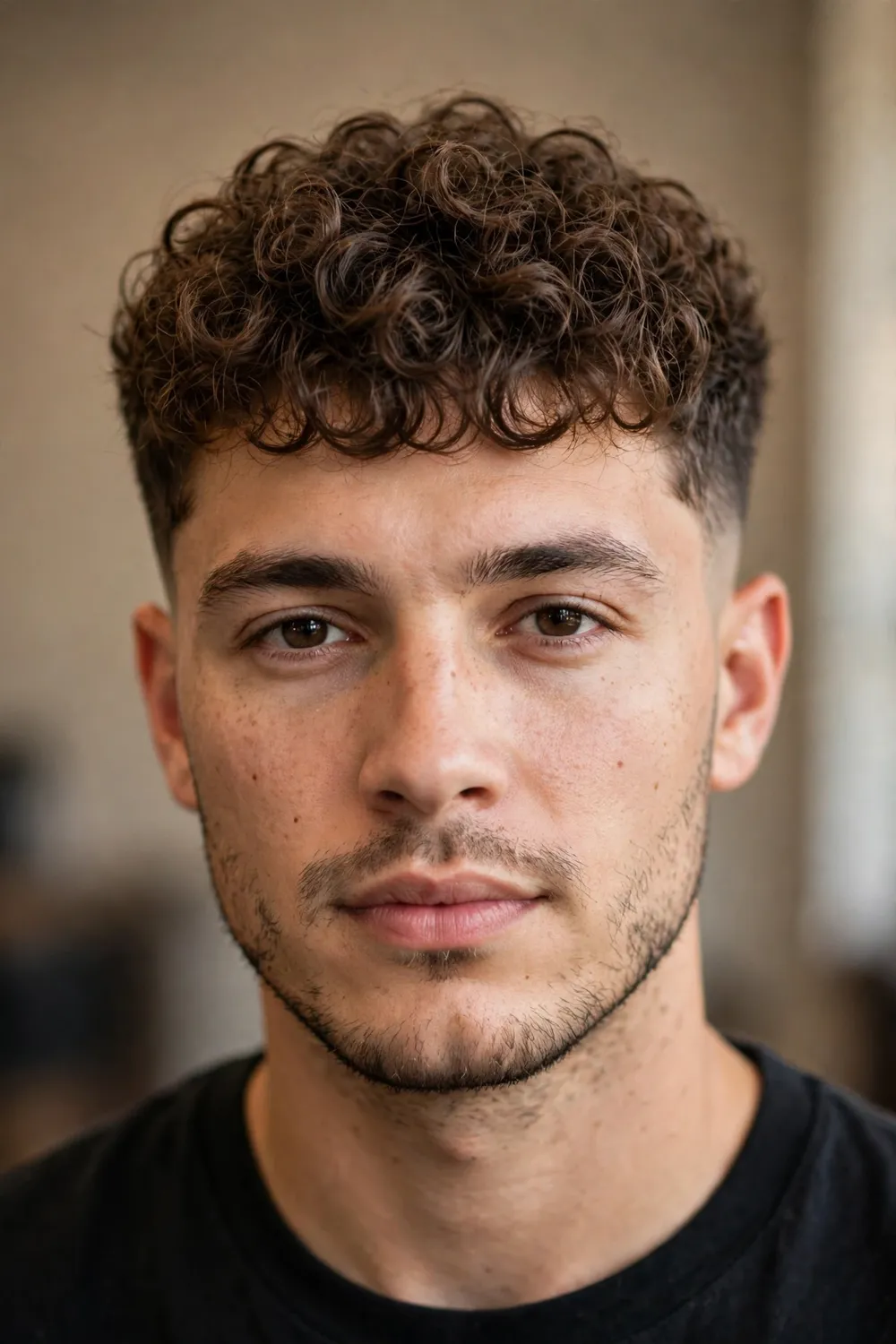
The curly French crop is the best crop for curly hair, full stop. Instead of fighting your curls, it lets them work: the top is left long enough for the curls to form properly, the sides are faded, and the curly fringe falls naturally across the forehead. It suits type 2C to 3B curls best, and it’s flattering on most face shapes, especially oval and square. Ask your barber: “a curly French crop — curls left on top, faded sides, soft curl fringe.” Style with a curl cream on damp hair, scrunching the curls forward — never brush it dry or you’ll get frizz. The finish is defined, natural curls with a clean silhouette. A trim every three to four weeks keeps the shape; the top itself is wash-and-go.
16. Wavy French Crop

The wavy French crop works with your hair’s natural movement instead of against it. The top is left medium length so the waves can form, and the fringe falls in a loose, easy wave across the forehead — the texture is built in. It suits type 2A to 2C waves, and flatters oval and round faces — the wave adds height and softens the forehead. Ask your barber: “a wavy French crop — medium top to let the waves form, tapered or faded sides, fringe forward.” Style with a small amount of sea salt spray or light cream on damp hair, scrunching forward and letting it air-dry. The finish is relaxed and natural, with visible movement. The waves disguise regrowth well, so four weeks between cuts is fine.
17. Coily French Crop
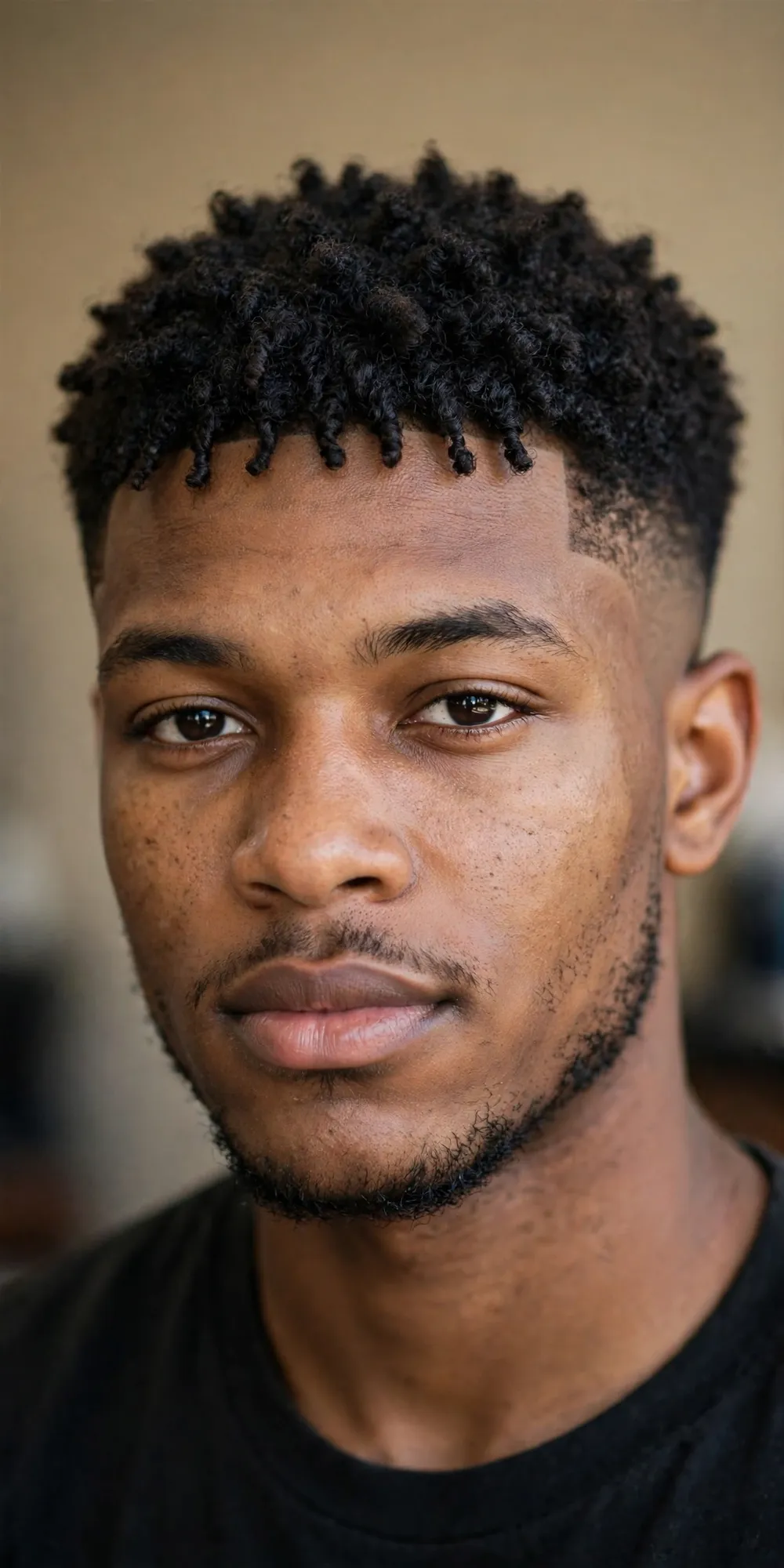
The coily French crop brings the crop to type-4 hair, and it works beautifully. The top is shaped — usually picked out and sculpted rather than cut short — so the coils form a rounded, textured crown, while the sides are faded tight for contrast. It suits type-4A to 4C coils best, and it flatters most face shapes; the height on top is particularly good for round faces. Ask your barber — ideally one experienced with coily hair: “a coily French crop — coils shaped on top, tight fade, keep the length through the crown.” Style with a leave-in conditioner or curl cream, picking the top out gently for shape. A shape-up every two to three weeks keeps the fade and edges clean, plus regular moisturising keeps the coils healthy.
18. Straight-Hair French Crop
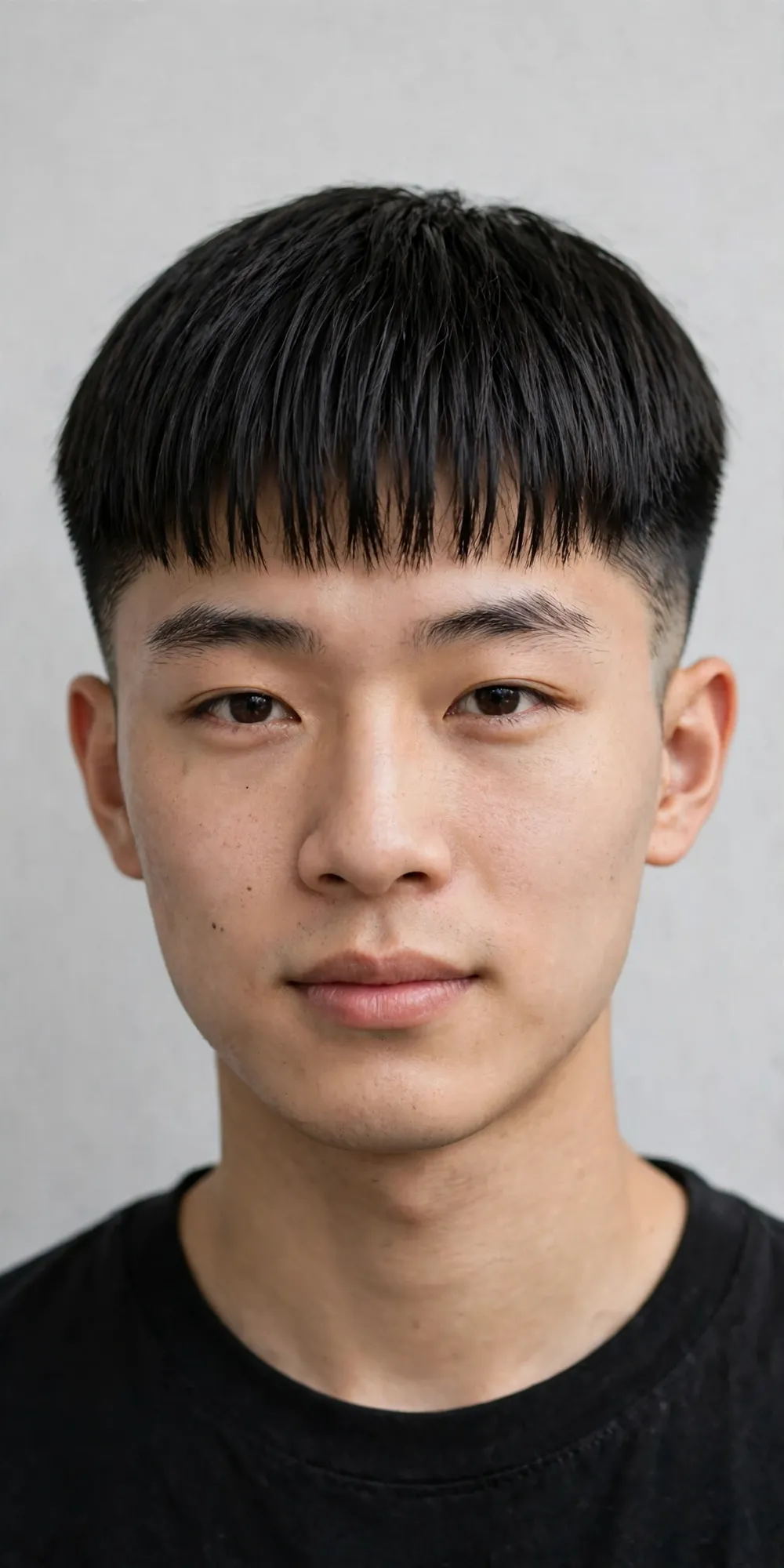
Straight hair is the French crop’s natural home, but it has one problem: without texture, the fringe can fall flat and look like a curtain. The straight-hair crop solves that with heavy point-cutting through the top, breaking up the solid line so the fringe has movement and separation. It suits straight hair of any density, and it’s a strong option for fine hair too, since the texture creates the illusion of thickness. Ask your barber: “a French crop for straight hair — heavy point-cutting on top, no blunt lines, tapered sides.” Style with texture powder or a small amount of matte paste on dry hair, pinching the ends apart for definition. The finish is piecey and modern, never flat. A trim every three weeks keeps the texture fresh.
19. Thick-Hair French Crop
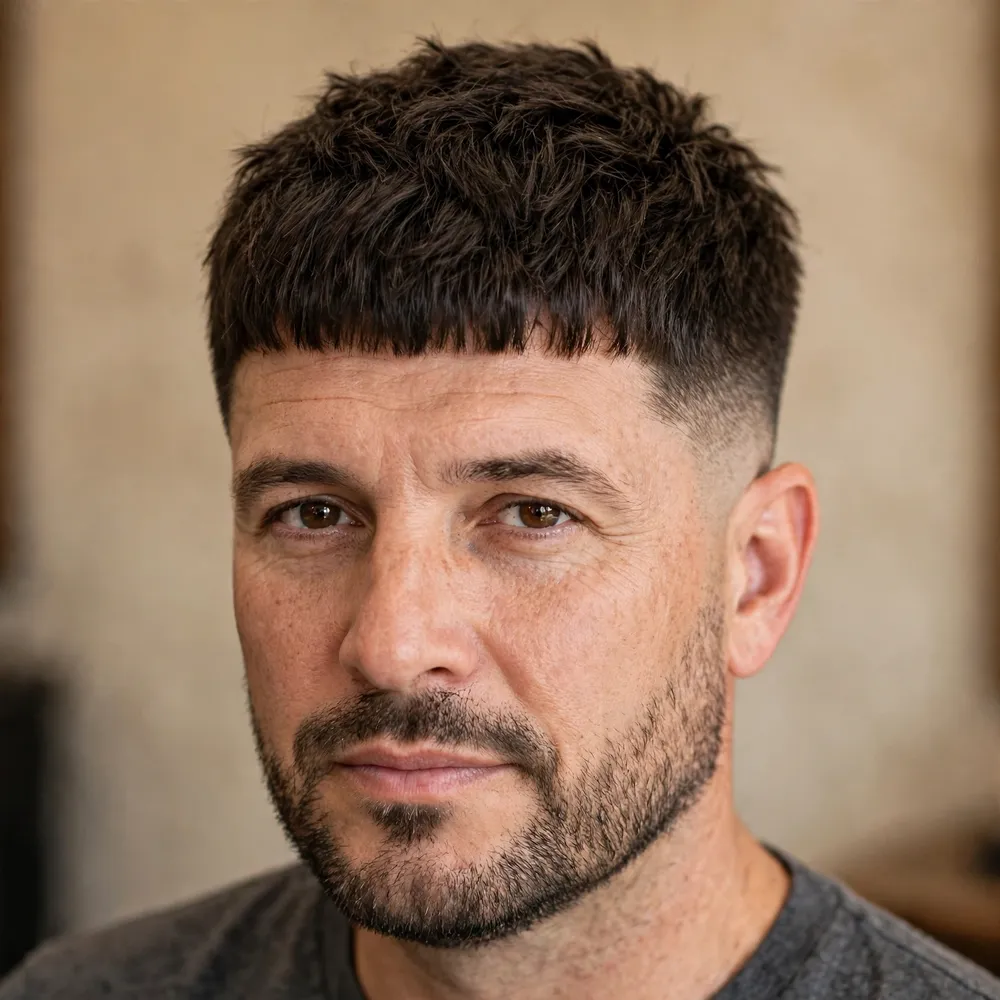
Thick hair can make a French crop look bulky if the barber doesn’t thin it properly, so this version is all about weight removal. The top is heavily texturised — thinning shears and point-cutting through the bulk — while the sides are faded or tapered to keep the silhouette clean. It suits thick, straight and wavy hair, and flatters square and oval faces. Ask your barber: “a French crop for thick hair — remove the weight on top, heavy texturising, faded sides, fringe forward.” Style with matte clay on damp hair; a little goes a long way because the texture is already built in. The finish is controlled and neat, with volume that looks deliberate rather than accidental. Maintenance is every three to four weeks.
20. Fine-Hair French Crop
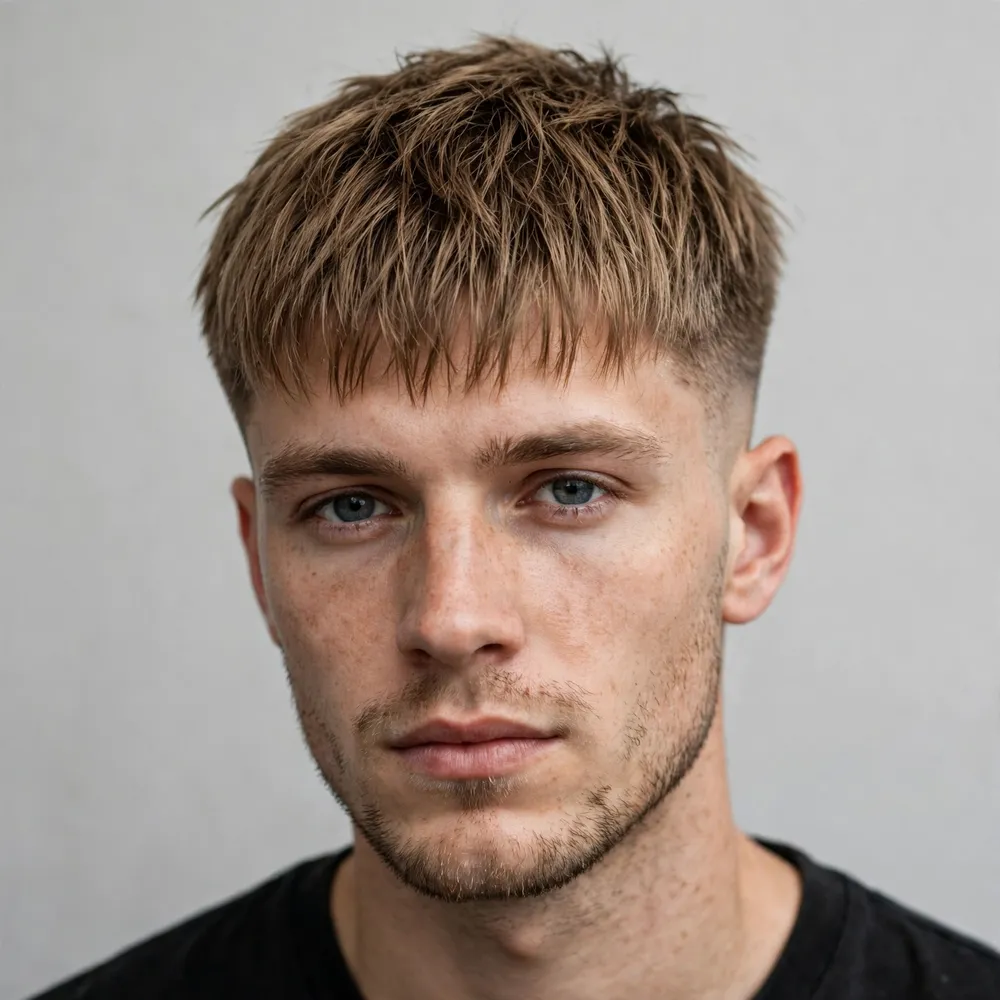
Fine hair is where the French crop earns its reputation, because the cut is basically engineered to fake density. The top is cut short with heavy texture, and the forward fringe covers the hairline — the first place thinning shows. It suits fine and thinning hair, and it’s the version most barbers recommend to men noticing their first recession. Ask your barber: “a French crop for fine hair — short textured top, fringe forward to cover the hairline, tapered sides.” Style with texture powder at the roots on dry hair, or a tiny amount of matte clay — heavy product will flatten fine hair, so less is more. The finish is fuller-looking, natural and matte. A trim every three weeks is ideal.
21. French Crop with Lineup

A lineup is a razor-sharp edge-up on the temples and forehead hairline, and it changes the whole personality of a French crop. The top stays short and textured, pushed forward as usual, but the crisply defined edges give it that freshly cut, barber-shop-finished look every single day. It suits straight and wavy hair best, and it flatters oval, square and diamond faces where strong lines already work. Ask your barber: “A French crop with a lineup — razor the hairline and temples, keep the top textured and forward.” Finish with matte clay for a natural hold. The catch is upkeep: a lineup blurs in a week to ten days, so you’ll need touch-ups between full cuts, or a steady hand with your own trimmer if you trust yourself.
22. Burst Fade Crop
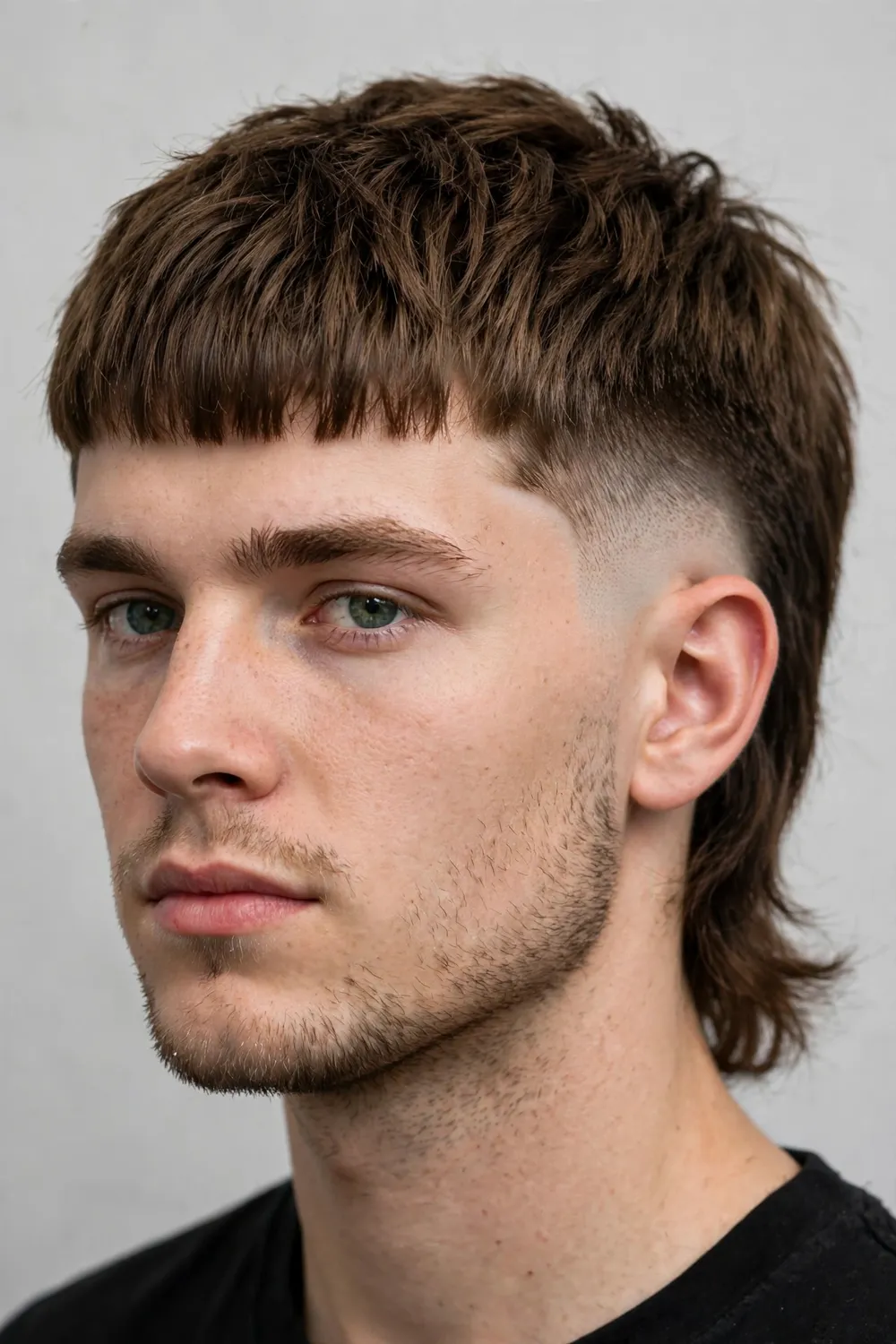
The burst fade curves around the ear in a semicircle, leaving length at the back of the neck while the sides taper tight. Paired with a French crop top, it gives you a shape that looks custom — because it is. The contrast between the curved fade and the textured fringe on top makes the whole cut feel intentional rather than generic. It works on most hair types, and it suits men who want something a bit different without going extreme. Ask your barber: “A French crop with a burst fade around the ear, keep the neckline natural.” Style the top forward with a light clay. Maintenance is moderate — the burst shape needs reshaping every three weeks or so, and it grows out less gracefully than a plain taper.
23. Crop with Hair Design

A hair design — a single shaved line, a pair of parallel lines, or a geometric pattern cut into the faded sides — turns a simple French crop into a statement. The top stays classic and short, so the design carries the personality while the cut stays practical. It’s a bold choice and it suits younger guys and anyone comfortable standing out; it works best on dark, thick hair where the pattern shows clearly. Ask your barber: “A French crop with a clean shaved line design on one side.” Keep the top textured with a matte finish. The design fades as hair grows, usually within two weeks, so plan on regular visits if you want it sharp. It’s not a low-maintenance option, but it is a fun one.
24. Bleached French Crop

Bleach the top platinum, ash blonde or silver and suddenly the texture of a French crop pops — every point-cut edge and piecey strand is visible. The sides stay natural or faded, which keeps the colour from looking too heavy. It suits straight and wavy hair, and it looks great on men with cool skin tones; warm skin tones should lean toward a warmer ash or sandy blonde instead. Ask your barber: “A French crop, then bleach the top only — keep the sides natural.” You’ll need purple shampoo to stop brassiness and a deep conditioner weekly. Bleached hair dries out fast, so this is the highest-maintenance crop on the list — but if you want the texture to really show, nothing else comes close.
25. Crop Mullet Hybrid
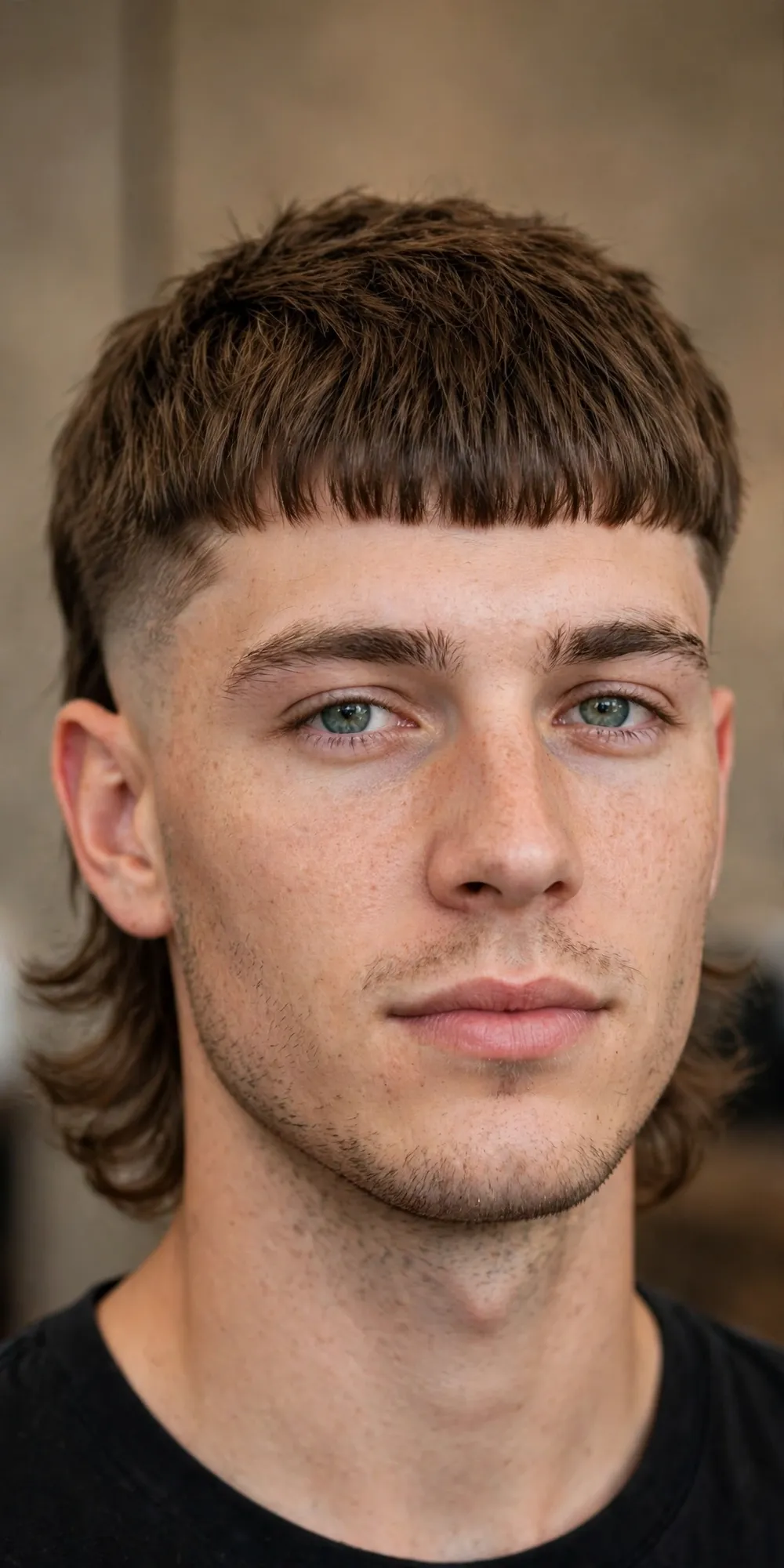
This is a French crop at the front and a mullet at the back — short textured fringe pushed forward, with length running through the nape. It sounds like a joke until you see it done well, and then it looks deliberate and surprisingly cool. It suits wavy and thick hair that can carry the back length, and it flatters longer faces by adding width up front and length behind. Ask your barber: “A French crop on top with a mullet at the back — keep the fringe short, leave the nape long.” Style with a sea-salt spray for texture. The back needs trimming to keep its shape, and you’ll get opinions — this one isn’t for men who want to blend in. But it is one of the most talked-about cuts right now.
26. Two-Block Crop
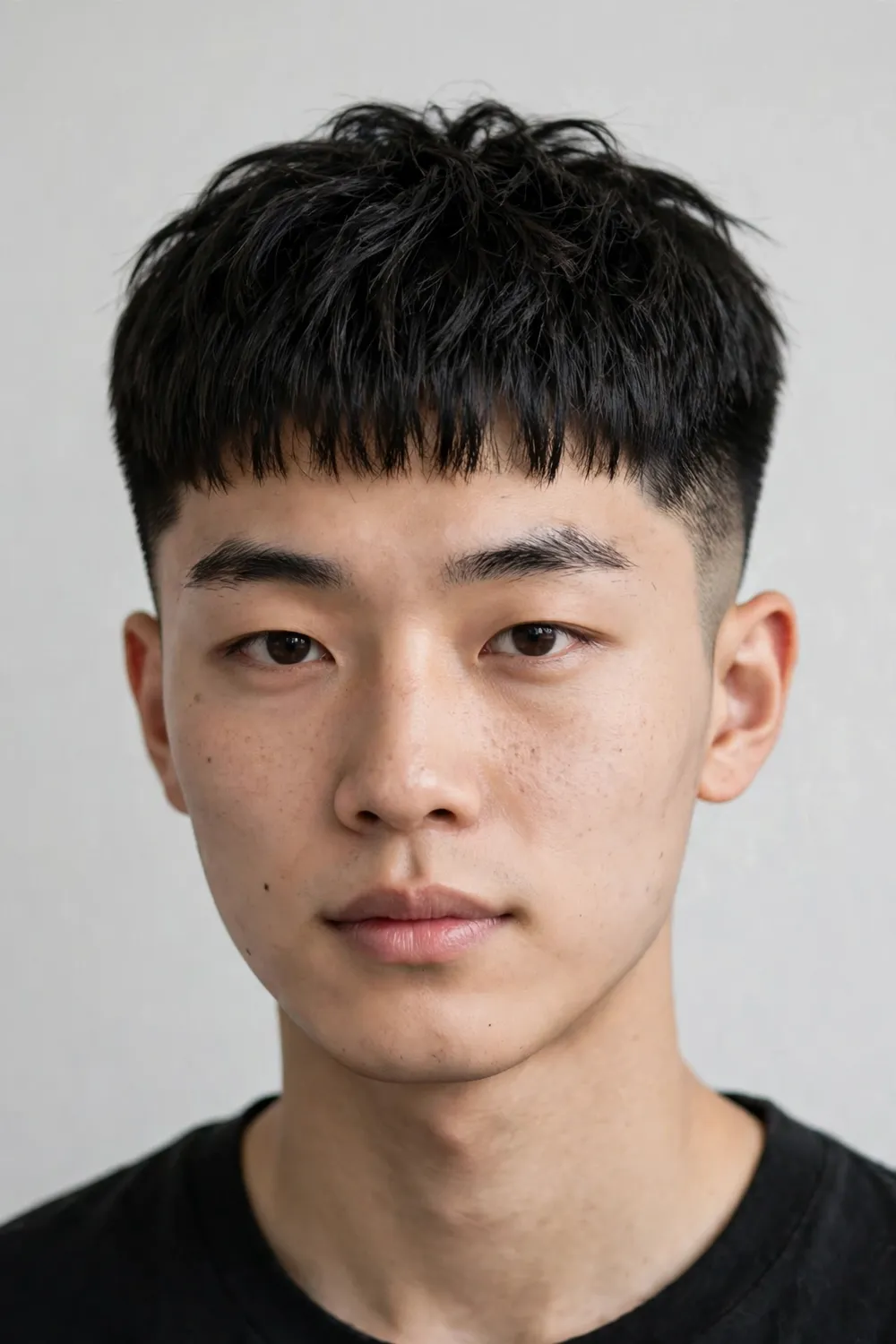
Borrowed from Korean barbering, the two-block crop keeps the sides and back cut very short — the “under-block” — while the top stays longer, falling over it like a lid. The French crop version pushes that longer top forward into a fringe, so you get a soft, rounded silhouette with a sharp contrast underneath. It suits straight and slightly wavy hair, and it’s one of the best crops for round and oval faces because the longer top adds height. Ask your barber: “A two-block cut — short under-block, longer French crop top pushed forward.” Style with a light cream for a soft finish. Maintenance is easy: the top grows out well, and you only need the under-block cleaned up every three to four weeks.
27. Asymmetrical Angled Crop

The fringe in this crop runs diagonally — longer on one side, shorter on the other — which gives a classic cut an edgy, editorial feel. It works best on straight hair where the angle reads cleanly, and it suits men with angular or long faces because the diagonal line breaks up symmetry in a flattering way. Ask your barber: “A French crop with an asymmetrical angled fringe — longer on the left, swept across.” Use a small amount of matte paste and comb the fringe to the longer side while it dries. The angle needs a barber’s touch to keep it crisp, so book a trim every three weeks. It’s a small change from the classic crop, but it completely changes the mood of the cut.
28. Receding-Hairline Crop

If your hairline is moving back at the temples, this is the crop that works with it instead of against it. The fringe is kept slightly longer at the corners, covering the recession points, while the top is textured forward to add fullness where hair is thinning. It’s one of the most honest solutions for early hair loss — no comb-over tricks, just a cut that uses the hair you have. Ask your barber: “A French crop with a longer fringe at the temples to cover the recession — keep the sides tapered, not skin-tight.” Style forward with a light matte product. Keep the top at around an inch and a half; too short and the coverage disappears. A trim every three weeks keeps the fringe in place.
29. Mature Grey Crop

Grey hair and a French crop are a natural pair — the short textured top shows off silver tones beautifully, and the soft tapered sides keep everything neat without looking overdone. It suits men in their forties and beyond, and it works on straight, wavy and slightly curly grey hair alike. Ask your barber: “A French crop with soft tapered sides — keep the grey texture on top, don’t thin it out too much.” A silver-enhancing shampoo keeps the colour bright instead of yellow, and a light matte cream gives the top shape without shine. Maintenance is simple: a trim every three to four weeks, and the cut grows out gracefully. It’s dignified, practical and genuinely flattering.
30. French Crop with Full Beard

A tight French crop on top and a full, shaped beard below is one of the best-balanced looks a man can wear — the short hair keeps the top clean while the beard carries the character. It suits most face shapes, especially rounder faces where the beard adds length and structure. Ask your barber: “A French crop with a taper, and shape the beard to balance it — clean cheek lines, keep the neckline tidy.” Keep the crop textured with matte clay and use beard oil daily so the beard looks groomed, not wild. This is a two-part maintenance job: the crop needs a cut every three weeks and the beard needs shaping every week or two. Done right, it’s a complete, polished look.
31. Long French Crop
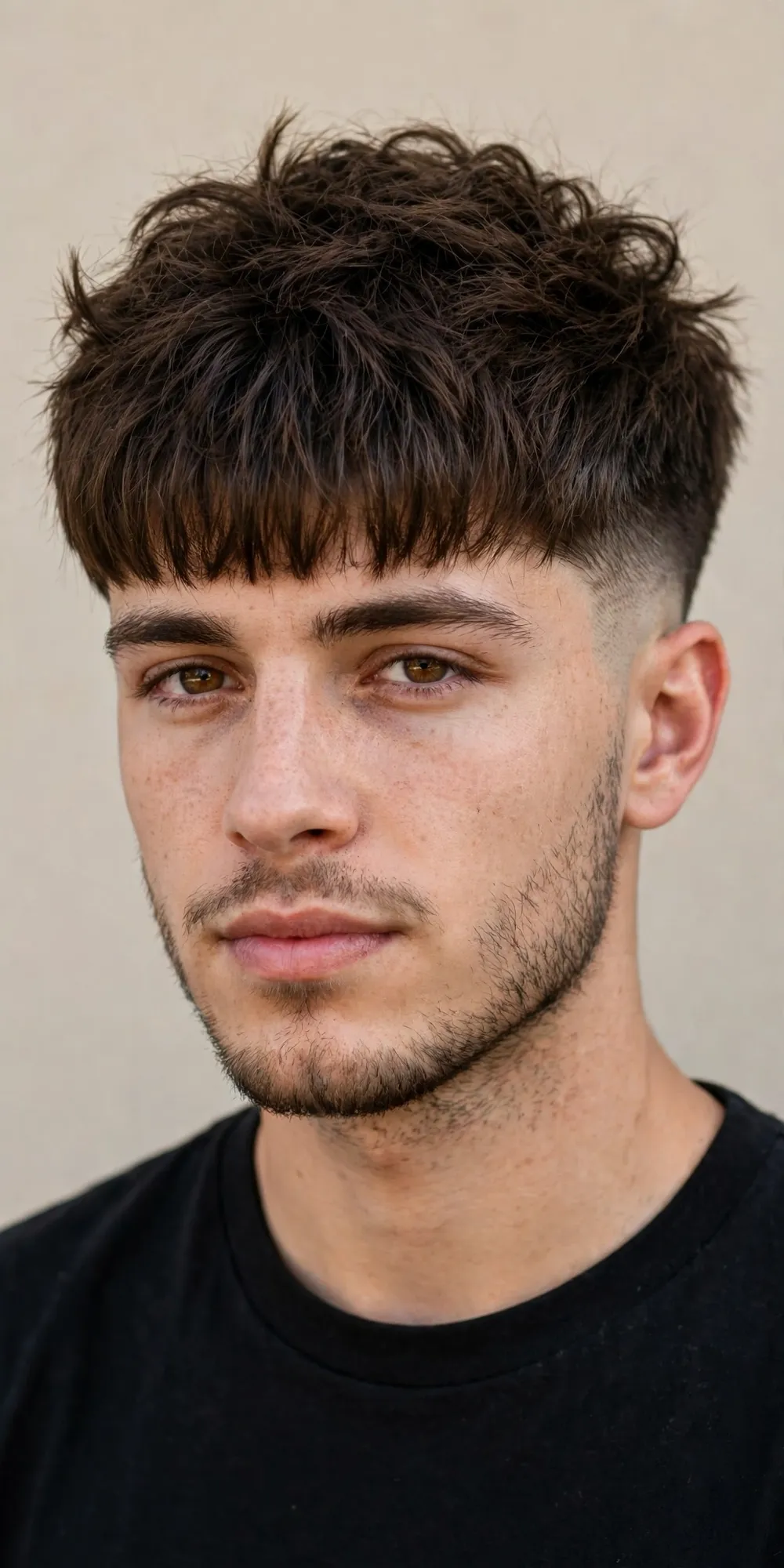
The long French crop keeps more length on top — two to three inches — with a blunt fringe that sits around mid-forehead, so you get volume and presence while keeping the crop’s clean shape. It suits thick and wavy hair best, and it flatters longer faces by adding width at the fringe. Ask your barber: “A longer French crop — keep two inches on top with a blunt fringe, tapered sides.” Style with a blow dryer and a small amount of matte clay, pushing the fringe forward and slightly up for volume. Maintenance is moderate: the length means more styling time in the morning, and you’ll want a trim every four weeks to keep the fringe from falling into your eyes. If the classic crop feels too short for you, this is the answer.
32. Sleek French Crop

Not every French crop has to be textured and messy — the sleek version combs the top smooth and forward, with polished, neat lines and a clean finish. It’s the crop for men who like structure: office workers, formal occasions, anyone who wants a sharp haircut that still takes five minutes. It suits straight hair best, and it flatters oval and square faces where a tidy silhouette works. Ask your barber: “A sleek French crop — smooth top combed forward, clean taper on the sides.” Use a light pomade or cream with a comb for shine and hold. The downside is that sleek hair shows growth faster than textured hair, so book a cut every two to three weeks. It’s the most polished crop on this list.
33. Fluffy French Crop

The fluffy crop is all about soft, airy volume — the top is cut to lift and move, with tapered sides keeping the shape tidy. It looks effortless, like you just woke up with great hair, but there’s a technique behind it: the top is point-cut to remove weight so it sits up instead of lying flat. It suits fine and medium hair that needs help looking fuller, and it flatters oval and heart-shaped faces. Ask your barber: “A fluffy French crop — soft volume on top, light texture, tapered sides.” Blow dry with your fingers and finish with a touch of texture powder. The volume drops by the end of the day on very fine hair, so a midday shake and a pinch of powder is the honest fix. Still, for softness and movement, it’s hard to beat.
34. Angular Fringe French Crop
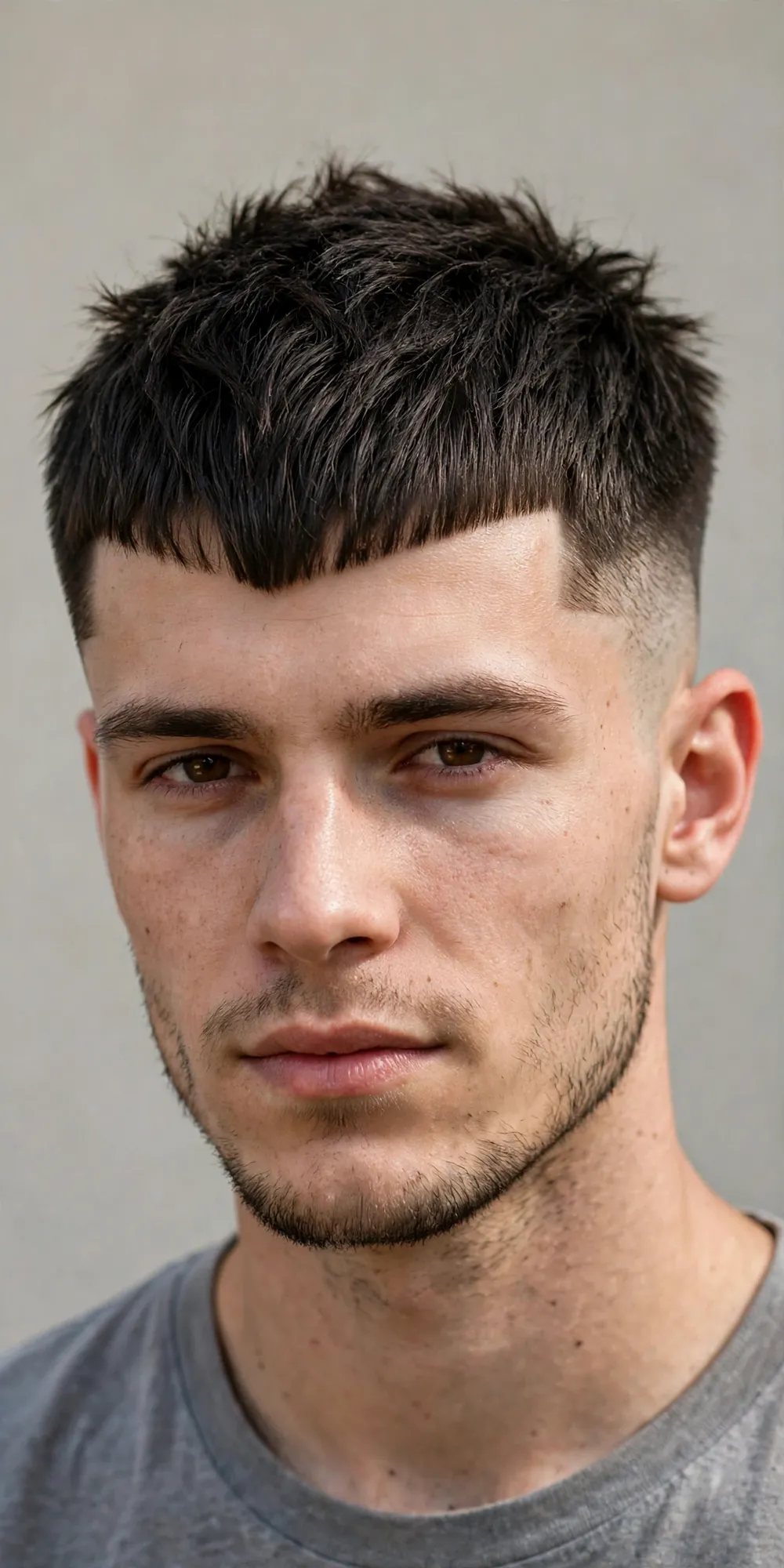
The angular fringe is cut in a sharp, geometric line — a straight diagonal or a clean point — which gives the crop a bold, modern edge. It’s the most architectural version of the French crop, and it works best on thick, straight hair that holds a line. It suits men with strong jawlines and square faces, where the angles echo the face shape. Ask your barber: “A French crop with a sharp angular fringe — cut the fringe in a clean diagonal.” Style with matte paste and a comb to keep the line crisp. The geometry is the whole point, so it needs regular upkeep — every two to three weeks — or the angle softens and the effect is lost. It’s not subtle, but if you want your haircut to make a statement, this one does it.
35. Undercut Dome French Crop
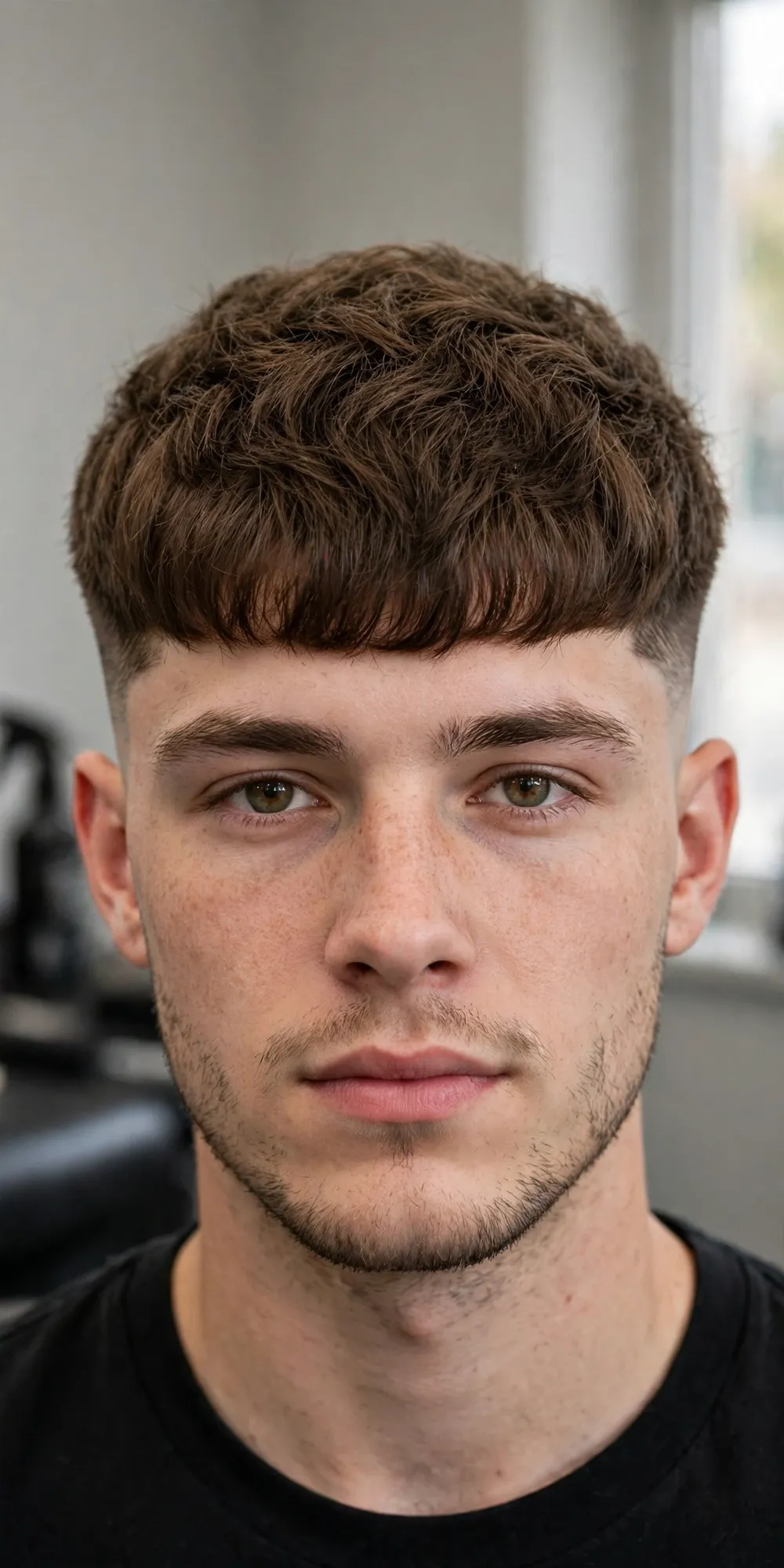
The undercut dome keeps the top long and rounded — a soft dome of hair sitting over tightly undercut sides. The contrast is dramatic: volume on top, skin-tight at the sides, with no blend between them. It suits thick hair that can hold the dome shape, and it flatters round faces because the height on top lengthens the face. Ask your barber: “A French crop with an undercut — keep the top long and rounded like a dome, sides disconnected.” Style the dome forward with a matte clay and a blow dryer for lift. The undercut grows out fast, so you’ll need the sides cleaned up every two weeks. It’s a bold, high-contrast cut, and it rewards men who don’t mind the upkeep.
36. Crop Top Curls

Crop top curls keep the curls long on top — two to three inches of defined curls — with a soft curled fringe falling onto the forehead and faded sides below. It’s the crop for men who actually want to show off their curls instead of cutting them down. It suits type 2C to 3B curls best, and it flatters oval and square faces where the curl volume adds balance. Ask your barber: “A French crop for curls — keep the curls long on top with a soft fringe, fade the sides.” Use a curl cream on damp hair and let it air dry, or diffuse on low heat. Maintenance is gentle: a trim every four to five weeks, and a silk pillowcase helps keep the curls from frizzing overnight. If you’ve got curls, this is the crop that lets them shine.
37. Short Fringe with Mid Fade and Beard

This is a complete package: a short fringe, a mid fade, and a neatly shaped beard, all working together. The short fringe keeps the top low-maintenance, the mid fade adds sharpness at the sides, and the beard frames the face below. It suits most hair types and most face shapes, and it’s especially good for men who want one cut that covers everything — hair and beard in a single barber visit. Ask your barber: “A short fringe French crop with a mid fade, and tidy the beard to match.” Style the fringe forward with a dab of matte clay and keep the beard oiled. You’ll need a trim every three weeks for the fade and a weekly beard tidy. It’s a practical, masculine combination that looks intentional from every angle.
38. Layered Fringed Crop with Short Sides
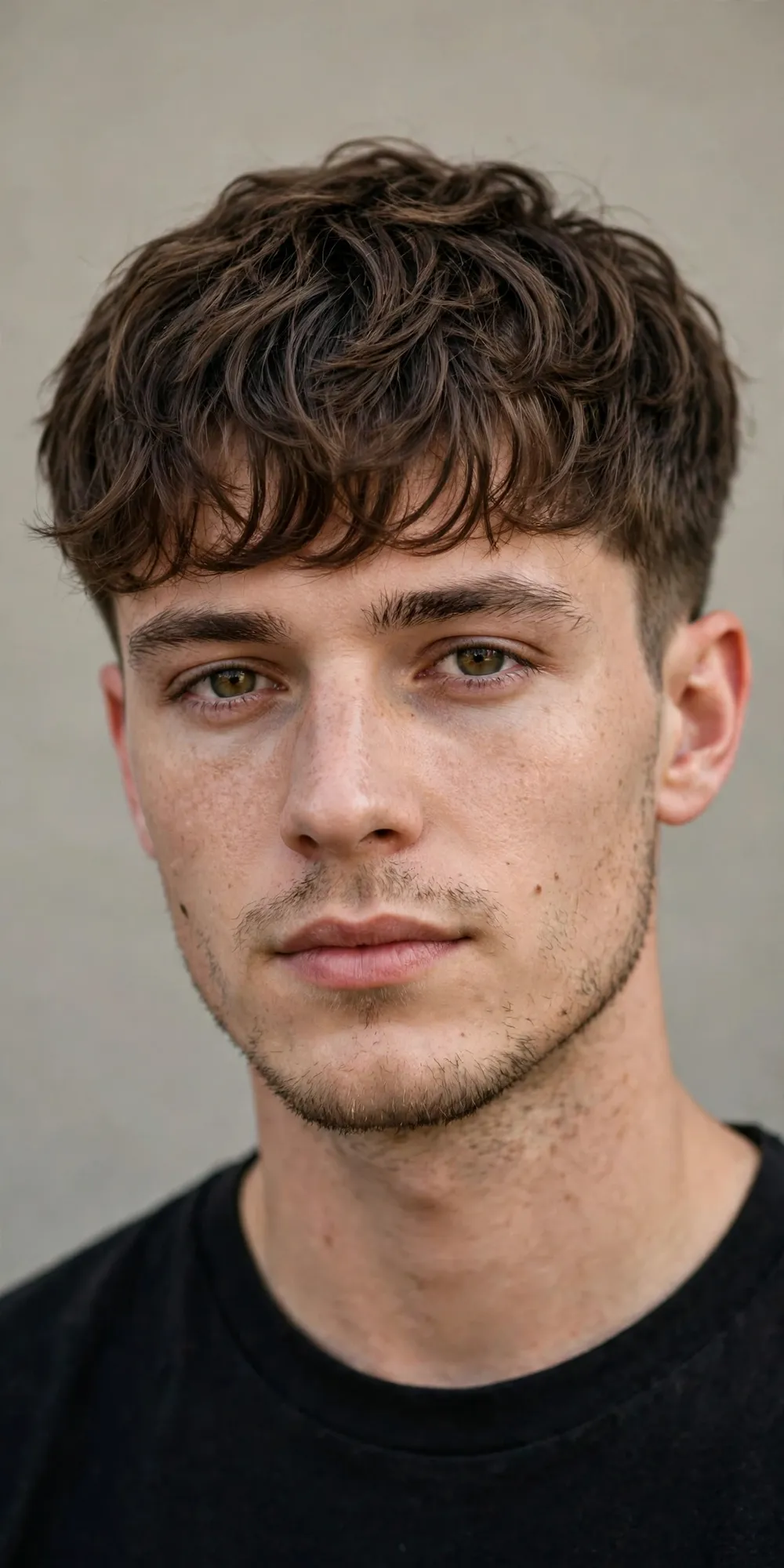
Layers are the secret weapon for wavy hair — they let the waves stack and move forward into a fringe instead of puffing out sideways. This crop uses layered waves on top with short, clean sides, so you get texture and movement without bulk. It suits wavy and thick hair best, and it flatters round and square faces by adding height on top. If you like the idea of layers, our guide to [layered haircuts for men](/layered-haircuts-for-men/) covers more ways to use them. Ask your barber: “A French crop with layered waves pushed forward, short sides.” Style with sea-salt spray on damp hair and scrunch lightly. Maintenance is easy — a trim every four weeks — and the layers mean it grows out better than most crops.
39. Thick Messy Crop with Low Taper Fade
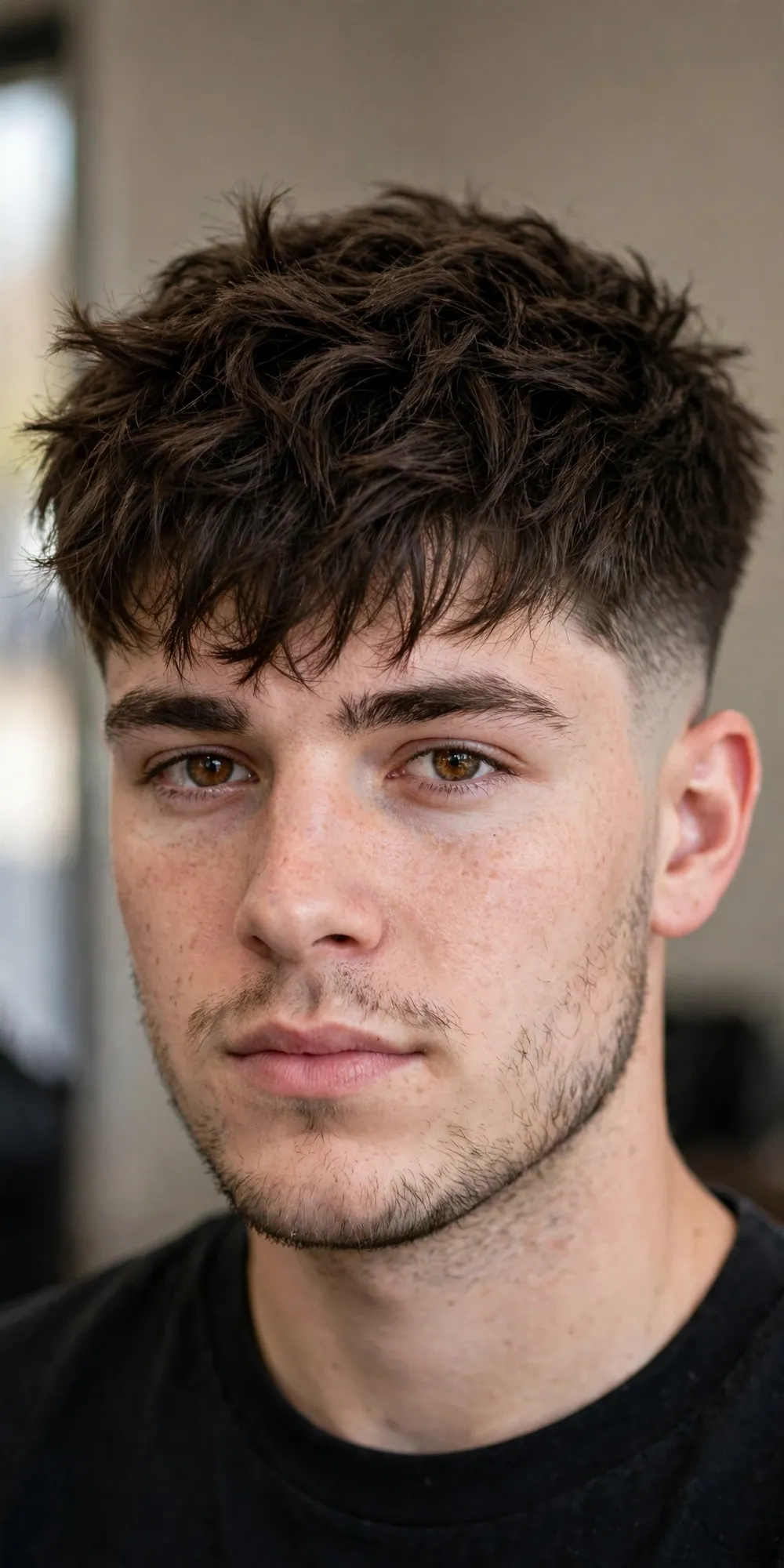
The last crop on the list is the easiest to live with: chunky, piecey layers on top, a low taper fade at the sides, and a deliberately messy finish that looks good even when you do nothing to it. It suits thick hair that would otherwise feel heavy, and it flatters most face shapes because the texture breaks up the outline. Ask your barber: “A thick messy French crop with a low taper fade — chunky layers, keep it piecey.” Work a pea-sized amount of matte clay through damp hair and push it forward with your fingers. That’s it — no comb, no dryer, no mirror needed. A trim every three to four weeks keeps the taper clean. If you want a French crop that asks almost nothing of you in the morning, this is the one to take to your barber.
How to Style a French Crop Haircut at Home
A French crop is one of the fastest haircuts to style — five minutes, no fancy tools. Here’s the routine that works:
- Start with damp hair. Towel-dry after your shower until it’s damp, not dripping. Product grips damp hair far better than dry hair, and the fringe sits where you put it.
- Use a pea-sized amount of matte clay. Warm it between your palms first. Too much product is the number one reason crops look greasy — start small, you can always add more.
- Push everything forward. Work the clay through the top with your fingers, pushing the hair toward your forehead and slightly down. Don’t comb it — fingers keep the texture.
- Add heat if you want lift. A quick blast with a hair dryer on medium heat, pushing the fringe forward with your fingers, gives the top more height. Skip this step if you’re in a rush; it still looks fine without it.
- Finish with texture powder. A small shake at the roots adds grip and volume, especially on fine hair. It also soaks up oil, so your crop holds its shape longer through the day.
That’s the whole routine. Five steps, five minutes, and you’re out the door.
Which French Crop Fits Your Face Shape?
The French crop is forgiving, but the right variation makes a real difference:
- Oval faces can wear almost any version — the classic crop, a high fade, a textured top. You’ve got the most freedom, so pick based on your hair type instead.
- Round faces need height on top and short sides to add length. Go for a textured crop with a mid or high fade, and avoid a heavy blunt fringe that widens the face. The side-swept crop works well here too.
- Square faces suit softer versions — a textured or messy crop with a taper rather than a hard skin fade. The angles of your jaw are already strong; you don’t need the cut to add more.
- Long faces should keep the fringe lower and the sides fuller. A blunt or long fringe crop shortens the face visually, and a low fade or taper is better than a high fade that adds more height.
- Heart-shaped faces benefit from a crop with some width at the fringe and a taper on the sides. The fuller fringe balances a wider forehead against a narrower chin.
If you’re not sure about your face shape, ask your barber — a good one will tell you honestly which version suits you, and it takes ten seconds.
French Crop vs Caesar Haircut: What Is the Difference?
People mix these two up constantly, and they’re close cousins — but they’re not the same cut. The Caesar has a very short, uniform top (usually under an inch) with a straight, blunt fringe and short sides, and it’s combed forward flat. The French crop keeps more length on top — one to two inches — with texture, point-cutting and movement, so the fringe looks piecey and natural rather than ruler-straight.
The Caesar is neater and more uniform; the French crop is more textured and modern. The Caesar suits men who want a precise, no-nonsense cut; the French crop suits men who want something with a bit more character and styling options. If you like the idea of a short, neat cut but want more texture, the [crew cut hairstyles](/crew-cut-hairstyles/) guide is worth a look too — the crew cut sits in the same family but keeps the top even shorter. In short: Caesar for precision, French crop for texture.
5 Mistakes to Avoid With a French Crop
- Asking for the top too short. A French crop needs at least an inch on top to show texture and cover the hairline. Go shorter than that and you’ve got a buzz cut with a fringe — the whole point disappears.
- Using too much product. A pea-sized amount of matte clay is enough. Load it up and the fringe clumps together, looks greasy, and falls flat by midday. Start small.
- Getting the wrong fade for your head shape. A high skin fade looks sharp on the right head, but if your head is very round or your hairline is uneven, it can highlight the wrong things. A low fade or taper is the safer first choice.
- Skipping trims. The crop’s clean lines are what make it look good, and they blur after three weeks. Stretching it to six weeks turns a sharp crop into a shapeless mop — book the trim.
- Blow-drying it backwards. The fringe goes forward, always. Drying it up or back fights the cut’s natural direction and leaves the top sticking up in odd places. Push it forward while it dries and the cut does the work for you.
Frequently Asked Questions
Is the French crop haircut good for thinning hair?
Yes — it’s one of the best cuts for thinning hair. The short, textured top adds the appearance of fullness, and the forward fringe covers a receding hairline or thinning at the front. Keep the top around an inch to an inch and a half; too short and there’s nothing left to create texture with. A matte product also helps, because shine makes thin hair look thinner. If your hair is thinning significantly, talk to your barber about a textured crop with a taper rather than a skin fade, which can draw attention to the contrast.
How often should I get a French crop trimmed?
Every three to four weeks is the sweet spot for most men. The fade or taper starts to lose its clean edge after about three weeks, and the fringe grows long enough to fall into your eyes around week four. If you have a skin fade or a lineup, you’ll want a touch-up every two weeks to keep the edges sharp. A textured crop with a taper is the most forgiving version — it can stretch to five weeks without looking messy.
Can I get a French crop with curly or coily hair?
Absolutely. Curly and coily hair actually makes a great French crop — the natural texture does half the work for you. The key is keeping enough length on top (two inches or more) so the curls can form properly, and fading the sides tight so the shape stays clean. For coily hair, ask your barber to shape the top with a sponge or pick rather than thinning shears, which can cause frizz. A curl cream on damp hair is all the styling you need.
What is the difference between a French crop and a Caesar?
The Caesar is shorter and flatter: a uniform top under an inch, combed straight forward with a blunt fringe. The French crop keeps one to two inches on top with texture and movement, so it looks more modern and less rigid. Think of the Caesar as the tidy, military version and the French crop as the textured, contemporary version. Both are short and practical, but the French crop gives you more styling options and works better with wavy or curly hair.
How long does the top need to be for a French crop?
One to two inches is the standard range. One inch gives you a neat, low-maintenance crop; two inches gives you more texture, volume and styling options. Longer than two inches and it starts to become a different cut — a textured quiff or a long fringe style rather than a crop. Shorter than an inch and you lose the texture that makes the crop work. If you’re trying it for the first time, ask for an inch and a half — it’s the safest middle ground, and your barber can adjust from there.
Does a French crop work for older men?
Yes, and it’s one of the most popular choices for men over fifty. The short top is easy to manage, the forward fringe covers a receding hairline naturally, and the taper keeps everything neat without looking like you’re trying too hard. Grey hair looks especially good in a French crop because the texture shows off the silver tones. The mature grey crop (idea 29 above) is built exactly for this. Just avoid very high skin fades, which can look harsh on older skin — a classic taper is the better call.
What face shape suits a French crop best?
The French crop suits most face shapes, but it works best on oval and square faces, where the short sides and forward fringe balance the features naturally. Round faces suit it too, as long as you add height on top with a textured crop and a mid or high fade. Long faces need a lower fringe and fuller sides to avoid adding more length. Heart-shaped faces benefit from a wider fringe. The honest answer is that the crop is flexible — the variation you choose matters more than the cut itself, so pick the version that fits your face (see the guide above) rather than worrying about whether the crop works at all.
Final Word
The French crop has survived for decades because it does something very few haircuts manage: it looks sharp, suits almost everyone, and takes five minutes to style. Whether you go for the classic crop, a textured version with a skin fade, or a curly crop that lets your natural texture show, the key is the same — enough length on top for texture, clean sides, and a fringe pushed forward.
Take this list to your barber, point at the version you like, and use the exact ask we’ve written for it. And if you want more ideas for your next cut, [browse more men’s haircut guides on our blog](/blog/) — our full collection of [haircuts for men](/haircuts-for-men/) covers everything from fades to longer styles.