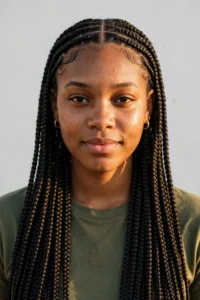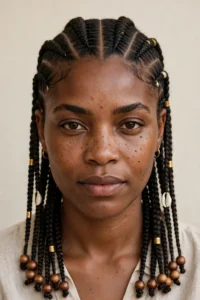



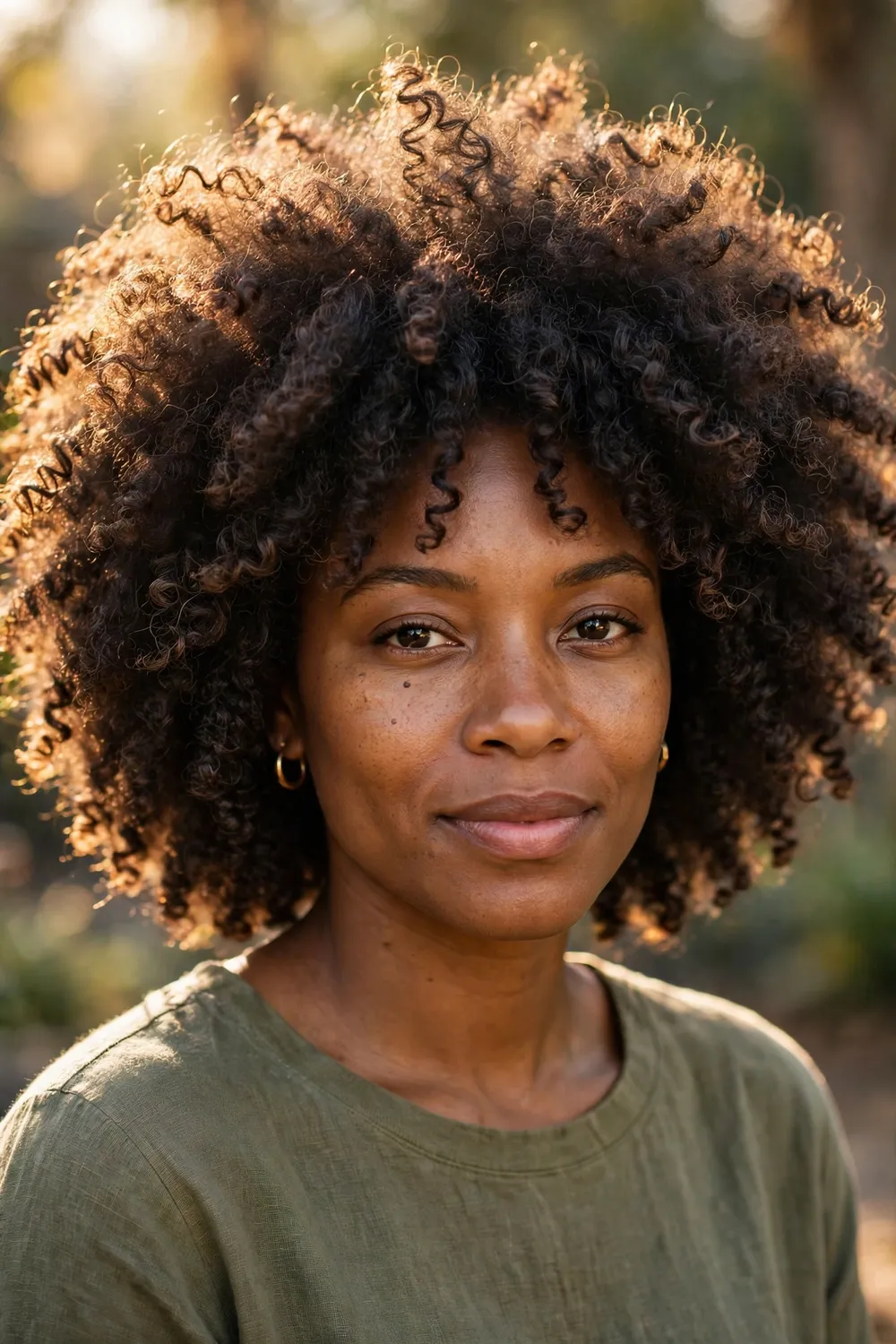
Layers are the fix for the triangle shape, the weight that pulls curls flat, and the bulk that makes natural hair hard to style. A good layered cut lets coils spring up instead of spreading out. If you only remember three styles, start with the Curly Lob, the Rounded Afro, and the Twist-Out — they suit the widest range of textures and face shapes, and they grow out gracefully.
How to Pick Your Layered Shape
| Your hair | Best starting point |
|---|---|
| 3A–3B curls, fine to medium density | Curly Lob, Wash-and-Go Bob, Curly Bob With Curtain Bangs |
| 3C–4A coils, medium density | Twist-Out, Rounded Afro, Braid-Out With Flipped Ends |
| 4B–4C coils, dense or heavy | Rounded Afro, Tapered Cut, Halo Fro, Layered Pixie |
| Short hair (TWA to ear length) | Feathered TWA, Tapered Cut, Layered Pixie, Chin-Length Coil Bob |
| Medium length (chin to shoulders) | Curly Lob, Twist-Out, Loc Bob, Half-Up Style |
| Long hair (past shoulders) | U-Cut, V-Cut, Butterfly Cut, Two-Strand Twist Set |
| Round face | Asymmetrical Cut, Curly Lob with a side part, Tapered Cut |
| Long or oval face | High Puff With Soft Bangs, Pineapple Puff, Curly Shag |
| Low-maintenance days | Wash-and-Go Bob, Mini Twists, Two-Strand Twist Set |
The 29 Best Natural Hairstyles for Black Women
1. Curly Lob That Skims the Jaw
The curly lob sits between chin and collarbone, with soft internal layers that stop the ends from flaring into a triangle. It suits 3A to 4A curls and every face shape — the side part does the framing. Ask your stylist to cut it dry or stretched, with the shortest layer no higher than your cheekbone, so shrinkage does not pull it above your chin. Style with a leave-in and light curl cream, scrunched in and left alone to dry. The finish should look soft and swingy, not crunchy. Refresh every three to four days: re-wet the front pieces, smooth in a little cream, let them reset. A trim every ten to twelve weeks keeps the shape honest.

2. Rounded Afro With Soft Crown Layers
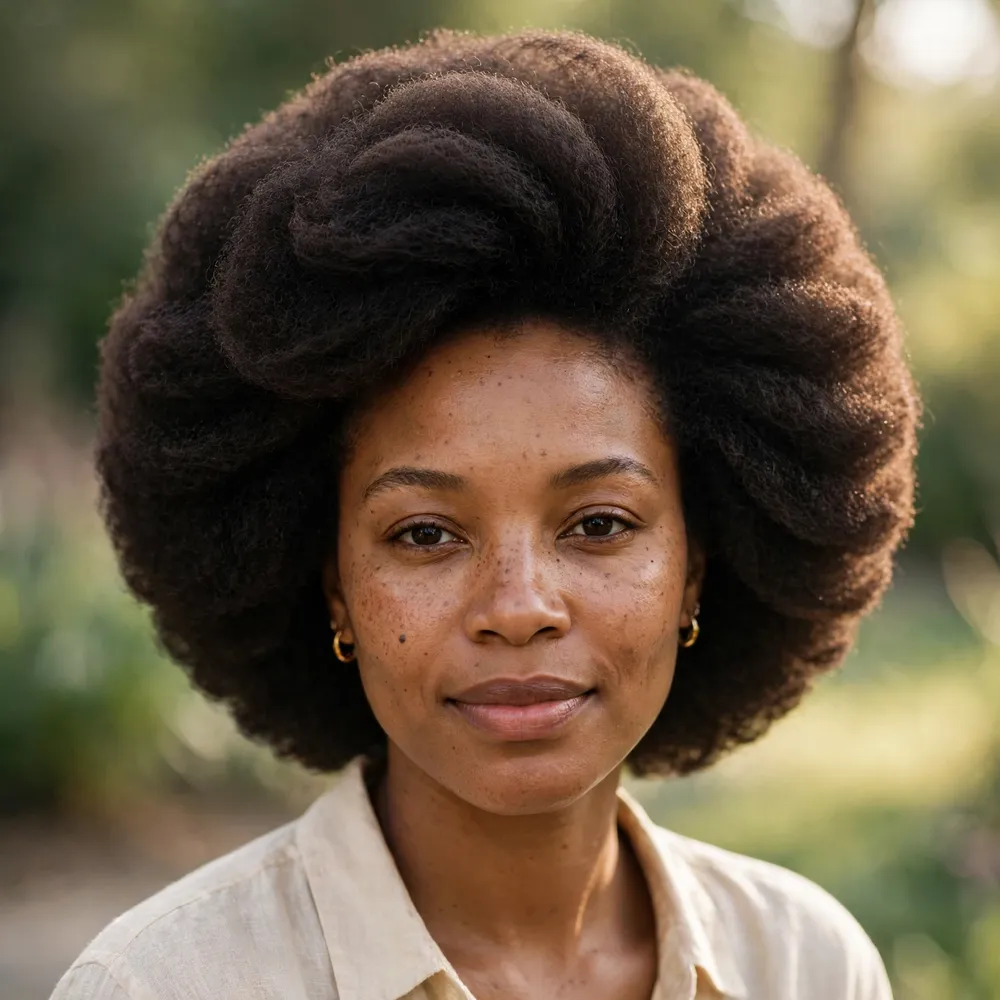
This is the classic afro, reshaped: a full, round silhouette with soft layers through the crown and a clean, curved perimeter. It works best on 4A to 4C coils with medium to dense hair, and it flatters round and square faces by adding height where it counts. Ask for the shape to be cut on stretched hair, with the crown layered to lift and the sides kept full rather than thinned. A pick at the roots and a light oil on the ends is all the styling it needs. The maintenance is honest: it needs regular moisture, a satin bonnet at night, and a shape-up every six to eight weeks or the perimeter goes fuzzy. Cut right, it holds its shape for days with almost no daily effort.
3. Wash-and-Go Bob That Holds Its Shape
A wash-and-go bob only works when the cut does the heavy lifting. The chin-skimming front pieces frame the face, while short internal layers through the back keep the curls from stacking into a shelf. It suits 3B to 4A textures best, and it is kind to round faces because the front length draws the eye down. Ask your stylist to cut it on dry, defined curls so they can see exactly where each curl falls. Use a leave-in, then a gel with a soft hold, applied in sections and raked through. Diffuse on low heat or air-dry without touching it — that is the hard part. It lasts three to five days with a pineapple at night and a light mist to revive the front in the morning.

4. Curly Shag With Real Attitude
The curly shag is all movement: short crown layers, piecey ends, and face-framing pieces that fall wherever they like. It suits 3A to 4B curls, especially medium-density hair that can hold texture without going flat, and it suits oval and heart-shaped faces well. Ask for short layers through the crown, longer pieces around the face, and a fringe that is cut long enough to shrink up to your brows rather than above them. Style it with a mousse or a light cream, scrunched in and diffused upside down for volume. It is a wash-and-go friendly cut that actually looks better a little messy. Maintenance is light — a trim every eight to ten weeks — but it does need product on wash day or the pieces fall flat.
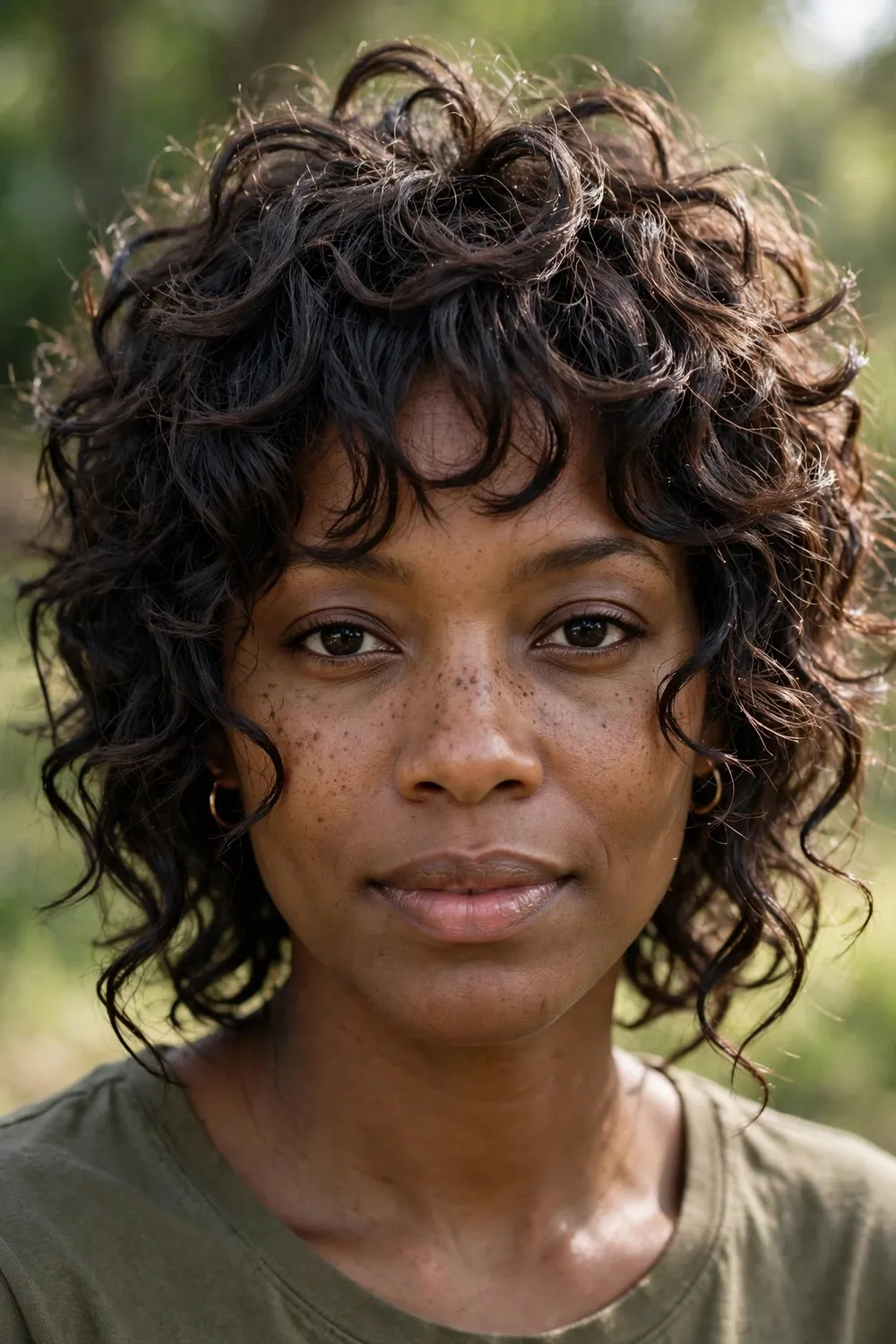
5. Tapered Cut With Lifted Crown
Short at the sides and nape, long and lifted on top — the tapered cut is the sharpest short style on this list. It suits 3C to 4C coils and every face shape, though it is especially flattering on round faces because the height on top lengthens the silhouette. Ask for the taper to be faded gradually rather than cut hard, with the crown left long enough to coil and lift. Style the top with a curl cream or a light pomade, twisting or finger-coiling the front for definition. The sides need a shape-up every two to three weeks to stay crisp, which is the real commitment here. Between barber visits, a little edge control and a bonnet at night keep it looking deliberate rather than grown out.

6. Twist-Out That Frames the Face
The twist-out is the most forgiving style in natural hair, and this version adds cheekbone-grazing front layers so the shape frames your face instead of falling straight. It works on 3B to 4C textures at medium length and beyond, and it suits every face shape. Do your twists on damp, stretched hair with a butter or a cream — two-strand twists, medium-sized, with the front twists angled toward your face. Leave them in overnight, or until fully dry, then separate gently with oiled fingers. The finish is soft and full, with definition that lasts four to six days. Refresh by re-twisting the front section at night. It takes time on wash day, but the payoff is a style that actually improves on day two and three.
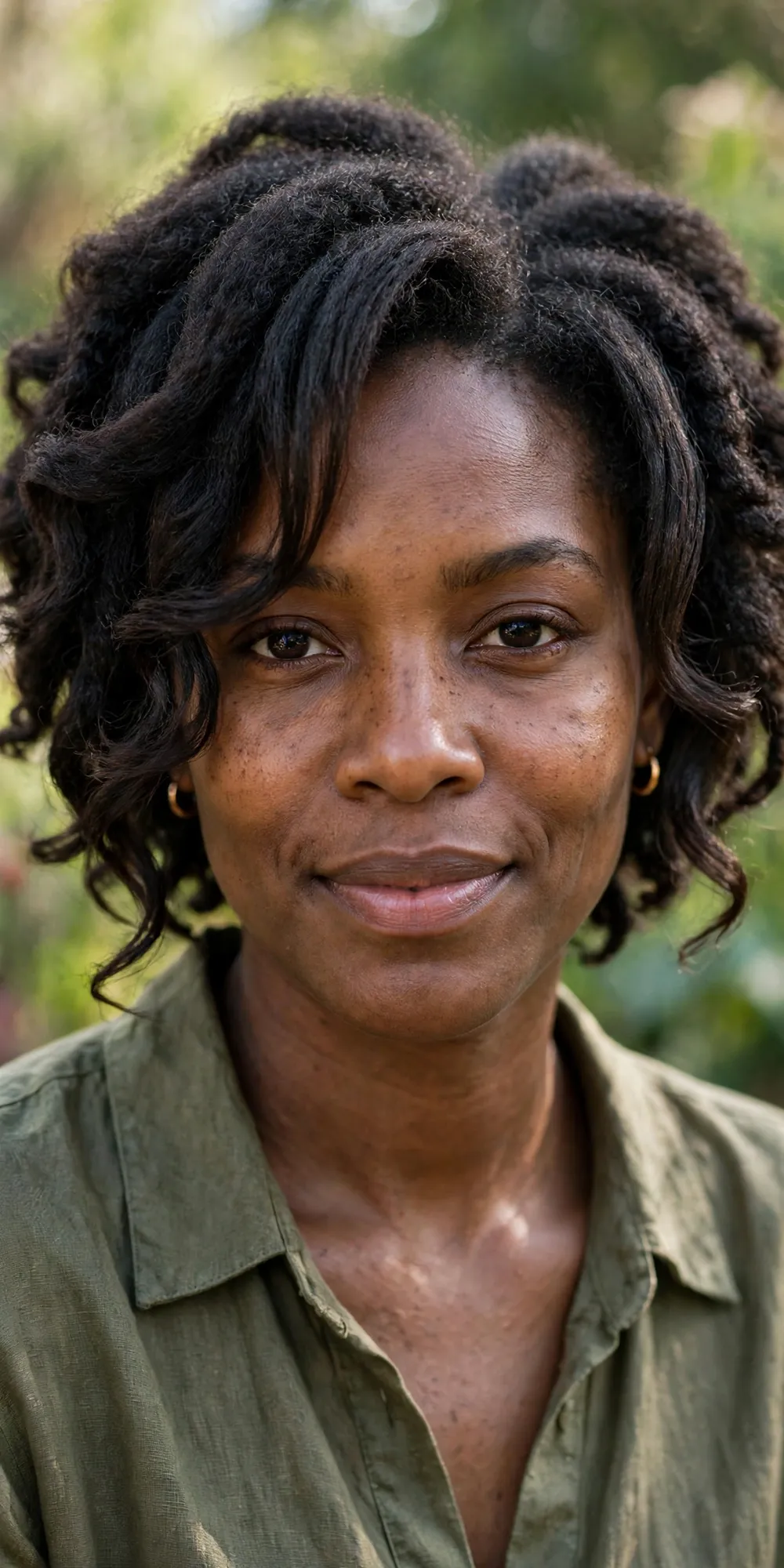
7. High Puff With Soft Bangs
A high puff is the easiest updo in natural hair, and the soft layered bangs at the hairline are what make this version feel finished rather than thrown together. It suits 3C to 4C coils with enough length to gather, and it flatters long and oval faces by adding width at the forehead. Gather it high with a stretchy band — never a tight elastic — smooth the edges with gel, and leave the front section loose as bangs, shaped with curl cream. Maintenance is almost nothing: it takes five minutes, and a satin scarf at night keeps the puff from flattening. The honest warning is tension — if the band pulls, loosen it, because a daily tight puff can thin the edges.
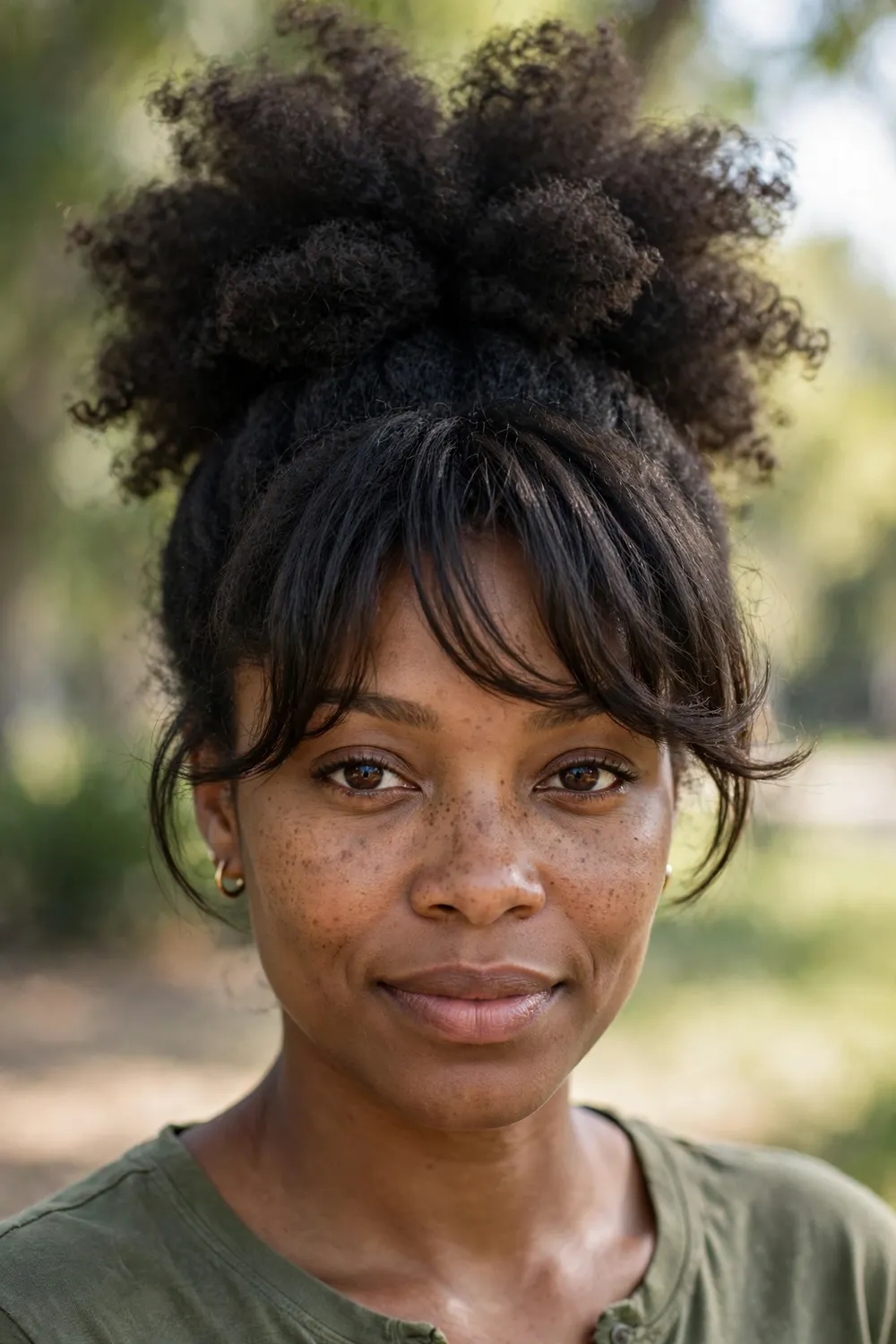
8. U-Cut for Long Natural Length
The U-cut is the quiet workhorse of long natural hair: the back falls in a gentle U shape, longest at the centre, with layers that keep the ends from looking heavy and blunt. It suits 3A to 4C textures at past-shoulder length, and it works on every face shape because the shape lives at the back. Ask for it cut on stretched hair, the U point at the centre of your back, layers starting no higher than your shoulders. It looks best worn down or in a low ponytail, where the curve shows. Style with a leave-in and a light oil on the ends. A dusting every three months is enough, but long hair still needs regular deep conditioning — the ends are the oldest part of your hair.
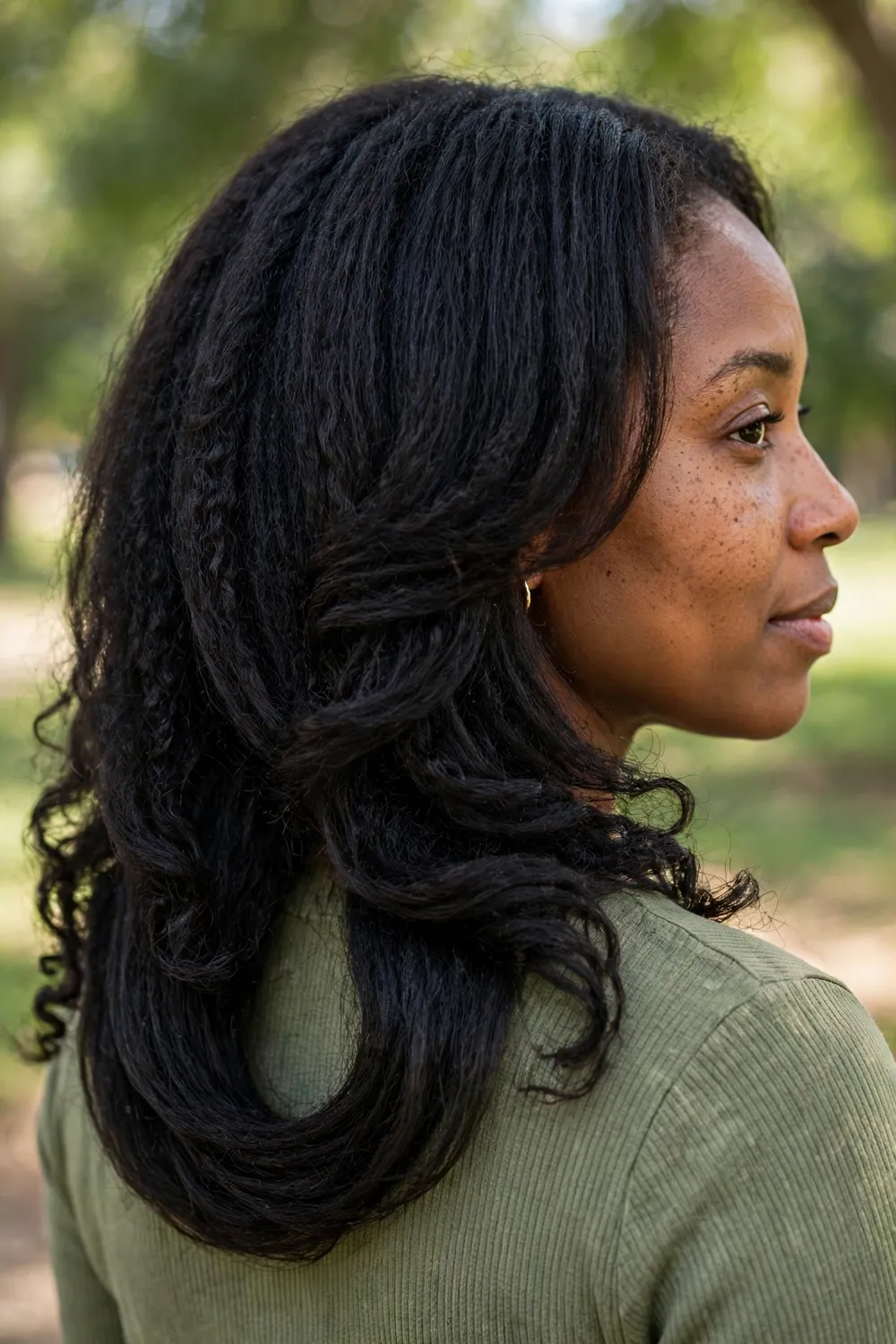
9. V-Cut for Dramatic Movement
Where the U-cut is soft, the V-cut is deliberate: the hair comes to a soft point at the centre back, which makes long curls swing in a way a blunt cut never will. It suits 3B to 4C textures past the shoulders, and round faces, because the point draws the eye down. Ask for the V to be cut on stretched hair, with layers through the mid-lengths so the point does not turn into a thin tail. Wear it down, or half-up where the V shows. A curl cream on the ends keeps them defined rather than wispy. The point thins out faster than a U-cut, so it needs a trim every ten to twelve weeks to stay tidy.
10. Braid-Out With Flipped Ends
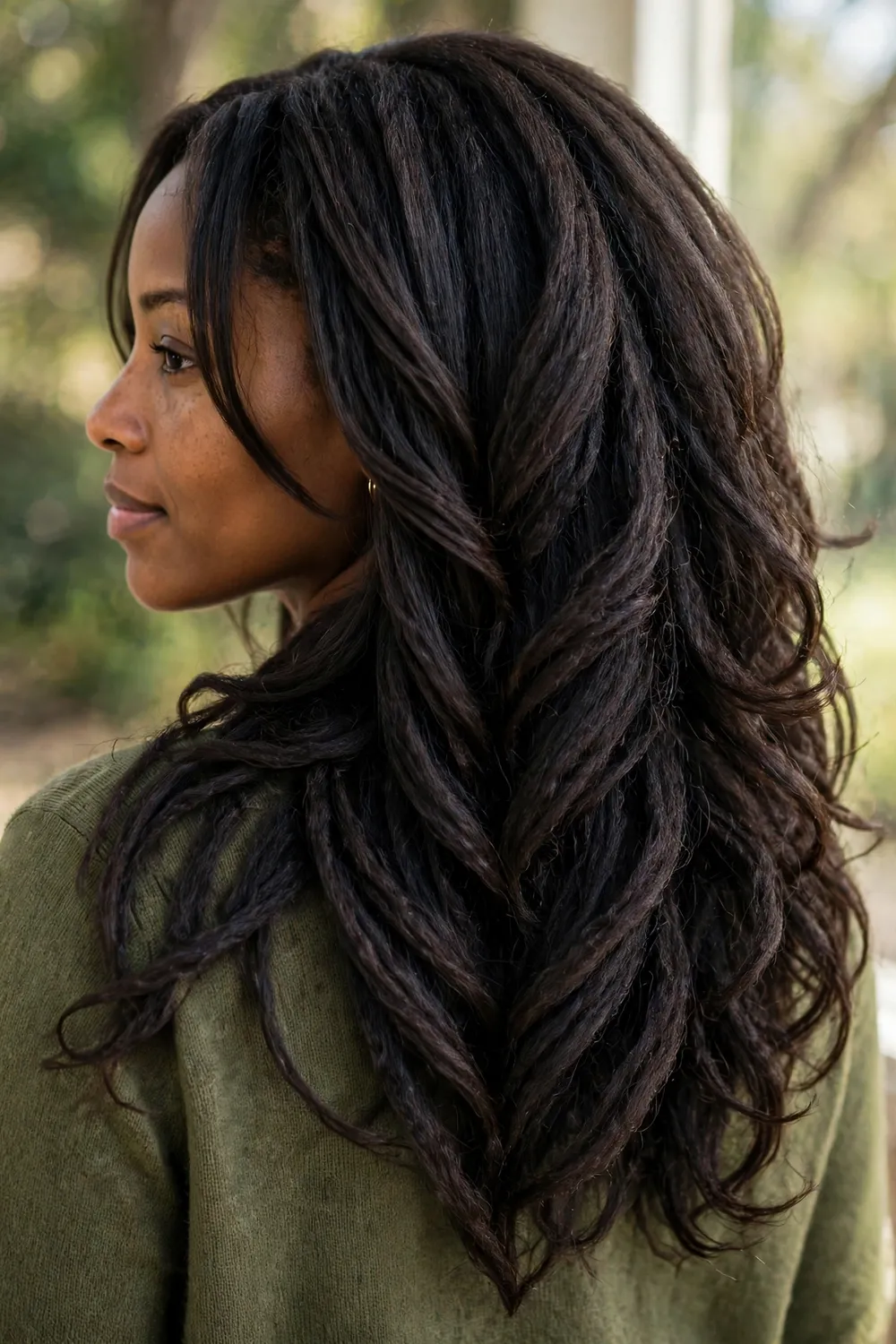
A braid-out gives you waves and volume with less frizz than a twist-out, and this version adds layers so the ends flip outward at the shoulders instead of hanging flat. It works on 3A to 4B textures at shoulder length or longer, and it suits square and round faces because the flipped ends add width low down. Braid damp hair in medium sections with a leave-in and light cream, angling the last few inches outward. Let it dry fully — overnight is safest — then undo the braids and separate with oiled fingers. The finish is soft, wavy, and full, lasting four to five days. Re-braid the front section at night to keep the flip. It takes longer to set than a twist-out, but holds up better in humidity.
11. Mini Twists With a Side Sweep
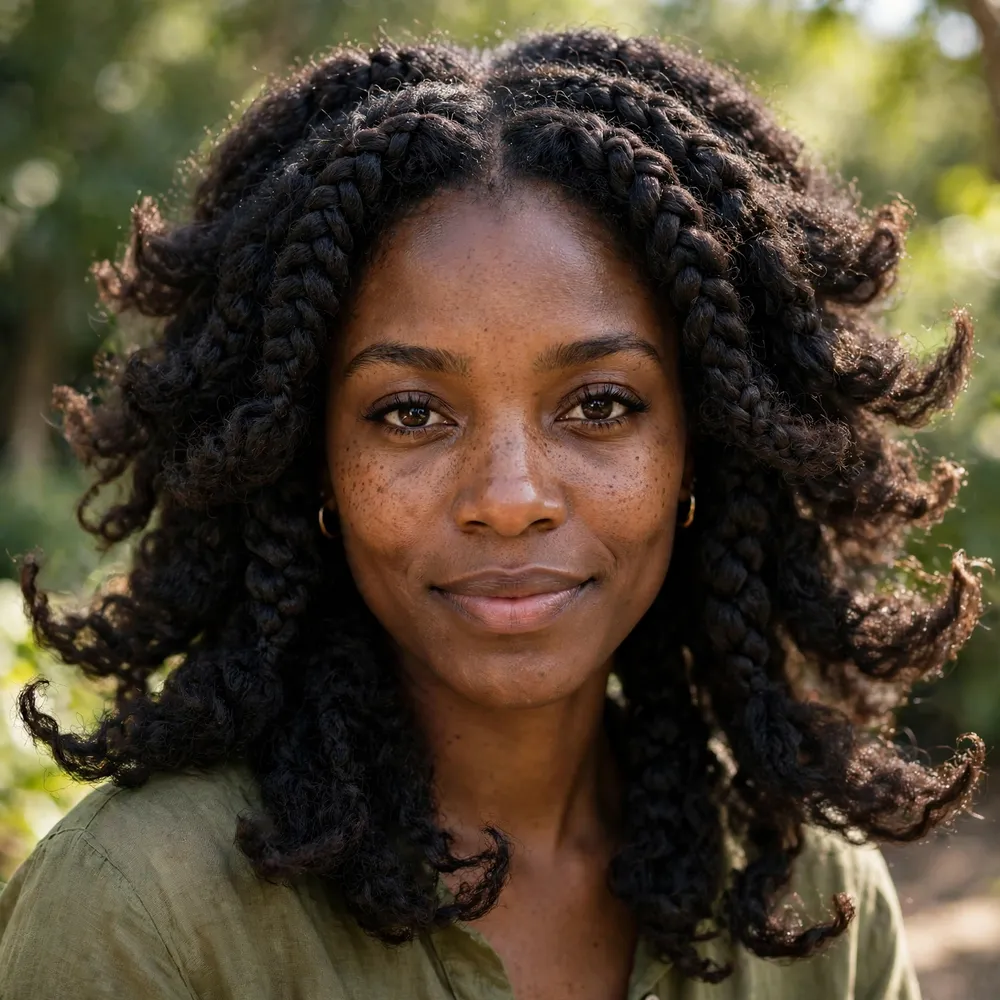
Mini twists are a protective style and a style in their own right, and the side sweep at the front keeps them from looking uniform. They suit 3C to 4C coils at any length past a few inches, and the sweep flatters round and square faces by breaking up the symmetry. Install them on clean, stretched hair in small sections with a butter or a twisting cream, sweeping the front section to one side as you go. They last two to four weeks with a satin bonnet at night and a light oil on the scalp. The finish is neat and genuinely protective. The honest cost is time — a full head takes hours — and take them down gently, with oil, or you will lose more hair than the style saved.
12. Frohawk With Layered Sides
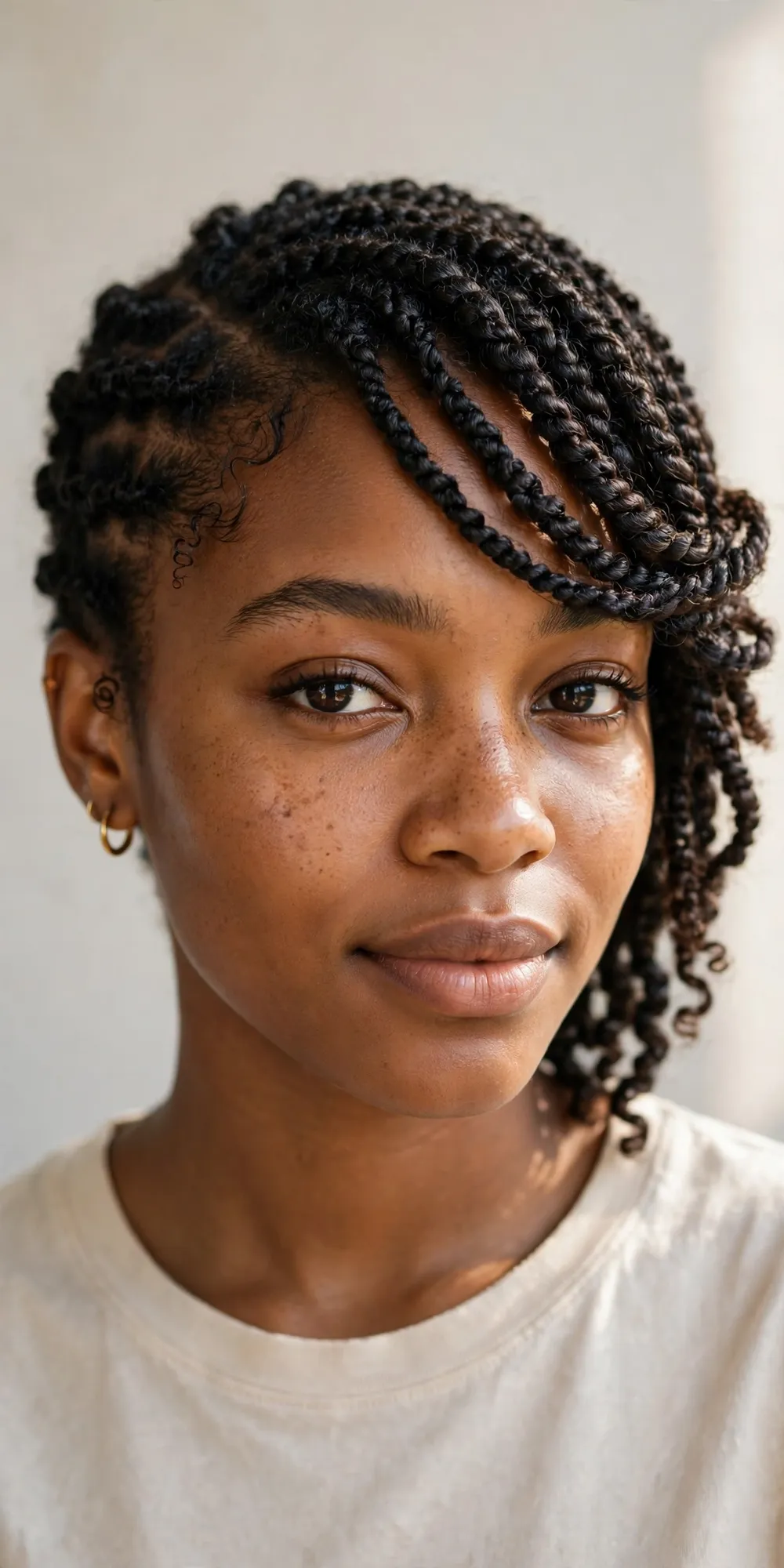
The frohawk is a mohawk for natural hair: flat, tapered sides with a full, layered ridge running down the centre. It suits 3C to 4C coils and suits round and oval faces, because the height on top lengthens the face. Ask for the sides tapered gradually, the centre left long enough to coil, with layers through the ridge so it has shape rather than bulk. Style the centre with a curl cream and a pick, pushing it up and forward. The sides need a shape-up every two to three weeks, which is the main upkeep. It is bold but practical — the sides stay neat while the centre does the talking, and it works for a night out as well as a normal Tuesday.
13. Chin-Length Coil Bob
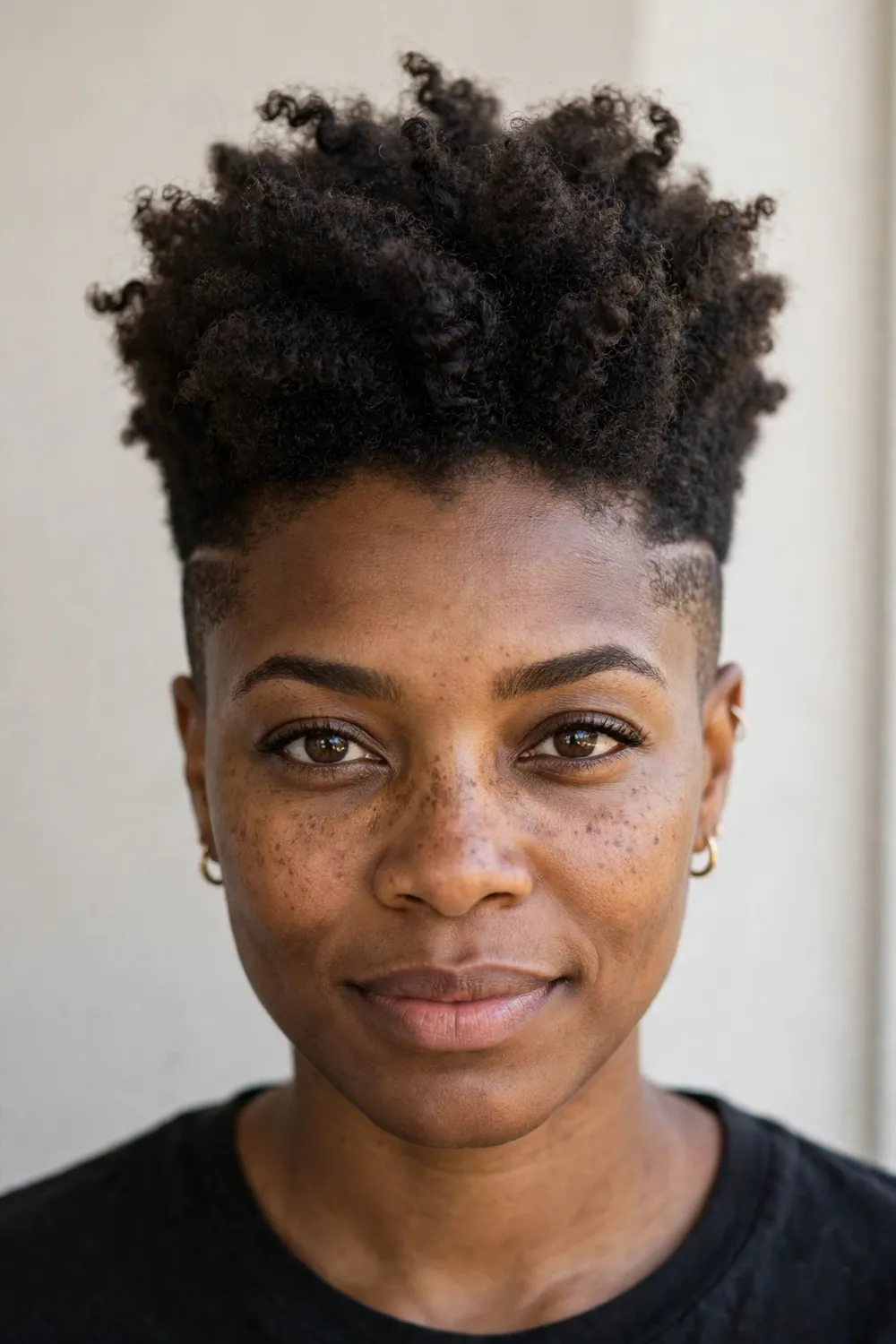
The chin-length coil bob is the neatest short style on this list: a clean, rounded bob with soft internal layers that let each coil sit where it belongs. It suits 3B to 4C coils, and it flatters round and heart-shaped faces because the chin length frames the jaw without adding width. Ask for it cut on dry, defined coils, the perimeter even at the chin, the interior layers short enough to lift the crown. Style with a leave-in and a curl cream, defined in sections. The finish is polished and bouncy, holding three to five days with a pineapple at night. Maintenance is straightforward — a trim every eight to ten weeks — but the cut has to be precise, so find a stylist who regularly cuts coils dry.
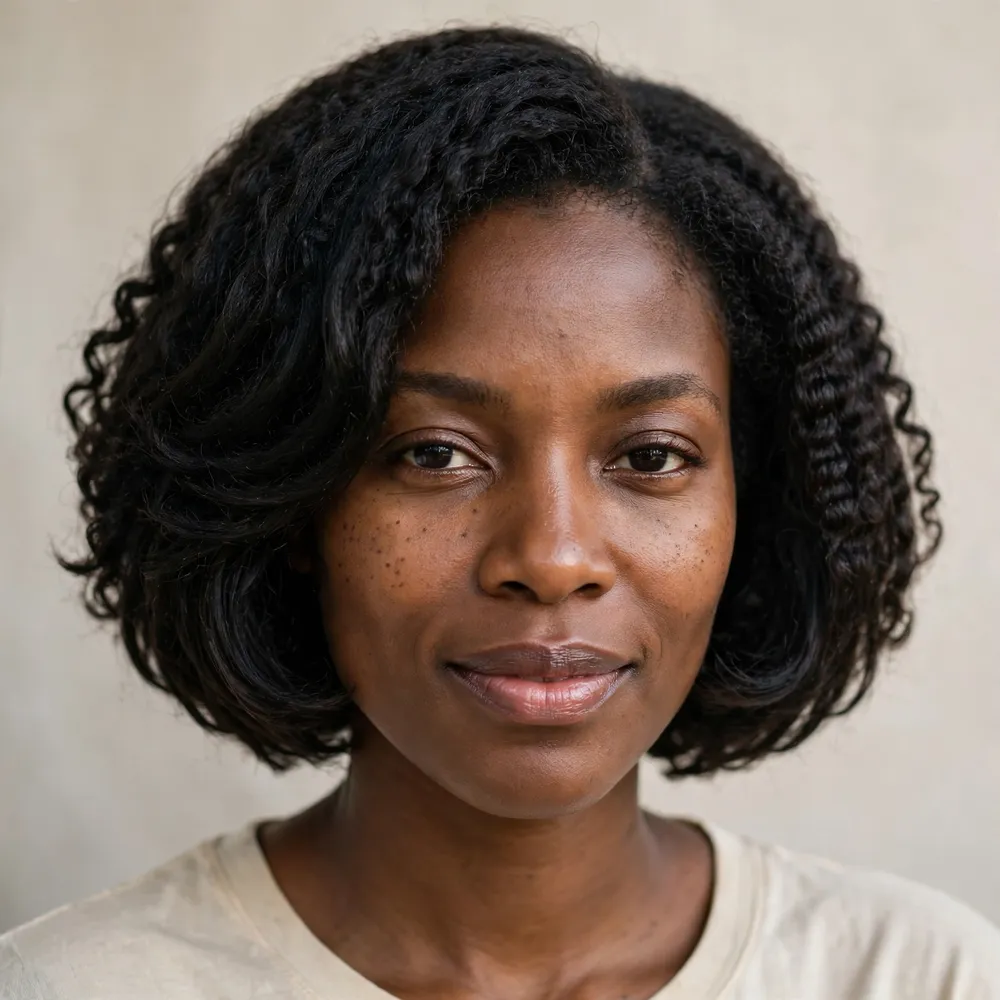
14. Asymmetrical Cut That Breaks the Box
One side longer than the other, with layered asymmetry and a deep side part — this cut is for anyone bored of symmetrical bobs. It suits 3A to 4B curls and suits round faces especially well, because the longer side slims the face and the diagonal line breaks up the width. Ask for the shorter side just below the ear and the longer side at the jaw or collarbone, with layers blending the two so it looks intentional. Style it with a curl cream, parted deeply to one side, and let the longer side fall forward. The finish is edgy but wearable. Asymmetry grows out unevenly, so it needs a shape-up every six to eight weeks or the line goes soft.
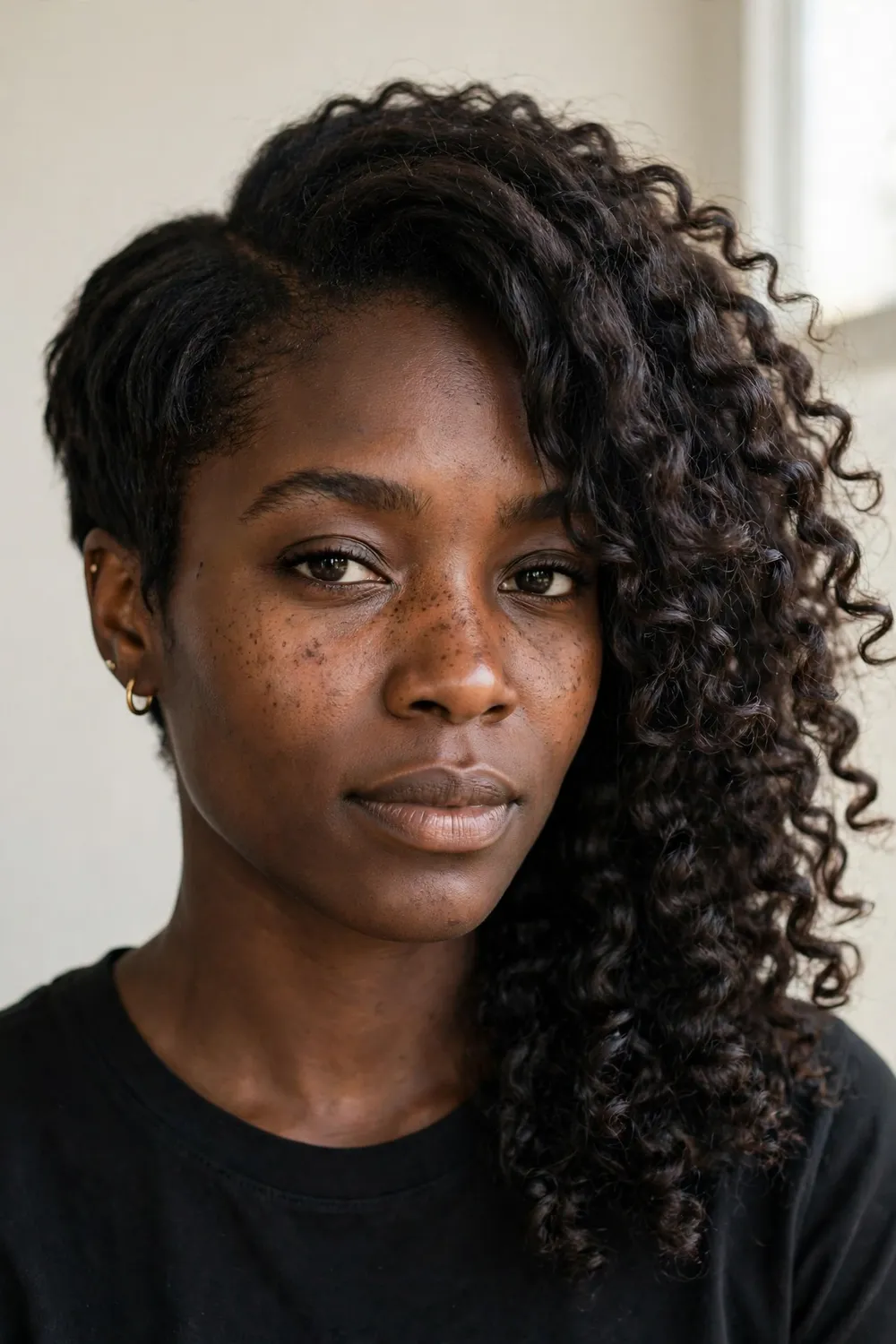
15. Loc Bob With Curved Layers
A loc bob takes the structure of a bob and gives it the weight and swing of locs, with curved layers that let the ends move instead of hanging in a block. It suits mature locs at chin-to-shoulder length, any texture that locs well, and it flatters every face shape. Ask your loctician to shape the perimeter into a gentle curve, front slightly longer than the back, layering the ends so they swing. Style with a light oil on the locs and a little mousse at the roots if you want hold. The finish is elegant and low-effort. Maintenance is mostly retwists every four to six weeks and keeping the locs moisturised; a reshape every few months keeps the curve from straightening out.
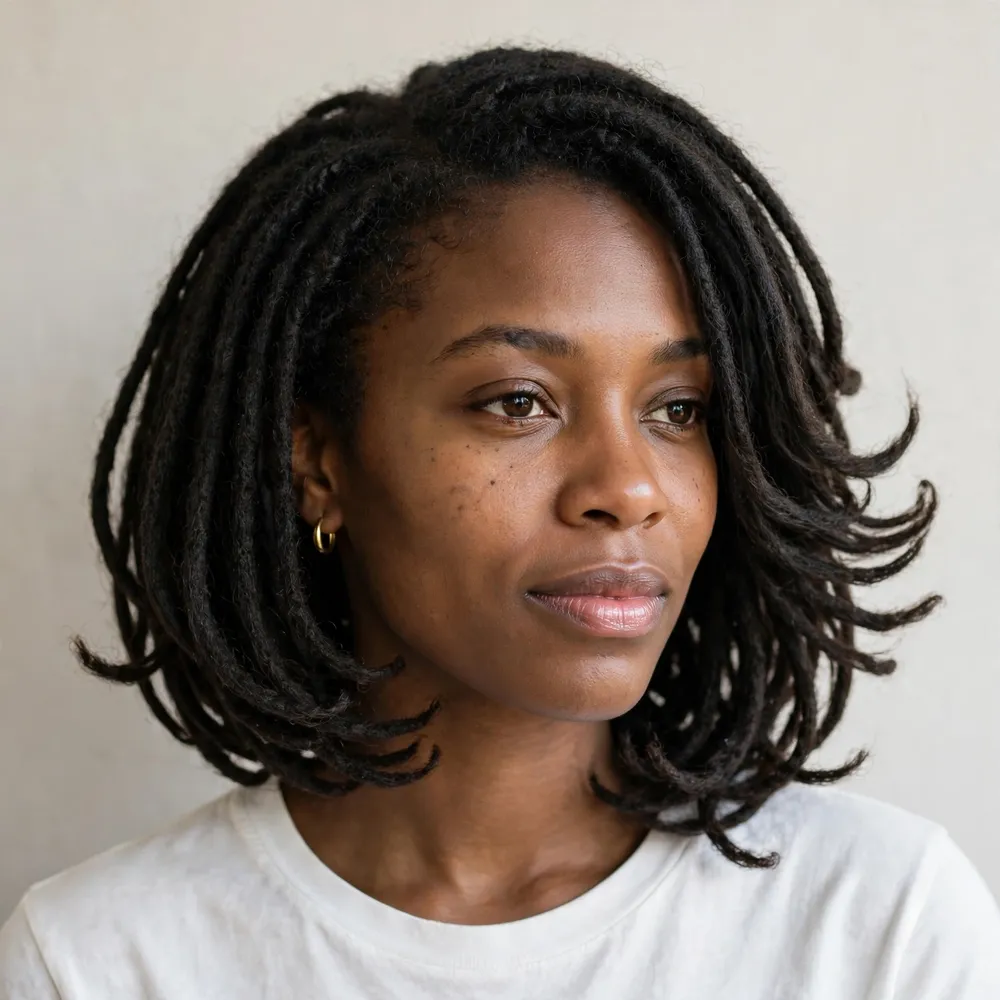
16. Half-Up Style With Cascading Curls
This is the style you reach for when you want your length showing but your hair off your face. The top section is pulled back into a small puff or pinned bun, while the rest falls in loose, layered curls past the shoulders. The layers are what make it work: without them the bottom half goes flat and heavy, with them the curls stack into a waterfall shape. It suits 3A to 4A textures best, and flatters round and heart faces. Ask your stylist for internal layers through the back, keeping the perimeter full so the cascade doesn’t thin out at the ends. A light curl cream scrunched in while damp gives soft definition, and it holds two to three days with a pineapple at night.
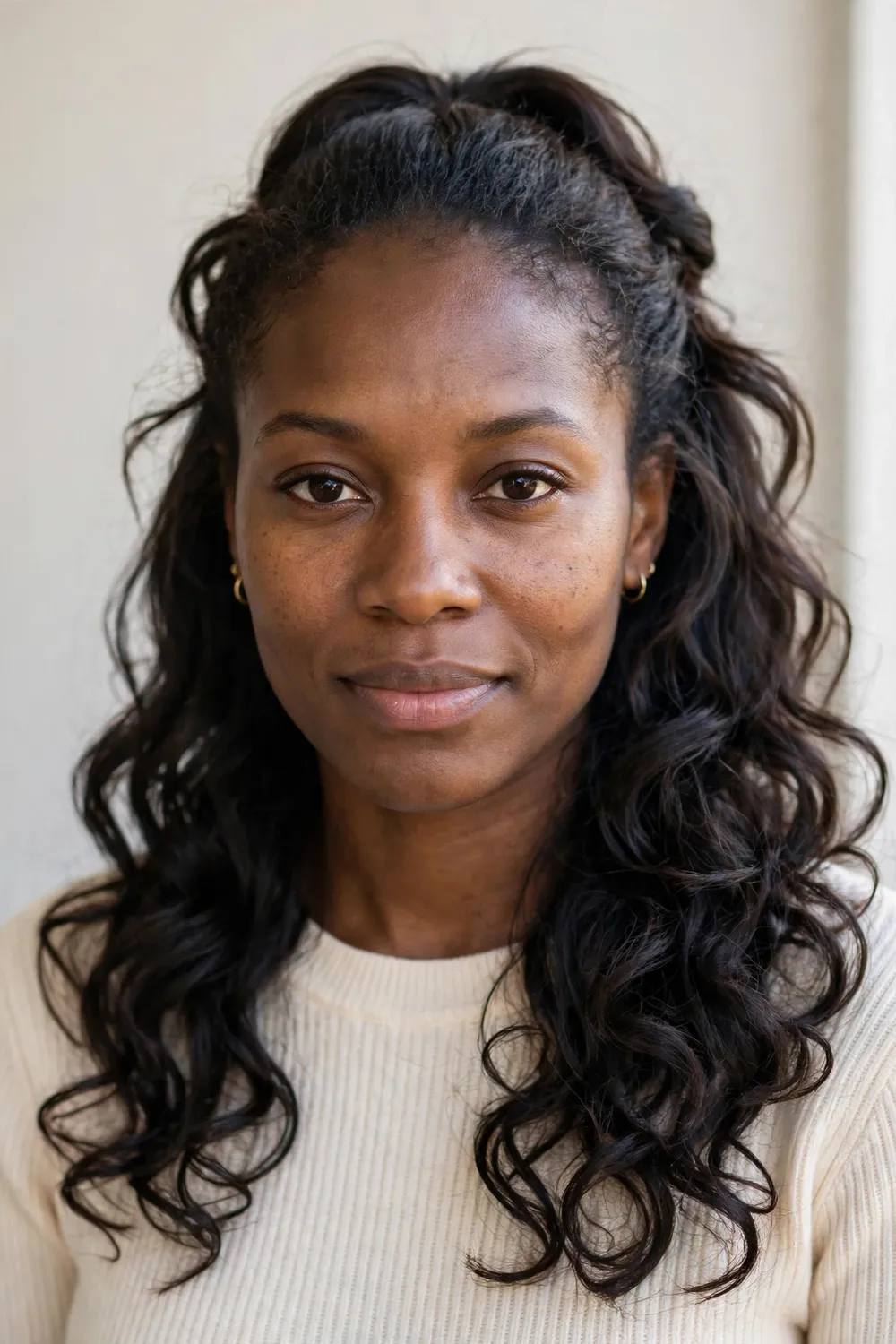
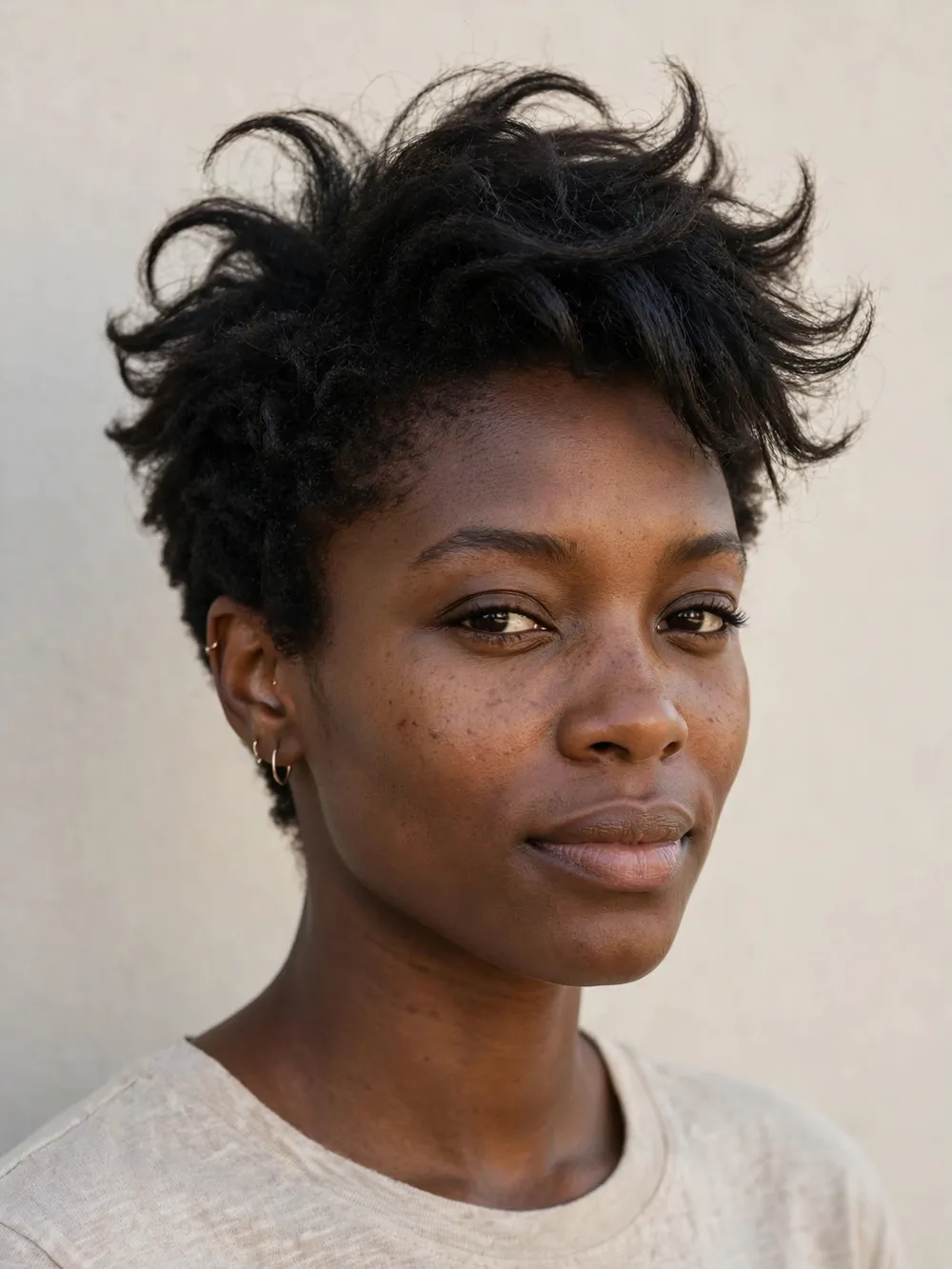
17. Feathered TWA
A feathered TWA is a teeny weeny afro with movement — short, but not one flat length. The top is cut with short, piecey layers that flick in different directions, so the shape looks soft instead of blocky. It works beautifully on 3C to 4C textures, where tight coils give the feathered pieces natural lift, and it flatters oval, heart and square faces by keeping volume on top rather than at the sides. Ask your barber or stylist for a TWA with feathered layers through the crown and a clean, natural hairline. Style with a curl sponge or a little curl-defining cream and let it air-dry. This is genuinely low-maintenance: wash, moisturise, go — but feathered edges grow out fast, so plan a shape-up every two to three weeks.
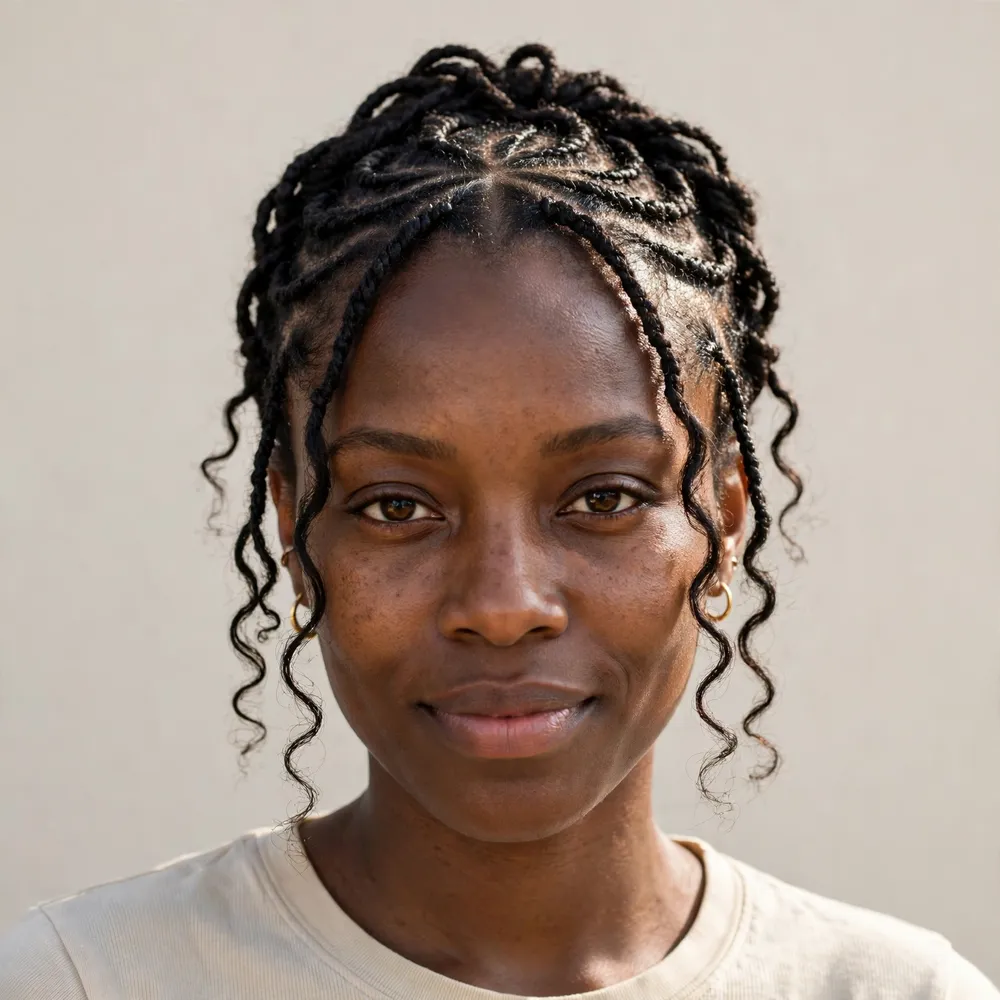
18. Flat-Twist Crown With Soft Framing
Flat twists swept up into a crown give you a protective style that still looks finished — like a halo built from your own hair. The twists run from the hairline to the crown, where the ends are tucked into a small bun, with a few soft layered pieces left out around the face. It suits 3B to 4C textures and round, oval and square faces. Ask your stylist for flat twists that follow your head shape, with face-framing pieces cut in layers rather than left blunt. A light edge control and a little oil keep the twists neat without flaking. It lasts about a week with a silk scarf at night. For braids instead, boho braids give a similar crown effect with a looser finish.
19. Bantu Knot-Out With Piecey Ends
In a knot-out, the knots are unravelled to release the curls — and that’s where the layers show. The hair is sectioned into knots of different sizes, so when they’re taken down the curls fall in graduating lengths with piecey, separated ends. It suits 3C to 4C textures and flatters round and square faces, since the varied lengths break up the width. Ask your stylist to vary the knot sizes — smaller at the crown, larger underneath — so the layers read as intentional, not uneven. Set the knots on damp hair with a styling cream, let them dry fully before unravelling, then separate gently with oiled fingers. It holds three to four days; a silk bonnet at night keeps humidity frizz at bay.

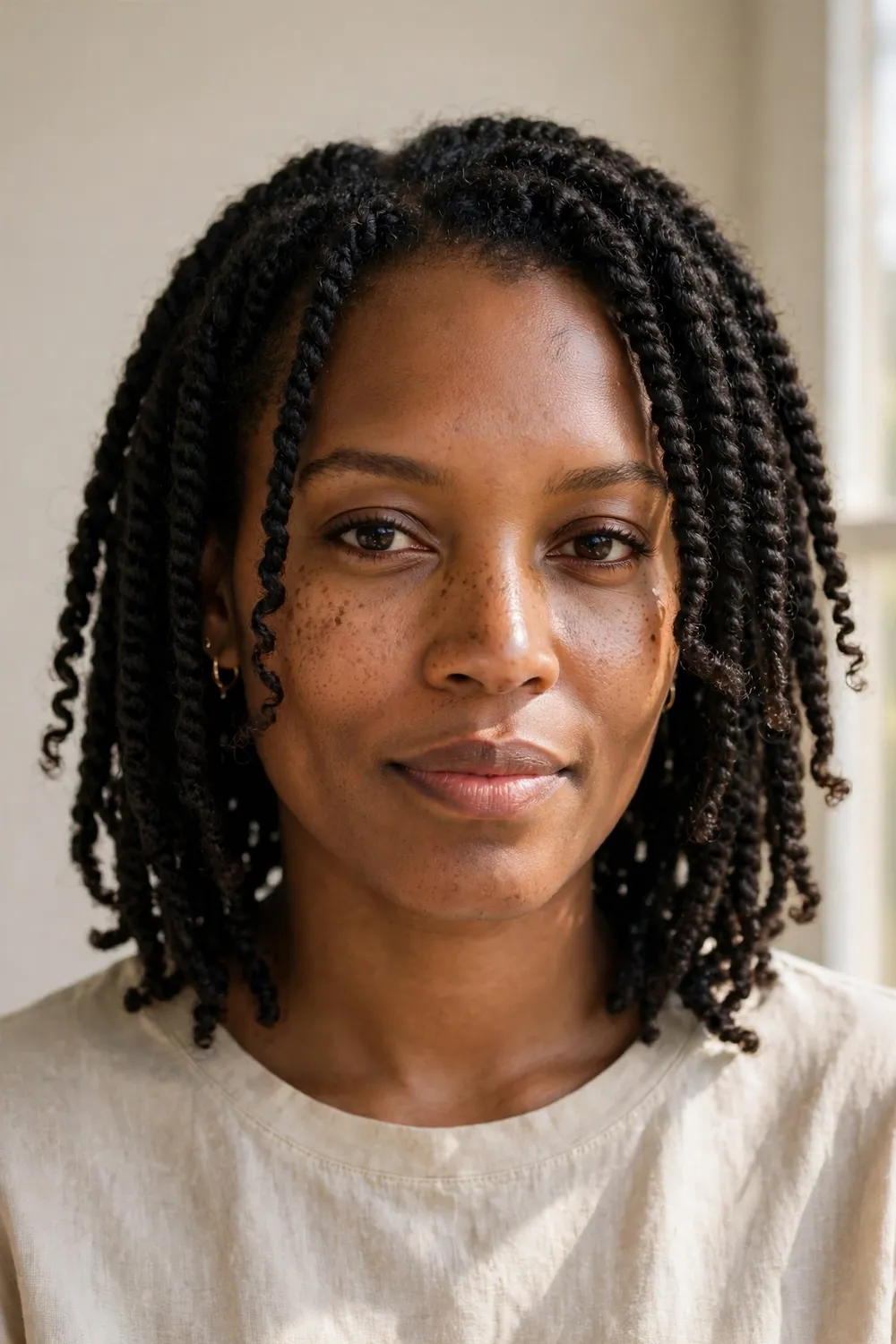
20. Two-Strand Twist Set at the Shoulders
Two-strand twists are the workhorse of natural styling, and this version sits right at the shoulders with shorter pieces around the face. The face-framing layers stop it hanging like a curtain, which matters most on long faces. It suits 3A to 4C textures at any density, though tighter coils hold the twists longest. Ask your stylist for shoulder-length twists with the front two or three twists cut a touch shorter to frame the cheekbones. Twist on damp, moisturised hair with a butter or cream, sealing the ends with oil. They last one to two weeks with a bonnet at night; undo them for a free twist-out. For a longer-term protective option, cornrows offer the same low-manipulation benefit in a neater, flatter profile.
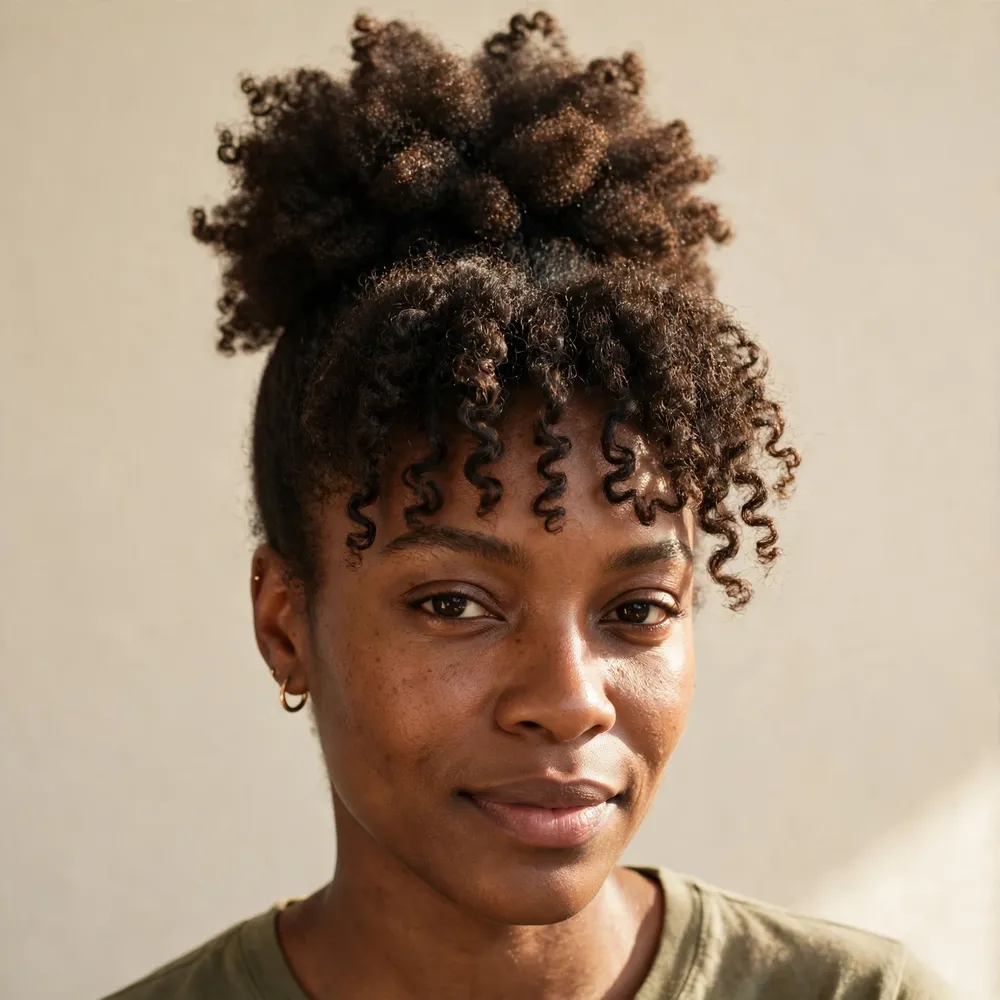
21. Pineapple Puff With Bangs
The pineapple puff is the classic high puff, gathered loosely at the very top so the curls spill forward — here with layered curly bangs left out at the front. The bangs soften the hairline and stop the style looking severe, which makes it a good pick for long and oval faces. It suits 3A to 4C textures, fullest on dense 3C–4C hair at medium to long lengths. Ask your stylist to cut the front layers to fall naturally at the brow — never cut bangs on wet, stretched hair, or they’ll spring up shorter than planned. A satin scrunchie keeps the puff secure, and a little edge control finishes the hairline. It holds a day or two; sleeping in a pineapple is the maintenance plan.
22. Halo Fro With a Tapered Nape
A halo fro is a full, round afro with a clean tapered nape underneath. The taper removes bulk at the back of the neck, so the fro keeps its round silhouette instead of drifting into a triangle. It suits 3C to 4C textures and flatters oval and heart faces, balancing width at the sides with a neat finish at the back. Ask your barber or stylist for a rounded afro shape with interior layers for lift, and a tapered nape blended upward — not a hard line — so it grows out gracefully. Pick it out with a wide-tooth comb or afro pick and finish with a light oil for sheen. Maintenance is a weekly wash and a reshape every three to four weeks.
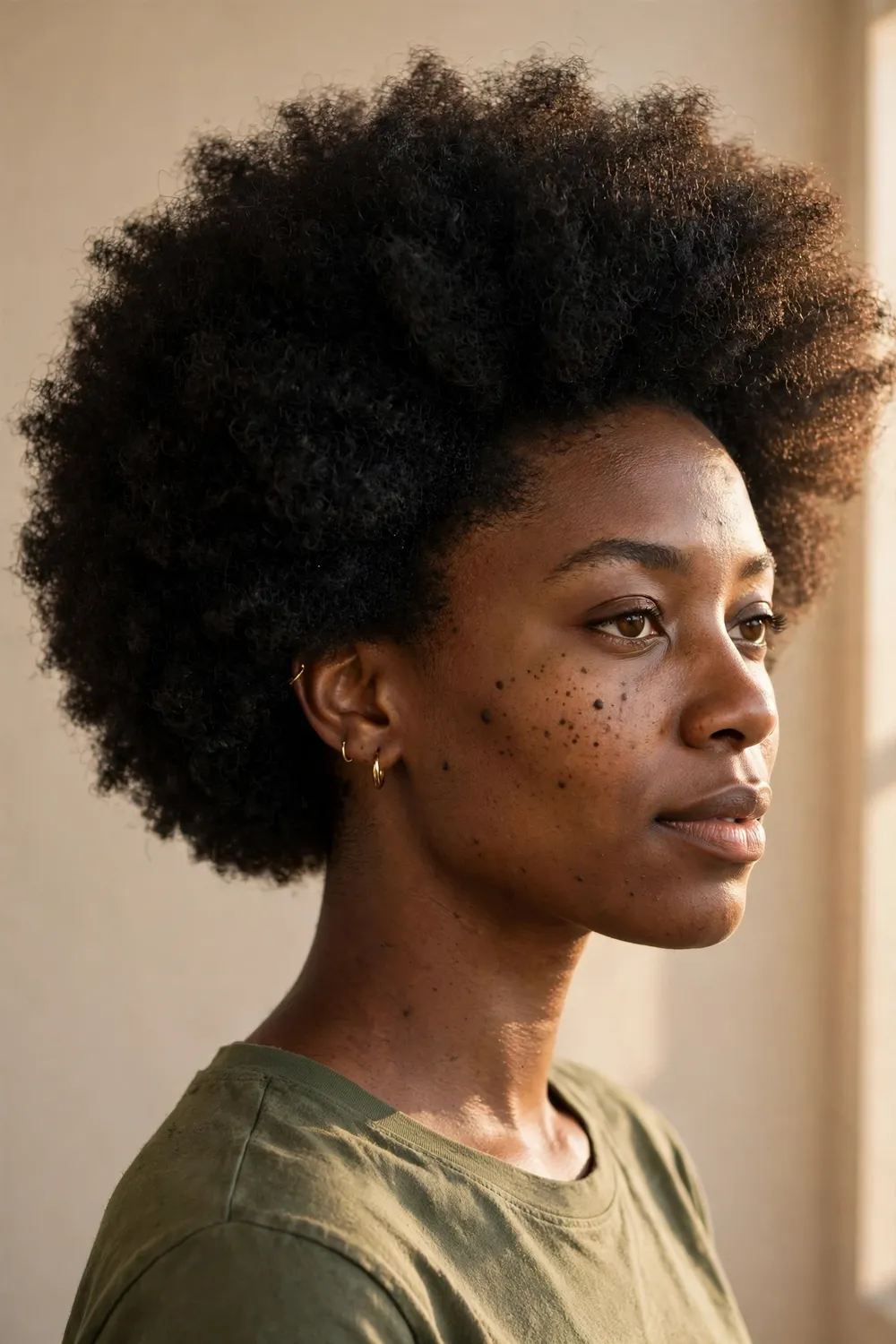
23. Butterfly Cut With Crown Layers
On natural hair the butterfly cut makes real sense: short, voluminous layers through the crown give lift and movement, while the back stays long. The top layers bounce and separate; the length underneath keeps the drama. It suits 3A to 4B textures and flatters round and square faces, since crown volume lengthens the face while the long back pieces slim the sides. Ask your stylist for the classic butterfly cut: crown layers at cheekbone to chin length, perimeter left long. Style the crown with a diffuser on low heat or curl cream scrunched in while damp; let the back air-dry. Refresh the crown layers every few days, and trim every six to eight weeks to keep the two lengths distinct.
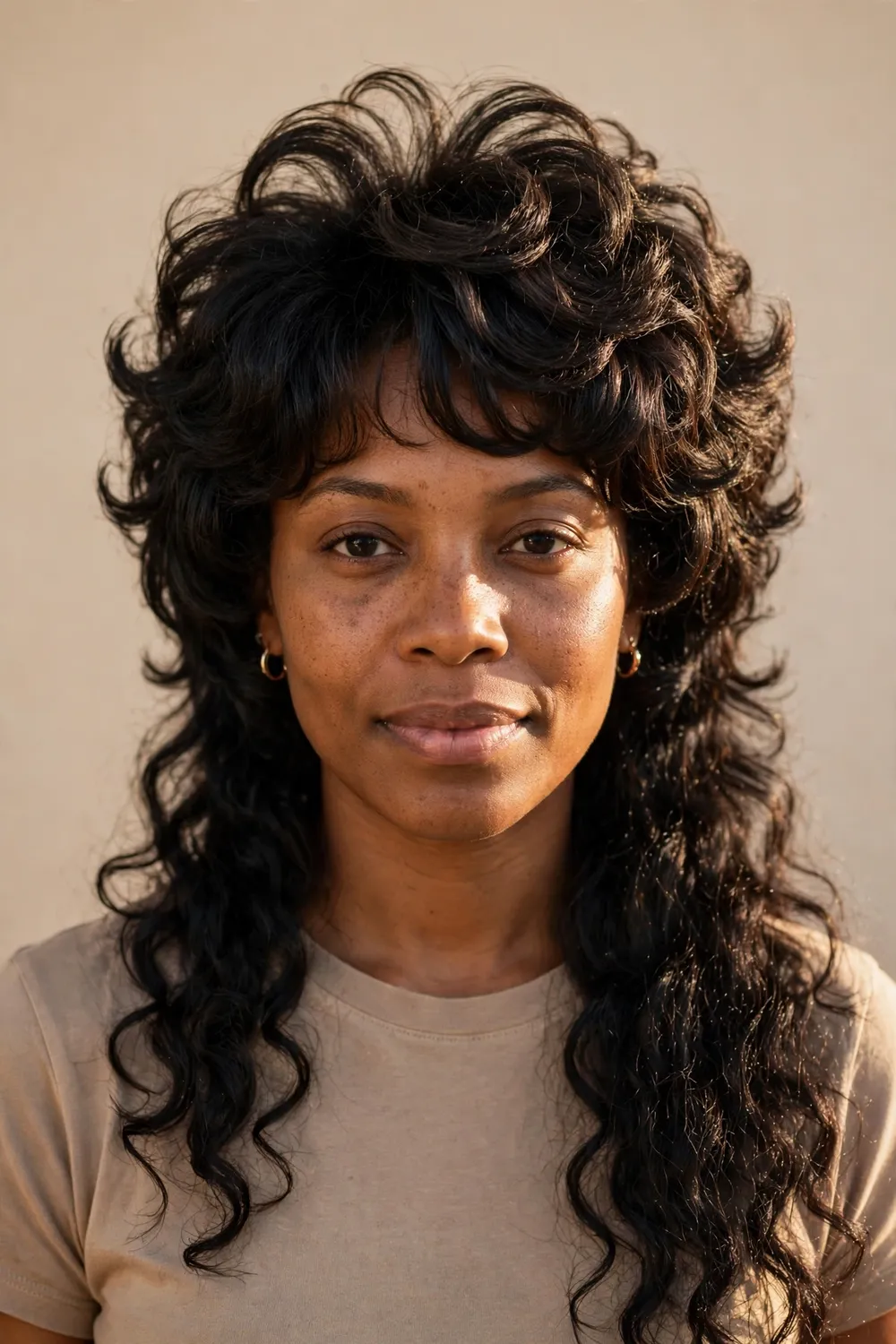
24. Layered Silk Press
A silk press is a blow-out and flat-iron finish that leaves natural hair sleek and glossy — and layers stop it looking like a flat sheet. Layers are cut in first, so the ends flick and separate instead of hanging in one heavy block. It suits 3A to 4C textures and every face shape. Ask your stylist for layers cut on stretched hair and a press done with a heat protectant — this is not a service to rush. A light serum gives the gloss; heavy oils weigh it down. It lasts one to two weeks if you wrap it at night and keep it dry; humidity or a workout brings the texture back fast. Patch-test any new product first if you use colour or chemical treatments.

25. Layered Pixie With Tapered Sides
A layered pixie is short and sharp: tapered sides and nape, with a textured top you can push forward, sweep aside or wear tousled. The top layers give the coils somewhere to go, so the top has height and movement instead of sitting flat. It suits 3C to 4C textures and flatters oval, heart and round faces by keeping volume up top. Ask your barber for tapered sides blended into a layered top, with two to three inches left on top to finger-style. A curl cream or a little pomade worked through with your fingers is all it needs; a diffuser on low heat adds lift on wash day. Maintenance is a shape-up every two to three weeks, but daily styling takes about five minutes.
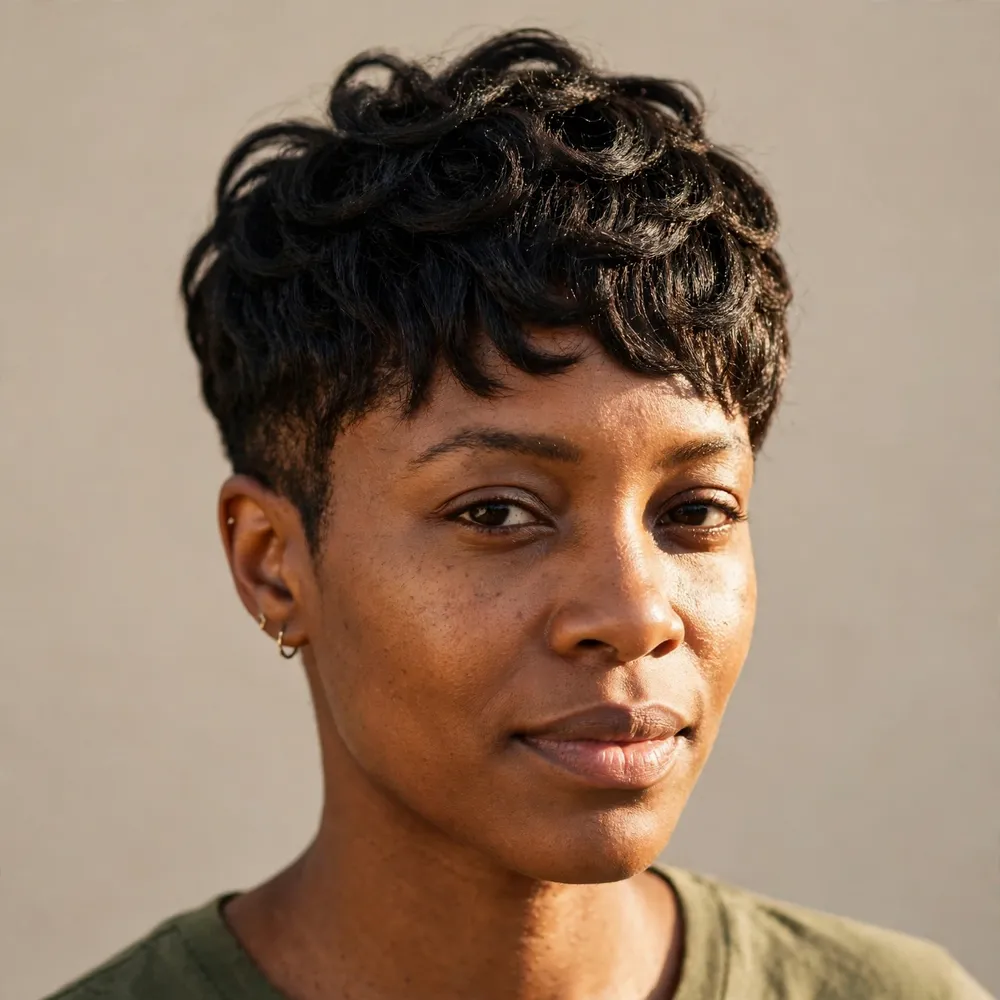
26. Curly Bob With Curtain Bangs
A curly bob with curtain bangs is the softest bob — chin-length curls with a centre-parted fringe splitting either side of the face. The bangs frame the eyes and cheekbones, making this a strong pick for round, square and heart faces, and the bob length keeps the shape bouncy. It suits 3A to 4B textures with a defined curl pattern. Ask your stylist for curtain bangs cut dry, on your natural curl pattern, starting at cheekbone length — wet-cut bangs spring up shorter once dry, and there’s no fixing that until they grow. Style with curl cream and a diffuser, scrunching the bangs forward, then parting them once mostly dry. Trim the bangs every three to four weeks and refresh them with water and cream on non-wash days.
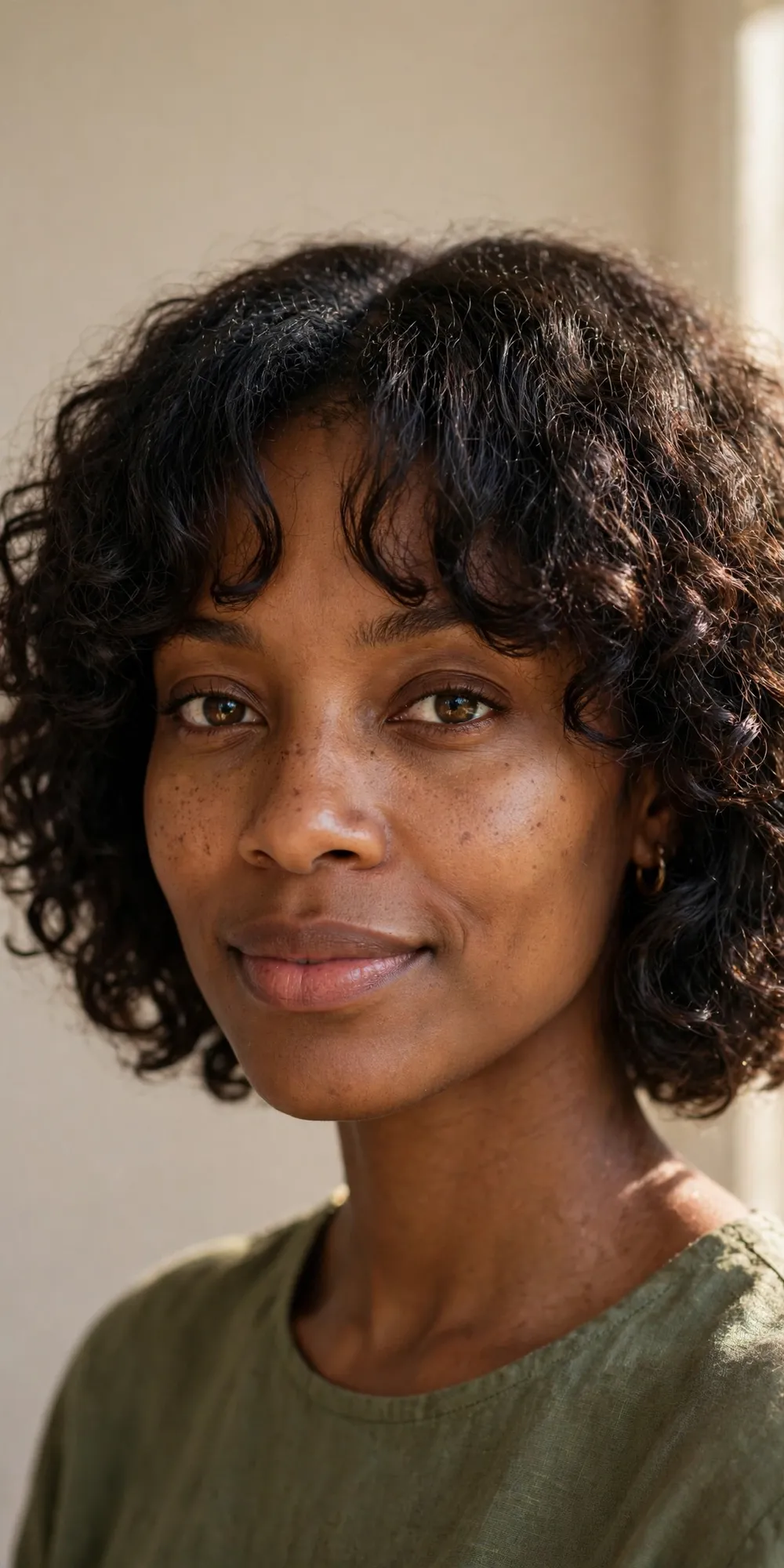
27. Layered Finger Coils
Finger coils are the most precise curl definition you can get: each section is twirled around a finger into a springy coil. Layering them — shorter at the crown, longer underneath — turns a uniform coil set into a shaped style. It suits 3B to 4C textures, and it’s a good choice for inconsistent curl patterns, because the coils impose order. Round and oval faces wear it well. Ask your stylist to coil on damp hair with a strong-hold gel, in small sections of varying sizes so the layers read naturally. The result is glossy. The honest catch is time: a full head takes two to three hours and lasts about a week with a bonnet at night. After day four the coils loosen into a softer second-week look.

28. Layered Rod Set With Bouncy Curls
A rod set — hair wrapped around rods — gives bouncy curls with a polish twist-outs can’t quite match. Layered first, the curls fall at different lengths, so the style has movement instead of one solid curtain of curl. It suits 3A to 4C textures at medium lengths and beyond and flatters oval, round and heart faces, since the layers add width where you want it. Ask your stylist for layers cut on stretched hair, then a rod set in two sizes — larger underneath for volume, smaller on top for tighter curls. Set on damp hair with foam or setting lotion, and dry fully before removing the rods; taking them out early means frizz. It holds three to five days with a pineapple at night.
29. Layered Wash-and-Go With Side Part
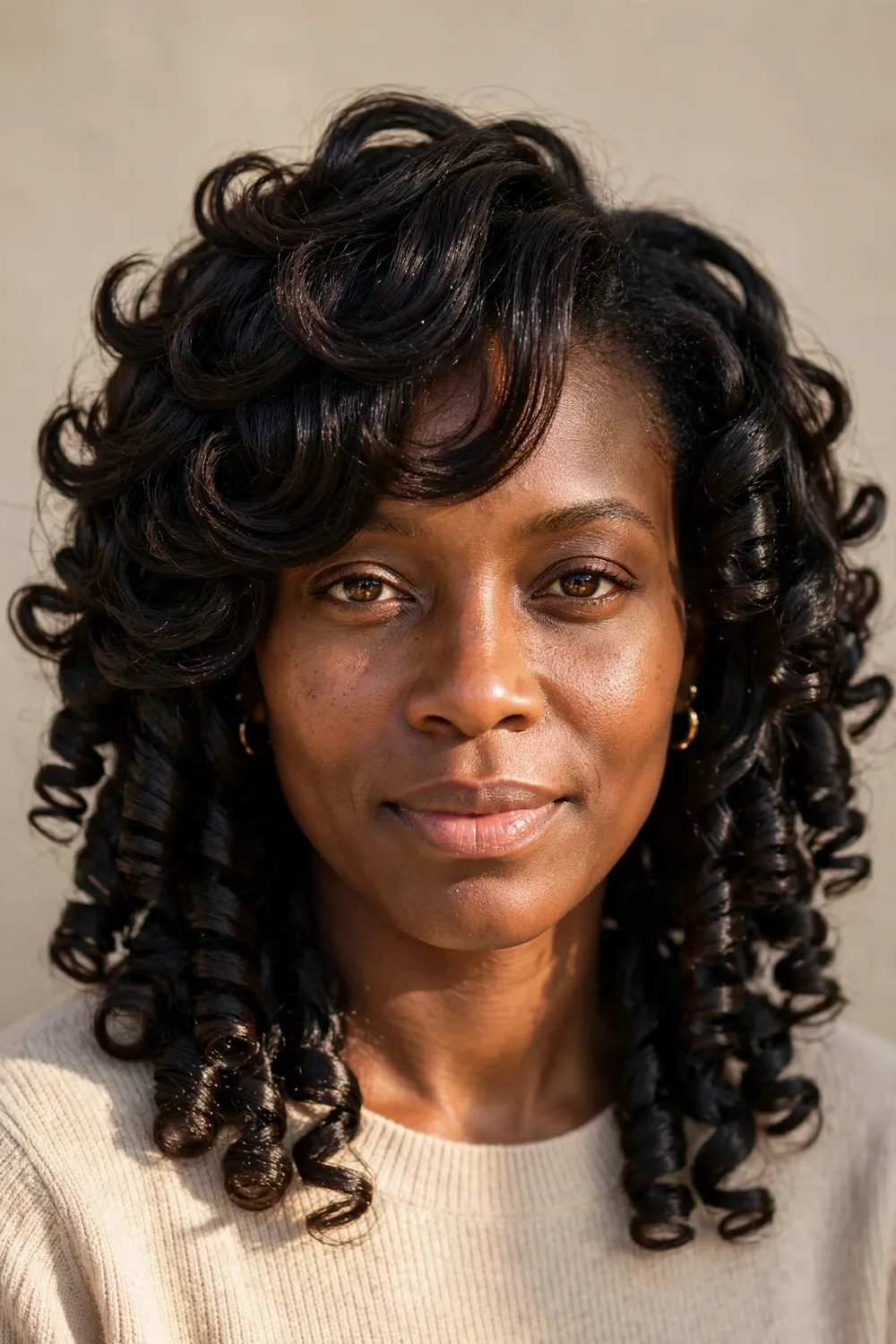
This is the wash-and-go for people who want everyday hair to look like a decision: medium curls, a deep side part, and layers that give the longer side volume. The deep part adds instant asymmetry and height at the crown, and lets curls fall across the forehead to flatter round and square faces. It suits 3A to 4B textures with enough density to hold the part, at shoulder length and beyond. Ask your stylist for layers that follow the part — shorter where the hair falls away, longer on the heavy side. Style on soaking-wet hair with leave-in and curl gel, raking through and scrunching, then diffuse or air-dry. It holds two to four days, refreshed with water and gel, and the side part makes second-day hair look intentional.
Why layers change the whole shape of natural hair
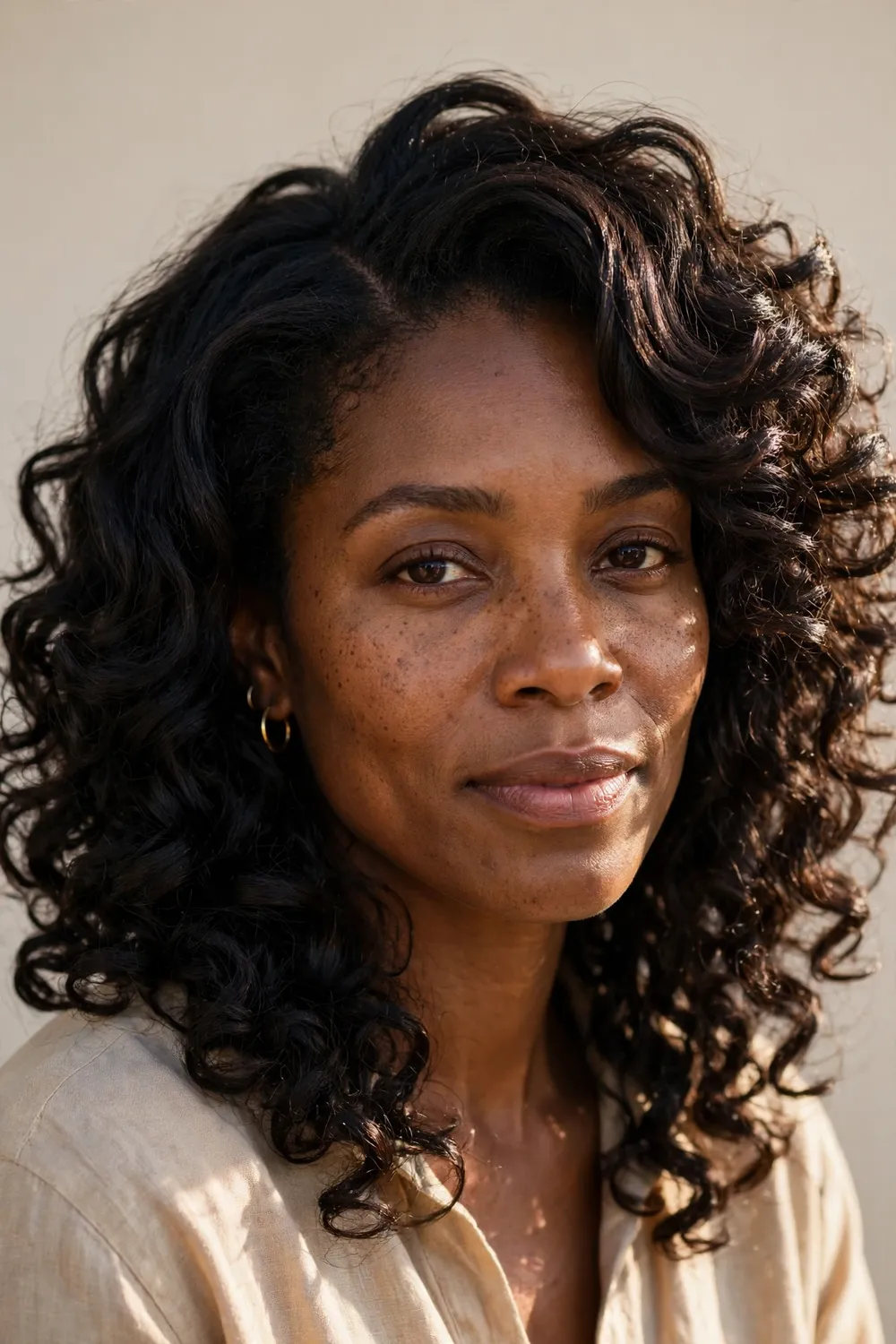
Natural hair doesn’t behave like straight hair, and that’s the whole story. Afro-textured hair grows in tight coils that shrink — on 4C hair, shrinkage can reach around 75%, so hair that stretches to your shoulders can spring back to your ears. Cut it one length and the weight sits at the bottom, giving you the dreaded triangle: flat at the crown, wide at the ends. Layers fix that by removing weight where it’s heaped up and adding it where it’s missing. Interior layers — short pieces cut inside the shape — create lift at the crown. Perimeter layers shape the outline, so the silhouette stays round or long instead of spreading outward.
The other decision is when to cut. Dry cutting shows the stylist your real curl pattern, so layers land where your coils actually fall. Cutting on stretched hair gives cleaner lines and more predictable length, but the layers can spring up shorter once the hair dries — which is why bangs and face-framing pieces should always be cut dry. A good stylist will talk through both and may use a mix: stretched for the overall shape, dry for the detail work. The result is a cut that works with shrinkage instead of fighting it, so wash day looks like the salon day, not a surprise.
Essential tools for layered cuts, twist-outs and wash-and-gos
You don’t need a drawer full of gadgets — a few good tools cover almost everything in this list:
- Wide-tooth comb — for detangling wet hair without snapping coils.
- Afro pick — for lifting the roots and shaping fros without disturbing the curl pattern.
- Denman-style brush or detangling brush — for clumping curls on wash-and-go days.
- Diffuser attachment — for drying curls with lift and minimal frizz.
- Satin scrunchies and a silk bonnet or scarf — for protecting styles overnight.
- Spray bottle — for refreshing curls with water and a little leave-in between washes.
- Sectioning clips — for keeping twists, coils and rod sets neat while you work through them.
5 mistakes to avoid with layered natural hair
1. Cutting layers on soaking-wet, stretched hair and expecting them to stay put. Wet coils stretch far longer than they sit dry. Layers cut this way spring up once the hair dries, leaving the top shorter than planned. Ask for dry or damp cutting on your real curl pattern, especially around the face.
2. Thinning out dense hair with a razor or thinning shears. It feels like the fix for bulk, but on coily hair it creates frizz and wispy ends that won’t clump. Proper layering removes weight in structured pieces — if your stylist reaches for thinning shears, ask what the layers will do instead.
3. Skipping the trim because you’re growing your hair out. Split ends travel upward, and on layered hair they show fast because the ends are the visible part of the shape. A dusting every eight to twelve weeks protects length in the long run — skipping it costs more length later.
4. Using heavy butters on fine, low-density curls. Thick products flatten the layers that are supposed to give you volume. Fine hair needs light creams and foams; save the heavy butters for dense 4B and 4C textures.
5. Touching your curls while they dry. Every touch breaks the cast and invites frizz, which blurs the layered shape you paid for. Set your style, hands off, and only separate the curls once they’re completely dry — with a little oil on your fingers.
FAQs
What layered hairstyle is best for Black women with 4C hair?
The rounded afro and the tapered cut are the strongest starting points for 4C hair, because tight coils hold a shaped silhouette beautifully and interior layers give lift without fighting the texture. A twist-out with face-framing layers is another good choice, since it works with the coil pattern rather than against it. Whatever you pick, make sure your stylist cuts on dry or stretched hair and understands how much 4C coils shrink, or the layers will land shorter than expected.
Do layers make natural hair look thinner?
Layers can make hair look thinner if they’re cut too aggressively, but done well they do the opposite — they remove bulk from the bottom and create lift at the crown, which reads as more volume, not less. The risk is a stylist taking too much weight out of dense hair, leaving wispy ends. Ask for long, blended layers rather than short, choppy ones, and tell your stylist you want to keep the perimeter full.
How often should layered natural hair be trimmed?
Every eight to twelve weeks is the honest answer for most people, with bangs and tapered napes needing attention every three to four weeks to keep their shape. If you’re growing your hair out, ask for a dusting — just the very ends — rather than a full trim. Waiting longer than three months usually means the layers blur into one length and the shape collapses, so regular small trims actually protect your progress.
Can I get layers without losing length?
Yes — layers are about removing weight inside the shape, not cutting the perimeter shorter. Ask your stylist for interior layers and long layers, and be specific that you want to keep your current length. The perimeter, which is where length is measured, stays where it is; the layers sit above it. The only exception is face-framing pieces and bangs, which are shorter by design, so agree on those lengths before the scissors come out.
Do layers help with shrinkage?
Layers don’t stop shrinkage — nothing does, since it’s a property of the coil itself — but they make it look intentional. By shaping the hair so the coils fall in a planned silhouette, layers stop shrinkage from turning your style into a triangle. A rounded afro is the clearest example: the shape is designed around shrinkage, so the hair springs up into the form you wanted instead of collapsing into bulk at the ends.
What is the best layered cut for a round face?
A cut with height on top and length at the sides works best — the curly lob, the butterfly cut and the layered wash-and-go with a side part all do this well. The goal is to add vertical lines and avoid width at the cheekbones, so ask for crown layers and a deep side part rather than a blunt, even-length bob. Face-framing layers that fall past the chin also help, since they draw the eye downward and lengthen the face.
How do I style layered natural hair without heat?
Wash-and-gos, twist-outs, braid-outs and rod sets are all heat-free, and they all benefit from layers because the shape is already built into the cut. Work on soaking-wet hair with a leave-in and a gel or cream, rake or scrunch the product through, and let the hair air-dry without touching it. A diffuser on the cool setting is the only heat involved, and even that is optional — patience and a good gel do most of the work.
Final Word
Twenty-nine styles, one principle: layers are what turn natural hair from a shape that happens to you into a shape you chose. Whether you go for the drama of a rounded afro, the ease of a wash-and-go or the polish of a silk press, the cut underneath is doing the quiet work — lifting the crown, shaping the outline, and letting your coils fall where they look best. Take the brief for your favourite style to your stylist, be specific about what you want to keep, and give the cut a few washes before you judge it — layers settle in as your hair learns the shape. For more ideas, browse our more hairstyle guides and find the next style worth trying.