

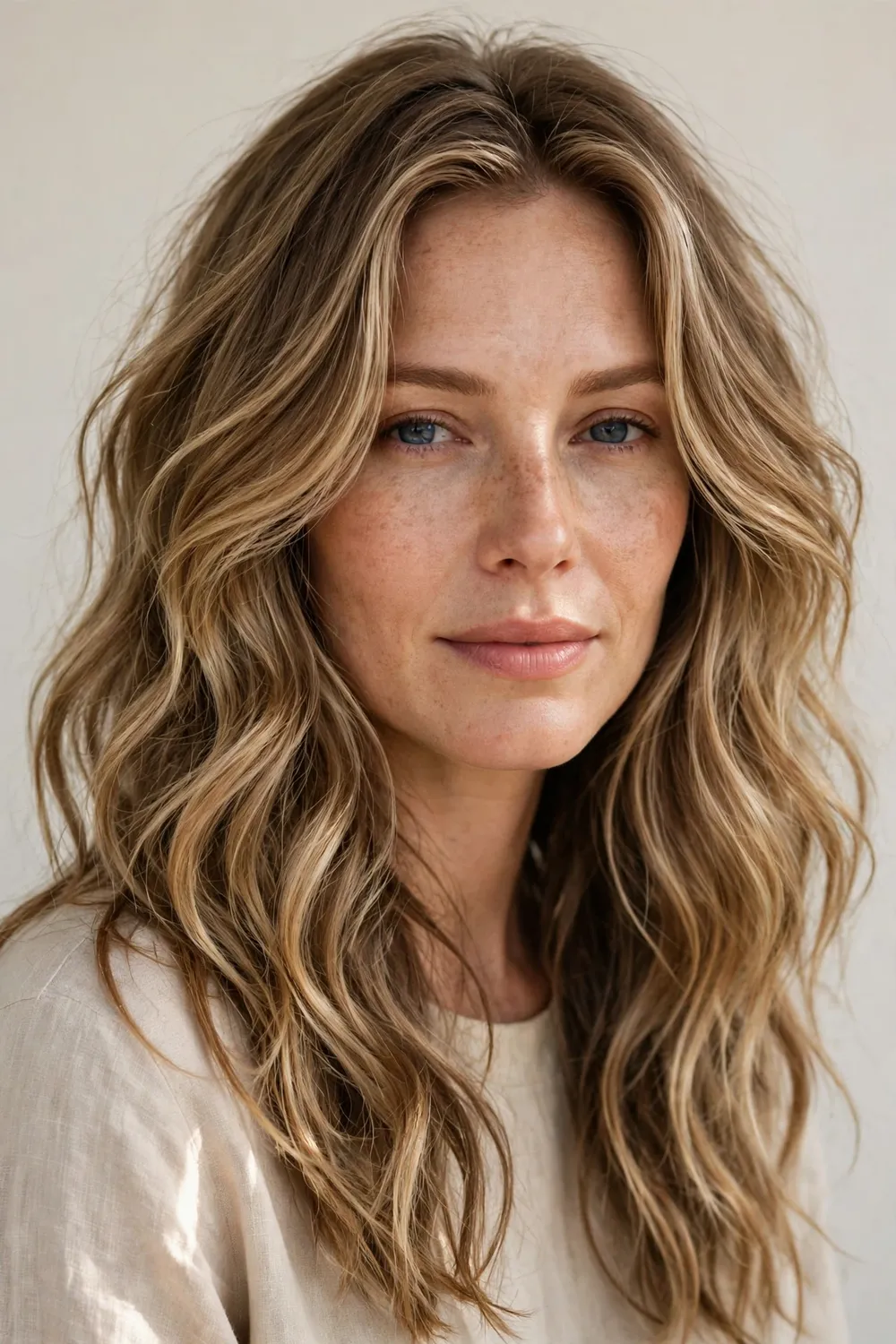
The best wavy hairstyles work with your natural texture instead of fighting it — soft bends, lived-in layers and a finish that still looks good on day two. Below you’ll find 33 styles that actually suit real waves, from beachy shoulder-length cuts to glossy old-Hollywood glam, each with honest notes on who it flatters and how much effort it really takes. If you just want the shortlist, start with Classic Beachy Waves for that effortless everyday look, Long Layered Wavy Hair if you’re growing your length out, and the Wavy Shag with Choppy Ends when you want movement with almost no styling. A hairstyle is only as good as how it fits your wave pattern, so read the quick picker first, then find your match.
How to Pick the Right Wavy Hairstyle for Your Hair
Your wave type decides more than your length does. Loose 2A waves sit close to straight and need texture and layers to hold a bend — blunt lobs, S-bend waves and salt-spray finishes suit them best, because too much weight pulls the wave flat. Classic 2B waves have a clear S-shape from the mid-lengths down; they take most cuts happily, but long layers keep them from turning into a triangle. Defined 2C waves already have body and a bit of frizz, so the job is shaping, not creating: shaggy layers, face-framing pieces and a good leave-in do the heavy lifting.
Length works the same way. Short wavy hair — pixie to jaw — shows off the wave pattern fast and dries quickly, but it needs regular trims to keep its shape. Medium lengths, roughly collarbone to shoulder, are the easiest to style and the most forgiving; most of the styles in this guide live here. Long wavy hair gives you the most options, from long layered looks to braids and half-up styles, yet it needs more product and a little patience at the ends. If you love dramatic layers, the butterfly cut is worth a look too — its short top layers flip and flow with a natural wave beautifully.
The 33 Best Wavy Hairstyles
1. Center-Part Waves with Face-Framing Layers

A clean middle part with soft waves that bend around the jaw — the face-framing pieces are cut a touch shorter and lighter. It suits 2A to 2B waves best, especially on oval, heart and long face shapes, and works on fine to medium thickness; very thick hair needs the layers thinned or the pieces get bulky. Ask your stylist for a center part, long layers through the back and face-framing pieces starting at the cheekbone, blended into the waves. Finish with a pea-sized amount of lightweight cream on damp hair, then diffuse or air-dry. Maintenance is honest and low: a trim every eight to ten weeks keeps the layers from going stringy, and a quick pass with a 32mm wand revives the front pieces on day two.
2. Deep Side-Part Glam Waves
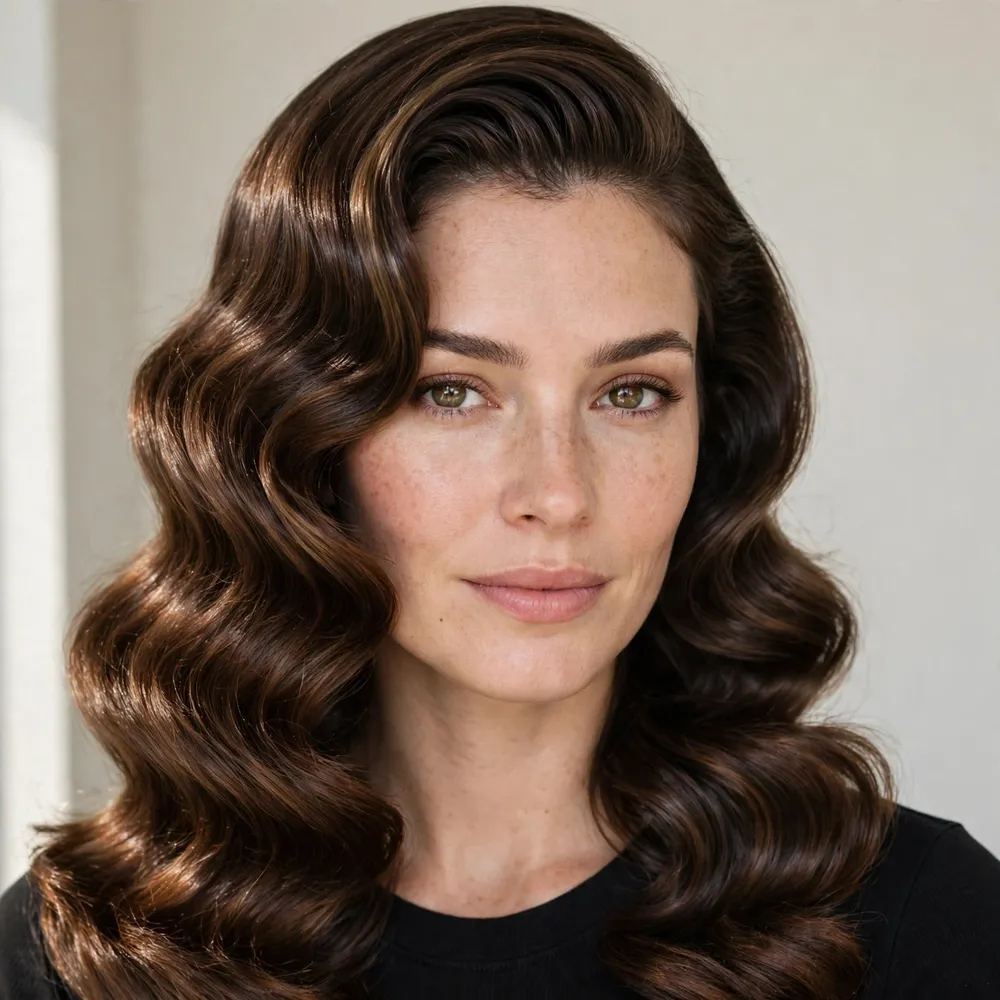
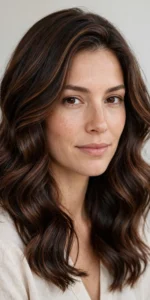
A deep side part throws most of the hair to one side, where broad, glossy waves sweep across the face. This one flatters 2B and 2C waves with medium to thick hair, and it balances round and square faces beautifully because the diagonal line breaks up the width. Ask for a deep side part (roughly above the outer brow), long layers that keep weight at the ends, and no short layers near the crown, which would puff up. Style with a 38mm barrel, curling every section in the same direction, then brush the waves out with a paddle brush and mist with a flexible-hold spray. It takes about twenty minutes to style properly, so save it for nights out — with a silk pillowcase it holds well overnight.
3. Tousled Beach Waves with Shadowed Roots

Loose, beachy texture with darker roots running through the top — the shadow gives the waves depth and makes regrowth almost invisible. It works on every wave type from 2A to 2C and suits fine to medium hair especially well, since the root shadow creates the illusion of thickness. Round and heart-shaped faces benefit from the volume at the sides, while longer faces should keep the waves wide rather than tall. Ask your colourist for a root shadow two shades darker than your ends and your stylist for long, choppy layers; the cut matters less than the colour here. Scrunch salt spray into damp hair and diffuse on low. A root touch-up every ten to twelve weeks is enough, and the grow-out is the point.
4. Half-Up Twist with Loose Waves

The top third is twisted back and pinned, while the bottom stays loose and wavy — polished at the front, effortless at the back. It suits 2A and 2B waves on medium to long hair, and flatters every face shape — the twist lifts hair off the forehead without pulling everything back. Ask your stylist for long layers that keep the ends light, so the loose half moves instead of hanging flat. To style, wave the lengths with a wand or scrunch in texturising spray, then take two sections from above the temples, twist them toward the back and pin them with a couple of bobby pins. It takes five minutes once the waves are in and lasts all day. Refresh the next morning by re-twisting just the top.
5. Curtain Bang Waves

Curtain bangs split down the middle and curve into loose waves just below the chin — a fringe that behaves like a feature, not a chore. They suit 2A to 2C waves and are kind to oval, heart and square faces, softening a strong jawline. Fine hair works well — the bangs add fullness up front; very thick hair needs them thinned. Ask for curtain bangs cut to cheekbone length with the shortest point at the center parting, blended into face-framing layers. Blow-dry them forward with a round brush, then flick the ends outward — or let them air-dry with a dab of cream. They grow out gracefully, so trims can stretch to eight weeks, but they need a quick daily touch to stop them separating oddly.
6. Blunt Lob with S-Bend Waves
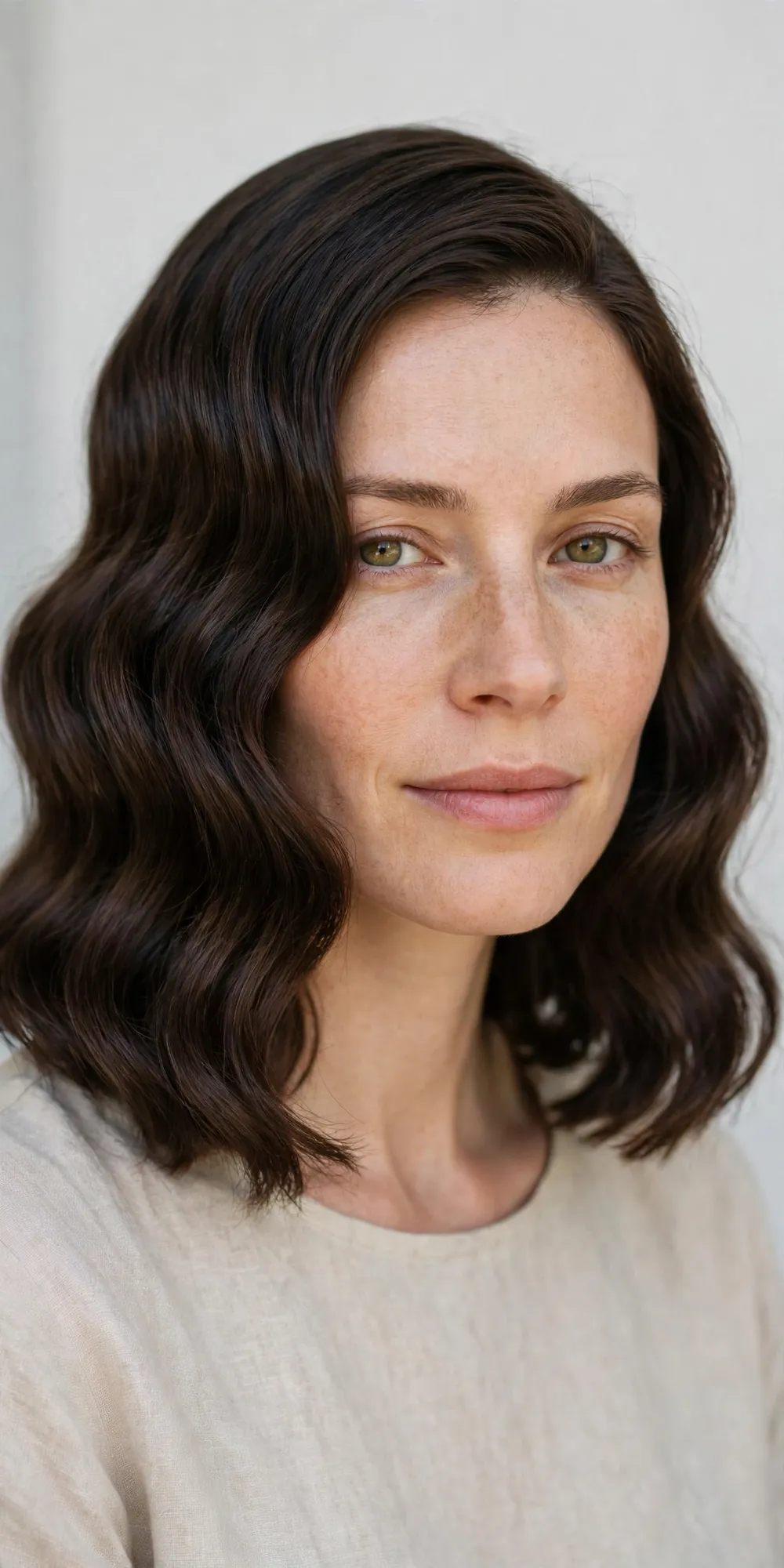
A blunt collarbone-length lob, softened by smooth S-bend waves through the mid-lengths — structure at the ends, movement everywhere else. This is one of the best cuts for 2A waves and fine hair: the blunt baseline makes the ends look thick, while the S-bends stop it looking flat or severe. It suits oval, round and heart faces, and it’s a strong choice if your waves disappear in longer cuts. Ask for a one-length lob hitting the collarbone, no layers in the back, front pieces softened. Style with a flat iron, bending alternate sections in opposite directions to build the S-shape, then brush through and add a drop of shine serum. A trim every six to eight weeks keeps the blunt edge honest, and it air-dries well if you scrunch in a little mousse.
7. Messy Claw-Clip Waves
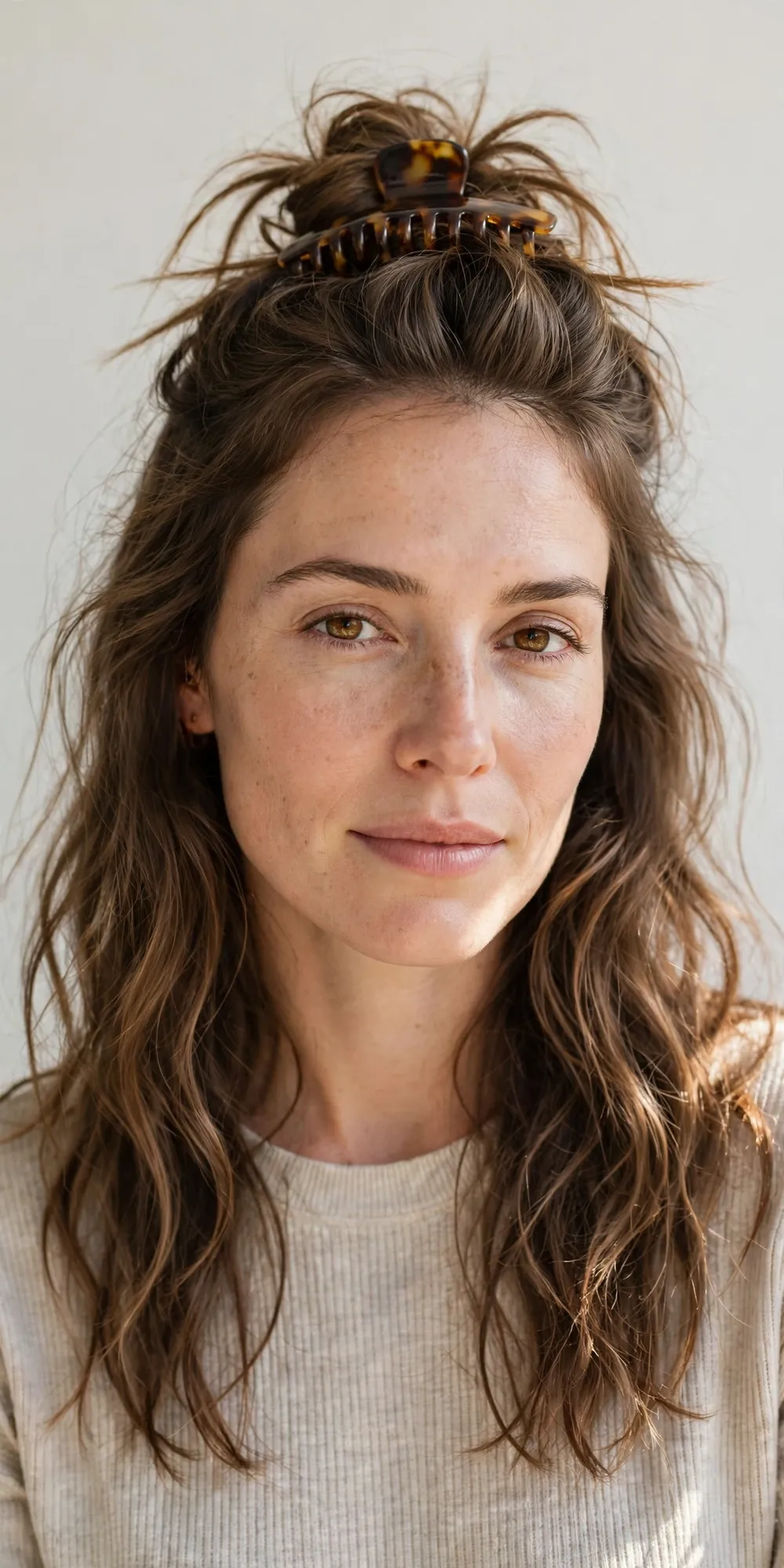
The lower half stays loose and wavy while the top is twisted up with a claw clip — the five-minute style that looks like you tried much harder. It works on 2A to 2C waves, medium to long hair, and every face shape — the loose pieces around the face do the flattering work while the clip keeps the bulk away. Ask for long layers with a few shorter face-framing pieces — those fall out of the clip and frame your face. Gather the top half, twist once, fold up and clip, leaving the ends poking out. It takes under a minute and holds through a whole workday. The only real upkeep is a decent claw clip that grips thick hair — cheap clips slip and the whole thing unravels by lunch.
8. Barrel Waves with Gloss Finish
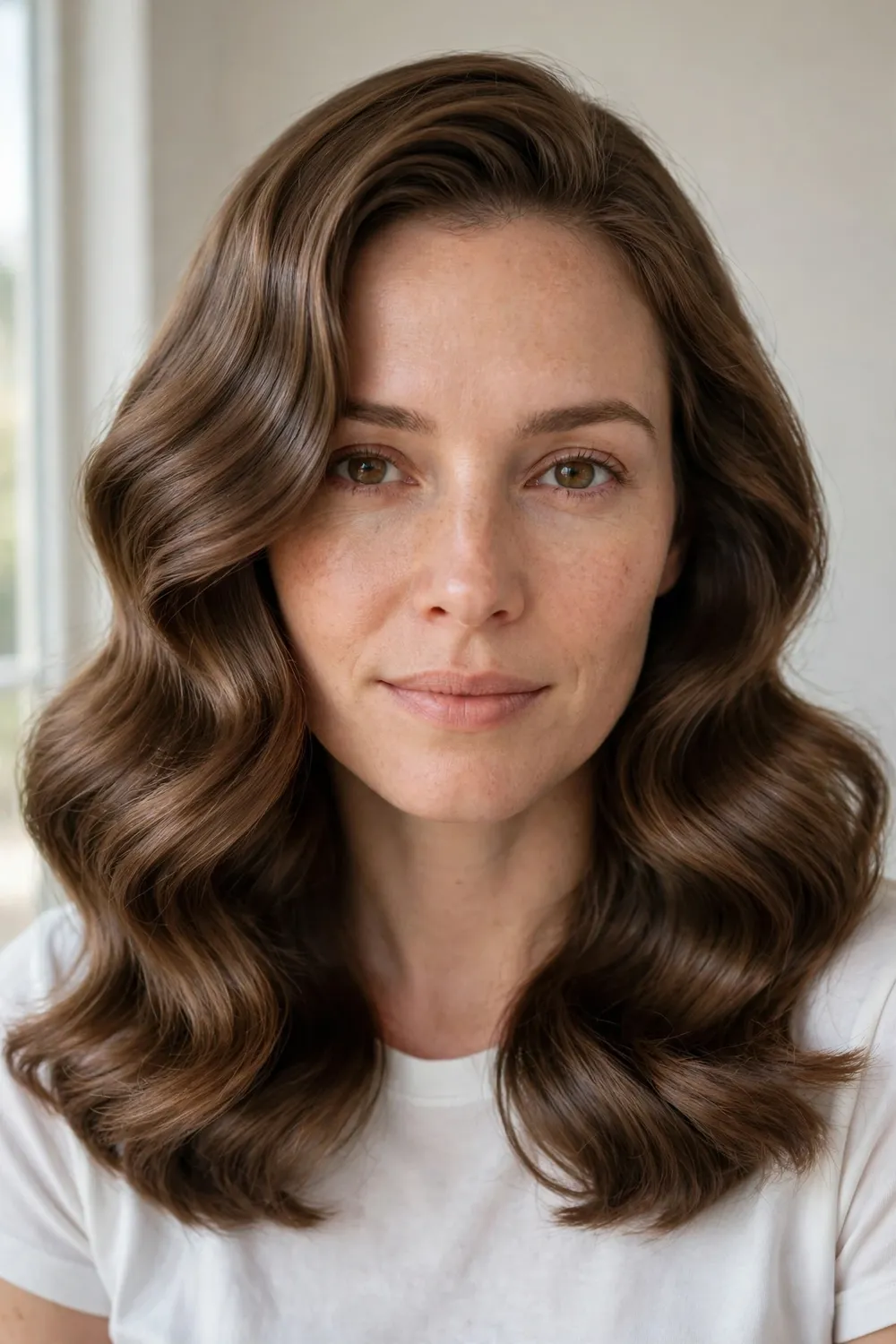
Round, smooth barrel waves brushed out until they shine — the polished cousin of beach waves. Best on 2B and 2C waves with medium to thick hair, and flattering on oval and long faces, where the width at the sides balances the length. Ask for long layers with no short pieces around the face, because broken-up layers fight the smooth finish. Style with a large-barrel curling iron, winding each section the same way, letting every curl cool in your palm, then brushing through with a boar-bristle brush and finishing with a gloss spray. It takes twenty to thirty minutes, so save it for occasions. The waves hold for two days if you wrap the hair loosely overnight.
9. Braided Crown Waves
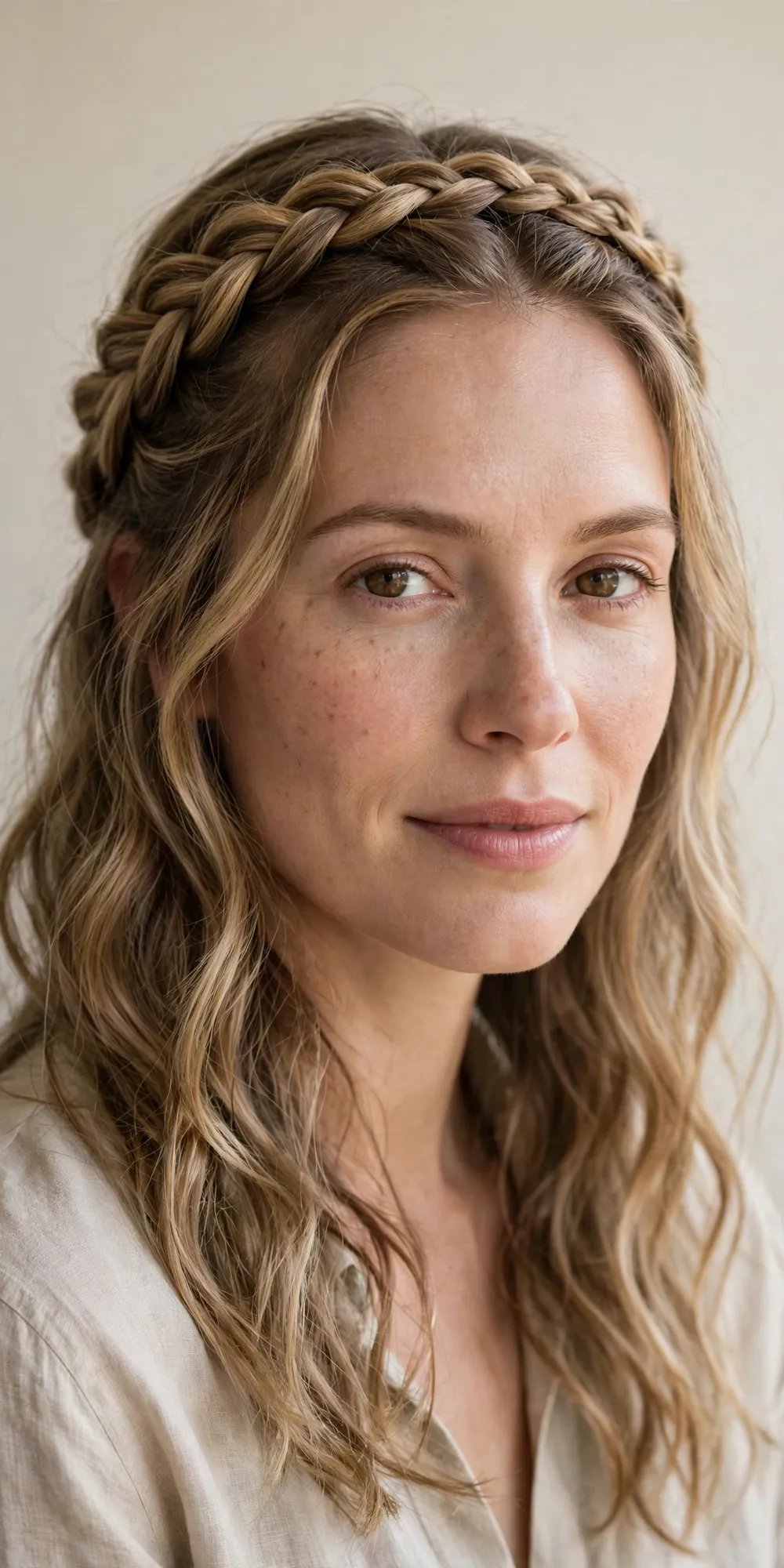
A braid crosses over the crown like a headband, with loose waves falling underneath — romantic without being wedding-only. It suits 2A to 2C waves on medium to long hair, and flatters round and heart-shaped faces because the braid adds height at the crown. Fine hair can manage it if you pancake the braid — gently pulling the loops wider — to fake fullness. Ask for long layers that keep the ends light, so the waves underneath move freely. To style, wave the lengths first, then braid a section from behind one ear across the crown to the other side and pin it in place. It takes about ten minutes once you’ve done it a few times, and the braid holds all day.
10. Wavy Shag with Choppy Ends

Shaggy layers and choppy ends give waves airy, piecey movement — the cut does the styling. It suits 2B and 2C waves best, especially thick hair that needs weight removed, and it flatters oval, heart and square faces by breaking up strong lines. Fine hair can work too if the layers stay long; too much chopping thins it out. Ask your stylist for a shag with layers starting at the cheekbone, choppy (not blunt) ends, and internal texture through the crown so the waves separate instead of clumping. Style by scrunching a light mousse into damp hair and diffusing — or just air-drying. Maintenance is low: the grow-out looks intentional, so trims can stretch to ten or twelve weeks, and second-day hair often looks better than freshly washed.
11. Waterfall Braid Waves

A waterfall braid runs across the back of the head, dropping strands as it goes, with loose wavy lengths below — the braid is the decoration, the waves are the main event. It works on 2B and 2C waves, medium to long hair, and suits oval and heart faces; the braid adds interest at the back without pulling the front flat. Ask for long layers so the dropped strands fall cleanly and the waves read clearly. To style, wave the hair first, then build the waterfall braid from one side, letting a strand drop with each pass and picking up a new one behind it. It takes ten to fifteen minutes and a mirror, or a friend for the back section. It holds well all day, and the braid disguises day-two roots nicely.
12. Low Half Ponytail Waves
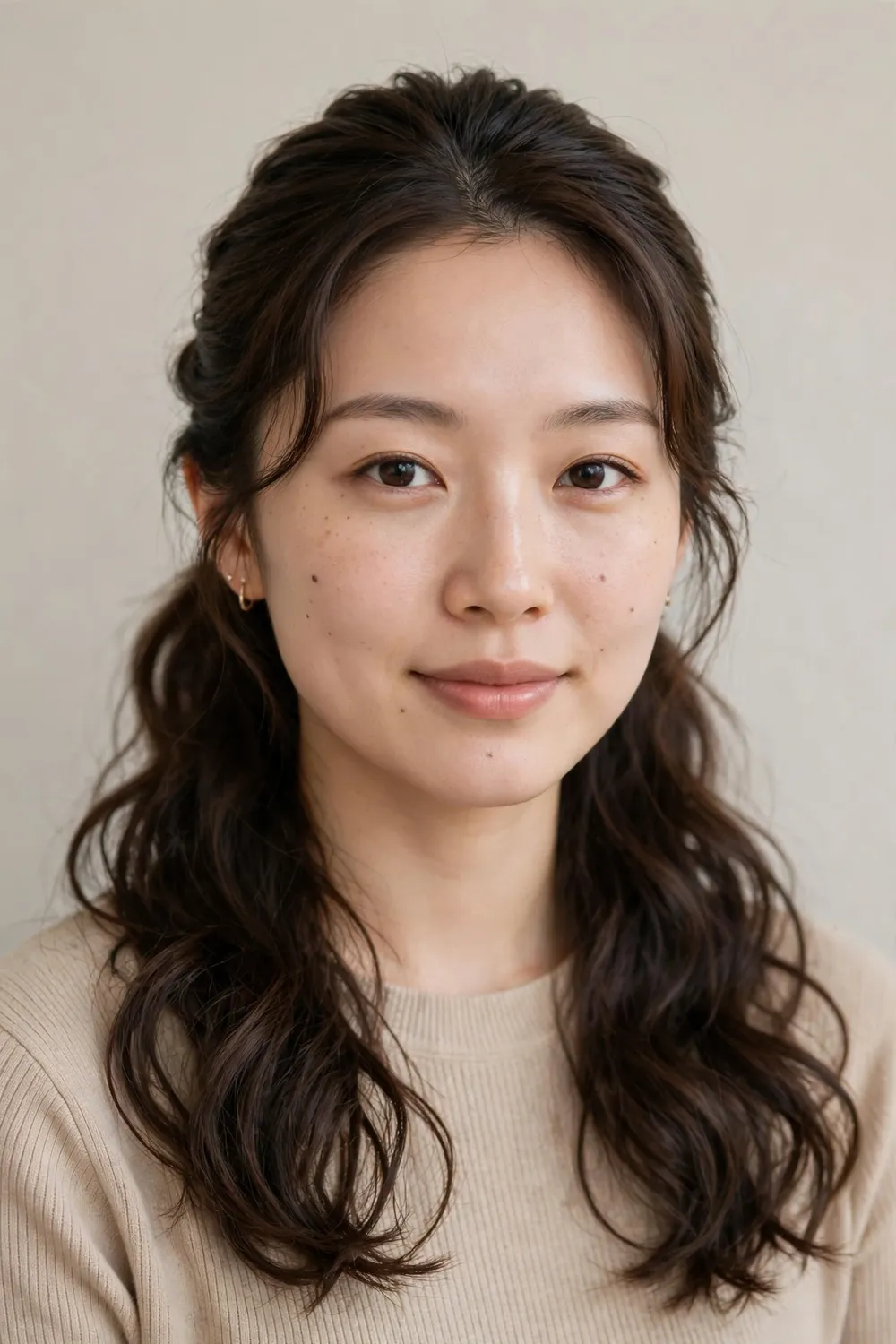
The top half is pulled back low at the nape while the lower half stays soft and wavy — tidy from the front, relaxed behind. It suits 2A to 2C waves on medium to long hair and flatters most face shapes — the low placement keeps it gentle, not severe. Ask for long layers with face-framing pieces left out at the front; those loose strands are what keep it soft. To wear it, gather the hair from above the ears, secure it low with a covered elastic, then tug a few pieces loose around the face and scrunch the waves underneath. Two minutes, tops, and it stays put all day. It’s a good second-day style too — the ponytail hides flat roots. Wrap a small strand around the elastic for a cleaner finish.
13. Retro Flip-End Waves

An outward flick at the ends gives a lob a retro edge — a nod to the sixties. It works on 2A and 2B waves, short to medium hair, and suits oval and heart faces — the flip adds width at the jaw, balancing a narrow chin. Ask for a lob or bob with blunt ends and light layers only at the front, because too many layers break up the flip. Style by blow-drying the ends outward with a round brush, or running a flat iron down each section and flicking it out at the last inch. A light-hold spray keeps the flick alive without stiffening it. A trim every six to eight weeks keeps the ends sharp, but the flip needs restyling each morning — two minutes with a brush.
14. Piecey Waves with Micro Highlights
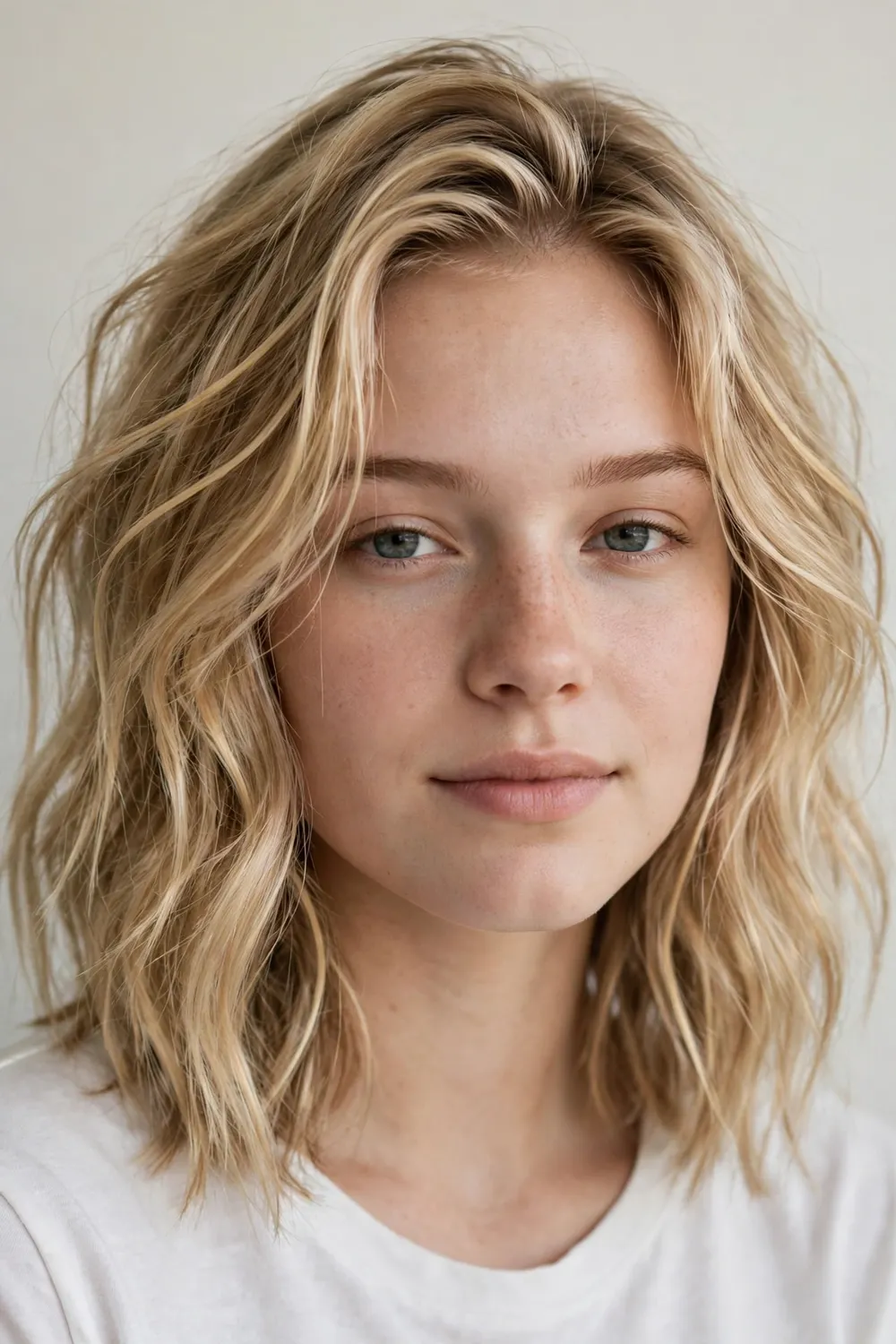
Soft, separated waves with thin highlight ribbons running through — the highlights catch the light and make each wave visible. This suits 2A to 2C waves on medium to long hair, and it’s especially good for fine hair, since the dimension makes it look thicker. Oval and round faces both benefit from the movement around the cheekbones. Ask your colourist for micro highlights — fine, closely spaced ribbons, two shades lighter than your base — and your stylist for long layers that let the pieces separate. Style with a salt spray or light texturising cream, scrunching to encourage the pieces to stay apart. A highlight refresh every eight to ten weeks is enough — the fine placement grows out softly — and purple shampoo keeps the ribbons from going brassy.
15. Dimensional Waves with Lowlights
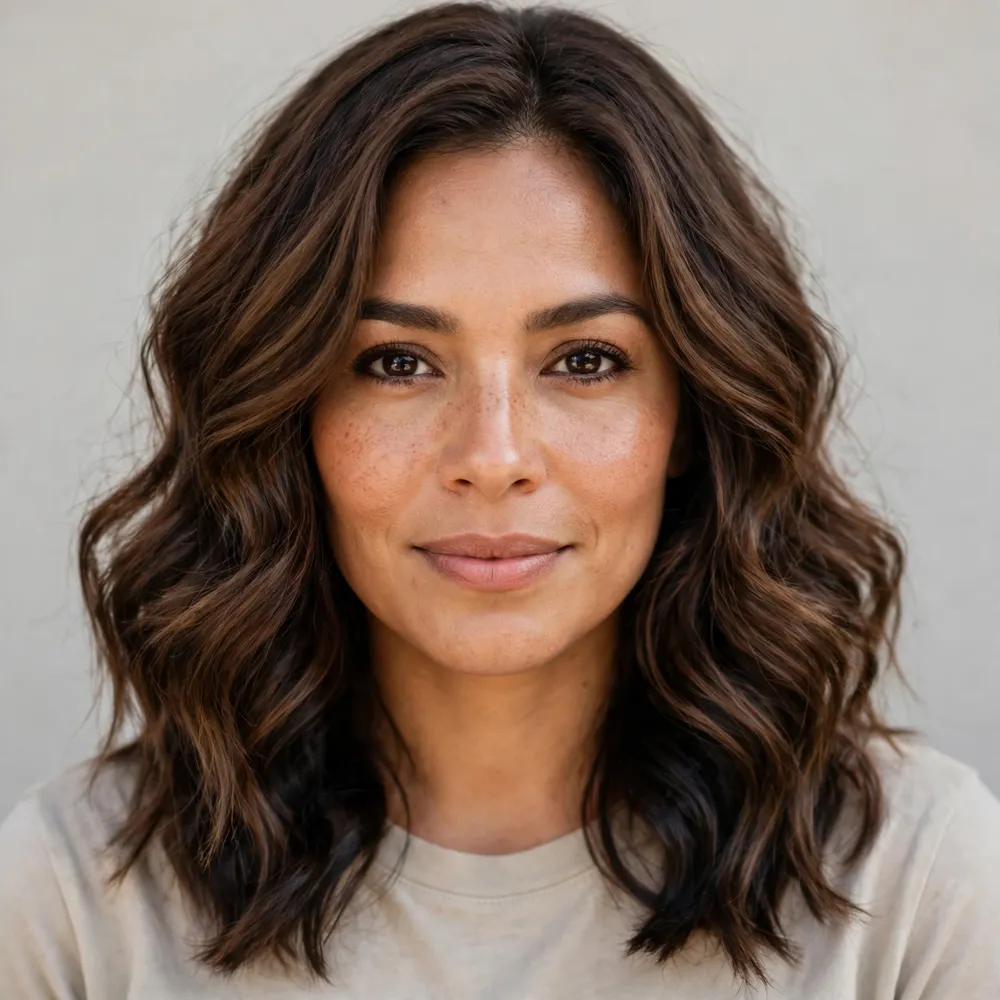
Loose, brushed-out waves with deeper lowlights underneath — the darker pieces make the lighter waves on top look brighter by contrast. It suits 2B and 2C waves with medium to thick hair, and flatters oval and long faces, where the depth at the sides adds balance. Ask your colourist for lowlights two shades darker than your base, placed through the underneath layers, and your stylist for long, soft layers that let the colour show as the waves move. Style by curling with a large barrel and brushing the waves out gently, then finishing with a shine spray. Lowlights grow out with almost no visible line, so twelve weeks between colour appointments is fine, and colour-safe shampoo keeps the depth from fading.
16. Old Hollywood Side-Swept Waves
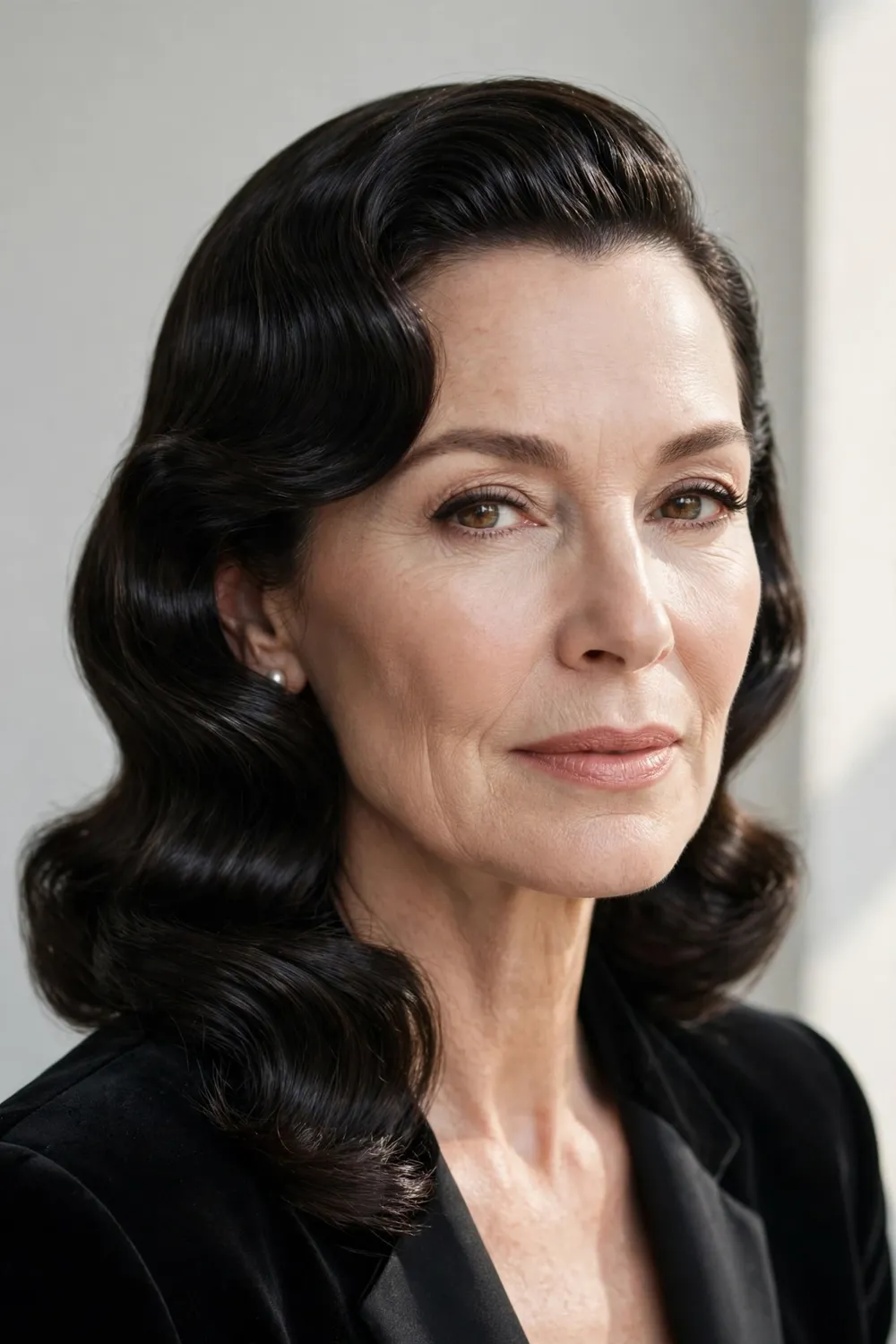
Smooth, deep waves brushed to one side — glossy, dramatic, the closest thing to a red-carpet style in this guide. It suits 2B and 2C waves with medium to thick hair, and flatters oval, heart and long faces; the asymmetry is kind to strong jawlines. Ask for long layers with the shortest layer no higher than the chin, so the waves stay heavy and smooth instead of breaking up. Style with a 32mm barrel, curling everything in the same direction, pinning each curl to cool, then brushing through and setting with a strong-hold spray. It takes thirty minutes, so reserve it for events. It holds beautifully overnight wrapped in a silk scarf, and dry shampoo at the roots on day two keeps the volume alive.
17. Textured Lob with Root Smudge

A textured lob with a soft root smudge — darker roots blended down a few inches, matte at the top, wavy through the lengths. The smudge hides regrowth, the texture hides frizz, and the length works on nearly everyone. Best on 2A to 2C waves, fine to medium hair, and flattering on oval, round and heart faces. Ask for a textured lob hitting just above the collarbone, with a root smudge one to two shades darker than your ends blended about two inches down. Style with a texturising spray scrunched into damp hair, then air-dry or diffuse — the matte finish is the point, so skip the shine serum. A smudge touch-up every ten to twelve weeks, a trim every eight, and the style genuinely improves on day two.
18. Air-Dried Salt-Spray Waves
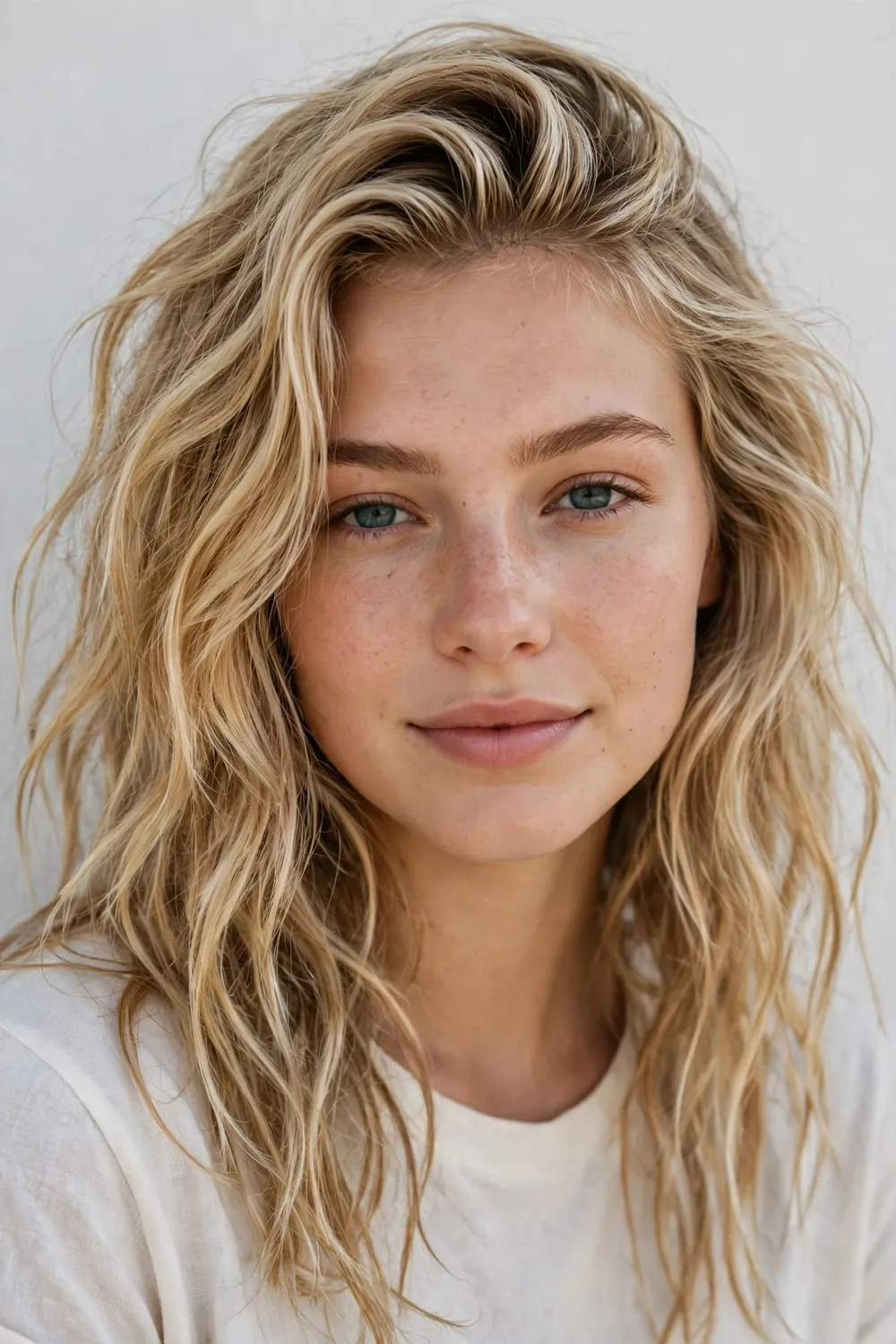
This is the zero-effort end of the spectrum: your own wave pattern, woken up with a bit of salt spray and left alone to dry. It suits 2A and 2B hair best, because looser waves hold their shape without heat, and it flatters oval and round faces, where the texture adds width. Ask your stylist for nothing more than long, soft layers to stop the ends going stringy. Towel-dry, mist salt spray through the mid-lengths and ends, scrunch once, then don’t touch it until it’s dry — that last part is doing most of the work. Maintenance is almost nothing. The catch is humidity: on a damp day the waves can collapse into frizz, so keep a travel-size texturising spray in your bag.
19. Wavy Bob-Lob with Tucked Side

A bob-lob that sits between the jaw and the collarbone, with one side tucked behind the ear and the other left to wave freely. The asymmetry is what makes it — it shows off your jawline and stops the cut looking boxy, which is the usual risk at this length. It suits 2A and 2B waves, thick or medium hair, and oval, square and heart-shaped faces. Ask for a blunt-ish base with light internal layering so the waves move, and slight graduation so the tucked side stays put without pins. Style it with a one-inch wand on the outer sections only, then tuck the shorter side behind the ear and let it settle. Upkeep is a trim every six weeks to hold the line.
20. Twisted Front Pieces with Open Lengths

Two front pieces, twisted back from the temples and pinned out of the way, while the rest of the hair stays loose and wavy. It’s a five-minute fix for that awkward stage when your fringe is growing out. It works on any wave type, any length from shoulder down, and every face shape — the twist lifts the face open without pulling everything back. Ask your stylist for face-framing layers around the temples, since short pieces twist more easily and the ends stay tidy. To style it, take a two-inch section from each temple, twist away from the face and pin at the back, then leave the lengths alone. Maintenance is minimal; the only job is keeping those front pieces healthy, because dry ends unravel.
21. Glam Middle-Part Waves
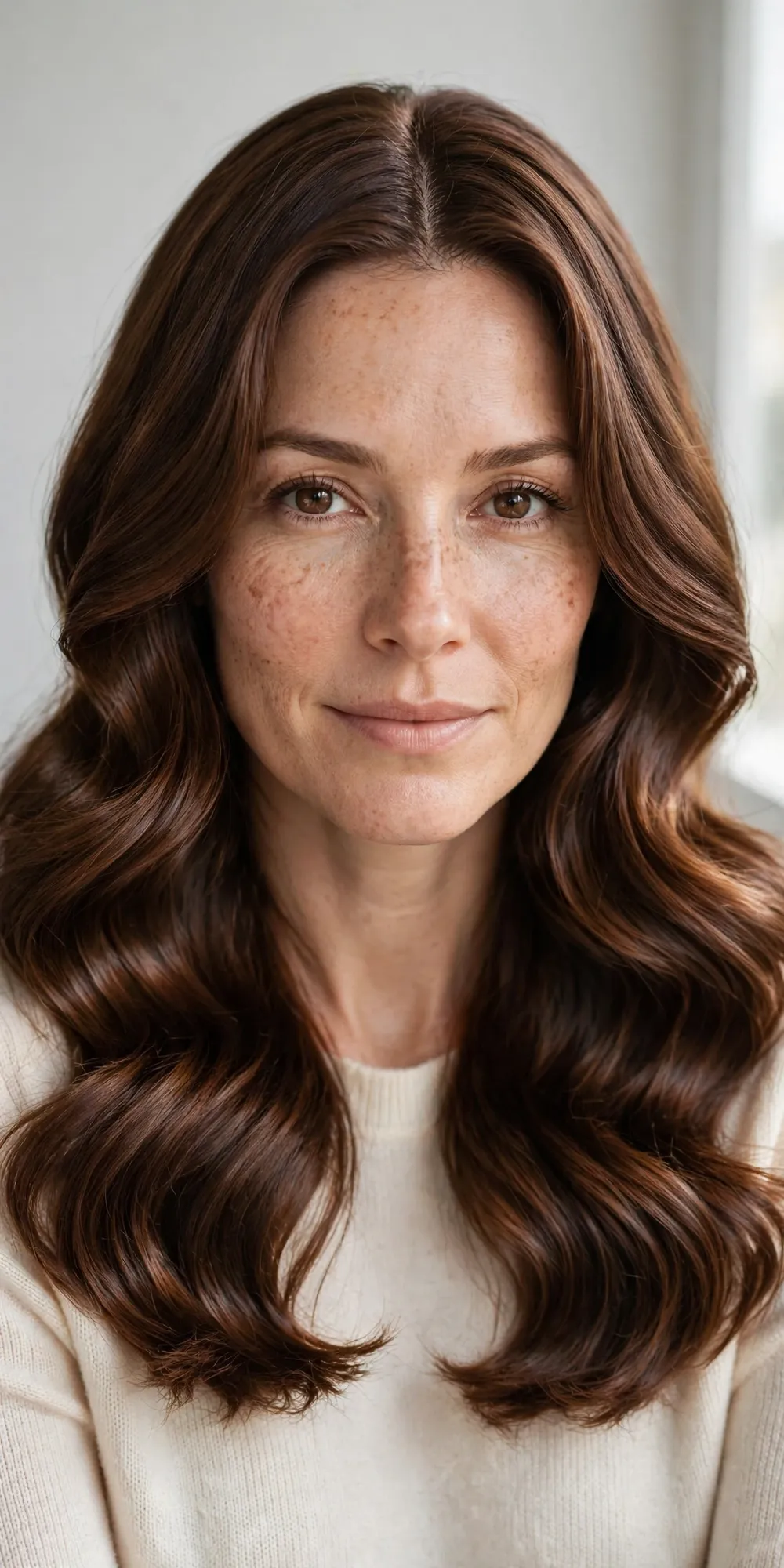
A middle part with big, clean, glossy waves running through the mid-lengths — the polished cousin of beach waves, and the one to choose when you want the waves to look intentional rather than accidental. It suits 2B and 2C hair, thick or medium thickness, and oval and oblong faces, where the symmetry balances the length. Ask for long layers cut so the waves fall in one continuous line, with no short layers breaking the gloss. Wrap sections around a 32mm barrel, always away from the face, then let them cool completely before brushing out with a paddle brush for that smooth, expensive finish. It takes twenty minutes to style, and it needs a heat protectant every single time — this is not a forgiving look for skipped prep.
22. Scarf-Accessorized Waves

Loose waves finished with a silk scarf — tied at the nape, folded into a headband, or looped through a low ponytail. The scarf does two jobs at once: it covers a flat crown or a skipped wash, and it turns an ordinary wave into something that looks styled on purpose. It suits every wave type and length, and it’s especially kind to fine hair, where a slim scarf adds interest. Ask your stylist for soft layers so the waves sit under the scarf without puffing out at the sides. Style the waves first, loosely, then place the scarf once the hair is cool — heat and silk don’t mix well. It’s one of the easy everyday hairstyles you can do on second-day hair.
23. U-Layer Cascading Waves
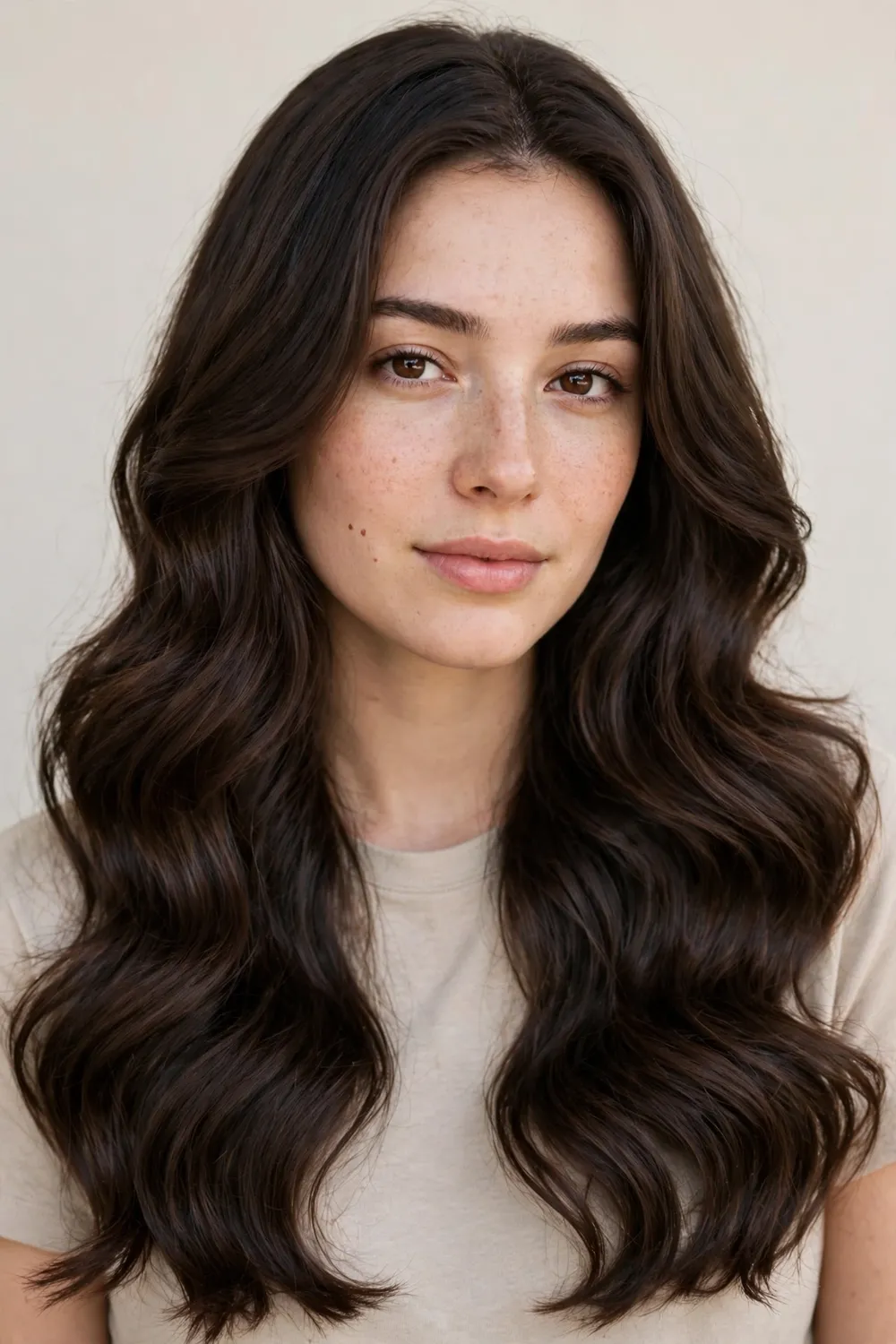
U-shaped layers cut so the waves fall in a soft, cascading curve — shorter at the front, longest at the back. It’s the best cut for anyone with long 2A or 2B waves who is tired of their hair looking triangular, because the U-shape takes weight out of the bottom without touching the length. It suits oval and round faces and medium to thick hair, where the layers have something to work with. Ask for the U to start at the collarbone and keep the shortest layer no higher than your chin. Style with a wide-barrel wand on the ends only, brushing out for a continuous fall. Maintenance is a trim every eight to ten weeks, and it grows out gracefully — the shape holds for months.
24. Romantic Crown-Volume Waves

A gentle lift at the crown with soft, romantic waves falling below — the sort of hair that suits a wedding guest list, a date night, or any day you want to look like you made an effort without looking overdone. It suits 2A and 2B waves, fine to medium hair, and round and heart-shaped faces, where the height balances the width. Ask for long layers with a little invisible layering at the crown so the lift has something to grip. Backcomb the crown lightly, smooth the surface with a brush, then wave the lengths with a medium barrel and let them cool before touching. Maintenance is moderate: the crown needs restyling most mornings. Keep dry shampoo nearby — it lifts flat roots in thirty seconds.
25. Sleek-Top Mermaid Lob
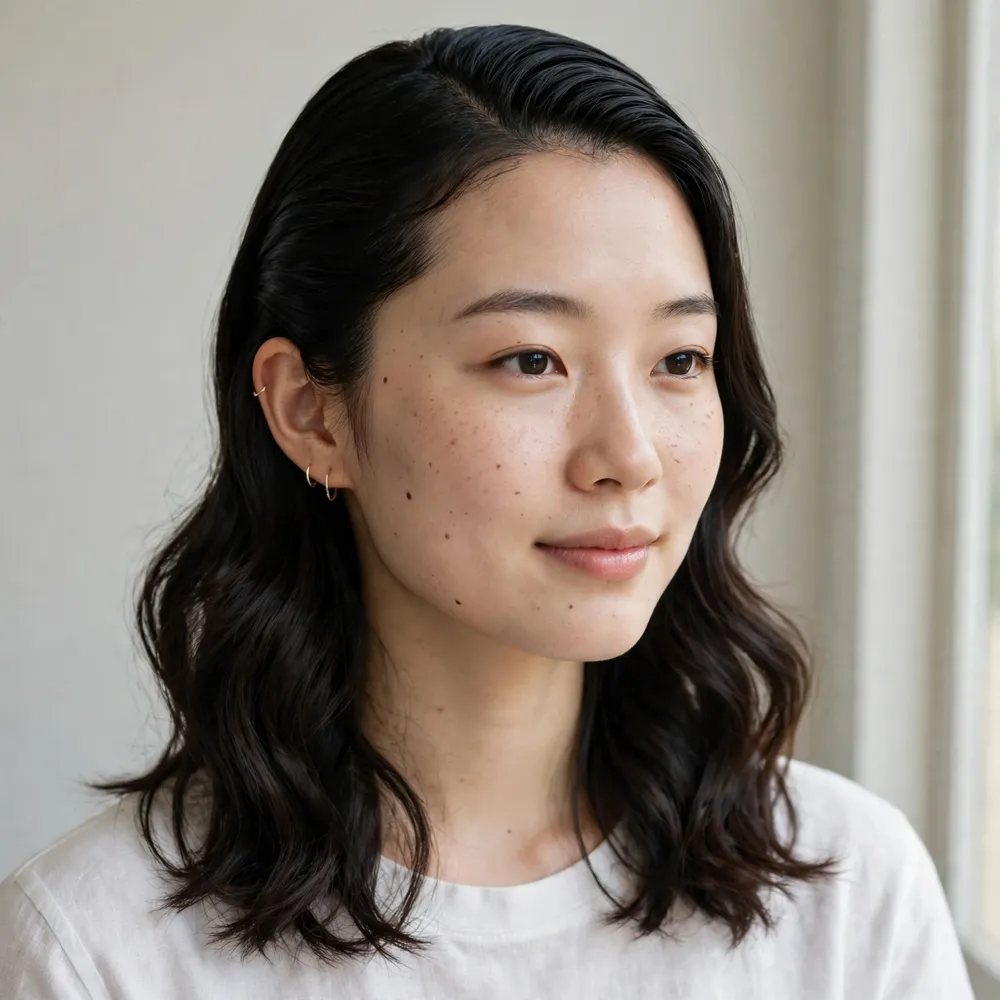
A smooth, sleek crown with waves beginning at ear level and flowing through loose lengths — half polished, half mermaid, and the contrast is the whole point. It suits 2B and 2C hair, medium to thick thickness, and oval and square faces, where the smooth top slims the face and the waves add width lower down. Ask for a lob with long layers and a clean, straight base, so the transition from sleek to wavy looks deliberate rather than grown out. Blow-dry the crown smooth with a round brush, then wave only from the ears down with a large barrel and brush through for softness. Maintenance is a little fiddly: the crown needs a quick pass with the straightener on second-day hair.
26. Classic Beachy Waves
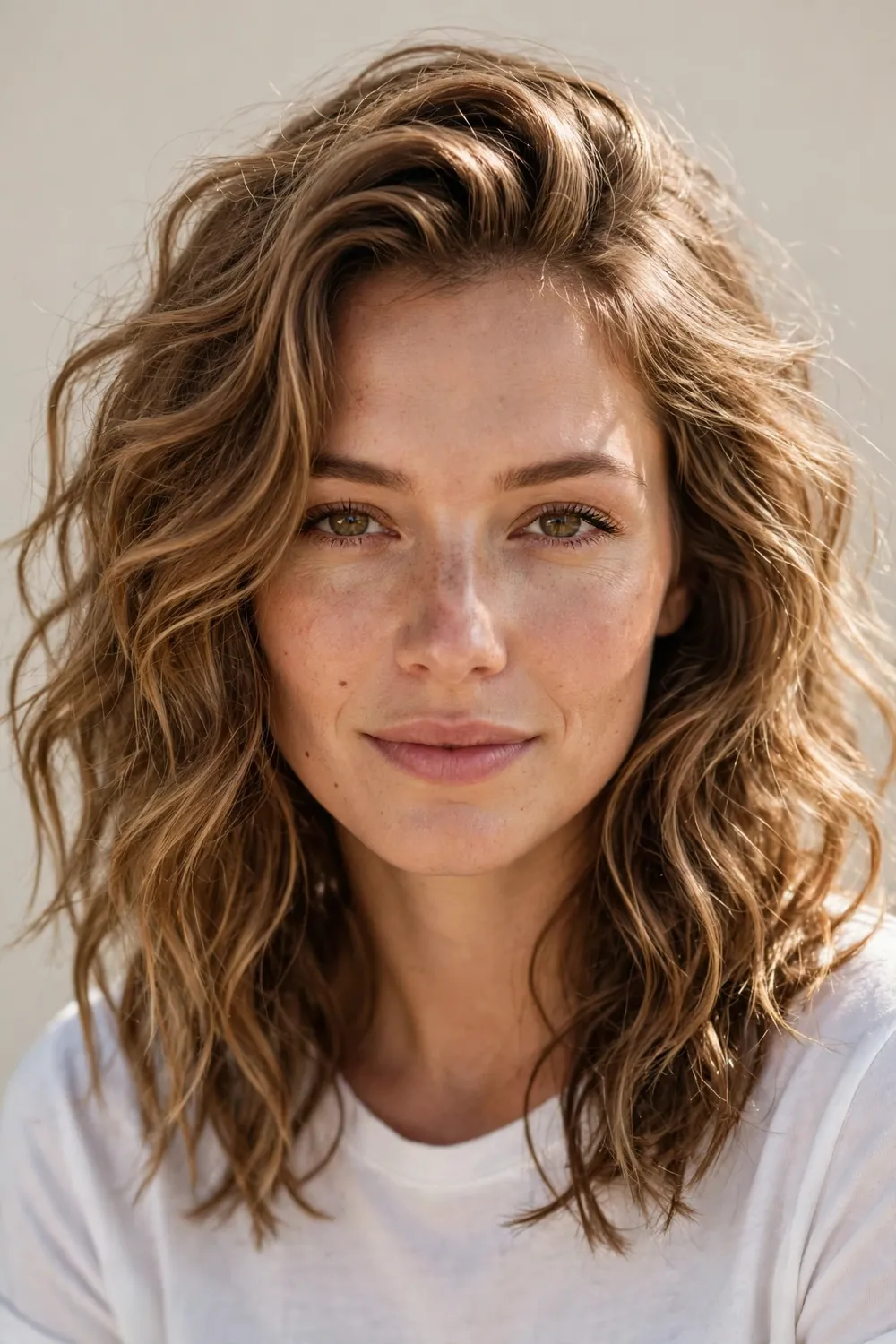
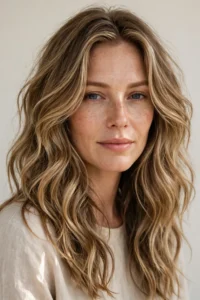
The one everyone pictures when they hear “wavy hair”: loose, tousled, sun-kissed waves that look like you spent the day at the coast. They suit almost everyone — 2A, 2B and even 2C hair, all face shapes, and fine to thick thickness — because the looseness is forgiving and the imperfection is the style. Ask for long layers and, if your hair is dark, a few sun-kissed pieces or balayage colour to catch the light. Wrap sections around a 32mm wand, alternate the direction, leave the last inch straight, then shake them out and scrunch in a texture spray. Maintenance is low on day one, but the waves need a refresh: a spritz of salt spray and a scrunch brings them back on day two.
27. Long Layered Wavy Hair
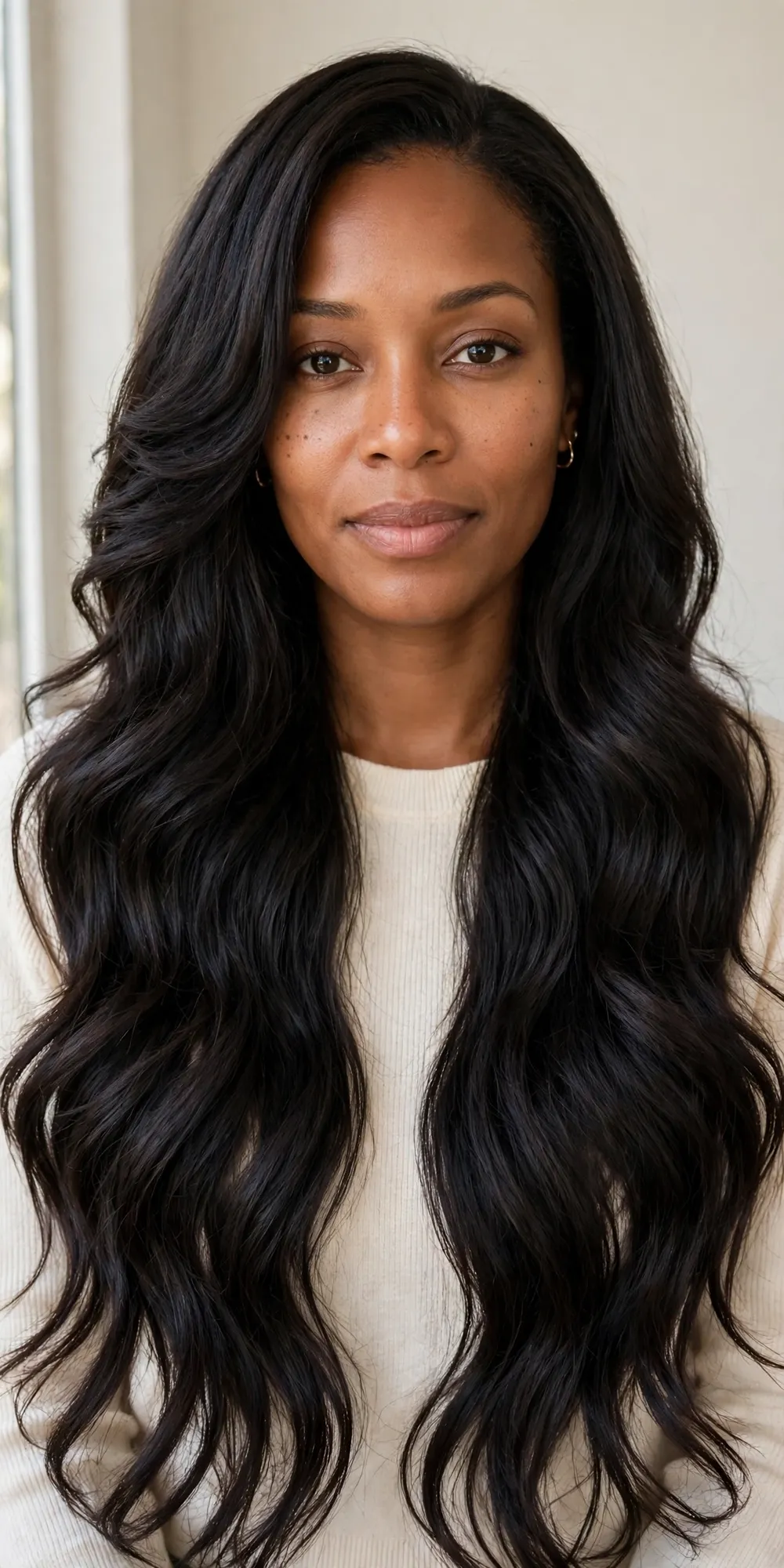
Long layers that follow the natural S-shape of your waves instead of fighting them — the cut that lets length and texture work together rather than one cancelling out the other. It suits 2A, 2B and 2C hair, thick or medium thickness, and every face shape, because the layers can be placed wherever you need them: higher for round faces, lower for long ones. Ask for long, blended layers starting at the collarbone, with the front pieces slightly shorter to frame the face. Style it by scrunching curl cream into damp hair and diffusing on low heat, or by wanding a few face-framing sections while the rest air-dries. Maintenance is a trim every ten weeks and honest conditioning — long wavy hair shows damage faster than any other length.
28. Wavy Pixie Cut

A short, cropped pixie with soft waves left on top for texture — proof that wavy hair doesn’t need length to look good. The waves stop the pixie from looking severe and give it movement that straight hair can’t manage at this length. It suits 2B and 2C hair best, since defined waves hold their shape when short, and it flatters oval, heart and square faces. Ask for a textured top with length left through the crown, tapered sides, and point-cut ends so the waves sit naturally instead of puffing out. Style with a pea-sized amount of pomade or texture paste, scrunched through damp hair and left to dry. Maintenance is a trim every four weeks — pixies grow out fast and the shape disappears.
29. Wavy Wolf Cut

The edgy wolf cut: shaggy layers, a short crown, and voluminous wavy texture that leans into mess rather than away from it. It’s the loudest cut on this list, and it works because wavy hair gives it the volume and movement the style needs — straight hair falls flat and curly hair goes too big. It suits 2B and 2C waves, thick hair, and oval and heart-shaped faces. Ask for heavy layers through the crown, a curtain-style fringe, and texturised ends — and be clear about how short you want the top, because that’s the part that scares people at the reveal. Style with a diffuser and a texture spray, scrunching upwards, and let it dry wild. Maintenance is moderate: a trim every six weeks keeps the layers sharp.
30. Butterfly Cut Wavy Hair
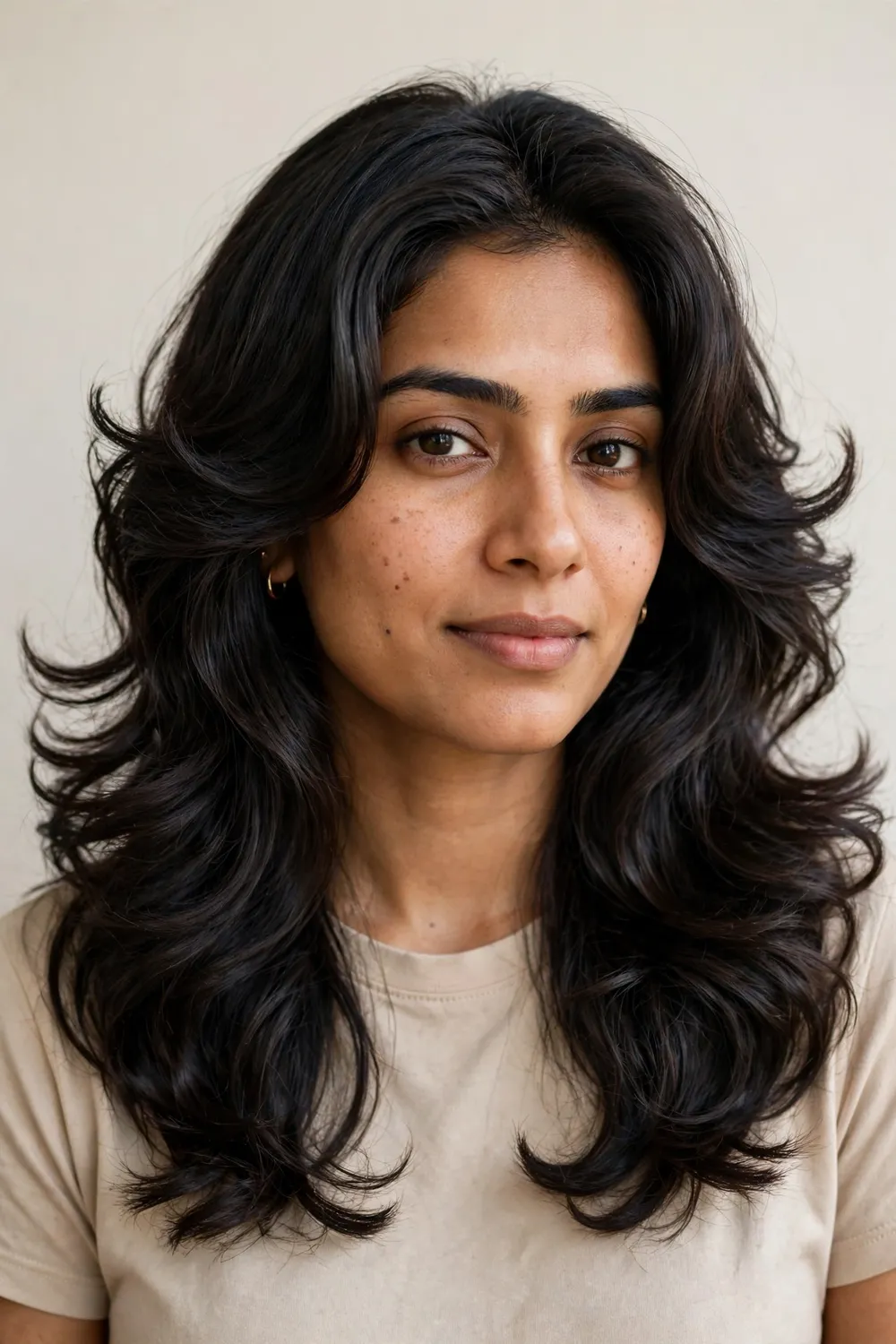
The butterfly cut — long layers that flip and flow with the wave pattern, giving you the look of short, bouncy hair from the front and full length from the back. It’s the cut for people who want movement without losing length, and wavy hair suits it better than straight hair does, because the waves make the layers visible. It suits 2A and 2B hair, medium to thick thickness, and oval and round faces, where the face-framing layers slim the cheeks. Ask for short layers around the face starting at the chin, with the back layers kept long and blended. Blow-dry the face-framing pieces with a round brush, flicking them outwards, and let the rest air-dry or diffuse.
31. Heatless Overnight Waves

Waves made overnight with braids — zero heat, and you wake up styled. It suits every wave type, though 2A hair gets the most dramatic change, from nearly straight to properly wavy in one night. It works on all face shapes and hair lengths from shoulder down. There’s nothing to ask your stylist for, except maybe long layers so the braid waves fall evenly instead of bunching at the ends. Before bed, dampen the hair lightly, work in a little leave-in cream, and braid into two loose plaits — not tight, or the waves kink. Undo the braids in the morning and shake the waves out with your fingers. The only real downside is that the waves fade by evening.
32. 90s Blowout Waves
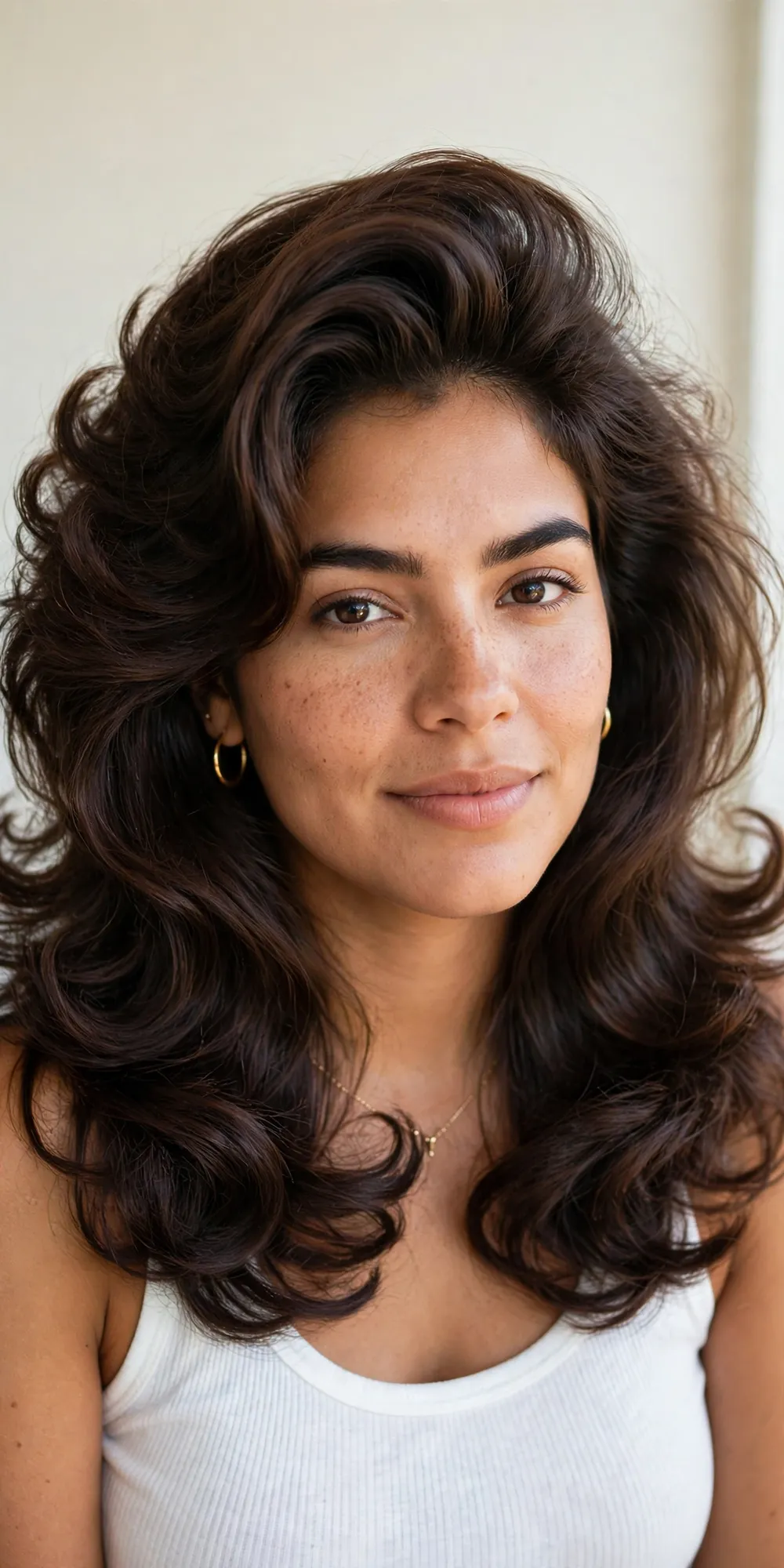
The bouncy 90s blowout: big volume, flipped ends, and waves that bounce when you move — the supermodel look that has come roaring back. It suits 2A and 2B hair, medium to thick thickness, and oval and oblong faces. Ask for long layers with a blow-dry-friendly shape — nothing too blunt at the ends, or the flip won’t hold. Blow-dry section by section with a large round brush, rolling the ends under and out, then set each section in a velcro roller while it cools. That cooling step is not optional; it’s what locks the bounce in. Maintenance is the styling time — twenty-five minutes, realistically — and it needs freshly washed hair, so it’s a special-occasion style rather than an everyday one.
33. Wavy High Ponytail with Volume

A high ponytail with a lifted crown and a full, wavy length — the one that makes your hair look longer and your face look lifted, all in about five minutes. It suits 2B and 2C waves best, because defined waves give the tail body, and it flatters oval, round and heart-shaped faces. Ask for long layers so the tail has movement instead of one heavy block, and keep the front pieces long enough to pull loose around the face. Gather the hair high, secure it with a covered band, then gently pull at the crown for height and wrap a strand around the band to hide it. Maintenance is almost nothing — but don’t wear it tight every day, or you’ll get breakage along the hairline.
How to Style Wavy Hair in 6 Steps
- Wash with a light touch. Use a sulfate-free shampoo and a lightweight conditioner, concentrating the conditioner on the mid-lengths and ends. Heavy products coat wavy hair and pull the pattern flat before you’ve even started.
- Work in a leave-in. On soaking-wet hair, rake a pea-to-coin-sized amount of leave-in conditioner or curl cream through the lengths. This is the step that keeps frizz down later — skipping it is the most common reason waves go fuzzy by midday.
- Scrunch, diffuse, or wand. Scrunch the hair upwards in sections to encourage the wave, then diffuse on low heat until about 80% dry, or let it air-dry. If your waves need help, wrap a few sections around a 32mm wand once the hair is dry.
- Let it cool. Don’t touch the waves while they’re warm. Heat sets the shape as it cools, so breaking them up too early is the same as not styling them at all.
- Brush out gently. Once cool, run a wide-tooth comb or your fingers through the waves to soften them. Never use a bristle brush on dry waves — it turns them into a cloud.
- Finish and seal. Scrunch in a drop of hair oil on the ends, mist a flexible-hold spray over the surface, and leave it alone. The less you touch wavy hair through the day, the longer it holds.
5 Wavy Hair Mistakes to Avoid
Brushing dry waves. A brush on dry wavy hair breaks the wave pattern into frizz. Detangle only when the hair is wet and coated in conditioner, with a wide-tooth comb, and leave the brush for blow-drying days.
Using too much product. Wavy hair needs less product than you think. A coin-sized amount of cream, a few sprays of salt spray — layering four products on top of each other weighs the waves down and makes them look greasy by afternoon.
Choosing the wrong barrel size. A barrel that’s too small gives you curls, not waves; too large and the wave drops out within the hour. For most wavy styles, 25–32mm is the sweet spot, and the ends should stay out of the barrel for that relaxed finish.
Skipping heat protectant. Every hot tool, every time, without exception. Wavy hair shows heat damage faster than straight hair because damaged ends break the wave pattern. A protectant spray takes ten seconds and saves months of growing out fried ends.
Over-washing. Washing every day strips the natural oils that help waves clump and hold. Two to three washes a week is plenty for most wavy hair, with dry shampoo and a refresh spray on the days between.
Frequently Asked Questions
How do I style wavy hair so it holds all day?
Style it in sections and let each one cool fully before you touch it — that’s the single biggest factor. Use a heat protectant, a light-hold mousse or curl cream on damp hair, and a flexible-hold spray once the waves are set. Avoid touching your hair through the day, and if the waves start to drop, a quick scrunch with a pea-sized amount of cream brings them back without a full restyle.
What is the best haircut for wavy hair?
Long layers are the safest all-round choice, because they let the wave pattern show without adding bulk. For shorter hair, a textured lob or a wavy shag works brilliantly. The key is a cut that follows your wave type: too many short layers on 2C hair can puff out, while a blunt cut on 2A hair can look flat. Ask your stylist to cut your hair dry or in its natural wave, so they can see how it actually falls.
Can I get wavy hair if my hair is naturally straight?
Yes, with a bit of work. Braid damp hair overnight for heatless waves, or use a 32mm wand, wrapping sections away from the face and leaving the ends straight for a relaxed look. A salt spray or texture spray helps straight hair hold the wave — without it, the style often drops within an hour. Keep in mind that heat-styled waves on straight hair rarely last a full day, so plan for a refresh.
How do I stop wavy hair from going frizzy?
Frizz usually means the hair is dry or the wave pattern has been disturbed. Use a leave-in conditioner on wet hair, dry with a diffuser or a microfibre towel instead of a rough bath towel, and don’t brush dry waves. A drop of hair oil on the ends seals the cuticle, and on humid days, an anti-humidity spray over the finished style makes a real difference.
Are wavy hairstyles good for fine hair?
Yes — waves are one of the best things you can do for fine hair, because the texture creates the illusion of volume and thickness. Stick to lightweight products (mousse over cream), keep layers long so the hair doesn’t puff out, and try a salt spray or a volumising spray at the roots. Avoid heavy oils and butters, which flatten fine waves fast.
How often should I wash wavy hair?
Two to three times a week suits most wavy hair. Washing less often lets the natural oils help the waves clump together and hold their shape, while over-washing dries the hair out and causes frizz. On non-wash days, refresh the waves with a spritz of water mixed with a little leave-in conditioner, scrunch, and go.
What products work best for wavy hair?
A lightweight leave-in conditioner, a curl cream or mousse for definition, a salt spray for texture, and a hair oil for the ends cover almost every wavy style. Add a heat protectant if you use hot tools, and a flexible-hold spray to finish. Avoid heavy butters and thick oils unless your hair is very coarse — wavy hair responds best to light, layerable products.
Final Word
Wavy hair is the easiest texture to make look good, because it does half the work for you — the trick is choosing a cut that suits your wave type and learning a handful of styling habits that keep the pattern intact. Whether you go for a classic beach wave, a low-maintenance air-dried look, or a full 90s blowout, the best wavy hairstyle is the one you can actually style on a normal morning. Try one of these 33, give it a week, and see which one your hair loves. And if you want more ideas to play with, you’ll find more hairstyle guides on our blog.