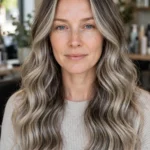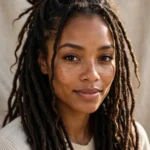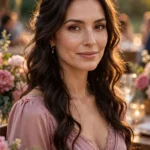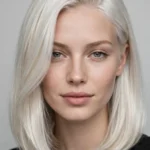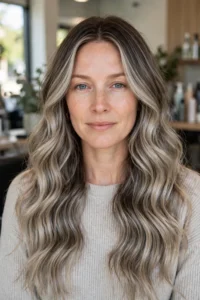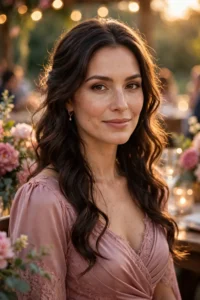


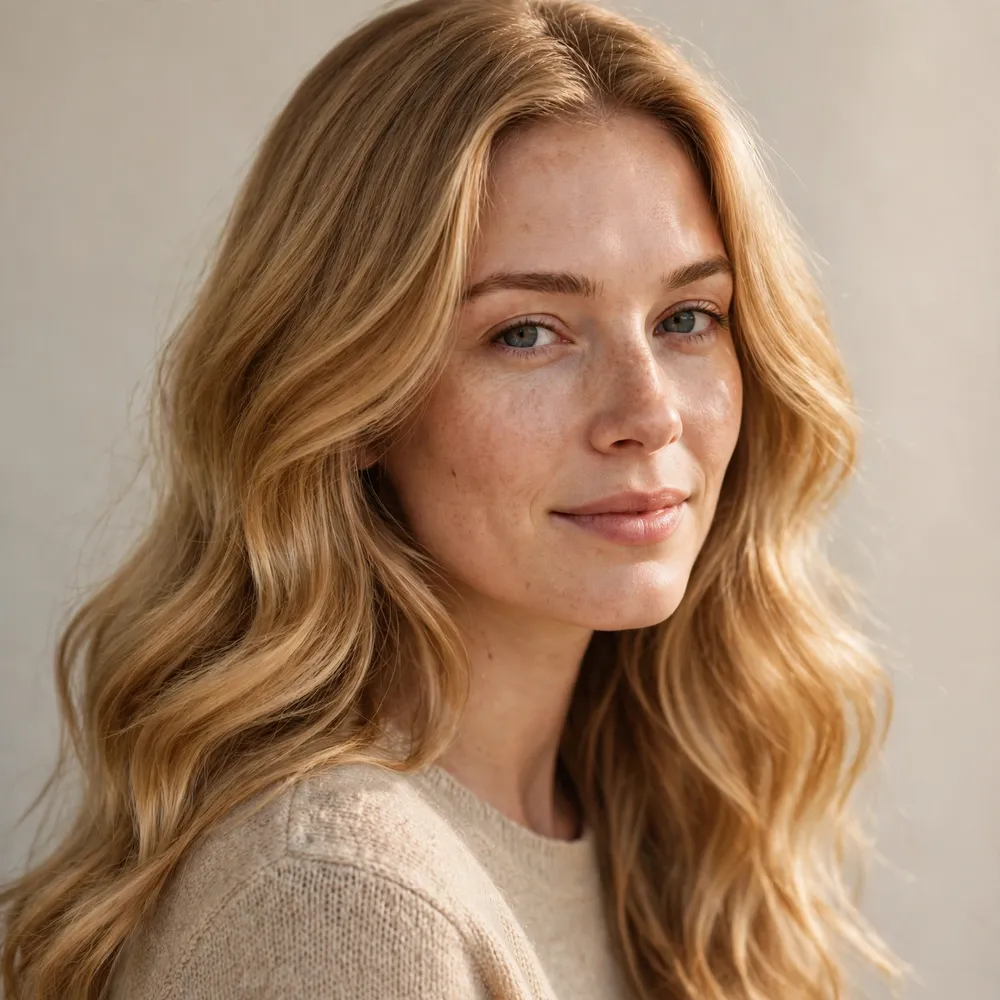
The warm, golden shade called honey blonde hair sits between platinum blonde and brunette — rich like honey, soft like sunlight, and flattering on far more skin tones than most blondes. If you want the shortlist, start here: Classic Warm Honey Blonde Balayage, Dimensional Honey Blonde Money Piece, and Lived-In Honey Blonde Rooted Highlights are the three looks that suit the widest range of people and grow out the most gracefully.
Below are 32 ways to wear it, from barely-there babylights to full golden transformations — plus how to pick your shade and keep it from going brassy.
What is honey blonde hair?
Honey blonde is a warm, golden blonde with amber and caramel undertones, the colour of honey held up to the light. It sits midway between icy platinum and deep brunette, which is exactly why it works so well: it adds brightness without washing you out, and depth without looking dark.
It is not the same as caramel blonde, which runs deeper and browner, with more of a toffee richness. And it is not golden blonde either — golden blonde is brighter and more yellow, while honey blonde carries a softer, warmer glow. Hair coloring covers a huge range of techniques, but honey blonde is defined by warmth first: the gold is always there, even in its coolest variations.
Who does it suit? Almost everyone, honestly. Warm skin tones glow with it, cool skin tones get softened by it, and it is one of the kindest blondes for darker natural hair, because the warm base blends with brown far more forgivingly than ash or platinum ever will. It also suits every hair type — straight hair shows off its dimension, waves catch the light, and curls break it into a dozen different golds.
How to pick the right honey blonde shade
The trick is matching the honey to your skin tone and your natural base, then being honest about how much upkeep you will actually do. A shade that looks perfect in the salon mirror is no good if it needs a toner every three weeks and you will never book one.
| Skin tone | Natural base | Best honey blonde option | Maintenance |
|---|---|---|---|
| Fair / cool | Light brown or blonde | Soft babylights or pearl-toned honey | Low — toner every 8–10 weeks |
| Fair / warm | Light to medium brown | Golden honey balayage | Low–medium — gloss every 6–8 weeks |
| Medium / olive | Medium to dark brown | Rooted highlights or caramel swirl melt | Low — root melt grows out softly |
| Medium / warm | Dark brown | Honey blonde on dark brown, foilayage | Medium — gloss every 6 weeks |
| Deep / warm | Dark brown or black | Deep honey bronde, rich golden pieces | Medium — gloss and bond care every 6 weeks |
| Deep / cool | Dark brown | Ash honey or honey with a cool gloss | Medium — toner every 6–8 weeks |
If you are unsure, ask your stylist to hold a honey swatch against your jawline in daylight. If it makes your eyes look brighter and your skin look healthier, that is your shade. If it makes you look tired, go one level deeper or one level cooler.
The 32 honey blonde hair color ideas
1. Classic Warm Honey Blonde Balayage
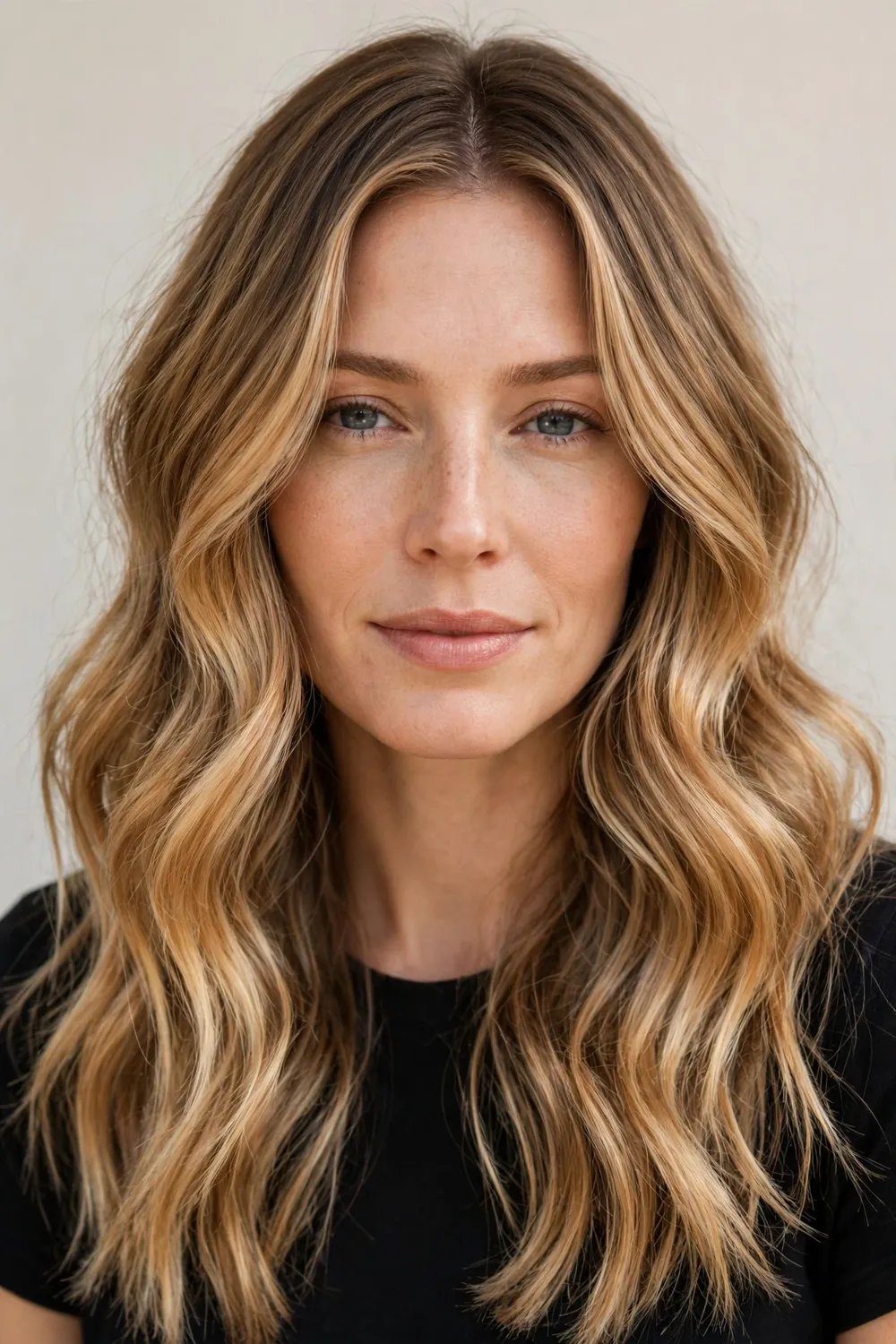
This is the look most people picture when they say honey blonde: hand-painted golden ribbons melting through a slightly deeper base, brightest around the face and through the ends. It suits just about everyone, but it shines on medium-length to long hair, where the blend has room to show. Ask your stylist for a warm honey balayage with a soft root shadow, keeping the pieces finer near the face and chunkier underneath for depth. The finish should be glossy and lived-in, not stripey — a clear gloss or warm toner seals the colour and adds shine. Maintenance is wonderfully low: with no solid regrowth line, ten to twelve weeks between appointments is realistic.
2. Dimensional Honey Blonde Money Piece
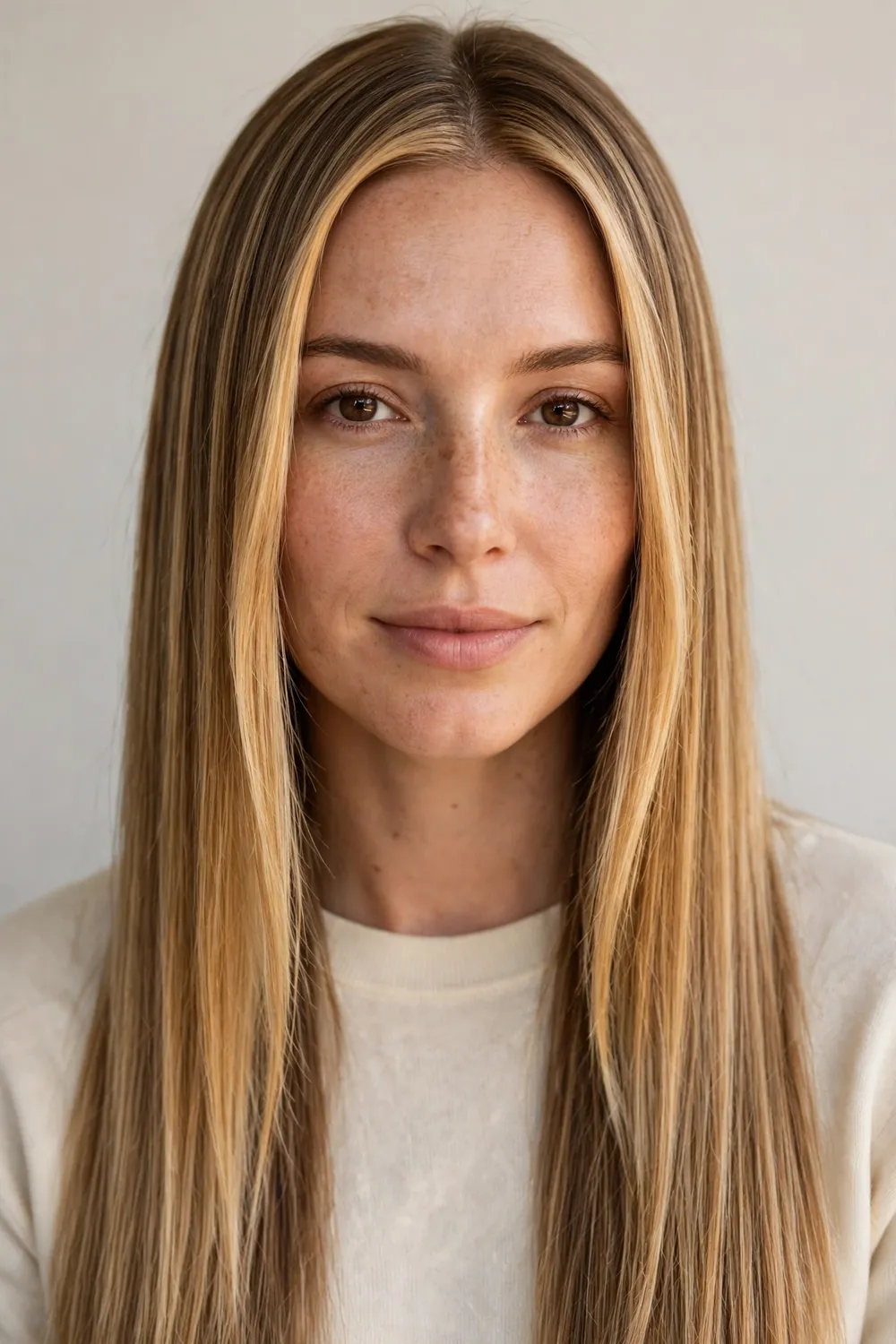
The money piece is the bright, face-framing section at the front — and in honey blonde it is pure sunshine around your face. It works on any length, but it is magic on long hair and on dark bases, where the contrast makes your eyes pop and your skin look instantly warmer. Ask for two bold honey blonde sections framing your face, blended back into softer dimension through the rest of the hair so it never looks like a stripe. The finish should be bright but warm, never white — a honey gloss keeps the gold glowing. Maintenance is moderate: the front sections show regrowth first, so plan a touch-up every six to eight weeks, and skip purple shampoo, which dulls the warmth.
3. Lived-In Honey Blonde Rooted Highlights

If you love blonde but hate the salon every six weeks, this is your look. Your natural root is left alone, and honey blonde highlights are woven through the mid-lengths and ends, so the colour grows out without a single harsh line. It suits anyone who wants blonde without the commitment, and it flatters every skin tone because the darker root keeps it grounded. Ask your stylist for rooted honey highlights with a root smudge in your natural shade, the lightest pieces through the ends. The finish should look like hair that has spent a summer outdoors: soft, sun-touched, a little imperfect. Maintenance is the lowest of any blonde on this list — twelve to sixteen weeks between colour appointments is realistic, with just a gloss in between.
4. Soft Honey Blonde Babylights
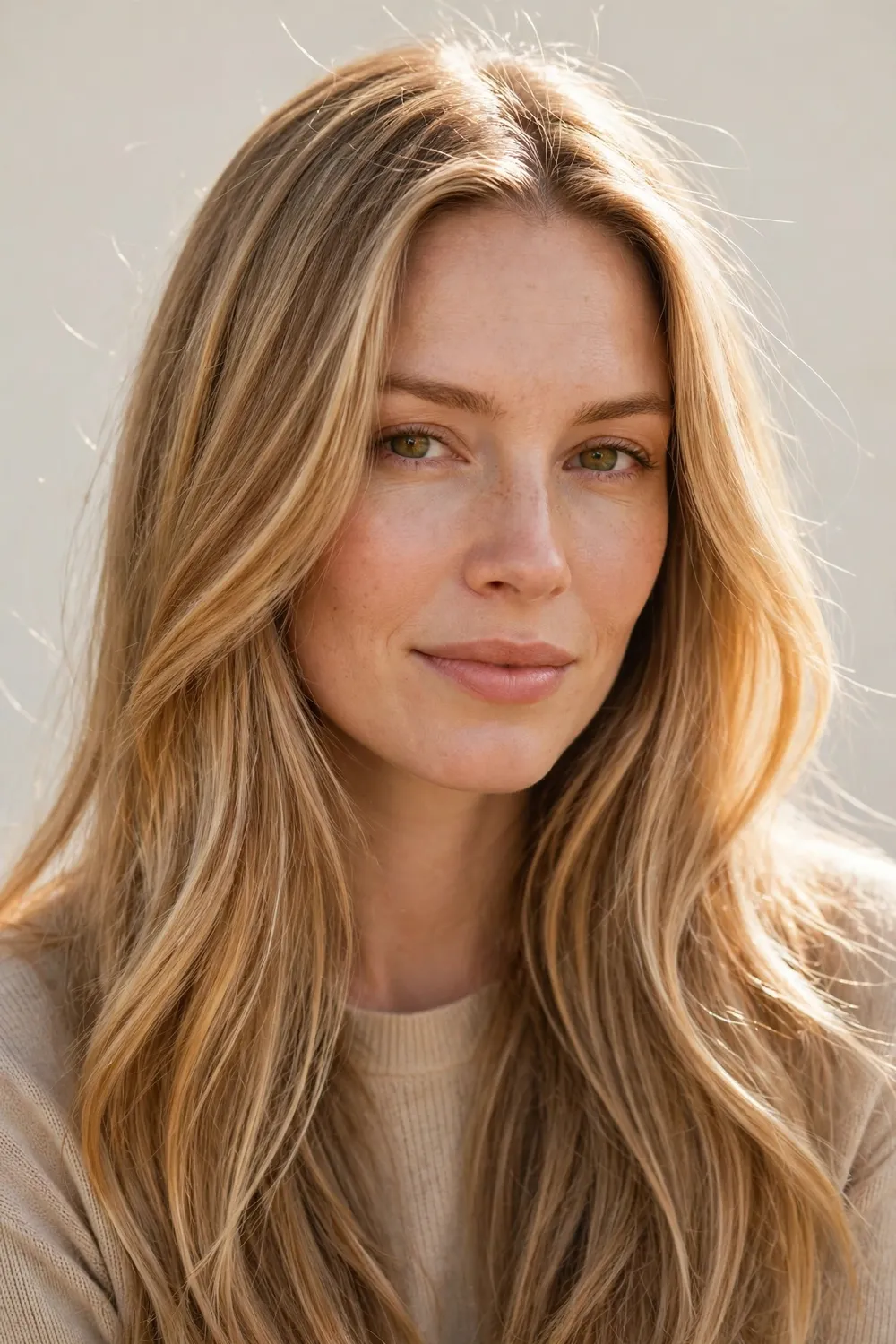
Babylights are ultra-fine, delicate ribbons of colour — the kind of lightness a child’s hair gets after a summer in the sun. In honey blonde they are subtle, shimmery and impossibly pretty, adding glow without any obvious “I had my hair coloured” moment. This is the best choice if you are blonde-curious, if your hair is fine and you worry about damage, or if you want dimension that looks completely natural. Ask for fine honey babylights scattered through the top layers and around the face, with a warm gloss to blend them. The finish should be soft and seamless; from a distance it reads as one beautiful golden colour. Maintenance is gentle: regrowth is barely visible, so eight to ten weeks between appointments works.
5. Glossy Honey Blonde Sombre
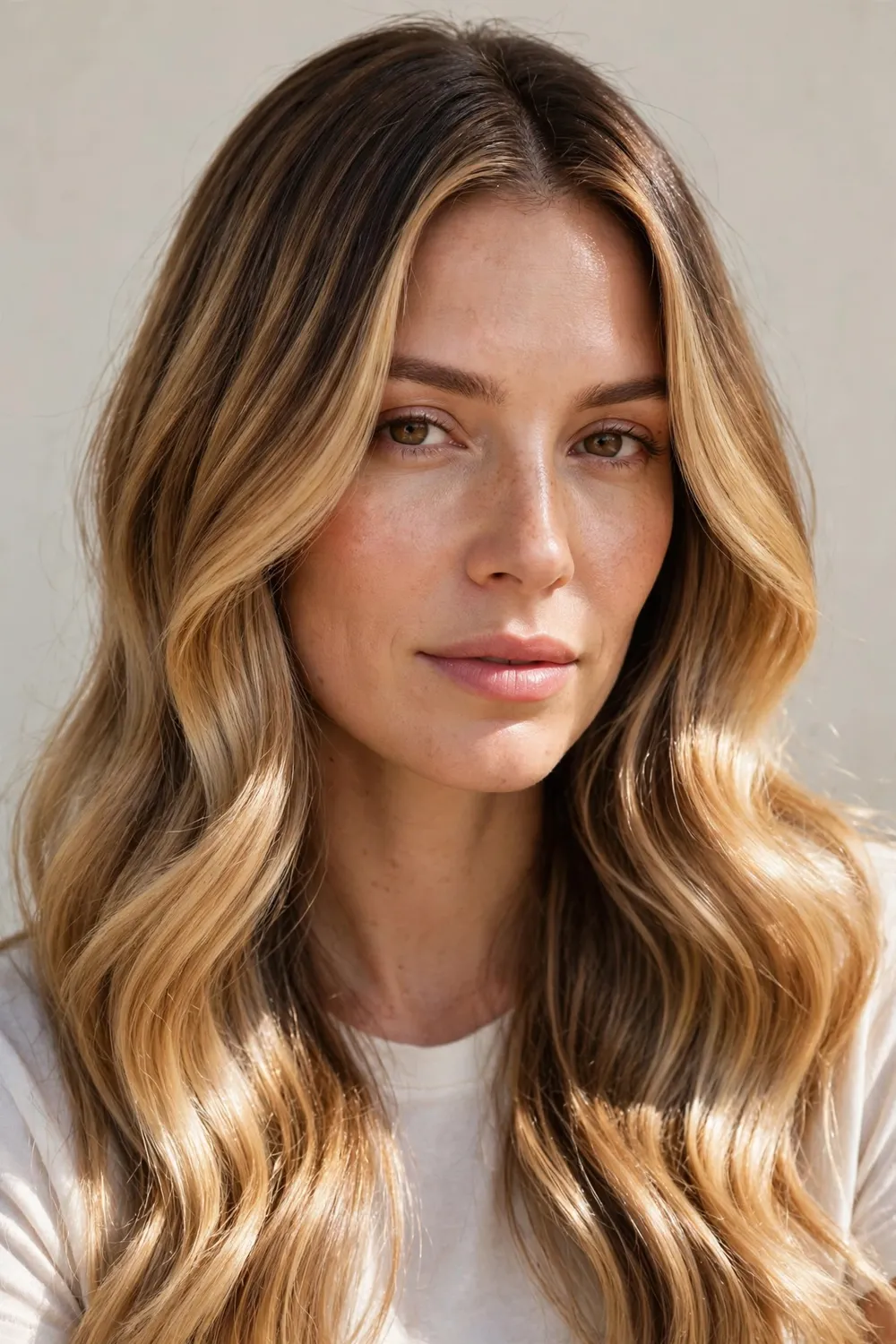
Sombre is ombre’s softer, subtler sister — a gentle gradient rather than a dramatic two-tone — and in honey blonde it is all about shine. The colour melts from a deeper root into golden ends so gradually you cannot tell where one shade stops and the next begins. Ask your stylist for a soft sombre with honey blonde ends and a clear or warm gloss over the whole head — the gloss is what makes this look, giving it that expensive, lit-from-within shine. The finish should be sleek and reflective, so a smoothing serum or a light oil on the ends is your best friend. Maintenance is low: a gloss every six to eight weeks keeps the shine, and over-washing strips gloss fastest.
6. Chunky 90s Honey Blonde Highlights
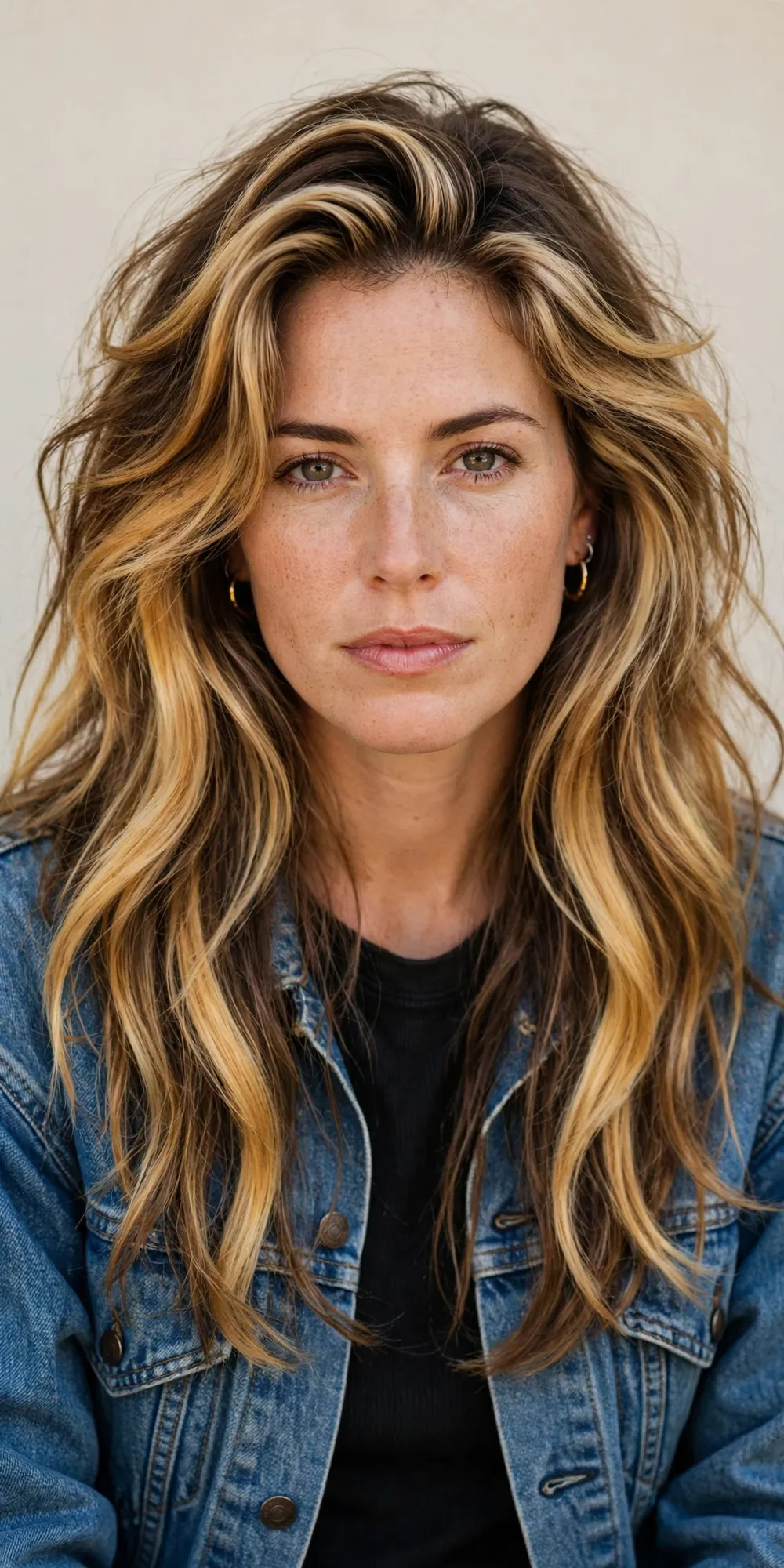
The 90s are back, and chunky honey highlights are leading the charge. These are bold, thick ribbons of golden blonde — visible, confident, a little bit retro — and they look fantastic on dark brown hair, where the contrast is the whole point. This is not a subtle look, so it suits people who like their hair to make a statement. Ask your stylist for chunky honey blonde highlights, about a centimetre wide, placed through the top layers and around the face, with a warm toner so the gold stays honey rather than brassy. The finish should be glossy and defined — a straight blow-dry shows the ribbons off best. Maintenance is moderate: plan a touch-up every six to eight weeks, and use a colour-safe shampoo.
7. Honey Blonde on Dark Brown Hair
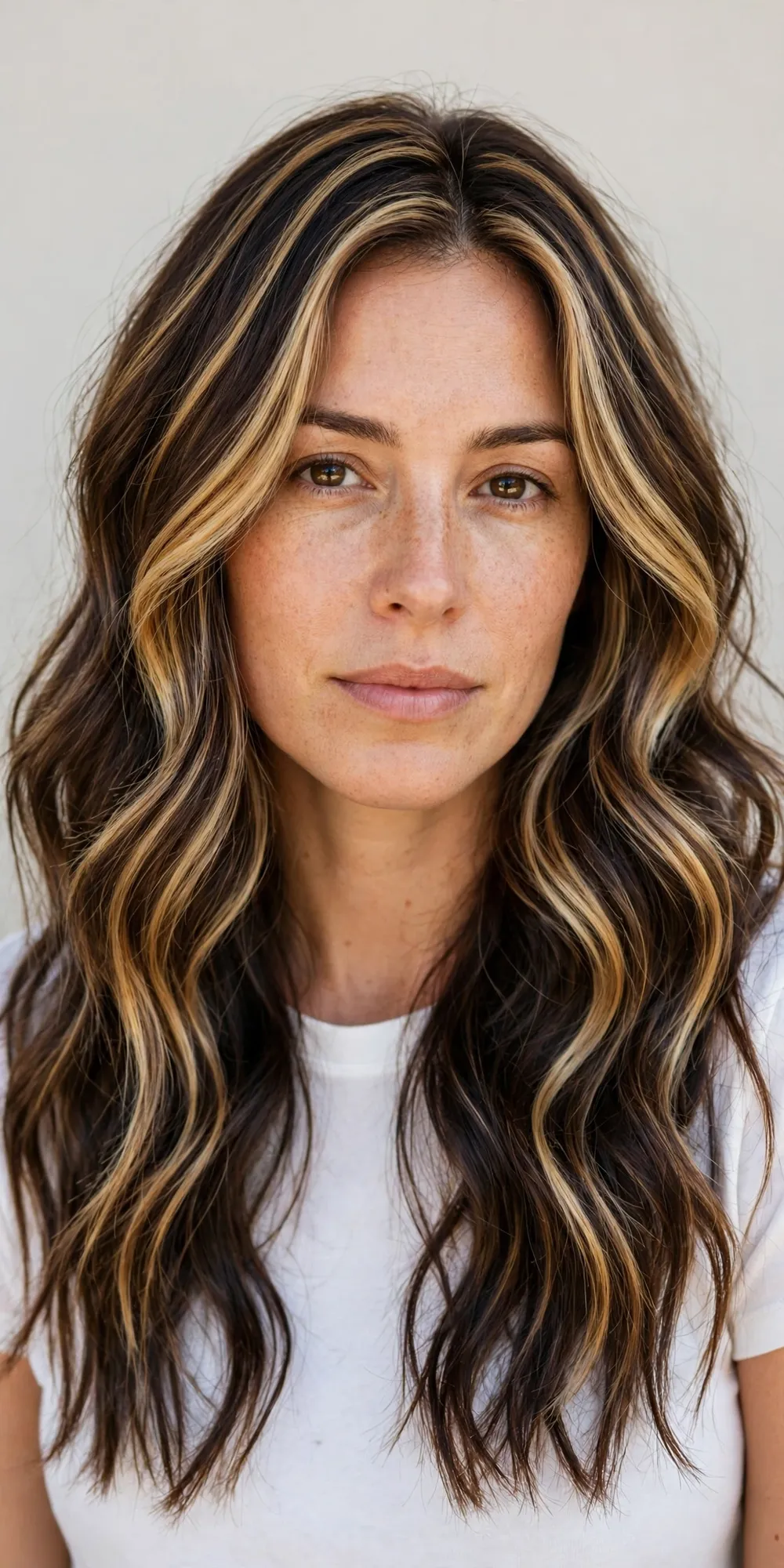
This is the most requested honey blonde combination for a reason: golden pieces over a rich espresso base look like sunlight caught in dark hair. It suits anyone with naturally dark brown hair who wants lightness without going fully blonde — the dark base keeps it sophisticated, and the honey keeps it warm and glowing. Ask your stylist for honey blonde balayage or foil highlights over your natural dark brown, keeping the pieces soft around the face and brighter through the ends. The finish should be dimensional and glossy, with the dark base giving the gold something to shine against. Maintenance is low to medium: the dark root is your own colour, so regrowth is invisible, but a gloss every six weeks keeps the honey from fading brassy.
8. Vibrant Copper Honey Blonde Blend

If honey blonde feels a little too safe and copper feels a little too bold, this blend is the sweet spot: fiery copper woven through golden honey, like autumn light. It suits warm skin tones beautifully, and it is stunning on people with green or hazel eyes — the copper picks up the warmth in them. Ask your stylist for a copper honey blend, with copper pieces concentrated around the face and through the ends, honey blonde as the base brightness. The finish should be vibrant and glossy, with the two tones melting into each other rather than sitting in blocks. Maintenance is the honest trade-off here: copper fades fast, so expect a gloss every four to six weeks, and wash in cool water to slow the fade.
9. Honey Blonde Face-Framing Curtain Bangs
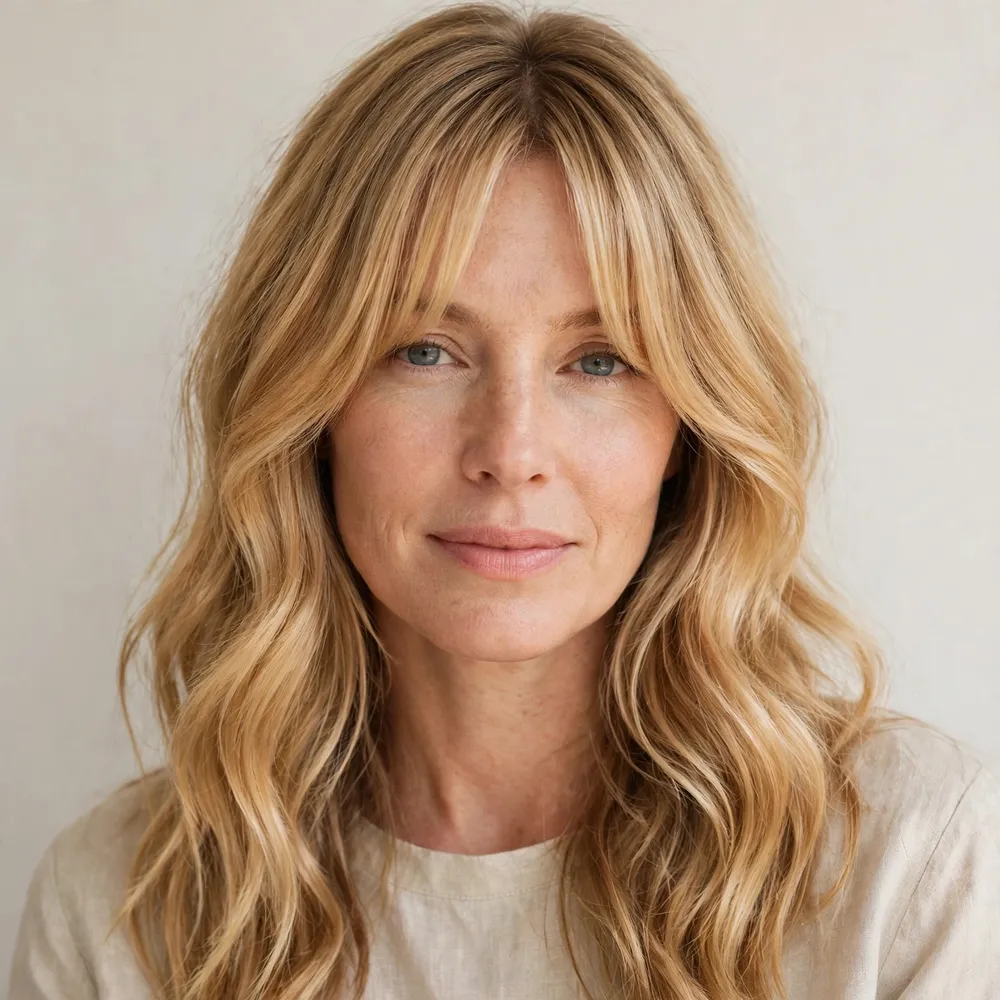
Curtain bangs are already flattering; lightening them honey blonde makes them glow. The brightened fringe opens up your face, softens your features and gives you the effect of a full colour refresh with only a small section of hair touched. It suits almost every face shape — the parted, sweeping shape is forgiving — and it works on long hair, lobs and bobs alike. Ask your stylist for curtain bangs with honey blonde face-framing pieces, the lightest right at the parting, blending into the rest of your colour. The finish should be soft and feathered, not blunt: a round brush blow-dry gives the bangs their signature sweep. Maintenance is easy: a trim every four to five weeks keeps the shape.
10. Icy Honey Platinum Blonde Fusion
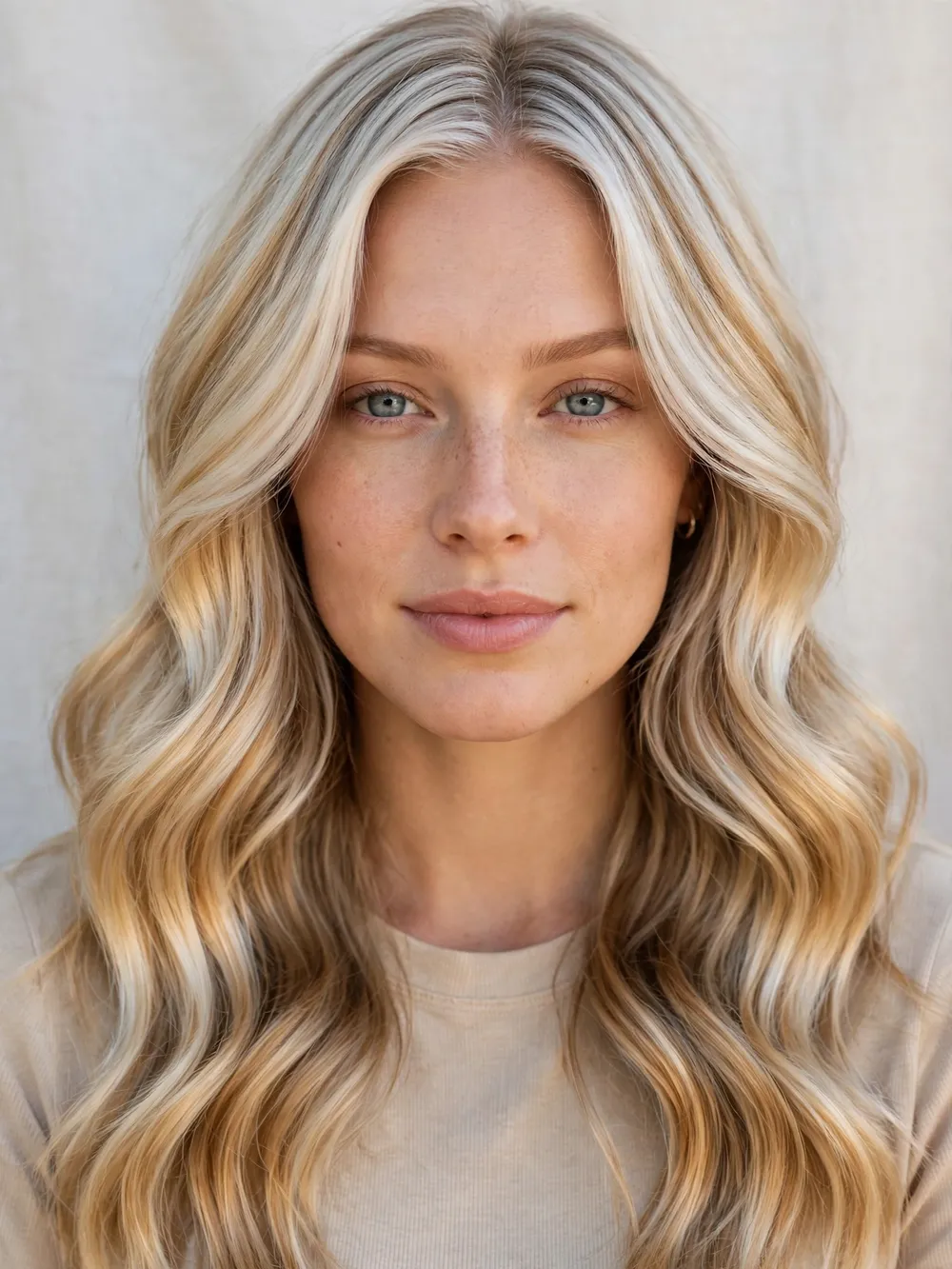
This one sounds like a contradiction — icy and honey, cool and warm — but that tension is what makes it so striking. Cool platinum pieces are woven through a warm honey base, giving you the brightness of platinum without the wash-out, and the warmth of honey without the brass. Ask your stylist for platinum babylights or fine slices over a honey blonde base, finished with a cool gloss on the platinum and a warm gloss on the honey — two toners, and worth it. The finish should be multi-dimensional, almost iridescent in sunlight. Maintenance is the highest on this list: platinum needs a toner every four to six weeks, and purple shampoo is essential to keep the cool pieces cool.
11. Golden Honey Blonde Beach Waves
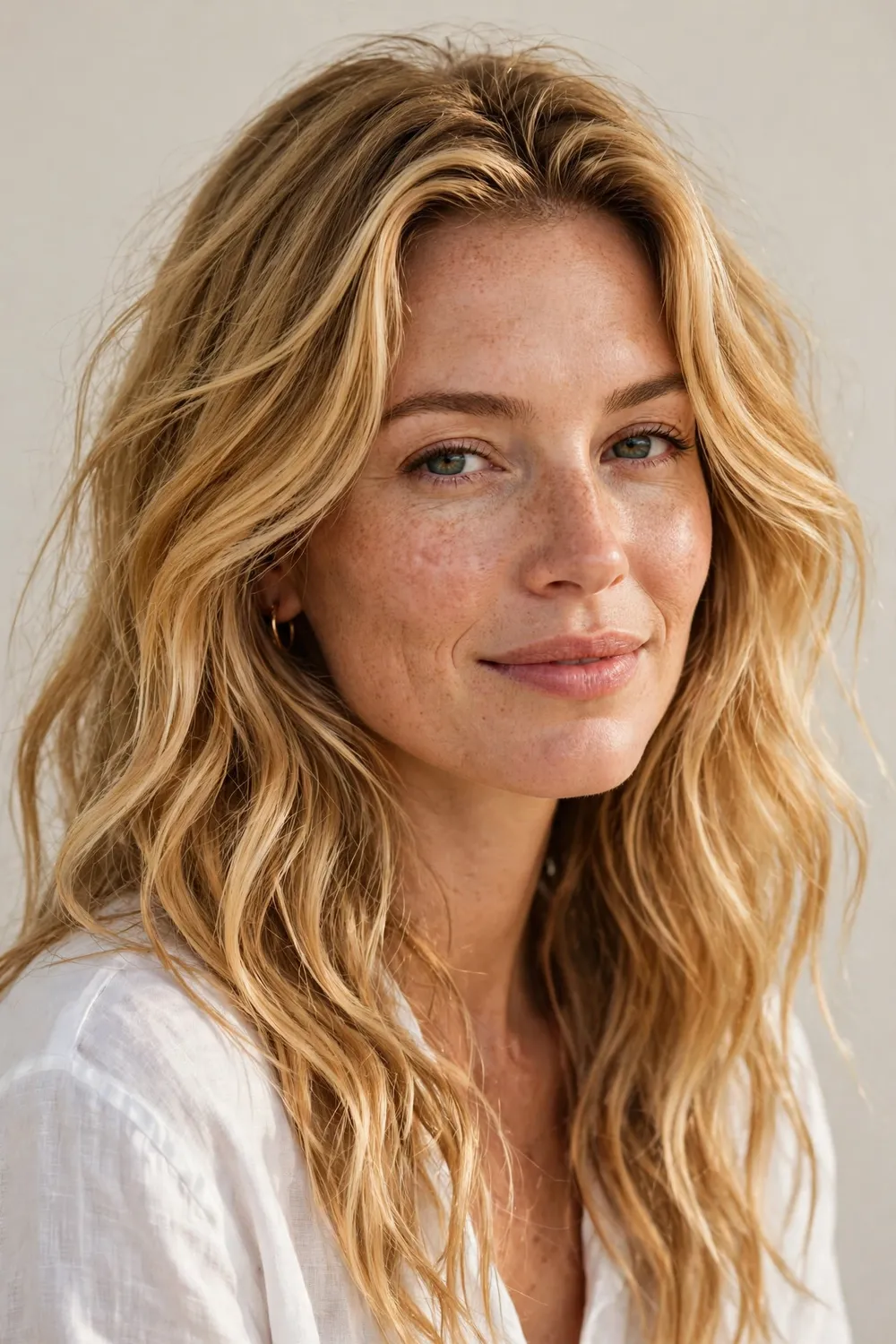
All-over golden honey with tousled, beachy waves is the look that makes people ask where you went on holiday. The colour is a saturated, even honey blonde from root to tip, and the waves break it up so it never looks flat or one-dimensional. It suits medium to long hair, and it is at its best on naturally wavy or textured hair. Ask your stylist for an all-over golden honey blonde, lifted evenly, with a warm gloss to keep the tone rich. The finish is undone and textured: a salt spray or texturising spray scrunched through damp hair gives you the beach without the sand. Maintenance is moderate: all-over colour shows regrowth at the roots, so plan a touch-up every six to eight weeks.
12. Short Honey Blonde Textured Bob

A choppy, textured bob in dense golden honey blonde is fresh, modern and far more interesting than a plain blonde bob — the texture breaks the colour into light and shadow, so it looks dimensional from every angle. It suits fine hair especially well, because the choppy layers create the illusion of thickness. Ask your stylist for a textured bob cut to the jaw or just below, with all-over honey blonde or honey balayage through it, and plenty of point-cutting through the ends for movement. The finish should be piecey and lived-in: a dab of texturising paste or a light wax defines the ends without weighing them down. Maintenance is straightforward — a trim every six weeks keeps the shape sharp.
13. Honey Blonde Caramel Swirl Melt
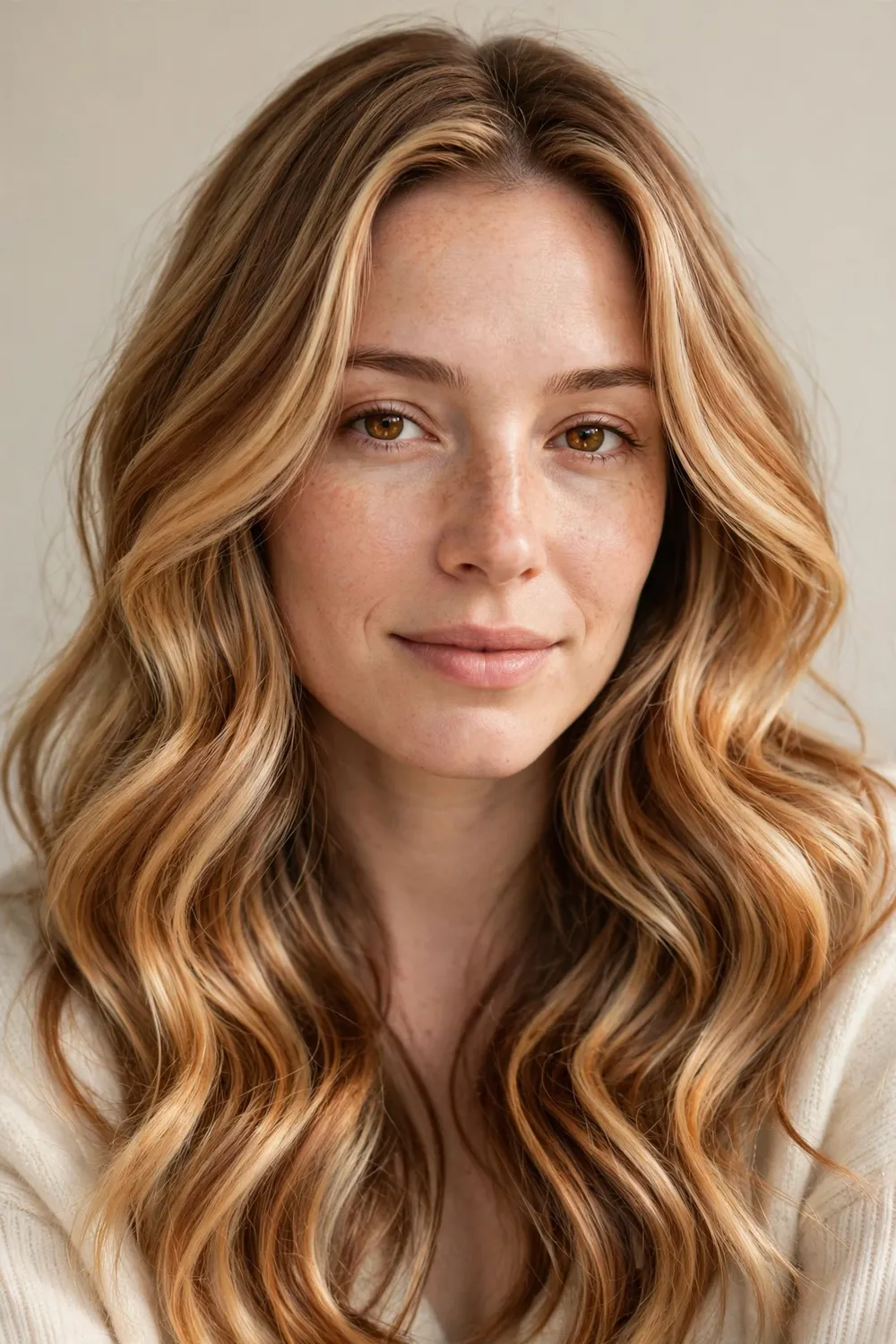
Caramel and honey are close cousins, and when they are blurred together in a melt, the result is the richest, most dimensional blonde on this list. Deeper caramel sits near the roots and through the underlayers, honey blonde glows on top and through the ends, and the two swirl together with no visible line. It suits medium to dark brown bases and warm skin tones. Ask your stylist for a caramel-to-honey melt, with the caramel kept deeper underneath and the honey painted on the surface layers. The finish should be glossy and seamless — a warm gloss over everything blends the tones and adds shine. Maintenance is low: eight to ten weeks between appointments is fine, and a colour-safe shampoo keeps the swirl looking expensive.
14. Sun-Kissed Honey Blonde Ombre
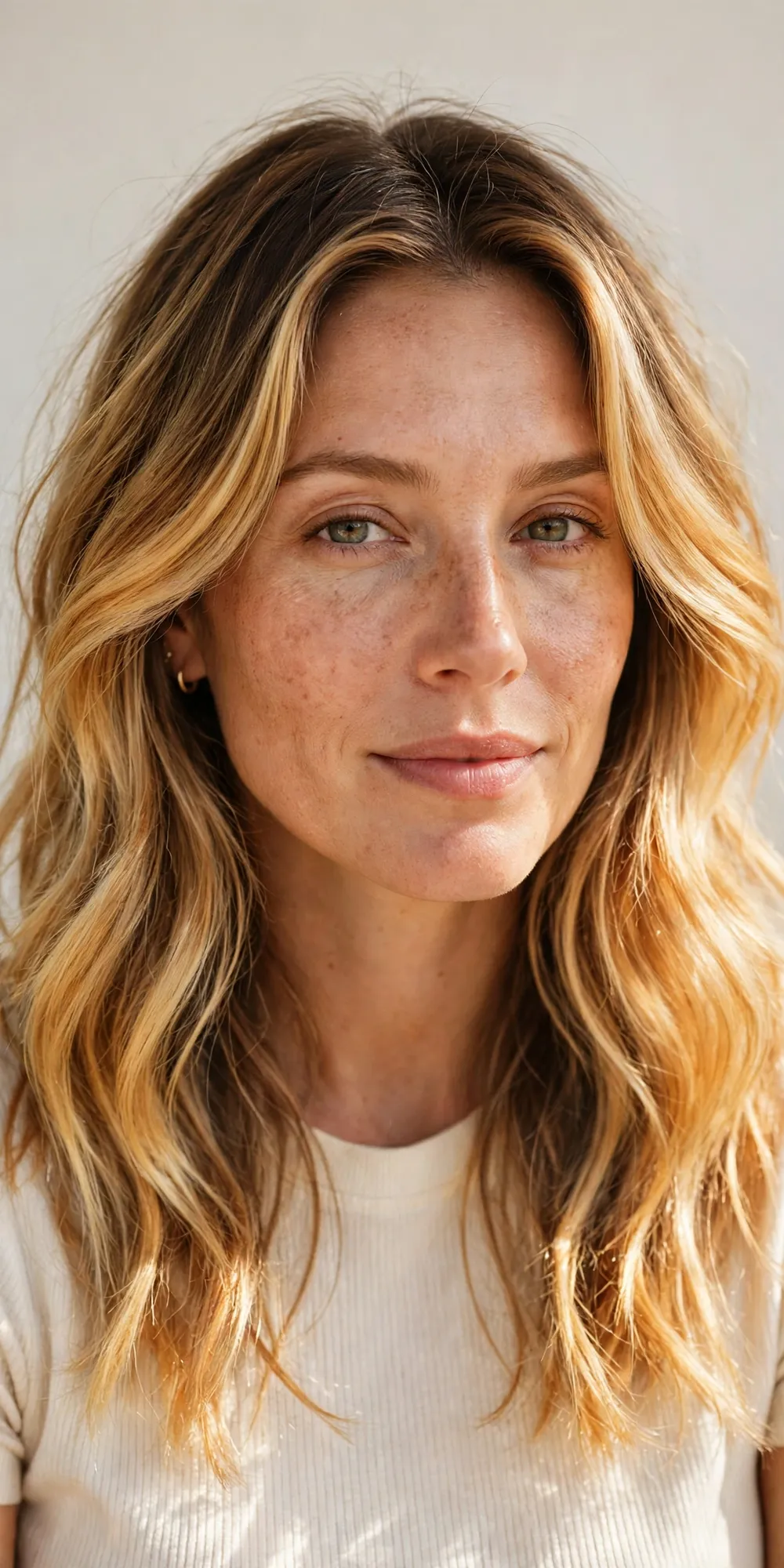
True ombre means a visible gradient — dark roots melting into saturated golden ends — and in honey blonde it looks like a summer that never ended. The ends are the brightest part, so this is the look for you if you want maximum lightness without lightening near your scalp. It suits long hair best, where the gradient has length to travel, and it flatters warm and neutral skin tones. Ask your stylist for a honey blonde ombre with a soft, diffused transition around the mid-lengths — no hard line — and the ends lifted to a bright, saturated honey. A warm gloss keeps the ends golden rather than brassy. Maintenance is low: your roots are your own colour, so three months or more between appointments is fine.
15. Pearl Toned Honey Blonde Highlights
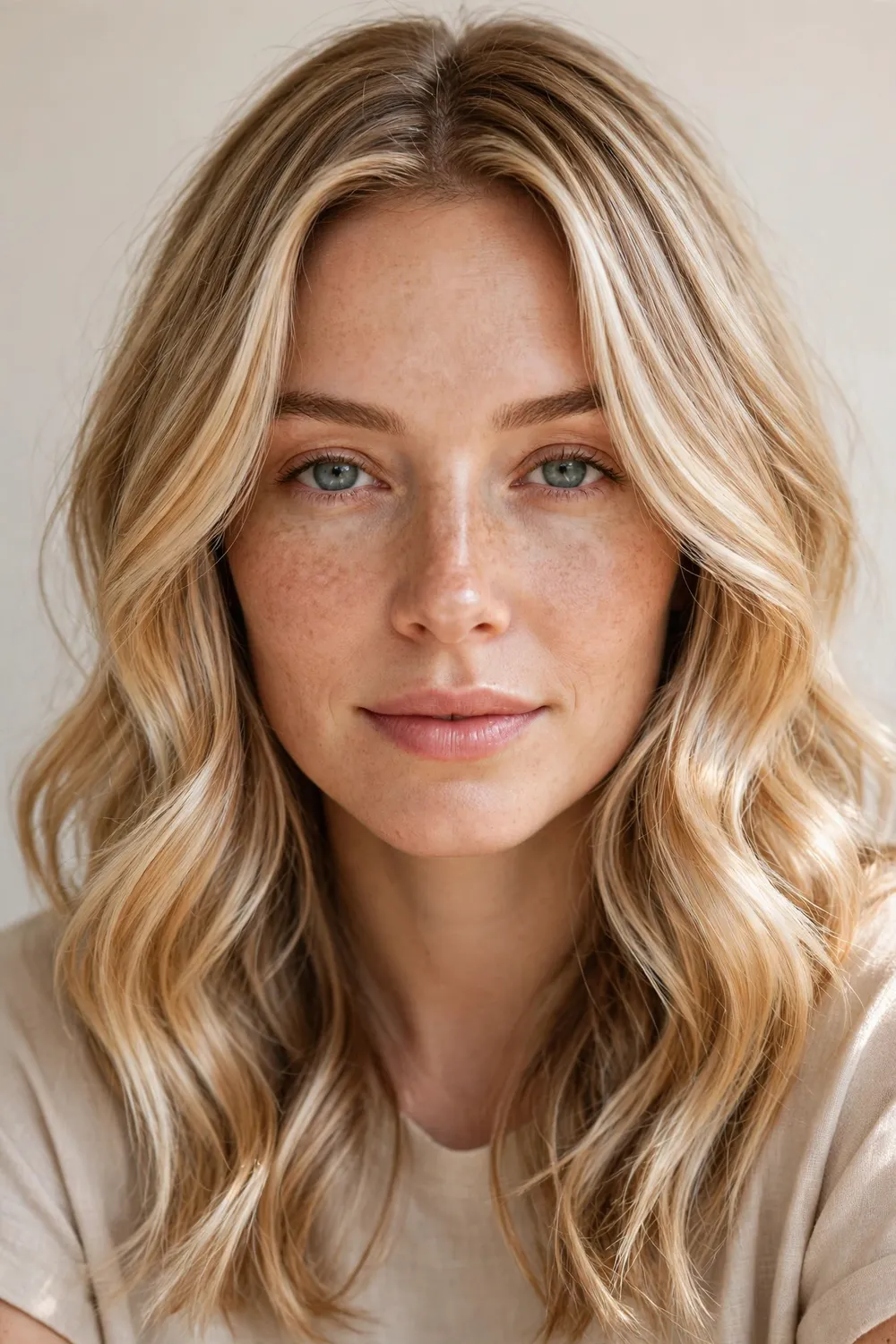
A cool pearl overlay on a warm honey base gives you the best of both worlds: the glow of honey, the polish of pearl. The pearl toner takes the edge off the gold, leaving a soft, luminous blonde that looks expensive and slightly ethereal — like honey seen through frosted glass. It suits cool and neutral skin tones. Ask your stylist for honey blonde highlights finished with a pearl or iridescent toner, keeping the warmth underneath and the coolness on the surface. The finish should be soft and shimmery, never flat — a gloss is essential to the pearl effect. Maintenance is moderate: the pearl toner fades over four to six weeks, so plan regular toning appointments, and use purple shampoo sparingly or the honey turns grey.
16. Honey Blonde Long Layered Cut
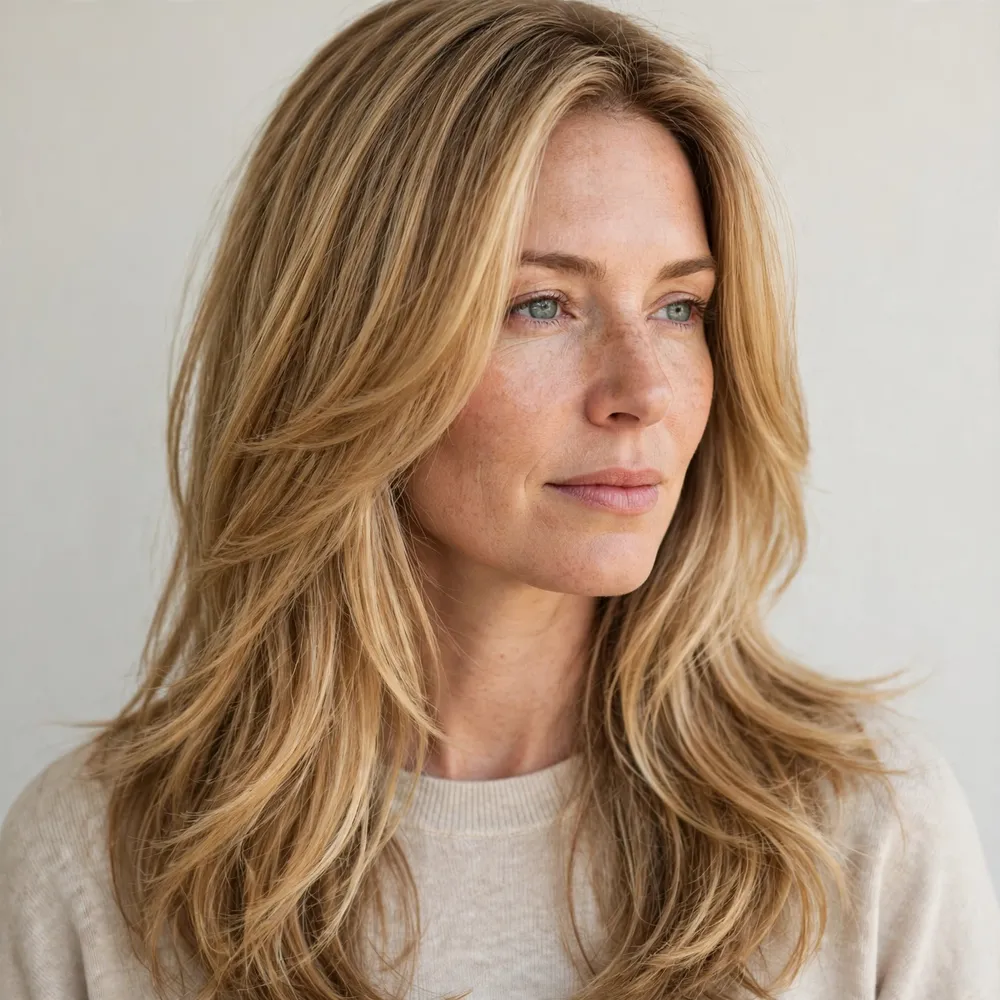
Long layers are the perfect frame for honey blonde, because every layer catches the light differently and the colour looks different from every angle. The layers add movement and stop long hair from looking heavy, while the honey blonde adds dimension that makes the layers visible. It suits long hair of any texture. Ask your stylist for long layers starting at the collarbone, with honey blonde balayage or highlights painted to follow the layers, brightest on the pieces that frame your face. The finish should be soft and flowing: a blow-dry with a round brush, or loose waves, shows off both the cut and the colour. Maintenance is low to medium — trims every eight to ten weeks keep the layers fresh.
17. Ash Honey Blonde Cool Tone
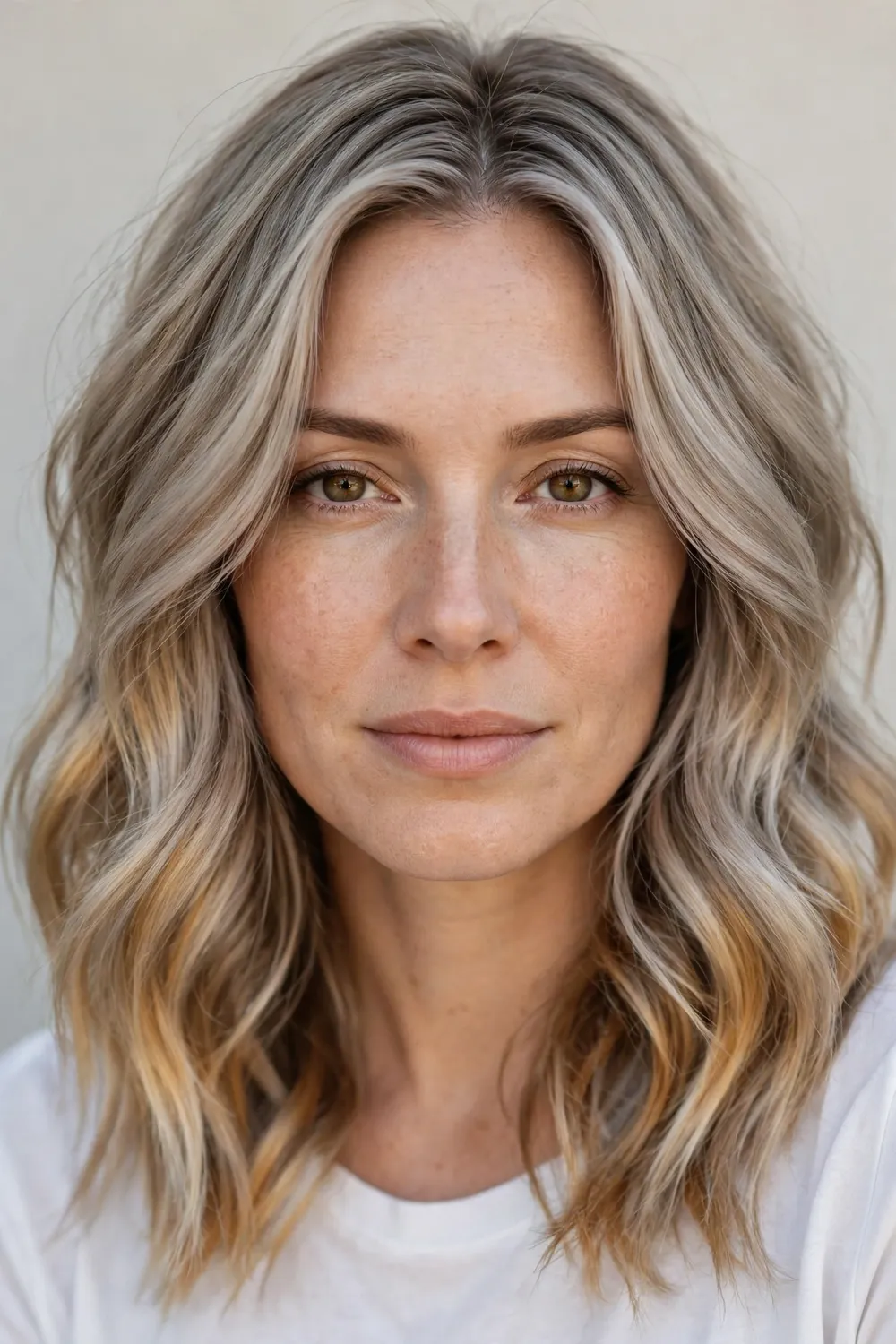
Ash honey blonde is for anyone who loves the warmth of honey but worries about it pulling too orange. The base is a muted, smoky blonde with honey depth in the mid-lengths — glow without the brassiness. It suits cool and neutral skin tones, and it’s ideal if your hair tends to throw warm tones after a few washes. Ask your stylist for a cool-toned honey base with a smoky ash gloss over the top, and keep the roots slightly deeper so the colour doesn’t wash you out. Finish with smoothing cream and a cool blow-dry for a polished sheen. Maintenance is moderate: purple shampoo once a week keeps the ash from fading warm, and a gloss every six to eight weeks holds the tone.
18. Honey Blonde Shag with Feathered Bangs
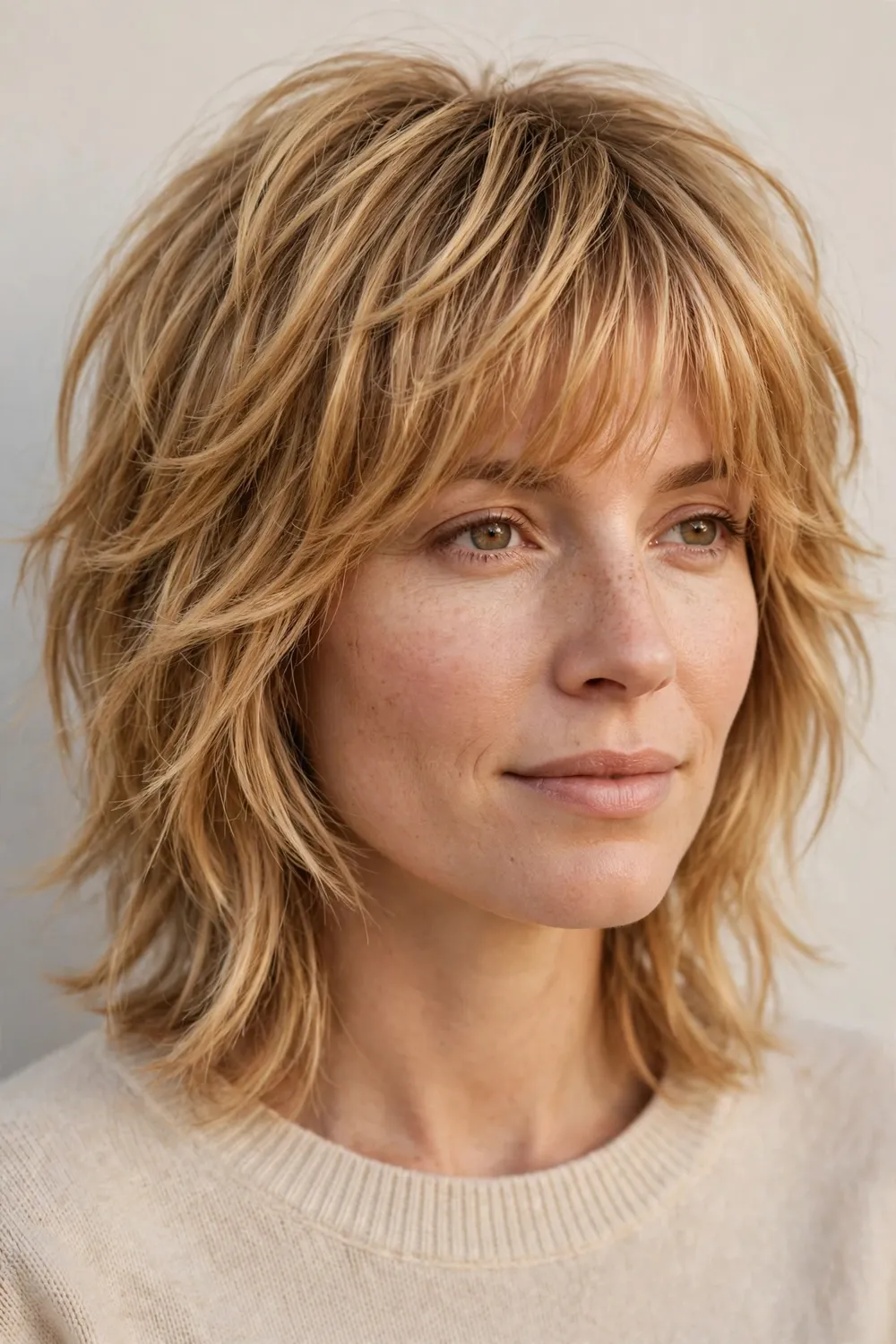
A shag and honey blonde were made for each other — the choppy layers catch the golden colour at every angle, so the hair looks full of movement with no effort. Feathered bangs soften the forehead and pull the lightest pieces right around the face. It works beautifully on medium to thick hair with natural wave, and it’s one of the easiest cuts to grow out. Ask for a layered shag with feathered bangs and hand-painted honey balayage through the layers, ends slightly lighter than the roots. Style with texturising spray and a quick rough-dry for that undone finish. Maintenance is low: trims every eight to ten weeks keep the shape, and a gloss every couple of months revives the gold.
19. Deep Honey Bronde Transition
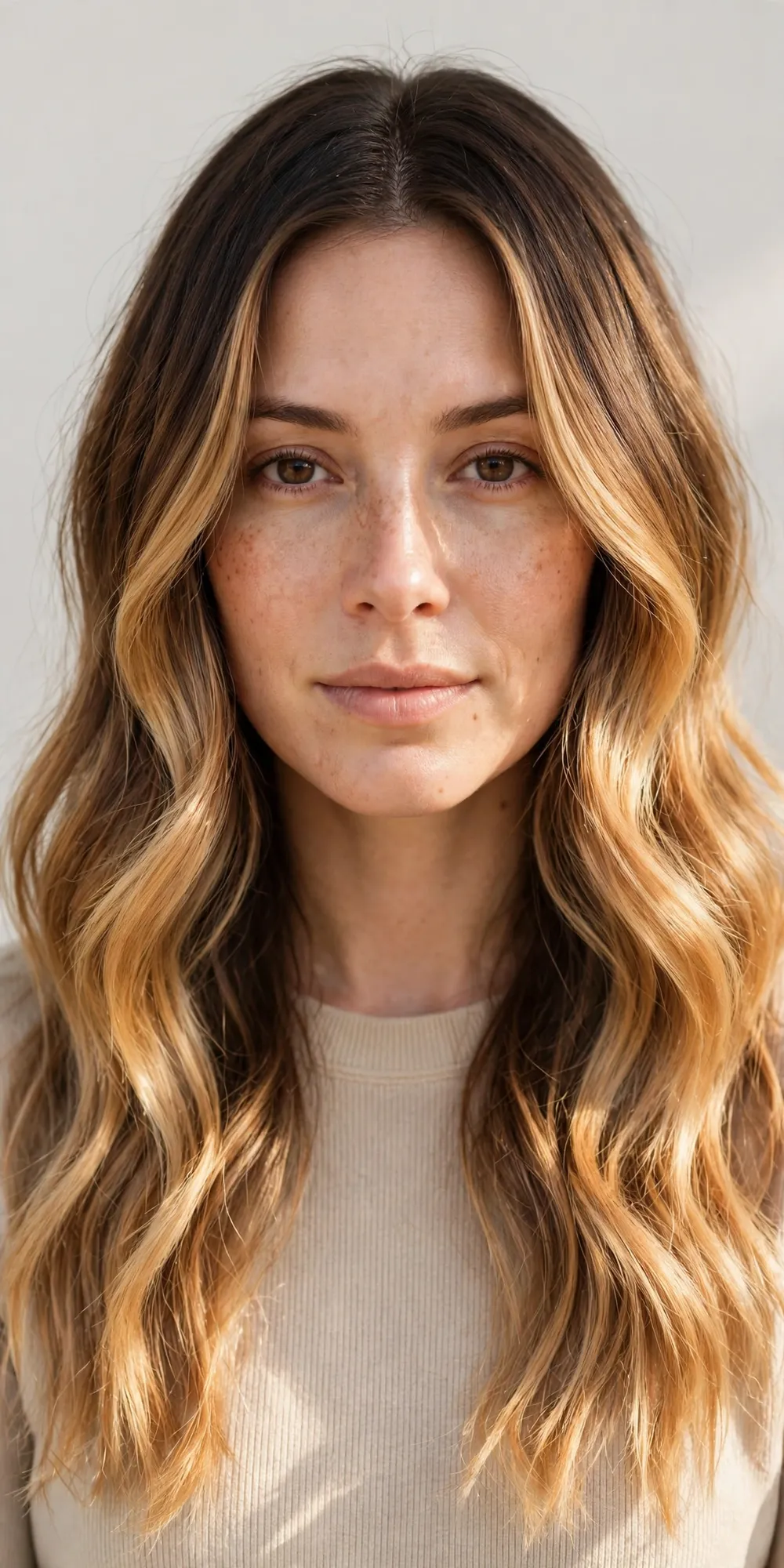
Deep honey bronde is the answer if you want to go lighter without full blonde. A dark brown root melts into honey-gold ends, so the colour looks like it grew that way — expensive, soft, natural. It suits almost every skin tone: the darker root anchors the face while the honey ends add light. Ask for a bronde melt with honey balayage painted from the mid-lengths down, root untouched for easy grow-out. Finish with a gloss for shine and a soft wave to show off the blend. Maintenance is genuinely low: the root does the heavy lifting, so you can go three to four months between colour appointments. A colour-safe shampoo and a gloss now and then are all it needs.
20. Golden Honey Blonde Foilayage
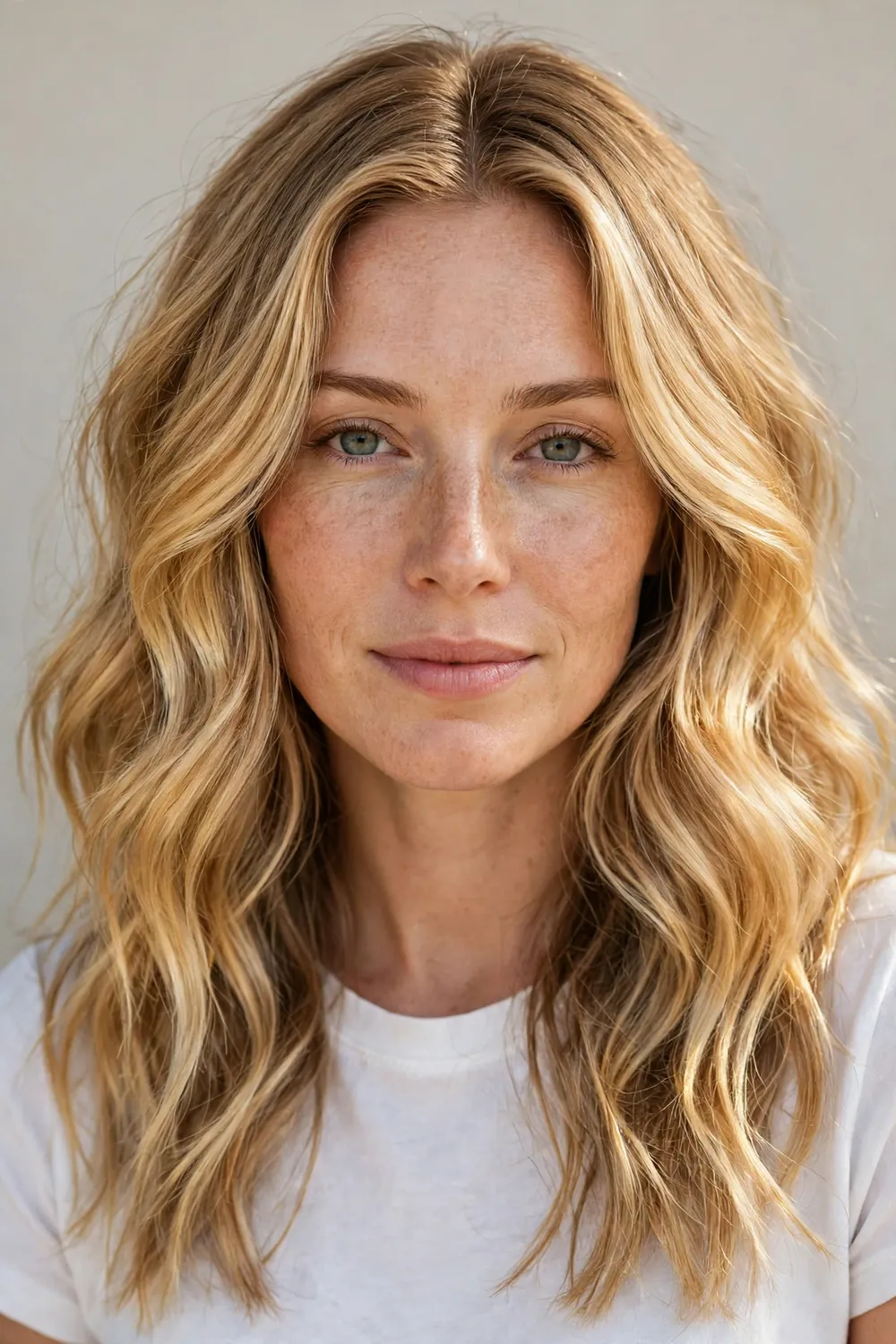
Foilayage gives you the soft, painted look of balayage with a brighter lift, because the foils let the lightener work harder. The result is a golden honey blonde noticeably brighter than classic balayage, with a seamless root blend and luminous ends. It’s a great pick for darker bases needing extra lift, and for anyone whose balayage has always come out too subtle. Ask for foilayage with honey-toned highlights, woven finely at the front and bolder through the ends. Finish with a honey gloss and a smooth blow-dry to show off the shine. Maintenance sits in the middle: a gloss every six weeks, a foilayage refresh every ten to twelve, and purple shampoo to keep the gold rich, not brassy.
21. Honey Blonde Peekaboo Underlights

Peekaboo underlights are the low-commitment way to wear honey blonde. Golden panels hide under the top layer, so the colour flashes out when you move, tie your hair up or tuck it behind your ear — and disappears when you want it to. It’s perfect if your workplace is strict about colour, or if you like a surprise element. It works on any length past the chin and suits every hair type. Ask for honey blonde panels on the underlayer only, leaving the top section in your natural colour. Wear it straight for a clean reveal, or curled for a softer effect. Maintenance is minimal: the underlayer grows out invisibly, so touch-ups come only every three to four months, and a gloss keeps the honey bright.
22. Expensive Brunette to Honey Blonde
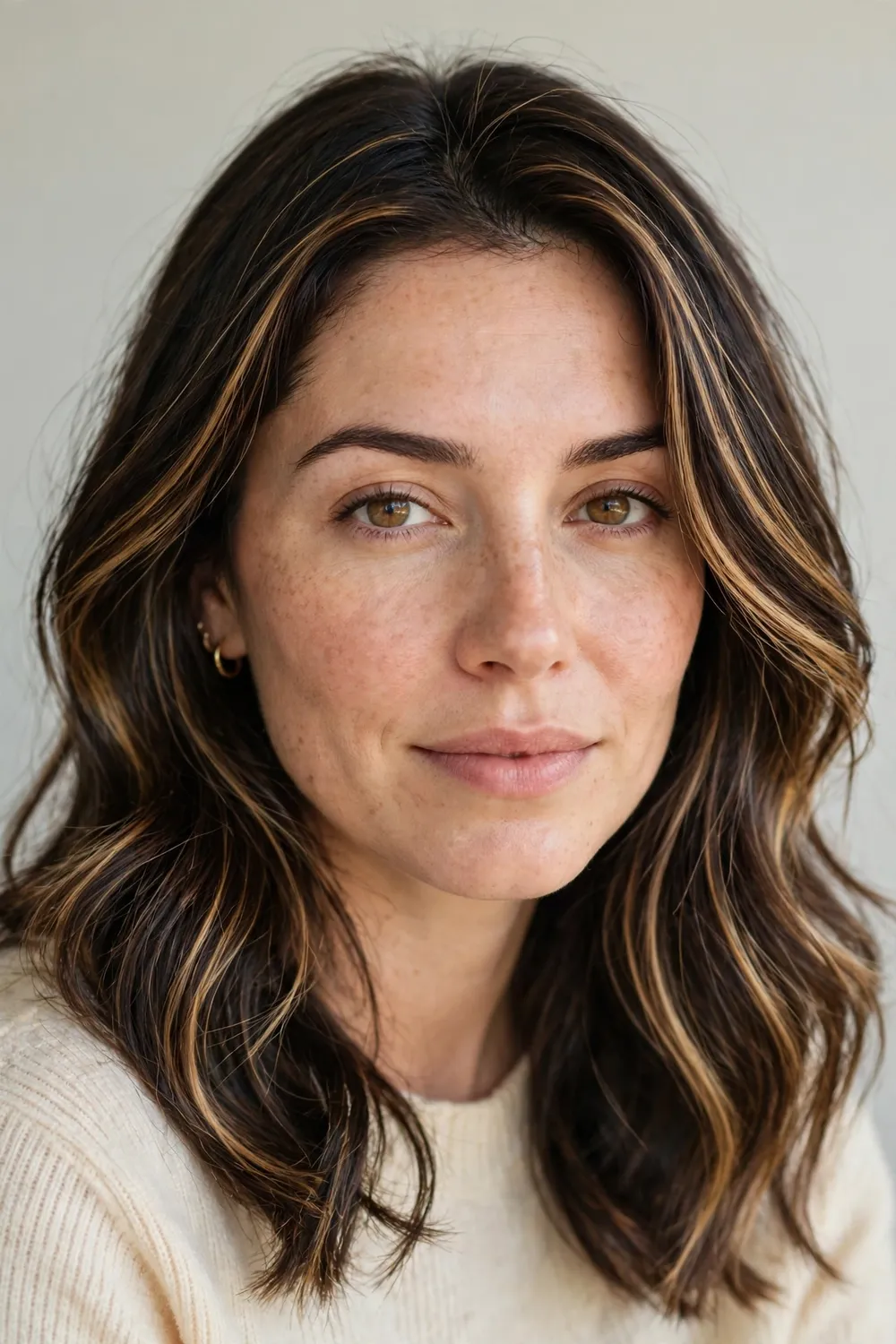
This is the “expensive brunette” trend with a honey twist: a glossy brunette base threaded with fine golden pieces that catch the light. It’s understated and quietly luxurious — the kind of colour that looks like you were born with great hair and a great stylist. It suits brunettes who want dimension without going blonde, and it flatters warm and neutral skin tones. Ask for fine honey highlights woven through a glossy brunette base, concentrated around the face and through the ends. Finish with a shine gloss and a sleek blow-dry for that glassy, expensive look. Maintenance is easy: the brunette base hides regrowth, so appointments can stretch to ten or twelve weeks, with a gloss in between for shine.
23. Honey Blonde with Rose Gold Tint
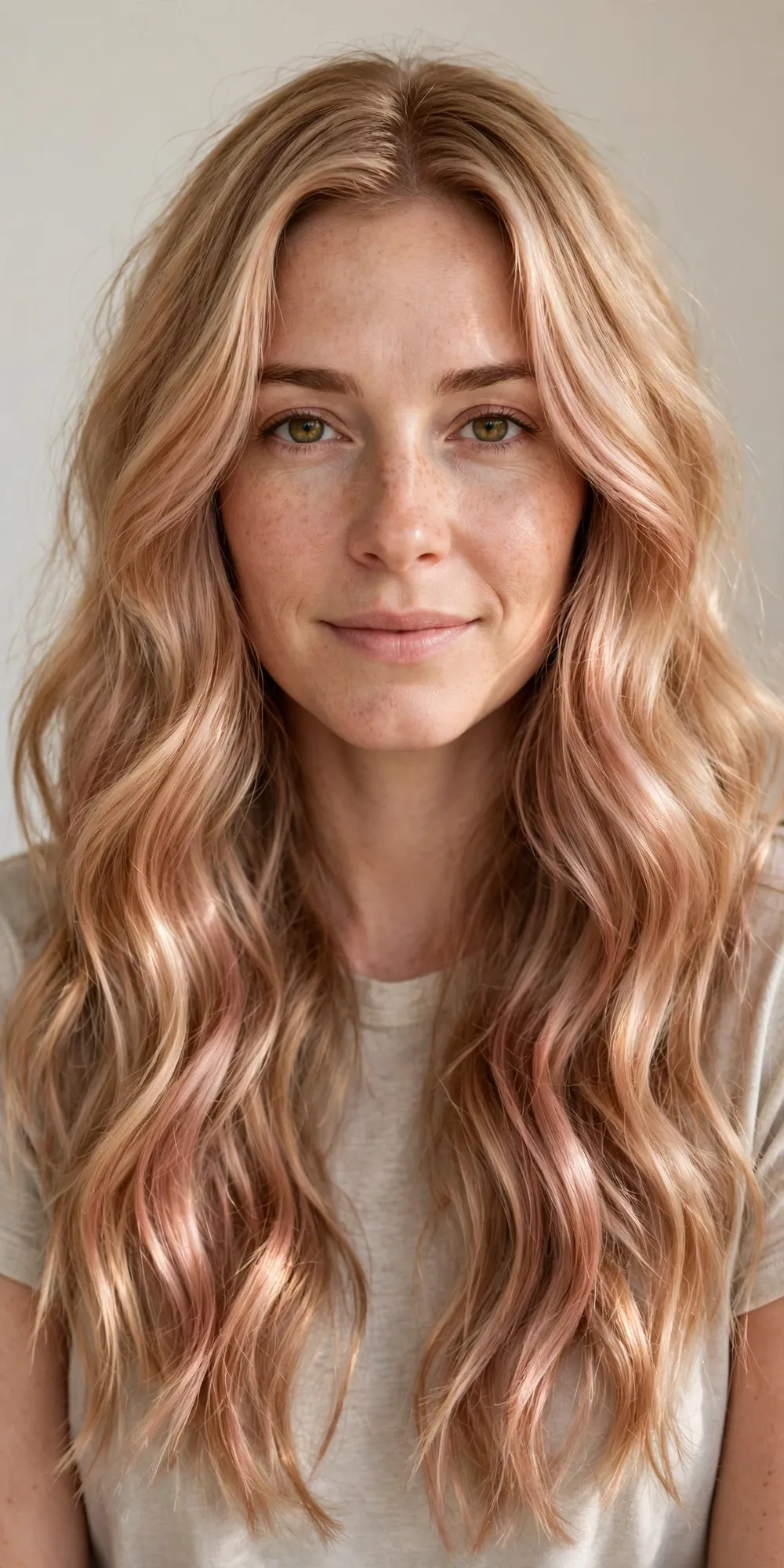
A rose gold tint over honey blonde adds a soft, pinkish shimmer that feels romantic without being obviously pink. In daylight it reads as warm golden blonde with a blush; indoors, the rose tones come forward. It suits fair to medium skin tones and anyone who wants their blonde to feel a little different. Ask for honey blonde with a rose gold gloss or toner over the top, keeping the pink subtle so it fades gracefully. A smoothing serum and soft waves show the colour shift best. Maintenance is the honest part: rose tones fade faster than plain honey, so refresh the gloss every four to six weeks and use colour-safe, sulphate-free shampoo to slow the fade.
24. Rich Chestnut Honey Blonde Blend

Chestnut and honey are a natural pairing — the deep, warm brown base makes the golden pieces glow, and they stop the chestnut looking flat. It’s a warm, rich colour that suits medium and deep skin tones beautifully, and it looks especially good on thick hair where the dimension has room to show. Ask for a chestnut base with honey blonde ribbons painted through the mid-lengths and ends, pieces kept fine so the blend stays soft. Finish with a gloss and a bouncy blow-dry. Maintenance is low to moderate: the darker base means gentle regrowth, so ten to twelve weeks between appointments works, with a gloss at six weeks to keep the honey from dulling.
25. Honey Blonde Highlights on Dark Hair with Curtain Bangs
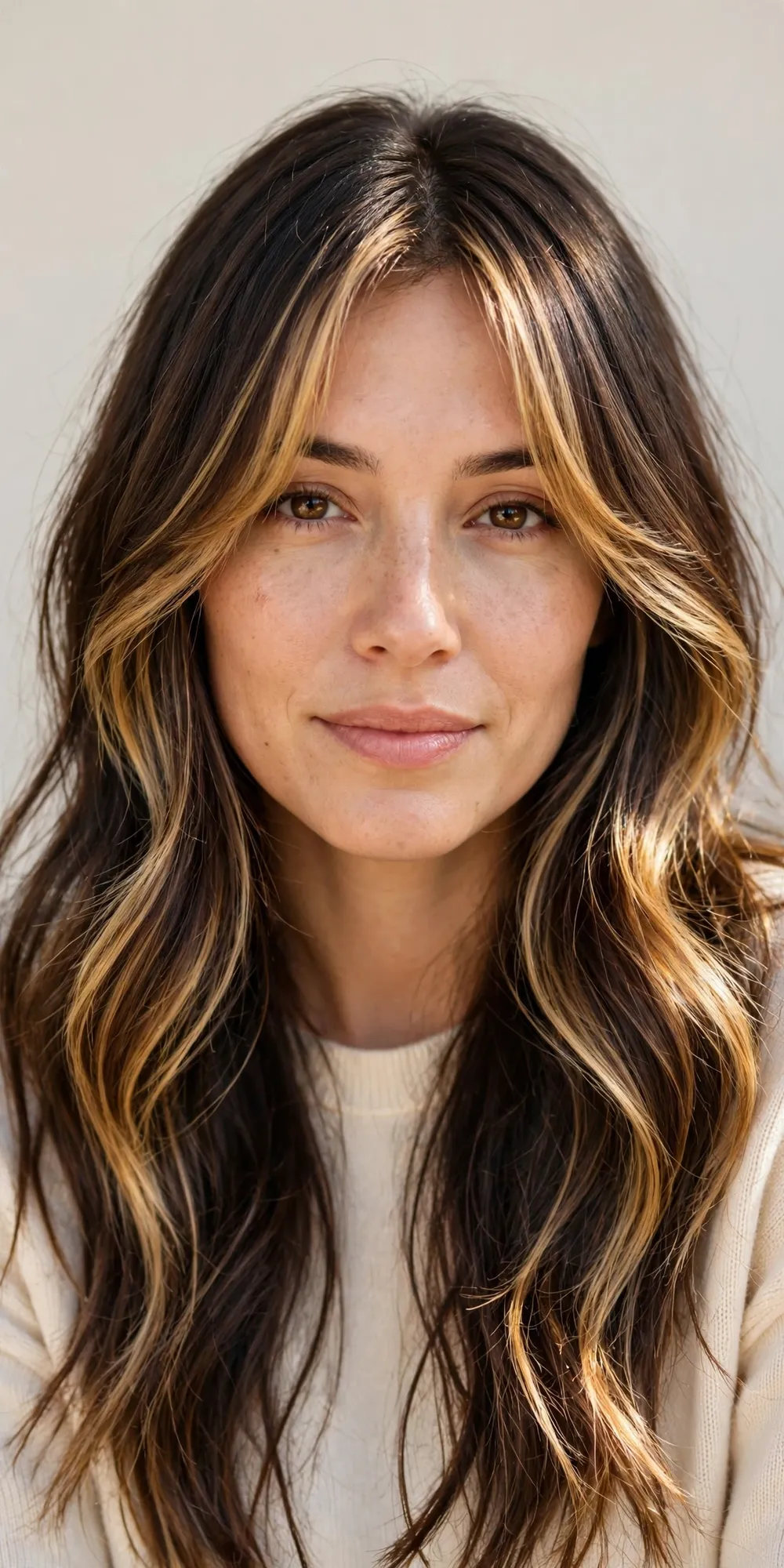
This combination does two things at once: honey highlights lift a dark base, and curtain bangs frame the face with the lightest pieces where they matter most. The contrast is striking, but the curtain bangs keep it soft and wearable. It’s a great choice for dark brown or black hair and flatters most face shapes. Ask for honey blonde highlights concentrated around the face and through the top layers, plus curtain bangs cut to cheekbone length — our guide to curtain bangs covers the cut in detail. Style the bangs with a round brush for that swept-open finish. Maintenance is moderate: the bangs need a trim every four to six weeks, and the highlights a refresh every eight to ten.
26. Golden Honey Blonde for Pale Skin
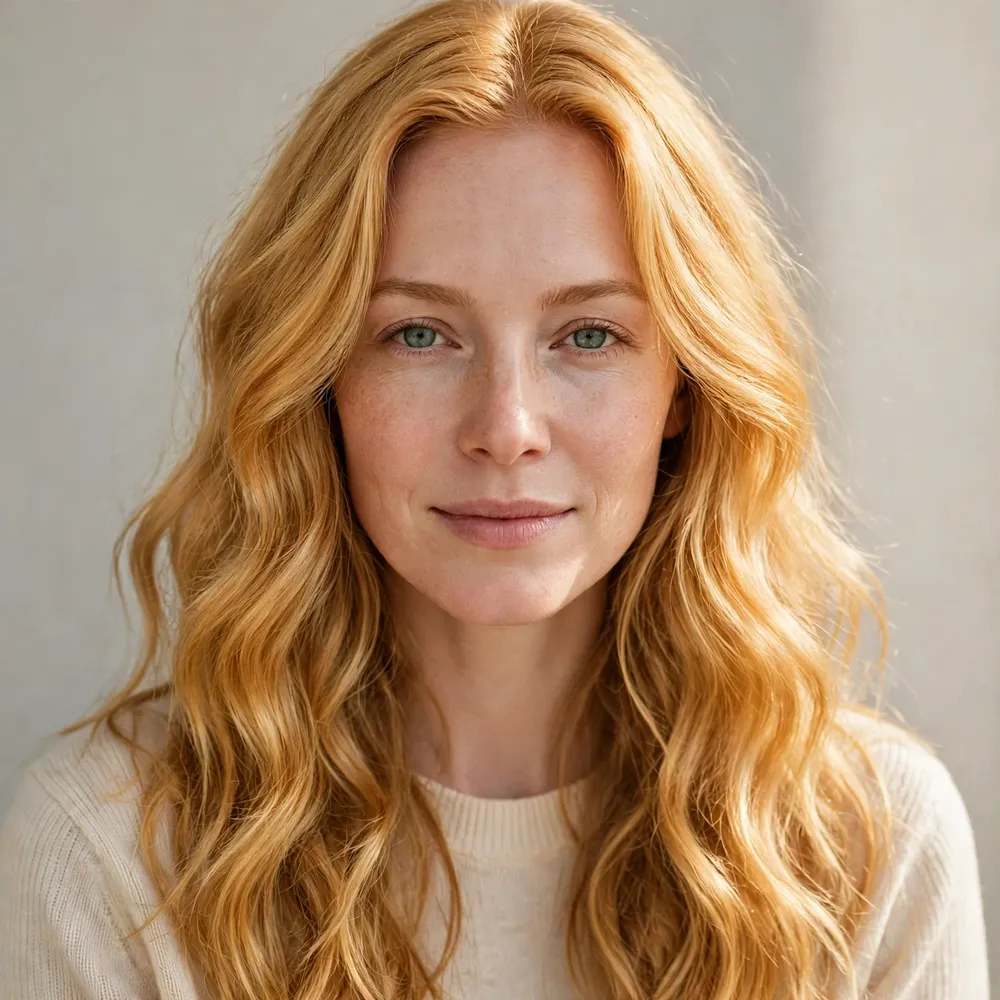
Pale skin and honey blonde work together when the shade is chosen carefully — a bright, golden honey adds warmth to the complexion rather than a dull, ashy blonde that washes it out. The golden tones bring life to fair skin, and the contrast is soft rather than harsh. Ask for a bright golden honey blonde, kept warm and glossy, with slightly lighter pieces around the face to brighten the complexion. Avoid going too dark at the root — it can make fair skin look tired. Finish with a shine spray for a healthy glow. Maintenance is moderate: the lighter shade shows regrowth faster, so root touch-ups every six to eight weeks help, and a gloss keeps the gold from dulling or turning brassy.
27. Honey Blonde for Deep Skin Tones
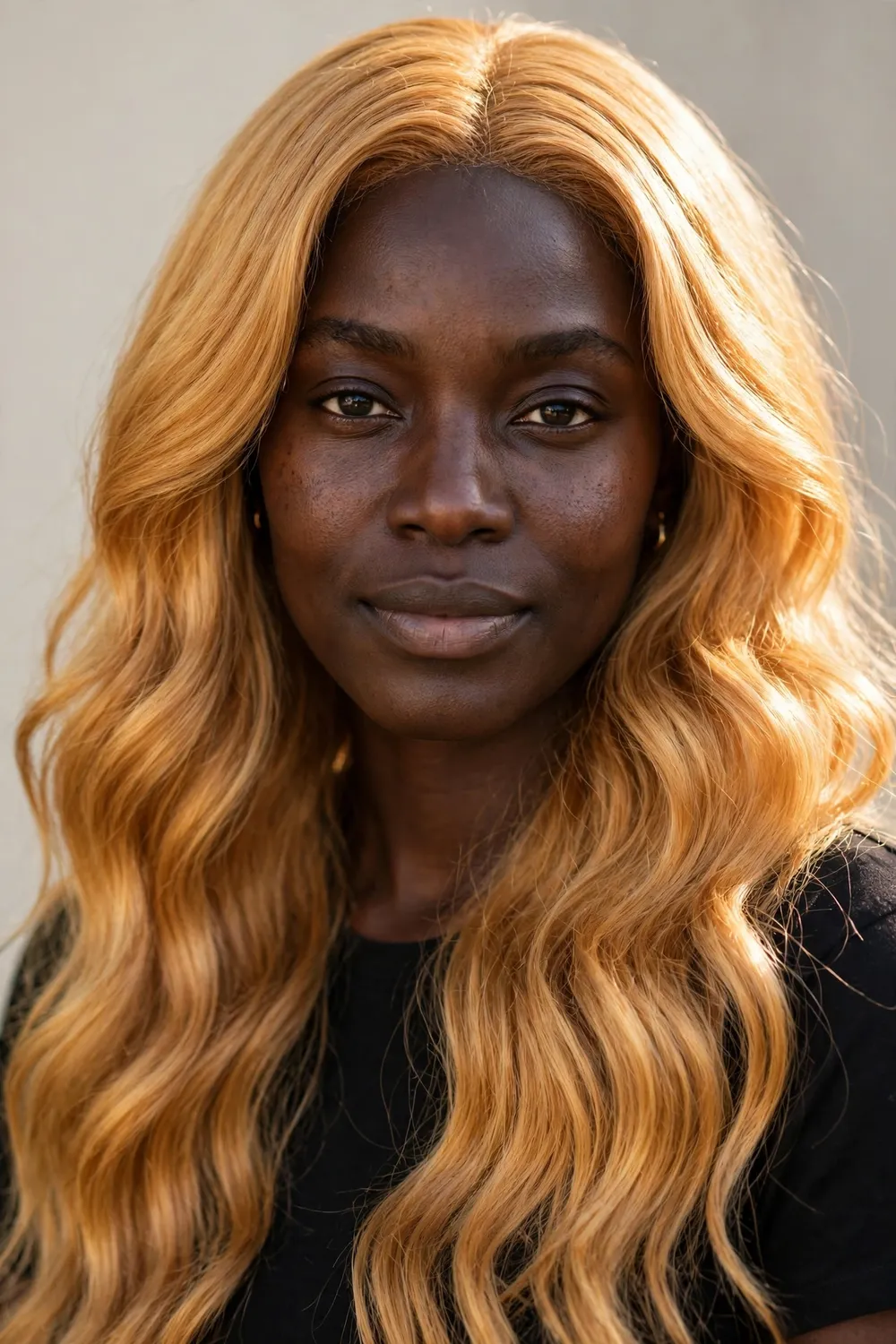
Honey blonde is genuinely stunning on deep skin — the warm golden tones pick up the skin’s natural warmth and create a glow cooler blondes can’t match. The key is richness: a honey shade with depth, not a pale, washed-out blonde. Ask for a rich, warm honey blonde with golden dimension, either all-over colour or balayage over a darker base. Keep the tone golden rather than ashy, and add a gloss for shine. It works on straight, wavy and curly hair alike. Maintenance is moderate: a gloss every six weeks keeps the gold luminous, and deep conditioning matters because lifting darker hair can dry it out. Used with a good mask, this shade stays vibrant for weeks.
28. Honey Blonde for Olive Skin
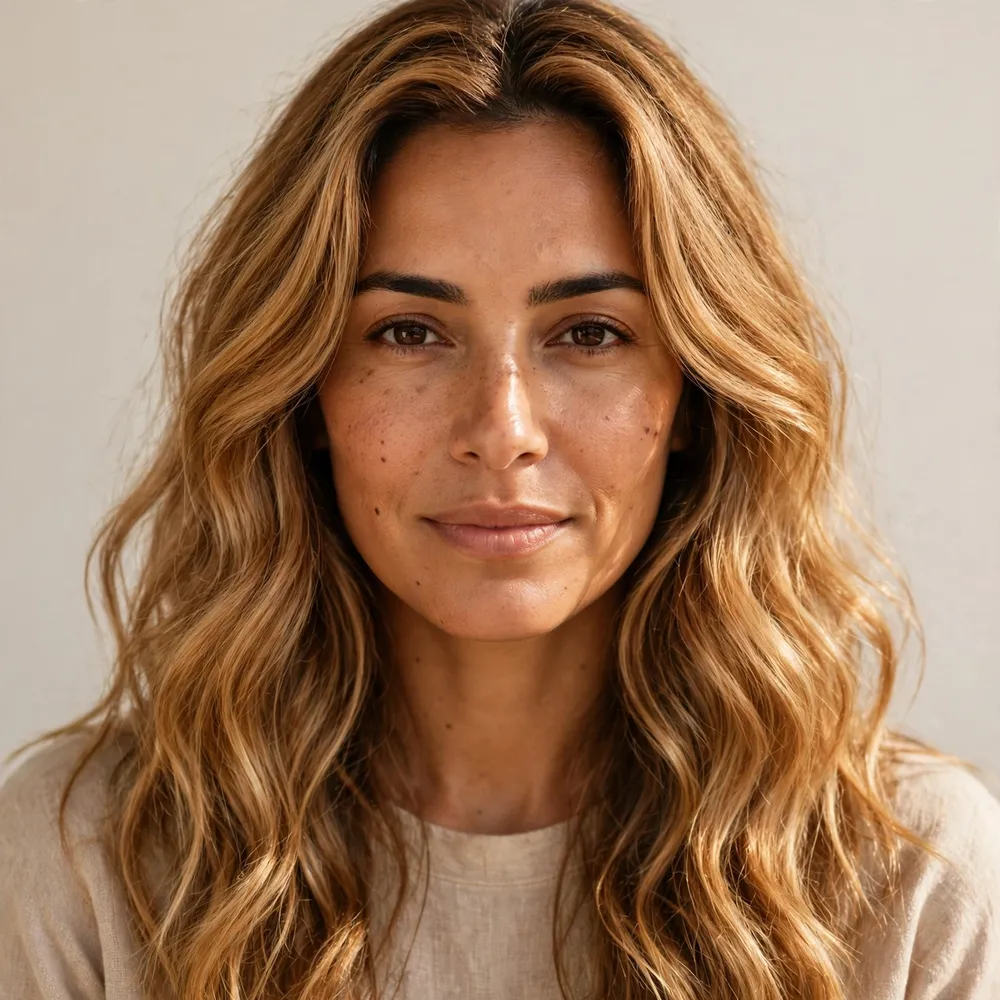
Olive skin has greenish undertones that can clash with the wrong blonde, but honey blonde’s warmth balances them — the gold neutralises the green and leaves the complexion warm and even. It’s one of the most flattering blonde shades for olive skin, especially a slightly deeper, richer honey rather than a pale one. Ask for a warm honey blonde with a golden gloss, keeping the colour rich through the mid-lengths and brighter around the face. Avoid overly ashy tones — they can make olive skin look sallow. Finish with soft waves and a shine serum. Maintenance is low to moderate: a gloss every six to eight weeks holds the warmth, and purple shampoo used sparingly — once a fortnight — keeps brassiness away without cooling the gold.
29. Honey Blonde Caramel Highlights for Tan Skin
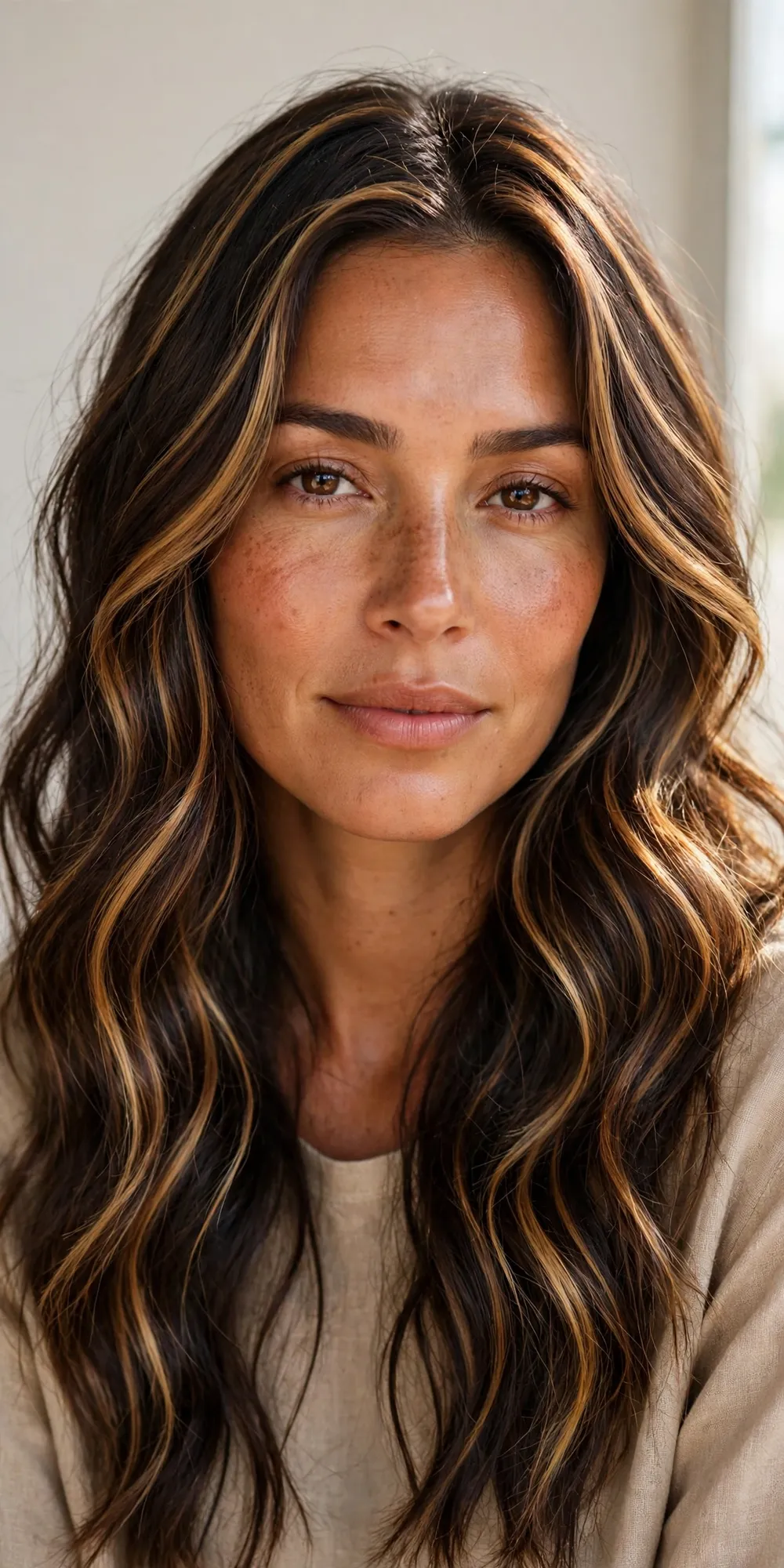
Tanned skin and caramel-honey highlights are a natural match — the warm golden ribbons echo a tan and make the whole look sun-kissed rather than coloured. The caramel adds depth to the honey so the colour reads rich, not flat, and it looks incredible in summer light. Ask for caramel and honey highlights woven through your base, slightly bolder at the ends for a sun-lightened effect. A warm-toned gloss ties the two shades together. Finish with beachy waves and a texturising spray. Maintenance is easy: the warm tones fade gracefully, so a gloss every six to eight weeks is enough and the highlights grow out softly. Remember sun protection for your hair — UV fades warm colour faster than you’d think.
30. Honey Blonde Curly Hair
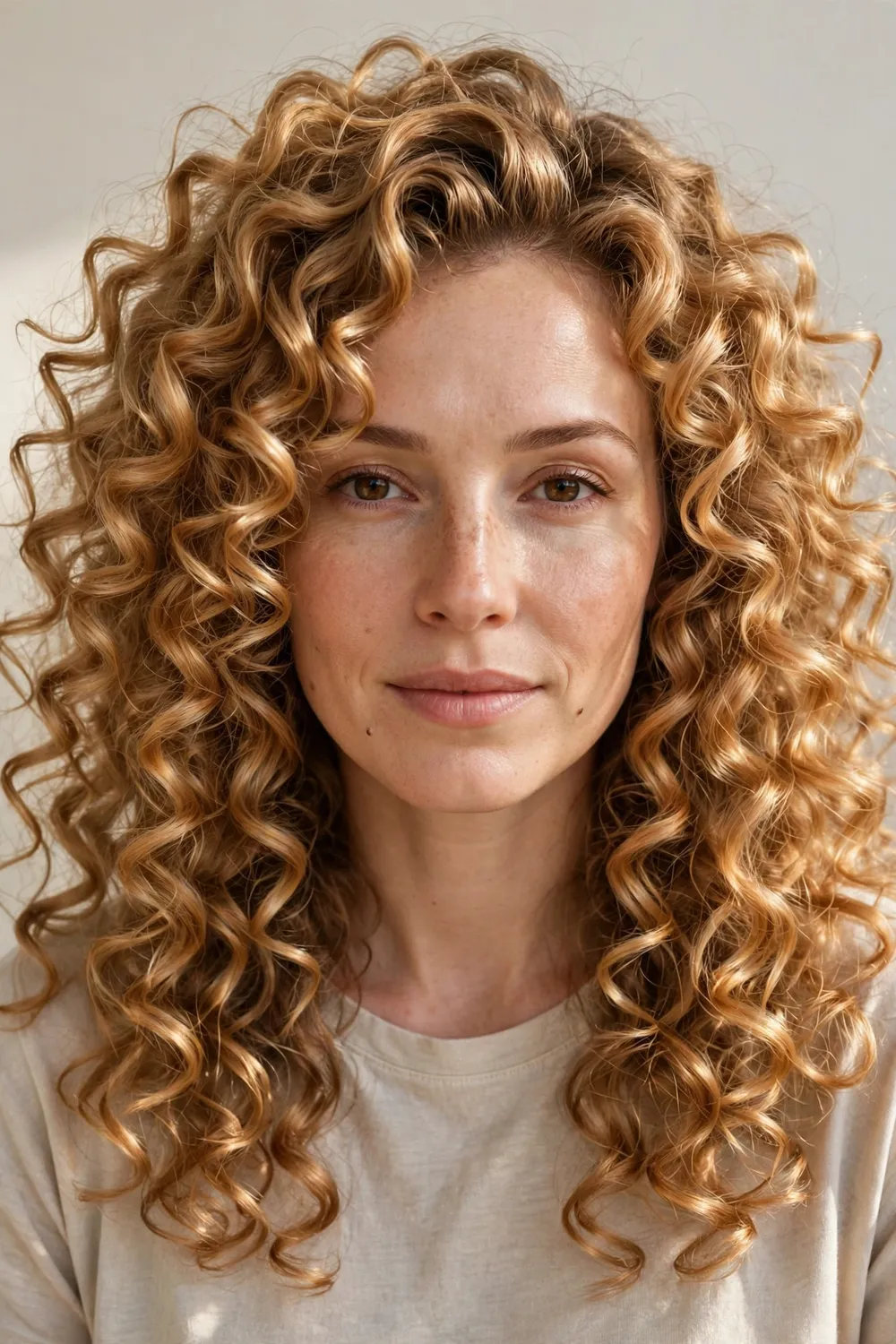
Honey blonde on curly hair is pure dimension — every curl catches the light differently, so the golden tones shift and shimmer as you move. The colour also defines the curl pattern, making each curl look more distinct. It’s a beautiful choice for natural curls, but the lift does need care: curly hair is naturally drier, so the colour process has to be gentle. Ask your stylist for honey balayage or highlights painted to follow your curl pattern, and insist on a bond-building treatment during the colour service. Style with a curl cream and a diffuser for definition. Maintenance is moderate: deep-condition weekly, use a sulphate-free shampoo, and refresh the gloss every six to eight weeks. The grow-out is forgiving, since curls disguise regrowth well.
31. Honey Blonde Lob

The lob — a long bob that sits around the collarbone — is one of the easiest ways to wear honey blonde, because the shorter length makes the golden colour look dense and rich, not stretched thin. It suits fine hair especially well: the blunt ends add the illusion of thickness, and the honey tone adds warmth that stops the cut looking severe. Ask for a collarbone-length lob in honey blonde, slightly lighter at the ends, with a subtle layer or two for movement. Style it straight and sleek for a polished look, or with a bend through the ends for something softer. Maintenance is low: trims every six to eight weeks keep the shape sharp, and an occasional gloss keeps the gold glowing.
32. Honey Blonde Ribbon Highlights
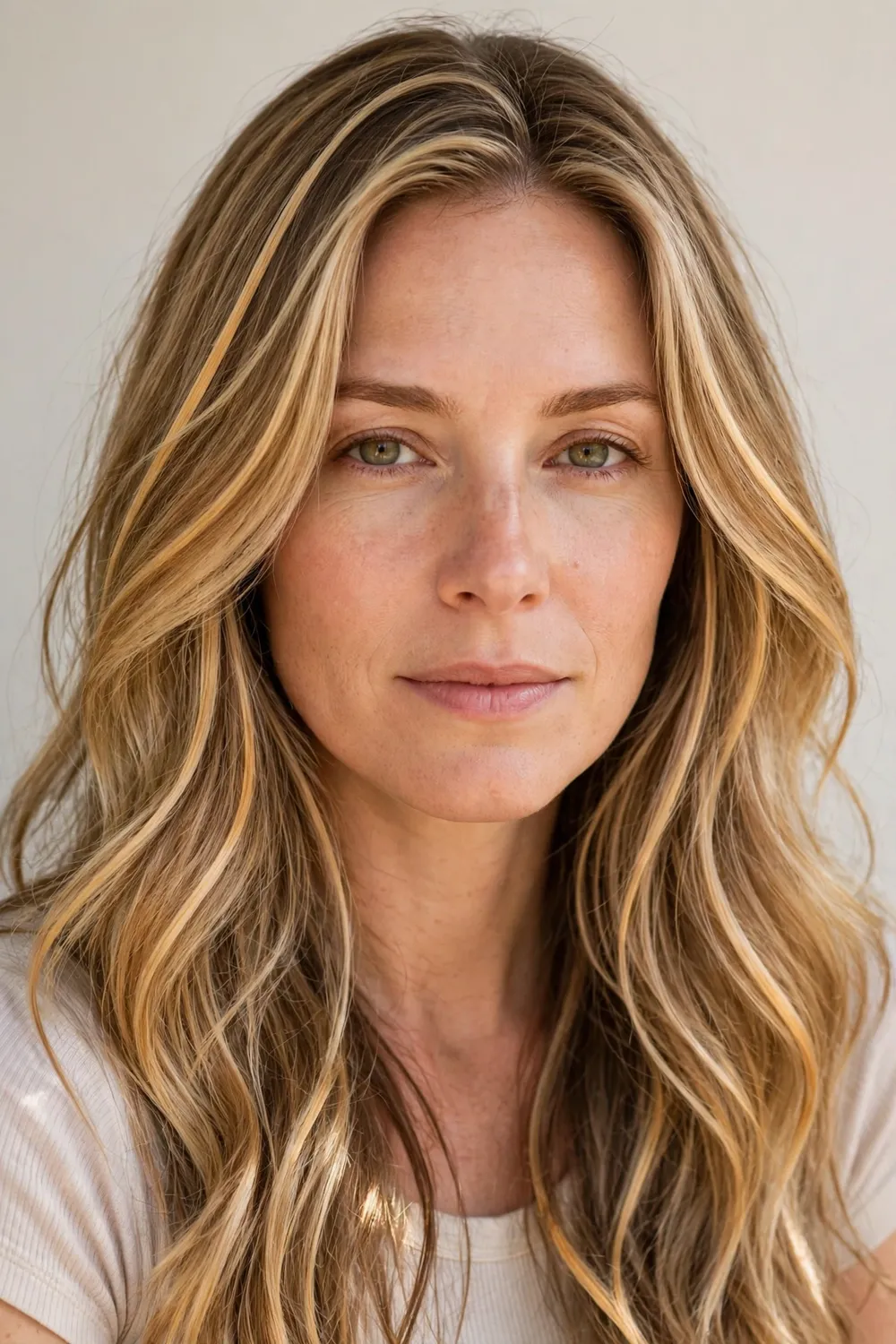
Ribbon highlights are fine, deliberate streaks of golden blonde running through the hair like ribbons — more defined than balayage, softer than chunky highlights. The effect is a striped, dimensional look that catches the light with every movement, and it works beautifully on long hair where the ribbons have room. It suits straight and wavy hair best, since the ribbons stay visible rather than disappearing into curls. Ask for fine ribbon highlights in a warm honey tone, spaced evenly through the hair, with a brighter ribbon framing the face. If you’re comparing techniques, our balayage guide explains how ribbon highlights differ from a painted finish. Finish with a smooth blow-dry and shine spray. Maintenance is moderate: a gloss every six weeks and a refresh every ten keeps the ribbons crisp.
How to keep honey blonde from going brassy
Brassiness is the one thing that can turn a beautiful honey blonde into a shade you didn’t ask for. The good news is that it’s entirely preventable with a few habits.
- Use purple shampoo once a week. It neutralises the yellow and orange tones that creep in as the colour fades. Don’t overdo it — more than twice a week can dull the honey warmth you’re trying to keep.
- Book a gloss every six to eight weeks. A toner or gloss refreshes the tone, adds shine, and seals the cuticle so the colour lasts longer. It’s the single most effective appointment you can book between colour sessions.
- Protect your hair from the sun. UV light oxidises blonde and pushes it brassy fast. Wear a hat in strong sun, or use a leave-in with UV protection before a long day outside.
- Wash less, and wash cooler. Hot water opens the cuticle and lets colour escape. Wash two or three times a week with lukewarm water and a colour-safe, sulphate-free shampoo.
- Time your salon visits. Don’t wait until the brassiness is obvious — book your gloss before the tone starts to shift, and keep a regular colour schedule so the lift never gets patchy.
5 mistakes to avoid with honey blonde hair
- Going too light in one session. Lifting dark hair to honey blonde in a single appointment often means over-processing and breakage. Build the colour up over two sessions instead — your hair will thank you.
- Skipping the toner. Freshly lightened hair is raw and yellow until it’s toned. Leaving the salon without a toner is the fastest route to brassy, uneven colour.
- Using the wrong shampoo. Regular shampoos with sulphates strip colour and dry the hair out. Switch to a colour-safe formula the day you get coloured, not a month later.
- Overusing purple shampoo. It feels like the fix for brassiness, but used too often it turns honey blonde grey and dull. Once a week is enough; a gloss does the rest.
- Colouring over box dye without telling your stylist. Box dye, especially dark or black, reacts unpredictably with lightener and can turn hair orange or patchy. Always tell your stylist what’s already on your hair — there’s no judgement, only a better result.
FAQs
What skin tone does honey blonde hair suit best?
Honey blonde is one of the most versatile blonde shades because its warmth flatters most skin tones. It looks especially good on warm and neutral undertones, where the golden tones pick up the skin’s natural warmth, but it can work on cool skin too if the shade is kept bright and glossy rather than dull. The trick is matching the depth — richer honey for deeper skin, brighter golden honey for fair skin — rather than worrying about a single “right” tone.
Is honey blonde warm or cool?
Honey blonde is a warm shade. It sits in the golden family, with yellow and amber undertones that give it that sun-kissed glow. That said, it can be cooled down with an ash gloss or a smoky toner, as in the ash honey blonde look, which keeps the honey depth while muting the warmth. If you’re unsure which direction suits you, ask your stylist to show you swatches in natural light before committing.
Does honey blonde hair need bleaching?
It depends on your starting colour. If your hair is already light brown or dark blonde, your stylist can often reach honey blonde with high-lift colour and no bleach. If your hair is dark brown or black, lightener is needed to lift the hair enough for the golden tone to show — otherwise the colour will look muddy or barely visible. Either way, a bond-building treatment during the process protects the hair, and a good stylist will lift gradually rather than forcing it in one session.
How do I keep honey blonde from turning brassy?
The three habits that matter most are purple shampoo once a week, a salon gloss every six to eight weeks, and sun protection. Wash with lukewarm water and a colour-safe shampoo, and avoid over-washing, which strips the tone faster. If brassiness does appear between appointments, a toning gloss at the salon will correct it in one visit — don’t try to fix it with extra purple shampoo, which can dull the honey warmth.
How often should honey blonde highlights be touched up?
It depends on the technique. Rooted and balayage-style honey blonde can go ten to twelve weeks between appointments because the darker root hides regrowth. Foil highlights and all-over honey blonde need a touch-up every six to eight weeks, since regrowth shows sooner. A gloss in between keeps the tone fresh without a full colour session. If you’re weighing techniques, our blonde highlights guide breaks down how often each one needs attention.
Can honey blonde work on dark brown hair?
Yes — honey blonde is one of the best blonde shades for dark brown hair, because the warm golden tones blend naturally with a dark base instead of fighting it. Balayage, foilayage and rooted highlights all work well, since they leave some of the dark base visible and grow out gracefully. The lift does need to be done carefully, usually over two sessions, with a toner to keep the result golden rather than orange. Done right, it’s a low-maintenance way to go lighter.
What is the difference between honey blonde and caramel blonde?
Honey blonde is lighter, brighter and more golden, with a sun-kissed quality that reads clearly as blonde. Caramel blonde is deeper and browner, sitting closer to light brown with warm, toffee-like tones. Think of honey as the blonde end of the spectrum and caramel as the brunette end. They blend beautifully together — many of the looks in this guide pair the two — but if you want a shade that photographs as blonde, honey is the one to ask for. If you’re drawn to warmer, deeper colour, our red hair color ideas guide covers the richer end of the warm spectrum.
Final Word
Honey blonde earns its popularity honestly — it’s warm without being brassy, bright without being high-maintenance, and it suits more people than almost any other blonde shade. Whether you go for a soft balayage, a bold money piece or a full golden transformation, the key is choosing the depth that flatters your skin tone and finding a stylist who tones as carefully as they lift. Take your time, save the look that speaks to you, and explore more hair colour guides on our blog when you’re ready for your next change.