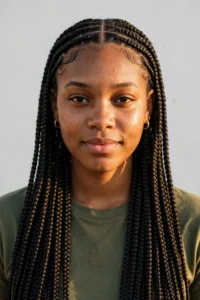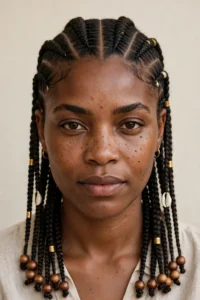



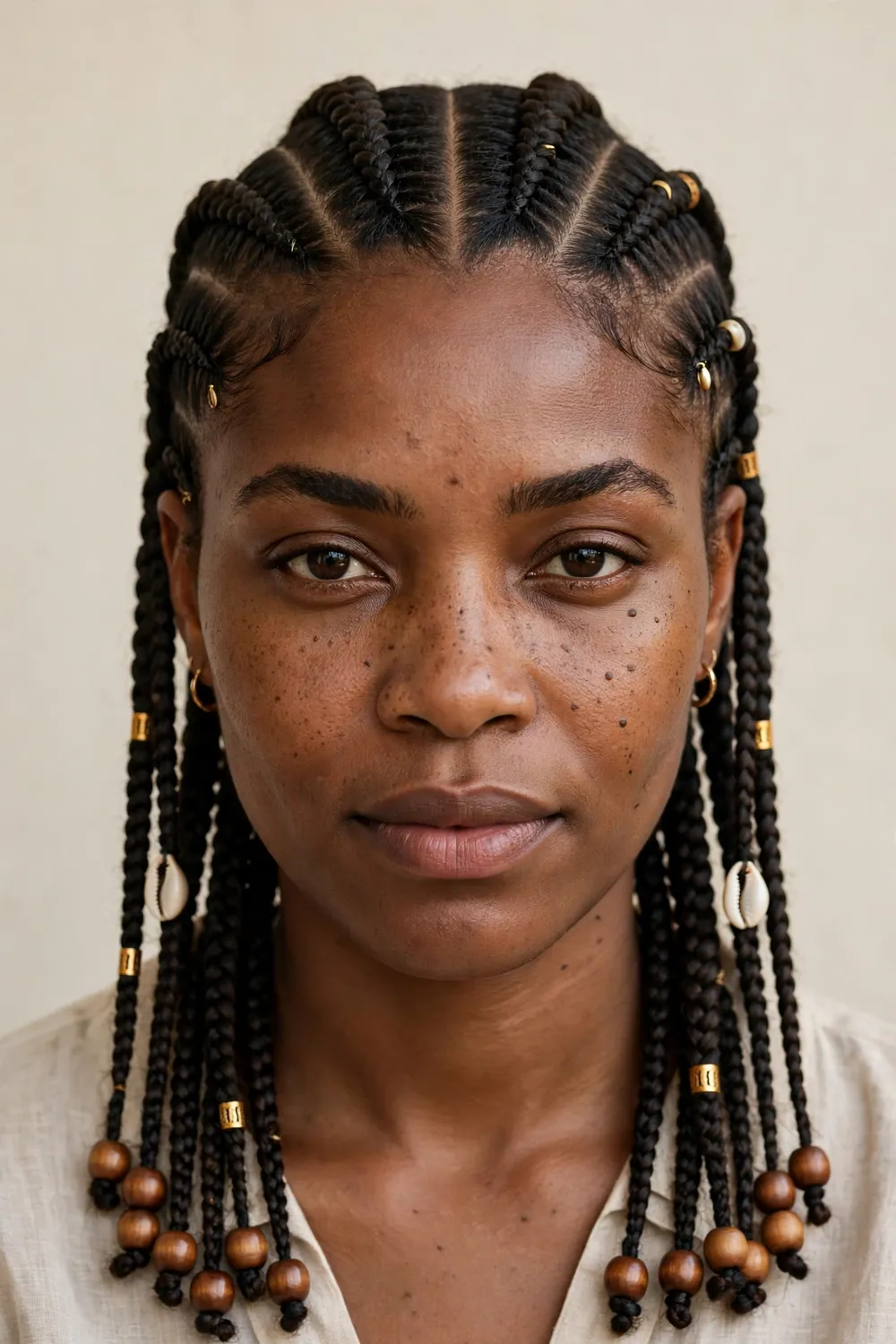
Fulani braids are cornrows braided forward on either side of a centre part, finished with beads, cuffs or cowrie shells — and they are one of the easiest protective styles to make your own. If you want the shortlist first: the Classic Center Cascade is the timeless starting point, the Waist-Length Goddess is the show-stopper for special occasions, and the Workweek Set is the one you will actually live in day to day. The 28 styles below cover heritage looks, glam upgrades and genuinely low-effort everyday sets, so you can pick by occasion, hair length and how much upkeep you are honestly willing to do.
Which Fulani Braids Style Should You Pick?
| Occasion | Best pick | Why it works |
|---|---|---|
| Work | Workweek Set | Neat centre part, medium length, zero morning effort |
| Wedding / ceremony | Waist-Length Goddess | Extra length and crystal cuffs photograph beautifully |
| Festival / party | Burgundy Blaze | Rich colour and movement that stands out in a crowd |
| Gym | Gym-Friendly Wrap | Braids coil flat into a bun that stays put through workouts |
| Vacation | Protective Pause | Clean cornrows, no accessories to lose, pure hair rest |
| Kids | Fulani Braids for Kids | Gentle tension and colourful beads, school-friendly |
1. Classic Center Cascade
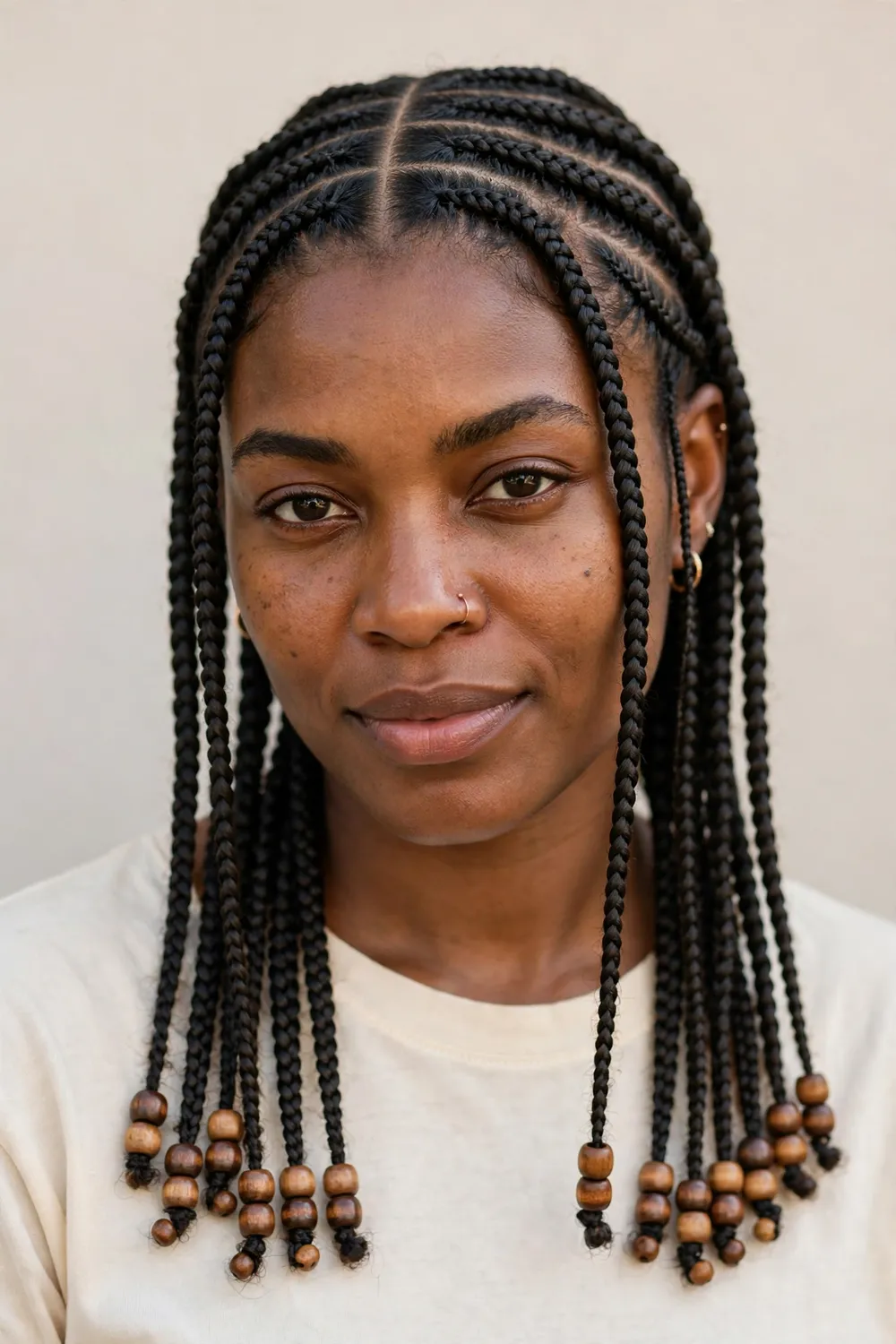
This is the style everything else is built on: five neat cornrows braided forward on each side of a crisp centre part, with wooden beads threaded onto the ends. It suits just about everyone — medium to thick natural hair holds the pattern best, it works from shoulder length down, and the centre part flatters most face shapes. Ask your stylist for five forward cornrows per side, a clean centre part, and wooden beads in a warm tone that matches your skin. A little shea butter on the parts keeps the finish soft. Maintenance is easy: tie it down with a silk scarf at night, oil your scalp twice a week, and expect three to four weeks before the edges soften.
2. Cowrie Crown

Cowrie shells carry real history in Fulani culture, and this style puts them front and centre — literally. Shells are woven along the centre part and scattered through the forward cornrows, so the look reads as heritage, not costume. It works best on medium to long hair, where there is enough braid to carry the shells without pulling, and it suits anyone who wants meaning over trend. Ask your braider for cowrie shells sewn or looped along the centre part, not just glued on, so they stay secure. A little braid gel on the parts keeps everything defined. Shells add weight, so take them out at night if your scalp feels tender, and plan on two to three weeks of wear.
3. Gold Cuff Rows
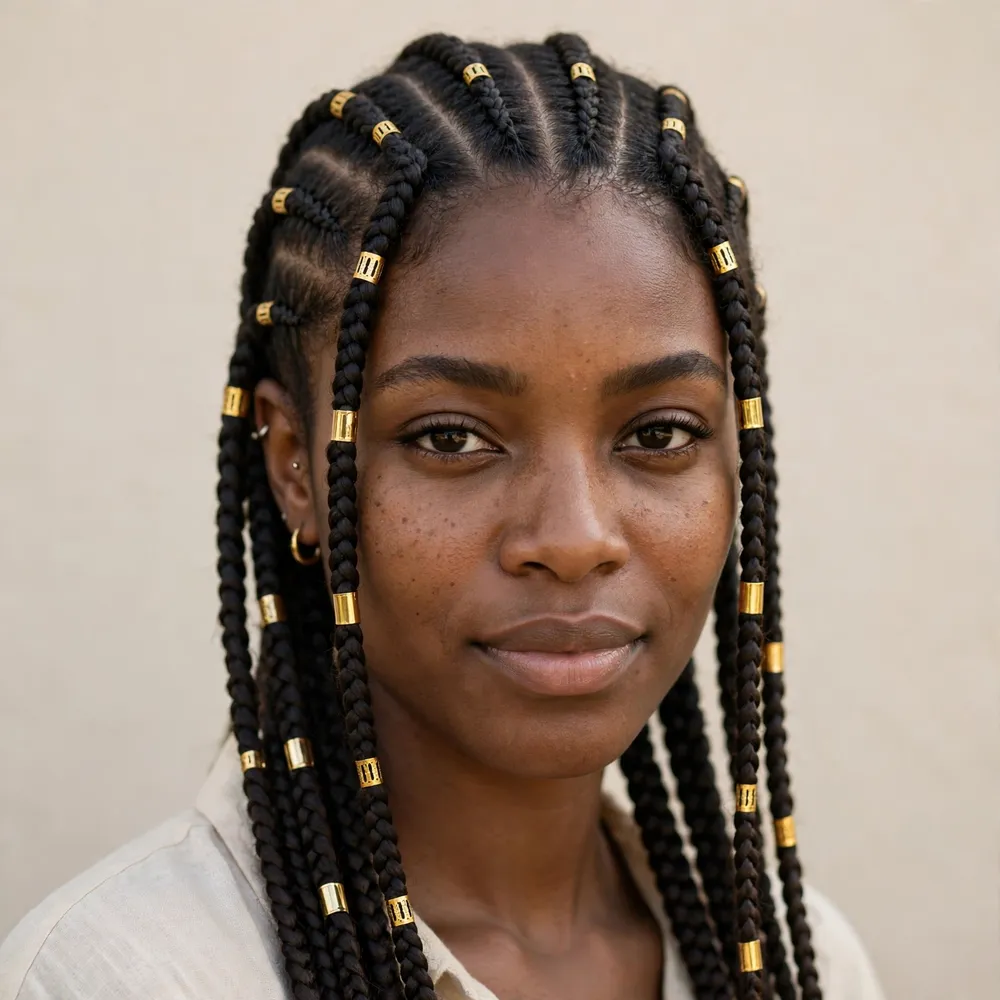
Slim gold cuffs spaced evenly down each braid turn a simple set of cornrows into something that catches the light every time you move. The look is quietly expensive rather than loud, which makes it a strong pick for anyone who likes jewellery but not fuss. It suits medium to long hair best — very short braids leave nowhere for cuffs to sit — and warm metal flatters deep skin tones. Ask your stylist for slim cuffs, roughly one every couple of inches, matching your usual jewellery. A braid sheen spray gives the cornrows a polished gleam without greasiness. The cuffs slide off for washing, so maintenance is simple: remove a few before shampooing, dry thoroughly, and re-clip. Expect three to four weeks of wear.
4. Forward Fall
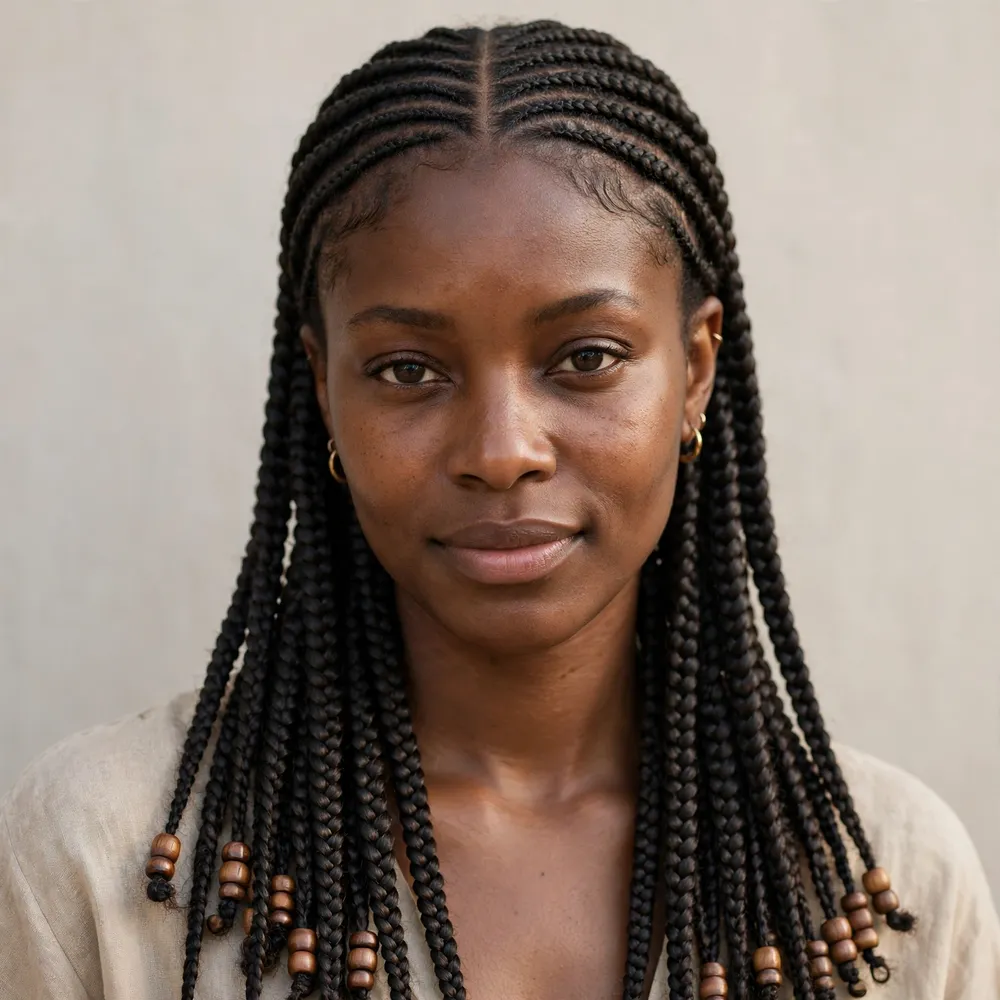
Every braid in this style is directed forward over the shoulders, which gives it a soft, face-framing fall. It is a good choice if you like wearing your hair down but want it out of the way at the back — no braids catching on collars. It suits oval and long faces especially well, since the forward fall shortens the face, and it works from shoulder length up. Ask your braider to direct all the cornrows forward from the crown rather than angling them back. Finish with light mousse to keep flyaways down. At night, gather the braids loosely to one side under a bonnet. It lasts three to four weeks, though the front rows loosen first, so budget for an edge touch-up around week two.
5. Beaded Temple Strands
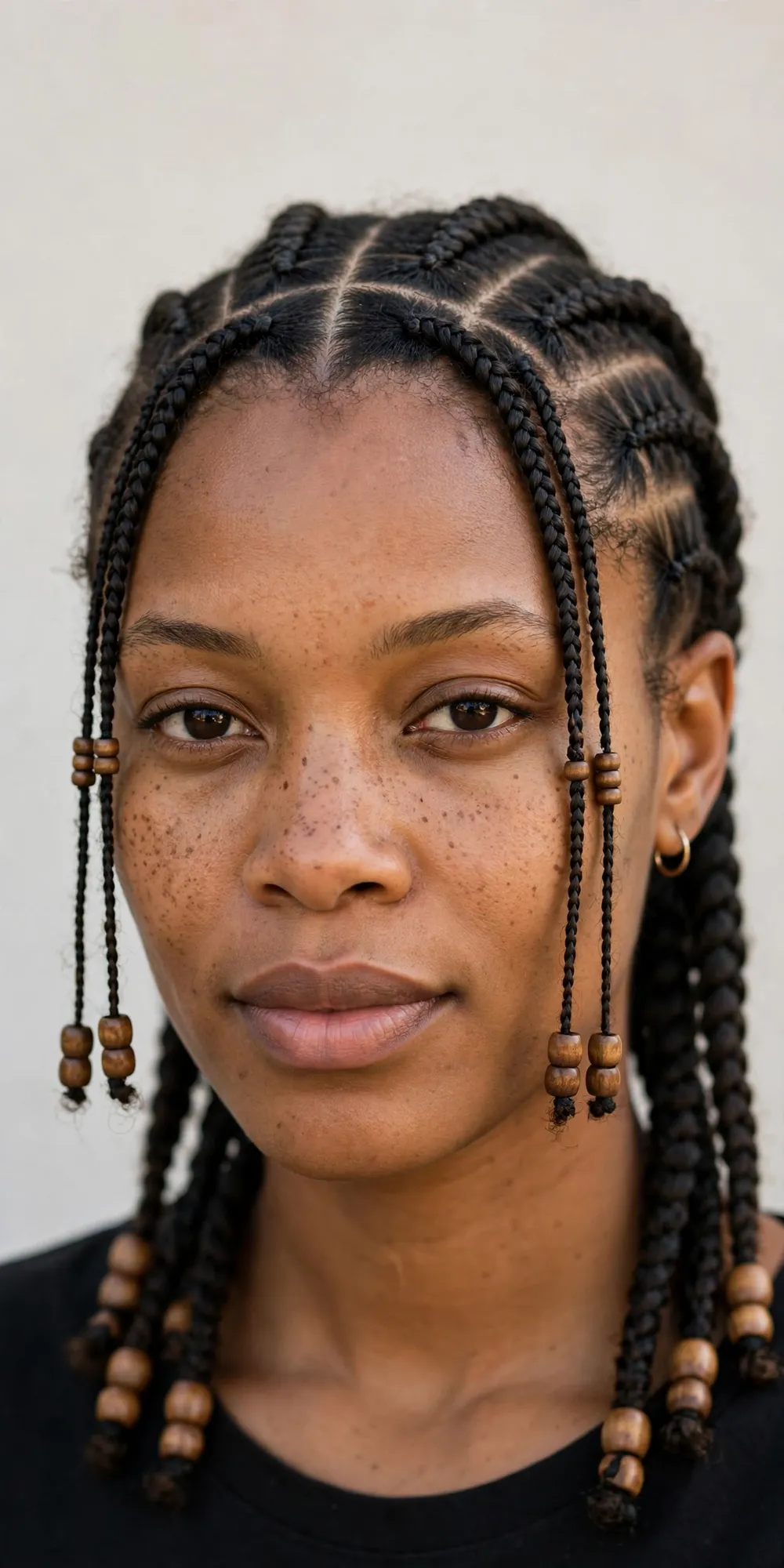
Two thin beaded braids at each temple do most of the work — they frame the face and let the rest stay simple. It is a lovely middle ground if you love beads but not all over your head. It suits fine to medium hair, because the temple strands are light and do not drag, and it flatters square and round faces. Ask your stylist for two slim braids at each temple with small beads — wood or glass — and keep the main cornrows clean. Edge control smooths the hairline without stiffness. Maintenance is light: the temple beads come off easily for washing, and the set holds about three weeks. Just check the beads are not rubbing your forehead.
6. Heritage Updo
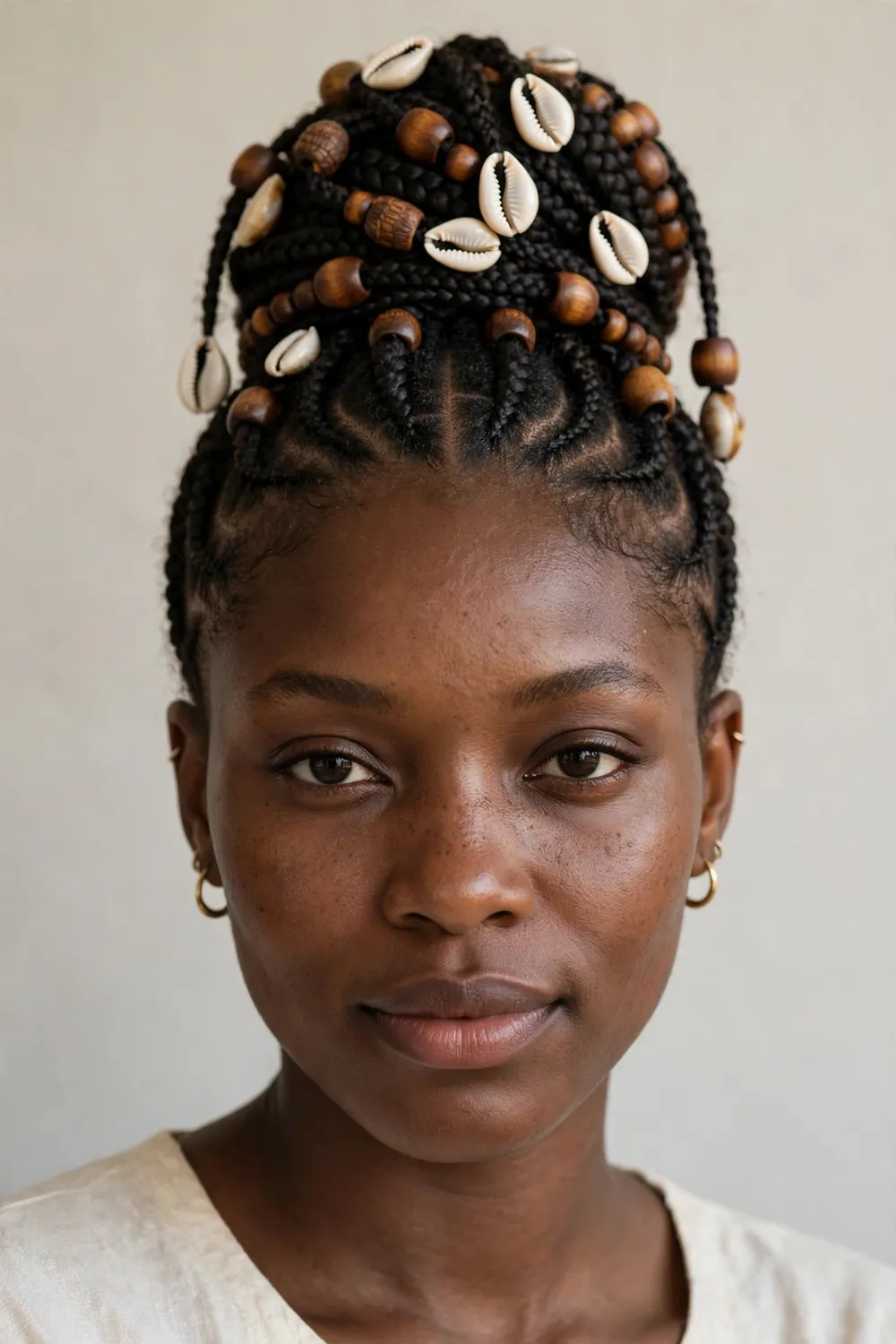
The Heritage Updo gathers Fulani cornrows into a high wrapped bun, shells placed where they show — formal, sculptural and unmistakably rooted in tradition. Book it for weddings, ceremonies or any event where you want your hair up. It suits medium to long hair, since the bun needs length, and the height elongates round faces. Ask your stylist for cornrows directed upward into a wrapped bun, with shells secured at the front of the wrap. A firm-hold gel on the parts and a braid spray for shine finish the look. It is not an everyday style — the bun’s weight means you will want it down by evening — but for one event it is superb, and the cornrows underneath re-style for another two weeks.
7. Ancestral Mix
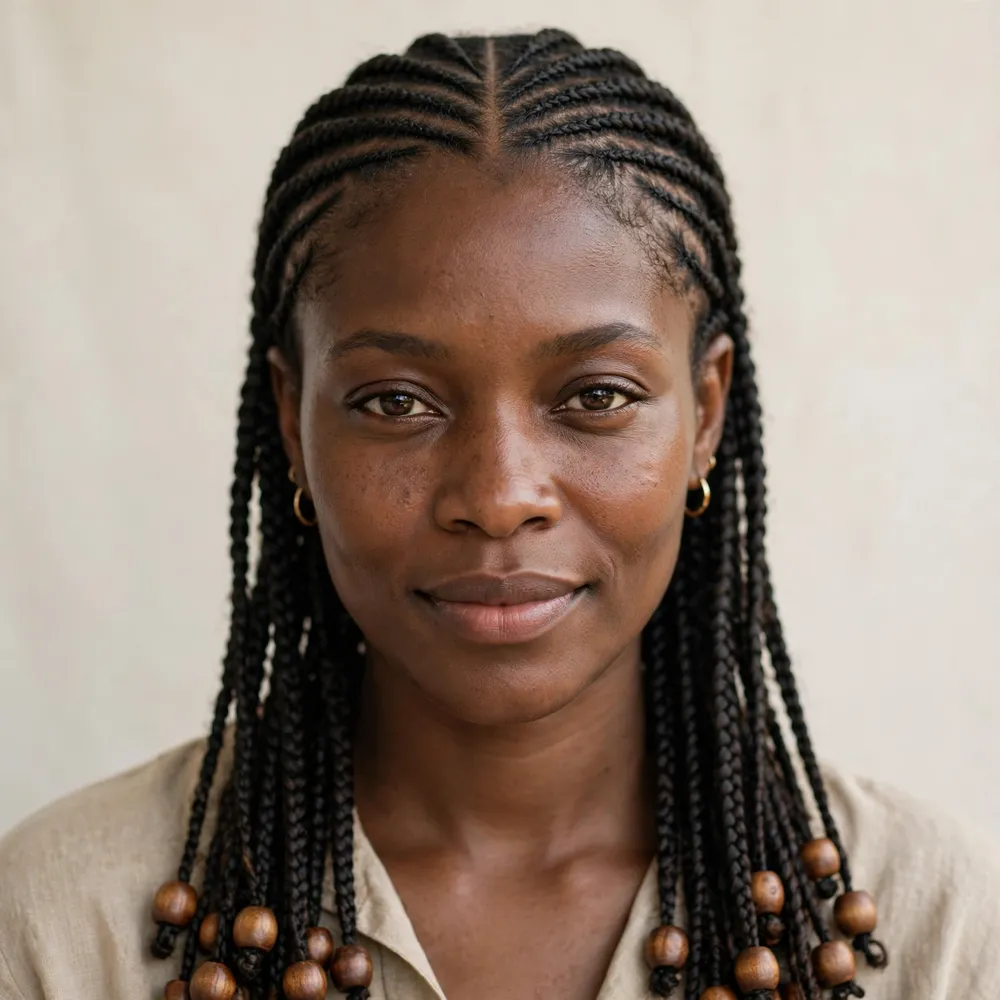
This style blends two traditions: neat Fulani cornrows in front, loose full braids behind. The result feels both structured and free, which is why it photographs well from every angle. It suits thick hair best — the loose braids at the back need volume to look full — and it works on anyone who finds all-cornrow styles a bit severe. Ask your braider for forward cornrows through the front half, transitioning into individual box-style braids at the back. A braid spray keeps the cornrows glossy while the loose braids stay soft. Maintenance is moderate: gather the back braids into a loose ponytail nightly, and the front cornrows will need attention after about two weeks. Overall wear runs three to four weeks.
8. Waist-Length Goddess
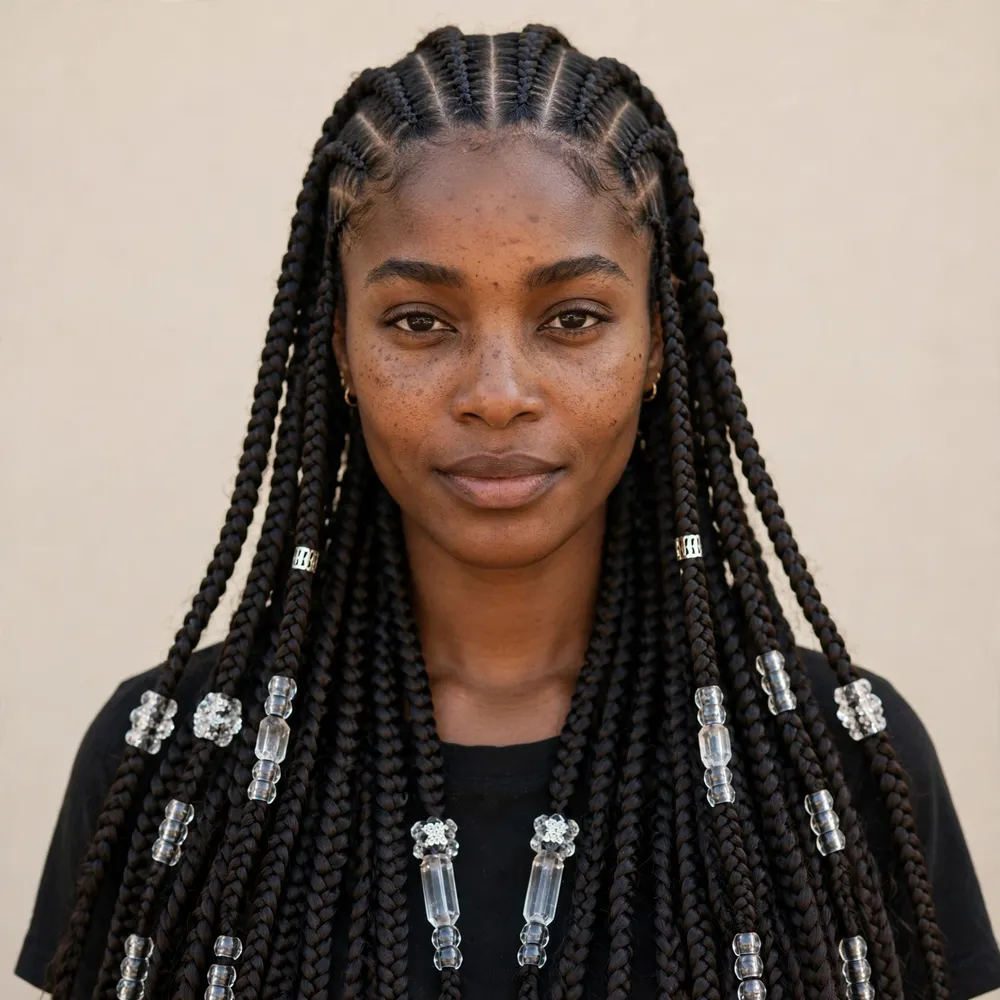
Extra-long feed-in braids, crystal cuffs and waist length — this is the show-stopper of the list. It is unapologetically dramatic, and earns its place at weddings, photoshoots and any night you want to be remembered. It suits long natural hair or anyone happy to sit for a longer install with added braiding hair; the length elongates the neck. Ask your stylist for feed-in braids with a gradual taper and crystal cuffs through the lengths. A shine spray is essential — long braids show dullness fast. Be honest about the commitment: the install takes hours, the weight is real, and you will need a silk pillowcase and a loose nightly braid. With care, it holds four to five weeks, but your neck will tell you when it is time.
9. Burgundy Blaze

Deep burgundy braiding hair woven through classic Fulani cornrows gives you colour without dyeing your own hair. The shade is rich rather than loud — wine-red in daylight, almost black indoors — so it works far beyond festival season. It suits warm and deep skin tones particularly well, and it works on any length that can hold a cornrow. Ask your braider for burgundy braiding hair fed in gradually so the colour deepens toward the ends, not a flat block of red. A colour-safe braid spray keeps the tone from looking dusty. Maintenance matches any Fulani set, with one extra note: fresh burgundy can stain light pillowcases, so use a dark bonnet the first week. Expect three to four weeks of wear.
10. High Ponytail
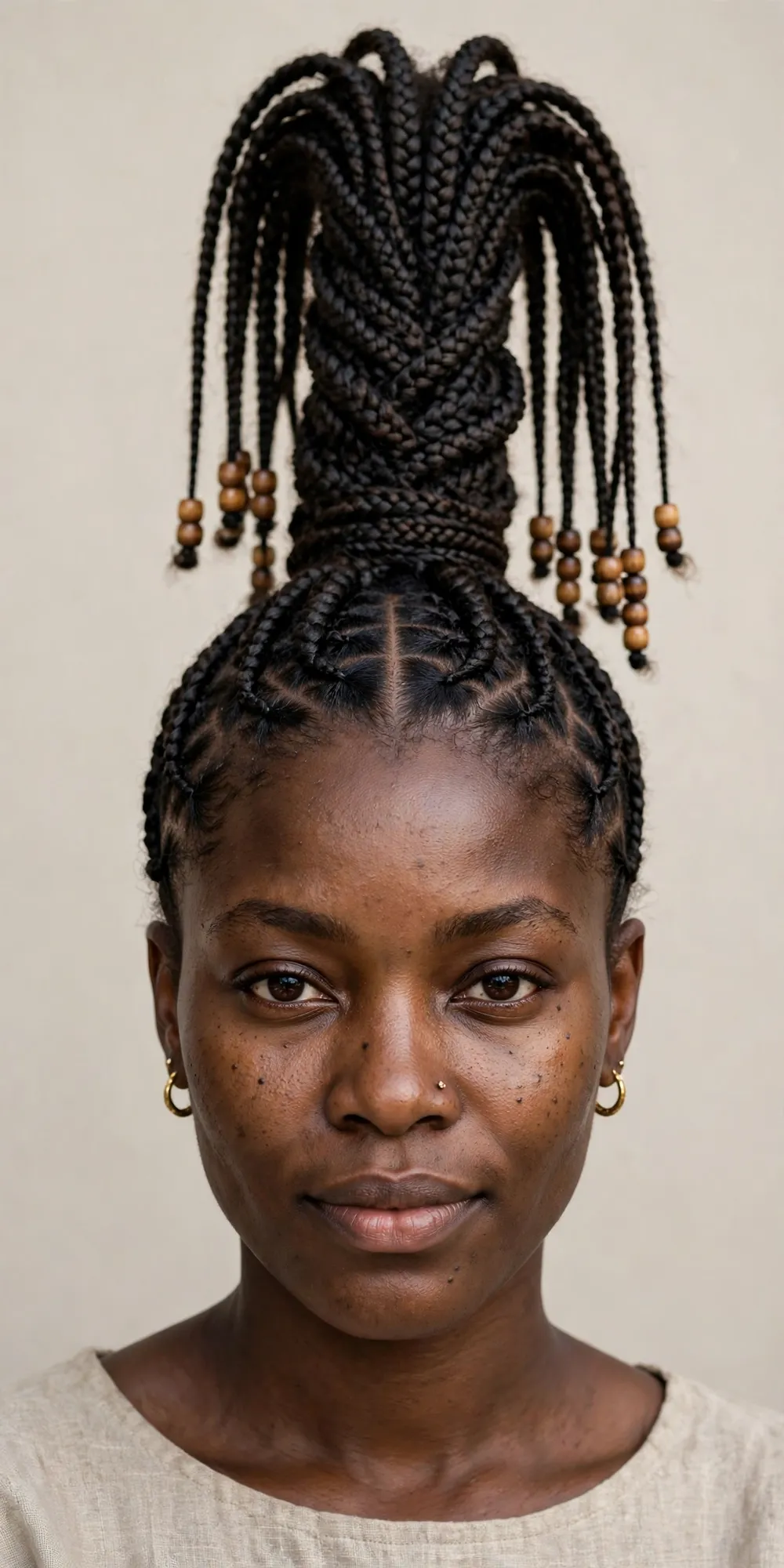
Fulani cornrows swept into a soaring braided ponytail give you height, movement and a face that looks instantly lifted. It is a brilliant party style, and practical too when you want your hair completely off your neck. It suits oval and heart-shaped faces best — the height balances a wider jawline — and it needs medium to long hair to build a ponytail with real presence. Ask your stylist for cornrows directed upward into a high ponytail, secured firmly but not painfully tight, with a braid wrapped around the base to hide the band. Edge control and a shine spray finish it. The ponytail’s weight makes this a one-to-two-day style at its best; afterwards, take it down and wear the cornrows loose for another two weeks.
11. Silver Thread Weave

Metallic silver thread wrapped along a few select braids adds a cool shimmer to the classic Fulani silhouette — jewellery woven into the hair. It is a smart pick if you want eye-catching that still reads elegant, and it pairs with silver jewellery and cool-toned outfits. It suits most hair lengths, since only a handful of braids carry the thread, and silver pops best against dark hair. Ask your braider to wrap thread along two or three braids per side, keeping the rest plain. A light braid spray keeps everything glossy. The thread is easy to unwind for washing, so maintenance is straightforward — just re-wrap the loosened sections. Wear runs three weeks, and the thread can be reused for your next install.
12. Ombre Sunset
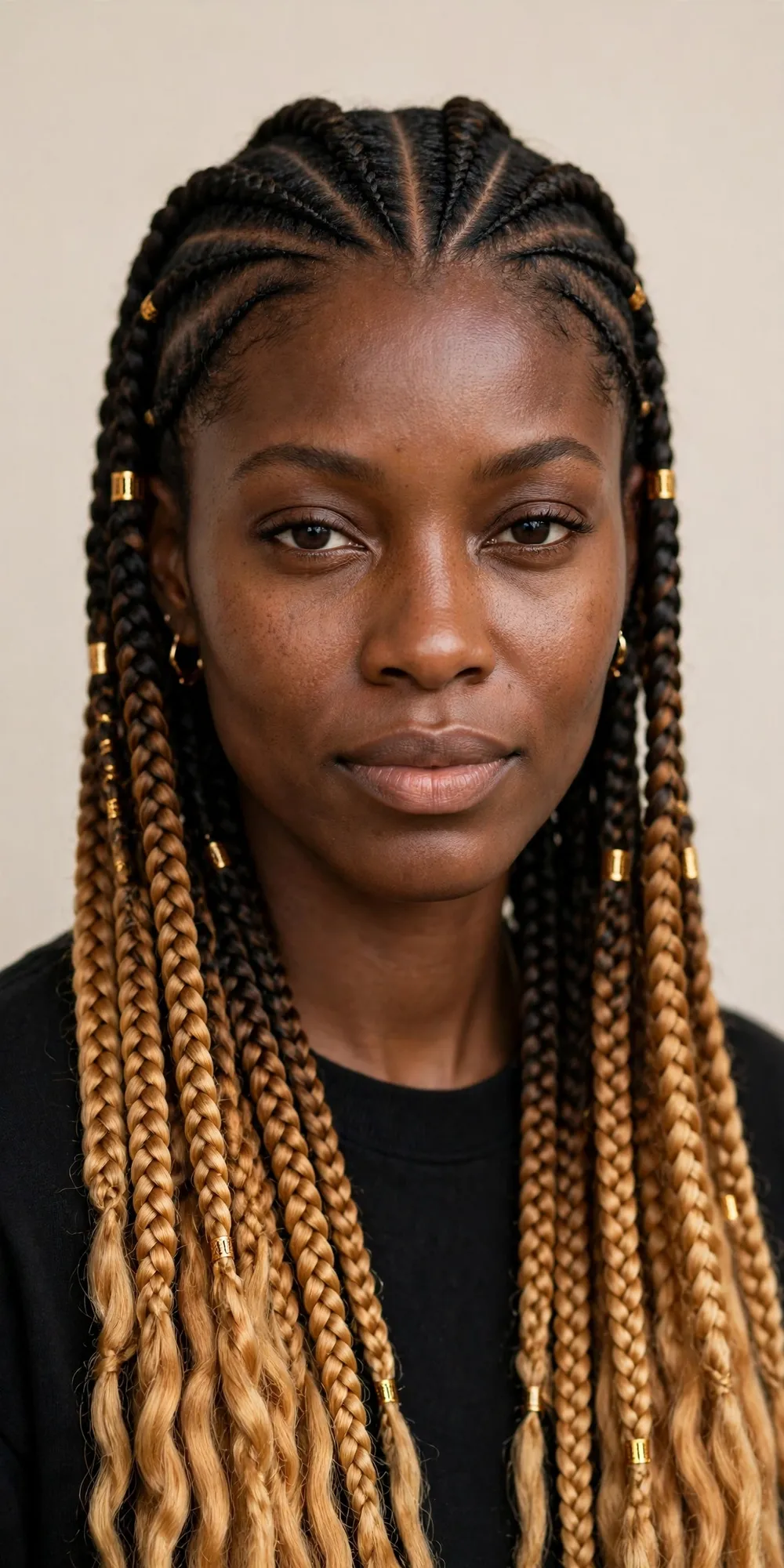
Braids fading from black roots to honey-blonde ends give you a sun-kissed gradient without bleach on your own hair. The effect is warm and soft — it reads as expensive salon colour from a distance. It suits medium to long hair, where the fade has room to develop gradually, and the honey tones flatter warm skin beautifully. Ask your stylist for ombre braiding hair with a slow transition, not a sharp two-tone line, and keep the lightest ends honey rather than platinum. A braid sheen spray keeps the lighter ends from looking dry. Maintenance is standard, though pale ends show frizz sooner, so smooth them with a little mousse at week two. Expect three to four weeks before the roots need attention.
13. Sculpted Side Sweep
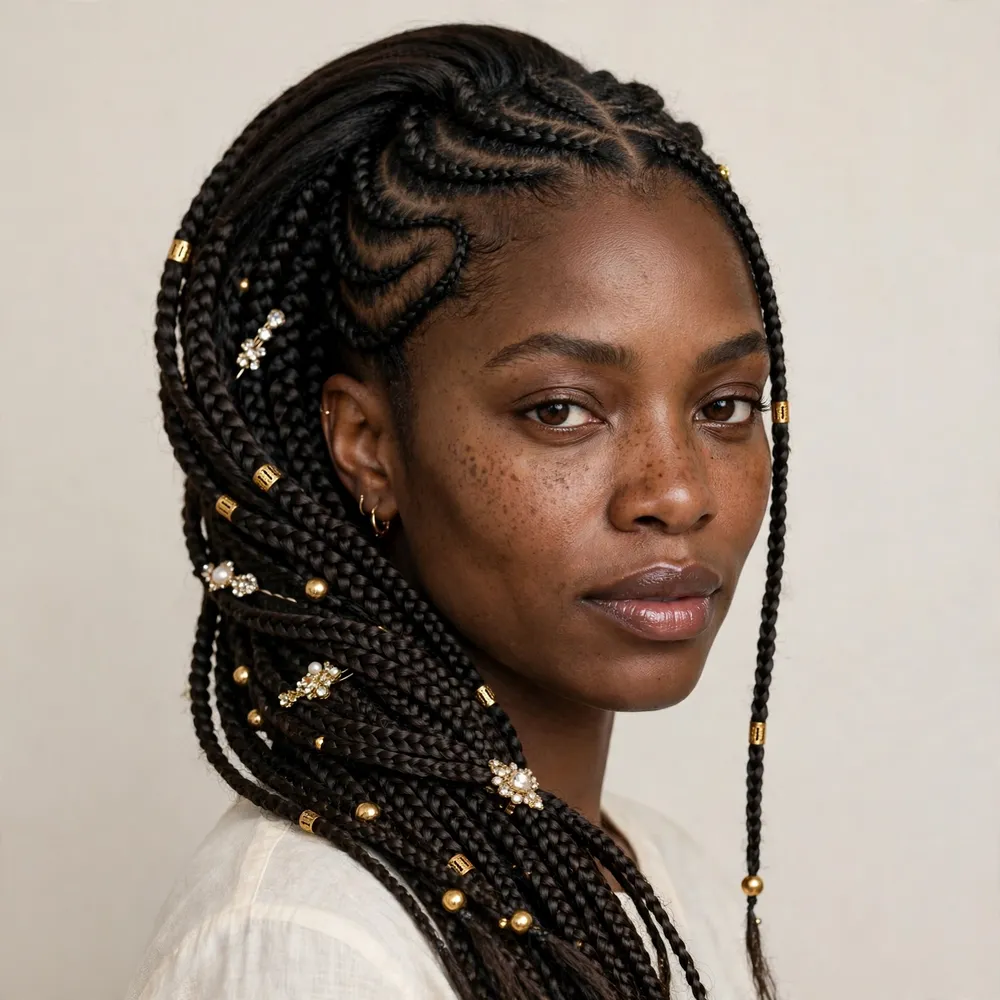
All the braids swept to one side, pinned with jewelled pins, turn a protective style into a red-carpet moment. The asymmetry is the point: a strong profile and a cascade of braids over one shoulder. It suits oval and round faces especially well, since the sweep slims the face, and it needs at least shoulder-length hair. Ask your stylist for cornrows angled to one side, finished with jewelled pins at the parting to hold the direction. A firm edge control keeps the sweep in place through the evening. This is a special-occasion style — the pins and one-sided weight are not built for sleeping in — but the cornrows underneath wear for another two to three weeks once the pins come out.
14. Braided Halo

Cornrows coiled into a crown, with soft tendrils loose at the nape, give you a halo effect that feels romantic without trying too hard. It is a beautiful choice for bridesmaids, garden parties or anyone who wants an updo that is not severe. It suits most face shapes — the crown adds height while the tendrils soften the neckline — and it works from medium length up. Ask your braider for cornrows coiled and pinned into a crown, leaving two thin tendrils loose at the nape. A light-hold spray keeps the crown in place without stiffness. The halo is a one-day star, but take the pins out and the cornrows underneath wear for two more weeks. Sleep with the tendrils tucked under a bonnet to keep them smooth.
15. Workweek Set
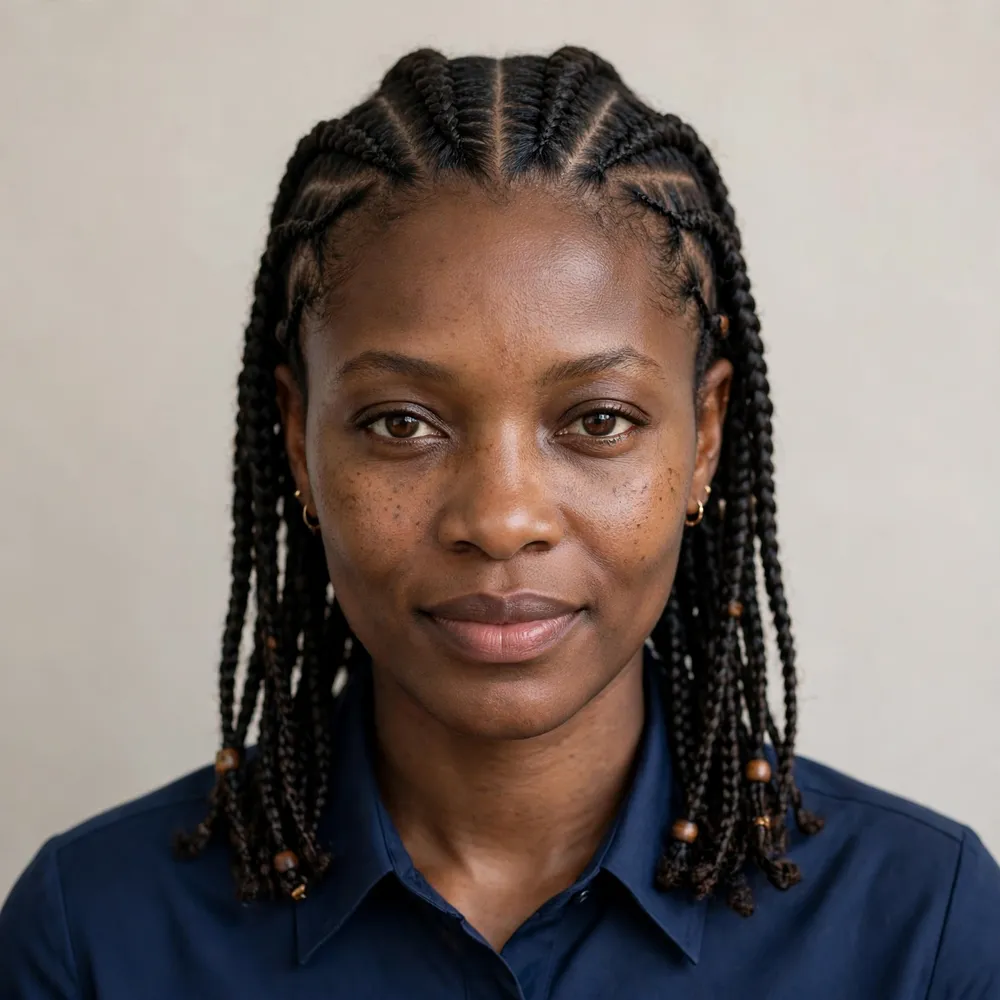
This is the set for anyone who needs to look put-together at 8 a.m. without touching their hair. Medium-length braids fall just past the shoulders, and the centre part is razor-clean. It suits straight, wavy or relaxed hair that holds a part well, and flatters oval and round faces — the symmetry draws the eye down the centre. Ask your stylist for medium-length feed-in braids, a precise centre part, and small neutral beads only at the ends. Finish with a light sheen spray rather than heavy gel, so the parts stay crisp without flaking by Wednesday. Maintenance is almost nothing: a silk scarf at night and a quick scalp wipe midweek. Expect four to five weeks of wear, and it still looks office-ready in week four.
16. Half-Up Practical
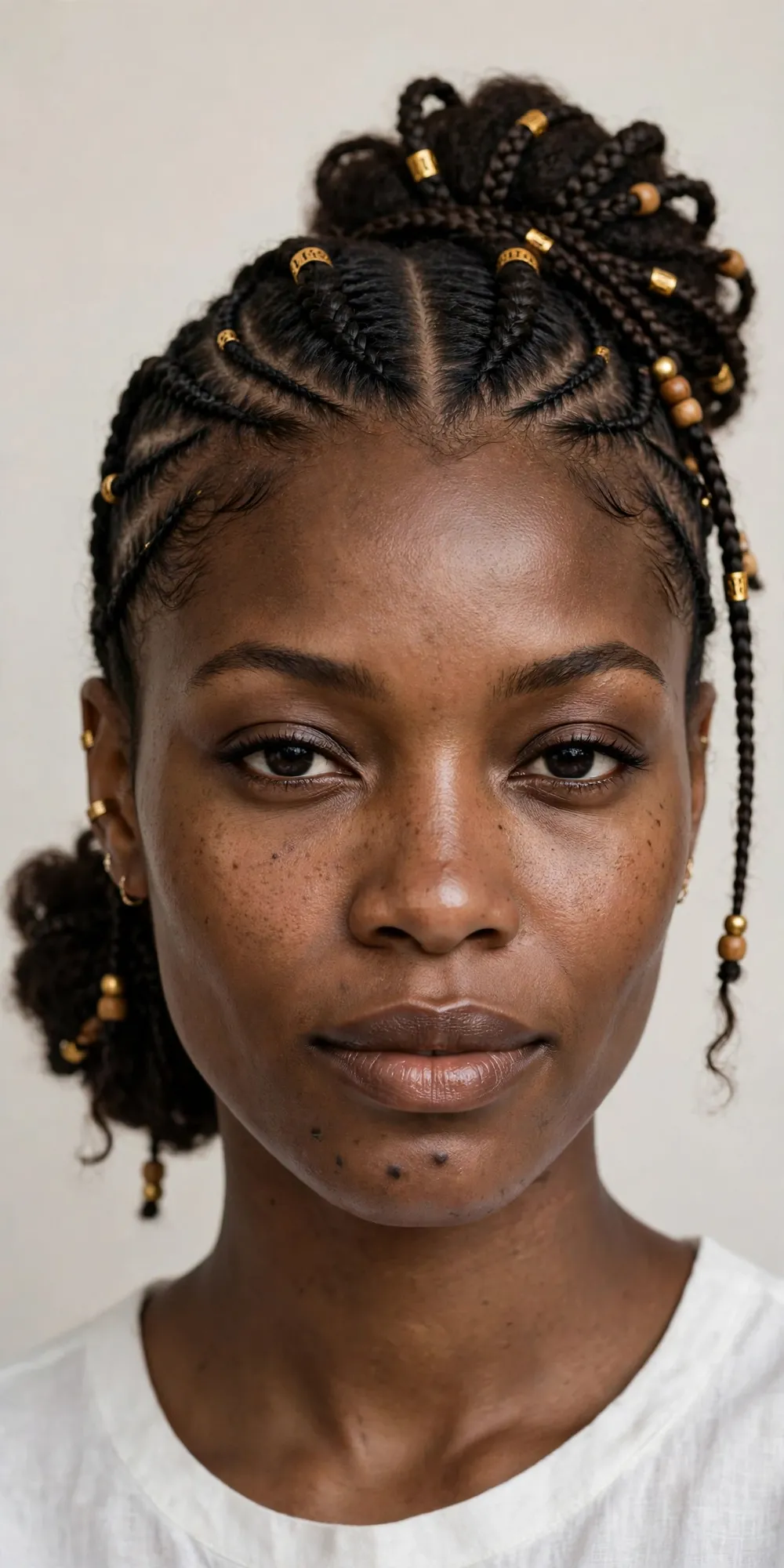
The front does the talking and the back stays out of the way. Cornrows run forward from the centre part, then the remaining braids gather into a low puff at the crown — polished from the front, practical from every angle. It suits medium to long hair and flatters heart-shaped faces, since the height at the crown balances a narrower chin. Ask for slim front cornrows and a puff secured with a covered elastic, so nothing pulls at your edges. A little edge control smooths the hairline; a dab of mousse keeps the puff soft, not stiff. It’s the style to pick when you want the Fulani look but need your hair off your neck. It holds three to four weeks, and the puff restyles into a bun without a redo.
17. Gym-Friendly Wrap

Sweat and loose braids do not mix, which is exactly why this one exists. The braids coil into a flat wrapped bun pinned low at the nape, so nothing bounces, nothing slips, and no beads smack your forehead mid-squat. It suits anyone who trains regularly. Ask your stylist to keep the braids medium-weight — heavy jumbo braids make the bun bulky — and to secure the wrap with large bobby pins rather than tight elastics. Skip heavy oils before the gym; a dry shampoo at the roots after your session keeps the scalp fresh. Rinse the scalp with diluted shampoo twice a week if you train daily, and dry the parts fully before re-wrapping. Expect three to four weeks of solid wear.
18. Short & Sweet
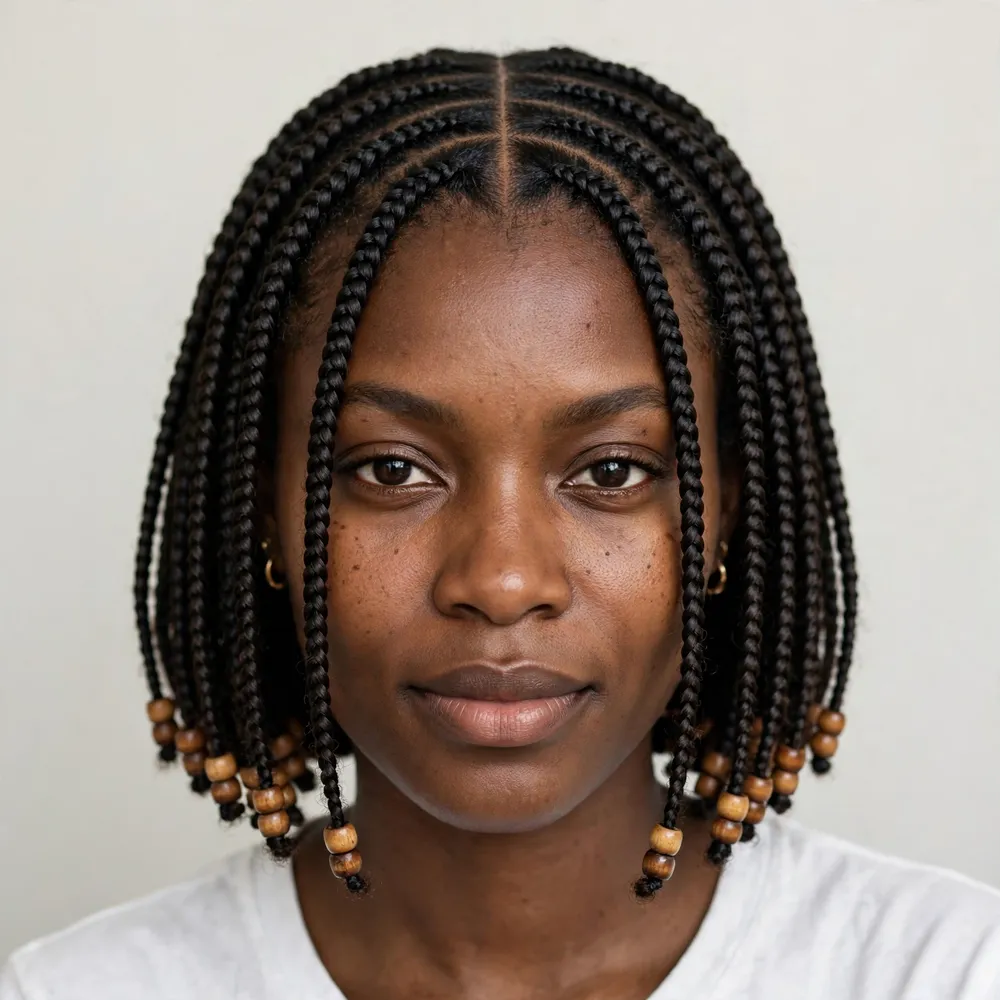
Bob-length Fulani braids are proof that shorter can be smarter. The braids end around the jaw, so they dry fast after washing, never tangle at the nape, and stay neat under a coat collar. It suits fine hair — shorter braids put less weight on the roots — and round faces, since the length skims the jawline without adding bulk. Ask for a bob cut with a clean centre part and a few small beads at the ends for movement. A light mousse gives the ends a soft hold, and a silk scarf at night stops the bob flipping out. The trade-off is a shorter lifespan — around three weeks before new growth shows — but the install is quicker and cheaper, and wash days are genuinely easy.
19. Low Maintenance Set
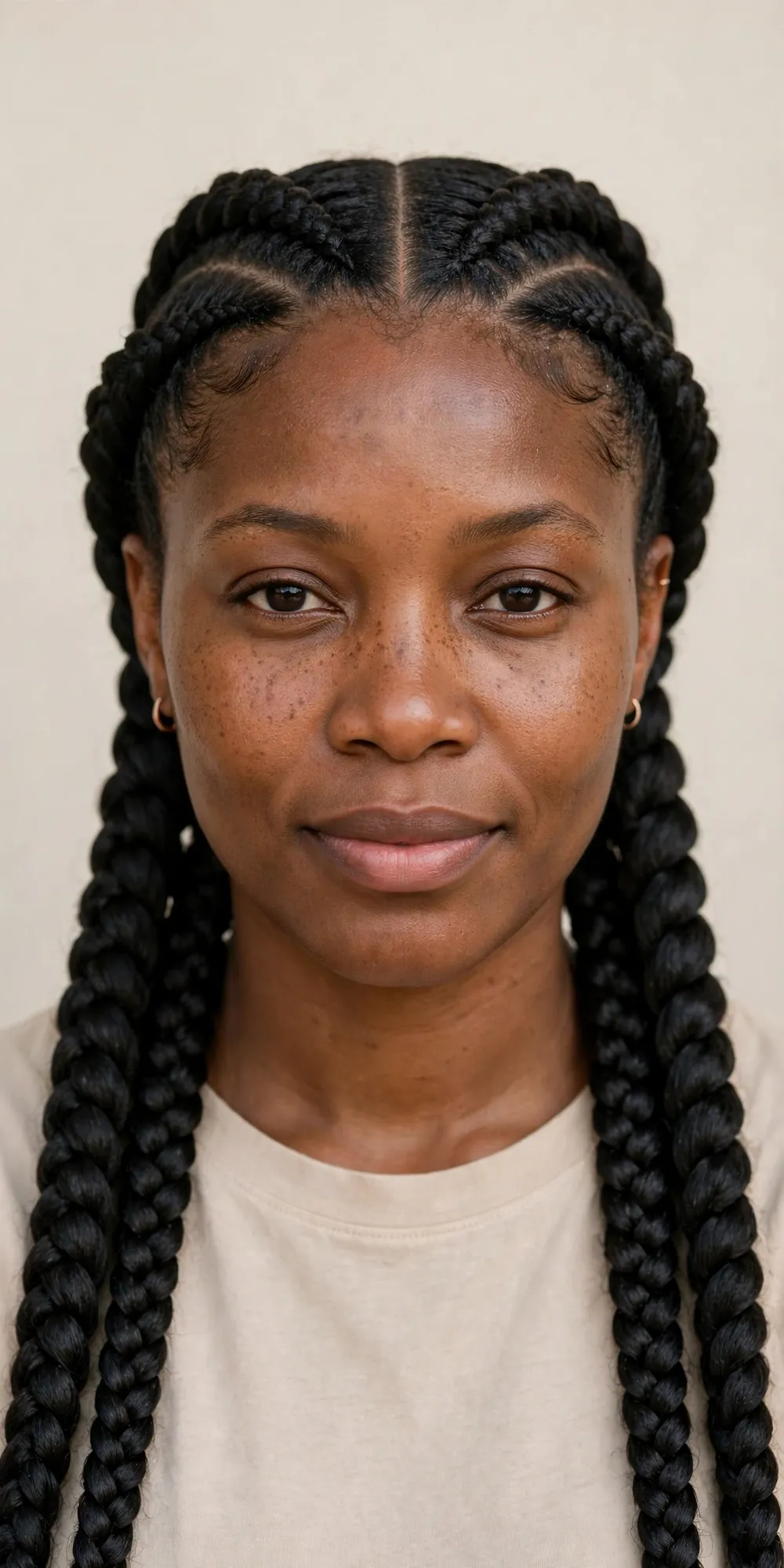
Fewer braids, thicker cornrows, shorter chair time — this is the set for people who love the Fulani look but not the upkeep. Six to eight wide cornrows replace the usual dozen-plus, which means less scalp tension and a faster install, often under two hours. It suits thick, dense hair best, since wide rows need volume to look intentional rather than sparse. Ask your stylist for chunky feed-in cornrows with a clean centre part and minimal adornment — one or two cuffs per side is plenty. Finish with a light oil on the parts and nothing heavy on the braids themselves. New to cornrows? Our cornrow hairstyles guide covers the install. Expect three to four weeks of wear, and the wider parts make scalp care genuinely simple.
20. Weekend Beads
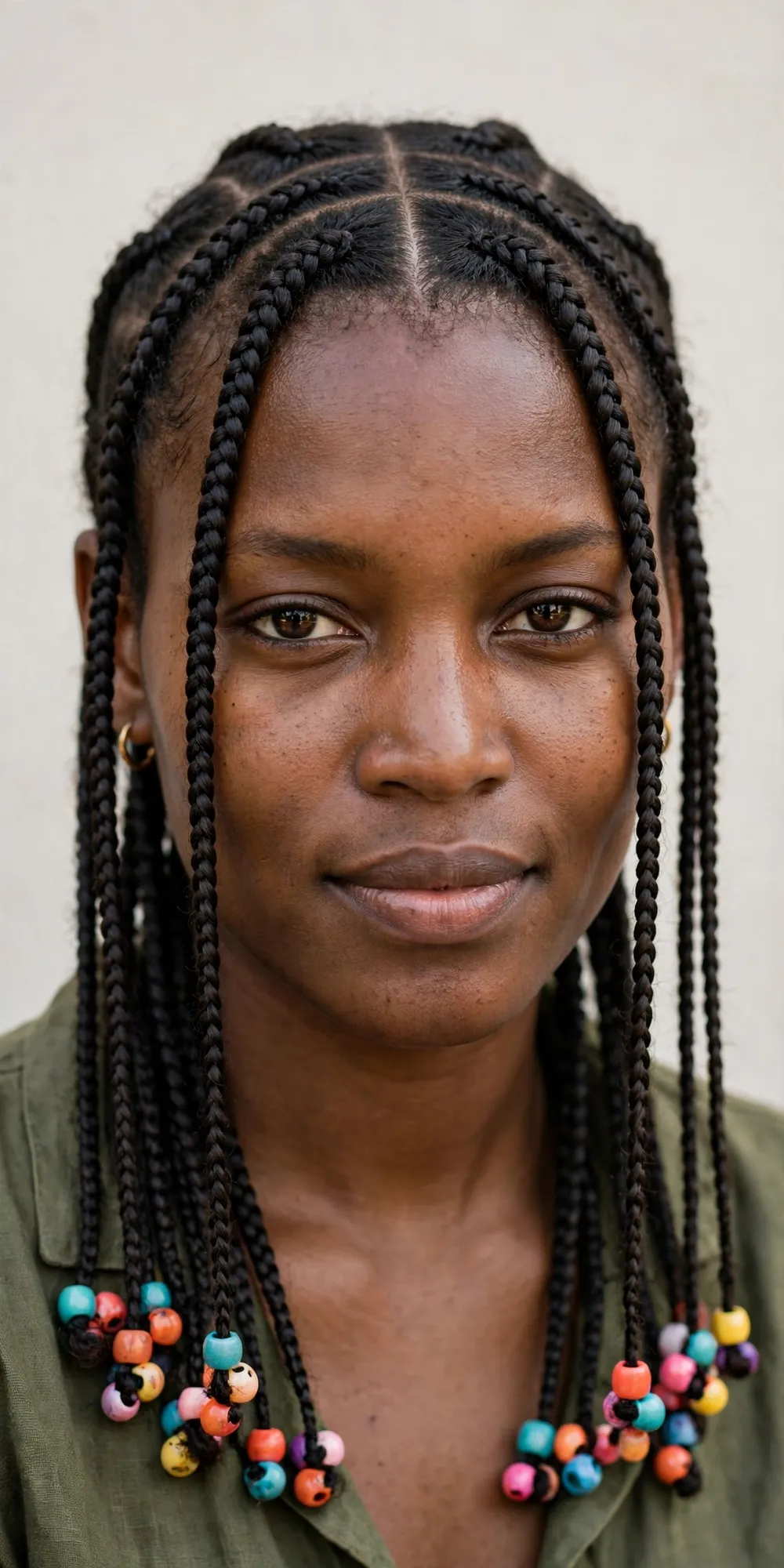
Keep the braids simple all week, then dress them up on Friday — that’s the whole idea. The base is a neat medium-length set with plain ends, and the fun comes from clip-on beads, cuffs and shells that clip on and off in minutes. It suits anyone with a conservative weekday life who still wants personality at the weekend. Ask your stylist for plain braided ends with no beads installed, and buy a small bag of clip-on beads in wood, gold and one bright colour. A little braid spray keeps the lengths glossy; take the beads off Sunday night and Monday looks professional again. Slide beads off gently — yanking snags the ends. The base set lasts four to five weeks; the accessories last for years.
21. Protective Pause

No beads, no cuffs, no shells — just clean cornrows and your hair getting a proper rest. This is the set to book after a stretch of heat styling, colour or tight ponytails, when your hair needs to be left alone. It suits every hair type, but it’s especially kind to fragile or recovering hair, since there’s no added weight pulling at the roots. Ask your stylist for neat feed-in cornrows, medium tension, and a clean centre part — and say the word “gentle” twice. Finish with a light scalp oil and nothing else. It looks quieter than the beaded styles — it’s a recovery style, not a showpiece. Wear it for four to six weeks, keep the scalp clean, and your hair will thank you at the take-down.
22. Knotless Fulani Braids

If regular braids leave your hairline throbbing, knotless is the answer. Instead of anchoring each braid with a knot at the root, the stylist feeds hair in gradually, so there’s no bump, no pulling, no tender scalp. It suits anyone with a sensitive scalp or fine hair, and it’s the one to choose if you’ve ever needed painkillers after a braid appointment. Ask specifically for a knotless feed-in method with a centre part, and confirm the tension before they get past the first two braids. A light mousse sets the parts; a silk bonnet at night keeps them smooth. They cost and take a little more, but last five to six weeks comfortably. For more gentle protective options, see our natural hairstyles for Black women guide.
23. Jumbo Fulani Braids

Big, bold and impossible to miss. Wide, chunky cornrows run forward from the centre part, with a confidence slim braids can’t match. It suits thick hair best — the width needs density behind it — and it flatters strong jawlines and round faces, since the bold lines balance softer features. Ask your stylist for jumbo feed-in cornrows, six or seven per side, with a few large cuffs for emphasis. The install is fast, often under two hours, but they’re heavier, so if your edges are fragile, ask for looser tension at the hairline. Finish with braid spray for shine and a light oil on the parts. More chunky inspiration: our braided hairstyles collection. Expect three to four weeks of wear before new growth softens the parts.
24. Fulani Braids with Curly Ends
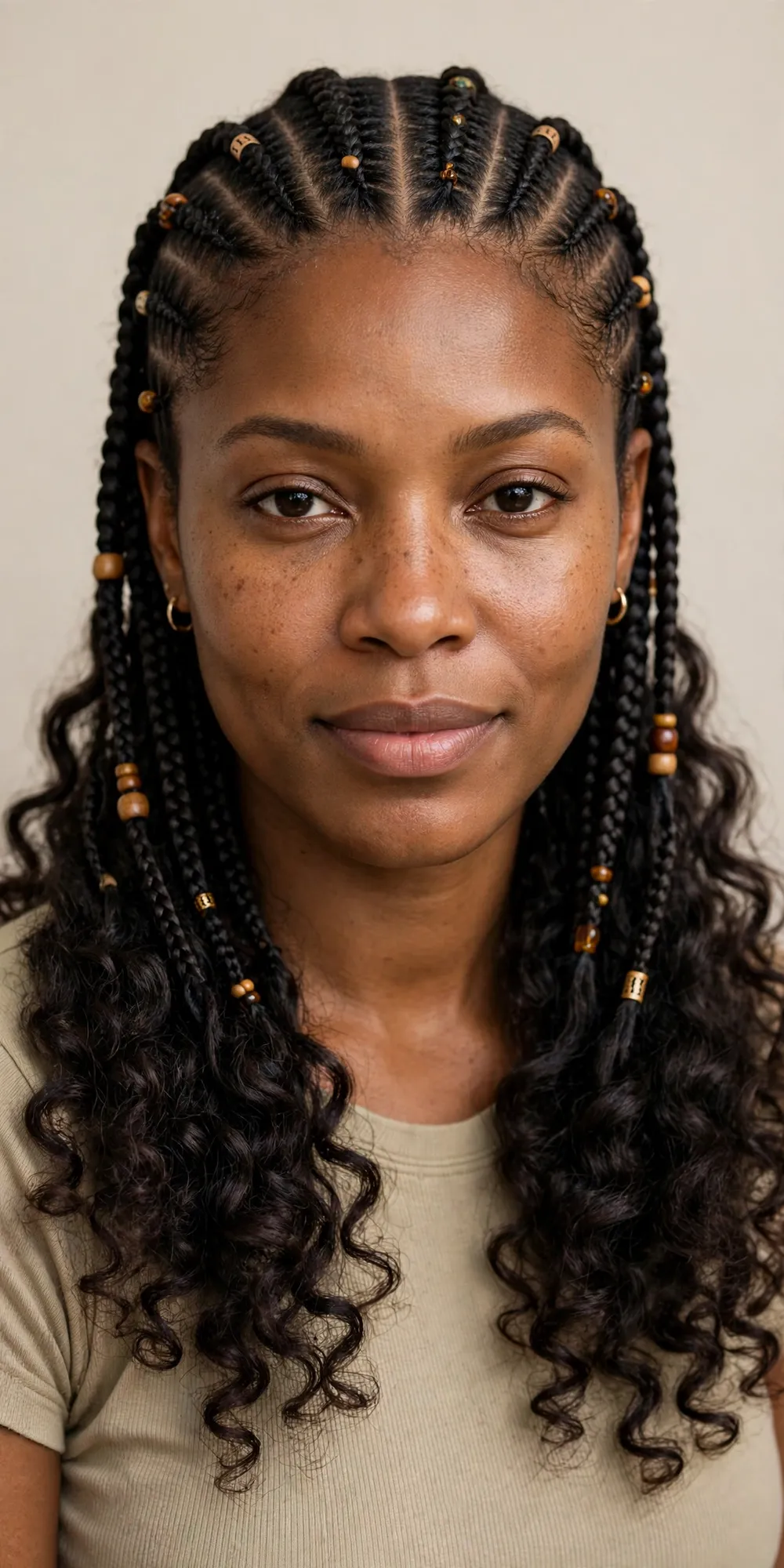
Structured at the roots, soft at the ends — the Fulani style with a gentle finish. The cornrows run forward as usual, but the last few inches are left unbraided and curled, so the style moves when you do. It suits medium to long hair and flatters oval and heart-shaped faces, where the curls soften the jawline. Ask for feed-in braids with the ends left out and curled with flexi rods, and request human-hair curls if you want them to hold past the first wash. Curl cream keeps the ends bouncy without crunch; a silk scarf at night stops them flattening. The trade-off is upkeep: refresh the curls every few days with a small rod set. For a looser take, see our boho braids guide. Expect four weeks of wear.
25. Fulani Braids Bob
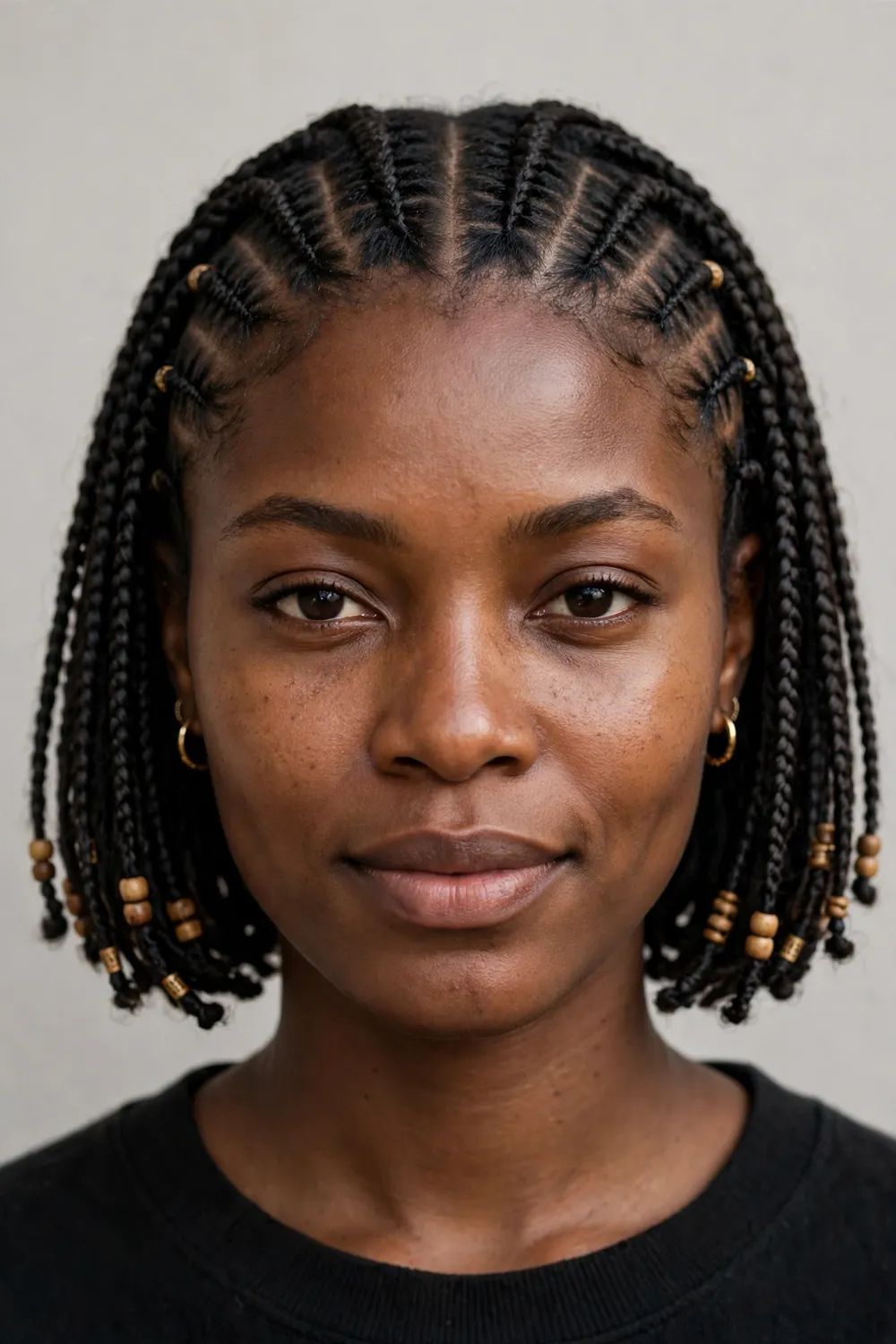
The bob version of Fulani braids is chin-length, sharp and quietly glamorous. The braids end at the jaw with a bead or two at each tip, framing the face. It suits fine to medium hair — shorter braids mean less weight on the roots — and flatters round and square faces, since the vertical braids lengthen the face. Ask your stylist for a chin-length bob with a centre part and small beads at the ends, and check the length is even on both sides. A light mousse keeps the ends tidy; a silk scarf at night stops the bob flipping outward. If you’d rather test the bob length without braiding at all, a quick weave bob is a good trial run. Expect three to four weeks of wear.
26. Fulani Low Bun

Everything swept back, gathered low, done. The cornrows run forward from the centre part, then curve back and collect into a neat bun at the nape — elegant for a wedding, practical for a long shift. It suits medium to long hair. It’s a good choice if high buns give you a headache, since the weight sits low. Ask for cornrows feeding into a low bun secured with pins, not a tight elastic, plus a cuff or two at the front. Edge control and a spritz of braid spray finish it. Re-pin the bun each morning in two minutes and it stays fresh for four to five weeks. Sleeping on it can flatten the bun, so loosen it before bed and re-pin in the morning.
27. Heart Part Fulani Braids
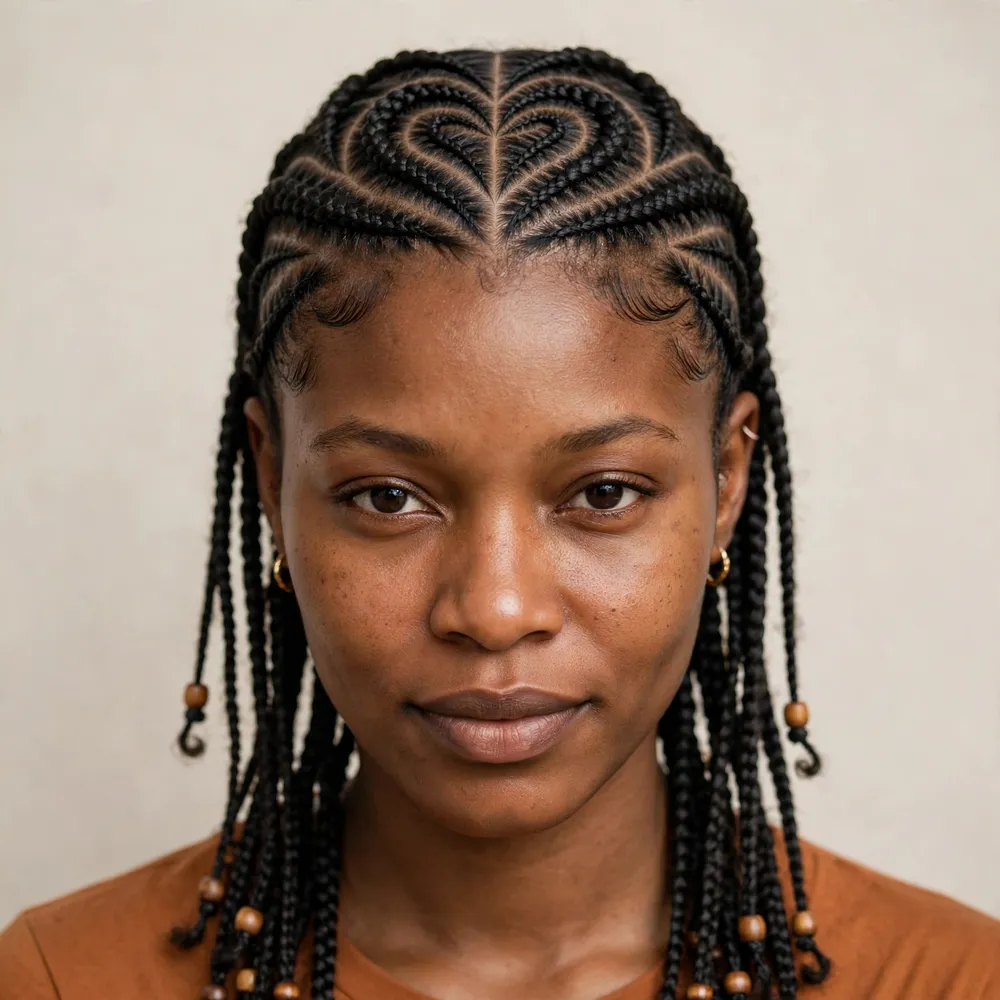
The centre part, redrawn as a heart — a small detail that changes the whole mood of the style. The braider shapes the parting into a heart at the crown, then runs the cornrows forward from it, so the design reads clearly in photos. It suits anyone who wants playful rather than formal braids — it shows up at birthdays, baby showers and date nights. Ask for a heart-shaped part — and check the braider’s portfolio first, since the shape needs a steady hand. Keep the rest simple: medium braids, a few beads, nothing competing with the part. Light oil keeps the parting crisp; a silk scarf at night protects the design. Expect four weeks of wear, the heart visible for the first two to three.
28. Fulani Braids for Kids
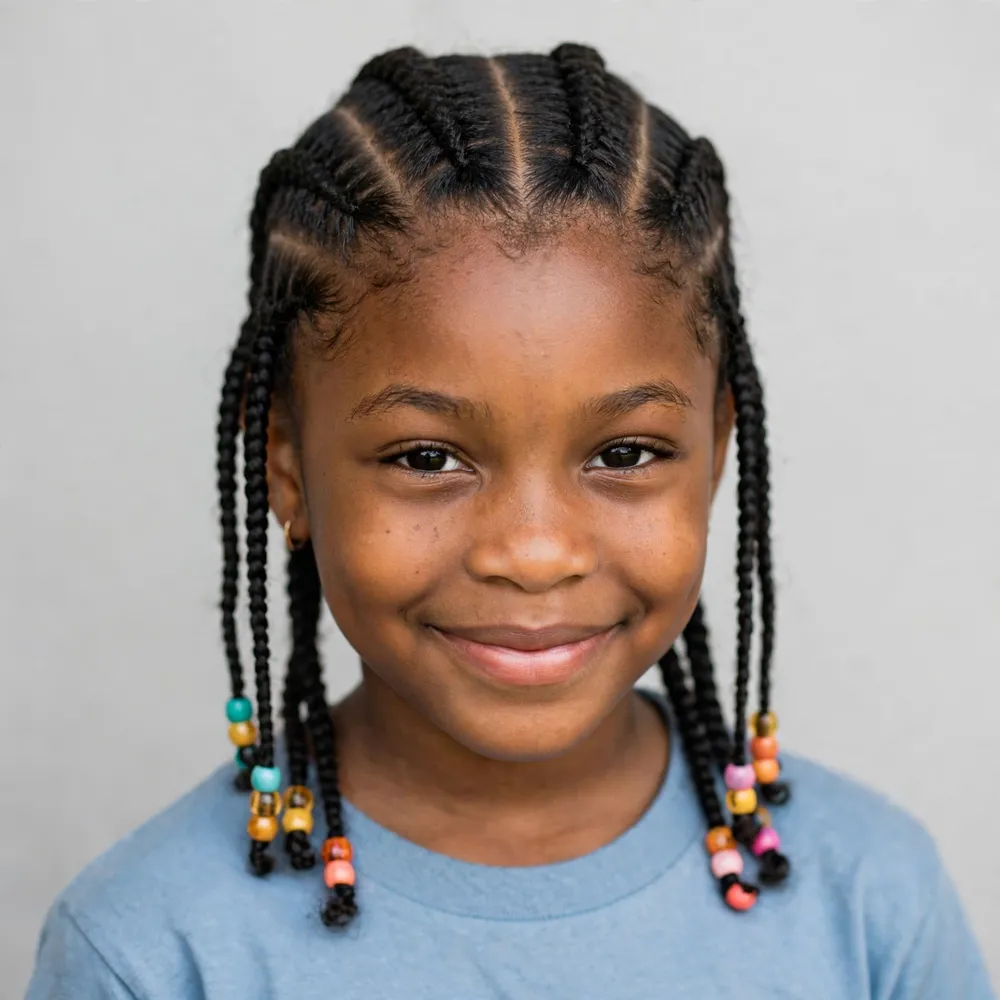
Gentle tension, colourful beads, a style that survives the school week — that’s the brief. The cornrows stay loose at the hairline, the braids medium-length so they won’t catch on backpacks, and the beads are the fun part: let your child pick the colours. It suits school-age kids with any hair type, and it stays put through sport and swimming. Tell the stylist: gentle tension, no pulling at the edges, a shorter install — kids won’t sit for four hours. A light leave-in keeps the braids soft; a satin bonnet at night stops morning frizz. Take them down by three to four weeks, and never let a child sleep in beads that dig into the scalp. Done right, it’s a style they’ll actually ask for again.
How Do You Care for Fulani Braids?
Good care is simple, but it has to be regular. Follow these five steps and your braids will stay neat for the full wear time:
- Wash the scalp weekly. Dilute a sulfate-free shampoo with water in an applicator bottle, apply it directly to the parts, massage gently with your fingertips, then rinse thoroughly. Don’t scrub the braids themselves.
- Oil the parts lightly. A few drops of jojoba or lightweight scalp oil on the partings two or three times a week keeps the scalp comfortable. Less is more — heavy oil causes buildup.
- Protect them at night. A silk scarf or satin bonnet every night stops frizz and keeps the parts crisp. Cotton pillowcases pull moisture out of braided hair.
- Smooth the edges. A pea-sized amount of edge control on the hairline in the morning keeps the style looking fresh, but don’t reapply it daily or it will flake.
- Take them down by six weeks. Even the best install has a limit. Past six weeks, new growth tangles at the roots and take-down becomes painful. Book the removal — or do it yourself, gently — on time.
5 Mistakes That Damage Fulani Braids (and How to Fix Them)
- Braiding too tight at the hairline. This is the big one. If your braids hurt, throb or give you bumps along the hairline, the tension is too high — and repeated tight braiding can cause traction alopecia, permanent hair loss at the edges. The American Academy of Dermatology warns that hairstyles that pull can lead to hair loss, so speak up in the chair the moment it hurts. The fix: ask for looser tension at the front, or switch to knotless braids next time.
- Leaving them in too long. Past six weeks, shed hair tangles at the roots and take-down turns into a matting problem. The fix: set a removal date when you book the install, and stick to it.
- Skipping scalp washes. “Protective style” doesn’t mean “don’t wash it.” A dirty scalp itches, flakes and can develop buildup that weakens the roots. The fix: wash the scalp weekly with diluted shampoo, as in the care routine above.
- Piling on heavy products. Thick butters and heavy oils coat the braids, attract dust and leave a sticky residue that’s hard to wash out. The fix: use light oils and sprays only, and only on the scalp and parts.
- Ripping beads out at take-down. Yanking beads off the ends snaps hair and creates split ends. The fix: slide beads off one at a time, then undo each braid from the tip upward, detangling gently as you go.
FAQs
How long do Fulani braids last?
With good care, Fulani braids last four to six weeks. Shorter bob-length sets tend to show new growth sooner, around three weeks, while knotless installs often stretch to the full six. Take them down by six weeks at the latest — beyond that, tangling at the roots makes removal painful and can cause breakage.
Are Fulani braids suitable for all hair types?
Yes, with the right adjustments. The style works on straight, wavy, curly and coily hair, though very fine hair suits shorter, lighter sets that don’t pull on the roots. Your stylist can adjust the braid size, tension and added hair to match your texture. If your hair is fragile or recovering from damage, ask for a knotless install and gentle tension at the hairline.
Will the beads damage my hair?
Beads themselves don’t damage hair — rough handling does. Clip-on and slide-on beads are safe when they’re put on and removed gently. The risk comes from yanking beads off at take-down, or from heavy metal beads pulling on fine braids. Choose lightweight wooden or plastic beads, slide them off one at a time when removing the style, and avoid sleeping on beads that press into your scalp.
How should I wash my scalp with Fulani braids?
Dilute a sulfate-free shampoo with water in an applicator bottle and apply it directly along the parts, not over the braids. Massage gently with your fingertips, rinse thoroughly with lukewarm water, and let the braids air-dry completely. Wash once a week, and never go to bed with a damp scalp — trapped moisture can cause itching and odour.
Can I get Fulani braids if my hair is short?
Yes, as long as your hair is at least 7–10 cm long — enough for the braider to grip. Short hair works best with a bob-length set or the Short & Sweet style above, and added braiding hair gives extra length if you want it. If your hair is very short, a braider can still create the signature forward cornrows, just with a shorter finished length.
How much do Fulani braids cost?
Prices vary by location and length, but expect roughly $80–$200 for a standard install, with longer waist-length sets and knotless methods at the higher end. Beads and cuffs are sometimes included and sometimes charged separately, so ask before you book. Cheaper isn’t always better — a careful braider who respects your hairline is worth paying more for.
What is the difference between Fulani braids and cornrows?
Fulani braids are a type of cornrow style, but with a distinct signature: the cornrows are braided forward around a centre part and finished with beads, cuffs or cowrie shells. Regular cornrows can run in any direction and are usually worn plain. Think of Fulani braids as cornrows with a specific silhouette — forward, centred, adorned — rooted in the heritage of the Fulani people of West Africa.
Final Word
Fulani braids are one of those rare styles that carry history, look stunning and actually protect your hair at the same time. Pick the set that fits your life — the Workweek Set for the office, the Gym-Friendly Wrap for training days, Knotless if your scalp is sensitive — and give your hair the care it deserves while the style is in. And when you’re ready for your next look, you’ll find more hairstyle guides on our blog to help you choose.