


A middle part hairstyle splits your hair evenly down the centre of your head so it falls to both sides of your face like a pair of curtains. It is the defining men’s hairstyle of the last few years — worn by K-pop idols, actors and half the men in any barbershop queue — and it works on straight, wavy, curly and coily hair as long as you have roughly four to six inches of length on top. Below are 39 versions worth asking for, from the classic 90s curtains to fades, two blocks and flows, with the length each one needs, who it suits, and how to train your hair to actually stay parted in the middle.
What Is a Middle Part?
A middle part (also called a centre part) is any hairstyle where the hair is divided into two roughly equal sections from the middle of the front hairline, with the hair falling naturally to either side. The most famous version is curtained hair, where a longer fringe splits in the centre and frames the face — a style that has cycled through men’s fashion since the Edwardian era, exploded in the 1990s, and came back for good around 2020.
What makes the modern middle part different from the flat, gelled 90s version is texture and freedom. Today’s part is rarely a razor-straight line. Barbers cut soft layers into the top so the hair separates naturally, the split often sits a few millimetres off perfect centre, and the sides can be anything from long and scissor-cut to a skin fade or a disconnected undercut. The part is a starting point, not a uniform.
One honest warning before the list: a middle part is a length-dependent style. Too short, and it does not read as a middle part at all — it reads as a haircut growing out. The styles below are ordered roughly from classic to bold, and each one tells you the minimum length it actually needs.
Middle Part vs Side Part
If you have worn a side part for years, this is the real decision. Both are just partings, but they do opposite things to your face:
| Feature | Middle Part | Side Part |
|---|---|---|
| Where the hair splits | Down the centre of the head | Roughly above one eyebrow |
| Visual effect | Frames both sides equally, adds symmetry, draws the eye vertically | Adds height and a diagonal line, breaks up width |
| Best face shapes | Oval, heart, diamond, oblong | Round, square, oval |
| Hair length needed | 4–6 inches on top minimum | Works from 2–3 inches up |
| Overall feel | Modern, relaxed, fashion-led | Classic, neat, professional |
| Upkeep | Needs daily parting while you train it, then easy | Falls into place almost by itself |
Neither is “better” — they are tools. A middle part shows off a balanced face and adds width to a narrow one. A side part adds height and asymmetry, which is why it is the safer choice for round faces and very formal workplaces. If your face is oval, you genuinely get to pick on taste alone.
Who Does a Middle Part Suit?
Face shape matters more than anything else. Oval faces suit every version on this list — the centre split mirrors your natural symmetry. Heart-shaped faces (wide forehead, narrower chin) do well because the curtain fringe softens the forehead; keep the front pieces around cheekbone length. Diamond faces suit soft curtains with tapered sides, as long as you avoid heavy volume right at the cheekbones. Oblong and long faces should stay at the shorter end — eyebrow-to-cheekbone fringe with some fullness kept at the sides — because long, flat curtains drag the face longer. Round faces are the one shape that needs an adjustment rather than a free pass: pick versions with height or faded sides (the two block, the high fade, the undercut) so the style adds vertical length instead of width at the cheeks. Square faces should choose soft, layered, textured versions; blunt, geometric cuts stack angles on angles.
Hair type decides which version styles itself. Straight hair falls into a centre part with the least effort and wears the sleek and classic versions best, though fine straight hair needs root lift to avoid looking flat. Wavy hair is arguably the ideal texture — the natural S-bend creates the movement and separation that makes curtains look expensive. Curly hair gives the boldest result: curls stack on both sides of the part and frame the face, as long as they are kept moisturised and layered so they do not triangle out. Coily hair wears a shaped middle part beautifully with the right cut (see the afro and broccoli versions below). Thick hair needs internal layering to remove bulk; fine hair needs the opposite — minimal layering and lightweight volumising products.
The length rule. You need at least four inches on top for the shortest versions and five to six for proper curtains — a useful test is that your front hair should reach at least the tip of your nose when pulled straight down. Growing from a short cut takes roughly three to four months (hair grows about half an inch a month), and the awkward phase in months two and three is where most men quit. A tidy-up trim on the sides and neckline every four to six weeks keeps you looking deliberate while the top catches up.
How to Train Your Hair to Part in the Middle
Hair has directional memory. If you have pushed yours to one side for years, it will try to flop back there for the first week or two — that is normal, not a sign the style does not suit you. Retraining takes two to six weeks of consistency, and the routine is simple:
- Find your true centre. Place the end of a comb at the bridge of your nose and draw it straight back over your hairline. That line is your part. If a strong cowlick sits exactly there, shift the part a few millimetres to one side rather than fighting it.
- Part it wet, every single wash. Hair is most shapeable when damp. Straight after showering, comb the part in before the hair dries in its old direction. Skipping days resets your progress.
- Blow-dry away from the centre. Use a nozzle and dry each side forward and slightly away from the face, lifting at the roots first. About sixty seconds per side on medium heat, finished with a cool shot, locks the direction in.
- Clip it down while it cools if it springs back. Two flat clips, one on each side of the part, for ten minutes after drying genuinely helps stubborn hair in the first fortnight.
- Keep product light and away from the part line. A pea-sized amount of styling cream, sea salt spray or light clay through the mid-lengths is enough. Heavy wax at the roots flattens the split and makes the part look wider and greasier.
- Be patient through week two. Most men see the hair start falling into the part on its own somewhere between week two and week four. By week six, the new direction is the default and you can style it with your fingers.
39 Best Middle Part Hairstyles for Men
Every style below is built on the same centre split — what changes is the length, the texture and what happens on the sides. Find your hair type first, then save the photo of the one you want to show your barber.
1. Classic Curtains

The original: five to six inches on top, scissor-cut sides sitting just above the ear, and a front that falls to cheekbone level on both sides of a clean centre split. No fade, no undercut, no drama — which is why it still looks right in almost any setting. It suits oval and heart-shaped faces best and is the easiest middle part to live with once trained. If your face is oval, our guide to the best haircuts for oval face men shows which curtain lengths flatter that shape most. Ask for light layers through the front so the curtains sweep instead of hanging straight down.
2. Short Middle Part with Curtain Bangs

The entry point if you are not ready to commit to full length. Four inches on top is enough: the fringe stops around eyebrow level, the sides are scissor-blended, and the whole thing reads clean rather than floppy. It is the most office-friendly short version and the one barbers suggest to first-timers because the grow-out is painless. Style it forward off the part with a fingertip of matte cream, and expect a tidy-up every four weeks to keep the fringe off your eyebrows.
3. Textured Middle Part

The most requested version in barbershops right now. Choppy, point-cut layers break the top into separated pieces, so instead of two flat curtains you get movement and a slightly undone finish. Texture is forgiving — it hides an imperfect part line, works on straight and wavy hair, and looks good on the days you barely style it. Ask your barber to point-cut the ends rather than cutting a blunt line, and work a little matte clay or texture powder through dry hair, pinching sections apart with your fingers.
4. Messy Middle Part

Think of this as the textured middle part with the polish deliberately removed: longer, looser, a bit slept-in. The part is suggested rather than drawn — you split the hair with your fingers, not a comb — and the front pieces fall unevenly, which suits men whose hair has natural wave or bend. It needs five to six inches on top and almost no product beyond sea salt spray scrunched into damp hair. The risk is crossing from “messy” into “unwashed,” so keep the sides trimmed even when the top is chaotic. Our 51 Best Messy Hairstyles for Men guide is the deeper dive on this undone family.
5. Sleek Middle Part with Short Sides
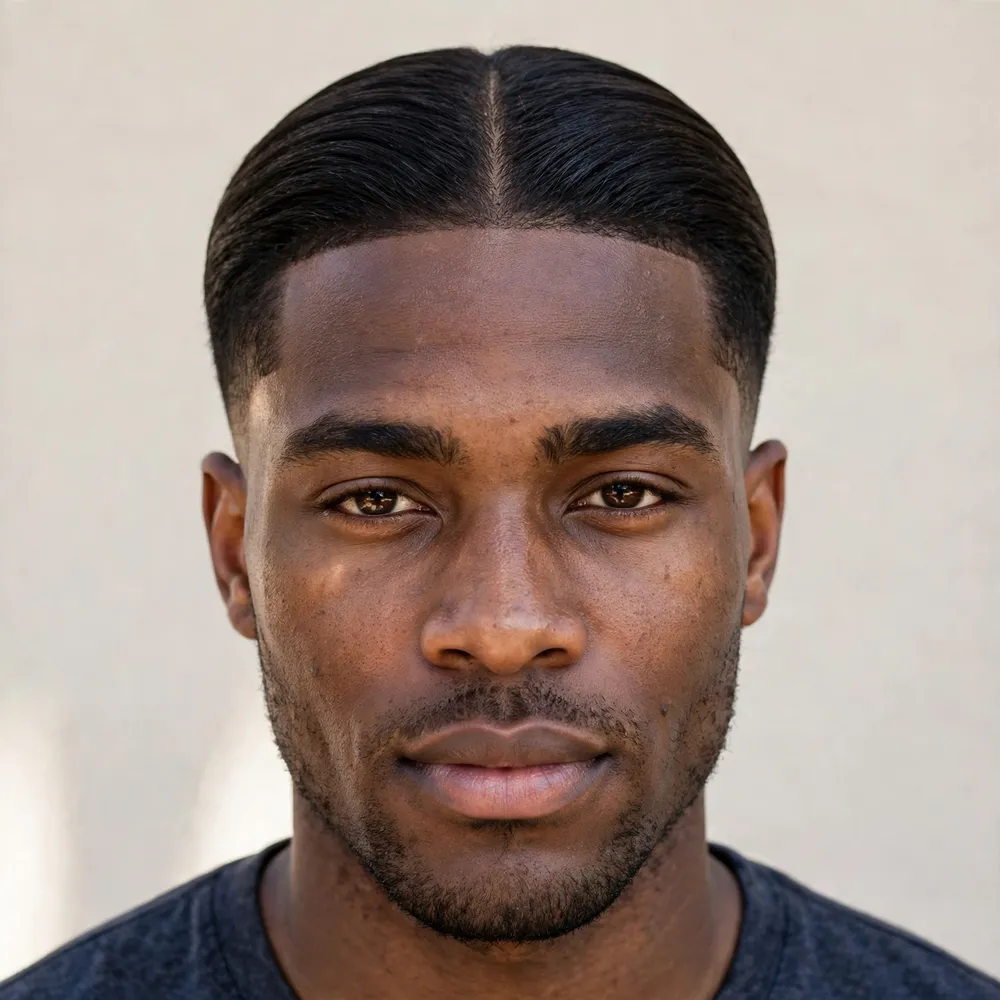
The sharpest scissor-cut version: the top is kept smooth and flat with a defined centre line, while the sides are cut short and tapered for contrast without going full fade. It suits straight hair best — waves will fight the flat finish — and it reads formal enough for conservative workplaces. Blow-dry each side down and back with a brush, then run a small amount of light pomade or smoothing cream over the surface only. Keep the product off the roots or the sleek finish turns greasy by afternoon.
6. Wavy Middle Part

If your hair has a natural wave, this is the version that practically styles itself. Long layers let the S-bend form on both sides of the part, giving you the movement straight-haired men have to manufacture with spray and a dryer. Keep five to six inches on top, ask for layers that follow the wave rather than thinning it out, and scrunch sea salt spray into damp hair before air-drying. The golden rule: stop touching it while it dries. Hands break up the wave pattern and create frizz.
7. Curly Middle Part

Curls plus a centre part is a statement — the curls stack on each side and frame the face with volume straight hair cannot copy. Two things decide whether it works: hydration and layering. Dry, unlayered curls puff into a triangle; moisturised curls, cut with rounded layers (ideally cut dry, so the barber sees the true length), sit neatly either side of the split. Define the part with your fingers on damp hair, apply curl cream, and diffuse on low heat or air-dry. Never brush it dry.
8. Middle Part Flow

The flow takes the parted top and sweeps it back and out, so the hair moves away from the face instead of hanging in front of it — the hockey-and-lacrosse “flow” look adapted to a centre split. You need five to seven inches so the hair can travel backwards, and the sides usually tuck behind the ears or get a light taper. It suits active men because it stays off the face all day, and it grows out gracefully. Blow-dry everything back from the part, then let the front fall naturally.
9. Long Middle Part Flow

The full-length version: hair past the ears, brushing the shoulders, parted down the middle and left to move. It is the destination most men are aiming at when they start growing a middle part out — and the most forgiving style here, because the weight of the length does the styling for you. It suits straight and wavy hair and balances narrow faces by adding width at the sides. The maintenance is not cutting but condition: regular trims of the ends only, every six to eight weeks, and it can be tied back into a low bun or ponytail when you need it tidy.
10. Middle Part with Taper
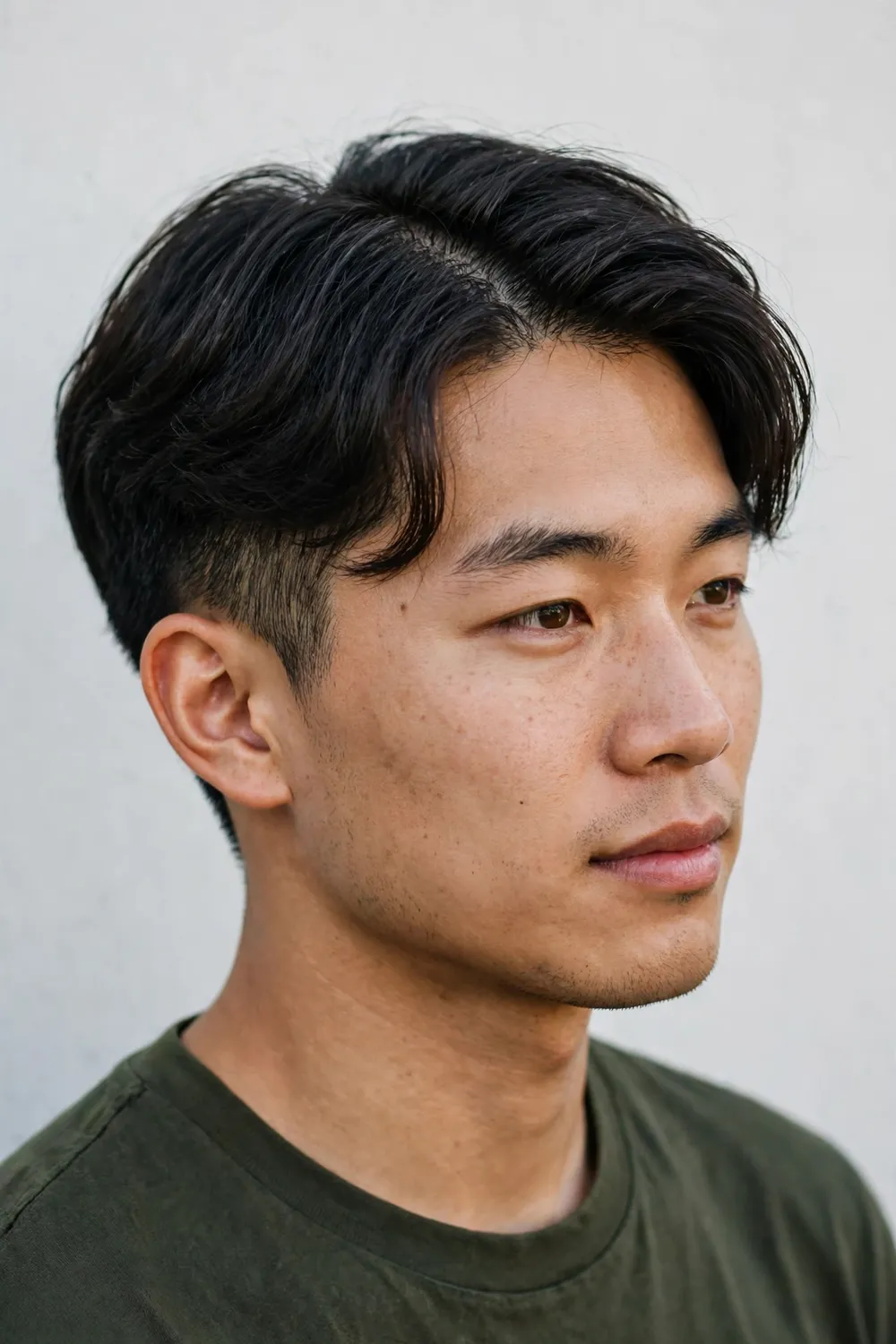
The conservative bridge between flowing curtains and a fade. The sides and neckline are tapered gradually — scissor over comb, never down to skin — so the outline stays clean while the longer parted top does the talking. It is the best first middle part for men in formal jobs, and it grows out the most gracefully of all the clipped versions, stretching five to six weeks between appointments. A light styling cream is all it needs; heavy product ruins the softness that makes this version work.
11. Middle Part with Low Taper Fade
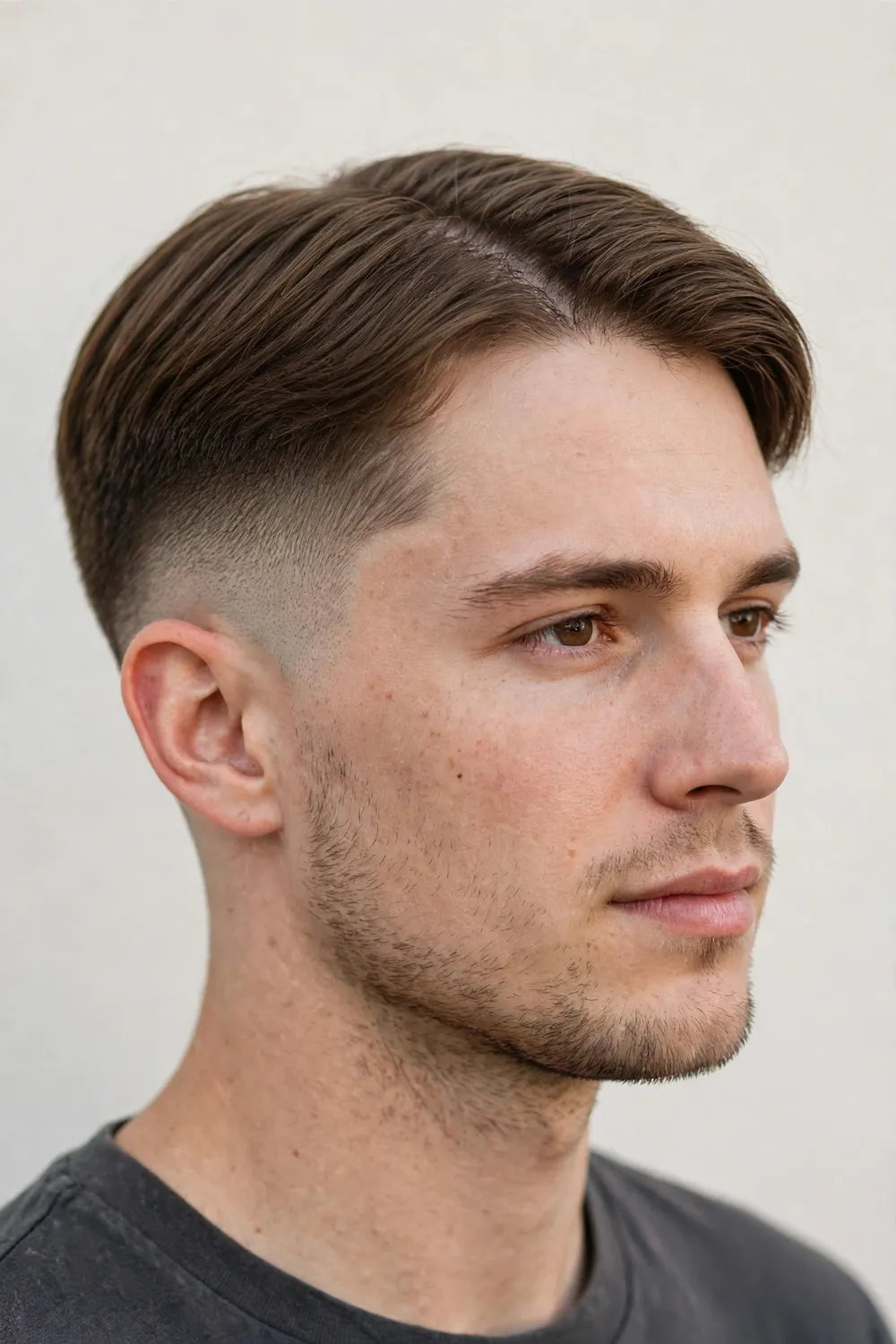
Here only the very edges — sideburns, around the ears, neckline — are faded low, while the parted top keeps its full length. The contrast is subtle, the grow-out is soft, and the top can be worn as curtains, a flow or a brush back. This is exactly the combination in our low taper fade haircuts guide (idea #46 there pairs curtains with this fade), and it is the most forgiving fade pairing if you are new to both styles. Refresh the edges every three to four weeks.
12. Middle Part with Mid Fade

Step the fade up to temple height and the contrast sharpens: clean, bare-ish sides against five inches of parted top. The mid fade is the balanced middle ground — more deliberate than a low fade, less severe than a high one — and it makes the curtains on top look thicker by comparison. It suits oval and square faces and straight to wavy hair. Style the top with matte paste for definition, and budget for a fade refresh every two to three weeks, because mid fades show regrowth sooner than tapers.
13. Middle Part with High Fade
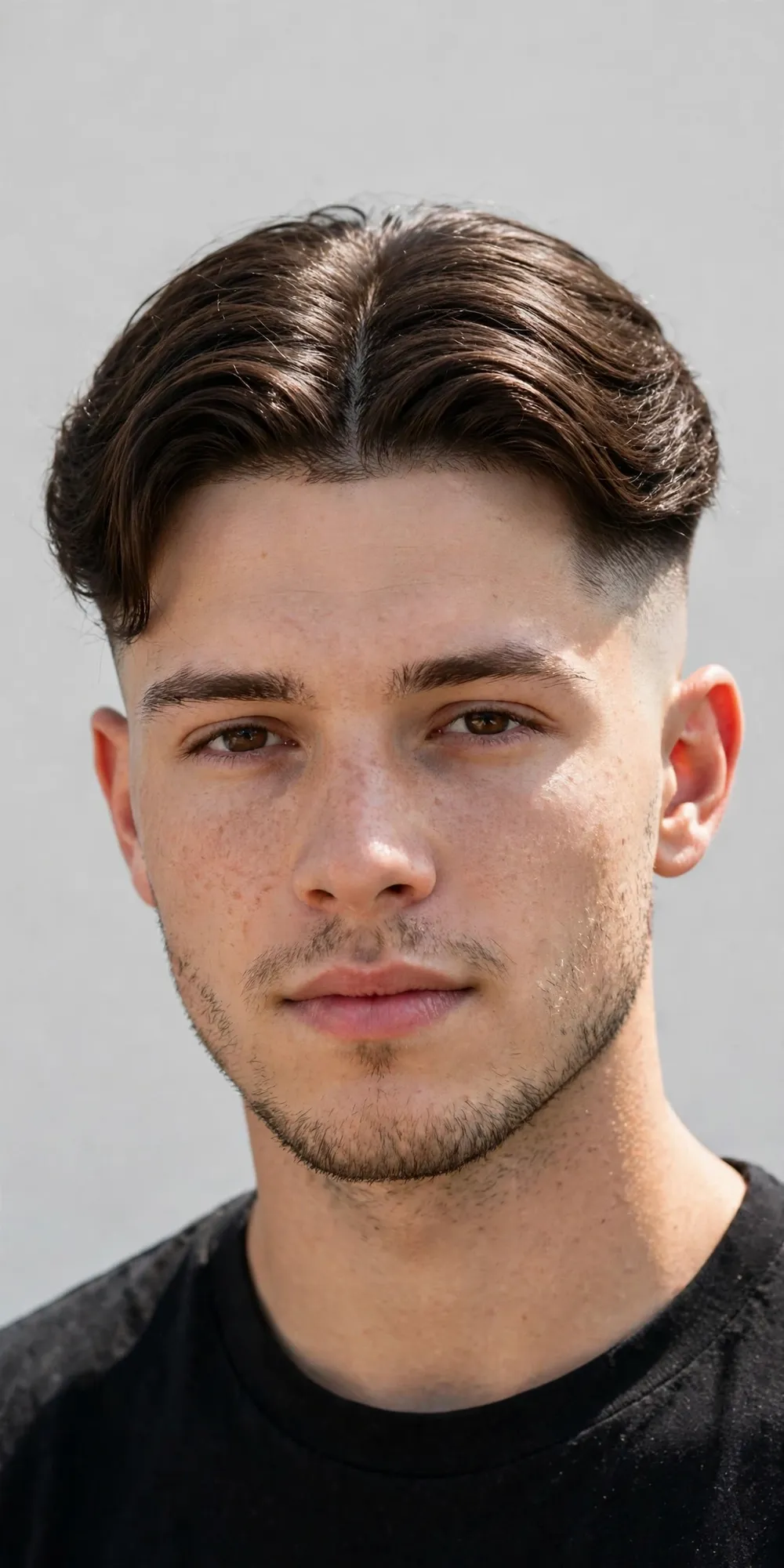
Maximum contrast without going fully disconnected. The fade starts high, close to where the top begins, so the parted length sits like a cap over tight sides. It is a bold, deliberate look that works best on thick hair — thin tops over a high fade can look sparse — and it helps round faces by stripping width from the sides and adding visual height. Keep the top at five inches or more so the proportions balance, and expect fortnightly tidy-ups to keep the fade line where it belongs.
14. Middle Part with Skin Fade

The skin fade takes the sides down to bare skin, so the line between the faded zone and the long parted top is as crisp as barbering gets. It photographs brilliantly and reads the sharpest of all the fade versions, but be honest about upkeep: skin fades look their best for about ten days and need a cleanup every one to two weeks. Pair it with a textured or messy top so the contrast feels intentional rather than severe, and keep at least five inches up top — a short top over bare skin looks unfinished.
15. Middle Part with Drop Fade

The drop fade follows the curve of your head, dipping lower behind the ear instead of running at one height. With a middle part it adds shape to the back and sides without changing anything about the curtains in front, which makes it a good pick for men who find a straight fade line too harsh from behind. It suits curly and wavy tops especially well because the arc follows the direction the hair grows. Tell your barber you want the line to drop behind the ear — many will run it level by habit unless you say so.
16. Middle Part with Temp Fade
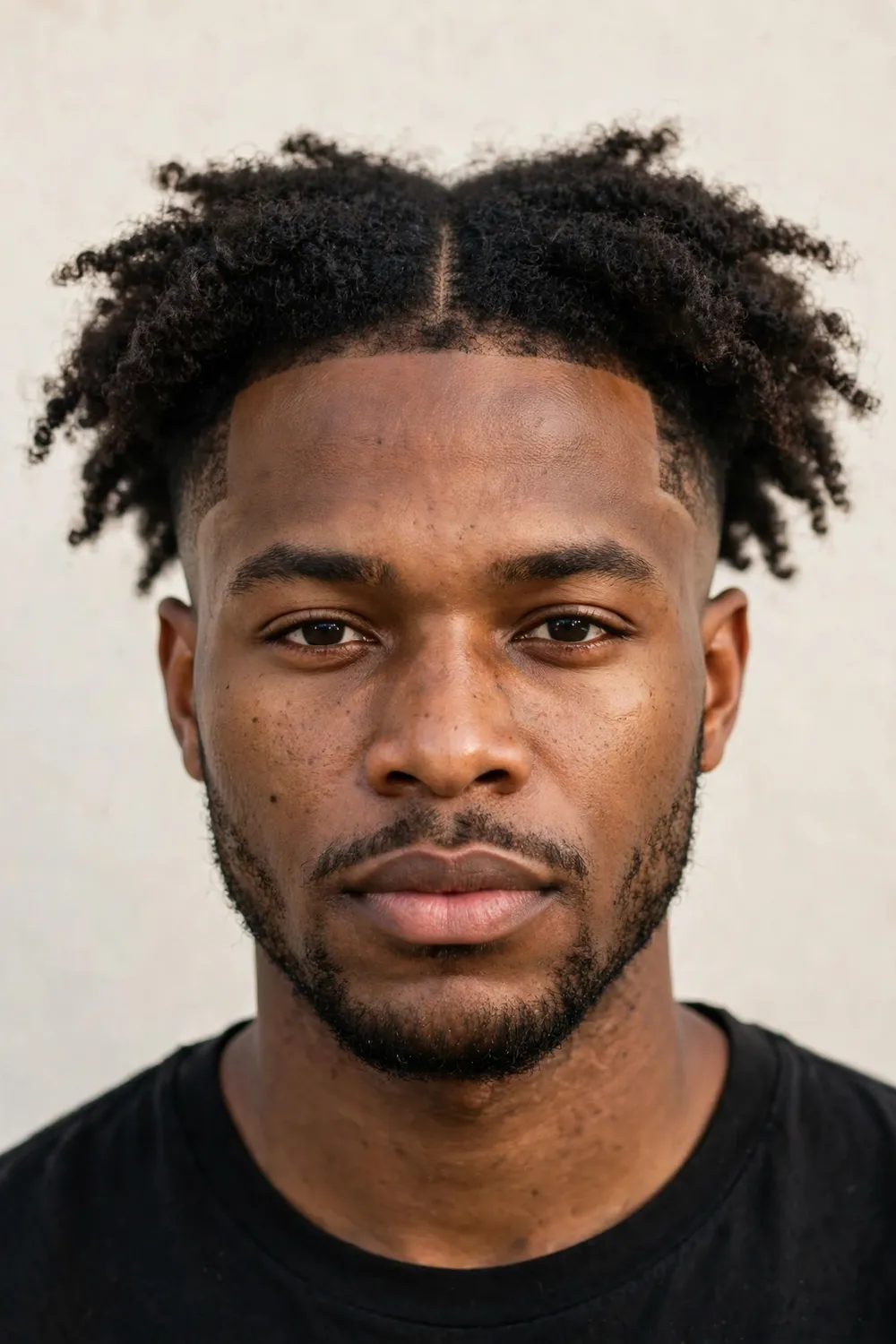
A temple fade only cleans up the temples and the front hairline, leaving the rest of the sides long. Paired with a middle part, it sharpens the front view — where the part and the hairline do all the visual work — while keeping the overall silhouette soft. It is a staple combination with textured tops and afros, and it is the least committal fade here: if you later want a fuller fade, your barber simply extends what is already started. Line-ups need refreshing every two weeks or so to stay crisp.
17. Middle Part with Burst Fade

The burst fade concentrates the blend in a semicircle around the ear and leaves the back of the head noticeably longer. Under a middle part, that means the curtains keep their length and flow at the back while the sides get a clean, modern frame — a combination mullet and flow wearers love. It works well on curly and coily hair, where keeping the back full matters. Be specific in the chair: ask for the arc at temple level and say clearly that the back stays long, because a barber on autopilot may fade the back by default.
18. Middle Part Undercut

The boldest structure on the list: sides clipped short with no blending at all, so the long centre-parted top drops over a hard disconnect. The curtains become the entire haircut, which is why this version photographs so dramatically and suits oval and heart-shaped faces. Fair warning — the grow-out is the worst here, because there is no graduation to soften it, so you are committing to tidy-ups every two to three weeks. Style the top with a medium-hold cream or fibre so the length stays controlled over the short sides.
19. Korean Two Block Middle Part
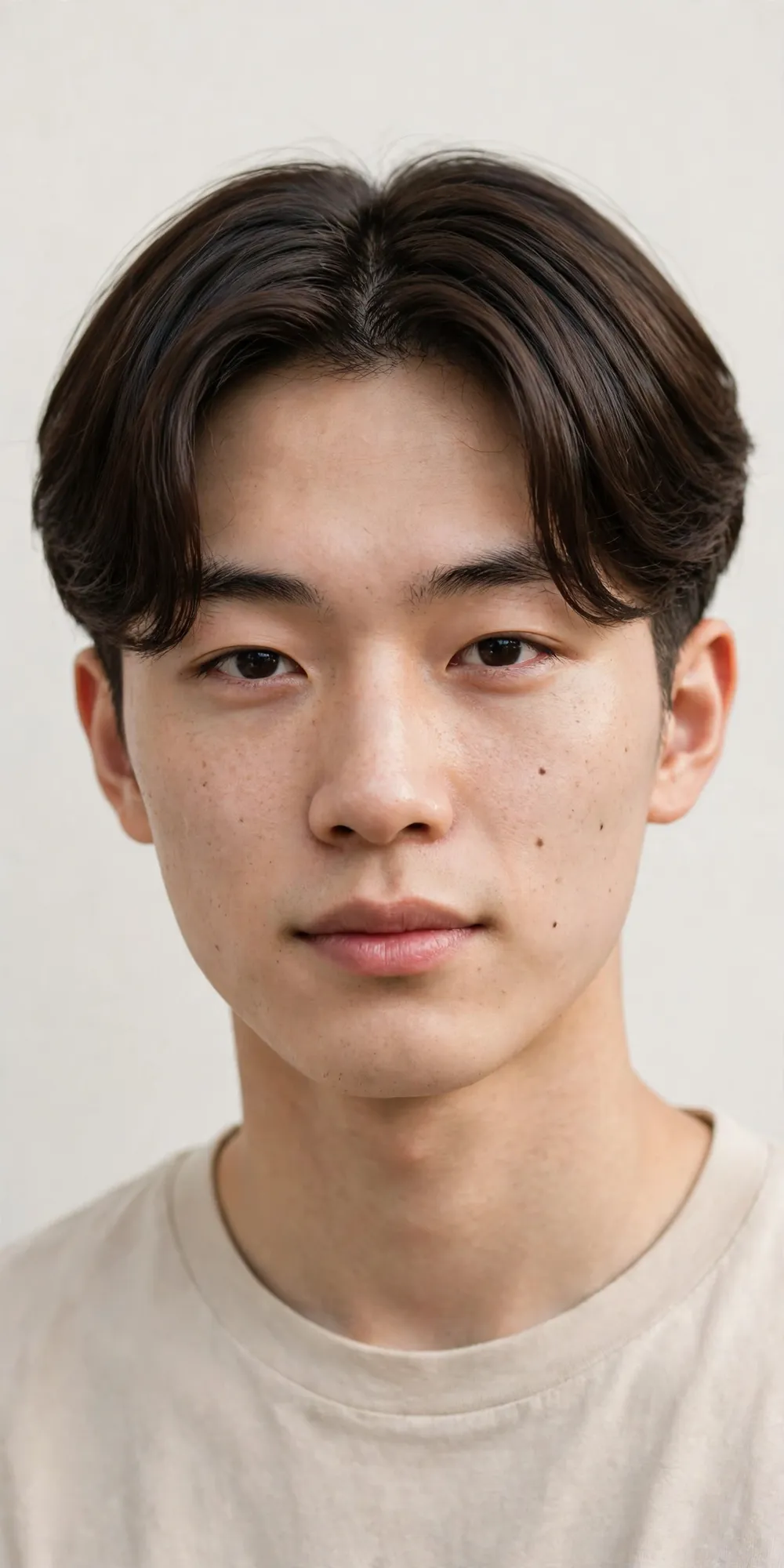
The two block is Korea’s signature cut: the sides and back are cut short in a clean “block,” while the top stays long, layered and parted in the middle so it falls softly around the eyes and cheekbones. It flatters oval, heart and round faces (the contrast slims the sides), and it is the version to ask for if you want the K-drama look rather than the 90s one. You need four to five inches on top and straight to slightly wavy hair. Style it by blow-drying the front pieces down and slightly inward, with almost no product.
20. K-Pop Middle Part with Comma Fringe
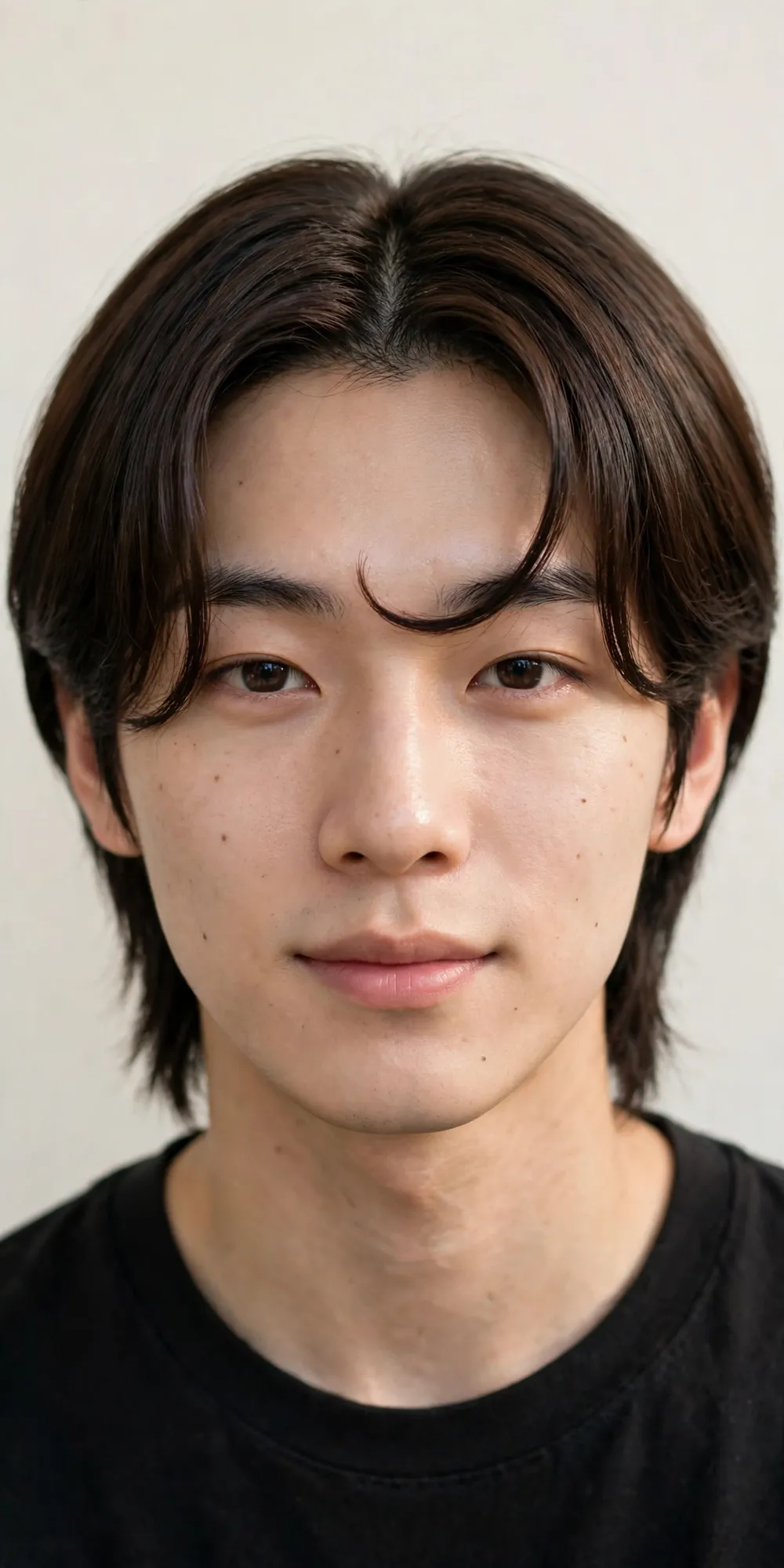
Named for the front section that curls inward like a comma, this is the detail that separates a standard Korean middle part from the idol version worn by singers like Jungkook. One or both front pieces are blow-dried with a round brush so the ends curve in a C-shape over the forehead, softening the whole face. It needs straight or relaxed hair — strong natural waves will not hold the curve without heat every morning. Expect ten minutes of styling daily; this is the highest-effort fringe on the list, and the most copied.
21. E-Boy Middle Part
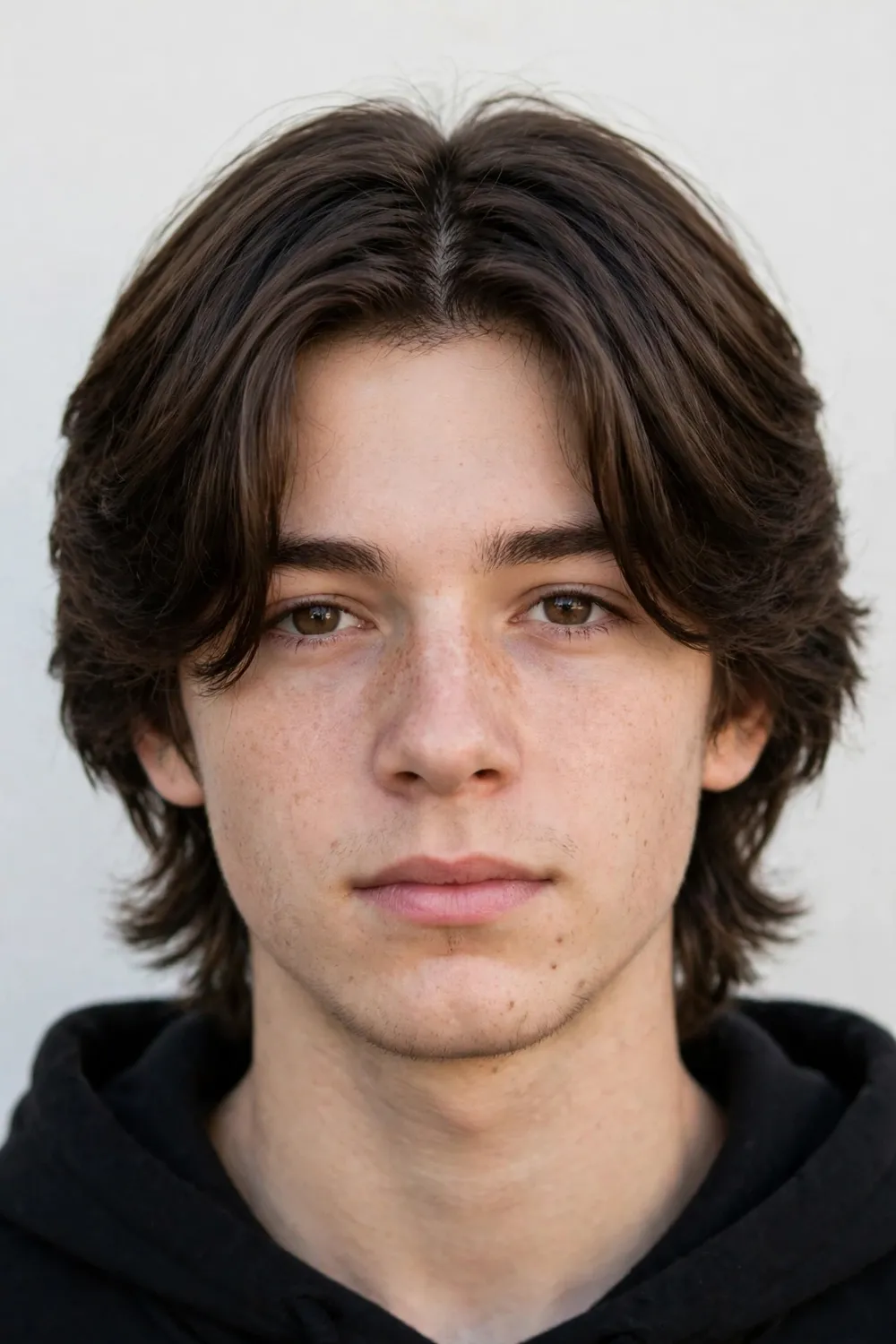
The TikTok-native version: longer curtain bangs falling past the cheekbones, a soft and slightly messy top, and sides that are tapered or lightly undercut rather than faded. Compared with classic curtains it is longer in the front, looser in finish, and deliberately a bit unkempt — the fringe often gets tucked behind the ears or pushed up with a hand through the day. It suits younger men with straight or wavy hair and at least five inches on top. Keep it looking intentional by trimming the sides regularly; messy on top only works when the outline is clean.
22. Curtain Fringe with a Blunt Cut

Where most versions soften the front with layers, this one cuts the fringe in a straight, blunt line and parts it cleanly down the middle. The geometry adds width across the forehead, which balances longer and narrower faces, and it gives straight hair a sharp, editorial finish that layered versions cannot. The trade-off is precision: a blunt line shows every millimetre of growth, so it needs a fringe trim every three weeks. Wear it smooth with a light shine cream — texture and frizz both fight the line.
23. Brush Back Middle Part

Part it in the middle, then brush everything up and back so the hair lifts off the forehead and travels backwards from the split. You get the symmetry of the middle part with the openness of a slick back — a good middle ground for men who like the part but do not want hair falling in their face. It needs five inches or more on top and about two minutes with a blow-dryer, drying up and back from the part before finishing with a light cream. It suits oval and square faces and straight to wavy hair.
24. Slicked-Back Middle Part

The formal end of the family: the top is combed straight back from a defined centre part with a smooth, controlled finish, usually over tapered or short sides. Where the brush back is airy, this is sleek — think red carpet rather than weekend. It works on straight and slightly wavy hair with at least five inches on top, and it is one of the few middle parts that reads fully professional. Use a water-based pomade for a classic shine or a smoothing cream for a modern satin finish, and comb the part in while the hair is damp so it sets clean.
25. Middle Part Comb Over

A hybrid for men who cannot decide: the hair is parted in the middle at the front, then the longer top is combed across to one side as it goes back. The front keeps the framed, symmetric look of curtains while the swept top adds the polish of a comb over — and, practically, the sweep across adds coverage, which makes this a kind option for men whose hair is thinner at the front. It needs five to six inches on top and works best on straight or wavy hair with a light-hold pomade to hold the direction.
26. Middle Part Mullet

The modern mullet already keeps its length at the back; adding a middle part gives the front the same softness, so the whole cut reads as one style instead of two. Short, tapered sides stop it sliding into costume territory, and the parted front frames the face while the back does what it wants. It suits oval faces and wavy or curly hair, which gives the back section natural movement. Book a tidy-up every three weeks — the tail needs its ends cleaned before it starts to look scraggly, usually around week four.
27. Afro Middle Part
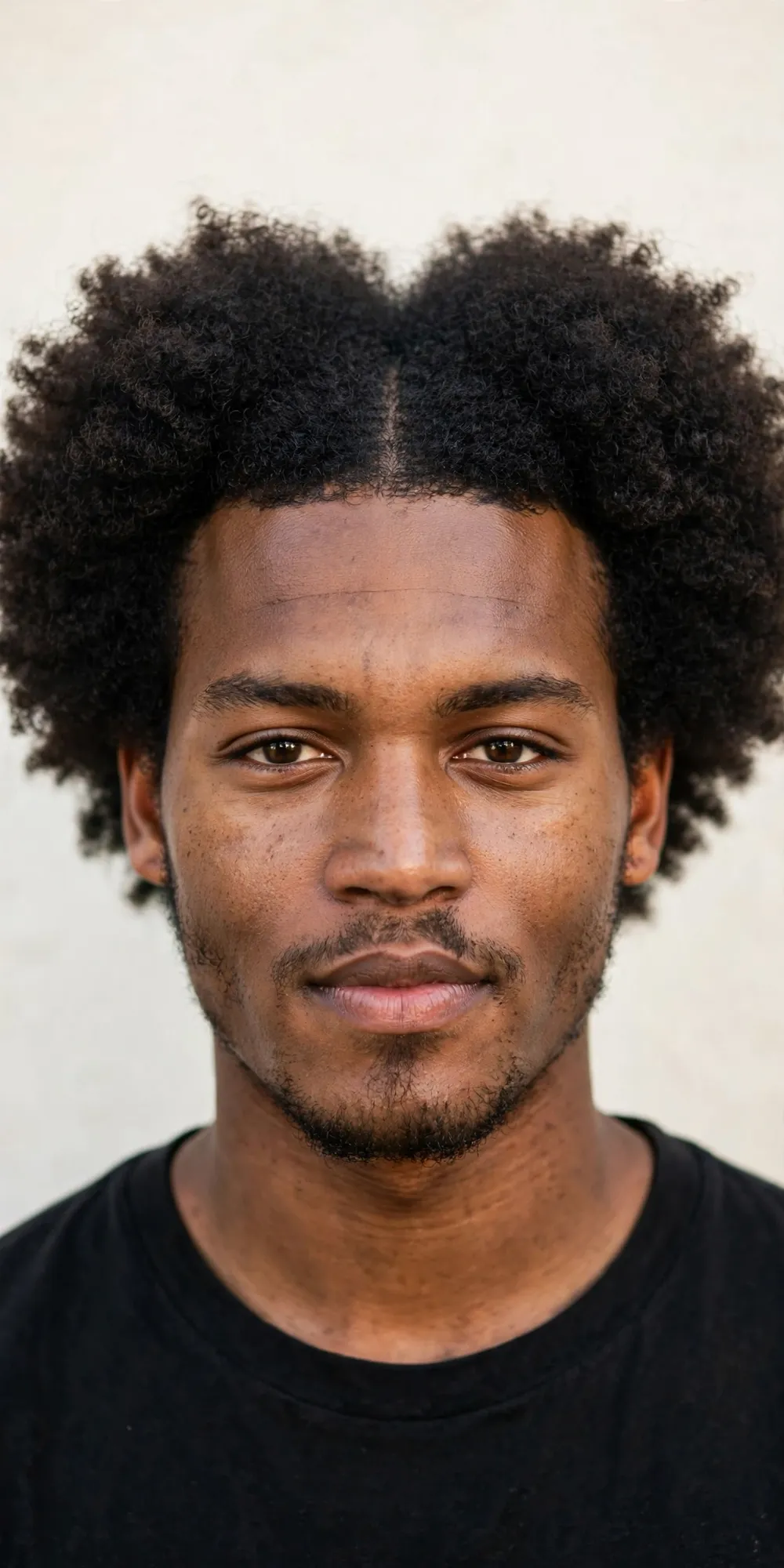
Coily hair wears a middle part as a shaped silhouette: the afro is grown out, split down the centre, and shaped so the volume balances on both sides with a clean hairline. The part gives the afro structure and direction it does not get from a freeform shape-up, and it frames the face symmetrically. The cut must be done on dry, picked-out hair so the barber shapes the true volume, and moisture is non-negotiable — a dry afro loses its shape fast. A temple taper or low fade at the edges keeps the outline sharp without shrinking the crown.
28. Middle Part with Beard

Not a different cut — a different balance. A full beard adds weight and width to the lower face, which pairs naturally with the width a middle part adds at the temples, so the whole head reads proportioned instead of top-heavy. It works with almost any version on this list, but the strongest pairings are the classic curtains, the flow and the taper: soft on top, structured at the jaw. Keep the beard’s cheek lines clean and the sideburn transition blended, because scruffy edges make even a fresh middle part look overdue.
29. Middle Part for Thick Hair

Thick hair has more than enough volume for a middle part — the challenge is stopping it from puffing out at the sides like a mushroom. The fix is in the cut, not the styling: ask for internal layering (also called debulking), where the barber removes weight from inside the hair while keeping the outer length and perimeter intact. With the bulk gone, thick curtains fall close to the head and move properly. Choose the textured, flow or taper versions, blow-dry the sides down and back, and avoid volumising products entirely — you are managing volume, not creating it.
30. Middle Part for Fine or Thin Hair

Fine hair can wear a middle part — plenty of men do — but it has to be styled for lift, because a flat centre part on fine hair shows scalp and reads thinner than the same hair in a side part. Keep the length at the shorter end (four to five inches), ask for minimal layering so the ends stay as full as possible, and blow-dry the roots upward with a volumising mousse or a pinch of texture powder at the part. Never use heavy waxes or oils; they separate fine hair into strands and undo all of it. The short curtain bangs and textured versions suit fine hair best.
31. Long Curly Middle Part

Grow the curly middle part out and it becomes a style of its own: curls falling to the jaw or shoulders, split down the centre, with layers cut so each side stacks instead of swinging as one mass. It suits men with type 3 curls and patience — you are looking at the better part of a year of growing from a short cut. The routine is moisture and restraint: leave-in conditioner, curl cream on wet hair, no brushing when dry, and trims every eight to ten weeks to cut split ends before they tangle. Cut it dry, always, so the length you see is the length you get.
32. Off-Centre Middle Part

A part that sits five to fifteen millimetres off true centre is technically not a middle part — and practically, it is the version many men end up wearing. Slight asymmetry looks more natural, it works around a cowlick instead of against it, and it softens the style for men who find a dead-centre split too severe or too 90s. Everything else is identical: same lengths, same training, same styles. If you tried a centre part and it looked “off” without you knowing why, try shifting it before you give up on the idea entirely.
33. Split Pompadour Middle Part
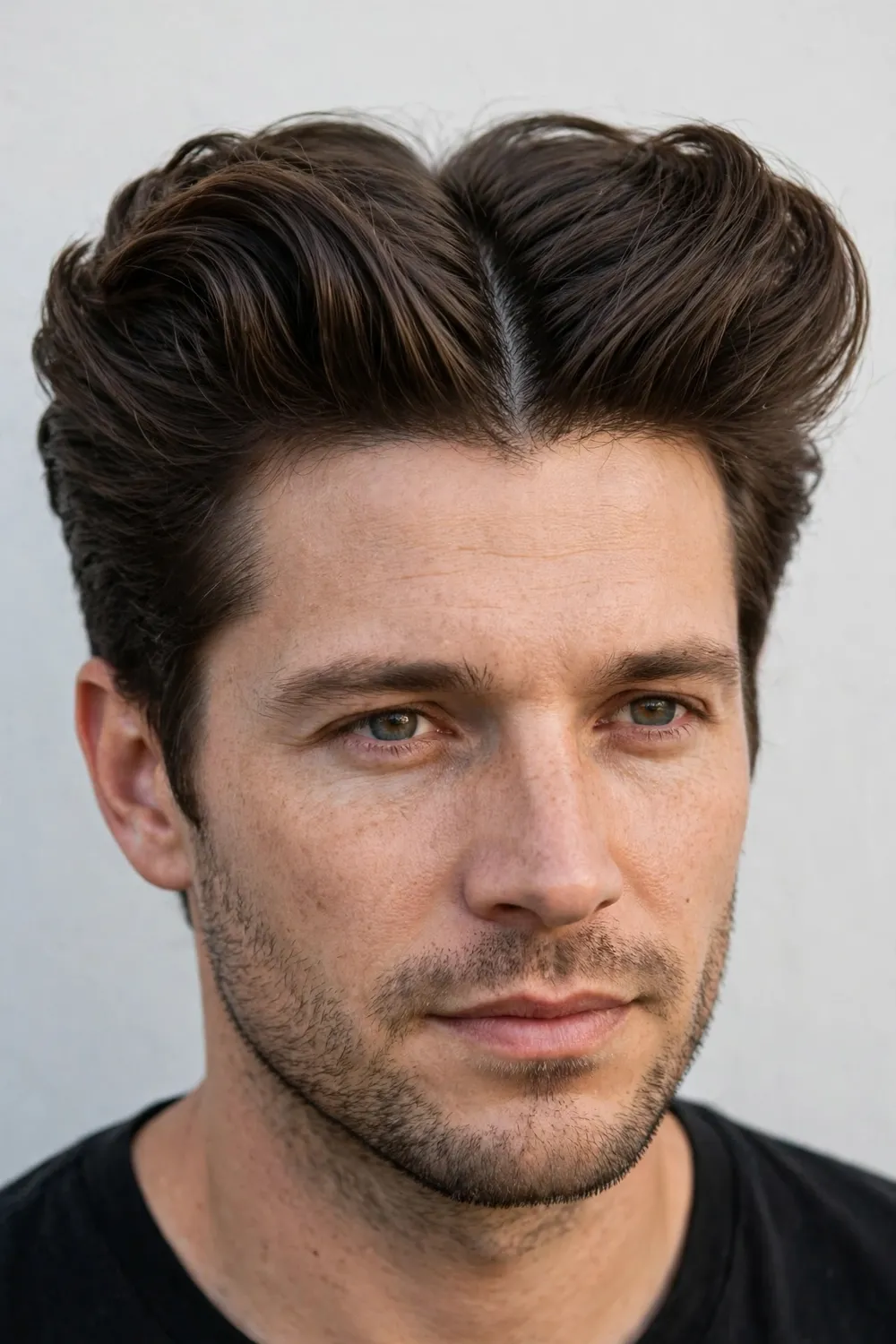
Take the pompadour’s volume and split it down the middle: the front is built up and swept back in two sections from a centre part, so you get height and symmetry at the same time. It is a dressier, more deliberate take that suits oval and heart-shaped faces and thick, straight-to-wavy hair with four to five inches on top. The styling is the work — blow-dry each side up and back with a round brush, then set with a matte wax. Skip it if your hair is fine; the split exposes the scalp at the part when volume collapses.
34. Wet Look Middle Part

The glossy, just-stepped-out-of-the-rain finish: hair combed into a precise centre part and set with a wet-look gel or high-shine pomade so it holds a slick sheen all day. It is a deliberate fashion choice — runways and evening events rather than everyday casual — and it works best on straight, dark hair where the shine reads as polish instead of grease. Apply product to damp hair, comb the part in sharply, and do not touch it once it sets. On fine or light-coloured hair, test it first: wet-look products can make sparse hair look sparser.
35. Dyed Middle Part

Colour changes a middle part’s whole character because the part line puts the colour — and any root growth — on full display. Platinum and ash blonde over dark roots is the most requested version (the contrast is the point), but highlights through the front pieces or a full copper or brown refresh work too. Two honest cautions: bleach damages the very front pieces that frame your face, so get it done professionally and budget for purple shampoo and conditioning treatments; and a centre part shows regrowth faster than any side part, so expect root touch-ups every four to six weeks.
36. Middle Part with Long Layers

For hair past the ears, layers are what separate a middle part from a shapeless sheet. Long layers cut through the lengths remove weight at the bottom, let the hair swing instead of hanging, and stop the front pieces from forming two solid curtains with nothing happening inside them. This is the right version for men growing their hair toward shoulder length and for thick, wavy hair that needs movement more than it needs structure. Ask for layers that start around chin level, and keep the very front pieces slightly shorter than the back for a proper frame.
37. Voluminous Curtains with a Blowout
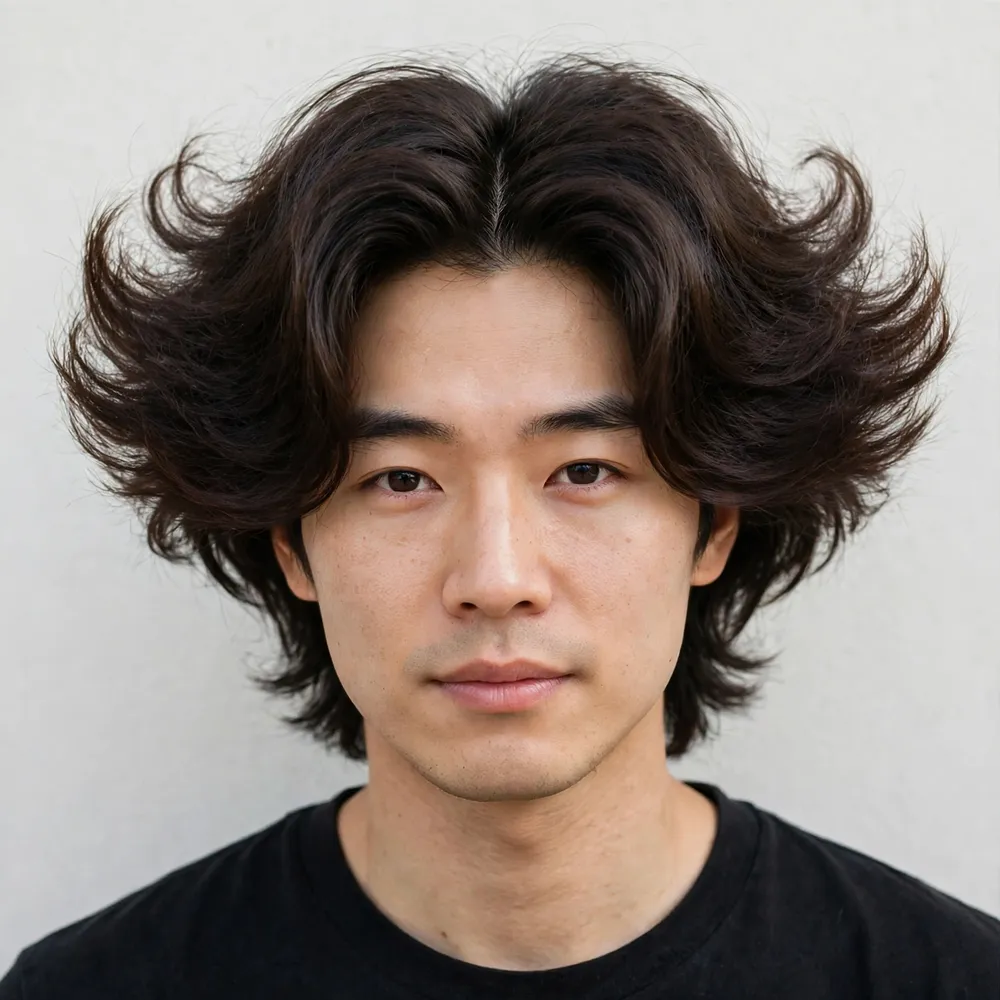
Curtains with the volume turned up: the fringe is blow-dried up, out and away from the face so it arcs back in two full, airy sections instead of lying flat. It is the version all over social media at the moment, and it flatters oval and square faces by adding width at the temples. You need thick or wavy hair with five inches on top — fine hair can be coaxed there with mousse and a round brush, but it will not hold all day. Dry each side up and outward from the part, finish with a cool shot, and set with the lightest possible hold spray.
38. Broccoli Middle Part
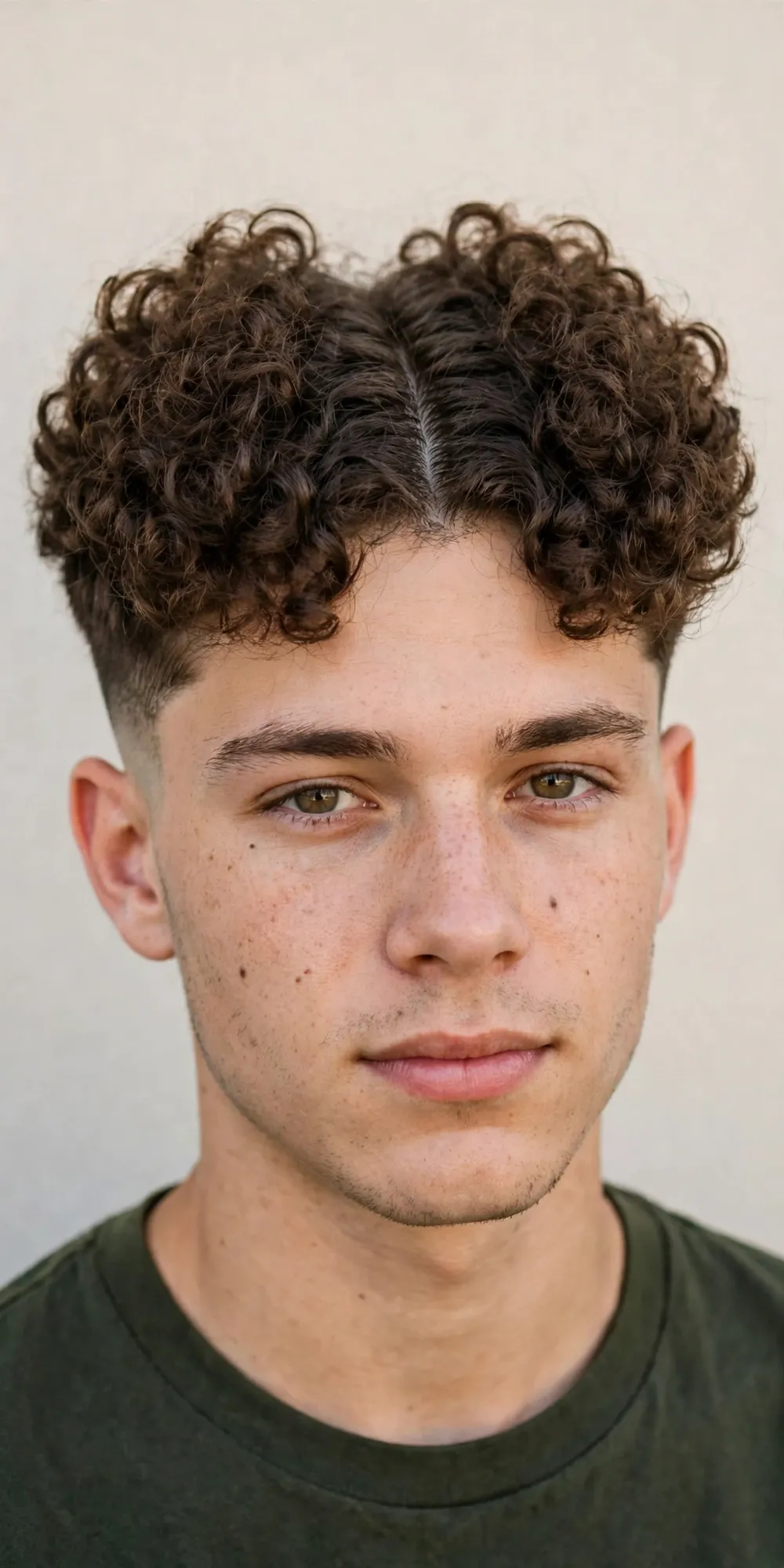
The Gen Z broccoli cut — a full, rounded mass of curls or tight texture on top over short faded sides — usually gets pushed forward, but parting it in the middle gives the curls a cleaner shape and stops the top reading as one undifferentiated dome. The part will not be a sharp line; with this much texture it is a soft split the curls fall away from, and that is exactly right. Keep the curls moisturised and defined with cream on wet hair, and get the fade refreshed every two weeks, because the contrast between the tight sides and the big top is the whole haircut.
39. Middle Part with Braids or Locs
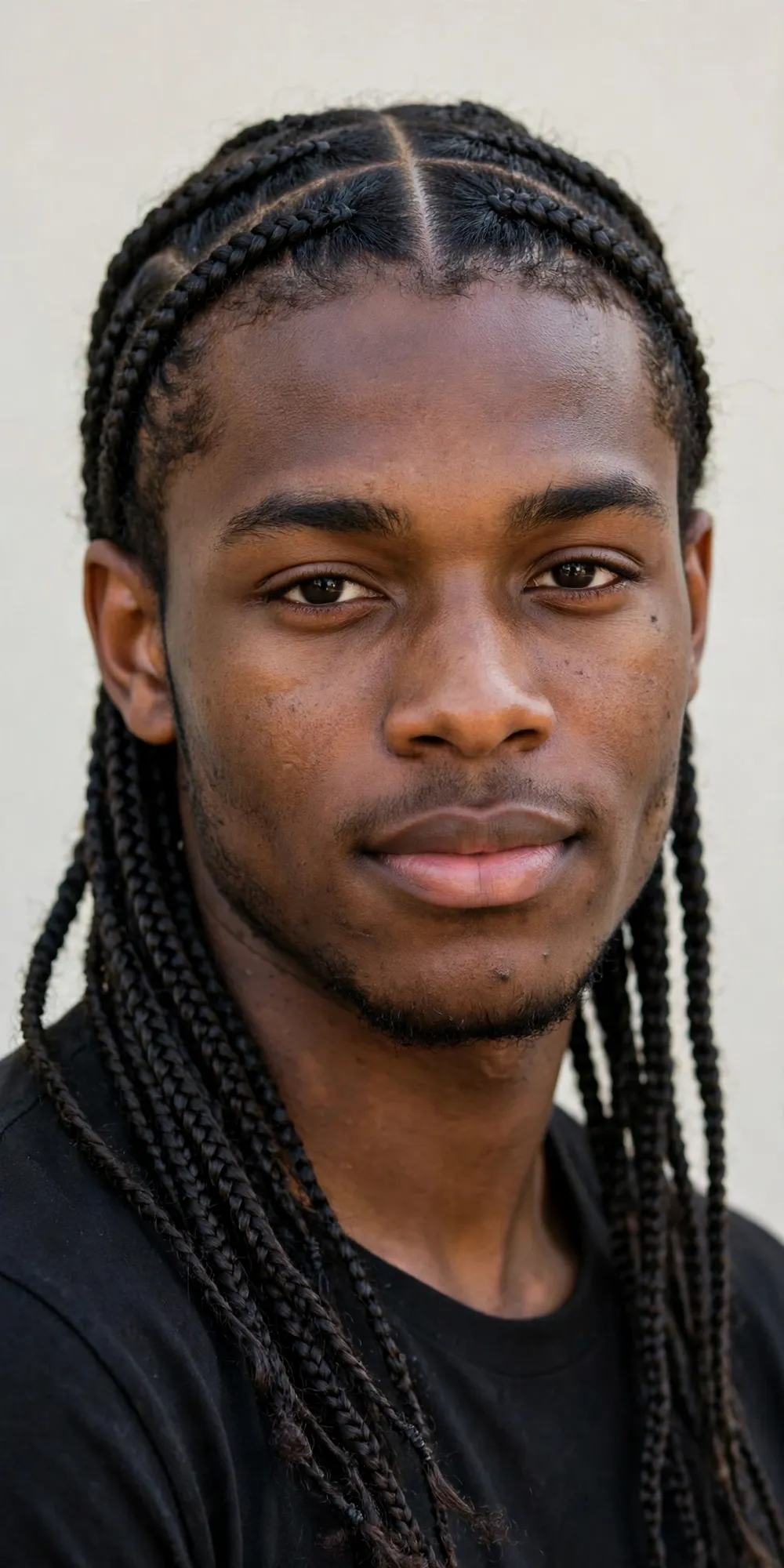
A centre part is the foundation of most braided and loc styles for a reason: braiding from a clean middle split keeps the tension even on both sides of the head, looks symmetrical from every angle, and gives the braids or locs a natural fall down each side of the face and shoulders. Box braids, twists and starter locs all start this way. Keep the parts clean between installs with a light scalp oil, and do not let braids stay in past eight weeks — the centre part makes regrowth very visible, and leaving them longer risks breakage along the part line itself.
How to Style and Maintain a Middle Part
Once your hair is trained, a middle part takes two to five minutes in the morning:
- Start damp. Part the hair while it is wet or freshly towel-dried — setting the split on dry hair is fighting yesterday’s direction.
- Product before the dryer. Sea salt spray for texture and flow styles, a light cream for classic curtains, volumising mousse for fine hair, curl cream for curls. Pea-sized amounts; the part line itself stays product-free.
- Blow-dry with direction. Roots up first, then each side forward and away from the face. Finish with a cool shot to set it.
- Finish with fingers. Comb the part in only if you want the sleek or wet-look versions; for everything else, fingers keep the natural separation that makes the style look modern.
- Know your trim cycle. Fades need refreshing every two to three weeks, tapers stretch to five or six, and long scissor-cut versions only need the ends tidied every six to eight weeks. The fringe decides when a cut looks “overdue” — once it passes your cheekbones (or your eyebrows, on short versions), book in.
Mistakes to Avoid
- Parting hair that is too short. Under four inches, the hair cannot fall to the sides and the part collapses by midday. Grow first, part second.
- Drawing the part with a ruler. A dead-straight, dead-centre line looks costumey on most men. A soft split a few millimetres off centre looks like hair, not a diagram.
- Heavy product at the roots. Wax and pomade at the part line flatten the split, widen it visually and make clean hair look greasy within hours.
- Skipping the training weeks. Judging a middle part on day three is judging it while your hair is still trying to be a side part. Give it a full month of daily parting before you decide.
- Asking for a fade when you want curtains to be the focus. High-contrast sides pull the eye away from the part. If the curtains are the point, keep the sides tapered or scissor-cut.
- Ignoring the back. A middle part is a 360-degree haircut — if the back is left bulky while the front is styled, the silhouette falls apart from every angle except the mirror.
Middle Part FAQs
How long does your hair need to be for a middle part? At least four inches on top for the shortest versions, and five to six inches for classic curtains. The practical test: your front hair should reach the tip of your nose when pulled straight down. Shorter than that, the hair does not have the weight to fall to both sides and the part will not hold.
Can you train your hair to part in the middle? Yes. Part it on damp hair after every wash, blow-dry both sides away from the centre, and repeat daily. Most men see the hair start cooperating within two to three weeks; by four to six weeks the new direction is the default. A strong cowlick right at the centre is the one real obstacle — shifting the part a few millimetres to one side solves it.
Which face shape suits a middle part best? Oval, heart and diamond faces wear it most naturally, because the centre split reinforces their symmetry. Round faces can wear it with height or faded sides to add length. Oblong faces should pick shorter versions with fullness at the sides, and square faces should choose soft, layered versions rather than blunt ones.
Does a middle part make your face look longer? It can, slightly — the vertical line of the part draws the eye up and down. On round or square faces that is a benefit. If your face is already long, keep the top at four to five inches, keep some width at the sides, and avoid very long, flat curtains that hang straight down.
Does a middle part work with a receding hairline? Partly. A centre part draws attention to the middle of the forehead rather than the temples, which some men prefer. But if the recession at the temples is noticeable, an exposed centre split can emphasise it — a textured fringe worn forward or a side part usually covers better. Ask your barber to assess it honestly; this is a case-by-case call, not a rule.
Middle part or side part — which should I choose? Choose the middle part if your face is oval, heart-shaped or narrow, if you have at least four inches on top, and if you like a modern, relaxed look. Choose the side part if your face is round or very square, your workplace is formal, or your hair is shorter. If you are between the two, the off-centre part (idea #32) is the genuine middle ground.
How often does a middle part need a trim? It depends on the sides. Fade versions need a refresh every two to three weeks, tapers every four to six weeks, and long scissor-cut styles only need the ends tidied every six to eight weeks. The top itself can usually go one cycle longer than the sides.
Final Word
The middle part hairstyle has survived a century of comebacks because it does one simple thing very well: it frames your face instead of sitting on top of it. Get the length right, train the part for a few patient weeks, and pick the version above that matches your hair type — curtains for the classic route, a two block or fade for contrast, a flow for length. Take the photo to your barber, name the version out loud, and protect the length it needs. Do those things and this is one of the most versatile haircuts a man can wear.
Browse our latest men’s haircut guides for more styles like these, and learn more about Hair Groom and what we do.