


These shaggy hairstyles for men are layered, feathered cuts with a grown-out fringe and plenty of texture — the kind of hair that looks like you just woke up looking good. They suit wavy and thick hair best, though the right version works on almost every hair type. If you want a shortcut, start with these three: the Classic Shag for the full 70s look, the Modern Shag for something cleaner and easier to wear, and the Wavy Shag if your natural texture needs a cut that works with it, not against it.
What Is a Shaggy Haircut?
The shag started in the 70s as a rock-star cut: layers cut at different lengths all through the hair, a heavy fringe, and feathered ends that flick out rather than sitting flat. What makes it different from just growing your hair out is intent. A shag is shaped — the layers are cut in on purpose, so the hair has movement even when you do nothing to it.
It also gets mixed up with two close cousins, so here’s the quick difference:
| Cut | Layers | Fringe | Back |
|---|---|---|---|
| Shag | Feathered layers throughout | Full, brow-length | Collar length, textured |
| Wolf cut | Short choppy top, long back | Short, wispy | Long and wild |
| Mullet | Short sides and top | Short | Much longer, disconnected |
The shag is the most balanced of the three. If you like the wolf cut’s attitude but want something you can wear to work, the shag is the compromise — and our full Wolf Cut Hairstyles for Men guide covers that wilder end properly. The modern version keeps the same idea but tidies the edges: cleaner ears, a softer fringe, a shape that still looks deliberate on day three. The Shag (haircut) entry on Wikipedia traces the cut back to its 70s origins if you’re curious about the history.
1. Classic Shag
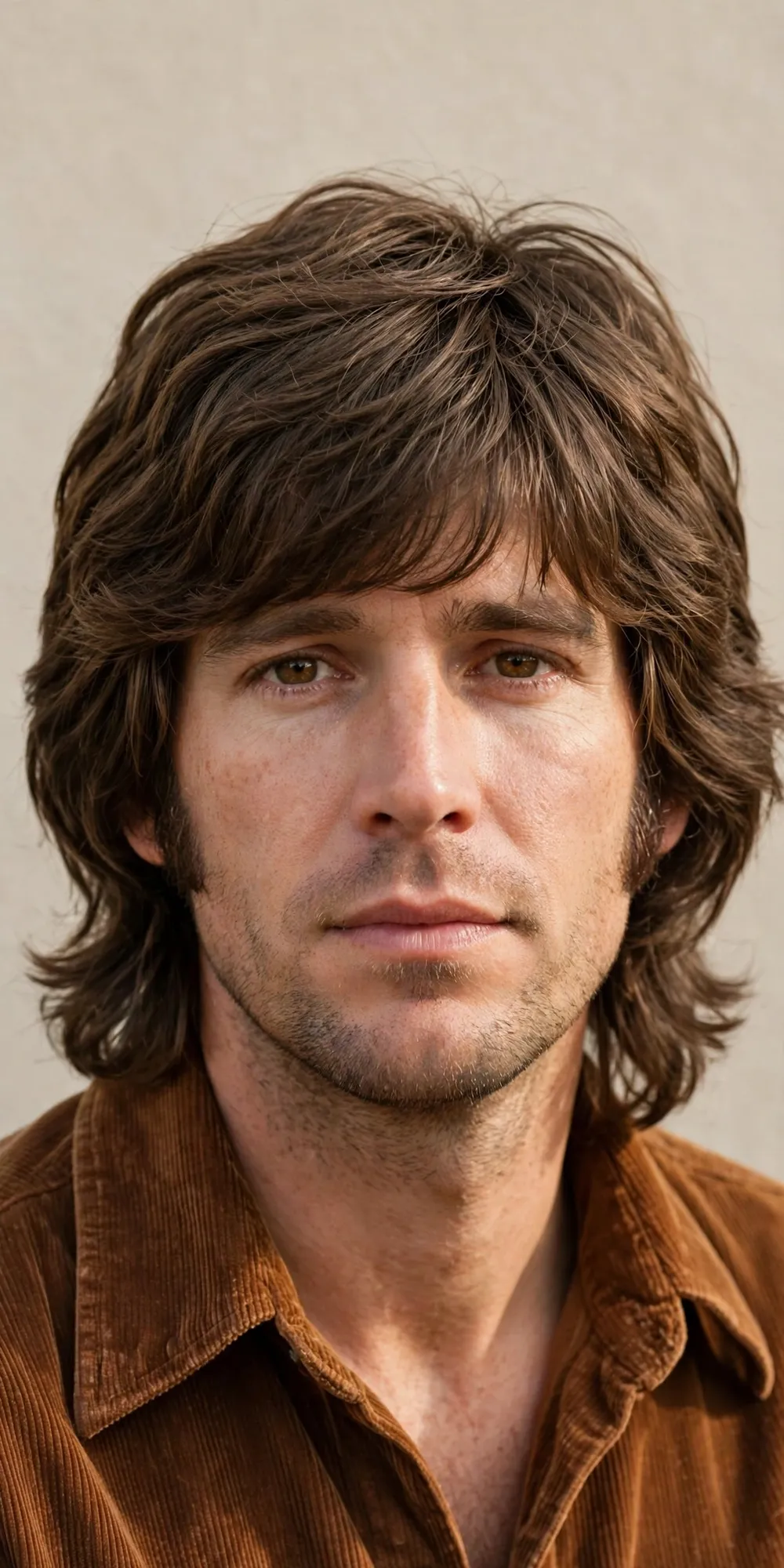
This is the one everything else is based on: thick layers stacked through the crown, a full fringe that sits on the brow, and length that just touches the collar. It has real volume on top and feathered ends that kick out on their own. It suits oval and square faces best, and wavy or thick hair holds the shape without much help. Ask your barber for a classic 70s shag with heavy layering, a brow-length fringe, and the back left at the collar. Finish with a light matte clay worked through damp hair, then rough-dry it with your fingers. The honest catch: the fringe needs a trim every four weeks or it starts falling into your eyes.
2. Modern Shag

The modern shag keeps the layers but trims the drama. The shape is slimmer, the ears are cleaner, and the fringe is softer — long enough to feel shaggy, short enough to stay out of your eyes. Oval, heart and long faces suit it well, and it flatters straight to wavy hair because the layers do the moving rather than your natural texture. Ask for a modern shag with textured layers, a soft fringe just above the brow, and the back kept above the collar. A pea-sized amount of texture paste, warmed between your palms and pushed through the ends, is plenty. A tidy-up every five or six weeks keeps the shape, and it grows out gracefully rather than turning into a mop.
3. Short Shaggy Hair

Short and shaggy sounds like a contradiction until you see it done right. The top runs two to three inches, cut choppy so the pieces separate, while the sides stay soft and neat instead of faded hard. A small fringe finishes it — enough texture to read as a shag, short enough to wash and go. This is a strong pick for round faces, and for guys with straight hair who want movement without length. Ask your barber for a short shag with a choppy two-to-three-inch top, soft tapered sides, and a textured fringe. Style it with a dab of matte clay on dry hair. It needs a cut every four weeks to stay short, but between cuts it asks almost nothing of you.
4. Medium Shaggy Hair

Medium is the sweet spot for most men trying a shag for the first time. The layers sit above the ears, the back reaches the collar, and the fringe can be worn straight across or swept to the side depending on your mood. It suits oval and square faces, and it works on straight, wavy and lightly curly hair alike. Ask for a medium shag with layers above the ears, collar-length back, and a fringe you can part either way. A little sea salt spray on damp hair, scrunched and left to air-dry, gives it that lived-in finish. Expect a trim every five weeks; leave it longer and the layers lose their shape and start to look like plain grown-out hair.
5. Long Shaggy Hair

When a shag goes past the shoulders it stops being a haircut and starts being a look. Face-framing layers keep it from hanging like a curtain, and a loose, textured back stops it looking heavy. Oval and long faces carry it best, and thick or wavy hair gives it the body it needs; fine hair can work too if the layers stay long. Ask your barber for a long shag with face-framing layers, a loose textured back, and length past the shoulders. A drop of lightweight hair oil on the ends keeps it from going frizzy. Be honest with yourself here: this one needs conditioning, occasional trims to stop split ends, and a few minutes of styling most mornings.
6. Shaggy Wolf Cut
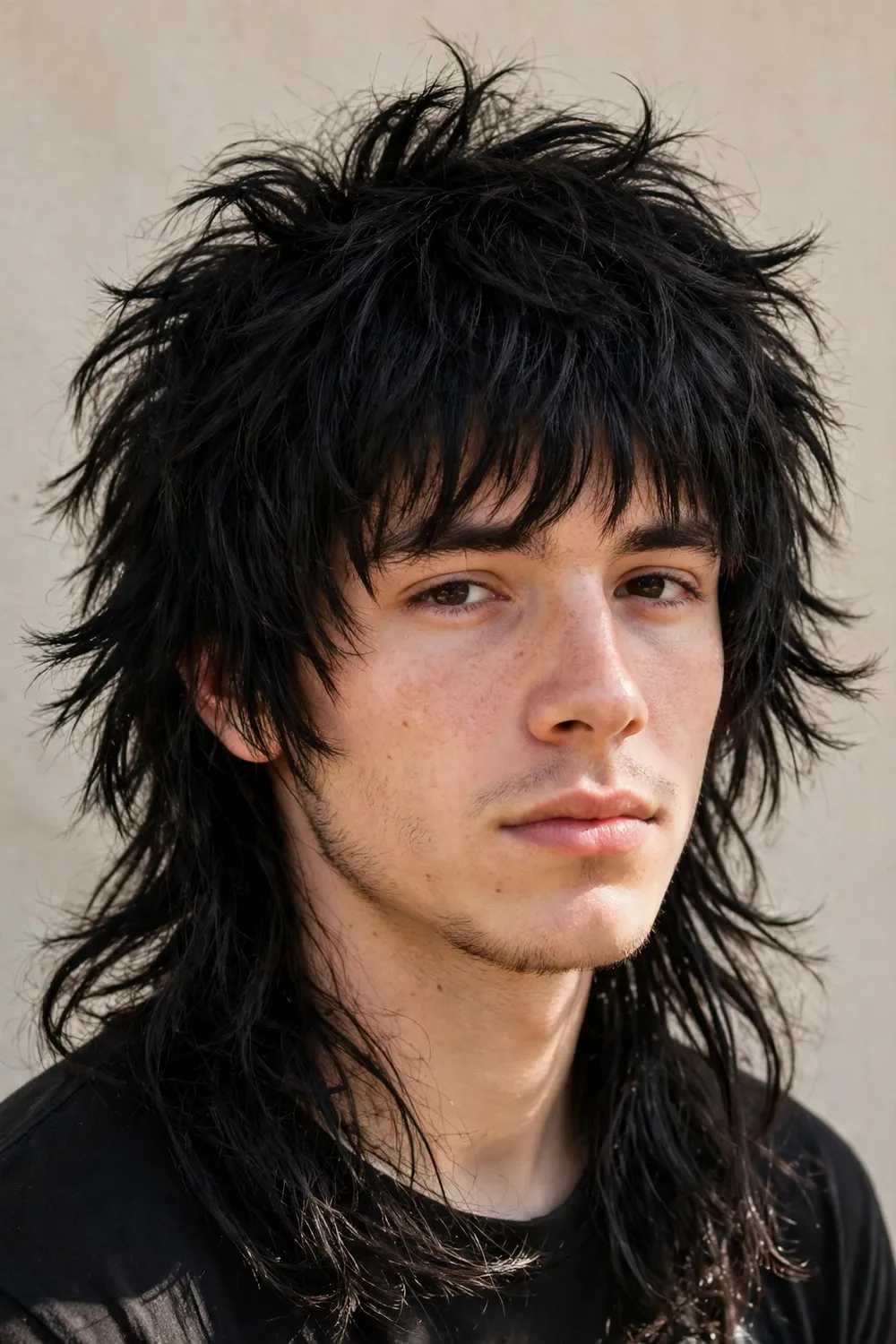
The shaggy wolf cut is where the two styles meet halfway. You get the shag’s layers and fringe on top, but the back runs longer and wilder. It suits oval and heart-shaped faces, and thick or wavy hair holds the volume best — fine hair tends to collapse under the weight at the back. Ask for a wolf cut with shag layers on top, a short textured fringe, and a longer, disconnected back. Style with sea salt spray and a rough blow-dry, lifting at the roots. Maintenance is the trade-off: the top needs shaping every four weeks or the contrast between top and back disappears. Check our Wolf Cut Hairstyles for Men guide before committing.
7. Shaggy Mullet
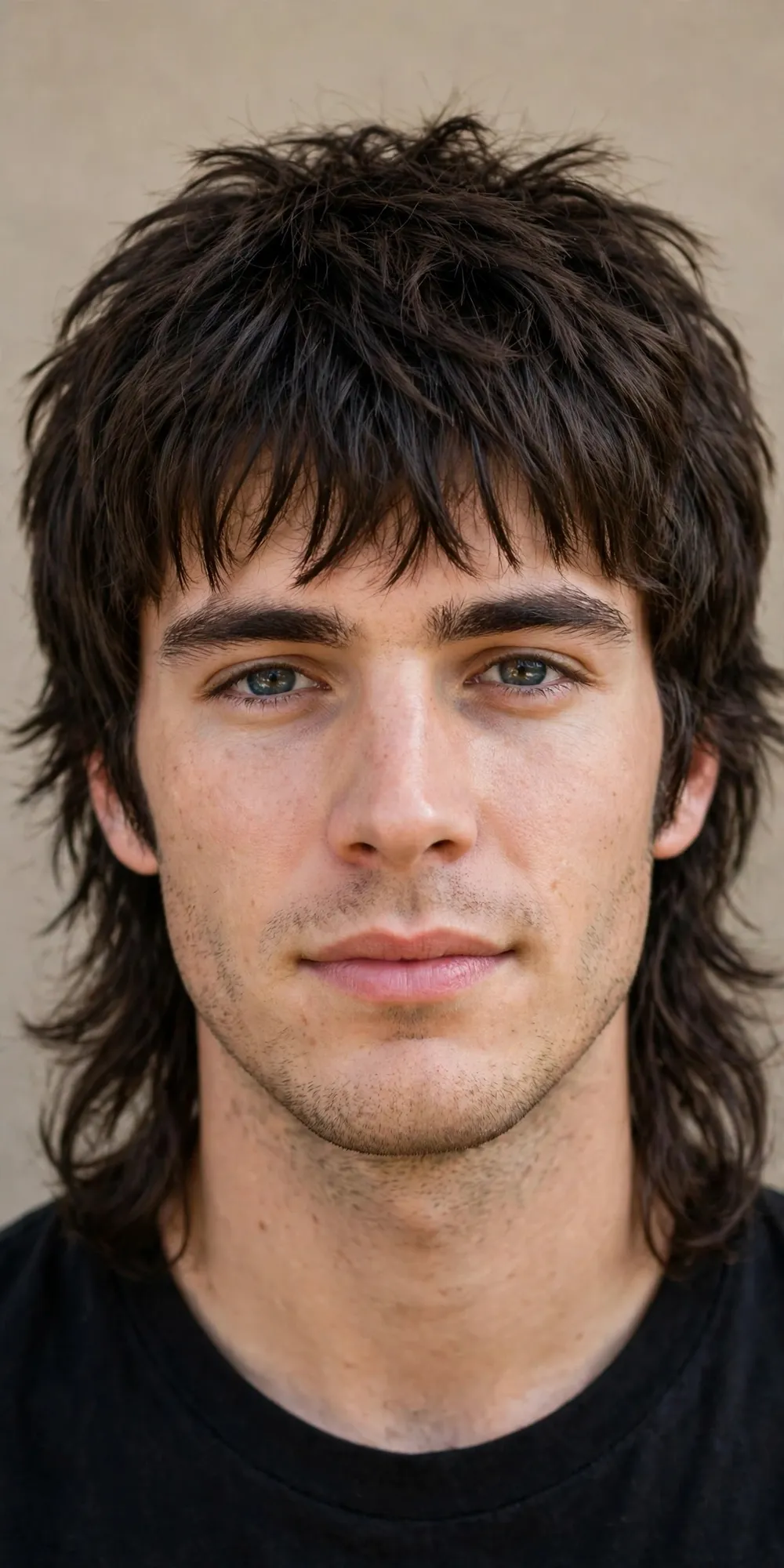
A shaggy mullet softens the mullet’s hard edges. Instead of a sharp jump between short top and long back, the layers run choppy all the way through and the back blends in. It suits oval and square faces, and straight or wavy hair shows off the layering best. Ask your barber for a shaggy mullet with choppy layers throughout, a blended longer back, and a textured fringe — and be clear you want it blended, not disconnected. A matte paste through the top and a quick finger-comb is all the styling it needs. The back needs a trim every six weeks to stop it looking straggly, and fair warning: this one gets comments, good and bad, so wear it with confidence.
8. Wavy Shag

If your hair has a natural wave, the wavy shag is less a style choice and more a way of letting your hair do what it already wants to do. The layers are cut to enhance the wave, so each section falls into soft, separated movement instead of one heavy block. It suits oval, square and heart faces, and it’s the best shag for naturally wavy hair. Ask your barber for a wavy shag with layers cut to follow your wave pattern, and mention whether your waves sit tighter at the ends or through the middle. Sea salt spray on damp hair, scrunched and air-dried, is the whole routine. Trims every six weeks keep the waves from going triangular.
9. Curly Shag

Curly hair and shags were made for each other — the layers stop curls stacking into a pyramid and let them spring up in a rounded, even shape. The key is stacked layers cut while the hair is dry or in its natural curl pattern, so the barber can see where each curl actually lands. It suits round and square faces especially well, and it works on any curl from loose waves to tight coils. Ask for a curly shag with rounded stacked layers and a soft curl fringe, cut dry if your barber offers it. A curl cream, scrunched in while damp, defines the curls without crunch. Expect a trim every six to eight weeks — curly hair hides growth well, which is half the appeal.
10. Straight Shag
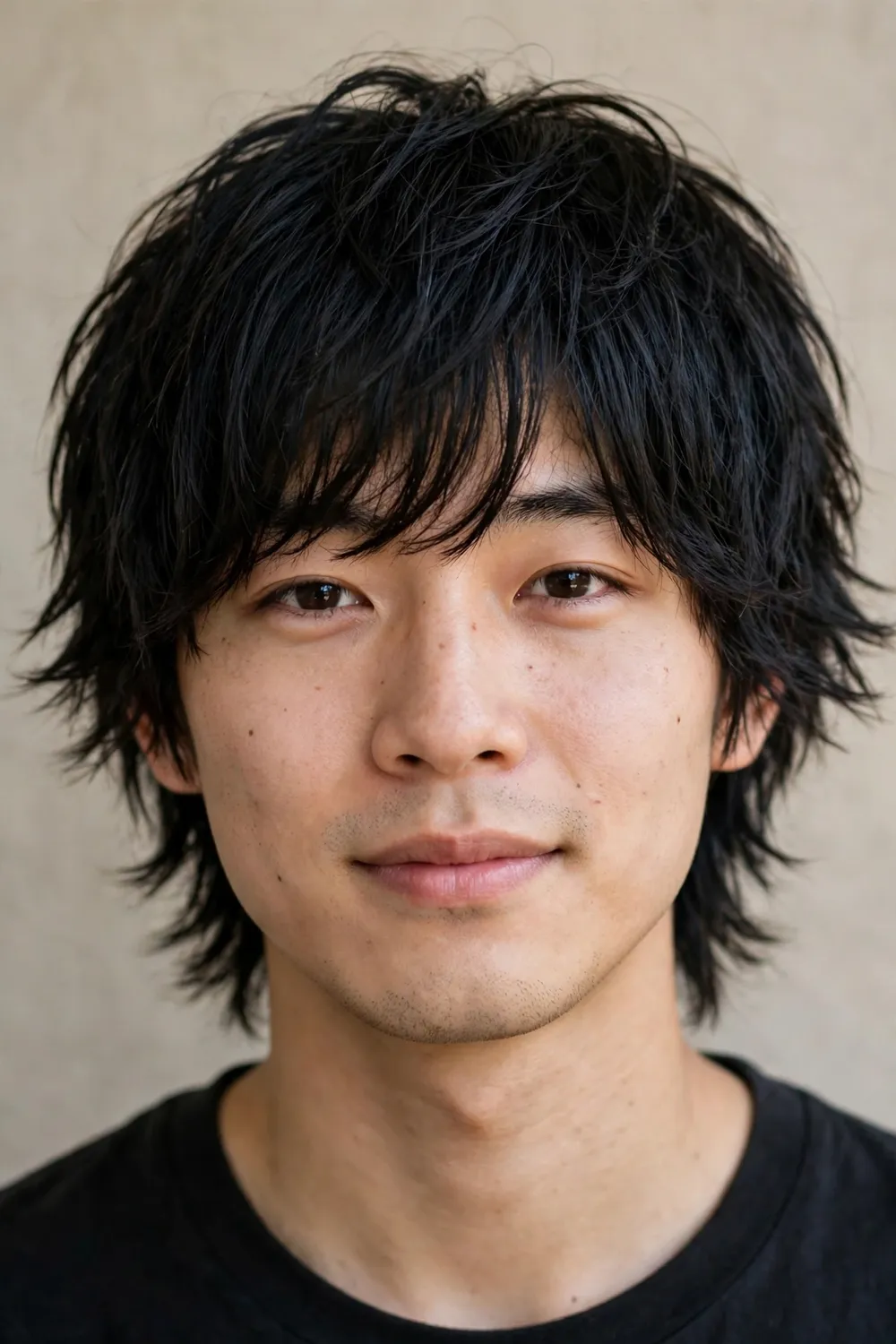
Straight hair is the hardest hair type for a shag, because there’s no natural wave to hide behind — every layer shows. The fix is razor cutting: the razor thins the ends and builds movement into hair that would otherwise hang flat, so it looks smooth and messy at the same time. It suits oval and long faces, and medium-density straight hair works best; very fine hair can look thin if the layers go too short. Ask your barber for a straight shag with razor-cut layers and a textured fringe. A light texturising spray gives it grip without weight. The downside is upkeep: razor-cut ends split faster, so a trim every four to five weeks keeps it looking sharp.
11. Messy Shag

The messy shag is the I-woke-up-like-this cut, except someone actually planned it. Layers are cut to fall in different directions, so the hair looks tousled even when you’ve done nothing to it — deliberately undone, not actually neglected. It suits most face shapes, and wavy or thick hair holds the tousle best, though straight hair works with enough texture product. Ask for a messy shag with layers cut in different directions and a fringe you can push around. Style it with matte clay on dry hair, twisting random pieces with your fingertips. The catch is that “messy” still needs a shape underneath: skip trims too long and it stops looking deliberately messy. For the full messy playbook, see our Messy Hairstyles for Men guide.
12. Choppy Shag
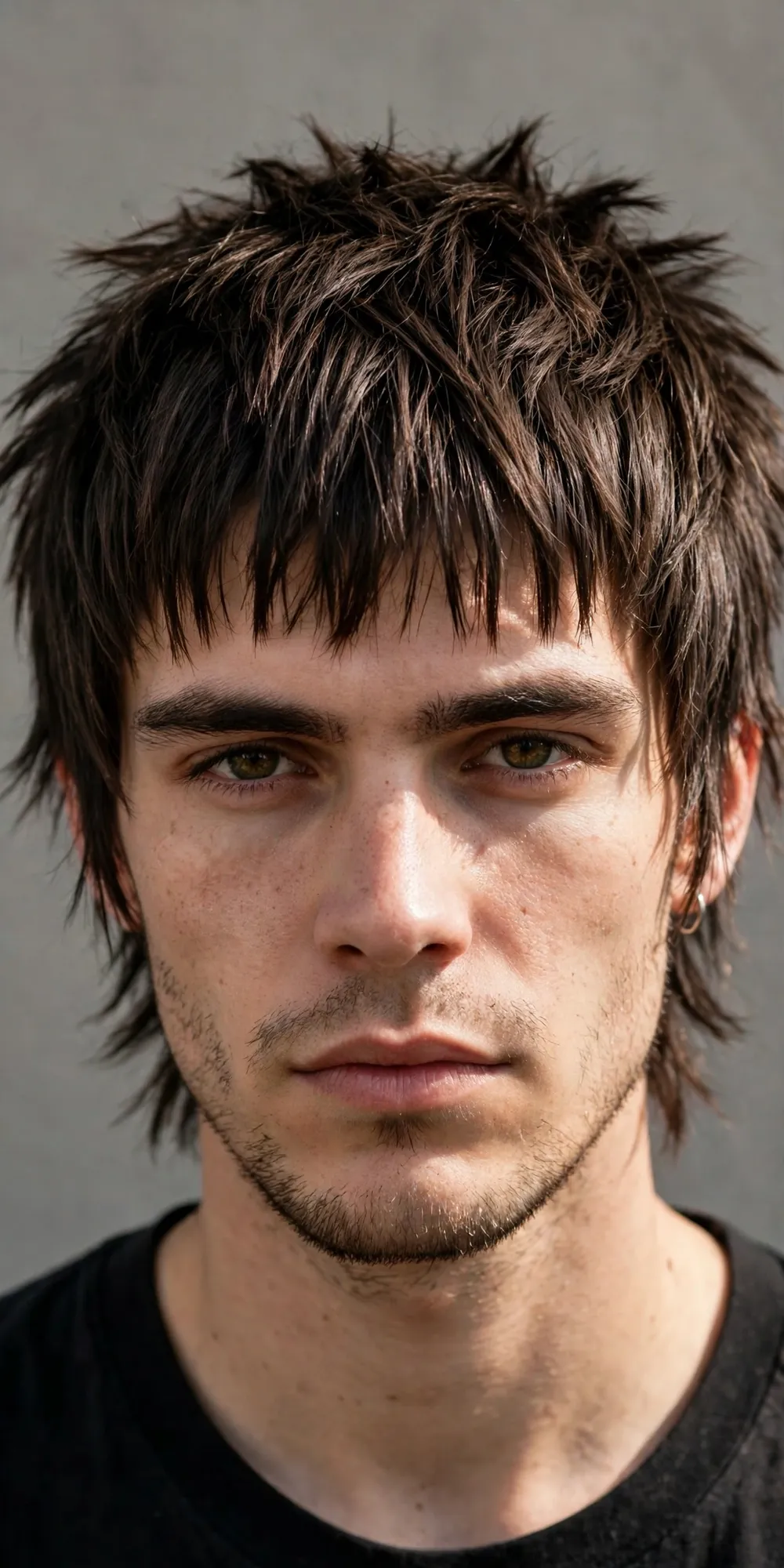
The choppy shag turns the layering up to the max. Bold, stepped layers with strong separation give it a punk edge — you can see each layer distinctly, and the hair has real attitude. It suits oval and square faces, and thick, straight or wavy hair shows the steps best; fine hair can look stringy if the layers are cut too aggressively. Ask your barber for a choppy shag with bold stepped layers and strong separation. A strong-hold matte paste, worked through the ends piece by piece, keeps the separation visible. It needs a trim every four weeks, because the steps grow out unevenly and the shape collapses fast.
13. Curtain Shag

The curtain shag brings back the 90s centre part, but with shag layering underneath it. The fringe falls to both sides of the face like curtains, framing the cheekbones. It suits oval, square and heart-shaped faces, and straight to wavy hair parts cleanly in the middle. Ask your barber for a curtain shag with a centre part, a fringe long enough to reach the cheekbones, and layers that frame the face. A little light cream or sea salt spray, combed through while damp, keeps the part in place without stiffness. Maintenance is light — a trim every five or six weeks — but the centre part needs training if your hair naturally falls to one side, so give it a week or two to settle.
14. Shaggy Bro Flow

The bro flow is the shag’s sporty cousin: layers swept back from the face, ends that flip out at the collar, and a finish that looks like you just took your helmet off. The shaggy version adds more texture through the top so it doesn’t just sit flat. It suits oval and square faces, and thick or wavy hair gives the flow its body. Ask your barber for a shaggy bro flow with layers swept back from the face and a collar-length back with flipped ends. A dab of light pomade or cream, pushed back through damp hair, is all it takes. Trims every six weeks keep the collar flip from turning into a mullet.
15. Shaggy Fringe
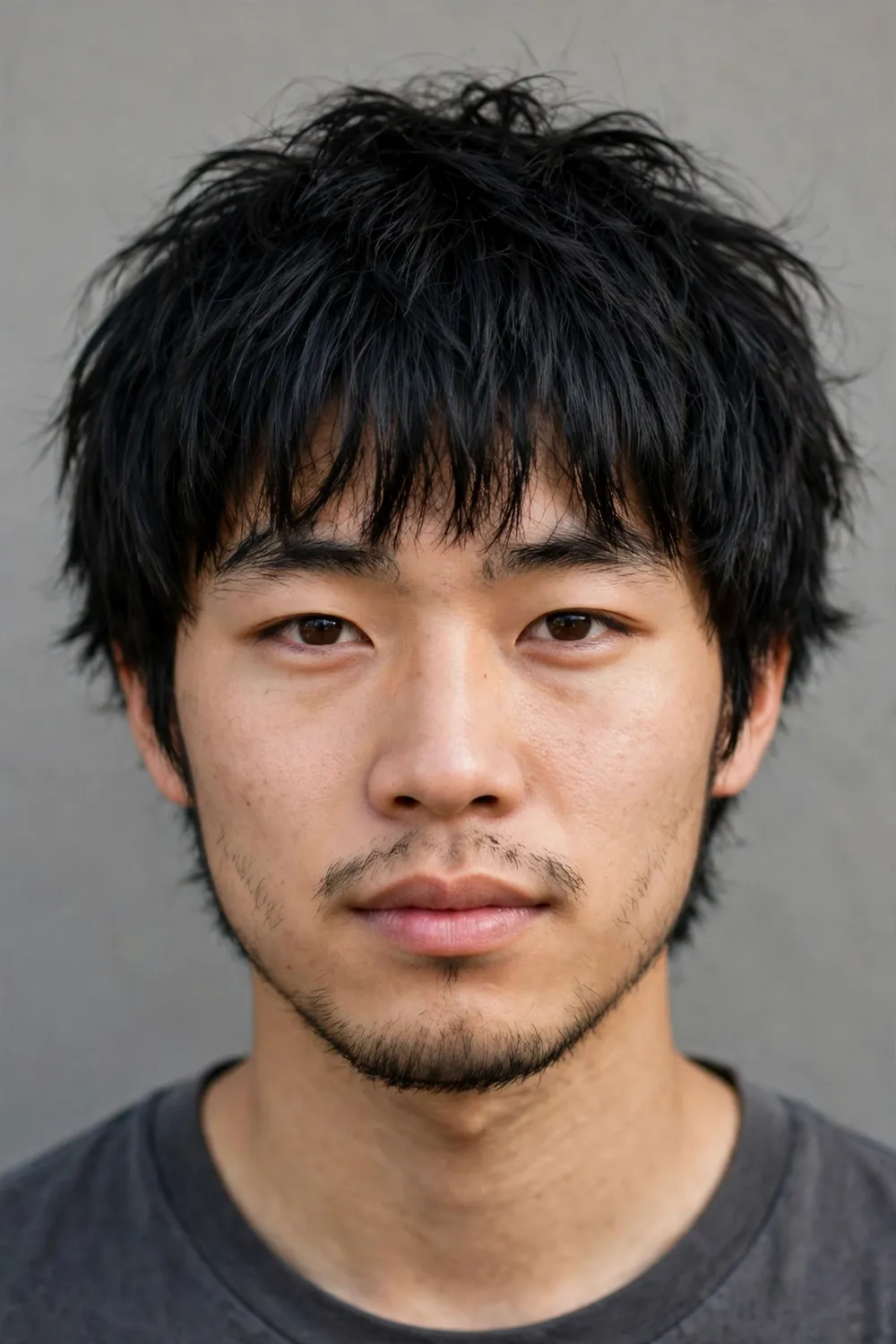
Sometimes the fringe is the whole point. The shaggy fringe leads with a thick, uneven fringe that sits on the brow, while shorter textured layers through the rest of the hair keep the cut from feeling heavy. It suits oval, long and heart-shaped faces, and straight or wavy hair takes the uneven fringe best. Ask your barber for a shaggy fringe with a thick, uneven brow-length fringe and textured layers throughout — and ask them to point-cut the fringe rather than cutting it straight across, which keeps it from looking like a school photo. A tiny amount of texture paste stops the fringe clumping together. The fringe grows fast, so a quick tidy every three to four weeks keeps it at brow length.
16. 70s Rock Shag

The 70s rock shag is the full drama version: heavy feathering, a thick brow fringe, and big, rounded volume that fills out the silhouette. The feathering is what sets it apart — the ends are cut to flick outward in layers. It suits oval and square faces, and thick or wavy hair holds the volume; fine hair will need help from product and a blow-dryer. Ask your barber for a 70s rock shag with dramatic feathering, a heavy brow fringe, and rounded volume through the crown and sides. Blow-dry with a round brush, lifting at the roots, and finish with a light-hold spray. This is the highest-maintenance shag here — it needs a blow-dry most mornings and a trim every four weeks.
17. Grunge Shag

The grunge shag is the 90s version of the cut: relaxed layers, a grown-out fringe that falls where it wants, and length that runs from the ears to the shoulders. It’s the shag at its most low-effort. It suits oval and long faces, and straight or wavy hair carries the grown-out look best. Ask your barber for a grunge shag with relaxed 90s layers, a grown-out fringe, and ears-to-shoulders length. The styling routine is almost nothing: a little sea salt spray, a rough dry, done. It’s also the most forgiving shag to grow out, so trims can stretch to seven or eight weeks. Just watch the fringe — once it reaches your eyes, it stops looking grunge and starts looking like you need glasses.
18. Korean Shag

The Korean shag takes the classic shape and softens everything about it. The layers are even and airy rather than jagged, the volume sits light on top, and the fringe is see-through — a few wispy pieces that fall across the forehead instead of a heavy curtain. It works best on straight to slightly wavy hair with fine or medium thickness, and it flatters oval and round faces because the soft fringe breaks up the width without hiding it. Ask your barber for a soft layered shag with a see-through fringe and a gentle bend through the ends, no hard lines anywhere. Style it with a light mousse and a round brush, or just rough dry and add a dab of cream. Maintenance is easy: a trim every six weeks keeps the shape from going limp.
19. Shaggy Haircut with Taper
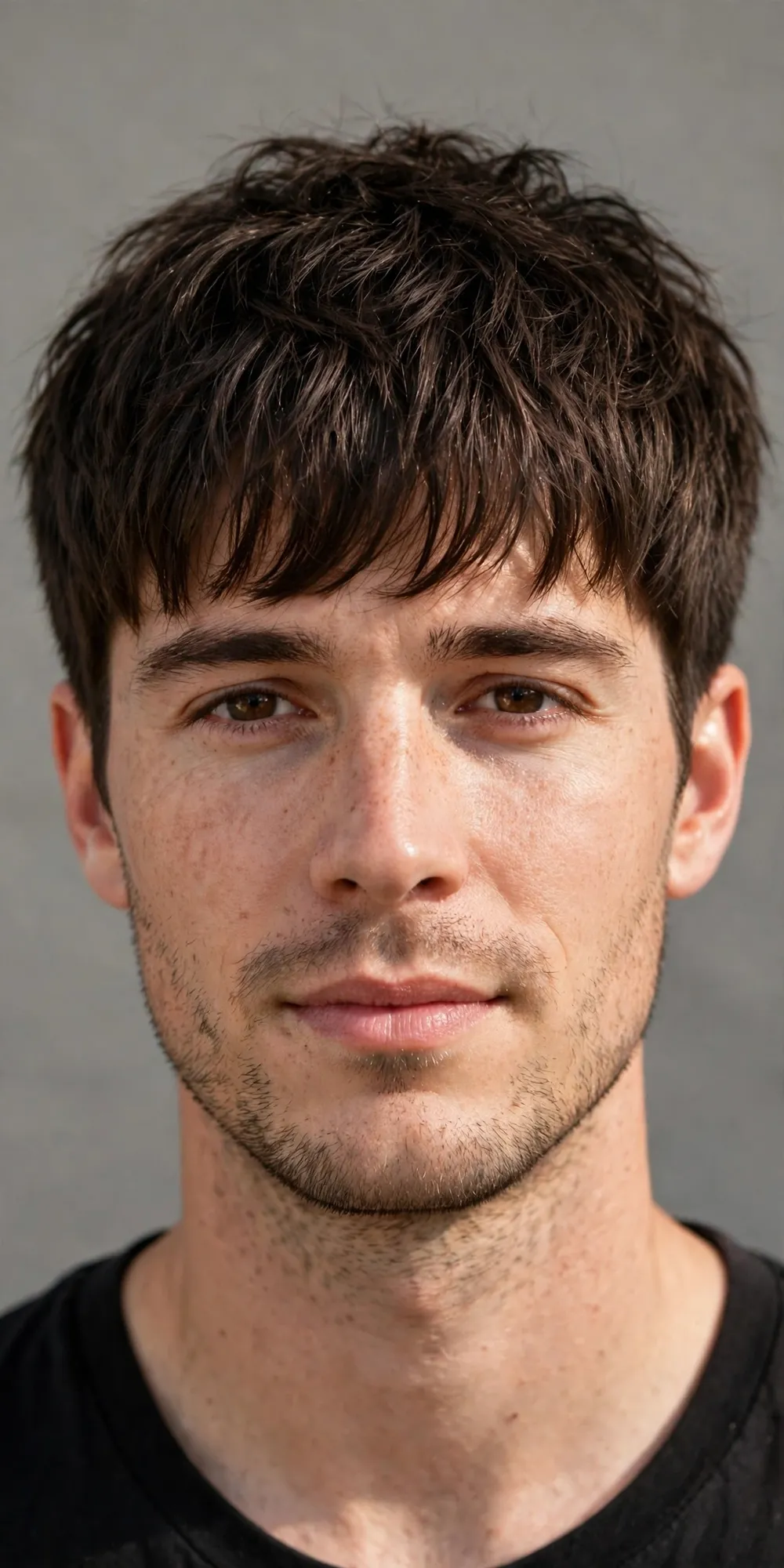
If you love shag texture but want the sides to look deliberate, the taper is the fix. The top stays choppy and layered — full shag energy — while the ears and neckline taper down neatly, so the cut reads as a style rather than a grow-out. It suits nearly every face shape, and it is especially good for guys with wavy or thick hair who need the sides kept under control without a hard fade line. Ask your barber for shag layers on top and a soft taper around the ears and neck, keeping the fringe textured. Style with sea salt spray on damp hair, rough dry, and finish with matte clay. Upkeep is a taper cleanup every three to four weeks, with a full reshape every six to eight.
20. Shaggy Haircut with Beard
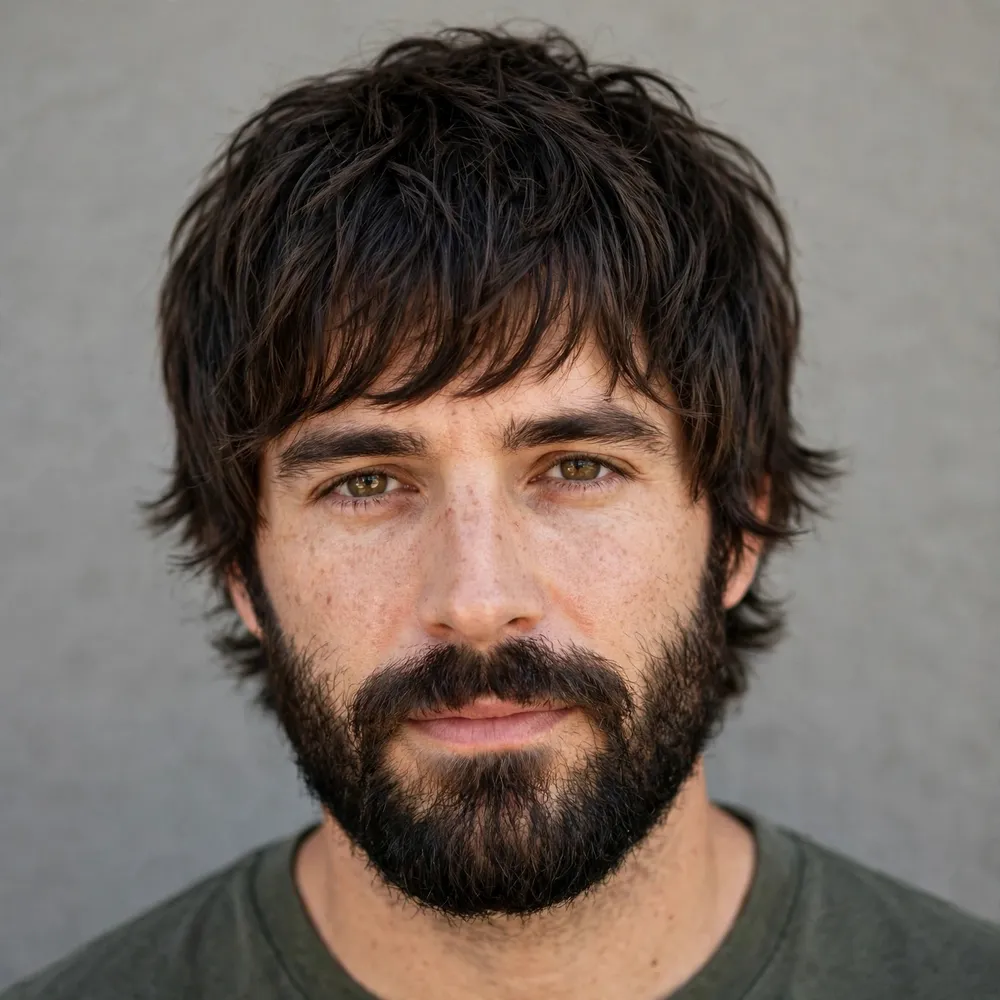
A shag and a beard are natural partners — the loose layers on top balance a structured beard below, and the two textures stop the whole look from feeling either too polished or too scruffy. The key is the blend: sideburns should melt into the beard rather than ending in a hard line, and the hair’s shag layers need to stay light so they don’t weigh the face down. It suits square and oval faces best, and works on any hair type as long as the beard is kept tidy. Ask your barber for a layered shag top with blended sideburns, and have the beard shaped at the same time so the two match. Use beard oil daily and matte paste in the hair. Trim the beard weekly, the hair every six weeks.
21. Thick Hair Shag

Thick hair is what the shag was built for — all that bulk finally has somewhere to go. Deep interior layers carve out the weight underneath, so the hair falls into controlled volume instead of sitting like a helmet. It works on thick straight, wavy or curly hair alike, and it flatters long and oval faces because the layers add width where you want it. Ask your barber for deep interior layers and point cutting through the bulk, and say the word “thinning” carefully — you want the weight removed with layering, not thinned out with shears that leave frizz behind. Style with a small amount of cream on damp hair and let it air dry. Maintenance is honest: a trim every five to six weeks, or the bulk creeps back fast.
22. Fine Shag
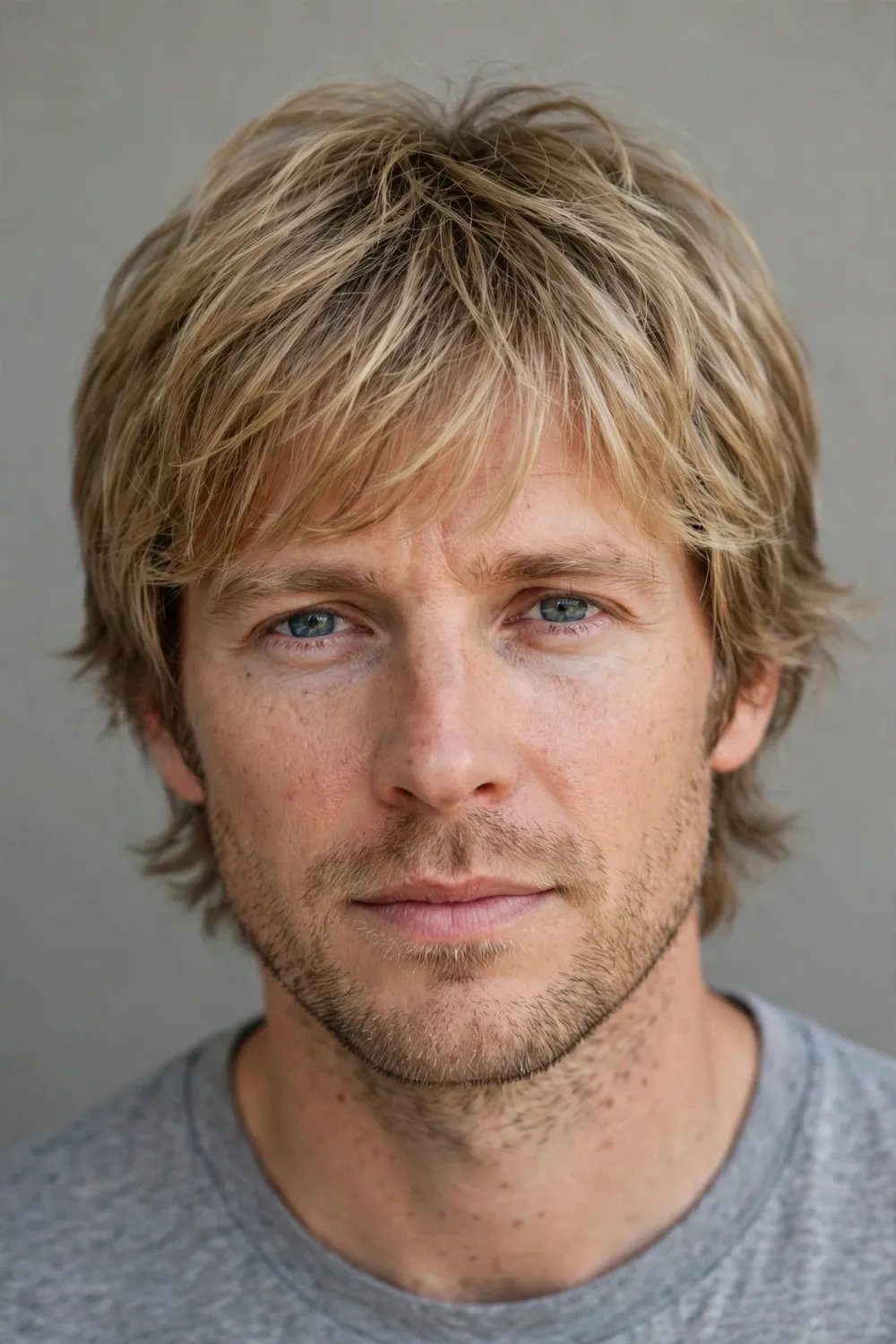
A shag on fine hair sounds risky, but done right it is one of the best ways to make fine hair look like more of it. The trick is longer, soft layers that keep the ends full — chop them too short and the hair turns wispy, so your barber needs to protect the length while building movement at the roots. It suits oval and square faces, and fine-haired guys who have always been told to keep it short will be surprised at how much body a shag adds. Ask for soft, long layers with no thinning shears and a textured fringe that sits just above the brow. A volumising mousse at the roots, rough dried upside down, does most of the work. Maintenance is light: trim every six weeks to keep the ends from looking stringy.
23. Surfer Shag
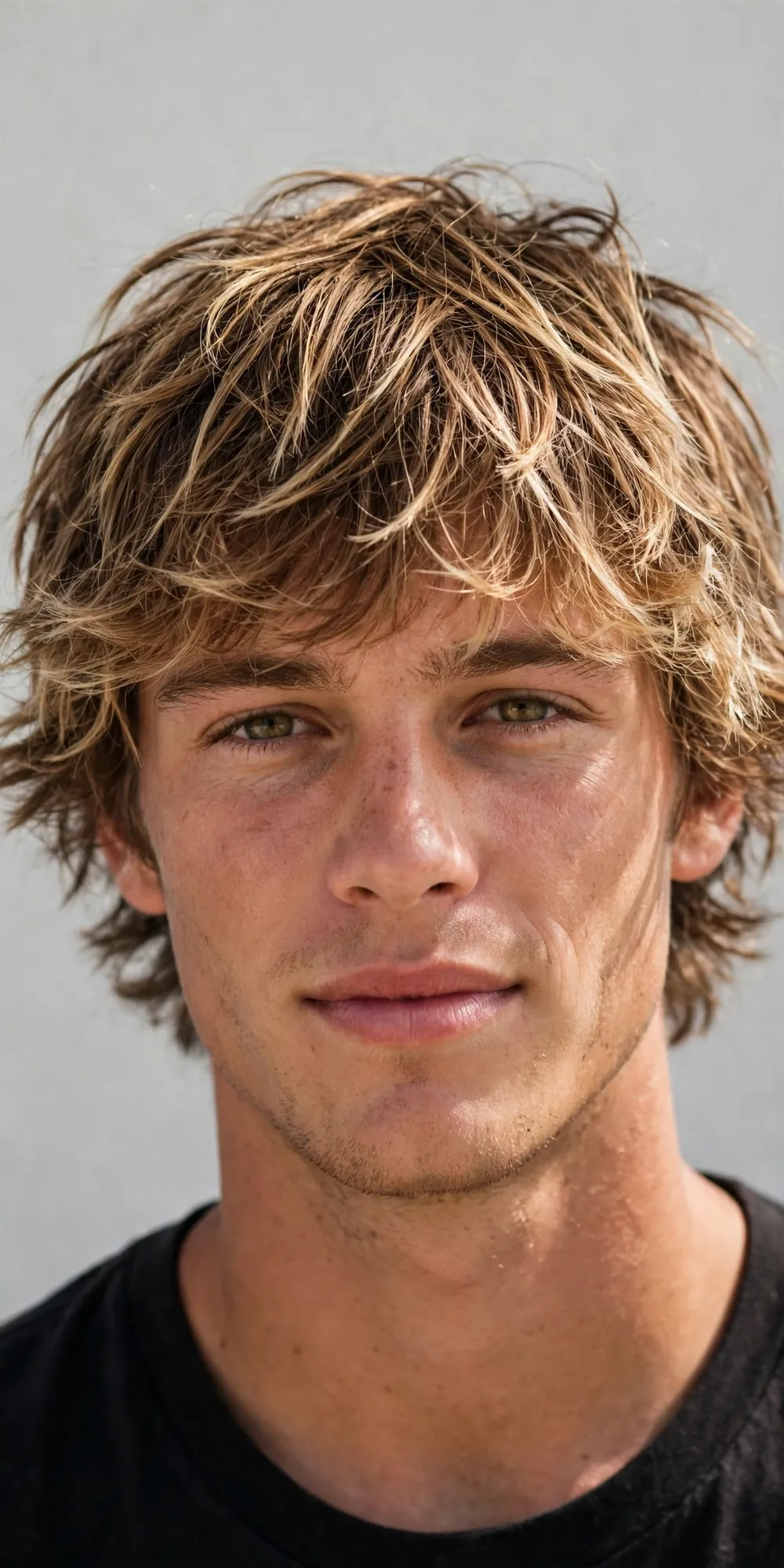
The surfer shag is the shag on holiday — beachy, sun-lightened ends, layers that fall wherever they land, and a fringe you push back with your hands. It looks effortless, which is slightly unfair, because it works best on hair with natural wave or a bit of texture; dead-straight hair needs a salt spray to get the same movement. Oval, heart and long faces suit it best, and it pairs well with a tan and a relaxed wardrobe — not that you need the ocean. Ask your barber for messy layered length with a loose fringe and ends that look sun-kissed, or add a few freehand highlights for the same effect. Style with sea salt spray and air dry. Maintenance is minimal: trim every eight weeks, and the grown-out stage still looks right.
24. Shaggy Crop
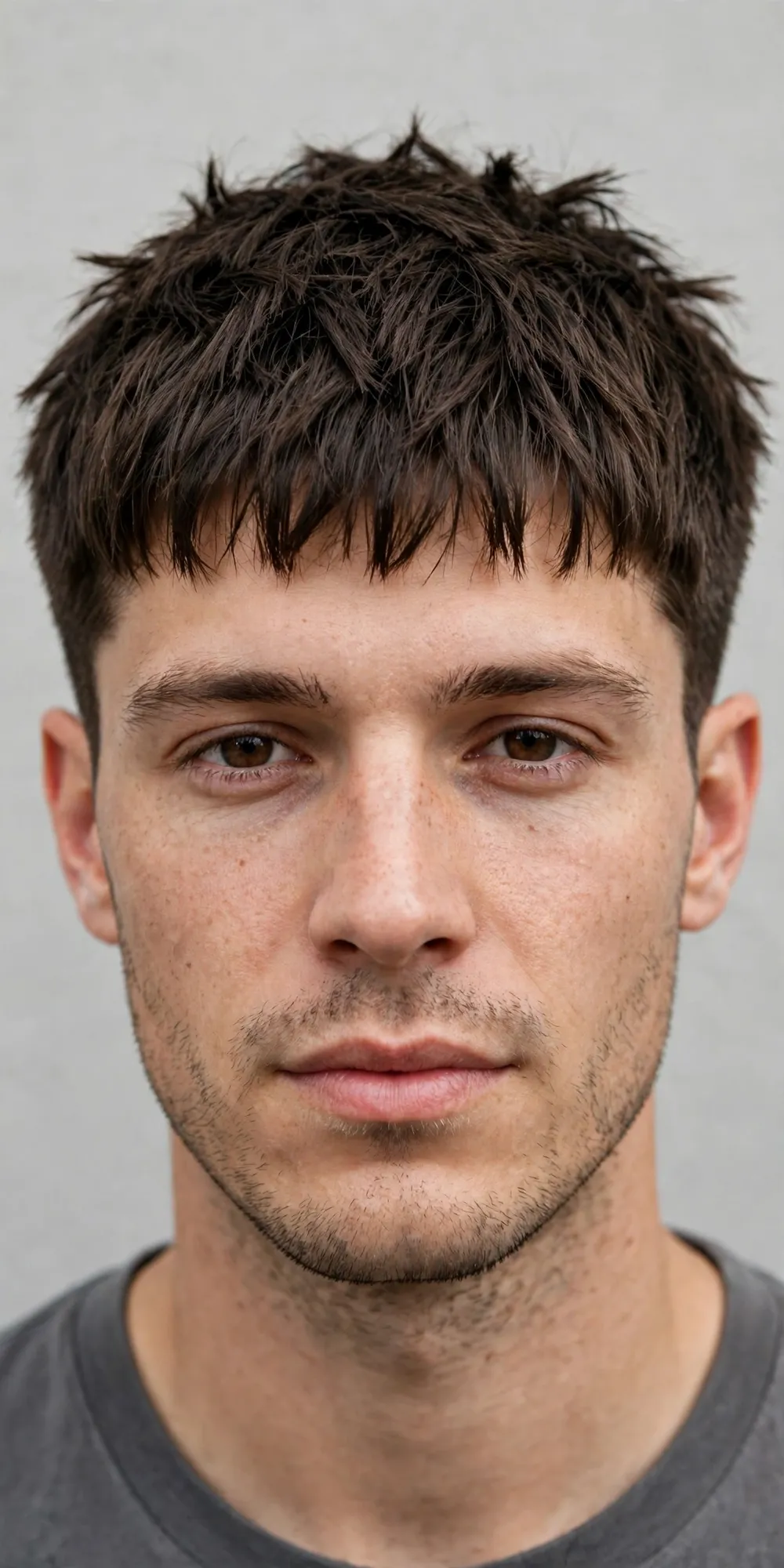
Think of this as a French Crop Haircut that has been roughed up. The shape is short and neat around the sides, but the top is jagged and choppy, with a fringe that falls forward in uneven pieces instead of a clean line. It is a good choice if you like the shag’s texture but want short hair that dries in about two minutes, and it flatters round and square faces because the forward fringe shortens a long forehead. Ask your barber for a short crop with a jagged, textured fringe and choppy layers through the top, keeping the sides soft rather than skin-faded. A pea-sized amount of matte paste is all the styling you need. Maintenance is a trim every three to four weeks, since short layers lose their shape quickly.
25. Shaggy Flow with Highlights

Highlights in a shag do something a single colour never can: they catch on every layer, so the movement of the cut becomes visible from across the room. The trick is restraint — scattered, lighter sections a shade or two above your base, not stripes, so the colour reads as sun and depth rather than a dye job. It works on any hair type, but the effect is strongest on medium to long shags where the layers have room to show. Ask your barber for a layered shag and your colourist for subtle balayage or freehand pieces through the top layers only. Style with a light cream to keep the ends separated. Maintenance means a colour refresh every eight to ten weeks and a trim at the same appointment.
26. Shaggy Undercut

The shaggy undercut is the boldest idea on this list. The sides are cut short and disconnected, with a visible break between them and the long, layered top that falls over the sides like a curtain. It suits oval and angular faces, and it works best on straight or wavy hair with enough density up top to cover the disconnect — fine hair can go stringy here. Ask your barber for an undercut on the sides and back with a long layered shag on top, keeping the fringe long enough to sweep forward or to the side. Style with matte clay for hold, or a light pomade if you want some shine. Maintenance is the catch: the undercut needs cleaning up every two to three weeks or the contrast disappears.
27. Shag with Low Fade

A low fade gives the shag a clean frame without stealing its character. The fade sits just above the ears, blending into the longer layers on top, so you get the shag’s movement and texture with sides that look sharp from every angle. It suits round and square faces especially well, since the fade tightens the sides and the layers add height up top. Ask your barber for a layered shag with a low fade at the sides and back, keeping the fringe textured and the top long enough to move. Style with sea salt spray and a small amount of matte paste. Upkeep is a fade cleanup every two to three weeks; the top can go longer between full cuts. For more fade ideas, see our guide to Low Fade Haircuts for Men.
28. Shaggy Perm
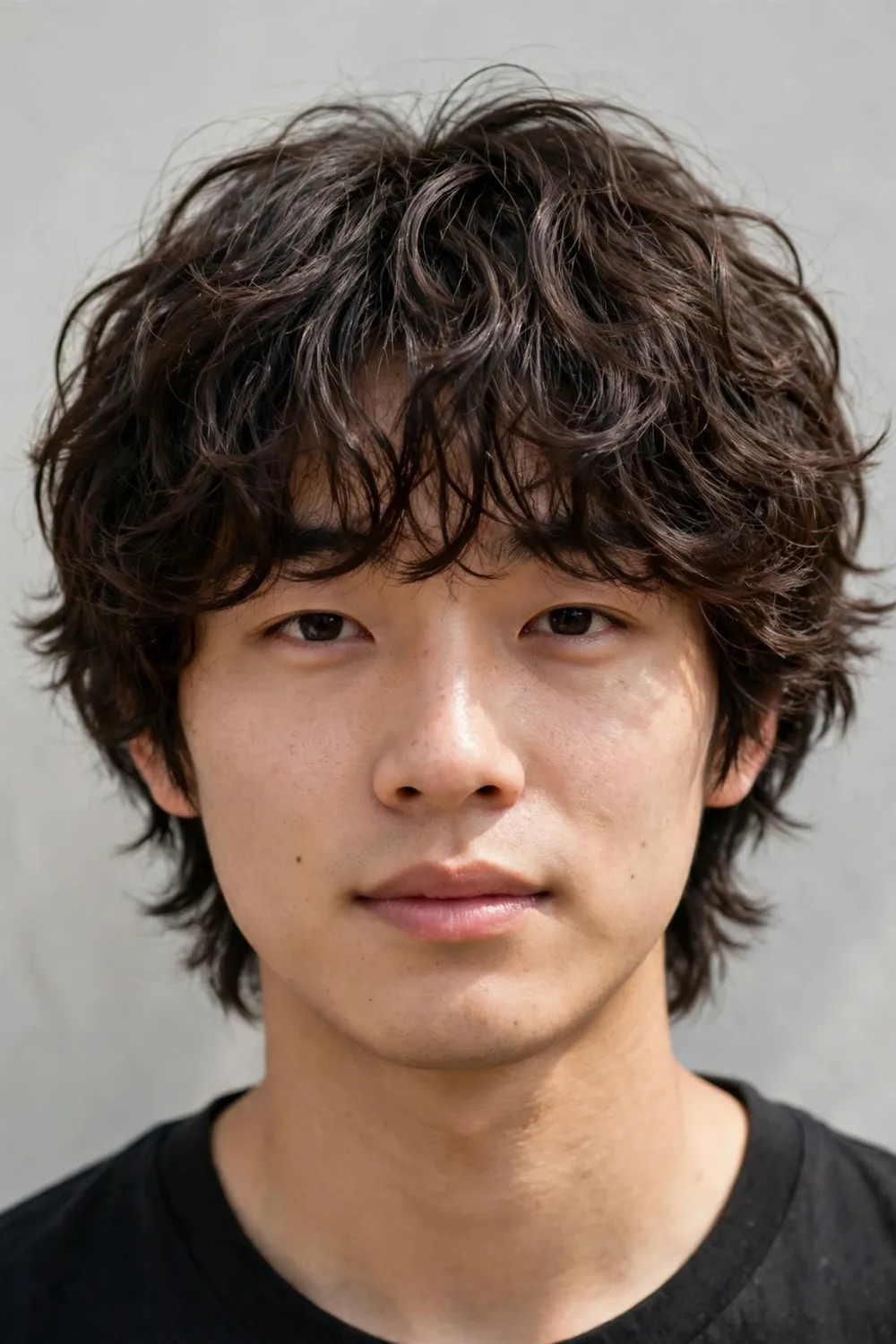
If your hair is straight and you have always wanted the shag’s movement without fighting your hair every morning, a perm is the honest shortcut. The perm adds lasting wave and volume through the shag layers, so the cut holds its shape from the moment you wake up — you just wake the texture up with a bit of product. It works best on straight hair of medium thickness, and it suits oval and long faces because the added width balances length. Ask your stylist for a shag cut first, then a soft perm with medium rods — not tight curls — through the top layers. Style with curl cream on damp hair and let it air dry. Maintenance means a perm refresh every three to four months, and sulphate-free shampoo to protect the curl pattern.
29. Shaggy Side Part

The shaggy side part is the grown-up version of the shag — all the layers, none of the chaos. A deep side part sets the direction, and the layers fall to one side in a relaxed sweep, giving you texture that still looks intentional in a meeting or at a wedding. It suits square and oval faces, and it works on straight or wavy hair with medium density. Ask your barber for a shag with a defined side part, longer layers on the heavy side, and a fringe that sweeps across the forehead. Style with a light pomade or cream, comb it into place while damp, then rough it up slightly with your fingers so it doesn’t look too neat. Maintenance is easy: a trim every five to six weeks.
30. Shag for a Receding Hairline

A shag is one of the most flattering cuts for a receding hairline, because it works with the hairline instead of fighting it. A forward, textured fringe covers the temples and draws the eye to the layers, while the layered crown adds volume where the hair is thinning at the front. It suits any face shape, and it works best on hair with some natural texture — straight hair can work too if the fringe is cut choppy enough to break up the line. Ask your barber for a shag with a forward textured fringe and layered crown, and be clear you want the hairline covered, not exposed. Style with a light volumising powder at the roots. Maintenance is a trim every four to five weeks to keep the fringe sitting right.
31. Shaggy Quiff
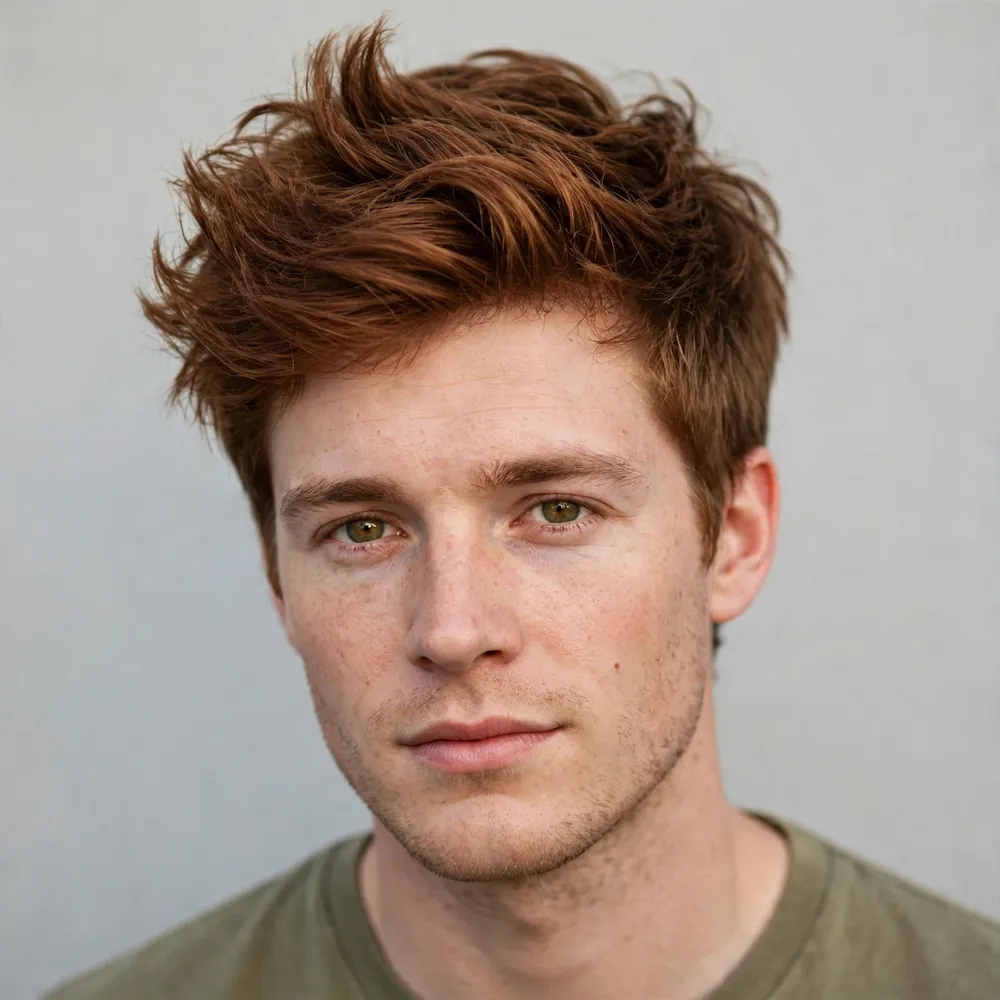
The shaggy quiff takes the shag’s layers and sweeps them up and back, giving you height at the front with texture everywhere else. It is a strong pick if you like volume but find a classic quiff too polished — the shag layers mean the front can fall apart a little and still look deliberate. It suits oval and round faces, since the height lengthens the face, and it needs medium to thick hair to hold the lift. Ask your barber for shag layers with extra length at the front, cut so the fringe sweeps up and back rather than falling forward. Blow dry the front upward with a round brush, then work in matte clay. Maintenance is a trim every four weeks, and a few minutes of styling each morning.
32. Shaggy Two Block
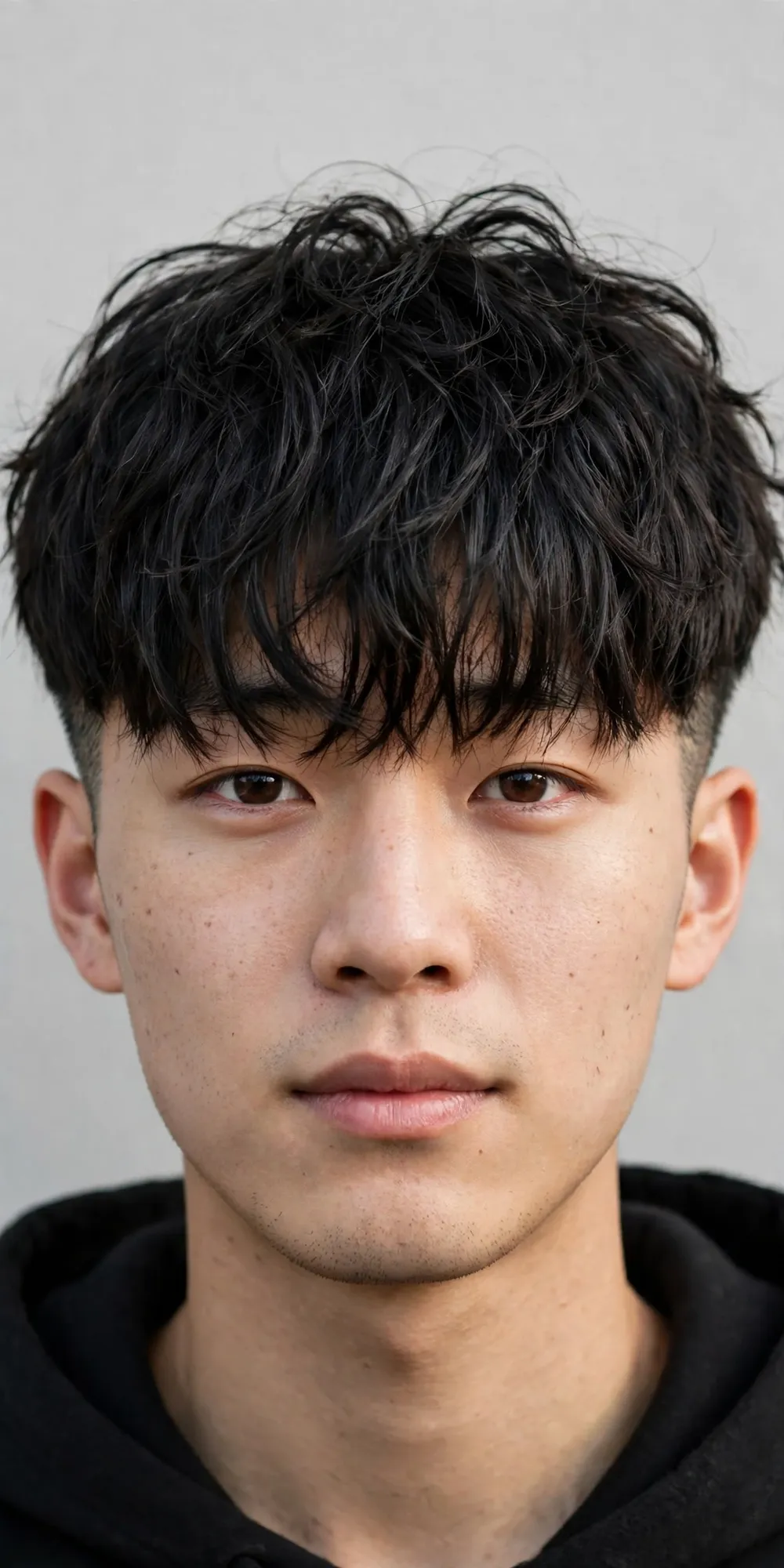
The two block is a Korean barbershop staple: short, clipped sides with a long top, and here the long top is a full shag. The contrast is dramatic — neat, tight sides against layers that fall over them — and it looks sharp on straight or slightly wavy hair with medium density. Oval and heart-shaped faces suit it best, since the short sides slim the face while the shag adds height. Ask your barber for a two-block cut with short faded or clipped sides and a long layered shag on top, keeping the fringe textured and long enough to cover the forehead. Style with a light wax, pushing the top forward or to the side. Maintenance is a side cleanup every three weeks, with the top reshaped every six to eight.
33. Shag with Mid Fade

The mid fade is the middle ground — higher than a low fade, lower than a skin fade — and it gives the shag a crisp, modern edge. The fade starts around the temples, so the sides look clean and structured while the layered top keeps all the shag’s movement and fringe. It suits square and oval faces, and it works on straight, wavy or curly hair as long as the top has enough length to layer. Ask your barber for a layered shag top with a mid fade on the sides and back, and a textured fringe that sits just above the brow. Style with sea salt spray for texture and a touch of matte paste. Upkeep is a fade touch-up every two to three weeks, with the top trimmed every six.
How to Ask Your Barber for a Shaggy Haircut
The single most useful thing you can do is show your barber a photo. Bring two or three pictures of the exact shag you want — same hair type as yours if possible — and save them on your phone before you sit in the chair. Photos remove guesswork; “shaggy” means ten different things to ten different barbers, and a picture settles it in seconds.
Name the era while you’re at it. Saying “70s shag” tells your barber you want feathering and a full fringe, while “modern shag” means cleaner ears and softer layering, and “grunge shag” signals grown-out, relaxed layers. The era is shorthand for the whole shape.
Then talk layering. A shag lives or dies on its layers, so say whether you want them choppy and visible or soft and blended, and whether you want weight removed from underneath. If your hair is thick, ask for interior layers; if it’s fine, tell them to keep the ends full.
Give exact length points: where the fringe should end (brow, or just above it), whether the hair should cover your ears or sit above them, and how far down the back it should go — collar length, or past it. Finally, mention technique. Ask for point cutting or razor cutting rather than blunt cutting; both create the soft, broken ends a shag needs, while a blunt cut leaves it looking like a bowl. If your barber reaches for thinning shears on fine hair, stop them — layering does that job better.
How to Style a Shaggy Haircut at Home
A shag is styled by doing less, not more. Start by rough drying: tip your head forward, blast the hair with the dryer on medium heat, and shake the roots with your fingers as you go. No brush, no comb — a brush smooths out exactly the texture you’re trying to keep.
Choose texture over hold. A sea salt spray on damp hair, a light mousse, or a small amount of matte clay will give you movement without stiffness. Heavy pomades and strong gels are the enemy here; they glue the layers together and turn a shag into a helmet.
Work the product in pinches, not palms. Rub a pea-sized amount between your hands, then pinch small sections of hair and twist them slightly as you push them into place. Palms flatten everything; pinches keep the layers separated and visible.
And learn to love second-day hair. A shag genuinely looks better the day after a wash, when the natural oils give it a bit of grit and the layers settle. If it feels flat in the morning, a spritz of dry shampoo at the roots and a quick shake with your fingers is usually all it needs.
5 Mistakes That Ruin a Shag
- Over-styling it. A shag with a stiff, product-heavy finish is no longer a shag. If your hair doesn’t move when you shake your head, you’ve used too much product or the wrong one. Reach for texture, not hold.
- Letting your barber blunt cut the ends. A shag needs broken, point-cut ends. Blunt ends make the layers sit in heavy slabs, and the whole cut loses its feathered movement.
- Thinning fine hair. Thinning shears on fine hair create frizz and wispy ends that fall apart within days. Fine hair needs longer, fuller layers — the volume comes from the cut, not from removing hair.
- Washing it too often. Daily shampoo strips the natural oils that give a shag its grit and texture. Most shags look better washed two or three times a week, with dry shampoo in between if needed.
- Growing it out with no plan. A shag grows out gracefully, but only to a point. Skip trims for three months and the layers collapse into a shapeless mop. Book the trim before the shape disappears.
How Often Should You Trim a Shag?
The short answer: every six to eight weeks for most shags, and more often if yours has a fade or an undercut. A classic or long shag holds its shape well, so you can stretch it to eight weeks without much trouble. Short shags, shaggy crops and anything with a fade need attention every three to four weeks, because the short layers and clean sides are the first things to lose their shape.
The good news is that a shag grows out better than almost any other men’s cut. Because the layers are uneven by design, a few extra weeks of growth just looks like a longer, more relaxed version of the same cut — not a mess. That is the whole point of the style. If you are growing your shag longer, book a “dusting” trim every eight weeks instead of a full cut: your barber tidies the ends and redefines a few layers without taking off length, so the shag keeps growing while staying intentional.
FAQs
What is a shaggy haircut for men?
A shaggy haircut is a layered cut built on texture and movement. The hair is cut in choppy, uneven layers of different lengths, with a fringe that usually falls to the brow and ends that flick out instead of lying flat. It started in the 1970s and has been revived in modern, shorter and longer versions. Unlike a tidy haircut, a shag is supposed to look a little undone — the layers are the style, not a mistake.
What’s the difference between a shag and a wolf cut?
A shag and a wolf cut share the same DNA — layers, volume and a messy finish — but the wolf cut is the wilder cousin. The wolf cut has much shorter layers on top and a longer, more dramatic back, closer to a mullet, with bigger volume at the crown. A shag is more balanced: the layers are distributed through the whole cut, the length difference between top and back is smaller, and the overall shape is softer. If you want our full take on the wolf cut, read our Wolf Cut Hairstyles for Men guide.
Does a shaggy haircut work on straight hair?
Yes, but it needs the right technique. Straight hair doesn’t create its own movement, so a shag on straight hair relies on razor or point cutting to build texture into the ends, and usually on a styling product like sea salt spray or matte clay to keep the layers separated. The result is a clean, piecey look that reads more modern than the wavy 70s version. If your hair is very straight and fine, ask for longer layers so the ends stay full.
How long does your hair need to be for a shag?
You need at least three to four inches on top to get proper layers and a fringe, and most shags look their best with four to six inches. Short shags work from about three inches, while a classic or long shag needs six inches or more so the layers can fall past the ears and collar. If your hair is shorter than that right now, grow it out for six to eight weeks first — a shag cut too early just looks like a bad haircut.
Is a shaggy haircut low maintenance?
Mostly, yes — it’s one of the lower-maintenance men’s cuts. You don’t need daily heat styling, the layers hide bad hair days, and it grows out gracefully. The honest catch is the trim schedule: you’ll still need a cut every six to eight weeks to keep the layers defined, and if your version has a fade or undercut, the sides need cleaning up every two to three weeks. Styling takes five minutes on a good day, and on a lazy day you can skip it entirely.
Can I get a shaggy haircut with curly hair?
Absolutely — a curly shag is one of the best versions of the cut. The layers stop curly hair from forming a triangle shape, and they let the curls stack into a rounded, defined silhouette instead of a heavy pyramid. The key is finding a barber who cuts curly hair dry or understands curl patterns, since cutting curls wet leads to surprises when they spring up. Ask for stacked layers with no thinning, and style with curl cream on damp hair.
Will a shag make my hair look thinner?
It can, if it’s cut wrong — which is why the technique matters. Short, choppy layers on fine hair remove too much weight and leave the ends wispy, which reads as thinner. But a well-cut shag on fine hair does the opposite: longer, soft layers keep the ends full while the layers at the roots add lift and movement, making the hair look thicker. Tell your barber your hair is fine and that you want the fullness protected, and skip the thinning shears.
Final Word
The shag has survived fifty years for a simple reason: it works with your hair instead of against it. Whether you go classic 70s, modern, wavy or curly, the cut gives you texture, movement and a shape that looks better the less you fuss over it. Pick the version that matches your hair type, show your barber the photo, and give it a few weeks to settle — a shag always looks best once the layers have had time to fall into place.
If you’re still deciding on your next cut, browse more ideas on our blog — from Medium Length Hairstyles for Men to Messy Hairstyles for Men, there’s a style for every length and hair type.