

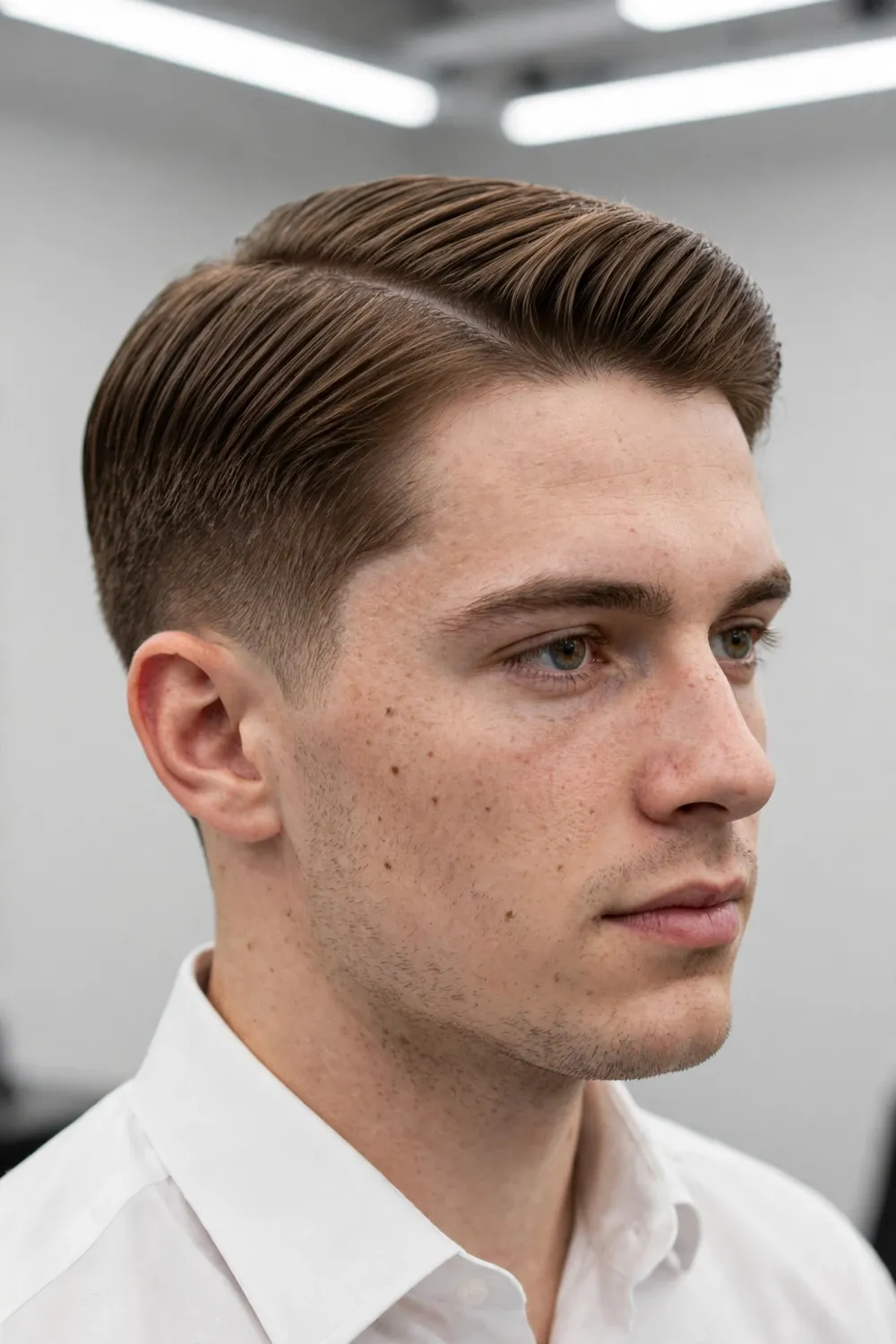
An ivy league haircut is the smartest version of a short cut you’ll ever wear — a clean, side-parted top with tidy tapered sides that looks sharp in the office, at a wedding, and on a Saturday morning alike. It’s the haircut that never really goes out of style because it was never trying to be trendy in the first place.
It suits almost everyone: straight hair, wavy hair, curls, thick hair, thin hair. The length on top does the heavy lifting — long enough to part and style, short enough to behave. If you’re starting here, these are the three picks we’d point you to first: the Classic Ivy League for timeless polish, the Low Fade Ivy League for something softer and modern, and the Curly Ivy League if you want your natural curls to do the work.
Below are 28 versions of the cut, from the original 1950s style through fades, textures and quiffs. Each one has its own barber ask, so you can walk in knowing exactly what to say.
What Is an Ivy League Haircut?
Think of it as a crew cut that grew up. The top runs 2–4 inches long — enough to sweep to one side, brush back, or push up — while the sides and back are tapered or faded to keep everything neat. There’s almost always a side part, natural or defined, and the whole look is tidy rather than severe.
It goes by other names too: the Harvard clip and the Princeton cut. It earned them on 1950s East Coast college campuses, where it became the default for students who wanted to look sharp without fussing over their hair. Seven decades on, barbers still cut it because the formula works: enough length to style, short enough to manage, and a shape that flatters most faces.
28 Best Ivy League Haircuts for Men (2026)
1. Classic Ivy League Haircut

This is the original — a clean side part, a top kept around two to three inches, and sides tapered down in a gentle gradient with no harsh lines. It suits oval and square faces best, and straight or slightly wavy hair holds the part with the least effort. Tell your barber: “Classic Ivy League, two inches on top with a natural side part, scissor-tapered sides.” Style it with a pea-sized dab of matte clay, combing the top over while it’s still slightly damp. A trim every three to four weeks keeps the taper crisp. If you’re after a similarly low-effort classic, the crew cut hairstyles for men round-up is worth a look — the Ivy League is basically its smarter older brother.
2. Modern Ivy League Fade
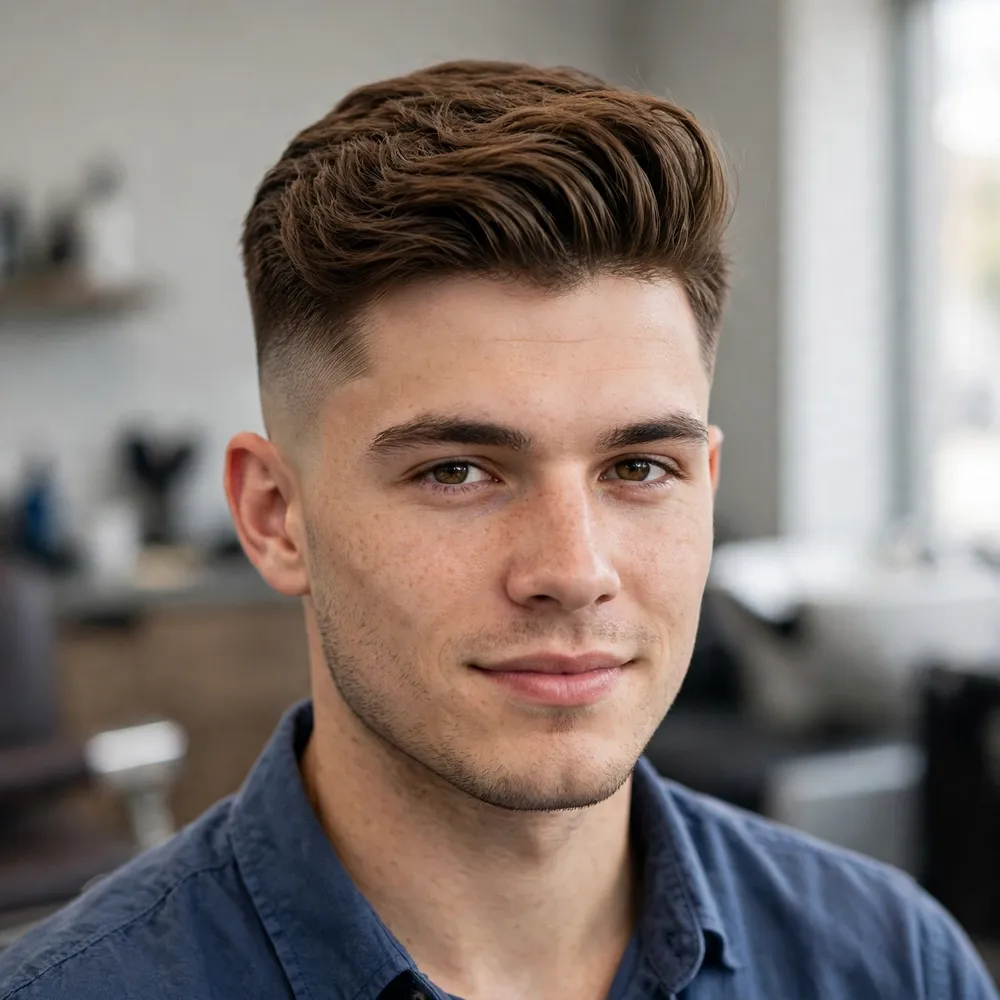
The modern take keeps the classic top but trades the soft taper for a sharp mid fade, which makes the longer top look intentional. The top is usually three inches or so, brushed up and over to one side for a bit of height. It suits men with straight or thick hair who like a cleaner edge around the ears and neckline. Ask your barber: “Ivy League top, about three inches, with a mid skin fade on the sides and back.” Work a small amount of pomade through damp hair and push the top up and across. You’ll need a fade touch-up every two to three weeks — once the fade grows out, the contrast that makes this version work starts to fade with it.
3. Textured Ivy League with Burst Fade
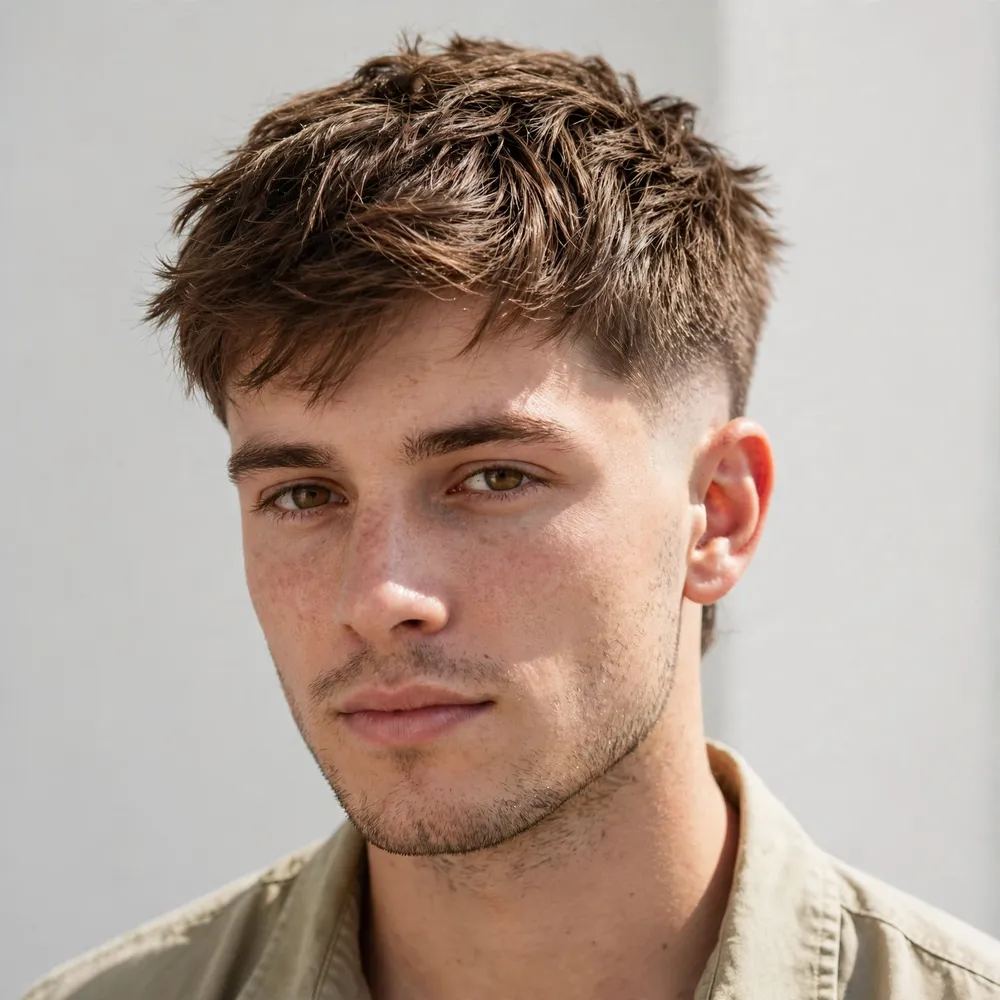
A burst fade curves around the ear in an arc, and pairing it with a choppy, textured top gives the Ivy League a much more current feel. The top is point-cut for separation, so it has movement instead of a flat, combed-over sheet of hair. This one suits wavy and thick hair especially well, and round or square faces benefit from the height the texture creates. Ask your barber: “Textured Ivy League, point-cut on top, burst fade around the ears.” Style with a matte paste, scrunching the top with your fingers rather than combing it flat. Maintenance is forgiving — the texture hides grow-out better than a sleek part — but the burst fade still wants a tidy-up every two to three weeks.
4. Ivy League Buzz Fade

For men who want the Ivy League shape with almost nothing to style, the buzz fade version is the answer. The top is clippered short — just long enough to show a hint of a part — and the sides fade down tight. It keeps the smart silhouette of the original while cutting your morning routine to about thirty seconds. It suits strong jawlines and oval faces, and it works well on hair that’s starting to thin. Ask your barber: “Ivy League shape, buzzed top on a number 4 or 5, high fade on the sides.” No product needed, or a drop of light oil if your scalp feels dry. Maintenance is a clipper pass every two weeks.
5. Low Fade Ivy League

The low fade starts just above the ear, so the blend is subtle — the gentlest way to give an Ivy League a modern edge. The top keeps its soft side part, around two to three inches, and the whole cut reads conservative from the front and clean from the side. It’s a great choice for men with round or fuller faces, since the extra length at the sides doesn’t shorten the face the way a high fade can. It also suits fine or straight hair. Ask your barber: “Ivy League, low fade starting just above the ear, scissor-cut top with a side part.” A light cream or matte paste is enough to hold the part. Trims every three to four weeks keep it tidy.
6. High Fade Ivy League
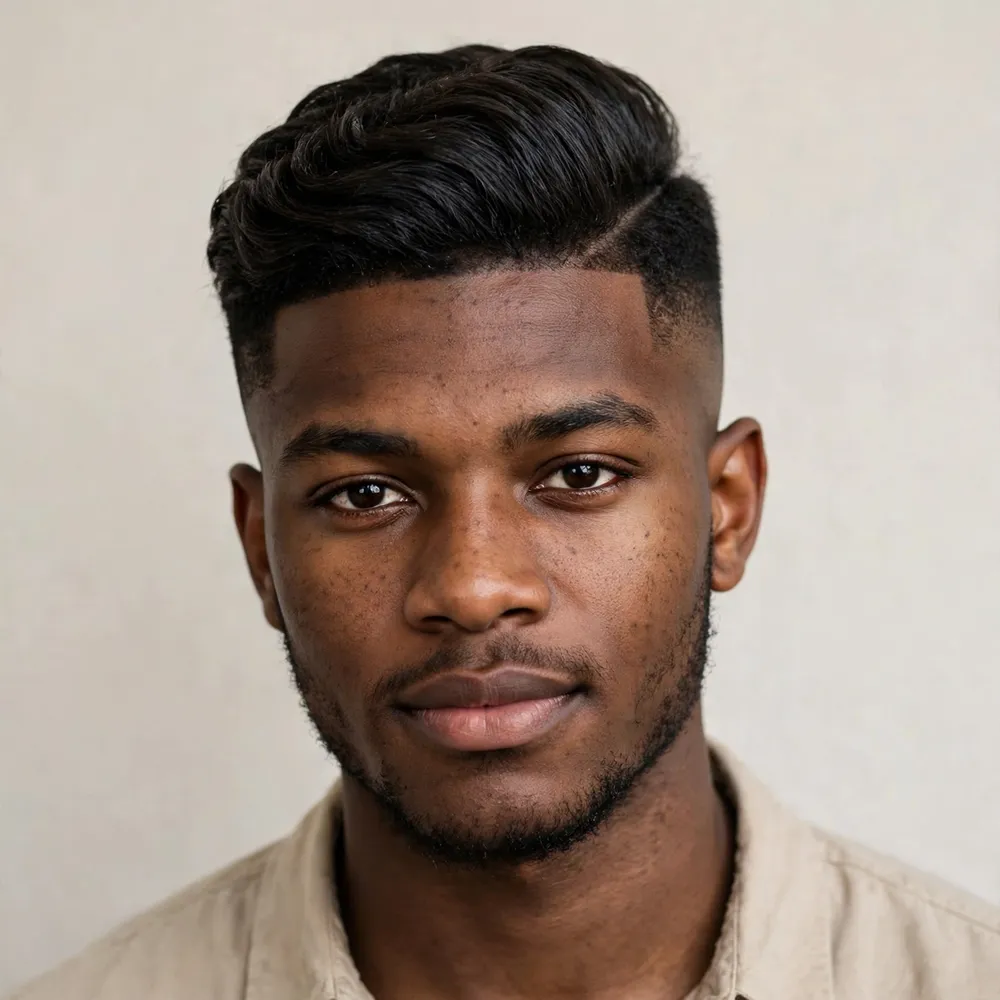
The high fade is the boldest of the fade family: the fade climbs well above the temples, creating strong contrast against a brushed-up top. That contrast is the whole point — the top looks longer and more dramatic by comparison. It suits men with thick, straight hair and oval or square faces, and it’s a strong pick if you like a sharp, high-contrast finish. Ask your barber: “Ivy League top, three inches brushed up, high skin fade on the sides and back.” Style with a medium-hold pomade, blow-drying the front upward for height, then combing it back into place. The finish is clean and confident. Be honest with yourself about upkeep: a high fade shows growth fast, so plan on a barber visit every two weeks.
7. Ivy League Crew Cut

Shorter than the classic by about an inch on top, this version is the lowest-effort Ivy League there is. The part is still there, just subtler, and the sides are tapered short so the whole cut reads neat without any styling at all. It’s ideal for men who want to look put-together without touching a comb — gym-goers, new dads, anyone whose mornings are a race. It suits most face shapes and works especially well on thick hair. Ask your barber: “Ivy League, but crew-cut length on top — about an inch — with a tapered back and sides.” A fingertip of matte clay is optional; most days, towel-dry and go. Trims every three weeks keep the taper from getting shaggy.
8. Curly Ivy League
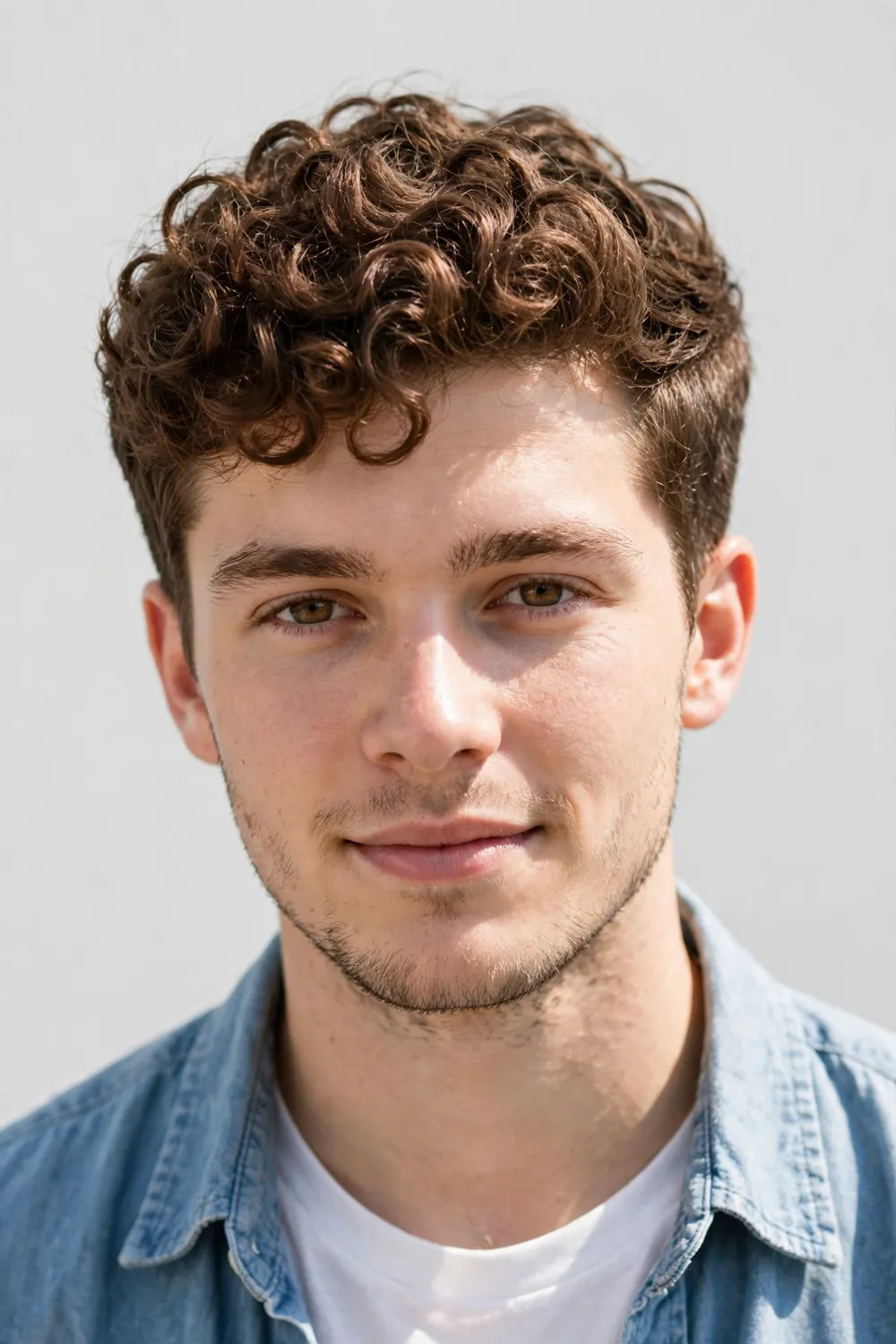
Curly hair and the Ivy League are a natural match — the curls give the top volume and character that straight hair has to fake with product. The trick is keeping enough length on top for the curl pattern to form (two to three inches at least) while the sides are scissor-tapered rather than clippered, so the curls blend instead of hitting a hard line. It suits oval and long faces, since the volume on top balances length below. Ask your barber: “Ivy League for curly hair — leave the curls on top, taper the sides with scissors.” Style with a curl cream on damp hair and let it air dry. A trim every four to five weeks is enough; curly hair hides grow-out gracefully.
9. Preppy Side-Part Ivy League

This is the Ivy League at its most polished: a longer, glossier top with a crisp, defined side part — the look that made it a campus legend. The top runs three to four inches and is combed over with a bit of shine, while the sides are tapered close but never faded. It suits straight hair best, and oval or square faces carry the sharp part well. Ask your barber: “Preppy Ivy League, longer top with a defined side part, classic taper, no fade.” Use a pomade with a light shine, combing the top over while damp and setting the part with the tail of the comb. You’ll want a trim every three weeks to keep the part crisp.
10. Ivy League Comb Over
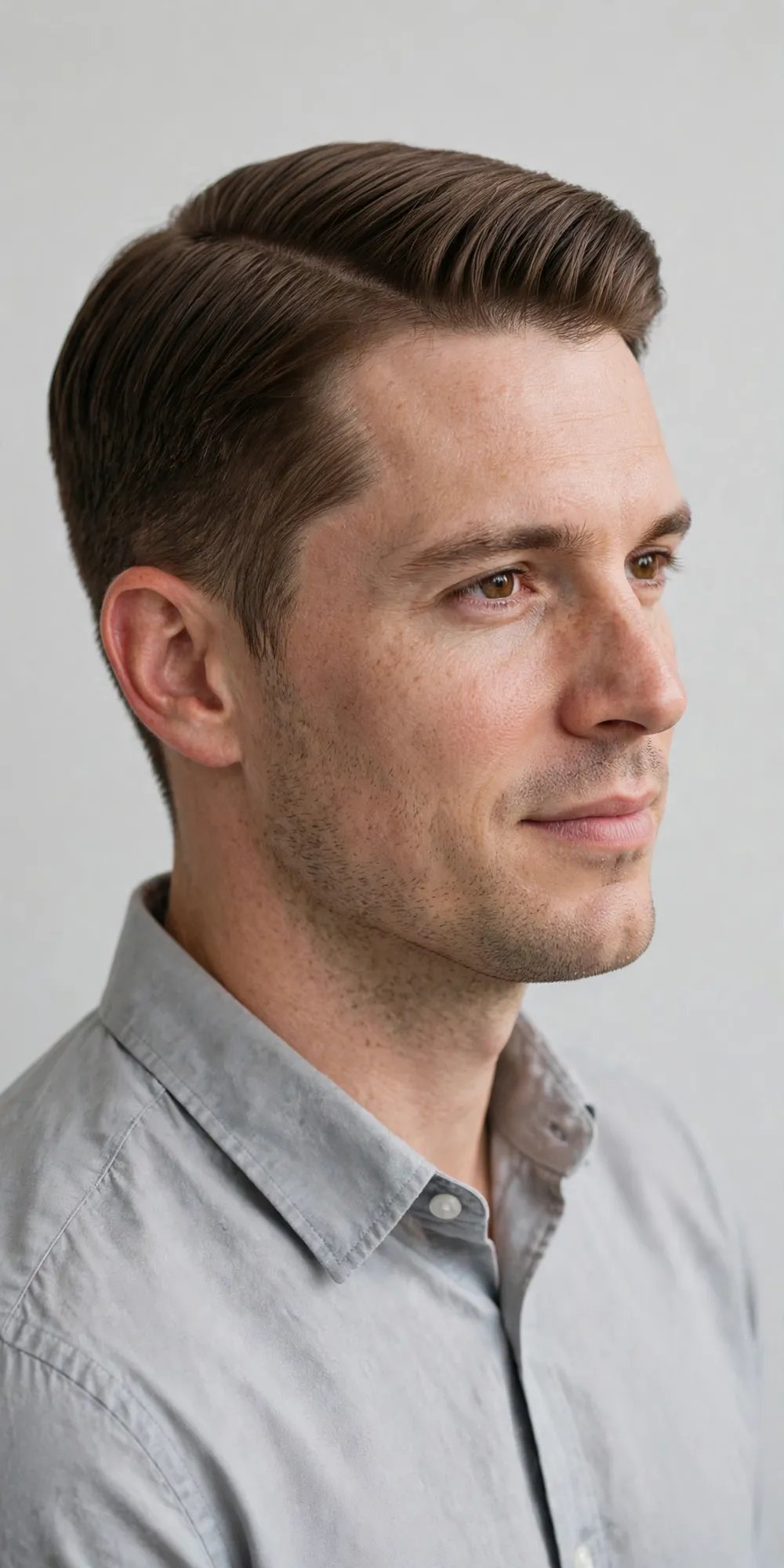
The comb over takes the side part to its logical conclusion: a deep part with all the top hair swept across in one clean direction. It’s an old-school look that works best on straight hair with decent density — the sweep needs enough hair to lie flat. It suits square and oval faces, and it’s a smart choice for men with a slightly high hairline, since the deep sweep covers the corners. Ask your barber: “Ivy League with a deep comb over, top long enough to sweep across, tapered sides.” A medium-hold pomade gives it hold without stiffness; comb it over damp and let it set. A trim every three to four weeks keeps it tidy, and the deep part needs a minute of combing daily.
11. Hard Part Ivy League

A hard part is a shaved line where the part sits, razor-cut into the hair so the division is crisp and graphic. It turns a quiet classic into something with real edge — the part reads as a deliberate design choice. It suits straight or slightly wavy hair and works best on men who like a sharp, defined finish; the line looks strongest on darker hair. Ask your barber: “Ivy League with a hard part — shave the part line in, taper the sides.” Style the top over with a medium-hold pomade and keep the line clean with a comb. The trade-off is upkeep: the shaved line grows out in about a week, so this one needs a barber every two weeks to stay sharp.
12. Messy Textured Ivy League

Not every Ivy League has to be combed within an inch of its life. This version keeps the same cut — a couple of inches on top, soft taper on the sides — but styles it tousled, with finger-combed texture and no visible part. It’s the weekend version of the classic, and it suits wavy and thick hair that already has natural movement. The messiness softens strong features. Ask your barber: “Textured Ivy League, point-cut top for movement, soft taper — I want to wear it messy.” Rub a small amount of matte paste between your palms and work it through dry hair, pushing pieces in different directions. No comb, no mirror-staring. Maintenance is easy: the texture disguises grow-out, so four weeks between cuts is fine.
13. Slicked Back Ivy League

Combing the top straight back gives the Ivy League a sleek, almost cinematic finish — think old Hollywood rather than campus. The top needs three inches or so to lie back properly, and the sides are tapered tight so nothing competes with the sweep. It suits men with straight or wavy hair and strong bone structure; oval and square faces carry it best. Ask your barber: “Ivy League, top long enough to slick back, tapered sides, no part.” Use a pomade with a bit of shine on damp hair, combing everything straight back — a quick blast of cool air from the dryer helps it hold. Trims every three weeks keep the sides from puffing out and spoiling the line.
14. Long Top Ivy League

The long-top version pushes the top to four inches and beyond, giving real volume and soft lift — the most versatile Ivy League, because you can part it, sweep it back, or push it up depending on the day. It needs hair with some body; fine hair can flop, while thick or wavy hair holds the volume well. It suits longer faces especially, since the height adds balance. Ask your barber: “Ivy League with a long top, about four inches, textured ends, tapered sides.” Style with a volumising mousse or light clay, blow-drying upward at the roots for lift. It’s a great office-to-evening cut — for more work-ready ideas, see our guide to professional hairstyles for men. A trim every four weeks keeps the ends healthy.
15. Ivy League with Beard

A tidy Ivy League on top and a full beard underneath just works — the sharp, parted top keeps the beard from looking scruffy, while the beard gives the clean cut weight. Pick this if your face feels narrow or long: a well-shaped beard adds width through the jaw. It suits straight and wavy hair best, though curly hair works too if the beard stays tidy. Tell your barber: “Ivy League on top, two inches up front with a side part, and blend the sideburns into my beard.” A matte clay holds the top naturally, and beard oil keeps the beard soft rather than wiry. The catch is upkeep: trim the top every three to four weeks and tidy the beard edges weekly, or it goes ragged fast.
16. Ivy League Pompadour Blend

Think of this as the Ivy League with the volume turned up at the front. The front hair sweeps up and back into a soft pompadour, while the side part and tapered sides keep it grounded in classic territory. It’s a good pick for oval and oblong faces, and for thick, straight hair that holds height without collapsing by lunchtime. Ask your barber for “two and a half to three inches at the front, graduated back, with enough length to push up into a pompadour — keep the part visible and the sides tapered.” Volumising mousse on damp hair, blow-dried up and back, then a medium-hold pomade gives the lift and shine. Budget five minutes each morning and a trim every four weeks — once the front gets long, it stops lifting and starts flopping.
17. Ivy League Quiff

The quiff is the Ivy League’s slightly louder cousin — the front kicks up into a soft wave while the rest of the top stays parted and controlled. If you have a round or square face, that upward lift adds height and lengthens your face. It works best on straight to wavy hair of medium thickness; very curly hair turns the quiff into a loose curl instead. Say to your barber: “Ivy League with a quiff — leave two and a half inches at the front so I can sweep it up, keep the side part, taper the sides.” Blow-dry the front upward with a round brush, then work a pea-sized amount of matte paste through — our quiff haircut guide covers that front lift in detail. Skip the blow-dry and it becomes a side part, so budget three to five minutes daily.
18. Thin Hair Ivy League

Thin hair and the Ivy League get along surprisingly well, because the cut was never about bulk — it’s about clean lines and a tidy part. The trick is modest length: too long and thin hair separates and shows scalp, but at one and a half to two inches it lies neatly and looks fuller. This suits every face shape, and it flatters a hairline thinning at the temples, since the part can cover a little of that. Ask your barber: “Keep the top short — about two inches at the front, graduating shorter towards the crown — with a precise taper. No thinning scissors on top.” A light fibre spray adds texture without weight; heavy pomades flatten it and show scalp. Upkeep is easy — a trim every four weeks — but don’t let it grow long between cuts.
19. Thick Hair Ivy League
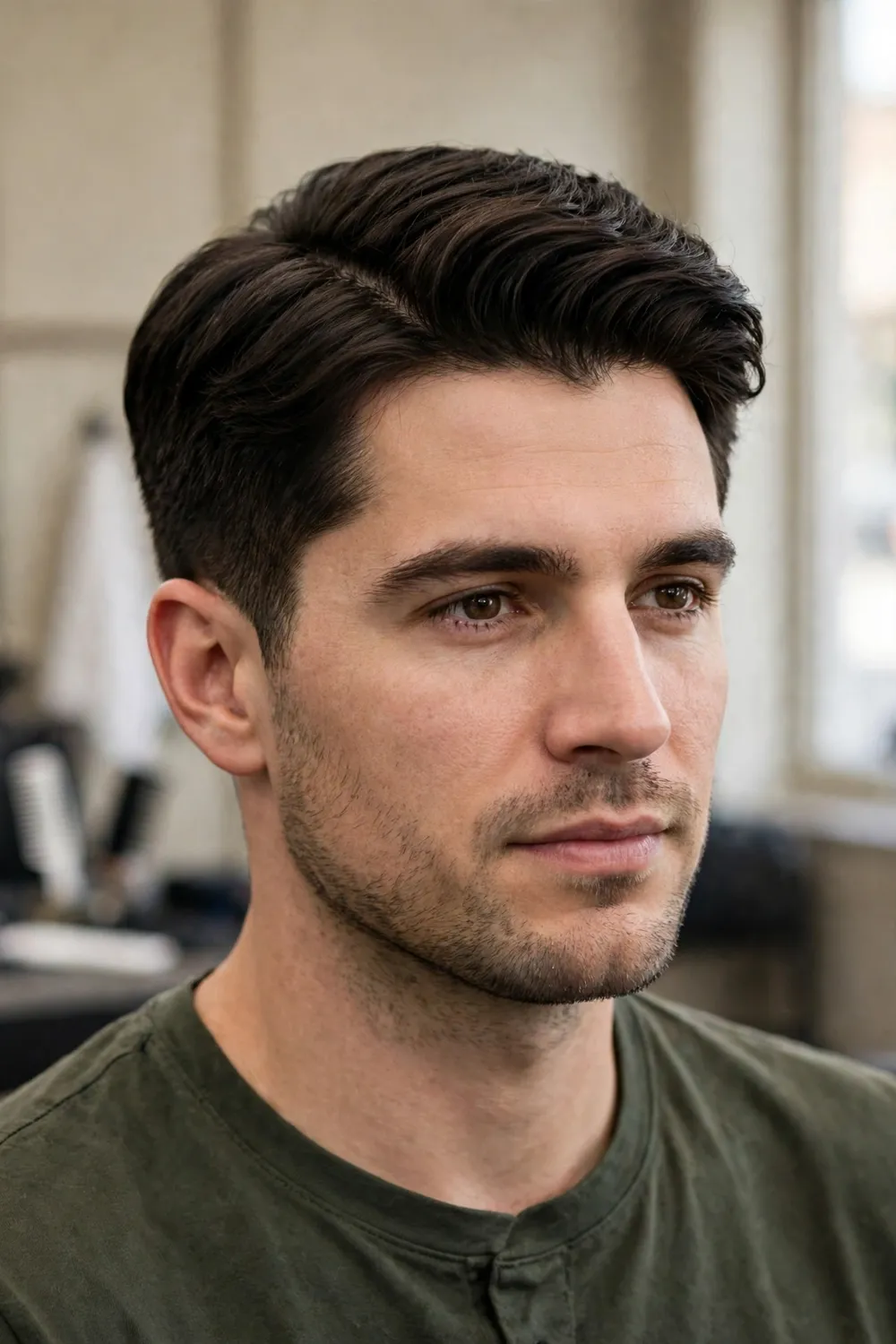
Thick hair gives the Ivy League real presence, but left unmanaged it can turn into a helmet. The fix is texture: point-cutting and light thinning through the top so the hair sits down and moves instead of puffing out. This works on any face shape, though round faces benefit most, since the height on top adds a little length. Tell your barber: “Two to three inches on top with plenty of texture cut in, thin it out so it lies flat, and keep the sides tapered — no bulk at the corners.” A matte clay or cream controls the weight without shine, and a quick comb-through in the morning is usually all it needs. Book every three to four weeks — a thick Ivy League cut blunt looks boxy within two weeks.
20. Business Professional Ivy League

This is the boardroom version: tightly tapered sides, a crisp part, nothing out of place, and not a strand that looks like it was an accident. If you work where a suit is the uniform, this is the Ivy League doing exactly what it was designed for. It flatters oval, square, and oblong faces, and works with straight or slightly wavy hair — curly hair needs a shorter top to keep the part crisp. Ask your barber for “a classic Ivy League, two inches on top, neat side part, close taper on the sides and back, clean around the ears — nothing faded, nothing textured.” A light pomade with a medium shine gives that polished, deliberate finish. Two minutes with a comb each morning, and a trim every three weeks, keeps the taper sharp.
21. Bold Ivy League with Line Up
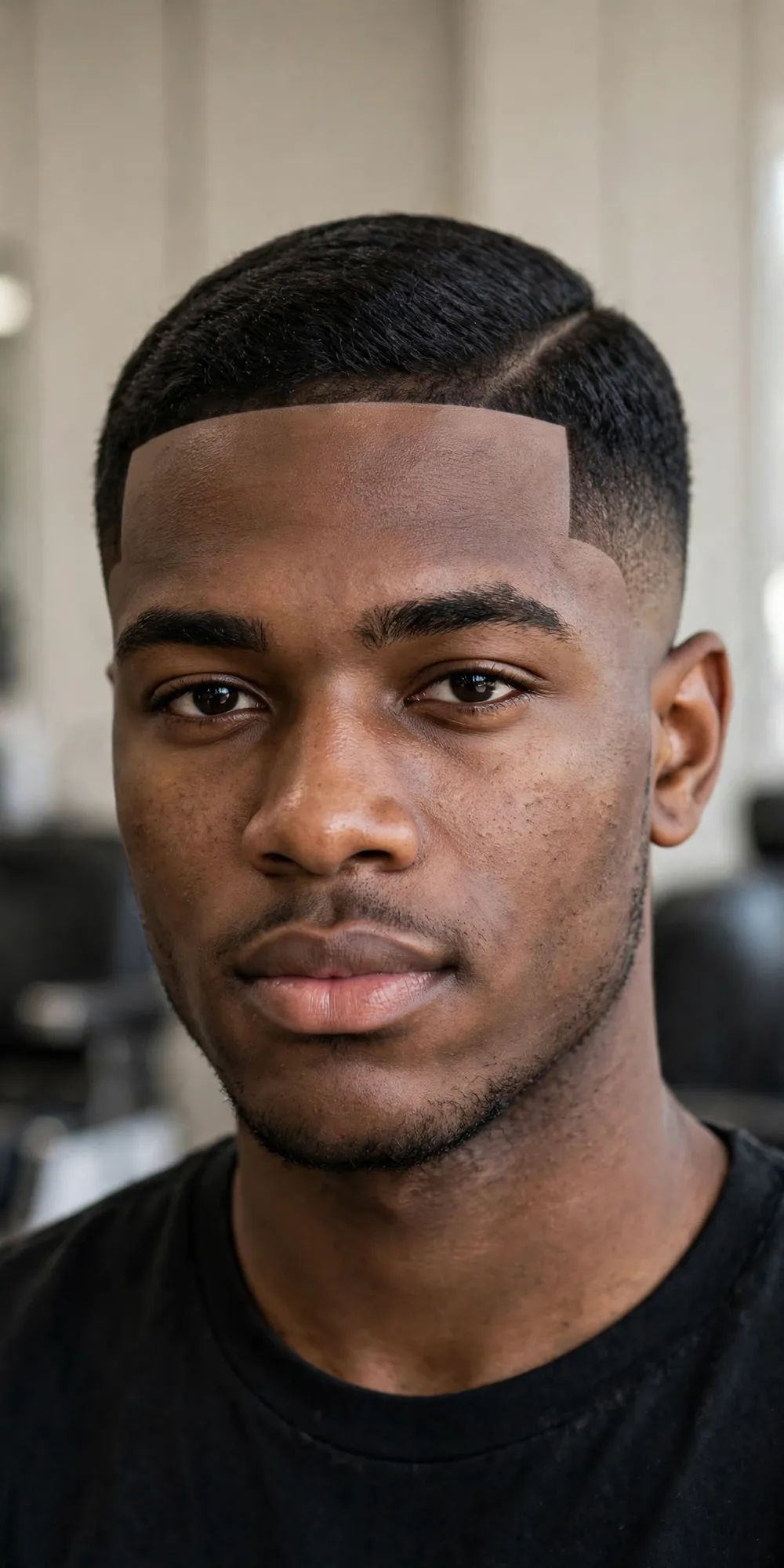
The line-up adds a hard, deliberate edge to the Ivy League — forehead and temples shaped into crisp straight lines, so the whole cut looks freshly finished even days after the chair. It’s a bold look that suits square and oval faces best, and it pairs naturally with thick, straight hair that takes a clean edge. Very curly or coily hair can wear it too — on them, the line-up is often the sharpest part of the cut. Ask your barber: “Ivy League on top with a line-up — shape the hairline straight across the forehead and square off the temples, keep the top about two inches with a side part.” A light pomade keeps the lines clean, and a satin finish suits the precision of the cut. The cost is frequency: a line-up grows out visibly in a week, so book a touch-up every seven to ten days.
22. Mid Fade Ivy League
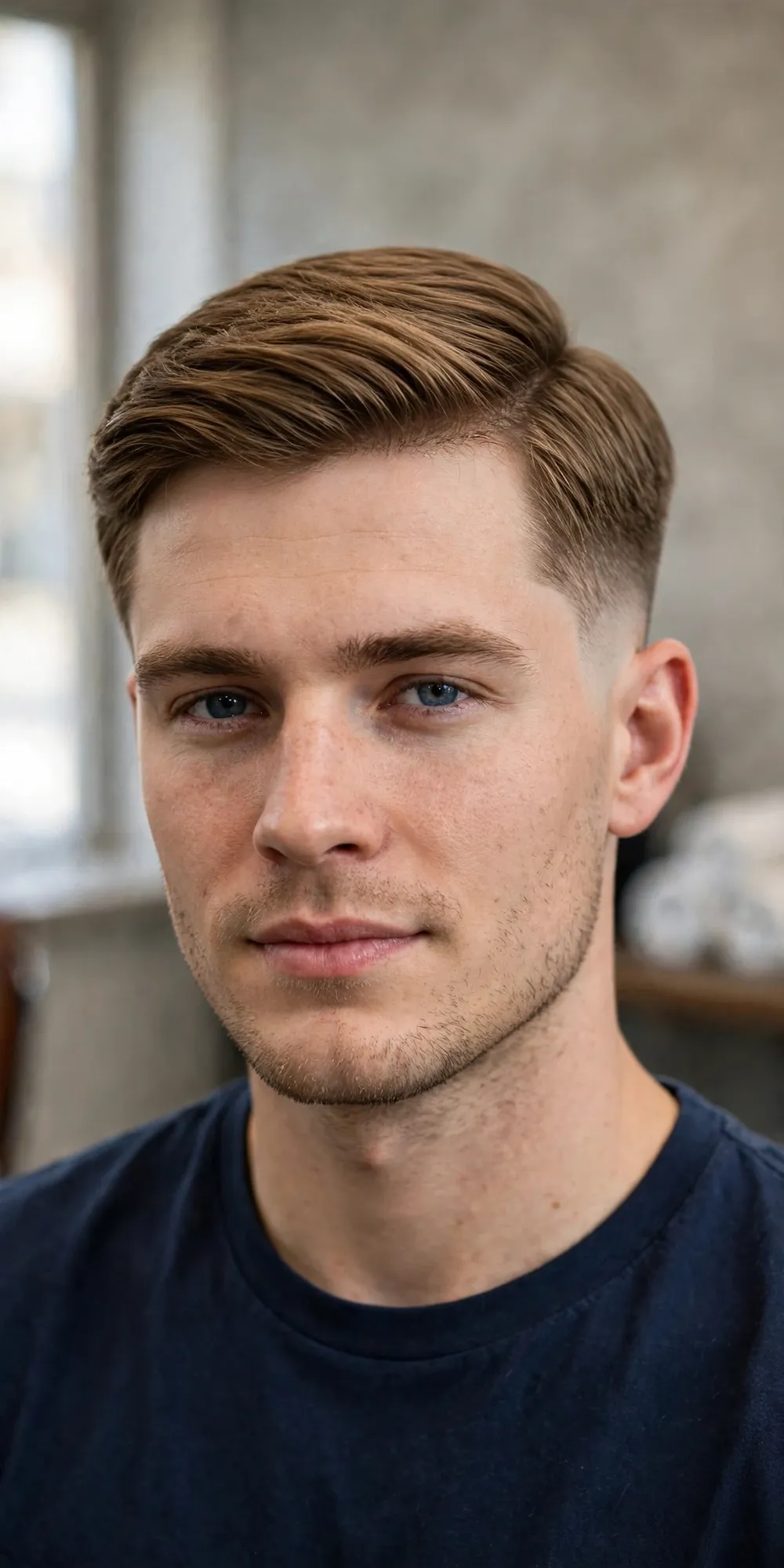
The mid fade is the middle ground that most men end up loving — the fade starts halfway up the sides, so it’s sharper than a taper but not as severe as a high fade. With the classic side-parted top, it looks polished without trying too hard — office, gym, and everything in between. It suits oval and square faces best, and flatters straight and wavy hair equally. Ask your barber: “Mid fade on the sides, starting about halfway up — leave two to two and a half inches on top with a neat side part.” A matte clay gives the top texture and a natural finish that suits the modern feel of the fade. Our guide to low fade haircuts for men explains how fade height changes the whole look. A trim every three to four weeks keeps it sharp; the fade starts to blur around week three.
23. Ivy League with Taper Fade

If fades feel a bit too sharp for you, the taper fade is the gentle version. The sides gradually shorten towards the neckline and around the ears, but there’s no harsh line and no skin showing — just a smooth, natural graduation. It’s the most forgiving Ivy League for round faces — the soft sides don’t widen the face the way a high fade can — and it works on straight, wavy, and curly hair alike. Tell your barber: “Classic Ivy League top, two inches up front, and a taper fade on the sides — gradual, no hard line, keep it natural.” A light cream is all the top needs; the taper needs no product at all. Best of all is the grow-out: with no stark fade line, it still looks tidy at five weeks, so appointments can stretch longer than with a skin fade.
24. Wavy Ivy League

Natural wave is a gift to the Ivy League — it gives the top movement and texture that straight hair has to be styled into, and it softens the cut’s formality into something relaxed and easy. It suits oval and oblong faces best, and needs wavy hair — though a slight natural bend gets most of the effect. Ask your barber: “Keep about two and a half inches on top so the wave has room to move, cut it with texture rather than blunt, and taper the sides lightly — don’t thin the wave out.” A sea-salt spray or light curl cream, scrunched into damp hair, is usually the whole routine. It’s one of the easiest versions to live with — two minutes in the morning, a trim every four to five weeks — but don’t over-comb it: brushing wavy hair dry turns the wave into frizz.
25. Ivy League for Receding Hairline

A receding hairline doesn’t mean giving up on style, and this version of the Ivy League is built around that fact. The top sweeps forward and slightly to the side, covering the corners of the forehead, while the shorter tapered sides draw attention to the cut rather than the hairline. It suits oval, square, and oblong faces, and works with straight or wavy hair — you just need enough density across the front to sweep forward. Ask your barber: “Ivy League, but sweep the top forward — leave two inches at the front, textured so it falls naturally, and keep the sides tapered short.” A matte paste gives hold without shine — shiny product on thin front hair only highlights the scalp. Trims every four weeks and a minute of styling is all it takes. And be honest with yourself: if the recession is advanced, a shorter top beats a long forward sweep.
26. Grey Hair Ivy League

Grey hair and the Ivy League are a natural match — the silver tones make the clean lines look distinguished, and the short length keeps grey hair healthy instead of wiry. It suits every face shape and works on straight, wavy, and curly grey hair alike. Watch the texture, though: grey hair tends to be coarser and drier, so the cut needs to account for that. Ask your barber: “Classic Ivy League, two inches on top with a side part, taper the sides — and take a little weight out of the top if it’s feeling coarse.” A moisturising cream keeps grey hair soft and stops frizz, and a purple shampoo once a week keeps the silver bright instead of yellowing. Upkeep is easy — a trim every four weeks — but the real maintenance is conditioning: dry grey hair ages you, while soft, well-cut grey hair makes the whole look.
27. Wedding Ivy League

For a wedding day, the Ivy League is the safe choice that still looks like you made an effort — polished side part, a touch of shine, nothing that will look dated in twenty years’ photos. It suits every face shape — handy when the groom, the best man, and half the groomsmen all want the same cut. Get it cut three to five days before the wedding, not the morning of, so it settles in and looks natural rather than freshly shaved. Ask your barber: “Wedding Ivy League — two inches on top, crisp side part, tight taper, and a little extra polish. I need it to hold all day.” A medium-shine pomade gives a camera-friendly gloss without looking greasy, and a light hairspray locks it in through the ceremony, the photos, and the dancing. On the day itself, carry a pocket comb, and ask your barber to show you the part placement so you can touch it up between photos.
28. Skin Fade Ivy League

The skin fade is the boldest version on this list: the sides go right down to bare skin, and the contrast with the longer, parted top is dramatic. It suits oval and square faces best — the sharp fade frames the face and makes the top look even longer by comparison. It works with straight, wavy, and curly hair on top — the drama is all in the sides. Ask your barber: “Skin fade on the sides, blended up into about two inches on top with a side part — take the fade right down to the skin at the bottom.” A matte clay on top keeps the focus where it belongs; the skin fade needs nothing but a clean shave line. The catch is maintenance: a skin fade grows out visibly within a week, and by week two the contrast is gone, so budget a touch-up every two weeks.
How to Style an Ivy League Haircut
- Start with damp hair. Towel-dry after a shower until it’s damp, not dripping — product spreads evenly on damp hair and the part sets better.
- Work in a small amount of product. A pea-sized dab of matte clay or light pomade, warmed between your palms, is enough. Too much product is the single most common styling mistake with this cut.
- Find your natural part. Comb the hair back first, then let it fall — the part will show itself where the hair naturally separates. Comb the top to one side along that line.
- Shape the front. Push the front hair up and slightly to the side with your fingers or a comb for a little lift, then smooth the crown down so it lies flat.
- Set it and leave it alone. A light mist of hairspray holds the part through the day. After that, resist touching it — every touch adds oil and breaks the shape down.
How to Choose the Right Ivy League for Your Hair Type and Face Shape
By hair type:
- Straight hair: Almost any version works — the classic, the low fade, and the slicked-back styles are easiest, since straight hair takes a part cleanly.
- Wavy hair: Lean into it with the wavy or messy textured versions; the wave does half the styling for you.
- Curly hair: Go shorter on top with scissor-tapered sides, and use a curl cream rather than a heavy pomade to keep the curls defined.
- Thin hair: Keep the top around two inches and skip heavy products — light fibre or sea-salt spray adds fullness without flattening.
- Thick hair: Ask for texture and light thinning through the top, or the cut will sit like a helmet; the mid fade and taper fade versions handle bulk well.
By face shape:
- Oval: You can wear any version — the classic, the skin fade, the quiff, all of them work.
- Round: Pick versions with height on top, like the quiff or pompadour blend, and avoid very short, flat tops.
- Square: The classic and business versions soften a strong jaw; a beard pairing adds balance too.
- Oblong: Avoid too much height — the low fade, taper fade, and wavy versions keep proportions right.
- Heart-shaped: A textured or messy top adds width at the forehead and balances a narrower chin.
How to Ask Your Barber for an Ivy League Haircut
- Use the name. Say “Ivy League” first — most barbers know it, and it sets the right frame: longer than a crew cut, side-parted, tapered sides.
- Give the top length in inches. “Two inches at the front, graduating shorter towards the crown” is clearer than “leave it long on top.”
- Say where the part goes. Point to your natural part, or ask the barber to find it — a forced part on the wrong side fights you every morning.
- Describe the sides precisely. Taper, low fade, mid fade, high fade, or skin fade — name it, because “short on the sides” means something different to every barber.
- Bring a photo. Show the exact version from this list on your phone. A picture removes the guesswork, especially for the fade height.
- Mention what you don’t want. “No skin showing” or “no hard part” saves you from a version you didn’t ask for.
5 Mistakes to Avoid with an Ivy League Haircut
- Cutting the top too short. Under about an inch and a half, the hair won’t hold a side part — and then you don’t have an Ivy League, you have a crew cut. Protect that front length.
- Using too much product. A heavy handful of pomade flattens the top, makes thin hair look thinner, and leaves the whole cut greasy by midday. Start with a pea-sized amount; you can always add more.
- Ignoring your natural part. Forcing the part to the wrong side means fighting your hair’s growth direction every single morning. Find where it naturally separates and work with it.
- Letting the sides grow out. The taper is what makes this cut look deliberate. Once the sides get bushy, the whole shape collapses — book your next appointment before you leave the chair.
- Choosing the wrong fade for your face. A skin fade on a very round face can widen it further, and a high fade on a long face adds length you don’t need. Match the fade height to your face shape, or stick with a taper if you’re unsure — our guide to textured haircuts for men shows how texture can soften a cut that feels too severe.
Frequently Asked Questions
Is the Ivy League haircut the same as a crew cut?
No, but they’re close cousins. A crew cut is shorter all over, with the top usually under an inch and no real part. The Ivy League keeps the same graduated shape but leaves two to four inches on top — enough length to part at the side and style. Wikipedia’s entry on the Ivy League (haircut) defines it exactly this way: a crew cut long enough at the front to take a side part. If your barber can part it, it’s an Ivy League; if he can’t, it’s a crew cut.
How long does it take to grow out an Ivy League haircut?
From a fresh cut, the shape holds well for about three to four weeks, and most men book their next appointment in that window. After five to six weeks the taper has grown out and the part starts losing definition, though the cut still looks presentable. If you’re growing it out into something longer, expect two to three months before you have enough length to reshape it into a different style — and be ready for an awkward middle stage around week six where the sides need tidying even as the top keeps growing.
What products are best for an Ivy League haircut?
A matte clay is the best all-rounder: it gives hold and texture without shine, which suits the cut’s clean, natural look. A light pomade works better if you want the classic glossy side part or the slicked-back version. For thin hair, a fibre or sea-salt spray adds fullness without weight; for curly hair, a curl cream keeps definition without crunch. The one product to avoid is heavy gel — it makes the cut look stiff and wet, which is the opposite of what an Ivy League should look like.
Can curly hair pull off an Ivy League haircut?
Yes — the curly Ivy League is one of the best versions on this list. The trick is keeping the top long enough for the curls to form properly, usually two to three inches, and tapering the sides with scissors rather than clippers so the curl pattern isn’t chopped into a hard line. Use a curl cream on damp hair and let it air-dry or diffuse on low heat. The only honest warning is that very tight curls won’t take a visible side part, so think of it as a curly top with tapered sides rather than a classic part — and that’s a great look in its own right.
What is the difference between an Ivy League and a Harvard clip?
There isn’t one — they’re the same haircut. Harvard clip and Princeton cut are just older names for the Ivy League, all referring to the longer crew cut with a side part that became popular on East Coast college campuses in the 1950s. If a barber says “Harvard clip,” he means the same two-to-four-inch top, tapered sides, and side part. The different names are a bit of history, not a different cut, so use whichever term your barber recognises.
How long should the top be for an Ivy League haircut?
The classic range is two to four inches on top, with the front at the longer end and the crown graduated shorter. Most men find two to two and a half inches at the front is the sweet spot — long enough to part cleanly and style, short enough to stay neat. Go shorter than an inch and a half and the part disappears; go longer than four inches and it stops being an Ivy League and becomes a side part or a longer scissor cut. Tell your barber the length in inches rather than “medium,” because medium means something different to everyone.
Does an Ivy League haircut suit a round face?
Yes, as long as you pick the right version. The trick for a round face is adding height on top — the quiff, the pompadour blend, or the textured versions all lengthen the face visually. What you want to avoid is a very short, flat top with a high fade, because that combination can make the face look wider. A mid fade or taper with some lift on top is the safest bet, and a beard, if you wear one, adds definition along the jaw that balances the roundness nicely.
Final Word
The Ivy League has lasted seventy years for a simple reason: it looks sharp without demanding much from the man wearing it. Whether you go for the classic side part, a modern fade, or the curly version, the formula stays the same — enough length on top to part, clean tapered sides, and a cut that suits your face rather than fighting it. Take a photo of your favourite from this list to your next appointment, give your barber the length in inches, and you’ll walk out with a haircut that works in the office, at a wedding, and everywhere in between. For more ideas, see more men’s haircut guides on the blog.