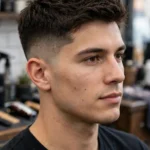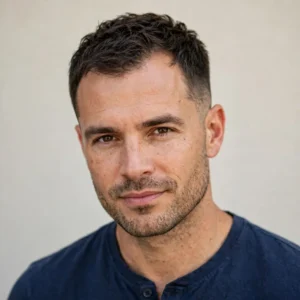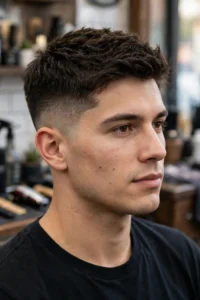



The best hairstyles for hiding a receding hairline work with the hairline you’ve got instead of fighting it — short sides, texture on top, and length pushed forward or up rather than slicked flat back. If you want the shortlist before the full list: the French Crop with Forward Fringe, the Textured Crop with Forward Fringe, and the Classic Buzz Cut are the three safest bets, because each one either covers the temples or removes the contrast that makes recession obvious. Below are 52 cuts judged on exactly that — how each one handles the hairline — so you can pick one that suits your stage, your hair type, and how much effort you actually want to spend in the morning.
How to pick a cut for a receding hairline
Rule 1: keep the sides short. Long, heavy sides next to a thinning top make the contrast worse. A fade or taper keeps the eye moving and the top looking fuller by comparison.
Rule 2: choose texture over slick. Matte, piecey texture breaks up the hairline so it reads as a shape rather than a line. Shiny, flat, gelled-back hair does the opposite — it spotlights every gap.
Rule 3: push the hair forward, not back. A forward fringe, a crop, or a quiff that leans forward covers the temple corners. Slicking everything backward exposes them fully.
Rule 4: go matte. Matte clay or paste absorbs light and adds bulk. Wet-look gel clumps hair together and shows scalp, which is the last thing a receding hairline needs.
| Stage | What works best | What to avoid |
|---|---|---|
| Early temples | Textured crop, French crop, side-swept fringe | Long slicked-back styles |
| Deep M-shape | Buzz cut, crew cut, forward fringe, skin fade | Comb-overs, long fringes |
| Thinning crown | Short textured top, messy texture, taper fade | Heavy pompadours, slick backs |
| Advanced recession | Buzz cut, clean shaved head, bald fade with beard | Anything grown long to hide it |
1. Brushed Back Hair

Brushed back hair works when the recession is still mild and the top is thick enough to hold some height. The length is swept back from the forehead, which pulls the eye upward and gives the front a fuller, more deliberate shape than a flat side part ever could. It suits straight to slightly wavy hair, and a beard balances it well. Ask your barber for length on top — around three to four inches — with tapered sides and no hard part. Blow-dry it back with a round brush, then finish with a matte paste for hold without shine. Maintenance is honest work: it needs a daily blow-dry to look right, and on humid days the front can fall forward.
2. Upward-Styled Cut with Beard

This cut lifts the top up and slightly over the hairline, and the groomed beard does the heavy lifting below — it gives the lower face enough weight that nobody is studying your temples. The combination suits men who can grow a decent beard and have enough top length to push upward, roughly two to three inches. Ask your barber for textured length on top with short, tapered sides, and have the beard shaped to match the fade. Style it with a pre-styler and a matte clay, pushing the front up with your fingers or a vent brush. You’ll need to trim the beard weekly and keep the neckline clean, but the cut itself grows out gracefully and only needs a barber visit every three to four weeks.
3. High Fade Haircut
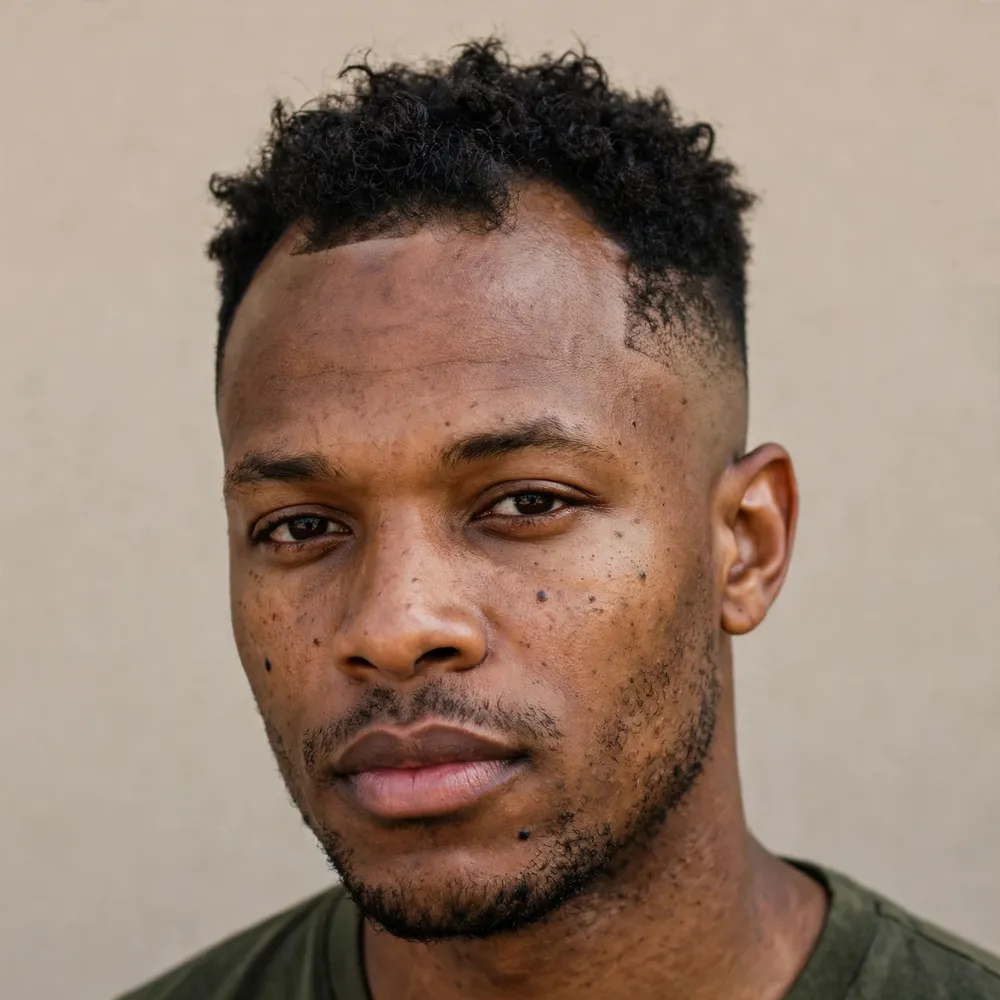
A high fade takes the sides up to the temple line, which works because the sharp, clean sides make the top look intentionally styled. The contrast draws the eye to the texture on top instead of the corners. It suits most face shapes and works especially well on thick or wavy hair, where the top can be left choppy and full. Ask for a high skin or zero fade with about two inches of textured length on top, and be specific that you want the fade blended high, not a low taper. A matte paste rubbed through towel-dried hair is all the styling it needs. The trade-off is upkeep: a high fade loses its sharpness fast, so expect a tidy-up every two weeks.
4. Old-School Comb-Over

The old-school comb-over gets a bad name from the exaggerated versions, but done properly it is a tidy, honest classic — especially on grey or salt-and-pepper hair, where the colour itself adds camouflage. The top is kept long enough to sweep neatly to one side from a natural part, covering the weaker temple without piling hair across the forehead. It suits straight hair and a fairly even hairline. Ask your barber for a classic scissor cut with tapered sides and a defined but soft part. A light pomade gives it polish without the wet, helmet-like finish. Keep it honest: if the top is too thin to cover the part, this is the wrong cut, and a shorter crop will serve you better.
5. Undercut and Ruffled Spikes

The undercut and ruffled spikes combination is for men who want something bold rather than something that quietly hides. Shaved or very short sides leave the long, spiky top as the entire focus, and pushing those spikes forward covers the temple corners with texture instead of a flat fringe. It suits younger men and anyone with thick, straight hair that holds a spike — fine hair will flop by midday. Ask your barber for a disconnected undercut with the top left long, around three inches, and texturised at the ends. Work a matte clay through damp hair and pinch the spikes forward with your fingers. It needs restyling every morning and regular trims to keep the disconnect sharp, so it is not a low-effort choice, but it makes a statement.
6. Mini Mohawk with Shaved Sides
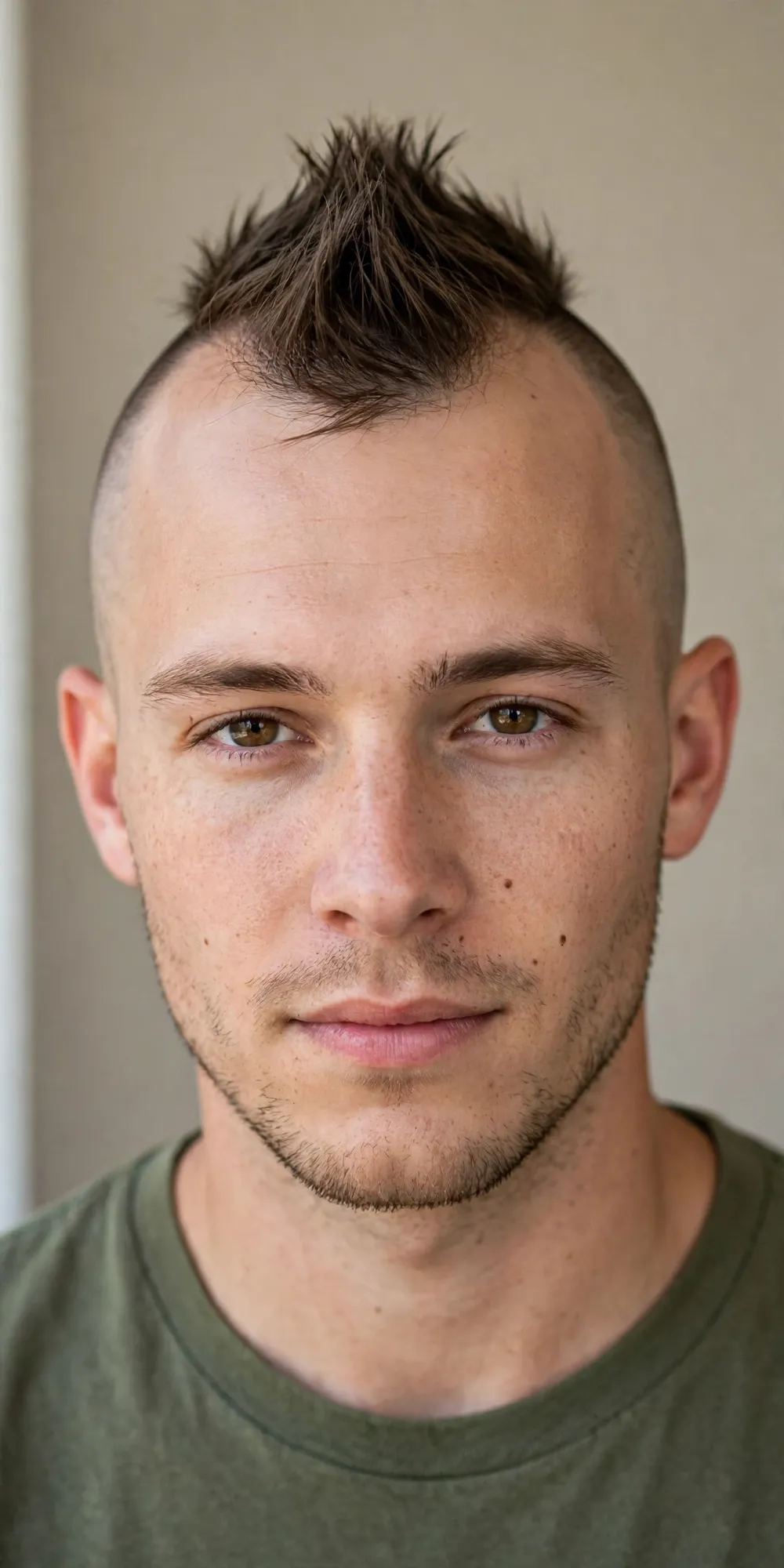
A mini mohawk turns a receding hairline into a non-issue by making the centre strip the whole point of the cut. The shaved sides remove any comparison between thick and thin areas, and the short central tuft sits well back from the temples, so the hairline simply stops being the focus. It suits confident men with thick hair that stands up easily. Ask your barber for shaved or zero-faded sides with a narrow strip, about an inch wide, left on top and kept short — no more than two inches. A strong-hold matte paste keeps the strip upright. Maintenance is simple: the strip needs little daily work, but the shaved sides need a weekly touch-up or they grow out fuzzy and spoil the effect.
7. Bald Fade with Full Beard
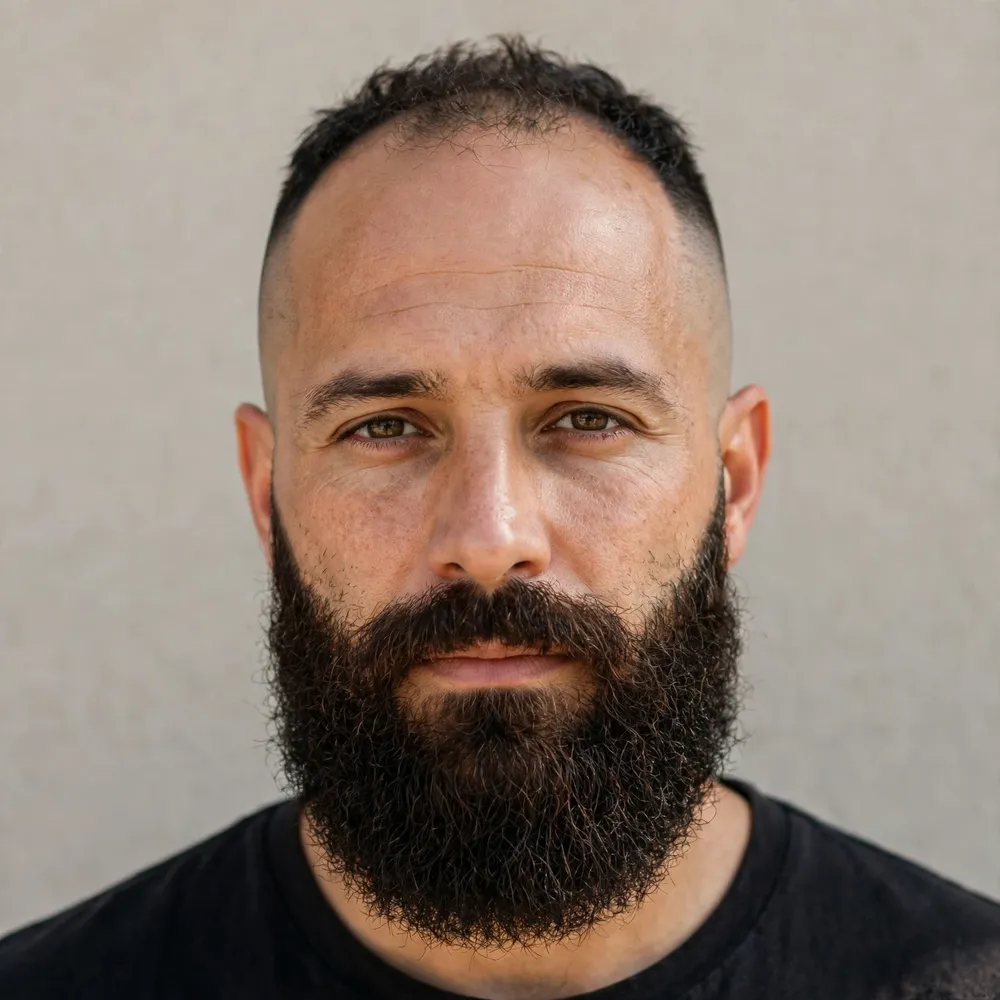
When the hairline has pulled back significantly, a bald fade with a full beard rebalances the whole face. The skin-tight sides fade to nothing, which removes the harsh line where hair meets skin, and the beard gives the lower half of the face so much presence that the top half stops dominating. It suits men who can grow a full, even beard — patchy beards undermine the effect. Ask your barber for a bald fade blended into the beard, with the top kept short and textured, and have the beard shaped to connect cleanly with the fade. A beard oil and a weekly trim keep it looking deliberate. The top needs almost no styling, which is the real win: five minutes in the morning, and the beard does the talking.
8. Voluminous Top with Tapered Sides
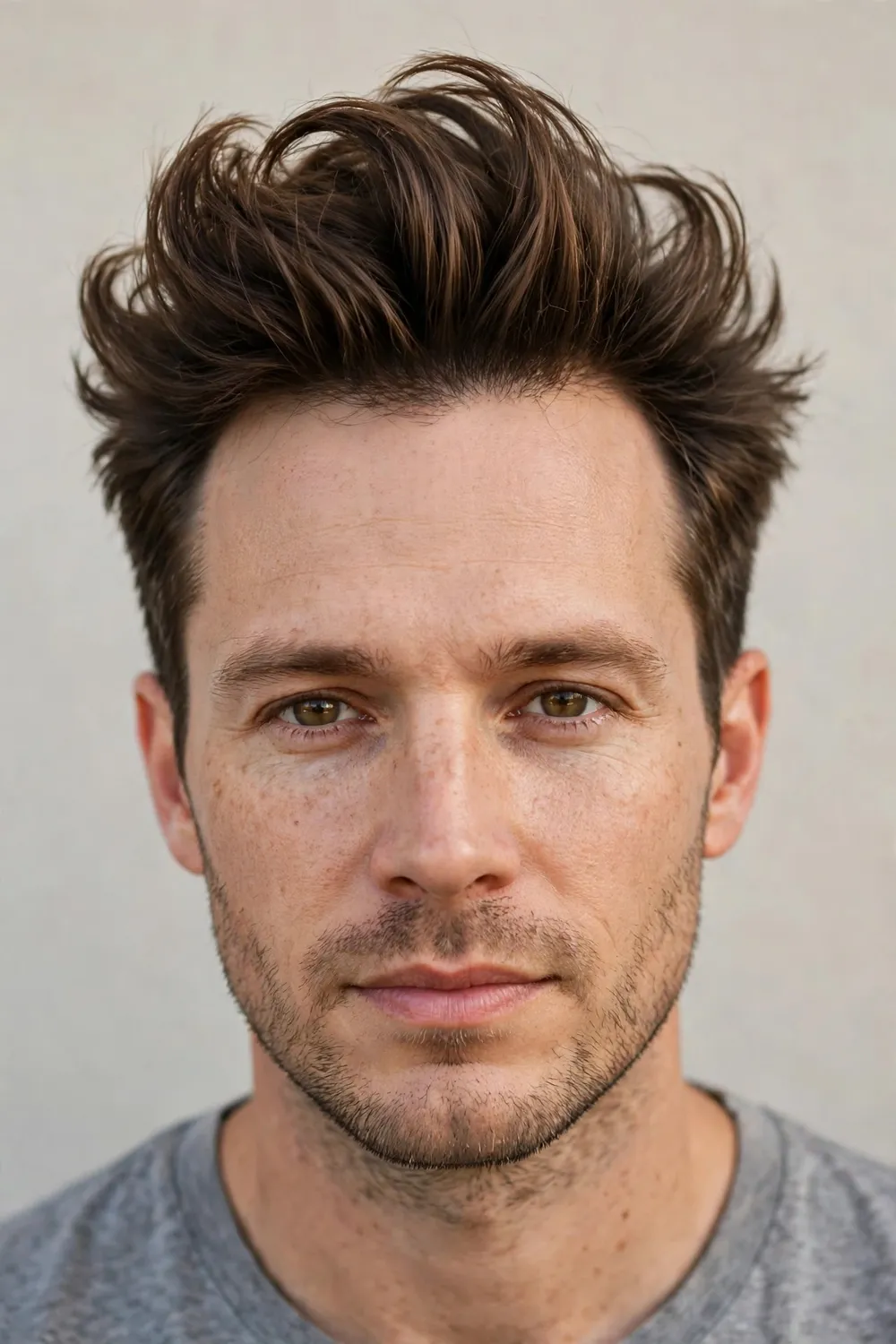
This cut keeps real height at the crown while the sides stay tidy and tapered, so the eye goes up to the volume rather than sideways to the temples. It needs fairly thick hair on top and suits men happy to spend a few minutes blow-drying. Ask your barber for length through the crown, around three inches, with a taper on the sides that keeps the silhouette neat without going skin-tight. Blow-dry upward with a vent brush and a volumising pre-styler, then finish with a light matte paste. The honest catch is the morning routine: skip the blow-dry and it falls flat, so this one rewards men who actually enjoy styling their hair.
9. Classic Pompadour
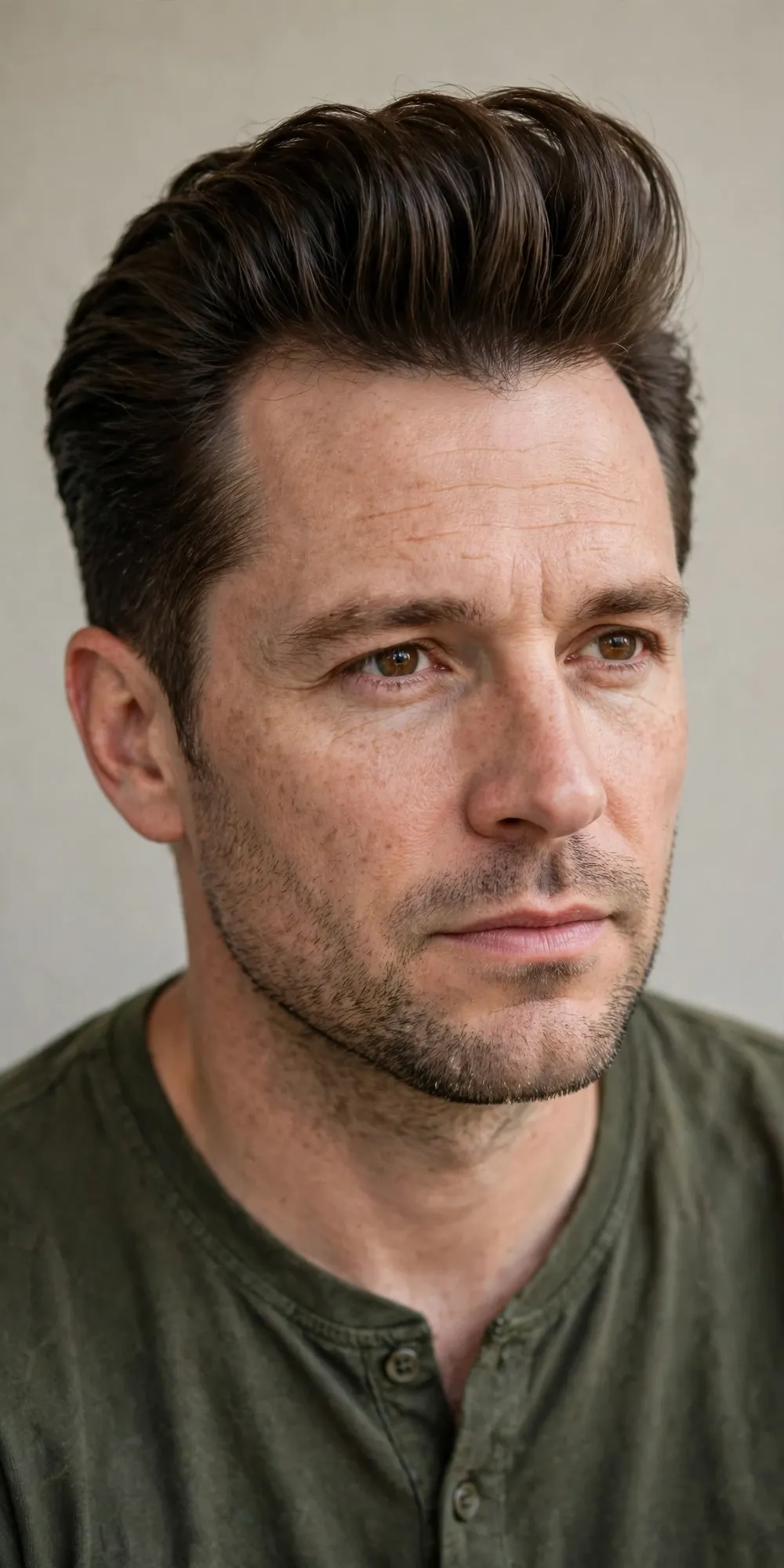
The classic pompadour lifts the front high, and that height is the whole trick — it pulls the eye up and away from the hairline, making the temples a footnote rather than the headline. It suits men with thick, straight hair and a bit of patience. Ask your barber for length on top, three to four inches, with short tapered sides and enough weight left at the front to sweep up. Blow-dry the front upward with a round brush, add a volumising powder at the roots, and finish with a medium-hold matte paste. It is a high-maintenance cut that needs daily styling and a trim every three weeks, but few cuts look as sharp when it is done right.
10. Side-Parted Slicked-Back Style

This is the smart, office-friendly version of the slicked-back look: a side part gives the top a clear direction, and the short sides keep everything tidy and deliberate. It works when the recession is still in the early stages and the hair on top is thick enough to sweep back without showing scalp through the part. Straight hair suits it best. Ask your barber for a side part with tapered sides and enough top length to brush back, roughly three inches. Style it with a light pomade or a matte cream, combing from the part backward. It needs a daily comb-through and a trim every three to four weeks, and it is worth skipping on very windy days.
11. Volume in the Middle

Volume in the middle is a clever, understated cut: the height sits through the centre of the head, and the hair is combed loosely back, so the temples are framed by fullness rather than exposed by a hard part. It suits medium-length hair with a bit of natural wave. Ask your barber for length through the middle, around three inches, with the sides kept short but not skin-tight, and the front texturised so it doesn’t fall in a flat sheet. Blow-dry the centre upward with your fingers, then add a small amount of matte paste for separation. The upkeep is moderate — a quick blow-dry each morning and a trim every month — and it grows out more forgivingly than a sharp fade.
12. Slicked Over Side Part
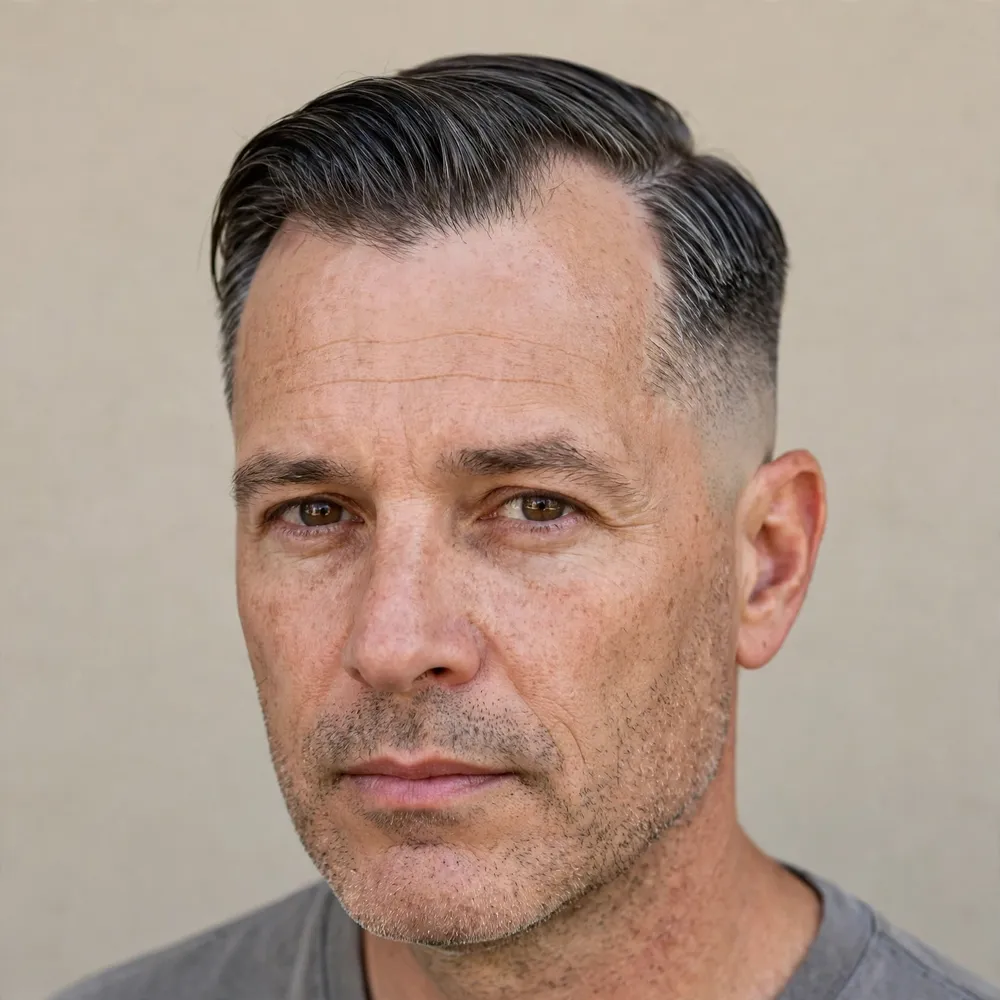
The slicked-over side part is a controlled, flat-topped classic: a natural part, a taper fade, and the top swept neatly across. It works for men whose hairline has receded evenly rather than in deep corners, because the sweep covers the forehead in one clean line instead of fighting individual gaps. Straight, medium-thick hair is ideal. Ask your barber for a taper fade with a soft side part and the top left long enough to sweep over, about two to three inches. A light-hold cream keeps it in place without the wet shine that exposes scalp. Maintenance is light — a comb and a dab of product each morning — but keep the trim schedule under four weeks.
13. Mid Bald Fade
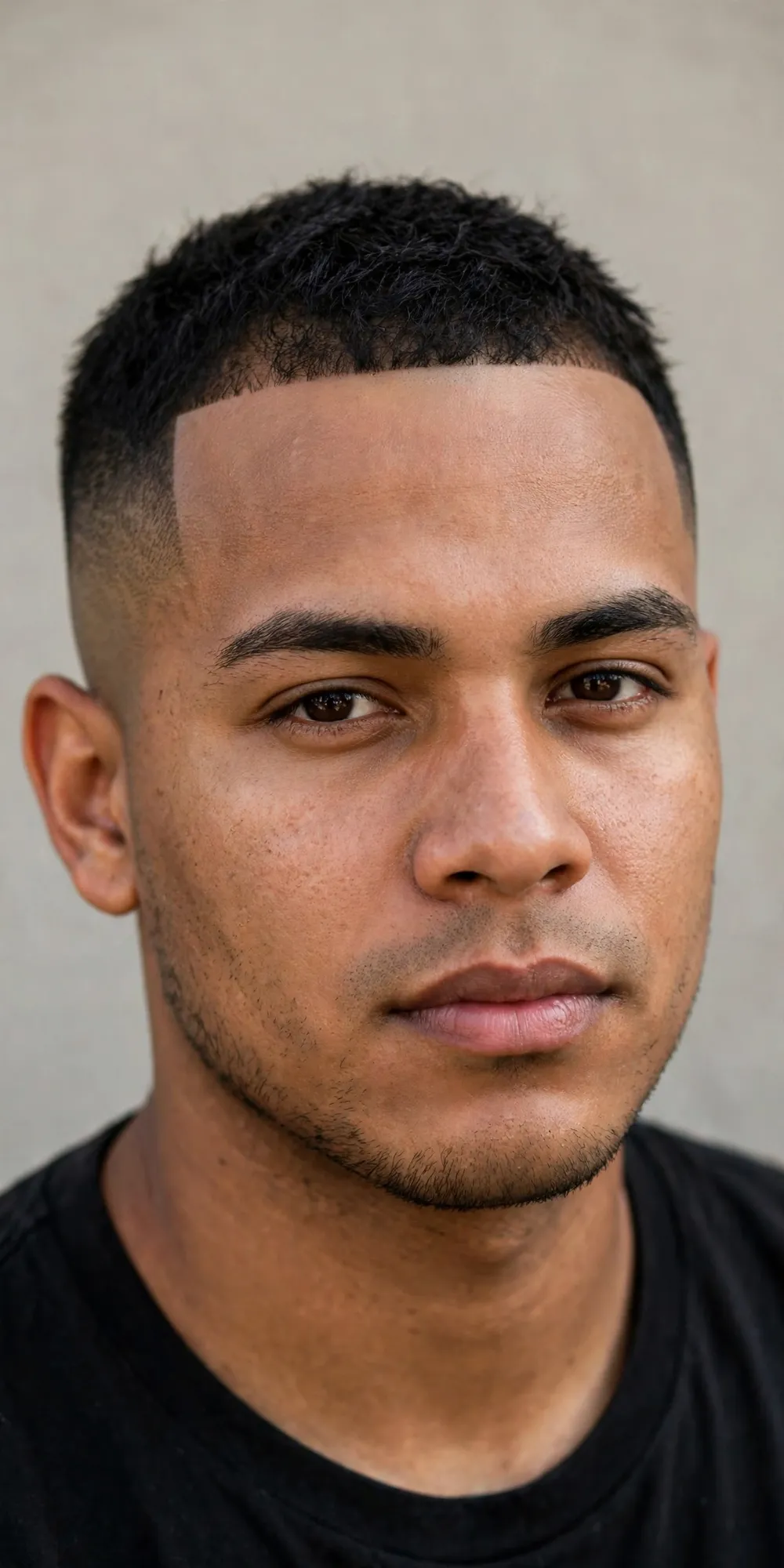
A mid bald fade sits between a low taper and a high skin fade, and that middle ground is exactly why it works for a receding hairline: the clean, skin-tight sides give the cut a sharp, intentional finish, while the forehead line-up is kept natural rather than squared off aggressively. It suits most face shapes and hair types. Ask your barber for a mid bald fade with the top left short and textured, and a line-up that follows your natural hairline instead of forcing a straight edge. Style the top with a pea-sized amount of matte clay, pushed forward or to the side. The fade needs a refresh every two weeks to stay crisp, but the top itself is wash-and-go.
14. Edgy Pompadour

The edgy pompadour takes the classic shape and roughs it up — irregular texture, uneven ends, and movement instead of a smooth, sculpted sweep. That messiness is the point for a receding hairline: a broken-up front line makes it impossible to tell where the hair ends and the forehead begins. It suits thick hair and men who like a bit of attitude. Ask your barber for a textured pompadour with point-cut ends and a taper or fade on the sides, keeping the front long enough to lift. Style it with matte clay, pushing the front up and slightly to one side with your fingers. It needs daily styling and a trim every three weeks, but the irregular texture means it still looks good on day two.
15. Clean Slicked Back Cut

This cut pairs a slicked-back top with a pompadour shape and neat sides, giving you the height of a pompadour with the tidiness of a classic slick-back. The lifted front draws the eye upward, which is what makes it work for a receding hairline — provided the top is thick enough that the sweep doesn’t reveal scalp. It suits straight, medium-thick hair. Ask your barber for tapered sides and a top of about three inches, shaped so the front lifts into a soft pompadour rather than lying flat. Blow-dry it back with a round brush and finish with a medium-hold matte paste. Daily blow-drying is non-negotiable, and a trim every three weeks keeps the shape from going heavy at the sides.
16. High Fade with Facial Hair
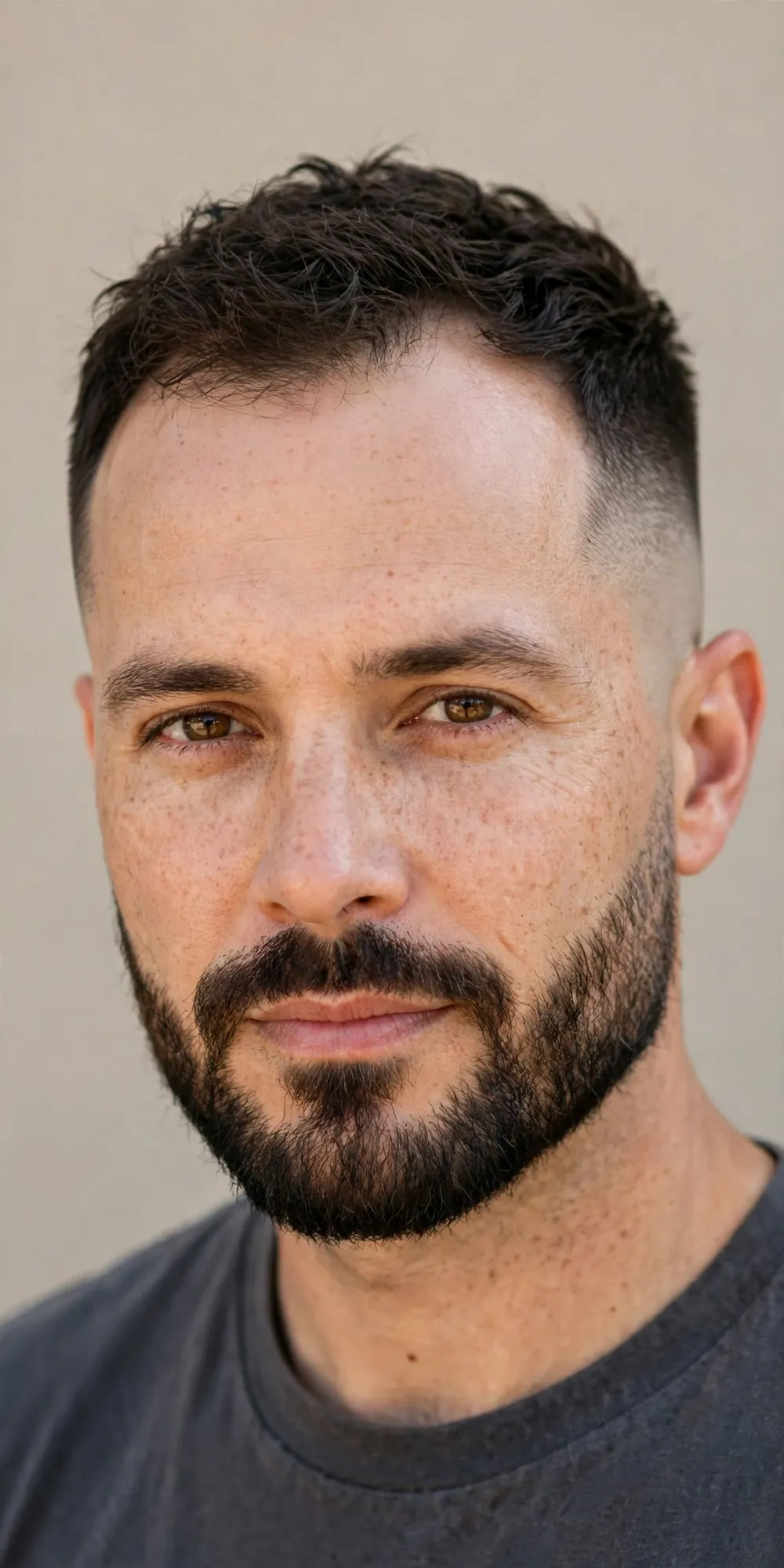
A high fade with facial hair uses the same rebalancing trick as the bald fade with a full beard, but in a lighter form — the high fade keeps the sides sharp and modern, while a short beard or stubble gives the lower face weight and pulls attention down from the hairline. It suits men with even stubble or a short beard. Ask your barber for a high fade with about an inch and a half of textured length on top, and have the beard faded into the sideburns so the whole thing reads as one cut. A matte paste and a weekly beard trim are all it takes. The fade needs a two-week tidy-up, but it is one of the easiest sharp styles to live with.
17. Curly Side-Parted Pompadour

Curls are a gift for a receding hairline, and this cut makes the most of them: the curls are lifted into a pompadour shape with a defined side part, so the natural volume and movement do the camouflaging for you. No straight hairline is visible because the curls break it up entirely. It suits natural curls with at least three inches on top. Ask your barber for a curly pompadour with a side part and tapered sides, and make sure they cut the curls dry or only slightly damp so the length is judged correctly. A curl cream scrunched through damp hair defines the shape without crunch. It needs a trim every four weeks, but the daily effort is low.
18. Buzzed Skin Fade
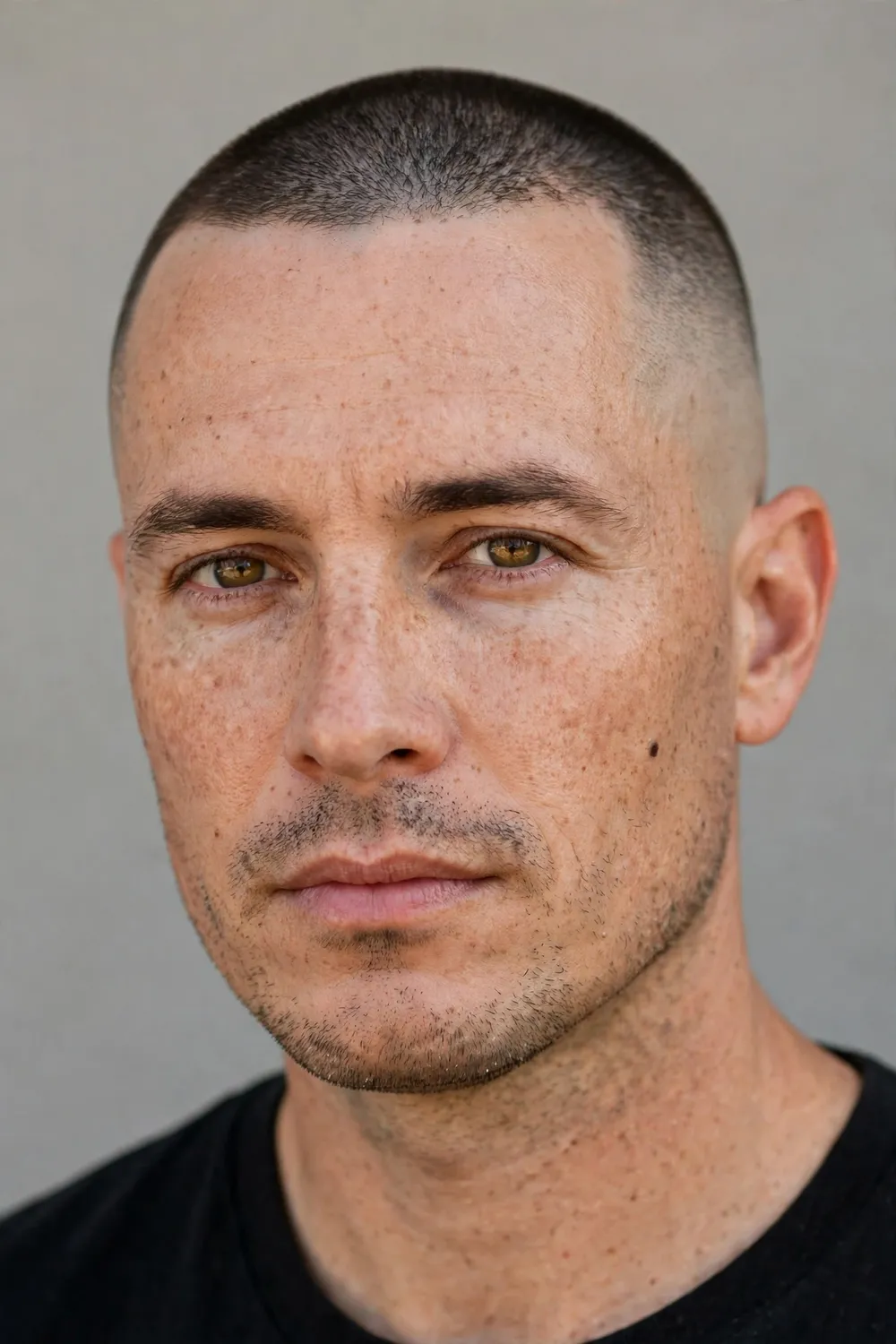
The buzzed skin fade is the transition cut — the one men choose when they are ready to go short but not ready to go fully bald. The buzzed top fades down to skin at the sides, which removes the contrast between the thinning top and the thicker sides almost entirely. It suits everyone, and it is the most honest cut here: it doesn’t hide the hairline, it makes it irrelevant. Ask your barber for a number two or three on top, faded to skin at the sides, and a natural line-up rather than a hard edge. There is nothing to style — towel-dry and go. The only real maintenance is a clipper tidy-up every one to two weeks, which many men do themselves at home.
19. Razor Fade Pompadour
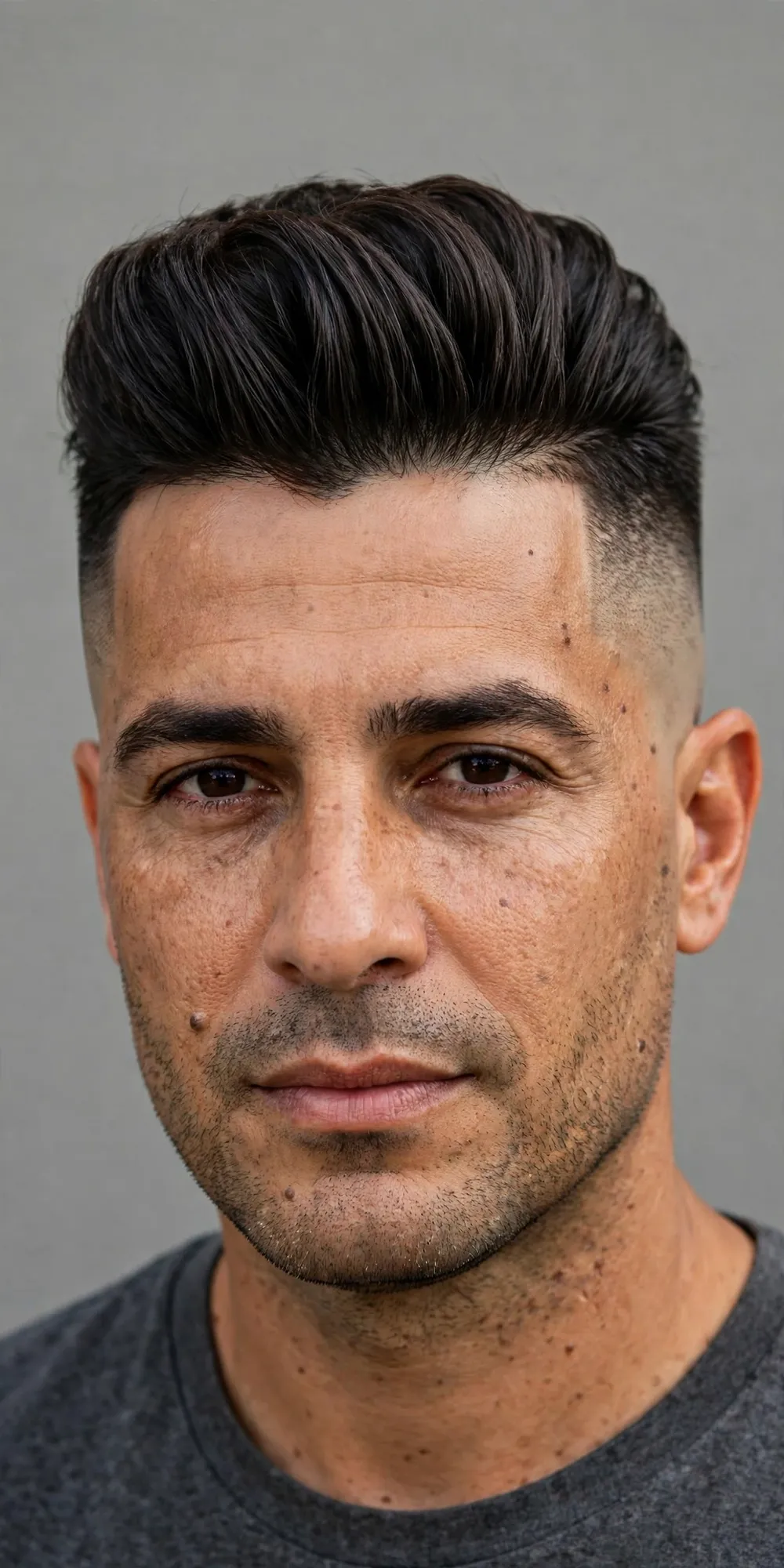
The razor fade pompadour is the sharpest version of the pompadour family: the sides are faded with a razor for a skin-tight, almost polished finish, and the full pompadour on top provides the height that distracts from the hairline. It suits men with thick hair who like a precise, barbershop-fresh look. Ask your barber for a razor fade on the sides with three to four inches of length on top, and be clear that you want the fade razor-blended rather than clipper-blended for that extra-clean edge. Blow-dry the front up with a round brush and finish with a strong-hold matte paste. This is a high-maintenance cut — the razor fade grows out visibly within ten days — so book your barber every two weeks.
20. Taper with Rounded Line-Up
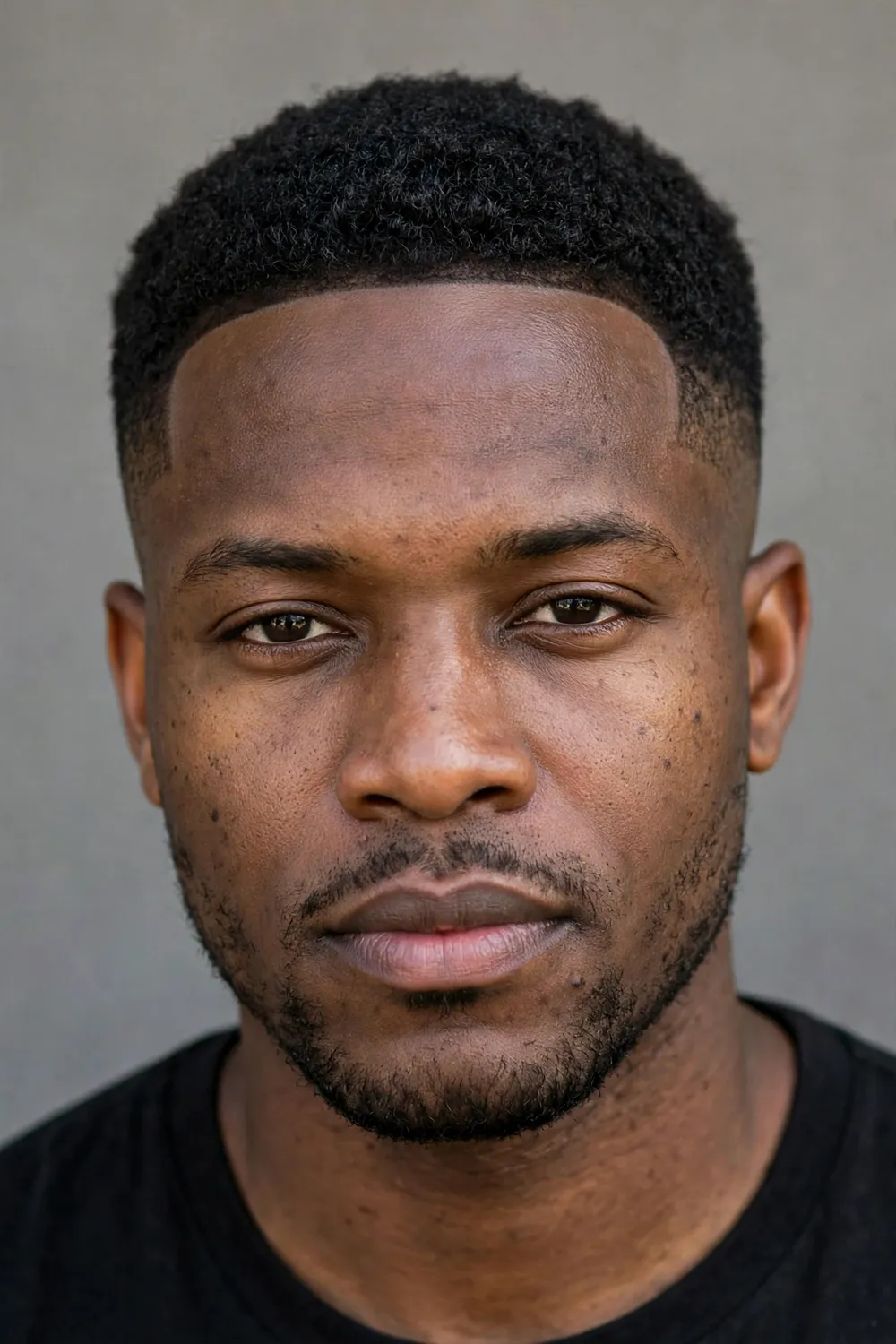
A taper with a rounded line-up is one of the subtlest cuts on this list, and that subtlety is its strength. Instead of a sharp, squared-off hairline, the barber follows your natural hairline with a soft, curved edge, which looks like the hairline you were born with rather than one drawn on with a razor. It suits mild to moderate recession. Ask your barber for a classic taper on the sides and back, with a rounded line-up that follows the natural curve of your forehead — no straight lines, no sharp corners. A little matte paste is all the styling it needs. Maintenance is gentle: a trim every three to four weeks keeps the taper tidy and the line-up soft.
21. Tapered Faux Hawk
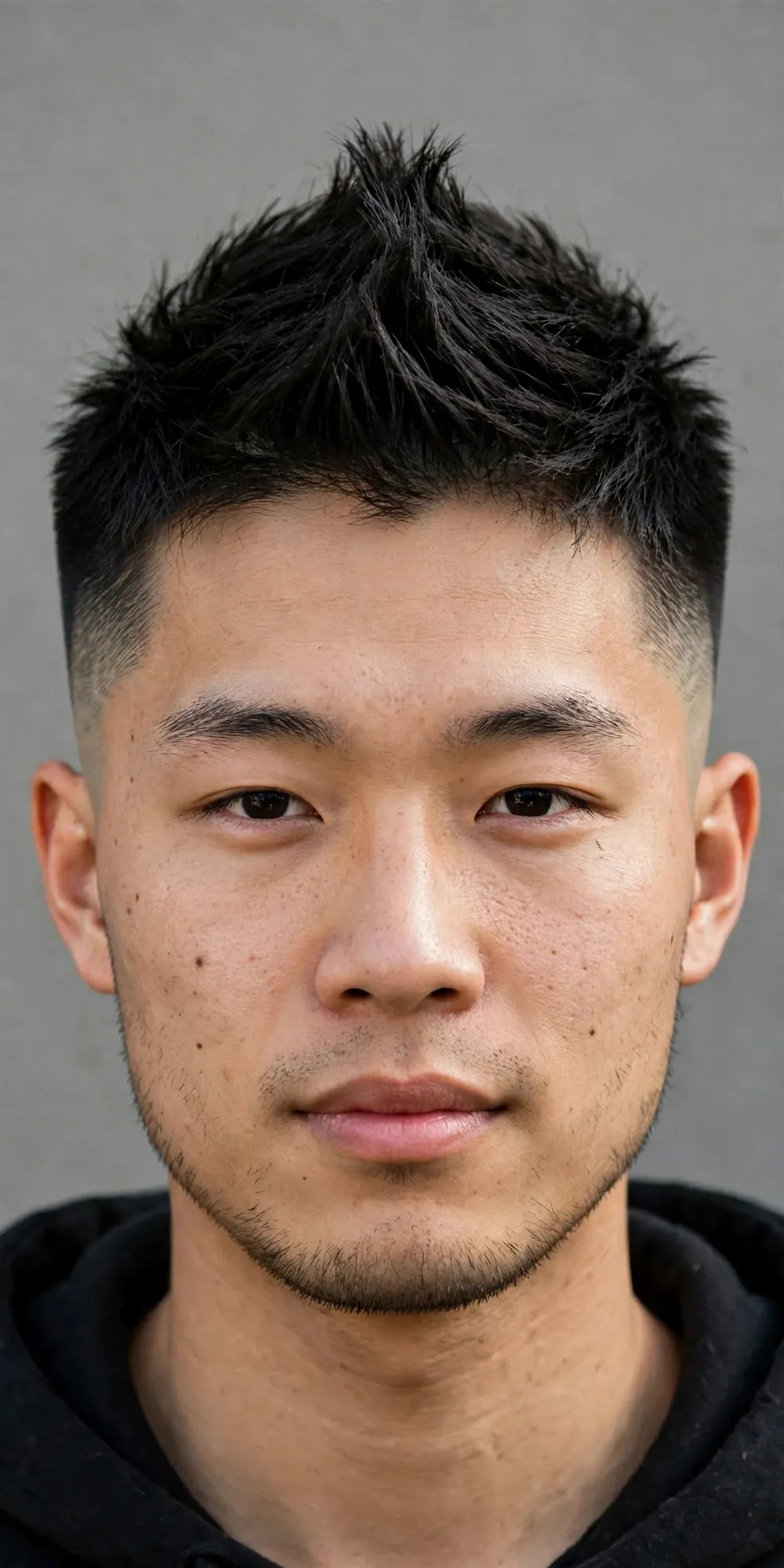
The tapered faux hawk keeps a longer, textured strip down the centre of the head with tapered sides, so the eye follows the strip rather than the hairline. It is a softer, more wearable version of the mohawk — the centre is the feature, but nothing about it screams for attention. It suits straight or slightly wavy hair and a moderate recession. Ask your barber for tapered sides with a textured centre strip of about two inches, longest at the front and shorter toward the crown. Style it with matte clay, pushing the strip up and slightly forward. It needs a daily five-minute style and a trim every three weeks.
22. High Fade Military Cut
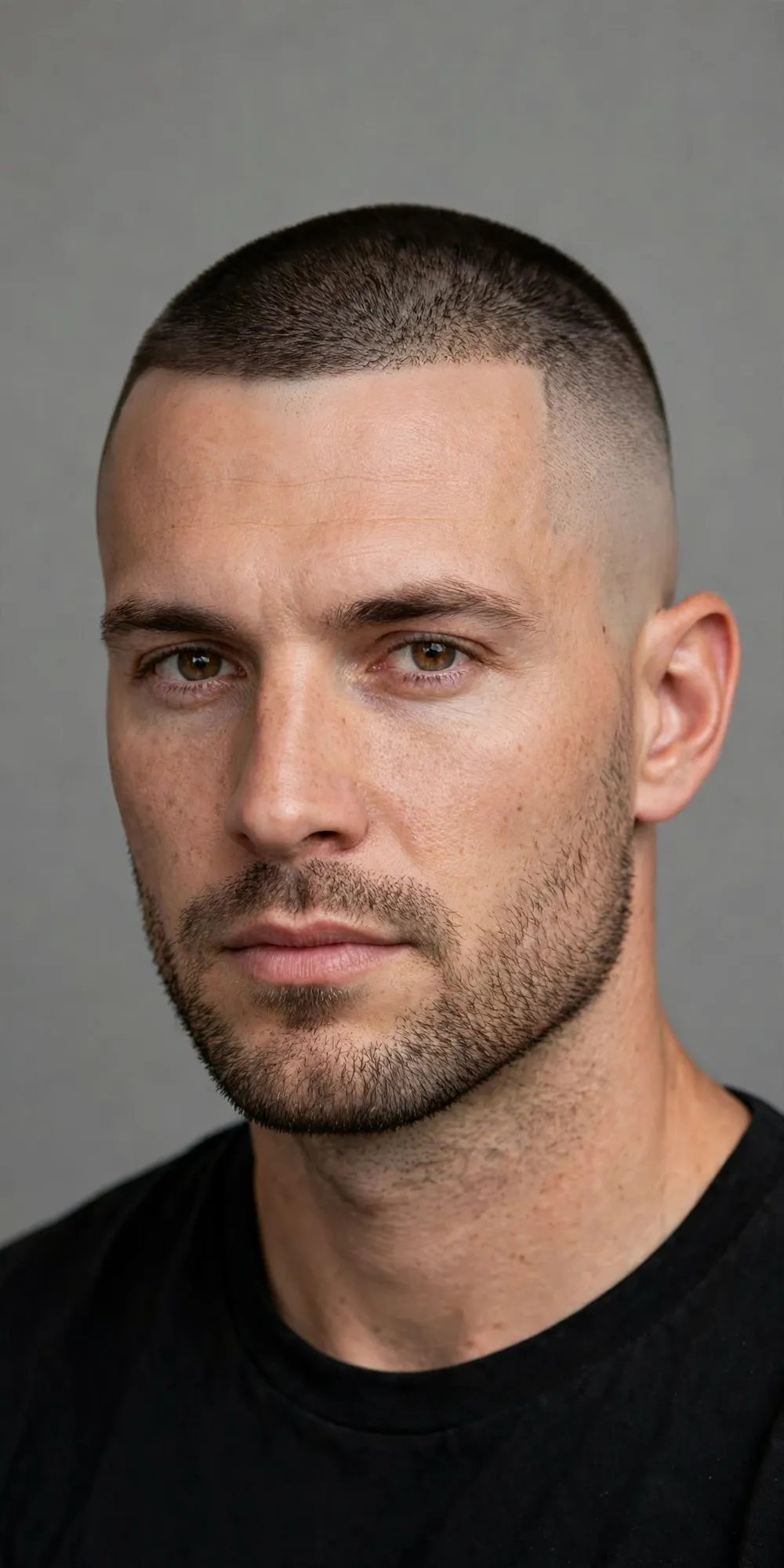
The high fade military cut — the classic high-and-tight — is as short and clean as a cut gets without going fully bald. The sides are faded high, the top is extremely short, and there is nowhere for a receding hairline to hide, which is precisely why it works: with everything the same short length, the recession stops reading as a problem and starts reading as a style. It suits men who want zero fuss. Ask your barber for a high skin fade with a number one or two on top, blended tight. There is nothing to style — wash, towel-dry, and you’re done. The fade needs a tidy-up every week to ten days, but many men handle the sides at home with clippers.
23. Preppy Quiff

The preppy quiff is the polished, modern cousin of the pompadour: the front is lifted and swept slightly to one side, giving you height and movement without the full drama of a classic pomp. That lift is what helps a receding hairline — the raised front draws the eye up and the side sweep covers the weaker temple. It suits straight or slightly wavy hair that is still reasonably thick. Ask your barber for a quiff with tapered sides and about three inches on top, texturised at the ends so it doesn’t fall in a solid sheet. Blow-dry the front up with a vent brush and finish with a light matte paste. It needs a daily blow-dry and a trim every three weeks.
24. Shaved Side Comb-Back
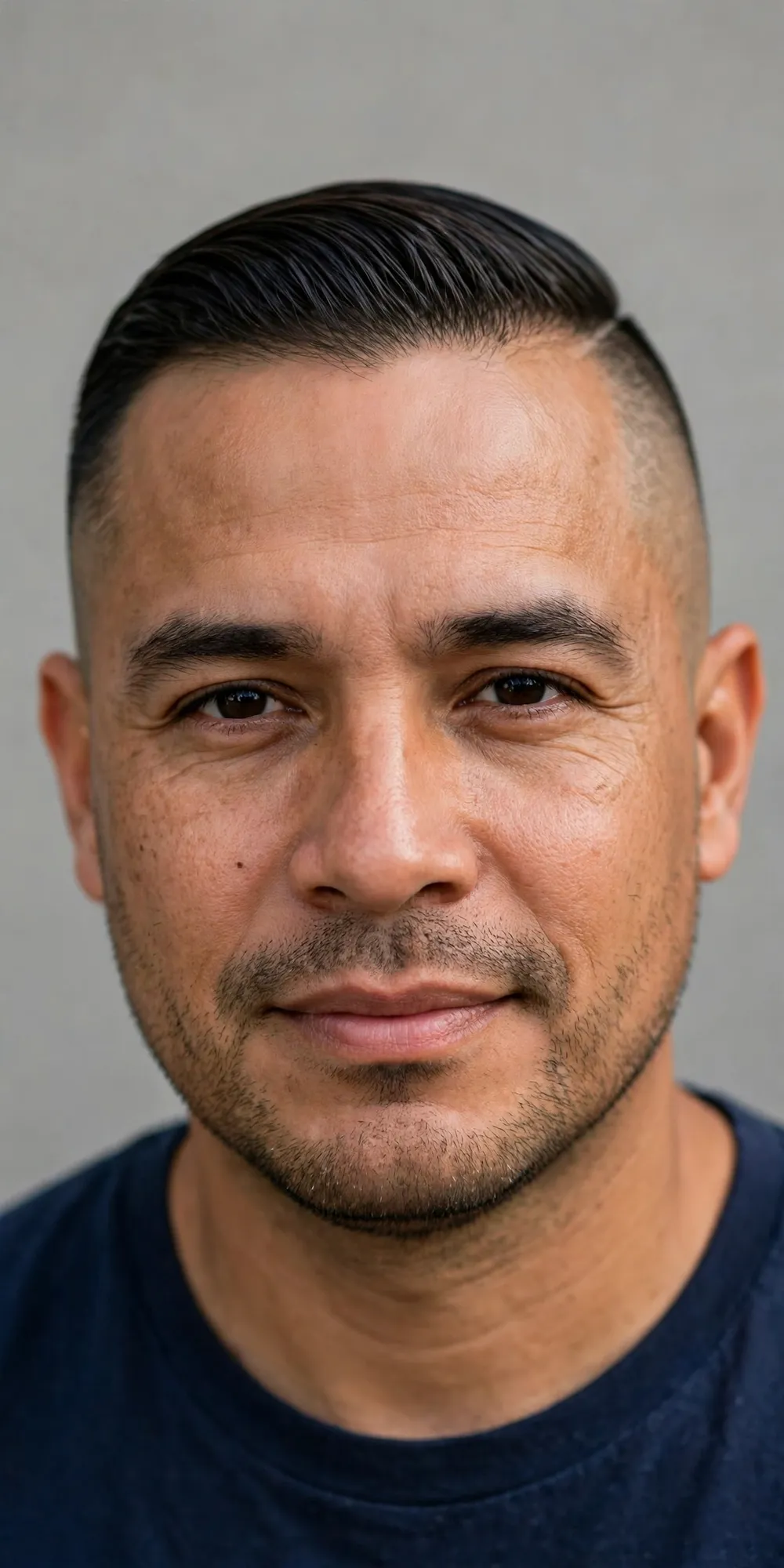
The shaved side comb-back pairs buzzed or shaved sides with a long top that is dried backward, creating a strong contrast that makes the top look deliberately long and full. The length swept back from the forehead gives the front a confident, swept shape, and the shaved sides remove any wispy, thinning hair at the temples from the picture entirely. It suits thick hair on top, at least four inches. Ask your barber for shaved or zero-faded sides with the top left long and layered, so it dries back without bulk at the ends. Blow-dry it backward with a vent brush and finish with a matte paste for hold. The long top needs daily styling and the shaved sides a weekly touch-up, so it is a commitment.
25. Hipster Skin Fade with Beard
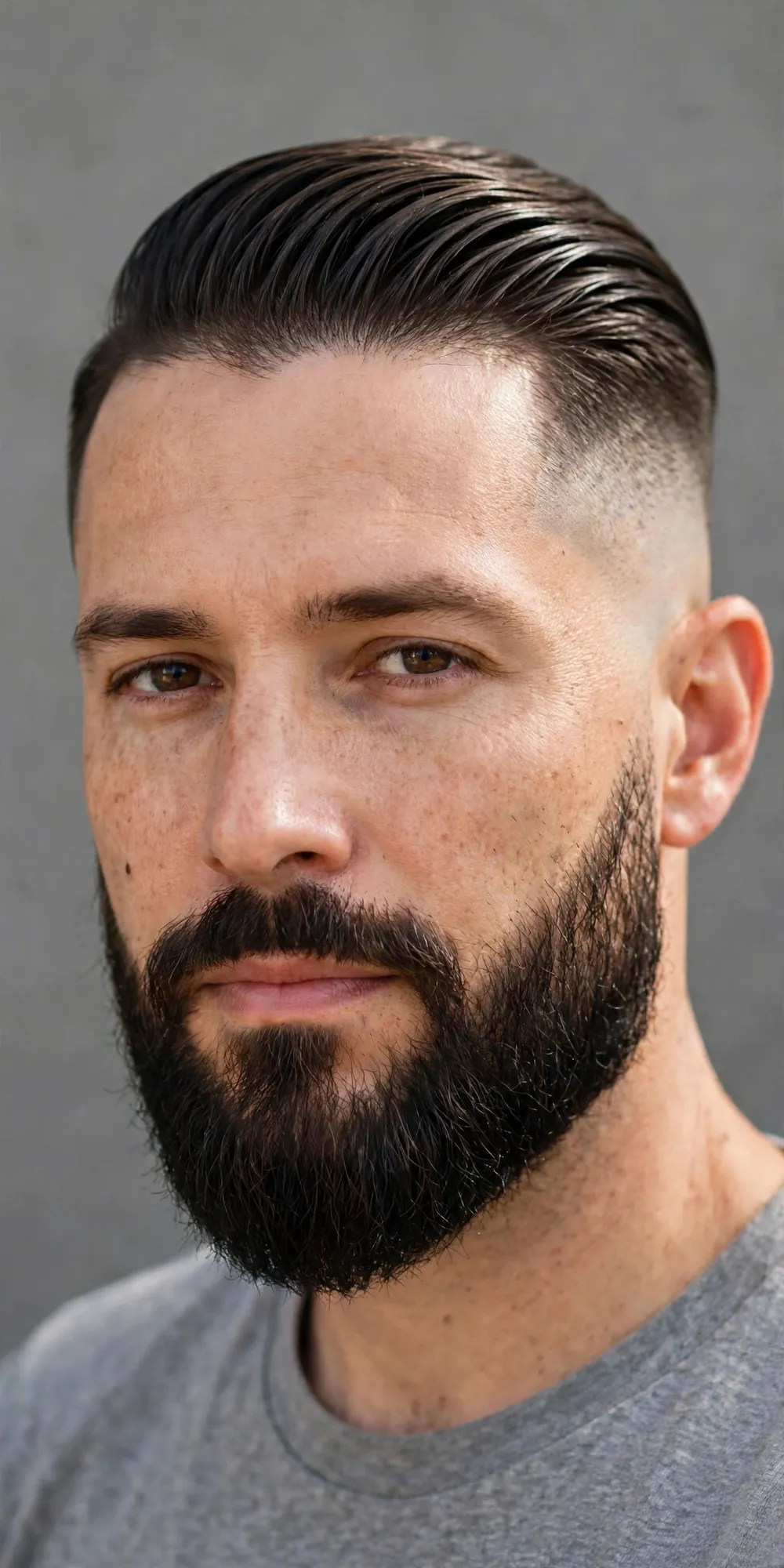
The hipster skin fade with beard is a full-look cut: a skin fade, a slicked-back top, and a tapered beard, all working together so no single feature carries the style. The slicked-back top gives height and direction, the skin fade keeps the sides razor-clean, and the beard balances the face so the hairline is just one element among many. It suits men with a good beard and three inches or more on top. Ask your barber for a skin fade with the top left long, and have the beard tapered to connect with the fade. Blow-dry the top back and finish with a matte paste. It needs a barber every two weeks, but when all three elements are sharp it is one of the most complete styles here.
26. Subtle Tapered Fade
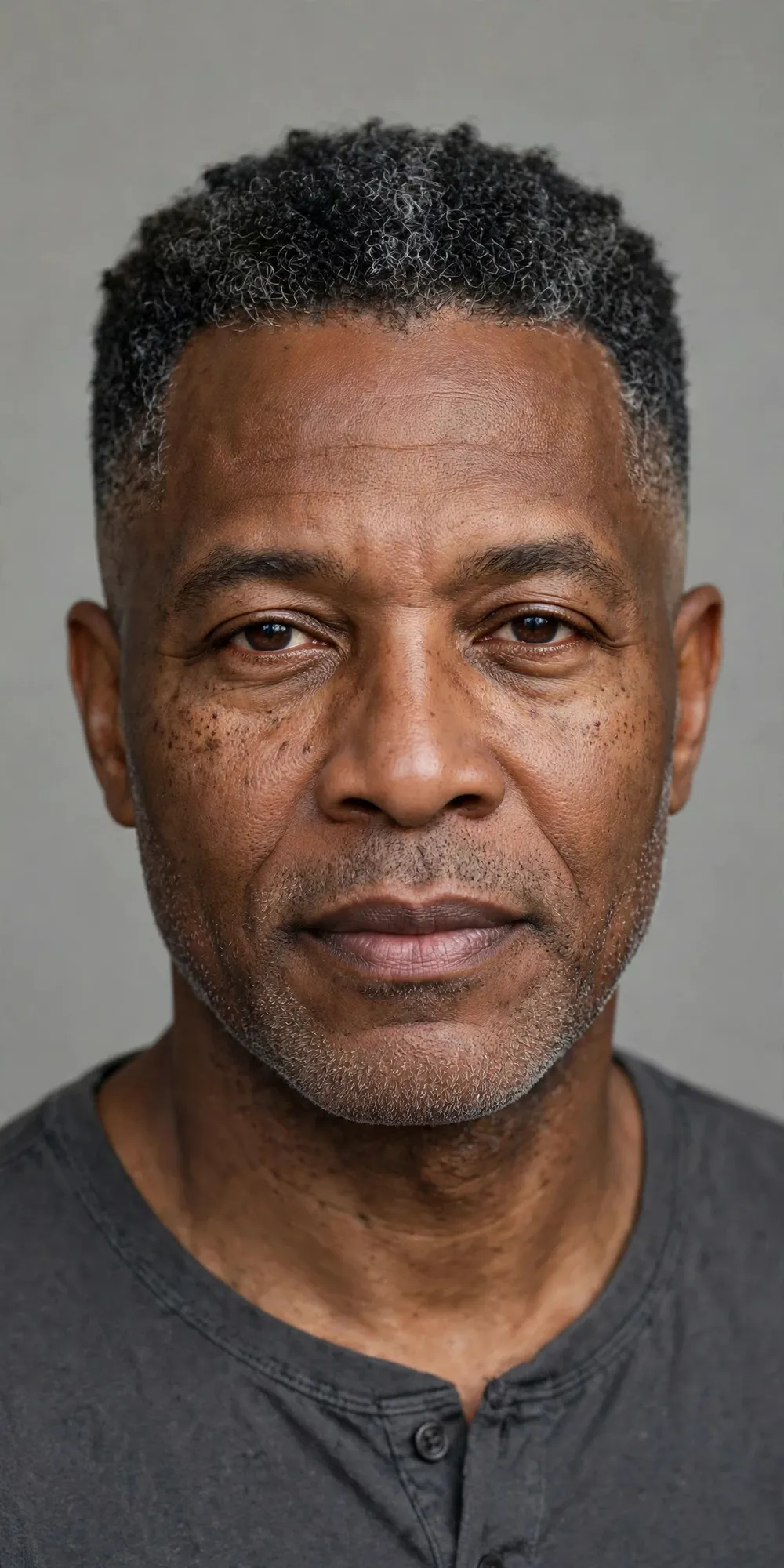
The subtle tapered fade is the quiet achiever of this list: a gentle taper with no harsh contrast, a natural grow-out, and nothing that draws attention to itself. For a receding hairline, that quietness is the point — there is no sharp fade line to highlight where the hair has pulled back. It suits most hair types, including fine hair that would look patchy under a skin fade. Ask your barber for a low taper with the top left short and textured, around an inch and a half, and no hard lines anywhere. A dab of matte paste is optional. It grows out gracefully, so a trim every four to five weeks is plenty.
27. High Skin Fade
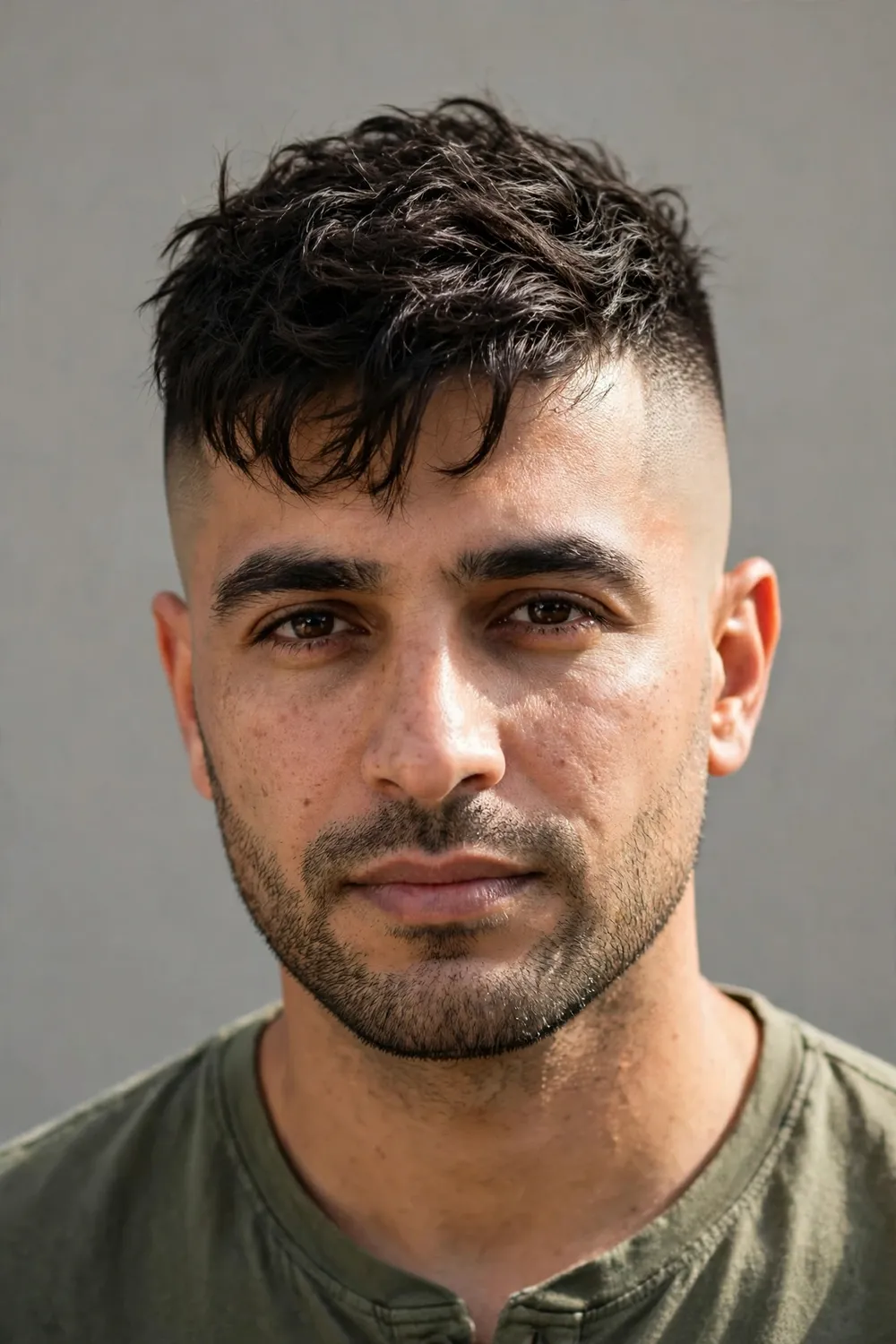
A high skin fade takes the sides right down to bare skin, starting the blend high up near the temples, while the top keeps enough length to style forward, to the side, or up. The sharp, clean sides make the hairline look deliberate instead of accidental. It suits men whose temples have moved back but who still have decent density on top, and it works especially well with straight or slightly wavy hair. Ask your barber for a high skin fade with a foil shaver finish and two to three inches left on top, textured. Finish with a matte clay, pushed forward or swept to one side. The upkeep, though: a skin fade grows out in about ten days, so plan a tidy-up every two weeks.
28. Textured Mohawk
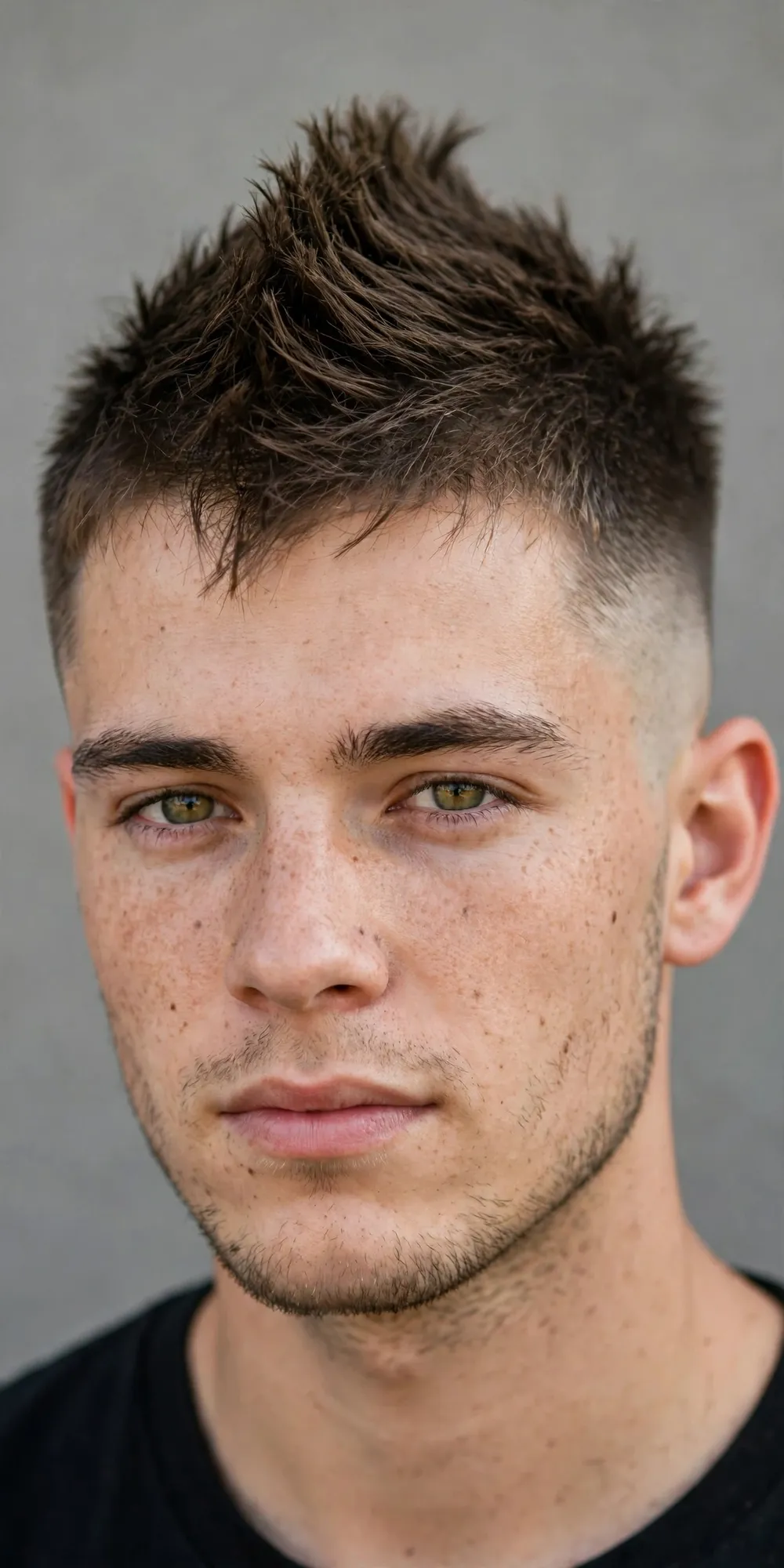
This isn’t the spiked punk mohawk of old. The modern textured version keeps a wide strip of choppy, piecey hair down the centre, with soft faded sides. The vertical line of texture draws the eye straight down the middle of the head, away from the corners of the hairline. It suits men with thick hair and a bit of confidence, and it works best when the hairline has receded at the temples but the front is still holding. Tell your barber you want a textured mohawk with a mid fade and the centre left long enough to push up with your fingers. Use a matte paste, pinch the ends apart, and don’t overdo the height. It needs a restyle every morning, but only takes about two minutes.
29. High Fade with Shaved Design

A high fade with a shaved design turns the fade itself into the feature. Your barber carves a line, curve, or geometric pattern into the faded area, usually above the ear or around the back. It’s a bold choice, and it suits younger men or anyone who likes their haircut to start conversations. The top can be textured, cropped forward, or left a little longer; the design does the distracting. Ask for a high fade with a simple line design, nothing too busy, and agree on the placement first. Style the top with matte clay. The catch is the design blurs within a week, so this is a cut for men happy to visit the barber every ten days or so.
30. High Skin Fade with Spiked Hair
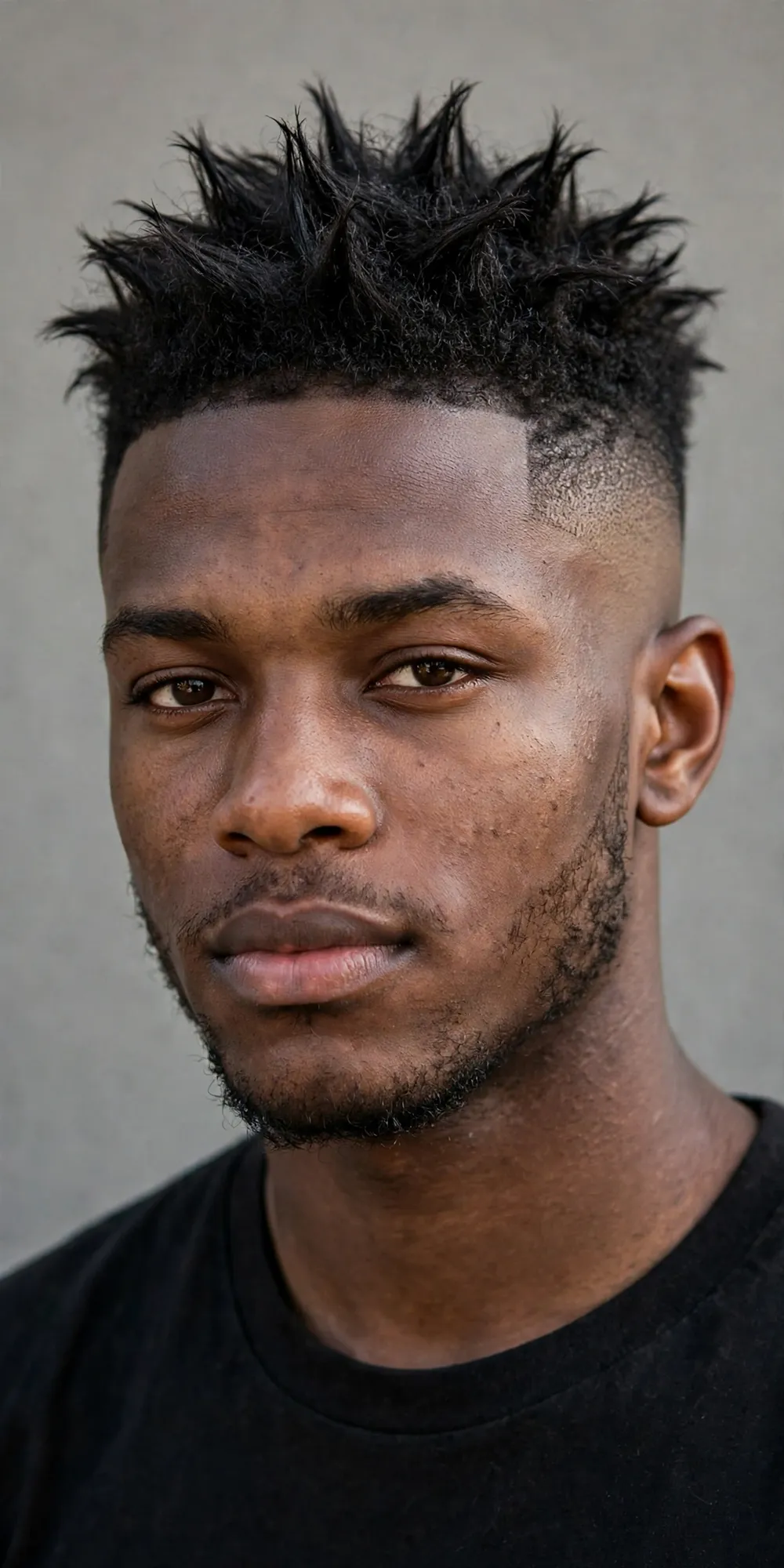
Short spikes on top plus a high skin fade is one of the oldest tricks for a receding hairline, and it still works. The spikes create height and texture right where you want the eye to land, while the skin-tight sides keep everything looking clean and intentional. It suits men with straight, fairly thick hair; fine hair works too with a lighter product. Ask your barber for a high skin fade with the top left about two inches and point-cut for texture. Work a pea-sized amount of strong-hold matte wax through damp hair, then pinch the ends upward. It holds all day and washes out easily. Expect a fade tidy-up every two weeks, and keep the spikes short.
31. Faded Hawk
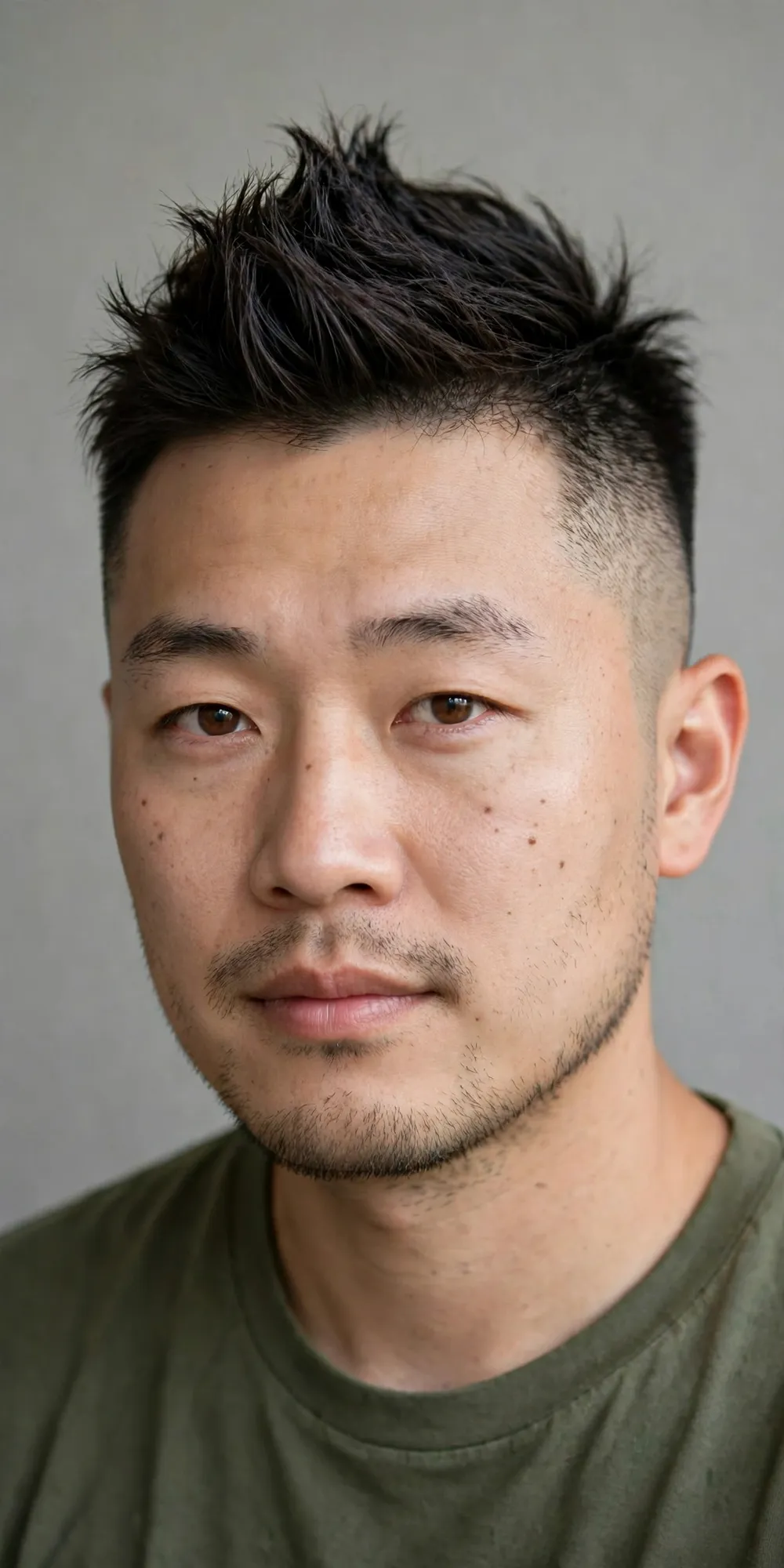
A faded hawk is a faux hawk with manners. Instead of shaved sides, the sides fade gradually into a longer, textured strip down the centre, so the whole thing looks softer and more wearable. The raised centre line pulls attention up and away from the temples, which is exactly what a receding hairline needs. It suits most face shapes and works well on thick or wavy hair. Ask your barber for a low-to-mid fade with a textured top, longer through the middle, and tell them you want to wear it pushed up, not flat. A matte paste gives you hold without shine. Maintenance is easy: a quick finger-style in the morning and a fade refresh every two to three weeks. It also grows out gracefully.
32. Fade with Hairline Design
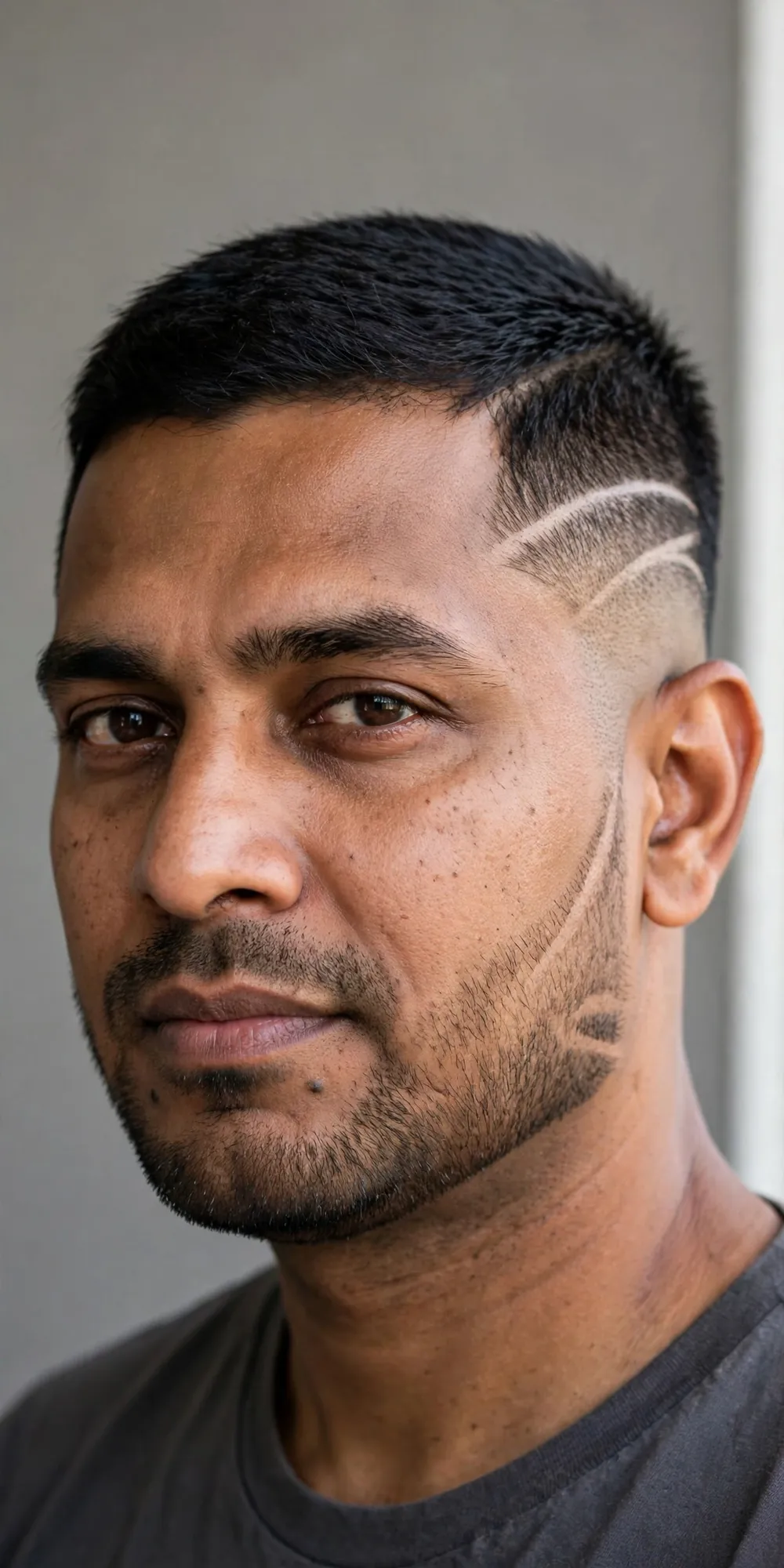
Some barbers can work a subtle line or pattern into the fade near the nape or around the sides, and the effect is a haircut that looks designed rather than just short. It stays understated — a single clean line or a small geometric detail that adds interest without shouting. It suits men who want something a little different but still need to look smart at work. Ask your barber for a mid fade with a single line detail, and keep the top textured and forward. Finish with a light matte cream. The design will soften as it grows, so plan on a barber visit every two weeks. It’s a small detail, but it changes the whole feel of the cut from plain to deliberate.
33. Brushed-Back Medium Hair
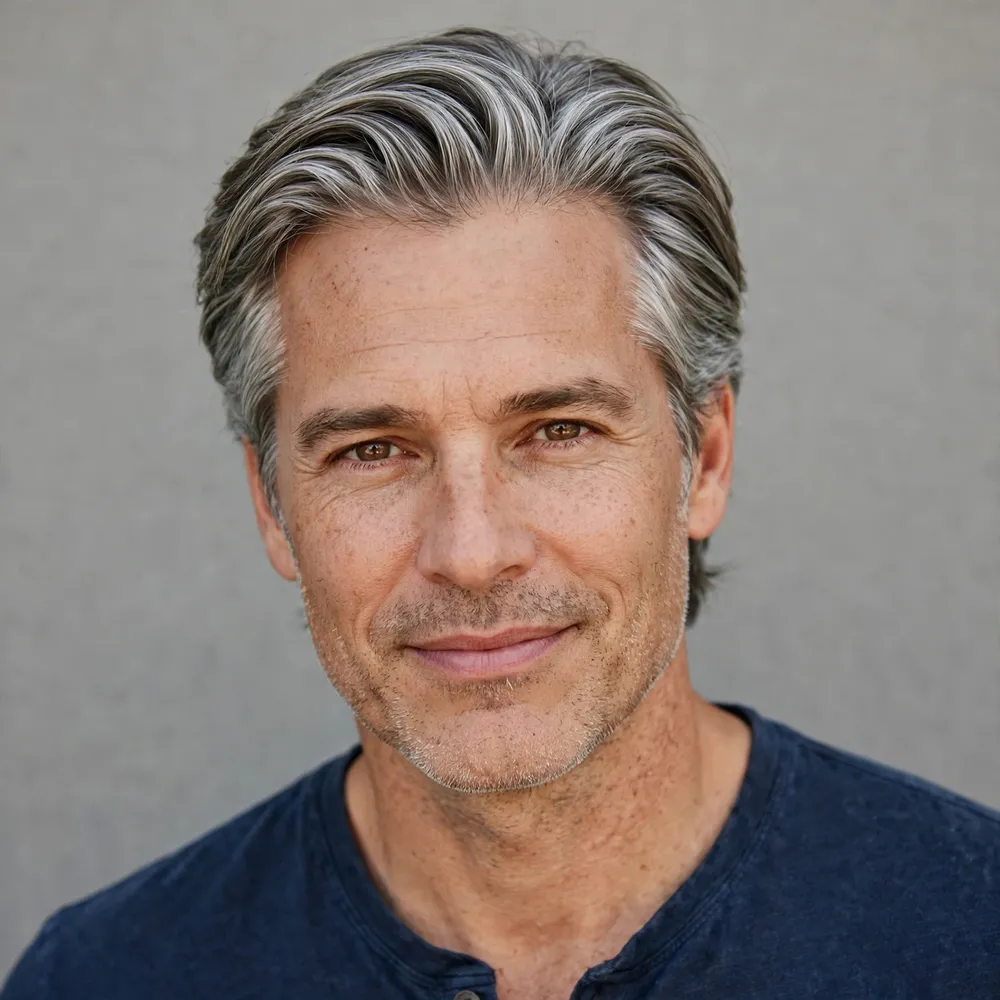
Medium length, brushed back, works when the recession is still mild and the hair on top is thick enough to carry some weight. The length gives the style presence, and brushing it back with volume stops the hairline being the first thing anyone notices. It suits men with straight or wavy hair and a bit of patience in the morning. Ask your barber for a medium-length top with tapered sides and the back kept neat, then blow-dry it backwards with a round brush for lift at the front. A matte cream or light pomade keeps it in place without looking wet. On thin hair, though, the same length just shows more scalp — this one is only for men with real density up top.
34. Platinum Ivy League
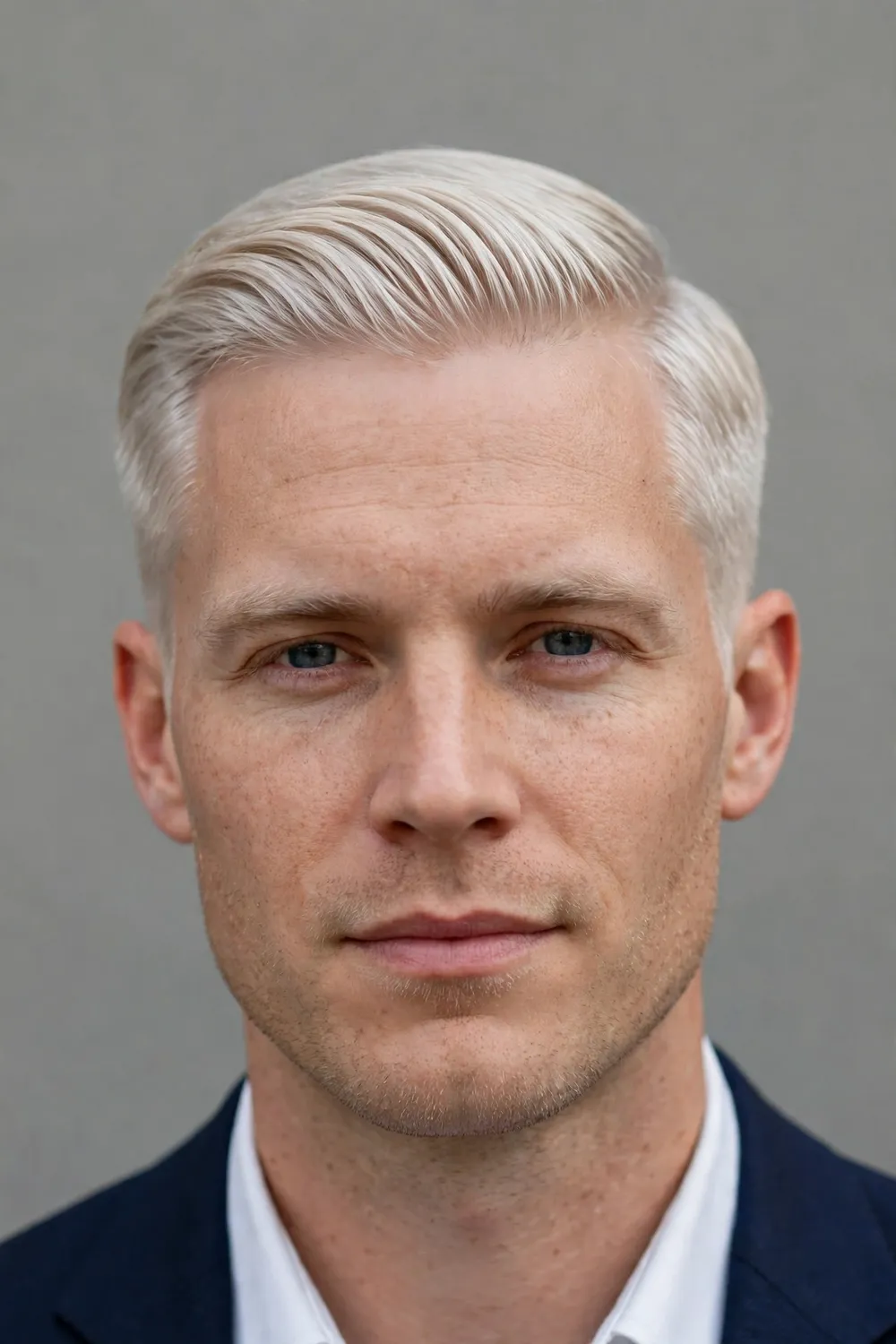
Going platinum does something clever for a receding hairline: light hair against light skin shows far less contrast, so the scalp and the hairline blend instead of standing out. The Ivy League cut itself is short, neat, and side-parted — a classic that never looks like it’s trying too hard. It suits men with fair skin and hair that’s already fairly light. Ask your barber for a short Ivy League with a low taper, then have a colourist lift the top to a cool platinum, keeping the sides slightly darker for definition. Style with a light matte paste. Be warned: bleach is high maintenance — root touch-ups every four to six weeks, purple shampoo, and regular conditioning are non-negotiable.
35. Gelled Spikes
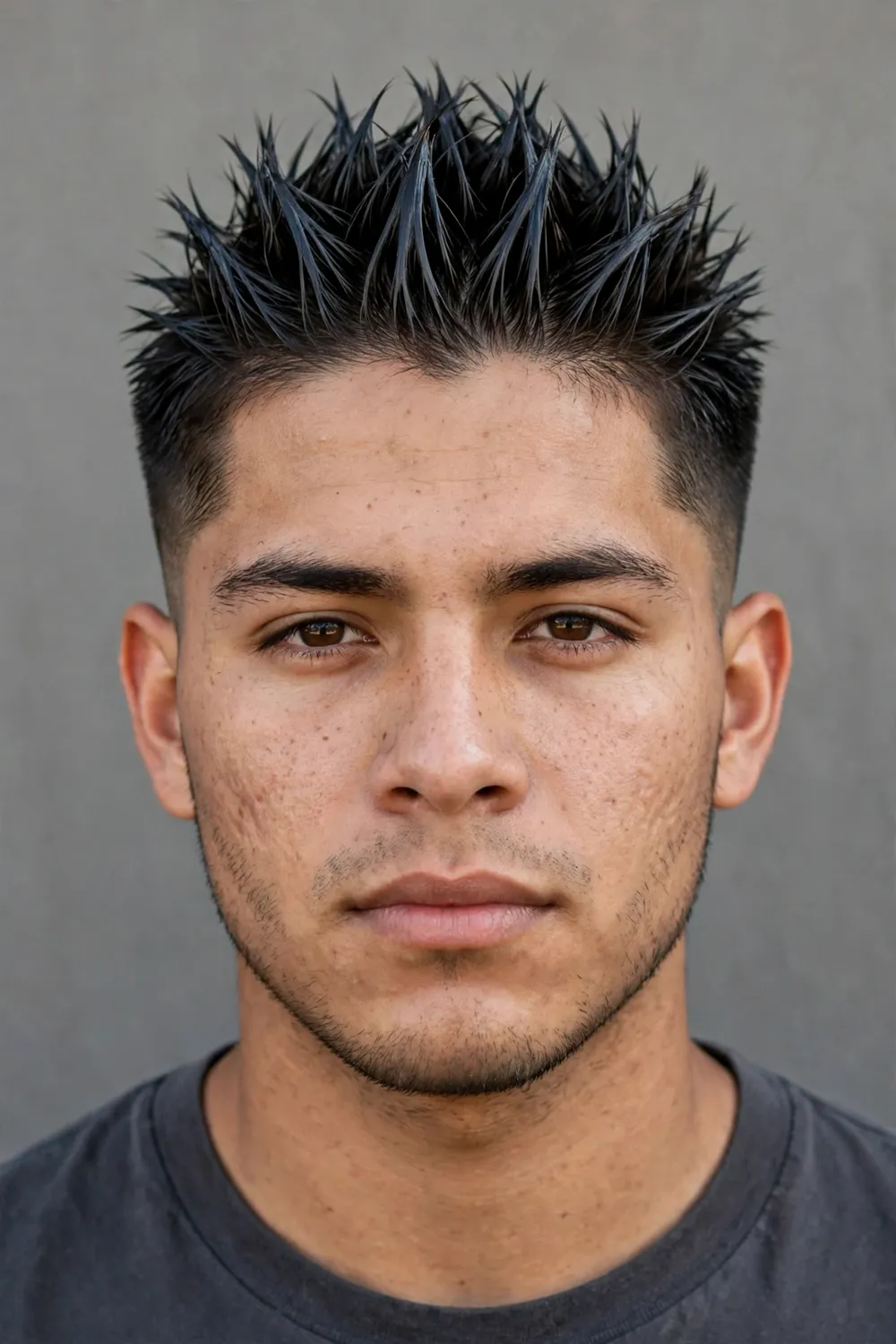
Short gelled spikes are the quick-fix cut for a receding hairline: texture on top, short sides, and a finish that holds its shape all day. The spikes break the hairline into short, irregular points, so there’s no clean line for the eye to follow. It suits men with straight, medium-thick hair and anyone who wants a cut that takes three minutes in the morning. Ask your barber for a short textured top, about an inch and a half, with faded or tapered sides. Use a strong-hold gel or wax, but work it through with your fingers rather than a comb — the point is piecey, not perfect. One caution: too much gel looks wet and shiny, which shows scalp — use less than you think.
36. Short Slicked-Back Cut
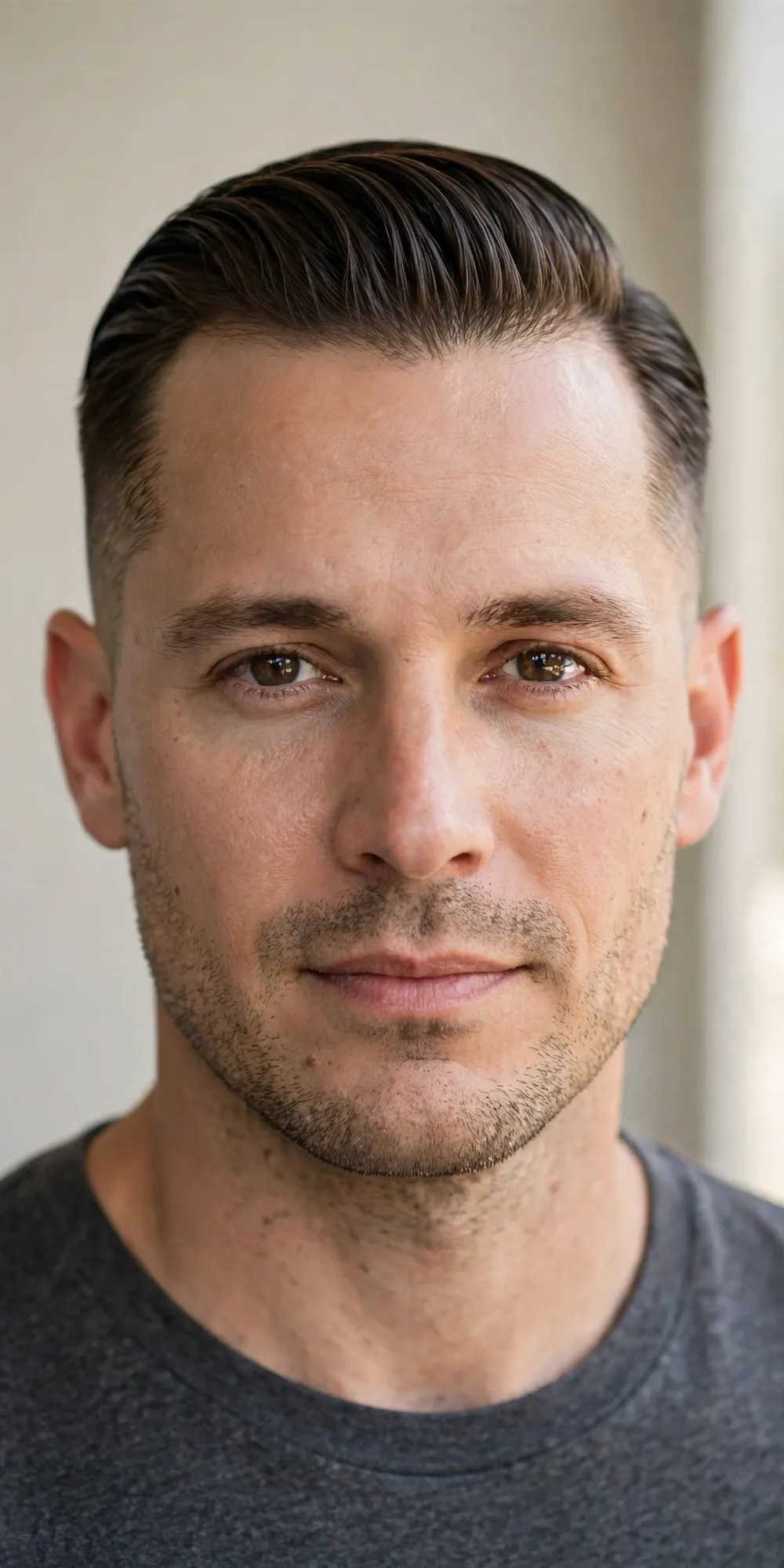
The short slicked-back cut keeps the top short enough not to flop, but long enough to push back. The sides are neat and tapered, so the look reads as tidy and deliberate. It suits men whose hairline has moved back a little but who still have good coverage across the front, and it works on straight or slightly wavy hair. Ask your barber for a short top, about two inches, with tapered sides and the front left just long enough to sweep back. Blow-dry it backwards with a vent brush, then finish with a matte cream for hold without shine. Slicking back only works while the front still has hair to slick — once the temples are deep, a forward style serves you better.
37. Hair with Bleached Tips

Bleached tips are a small change with a big visual payoff. By lightening just the ends of the hair on top, you pull the eye to the tips and away from the roots and the hairline. It works best on a textured crop or a short messy top. It suits men with dark hair who want something a bit different, and it looks great on younger guys. Ask your stylist for a textured crop with the tips lifted a couple of shades, just enough to create contrast. Before any lightening, ask the salon to do a patch test, and use a sulphate-free shampoo to keep the colour from going brassy. The colour needs a refresh every six to eight weeks.
38. Modern Caesar Cut

The modern Caesar is one of the best cuts ever designed for a receding hairline, and it costs almost nothing in effort. A short, straight fringe is cut across the forehead and brushed forward, covering the corners of the temples completely. The sides are faded or tapered, and the top is short and textured rather than perfectly flat. It suits almost everyone — straight hair, wavy hair, thick or fine. Ask your barber for a Caesar with a textured fringe, about an inch long, and a low fade on the sides. Style it with a dab of matte clay, pushed forward with your fingers. Maintenance is minimal: a trim every three weeks and thirty seconds of styling in the morning.
39. Light Fade
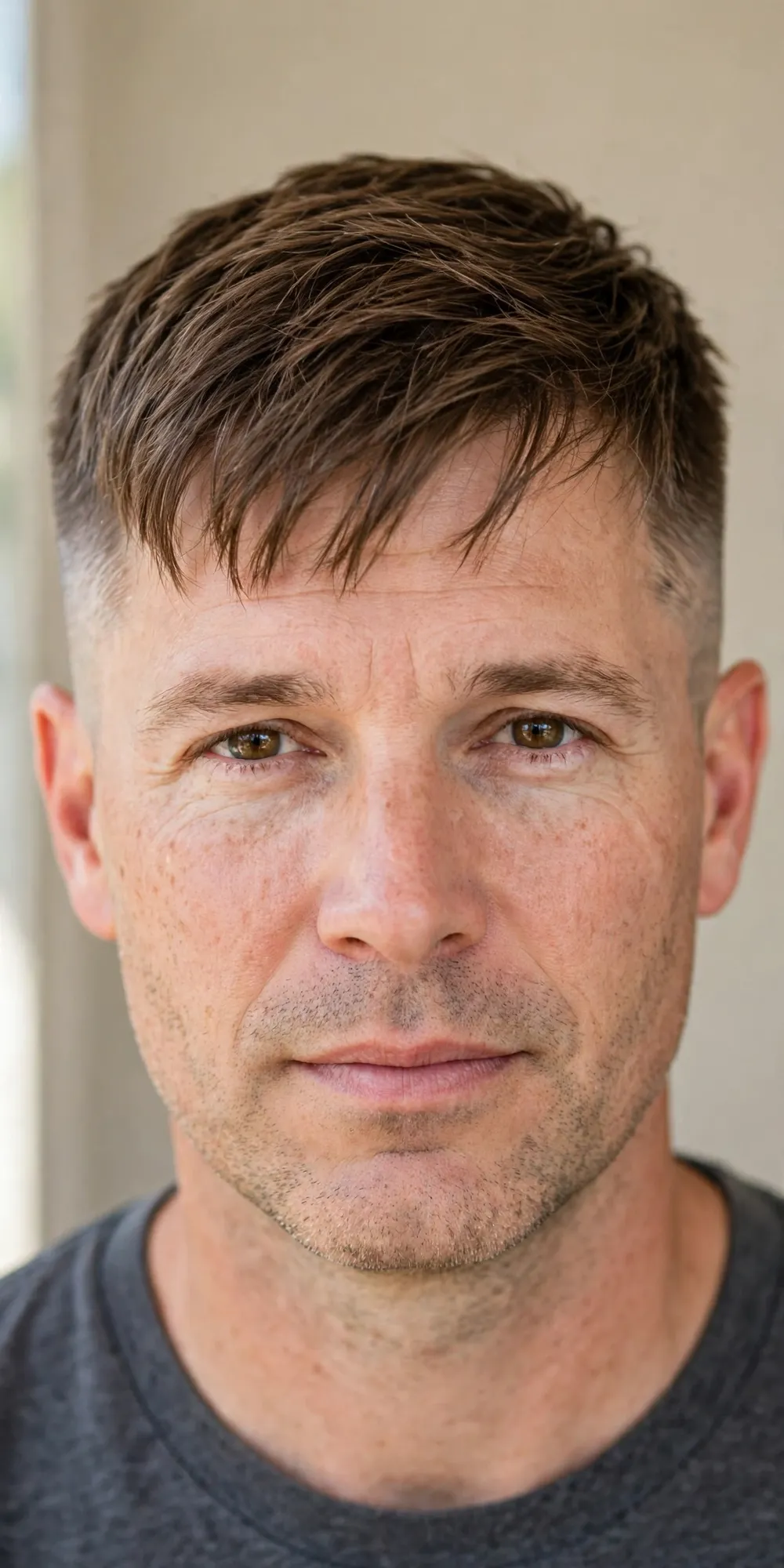
A light fade — sometimes called a low fade — keeps things soft. The fade starts low, just above the ears, and the top keeps most of its length, so there’s no harsh line anywhere on the head. That softness is the point: no harsh line competes with the hairline. It suits men who want a clean cut without the drama of a skin fade, and it works on most hair types. Ask your barber for a light low fade with the top left long enough to style forward or to the side, with some texture cut in. Finish with a matte paste. It still looks tidy after three or four weeks, so it’s a good pick if you don’t want to live at the barbershop.
40. High Fade with Curly Top
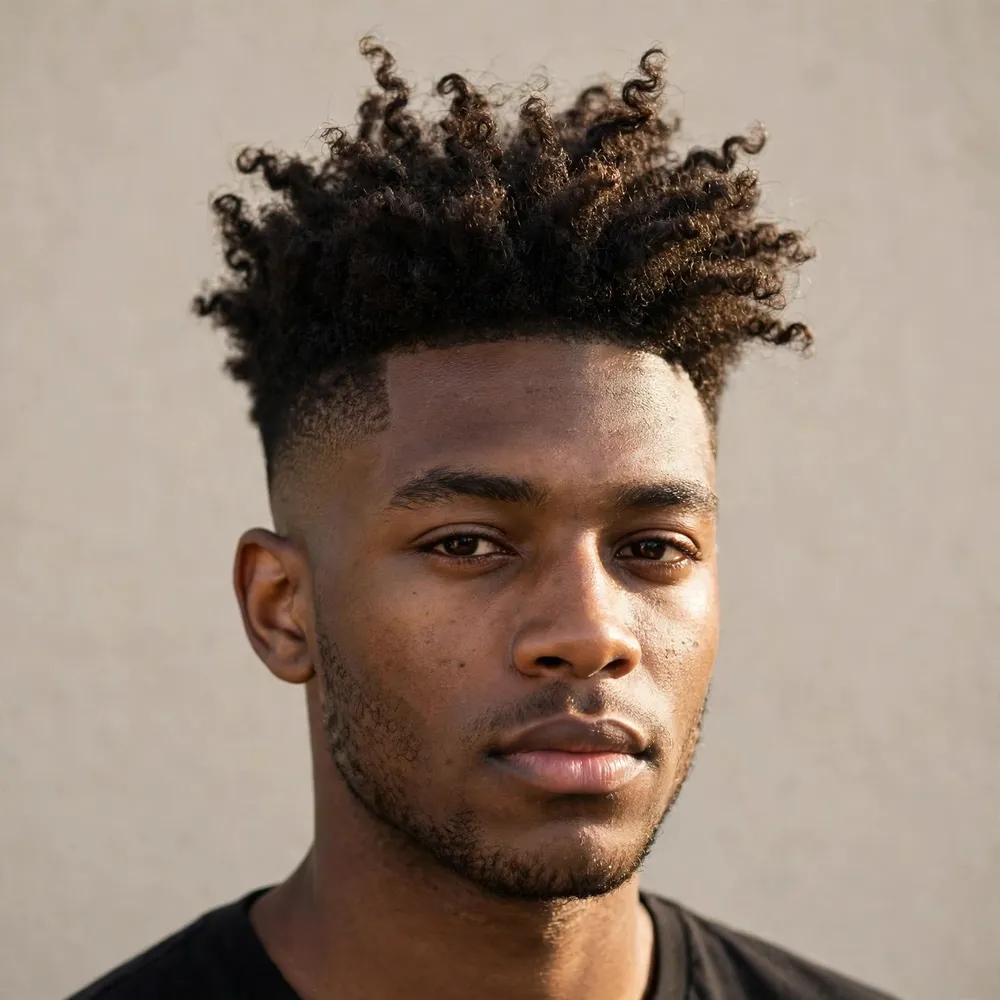
If you have curls, use them — they’re the best natural camouflage there is. A high fade takes the sides right up, and the curls on top do the rest: they create volume, movement, and a broken-up hairline that nobody can read clearly. It suits men with naturally curly or coily hair at any stage of recession. Ask your barber for a high fade with the curls left long enough to show their pattern, about two to three inches, and the edges tidied. Use a curl cream on damp hair and let it air-dry or diffuse on low heat. Don’t brush curls dry — that just creates frizz. A fade tidy-up every two to three weeks keeps it sharp.
41. French Crop with Forward Fringe
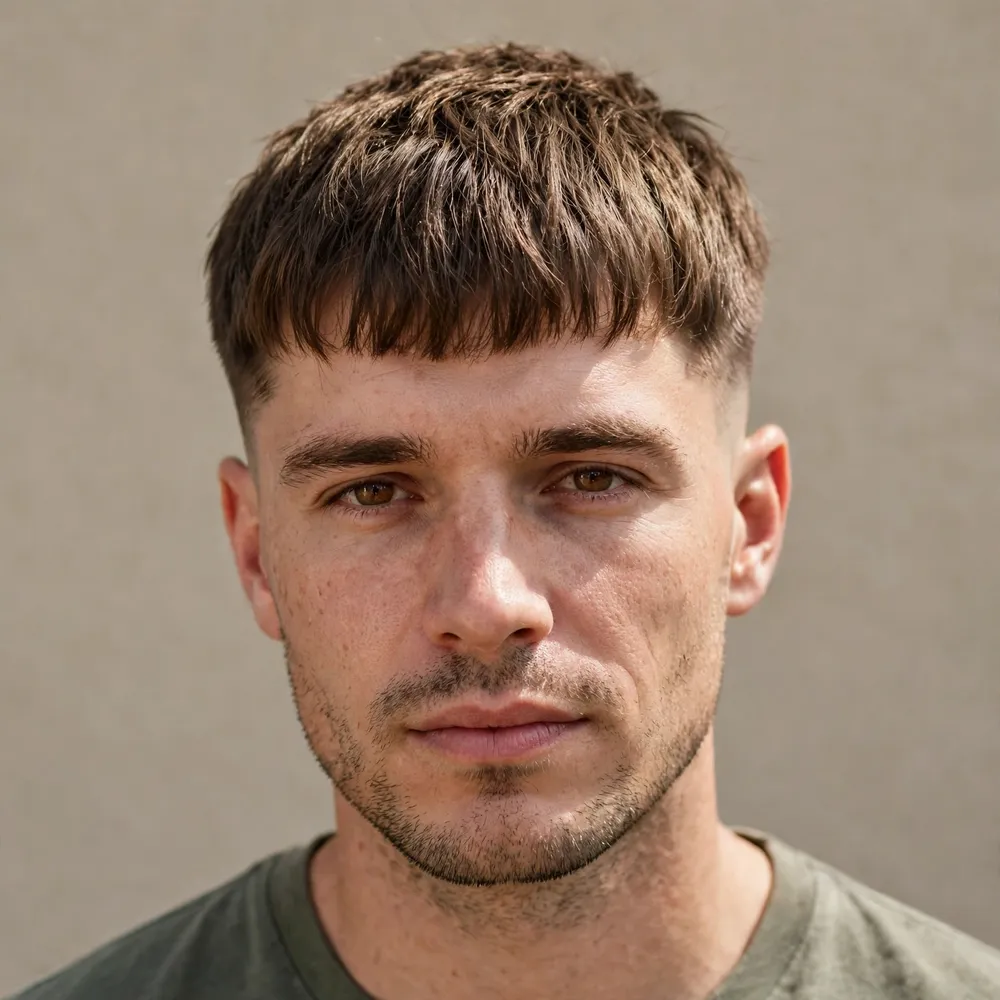
The French crop is the single most recommended cut for a receding hairline, and for good reason: the fringe is cut blunt and brushed forward, so it sits over the temples and the hairline simply disappears behind it. The top is short and choppy, the sides are faded, and the whole thing looks sharp with almost no effort. Our guide to French crop haircuts for men covers the variations; the hairline-hiding version is the classic one — fringe forward, texture on top, low or mid fade. Ask your barber for exactly that, and style it with matte clay pushed forward. It suits straight and wavy hair, needs a trim every three weeks, and takes under a minute to style each morning.
42. Textured Crop with Forward Fringe

The textured crop takes the French crop idea and roughs it up. Instead of a blunt fringe, the front is point-cut into choppy, uneven pieces that are brushed forward, which breaks the hairline into fragments rather than covering it with a straight edge. That irregularity is what makes it so forgiving — sparse patches and uneven temples just vanish into the texture. See our guide to textured haircuts for men. Ask your barber for a textured crop with a forward fringe and a low fade, and tell them you want it piecey, not neat. A matte paste worked through with your fingers is all you need. It suits most hair types, grows out well, and honestly looks better slightly messy than perfectly styled.
43. Classic Buzz Cut

Sometimes the best way to hide a receding hairline is to stop hiding it. A classic buzz cut takes everything down to one short, even length, and the contrast between hair and scalp disappears — there’s no hairline to read anymore. It suits men at any stage of recession, and it looks strong with a beard. Our guide to buzz cut hairstyles for men covers guard lengths. Ask your barber for a number 2 or 3 all over, or do it yourself with clippers at home. There’s no product and no styling, just a wash and go. Maintenance is a re-buzz every week or two, plus sunscreen on the scalp. If you’ve been fighting your hairline for years, the buzz cut can feel like a relief.
44. Crew Cut with Longer Top

The crew cut is the buzz cut’s smarter cousin: short sides, but the top is left a little longer — an inch or so — with a slight taper toward the front. That extra length gives you something to style, whether that’s a short forward push or a bit of texture on top, while the short sides keep the hairline from standing out. It suits men with straight or wavy hair who want a tidy, low-effort cut. Ask your barber for a crew cut with a low taper, the top left long enough to push forward. Matte clay gives it shape without shine. It grows out well, needs a trim every three to four weeks, and works anywhere, office or gym.
45. Short Textured Quiff

A short quiff gives you height without the length that makes a receding hairline obvious. The front is lifted up and slightly back while the sides stay short and clean. The height pulls the eye upward, away from the temples, and the textured finish stops the hairline from reading as a sharp line. Our quiff haircut guide covers the longer versions too. Ask your barber for a short textured quiff with a mid fade and the front left about two inches. Blow-dry the front up and back with a vent brush, then set it with matte clay. It suits men with thick, straight hair best. It takes a few minutes each morning, but the payoff is a style that looks confident rather than cautious.
46. Side-Swept Fringe Undercut
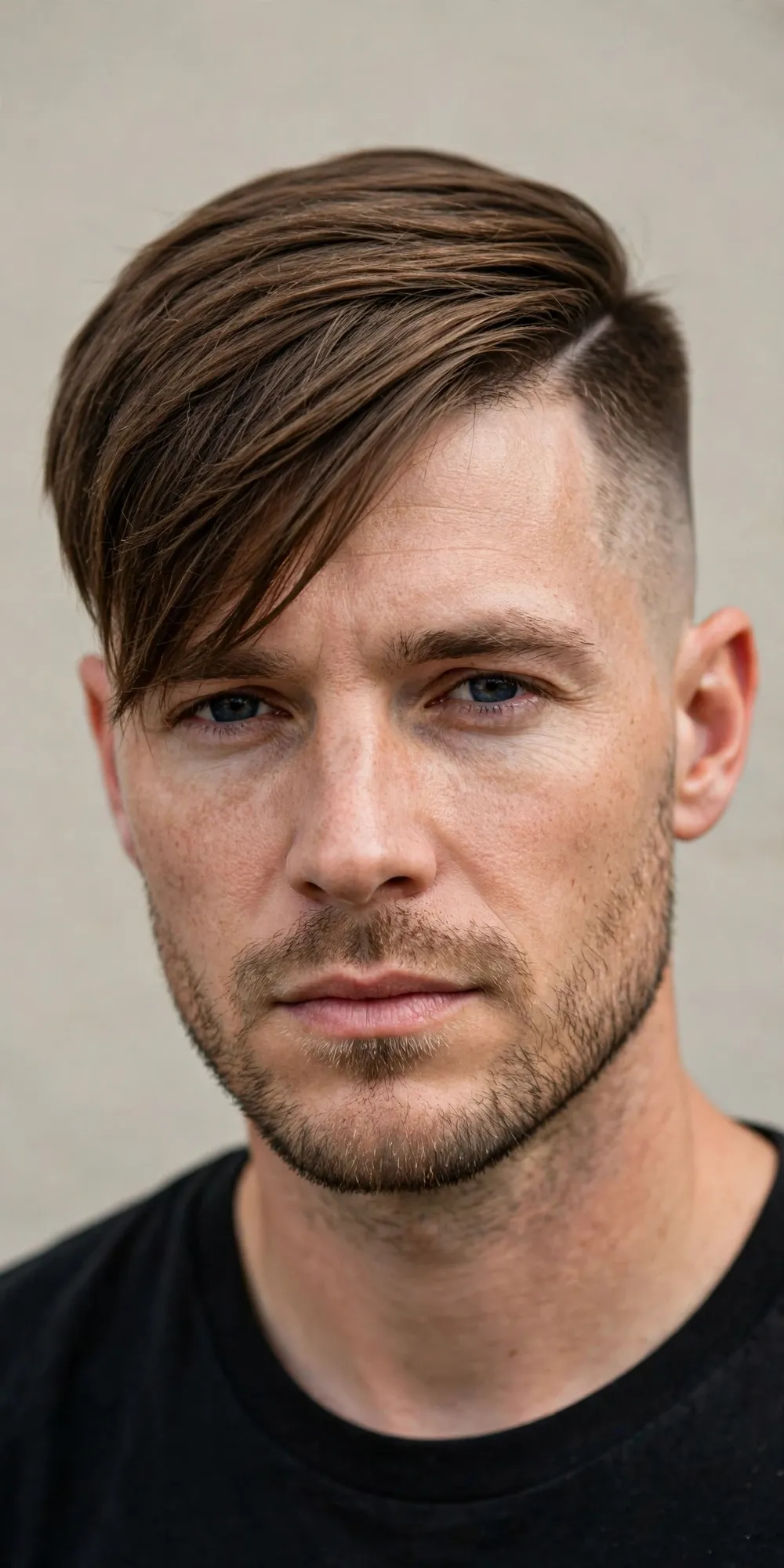
The side-swept fringe undercut pairs dramatic contrast with practical coverage. The sides are clipped short in an undercut, while the top is left long enough to sweep across the forehead in a heavy fringe that covers one temple completely and softens the other. It suits men with thick, straight hair and a strong sense of style. Ask your barber for an undercut with the top left four to five inches and the fringe cut to sweep to your better side. Blow-dry the fringe across with a brush, then set it with a light matte cream. It’s not a wash-and-go cut — expect five minutes of styling — and the undercut needs a tidy-up every two to three weeks.
47. Taper Fade with Textured Top
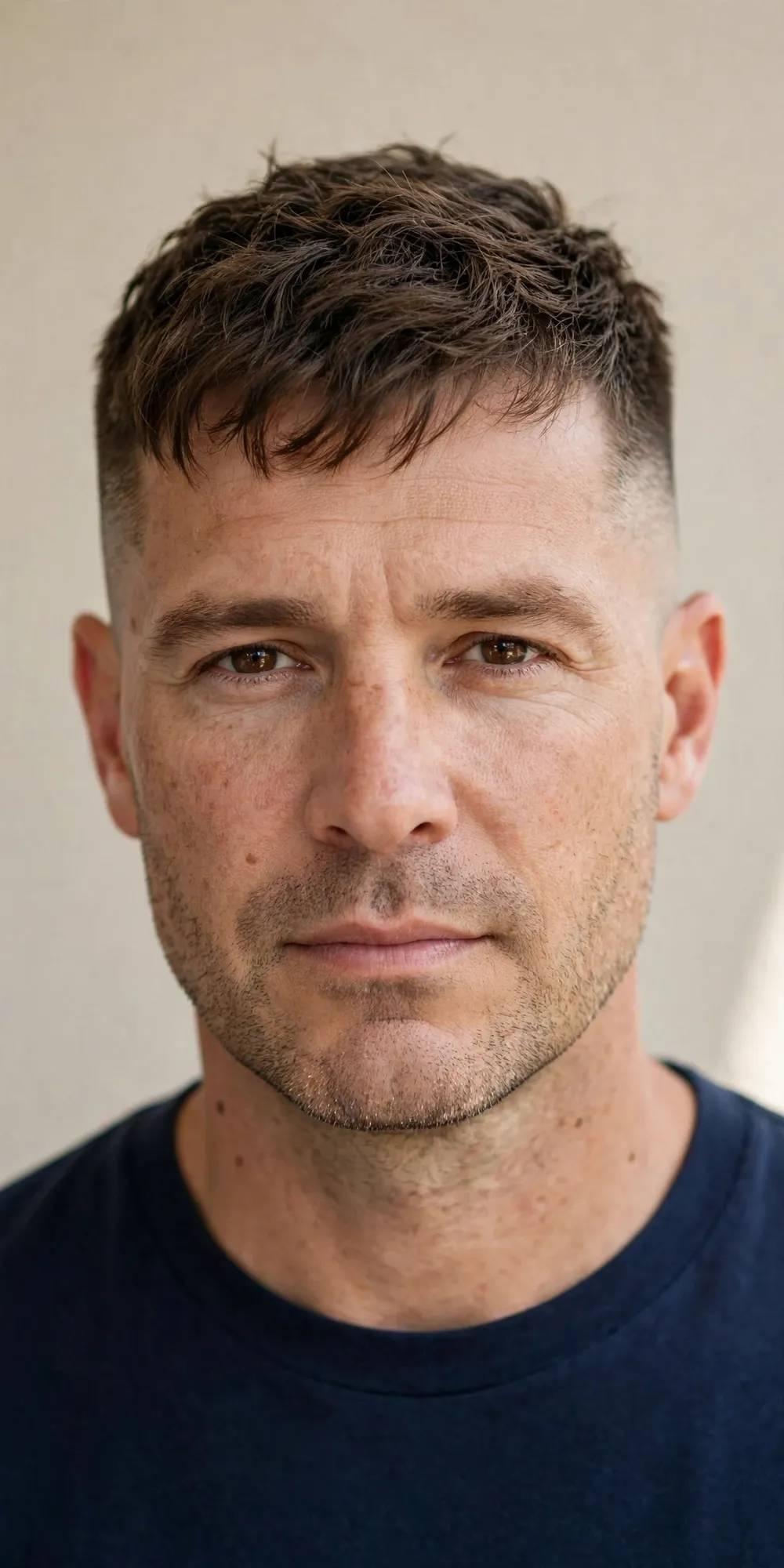
The taper fade is the quiet classic of this list. The sides graduate gently from short to shorter, with no skin showing and no hard lines, while the top is left textured and styled forward. Nothing about the cut is extreme, so nothing competes with the hairline. It suits every age and every hair type, and it’s a particularly good first step for men who aren’t ready for a skin fade. Ask your barber for a classic taper with a textured top, styled forward, and keep the front a little longer than the crown. A matte paste gives it definition without shine. It grows out beautifully, so four weeks between cuts is realistic, and styling takes about a minute.
48. Low Fade with Textured Fringe

A low fade with a textured fringe is the gentle version of the French crop idea, and it’s one of the most forgiving cuts on this list. The fade stays low, hugging the ears and neckline, while the fringe is cut choppy and worn forward over the temples. The combination covers the hairline without any harsh contrast anywhere on the head. Our guide to low fade haircuts for men shows its versatility. Ask your barber for a low fade with a textured fringe, about an inch and a half long at the front. Style it forward with a small amount of matte clay. It suits straight and wavy hair, grows out gracefully, and needs a trim only every three to four weeks.
49. Classic Ivy League
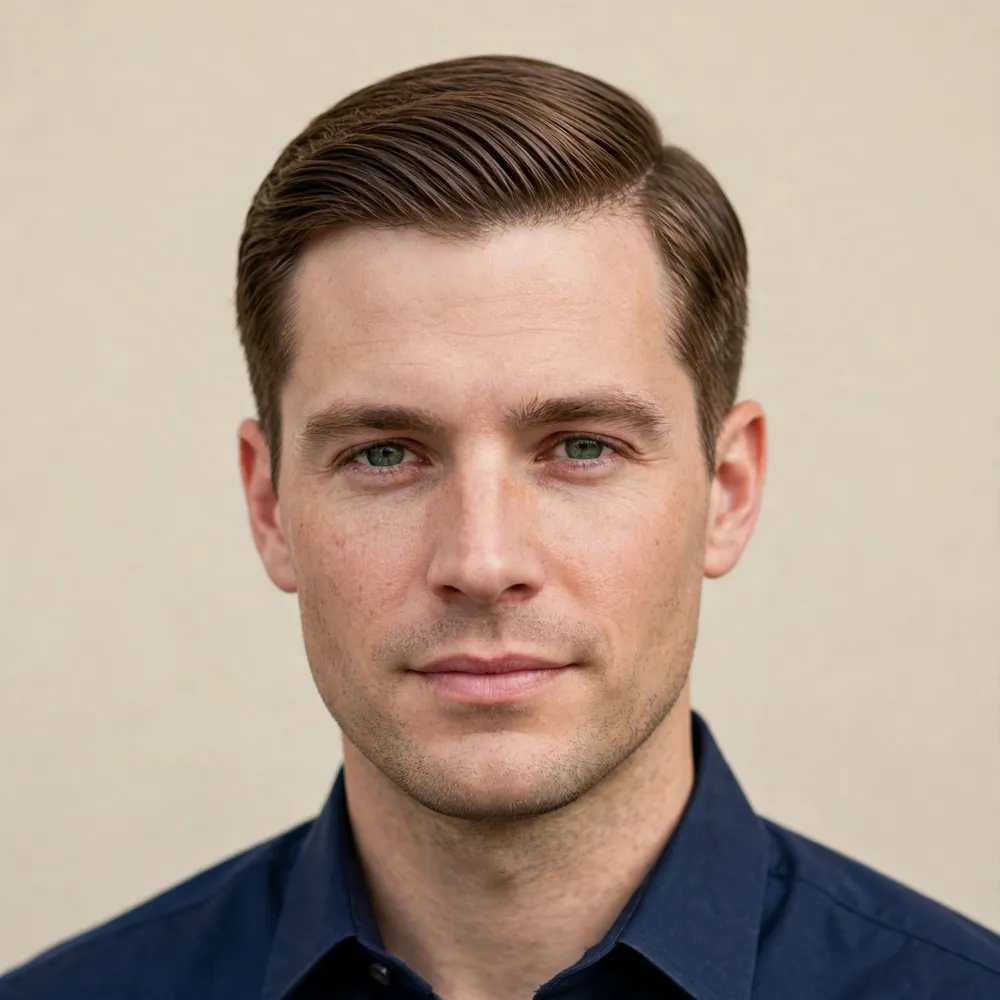
The Ivy League is the grown-up answer to a receding hairline: short, side-parted, neat, and confident. The top is just long enough to part and comb, the sides are tapered, and nothing about it looks like it’s compensating for anything. It suits men who need to look polished at work and works best when the recession is still early to moderate, with decent density on top. See our Ivy League haircut guide for the full breakdown. Ask your barber for a classic Ivy League with a taper on the sides and the top left about an inch and a half. Comb it to the side with a little matte pomade — never a shiny gel. It’s easy to maintain and needs a trim every three weeks.
50. Mid Fade with Textured Top
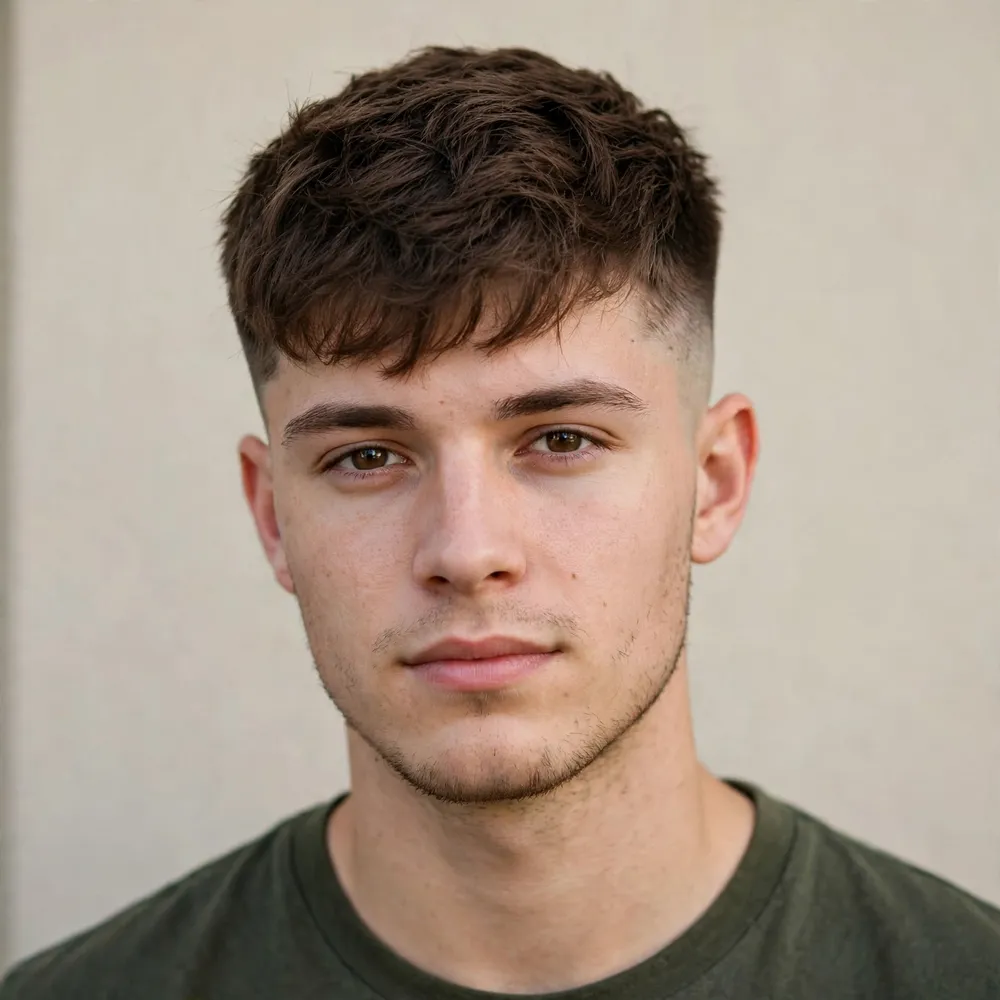
The mid fade sits between the subtle low fade and the dramatic high fade, and that middle ground makes it one of the most popular cuts for a receding hairline. The fade starts halfway up the sides, giving the head a clean, structured shape, while the textured top is styled forward to soften the hairline. It suits most face shapes and hair types. Ask your barber for a mid fade with the top left two to three inches and point-cut for texture. Style it forward with matte clay, pushing the front pieces slightly to one side for a natural look. Expect a fade refresh every two to three weeks. It’s a dependable, good-looking cut that never tries too hard.
51. Messy Textured Top

The messy textured top is the cut for men who don’t want to think about their hair. The top is left choppy and uneven, finger-styled into a deliberately tousled finish, while the sides are faded or tapered to keep the shape clean. The randomness is the camouflage: sparse patches, uneven temples, and a thinning crown all disappear into the mess. It suits wavy and straight hair, and it works at almost any stage of recession. Ask your barber for a textured top with a low fade and plenty of point-cutting — and tell them you want it messy, not neat. A pinch of matte paste is all the product you need. It looks better slightly grown out, so you can stretch trims to four weeks.
52. Clean Shaved Head

At some point, the most honest answer is to own it completely. A clean shaved head removes the hairline from the conversation entirely — there’s nothing left to recede, nothing to hide, and nothing to style. It suits men with a well-shaped head and works brilliantly with a beard, which adds back the structure the hair used to give your face. You can do it at home with clippers and a razor, or ask your barber for a full head shave with a hot towel finish. Maintenance means shaving every two to three days, moisturising the scalp, and wearing sunscreen — a bare scalp burns fast. Plenty of men say it’s the most confident they’ve ever felt — and that confidence is the point.
How to style a receding hairline at home
The right cut does most of the work, but how you style it each morning decides whether it actually hides the hairline or highlights it. Four steps, five minutes, no fancy equipment needed.
Step 1 — Wash and prep. Start with a volumising shampoo and rinse with lukewarm water, not hot, which can dry the scalp out. Towel-dry gently — don’t rub the hair roughly, especially around the temples. If your hair is fine or thinning, a thickening shampoo adds a bit of grip that makes the next steps easier.
Step 2 — Apply a pre-styler. While the hair is still damp, work a small amount of sea salt spray or volumising mousse through the top, focusing on the roots at the front. This gives fine hair the lift and hold it needs before any heat touches it. Skip heavy oils and leave-in creams at this stage; they weigh the front down and show scalp.
Step 3 — Blow-dry for lift. Using a hairdryer on medium heat, blow-dry the front upwards and forwards with your fingers or a vent brush. Lift the roots at the hairline as you dry — that lift is what creates the volume that covers the temples. Aim the dryer from underneath the hair rather than blasting it flat from above.
Step 4 — Finish matte. Warm a pea-sized amount of matte clay or paste between your palms and work it through the top, pushing the hair forward or to the side. Matte is the key word: shine shows scalp, while a matte finish makes the hair look thicker. Step back, check the temples in the mirror, and adjust with your fingers rather than a comb.
What to ask your barber
Most bad haircuts for a receding hairline happen because the barber didn’t know what you wanted. Be specific, and use these exact phrases:
- “I want the fringe cut forward over my temples — can you keep it choppy, not blunt?”
- “Give me texture on top, not a flat finish, so the hairline doesn’t read as a straight line.”
- “Keep the sides short with a low or mid fade — I don’t want the sides longer than the top.”
- “I’d like a matte finish — nothing shiny, please.”
- “Can you show me how to style it forward at home?”
And bring a photo. A picture of the cut you want — ideally on someone with a similar hairline to yours — tells your barber more in five seconds than five minutes of describing it. Save two or three photos on your phone before your appointment: one from the front, one from the side. If your barber suggests something different, hear them out — a good barber knows what suits your head shape — but don’t let them talk you into a slicked-back style if you came in for a forward fringe.
5 mistakes that make a receding hairline look worse
1. Comb-over overload. Sweeping a thin sheet of hair across a bald patch doesn’t hide it — it advertises it, and the first gust of wind tells the whole room. If you need more than a light sweep to cover a spot, the style isn’t working. Choose a cut that works with the hair you have, not against it.
2. Wet, shiny gel. Glossy, wet-look products clump the hair together and expose the scalp underneath. Every strand sticks to the next one, and the gaps between them show skin. Matte clay or paste keeps the hair separated and makes it look thicker — same hair, completely different result.
3. Slicking everything flat back. Pulling all the hair straight back puts the hairline on full display and frames the temples like a picture. Unless your front hairline is still solid, a slicked-back style is the least forgiving option on this list. Push the hair forward or up instead.
4. Tight styles that pull the temples. Very tight ponytails, man buns, and slicked-back styles put constant tension on the hairline, and over time that tension can damage the follicles at the temples. The American Academy of Dermatology advice on hairstyles and hair loss warns that tight hairstyles can lead to hair loss — read it here: American Academy of Dermatology advice on hairstyles and hair loss. If a style hurts or pulls, loosen it or drop it.
5. Growing the fringe too long to hide it. It feels logical — more hair to cover more forehead — but a long, thin fringe just hangs limp, separates into strands, and shows more scalp than a short textured one. A short, choppy fringe does a far better job of covering the temples than a long one ever will.
FAQs
What is the best haircut for hiding a receding hairline?
The French crop with a forward fringe is the most reliable choice, because the fringe sits over the temples and hides the recession directly. The textured crop and the modern Caesar work the same way. If the recession is advanced, a buzz cut or a clean shaved head removes the contrast entirely, which often looks better than any cover-up style.
Does a fade haircut make a receding hairline look better?
Yes, in most cases. A fade takes the sides short and clean, which makes the haircut look deliberate and draws attention to the shape of the cut rather than the hairline. A low or mid fade is the safest starting point, while a high or skin fade adds more contrast. Pair the fade with a textured top styled forward for the best result.
Is short hair better for a receding hairline?
Generally, yes. Short hair reduces the contrast between the hair and the scalp, and it stops long strands from separating and exposing thin patches. Short, textured styles like the crop, the Caesar, and the buzz cut are all easier to maintain and more forgiving. That said, a medium-length style can still work if the hair on top is thick and the recession is mild.
Should I avoid long hairstyles with a receding hairline?
Not always, but long hair is harder to pull off once the temples have moved back. Long, thin hair tends to hang flat, separate into strands, and show more scalp. If you love longer hair, keep the sides short for structure and make sure the top has enough density to carry the length. If the front is thinning, a shorter cut will almost always look fuller.
What haircut makes thin hair look thicker?
Short, textured cuts make thin hair look thicker, because texture creates the illusion of density and short lengths don’t get weighed down. A textured crop, a Caesar, or a short quiff all work well, especially with a matte product. Ask your barber to point-cut the ends rather than cutting a blunt line, and avoid heavy, shiny products that clump the hair together.
How can I style my hair to hide a receding hairline naturally?
Blow-dry the front up and forward with your fingers for lift at the roots, then finish with a small amount of matte clay or paste. Avoid wet-look gels and heavy oils, which show the scalp. A sea salt spray on damp hair adds grip and volume before you dry it. The whole routine takes about five minutes once you’ve practised it a few times.
When should I see a doctor about a receding hairline?
A gradual, symmetrical recession at the temples is a normal pattern for many men and is usually just a matter of choosing the right cut. But sudden or patchy hair loss deserves a dermatologist check — it can have different causes, and only a professional can assess it properly. See a dermatologist promptly if you notice rapid shedding, bald patches, itching, redness, or scaling on the scalp.
Final Word
A receding hairline doesn’t mean your good hair days are over — it just means the cut has to work a little smarter. The styles on this list all do the same job in different ways: forward fringes cover the temples, texture breaks up the line, and short lengths kill the contrast. Pick one that fits your hair type and your routine, show your barber a photo, and give it a couple of weeks before you judge it. And if you want more ideas, you’ll find more hairstyle guides on the blog, from fades and crops to classic cuts that never go out of style.