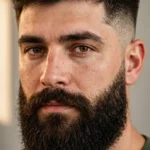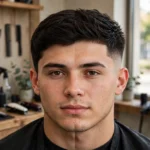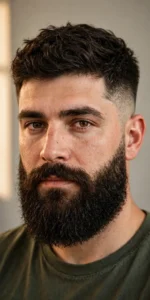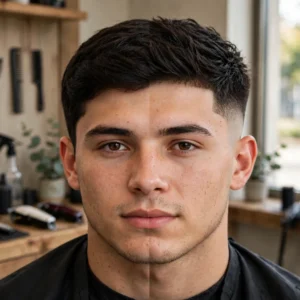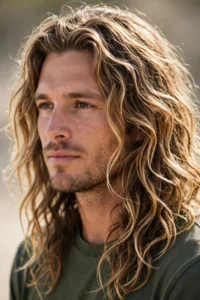


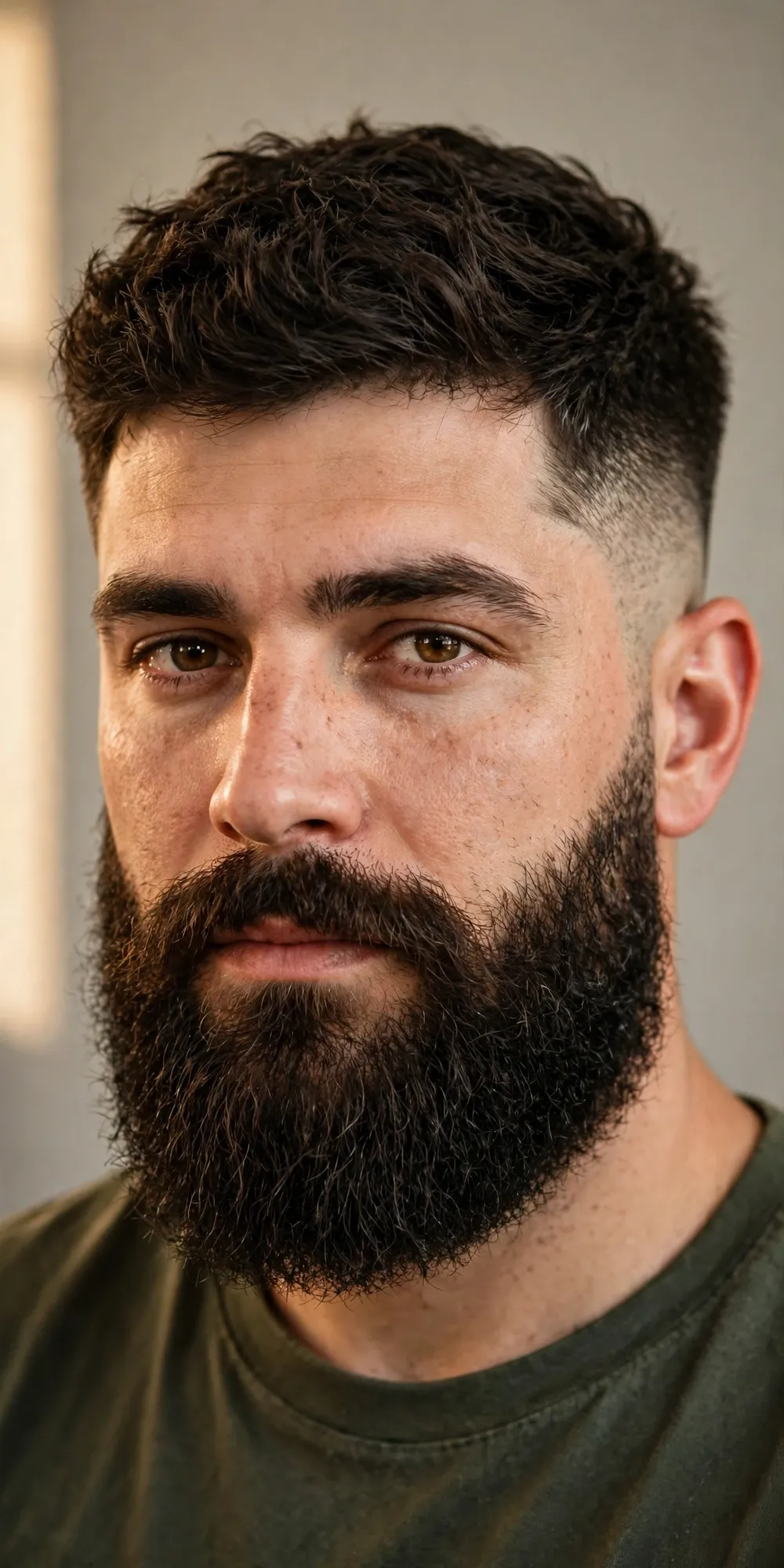
The best fade haircut with beard combos for most men is a low fade with a full beard — the fade sits just above the ears, the beard does the heavy lifting, and the blend between the two looks clean without trying too hard. If you want three names to take to your barber this week: Low Fade + Full Beard, Mid Fade + Short Boxed Beard, and Skin Fade + Pompadour + Full Beard. Those three cover the smart, the sharp and the statement-making ends of the spectrum, and the 43 combos below them cover everything in between. The reason these pairings work is simple: a fade gives the sides structure, a beard gives the jawline weight, and when the sideburn is blended rather than cut off, the two read as one haircut instead of two competing ones.
How to Choose Your Fade Height
Fade height is the single decision that changes the whole look. Go low if you want the beard to dominate, high if you want the haircut to do the talking, and skin if you want maximum contrast. Match the fade to your beard density first, your face shape second — a thick beard can carry a low fade, a patchy one needs the fade to take the attention.
| Fade | Best beard density | Best face shapes | Maintenance |
|---|---|---|---|
| Low fade | Full, thick | Oval, square, round | 2–3 weeks; grows out softly |
| Mid fade | Short, medium | Oval, square, oblong | Every 2 weeks |
| High fade | Short, boxed, stubble | Square, oval, diamond | Every 10–14 days |
| Skin fade | Any, incl. patchy | Oval, square, heart | Weekly; blur shows fast |
| Taper fade | Full, long | Round, oval, square | 3 weeks; most forgiving |
| Drop fade | Medium, full | Round, square | Every 2 weeks |
| Burst fade | Short, goatee | Oval, diamond, heart | Every 2 weeks |
One rule saves most bad outcomes: the thicker your beard, the lower your fade should start. A heavy beard meeting a high fade leaves a gap of bare skin that looks accidental, while a short beard under a low fade disappears entirely. If you are unsure, ask for a mid fade — it is the only height that flatters nearly every beard length. For more on beard shapes themselves, our guide to Beard Styles for Men covers the full, boxed and goatee shapes mentioned throughout this list. If low is your starting point, our Low Fade Haircuts for Men guide covers that height in detail.
1. Low Fade + Textured Crop + Full Beard
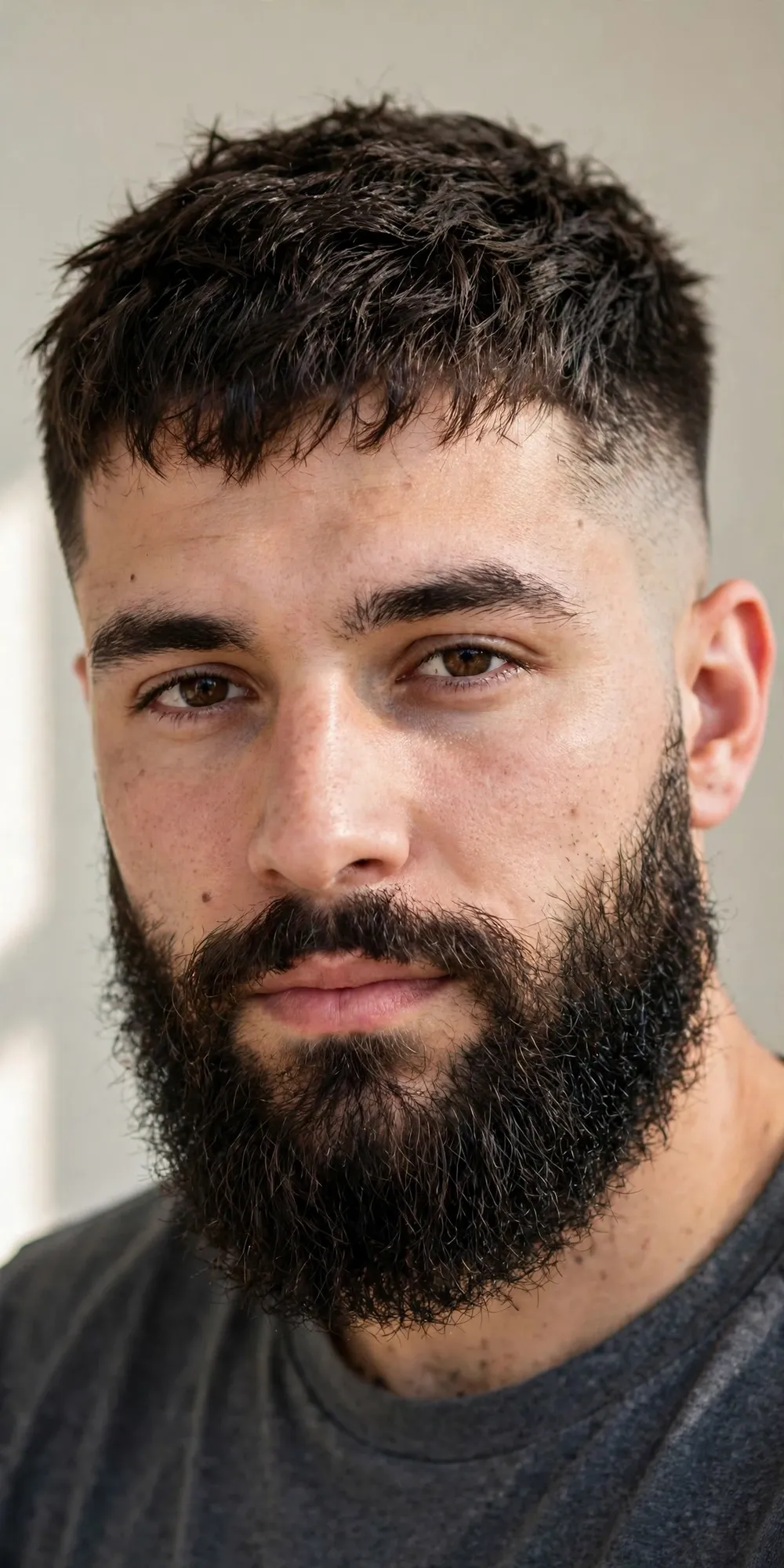
This is the combo most barbers cut when a man asks for “something modern but not fussy.” The top stays 2–3 inches with point-cut texture, holding a rough, piecey shape without looking styled. A low fade — 0.5 guard at the bottom, blended up to a 2 — keeps the sides tidy while the full beard carries the weight. It suits oval and square faces best; straight to slightly wavy hair takes the texture easily, while very fine hair may need a salt spray. Tell your barber: “low fade, textured crop on top, keep the beard full, shape the cheek line, and blend the sideburns in — no step.” Finish with matte clay through dry hair, and book a fade tidy every two to three weeks with daily beard oil.
2. Low Fade + Slick Back + Short Boxed Beard
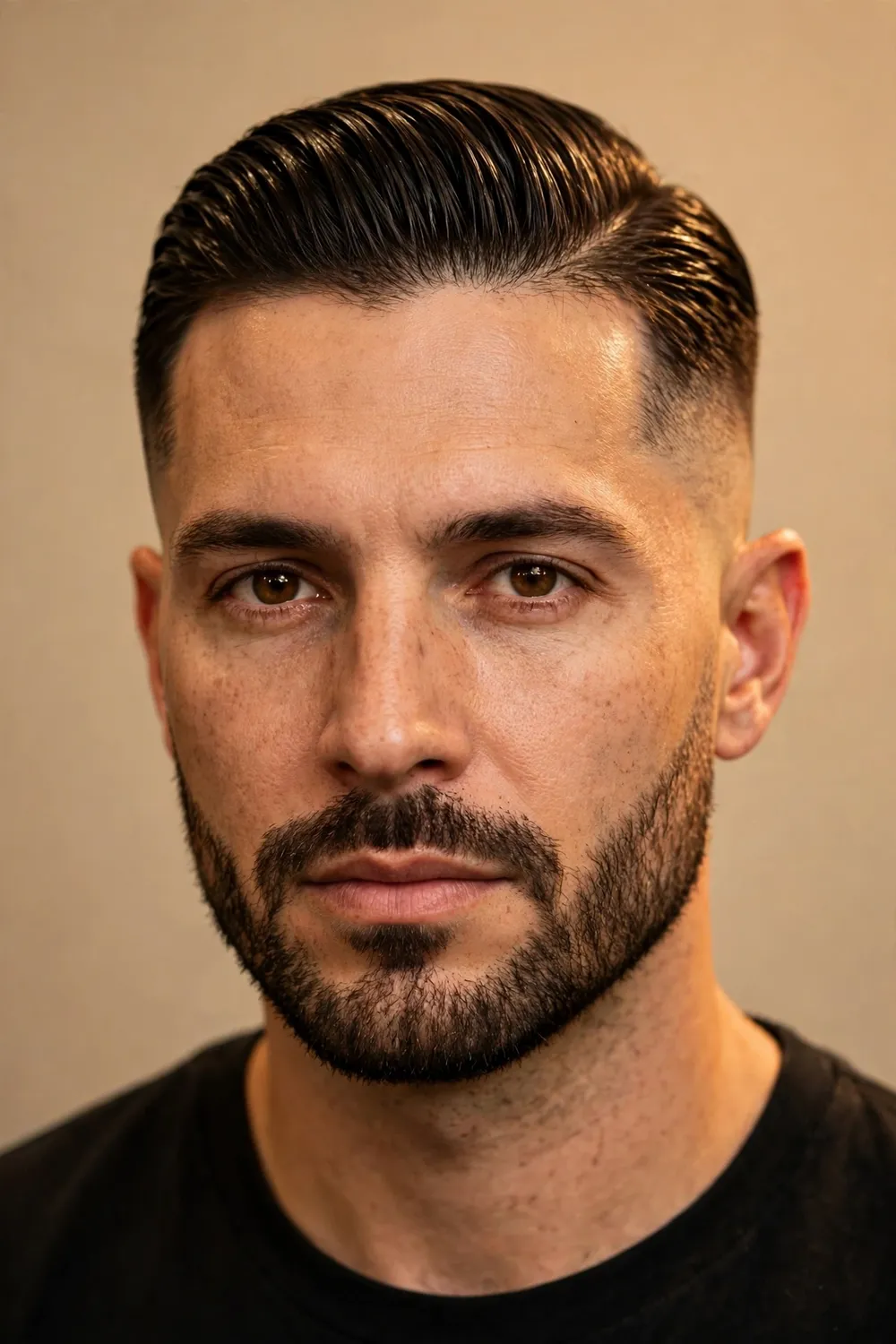
A slick back with a boxed beard is the boardroom version of the fade-and-beard pairing. The top is kept 4–5 inches, combed straight back with a medium-hold pomade for a clean sheen, while a low fade keeps the sides short enough to look deliberate. The short boxed beard is the key detail: cheek lines razor-sharp, neckline two fingers above the Adam’s apple, corners squared off so the beard reads as a frame rather than a bush. Oval, square and oblong faces suit it; round faces should ask for extra height on top. Ask for a low fade, 1 guard blending to a 3, and a boxed beard shaped with a straight razor. The fade holds two weeks; the beard’s lines need a razor pass every three or four days.
3. Low Fade + Curly Top + Medium Beard
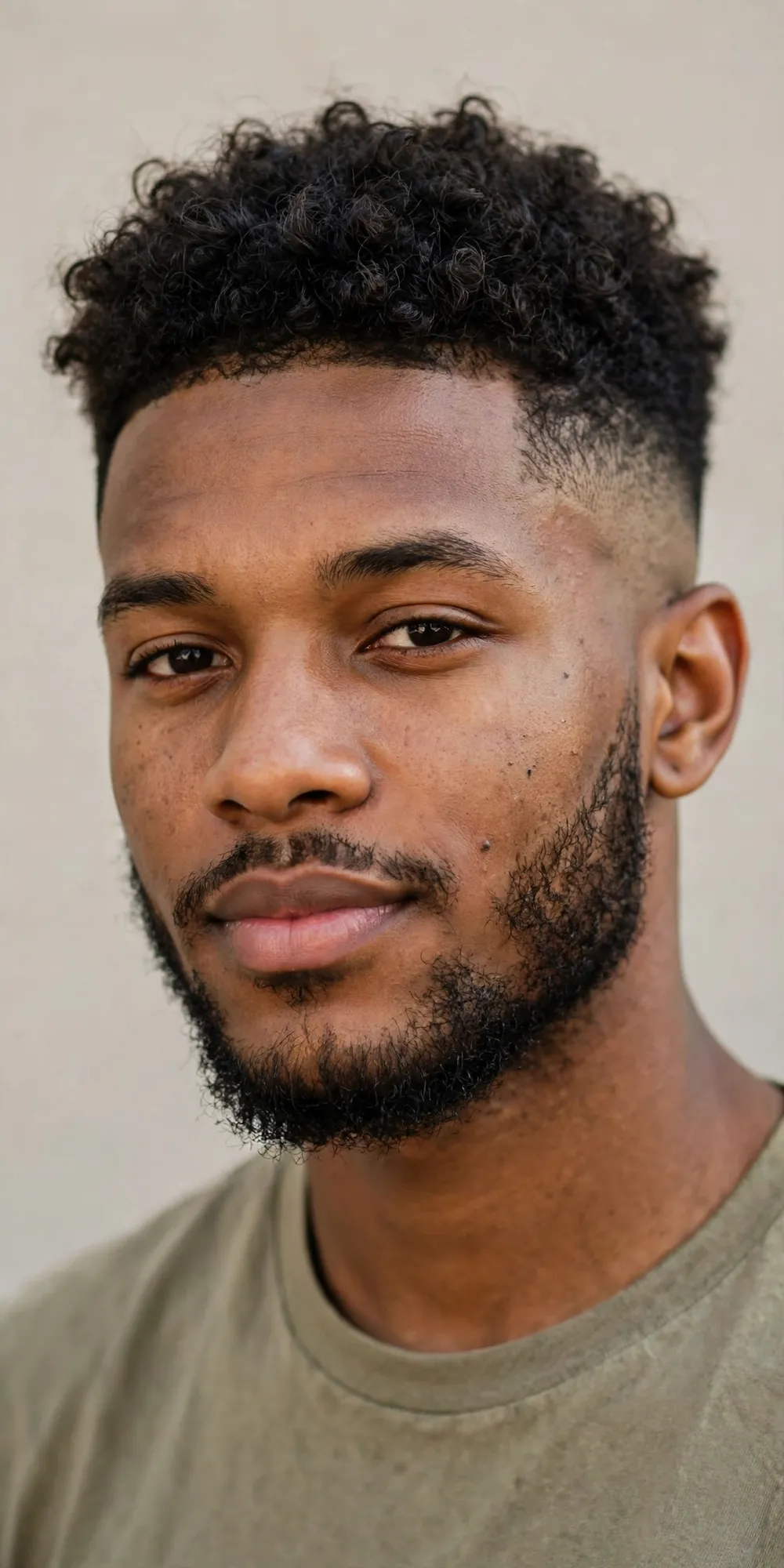
Men with curls often get told to keep everything short — this combo lets the curls be the star, with the low fade and medium beard as the frame. The top is left 3–4 inches so the curls form properly instead of frizzing out, cut with the curl pattern, not against it. The low fade starts just above the ear and blends through a 1 to a 3, while the medium beard — roughly an inch long — mirrors the texture on top. Round and heart-shaped faces benefit most, since the height on top balances a wider jaw. Tell your barber: “low fade, keep the curls long on top, and taper the sideburns into the beard.” Curl cream on damp hair, scrunched and air-dried, keeps definition without crunch; the beard needs a weekly shape-up.
4. Low Fade + Side Part + Corporate Beard
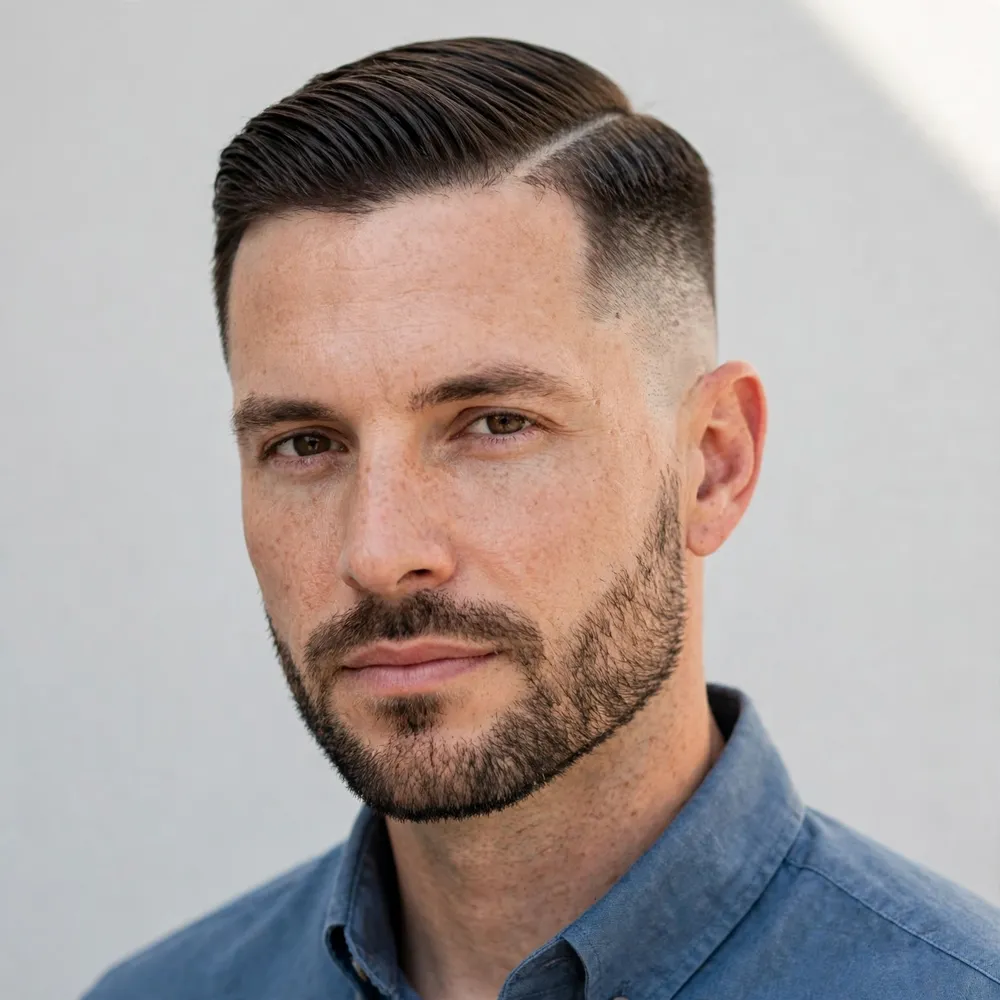
If your office has a dress code, written or unspoken, this is the combo that passes it without looking boring. A clean side part with a slight lift at the front sits over a low fade barely noticeable from across a desk. The corporate beard is short, even and neatly edged: about half an inch long, cheek line natural rather than razor-sharp, neckline clean. It suits oval and square faces; straight or slightly wavy hair parts most obediently — mention any cowlick at the part line. Ask for a low taper fade, not a skin fade — a 1.5 guard at the bottom keeps it soft — and a beard trimmed to one guard length all over. A light-hold cream gives the part polish without grease, and the look falls apart the moment the neckline goes fuzzy.
5. Low Fade + Pompadour + Heavy Stubble
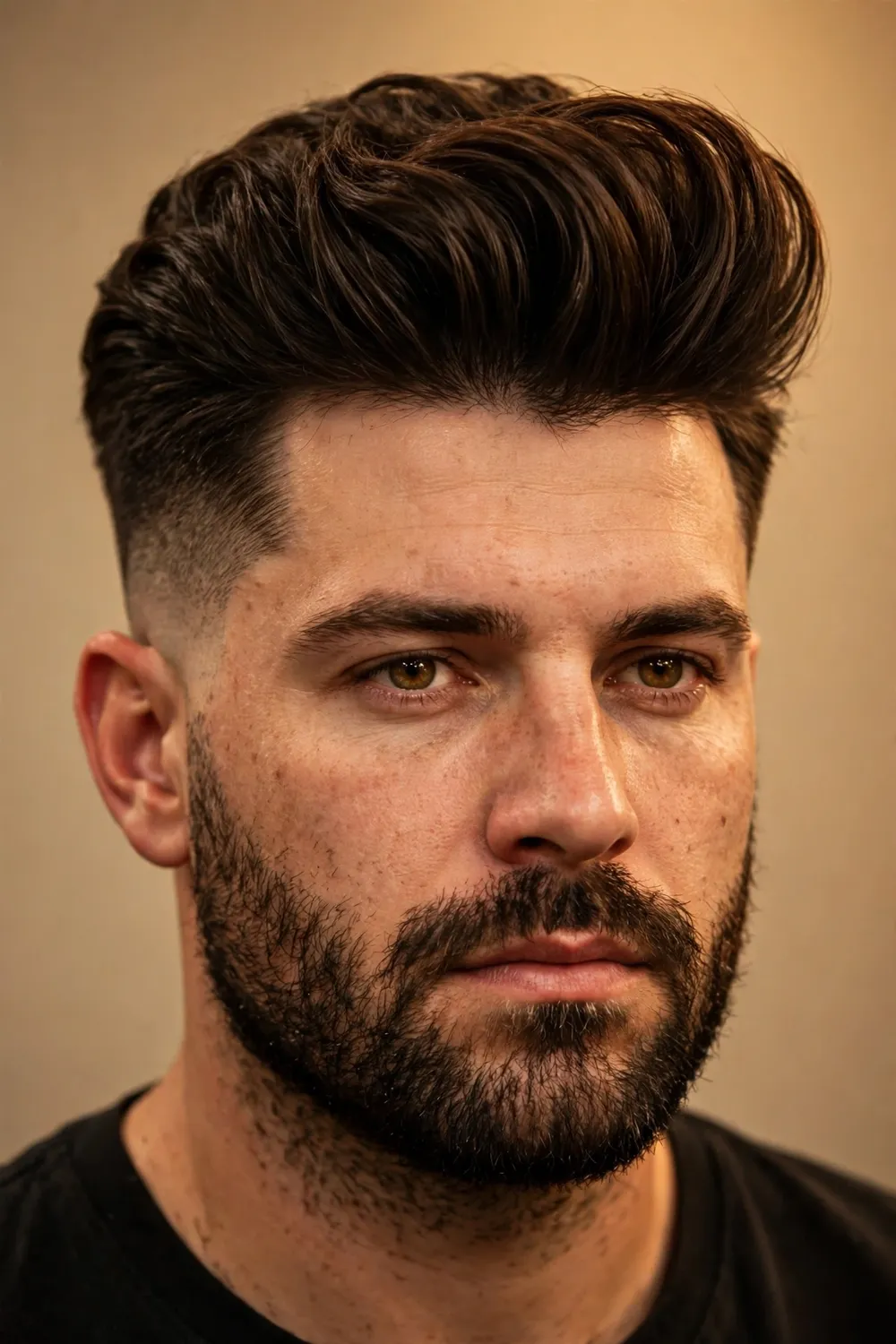
The pompadour does the shouting here and the heavy stubble keeps it from looking like a costume. The top is grown to 4–6 inches and blown dry up and back with a round brush, while the low fade — 0.5 to 2 — gives the sides a clean edge. Heavy stubble, roughly four to five days of growth, softens the jaw and stops the pompadour feeling too polished. This is a strong pick for round and square faces, since the vertical height lengthens the face, and thick hair holds the shape far better than fine hair. Your barber script: “low fade, pompadour on top, leave the stubble heavy and blend the sideburns down into it.” Use a strong-hold matte paste, blow-dried in for lasting volume, and expect a fortnightly fade refresh.
6. Low Fade + Long Hair + Full Beard
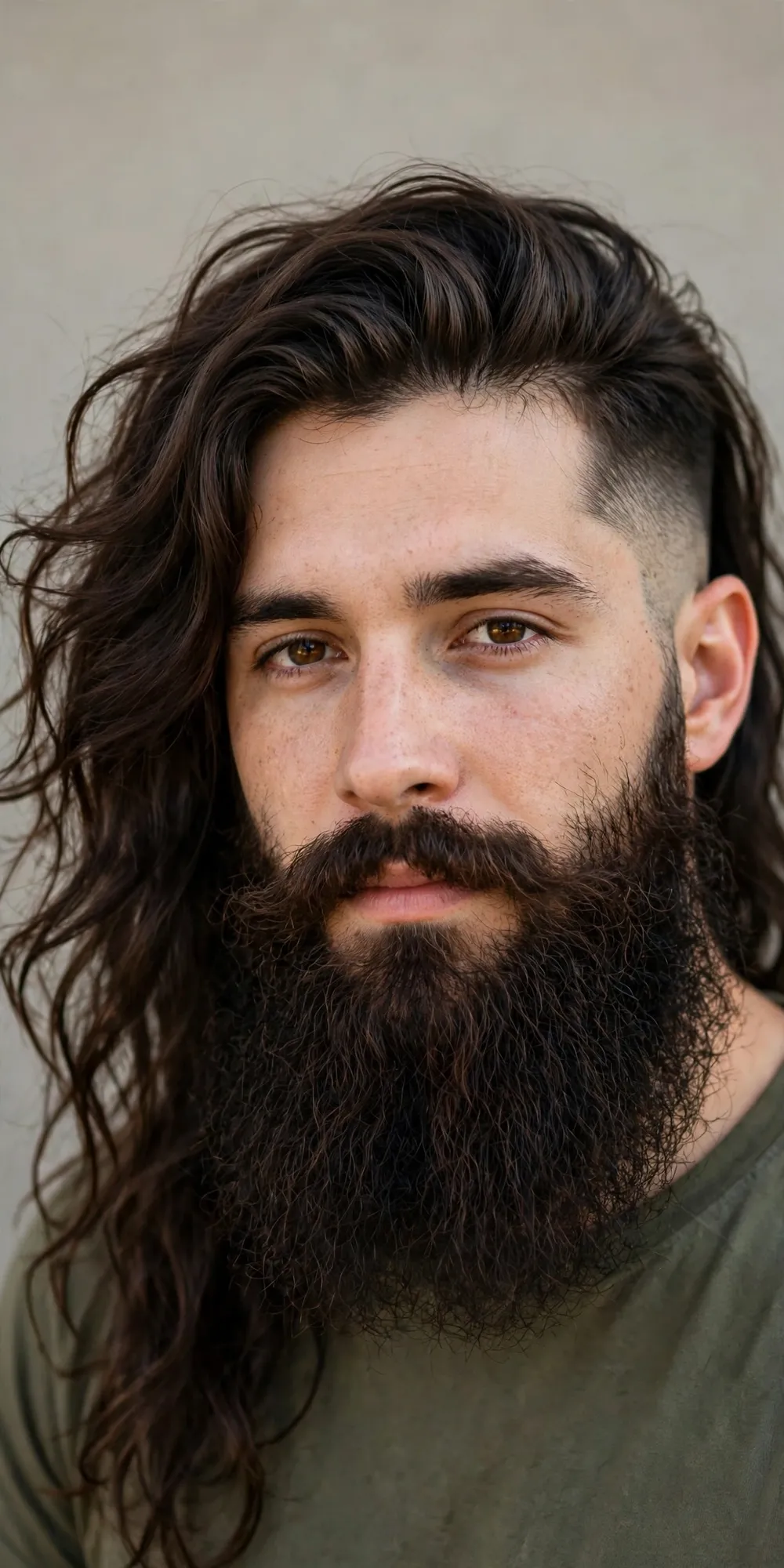
Long hair and a full beard can easily slide into “hasn’t had a haircut in a year” territory — the low fade stops that. The top and back stay long, past the collar, while the low fade cleans up the sides and temples so the silhouette stays intentional. The full beard, grown to two inches or more, balances the hair length so neither half dominates. Oval and oblong faces carry this best; on a round face the combined volume can widen things too much. Ask for a low fade, 1 guard blending to a 3, long layers dusted rather than thinned, and the beard shaped at the cheeks and neckline, never shortened. Leave-in conditioner and beard oil are non-negotiable; the fade needs attention every two to three weeks.
7. Mid Fade + French Crop + Short Beard
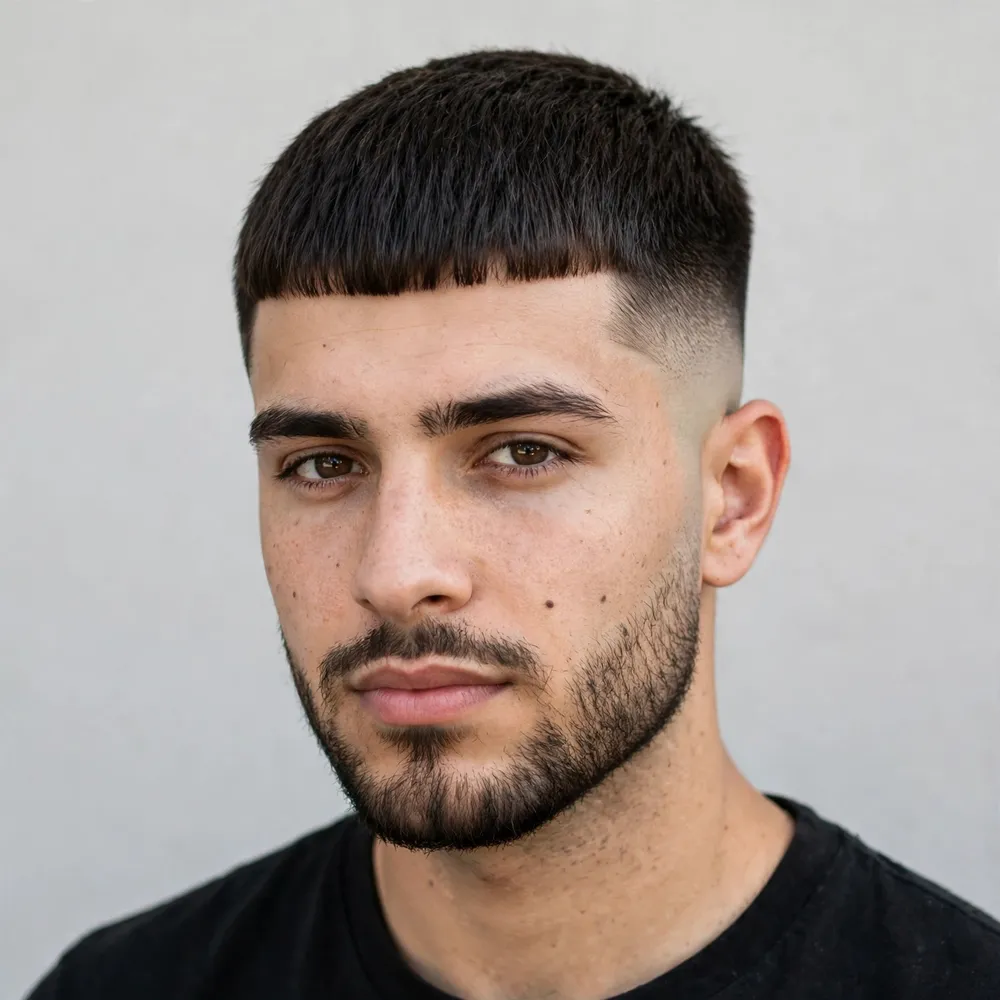
The French crop is the lowest-effort haircut on this list, and a mid fade with a short beard makes it look considered rather than lazy. A blunt fringe sits across the forehead, the top cropped to about an inch, and the mid fade starts at temple level — 0 guard fading up through a 2 — giving the small cut real structure. The short beard, kept to a few millimetres, adds just enough jaw definition without competing. Square and oval faces suit it, and it is one of the few styles that genuinely works on a receding hairline, since the fringe covers the corners. Tell your barber: “mid fade, French crop with a blunt fringe, short beard blended at the sideburns.” A dab of matte paste is all the styling it needs.
8. Mid Fade + Quiff + Heavy Stubble
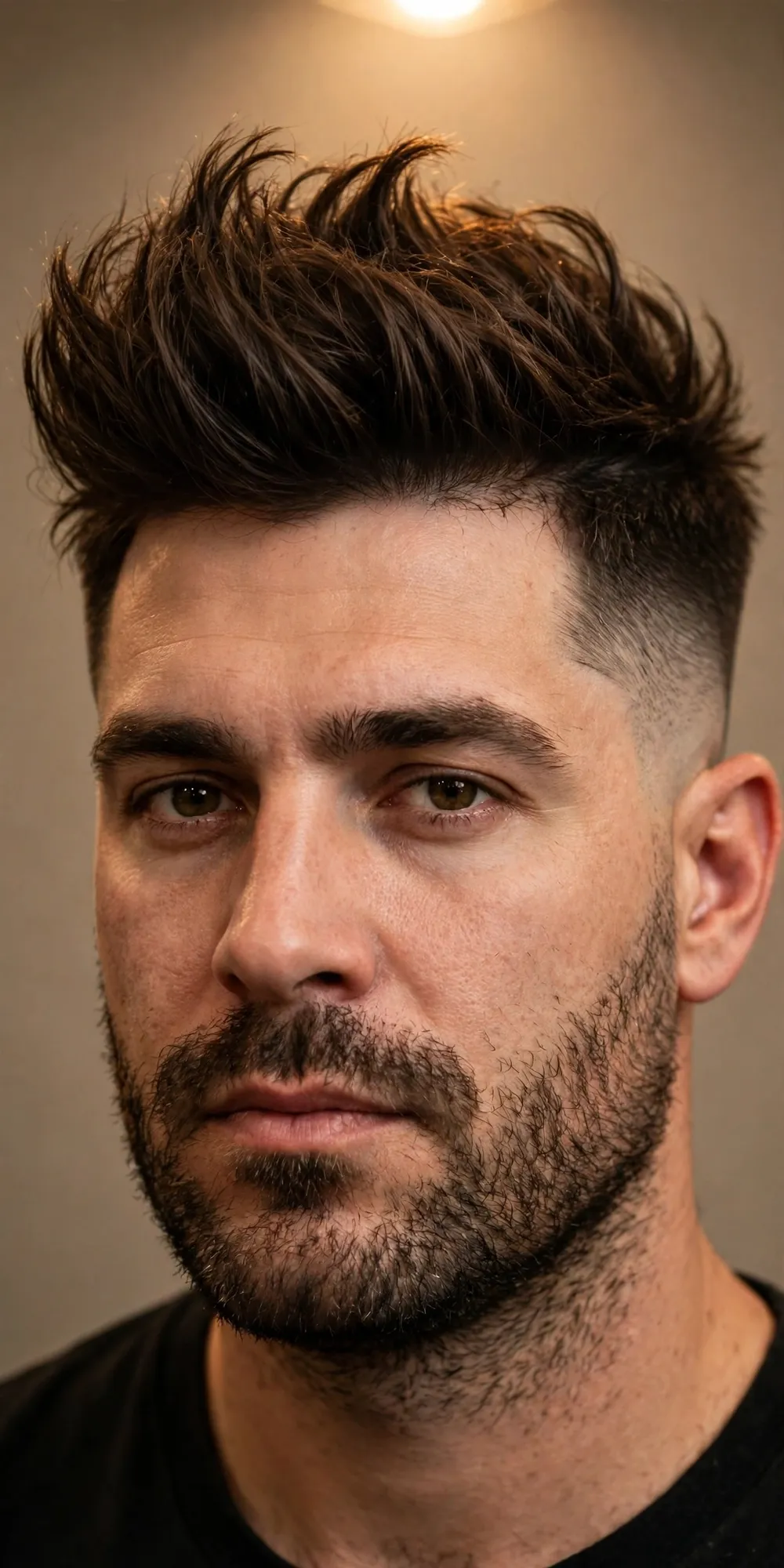
A quiff with heavy stubble is the weekend version of a polished haircut — styled, without looking like you spent twenty minutes in front of the mirror. The front is kept 3–4 inches and swept up and to the side, the mid fade climbs to temple height with a 0.5 to 2 blend, and the stubble sits at four or five days’ growth. Round faces gain the most, since the height stretches the face, while square faces get a softer jawline from the stubble. Thick, straight hair holds a quiff with the least fuss; wavy hair needs a stronger product. Your ask: “mid fade, quiff on top, stubble heavy, sideburns tapered into it.” Blow-dry the front up with a vent brush and set it with medium-hold matte clay — five minutes a morning, fortnightly fade tidy.
9. Mid Fade + Crew Cut + Faded Beard
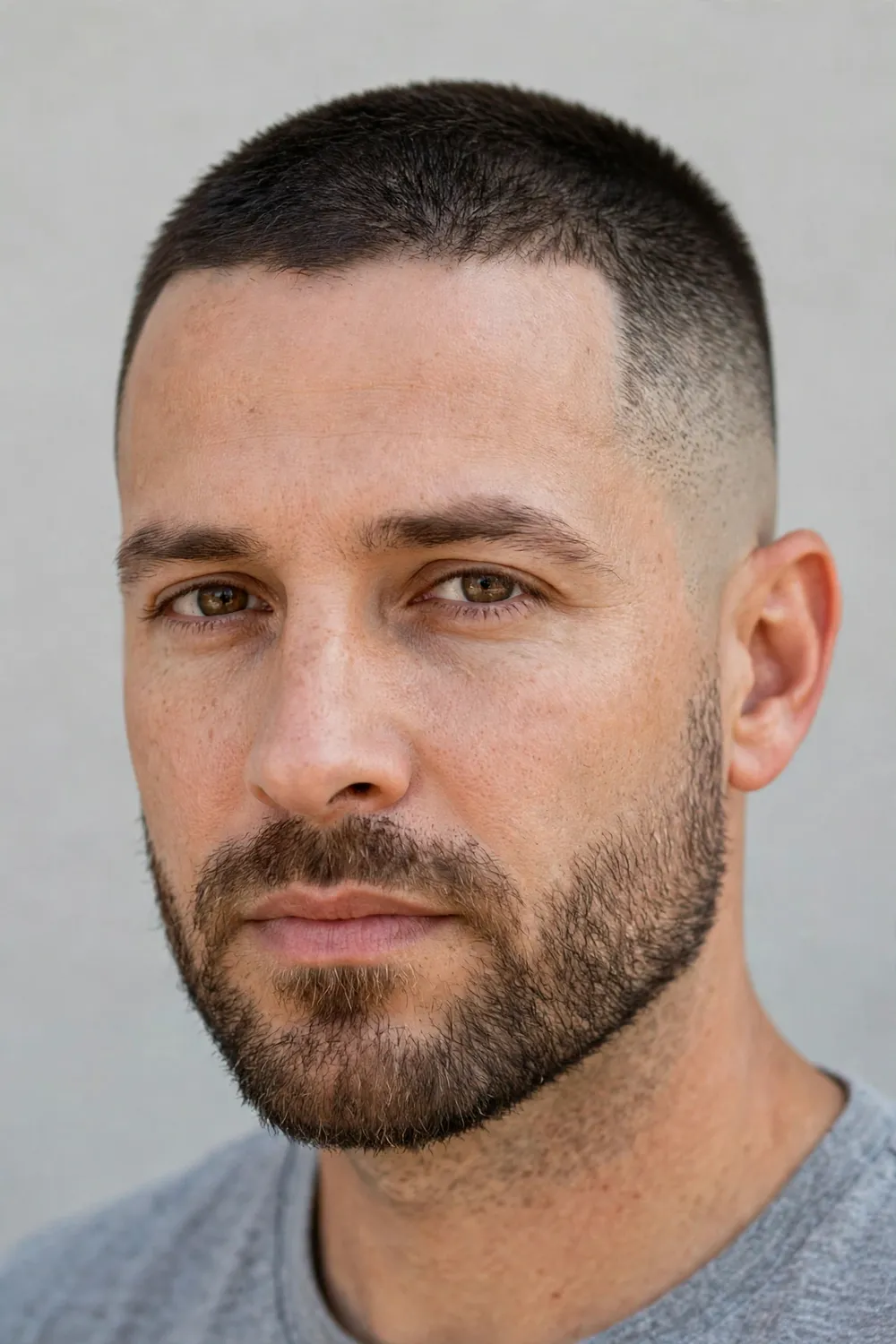
The faded beard is what makes this cut special: graded from skin at the temple down into full beard at the jaw, so hair, fade and beard read as one gradient. The crew cut is short — half an inch to an inch on top, slightly longer at the front — and the mid fade meets it at temple level, 0 to 2. Square and oval faces suit it, and it flatters men whose beard is thinner at the cheeks, because the fade disguises the sparse patch. Ask specifically for a beard fade: “mid fade on the sides, and fade the beard from the sideburn down to full length at the jaw.” The catch is upkeep: the gradient blurs in about ten days, so plan a fortnightly visit and a razor touch-up on the cheek line twice a week.
10. Mid Fade + Comb Over + Medium Beard
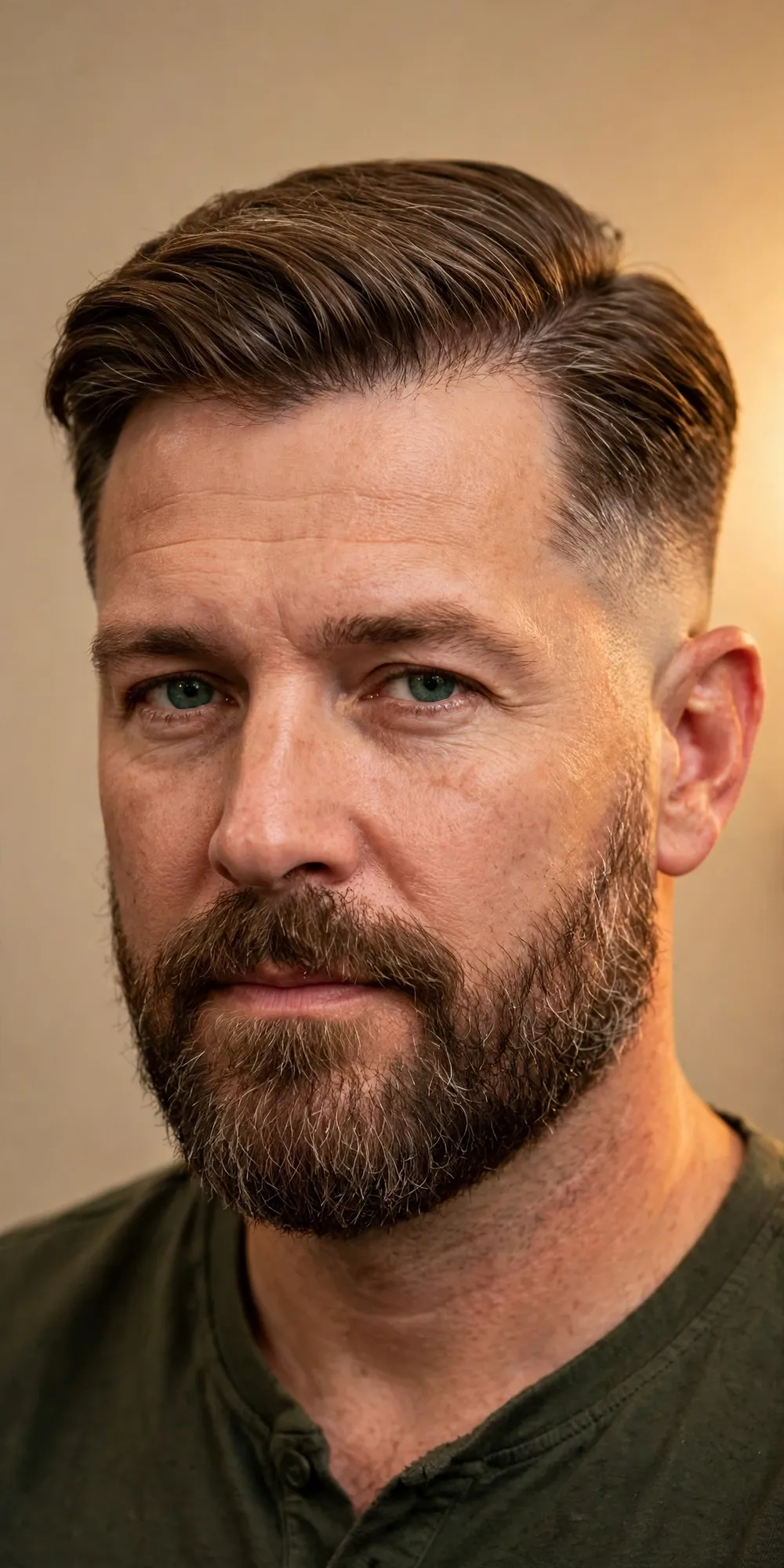
A comb over gets an unfair reputation as a cover-up, but with a mid fade and a medium beard it is one of the most reliable smart-casual haircuts a man can wear. The top is kept 3–4 inches, parted on the natural side and swept across with a slight lift at the front, while the mid fade gives the sides a clean, modern edge. The medium beard, around an inch long, adds warmth and weight to the lower half of the face. Oval, square and oblong faces suit it; men with a strong cowlick at the part should warn the barber. The script: “mid fade, comb over on top, medium beard, sideburns blended in, cheek line cleaned up.” A medium-hold pomade with a natural shine finishes it, and a quick comb-through at midday keeps it in place.
11. Mid Fade + Messy Top + Short Beard
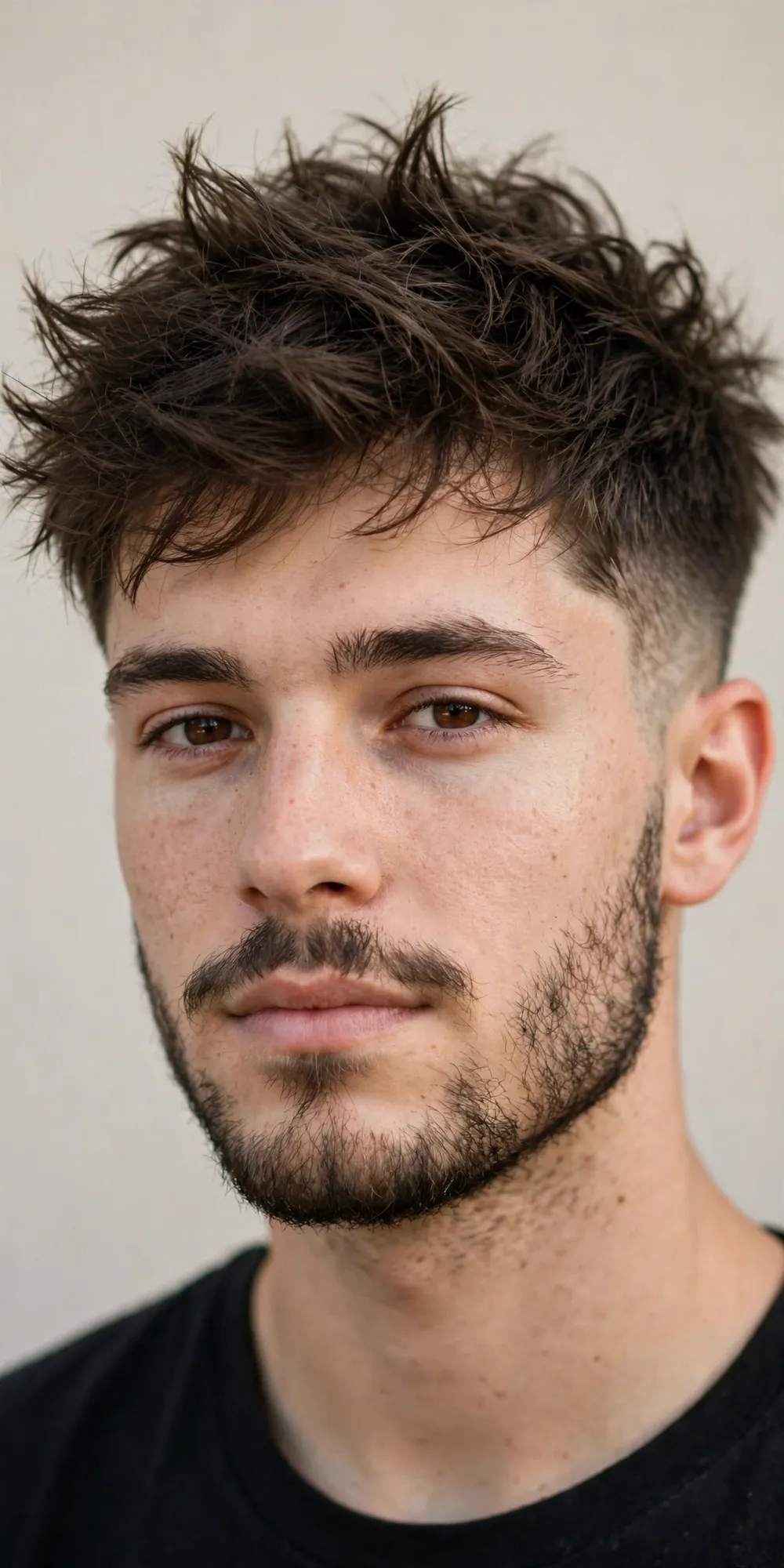
This is the haircut for men who want to look like they styled their hair in thirty seconds — because that is how long it takes. The top is left 2–3 inches with choppy, point-cut texture, the mid fade keeps the sides tight, and the short beard adds definition without demanding attention. The trick is that the mess is controlled: the texture is cut in deliberately, so it falls into a shape instead of looking uncombed. It flatters oval, square and heart-shaped faces; wavy hair is ideal, while straight hair needs a salt spray for the same movement. Tell your barber: “mid fade, messy textured top, short beard blended at the sideburns, and don’t thin it out too much.” Work a pea-sized amount of matte clay through towel-dried hair and scrunch; the fade needs a fortnightly refresh and the beard a trimmer pass every two days.
12. Mid Fade + Mohawk + Goatee
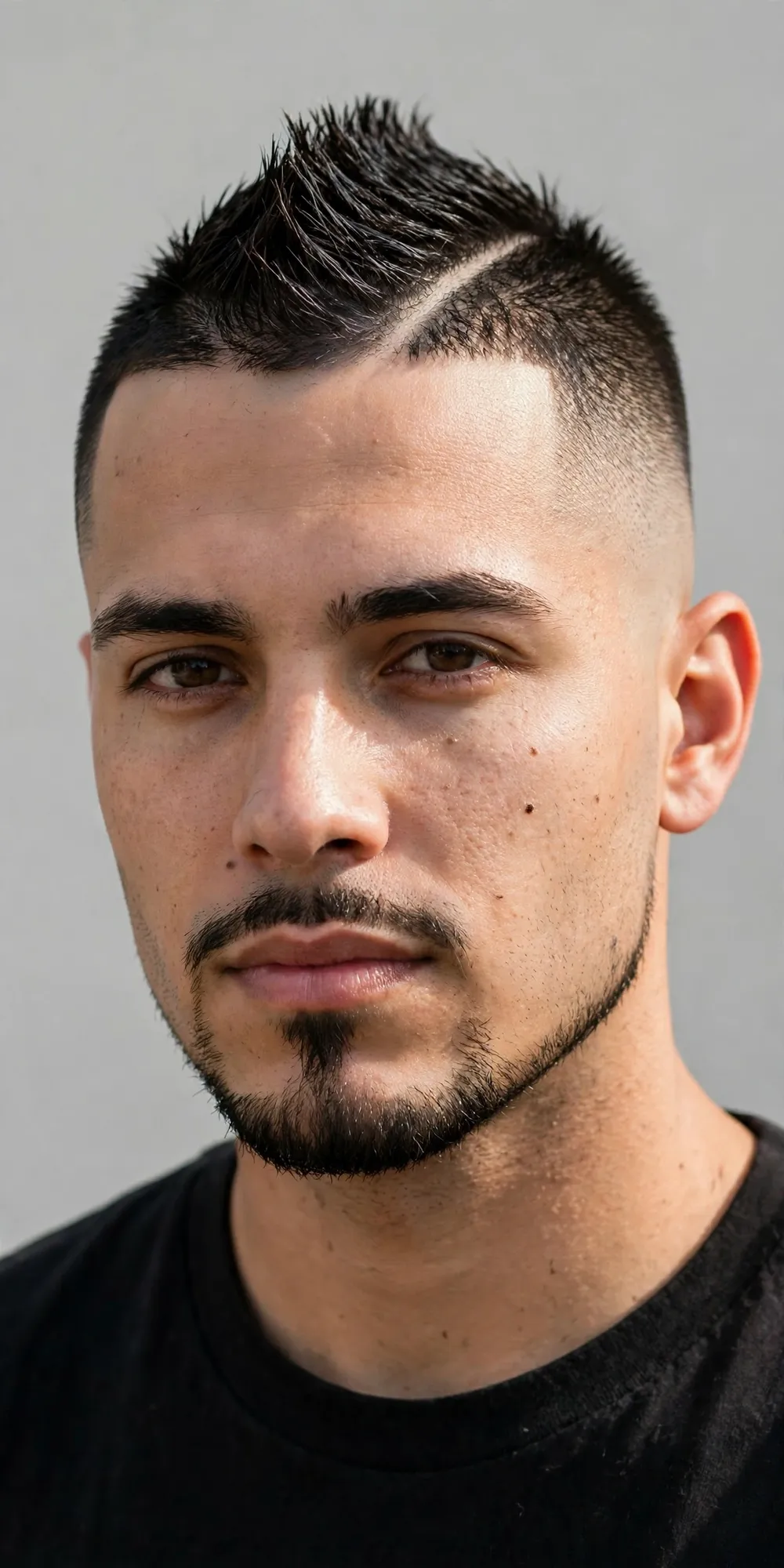
Not every fade-and-beard combo has to be safe, and this one is the proof. A narrow mohawk strip — two to three inches wide, spiked or swept forward — runs over a mid fade that drops the sides to skin, and the goatee pulls the eye to the chin, balancing the height on top. The goatee should stay neat and compact, moustache connected, cheeks shaved clean, or the look turns scruffy. Oval and diamond faces carry it best; on a long face the height stretches things too far. Your barber needs to hear: “mid fade, mohawk strip on top, sharp goatee, blend the sideburns into nothing — no step at the cheek.” Strong-hold wax holds the strip upright, beard balm keeps the goatee shaped — but the fade shows growth in a week, so this is not a low-commitment cut.
13. High Fade + Buzz Cut + Stubble
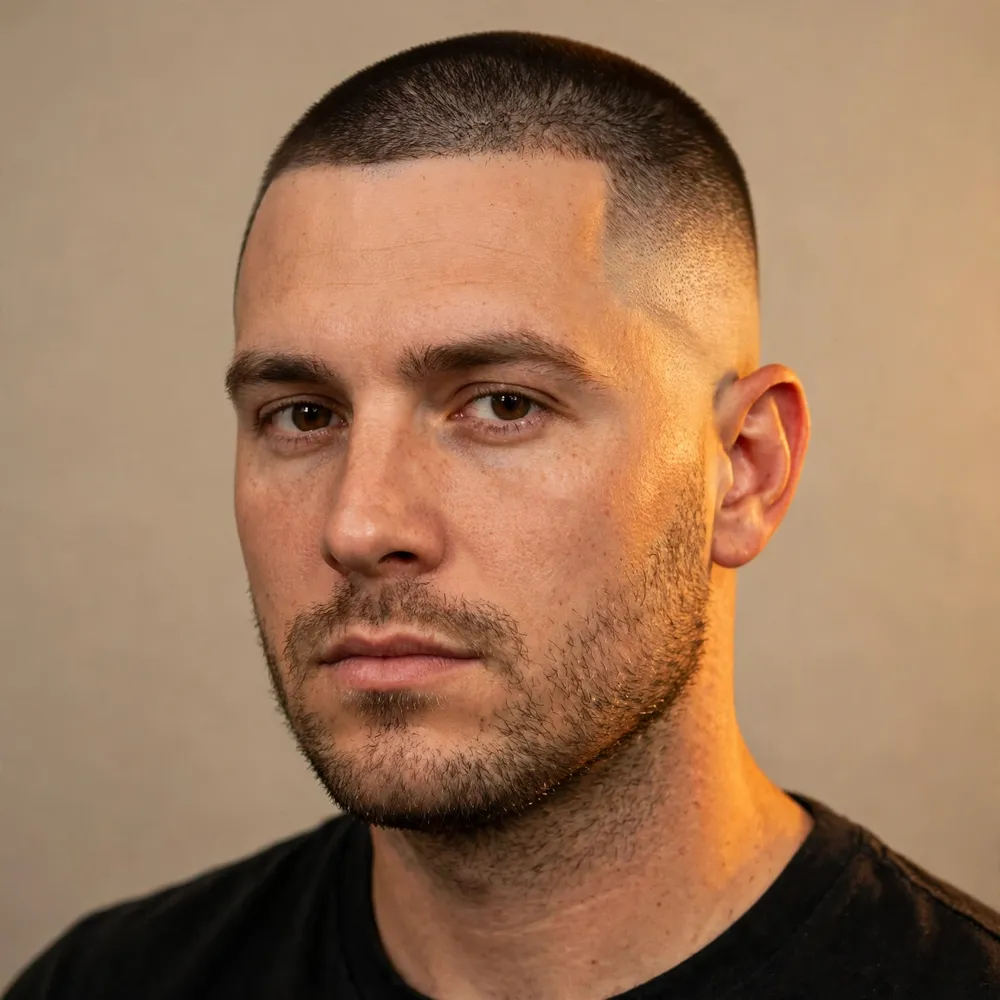
When the brief is “as short as possible without looking like a fresh recruit,” this is the answer. A uniform buzz — usually a 2 or 3 guard — sits above a high fade climbing to just below the crown, and light stubble adds the only softness in the whole cut. The high fade does the styling work here: it gives the head shape a plain buzz lacks, and makes strong jawlines and cheekbones stand out. Square and oval faces are ideal, and it is the best option here for a receding hairline or thinning crown, since everything is one short length. Ask for: “buzz cut on a 2 guard, high fade to skin at the sides, stubble left at two to three days.” No product needed — a towel dry is the whole routine — but the fade blurs in ten days and the stubble needs a trimmer pass every other day.
14. High Fade + Textured Crop + Short Boxed Beard
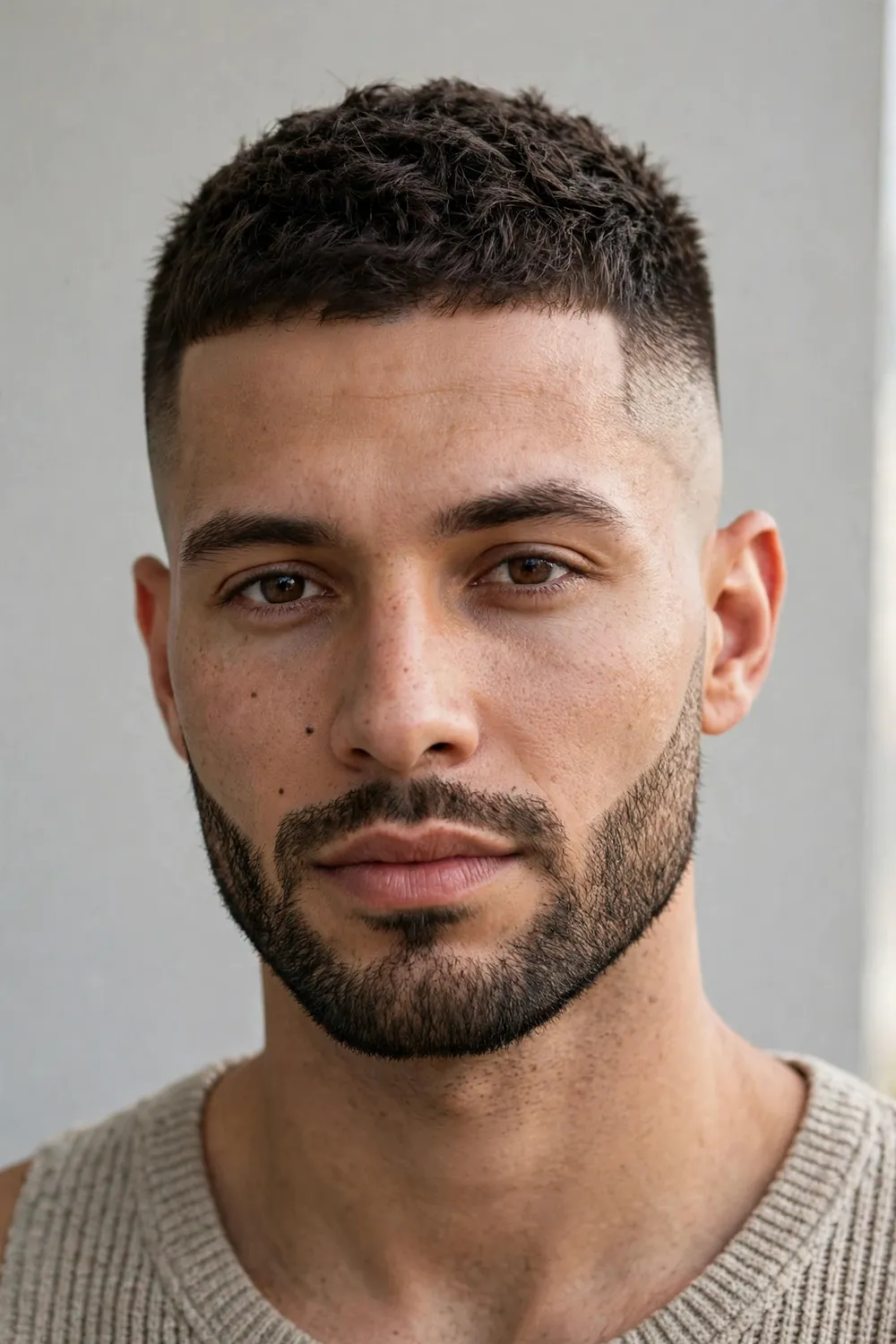
This pairing is sharp in the literal sense: choppy textured crop, high fade with real contrast, and a boxed beard with edges you could set a ruler against. The top is kept short — an inch to an inch and a half, heavy texture cut in — and the high fade climbs from skin to a 2 just below the crown. The short boxed beard is the anchor: full at the jaw, squared corners, cheek line cleaned with a razor. It suits square and oval faces and straight or slightly wavy hair; very curly hair works too, but the crop must be cut with the curl in mind. Tell your barber: “high fade, textured crop, boxed beard — blend the sideburns so the fade meets the beard without a hard step.” A little matte clay gives the crop definition, and the boxed beard’s sharp lines demand a razor pass every two to three days.
15. High Fade + Spiky Top + Shadow Fade Beard
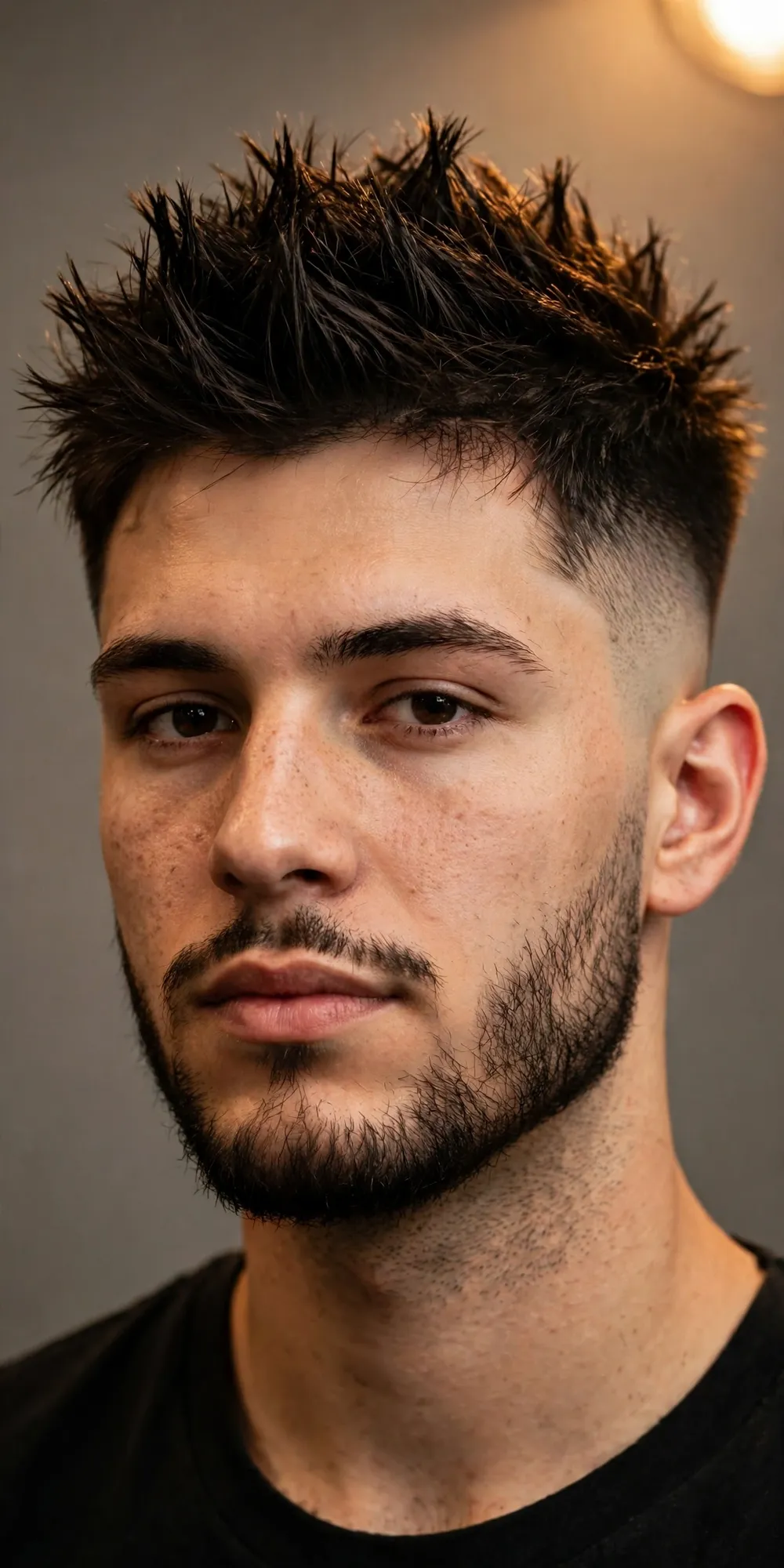
Spiky hair went out of fashion and came back with better barbering, and this version shows why. The top is kept 2–3 inches and spiked upward with a strong matte product, the high fade drops the sides to skin, and the beard is faded too — graded from short at the sideburn into fuller length at the chin, the shadow fade beard. That beard fade separates this from a 2000s throwback: it ties the sharp top to the face instead of leaving a gap. Oval and square faces suit it, and thick hair spikes far more willingly than fine hair. Your ask: “high fade, spiky top, and fade the beard from the sideburns down — I want the shadow effect, not a hard beard line.” Use a strong-hold matte wax through dry hair; styling takes five minutes a morning, and the beard fade loses its gradient in ten days.
16. High Fade + Slick Back + Goatee
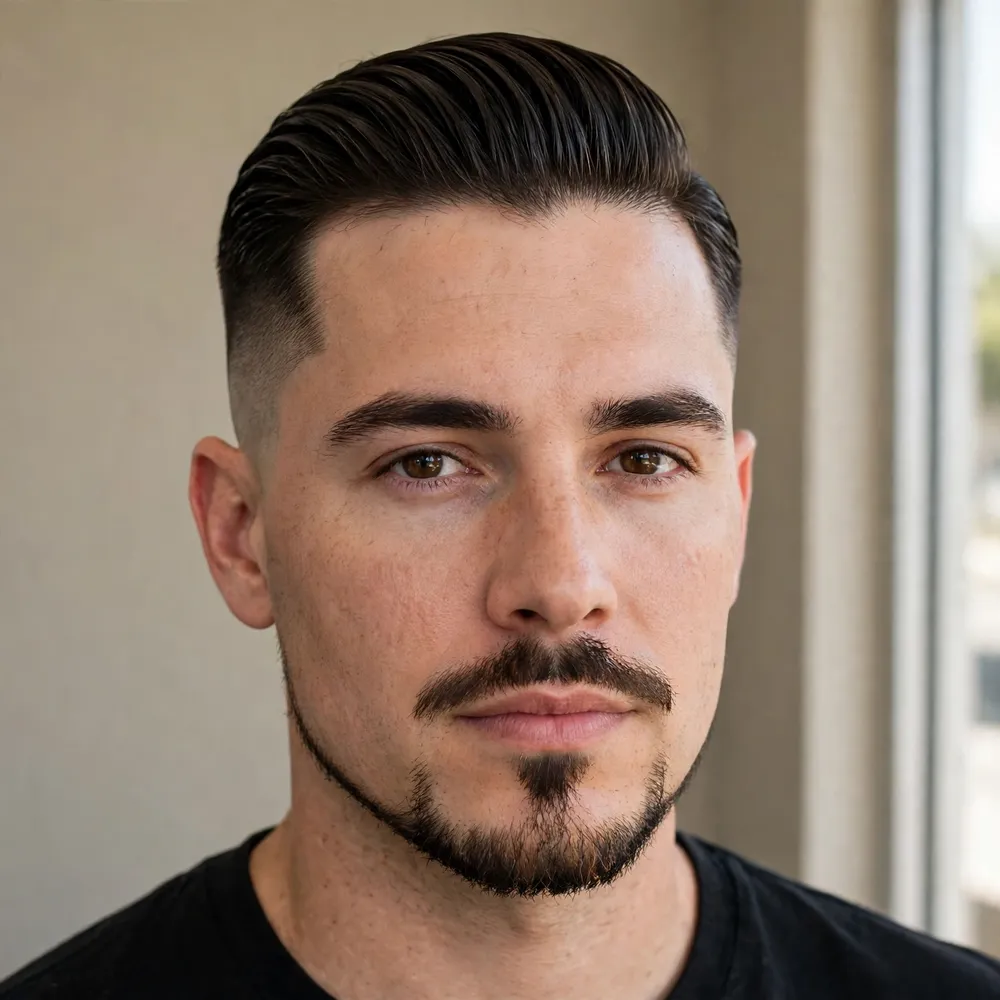
A slick back with a high fade and a goatee has a deliberate, almost tailored feel. The top runs 4–5 inches, combed straight back with a medium-hold pomade for a controlled sheen, while the high fade keeps the sides severe and clean. The goatee — connected moustache and chin beard, cheeks shaved bare — pulls focus to the mouth and chin, which is why it works so well on round faces: it adds vertical length where the face needs it. Ask for a high fade, 0 guard blending to a 2, a slick back with tight sides, and a goatee shaped with a razor for crisp edges. A water-based pomade gives hold without greasy build-up, but the goatee needs edging every two to three days and the fade a refresh every ten to fourteen days.
17. High Fade + Flat Top + Full Beard
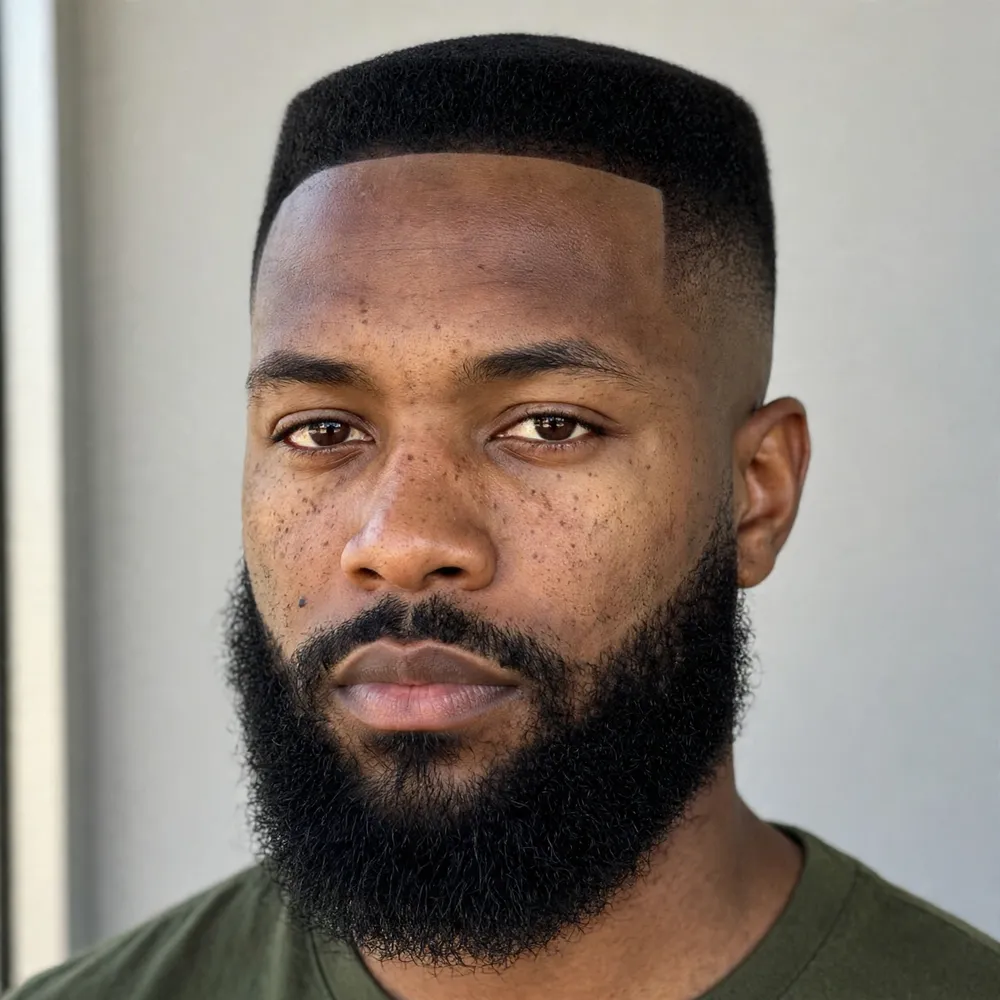
The flat top is a statement haircut, and a high fade with a full beard makes it look intentional rather than nostalgic. The top is cut flat and level — an inch to two inches high, squared at the front — over a high fade that climbs to skin, and the full beard below balances the strong horizontal line on top. It suits square and oval faces, and it needs thick, coarse hair that can stand upright; fine hair simply will not hold the shape without a lot of product. This is a barber’s haircut, not a DIY one, so be specific: “high fade, flat top with a level deck, full beard shaped at the cheeks, sideburns blended into the beard.” Strong-hold pomade or wax, applied to damp hair and combed upward, sets the shape. Daily styling takes five to ten minutes, and the flat top loses its edge in about two weeks.
18. High Fade + Curly Top + Short Beard
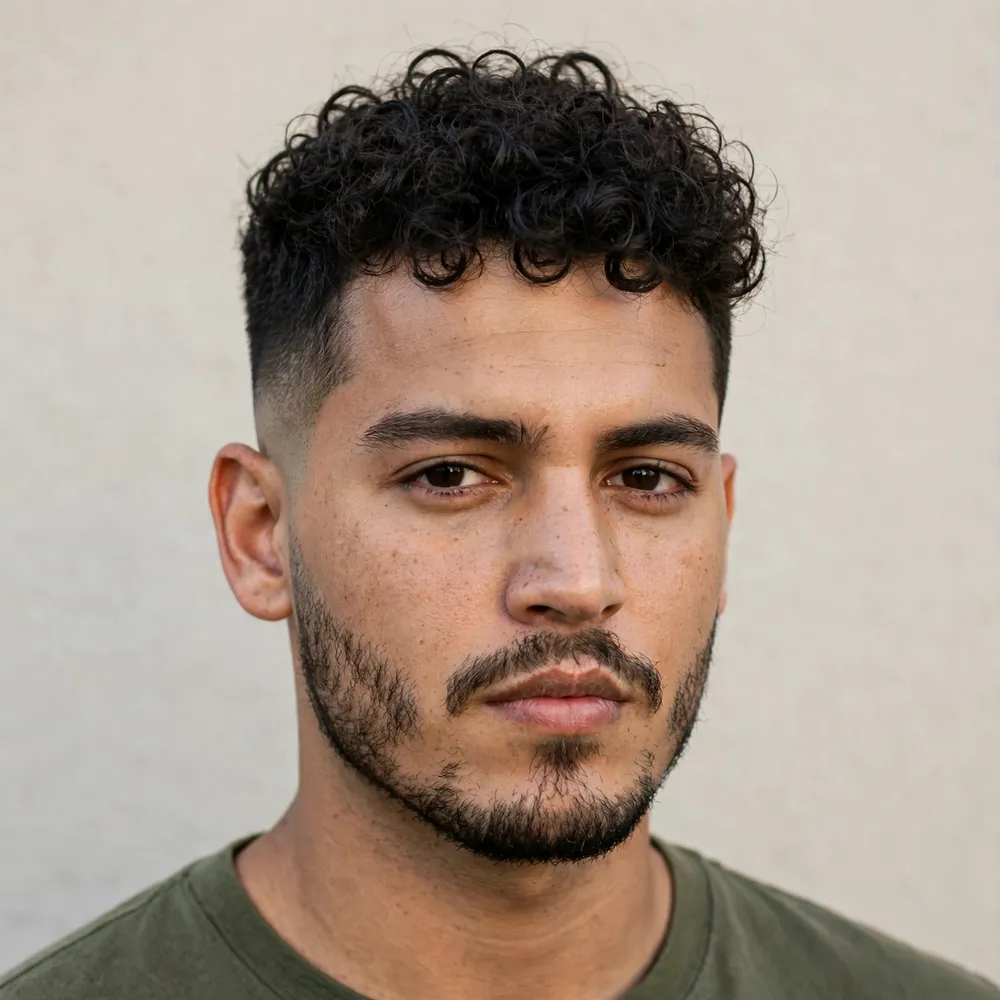
Curls plus a high fade is one of the most flattering pairings for textured hair — the contrast between tight curls on top and bare skin at the sides makes the curls look even fuller. The top is left 3–4 inches so the curls form their natural shape, cut with the curl pattern, and the high fade climbs from skin to a 1 guard just below the crown. The short beard keeps the lower half tidy without competing with the volume above. Round and square faces benefit most, since the height on top lengthens the face. Tell your barber: “high fade, keep the curls long on top, short beard blended at the sideburns.” A curl cream on damp hair, scrunched and air-dried, gives definition without stiffness, and the short beard wants a trimmer pass every two days.
19. Skin Fade + Pompadour + Full Beard
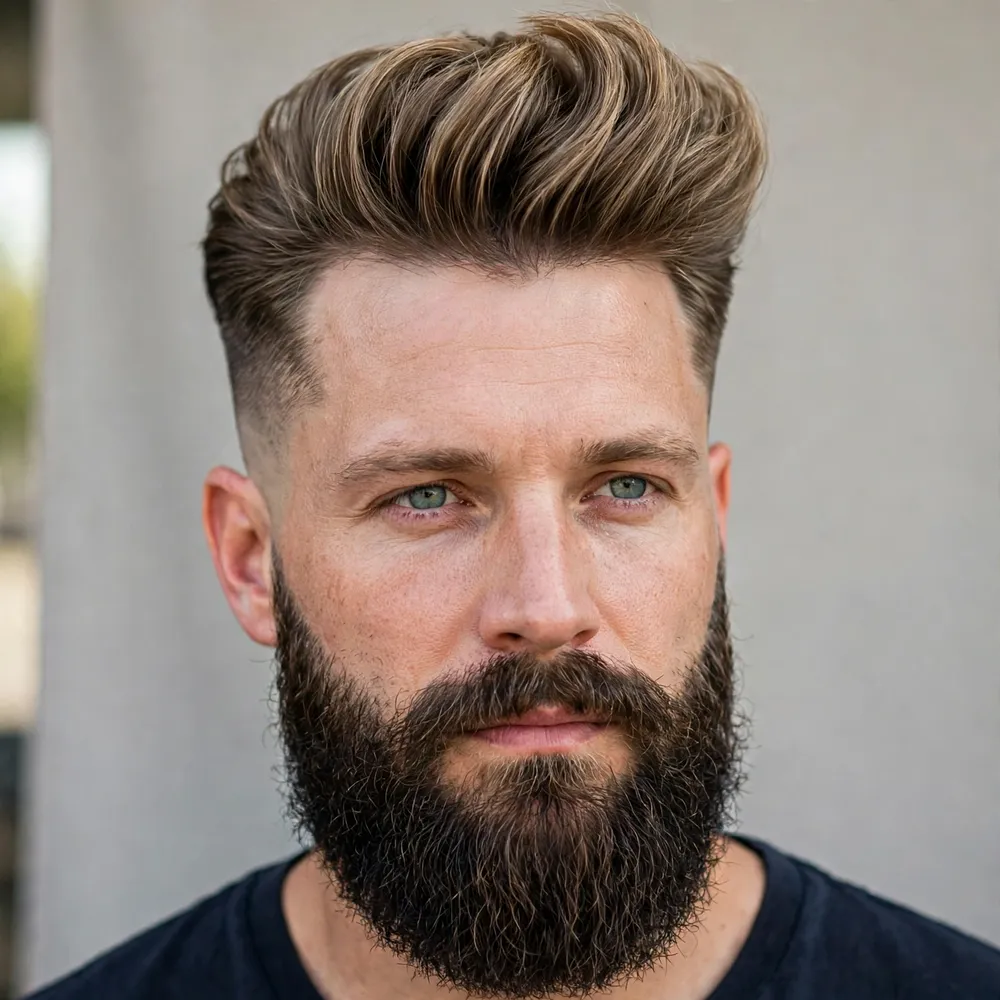
This is the headline combo of the whole list — the one to pick if you want drama, polish and masculinity in a single haircut. A tall pompadour, blown dry up and back from a 4–6 inch top, sits over a skin fade that drops to bare skin, and a full beard grounds the look so the height on top does not float. The contrast is the point: skin against beard, height against weight. It suits oval and square faces best, and thick hair holds the pompadour with far less effort than fine hair. Your barber script: “skin fade, pompadour on top, full beard — blend the sideburns into the beard, no hard line, and shape the cheek line.” Blow-dry with a round brush and set with a strong-hold matte paste. It takes ten minutes a morning and the skin fade blurs in about a week, so this is a weekly barber commitment.
20. Skin Fade + Buzz Cut + Heavy Stubble
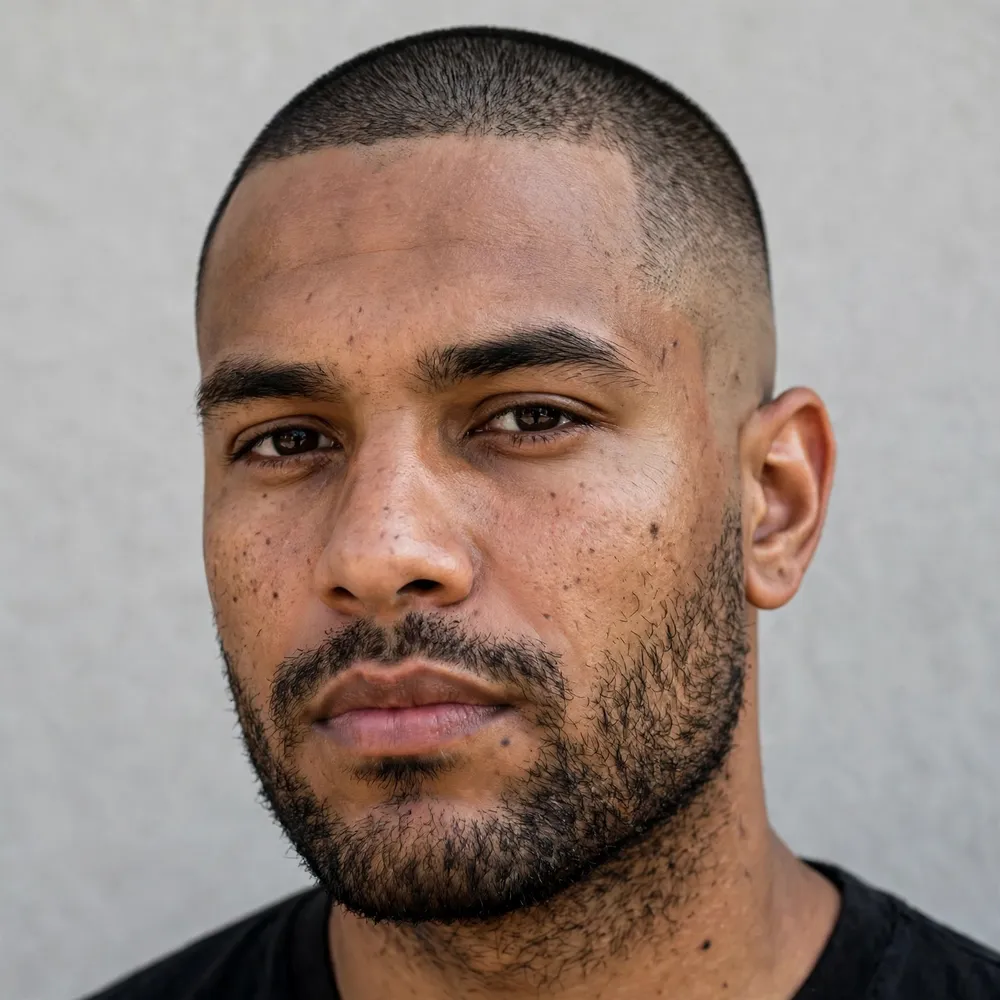
If the pompadour above is the most dramatic combo on this list, this one is the most disciplined. A close buzz — a 1 or 2 guard — meets a skin fade at the sides, and heavy stubble fills the jawline with enough texture to keep the head from looking bare. The skin fade elevates it from a home clipper job: the gradient from bare skin to buzzed top gives the head shape and intention. Square, oval and diamond faces suit it, and it is a strong option for men with thinning hair, since there is nothing to thin out. Ask for: “buzz on a 1 guard, skin fade on the sides and back, heavy stubble left at four to five days and blended at the sideburns.” No product, no styling — the morning routine is a shower and a towel — but the skin fade shows growth in five to seven days.
21. Skin Fade + Comb Over + Medium Beard
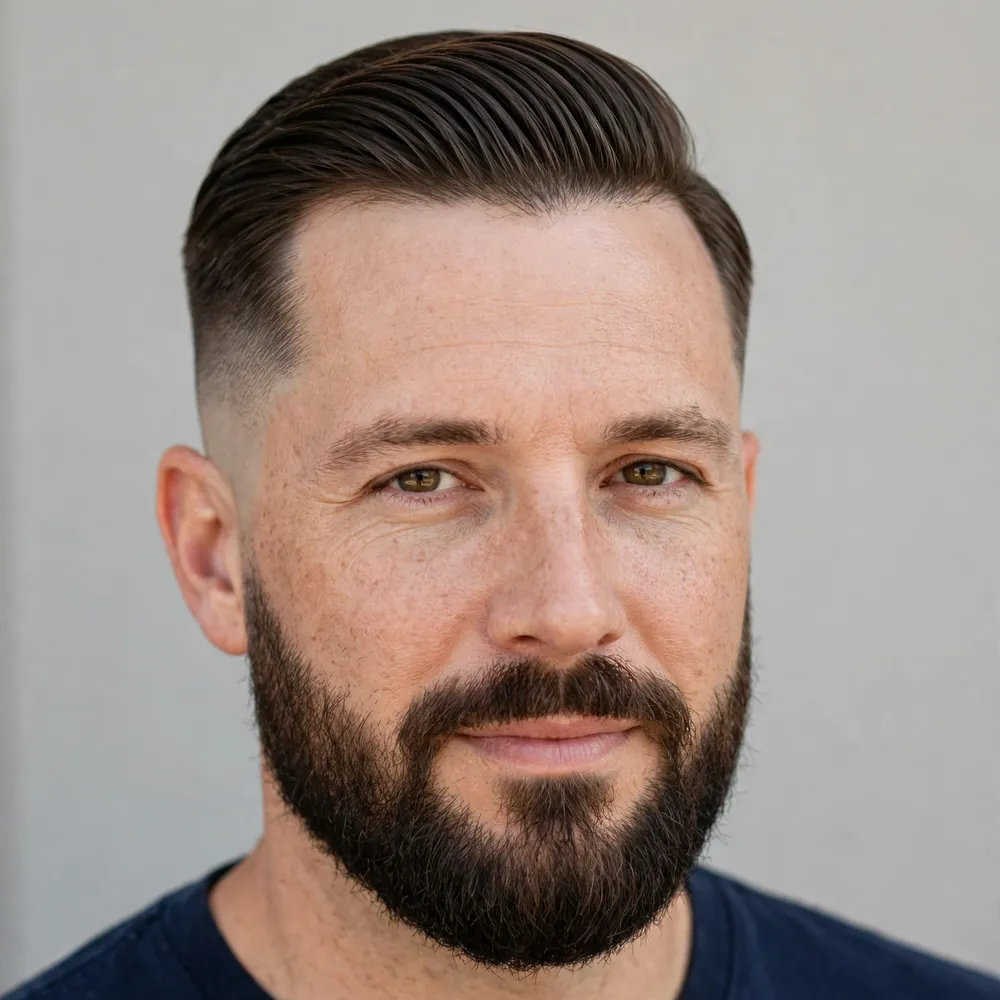
A comb over with a skin fade is the sharper, more modern cousin of the mid-fade version earlier in this list — same swept top, much more contrast at the sides. The top is kept 3–4 inches and parted on the natural side, the skin fade drops the sides to bare skin, and the inch-long medium beard softens the severity so the look stays wearable. It suits oval and square faces; straight hair parts most cleanly — mention any cowlick at the part line first. The ask: “skin fade, comb over on top, medium beard with the sideburns tapered into it.” A medium-hold pomade with a natural shine gives the sweep hold without stiffness. The skin fade is the maintenance catch — it blurs within a week, so plan a weekly or ten-day barber visit, and the beard a weekly trim.
22. Skin Fade + Textured Crop + Faded Beard
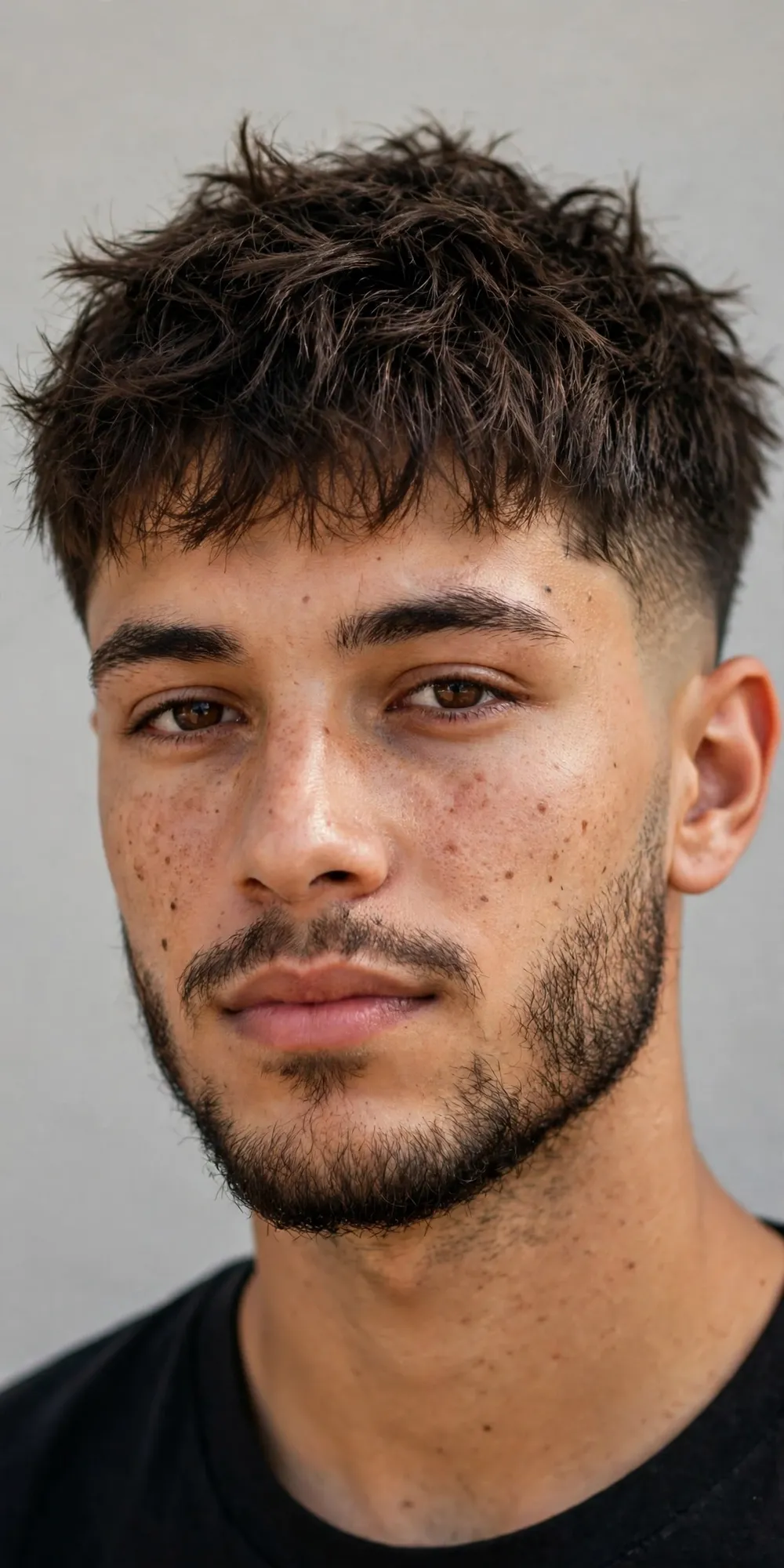
This is the most popular haircut in barbershops right now: it takes three on-trend elements — textured crop, skin fade, faded beard — and makes them look like one haircut instead of three ideas stuck together. The crop is short and choppy, about an inch long with point-cut texture; the skin fade climbs to bare skin at the temples; the beard is graded from short at the sideburn into full length at the jaw, so the fade flows straight into the beard. It suits nearly every face shape, and straight, wavy or curly hair all take the crop well. Be precise with your barber: “skin fade, textured crop on top, and fade the beard from the sideburns — I want the gradient, not a step.” A little matte clay through dry hair gives the crop its piecey finish; the beard fade loses its gradient in ten days, so this is a weekly-to-fortnightly barber cut.
23. Skin Fade + Short Hair + Patchy Beard
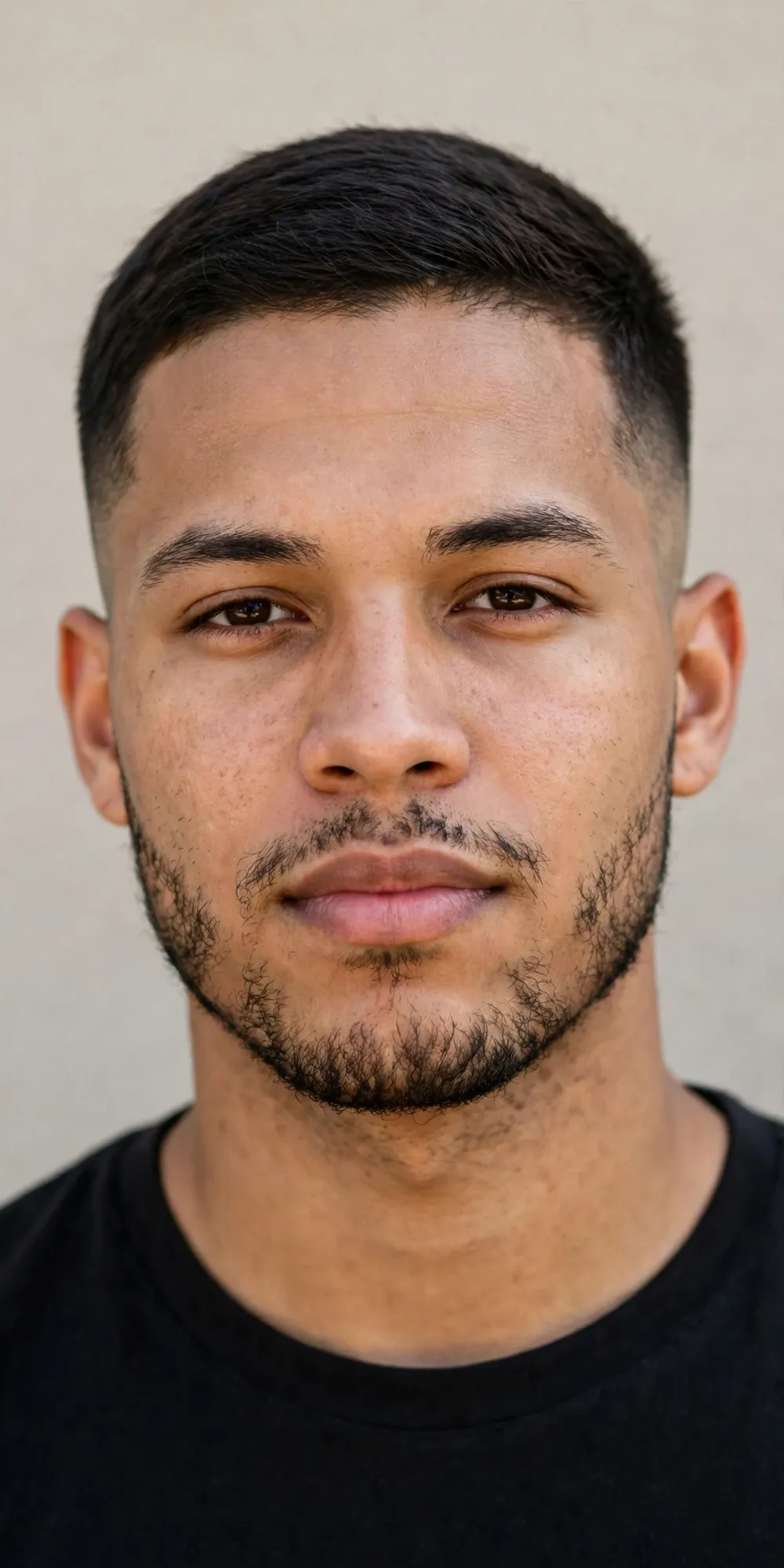
A patchy beard is not a reason to stay clean-shaven — it is a reason to choose the right fade, and this is it. Short, even hair on top with a skin fade takes the attention upward, while the patchy beard is kept short and blended at the sideburns so the thin spots read as a fade rather than gaps. The trick is length: keep the beard to a few millimetres, where patchiness looks like intentional texture, instead of growing it long and letting the bare patches show. It suits oval, square and heart-shaped faces, and every hair type, since the top is so short. Tell your barber: “skin fade, short all over on top, keep the beard short — blend the sideburns in and don’t try to grow out the patchy spots.” A trimmer pass every two days holds the beard at one length, and a little beard oil keeps the short hairs soft.
24. Taper Fade + Side Part + Corporate Beard
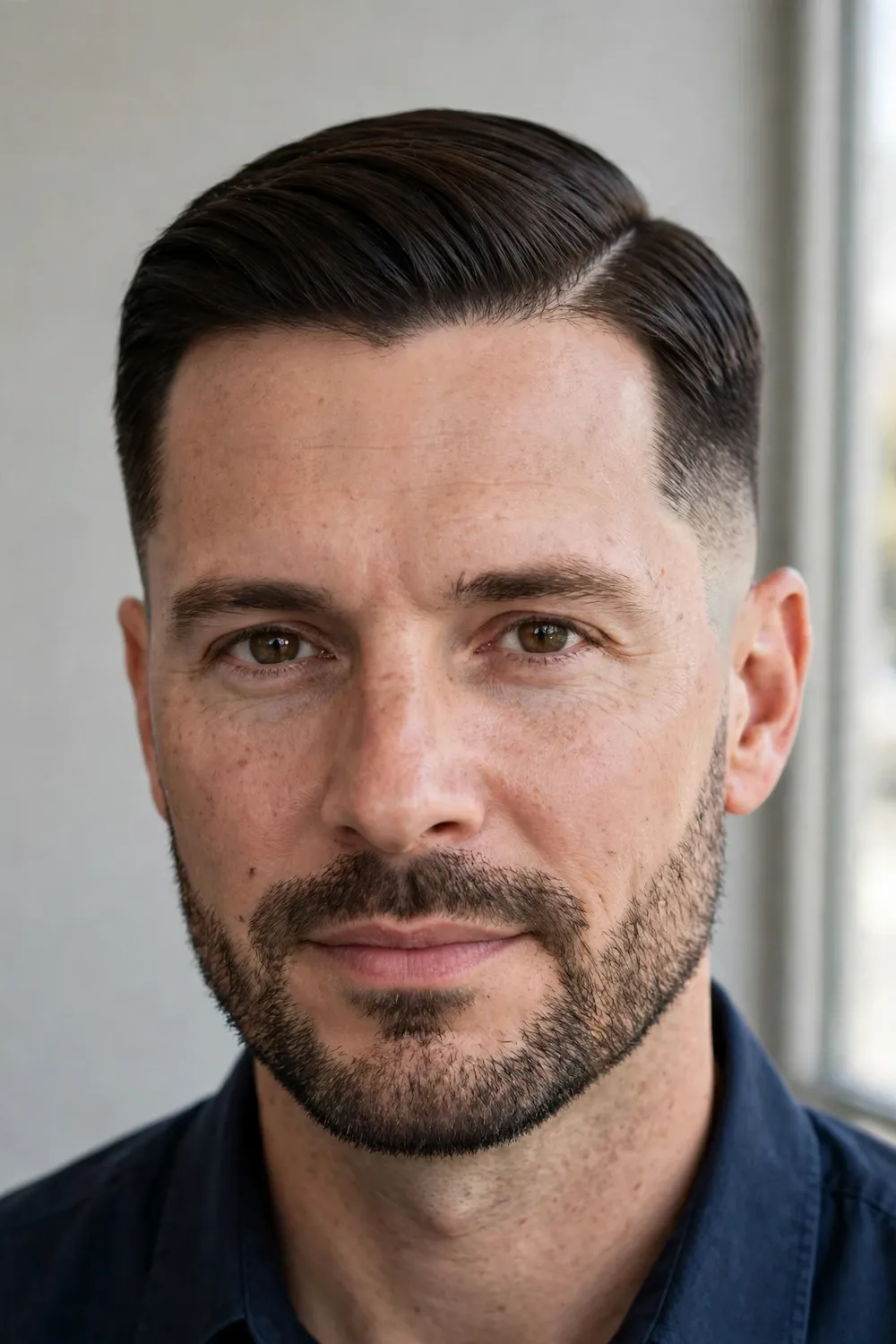
This is the boardroom version of a fade-and-beard combo, and it works because nothing about it shouts. The side part sits neat and deliberate, the taper fade keeps the edges clean without exposing skin, and the beard is kept short and boxed so it reads as grooming, not as a statement. It suits straight or slightly wavy hair best, and it flatters oval and oblong faces — the short beard adds width to a long jaw without piling on bulk. Ask your barber for a low taper fade, blended with a number 4 guard on top and scissor work through the part, then have him taper the sideburns straight into the beard with no hard line. The beard itself should stay under a centimetre, with the cheek line kept natural and the neckline cleaned two fingers above the Adam’s apple. A dab of matte paste on the part and a few drops of beard oil keep it looking deliberate all day. Touch it up every two weeks and the shape holds; let it run past three and the taper starts to look like neglect.
25. Taper Fade + Natural Curls + Full Beard
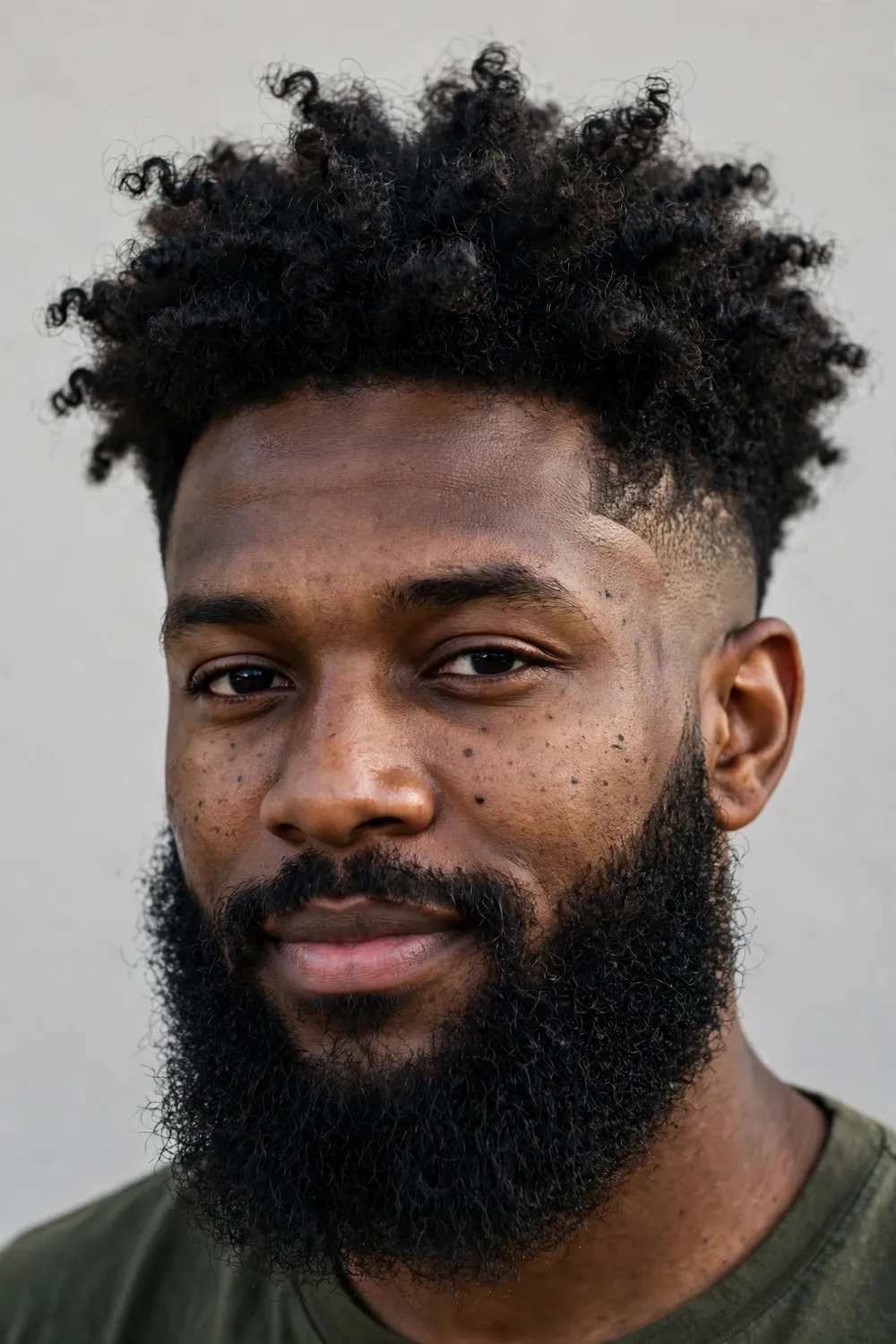
Letting your curls do what they want on top while a taper fade keeps the sides under control is one of the easiest ways to wear a full beard well. The curls give you height and movement, the taper stops the whole thing from going wide, and the beard underneath balances the volume so the face doesn’t look top-heavy. This suits type 3 curls especially — tight enough to hold shape, loose enough to sit naturally — and it works on round and square faces because the height lengthens the face while the beard fills the jaw. Tell your barber you want a low taper fade on the sides, curls left long enough to spring on top, and the sideburns faded gradually into the beard so there’s no visible step. He should trim the beard with scissors rather than clippers to keep its shape soft. Curl cream on the top, beard oil underneath, and a wide-tooth comb for both. Expect a shape-up every two to three weeks and a daily two-minute routine.
26. Taper Fade + Man Bun + Long Beard
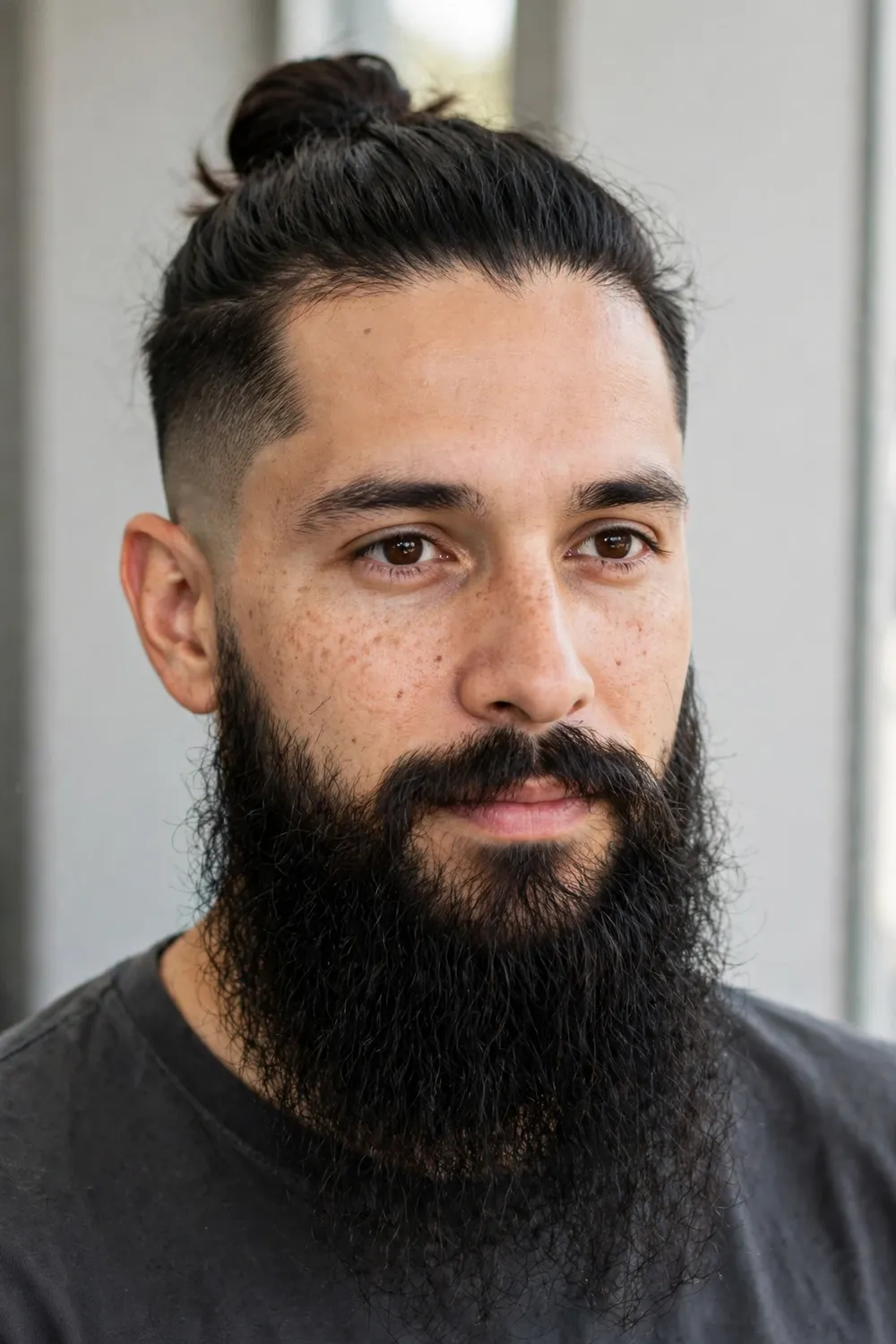
A man bun with a long beard can look either deliberate or accidental, and the taper fade is what decides which. With the hair pulled back and tied, the taper keeps the sides sharp and stops the head from looking heavy, while the long beard gives the whole look its weight — the balance between the two is the entire point. It suits thick, straight or wavy hair that can actually hold a bun, and it works best on oval and rectangular faces, where the beard fills out a longer jaw. Ask for a low taper fade that stays tight around the ears and nape, with the top left long enough to tie at the crown, and the sideburns blended smoothly into the beard. The beard needs a weekly trim to keep its ends even and a drop or two of oil daily, or it starts to look wiry. If you’re still deciding between a taper and a sharper fade, our guide to Taper vs Fade Haircut breaks down exactly where each one sits.
27. Taper Fade + Side Swept Top + Goatee
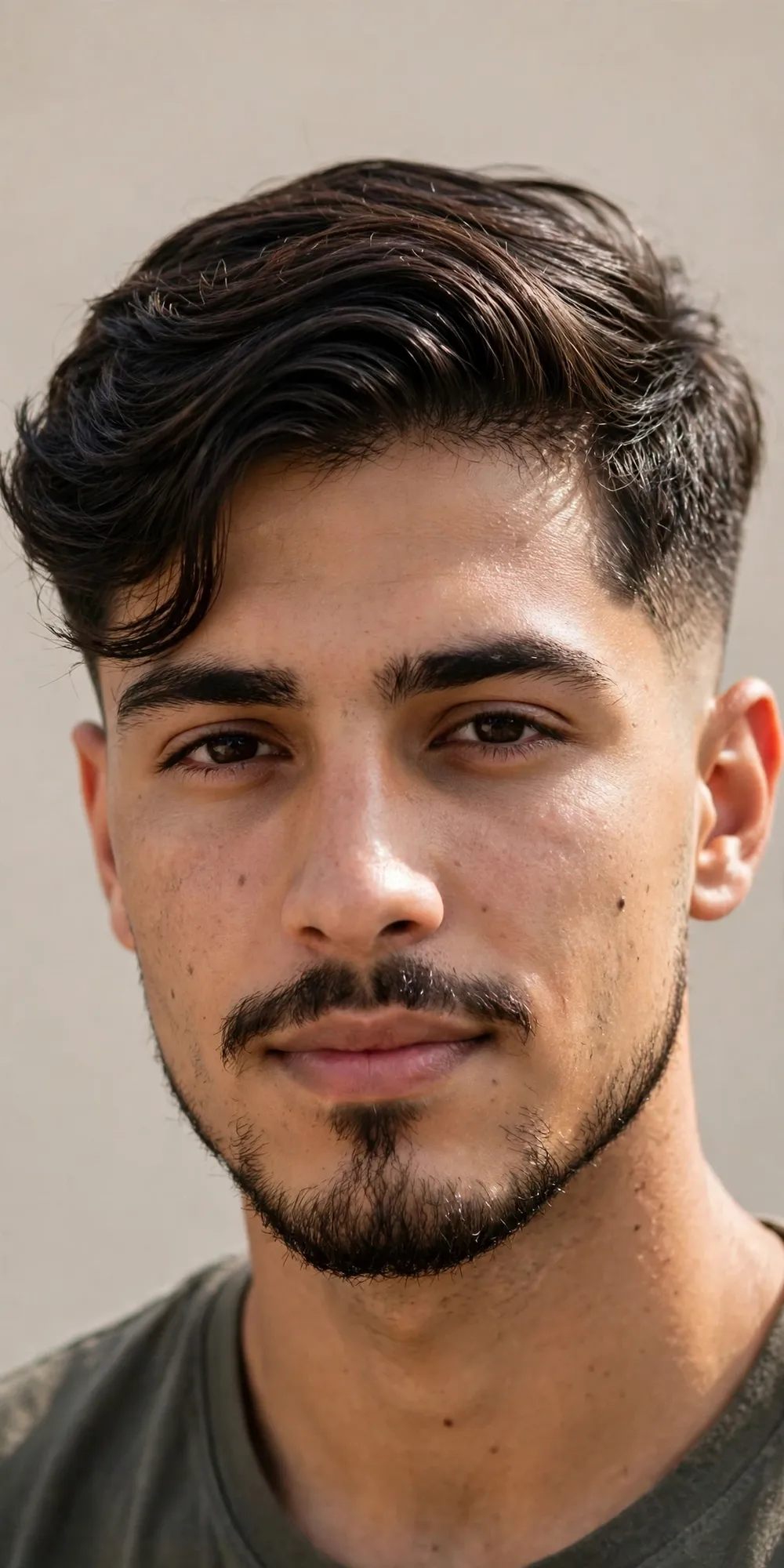
When you want a beard but not a full one, a goatee with a side-swept top is a sharp middle ground — and the taper fade ties the two together without either one fighting the other. The top sweeps across the forehead with soft movement, the taper keeps the sides tidy, and the goatee frames the chin so the face looks longer and more defined. It suits men with patchy cheeks especially well, since the goatee only needs density on the chin and moustache, and it flatters round faces by pulling the eye downward. Ask your barber for a low taper fade, a side-swept top left long enough to fall naturally, and the sideburns faded right out — clean cheeks, no stubble left behind. The goatee itself wants a defined outline: moustache connected to the chin, edges kept crisp with a trimmer. A little matte clay in the hair and a weekly edge-up keeps it looking intentional rather than half-grown.
28. Burst Fade + Mohawk + Full Beard
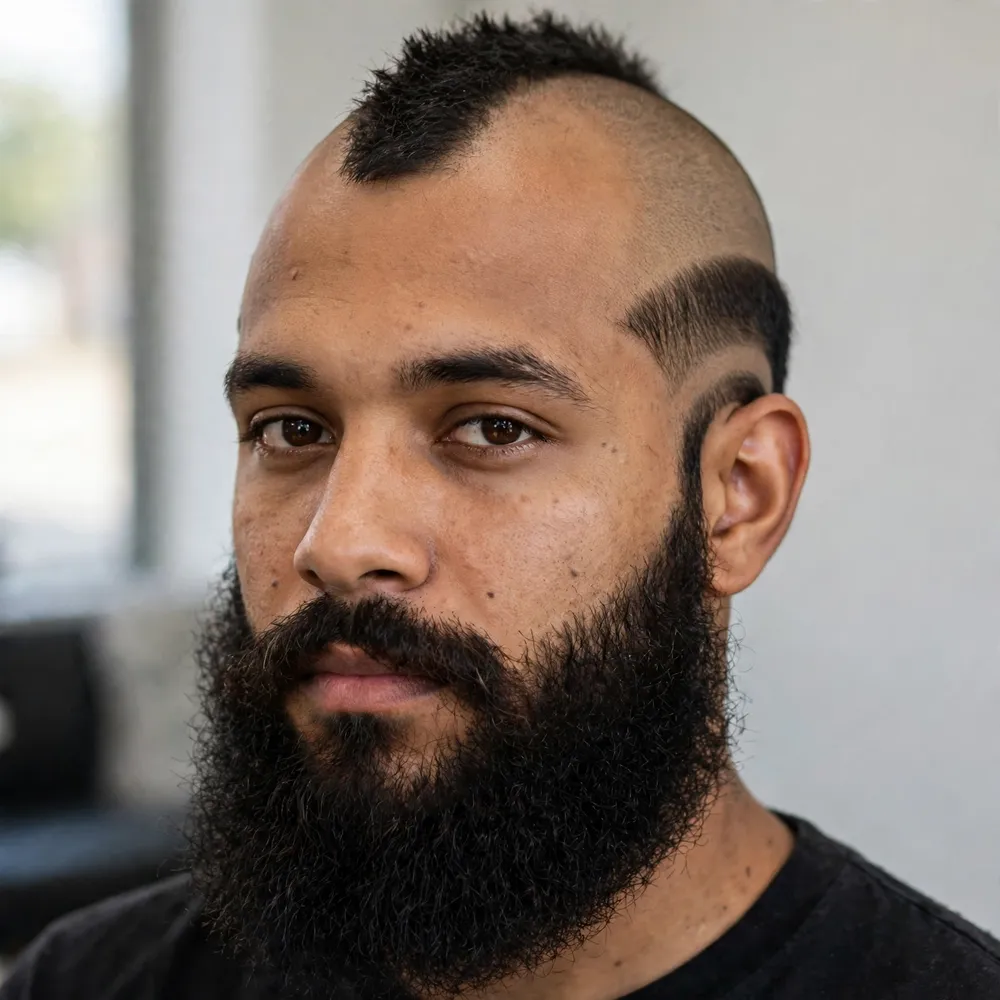
This is the loudest combination on the list, and it only works when the beard is doing as much work as the mohawk. The burst fade curves around the ear in a semicircle, which gives the mohawk its shape, and the full beard underneath anchors all that energy so the head doesn’t look like it’s floating. It suits thick, straight hair that can hold a strip upright, and it flatters square and oval faces — the beard softens the jaw while the height up top adds length. Ask your barber for a burst fade that arcs cleanly behind each ear, a mohawk strip about two inches wide, and the sideburns blended gradually into the beard rather than cut off at a line. Strong-hold wax or pomade keeps the strip standing, and beard oil keeps the full beard from looking dry and wiry. It’s a high-effort look: the fade needs a touch-up every ten days and the mohawk needs styling every morning, so don’t pick it if you want a low-maintenance cut.
29. Burst Fade + Curly Top + Stubble
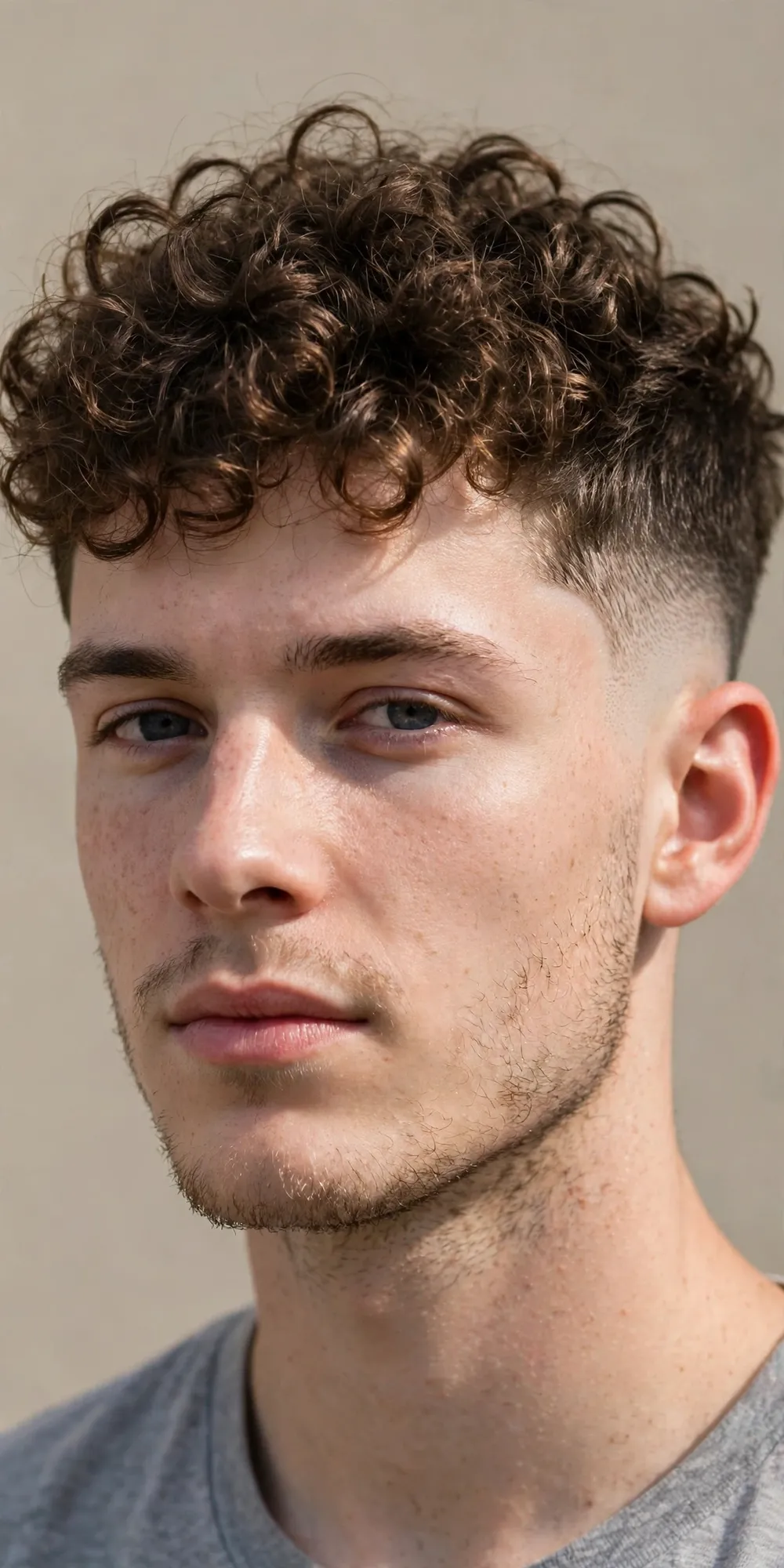
Pairing tight curls with a burst fade gives you shape without the commitment of a full beard, and the stubble is what keeps the whole thing casual. The burst fade curves around the ear and leaves the curls sitting high, which stops the head from looking round, while the stubble adds just enough texture to the jaw to balance the volume above. It suits type 3 and 4 curls best, and it works well on round and oval faces — the height on top and the curve of the fade both stretch the face out. Ask for a burst fade that follows the ear, curls left long on top with the sides kept short, and the sideburns tapered down into a couple of days of stubble. A curl cream keeps the top defined without going crunchy, and a beard trimmer on the lowest setting keeps the stubble even. The fade needs attention every two weeks, but the stubble itself is forgiving if it goes a day or two longer.
30. Burst Fade + Mullet + Short Beard
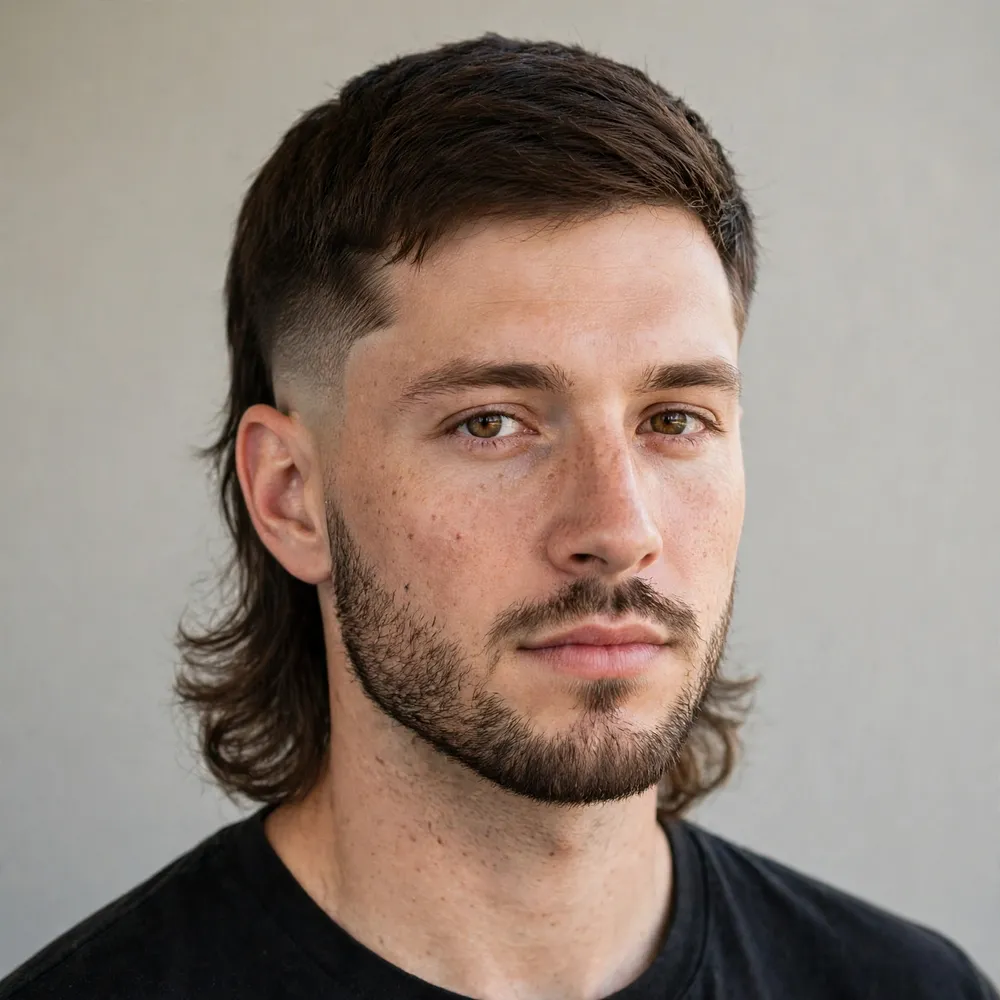
The modern mullet has come a long way from the joke version, and the burst fade is the detail that makes it work now. The fade curves around the ear and keeps the sides clean, which lets the length at the back read as a choice rather than an accident, and the short beard underneath stops the whole look from getting top-heavy at the back. It suits thick, wavy or straight hair that can hold length at the nape, and it flatters oval and square faces best — the beard adds weight to the jaw while the mullet draws the eye down. Ask your barber for a burst fade on the sides, the back left long with textured ends, and the sideburns blended into a short beard of about half a centimetre. Texturising spray or sea salt spray gives the back some movement, and a weekly beard trim keeps the length even. The fade grows out fast, so plan on a visit every two weeks if you want the curve to stay crisp.
31. Burst Fade + Textured Fringe + Medium Beard
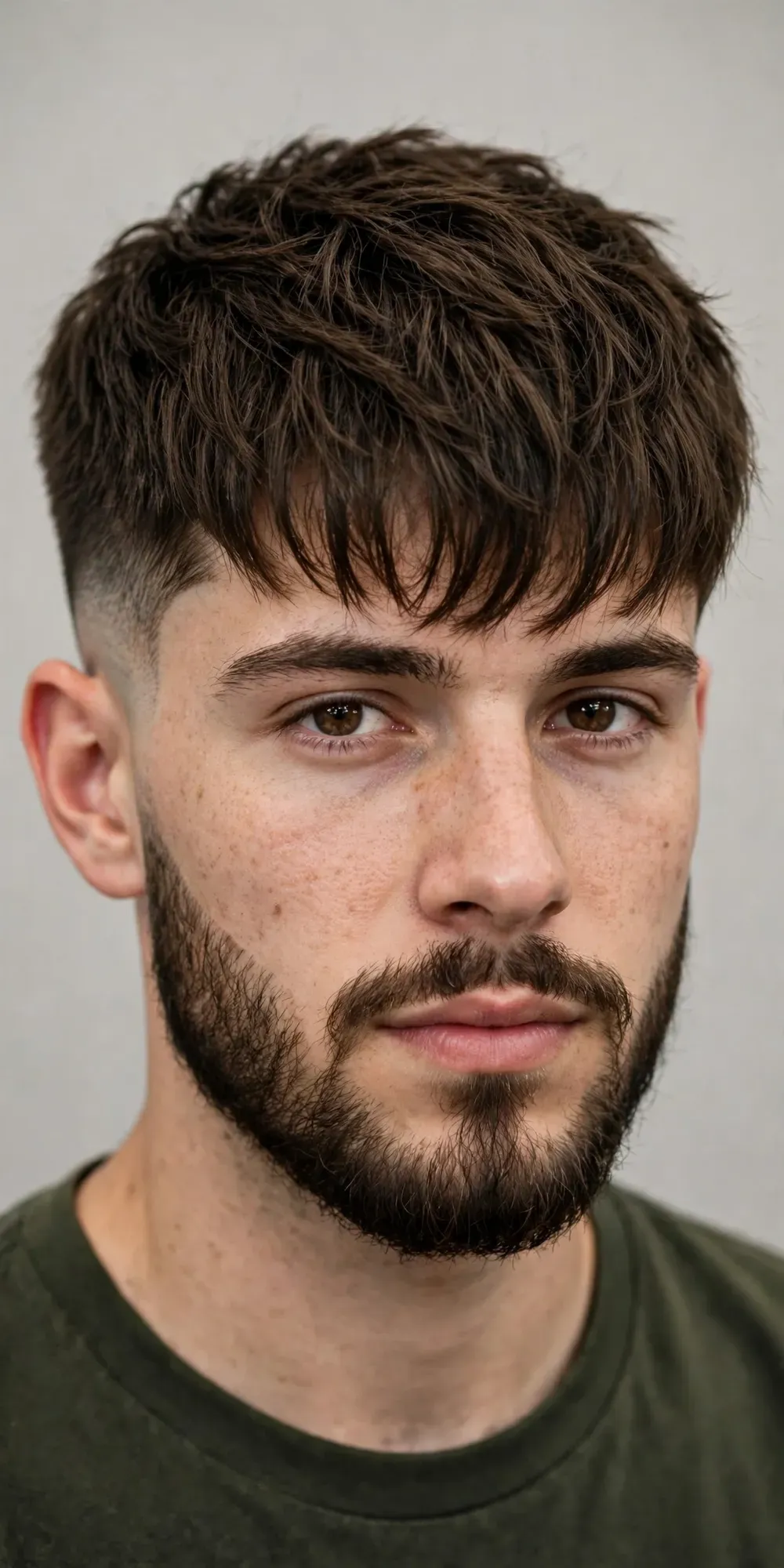
A textured fringe pushed forward softens the forehead, and the burst fade gives the sides a curve that a straight fade can’t match — add a medium beard and you’ve got a look with real balance. The fringe brings the eye down, the fade keeps the sides tight, and the beard fills out the lower half of the face so nothing looks out of proportion. It suits straight or wavy hair with enough texture to break up the fringe, and it works especially well on oblong faces, where the fringe shortens the forehead and the beard widens the jaw. Ask for a burst fade that arcs behind the ears, a fringe cut with point-cutting so it sits in pieces rather than a solid block, and the sideburns faded into a medium beard of about two to three centimetres. A matte paste gives the fringe its texture, beard oil keeps the medium length soft, and the fade needs a tidy-up roughly every two weeks.
32. Skin Fade + Line-Up + Short Coily Beard
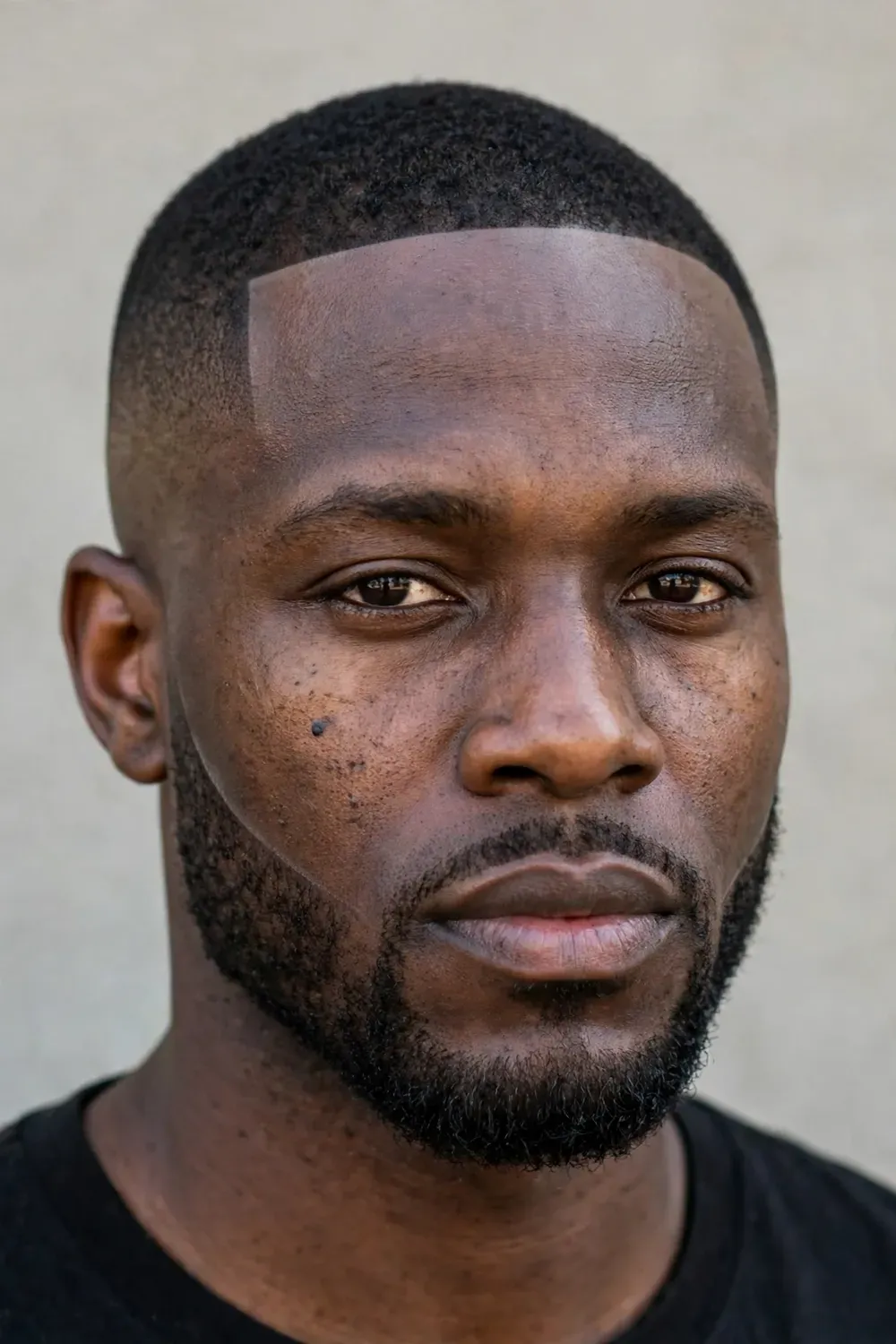
Precision is the whole point here. The skin fade takes the sides down to bare skin, the line-up draws a razor-sharp edge across the forehead and temples, and the short coily beard carries that same crispness down to the jaw. It suits coily and tightly curled hair best — the coils hold their shape in the beard and the line-up looks cleanest on darker hair — and it flatters square and round faces, because the sharp lines add structure where the face is naturally softer. Ask your barber for a skin fade finished with a foil shaver, a line-up with a straight razor, and the sideburns blended into a short beard kept at about a centimetre with a defined cheek line. A little beard balm keeps the coils moisturised and the shape intact. Be honest with yourself about upkeep: the line-up needs sharpening every four to five days and the skin fade grows out in a week, so this one demands the most chair time of any combo on the list.
33. High Taper + Afro + Full Beard
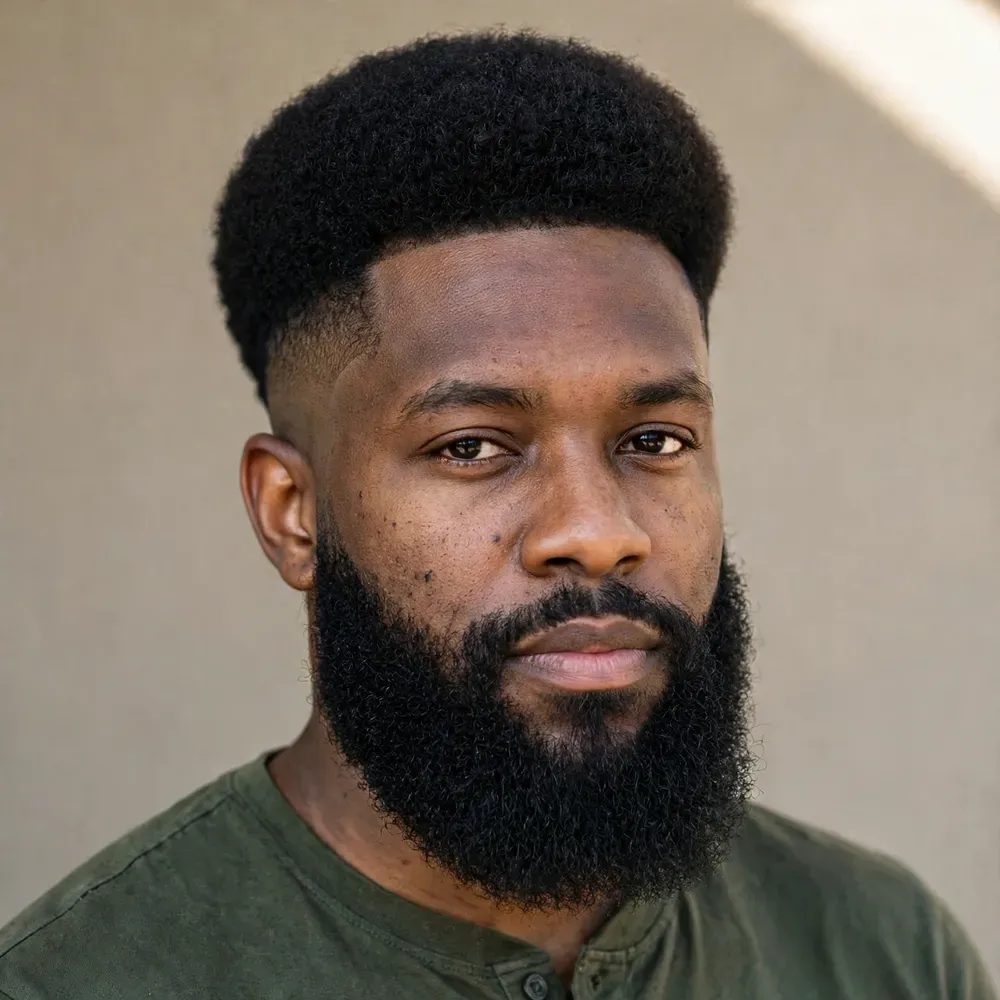
A rounded afro with a high taper and a full beard is one of those combinations that looks effortless from the front and takes real skill from the barber. The taper climbs higher than a low fade, which keeps the afro’s silhouette round and controlled instead of wide, and the full beard underneath balances the volume so the face doesn’t disappear. It suits type 4 hair with enough density to hold the afro’s shape, and it flatters oval and oblong faces — the roundness of the afro softens a long face while the beard adds width to the jaw. Ask for a high taper that blends gradually into the afro, the top picked out and shaped round, and the sideburns faded into the beard with no visible seam. Afro pick and a light leave-in conditioner keep the shape, beard oil keeps the full beard from drying out. A shape-up every two weeks and a beard trim every week keeps it looking intentional.
34. Drop Fade + 360 Waves + Shadow Fade Beard
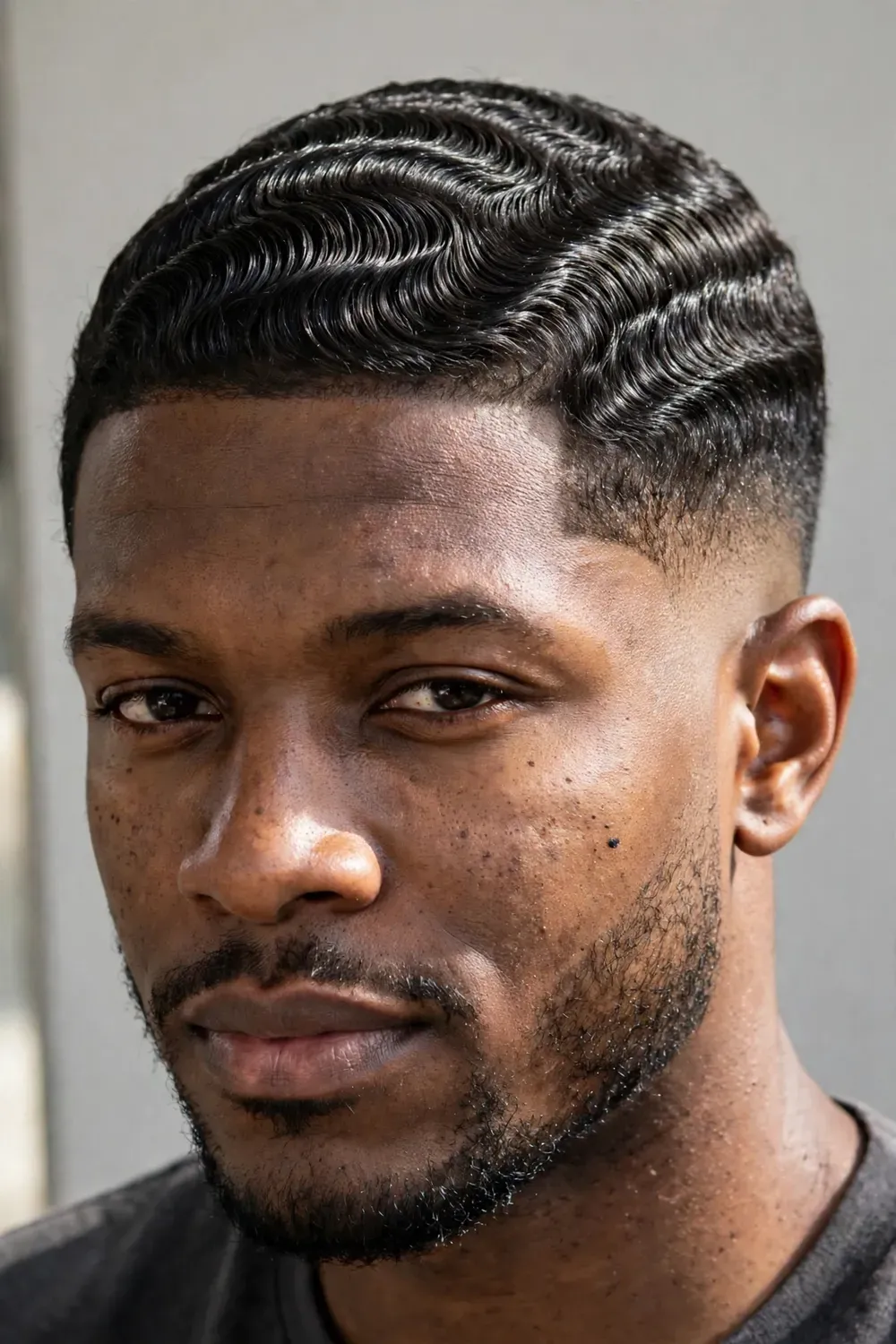
Waves and a drop fade were practically made for each other. The drop fade dips down behind the ear, which follows the natural curve of the waves instead of cutting across them, and the shadow fade beard — where the beard thins gradually toward the cheek — keeps the jaw looking clean without a hard line. It suits coarse, wavy hair that can actually form 360 waves with brushing, and it flatters round and square faces, since the waves add texture up top while the fade and beard keep the sides tight. Ask your barber for a drop fade that curves down behind the ears, the waves brushed in and cut to a low, even length, and the sideburns faded into a beard that thins toward the cheek. The real work happens at home: brush twice a day, durag at night, and a light pomade to lock the pattern in. The fade needs a touch-up every ten days to keep the drop clean.
35. Mid Fade + Twist Out + Medium Beard
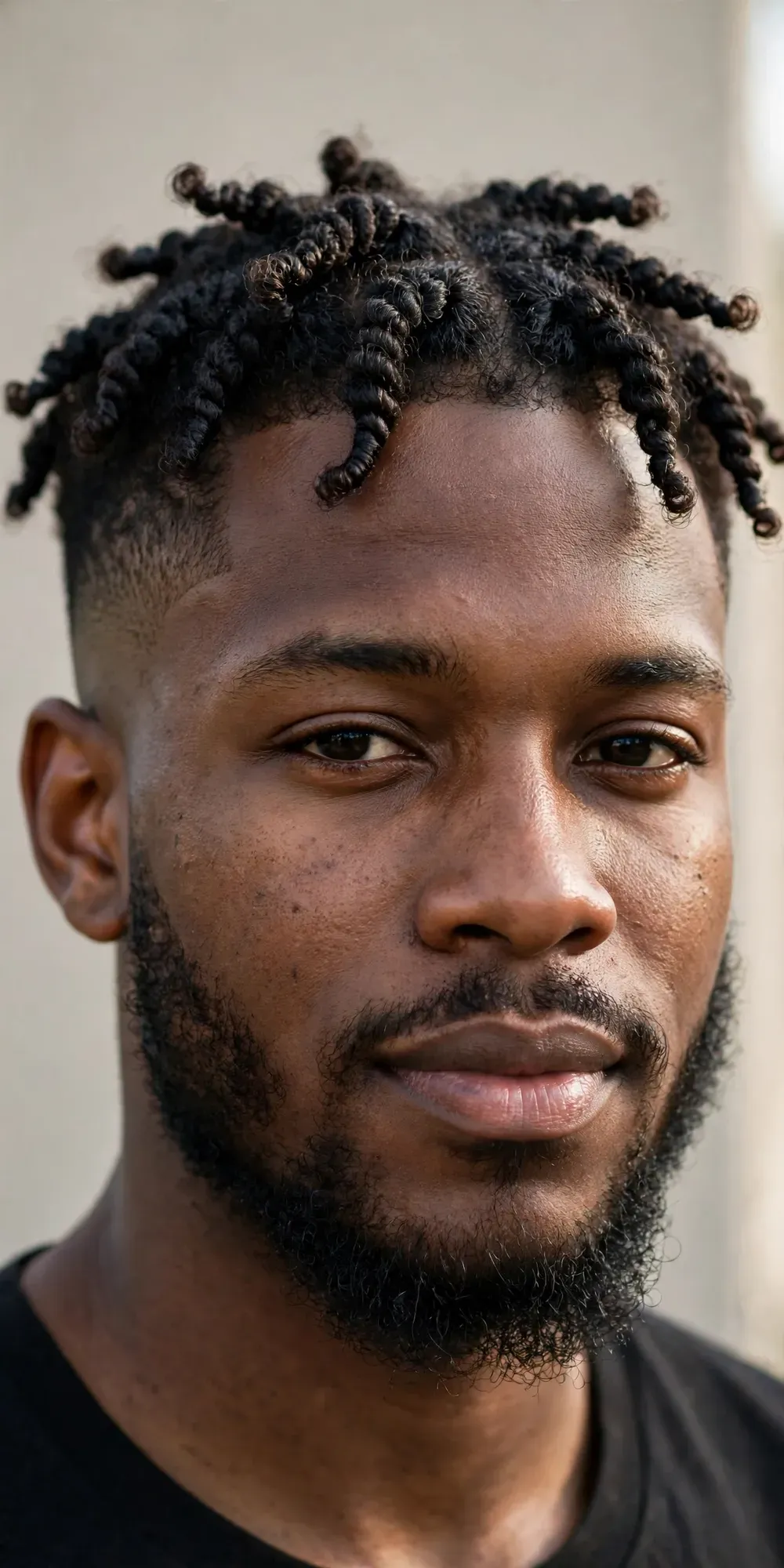
A twist out gives you defined curls with real volume, and the mid fade is what keeps them from taking over the whole head. The fade starts at temple height, which frames the twist out nicely, and the medium beard underneath adds just enough weight to balance the height on top. It suits type 3 and 4 hair that holds a twist pattern well, and it works on oval and round faces — the height lengthens the face while the beard fills out the jaw. Ask your barber for a mid fade blended smoothly into the twists, the top left long enough to twist and separate, and the sideburns faded into a beard of about two to three centimetres. A curl-defining cream or light butter keeps the twist out defined, beard oil keeps the medium beard soft. The twists need re-doing every few days, the fade needs a visit every two weeks, and the beard wants a trim once a week to hold its shape.
36. Low Fade + Buzz Cut + Short Beard
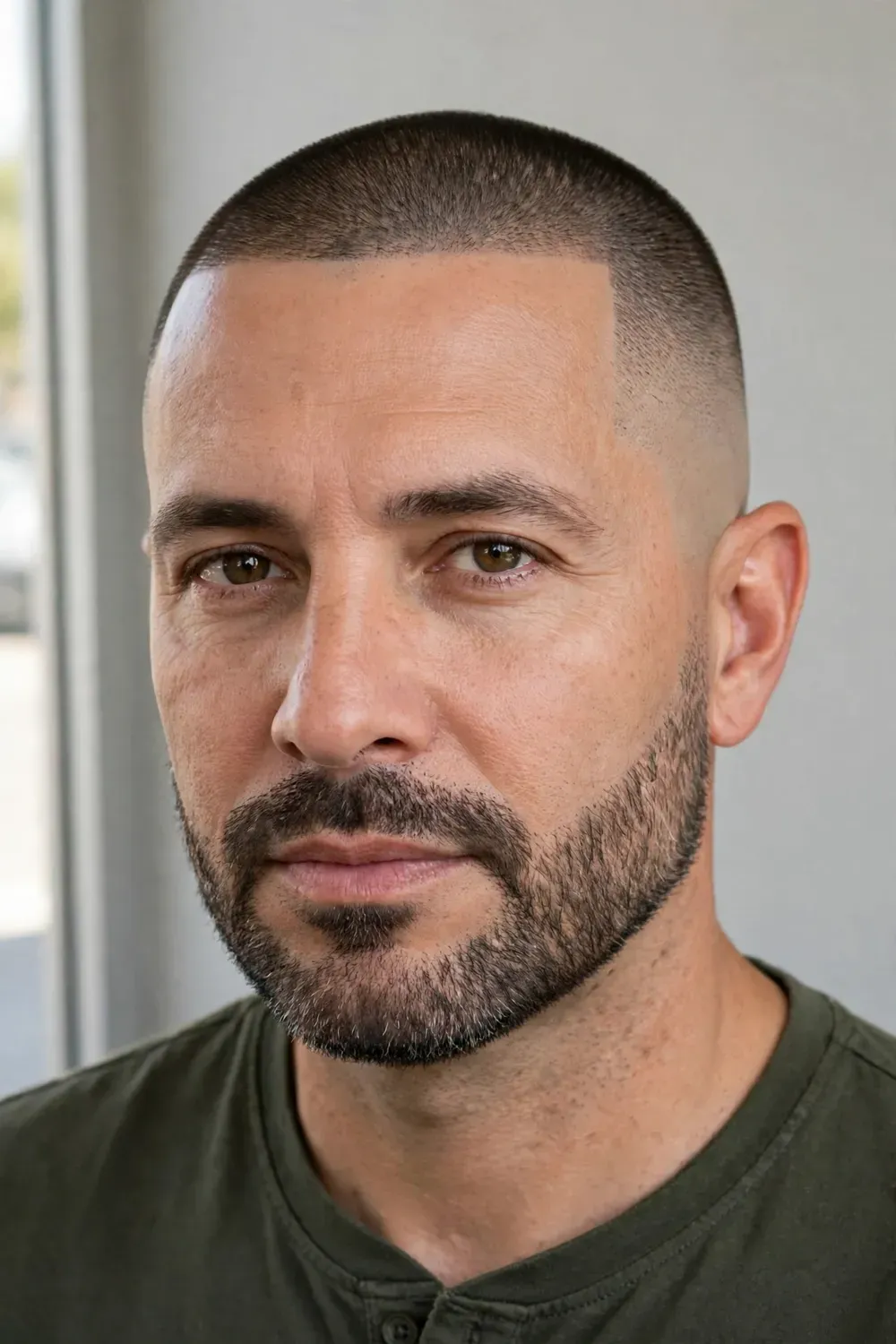
If you want the lowest-effort combo on this list, this is it. The buzz cut is one guard all over the top, the low fade keeps the edges tidy without showing much skin, and the short beard adds just enough structure to stop the head from looking completely bare. It suits any hair type — the buzz doesn’t discriminate — and it flatters oval and square faces best, since the short beard sharpens a jaw that a buzz cut alone can leave looking soft. Ask your barber for a number 2 or 3 guard on top, a low fade down to a zero at the neckline, and the sideburns blended into a short beard of about half a centimetre. At home, all you need is a trimmer and five minutes every few days to keep the beard even, plus a dab of oil so it doesn’t look dry. The fade grows out in about two weeks, but honestly this one still looks fine a week past its date, which is half the appeal.
37. Low Fade + Quiff + Heavy Stubble
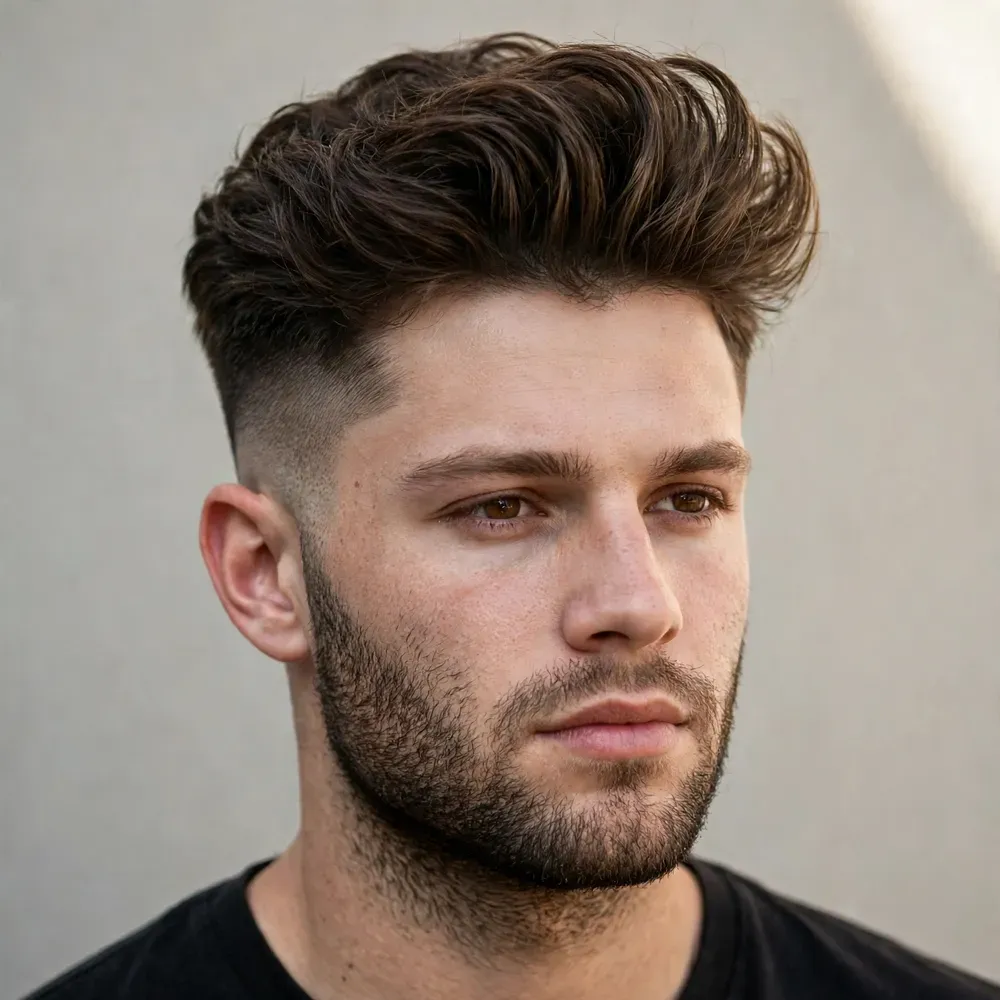
A quiff with heavy stubble is the weekend version of a sharp haircut — polished on top, deliberately rough around the jaw. The low fade keeps the sides clean without going too high, the quiff gives you height and movement, and the stubble adds texture that a clean shave never could. It suits thick, straight or wavy hair that can hold lift at the front, and it flatters round and oval faces because the quiff stretches the face upward while the stubble adds definition to the jaw. Ask your barber for a low fade, a quiff left long enough to sweep up and back with a blow dryer, and the sideburns tapered down into about four or five days of stubble. A volumising mousse and a matte clay hold the quiff in place, and a trimmer on a 1.5 guard keeps the stubble at the right length. The fade needs a fortnightly visit; the stubble needs a trim every three or four days, or it tips over into a patchy beard.
38. Mid Fade + Slick Back + Full Beard
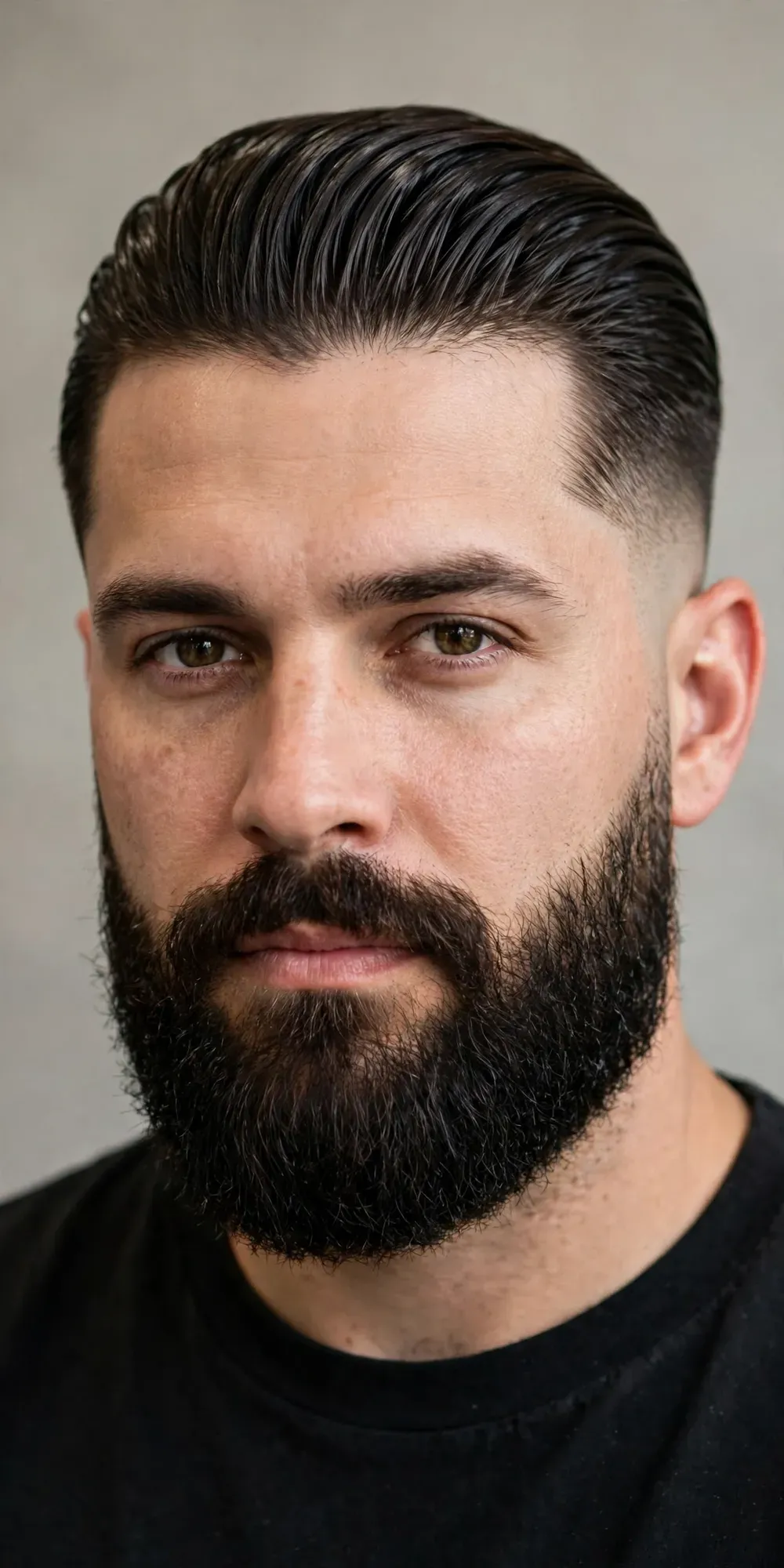
There’s something about a slick back with a full beard that reads as old-school confidence — it doesn’t try to be trendy, it just looks finished. The mid fade gives the sides a clean gradient, the slick back adds height and shine, and the full beard underneath grounds the whole thing so the head doesn’t look top-heavy. It suits thick, straight or wavy hair that can be combed back without springing forward, and it flatters oval and square faces — the slick back lengthens the face while the beard fills the jaw. Ask your barber for a mid fade, the top left long enough to slick back with a comb, and the sideburns blended gradually into a full beard of at least three centimetres. Pomade with a medium shine holds the slick back, beard oil and a boar bristle brush keep the beard shaped. The fade wants a visit every two weeks and the beard needs a weekly trim to stop the ends going wispy.
39. Mid Fade + Afro + Short Beard
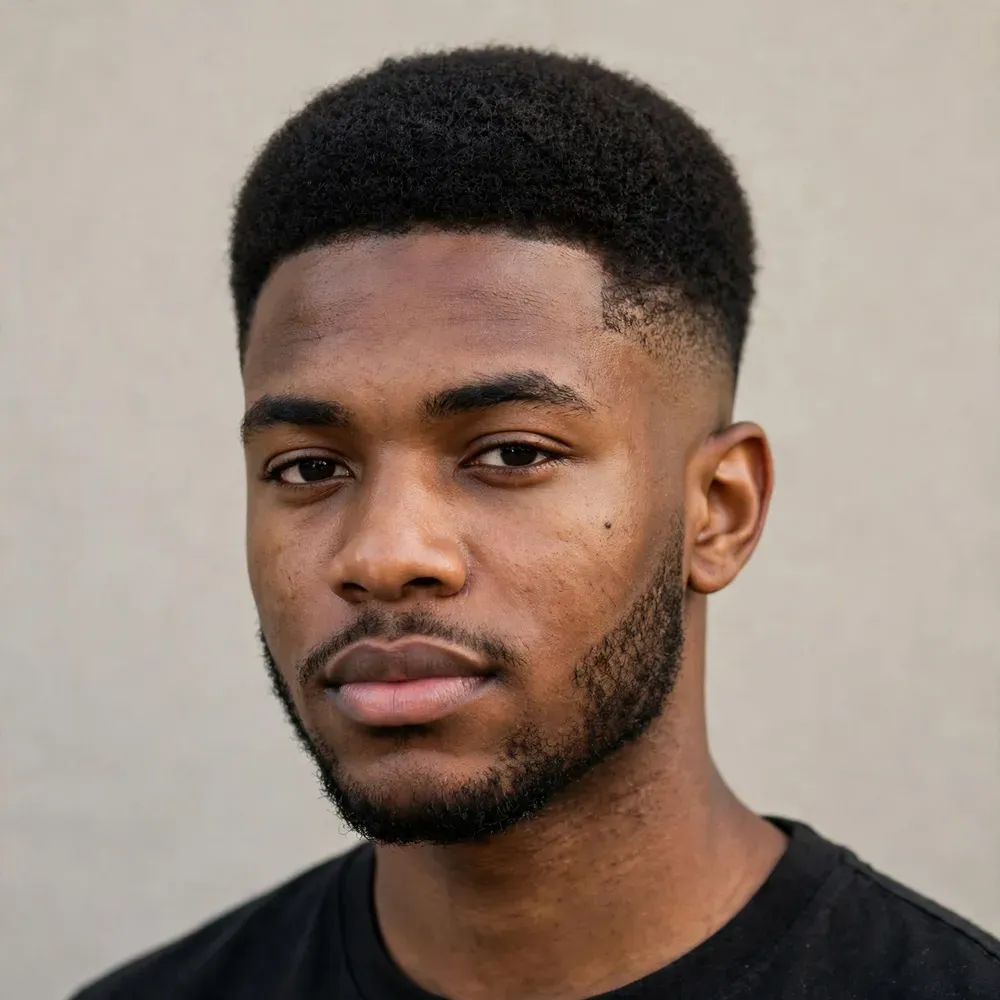
A short afro with a mid fade and a short beard is one of the cleanest ways to wear natural volume without letting it take over. The mid fade trims the sides at temple height, which keeps the afro’s shape tight and round, and the short beard adds definition to the jaw without competing with the hair on top. It suits type 4 hair with enough density to hold a short afro shape, and it flatters round and oval faces — the height on top lengthens the face while the short beard keeps the lower half neat. Ask your barber for a mid fade blended into the afro, the top shaped round with a pick, and the sideburns faded into a beard kept under a centimetre. A light leave-in and a pick keep the afro looking full rather than flat, and a few drops of beard oil stop the short beard from feeling rough. Shape-up every two weeks, beard trim once a week, and the look holds together with very little daily effort.
40. High Fade + Pompadour + Heavy Stubble
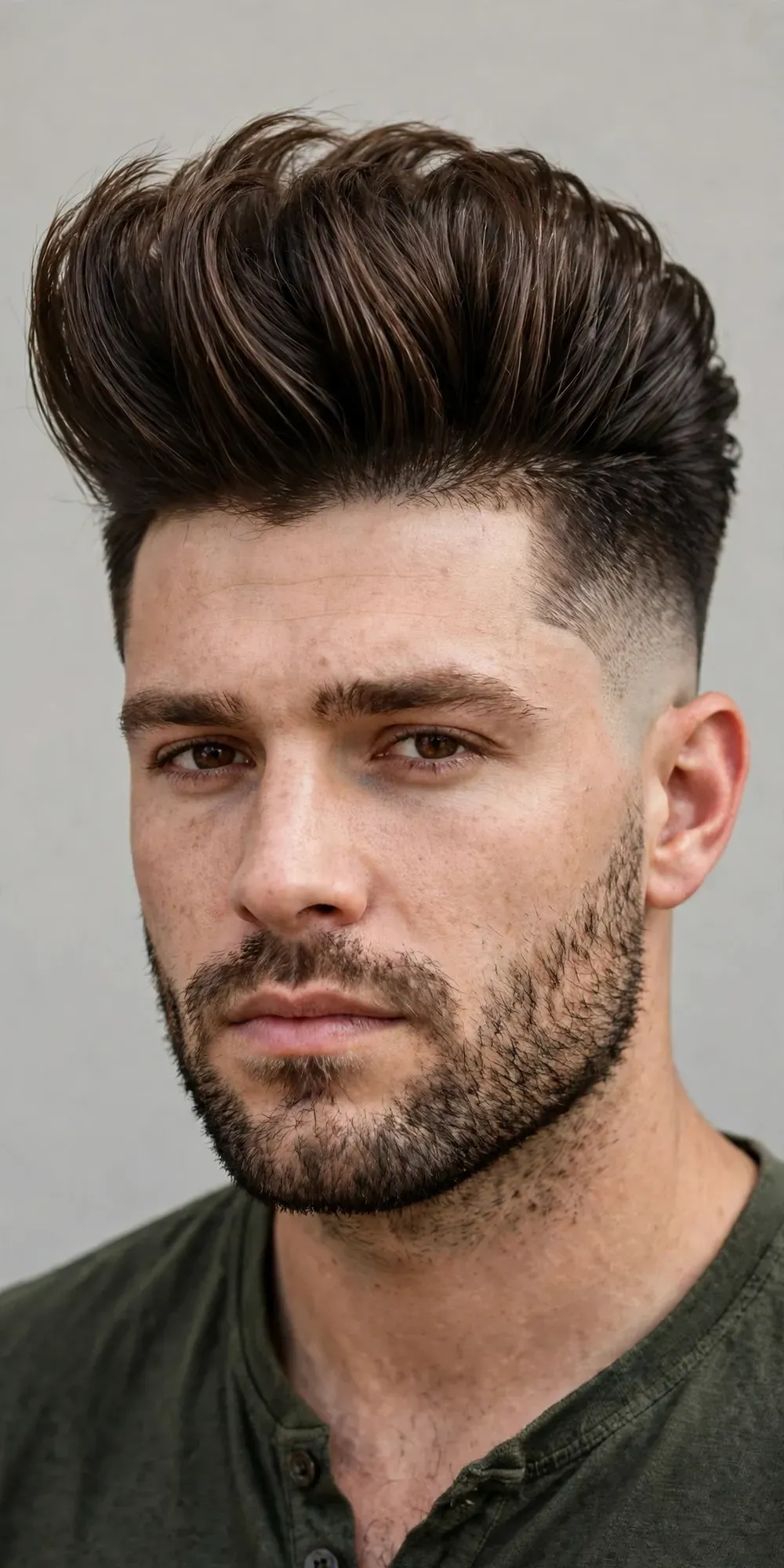
A tall pompadour with a high fade is already a statement; the heavy stubble is what keeps it from looking like a costume. The high fade strips the sides right up, which makes the pompadour look even taller, and the stubble adds a rough edge to the jaw that balances all that polish up top. It suits thick hair that can hold serious volume at the front, and it flatters round and oval faces — the height stretches the face out while the stubble defines the jaw. Ask your barber for a high fade, a pompadour left long enough to sweep up and back with a round brush and blow dryer, and the sideburns faded down into four or five days of stubble. A strong-hold pomade or a volumising mousse is non-negotiable here — without it, the pompadour collapses by lunchtime. The fade needs a visit every ten days to stay sharp, and the stubble wants a trim every three days. For more on where a high fade sits compared with other heights, see our guide to the High Fade Haircut.
41. Skin Fade + Quiff + Goatee
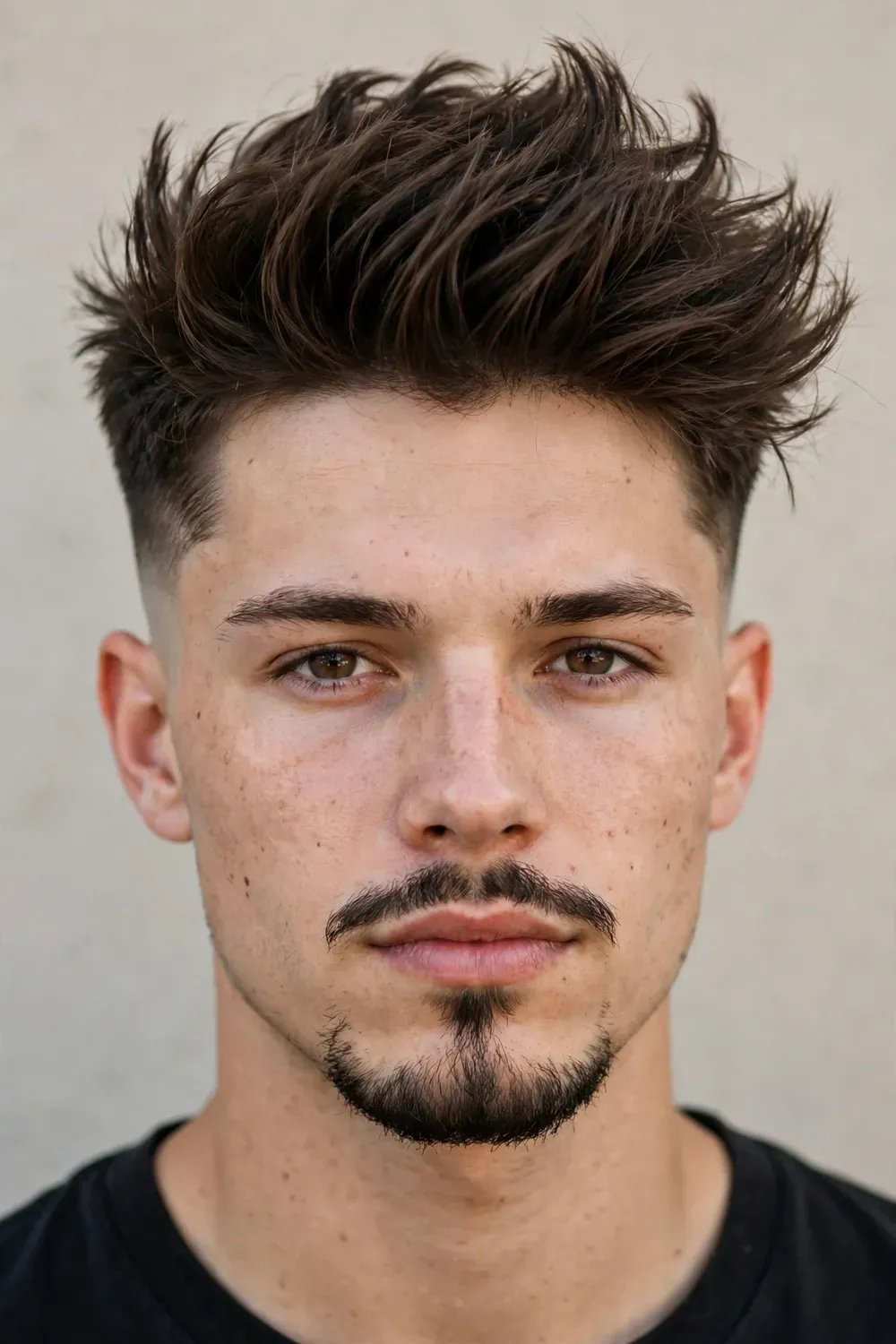
This is a sharp, angular combination — skin fade, lifted quiff, and a goatee that points the eye straight down to the chin. The skin fade gives you maximum contrast, the quiff adds height, and the goatee frames the chin so the face looks longer and more defined. It suits straight or wavy hair that can hold lift, and it flatters round faces best, since the quiff and the goatee both work to lengthen the face. Ask your barber for a skin fade finished with a foil shaver, a quiff left long enough to sweep up, and the sideburns faded out completely — clean cheeks, no stubble. The goatee itself needs a crisp outline: moustache connected to the chin patch, edges kept sharp with a detail trimmer. Matte clay holds the quiff, and a little beard oil keeps the goatee from looking dry. The skin fade grows out in about a week, so this is a fortnightly-at-minimum commitment, and the goatee edges want a tidy-up every two or three days.
42. Skin Fade + French Crop + Short Beard
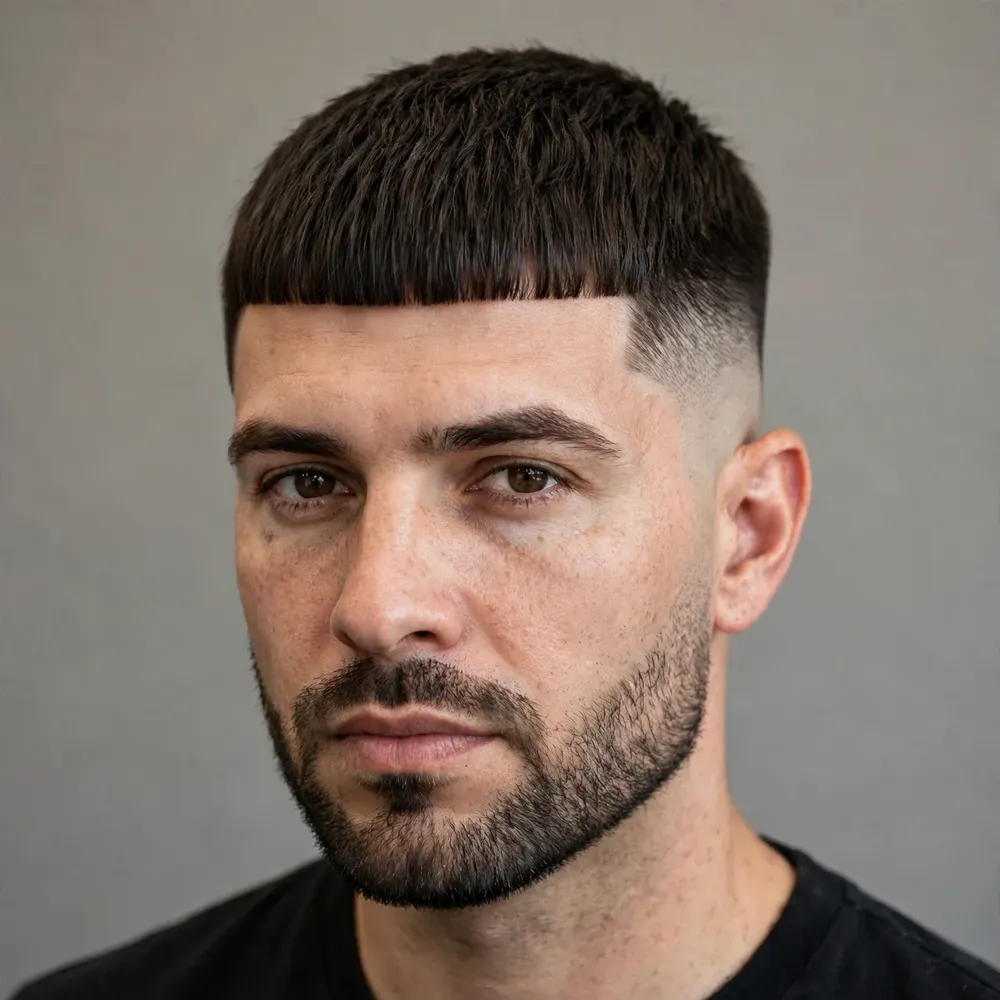
The French crop is already a no-nonsense cut — blunt fringe, short sides — and pairing it with a skin fade and a short beard turns it into something genuinely sharp. The skin fade gives the crop maximum contrast, the blunt fringe frames the forehead, and the short beard keeps the jaw defined without stealing attention from the cut. It suits straight or slightly wavy hair that can sit flat in a fringe, and it flatters oval and oblong faces, since the fringe shortens a long forehead while the beard adds width to the jaw. Ask your barber for a skin fade, a crop with a blunt, textured fringe, and the sideburns blended into a short beard of about half a centimetre. A little matte paste gives the fringe its texture, beard oil keeps the short beard soft. The skin fade is the demanding part here — it needs a touch-up every seven to ten days — but the crop itself is wash-and-go, which balances things out.
43. Drop Fade + Pompadour + Full Beard
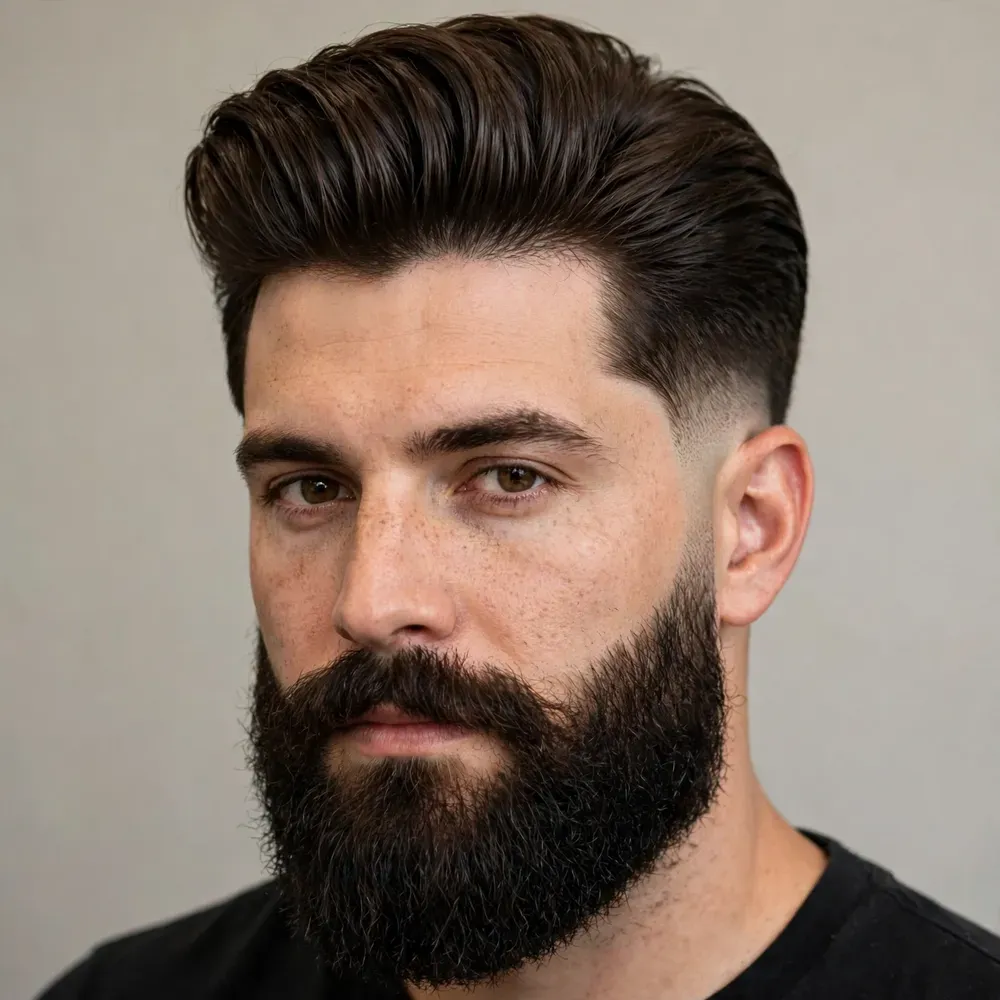
A drop fade with a pompadour and a full beard is the most balanced version of a high-volume look. The fade dips down behind the ear instead of running straight across, which follows the head’s natural curve and keeps the pompadour from looking disconnected, while the full beard underneath anchors all that height. It suits thick, straight or wavy hair that can hold a pompadour, and it flatters oval and square faces — the pompadour adds length up top while the beard fills out the jaw. Ask your barber for a drop fade that curves down behind each ear, a pompadour left long enough to sweep up and back, and the sideburns blended gradually into a full beard of three centimetres or more. Strong-hold pomade keeps the pompadour in place, beard oil and a brush keep the beard shaped. The fade needs a visit every two weeks and the beard wants a weekly trim, so it’s a real routine — but the payoff is a look that works as well in a wedding photo as it does on a night out.
44. Burst Fade + Quiff + Short Beard
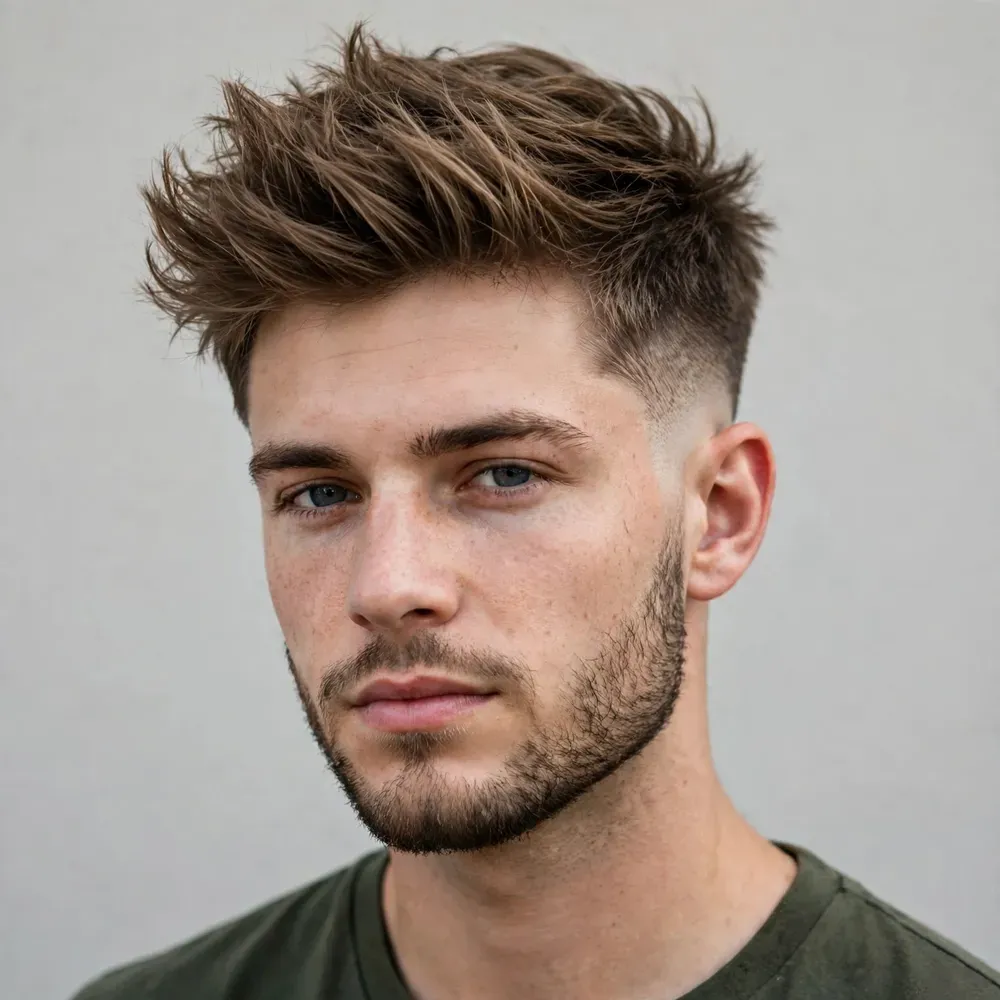
The burst fade’s curved shape does something a straight fade can’t: it follows the ear and gives the quiff a frame that feels designed rather than cut. The quiff lifts the front, the burst fade keeps the sides tight with a curve that draws the eye, and the short beard underneath adds just enough definition to the jaw. It suits thick, straight or wavy hair that can hold lift, and it works well on oval and round faces — the quiff stretches the face upward while the beard keeps the lower half from looking bare. Ask your barber for a burst fade that arcs cleanly behind the ears, a quiff left long enough to sweep up with a blow dryer, and the sideburns tapered into a short beard of about half a centimetre. Matte clay or a volumising mousse holds the quiff, beard oil keeps the short beard soft. The burst fade is unforgiving when it grows out, so plan on a visit every ten days to two weeks.
45. Taper Fade + Buzz Cut + Short Boxed Beard
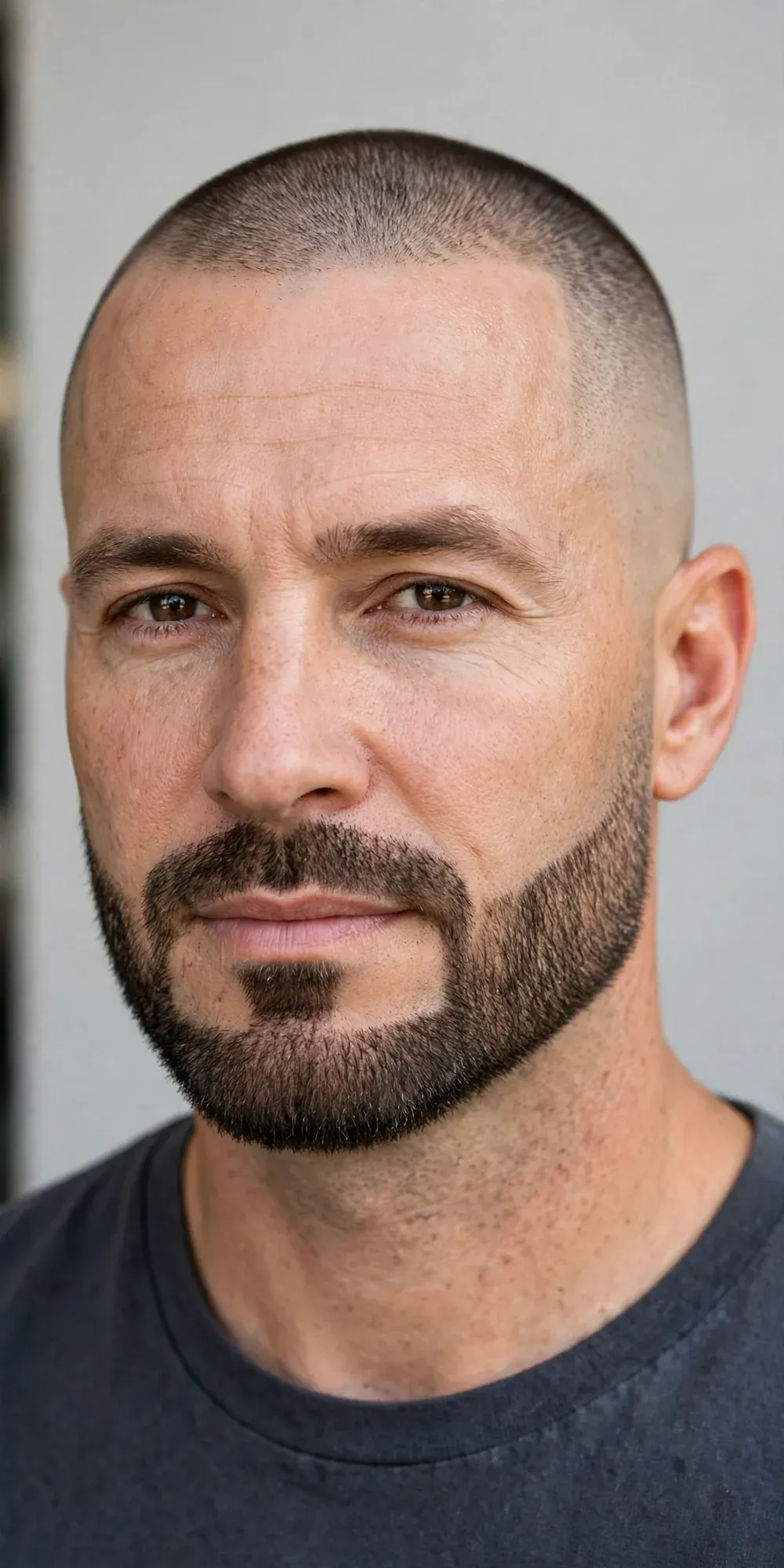
A buzz cut with a taper fade and a boxed beard is what happens when you want to look sharp without spending more than five minutes on your hair in the morning. The buzz is one guard all over, the taper keeps the edges clean without exposing skin, and the boxed beard — with its straight cheek line and defined edges — gives the face structure that a buzz alone can’t provide. It suits any hair type and it flatters square and oval faces best, since the boxed beard sharpens the jawline while the buzz keeps everything else minimal. Ask your barber for a number 2 or 3 guard on top, a low taper fade around the ears and nape, and the sideburns blended into a short beard with a straight, defined cheek line and a clean neckline. At home, a trimmer and a detail blade keep the box edges crisp, and a drop of oil stops the short beard from feeling scratchy. The taper needs a fortnightly visit, the boxed edges need a touch-up every few days.
46. Low Taper Fade + Side Part + Short Beard
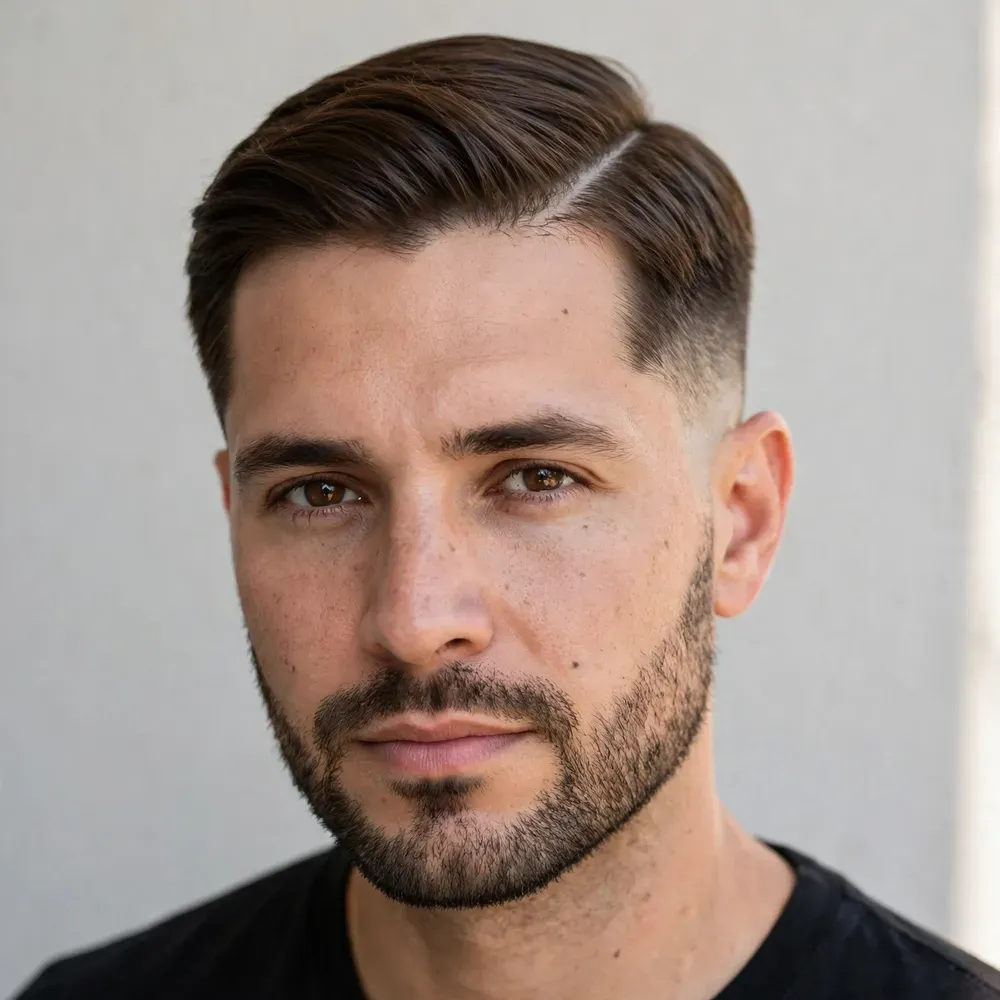
This is the quietest combo on the list, and sometimes that’s exactly the point. A low taper fade barely shows itself — just a clean edge around the ears and neckline — while the side part sits neat and the short beard adds a little weight to the jaw. It suits straight or slightly wavy hair that parts naturally, and it flatters every face shape, which is why barbers reach for it when a client isn’t sure what they want. Ask your barber for a low taper fade, a side part cut with scissors so it falls naturally, and the sideburns blended into a short beard of about half a centimetre, with the cheek line left natural and the neckline cleaned up. A little matte paste on the part and a drop of beard oil is all the styling this needs. The taper grows out gracefully, so you can stretch visits to three weeks, and the short beard only needs a trim once a week. If you only try one combo from this list and you want the safest bet, start here.
How Do I Ask My Barber for a Fade with a Beard?
The difference between a great fade-and-beard combo and a disappointing one is usually the conversation before the clippers come out. Vague requests get vague results, so go in with a script and use it. Here’s one that covers everything a barber needs to hear:
“I’d like a mid fade — starting at temple height — blended down to a zero at the neckline, with the sides taken to a number 2 guard at the top of the fade. I want the sideburns faded gradually into the beard, not cut off at a line — no hard step where the hair meets the beard. Keep the cheek line natural, just clean up the strays, and set the neckline two fingers above the Adam’s apple.”
Swap in your own fade height — low, high, skin, drop or burst — and your own guard numbers, but keep the structure the same: fade height, guard numbers, sideburn blend, cheek line, neckline. If you don’t know your guard numbers, that’s fine — point to a photo and say “about this length on top” while you describe the fade in words. And one more thing: tell your barber what you do at home. If you never use a blow dryer, say so, because a cut that needs one to look right will disappoint you every morning. A good barber would rather adjust the cut to your real routine than watch you struggle with a style you can’t recreate.
Beard Care Routine for Fade Combos
A fade only looks good for a week or two before it starts growing out, and the beard is on the same clock — which is exactly why the two need a shared routine rather than two separate ones. Start with oil: three to five drops of beard oil every morning, worked through from the skin outward, keeps the hair soft and stops the skin underneath from itching. A boar bristle brush after the oil trains the beard to lie in one direction and pulls the oil through evenly — do this for thirty seconds and the beard immediately looks more deliberate. Wash the beard two or three times a week with a proper beard wash, not your hair shampoo, which strips the natural oils and leaves the hair wiry. Trim on a schedule: a full beard gets a shape-up once a week, a short beard every four or five days, and stubble every three. Clean up the cheek line and the neckline between barber visits with a detail trimmer — the neckline sits two fingers above the Adam’s apple, and the cheek line should follow its natural curve rather than being drawn in a straight line. For the longer story of how beards became the style statement they are today, the Beard article on Wikipedia is a good place to start.
5 Mistakes to Avoid with Fade and Beard Combos
- A hard step at the sideburn. The single most common mistake is letting the fade end and the beard begin as two separate blocks, with a visible line where they meet. The sideburn is the bridge between the two, and it needs to be faded gradually — the barber should blend the hair down through the sideburn so the fade and the beard read as one continuous shape.
- A beard that’s too long for a high fade. A high fade strips the sides right up, which leaves a lot of bare head — pair that with a very long beard and the proportions go wrong, with all the weight sitting at the bottom. Long beards belong with low or mid fades; if you love a high fade, keep the beard short or medium.
- A fuzzy cheek line. Letting the cheek line grow wild for weeks makes even a fresh fade look untidy, because the eye reads the whole face at once. Clean up the strays every few days with a trimmer, but don’t draw the line in too low or too straight — follow the natural curve of your cheek.
- Mismatched upkeep schedules. The fade needs a visit every one to two weeks, the beard needs trimming at home in between, and when the two schedules drift apart the look falls apart — a fresh fade with a scruffy beard, or a tidy beard with a grown-out fade, both look half-finished. Put both on the same calendar and stick to it.
- Over-shaping the neckline. Carving the neckline too high or too sharp is hard to undo — the hair takes weeks to grow back, and a neckline cut above the jaw looks wrong from every angle. Two fingers above the Adam’s apple, a gentle curve, and stop there.
Frequently Asked Questions
What fade goes best with a beard?
A low fade is the safest all-rounder: it keeps the sides tidy without exposing much skin, and it works with every beard length from stubble to full. Mid fades suit short and medium beards best, while high and skin fades look sharpest with short beards or stubble, because a very long beard next to a very high fade throws the proportions off. If you’re choosing just one combination and you want it to work with whatever beard length you end up growing, start with a low fade.
Should the fade blend into the beard or stay separate?
Blend it, every time. A fade that stops at the sideburn and a beard that starts below it creates a visible step that looks like two different haircuts. The barber should fade the sideburns gradually into the beard so there’s a smooth transition from short hair to beard hair. The only exception is a goatee, where the cheeks are shaved clean anyway — but even then, the sideburns should taper down rather than end in a hard line.
Can I get a fade if my beard is patchy?
Yes, and a fade can actually help. A skin or high fade draws attention upward and away from the cheeks, and pairing it with a short beard — or just heavy stubble — makes patchy areas far less noticeable than a longer beard would. The trick is to keep the beard short enough that the patchy spots don’t stand out, and to let the barber fade the sideburns into whatever density you have. A goatee or a chinstrap style is another good option, since both skip the cheeks entirely.
How often should I get a fade with a beard touched up?
A skin or high fade needs a barber visit every seven to ten days to stay sharp; a low or mid fade stretches to about two weeks, and a taper fade can go three. The beard itself needs attention at home between visits — a trim every four to seven days depending on length, and a cheek line and neckline tidy-up every two or three days. Book the barber visits on a fixed schedule rather than waiting until the fade looks grown out, because by then you’re already a week late.
What is the best fade and beard combo for a round face?
A high fade with a short boxed beard is the strongest choice for a round face. The high fade strips the sides and adds height on top, which lengthens the face, while the boxed beard with its straight edges adds definition to the jaw and makes the face look less round. A mid fade with a quiff and a short beard works on the same principle. Avoid low fades with full, round beards — the combination adds width everywhere and makes a round face look rounder.
Does a high fade work with a long beard?
It can, but the proportions need care. A high fade leaves a lot of bare head, so a very long beard can make the head look top-heavy at the bottom — the trick is keeping the beard well shaped, with a tapered neckline and clean cheek lines, so it reads as deliberate rather than overgrown. Most barbers would steer you toward a mid fade with a long beard instead, since it keeps more hair on the sides and balances the weight better. If your heart is set on a high fade, keep the beard medium rather than long.
How do I ask my barber for a fade with a beard?
Use the script from the section above: name the fade height, give your guard numbers, ask for the sideburns to be faded gradually into the beard with no hard step, keep the cheek line natural, and set the neckline two fingers above the Adam’s apple. Bring a photo of the combo you want — it removes all guesswork — and tell your barber what your morning routine actually looks like, so the cut matches the effort you’re willing to put in.
Final Word
Forty-six combinations is a lot to choose from, and the honest truth is that most of them come down to two decisions: how high you want the fade, and how long you want the beard. Get those two right for your face shape and your routine, and the rest — the quiff, the curls, the pompadour — is just the style you put on top. Start with a low fade and a short beard if you’re unsure, grow from there, and let your barber know what you’re aiming for before the clippers come out. For more ideas once you’ve found your combo, browse our more hairstyle guides.