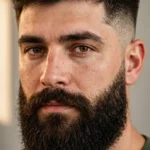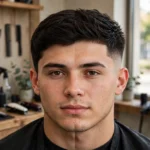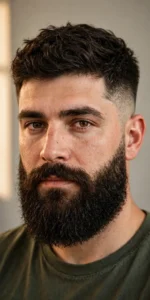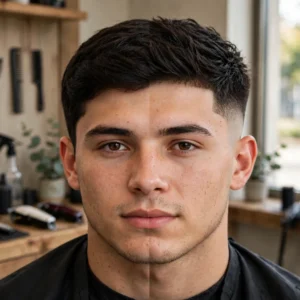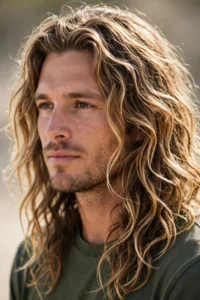


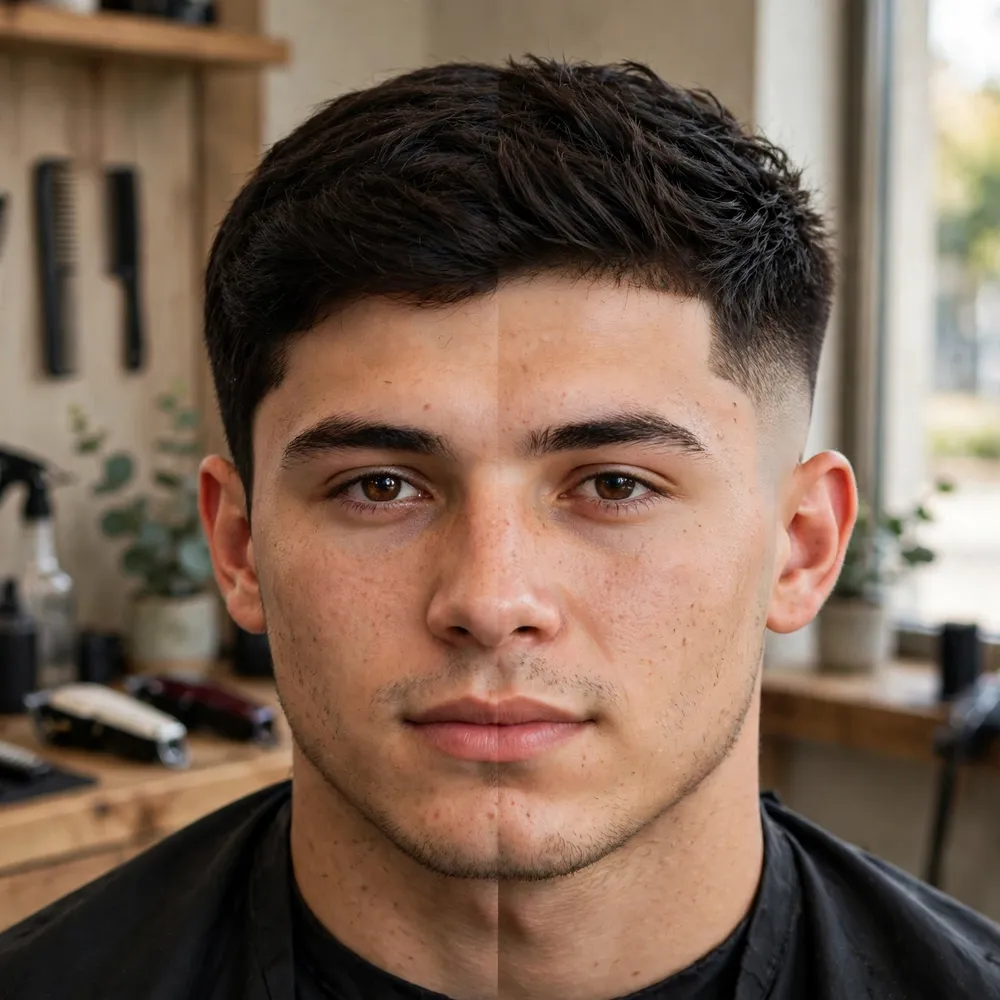
A taper vs fade haircut comes down to one thing: how short the sides actually get. A taper shortens gradually and stops at a short guard, so there’s always hair left at the bottom. A fade keeps going until it hits stubble or bare skin. If you want a safe first pick, go with the Low Taper for something quiet and office-friendly, the Mid Fade for a clean modern look, or the Taper Fade when you can’t decide between the two.
What Is a Taper Haircut?
A taper is the slow, gentle version of short sides. Your barber works the hair down in small steps — longer at the top of the side, shorter as they reach the ear and the nape — but the shortest point usually stops at a #1 or #2 guard, roughly 3 to 6mm. There’s no bald line, no skin showing through, just a smooth gradient that looks like your hair naturally gets shorter towards the edges. The short work stays low, hugging the sideburns and the back of the neck, which is why a taper grows out so gracefully. Four or five weeks later it still looks like a haircut rather than a mess, and most men can stretch barber visits to every four or five weeks without anyone noticing. It’s the cut your dad probably had, and honestly, that’s part of the appeal — it suits nearly every face shape, every workplace, and every hair type without trying too hard.
What Is a Fade Haircut?
A fade takes the same idea — short sides, longer top — and pushes it much further. Instead of stopping at a short guard, the blend drops all the way to stubble or bare skin, usually a #0 guard or a foil shaver finish. That’s where the sharp contrast comes from: skin at the bottom, real length on top, and a smooth gradient in between. Fades come in heights. A low fade keeps the skin work just above the ears, a mid fade starts around the temple, and a high fade climbs above it for the boldest look. The trade-off is upkeep. A fade looks razor-crisp for about a week, decent for two, and by week three the regrowth starts blurring the blend. Expect to see your barber every one to three weeks if you want it looking sharp, which is worth knowing before you commit.
Taper vs Fade at a Glance
| Taper | Fade | |
|---|---|---|
| Shortest point | #1 or #2 guard (3–6mm) | #0 guard, stubble or bare skin |
| Scalp visible? | No — hair covers the skin throughout | Yes — skin shows at the bottom of the fade |
| Where the short work sits | Low, around the sideburns and nape | Any height — low, mid or high on the head |
| Contrast | Soft and gradual | Sharp and high-contrast |
| Finish | Natural, classic, understated | Clean, bold, modern |
| Grow-out | 4–5 weeks before it looks untidy | 1–2 weeks before the blend blurs |
| Best for | Offices, first-timers, low-maintenance men | Statement looks, thick hair, sharp line-ups |
| Barber visits | Every 4–5 weeks | Every 1–3 weeks |
The 39 Best Taper vs Fade Haircuts
1. The Classic Taper
This is the haircut that never goes out of style, and barbers reach for it whenever a client says “just make me look tidy.” The sides graduate down in small, even steps to a #2 at the bottom, while the top keeps five to seven centimetres to comb aside or sweep back. It suits almost everyone, but it shines on straight or slightly wavy hair, and anywhere a skin fade would raise eyebrows. Ask your barber for “a classic taper, #2 at the bottom, blended into the top, with a side part on the left.” A dab of matte clay through damp hair gives a natural finish, and it holds its shape for four to five weeks with just a morning comb.

2. The Low Taper
The Low Taper is the quietest cut on this list, and that’s exactly why so many men stick with it for years. The taper starts just above the ears and the nape, so from the front you barely notice the sides are short at all. It works brilliantly on thick hair that would otherwise puff out at the sides, and on rounder faces that need tidiness without harsh lines. Tell your barber “low taper, keep it tight around the ears, #2 at the shortest, blend it soft.” Style it with a pea-sized amount of matte paste, pushed back or to the side, and it still looks deliberate five weeks later. It’s the best taper to ask for if you’re nervous about going short.
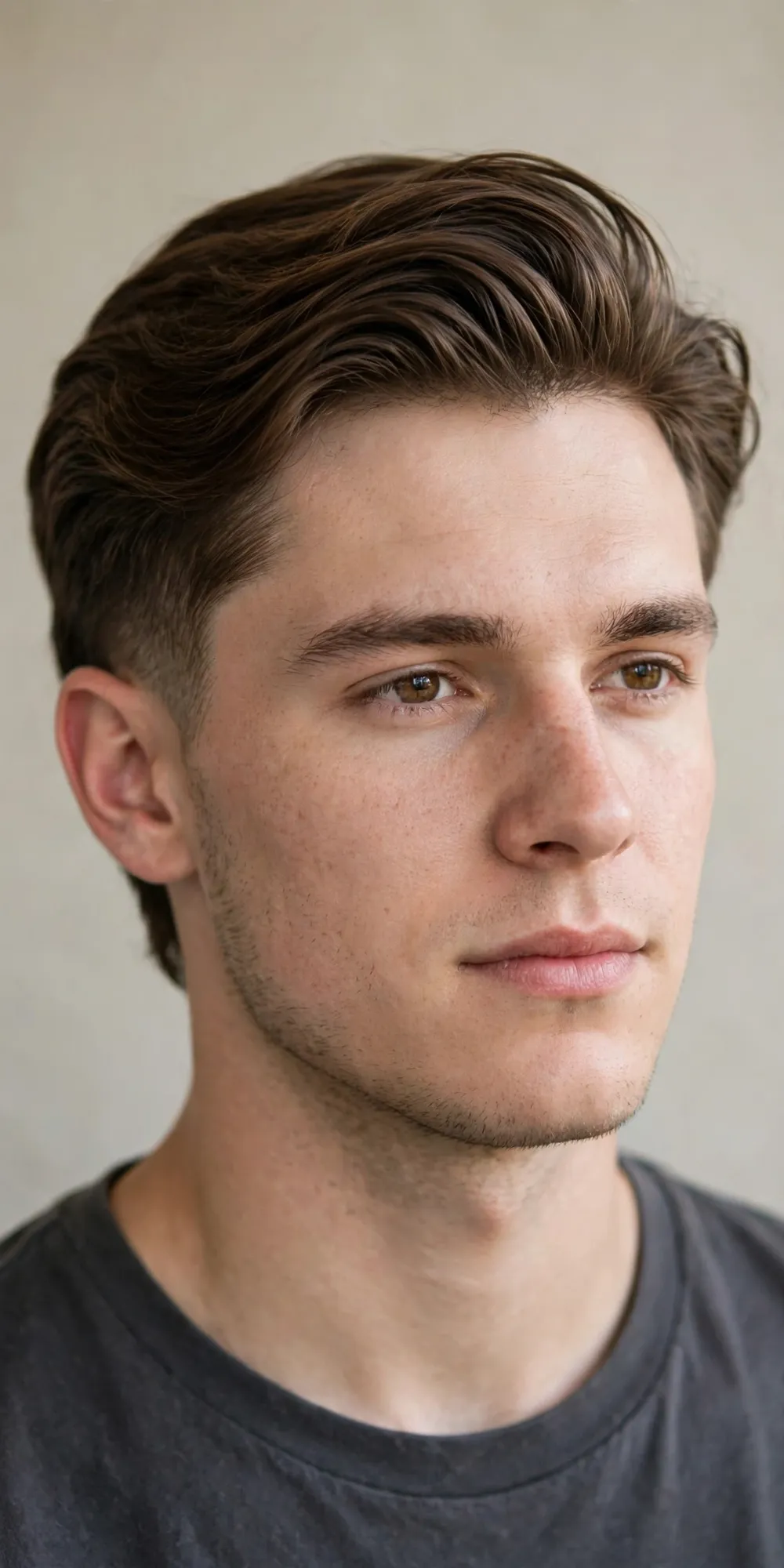
3. The Mid Taper
If the low taper feels too safe and the high taper too loud, the Mid Taper sits right in the sweet spot. The graduation starts at the temple, so there’s a visible taper line from the side, but it never climbs high enough to dominate the cut. The top can be a neat side part or a bit of textured length, which makes this one of the most flexible cuts a barber can give you. It suits oval and square faces well, and wavy hair too, since the mid-height taper keeps the sides controlled while the waves work on top. Ask for “a mid taper from the temple, #1 or #2 at the bottom,” and finish with a light cream or sea-salt spray for a natural look.

4. The High Taper
The High Taper is for men who like the taper’s softness but want it to make a statement. The graduation starts high on the sides, around or just above the temple, so a clear band of short hair frames the top. It still stops at a #1 or #2 guard instead of going to skin, bolder than a mid taper but far more forgiving than a high fade. It works best on straight or thick hair with a strong top, and it adds structure to rounder faces by pulling the eye upward. Ask your barber for “a high taper, #1 at the shortest, blend starting above the temple,” and style it with matte clay. Plan on a visit every three to four weeks, since regrowth shows sooner up high.
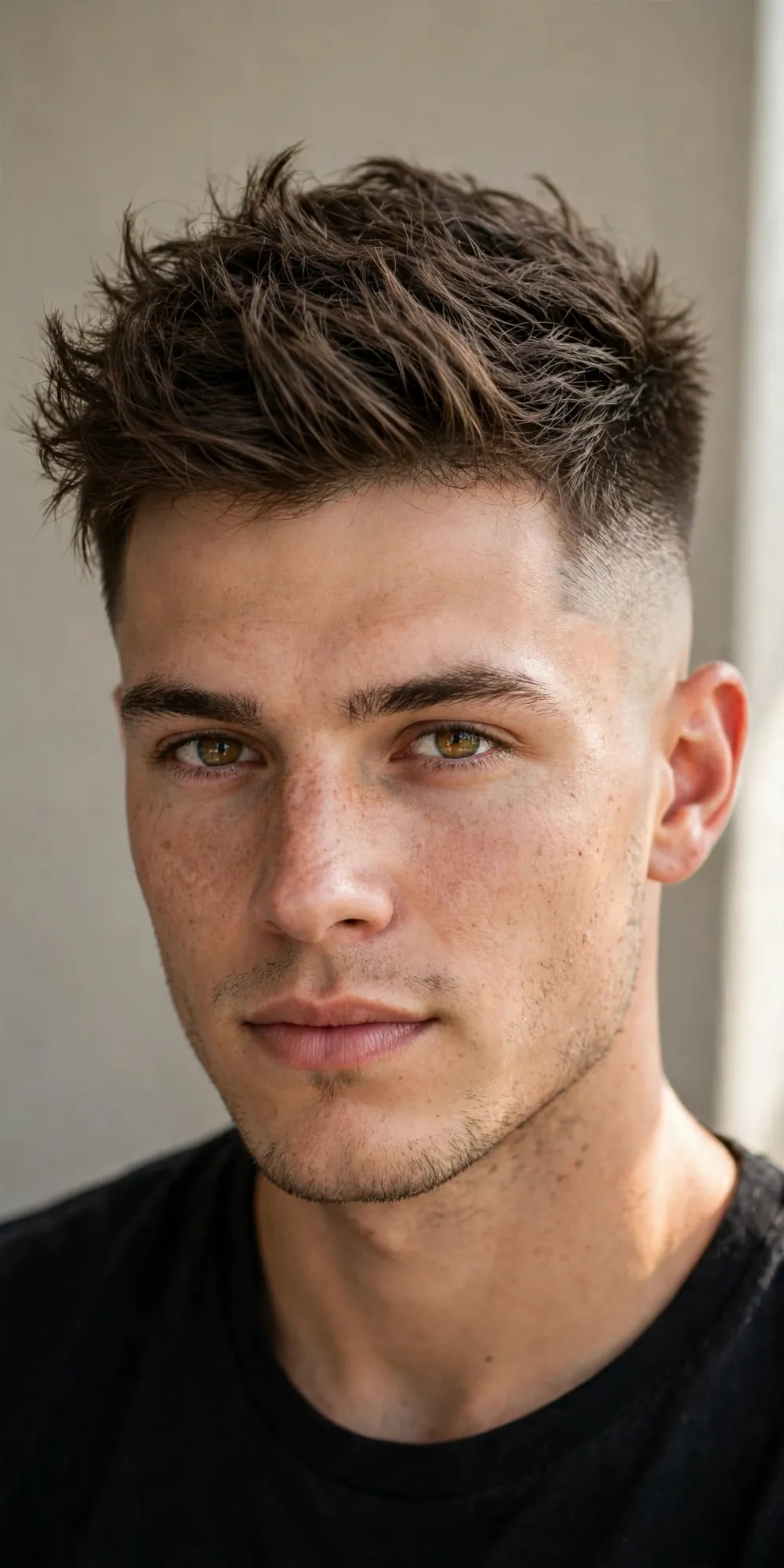
5. Taper with a Side Part
Few combinations look as put-together as a sharp side part sitting on top of a clean taper. The part does most of the work — a crisp line, usually on the left, gives the cut structure — while the tapered sides keep everything neat. It’s the haircut of choice for weddings, job interviews and anyone who wants to look like they have their life together. It suits straight hair best, since the part needs hair that lies flat, but a little pomade will coax most wavy hair into line too. Ask your barber for “a taper with a side part, #2 at the bottom, part on the left, top long enough to comb over.” A water-based pomade gives a classic shine; matte clay if you prefer a softer look.

6. Taper with a Textured Crop
The textured crop made short hair interesting again, and pairing it with a taper keeps the whole thing wearable. The top is cut short and choppy, around three to five centimetres, with point-cut ends that create movement instead of a flat slab of hair. It’s a brilliant choice for fine or thinning hair, because the texture creates the illusion of thickness, and it works on straight and wavy hair alike. Ask your barber for “a textured crop, about four centimetres, choppy through the ends, with a low or mid taper on the sides.” Styling takes thirty seconds: a fingertip of matte paste scrunched through the damp top, then rough it up and go. It holds up for three to four weeks before the texture starts to lose its edge.

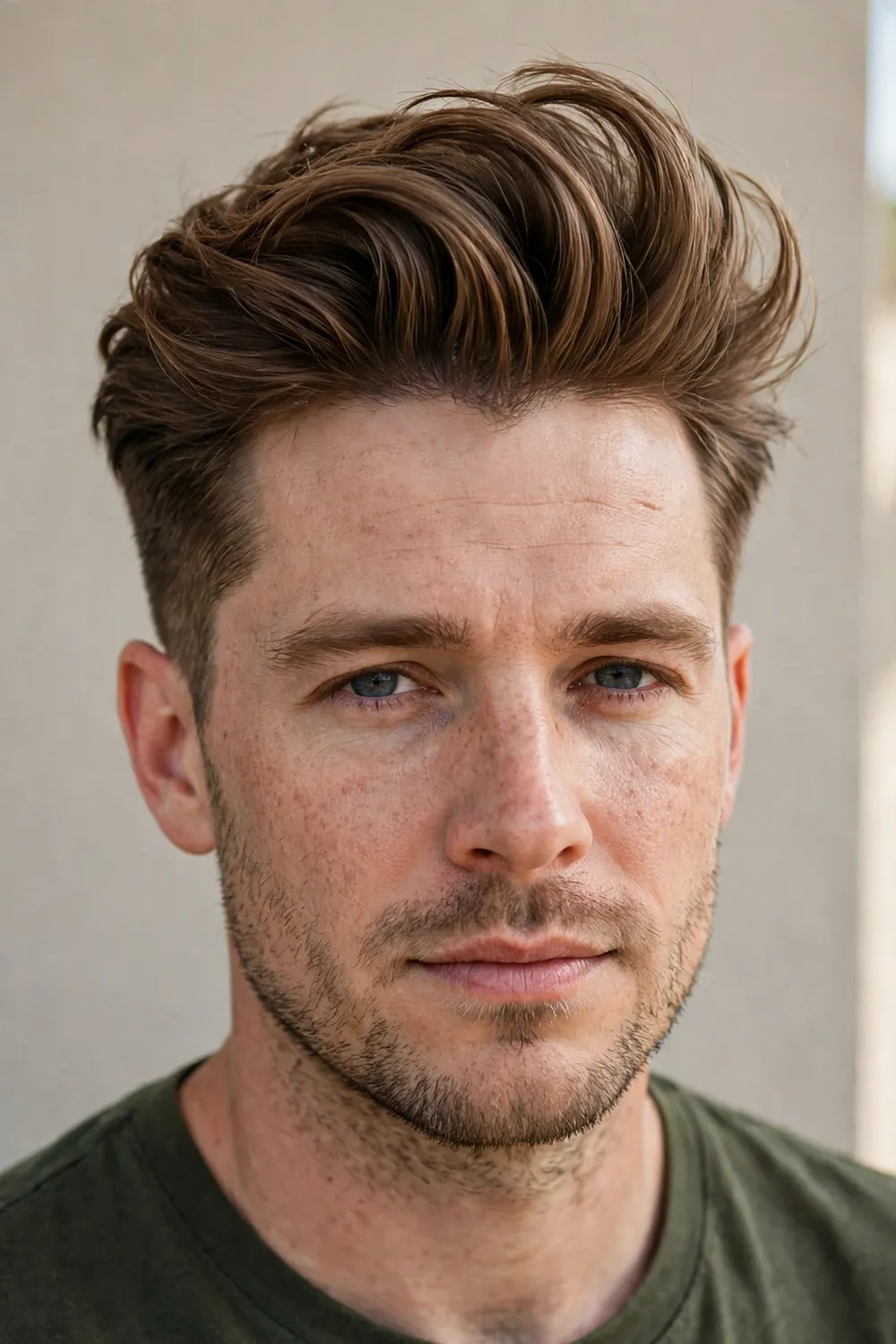
7. Taper with a Quiff
A quiff needs height at the front, and a taper gives it a frame that doesn’t compete for attention. The front is left long, seven to ten centimetres, to sweep up and back, while the sides taper down gently so the volume on top is the star. It’s a confident, slightly retro look that suits thick, straight or wavy hair, for men with patience in the morning. Ask for “a quiff, long on top, with a mid taper on the sides and back, blended — not faded.” Blow-dry the front upward with a round brush, then work matte clay through from roots to ends for hold that lasts all day. It needs a trim every three to four weeks to keep the taper crisp.
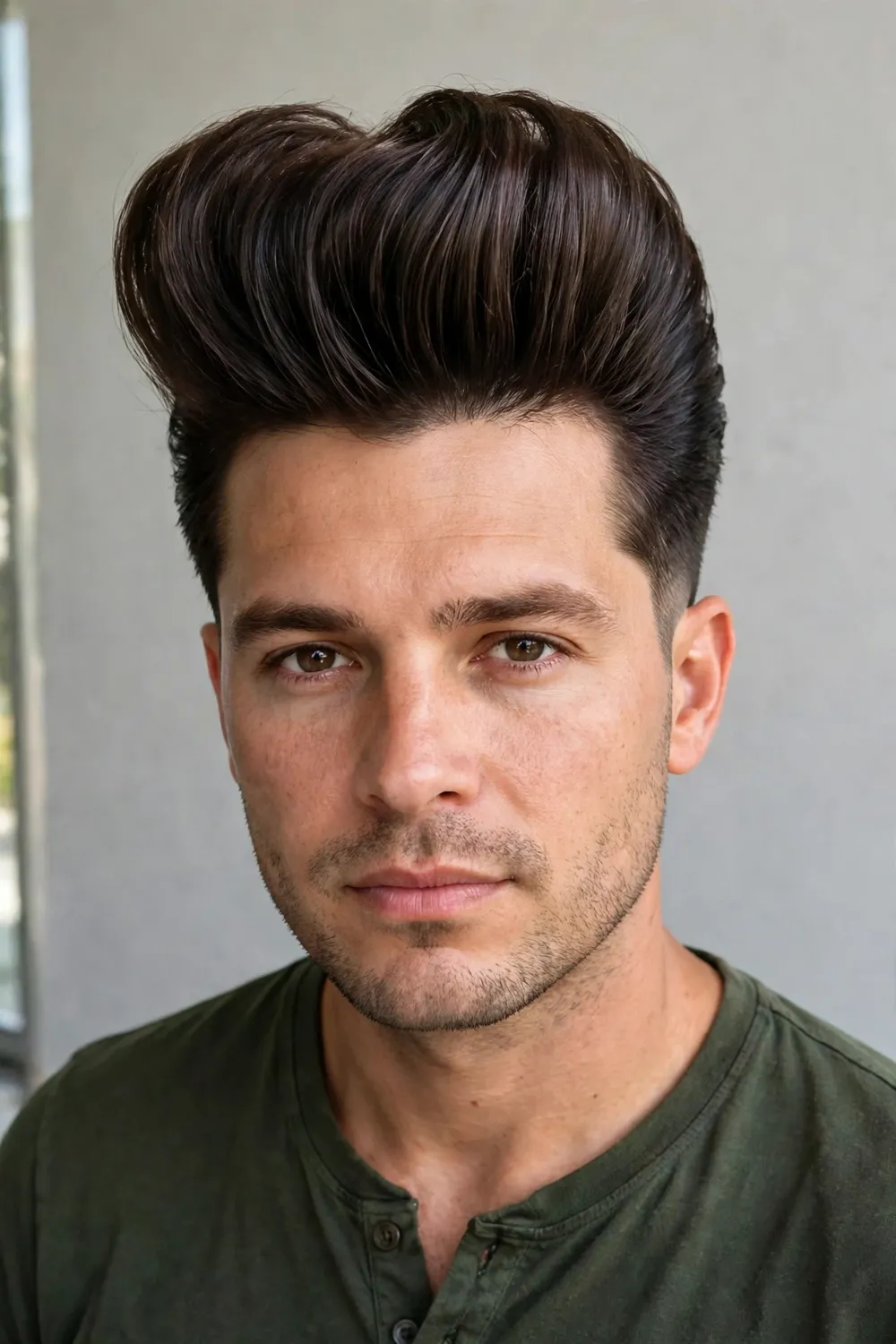
8. Taper with a Pompadour
The pompadour is the quiff’s louder, taller cousin, and the taper underneath keeps it from looking like a costume. The top is swept up and back with serious volume, eight to twelve centimetres at the front, while the sides graduate down in a soft taper. It suits men with thick hair and a strong jawline, and works best on oval or square faces, where the height adds length without overwhelming the features. Tell your barber “a classic pompadour, tapered sides, #2 at the bottom, keep the top long.” You’ll need a blow dryer and strong-hold pomade: dry the front up and back, then shape it. It’s high effort — five minutes every morning and a trim every three weeks — but nothing else here turns heads like it.
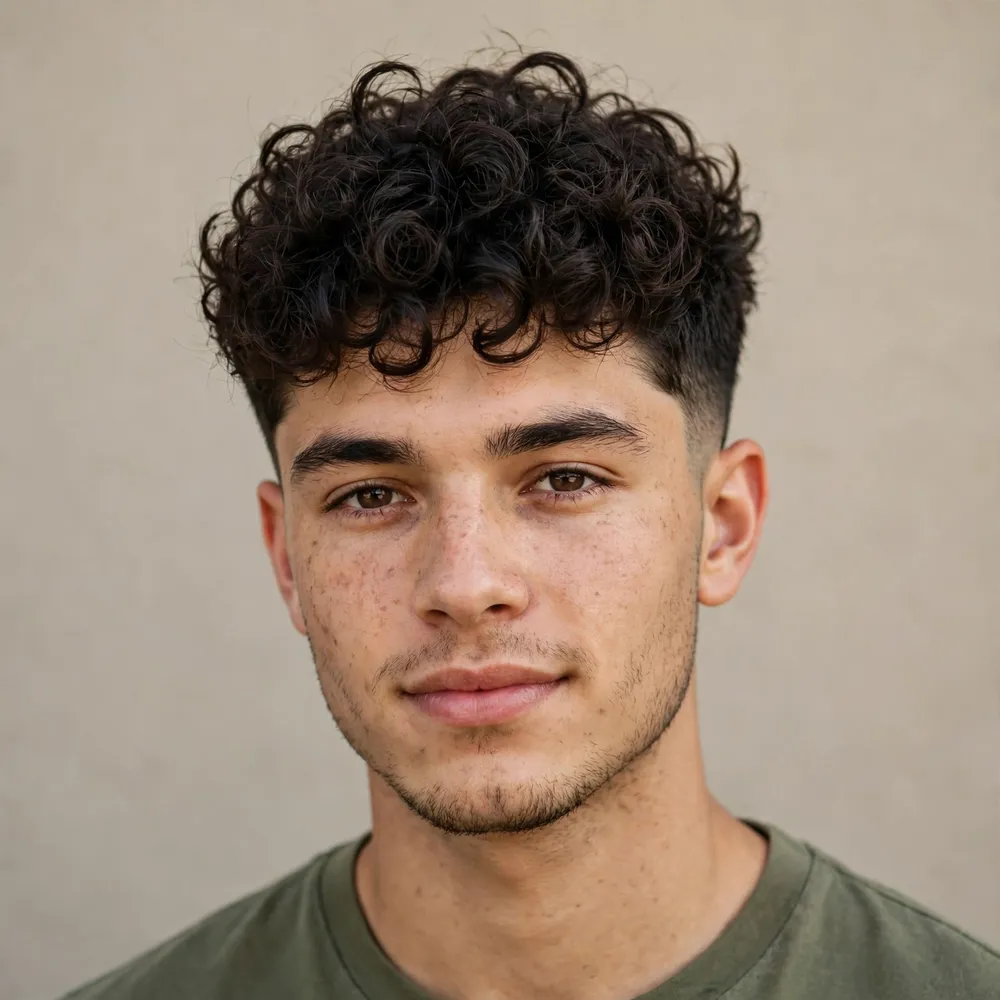
9. Taper with Curly Top
Curly hair and tapers are a natural match, because the taper tames the sides while the curls do whatever they want on top. The sides graduate down neatly, while the top keeps six to ten centimetres for the curls to form properly. It’s one of the best cuts for tight curls or loose waves, and it suits pretty much every face shape. Ask your barber for “a taper on the sides, #2 at the shortest, leave the curls long on top, no thinning shears.” The key product is a curl cream or light leave-in conditioner, scrunched in while the hair is damp — never brush curly hair dry. A trim every four to five weeks keeps the taper tidy, and the curls just need moisture and patience.
10. Taper with Waves
Waves have a mind of their own, and a taper is the easiest way to give them structure without fighting them. The sides are tapered down, while the wavy top, usually six to nine centimetres, is left long enough for the pattern to show. It works beautifully on thick, wavy hair, and flatters square and oval faces by adding softness up top and definition at the sides. Ask your barber for “a mid taper, keep the waves on top, cut with the wave pattern, not against it.” A sea-salt spray on damp hair brings out the texture, and a little matte paste adds definition on drier days. It grows out gracefully, since waves hide regrowth well, so four to five weeks between cuts is realistic.

11. Taper with a Buzz Cut
A buzz cut on its own can look a bit blunt, but a taper softens the edges and turns a basic military cut into something deliberate. The top is buzzed short, usually a #3 or #4 guard, while the sides and back graduate down to a #1 or #2 at the edges. It suits men with strong head shapes and good density, and it’s smart if you’re thinning on top, since short length hides it. Ask for “a buzz cut, #3 on top, tapered down to a #1 at the sides and nape.” There’s almost nothing to style, and the whole routine is a two-minute wash and go. The catch is the taper grows out fast on such short hair, so expect to be back every two to three weeks.

12. Taper with a Fringe
A forward fringe with a taper covers a high forehead well, or just offers a change from sweeping everything back. The fringe is cut straight across or slightly textured at the front, around four to six centimetres, while the tapered sides keep the silhouette tidy. It works well on straight hair, where the fringe falls cleanly, and on younger men or anyone after a softer, more casual look. Ask your barber for “a textured fringe, tapered sides, keep the front long enough to sit on the forehead.” Style it with a little matte paste, pushed forward with your fingers, and don’t overdo the product or the fringe will clump. It needs a trim every three to four weeks, since a fringe that grows too long starts falling into your eyes.
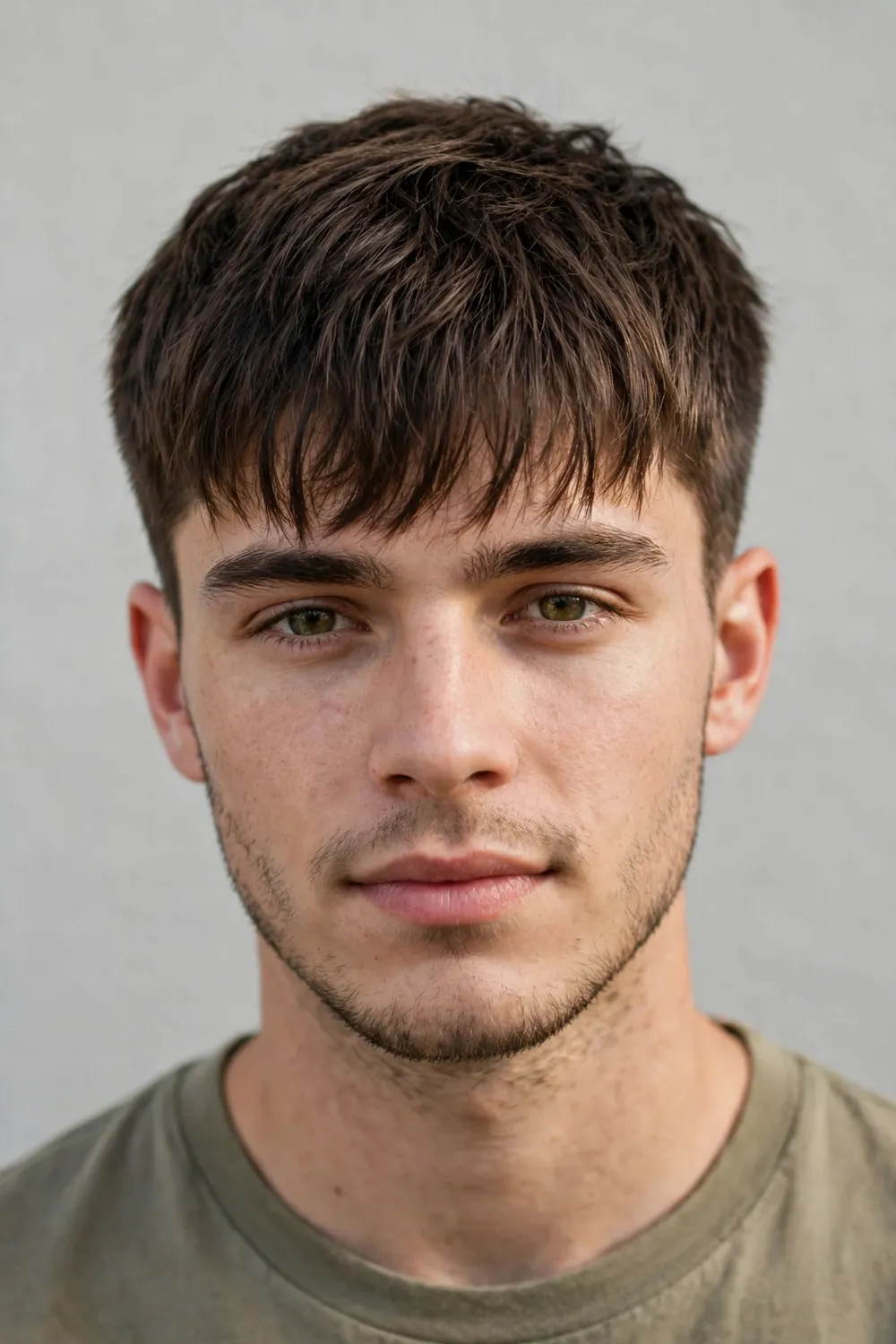
13. The Skin Taper
The Skin Taper is where a taper starts flirting with fade territory. The sides graduate to stubble, a #0 guard or foil finish, right at the bottom edge — but there’s no band of bald skin and no hard line. It gives you the crisp, clean feeling of a fade without the high contrast or the fast grow-out, which makes it a smart halfway house. It suits men who like sharp edges but want a softer overall look, and it works on most hair types and face shapes. Ask your barber for “a skin taper — take it down to a zero at the bottom edge only, keep the blend soft above it.” The stubble edge blurs within a week, so plan on a tidy-up every two to three weeks.
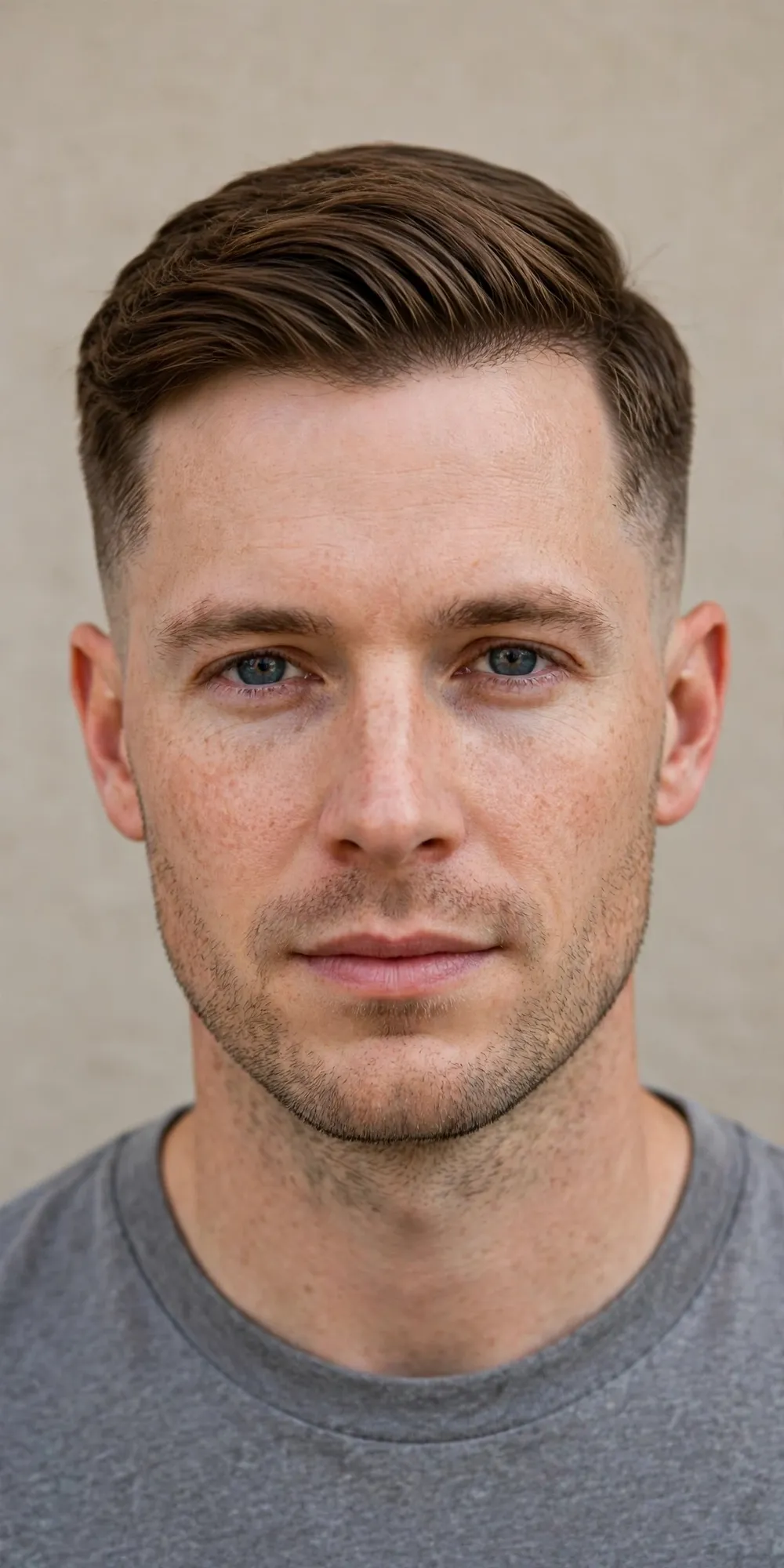
14. Taper with a Beard
With a beard, a taper is the easiest way to make your hair and facial hair look like they belong together. The trick is the blend: the taper on the sideburns flows down into the beard, so there’s no harsh step where the haircut ends and the beard begins. The top can be anything — a crop, a side part, a quiff — because the real work happens at the sideburns. It suits men with medium to full beards, and it’s the cut most barbers recommend when a client grows a beard. Ask for “a taper blended into the beard, keep the sideburns natural, shape the beard to match.” A drop of beard oil keeps the blend smooth, and the beard needs a shape-up every two weeks.
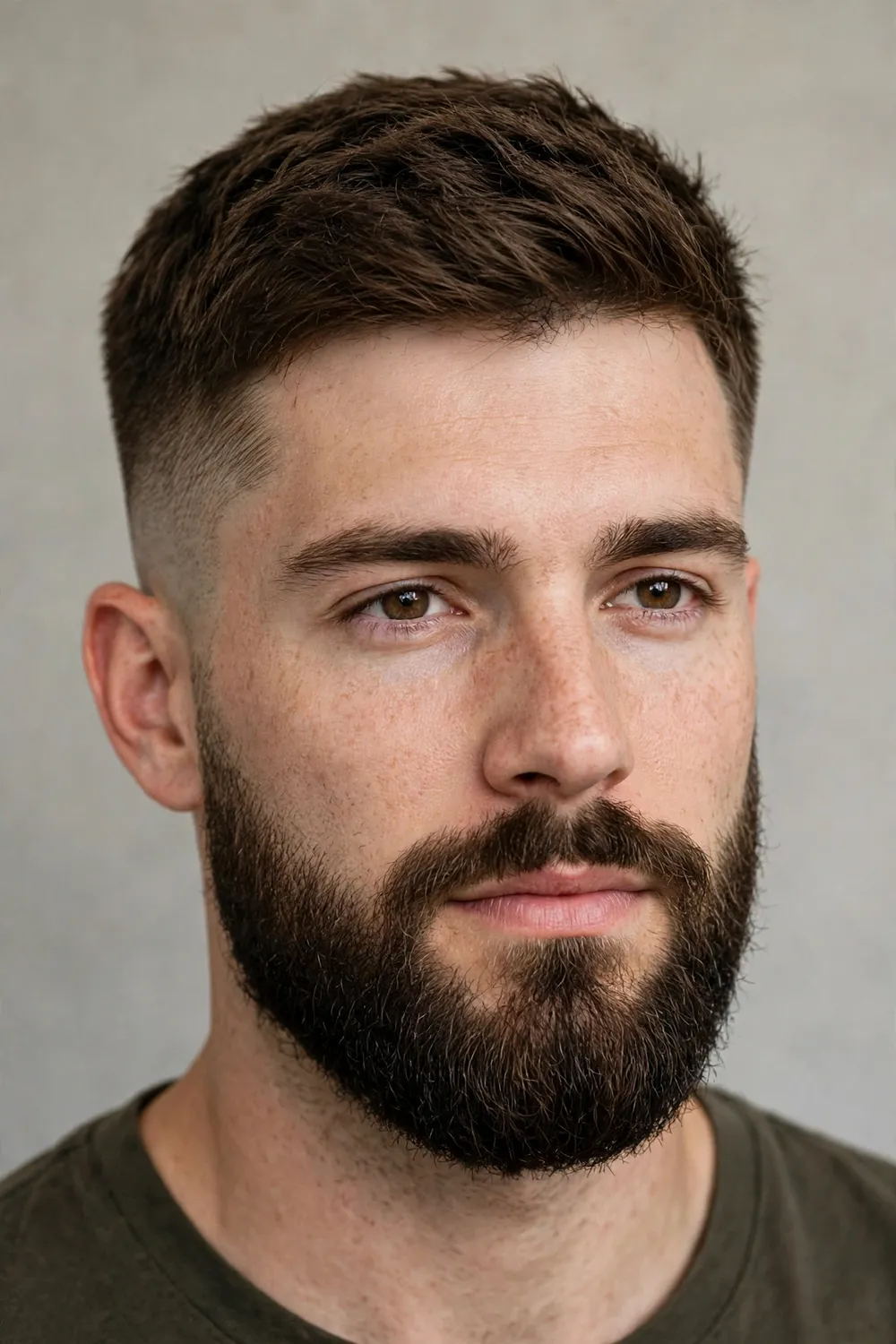
15. Taper with a Long Top
Long on top, short at the sides — this is the most versatile cut here, because the top can do almost anything. We’re talking ten centimetres or more up top: slicked back, tied up, swept to the side, or left to fall naturally. The taper underneath keeps the sides from getting bulky, so the long hair reads as a deliberate style rather than a haircut you’ve outgrown. It suits men with thick, straight or wavy hair who will spend a few minutes styling, and it’s particularly good on oval and oblong faces. Ask your barber for “keep the top long, taper the sides to a #2, blend it in.” The taper needs a trim every four weeks, but the top can keep growing for months.
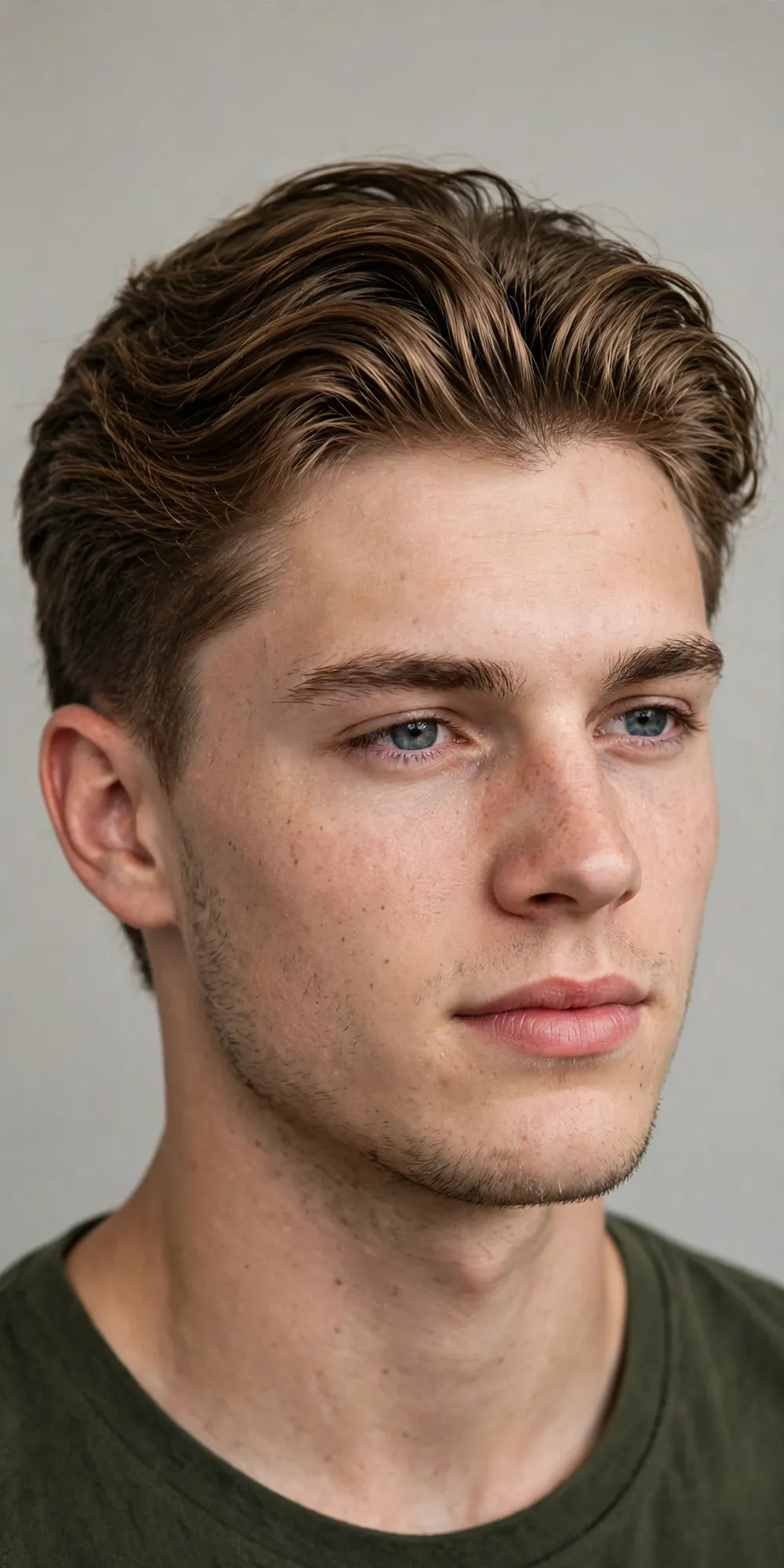
16. The Low Fade
The Low Fade is the fade for men who want the clean, sharp feeling of faded sides without the drama of a high blend. The fade starts just above the ears and nape, dropping to skin at the bottom, so the skin work is a narrow band. It looks smart with almost any top — a side part, a crop, a bit of texture. It suits every face shape, and it’s particularly good on thick hair, where the fade takes out bulk at the edges. Ask your barber for “a low fade, zero at the bottom, blend it up gradually, keep the top as it is.” Style the top with matte clay. The fade stays crisp for about a week, so book a tidy-up every two to three weeks.
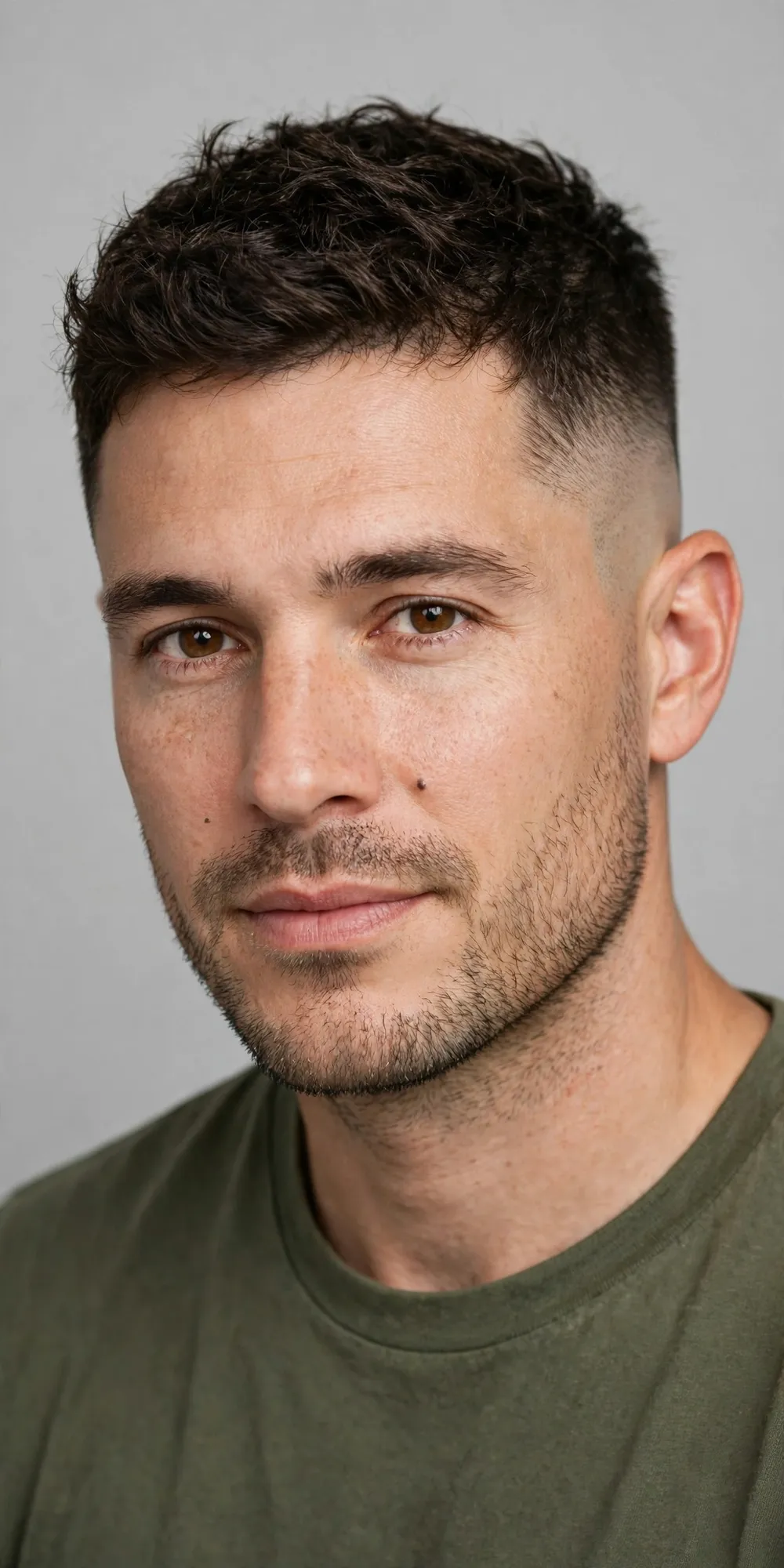
17. The Mid Fade
The Mid Fade is the most popular fade in barbershops right now, and it’s easy to see why. The blend starts at the temple, which gives you a clear, visible fade — skin at the bottom, length on top — without climbing so high it takes over. It’s the fade that works with everything: textured crops, quiffs, pompadours, curls. It suits men with strong jawlines, and it’s great for thick or wavy hair, since the fade removes bulk where it builds up. Ask for “a mid fade starting at the temple, skin at the bottom, smooth blend, no hard lines.” A matte paste or clay on top keeps the finish modern, but the fade blurs after ten days, so most men come back every two weeks.
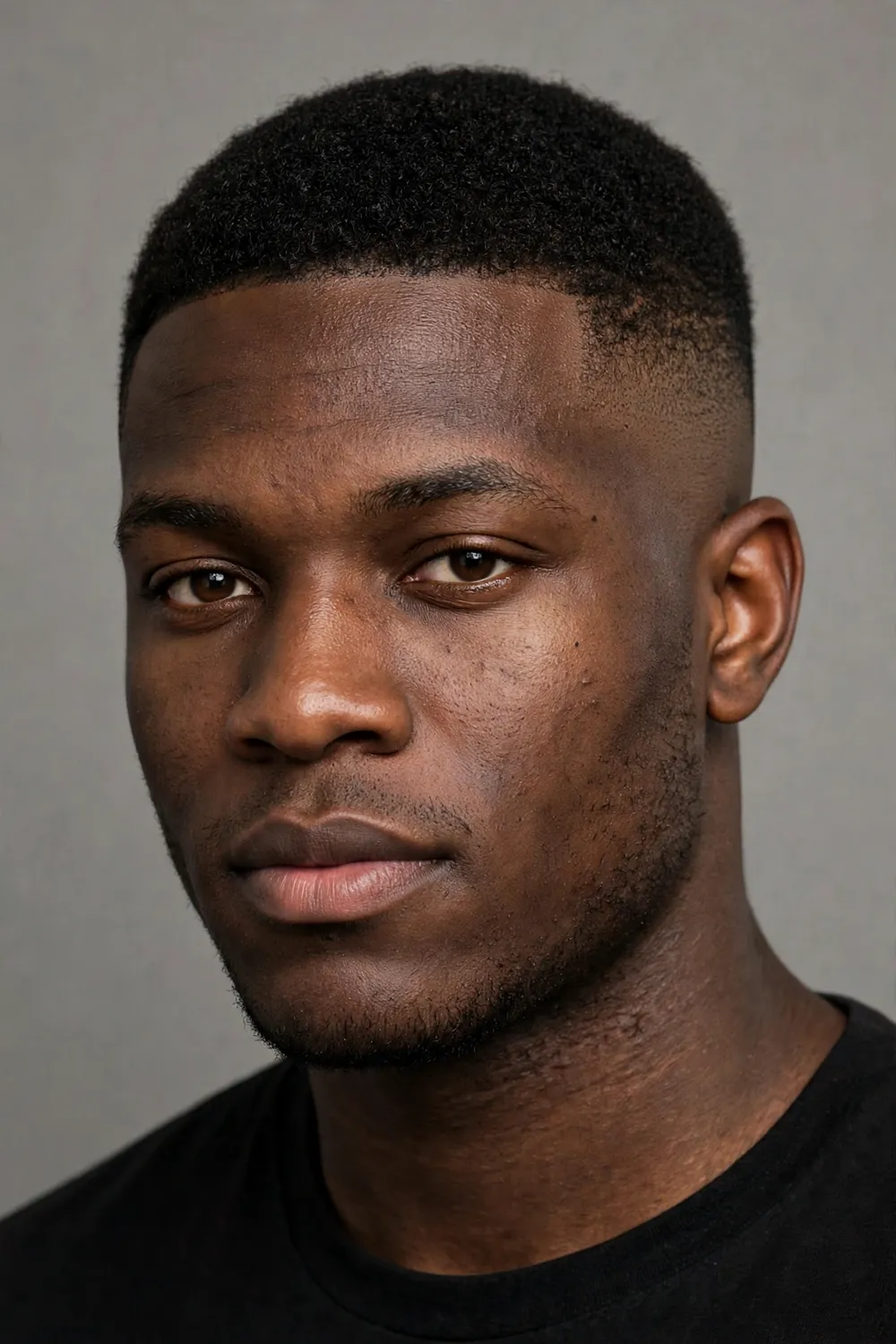
18. The High Fade
The High Fade doesn’t do subtle. The blend starts above the temple, so there’s a large area of skin and stubble on the sides, and the contrast with the top is dramatic. It’s a bold, modern look for confident men with thick hair and a top worth showing off — a textured crop, a pompadour or a high top. It works best on oval and square faces, where the height adds structure, and it’s less forgiving on round faces unless the top has plenty of volume. Ask your barber for “a high fade, skin at the bottom, blend starting above the temple, keep the top long.” It’s the highest-maintenance cut here — the edge is gone within a week, so expect a visit every one to two weeks.
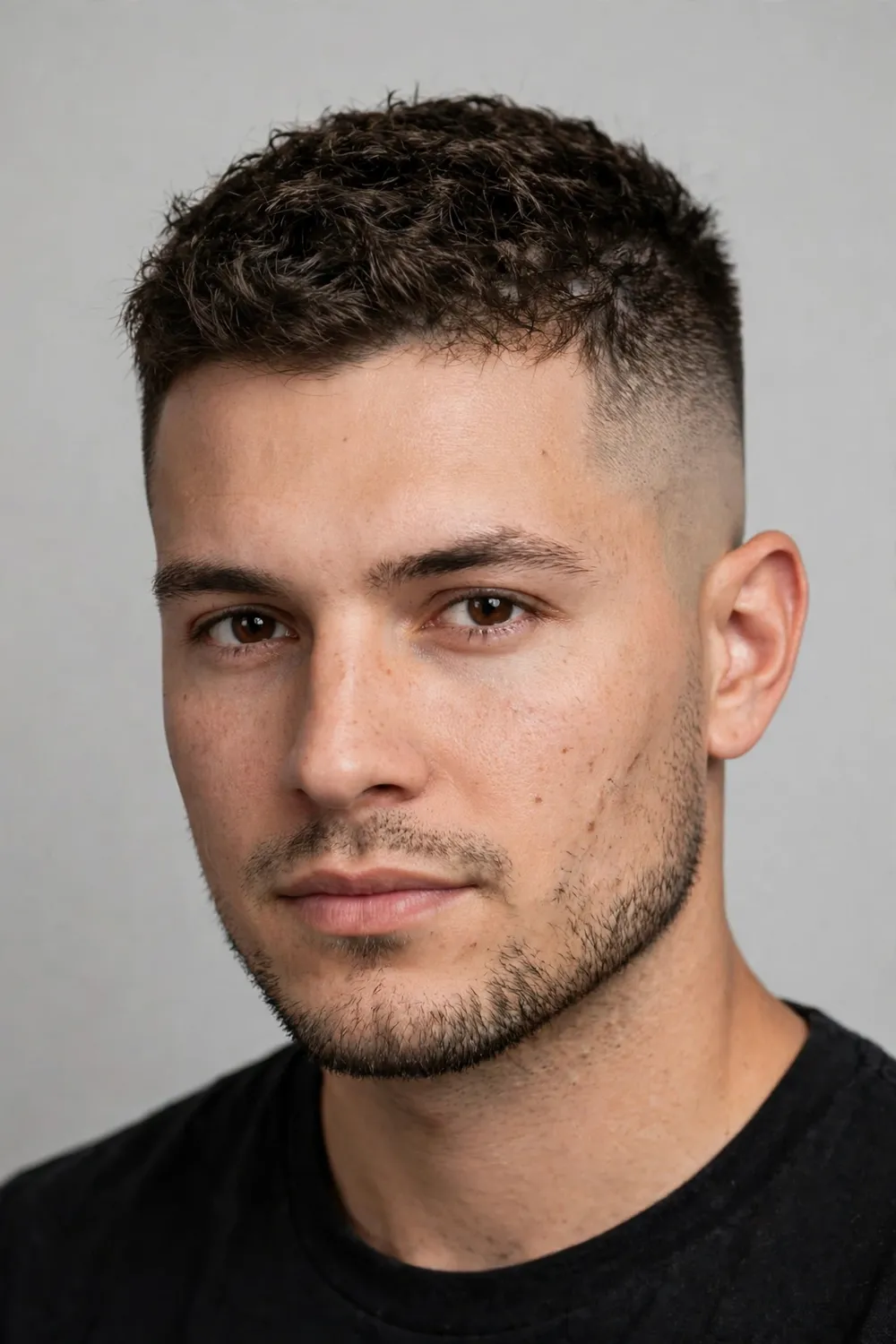
19. The Skin Fade (Bald Fade)
The Skin Fade, also called a bald fade, is the sharpest cut a barber can give you. The sides blend all the way down to bare skin, usually finished with a foil shaver, so a clean band of skin at the bottom gradually turns into hair as it climbs. The contrast is striking, especially with a longer top, and it’s the cut behind most of the sharpest looks you see on social media. It suits thick, dark hair best, where the contrast is most dramatic, and it’s a favourite for line-ups and sharp hairlines. Ask for “a skin fade, bald at the bottom, foil finish, blend it smooth.” It looks incredible for about five days, then the stubble creeps back, so weekly or fortnightly visits are the norm.

20. The Drop Fade
The Drop Fade gets its name from the way the fade line curves down behind the ear, dipping lower at the back than at the front. That curved drop follows the shape of the head, so it looks more organic than a straight fade line and stays balanced from every angle. It pairs well with almost any top, and it’s a strong choice for rounder heads, since the curve adds structure without harshness. Ask your barber for “a drop fade, let the line drop behind the ear, skin at the bottom, blend it smooth.” Style the top with matte clay, and book a trim every one to two weeks — the curve blurs quickly.
21. The Burst Fade
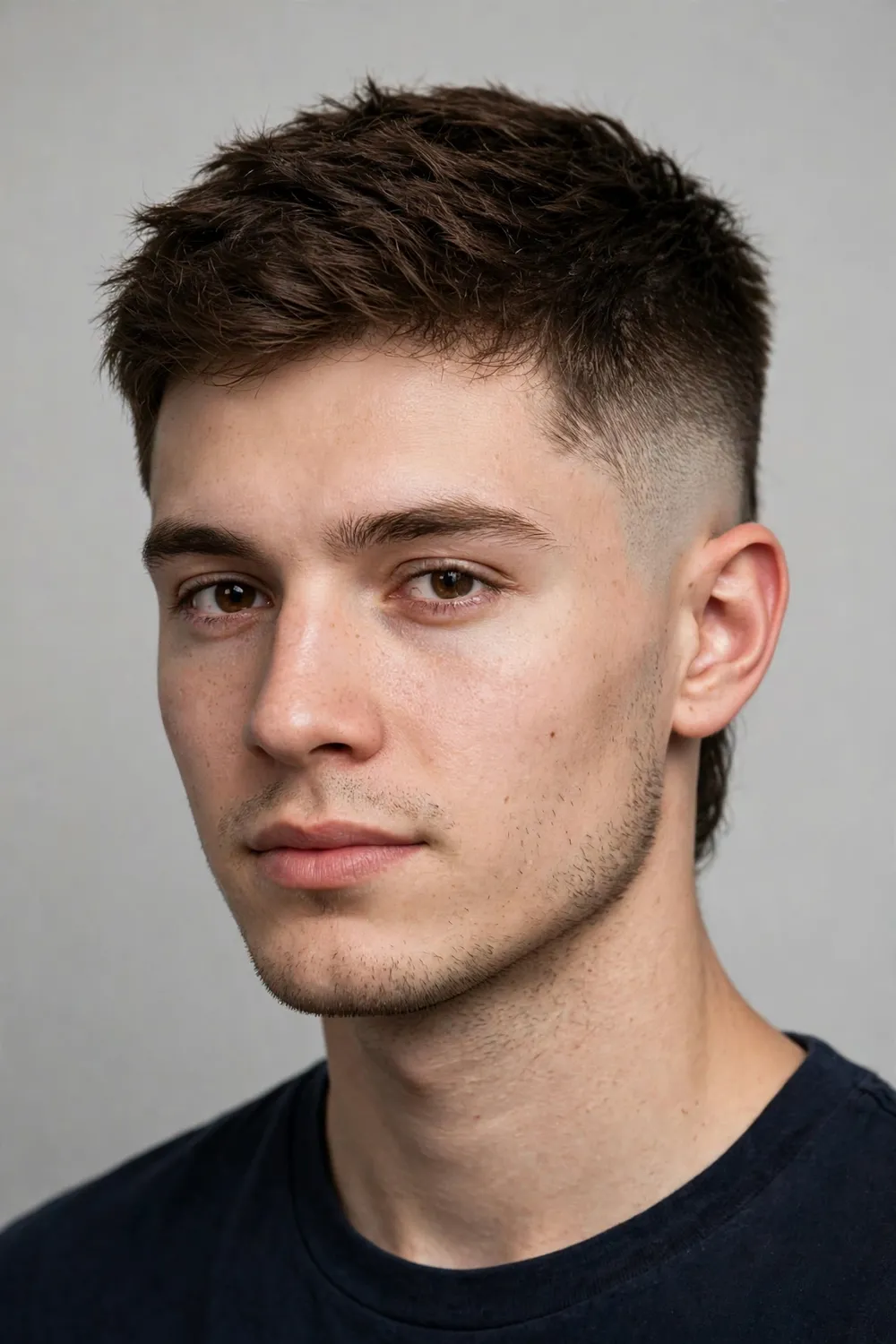
The burst fade doesn’t run straight across the back of your head. The fade arcs in a semicircle around the ear, leaving the hair at the nape longer — which is why it pairs so naturally with a mohawk or a longer back. Ask your barber for a burst fade that curves around the ear and keeps length at the nape, and say where the shortest point should sit: a low burst stays subtle, a high one turns heads. It suits guys with thicker hair and anyone who wants a fade’s sharpness without a bare-skin back. Finish with matte clay for texture, or light pomade if you’re sweeping the top back. The arc starts to blur after ten days, so book every two weeks to keep it crisp.
22. The Temp Fade
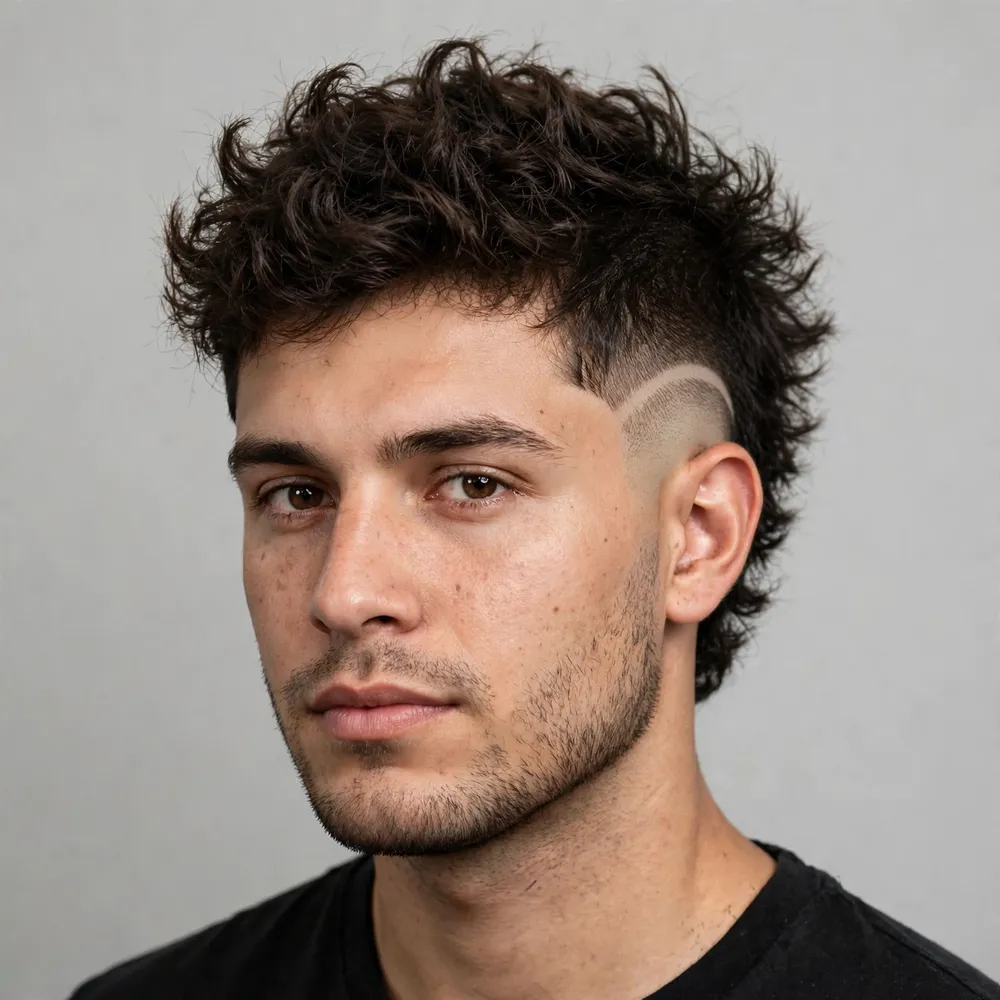
The temp fade — short for temple fade — is the lightest touch on this list. Only the temples and the nape get faded, while the rest of the sides keep their length, so the change is noticeable but never dramatic. Ask your barber for a temp fade at the temples and neckline, blended into your natural length everywhere else, and say whether you want the edges lined up sharp or left soft. It’s a brilliant first fade for anyone nervous about going short, and it works on nearly every hair type, from straight to coily. A dab of styling cream is all you need on top. Because so little hair is removed, it grows out gracefully — stretch visits to three or four weeks and still look tidy.
23. The Shadow Fade
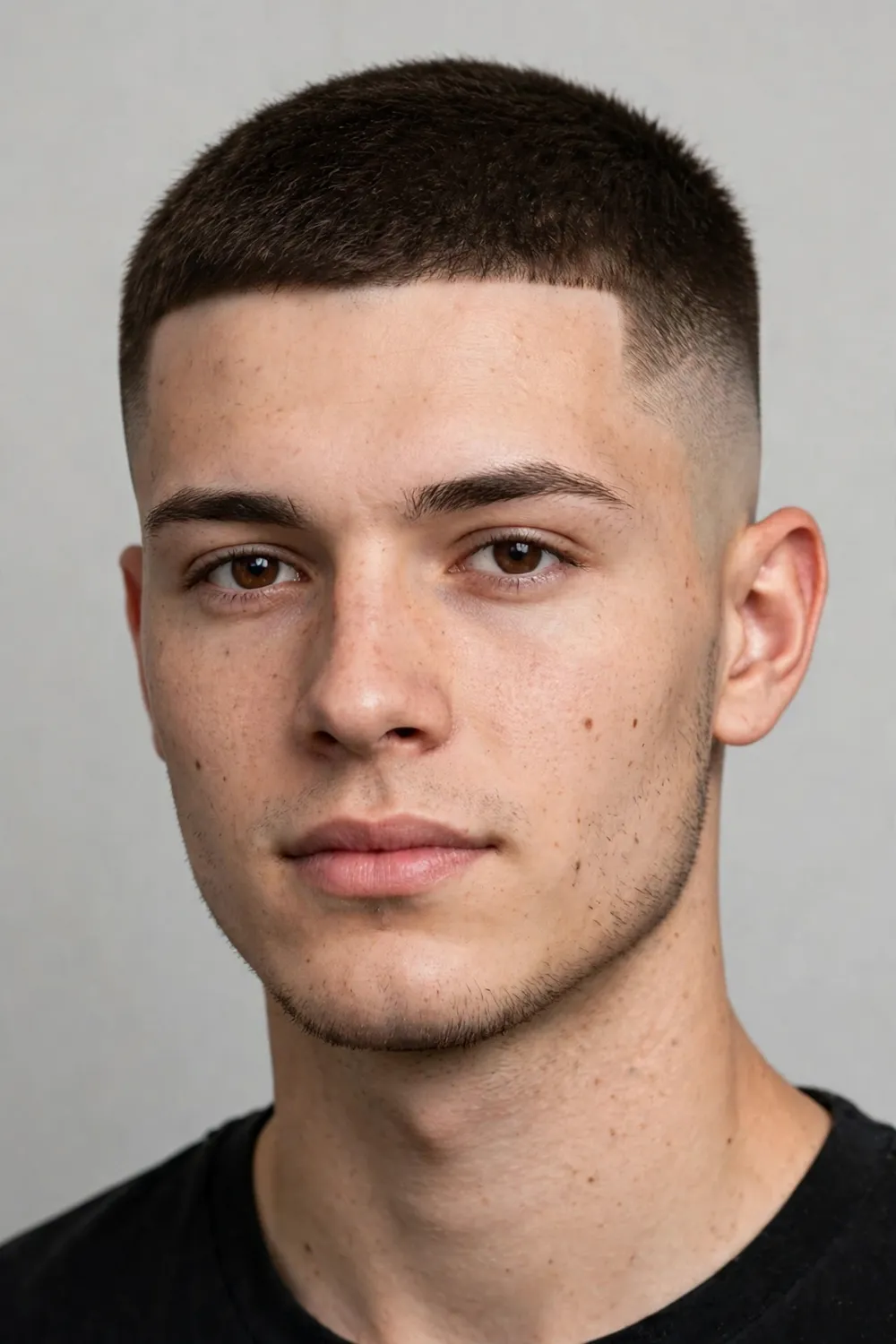
The shadow fade is the fade for men who hate the look of bare skin. The blend drops to a very short stubble — a #0 or #1 guard — but never reaches the scalp, so you get that smooth gradient with a soft, shadowy finish instead of a hard skin line. Ask your barber for a shadow fade with no skin showing, and point out how high you want the blend to start. It suits office guys, older men, and anyone whose scalp shows through easily, because there’s no pale strip to draw the eye. Style the top with a matte paste for a natural finish. Upkeep is forgiving too: the shadow hides regrowth well, so three weeks between cuts is realistic.
24. Fade with a Textured Crop
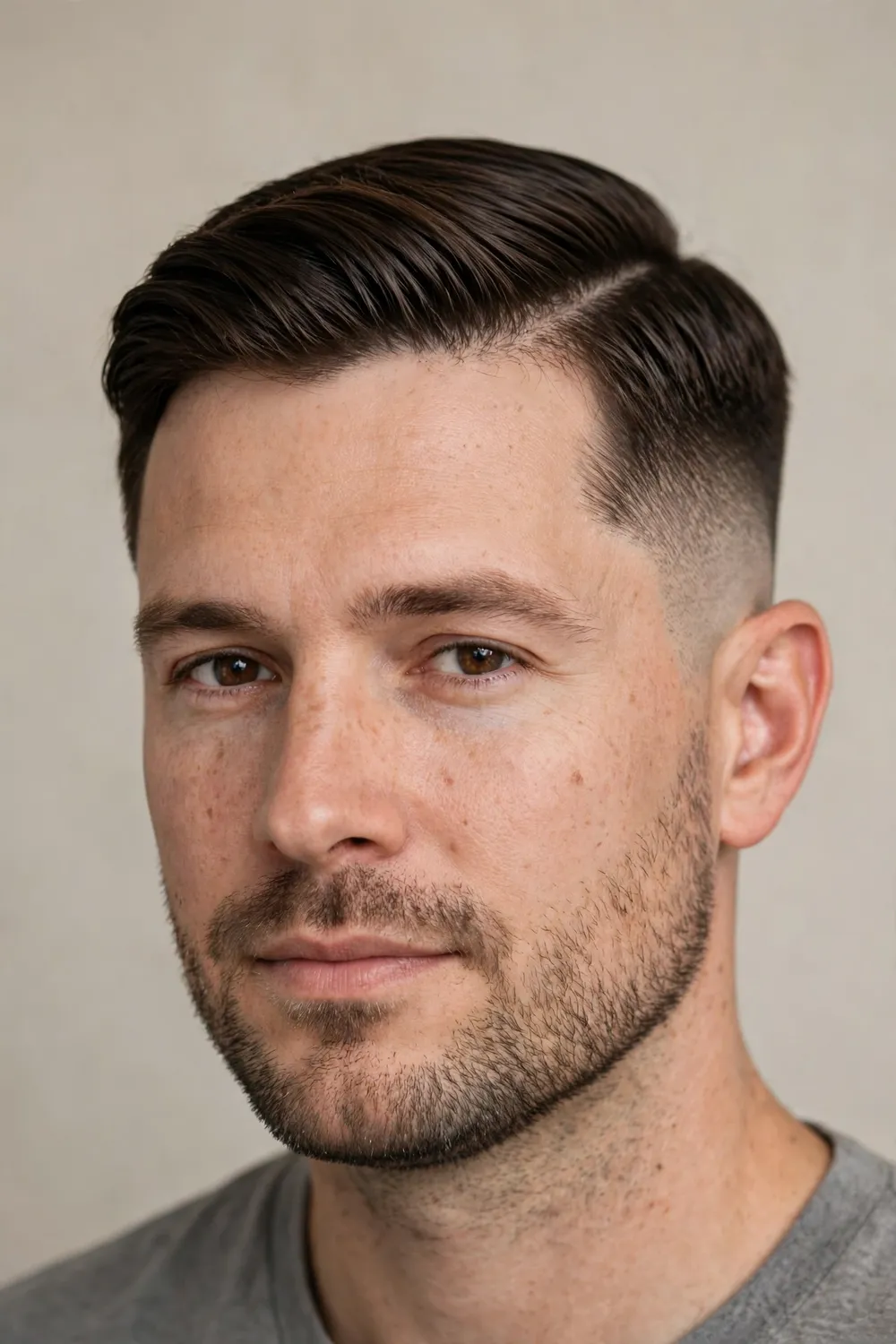
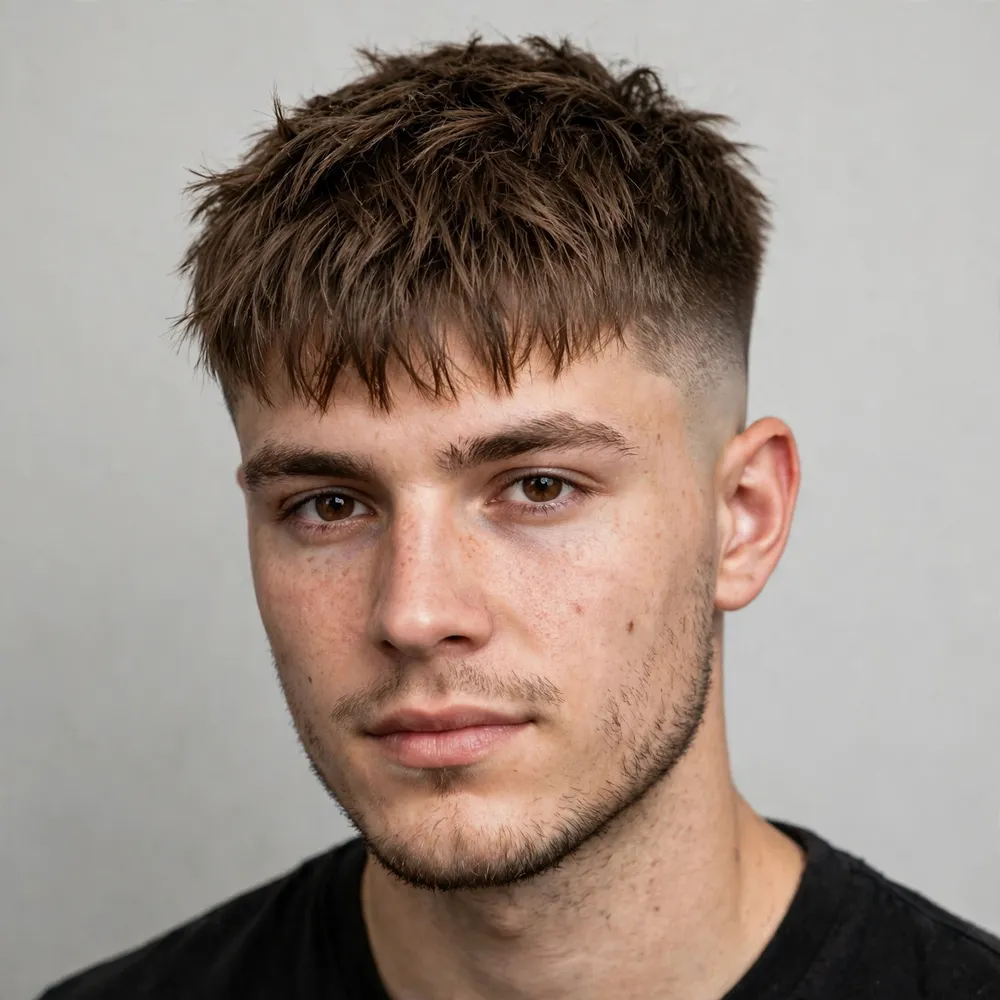
The textured crop is the haircut that made barbershops busy for the last five years, and a fade underneath it is what keeps it looking deliberate instead of accidental. The top is cut short and choppy, pushed forward, and finished with a rough, piecey texture. Ask your barber for a textured crop on top — about two inches, point-cut for texture — with a mid fade on the sides and back. It suits straight and wavy hair best, and it’s a lifesaver for guys with a receding hairline, because the forward fringe covers the corners. Work a pea-sized amount of matte clay through dry hair and pinch the ends apart. The crop needs a trim every three weeks or the texture turns shaggy.
25. Fade with a Quiff
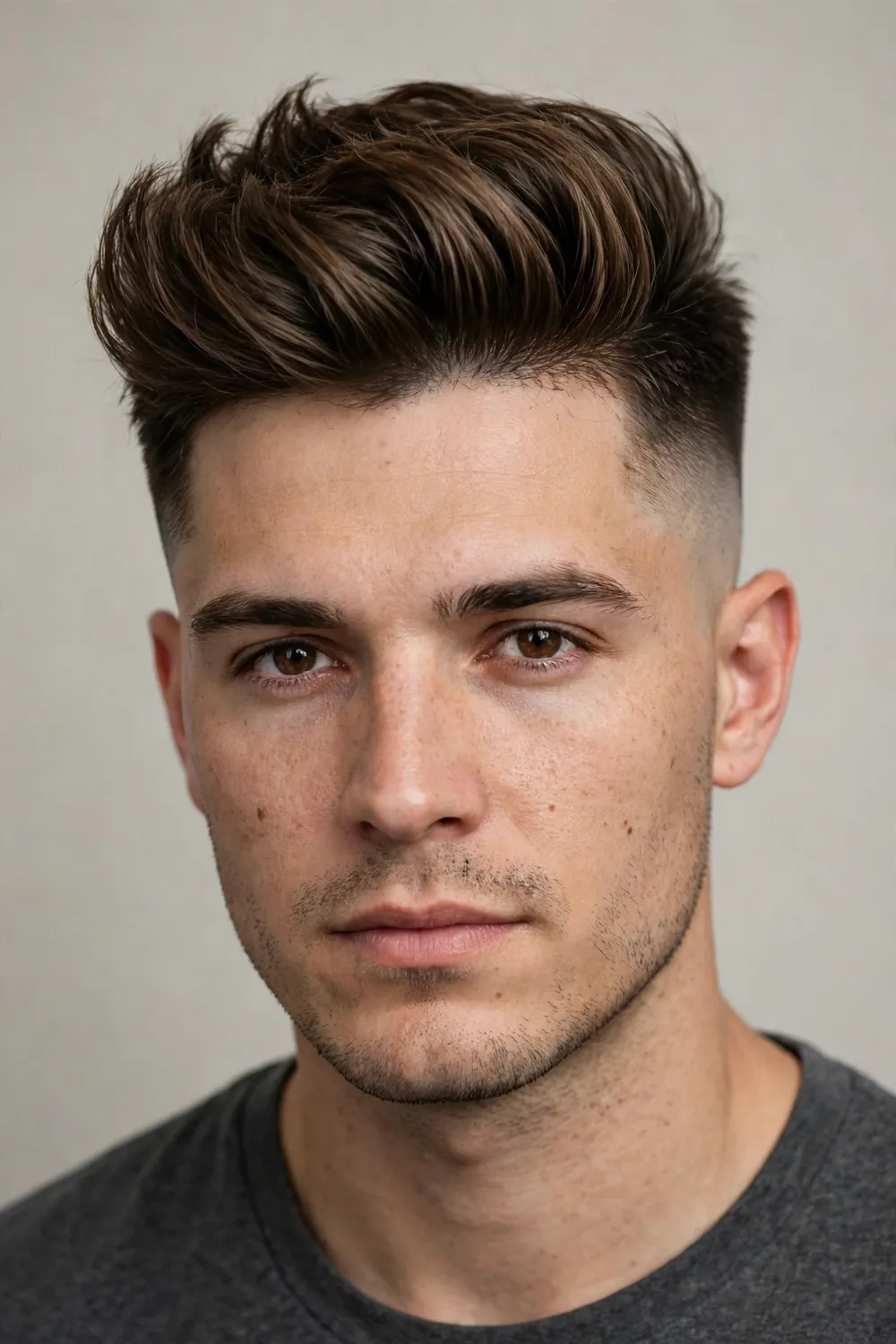
A quiff on top of a fade is the classic — volume and height up front, razor-clean sides below, and the contrast between the two is what makes the whole thing work. Ask your barber for a quiff with at least three inches left on top, textured through the ends, and a mid or high fade on the sides, depending on how bold you want it. It suits oval and longer faces well, since the height balances your proportions. Blow-dry the front up and back with a round brush, then lock it in with a medium-hold pomade or a volumising powder for a matte finish. Be honest: this is a five-minute-every-morning cut. Skip the styling and the quiff just flops — but when you do the work, nothing beats it.
26. Fade with a Pompadour
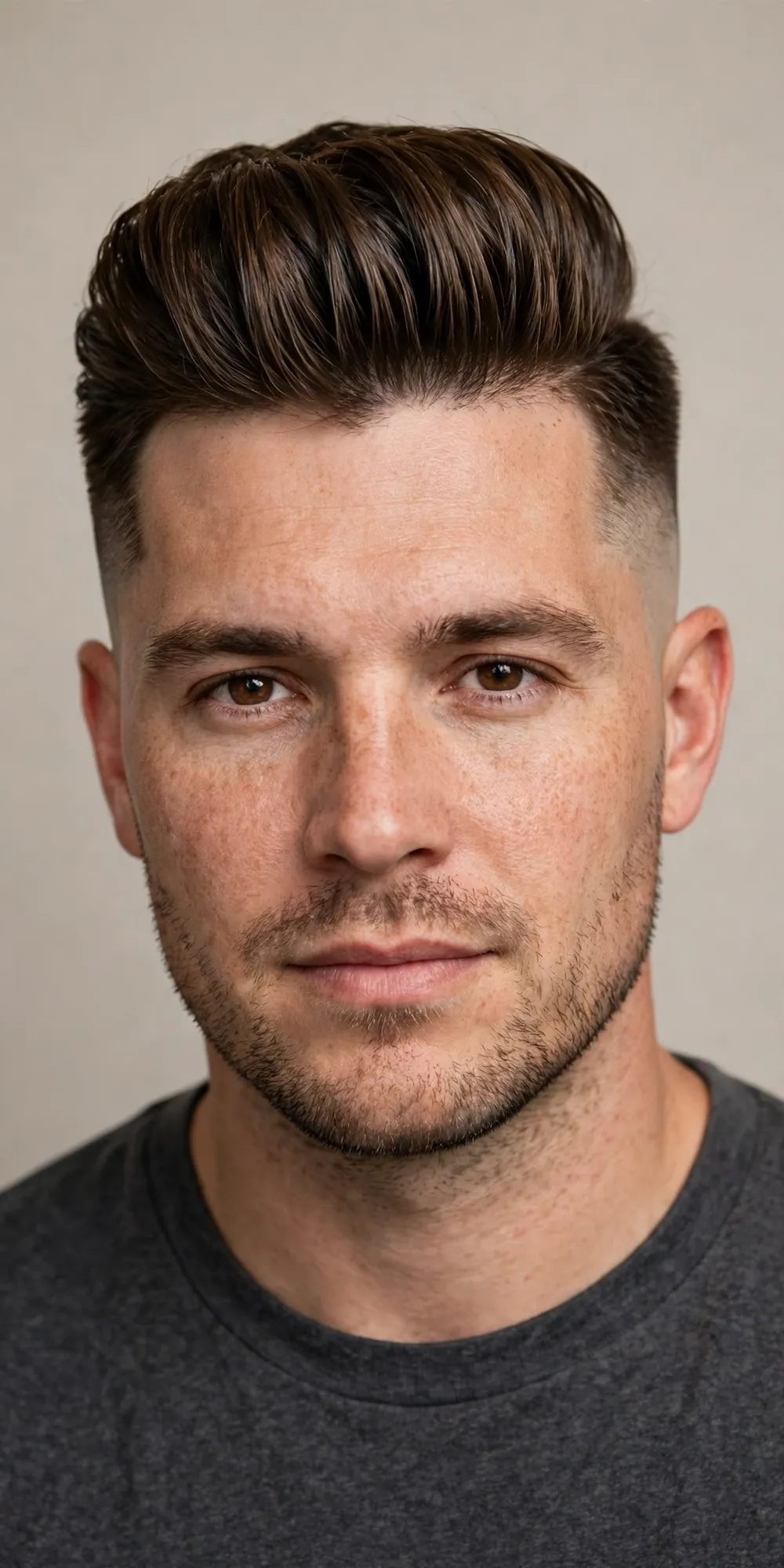
The pompadour is the quiff’s louder older brother — taller, sleeker, swept back with real presence — and a sharp fade underneath keeps it from looking like a costume. Ask your barber for a pomp with four or more inches on top, blended into a high fade on the sides, and mention whether you want a hard part or a natural sweep. It suits thick, straight or wavy hair and guys who don’t mind spending time in front of the mirror. Blow-dry it back with a brush, then use a strong-hold pomade, combing through for shine or roughing it up with your fingers for a modern matte version. Maintenance is twofold: the pomp needs daily styling, and the high fade needs a touch-up every two weeks to stay sharp.
27. Fade with a Curly Top
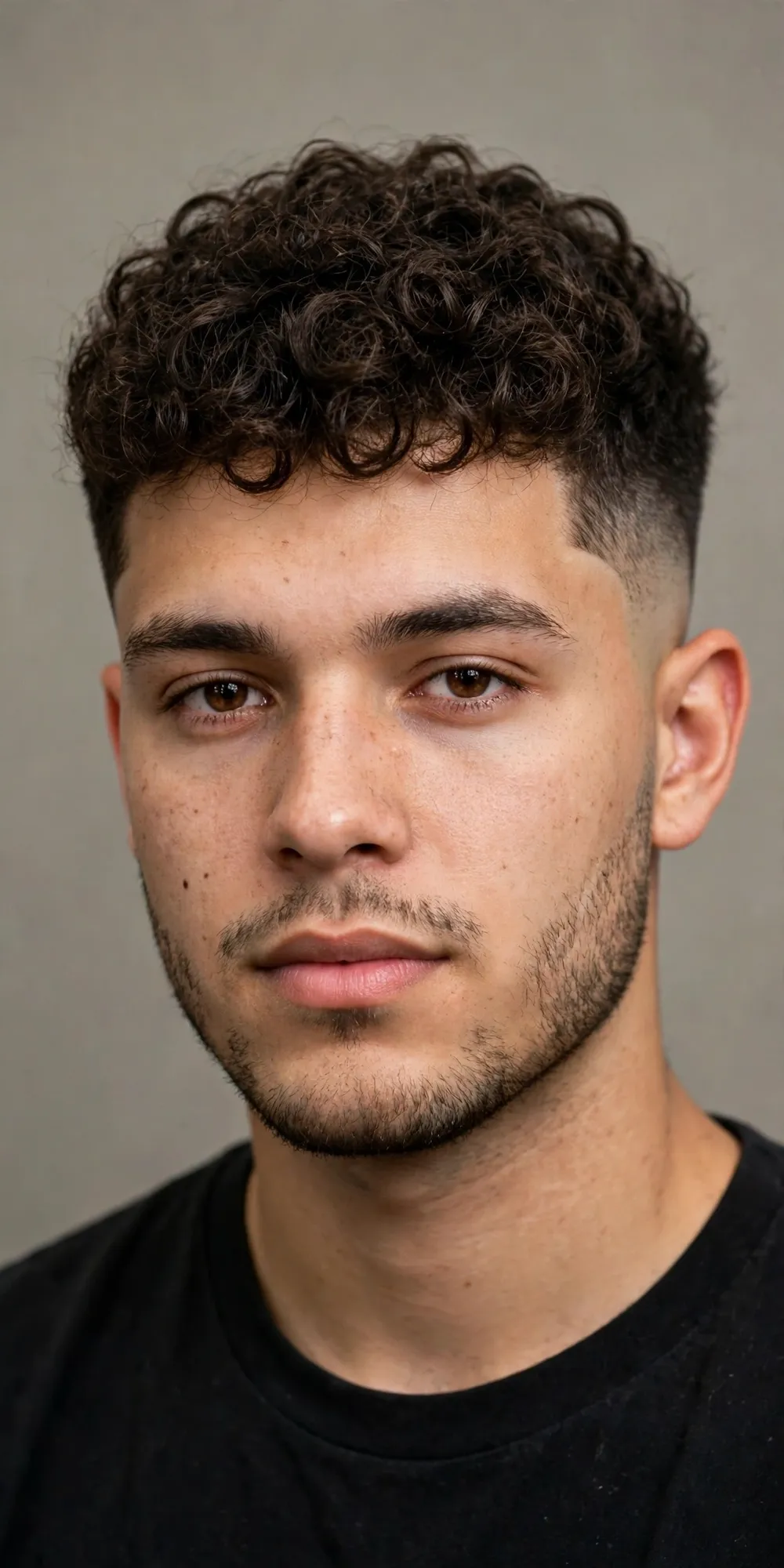
Letting your curls do the talking while the sides stay faded is one of the easiest wins in men’s hair — the contrast makes the curls look fuller and the whole cut look intentional. Ask your barber for a fade on the sides and back, but keep the top long enough for your curl pattern to form, usually two to three inches. It suits all curl types, though tighter curls look best with a higher fade that shows off the shape. Skip heavy waxes: a curl cream or leave-in conditioner, scrunched in while the hair is damp, defines curls without weighing them down. The fade needs a refresh every two to three weeks, but the top can grow freely — get the curls shaped monthly to stop them going triangular.
28. Fade with a Buzz Cut
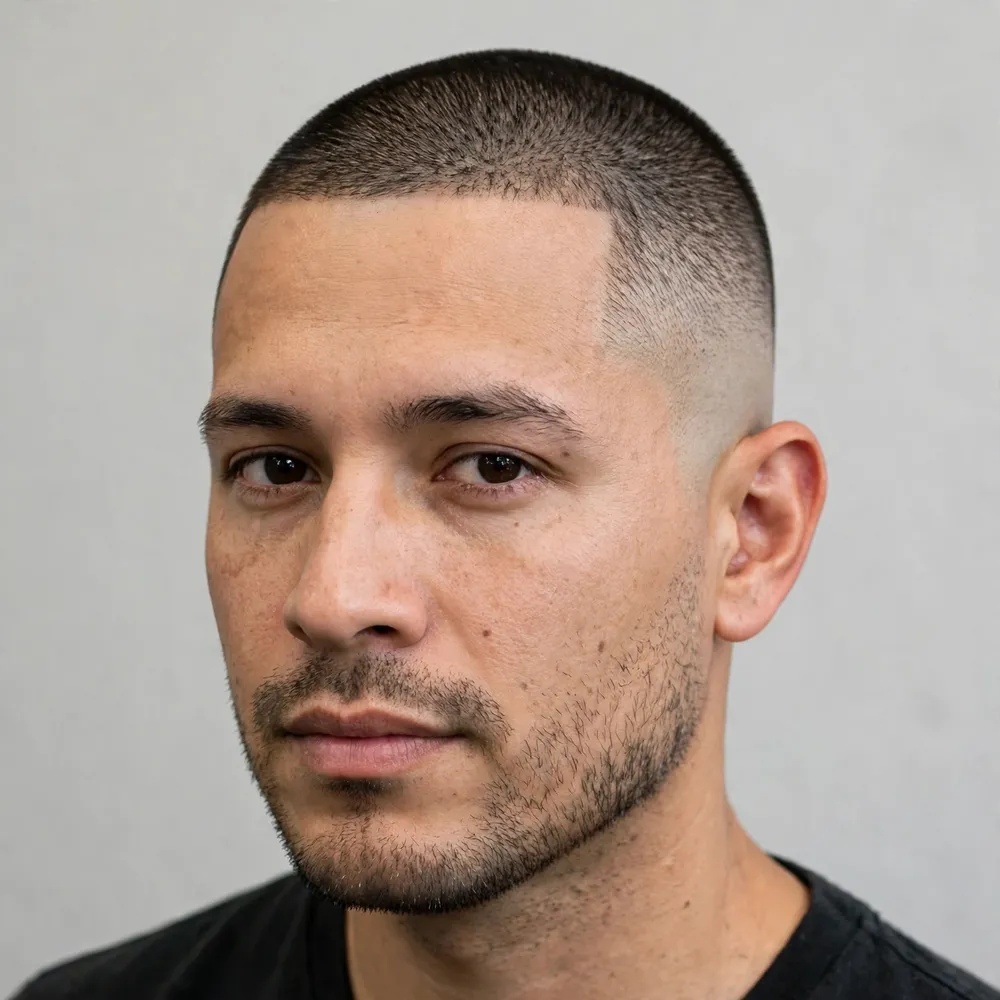
The buzz cut with a fade is about as low-effort as a haircut gets while still looking like you actually thought about it. The top is clipped to a uniform short length — a #2 or #3 guard — and the sides fade down to skin, which gives the whole head a clean, sculpted shape instead of a flat helmet look. Ask your barber for a buzz on top with a skin fade on the sides, and agree the guard number before he starts. It suits strong jawlines, guys who work out, and anyone who wants to stop thinking about their hair entirely. No product needed — a drop of moisturiser on the scalp is the whole routine. You’ll need the fade redone every two weeks to keep the shape.
29. Fade with a Faux Hawk
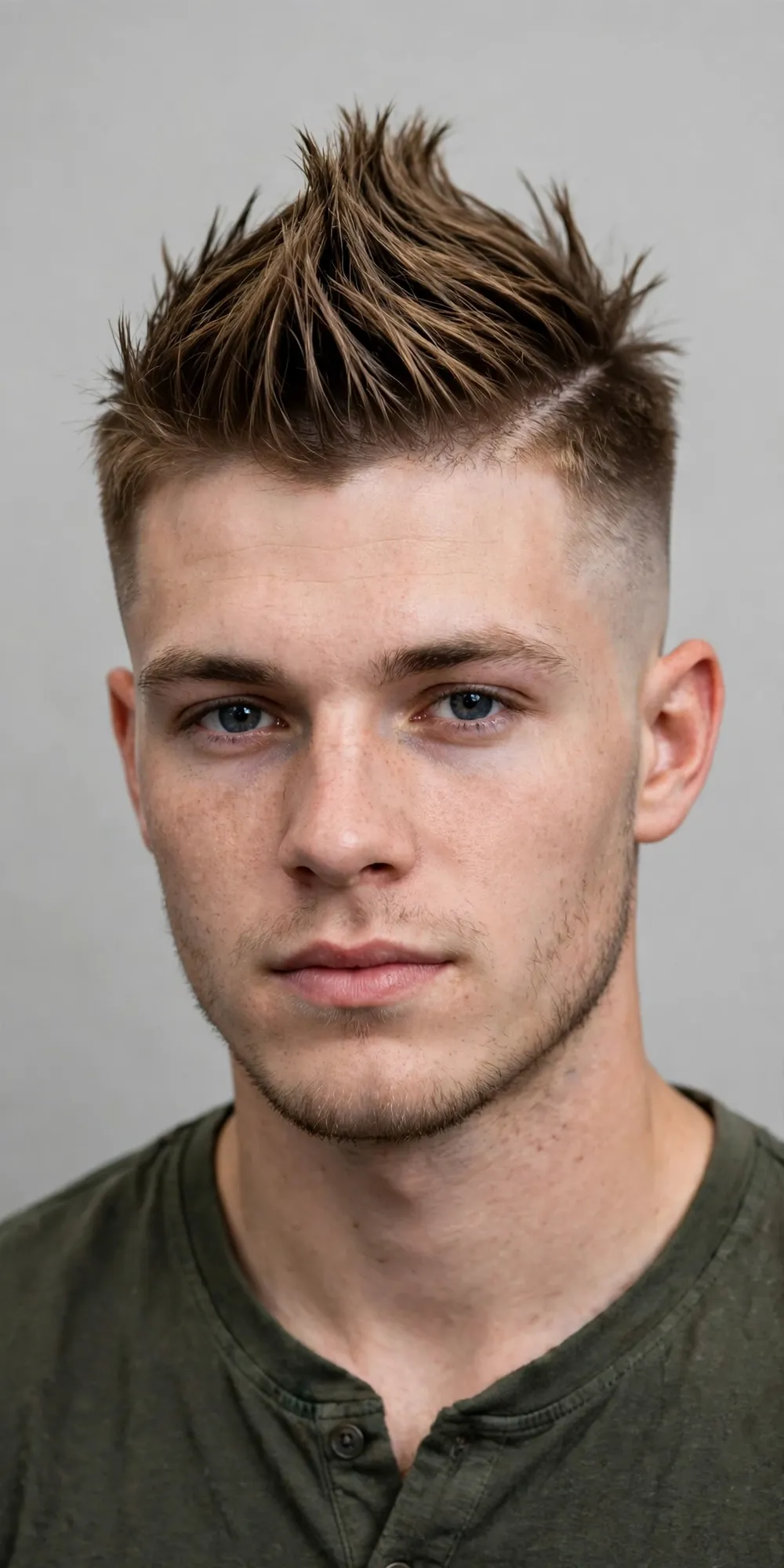
The faux hawk takes the mohawk’s attitude and makes it wearable — a strip of height down the centre, pushed up and together, with faded sides doing the heavy lifting. Ask your barber for a faux hawk with the centre left longest at the front and the sides taken down to a mid or high fade. It suits younger guys, and it works best on straight to wavy hair that holds a spike. A strong-hold matte clay, worked through damp hair and pushed upward, is what makes it stand; a hairdryer on low heat gives it extra backbone. The look lasts about two weeks before the fade softens, and the top needs a trim every three weeks or the hawk starts flopping sideways.
30. The High Top Fade
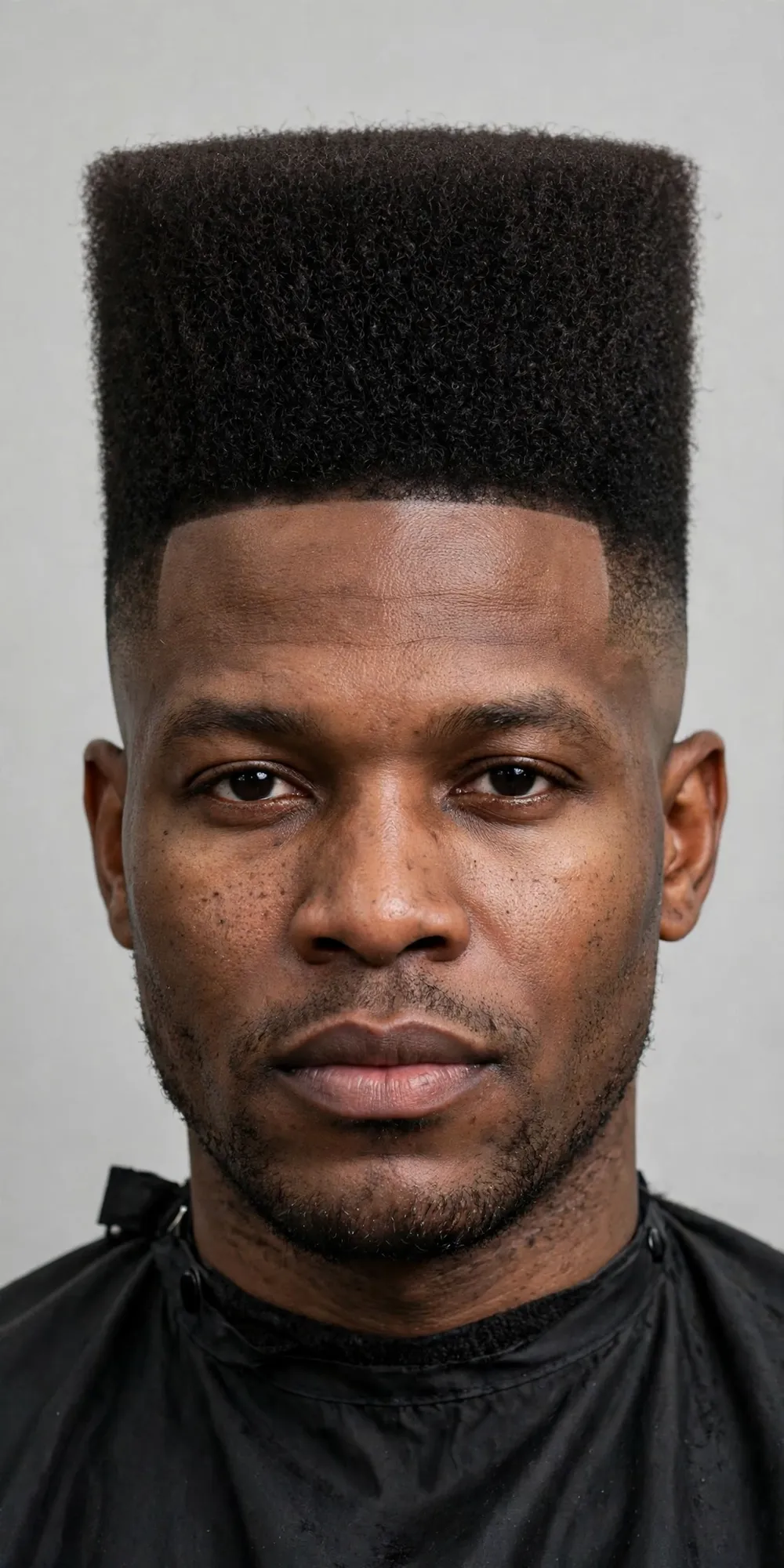
The high top fade is a statement — a tall, flat-topped crown of hair rising above sharply faded sides, straight out of the late eighties and early nineties and back in a big way. Ask your barber for a high top with the top cut flat and level, several inches tall, and a clean fade on the sides and back. It suits coily and tight-curly hair best, because that texture holds the flat shape naturally, and it flatters round faces by adding serious height. A pick and a light holding spray keep the shape; avoid heavy creams, which drag the top down. This one needs a committed barber — the flat top must be cut precisely, so visit every two weeks and don’t try to tidy it yourself at home.
31. The Taper Fade (the Hybrid)
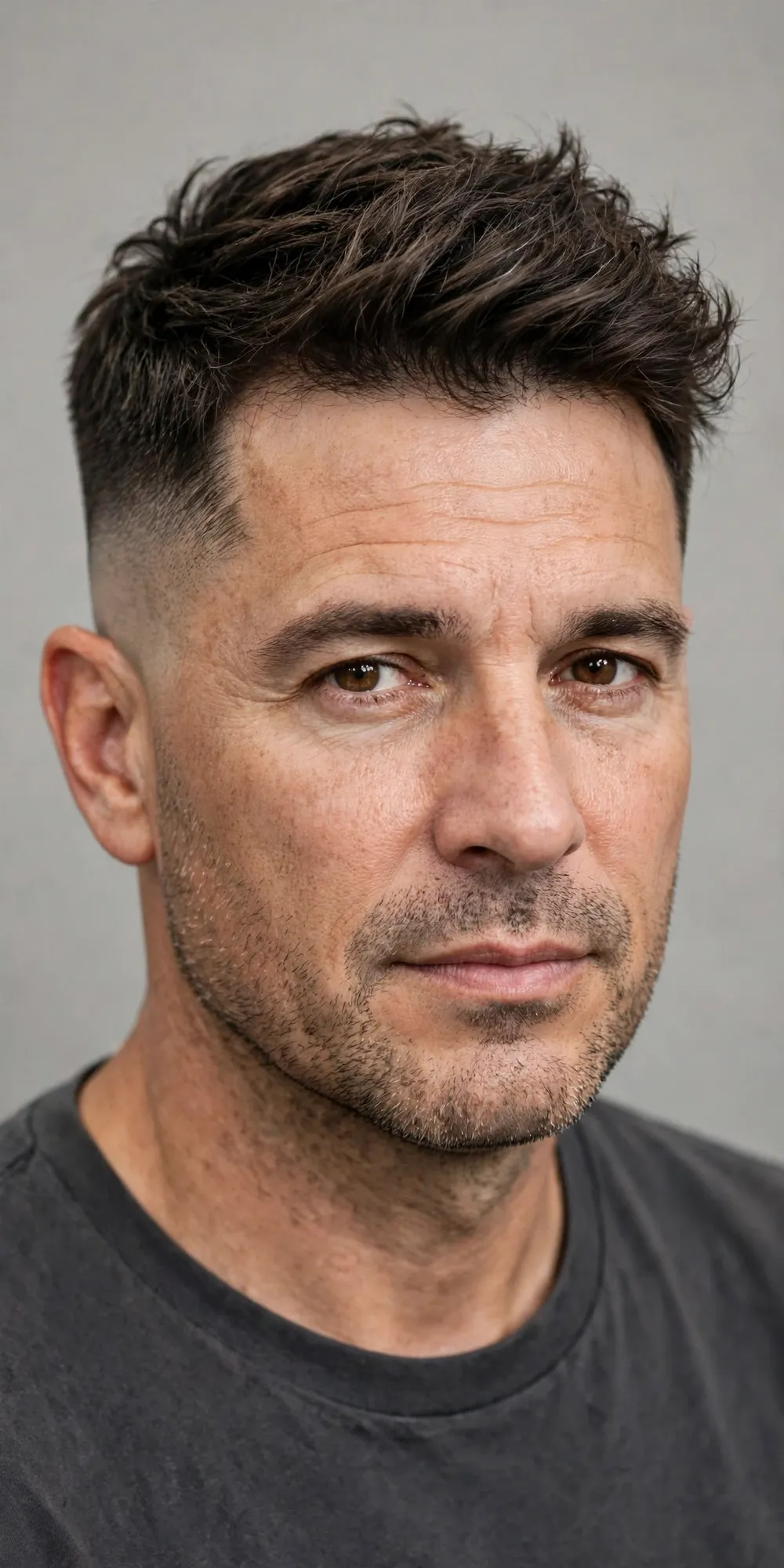
The taper fade is the compromise cut for men who like the idea of a fade but flinch at bare skin. It keeps the taper’s shape — a gradual shortening that follows the head — but the very bottom edge is faded closer, down to stubble rather than scalp. Ask your barber for a taper fade: a classic taper outline, with the lowest half-inch blended down to a #0 guard. It suits almost everyone, which is why barbers reach for it so often, and it’s the safest choice if you’re trying a fade for the first time. Style the top however you like. The grow-out is the best of both worlds too, stretching to three or four weeks before the edges need attention.
32. Low Taper vs Low Fade
Put a low taper and a low fade side by side and the difference is all in the finish. Both start just above the ear, so the shape is similar — but the taper keeps hair at the bottom, ending around a #1 or #2 guard, while the fade drops to stubble or skin. Ask your barber for the low taper if you want something subtle, or the low fade for a sharper edge. The low taper suits conservative workplaces, older guys and first-timers; the low fade suits anyone who likes a crisp neckline. Both are easy — a little cream on top is plenty. The taper wins on upkeep, lasting four to five weeks, while the low fade needs a tidy every two to three.
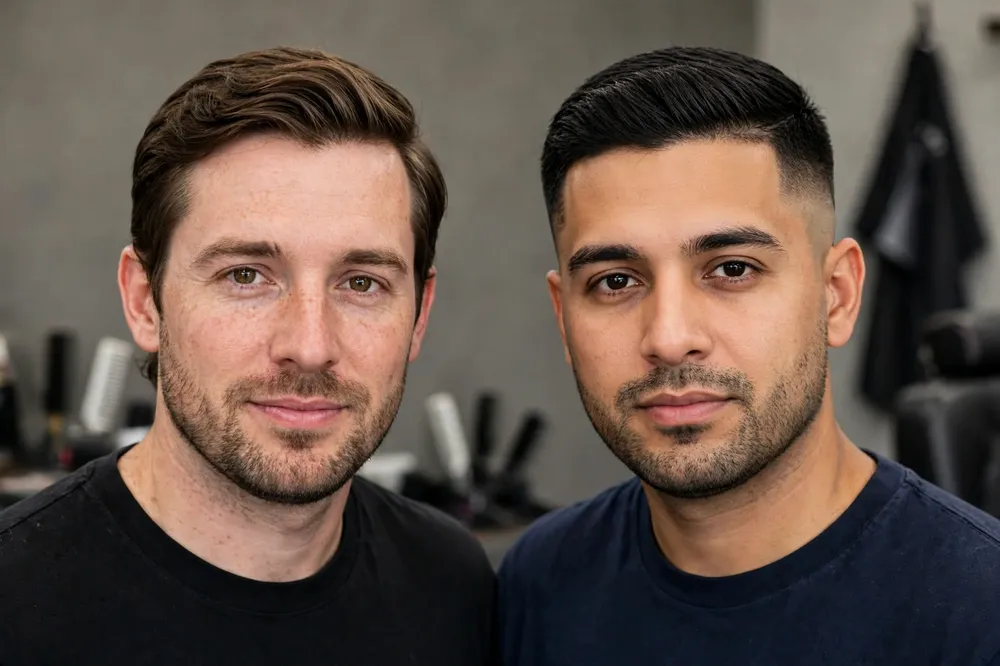
33. Mid Taper vs Mid Fade
The mid taper and the mid fade are the two most-requested cuts in barbershops, and they look completely different side by side. Both start around the temple, but the mid taper keeps a soft, graduated edge, while the mid fade drops to skin and throws the top into sharp relief. Ask for the mid taper for a polished, grown-up look, or the mid fade for something with more edge — our High Fade Haircut guide shows how the fade family scales up from here. The mid taper suits most face shapes and jobs; the mid fade suits guys who like being noticed. Styling is the same either way — matte clay on top — but the fade needs a refresh every two weeks, the taper every four.
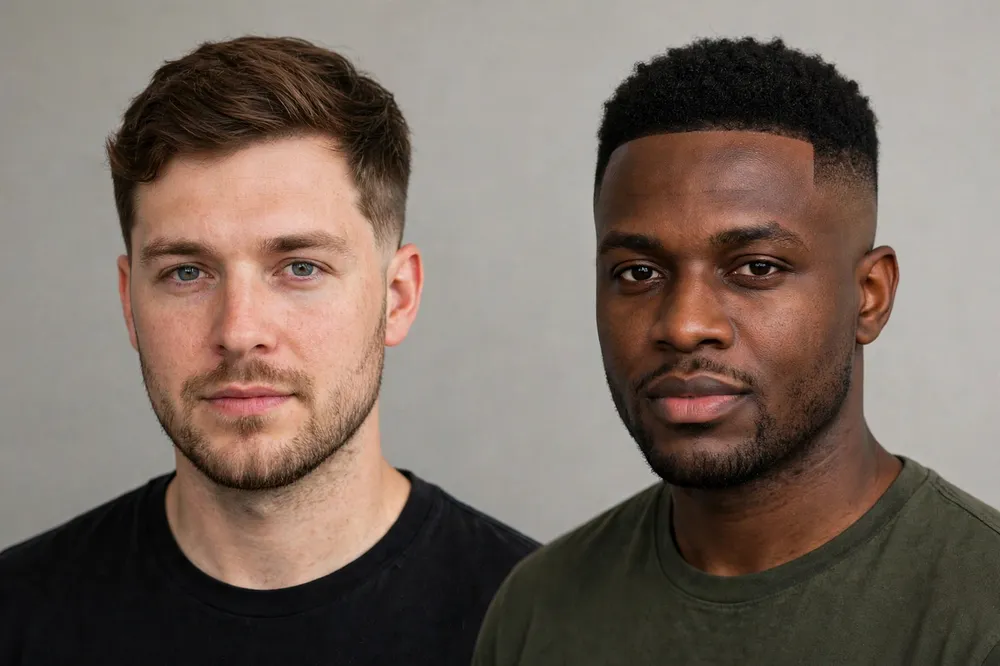
34. High Taper vs High Fade
The boldest pairing here: the highest taper against the highest fade, both starting well above the temple. The high taper keeps a softer, old-school shape with visible hair all the way down, while the high fade strips the sides almost bare and leaves the top floating like a separate piece. Ask your barber for the high taper if you want drama with manners, or the high fade if you want maximum contrast and don’t mind the upkeep. The high taper suits thick hair and confident dressers; the high fade suits strong jawlines and guys who like a sharp, graphic look. Both need a product with real hold on top — pomade or strong clay. The taper lasts three to four weeks, the fade barely two.
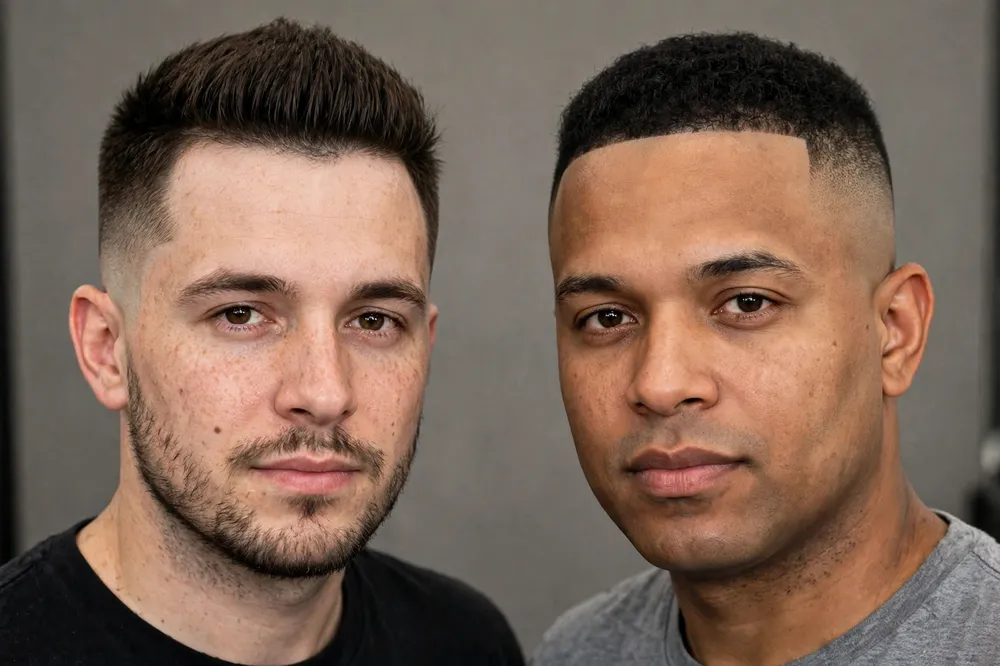
35. Taper vs Fade for Curly Hair
Curly hair changes the taper-versus-fade maths, because the curls themselves do half the styling for you. A taper keeps more weight at the sides, which lets the curls blend down naturally and keeps the overall shape soft — great if your curls are loose or you like a fuller silhouette. A fade cuts the sides tight, which makes the curls on top look bigger and more defined, but it also exposes your curl pattern, so bad blends show. Ask your barber to work with your natural curl, not against it, and cut the top to suit how your curls behave. Use a curl cream, never a heavy wax. For most curly guys, the taper is the safer daily choice and the fade is the sharper weekend one.
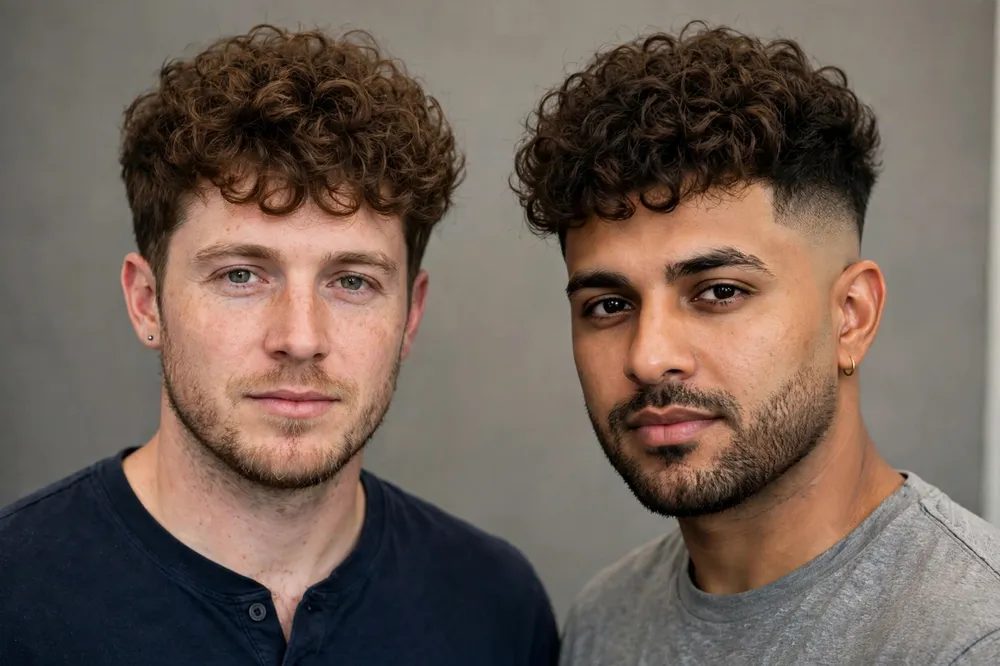
36. Taper vs Fade for Black Men
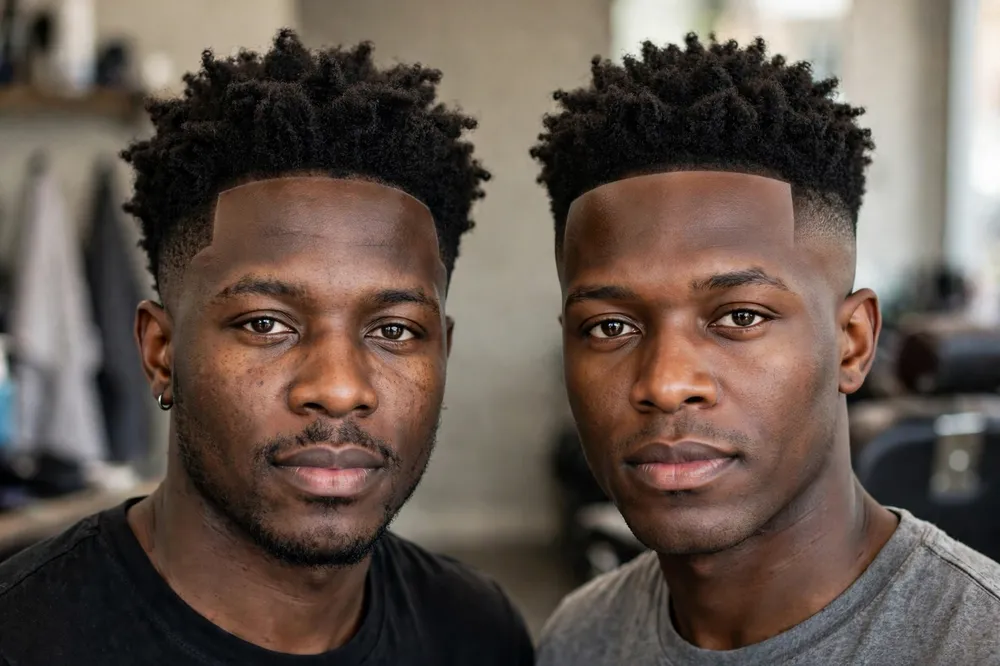
For Black men with coily hair, the taper-versus-fade choice is less about fashion and more about shape — and both cuts have a long, proud history in the barbershop. A taper keeps the natural texture visible at the edges, blending the coils down gradually, for a softer, classic finish. A fade, especially a low or mid fade with a sharp lineup, creates that crisp, architectural look, a signature style. Ask your barber for clean edges and a lineup, and say skin or stubble for the fade. A sponge or twist sponge defines the coils on top, and a light oil keeps the scalp healthy. Our Taper Haircut for Black Men guide covers the taper side in depth. Whichever you pick, book every two weeks — the lineup grows out fast.
37. Taper vs Fade with a Beard Blend
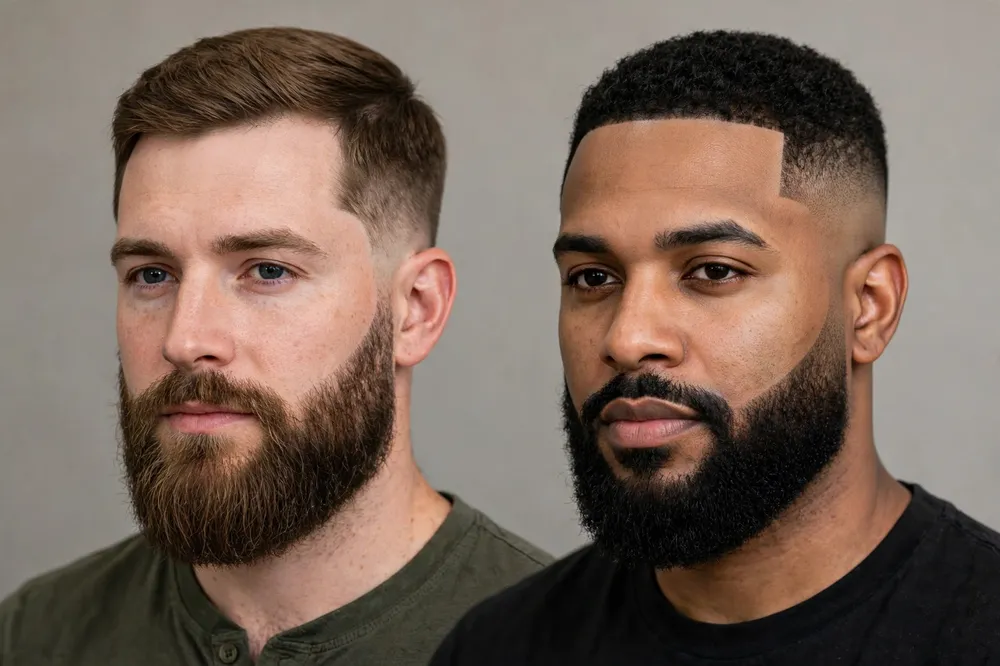
If you wear a beard, the taper-versus-fade question doesn’t stop at your hairline — the blend where hair meets beard is where the whole look either comes together or falls apart. A taper flows into the beard naturally, because both are graduated, so the transition looks seamless and grown-in. A fade gives a sharper contrast at the sideburn, which can look striking but needs the beard line to be carved precisely, or the two halves of your face argue with each other. Ask your barber to blend the sideburn into the beard, not just cut each separately, and agree on where the cheek line sits. A beard balm keeps the blend looking intentional. Maintenance is weekly beard trims either way, but the fade side needs the barber more often.
38. Taper vs Fade for a Round Face
A round face needs height on top and clean, narrow sides, and the taper and fade do different jobs there. A taper adds gentle length at the crown while keeping the sides soft, which lengthens the face. A fade strips the sides tight, which slims the face visually, but a high fade can also make a round face look rounder by removing too much width too high. Ask your barber for height on top — a quiff or textured crop — with a mid taper or a low fade on the sides, and keep the fringe off your forehead. Matte clay gives the top lift. The taper is the safer bet here for most round-faced guys, but a low fade with height on top works beautifully too.
39. Taper vs Fade for Thinning Hair
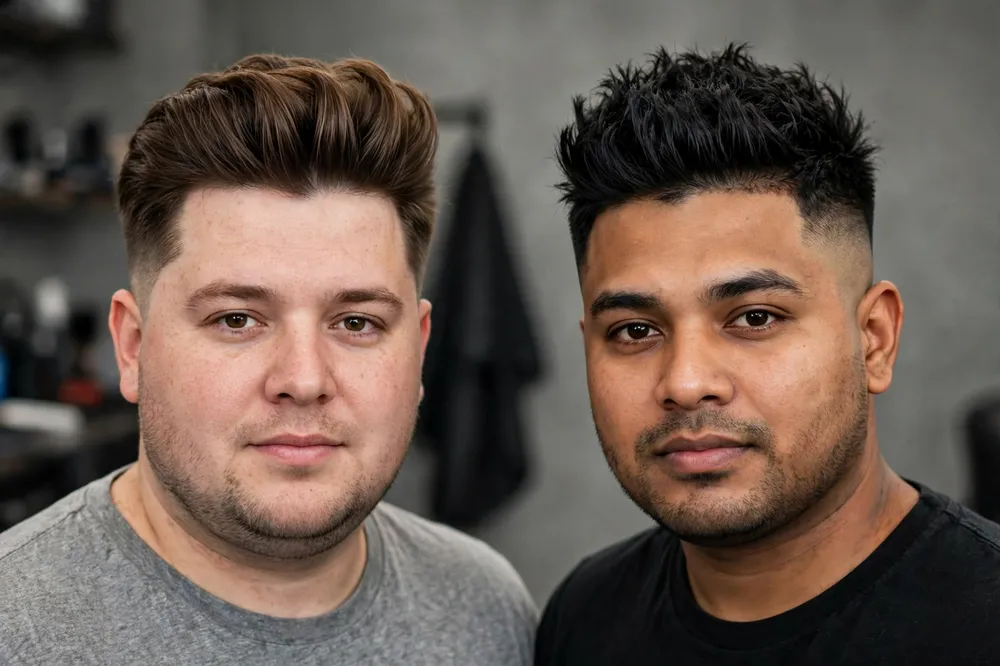
Thinning hair is where the taper quietly wins and the high fade can be a trap. A taper keeps more hair at the sides, which makes the top look fuller by comparison and hides a receding hairline or thinning crown. A high fade does the opposite — it strips the sides bare, which throws all the attention onto the thin patch on top, and pale scalp at the sides thins the look. Ask your barber for a low taper with a textured top, kept short so thinning doesn’t show, and skip the skin fade. A volumising powder or matte clay adds the illusion of density. The taper also grows out kindly, lasting four to five weeks, while a fade’s sharp line makes regrowth obvious in days.

How to Choose: Taper or Fade for Your Face Shape?
Start with your face shape, then work backwards. If your face is oval, congratulations — both cuts suit you, so pick by lifestyle: taper for low maintenance, fade for sharpness. Round faces need height on top and slim sides, so a mid taper or a low fade with a quiff works best; skip the high fade. Square faces already have strong angles, so either cut works, though a taper softens the jawline nicely. Long faces should avoid too much height on top — a low taper keeps things balanced, while a high fade can stretch you further. Heart-shaped faces, wide at the forehead and narrow at the chin, suit a mid fade that narrows the top. Diamond faces, with wide cheekbones, suit a taper that keeps some width at the sides. Our Fade Haircuts for Your Face Shape guide goes deeper on matching fades to each face shape. When in doubt, bring a photo of a cut you like and ask your barber what it would do to your face shape — a good barber will tell you honestly.
Taper vs Fade for Your Hair Type
Straight hair shows every line, so a fade’s gradient looks razor-sharp — but it also shows every mistake, so pick a barber you trust. A taper is more forgiving and gives straight hair a classic, neat finish. Wavy hair is the easiest of all: both cuts work, and the wave adds natural texture to the top either way. Curly hair suits a taper’s softer edges, though a fade makes the curls on top pop — just make sure your barber cuts curls dry or understands your curl pattern. Coily hair holds shape brilliantly, so a high top fade or a tapered afro both look superb, and a lineup finishes either one. Thinning hair favours the taper, as explained above: keeping hair at the sides makes the top look fuller, while a skin fade draws the eye to the thin spots. The rule of thumb is simple — the more your hair does on its own, the more freedom you have; the thinner it is, the more the taper helps.
How Much Does a Taper or Fade Cost & How Often to Go Back?
In most barbershops a taper and a fade cost roughly the same — expect somewhere around $20–$40 for a standard cut, more in big cities or for a senior barber, and a skin fade sometimes carries a small premium because of the extra foil-shaver work. The real difference is how often you need to come back. A taper stays looking smart for four to five weeks, because the graduated edge grows out softly and there’s no bare skin to show regrowth. A fade is a different story: the crisp gradient starts to blur after a week, and by two to three weeks it’s clearly grown out, so most fade wearers book every one to three weeks. Do the maths over a year and the taper is noticeably cheaper — roughly half the visits. If budget matters, the taper wins; if you love that just-cut sharpness, the fade is worth the extra chair time.
5 Mistakes Men Make When Asking for a Taper or Fade
- Saying “fade” when you mean “taper” (or the other way round). The two words sound similar in the chair, and barbers hear them mixed up daily. Say the full phrase — “a low taper, not a fade” — and point to where the shortest hair should sit.
- Not naming the height. “A fade” means nothing on its own. Low, mid or high changes everything, so always give the height, and if you’re unsure, say so — a good barber will suggest one for your head shape.
- Showing a photo of a different hair type. A fade on thick coily hair won’t look like the same fade on fine straight hair. Pick a reference photo of someone with hair like yours, or the result will disappoint you both.
- Forgetting the back and the neckline. Most men describe the sides and forget the back entirely, then hate the result from behind. Say whether you want the nape tapered, blocked or faded — it takes five seconds and saves a month of regret.
- Asking for a skin fade when you can’t keep it up. A skin fade looks incredible on day one and scruffy by day ten. If you can’t get to the barber every two weeks, take the taper or the shadow fade instead — your future self will thank you.
FAQs
What is the difference between a taper and a fade?
A taper gradually shortens the hair at the sides and back but never reaches bare skin — the shortest point is usually a #1 or #2 guard, so you always see hair. A fade blends the hair down to stubble or bare skin, creating a smooth gradient with much higher contrast. The taper is softer and more conservative; the fade is sharper and bolder. Both can start low, mid or high on the head — the height and the finish are separate choices.
Is a taper the same as a fade?
No, though people mix them up constantly — even some barbers use the words loosely. A taper is the older, classic technique: hair gets progressively shorter towards the neckline but stays visible throughout. A fade takes that idea further and blends the hair all the way down to skin. Think of it this way: every fade contains a tapering blend, but not every taper is a fade. If you want hair at the bottom, say taper; if you want skin, say fade.
What is a taper fade?
A taper fade is a hybrid of the two cuts: it follows the taper’s shape — a gradual shortening around the sides and back — but the very lowest edge is blended down to stubble, like a fade. You get the taper’s soft, grown-up outline with a cleaner, sharper finish at the neckline. It’s the cut barbers reach for when a customer says “something between a taper and a fade,” and it’s one of the most forgiving styles to grow out. The term itself comes from barbering tradition — Wikipedia’s page on the fade haircut traces how the short back-and-sides family, including tapers and fades, developed.
Which lasts longer, a taper or a fade?
A taper, by a clear margin. A taper grows out gracefully and still looks tidy after four to five weeks, because there’s no bare skin showing regrowth. A fade starts to lose its crisp edge after about a week, and by two to three weeks the gradient has blurred enough that most men book a touch-up. If you want the lowest-maintenance cut of the two, the taper wins — roughly half the barber visits over a year.
Which is better for a round face, a taper or a fade?
A taper is usually the safer pick for a round face, because it keeps a little width at the sides and adds gentle height on top, which lengthens the face visually. A low fade can work well too, especially paired with a quiff or textured crop for height. What you want to avoid is a high fade, which removes too much width too high and can make a round face look rounder. If your face is round and you love fades, ask for a low fade with height on top — you get the sharpness without the widening effect.
Can you get a taper or fade with long hair on top?
Yes — and it’s one of the best combinations in men’s hair. Long hair on top with tapered or faded sides is the basis of the pompadour, the quiff, the slick back and the man bun with an undercut. The sides keep the long top from looking heavy or shapeless, and the contrast makes the length look deliberate. Tell your barber exactly how much length you want to keep up top, and whether you want the sides faded tight or just tapered — both work, but the fade gives a bolder contrast against long hair.
How do I ask my barber for a taper vs fade?
Use three pieces of information: the cut, the height and the finish. Say the cut first — “a taper” or “a fade” — then the height: low, mid or high. Then describe the finish: “down to skin,” “to stubble, no skin,” or “keep hair at the bottom.” For example: “a mid taper, graduated, keep hair at the neckline” or “a low skin fade, blended to zero.” Bring a photo of someone with a similar hair type to yours — it removes all guesswork. And if you’re torn between two heights, say so: a good barber would rather talk it through for thirty seconds than fix a cut for a month. For the curved style around the ear, ask for a burst fade; for the line that dips behind the ear, ask for a drop fade.
Final Word
There is no single right answer in the taper versus fade debate — there’s only the right answer for your face, your hair and your life. If you want a cut that grows out gracefully, costs less over the year and never looks out of place, the taper is your friend. If you want sharpness, contrast and a cut that turns heads on day one, the fade earns its extra barber visits. And if you genuinely can’t choose, the taper fade sits happily in the middle. Whichever you pick, walk into the barbershop knowing the three things that matter — the cut, the height and the finish — and you’ll walk out with the haircut you actually pictured. For more guides like this one, from fades and tapers to braids and colour, browse our blog.