

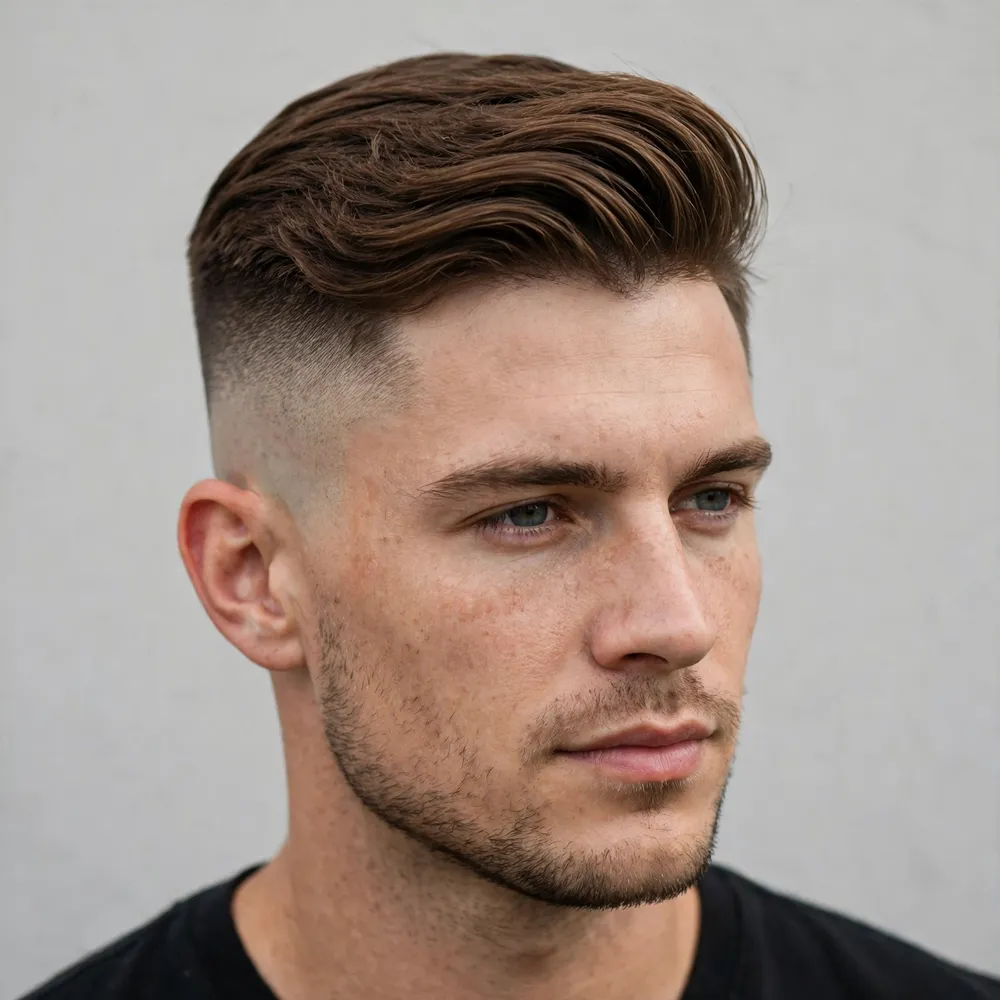
A high fade haircut takes the sides and back up close to the crown, so the fade starts high and the top gets all the attention. If you’re choosing one for the first time, start with the Classic High Fade with Comb Over; for a modern everyday look, the High Fade with Textured Quiff is hard to beat; and if your hair curls, the High Fade with Curly Top lets the texture do the work.
1. Classic High Fade with Comb Over

This is the one to book when you want a fade but still need to look polished at work on Monday. The top stays long enough to sweep to one side — about two to three inches — while the sides climb high and tight, giving it a clean, deliberate shape. It suits oval and square faces best, and works on straight or slightly wavy hair that holds a part. Ask your barber for a high fade with a #1 to #0.5 blend and a scissor-cut top, swept over with a defined side part. A dab of medium-hold pomade combed through damp hair keeps it neat without looking stiff. Upkeep is the catch: the fade blurs after about two weeks.
2. High Fade with Textured Quiff

The quiff is the reason this cut shows up everywhere — it adds height up front, which lengthens the face, and the high fade keeps the sides from competing with it. Your barber should point-cut the top into choppy layers, roughly three to four inches at the front, tapering shorter toward the crown, then take the fade high with a skin or #0 finish. It flatters round and oval faces, and works on straight to wavy hair with at least medium thickness; very fine hair can struggle to hold the lift. Blow-dry the front upward and back with a round brush, then work in a matte clay for volume without shine. Budget five minutes each morning, and expect a tidy-up every two to three weeks.
3. High Fade with Textured Crop

Like the quiff but not the morning routine? The textured crop is your cut. The top is cut short — an inch or so — with choppy, point-cut layers that create movement on their own, and the high fade underneath does the heavy lifting on shape. It suits most face shapes, especially square and oval, and it’s genuinely good on thick hair because the texturing thins the bulk out. Ask for a high skin fade or #0.5 fade with a short textured crop on top, with the fringe left slightly uneven. Styling takes thirty seconds: a pea-sized amount of matte paste, ruffled through with your fingers. It grows out gracefully, so three to four weeks between cuts is fine.
4. High Skin Fade
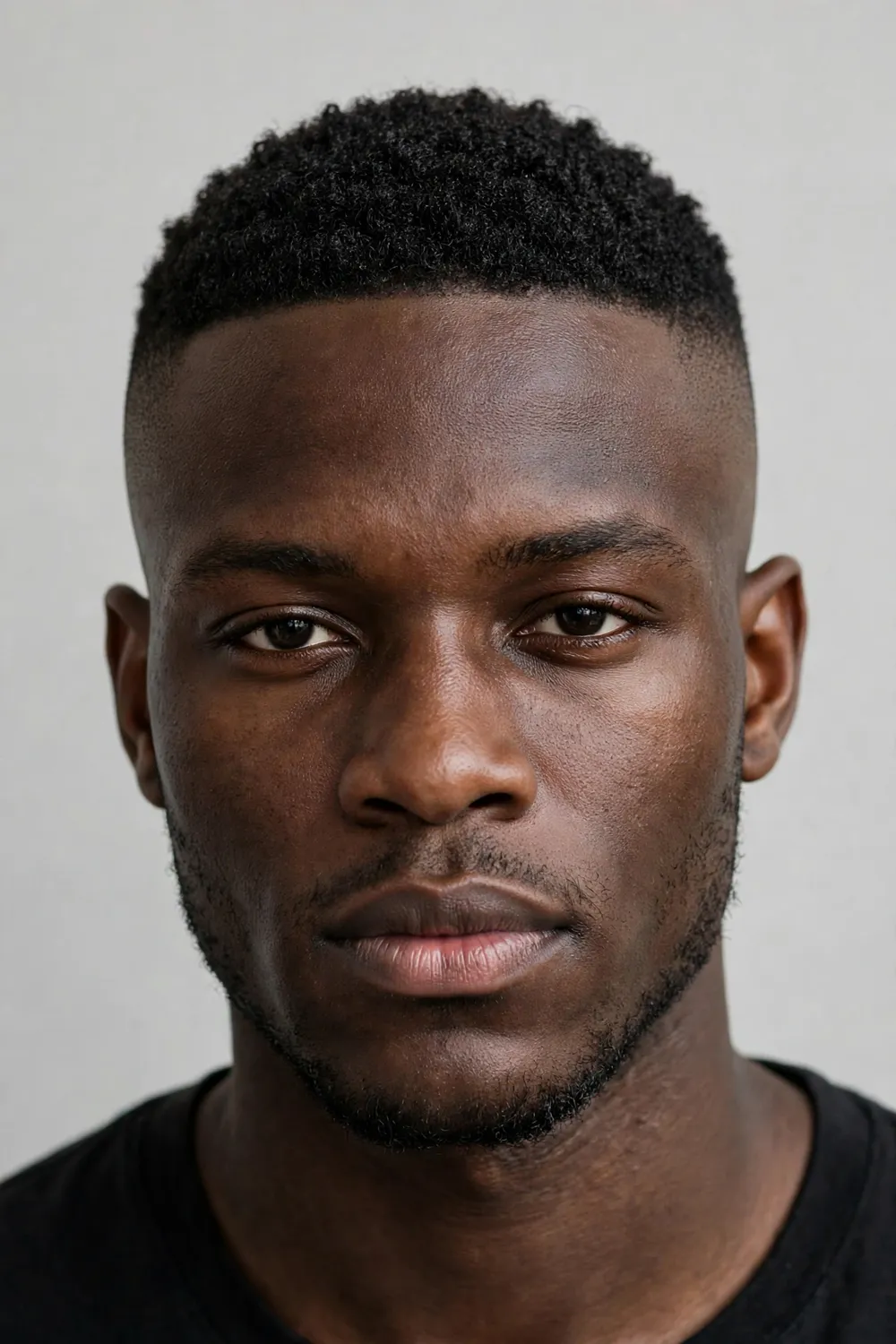
A skin fade is the boldest version of the high fade: the sides go all the way down to bare skin before blending into the top, so the contrast is as sharp as it gets. That contrast is the point, and it looks best when the top has something to show off — a crop, a quiff, a short buzz. It suits oval and square faces, and any hair type works because the top is doing the talking. Ask for a high skin fade with a foil shaver finish, and be specific about where the blend line sits. No product on the sides — the only upkeep is frequency: skin grows back visibly within days, so most guys need a clean-up every 10 to 14 days.
5. High Fade with Curly Top

Curls and a high fade are a natural pairing — the fade removes the bulk at the sides, so the curls on top get room to breathe instead of turning into a triangle. It suits round and square faces, since the height on top balances the width, and works on anything from loose waves to tight curls. Ask your barber to keep two to four inches of curl on top, cut dry or with a curl-by-curl approach, and take the sides high with a #1 to skin fade. Use curl cream on damp hair and air-dry, or diffuse on low heat if you’re in a rush. Curls need moisture, so skip drying shampoos, and book a trim every three to four weeks.
6. High Fade with 360 Waves

Waves need a flat, even canvas, and a high fade gives them exactly that — short, clean sides while the pattern ripples across the top. It’s built for coarse, coily hair that can be trained into waves, and suits oval and round faces, where the smooth top adds structure. Ask your barber for a high fade with the top cut to about a #2 or #3 guard, then set your wave pattern with a brush. The real work happens at home: brush daily with a medium or hard brush, wear a durag at night, and use a light pomade or wave cream. A few weeks of brushing locks the pattern in, and the fade needs a touch-up every two weeks.
7. High Fade Pompadour

The pompadour is the high fade’s most dramatic partner: the top sweeps up and back into real height, and the tight high sides make that volume look even bigger. It’s a strong choice for round and oval faces, since the height lengthens the face, and works best on thick, straight to wavy hair that holds a shape — fine hair needs more product and patience. Ask for a high fade with four to five inches left on top, scissor-cut, shorter at the back of the crown. Blow-dry the top up and back with a round brush, then finish with a strong-hold pomade for shine or a matte clay for a modern feel. This is a high-commitment cut: five to ten minutes of styling each morning.
8. High Fade Slick Back
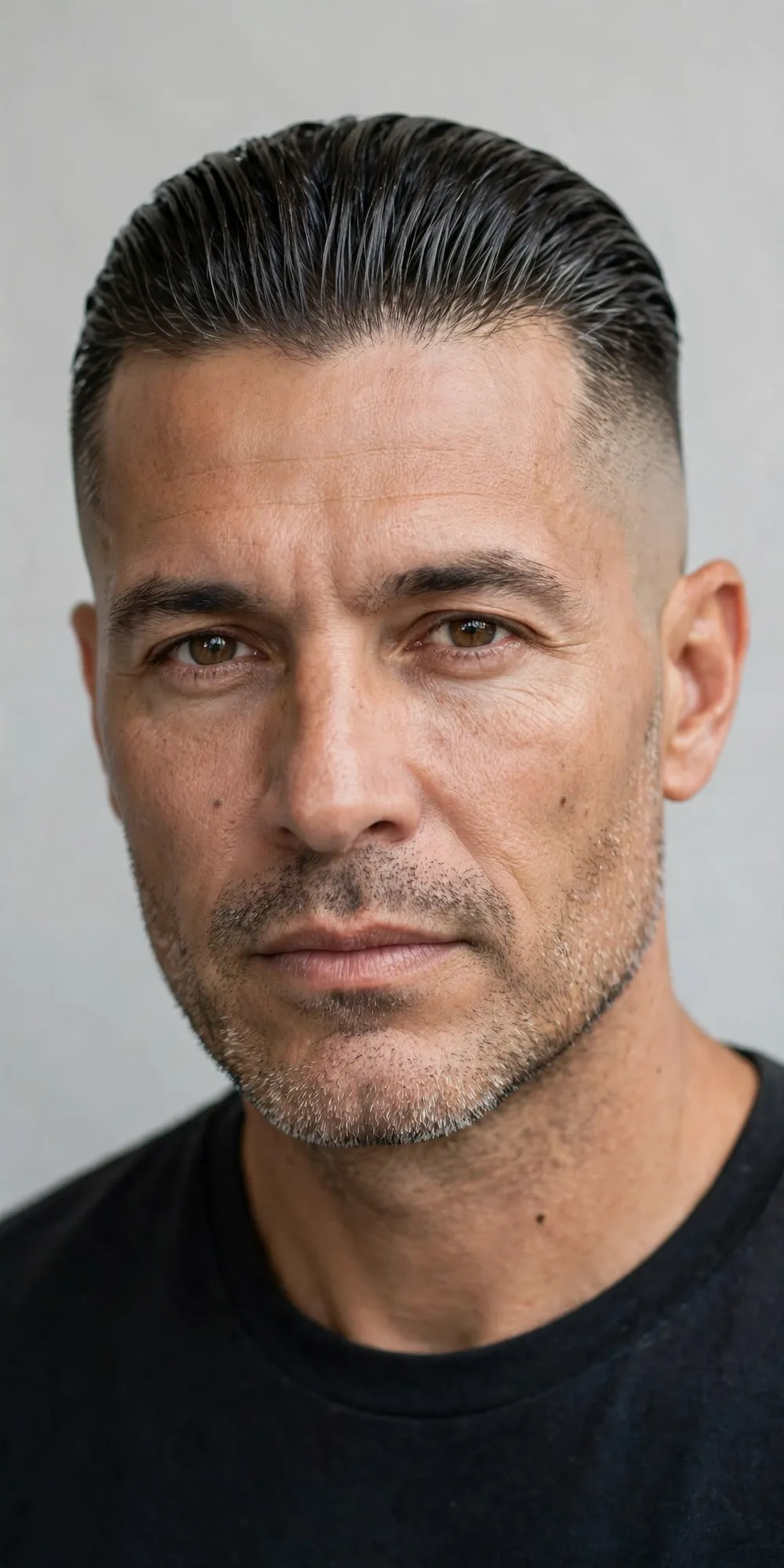
The slick back is the grown-up version of the high fade — everything combed straight back, no fringe, no fuss, just a clean silhouette. It suits oval and square faces best, and needs medium-length hair on top, around three to four inches, thick enough to lie flat when combed back. Ask for a high fade with the top left long and scissor-cut, the back tapered so it sits neatly underneath. Work medium-hold pomade through damp hair and comb it straight back; water-based pomade washes out easily if you restyle daily. The downside is honest: it shows a receding hairline more than most cuts, so keep a comb in your pocket and expect a touch-up every two to three weeks.
9. High Fade with Spiky Hair
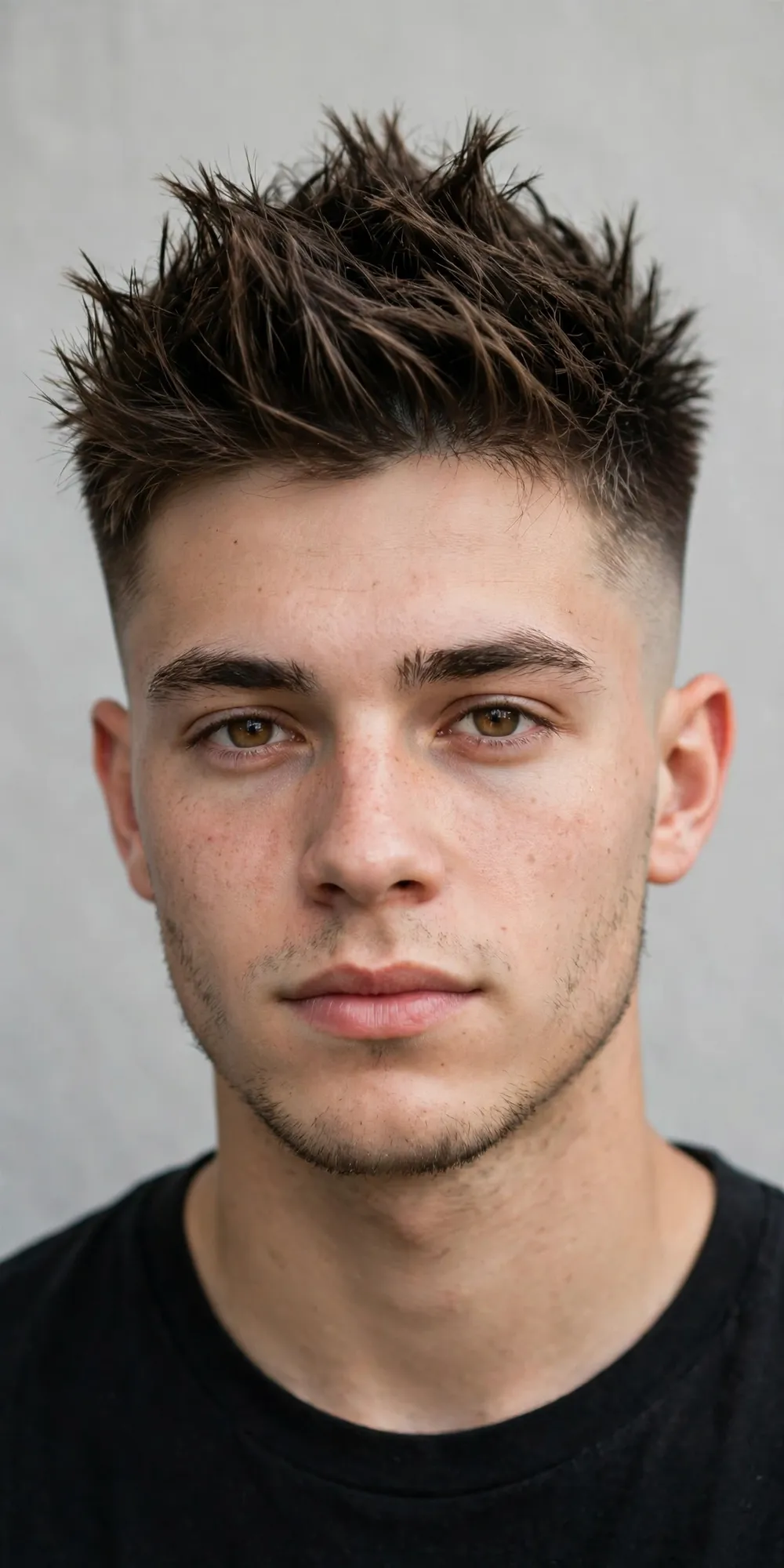
Spikes bring energy to a high fade — short, piecey texture on top that points upward, with the tight sides keeping the whole thing from looking messy. It suits younger guys and square or oval faces, and works on straight to slightly wavy hair with medium thickness; very curly hair will fight the spikes. Ask your barber for a high fade with two to three inches on top, point-cut into spikes, and a #0.5 to #1 blend on the sides. Styling is quick: warm a little strong-hold matte wax between your palms and pinch the ends upward. It holds all day on most hair types, but spikes collapse in rain or humidity, and you’ll want a trim every two to three weeks.
10. High Fade with Faux Hawk
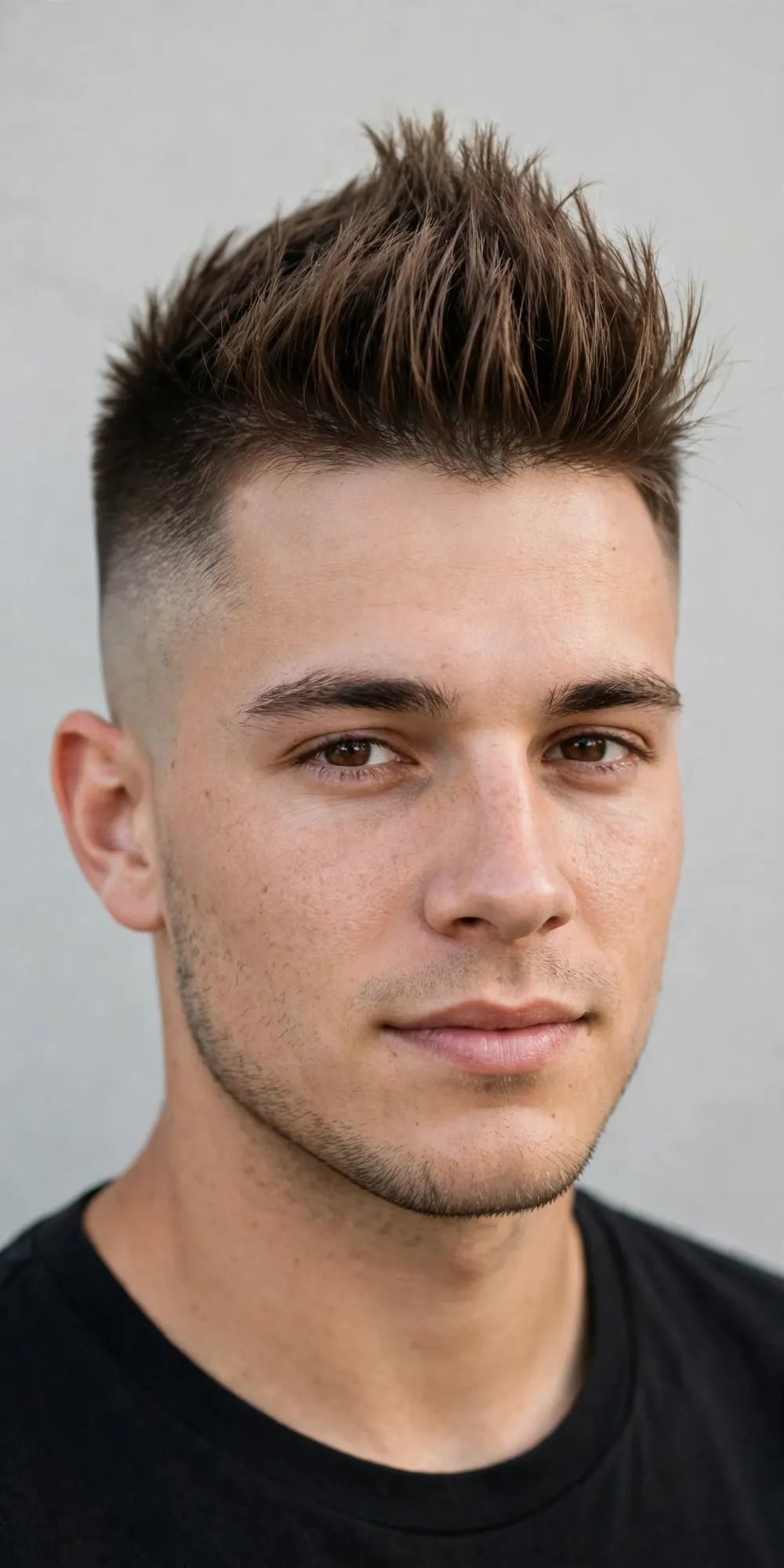
The faux hawk gives you a mohawk’s attitude without the commitment — a centre strip styled upward, while the high fade narrows the sides and makes it look taller. It suits oval and heart-shaped faces, and works on straight, wavy or curly hair — the centre strip just needs two to three inches to stand up. Ask your barber for a high fade with the centre left longer and the sides faded tight, and have them blend the strip gradually toward the back. Use a strong-hold clay or wax, pushing the hair up and slightly together from both sides. The cut is fun but not subtle, so it fits casual settings better than formal ones, and the fade needs refreshing every two weeks.
11. High Fade with Buzz Cut

The buzz cut with a high fade is the lowest-effort cut on this list — the even short top and the high fade give a plain buzz real shape. It suits square and oval faces, and it’s a good pick for thinning hair, because the short length and tight sides make it far less noticeable. Ask your barber for a buzz on top — a #2 or #3 guard is the sweet spot for most guys — with a high fade on the sides and back, blended up into the buzz. There’s no product and no styling: wash and go. The trade-off is frequency: a buzz shows growth fast, so most guys clip it themselves between visits or come in every one to two weeks.
12. High Fade with Afro
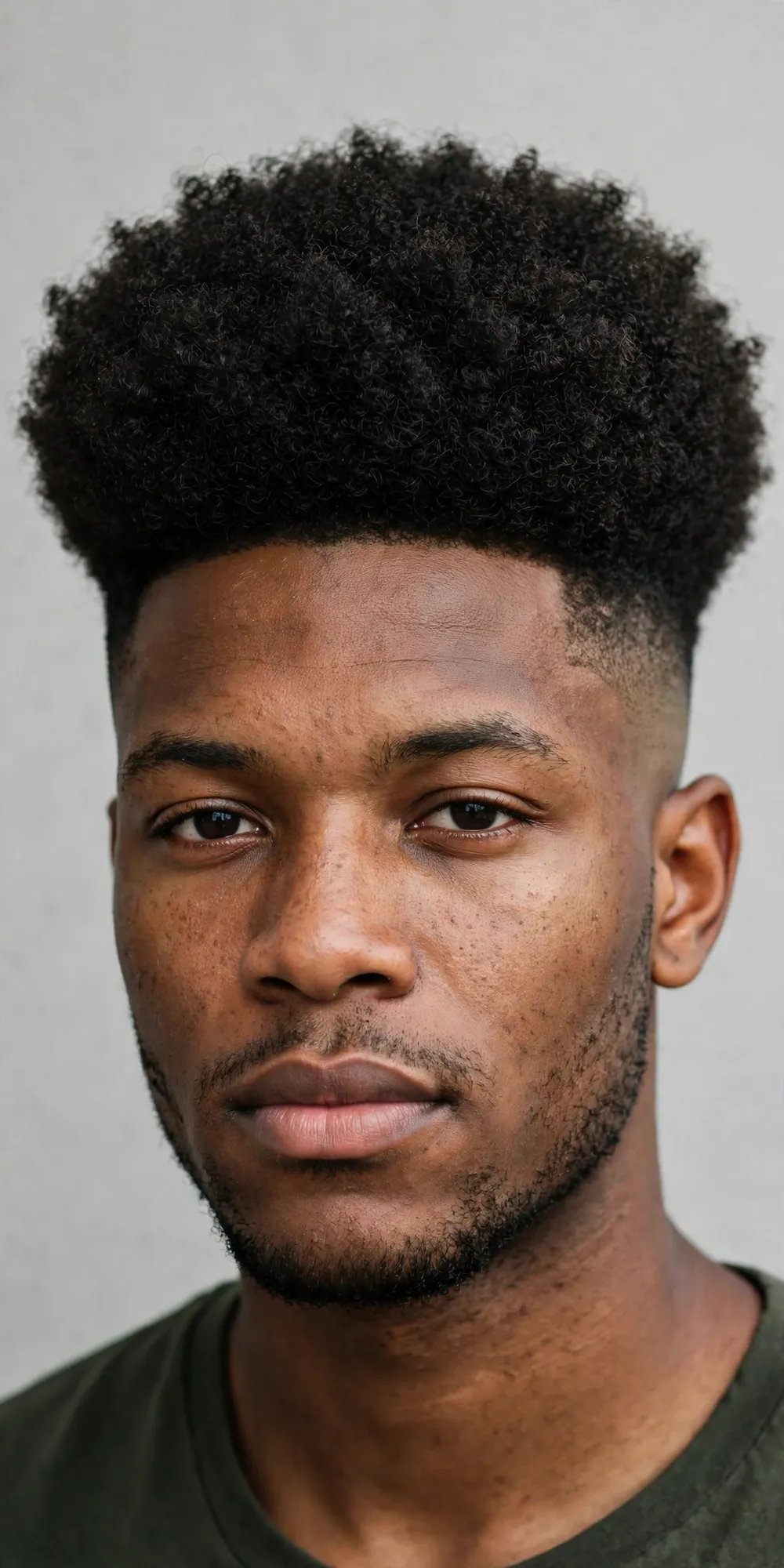
An afro with a high fade is one of the sharpest shapes in barbering: full, rounded volume on top against sides faded clean and high. It suits round and oval faces, where the height balances the width, and it works on coily and curly hair that can hold a rounded shape. Ask your barber to shape the afro with a pick, keeping the silhouette rounded and even, and take the fade high with a clean blend — a line-up makes it even sharper. Moisture is the maintenance story: use a leave-in conditioner and a light oil or butter to keep curls defined, and pick the afro out as it dries. Book a shape-up every two to three weeks.
13. High Fade with Long Curls
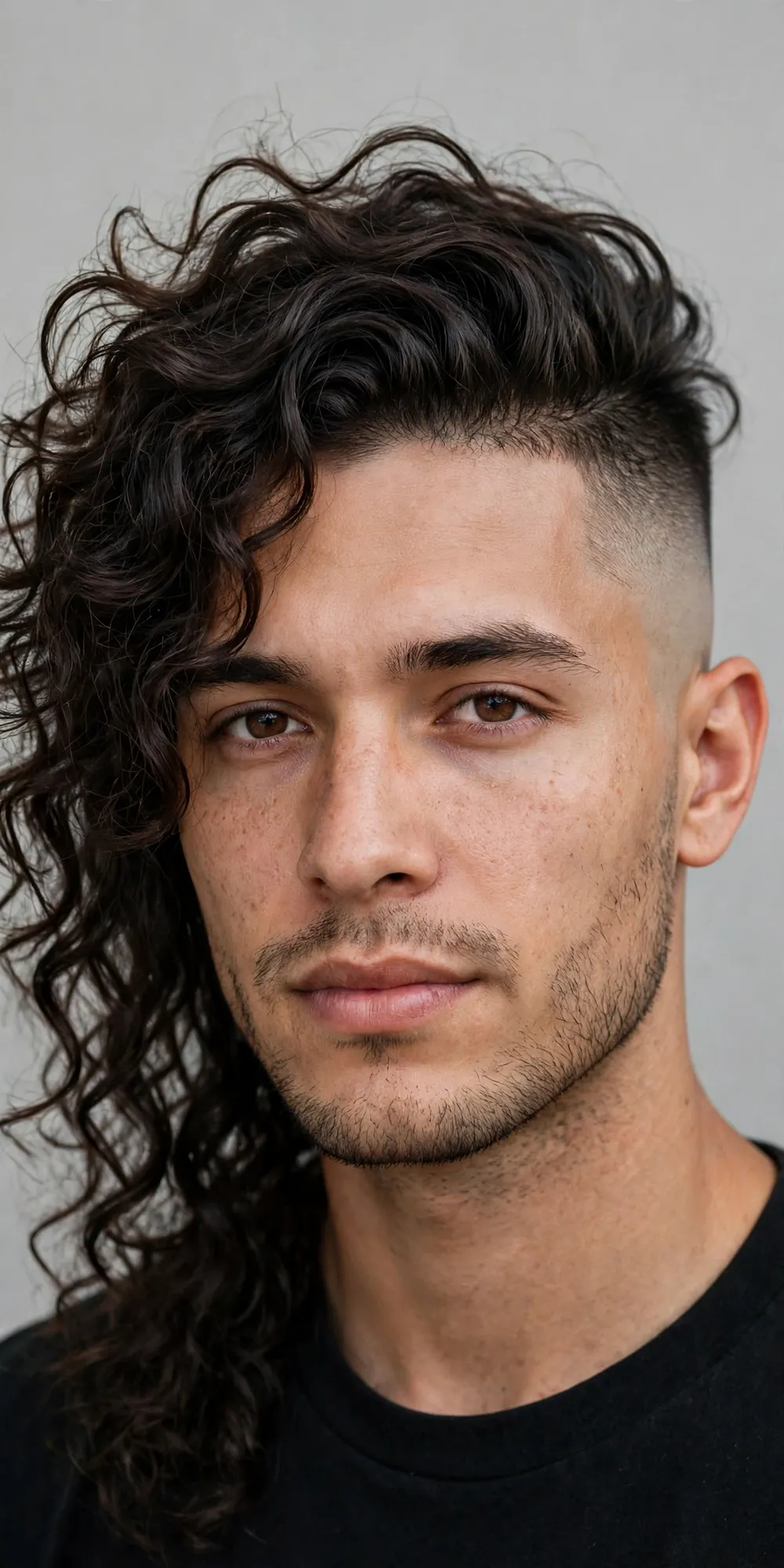
Long curls on top with a high fade underneath is a statement cut — the length stays, the side bulk disappears, and the curls get all the attention. It suits oval and long faces best, and needs genuinely curly or wavy hair long enough to fall, usually four inches or more. Ask your barber to keep the top long and cut it curl by curl so the shape stays even, then fade the sides high with a #1 to skin finish. A curl cream on damp hair, scrunched in and left to air-dry, keeps the definition without crunch. The honest cost is time: curls this long need regular conditioning and a trim every four to six weeks.
14. High Fade with Side Part

The side part is the classic gentleman’s cut, and the high fade gives it a modern edge — a sharp part line and a swept top, sides fading away. It suits oval, square and heart-shaped faces, and works on straight or wavy hair that can be trained to fall to one side. Ask for a high fade with two to three inches on top, scissor-cut, and a side part carved in with a comb so you can find it daily. A medium-hold pomade or cream gives the sweep a natural finish; use a comb, not your fingers, to keep the part visible. It’s one of the easiest fades to maintain, but the fade needs touching up every two weeks to keep the part line crisp.
15. High Fade with Fringe
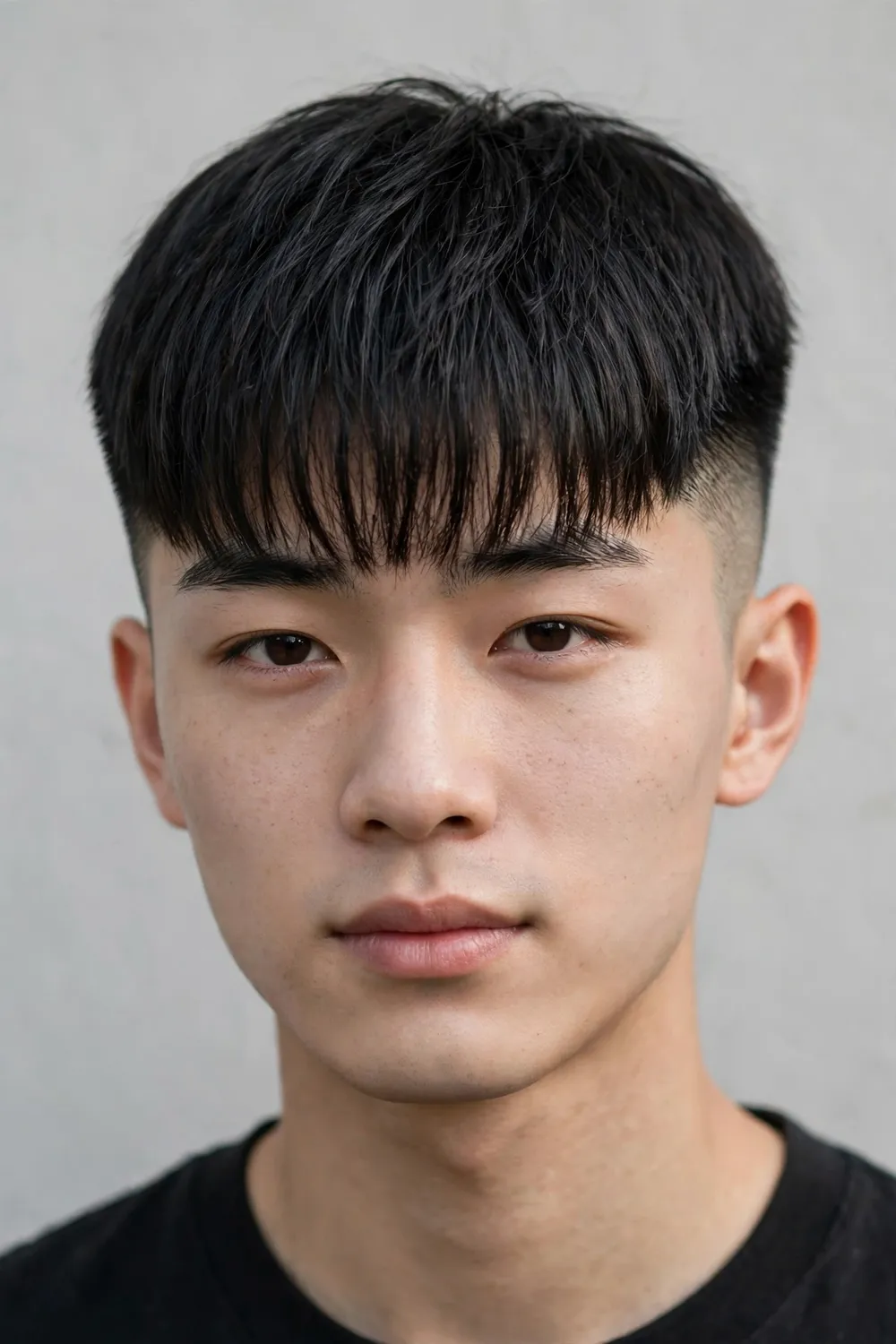
A fringe brings hair forward over the forehead, softening a high forehead or a long face, while the high fade keeps the sides from adding width. It suits long and oval faces best, and works on straight to wavy hair — curly hair can work too, but the fringe must fall naturally, not forced straight. Ask your barber for a high fade with the fringe left at eyebrow length, cut with a slight texture so it doesn’t sit like a solid block. Style it forward with a light matte paste, pushed slightly to one side for movement. The fringe needs trimming every two to three weeks — even a centimetre of growth changes how it sits — and it can feel warm in summer.
16. High Fade French Crop
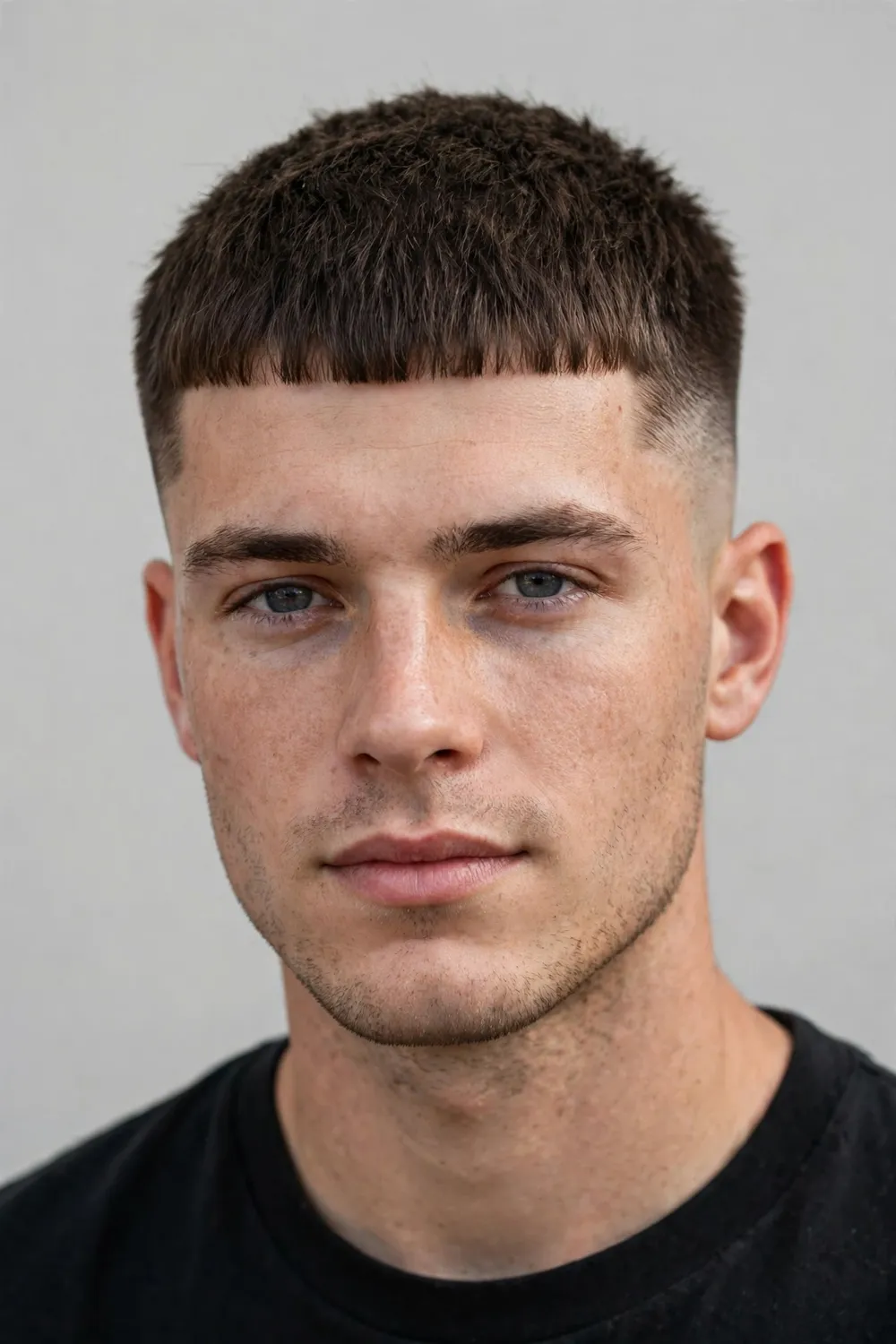
The French crop is a short, blunt fringe with a cropped top, and paired with a high fade it looks deliberately bold — a straight fringe line against faded sides. It suits oval, square and long faces, and works on straight or slightly wavy hair; the fringe must sit flat, so very curly hair is a poor fit unless straightened. Ask your barber for a high fade with the top cropped to about an inch and the fringe cut straight across at the hairline, with light texturing so it doesn’t look helmet-like. Styling takes seconds: a touch of matte clay pushed forward. The fringe is the maintenance issue — it grows into your eyes within two to three weeks, so this cut rewards a regular barber.
17. High Fade with Messy Top
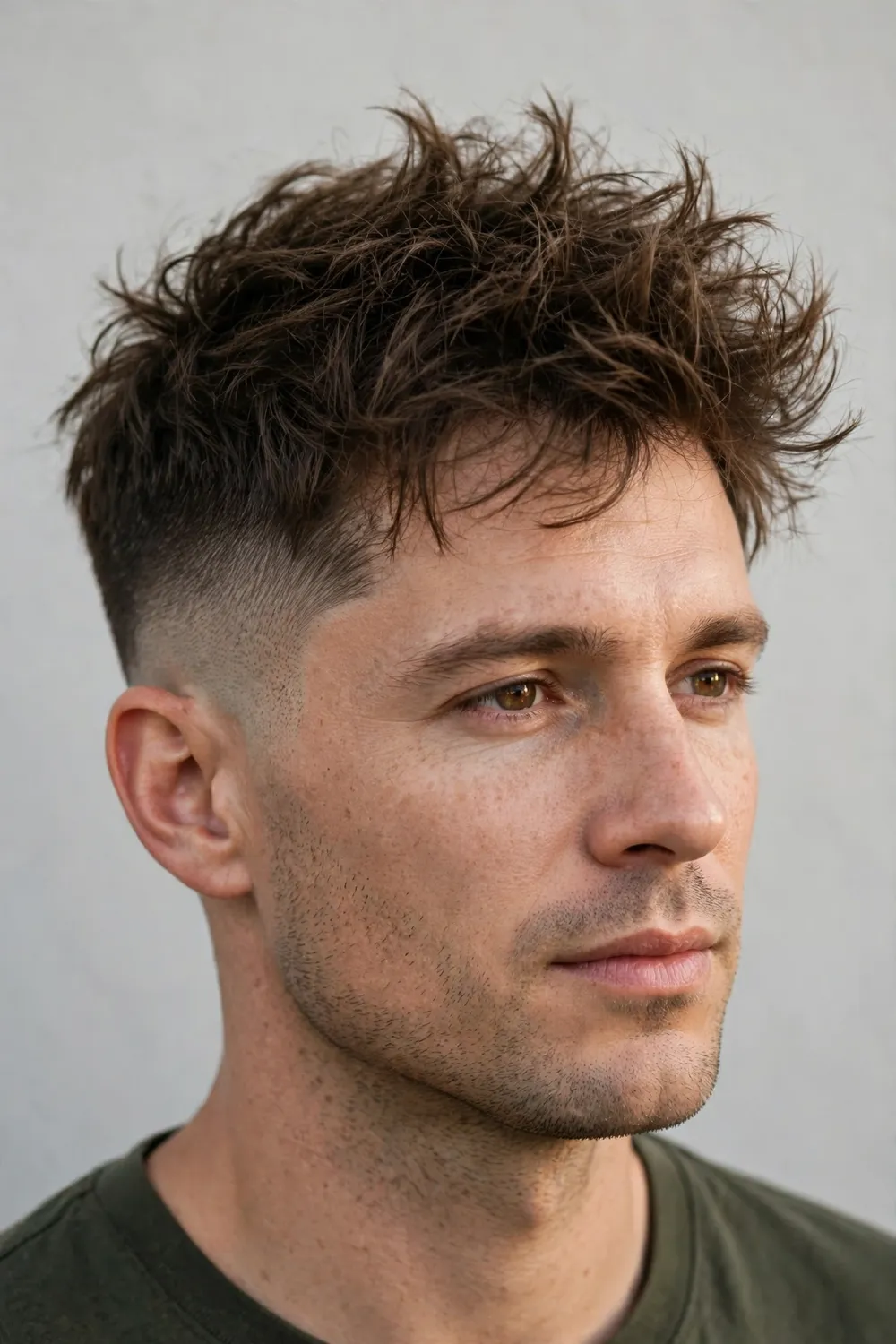
The messy top looks effortless, but the cut does the work — choppy, uneven layers on top that fall where they want, held in check by a clean high fade. It suits most face shapes, especially oval and square, and thick or wavy hair with natural movement; very straight, fine hair can look flat instead of messy. Ask for a high fade with two to three inches on top, point-cut heavily so the ends break up, and no hard lines on top. A sea salt spray on damp hair, scrunched and left to dry, gives you the texture without stiffness. Grow-out is forgiving — three to four weeks between cuts — but the fade blurs before the top does.
18. High Fade Mohawk
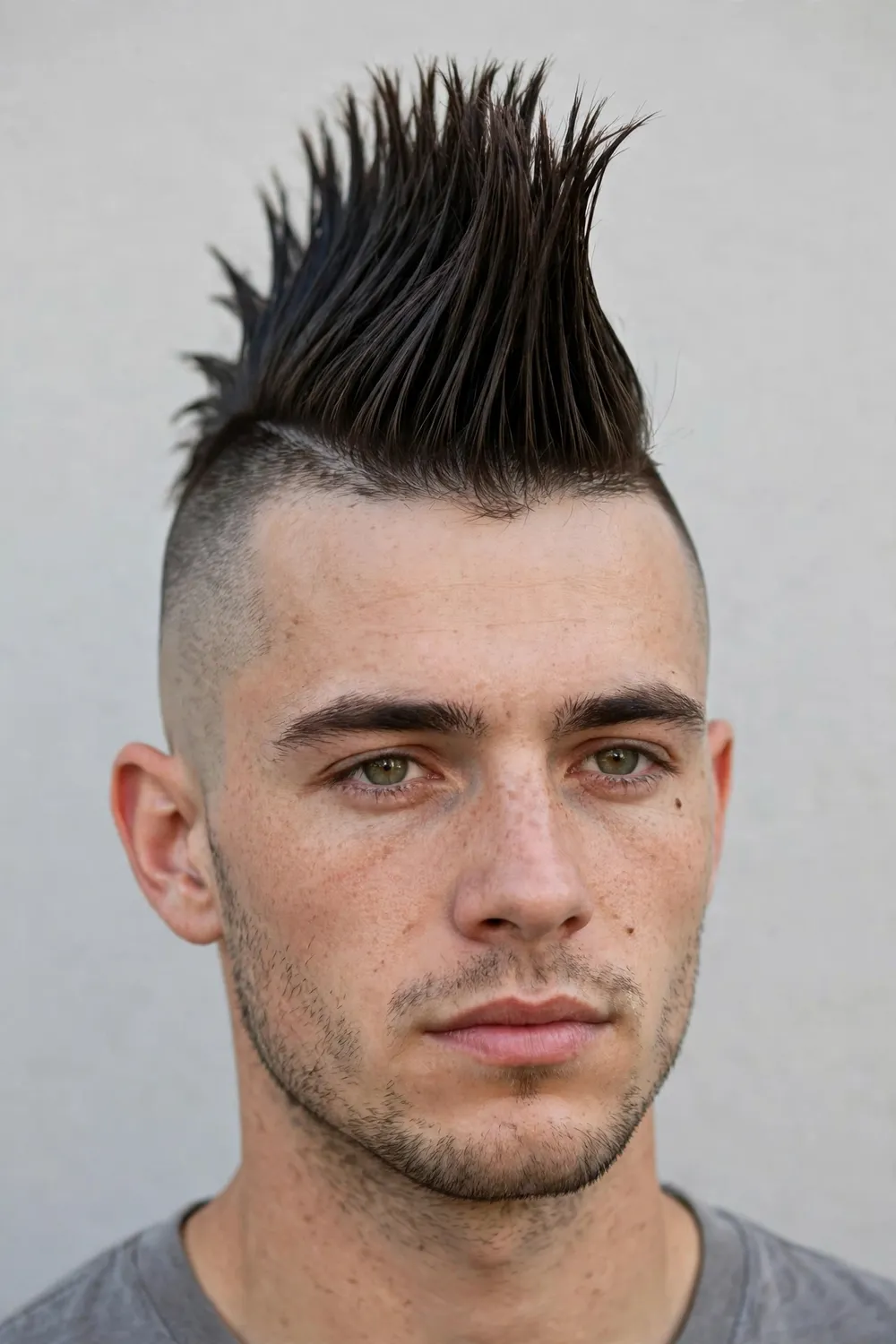
The mohawk is the loudest cut on this list: a bold centre strip, with the sides faded high and tight so there’s no mistaking the shape. It suits oval and square faces, and works on straight, wavy or curly hair, as long as the strip has three to four inches to stand up or fall to one side. Ask for a high fade with the centre strip left long and the sides down to skin or a #0, with the strip width agreed first — narrower looks sharper, wider is easier to wear. Strong-hold wax keeps it upright; for a softer version, sweep it to the side instead. This is a commitment: the strip needs daily styling and the fade needs a fortnightly touch-up.
19. High Fade with Line Up

The line-up is all about the edges: a razor-sharp hairline across forehead and temples, squared off with a trimmer, above a clean high fade. It suits square and oval faces, and works on any hair type — the top can be anything, a crop, curls, waves — while the line-up does the framing. Ask for a high fade with a crisp line-up, and say how sharp you want the corners; a softer, rounded corner looks more natural on an uneven hairline. There’s no product involved, just a sharp razor finish, but the line-up is also the maintenance problem: it blurs within a week, so most guys get a touch-up every seven to ten days, at the barber or with a trimmer at home.
20. High Fade with Wavy Top

Waves bring natural movement to a high fade, and this cut lets them show — the top stays long enough for the waves, while the tight high sides keep it tidy. It suits oval and round faces, where the texture adds interest without width, and needs naturally wavy hair; straight hair won’t fake the wave without a perm or heavy product. Ask for a high fade with two to four inches on top, cut to follow your natural wave pattern, and a #1 to skin fade on the sides. Sea salt spray or light curl cream on damp hair, scrunched and air-dried, brings the waves out. The top grows out, so three to four weeks between cuts works, though the fade needs touching up sooner.
21. High Bald Fade
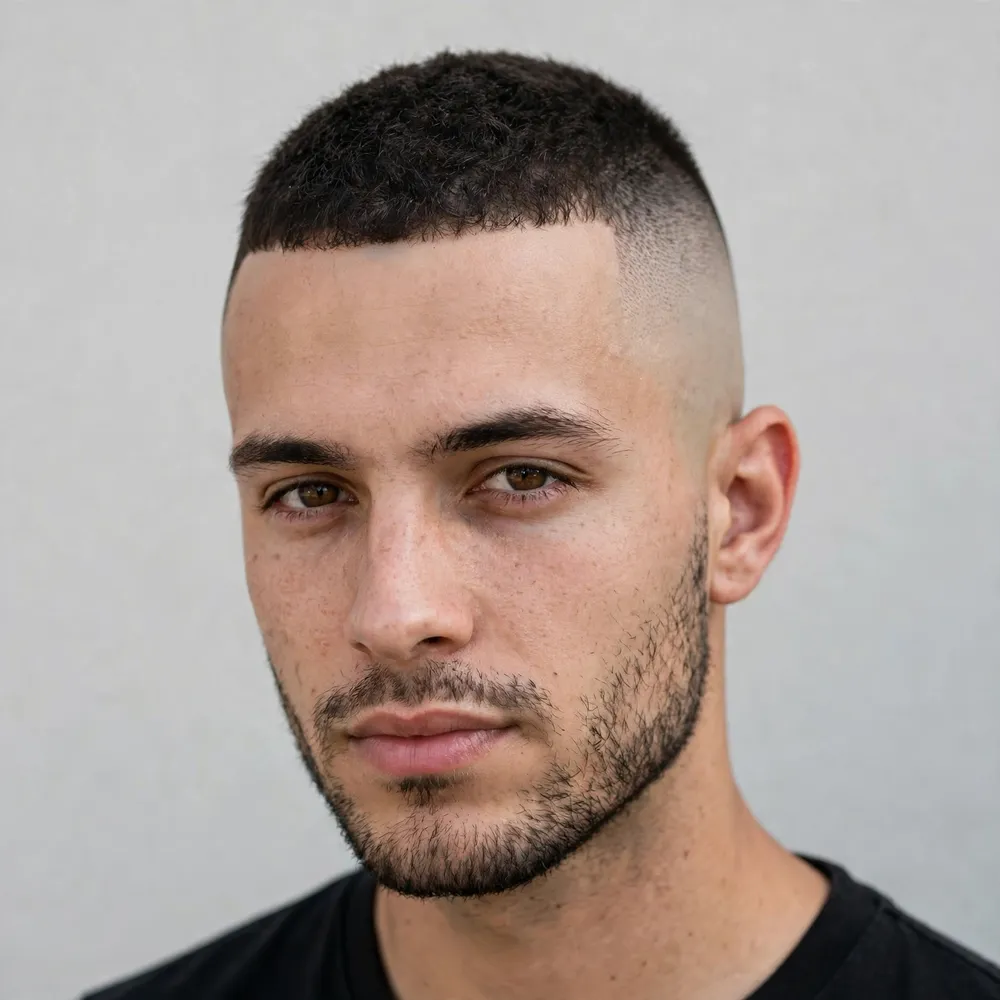
The bald fade is the high fade at its sharpest: the sides drop to bare skin from a foil-shaver finish, with the blend starting high around the temples. That skin-to-hair contrast is the whole appeal, and it pairs brilliantly with a beard, since the fade can melt straight into a shaped beard line. It suits oval and square faces best, and any hair type works on top — a short crop, waves or a little length all sit fine above it. Ask for a “high bald fade, foil shaver to the skin, blend starting at the temple”, and finish a longer top with a light matte paste. The catch is upkeep: the skin goes fuzzy in about five days, so expect a touch-up every one to two weeks.
22. High Fade with Crew Cut
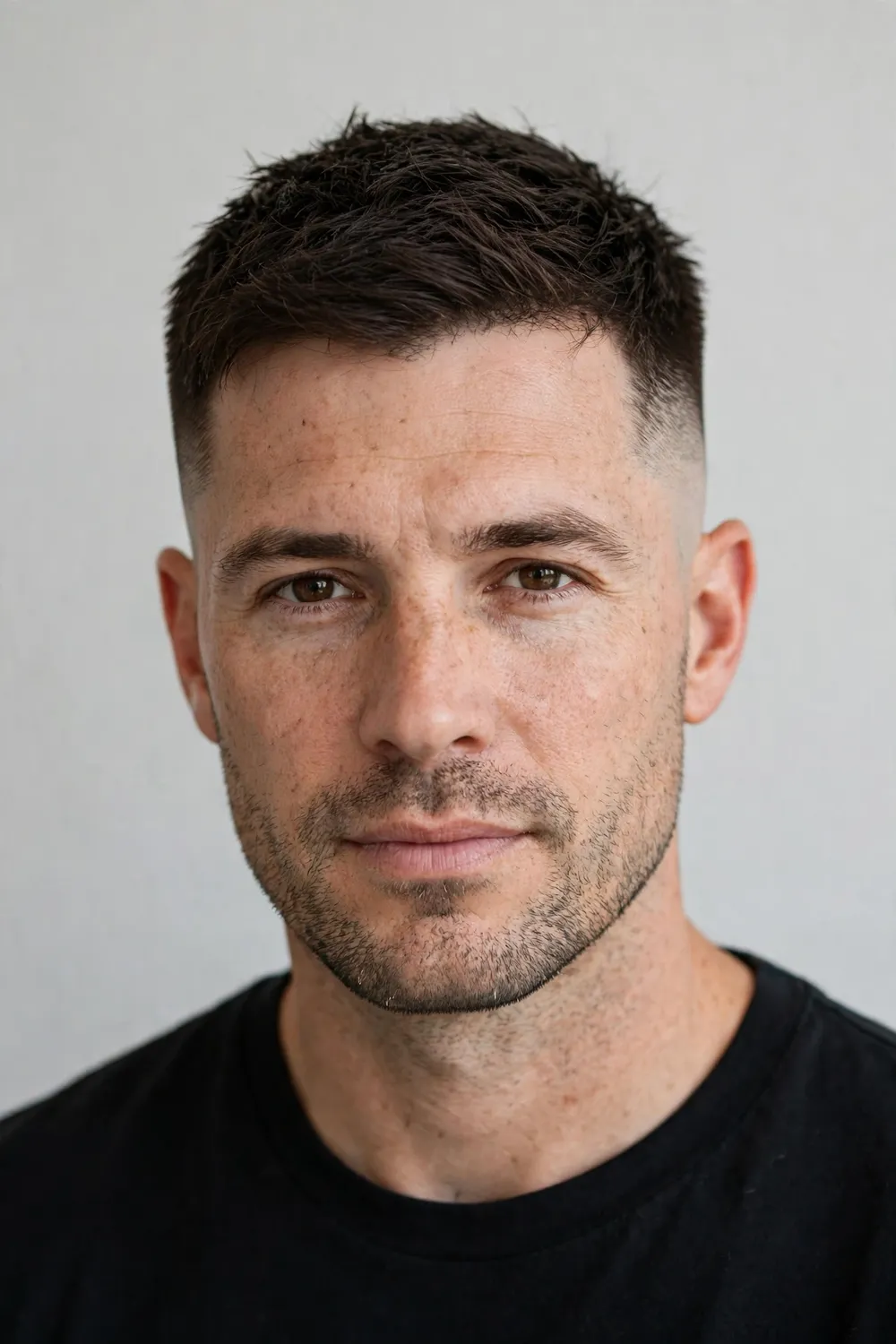
If you want a haircut you never have to think about, this is the one. The crew cut keeps the top short — around half an inch at the front, tapering slightly toward the crown — and the high fade does all the styling work on the sides. No product, no blow-dryer, no mirror routine. It flatters square and oval faces, and it works on straight, wavy or slightly curly hair, though very thick hair may need thinning at the top so it doesn’t puff out above the fade. Ask for a “crew cut on top, about a number 4 at the front, with a high fade on the sides and back”. Towel-dry and go is the whole routine — a dab of matte clay on days you want the front to sit up. The fade keeps it from looking like a plain buzz, so book a tidy-up every two to three weeks.
23. High Fade with Dreadlocks

Locs on top with a high fade underneath is one of the sharpest combinations in barbering — the softness and movement of the locs against the hard, clean lines of the fade. The contrast is the whole point, so keep the fade high and crisp and let the locs carry the length and personality on top. It suits any face shape, and it works with locs of any length, from short starter locs swept forward to long locs tied back. Tell your barber “high fade on the sides and back, keep the locs untouched on top, and line up the front”. Your loctician handles the retwist schedule — usually every four to six weeks — while the barber keeps the fade fresh in between. A light oil on the scalp keeps both the locs and the faded skin looking healthy.
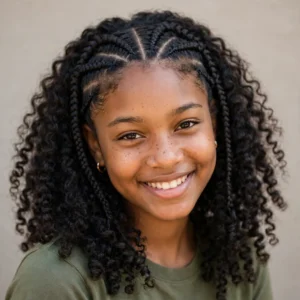
24. High Fade with Cornrows
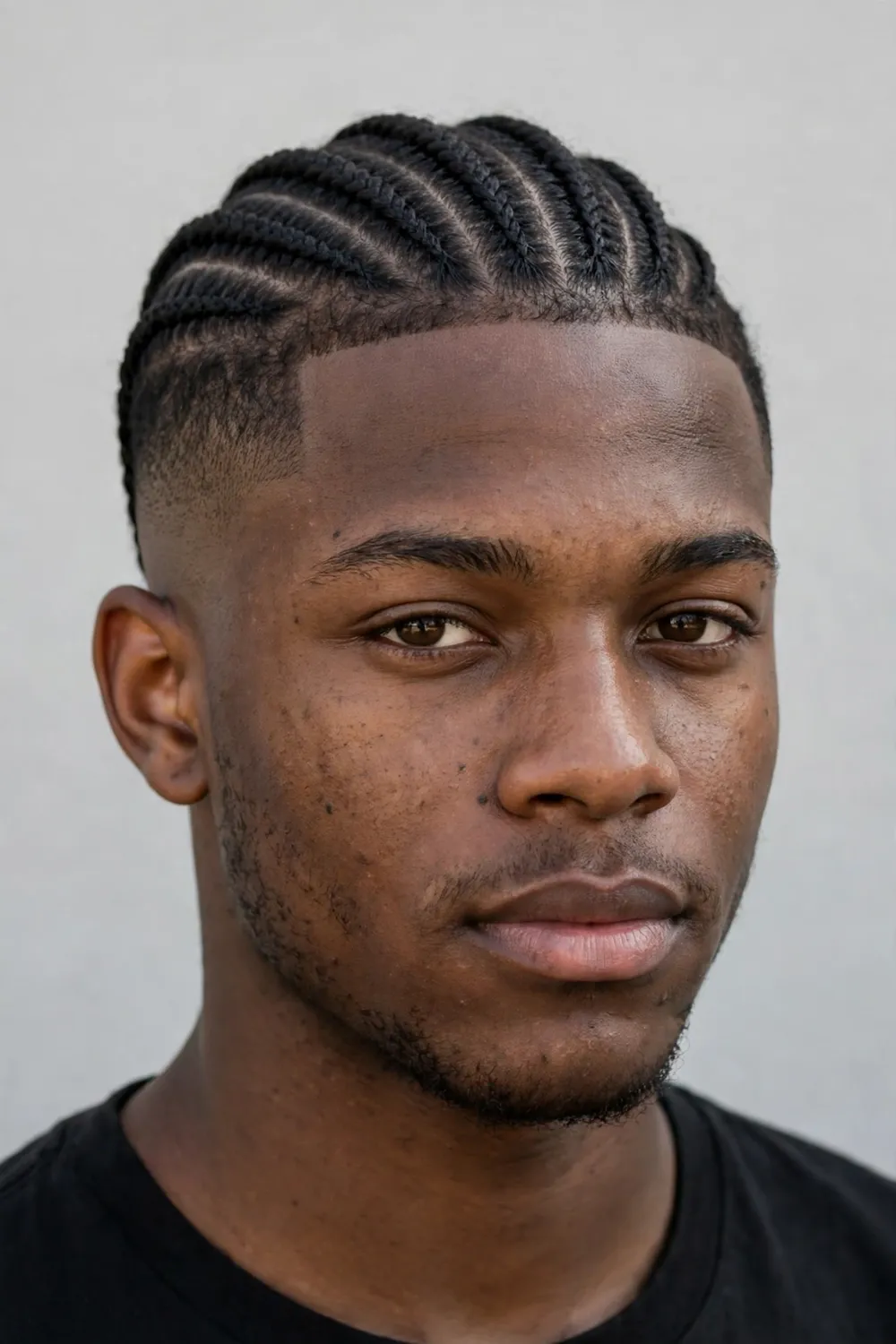
Cornrows need a clean frame, and a high fade gives them exactly that. The braids run from the hairline back over the crown, and the faded sides make the pattern pop instead of getting lost in bulk. It works with straight-back rows, curved designs or a mix, and suits every face shape — the fade lifts the whole look and keeps it from feeling heavy. Ask your barber for a “high fade, blended up to just below where the braids start”, and have the braider keep the parts neat and even. A little edge control along the hairline and a silk durag at night will keep the rows crisp for two to three weeks. The fade will need a touch-up around the two-week mark, sooner if you want the edges razor sharp. This style also sits naturally alongside our guide to fade haircuts for Black men, where several braided looks use the same high-fade base.
25. High Fade with Textured Fringe
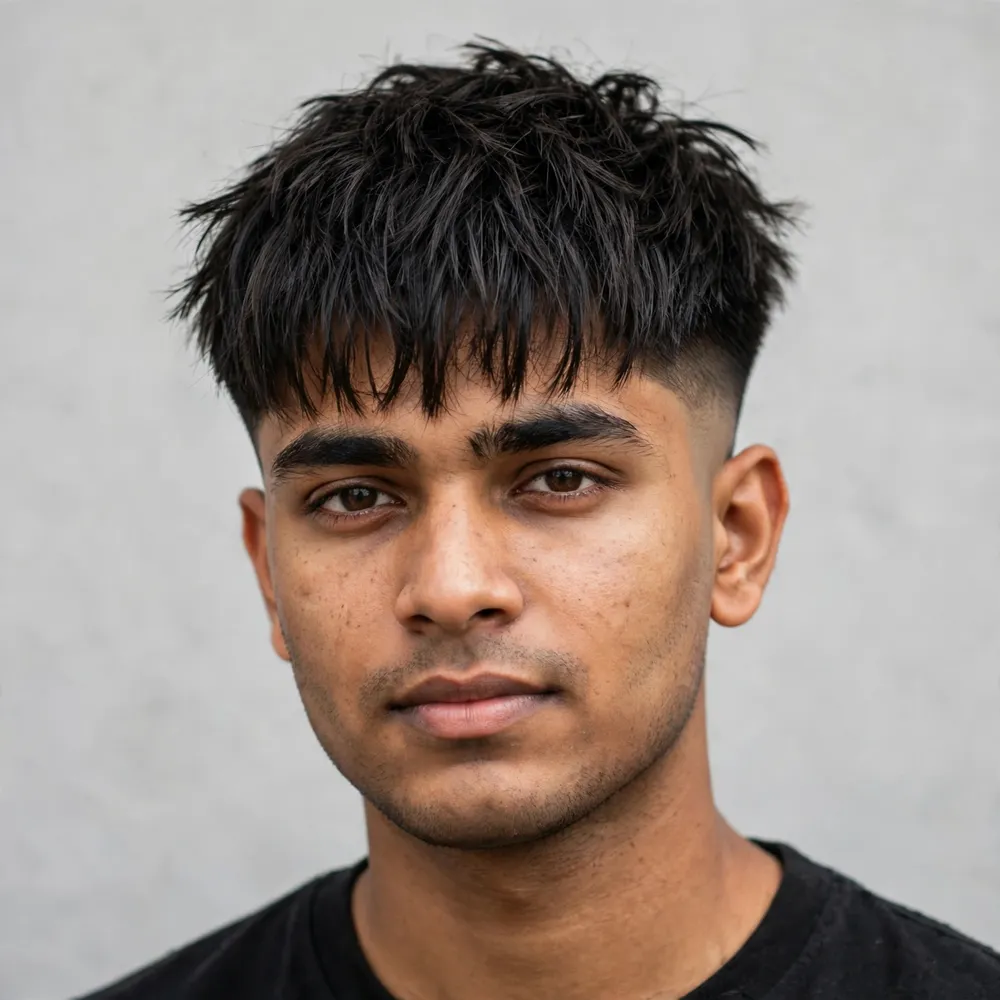
The textured fringe is the high fade’s answer to the French crop — choppy, piecey lengths falling forward over the forehead, with the sides faded high and tight. It suits straight and slightly wavy hair best, and it’s a strong choice for guys with a longer forehead or a hairline they want to soften, since the fringe does the covering. Round and oval faces wear it especially well. Ask your barber for “a textured fringe, about two inches at the front, point-cut for texture, with a high fade on the sides”. Style it by pushing the fringe forward with your fingers and a pea-sized amount of matte paste — no comb, the messier the better. It grows out gracefully, so three to four weeks between cuts is realistic, though the fade will soften first.
26. High Fade with Disconnected Top
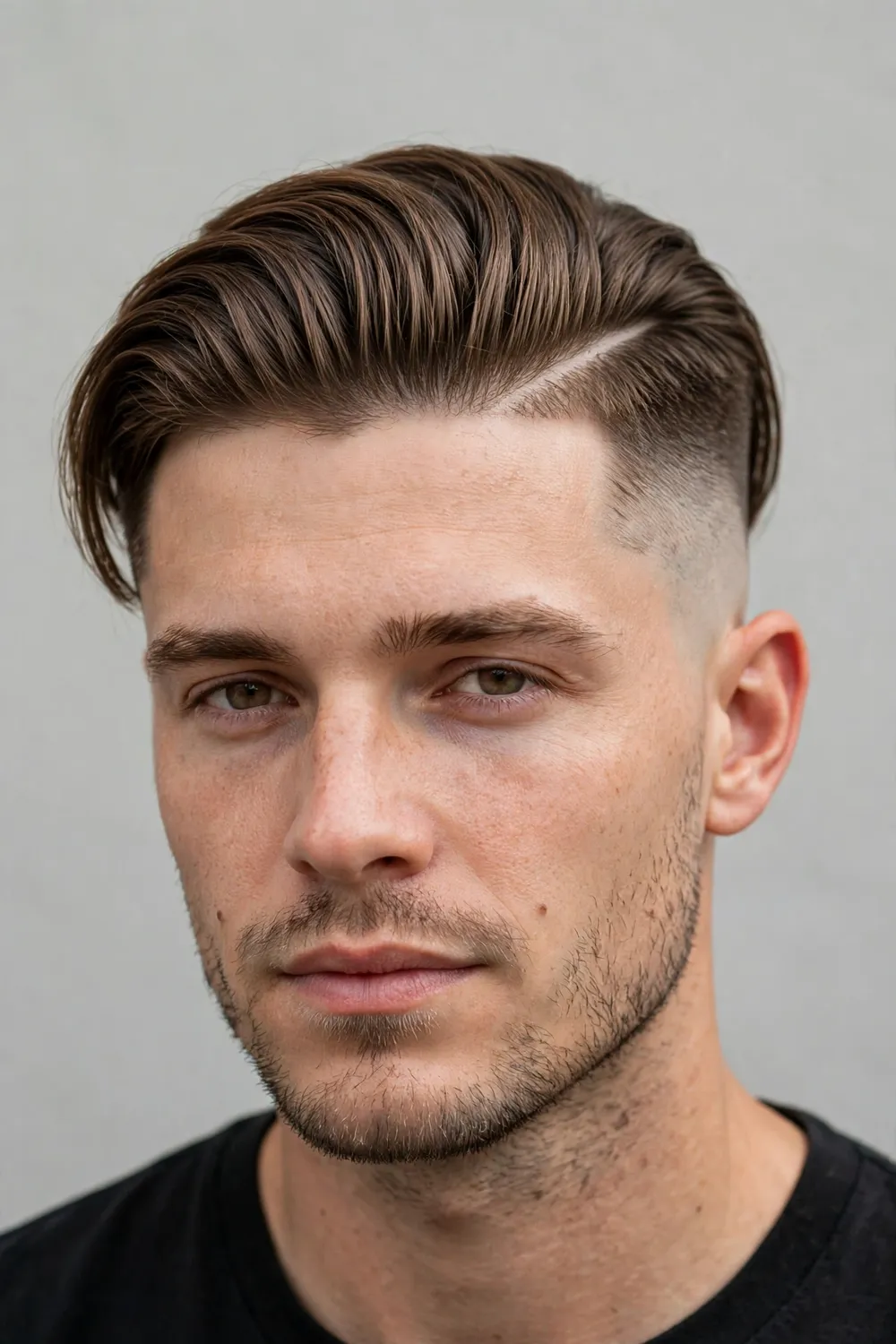
The disconnect is the boldest way to wear a high fade: the top stays long and completely unblended from the sides, with a hard visible line where the two meet. There’s no gradual transition — the contrast is deliberate, and it looks best when the top has real length to show off, slicked back, swept to one side or left loose. It suits oval and oblong faces and straight or wavy hair that can hold a sweep. Ask for a “disconnected high fade — keep the top long, no blending at the disconnect, fade high on the sides”. Styling takes a minute of effort: blow-dry the top back with a round brush, then lock it in with a strong-hold pomade or clay. The disconnect line needs a tidy every two weeks to stay sharp, but the top can keep growing.
27. High Fade with Ivy League Cut

The Ivy League is the grown-up cousin of the crew cut — short on top, but long enough to part to the side and sweep neatly, with a high fade replacing the traditional taper. It’s the cut to ask for when you want to look polished at work without looking like you’re trying too hard. Oval and square faces suit it best, and it works on straight or slightly wavy hair with medium thickness. Ask your barber for an “Ivy League, about an inch on top, side part, with a high fade”. Style it in under a minute: a little matte paste, comb the top to the side, done. The finish should look neat, not stiff, so go easy on product. Book a cut every three weeks — the fade softens before the top does, so the sides are what set the schedule.
28. High Fade with Spiky Fringe
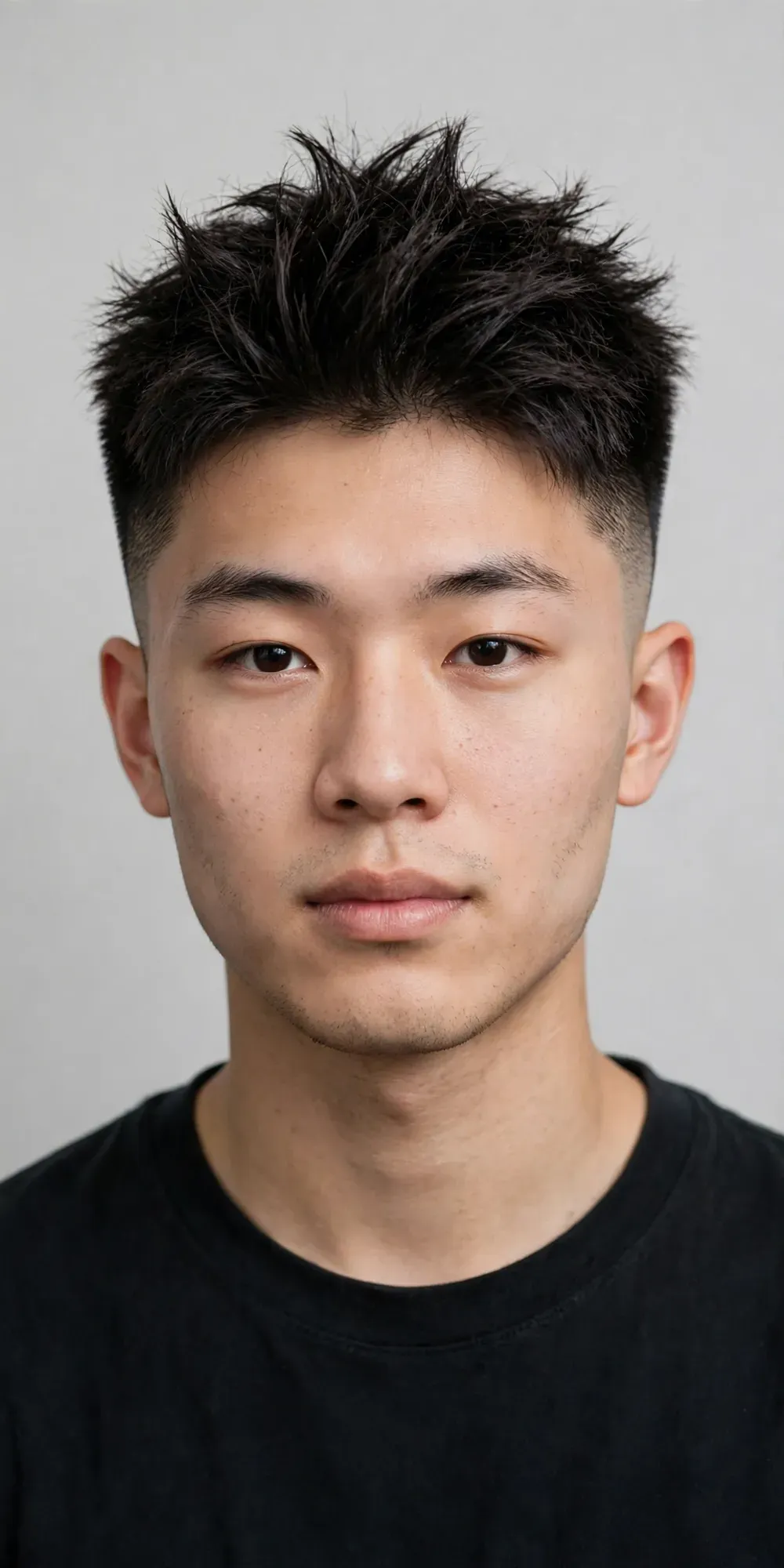
Take the textured fringe, flick the front upward into soft spikes, and you get a cut with a lot more attitude. The spikes give the forehead area height and energy, while the high fade keeps the sides brutally clean — a combination that works particularly well on younger guys and on round faces, where the upward lift adds length. It suits straight hair best, since curls won’t hold the flick as easily. Ask for a “spiky fringe, about two inches at the front, textured, with a high fade”. Styling is quick but daily: warm a small amount of strong-hold matte clay between your palms, push the front up and slightly forward, and pinch a few pieces for definition. The look collapses if the spikes get too long, so a tidy-up every two to three weeks keeps it punchy.
29. High Fade with Flat Top

The flat top is a statement — the top is cut perfectly level and squared off, standing up like a platform above the high fade. It’s a bold, architectural look that suits strong jawlines and square faces, and it works best on thick, coarse or tightly curled hair that can hold its shape upright. Fine or soft hair will struggle to stand tall without a lot of product. Ask your barber for a “flat top, level on top, with a high fade on the sides” — and be honest about whether your hair can hold it, because a good barber will tell you straight. Style with a strong-hold wax or a little gel, brushing the top upward and flat. Maintenance is high: the shape loses its edge fast, so expect a cut every one to two weeks to keep the lines crisp.
30. High Fade with Curly Frohawk
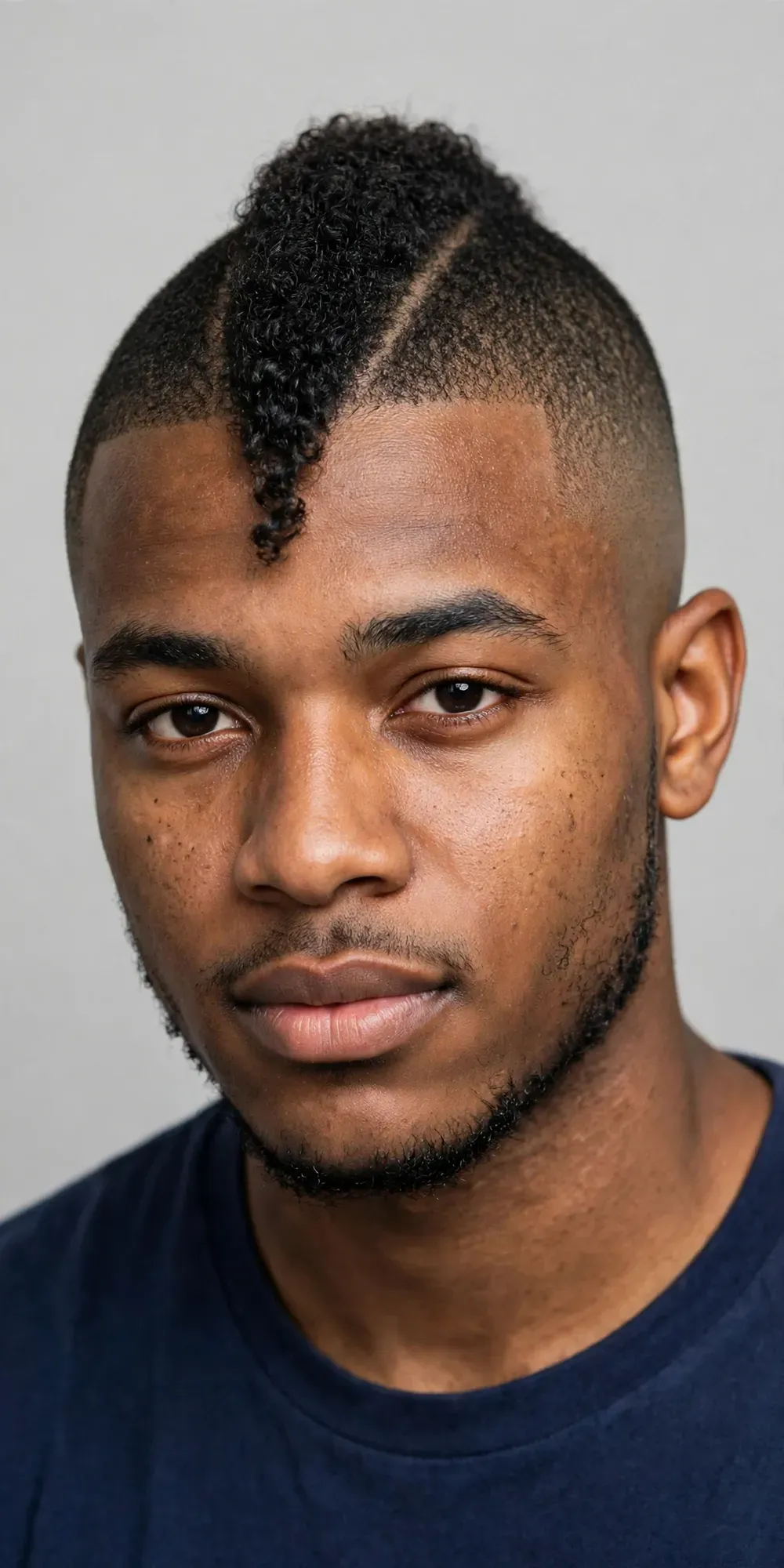
The frohawk takes the mohawk idea and softens it with curls — a strip of defined curls running down the centre of the head, with the sides faded high and tight. It’s playful, bold and far more wearable than a spiked mohawk, because the curls give it a natural, textured finish. It suits round and oval faces, and it’s made for curly and coily hair types — the tighter the curl, the better the shape holds. Ask for a “curly frohawk, keep the curls long down the centre, high fade on the sides”. Define the curls with a curl cream or light leave-in, scrunching as you go, and avoid heavy product that weighs the strip down. The fade needs a refresh every two to three weeks, but the curls themselves can grow freely between cuts.
31. High Fade with Hard Part
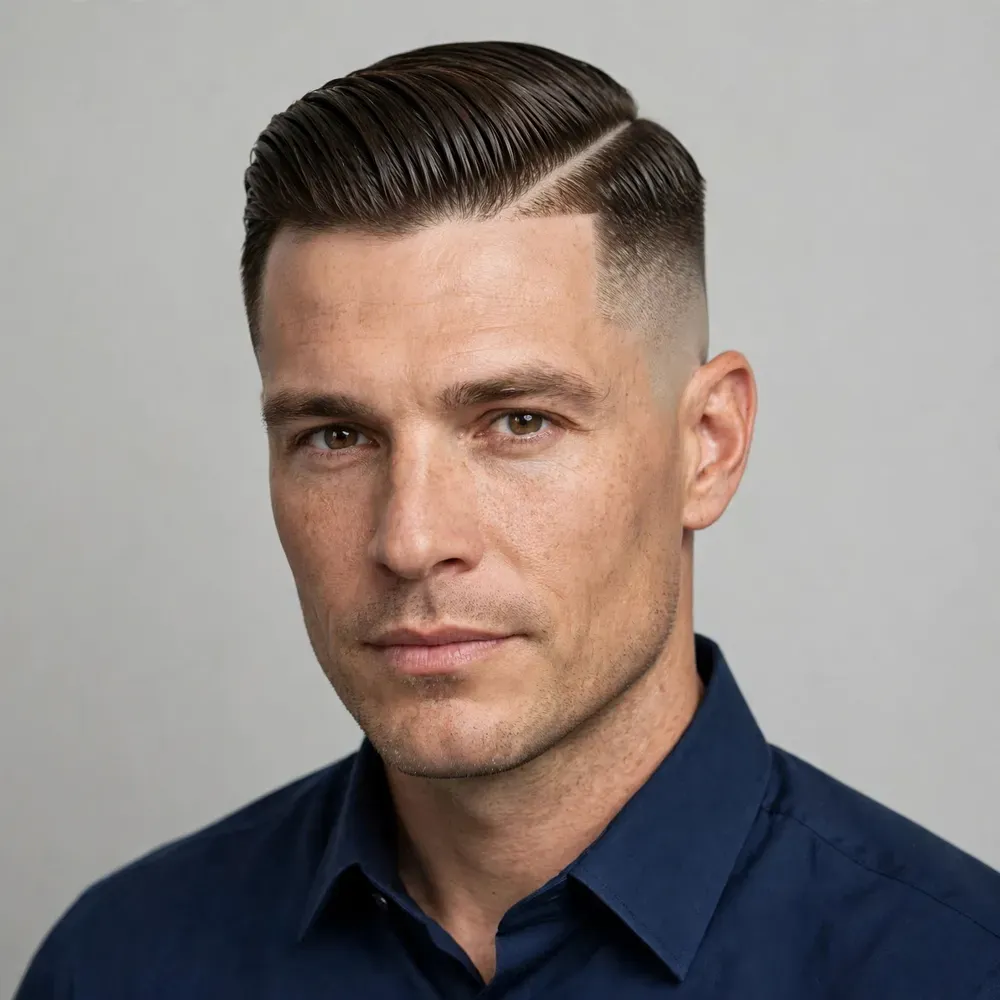
A hard part is a razor-shaved line cut into the hair, and pairing it with a high fade doubles down on precision. The shaved line runs from the front hairline back toward the crown, splitting the top into a clean swept section, and the high fade underneath keeps everything else sharp. It suits straight hair best — the line reads clearly when the top is combed to the side — and it flatters oval and square faces. Ask your barber for a “hard part, shaved with a razor, with a high fade on the sides”. Style it by combing the top over to the side the part dictates, with a medium-hold pomade for a bit of shine. The part itself grows out in about a week, so if you want the line to stay razor crisp, you’ll be back at the barber every seven to ten days.
32. High Fade with Taper Blend

Not every high fade has to hit hard. The taper blend version keeps the fade high but softens the transition, so the sides graduate gently instead of jumping from skin to hair. It’s the right choice if you like the shape of a high fade but work somewhere a skin fade would raise eyebrows, or if you simply prefer a subtler finish. It suits all face shapes and hair types, and it’s especially kind to thinning hair, since the softer blend doesn’t expose the scalp the way a bald fade does. Ask for a “high fade with a soft taper blend — no harsh lines, graduate it gently”. Style with a light matte paste or nothing at all. The forgiving blend means it grows out better than any other version here, stretching to four weeks between cuts without looking scruffy.
33. High Fade with Blowout Top
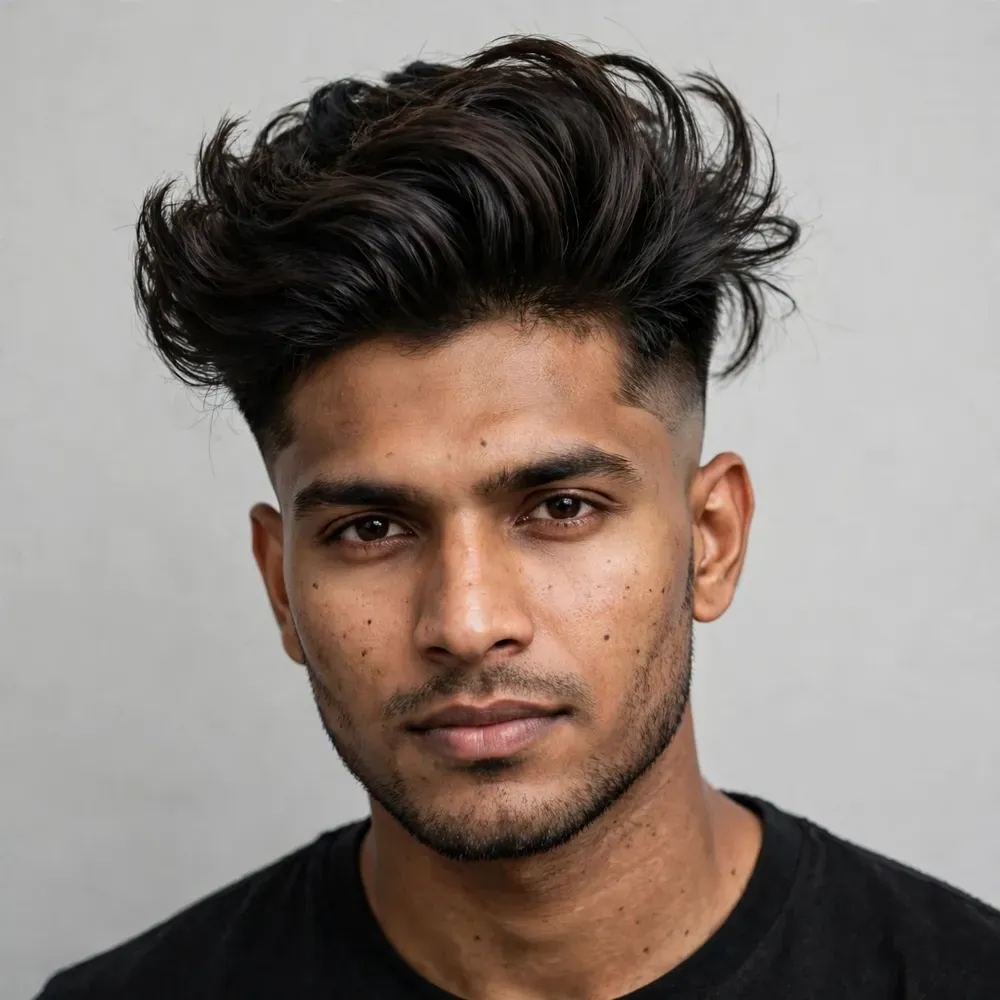
The blowout top is all volume — the hair is blow-dried upward and outward into a big, airy shape, while the high fade carves away everything below it. The result looks expensive and deliberate, and it’s the cut that photographs best of anything in this list. It suits oval and oblong faces, and it needs medium to thick hair with some natural body; very fine hair will fall flat no matter how much product you use. Ask for “a blowout top, keep length on top, with a high fade on the sides”. The styling routine is the commitment: blow-dry with a round brush and a volumising mousse, then finish with a light-hold spray. It takes five minutes on a good day. The fade needs attention every two weeks, but the top can grow for a month. If you like the volume here, our blowout haircut guide covers the technique in full.
34. High Fade with Undercut Top

The undercut top and the high fade are close cousins, and this style blends the two: a long top, disconnected from the sides, with the sides faded high rather than cut to one uniform length. The difference from the disconnected top above is subtle but real — the fade gives the sides a gradient, so the cut feels slightly softer and more modern. It suits oval and square faces and straight or wavy hair with enough length to sweep back or to the side. Ask for an “undercut top with a high fade — long on top, faded sides, no blending at the disconnect”. Style it slicked back with a strong-hold pomade, or swept to the side with matte clay for a more relaxed finish. The fade’s gradient grows out more forgivingly than a pure undercut, so three weeks between cuts is comfortable.
35. High Fade with Grey Hair
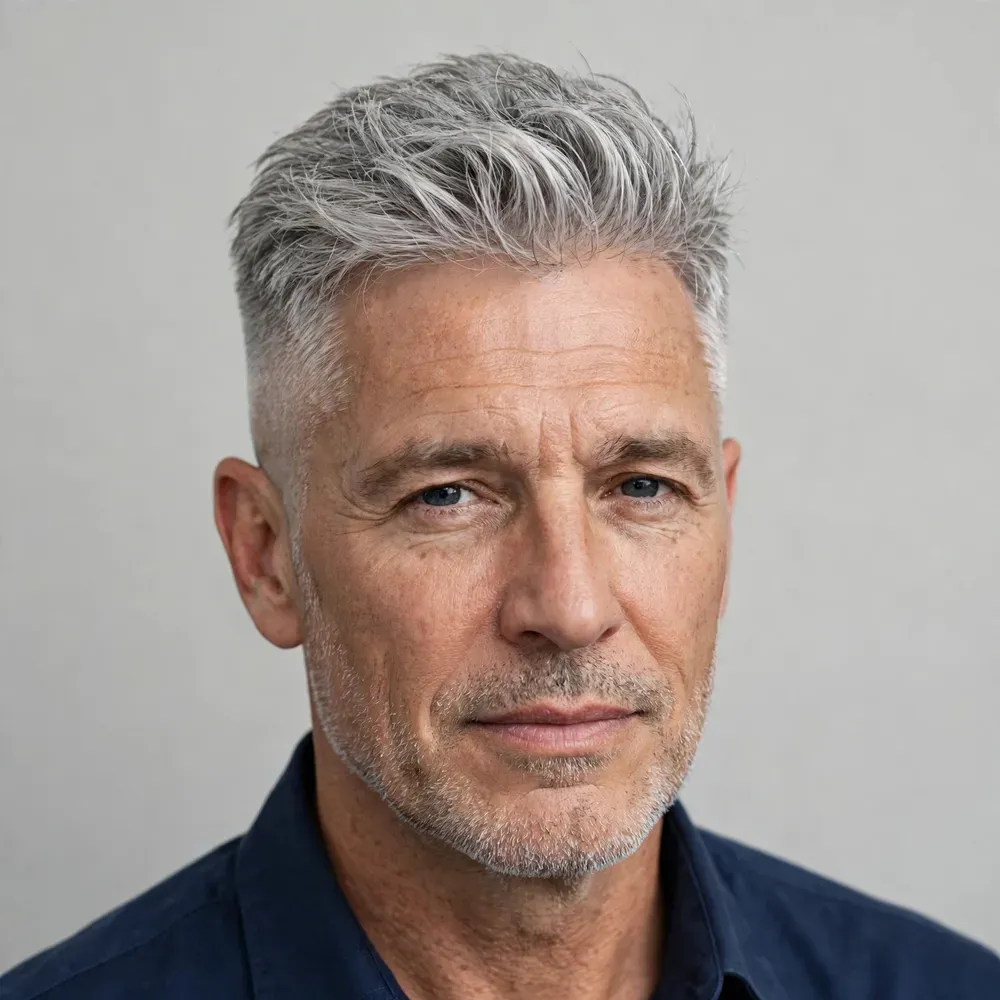
Grey hair and a high fade are a natural match. The silver on top becomes the feature — it catches light and looks intentional — while the faded sides keep the whole cut looking sharp rather than washed out. This is one of the best styles for men going grey who don’t want to fight it. It suits every face shape, and it works on straight, wavy or curly grey hair alike. Ask your barber for a “high fade, keep the grey on top natural, don’t blend it away”. A purple shampoo once a week keeps the silver bright instead of yellow, and a light matte paste is all the top needs. Maintenance is easy: the fade is the only part on a schedule, every two to three weeks, and the grey itself needs nothing at all.
36. High Fade with Beard Blend

The beard blend is where the high fade stops being just a haircut and becomes a full grooming system. Instead of the fade ending at the sideburns, it flows down into the beard, graduating from skin to stubble to full beard in one continuous line. Done well, it makes the face look sculpted and intentional; done badly, it looks like two different cuts collided. It suits square and oval faces best, and it needs a beard with enough density to blend into — patchy beards won’t carry it. Ask for a “high fade blended into the beard, graduate the sideburns into the cheek line”. Keep the beard’s neckline clean and use beard oil daily so the blend stays soft. The fade needs a tidy every one to two weeks, and the beard lines need checking at the same visit.
37. High Fade with Thick Hair
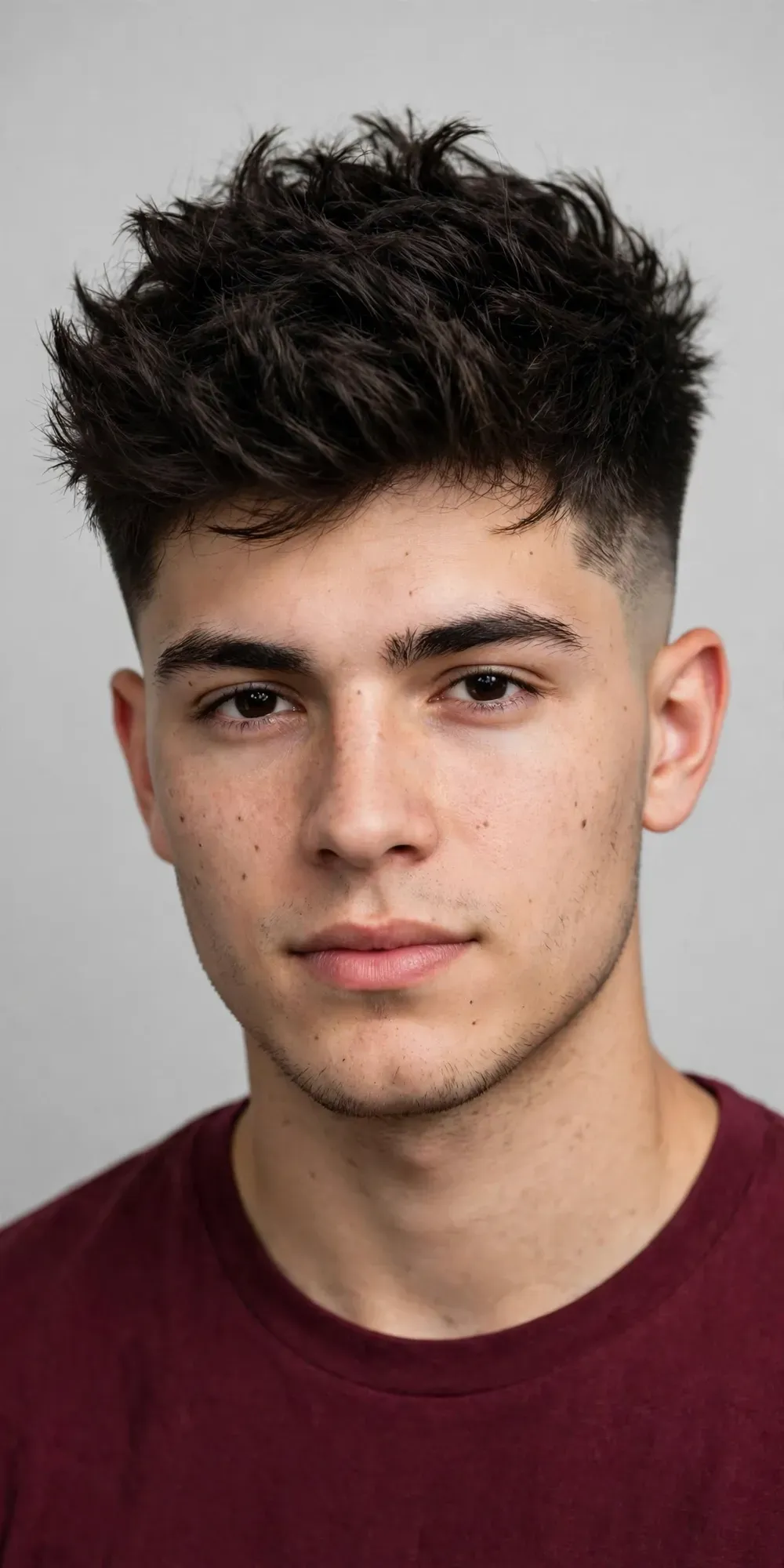
Thick hair is a gift and a problem in equal measure — plenty of volume on top, but it can balloon out over a fade and ruin the silhouette. The fix is thinning: the barber removes weight from the top with thinning shears or a razor, so the hair sits flat and shaped instead of puffing outward. The high fade then does its job cleanly underneath. It suits all face shapes, and the key is honesty about your hair’s behaviour — if it grows outward rather than downward, say so. Ask for a “high fade with the top thinned and textured, keep the length”. Style with a matte clay, working it through damp hair and pushing the top into place. Thick hair forgives a lot, so three to four weeks between cuts works, though the fade will soften first.
38. High Fade with Fine Hair

Fine hair needs the opposite treatment from thick hair — instead of removing weight, the barber adds texture, cutting short choppy layers into the top so the hair looks fuller than it is. The high fade then adds the edge, giving a cut that could otherwise look soft some real structure. It suits oval and round faces, and it works best when the top is kept short to medium — long fine hair just goes limp. Ask for a “textured top, point-cut for volume, with a high fade”. Style with a volumising powder or a light matte paste, pushing the hair up and forward with your fingers; heavy pomades will flatten it instantly, so avoid them. The texture grows out in about three weeks, and the fade will want a touch-up around the same time.
39. High Fade with Receding Hairline

A receding hairline is nothing to hide — the right cut just stops drawing attention to it. The high fade does this by keeping the top short and forward, so there’s no long hair falling back to expose the corners, and the clean sides pull the eye toward the shape of the cut instead of the hairline. It suits all face shapes, and it works on straight and wavy hair. Ask your barber for a “short textured top, pushed forward, with a high fade — keep the front low and tight”. Style with a tiny amount of matte paste, pushing everything forward and slightly to the side. Don’t try to comb it back — that’s what makes a receding hairline obvious. The cut grows out well, so three to four weeks between visits is fine, and the honest truth is that shorter is better here: the shorter the top, the less the hairline matters.
High Fade vs Mid Fade vs Low Fade: What’s the Difference?
The three fades differ in one thing only — where the shortest part of the blend starts. A high fade begins up near the temples, a mid fade starts around the middle of the head, and a low fade stays just above the ears. That single difference changes the whole feel of the cut. The fade haircut has been around for decades, but the height you choose is what makes it yours.
| High Fade | Mid Fade | Low Fade | |
|---|---|---|---|
| Where the fade starts | At or above the temples | Around the middle of the head | Just above the ears |
| Contrast | Maximum — sharp, bold | Balanced — noticeable but not aggressive | Subtle — a gentle gradient |
| Maintenance | Every 1–2 weeks to stay sharp | Every 2–3 weeks | Every 3–4 weeks |
| Best for | Bold, modern looks; strong jawlines | Most face shapes; the safe all-rounder | Conservative settings; first fades |
If you’re torn, start with the mid fade — it’s the easiest to live with and the most forgiving as it grows out. Choose the high fade when you want the cut to be the statement, and pick the low fade haircuts for men when you want something clean that nobody at work will blink at. Our guide to low fade haircuts for men covers the subtle end of the spectrum in the same depth as this one. If you like the high fade’s boldness but want the blend to dip and follow the curve of your head, the drop fade haircut is the variant to look at. And if you’d rather the fade arc around the ear instead of running straight across, our guide to burst fade haircuts for men covers that shape in the same detail.
Which High Fade Suits Your Face Shape?
Round faces benefit most from height. A high fade with a quiff, pompadour or blowout top adds length on top and slims the cheeks — the vertical lift balances the width. Avoid flat, wide tops that make the face look broader.
Square faces already have a strong jawline, so the high fade’s clean sides work beautifully with them. A textured crop, crew cut or Ivy League keeps the angles looking intentional rather than harsh. Skip the flat top unless you want to double down on the geometry.
Oval faces can wear almost anything, which is both a blessing and a problem — too much choice. The classic comb over and the textured quiff are the safest bets, since they add polish without fighting the face’s natural balance.
Long faces need to be careful with height. A high fade with a fringe, a French crop or a textured fringe worn forward shortens the face visually — the fringe breaks up the length. Avoid tall pompadours and blowout tops, which stretch the face further. A quiff haircut worn low and to the side can work for longer faces, but keep the lift modest.
5 Mistakes to Avoid with a High Fade
- Asking for “a fade” without saying how high. A vague request is how you end up with a mid fade when you wanted a high one. Say “high fade” and point to where you want the shortest part to start.
- Skipping the touch-ups. A high fade looks razor sharp for about a week, then the regrowth starts to blur the lines. If you can’t commit to a tidy every one to two weeks, pick a taper blend or a lower fade instead.
- Growing the top without a plan. The top and the fade grow at different rates, and after three weeks the proportions can look off. Book the next cut when you leave the chair, not when the mirror starts bothering you.
- Using the wrong product. Heavy, shiny pomade on a textured top kills the texture and makes the whole cut look greasy. Match the product to the finish — matte clay for texture, pomade only for slicked styles.
- Ignoring the neckline and edges. The fade is only half the clean look; a fuzzy neckline or unshaped sideburns undo the whole thing. Ask your barber to clean up the back of the neck every visit, even between full cuts.
FAQs
What is a high fade haircut?
A high fade is a haircut where the sides and back are blended from very short — often down to the skin — up to longer hair on top, with the shortest part starting high on the head, around the temples. The top can be anything from a buzz cut to a pompadour, which is why the style works for so many different looks. The high starting point is what separates it from a mid or low fade, and it’s what gives the cut its bold, high-contrast finish.
How often should I get a high fade touched up?
Every one to two weeks is the honest answer if you want it looking sharp. The fade starts to lose its clean lines after about seven days, and by two weeks the regrowth is obvious. If that schedule feels like too much, a high fade with a taper blend grows out more gracefully and can stretch to three or four weeks. Either way, booking the next appointment before you leave the chair is the easiest way to stay on top of it.
Does a high fade suit a round face?
Yes — it’s actually one of the best cuts for a round face, as long as the top has height. A high fade with a quiff, pompadour or textured top adds vertical length, which makes the face look slimmer and more balanced. The one thing to avoid is a wide, flat top, which emphasises the roundness instead of correcting it. Keep the sides tight and the top tall and you’re in good shape.
What is the difference between a high fade and a mid fade?
The difference is where the fade starts. A high fade begins up near the temples, while a mid fade starts around the middle of the head, roughly level with the top of the ears. The high fade has much stronger contrast and looks bolder, while the mid fade is more balanced and a little easier to maintain. If you’re trying a fade for the first time, the mid fade is the safer starting point — you can always go higher next time.
Can I get a high fade with curly or coily hair?
Absolutely — some of the best high fades are on curly and coily hair. The curls on top give the cut natural texture and volume, while the faded sides keep the shape clean and defined. Styles like the curly top, the frohawk and the high fade with an afro all rely on curls to work. The key is finding a barber who knows how to cut curly hair dry or in its natural state, so the shape holds once the curls spring back up. Our guide to fade haircuts for Black men has more curly and coily styles built on the same high-fade base.
What should I tell my barber to get a high fade?
Say “high fade” first, then describe the top. A good script is: “High fade on the sides and back, blended up from a zero or skin, starting at the temples — and [your top] on top.” Fill in the bracket with whatever you want: textured crop, comb over, quiff, curls left natural. Bring a photo if you can — one clear picture does more than five minutes of describing. And mention anything you don’t want, like a hard line or a skin finish, before the clippers come out.
How long does a high fade last before it grows out?
A high fade holds its sharp look for about a week, starts to soften in the second week, and by three weeks the contrast is mostly gone. The top grows more slowly in appearance, so the fade is what sets the schedule. If you want it looking fresh constantly, plan on a touch-up every ten to fourteen days. Softer versions like the taper blend last longer — up to four weeks — because the gentler transition hides regrowth better.
Final Word
The high fade earns its place as the boldest of the fades — it suits nearly every face shape, works with every hair type, and gives a barber something real to work with. Pick the version that matches your hair and your patience for upkeep, bring a photo to your next appointment, and don’t be afraid to go higher than you think. And when you’re ready for the next idea, you’ll find more haircut guides on our blog covering every fade, crop and classic in the book.