


An undercut haircut keeps the top long and the sides short, with no blend between the two — that’s the whole trick. The contrast does the work: it makes the top look longer, the sides look cleaner, and pretty much any styling up top look deliberate. It suits straight, wavy and curly hair, it works at the office and at a wedding, and it’s one of the easiest cuts to grow out badly if you skip the maintenance — so pick the version that fits your morning, not just the photo.
If you’re getting one for the first time, go for the Slicked-Back Undercut — it’s the most forgiving and the hardest to mess up. For a modern everyday cut, the Textured Undercut is the all-rounder that looks good with almost no effort. And if you hate sitting in the barber’s chair every two weeks, the Undercut Fade grows out the most gracefully of the lot. Here are all 39, starting with the classics.
1. Slicked-Back Undercut
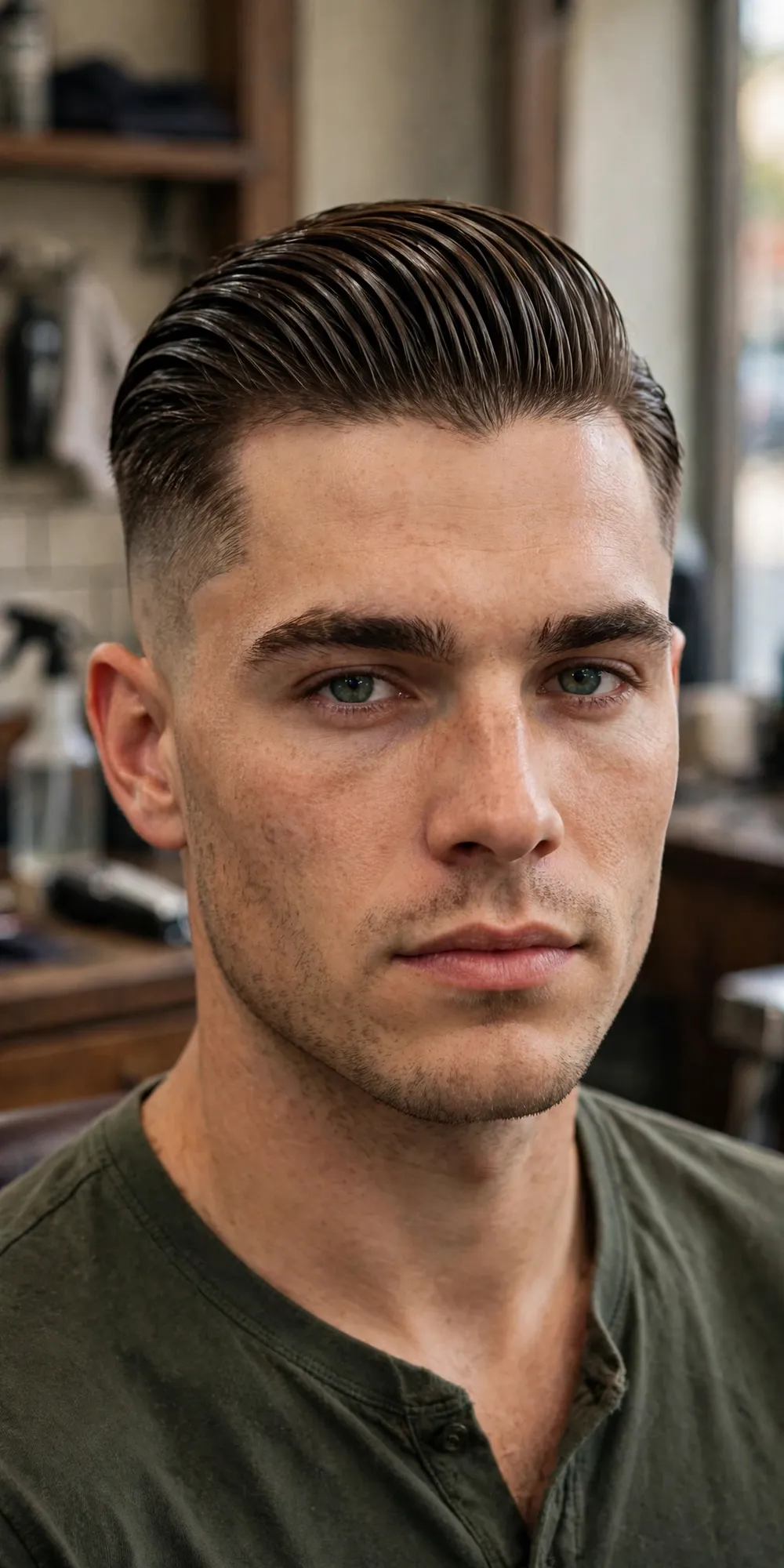
This is the undercut most people picture first: the top runs a good few inches long, combed straight back over short sides, with a glossy finish that holds its shape all day. It suits men with straight or slightly wavy hair and a strong hairline, and it looks sharpest on oval and square faces. Ask your barber: “Leave the top about four inches, clip the sides and back to a number two with no blend, and keep the line where the top meets the sides sharp.” A water-based pomade gives the shine without the grease; run it through damp hair, comb back, and leave it alone. The catch is upkeep — the sides look scruffy after two weeks, and the top needs a proper wash each night or product builds up fast.
2. Classic Undercut
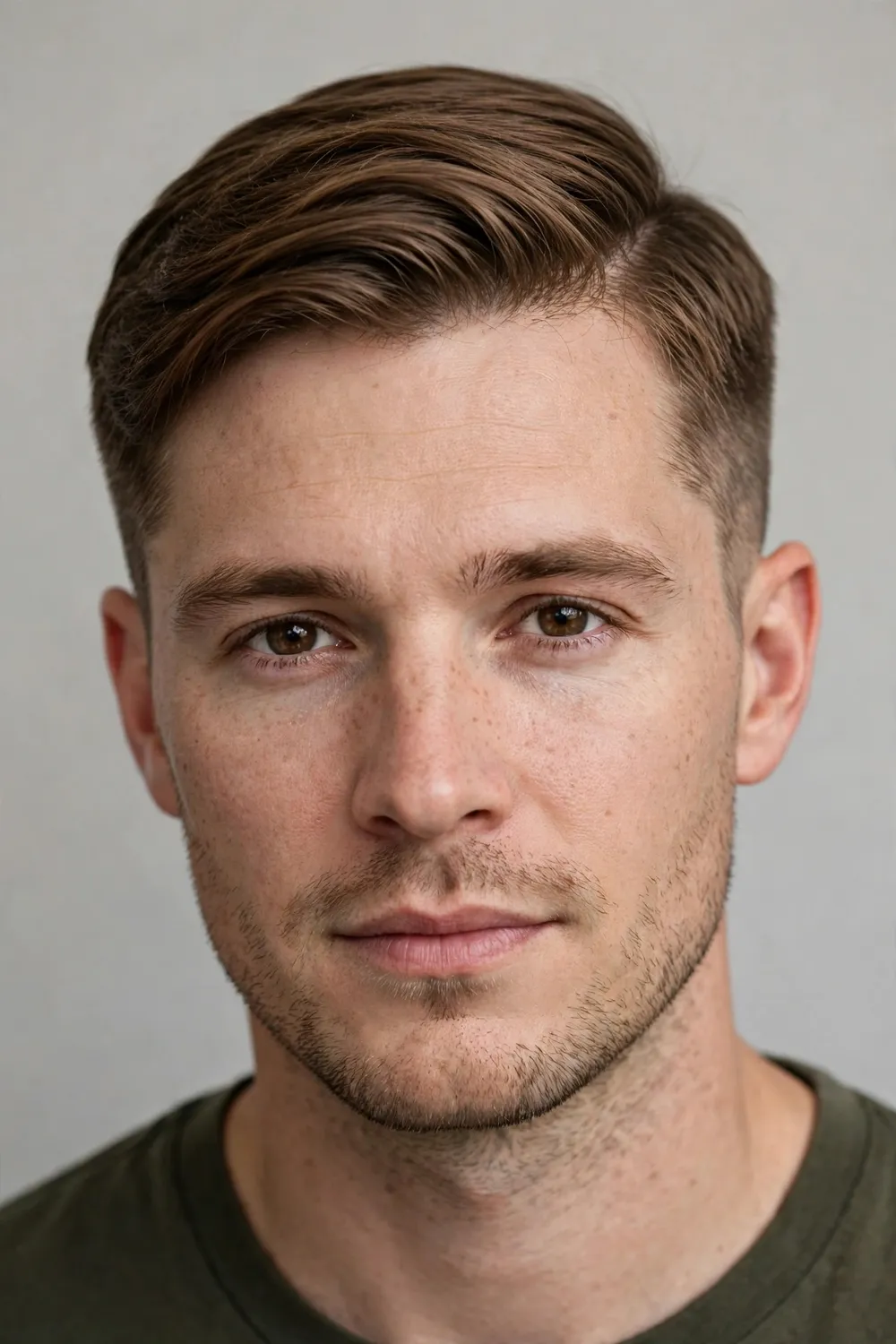
The classic undercut is the quiet one: a neat, longer top worn with a natural side part, sides clipped evenly short, no hard lines, no drama. It’s the version that fits an office, a wedding and a weekend without anyone thinking twice about your hair. Best on straight to wavy hair with medium thickness; very fine hair can look a bit thin up top, so ask for a touch of texture through the ends. Say to your barber: “Classic undercut — top long enough to part to the side, sides on a three, no fade, keep it clean around the ears.” A dab of matte paste combed through damp hair is all it needs. A trim every three to four weeks keeps the sides tidy, and it grows out better than most undercuts.
3. Side-Swept Undercut
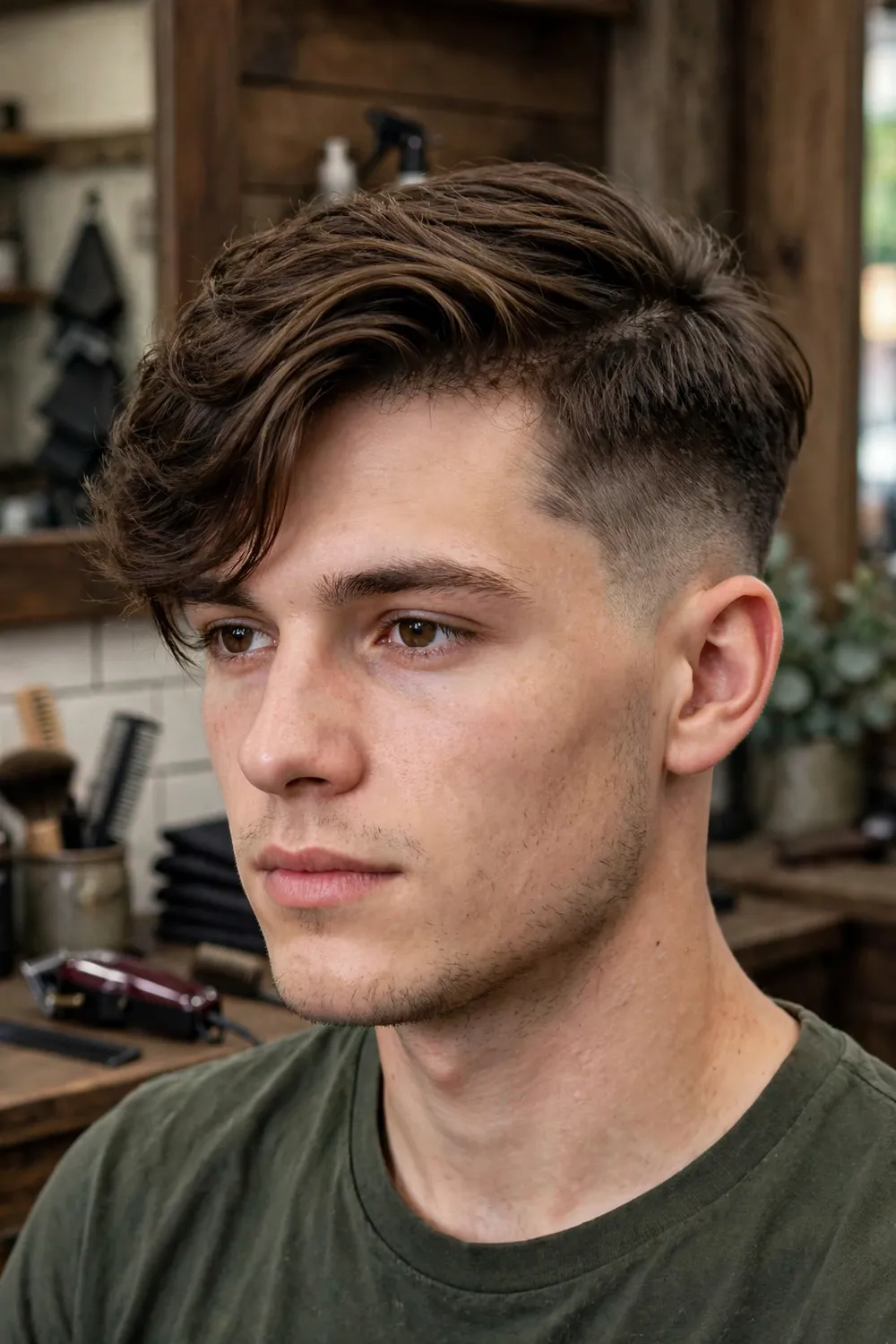
Here the top stays long and gets swept across the forehead, so you get height at the front and movement through the lengths. It’s a good pick if your hair has a natural wave or a cowlick, because the sweep works with the direction your hair wants to go rather than fighting it. Oval, long and square faces all carry it well. Tell your barber: “Undercut on the sides, top long — five inches at the front — swept to the side, and take a little weight out so it doesn’t sit flat.” Blow-dry the front up and across with your fingers, then finish with matte clay for hold that still moves. It needs a two-minute blow-dry most mornings; air-drying leaves it flat on one side and wild on the other.
4. Side Part Undercut

A sharp side part is what separates this one from the classic version: the part line is combed in hard, the top lies flat and tidy to one side, and the short sides frame it cleanly. It’s the most boardroom-ready undercut on this list, and it suits men with straight hair and a neat hairline. Ask for it like this: “Undercut with a hard side part — top about three and a half inches, combed over, sides on a two, and define the part with the clippers.” A medium-hold pomade with a bit of shine, combed through damp hair along the part, is the right product. Re-comb the part after wearing a hat, and tidy the sides every two to three weeks to keep the contrast crisp.
5. Brushed-Up Undercut
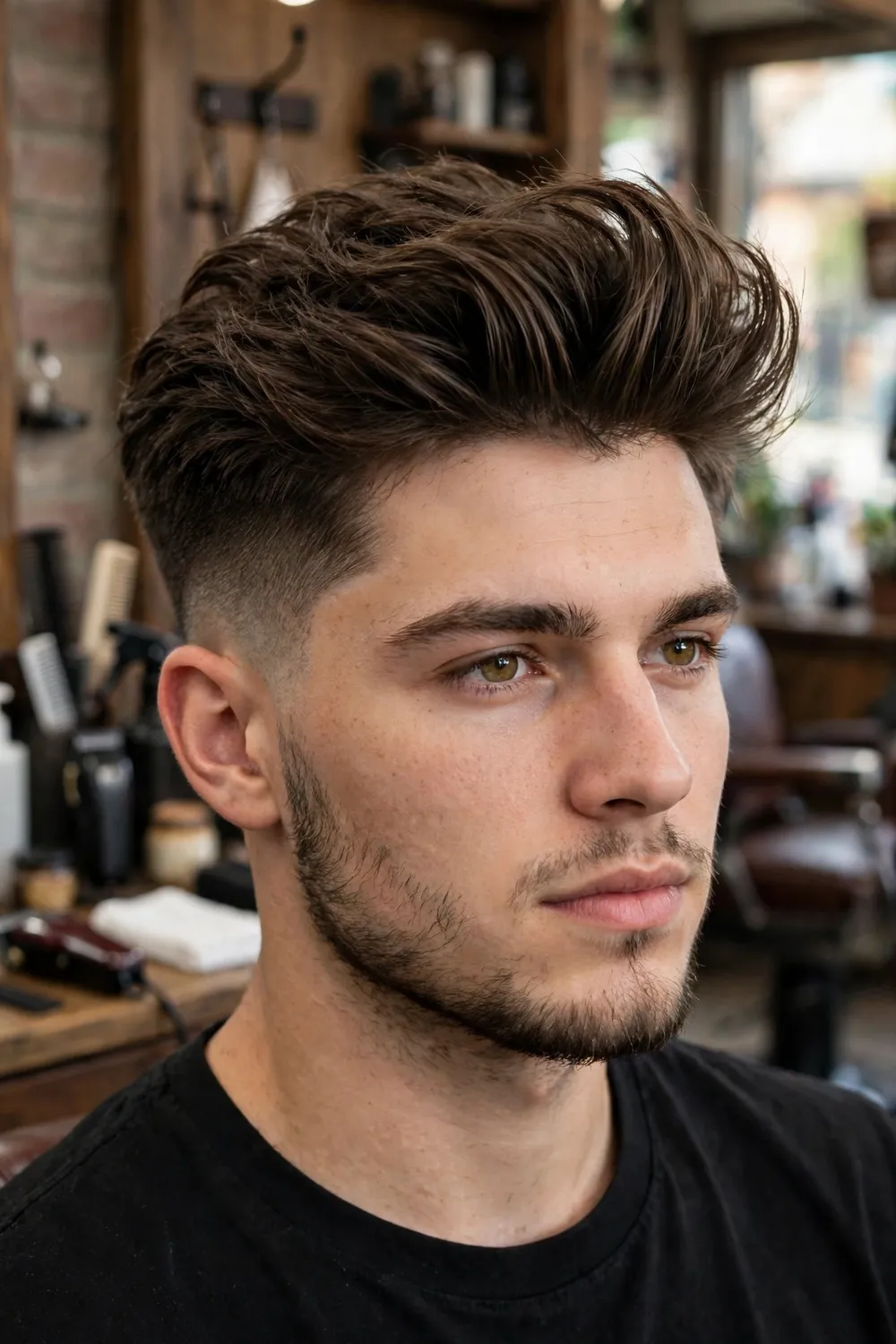
The brushed-up undercut pushes the top up and back, so you get real height at the front without the stiffness of a full pompadour. It works best on thick hair with some natural lift — fine hair tends to flop by lunchtime unless you use a strong product. Round faces benefit most, since the height lengthens the face. Tell your barber: “Undercut sides, top four to five inches, layered so it stands up, and thin the bulk underneath a touch.” Blow-dry the front upward with a round brush, then work a matte paste through from roots to ends and push it back with your fingers. It takes five minutes in the morning and a decent blow-dryer; skip the dryer and it’ll sit flat no matter what product you use.
6. Disconnected Undercut

The disconnected undercut is the boldest statement in the classic set: a hard, visible line where the long top meets the shaved sides, with zero blending in between. The sharpness is the whole point, so it suits men who like a defined, graphic look and have straight hair that holds a clean edge. Square and oval faces carry it best. Ask your barber: “Disconnected undercut — hard line, no blending, top four inches, sides down to a one.” Style the top to suit: slick it back with pomade for a sharp finish, or add texture paste and wear it loose. Be honest about the upkeep — that hard line grows out visibly within ten days, so expect a barber visit every two weeks to keep it sharp.
7. Hard Part Undercut
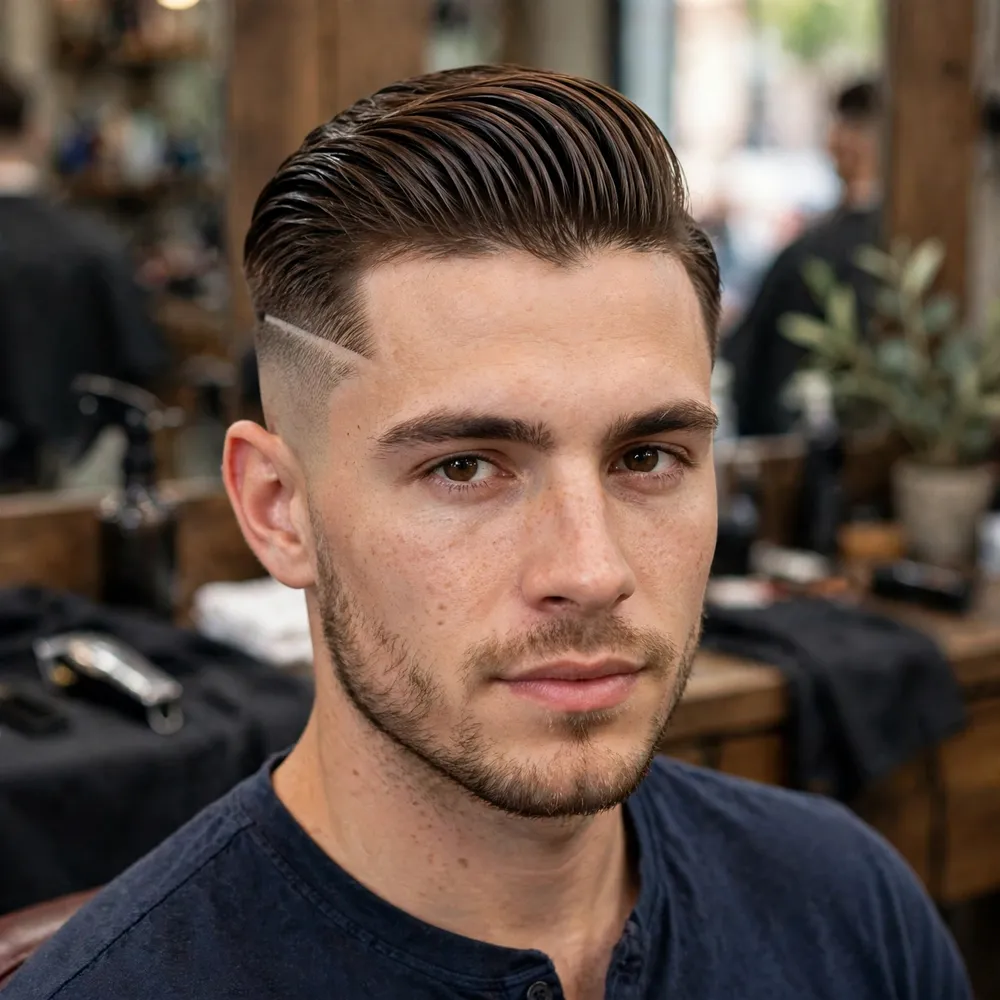
A hard part takes the side-part idea and etches it in: the barber shaves the part line with a razor, so you get a pale stripe of skin running through the hair that stays visible all day. It adds structure to the slicked top and makes the whole cut look intentional even when you haven’t styled it. It suits straight hair and men who like a precise, groomed finish. Say: “Undercut with a hard part — shave the part line in with a razor, top slicked back, sides on a two.” A medium-shine pomade keeps the top in place. The razor line grows back in about a week, so book a quick tidy-up between full cuts — most barbers will re-shave it for a small fee.
8. Shaved Design Undercut

This one turns the short sides into a canvas: geometric lines, waves or a pattern shaved into the clipped hair, while the long top stays simple. It’s a statement cut for younger guys or anyone who wants their hair to start conversations. Straight, dark hair shows the design best — on very light or thin hair the lines can disappear. Tell your barber: “Undercut with a shaved design on the sides — keep it simple, two or three clean lines, top long and slicked back.” Style the top as normal; the design needs no product, just a sharp barber. The honest downside is the lifespan: the design blurs within a week as the hair grows, so it’s a cut for an event or a holiday, not a long-term style.
9. Lineup Undercut
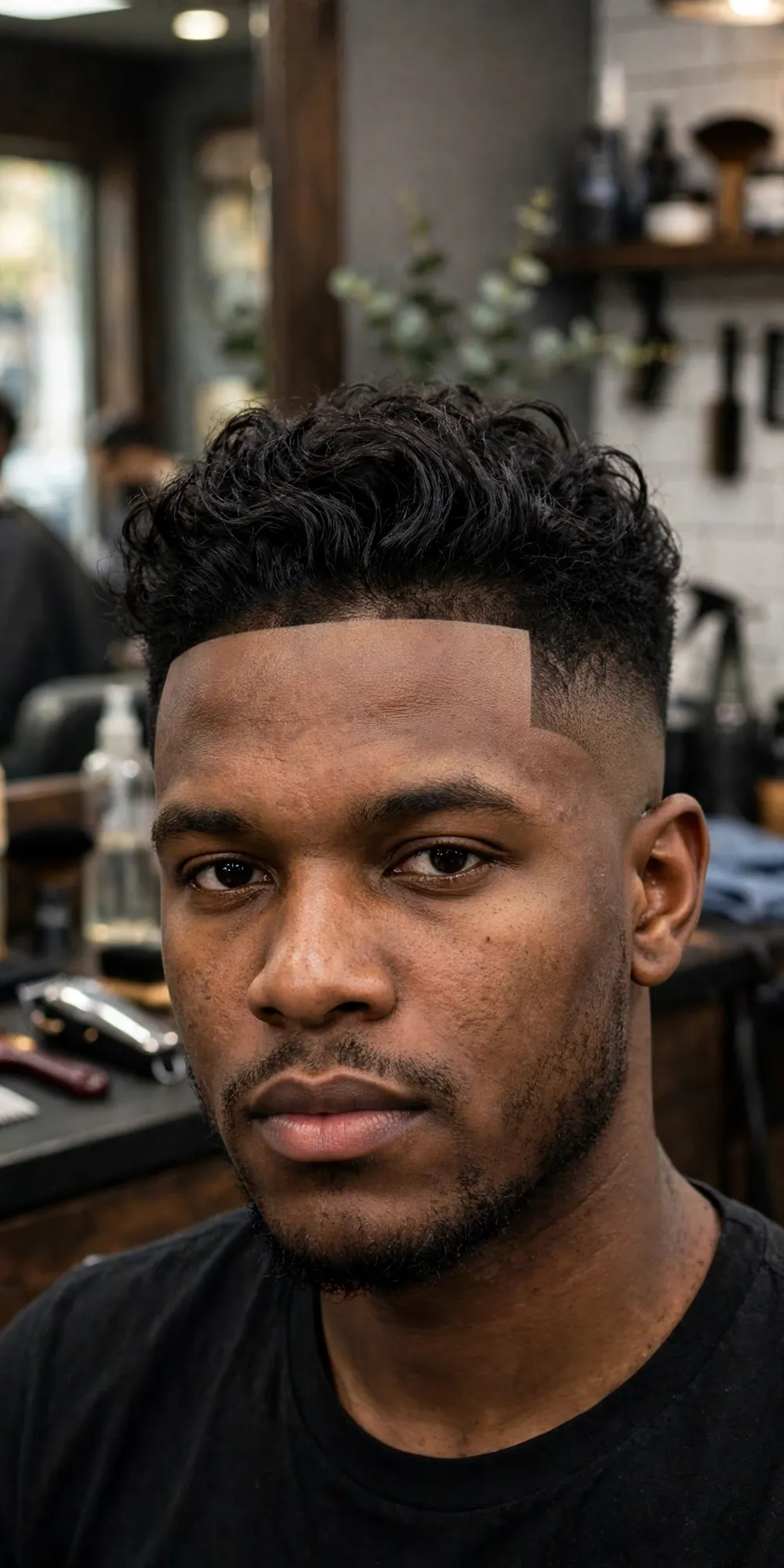
The lineup undercut pairs a long top with a razor-crisp squared hairline at the forehead and temples — every edge is sharp, nothing is soft. It’s a favourite for men with coily or curly hair, where a clean lineup frames the face beautifully, but it works on any hair type with a defined hairline. Ask your barber: “Undercut on the sides, keep the top long, and give me a sharp lineup — square the hairline and the temples.” A light oil or a dab of pomade on the top is enough; the lineup is the star. Maintenance is the trade-off: the sharp edges grow out in days, not weeks, so you’ll need a lineup touch-up every week or so, and you can’t fix a bad one at home with a trimmer.
10. Buzz Cut Undercut
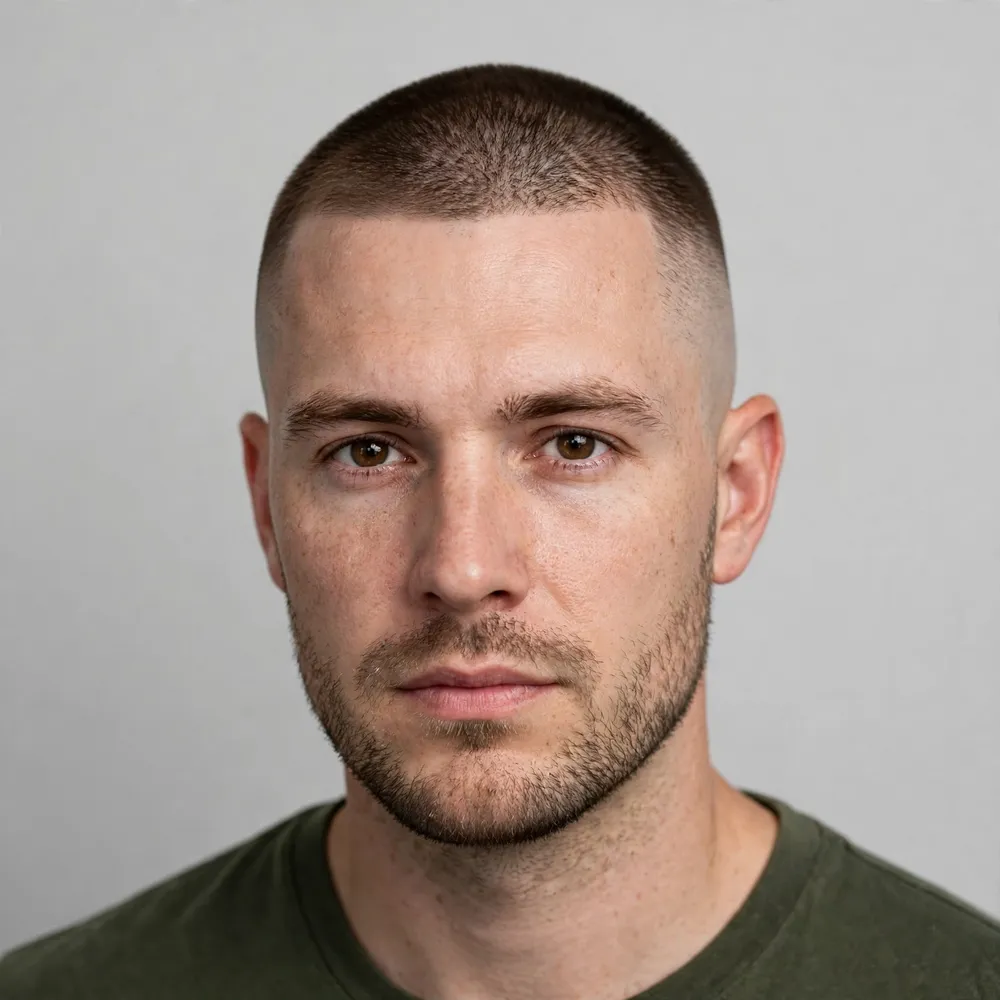
The buzz cut undercut is the low-effort entry point: the top is buzzed short but kept a grade or two longer than the shaved sides, so you still get that undercut contrast without any styling at all. It’s ideal if you want the undercut look with zero morning routine, and it suits men with a good head shape and hair that grows evenly. Say: “Buzz undercut — top on a four, sides on a one, keep the line between them clean.” No product, no blow-drying, no combing — wash it and go. The only real maintenance is keeping the contrast visible: once the sides catch up to the top after about two weeks, the whole thing reads as a plain buzz, so a quick clipper pass every fortnight keeps the shape.
11. Undercut Fade

This is the undercut for men who hate the grow-out phase: the long textured top stays, but the sides fade gradually from skin up into the length, so there’s no harsh line to grow through. It looks modern, it suits almost every face shape, and it forgives a missed appointment better than any other cut here. Ask your barber: “Undercut fade — textured top, four inches, sides faded from skin to a two, blend it up into the top.” A matte clay worked through towel-dried hair gives the top texture and hold without shine. A fade refresh every three weeks is still needed, but the grow-out is gentle — the fade just softens instead of turning into a visible step, which is why this is the easiest undercut to live with.
12. Tapered Undercut
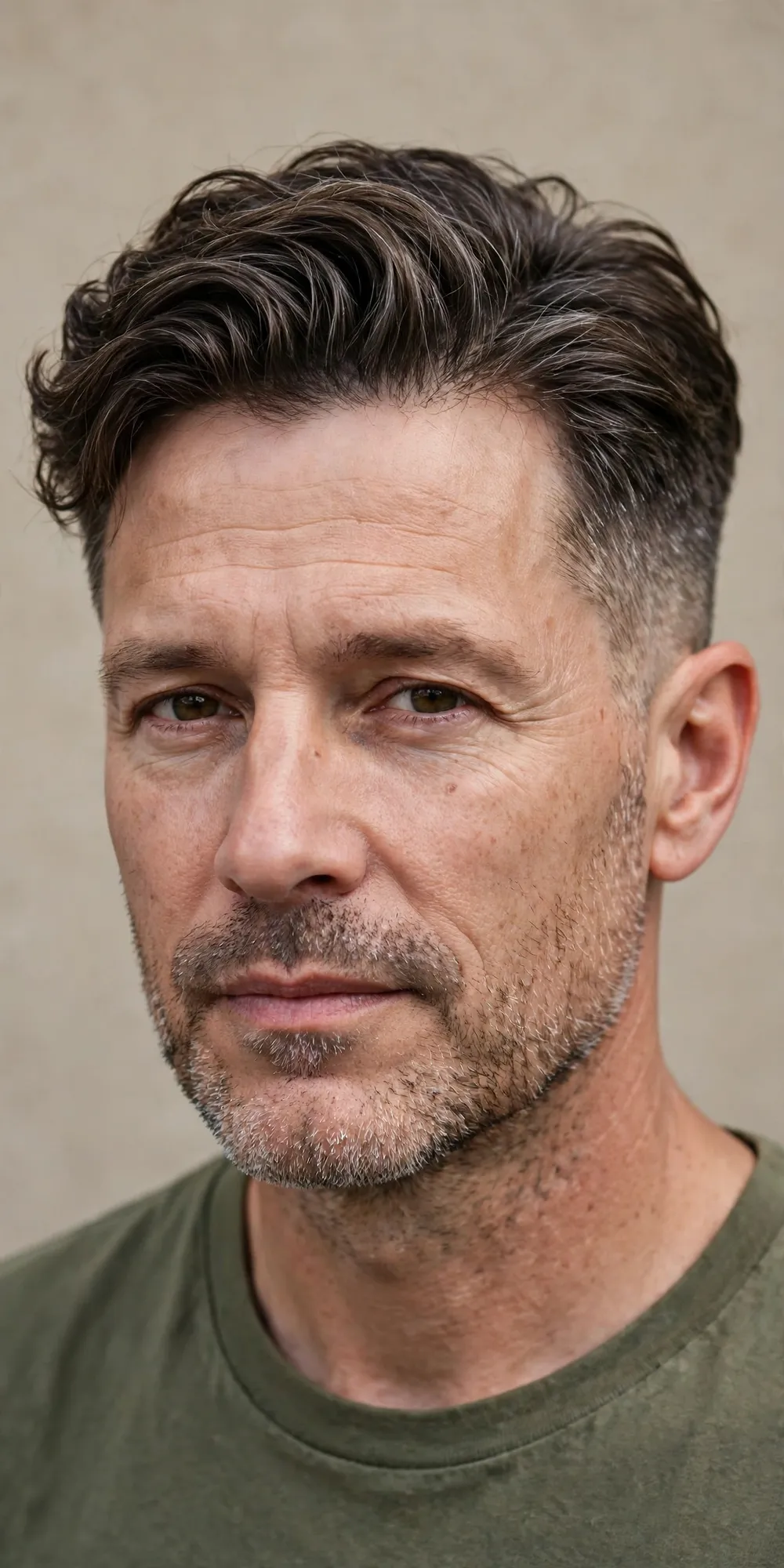
The tapered undercut softens everything: the sides are short but taper gently, with no skin showing and no hard line, so the whole cut looks neat rather than dramatic. It’s the undercut for men who want the shape without the statement — office-friendly, family-friendly, and easy to explain to a barber. It suits straight and wavy hair and works on most face shapes. Tell your barber: “Tapered undercut — top three to four inches, sides tapered from a three down to a one around the ears and neckline, no skin fade.” A light styling cream gives a natural finish; comb the top into place while damp and you’re done. Maintenance is the easiest of the classic undercuts — a trim every four weeks is plenty, and the grow-out is barely noticeable.
13. South of France Undercut
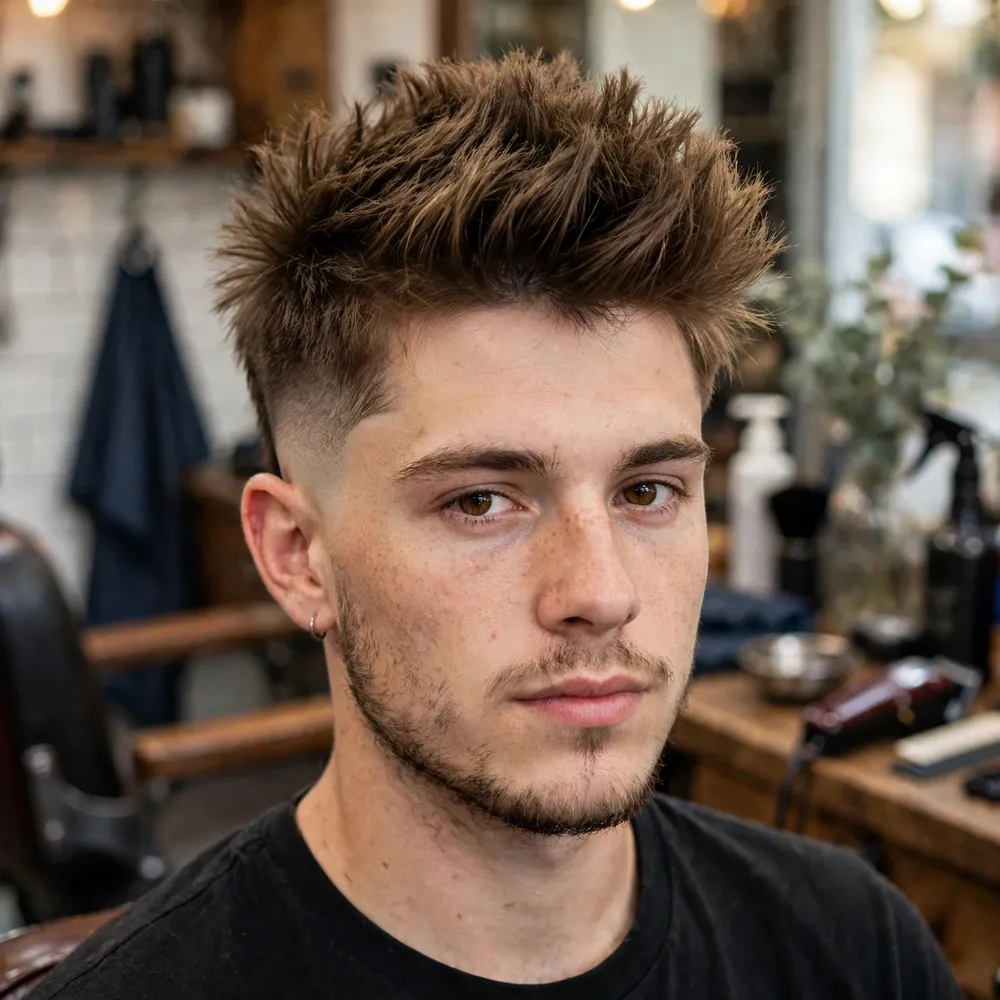
Named after the cut popularised by Usher, this one keeps a wide mohawk-style strip of length down the centre of the head, with burst-fade sides that curve around the ears. It’s bold and instantly recognisable, and it suits men with thick hair and the confidence to carry a strip of length down the middle. Ask your barber: “South of France — wide strip on top, burst fade on the sides, keep the strip long enough to style up or forward.” Strong-hold gel or fibre paste keeps the strip standing; volume at the front stops it looking flat. The burst fade needs a refresh every two weeks, and the strip needs daily styling — not a wash-and-go cut, so commit only if you enjoy spending time on your hair.
14. Double Layer Undercut
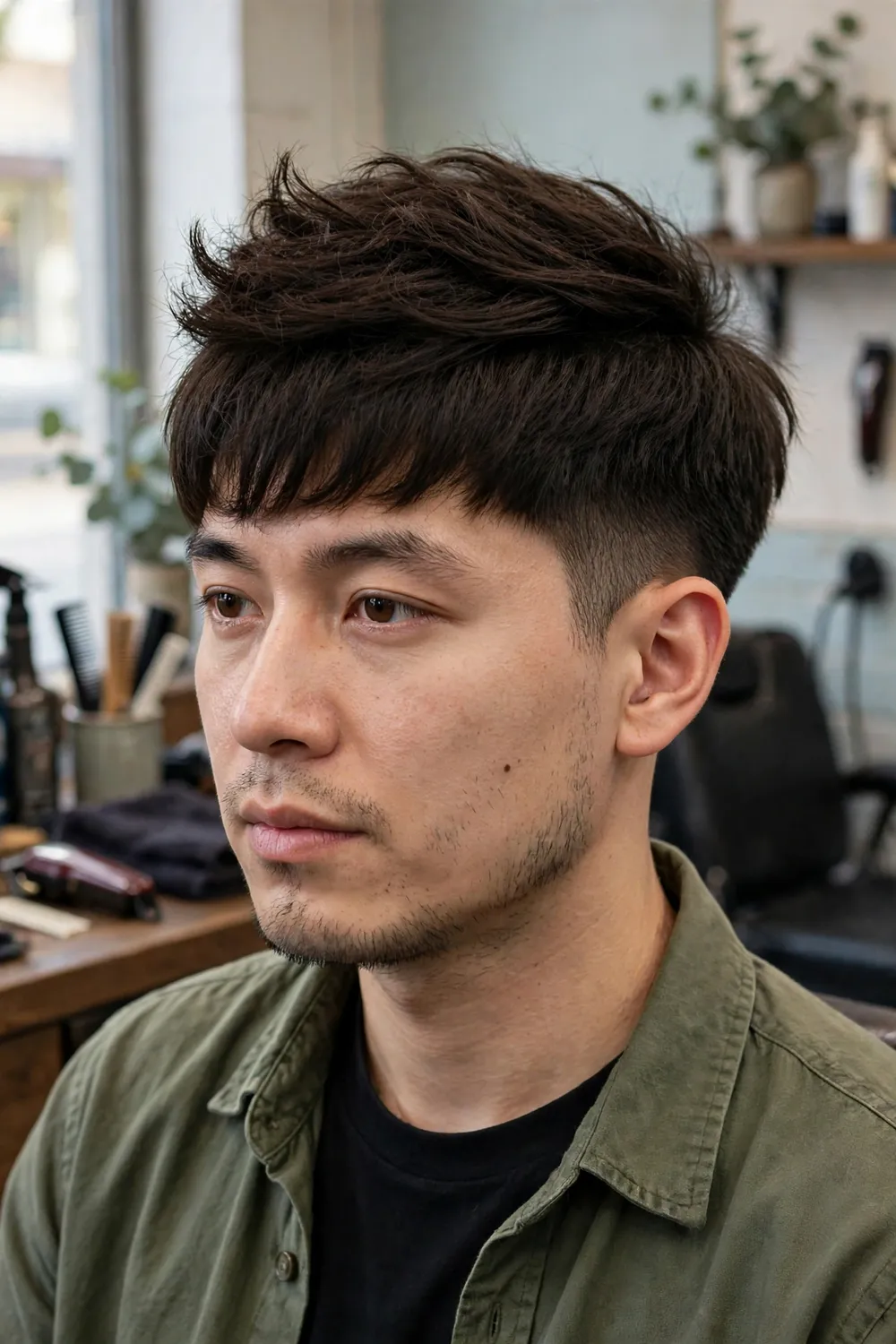
The double layer undercut stacks two tiers of length on top: a longer upper layer sitting over a shorter under-layer, with short sides underneath it all. The result is a cut with real depth and movement that looks different from every angle. It suits thick hair best — fine hair struggles to hold two distinct layers — and it flatters oval and square faces. Say to your barber: “Double layer undercut — two tiers on top, the upper layer an inch longer than the one below, sides clipped short.” Work texturising paste through the top and separate the layers by hand so the tiers stay visible. It needs a blow-dry to look its best, and the layers blur as they grow, so a reshape every three weeks keeps the structure.
15. Soft Undercut
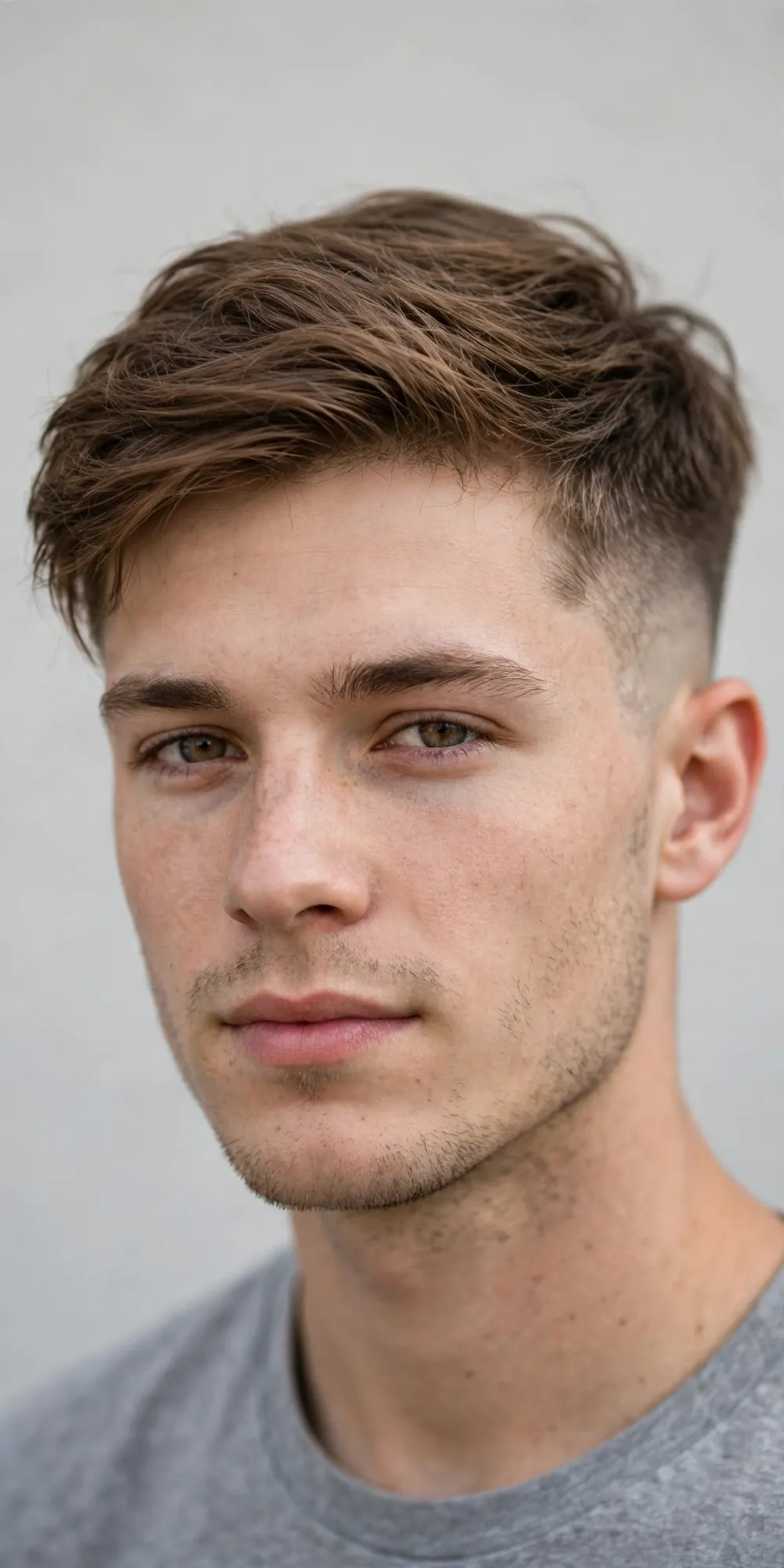
The soft undercut is the relaxed cousin of the family: the sides are short but softly blended, and the top is left natural — no hard lines, no heavy product, just hair that looks like it grew that way. It’s a good first undercut if the disconnected version feels too aggressive, and it suits wavy hair particularly well since the natural texture does the styling for you. Tell your barber: “Soft undercut — sides short but blended, top natural, take the weight out but keep the length.” A pea-sized amount of light cream — or nothing at all — is enough; air-dry it and push it into place by hand. It grows out so gently you can stretch a cut to five weeks, though the sides will eventually need a tidy.
16. Textured Undercut

The textured undercut is the modern all-rounder: a choppy, layered top with piecey separation, sitting over short, clean sides. It looks effortless, suits straight and wavy hair, and works on pretty much every face shape — which is why it’s the cut barbers recommend most right now. Ask your barber: “Textured undercut — top four inches, point-cut the ends for texture, sides on a two, no blend.” Rub a matte clay between your palms, run it through towel-dried hair, and pinch the ends apart with your fingers for that piecey finish. It takes about two minutes in the morning and still looks good on day two. The texture needs refreshing as the hair grows, so book a cut every three to four weeks to keep the ends from going heavy.
17. Messy Undercut
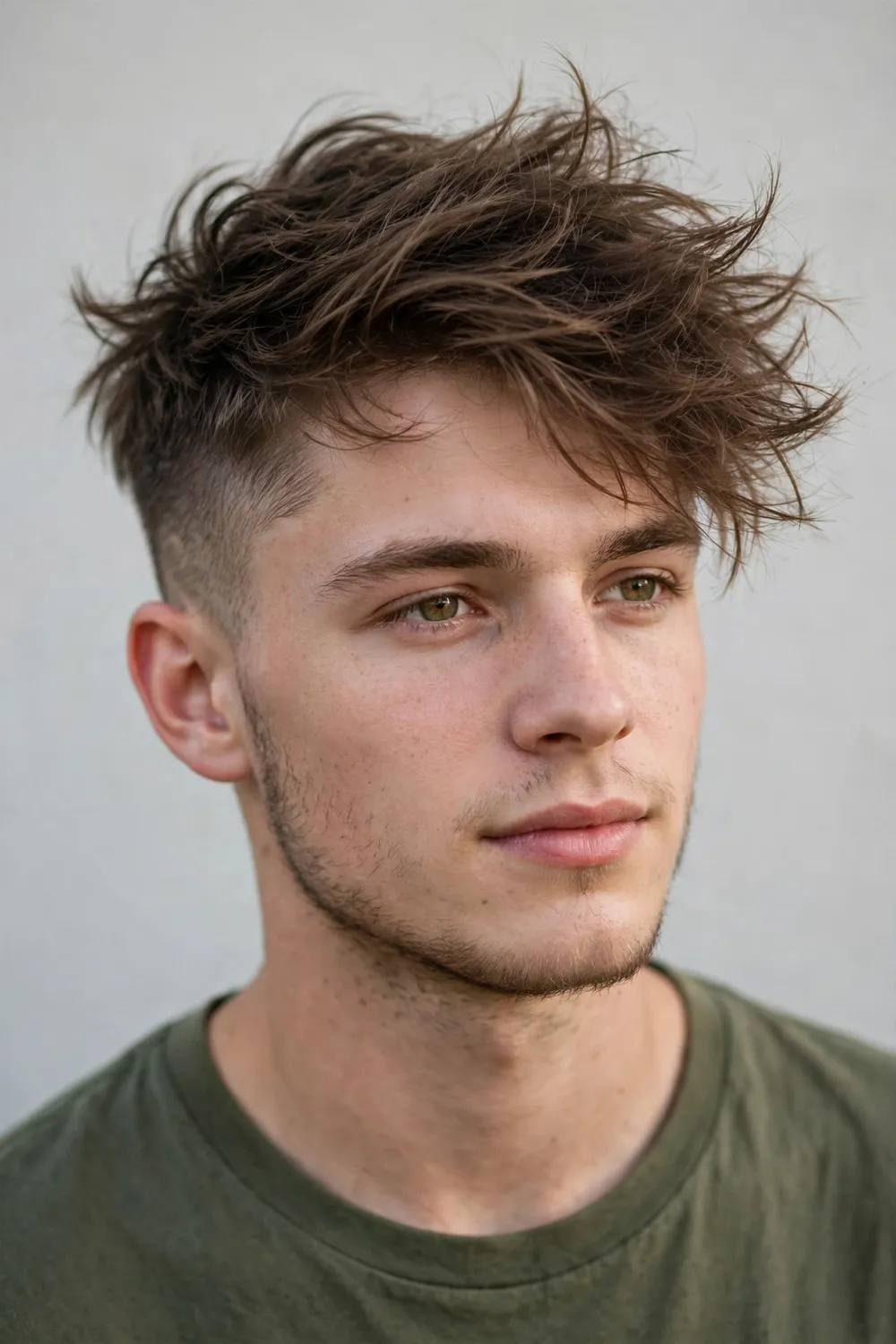
The messy undercut is the textured cut turned up a notch: a tousled, carefree top with a matte finish and no obvious direction, over tight sides that keep the whole thing from looking unkempt. It’s a strong pick for wavy or slightly unruly hair, because the mess is built in rather than fought against. Say: “Messy undercut — top long and choppy, sides tight, and thin it out so it sits messy naturally.” A sea-salt spray on damp hair, scrunched and left to air-dry, gives the best result; a dab of matte paste adds hold on humid days. It’s genuinely low-maintenance in the morning, but don’t be fooled — the cut itself needs shaping every three weeks, or the mess crosses the line from stylish to just untidy.
18. Quiff Undercut

The quiff undercut sweeps a voluminous front up and back over short sides, giving you the height of a classic quiff with the clean contrast of an undercut. It suits men with thick, straight hair and a strong forehead — the volume needs hair that holds its shape. Round and oval faces get the most from it, since the height adds length to the face. Ask your barber: “Quiff undercut — top five inches at the front, sides on a one, keep the front long enough to sweep up.” Blow-dry the front up with a round brush, then lock it in with medium-hold pomade or volumising powder. It takes five minutes and a hairdryer every morning; skip the dryer and the quiff collapses by midday.
19. Spiky Undercut

The spiky undercut brings back the defined spikes of the nineties, but cleaner: short, separated spikes on top with strong texture, over tight, clipped sides. It suits younger guys and men with straight, medium-thick hair that holds a shape — very fine or very curly hair won’t spike reliably. Tell your barber: “Spiky undercut — top two to three inches, point-cut for texture, sides on a one, and thin the top so the spikes separate.” A strong-hold fibre or wax, worked through dry hair and pinched into spikes, is the product to use; wet hair gives you clumps instead of spikes. It needs a couple of minutes of styling each morning, and the spikes lose their definition as the top grows past three inches, so a trim every three weeks keeps it sharp.
20. Short Crop Undercut

The short crop undercut wears the top forward: a cropped, textured length with a blunt fringe falling over the forehead, while the sides stay short and clean. It’s a smart choice if your hairline is receding or your forehead is high, since the fringe covers both, and it suits straight and wavy hair. Ask your barber: “Short crop undercut — top cropped forward with a textured fringe, sides on a two, keep the fringe just above the eyebrows.” A matte paste pushed forward through towel-dried hair is all it takes; no blow-drying needed. The fringe grows into your eyes within three weeks, so this is a cut that needs regular trims — but at two minutes of styling a day, it’s one of the lowest-effort undercuts to live with.
21. Pompadour Undercut
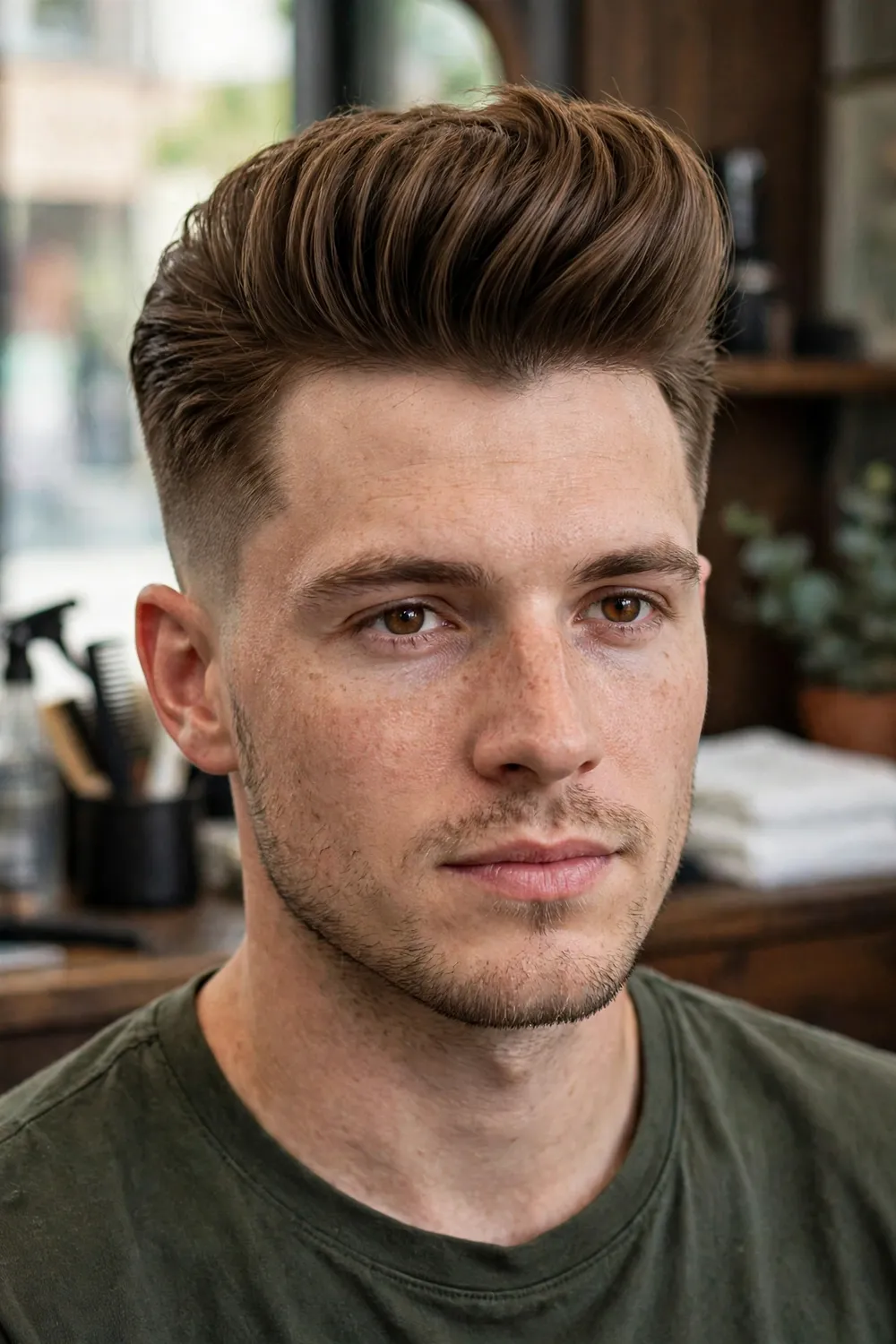
The pompadour undercut is the showpiece of the family — a tall, swept-back wave rising off the forehead over tight, clipped sides. It suits oval and square faces best and needs decent thickness; fine hair manages with prep but won’t reach the same height. Ask your barber: “A pompadour on top, about four inches, swept back with real height — and a number two undercut on the sides, no blend.” Blow-dry the top up and back with a round brush, then work strong-hold pomade through from roots to tips. The finish is polished — a strong pick for weddings and nights out. It takes ten minutes each morning, though, and the sides need a tidy-up every two to three weeks.
22. Man Bun Undercut

The man bun undercut is the long-hair guy’s shortcut to looking intentional instead of unkempt. The top grows long enough to pull back — usually eight inches or more — while the sides are clipped short, so the bun becomes the point of the cut. It suits oval and longer faces, and wavy or straight hair; very curly hair works too, though the bun sits looser. Ask your barber: “Keep the top long for a bun, and take the sides down to a number one undercut with a clean line.” Leave-in conditioner keeps it smooth, and a proper hair tie stops breakage. The catch is the grow-out: months in an awkward in-between stage, and the length looks dry without proper washing and conditioning.
23. Top Knot Undercut

Think of the top knot as the man bun’s sharper, smaller cousin. Instead of a full bun at the back, the hair gathers into a compact knot at the crown, which feels more deliberate and a bit more street-style. It suits thick, straight or slightly wavy hair, and works well on rounder faces because the height adds length to the face. Ask your barber: “A top knot — keep about six inches on top, tied high at the crown, with a number one undercut on the sides.” A little matte paste keeps flyaways down without making the knot look greasy. Maintenance is light once the length is there, but regular trims keep the knot sitting in the right spot, and thin hair tends to make it look small and straggly.
24. Long Hair Undercut

A long hair undercut keeps the drama of shoulder-length hair while removing the bulk at the sides, where long hair usually turns shapeless. The top flows past the ears and collar while the clipped sides give the cut structure, so it reads as a style rather than just growing it out. It suits thick and wavy hair best, and longer faces carry it well. Ask your barber: “Leave the top at shoulder length with light layers, and clip the sides short — a number two undercut, no fade.” Sea salt spray gives the length movement, and a weekly deep condition keeps the ends from splitting. The trade-off is upkeep: long hair needs a real washing and conditioning routine, and the sides need re-clipping every three to four weeks or they creep over the ears.
25. Faux Hawk Undercut
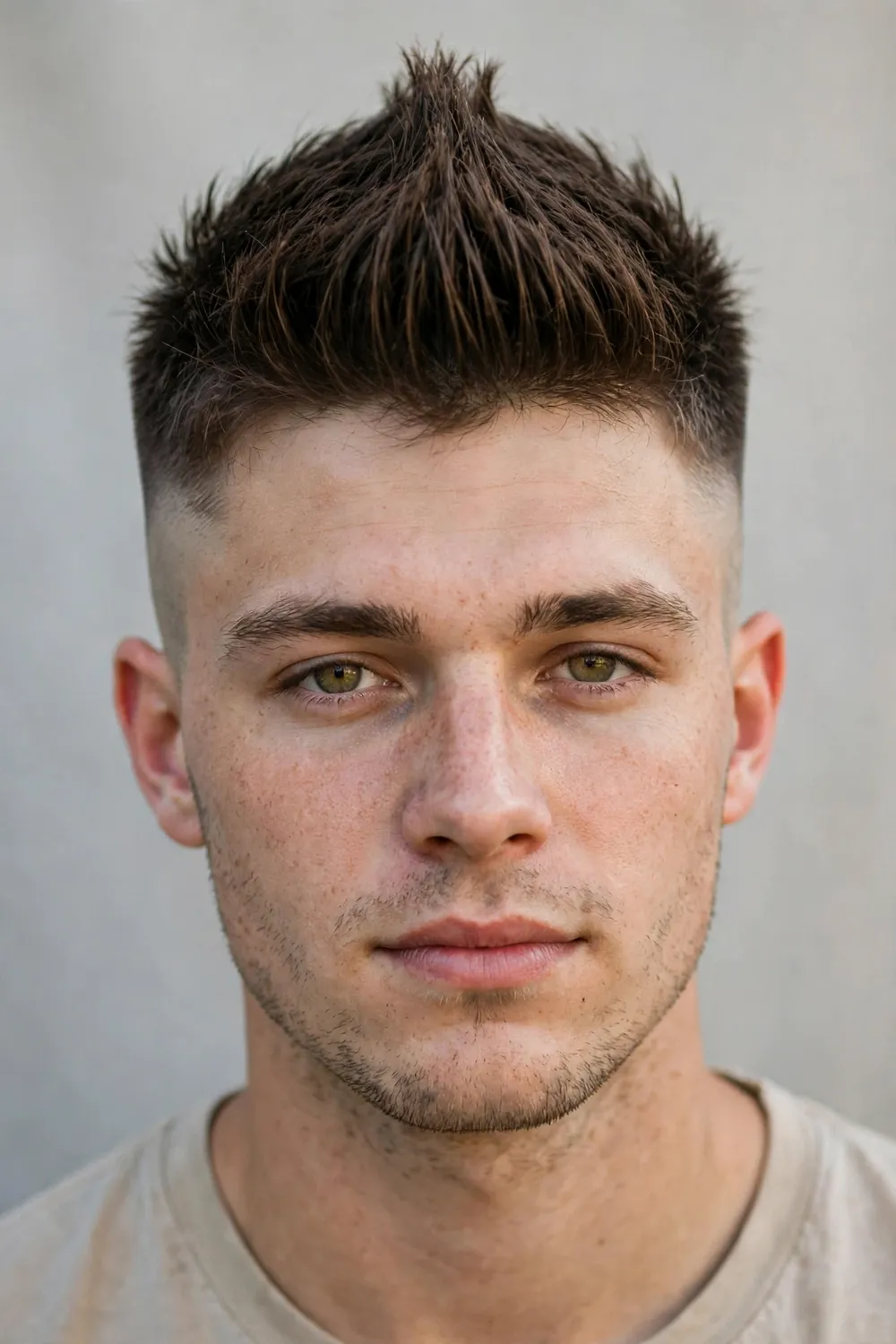
The faux hawk undercut takes the mohawk’s attitude and makes it wearable on a Tuesday. A strip of textured hair runs down the centre, styled upward, while the sides stay short and clean — bold from the front, but nothing that would scare a workplace. It suits round faces best, since the height stretches the face out, and works on most hair types with enough length in the middle. Ask your barber: “A faux hawk — keep the centre strip two to three inches, textured, and take the sides to a number one undercut.” Strong-hold clay does the job: run it through damp hair and pinch the strip upward. It holds all day on most hair, but very fine hair may droop by afternoon, and the sides need a touch-up every two to three weeks.
26. Curly Undercut
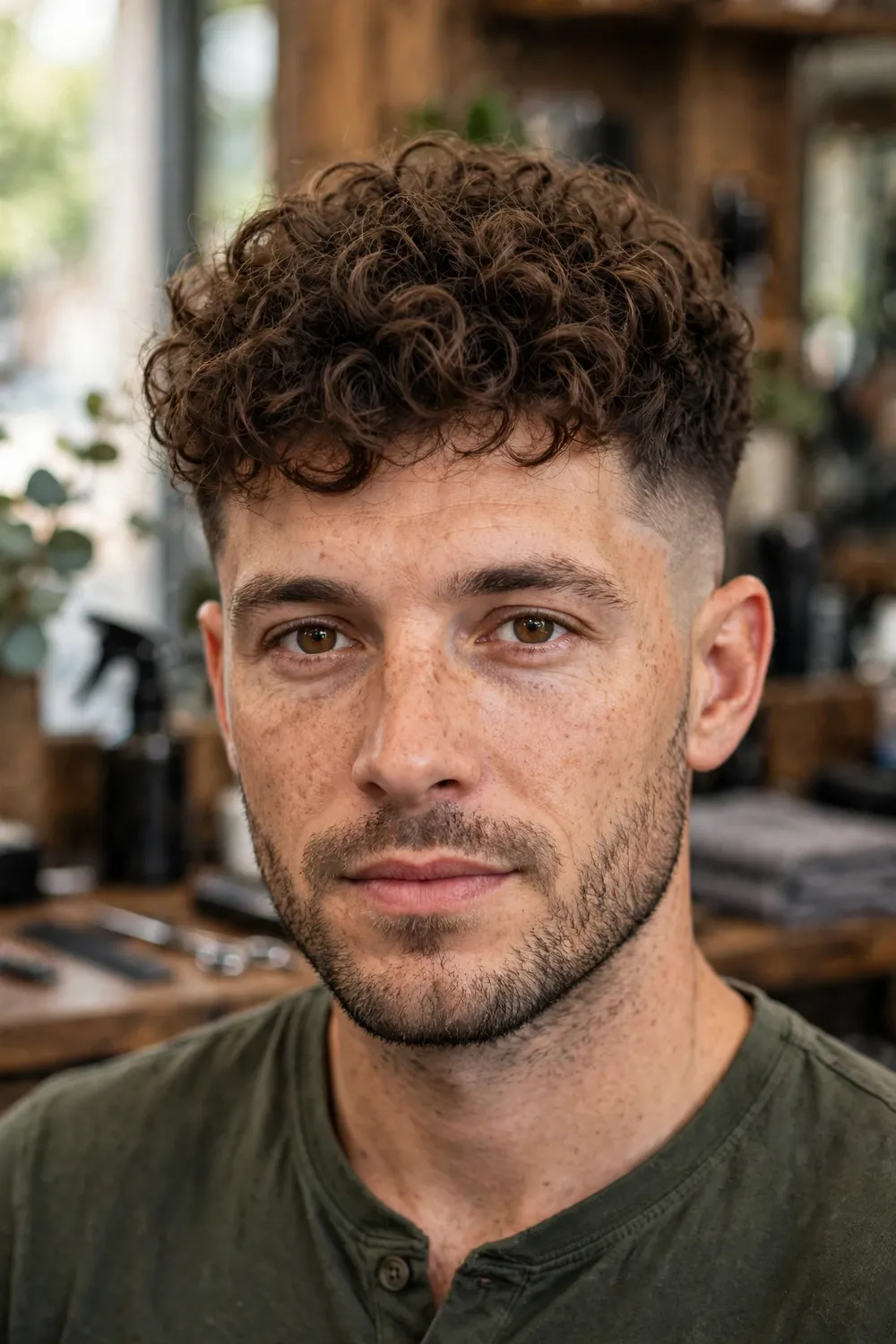
The curly undercut is one of the best things that ever happened to curly hair. Instead of fighting the curls, it lets them do their thing on top — full and bouncy — while the short sides stop the head turning into a triangle. It suits anyone with natural curls, from loose waves to tight coils, and flatters most face shapes because the volume balances everything out. Ask your barber: “Keep the curls three to four inches on top, sides to a number one or two undercut — and please, no thinning shears on the curls.” Curl cream scrunched into damp hair defines the pattern without crunch, and the finish should look soft, not stiff. Maintenance is simple: good conditioner, minimal heat, and a trim every four to six weeks to stop the curls going heavy.
27. Wavy Undercut
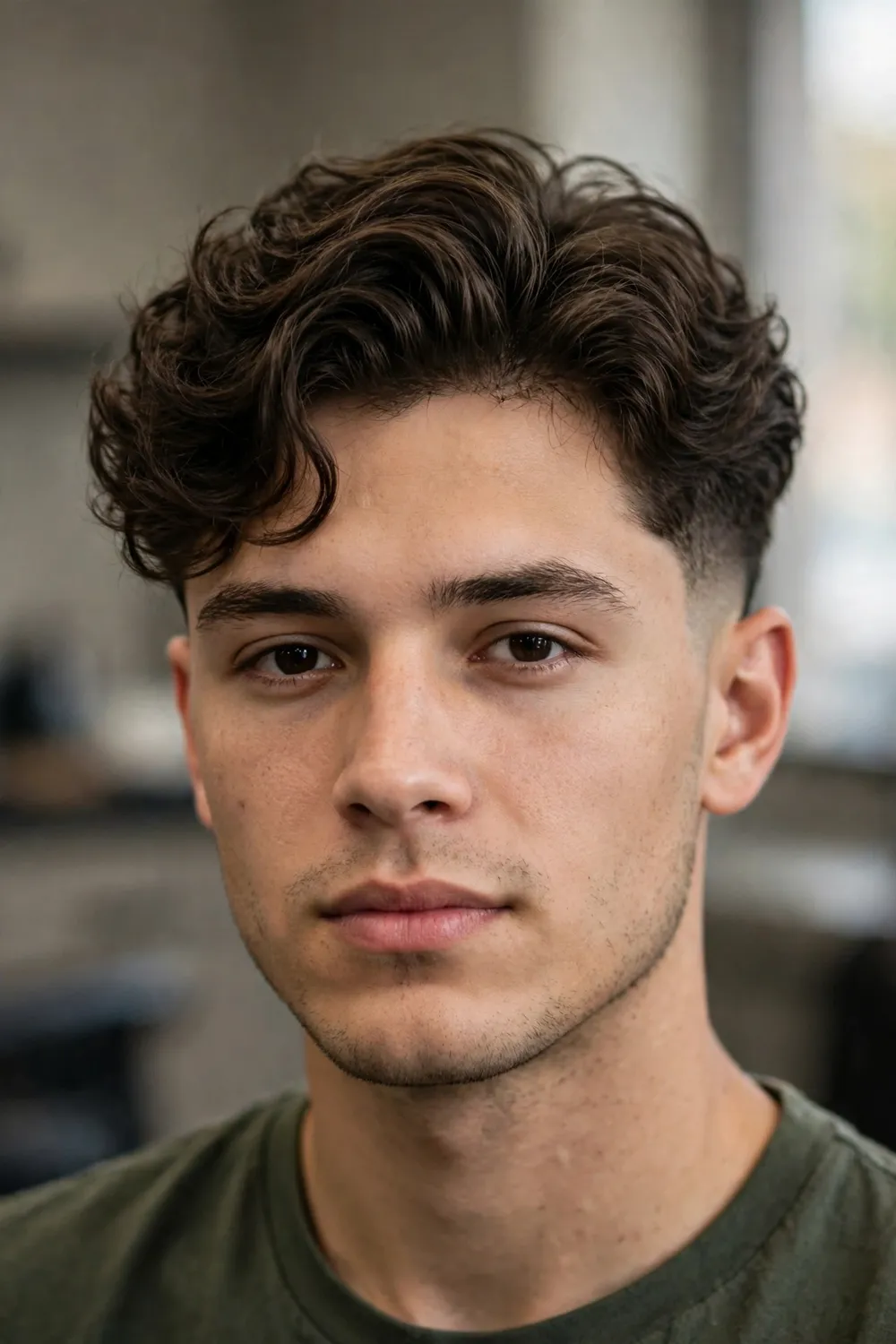
If your hair has a natural wave, the wavy undercut shows it off without looking like you tried too hard. The waves sit loose and relaxed on top while the short sides give the cut shape — the kind of hair people assume you just woke up with. It suits medium-textured hair and most face shapes, and it’s ideal for hair that won’t hold a slicked style but won’t sit flat either. Ask your barber: “Keep the waves about three inches on top with light texture, and a number two undercut on the sides.” Sea salt spray is your best friend: a few sprays into damp hair, scrunch, and air-dry. The finish is matte and natural. Humidity can turn waves into frizz, so a little leave-in conditioner on damp days goes a long way.
28. Fringe Undercut
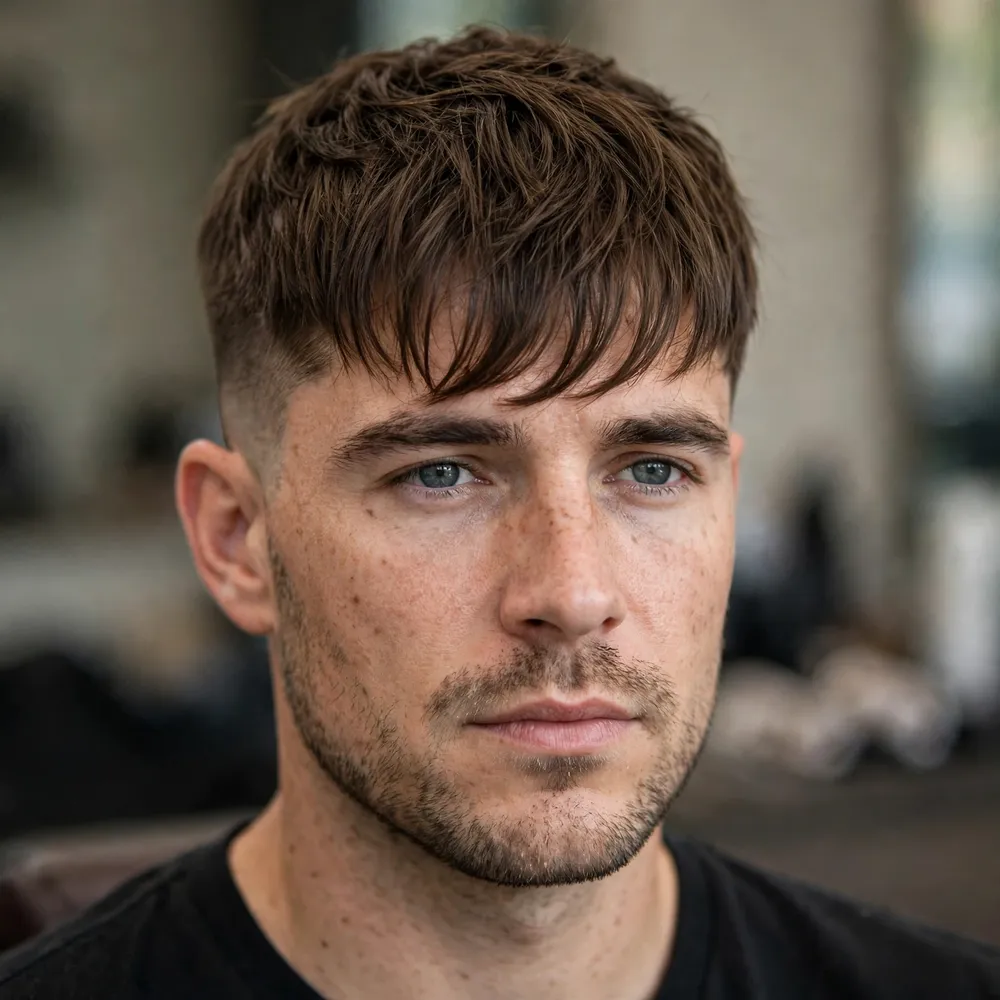
The fringe undercut brings the hair forward instead of back, and it’s a lifesaver for guys with long faces or high foreheads. A textured fringe falls across the forehead, shortening the face visually, while the tight undercut sides keep the look modern rather than boyish. It suits straight and slightly wavy hair best; very curly hair needs more length to sit properly. Ask your barber: “A textured fringe to just above the eyebrows, point-cut so it isn’t a straight line, with a number two undercut on the sides.” Matte clay gives the fringe separation without shine. Most days you just push it forward with your fingers, but the fringe grows into your eyes fast, so expect a trim every three weeks — and keep it off your forehead in summer.
29. Undercut with Beard
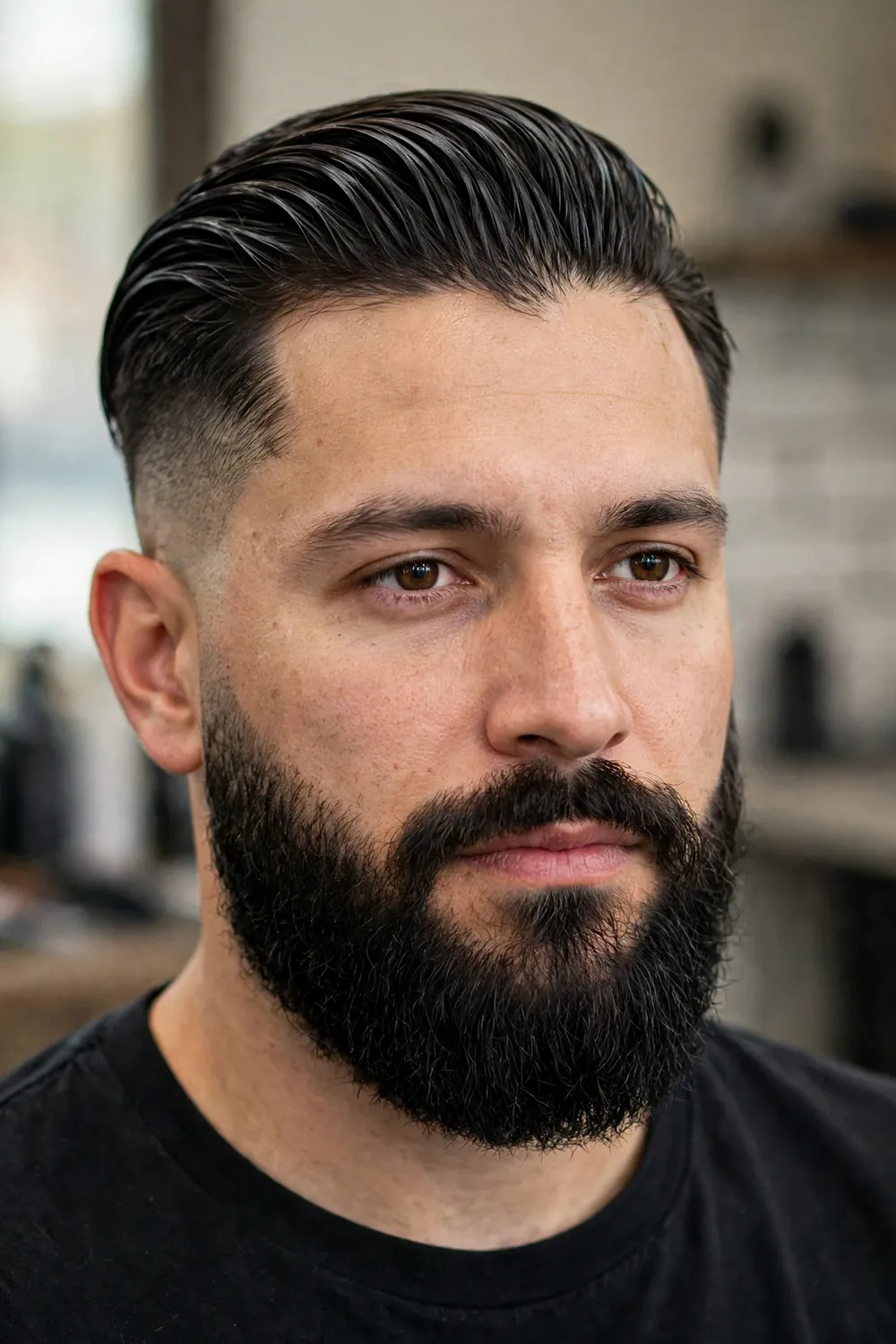
An undercut with a full beard is one of the strongest combinations in men’s grooming: sharp, clean sides above, full texture below. The contrast frames the face, and when the sides fade into the beard properly, the whole thing looks sculpted rather than accidental. It suits square and oval faces especially well, and works with most tops — slicked back, textured, or swept to the side. Ask your barber: “A slicked-back undercut on top, and blend the sides down into the beard so there’s no hard line — keep the beard shaped, not just long.” Beard oil daily keeps the beard soft, and a matte paste handles the top. The catch is double maintenance: the undercut needs clipping every three weeks and the beard shaping just as often, so budget for both or the balance falls apart.
30. Curtain Undercut
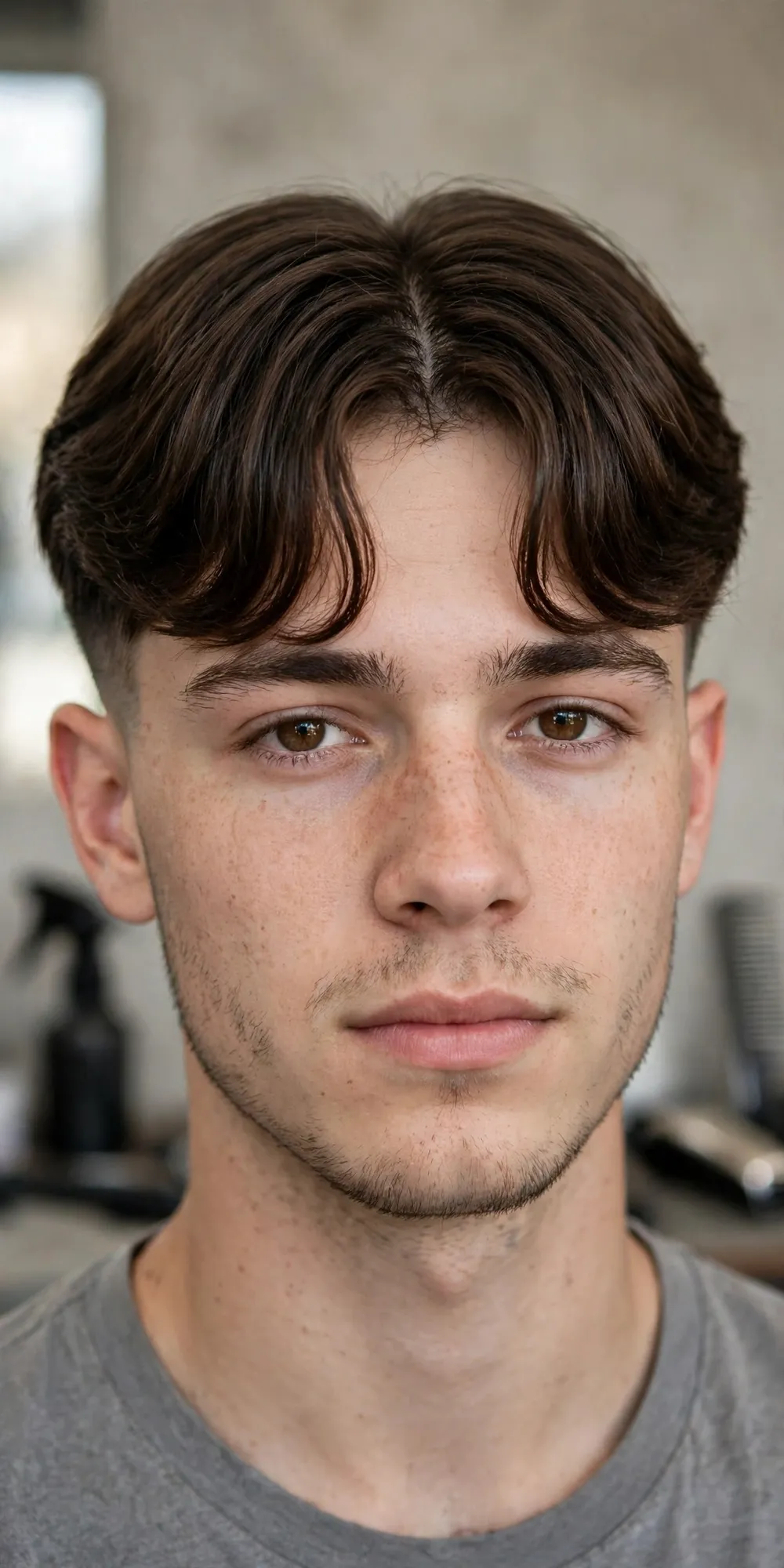
The curtain undercut brings back the nineties centre part and gives it a modern backbone. The top parts in the middle and falls either side of the face in soft sections, while the undercut sides stop it looking like a throwback costume. It suits oval faces best, and younger guys or anyone with naturally straight hair that parts easily. Ask your barber: “Curtain bangs to cheekbone length, centre-parted, with a number two undercut on the sides.” A light styling cream is all you need — work it through damp hair and let the part fall naturally. The finish is relaxed and a little romantic. Maintenance is light, though the part needs training for a week or two if your hair has always gone to one side, and the fringe needs trimming every three to four weeks.
31. Low Fade Undercut

The low fade undercut is the quiet version — all the contrast, none of the shouting. The fade sits low, hugging the ears and nape, while the top keeps its full length, so the blend feels gradual. It’s the best first undercut if you’re nervous about going too bold, and it suits offices. Our guide to low fade haircuts for men breaks down the variations if you want the low fade on its own. Ask your barber: “An undercut on top with a low fade — start the fade just above the ear and keep it subtle.” Any product works, from matte clay for texture to pomade for a slick finish. Maintenance is forgiving: the low fade grows out gracefully, so you can stretch touch-ups to four weeks without it looking scruffy.
32. High Fade Undercut

Where the low fade whispers, the high fade undercut shouts. The fade climbs high toward the temples, leaving a bigger band of skin and making the long top look even longer. It’s bold, sharp and modern, and suits guys with strong jawlines and oval or square faces. Ask your barber: “An undercut on top, with a high fade on the sides — take the fade up to the temples and keep the top long and textured.” Matte clay or a strong pomade both work, depending on whether you want texture or shine. The finish is clean and graphic, almost architectural. The trade-off is upkeep: a high fade shows growth within ten days, so expect a chair visit every two weeks if you want it crisp.
33. Skin Fade Undercut
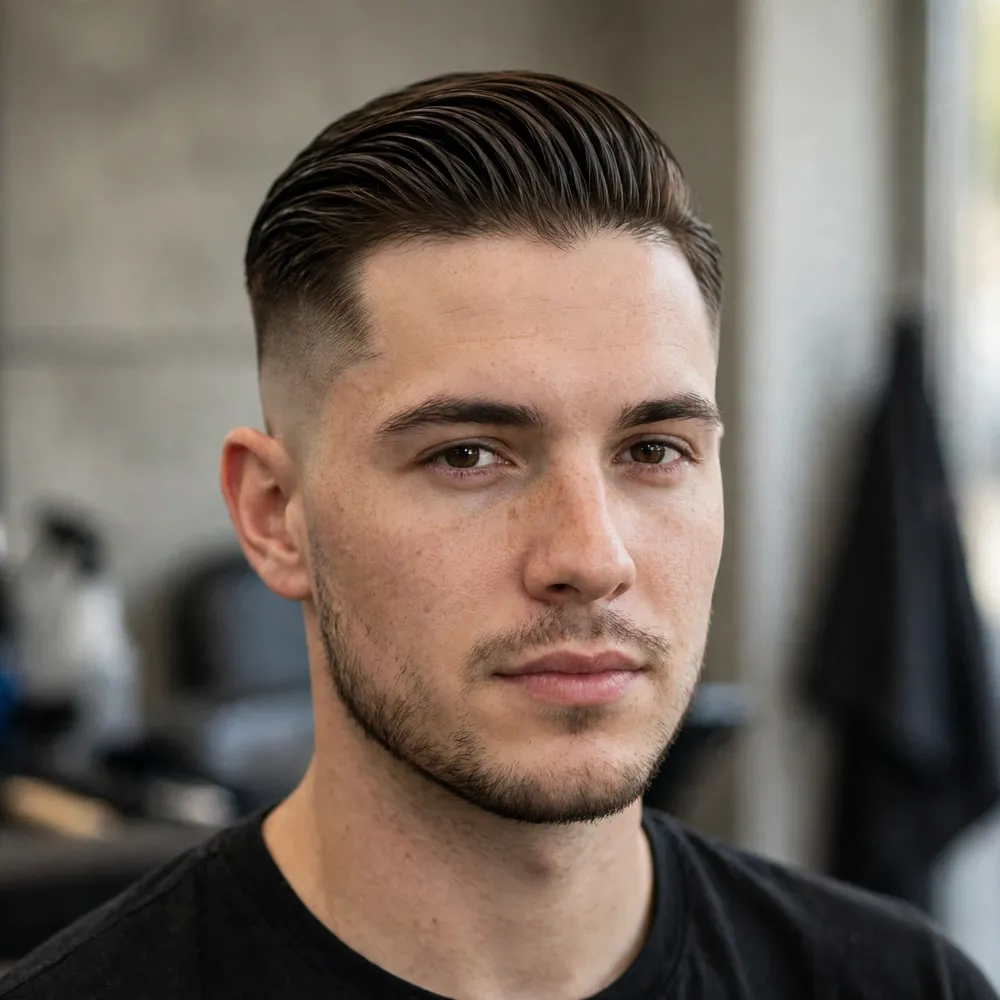
The skin fade undercut is the cleanest version there is. The sides go down to bare skin before blending into the long top, creating the sharpest contrast and a finish that looks freshly cut for days. It suits thick hair especially well — the weight on top balances the bare sides — and it’s a smart pick in hot weather. Ask your barber: “An undercut on top with a skin fade on the sides, blended up cleanly — take it to the skin at the bottom.” A matte paste or light pomade handles the top; the sides need nothing at all. It’s razor-sharp when fresh, but stubble shows within days, so expect a touch-up every one to two weeks.
34. Wet-Look Undercut

The wet-look undercut is pure polish — a high-shine, slicked top that looks freshly showered, set against tight, clean sides. It’s the version for a wedding, a date, or anywhere you want to look deliberately put-together. It suits straight and slightly wavy hair, and flatters oval and square faces. Ask your barber: “A slicked-back undercut, three to four inches on top for a wet look, and a number one on the sides.” A water-based gel or high-shine pomade does the work: comb through damp hair and let it set. The shine is the point, so don’t skimp on product. Honest warning: wash it out every night or build-up makes your hair dull and heavy, and in humidity the shine can tip into greasy — a special-occasion style for most guys.
35. Undercut for Thick Hair

Thick hair and undercuts were made for each other. The undercut removes the bulk at the sides — the part that makes thick hair puff out — while the top keeps its natural weight. The result looks lighter than the hair it came from, a rare thing for thick-haired guys. Ask your barber: “Thin the top with texturising shears so it doesn’t sit like a helmet, and take the sides to a number one undercut.” Matte paste is the right product: it controls the weight without adding shine or stiffness. The finish is full and textured, never flat. Maintenance is straightforward — a trim every three to four weeks — but the top grows heavy fast, so don’t skip the thinning or you’ll be back to the puff within a month.
36. Undercut for Fine Hair
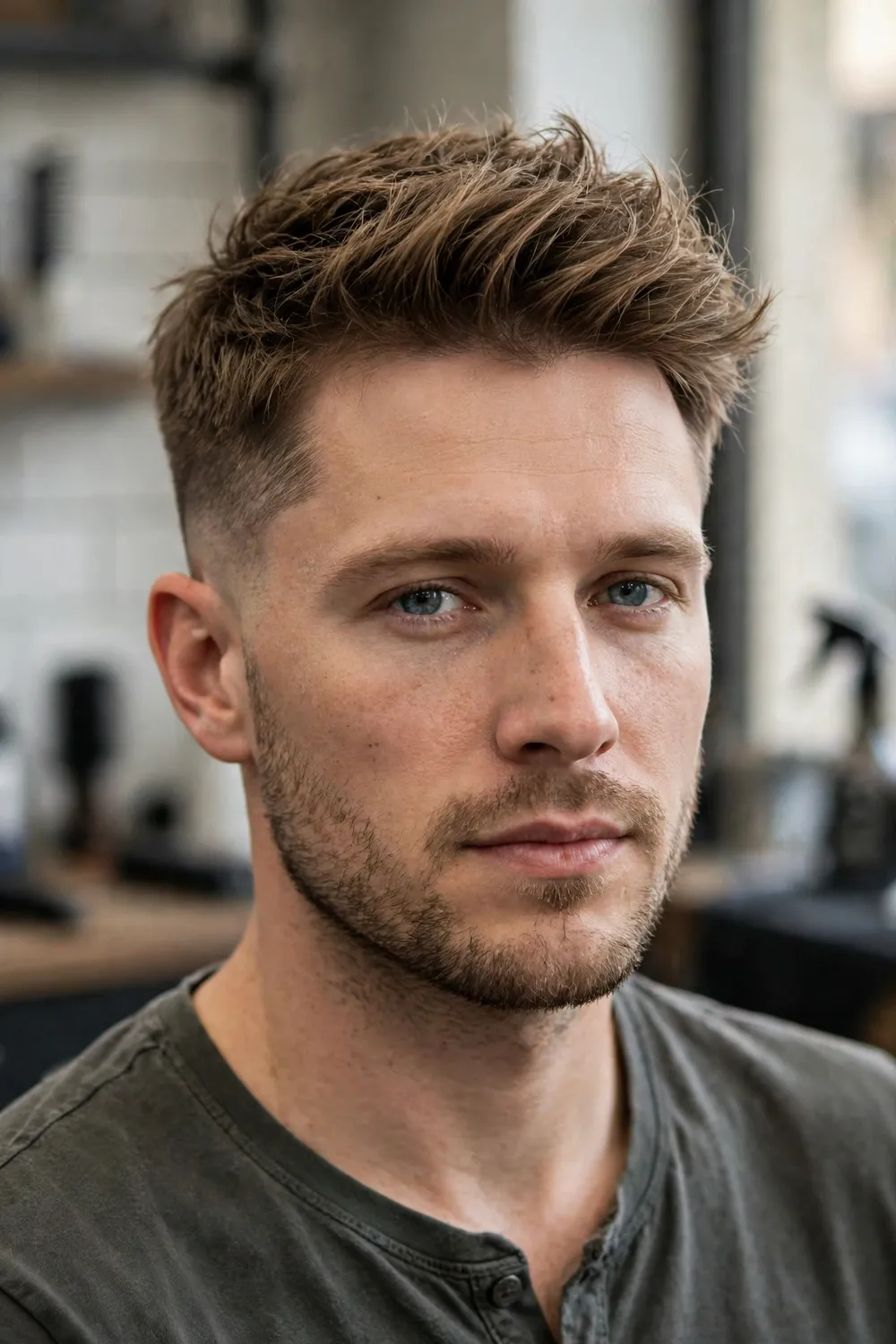
Fine hair needs a different approach, and the undercut delivers: short sides make the top look thicker, and a textured top creates the fullness fine hair usually lacks. The trick is keeping the top light — heavy product and long, flat lengths are the enemy. Ask your barber: “Point-cut the top for texture, keep it around two to three inches, and take the sides to a number two undercut — no thinning shears, please.” Volumising powder or light matte clay gives lift without weighing the hair down, and a quick upside-down blow-dry adds volume. The finish should look airy and full. Honest note: fine hair shows scalp easily when the sides are very short, so a number two is safer than a zero, and the style won’t hold in rain or wind without product.
37. Undercut for Receding Hairline

A receding hairline doesn’t mean giving up on style — it means choosing a cut that works with it. The forward-swept undercut brings the top forward over the temples, softening the recession and drawing the eye to the texture rather than the hairline. It suits early-stage recession best, and works on straight and wavy hair alike. Ask your barber: “A forward-swept textured top, two to three inches, falling over the temples — and a number two undercut on the sides.” Matte clay gives the fringe grip without shine. The finish looks natural and confident, not like a cover-up. Be realistic, though: if the recession is advanced, no fringe will hide it, and a shorter crop is the honest choice — but for early recession, this cut buys you years of good hair days.
38. Undercut with Grey Hair
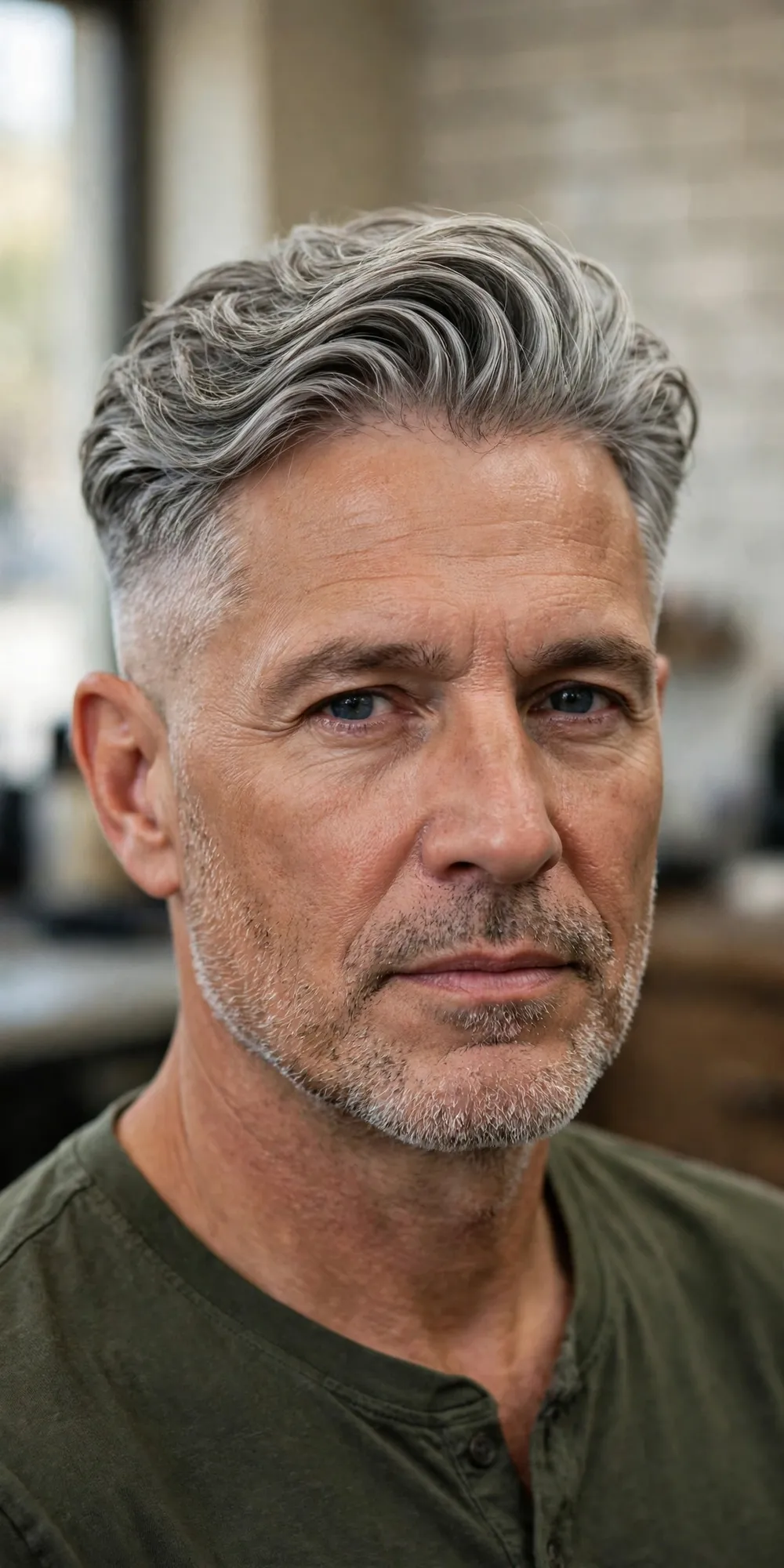
Grey hair and an undercut are a striking pair. The silver top catches the light like dark hair never does, and the sharp, short sides make the silver look intentional and distinguished. It suits men going salt-and-pepper or fully silver, on every face shape. Ask your barber: “Keep the silver top textured and about three inches, and take the sides to a number one or a low fade — whichever suits my face.” A purple-tinted silver shampoo once a week keeps the grey bright, and a light matte paste handles the styling. The finish is sharp, modern, and quietly confident. Maintenance is light: a trim every three to four weeks and that weekly shampoo is all it takes — and unlike dyeing, there’s nothing to grow out at the roots.
39. Undercut for Older Men

The undercut isn’t just for twenty-somethings — done right, it’s one of the most flattering cuts for men over fifty. Keep it refined: a longer top combed back or to the side, neat sides that aren’t shaved to the skin, and no extreme contrast. The result looks sharp and current without trying to look young. It suits most face shapes, and straight, wavy or greying hair. Ask your barber: “A classic undercut — keep the top long enough to comb back, and the sides neat at a number three, no skin fade.” A light styling cream is all you need; the goal is control, not hold. Maintenance is easy: a trim every four weeks, two minutes of styling each morning, and the cut still looks respectable a week past its appointment.
Undercut vs Fade vs Taper: What’s the Difference?
These three cuts get mixed up constantly, and barbers hear the wrong word for the right cut every day. The difference comes down to one thing: how the sides meet the top. The undercut hairstyle has a sharp, visible disconnect — long on top, short on the sides, with no blending between them. A fade, by contrast, melts gradually from skin to length. A taper is the gentlest of the three, a subtle shortening toward the neckline and sideburns.
| Feature | Undercut | Fade | Taper |
|---|---|---|---|
| What changes | Long top, short sides, sharp disconnect | Length melts gradually from skin upward | Sides shorten gently toward the edges |
| Transition | Hard line, no blending | Smooth gradient, skin to long | Soft, subtle graduation |
| Maintenance | Touch-up every 2–3 weeks | Touch-up every 1–2 weeks | Touch-up every 3–4 weeks |
| Best for | Bold contrast, styling the top | Clean, sharp, modern looks | Classic, office-safe styles |
| Works with | Slicked, textured, pompadour tops | Almost any top length | Short to medium tops |
So which one should you pick? If you want drama and a top you can style five different ways, the undercut wins. If you want the cleanest possible finish and don’t mind frequent barber visits, go for a fade. And if you want something that grows out gracefully and never looks wrong in a meeting, the taper is your safest bet. Plenty of guys mix them — an undercut fade, for instance, gives you the long top of an undercut with the smooth sides of a fade, which is why it’s one of the most requested cuts in the shop right now.
Which Undercut Suits Your Face Shape?
Round faces. Your goal is height and angles. Pick a version with volume on top — a brushed-up undercut, a quiff undercut, or a faux hawk — because the height stretches your face out and stops it looking wider than it is. Keep the sides tight and avoid wide, flat tops or heavy fringes that add width at the cheeks.
Square faces. You’ve already got a strong jawline, so soften the top a little. A textured haircut for men style top works beautifully here: choppy, piecey texture takes the edge off the angles without hiding them. Avoid anything too severe or geometric — a hard part plus a square jaw can look overly harsh.
Oval faces. Congratulations: almost everything works. Slicked-back, disconnected, pompadour, curtain — take your pick. The only thing to watch is proportion: don’t let the top get so tall that it throws your naturally balanced face out of whack. If you’re stuck for a first undercut, the slick back hairstyles for men guide is a solid place to start.
Long faces. Your job is the opposite of the round face: don’t add height. Go for a fringe undercut or a side-swept top that brings hair across the forehead and shortens the face visually. Skip tall pompadours and brushed-up styles — they’ll only make a long face look longer.
5 Mistakes to Avoid with an Undercut
- Picking the wrong guard. A number zero on the sides looks great on some guys and scalpy on others, especially if your hair is fine or light-coloured. Start with a number two and go shorter next time if you want more contrast — you can always take more off, but you can’t put it back.
- Skipping touch-ups. An undercut lives or dies on contrast, and once the sides grow past a centimetre, the sharp line that makes the cut goes soft. Book your next appointment before you leave the chair, every two to three weeks.
- Using the wrong product. Heavy wax on fine hair kills volume; light cream on thick hair won’t hold anything. Match the product to your hair type — matte clay for texture, pomade for shine — and use less than you think you need.
- Ignoring your hair type. A slicked-back undercut needs straight, cooperative hair; curly hair wants a textured or curly version. Fighting your natural texture every morning is a losing battle, so pick the version that works with what you’ve got.
- Growing it out without a plan. Undercuts grow out awkwardly — the sides catch up with the top and the shape disappears. If you’re done with the style, ask your barber for a transition cut rather than just letting it grow, or you’ll spend two months looking in-between.
FAQs
What is an undercut haircut?
An undercut is a haircut where the top is left long while the sides and back are clipped short, with a sharp, visible disconnect between the two lengths instead of a gradual blend. The contrast is the whole point: the long top can be slicked back, textured, or swept up, while the short sides keep the look clean. It’s one of the most versatile men’s cuts because the same basic shape supports dozens of different top styles.
How do I ask my barber for an undercut?
Be specific about three things: the length on top, the guard number on the sides, and the finish you want. A good script is: “An undercut — keep about three inches on top, take the sides to a number two with no blend, and I’ll slick it back.” Showing a photo helps enormously, since “undercut” means slightly different things to different barbers, and a picture removes all doubt.
What is the difference between an undercut and a fade?
An undercut has a sharp disconnect — long on top, short on the sides, with no blending between them. A fade gradually melts from very short (or skin) at the bottom up to longer hair, with no visible line. The two can be combined: an undercut fade keeps the long top of an undercut but replaces the hard disconnect with a smooth fade on the sides.
How often should I get an undercut touched up?
Every two to three weeks is the sweet spot for most undercuts, since the sides grow fast and the contrast is what makes the cut look sharp. Skin fades and high fades need attention sooner — every one to two weeks — while a low fade or tapered undercut can stretch to four weeks. Book the next appointment before you leave the chair and you’ll never let it go scruffy.
Does an undercut suit round faces?
Yes — as long as you pick the right version. Height on top is your best friend: a quiff, a brushed-up style, or a faux hawk stretches a round face out and adds angles. What doesn’t work is a flat, wide top or a heavy fringe, which emphasise the width. Keep the sides tight and the top tall, and a round face carries an undercut very well.
Can I get an undercut with curly hair?
Absolutely — curly undercuts are one of the best versions of the style. The short sides stop the curls from puffing out into a triangle, while the curls on top get to be the star of the show. Ask your barber to keep three to four inches of curl on top and to avoid thinning shears, which make curls frizz. A curl cream scrunched into damp hair is usually all the styling you need.
How do I style an undercut at home?
Start with damp hair and a blow-dryer — that combination does most of the work before any product touches your hair. Blow-dry the top in the direction you want it to sit (back for slicked styles, up for volume), then work a pea-sized amount of product through: pomade for shine, matte clay for texture. Finish by shaping with your fingers or a comb, and remember that less product almost always looks better than more.
Final Word
The undercut has survived a century of trends for a simple reason: it’s one cut with endless versions, and there’s a version for every face, every hair type, and every lifestyle. Start with one of the classics — a slicked-back or textured undercut — learn how your hair behaves, and then branch out. And if you’re still deciding, take a look around the Hair Groom blog for more styles, from the quiff haircut to the French crop haircut, and find the one that feels like you.