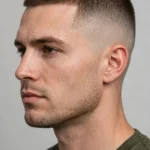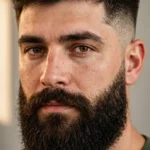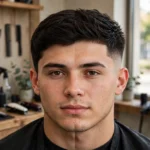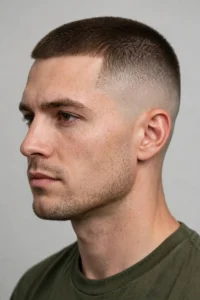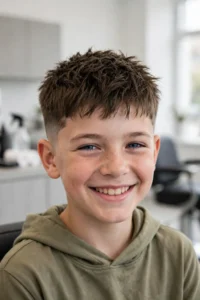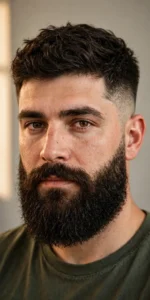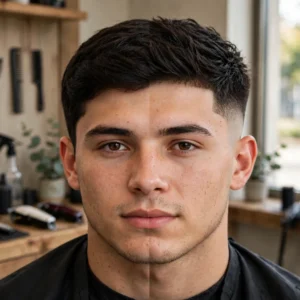


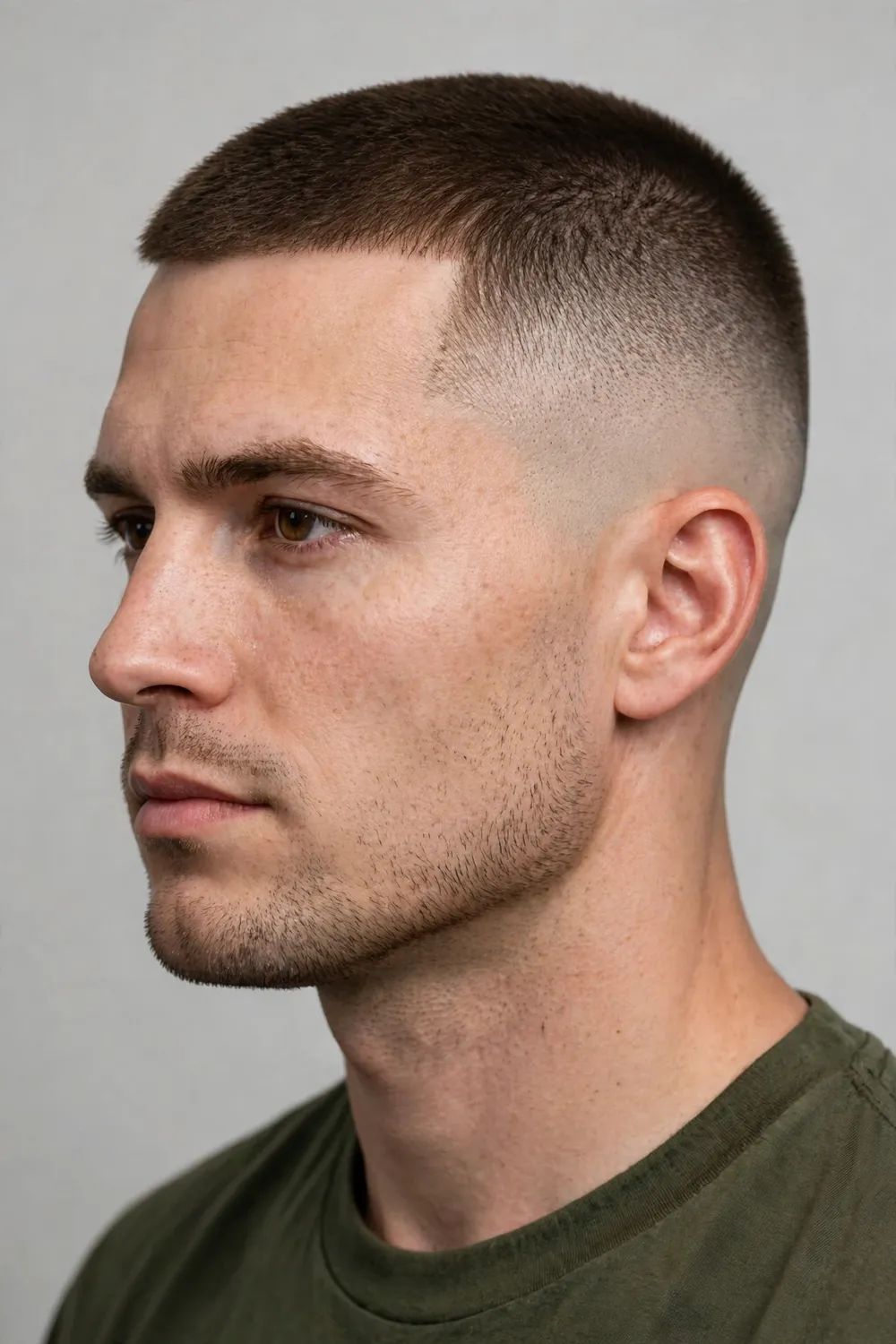
A low fade military haircut keeps the sides tight and the top short enough for inspection, with the fade starting just above the ears instead of high on the head. If you want the safest bet, go with the Classic Military Low Fade; for zero maintenance, the Low Fade Buzz Cut; and for the sharpest civilian look, the Low Fade with Beard Blend. Below are 39 styles, every one of them regulation-ready or built for life outside the base.
Quick-Pick Table: All 39 Low Fade Military Haircuts at a Glance
| Style | Fade Finish | Top Length | Best For | Effort |
|---|---|---|---|---|
| 1. Classic Military Low Fade | Low skin taper | 1–2 in | Any face, regulation duty | Low |
| 2. Low Fade Buzz Cut | Low skin | #2–#3 | Round/oval faces, busy schedules | None |
| 3. Low Fade Crew Cut | Low taper | ¾–1½ in | Straight/wavy hair, classic look | Low |
| 4. Regulation Low Fade | Low skin/¼ in | ≤2 in | Active duty, inspection days | Low |
| 5. Low Fade Butch Cut | Low taper | #3–#4 | Thick hair, square faces | None |
| 6. Low Skin Fade Military Cut | Skin, low | 1–2 in | Sharp contrast, oval faces | Low |
| 7. Low Bald Fade Military Cut | Bald, low | 1–1½ in | Cleanest finish, thick hair | Low |
| 8. Low Fade with Line Up | Low skin, edged | 1–2 in | Square/round faces, sharp lines | Medium |
| 9. Low Drop Fade Military Cut | Low drop | 1–2 in | Round faces, curved finish | Low |
| 10. Low Taper Fade Military Cut | Soft taper | 1–2 in | Conservative workplaces | Low |
| 11. Textured Top Low Fade | Low taper | 1½–2 in | Wavy/thick hair, modern edge | Medium |
| 12. Low Fade Textured Crop | Low taper | 1–1½ in | Straight hair, easy mornings | Low |
| 13. Low Fade Spiky Top | Low skin | 1–1½ in | Younger guys, fine hair | Medium |
| 14. Low Fade with Quiff | Low taper | 2 in | Oval/long faces, some styling | Medium |
| 15. Low Fade Faux Hawk | Low skin | 1½–2 in | Bold look, thick hair | Medium |
| 16. Low Fade with Hard Part | Low skin | 1½–2 in | Civilian wear, square faces | Medium |
| 17. Low Fade Side Part | Low taper | 1½–2 in | Office-to-base, straight hair | Medium |
| 18. Low Fade Comb Over | Low taper | 2 in | Thinning hair, classic polish | Medium |
| 19. Executive Low Fade | Low taper | 1–1½ in | Boardroom, older guys | Low |
| 20. Low Fade Ivy League Cut | Low taper | 1–1½ in | Smart finish, straight hair | Low |
| 21. Low Fade for Straight Hair | Low taper | 1–2 in | Straight hair, clean lines | Low |
| 22. Low Fade for Wavy Hair | Low taper | 1½–2 in | Natural wave, relaxed texture | Low |
| 23. Low Fade for Curly Hair | Low taper | 1–1½ in | Curls, controlled shape | Low |
| 24. Low Fade for Thick Hair | Low skin | 1½–2 in | Thick hair, lighter feel | Low |
| 25. Low Fade for Thinning Hair | Low taper | ¾–1 in | Thinning/receding hair | Low |
| 26. Low Fade with Beard Blend | Low skin, blended | 1–2 in | Bearded guys, strong jawlines | Medium |
| 27. Low Fade Flat Top | Low taper | 1–1½ in | Thick/straight hair, bold shape | High |
| 28. Low Fade High and Tight Blend | Low skin | ¾–1 in | Military look, low effort | Low |
| 29. Low Fade with Temple Fade | Low skin, temple | 1–2 in | Sharp corners, oval faces | Low |
| 30. Low Fade Brush Cut | Low taper | ¾–1 in | Fine hair, no-fuss finish | None |
| 31. Induction Cut Low Fade | Low skin | #0–#1 | Basic training, zero upkeep | None |
| 32. Burr Cut Low Fade | Low taper | #1–#2 | Wash-and-go, hot climates | None |
| 33. Low Fade Recon Cut | Low taper | 2 in | Thick/wavy hair, textured look | Medium |
| 34. Low Fade Jarhead Cut | Low skin | ¾–1 in | Marine style, square faces | Low |
| 35. Low Fade with Short Pompadour | Low taper | 2 in | Dress uniform, formal events | Medium |
| 36. Low Fade Brushed Back | Low taper | 1½–2 in | Straight hair, swept finish | Medium |
| 37. Low Fade for Receding Hairline | Low taper | ¾–1 in | Receding hairline, mature guys | Low |
| 38. Low Fade with Grey Hair | Low taper | 1–1½ in | Grey/silver hair, distinguished | Low |
| 39. Low Fade with 360 Waves | Low skin | ½–¾ in | 360 waves, coarse hair | Medium |
What Is a Low Fade Military Haircut?
A low fade military haircut is a short, regulation-style cut where the fade begins just above the ears and the sideburns, then blends gradually from skin or near-skin up into a short top. Because the fade sits low, the sides stay neat without the dramatic contrast of a high or mid fade, and the overall shape reads disciplined rather than trendy. The top is usually between half an inch and two inches, long enough to comb or texture slightly, short enough to stay tidy under a cover or helmet.
The numbers matter if you’re actually serving. Under Army regulation AR 670-1, the bulk of hair on top must not exceed 2 inches, the sides taper from skin or ¼ inch at the ears and sideburns, hair stays off the ears and off the collar, only natural hair colour is allowed, and designs, lines or patterns shaved into the hair are not permitted. The Marine Corps standard, MCO 1020.34H, is slightly stricter — the fade must be more gradual, the bulk shorter in practice, and the hairline kept razor-clean. Civilian versions of these cuts keep the same shape but give you more freedom: a touch more length on top, a harder part, or a beard blended into the fade. Every style below tells you which side of that line it sits on.
1. Classic Military Low Fade
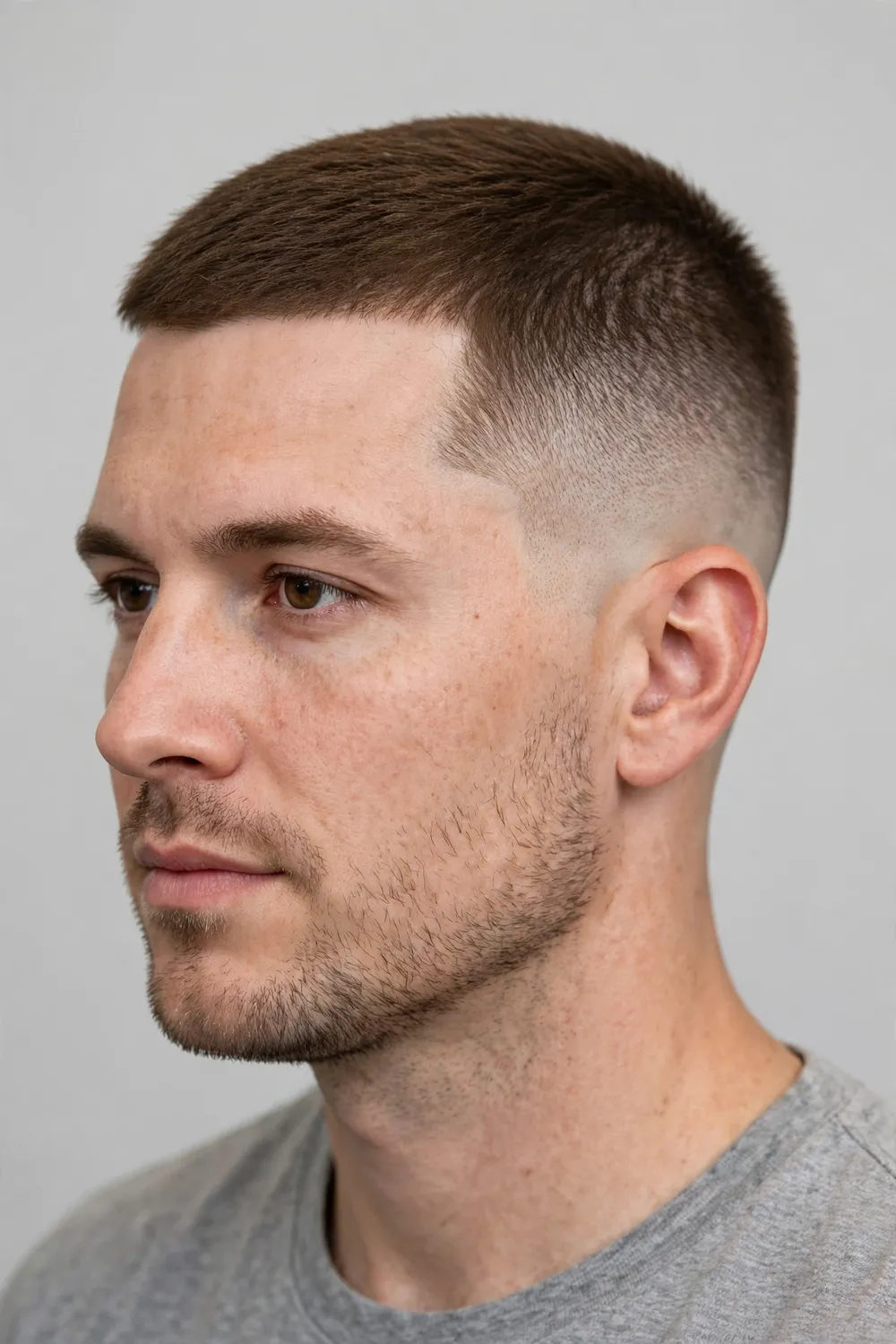
This is the cut every other style on this list is measured against. The sides fade low from skin to a short, neat top of about an inch to an inch and a half, without drawing attention. It works on oval, square and round faces alike, and suits straight, wavy or slightly thick hair without any fuss. Ask your barber for a low skin fade starting just above the ears, blended up with a #2 to #4 guard on top, and a clean taper at the neckline. Finish with a pea-sized amount of matte paste if you want a little texture, or nothing at all. Maintenance is a trim every two weeks to keep the fade crisp; let it go three and the blend starts to look grown out.
2. Low Fade Buzz Cut
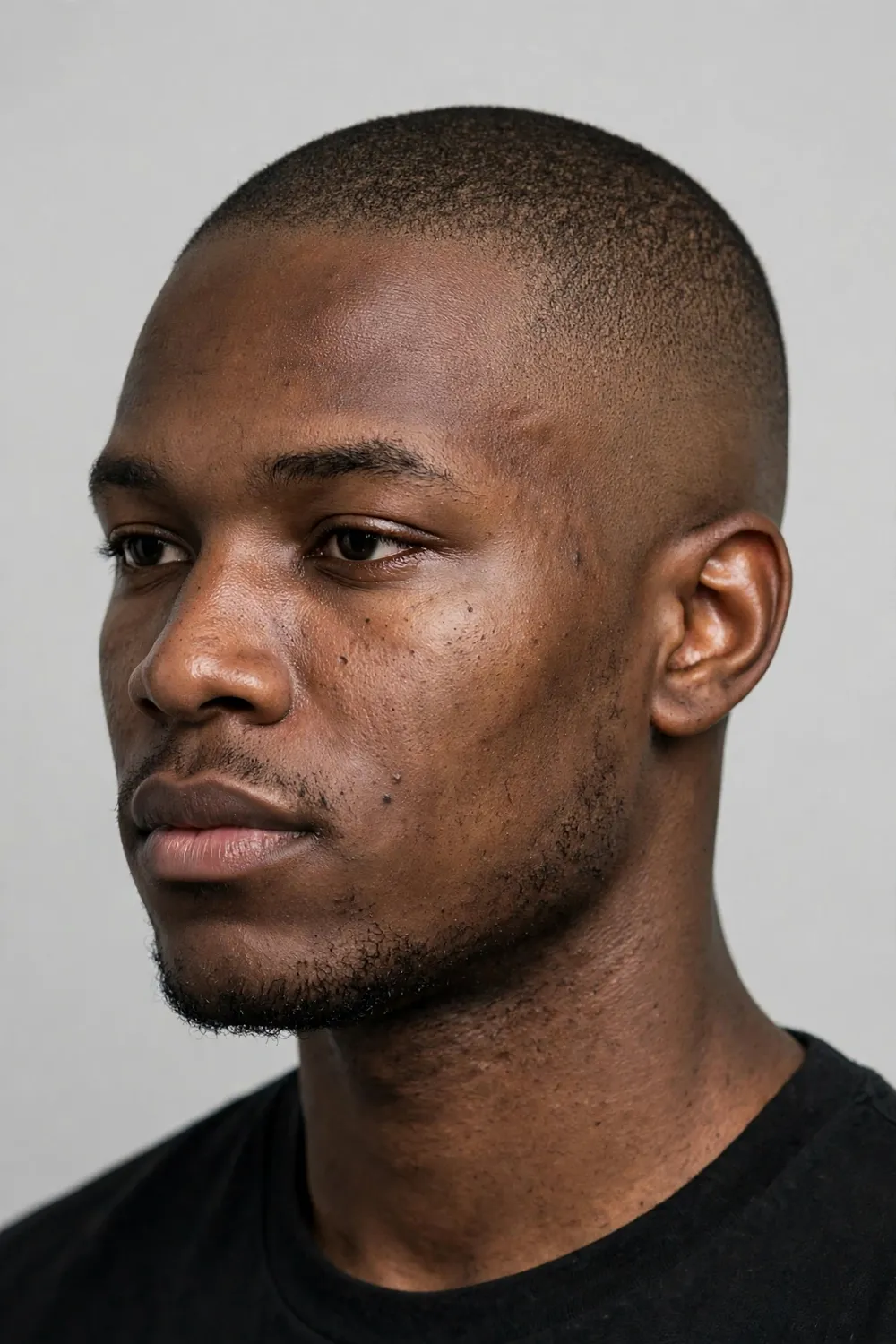
The buzz cut is the lowest-effort haircut a man can own, and the low fade is what keeps it from looking like a home job. The top is clipped to a #2 or #3 all over, then the sides fade down to skin starting just above the ears, which gives the shape a clean, finished edge. It flatters oval and round faces best, and works on any hair type — thick, fine, straight or wavy. Tell your barber: “#3 on top, low skin fade on the sides, no line-up needed.” You need zero product and zero styling; towel-dry and you’re done. The trade-off is frequency — the fade loses its definition in about ten days, so book a trim every two weeks or learn to run the clippers yourself.
3. Low Fade Crew Cut
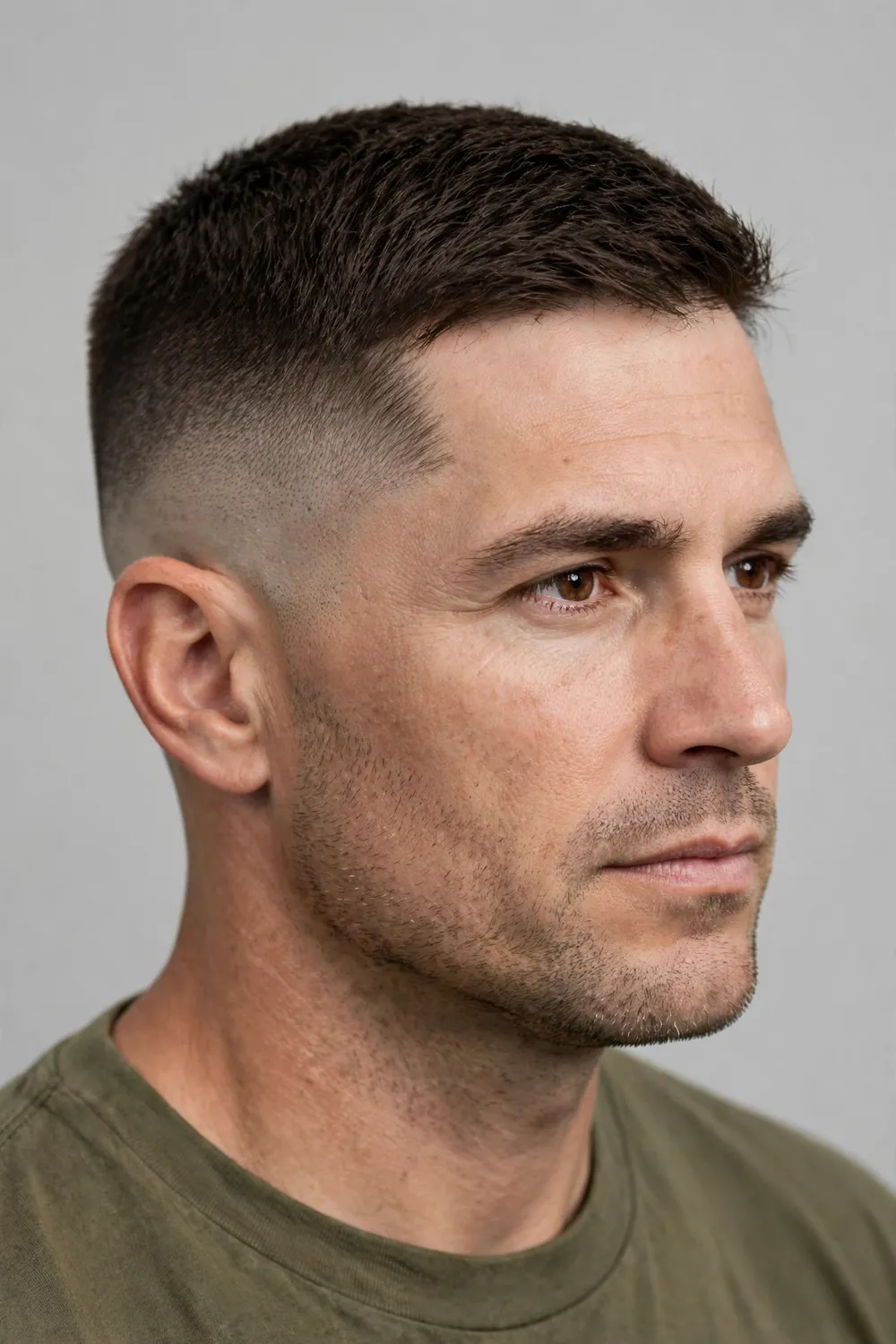
The crew cut is the classic barracks look for a reason: it is short, tidy and impossible to get wrong. The top runs about three-quarters of an inch to an inch and a half, slightly longer at the front so you can push it forward, while the sides carry a low taper fade that stays neat without going skin-tight. It suits straight and wavy hair best, and flatters oval and square faces. Ask for a crew cut with a #3 to #5 on top, low taper fade on the sides, and a natural front hairline. A dab of light matte clay gives the top a little hold; skip the shine, it fights the whole military look. Trim every two to three weeks and the shape holds itself.
4. Regulation Low Fade
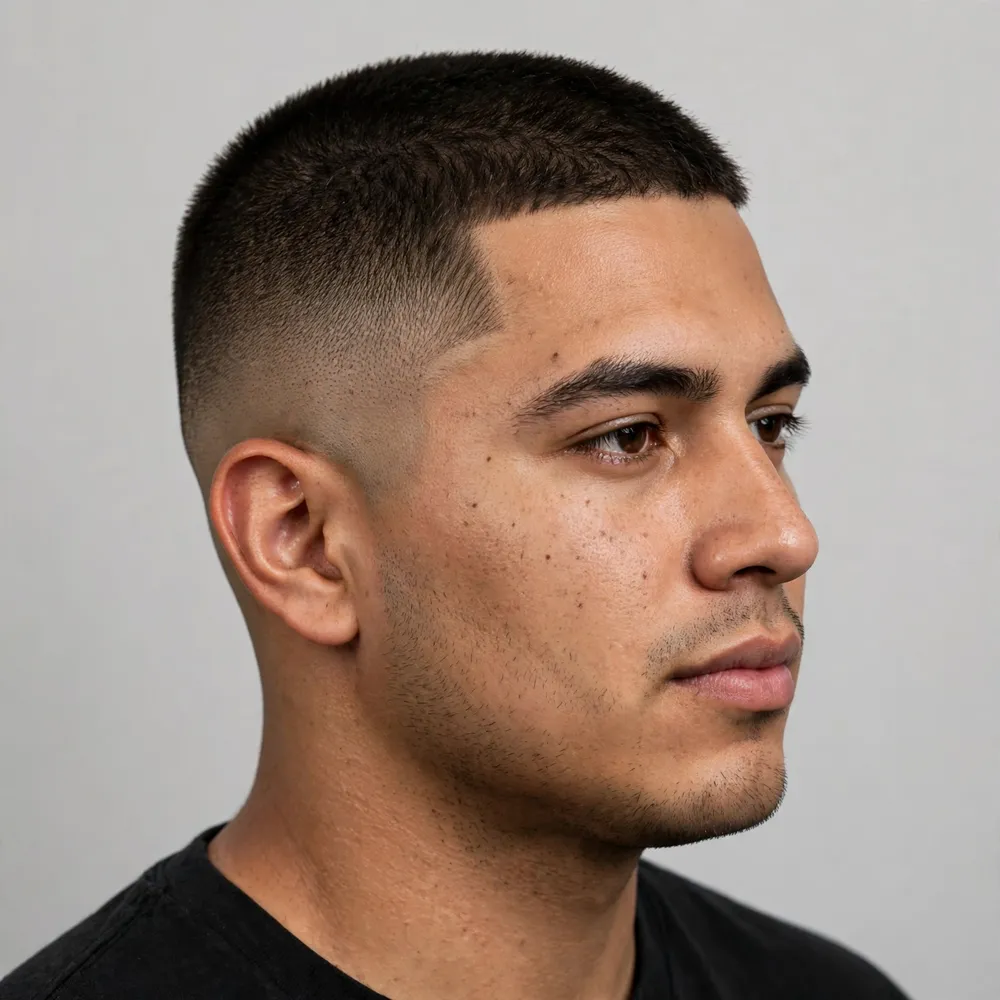
This one is built to the numbers, not to a trend. The top stays at or under two inches of bulk, the sides taper from skin or a ¼-inch guard at the ears, and everything sits off the ears and collar — the exact letter of AR 670-1. It is the cut to ask for the week before an inspection or any event where a sergeant major will be looking closely. It suits every face shape and hair type. Tell your barber: “AR 670-1 compliant — top bulk under two inches, low skin taper, off the ears and collar, no designs.” No product needed, though a little matte paste keeps the top in line on humid days. Keep it on a two-week trim cycle.
5. Low Fade Butch Cut
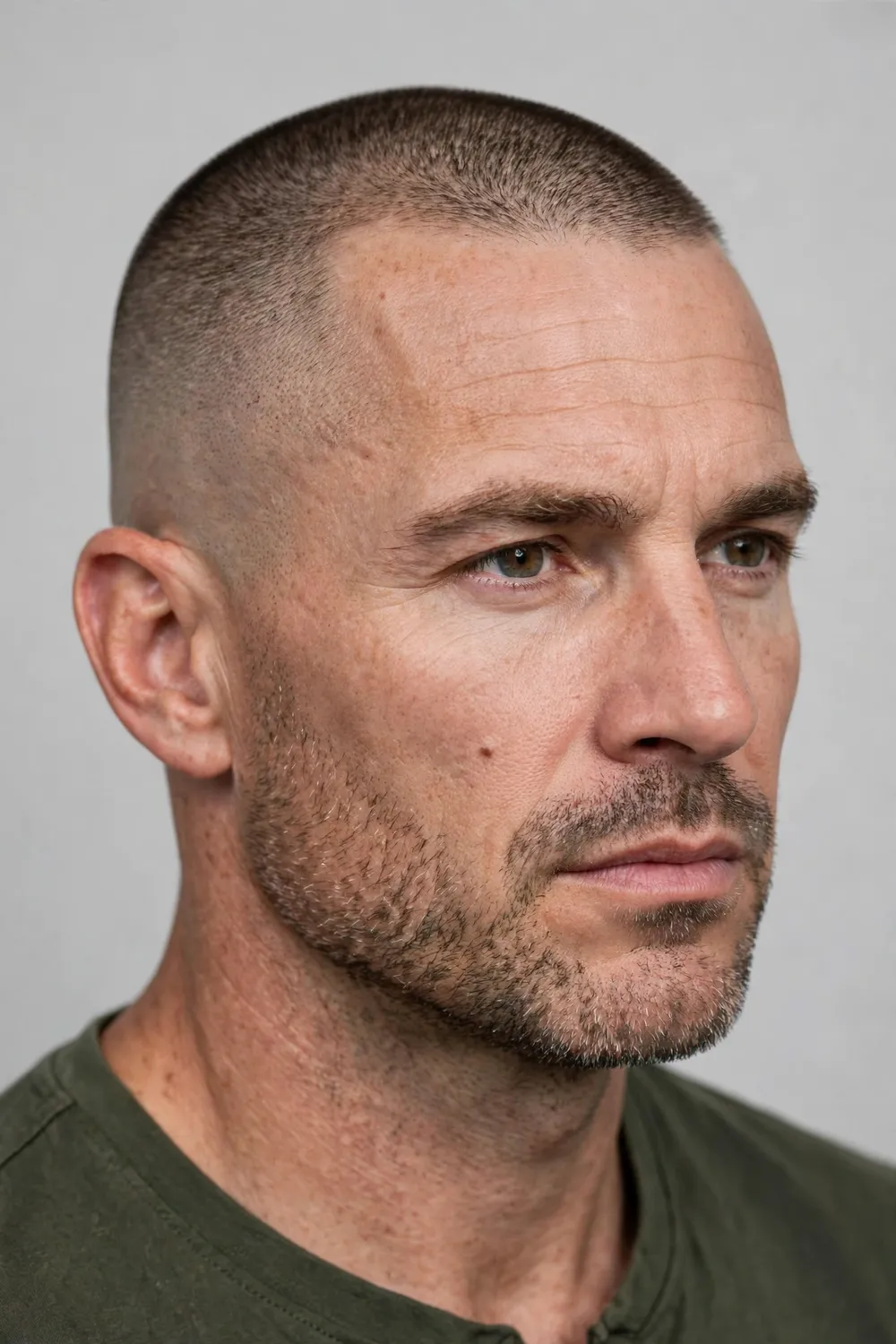
The butch cut is the buzz cut’s tougher older brother: one uniform short length on top, usually a #3 or #4, with a low fade on the sides that adds shape without adding styling time. It is a great pick for thick hair, which can look bulky in longer styles, and it suits square and oval faces, giving the head a strong, even silhouette. Ask your barber for a #4 all over on top, faded low on the sides and back, with the neckline tapered rather than blocked. There is nothing to style — wash, towel dry, done — and no product will improve it. Because the length is so even, growth shows fast, so expect a trim every two weeks if you want it to keep its edge.
6. Low Skin Fade Military Cut
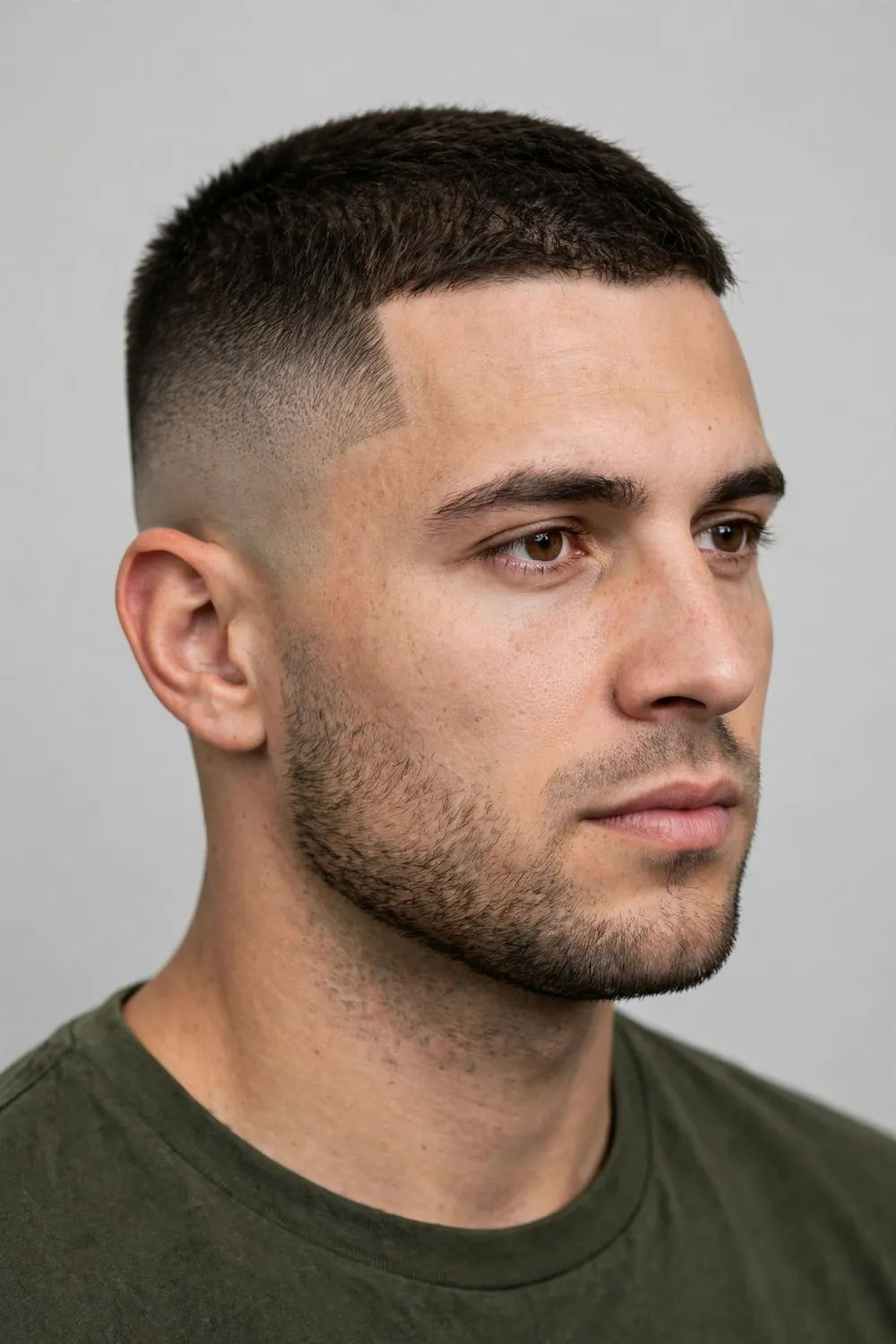
If the classic military low fade feels too soft for you, the skin version turns the contrast up. The sides go right down to bare skin at the bottom, fading up into a short top of one to two inches, for a sharper, more deliberate look. It suits oval faces particularly well, and works on straight or thick hair. Ask your barber for a low skin fade — foil shaver at the bottom, blended up through a #1 to #2 — with the top left at a #4 to #6. A small amount of matte paste adds definition up top. The catch is upkeep: skin fades grow out visibly in about a week, so this one commits you to a trim every ten to fourteen days.
7. Low Bald Fade Military Cut
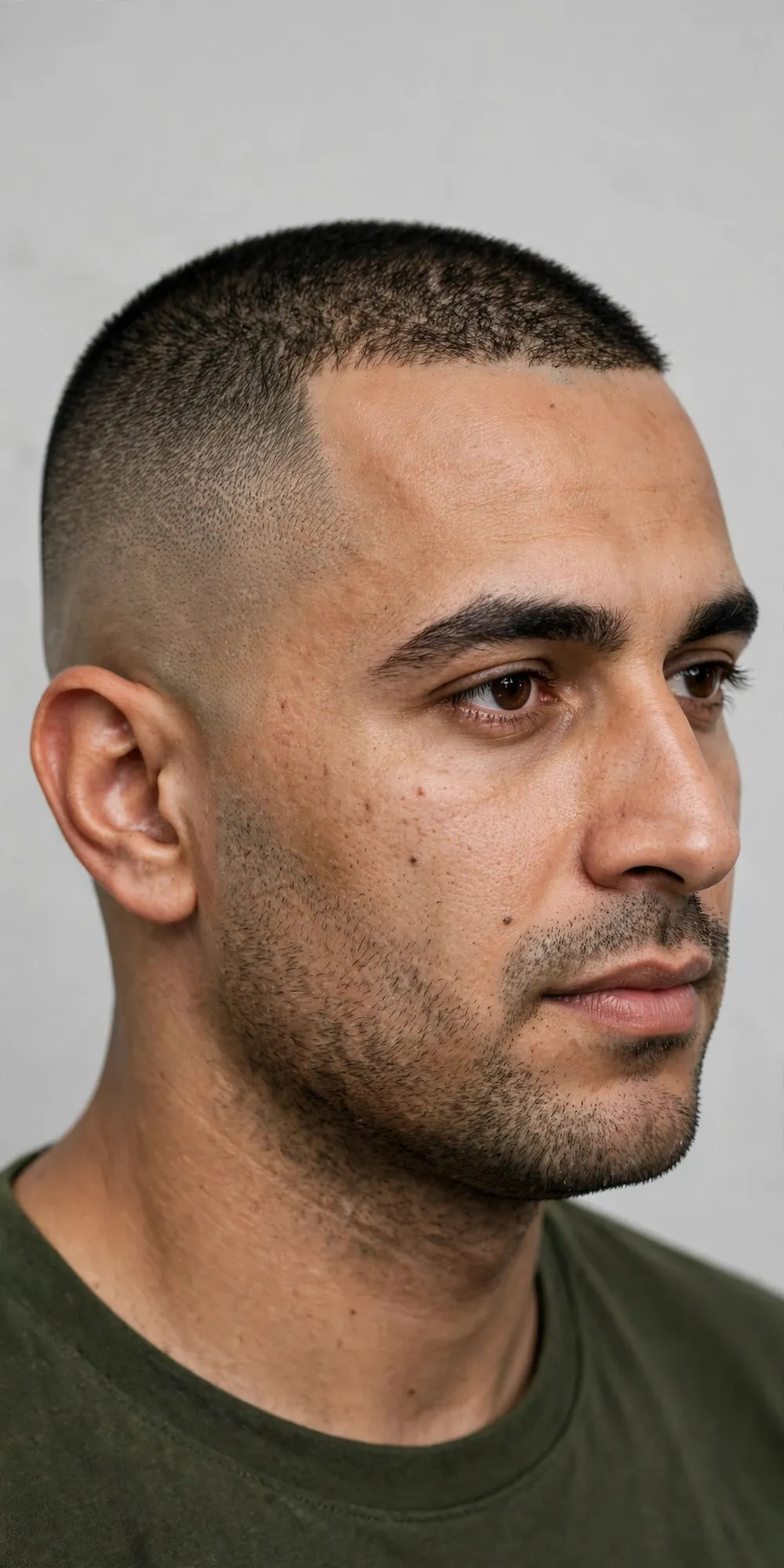
The bald fade is the cleanest finish a military cut can have. The sides blend from completely bald skin at the bottom, up through a tight gradient, into a short top of around an inch to an inch and a half — no stubble line, no shadow, just a smooth transition. It looks best on thick hair and flatters oval and square faces. Ask for a low bald fade with the top cut to a #3 or #4, and make sure your barber uses a foil shaver, not just a zero guard, for that truly bald base. No product needed; the cut does the work. The downside is the same as any bald fade — it grows out fast, so budget for a clean-up every week to ten days.
8. Low Fade with Line Up
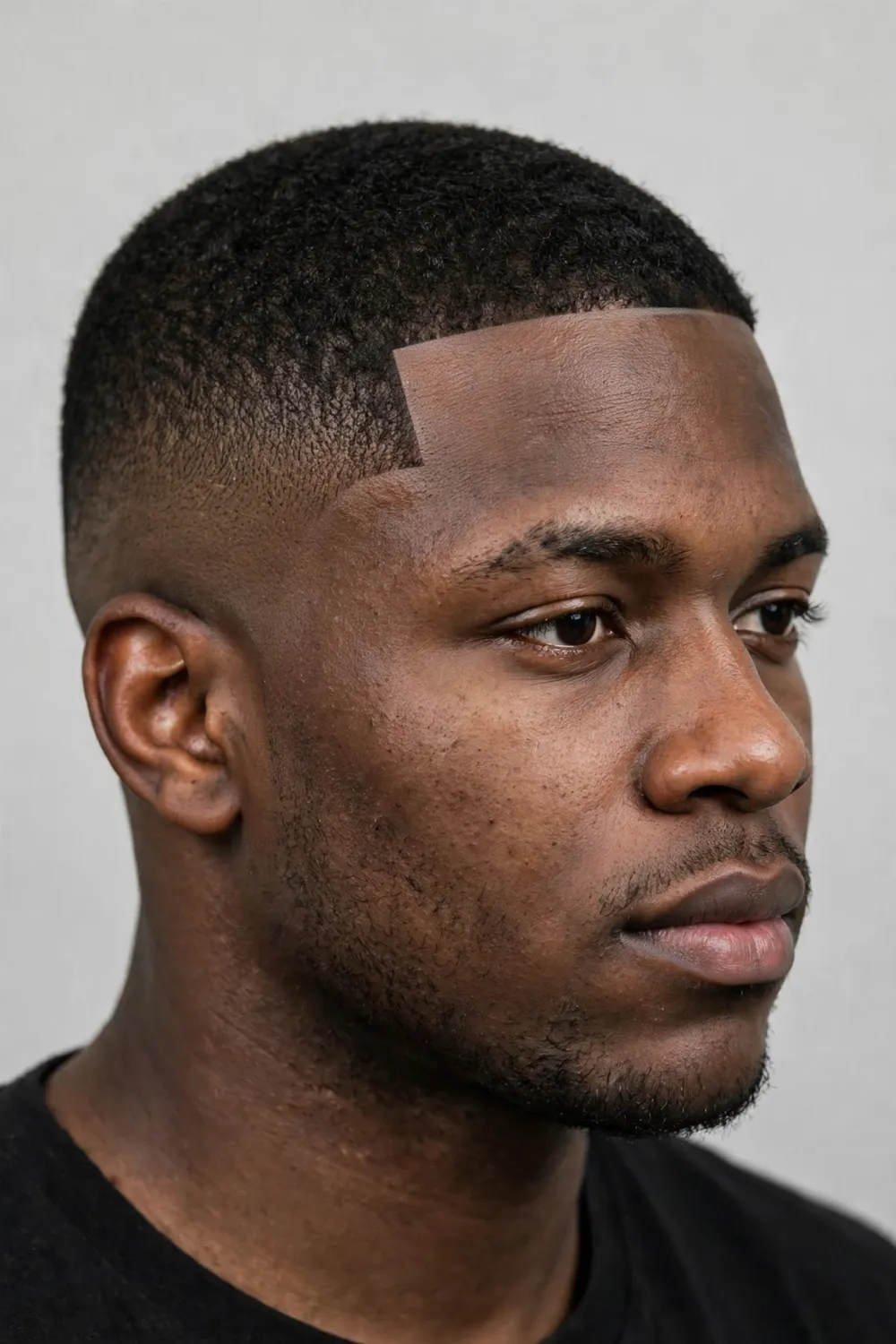
A line up — also called a shape up — is what turns a tidy military cut into a photo-ready one. Your barber uses a trimmer to carve razor-straight edges along the forehead, temples and sideburns, while the low fade underneath keeps the sides clean. It suits square and round faces especially well, and works on straight or slightly wavy hair. Ask for a low skin fade with a crisp line up at the hairline and temples, top left at a #4 to #6. The lines are the whole point: no product on the edges, a little matte paste on top. Maintenance is the trade-off — those edges blur within four to five days, so this one needs a weekly touch-up to stay sharp.
9. Low Drop Fade Military Cut
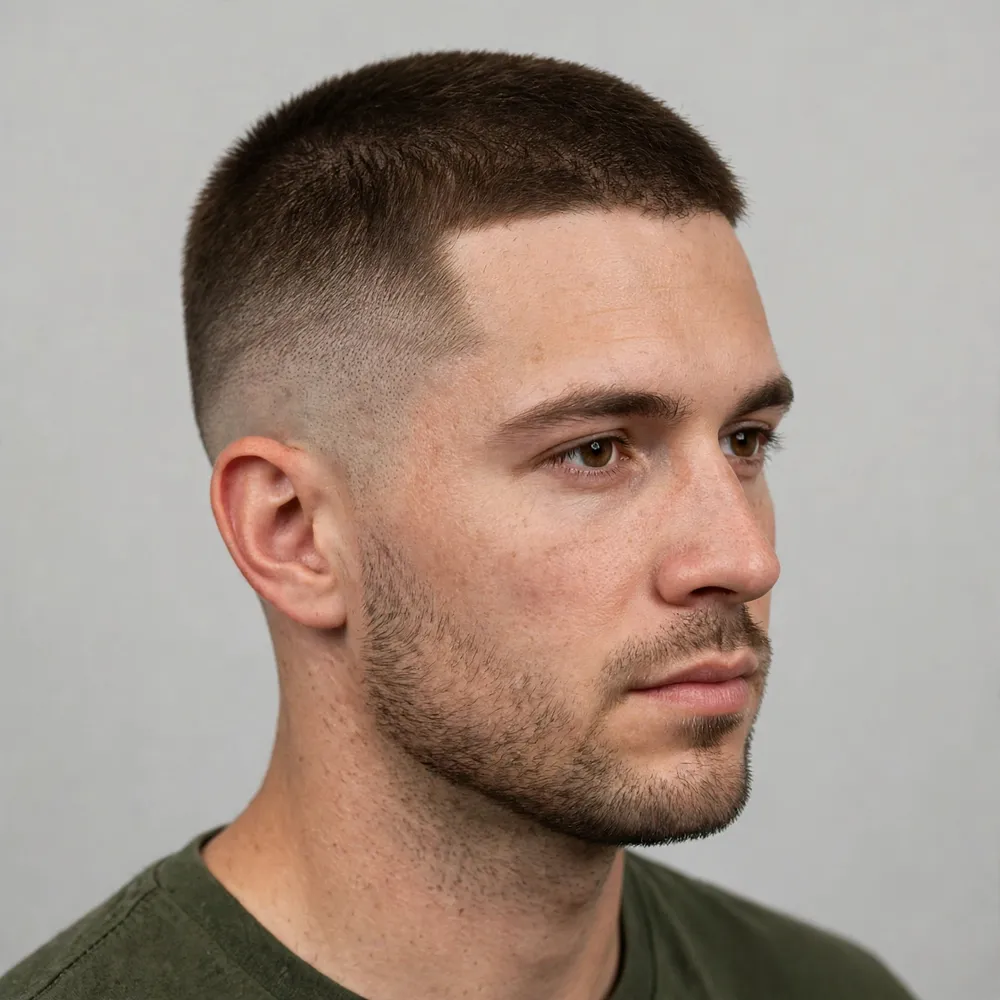
A drop fade follows the curve of your head, dipping lower behind the ear instead of running straight around. The effect is subtle: the fade arcs down at the back, which flatters round faces. The top stays at one to two inches, short enough for regulation, long enough to show some texture. Ask your barber for a low drop fade, skin or ¼ inch at the bottom, blended up into a #3 to #5 on top, and a tapered neckline that follows the same curve. A little matte paste keeps the top neat. Because the shape is curved, it grows out more gracefully than a straight fade — you can stretch trims to every two to three weeks without it looking scruffy.
10. Low Taper Fade Military Cut
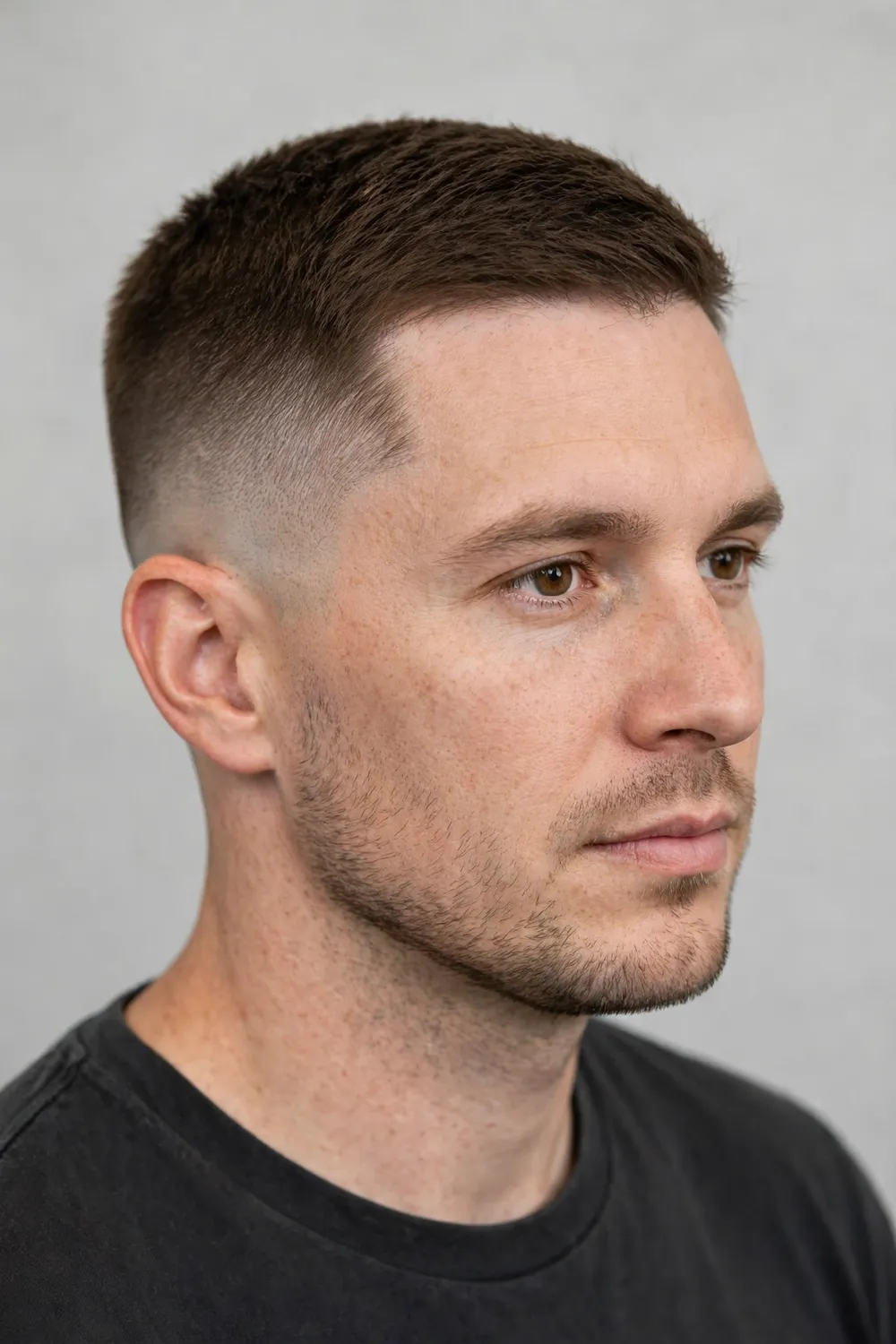
The taper fade is the gentlest fade on this list, and that is its strength. Instead of dropping to skin, the sides gradually shorten from the top down, leaving a soft, natural gradient that never looks aggressive. It is the best military cut for conservative workplaces. It works on every face shape and hair type, and forgiving on fine hair. Ask for a low taper fade — #2 at the bottom, blended up to a #4 or #5 on top — with a natural neckline. No product required, though a touch of light cream smooths flyaways. It also grows out the slowest of any fade here, so a trim every three weeks is plenty.
11. Textured Top Low Fade
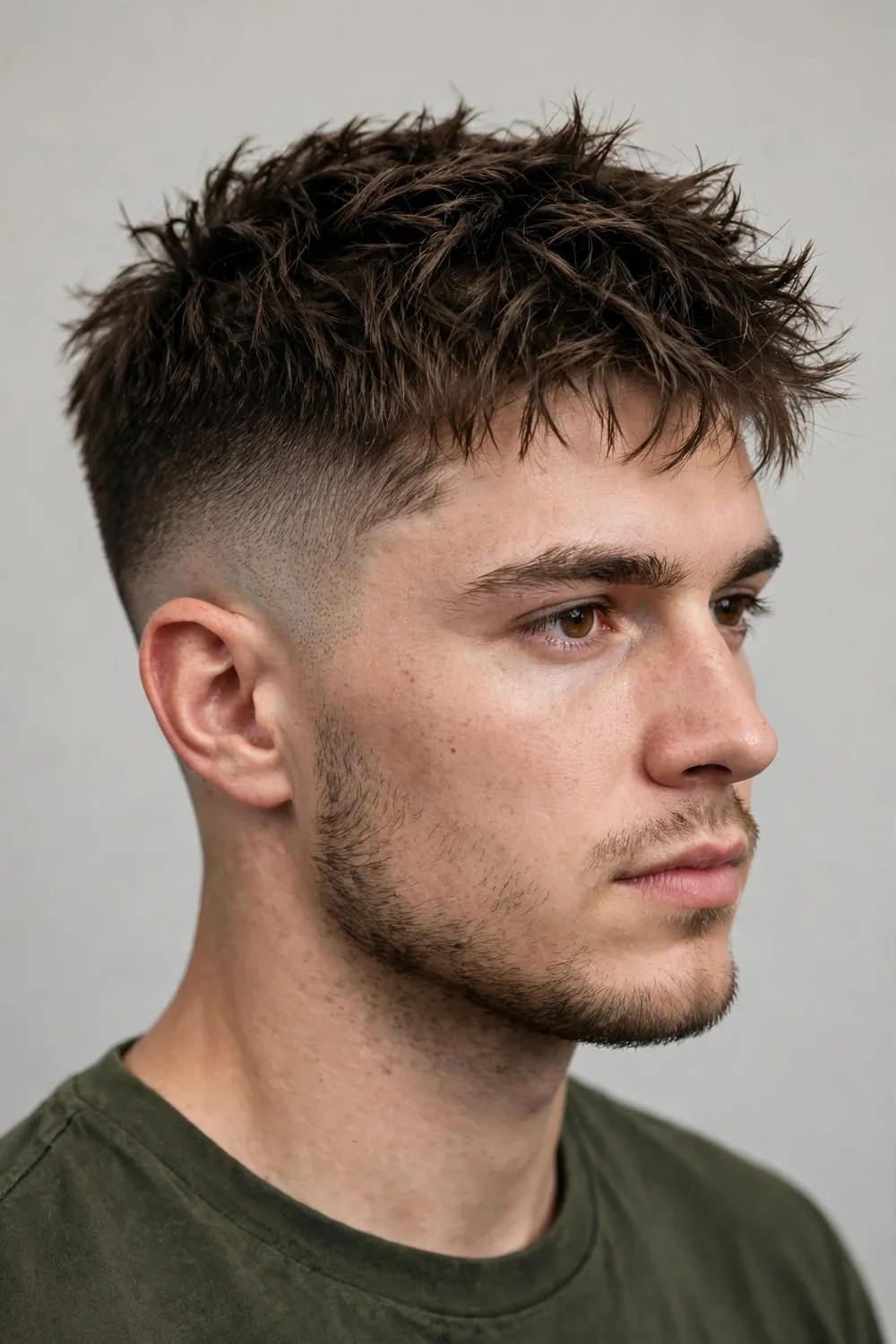
The textured top takes the standard military cut and gives it a modern edge. The top is left at an inch and a half to two inches and point-cut — snipped into the ends rather than cut straight across — so it has choppy, piecey movement instead of a flat cap. It suits wavy and thick hair best and flatters oval and square faces. Ask your barber for a textured top with a low taper fade, and specifically say “point-cut the top, don’t blunt-cut it.” Work a pea-sized amount of matte clay through damp hair and push it forward or to the side. It needs a trim every two to three weeks, and the texture still looks decent on day twelve.
12. Low Fade Textured Crop
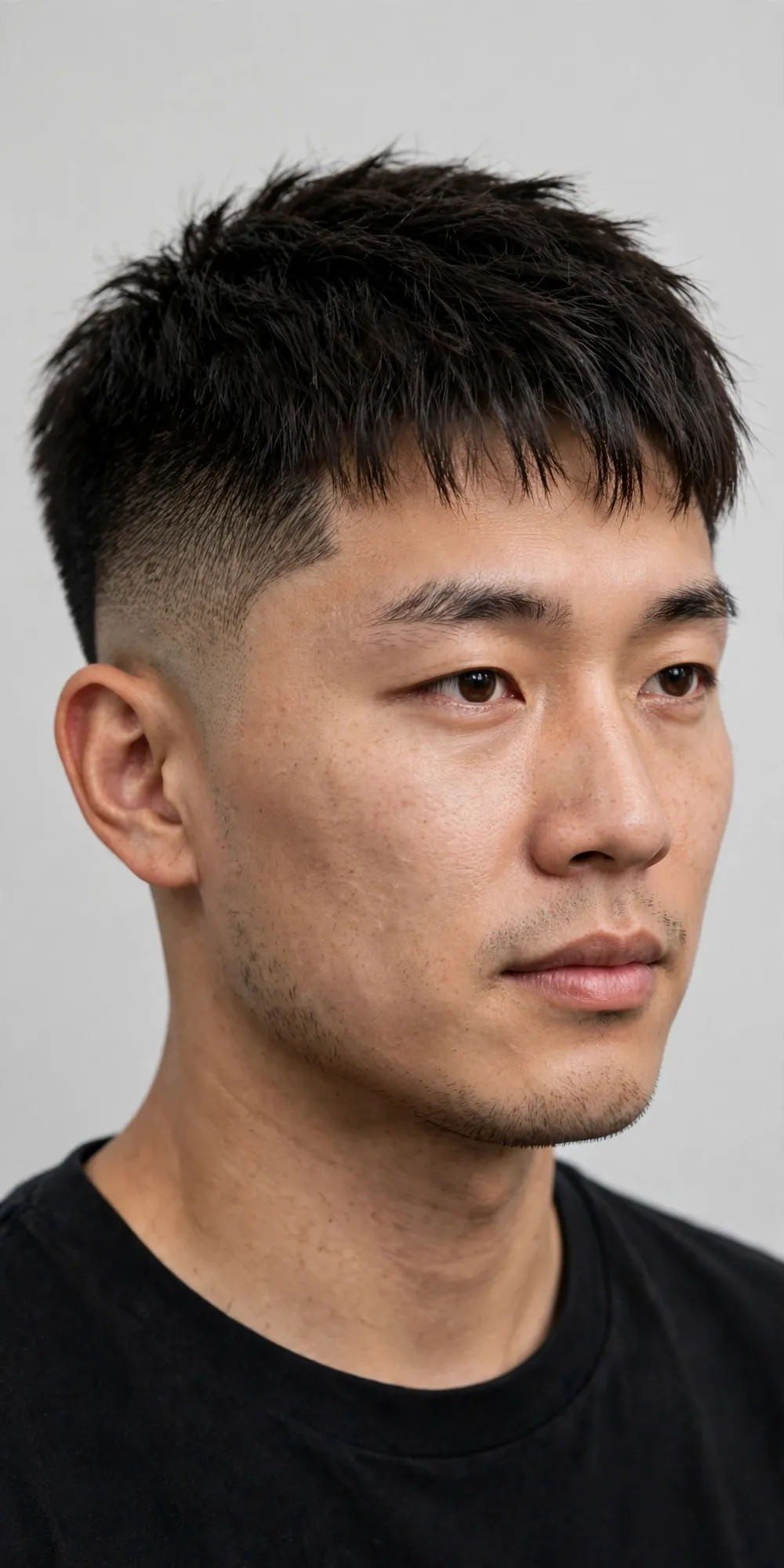
The textured crop is the military cut for guys who want to spend thirty seconds on their hair in the morning. The top is short — about an inch to an inch and a half — cut with choppy, uneven ends and pushed forward, while the low fade keeps the sides and back clean. It suits straight hair best and works on oval, square and round faces. Ask for a textured crop with a low taper fade, top point-cut to a #4 or #5, fringe left just above the eyebrows. Rub a little matte paste between your palms, run it through the top, and you’re done. The crop is forgiving as it grows, so you can push trims to every three weeks without looking unkempt.
13. Low Fade Spiky Top
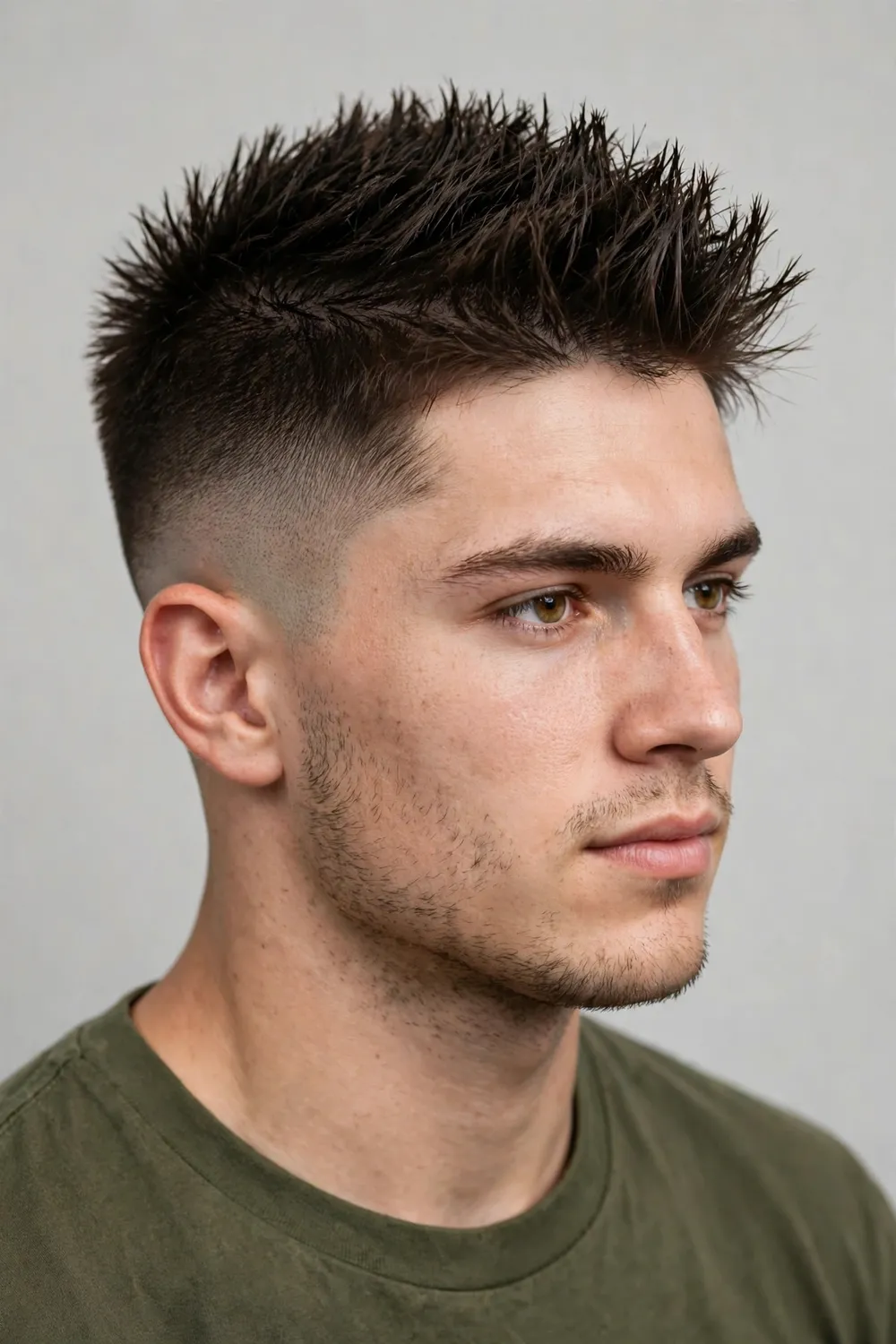
Short spikes on top with a low fade underneath give the military cut a younger, more energetic feel without breaking any rules — as long as the spikes stay under two inches. The top is left at an inch to an inch and a half and cut with texture so the spikes form naturally, and the low skin fade keeps the sides sharp. It suits fine hair particularly well and works best on oval and square faces. Ask for a low skin fade with a textured top, and say “short enough to spike.” Use a small amount of strong-hold matte clay, worked through dry hair, to stand the front up. It needs a minute of styling every morning and a trim every two weeks.
14. Low Fade with Quiff

A quiff on a military cut sounds like a contradiction, but kept small it works beautifully. The front is left at two inches — the regulation maximum — and swept up and back, while the low taper fade keeps the sides disciplined. It suits oval and long faces best, and works on straight or slightly wavy hair with enough density to hold the lift. Ask your barber for a low taper fade with two inches at the front, tapering shorter toward the crown, and say “a small quiff, not a pompadour.” Blow-dry the front upward with a vent brush and finish with matte paste. It takes five minutes to style and a trim every two weeks.
15. Low Fade Faux Hawk
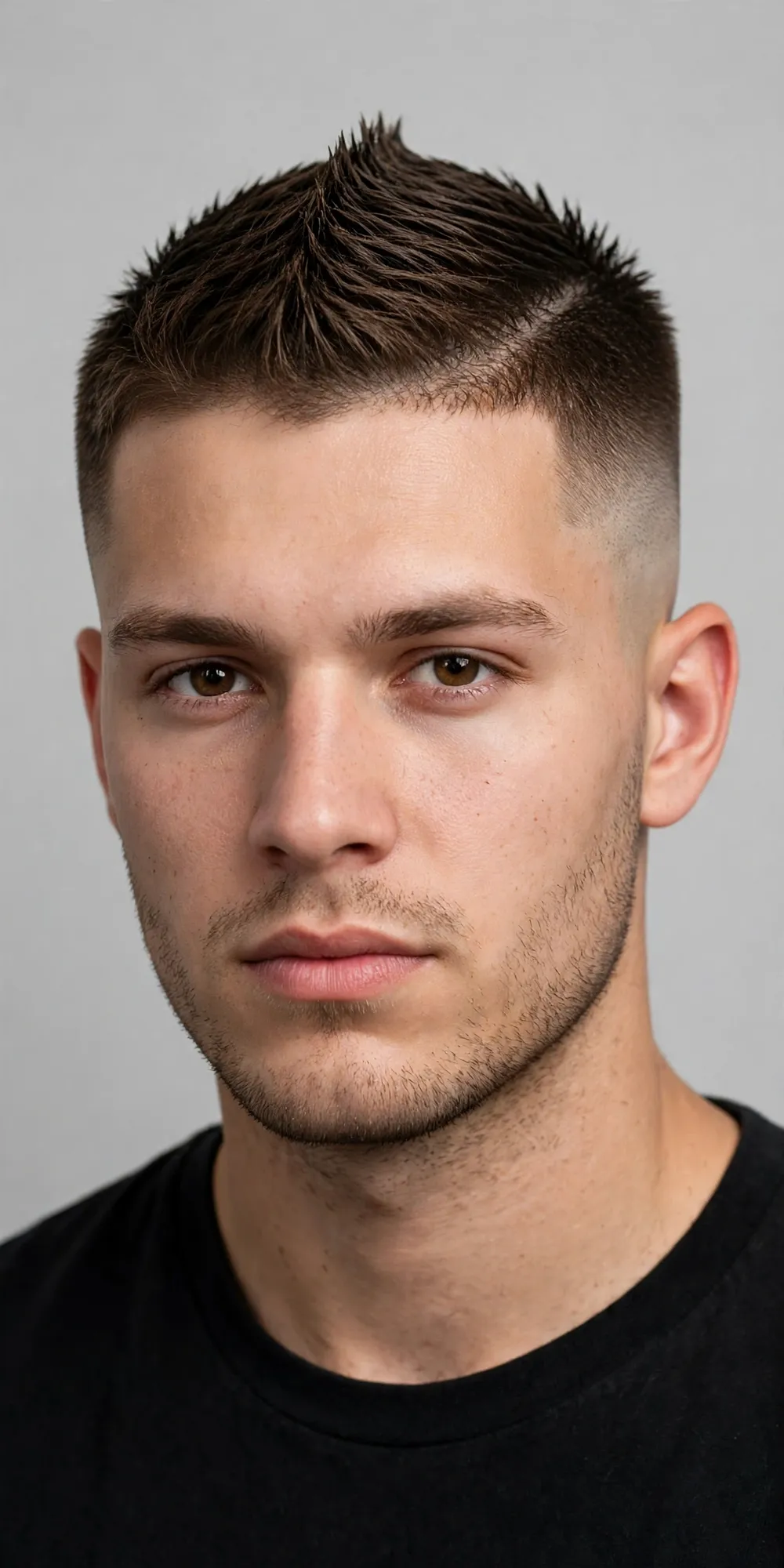
The faux hawk takes a narrow strip of height down the centre of the head and pairs it with a low skin fade. The strip runs an inch and a half to two inches, tapering down toward the back, and the fade underneath keeps everything regulation-legal on the sides. It suits thick hair best — thin hair struggles to hold the ridge — and flatters oval and square faces. Ask for a low skin fade with the top left longer in a centre strip, and be clear: “faux hawk, not a mohawk, and keep it under two inches.” Style with a strong matte clay, pushing the centre strip upward. It needs daily styling and a trim every two weeks, and it will not pass a strict inspection.
16. Low Fade with Hard Part
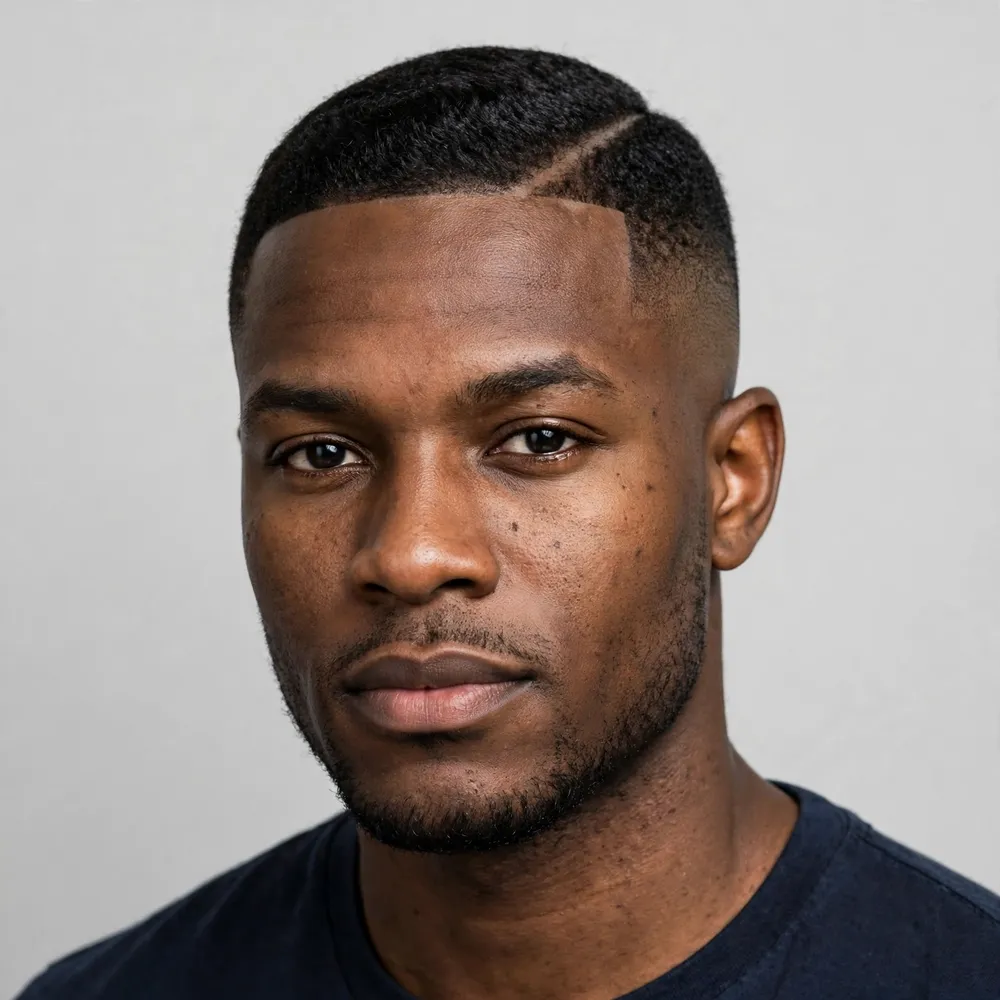
A hard part is a line shaved into the hair with clippers, and it instantly gives a military cut structure and intention. The top is left at an inch and a half to two inches, combed to one side from the part, while the low skin fade keeps the sides tight. It suits square faces well and works on straight or wavy hair that parts naturally. Ask your barber for a low skin fade with a hard part, top left at a #5 to #6, with a single clean line. A little matte paste keeps the sweep in place. One honest warning: a shaved line counts as a design under AR 670-1, so this is a civilian-only cut — wear it off duty, not on parade.
17. Low Fade Side Part
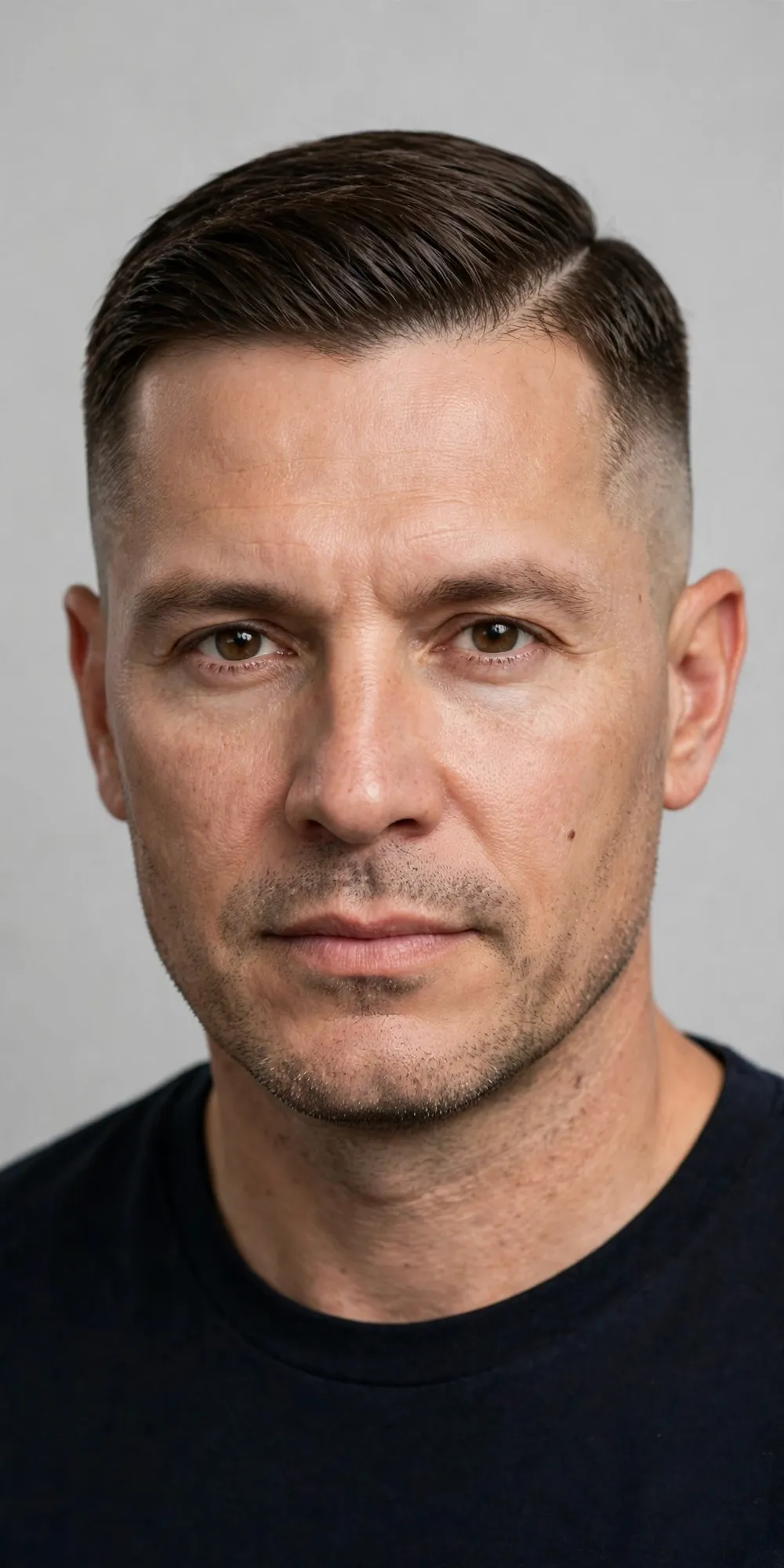
The side part is the most versatile cut in this list — it works in the office, on base, and at a wedding. The top runs an inch and a half to two inches, parted naturally to one side, and the low taper fade keeps the sides neat without the severity of a skin fade. It suits straight hair best and flatters oval, square and long faces. Ask for a low taper fade with a natural side part — no razor line — top cut to a #5 or #6, slightly longer on the parted side. A dab of light-hold cream or matte paste keeps the sweep tidy. It takes a minute to style and a trim every two to three weeks, and the natural part is fully regulation-safe.
18. Low Fade Comb Over
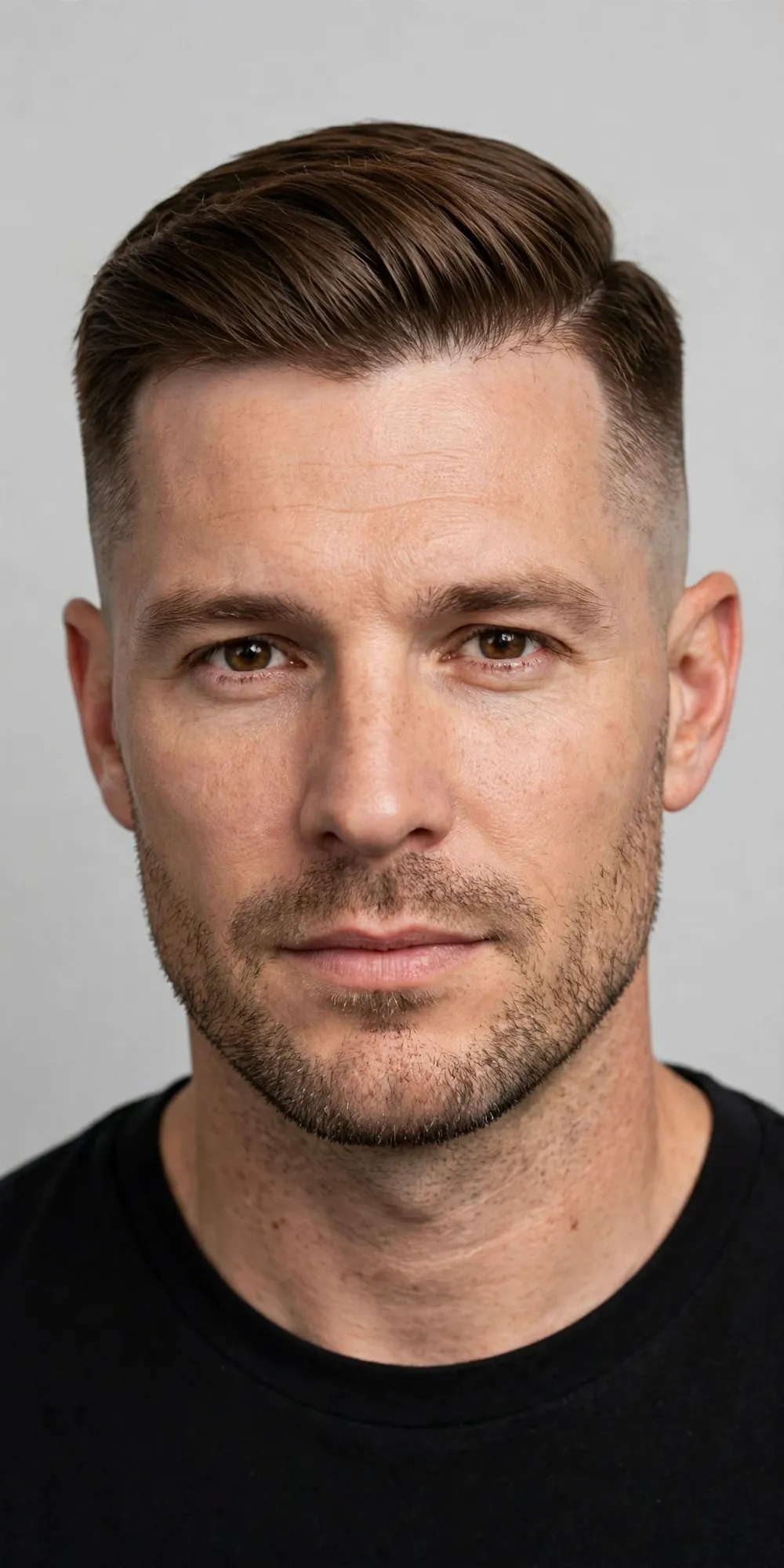
The comb over is the classic answer for thinning hair, and the low fade modernises it. The top is kept at two inches and swept across from a low side part, while the low taper fade keeps the sides clean and short. It suits guys with thinning or receding hair best, and works on oval, square and long faces. Ask your barber for a low taper fade with two inches on top, swept over from your natural part, and say “no hard part, no comb-back, just a natural sweep.” Use a light-hold cream rather than heavy pomade, which can clump thin hair. It needs styling every morning and a trim every two to three weeks, but it is one of the most polished looks here.
19. Executive Low Fade
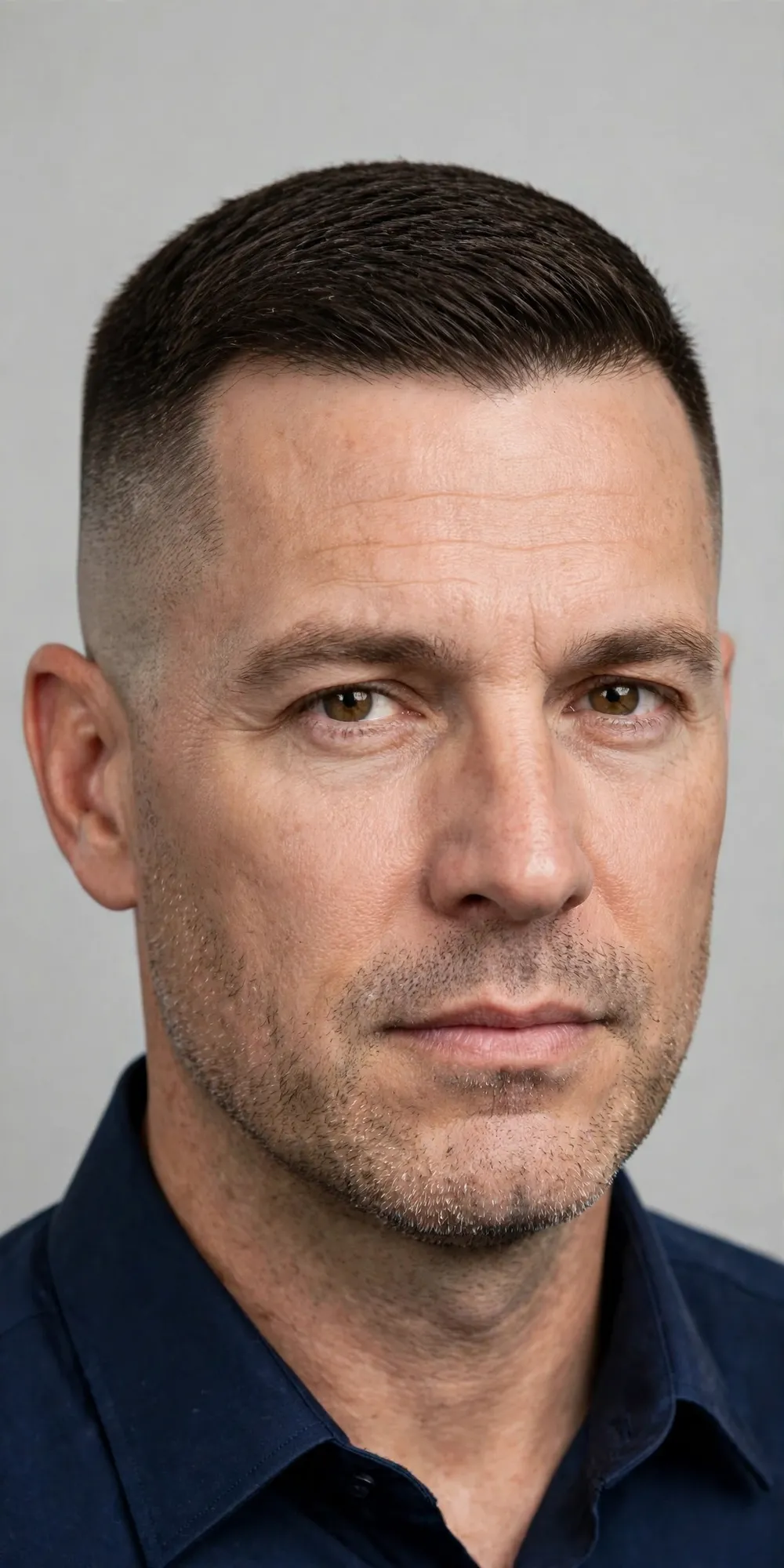
The executive low fade is the boardroom version of the military cut: short and neat. The top is kept at an inch to an inch and a half, combed neatly to the side, and the low taper fade is soft enough that nobody would call it a military cut — it just looks like a man who gets his hair cut properly. It suits professionals and older guys, and works on every face shape and hair type. Ask for a low taper fade with a #4 or #5 on top, a natural side part, and a clean tapered neckline. A touch of light cream finishes it without shine. Maintenance is light — a trim every three weeks — and it is easy to wear every day.
20. Low Fade Ivy League Cut
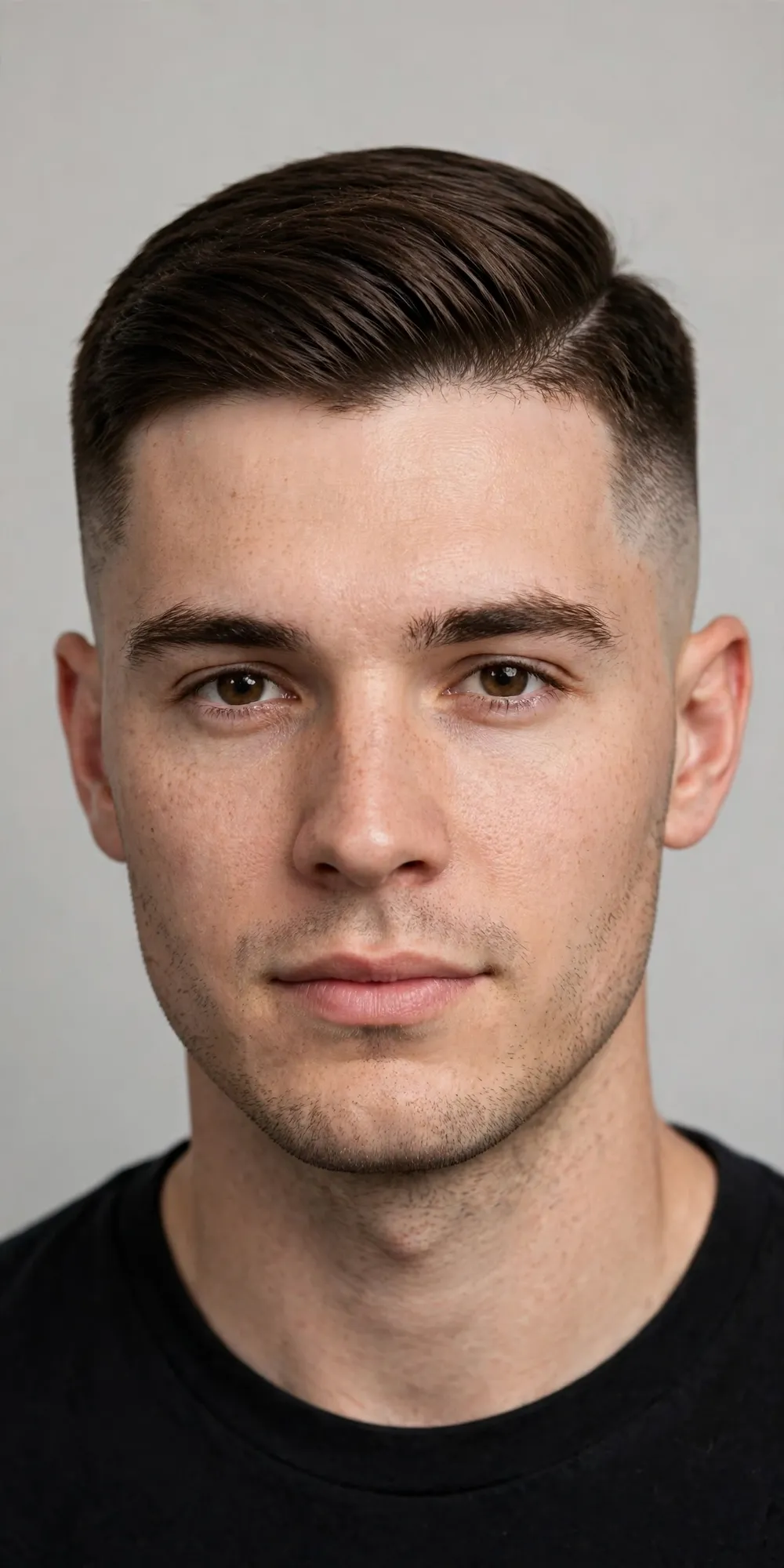
The Ivy League is a crew cut with manners: a short side-part crop, about an inch to an inch and a half on top, long enough to part but short enough to stay tidy, paired with a low taper fade. It reads smart and old-school, a cut that works at a university, an office, or a formal event. It suits straight hair best and flatters oval and square faces. Ask your barber for an Ivy League with a low taper fade, top left at a #4 to #5 with a natural side part, and the front slightly longer than the crown. A little matte paste or light cream keeps the part in place. Style it in under a minute and trim it every two to three weeks.
21. Low Fade for Straight Hair
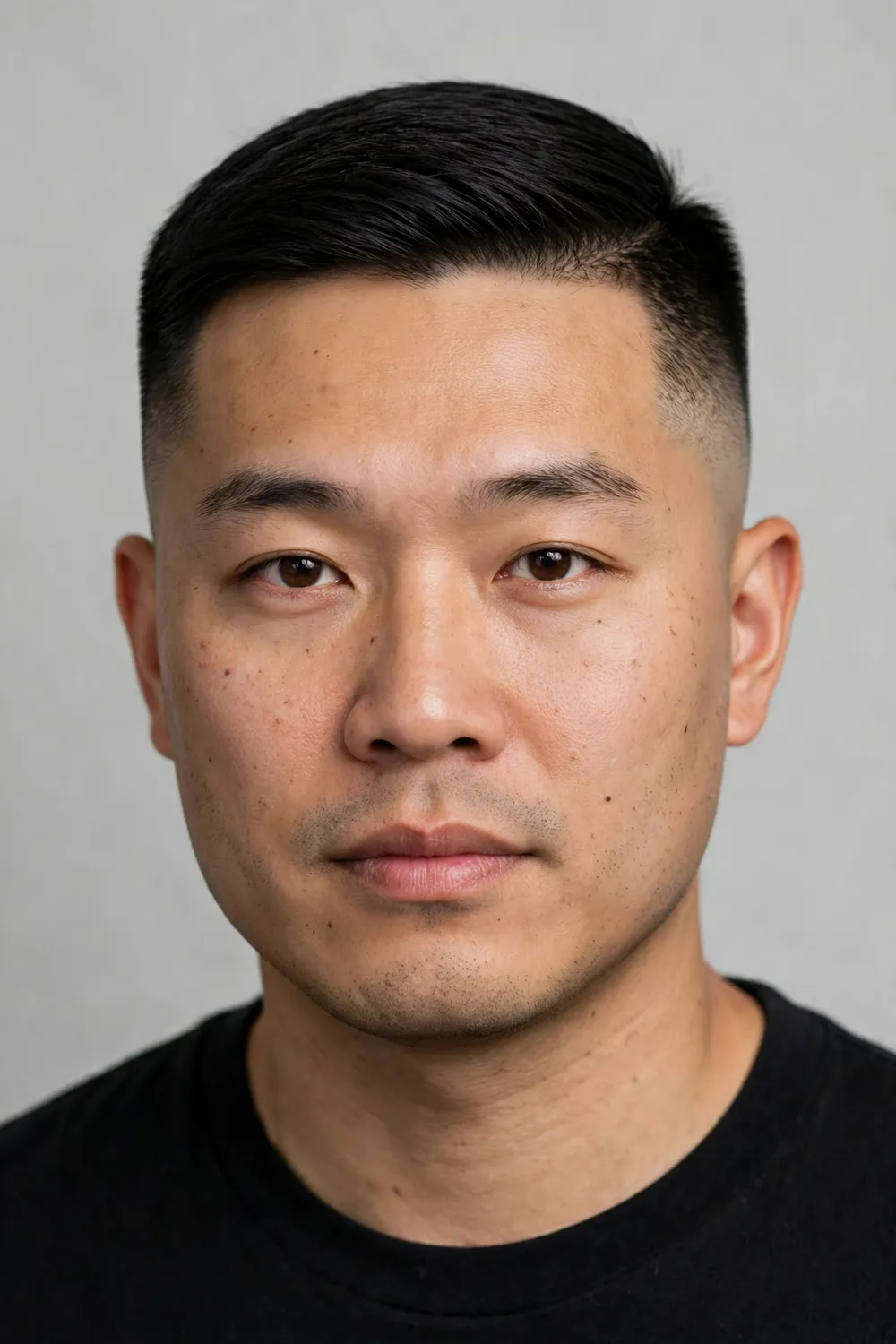
Straight hair is where a low fade looks its sharpest, because every line shows. The fade sits just above the ears, blending from skin or a zero guard up through a #1 and #2 into a top of about an inch, brushed forward or to the side. It suits oval and square faces best, and men whose hair lies flat without much volume. Ask your barber for a low skin fade with a #2 on top, scissors to tidy the fringe, and a clean taper at the sideburns. A pea-sized dab of matte clay gives the top a little grip without shine. A trim every two to three weeks keeps the fade crisp, because straight hair shows grow-out fast. Nothing to style in the morning — just comb and go.
22. Low Fade for Wavy Hair
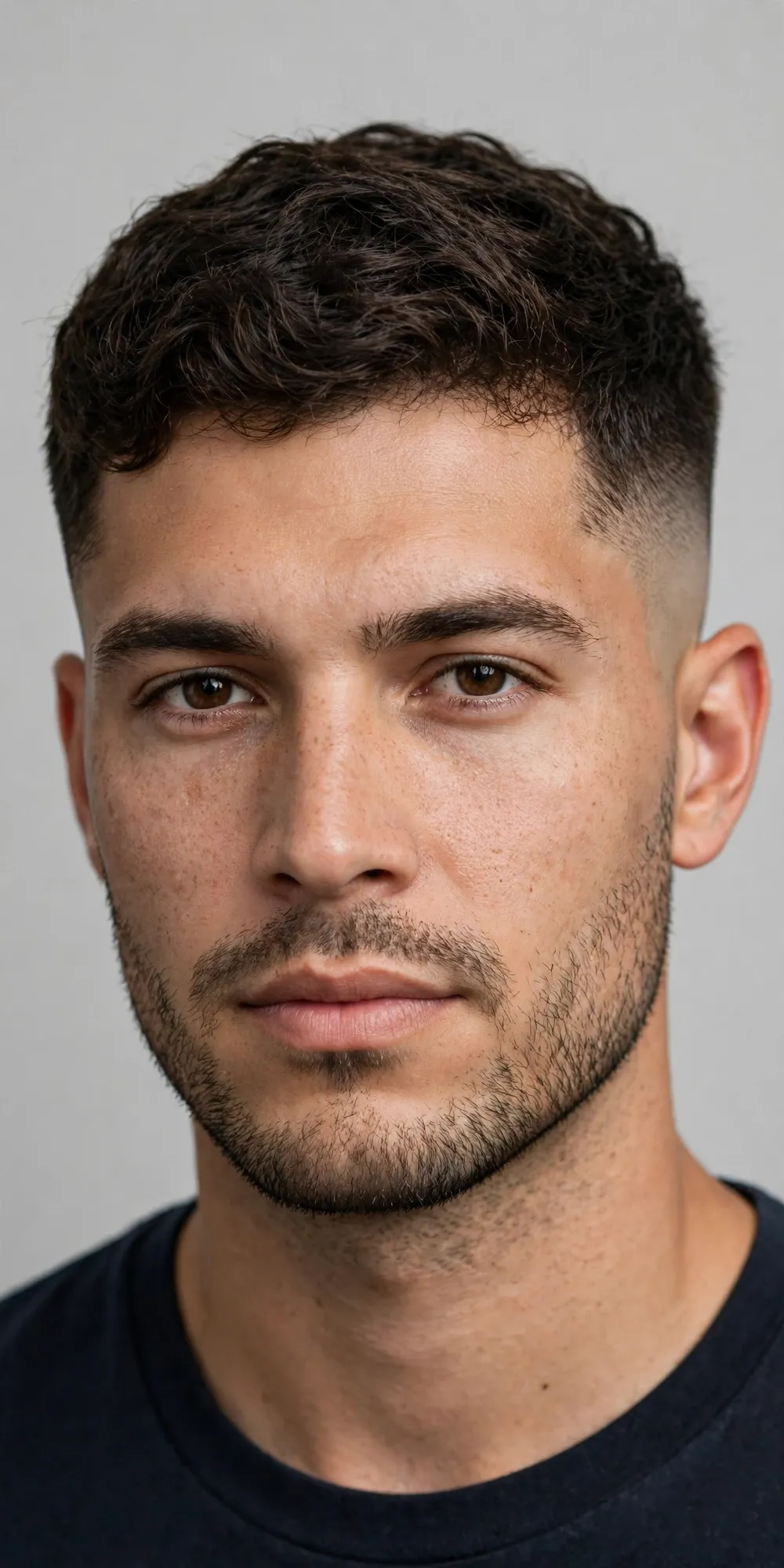
Wavy hair brings a bit of natural movement to a cut that can otherwise look very straight-edged, and the contrast works well. The top stays around an inch to an inch and a half so the wave has room to show, while the low fade keeps the sides tight. It suits oval, round and square faces, and the wave hides uneven grow-out well. Ask for a low fade with a #0.5 or #1 at the bottom, blended into a #3, and a point-cut top to keep the wave from looking bulky. A light cream or sea-salt spray is all the product you need. Trim every three weeks. Skip heavy wax — it flattens the wave and makes the top look greasy by midday.
23. Low Fade for Curly Hair
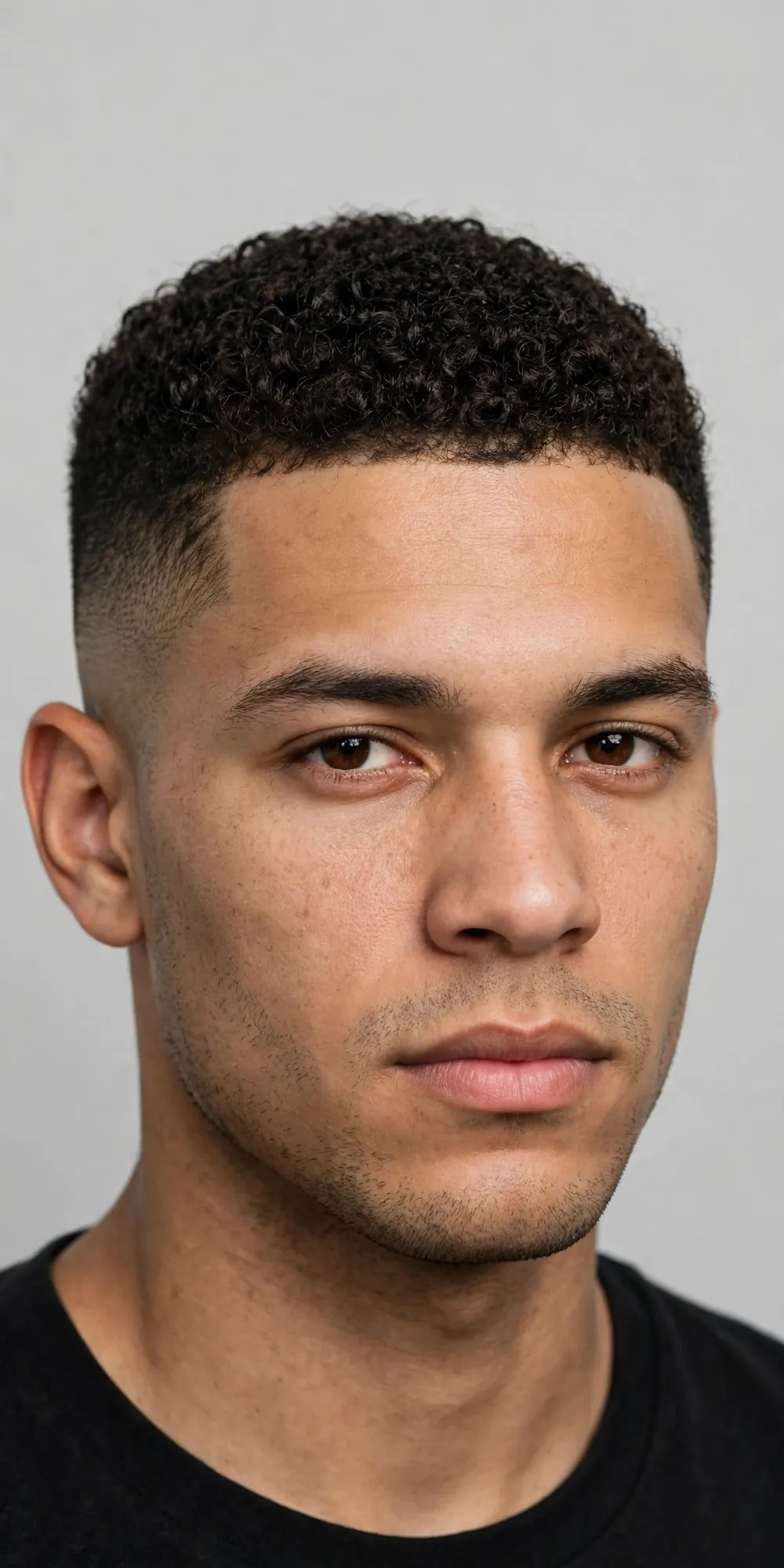
Curls and military cuts get on fine as long as the top stays short enough that the curls read as texture rather than bulk. Here the top is kept to about an inch, with the curls shaped by hand rather than clipped flat, and the low fade takes the sides down to skin so the head keeps a clean outline. It works best on oval and square faces, and for men whose curls get unruly when longer. Ask your barber for a low fade with a #0 at the bottom and a curl-by-curl trim on top, no thinning shears. A little curl cream, scrunched in while damp, keeps the definition. Touch it up every two weeks — the fade is what keeps it looking regulation-sharp.
24. Low Fade for Thick Hair
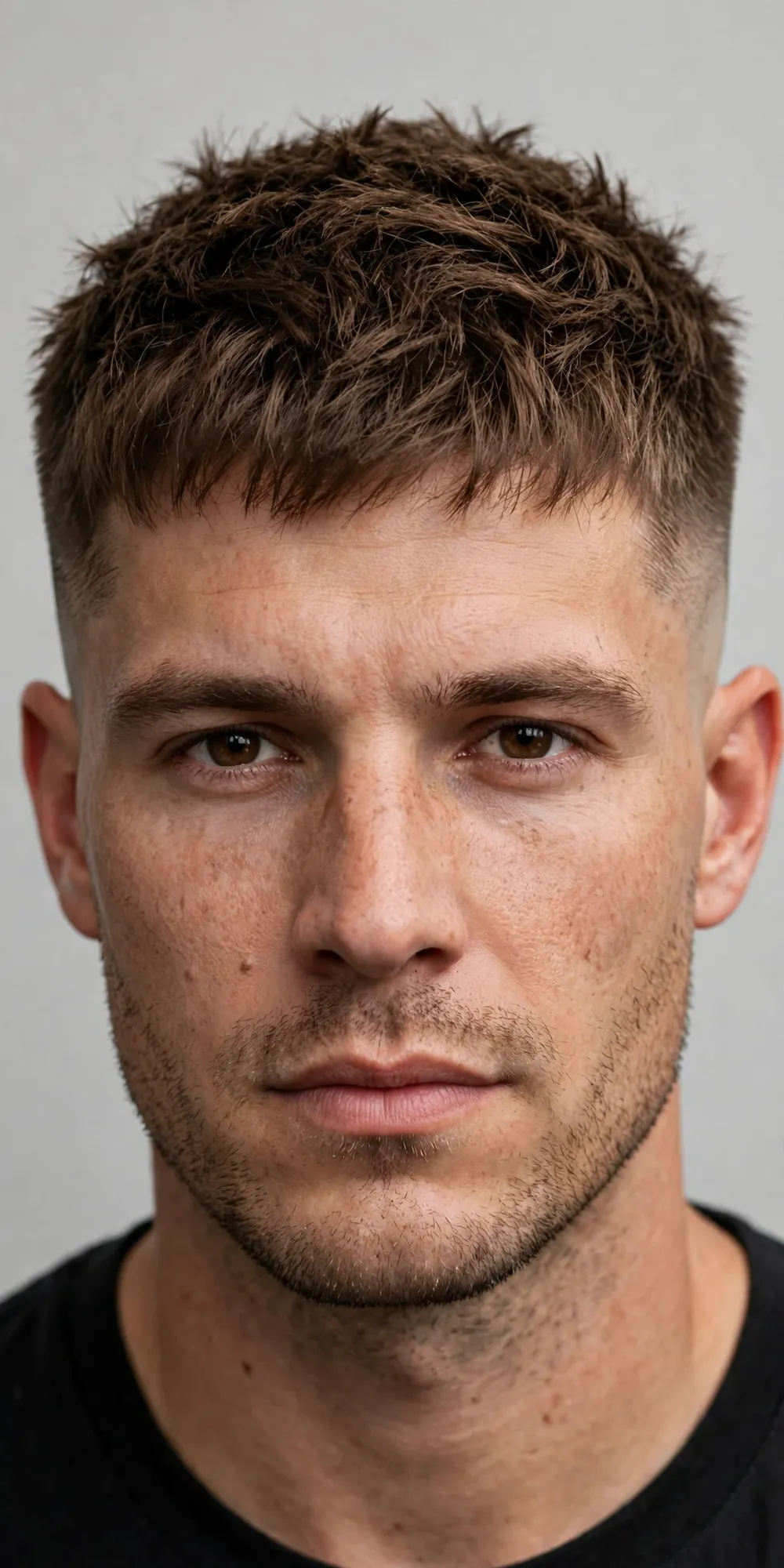
Thick hair can make a military cut look like a helmet if the top is left too heavy, so this version is all about debulking. The top is thinned and textured to about an inch, which takes the weight out without losing the tidy look, and the low fade keeps the sides close so the head does not widen. It suits oval, square and long faces, and it is a relief under a cap. Ask for a low fade with a #0.5 at the bottom blended to a #2, and a thinned, point-cut top — say “take the bulk out, keep the length”. Matte paste gives control without shine. Trim every two to three weeks; thick hair grows out visibly and the fade loses its blend line fast.
25. Low Fade for Thinning Hair
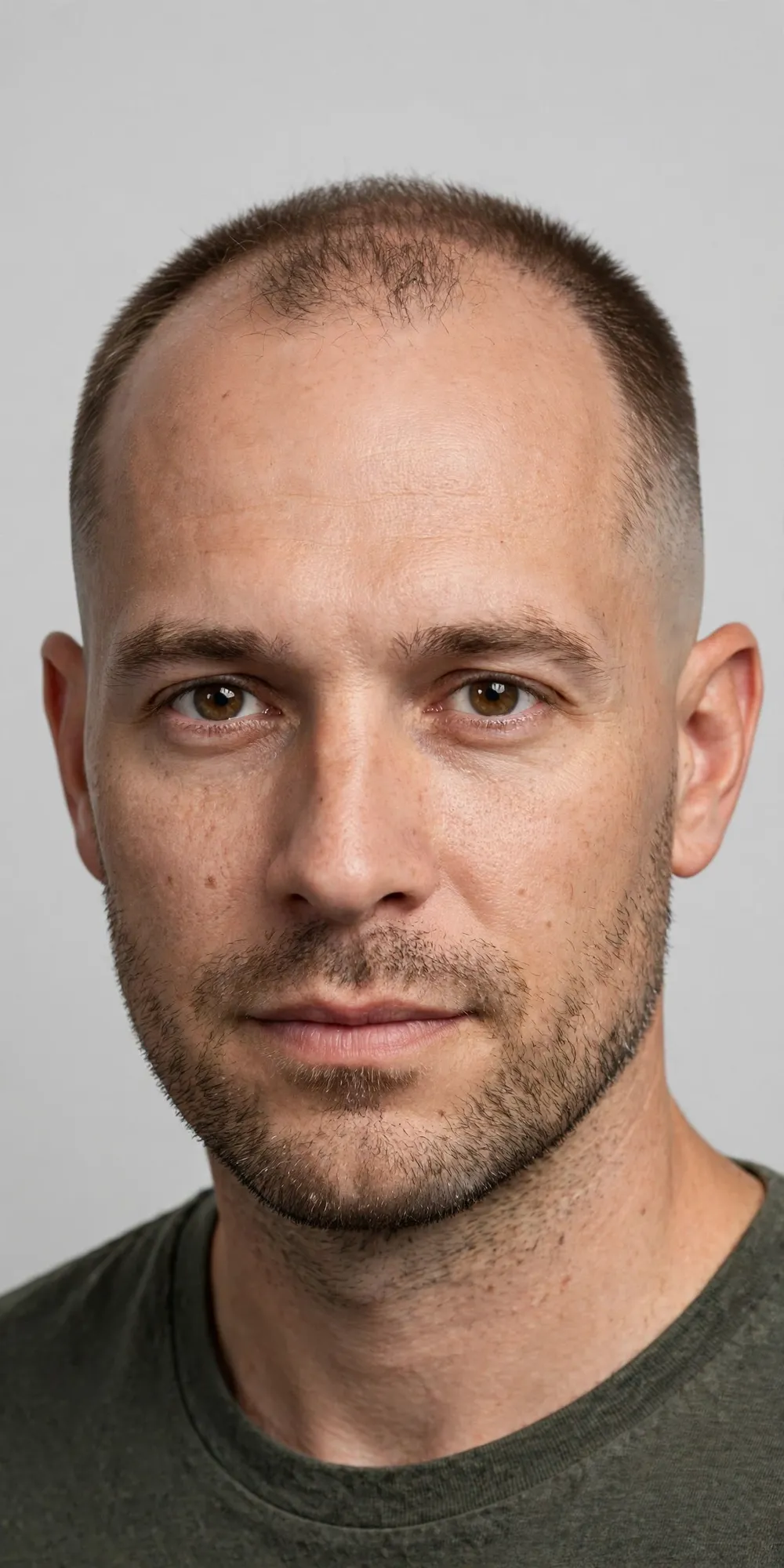
When hair starts thinning, a short even top with a low fade is one of the most forgiving cuts you can get. The top is kept to around half an inch to three-quarters of an inch, cut evenly so no single thin patch stands out, and the fade at the sides makes the whole head look deliberate rather than patchy. It suits oval, round and square faces, and it works well with a receding hairline because no long hair draws the eye to the gaps. Ask for a low fade with a #0 at the bottom, a #1.5 or #2 on top, and no hard part. A matte powder adds a touch of fullness. Keep it trimmed every two weeks — short and sharp always beats long and thin.
26. Low Fade with Beard Blend

The sharpest civilian version here, it lives or dies on the blend between sideburn and beard. The fade runs from skin at the ears into the sideburns, then melts into a shaped beard with a clean cheek line. It suits square and oval faces and adds structure to a softer jawline. Ask for a low skin fade with a #1 at the bottom, and a beard fade connecting sideburn to beard at a #2. Keep the beard medium length — too long and the military sharpness is lost. Beard oil keeps it tidy; trim the fade fortnightly and the beard lines weekly. See our Fade Haircut with Beard Combos guide for more pairings. Note: beards are not permitted on active duty in most branches — civilian wear only.
27. Low Fade Flat Top
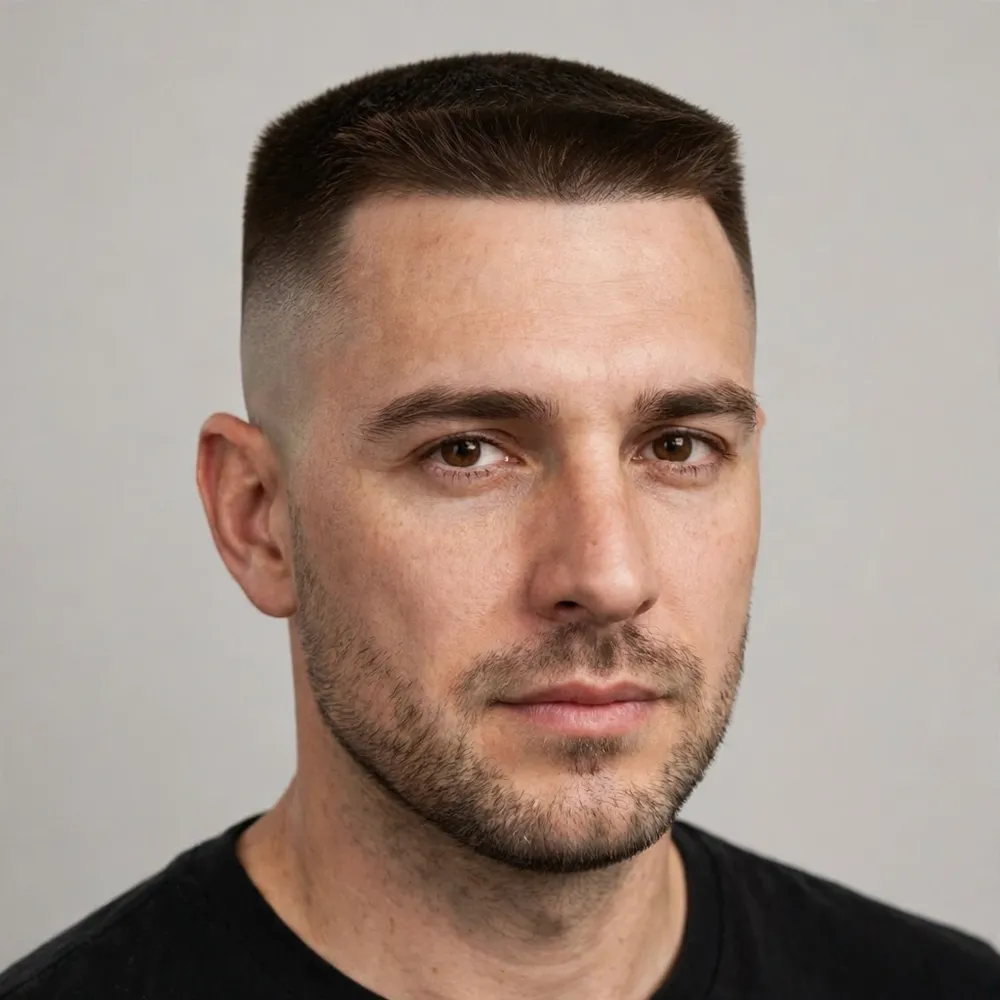
The boldest cut on this list, the low fade gives it a cleaner, more modern base than the old-school high fades. The top is cut level and flat, about an inch to an inch and a half high, with square corners, while the low fade keeps the sides tight. It suits square and oval faces and thick, straight hair that stands up on its own. Ask for a flat top cut with clippers over comb, a #0 at the bottom, and squared-off front corners. Strong-hold wax keeps the deck flat through the day. It needs a trim every week to ten days — the flat top loses its shape fast. If your hair is fine or wavy, skip this one — it needs hair that stands up.
28. Low Fade High and Tight Blend
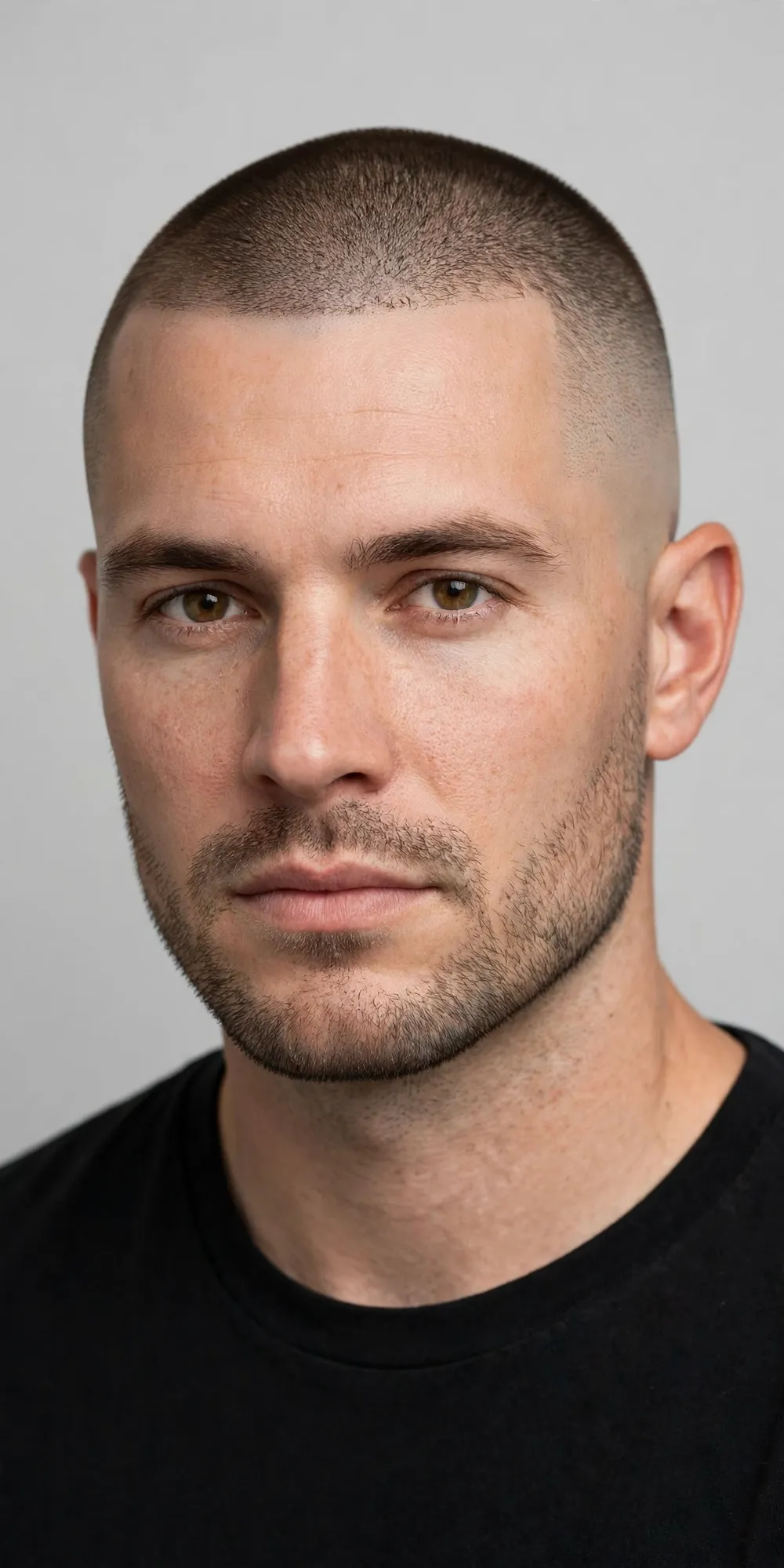
The most famous military cut there is, softened with a low fade so it works off base too. The sides and back go nearly to the skin, but instead of the abrupt high-and-tight line, a low fade blends the transition so it looks intentional. The top stays short, around half an inch. It suits oval and square faces and men who want the toughest cut here without full jarhead severity. Ask for a high and tight with a low fade blend, #0 sides, #1.5 top. No product needed — a wash-and-go cut. Trim weekly to fortnightly to hold the contrast. For the history, see Wikipedia’s High and tight page. The classic is stricter than this blend, so if you are on duty, confirm the fade height with your unit.
29. Low Fade with Temple Fade
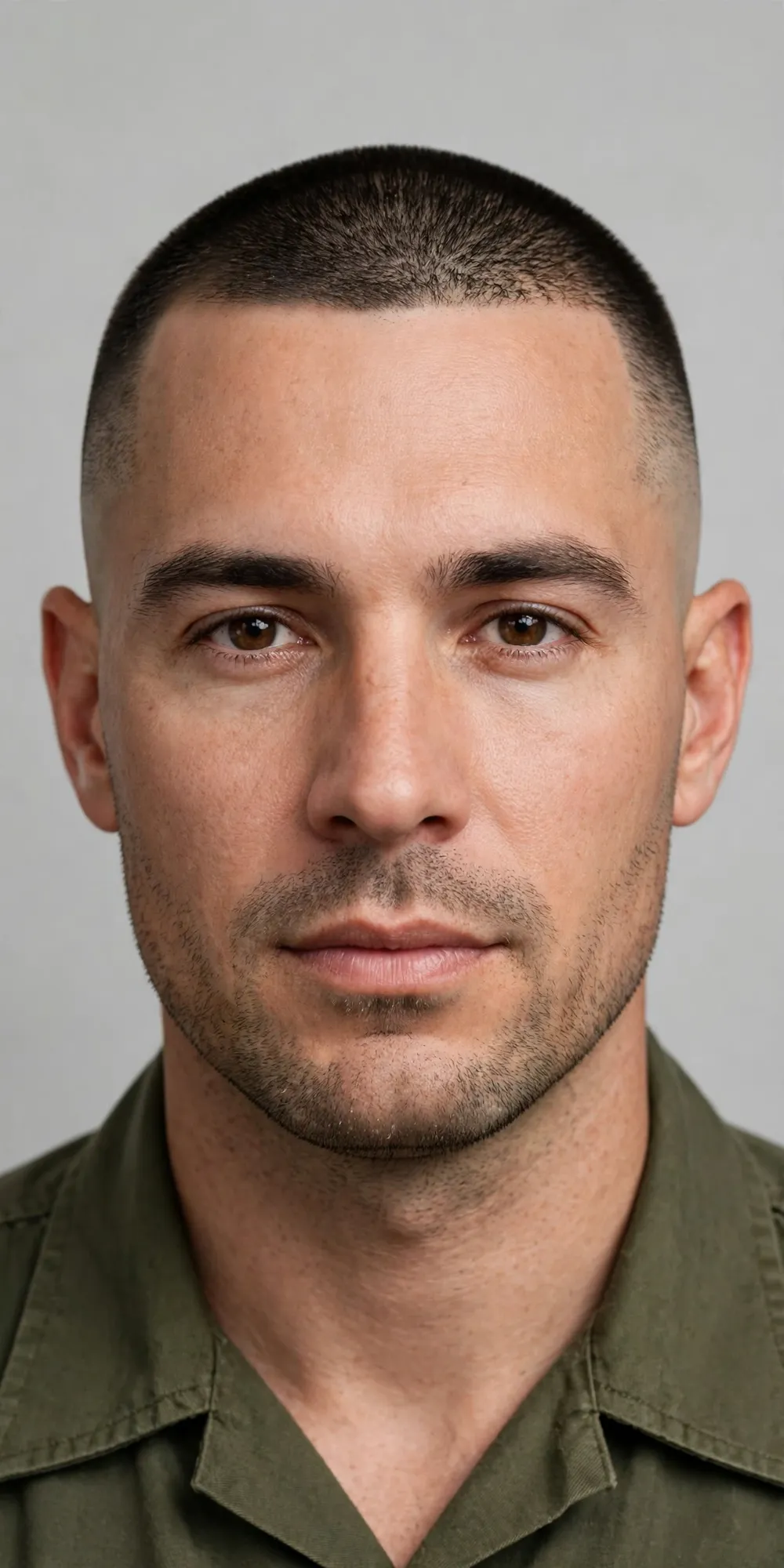
The temple fade — sometimes called a temp fade — adds a tight, curved blend around the temples, giving one of the crispest hairlines you can get. The fade hugs the temples and sideburns, then opens into the low fade at the back, while the top stays short and neat. It suits oval, round and square faces, especially if you have a strong hairline to show off. Ask for a low fade with a temple fade, #0 at the temples, and a sharp line-up at the forehead. A little pomade or matte clay keeps the top in place. Upkeep is the catch: the temple area grows out within a week, so plan a touch-up every seven to ten days, or clean the edges yourself between visits.
30. Low Fade Brush Cut
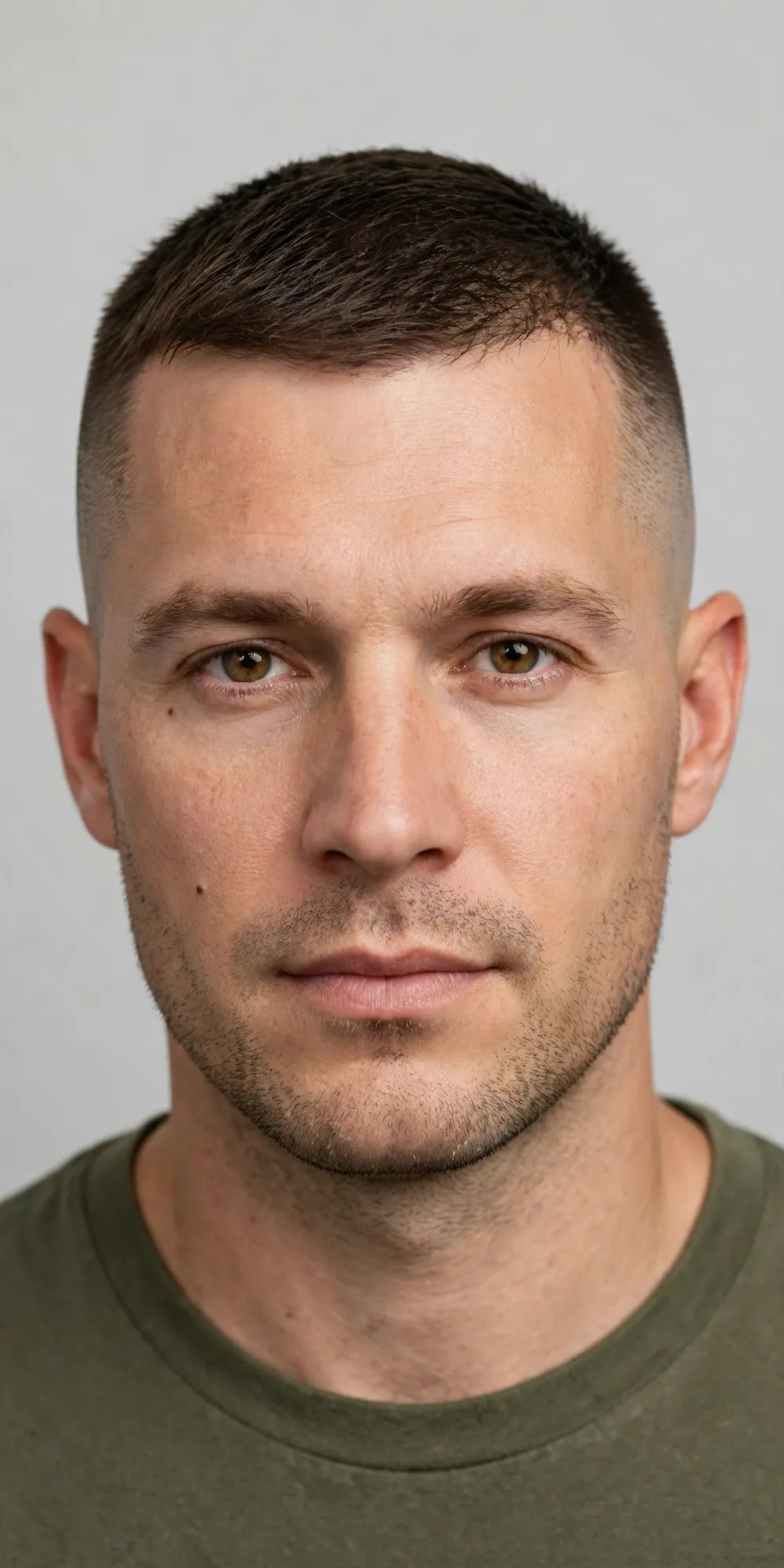
The brush cut is the definition of no-fuss. The top is cut to about half an inch and brushed forward, with a low fade on the sides. It suits oval, square and long faces, and every hair type — straight, wavy or coarse all brush forward the same way. Ask for a brush cut with a low fade, #1.5 or #2 on top, #0.5 at the bottom of the fade. No product at all, or a tiny amount of light cream if your hair sticks up. Wash, brush forward, done. A trim every two to three weeks keeps it tidy, and it grows out gracefully — if you wear a cap or helmet all day, this is the cut to get.
31. Induction Cut Low Fade
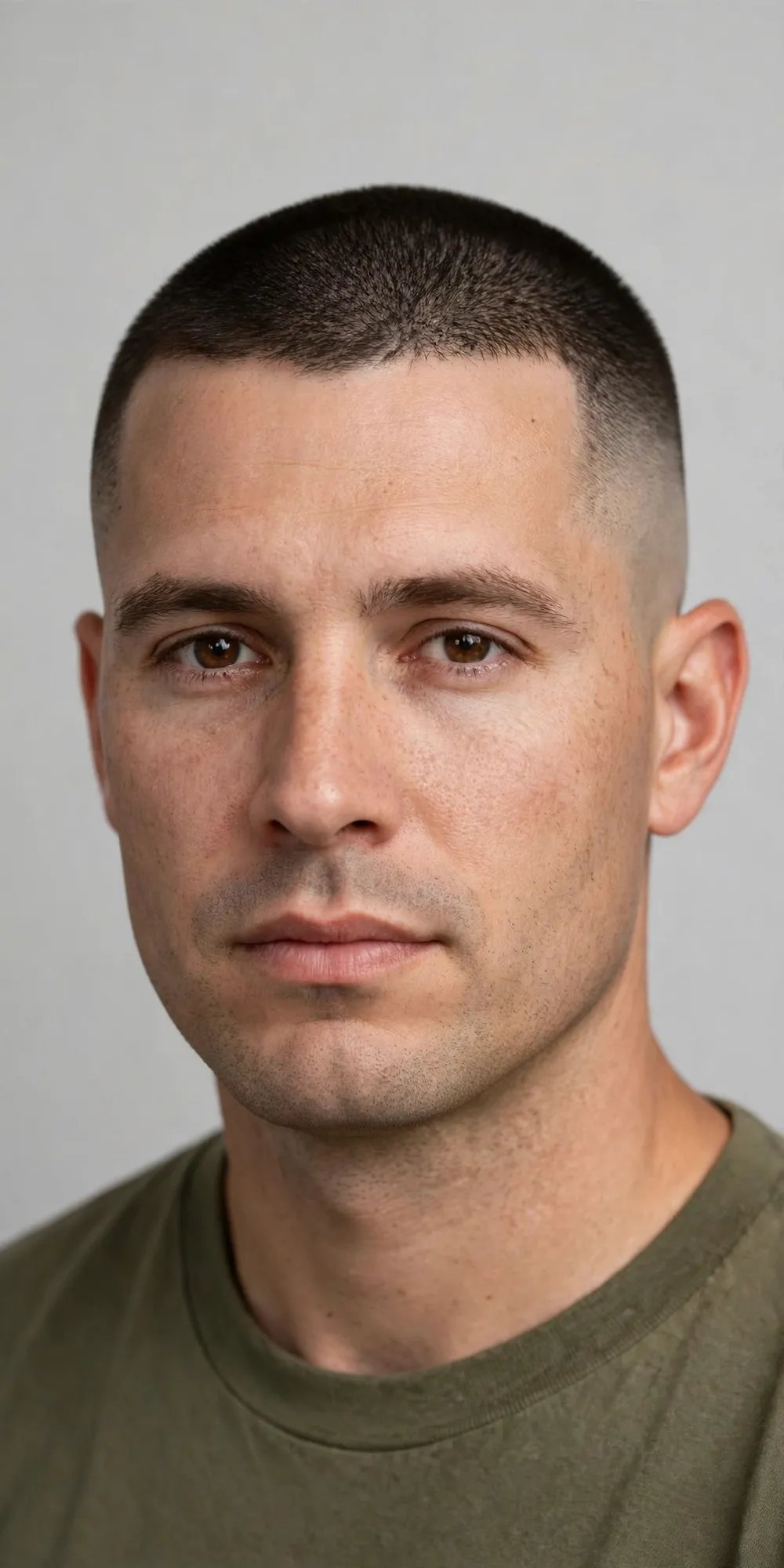
The first haircut every recruit gets — the shortest regulation cut — a low fade gives it a cleaner finish than the plain buzz most recruits remember. The top is taken to a #0 or #1 all over, with the fade blending from skin at the ears. It suits every face shape — at this length there is nothing to hide. Ask for an induction cut with a low fade, #0 all over the top, skin at the sides. Zero product, zero styling — wash it with a flannel. A clipper pass every week to ten days keeps it up — you can do it yourself with a #1 guard. The ultimate low-maintenance cut, and the most honest one — it shows your head shape exactly as it is.
32. Burr Cut Low Fade
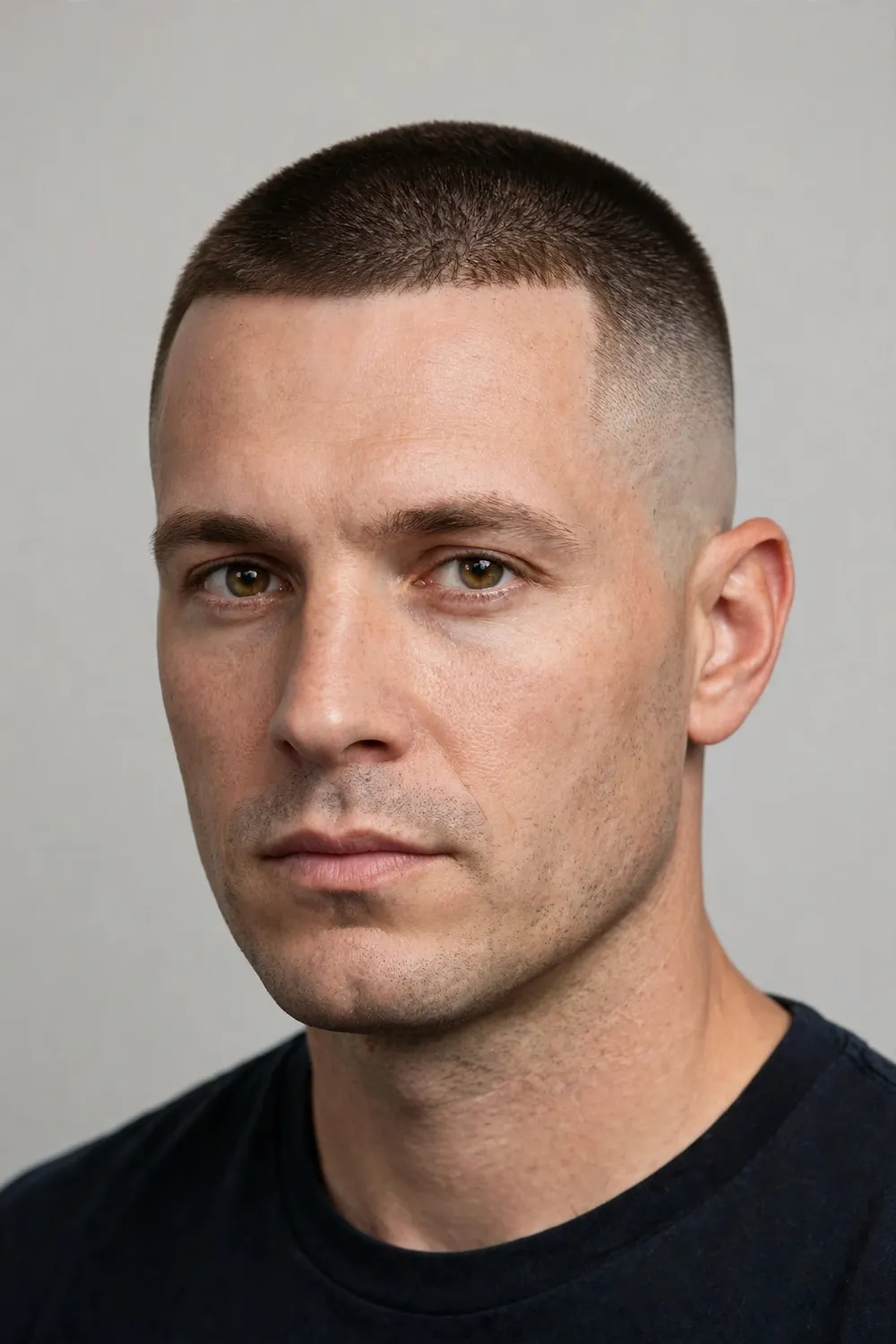
One step up from the induction — a uniform #1 or #2 all over — the low fade adds a tidy blend that lifts it from a home buzz to a barber cut. The top feels like stubble, the fade keeps the edges clean, and the whole thing takes ten minutes in the chair. It suits oval and square faces and thick or coarse hair. Ask for a burr cut with a low fade, #1 on top, #0 at the bottom of the fade. No product, no combing. Trim every ten days to two weeks, or run a #1 guard over it yourself. For men who want to look sharp and spend nothing on haircare — see our Buzz Cut Hairstyles for Men guide for more options.
33. Low Fade Recon Cut
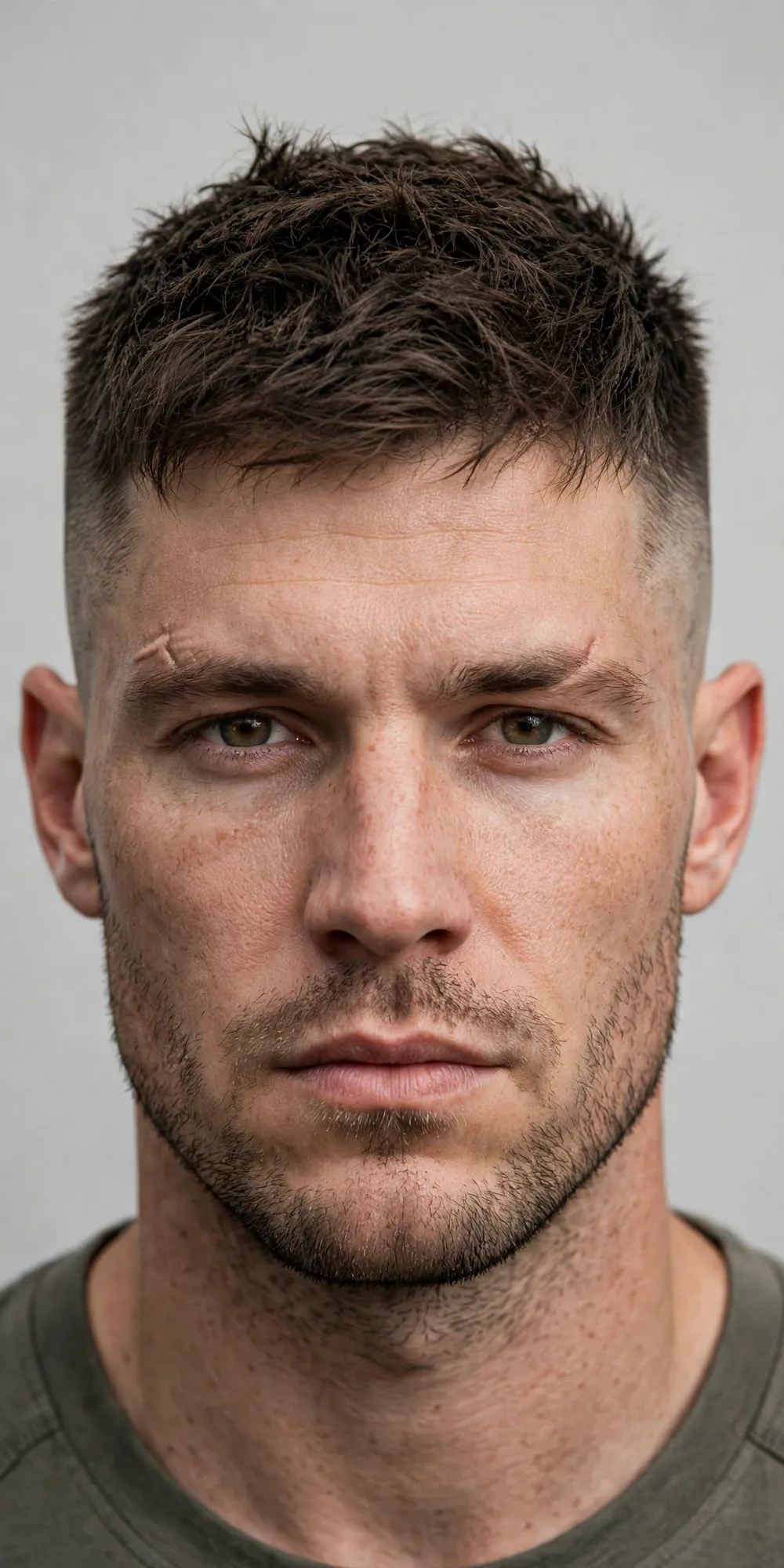
The recon cut has a special-forces flavour: a longer, textured top of around two inches, with a low fade keeping the sides military-clean. It is the longest top here that still reads as a military cut, and the texture is the point: choppy, piecey, a little rough around the edges. It suits oval and square faces and wavy or thick hair that holds texture. Ask for a low fade with a textured top of about two inches, point-cut and thinned, and a #0.5 at the bottom. Matte clay or texturising powder gives the top its separation. Trim every three weeks, but note the top length: at two inches you are at the edge of the Army’s bulk limit, so on duty, ask for an inch and a half instead.
34. Low Fade Jarhead Cut
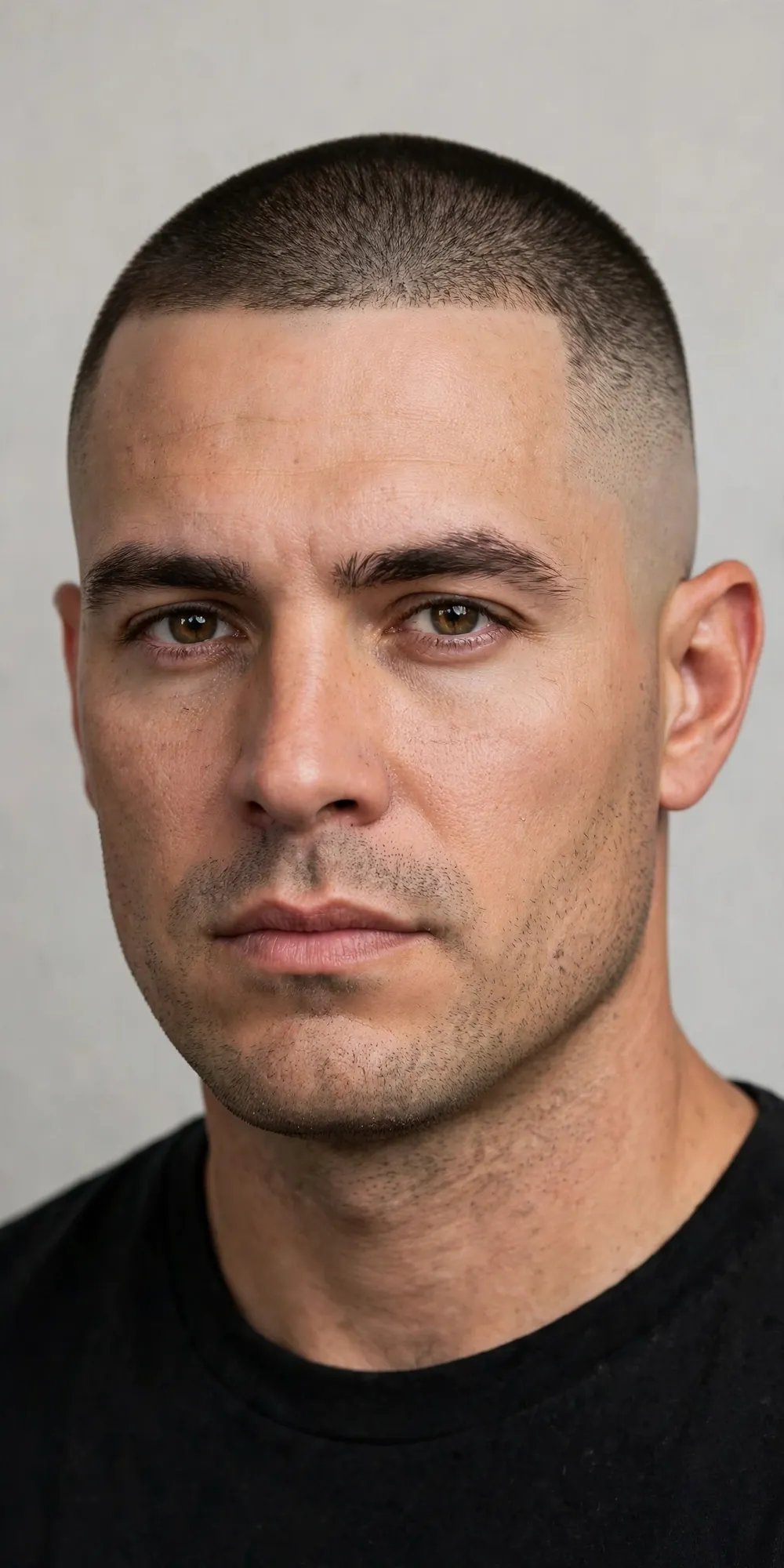
The Marine Corps signature — a high-and-tight with shaved back and sides — this low-fade version keeps the spirit while softening the blend. The sides go to skin, the top stays at about a quarter inch, and the low fade smooths the transition instead of the classic hard line. It suits oval and square faces and men with a strong jawline who want the hardest-looking cut here. Ask for a jarhead cut with a low fade, #0 on the sides, #1 on top, and a clean, shaved neckline. No product needed. A weekly trim holds the skin-tight contrast — the fade grows out fast. A civilian-friendly take on a Marine classic — if you are actually in the Corps, go with the standard high and tight and check MCO 1020.34H.
35. Low Fade with Short Pompadour
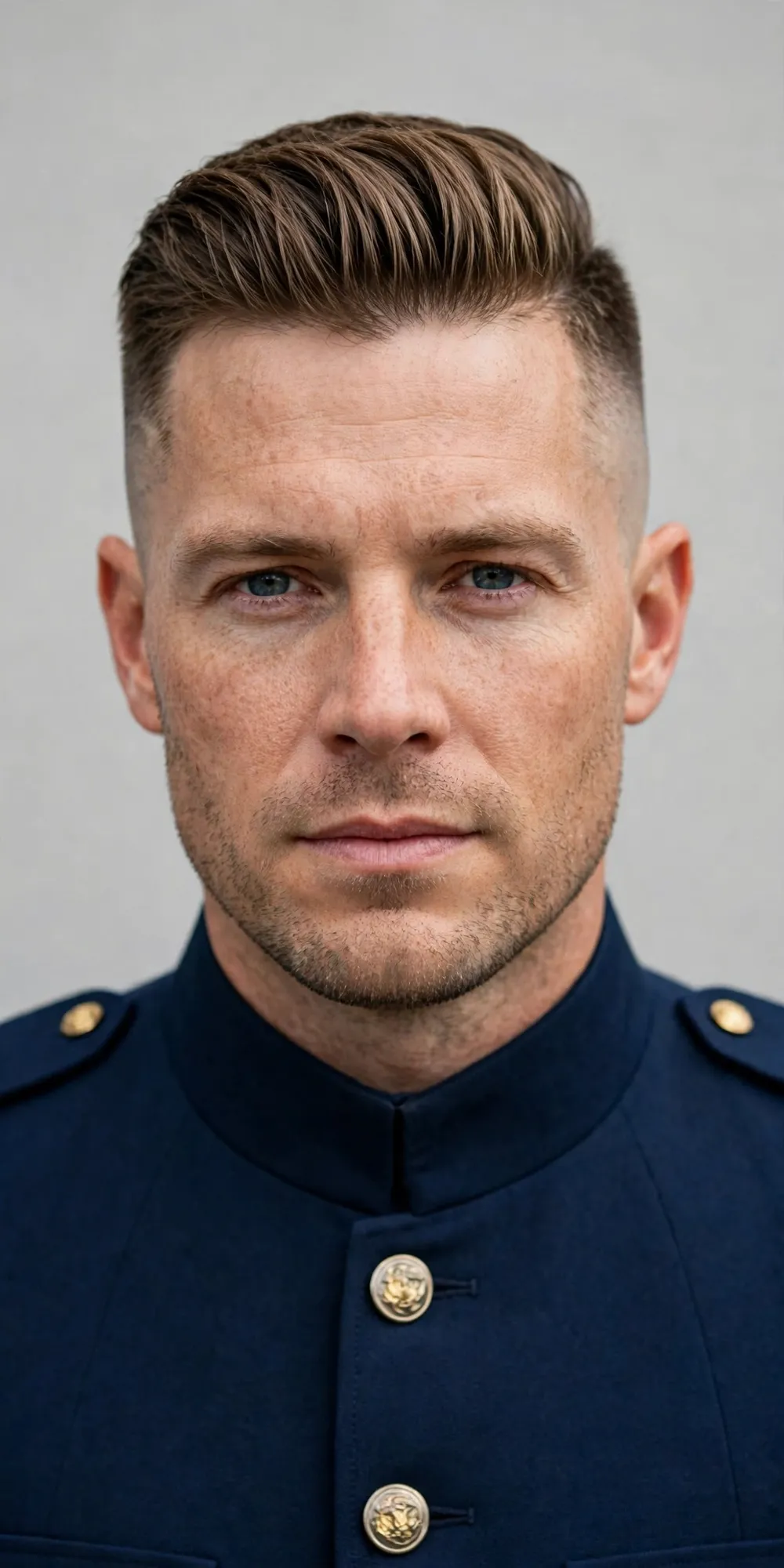
A pompadour and a military cut do not usually share a sentence, but a short one — a small lift at the front — works well with a low fade. The top runs about two inches at the front, swept up and back, with the low fade keeping the sides neat. It suits oval and long faces and straight or wavy hair with enough body to hold a lift. Ask for a low fade with a short pompadour, #0.5 at the bottom, and a scissor-cut top, longer at the front. Blow-dry it up and back with a round brush and set it with medium-hold pomade. Trim every two to three weeks. Five minutes of styling each morning — for men who do not mind a little effort.
36. Low Fade Brushed Back
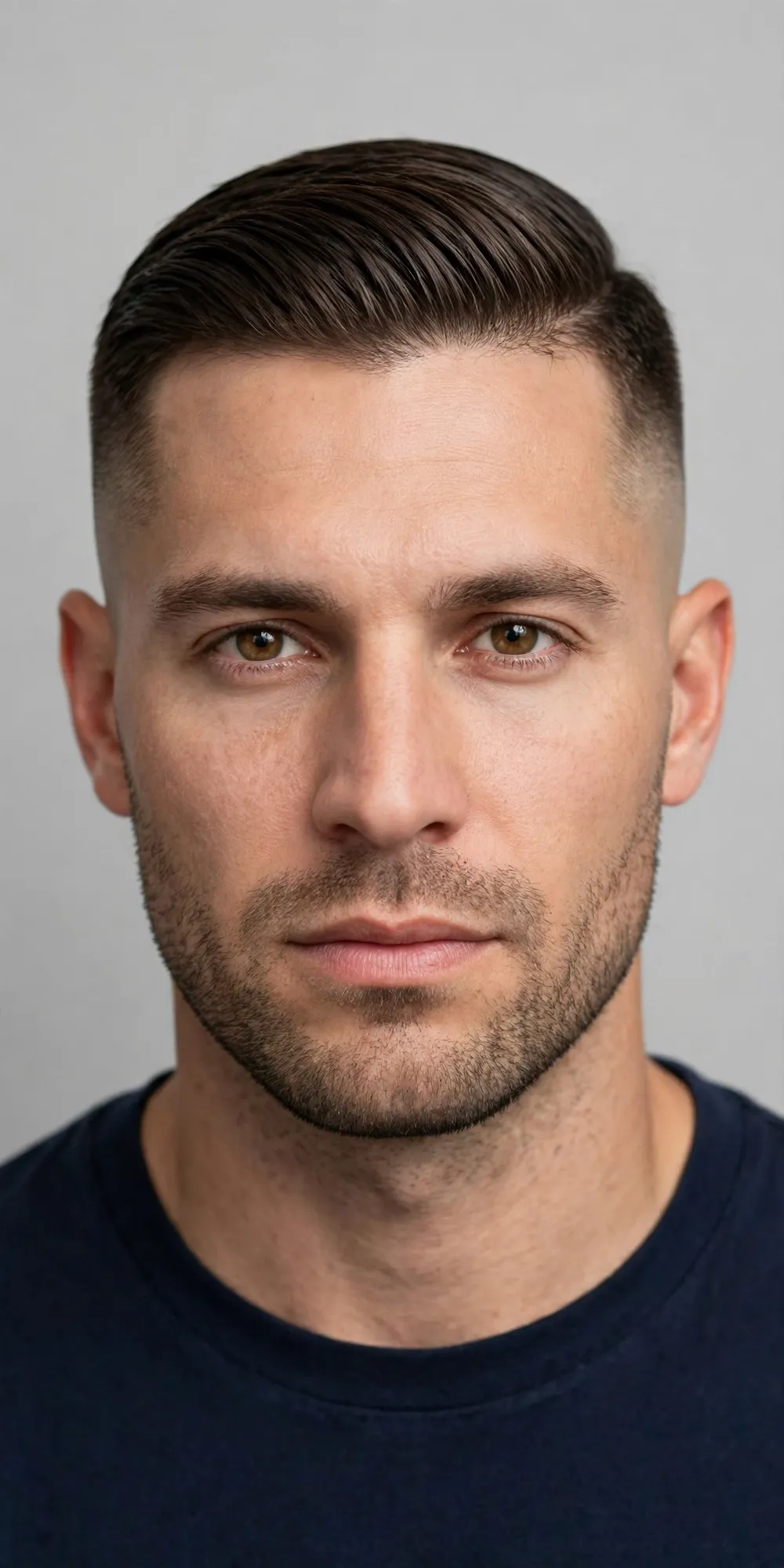
The grown-up version of the military low fade: the top is swept straight back, about an inch and a half long, with a low fade keeping the sides and back tight. Clean, confident and a little more formal than a forward-brushed cut, it suits a suit. It suits oval, square and long faces and straight or wavy hair that lies back without fighting. Ask for a low fade with a brushed-back top, #1 at the bottom, and a scissor-cut top with the length toward the front. Light pomade or cream, combed back while damp, holds it all day. Trim every two to three weeks. It grows out well — you can stretch a week — and it is one of the few military cuts that looks better slightly grown in.
37. Low Fade for Receding Hairline

A receding hairline is nothing to hide, and a short forward top with a low fade works with it best. The top is kept to about three-quarters of an inch and brushed forward to soften the hairline, while the low fade draws the eye to the clean sides. It suits oval, round and square faces — the most flattering option here for a hairline that has started to move back. Ask for a low fade with a short forward top, #1.5 on top, #0 at the bottom, and no hard part or comb-over — covering the recession with length only makes it more obvious. A matte powder adds fullness. Trim every two weeks. Keep it short, keep it forward.
38. Low Fade with Grey Hair
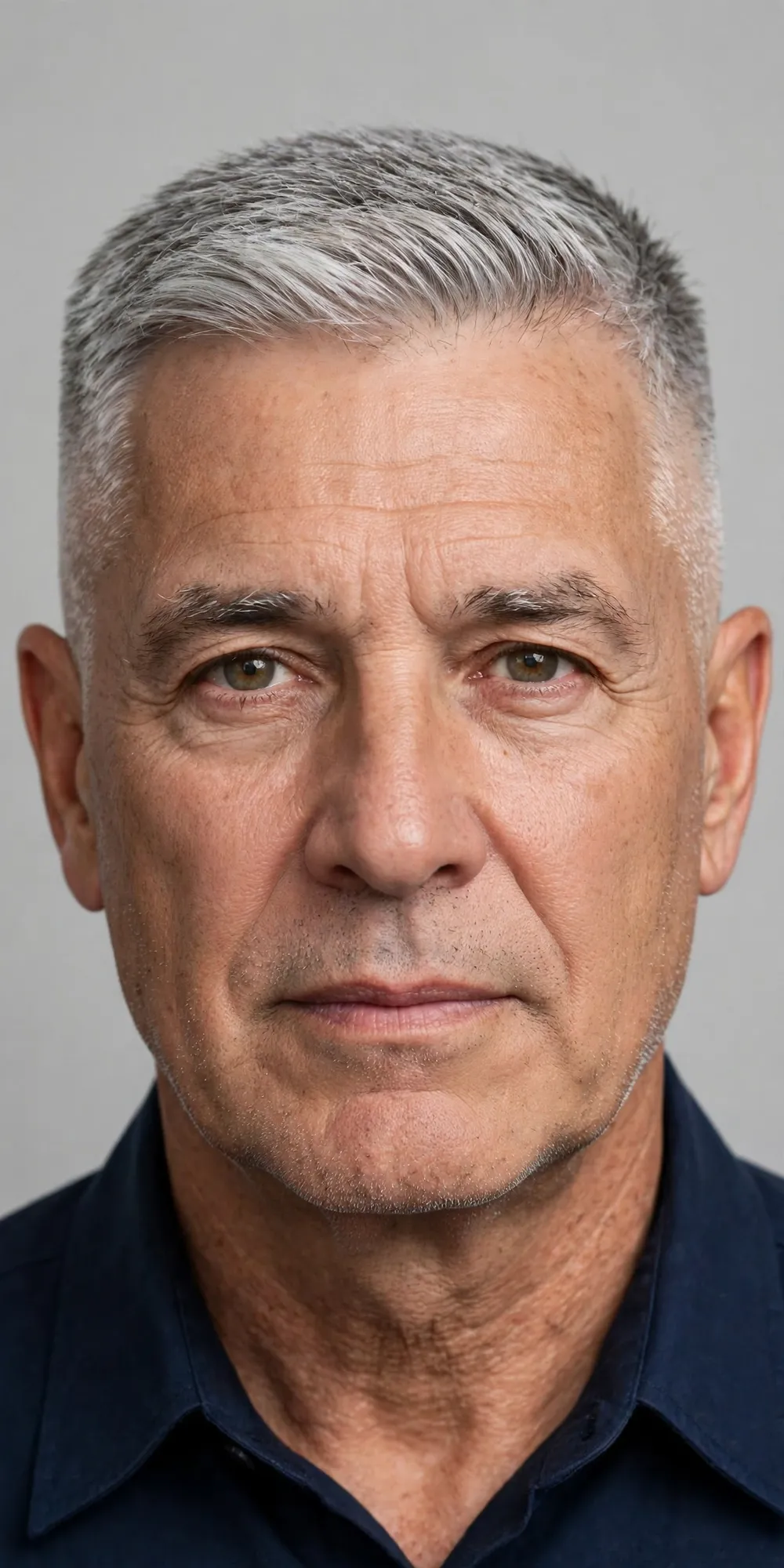
Grey hair and a low fade are a natural pair — silver on top, tight dark fade at the sides. The top stays short, about an inch, so the grey reads even and the outline stays sharp. It suits every face shape, and it is one of the few cuts where the grey is the feature, not something to manage. Ask for a low fade with a short silver top, #0.5 at the bottom, and a scissor-cut top to keep the grey even. A little matte clay is all you need, or nothing at all. A silver shampoo once a week keeps the grey bright. Trim every two to three weeks. No dye, no cover-up — grey hair, kept short and sharp, looks better than most dyed hair.
39. Low Fade with 360 Waves
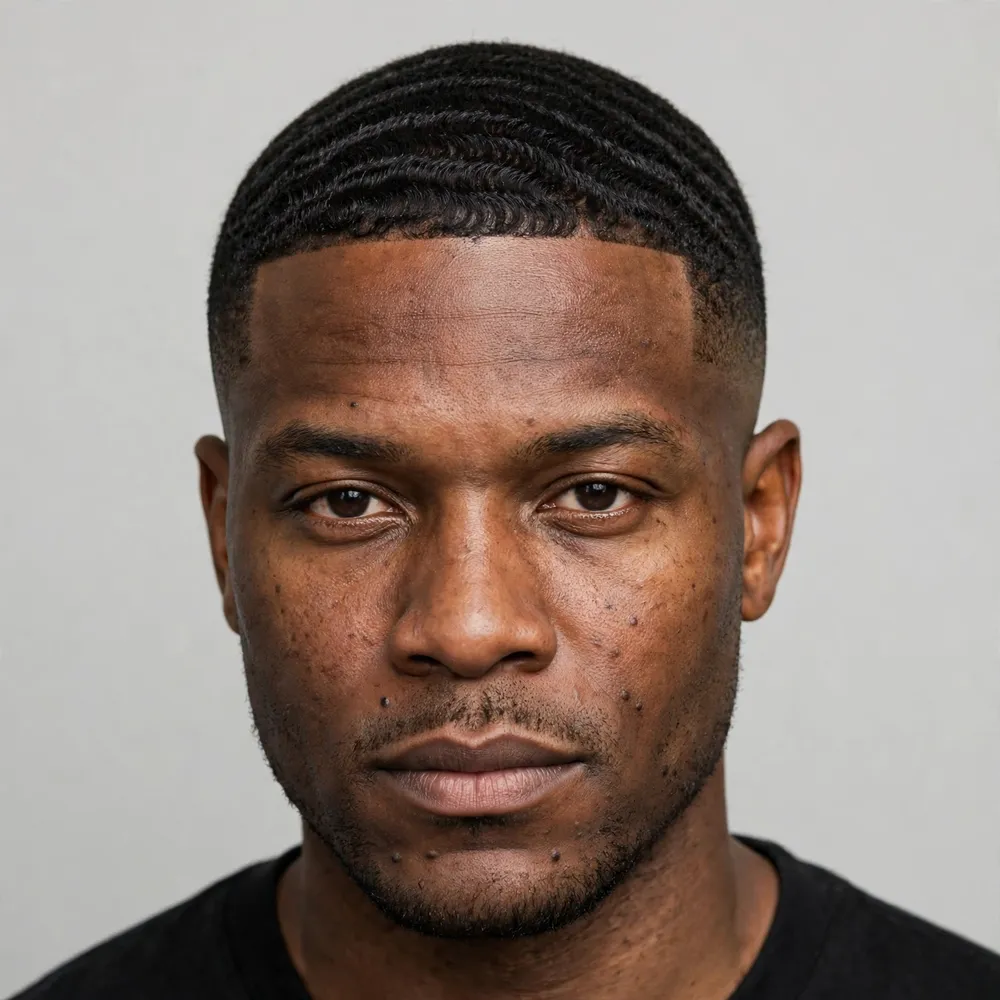
360 waves bring a completely different texture to the military low fade: a neat, rippling wave pattern on top with the sides faded low and clean. The top is kept to about a quarter inch, brushed in a circular pattern, and the fade frames the waves. It suits oval and round faces and coarse, curly hair that waves with brushing. Ask for a low fade with a #1 on top for waves, #0 at the bottom, and a shaped hairline. The work is at home: brush daily with a medium brush, wear a durag at night, and use a light pomade or wave cream. Trim every two weeks to hold the pattern. The highest-maintenance cut here, but the waves are worth it if you put in the brushing time.
How to Ask Your Barber for a Military Low Fade
Walk in with a clear script and you will never leave with the wrong cut. Say this: “I want a military low fade. Start the fade low, just above the ears — skin or a zero guard at the bottom, blending up through a #1 and a #2 into the top. Keep the top short, about an inch, and take it off the ears and off the collar. Clean up the sideburns and give me a straight, natural neckline.”
Then add the part that matters for your situation. For regulation wear, say: “I need it inspection-ready — top bulk under two inches, tapered from the skin at the ears, no hard part, no designs, natural colour only.” For civilian wear, you have more room: “Same fade, but leave the top a little longer, about an inch and a half, and I can live with a bit of texture up top.” If you want a beard, say so before the clippers start, so the fade can be blended into it. And if you are not sure about a detail — the fade height, the top length — ask your barber to show you with a comb before they cut. A good barber would rather check than fix a mistake. For the wider low fade options beyond military styles, see our Low Fade Haircuts for Men guide, and if you are torn between a taper and a fade, our Taper vs Fade Haircut guide settles it.
Regulation Check by Branch
| Branch | Top length | Fade | What fails inspection |
|---|---|---|---|
| Army (AR 670-1) | Bulk max 2 inches | Tapered from skin or ¼ inch at ears | Hair over ears or collar, designs, unnatural colour, top bulk over 2 inches |
| Marines (MCO 1020.34H) | Short, neat, max 3 inches bulk | Tapered, no abrupt lines | Hair touching ears or collar, eccentric styles, shaved designs, sideburns below mid-ear |
| Navy | Neat, max 2 inches bulk | Tapered, off ears and collar | Hair over the ears, touching the collar, sideburns past mid-ear, unnatural colour |
| Air Force | Neat, max 2 inches bulk | Tapered, conservative finish | Hair over ears or collar, faddish styles, designs, sideburns below the ear opening |
These are the headline numbers — your unit may enforce them more strictly, and the written regulation always wins over a barber’s opinion. When in doubt, go shorter and cleaner.
How to Pick by Face Shape & Hair Type
Oval faces can wear almost anything on this list. The balanced proportions mean a low fade works with a short buzz, a textured top or a brushed-back finish without throwing anything off. Pick by hair type and lifestyle instead.
Round faces need a little height on top to lengthen the face. Go for a textured top, a short quiff or a small pompadour, and keep the sides tight with a low fade. Avoid a flat, even buzz, which makes the face look rounder.
Square faces already have a strong jawline, so the aim is to soften it slightly. A side part, a comb over or a brushed-back top works well, and the low fade keeps the sides neat without adding width. A beard blend also suits a square jaw.
Long faces should avoid too much height. Keep the top short — a buzz, a butch or a brush cut — and let the low fade do the work. A longer top with volume only stretches the face further.
Straight hair shows every line, so it suits the sharpest cuts: the classic low fade, the line up and the flat top. Wavy hair adds natural texture, so a textured top, a recon cut or a brushed-back finish looks best. Curly hair needs a short top to stay controlled — a low fade with curls kept to an inch, or a 360 waves finish for coarse hair. Thick hair needs debulking and texture on top, or it turns into a helmet; ask for thinning and a point cut. Thinning hair needs the opposite: a short, even top with no hard part, so no thin patch stands out — the burr and the thinning-hair fade are the safest picks.
5 Mistakes to Avoid
- Asking for a high skin fade with a long top. That is a civilian fashion cut, not a military one. A high fade with two inches on top breaks the regulation silhouette and looks unbalanced on most faces. Keep the fade low and the top short.
- Getting a hard part or a shaved design while on duty. A hard part looks sharp in the barber’s chair, but it is a design line, and designs fail inspection in every branch. Save the hard part for leave.
- Loading heavy product onto a short top. A pea-sized amount of matte clay is enough. Heavy wax or gel on a one-inch top makes it look greasy by noon and flattens any texture you paid for.
- Skipping the two-week trim. A low fade looks its best for about ten days. After two weeks the blend line disappears, the neckline creeps onto the collar, and the whole cut reads as grown out rather than military.
- Letting the neckline grow over the collar. This is the single most common inspection failure. The hair at the back must sit off the collar at all times — if you cannot see the collar line, you are overdue a trim.
Frequently Asked Questions
What is a low fade military haircut?
A low fade military haircut is a short, neat cut where the fade starts low, just above the ears, and blends from skin or near-skin up into a short top of about an inch. It is based on the standard military haircut — short, clean and off the ears and collar — with a modern fade instead of a plain taper. It is the most versatile military cut because it passes regulation in most branches and still looks sharp in civilian life.
Does a low fade military haircut pass military regulations?
Yes, as long as it follows the numbers. Under Army AR 670-1, the top bulk must be under two inches, the sides must taper from skin or a quarter inch at the ears, and the hair must stay off the ears and collar, with no designs and no unnatural colour. The Marines are slightly stricter under MCO 1020.34H. A low fade with a short top meets those rules — but a high fade, a long textured top or a hard part may not, so tell your barber it is for regulation wear.
How long should the top be on a military low fade?
About an inch is the sweet spot for most men — short enough to look military, long enough to show a little texture or a side part. The hard limit under Army regulations is two inches of bulk, so anything under that passes, but in practice most barbers keep a military top between half an inch and an inch and a half. Civilian wearers can go a little longer; on-duty wearers should stay closer to an inch.
What do I tell my barber for a military low fade?
Say: “Military low fade, start the fade just above the ears, skin or zero at the bottom, blend up through a #1 and #2, top about an inch, off the ears and off the collar, clean neckline.” Then add whether it is for regulation or civilian wear — that one sentence changes how your barber handles the top length, the fade height and any hard part or design. Bring a photo of the exact style you want if you can.
Low fade vs high fade military cut — which one is better?
For regulation wear, the low fade is better: it is more conservative, it keeps the military silhouette, and it passes inspection in every branch. The high fade looks bolder and more modern, with a sharper contrast between the sides and the top, but it sits closer to the edge of what some units allow. For civilian wear, it is purely a style choice — the high fade is edgier, the low fade is cleaner and easier to grow out. If you want one cut that works everywhere, pick the low fade.
How often does a military low fade need a trim?
Every two weeks is the honest answer for most men. A low fade holds its blend for about ten days, and after two weeks the fade line softens and the neckline starts touching the collar. Men with skin fades or temple fades may need a touch-up every week. If you are on duty, book the trim before you need it — a grown-out fade is the fastest way to fail a haircut inspection.
Can you have a beard with a military low fade?
In civilian life, yes — and it looks excellent, especially with a beard blend that connects the fade into a shaped beard. On active duty, no: the Army, Marines, Navy and Air Force all require a clean shave, with only narrow medical or religious exceptions. So the low fade with a beard blend is a civilian style. If you are serving, keep the fade, lose the beard, and save the blend for leave. For more beard and fade pairings, see our Fade Haircut with Beard Combos guide.
Final Word
A low fade military haircut is one of the few styles that genuinely works everywhere — on base, in the office and on a weekend out. Pick a version that suits your face and your hair, learn the barber script with the guard numbers, and keep the two-week trim. Do that and the cut takes care of itself. If you want more ideas in the same vein, the crew cut and buzz cut guides cover the two classics in more depth, and you will find the rest of our haircut guides on our blog.