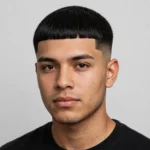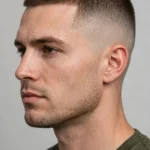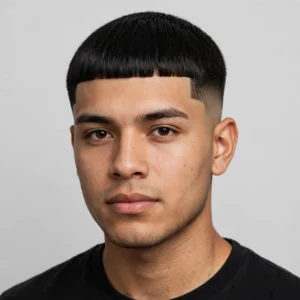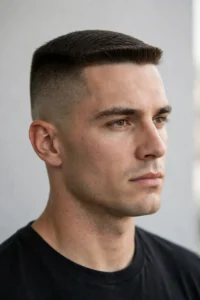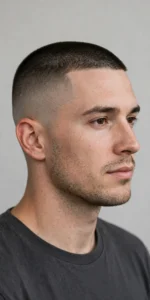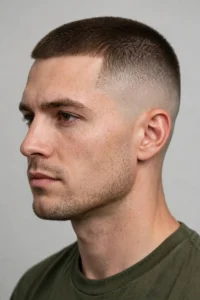


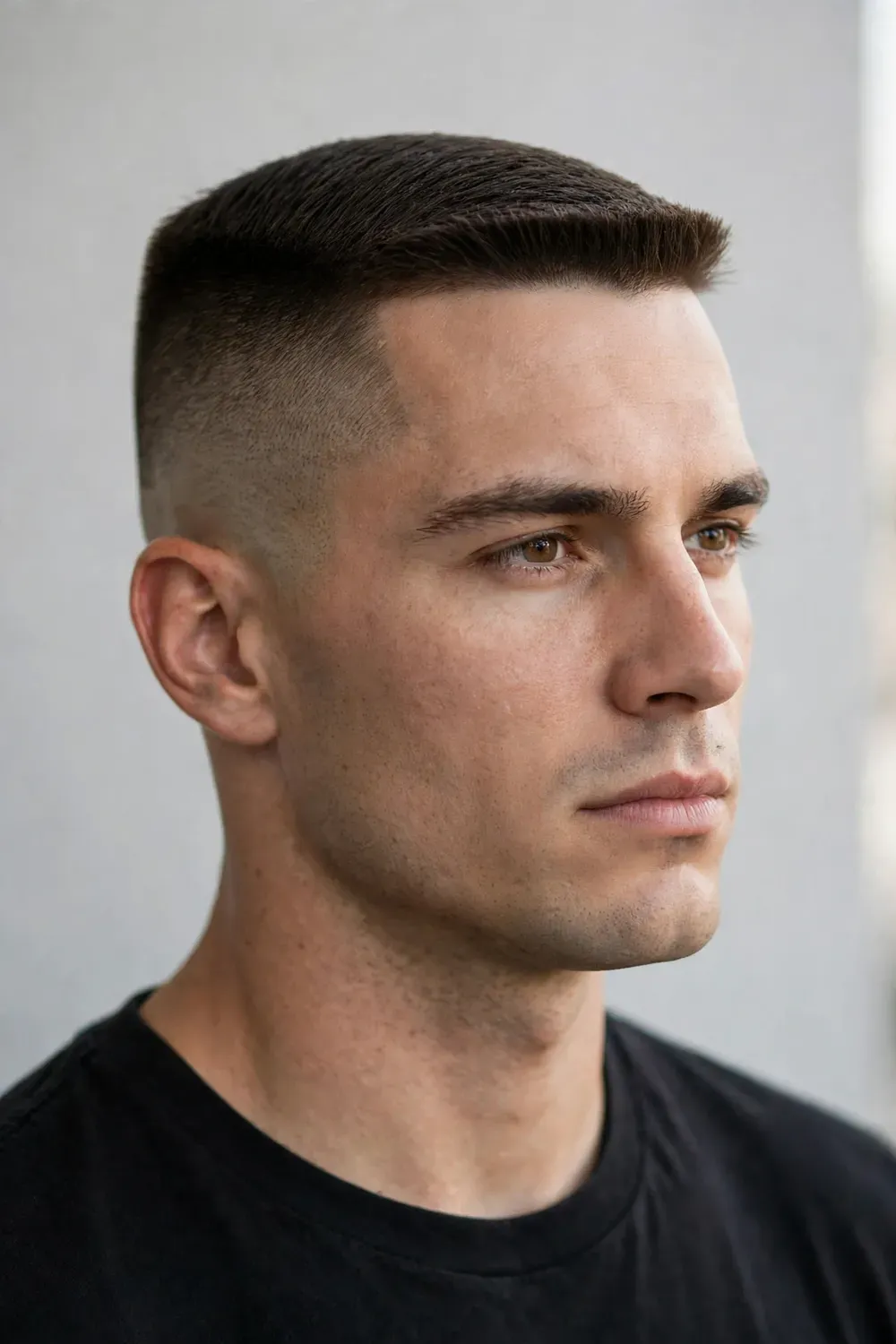
A military haircut is a short, tapered cut that stays off the ears and collar with a clean neckline — built to pass inspection and look sharp with almost no effort. If you want the short version: get the High and Tight for the classic Marine look, the Regulation Cut if you need the safest inspection-proof choice, or the Military Mid Fade for the sharpest civilian-friendly finish.
Quick-Pick Table
| Style | Top guard | Best for | Upkeep |
|---|---|---|---|
| 1. Induction Cut | #0 | Oval faces, thick hair | Every 1–2 weeks |
| 2. Burr Cut | #1–#2 | All face shapes, coarse hair | Every 2 weeks |
| 3. Butch Cut | #3–#5 | Round faces, thick hair | Every 2–3 weeks |
| 4. Classic Buzz Cut | #1–#3 | Oval/square faces, straight hair | Every 2 weeks |
| 5. Buzz Cut with Skin Fade | #1–#2 | Square faces, dark hair | Weekly |
| 6. Classic Crew Cut | Scissor, 1–1.5 in | Oval faces, straight/wavy hair | Every 2–3 weeks |
| 7. Textured Crew Cut | Scissor, 1–2 in | Thick hair, square faces | Every 2–3 weeks |
| 8. Crew Cut with Side Part | Scissor, 1–1.5 in | Professional settings, straight hair | Every 2 weeks |
| 9. Regulation Cut | Scissor, 1–1.5 in | Inspection, all face shapes | Every 2 weeks |
| 10. High Regulation Cut | Scissor, 1 in | Square faces, formal wear | Every 2 weeks |
| 11. High and Tight | #1–#2 | Oval/square faces, thick hair | Weekly |
| 12. High and Tight Recon | #1 | Oval faces, straight hair | Weekly |
| 13. High and Tight with Skin Fade | #1–#2 | Bold look, dark hair | Every 5–7 days |
| 14. Horseshoe Flattop | Scissor, 1 in | Oval faces, thick straight hair | Weekly |
| 15. Flat Top | Scissor, 1–1.5 in | Square faces, thick straight hair | Weekly |
| 16. Military Low Fade | #2–#3 | Round faces, conservative settings | Every 2 weeks |
| 17. Military Mid Fade | #2–#3 | Most face shapes, all hair types | Every 1–2 weeks |
| 18. Military High Fade | #2–#3 | Oval/long faces, thick hair | Weekly |
| 19. Fade with Hard Part | #2–#3 | Straight hair, square faces | Weekly |
| 20. Military Undercut | Scissor, 1–2 in | Thick hair, younger wearers | Every 2 weeks |
| 21. Ivy League | Scissor, 1–1.5 in | Oval faces, professional settings | Every 2 weeks |
| 22. Caesar Cut | #2–#3 | Receding hairline, straight hair | Every 2 weeks |
| 23. Spiky Military Cut | #3–#4 | Thick hair, younger wearers | Every 2–3 weeks |
| 24. Short Coiled Crop | #2–#3 | Coily hair, round faces | Every 2 weeks |
| 25. Forward-Brushed Curls | #3–#4 | Curly hair, oval faces | Every 2–3 weeks |
| 26. Sleek Side Part with Taper | Scissor, 1–2 in | Formal occasions, straight hair | Every 2 weeks |
| 27. Textured Side Sweep | #3–#4 | Wavy hair, oval faces | Every 2–3 weeks |
| 28. Brush-Up with Short Sides | #3–#4 | Thick hair, square faces | Every 2 weeks |
| 29. Military Quiff | Scissor, 1.5–2 in | Thick hair, oval faces | Every 2 weeks |
| 30. Short Afro with Line-Up | #1–#2 | Coily hair, sharp edges | Weekly |
| 31. Jarhead Cut | #0–#1 | Oval faces, bold statement | Weekly |
| 32. Low and Tight | #1–#2 | Round faces, softer high and tight | Every 1–2 weeks |
| 33. Marine High and Tight | #0–#1 | Oval faces, Marine look | Every 5–7 days |
| 34. Military Buzz Cut with Beard | #1–#2 | Bearded men, square faces | Weekly |
| 35. Short Back and Sides | Scissor, 1–1.5 in | All face shapes, classic taste | Every 2–3 weeks |
| 36. Military Cut for Receding Hairline | #1–#2 | Thinning hair, mature men | Every 2 weeks |
| 37. Grey Military Cut for Older Men | #2–#3 | Grey/silver hair, mature men | Every 2–3 weeks |
| 38. Textured Military Crop | #3–#4 | Fine/thick hair, modern look | Every 2–3 weeks |
| 39. Military Cut with Hair Design | #2–#3 | Bold personalities, dark hair | Weekly |
What Is a Military Haircut?
A military haircut is short on top, tapered at the sides and back, and cut clean off the ears and collar with a neat neckline. Nothing hangs over the forehead or touches the collar — that is the whole point. The cut comes from armed-forces grooming standards, where hair has to stay tidy under a cap and out of the way in the field, and it works just as well for civilians who want a sharp look without a daily routine.
Guard numbers decide how short it goes. A #0 means no guard at all — skin-close. A #1 leaves about 1/8 inch, a #2 leaves 1/4 inch, a #3 leaves 3/8 inch, and a #4 leaves 1/2 inch. Most military styles live between #0 and #3, with the top cut by scissors when the style needs a little more length.
The difference between regulation and civilian wear is simple. A regulation cut follows the branch rules — Army AR 670-1 or Marine Corps MCO 1020.34H, for example — with strict limits on length, taper and bulk. A civilian version borrows the same silhouette but relaxes it: a slightly longer top, a harder fade, a styled finish. Both look like military haircuts; only one passes inspection.
The 39 Best Military Haircuts
1. Induction Cut
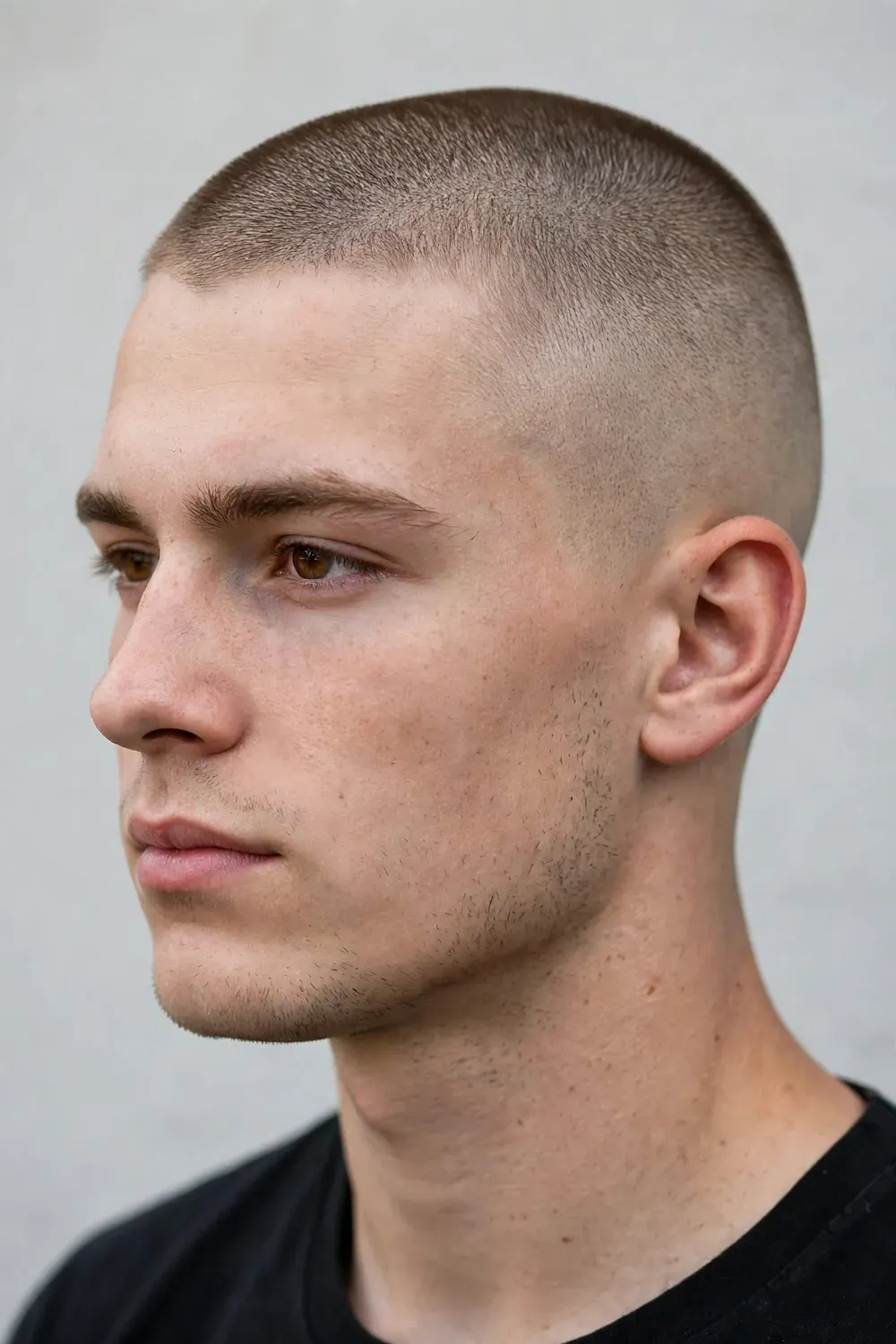
The induction cut is the shortest haircut a man can get — a #0 clipper run over the entire head, no guard, no blending, no length to style. It is the cut every recruit gets on day one of basic training. It suits oval faces and thick hair best, since nothing is left to soften a strong jaw. Ask your barber for “a #0 all over, no guard, tapered neckline if you want it neat.” No product is needed, just a wash and a towel. Maintenance is the trade-off: stubble shows fast, so expect a touch-up every one to two weeks if you want it looking clean rather than patchy.
2. Burr Cut
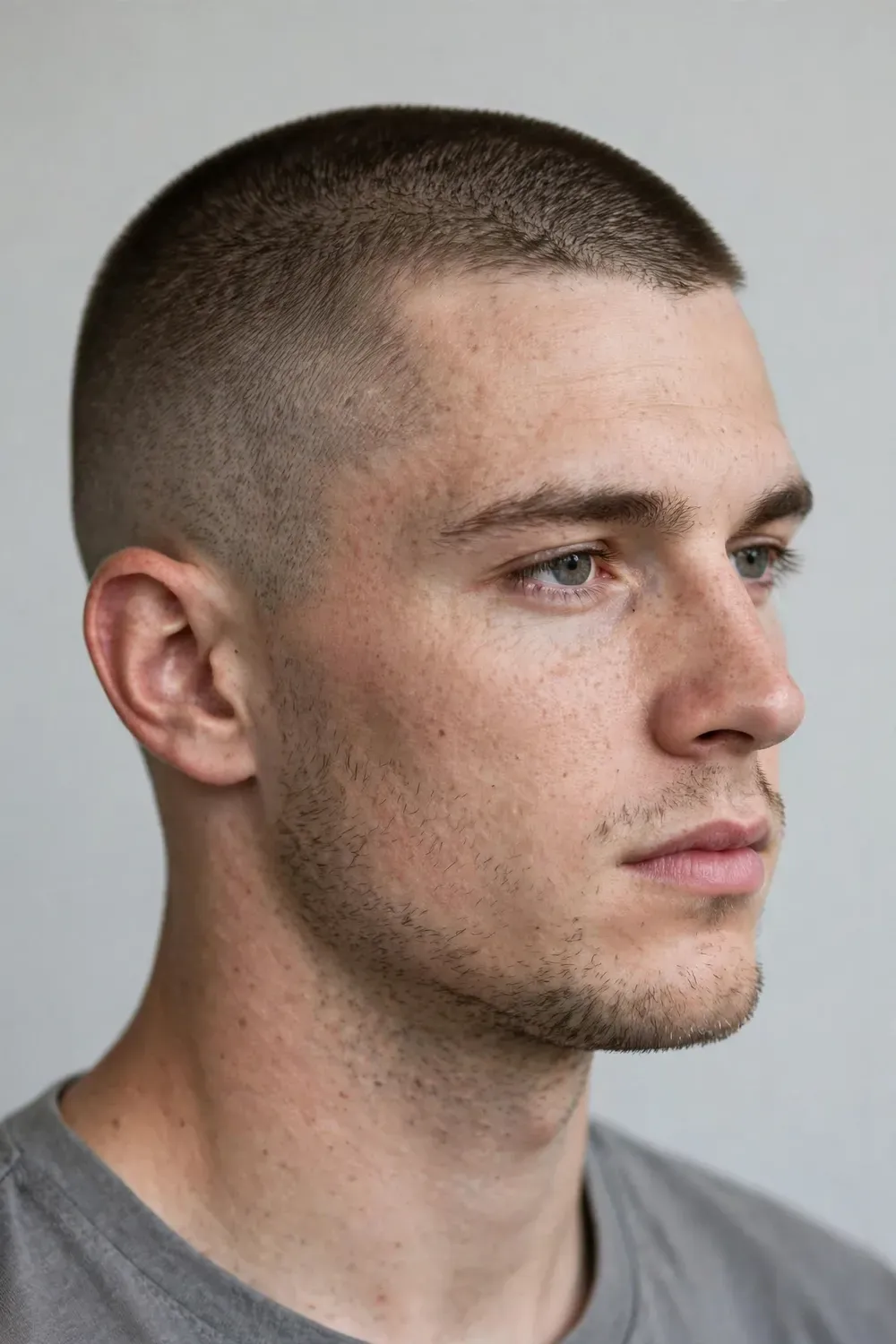
The burr cut is the induction cut with a whisper of hair left behind — a #1 or #2 guard all over, leaving just enough stubble to soften the scalp. It still reads as a proper military cut, but it is kinder on pale skin and uneven heads. It works on nearly every face shape and handles coarse or thick hair without complaint. Ask for “a #1 or #2 all over, even length, clean neckline.” A light matte moisturiser on the scalp keeps it from looking dry; nothing else is required. Upkeep runs every two weeks, and it grows out more gracefully than a #0, so you can stretch a few extra days without it looking scruffy.
3. Butch Cut
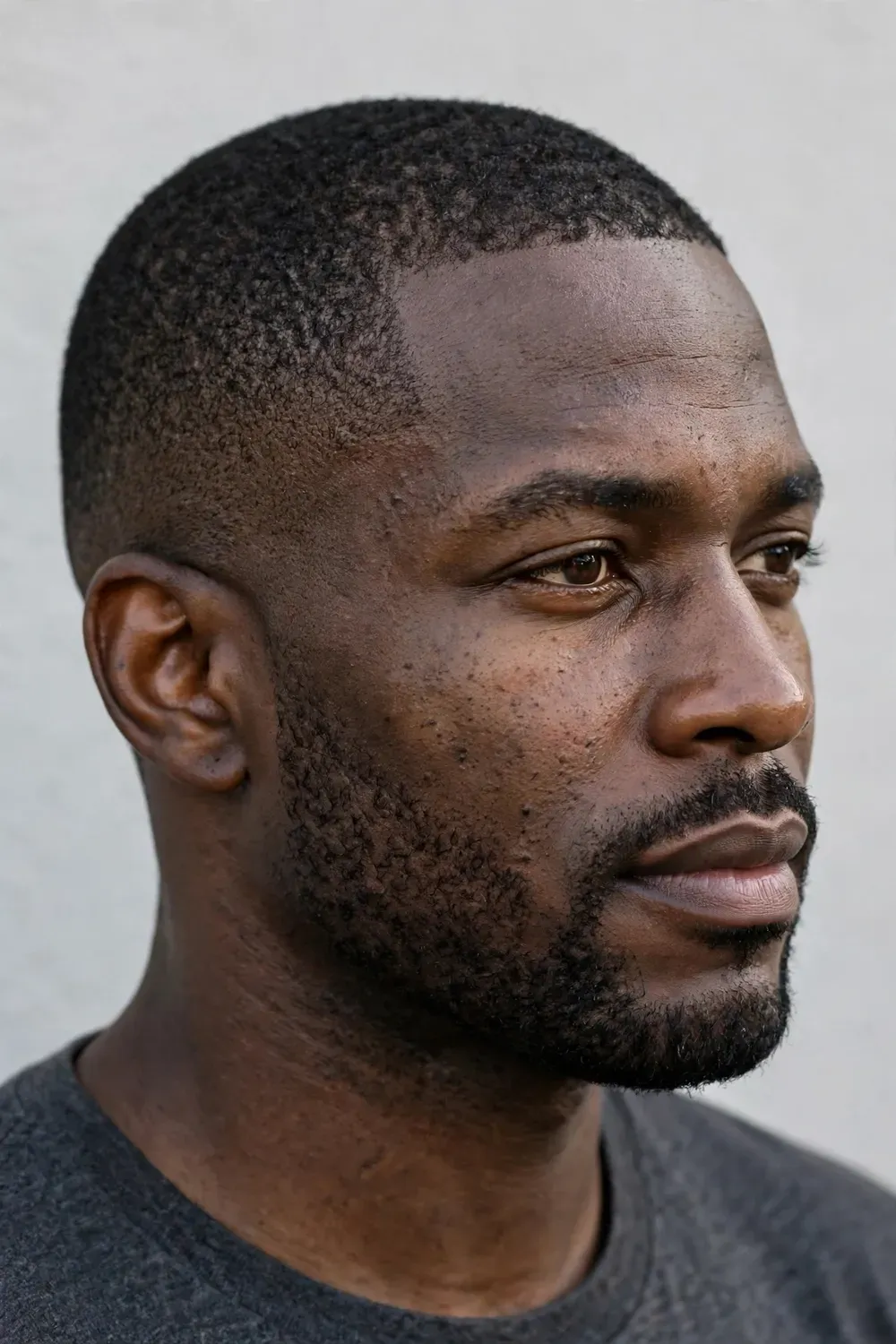
The butch cut keeps a #3 to #5 guard all over, which means real hair you can feel — short, even and tidy, but with enough length to show texture and colour. It is the fullest of the classic military buzz family and the easiest one to live with day to day. Round faces benefit most, since the even length adds a little height without widening the cheeks, and thick hair fills it out nicely. Ask your barber for “a #3 all over, or #4 on top with #3 on the sides if you want a touch of shape.” A pea-sized amount of matte clay gives it a groomed finish, though most men skip product entirely. Expect a trim every two to three weeks to hold the shape.
4. Classic Buzz Cut
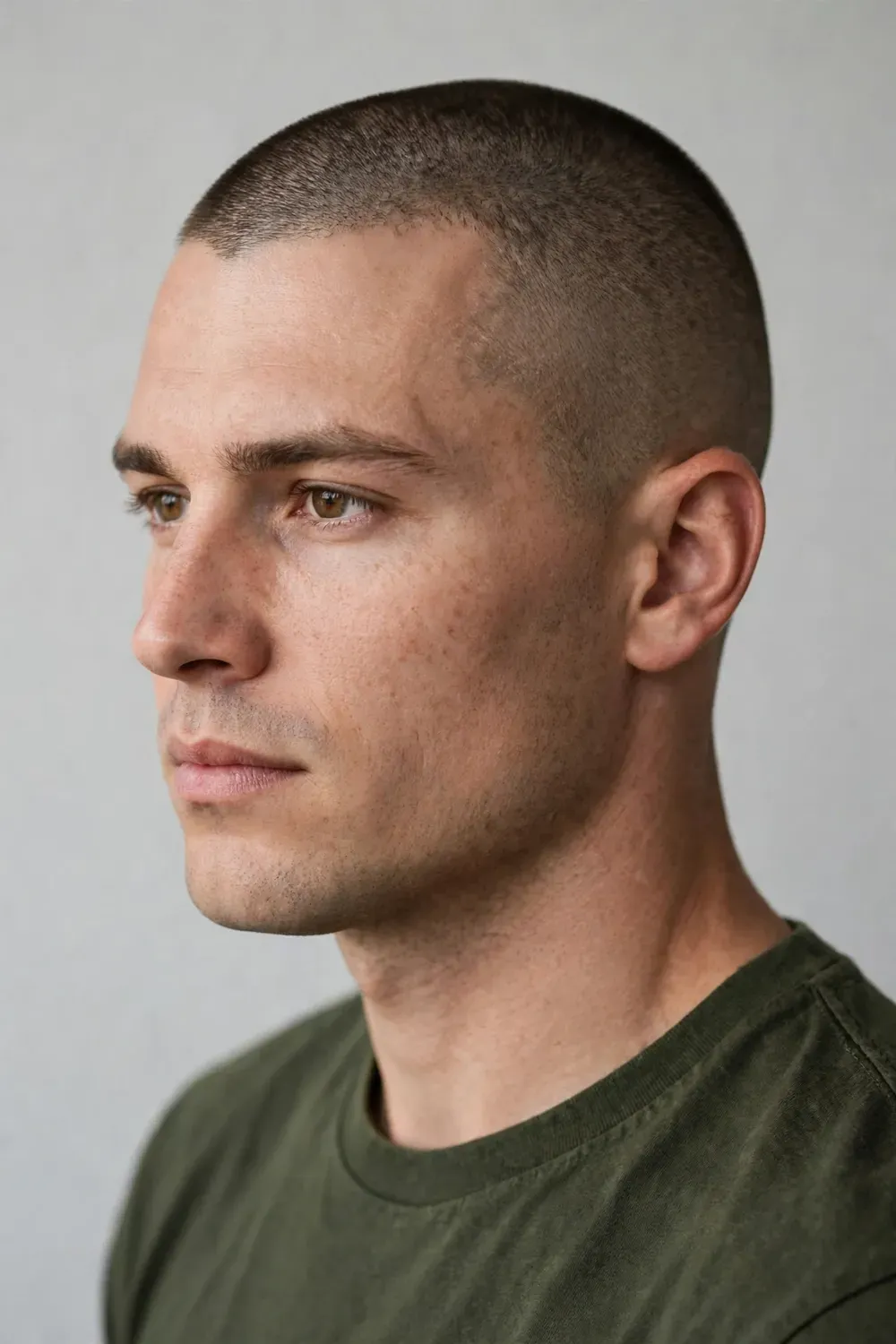
One even guard over the whole head — that is the entire classic buzz cut, and it is the most honest haircut a man can wear. It has been the military staple for generations because it needs no styling, no mirror and no thought in the morning. Oval and square faces carry it best, and straight hair shows the cleanest, most uniform finish. Ask for “one guard all over — #2 is the safe starting point, #1 if you want it shorter.” A drop of scalp oil or light moisturiser keeps the skin from looking dry under short hair. Trim every two weeks to keep the length even; let it grow much longer and it turns into an uneven fuzz rather than a cut.
5. Buzz Cut with Skin Fade
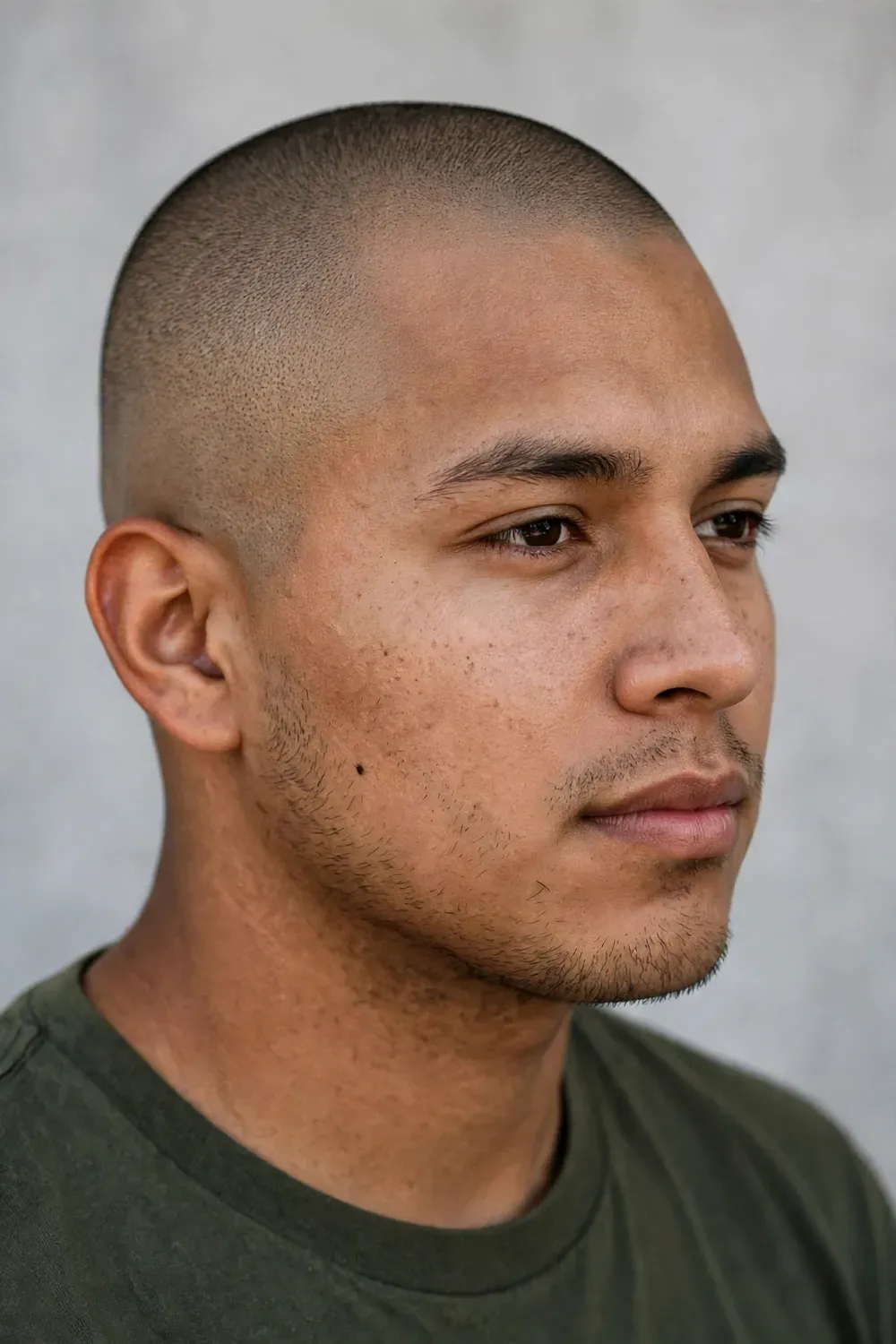
Take the classic buzz and fade the sides down to bare skin, and you get a cut with real contrast — a short, even top sitting over a sharp, skin-tight taper. The fade adds structure that a plain buzz lacks, which is why it also works as a civilian style — see our buzz fade haircut guide for more faded buzz styles. Square faces benefit most, since the faded sides sharpen the jawline, and dark hair shows the fade gradient best. Ask for “a #1 or #2 on top, skin fade on the sides and back, blended at the temples.” No product needed; a little moisturiser on the neckline keeps the skin calm. It blurs within a week, so plan a weekly touch-up.
6. Classic Crew Cut
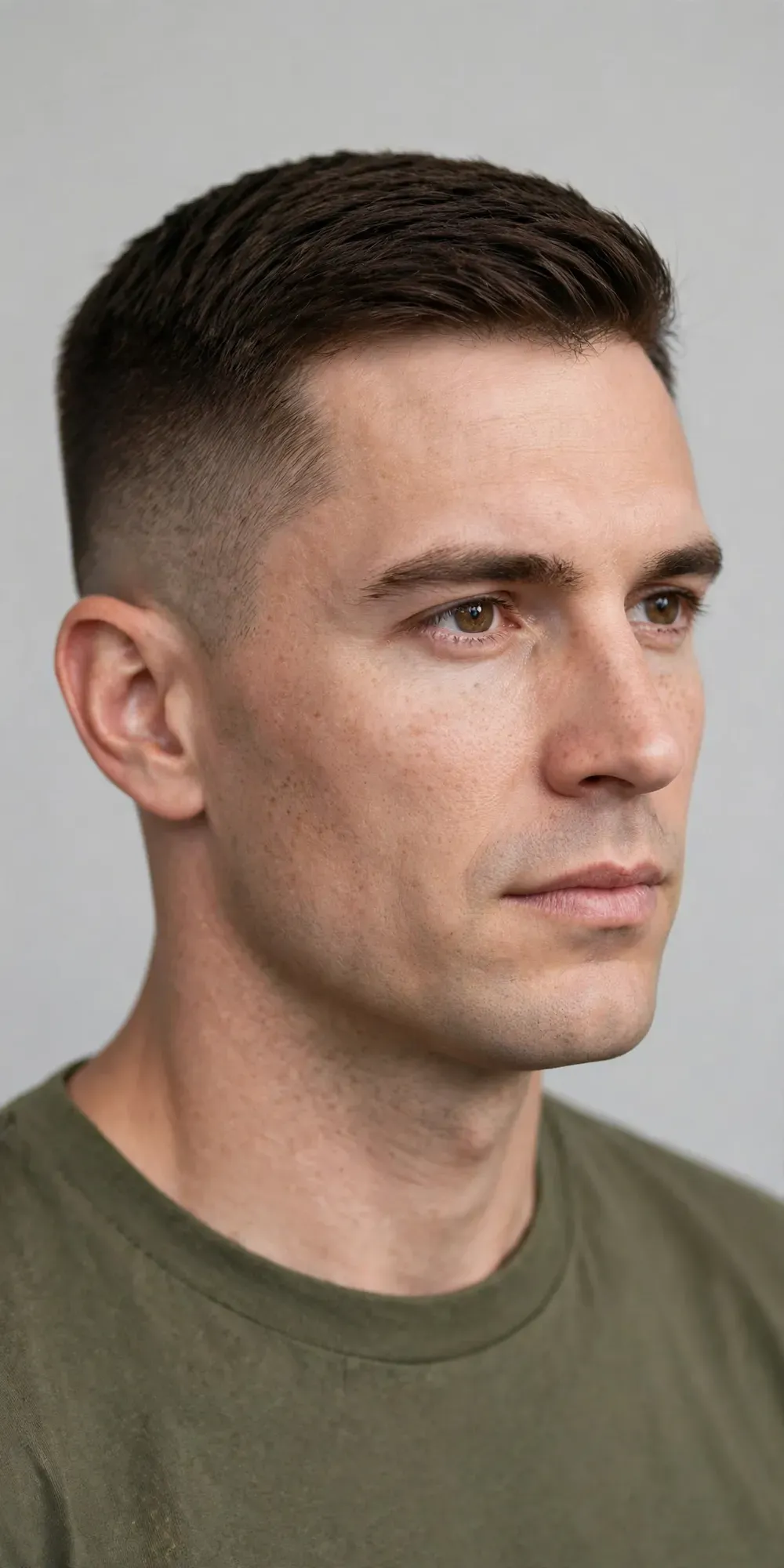
The crew cut is the military’s smarter short style: tapered sides with a top left long enough — about an inch to an inch and a half — to comb forward or slightly to the side. It looks neat in uniform and in a suit, which is why it has outlasted every trend around it. Oval faces and straight or wavy hair suit it best, since the short top follows the head’s natural shape. Ask for “a crew cut, tapered sides with a #2, top scissor-cut to about an inch, slightly longer at the front.” A dab of light pomade or matte paste gives it a clean, controlled finish. Trim every two to three weeks; the taper is what keeps it looking deliberate rather than grown out.
7. Textured Crew Cut
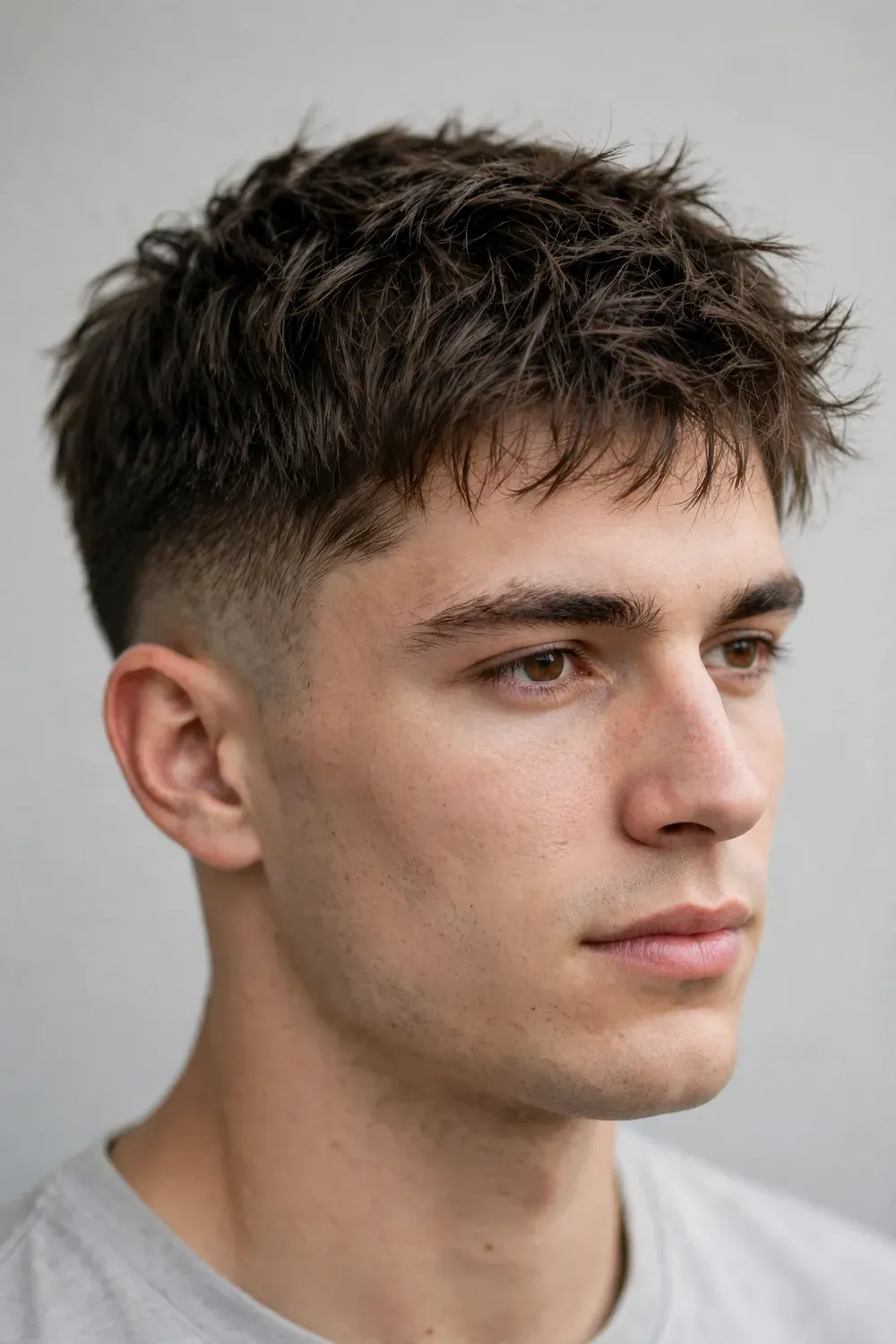
The textured crew cut takes the classic shape and roughs up the top with choppy, point-cut layers for a lived-in finish. It keeps the military taper on the sides but gives the top some movement — a good pick for thick hair that sits heavy. Thick hair and square faces get the best result, since the texture breaks up bulk and softens a strong jaw. Ask for “a crew cut with a textured, point-cut top, tapered sides, and no hard part.” Work a small amount of matte clay through the top with your fingers and leave it alone. Maintenance is forgiving: every two to three weeks, and the texture hides a few days of growth.
8. Crew Cut with Side Part
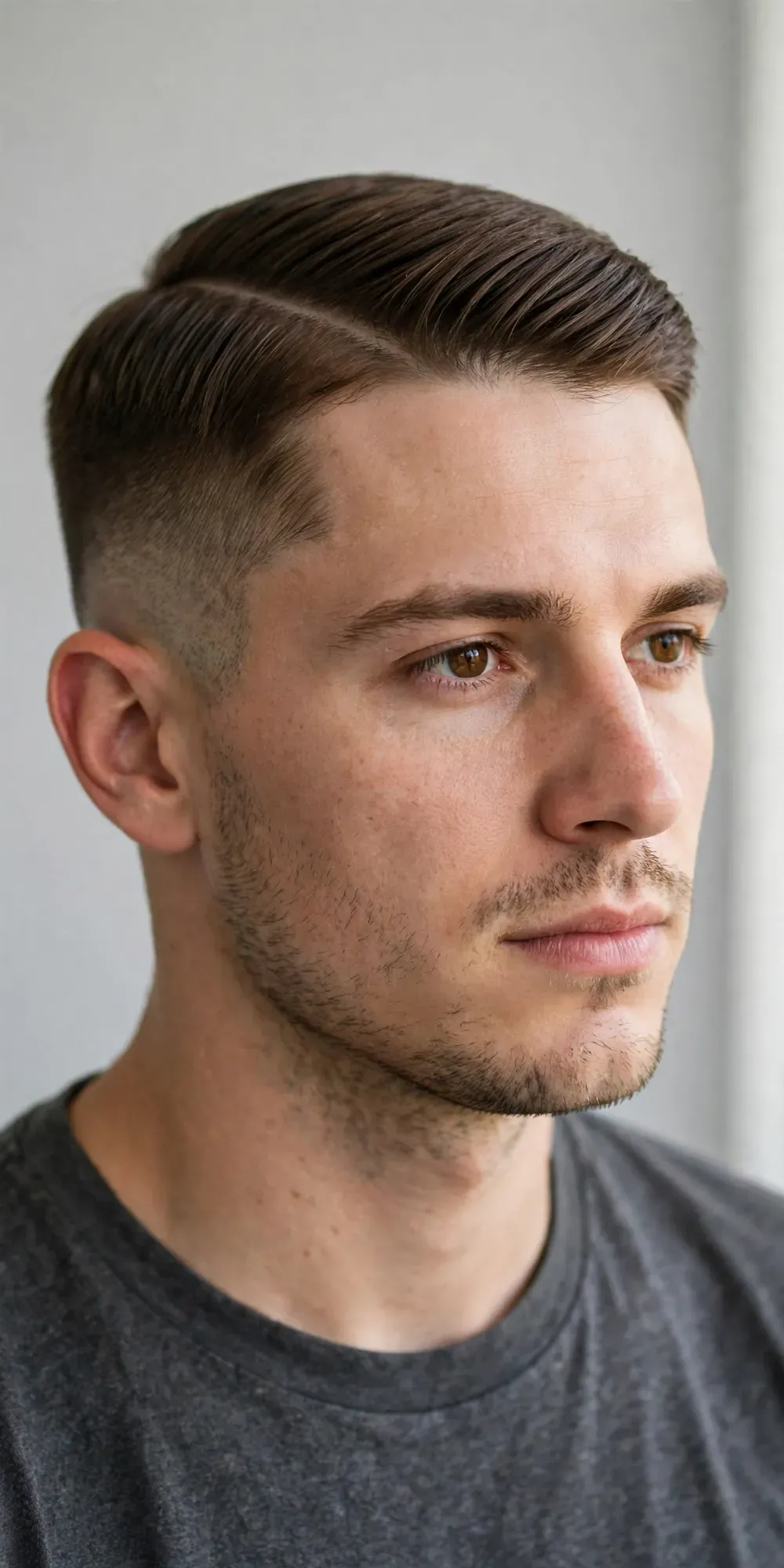
A neat side part turns the humble crew cut into something boardroom-ready. The top stays short — around an inch — but it is combed to one side along a clean part line, with tapered sides keeping everything tidy. It suits straight hair and professional settings best, and oval faces carry the asymmetry without effort. Ask for “a crew cut with a side part, top about an inch and a quarter, sides tapered to a #2, part on my natural side.” A little pomade with a light hold keeps the part in place through the day. Keep the part crisp with a trim every two weeks; once the top gets too long, the part starts to flop and the whole look loses its point.
9. Regulation Cut
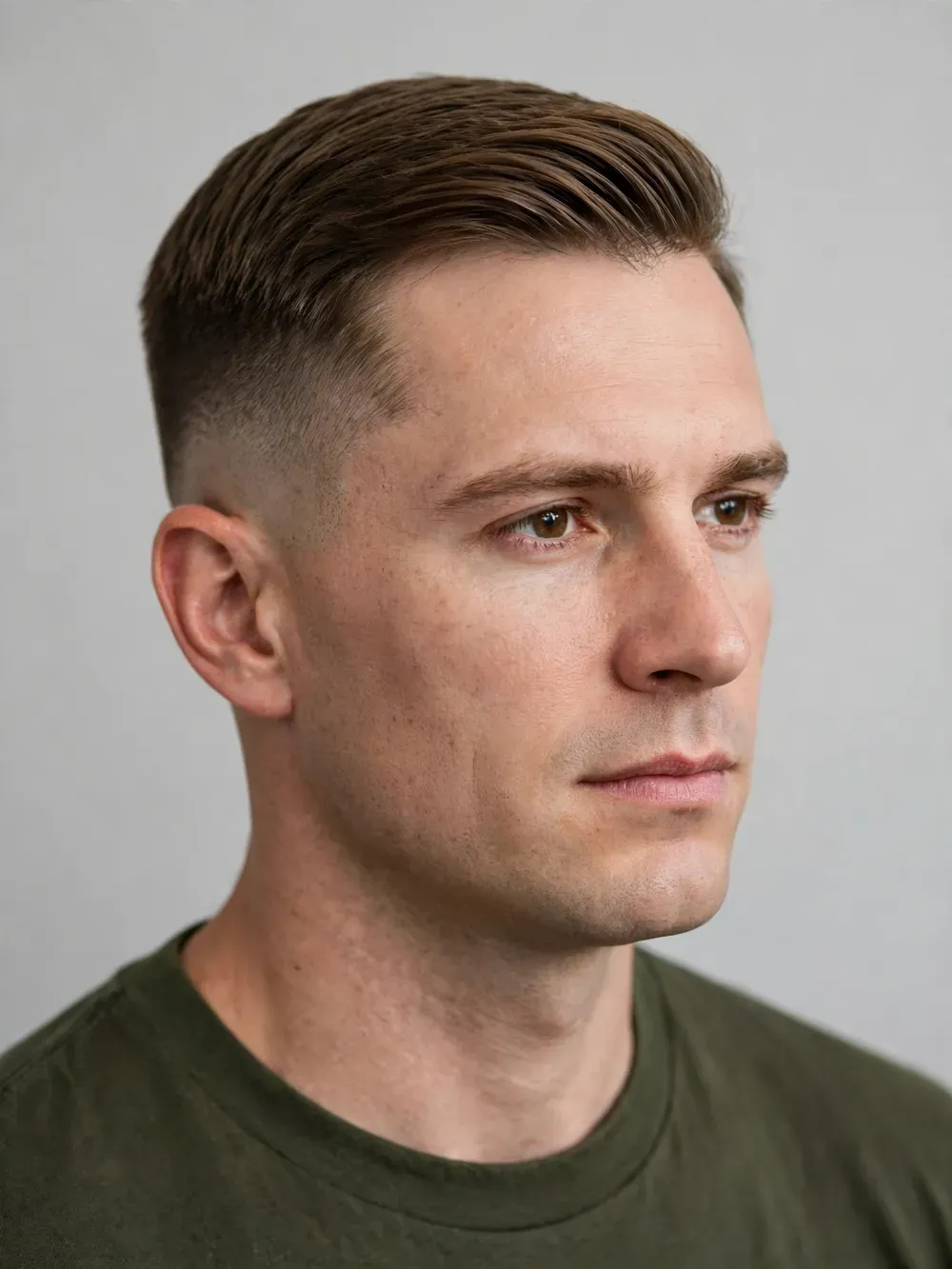
The regulation cut is the one that passes inspection: tapered sides and back, a short scissor-cut top of about an inch to an inch and a half, and a tapered — never blocked — neckline. It is the standard military issue for a reason: neat from every angle, no bulk, nothing over the ears. It suits every face shape, which makes it the safest first military cut if you are unsure where to start. Ask for “a regulation cut — tapered sides, short scissor top, tapered neckline, nothing over the ears.” A touch of light pomade gives it a polished finish without looking styled. Expect a trim every two weeks; the taper is what keeps it within regulation, so don’t let it grow out.
10. High Regulation Cut
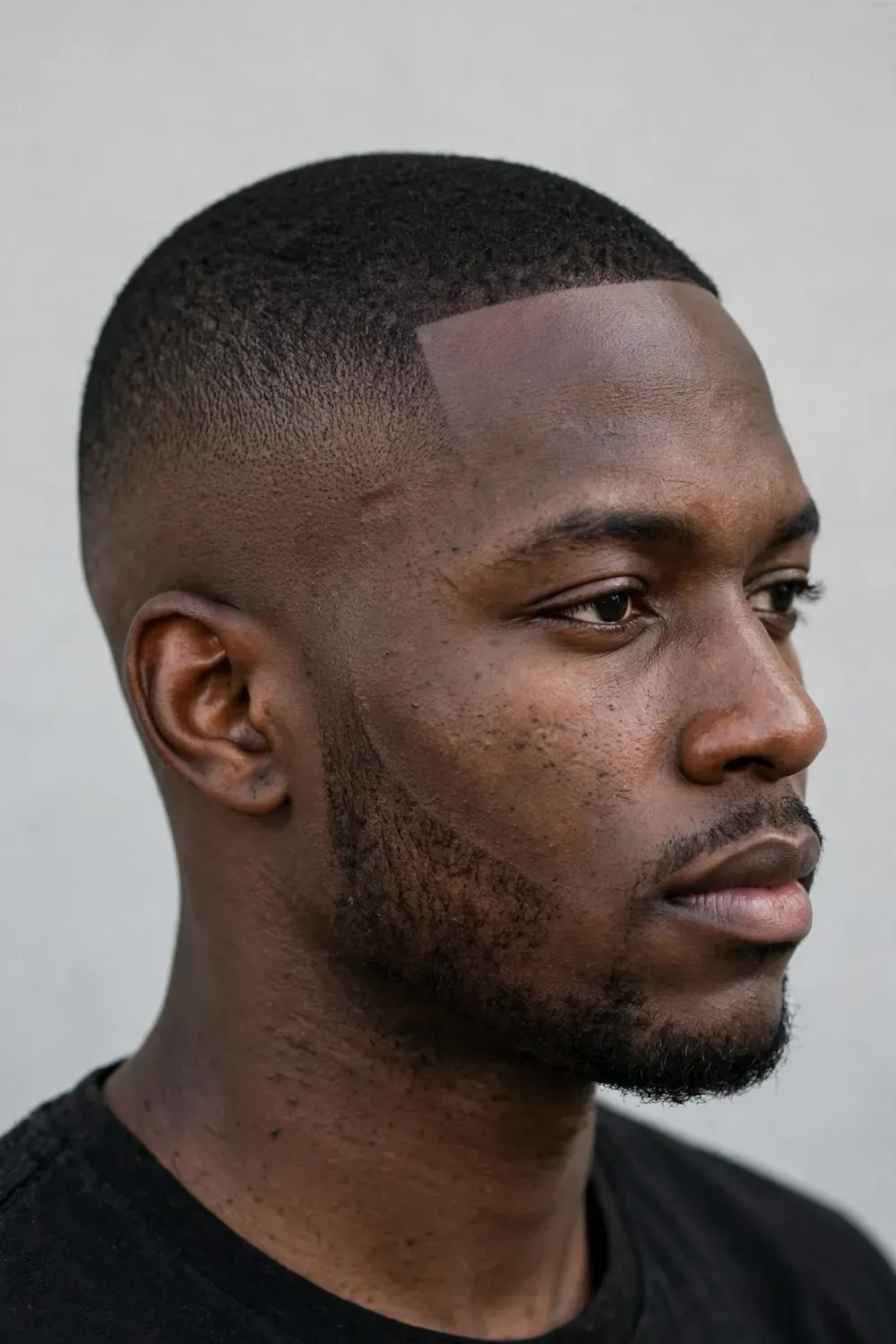
The high regulation cut pushes the taper higher up the sides than the standard version, giving a sharper, more defined finish while keeping the short scissor top that keeps it inspection-safe. The higher taper adds contrast and a cleaner silhouette, which is why it looks particularly good with formal wear. Square faces get the most from it, since the higher sides emphasise the jawline. Ask for “a high regulation cut — high taper on the sides, top scissor-cut to about an inch, tapered neckline.” A small amount of matte paste keeps the top neat without shine. Maintenance runs every two weeks, and the higher taper means regrowth shows a little sooner than on a standard regulation cut, so don’t stretch it much past that.
11. High and Tight
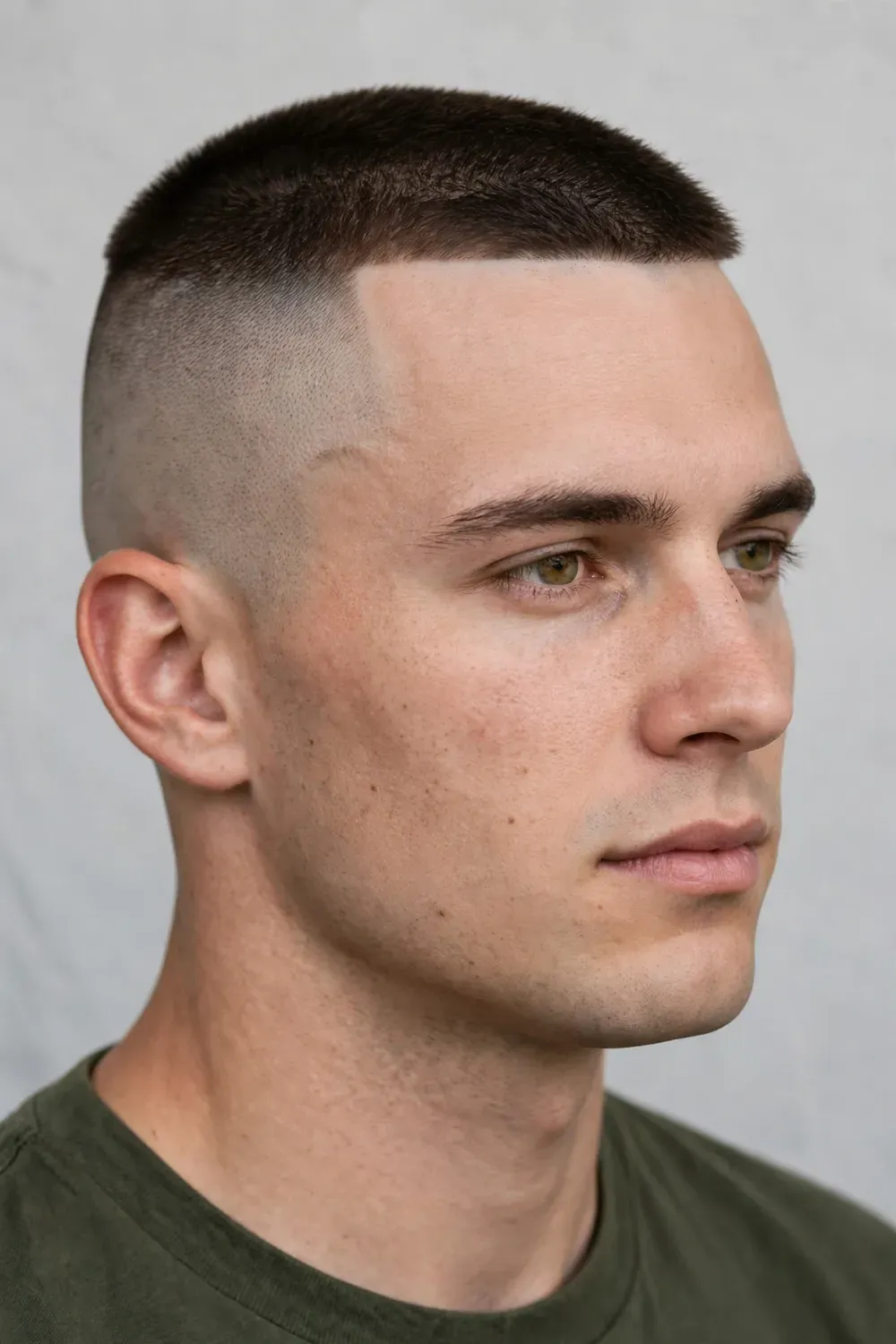
The high and tight is the Marine Corps icon: sides shaved down to skin or a #0, with a short flat patch of hair left on top — a landing strip that runs front to back. The Wikipedia entry on the high and tight traces it back through decades of Marine tradition. Oval and square faces with thick hair wear it best, since the shaved sides put the whole face on display. Ask for “a high and tight — skin or #0 on the sides, #1 or #2 flat on top, no blending into the top patch.” No product needed; the top is too short to style. The shaved sides demand a weekly touch-up, or the crisp line softens fast.
12. High and Tight Recon
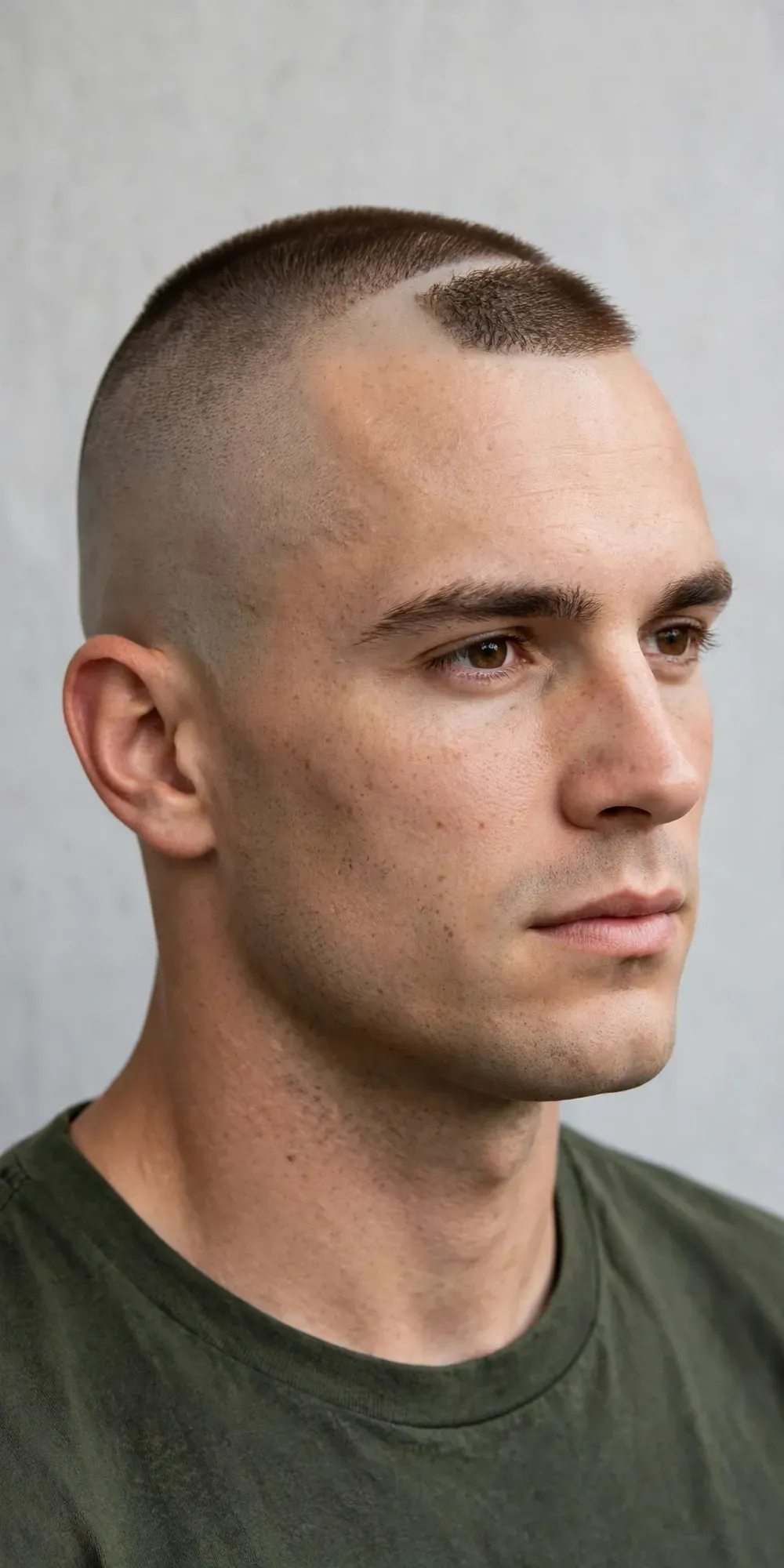
The recon version of the high and tight pushes the fade even higher and shrinks the top patch to a narrow strip — the cut worn by Marine reconnaissance units. It is bolder and more severe than the standard high and tight, with almost nothing left on top to soften it. Oval faces and straight hair suit it best; round faces should steer clear, since the high shave widens the cheeks. Ask for “a high and tight recon — skin sides faded very high, #1 on top, narrow patch only.” Nothing to style, nothing to buy. Maintenance is weekly at minimum — the high skin fade grows out visibly within days.
13. High and Tight with Skin Fade
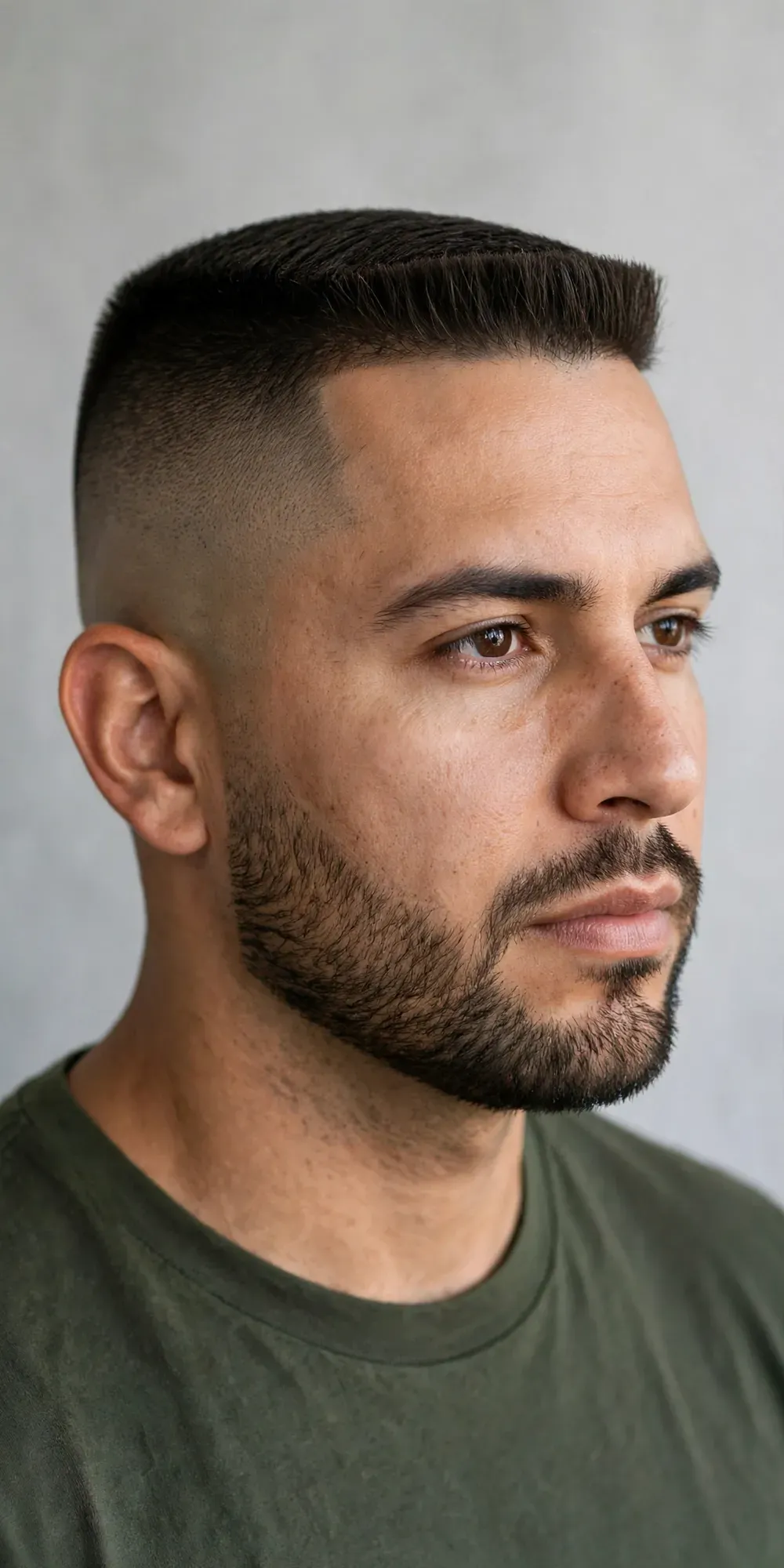
This version keeps the high and tight’s short flat top but replaces the blunt shaved sides with a graduated skin fade, so the transition from skin to hair is smooth. It is the modern, civilian-friendly take on the Marine classic — still unmistakably military, but with a barbershop finish. Dark hair shows the fade gradient best, so bold wearers get the most impact. Ask for “a high and tight with a skin fade — #1 or #2 flat on top, sides faded to skin, no hard line.” A little matte product on top adds texture if you want it. The skin fade needs attention every five to seven days, or the gradient turns fuzzy.
14. Horseshoe Flattop
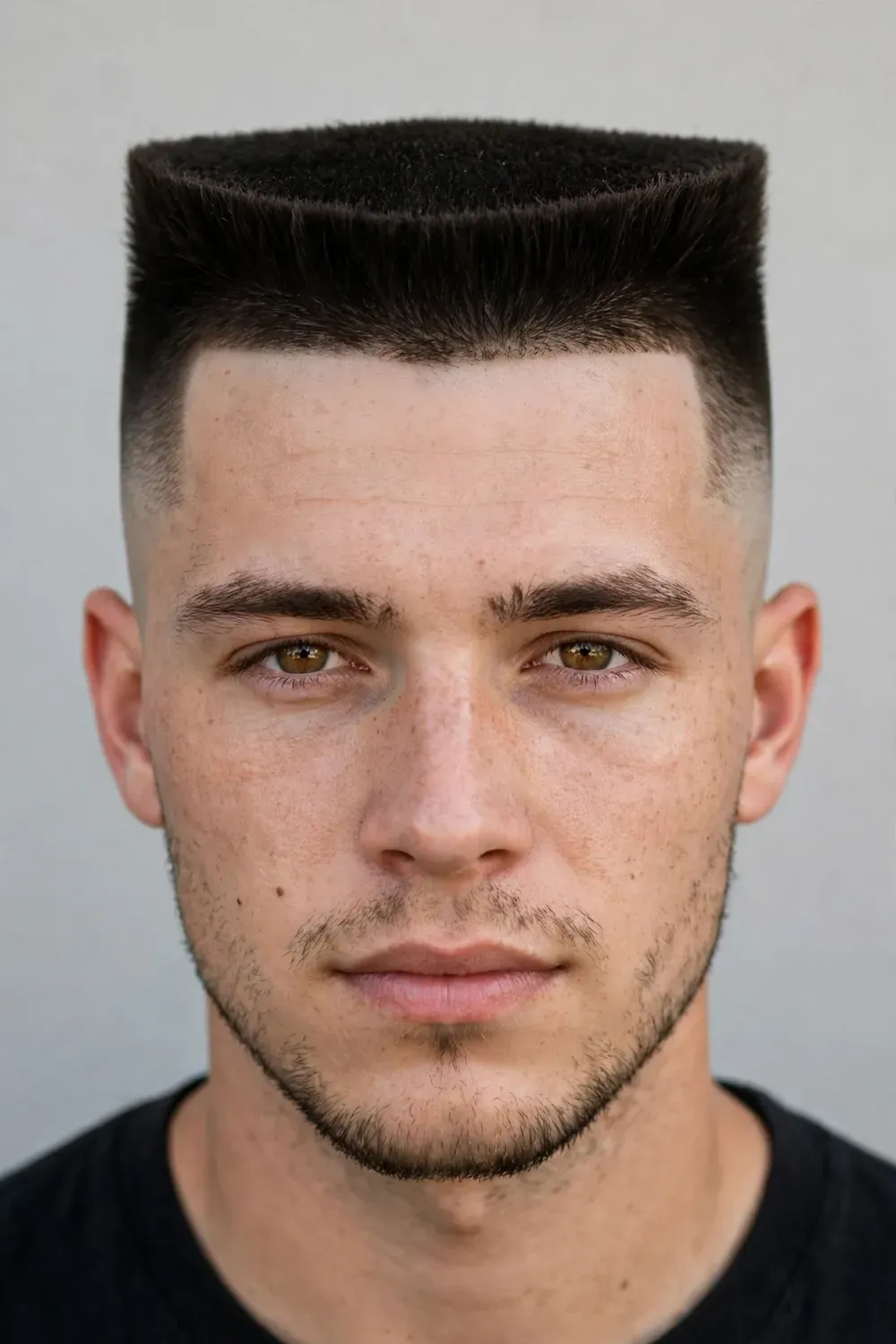
The horseshoe flattop is the boldest cut on this list: a flat top shaped into a U, with the sides shaved high so the top reads as a horseshoe from above. It is a statement cut, worn by Marines who want the flattop silhouette pushed to its extreme, and it is not for the shy. Oval faces with thick, straight hair are the only real candidates — the cut needs hair that stands up on its own. Ask for “a horseshoe flattop — sides shaved to a #0, top cut flat about an inch high, horseshoe shape on top.” A strong-hold wax or pomade is essential to keep the flat shape through the day. Weekly trims are non-negotiable; even a few days of growth ruins the geometry.
15. Flat Top
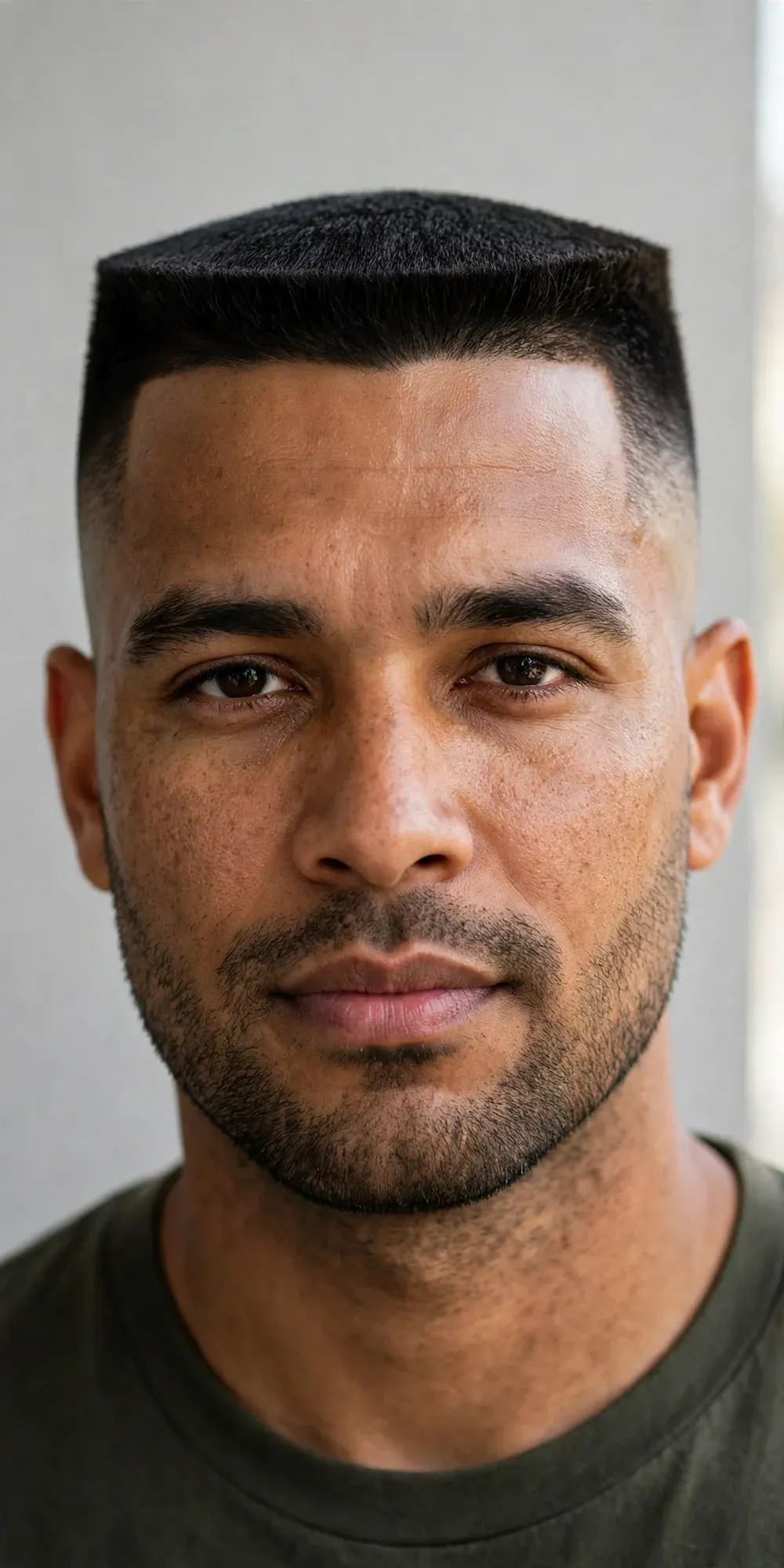
The flat top is cut level across the crown, squared at the corners, so the whole head reads as a clean rectangle from the side. It is the sharpest silhouette in the military book — precise, architectural, and impossible to ignore. Square faces and thick, straight hair suit it best, since the cut needs hair with enough body to stand upright. Ask for “a flat top — top cut flat about an inch to an inch and a half, squared corners, sides tapered short.” A firm-hold pomade or wax keeps the top standing; without product it will flop by midday. This is a high-maintenance cut — weekly trims to hold the level top, and a barber who actually knows how to cut a flat top, because most don’t.
16. Military Low Fade
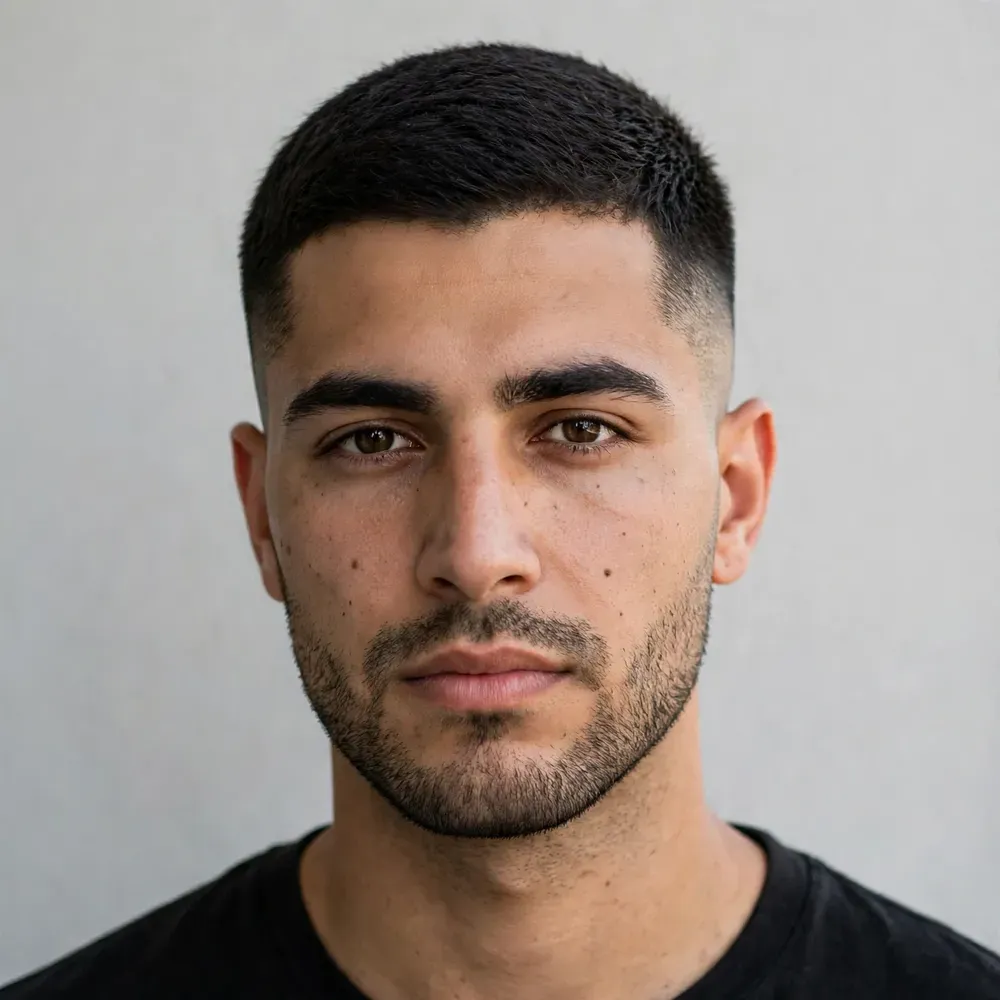
The military low fade starts the fade just above the ears, keeping most of the sides dark and the contrast subtle — the most conservative fade in the military family. It is a quiet cut: clean and sharp. Round faces benefit most, since the low fade keeps the sides full and avoids widening the cheeks, and it works in any setting from the parade ground to the office. Ask for “a low fade — #2 or #3 on top, fade starting just above the ears, tapered neckline.” A little matte paste on top is all the styling it needs. For the full low-fade military family, see our low fade military haircut guide. Trim every two weeks to keep the fade line crisp.
17. Military Mid Fade
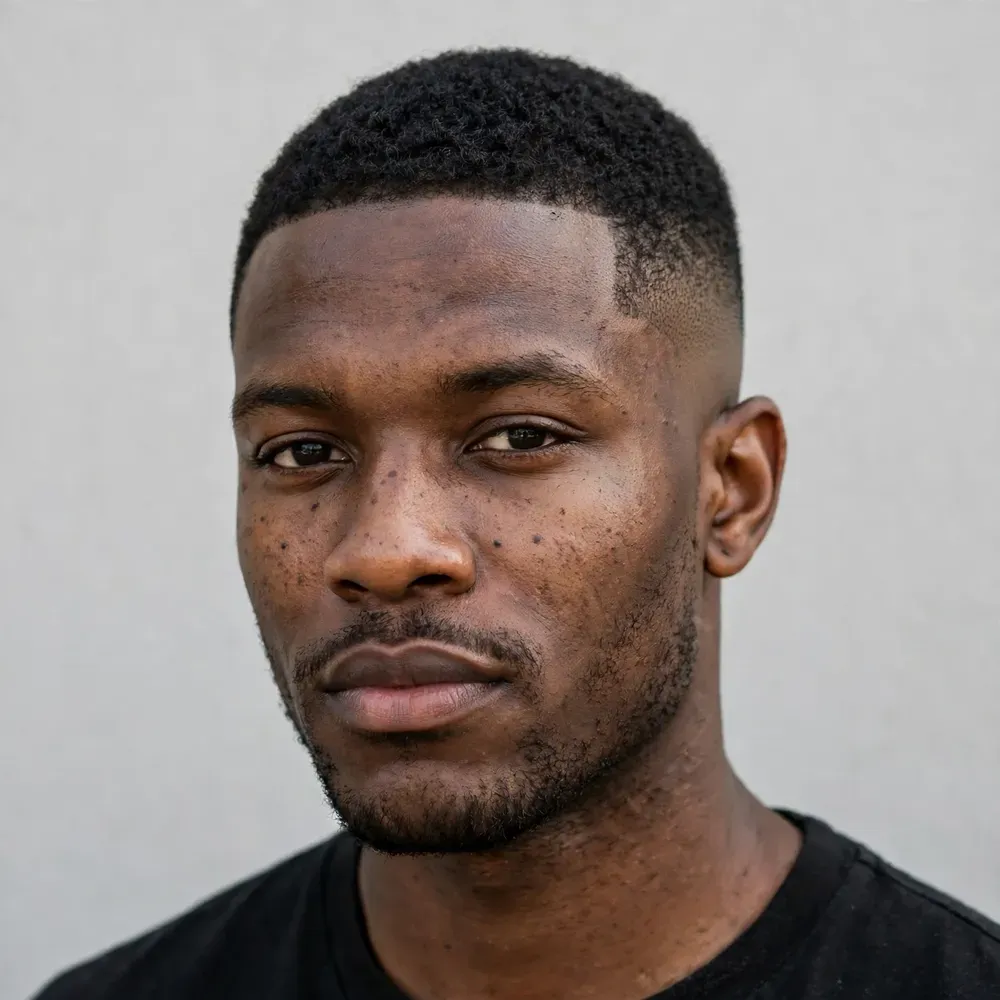
The mid fade starts at the temples — halfway between low and high — and that balance makes it the most popular military fade for civilians. It gives clear contrast without the drama of a high fade, and it works on almost every face shape and hair type. Ask for “a mid fade — #2 or #3 on top, fade starting at the temples, tapered or skin finish on the sides.” A dab of matte clay adds texture to the top. Maintenance is every one to two weeks, and it grows out more gracefully than a skin fade. If you only pick one fade from this list, this is the one.
18. Military High Fade
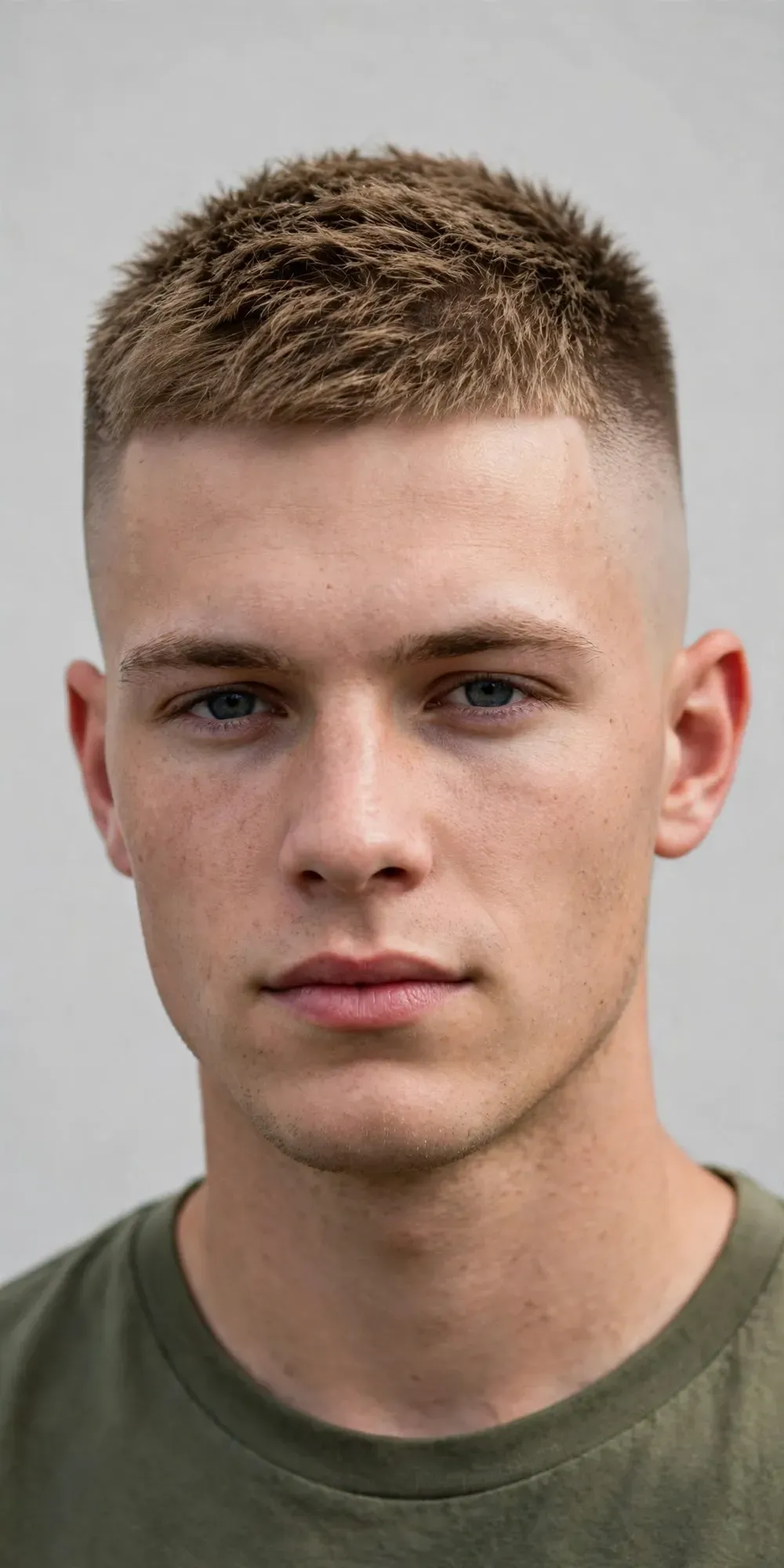
The high fade climbs well above the temples, leaving most of the sides faded. It is the boldest fade in the military set — sharp, modern and impossible to miss. Oval and long faces suit it best, since the high sides add height and lengthen the face, and thick hair gives the top enough presence to balance the fade. Ask for “a high fade — #2 or #3 on top, fade starting high above the temples, skin or #0 at the bottom.” Keep the top textured with a little matte clay for a current finish. The fade blurs fast, so weekly trims are the honest expectation; stretch it to two weeks and the contrast starts to disappear.
19. Fade with Hard Part
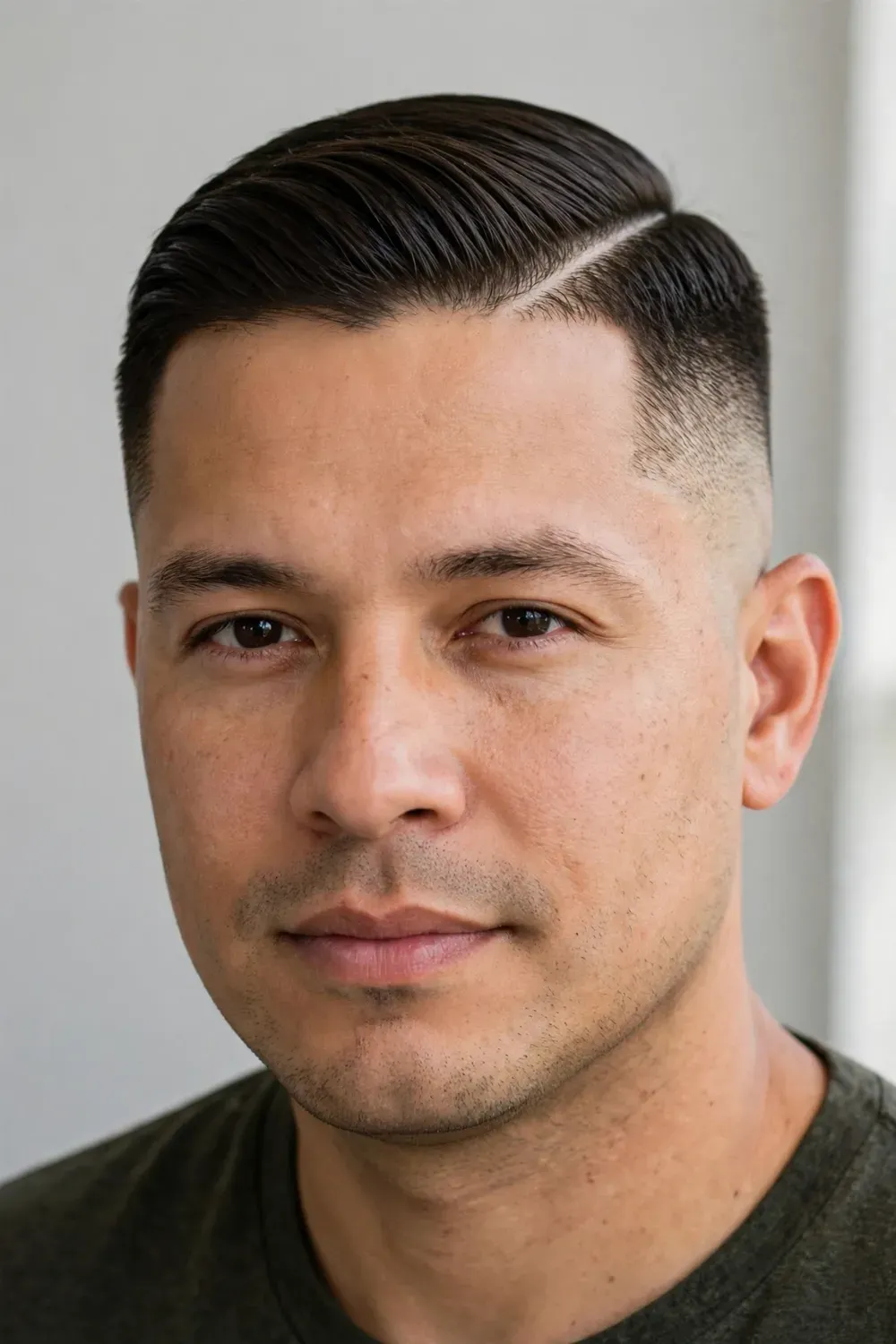
A hard part is a shaved line cut into the hair with clippers, marking exactly where the top parts — and paired with a military fade, it turns a short cut into something razor-precise. The line gives the style structure and makes the part sit the same way every morning without combing. Straight hair and square faces get the cleanest result, since the part line shows up sharpest on smooth, dark hair. Ask for “a fade with a hard part — #2 or #3 on top, faded sides, hard part shaved in on my natural side.” A light pomade holds the part in place. The shaved line grows out in about a week, so weekly touch-ups keep it looking deliberate rather than accidental.
20. Military Undercut
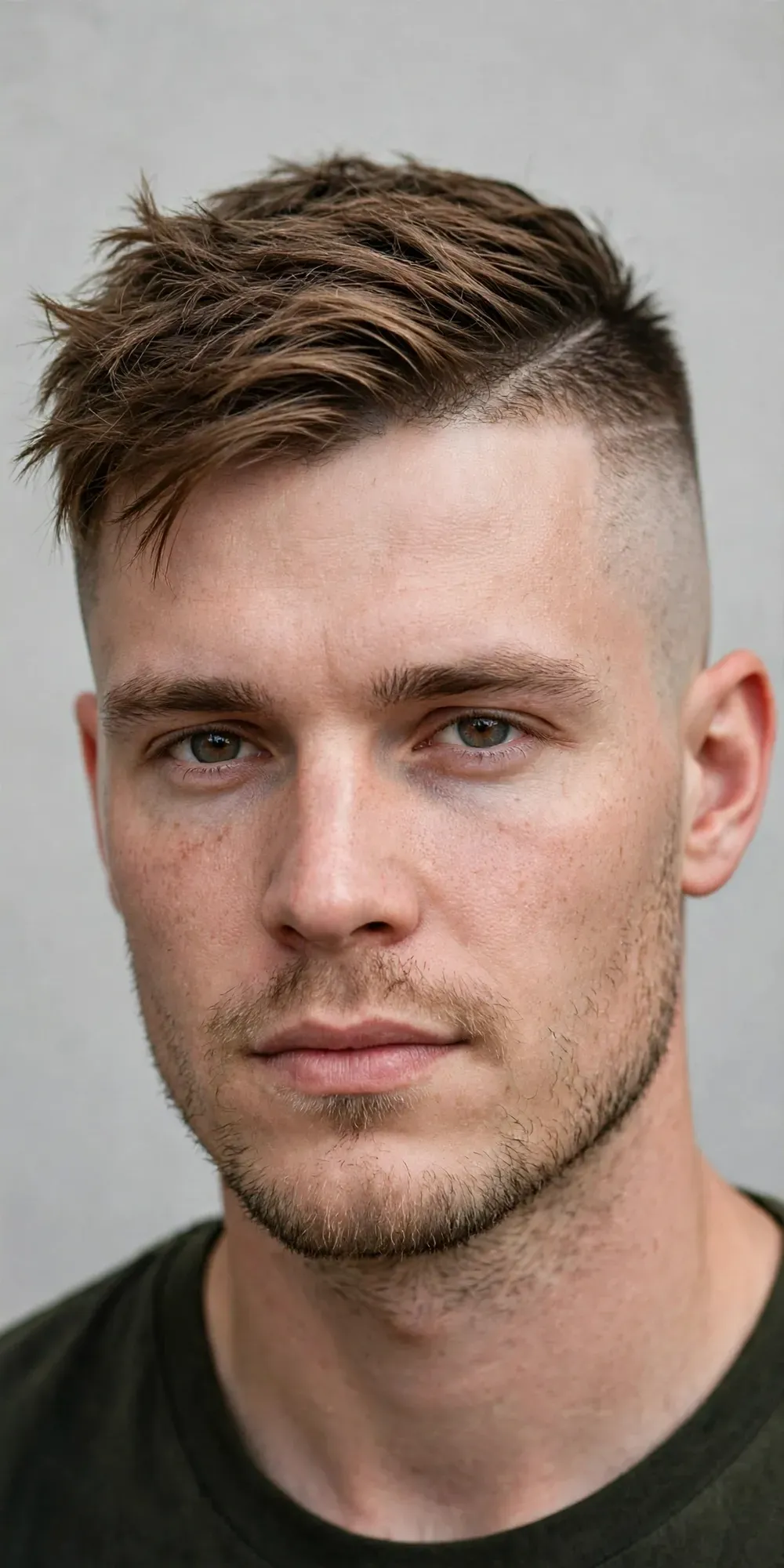
The military undercut disconnects the top from the sides entirely — no blending, no taper, just a sharp step between a longer top and short, clipped sides. It borrows the military’s short sides but gives the top real length to style, which makes it the most fashion-forward cut on this list. Thick hair and younger wearers get the best from it, since the contrast needs volume on top to work. Ask for “an undercut — sides clipped short to a #1 or #2, top left one to two inches, disconnected with no blend.” A matte clay or pomade gives the top hold and texture. Trim every two weeks; the disconnect grows out awkwardly if you leave it, so this one punishes laziness more than most.
21. Ivy League
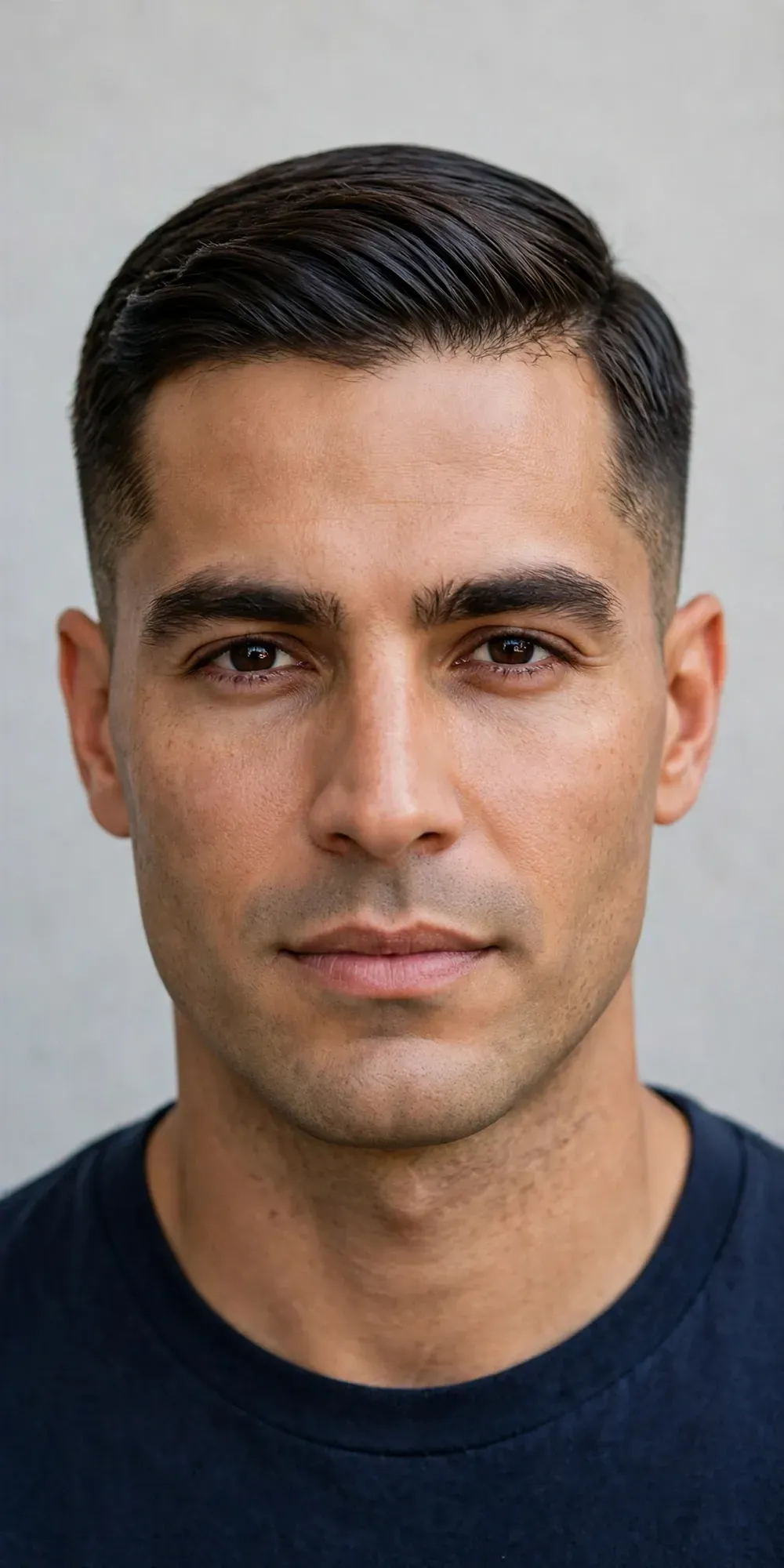
The Ivy League is the military cut with a university polish — a short crew cut with enough length on top to part to the side and comb neatly into place. The sides are tapered to a #2 or #3, the top left around an inch and cut with scissors so it lies flat without sticking up. It suits oval and square faces best, and straight or slightly wavy hair that behaves with a comb. Ask your barber for “an Ivy League, tapered sides on a #2, top scissored to about an inch with a side part on the left.” A pea-sized amount of light pomade gives it a clean, brushed finish without shine. A trim every three weeks keeps the part crisp.
22. Caesar Cut
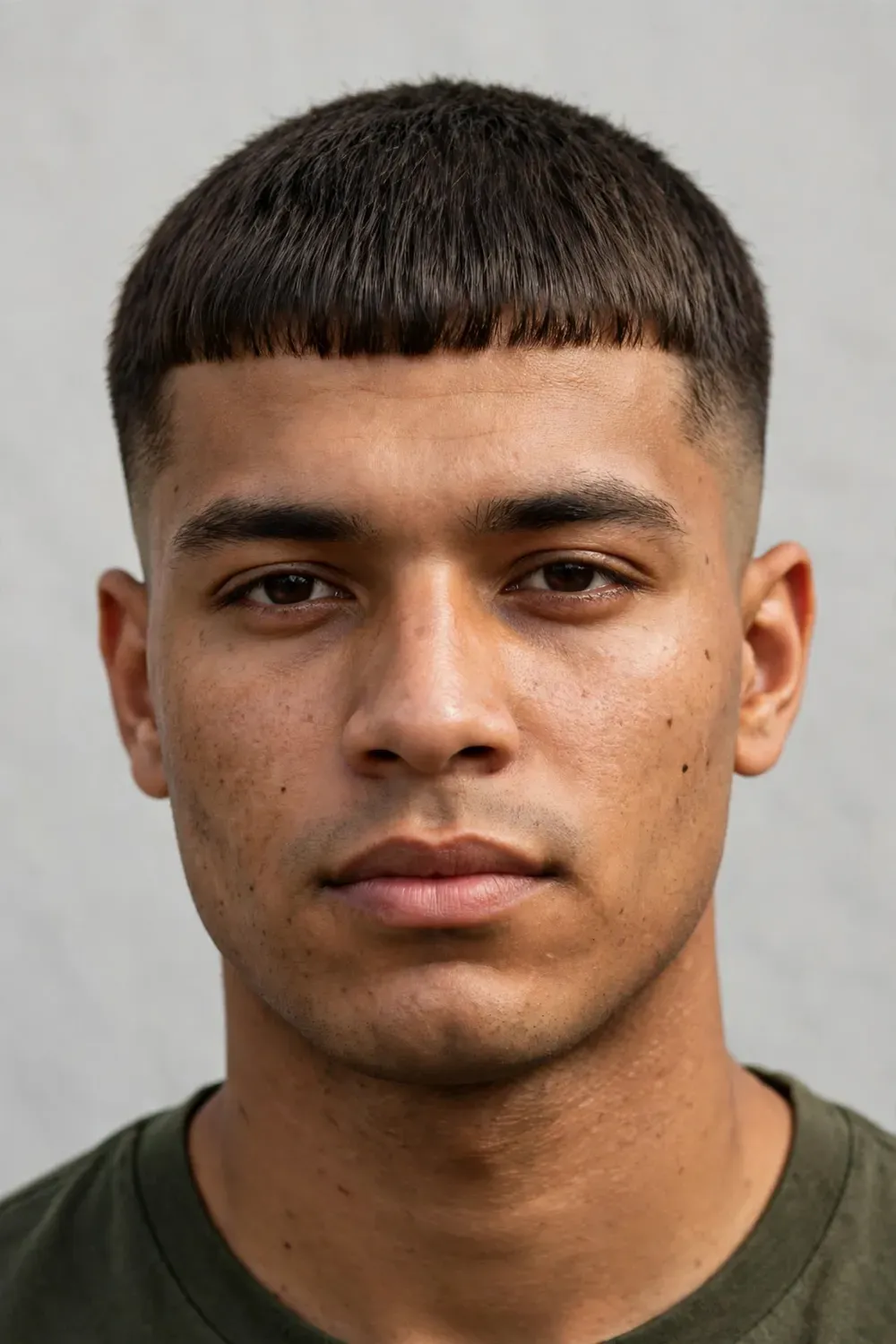
The Caesar is a blunt, forward-brushed fringe cut short all over, with the top left about an inch long and pushed forward over the hairline. The sides are tapered to a #2 or #3 and blended into the top rather than faded to skin. It suits men with straight or fine hair, and it is one of the best military options for a square or oval face — the straight fringe line sharpens the forehead and balances a strong jaw. Ask for “a Caesar, #2 on the sides, top scissored to about an inch and brushed forward, blunt fringe across the front.” A dab of matte paste pushed forward is all the styling it needs, and a tidy-up every two to three weeks keeps it sharp.
23. Spiky Military Cut
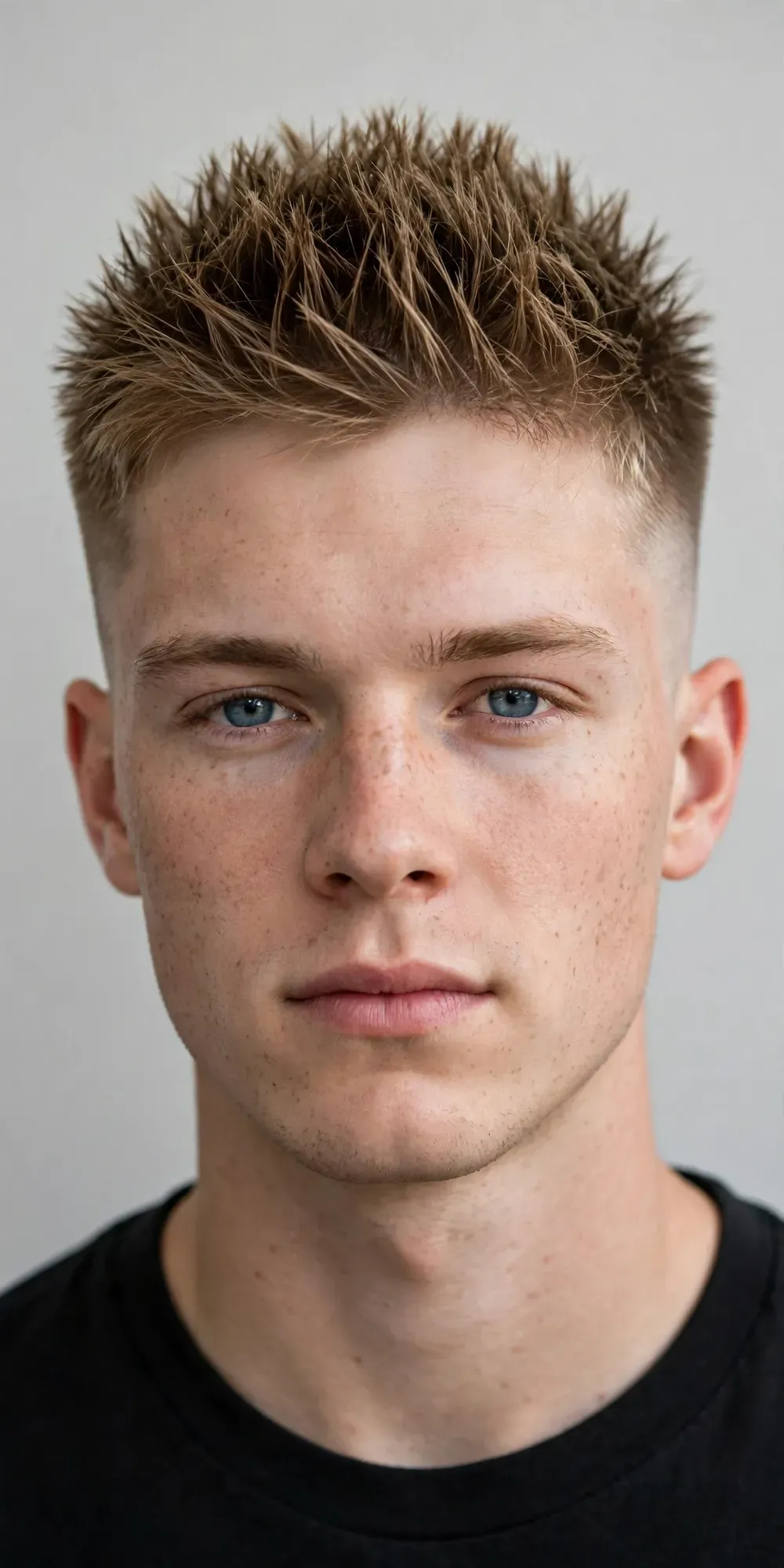
The spiky military cut keeps the discipline of a short back and sides but lets the top stand up in short, piecey spikes. The sides are faded to a #1 or #2, while the top is left around an inch to an inch and a half and point-cut so the spikes form naturally. It suits oval and heart-shaped faces, and straight or slightly wavy hair that holds a shape — very fine hair will need a stronger product. Ask for “short spiky top, about an inch and a half, faded sides on a #1, point-cut so it spikes.” Work a matte clay through damp hair and pinch the ends upward. It needs a trim every two weeks or the spikes turn into a fuzzy mop.
24. Short Coiled Crop

The short coiled crop lets tight coils do the work, cut close enough to stay regulation-neat but left long enough to show the curl pattern instead of buzzing it away. The top is kept around half an inch to three-quarters of an inch, the sides are tapered down to a #1 or #0, and the hairline is shaped clean rather than lined up aggressively. It suits coily and tightly curled hair best, and flatters round and oval faces because the even, compact shape adds height without width. Ask your barber for “a short coiled crop, top at about half an inch, tapered sides on a #1, natural hairline shaped up.” A light leave-in conditioner or curl cream keeps the coils defined and stops them drying out.
25. Forward-Brushed Curls
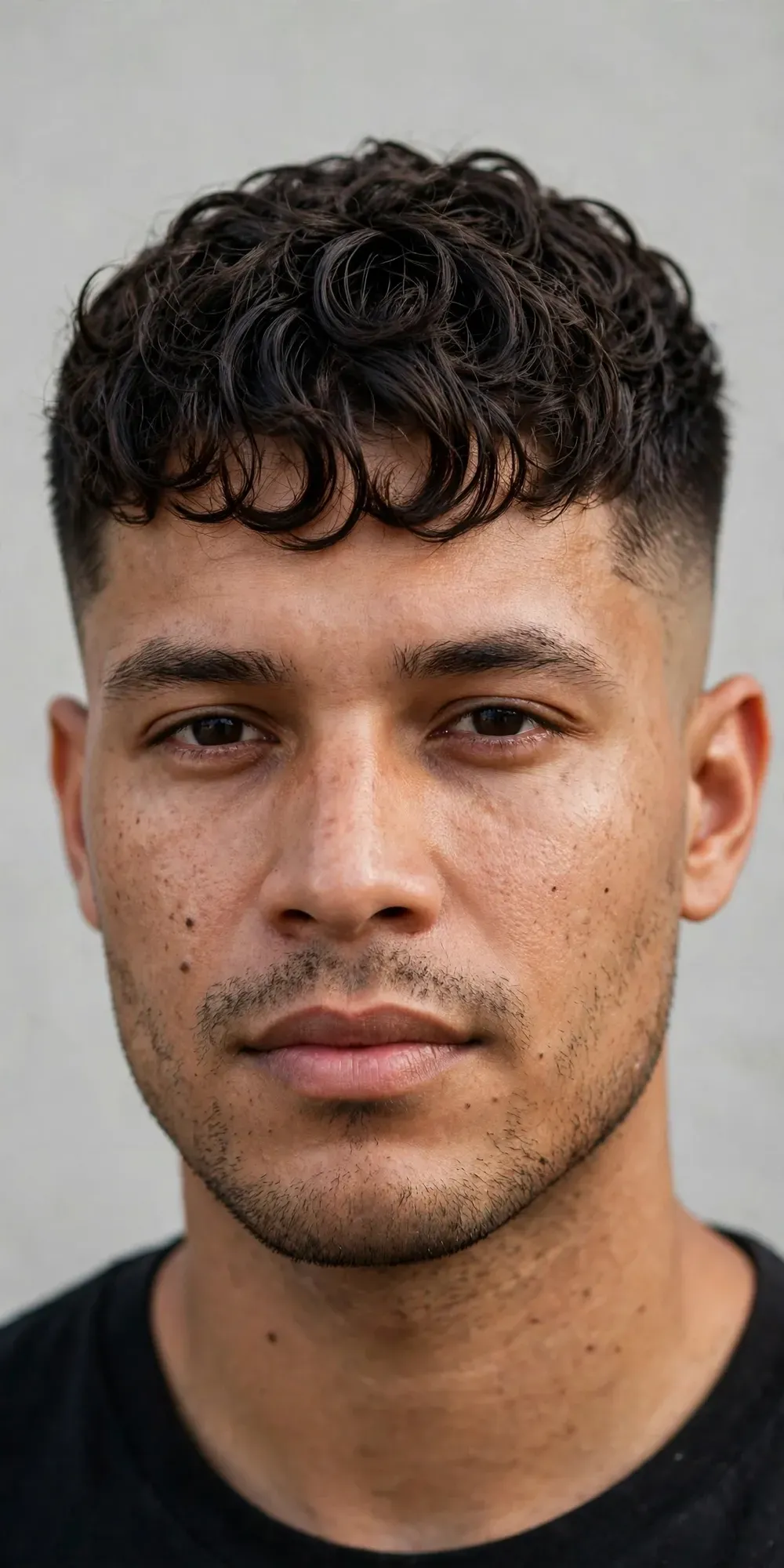
Forward-brushed curls take natural curl and push it forward over the forehead, giving a soft, textured top over sharply faded sides. The top is left an inch to an inch and a half so the curls can form, while the sides are faded to a #1 or skin so the contrast does the talking. It suits wavy and curly hair, and oval or long faces — the forward fall shortens the face visually and the fade keeps the sides tight. Ask for “curly top left about an inch and a half, brushed forward, sides faded to a #1.” A curl cream scrunched in while the hair is damp defines the curls without crunch, and you should never brush them dry or they turn into frizz. It needs a trim every two to three weeks.
26. Sleek Side Part with Taper
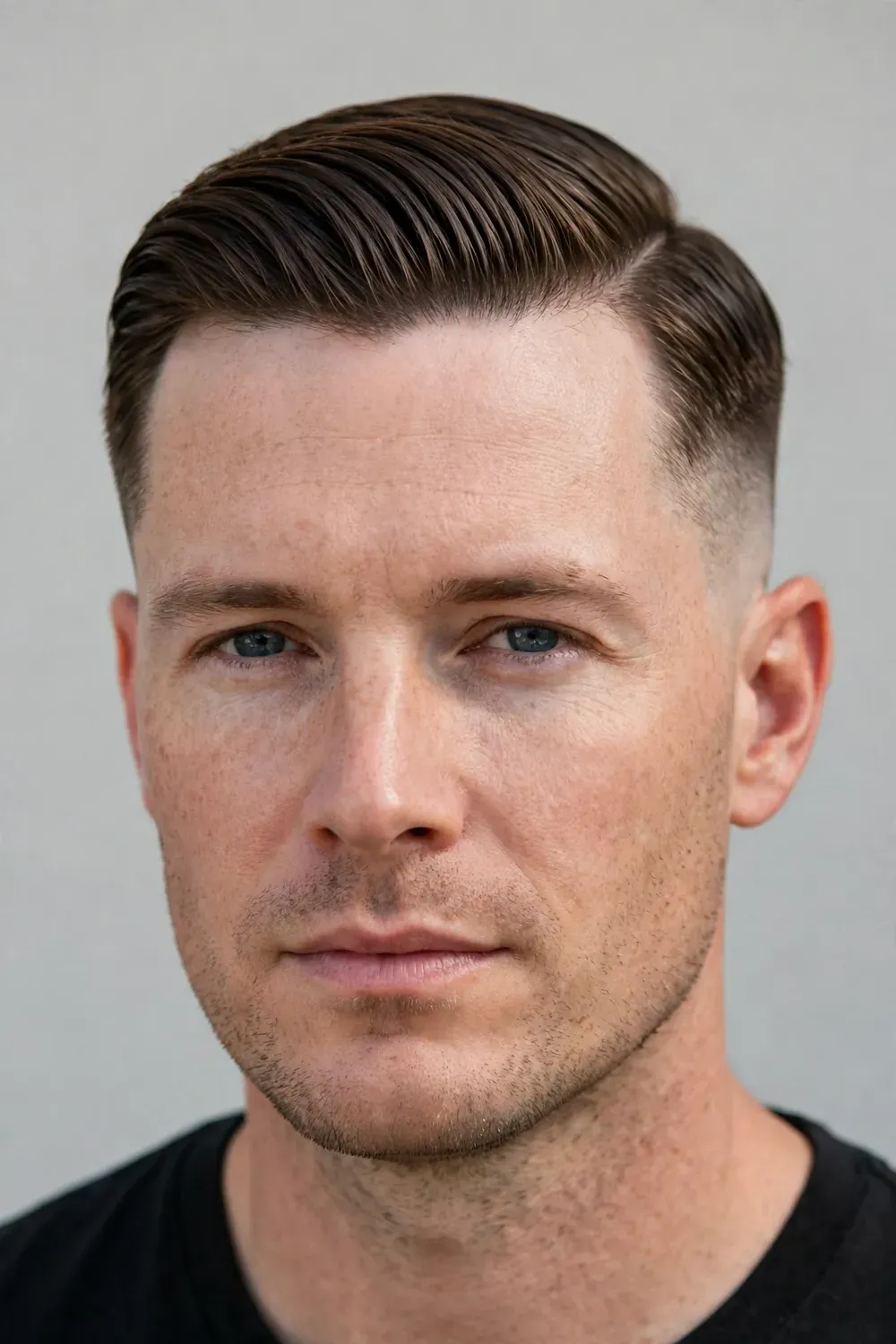
The sleek side part with a taper is the dress-uniform version of a military cut — everything combed, everything in place, not a hair out of line. The top is scissored to about an inch and a half and combed to one side from a clean part, while the sides taper from a #3 at the top down to a #1 at the neckline, with no harsh fade line. It suits straight or fine hair best, and oval or long faces, where the side sweep adds width and structure. Ask for “a side part with a taper, #3 blending to #1 on the sides, top scissored to about an inch and a half, part on the left.” A classic pomade combed through damp hair gives the slick, polished finish. It needs a trim every three weeks.
27. Textured Side Sweep
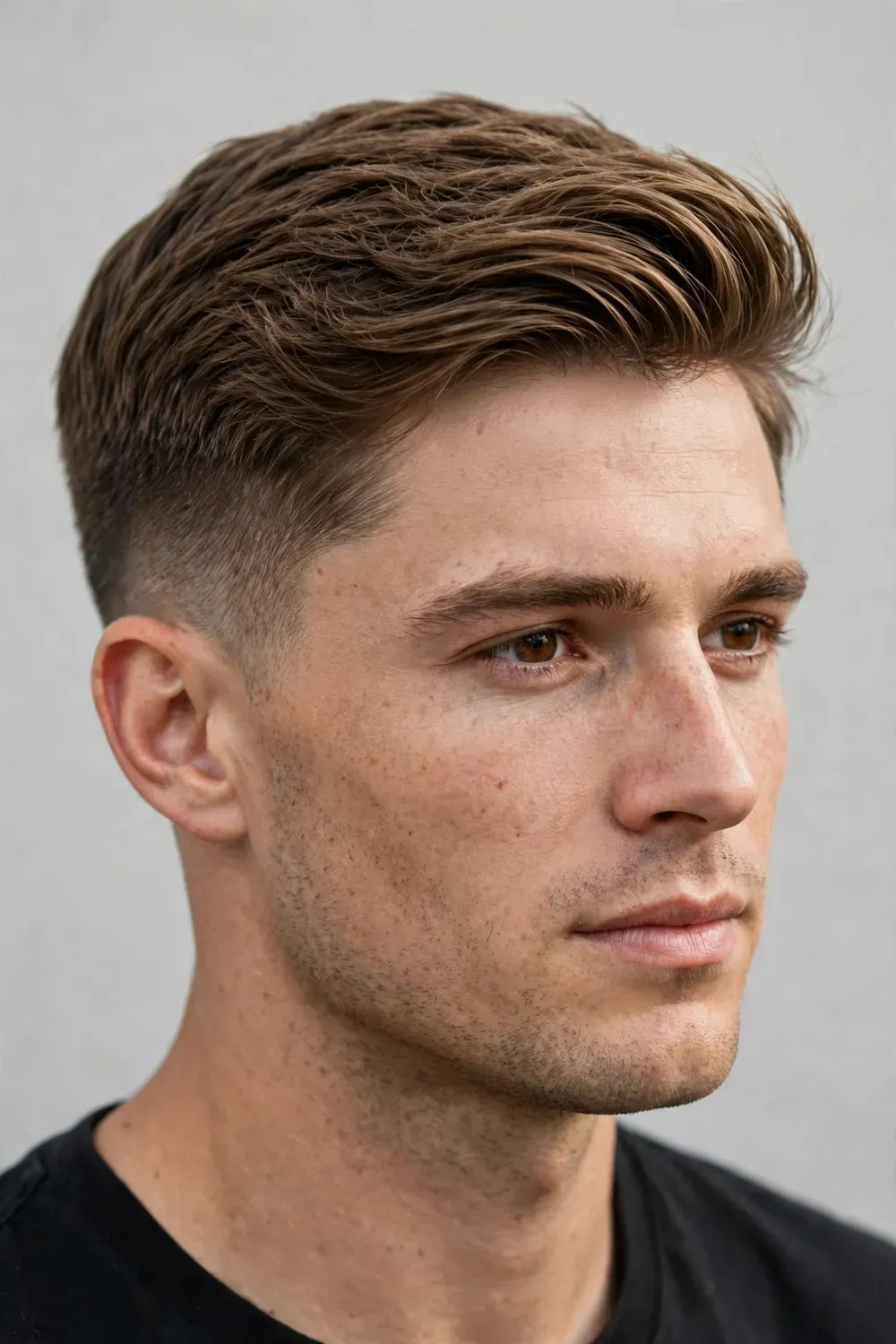
The textured side sweep is a modern military cut for men who want movement without length — a choppy, piecey top swept to one side over clean tapered sides. The top is left one to two inches and point-cut so the texture separates, the sides are faded to a #2 or #1, and the sweep is styled with the fingers rather than a comb so it never looks stiff. It suits wavy and straight hair with some natural texture, and oval or square faces where the diagonal sweep softens a strong jawline. Ask for “a textured top, about an inch and a half, point-cut and swept to the side, faded sides on a #2.” A matte clay or sea salt spray gives the pieces definition without shine, and it only needs a tidy-up every three weeks.
28. Brush-Up with Short Sides
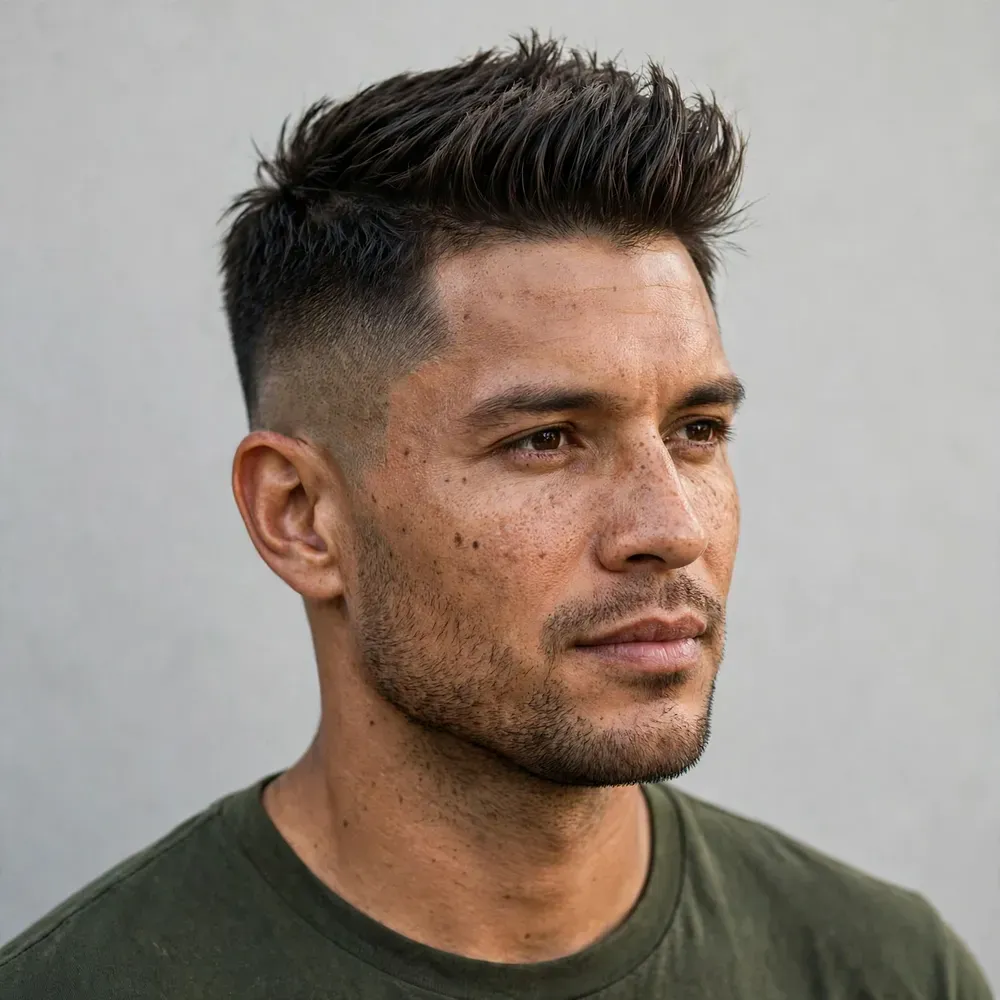
The brush-up takes the top forward and up, giving a military cut some height and energy while the sides stay short and disciplined. The top is left one and a half to two inches, cut with texture so it stands up when brushed back and up, and the sides are faded to a #1 or #2 with a clean tapered neckline. It suits straight and wavy hair with decent thickness — very fine hair struggles to hold the height — and it flatters round faces especially well, since the vertical lift lengthens the face. Ask for “a brush-up, top about an inch and a half to two inches, textured, sides faded on a #1.” Blow-dry it upward with a vent brush, then set it with matte paste. It needs a trim every two weeks.
29. Military Quiff
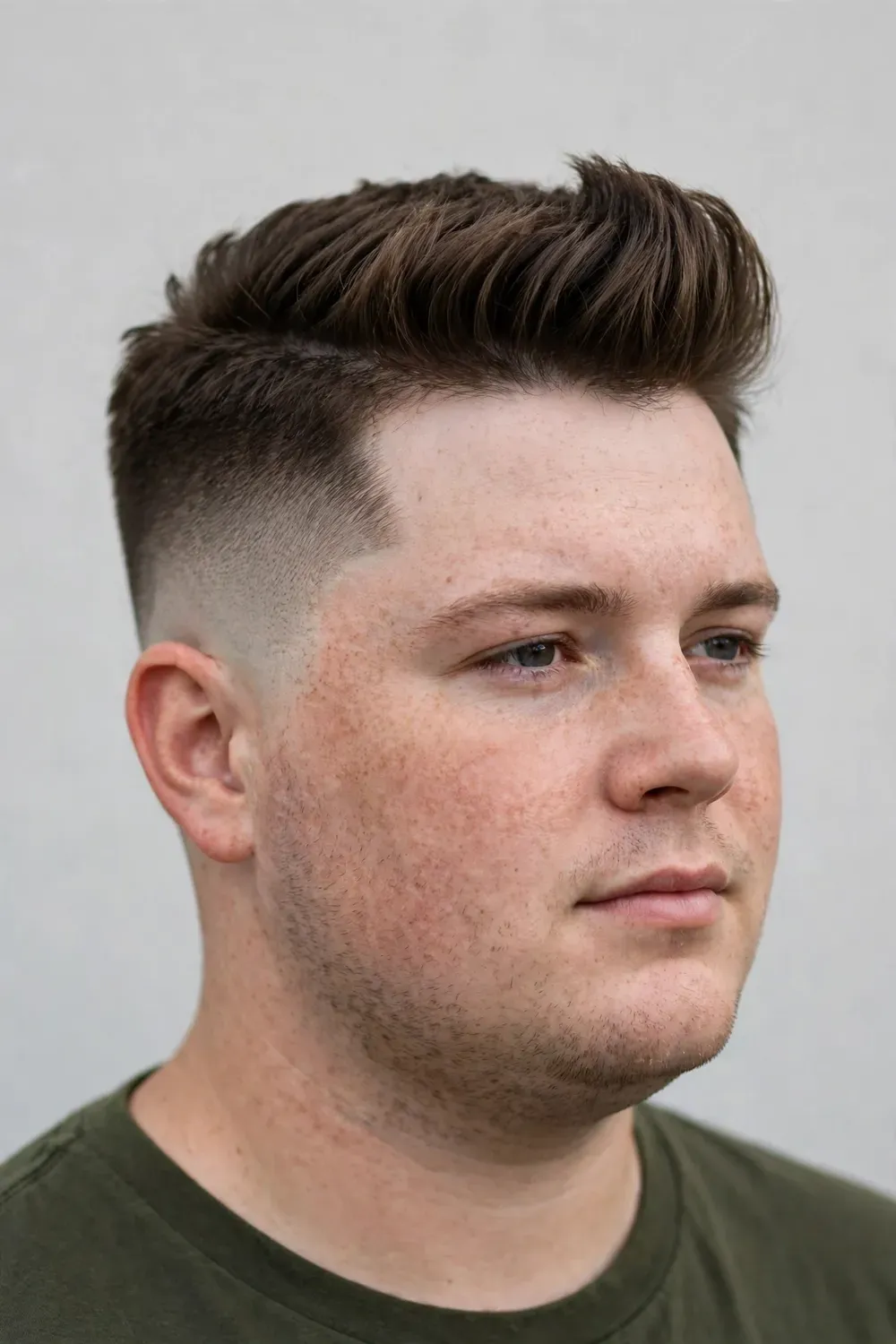
The military quiff keeps the volume of a classic quiff but trims it down to a length that still looks disciplined — short enough to pass a glance, bold enough to stand out. The front is left two to two and a half inches and swept up and back, the back and sides are faded tight to a #1 or skin, and the top is thinned just enough that it holds height without looking puffy. It suits thick, straight or wavy hair and oval or square faces, where the height balances the jaw. Ask for “a short quiff, front about two inches, faded sides on a #1, top textured so it holds up.” Blow-dry the front upward with a round brush, then lock it with a strong-hold matte clay. It needs a trim every two weeks.
30. Short Afro with Line-Up
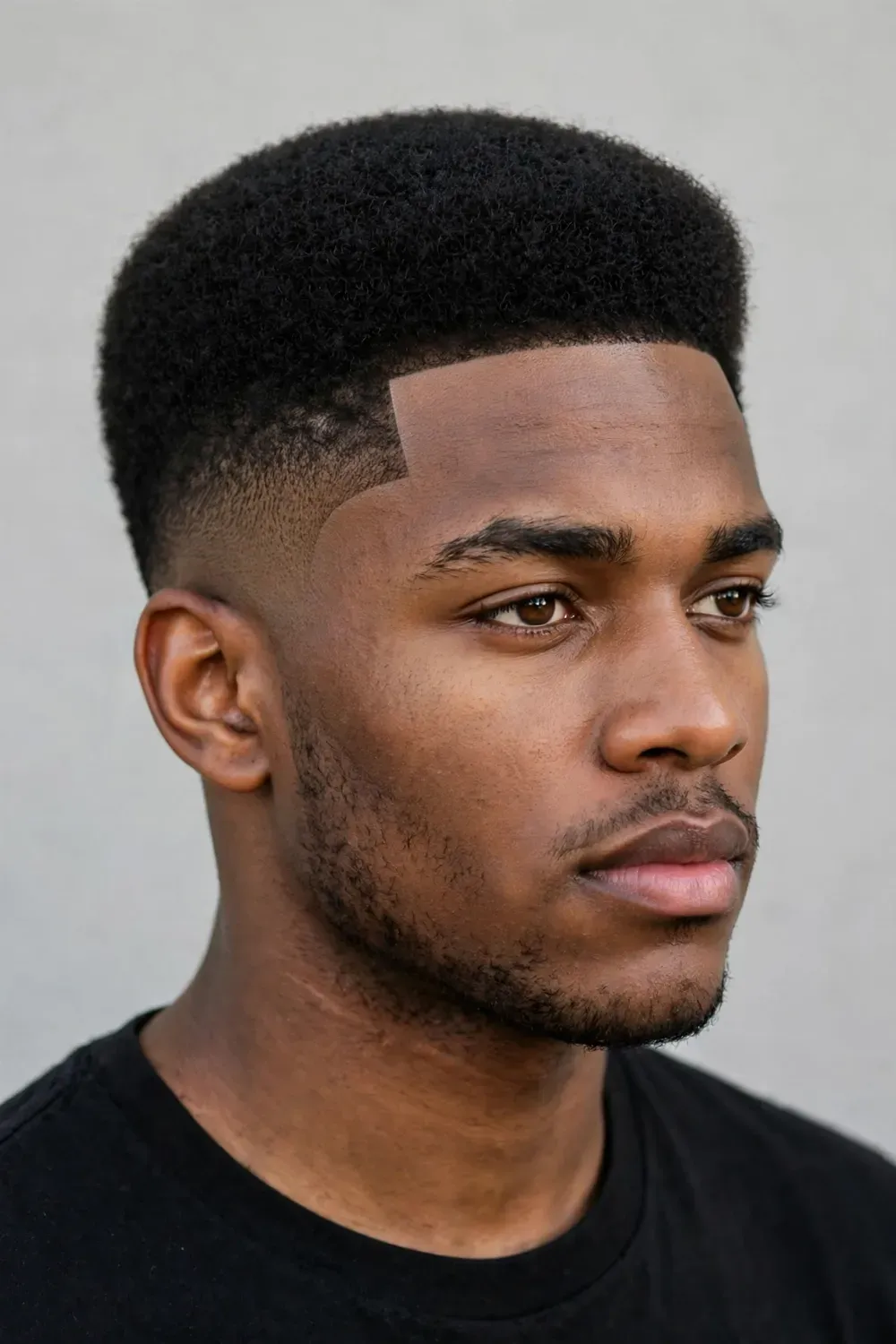
The short afro with a line-up keeps the natural shape of an afro but trimmed tight and finished with razor-sharp edges at the hairline, temples and beard. The top is kept around an inch, shaped evenly all round, the sides are tapered to a #1 or #0, and the line-up is carved clean with a razor or trimmer for that crisp, geometric frame. It suits coily and afro-textured hair, and flatters oval and square faces — the even, rounded shape balances a strong jawline beautifully. Ask your barber for “a short afro, about an inch all over, tapered sides on a #1, and a sharp line-up on the hairline and temples.” A light hair oil or shea butter keeps the texture soft and healthy. It needs a line-up touch-up every week to ten days.
31. Jarhead Cut
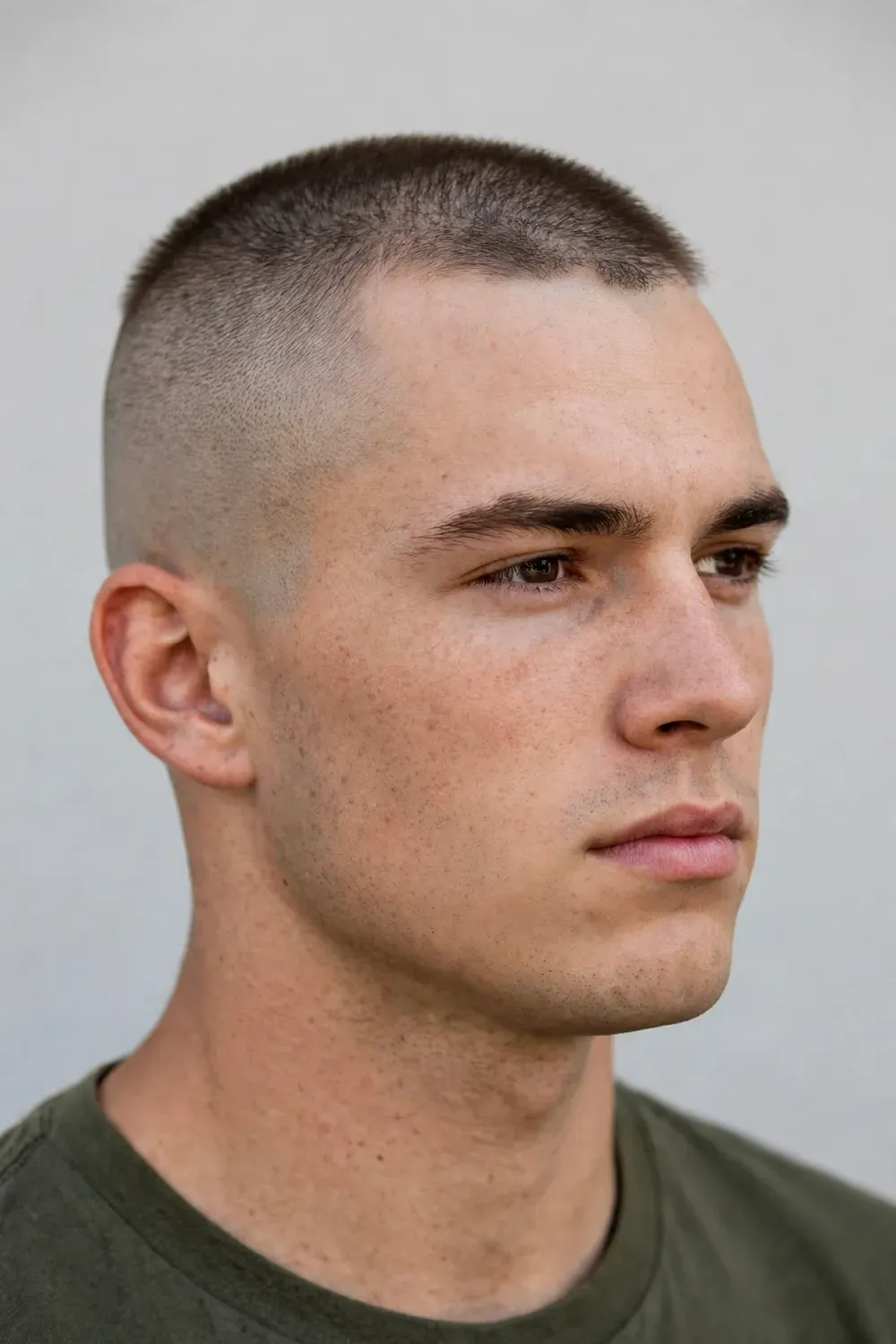
The jarhead is the cut the movies made famous — skin-shaved sides, a tiny patch of hair on top, and nothing else. It is the most extreme version of the high and tight: the sides go to the skin with a razor or a #0, and the top is left at a #1 or #2, just enough to show the shape of the head. It suits men with a well-shaped head and strong features, and oval or square faces — it leaves nothing to hide behind, so it is brutally honest about head shape. Ask for “a jarhead, sides shaved to the skin, top on a #1.” No product, no styling, no comb — just wash and go. The sides need re-shaving every three to five days or the look goes from sharp to scruffy fast.
32. Low and Tight
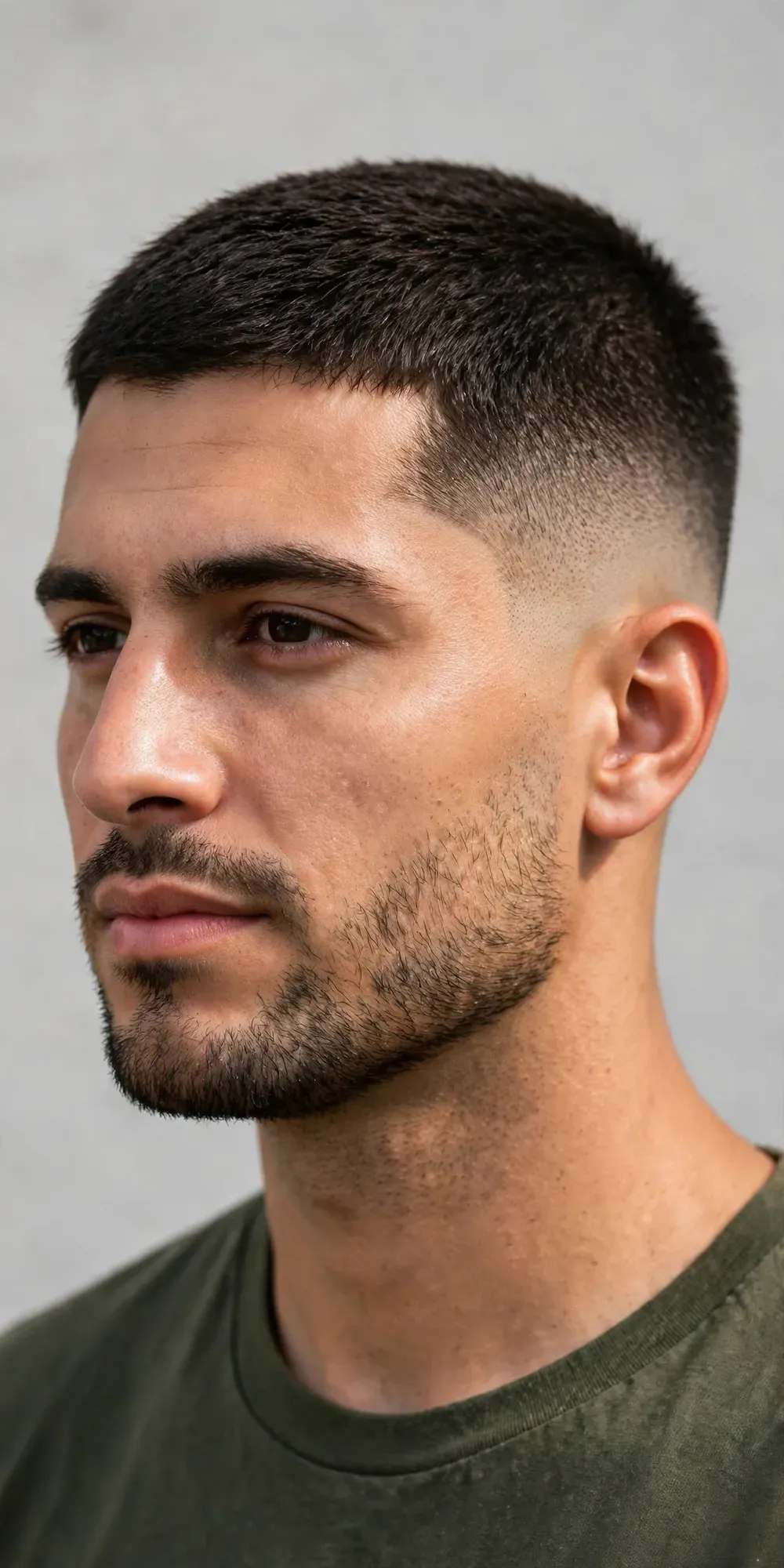
The low and tight is the gentler cousin of the high and tight — same short, clean idea, but the fade sits lower, so the contrast is softer and the cut is easier to wear day to day. The sides are faded from a #1 at the bottom up to a #3 at the blend, and the top is left at a #3 or #4. It suits almost every face shape, and it is a good first military cut for men who find the high and tight too severe. Ask for “a low and tight, top on a #3, low fade from a #1 up to a #3.” Most men wear it with nothing at all. It needs a trim every two to three weeks.
33. Marine High and Tight
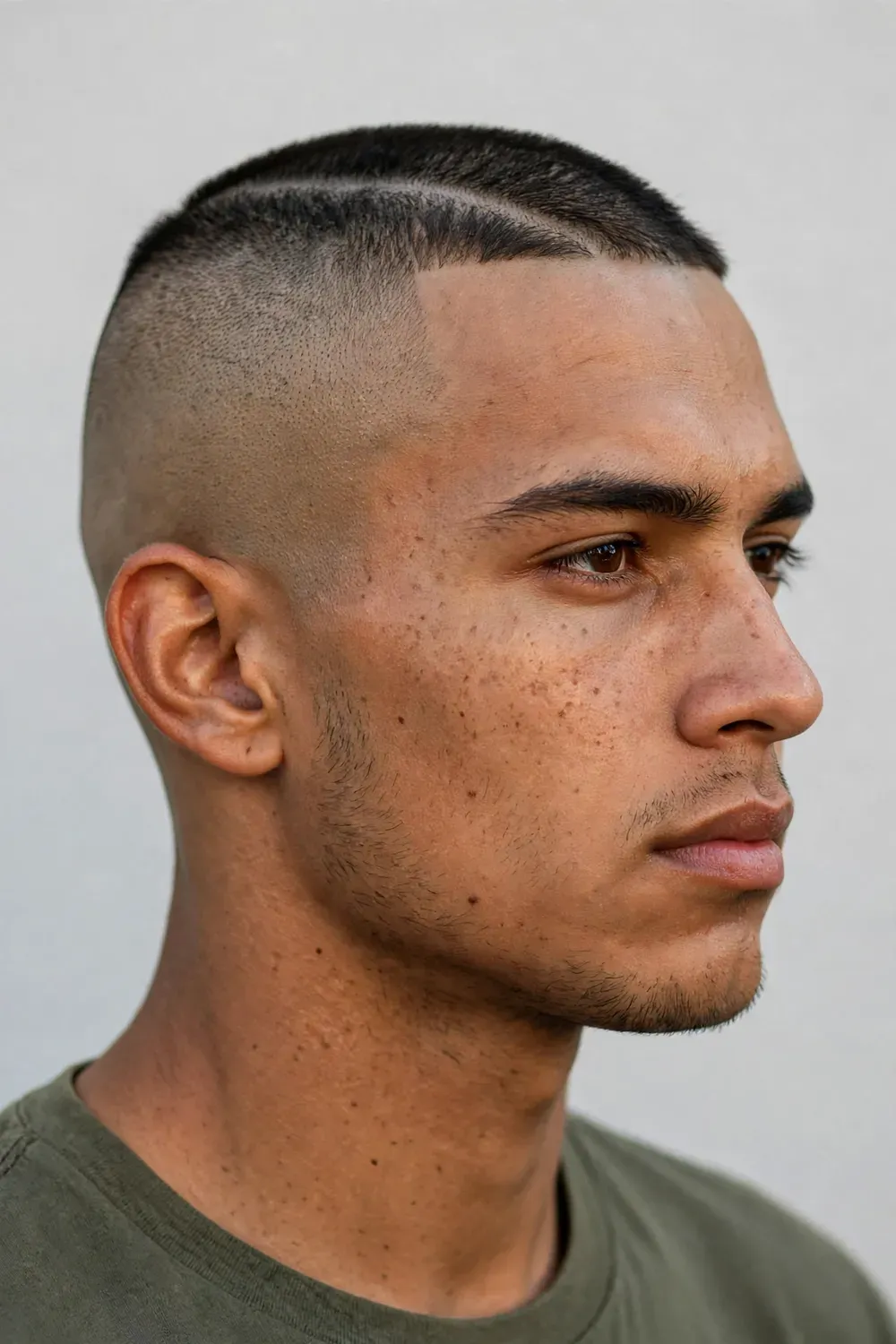
The Marine high and tight is the signature Marine Corps cut, and it is stricter than the civilian version most barbers know. The sides are shaved to the skin up to the temple line, leaving only a narrow landing strip of hair on top at a #1 or #2 — the High and tight as the Marines actually wear it. It suits oval and square faces with strong bone structure, and any hair type, since there is barely any hair left to manage. Ask for “a Marine high and tight, skin on the sides up to the temple, top on a #1, narrow landing strip.” No product and no styling — the cut is the style. It needs the sides re-shaved every four to seven days.
34. Military Buzz Cut with Beard
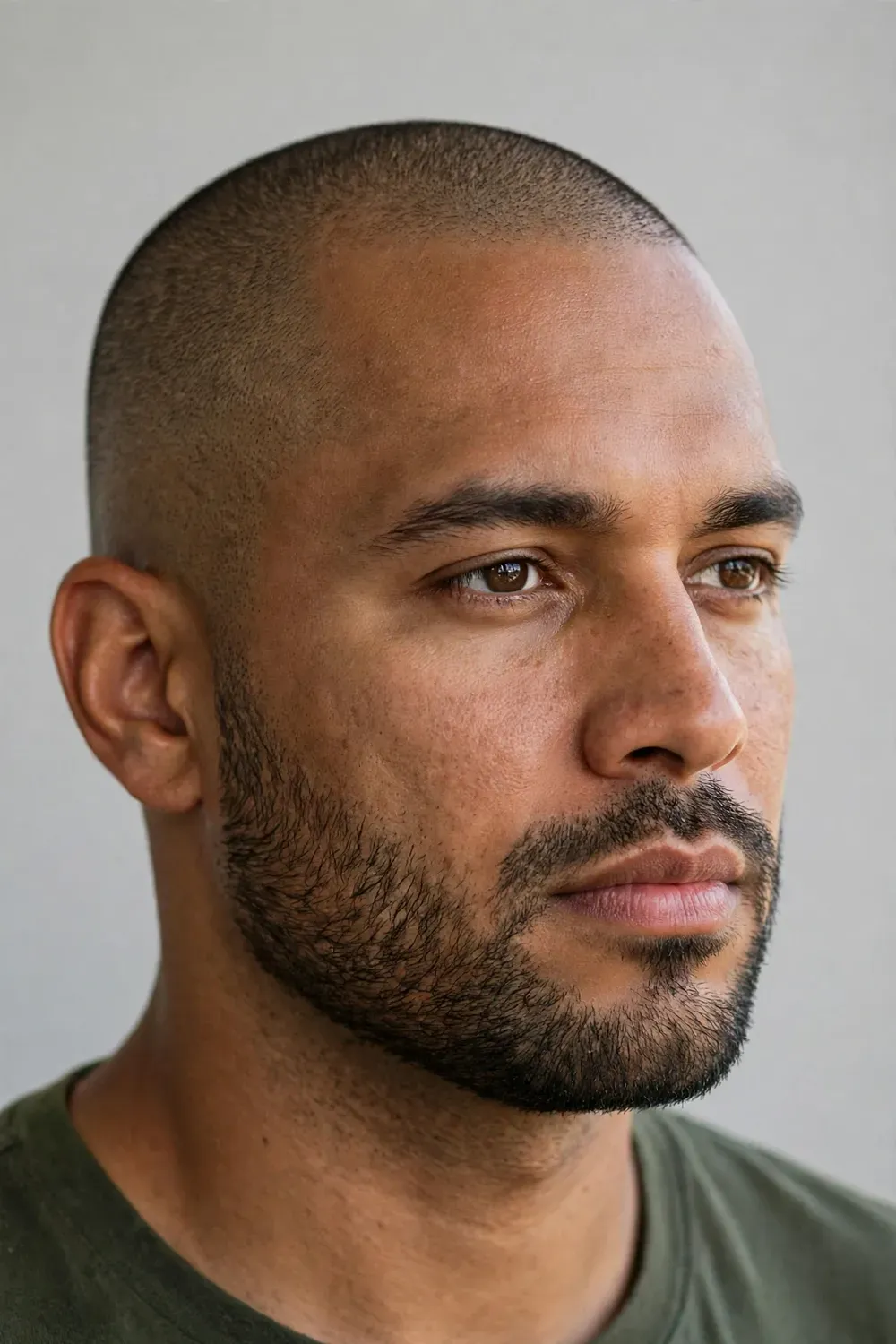
The military buzz cut with a beard pairs a short, even buzz on top with a full beard that is faded into the hairline so the two connect cleanly. The hair is buzzed at a #2 or #3 all over, the sides are faded down to a #1, and the beard is blended up from the cheek line. It suits oval, round and square faces — the beard adds structure to a round face and softens a square jaw — and it works with straight, wavy or curly hair alike. Ask for “a buzz on a #2, sides faded to a #1, and the beard faded into the hairline.” Beard oil keeps the blend looking intentional. Maintenance is a buzz touch-up every two weeks and a beard trim weekly.
35. Short Back and Sides
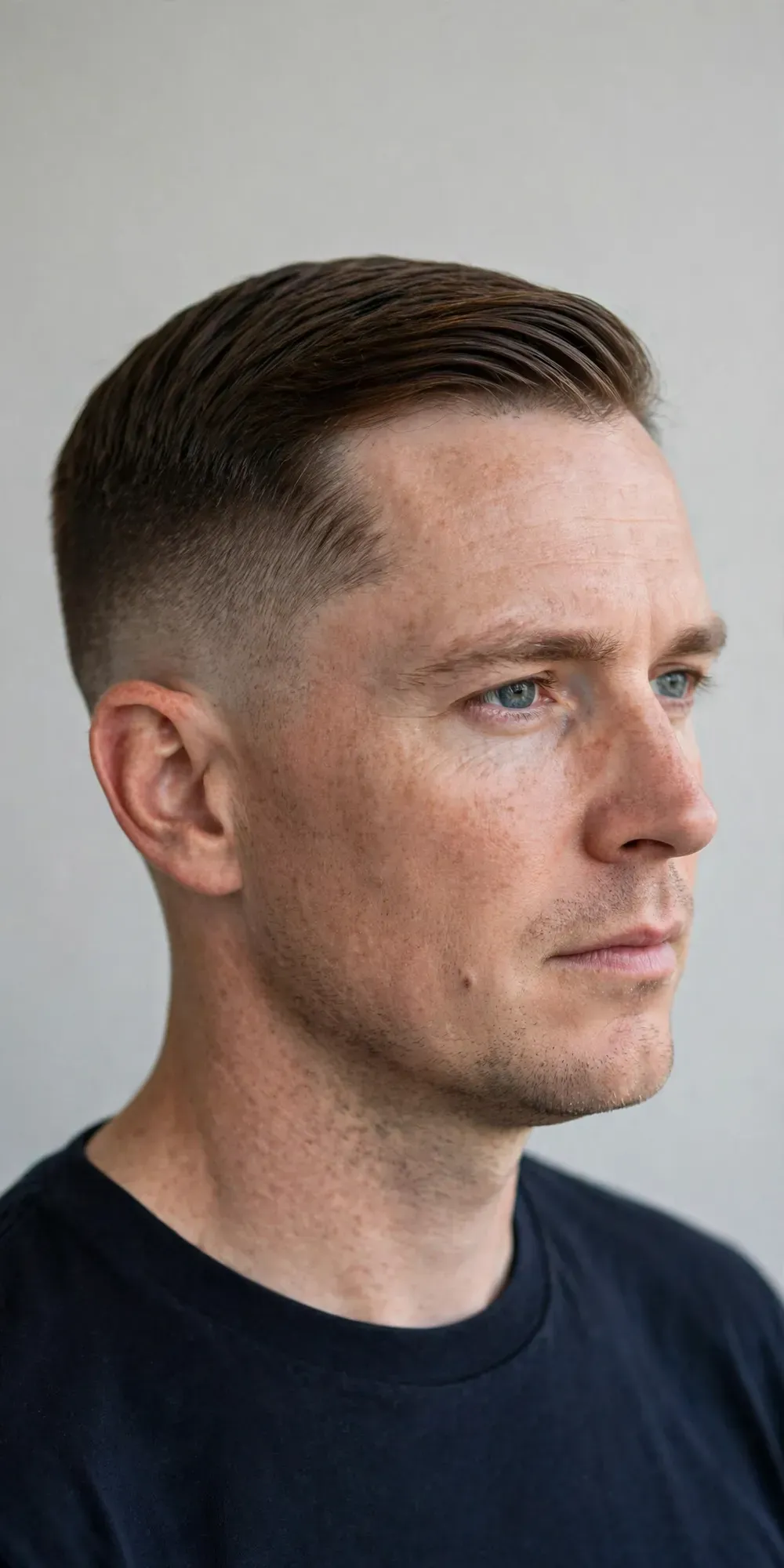
Short back and sides is the British Army classic, and it is the most quietly smart cut in this list — nothing flashy, just a neat, tapered finish that looks right in uniform and in a suit. The back and sides are scissor-tapered or clipped from a #3 at the top down to a #1 at the neckline, and the top is left an inch to an inch and a half. It suits straight and fine hair best, and every face shape — it is the safe, universal military cut. Ask for “short back and sides, tapered from a #3 to a #1, top scissored to about an inch, natural finish.” A touch of light pomade gives it a tidy sheen. It needs a trim every three to four weeks.
36. Military Cut for Receding Hairline
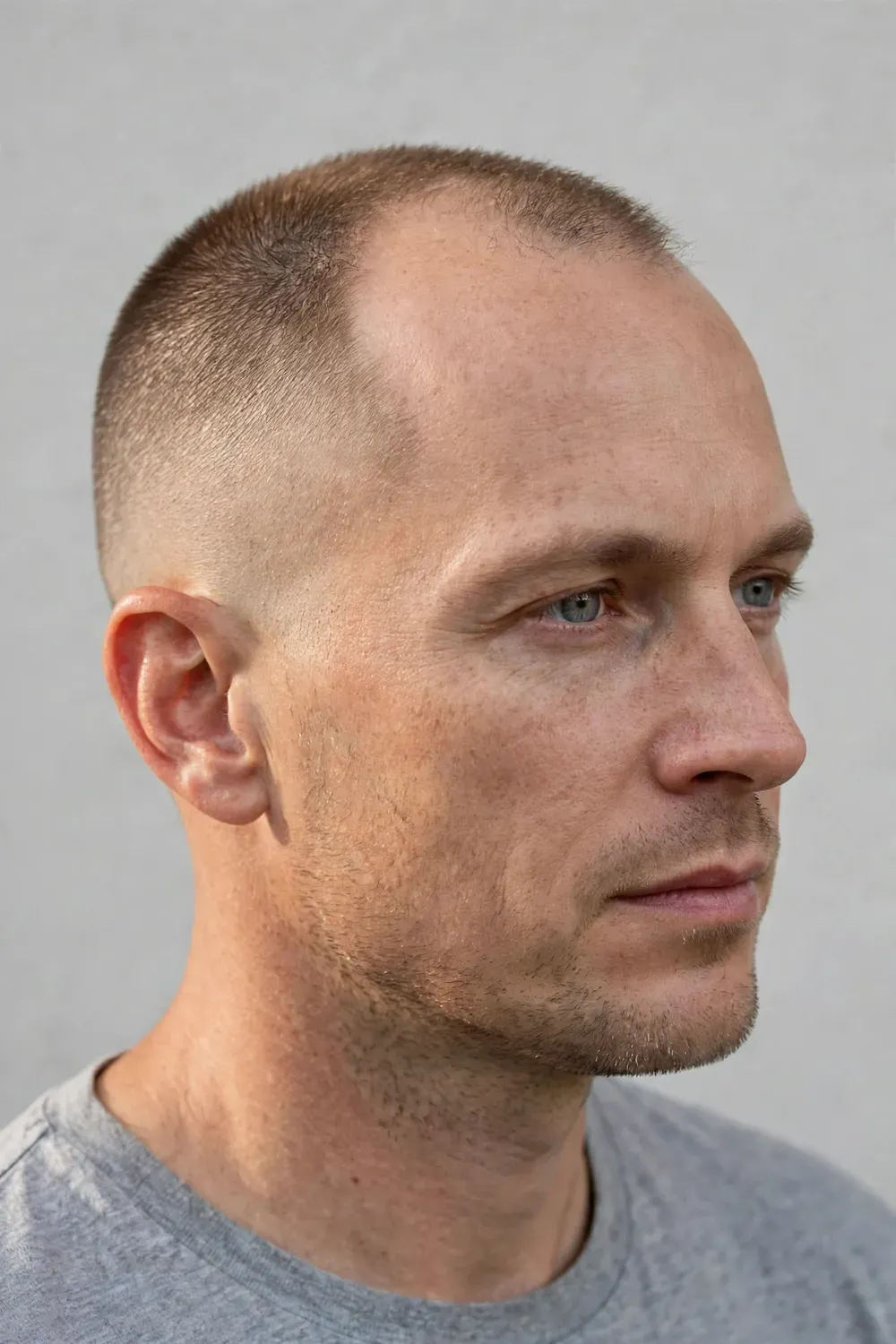
A receding hairline is where military cuts genuinely help — short hair makes a thinning hairline look intentional instead of something you are hiding. The top is cut evenly at a #1 or #2, the sides are faded to a #0 or #1, and the hairline is left natural rather than squared off, so there is no harsh line drawing attention to the corners. It suits straight or fine hair with a receding or thinning hairline, and every face shape, because the even length removes the contrast between thick and thin areas. Ask for “a short even cut on a #2, faded sides on a #1, natural hairline, no hard line-up.” No product needed — a matte finish suits it best. It needs a trim every two weeks to stay even.
37. Grey Military Cut for Older Men

Grey hair and a military cut are a natural match — silver hair looks sharper short, and a clean, disciplined cut makes grey look distinguished rather than tired. The top is kept at a #2 or #3, the sides are tapered to a #1, and the cut is kept even all over so the grey reads as one deliberate colour rather than patchy salt-and-pepper. It suits men with grey or silver hair, any hair type, and oval, square or long faces. Ask for “a short military cut, top on a #2, tapered sides on a #1, keep the grey even.” A silver shampoo once a week stops the grey turning yellow. It needs a trim every two to three weeks.
38. Textured Military Crop
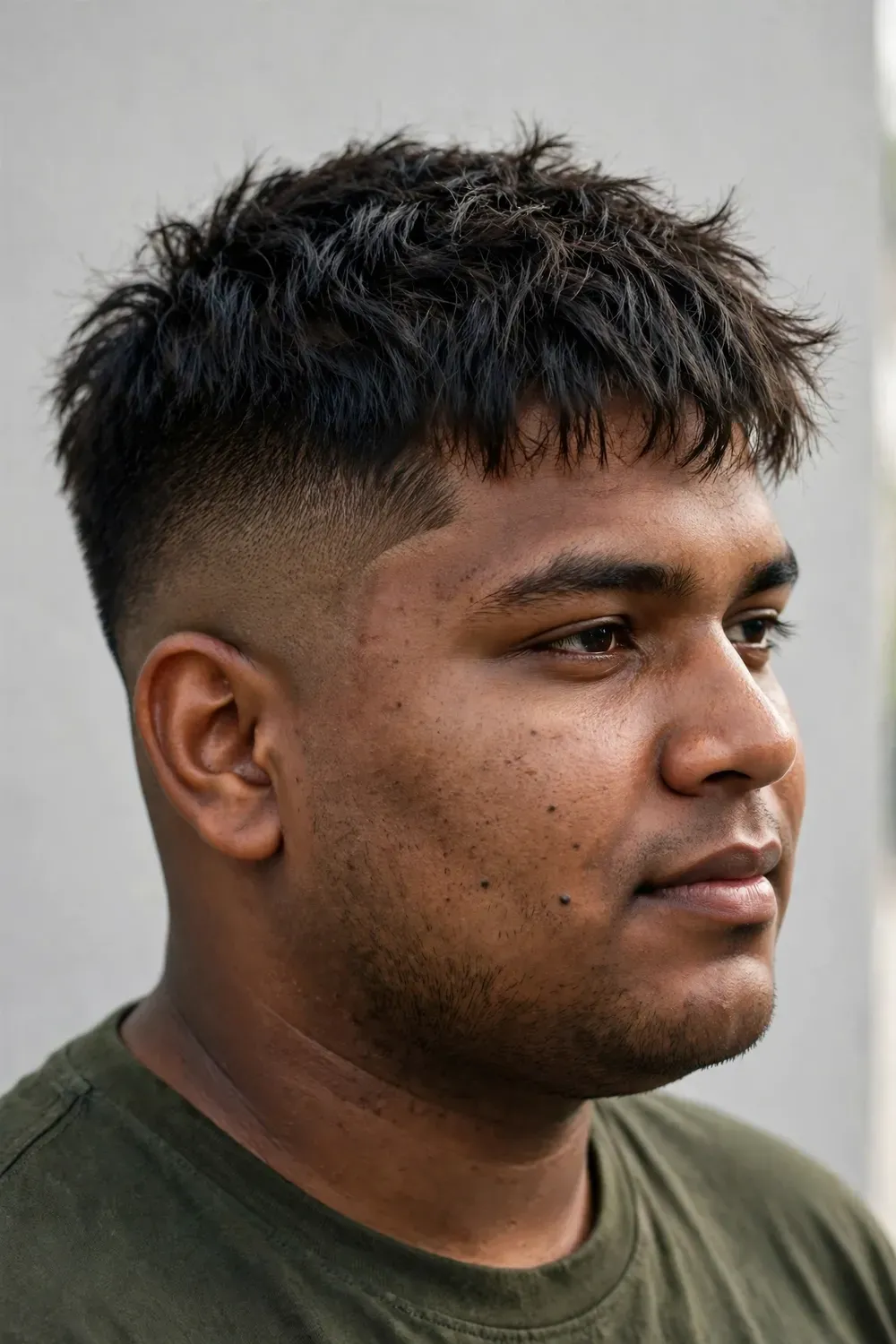
The textured military crop is the modern, civilian-friendly end of the military spectrum — a short, choppy top over a tight fade, with enough texture to look styled rather than shaved. The top is left one to two inches and point-cut or razor-cut so the pieces separate, the sides are faded to a #1 or skin, and the fringe is cut short and slightly uneven so it never looks like a straight line. It suits wavy and straight hair with natural texture, and oval or square faces where the choppy top adds character. Ask for “a textured crop, top about an inch and a half, point-cut, sides faded to a #1.” Work matte clay through the top with your fingers and push it forward. It needs a trim every two to three weeks.
39. Military Cut with Hair Design
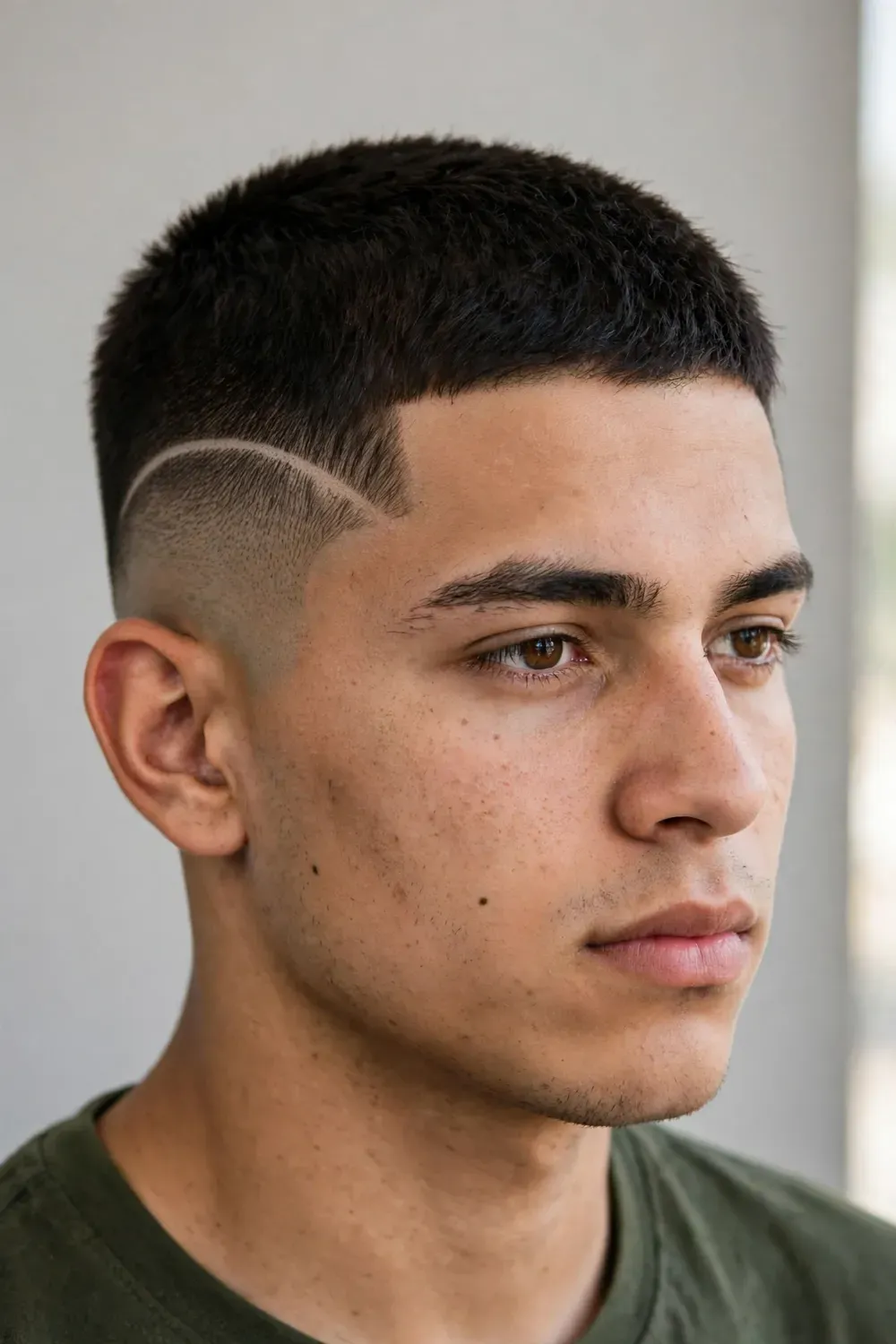
A military cut with a hair design adds one shaved line or pattern — usually a single curved line above the ear or a double line at the temple — to an otherwise regulation-short cut. The base is a buzz or crew cut at a #2 or #3 with faded sides, and the design is carved in with a trimmer or razor after the fade is done. It suits straight and wavy hair, and oval or square faces; it is strictly a civilian look, since no branch allows shaved designs in uniform. Ask for “a buzz on a #2, faded sides, and a single shaved line above the ear.” It needs a touch-up every seven to ten days, because a design grows out in days and a blurred line looks like a mistake.
How to Ask Your Barber for a Military Haircut
Most bad military cuts happen because the request was vague. “Short on the sides, a bit off the top” can mean ten different things to ten different barbers. The fix is simple: give three numbers — the guard on top, the guard on the sides, and the neckline you want — and say the name of the cut. If your barber knows military cuts, the name alone will do it; if not, the numbers make it foolproof. It also helps to know the difference between a taper and a fade before you sit down — a taper blends gradually, a fade drops to skin much faster — and our guide to taper vs fade explains it in plain terms. Here are three scripts you can read out word for word.
Induction cut: “I want an induction cut — a #0 all over, no guard, even everywhere. Take it right down to the skin on the sides and back, tapered natural at the neckline, no line-up, nothing left on top.”
High and tight: “I want a high and tight — skin on the sides up to the temple, faded up high, and the top left at a #1, flat and even, just a small patch on top. Tapered neckline, no hard line at the back.”
Regulation cut: “I want a regulation cut — tapered sides, starting at a #2 and blending up to a #3, top scissored to about an inch, neat and even, tapered neckline, clean around the ears. Nothing disconnected, nothing faded to skin.”
Say it slowly, let the barber repeat it back, and show a photo if you have one. A good barber will confirm the guards before the clippers come out.
Military Haircut Picker by Face Shape & Hair Type
Oval face: Almost every military cut works, because an oval face is balanced already. The high and tight and the jarhead show off the bone structure best; the Ivy League and sleek side part add polish when you want to look less severe. Avoid nothing — just pick by how much maintenance you want.
Round face: You need height and angles, not width. The brush-up, military quiff and flat top add vertical lift that lengthens the face, while the high and tight keeps the sides tight so the face does not look wider. Avoid the burr and butch cuts worn too round — an even, puffy shape only adds width.
Square face: Your jaw is already strong, so balance it with a little length or softness on top. The textured crew cut, Ivy League and textured side sweep soften the angles, and the regulation cut keeps everything neat without exaggerating the jaw. Avoid the flat top and horseshoe flattop, which square off an already square face.
Long face: Keep the top short and the sides full enough to add width. The burr cut, butch cut and low and tight work well because they keep the silhouette compact. Avoid the brush-up, quiff and flat top — extra height on top only stretches a long face further.
Straight hair: You can wear almost anything, but the cleanest results come from the regulation cut, Ivy League and short back and sides, where straight hair lies flat and combs neatly. The Caesar and sleek side part also suit straight hair perfectly.
Wavy hair: Use the wave instead of fighting it. The textured crew cut, textured side sweep and forward-brushed curls all let the wave add movement, and the textured military crop is built for it. Avoid very short buzz cuts if you like the wave — a #1 buzz hides it completely.
Curly hair: Keep it short enough to stay neat but long enough to show the curl. The short coiled crop, forward-brushed curls and Caesar all work, with faded sides to keep the shape tight. Avoid the flat top, which needs straight hair to hold its shape.
Coily hair: The short coiled crop and short afro with line-up are made for coily hair — they keep the texture visible and the shape controlled. A sponge or pick defines the coils in seconds. Avoid growing the top long without a shape-up, or the silhouette goes wide fast.
Thick hair: Thick hair holds military shapes well, but it needs thinning on top or it puffs up. The military quiff, brush-up and textured crop use the thickness as volume; ask your barber to thin the top so it does not look heavy. Avoid the burr cut worn too long — thick hair at a #3 can look like a helmet.
Fine hair: Short is your friend, because length only shows how thin it is. The induction, burr and Caesar cuts all make fine hair look fuller by keeping everything even and short. Avoid the quiff and brush-up, which need density to hold their height.
Thinning hair: Go short and even. The military cut for receding hairline, the burr cut and the classic buzz all remove the contrast between thick and thin areas, and a natural hairline beats a hard line-up. Avoid comb-overs and any style that leaves length on top to hide the thinning — it only draws the eye to it.
5 Mistakes to Avoid
- Asking for a high and tight with a round face. The shaved sides and flat top widen the face instead of lengthening it, and the result can look rounder than the hair you started with. If your face is round, pick a brush-up, quiff or flat top that adds height instead.
- A #0 top on your first military cut. Going straight to a skin-close #0 is a shock if you have never worn your hair that short, and there is no growing it back in a week. Start with a #2 or #3 top, wear it for a month, and go shorter only if you like it.
- A blocked neckline when your branch wants tapered. A blocked, squared-off neckline looks sharp for a day, but Army and Marine regulations call for a tapered neckline — a blocked back can fail an inspection. Tell your barber “tapered, not blocked” before they start.
- Heavy product on a half-inch top. A #1 or #2 top has nothing for product to hold onto — pomade and wax just make it look greasy and weighed down. On anything shorter than an inch, skip product entirely or use the tiniest drop of matte paste.
- Skipping the 1–2 week touch-up. Military cuts live or die on their edges. A fade that was razor-sharp on day one looks overgrown by day fourteen, and a high and tight with three weeks of growth is just a bad buzz cut. Book the next cut before you leave the chair.
Frequently Asked Questions
What is a military haircut?
A military haircut is a short, neat cut designed to meet armed forces grooming standards — short on top, tapered or faded on the sides, off the ears and collar, with a clean neckline. The family includes the induction cut, buzz cut, crew cut, regulation cut, high and tight and flat top. Civilians wear the same styles for the same reasons soldiers do: they are clean, low-maintenance and hard to get wrong.
What is the difference between a high and tight and a buzz cut?
A buzz cut is one even guard all over the head, while a high and tight keeps the sides shaved or faded high and leaves a short, flat patch of hair on top — the contrast between the skin sides and the top is the whole point. The high and tight is a Marine Corps signature, and its history as a service cut is documented on Wikipedia’s High and tight page. A buzz cut is simpler and more even; a high and tight is sharper and more recognisable.
Which military haircut is best for my face shape?
It depends on what your face needs. Oval faces suit almost everything, round faces need height from a brush-up or quiff, square faces suit softer tops like the textured crew cut or Ivy League, and long faces should keep the top short with a burr or butch cut. Match the cut to your face first, then to your hair type — the picker section above walks through every combination.
How short is an induction cut?
An induction cut is a #0 all over — no guard, clippers straight against the scalp, leaving about 1.5 millimetres of hair or less. It is the shortest haircut in this list and the one given to new recruits on their first day of basic training. It grows out to a burr cut within about a week, which is why it needs the most frequent upkeep of any style here.
How often does a military haircut need a trim?
Most military cuts need a trim every one to two weeks to stay sharp, because the fade and the edges are what make the cut. Shorter styles like the jarhead and high and tight need the sides re-shaved every four to seven days. Longer, more forgiving cuts like short back and sides can stretch to three or four weeks between cuts.
Can civilians get a military haircut?
Yes, absolutely. Military haircuts are just short, practical haircuts — there is no rule stopping a civilian from asking for one, and barbers cut them every day. The only difference is that civilians can wear the versions the services do not allow, like the high and tight with a skin fade, a hair design, or a longer textured top.
What should I ask my barber for a military haircut?
Give your barber three things: the name of the cut, the guard number on top, and the guard number on the sides, plus whether you want a tapered or blocked neckline. For example: “Regulation cut, #2 on the sides blending to a #3, top scissored to about an inch, tapered neckline.” The three ready-to-use scripts in the barber section above cover the induction, high and tight and regulation cut word for word.
Final Word
A military haircut is one of the few styles that never goes out of fashion, because it was never really about fashion — it is about a clean shape, a short length, and a cut that looks after itself. Pick the one that fits your face and your hair, give your barber the exact guards, and keep the edges fresh. If you want to keep exploring, you will find more haircut guides on the blog covering fades, crew cuts, buzz cuts and everything in between.