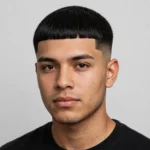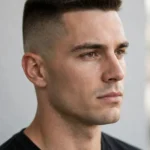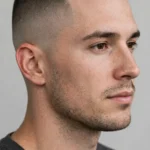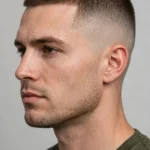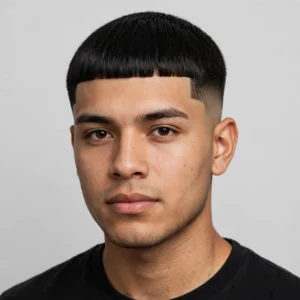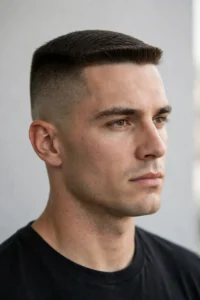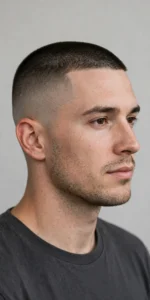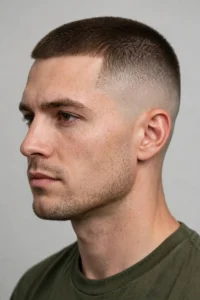


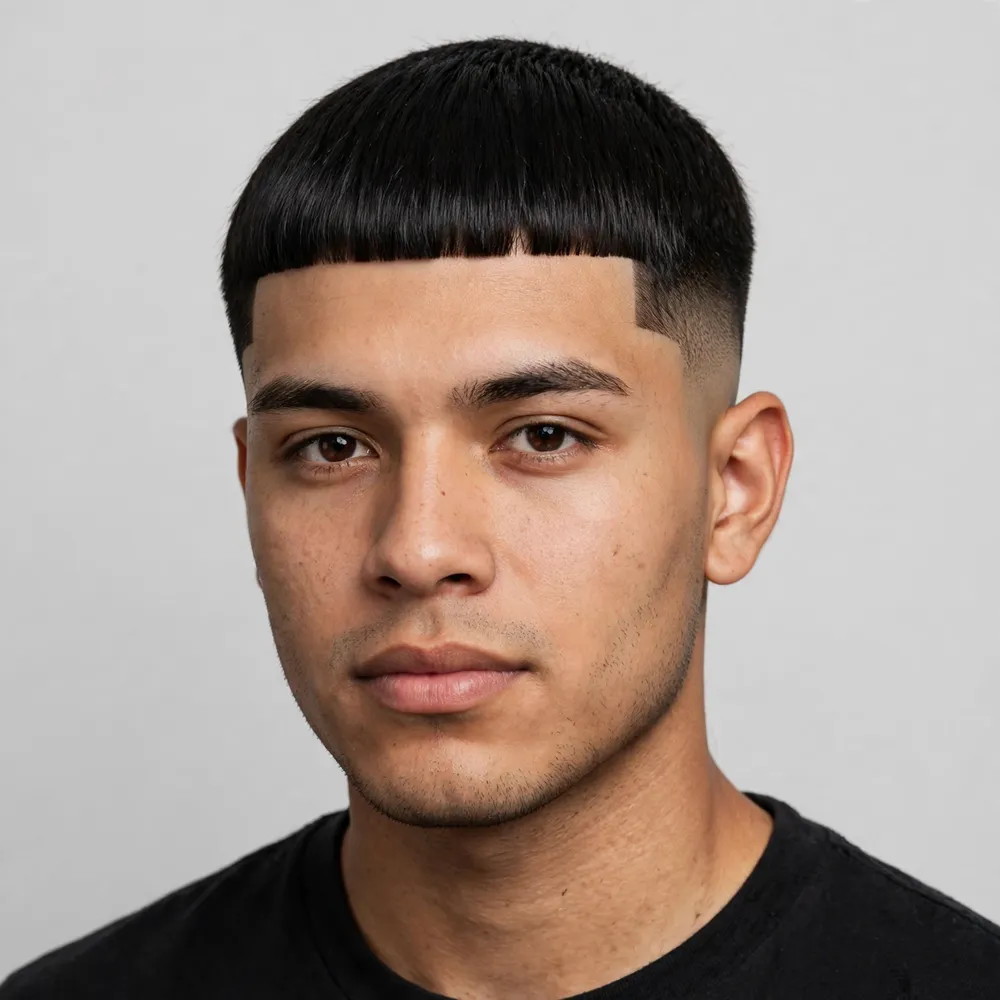
An Edgar haircut is a short cut with a dead-straight blunt fringe across the forehead, a sharp lined-up hairline, and sides faded or tapered. It is bold, clean and impossible to miss — and the best edgar haircuts for men keep that fringe razor-sharp while the fade underneath does the real talking.
If you only want the safest bets, start with these three. The Classic Edgar is the original — blunt fringe, clean taper, nothing overdone. The Mid Taper Edgar is the everyday version that suits most guys and most barbershops. And the Skin Fade Edgar is the sharpest of the lot, with the sides faded down to bare skin so the fringe looks even straighter. Pick one, take it to your barber, and you will not go wrong.
What Is an Edgar Haircut?
The Edgar is a short top with a straight blunt fringe cut right across the forehead, a hard lineup at the hairline, and tapered or faded sides — often a high skin fade. It goes by the name takuache cut too, and it grew out of Latino and Mexican-American barber culture, where the sharp lineup and clean fade became a signature look. A viral 2019 hair portrait of baseball player Edgar Martínez helped push the name into the mainstream, though the style itself was already a barbershop favourite. You can read the background on the Edgar cut page, which traces the name and the look.
People mix the Edgar up with two close cousins. The Caesar has a short fringe too, but it is softer, shorter and usually combed forward without that hard straight line. The French crop is textured and broken up on top, with a fringe that is choppy rather than blunt. The Edgar is the strictest of the three: the fringe is straight, heavy and lined up like it was drawn with a ruler. That is also why it pairs so well with other fringe haircuts — once you understand the fringe, the rest of the cut falls into place.
How to Ask Your Barber for an Edgar Haircut
Say this, word for word: “I want an Edgar — short on top, about an inch and a half to two inches long, with a straight blunt fringe across my forehead and a sharp lineup. Give me a mid taper on the sides, blended up from a number 1 guard, and keep the fringe line dead straight.”
Then settle the details before the clippers start. Pick your fade height — low, mid or high — and say it clearly, because a high fade changes the whole look. Point to where you want the fringe to sit on your forehead: just above the eyebrows is the classic spot, but a touch higher looks softer and grows out better. Ask for the lineup to be done with a trimmer or a razor, and tell your barber whether you want the corners squared off or slightly rounded — squared is sharper, rounded is more forgiving on a wider forehead. For a skin fade, the guard goes from a foil shaver or 0 at the bottom up to a 1 or 2 at the blend, then scissors on top. Bring a photo of the exact version you want. Barbers see “Edgar” done a dozen different ways, and a picture removes all the guesswork.
39 Best Edgar Haircuts for Men (2026)
1. Classic Edgar
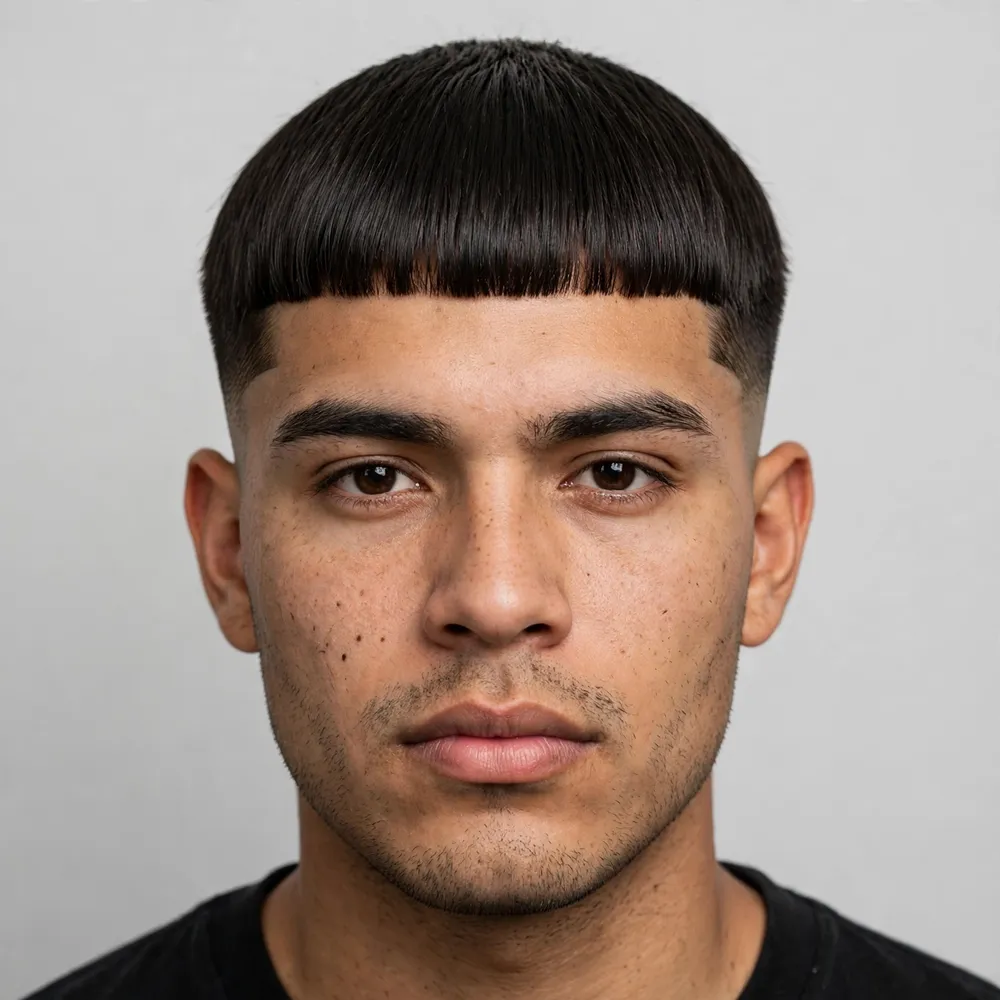
This is the Edgar everything else is measured against. The top is short and even, one to two inches, and the fringe is cut straight across the forehead in one clean line — no texture, no wisps. The sides get a tidy taper, and the lineup is sharp at the temples and forehead. It suits oval and square faces best, and straight or slightly wavy hair shows the blunt line most clearly. Ask your barber for a short even top, a blunt fringe just above the eyebrows, a low taper, and a crisp lineup. Style it with a pea-sized amount of matte clay, pushed forward and left to dry naturally. Book a tidy-up every two weeks, before the fringe line grows out and the cut goes soft.
2. Low Taper Edgar
The low taper Edgar is the quiet version of the cut — same straight fringe up front, but the sides stay calm. The taper only kicks in around the sideburns and neckline, so there is no big contrast between top and sides. It suits guys who want the Edgar look without a hard, high-contrast finish, and it works well on round faces. Ask your barber for a blunt fringe, a low taper fading out just above the ears, and a natural lineup. A light matte paste is enough to hold the fringe; the aim is a clean finish, not a stiff one. Stretch visits to every three weeks, with only a quick fringe trim in between.
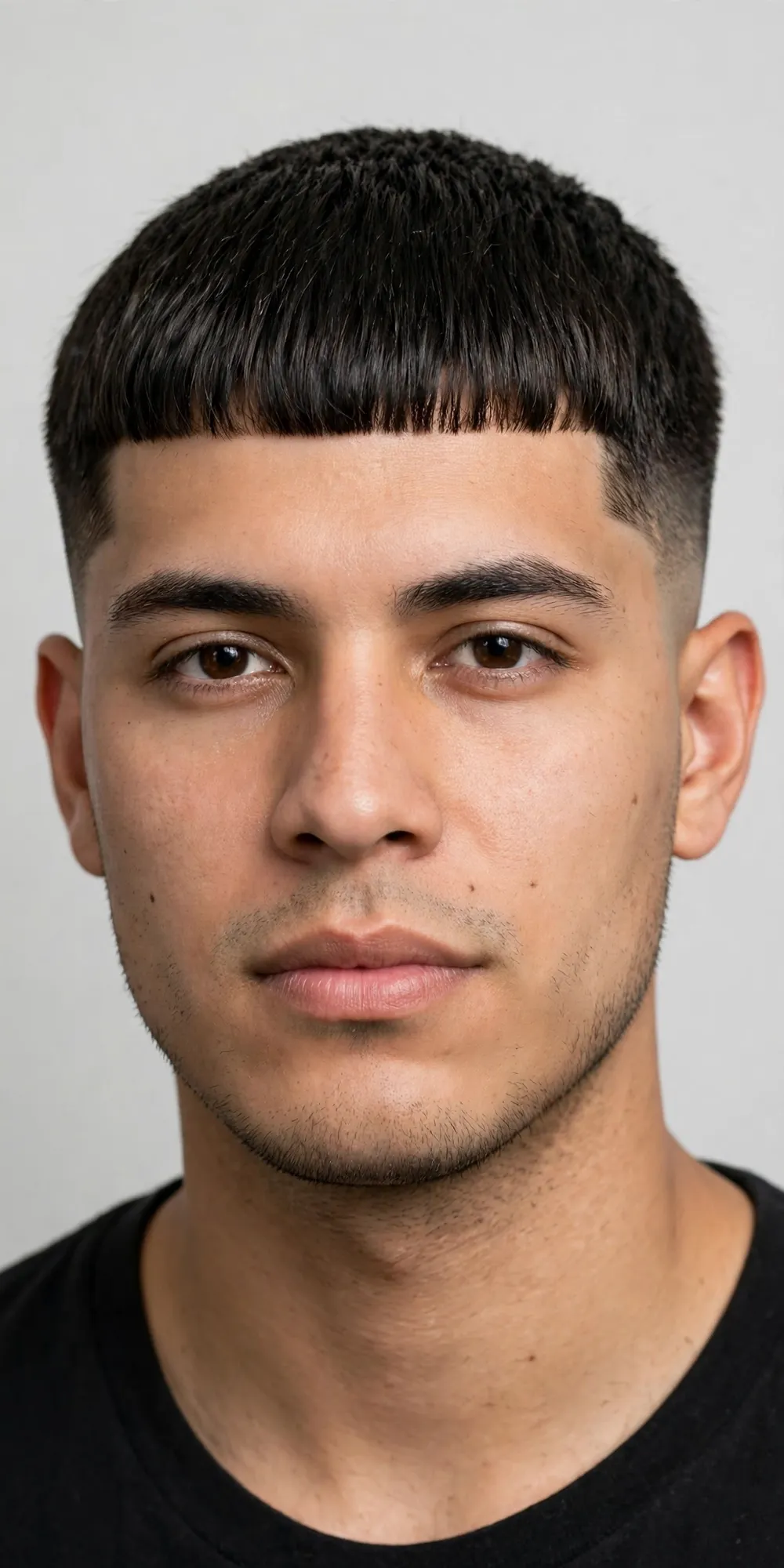
3. Mid Taper Edgar
The mid taper Edgar is the sweet spot, and it is the one most barbers will steer you towards if you are not sure. The taper starts around the middle of the head, above the ears, giving a clean, balanced shape without the drama of a high fade. The fringe stays hard and straight, so you still get that unmistakable Edgar silhouette. It suits oval, square and oblong faces, and it works on straight, wavy and thick hair alike. Ask your barber for a blunt fringe, a mid taper blended from a 1 guard up to a 3, and a sharp lineup. Expect a tidy-up every two to three weeks; the taper grows out before the fringe does.
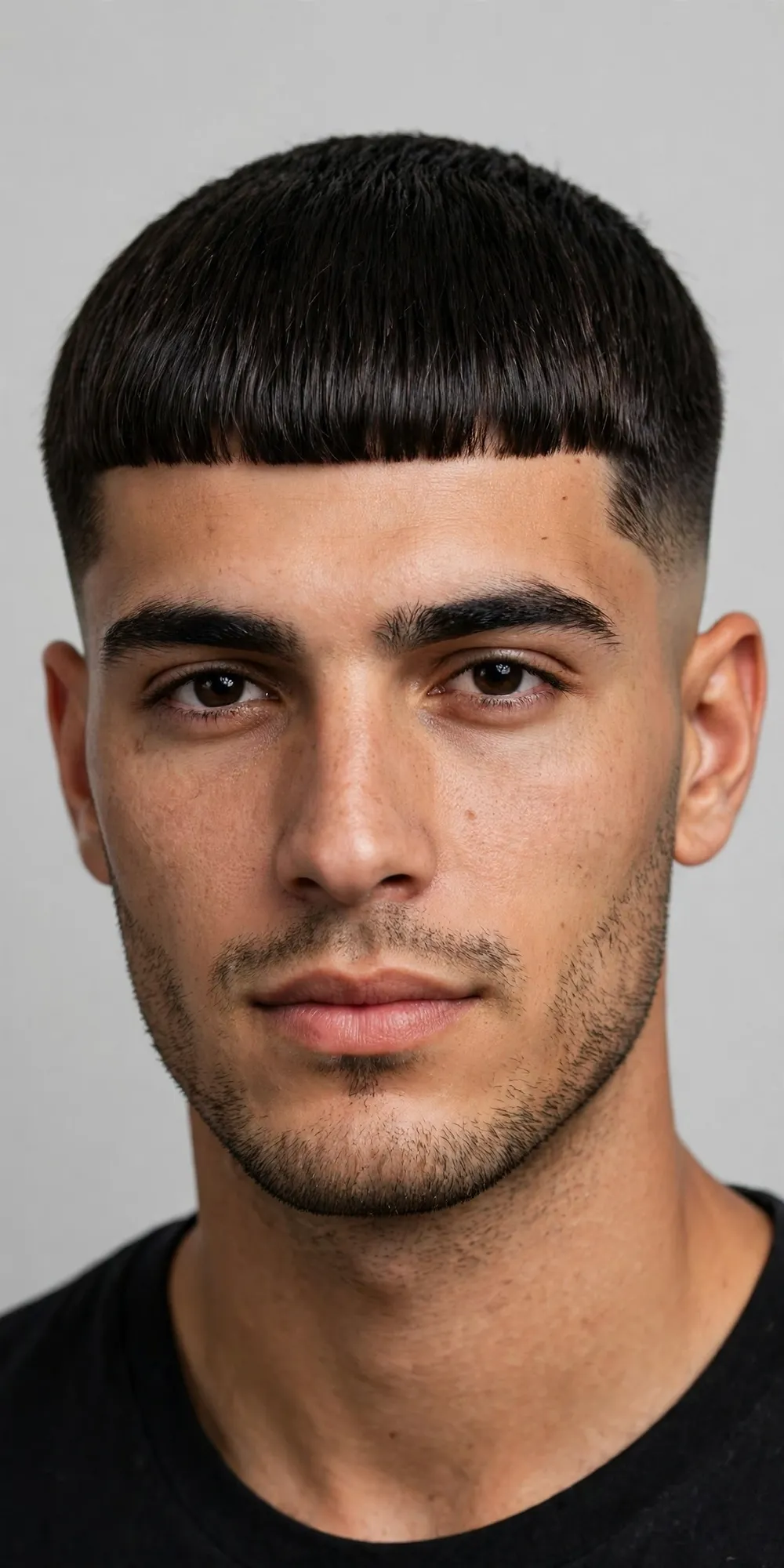
4. High Taper Edgar
A high taper takes the Edgar up a notch. The taper climbs well above the ears, stripping weight from the sides and leaving the top and fringe doing all the work. The contrast is strong — the top looks heavier and the fringe line looks even straighter against the short sides. It suits square and oval faces, and it is a good pick for thick hair because the high taper removes bulk. Ask your barber for a blunt fringe, a high taper from a 0 or 1 guard up to a 3, and a sharp lineup. A matte clay or fibre paste will keep the top in place without shine. Book every two weeks — the taper shows growth fast, and an untrimmed fringe makes the shape look top-heavy.
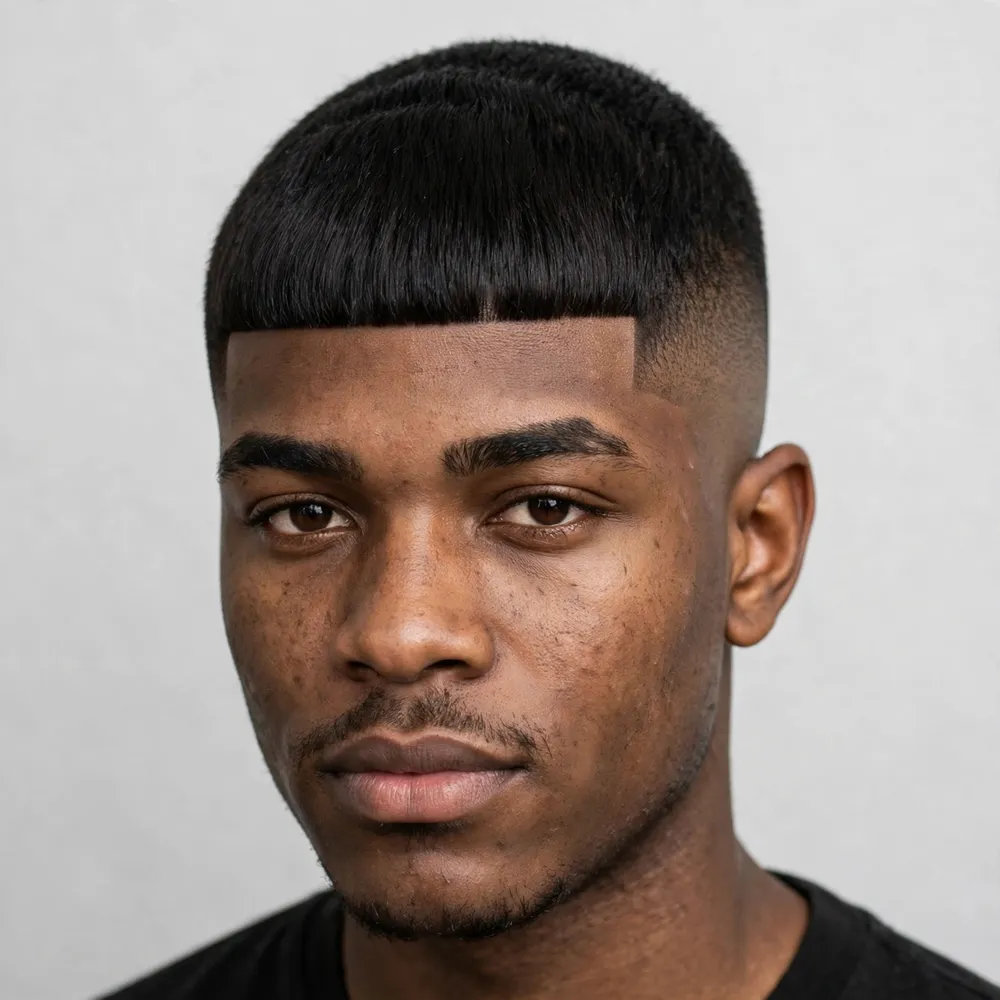
5. Low Fade Edgar
The low fade Edgar puts a proper fade under the fringe, but keeps it low and subtle. The blend starts just above the ears and drops to skin, so the sides look clean without aggressive contrast. It suits most face shapes, and it flatters round faces because the low fade keeps some width at the sides. Ask your barber for a blunt fringe, a low fade blended from a 0 guard up to a 2, and a clean lineup. Style the top with a small amount of matte paste, pushed forward, and leave the sides alone — the fade is the finish. Maintenance sits at every two to three weeks, since the fade blurs as it grows.
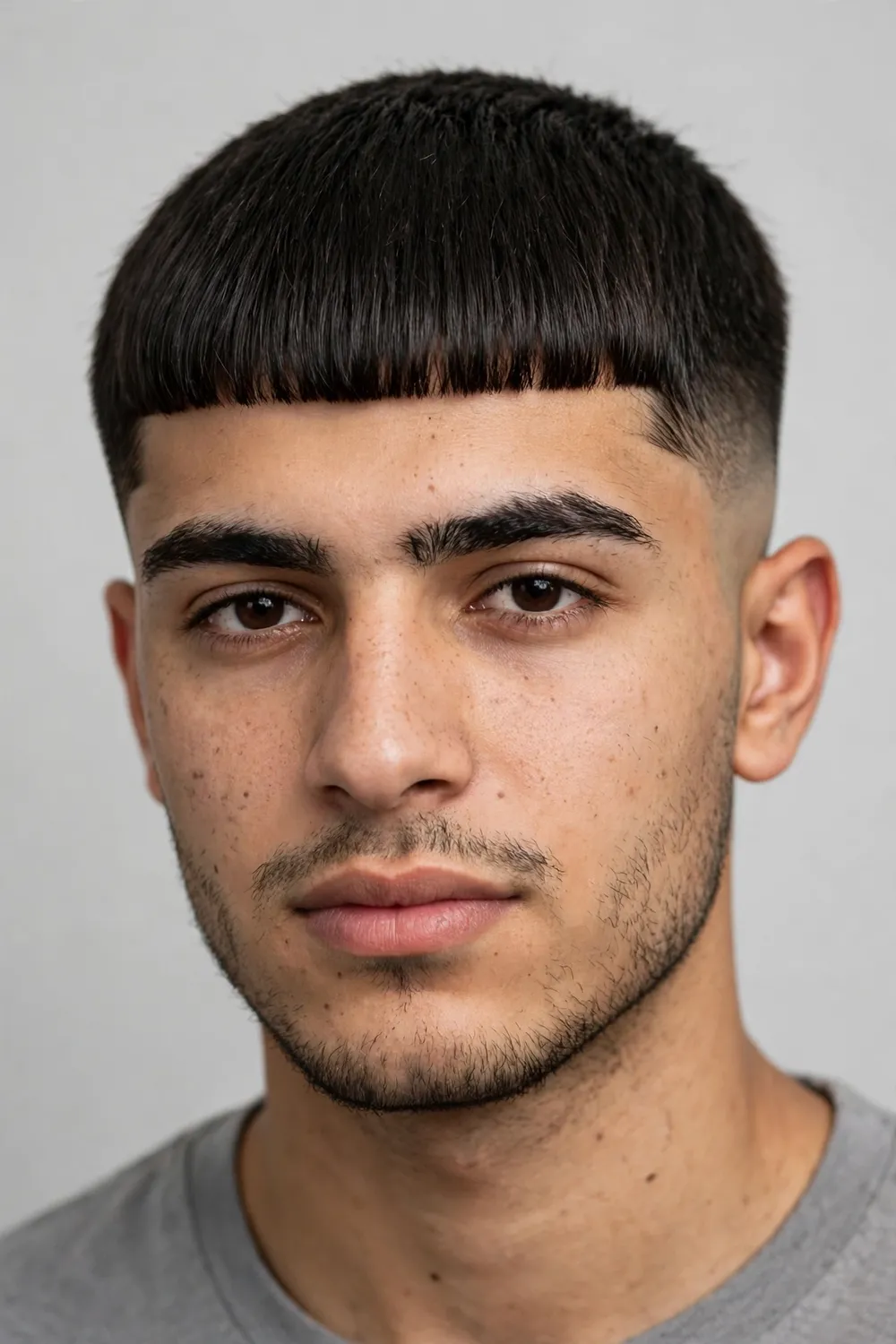
6. Mid Fade Edgar
The fade starts above the ear and blends into the top, giving a bold outline while the fringe stays long and straight. It suits oval and square faces best, and straight or wavy hair; very curly hair needs the fringe shaped rather than cut dead straight. Ask your barber for a mid fade from a 0 to a 2 or 3 guard, a blunt fringe at eyebrow level, and a razor-sharp lineup. Use a matte clay for hold and a natural finish, combing the top forward so the fringe sits flat. It needs a trim every two weeks — the mid fade loses its blend fast, and a grown-out fade takes the edge off the look.
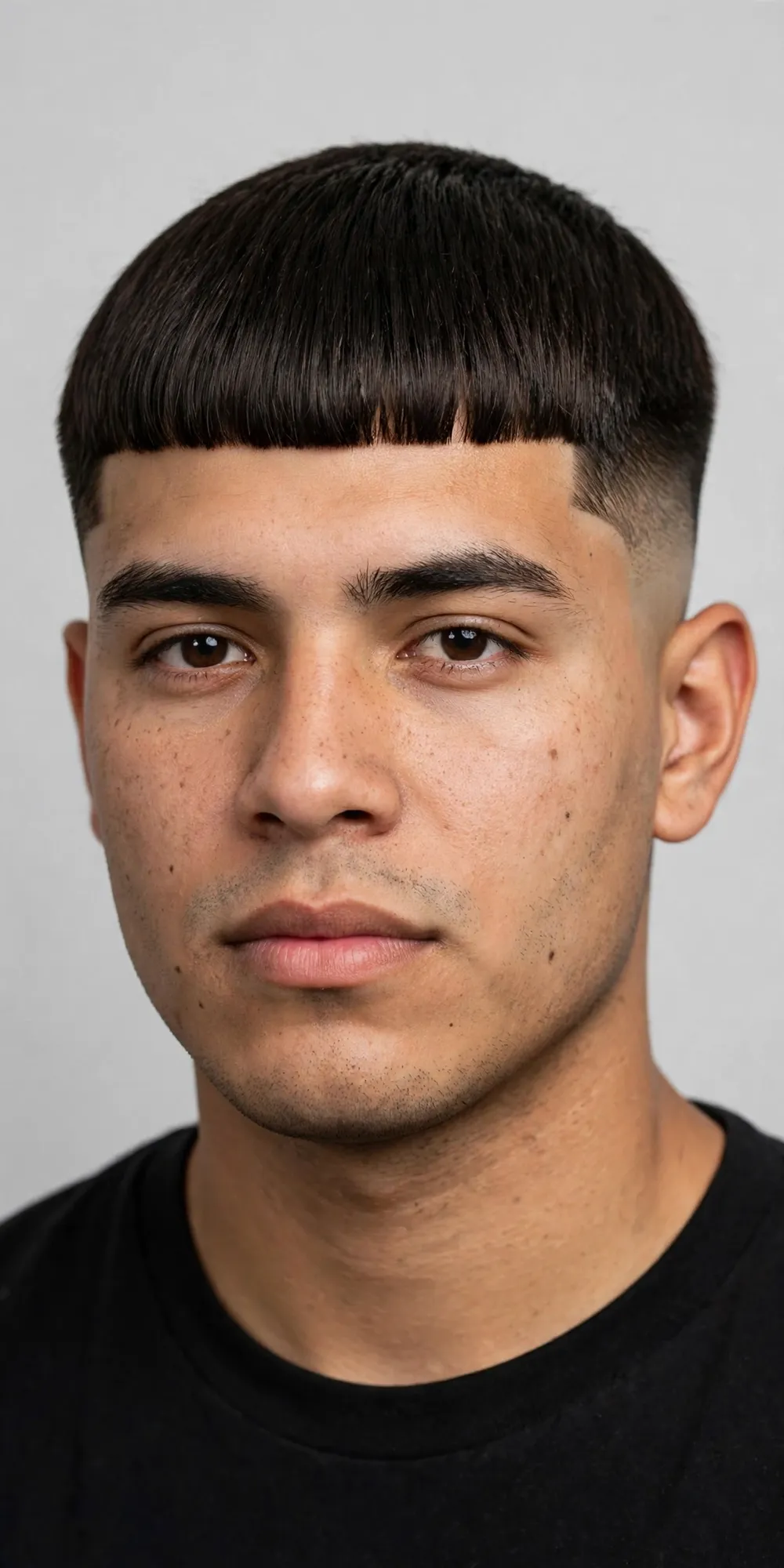
7. High Fade Edgar
The high fade Edgar is the loudest version of the cut. The fade climbs high up the sides, almost to the top, giving maximum contrast between the short sides and the heavy fringe. It works best on oval and square faces, and on straight or thick hair that can hold the blunt fringe line. Ask your barber for a high fade blended from a 0 guard up to a 2, a blunt fringe cut straight across, and a hard lineup. A matte paste will keep the top flat and forward; avoid shine, which softens the edge this cut is built on. The trade-off is maintenance: the high fade shows growth within days, so visit every ten days to two weeks.
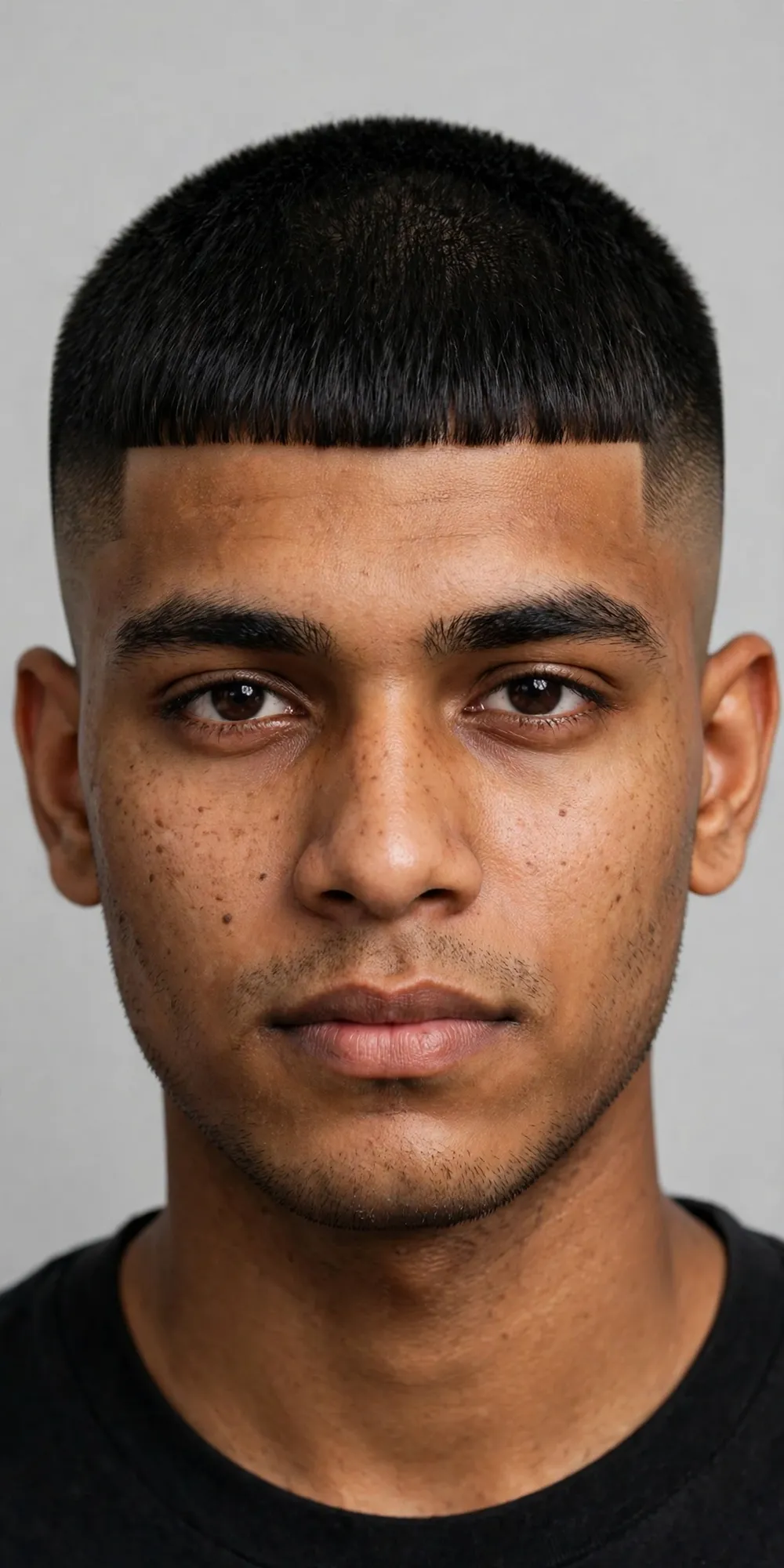
8. Skin Fade Edgar
The skin fade Edgar is the sharpest Edgar there is. The sides fade all the way to bare skin, making the top and fringe look heavier, straighter and more graphic by contrast. It is the version most associated with the takuache look, and it has a clean, almost sculpted finish when done well. Ask your barber for a skin fade — foil shaver or 0 at the bottom, up to a 1 or 2 — a blunt fringe, and a razor lineup. Style the top with matte clay and keep it flat and forward. This is a high-maintenance cut: the skin fade looks fuzzy within a week, so book a tidy-up every seven to ten days, or clean up the edges yourself.
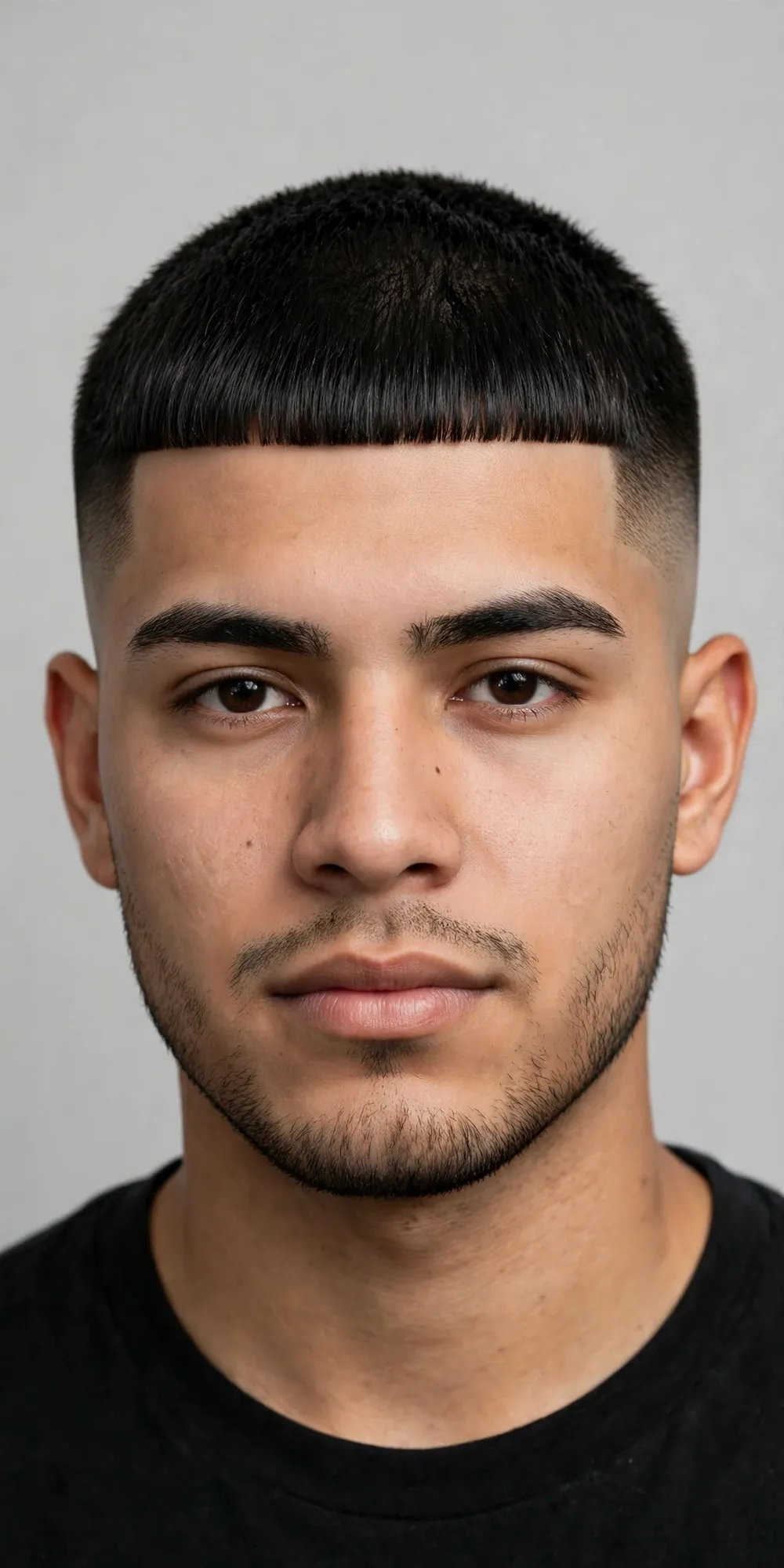
9. Bald Fade Edgar
The bald fade Edgar pairs the skin fade idea with a full beard, which balances the whole look out. The sides go to bare skin, the fringe stays blunt and heavy, and the beard adds weight to the lower half of the face. It suits square and oval faces, and it is a strong choice if you have a beard you want the haircut to work with. Ask your barber for a bald fade on the sides, a blunt fringe, and a beard shape-up that connects cleanly at the sideburns. Maintenance is real: the bald fade needs a touch-up every week to ten days, and the beard line needs keeping too — budget for regular visits or a decent trimmer.
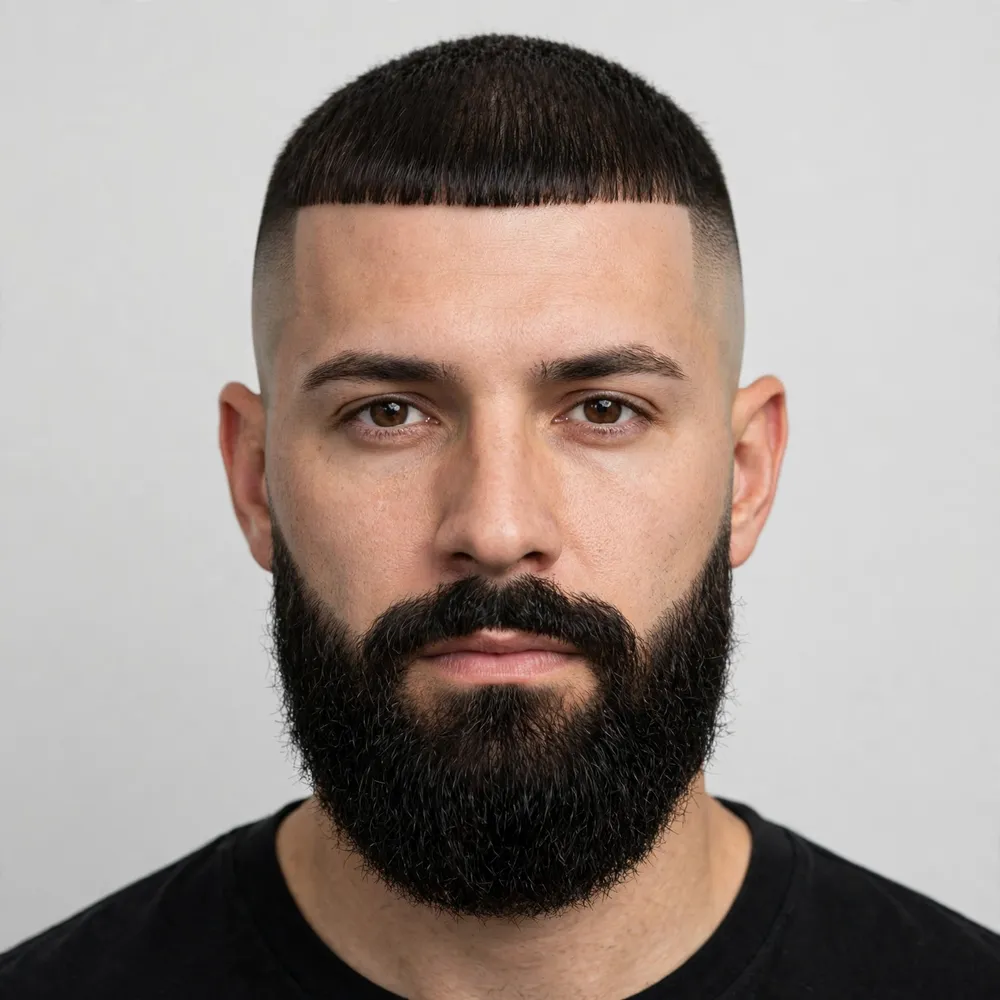
10. Textured Edgar
The textured Edgar softens the cut just enough to make it more forgiving. The fringe is still straight across, but point-cutting breaks the line up slightly, so it does not look quite so severe. It suits most face shapes, and it is a great option for thick hair, because texture removes bulk and stops the fringe sitting like a heavy slab. Ask your barber for a blunt fringe with point-cut texture, a mid taper or mid fade, and a softer lineup. Work a pea-sized amount of texture paste through the top, push it forward, and pinch a few pieces apart. It grows out better than the classic Edgar, so stretch visits to three weeks — but go easy on product, or too much paste flattens the texture.
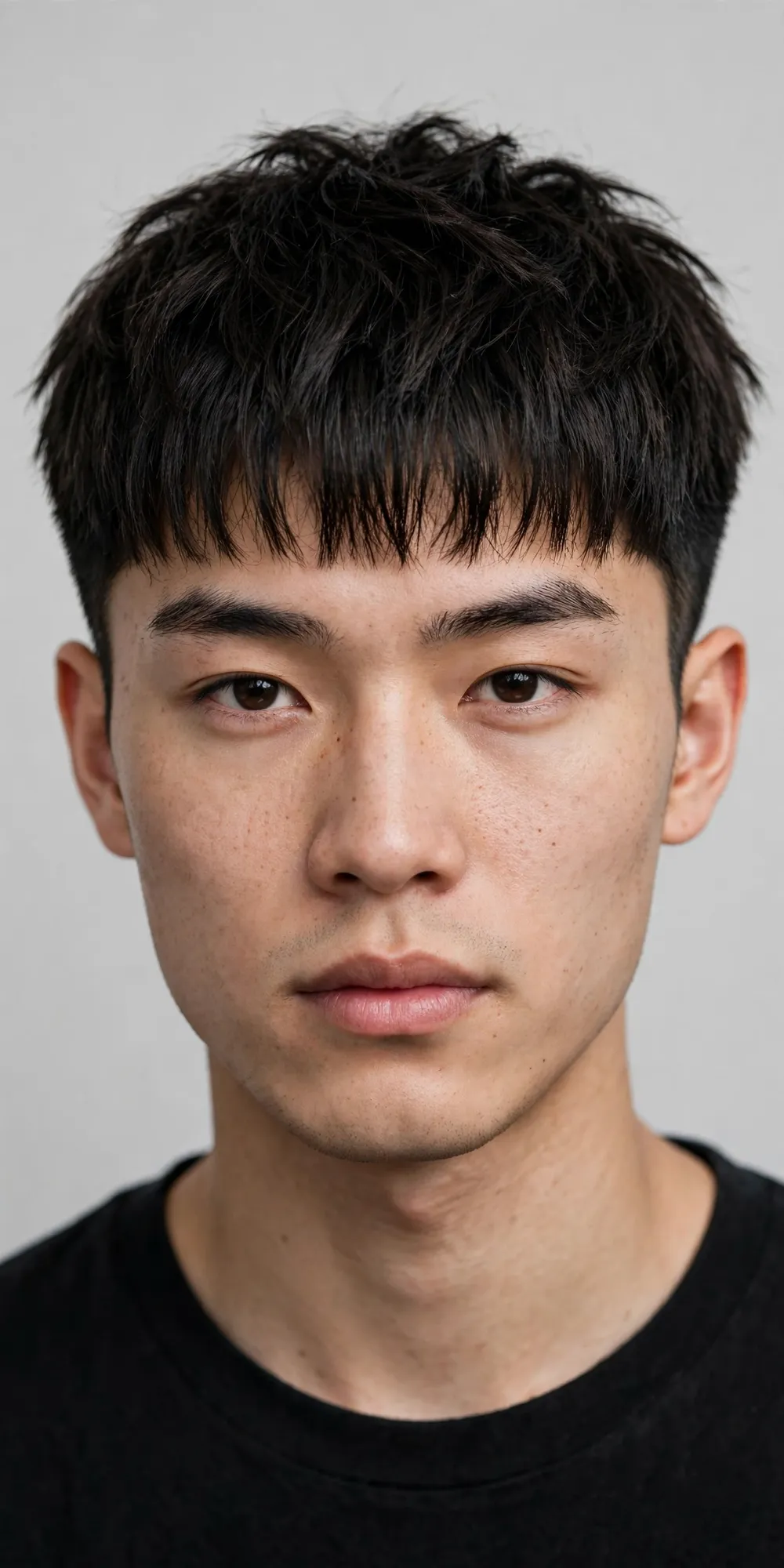
11. Curly Edgar
The curly Edgar proves the cut is not just for straight hair. The fringe is shaped around the natural curl pattern rather than forced into a ruler-straight line, so the curls sit across the forehead in a soft, rounded shape. It suits oval and round faces, and it works best on tight to medium curls that hold their shape. Ask your barber for a curly fringe that follows your curl pattern, faded or tapered sides, and a lineup that respects your natural hairline. Do not let anyone cut the fringe wet and straight, or it will shrink up and sit too high when it dries. Style it with a curl cream, scrunched in while damp, and let it air dry. Trim every three to four weeks.
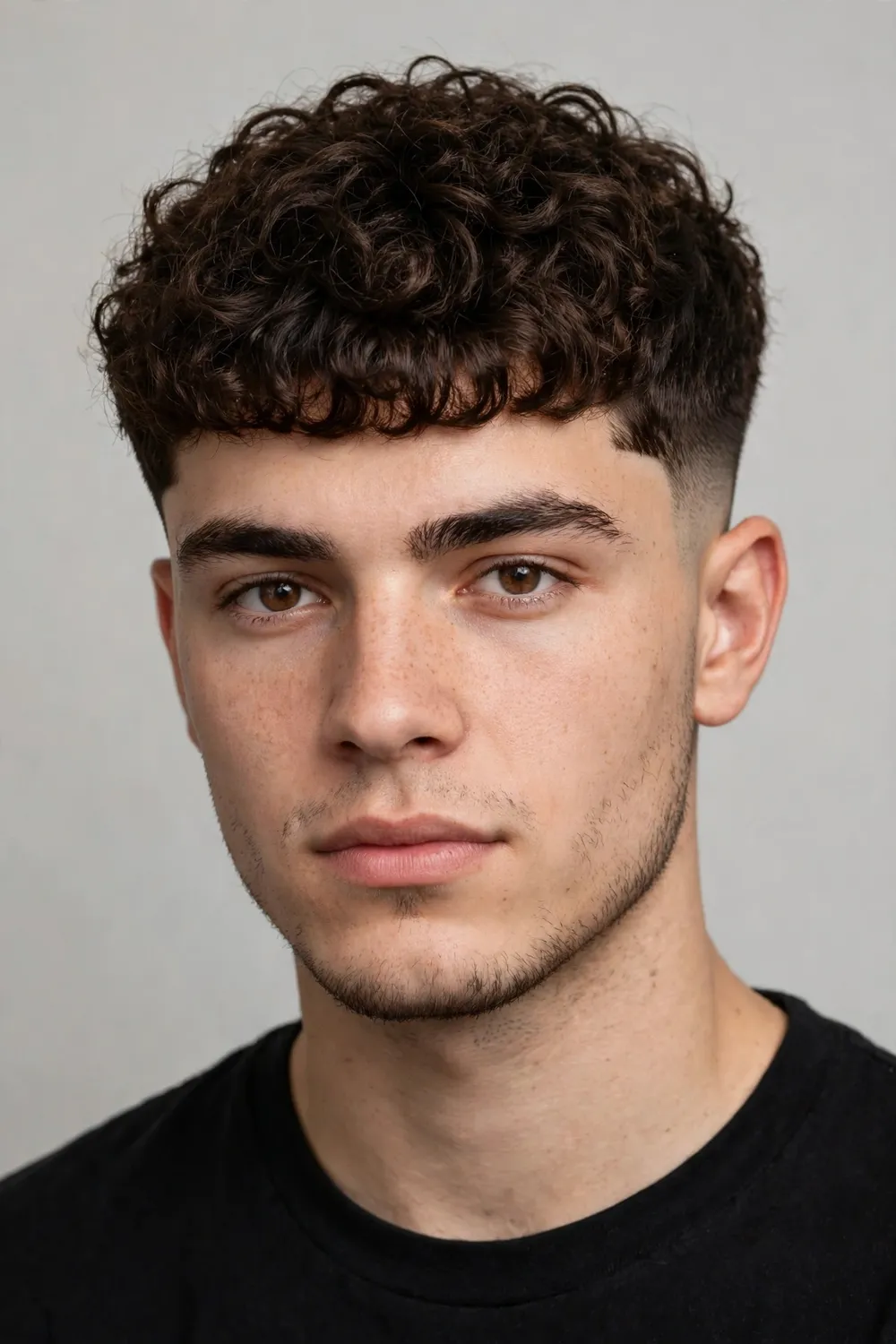
12. Wavy Edgar
The wavy Edgar is the relaxed cousin of the classic — same blunt fringe, but the natural wave gives the top movement and a lived-in feel. The fringe has a gentle bend rather than sitting perfectly flat, which makes the cut look softer and more natural. It suits oval and oblong faces, and it is ideal if your hair has a natural wave you usually fight — here you finally work with it. Ask your barber for a fringe cut to follow the wave, a low or mid taper, and a lineup that is clean but not razor-sharp. Maintenance is easy: a trim every three weeks, and the wave hides growth better than a straight fringe ever will.
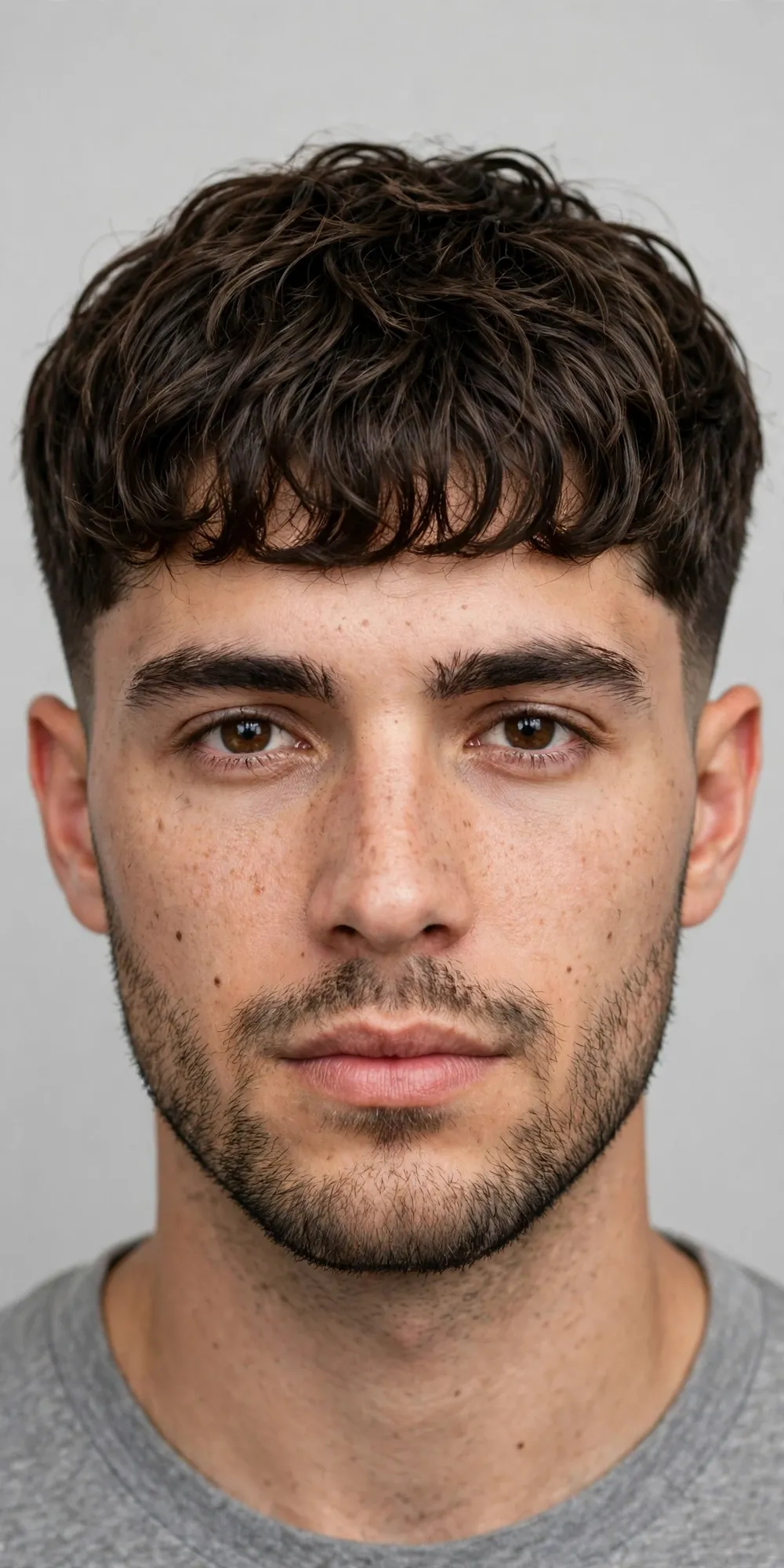
13. Fluffy Edgar
The fluffy Edgar is all about volume. The top is left longer and blown out for lift and air, while the fringe keeps its straight Edgar line — just softer and rounder at the edges. It is a fun, youthful take, and it suits guys with thick hair who can hold the volume without it collapsing by midday. It works best on oval and square faces, and on younger guys who want something with a bit of personality. Ask your barber for a longer top, around two to three inches, a fluffy fringe with a soft rounded edge, and a mid taper. It needs a blow-dry most mornings, so be honest about the effort — and book a trim every three weeks.
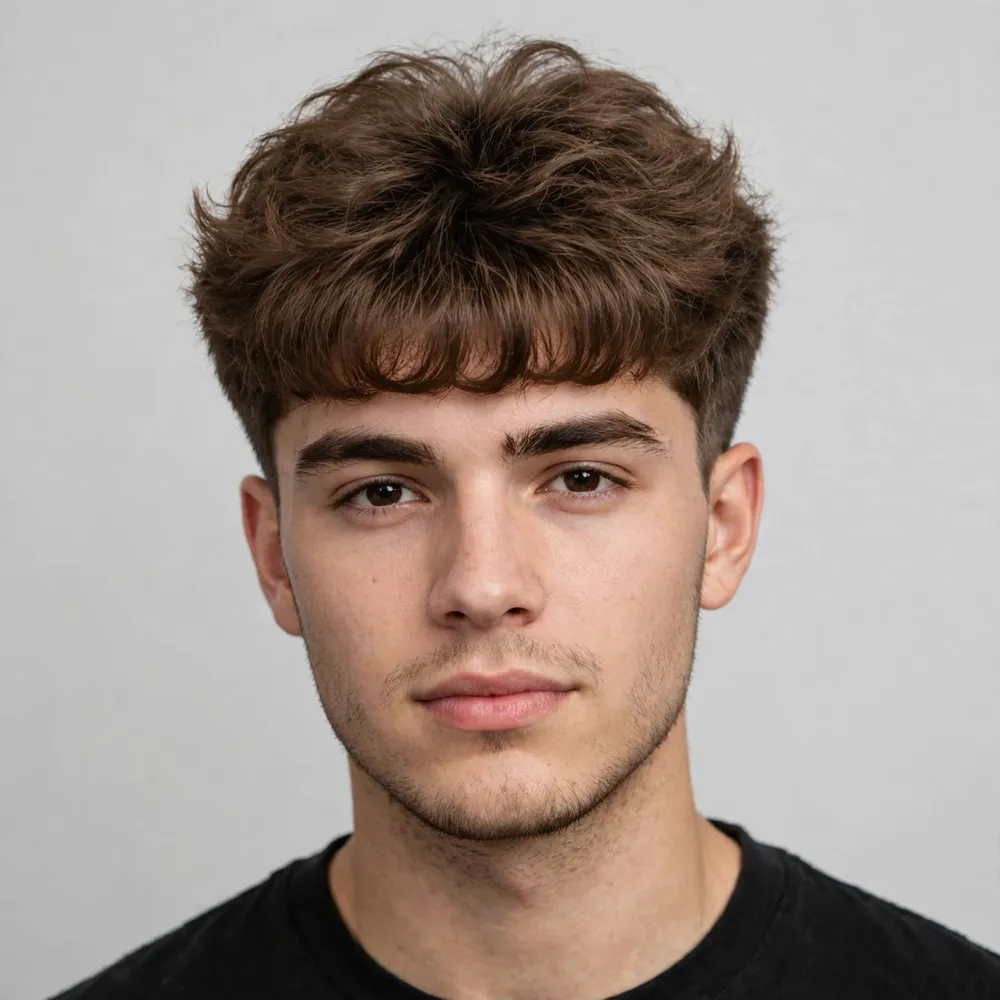
14. Messy Edgar
The messy Edgar keeps the fringe but throws out the rulebook on neatness. The top is cut with plenty of texture and left tousled, and the fringe is deliberately uneven — not sloppy, just relaxed. It suits guys who hate fussy styling and want a cut that looks good with almost no effort. It works on oval and square faces, and on straight, wavy or thick hair that holds a bit of texture. Ask your barber for a textured top with a choppy fringe, a low or mid taper, and a tidy lineup. It is one of the lowest-maintenance Edgars around — a trim every three to four weeks, and the messy finish hides growth well.
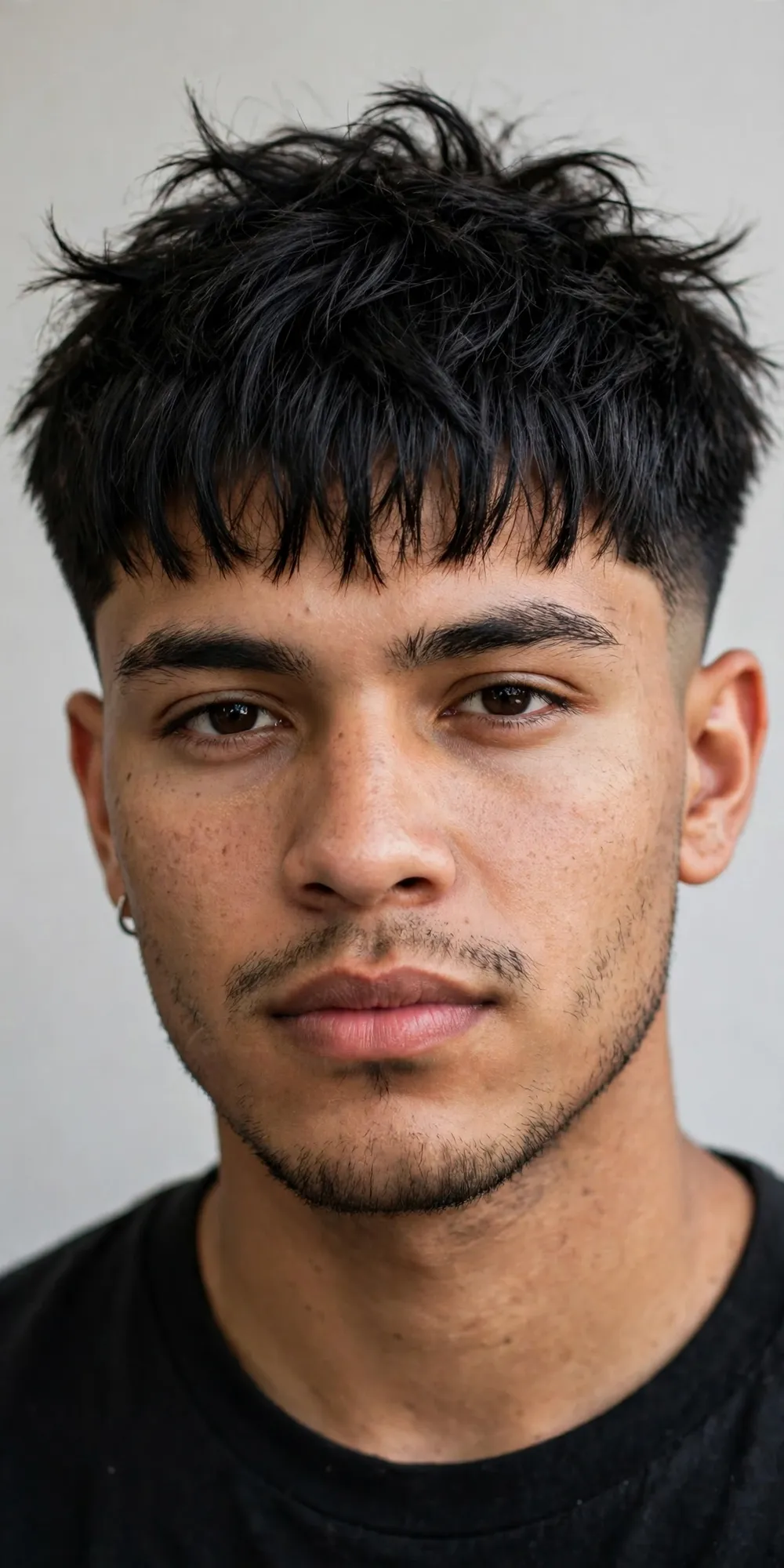
15. Choppy Edgar
The choppy Edgar uses point-cutting to break the fringe into uneven pieces, which takes the hard edge off the classic line without losing the Edgar identity. The result looks textured and modern rather than severe, and it is a good fix for a wider forehead, since the broken line is more forgiving. It suits most face shapes, and it works particularly well on thick or coarse hair, where the choppy texture stops the fringe looking heavy. Ask your barber for a fringe point-cut through the ends, a textured top, and a mid taper or mid fade on the sides. Maintenance is moderate: trim every two to three weeks, or the choppy ends grow into a blunt line and defeat the point.
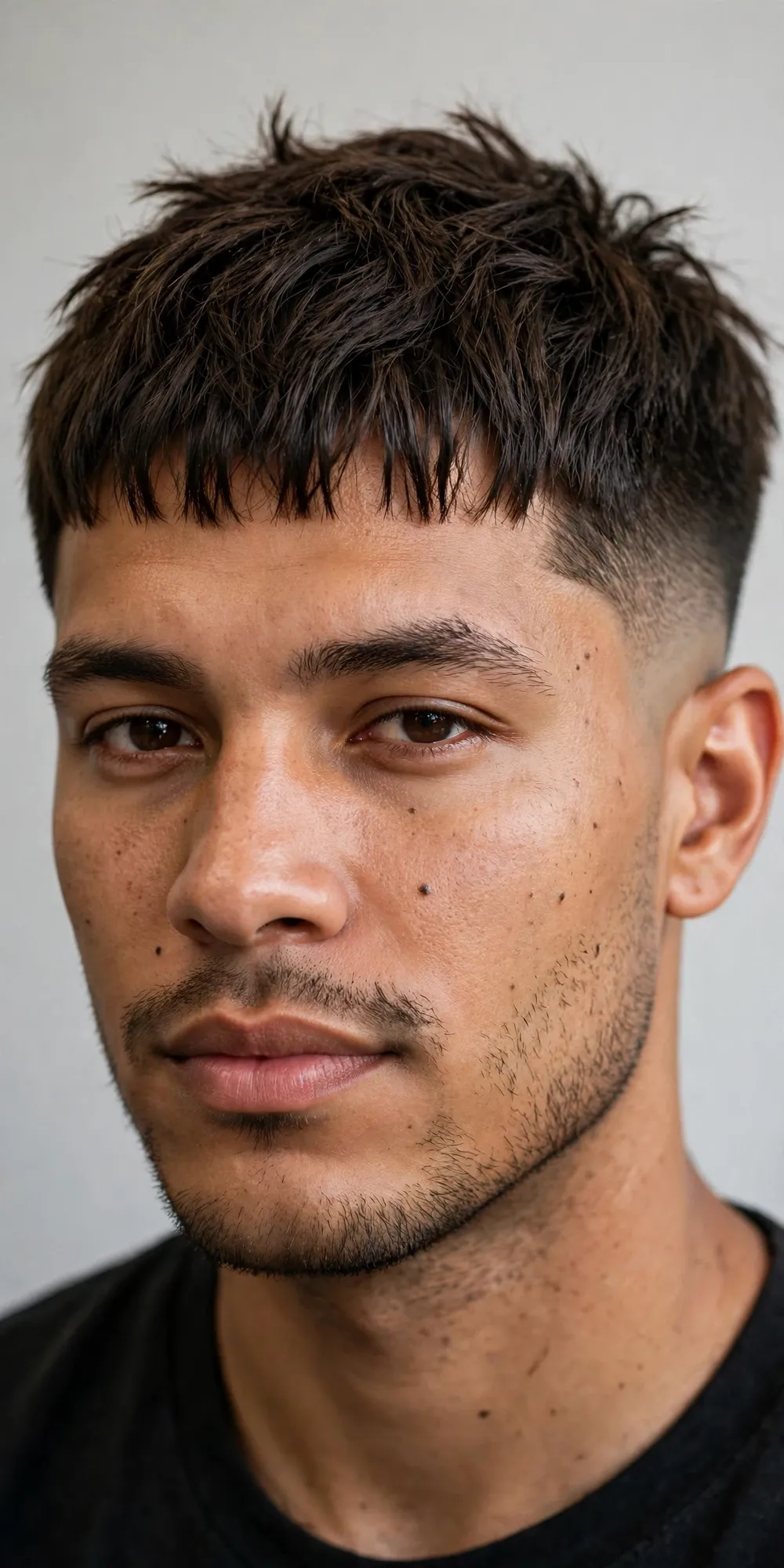
16. Spiky Edgar
The spiky Edgar mixes two looks that should not work together — and somehow do. The top is spiked up with texture and lift, while the fringe stays sleek and straight, giving height on top and a hard line at the front. It is a bold, youthful style for guys who like their haircut to stand out, and it works best on oval and square faces with straight or thick hair. Ask your barber for a spiky textured top, a straight blunt fringe, and a high taper or high fade to keep the sides sharp. It needs product every morning and a trim every two weeks — the spikes lose shape fast once the top grows, and that contrast is the whole point.
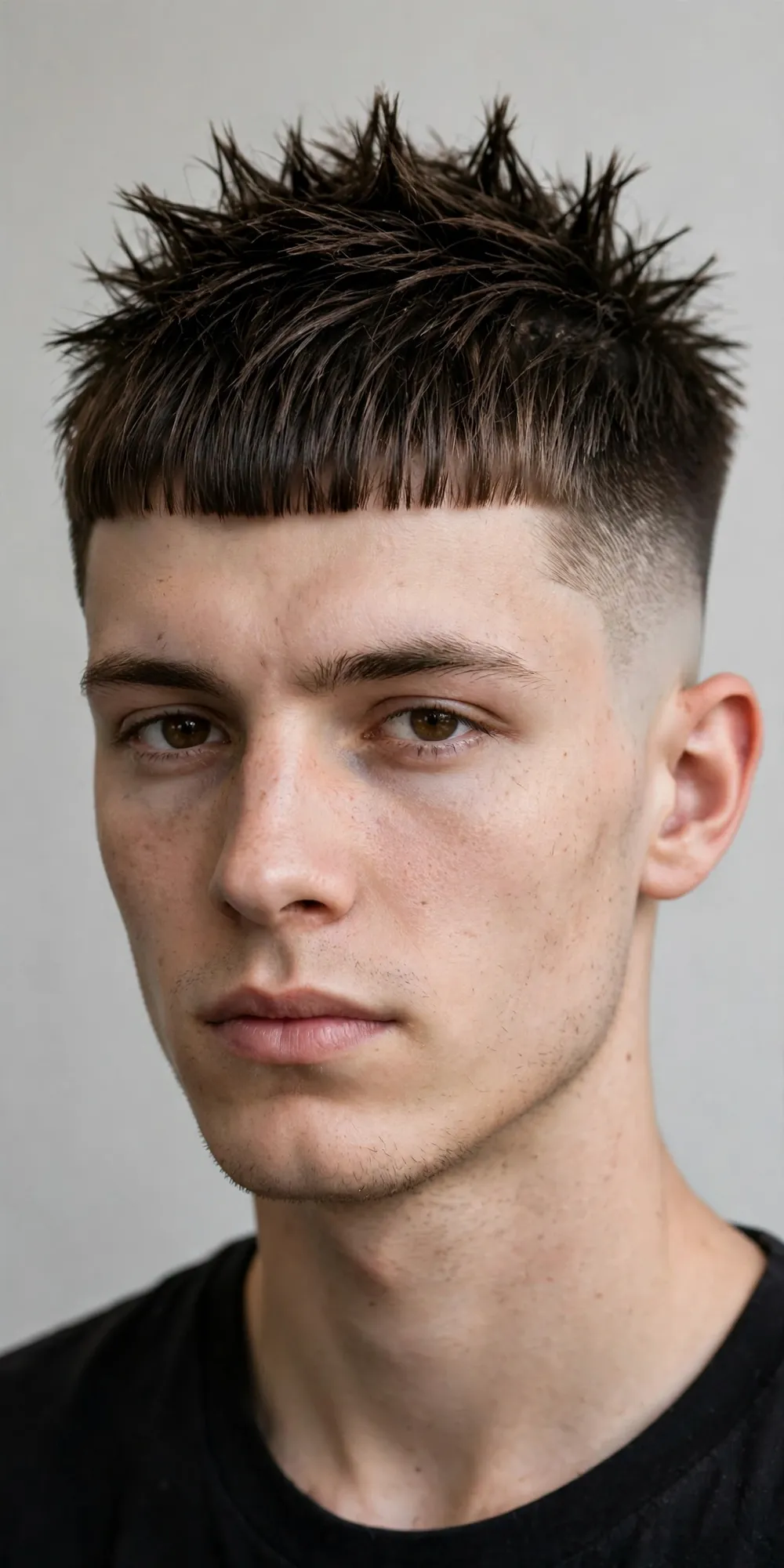
17. Edgar Buzz Cut
The Edgar buzz cut is the lowest-effort version of the style, and it is tougher than it sounds. The top is buzzed short, but the fringe line is kept — a straight Edgar edge across the forehead, with a sharp lineup and faded sides. It suits guys who want the Edgar look with zero styling, and it works best on oval and square faces with a strong jawline. Ask your barber for a buzz on top with a 2 or 3 guard, a defined straight fringe line, and a low or mid fade. Maintenance is simple but frequent: a clipper pass every one to two weeks keeps the fringe line and fade crisp. You can even touch the fringe up yourself with a trimmer.
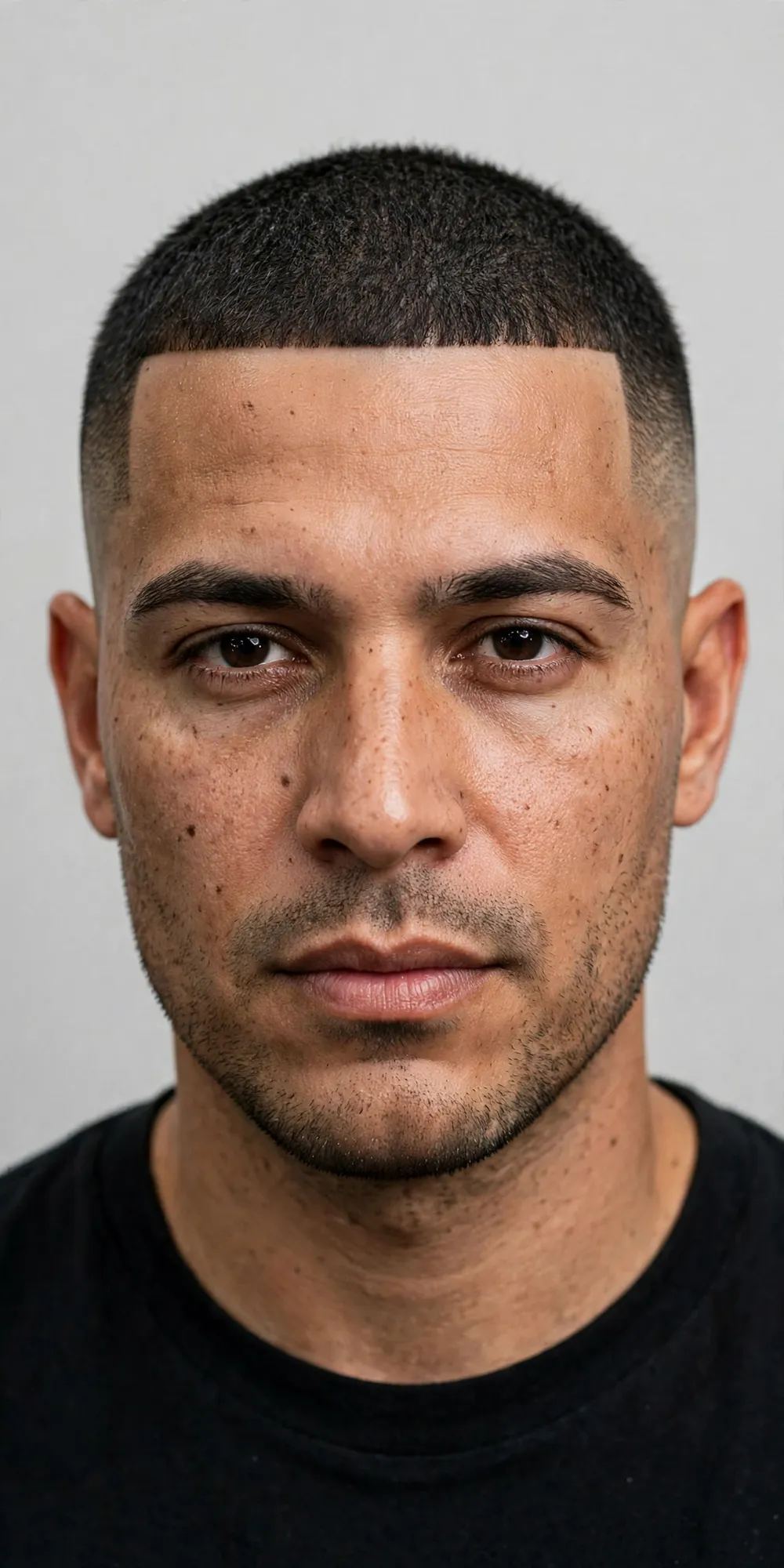
18. Edgar Mullet
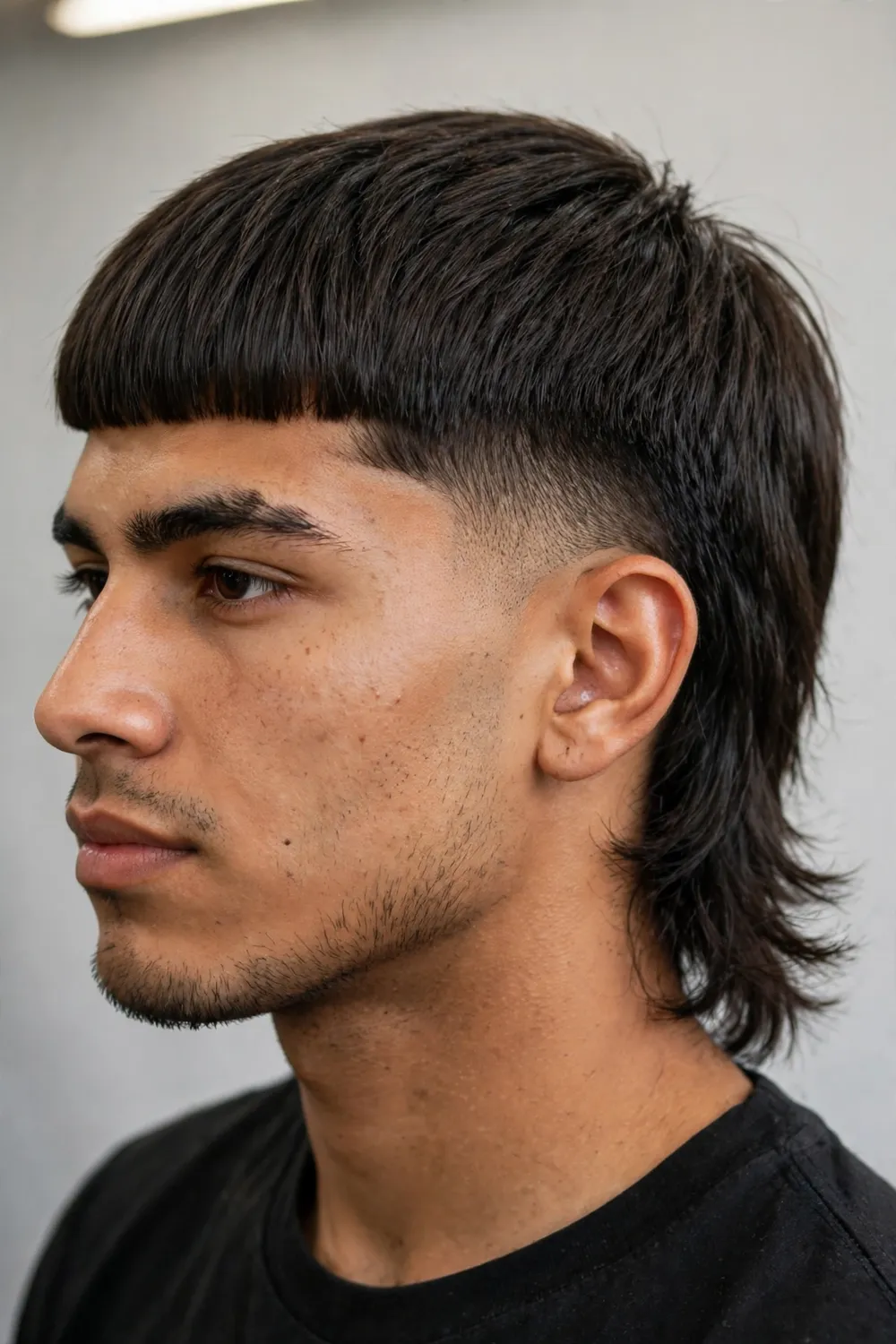
The Edgar mullet is the boldest combination on this list. Up front it is all Edgar — blunt fringe, sharp lineup, faded sides — but the back is left long, past the collar. It is a statement cut, for confident guys with thick or wavy hair that can carry length at the back. It works best on oval and oblong faces, where the long back balances the heavy fringe. Ask your barber for a classic Edgar up front, faded sides, and length left through the back — and agree how long the back should be first. Maintenance is split: fringe and fade need a trim every two weeks, while the back needs a tidy-up monthly to stop it looking straggly.
19. Edgar with Beard
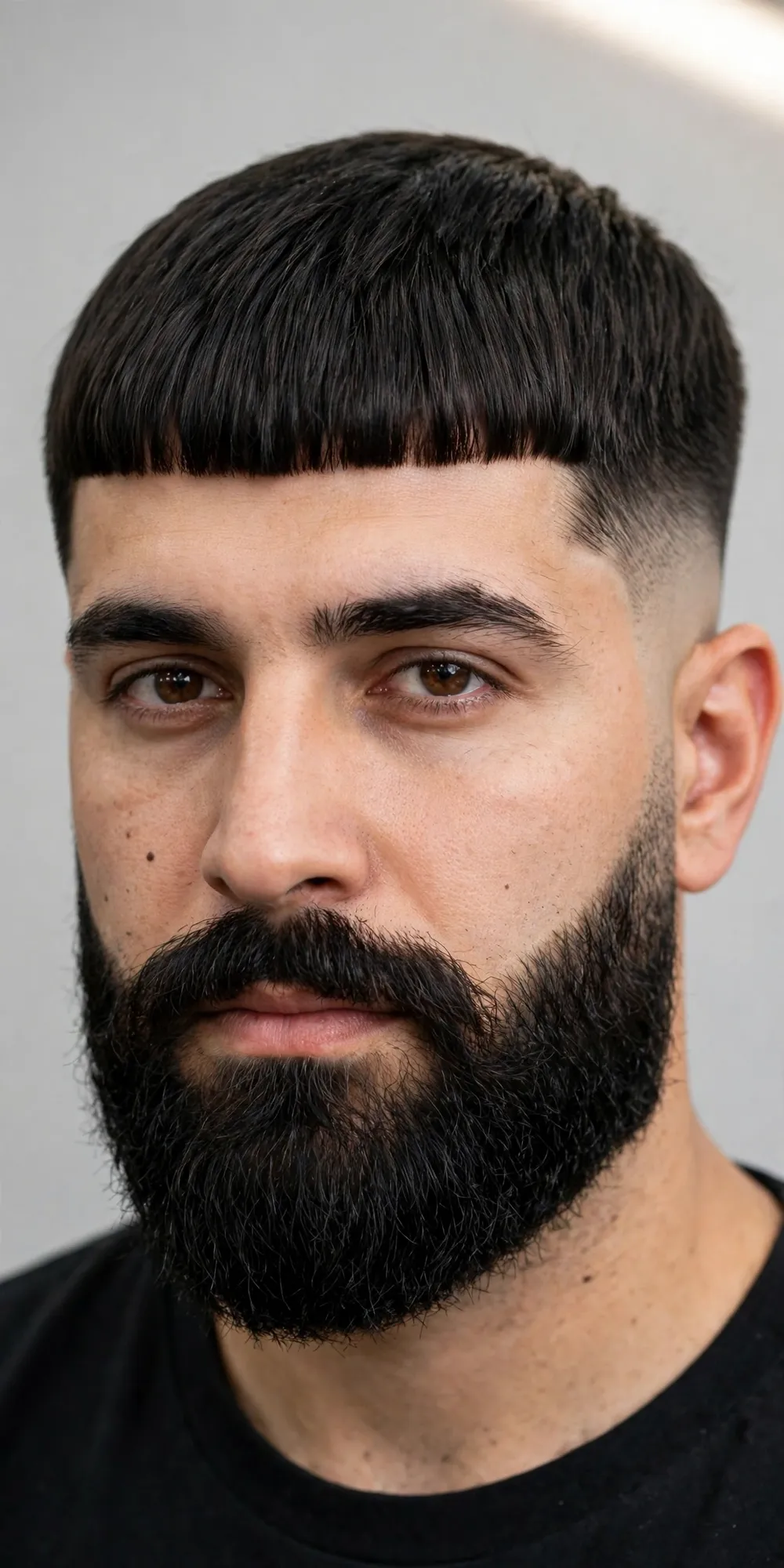
An Edgar with a full beard is one of the best-balanced looks a guy can wear. The sharp fringe and clean fade meet the weight of the beard below, so the face looks framed and finished rather than top-heavy. It suits square and oval faces especially well, and most hair types, because the beard does a lot of the visual work. Ask your barber for a classic Edgar — blunt fringe, taper or fade — and a beard shaped to connect at the sideburns, cheek line cleaned up, neckline defined. Keep the beard in proportion: a short boxed beard suits a neat Edgar, a fuller beard pairs with a heavier top. Maintenance means two routines: a haircut every two to three weeks, and beard upkeep — oil daily, trim weekly.
20. Edgar with Faded Beard
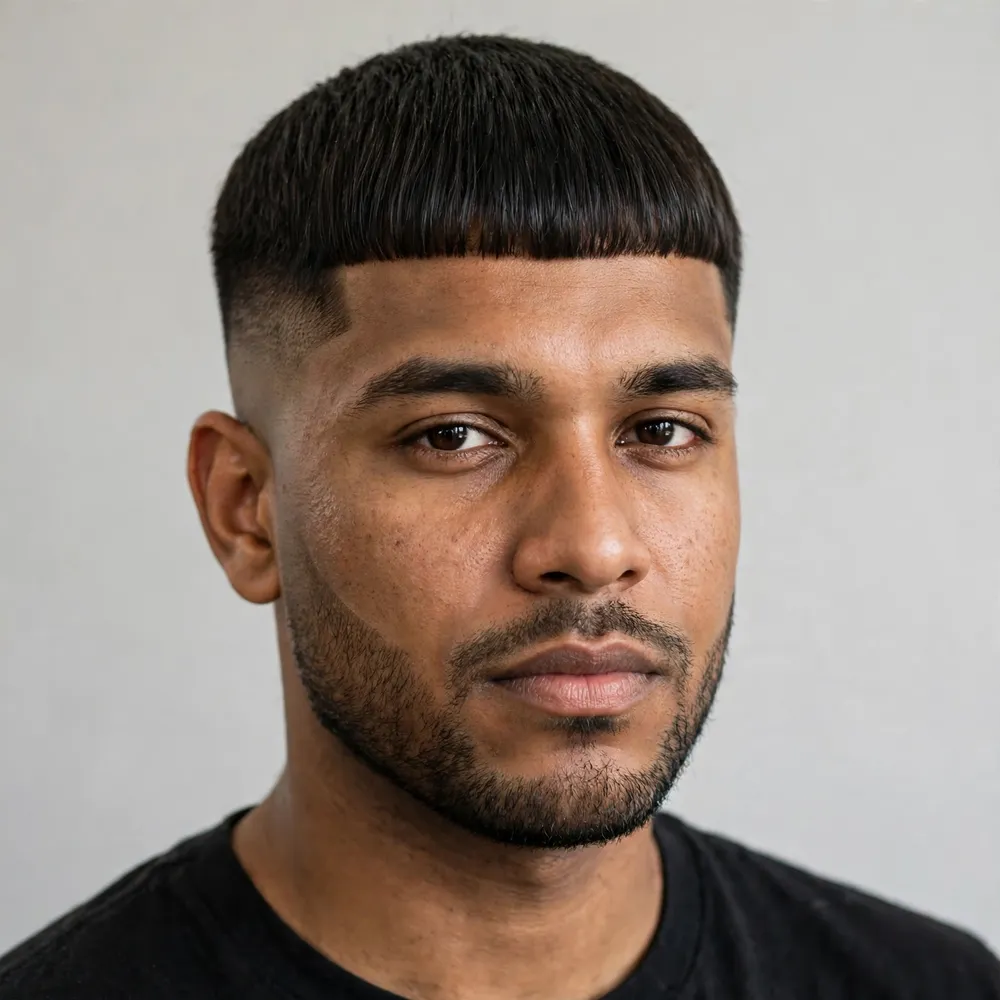
The faded-beard Edgar is the polished version of the beard combo. The sideburns fade into the beard, so there is no hard line where the haircut ends and the beard begins. It looks incredibly clean when fresh, and it suits square and oval faces with a strong jawline. It works best on a fairly full beard; a patchy beard shows the gaps more clearly once faded. Ask your barber for an Edgar on top, a fade blending down into the beard, and a beard shape-up with a defined cheek line. The blend is the tricky part, so find a barber confident with beard fades. Maintenance is the highest of the beard styles: the fade into the beard needs a touch-up every week to ten days, or the blend disappears.
21. Edgar with Design Lines
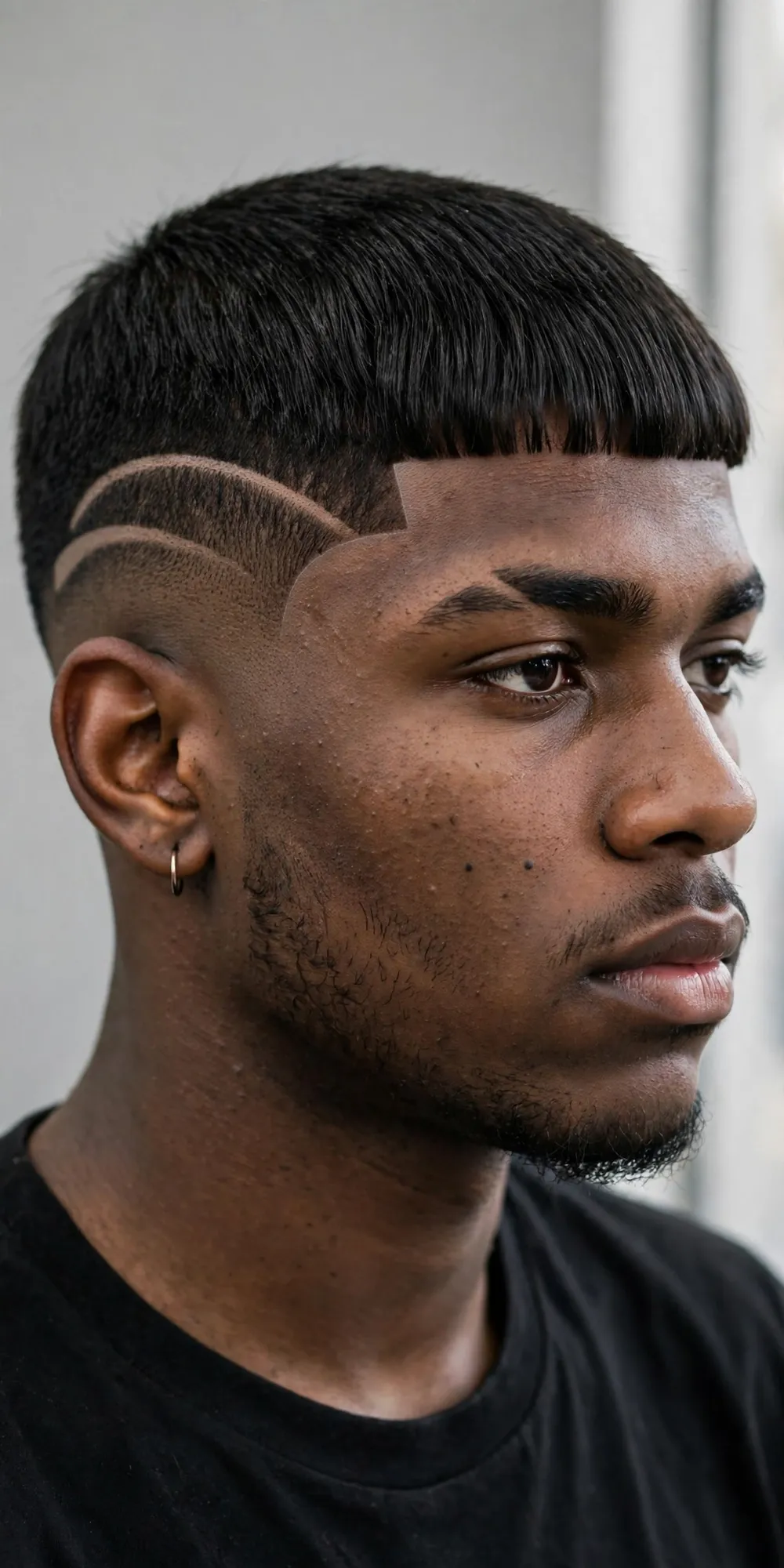
Design lines turn a standard Edgar into a piece of art. Your barber carves one or two shaved lines into the fade, usually above the temple, while the blunt fringe stays clean and straight. It suits oval and square faces best, and it works on straight or slightly wavy hair that holds a sharp fade. Ask for a mid or high skin fade first, then point to exactly where you want the lines, because “a design” means something different to every barber. Keep the lines crisp with a matte paste on top so the contrast does the talking. The catch is upkeep: lines grow out in a week to ten days, so you’ll need a barber visit every two weeks to keep them sharp.
22. Edgar with Line-Up
The line-up is the Edgar’s best friend. This version puts a razor-sharp edge on the forehead, temples and sideburns so the whole cut looks drawn on with a ruler. It works on any face shape but looks especially strong on square and oval faces, and it suits straight or coarse hair that takes a clean edge. Ask your barber for a “crispy lineup with a straight Edgar fringe” and tell them how high you want the corners — some guys keep them square, others round them slightly. Finish with a light pomade for a soft shine. The honest truth is that a lineup fades fast: stubble shows in three to four days, so you’ll need a quick edge-up between full cuts if you want it looking fresh.
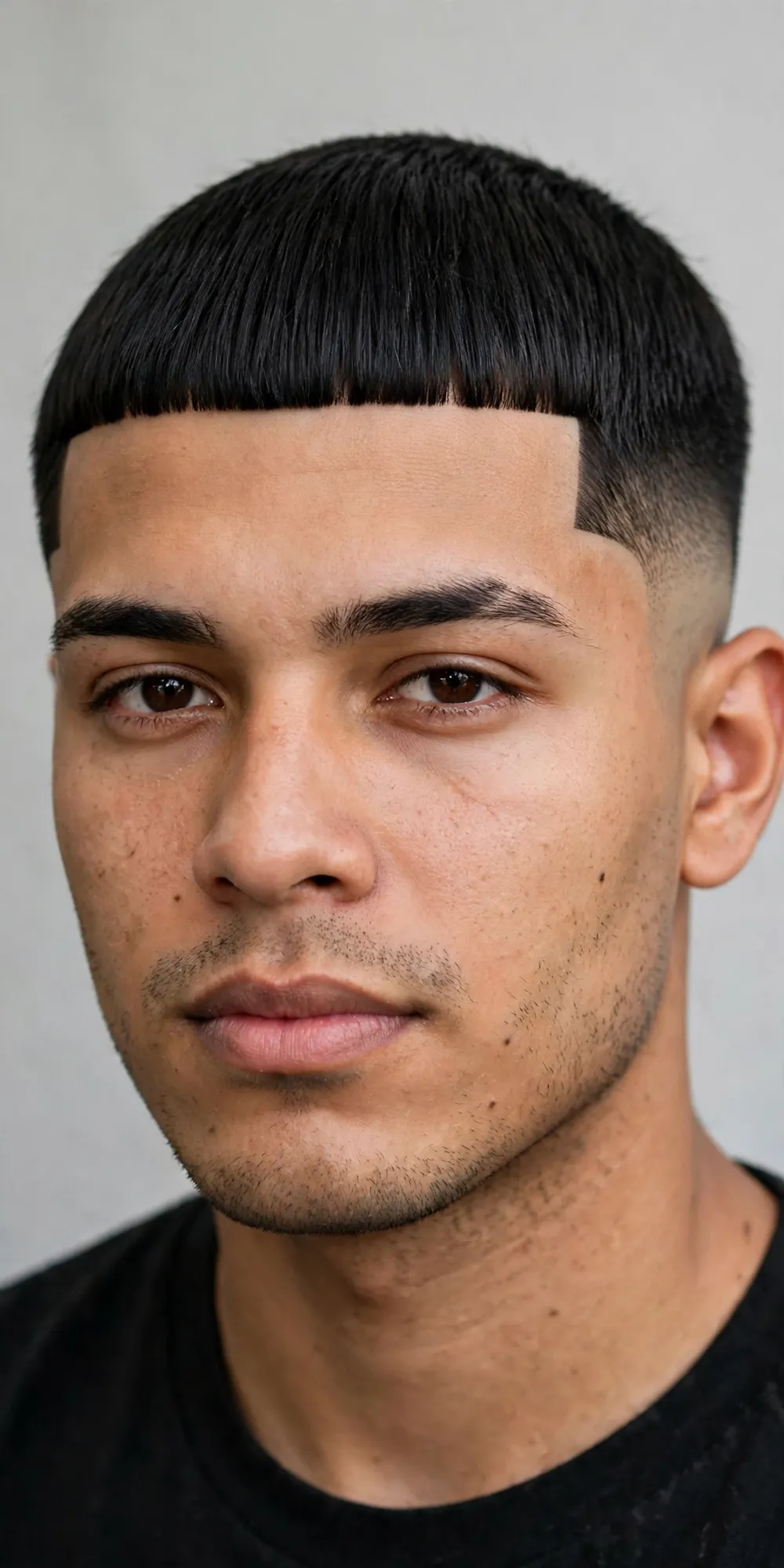
23. Edgar with Widow’s Peak
A widow’s peak doesn’t rule out an Edgar — it just changes how the fringe is cut. Here the barber shapes the blunt fringe to follow your natural V-shaped hairline instead of fighting it, so the peak becomes part of the look rather than a flaw. It suits guys with a defined widow’s peak and straight or wavy hair, flattering oval and heart-shaped faces by balancing the forehead. Ask your barber to keep the fringe straight across but to blend the peak gently rather than lining it out completely. A dab of matte clay gives a natural finish. Upkeep is the same as a classic Edgar, though watch the peak area between cuts — it can look messy before the rest does.
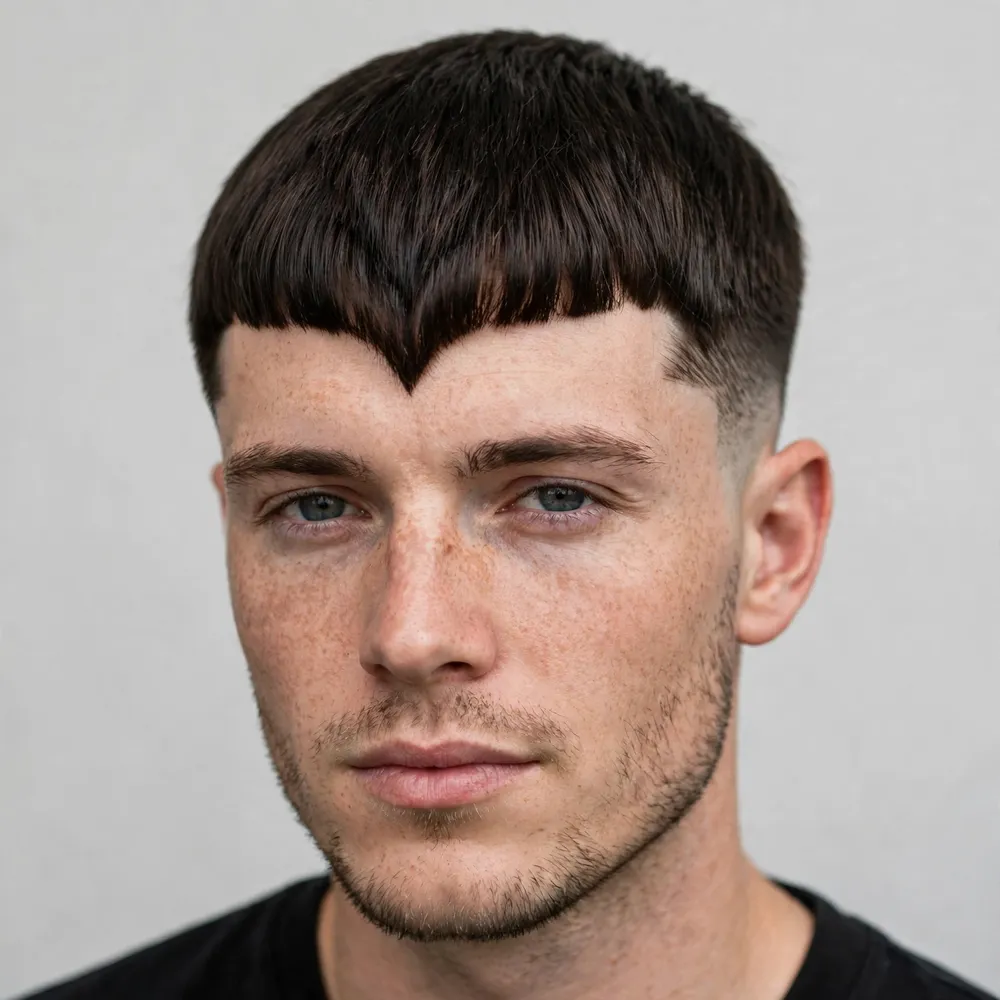
24. Edgar with Drop Fade
The drop fade is one of those details people notice without knowing why. The fade dips down behind the ear and curves lower at the back, which gives the cut a rounder, more sculpted shape than a straight-across fade. It pairs brilliantly with the blunt Edgar fringe because the contrast between the curved fade and the straight line up front looks deliberate and sharp. Best on oval, square and oblong faces, and it works with straight or wavy hair. Ask for a mid drop fade and a straight fringe, and make sure your barber blends the drop smoothly — a choppy drop looks like a mistake. Style with matte paste. It grows out fairly gracefully, so you can stretch it to three or four weeks.
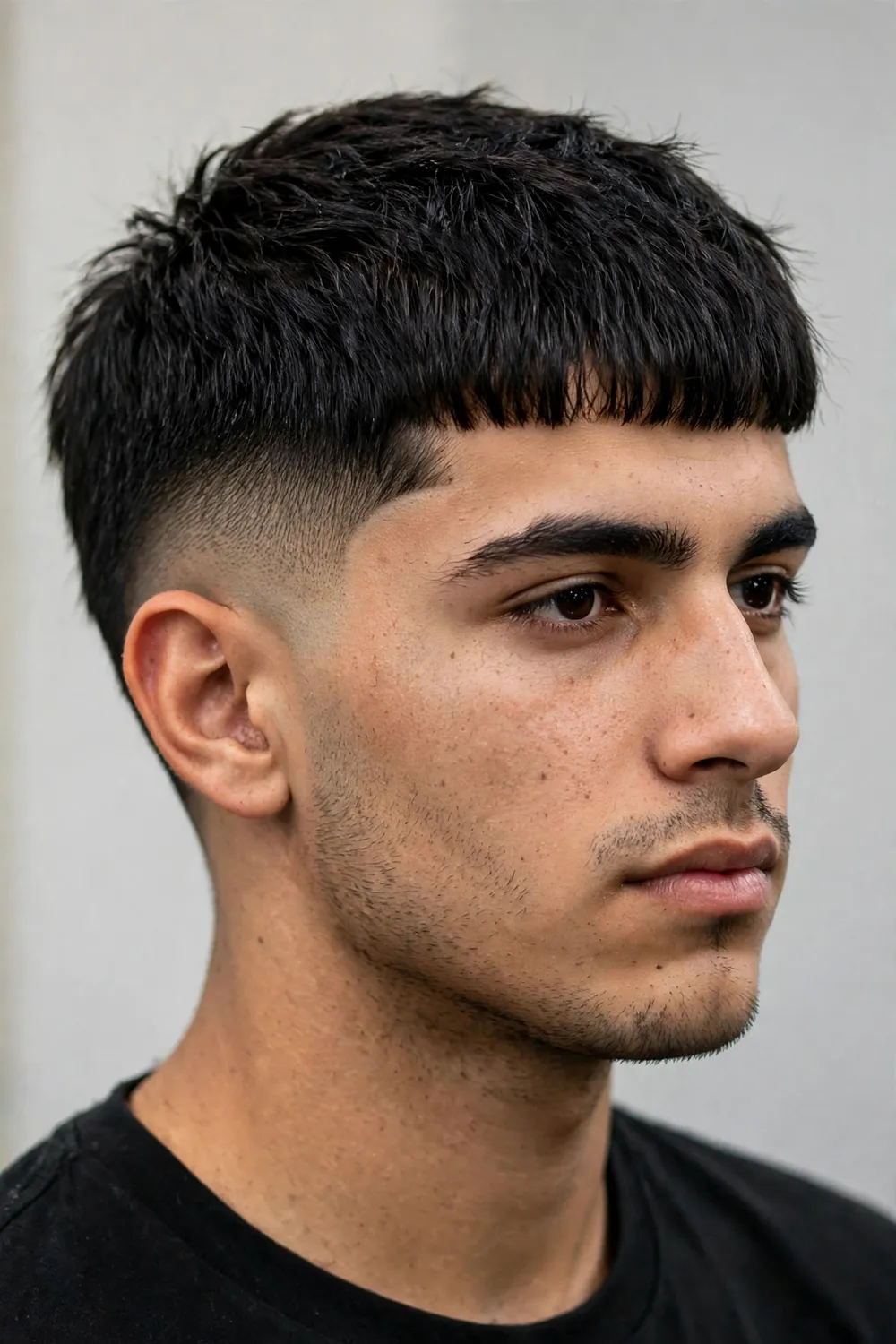
25. Edgar with Burst Fade
A burst fade arcs around the ear in a semicircle, leaving the length behind it longer — and with an Edgar fringe on top, the result is bold and unmistakably modern. It’s a great pick for guys who like the mohawk-adjacent energy without committing to a full mohawk fade. The burst shape flatters round and oval faces by adding height and structure, and it works best on straight or slightly wavy hair that can hold the arc. Ask your barber for a burst fade with a mid blend and a blunt fringe, and bring a photo — the arc’s curve is easy to get wrong from words alone. Finish with texture paste. You’ll need a touch-up every two to three weeks to keep the arc clean.
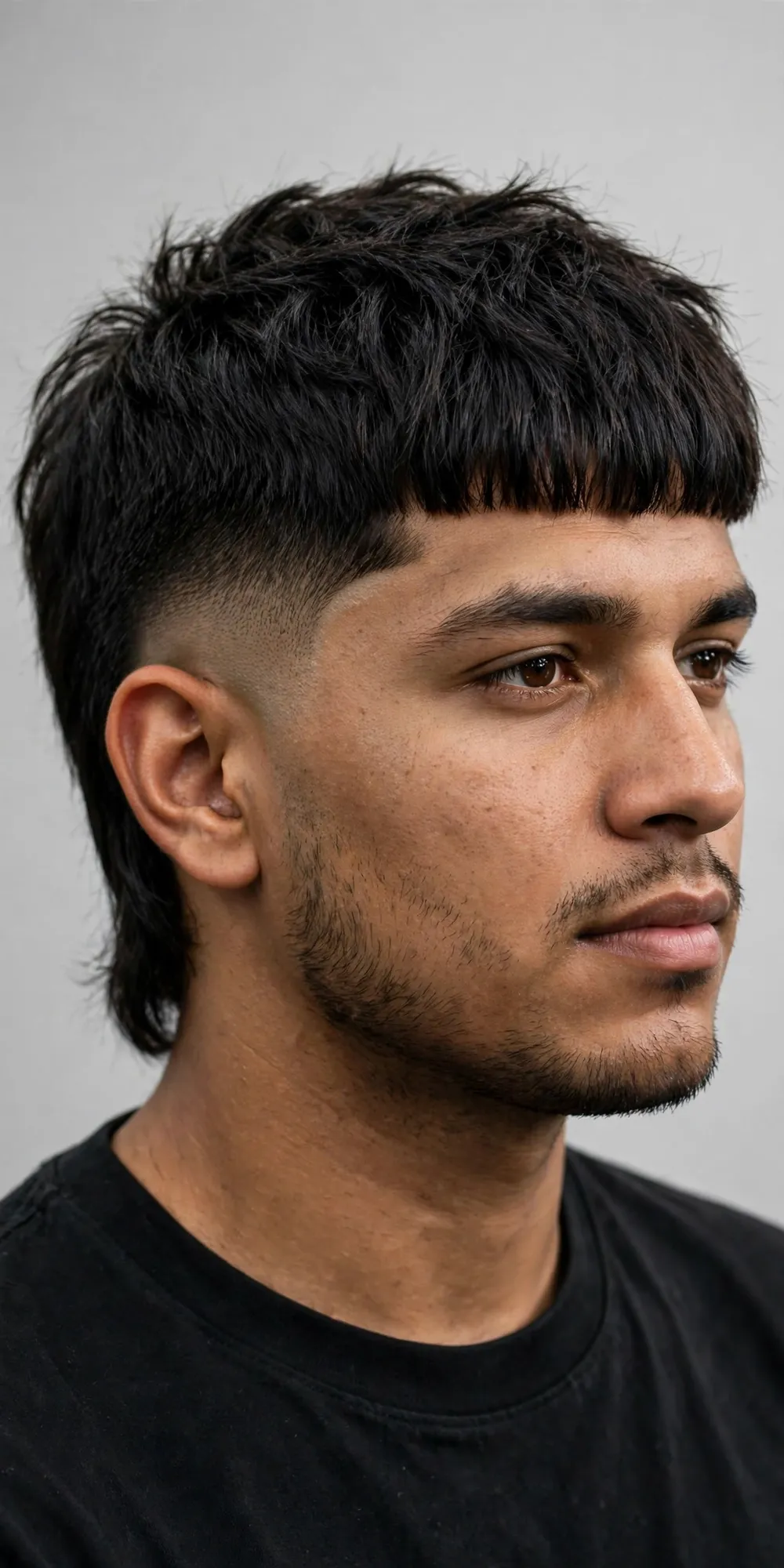
26. Edgar with Undercut
The undercut Edgar is the disconnected cousin of the classic cut. The sides are clipped short with no blend at all, so there’s a hard step between the buzzed sides and the longer top, and the blunt fringe sits on top like a cap. It’s a strong look for oval and square faces and suits straight hair best, since the contrast is the whole point. Ask for an undercut on the sides — usually a #1 or #2 guard — with the top left long enough to brush forward into the fringe. A matte clay or strong-hold paste keeps the top in place. The upside is that undercuts grow out slowly; the downside is that the hard line needs a clean-up every two weeks or the contrast goes muddy.
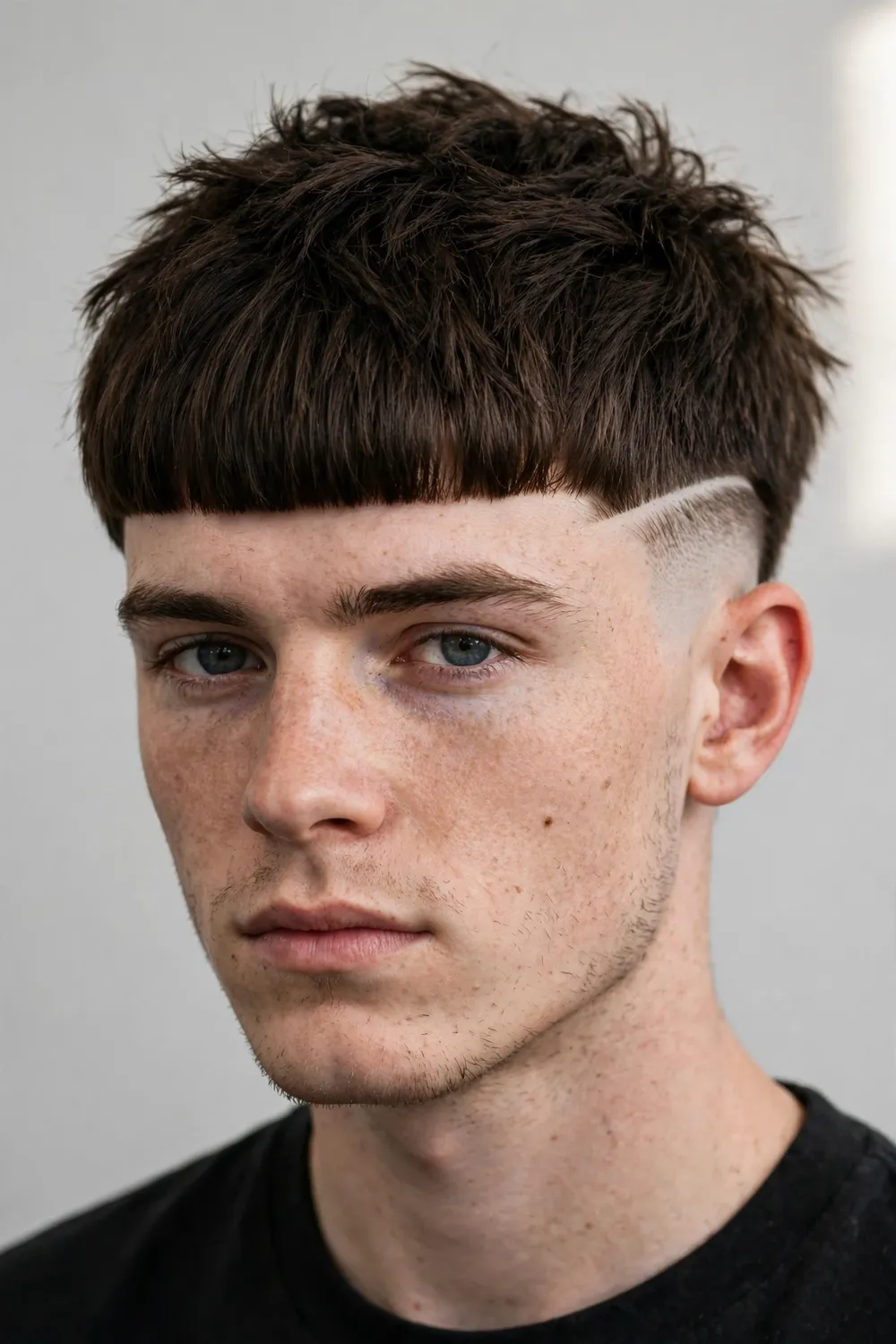
27. Edgar with Quiff
If the dead-straight fringe feels too severe for you, the quiff version lifts the front up instead. The top is left longer and pushed up at the front, while the sides stay tapered and the fringe line is softened rather than razor straight. It suits round and oval faces beautifully because the height on top lengthens the face, and it works on straight or wavy hair with some natural body. Ask your barber for a short quiff with an Edgar taper on the sides, and tell them you still want a defined fringe line, just not a hard one. Blow-dry the front up with volume powder, then set it with matte paste. It’s a bit more morning effort than a classic Edgar, but only by a minute or two.
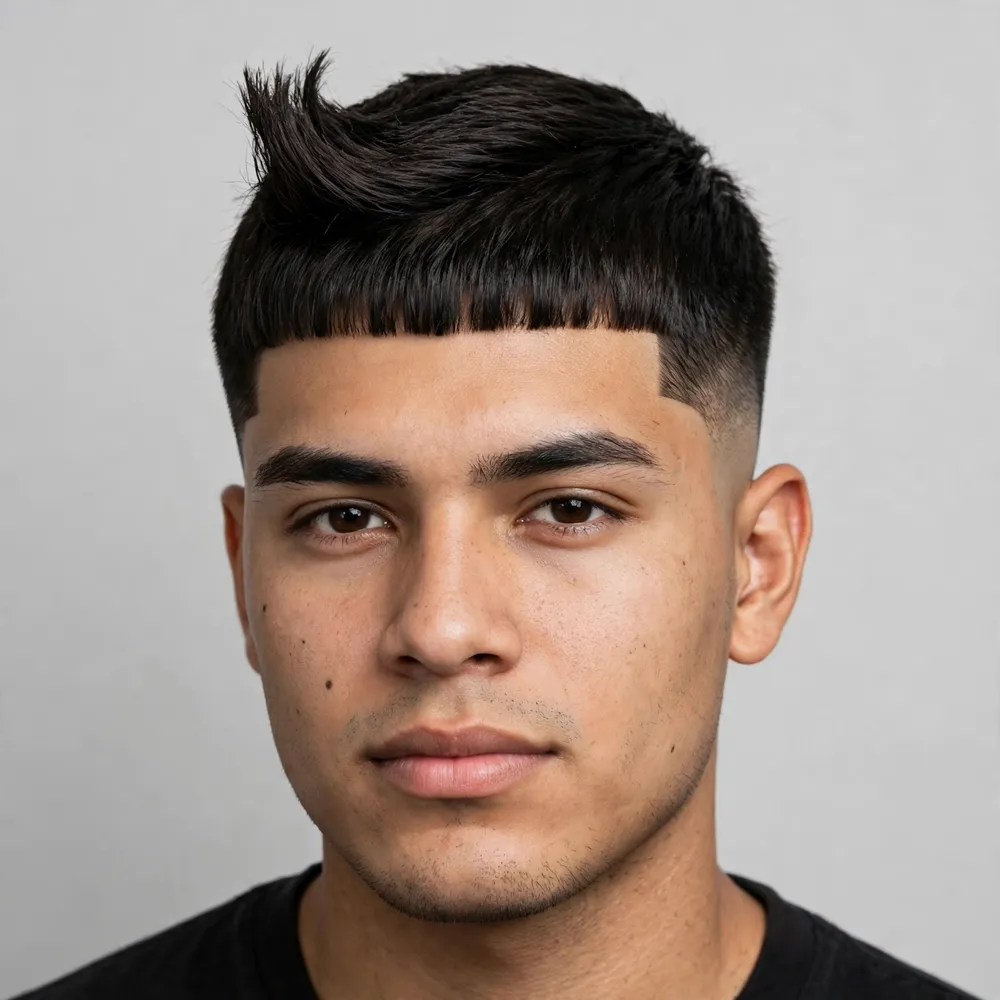
28. Edgar with Mohawk Texture
This one is for guys who want an Edgar with attitude. The top is cut with spiky, mohawk-style texture running from front to back, while the fringe keeps its straight Edgar line and the sides are faded tight. It suits oval and square faces and straight or thick hair that can hold spikes — fine hair will struggle here without a lot of product. Ask your barber for a textured top with a spiked finish and a high fade on the sides. Style it with a strong-hold matte wax, pinching small sections upward rather than combing it flat. Maintenance is higher than a standard Edgar: the texture needs restyling every morning, and the spikes lose their shape fast if you skip product. But if you like standing out, it delivers.
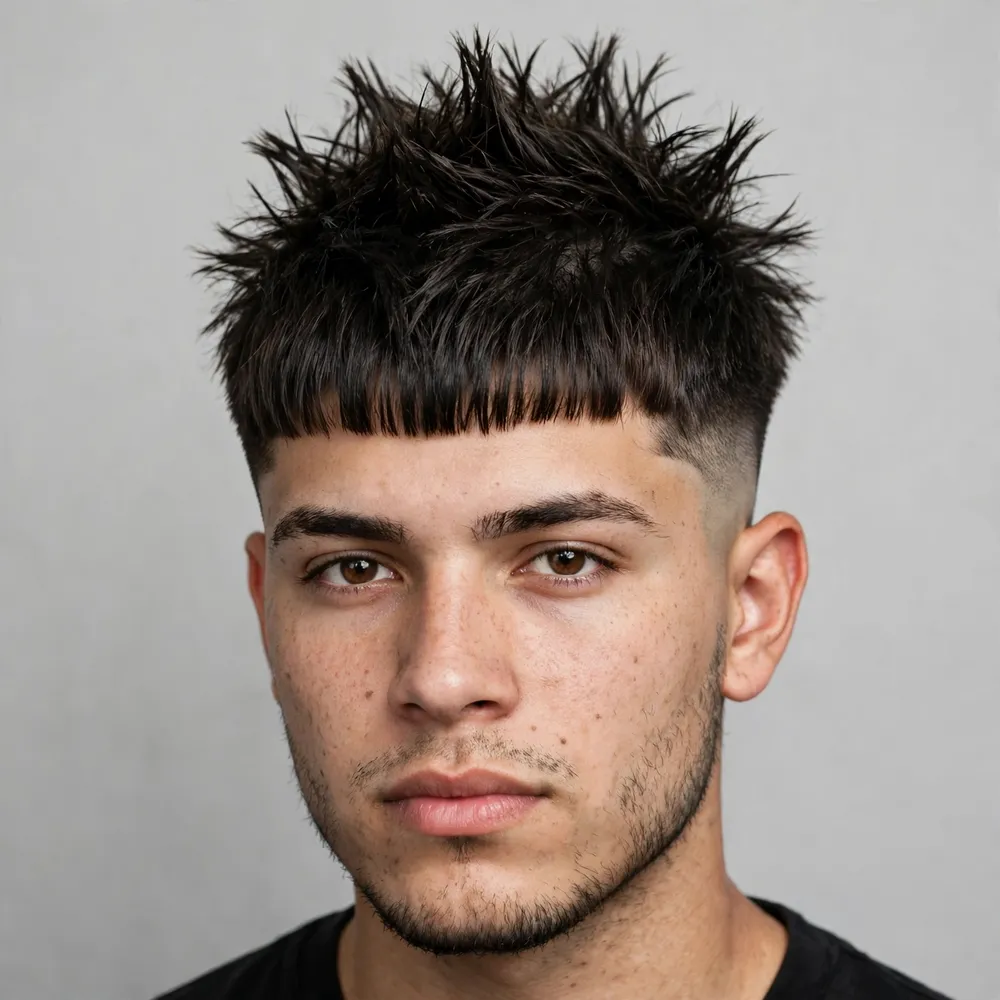
29. Edgar with Side Part
The side part softens everything about the Edgar. Instead of the fringe running straight across, a clean part is cut on one side and the top sweeps slightly to the side, which takes the harshness out of the hard line. It’s a smart choice for older guys, office settings or anyone with a round face, since the asymmetry adds length. Straight and wavy hair both work well here. Ask your barber for a low taper, a defined side part and a fringe that’s straight but not aggressively blunt. A light pomade gives a neat, polished finish with a touch of shine. This is one of the easiest Edgars to live with — it grows out gracefully, and you can stretch cuts to four weeks without it looking untidy.
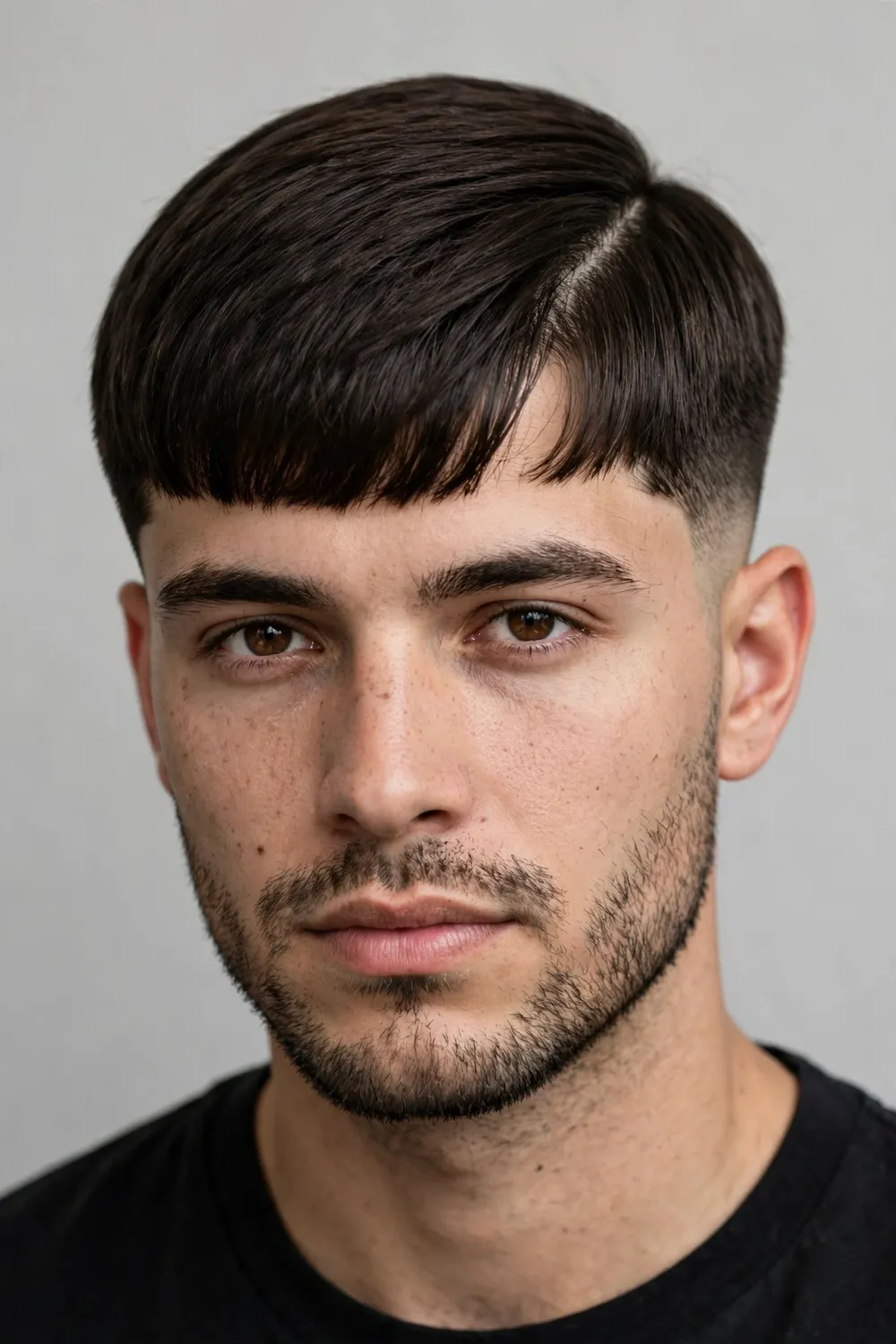
30. Edgar with Disconnected Line
A disconnected line is a hard shaved line that separates the top from the sides, with no blending at all — and on an Edgar it doubles down on the cut’s sharp, graphic character. The top stays long and full, the fringe is blunt, and the line between them is crisp enough to see from across the room. It suits oval and square faces and straight, thick hair that can carry the weight on top. Ask your barber to carve a hard part line where the top meets the fade, and agree on placement first — once it’s shaved in, there’s no undoing it. Style with matte paste and keep the top brushed forward. The line needs a clean-up every ten days or so, so this is a high-maintenance pick.
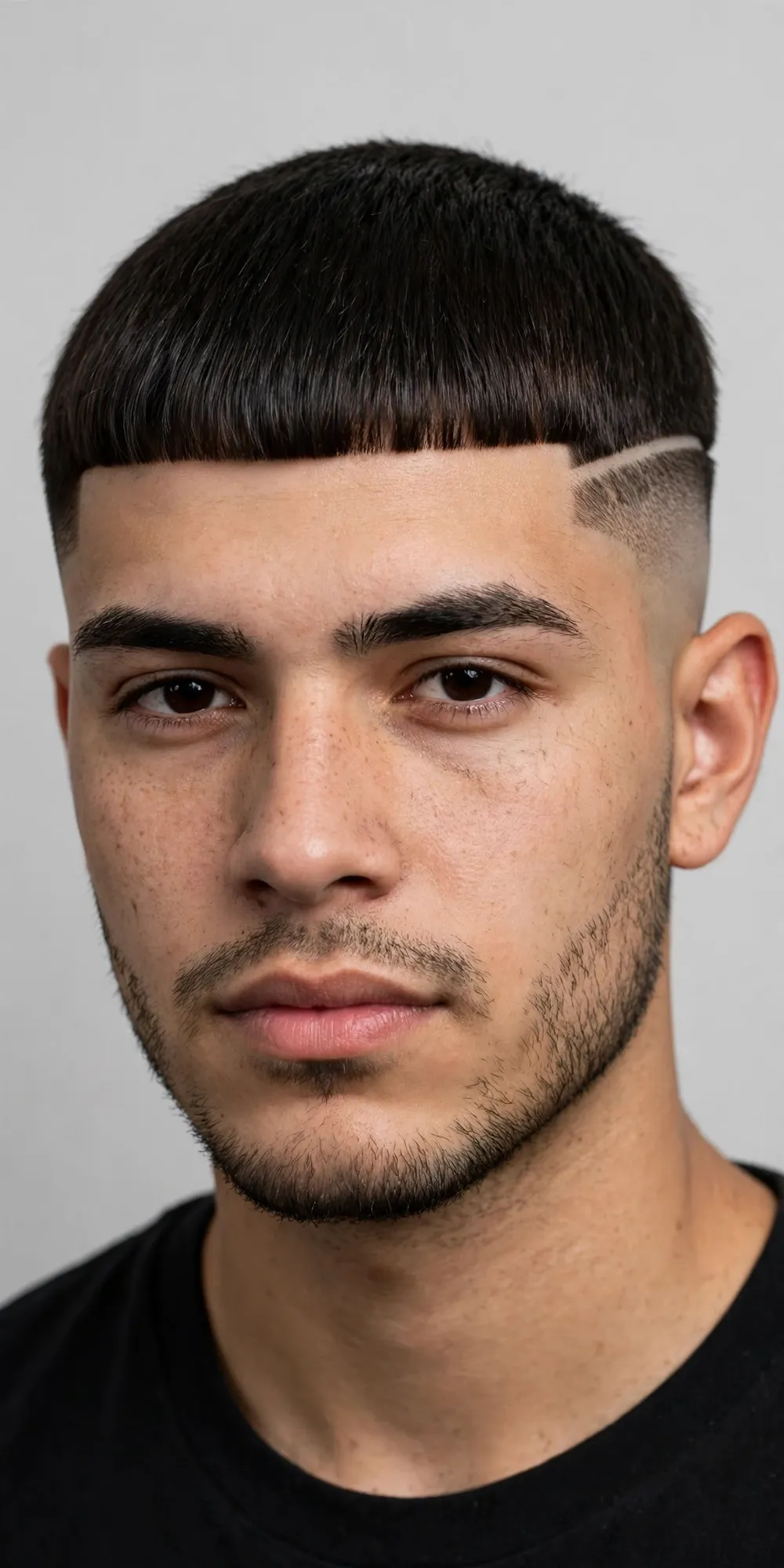
31. Edgar for Thick Hair
Thick hair is arguably the Edgar’s natural home. Its weight gives the fringe a solid, heavy line, and the top holds its shape without much product. This version keeps the fringe full and blunt, with the bulk thinned out underneath so the top doesn’t puff up like a helmet. It suits most face shapes, especially square and oval, and the only real requirement is genuinely thick hair. Ask your barber to thin the top with thinning shears, keep the fringe heavy, and taper the sides to take weight out. A small amount of matte clay is usually enough. The maintenance is honest: thick hair grows fast, so book every three weeks, but day to day this is one of the easiest Edgars to wear.
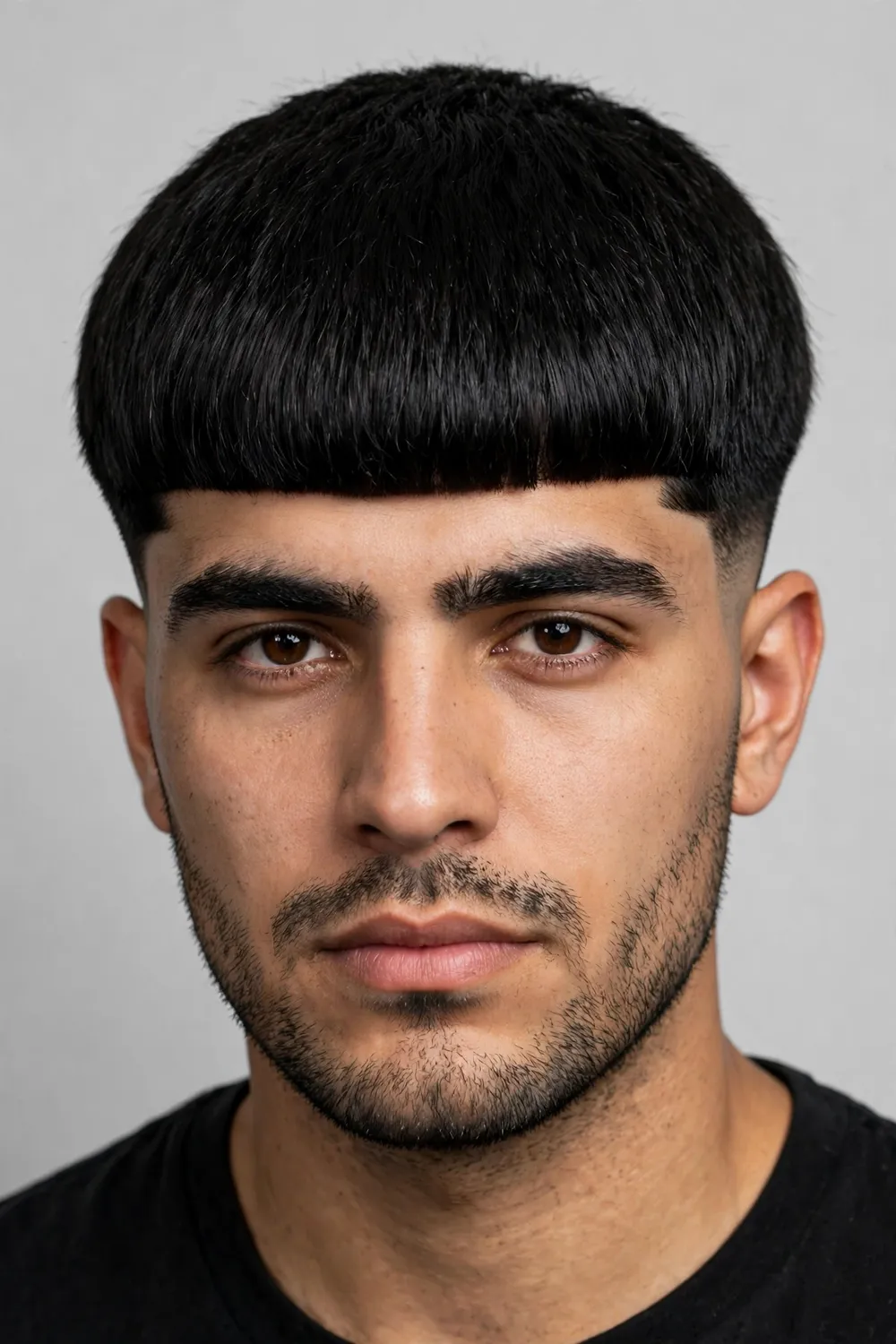
32. Edgar for Fine Hair
Fine hair needs a different approach, and this version is built around it. The fringe is cut shorter and kept neat, the top is left just long enough to lie flat, and close-tapered sides make the top look fuller. It suits oval and round faces well, and the key is not asking for too much length — long fine hair goes limp and shows the scalp. Ask your barber for a short Edgar with a low taper and a fringe that sits just above the eyebrows. A pea-sized amount of lightweight matte paste adds texture without weighing the hair down; avoid heavy pomades. Wash with a volumising shampoo and you’ll get more lift. Cuts every three to four weeks keep it looking sharp.
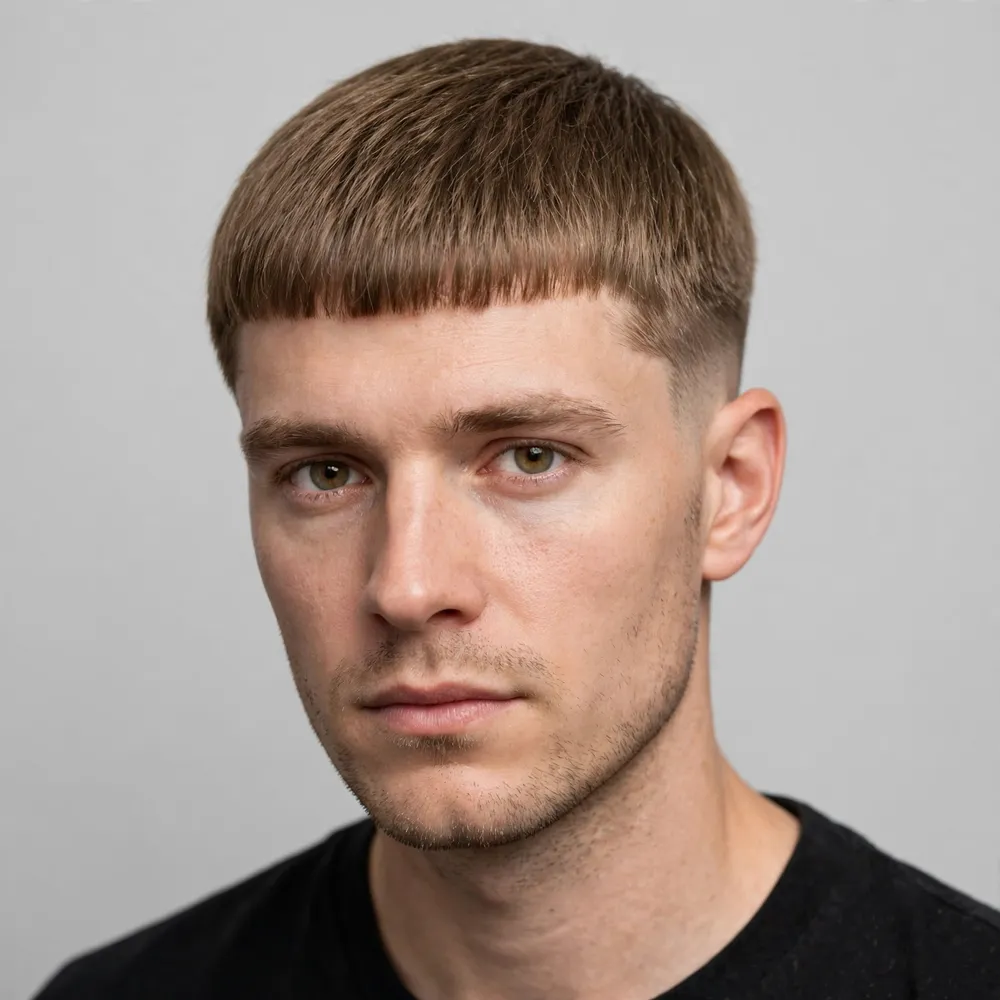
33. Edgar for Straight Hair
This is the Edgar in its purest form. Dead-straight hair takes the bluntest fringe line of any hair type — no wave, no curl, nothing to soften the edge — so the result looks almost architectural. It suits oval, square and oblong faces, and any fade height works, though a mid or high skin fade shows the contrast best. Ask your barber for the straightest fringe they can cut, lined up tight, with a fade that suits your head shape. Styling is minimal: a touch of matte paste if you want texture, or nothing at all if you like the clean look. The trade-off: straight hair shows every flaw, so the line must be perfect — and that means a touch-up every two to three weeks.
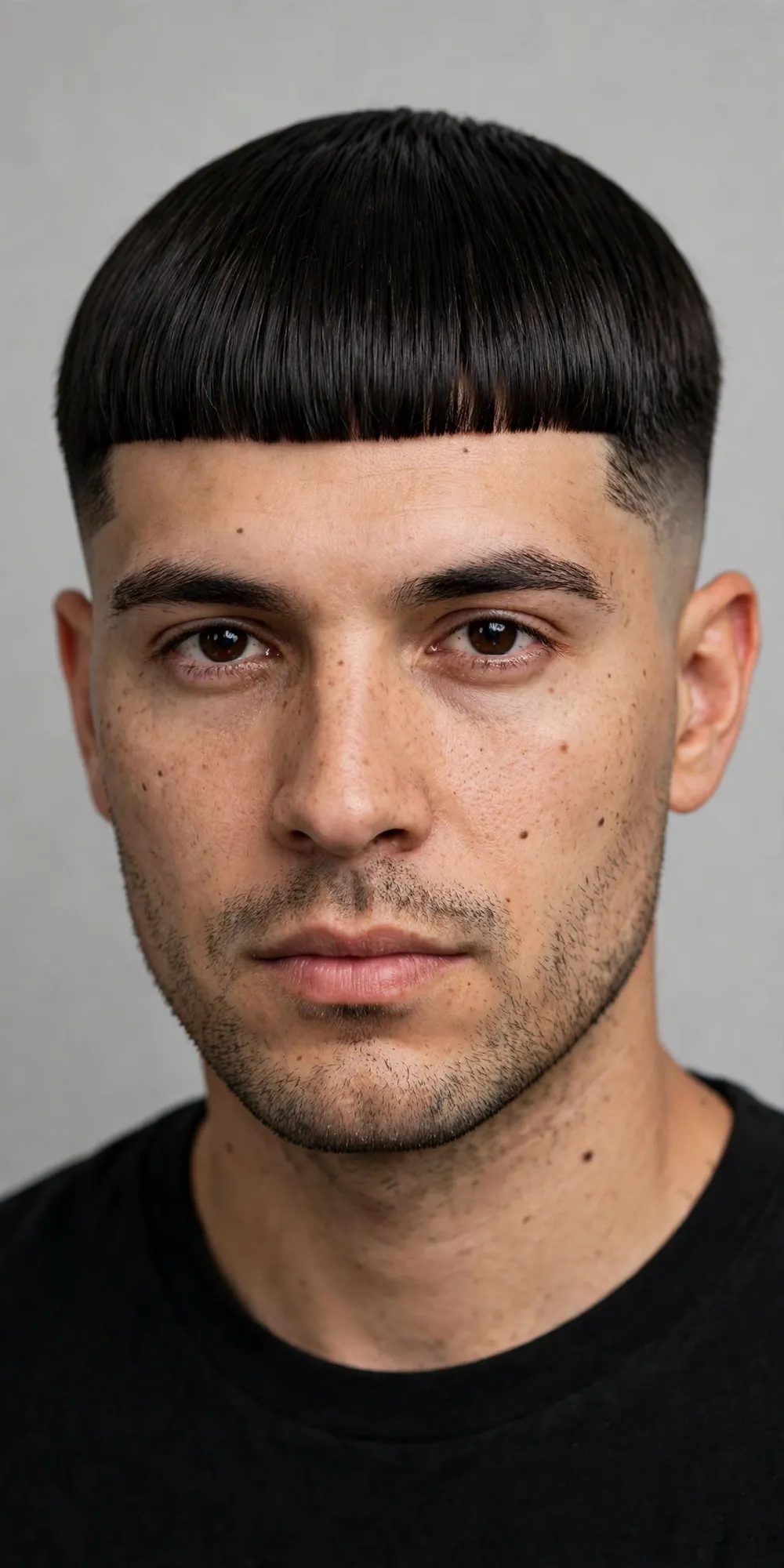
34. Edgar for Black Men
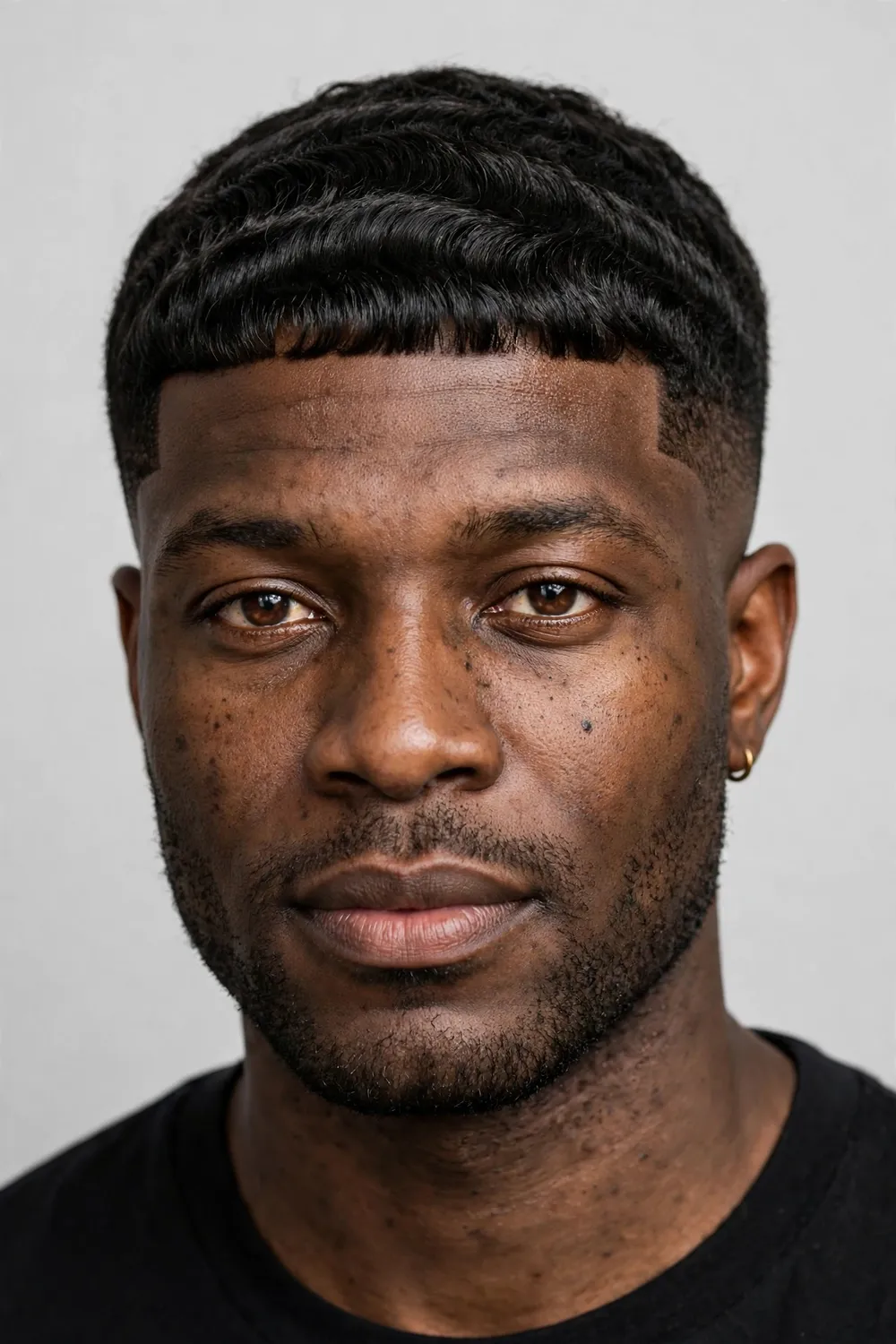
The Edgar works brilliantly on Black hair, usually paired with waves or a low taper finish. The fringe is cut blunt across the forehead and lined up crisp, while the sides get a low taper that keeps the shape clean without taking too much off the top. It suits oval, square and round faces, and it pairs naturally with low fade haircuts for Black men if you want a sharper version. Ask your barber for an Edgar with a low taper and sharp lineup, and mention waves if you want the 360-wave look. A wave brush, durag at night and a light pomade keep the top defined. Upkeep is mostly about the lineup — a quick edge-up every week or so keeps it looking fresh between full cuts.
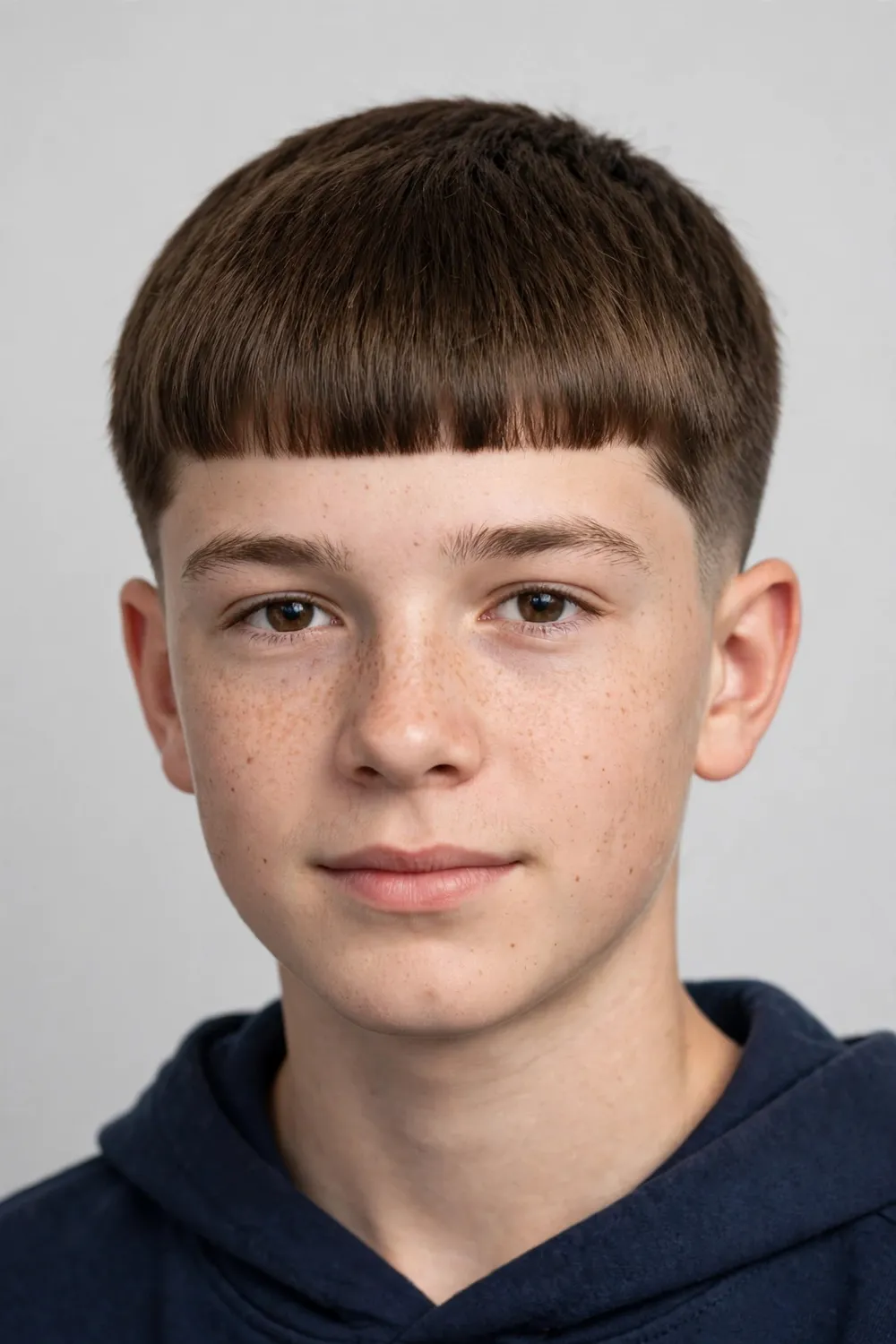
35. Edgar for Teenage Guys
Teenagers were the ones who made the Edgar famous, and this version is the school-friendly take. The fringe stays blunt and straight, but the sides get a softer taper instead of a skin fade, so it looks clean without being too extreme for the classroom. It suits most face shapes at that age and works on straight, wavy or slightly curly hair. Ask the barber for a classic Edgar with a low or mid taper, and keep the fringe just above the eyebrows so it doesn’t get in the way. Styling is easy — a little matte paste or nothing at all. It grows out well, so three to four weeks between cuts is fine, which makes it a practical choice for a first proper haircut.
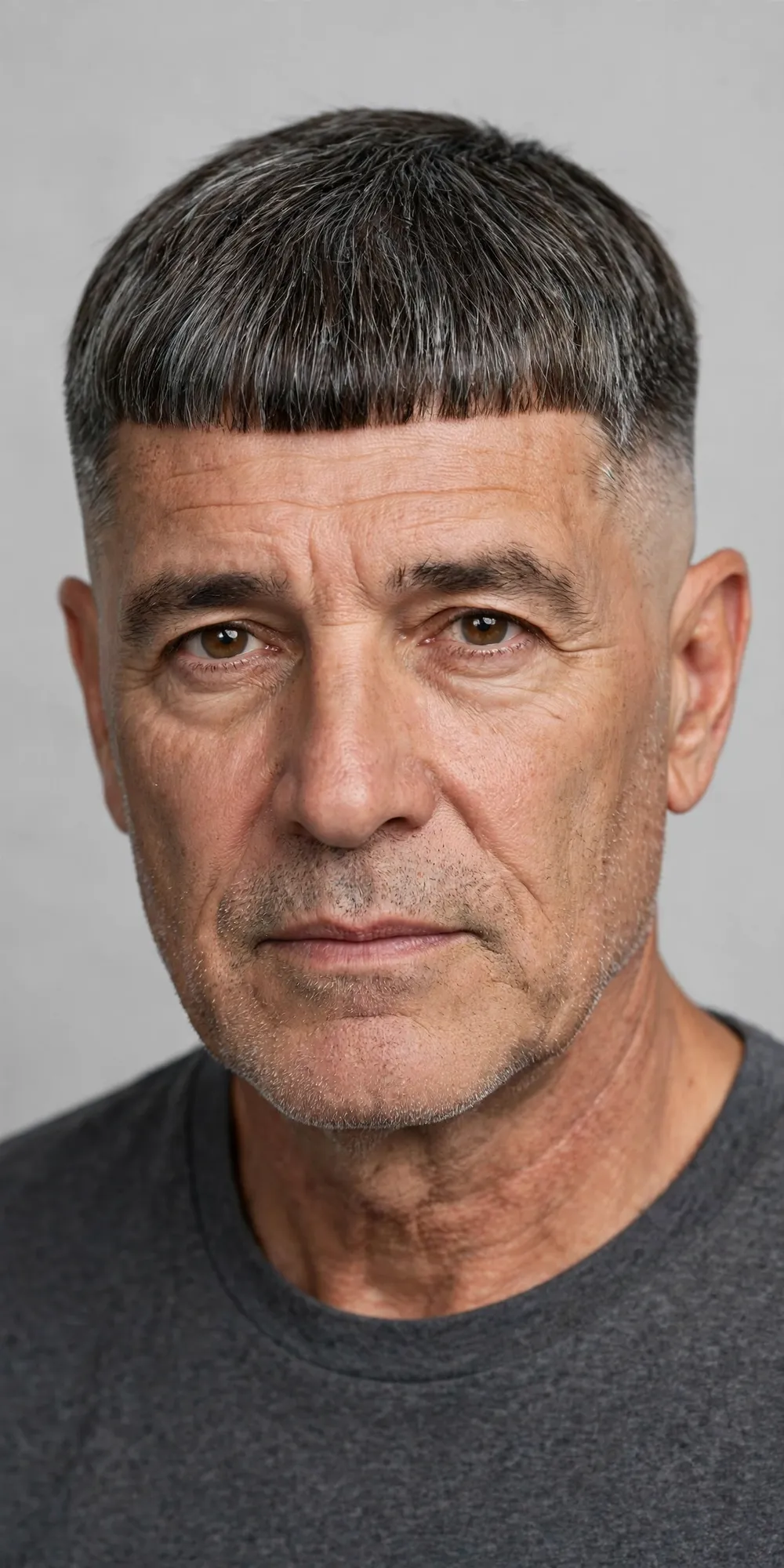
36. Edgar for Older Men
The Edgar isn’t just a young man’s cut. For older men, the trick is to keep it shorter and neater: a low taper on the sides, a fringe that’s straight but not aggressively long, and no harsh skin fade unless you want it. It suits oval and square faces and works with straight or slightly wavy hair, including hair that’s starting to thin — the short top actually makes thinning less noticeable. Ask your barber for a shorter Edgar with a low taper and a tidy lineup. A light matte product gives a natural finish without looking like you’re trying too hard. Cuts every three to four weeks keep it sharp, and the low maintenance makes it an easy everyday cut.
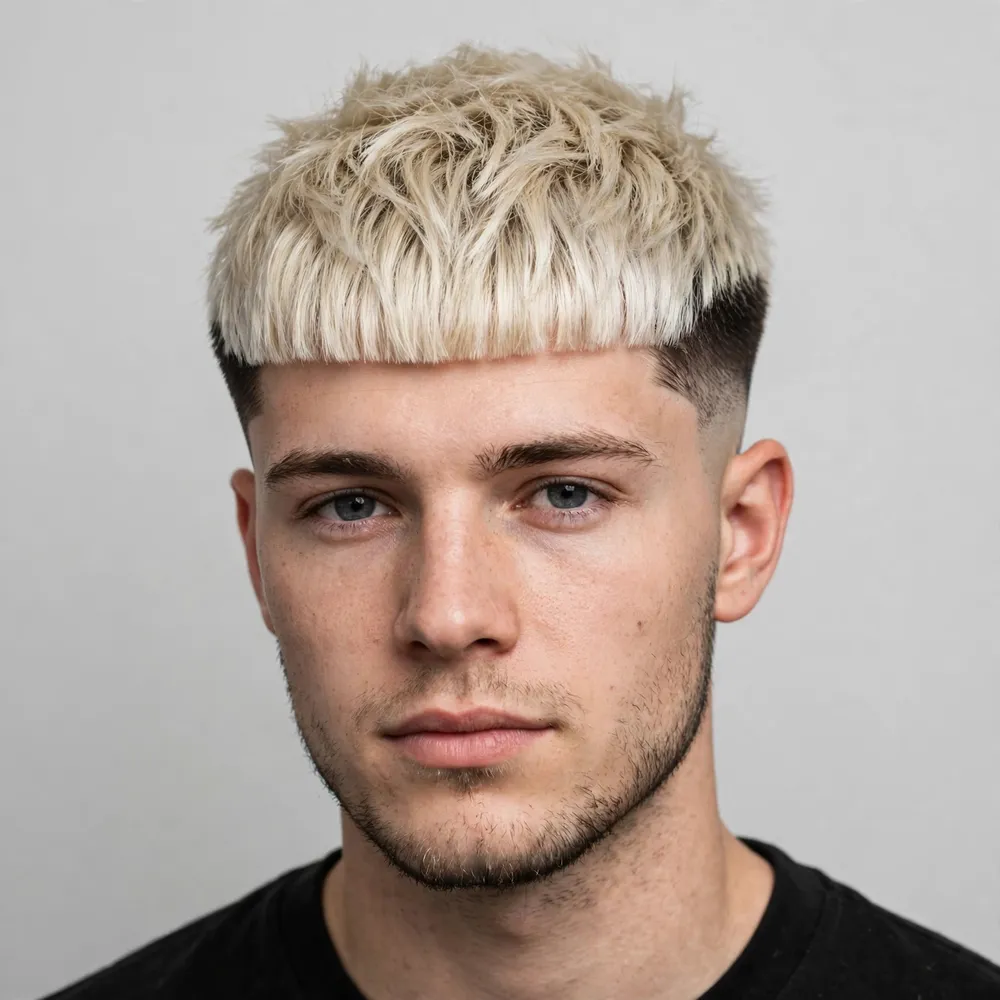
37. Edgar with Blonde Colour
Bleach the top and the Edgar becomes a completely different haircut. The platinum or blonde colour on the textured top makes the blunt fringe pop, especially against a dark skin fade, and it photographs incredibly well. It suits guys with fair to medium skin and straight or wavy hair, and it works best on oval and square faces. Ask your barber — or better, a colourist — for a bleached top with a toner to kill the yellow, and keep the sides natural or faded. Use purple shampoo once a week and a good conditioner, because bleach dries hair out fast. Be honest with yourself about the commitment: roots show in three to four weeks, and the upkeep costs more than the cut itself.
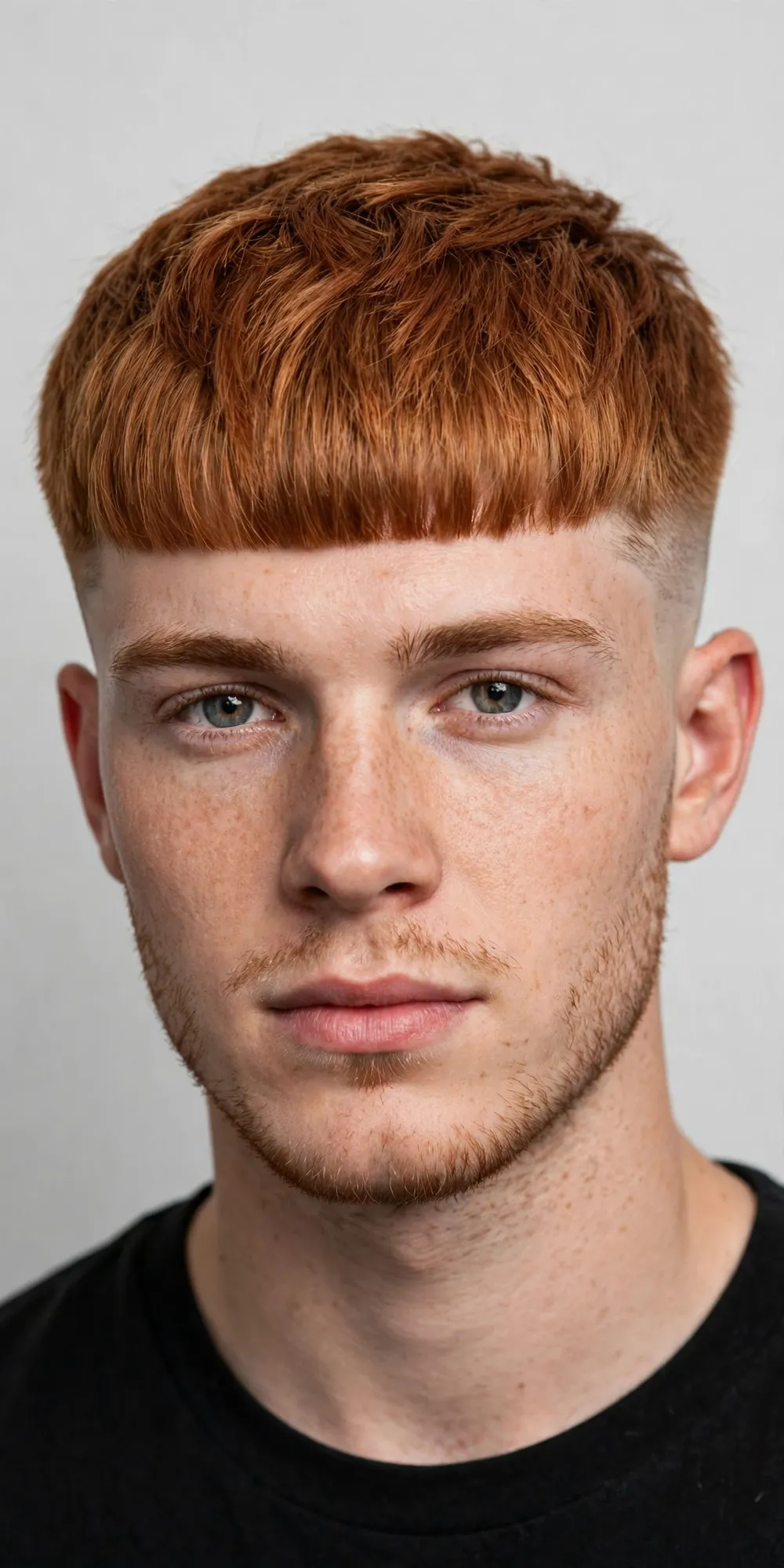
38. Edgar with Ginger Colour
Ginger is the warmer, more wearable colour option for an Edgar. The warm copper tone runs through the fringe and top, giving the blunt line a richness that natural dark hair doesn’t have, and it suits guys with warm skin undertones especially well. It works on straight and wavy hair, and the colour makes the fringe the clear focal point of the cut. Ask your colourist for a warm ginger or copper dye on the top only, keeping the sides faded and natural for contrast. Use colour-safe shampoo and avoid washing daily, or the tone fades fast. Roots will need a touch-up every four to six weeks, which is more forgiving than blonde — and the colour grows out more gracefully too.
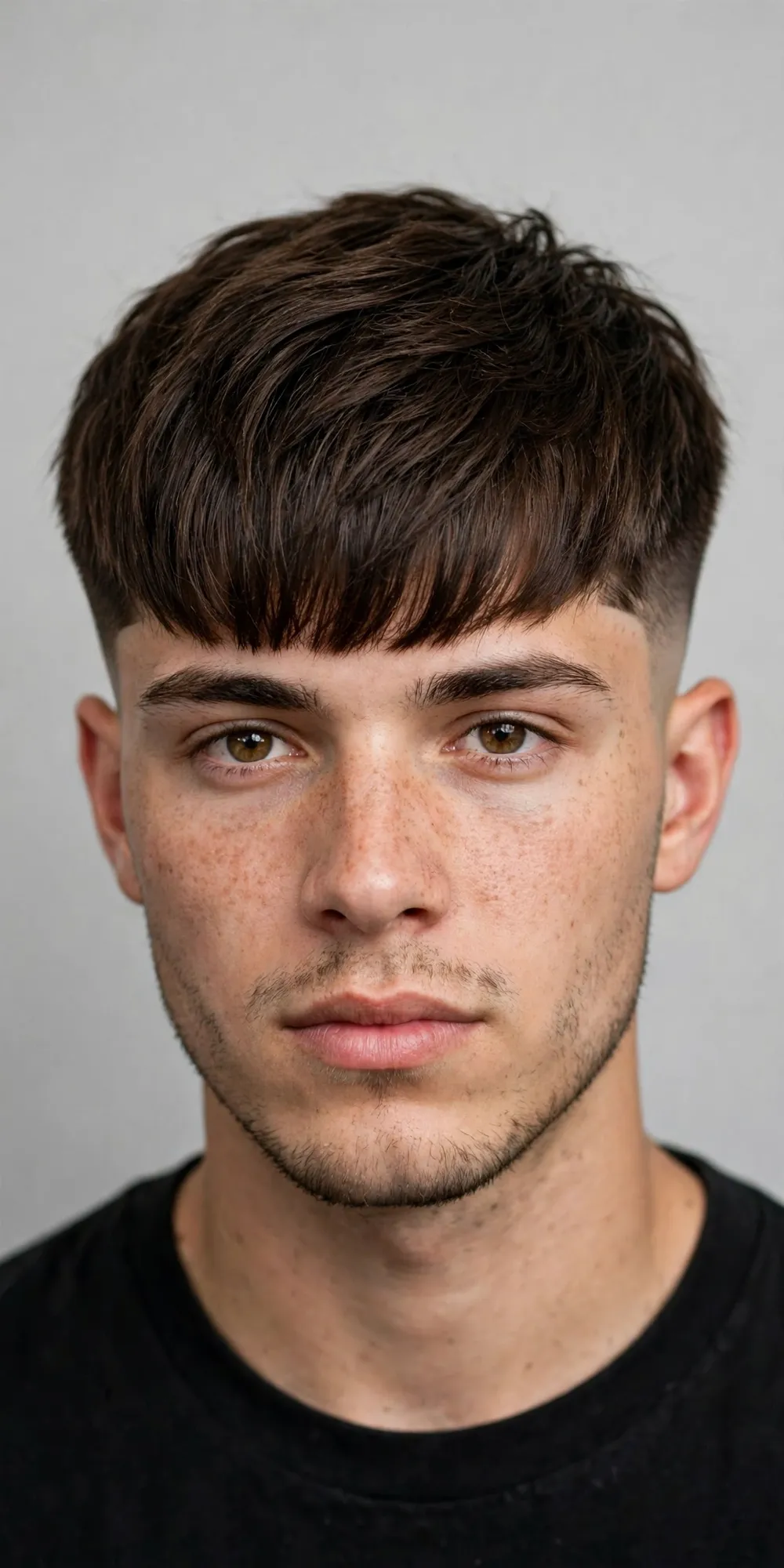
39. Edgar with Long Top
The long-top Edgar keeps the blunt fringe but gives you more hair to play with. The top is left long and brushed forward, so the fringe stays straight and the rest has movement. It suits oval and oblong faces best, since the length adds balance, and it works on straight or wavy hair — curly hair can work too with careful shaping. Ask for a long top with a blunt fringe and a taper or fade on the sides to control the weight. Style with matte paste or light cream, brushing everything forward. Versatile, yes — but a long top needs daily styling or it looks messy by lunchtime. If you like the mullet haircut vibe but want it shorter at the back, this is a good middle ground.
Which Edgar Suits Your Face Shape?
| Face shape | Best Edgar version | Why it works |
|---|---|---|
| Oval | Classic Edgar or Skin Fade Edgar | Oval faces suit almost any Edgar, so go bold with contrast |
| Square | Mid Taper Edgar or Edgar with Line-Up | The straight fringe balances a strong jawline |
| Round | Edgar with Quiff or High Fade Edgar | Height on top and a high fade add length to the face |
| Oblong | Edgar with Long Top or Low Taper Edgar | A longer top and low taper keep the face from looking longer |
| Heart | Edgar with Side Part or Textured Edgar | A softer fringe balances a wide forehead and narrow chin |
Which Edgar Suits Your Hair Type?
Straight hair. You’re the lucky one — the Edgar was practically made for you. The blunt fringe sits perfectly on straight hair, and any fade height works. Just keep the line crisp with regular touch-ups.
Wavy hair. Wave adds natural texture to the top, which softens the hard fringe line and gives the cut a more relaxed feel. A textured or wavy Edgar works best; avoid going too short on top or the wave disappears.
Curly hair. Yes, it works — the fringe is shaped around your curl pattern rather than cut dead straight. A curly Edgar needs a barber who understands curls, so don’t let anyone flat-iron the fringe to force a straight line.
Thick hair. Thick hair gives the fringe weight and presence, but it needs thinning underneath or the top can puff up. The classic Edgar and the thick-hair version are your best bets.
Fine hair. Keep it short and neat. A short fringe with a low taper makes fine hair look fuller, while too much length on top just goes flat. Lightweight matte paste is your friend; heavy products are not.
5 Mistakes to Avoid with an Edgar Haircut
- Asking for a fringe that’s too short. A fringe cut too high up the forehead looks severe and leaves you no room to fix it — you can’t add hair back. Always start slightly longer.
- Skipping the lineup. The Edgar lives or dies on sharp edges. Without a proper lineup, the blunt fringe looks like a home haircut instead of a style.
- Choosing the wrong fade height. A skin fade on a round face can make it look wider, while a low taper on a long face adds length. Match the fade to your face shape, not to whatever’s trending.
- Using the wrong product. Heavy, shiny pomade weighs the top down and kills the texture. Matte paste or clay suits the Edgar far better than anything greasy.
- Waiting too long between cuts. The Edgar’s straight lines show regrowth faster than almost any other cut. Stretch it past four weeks and the fringe starts looking ragged — book your next cut before you leave the chair.
Frequently Asked Questions
What is an Edgar haircut?
An Edgar haircut is a short men’s cut with a dead-straight blunt fringe across the forehead, a sharp lined-up hairline, and sides that are tapered or faded — often a high skin fade. It’s also known as the takuache cut, with roots in Latino and Mexican-American barber culture. The closest relatives are the Caesar cut and the French crop, but the Edgar’s fringe is blunter and more precisely lined up than either.
What face shape suits an Edgar haircut best?
Oval and square faces suit the Edgar best, because the straight fringe and sharp lines complement balanced or strong features. Round faces can absolutely wear one too, but they do better with a quiff or high fade version that adds height and length. Oblong faces should stick to a low taper or longer top so the cut doesn’t stretch the face further.
Is an Edgar haircut the same as a French crop?
No, though they’re often confused. Both are short cuts with a fringe, but the Edgar’s fringe is blunt, straight and sharply lined up, while a French crop’s fringe is textured and broken up. The Edgar also usually has a harder lineup and a more defined fade, whereas the crop is softer and more relaxed overall.
How do I ask my barber for an Edgar haircut?
Tell your barber you want an Edgar with a straight blunt fringe, then specify the fade — low, mid or high taper or skin fade — and how long you want the top. A good script is: “Edgar cut, straight fringe just above my eyebrows, mid taper fade on the sides, sharp lineup.” Bring a photo of the exact version you want, because the Edgar family is wide and a picture removes all doubt.
Does an Edgar haircut suit curly hair?
Yes, it does — the curly Edgar is one of the most popular versions. The fringe is shaped to follow your natural curl pattern instead of being forced straight, which gives the cut texture and movement. The key is finding a barber who knows how to cut curly hair dry or with the curls in their natural state, so the fringe doesn’t shrink up unevenly after it dries.
How often do you need to get an Edgar haircut touched up?
Every two to three weeks is the honest answer. The straight fringe line and the lineup show regrowth quickly, and the fade loses its sharpness after about two weeks. You can stretch it to four weeks if you have a low taper and a softer fringe, but skin fades and design lines need a touch-up closer to every two weeks to stay looking fresh.
What is the difference between an Edgar haircut and a Caesar cut?
The Caesar cut is the Edgar’s older, softer cousin. Both have short tops and fringes, but the Caesar’s fringe is shorter, more textured and brushed forward, with a more natural hairline. The Edgar’s fringe is longer, blunter and dead straight, with a razor-sharp lineup and usually a fade on the sides. Think of the Caesar as the classic and the Edgar as the sharper, modern version of the same idea.
Final Word
The Edgar is one of those rare cuts that manages to be both simple and striking — a straight line, a sharp fade, and not much else, yet it turns heads everywhere. Whether you go classic, faded, curly or coloured, the version that suits you is the one that fits your face, your hair and how much upkeep you’re honestly willing to do. Pick your favourite from the 39 above, show it to your barber, and enjoy the sharpest cut of the year. For more ideas, explore our more hairstyle guides.