


A professional haircut is less about following a trend and more about looking deliberately put together: clean edges, a shape that suits your face, and a style you can actually maintain before a 9 a.m. meeting. The best professional hairstyles for men strike that balance between sharp and easy, and these three lead the pack — the Classic Side Part Business Cut for boardroom-proof safety, the Textured Comb Over for versatility across hair types, and the Ivy League for a short, structured classic that never needs fussing over.
1. Loose Parted Curls
Curls don’t have to mean chaos at work. This cut keeps the curls on top long enough to show their natural shape, with a loose part for direction. The sides stay scissored and tidy. It suits wavy and curly hair best, and works particularly well on oval and square faces where the softness of the curls takes the edge off a strong jaw. Ask your barber for a loose part cut into the top, with the sides tapered by scissors rather than clipped harsh. A pea-sized amount of curl cream, scrunched in while the hair is damp, is all it needs — no hard hold, no crunch. Trim every four to five weeks, because once the sides start to puff out, the polish disappears fast.

2. Caesar Cut with Fade
The Caesar is one of the oldest short cuts still standing, and the fade is what makes it feel current. A short, straight fringe sits across the forehead, the top is clipped evenly, and the sides fade down cleanly to the skin. It suits men with straight or slightly wavy hair, and it’s a genuine gift for a receding hairline — the forward fringe covers the temples instead of exposing them. Ask for a Caesar with a mid fade, keeping about an inch on top and a blunt fringe. Styling takes thirty seconds: a dab of matte clay pushed forward, nothing else. The trade-off is maintenance — the fade needs a touch-up every two to three weeks, and the fringe line goes ragged quickly if you leave it.
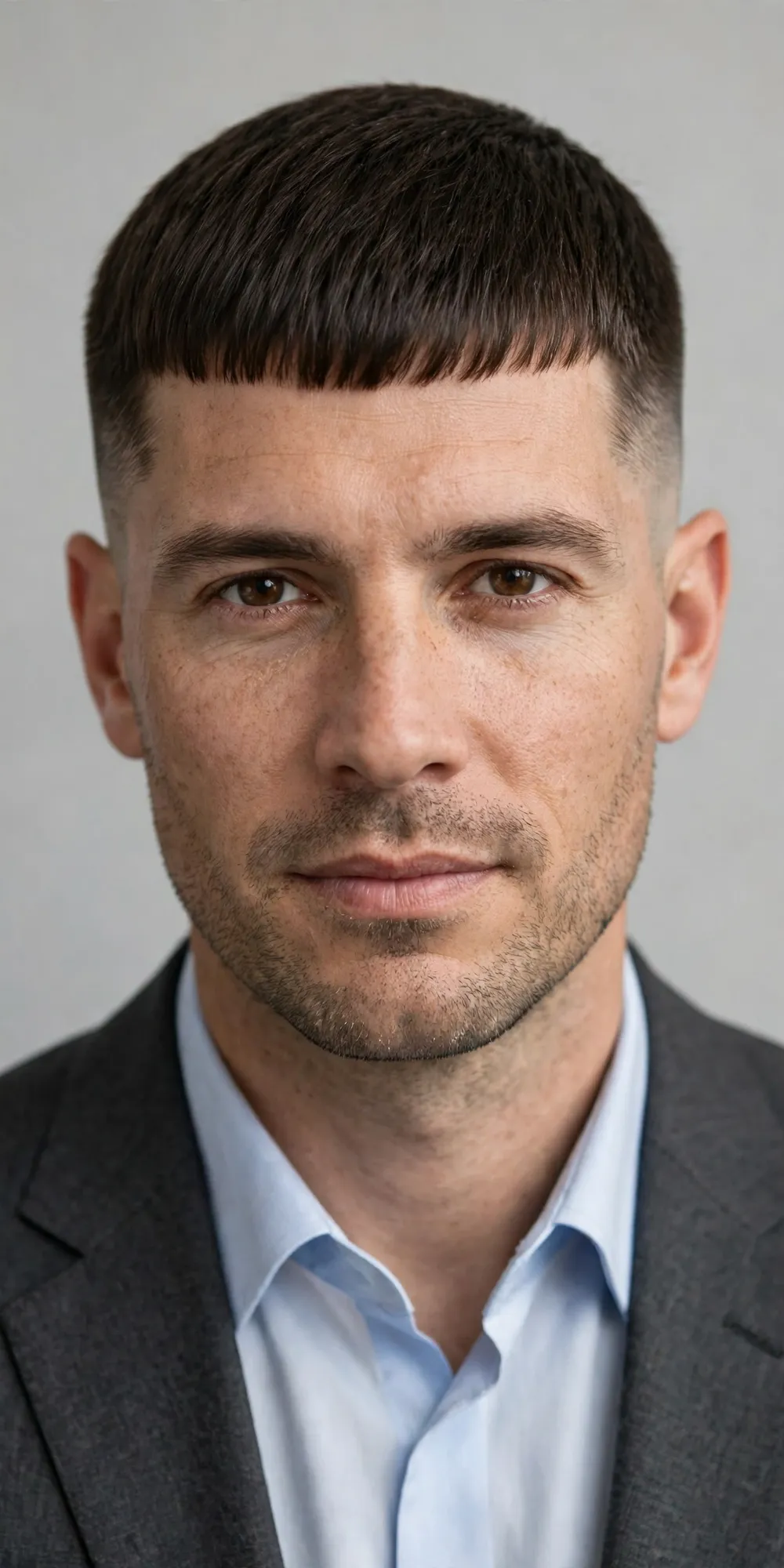
3. Textured Comb Over
This is the comb over stripped of its stiff, boardroom-cliché reputation. The top stays long enough to sweep across — around three to four inches — but it’s point-cut for texture, so it moves and separates instead of sitting like a helmet. It works on straight, wavy and thick hair alike, and it’s kind to round faces because the height and the side sweep add length. Ask your barber for a textured comb over with a natural part, and tapered sides rather than a hard fade if your office leans conservative. Blow-dry the top across with a round brush for ten seconds, then work in matte paste and finger-comb it into place. Book a trim every four weeks to keep the texture from turning shaggy.

4. Side Part Fade
The side part fade is the classic gentleman’s cut with a sharper edge. A clean side part runs from the temple back, the top carries a retro wave of two to three inches, and the sides fade from short to skin. It suits straight hair with a bit of natural body best, and it’s especially flattering on square and oblong faces where the part adds structure. Ask for a side part with a low or mid fade, and a part line cut in if you want it razor-sharp. The finish depends on the product: pomade gives that polished retro shine, matte clay makes it feel more modern. The fade needs attention every two to three weeks, but the top can stretch to five if you’re careful.
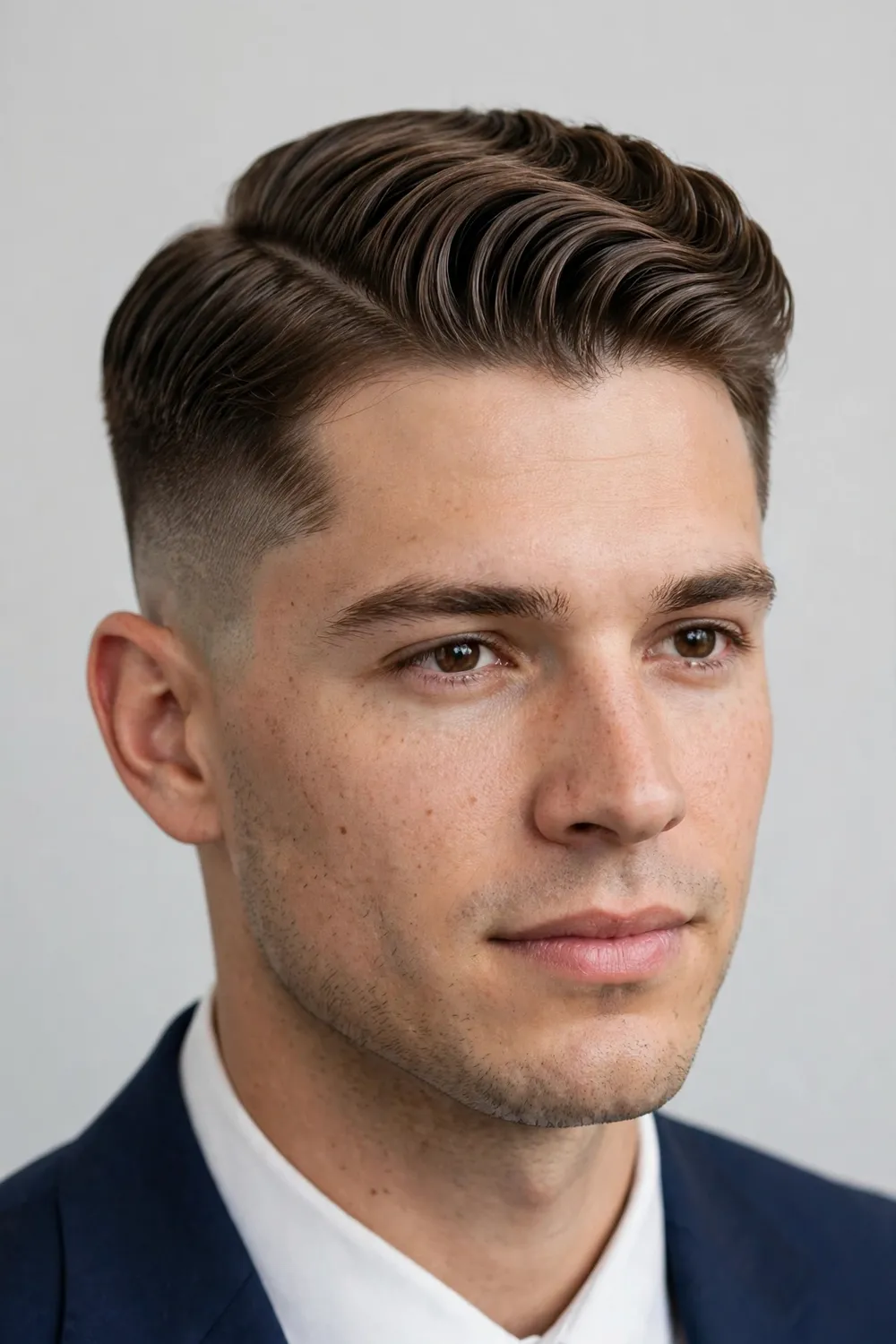
5. Medium Flow Style
Medium flow is for the man who wants longer hair without looking like he’s on holiday. The length sits around the ears and collar, swept back from a deep part so it stays off the face and reads as controlled. It suits thick or wavy hair — fine hair tends to go limp at this length — and it’s a strong match for oval and heart-shaped faces. Ask your barber for a medium flow cut with the length kept through the back, thinned slightly at the ends so it doesn’t bulk up. A quick brush in the morning is genuinely all it takes. Expect a trim every six weeks to keep the shape; the length forgives a lot, which is half the appeal.

6. Short Hair with Beard and Backward Fringe
This cut pairs a short, tidy top with a fringe brushed backwards and a neatly shaped beard. The beard adds structure that a short cut alone can lack. It suits straight to wavy hair, and it’s ideal for men with rounder faces, since the beard and the backward sweep both add length. Ask for short back and sides with enough length on top to push back, plus a beard trim that follows your cheek line and keeps the neckline clean. Use a matte paste in the hair and beard oil in the beard, and you’ll look finished in two minutes. The beard needs a weekly tidy-up; the hair, a cut every three to four weeks.

7. Tousled Short Curly Hair
Short curls with a bit of deliberate mess can look every bit as professional as a slicked-back cut — provided the shape is controlled. The top stays short enough to keep the curls bouncy rather than heavy, around an inch and a half, and the sides get a scissored taper so the silhouette stays neat. Ask your barber for a tousled short curly cut with tapered sides, and make sure they cut the curls dry or only slightly damp — wet curls shrink and the length surprises you. Curl cream is your only product; scrunch it in and let it air-dry. Trim every four weeks, because grown-out curls on the sides are the difference between tousled and unkempt.

8. Classic Crew Cut
The crew cut is the closest thing to a guaranteed professional haircut. The top is uniform and short — about half an inch to an inch — brushed slightly forward or up, with the sides tapered cleanly. It suits almost every face shape and hair type, and it’s the best choice if your hair is thinning, because the even length hides sparse patches instead of drawing attention to them. Ask for a classic crew cut with a taper on the sides and back, and a fringe that’s brushed up rather than flat. There is genuinely no styling involved: towel-dry it. The catch is the growth cycle — it starts looking scruffy after about three weeks, so keep your barber on a regular rotation.

9. Textured Pompadour Fade
The pompadour has been around for decades, but the textured version with a fade is the one that belongs in a modern office. It suits straight and wavy hair with decent thickness, and it adds real height, which flatters round and square faces. The top is left long — three to four inches — swept up and back with visible texture, while the sides fade cleanly to skin. Blow-dry it upwards with a round brush, then lock it in with a medium-hold matte paste. It’s a five-minute style, not a thirty-second one, and the fade needs a refresh every two to three weeks — but few cuts make a stronger first impression.

10. Disconnected Undercut with Beard
The disconnected undercut is the boldest cut on this list, and the beard is what makes it work in a professional setting. The top stays long — four inches or more — while the sides are clipped short with a sharp disconnect line, no blending. It suits thick, straight hair and strong jawlines best; fine hair can struggle to hold the length. Ask your barber for a disconnected undercut with the top left long enough to sweep back, and a beard shaped to follow your jaw. You’ll need a strong-hold pomade or clay and a blow-dryer to get the top sitting right, plus beard oil daily. This is a high-maintenance cut — fade touch-ups every two weeks and beard shaping — so only commit if you’ll keep up with it.
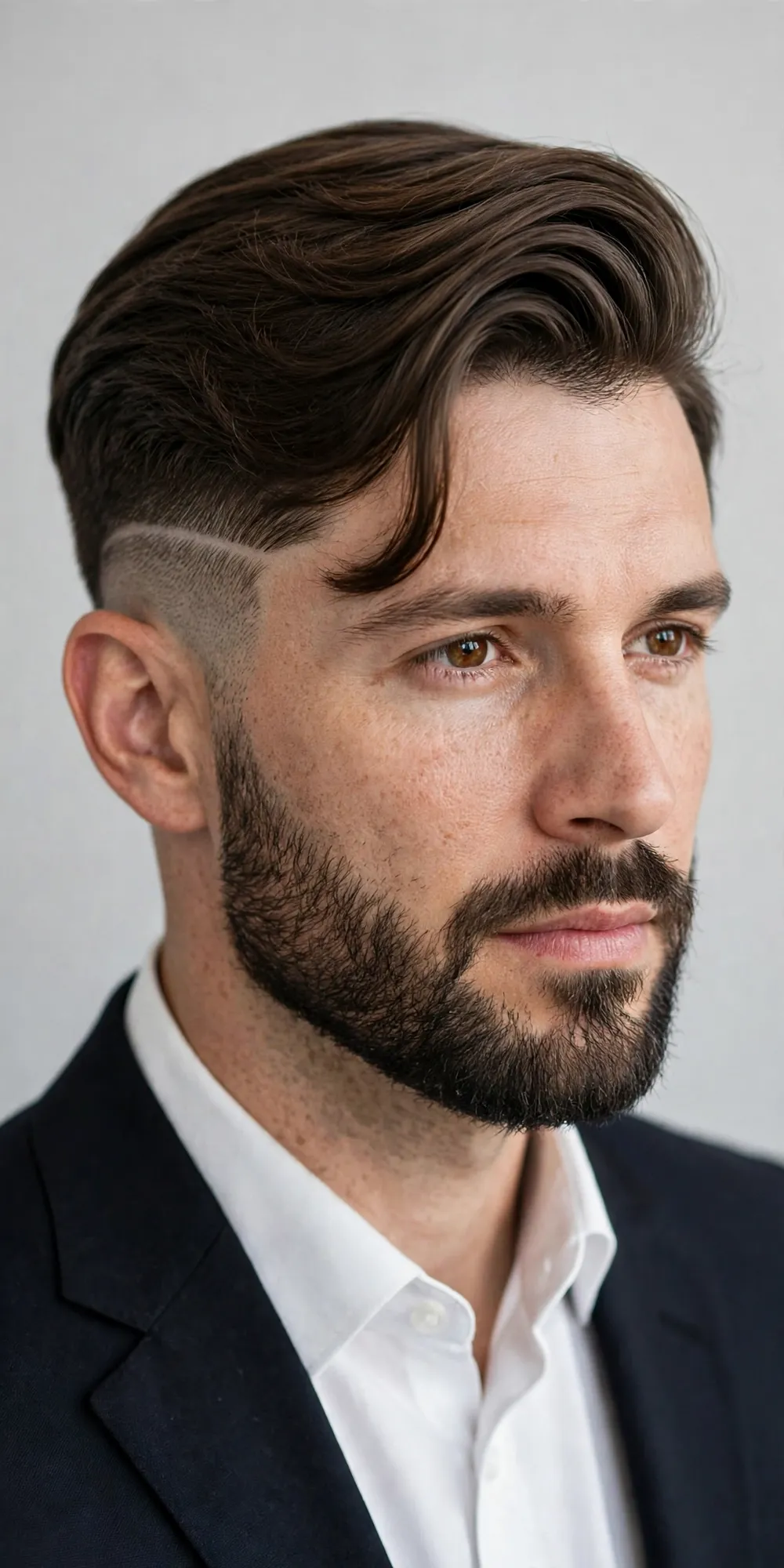
11. Modern Quiff
The modern quiff takes the classic swept-up front and loosens it up with messy layers, so it looks styled without looking stiff. The front is the star — two to three inches brushed up and slightly to one side — with the sides faded for contrast. Ask for a modern quiff with a low or mid fade, and textured layers through the front. Blow-dry the front upwards with your fingers, then work a small amount of matte clay through the top and push it into place. It takes about three minutes once you know the routine. Trim every three to four weeks; the fade goes first, the quiff can wait a little longer.

12. Classic Gentleman’s Cut
This is the cut your grandfather wore to the office, and it still works because it was designed for exactly that. Short tapered sides, a bold side part, and a top of two to three inches combed neatly across with a pomade shine. It suits straight hair best, and it’s flattering on oval and square faces where the clean lines reinforce the bone structure. Ask for a classic gentleman’s cut with a scissor taper — no fade — and a part you can find with your eyes closed. The pomade is non-negotiable here: a water-based one gives the shine without the grease, and a comb does the rest in under a minute. Maintenance is easy on the top but the taper needs a tidy every three to four weeks.

13. Ivy League
The Ivy League is essentially a crew cut that grew up and got a job. It’s short, structured and completely fuss-free, and it’s the safest choice on this list for a conservative office or a job interview. The sides are short and tapered, the top is a little longer — an inch to an inch and a half — and the front is brushed up and to the side. Ask for an Ivy League with a tapered cut, keeping the front just long enough to part. Styling is a thirty-second job: a little matte paste, pushed up and over. It needs a cut every three weeks to hold its shape, but there’s no daily styling to worry about, and it never looks wrong.

14. Side Part Business Cut
If there’s one cut that defines the phrase “business haircut,” this is it. A classic side part, a light taper on the sides and back, and a top of two to three inches finished with pomade. It suits straight and slightly wavy hair, and it’s at its best on oval and square faces where the neat part adds definition. Ask your barber for a side part business cut with a scissor taper and a part on your natural side — don’t fight the way your hair wants to fall. A small amount of pomade, combed through while the hair is slightly damp, gives the polished finish, and the style holds all day. It’s one of the lowest-maintenance professional cuts: a trim every four to five weeks keeps it sharp.

15. Buzz Cut
The buzz cut is the ultimate low-maintenance professional choice, and it’s more versatile than its reputation suggests. The hair is clipped to one even length — anywhere from a number one to a number three guard — with no styling, no product and no bad hair days. Ask for the guard length that suits your head shape — a number two is the safe middle ground — and a clean taper at the neckline. There’s no styling routine at all, which is the point. The only real maintenance is frequency: it needs a clip every one to two weeks to stay sharp, and sunscreen on the scalp in summer is worth remembering.

16. Short Brush Up with Tapered Sides
The short brush up is a crew cut with ambition: the top is left a little longer — around two inches — and brushed upwards for height, while the sides taper cleanly. It suits straight and wavy hair, and it’s a good pick for round faces because the upward volume adds length. Ask for a short brush up with tapered sides, and have the barber texture the top so it stands up without clumping. Blow-dry it upwards with your fingers, then set it with a matte clay — the whole routine takes two minutes. Trim every three to four weeks, and the taper is what goes first, so don’t let it slide past five.

17. Comb Over Fade
The comb over fade takes the most classic office style and gives it a modern, sharp finish. A deep side part runs back from the temple, the top is combed back and across at two to three inches, and the sides fade down to skin. It suits straight hair with some natural volume, and it’s flattering on square and oval faces. Ask for a comb over with a mid fade and a part that follows your hair’s natural direction — forcing a part against the grain is a daily battle you’ll lose. Comb it into place with a little pomade while damp, and the style will hold through a full working day. The fade needs a touch-up every two to three weeks, and the top can stretch a week longer.

18. Short Afro Curly Fade
This cut celebrates natural texture instead of fighting it. A thick curly top — two to three inches — sits above faded sides and a sharp lineup along the forehead and temples. It suits coily and tightly curled hair, and the contrast between the volume on top and the clean fade is what makes it look so deliberate. Ask for a short afro curly fade with a mid or low fade, and a lineup that follows your natural hairline rather than pushing it back. Curl cream or a light leave-in conditioner keeps the curls defined without crunch, and a pick or wide-tooth comb shapes the top. The fade and lineup need attention every one to two weeks — that’s the price of the sharpness.

19. Textured Fringe with Taper Fade
A textured fringe pushed forward with a taper fade is the most casual cut on this list that still passes in a professional setting — and it only passes because the taper keeps the edges immaculate. The top is left two to three inches, choppy and point-cut, falling forward over the forehead, while the sides taper down gradually. It suits straight and wavy hair, and it’s a strong choice for men with longer faces, since the fringe shortens the forehead visually. Ask for a textured fringe with a low taper fade. A small amount of matte paste, worked through with your fingers, gives it separation. Book a trim every three weeks to keep the fringe and taper tidy.
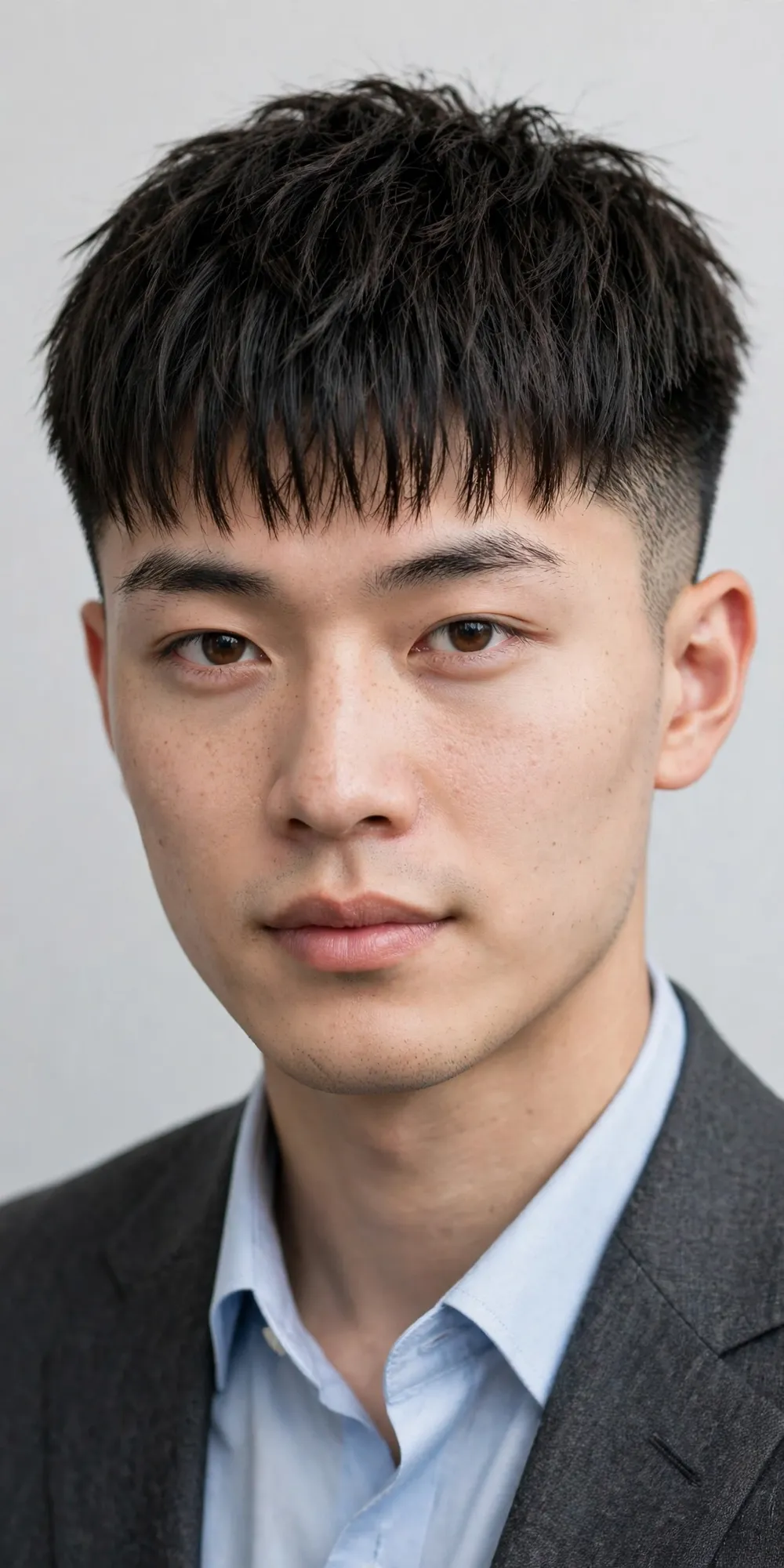
20. Layered Messy Mod
The layered messy mod is a nod to the sixties with a modern office filter on it. Long layers run through the top, a thick parted fringe frames the face, and the nape flares slightly at the back. It suits thick, straight or wavy hair — fine hair won’t hold the layers — and it’s best on oval and oblong faces where the length adds balance. Ask your barber for layered lengths through the top with a parted fringe, keeping the nape just long enough to flare rather than curl under. A light cream or sea-salt spray keeps the layers moving without stiffness, and a quick finger-comb in the morning is enough. A trim every five to six weeks is plenty, since it grows out forgivingly.
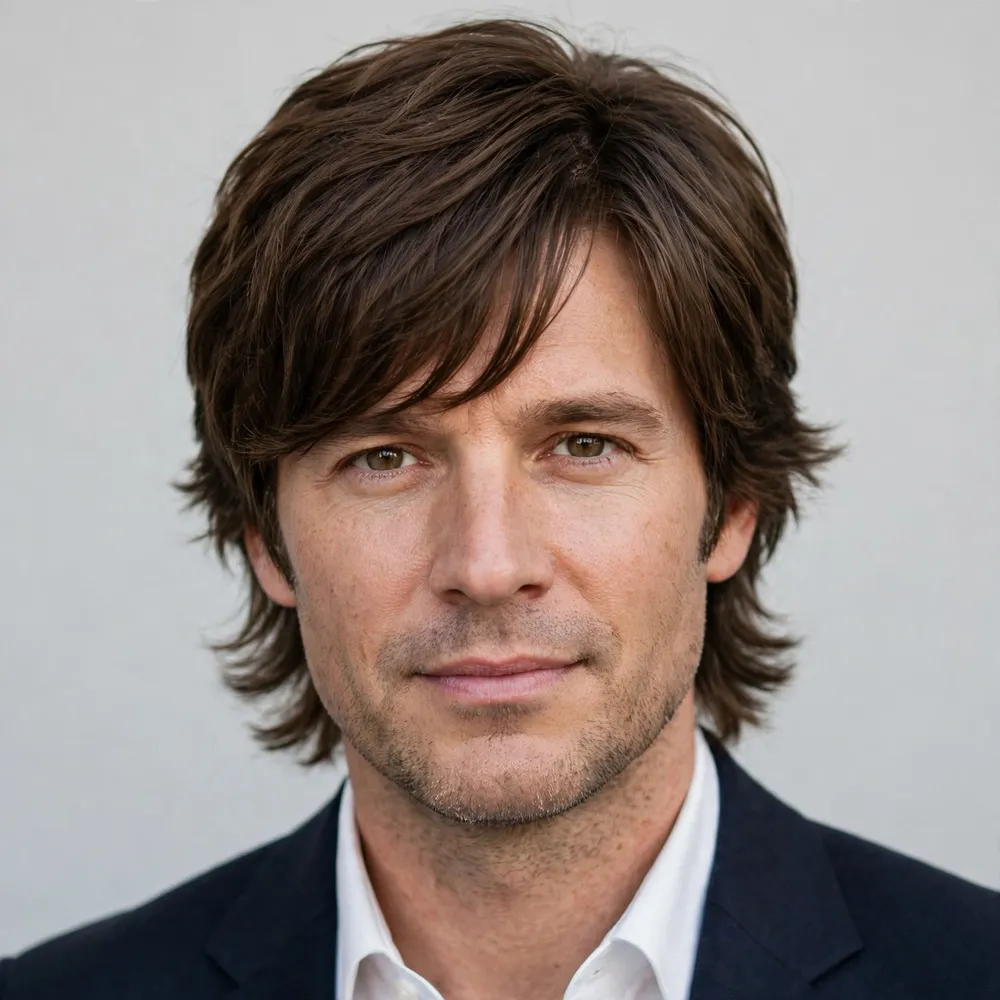
21. Slick Back Undercut
The slick back undercut is the most dramatic cut on this list, and it earns its place because the execution is so clean. The top stays long — four to five inches — slicked straight back, while the sides are clipped to a high undercut with no blending. It suits thick, straight hair and strong features best. Ask for a slick back undercut with the top left long enough to reach back past the crown. Blow-dry it back with a brush, then apply a strong-hold pomade for the shine, or matte clay for a softer finish. The undercut needs a clip every two weeks, and the top needs daily styling — this is not a wash-and-go cut.
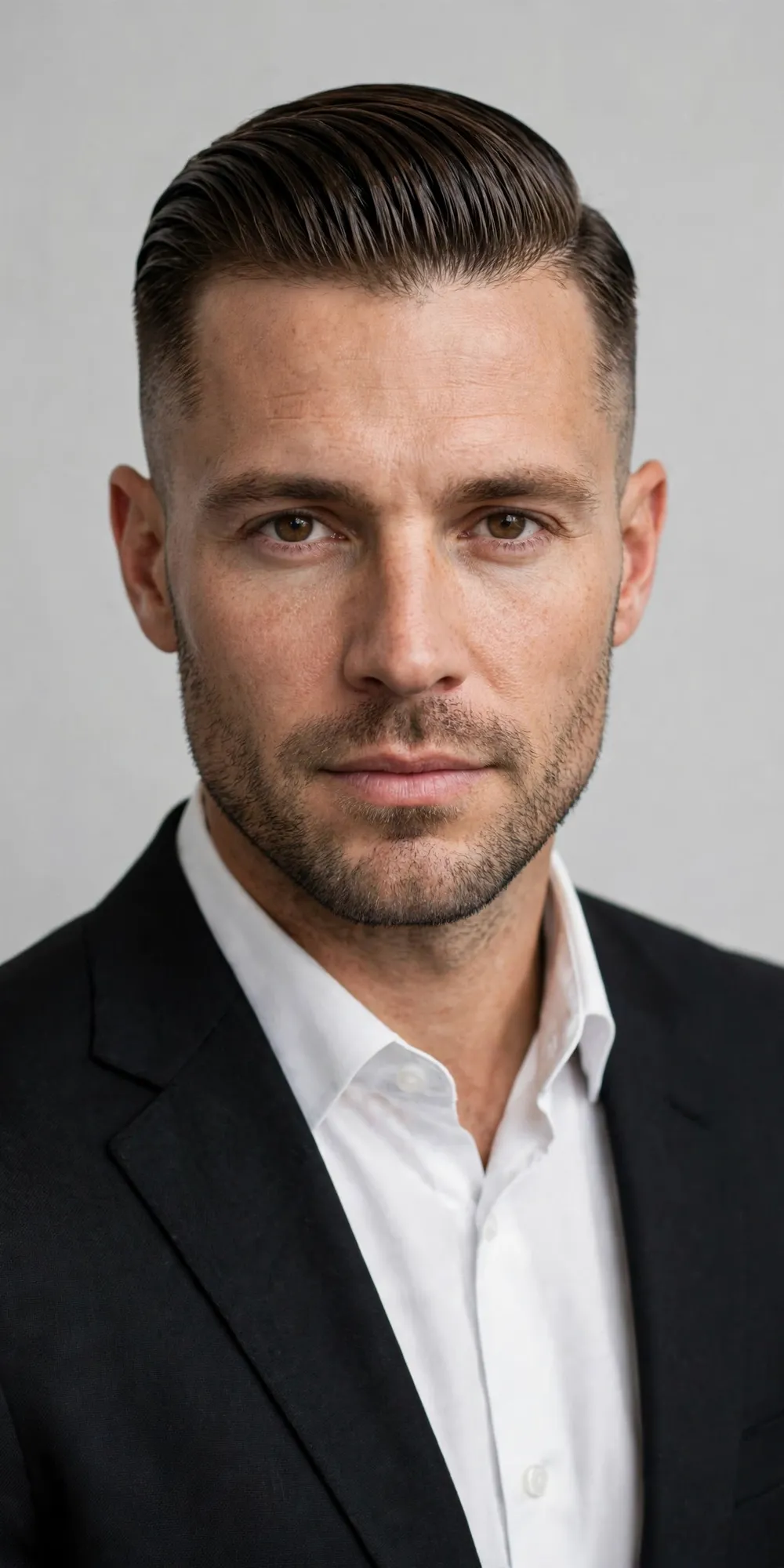
22. Faux Hawk Fade
The faux hawk fade takes a punk shape and tones it down into something you can wear to a client meeting. The centre strip is lifted — about two inches — while the sides drop away in a subtle fade, so the height reads as texture rather than a statement. Ask for a faux hawk with a low or drop fade, and make sure the strip is textured rather than spiked — the goal is lift, not points. A small amount of matte clay, worked upwards through the centre, holds it without stiffness. It’s a two-minute style once you know it. The fade needs a refresh every two to three weeks; the top is more forgiving and can go four.

23. Modern Pompadour Fade
The modern pompadour is the high-volume cousin of the textured pompadour — taller in front, with a deep side part and a clean fade that keeps the sides out of the way. The front sweeps up to three or four inches, and the part gives it a deliberate, groomed line. It suits thick, straight or wavy hair, and it’s a strong match for round and square faces where the height balances the width. Ask for a modern pompadour with a high fade and a deep part, and have the barber thin the top slightly so it holds its height without collapsing. Blow-dry the front up and back with a round brush, then set it with a medium-hold paste. The fade needs a touch-up every two to three weeks.
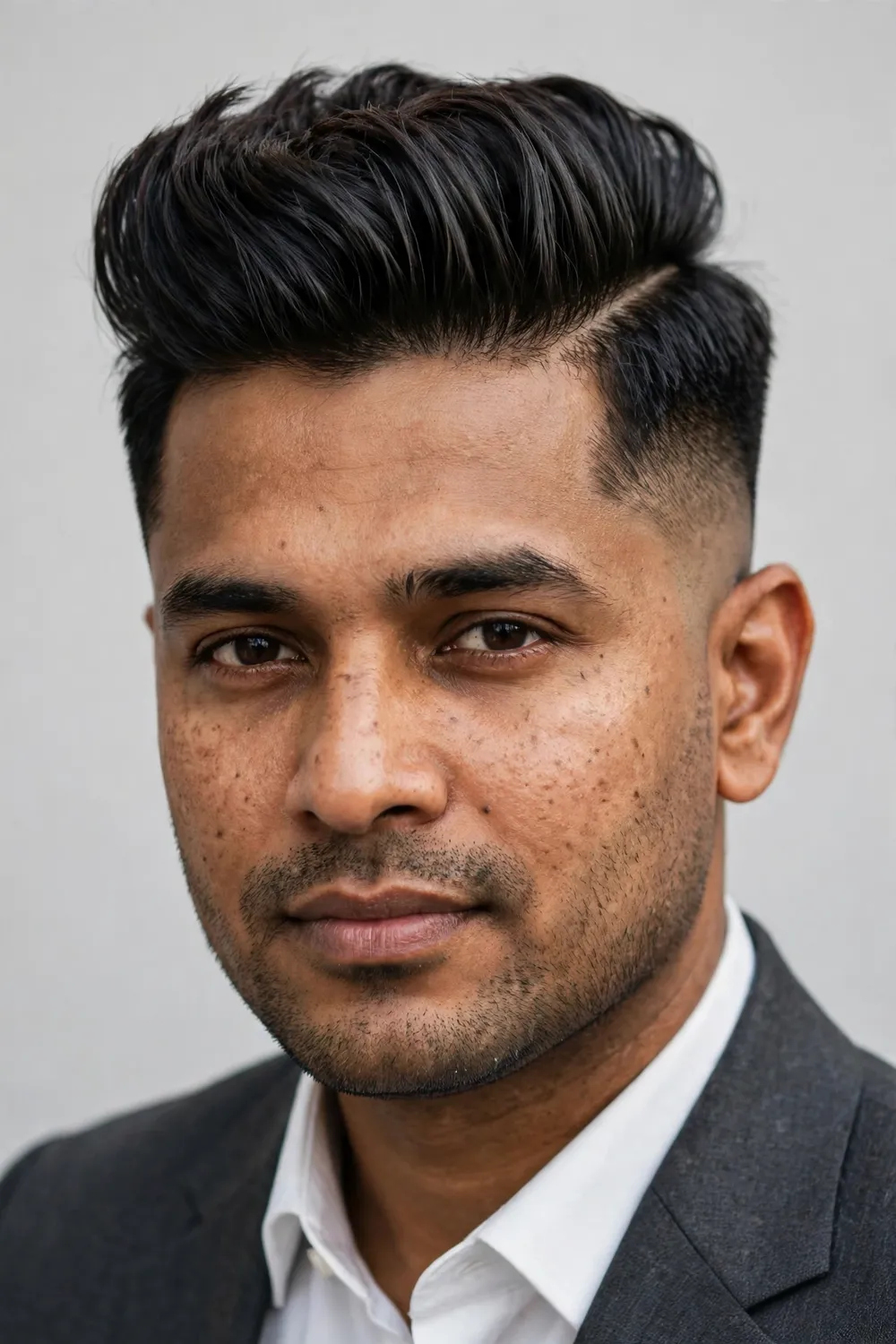
24. Thick Messy Hair
Thick messy hair is the grown-out, one-length cut that looks effortless. The hair is left long all over — three to four inches — with a tousled fringe pushed forward, and the shape comes from the texture rather than the cut. It suits thick, wavy or straight hair with plenty of density; thin hair will just look flat at this length. It works best on oval and square faces, where the volume frames the features rather than overwhelming them. Ask for a one-length cut with the ends point-cut to remove bulk, and no thinning shears on top. A dab of matte paste, scrunched through damp hair, gives it hold without making it look styled. Trim every six weeks to keep the shape.

25. Side Swept Wavy Hair
Side swept wavy hair lets natural waves do the work, with the long front swept to one side and the sides faded to keep the silhouette tidy. The top stays three to four inches, long enough for the waves to show, while the faded sides stop it looking overgrown. It suits naturally wavy hair best, and it flatters oval and heart-shaped faces. Ask for a side sweep with a low fade, and have the barber layer the top lightly so the waves sit in tiers rather than one heavy mass. A little sea-salt spray or light cream enhances the wave without weighing it down, and the style takes about two minutes. Trim every four to five weeks, before the sides start to lose their fade.
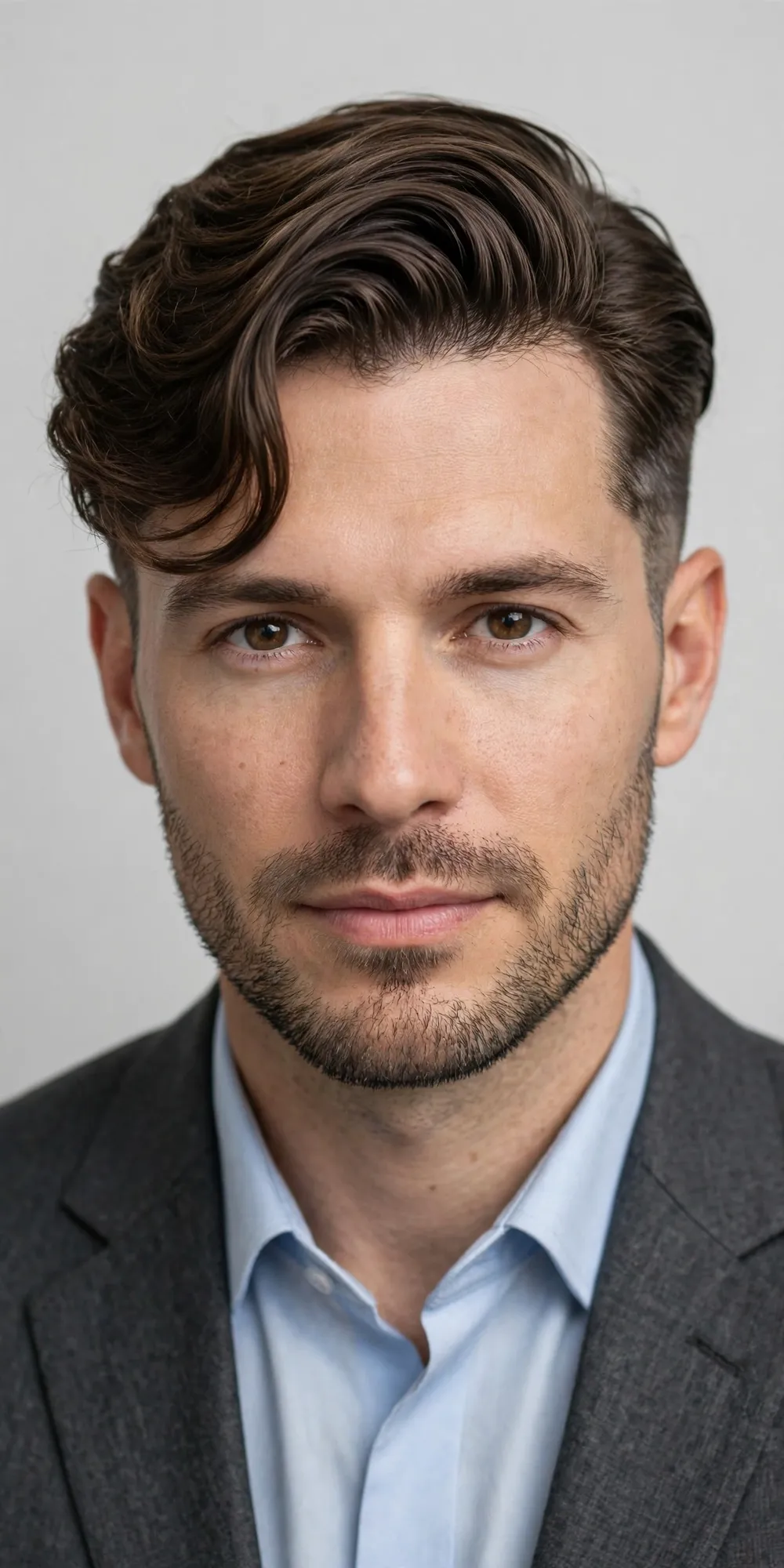
26. Classy Man Bun
A man bun can absolutely belong in the office — the difference is in how tight, how low and how tidy it is. This version pulls long hair back into a neat, low knot at the back of the head, with undercut sides keeping everything clean while the top grows out. It works best on straight or gently wavy hair that is at least shoulder length; tighter curls can do it too, but they need more product to keep flyaways down. Ask your barber for a low undercut that follows the shape of your head and for the bun to sit just above the nape, not high on the crown — that is what keeps it boardroom rather than festival. Dry with a little matte paste worked through the ends, then gather and tie with a plain band. Maintenance is light: a trim every 8–10 weeks keeps the ends honest, and a drop of leave-in conditioner stops the dry, straw-like look that gives long hair a bad name at work.

27. Long Comb Over
The long comb over is the grown-up answer to thinning hair or to anyone who wants length without looking unkempt. Hair on top is kept long — past the ear on the heavier side — and swept across from a deep part, while the sides get a scissored taper that blends rather than clashes. It suits straight and wavy hair best, and it is a gift for men with a receding hairline, since the weight of the sweep covers the corners naturally. Ask your barber for a deep side part and a taper that stays soft, not a hard fade; the contrast should be gentle. Use a cream or light pomade on damp hair, comb it over, and let it set — no heavy gel, or it goes stiff and obvious. A trim every 4–5 weeks keeps the taper crisp and the sweep from turning into a curtain.
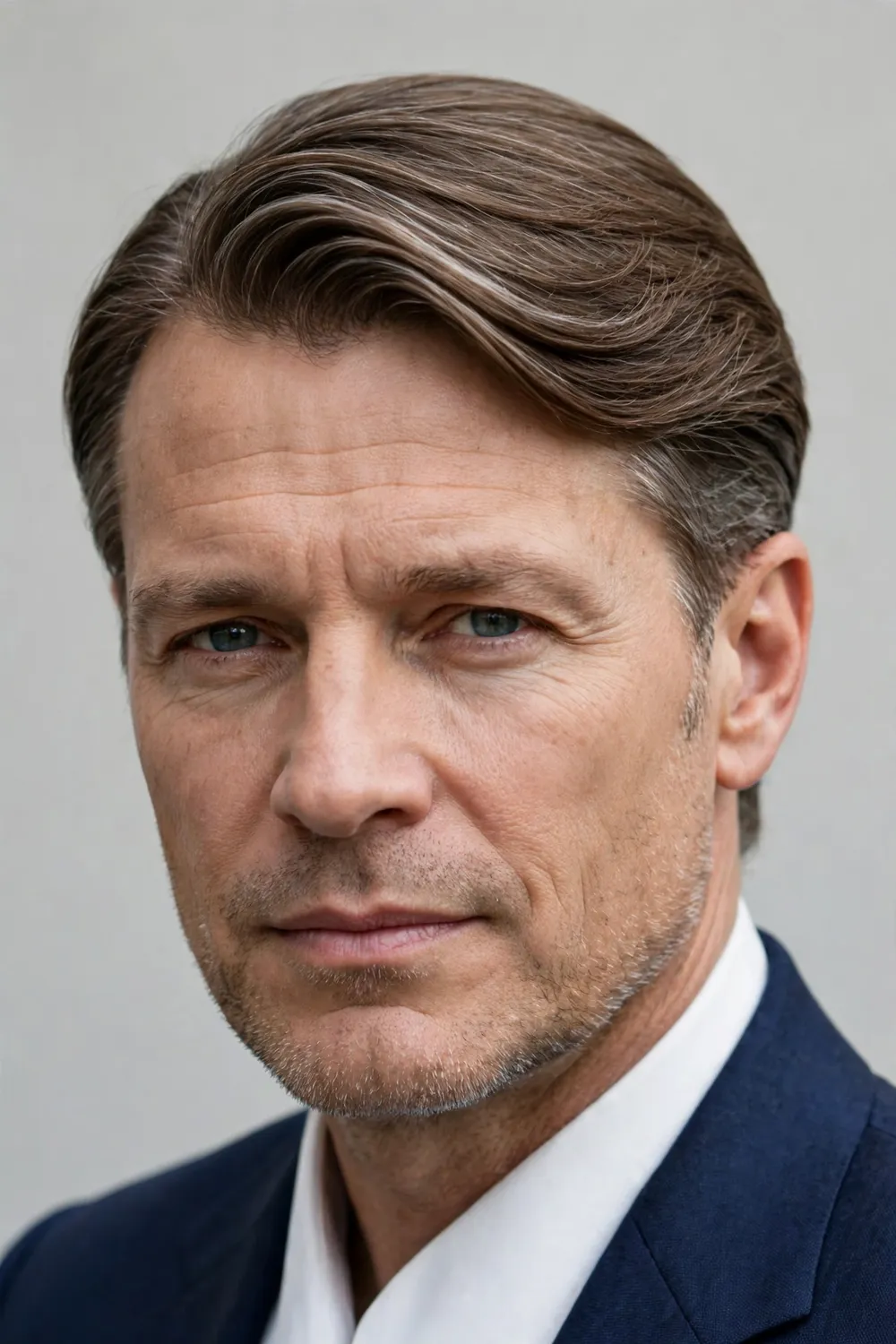
28. Textured Quiff with Low Taper Fade
This is the quiff for men who like volume but need the sides to behave. The top stays thick and sweeps up from a side part, while a low taper fade hugs the ears and neckline, so the shape reads smart from every angle rather than wild. Thick hair holds this best, though wavy hair adds a natural lift that saves on product. Ask your barber for point-cut texture on top, a low taper that fades out just above the ear, and enough length at the front to push up — about two to three inches. Blow-dry the front upward with a round brush, then work a pea-sized amount of matte clay through and shape by hand. It takes about three minutes in the morning and holds all day. Trim every 3–4 weeks; once the taper grows out, the whole cut loses its edge.

29. Long Tousled Curls
Long tousled curls suit a man who wants a relaxed office look without fighting his natural texture. The curls fall over the forehead and past the ears, while the sides stay short enough that the overall shape stays contained. It works best on wavy to curly hair with some natural volume; straight hair simply will not do it without a lot of coaxing. Ask your barber for long layers through the top and a clean, short taper on the sides — and specifically ask them not to thin the curls out, or you lose the shape entirely. Style with a curl cream on damp hair, scrunch lightly, and let it air-dry; a diffuser speeds things up on busy mornings. Expect a trim every 6–8 weeks, and keep the curls healthy with the kind of simple routine the American Academy of Dermatology’s healthy hair tips recommend — gentle washing, minimal heat, and conditioner that actually gets rinsed through properly.

30. High and Tight
The high and tight is the lowest-effort professional cut there is, and that is exactly why it survives in offices, on sites and in uniformed jobs alike. The top is kept evenly short — a few millimetres — and the sides go to a sharp skin fade that starts high, leaving a clean, almost military outline. It suits nearly every face shape, but it is especially flattering on round and square faces, where the short sides add definition. Ask your barber for a number one or two on top and a skin fade that begins high on the sides, blended tight. There is no styling to speak of: wash, towel-dry, done. The trade-off is frequency — the fade starts to look grown-out after about two weeks, so book every 2–3 weeks if you want it to stay sharp. Pair it with a well-kept beard and the whole look reads deliberate rather than lazy.
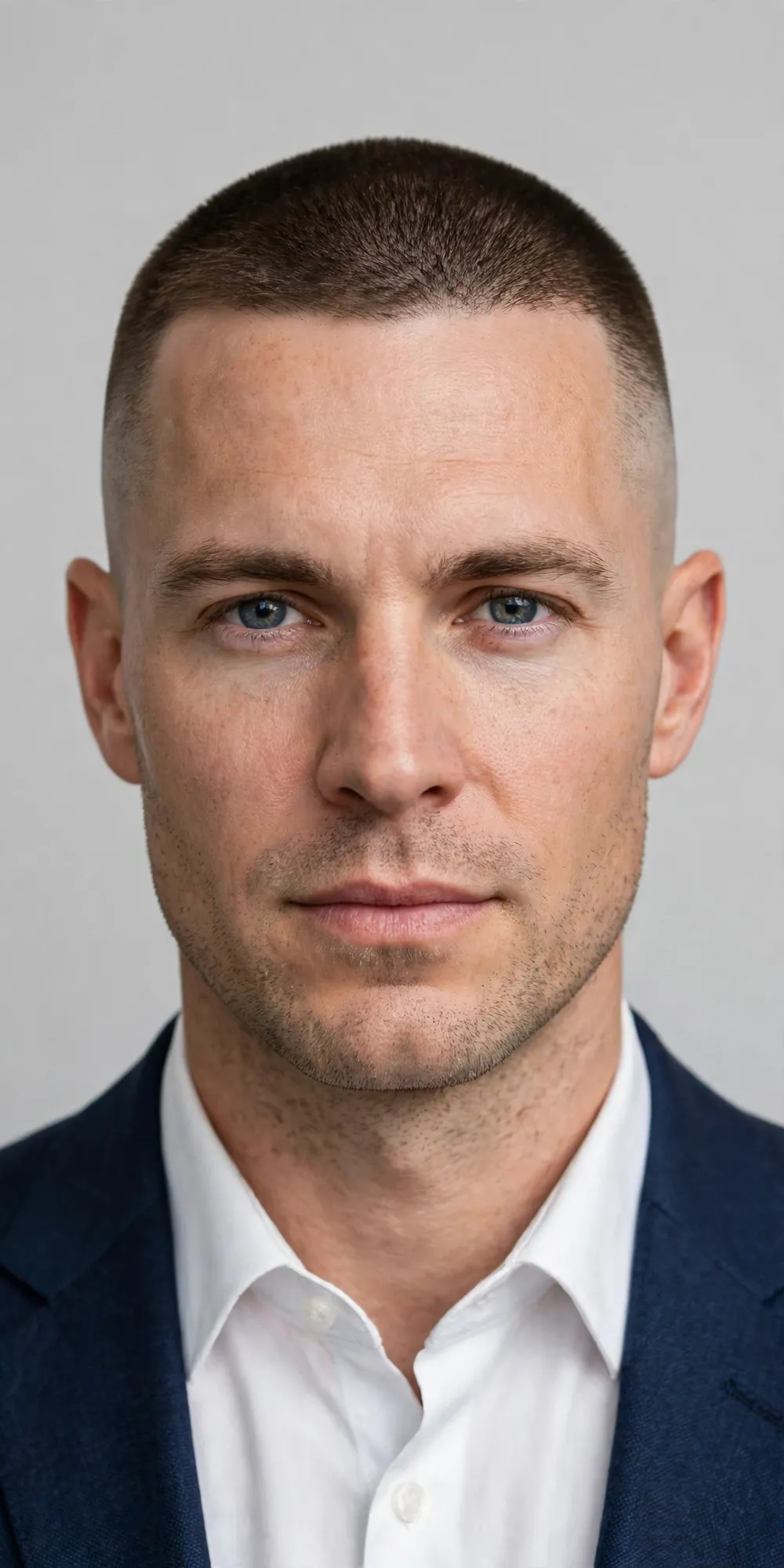
31. Spiky Hair
Spiky hair only works in a professional setting when the spikes are soft, short and clearly intentional. Here the top is kept to about four inches, cut into layers that lift easily, with a slow taper fade on the sides that keeps the outline tidy. It suits straight and slightly wavy hair best — very curly hair will fight you — and it flatters oval and oblong faces, since the upward texture adds width without adding length. Ask your barber for a textured top with the taper fading gradually, not a harsh line. To style, rub a small amount of matte paste between your palms and push the front sections upward with your fingertips; the trick is uneven, natural spikes, not a hedgehog. It holds all day on most hair. Trim every 3–4 weeks, and if the spikes start falling flat by lunch, switch to a lighter product — too much paste is usually the culprit.

32. Short Hair with a Beard
This is the pairing for men whose beard does half the styling work. The top is choppy and layered, giving it movement without length, while the sides are buzzed high with a tapered finish. The beard is the real feature: it needs to be shaped to match the cut, not left to grow wild. It suits square and oval faces especially well, and it is one of the best options for men with fine hair, since the short layers make it look thicker than it is. Ask your barber to blend the sideburns into the beard so there is no visible line where hair ends and beard begins. Style the top with a little matte clay and run beard oil through the beard each morning — two minutes, and the whole look comes together. Trim the hair every 3–4 weeks and tidy the beard weekly, or the balance tips and it starts looking scruffy.
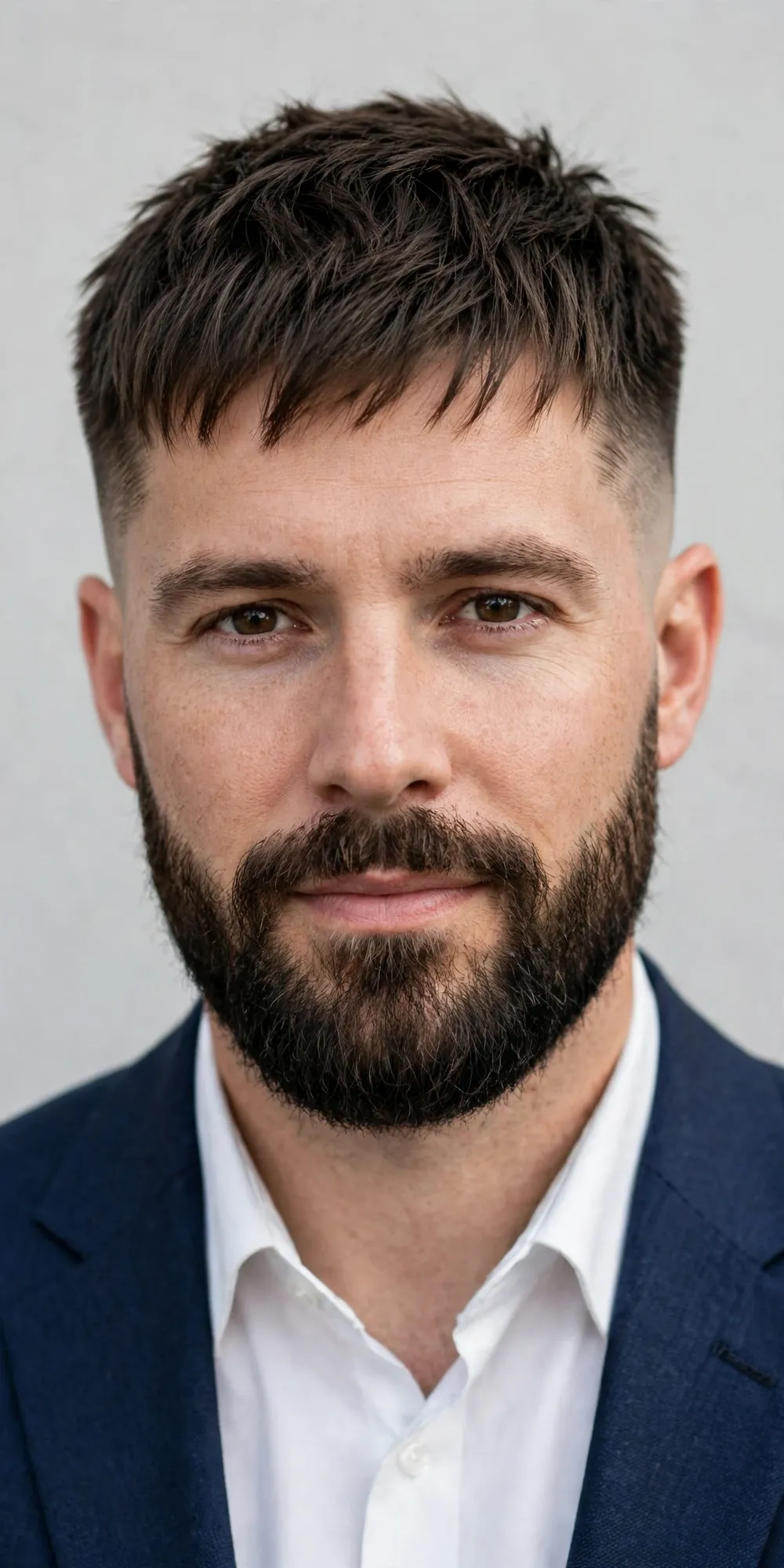
33. Medium Shaggy Hair
A medium shaggy cut is the office-friendly version of the rock-star mop: forward-brushed layers with a side-swept fringe, but kept at a length that still sits neatly above the collar. It works best on thick, wavy hair that has natural movement; fine hair tends to go limp at this length. Ask your barber for layers that are disconnected enough to move, but not so choppy that the outline disappears — and keep the fringe above the eyebrows, or it reads messy rather than relaxed. Style with a salt spray or light cream on damp hair, push the fringe to one side, and leave it alone; over-brushing kills the texture. Maintenance is forgiving: a trim every 6–8 weeks is enough, though the fringe may need a quick tidy in between. In stricter workplaces, tuck the fringe behind one ear and it instantly looks more formal.

34. Comb Back with Mid Skin Fade
This one pairs a swept-back pomp with a mid skin fade, and the contrast is what makes it look sharp. The front is brushed back into a soft pomp — not a full pompadour, just enough height to show the shape — while the fade starts midway up the sides and drops to skin at the neckline. Thick, straight hair holds the sweep best; wavy hair works too, but it will need a stronger hold. Ask your barber for a mid skin fade with a clean blend and enough length on top to brush back without flopping forward. Blow-dry the top backwards with a vent brush, then finish with a medium-hold pomade for a slight sheen. It takes about four minutes and survives a full day at a desk. Book a trim every 3 weeks — once the skin fade grows past stubble, the whole cut softens and loses its impact.
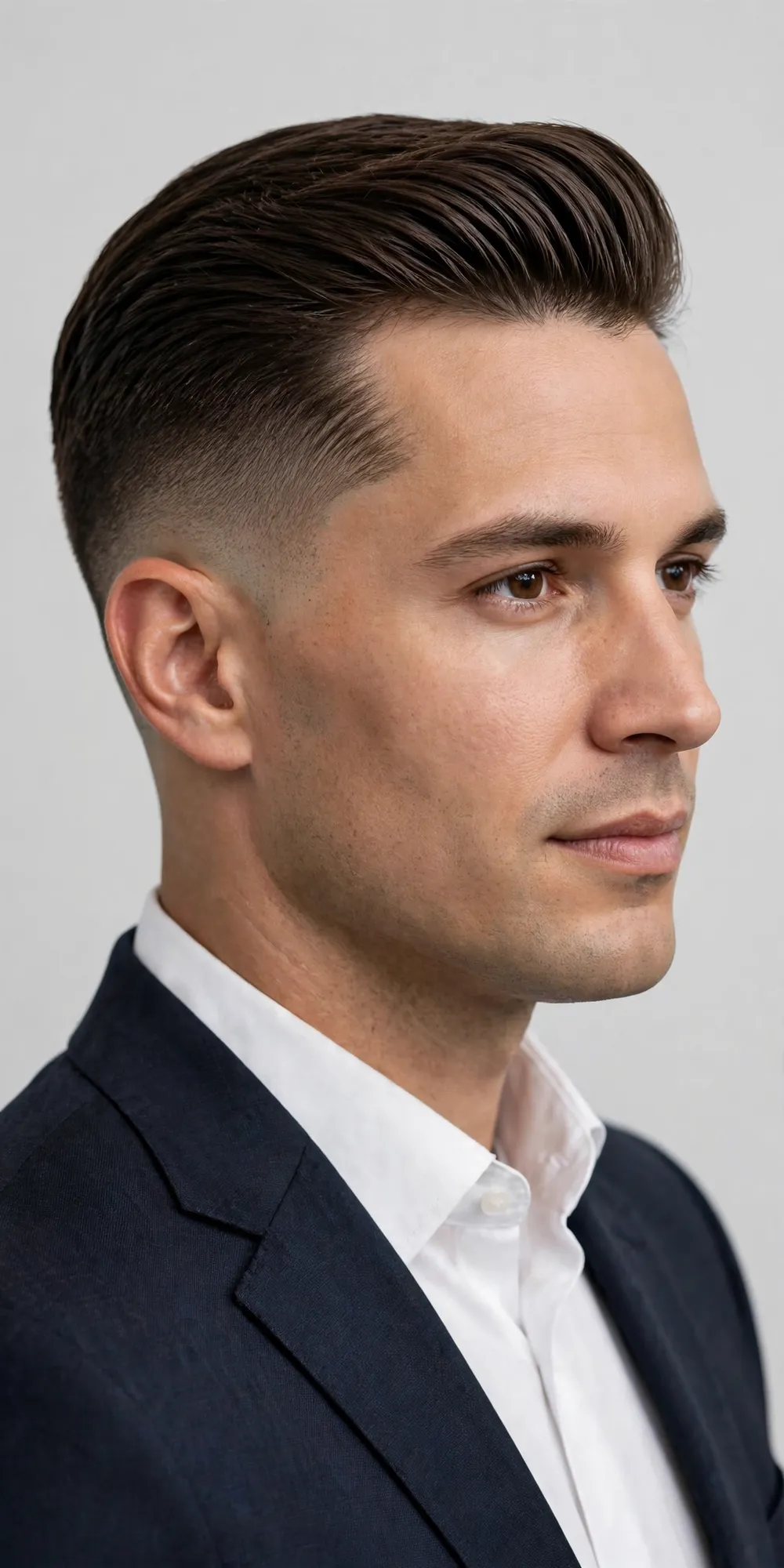
35. Modern Mullet Fade
Before you dismiss it, the modern mullet fade is a very different animal from the 1980s version. The top and front stay short and textured, the sides fade cleanly above the ear, and only a neat strip of length runs to the nape. It suits men with straight or wavy hair and a bit of confidence — it is not a conservative choice, so it fits creative offices and client-facing roles with a relaxed dress code better than a bank. Ask your barber for a fade on the sides, texture on top, and a nape that ends just below the collar with a clean, tapered outline. Style with matte paste, pushing the top forward and letting the back sit naturally. Trim every 3–4 weeks to keep the fade crisp and the back from drifting into a shag. Done right, it reads as a deliberate, modern cut — not a joke.
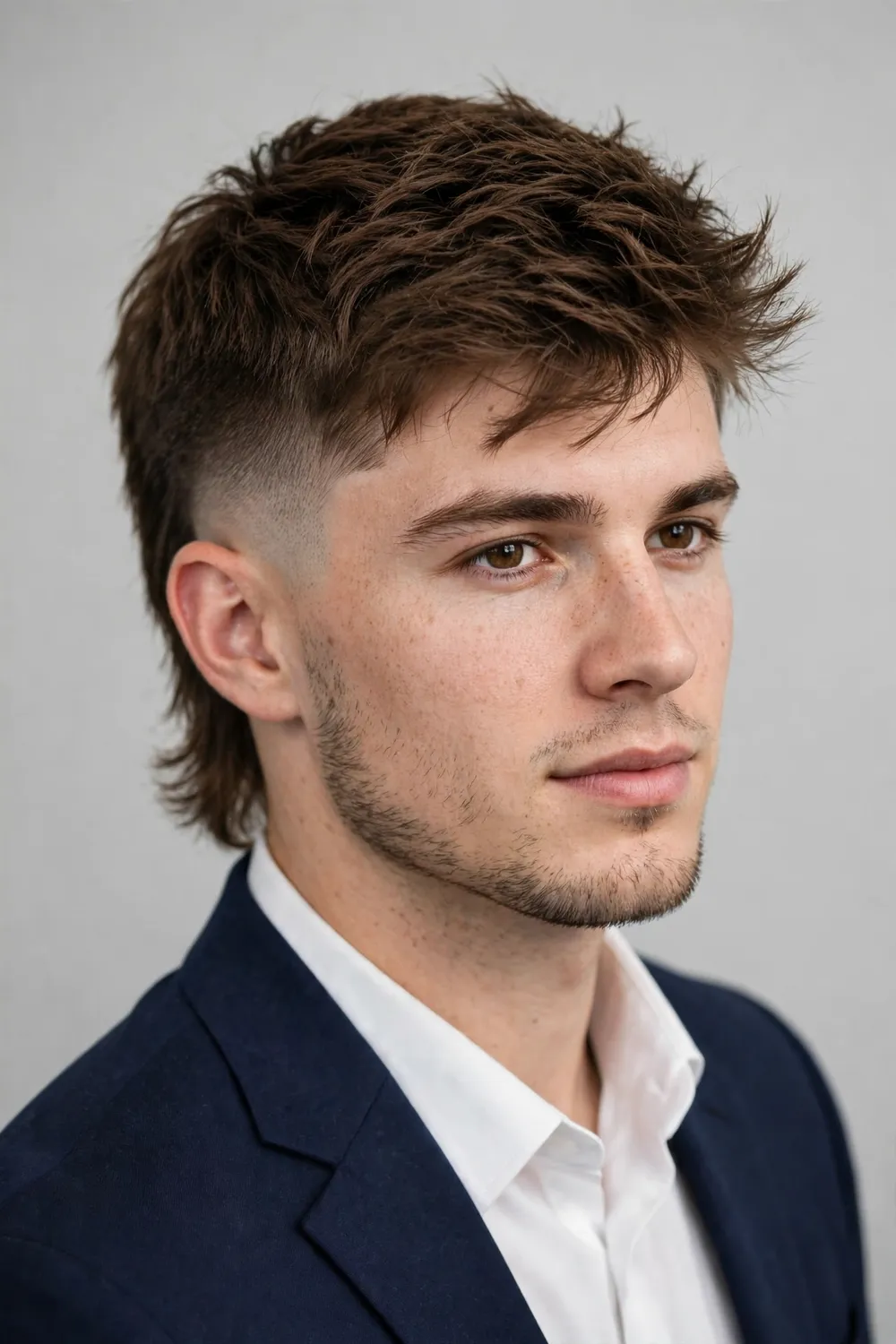
36. Brush Back with Mid Skin Fade and a Beard
This is a big, confident look: brushed-up volume on top, a mid skin fade on the sides, and a full beard anchoring the whole thing. The volume up top balances the beard below, so the face reads structured rather than heavy. It suits men with thick hair and a strong jawline best, and it pairs naturally with a fuller beard — a wispy beard next to that much volume looks out of proportion. Ask your barber for a mid skin fade, plenty of length on top to brush back, and a beard shape that follows your jawline rather than bulging out at the cheeks. Blow-dry the top backwards with a round brush, add matte clay for hold, and oil the beard daily. It is not a low-maintenance cut: the fade needs a touch-up every 2–3 weeks and the beard needs weekly shaping, but the result is one of the strongest professional looks in this list.

37. Low Fade Quiff
The low fade quiff keeps the volume of a classic quiff but drops the fade down low, so the transition is subtle and the cut reads more understated. The top stays long enough to push up — about two to three inches at the front — while the fade starts just above the ear and melts into the neckline. It suits most face shapes, but it is particularly good for men with a longer face, since the low fade does not add extra height the way a high fade does. Ask your barber for a low fade with a soft blend and point-cut texture through the top. Blow-dry the front upward and slightly to one side, then set it with a small amount of matte clay. It takes three minutes and looks tidy all day. Trim every 3–4 weeks; the low fade grows out more gracefully than a skin fade, so you can stretch it a few extra days without it looking scruffy.
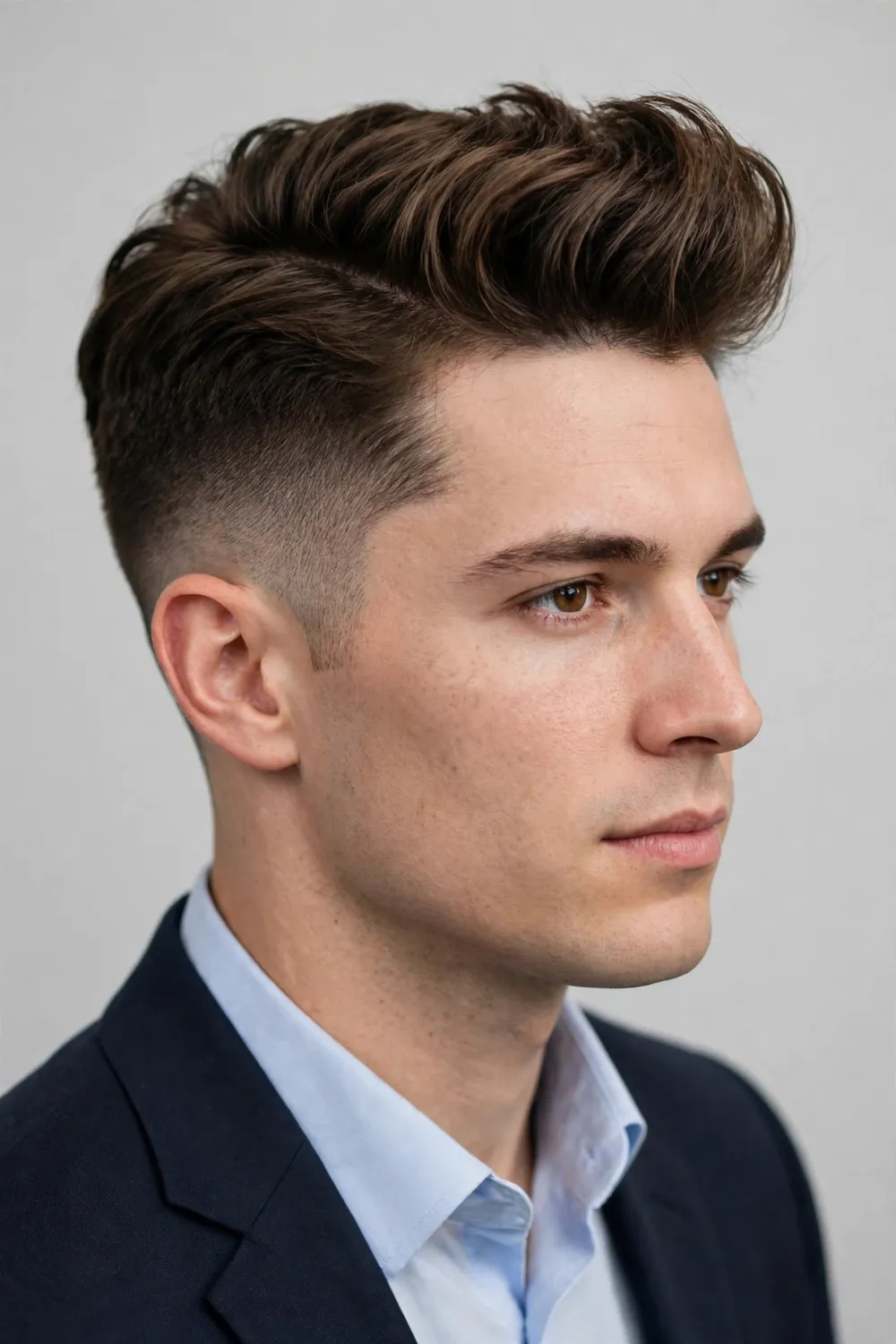
38. French Crop (Office Version)
The office version of the French crop is one of the easiest professional cuts to live with. The fringe is short, textured and worn forward, the top is cropped close, and the sides are cleanly tapered — no fade line, no drama. It suits straight and wavy hair, and it is a strong pick for men with a high forehead or a receding hairline, since the forward fringe covers both without looking like a cover-up. Ask your barber for a short textured crop with the fringe sitting just above the eyebrows and tapered sides that blend by scissors. Styling takes under a minute: a dab of matte paste, push the fringe forward with your fingers, done. Our full guide to French crop haircuts for men covers the variations in more depth, including the faded and textured versions. Trim every 3–4 weeks to keep the fringe from creeping into your eyes.
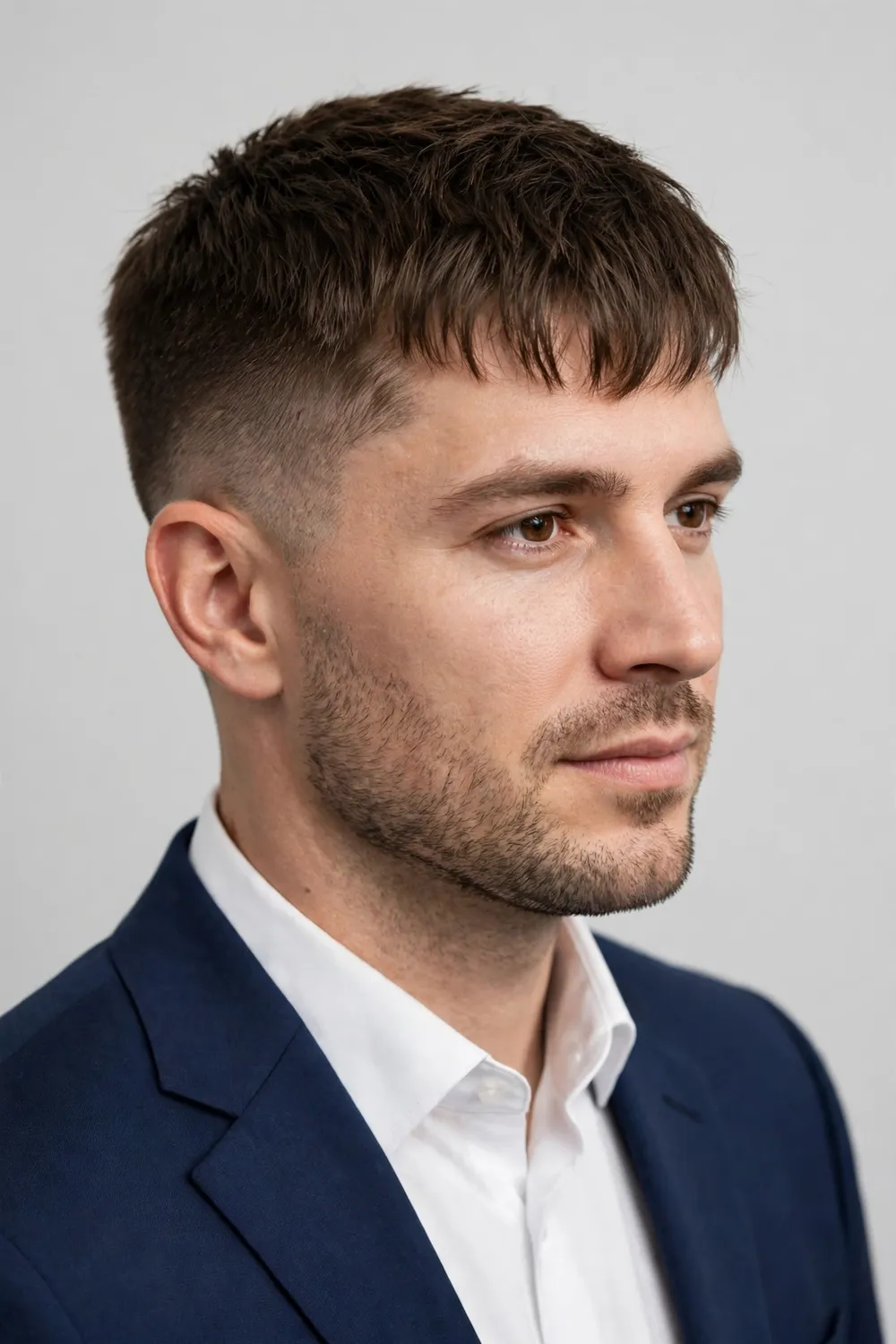
39. Hard Part Side Sweep
A hard part is a shaved line cut into the parting, and it instantly makes a simple side sweep look deliberate. The hair is swept neatly across from the part, the sides are kept short and tidy, and that crisp razored line does the talking. It suits straight hair best — wavy hair can work, but the part line needs more product to stay visible — and it flatters square and oval faces. Ask your barber for a hard part cut with a trimmer, not scissors, so the line stays sharp, and a side sweep with enough length to comb over cleanly. Style with pomade on damp hair, comb from the part across, and set it with a light hold spray if your hair is stubborn. The part needs re-cutting every 2–3 weeks, or it grows in fuzzy and the whole effect disappears. It is a small detail that makes a big difference in how polished you look.
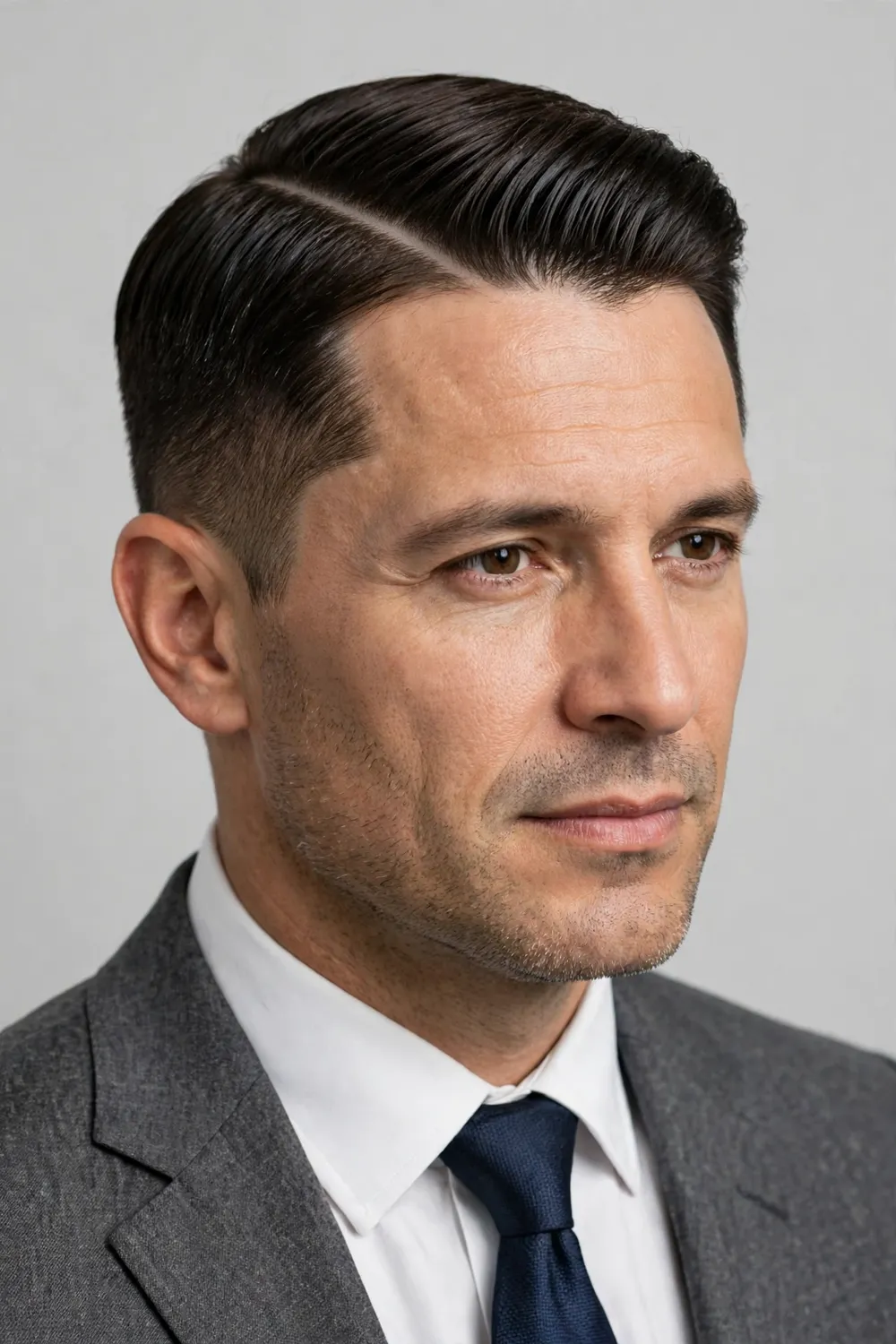
40. Low Taper Fade Side Sweep
This is the quiet achiever of the list: a side-swept top with a low taper that hugs the ears and neckline, giving a clean finish without any visible fade line. The top is long enough to sweep to one side, the taper stays low and subtle, and the whole cut reads neat from every angle. It works on straight, wavy and thick hair, and it is one of the safest choices for a first fade — there is no dramatic contrast to regret. Ask your barber for a low taper fade and a side sweep with the part wherever your hair naturally falls. Style with a cream or light pomade, comb the top over, and you are done in about two minutes. Trim every 3–4 weeks; the low taper grows out gracefully, so this is also one of the most forgiving cuts if your schedule slips by a week.
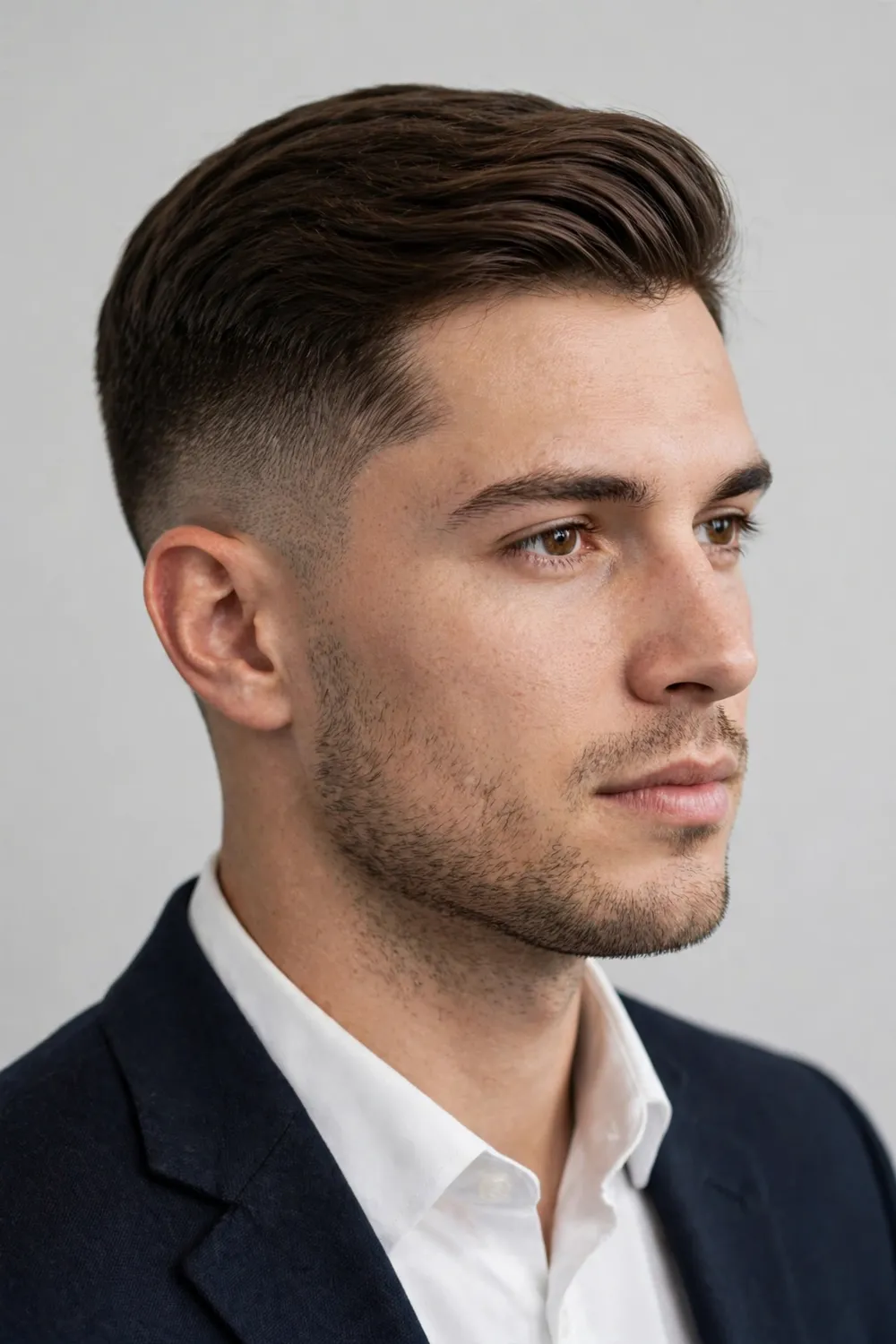
41. Classic Tapered Side Part
The classic tapered side part is the cut your grandfather wore to work, and it still works because nothing about it is trying too hard. The sides are tapered with scissors — no clippers, no fade line — so the transition from short to long is gradual and soft. The top is parted neatly to one side and combed over with a light shine. It suits straight and slightly wavy hair, and it is the best option for men who want a professional cut with zero daily styling. Ask your barber for a scissor taper, a natural side part, and enough length on top to lie flat when combed. A small amount of pomade on damp hair is all it needs; comb it once and it stays put. Trim every 4–5 weeks. If your workplace is conservative — law, finance, government — this is the cut to default to, because nobody has ever been sent home for a tapered side part.

42. Neat Textured Crop
The neat textured crop is a short, choppy cut with a matte finish and tidy edges — the modern answer to the old-fashioned short back and sides. The top is cropped close with point-cut texture, the sides are short but not shaved, and everything sits clean. It suits most hair types, but it is especially good for fine hair, since the texture makes it look thicker, and for men who want a cut they can forget about between appointments. Ask your barber for a short crop with choppy texture on top and clean, tapered edges around the ears and neckline. Styling is a thirty-second job: rub a little matte clay between your hands and push the top forward or to one side. It grows out well, so a trim every 4–5 weeks is plenty. If you like the idea of a shorter cut but find the crew cut a little too military, this is the middle ground.

43. Short Back and Sides with Textured Top
This is the workhorse cut: clippered back and sides, a longer textured top, and nothing that needs a mirror to maintain. The contrast between the short sides and the textured top gives it shape, while the top stays long enough to push up, sweep over or leave messy depending on the day. It suits straight, wavy and thick hair, and it flatters most face shapes because the barber can adjust the top length to balance your features. Ask your barber for a number two or three on the back and sides and a textured top of about two inches, cut with scissors for movement. Style with matte paste — push it up for a smarter look, or leave it tousled for a relaxed Friday. Trim every 3–4 weeks. It is the cut to choose when you want one style that covers the boardroom, the gym and the weekend without a second thought.
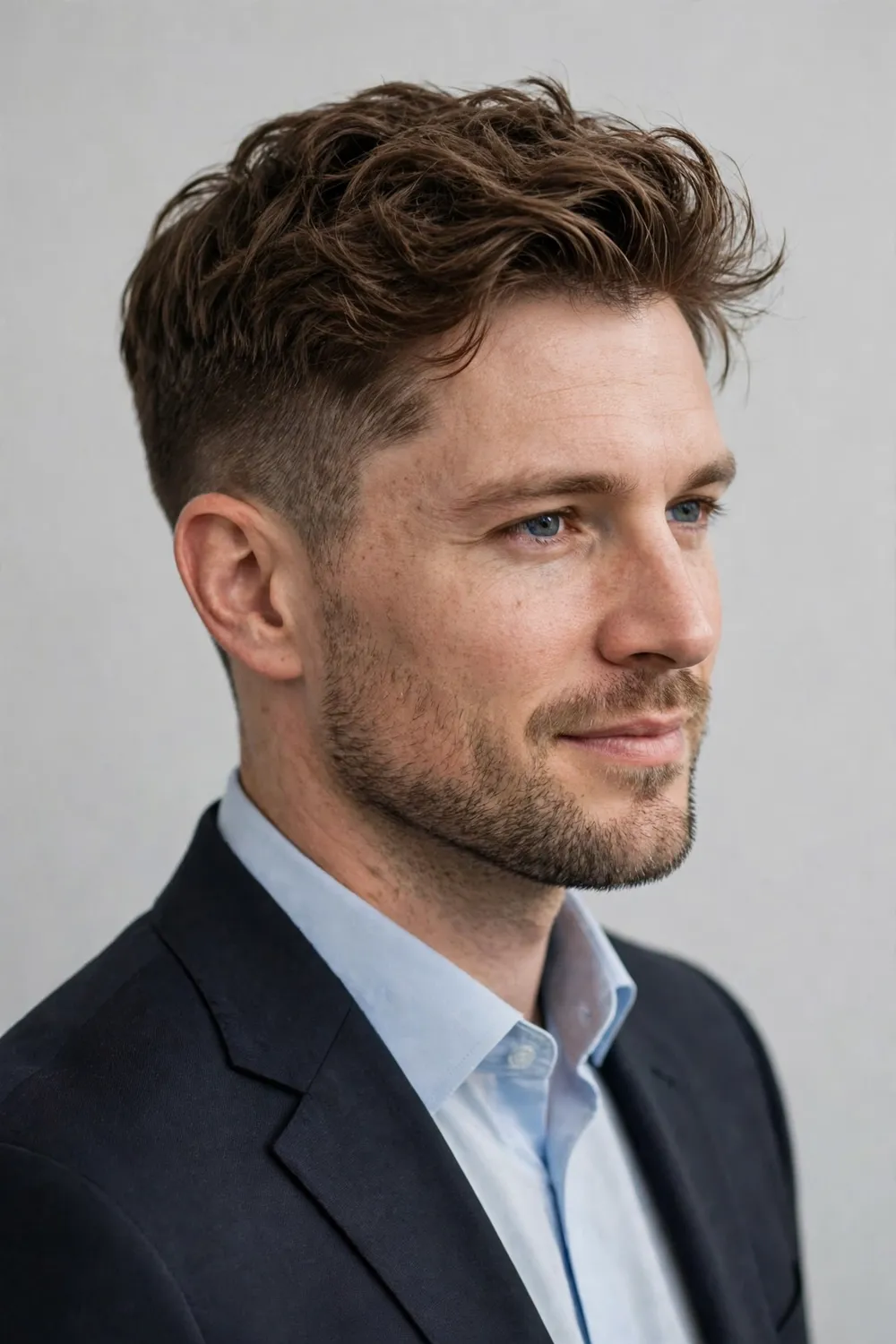
44. Executive Slick Back
The executive slick back is the classic slick back with one important change: tapered sides instead of an undercut. That single detail makes it acceptable in the most conservative offices, because there is no harsh contrast — just a smooth, continuous shape swept back from the forehead. It suits straight and wavy hair with some natural thickness, and it is a strong choice for men with a strong jawline, since the swept-back shape frames the face. Ask your barber for a slick back with tapered sides and enough length on top to comb back without it springing forward. Apply pomade to damp hair, comb it straight back, and let it set; a medium hold with a slight sheen looks the most natural. Trim every 3–4 weeks to keep the taper clean. It is the closest thing to a power haircut without going full Wall Street.

45. Mid Fade Comb Over
The mid fade comb over takes the classic comb over and gives it a sharper, more modern frame. The fade starts midway up the sides and blends smoothly, while the top is combed over from a defined part with a clean forehead line. It suits straight and wavy hair best, and it is a good option for men with a rounder face, since the height on top and the clean sides add length to the face. Ask your barber for a mid fade with a crisp part and a top long enough to comb over without gapping. Style with pomade on damp hair, comb from the part across and slightly back, and finish with a light spray if your hair is fine. It takes about three minutes in the morning. Trim every 3 weeks to keep the fade sharp — this is one of those cuts where a grown-out fade is immediately obvious, so do not stretch it.
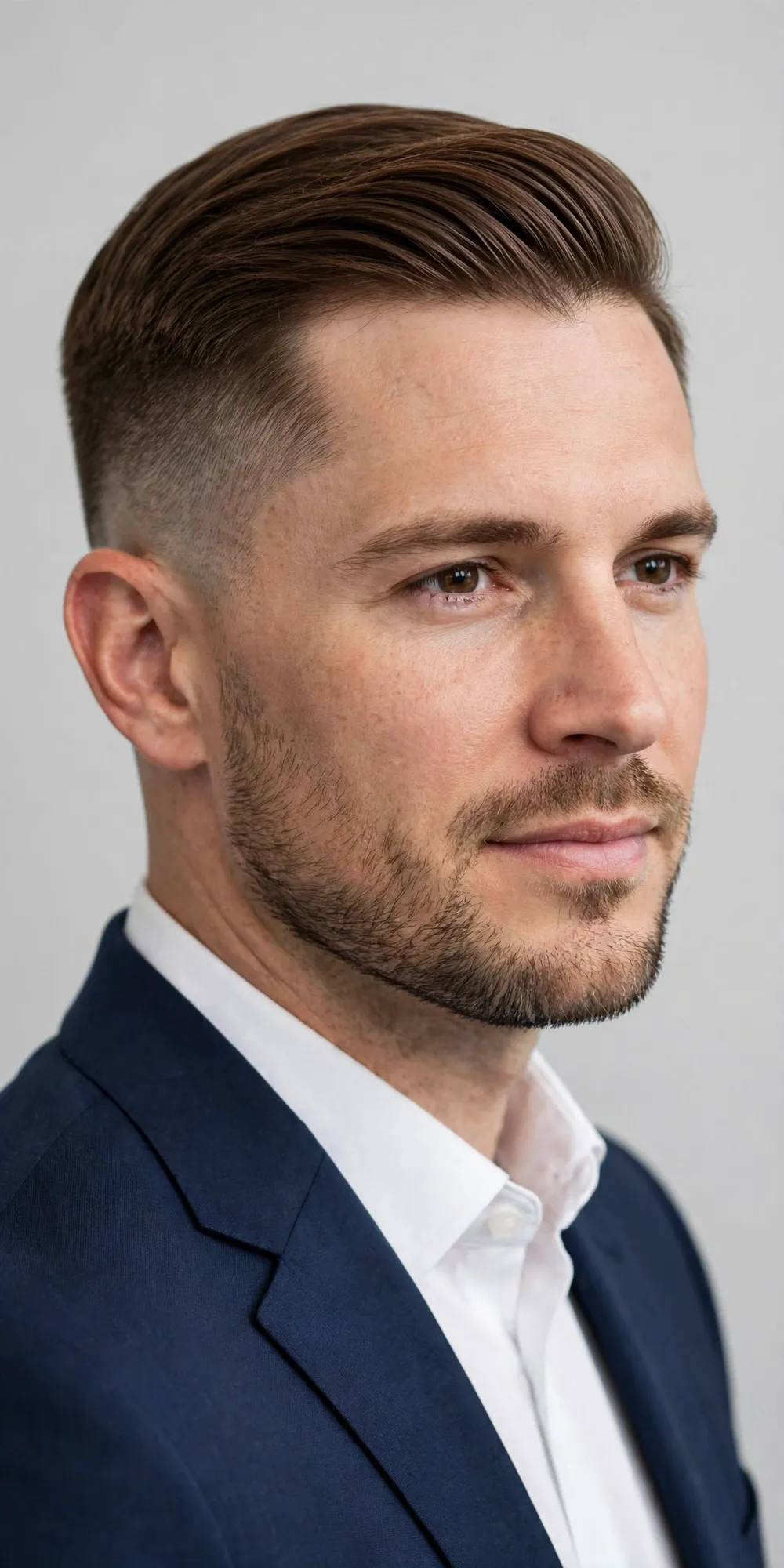
46. Wavy Top with Tapered Sides
This cut lets natural waves do the work. The top is left long enough for the waves to form — usually two to three inches — while the sides are neatly tapered so the shape stays contained. It suits wavy and curly hair best; straight hair will not hold the shape without product and heat, which defeats the point. Ask your barber for a tapered cut that follows your natural wave pattern, and specifically ask them to cut it dry or damp, not soaking wet, so they can see how the waves actually fall. Style with a light cream or sea salt spray on damp hair, scrunch gently, and let it air-dry. That is the whole routine — no blow-drying required. Trim every 5–6 weeks; waves hide growth well, so this is one of the lowest-maintenance options in the list. If you want more ideas for working with texture, our guide to textured haircuts for men covers the full range.

47. Skin Fade Side Part
The skin fade side part is the sharpest version of the classic side part. The sides go right down to skin, the part is crisp and defined, and the top is kept glossy and swept over — the contrast between the bare fade and the polished top is what makes it look so clean. It suits straight hair best, since the top needs to lie flat and smooth, and it flatters oval and square faces. Ask your barber for a skin fade with a hard or natural part and a top long enough to sweep over without lifting. Style with pomade on damp hair, comb from the part across, and add a touch of shine spray if you want the glossy finish. It takes about three minutes. The catch is upkeep: the skin fade starts to look fuzzy after about ten days, so plan on a trim every 2–3 weeks, or learn to tidy the neckline yourself between visits.
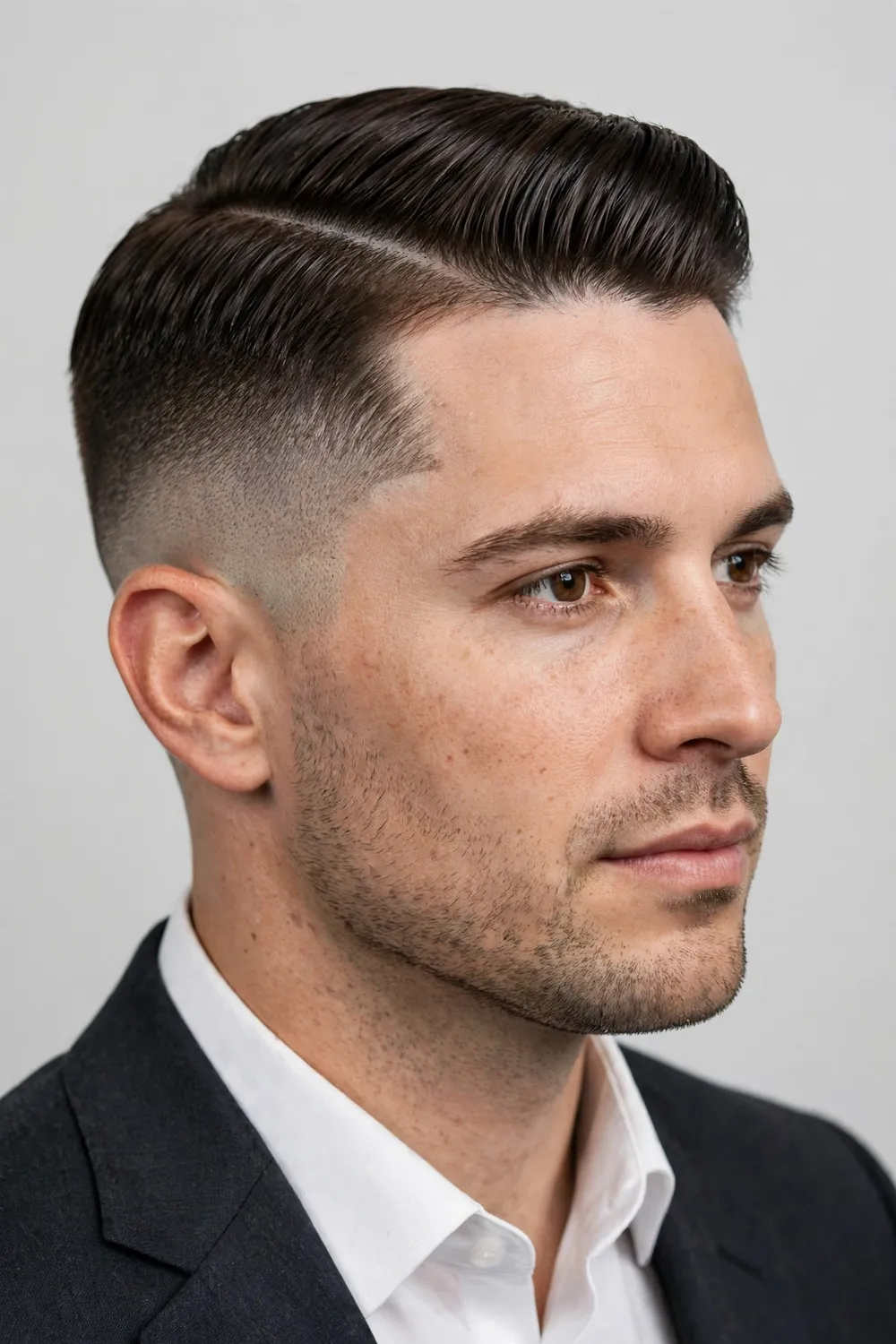
48. Short Pompadour with Taper
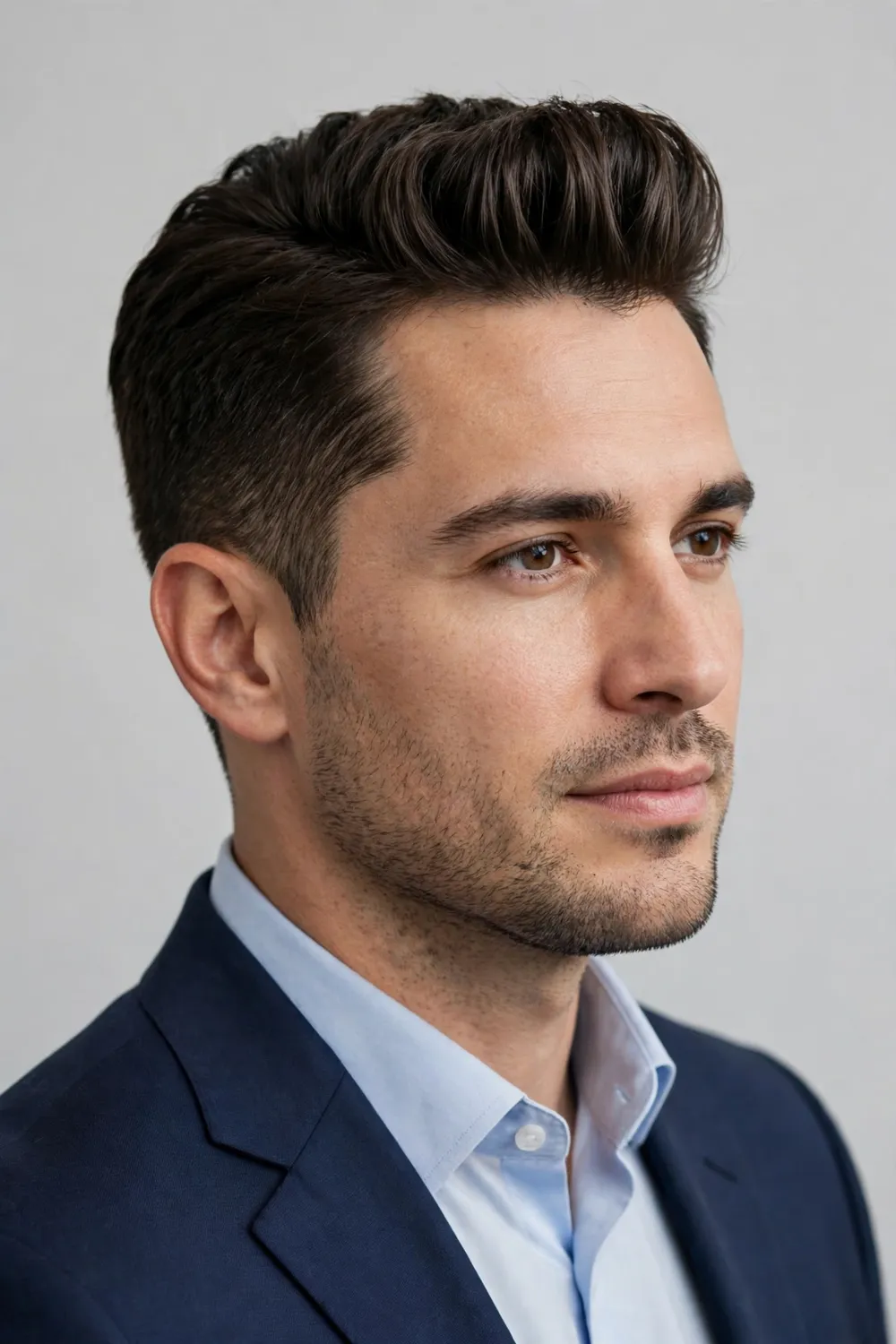
The short pompadour keeps the height and sweep of the classic pomp but scales it down to office proportions. The front lifts up and back, the sides are tapered rather than faded, and the whole thing reads polished without looking like you spent twenty minutes in front of the mirror. It suits thick and wavy hair best — fine hair can struggle to hold the height — and it flatters round faces, since the lift adds length. Ask your barber for a compact pompadour, about two inches at the front, with tapered sides and a soft blend. Blow-dry the front upward with a round brush, then set it with a medium-hold pomade; the blow-dry is what makes it last, so do not skip it. Trim every 3–4 weeks. If you like the look but want something with a little less daily effort, the slick back is the easier cousin.
49. Curly Top with Clean Taper
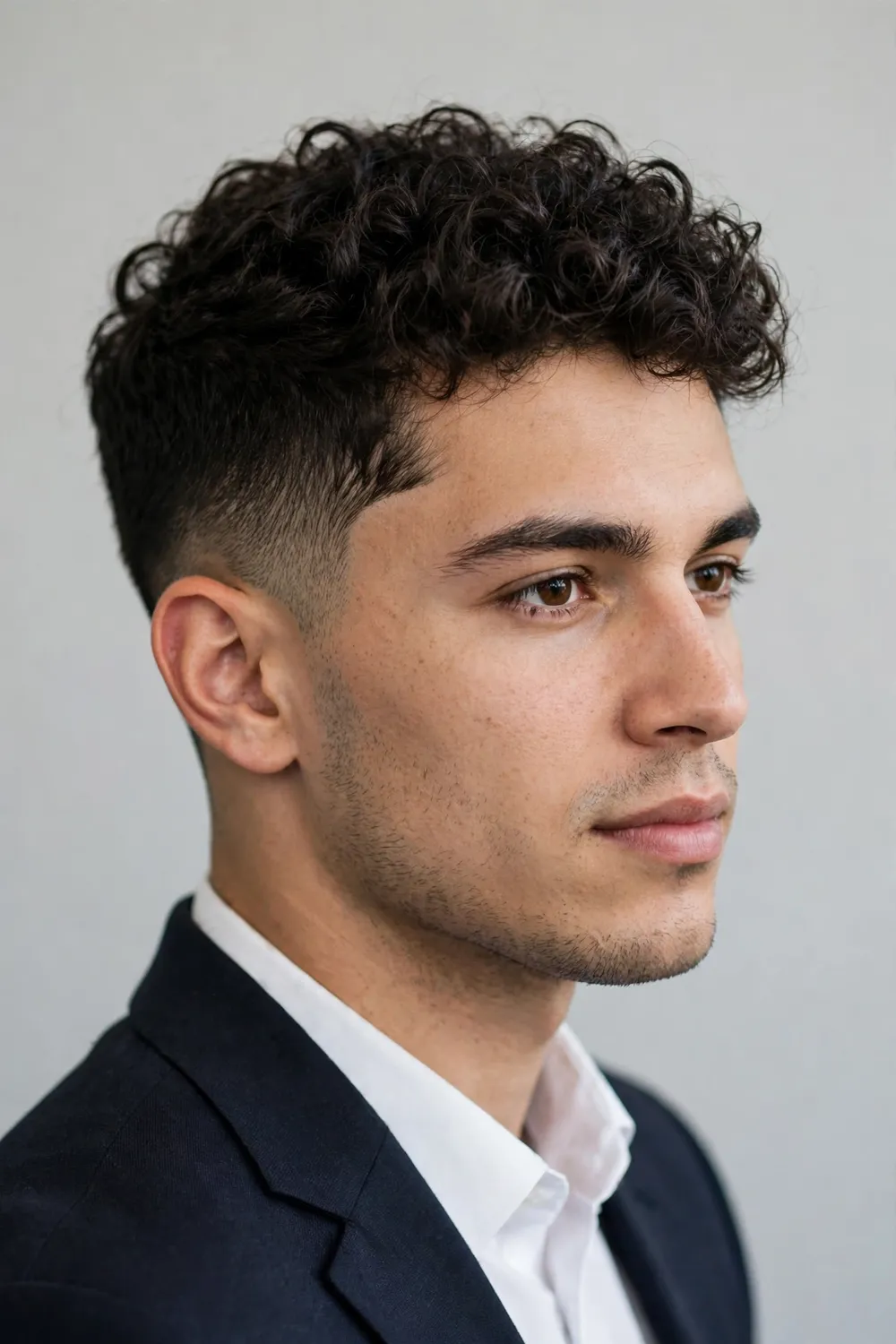
The curly top with a clean taper is proof that curls and a professional look are not opposites. Defined curls sit on top — shaped, not shaved — while the sides and back are tapered cleanly so the outline stays sharp. It suits naturally curly and coily hair best, and it is one of the most flattering cuts for men with a round face, since the height on top adds balance. Ask your barber for a taper that follows the shape of your head and for the curls on top to be cut curl by curl, not bulked through with thinning shears. Style with a curl cream on damp hair, define the curls with your fingers, and let them air-dry; a diffuser helps on cold mornings. Trim every 4–6 weeks, and keep the curls moisturised — dry curls frizz, and frizz is what makes a good cut look unkempt by lunchtime.
How to Choose a Professional Haircut for Your Face Shape and Job
Start with your face shape, because the same cut can look sharp on one man and awkward on another. Oval faces can wear almost anything — side parts, quiffs, crops — so pick by hair type and job rather than geometry. Round faces need height and angles: a quiff, a pompadour or a textured crop with volume on top will lengthen the face, while a buzz cut or a flat fringe will make it look rounder. Square faces suit softer, layered tops that take the edge off a strong jaw; a hard part or a textured quiff works well. Oblong faces should avoid too much height on top and keep the sides fuller — a classic taper or a side sweep balances the length. Heart-shaped faces, wider at the forehead and narrower at the chin, look best with a bit of volume at the sides and a fringe that softens the forehead.
Then match the cut to your workplace. In conservative settings — law, finance, government, client-facing corporate roles — stick to cuts with no visible fade line and no extreme contrast: the classic tapered side part, the Ivy League, the executive slick back. In creative or tech workplaces, a mid fade, a textured crop or even a modern mullet fade will not raise an eyebrow. The honest test is simple: if you would feel comfortable walking into a meeting with your company’s most senior person wearing it, it is professional enough for your job.
Finally, be realistic about your hair type and your morning. Thick hair holds volume and texture; fine hair needs shorter, choppier cuts to look full; curly hair needs length and a barber who cuts curls properly. And if you will not spend more than two minutes styling, do not pick a quiff that needs a blow-dry — pick a crop or a taper that looks finished straight out of the towel.
How to Style a Professional Haircut in Under 5 Minutes
A professional cut should not need a salon routine every morning. Here is a five-minute system that works for almost every style on this list.
- Wash or dampen (1 minute). You do not need to shampoo daily — over-washing strips natural oils and makes hair harder to style. On non-wash days, run your hands through damp hair under the tap or with a spray bottle. Warm water, not hot.
- Towel-dry gently (30 seconds). Pat, do not rub. Rubbing roughs up the cuticle and creates frizz, which is the opposite of the polished finish you want.
- Apply product to damp hair (30 seconds). A pea-sized amount of matte clay for texture, pomade for shine, or cream for waves. Warm it between your palms first so it spreads evenly instead of clumping in one spot.
- Shape it (2 minutes). Comb or finger-style into place. If your cut needs height — a quiff, a pompadour — spend this time blow-drying the front upward on a low heat setting; it is the single step that makes volume last past midday. For side parts and crops, a comb is enough.
- Set and check (30 seconds). A light mist of hairspray on the front if your hair is stubborn, then a quick look from the side in the mirror. The sides and back are where a good cut falls apart unnoticed, so check them before you leave.
Keep one product on your desk or in your bag — a small tin of matte clay covers most situations — and you can fix a flattened quiff or a wind-blown side part in ten seconds before a meeting.
5 Mistakes That Make a Good Haircut Look Unprofessional
- Letting the neckline go fuzzy. A clean cut with a hairy neckline looks unfinished within a week. Fix it by booking trims on time, or learn to tidy the back of your neck with a trimmer at home between visits.
- Using too much product. A handful of gel turns a smart side part into a helmet. Start with a pea-sized amount and add more only if you need it — you can always add, you cannot take away without washing.
- Ignoring the beard. A sharp haircut next to an unshaped beard looks like two different people. Shape the beard to match the cut, blend the sideburns, and oil it daily. If the beard is not worth maintaining, shave it.
- Wearing a cut that fights your hair. A slick back on curly hair, a quiff on fine hair that collapses by 10 a.m. — the cut is not the problem, the mismatch is. Pick a style your hair type can actually hold, and be honest with your barber about how much effort you will put in.
- Skipping trims until it is obvious. Most professional cuts start to look tired after three to four weeks. The fade grows out, the fringe creeps into your eyes, the shape softens. Book your next appointment before you leave the chair, so the gap never stretches to six weeks.
FAQs
What is considered a professional haircut for men?
A professional haircut is one that looks neat, intentional and tidy in a workplace: clean lines, a defined shape, no extreme contrast or distracting length, and hair that stays in place through a working day. The exact style matters less than the finish — a classic side part and a modern textured crop can both be professional, as long as the edges are clean and the cut suits the dress code of your job.
What hairstyle is most professional for men?
The classic side part is the most universally professional choice. It works in every industry, suits most face shapes, and needs almost no styling. Close behind are the Ivy League and the tapered side part — both short, structured and conservative enough for the strictest office. If your workplace is more relaxed, a textured quiff or a mid fade comb over is just as professional.
What is the most attractive professional haircut for a man?
Attractiveness comes down to fit, not a single style. A textured quiff or a modern pompadour tends to score highest because the volume and shape frame the face well, but the same cut on the wrong face shape or hair type will not flatter anyone. The most attractive professional cut is the one that suits your face shape, your hair type and your job — and that you can maintain well enough to keep it looking sharp.
Can I have a stylish haircut and still look professional?
Yes. Professional and stylish are not opposites — the line is about execution, not the style itself. A textured crop, a low fade quiff or a modern pompadour can all look sharp at work, as long as the edges are clean, the shape is controlled, and the cut fits your workplace dress code. What crosses the line is usually neglect: grown-out fades, unshaped beards and product overload, not the style you chose.
Are professional men’s haircuts high maintenance?
Most are not. Short cuts like the crew cut, the French crop and the buzz cut need almost no daily styling — a minute at most. Styles with volume, like a quiff or a pompadour, take three to five minutes with a blow-dryer. The real maintenance is the trim schedule: most professional cuts need a visit every 3–4 weeks to stay sharp, and fades need it every 2–3 weeks. If you want the lowest possible effort, choose a cut from our guide to short haircuts for men — they are built for men who do not want a morning routine.
How often should I get a professional haircut trimmed?
Every 3–4 weeks for most cuts. Fades and skin fades need a touch-up every 2–3 weeks, because the contrast shows growth quickly. Longer styles like a medium flow or a man bun can stretch to 6–8 weeks. The simplest rule: book your next appointment before you leave the barber’s chair, and you will never have to think about it.
What should I ask my barber for a professional haircut?
Be specific about three things: the length on top, the finish on the sides, and how much styling you are willing to do each morning. A good request sounds like this: “A classic side part, about two inches on top, scissor taper on the sides, and something I can style in two minutes.” Bring a photo if you have one — it removes guesswork. And tell your barber about your job and your dress code, so they can steer you away from a cut that will not fit your workplace.
Final Word
A professional haircut is not about playing it safe — it is about choosing a cut that fits your face, your hair and your job, then keeping it in shape. The 49 styles in this guide cover every workplace from the boardroom to the creative studio, and most of them take less than five minutes to style in the morning. The real difference is not the cut you pick on day one, but whether you maintain it: regular trims, the right amount of product, and a beard that matches the haircut.
If you are still deciding, start with one of the top three picks from this guide — the classic side part, the textured comb over or the Ivy League — and build from there. And for more ideas, from fades to longer styles, take a look around our blog for the full range of men’s haircut guides.