

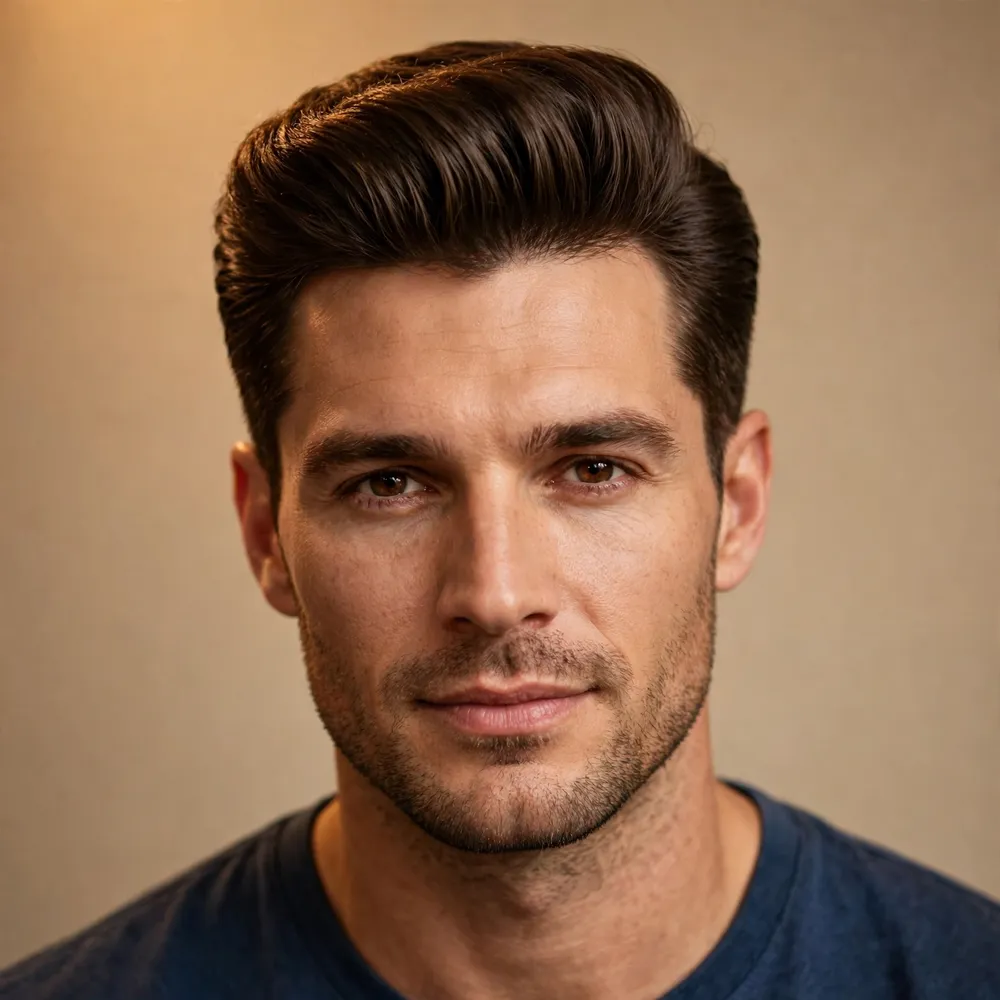
A quiff haircut is short back and sides with 3–5 inches on top, lifted up and back at the front. It’s one of the most versatile men’s styles ever made — it works on straight, wavy and curly hair, dresses up for a wedding and down for a Saturday, and every barber knows it by name. If you’re choosing one today, start with these three: the Classic Quiff for timeless polish, the Textured Quiff for a modern, forgiving finish, or the Low Fade Quiff for clean contrast that grows out gracefully. Below are 56 quiff styles, from the original 1950s shape to the fades, textures and hybrids men are actually asking for in 2026.
1. Classic Quiff
The one that started it all. The classic quiff haircut keeps the top smooth and swept up and back, with tapered sides that blend gently instead of ending in a hard line. It’s the style Elvis and the 1950s greasers made famous, and it has never really gone away — it just keeps getting restyled. Straight or slightly wavy hair takes to it best, and it flatters oval, square and oblong faces by adding height where it counts. Ask your barber for 4–5 inches on top with a scissor taper on the sides, graduated rather than clipped to skin. Blow-dry the front up and back with a round brush, then work a pea-sized amount of pomade through for a soft sheen. It holds well all day, but you’ll need a quick brush in the morning and a trim every 3–4 weeks to keep the taper crisp.
2. High Fade Quiff
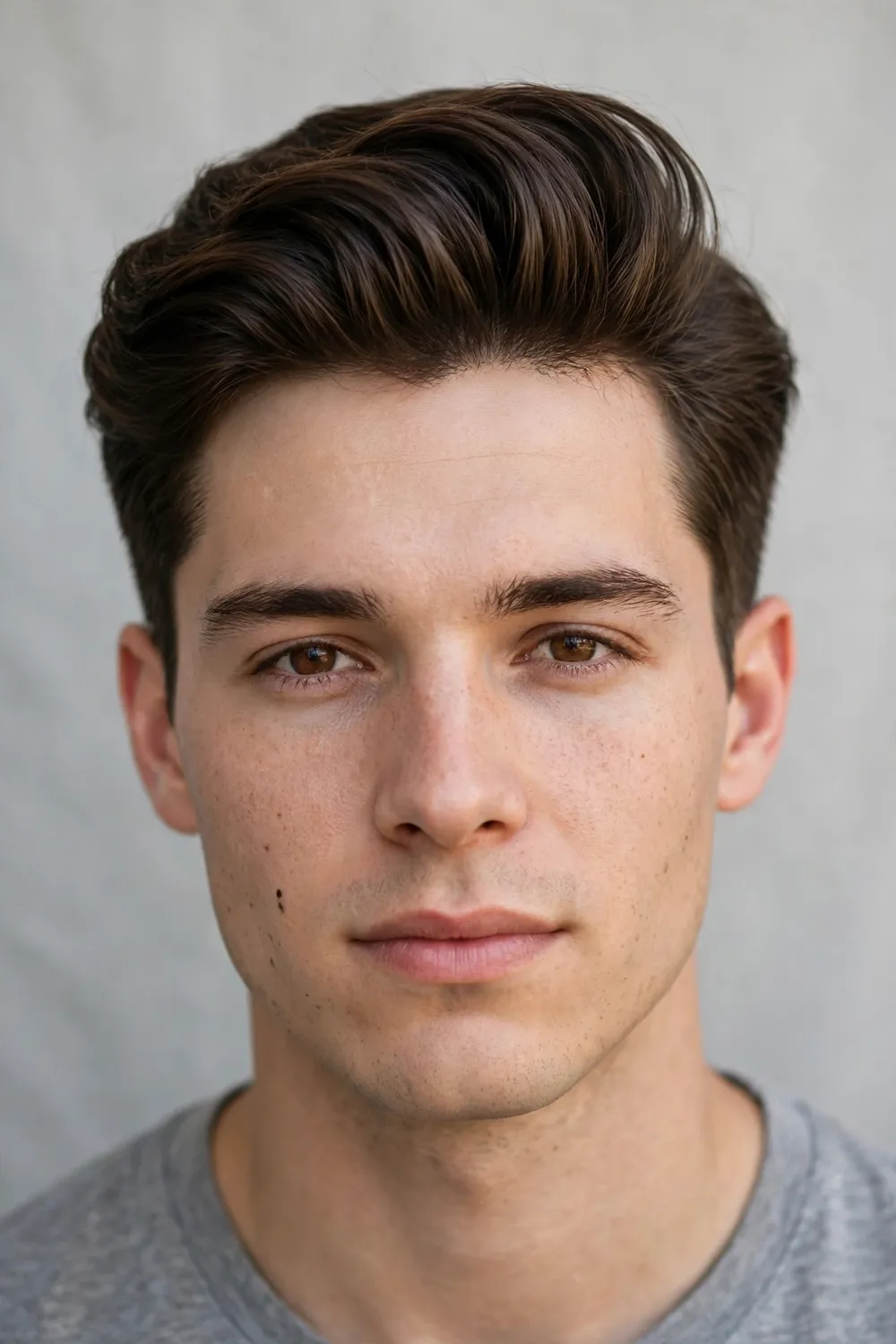
When the top is tall and the sides vanish, the contrast does all the talking. A high fade quiff pairs a lifted, voluminous top with a fade that climbs right up to the crown, so the eye goes straight to the front. It suits thick hair best — the weight up top needs enough density to stand — and it works beautifully on round faces, because the vertical height stretches the face visually. Ask for 4–6 inches on top and a high skin fade or zero fade on the sides, blended tight at the temples. Style it with a matte clay or volumising powder: blow-dry the top forward and up, then pinch the front into place with your fingers. Maintenance is the honest catch — a high fade needs touching up every 2 weeks or it loses its edge.
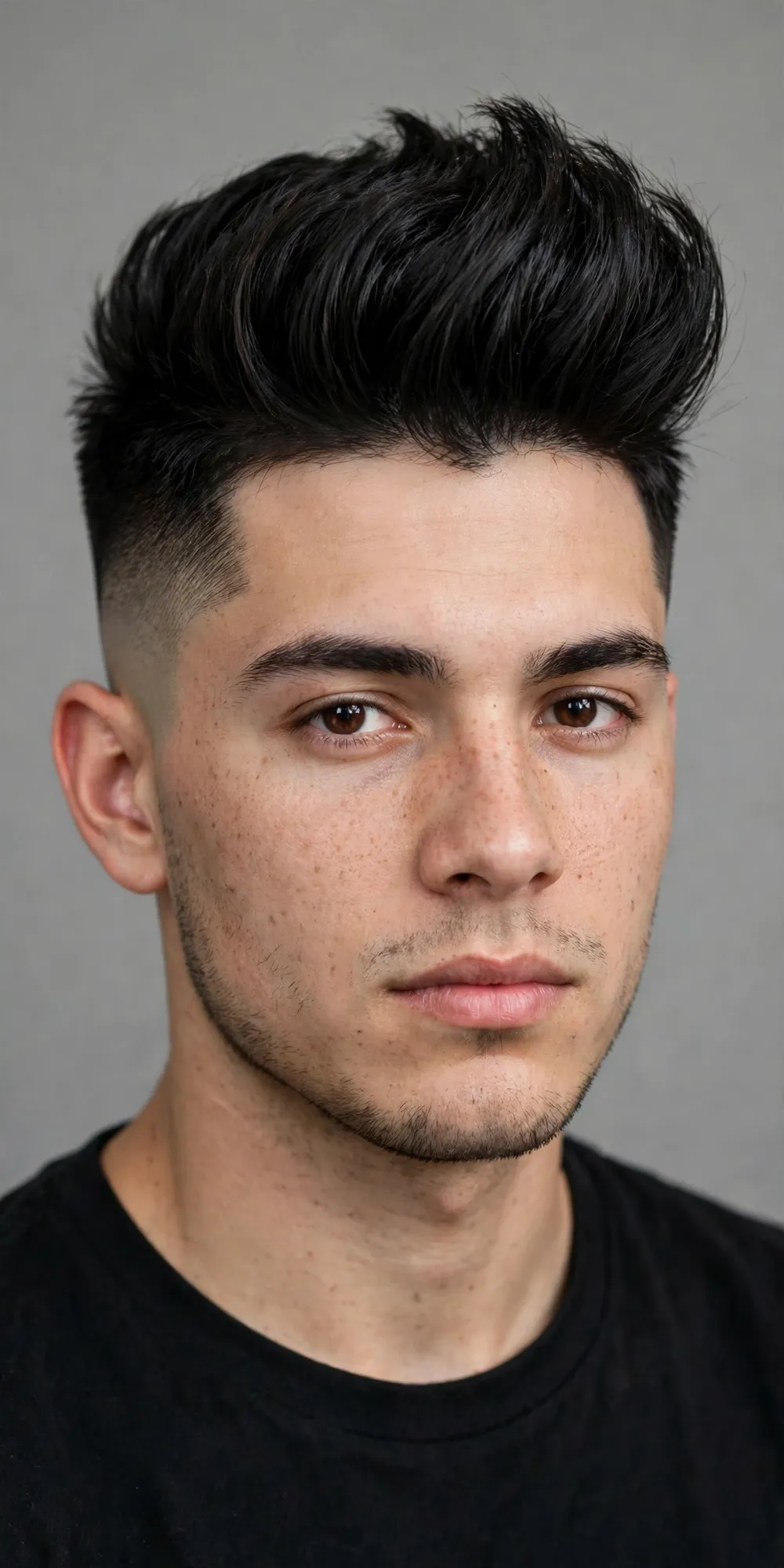
3. Low Fade Quiff
This is the quiff for men who want the lift without the drama. The low fade quiff keeps the top full and lifted while the fade sits just above the ears, leaving plenty of length on the sides so the grow-out stays tidy. It’s the safest first quiff — office-friendly, wedding-friendly, and it suits nearly every face shape, including rounder faces that can look swamped by a taller style. Ask for 3–5 inches on top and a low fade that starts an inch above the ear and blends down to a #1. Blow-drying is optional here; a dab of styling cream and a few minutes with your fingers will do on most days. The fade only needs a refresh every 3–4 weeks, and the top can be left alone for longer than most fades allow.

4. Mid Fade Quiff
The mid fade quiff sits exactly where most men want it: not as sharp as a high fade, not as subtle as a low one. The fade starts around the temple and blends down, giving the lifted top a clean frame without swallowing the sides. It’s a good middle ground for guys who like structure but don’t want a barber visit every fortnight — and it suits square and heart-shaped faces especially well, since the balance keeps the jawline in focus. Ask for 4–5 inches on top with a mid fade finished to a #0.5 or #1 at the bottom. A light-hold clay gives the best result: matte, textured, never greasy. Style time is about five minutes once you know the motion, and the fade holds its shape for a solid 2–3 weeks.

5. Skin Fade Quiff
Bold is the only word for it. The skin fade quiff takes the sides right down to bare skin, so the voluminous top sits on a base of pure contrast — the tallest, most dramatic version of the style. Thick hair carries it best, because the top needs real height to balance the emptiness at the sides, and it looks sharpest on oval and square faces. Ask for 4–6 inches on top and a high skin fade with a foil-shaver finish. Use a strong-hold matte paste or clay — anything weaker will collapse under the weight of the lift. Blow-dry upwards at the roots for maximum volume, then shape the front into a defined wave. Be honest with yourself: the skin fade grows out in a week, so this is a every-10-days barber relationship.

6. Burst Fade Quiff
The burst fade arcs around the ear in a half-circle, and when you pair it with a lifted quiff on top, the whole cut moves in curves. It feels a little more creative than a straight fade — there’s a sense of motion to it — and it’s a favourite among men who want something modern without going fully experimental. Ask for 3–5 inches on top and a burst fade that follows the ear’s curve, leaving a little length behind it. It suits straight and wavy hair equally, and works on most face shapes. Style with a matte clay, lifting the front with a hairdryer on medium heat, then letting the top fall naturally rather than forcing it into a rigid shape. The burst needs a touch-up every 2–3 weeks, but the top is forgiving if you skip a week.
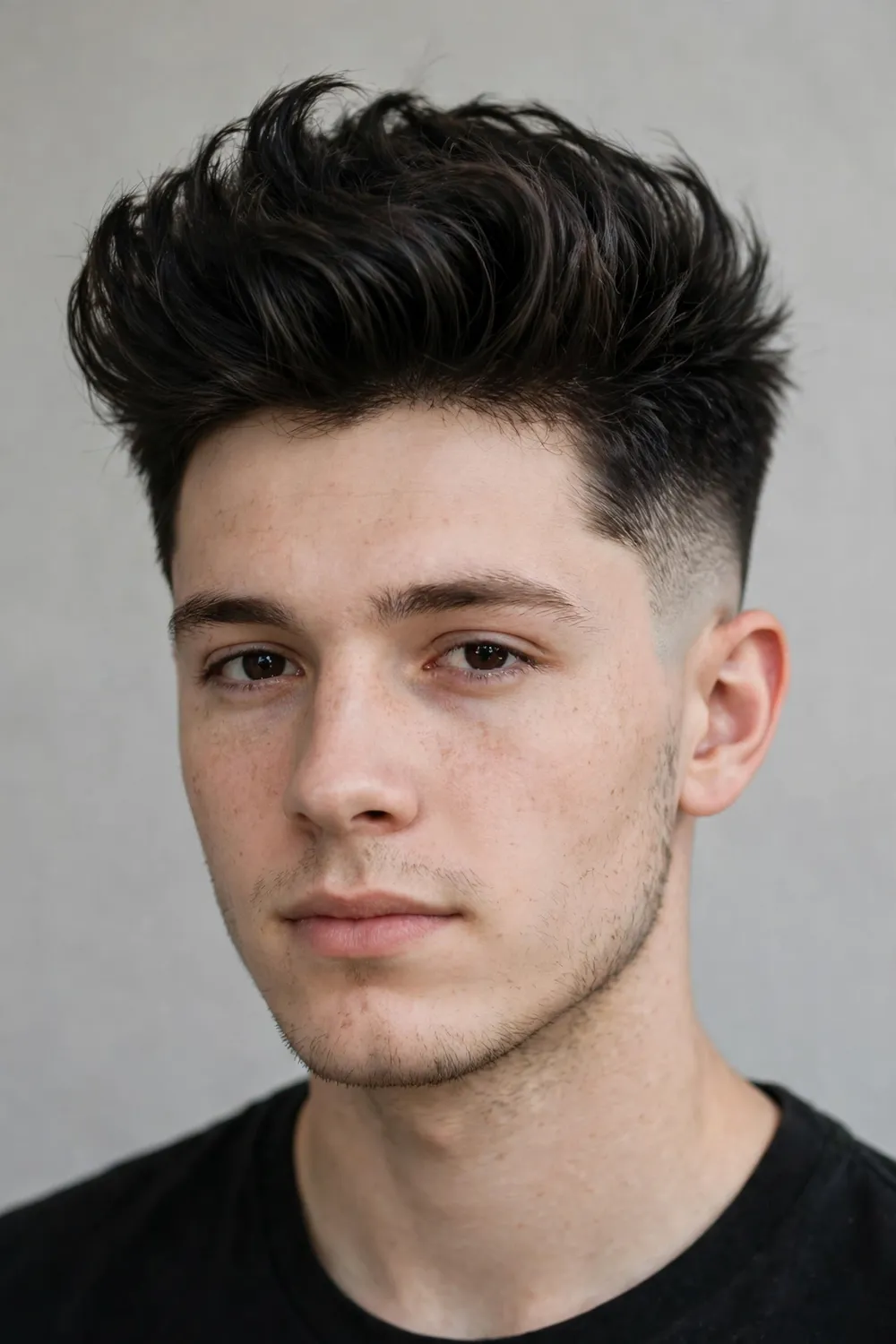
7. Drop Fade Quiff
A drop fade dips down behind the ear as it wraps around the head, which gives the profile a clean, tapered silhouette from every angle — including the back, where most fades just fade out. Combined with a quiff on top, it looks deliberate and polished without shouting about it. It suits men with straight to slightly wavy hair and works on oval and oblong faces. Ask for 4 inches on top and a drop fade that finishes to a #1 at the neckline. Product-wise, a medium-hold cream keeps the finish natural; too much shine fights the clean lines. Blow-dry the front up and back, then set it with a light touch — this one looks better a little relaxed than shellacked. Expect a trim every 3 weeks to keep the drop crisp.
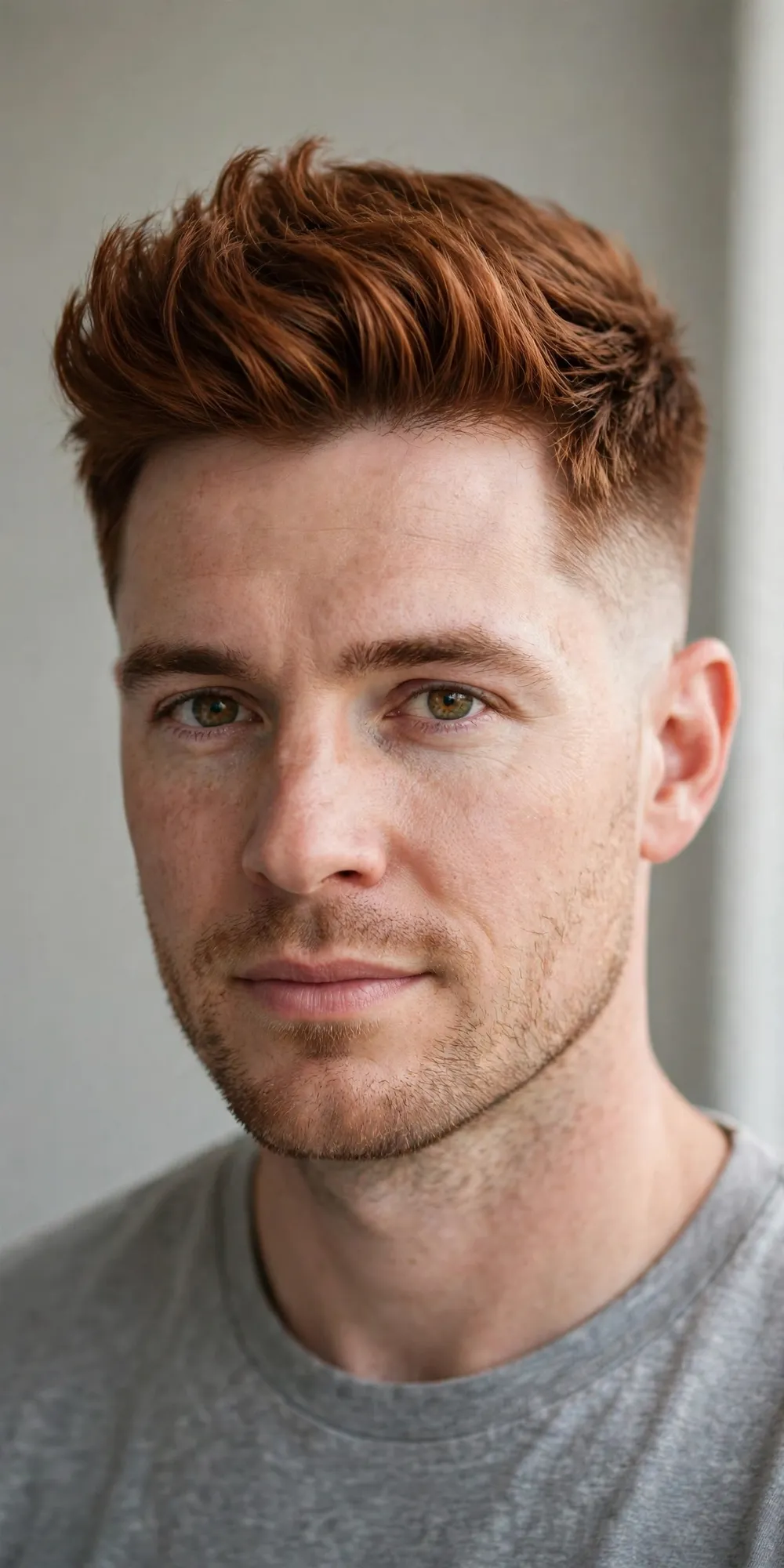
8. Taper Quiff
The taper quiff is the grown-up of the family — gradual, clean, and endlessly wearable. Instead of a hard fade, the sides graduate smoothly from short to shorter, which makes the lifted top feel softer and more natural. It’s the version to pick if you wear your hair to work, to family events, and everywhere in between without thinking about it. Ask for 4–5 inches on top with a scissor taper that finishes at a #2 on the sideburns. Straight and wavy hair both take to it, and it suits every face shape, which is rare for a quiff. Style with a styling cream for a soft finish, or pomade if you want a little more sheen. The taper grows out so gracefully that you can stretch barber visits to 4 weeks, making it one of the lowest-maintenance quiffs here.

9. Low Taper Quiff
Even softer than the standard taper, the low taper quiff keeps most of the side length intact and just cleans up the edges around the ears and neckline. The lift on top is moderate — enough to read as a quiff, but never dramatic — which makes it perfect for a first-timer or anyone who wants the shape without the commitment. Ask for 3–4 inches on top with a low taper that starts just above the ear and finishes at a #2. It works on fine hair as well as thick, and suits round and square faces by adding a little height without widening the sides. A small amount of cream, combed through and finger-styled, is all it takes — no blow-dryer required on most mornings. Maintenance is minimal: a trim every 4–5 weeks keeps it looking intentional.

10. Textured Quiff
If the classic quiff is a suit, the textured quiff is the same suit worn with the top button undone. Point-cut layers are sliced into the top so the hair breaks into pieces instead of sitting as one smooth sheet, giving it a modern, lived-in feel. It’s also the most forgiving quiff to style — the texture hides the odd wonky day. Ask for 4–5 inches on top with choppy, point-cut layering and a taper or mid fade on the sides. It suits straight hair best (the layers create movement that straight hair lacks) and flatters square and oval faces. A matte clay or texture paste, worked in with your fingers, does the job in two minutes. If you like the idea of more texture across your whole haircut, our textured haircuts guide breaks down the full range. Trim every 3–4 weeks to keep the layers sharp.
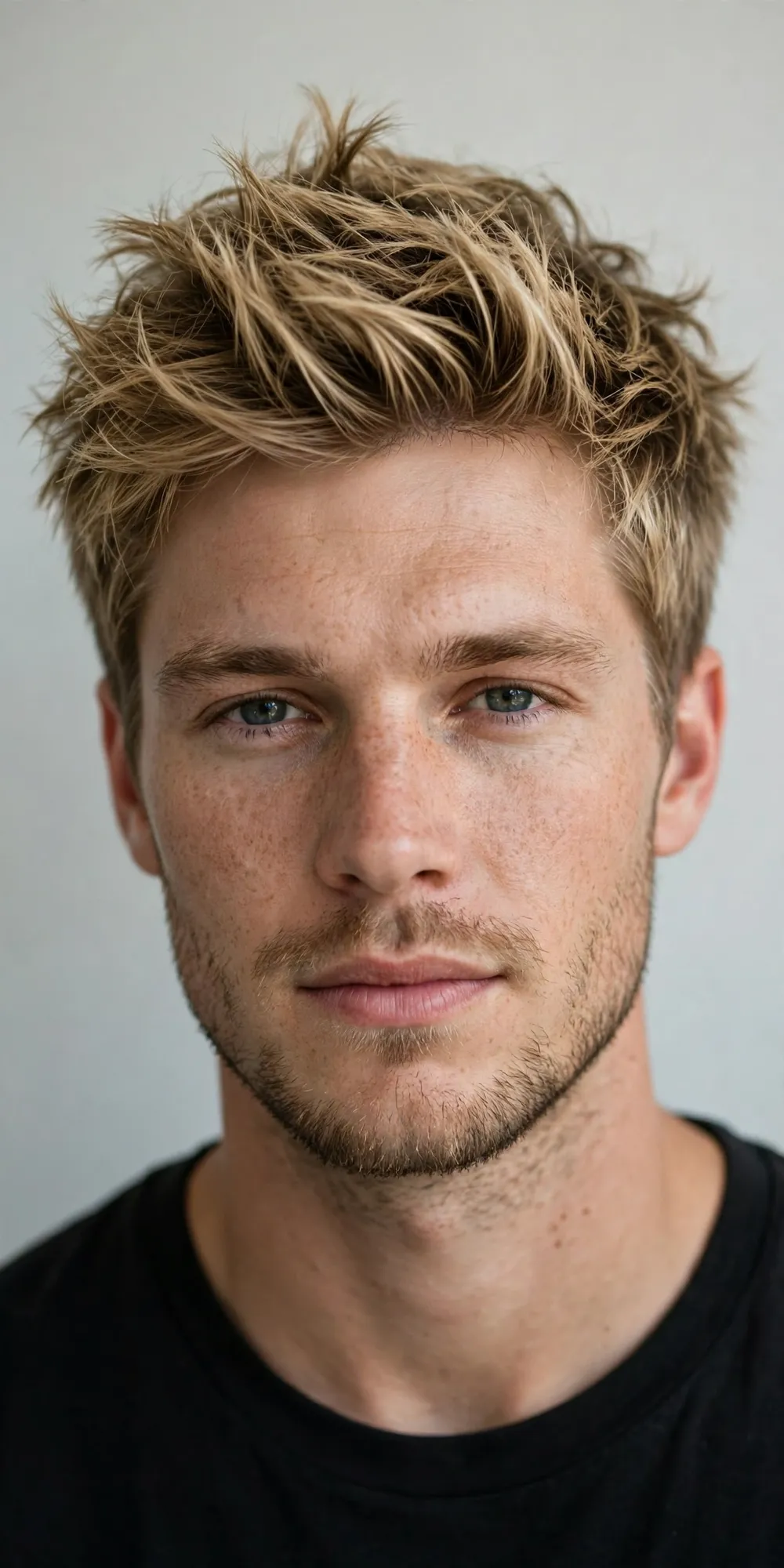
11. Messy Quiff
The messy quiff is what you get when you style a quiff with your fingers instead of a comb — tousled, relaxed, and deliberately imperfect. The top is lifted, but the pieces fall where they want, which gives it a casual confidence that reads effortless even though it isn’t. Ask for 4–5 inches on top with light layering and a low fade or taper on the sides. Wavy hair is the natural partner here, since the waves do half the work, but straight hair gets there with a bit of sea salt spray. It’s a good match for oval and heart-shaped faces and for anyone who hates standing in front of a mirror. Style with sea salt spray on damp hair, rough-dry it, then finish with a pinch of matte paste. It hides regrowth well, so 4 weeks between cuts is fine.
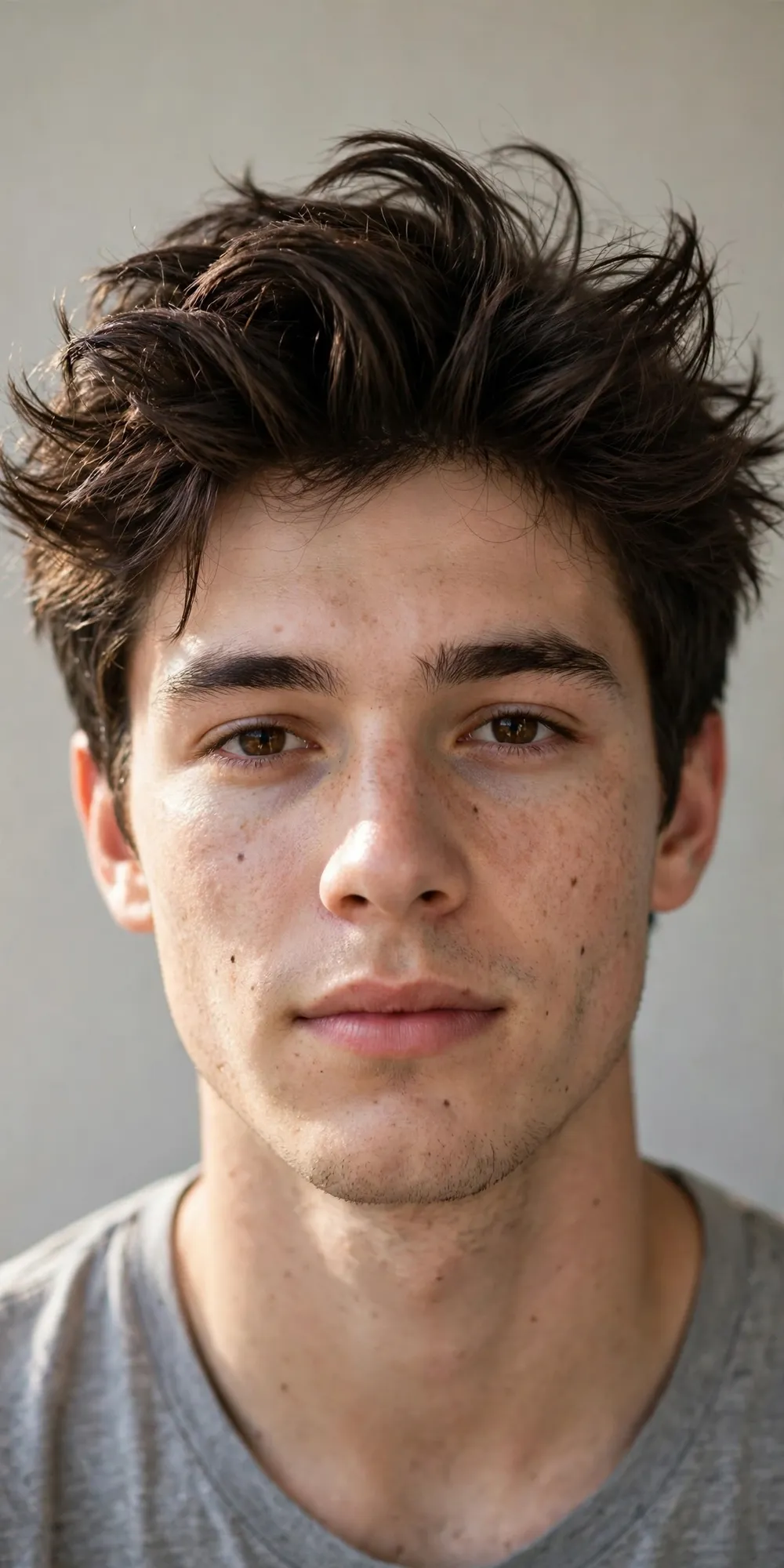
12. Short Quiff
Short doesn’t mean shapeless. The short quiff haircut keeps the top to about 2–3 inches — just enough to lift the front — while the sides stay tight, which makes it one of the easiest quiffs to live with. It’s the right call for men with busy mornings, for active lifestyles, and for anyone who finds longer hair a chore. Ask for 2–3 inches on top with a low taper or mid fade. It suits straight and wavy hair and works on round and square faces, adding a little height without asking for styling time. A dab of clay on towel-dried hair, pushed up and back with your fingers, is the whole routine — under a minute. The sides need attention every 2–3 weeks, but the top is so short that the shape barely changes between cuts.

13. Long Quiff
The long quiff is drama with a comb. With 5–7 inches on top, the front rises high and sweeps back in a flowing wave — the closest thing to a rock-star quiff most men will ever wear. Thick hair carries it best; fine hair can get there with volumising mousse and a strong blow-dry, but it’s harder work. It suits oval and oblong faces, where the height is a feature, and it’s a genuine statement piece for a night out. Ask for 5–7 inches on top with a taper or low fade, keeping enough weight in the sides to balance the top. Blow-drying is non-negotiable: lift the roots with a round brush, set with a strong-hold paste, and finish with a light mist of hairspray. Expect to spend ten minutes on it and trim every 3–4 weeks.
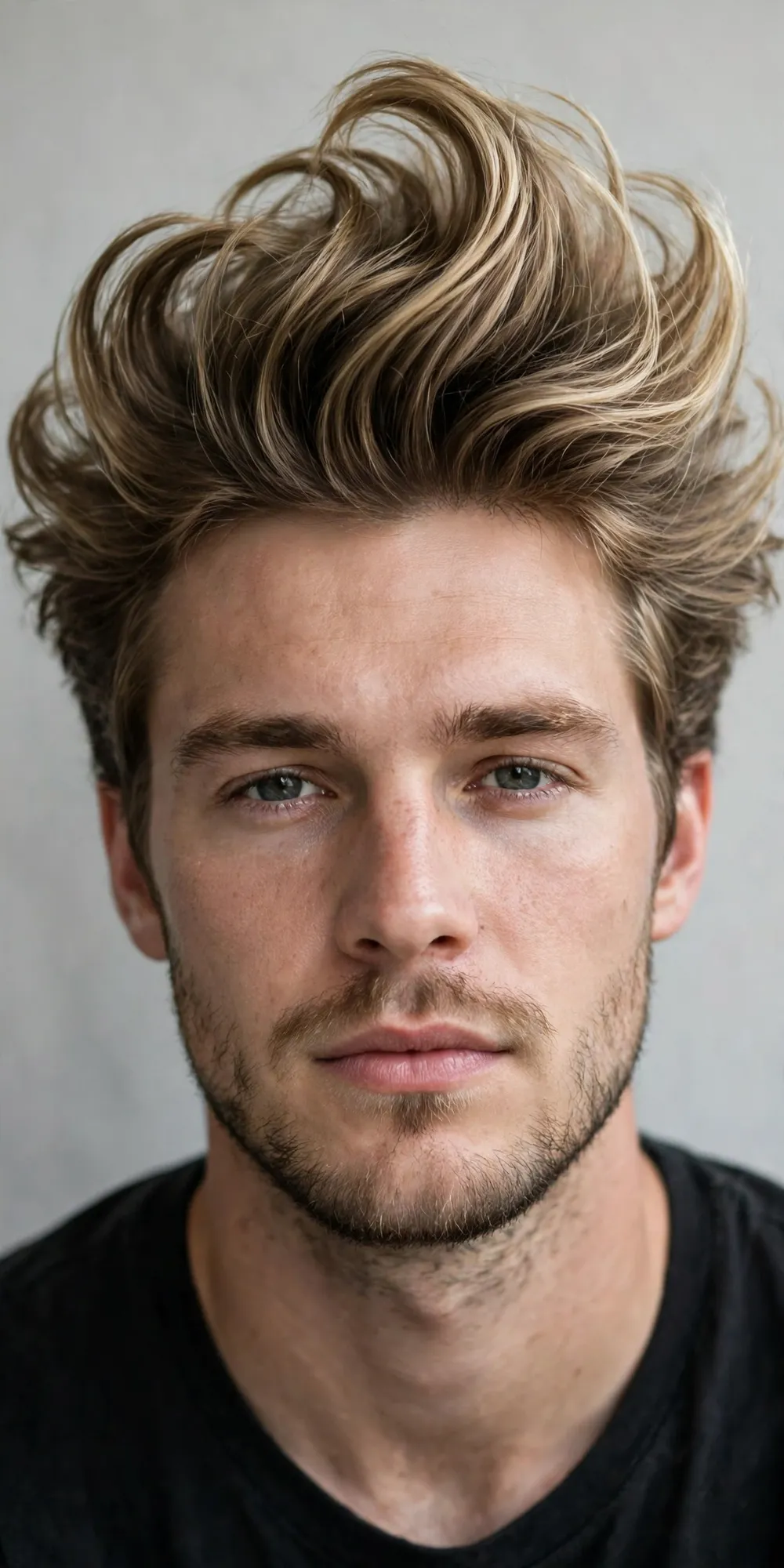
14. Medium Quiff
The medium quiff is the sweet spot most men end up staying with. At 3–4 inches on top, it’s long enough to show real lift but short enough that styling takes minutes, not a ceremony. It adapts to almost any situation — tidy it up for a meeting, rough it up for the weekend. Ask for 3–4 inches on top with a taper or mid fade on the sides. Straight, wavy and even slightly curly hair all work here, and it suits every face shape, which is why barbers recommend it so often to men trying a quiff for the first time. Style with a styling cream for a natural look or matte clay for more definition, blow-drying the front up for a couple of minutes if you want extra height. Trims every 3–4 weeks keep the shape; the grow-out is kind.

15. Soft Quiff
Not every quiff has to fight gravity. The soft quiff bends gently back from the forehead in a relaxed curve, with no sharp lift and no stiff hold — more of a suggestion than a statement. It’s a lovely choice for older men, for men with fine hair, and for anyone who wants the shape of a quiff without the styling effort. Ask for 3–4 inches on top with a scissor taper and minimal layering, so the hair falls naturally. It suits straight and wavy hair and flatters round and oval faces. A light styling cream is all you need; comb it back while damp and let it dry. There’s almost nothing to maintain — it looks good even a little grown out — so 4–5 weeks between trims is realistic.

16. Loose Quiff
The loose quiff lets the hair do what it wants — long, airy, and full of natural movement. The top sits at 4–6 inches and is lifted just enough to show the shape, but the strands stay separate and free rather than locked together. Wavy and thick hair is the natural fit, since the movement comes from the texture itself, and it suits oval and heart-shaped faces well. Ask for 4–6 inches on top with long layers and a low taper on the sides, keeping weight out of the ends so the hair moves. Style it with sea salt spray on damp hair and let it air-dry, or rough-dry it with your hands for a little more control. Skip heavy products — they kill the airiness. It’s low-effort by design, and it handles 4 weeks between cuts without complaint.

17. Spiky Quiff
The spiky quiff takes the front of the quiff and breaks it into defined points, giving a sharper, more energetic version of the style. The top is lifted and separated into spikes rather than swept into a smooth wave, which makes it a good pick for younger men and for anyone who likes a bit of edge. Ask for 3–4 inches on top with choppy layers and a mid or high fade on the sides. Thick, straight hair holds the spikes best; fine hair needs a strong-hold paste and a bit of patience. Use a fibre or paste with a firm hold, pinch the front into spikes with your fingertips, and don’t overdo the product — too much and it clumps. It needs a trim every 3 weeks to keep the spikes from flopping, and it suits square and oval faces.

18. Slick Back Quiff
This is the vintage showpiece. The slick back quiff sweeps the whole top back with a polished sheen, blending the classic quiff’s lift with the old-school slick-back’s shine. It’s the style for weddings, formal events, and men who like their hair to look finished. Ask for 4–5 inches on top with a scissor taper or low fade on the sides, and keep the sides long enough to comb back too. Straight, thick hair is ideal; wavy hair can work if you blow-dry it straight first. Pomade is the product here — a medium-hold one for a natural shine, or high-shine for the full vintage effect. Comb the top back while damp, then let it set. It holds well all day but needs a proper wash at night, and trims every 3 weeks keep the shape neat.
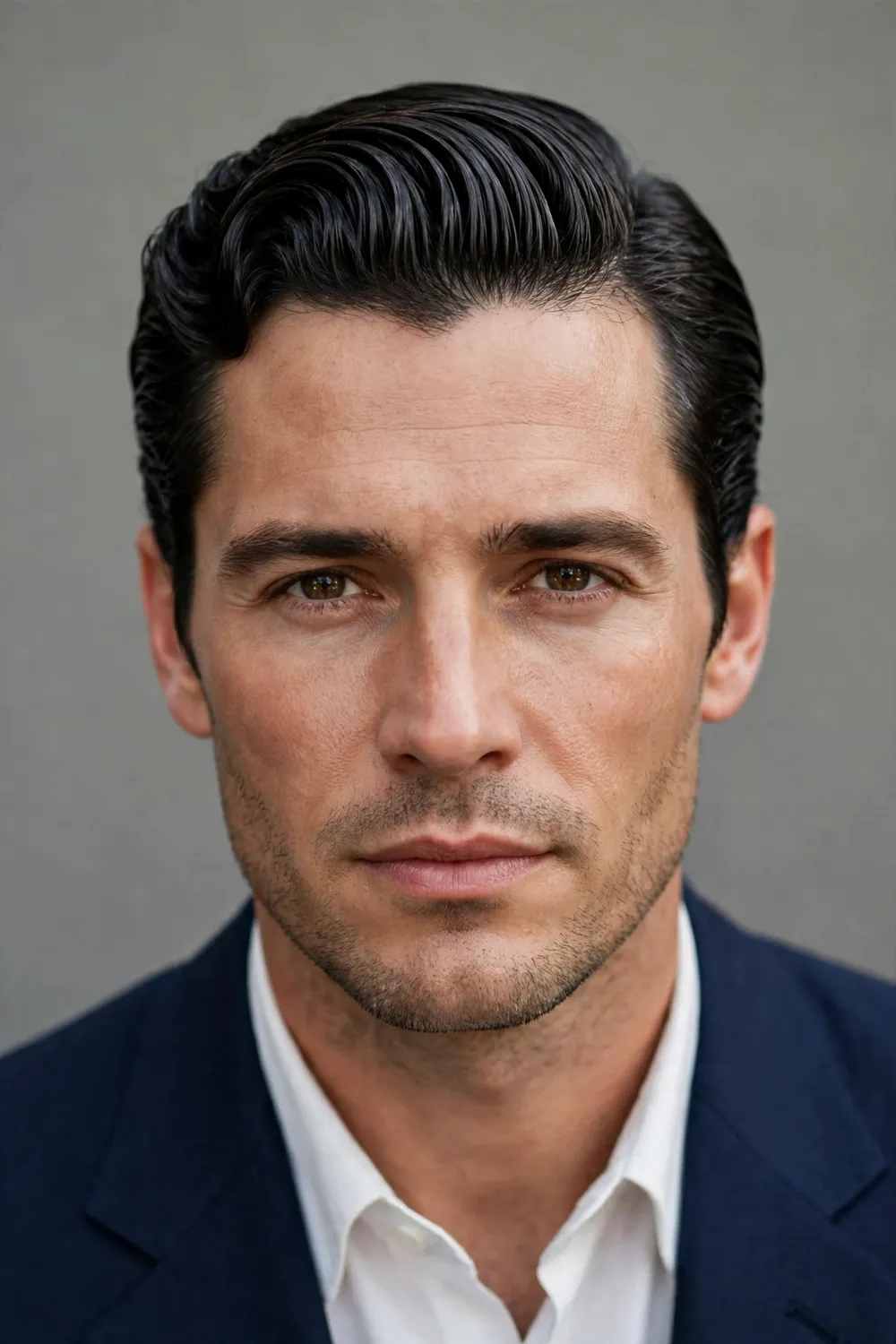
19. Side Part Quiff
The side part quiff combines a defined part with volume that rises to one side, giving a smart, structured look that still has personality. It’s a favourite in offices and at formal events because it looks deliberate from every angle. Ask for 4–5 inches on top with a clear side part (the barber can cut it in or you can comb it) and a taper or low fade on the sides. Straight hair shows the part most cleanly, and it suits square and oval faces beautifully. Style with a comb and a medium-hold pomade or cream: part the hair while damp, lift the top section up and across, and smooth the sides. It takes five minutes and holds all day. Trim every 3–4 weeks to keep the part visible and the sides tidy.
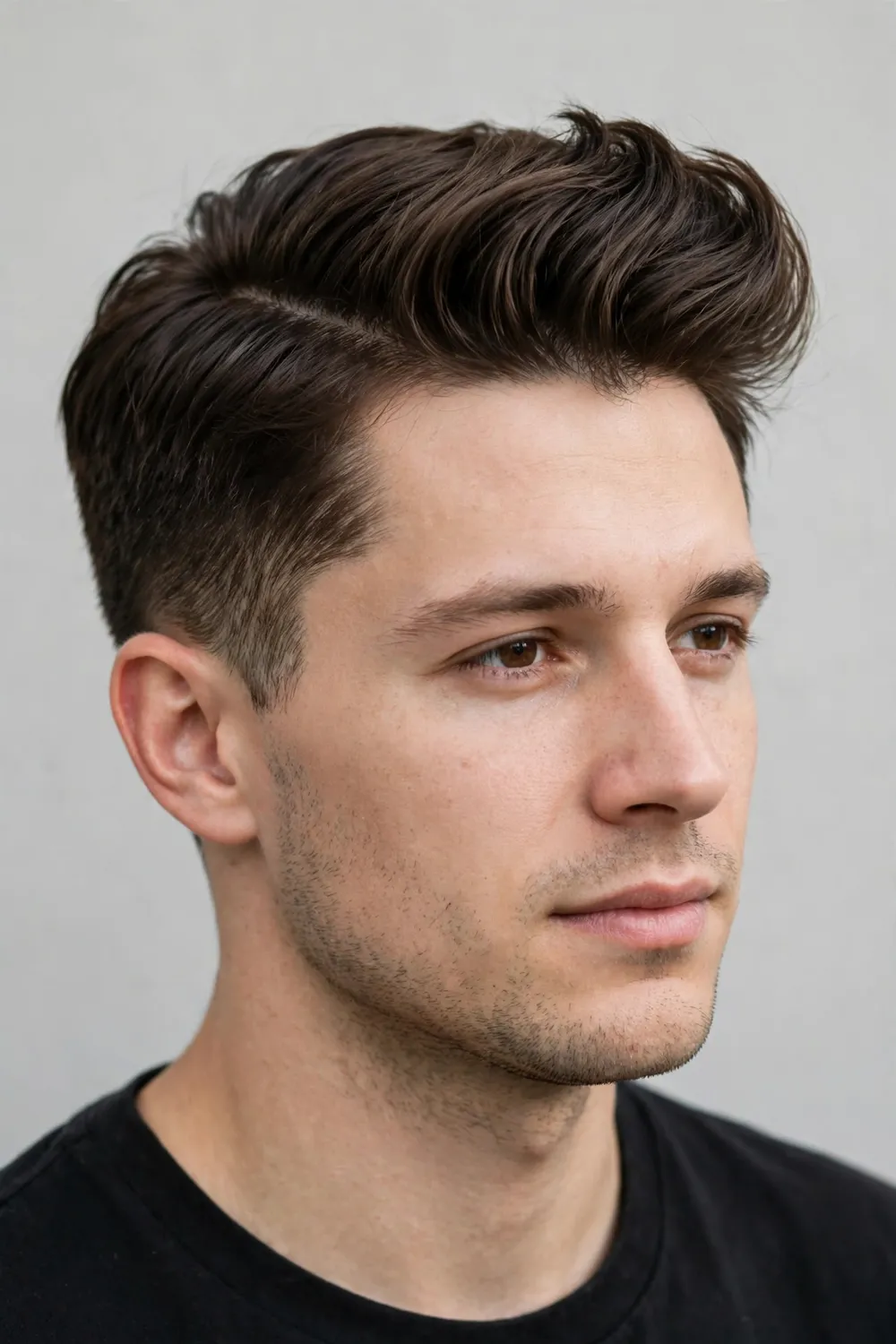
20. Hard Part Quiff
The hard part quiff takes the side part and carves it in with a razor, creating a sharp line that separates the lifted top from the sides with military precision. It’s a bold, high-contrast look — the part line itself becomes a design feature. Ask for 4–5 inches on top with a razor-shaved part and a fade or taper on the sides. It suits straight hair best, since the line reads cleanest, and works on square and oval faces. Styling is the same as a side part quiff: comb, pomade, lift the top. The catch is upkeep — the razor line grows out in about a week, so you’ll want a line-up every 1–2 weeks if you want it to stay crisp. If you’re not ready for that commitment, a regular side part is the safer bet.
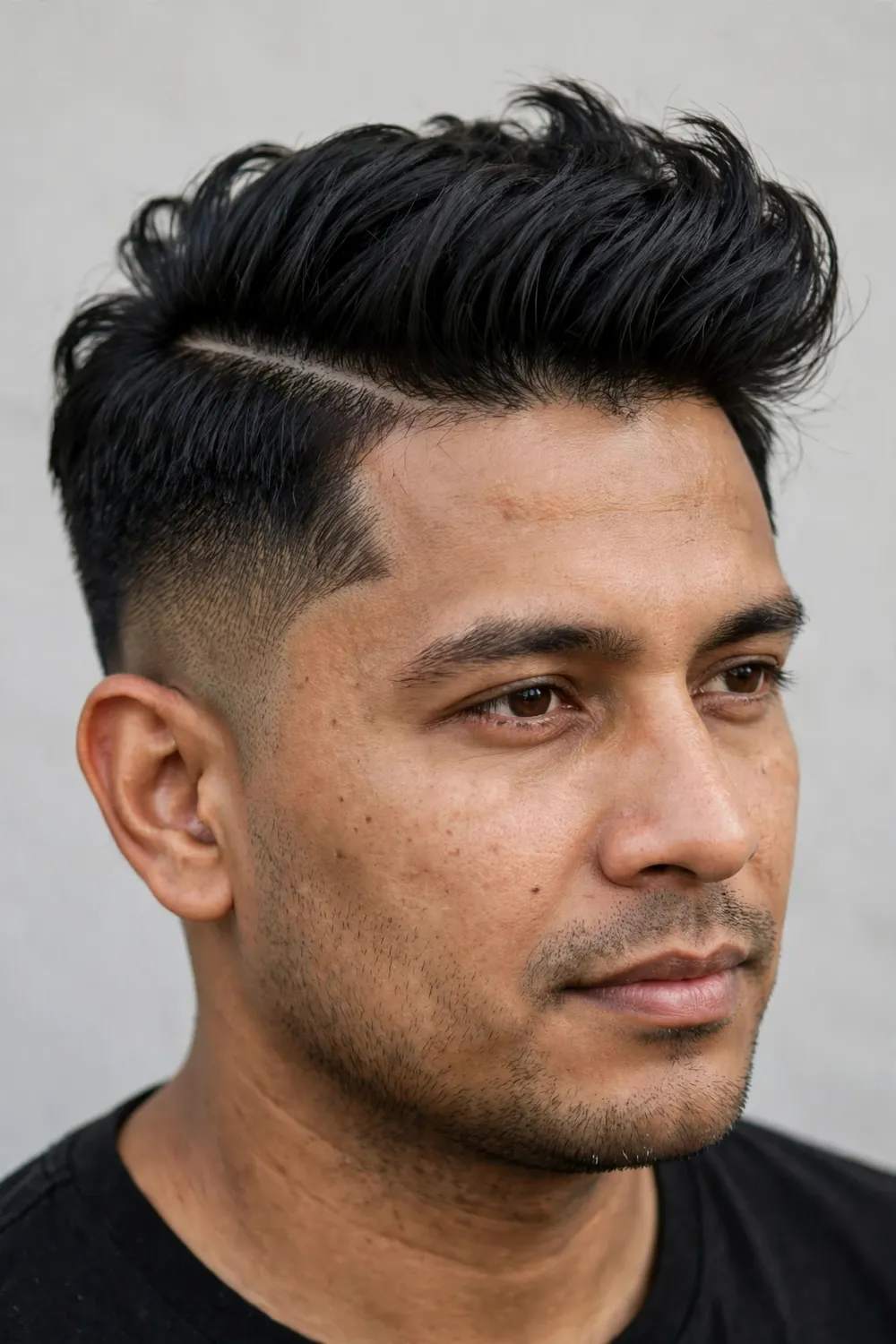
21. Curly Quiff
Curly hair doesn’t need to be fought into a quiff — the curls do the lifting for free. The curly quiff keeps the top at 3–5 inches so the curls pile up and forward, with tapered or faded sides that stop the shape from spreading sideways. It’s one of the most natural-looking quiffs, and it suits men who’ve been told their hair is “too curly” for styled cuts. Ask for 3–5 inches on top with a low fade or taper, and make sure your barber cuts curls dry or with minimal tension — wet curls shrink and the length surprises everyone. Style with a curl cream on damp hair, scrunch the front up, and let it dry. No blow-dryer needed. Trims every 3–4 weeks keep the sides from ballooning.
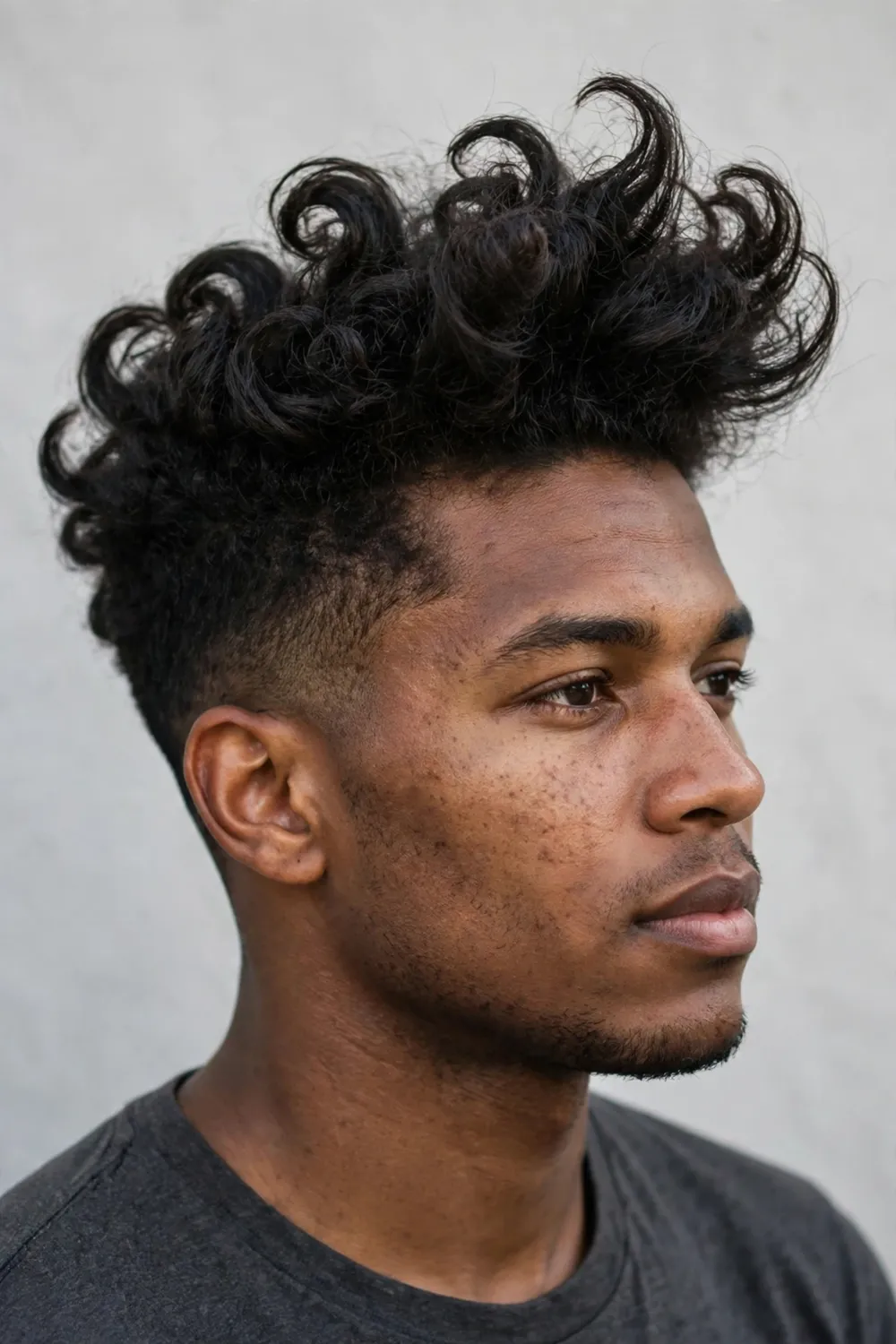
22. Wavy Quiff
Wavy hair is the quiff’s best friend. The waves add natural texture and movement that straight hair has to fake with product, so the wavy quiff looks effortlessly full. Ask for 4–5 inches on top with a low taper or mid fade, and keep the layers long enough that the waves can form — cutting too short kills the wave. It suits almost every face shape and is especially good on oval and heart-shaped faces. Style with sea salt spray or a light styling cream on damp hair, lift the front with your fingers, and let it air-dry. Avoid heavy pomades; they flatten waves. Maintenance is easy: 4 weeks between trims, and it looks good a little grown out because the waves disguise the length.
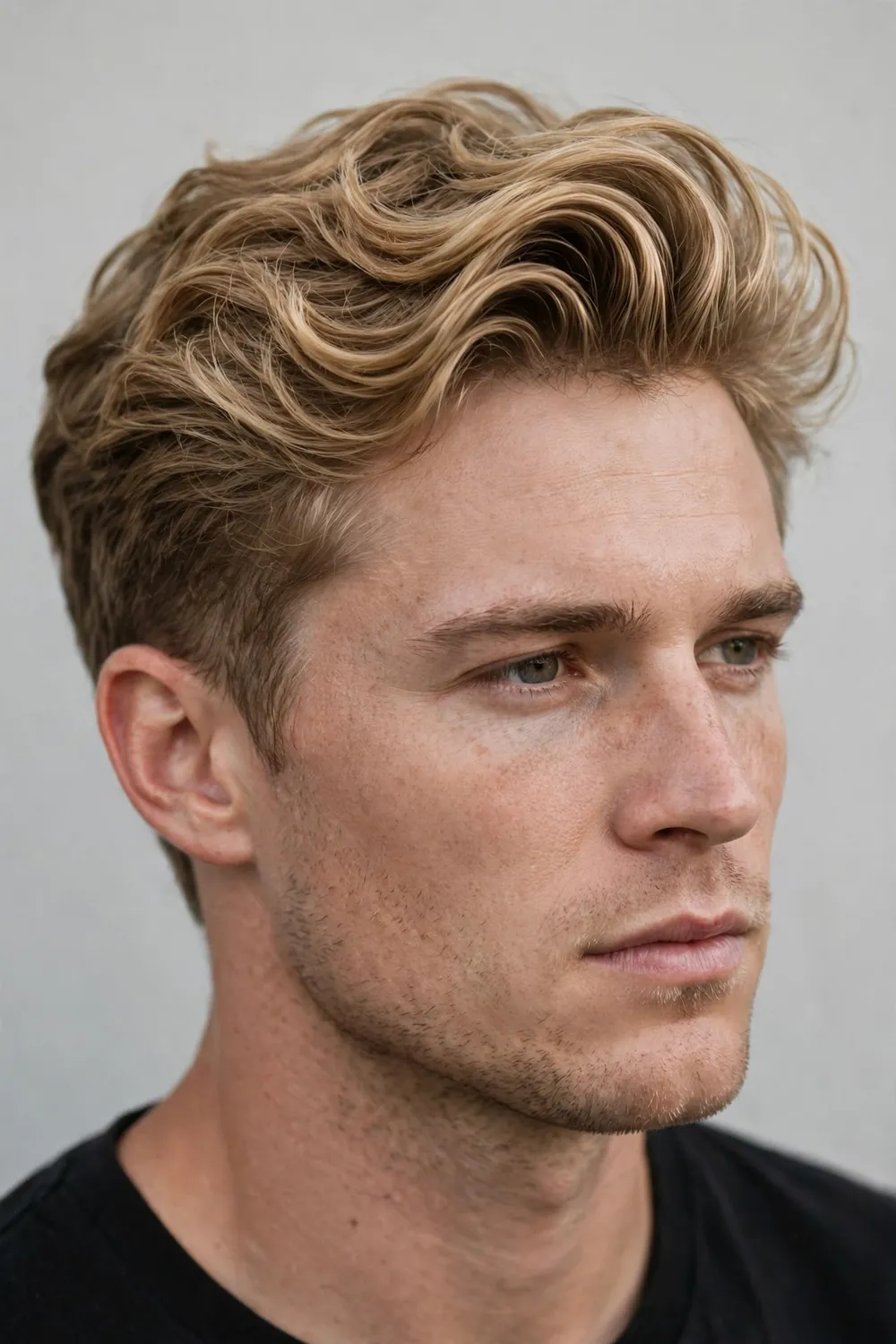
23. Thick Hair Quiff
Thick hair and quiffs were made for each other — the density gives you height that fine hair can only dream of. The trick is thinning: without it, a thick hair quiff turns into a helmet. Ask for 4–6 inches on top with internal thinning (thinning shears through the bulk, not the ends) and a taper or low fade on the sides. It suits every face shape, and the volume actually helps balance a longer face. Style with a matte clay — the hold needs to be strong enough to control the weight — and blow-dry the roots upward for maximum lift. Use a light hand with product; thick hair needs less than you think, and too much makes it look greasy. Trim every 3–4 weeks to keep the bulk in check, and ask your barber to thin it again at every visit.
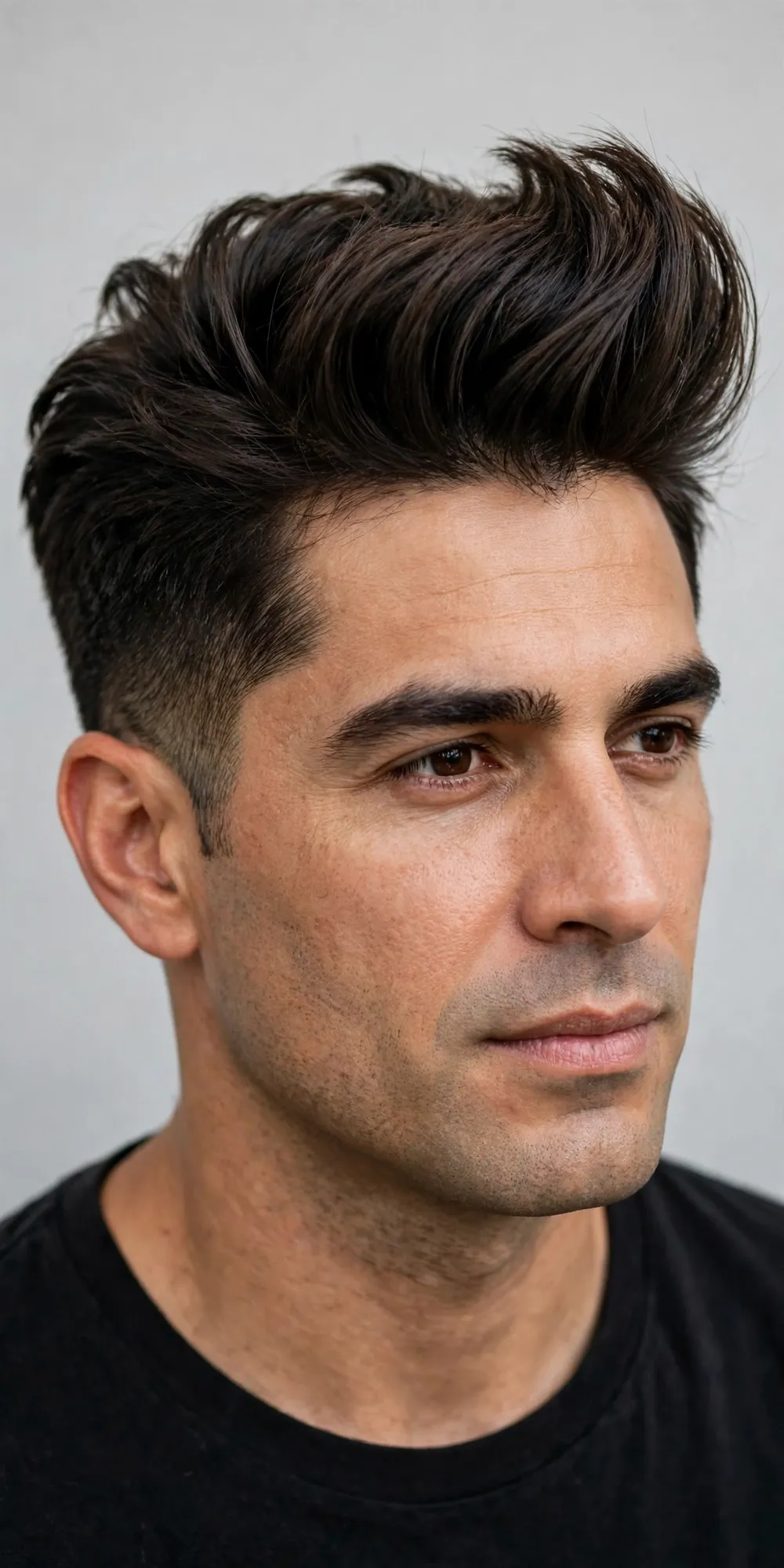
24. Fine Hair Quiff
Fine hair can absolutely wear a quiff — it just needs a different playbook. The fine hair quiff keeps the top shorter, around 2–3 inches, so there’s less weight pulling the lift down, and uses root lift and volumising products to create height that the hair can’t manage alone. Ask for 2–3 inches on top with a low taper and point-cut texture to add the illusion of thickness. It suits oval and square faces and men who’ve always assumed a quiff wasn’t for them. Blow-dry the roots upward with a volumising mousse, then finish with a light matte powder or clay — heavy products will flatten fine hair in minutes. Wash with a volumising shampoo and avoid conditioner on the roots. Trim every 3 weeks to keep the shape light.
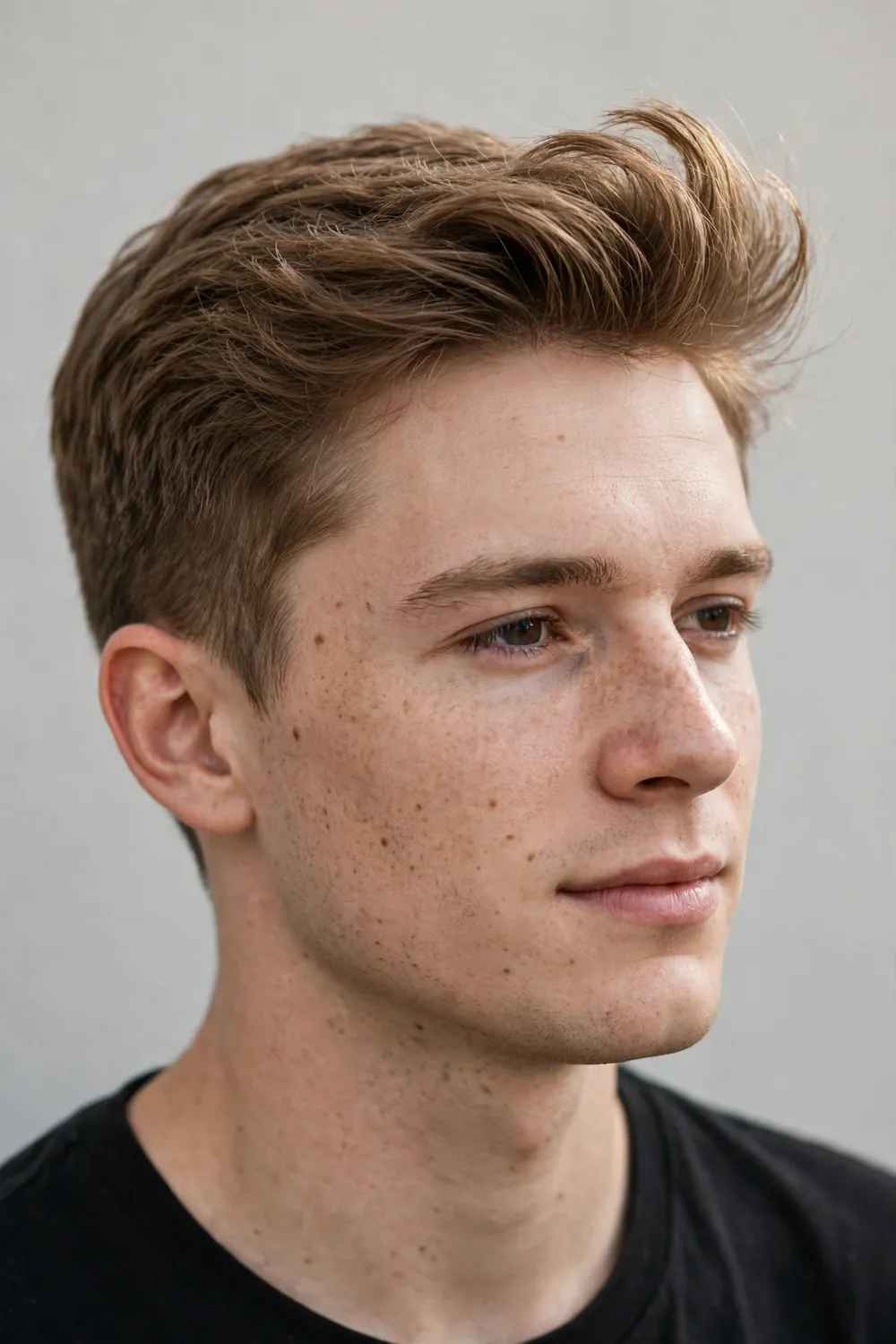
25. Pompadour Quiff
The pompadour quiff is the tallest style in this list — a hybrid that takes the pompadour’s dramatic height and gives it the quiff’s texture. The front rises high and sweeps back in a big wave, so it reads as a statement wherever you wear it. Thick, straight hair is the ideal base; fine hair can manage it with mousse and a strong blow-dry, but it’s a commitment. Ask for 5–7 inches on top with a taper or low fade, and keep the sides short enough to make the height the focus. Blow-dry with a round brush, lifting the front section up and back, then set it with a strong-hold pomade. This is a ten-minute style, not a two-minute one, and it needs a trim every 3 weeks to keep the proportions right. It suits oval and oblong faces best.
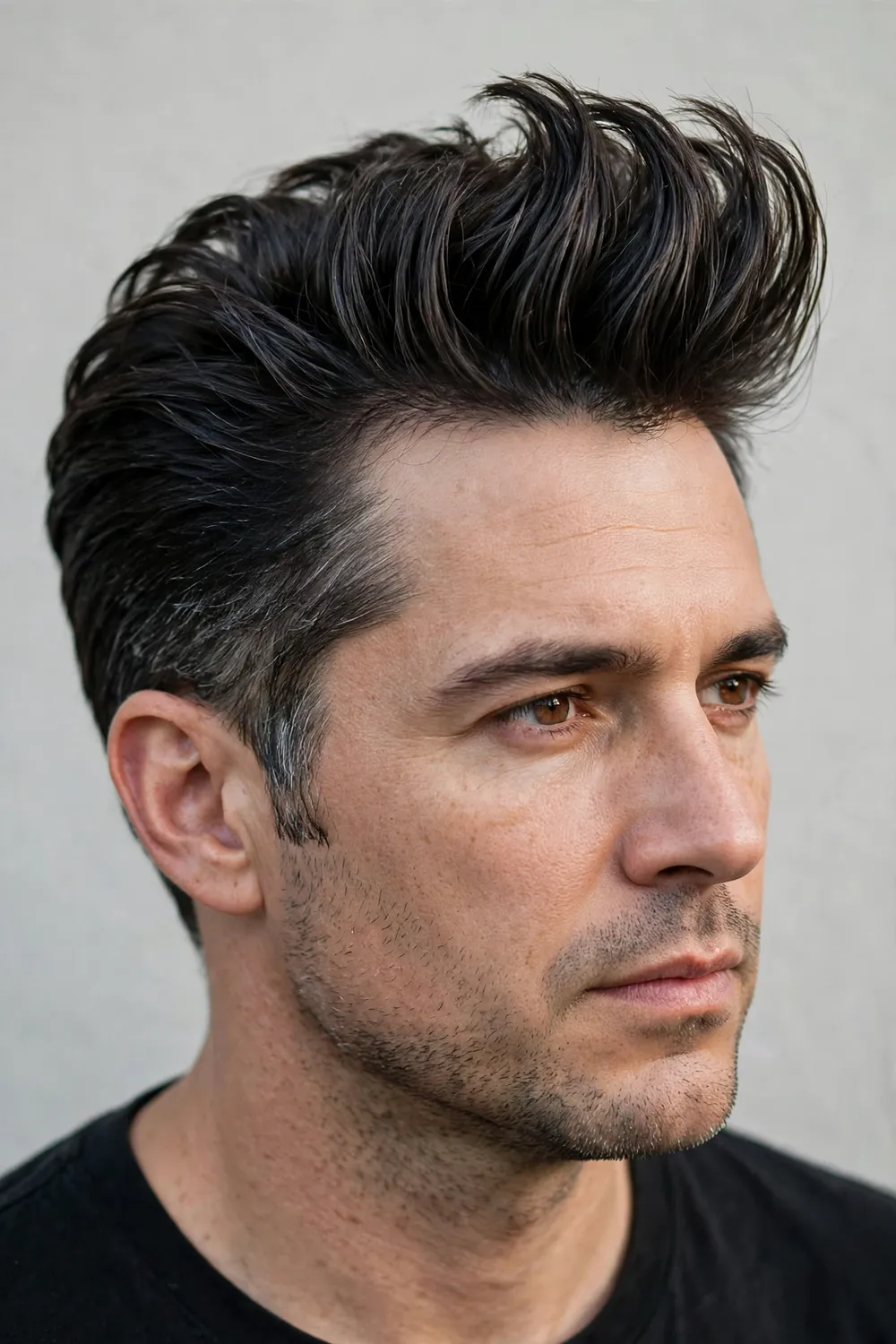
26. Quiff Undercut
The undercut version disconnects the top from the sides entirely — the sides are clipped short with no blend, so the lifted top stands out like a crown. It’s a sharp, modern look that suits men who like contrast and don’t mind the upkeep that comes with it. Ask for 4–6 inches on top with an undercut on the sides, clipped to a #1 or #2, and a clean, disconnected line at the temple. It works best on straight, thick hair and suits square and oval faces. Style with a strong-hold matte clay, blow-drying the top up and back for height. The disconnect grows out fast — within two weeks the line softens — so plan on a barber visit every 2 weeks if you want it to stay sharp. Pair it with a beard for extra balance.
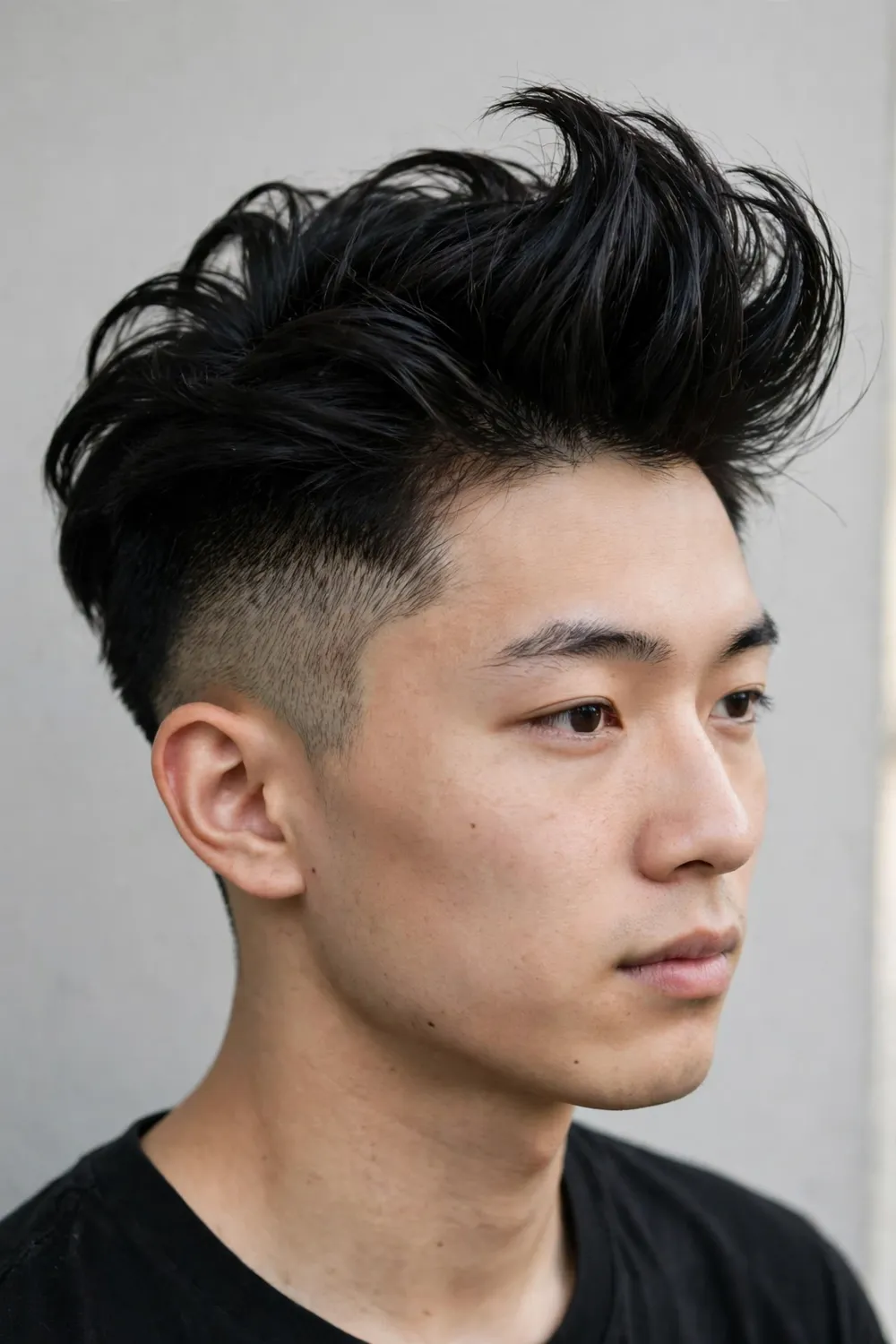
27. Quiff Fade
The quiff fade is the classic blended fade with a lifted top — the version most men mean when they say “quiff” at the barber. The fade is smooth and gradual, the top is full and lifted, and the whole thing looks clean from every angle. Ask for 4–5 inches on top with a mid fade blended to a #1 at the bottom. It suits straight and wavy hair, and it works on nearly every face shape, which is why it’s one of the most requested quiff haircut styles in barbershops. Style with a matte clay or styling cream, blow-drying the front up and back for a couple of minutes. If you’re weighing a fade against a shorter, lower-maintenance cut, our short haircuts for men guide covers the alternatives. The fade needs a refresh every 2–3 weeks, but the top is forgiving.
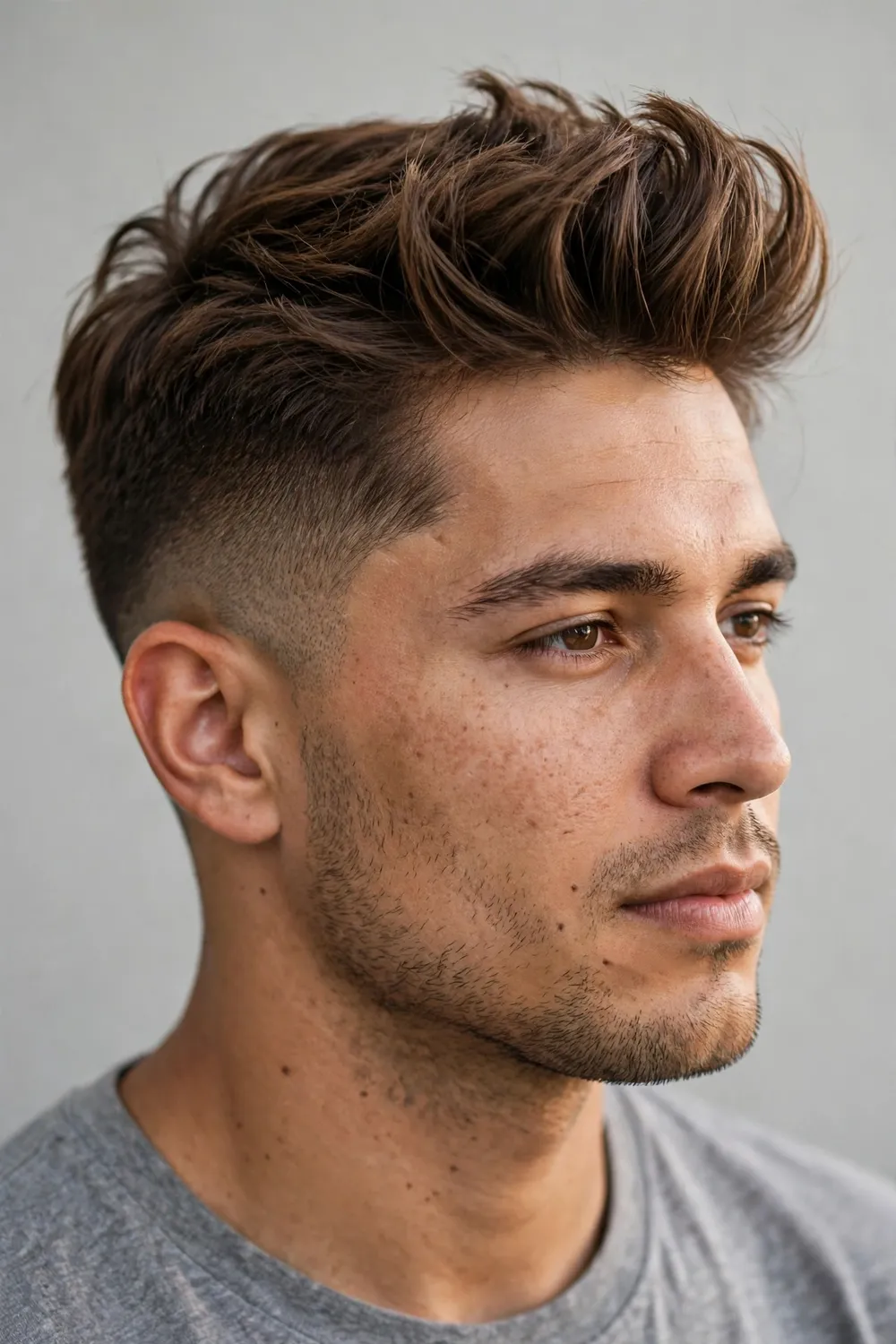
28. Quiff Mullet
The quiff mullet is the wildcard — a lifted quiff at the front with a longer, textured back that flows past the collar. It sounds like a joke until you see it done well: the front gives you the polish, the back gives you the personality, and the combination turns heads. Ask for 4–5 inches on top with the back left long and textured, and a taper or low fade on the sides to keep the front and back connected. It suits thick, wavy hair best, and it works on oval and square faces. Style the front like a regular quiff with matte clay, and let the back do its own thing with a little sea salt spray. It’s a high-commitment style — the back needs shaping every 3–4 weeks — but it’s the most fun quiff on this list.
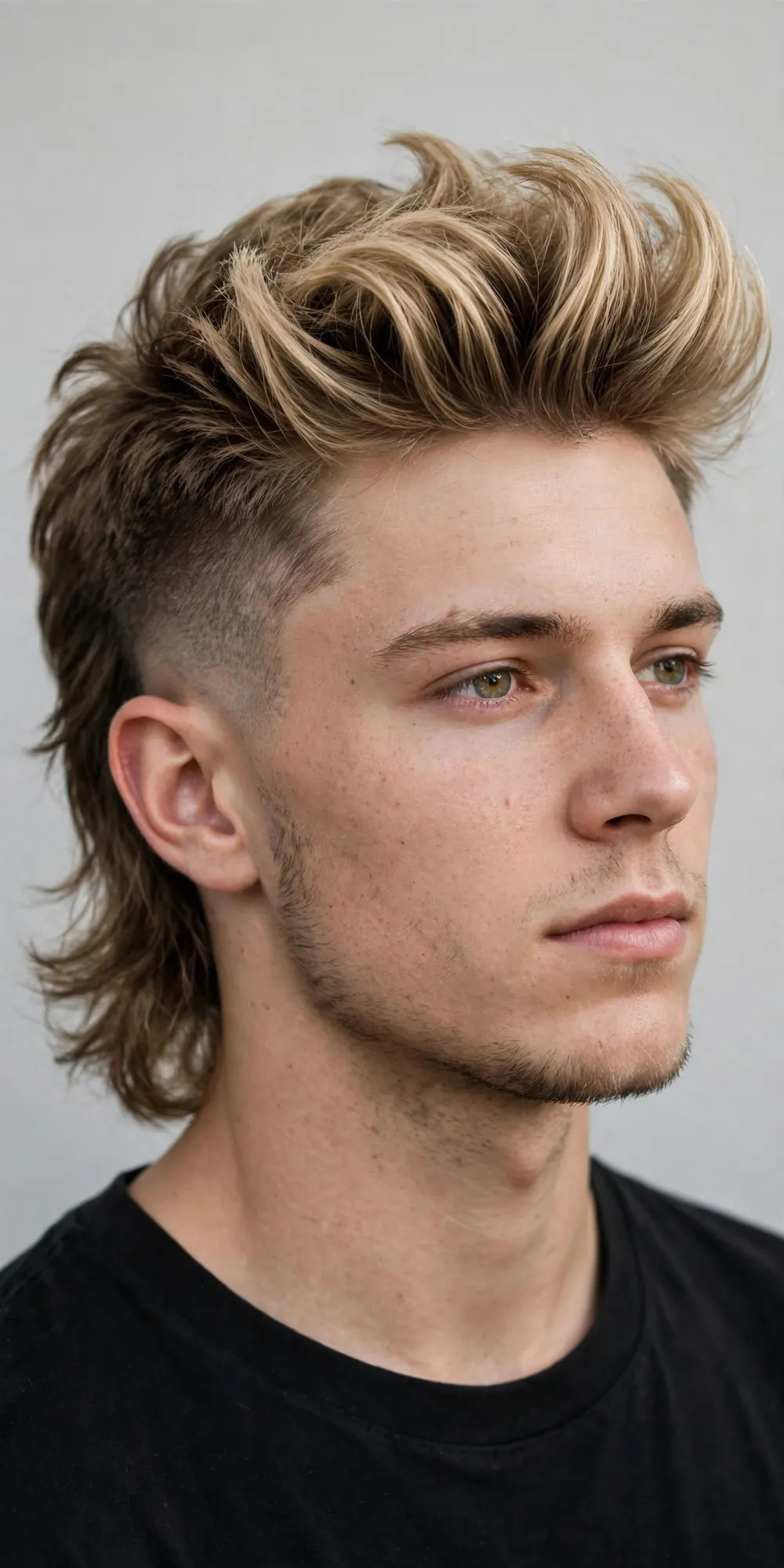
29. Rockabilly Quiff
This is the quiff that started it all — the high, rolled front Elvis made famous, polished to a shine with slicked-back sides. The front rolls up and over in a tight wave, sometimes a full inch or two high, while the sides stay flat and controlled. It suits straight or slightly wavy hair best, and works particularly well on oval and rectangular faces, where the height balances the jawline. Ask your barber for 4–5 inches on top with the front left longest, tapered or scissor-cut sides kept neat but not skin-faded, and a clean neckline. Style it with a strong-hold pomade, combing the front up and back in one smooth roll. It is a high-maintenance look — expect ten minutes with a comb and a mirror each morning — but for a themed night out, a wedding with a vintage edge, or anyone who genuinely loves the era, nothing else comes close.
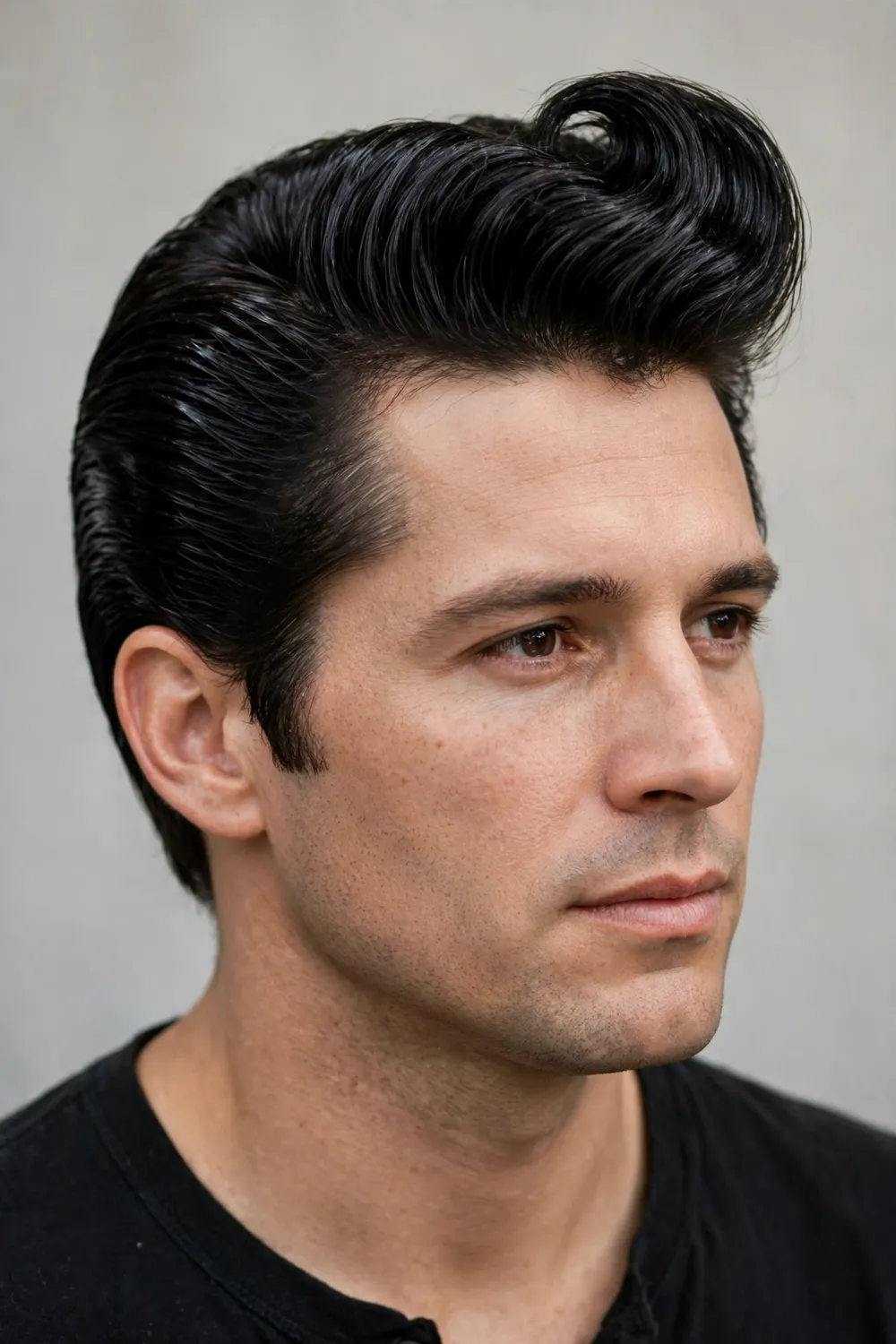
30. Forward Quiff
The forward quiff flips the usual direction: instead of sweeping everything up and back, the top is pushed forward first and then lifted, so the front edge sits a little over the forehead. The result reads casual and modern, closer to a textured fringe than a classic quiff. It suits men with straight or wavy hair who find the traditional backward sweep looks too formal on them, and it flatters round faces because the lifted front adds height without exposing the forehead. Ask for 3–4 inches on top with choppy texture cut in, and a mid or low taper on the sides. Blow-dry forward with a vent brush, then work a matte paste through with your fingers and push the front up. Maintenance is low — it actually looks better slightly undone — and a trim every three weeks keeps the shape.
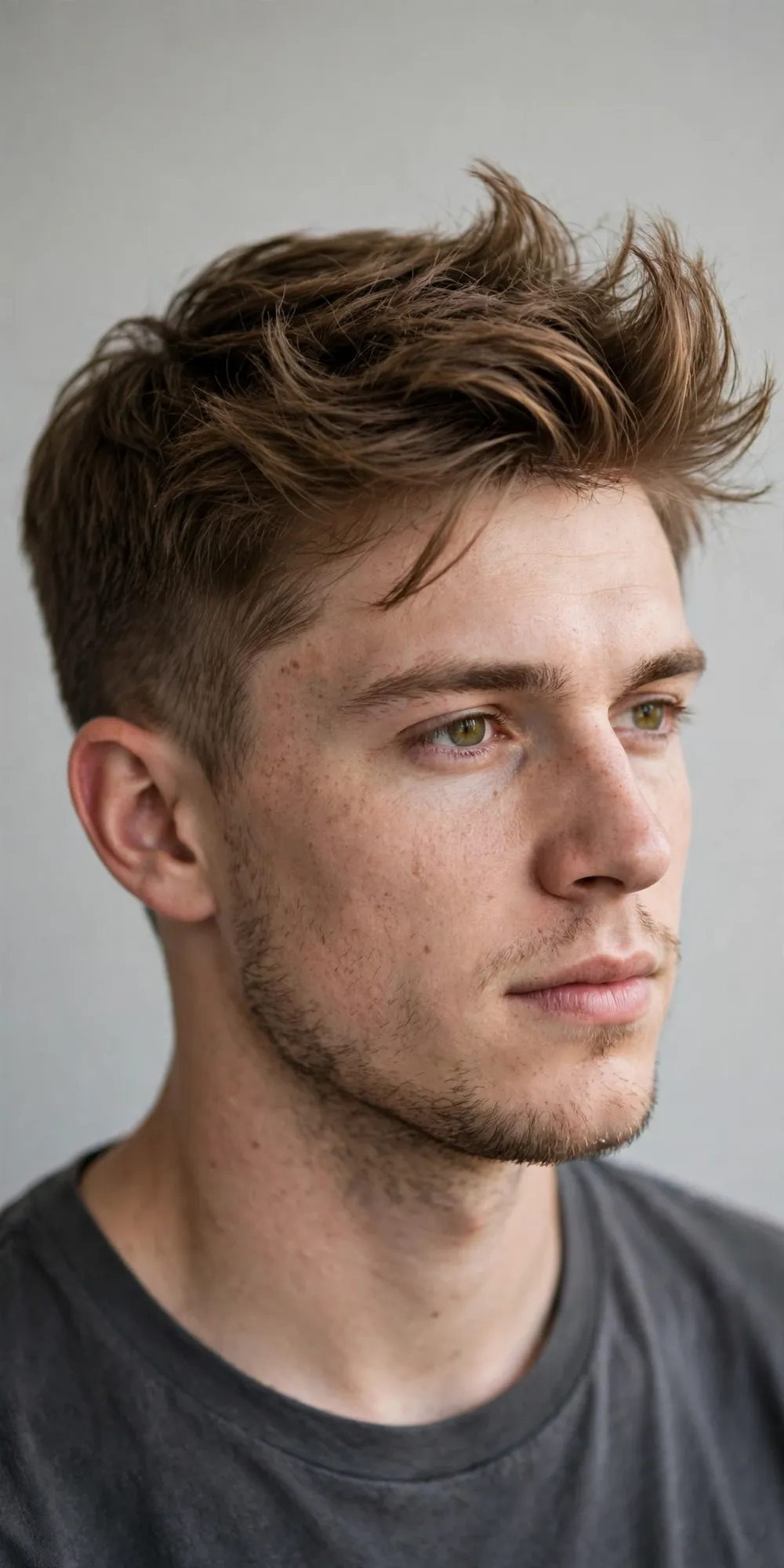
31. Side Swept Quiff
Part classic, part quiff, the side swept version takes the volume of a quiff and combs it diagonally across to one side instead of straight back. It gives you the height at the front without the full pompadour energy, which makes it one of the easiest quiffs to wear every day. It works on straight and wavy hair, suits oval, square and heart-shaped faces, and is a natural fit for men whose hair already falls to one side. Ask for 3–4 inches on top, a natural or slightly defined side part, and tapered sides — a low taper keeps it relaxed, a mid fade sharpens it. Style with a medium-hold cream or light pomade, combing up from the part and letting the front fall to the side. Five minutes, a comb, and you are done. It pairs beautifully with slick back styles if you ever want to switch the same length into a glossier finish.

32. Layered Quiff
The layered quiff is the answer for men whose hair feels too heavy to hold a lift. Strategic layers through the top remove bulk from the inside, so the front goes up with far less product and far less fighting. It suits thick hair especially well, but it also rescues wavy hair that tends to fall flat in one solid block. Oval and oblong faces benefit most from the added height. Ask your barber for 3–4 inches on top with internal layers cut in — not just thinning shears run through the ends, but real layering that lets the hair stack upward — with a taper or low fade on the sides. Blow-dry upward with a round brush, add a pea-sized amount of matte clay, and pinch the front into place. It holds all day on most hair types, and it grows out more gracefully than a blunt-cut quiff because the layers keep moving.

33. Long Textured Quiff
For men who want drama, the long textured quiff keeps 5–6 inches on top and cuts choppy, irregular layers through it, so the lift looks windswept rather than sculpted. It is the quiff for thick or wavy hair — fine hair will struggle to hold this much length up without a lot of product. It suits oval and square faces and men who like their hair to look styled but not overdone. Ask for long, point-cut layers on top with the front longest, and a mid fade or taper so the sides do not compete with the volume above. Styling takes a sea salt spray on damp hair, a rough blow-dry upward, then matte paste worked through in sections. It is not a five-minute cut; budget ten minutes and a trim every three to four weeks. Done right, it is one of the most photographed quiffs around.
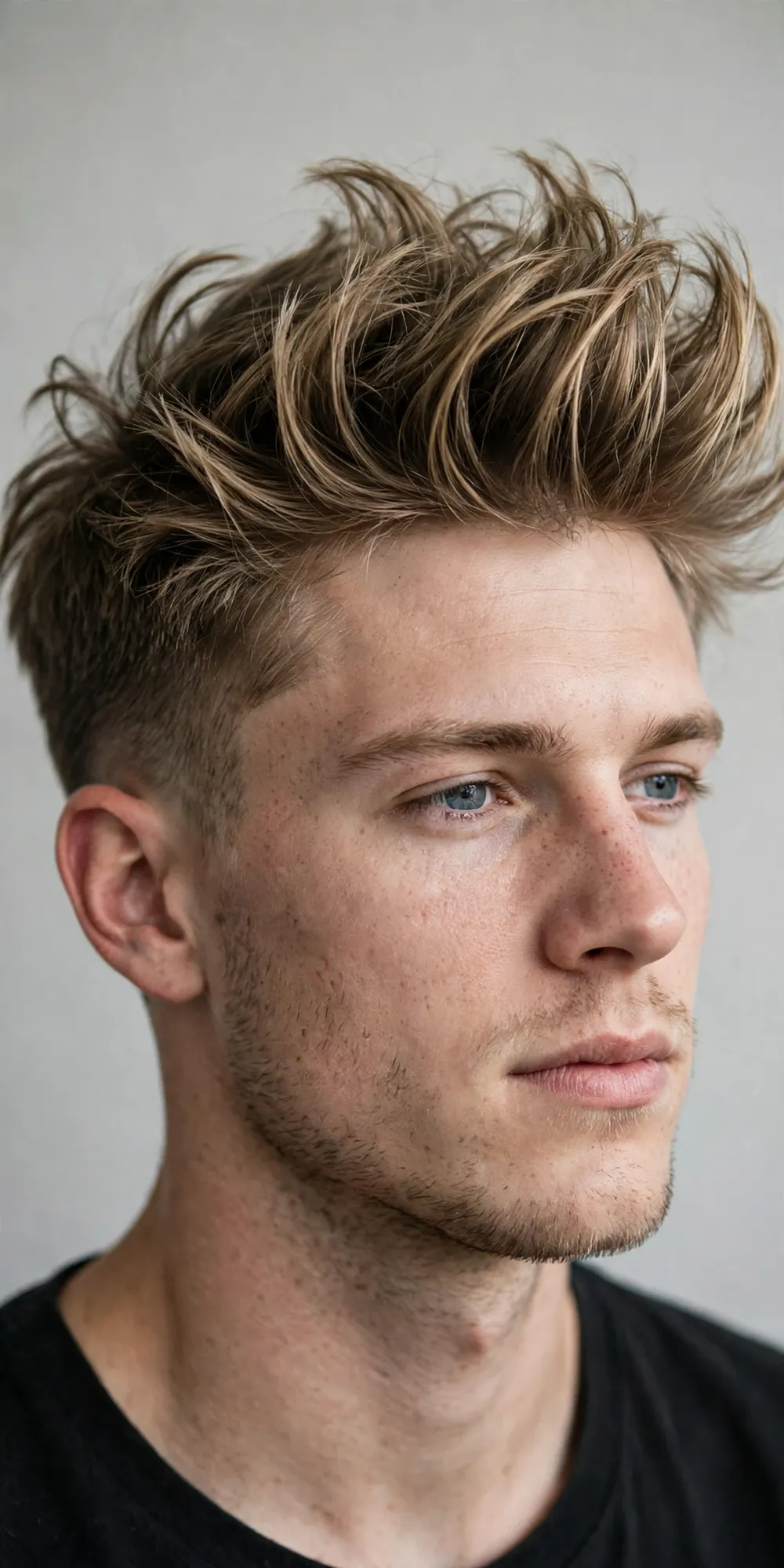
34. Mid Taper Quiff
If you have never had a quiff before, start here. The mid taper quiff is the safest first quiff: a moderate 3-inch top with a gentle taper that blends around the ears and neckline, nothing extreme anywhere. It suits every face shape and almost every hair type, which is exactly why barbers recommend it to first-timers. Ask for 3 inches on top with a little texture at the front, a mid taper on the sides and back, and a natural neckline. Style it with a small amount of matte clay — warm it between your palms, push the front up and slightly back, and you are finished in under three minutes. It grows out cleanly, looks fine on second-day hair, and works in an office as easily as on a night out. Once you are comfortable with it, you can push the height or the fade further next time.
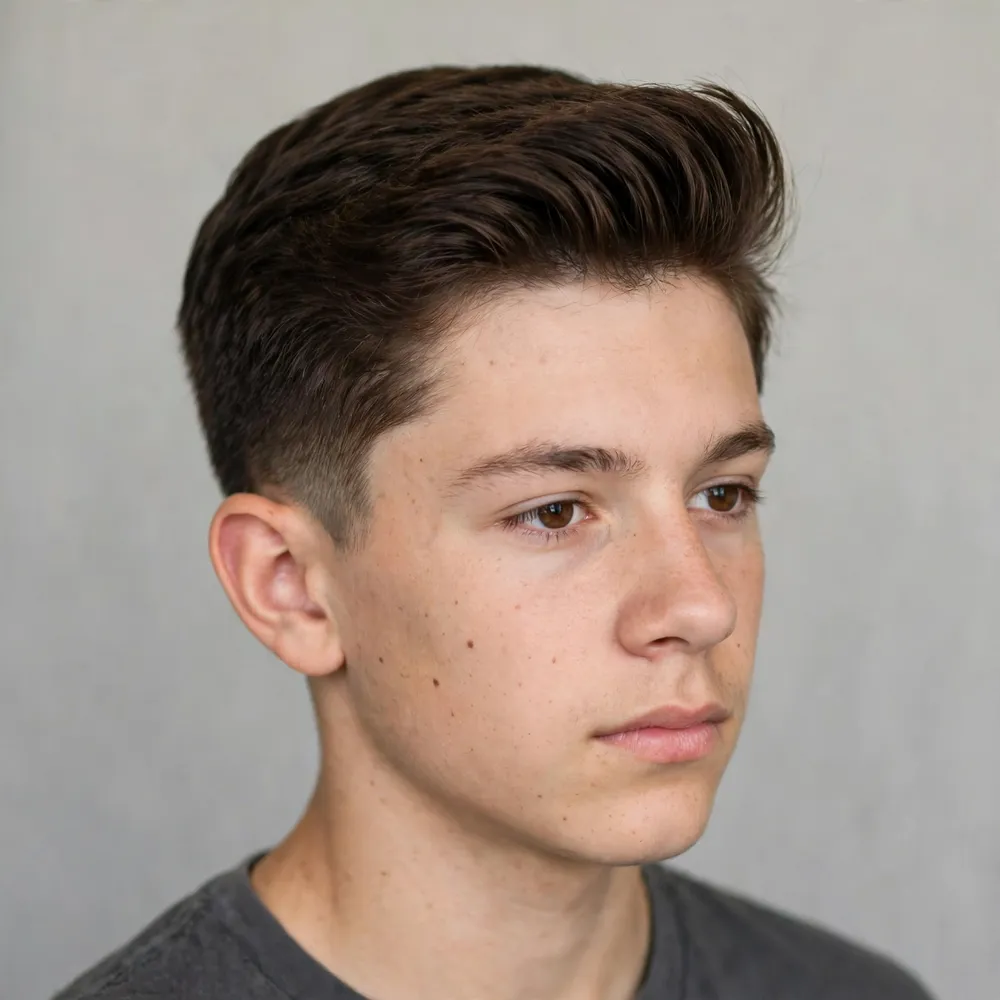
35. Quiff With Beard
A quiff plus a full beard is one of the most balanced combinations in men’s grooming: the height on top and the weight at the jaw frame the face from both ends. It suits men who can grow a decent beard — patchy growth will not give you the same effect — and it works best on square, oval and diamond faces. Ask your barber for your chosen quiff on top, 3–4 inches with a fade or taper, and a beard shaped to match: faded into the sideburns, cheeks lined up clean, length kept even. Keep the beard’s bulk in proportion to the quiff — a very tall quiff with a very long beard can make the face look stretched. Maintenance means beard oil daily, a trim every two weeks, and the same quiff routine up top. Together they read confident and deliberate, which is why this pairing photographs so well.
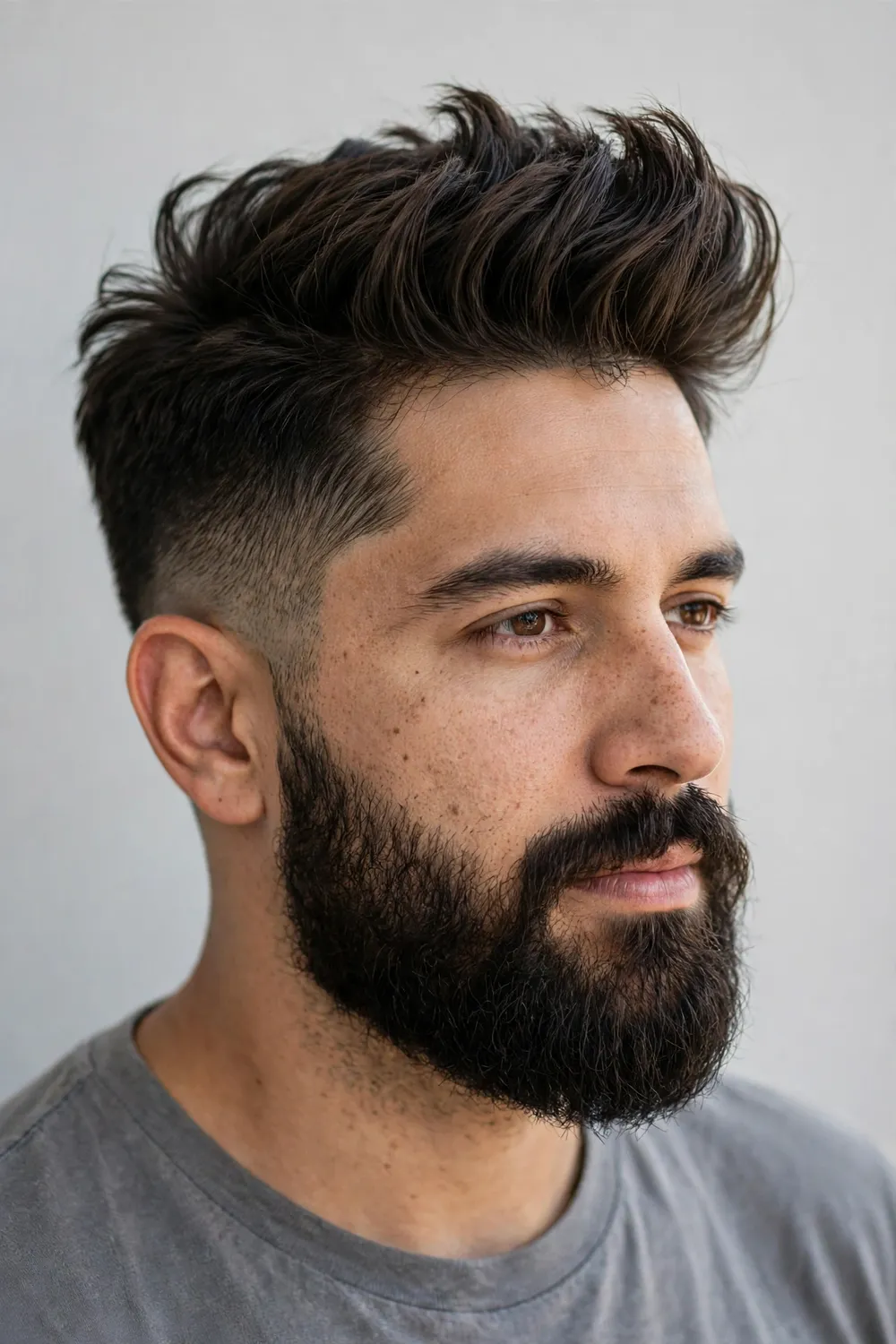
36. Quiff With Line Up
The line up — also called a shape up — is a razor-sharp forehead and temple line that frames the quiff like a picture frame. It turns an ordinary quiff into something crisp and intentional, and it is especially popular with men who have naturally straight hairlines. It suits oval and square faces and works with any fade underneath. Ask for your quiff on top, then a line up across the forehead and temples with a straight razor or trimmer, and a fade of your choice below it. The catch is upkeep: a line up starts to blur within a week, so you will need a touch-up every seven to ten days to keep it looking sharp. Style the quiff as normal — the line up does the talking. Skip this one if your hairline is uneven or receding, as a hard line will draw attention to it.

37. Faux Hawk Quiff
The faux hawk quiff borrows the mohawk’s centre ridge and softens it into something you can actually wear to work. The lift is concentrated along a strip down the middle of the head, with the sides kept short but not shaved. It suits men with straight or wavy hair and oval, round or square faces — the ridge adds height that lengthens a round face nicely. Ask for 3–4 inches on top, shortest at the sides, with the front pushed up and the centre pinched together, and a mid fade or taper on the sides. Style with a strong matte clay, working from the back forward so the ridge stands up along the centre. It is a medium-maintenance cut: the ridge needs product every day, but the shape is forgiving if a few pieces fall. Good choice for anyone who finds a classic quiff too tame.
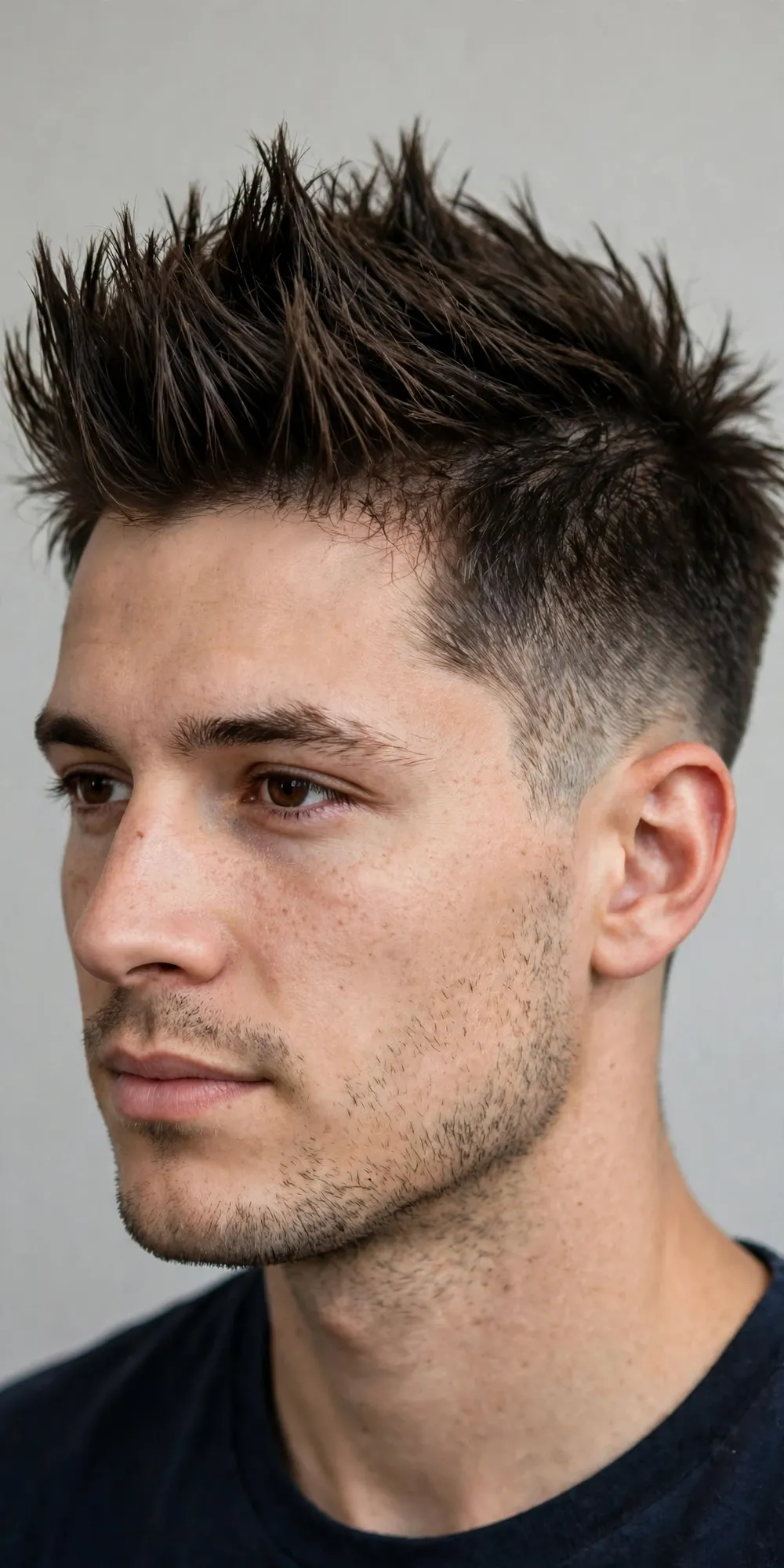
38. Buzz Cut Quiff
The buzz cut quiff is the minimalist of the family: buzzed sides, usually a number 1 or 2, with just an inch or so of lift on top. It is for men who want the quiff silhouette without the styling commitment — the top is short enough that a dab of product and a quick push upward is all it takes. It suits straight hair best and flatters square and oval faces, though it works on most face shapes because there is so little hair to argue with. Ask for a buzz on the sides and back, about an inch on top with the front left slightly longer, and a clean fade or taper into the buzz. Maintenance is almost zero: no blow-drying, no heavy product, and a trim every two to three weeks. If you are trying a quiff for the first time and do not want to commit to length, this is the low-risk way in.
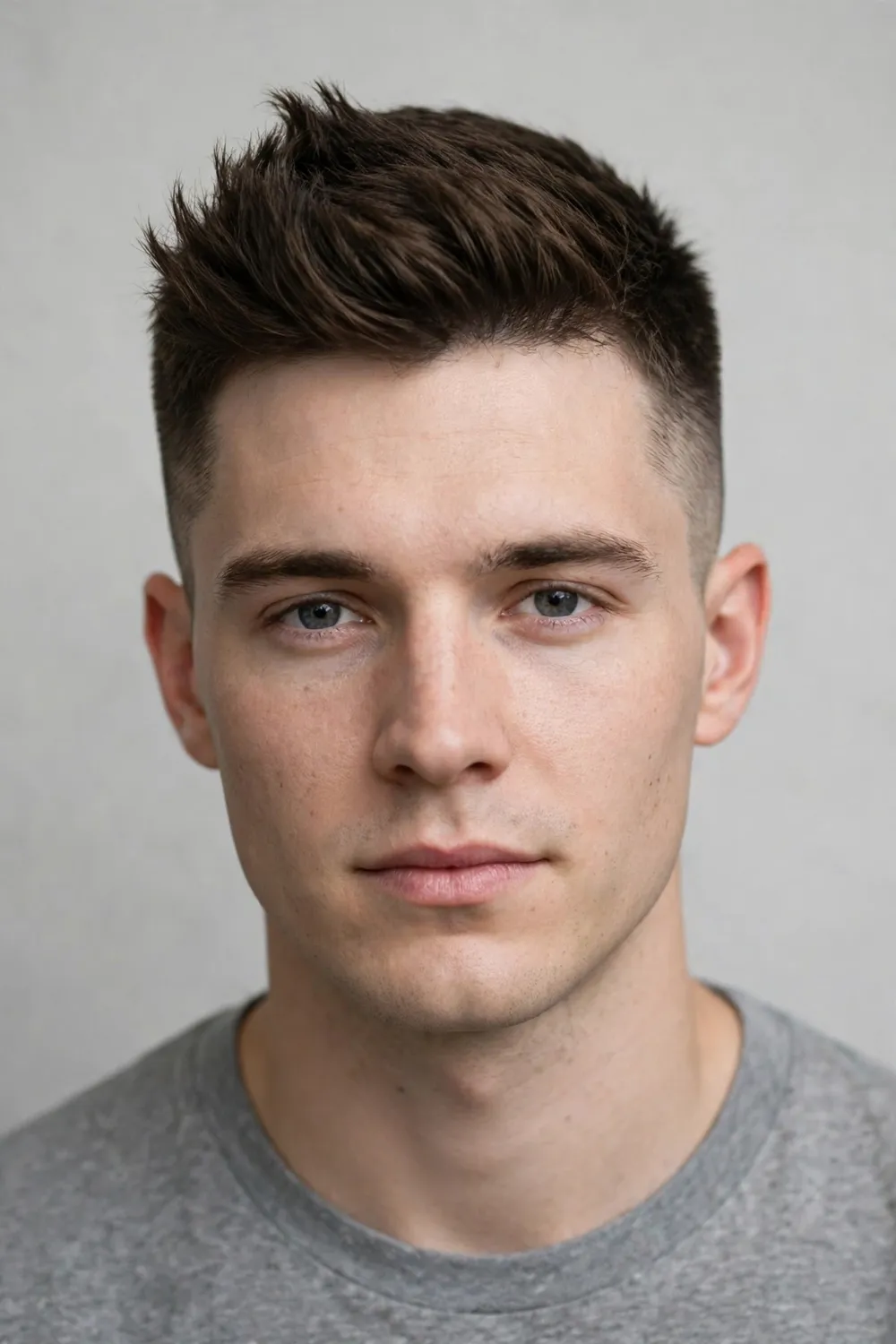
39. Two Block Quiff
Borrowed from Korean barbering, the two block quiff divides the hair into two distinct sections: a buzzed or very short lower section and a longer top that sits over it. The contrast is clean and graphic, and the longer top gives you plenty to lift. It suits straight hair best — the cut was designed for it — and works well on oval and rectangular faces. Ask for the lower section clipped short (usually a number 2 or 3) up to about temple height, with 3–4 inches on top left to lift forward and up. The sides will look disconnected by design, so the top needs to be long enough to cover the join. Style with a light matte product and a blow-dry upward; the top is light enough that it holds easily. It grows out a little awkwardly, so plan a trim every three weeks to keep the two blocks distinct.
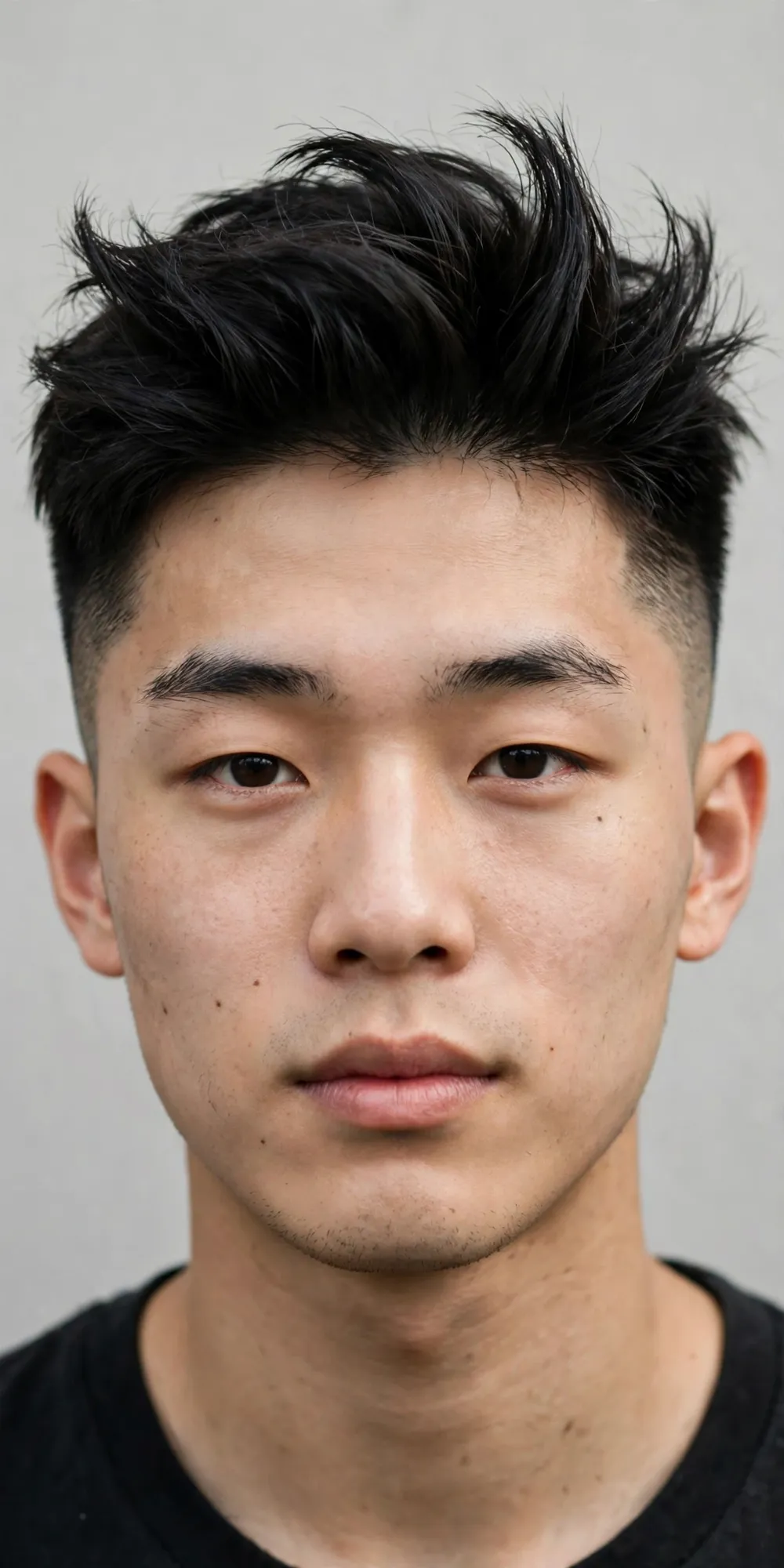
40. Disconnected Quiff
The disconnected quiff takes contrast to the maximum: a hard, visible line where the long top meets the short sides, with no blending at all. There is no hiding with this cut — it is bold, graphic, and unmistakably deliberate. It suits thick, straight hair and oval or square faces, and it works best on men who are comfortable standing out. Ask for 4–5 inches on top with the front longest, sides clipped to a 1 or 2, and a hard part or disconnected line cut in where the two meet. Style with a strong-hold matte clay, lifting the front up and back. Maintenance is real: the disconnection needs a trim every two weeks to stay crisp, and the top needs product daily. But if you want a quiff that turns heads, this is the one.
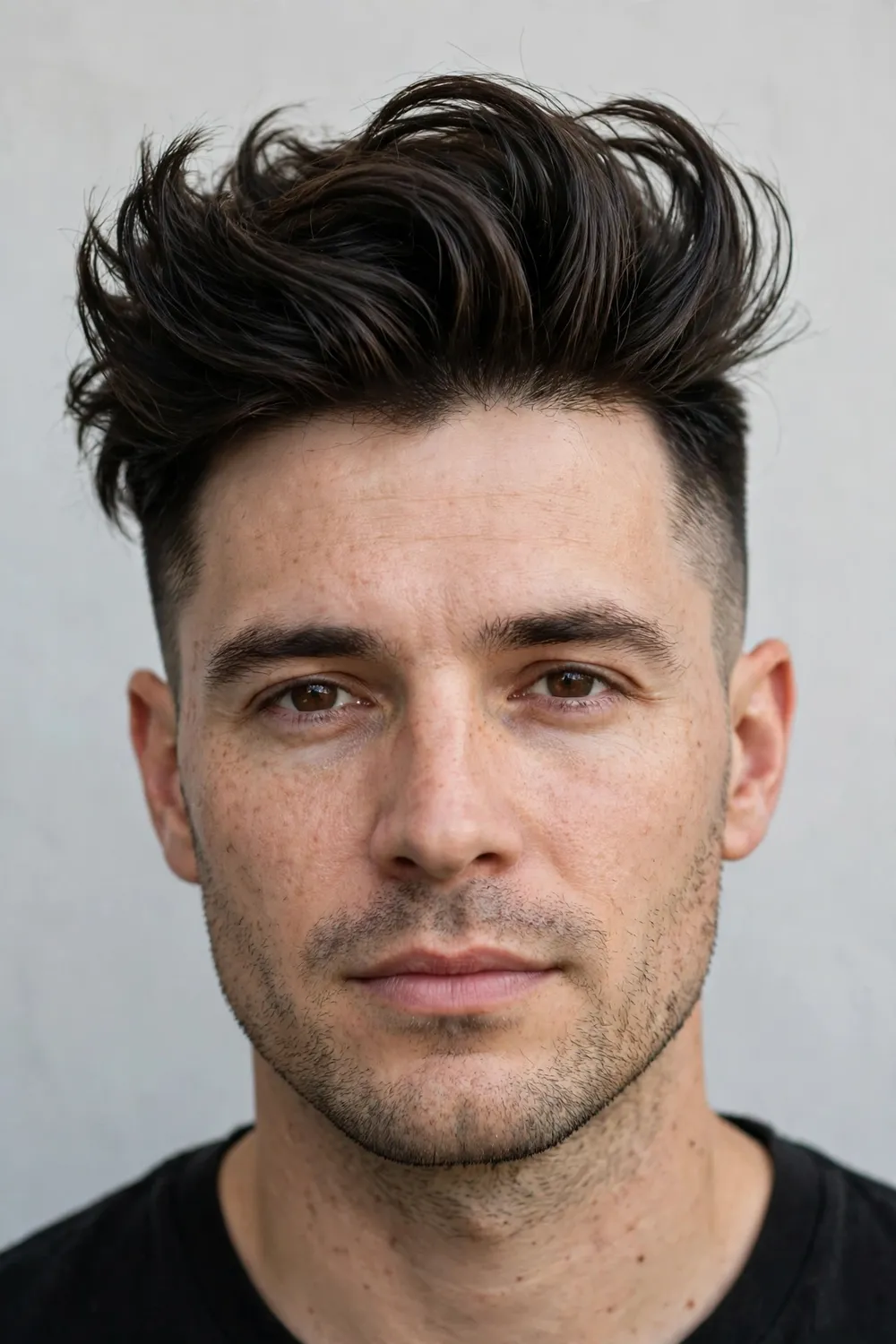
41. Voluminous Quiff
The voluminous quiff is exactly what it sounds like — maximum fullness across the whole top, not just the front. Where a classic quiff lifts mainly at the hairline, this one carries height from the crown forward, so the entire top looks thick and airy. It needs thick hair to work properly; fine hair will collapse under its own weight without heavy product. It suits oval and oblong faces and men with naturally dense hair. Ask for 4–5 inches on top with layers to remove weight, tapered or faded sides, and a blow-dry with a round brush to build the volume. Use a volumising mousse on damp hair before drying, then a light matte clay to finish. It is a higher-effort style — ten minutes most mornings — but the payoff is a quiff that looks full from every angle.

42. Ivy League Quiff
The Ivy League quiff is the preppy cousin of the family: a shorter top, a neat taper, and just enough lift to count as a quiff without ever looking flashy. Think of it as a classic Ivy League cut with the front pushed up half an inch. It suits straight or slightly wavy hair and every face shape, and it is one of the most office-friendly quiffs in this list. Ask for about 2 inches on top with the front left slightly longer, a taper on the sides and back, and a side part if you like. Style with a light cream or a small amount of pomade, combing the front up and to the side. Two minutes, no blow-dryer needed, and it holds all day. It is also one of the easiest quiffs to grow out, since the length stays short and the shape stays tidy between cuts.

43. Modern Business Quiff
The modern business quiff is built for the office: a subtle fade, a moderate lift, and nothing that will raise an eyebrow in a meeting. The top is kept to about 3 inches, the sides get a clean low or mid fade, and the front lifts just enough to read as a quiff rather than a side part. It suits straight and wavy hair and every face shape, and it is the safest quiff for men in formal or client-facing work. Ask for 3 inches on top with light texture, a low fade, and a natural finish — no hard lines, no disconnected sections. Style with a medium-hold cream for a soft, touchable finish, or a light pomade if you want a little sheen. Three minutes in the morning, a trim every three to four weeks, and it never looks out of place. If your workplace dress code is strict, this is the quiff to show your barber — it is also one of our top picks in our round-up of professional hairstyles for men.

44. Edgy Blonde Quiff
Bleached blonde on top with a sharp, lifted quiff is a statement — the colour does half the work before the cut even registers. It suits men who already like standing out, and it works best on straight or wavy hair with a mid or high fade underneath to sharpen the contrast. Ask for a quiff of your choice on top, then a bleach and tone to a clean blonde — your colourist should lift it in stages rather than all at once if your hair is dark. Maintenance is the honest part: roots show within two to three weeks, bleach dries hair out, and you will need purple shampoo weekly and a deep conditioner to keep it from going straw-like. Always do a patch test before any bleach. It is not a low-effort style, but for the right person it is the most striking quiff on this list.
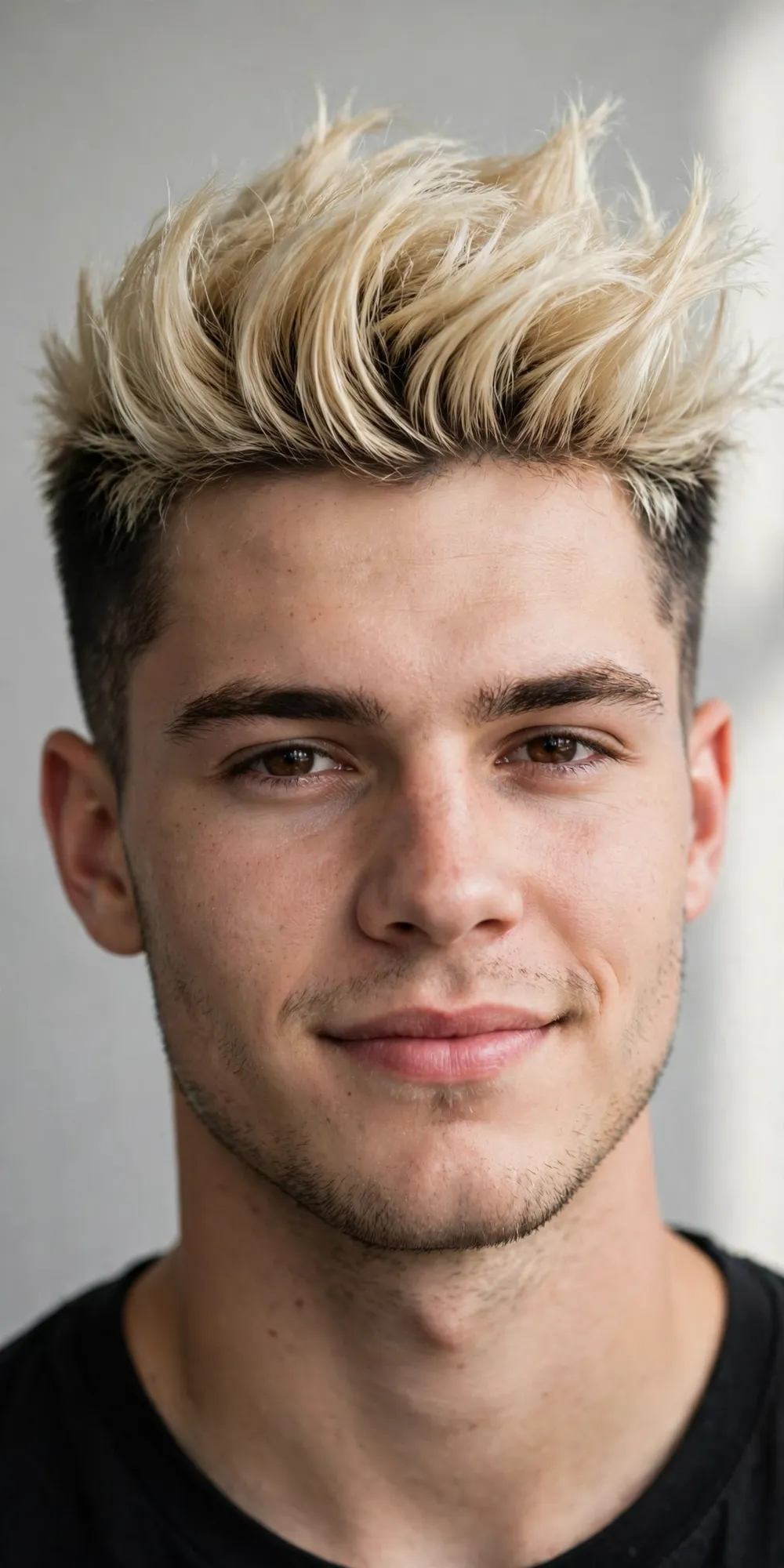
45. Long Quiff Fade
The long quiff fade pairs a long, flowing top — 5 inches or more — with a clean fade, so the volume up top has a sharp frame underneath. It is for men with thick or wavy hair who want the drama of a long quiff without the sides getting in the way. It suits oval and square faces best, where the height balances strong features. Ask for long layers on top with the front longest, and a mid or high fade on the sides and back. Styling takes a blow-dry with a round brush, a volumising product at the roots, and a matte clay to finish — budget ten minutes. The fade keeps it looking intentional even as the top gets longer, but book a fade tidy-up every two weeks if you want the contrast to stay sharp between full cuts.
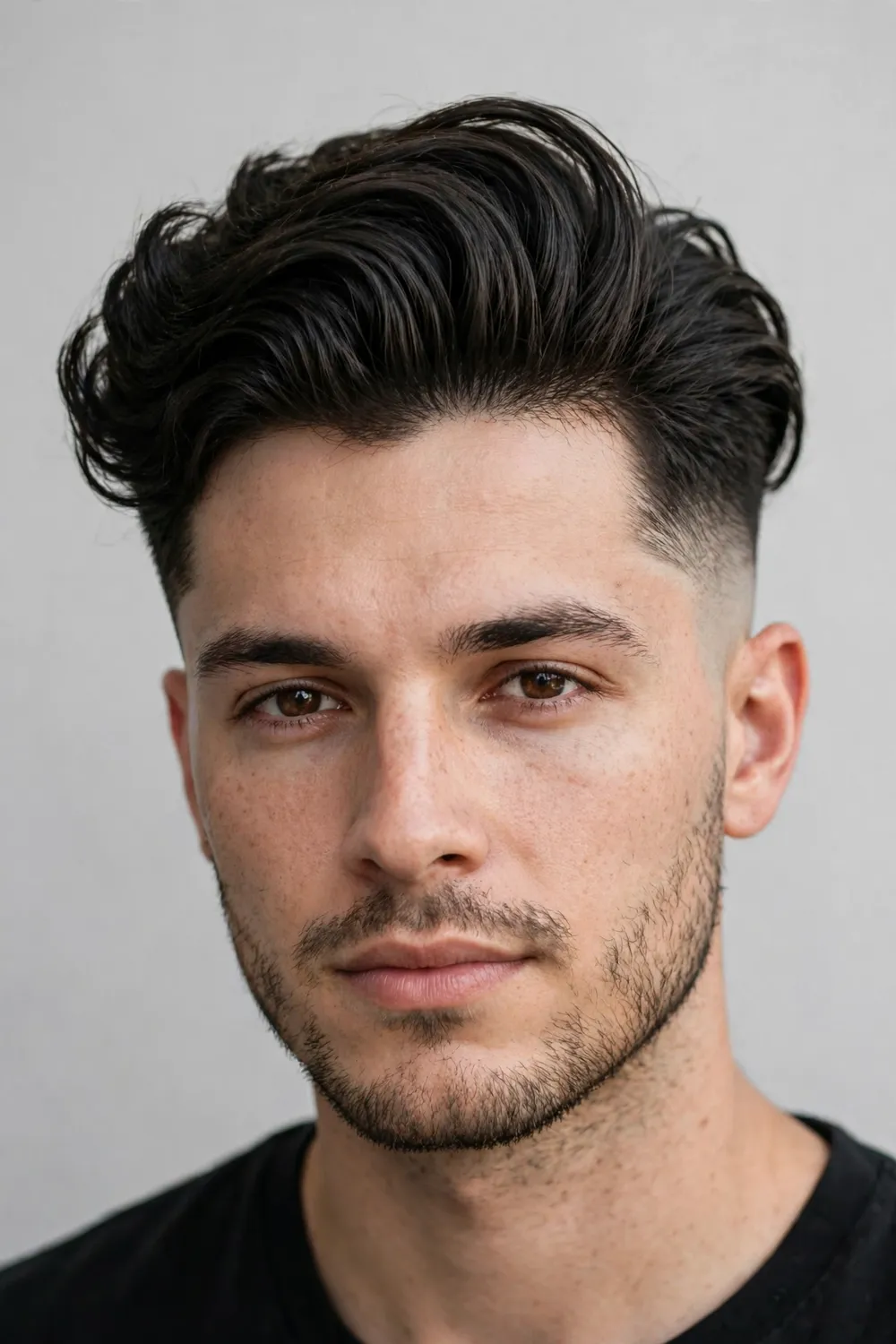
46. Straight Smooth Quiff with Mid Skin Fade
This is the polished end of the quiff spectrum: a sleek, smooth top with every hair in place, set against a mid skin fade that goes right down to bare skin. It suits straight hair best — the smoothness is the whole point — and it flatters oval, square and heart-shaped faces. Ask for 3–4 inches on top, blow-dried smooth with a vent brush, and a mid skin fade with a clean blend. Style with a medium-hold pomade for a soft sheen, combing the front up and back in one motion. The skin fade is the maintenance cost here: it starts to look fuzzy within a week, so a weekly or fortnightly tidy-up keeps it crisp. Pair it with a clean shave or a sharp beard line and it reads like a barbershop poster.
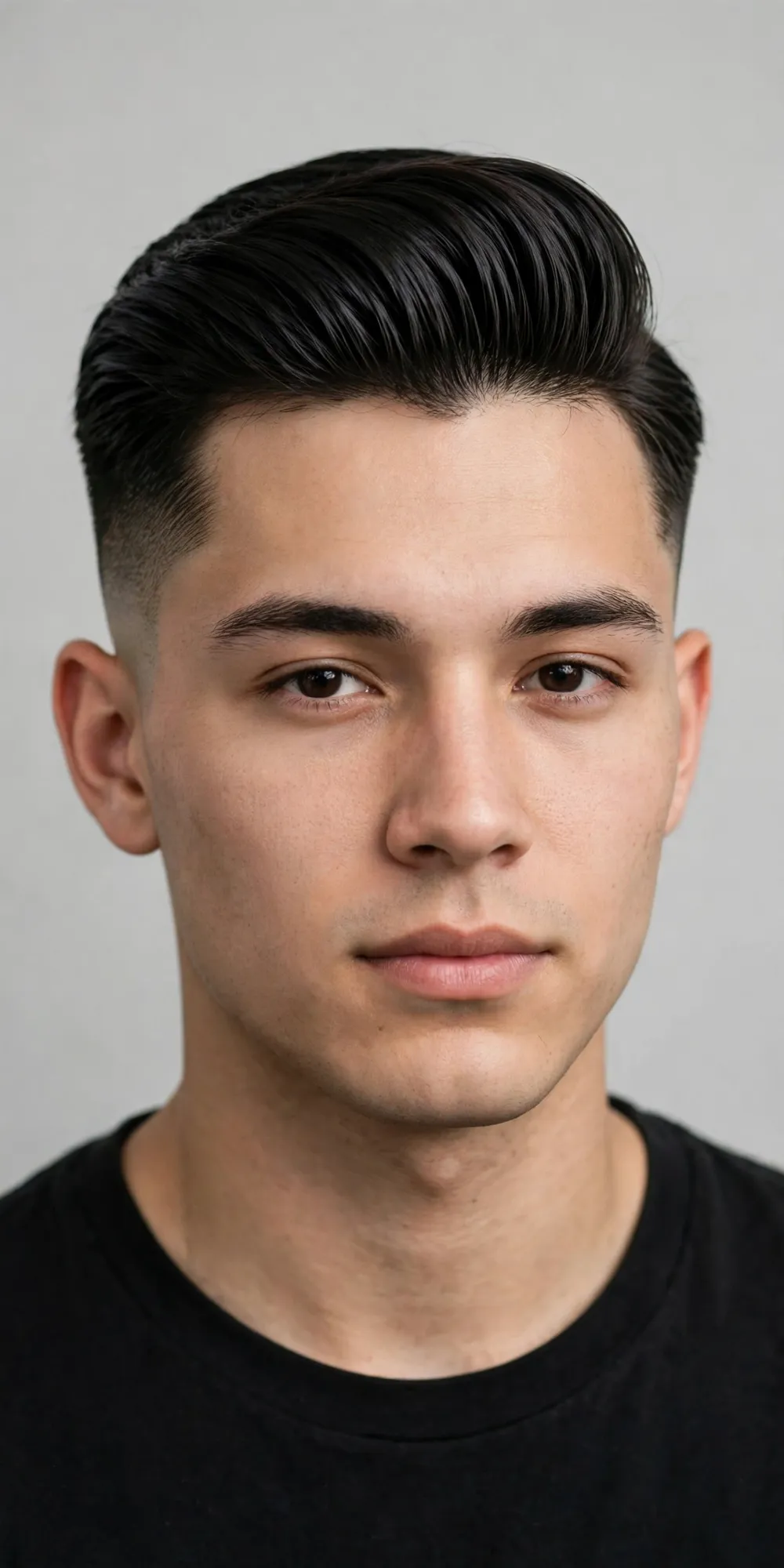
47. Textured Fringe Quiff
The textured fringe quiff lets the fringe fall forward with lift, rather than sweeping it all back — a modern, slightly rebellious take that suits men who like their hair to look effortless. It works on straight and wavy hair and flatters oval and round faces, since the forward fringe softens the forehead. Ask for 3–4 inches on top with point-cut texture through the fringe, and a low or mid fade on the sides. Blow-dry the front forward and slightly up, then work a matte paste through with your fingers, separating the fringe into pieces. It is a low-maintenance quiff in practice — it looks better a little messy — and it is one of the best options if your hair naturally falls forward. For more choppy, piece-y ideas, our guide to textured haircuts for men covers the same cutting technique in depth.

48. Short Quiff with Low Taper Fade
Short on top, clean low taper on the sides — this is the quiff for men who want the look without the morning routine. The top is kept to about 2 inches with just enough length at the front to lift, and the taper fades gently around the ears and neckline. It suits every hair type and face shape, which is why it is one of the most requested short quiffs in barbershops. Ask for 2 inches on top with light texture at the front, and a low taper fade. Style with a pea-sized amount of matte clay — push the front up, and you are done in under two minutes. A trim every three weeks keeps the taper tidy. If you are weighing shorter options overall, our short haircuts for men round-up has more low-effort styles in the same spirit.

49. Tousled Textured Quiff with Low Fade
Tousled texture over a low fade is the quiff for men who want to look like they styled their hair — but only just. The top is cut with choppy layers and left to fall where it wants, while the low fade underneath keeps the whole thing looking deliberate. It suits wavy and straight hair and flatters oval and round faces. Ask for 3–4 inches on top with point-cut texture, and a low fade that stays subtle. Style by blow-drying roughly upward with your fingers — no brush needed — then scrunching in a matte paste and letting the pieces fall. It is genuinely low maintenance: second-day hair often looks better than freshly washed, and a trim every three to four weeks is plenty.
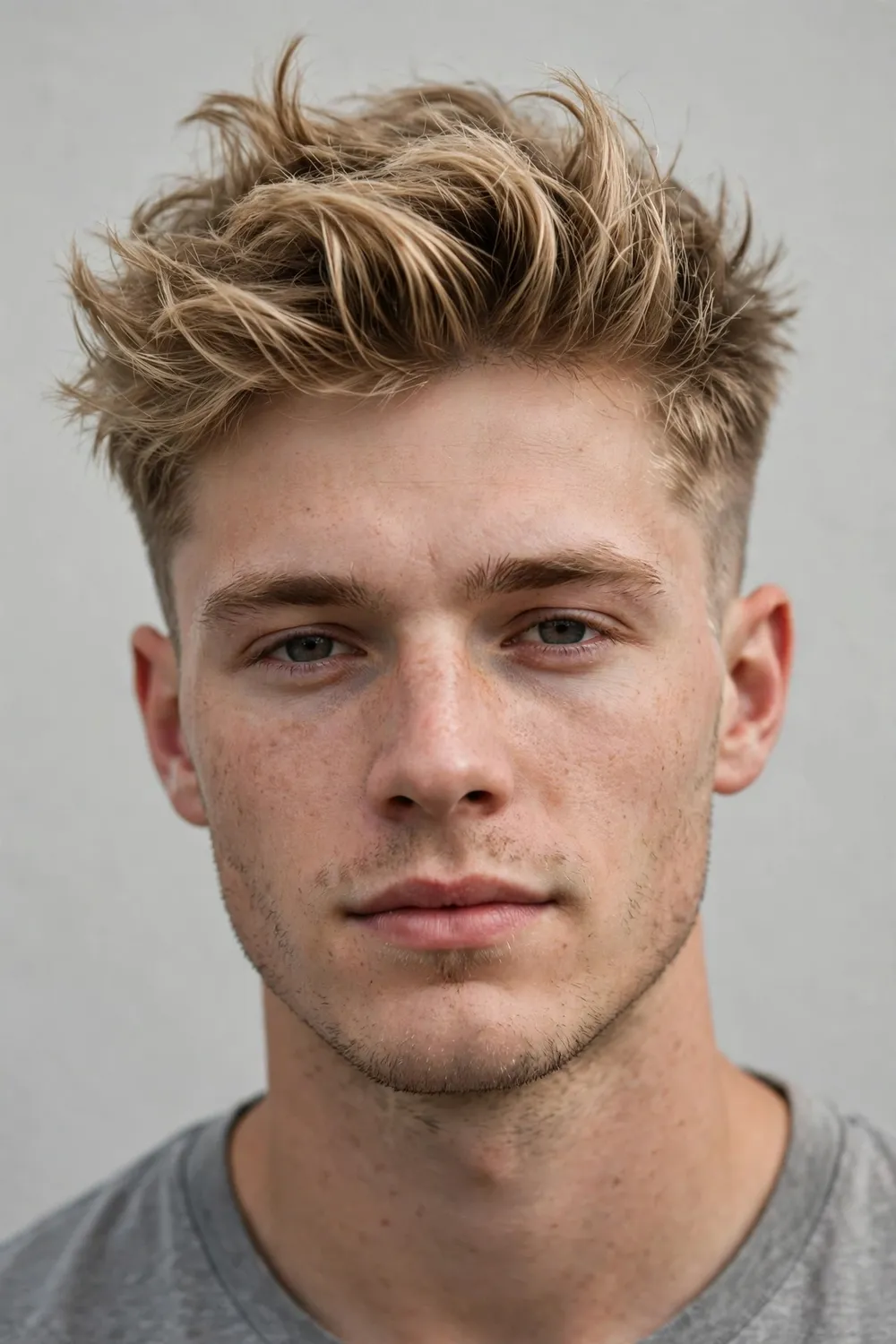
50. Short Textured Quiff with Mid Fade
The short textured quiff with a mid fade gives you structure and texture in equal measure: a choppy 2–3 inch top with a mid fade that adds definition without going extreme. It suits straight and wavy hair, and it is a strong choice for men with thicker hair, since the texture keeps the top from looking like a solid block. Oval, square and round faces all work with it. Ask for 2–3 inches on top with point-cut texture, and a mid fade blended cleanly at the sides. Style with a small amount of matte clay, pushing the front up and pinching a few pieces apart for definition. Three minutes, no blow-dryer required on most hair types. It is one of the most versatile quiffs here — neat enough for work, textured enough for the weekend.

51. Messy Quiff with Taper Fade
The messy quiff with a taper fade is the relaxed end of the spectrum: a tousled, finger-styled top sitting over clean tapered sides. The contrast is what makes it work — the mess looks intentional because the sides are so tidy. It suits wavy and straight hair and flatters most face shapes, especially round and oval, where the height adds length. Ask for 3–4 inches on top with choppy layers, and a taper fade on the sides and back. Style by towel-drying, working a matte paste through with your fingers, and pushing the front up in different directions — do not use a comb, or you will lose the mess. It is a genuinely easy style to live with: it looks good slightly grown out, and a trim every three to four weeks keeps the taper fresh.

52. Tousled Short Quiff with Low Fade
This is the short, swept-forward cousin of the messy quiff: a tousled short top pushed forward and up, with a low fade keeping the sides neat. It suits men with straight or wavy hair who want a quiff that takes two minutes and still looks put together. It flatters oval and heart-shaped faces particularly well. Ask for 2–3 inches on top with texture cut in, the front swept slightly forward, and a low fade. Style with a small amount of matte clay on damp hair, pushing the top forward and lifting the front with your fingers. No blow-dryer, no comb, no fuss. It grows out well too — the low fade means there is no harsh line to maintain, so you can stretch a cut to four weeks without it looking untidy.
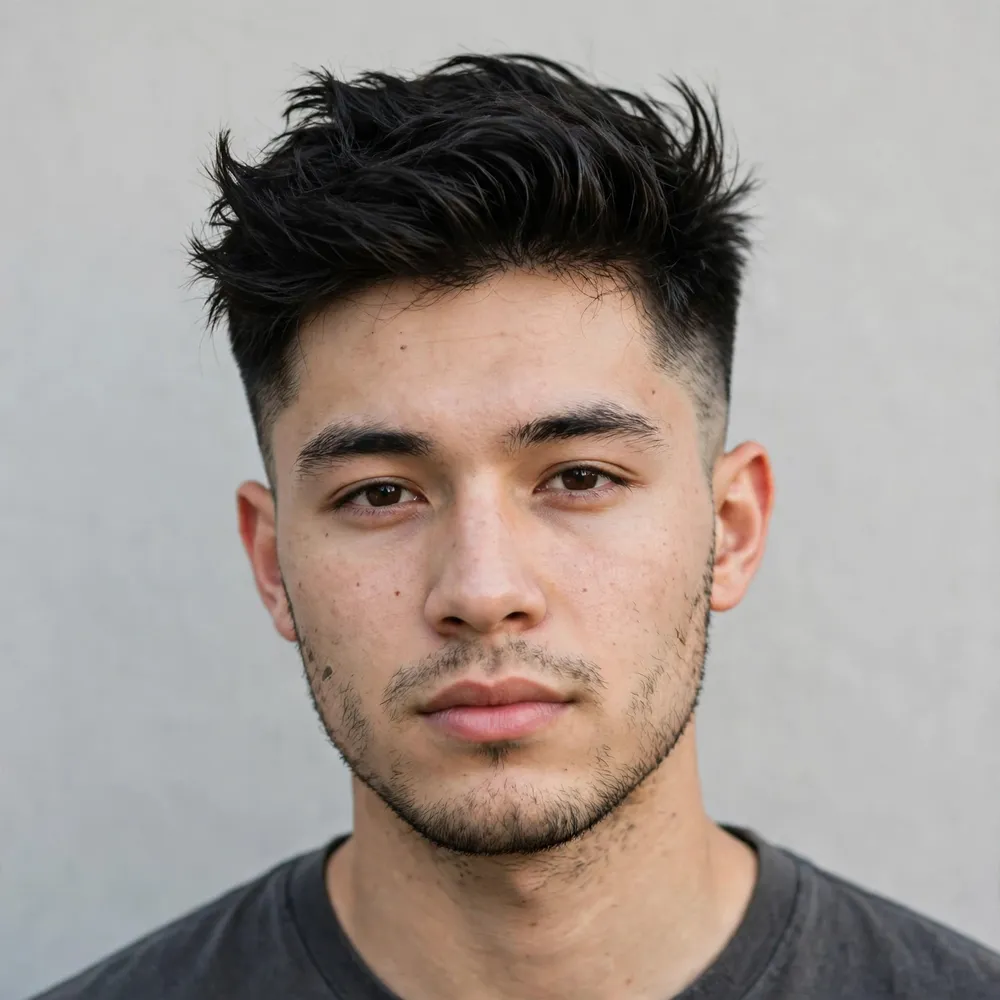
53. Messy Wavy Quiff with Low Taper
If your hair has a natural wave, this quiff lets the wave do the work. The top is left long enough for the waves to form — about 3–4 inches — and lifted at the front, while a soft low taper keeps the sides clean without fighting the texture. It suits wavy hair best, obviously, and flatters oval and square faces. Ask for layered texture through the top, a low taper on the sides, and no thinning shears — you want the wave’s natural volume, not less of it. Style with a sea salt spray on damp hair, a rough blow-dry, and a light matte paste to define the waves. It is one of the lowest-maintenance quiffs here: the waves hide a multitude of sins, and it looks better the less you fuss with it.
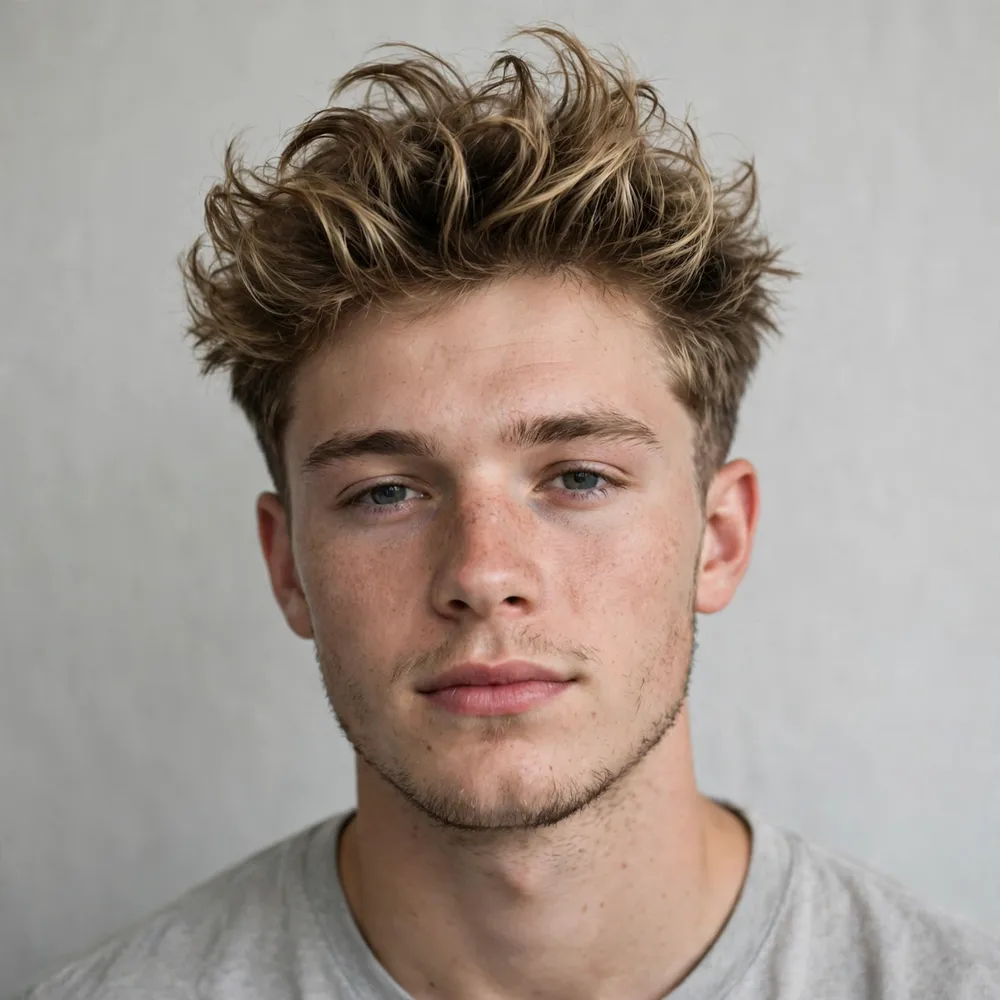
54. Natural Quiff with High Fade
The natural quiff with a high fade keeps the top soft and unforced — no heavy product, no stiff hold — while the high fade underneath adds all the sharpness. It is the quiff for men who want their hair to look like hair, not a sculpture. It suits straight and wavy hair and flatters oval and square faces, and it is a good pick for men with thicker hair, since the high fade removes bulk at the sides. Ask for 3–4 inches on top with light texture, a high fade, and a natural finish. Style with a small amount of light cream or a dab of matte clay, pushing the front up and letting it fall naturally. The fade needs a tidy-up every two weeks to stay sharp, but the top is as easy as it gets.
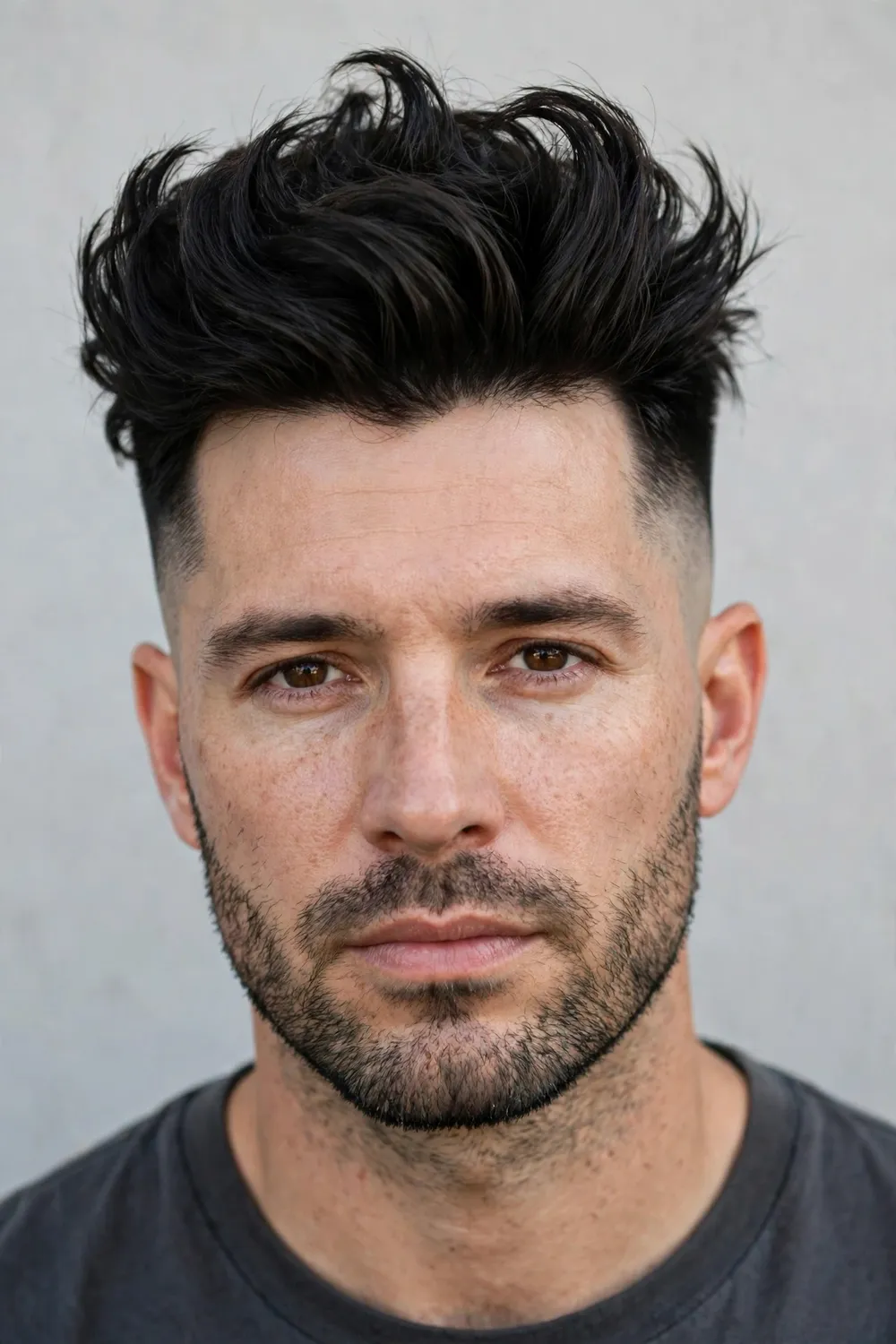
55. Textured Quiff with Sharp Fade
Choppy texture on top, a razor-sharp fade underneath — this quiff is all about contrast. The top is cut with aggressive point-cutting so the pieces separate clearly, and the fade is blended tight with a crisp line. It suits straight and wavy hair and flatters oval, square and diamond faces. Ask for 3–4 inches on top with heavy texture, and a sharp mid or high fade with a clean blend. Style with a matte clay, working it through in sections and pinching the pieces apart so the texture shows. The fade will need attention every one to two weeks to stay sharp, so this is a higher-maintenance choice — but if you like a quiff that looks deliberate from across the room, the sharp fade delivers.
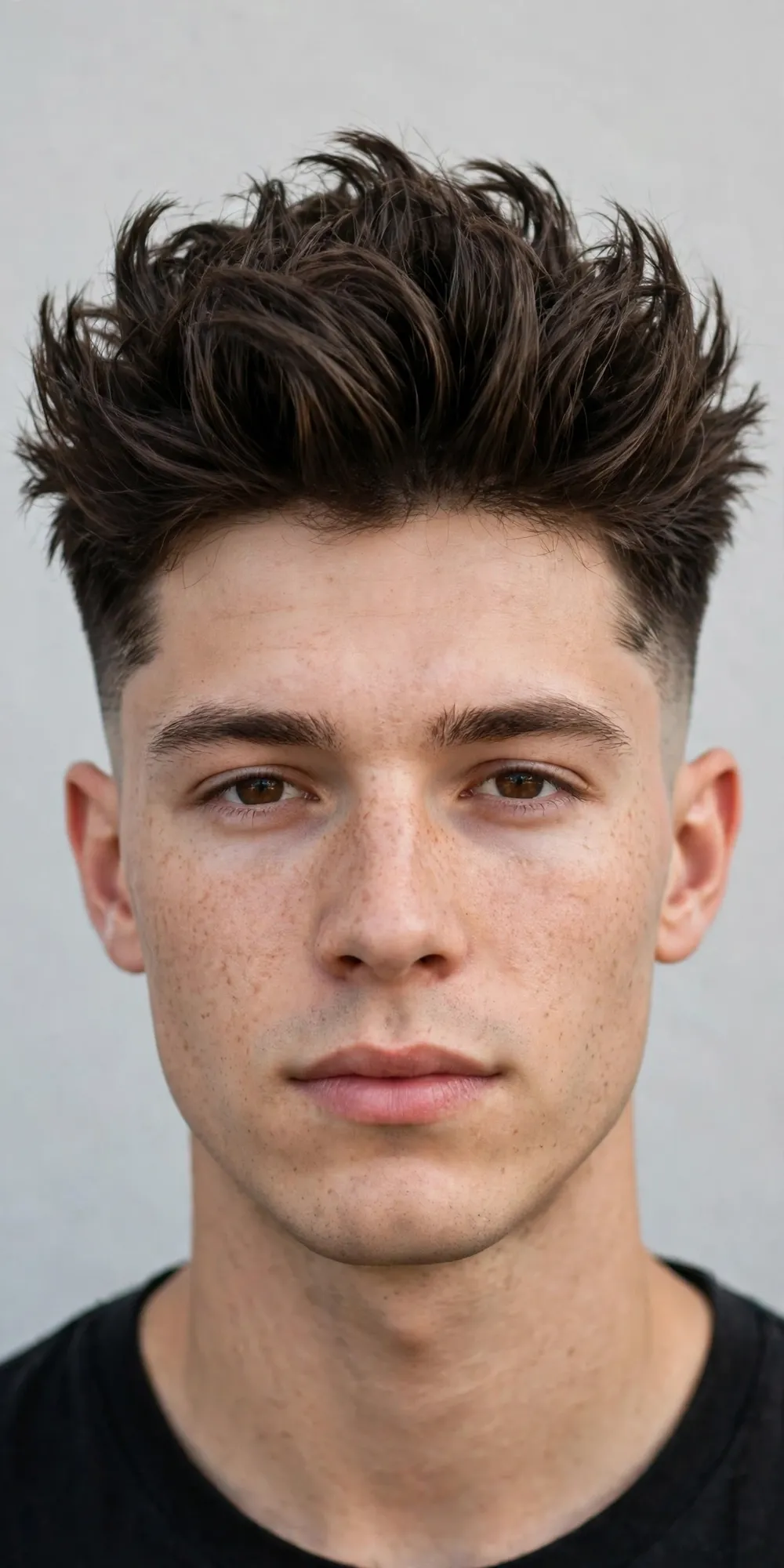
56. Youthful Short Quiff with Drop Fade and Beard
The last style on this list is also one of the most complete looks: a short quiff, a drop fade that dips behind the ear, and a neatly trimmed beard tying it all together. The drop fade follows the curve of the head, which gives the cut a modern shape that photographs beautifully. It suits straight and wavy hair, flatters square and oval faces, and works best on men who can grow an even beard. Ask for 2–3 inches on top with texture at the front, a drop fade, and a beard faded into the sideburns with the cheek line cleaned up. Style the quiff with a dab of matte clay and keep the beard oiled and trimmed. It is a young, fresh combination — and because the fade and beard both need regular upkeep, plan a barber visit every two weeks to keep the whole look sharp.
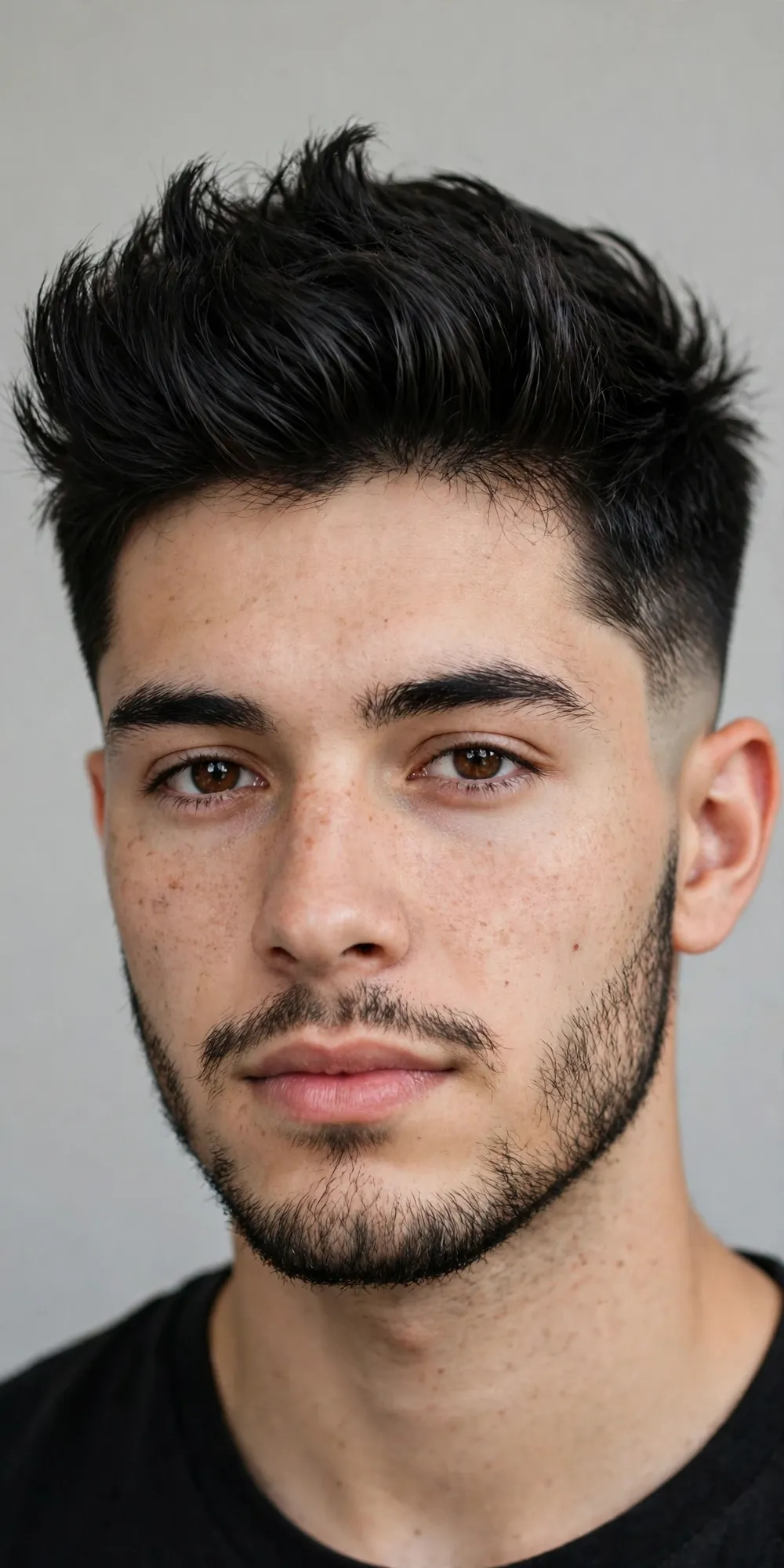
How to Choose the Right Quiff for Your Face Shape and Hair Type
The quiff is forgiving, but the right version depends on what you are working with. Start with your hair type.
Straight hair is the easiest quiff hair — it lifts cleanly and holds a shape. Almost every style on this list works, so choose by face shape and how much effort you want to put in. A classic or side swept quiff is the safe daily choice; a disconnected or skin fade quiff is the bold one.
Wavy hair gives you texture for free. Lean into it with a textured, messy or tousled quiff, and let the wave carry the volume. Avoid heavy pomades that flatten the wave — a matte clay or sea salt spray suits you better.
Curly hair needs a quiff cut that works with the curl, not against it. Ask for layers that let the curls stack upward, and keep the sides short so the curls have somewhere to go. A curly quiff (idea 21) is the obvious starting point.
Thick hair needs weight removed from the inside, or the quiff will sit like a helmet. Ask for internal layers or thinning, and pick a layered or textured quiff. Thick hair holds volume well, so you can go taller than most.
Fine or thin hair needs the opposite approach: a shorter top, root lift, and a light product that does not weigh it down. A fine hair quiff (idea 24) with 2–3 inches on top and a volumising mousse at the roots will look fuller than a long quiff ever will.
Then check your face shape. Oval faces can wear anything — pick by hair type. Round faces want height on top and shorter sides, so a high fade or tall quiff adds the length your face lacks. Square faces suit softer quiffs — textured, side swept or loose — that take the edge off a strong jaw. Long or oblong faces should avoid too much height and choose a shorter quiff with a low taper. Heart-shaped faces suit a quiff with some width at the sides and a beard to balance a narrower chin.
If you are still unsure, show your barber two or three styles from this list and let them tell you which one your hair will actually do. A good barber will be honest — and that honesty saves you a month of bad hair days.
How to Style a Quiff at Home in 5 Minutes
A quiff looks complicated, but the routine is short once you know the order. Here it is, start to finish.
- Start with damp hair. Towel-dry after a shower until your hair is damp, not dripping. A quiff styled on soaking hair will fall flat; styled on dry hair, it will fight you.
- Add a pre-styler. Work a pea-sized amount of volumising mousse or a few sprays of sea salt spray through the top, focusing on the roots. This is what gives the lift its staying power.
- Blow-dry upward. With a vent brush or your fingers, blow-dry the front up and back, directing the heat at the roots. Keep the dryer moving and use medium heat — two minutes is enough. For a messy quiff, use your fingers instead of a brush.
- Warm the product. Take a pea-sized amount of matte clay or pomade — less than you think — and rub it between your palms until it is warm and invisible.
- Shape the front. Push the front up and back with your palms, then pinch and separate a few pieces with your fingers for texture. If you want polish, finish with a comb; if you want texture, leave the fingers alone.
- Set it and go. A light mist of hairspray holds the shape without stiffness. Do not overload it — a quiff should move a little when you walk.
That is the whole routine. The first few times it will take ten minutes; after a week, it will be five.
5 Mistakes That Make a Quiff Fall Flat
- Using too much product. The most common quiff mistake. A heavy lump of pomade or clay weighs the front down and makes it look greasy by lunchtime. Start with a pea-sized amount — you can always add more, but you cannot take it back without washing.
- Styling on soaking wet hair. Water is heavy. If you try to lift hair that is dripping wet, gravity wins and the quiff collapses before you leave the house. Towel-dry first, always.
- Skipping the blow-dry. Product alone cannot hold a quiff up all day. Two minutes of blow-drying upward sets the shape into the hair itself; without it, you are relying on product alone, and product alone gives up by midday.
- Choosing the wrong quiff for your hair. A long, tall quiff on fine hair will fall flat no matter what you do, and a heavy pomade on wavy hair will kill the texture. Match the cut to your hair type — see the guide above — and the styling gets dramatically easier.
- Waiting too long between cuts. A quiff is a shape, and shapes grow out. Once the sides get bulky or the top gets too long to lift, the whole style loses its structure. Book a trim every three to four weeks — two if you have a skin fade — and the quiff will look after itself.
Frequently Asked Questions About Quiff Haircuts
What is a quiff haircut?
A quiff is a men’s haircut with short back and sides and a longer top — usually 3 to 5 inches — that is lifted up and swept back at the front. It is one of the oldest styles in barbering, popular since the 1950s, and it has stayed in fashion because it suits almost every face shape and works with straight, wavy and curly hair. The modern quiff comes in dozens of versions, from classic and textured to faded and disconnected, so there is a version for nearly every man.
How long does my hair need to be for a quiff?
You need at least 3 inches on top for a proper quiff, with the front left a little longer than the back. Shorter than that, and there is not enough length to lift and sweep back — you will end up with something closer to a textured crop. If your hair is currently short, expect two to three months of growing to reach quiff length. While you wait, a short quiff with a low taper fade (idea 48) works with as little as 2 inches on top.
Is a quiff good for thin or fine hair?
Yes, with the right cut. A quiff actually suits fine hair well because the lift creates the illusion of volume — but the top needs to be kept shorter, around 2 to 3 inches, and styled with a volumising mousse at the roots rather than a heavy product that weighs it down. A fine hair quiff (idea 24) is cut specifically for this. Avoid long, heavy quiffs on fine hair, and ask your barber for texture that lets the hair stack upward instead of lying flat.
What is the difference between a quiff and a pompadour?
The two are cousins, but the height and direction are different. A pompadour sweeps all the hair up and back from the forehead in one tall, smooth wave, usually with more height and more shine. A quiff lifts mainly at the front and is shorter, more textured, and more relaxed — the back of the top can sit relatively flat. In practice, a quiff is easier to style day to day and more forgiving on different hair types, while a pompadour is the more formal, high-maintenance of the two.
How do I style a quiff at home?
Towel-dry your hair until damp, work a small amount of volumising mousse or sea salt spray into the roots, then blow-dry the front up and back with a vent brush or your fingers. Warm a pea-sized amount of matte clay between your palms, push the front up and back, and pinch a few pieces apart for texture. Finish with a light mist of hairspray. The full routine takes about five minutes once you have done it a few times — the step-by-step guide above walks through it in detail.
Is a quiff professional enough for work?
Yes — most quiffs are perfectly office-appropriate. A classic quiff, a modern business quiff (idea 43), an Ivy League quiff (idea 42) or a side swept quiff all read as smart, tidy and professional. The versions to avoid in a conservative workplace are the extreme ones: a very tall disconnected quiff, a skin fade with a line up, or a brightly coloured quiff. If your office dress code is strict, keep the fade low, the lift moderate, and the finish neat, and no one will question it.
How often should I trim a quiff?
Every three to four weeks for most quiffs. The top can go a little longer, but the sides — especially a fade — lose their shape fast, and once the sides get bulky the quiff stops looking intentional. If you have a skin fade, a line up or a disconnected cut, book a tidy-up every two weeks to keep the edges sharp. Between cuts, a little extra product and a careful blow-dry can stretch a quiff for a few extra days.
Final Word
Fifty-six quiffs, and the honest truth is that most men only need one — the one that fits their hair, their face, and the amount of time they are willing to spend in front of a mirror. Start with a safe version like the mid taper or the modern business quiff, learn the five-minute routine, and adjust from there. Your barber can help you pick, but now you know exactly what to ask for. For more styles in the same spirit — fades, low fade haircuts, and everyday cuts — take a look around our blog. And for the basics that keep any quiff looking its best, the American Academy of Dermatology’s healthy hair tips are worth a read: gentle washing, less heat, and regular trims do more for your hair than any product.