


A blowout haircut is a men’s cut where the top is blow-dried up and back into tall, rounded volume while the sides stay tapered or faded. If you want the short version: start with the Classic Blowout, the Blowout Taper, or the Textured Blowout — those three suit almost every hair type and face shape. This guide covers all 39 styles, with the exact words to say to your barber, the products that actually work, and honest notes on upkeep.
What Is a Blowout Haircut?
A blowout haircut is less about the scissors and more about the dryer. Your barber cuts the top long enough to lift — usually 3 to 5 inches — then blow-dries it upward and back with a round brush, locking the shape in with heat. The sides and back get a taper or a fade, which is what gives the style its clean contrast: big volume on top, tidy edges below.
It is not the same as a regular blow-dry. A normal blow-dry just dries your hair; a blowout builds the shape into the cut itself, so it holds for days with a quick morning touch-up. The look started in barbershops as the “Brooklyn blowout” and went mainstream because it flatters nearly everyone — it adds height to round faces, balances strong jaws, and makes fine hair look twice as thick.
One honest warning before you commit: a blowout is a styling cut, not a wash-and-go one. Budget five to ten minutes each morning with a dryer, and expect a fresh cut every three to four weeks to keep the taper sharp. If that sounds like too much work, the shorter versions in this list — especially the Short Blowout at number 15 — keep most of the look with half the effort.
39 Best Blowout Haircut Styles for Men
1. The Classic Blowout

This is the one that started it all: tall, rounded volume on top, sides tapered tight enough to look clean but never harsh. It works best on straight to slightly wavy hair, and it suits oval, square, and oblong faces especially well because the height lengthens and balances everything below it. Ask your barber: “Classic blowout — keep about four inches on top, tapered sides, and blow it up and back with a round brush.” For styling, work a coin-sized blob of matte clay through towel-dried hair, then blow-dry upward in sections. The finish is natural, not shiny, and it moves when you do. Maintenance is the honest part: plan on a trim every three weeks and five minutes with the dryer each morning.
2. Blowout Taper

The Blowout Taper is the classic’s calmer cousin — the same big lifted top, but the sides graduate gradually instead of dropping off into a fade. That softer transition makes it the safest first blowout, and it grows out far more gracefully than a skin fade. It suits straight and wavy hair, and it is a great pick for rounder faces because the height on top stretches the whole silhouette. Ask your barber: “Blowout on top with a smooth taper on the sides — no hard line, keep it blended.” Style it with a lightweight volumising mousse and a round brush, finishing with a light-hold cream so the top stays soft rather than stiff. A tidy-up every three to four weeks keeps it sharp.
3. Low Fade Blowout
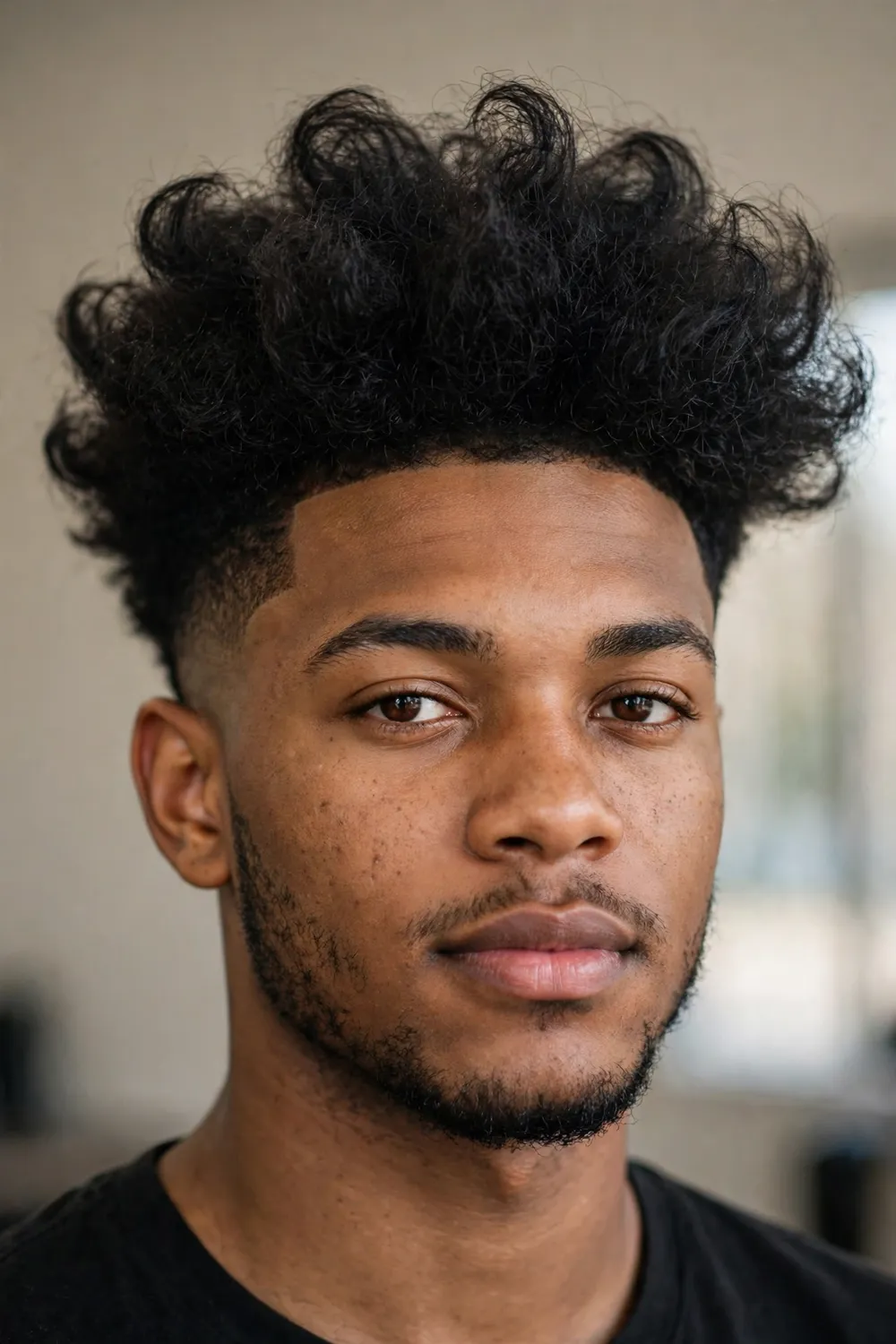
The Low Fade Blowout keeps the drama on top and the fade low and subtle. The fade starts just above the ear, so the sides stay dark and full without the high-maintenance grow-out of a mid or high fade. It suits thick hair beautifully, and oval and square faces carry it best. Ask your barber: “Blowout on top, low fade on the sides — keep the fade subtle and the top about four inches.” If you like this balance of volume and restraint, our guide to low fade haircuts for men has more takes on the same idea. Style with sea-salt spray for grip, then matte paste to shape. The low fade grows out forgivingly, so cuts can stretch to four weeks and mornings stay under ten minutes.
4. High Fade Blowout
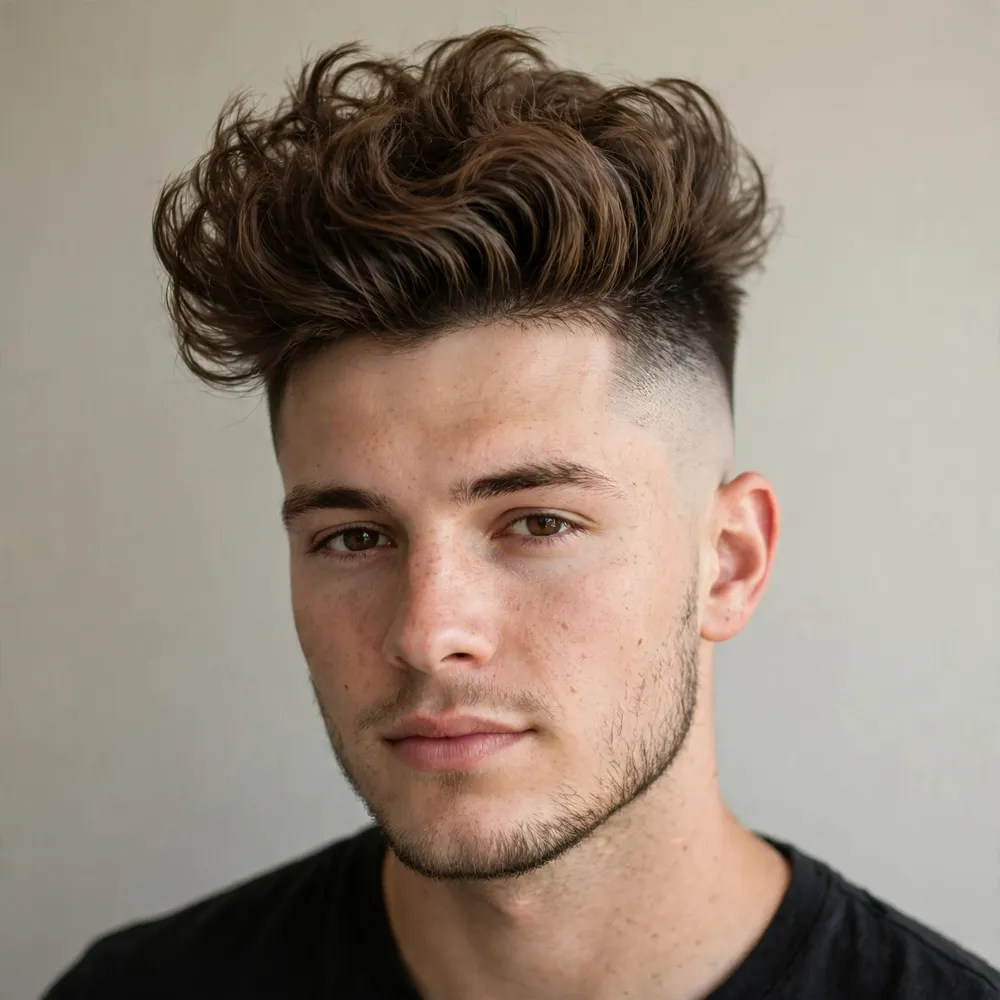
This is the boldest contrast in the whole list: tall volume on top, sides faded high and tight. The high fade strips nearly all bulk from the sides, making the top look even bigger — dramatic and impossible to ignore. It works best on thick, straight hair that can hold real height, and it suits square and oval faces with strong jawlines. Ask your barber: “High fade on the sides, blended into a blowout top — keep four to five inches up top and fade it high and clean.” You’ll want a strong-hold matte clay and a round brush, drying in sections from the front hairline back. High fades grow out fast, so book every two to three weeks or the contrast turns fuzzy.
5. Textured Blowout

The Textured Blowout trades the smooth, rounded silhouette for piecey, separated strands with a matte finish — think deliberate mess, not bedhead. Your barber point-cuts the ends so the hair breaks apart naturally, and you style it with fingers instead of a brush for that lived-in edge. It suits wavy and straight hair, and it is one of the best blowouts for thinner hair, because texture creates the illusion of density. Ask your barber: “Textured blowout — point-cut the top, keep it piecey, and finish it matte.” Style with a pea-sized amount of texture paste, scrunching the ends as you dry. For more cuts built around the same piecey finish, see our textured haircuts for men. Upkeep is refreshingly low: it looks better slightly grown out, so four-week gaps are fine.
6. Curly Blowout
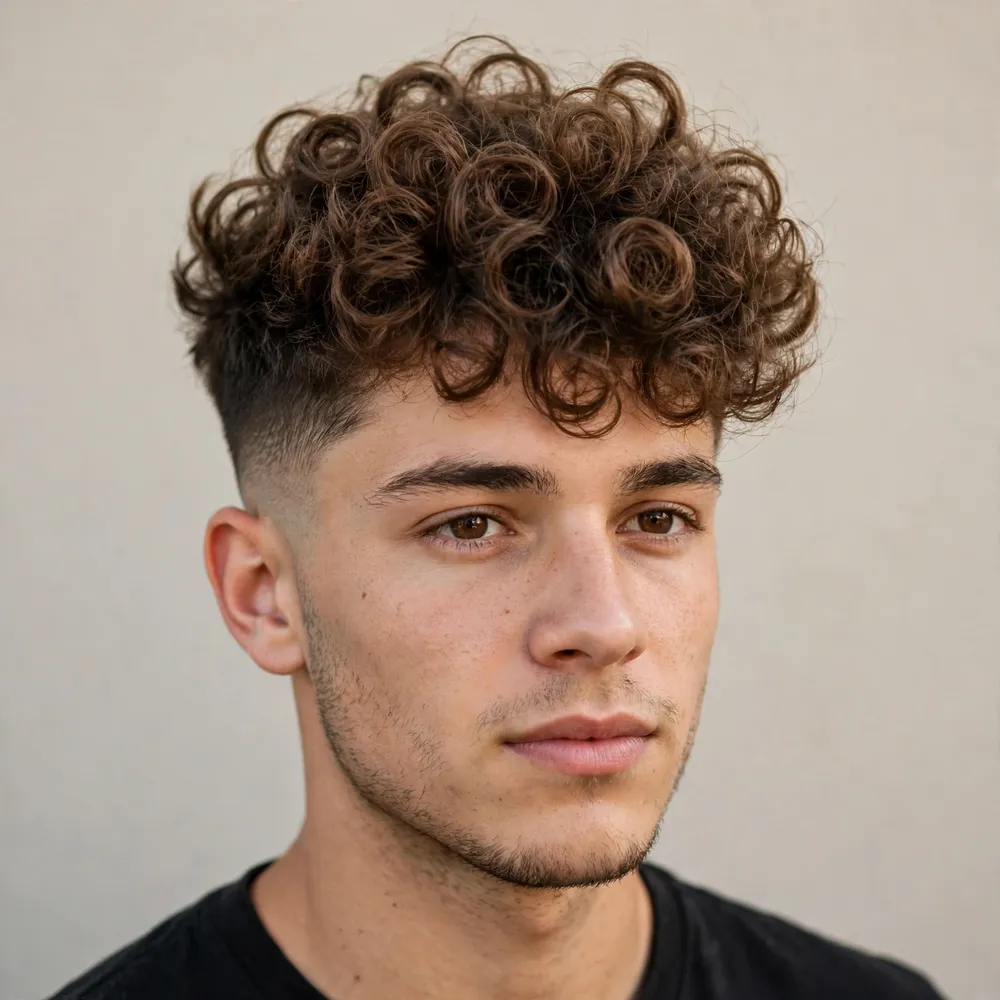
A Curly Blowout is proof that curls and volume are not enemies. Instead of fighting your texture, this cut lifts the curls up and out while the sides get a clean fade — height, definition, and a tidy outline at once. It suits naturally curly and coily hair best — tighter curls mean more dramatic lift. Ask your barber: “Curly blowout — keep the curls long on top, fade the sides, and shape it round, not flat.” Use a diffuser and curl cream on damp hair, scrunching upward as you dry — never brush curls dry unless you want a halo of frizz. A trim every four to five weeks keeps the shape, and a silk pillowcase beats any product for your mornings. Let the curls do the work.
7. Afro Blowout
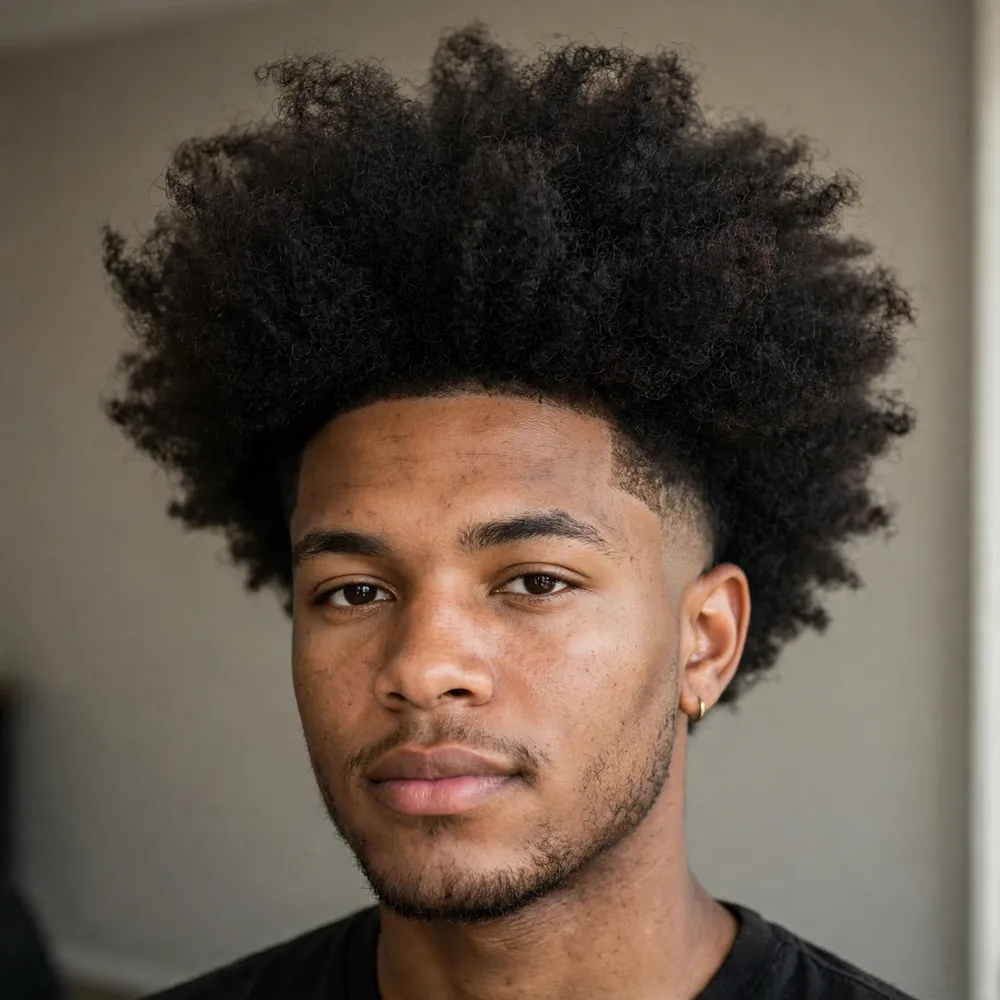
The Afro Blowout takes a full, rounded coily crown and gives it structure with a clean taper around the edges. The result is bold and proud — maximum volume, maximum presence — with the taper keeping the neckline and temples neat so the shape reads intentional rather than overgrown. It suits coily and tightly curled hair types, and it looks particularly strong on oval and diamond face shapes. Ask your barber: “Afro blowout — keep the crown full and round, taper the sides and back, and pick it out to shape.” A wide-tooth pick and light leave-in are your daily tools; heavy waxes weigh the coils down and kill the lift. You’ll want a shape-up every two to three weeks to keep the taper crisp.
8. South of France Blowout
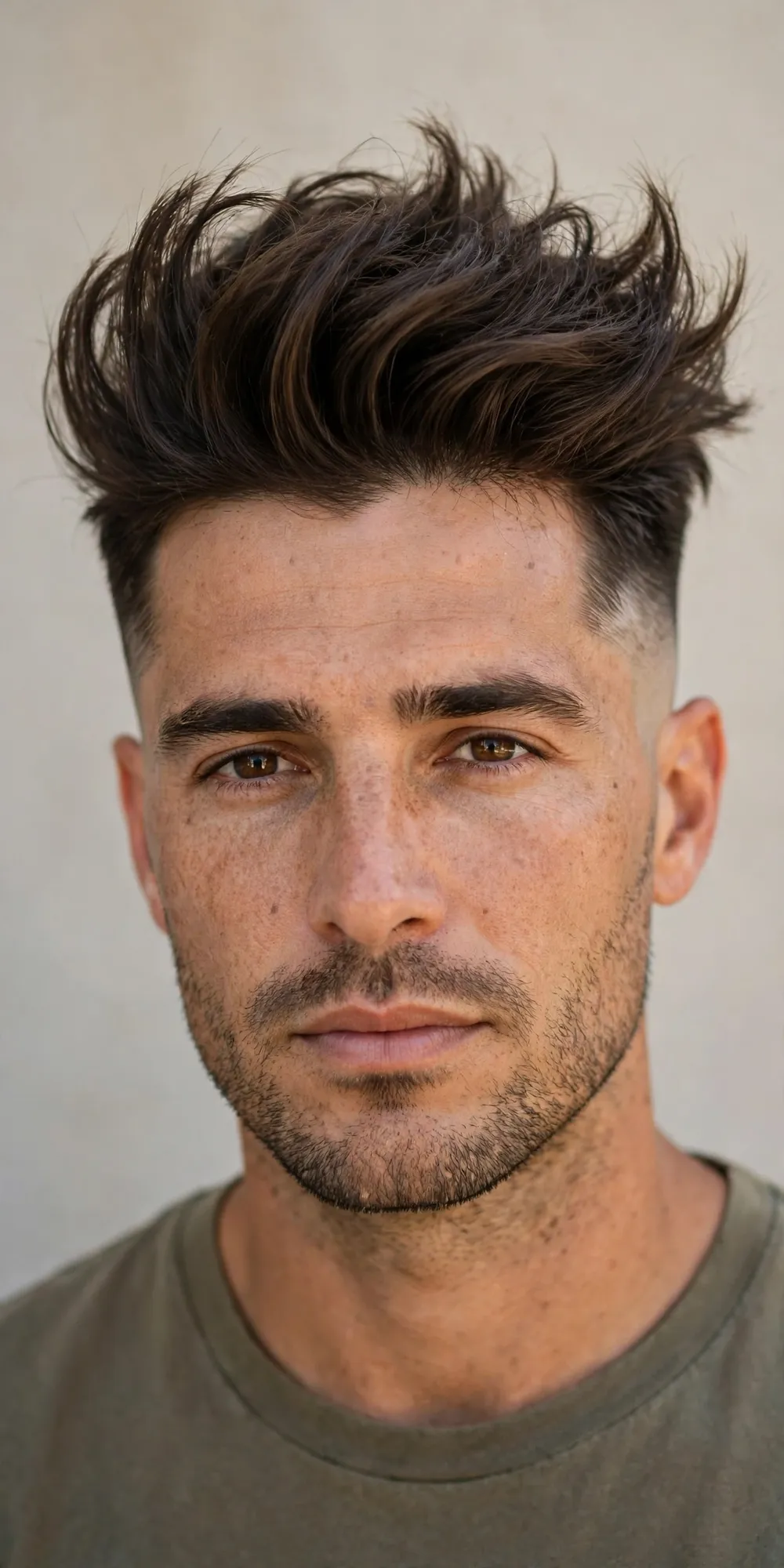
The South of France Blowout is the edgiest cut on this list: a strip of volume running down the centre, flanked by high faded sides — part mohawk attitude, part blowout polish. It works best on straight to wavy hair with enough density to hold the centre strip upright, and it suits oval and oblong faces that can carry the extra height. Ask your barber: “South of France — high fade on the sides, keep the centre strip long and blow it up.” You’ll need a strong-hold pomade or clay and a dryer with a nozzle, working the strip upward in sections. The fade needs touching up every two weeks, and styling takes a solid ten minutes — but for nights out, few styles hit harder.
9. Temp Fade Blowout
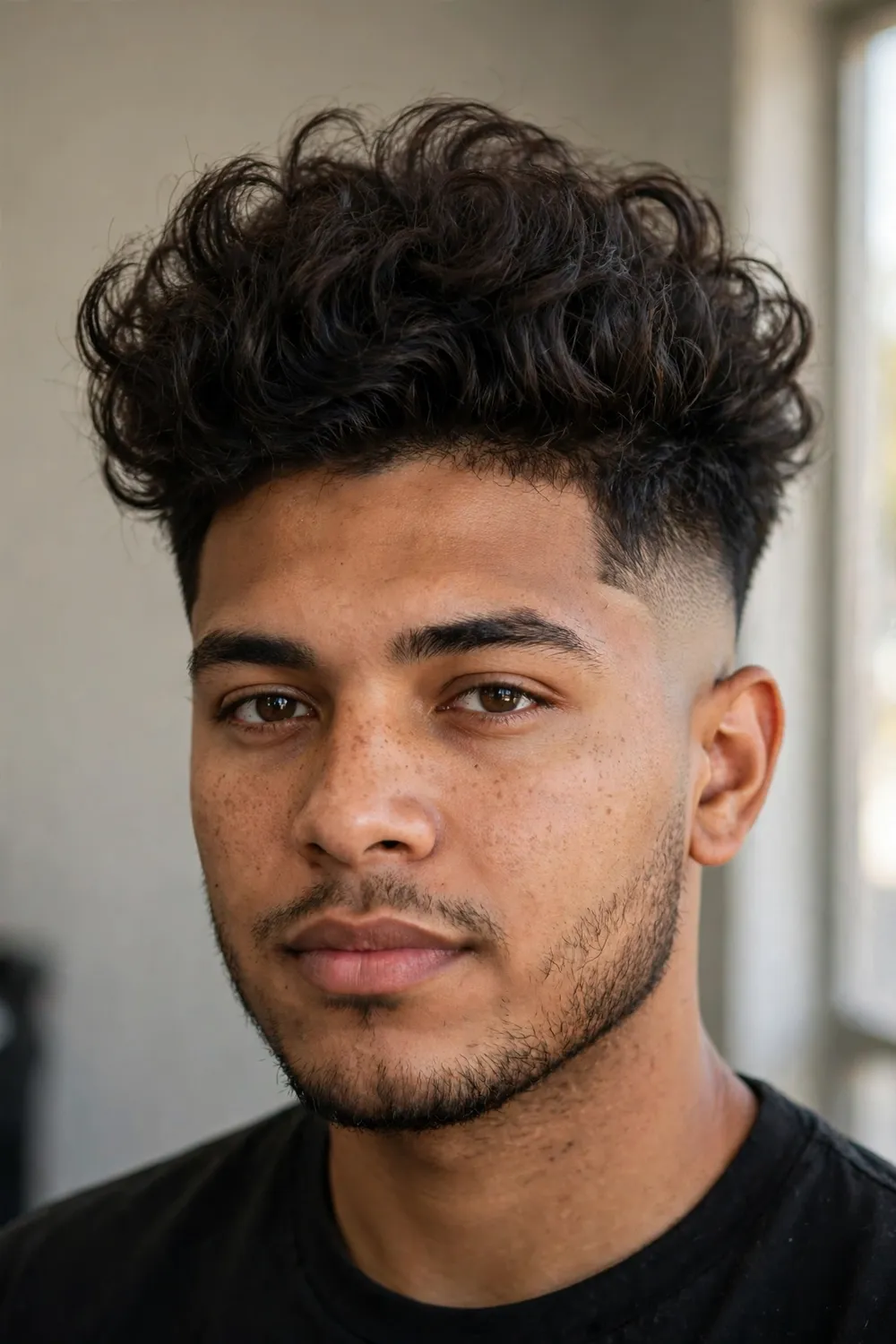
The Temp Fade Blowout — also called a temple fade — pairs a lifted, voluminous top with a fade that only appears around the temples and sideburns, leaving the back fuller. The sharp temple lines frame the face beautifully, which is why this cut photographs so well. It suits straight and wavy hair, and it is a strong choice for round and square faces because the crisp temple edges add structure. Ask your barber: “Blowout on top with a temp fade — sharp at the temples, keep the back natural.” Style it with a medium-hold cream and a round brush, drying the front upward for height. The temple fade blurs quickly, so expect a line-up every two weeks if you want it looking razor-sharp.
10. Messy Blowout
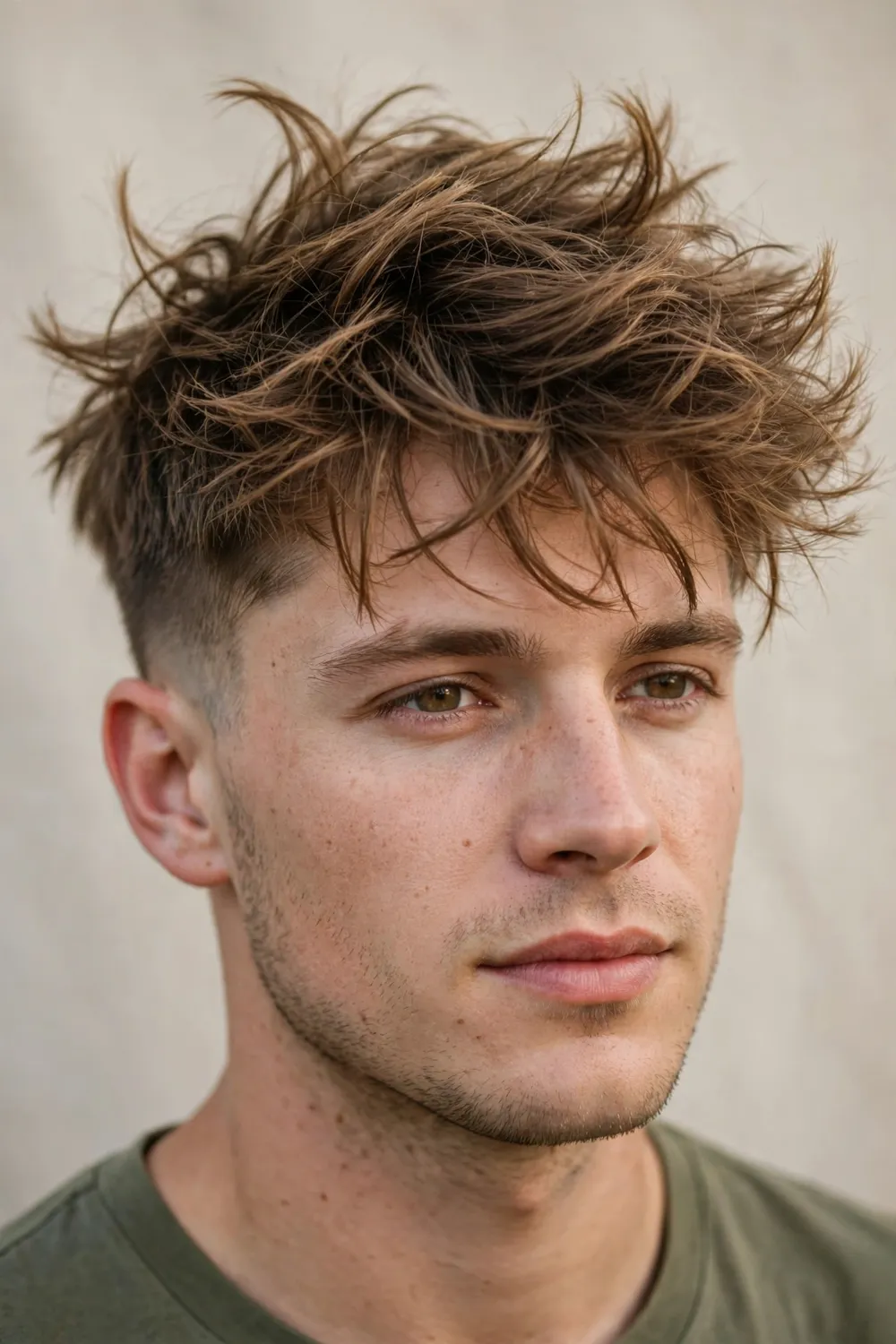
The Messy Blowout is the blowout for guys who want volume without looking like they tried. The top is dried into tousled, uneven lift — no perfect symmetry — while a mid fade keeps the sides tidy enough to still read as a proper haircut. It suits wavy hair best — the natural wave does half the work — and flatters oval and heart-shaped faces. Ask your barber: “Messy blowout — mid fade on the sides, keep the top choppy and dry it tousled, not neat.” Styling is the easiest on this list: sea-salt spray, a quick rough-dry with your fingers, and a dab of matte paste to separate a few strands. It looks better a week grown out, so stretch cuts to four weeks and enjoy the low-effort mornings.
11. Slicked-Back Blowout

The Slicked-Back Blowout is the grown-up of the family: all the volume of a blowout, swept back into a polished, controlled finish. It works brilliantly in offices, at weddings, and anywhere you need to look put-together without looking stiff. It suits straight hair best, since wavy hair will fight the sweep, and it flatters oval and square faces. Ask your barber: “Slicked-back blowout — low taper on the sides, keep five inches on top, and blow it straight back.” Style with a medium-shine pomade combed through damp hair, then dry backward with a vented brush for lift at the roots. The finish holds all day, but it needs a proper wash each night — pomade build-up is real. Trim every three to four weeks to keep the sweep clean.
12. Side Part Blowout
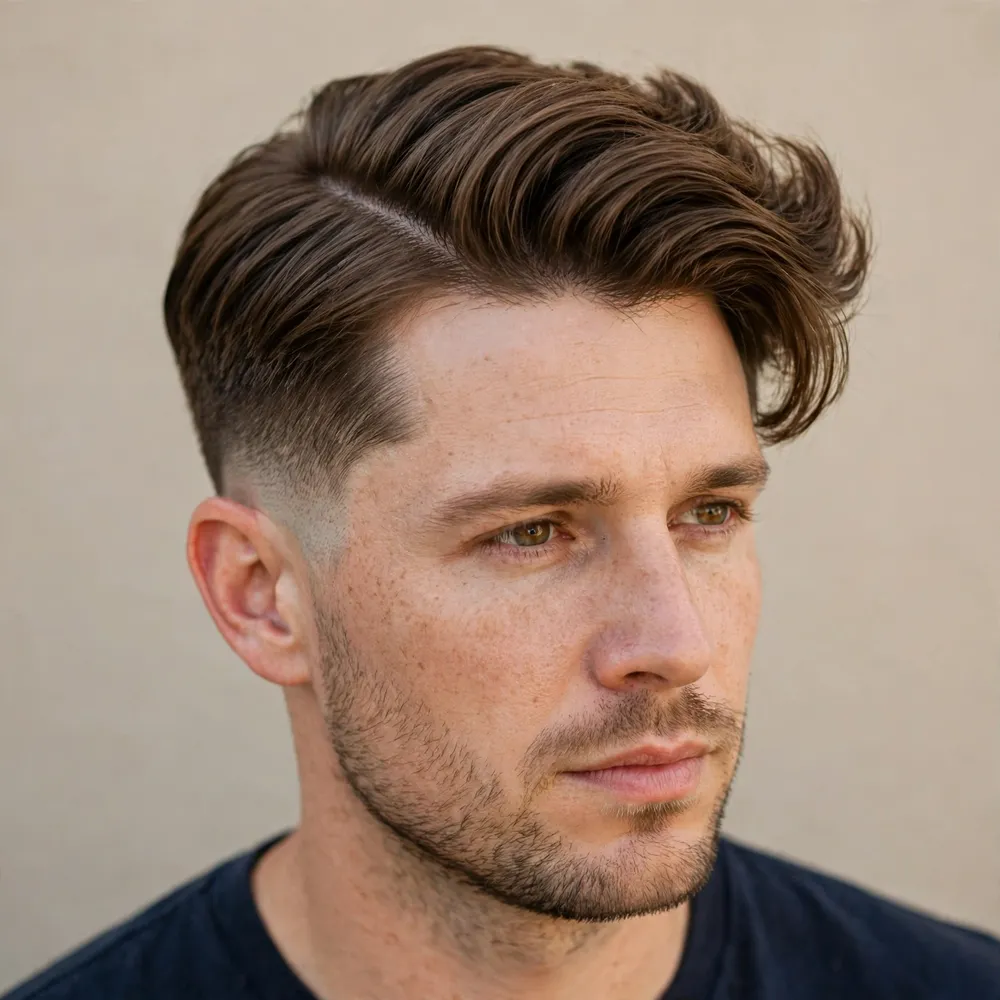
The Side Part Blowout proves a classic part and big volume are not opposites. A defined part runs along one side while the top is blown up and over — structure on one side, height on the other, with a mid fade tying it together. It suits straight and slightly wavy hair, and it is one of the most flattering blowouts for round faces, since the part and the height both lengthen the face. Ask your barber: “Side part blowout — define the part on my natural side, mid fade, and blow the top up and over.” Style it with light-hold cream, a comb for the part line, and a round brush for lift. It holds up well between cuts — four weeks is no problem at all.
13. Blowout with Textured Fringe
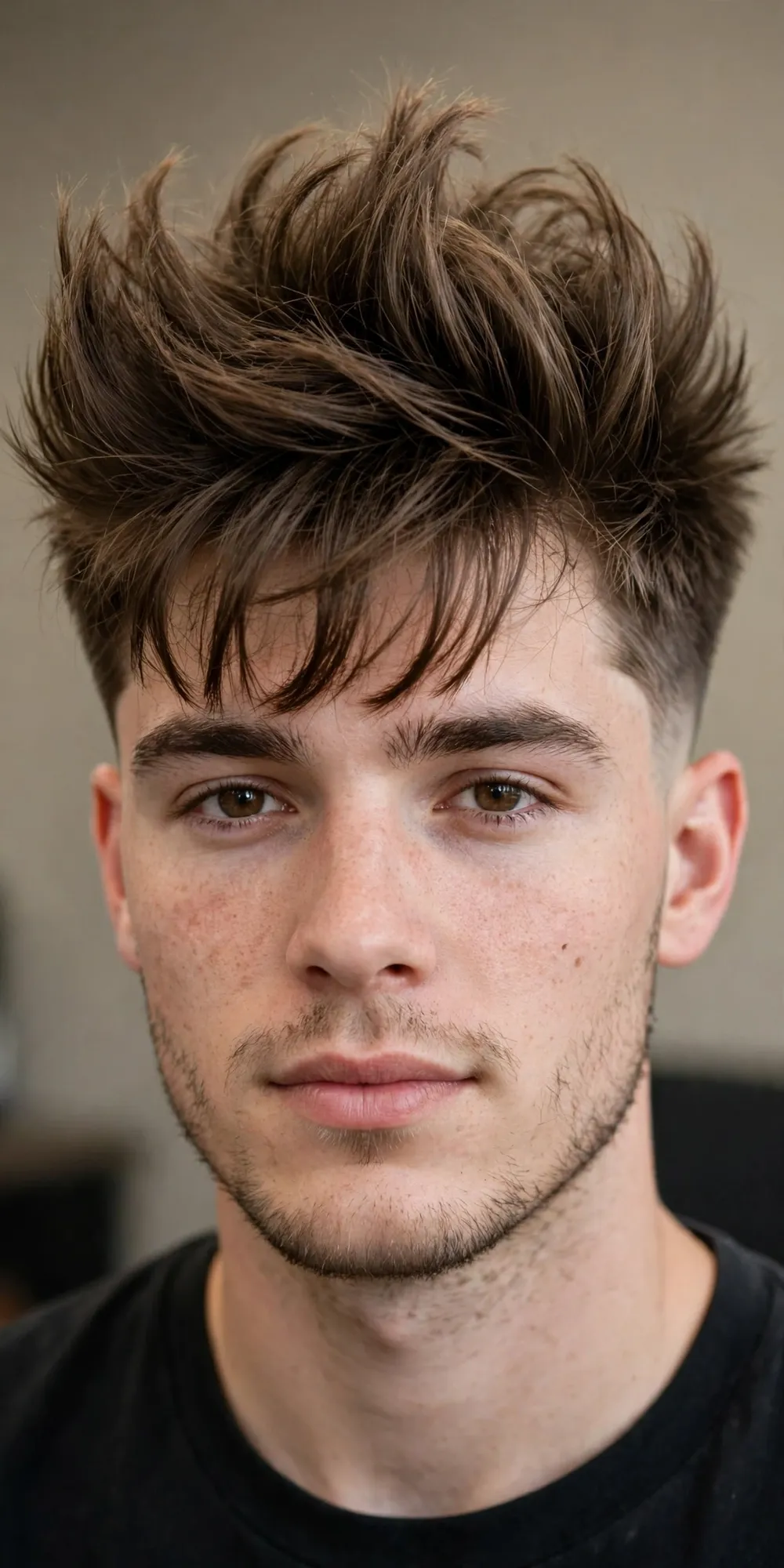
Instead of sweeping everything up and back, the crown volume goes up while a piecey fringe falls forward onto the forehead. The contrast is what makes it interesting — height at the back, texture at the front — and it softens a high forehead or a long face. It suits straight and wavy hair, and it works on oval, oblong, and heart-shaped faces. Ask your barber: “Blowout with a textured fringe — volume up at the crown, point-cut the fringe forward, keep it piecey.” Style the crown with a round brush and the fringe with your fingers and a little matte paste, pushing it forward and slightly aside. The fringe needs trimming every three weeks or it starts poking your eyebrows.
14. Blowout Mullet
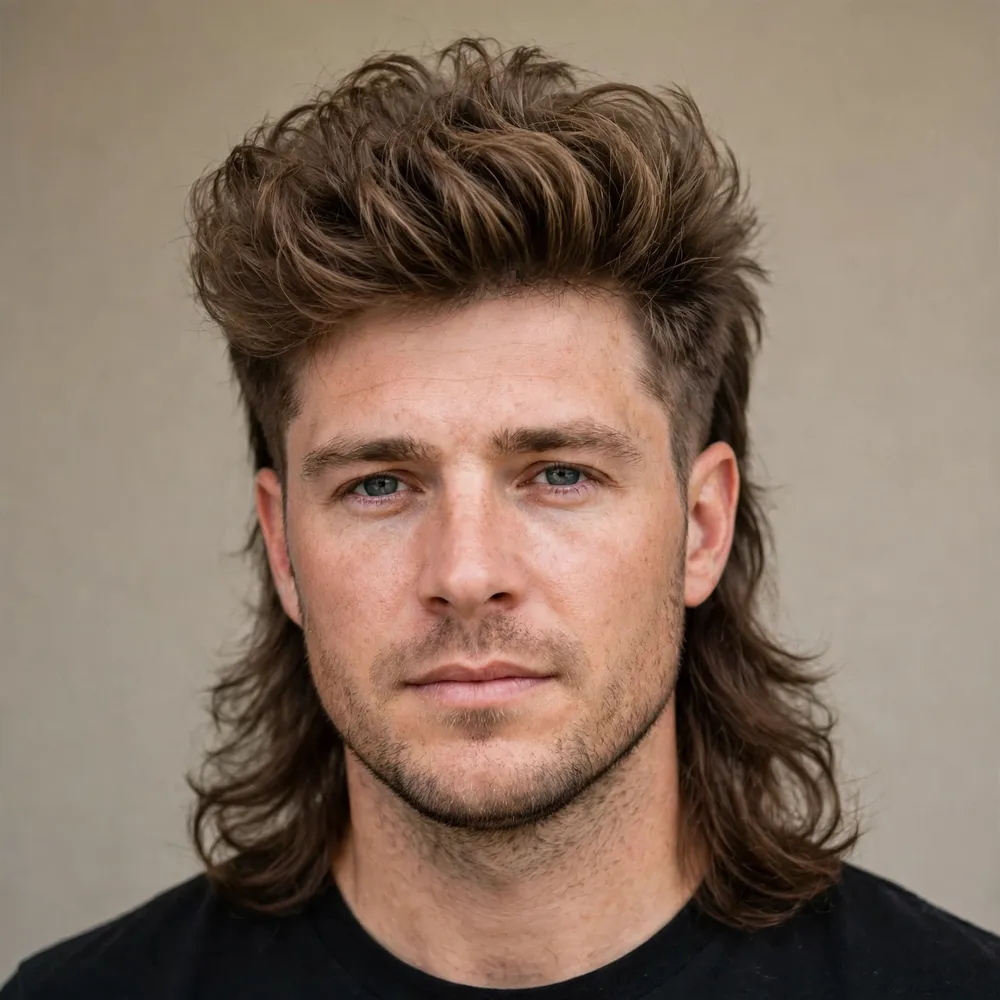
Yes, the mullet is back, and the Blowout Mullet is its best version: big blown-up volume at the front, a clean taper on the sides, and a long, flowing back that moves when you do. It suits guys with thick, wavy hair who actually want to stand out. Round and oval faces carry it well, since the front volume balances the length at the back. Ask your barber: “Blowout mullet — volume up front, taper the sides, and leave the back long and layered.” Style the front with a round brush and matte clay, and let the back air-dry with a touch of leave-in so it stays soft, not stiff. The back grows slowly enough that you can go five weeks between cuts, though the front taper will need attention sooner.
15. Short Blowout

The Short Blowout is the blowout for real life: two inches of volume on top, a low taper, and the lifted look without the morning marathon. It is the easiest blowout here to style — a quick dryer blast, a dab of paste, and you are out the door in three minutes. It suits straight and fine hair, and flatters every face shape because the height is modest. Ask your barber: “Short blowout — two inches on top, low taper, blown up just enough to lift.” Our short haircuts for men roundup has more in the same spirit. Use a light cream, not heavy clay, so the top isn’t weighed down. It grows out well, so three-week cuts keep it crisp.
16. Long Blowout

The Long Blowout is the full drama version: five to six inches of top, blown back into flowing, tall volume with tapered sides keeping the shape grounded. It needs thick hair — fine hair will collapse under its own weight by lunchtime. Oval and oblong faces suit it best, since the length and height balance each other. Ask your barber: “Long blowout — five to six inches on top, tapered sides, and blow it back with a big round brush.” You will need a volumising mousse at the roots, a large round brush, and a light-hold hairspray to lock the shape. Mornings take a full ten minutes, and trims every three to four weeks stop the ends looking straggly. High effort, high reward.
17. Blowout Edgar

The Blowout Edgar pairs a blunt, straight fringe with a voluminous top and a sharp fade, and it has become a genuine phenomenon among younger guys. The fringe sits dead straight across the forehead while the crown is blown upward — a bold geometric contrast that is instantly recognisable. It suits straight, thick hair best — the fringe needs to sit flat and clean — and flatters oval and square faces. Ask your barber: “Edgar blowout — blunt straight fringe, volume on top, and a mid fade with a sharp lineup.” Style the top with a round brush and matte clay, keeping the fringe straight with a flat brush and light-hold cream. The lineup is everything — book every two weeks or the edges go soft and the look loses its edge.
18. Wavy Blowout

The Wavy Blowout lets your natural texture do the heavy lifting. Instead of forcing straight hair into volume, this cut lifts your waves with the dryer into soft, flowing height, with a mid taper on the sides. It suits naturally wavy hair of medium thickness, and it flatters oval, square, and heart-shaped faces. Ask your barber: “Wavy blowout — keep the waves long on top, mid taper, and enhance the wave rather than straightening it.” Style with sea-salt spray on damp hair, diffusing or rough-drying upward, then a tiny amount of cream to tame flyaways. Avoid heavy pomades — they will flatten the wave pattern. Trims every four weeks keep the shape, and this is one of the few blowouts that genuinely looks better on day two.
19. Straight Blowout

The Straight Blowout is precision over chaos: sculpted upward volume, clean lines, a mid fade, and not a strand out of place. It suits guys who like their hair to look deliberate — the kind of cut that still looks sharp in a boardroom at 5pm. It needs straight hair, naturally, and medium to thick density to hold the sculpted shape. Oval and square faces wear it best. Ask your barber: “Straight blowout — sculpt the top upward, clean mid fade, and keep the lines sharp.” Styling is methodical: a round brush, sections dried upward from the roots, and medium-hold pomade smoothed over the surface. Mornings take eight to ten minutes, and you will need a cut every three weeks. It is the most polished blowout here, and it rewards the effort.
20. Blowout Pompadour

The Blowout Pompadour is where the classic pompadour meets modern volume: a tall, swept-up front with a low fade, blown high and shaped back. It suits thick, straight hair that can hold real height, and it flatters round and square faces because the vertical lift lengthens everything. Ask your barber: “Blowout pompadour — tall swept-up front, low fade on the sides, and blow it up and back.” You will want a strong-hold pomade or clay, a round brush, and a final mist of hairspray — this front needs support to survive a full day. Expect ten minutes each morning and a cut every three weeks. It is a lot of hair, a lot of work, and a lot of compliments. Worth it.
21. Blowout Quiff
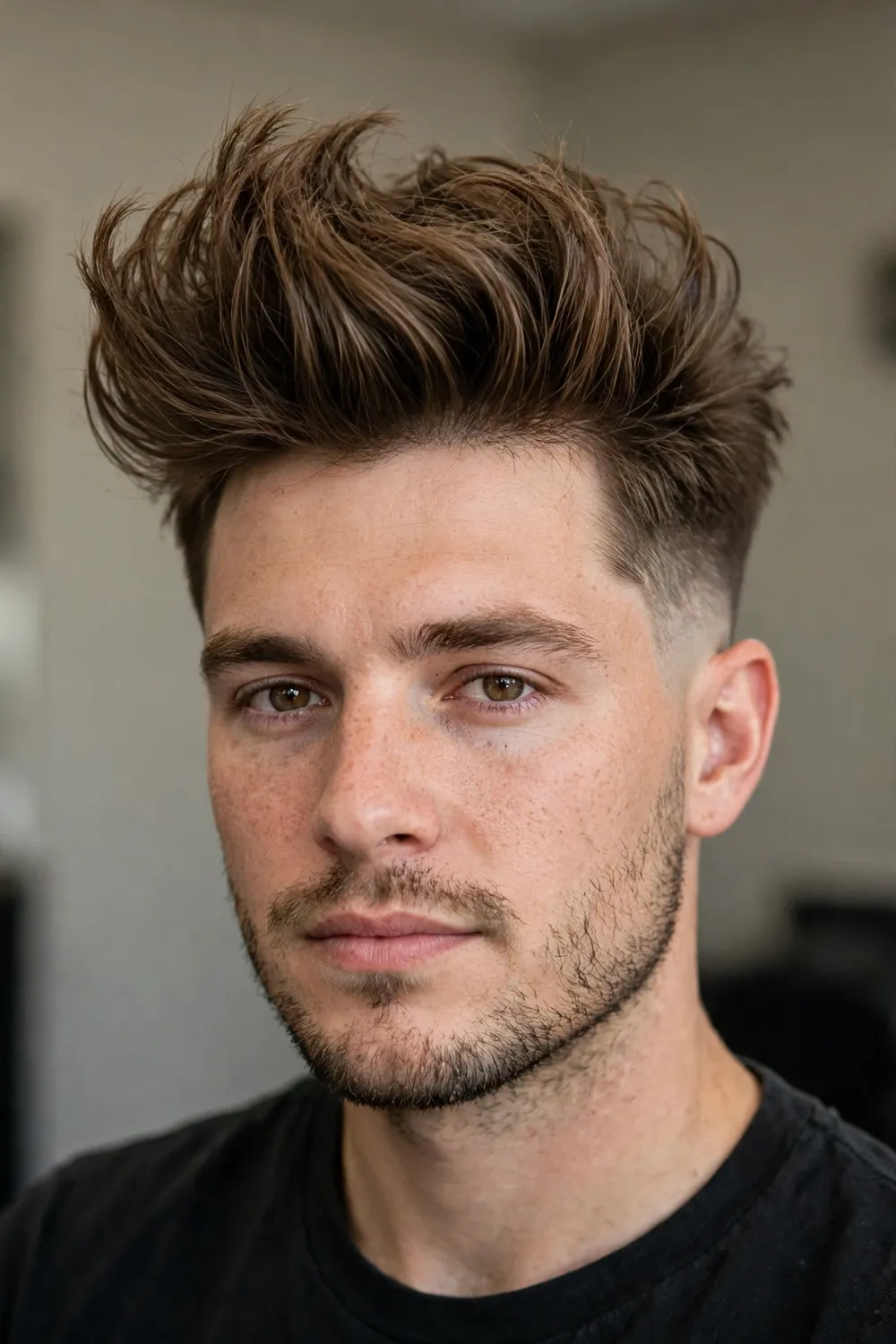
The quiff is the blowout’s show-off cousin, and it works because the front does the talking. Height lifts straight up from the forehead, then flicks back, while the sides stay tight on a mid fade so nothing distracts from the front. It suits oval and square faces best — the vertical lift lengthens a rounder face and balances a strong jaw — and straight to slightly wavy hair holds it with the least fuss. Tell your barber, “Give me a blowout with a quiff front, about three inches long up top, and a mid fade on the sides.” Blow-dry the front up and back with a round brush, then set it with a medium-hold matte clay. It survives a full day easily. Downside: if you skip the dryer, the front collapses into a fringe. Budget five extra minutes each morning.
A quiff like this owes a lot to the classic Quiff Haircut, but the blowout version adds more air and height than a combed-back quiff ever gives.
22. Blowout with a Beard

Volume on top and a full beard is one of the best-balanced looks a man can wear, because the hair on top and the hair on the face frame each other. The blowout gives you lift and shape up top; a shaped, conditioned beard anchors the bottom half so the head doesn’t look top-heavy. It works on most face shapes — the beard adds width where you need it — and thick or wavy hair fills out both halves beautifully. Ask your barber, “Blowout on top with a mid fade, and shape my beard to match — keep the cheek line natural and taper the neck.” Use beard oil daily and a light matte paste up top. The catch is upkeep: beard and hair grow at different rates, so a tidy-up every two weeks keeps the whole thing looking intentional rather than accidental.
23. Blowout with Line Design
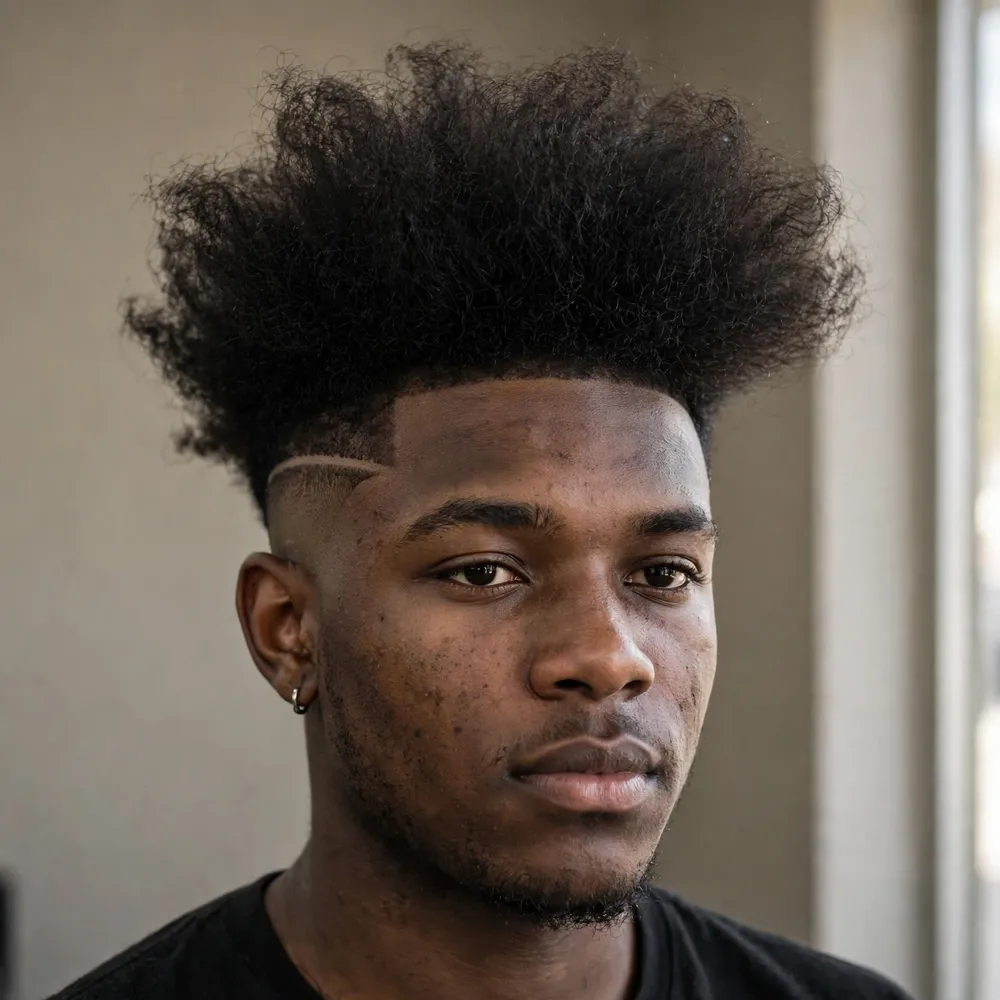
A line design is where the blowout stops being a haircut and starts being a statement. One or two crisp shaved lines are carved into the fade — usually above the temple or sweeping back from the hairline — while the voluminous top stays completely classic. It suits guys who already like a sharp fade and aren’t afraid of attention; it looks best on darker hair, where the shaved line shows up clearly against the fade. Tell your barber, “Blowout on top, mid fade, and cut one clean line from the front hairline back past the temple.” Style the top exactly like a normal blowout: dryer, round brush, matte paste. Fair warning — the design grows out in about a week and a half, so you’ll want the barber to re-carve it at your next visit or accept it fading into the blend.
24. Blowout Curtains

Curtains are back, and the blowout version is the grown-up way to wear them. A centre part splits the top into two sweeping panels that frame the face, blown outward and back for real volume instead of the flat, stringy curtains of the nineties. This one flatters oval, heart and diamond faces — the part and the side sweep soften a wide forehead and balance a narrow chin — and it needs medium-length hair on top, at least four inches, with a bit of natural wave helping. Say to your barber, “Blowout curtains — keep four inches on top with a centre part, and a low taper on the sides.” Blow-dry each side away from the part with a round brush, finish with a light cream. It looks effortless, but the part needs training; the first week, your hair will fight it.
25. Blowout Wolf Cut

The wolf cut takes the blowout’s volume and gives it attitude — choppy layers, shaggy texture, a slightly wild silhouette that still sits on clean tapered sides. The top is layered short to long, blown out for lift, and the ends are left piecey rather than polished. It suits thick or wavy hair best, because the layers need weight to move; on fine hair it can look thin. Oval and oblong faces carry it well, since the mess adds width where a long face needs it. Ask for, “A blowout wolf cut — heavy layers on top, keep the length messy, and a clean taper on the sides.” Style with sea-salt spray on damp hair, rough-dry it, then a pinch of matte paste on the ends. Honest note: it’s a high-personality cut, and it looks best slightly lived-in — day two is often better than day one.
26. Blowout with Highlights
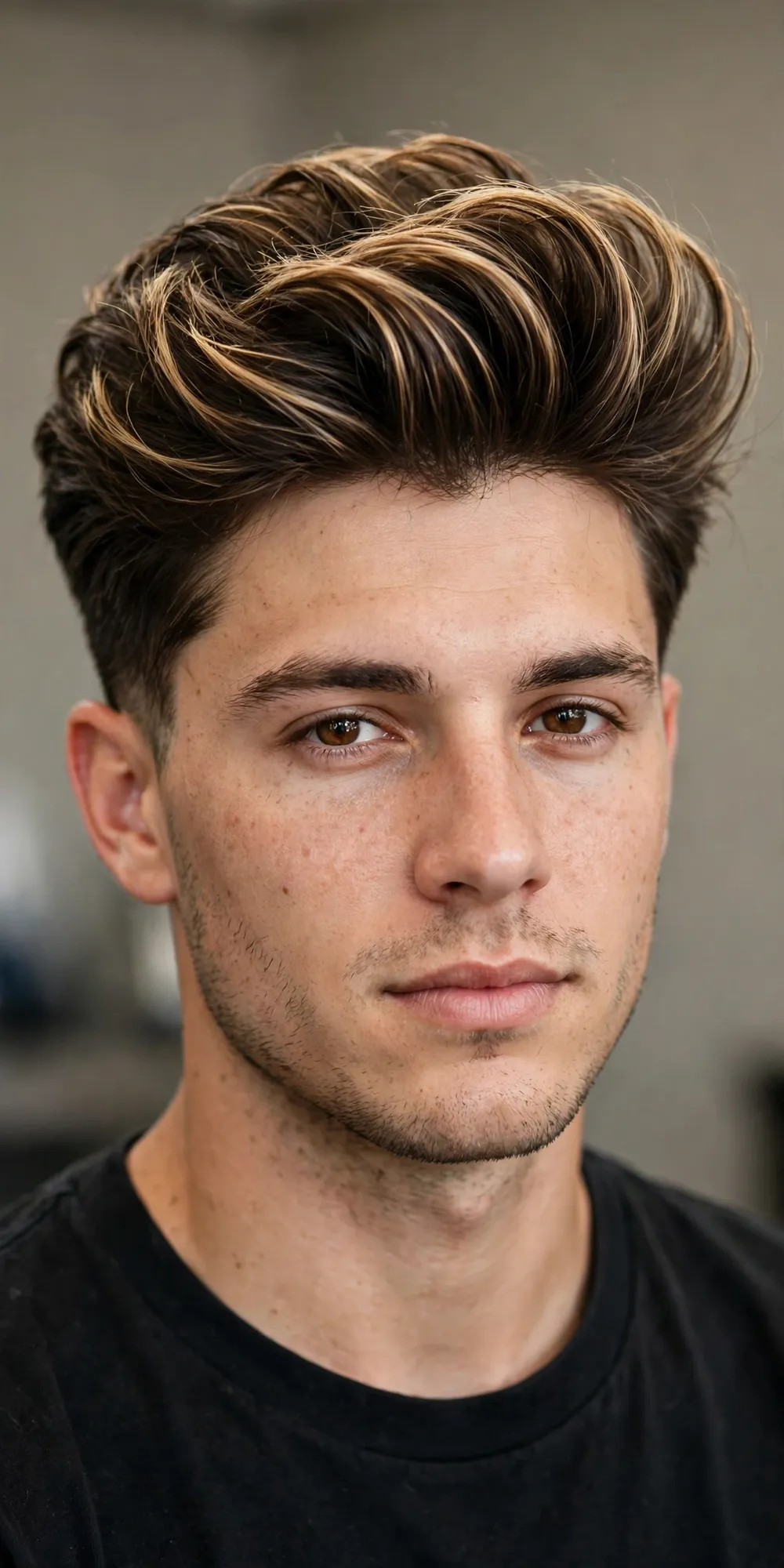
Highlights and a blowout are a natural pairing because volume shows off dimension. A few sun-kissed strands woven through the top catch the light every time the hair moves, and the blow-dry makes the colour variation obvious instead of flat. It works on any base colour — caramel on dark brown, honey on black, ash on medium brown — and suits guys who want a change without committing to full colour. Ask your barber or colourist, “Blowout on top, and add subtle balayage highlights through the crown — nothing stripey, just sun-kissed.” Blow-dry as usual and use a colour-safe shampoo so the tone doesn’t go brassy. The trade-off is cost and upkeep: highlights need a refresh every six to eight weeks, and the hair will need a little more conditioning than before.
27. Fine-Hair Blowout

Fine hair is where the blowout earns its reputation, because a good blow-dry can make thin hair look twice as thick. The trick is lightweight everything: a volumising mousse at the roots, a dryer on medium heat, and a round brush lifting small sections up and away from the scalp. The cut itself stays short on top — two to two-and-a-half inches — with a low taper, because too much length just pulls fine hair flat. It suits any face shape, honestly; the benefit is universal. Tell your barber, “Blowout for fine hair — keep it short on top, low taper, and texturise the ends so it doesn’t clump.” Avoid heavy waxes and oils entirely; a light volumising powder at the roots is your best friend. The honest catch: fine hair drops faster, so expect to re-fluff it with your fingers by the afternoon.
28. Thick-Hair Blowout
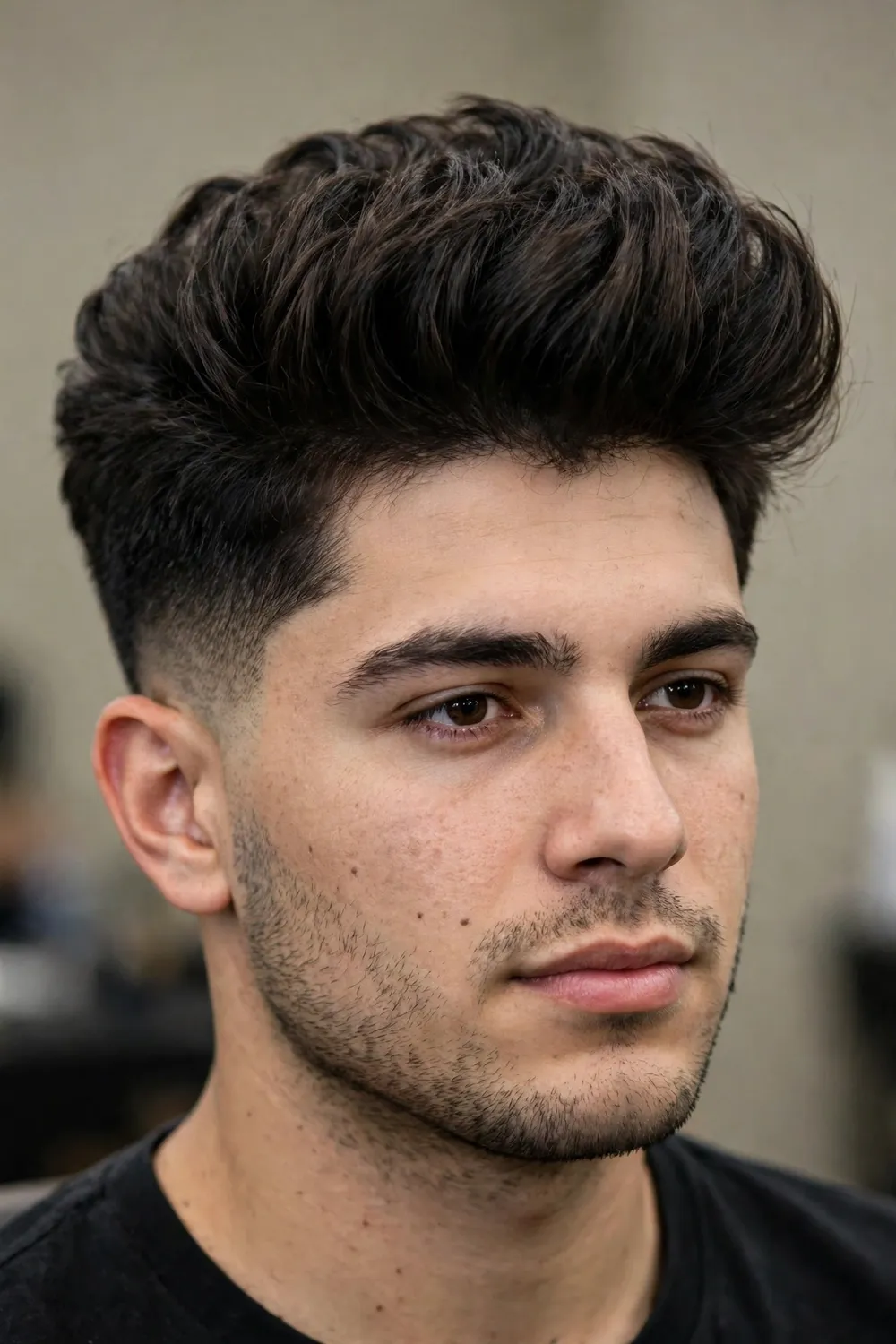
Thick hair and a blowout are a match made in heaven — the density gives you volume for free, and the dryer turns raw bulk into shape. The danger is that it can turn into a helmet, so the cut matters: your barber should thin the interior with texturising shears, keep three to four inches on top, and run a mid fade to take weight off the sides. It suits square and oval faces particularly well, since the height balances a wide jaw. Ask, “Blowout for thick hair — thin it out underneath, keep the top long enough to blow back, mid fade on the sides.” Use a strong-hold matte clay to control it and a boar-bristle brush to smooth the bulk. Maintenance is the easy part: thick hair holds a blowout for days. The hard part is the morning — a full blow-dry takes a solid ten minutes on this much hair.
29. Spiky Blowout
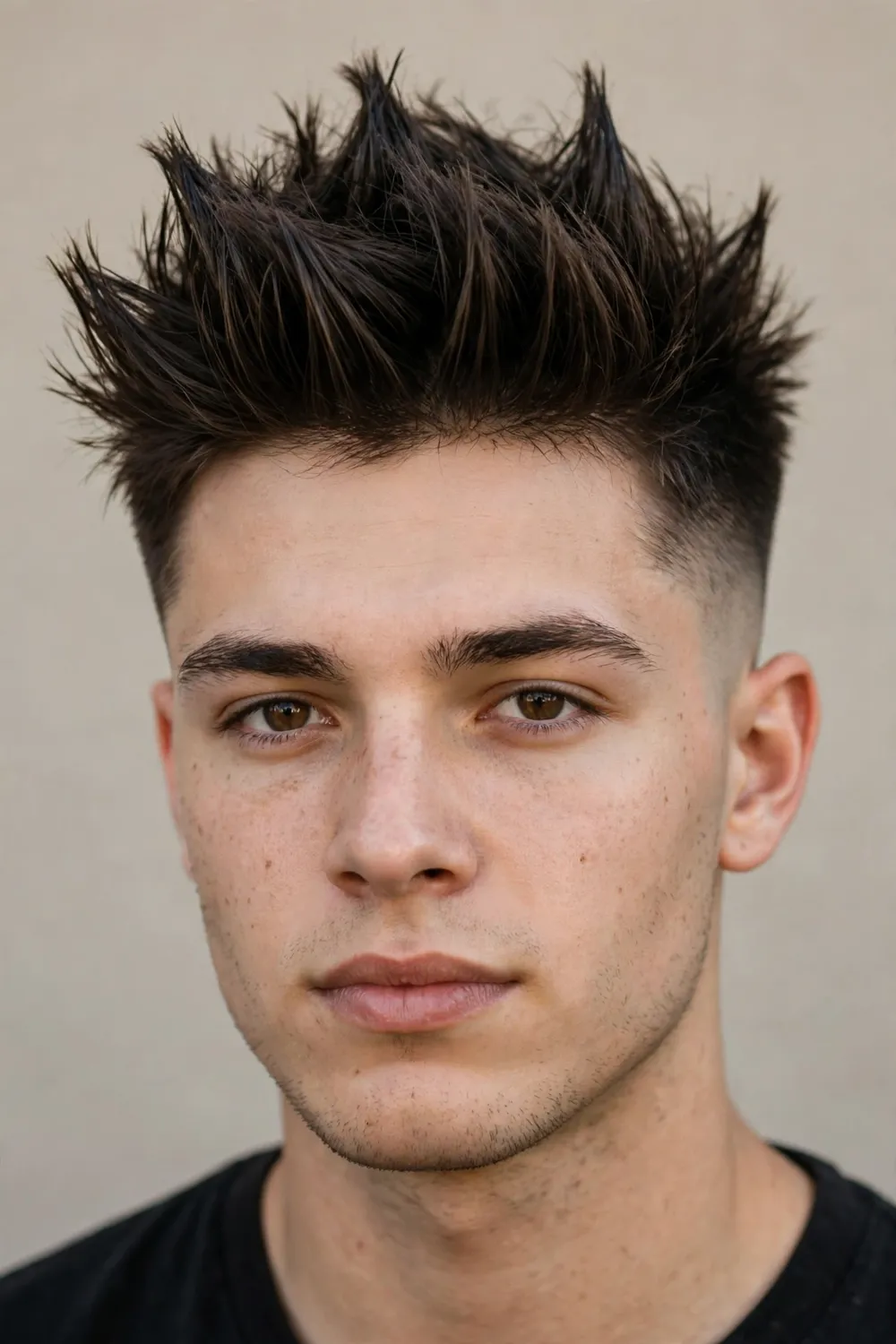
The spiky blowout is the blowout for guys who like an edge. Instead of smooth, rounded volume, the top is dried upward into defined, separated spikes, while the sides go down to a skin fade so the contrast is sharp. It suits younger guys and anyone with a round face — the upward spikes add height and length — and straight or slightly wavy hair spikes up most easily. Tell your barber, “Spiky blowout — two to three inches on top, textured so it separates, and a skin fade on the sides.” Blow-dry the top straight up with a vented brush, then work a strong-hold fibre or wax through the ends, twisting each spike into place. It holds all day once it’s set. One warning: go easy on the product. Too much wax and the spikes clump into one solid chunk.
30. Blowout with Drop Fade
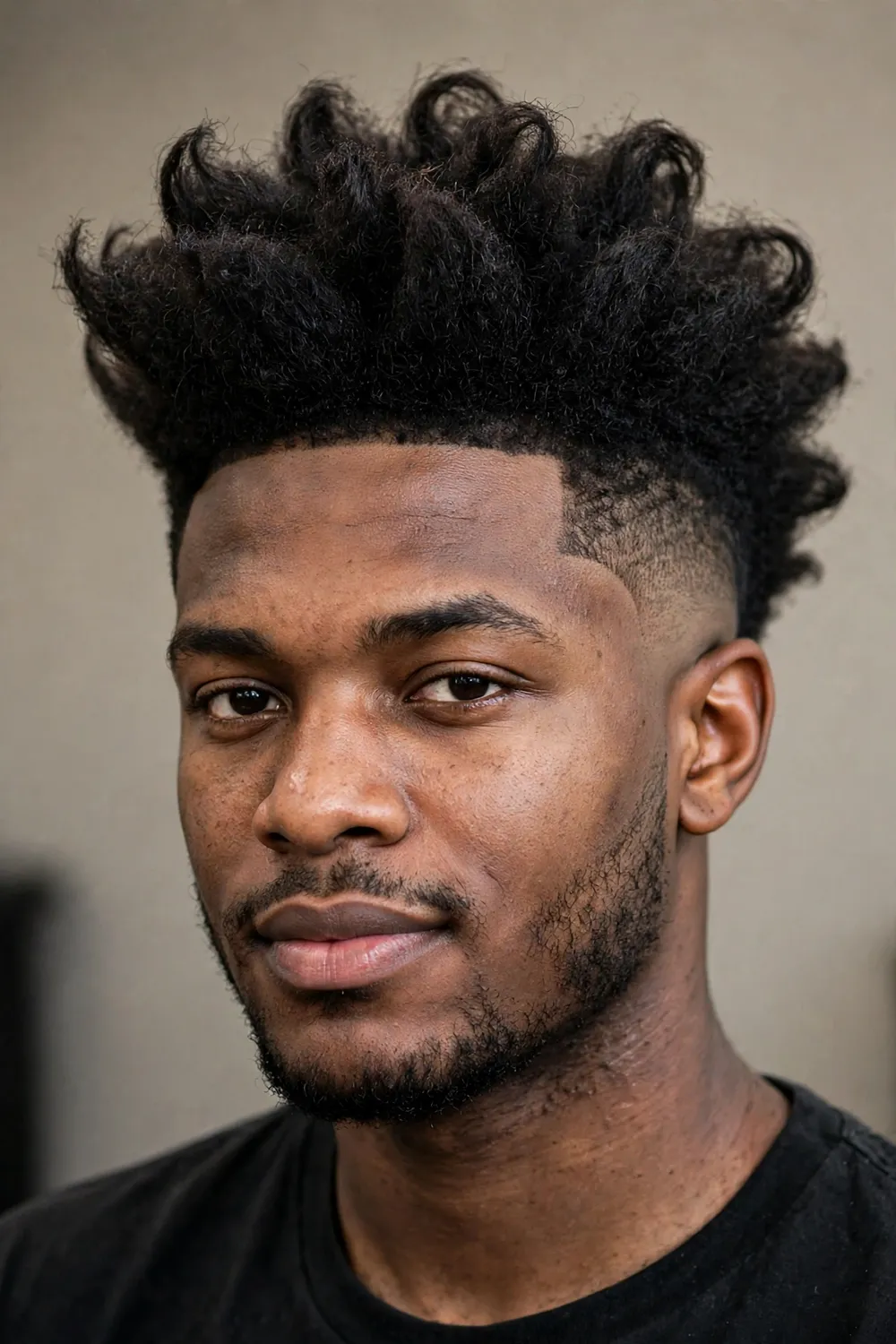
The drop fade is the blowout’s most flattering fade, because the fade line curves down behind the ear instead of running straight around the head. That curve follows the shape of your skull, which makes the whole cut look custom — and it leaves more length at the back, so the blowout’s volume flows naturally into the neckline. It suits round and square faces well; the curved line softens a strong jaw and adds structure to a soft one. Ask your barber, “Blowout on top, and a drop fade — bring the fade down behind the ear and blend it low at the back.” Style the top like any classic blowout: round brush, medium heat, matte paste. The blend needs a skilled hand, so this isn’t the cut to cheap out on — a bad drop fade shows. Book a barber who does fades every day.
31. Mid Blowout Taper
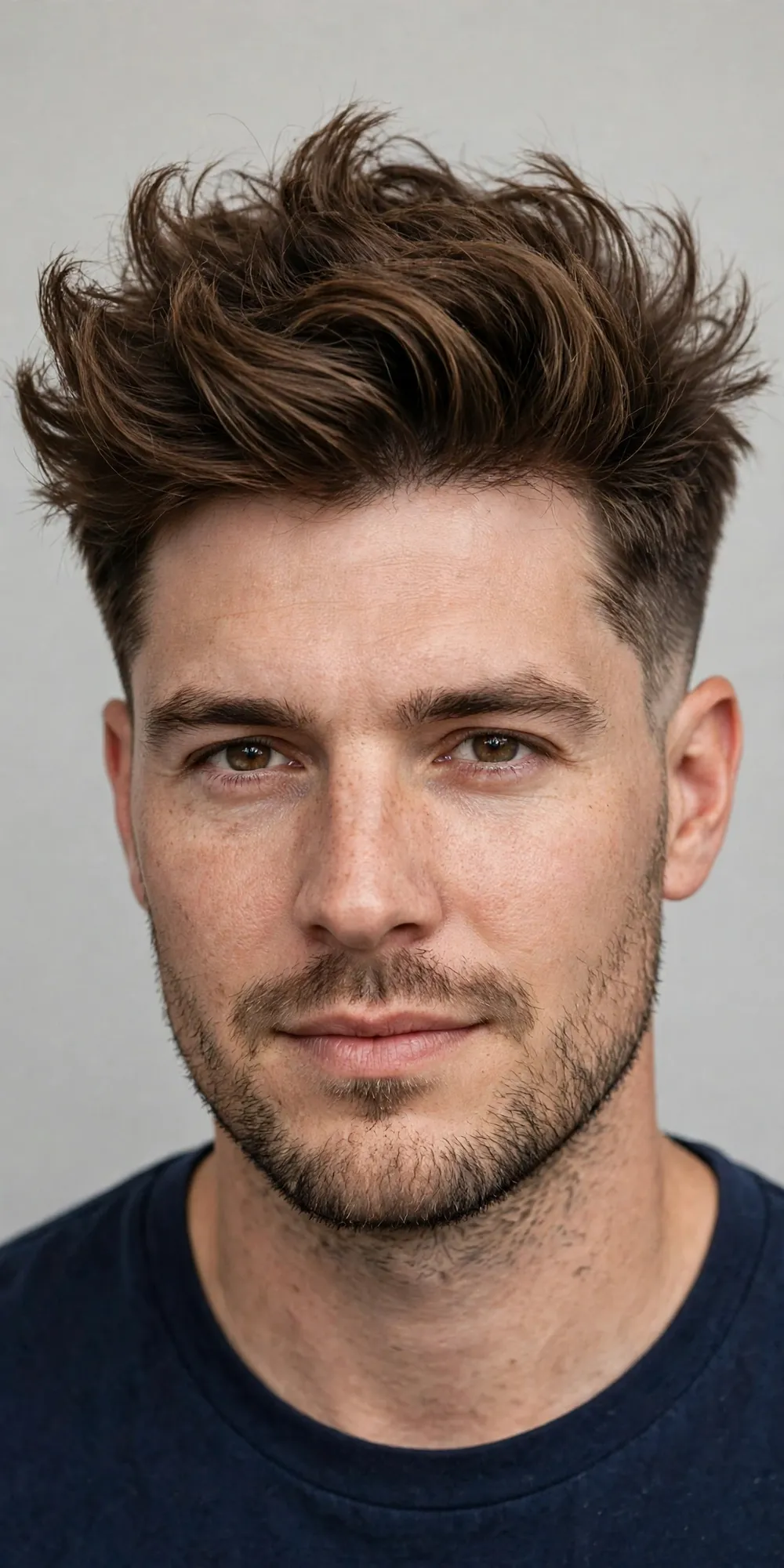
The mid blowout taper is the Goldilocks of the taper family — not as subtle as a low taper, not as bold as a high one. The taper starts halfway up the side of the head, giving you a clean, balanced shape that works in an office and at a wedding. It’s the safest choice in this whole list if you only get one blowout and want it to work everywhere. It suits every face shape, genuinely, and every hair type from straight to wavy. Ask your barber, “Blowout with a mid taper — start the taper halfway up the sides and keep it gradual, no hard line.” Blow-dry the top up and back with a round brush, finish with a medium-hold cream for a natural shine. Maintenance is forgiving: the gradual blend grows out gracefully, so you can stretch a visit to three or four weeks without it looking scruffy.
32. Side-Swept Blowout Taper

Side-swept is the blowout for guys who like their hair to look styled without looking like they tried. The top is blown up and over to one side in a smooth, continuous sweep, and the taper underneath stays clean and gradual. It flatters round and square faces — the diagonal line breaks up width — and it works best on straight or wavy hair that naturally falls to one side. Tell your barber, “Side-swept blowout taper — leave three inches on top swept to the side, and a mid taper underneath.” Dry it with a round brush, directing everything to your chosen side, and finish with a light pomade for a soft sheen. The sweep needs a consistent part, so pick your side and stick with it; switching sides midweek just confuses your hair. It’s one of the easiest blowouts to maintain day to day.
33. Angular Fringe Blowout Taper

The angular fringe is the edgy one in the taper family. A diagonal fringe cuts across the forehead at a sharp angle while the crown behind it is blown up for volume, and the taper keeps the sides immaculate. It suits guys with a high forehead or a long face — the diagonal line shortens the forehead visually — and straight hair holds the sharp angle best. Ask your barber, “Angular fringe blowout taper — cut the fringe diagonally across the forehead, blow the crown up behind it, taper on the sides.” Blow-dry the fringe forward and slightly to the side with a flat brush, then use a matte paste to keep the angle crisp. It looks sharp, but it needs daily attention: the fringe is the whole point, so if you skip styling, the cut loses its shape fast. Keep a small comb in your pocket.
34. Shadow Blowout Taper
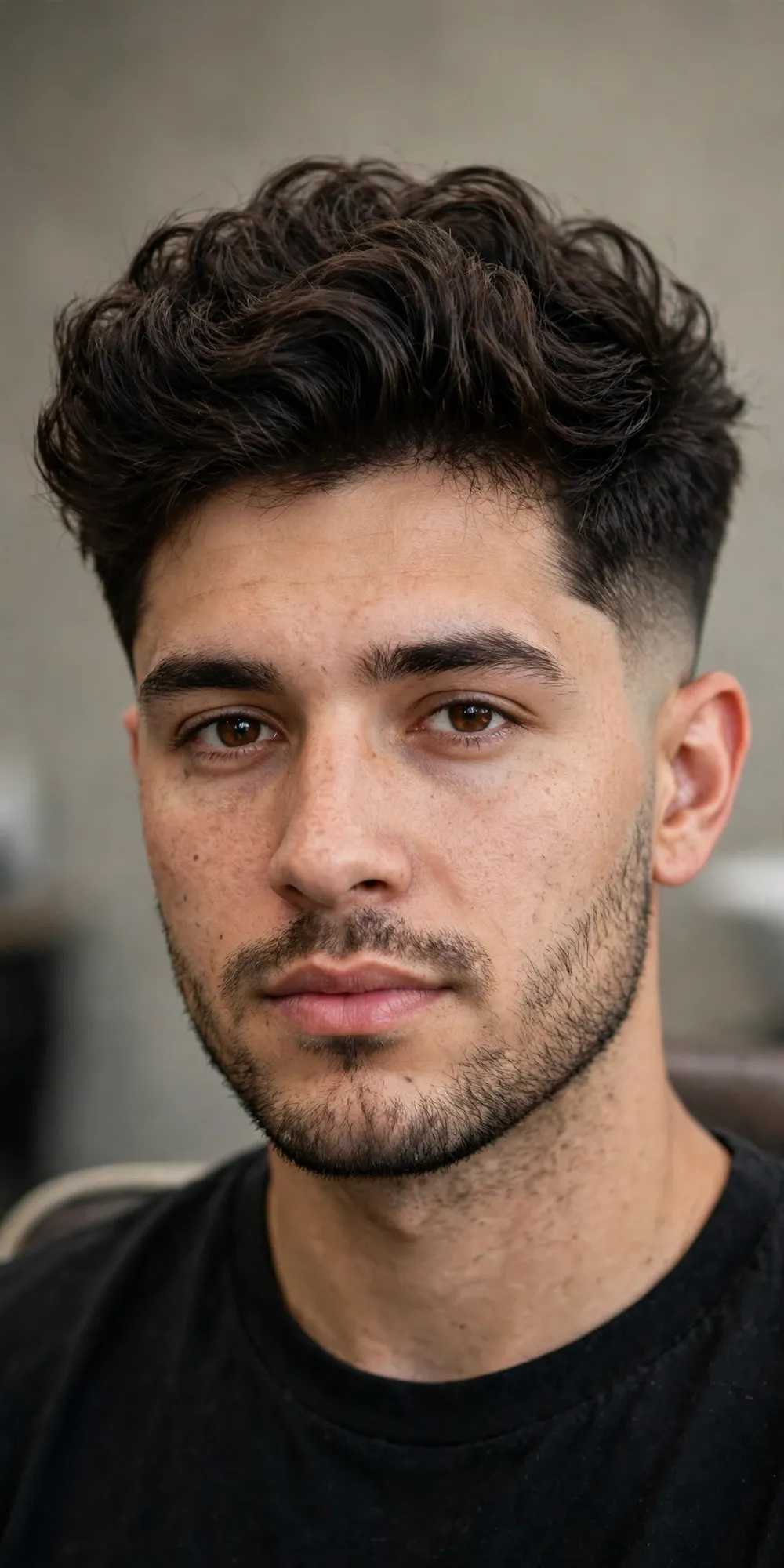
The shadow taper is the quiet achiever of this list. Instead of a hard fade line, the sides blend in a soft gradient — dark to light so gradually that you can’t see where one length ends and the next begins. The top gets the full blowout treatment, big and airy, and the contrast between the soft sides and the bold top is what makes it work. It suits anyone who wants a fade without the maintenance, and it’s kind to guys with lighter hair, where hard fade lines can look patchy. Tell your barber, “Shadow blowout taper — blend the sides in a soft gradient, no harsh line, and keep the top big.” Style the top with a dryer and round brush, a dab of matte clay. The gradient grows out beautifully, so this is the lowest-maintenance fade on the list — easily four weeks between visits.
35. Skin Blowout Taper
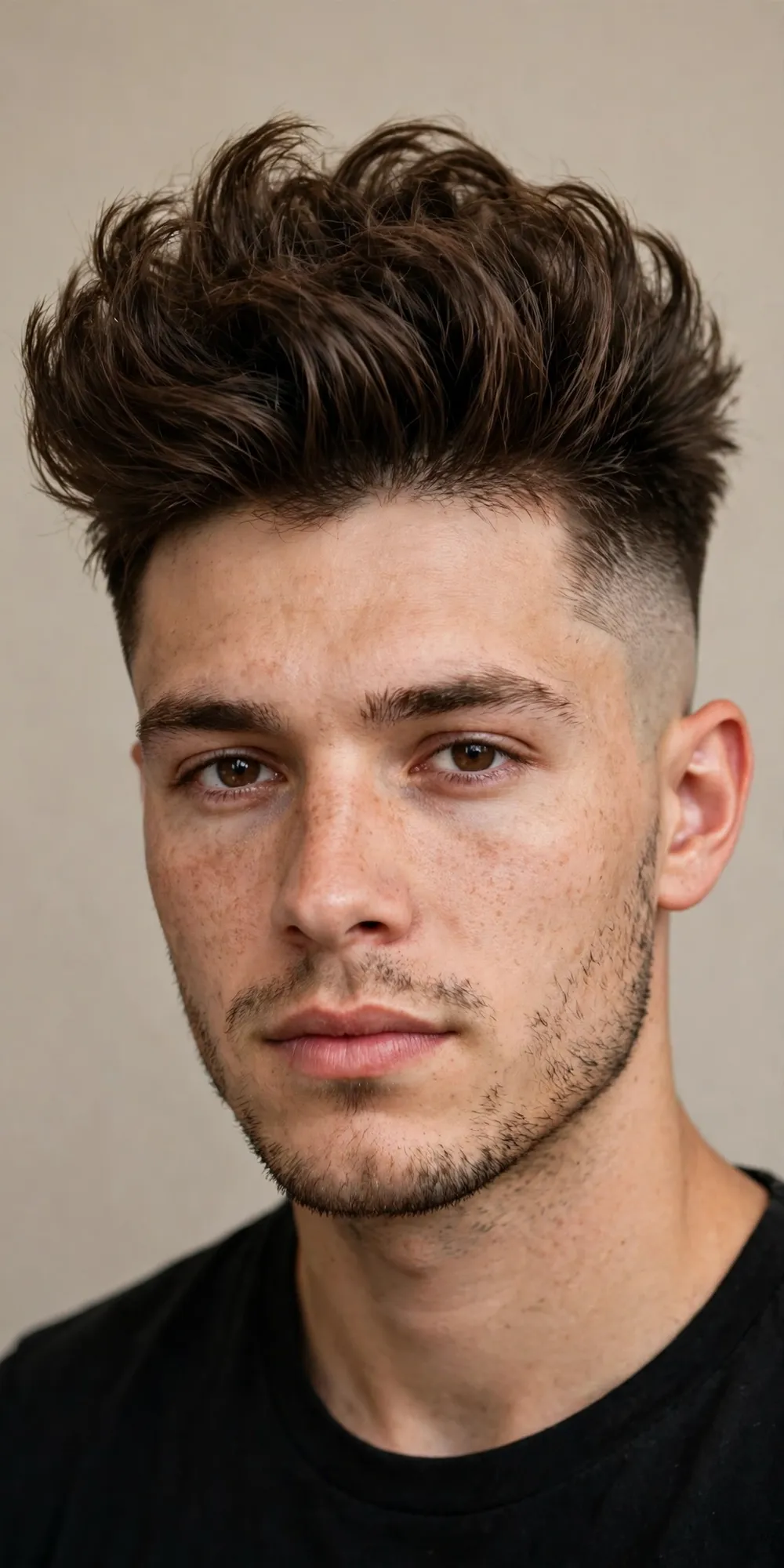
The skin taper is the boldest taper here, and it makes the blowout look enormous by contrast. The sides are taken right down to the skin, fading up into the voluminous top, so the difference between the shortest and longest hair on your head is dramatic. It suits oval and square faces, and it looks best on darker hair where the skin-to-hair gradient is most visible. Ask your barber, “Skin blowout taper — take the edges to skin, blend up fast, and keep the top long for the blowout.” Blow-dry the top up and back, set it with a strong-hold matte product so the volume survives the day. The trade-off is upkeep: the skin fade shows growth in days, not weeks, so you’ll need a tidy-up every ten days or so if you want to keep it razor sharp. But while it’s fresh, nothing looks cleaner.
36. Professional Blowout Taper

The professional taper is the blowout you can wear to a board meeting. The volume is there — this is still a blowout — but it’s controlled, neat, and combed into place rather than left wild, with a low taper that reads as tidy from every angle. It suits every face shape and is the best choice if your workplace has an unspoken dress code for hair. Tell your barber, “Professional blowout taper — neat volume on top, low taper, nothing too high or too sharp.” Blow-dry with a round brush, then smooth it into place with a light cream or a classic pomade for a subtle shine. Maintenance is easy: it grows out gracefully and a quick comb in the morning is often enough. The only risk is going too safe — if your barber takes too much off the top, you lose the blowout entirely and end up with a regular side part.
37. Faux Hawk Blowout Taper

The faux hawk blowout taper takes the centre-strip idea and gives it volume instead of spikes. The hair down the middle of the head is blown up high and slightly forward, while the sides taper down cleanly — no shaved sides, no drama, just a bold centre ridge. It suits oval and oblong faces, where the extra height is flattering, and thick or wavy hair holds the ridge best. Ask your barber, “Faux hawk blowout taper — keep a wide strip down the centre, blow it up, and taper the sides down to the skin.” Dry the centre strip upward with a round brush, then use a strong-hold fibre to push it slightly forward. It’s a statement cut, no doubt — you’ll get comments. But it’s also surprisingly wearable, because the taper keeps it from tipping into costume territory. Great for a night out, still fine for the office if you tone the product down.
38. Blowout Taper with Hard Part

The hard part is a razor-sharp line shaved into the side of the head, and paired with a blowout taper it turns an everyday cut into something precise. The top is blown up and over, away from the part, so the line becomes the anchor for the whole style. It suits guys who like structure — square and oval faces especially — and straight hair shows the part most clearly. Tell your barber, “Blowout taper with a hard part — shave a clean part line on the left side, blow the top over to the right, taper underneath.” Blow-dry away from the part with a round brush, finish with a medium-hold pomade for a polished look. The line needs re-shaving every week or two to stay crisp, so factor that into your routine. When it’s fresh, though, the precision is unmatched — it looks like the cut was drawn on.
39. Grey Blowout Taper
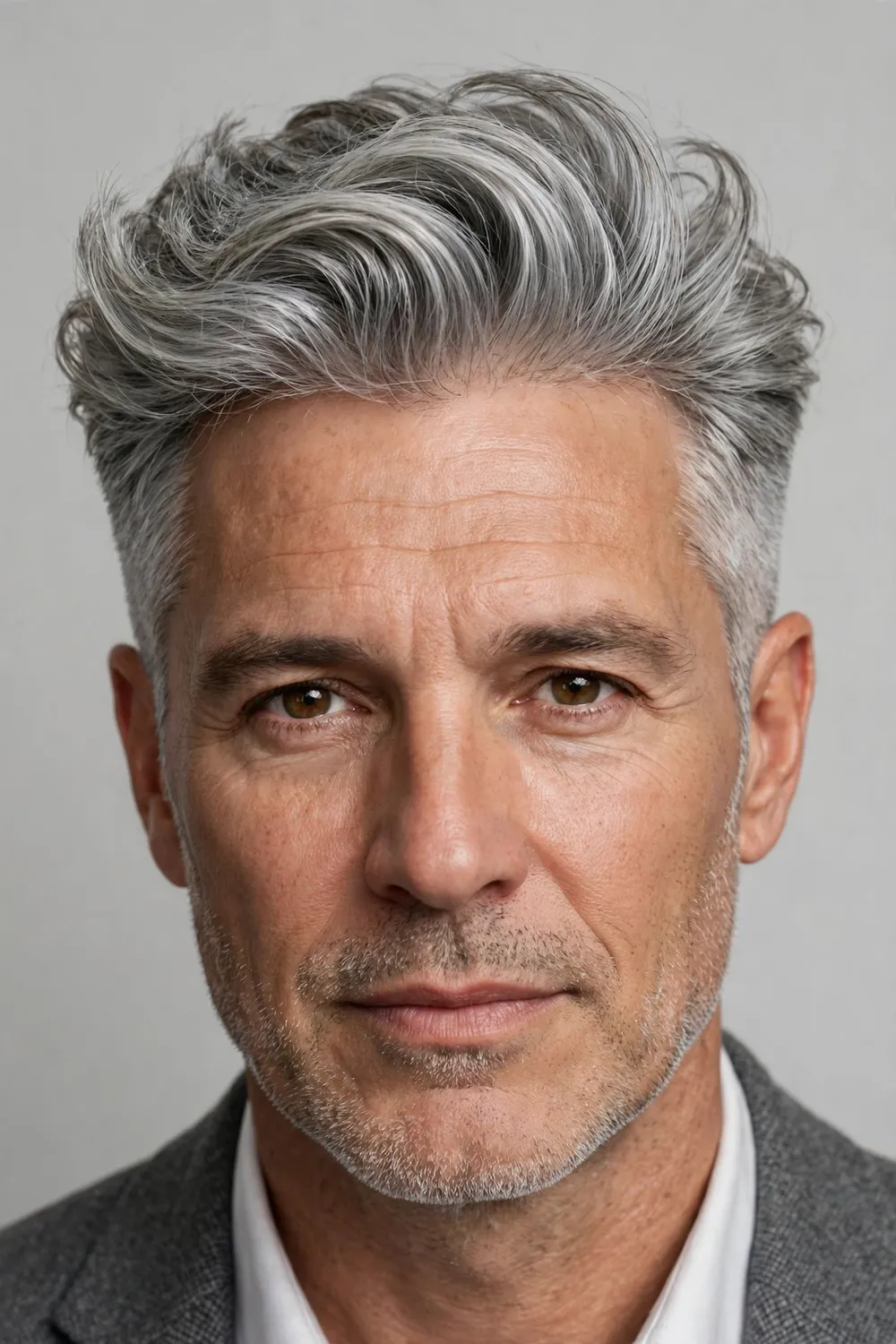
Grey hair and a blowout are a combination most men never consider, and that’s a shame, because silver hair shows volume and texture better than any other colour. The grey catches the light in the lifted top, and the taper keeps the whole thing sharp and modern rather than ageing. It suits men going grey naturally — embrace it, don’t fight it — and any face shape, since the style is about the colour as much as the cut. Ask your barber, “Grey blowout taper — keep the silver, blow the top up for volume, and a clean mid taper on the sides.” Use a purple shampoo once a week to keep the grey bright instead of yellow, and blow-dry with a round brush as usual. The honest truth: grey hair can be coarser and drier, so a leave-in conditioner is worth adding. But the payoff is a look that reads confident, not old.
How to Blow-Dry a Blowout at Home in Under 10 Minutes
You don’t need a salon to keep a blowout looking good — you need a routine, and once it becomes muscle memory, the whole thing takes less than ten minutes. Here’s mine.
- Start with damp, not wet, hair. Towel-dry until it’s about 70% dry. Dripping wet hair takes twice as long and the dryer just pushes water around.
- Work in a volumising product. A golf-ball of mousse or a few pumps of volumising spray, worked through the roots. This is the step most guys skip, and it’s the one that makes the difference.
- Clip the top up. Section the crown with a clip and dry the sides and back first, on medium heat. Get the easy parts out of the way.
- Take the dryer and a round brush. A hair dryer with a concentrator nozzle is what you’re after — the narrow nozzle focuses the airflow and gives you control. Medium heat, not max.
- Dry the top in small sections. Lift each section up and away from the scalp with the round brush, following the brush with the dryer. This is where the volume comes from.
- Roll the brush at the ends. For a classic blowout, roll the brush under at the ends; for a quiff or pompadour, roll it back. Hold each section for a few seconds.
- Hit the cool shot. A blast of cool air locks the shape in. It takes ten seconds and it doubles how long the style holds.
- Finish with product, not before. A pea-sized amount of matte clay or paste, warmed between your palms, worked through the roots and ends. Then leave it alone — the more you touch it, the faster it falls.
What Tools and Products Do You Need?
You don’t need a professional kit. A handful of basics covers every blowout in this guide.
- A decent hair dryer with a concentrator nozzle — 1800W or more, with at least two heat settings and a cool shot.
- A round brush — medium barrel for most blowouts, large barrel if your hair is long.
- A vented brush — for spiky and textured styles, where you want airflow through the hair.
- Sectioning clips — cheap, and they make the whole routine faster.
- Volumising mousse or spray — your root-lift foundation.
- Matte clay or paste — medium to strong hold, depending on your hair.
- A light pomade or cream — for polished styles like the slicked-back or professional taper.
- Sea-salt spray — for messy, textured and wolf-cut styles.
- Heat protectant spray — non-negotiable if you blow-dry daily.
- A fine-tooth comb — for hard parts and clean lines.
Which Blowout Suits Your Hair Type?
Straight hair has it easiest. It takes direction well, holds a blow-dry shape for hours, and suits the sculpted styles best — the straight blowout, the slicked-back, the pompadour and the quiff all look sharpest on straight hair. The only weakness is that straight hair can look flat at the roots, so a volumising mousse is essential.
Wavy hair is the blowout’s natural partner. The wave gives you texture for free, and a round brush turns it into smooth, controlled volume. Textured blowouts, messy blowouts and curtains all look best on wavy hair. The watch-out: too much product weighs the wave down, so keep it light.
Curly hair needs a different approach, but the results can be spectacular — the curly blowout and the afro blowout are two of the best-looking styles in this guide. Use a diffuser attachment on low heat, dry in sections, and finish with a curl cream rather than a clay. The volume is already there; your job is shaping it.
Coily hair gives you the most dramatic volume of all. The afro blowout is built for it, and a pick comb after drying lifts the crown beautifully. Coily hair needs moisture more than hold, so a leave-in conditioner before drying and a light oil after will keep it from going dry and brittle.
Which Blowout Suits Your Face Shape?
| Face shape | Best blowout picks | Why it works |
|---|---|---|
| Oval | Almost any style | Balanced proportions suit everything — experiment freely |
| Round | Quiff, spiky blowout, pompadour | Height on top lengthens the face |
| Square | Textured blowout, side-swept taper | Soft texture balances a strong jaw |
| Oblong | Short blowout, messy blowout, curtains | Width and side volume stop the face looking longer |
| Diamond | Side part blowout, classic blowout | Volume at the forehead and chin balances wide cheekbones |
| Heart | Curtains, side-swept blowout, wavy blowout | Side volume balances a wide forehead and narrow chin |
What Does a Blowout Haircut Cost?
A blowout haircut typically costs $30–$60 at a barbershop, with the average sitting around $40–$45 — that’s for the cut plus the blow-dry styling. In a big city or a high-end salon, expect $60–$80, and a skin fade or a colour service like highlights will push it higher still. The cut itself is usually priced like any other men’s cut; the blow-dry finish is often included, though some shops charge $5–$10 extra for it.
Monthly upkeep runs about $50–$70, and that includes products: a decent matte clay lasts two to three months, a volumising mousse about the same, and heat protectant longer still. The real cost is frequency — a blowout with a fade needs a visit every two to three weeks to stay sharp, while a taper grows out more gracefully. For a full rundown of what men’s cuts cost across styles, see our Haircuts for Men guide.
7 Mistakes That Ruin a Blowout
- Blow-drying soaking wet hair. You end up with frizz, not volume. Towel-dry first — always.
- Skipping heat protectant. Daily heat without protection dries hair out, and dry hair won’t hold a shape.
- Using too much product. A pea-sized amount is enough. More product flattens the volume you just spent ten minutes building.
- Drying on the hottest setting. Max heat cooks the hair and creates frizz. Medium heat with a round brush is faster in the end.
- Forgetting the cool shot. Hot air shapes the hair; cool air locks it. Skip the cool shot and the style drops within the hour.
- Touching it all day. Every touch transfers oil and pulls the volume down. Style it once, then leave it alone.
- Waiting too long between cuts. A blowout is a shaped cut — once the fade grows out and the top gets heavy, no amount of styling saves it. Book the next visit before you leave the chair.
Blowout Haircut FAQs
How long does a blowout haircut last?
The cut itself lasts two to four weeks, depending on the fade — a skin fade shows growth in days, while a taper can stretch to a month. The blow-dried style lasts until your next wash, though on thick hair it can hold for two days with a quick finger-fluff in the morning. A silk pillowcase helps it survive the night.
Can I get a blowout haircut with thin or fine hair?
Yes — the blowout is one of the best cuts for fine hair, because the blow-dry creates volume that isn’t really there. Keep the top short, around two inches, use a volumising mousse at the roots, and stick to lightweight products. Avoid heavy waxes and oils entirely, since they’ll flatten fine hair in minutes.
What is the difference between a blowout and a blowout taper?
A blowout is the overall style — big volume on top created with a hair dryer. A blowout taper is a specific version of it where the sides and back are tapered gradually, rather than faded or cut short. So every blowout taper is a blowout, but not every blowout has a taper — some have fades, some have short sides, and some are all volume.
How do I ask my barber for a blowout haircut?
Be specific. Say, “I want a blowout — keep about three inches on top, blow it up and back, and give me a mid taper on the sides.” Mention the exact style name from this guide, show a photo if you have one, and say how you want the sides finished — taper, low fade or skin fade. A good barber will ask about your hair type and daily routine before starting.
Is the blowout haircut good for curly hair?
Absolutely. Curly hair has natural volume, so a blowout shapes it instead of fighting it — the curly blowout and the afro blowout are two of the strongest styles in this guide. Use a diffuser on low heat, dry in sections, and finish with a curl cream. The key is a barber who knows how to cut curly hair dry or with its natural pattern in mind.
What products do I need for a blowout haircut?
The essentials are a volumising mousse or spray for the roots, a heat protectant spray, and a matte clay or paste to finish. Add a round brush and a decent hair dryer, and you’ve got the full routine. Optional extras: sea-salt spray for textured styles, a light pomade for polished ones, and a volumising powder for fine hair.
How much does a blowout haircut cost?
Expect $30–$60 at a barbershop, with $40–$45 being the typical average for a cut plus blow-dry styling. High-end salons and big cities run higher, and extras like a skin fade or highlights add to the bill. Monthly upkeep, including products, works out to roughly $50–$70 if you get a cut every three weeks.
Final Word
The blowout is one of those rare cuts that works for almost everyone — straight hair, curly hair, fine hair, thick hair — because the dryer does the heavy lifting and the cut just gives it a shape to work with. Start with the classic or the mid taper if you’re trying it for the first time, find a barber who does blow-dries every day, and give yourself a week to learn the at-home routine. Once it clicks, it’s the fastest good-hair day you’ll ever have. And if you want more ideas in the same spirit, you’ll find them in our more hairstyle guides.