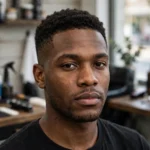


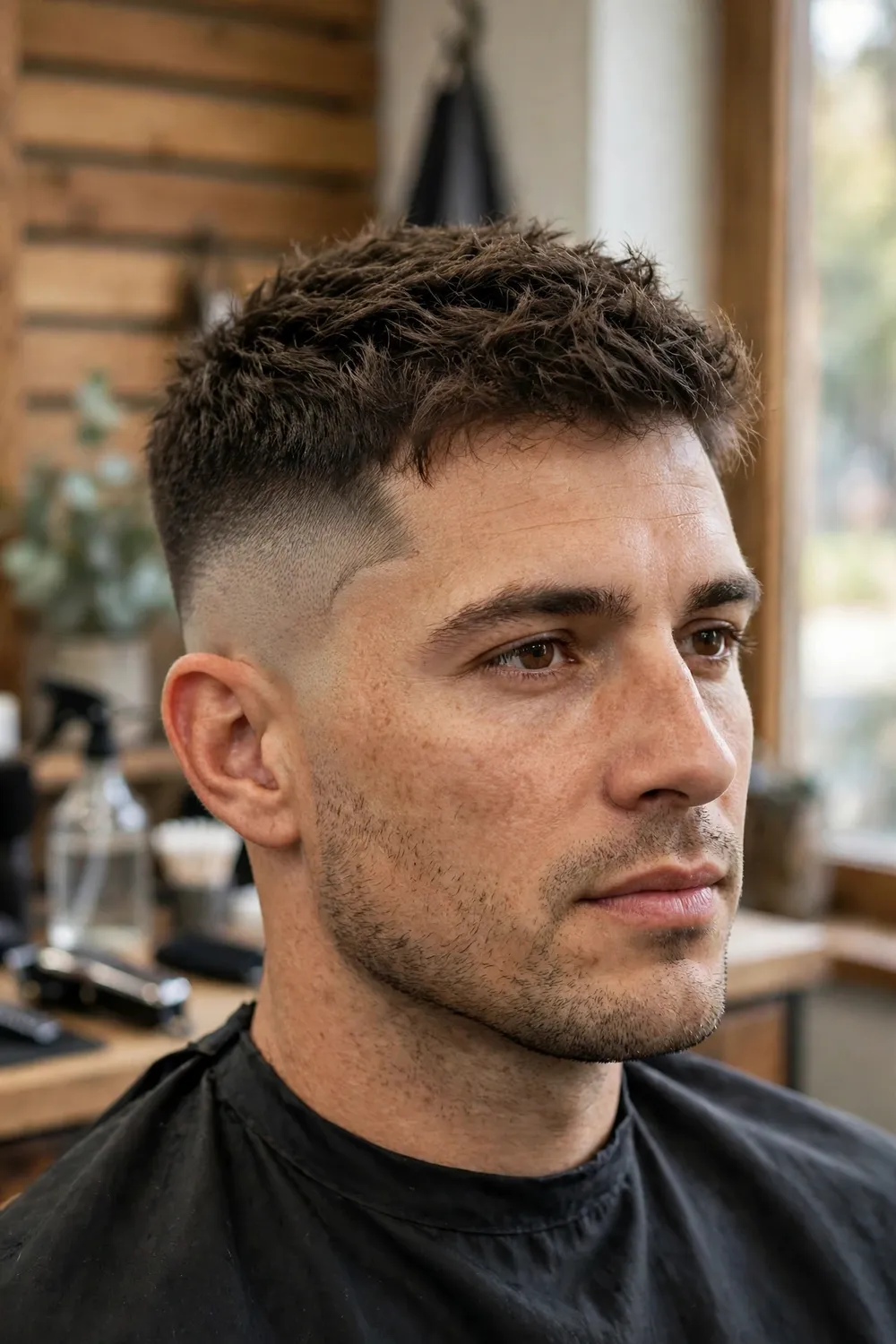
A drop fade haircut is a fade that doesn’t run straight around the head. Instead, the fade line starts at the temples and arcs down behind the ear, finishing noticeably lower at the back of the neck. That downward curve is what gives it its name — and its edge. Compared with a standard fade, the drop looks softer from the front and sharper from the side, which is why barbers reach for it when a client wants something modern without going full skin-bald.
If you’re picking one and don’t want to overthink it, start here. The Low Drop Fade is the safest first try — subtle, office-friendly, and easy to grow out. The Mid Drop Fade is the best all-rounder, balanced enough to pair with almost any top. And the Curly Top Drop Fade is the pick for texture: it keeps your curls on show while the sides stay clean. Below are all 39 styles, starting with the classics and working through to the bolder cuts, so you can walk into the shop knowing exactly what to ask for.
1. Low Drop Fade

The low drop fade keeps the blend just above the ears, dipping gently toward the nape so the shape follows the curve of your head. It’s the quietest version of the cut, which makes it a smart pick for a first fade or a workplace that frowns on anything dramatic. It suits oval and square faces well, and straight or slightly wavy hair holds the textured top best. Ask your barber: “A low drop fade, blended to a one at the bottom, with a textured top left about two inches long.” A dab of matte clay gives the top some grip without shine. Maintenance is forgiving: the low line grows out softly, so you can stretch touch-ups to three or four weeks before the shape starts to blur.
2. Mid Drop Fade
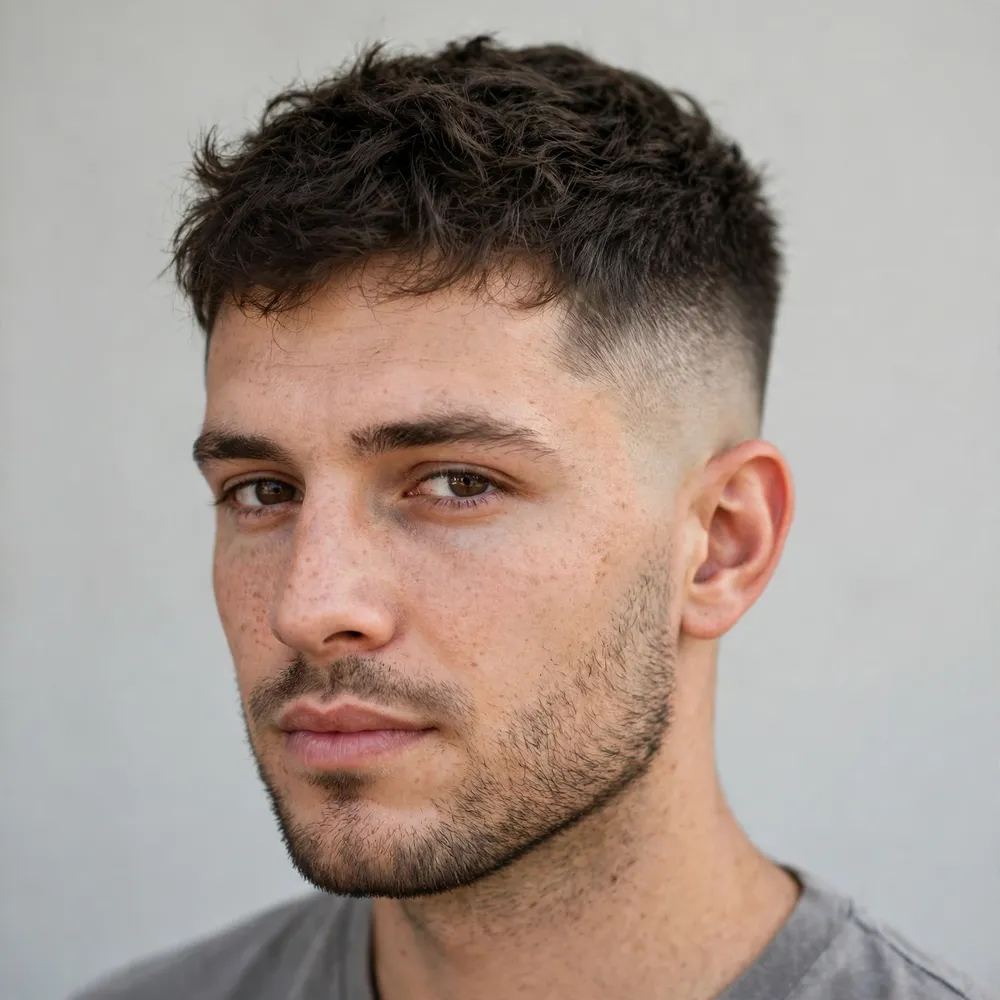
The mid drop fade sits halfway up the sides, arcing down behind the ear in that signature curve, and it’s the version most barbers cut most often — for good reason. It has enough contrast to look deliberate, but not so much that it dominates the whole haircut. That balance makes it work on round faces, where the extra height on top adds length, and on oval faces, where pretty much anything goes. Ask your barber: “A mid drop fade to skin at the bottom, blending up to a two, with the top left textured and a couple of inches long.” Work a matte paste through damp hair and push it forward or to the side. You’ll want a tidy-up every two to three weeks, because the mid line shows regrowth sooner than the low version.
3. High Drop Fade
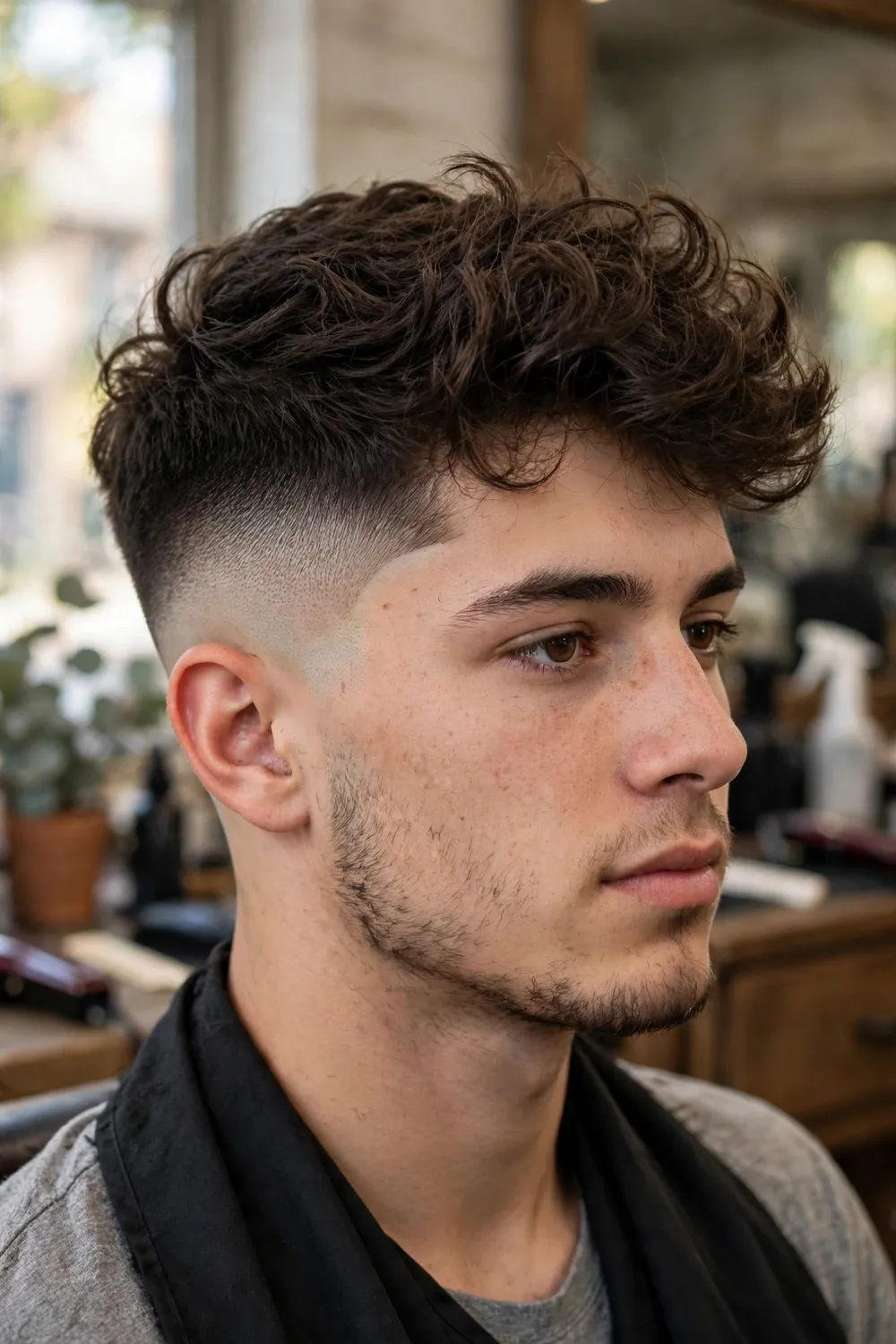
The high drop fade takes the blend right up near the temples, so the contrast between the faded sides and the top is at its boldest. With a voluminous wavy top left long, the result has real presence. It suits men with strong jawlines and square or oval faces, and naturally wavy or thick hair gives the top the volume this style needs. Ask your barber: “A high drop fade, skin at the bottom blending up to a two, with the wavy top left long and layered.” A sea salt spray on damp hair, then a light matte cream, keeps the waves defined without weighing them down. Be honest with yourself about upkeep: the high line needs a refresh every two weeks or it starts looking grown out fast.
4. Bald Drop Fade
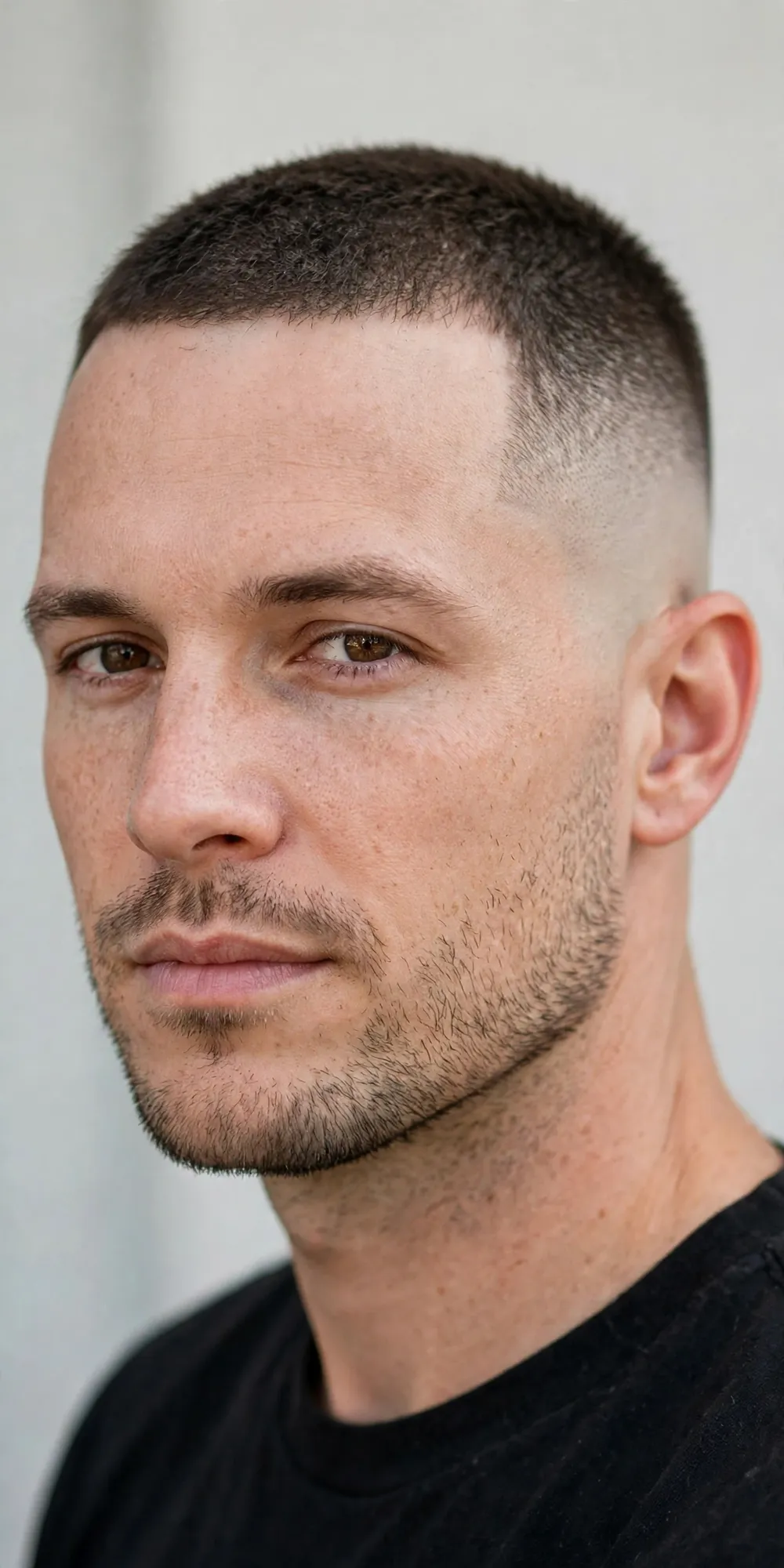
The bald drop fade takes the blend all the way down to bare skin along that curved drop line, so the transition from skin to hair is razor-clean. It’s a bold, high-contrast look that works best when the top is kept short and cropped — the skin fade does the talking. Square and oval faces carry it well, and it suits straight or coarse hair that can hold a neat crop. Ask your barber: “A bald drop fade, foil-shaved at the bottom, with a short textured crop on top.” You won’t need much product — a tiny amount of matte paste if the crop needs direction. The trade-off is maintenance: bare skin shows stubble within days, so expect a touch-up every one to two weeks, and keep the faded area moisturised or it can look dry and irritated.
5. Skin Drop Fade
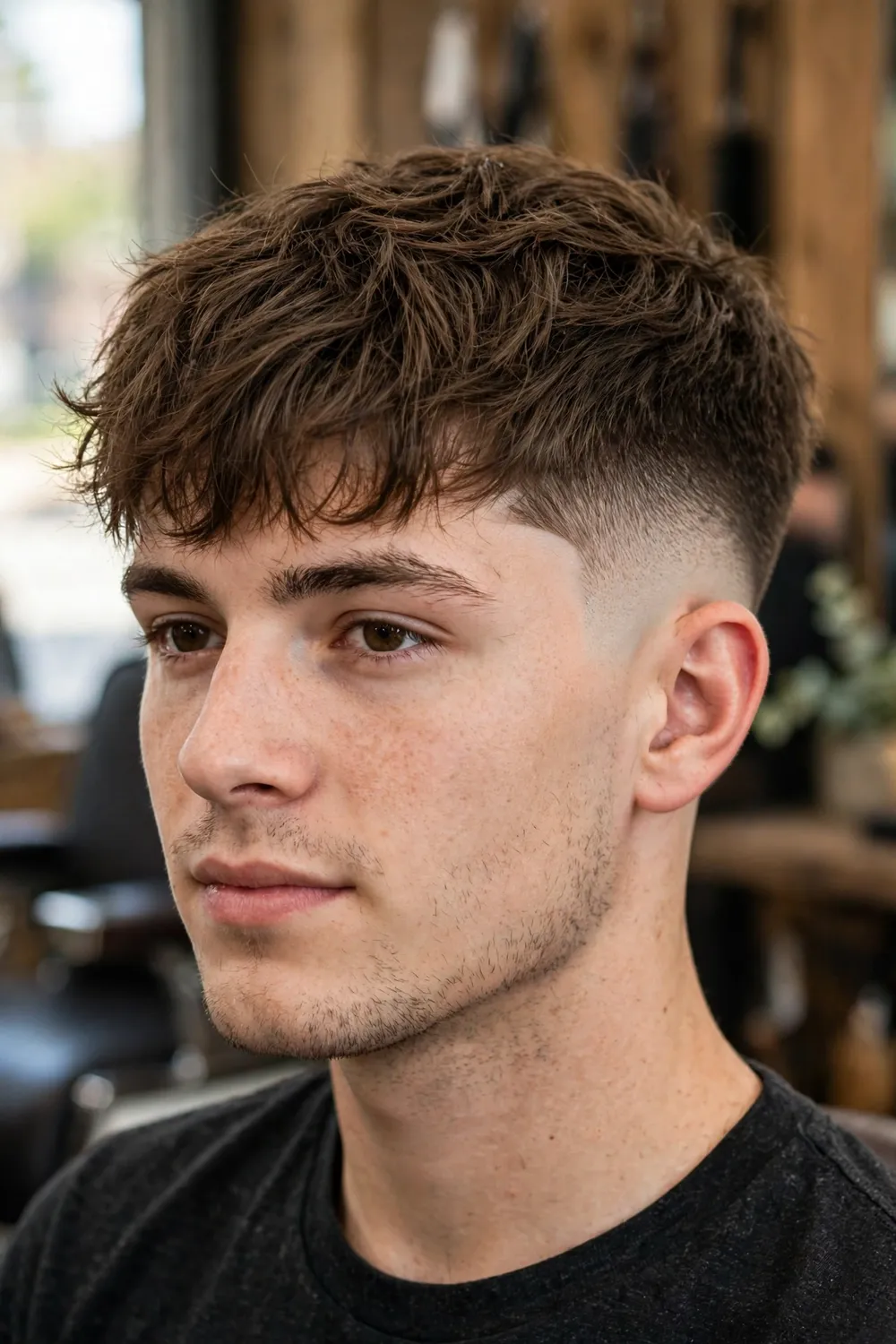
The skin drop fade is the bald fade’s slightly softer cousin — the sides are blended down to skin, but the top is left longer, here with a textured fringe that falls forward. That longer fringe gives the cut some personality up front while the sides stay razor-sharp. It flatters oval and heart-shaped faces, and works nicely on thick or wavy hair that can hold a fringe without collapsing. Ask your barber: “A skin drop fade with a longer textured fringe left about three inches at the front.” Style the fringe forward with a pea-sized amount of matte clay, then pinch the ends for definition. The skin blend needs attention every two weeks, and the fringe will need a trim sooner than the rest, so budget for regular barber visits.
6. Drop Taper Fade
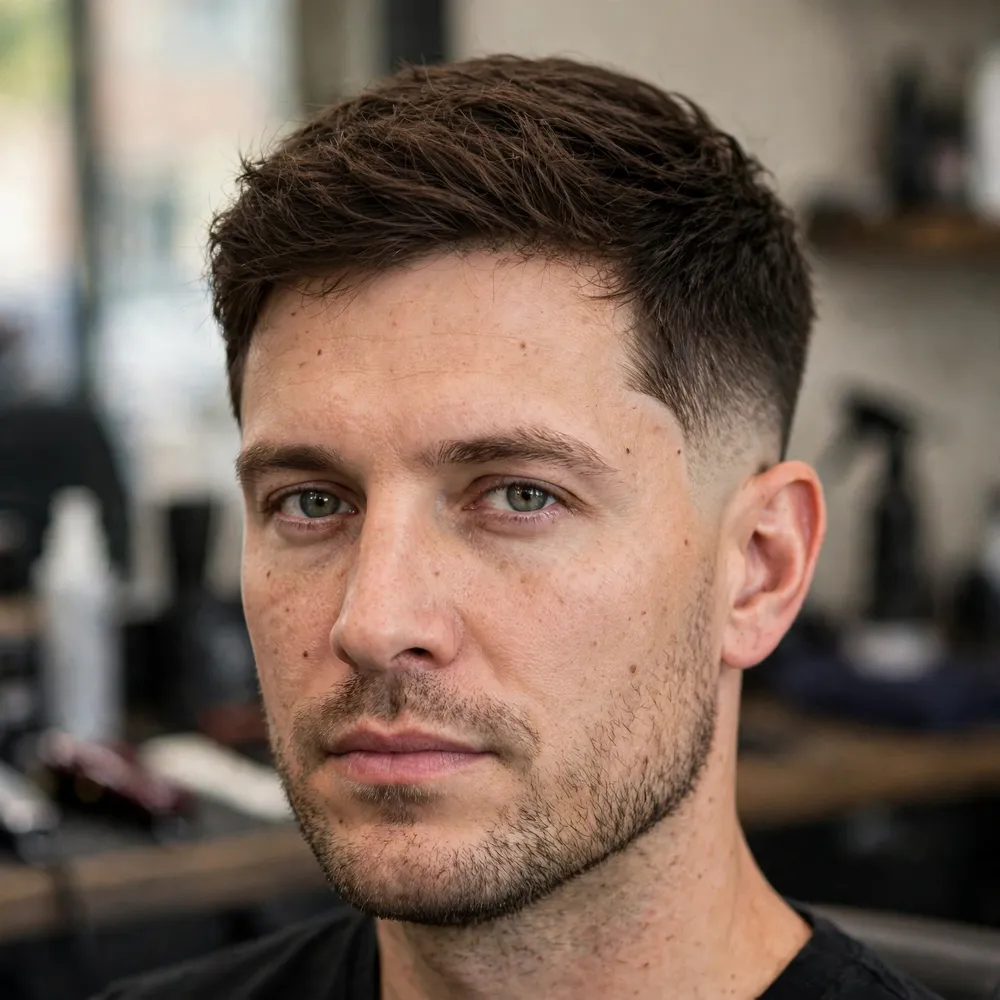
The drop taper fade is for the man who likes the shape of a drop fade but not the drama of skin. Instead of fading to bare, the hair gradually shortens along the drop curve, keeping a soft, natural edge. It’s an excellent choice for older men, conservative workplaces, or anyone growing their hair out, and it suits every face shape because nothing about it is extreme. Ask your barber: “A drop taper, not a skin fade — keep it gradual, with the natural top left as it is.” A light cream or a drop of hair oil is all you need for finish. Maintenance is the easiest on this list: four to five weeks between cuts, and even when it grows out it still looks intentional rather than neglected.
7. Drop Fade Buzz Cut
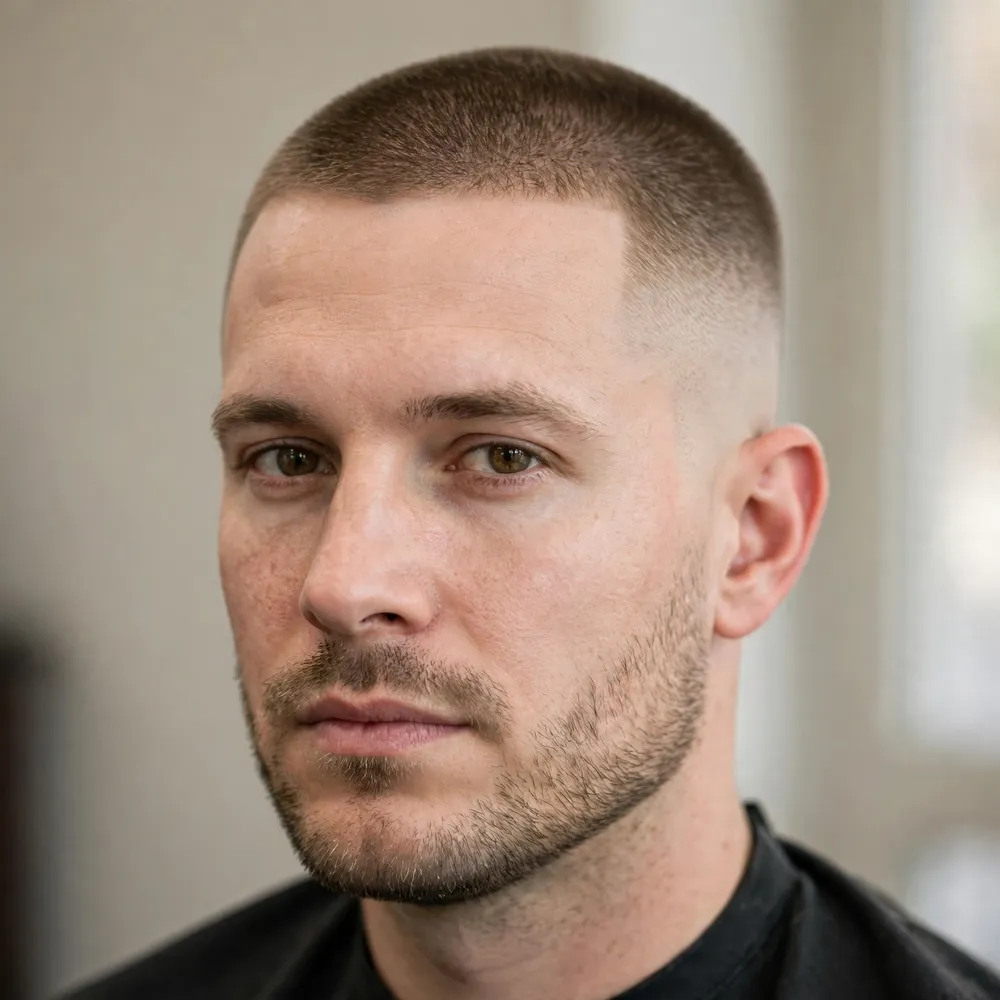
Pairing a buzz cut with a drop fade takes the simplest haircut there is and gives it a proper shape. The top is clipped to one uniform short length, while the sides follow the drop curve down behind the ear. It suits men with strong head shapes — oval or square — and anyone who wants to stop thinking about styling entirely. Ask your barber: “A number two buzz on top with a drop fade on the sides, blended down to a zero.” No product needed; a quick brush in the morning is the whole routine. You’ll need a clipper pass every week or two if you want to keep the fade crisp, though the buzz itself hides regrowth well, so you can stretch it to three weeks without it looking scruffy.
8. Curly Top Drop Fade

The curly top drop fade is built for men whose curls are the best thing about their hair. The top is left long enough for the curls to form properly, while the sides are sculpted into the drop fade so the shape stays tight and the curls get all the attention. It’s a great match for round and oval faces, and for any curl pattern from loose waves to tight coils. Ask your barber: “A drop fade on the sides with the curly top left long, and please cut the curls dry so the length is accurate.” A curl cream scrunched into damp hair defines the pattern without crunch. Expect a touch-up every three weeks, and don’t let anyone thin your curls out with a razor — it ruins the shape.
9. Drop Fade with Waves

The drop fade with waves pairs 360 waves on top with the curved fade below. It’s a classic Black men’s style that looks sharp in the barbershop and even better once the waves are properly trained. It suits oval and round faces, and it needs wavy or coarse hair that can be brushed into a wave pattern. Ask your barber: “A drop fade with the top left long enough to wave, and a line-up if you want the edges sharp.” The real work happens at home: brush daily with a medium brush, wear a durag at night, and use a light pomade. Maintenance is mostly brushing — the fade itself needs a refresh every two weeks to keep the wave pattern framed cleanly.
10. Drop Fade with Twists
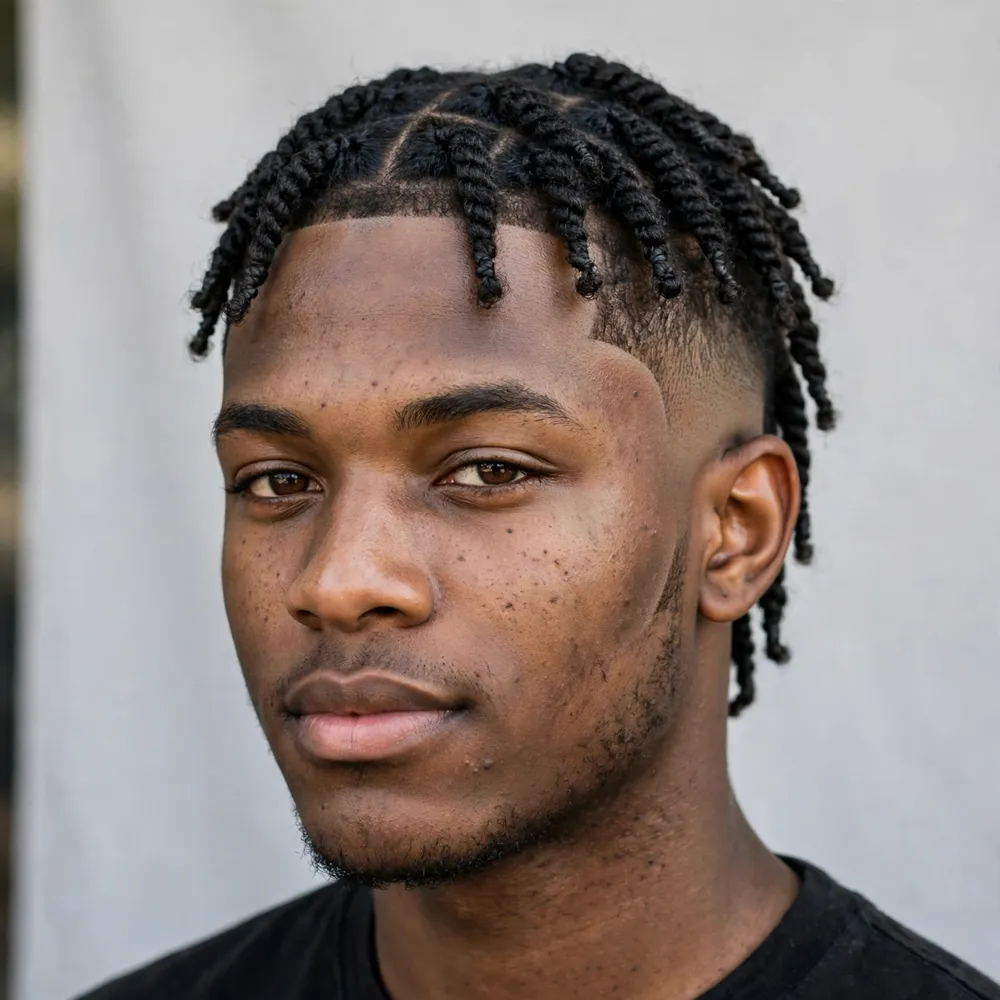
Two-strand twists on top with a drop fade underneath is a style that looks effortless but is actually doing a lot of work. The twists give the top texture and movement, while the faded sides keep the whole thing looking intentional rather than overgrown. It works well on oval and square faces and on hair that holds a twist — typically coily or kinky textures. Ask your barber: “A drop fade on the sides and back, with the top left long enough for two-strand twists.” A twist butter or light cream keeps the twists defined and moisturised, and retwisting every week or so keeps them neat. The fade needs a tidy-up every two to three weeks, but the twists themselves last well between appointments if you sleep with a satin cap on.
11. Drop Fade Afro

The drop fade afro keeps the rounded shape of a classic afro on top while the sides fade away along the drop curve, giving the silhouette a modern edge. It’s a strong look for men with coily or kinky hair who want volume without the full ’70s outline, and it suits oval and round faces especially well. Ask your barber: “A rounded afro on top with a drop fade on the sides — keep the afro full but shape the outline.” A pick and a little afro sheen or leave-in conditioner keep it looking healthy and defined. Maintenance means picking the afro out daily and getting the fade refreshed every two to three weeks; left too long, the sides puff out and the crisp curve disappears, so regular barber visits matter more than most styles on this list.
12. High Top Drop Fade
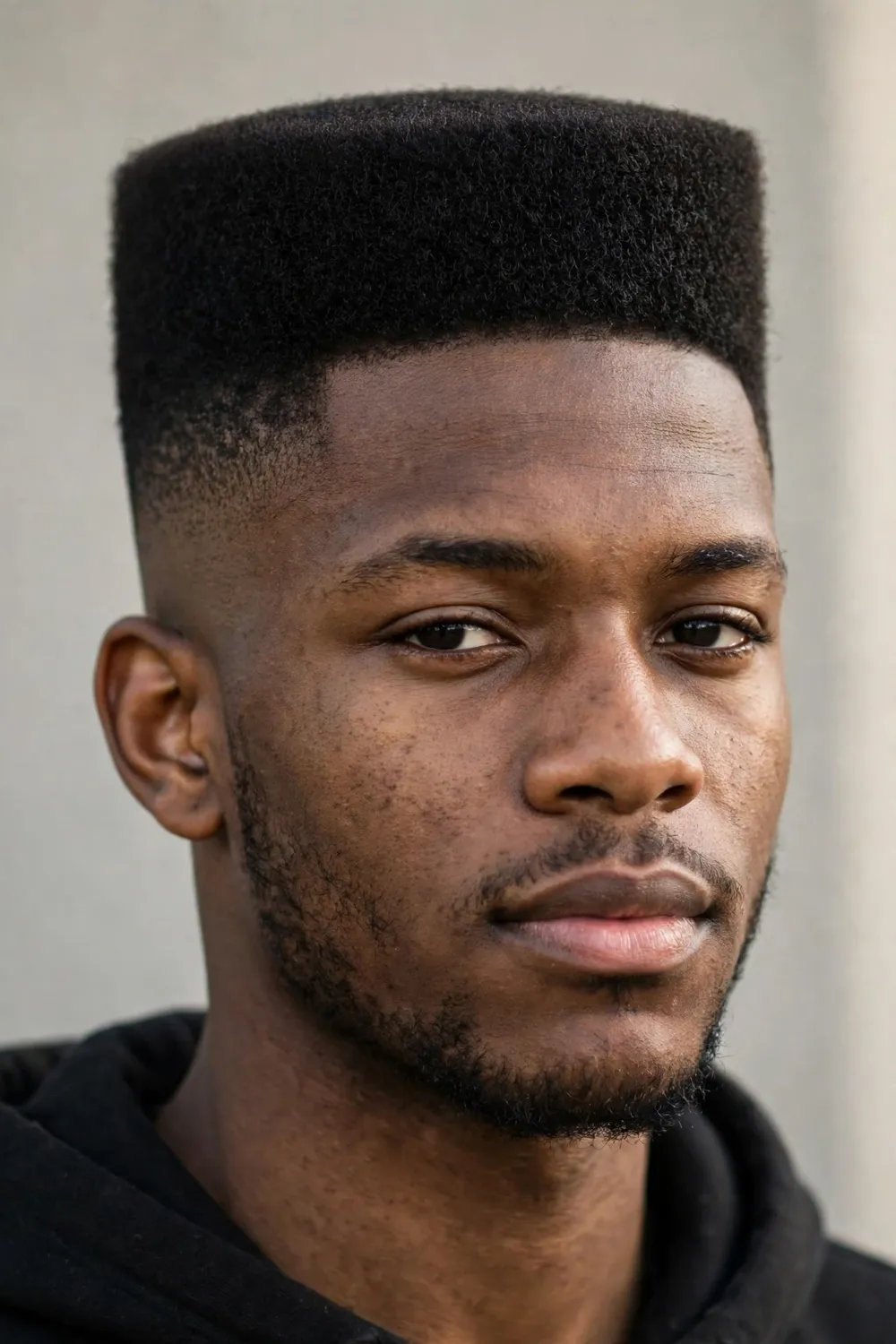
The high top drop fade brings back the tall, squared-off top of the ’80s and ’90s, but the drop fade underneath keeps it feeling current rather than costume. The top is grown tall and shaped into a flat, boxy silhouette, while the sides arc down behind the ear in the fade. It suits men with coily or thick hair that can hold height, and oval or longer faces balance the vertical shape best. Ask your barber: “A high top, squared off, with a drop fade on the sides — keep the top tall but neat.” A sponge or pick shapes the top, and a light holding cream keeps it in place. This is a high-commitment cut: the top needs shaping every two weeks and daily picking, but if you love the look, nothing else comes close.
13. Textured Crop Drop Fade
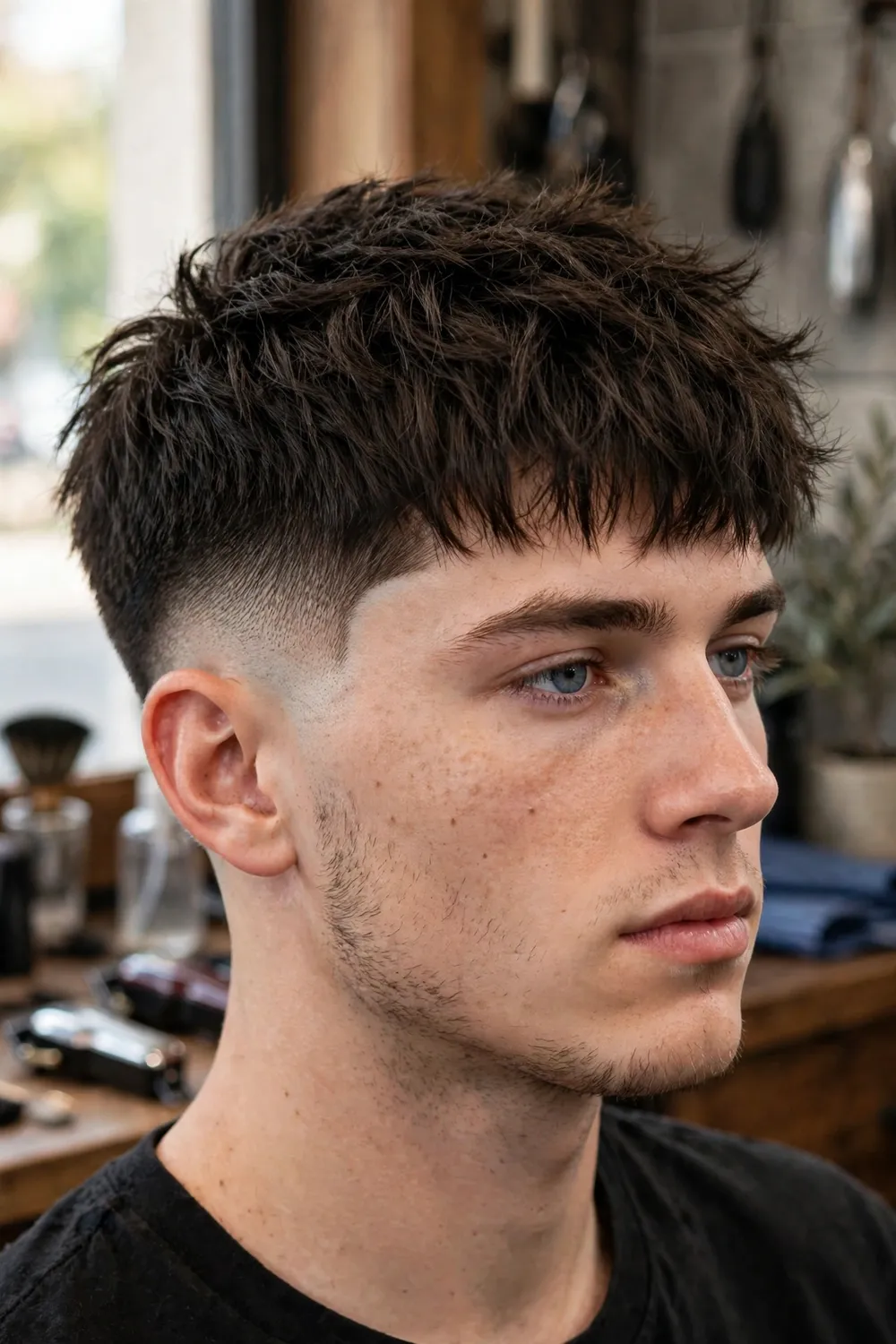
The textured crop drop fade is the low-effort, high-reward option: a choppy, layered crop on top with the sides faded along the drop curve. The crop’s uneven texture does the styling for you, so it looks good even when you do nothing to it — which is the whole point. It flatters most face shapes, particularly round faces, where the texture on top adds some structure, and it works on straight, wavy or fine hair. Ask your barber: “A textured crop with point-cut ends, and a drop fade on the sides blended to a one.” Rub a small amount of matte paste between your palms and mess the top up. Maintenance is easy: the crop grows out gracefully, so three to four weeks between cuts is fine, and the fade is low enough that regrowth doesn’t scream for attention.
14. Messy Top Drop Fade
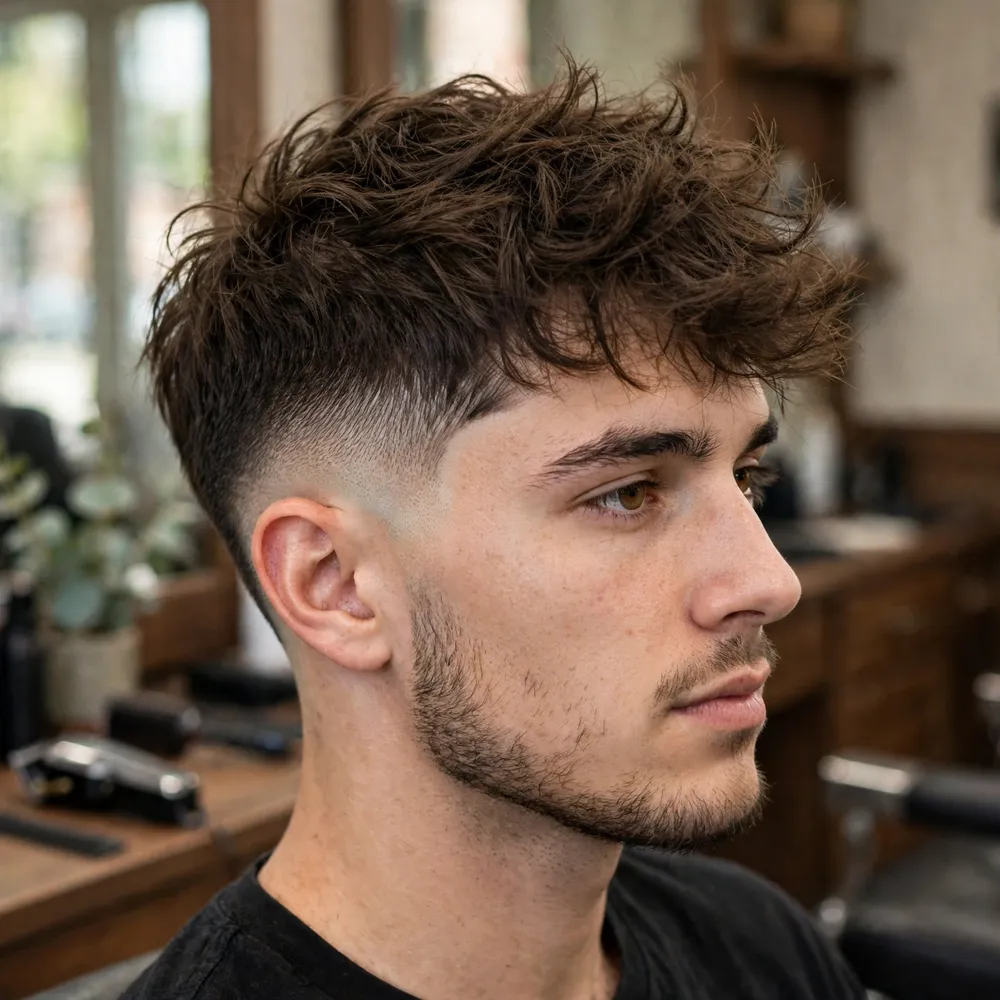
The messy top drop fade is deliberately undone on top and deliberately precise on the sides — that contrast is what makes it work. The top is left long and tousled, while the faded sides keep the cut from looking like you simply forgot to get a haircut. It suits oval and heart-shaped faces and wavy or straight hair with a bit of natural movement. Ask your barber: “A messy textured top left long, with a clean drop fade on the sides — don’t over-tidy the top.” A sea salt spray on damp hair, scrunched and left to air-dry, gives the right kind of chaos. The fade needs a refresh every two to three weeks, but the top can grow for a month or more, so ask your barber for a sides-only tidy-up between full cuts to save money.
15. Side Part Drop Fade
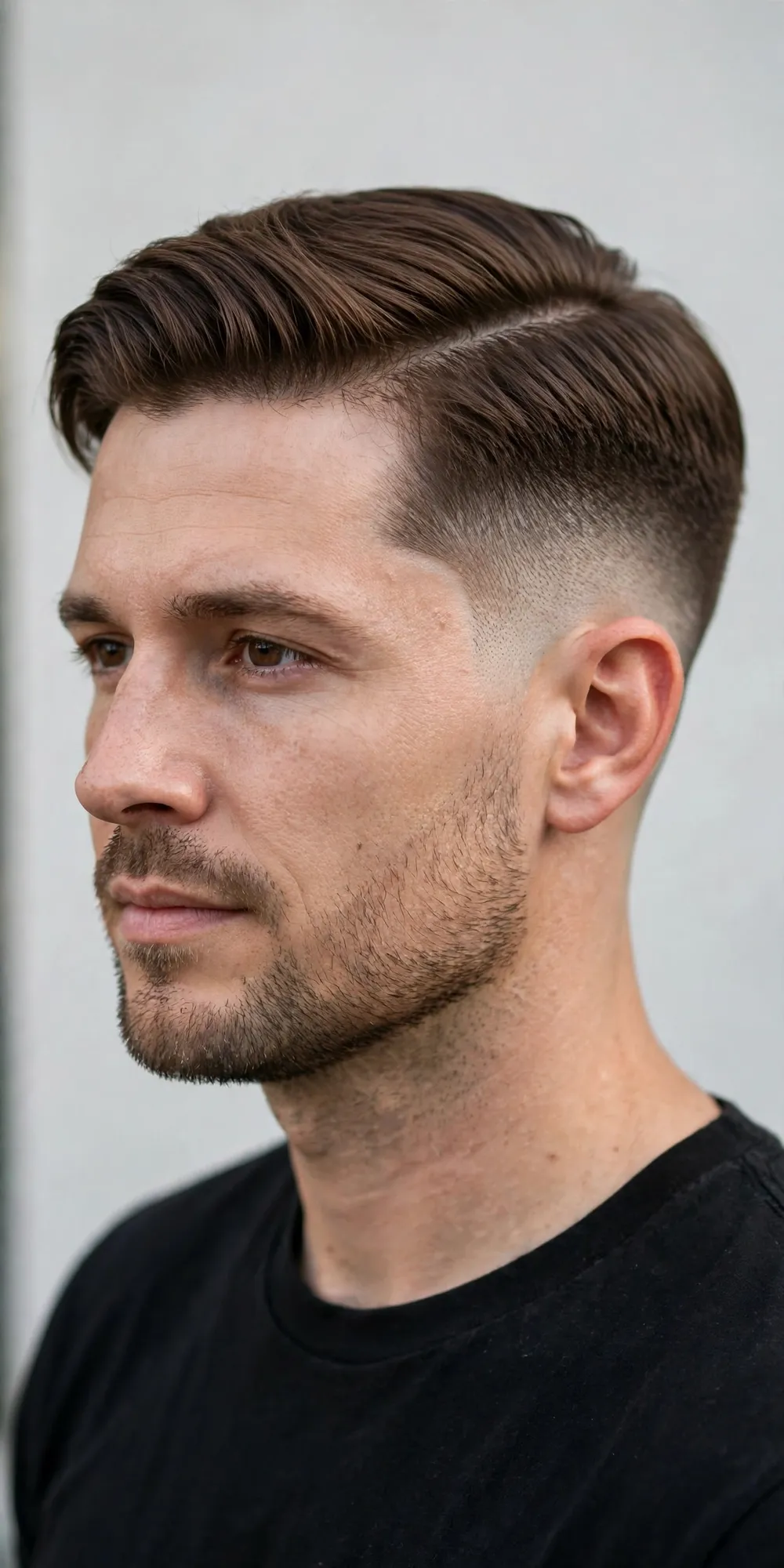
The side part drop fade is the classic gentleman’s cut with a modern twist. The top is swept over to one side from a defined part, while the drop fade underneath keeps it from looking like something from a period drama. It’s a strong choice for square and oval faces, and for straight or slightly wavy hair that lies neatly in one direction. Ask your barber: “A side part with the top left about three inches, swept to the side, and a mid drop fade.” A comb and a medium-hold pomade give it a polished finish with a touch of shine. Maintenance is moderate: the part needs redefining every couple of weeks as the hair grows, and the fade benefits from a tidy-up at the same time, so plan on a barber visit every two to three weeks.
16. Comb Over Drop Fade
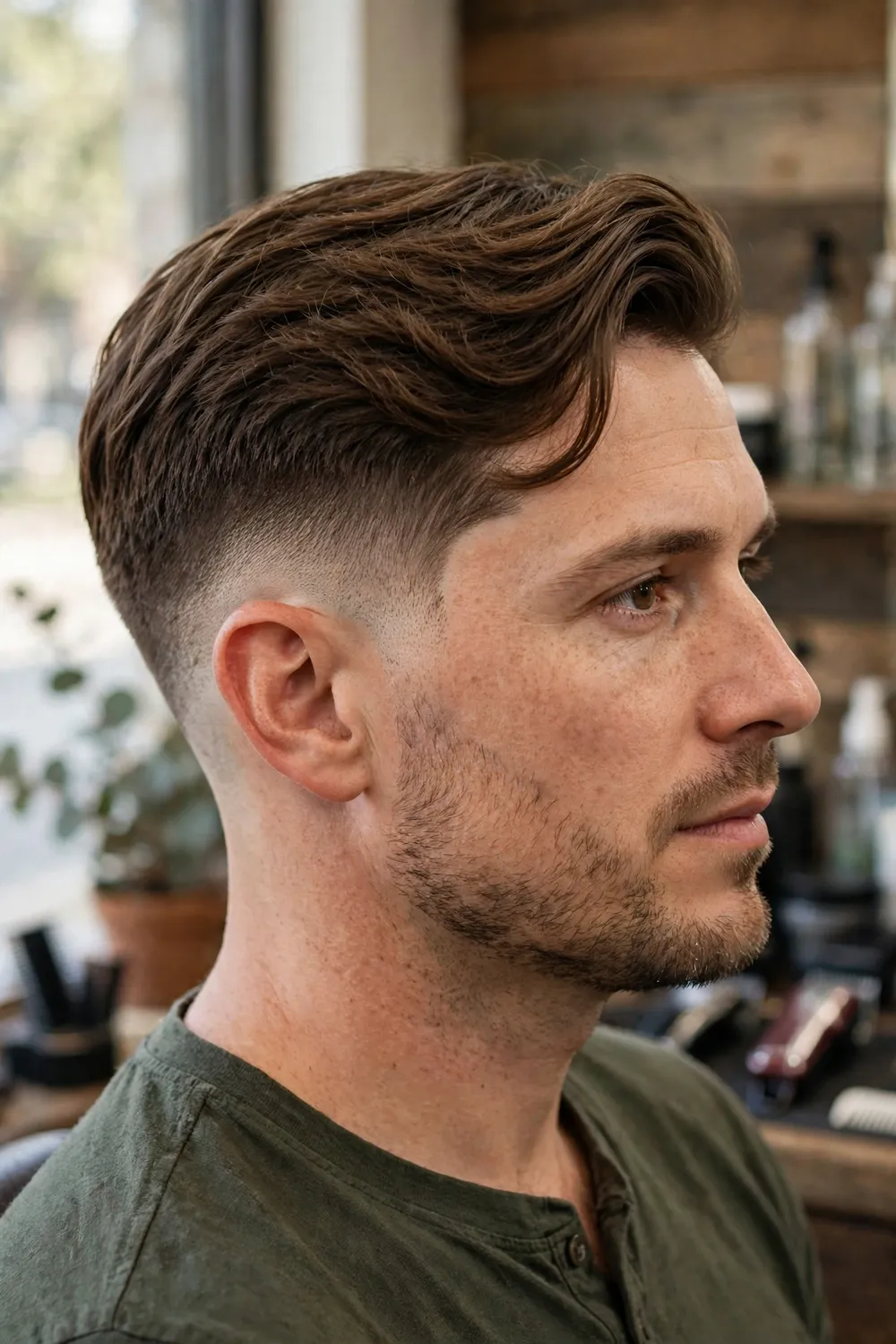
The comb over drop fade takes a longer top, sweeps it across, and sets it against the curved fade at the sides — a combination that looks sharp without trying too hard. It’s a good option for men with thinning hair at the crown, since the swept-over top adds coverage, and it suits oval and square faces with straight or wavy hair. Ask your barber: “A comb over with the top left long enough to sweep across, and a low to mid drop fade on the sides.” A medium-hold cream or pomade, combed through while the hair is damp, holds the sweep in place all day. You’ll want a touch-up every three weeks; let the top grow too long and the sweep starts to flop, so keep the length in check even if the fade still looks fine.
17. Slick Back Drop Fade
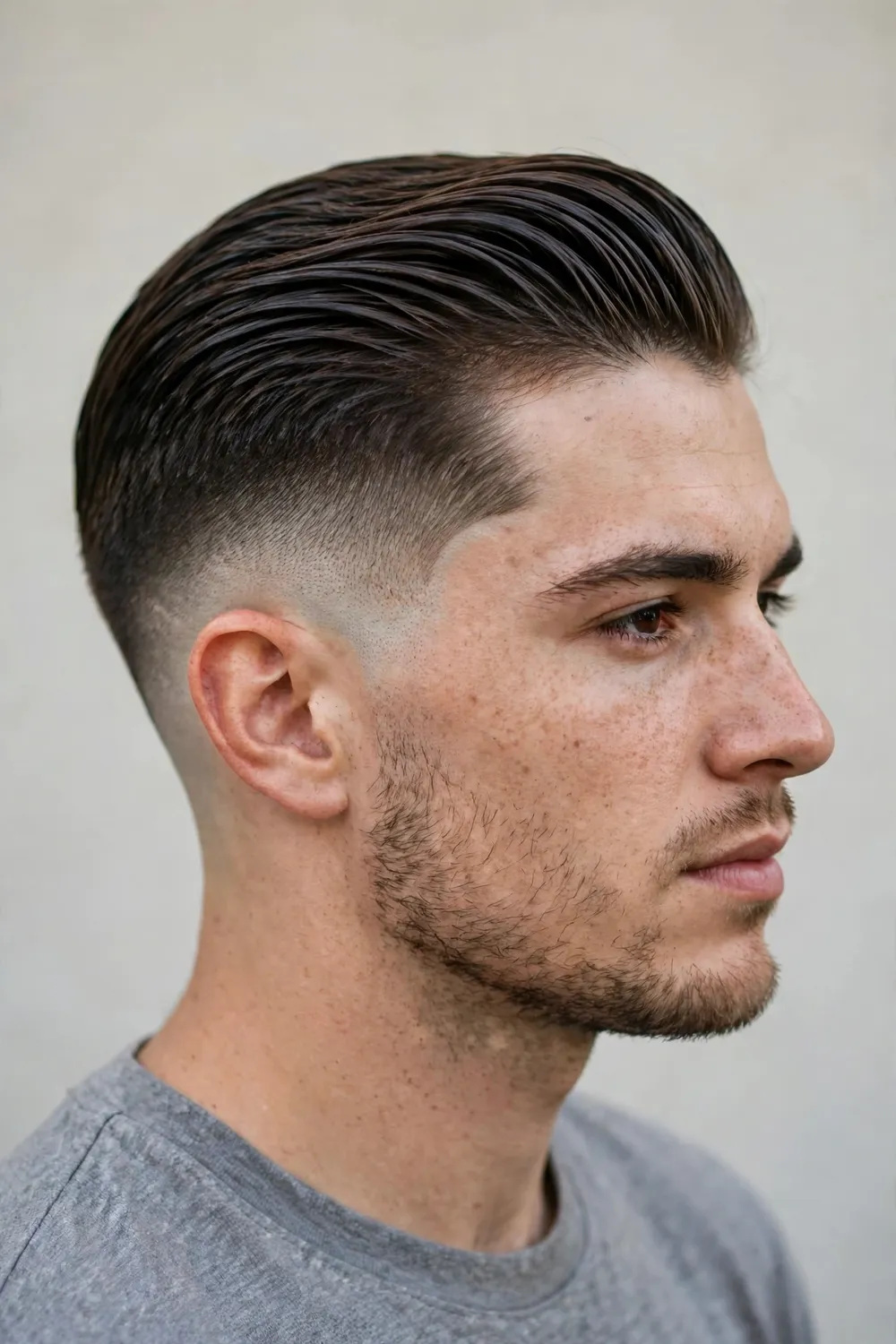
The slick back drop fade is the boardroom version of the drop fade: the top is swept straight back with a glossy finish, while the clean drop sides keep it from looking dated. It suits men with thick, straight hair that can be trained backward, and square or oval faces carry the swept-back shape best. Ask your barber: “A slick back with the top left four to five inches, and a mid drop fade on the sides and back.” A strong-hold pomade on damp hair, combed straight back, gives the shine and control this style demands. Maintenance is a daily commitment — you have to style it every morning — and the fade needs a refresh every two weeks, but if you like a polished look, the effort pays off.
18. Quiff Drop Fade
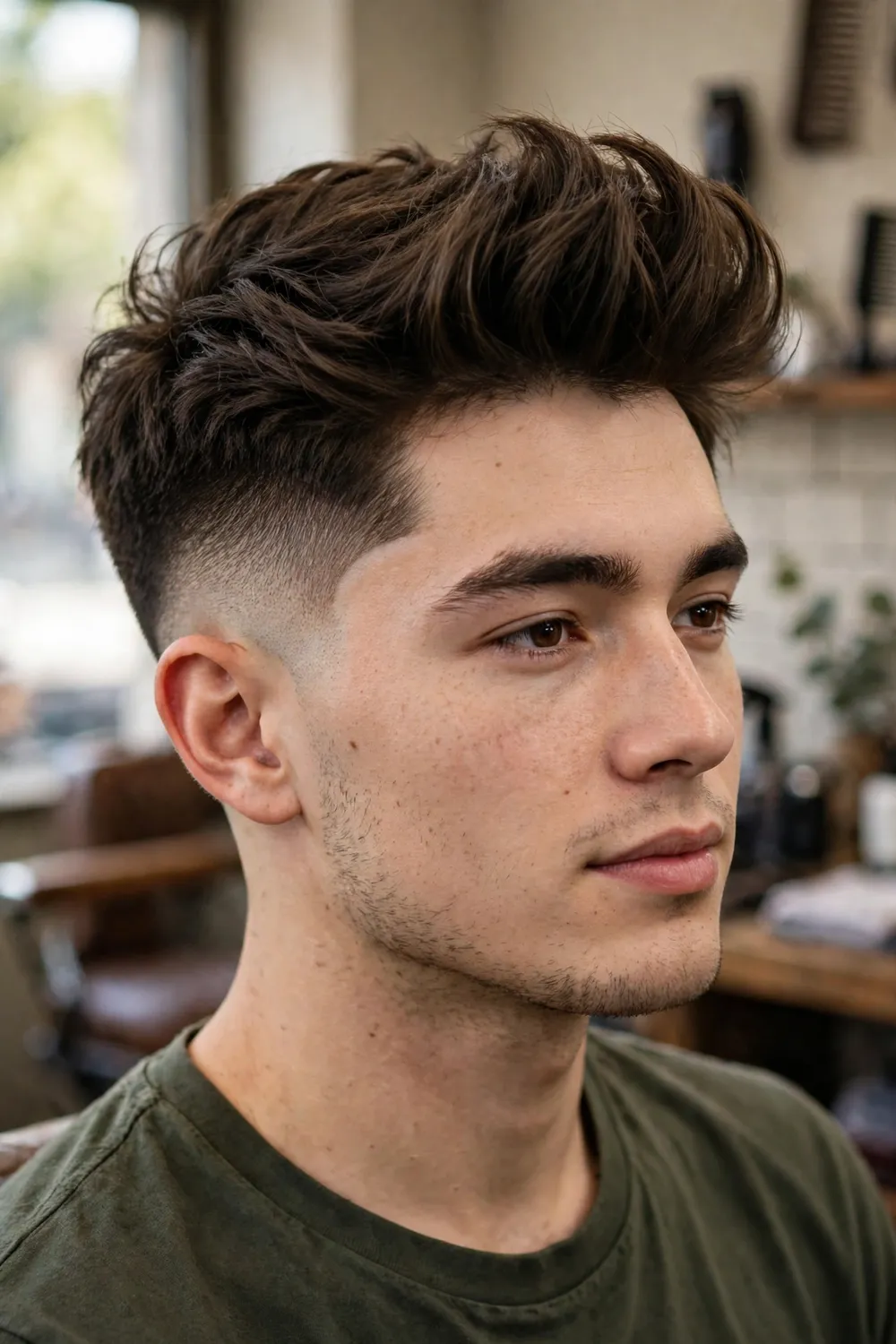
The quiff drop fade pairs a voluminous swept-up front with a mid drop fade, and it’s one of the most flattering combinations on this list. The height at the front lengthens the face, which makes it a great pick for round faces, and it works best on thick or wavy hair that can hold volume. Ask your barber: “A quiff with the front left long and the back shorter, over a mid drop fade.” Blow-dry the front upward with a round brush, then finish with a matte clay for hold that still moves. The quiff needs daily styling — five minutes with a dryer — and the fade needs a touch-up every two to three weeks, but the payoff is a cut that looks put-together from every angle, even on a rushed morning.
19. Pompadour Drop Fade
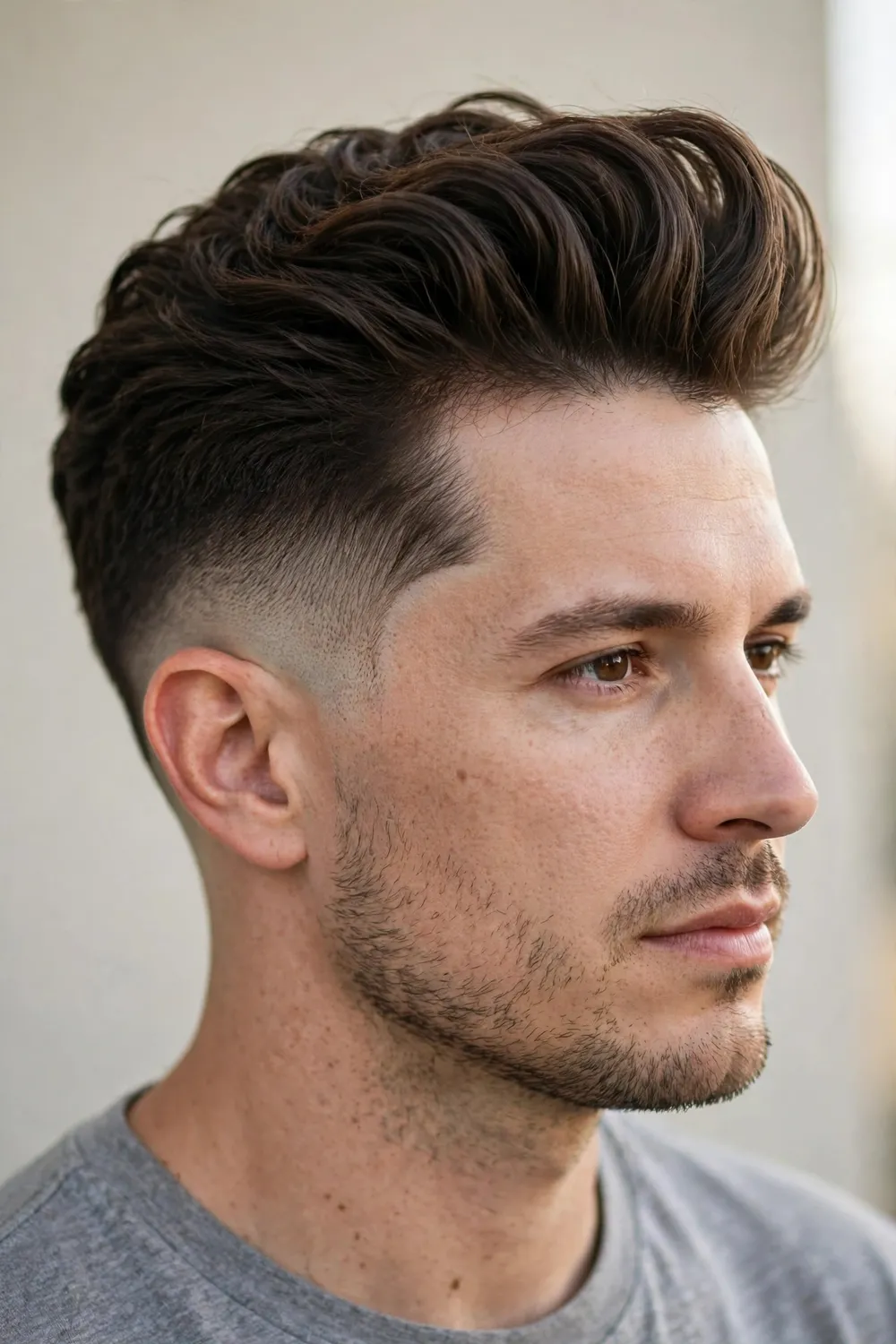
The pompadour drop fade is the quiff’s louder older brother: a tall, swept-back pomp sitting over a sharp drop curve. It’s a statement cut, and it suits men who enjoy the styling ritual — the volume up top needs real height, so thick or wavy hair is a must, and oval or square faces balance the shape. Ask your barber: “A pompadour with the front left long, swept back and up, over a mid to high drop fade.” A strong-hold pomade and a blow-dryer are non-negotiable; work the product through damp hair and dry it upward and back. This is the highest-maintenance style here — daily styling, a refresh every two weeks — but if you want a haircut that people actually notice, the pompadour earns its keep.
20. Faux Hawk Drop Fade
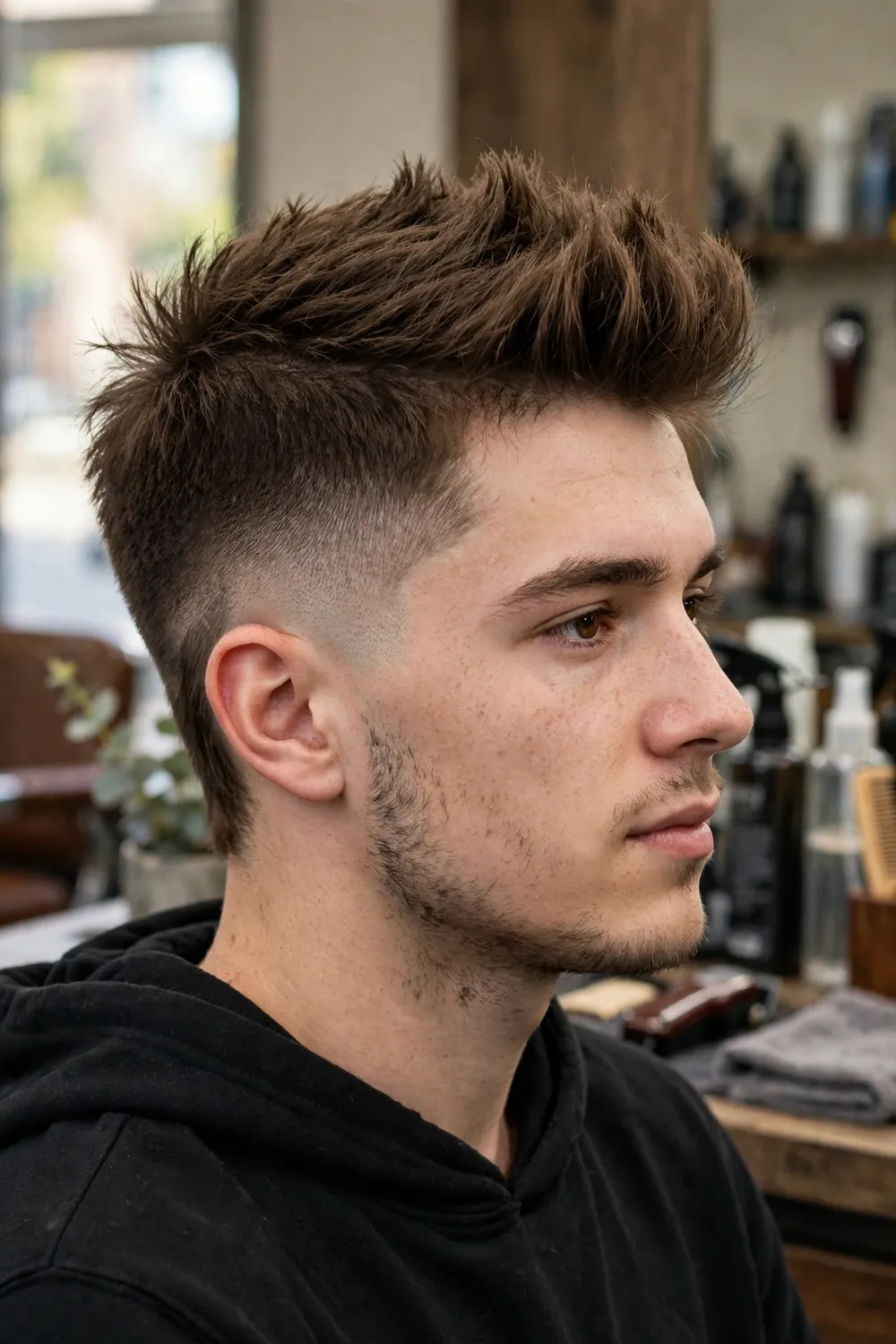
The faux hawk drop fade takes the mohawk’s attitude and makes it wearable: a centre strip of hair is pushed up and slightly forward, while the sides are faded along the drop curve instead of shaved bare. It’s a fun, youthful cut that suits oval and heart-shaped faces and works on straight, wavy or curly hair — the strip just needs enough length to stand up. Ask your barber: “A faux hawk with the centre left long and the sides on a drop fade, blended not shaved.” A strong matte paste, worked through the strip and pushed up, holds the shape without looking crunchy. Maintenance is moderate: the fade needs a refresh every two to three weeks, and the strip needs a trim before it gets heavy enough to flop, so keep your barber visits regular.
21. Drop Fade Mohawk
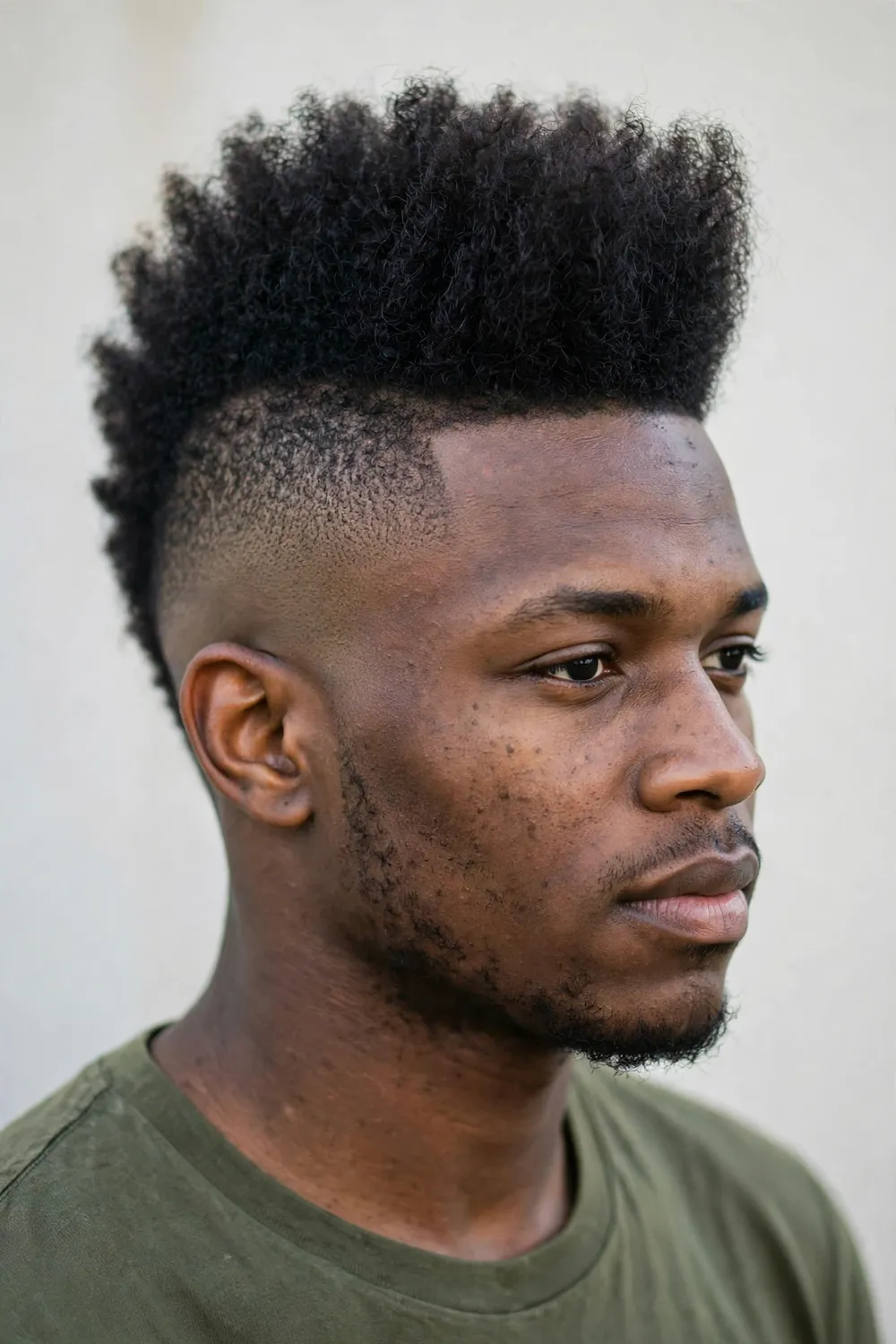
This one takes the mohawk’s attitude and makes it wearable. The drop fade curves down behind the ears, so the tall centre strip feels connected rather than floating on its own. It suits oval and longer faces best, and works on straight or slightly wavy hair that can hold height. Ask your barber: “a wide mohawk strip, about two fingers wide, with a mid drop fade on the sides — not skin-bald, just a clean blend.” A strong-hold matte clay gives the strip its lift; run it through damp hair and push everything up and slightly forward. Maintenance is honest work: the strip needs restyling every morning, and the fade will blur within ten days, so book every two weeks to keep the shape sharp.
22. Edgar Drop Fade

The Edgar’s blunt, straight-across fringe is the whole point here — sharp, geometric, impossible to miss — and the drop fade softens what could otherwise feel too harsh around the sides. The rounded dip at the back keeps the silhouette from looking boxy. It flatters oval and square faces, and straight, thick hair holds the fringe line best; very curly hair will fight the blunt edge. Ask your barber: “an Edgar with a straight fringe just above the eyebrows and a low drop fade, keeping the corners squared.” A little matte paste pressed through the top keeps it in place without shine. You’ll need the fringe trimmed every two to three weeks, because even a few millimetres of growth changes the whole look.
23. Blowout Drop Fade
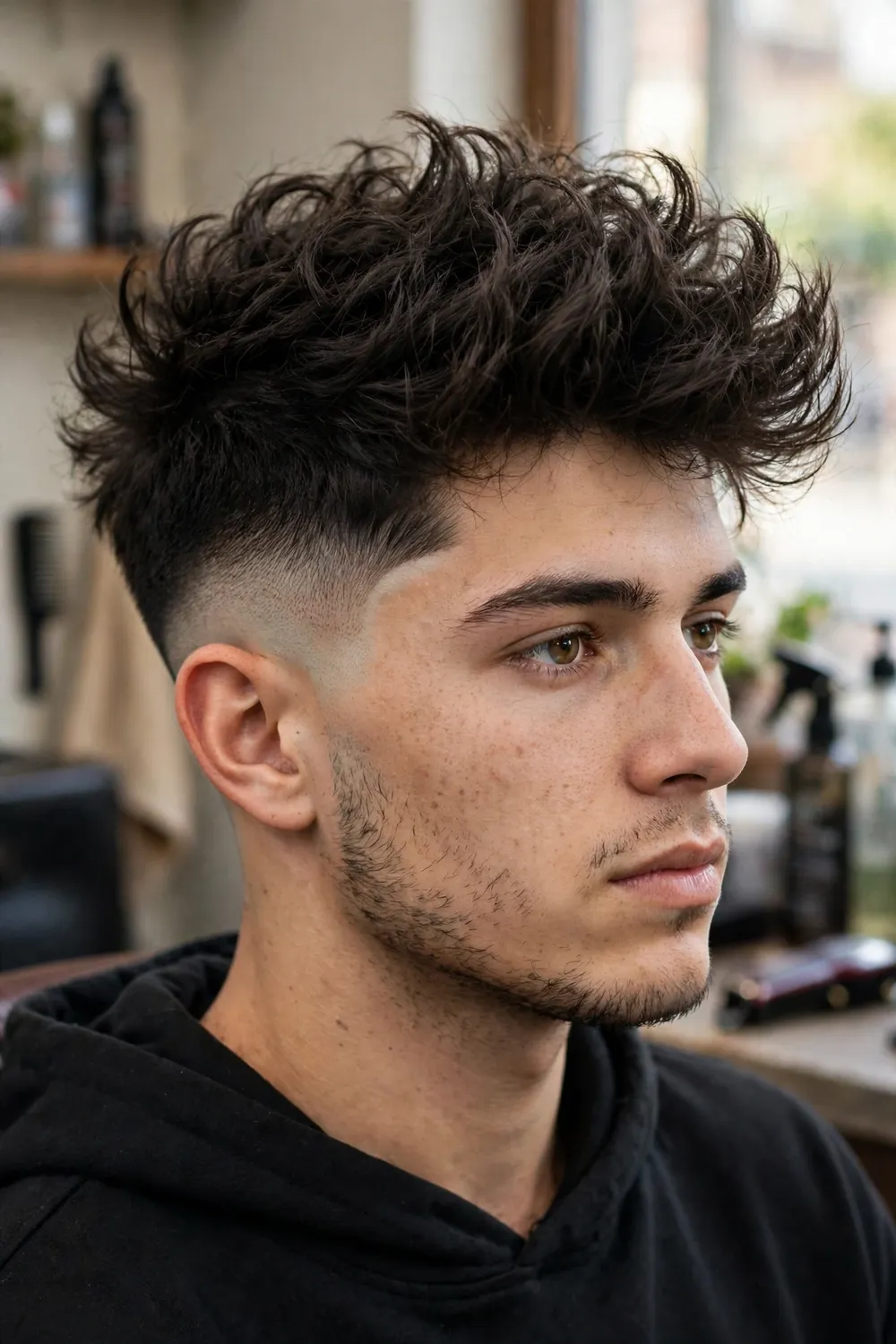
Big volume on top, clean curve underneath — that’s the blowout drop fade. The top is blow-dried up and back until it looks almost inflated, while the fade drops neatly behind the ears and keeps the sides from competing with all that height. It works best on medium to thick hair with natural body; fine hair won’t hold the same fullness. Round faces benefit most, since the height lengthens the face, while square faces get a nice balance too. Ask your barber: “a blowout top, lots of volume, with a mid drop fade and the back tapered into the drop.” Use a volumising mousse before blow-drying and a light matte clay to finish. Daily blow-drying is the price of admission here, and the fade needs a tidy-up every fortnight.
24. Brush Up Drop Fade

The brush up is the quiet achiever of this list: top swept up and slightly back, sides faded on a gentle drop, nothing screaming for attention yet everything looking deliberate. It’s the cut for looking put-together at work and still good at the weekend without restyling. Oval and square faces wear it best, and it suits straight to wavy hair of medium thickness. Ask your barber: “the top brushed up and back, about three inches on top, with a mid drop fade and a natural finish at the back.” A medium-hold matte paste, worked through towel-dried hair, does the job in under a minute. Grow-out is forgiving, and a touch-up every three weeks keeps the fade crisp without much fuss.
25. French Crop Drop Fade

Short fringe, textured top, low-maintenance sides — the French crop was already easy, and the drop fade makes it sharper without adding work. The fringe sits forward over the forehead, choppy rather than blunt, while the fade dips at the back so the shape looks finished from every angle. It suits nearly every face shape, and it’s a gift for men with a high hairline or longer forehead, since the fringe covers both. Straight or slightly wavy hair is ideal; the texture comes from point-cutting. Ask your barber: “a French crop with a short textured fringe and a low drop fade.” Our French Crop Haircut guide breaks down the fringe lengths. Matte clay is optional — many men wear it with nothing at all. Trim every three to four weeks.
26. Undercut Drop Fade

A classic undercut can look severe where long top meets shaved sides, and the drop fade fixes that. Instead of a hard disconnect, the fade curves down behind the ears and softens the transition at the back, so the length on top stands out without the cut feeling like two hairstyles stitched together. It suits oval and heart-shaped faces, and thick, straight or wavy hair swept back or to the side. Ask your barber: “an undercut with the top left long, disconnected on top, but faded into a drop at the back and sides.” Medium-hold pomade gives a slick finish; matte clay gives a looser, modern one. The top needs regular trims to keep its weight, and the fade wants attention every two weeks or the blend looks messy.
27. V-Neckline Drop Fade
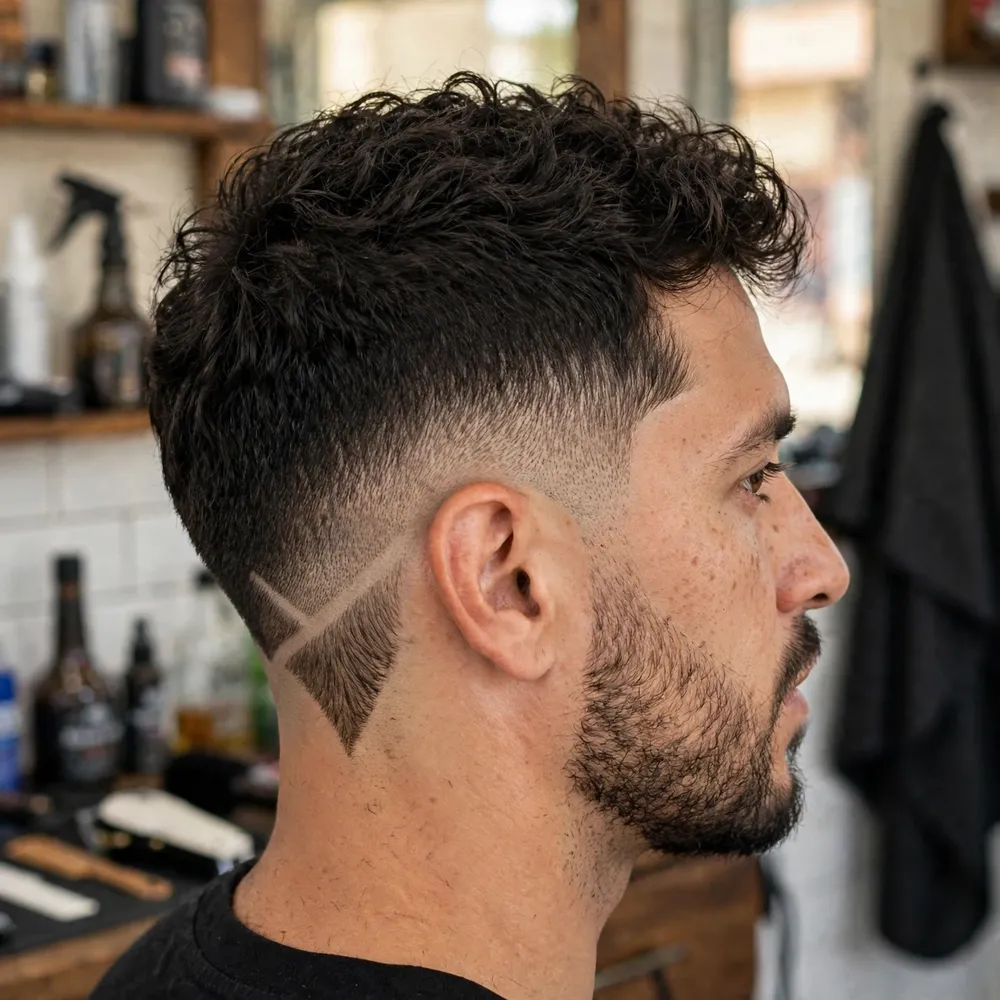
Most fades end straight or tapered, but the V-neckline tapers the nape into a sharp point — and when that point meets the drop fade’s arc, the back of the head gets a shape worth turning around for. It’s a detail cut, so it works best when the rest is clean: a short crop, a textured top or a neat side part. Oval and square faces carry it well, and it suits straight or wavy hair best, since the V needs clean lines. Ask your barber: “a drop fade with a sharp V at the nape — keep the point crisp.” No product needed on the neckline; style the top as usual. The V blurs fast, so get a neckline tidy-up every ten days to two weeks.
28. Drop Fade with Beard Blend
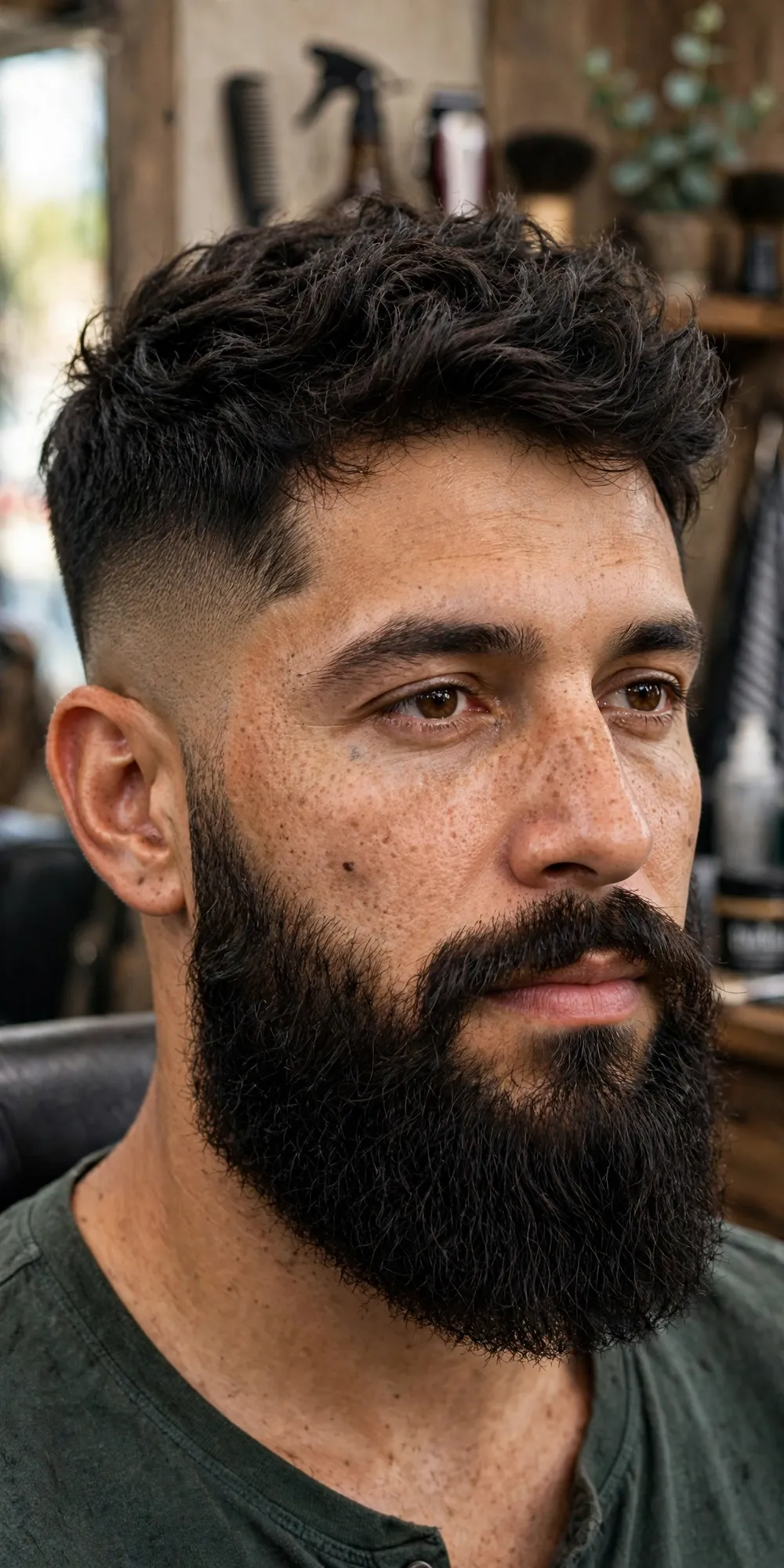
This is where the drop fade earns its keep: the same curve that shapes the hair can flow straight into the beard. The fade drops behind the ear and meets the cheek line, so hair and beard read as one sculpted shape instead of two separate features. It suits men with a full or medium beard, and it’s especially flattering on round and square faces, where the vertical flow adds length. Ask your barber: “a drop fade that blends into the beard — fade the sideburns into the cheek line, keep the beard full below.” Beard oil daily and a light balm keep the blend looking intentional rather than overgrown. Get hair and beard touched up together every two weeks, since one outgrowing the other breaks the line.
29. Drop Fade with Line Up
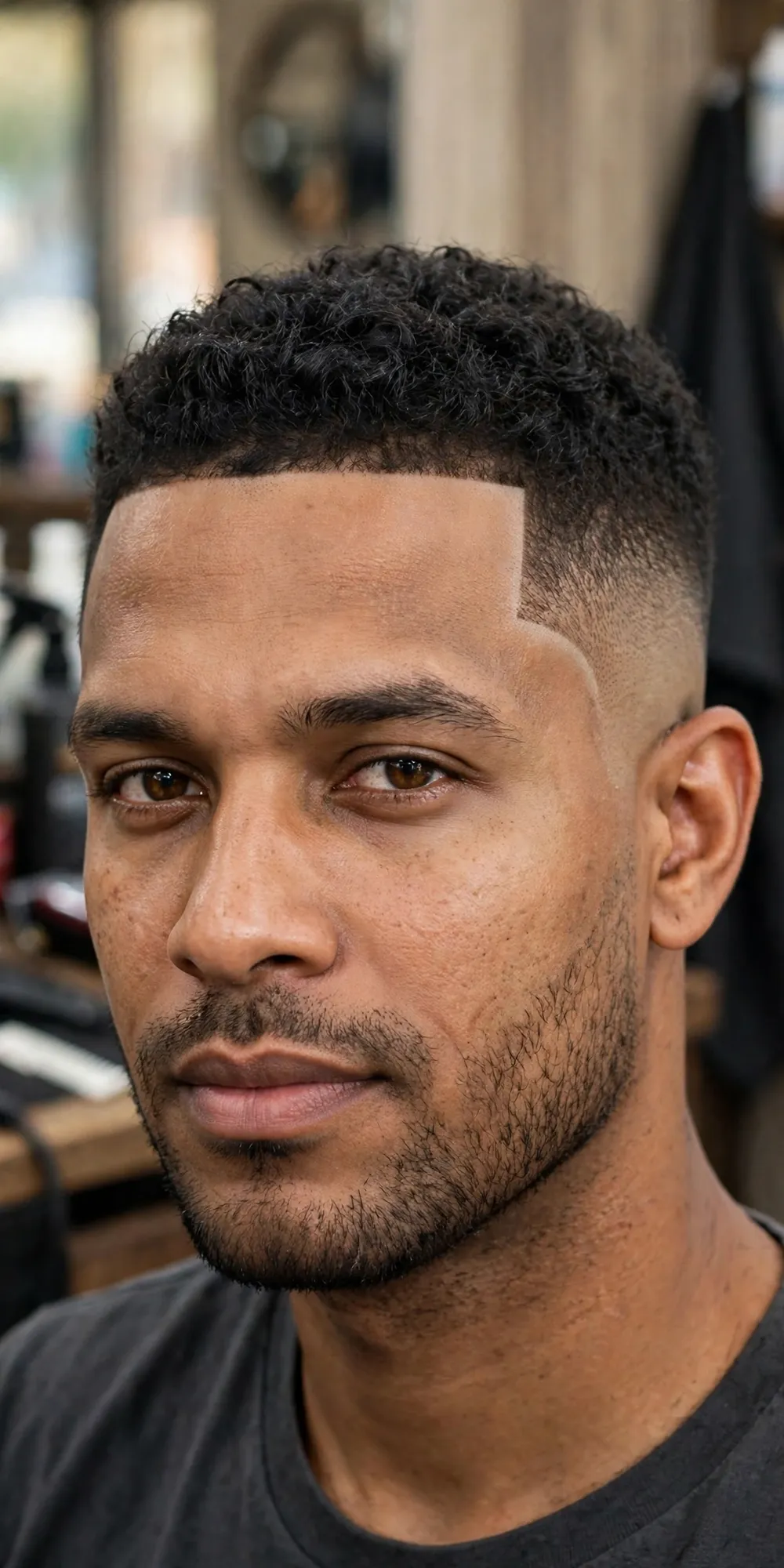
The line up is precision work: a razor-sharp hairline across forehead and temples, squared off with a blade, above the drop fade’s smooth curve. The contrast is the point — crisp geometry on top, soft gradient below — and it makes the cut look freshly done even days after the chair. It suits straight and coily hair best, since the line needs a clean edge, and it flatters square and oval faces. Ask your barber: “a sharp line up on the forehead and temples with a mid drop fade — keep the corners squared, not rounded.” A little edge control keeps stray hairs in check. The line grows out visibly within a week, so this is a cut for men happy to visit the barber every seven to ten days.
30. Drop Fade with Hair Design
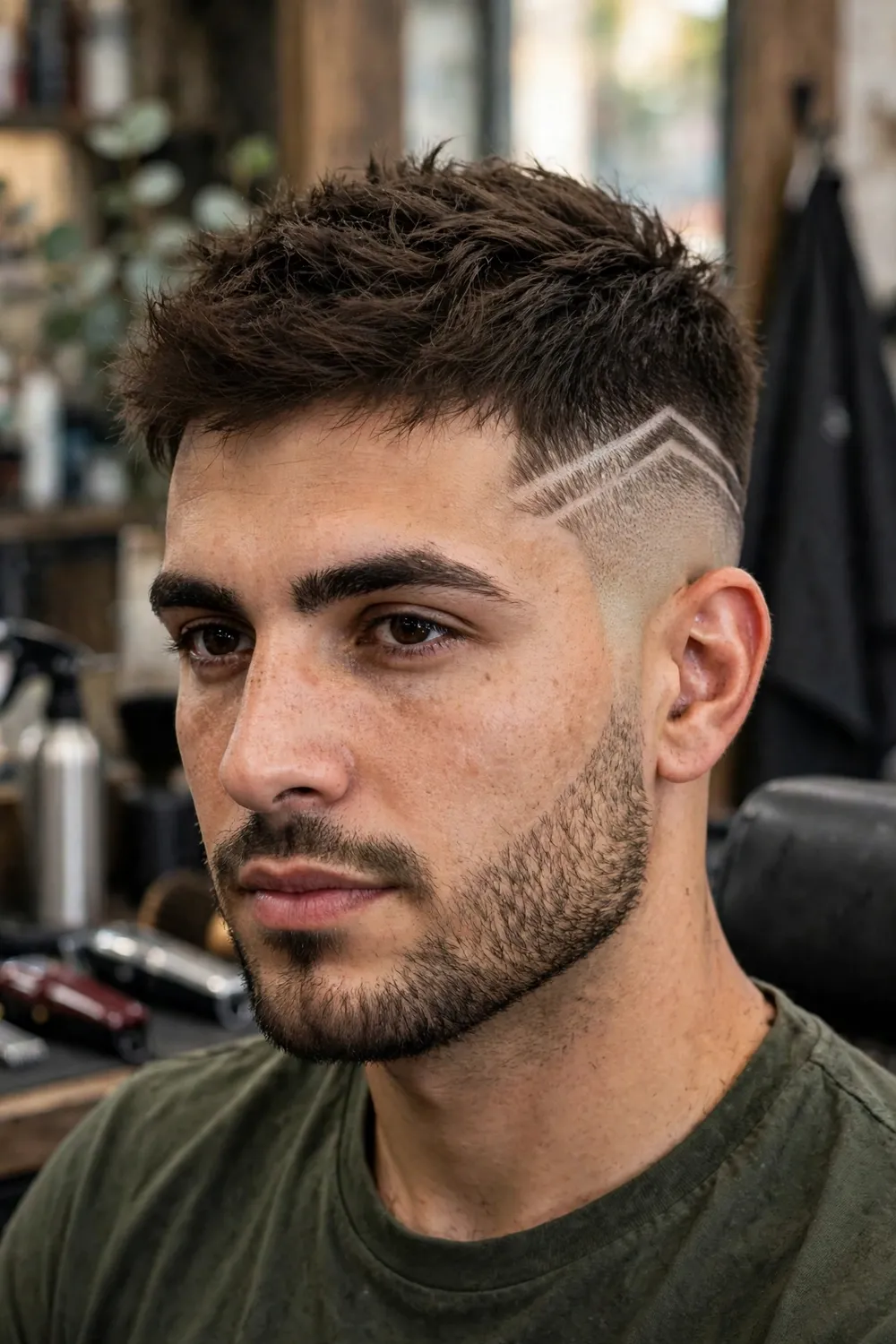
The faded sides become a canvas, with a shaved design — a line, a pattern, a star — etched into the drop fade’s gradient. Because the fade curves downward, the design follows that arc and looks part of the cut rather than stuck on top. It suits confident dressers and younger guys best, and works on any hair type since the design lives in the faded area, not the top. Ask your barber: “a drop fade with a simple shaved design on one side — keep it clean, one line or a small pattern, not a full mural.” Style the top however you like; the design is the talking point. The downside is lifespan: designs blur within a week, so this is a special-occasion cut unless you book weekly touch-ups.
31. Drop Fade with Hard Part
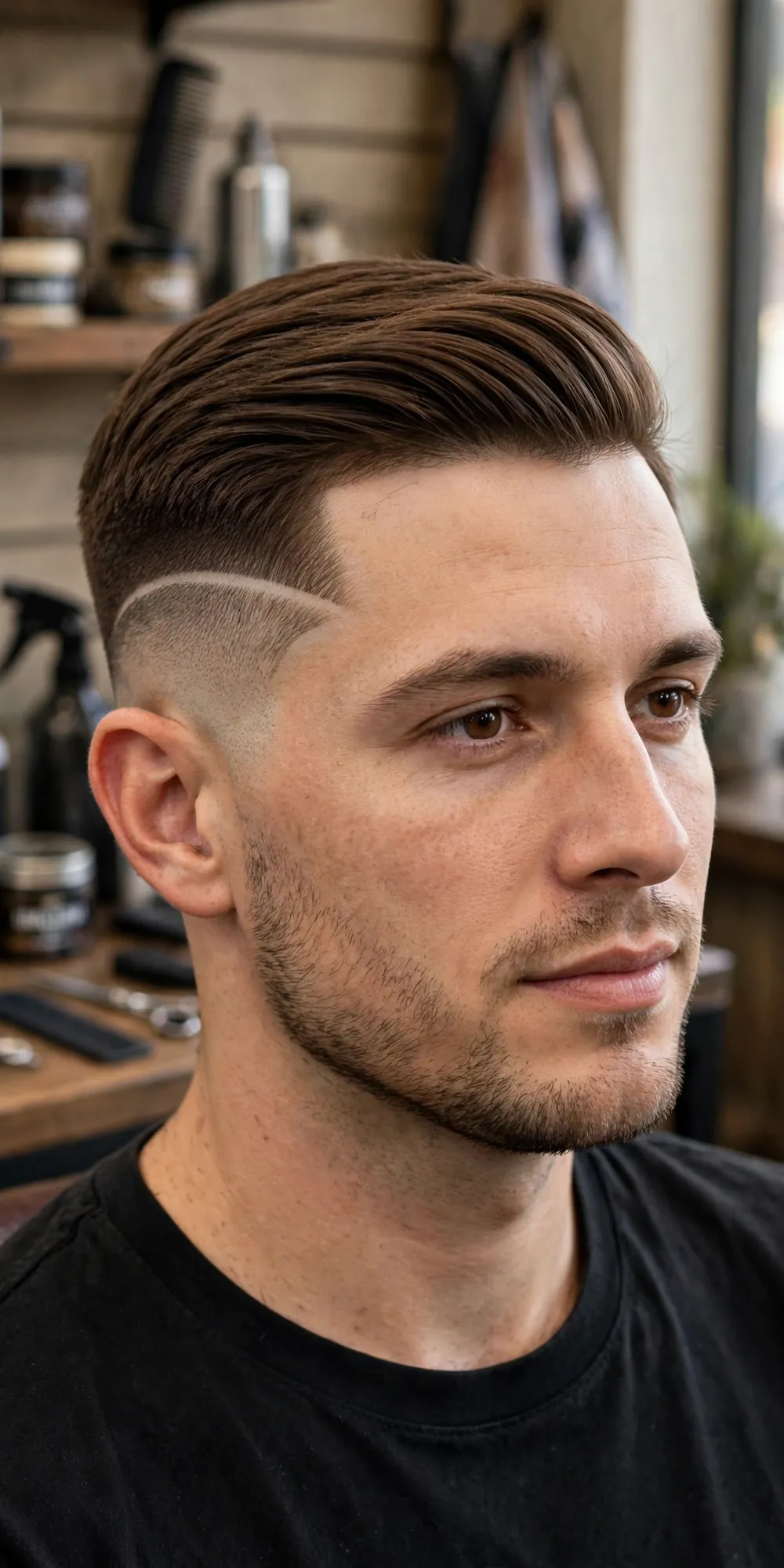
A hard part is a shaved line where the parting naturally falls, and pairing it with a drop fade gives a classic side part a modern edge. The line draws the eye across the top, the fade drops away underneath, and the cut looks sharper than a regular comb-over without extra morning effort. It suits straight hair best, since the part needs to sit cleanly, and oval or square faces carry it well. Ask your barber: “a hard part shaved in on my natural parting with a mid drop fade — keep the line thin and precise.” Medium-hold pomade combed through the top finishes it with a light shine. The part grows in within a week, so budget for a tidy-up every ten days to keep the line visible.
32. Drop Fade for Thinning Hair
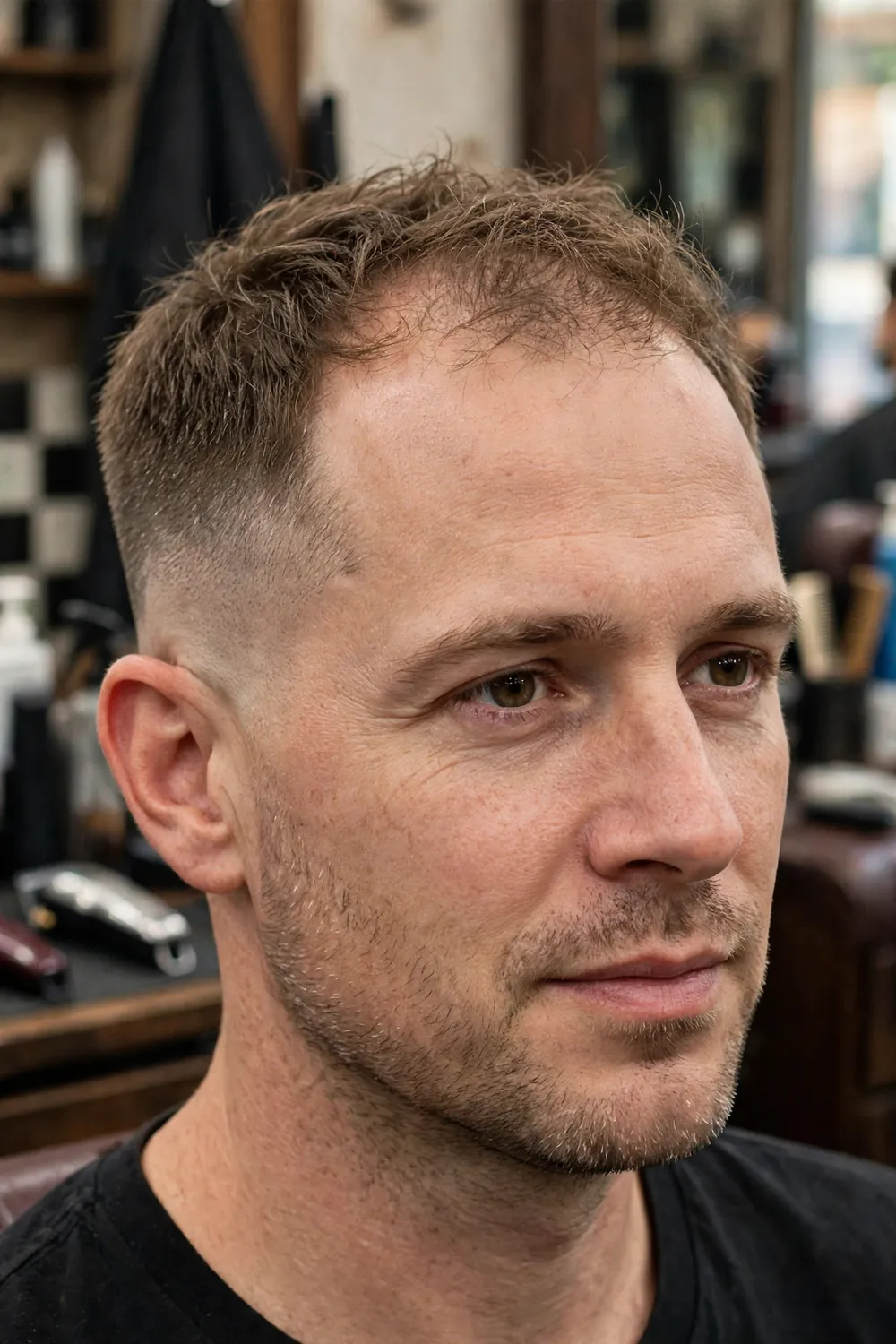
Thinning hair doesn’t mean giving up on style — it means choosing a cut that works with what you have. A short, textured top creates the illusion of fullness, because choppy layers scatter light instead of showing scalp in one flat sheet, and the drop fade keeps the sides tight so the eye goes to the top. It suits men with a receding hairline or thinning crown, and straight or fine hair responds best. Ask your barber: “a short textured top, about an inch and a half, with a low drop fade — point-cut the top so it looks fuller.” A lightweight matte powder or clay adds grip without weighing hair down. Keep the top short and trim it every three weeks; longer lengths only make thinning more obvious.
33. Spiky Top Drop Fade

Spikes have a bad reputation from the gel-heavy nineties, but the modern version is textured and piecey rather than stiff — short spikes with separation over a tight drop fade. The contrast does the work: messy, energetic top against precise, curved sides. It suits younger guys and anyone with thick, straight hair that can hold a spike without flopping; round faces benefit from the added height. Ask your barber: “a spiky textured top, about two inches, with a mid drop fade and the sides kept tight.” Work a strong-hold matte clay through dry hair and pinch the ends upward — a little goes a long way. Styling takes two minutes each morning, and the spikes lose their shape as the top grows, so plan on a trim every three weeks.
34. Long Top Drop Fade
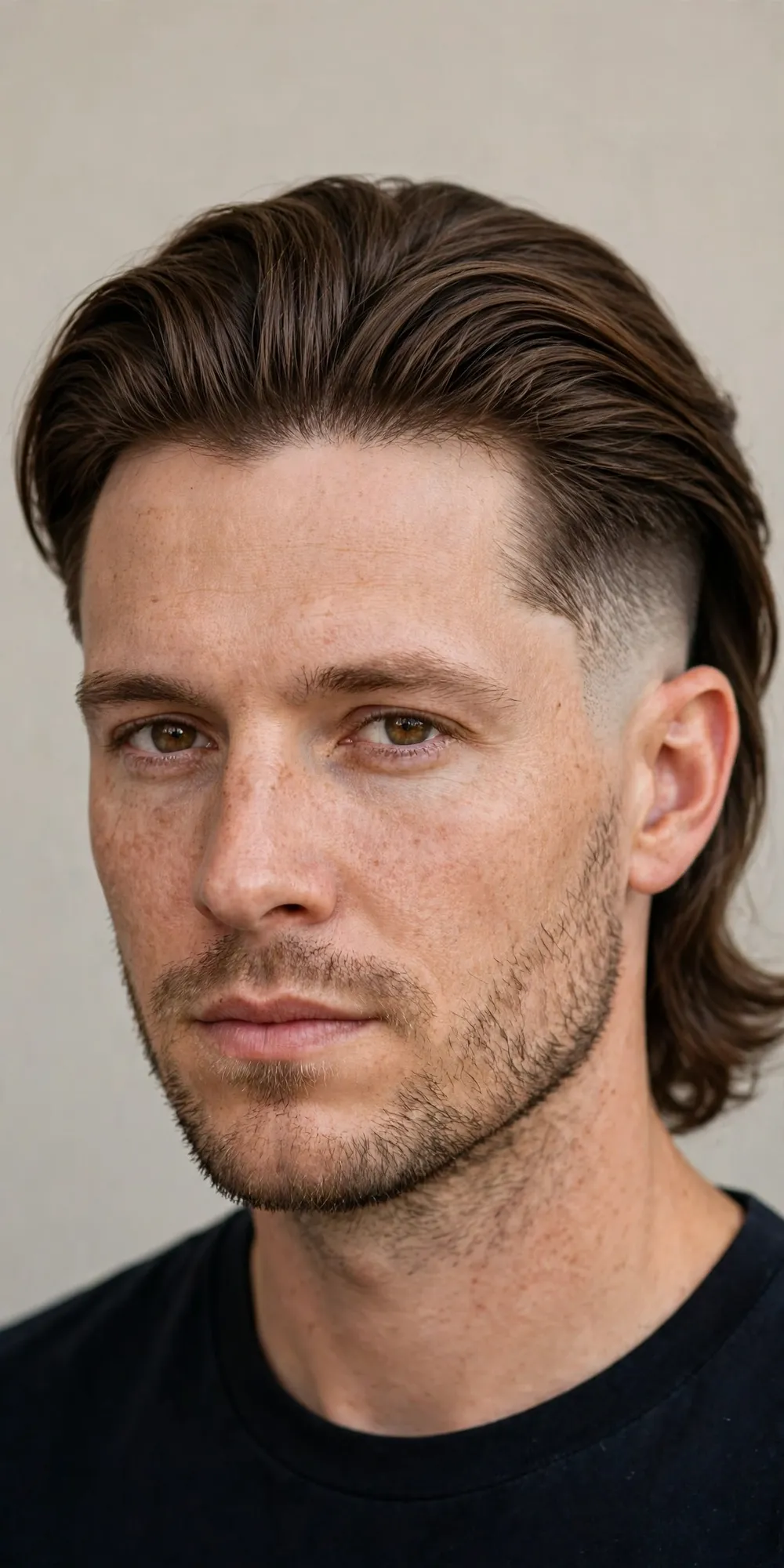
Keeping length on top while fading the sides is a balancing act, and the drop fade handles it better than a straight fade because the curve follows the head’s shape instead of cutting a harsh line. The top can be swept back, pushed aside or left to fall naturally, while the sides stay clean and the back tapers into the drop. It suits oval and longer faces, and thick, straight or wavy hair with enough weight to sit well. Ask your barber: “keep the top long — four inches or more — with a low drop fade, blended so the length flows in.” Light cream or sea salt spray gives movement without stiffness. Longer tops mean more morning styling, and the fade needs a clean-up every two to three weeks.
35. Wavy Top Drop Fade
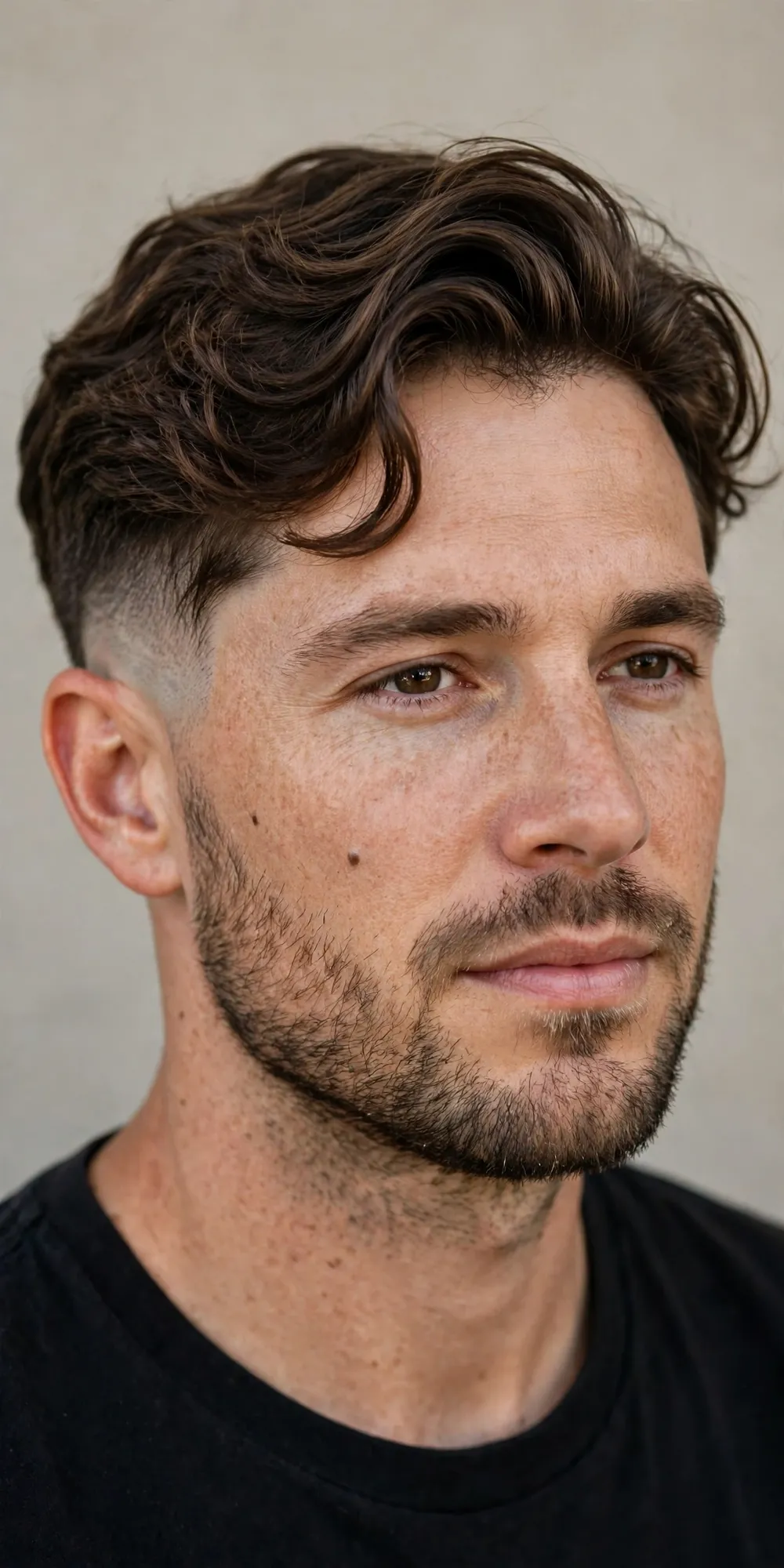
Natural waves are an asset, not a problem to straighten, and this cut lets them talk. The top is left long enough for waves to form — two to three inches — while a soft mid drop fade keeps the sides tidy without fighting the texture. It suits almost every face shape, but oval and heart-shaped faces show the waves off best, and it works on naturally wavy or loose curly hair. Ask your barber: “a wavy top with the natural texture left in, and a mid drop fade — don’t thin it out too much.” Curl cream or sea salt spray, scrunched into damp hair, defines the waves without crunch. Air-drying is fine most days, and a trim every three to four weeks keeps the shape from going shaggy.
36. Side Swept Fringe Drop Fade
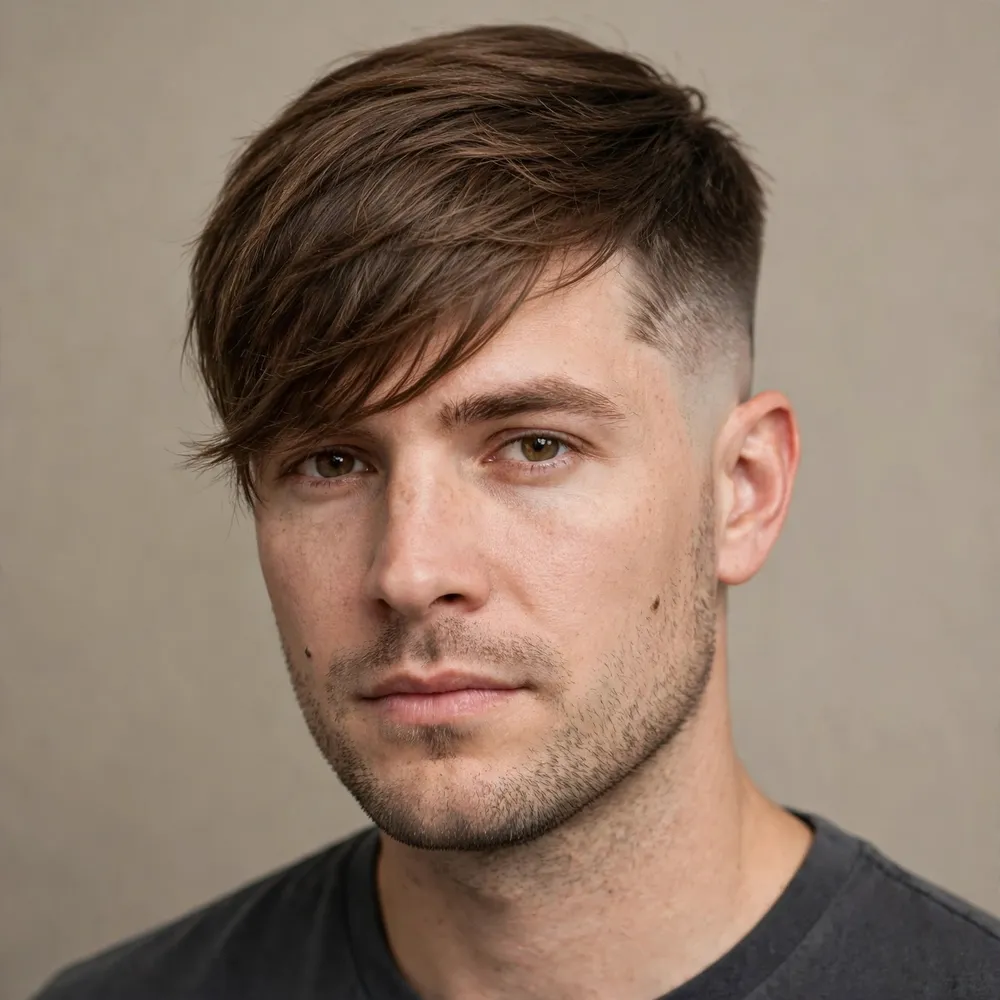
The fringe sweeps across the forehead to one side, softening the face, while a low drop fade keeps sides and back neat — relaxed but never scruffy. It’s a good pick for men with a high forehead or a longer face, since the diagonal fringe breaks up the length, and it suits straight or slightly wavy hair that falls naturally to the side. Ask your barber: “a side swept fringe, about two to three inches at the front, with a low drop fade and the sides blended, not disconnected.” A light matte paste gives the fringe direction without making it stiff. Styling is a thirty-second job with a comb or fingers, and the fringe needs trimming every three weeks before it starts falling into your eyes.
37. Drop Fade with Locs

Locs on top with a drop fade underneath is one of the cleanest combinations here. The locs bring texture and personality, the fade brings structure, and the drop curve follows the head so the transition looks deliberate rather than grown out. It suits any face shape, and obviously it needs established locs — this is a maintenance cut for men who already have them, not a starting point. Ask your barber: “a drop fade around my locs — low to mid, following the natural drop, and keep the hairline clean.” Keep the locs moisturised with a light oil and retwist on your usual schedule. The fade will need a touch-up every two weeks, and the contrast between fresh fade and mature locs is exactly what makes it look good.
38. Drop Fade for Older Men
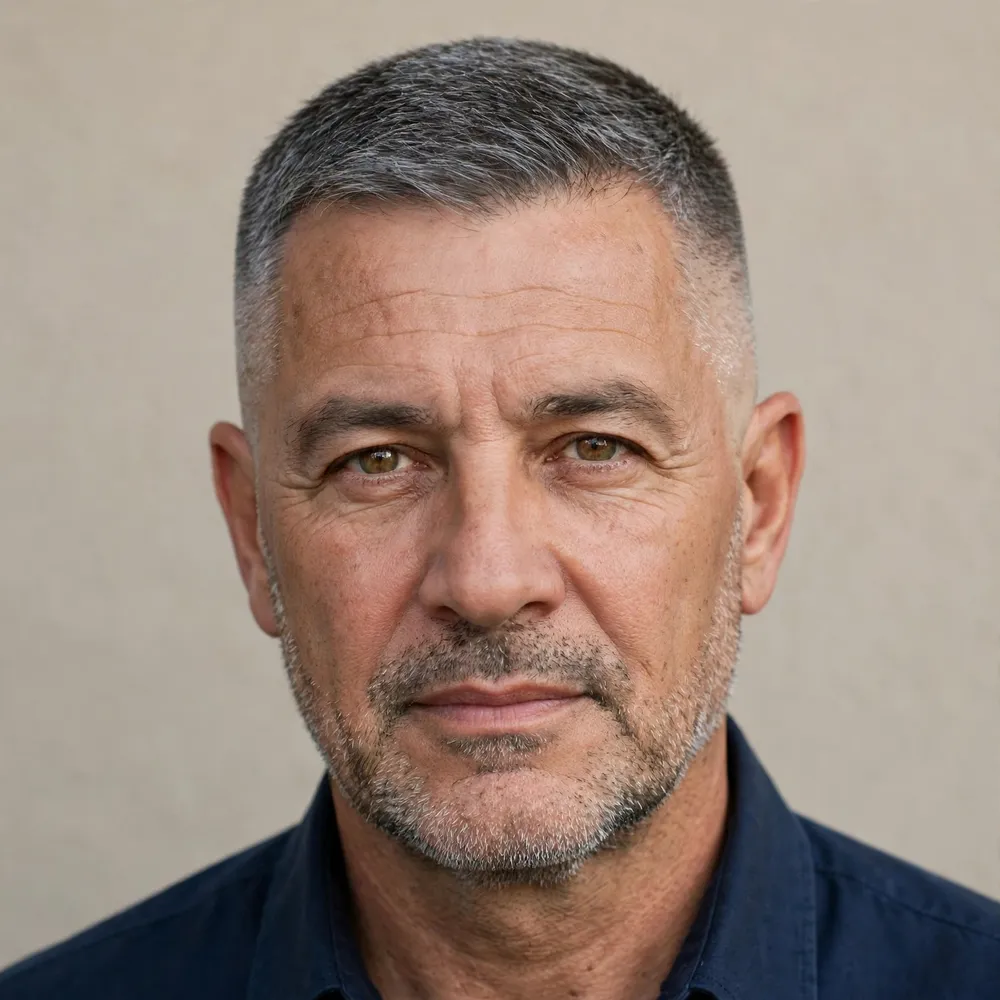
There’s nothing about a drop fade that has an age limit, and this version proves it: a clean, short cut with a low drop fade that looks sharp without trying to look twenty-five. Grey hair actually helps here, because the fade’s gradient shows off the salt-and-pepper tones, and the short top keeps everything tidy. It suits most face shapes, and it’s ideal for straight or thinning hair that doesn’t need length to look good. Ask your barber: “a short, neat top with a low drop fade — clean and classic, nothing too high or too bold.” A little matte paste or nothing at all; this cut doesn’t need product to work. Trim every three to four weeks, and the low fade grows out gracefully, so there’s no rush between visits.
39. Curly Frohawk Drop Fade
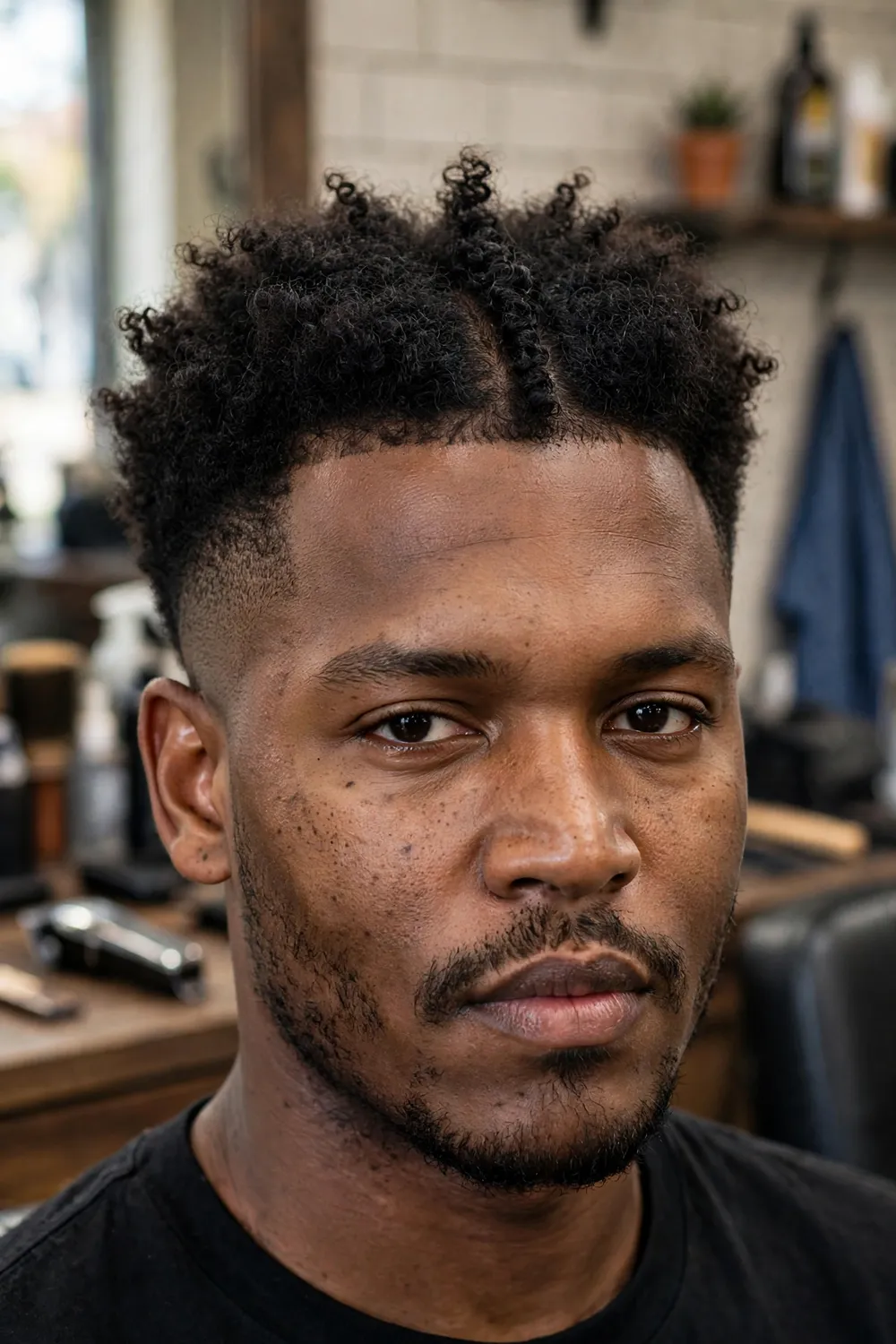
The frohawk takes the mohawk idea and lets curls do the shaping — a strip of curls front to back, taller in the middle, with sides faded along the drop curve. It’s bold, but the curls soften it, so it reads playful rather than aggressive. It suits oval and round faces, and needs naturally curly or coily hair with enough length on top to form the strip. Ask your barber: “a curly frohawk — keep the curls long in the centre strip and drop fade the sides, following the curve down at the back.” Curl-defining cream keeps the strip shaped without weighing it down. Morning styling is mostly picking the curls out and letting them sit; the fade needs a refresh every two weeks to keep the strip standing out.
Drop Fade vs Regular Fade vs Taper Fade
The three names get thrown around as if they mean the same thing, and they don’t. The fade line — where the blend sits and how it travels around the head — is what separates them, and once you see it, you can’t unsee it. The Fade (haircut) has a long history, but the drop variation is a modern twist on the classic idea.
| Feature | Drop Fade | Regular Fade | Taper Fade |
|---|---|---|---|
| Fade line shape | Curves downward behind the ears, dipping at the nape | Stays level all the way around the head | Gradual taper, no sharp line, shortest at the sideburns and nape |
| Boldness | Medium to bold, depending on height | Medium, clean and even | Subtle and understated |
| Best for | Men who want shape and structure, curly and textured tops | Anyone wanting a tidy, balanced fade | Conservative styles, office looks, first-time fades |
| Grow-out | Forgiving at low height, more obvious at high | Even grow-out, easy to maintain | The most forgiving of the three |
| Works with | Curls, crops, quiffs, mohawks, beard blends | Almost any top — buzz, crop, side part | Side parts, comb overs, classic short cuts |
If you like structure and a bit of personality, the drop fade is the one to ask for — it gives the barber a shape to work with instead of a straight line. If you want something safe that grows out evenly, the regular fade is hard to beat. And if you’re easing into fades or need something strictly office-friendly, start with a taper; you can always go bolder next time.
Which Drop Fade Height Suits Your Face Shape?
Round faces get the most from a high or mid drop fade. The height on the sides and the volume you build on top — a quiff, a blowout, a brush up — stretch the face visually, which is exactly what a round face needs. Keep the sides tight and avoid anything too wide at the cheekbones.
Square faces can wear almost any height, but a mid drop fade is the sweet spot. It softens the jaw without hiding it, and it pairs well with a textured top or a side part that adds a little asymmetry. A high fade can work too, though it can make a strong jaw look even more angular if the top is too flat.
Oval faces have the easiest job — low, mid or high all work, so pick by personality rather than geometry. A low drop fade with a French crop looks effortless; a high drop with a pompadour makes a statement. If you’re unsure, start mid and adjust next visit.
Long faces should stick to a low drop fade. The lower blend keeps the sides fuller, which adds width where a long face needs it, and a fringe — a side sweep or a textured crop — shortens the forehead. Avoid high fades with tall, spiky tops, since they only add more length.
5 Mistakes to Avoid with a Drop Fade
- Asking for “a fade” without saying drop. If you don’t name the drop, you’ll probably get a regular level fade, and you’ll wonder why the back looks nothing like the photo. Say the words “drop fade” and point at where you want the curve to dip.
- Picking a high fade on your first visit. High drops are bold and they grow out fast. Start low or mid, live with it for a couple of weeks, and go higher next time if you want more drama.
- Skipping the neckline tidy-up. The drop’s curve at the nape is the first thing to blur, and once it goes, the whole cut looks grown out even if the top is fine. A quick neckline clean-up between full cuts keeps it sharp.
- Using heavy, shiny product on a textured top. Thick pomade flattens curls and texture and fights the fade’s clean lines. Matte clay or a light cream suits most drop fade tops far better.
- Forgetting the beard. If you have a beard and the fade stops at the sideburns, the two halves look disconnected. Ask for the blend into the beard every time — it’s a small detail that changes the whole result.
FAQs
What is a drop fade haircut?
A drop fade is a fade where the blend line curves downward as it travels around the head, dipping lower behind the ears and at the nape instead of staying level. The top can be anything — a crop, curls, a quiff, a buzz — while the sides follow that curved line. It’s the shape of the fade line, not the length on top, that makes it a drop fade.
What is the difference between a drop fade and a regular fade?
A regular fade keeps its blend line at roughly the same height all the way around the head, giving an even, uniform look. A drop fade arcs downward behind the ears, so the fade sits lower at the back than at the front. That curve gives the cut more shape and makes it look intentional from the side and back, while a regular fade looks the same from every angle.
Which drop fade height is best — low, mid or high?
There’s no single best height — it depends on your face shape and how bold you want to go. A low drop fade is subtle, grows out gracefully and suits first-timers and longer faces. A mid drop fade is the all-rounder: noticeable but not loud, and it works with most tops. A high drop fade is the boldest choice, best for round faces and men who want the fade to be the feature. If you’re torn, a mid fade is the safest starting point — our Low Fade Haircuts for Men guide is a good comparison if you’re leaning subtle.
How often should I get a drop fade touched up?
Most drop fades need a touch-up every two to three weeks to stay sharp, with high and skin fades needing the shorter end of that range. Low fades and tapers can stretch to three or four weeks before the grow-out shows. Line ups, hard parts and hair designs blur faster, so those need attention every seven to ten days. Booking your next visit before you leave the chair is the easiest way to stay on top of it.
Does a drop fade suit curly hair?
Yes — curly hair is one of the best matches for a drop fade. The fade takes bulk off the sides where curls can puff out, while the top keeps its natural texture and volume, and the curved line follows the head’s shape nicely. Styles like the curly top, the frohawk and the drop fade afro all rely on that contrast. If your curls are tight, a Burst Fade Haircut is another option worth comparing, since it fades around the ear in a similar curved way.
Can I get a drop fade with a beard?
Absolutely — and it’s one of the strongest combinations, because the fade can blend straight into the beard for a single sculpted shape. Ask your barber to fade the sideburns into the cheek line rather than stopping the fade short. It works best with a medium to full beard, and you’ll want to get the hair and beard trimmed together so one doesn’t outgrow the other.
How do I ask my barber for a drop fade?
Name the height, the top and the finish in one sentence. For example: “a mid drop fade with a textured crop on top, blended at the back.” Show a photo of the exact style you want, and point out where you want the fade line to dip behind your ears. If you want a specific top, naming it helps too — a Quiff Haircut with a drop fade and a textured crop with a drop fade are two very different cuts, and your barber needs to know which one you mean.
Final Word
The drop fade earns its place because it does something a regular fade can’t: it follows the shape of your head instead of fighting it. Start with a mid fade if you’re unsure, pick a top that suits your hair rather than the photo, and keep the touch-ups regular — that’s the whole secret. And if this list gave you a new idea, you’ll find plenty more in our latest hair guides to try next.