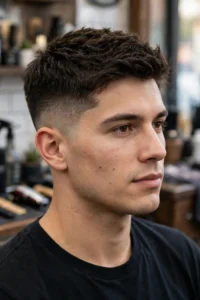



A burst fade haircut is a curved fade that arcs around the ear and leaves the back of the hair longer, so you get clean, sharp sides without losing length at the back. It suits most face shapes and works with straight, wavy, curly and thick hair, which is why it keeps showing up in barbershops year after year. If you only try three, start with these: the Low Burst Fade for a tidy everyday look, the Mid Burst Fade for the most balanced shape, and the Curly Burst Fade Mohawk if you want something with real personality.
What Is a Burst Fade?
Picture a fade that does not run in a straight line from front to back. Instead, the barber fades the hair in a half-circle around the ear, like a sunrise shape, and the hair behind the ear stays longer. That curve is the whole point. A regular fade takes the sides and back down together; a burst fade only fades the sides, so the back keeps its length and you can pair it with a mullet, a mohawk or just longer hair.
It started as a barbershop staple for mohawks, because the arc frames the centre strip so well, but these days it shows up with crops, curls, quiffs and buzz cuts too. The height of the arc is what changes the feel. Low sits just above the ear and looks subtle, mid sits around the ear for a clear shape, and high climbs toward the temples for something bolder. Skin versions go right down to bare skin for maximum contrast, while a taper version keeps it soft with no skin showing at all.
| Fade type | Shape | Back of the hair |
|---|---|---|
| Burst fade | Curved arc around the ear | Kept longer |
| Drop fade | Fades lower behind the ear, following the head’s curve | Faded down, shorter |
| Regular fade | Straight line around the sides and back | Faded the same as the sides |
1. Low Burst Fade
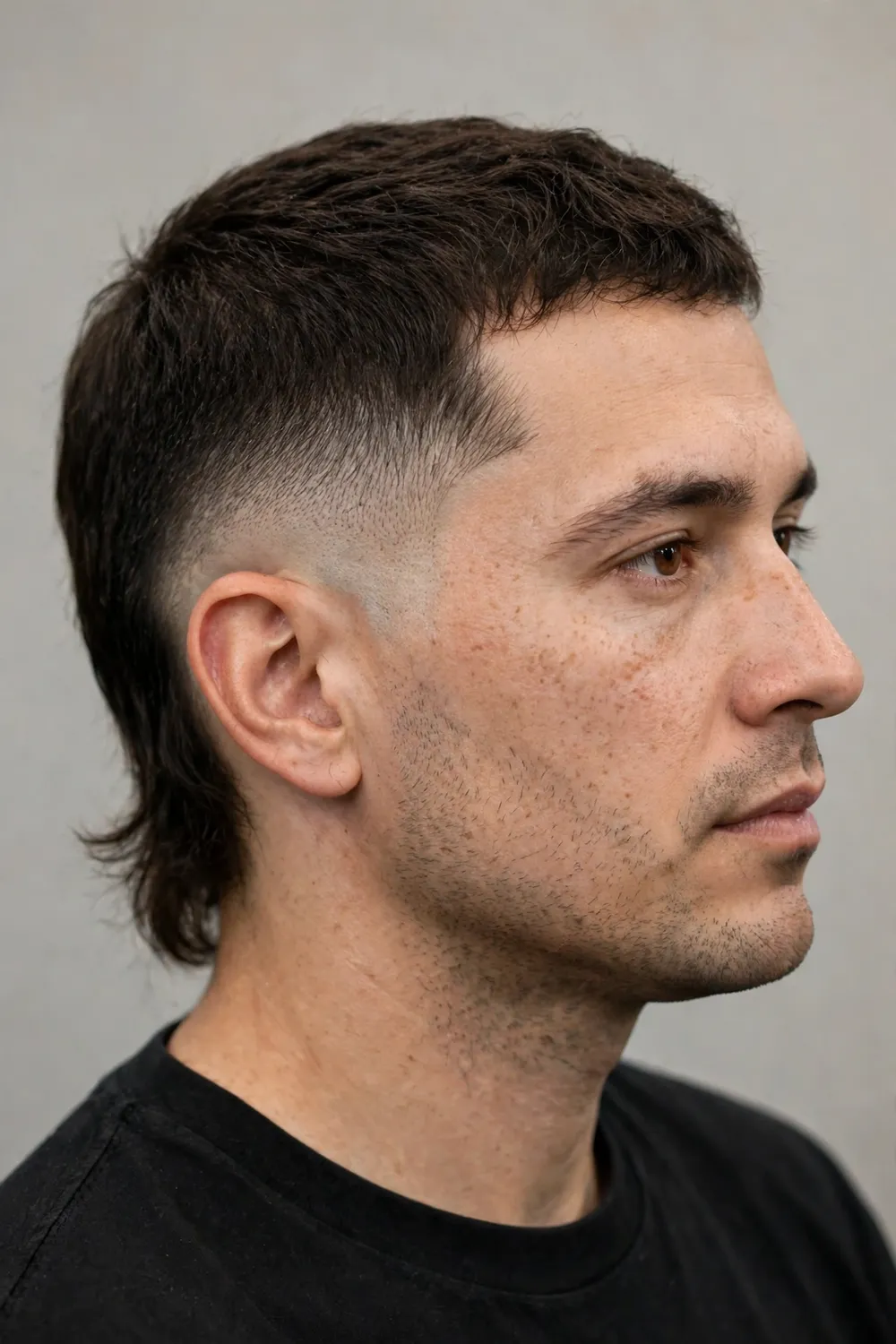
This is the quiet version of the style, and honestly the most useful one. The fade arcs gently just above the ear while the back keeps its length, so the cut reads tidy without looking like you tried too hard. It suits oval and round faces especially well, since it adds structure without lengthening the head, and it works on straight, wavy or slightly curly hair. If you want to compare it with the straight-line version, our Low Fade Haircuts for Men guide covers that cut in full. Ask your barber for a low burst fade with a soft blend and no skin. A dab of matte clay gives a natural finish, and it grows out gracefully, so a tidy-up every three weeks is enough.
2. Textured Short Hair with Burst Fade
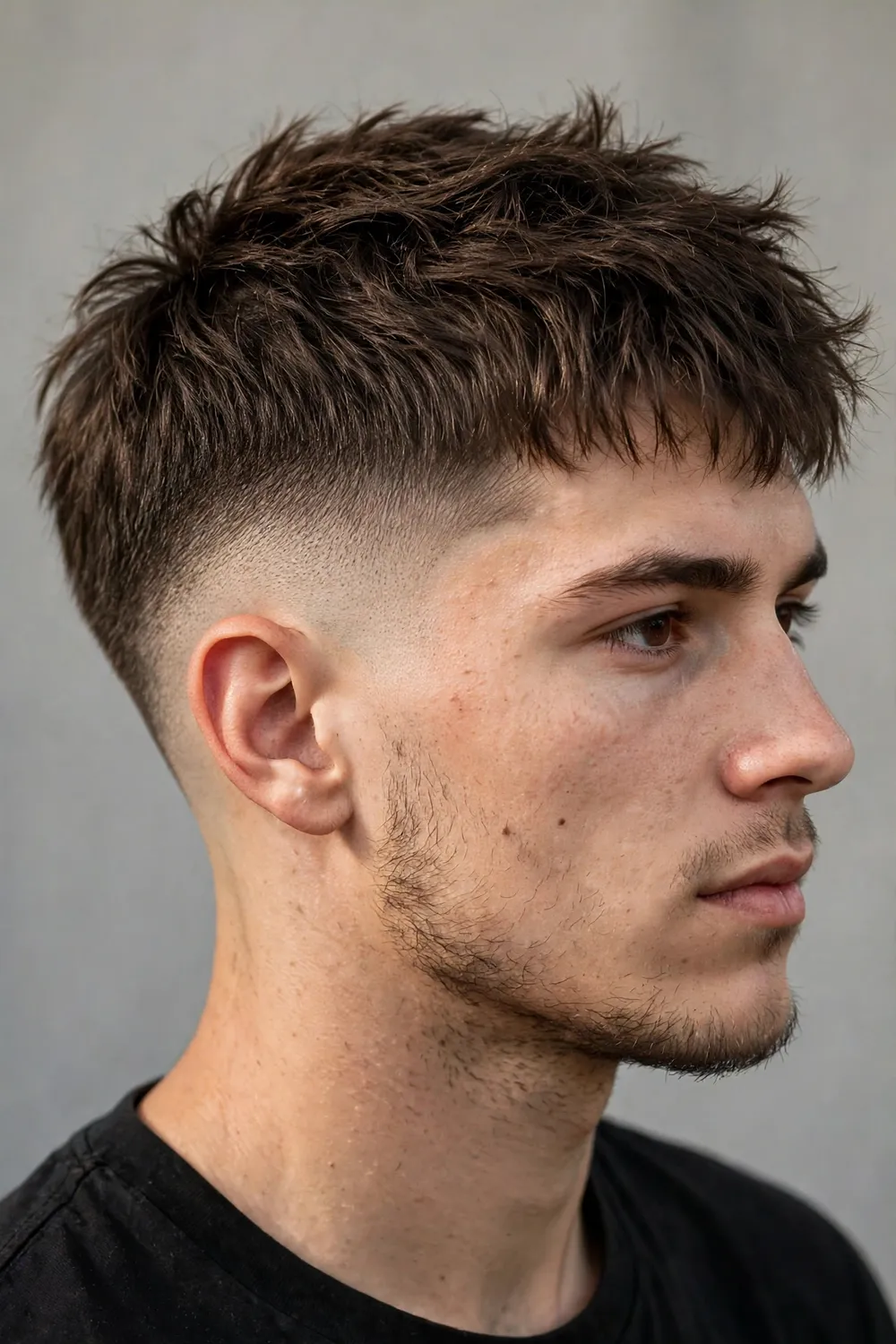
Choppy layers on top, a clean curved fade underneath — this pairing just works. The texture stops short hair from looking flat, and the burst fade gives it a sharp frame that makes the whole cut look deliberate. It suits men with straight or slightly wavy hair who want something low-effort but not boring, and it flatters square and oval faces because the volume on top balances a strong jaw. Ask your barber for short textured layers with point-cut ends and a mid burst fade, keeping the fringe slightly longer so you can push it forward or sweep it aside. Work a pea-sized amount of matte paste through damp hair and mess it up with your fingers. Touch it up every two to three weeks, because the texture loses its edge once the fade grows out.
3. Mid Burst Fade

If you cannot decide between low and high, this is the safe middle ground, and it is the version most barbers cut the most. The arc sits around the middle of the ear, so the shape is clearly visible without shouting, and it pairs with almost any top — a crop, a quiff, curls, a slick back. It suits pretty much every face shape, though it is especially good on round faces, where the arc adds a little length to the profile. Ask for a mid burst fade with a clean blend and say whether you want skin or a softer finish; that one choice changes the whole look. Style it with a light hold cream for a natural result, or clay for more texture. Expect a trim every three weeks to keep the arc crisp.
4. Short Curly Hair with Sharp Burst Fade
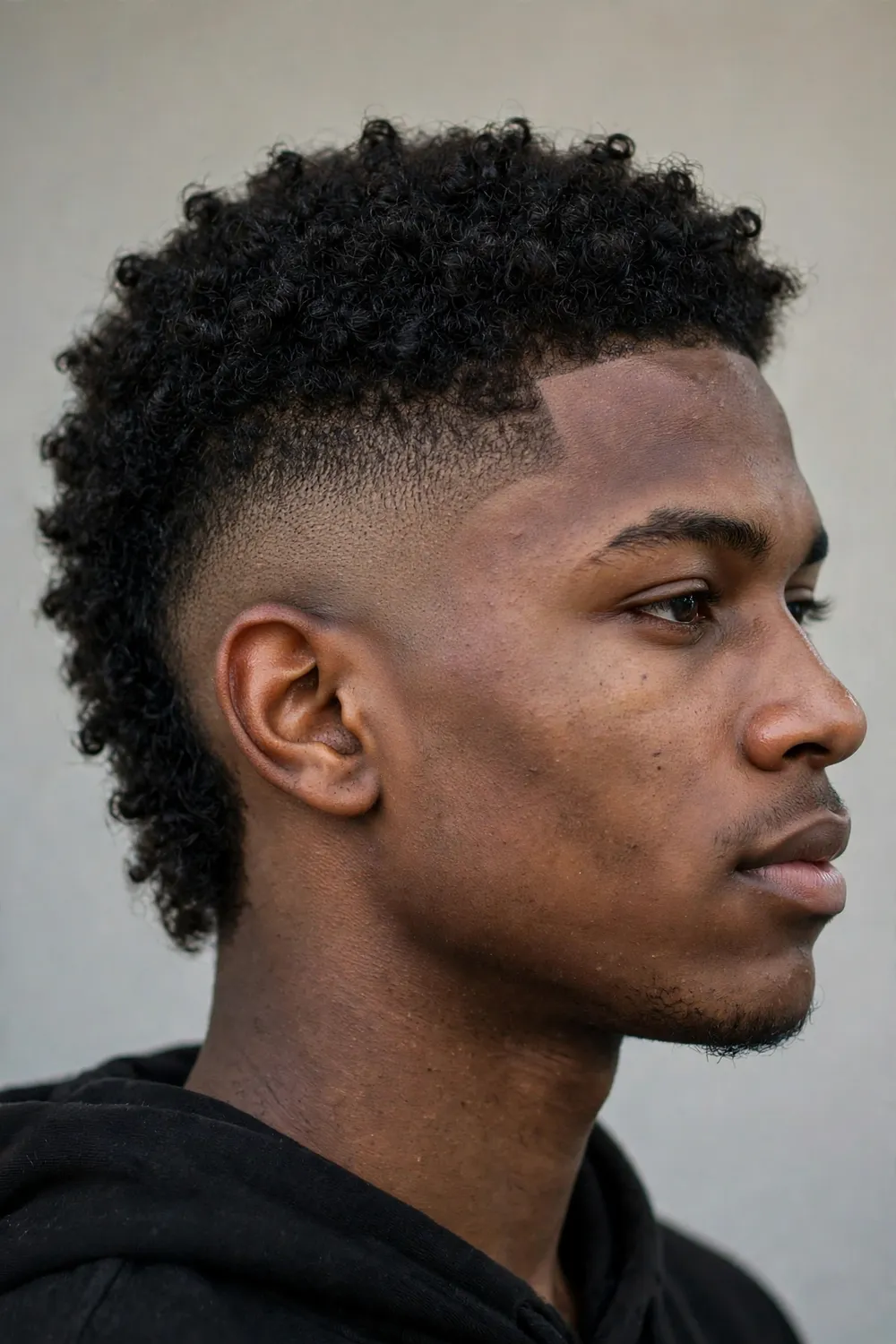
Short curls and a burst fade are a natural match, because the fade takes care of the sides while the curls do all the talking on top. Keeping the curls short means they sit in tight, defined coils instead of puffing out, and the sharp arc around the ear gives the cut a clean outline. It suits men with naturally curly or coily hair, and it works well on round and square faces since the height on top adds balance. Ask your barber for short curls on top with a sharp burst fade and a defined lineup, and have them cut the curls dry. A curl cream or light leave-in keeps the coils defined without crunch. Trim every two to three weeks; curls grow out fast and the shape goes quickly.
5. Burst Taper Fade
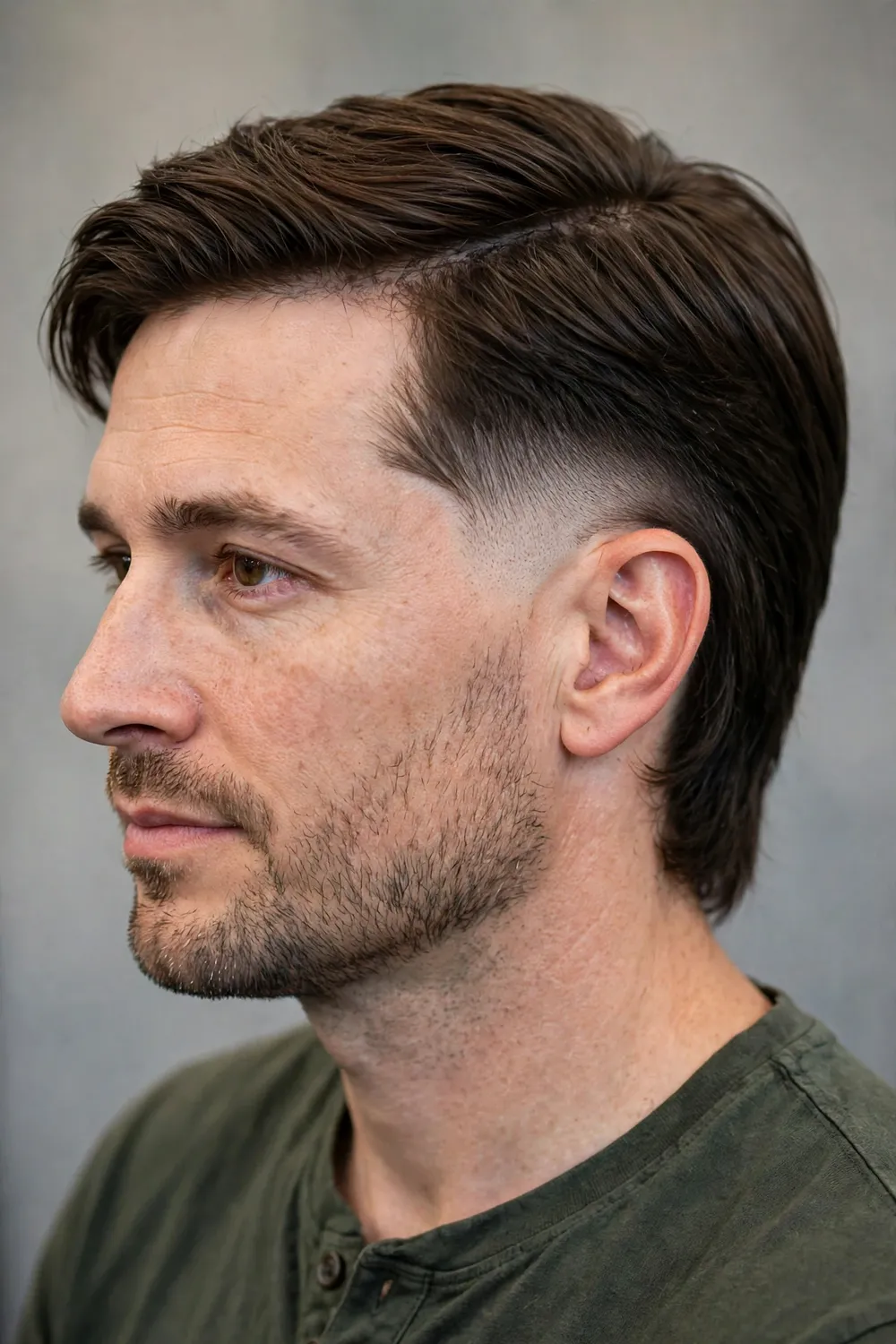
Not every burst fade has to go down to skin, and this is the version for anyone who wants the shape without the harshness. The taper fades gradually around the ear, blending from longer to shorter with no bare skin and no hard line, so the result looks soft and neat, and works in an office as easily as on a night out. It suits straight and wavy hair best, and it flatters men with rounder faces because the gentle curve adds definition without extra height. Ask your barber for a burst taper, not a skin fade, and keep the top medium length. A light pomade or cream gives a smooth, natural finish. It grows out better than any other version here, so three to four weeks between cuts is fine.
6. Textured Long Hair with Burst Fade
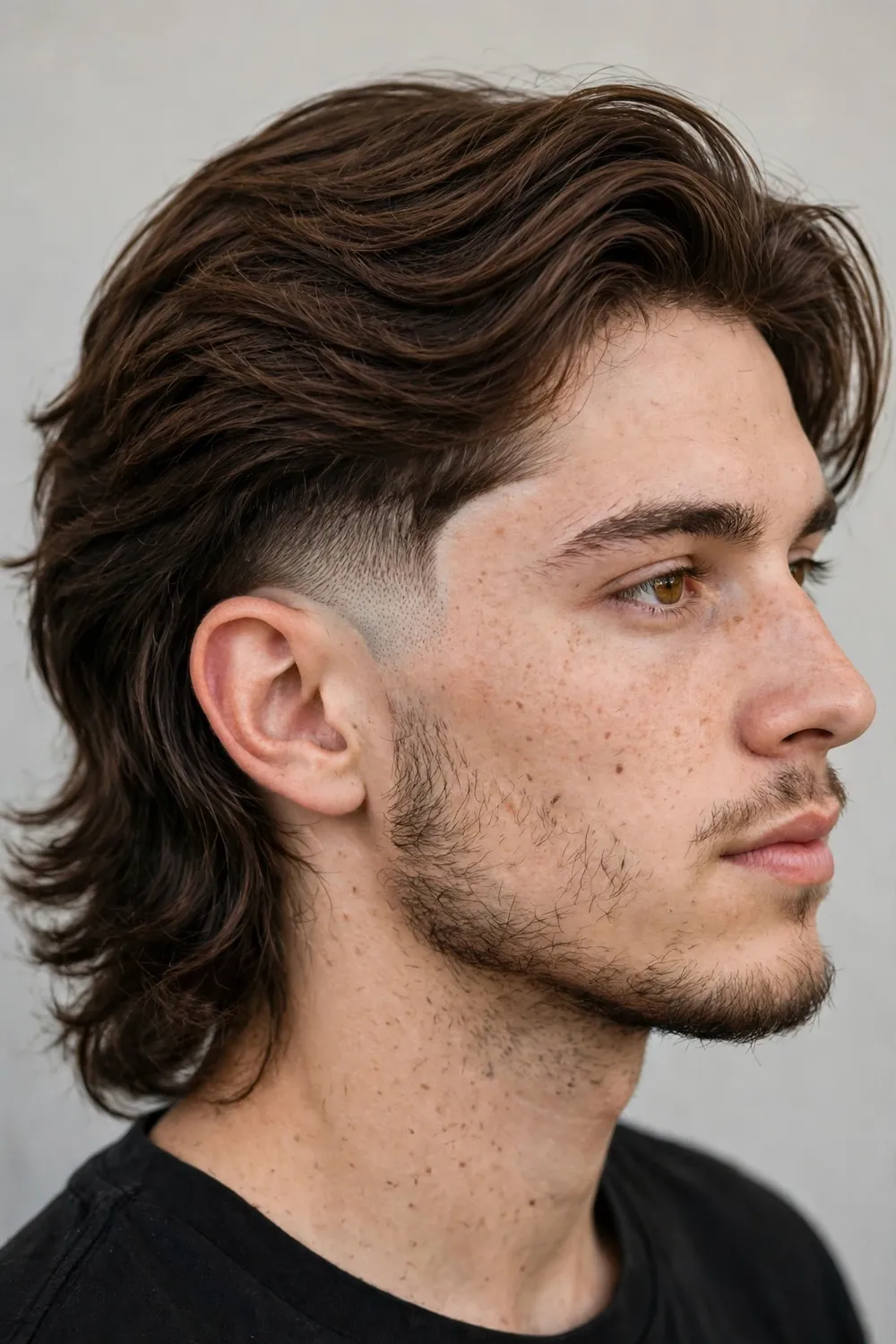
Long hair on top, clean burst fade on the sides — the contrast is what makes this one stand out. Layered length flows over the top while the curved fade keeps the sides tidy, so you get the freedom of long hair without the messy edges. It suits thick and wavy hair best, since the layers stop it from looking heavy, and it works well on oval and oblong faces where the length balances the shape. Ask your barber for long textured layers on top with a low or mid burst fade, and be clear that the back stays long. A sea salt spray or light cream adds movement without weighing it down. Maintenance is mostly about the top: trim the layers every four to six weeks and the fade every three.
7. Brush Back with Burst Fade
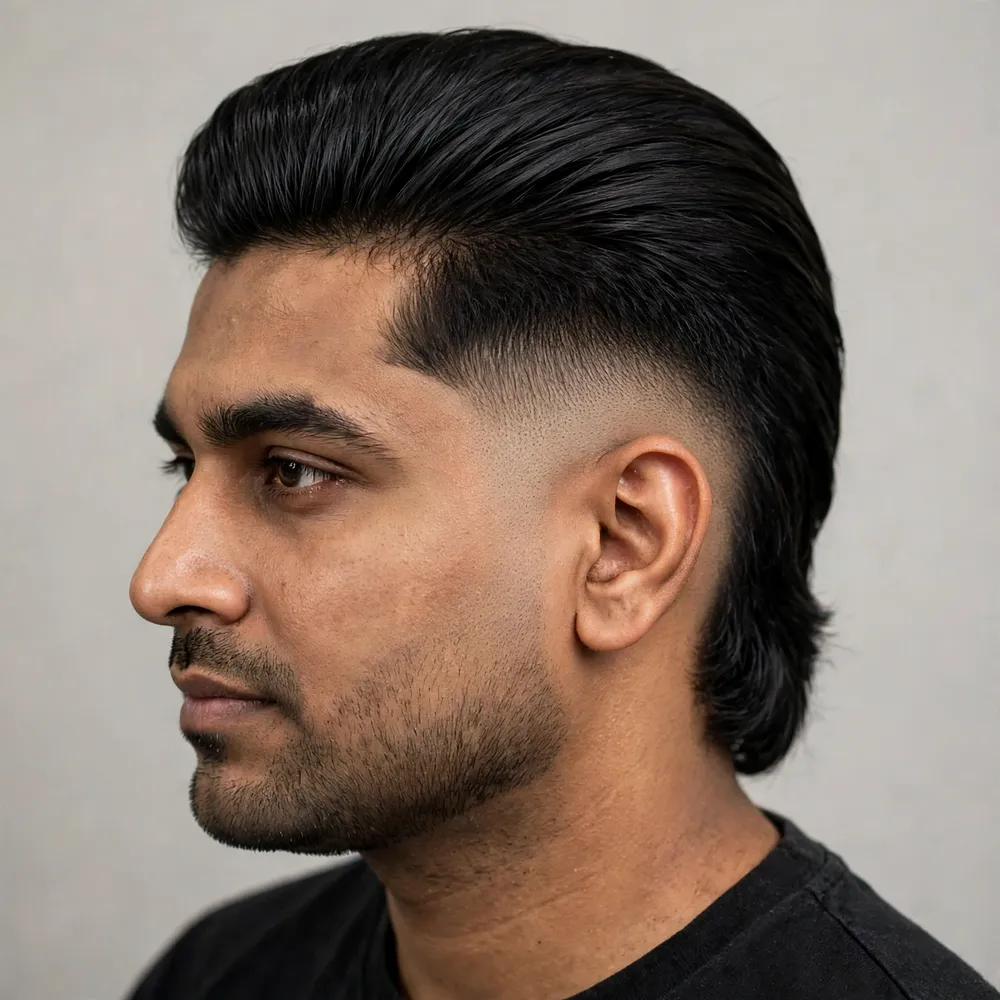
Swept-back hair has a classic, grown-up feel, and the burst fade stops it from looking like something from a decade ago. The full top is brushed straight back, the sides curve cleanly around the ears, and the back keeps enough length to flow naturally. It suits men with straight or slightly wavy hair and a bit of natural volume, and it flatters oval and square faces particularly well. Ask your barber for a brush back with a mid burst fade, keeping the top long enough to sweep back without falling forward. Blow-dry it back, then finish with pomade for shine or clay for a matte look. Trim every three weeks, and spend a minute styling each morning.
8. High Burst Fade
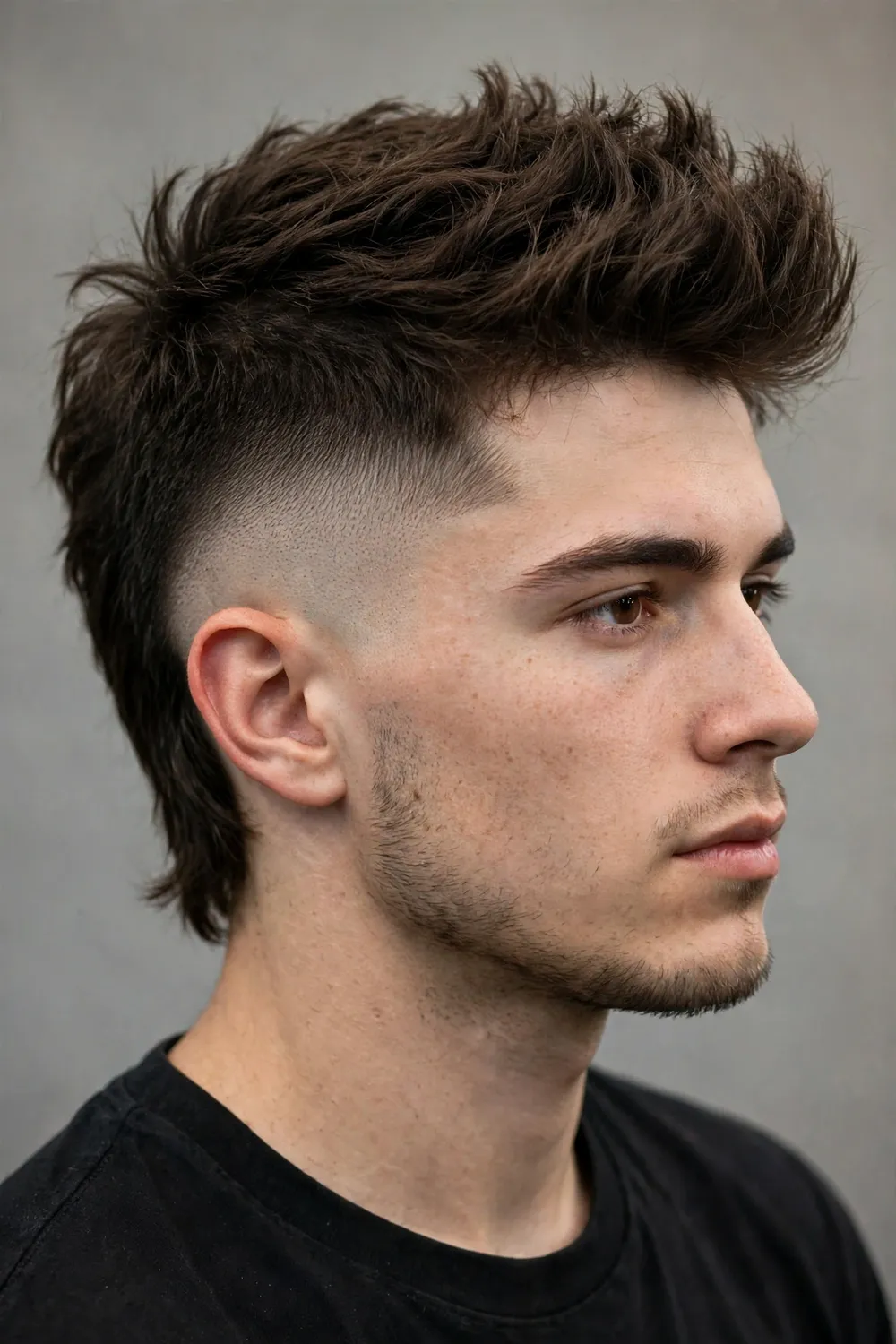
This is the boldest height, and it does not pretend otherwise. The arc climbs high toward the temples, leaving a strong band of faded skin around the ears and making whatever is on top look taller and sharper by contrast. It suits confident dressers and men with thick hair, since it needs a solid top to balance it, and it works best on oval and square faces where the extra height is flattering rather than lengthening. Ask your barber for a high burst fade, and decide up front whether you want skin or a one-guard blend — skin is sharper but shows regrowth sooner. Style the top with a strong-hold clay or pomade. Upkeep is the catch: it needs a touch-up every two weeks to stay sharp.
9. Curly Burst Fade Mohawk

This is the showpiece of the whole list, and it earns the attention. A strip of curls runs down the centre with real volume, while the burst fade curves around each ear and frames it perfectly. It suits men with naturally curly or coily hair who like standing out, and it works well on oval and round faces because the height on top stretches the profile nicely. Ask your barber for a curly mohawk with a burst fade, keeping the centre strip wide enough that the curls have room to move. Use a curl-defining cream and let the curls dry naturally, or diffuse them for extra volume. Trim the sides every two weeks; the centre can go a little longer between cuts.
10. Short Messy Style with Burst Fade

Some cuts look best when they are not trying too hard, and this is one of them. The top is short, choppy and deliberately tousled, while the burst fade underneath keeps everything looking intentional — messy on top, clean on the sides. It suits straight and wavy hair, and it is a good pick for men who hate morning styling but still want to look put together. It flatters most face shapes, especially square ones, since the texture softens a strong jaw. Ask your barber for a short messy top with choppy layers and a mid burst fade, and keep the fringe uneven so it falls naturally. Rub a little matte paste between your palms and scrunch it through damp hair. A trim every three weeks keeps the fade from swallowing the shape.
11. Long Fringe with Burst Fade and Shaved Design

This one is for the guys who like their hair to say something. A long fringe falls forward over the forehead, a simple shaved design sits above the burst fade, and the curved fade ties it all together. It suits younger men and anyone with straight hair that holds a fringe shape, and it works on oval and heart-shaped faces where a forward fringe balances the forehead. Ask your barber for a long fringe with a burst fade and a simple shaved design, and agree on the design first — simple lines age better than complicated ones. A light cream keeps the fringe in place without stiffness. The design fades fast, so expect a touch-up every one to two weeks if you want it to stay visible.
12. Fresh Spiky Mohawk Burst Fade
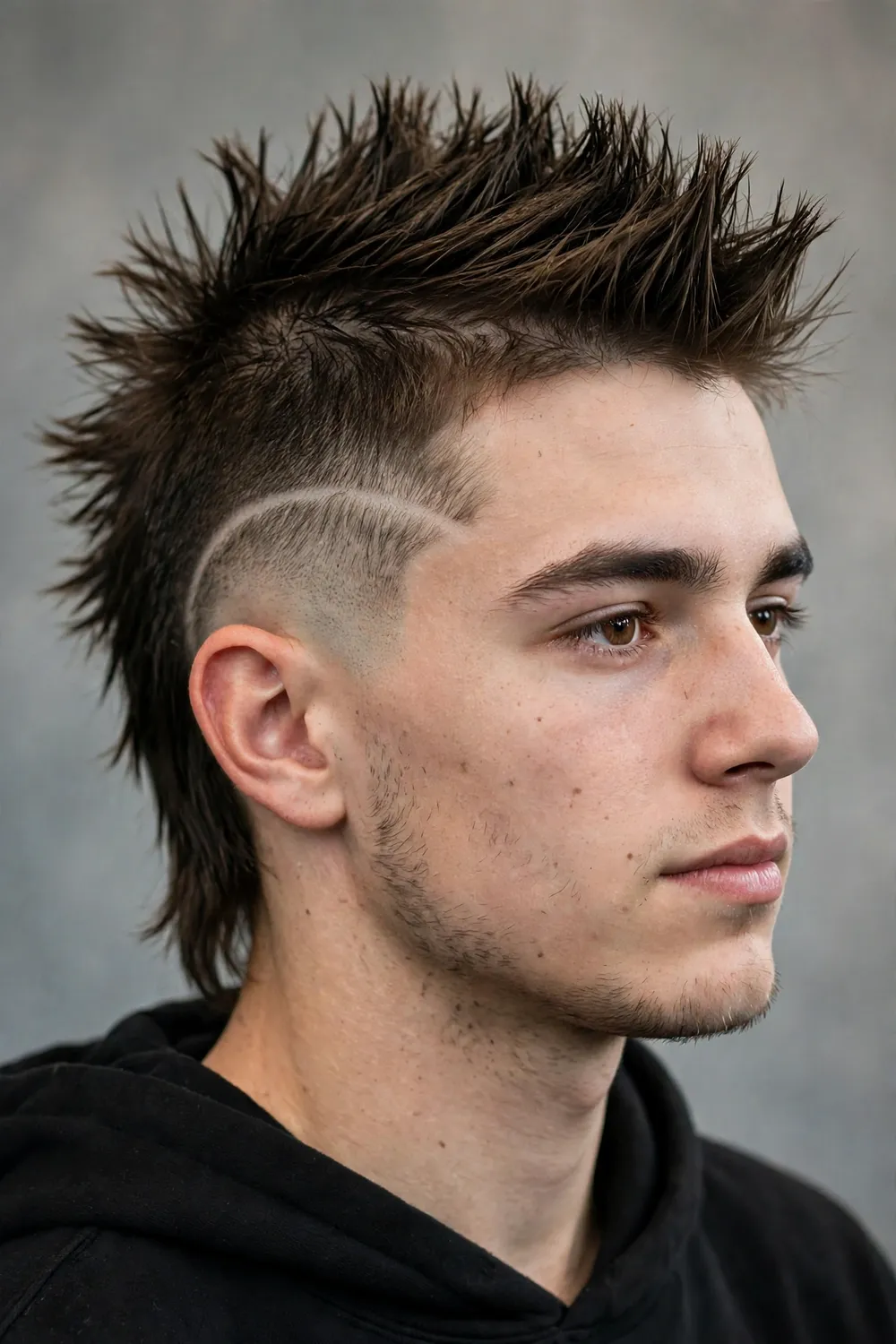
Spikes and a burst fade were made for each other. The mohawk strip stands up in short spikes, the fade curves around the ears. It suits thick, straight hair best — fine hair struggles to hold the spikes — and it flatters oval and square faces where the height works in your favour. Ask your barber for a spiky mohawk with a mid or high burst fade, keeping the strip narrow enough to spike but wide enough to look full. Work a strong-hold wax or gel through the strip and pinch the spikes upward with your fingers. Styling takes a few minutes each morning, and the sides need a trim every two weeks to keep the contrast sharp.
13. Simple Crew Cut with Burst Fade and Beard
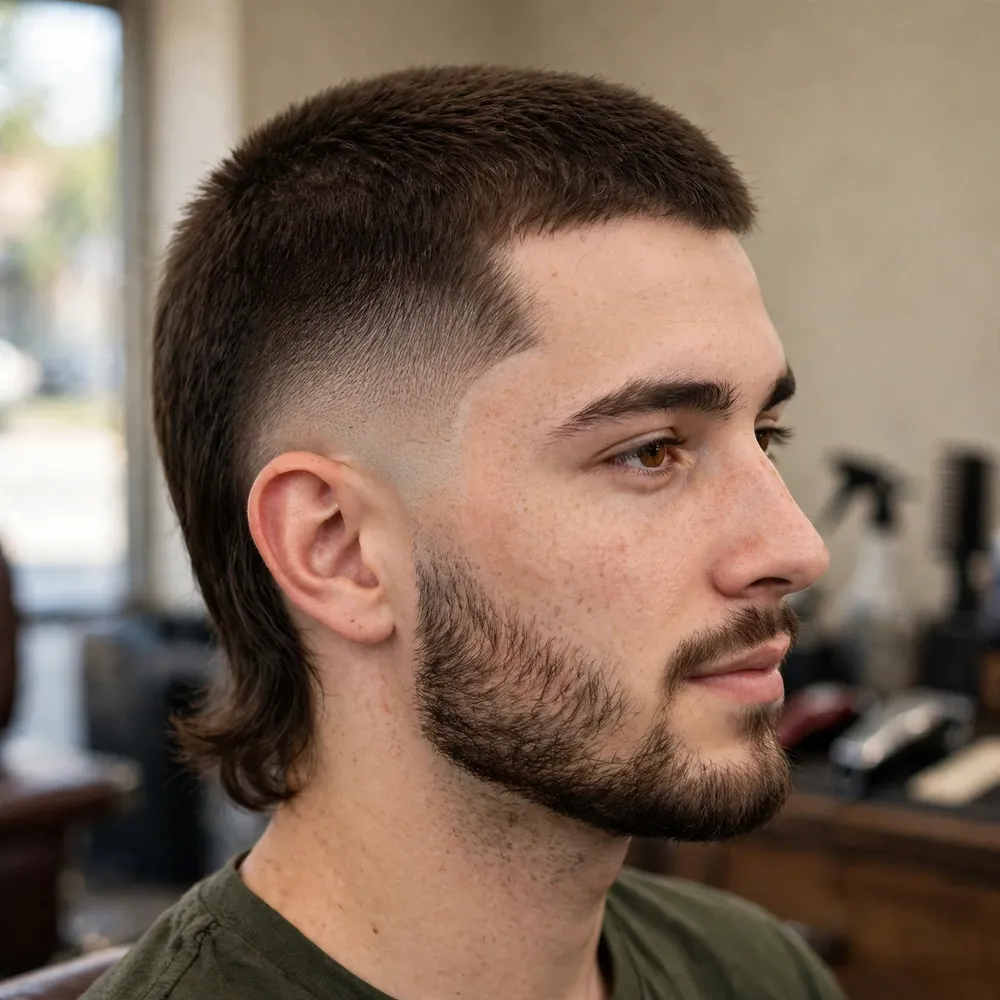
This is the low-maintenance champion of the list. A short crew cut on top, a burst fade curving around the ears, and a neatly shaped beard that the fade blends into — nothing flashy, everything tidy. It suits men with straight or wavy hair who want a cut they can forget about, and it works on nearly every face shape, especially round faces, where the short top and beard add definition. Ask your barber for a crew cut with a burst fade and a beard blend, and say how short you want the beard kept. Styling is almost nothing: towel-dry and go, or a touch of cream if you want. Trim the fade every three weeks and keep the beard lines clean with a trimmer at home.
14. Burst Skin Fade
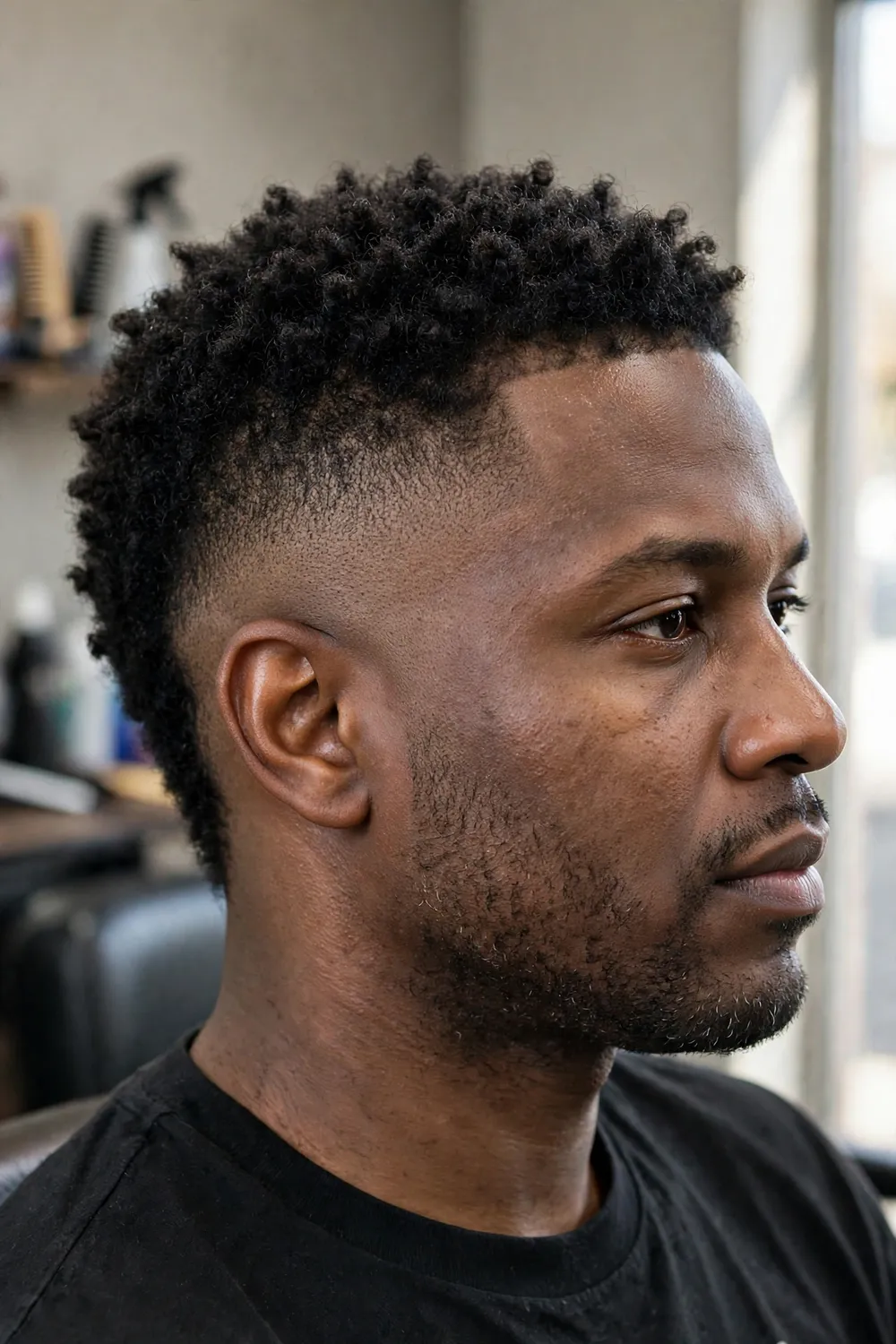
Take the burst fade all the way down to bare skin and you get the sharpest version of the style. The arc around the ear is a clean, pale curve against the longer hair above it, and the contrast is immediate. It suits thick and dark hair best, since the contrast shows up most clearly, and it flatters oval and square faces. Ask your barber for a burst skin fade and be specific about the height: low skin is subtle, high skin is dramatic, and there is a big difference between the two. No product is needed on the sides, just a little cream or clay on top. The honest catch is upkeep: skin fades show regrowth within days, so plan on a touch-up every two weeks.
15. Short Fluffy Hair with Blunt Fringe and Burst Faded Sides
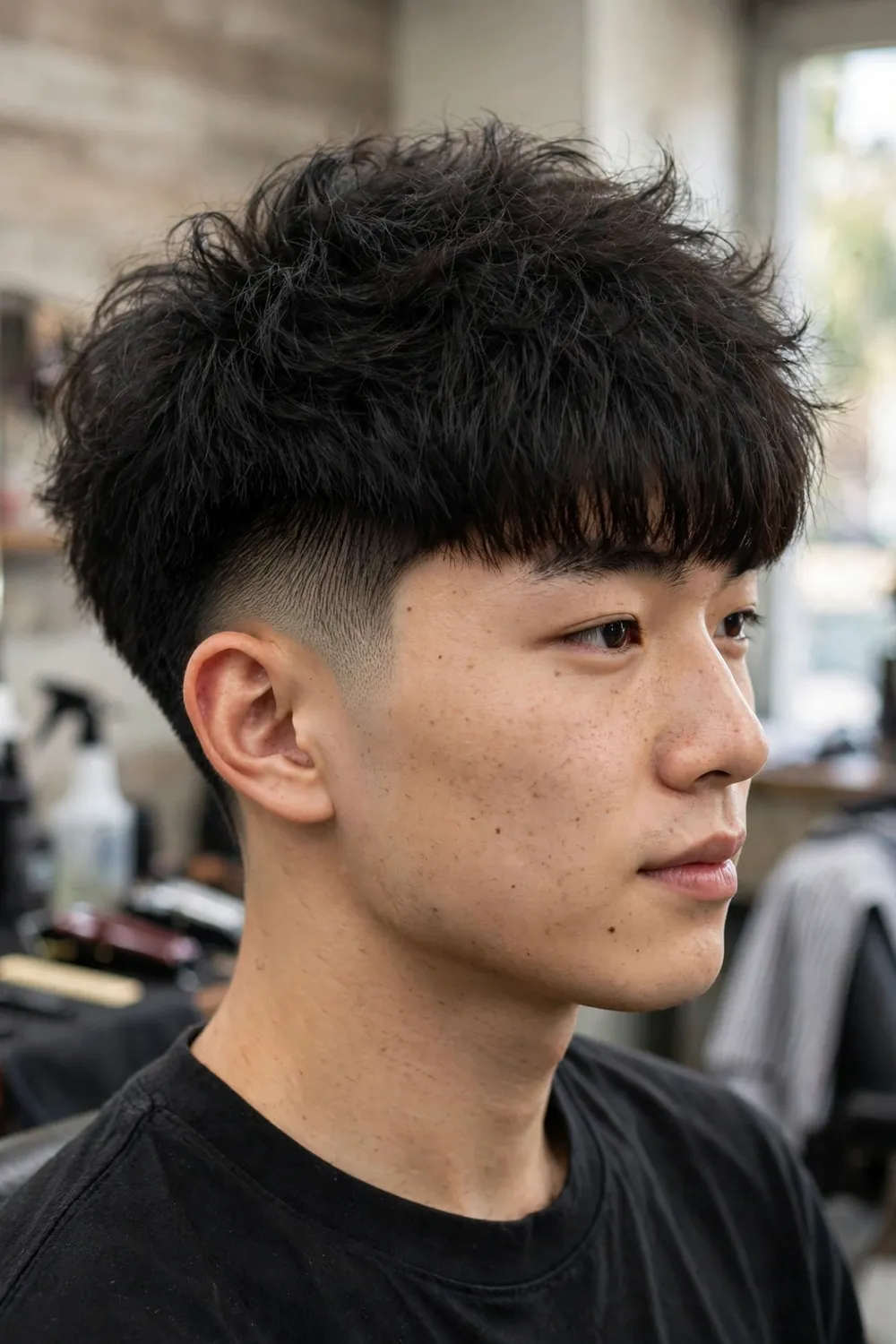
Soft, fluffy volume on top, a straight blunt fringe across the forehead, and clean burst-faded sides — this one has a youthful, almost editorial feel. The fluffiness comes from the hair’s natural texture, so it works best on thick or slightly wavy hair that holds volume, and the blunt fringe suits oval and longer faces by shortening the forehead visually. Ask your barber for short fluffy layers on top with a blunt fringe cut straight across and a low burst fade on the sides. Blow-dry with a little volume powder or a light cream to keep the fluff without frizz. Trim every three weeks, and tidy the fringe between cuts if it creeps into your eyes.
16. Thick Curly Mullet with Low Burst Fade
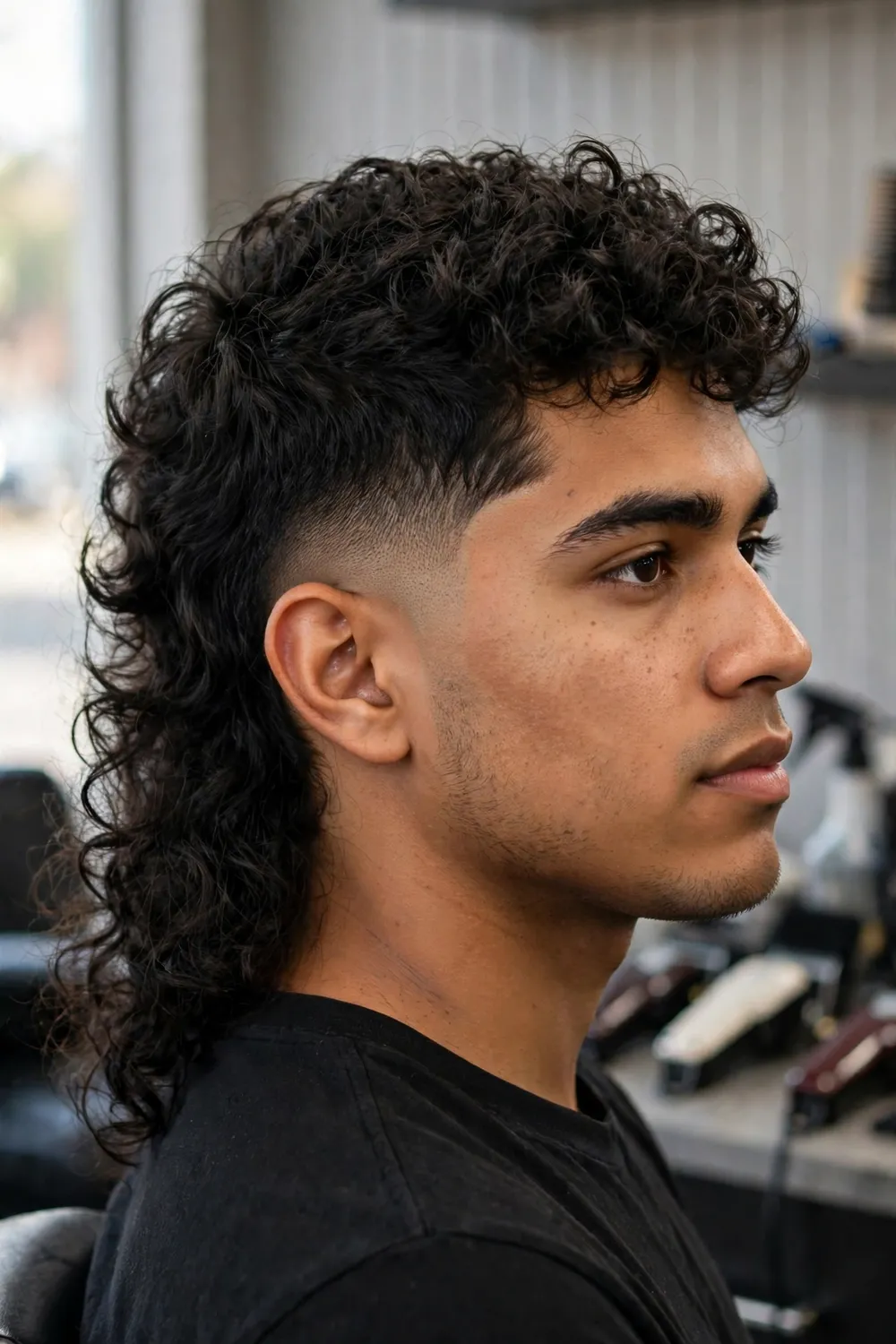
A curly mullet sounds like a lot, and it is — in the best way. Dense curls pile up on top, the back flows long and curly, and a low burst fade keeps the sides from turning into a wall of hair. It suits men with thick, naturally curly hair and it works well on oval and square faces where the volume balances the jaw. If you like the shape but want to see the fuller version, our Mullet Haircut post has the classic takes. Ask your barber for a curly mullet with a low burst fade, keeping the back long and the curls layered so they sit rather than puff. A curl cream and a wide-tooth comb are your friends here. Trim the fade every three weeks; the mullet itself can grow for months.
17. Sleek Mohawk Burst Fade
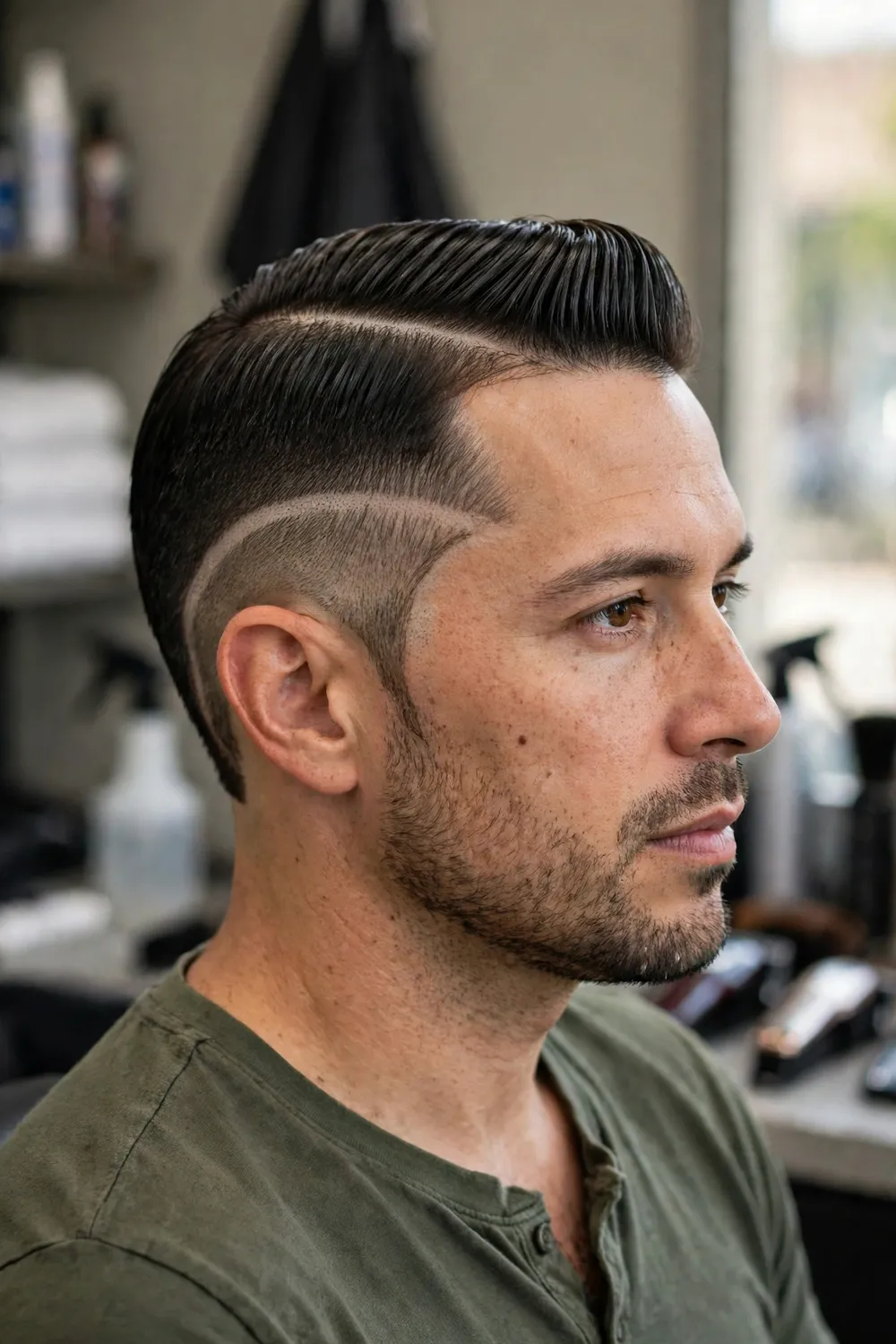
Not every mohawk has to be spiky. This one is smooth, controlled and combed into a neat centre strip, with the burst fade curving cleanly around the ears underneath. It suits straight and slightly wavy hair that lies flat when combed, and it flatters oval and heart-shaped faces where the tidy strip adds structure. The mohawk is the burst fade’s most famous pairing — read its history on the Mohawk hairstyle page. Ask your barber for a sleek mohawk with a mid burst fade, keeping the strip smooth and the sides tight. A medium-hold pomade with a bit of shine gives the right finish. Comb it into place each morning and trim the sides every two to three weeks.
18. Short Curls with Low Burst Fade and Line Up

Short bouncy curls, a low burst fade, and a razor-sharp line-up along the forehead — this cut is all about clean edges. The curls give it life on top, the low fade keeps the sides tidy without stealing attention, and the line-up frames the face so it looks freshly done even days later. It suits men with naturally curly or coily hair, and it flatters round and square faces since the defined hairline adds structure. Ask your barber for short curls with a low burst fade and a sharp line-up, and say whether you want the line-up squared or rounded. A curl cream keeps the coils defined and soft. The line-up is the part that fades fastest, so a touch-up every one to two weeks keeps it crisp.
19. Low Burst Fade with Thick Messy Waves
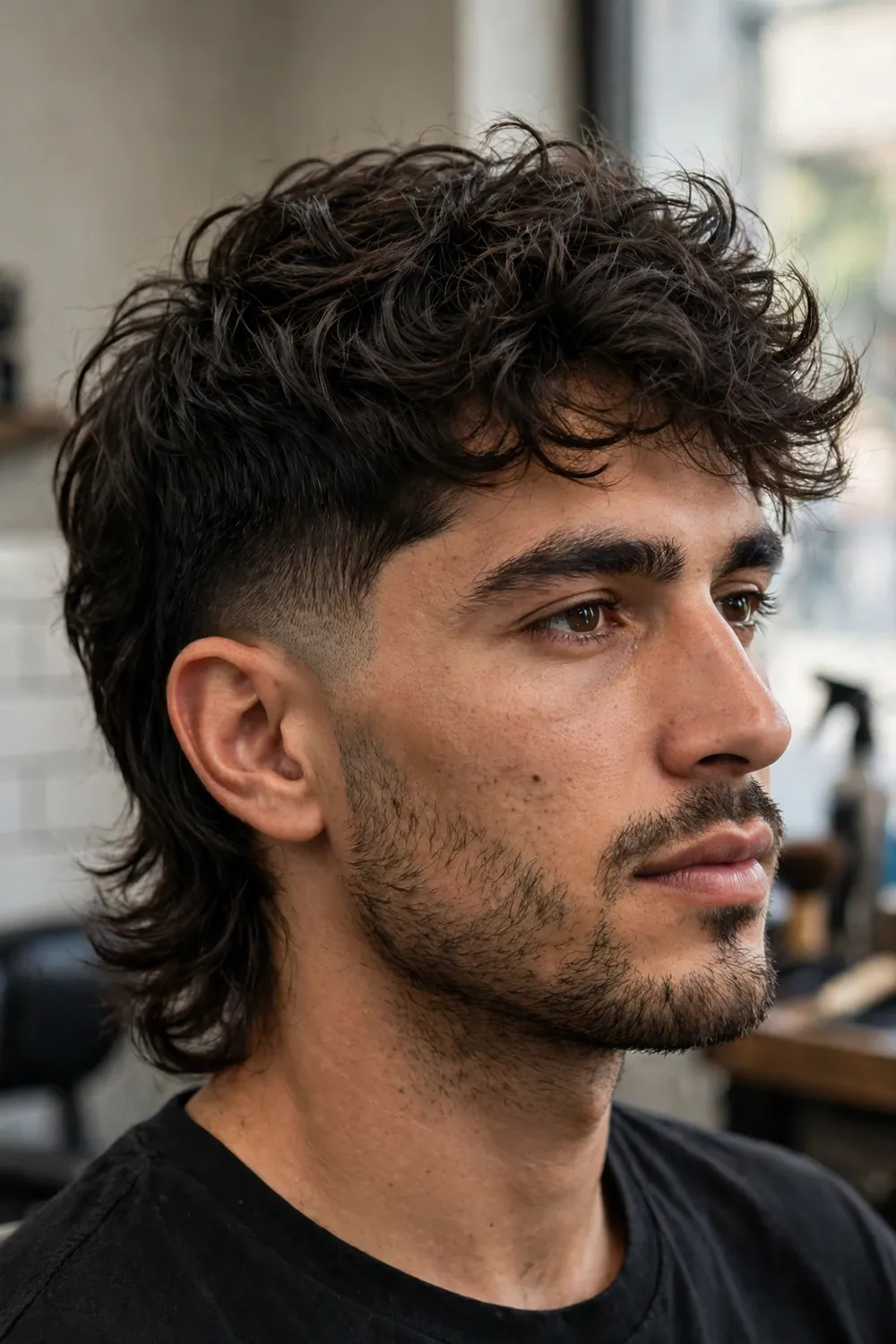
Thick wavy hair has a mind of its own, and this cut works with that instead of fighting it. The top stays long enough for the waves to bunch and move naturally, while a low arc around the ear stops the sides puffing out into a triangle. It suits oval and square faces best, and anyone whose hair gets wider before it gets longer will notice the difference immediately. Ask your barber for a low burst, keeping the length on top and thinning only the bulk underneath, not the texture on the surface. A little sea salt spray scrunched through damp hair gives a lived-in finish without stiffness. A trim every three weeks and a quick finger-comb each morning is all it needs.
20. Choppy Fringe Mohawk with Burst Fade
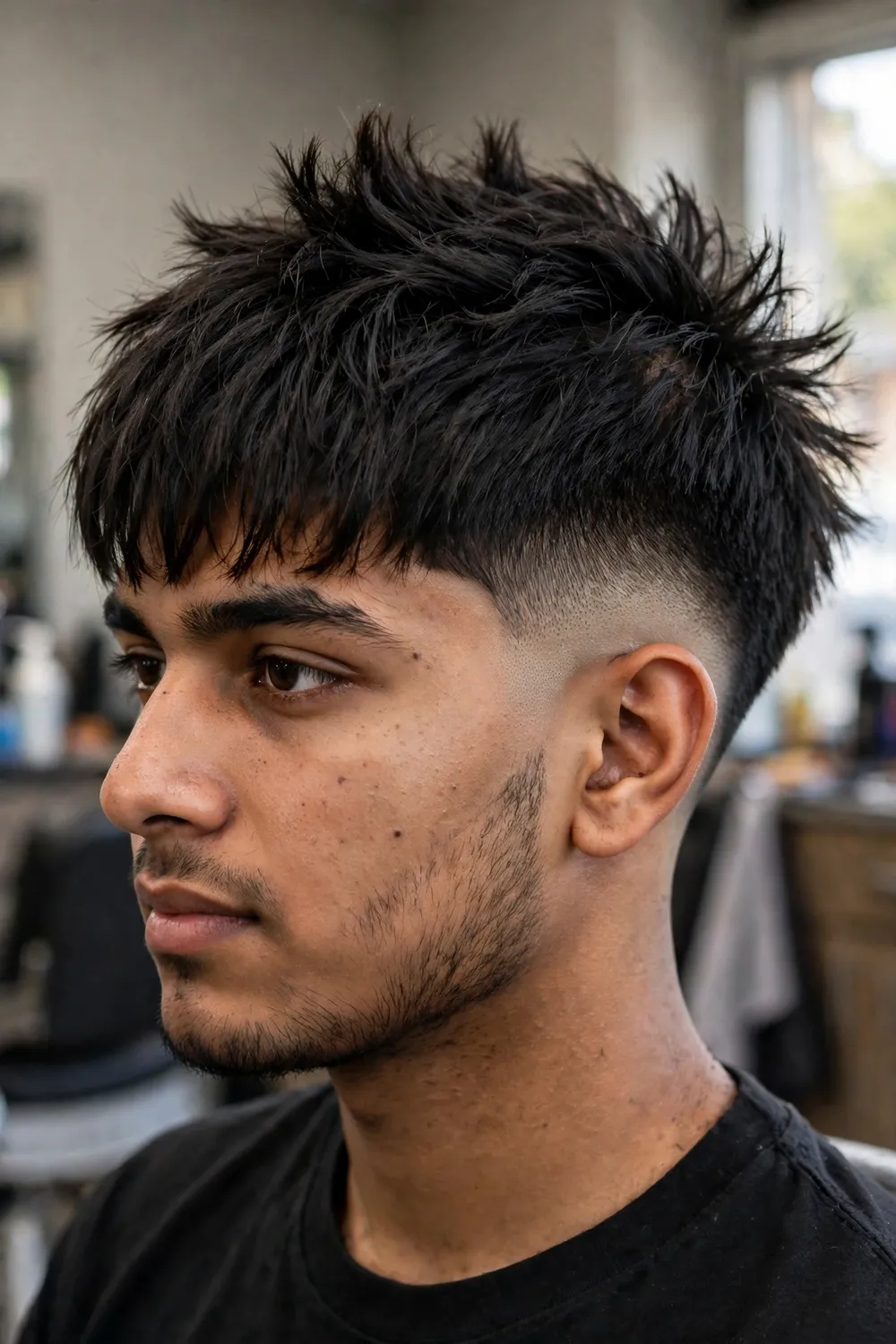
This one takes the mohawk idea and softens it just enough to wear every day. Instead of a stiff upright strip, the fringe is cut choppy and pushed forward, so it reads as texture from the front and attitude from the side. The burst fade underneath does the heavy lifting, carving a clean semicircle around the ear and letting the centre strip stand out. It works best on straight to slightly wavy hair with some natural thickness, and on longer or oval faces where the forward fringe shortens things nicely. Tell your barber you want a choppy fringe blending into a mohawk. The Mohawk hairstyle has been reinvented countless times, and this is one of its most wearable versions.
21. Burst Fade with V-Shaped Design

If you want people to notice the back of your head for once, this is the cut that does it. A sharp V is shaved into the hair just above the burst, and it turns an otherwise clean style into something deliberate. It suits confident dressers and anyone who already wears a shorter top, because the design needs a tidy canvas around it to read clearly. Ask your barber for a mid burst with a V design etched in, and agree on the size first — a small, neat V ages better than a huge one. No product is needed on the design itself. The catch is upkeep: the lines blur within ten days, so book a line-up every fortnight to keep it crisp.
22. Textured Top and Tapered Burst Fade with Short Beard

This is the cut for men who want to look put-together without looking like they tried too hard. The top is layered and point-cut so it falls in soft, uneven pieces, the burst tapers gently rather than dropping to skin, and a short beard blends up into the fade so nothing looks disconnected. It flatters most face shapes, but it is especially kind to square jaws, where the beard softens the angles. Ask for a textured top with a tapered burst and a beard blend, and bring a photo of the beard length you actually keep. For more layered inspiration, see our guide to Textured Haircuts for Men. Three weeks between cuts; tidy the beard weekly at home.
23. Disheveled Mohawk Taper Fade
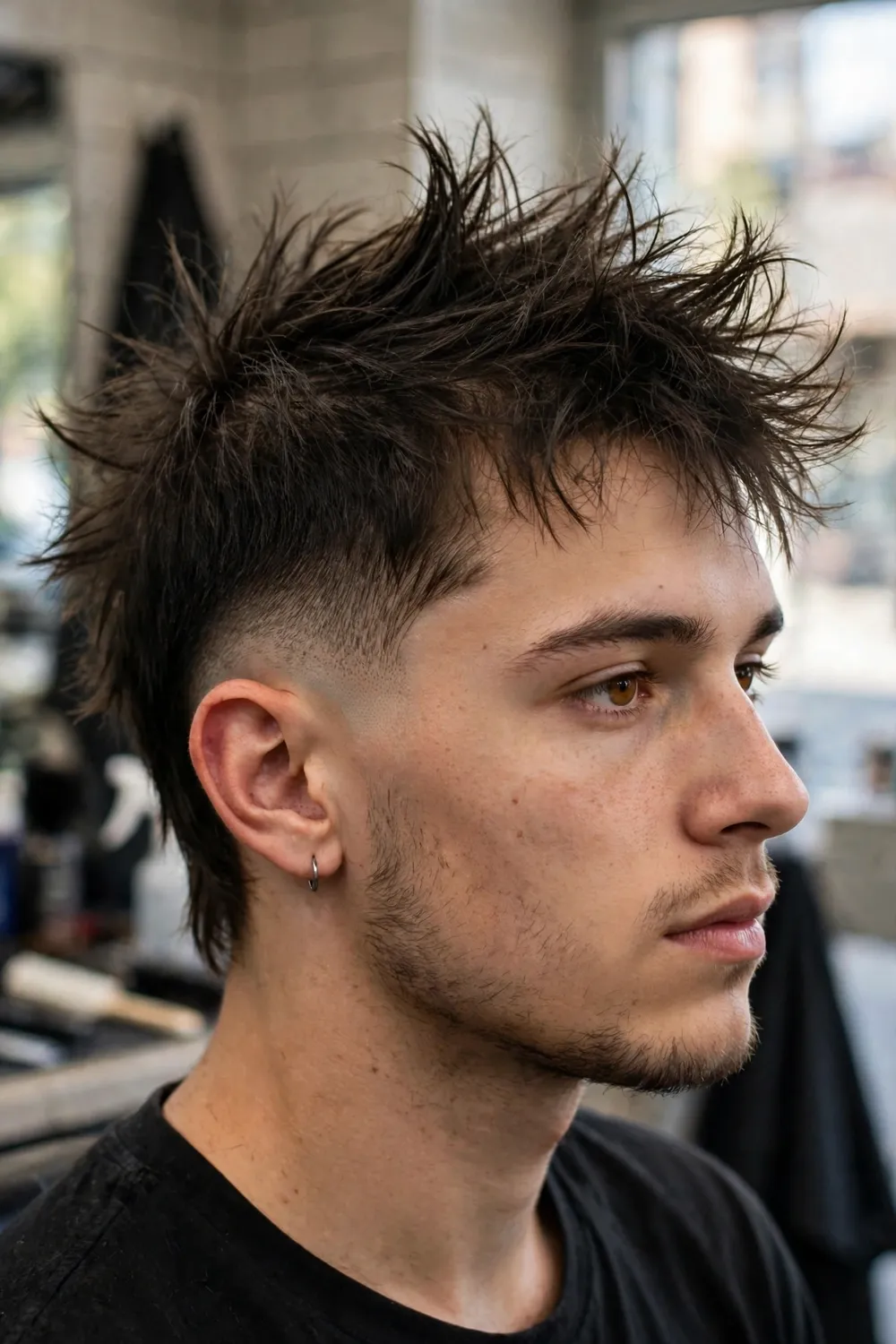
Some mohawks demand gel, a mirror and ten minutes. This one asks for about thirty seconds and a shrug. The centre strip is left longer and cut unevenly on purpose, so it falls where it falls, while the taper burst keeps the sides soft instead of skin-tight. That softer edge is what makes it wearable at work and on a night out alike. It suits wavy and thick hair best — fine hair tends to flop rather than hold the shape — and longer faces, where the height on top adds balance. Ask your barber for a messy mohawk with a taper burst, not a skin fade. Rub a small amount of matte paste between your palms and push the hair up loosely.
24. Flowing and Textured with Burst Faded Sides
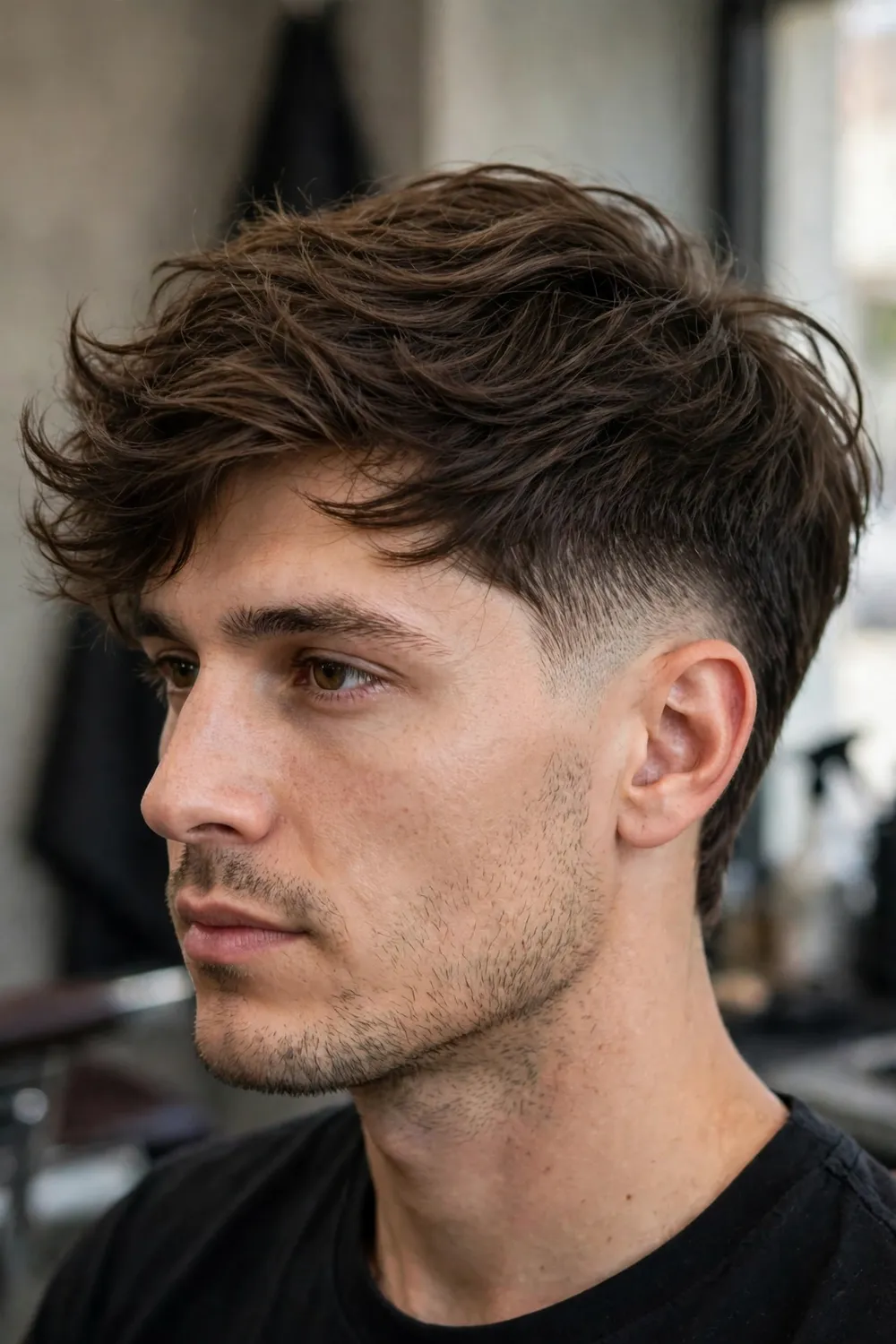
Longer hair on top, clean shape at the sides — that contrast is the whole appeal here. The top is left to flow, with layers cut in so it moves instead of sitting like a helmet. The burst fade underneath stops the style looking shaggy, giving it a clear frame around the ears. It suits men with naturally straight or wavy hair who can grow four or five inches on top, and oval or heart-shaped faces where the volume balances a narrower chin. Ask for layered length on top with a low to mid burst, and be specific that you want to keep the flow, not have it thinned away. A light cream or sea salt spray keeps the movement.
25. Burst Fade with Beard

A burst fade and a beard are natural partners, because the curve of the fade lines up with where a beard should connect. When the two are blended properly, the whole head looks like one intentional shape instead of a haircut sitting on top of a beard. It works on most face shapes, but men with rounder faces get the most from it, since the beard adds length and structure below the jaw. The key conversation with your barber is about the connection point: say you want the burst faded into the beard, not a hard gap between them. Keep the cheek line clean at home. Plan on a barber visit every two to three weeks — the fade grows out faster than the beard does.
26. Burst Fade with Highlights

Highlights change how a burst fade reads, because they pull the eye to the top and make the dark faded sides look even sharper by contrast. A few lighter pieces through the crown catch the light every time you move, which gives even a simple textured top far more dimension than a single flat colour. This suits men with medium to dark hair best, and it works on straight, wavy or curly tops alike. Ask your barber or colourist for subtle highlights through the top only, keeping the faded sides natural, and mention whether you want warm caramel tones or cooler ash ones. The honest trade-off is maintenance: roots show after four to six weeks, so budget for regular touch-ups.
27. South of France
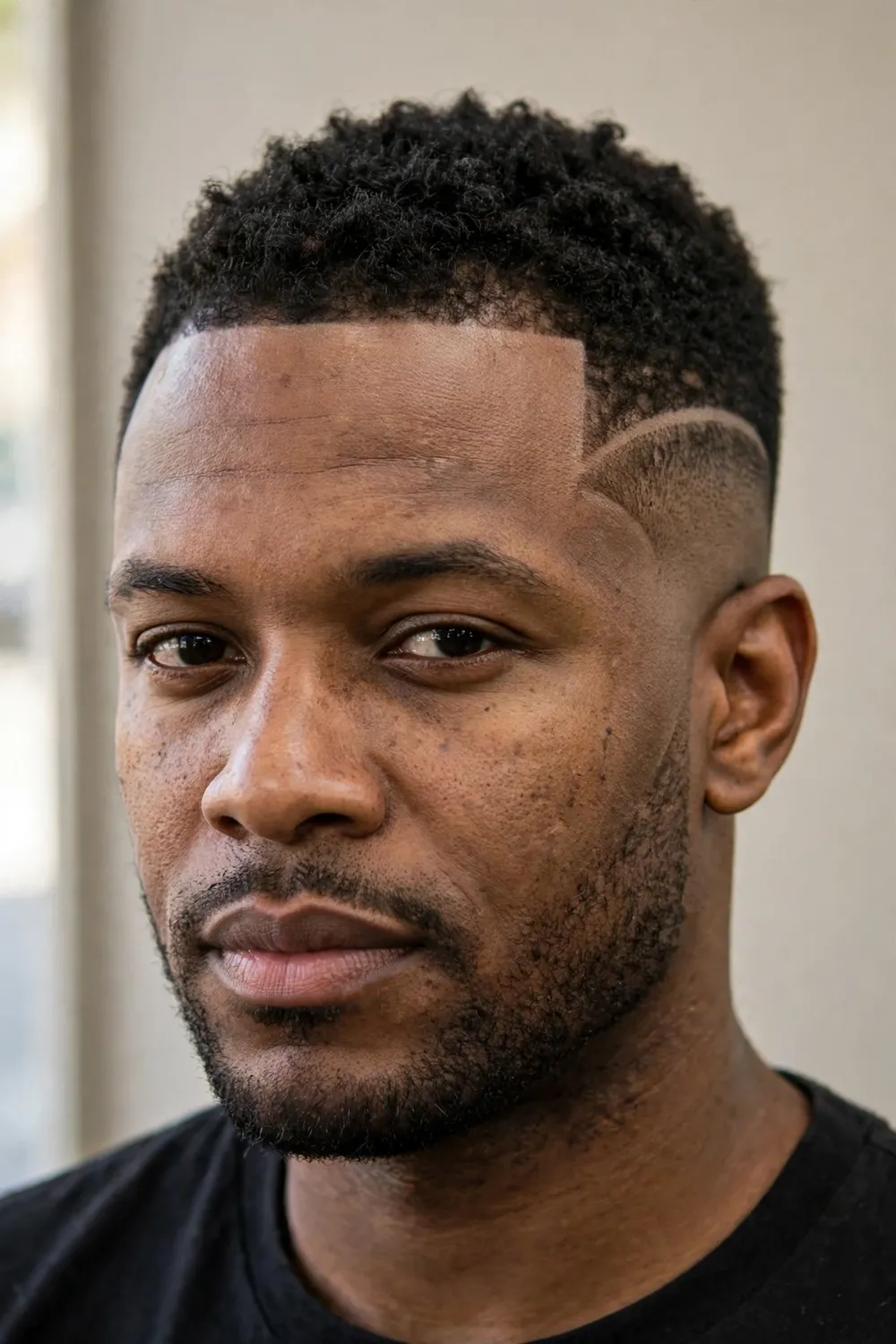
Made famous by Usher, the South of France is the wide mohawk that made the burst fade a household name. The centre strip is broad — much wider than a classic mohawk — and it runs from the front hairline all the way down the back, with a clean burst curve framing each ear. It suits men with thick, coarse or curly hair, and it flatters oval and square faces where the height adds presence. Ask your barber for a wide mohawk with a burst fade, and agree on the strip width before the clippers come out — too narrow and it stops being the South of France. Style it with a strong-hold cream or pomade. It needs a shape-up every two weeks to stay sharp.
28. Classic Burst Fade
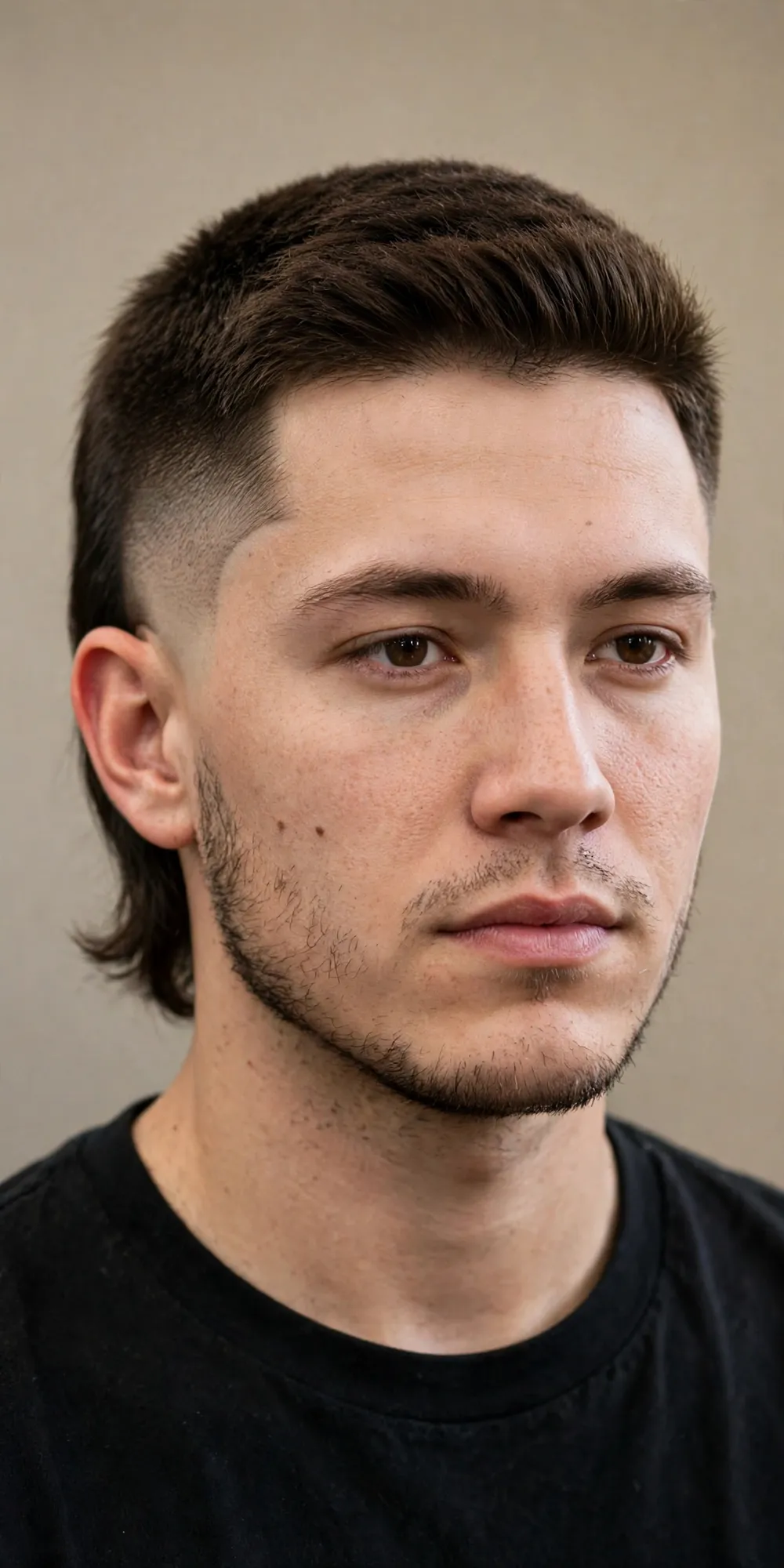
Before the designs, the mohawks and the colour, there was just this: a neat top, a clean arc around the ear, and the back left alone. The classic version is the safest entry point if you have never had a burst fade, because it shows off the shape without committing you to anything extreme. It works on nearly every hair type and face shape, which is why barbers recommend it as a first try. Ask for a classic burst fade with a tidy top, and say whether you want the blend soft or taken closer to the skin. A small amount of light pomade or cream is enough to finish it. Three weeks between cuts; a quick comb each morning.
29. Burst Fade Faux Hawk
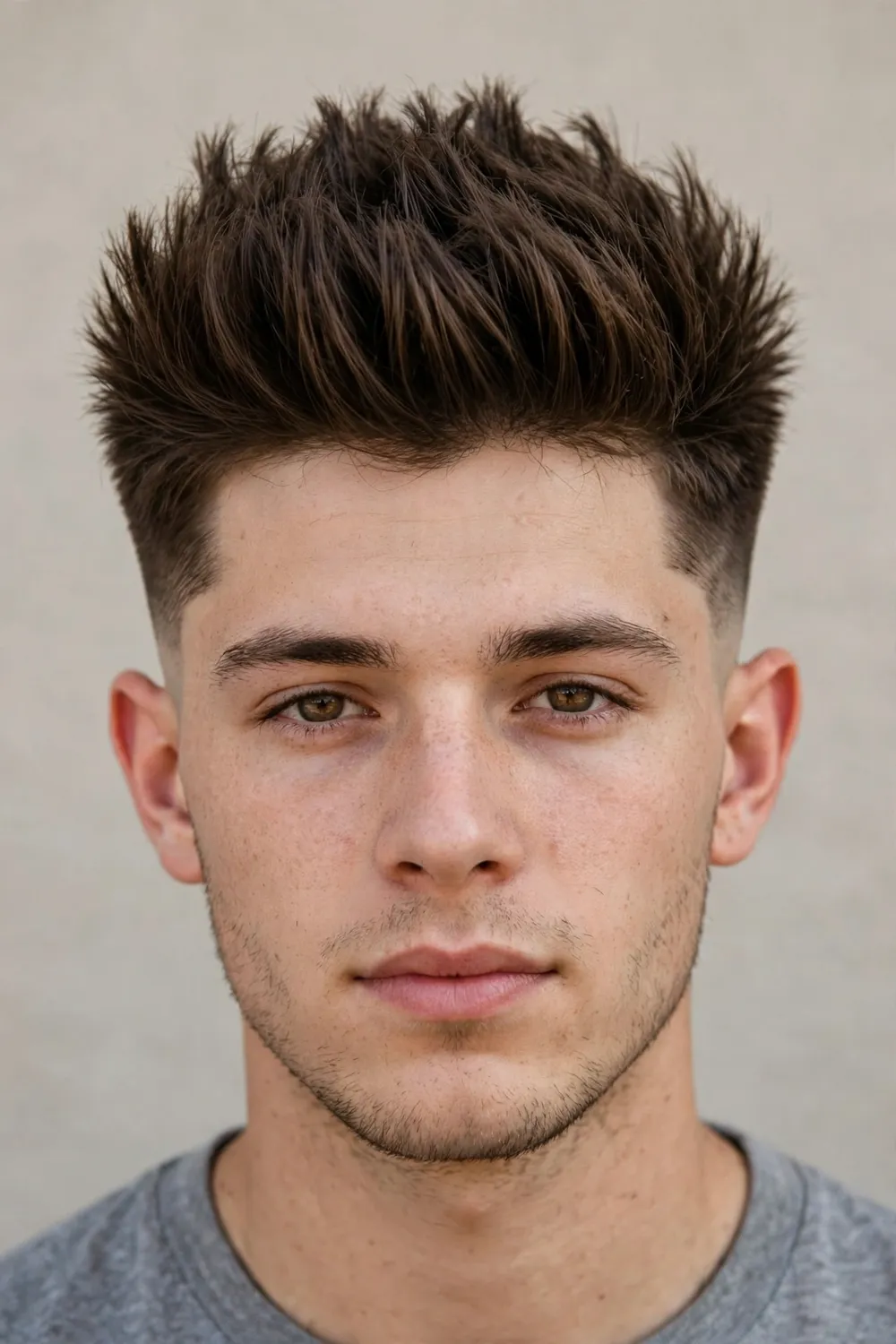
The faux hawk is the mohawk for men who like the silhouette but not the commitment, and the burst fade makes it look intentional rather than accidental. The centre strip is wide and textured, pushed up loosely in the middle, while the sides fade in that familiar curve instead of being shaved bare. It suits most hair types, though thick or wavy hair holds the lift best, and it is a good pick for round faces, where the height on top adds length. Ask your barber for a textured faux hawk with a mid burst fade, keeping enough length in the centre to push upward. Work matte paste through damp hair and pinch the top into place — it should look slightly undone, not sculpted.
30. Burst Fade Buzz Cut
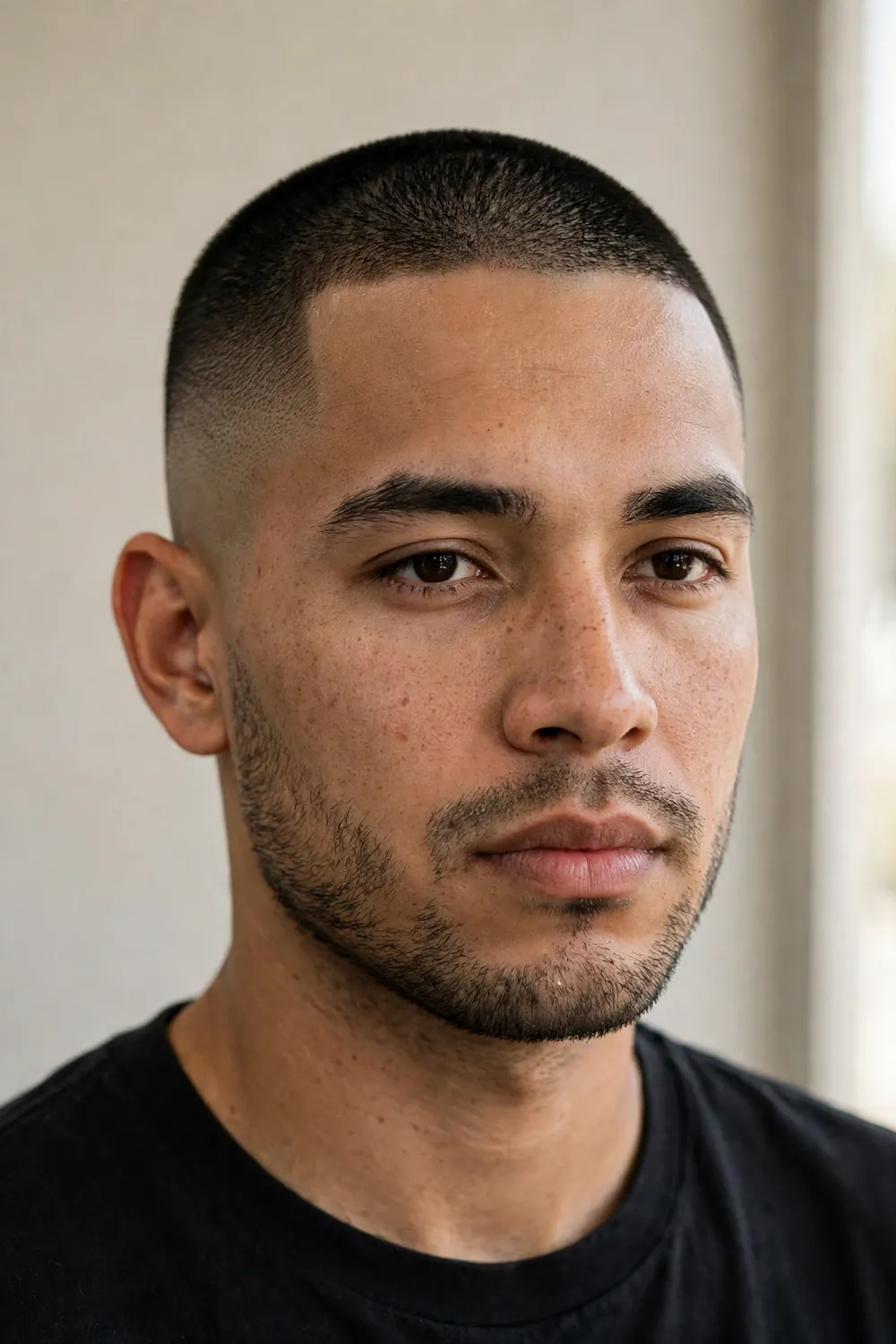
A buzz cut is already the lowest-maintenance haircut there is, and adding a burst fade gives it a shape that a plain buzz simply does not have. The top is clipped short all over, while the fade curves round the ear and down toward the neckline. It suits men with strong bone structure and oval or square faces, and it is a smart choice if your hair is thinning. Ask for a buzz on top with a burst fade, and pick your guard number carefully — one grade changes the whole look. For a full rundown of short styles, see our Buzz Cut Hairstyles for Men guide. The fade needs a refresh every two weeks to keep its edge.
31. Burst Fade Afro

An afro with a burst fade is one of the sharpest combinations in this whole list, because the round crown and the curved fade echo each other beautifully. The top is shaped into a full, even afro while the sides fade in a tight arc around the ears, which keeps the silhouette clean instead of letting it spread sideways. It suits men with coily or tightly curled hair who can grow enough volume on top, and it flatters round and square faces by adding height where it counts. Ask your barber to shape the afro first, then cut the burst fade into the sides, keeping the line between them crisp. A pick and a little curl cream or leave-in conditioner will keep the crown defined and moisturised.
32. Burst Fade Edgar
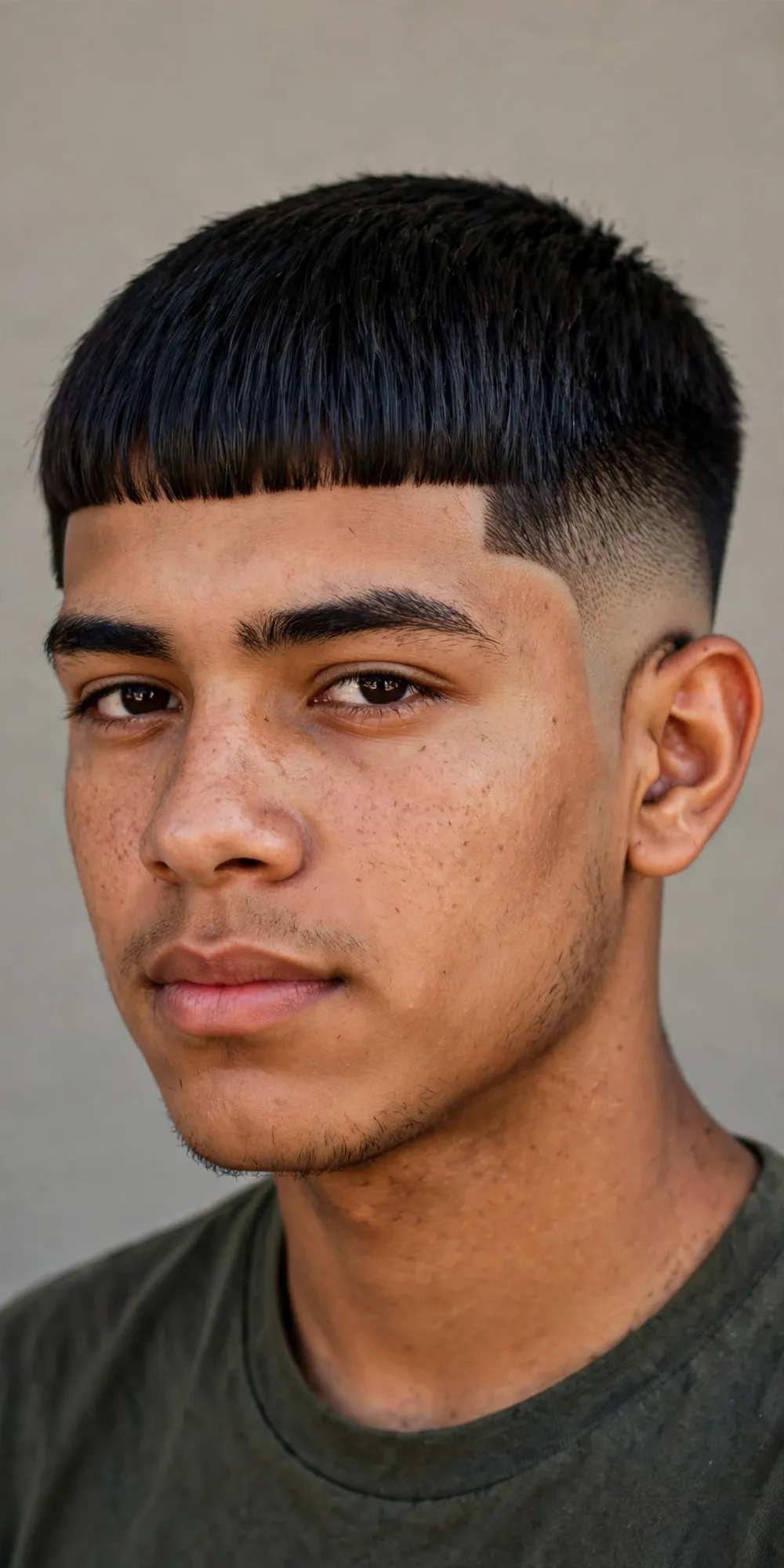
The Edgar is all about the fringe: straight across, sharp, and sitting low on the forehead, with the burst fade doing the framing work at the sides. It is a bold, graphic look that suits straight hair best — wavy hair fights the straight line — and it works particularly well on oval and longer faces, where the low fringe shortens the forehead. Ask your barber for a straight Edgar fringe with a burst fade, and be clear about how low you want the fringe to sit, because a centimetre makes a real difference here. A flat iron helps if your hair has any wave, and a light hold product keeps the fringe in place without stiffness.
33. Burst Fade with Quiff
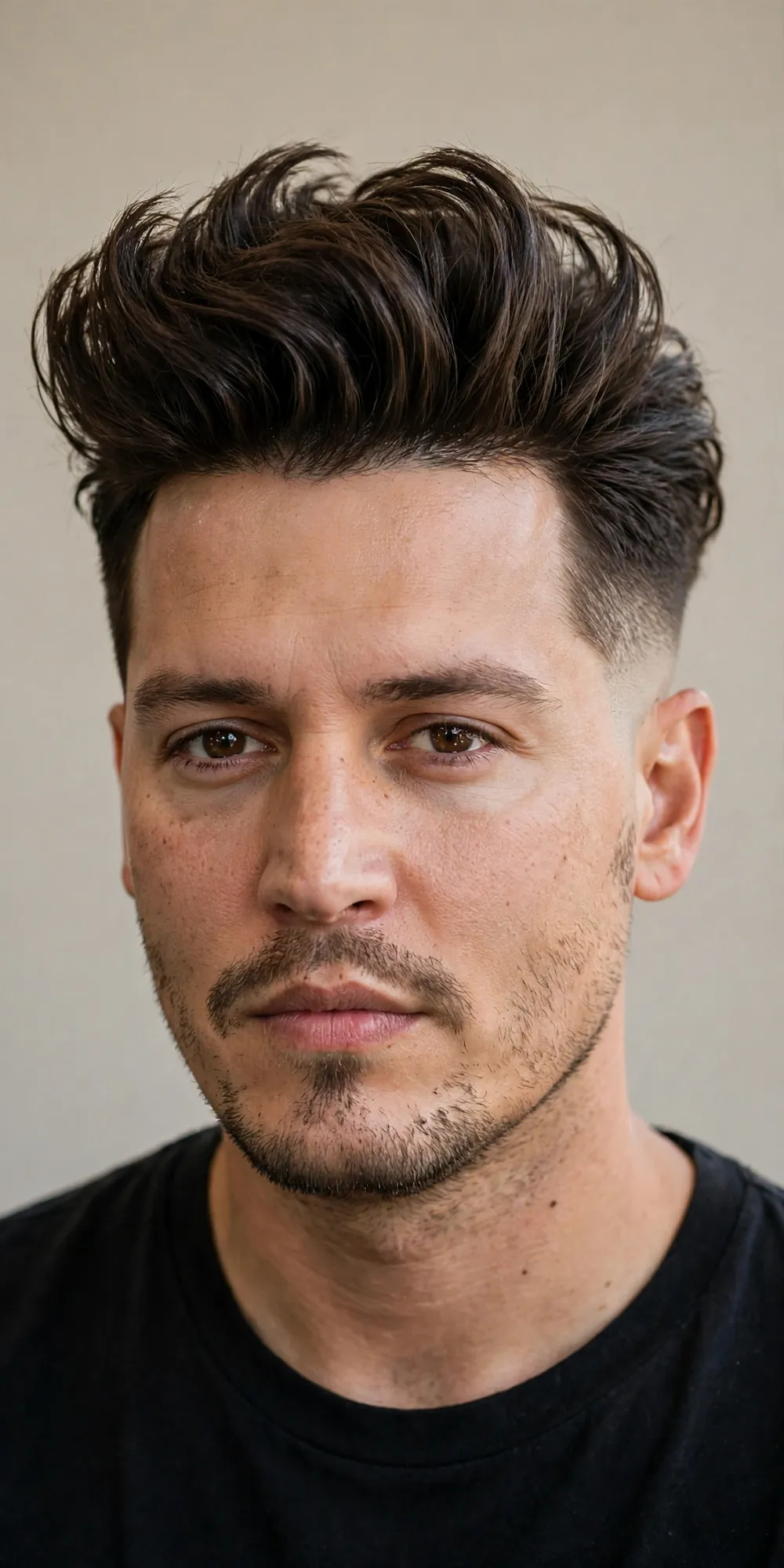
A quiff adds height and polish, and pairing it with a burst fade keeps the whole thing from looking like a throwback. The front is swept up and back with real volume, while the mid burst fade carves a clean curve around the ears and stops the sides from competing with the top. It suits men with thick, straight or slightly wavy hair that can hold lift, and it flatters rounder faces, where the height stretches the face nicely. Ask for a quiff with a mid burst fade, keeping the front long enough to sweep — at least three inches. Blow-dry the front upward with a round brush, then finish with a medium-hold pomade for shine or matte clay for a modern feel.
34. Burst Fade with Slick Back
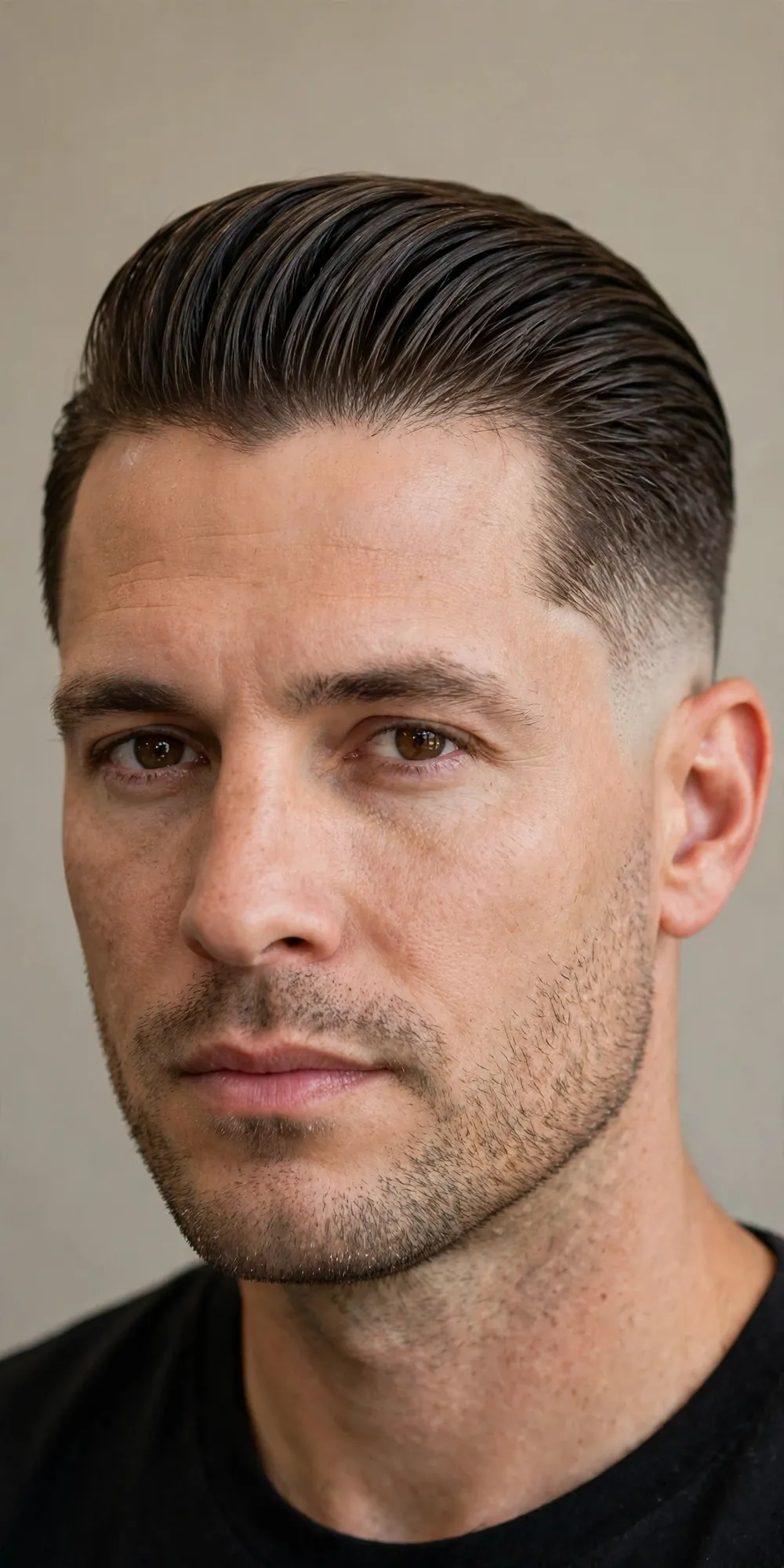
The slick back is the grown-up of the group: smooth, controlled, and quietly confident, with the burst fade adding just enough edge to stop it looking corporate. All the hair is combed back from the forehead in one clean direction, and the curved fade around the ears gives it structure that a plain slick back lacks. It suits straight to wavy hair with decent thickness, and oval or square faces where the swept-back shape shows off the jawline. Ask your barber for a slick back with a mid burst fade, keeping the top long enough to comb through — four inches is a good starting point. Work pomade through damp hair and comb it back, adding more product for a wetter finish.
35. Burst Fade with Hard Part

A hard part is a shaved line that draws a razor-sharp division between the top and the side. Paired with a high burst fade, it creates one of the most precise looks in this list, all clean lines and strong contrast. It suits straight hair and oval or square faces best, and it is a strong choice for men who like their haircut to look deliberate from every angle. Ask your barber for a hard part with a high burst fade, following your natural growth. Style the top with pomade, combed neatly away from the part. The shaved line grows in within a week to ten days, so fortnightly shape-ups are needed.
36. Burst Fade with Textured French Crop
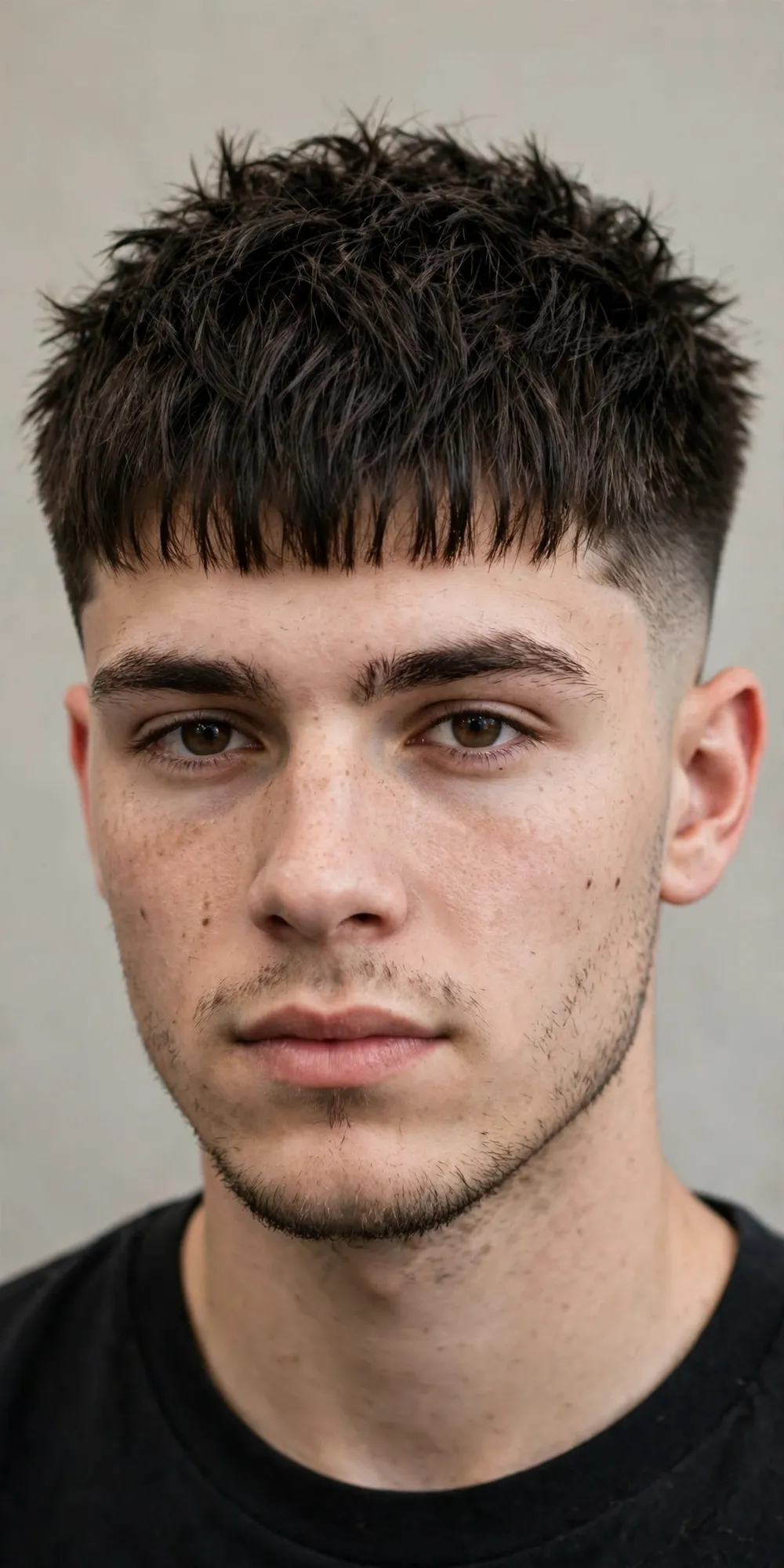
The French crop is short, choppy and blunt at the front, and the burst fade gives it a modern frame that the classic version never had. The fringe is cut straight across with lots of texture, the top is kept short and piecey, and the fade curves tightly around the ears. It suits straight or slightly wavy hair, and it is especially good for men with a larger forehead or a longer face, since the fringe covers what needs covering. Ask for a textured French crop with a burst fade. A dab of matte clay scrunched through the top is all the styling it needs. If you want the full picture on this style, read our French Crop Haircut guide.
How to Choose the Right Burst Fade Height
Height is the one decision that changes everything else, so it is worth getting right before you sit in the chair. A low burst sits just above the ear and is the gentlest option — best for thick or wavy hair, for first-timers, and for anyone who wants the fade to grow out without looking messy. A mid burst climbs to the middle of the ear and is the most versatile height; it suits most hair types and most face shapes, and it gives a clear shape without shouting about it. A high burst rises toward the temples and makes a real statement, so it works best on straight or fine hair where the contrast reads cleanly, and on oval faces that can carry the drama. A skin burst, faded right down to bare skin, is the sharpest of all and also the highest maintenance — it looks incredible for about ten days and then needs a touch-up. If you are unsure, start low or mid. You can always go higher next time, but you cannot un-cut a high fade.
How to Ask Your Barber for a Burst Fade
The single best thing you can do is bring two or three reference photos of the exact style you want, taken from the front and the side, on a person with hair like yours. Photos remove the guesswork in a way words never will. Then say three things clearly. First, the height: low, mid or high. Second, whether you want it faded to skin or kept as a softer blend. Third, how much length stays at the back, because the burst fade leaves the back longer by design and your barber needs to know whether you want that kept, trimmed or grown into a mullet. One warning worth remembering: a burst fade is not a drop fade. A drop fade curves down behind the ear toward the neck, while a burst fade arcs around the ear and leaves the back long. Say the word “burst” and point at the ear — if your barber nods and starts fading down the back, stop them and clarify.
5 Mistakes That Ruin a Burst Fade
- Asking for a drop fade by mistake — the two cuts look similar in photos but behave completely differently once the back is cut, so name the burst and check the shape before the clippers move.
- Going too high on your first try — a high burst is hard to grow out gracefully, so start low or mid until you know the shape suits you.
- Choosing a skin fade when you cannot commit to fortnightly visits — it blurs fast, and a grown-out skin fade looks untidy rather than relaxed.
- Ignoring the back — the burst leaves length behind the ears, and if that section is left unshaped it can look accidental, so agree on the back length every visit.
- Using heavy, shiny product on a textured top — it clumps the layers together and hides the texture you paid for, so stick to matte clay or paste and use less than you think.
How Often Should You Trim a Burst Fade?
It depends on the version you chose, and being honest about that before you commit saves disappointment later. A skin burst or a high burst needs a touch-up every two weeks — the contrast is the whole point, and once the stubble grows in, that contrast is gone. A low or mid burst is more forgiving and will hold its shape for about three weeks before the arc starts to soften. Textured and longer tops can stretch to three or four weeks, since the top distracts from the fading sides. If you let it grow out completely, the burst does not turn into a disaster the way a skin fade can — it softens into something close to a taper, which is wearable for another week or two while you book in. The trick is to book your next appointment before you leave the chair, so the fade never gets the chance to go past its best.
Frequently Asked Questions
What is a burst fade?
A burst fade is a fade that curves in a semicircle around the ear, leaving the hair at the back longer instead of fading it away. The shape is what makes it different — from the side, you can see a clear arc, almost like a burst of light around the ear. It works with almost any style on top, from a buzz cut to a mohawk, which is why it shows up in so many different haircuts.
What is the difference between a burst fade and a regular fade?
A regular fade usually blends the hair shorter as it goes down all the way around the head, including the back. A burst fade only fades in that curved section around the ear, so the back keeps its length and the neckline stays fuller. In practice, that means a burst fade looks more sculpted from the side and leaves you more styling options at the back.
What is the difference between a burst fade and a drop fade?
Both curve around the ear, which is why they get confused so often. The difference is what happens behind the ear: a drop fade continues curving downward toward the nape of the neck, while a burst fade stops its arc at the ear and leaves the back long. If you want length at the back — for a mullet, a mohawk or just a fuller shape — you want a burst, not a drop.
Which face shapes look best with a burst fade?
Oval faces suit almost every version, since nothing needs balancing. Square faces benefit from the clean curve softening a strong jaw, while round faces get the most from taller versions like a high burst or a quiff, which add length on top. Longer faces should stick to low or mid heights with some fringe, so the style does not stretch the face further.
How often should I get a burst fade touched up?
A skin or high burst needs a touch-up every two weeks to keep its contrast sharp. A low or mid burst will last about three weeks before the arc starts to soften. If your top is longer or textured, you can sometimes stretch that to four weeks, but booking your next appointment before you leave the barbershop is the easiest way to stay on top of it.
Does a burst fade work with curly or thick hair?
Yes, and in many ways it works better than on fine hair. Thick and curly hair gives the fade something to contrast against, so the arc reads more clearly and the top holds its shape. The key is finding a barber who is comfortable cutting curls and who tapers the burst rather than taking it too close to the skin, which can leave the sides looking patchy.
What should I tell my barber to get a burst fade?
Bring two or three photos of the style you want, then say three things: the height you want, whether you want it faded to skin or blended softly, and how much length to keep at the back. Use the word “burst” clearly and point to your ear so there is no confusion with a drop fade. If your barber repeats it back to you, you are in safe hands.
Final Word
That is all 36 styles, from the quiet classic to the full South of France, and the honest truth is that most men will find their match somewhere in the low-to-mid range on their first try. Pick the version that fits your hair, your face and the amount of upkeep you will actually do — not the one that looks best in a photo on someone else. Show your barber the picture, say the three things, and give it two weeks before you judge it. And if you want to keep exploring, there are plenty more haircut guides and grooming ideas on our blog to help you find the next style once this one has grown in.