

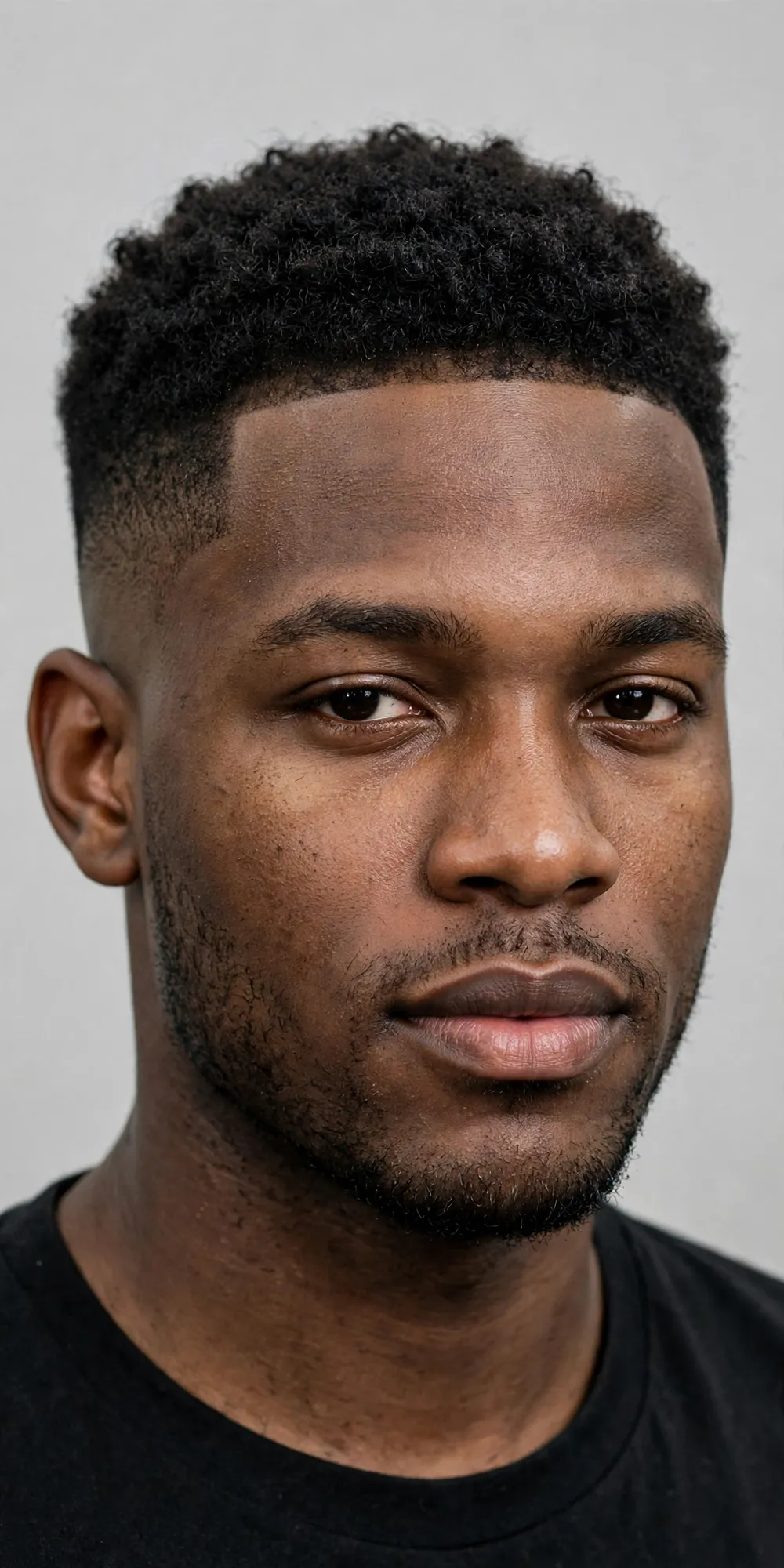
If you want a cut that looks sharp without trying too hard, low fade haircuts for black men are hard to beat. A low fade starts just above the ear and blends down to the neckline, so the sides stay clean while the top keeps all its natural texture — curls, waves, coils or a short afro. It grows out gracefully too, which is why so many barbers recommend it as the safest first fade.
Our top three picks? Start with 360 Waves with Low Fade if you want that classic rippled finish, Classic Low Fade with Short Curls for an easy everyday look, or Low Skin Fade with Short Afro when you want the sharpest contrast. Below are all 39 styles, each with the exact words to use at the barber chair — so bring this list with you and point at the one you want.
The 39 Best Low Fade Haircuts for Black Men
1. Classic Low Fade with Short Curls
The classic for a reason. This cut keeps about an inch of natural curls on top and blends the sides down low, just above the ear, so the shape stays neat without losing the texture. It suits 3A to 4A curls best and flatters oval, round and square faces, because the short top adds height without widening the sides. Ask your barber for a low fade on a #1 to #2 guard, blended into an inch of curls on top, with the neckline tapered clean. A light curl cream on damp hair gives soft definition, and a matte finish keeps it looking natural rather than shiny. A trim every two to three weeks keeps the fade crisp, and a moisturising shampoo weekly stops the curls drying out.
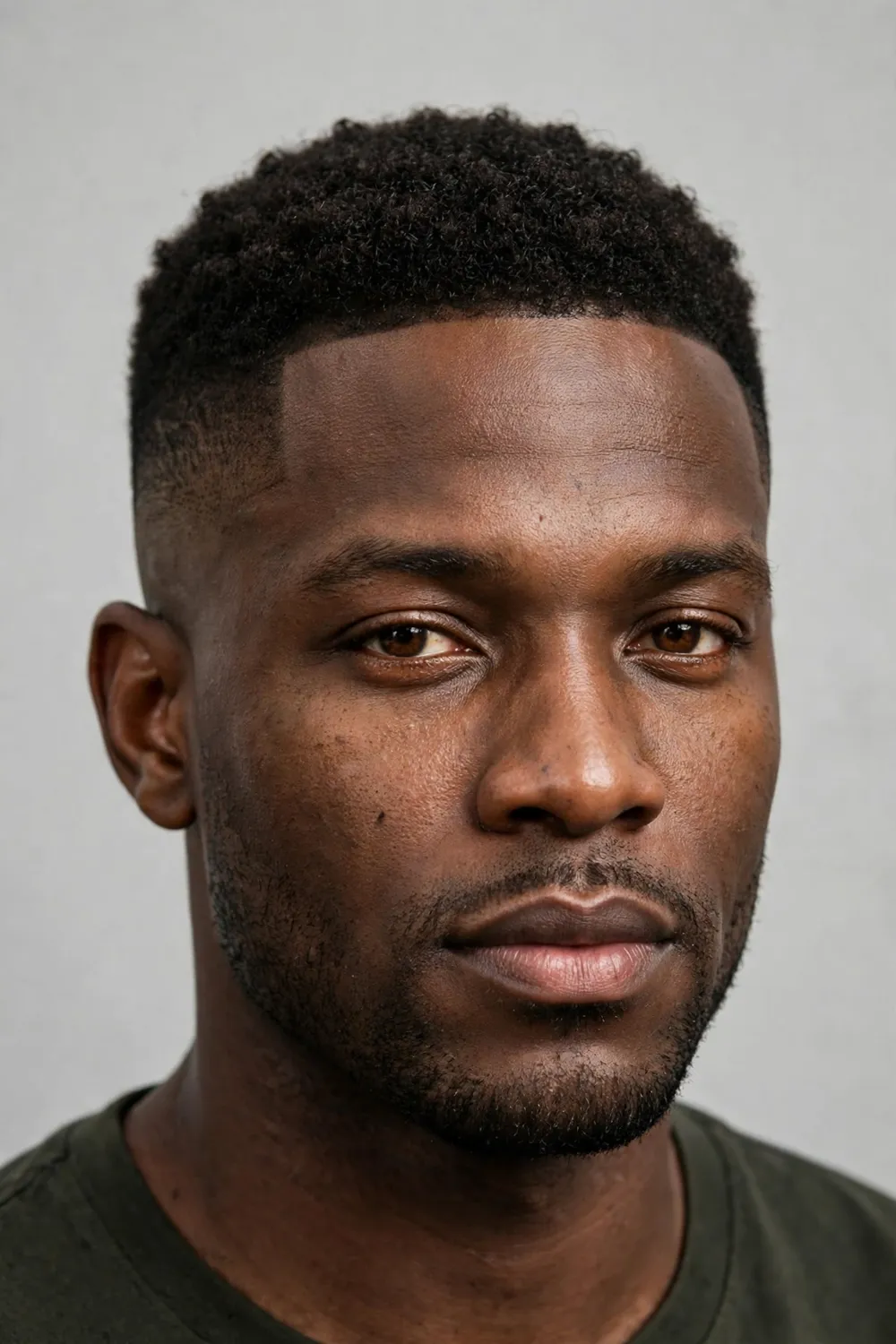
2. Low Shadow Fade with Textured Top
A shadow fade is the quiet version of the low fade — the sides darken gradually without going to bare skin, so the blend looks soft and the grow-out is almost invisible. A short textured crop on top, usually under an inch, adds movement without needing much styling. It suits men with fine or patchy hairlines well, because no harsh line exposes them, and it works on oval and long faces that do not need extra height. Ask for a low shadow fade with a #2 guard at the bottom, blending into a textured top cut with thinning shears. A pea-sized amount of matte clay, warmed in the palms and pushed forward, is all the product you need. A tidy-up every three weeks keeps it presentable in between.

3. Low Skin Fade with Short Afro
This is the sharpest low fade in the list. The sides go right down to bare skin just above the ear, which makes the rounded short afro on top stand out in contrast. It suits tight 4A to 4C coils and a naturally round afro shape, flattering round and square faces, since the bare fade slims the sides while the top keeps its height. Ask your barber for a low skin fade, foil-shaved at the very bottom, with the afro shaped round and kept to about one to two inches. A leave-in conditioner and a soft-bristle brush keep the afro full and frizz-free, and a light sheen spray adds glow. The skin fade blurs fast, so plan a touch-up every one to two weeks if you want it razor-sharp.
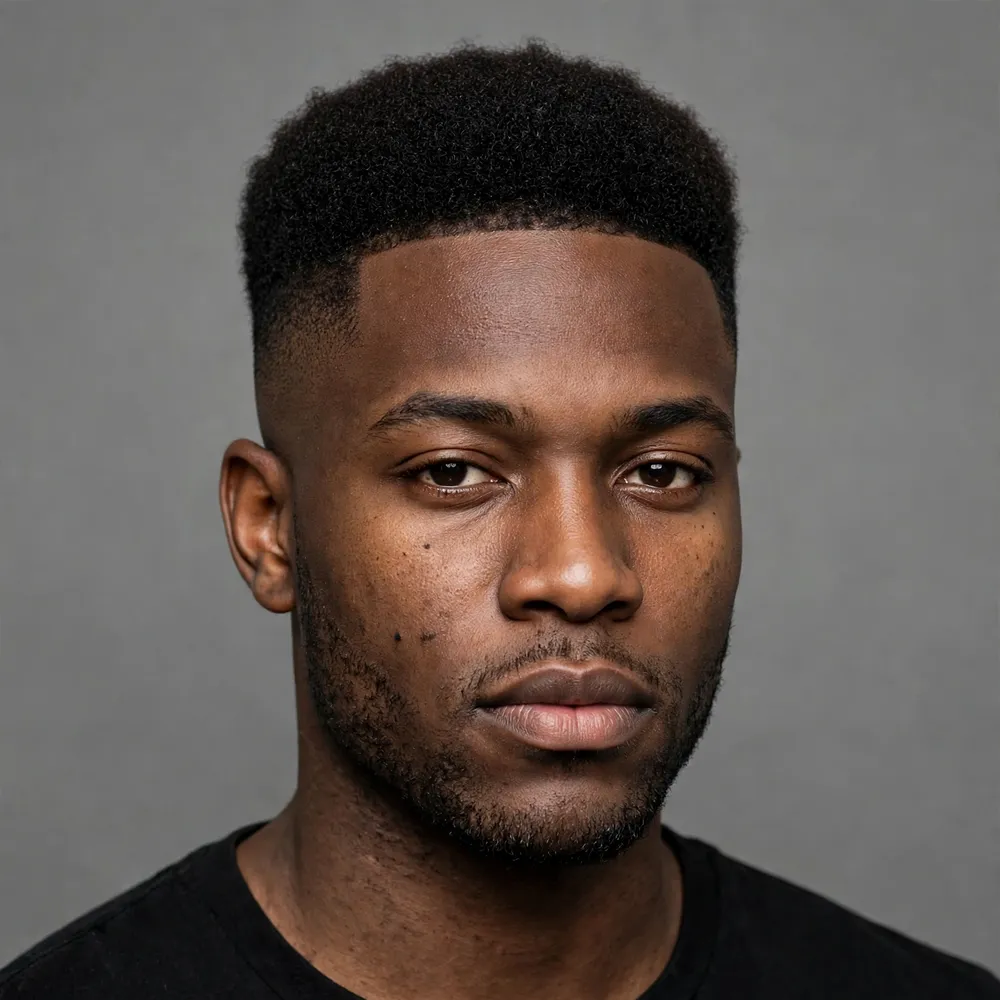
4. Low Taper Fade with Natural Curls
A taper is gentler than a fade, and that is the point. Instead of blending all the way down, the cut shortens gradually at the sideburns and neckline while the curls on top stay completely natural — no shaping, no thinning, just your texture doing its thing. It suits men with looser curls or anyone growing their hair out, and it flatters every face shape because nothing about the silhouette is forced. Ask for a low taper on a #2 guard at the ears and nape, with the top left untouched apart from dusting the split ends. Scrunch curl cream into damp hair and air dry for the best definition. Stretch appointments to three or four weeks — the taper grows out softly with no visible line.
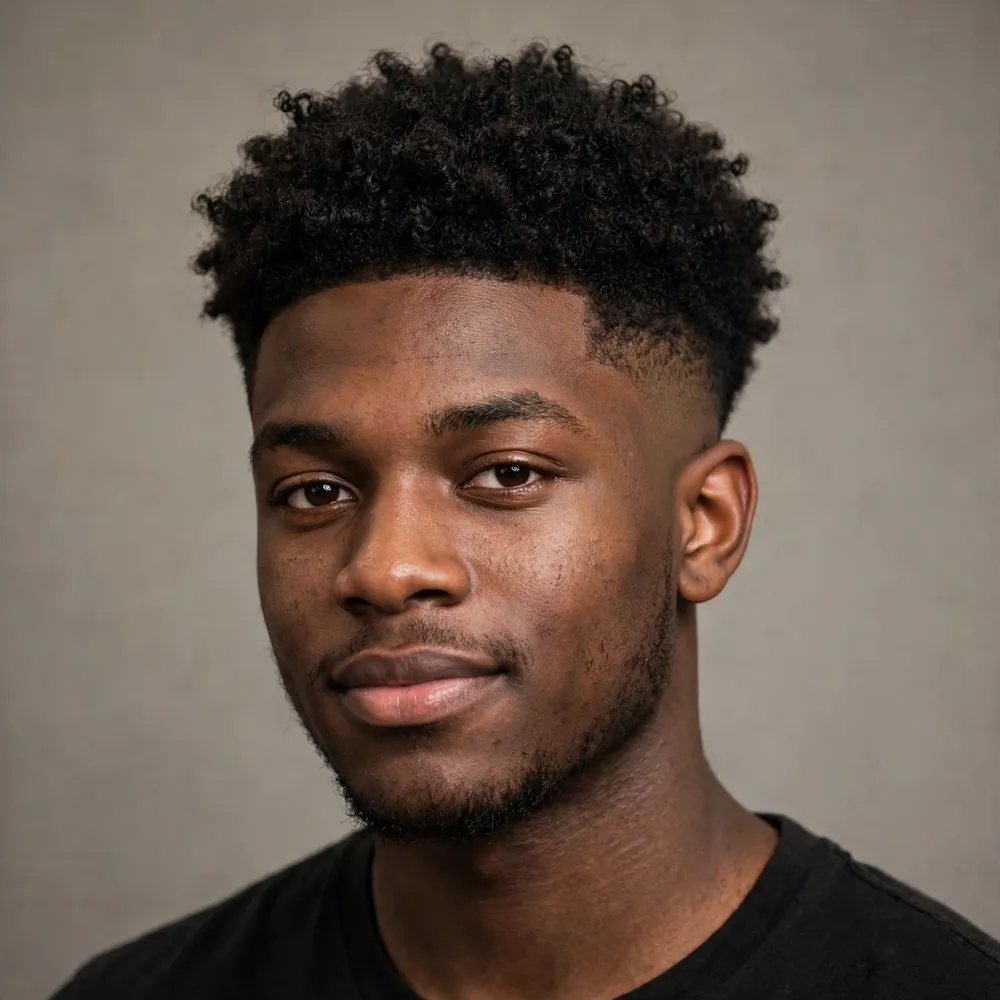
5. Low Fade Buzz Cut
The lowest-maintenance cut on this list, and a clean one. A short all-over buzz — usually a #1 or #2 guard on top — meets a low fade at the sides, so the head looks sculpted, not shaved flat. It suits men with strong jawlines and even hair density, and it shines on oval and square faces, though very round faces may find it unforgiving. Ask your barber for a #2 buzz on top with a low fade to a #0 at the bottom, with the hairline cleaned up by trimmer. Styling is minimal: a drop of hair oil keeps the scalp from looking dry, and sunscreen matters if you spend time outdoors. A weekly buzz at home or a fortnightly barber visit keeps the fade defined.
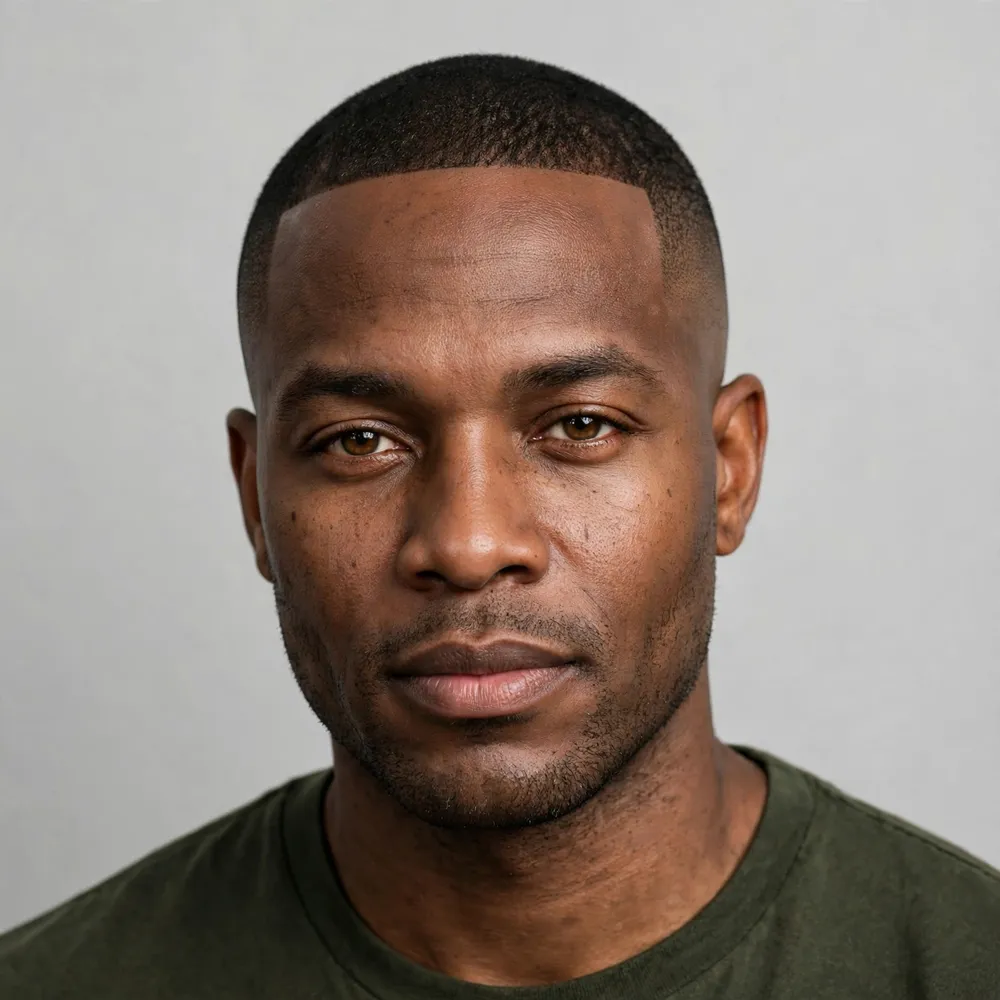
6. Low Fade with Caesar Cut
The Caesar is a short, no-nonsense cut — hair brushed forward into a short, straight fringe, with a low fade keeping the sides tight. It suits men with a receding hairline or a high forehead, because the fringe covers the hairline, and it looks great on square and oval faces. Ask for the top left half an inch to an inch long, cut straight across the forehead, with a low fade on a #1 guard underneath. It needs almost no product, though a little matte paste keeps the fringe flat on windy days. Trim the fringe every two weeks — even a few millimetres of growth changes the line. It is also one of the best low fades for men who hate spending time in front of the mirror.
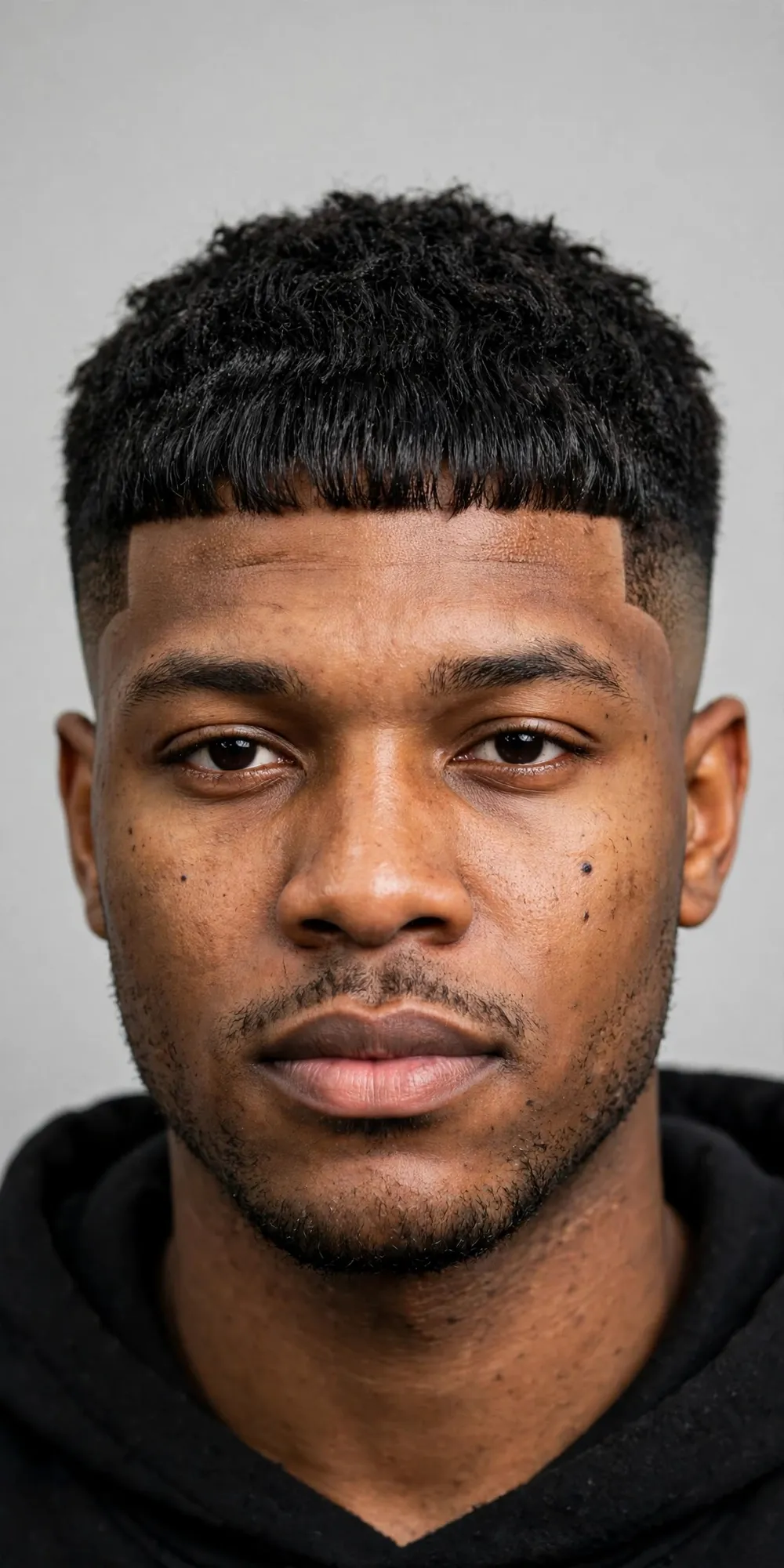
7. 360 Waves with Low Fade
The 360 wave pattern is a rite of passage, and a low fade is its perfect frame. Waves ripple right around the head while the faded sides sit clean below, so the pattern reads clearly from every angle. It suits coarse hair that can be trained, and it flatters oval and round faces because the waves add texture without height. Ask your barber for a low fade on a #1 guard with a #1.5 on top to start the wave pattern, with the hairline natural or lightly lined up. The real work happens at home: brush with the grain for ten minutes a day, wear a durag at night, and use a light pomade for hold and shine. Stick with it for a few weeks and the waves lock in.
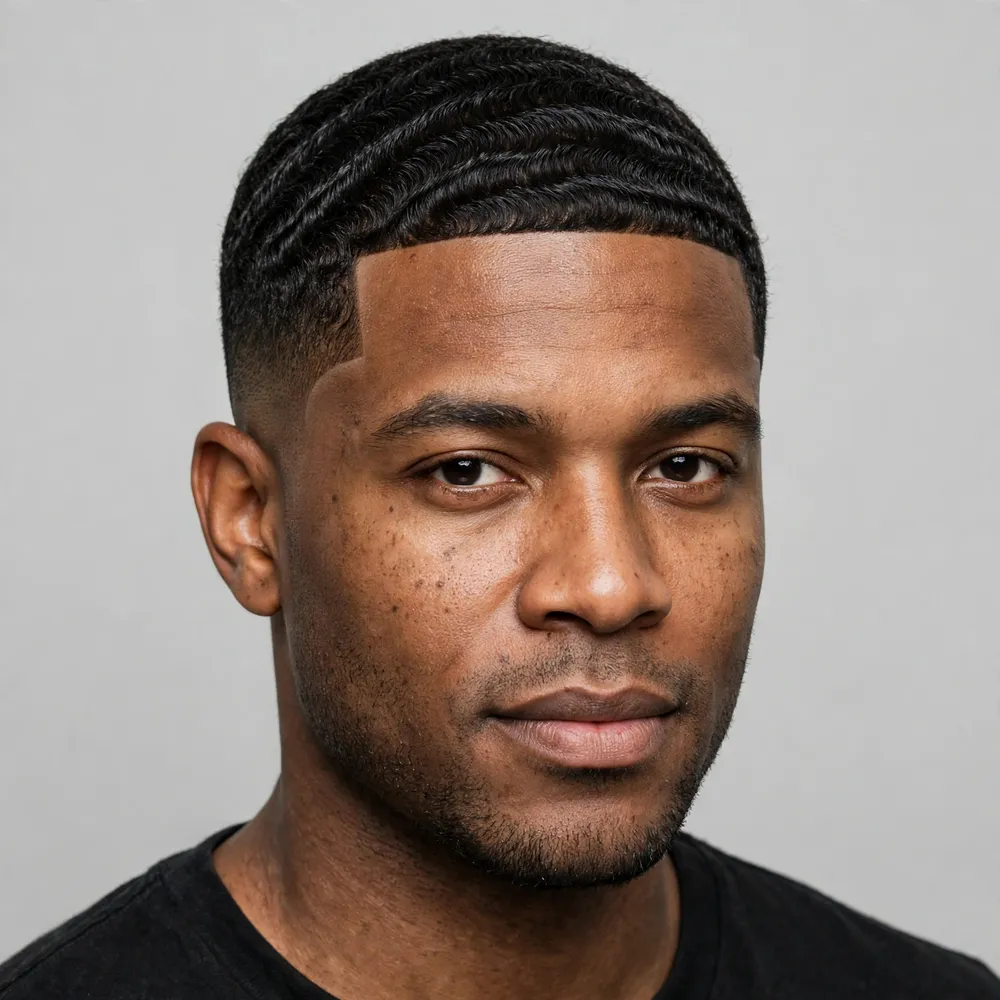
8. Low Fade with Sponge Twists
Sponge twists are the quickest way to even, defined coils. A curl sponge rubbed in small circles creates tight, uniform twists across the top, while the low fade keeps the sides and back tidy. It suits short 4A to 4C hair, about half an inch to an inch, and it flatters round and oval faces because the coils add texture on top without extra bulk. Ask your barber for a low fade on a #1 to #2 guard, with the top left long enough for the sponge to grip. At home, work twisting cream through damp hair and use the sponge in one direction until the coils form. The twists last two to three days, and the fade itself needs a trim every two to three weeks.

9. Low Fade with Two-Strand Twists
Two-strand twists bring a bit of length and intention to a low fade. Neat twists, usually one to three inches long, sit on top while the faded sides keep the look sharp — it is a protective style and a clean cut at the same time. It suits men growing their hair out, working best on 3C to 4C textures that hold a twist, and flatters oval and long faces. Ask your barber for a low fade on a #1 guard, then have the twists done on damp, moisturised hair with twisting butter. A satin bonnet at night and light oil on the scalp keep them fresh. Twists can last two to four weeks, but book a fade touch-up halfway through so the sides stay crisp.

10. Low Fade with Short Freeform Curls
Freeform curls let your hair decide. The curls are left to clump and form naturally with no combing or parting, while the low fade gives the cut structure, so the top looks effortless and the sides deliberate. It suits 3B to 4A curl patterns and men who want a lived-in, natural finish, and it works on most face shapes because the curls soften the outline. Ask for a low fade on a #2 guard, the top left at least an inch long with minimal shaping. A leave-in conditioner is usually enough product; finger-comb only, never a brush, or the curls turn to frizz. Wash once or twice a week and retwist nothing — the whole point is that it takes care of itself.

11. Low Fade with Defined Coil Curls
If freeform is too wild for you, defined coils are the polished version. Each coil is shaped individually, so the top looks springy and neat, while the low fade underneath keeps the edges clean. It suits tight 4A to 4C curls best, and it is a strong choice for round faces, because the height on top lengthens the face. Ask your barber for a low fade on a #1 guard, with the coils defined on top using a curl-defining cream and a finger-coiling technique. At home, apply the cream to damp hair and coil small sections around your finger. The coils hold for two to three days with a durag at night. Plan a fade refresh every two weeks to keep the contrast sharp.
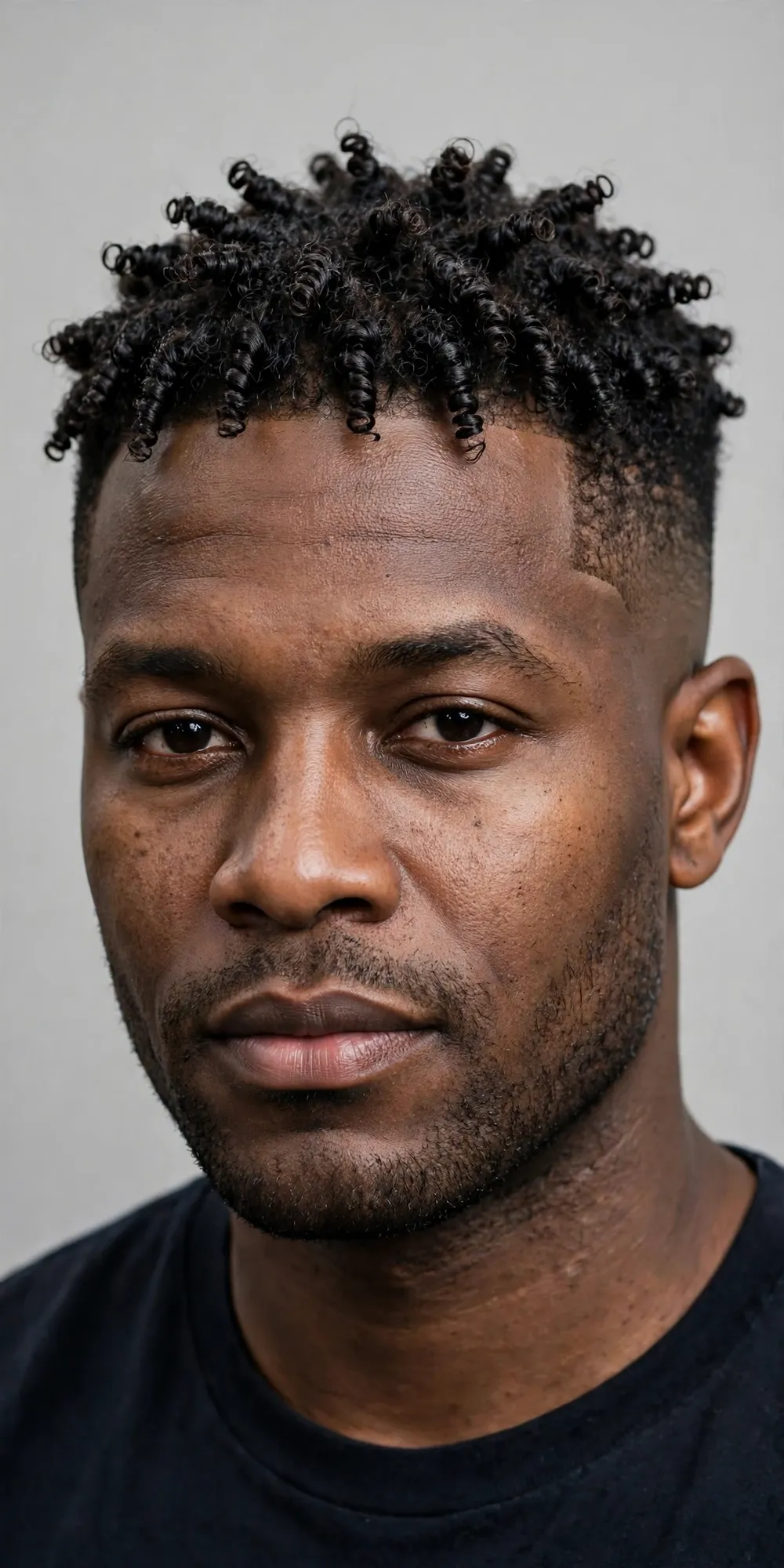
12. Low Fade with Curly Top and Hard Part
A hard part turns a curly low fade into a statement. A razor-shaved line splits the curly top, giving the cut a sharp, graphic edge. It suits men with enough curl on top to show the part — about two inches works best — and flatters square and oval faces, since the line adds structure. Ask your barber for a low fade on a #1 guard, with a hard part shaved in on your natural parting side and the curls left longer above it. Style the curls with a light cream and keep the part visible by brushing the hair away from the line. The part grows over in about a week, so it needs re-shaving at every visit, usually every one to two weeks.

13. Low Fade with Sharp Line-Up
A line-up is the detail that makes any low fade look finished. The hairline, temples and forehead are edged with a trimmer into crisp, straight lines, so even a simple fade looks freshly done. It suits every low fade and every face shape, but it works best with a reasonably straight natural hairline — pushing the line back is a mistake you cannot undo quickly. Ask your barber for your usual low fade, then a line-up with a T-blade trimmer, and tell him where your natural line sits. No product is needed on the line itself, though aftershave balm soothes the skin after the trimmer. The catch is upkeep: the line softens within days, so expect a touch-up every week if you want it permanently sharp.
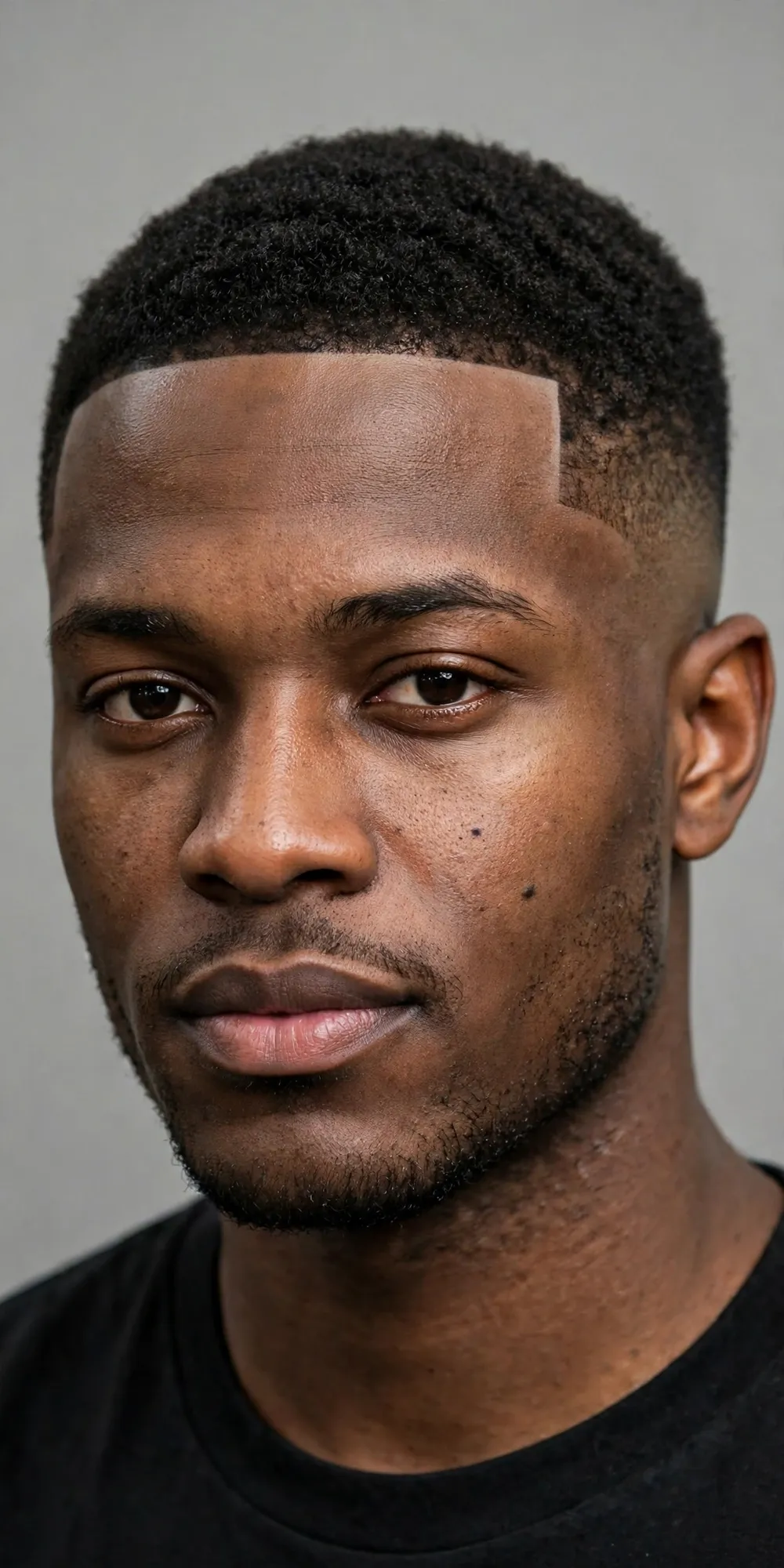
14. Low Fade with Curved Line-Up
Not everyone wants a ruler-straight hairline, and a curved line-up is the softer alternative. The barber follows your natural hairline curve instead of cutting a straight edge, so the finish looks clean but still like you — ideal if your hairline is rounded or slightly uneven. It suits men who find a sharp line-up too harsh or too high-maintenance, and it flatters round and heart-shaped faces by echoing the face’s own curves. Ask for a low fade on a #1 to #2 guard, with the line-up shaped to follow your natural hairline rather than squared off. A trimmer pass and a dab of moisturiser are all the aftercare it needs. It grows out more forgivingly than a sharp line-up, so two weeks between visits is usually enough.
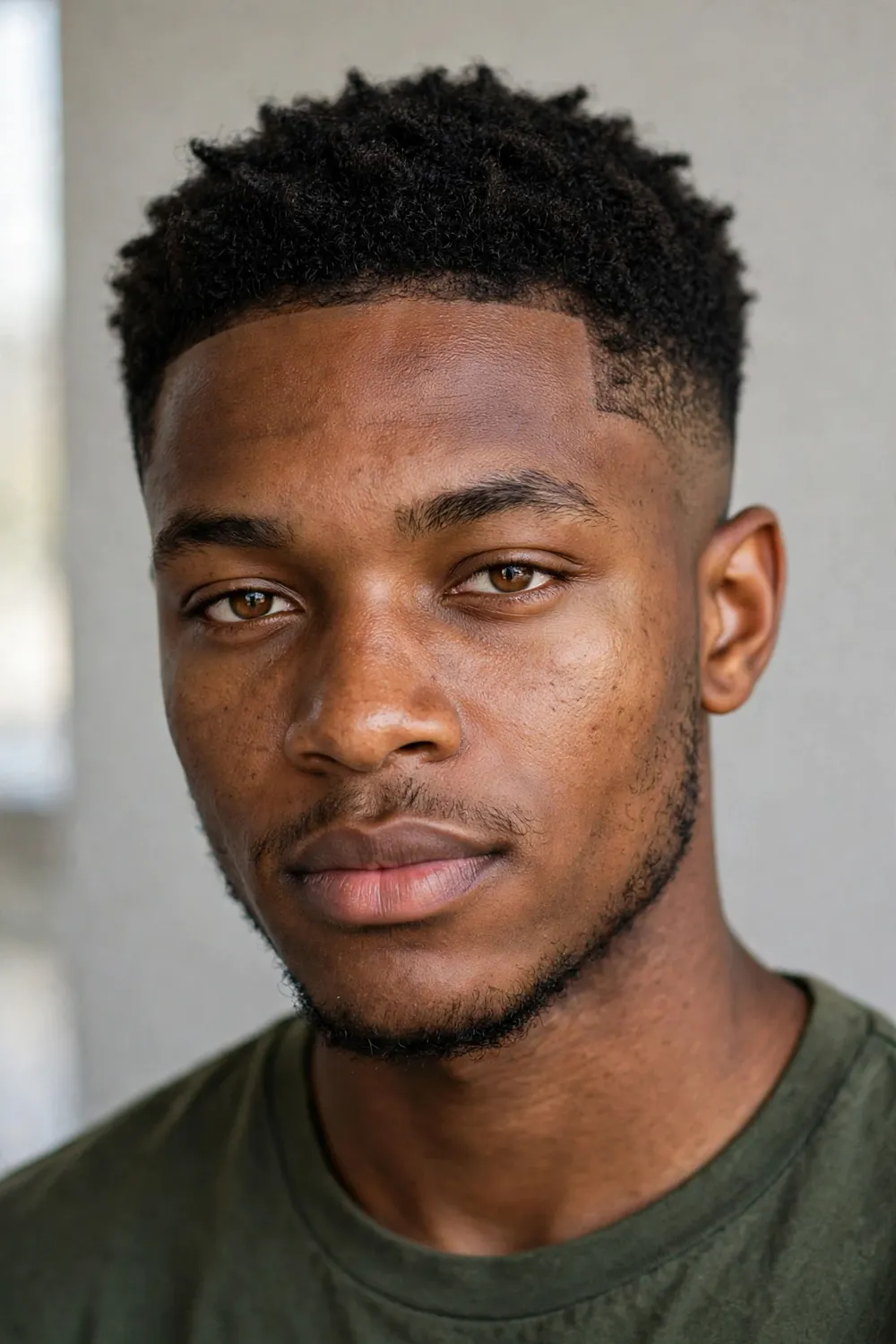
15. Low Fade with Side Part
The side part is the office-friendly low fade. A short top combed to one side gives the cut a classic, groomed feel, while the low fade underneath keeps it modern instead of old-fashioned. It suits straight to wavy hair and men with a clear natural parting, and it flatters oval and square faces because the part adds asymmetry and structure. Ask your barber for a low fade on a #1 guard, with the top left about two inches and cut so it falls naturally to your parting side. A little pomade or styling cream, combed through damp hair, gives a clean hold with a soft shine. It needs a one-minute comb-through each morning, and a trim every two to three weeks keeps the part sitting right.
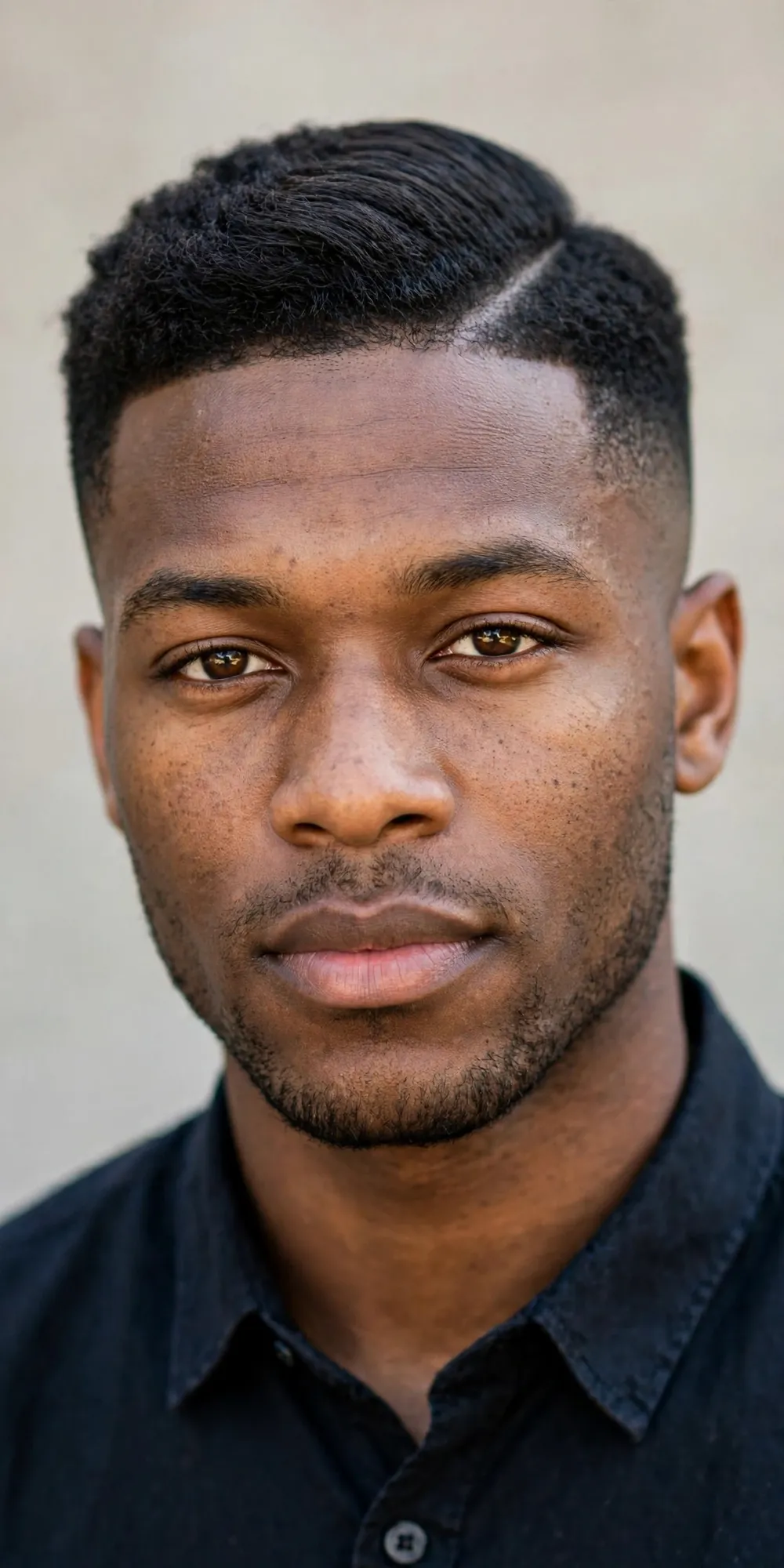
16. Low Fade with Hair Design
Hair design turns a fade into a canvas. One or two shaved lines, cut into the faded area with a trimmer, add a graphic detail that makes a standard low fade recognisable. It suits confident men who like standing out, and works on any face shape, since the design sits in the fade rather than changing the top. Ask your barber for a low fade on a #1 guard, then a simple design — one line or a pair of parallel lines is the safest start — cut with a detail trimmer. Brush the surrounding hair away to keep the design visible, and skip heavy product near the lines so they stay crisp. Designs grow over in about a week to ten days, so save them for occasions or weekly barber visits.
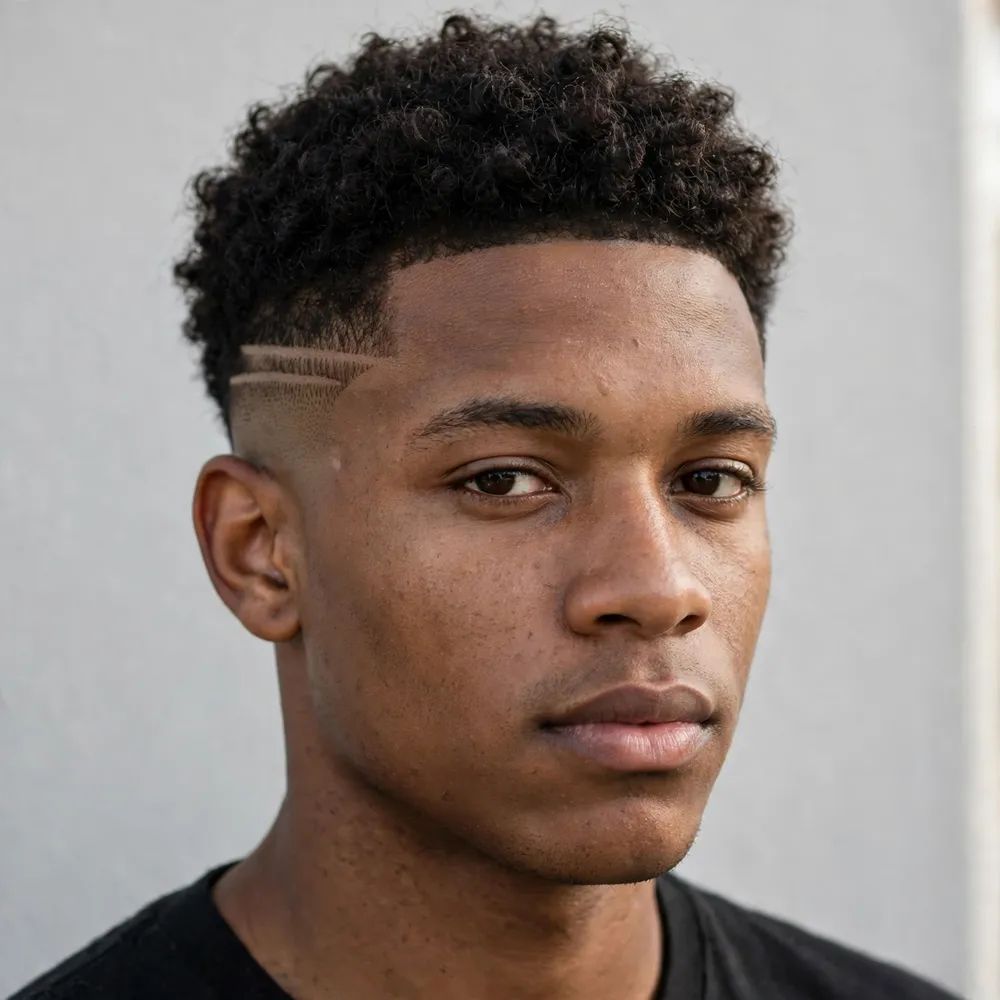
17. Low Drop Fade for Black Men
A drop fade does what its name promises: the fade line curves down behind the ear instead of running straight around the head, following the skull’s natural shape. It suits men with thicker hair at the crown and anyone wanting more shape than a standard low fade. It flatters oval and long faces, because the dipping line adds curve and balance. Ask for a low drop fade, dropping to a #0 behind the ear and blending up to a #2 at the top. The top can be anything from curls to a short afro — style it as normal. The curved line is the part that blurs first, so book a tidy-up every two weeks to keep the drop visible.
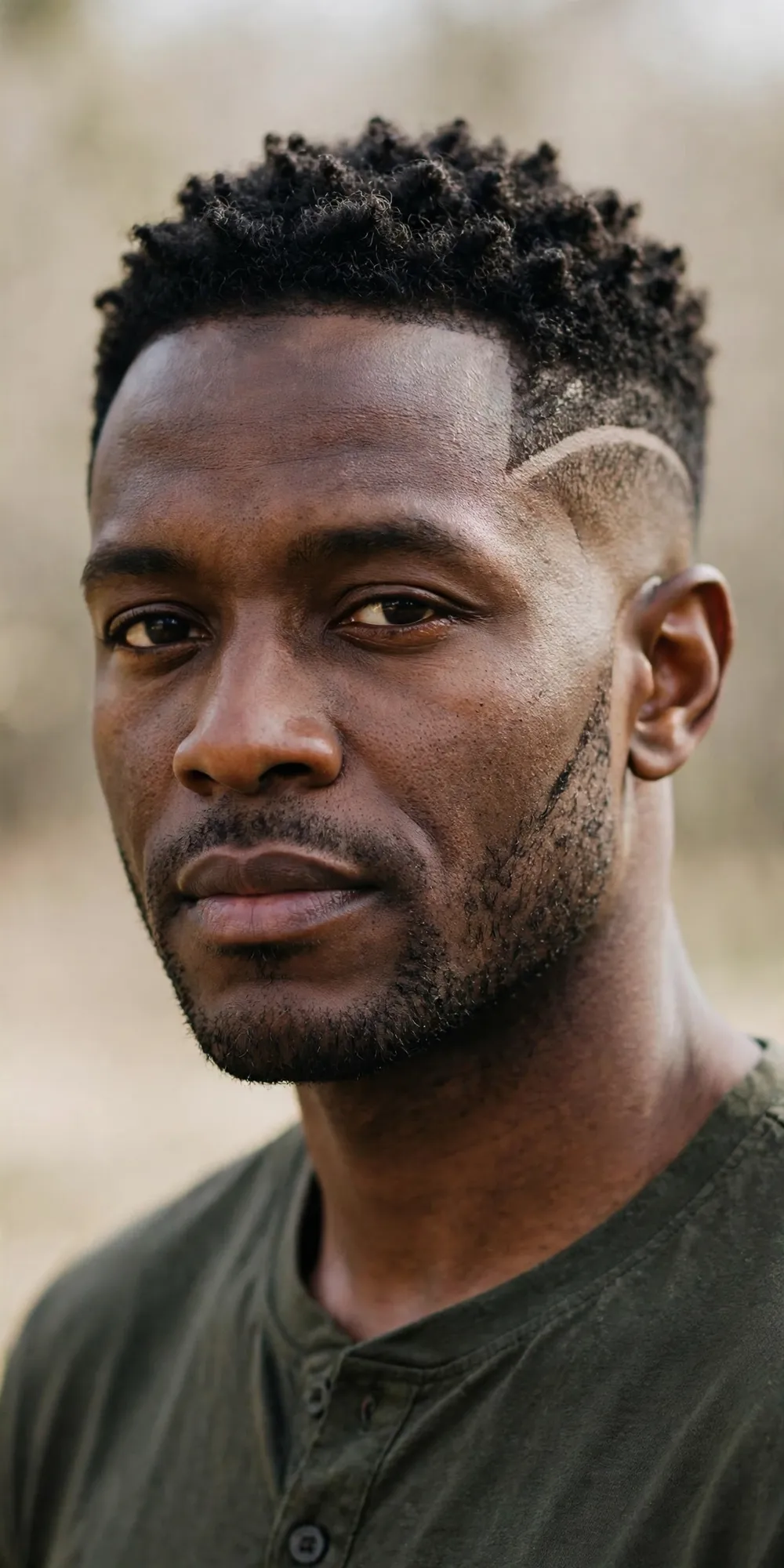
18. Low Burst Fade for Black Men
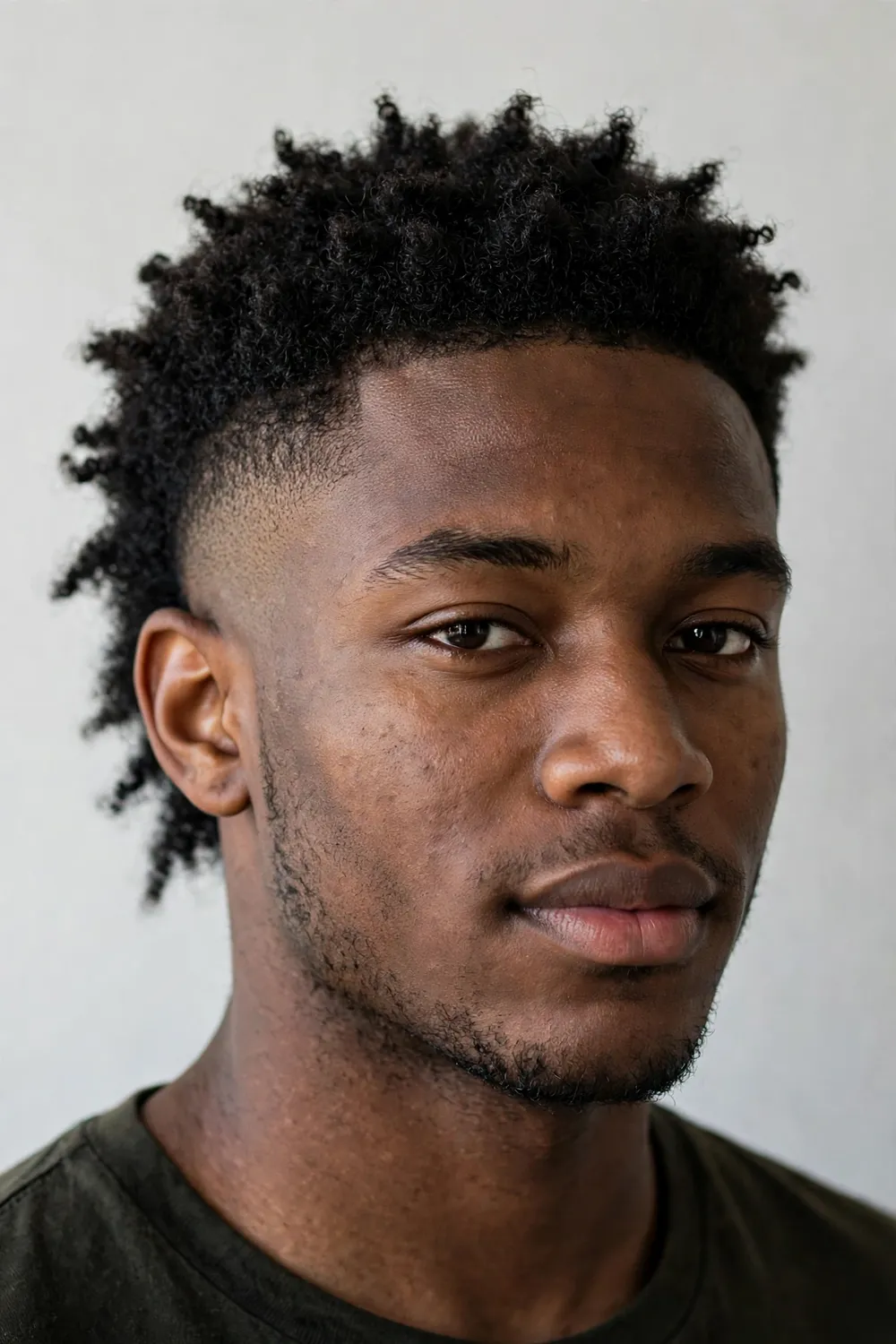
The burst fade arcs around the ear like a sunburst, leaving the back longer while the area around the ear fades down low. It is a bold, modern shape that pairs naturally with textured tops and mohawk-style cuts. It suits men with strong natural texture and a bit of attitude, and flatters round and square faces, since the arc opens up the sides. Ask for a low burst fade, faded to a #0 around the ear with the back left at a #2 or longer, the top shaped to your liking. A matte clay or curl cream, depending on your top, holds the style without weighing it down. The burst shape needs a skilled barber and a touch-up every one to two weeks, since the arc loses definition fast as it grows.
19. Low Fade with High-Top Shape
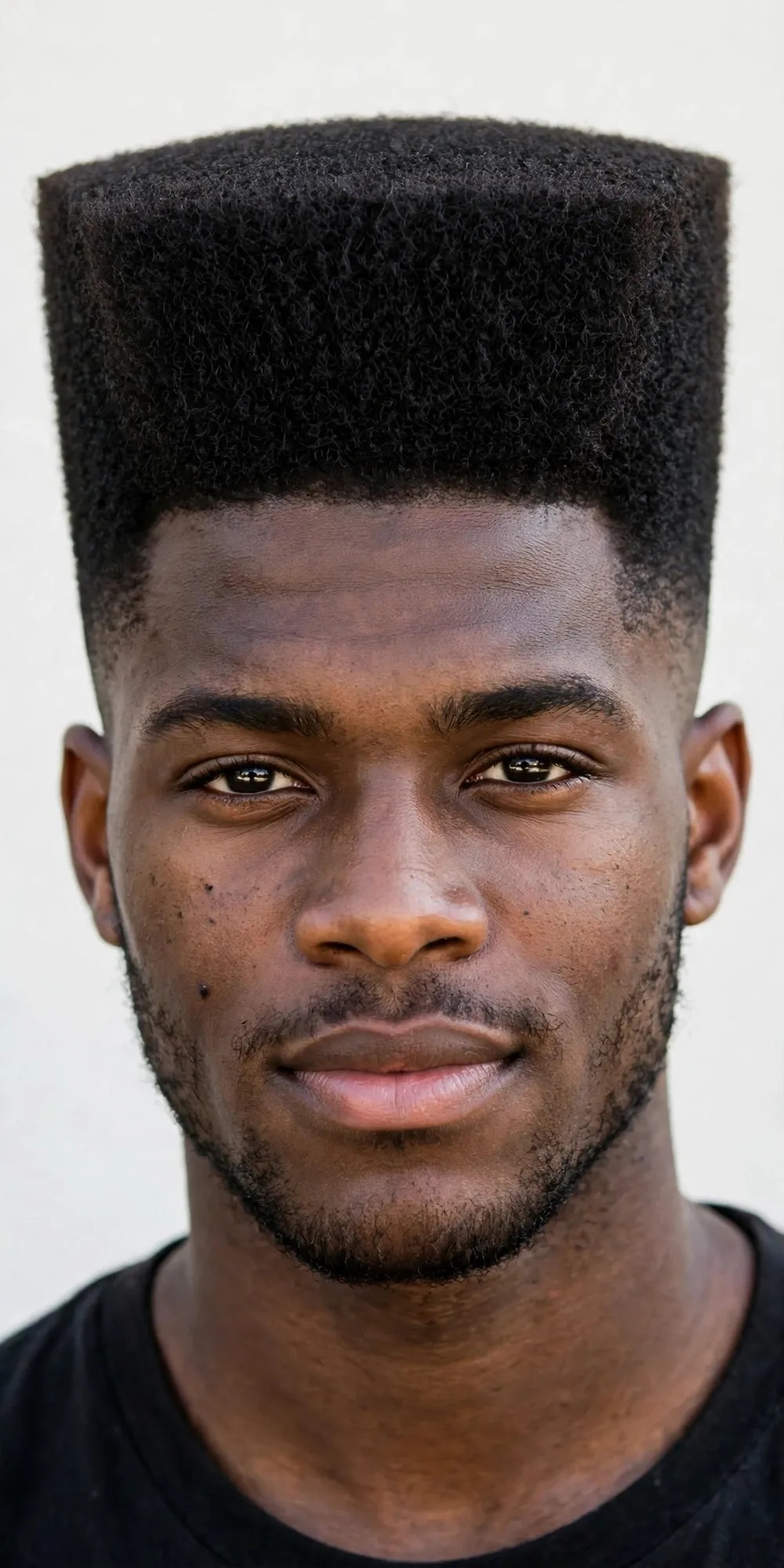
The high top is a classic, and a low fade keeps it looking current. The top is shaped into a flat, boxy silhouette, usually two to four inches high, while the low fade keeps the sides tight. It suits tight 4C coils that stand up well, and flatters round faces most, since the height lengthens the face. Ask your barber for a low fade on a #1 guard, with the top shaped with clippers over a comb into a level, flat top. Firm-hold pomade or a little hairspray keeps the shape through the day, and a pick lifts it back in seconds. The shape collapses as it grows, so plan a shape-up every one to two weeks and sleep with a durag to protect it.
20. Low Fade with Frohawk
The frohawk takes the mohawk idea and makes it wearable. A central strip of afro texture runs from forehead to nape, while the low faded sides keep the look grounded. It suits men with dense 4A to 4C hair who want something bold but still barbershop-neat, and it flatters oval and long faces because the strip adds height down the centre. Ask for a low fade on a #1 guard, with the central strip left two to three inches wide and shaped into a rounded ridge. Pick the strip out with an afro pick and use light curl cream so it holds its shape without going stiff. It needs regular shaping — every one to two weeks — or the strip widens and the hawk effect disappears.

21. Low Fade with Blowout Top
A blowout top takes the low fade into maximum-volume territory. Hair two to three inches long is blow-dried with a round brush to lift it up and out. The sides stay tight and low, so the contrast does the work: a big, airy crown on a sharp fade. It suits type 3 curls or looser coils, and it works best on oval and square faces. Ask your barber for a low fade with a #0 or #1 on the sides and a blown-out top. Finish with volumising mousse on damp hair, a medium-heat blow-dry, and a matte paste to set it. Honest truth: it needs ten minutes every morning, and humidity flattens it fast.
22. Low Fade with Starter Locs
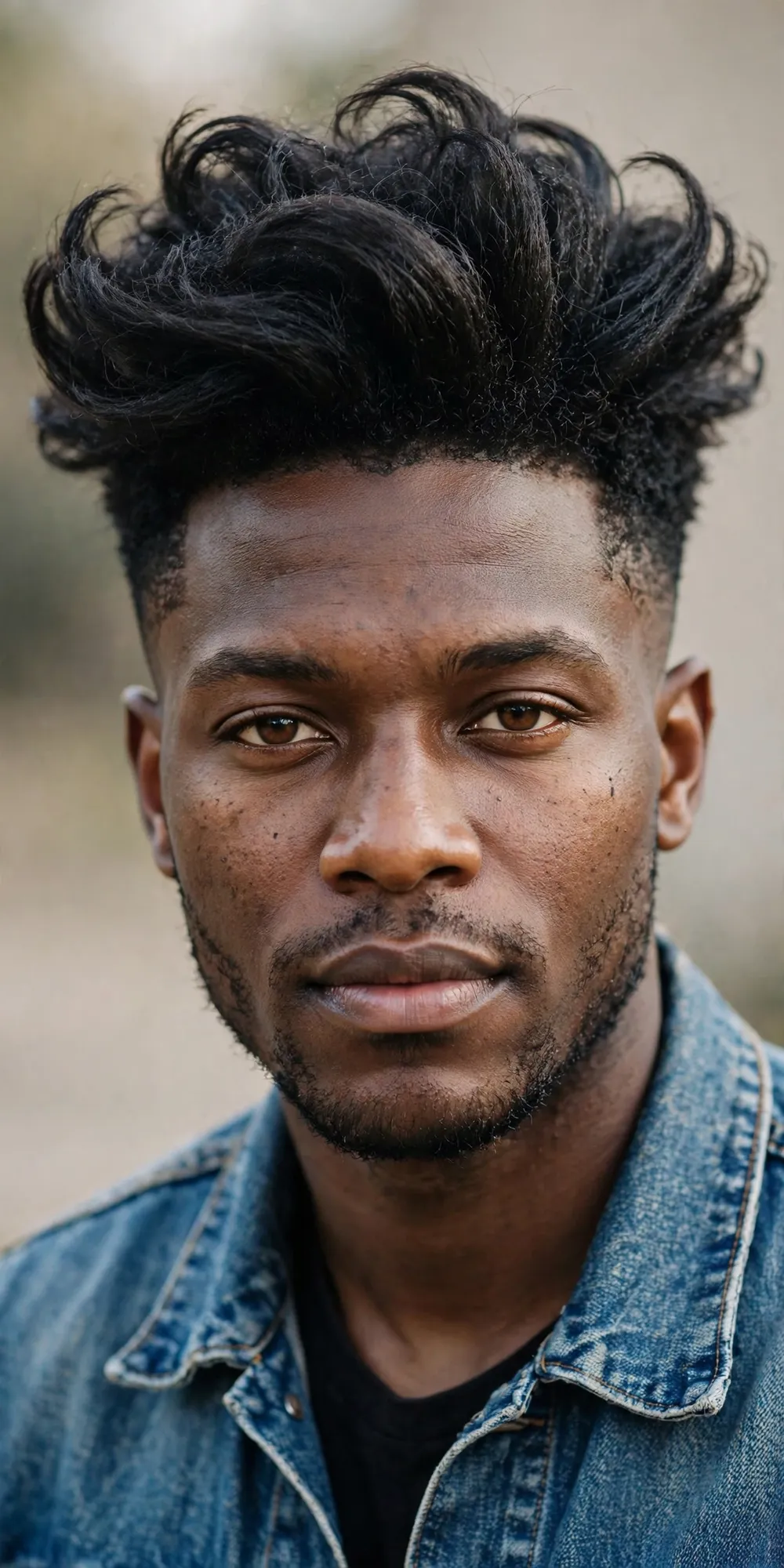
If you’re starting a loc journey, a low fade is one of the cleanest ways to grow into it. Starter locs — coils, twists or comb coils — sit on top while the fade keeps the sides and neckline sharp. That makes the in-between stage look deliberate instead of messy. It suits every face shape and any coil pattern. Tell your barber you want a low fade with the top left completely untouched. Book your loctician and barber in the same week so the two cuts line up. A light oil on the scalp and a silk durag at night keep the starters neat; skip heavy wax, which builds up on young locs. Maintenance is light, but expect the first few months to look a little uneven — that’s normal.

23. Low Fade with Cornrows on Top
Cornrows over a low fade give you a sharp, structured look with almost zero daily effort. The braids run straight back, or in a pattern of your choice, across the top. The low fade underneath keeps everything crisp at the edges. It suits coily and 4C hair best — the tighter the texture, the cleaner the braids hold. It also flatters round and square faces, because the straight lines add structure. Ask your barber for a low fade first, then get the cornrows done by a braider who won’t pull them too tight at the edges. Keep the scalp moisturised with a light oil every couple of days, and wear a durag at night. They’ll last two to three weeks, and the fade will need a touch-up around week two.
24. Low Fade with Flat Twist Top
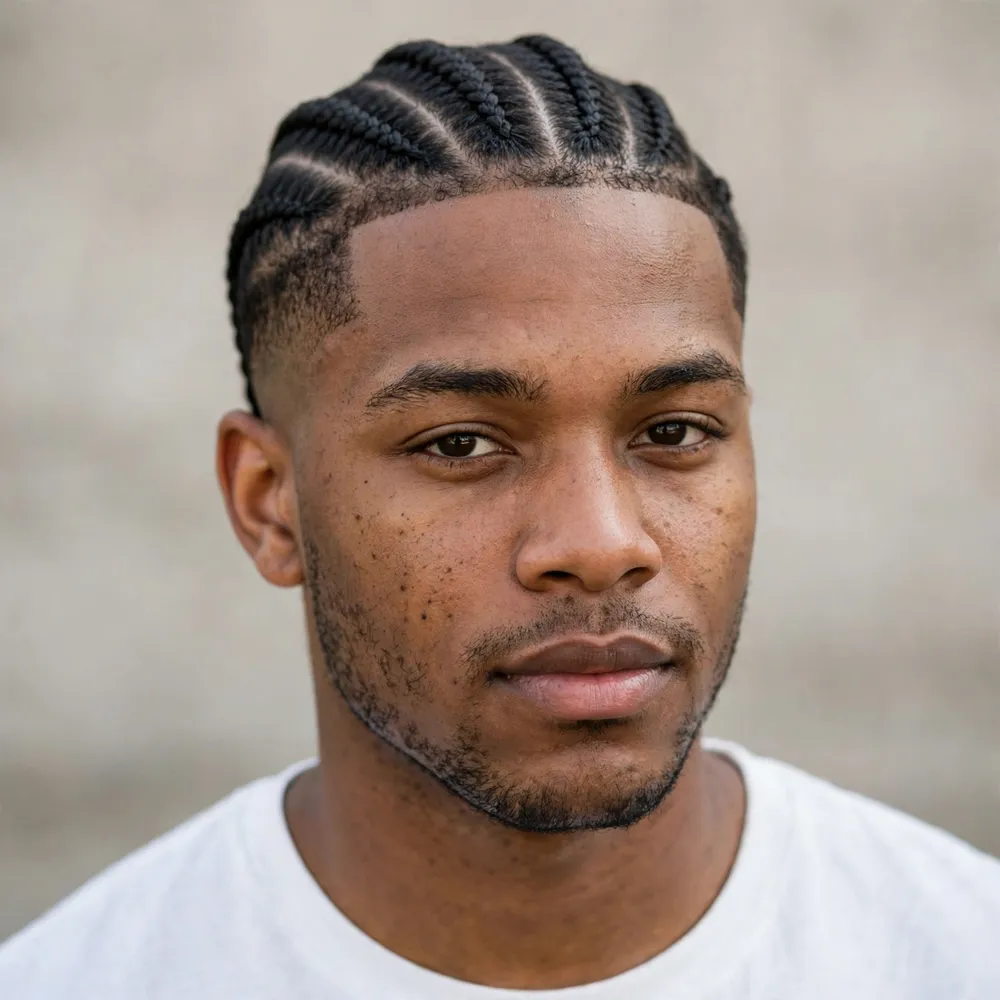
Flat twists are cornrows’ softer, lower-tension cousin, and they pair beautifully with a low fade. Instead of braiding from a single point, the twists are worked flat against the scalp in neat rows. That makes them gentler on your edges and easier to take out. The look suits guys with type 3C to 4C hair who want a protective style that still shows off a sharp cut. It works on any face shape. Tell your barber to keep the fade low and clean, and ask your braider for flat twists that follow your head shape. A dab of leave-in conditioner and a light oil on the twists keeps them fresh for about a week. They’re quick to install and easy to redo at home once you learn the motion.

25. Low Fade with Full Beard Blend
This is the fade as a full-face design. The low fade doesn’t stop at the sideburns — it flows straight into a shaped full beard. The blend connects hair, sideburn and beard into one smooth line, so the whole head looks sculpted. It suits guys who can grow a decent beard and want their cut and facial hair to look like one plan. Round and square faces benefit most, since the beard adds length and definition. Ask your barber for a low fade that blends into the beard with a #1 to #2 transition. Beard oil daily, a balm for shape, and a morning comb-through keep it tidy. The honest catch: the fade grows out in two weeks, so book both together.
26. Low Fade with Short Beard and Line-Up
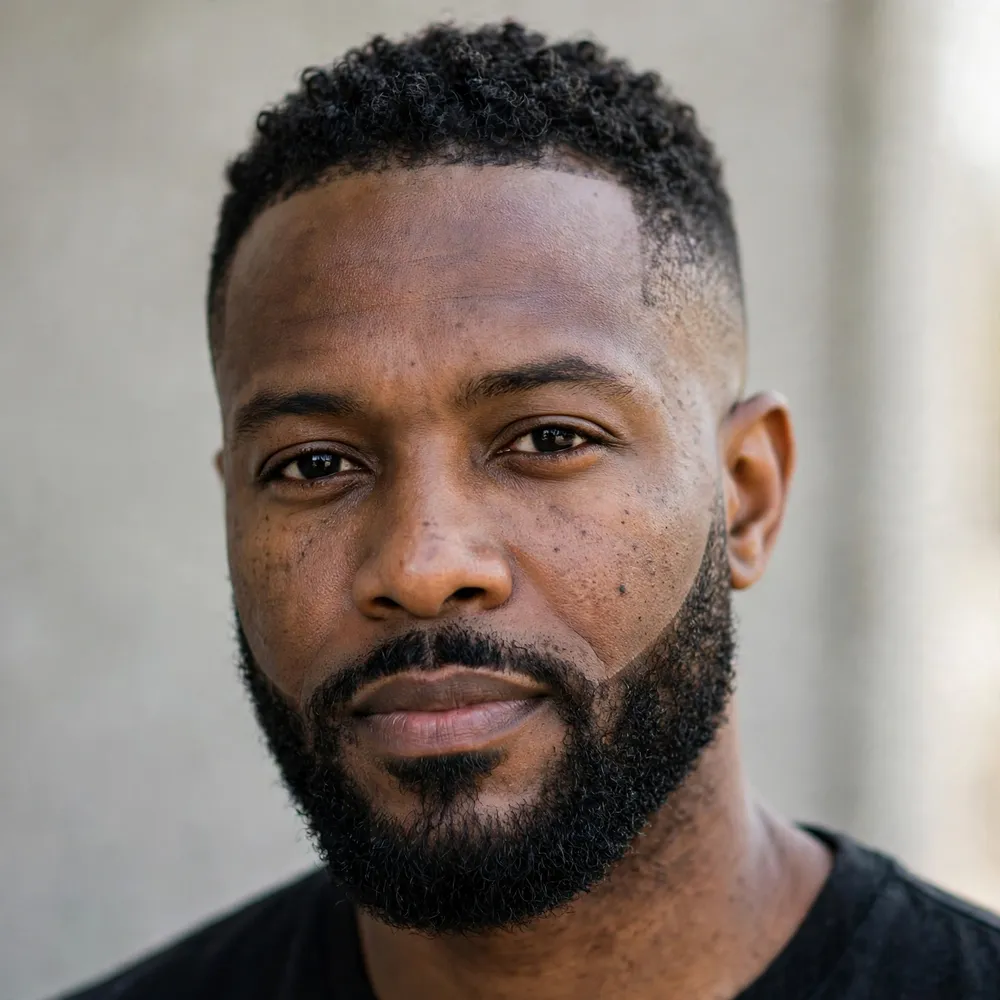
Not everyone wants a full beard, and this cut proves a short one can look just as sharp. The low fade is paired with a close, neatly trimmed short beard and a razor line-up. They tie forehead, temples and beard into one clean frame. It suits guys with patchier or slower-growing beards — a short, even length hides gaps a long beard would show. It also flatters oval and heart-shaped faces, where the line-up adds definition without heaviness. Ask for a low fade, a beard trimmed to a #1 or #2 guard, and a line-up that follows your natural hairline. Use a light beard oil so the short beard doesn’t feel scratchy. Upkeep is light: a fade tidy every two to three weeks and a five-minute beard trim in between.
27. Low Fade with Goatee
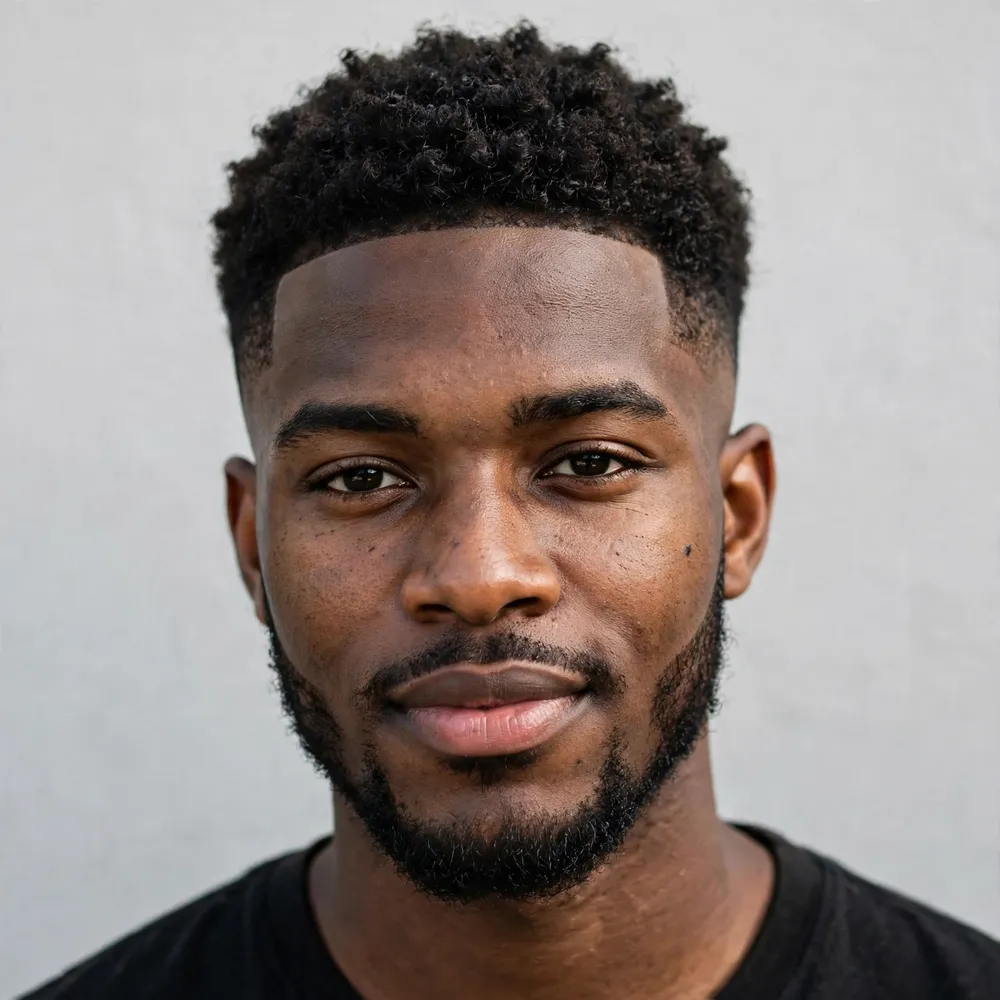
A goatee with a low fade is a classic pairing that never really goes out of style. The clean, low-faded sides keep the focus up top. The goatee adds a bit of edge around the mouth and chin without the full commitment of a beard. It suits guys with strong chins and defined jawlines best — the goatee draws the eye to the lower face. Ask your barber for a low fade and a goatee shaped to your chin, with the neck shaved clean. Keep the edges crisp and the length even with a #1 guard once or twice a week. Honest maintenance: a goatee shows stubble fast, so if you hate daily trimming, this one will annoy you.
28. Low Fade with Long Top and Tapered Back
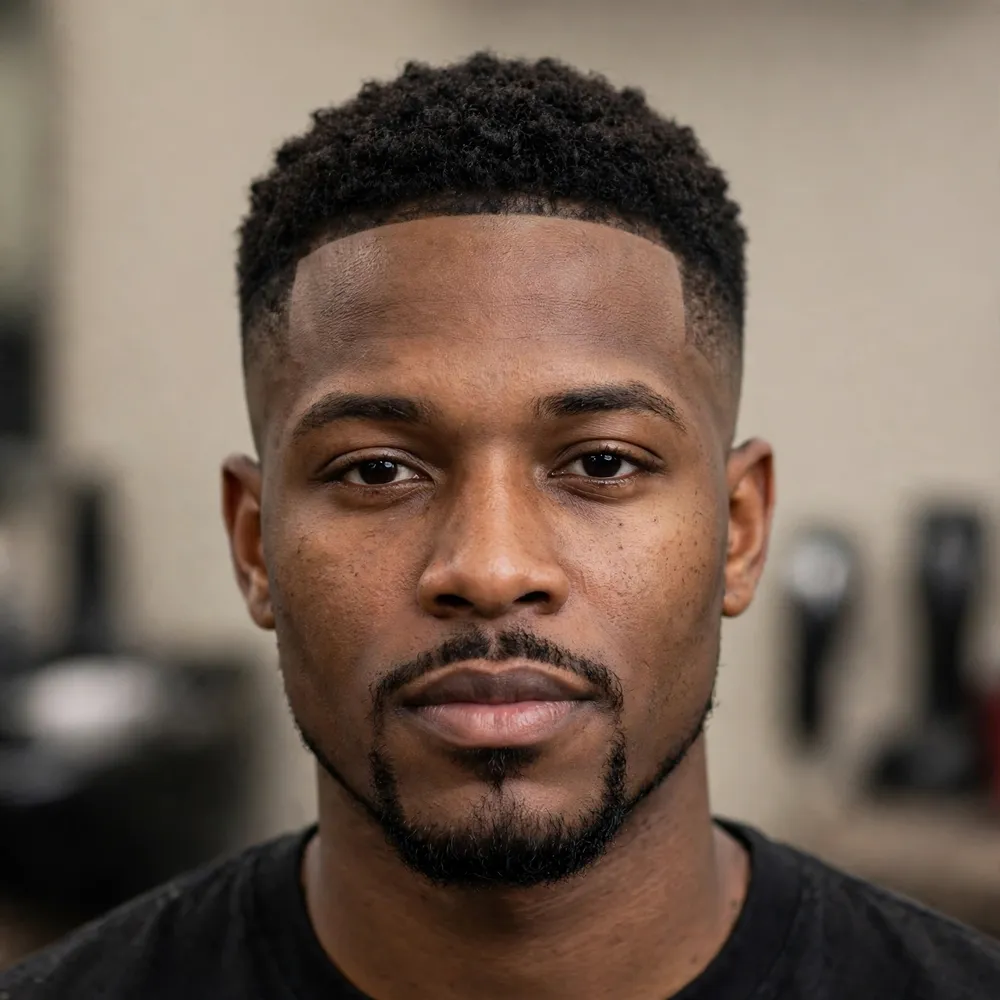
This is the low fade for guys who want length on top but still want a clean finish. Three to four inches on top gives you room to style — a loose sweep, curls pushed back, or a soft quiff. The low fade and tapered back keep the sides and neckline tidy. It suits wavy and curly hair best, since the length shows off the texture. It also works on oval and long faces, where the extra height balances the proportions. Ask your barber for a low fade with a tapered back and point-cut ends, so the top moves naturally. A curl cream or light hold paste gives definition without stiffness. Past four inches the top falls into your eyes, so book a top trim every four to five weeks.

29. Low Fade with Wavy Brush Cut
The wavy brush cut is a low fade built around the early stages of 360 waves. The top is cut short — around a #2 or #3 — and brushed daily in one direction until the wave pattern starts to form. The low fade keeps the sides clean and sharp. It suits guys with type 3 hair who want waves but don’t want to grow their hair out first. Ask your barber for a low fade with a #2 top and a #0 or #1 on the sides. Brush for ten minutes a day with a medium brush, use a light pomade, and wear a durag at night. Waves take four to six weeks to show — if you won’t brush daily, pick a different style.

30. Low Fade with Textured Crop
A textured crop with a low fade is short, choppy and deliberately messy on top. The top is cut to about an inch and point-cut or razor-textured, so the curls sit in separate, piecey clumps. The low fade underneath gives it a sharp, finished edge. It suits guys with thick, coily hair who want a wash-and-go cut. Ask your barber for a low fade with a textured crop on top, cut with a razor or thinning shears to break up the bulk. Styling takes about two minutes: a pea-sized amount of curl cream scrunched into damp hair, then leave it alone. The honest trade-off is that texture is hard to control — on humid days it can puff up. Find a barber who actually cuts textured hair, not just fades.

31. Low Fade with 720 Waves
If 360 waves wrap around the head, 720 waves go one better. The pattern continues around twice, creating a deep, rippled effect that covers the whole crown. Combined with a low fade, the sides stay razor-clean while the top shows off one of the most impressive wave patterns you can grow. It suits guys with type 3 hair who already have a solid 360 pattern and want the next level. Ask your barber for a low fade with the top left at a #2 or #3. Be clear you’re building 720s, so they don’t cut against your brushing direction. The commitment is real: daily brushing in two directions, a durag every night, and wolfing for four to six weeks between cuts. It takes months, and most guys give up halfway.
32. Low Fade with Finger Coils
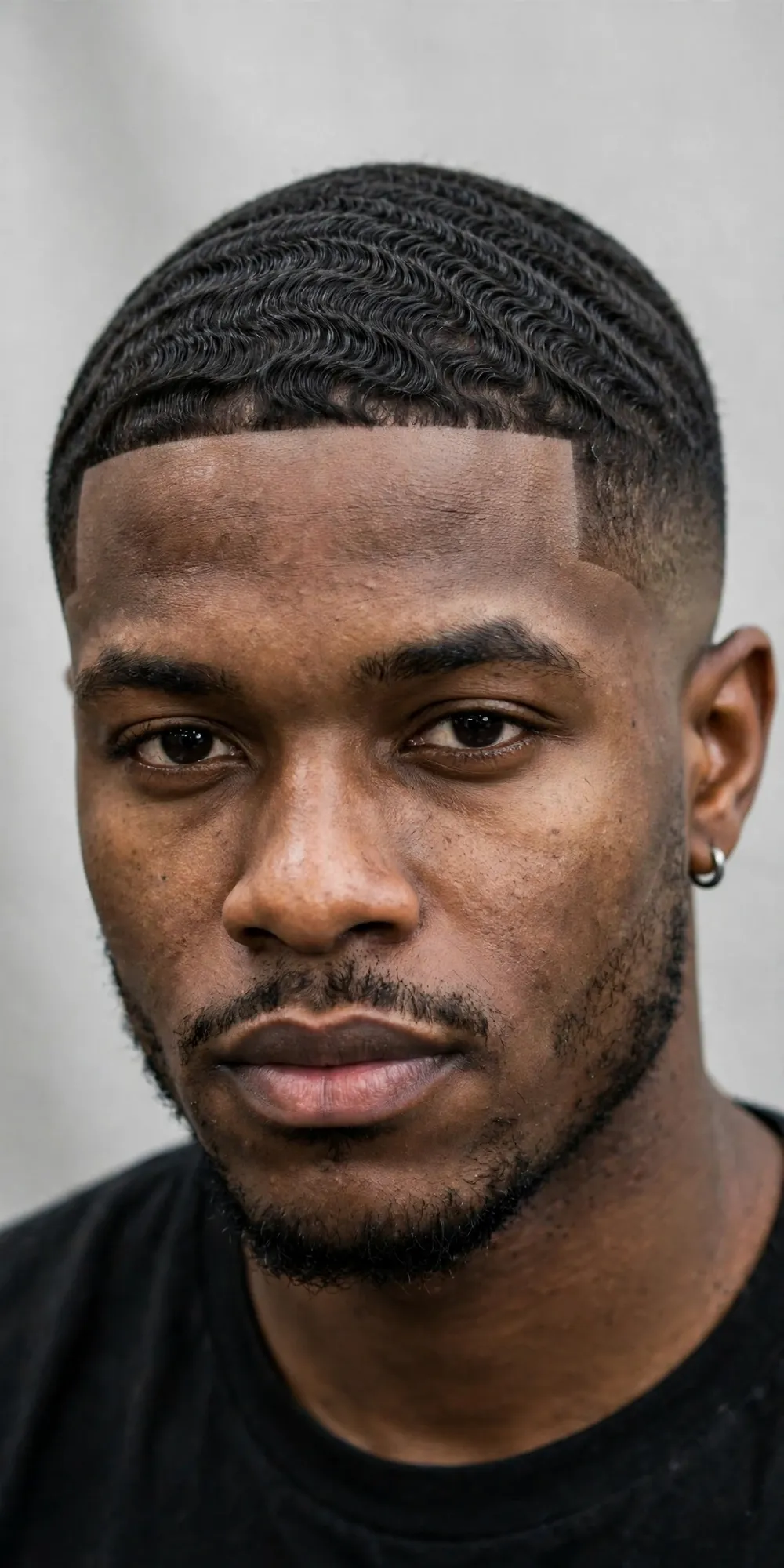
Finger coils are small, springy curls formed by twisting sections of hair around your finger. Over a low fade they look neat, defined and full of personality. The top is usually one to two inches, while the low fade keeps the sides tight and clean. It suits type 3C and 4A hair best — the tighter the natural curl, the better the coils hold. Ask your barber for a low fade and tell them you’re doing finger coils, so they leave enough length on top. To style, work curl cream through damp hair, twist small sections around your finger, and let them dry untouched. The coils last a few days with a silk durag at night, but budget twenty minutes to set them the first few times.
33. Low Fade with Dyed Top
A dyed top turns a low fade into a statement. The top is bleached or coloured blonde, platinum, a bold shade or a subtle caramel. The low fade stays natural and dark underneath, which makes the colour pop even harder. Ask your barber or colourist for a low fade first, then get the colour done by someone experienced with coily hair. Bleach on tight curls is easy to get wrong. A patch test is essential, and so is a deep conditioner — bleach dries coily hair out fast. The colour fades and the roots grow in within two to three weeks, so you’ll need regular toning. If you’re not ready for that routine, a temporary colour is a safer first step.

34. Low Fade with Tapered Afro
The tapered afro is a medium-length afro, two to four inches, with tapered sides and a low fade at the base. That keeps the shape round and controlled instead of growing out wide. It’s one of the most flattering cuts for coily hair, with the low fade giving it a clean, deliberate finish. It suits oval and round faces, since the height on top balances the width. Ask your barber for a low fade at the base with the afro shaped to your head — not cut flat on top, which kills the shape. A pick, a light leave-in and a little curl cream keep it full without frizz. The upkeep is moderate: a shape-up every two to three weeks, and a proper wash-and-condition routine once a week.

35. Low Fade with Edgar Cut
The Edgar cut — a straight, blunt fringe — has crossed over from straight-hair trends into coily hair. With a low fade underneath it looks sharp and modern. The fringe sits low and straight, the top is short and textured, and the low fade keeps the sides clean. It suits straight or slightly wavy hair best, and it works on oval and square faces. Ask your barber for a low fade with a straight Edgar fringe, cut blunt across the forehead with the corners kept sharp. The fringe needs trimming every two weeks or it creeps into your eyes. The Edgar is a strong look, and it doesn’t suit everyone. If your hairline is uneven, a curved line-up will flatter you more.

36. Low Fade with S-Curl Waves
S-curl waves are the brushed-in wave pattern you get when you train coily hair into smooth, S-shaped ripples. They’re softer than 360 waves, with a flowing, almost sculpted look. It suits type 3 hair and a groomed, vintage feel, and it flatters round and oval faces. Ask your barber for a low fade with the top left at a #2 to #3, and tell them you’re working on S-curls. The routine is brushing — a soft brush, a light pomade, and a durag at night — plus a weekly wash to keep the waves from going greasy. It takes a few weeks of daily brushing before the pattern sets. Once it clicks, it’s one of the lowest-effort styles to maintain.

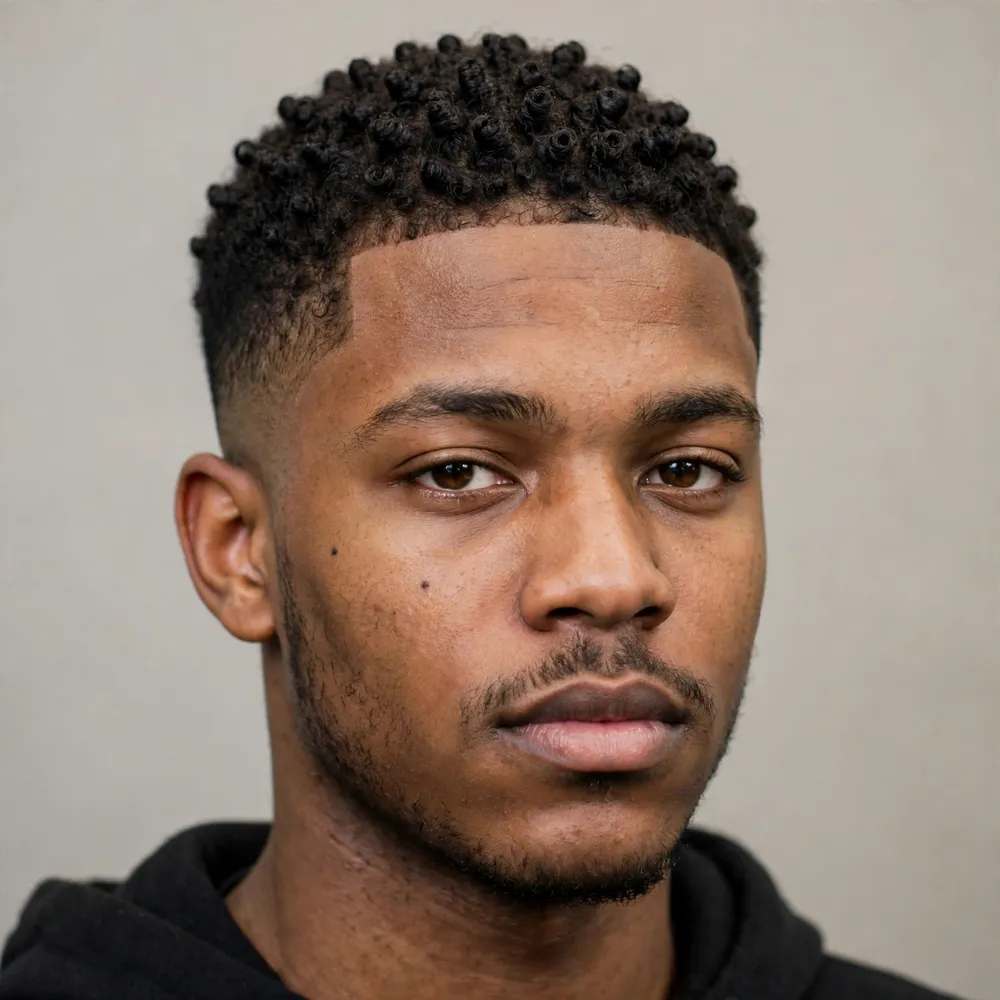
37. Low Fade with Bantu Knots
Bantu knots are small, coiled knots twisted up across the top of the head. With a low fade they make a bold, cultural statement that still looks clean and finished. The knots sit on top in neat rows, a scattered layout or a crown, while the low fade keeps the sides sharp. Ask your barber for a low fade, then get the knots done by a stylist who knows how to section them evenly. A little gel on each section and a light oil on the scalp keeps them neat for a week, and a silk durag stops frizzing at night. Taking them out gives you a beautiful knot-out curl pattern as a bonus. Don’t wear them back-to-back — give your scalp a break.

38. Low Fade with Short Dreads
Short dreads with a low fade are a clean, mature look. The locs on top sit neatly at one to three inches, while the low fade keeps the sides and neckline razor-sharp. It’s for guys whose locs are established and want them to look intentional rather than grown-out. Ask your barber for a low fade and leave the locs alone — retwisting belongs to your loctician. Between appointments, palm-roll the locs after washing, use a light oil on the scalp, and wear a durag at night. Maintenance is light: a fade tidy every two to three weeks and a retwist every four to six. Watch build-up — heavy products sit on locs and are hard to wash out, so keep it light.

39. Low Fade with Grey Hair
Grey hair with a low fade looks fantastic. The silver or salt-and-pepper top against the sharp, dark fade is one of the most distinguished combinations here. The grey adds character, and the low fade keeps the cut looking modern rather than dated. It suits any face shape and any hair type, and it works whether you’re fully grey or just starting to salt-and-pepper at the temples. Ask your barber for a low fade with the grey left natural — don’t let anyone talk you into dyeing it back. Keep the top short enough that the grey shows as texture, not a flat patch. A silver shampoo once a week keeps the grey bright instead of yellow. Maintenance is easy: the fade needs its usual two-to-three-week tidy.

What Makes a Low Fade Different?
A low fade starts just above the ear and blends down to the skin at the neckline — the shortest, most subtle of the three fade heights. A mid fade starts higher, around the temple, and a high fade climbs up toward the crown, which makes both of them bolder and harder to grow out gracefully. The low fade is the quiet one: it looks clean from every angle, it suits conservative settings like offices and formal events, and it grows out more gracefully than either of its taller cousins, because the blend is so short that a week of growth barely shows.
For Black men, the low fade has a specific advantage. Afro-textured hair is coily and springy, which means it has natural volume and shape built in — the low fade simply frames that volume instead of competing with it. A high fade can make a short afro look top-heavy, while a low fade keeps the proportions balanced, with the weight of the style sitting where the hair is naturally fullest. The low fade also works with shrinkage, not against it: coily hair can shrink to half its stretched length, so a cut that looks short when dry may be much longer when wet. A good barber accounts for this and cuts with the shrinkage in mind, leaving enough length on top for the curls to spring up properly. If you’re moving from a higher fade, the low fade is also the easiest to transition into — your barber just lets the top of the fade grow out a little and re-blends the line lower down.
How to Style a Low Fade in 5 Minutes
- Start with damp hair. Wash or mist the top until it’s damp, not dripping — products grip damp hair far better than dry hair, and you’ll get more definition from less product.
- Work in a leave-in. A small amount of leave-in conditioner through the top keeps coily hair soft and stops the fade’s sharp edges from looking dry and ashy.
- Add your styling product. For curls and coils, a curl cream; for waves, a light pomade; for a blowout, a mousse. Use less than you think — a pea-sized amount is enough for a short top, and you can always add more.
- Shape it with your hands or a brush. Finger-coil the curls, brush waves in one direction, or push the top up and back with your palms. Don’t overwork it — coily hair looks best when you let the texture do the talking.
- Finish the edges. Run a little edge control or a dab of pomade along the hairline and the line-up, then check the back in a hand mirror. Done — five minutes, no heat, no fuss.
Pick Your Low Fade by Face Shape
Oval faces can wear almost any low fade — the proportions are already balanced, so pick based on the top style you like, whether that’s waves, curls or a short afro. Round faces benefit from height on top, so go for a blowout, a high-top shape or a textured crop that adds length and makes the face look slimmer. Square faces have a strong jaw, so a softer top — loose curls, a tapered afro or finger coils — balances the angles, while a sharp line-up adds definition without adding harshness. Heart-shaped faces are wider at the forehead, so keep the top close and neat — a buzz cut, a Caesar or a short curl top — and let the low fade slim the sides. Long faces should avoid too much height on top, which stretches the face further; instead, go for width — a tapered afro, cornrows or a wider, flatter top — and keep the fade low and clean so the proportions stay balanced. When in doubt, ask your barber what suits your face — they see it from every angle, and a two-minute consultation beats a month of growing out the wrong cut.
How Often Should You Book a Low Fade?
A low fade looks its sharpest for about a week, holds up well for two, and by week three the blend has softened enough that most guys book their next cut. The line-up goes first — it starts to blur after seven to ten days — while the fade itself stays presentable a little longer. If you want it sharp all the time, book every two weeks. If you’re happy with a slightly softer look, three weeks is fine, and the low fade is more forgiving than a high fade when you stretch it.
| Service | Price | How often |
|---|---|---|
| Low fade cut | $25–45 | Every 2–3 weeks |
| Low skin fade | $30–50 | Every 10–14 days |
| Line-up only | $10–20 | As needed |
| Fade plus beard shape-up | $35–60 | Every 2–3 weeks |
Prices vary by city and barber, and a skin fade costs more because it takes longer — the razor work and the extra blending are skilled, fiddly work. A line-up-only visit between full cuts is the cheapest way to keep the whole thing looking fresh: ten minutes in the chair, a fraction of the price, and your fade looks a week younger. Book your next appointment before you leave the chair — good barbers fill up, and a standing slot every two weeks means you never have to think about it.
5 Low Fade Mistakes to Avoid
- Asking for the wrong fade height. “Low fade” means the blend starts just above the ear. If your barber takes it up to the temple, you’ve got a mid fade — show a photo and point to where you want the blend to start.
- Skipping the line-up. A low fade without a crisp line-up looks unfinished, like a haircut that stopped halfway. If your barber doesn’t offer one, ask — or find a barber who does.
- Overloading the top with product. Coily hair needs moisture, not weight. Too much cream or pomade flattens the curls, makes the hair look greasy, and builds up on the scalp. Start with a pea-sized amount.
- Waiting too long between cuts. A low fade is forgiving, but it’s not immortal. Past three weeks the blend disappears, the line-up blurs, and the cut stops looking like a low fade at all. Book every two to three weeks.
- Cutting your own line-up badly. A home trimmer is fine for tidying the neckline, but one slip with the line-up and you’ve got a crooked hairline that takes weeks to grow back. If you’re not confident, leave the line-up to your barber.
Frequently Asked Questions
What is a low fade haircut for Black men?
A low fade is a haircut where the hair on the sides and back gradually shortens from the top down to the skin, with the blend starting just above the ear. For Black men it works especially well with coily, curly and wavy hair, because the tight fade at the bottom frames the natural volume on top. It can be paired with almost any top style — waves, curls, an afro, locs, braids — and it’s the most subtle and versatile of the three fade heights.
How long does a low fade last before it needs a trim?
A low fade looks sharp for about two weeks and stays presentable for three. The line-up fades first, usually after seven to ten days, while the blend itself holds up a little longer. Most guys book a full cut every two to three weeks, with a quick line-up-only visit in between if they want it razor-sharp all the time.
Is a low fade good for coily or 4C hair?
Yes — it’s one of the best fades for coily and 4C hair. The tight curl pattern holds its shape naturally, so the volume on top looks full and deliberate, while the low fade keeps the edges clean. Just make sure your barber understands shrinkage: coily hair can shrink to half its stretched length, so the top needs to be cut with enough length left for the curls to spring up properly.
What should I ask my barber for a low fade?
Say “low fade” and point to where you want the blend to start — just above the ear. Then name the top style and the guard numbers: for example, “low skin fade with a #2 on top, #0 on the sides, and a sharp line-up.” Bring a photo of the exact cut you want, and tell your barber your hair type and how you style it at home, so they cut it to suit your routine, not just the photo.
Can I get a low fade with a beard?
Absolutely. A low fade blends naturally into a beard, and it’s one of the most popular combinations — the fade flows through the sideburn into the beard for one continuous, sculpted look. Ask your barber to blend the sideburn into the beard with a #1 to #2 transition and to shape the beard along your natural cheek line. You’ll need to maintain both on the same schedule, every two to three weeks, or the blend falls apart.
How do I keep my line-up sharp between cuts?
Use a small trimmer at home to tidy stray hairs along the hairline and neckline, but don’t try to redraw the line itself — one slip and it takes weeks to grow back. A little edge control keeps the hairline looking crisp, and a silk durag at night stops the edges from frizzing. For the real thing, book a line-up-only visit, which costs $10–20 and takes about ten minutes.
Low fade vs taper fade — what’s the difference for Black men?
A low fade blends the hair down to the skin (or near-skin) at the neckline, with a visible gradient from long to short. A taper fade is more gradual and doesn’t go as short — it keeps more hair at the sides and neck, with a softer, subtler blend. For Black men, the low fade looks sharper and more defined, while the taper is the more conservative, natural-looking option. If you want a clean, bold edge, go low fade; if you want something that grows out almost invisibly, go taper. For a wider look at fades in general, see our wider fade guide for Black men.
Final Word
A low fade is the kind of cut that works quietly — it doesn’t shout, it just makes everything else look better, whether your top is waves, curls, locs or a full grey afro. Pick the style that fits your hair and your routine, show your barber a photo, and give it two weeks to settle into your daily life before you judge it. And when you’re ready for your next look, you’ll find more haircut guides on our blog — from Black men haircuts beyond the low fade to the mohawk fade and the low fades in general — all written to help you find a cut that actually suits you.