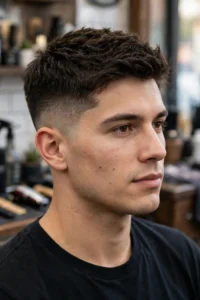


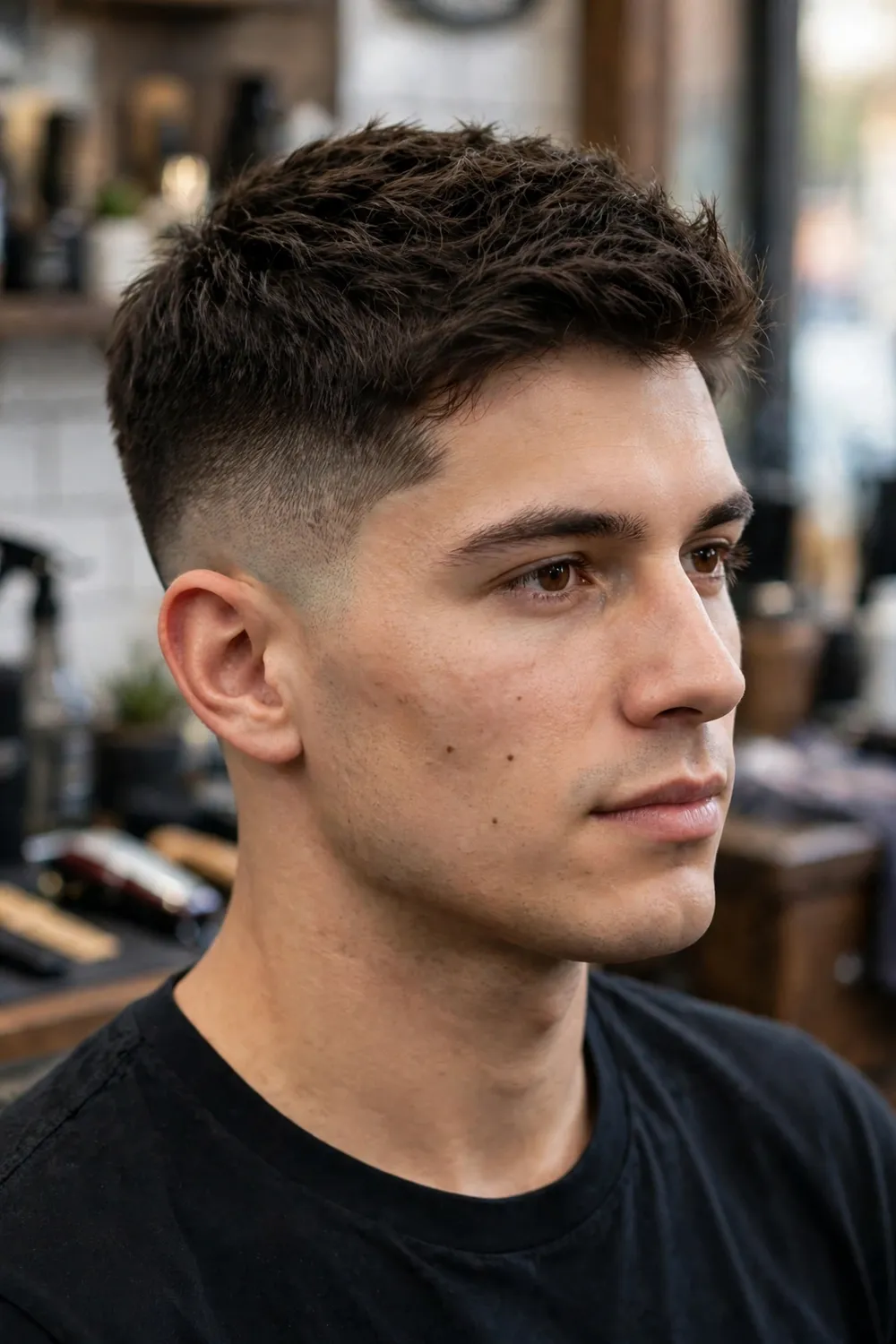
The best fade haircuts for your face shape have almost nothing to do with what’s trending on your feed and everything to do with the shape of your face. Get the pairing right and the cut does half the work — it can slim a round face, shorten a long one, or soften a jaw that looks too sharp. Three pairings stand out above the rest: a High Fade with a Textured Quiff for round faces, a Low Fade with a French Crop for oblong faces, and a Mid Fade with a Textured Crop for oval faces. The rule behind all three is simple — a higher fade pulls the eye upward and narrows the sides, while a lower fade keeps width on the sides and shortens the face.
How Do I Find My Face Shape?
You need a soft tape measure, a mirror, and about two minutes. Hair pulled back, face relaxed — no smiling, no raised eyebrows, because either one shifts the numbers.
Take four measurements. First, forehead: across the widest point, roughly halfway between your eyebrows and your hairline. Second, cheekbones: from the outer edge of one cheekbone to the other, across the nose. Third, jawline: from the tip of your chin to just below one ear, then double that number. Fourth, face length: from the centre of your hairline straight down to the tip of your chin.
Now compare the numbers. If length and width are roughly equal — within about a centimetre of each other — you’re round or square; a strong, wide jaw means square, a soft jaw with no sharp corners means round. If your length is clearly greater than your width, by 2 cm or more, you’re oblong. If your cheekbones are the widest measurement, you’re diamond. If your forehead is widest and your chin is narrow and pointed, you’re heart-shaped. If your jaw is the widest point and your forehead is the narrowest, you’re triangle.
The mirror test backs it up. Stand close, trace your face shape on the mirror with a dry-erase marker or a bit of lip balm, then step back and look at the outline. Still unsure? The 60-second version: run your fingers along your jawline — sharp corners and a flat chin read square, a rounded chin with full cheeks reads round, and a long, straight jaw with a narrow chin reads oblong. Two of the three methods agreeing is enough; don’t overthink it.
Quick Picker — Which Fade for Your Face Shape?
| Face shape | Start with | Top style to pair it with | What to watch |
|---|---|---|---|
| Oval | Mid fade | Textured crop | Almost anything works — keep the top proportional, not oversized |
| Round | High fade | Textured quiff | Avoid flat tops and low fades; you need height, not width |
| Square | Low fade | Comb over | Skip hard lineups and very high fades; they sharpen an already sharp jaw |
| Oblong | Low fade | French crop | Avoid high fades and tall volume; both stretch the face longer |
| Heart | Low fade | Side-swept fringe | Keep the top low and soft — height on top widens the forehead further |
| Diamond | Low fade | Textured fringe | Fringe or volume at the forehead balances wide cheekbones |
| Triangle | Low fade | Fuller textured top | Keep weight on the upper sides; a high fade exposes a narrow forehead |
Best Fade Haircuts for Oval Faces
1. Mid Fade with Textured Crop — Oval Faces
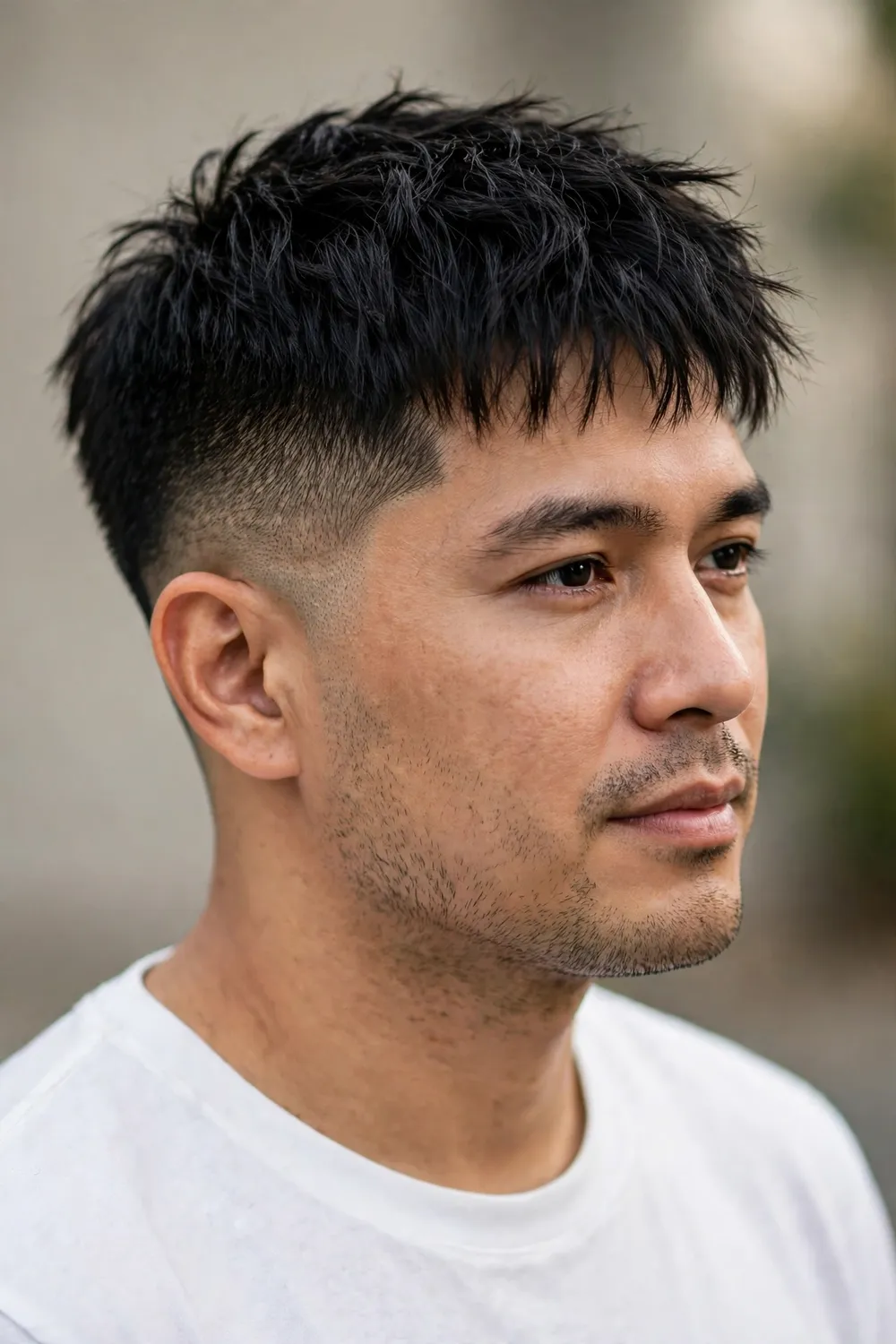
An oval face is the one shape where the safe default is also the best-looking option. The mid fade starts around temple level, blending from bare skin up through a 0.5 and a 1 guard into a #2, while the top is left 2 to 3 inches long and point-cut for texture. It suits straight, wavy or thick hair equally well, and it flatters oval faces because it keeps the natural balance instead of fighting it. Ask your barber: “Mid fade, skin at the bottom blending to a 2, top two and a half inches, point-cut and textured, worn forward and slightly messy.” A pea-sized amount of matte clay, worked through damp hair and left to air-dry, gives a natural finish. The fade softens after about two weeks, so book a touch-up every three weeks.
2. Low Fade with Side Part — Oval Faces
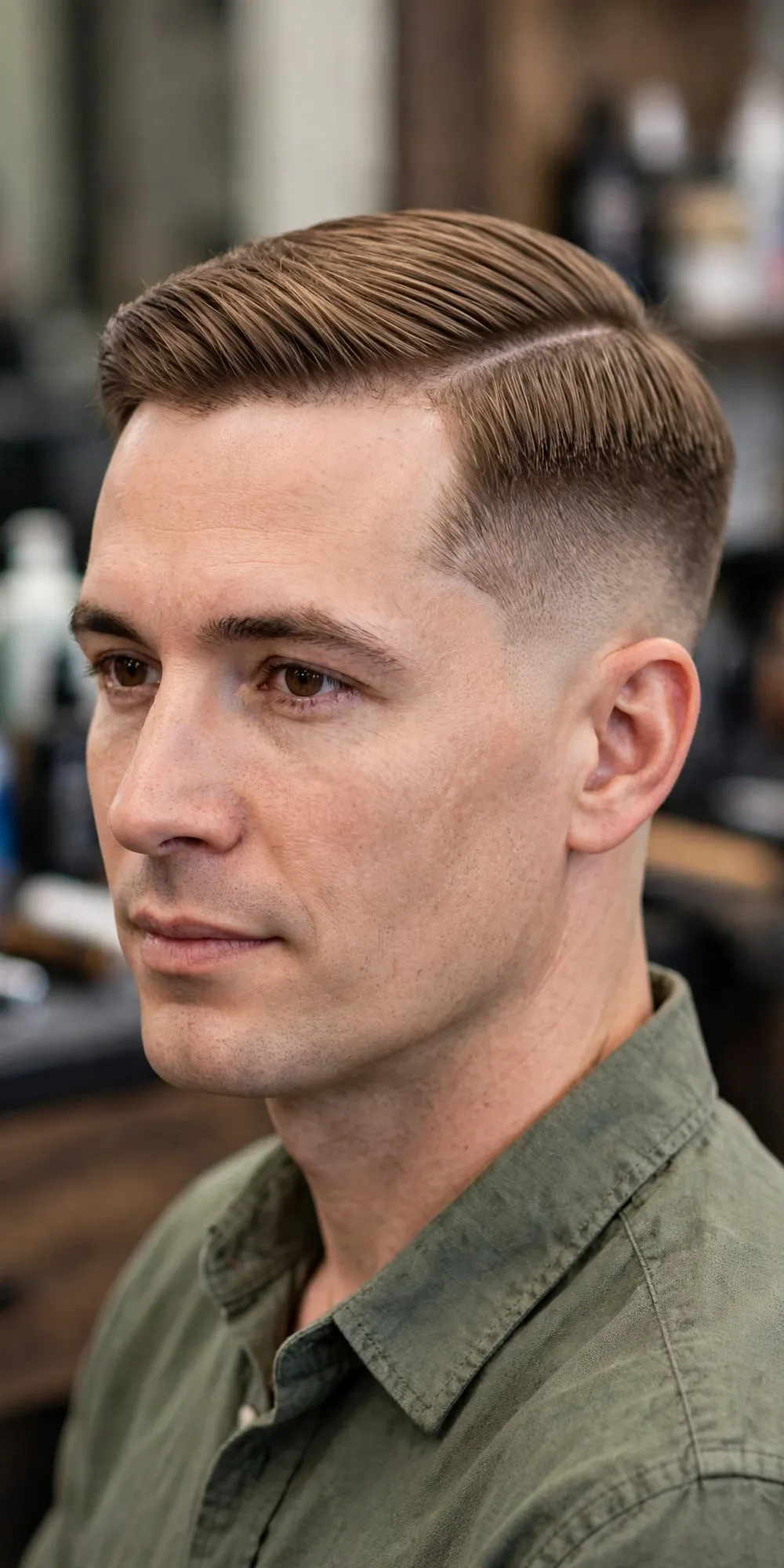
This is the cut for the man who wants to look put-together without looking like he tried. The low fade sits just an inch above the ear, fading from a 0.5 up to a #2, so the sides keep most of their weight and the grow-out is barely noticeable. The top runs 3 to 4 inches, parted cleanly on the side your hair naturally falls. It suits oval faces with straight or slightly wavy hair best — the symmetry of the shape carries the neatness without it looking stiff. Ask your barber: “Low fade, 0.5 to a 2, top three and a half inches, natural side part, keep the part line soft, not razored.” A dab of light pomade gives a gentle shine and a finish that stays neat all day. You’ll need a touch-up every three to four weeks, and a quick comb-through each morning is the only daily effort it asks.
3. High Fade with Quiff — Oval Faces
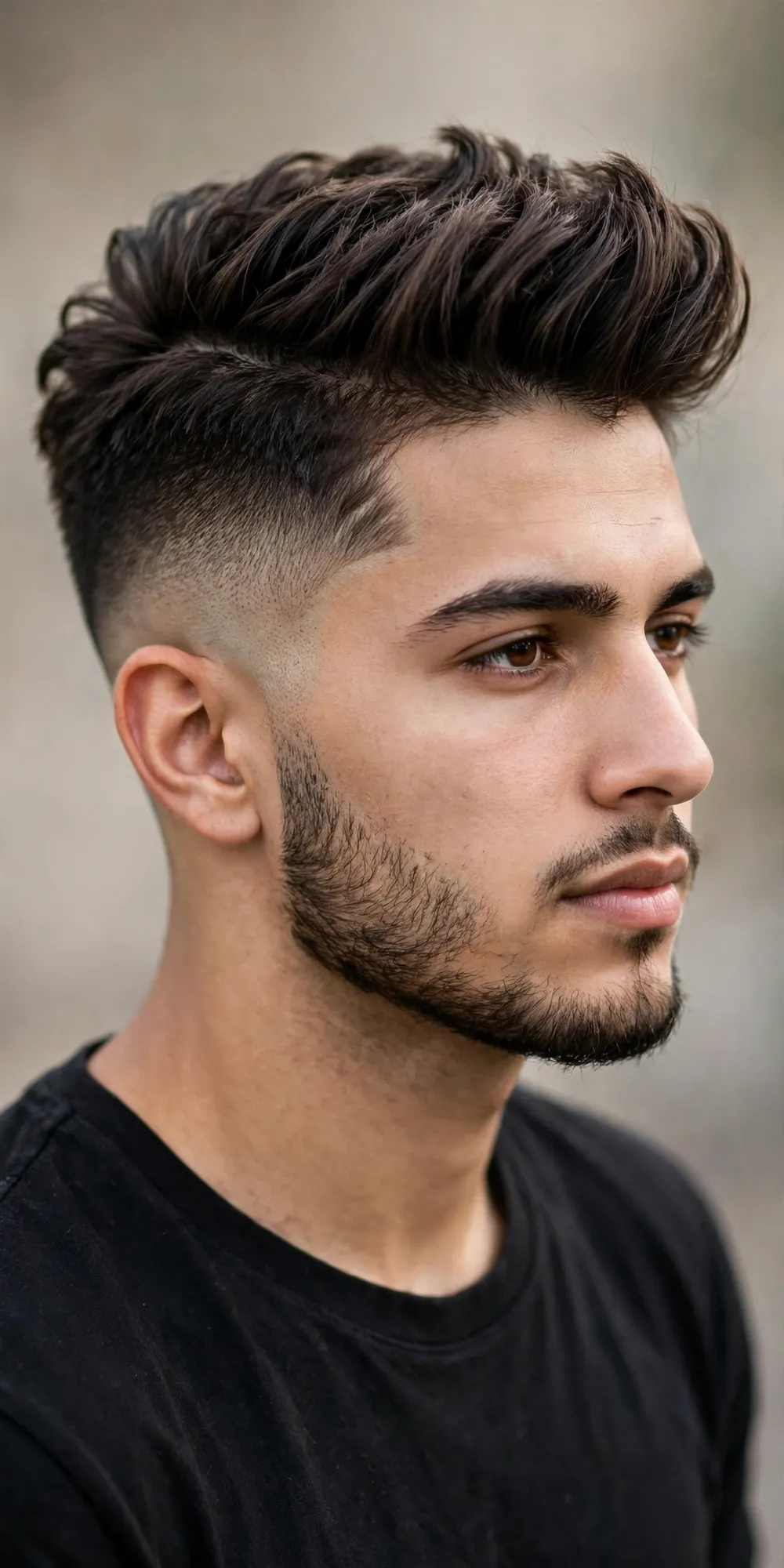
If the mid fade is the safe default, this is the polished upgrade. The high fade climbs to the temple corners, taken down to skin and blended sharply into a #2, which throws all the attention onto the quiff — 3 to 4 inches of hair swept up and back from the forehead. Oval faces carry it well because the height on top doesn’t distort anything; it just adds presence. It works best on straight to wavy hair with some natural body, since fine, flat hair struggles to hold the lift. Ask your barber: “High skin fade, blend to a 2, top four inches, quiff swept up and back, keep the front a touch longer than the crown.” Blow-dry the top upward with a round brush, then finish with a matte paste. Plan on a fade touch-up every two weeks — high fades show regrowth fast.
4. Skin Fade with Pompadour — Oval Faces
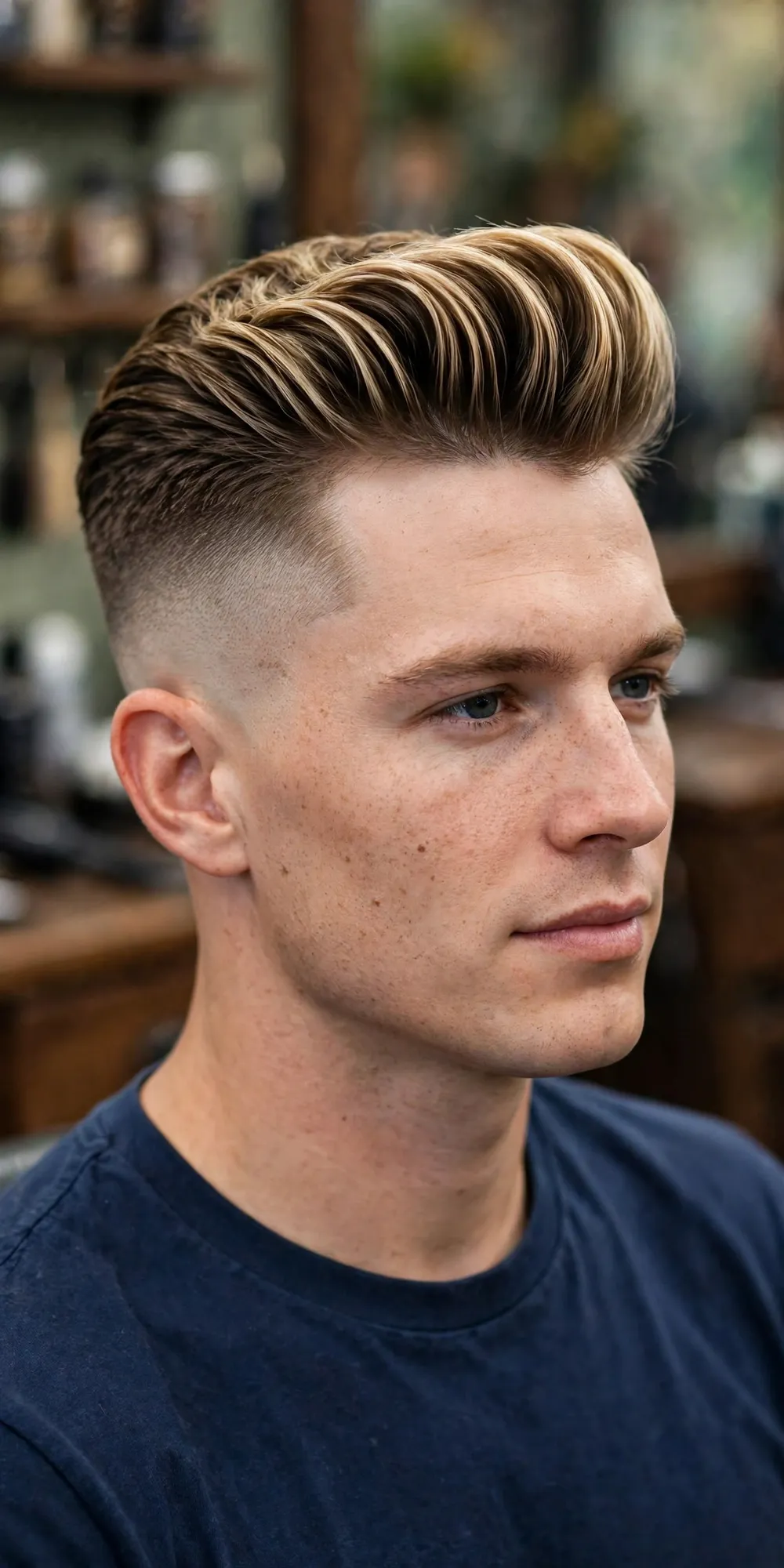
A skin fade with a pompadour is the boldest cut an oval face can wear without it looking like a costume. The sides go to bare skin with a foil shaver, blending up through 0.5 and 1 into a #2, while the top is left 4 to 5 inches long and swept up and back in a classic pompadour. The volume suits oval faces because the shape has the length to carry it, and the sharp fade keeps the whole thing looking deliberate. Thick, straight hair holds the shape best; very curly hair will fight you. Ask your barber: “Skin fade to a 2, top five inches, pompadour swept up and back, taper the back into the fade.” Blow-dry upward and back, then lock it in with a strong-hold pomade and a light mist of hairspray. It’s a two-week fade cycle, and the pompadour needs a proper blow-dry most mornings.
5. Taper Fade with Slick Back — Oval Faces
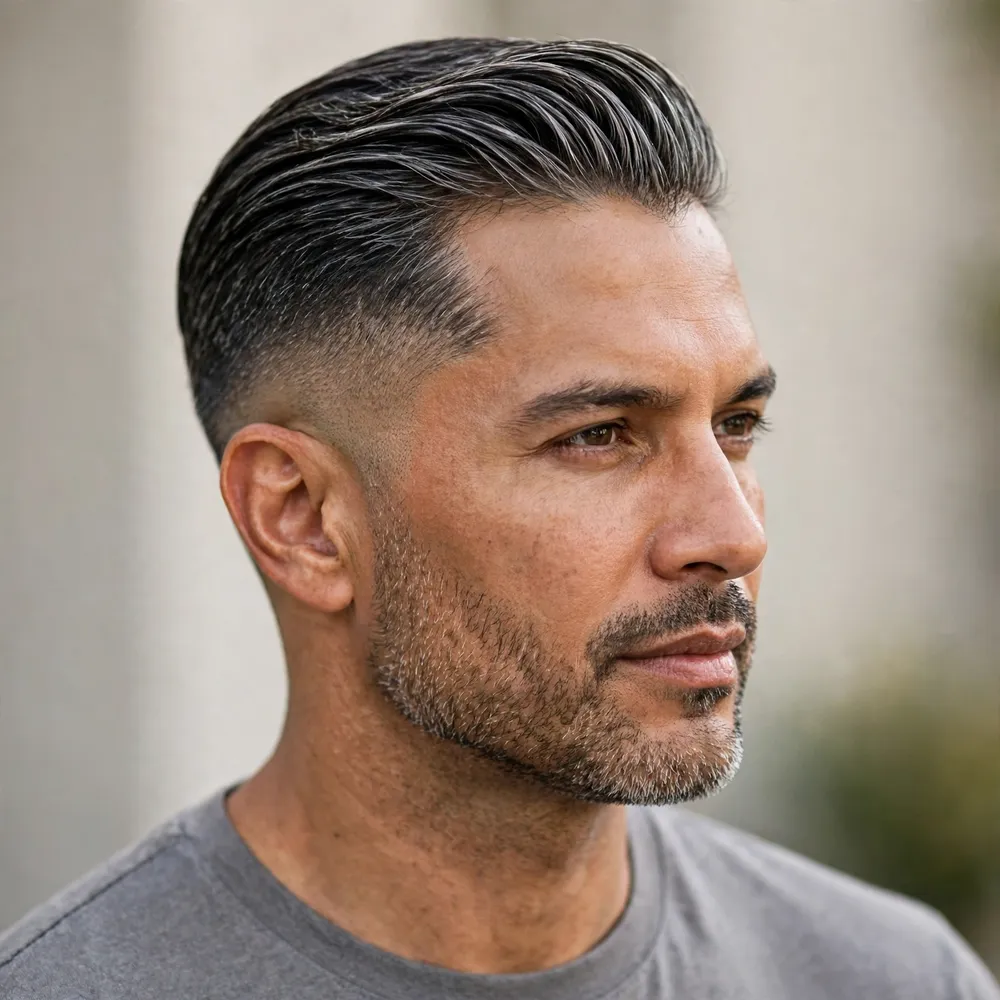
The taper fade is the quiet one of the family — shortest only at the sideburns and neckline, gradually lengthening upward, so there’s no hard fade line at all. Paired with a slicked-back top of 3 to 4 inches, it shows off an oval face’s symmetry instead of hiding it behind contrast. It suits straight hair best, and men who like a classic, groomed look that works as well at a wedding as it does on a Tuesday. Ask your barber: “Taper fade, number 1 at the edges blending to a 2, top three and a half inches, slicked straight back, no hard line.” A water-based pomade combed through damp hair gives a clean shine and a hold you can restyle during the day. The taper grows out gracefully, so three to four weeks between cuts is realistic, and daily styling takes about two minutes with a comb.
Best Fade Haircuts for Round Faces
6. High Fade with Textured Quiff — Round Faces
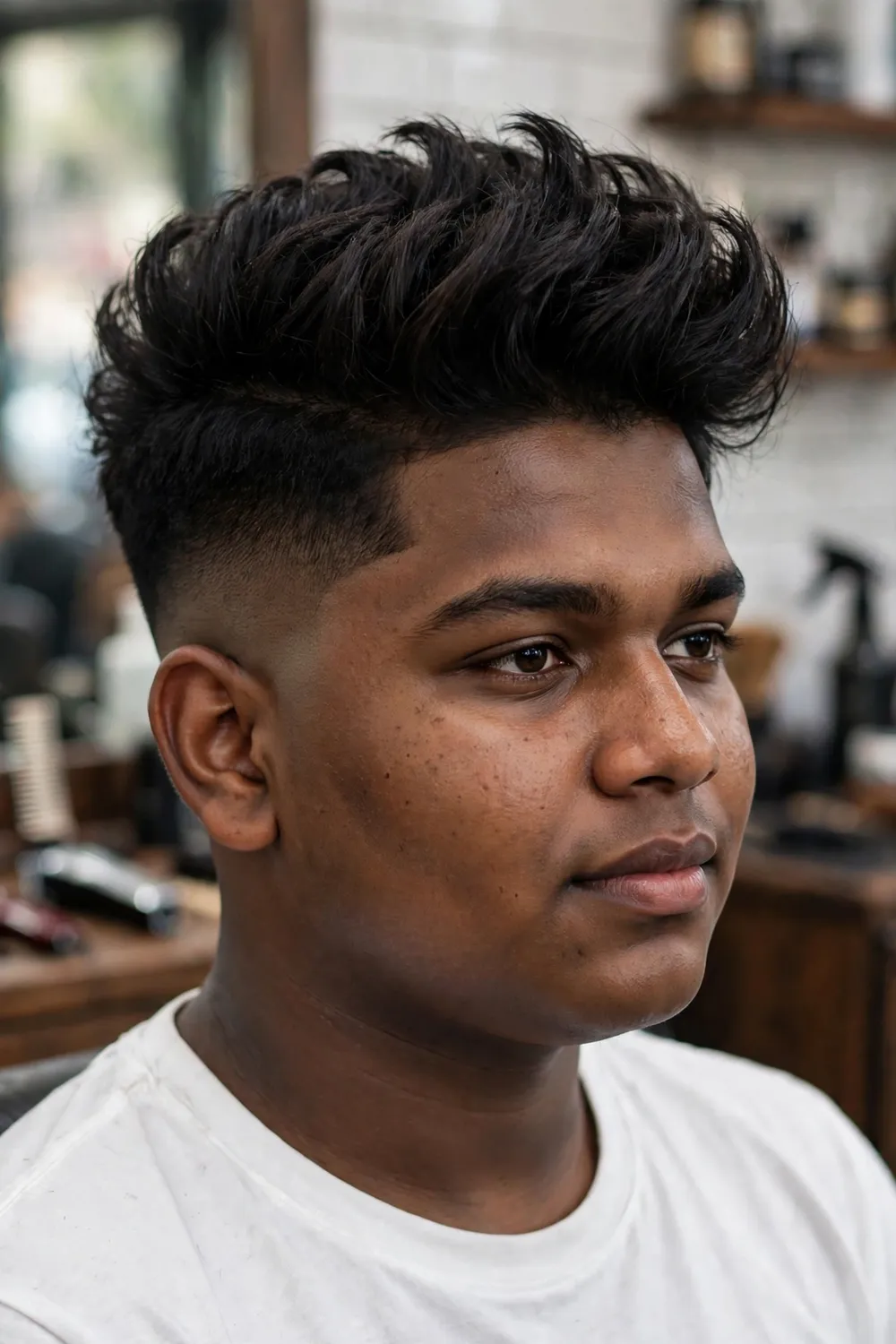
This is the single best fade for a round face, and the reasoning is straightforward: height on top lengthens the face, and a high fade pulls the sides in. The fade climbs to the temple corners, skin at the bottom blending to a #2, while the top is left 3 to 4 inches and cut with plenty of texture so the quiff has something to grip. It suits straight and wavy hair, and men whose cheeks are the widest part of their face will notice the difference immediately. Ask your barber: “High skin fade to a 2, top three and a half inches, textured quiff swept up and slightly to the side — I want height, not width.” Blow-dry the front upward with your fingers, then finish with matte clay. The fade needs attention every two weeks, and the quiff takes about five minutes each morning.
7. Mid Fade with Pompadour — Round Faces
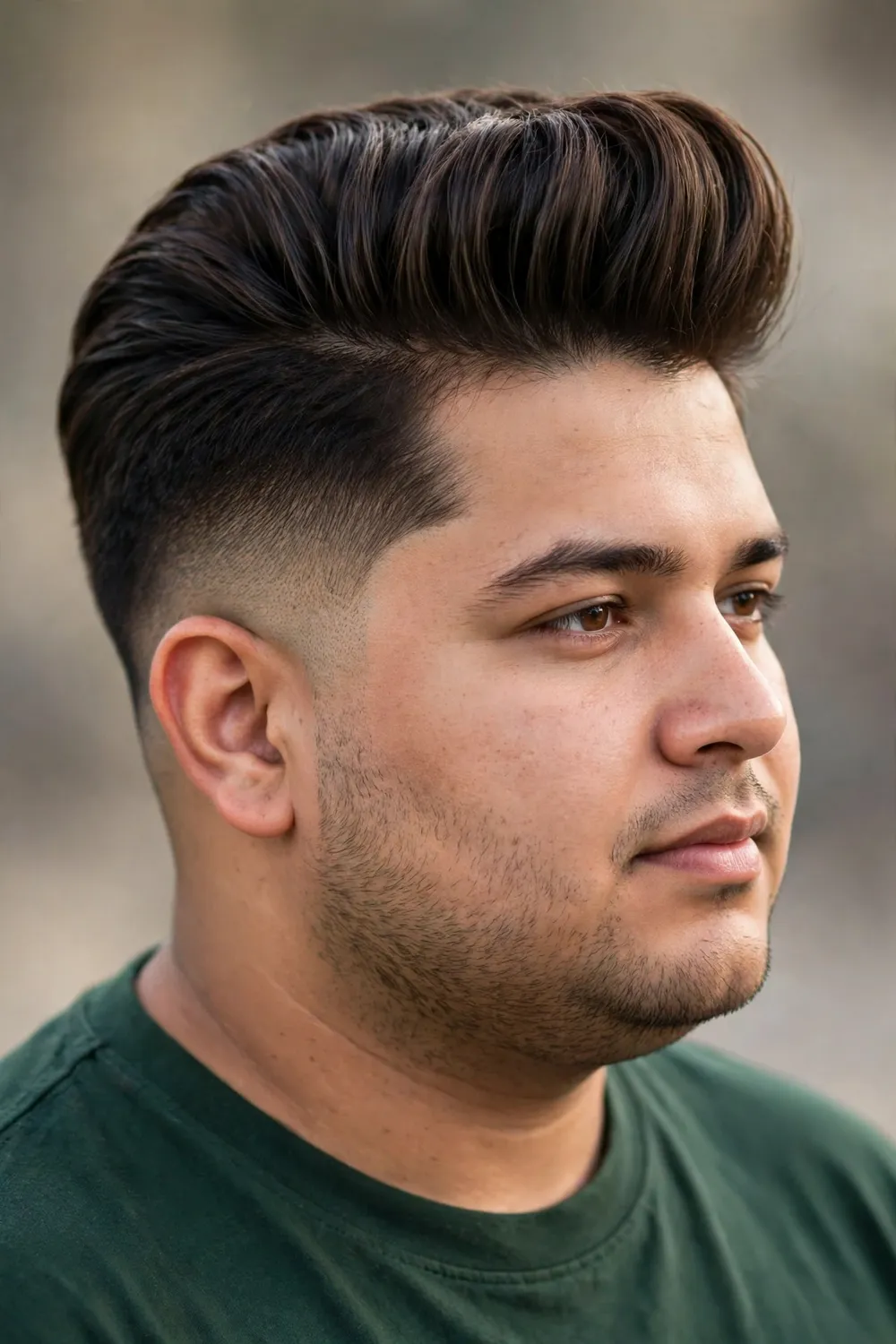
A pompadour does for a round face what a good pair of shoes does for short legs — it adds inches where they count. The mid fade starts at temple level, blending from skin up to a #2, which keeps the sides clean without the drama of a high fade. The top is left 4 to 5 inches and swept up and back, and that vertical line is what angles a soft jaw and draws the eye upward instead of outward. Thick, straight hair holds a pompadour best, though wavy hair can work with a stronger product. Ask your barber: “Mid skin fade to a 2, top four and a half inches, pompadour swept up and back, keep the sides tight.” Blow-dry the top up and back with a brush, then set it with a strong-hold pomade. Budget for a fade touch-up every two to three weeks, and accept that the pompadour wants a blow-dry most mornings.
8. Skin Fade with Faux Hawk — Round Faces
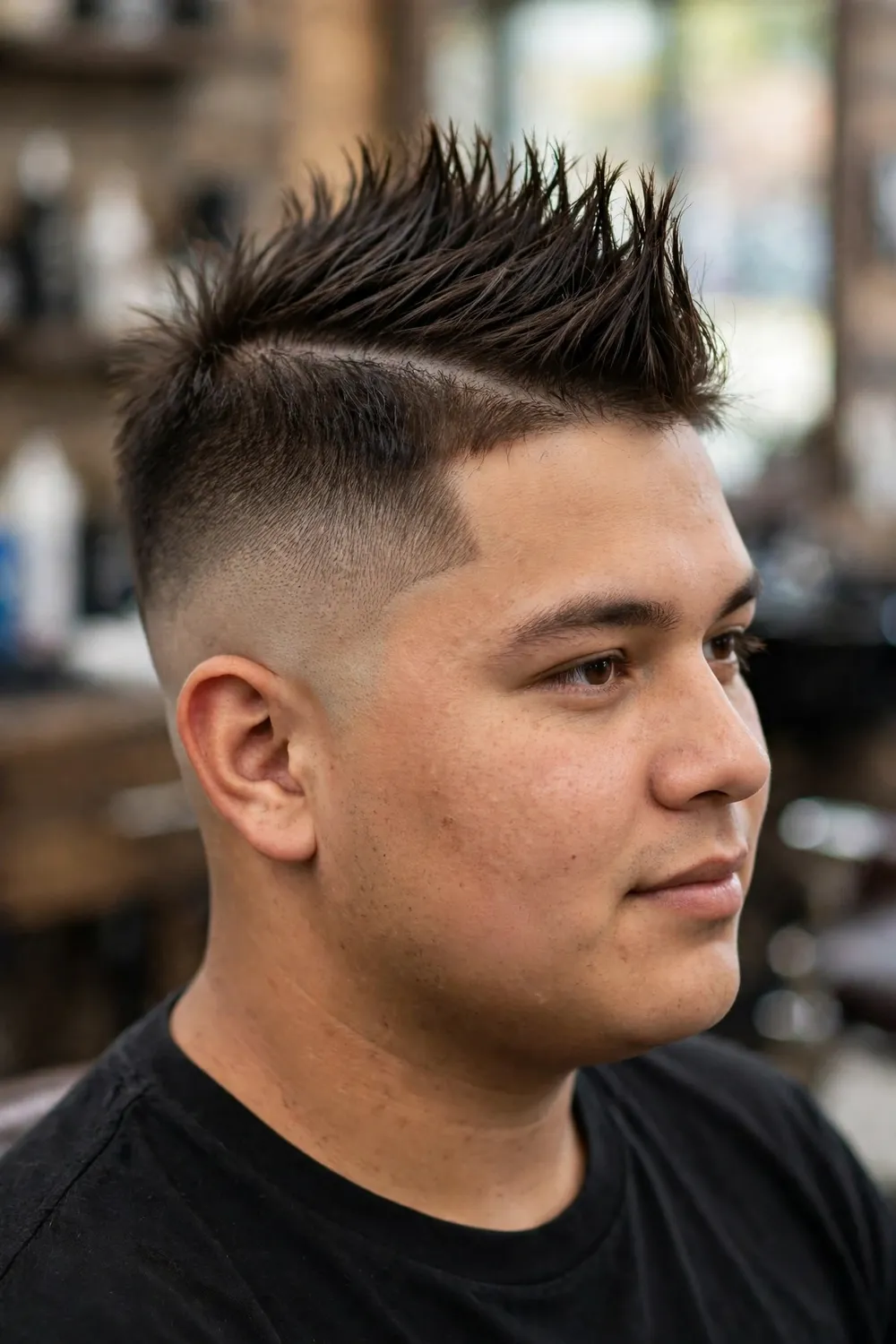
If you want the maximum vertical line a haircut can give you, this is it. The skin fade goes to bare skin on the sides, blending up to a #2, while the centre strip is left 2 to 3 inches long and pushed upward into a faux hawk — not spiked stiff, but lifted and textured. On a round face, that central column of height breaks the circle better than almost anything else, and the bare sides stop the cheeks from looking any wider. It suits straight and thick hair; fine hair can work but needs a strong product to hold the lift. Ask your barber: “Skin fade to a 2, centre strip two and a half inches, faux hawk pushed up with texture, keep the strip narrow.” Work a strong matte paste through damp hair and push the centre upward with your fingers. The fade needs a touch-up every two weeks, and the style takes three minutes.
9. High Fade with French Crop — Round Faces
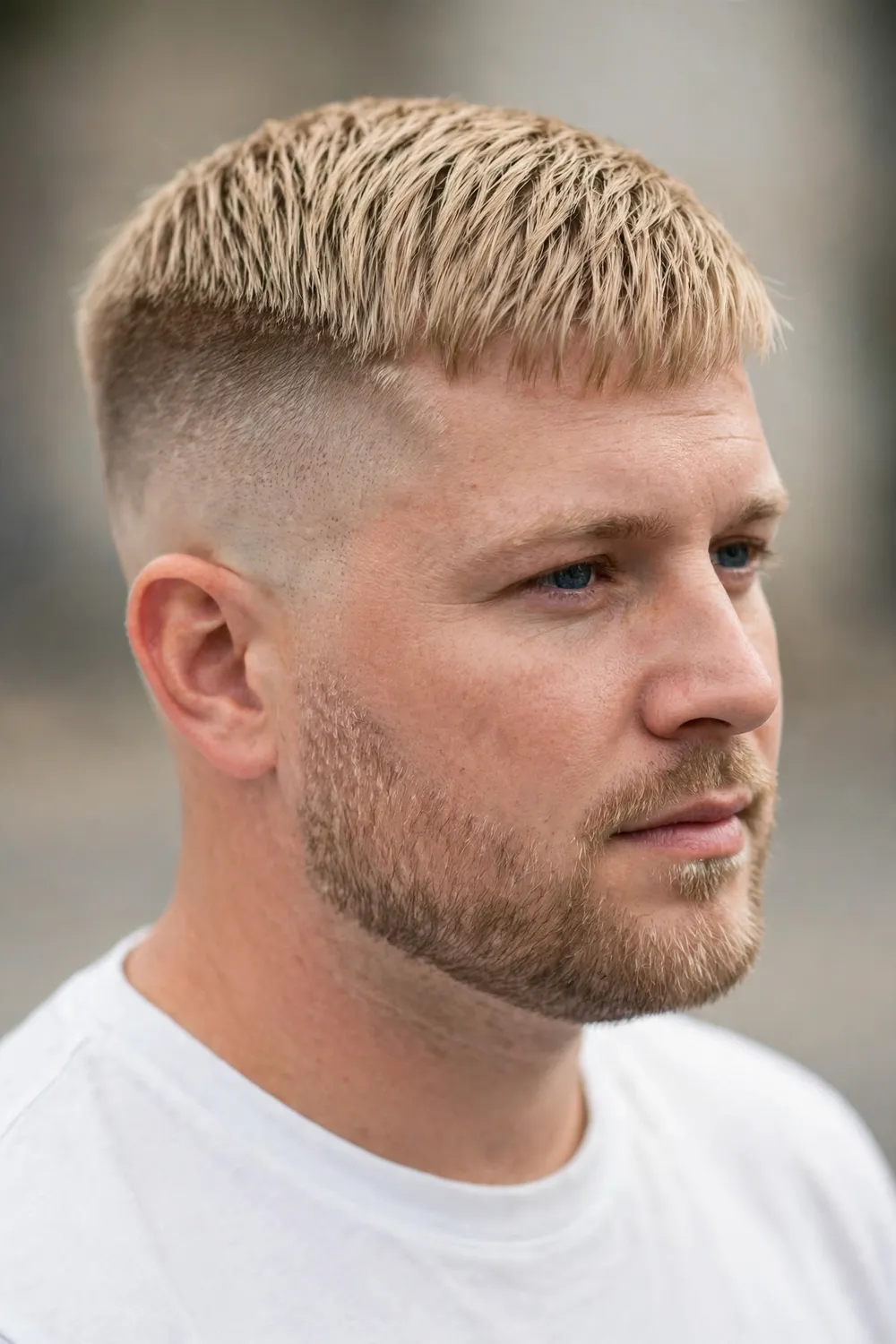
The French crop is proof that a short cut can still reshape a face. The high fade runs to the temple corners, skin at the bottom blending to a #2, while the top is kept short — about 1 to 1.5 inches — and pushed forward with a blunt, textured fringe. The high sides slim the cheeks, and the short forward fringe adds clean angles to a face that otherwise has very few. It suits straight hair best and is a gift for men with thick hair, since the short length keeps the bulk under control. Ask your barber: “High skin fade to a 2, top one and a quarter inches, French crop with a textured fringe, keep the fringe blunt.” A tiny amount of matte clay scrunched through the top is all the styling it needs. The fade needs a touch-up every two weeks, but mornings take about sixty seconds.
10. Drop Fade with Spiky Top — Round Faces
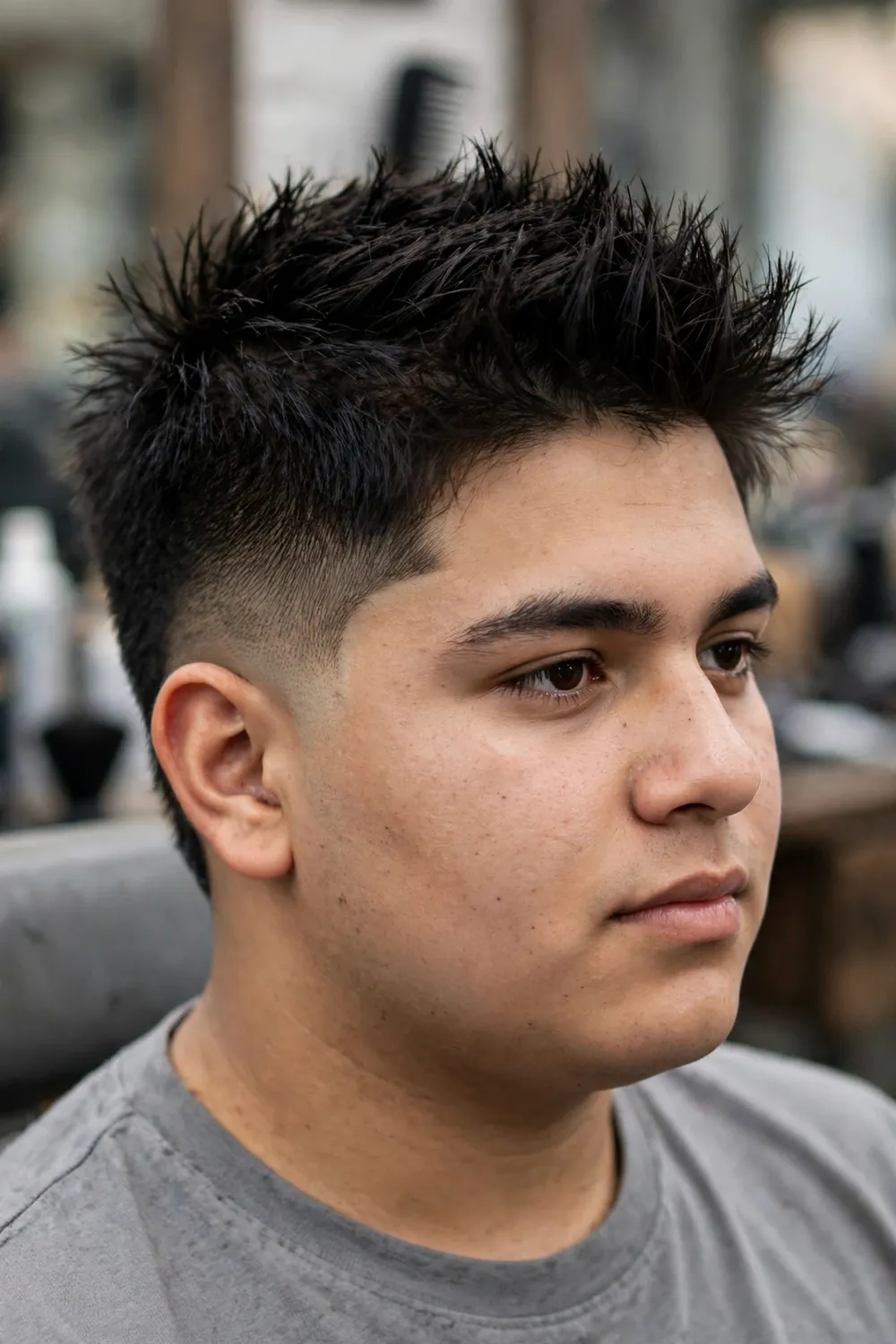
The drop fade is the clever one — it curves down behind the ear instead of running straight around the head, which follows the natural shape of the skull and stops the sides from looking boxy. Paired with a spiky, lifted top of 2 to 3 inches, it breaks up the roundness of the face with texture and height in two directions at once. It suits straight and wavy hair, and it’s a strong choice if you like a bit of edge without committing to a full faux hawk. Ask your barber: “Drop fade, skin at the bottom blending to a 2, top two and a half inches, spiky and lifted on top, keep the fade line curving down behind the ear.” A strong-hold matte paste, worked through with your fingers and pinched into spikes, does the job. The fade holds for about two to three weeks, and styling takes three or four minutes.
Best Fade Haircuts for Square Faces
11. Low Fade with Comb Over — Square Faces

A square face already has all the structure it needs, so the smart move is to keep the sides calm and let the jaw do the talking. The low fade sits just above the ear, fading from a 0.5 to a #2, which keeps weight on the sides and stops the head from looking top-heavy. The top is 3 to 4 inches, combed over to the side in a classic, clean sweep that sharpens the jawline without adding any more angles. It suits straight hair best and works for any thickness. Ask your barber: “Low fade, 0.5 to a 2, top three and a half inches, classic comb over to the side, keep the part soft.” A light pomade gives a gentle shine and a finish that holds all day. The low fade grows out gracefully, so three to four weeks between cuts is fine, and the daily routine is a comb and thirty seconds.
12. Mid Fade with Textured Crop — Square Faces
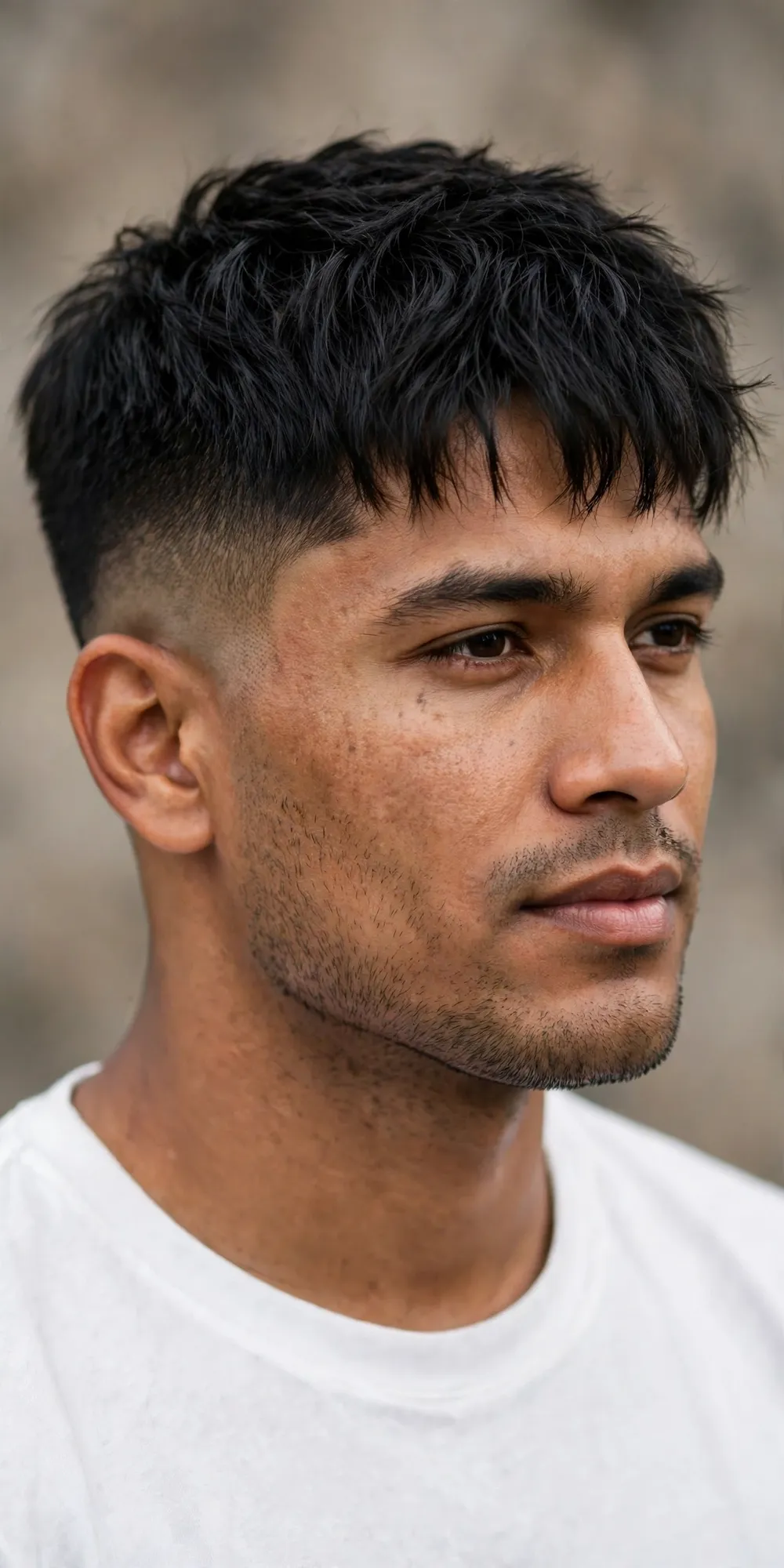
Strong corners need softening, not sharpening, and that’s exactly what this cut does. The mid fade starts at temple level, blending from skin up to a #2, while the top is left 2 to 3 inches and heavily textured — choppy, piecey, worn forward — so the hairline and forehead look softer against a strong jaw. It suits straight, wavy and thick hair, and it’s the right pick if your jawline is the first thing people notice about your face. Ask your barber: “Mid fade, skin blending to a 2, top two and a half inches, heavily textured and worn forward, keep it soft on top — no hard lines.” Matte clay through damp hair, scrunched and left to dry, gives a relaxed, lived-in finish. The fade needs a touch-up every two to three weeks, and the top needs a trim every five or six weeks.
13. Skin Fade with Buzz Cut — Square Faces
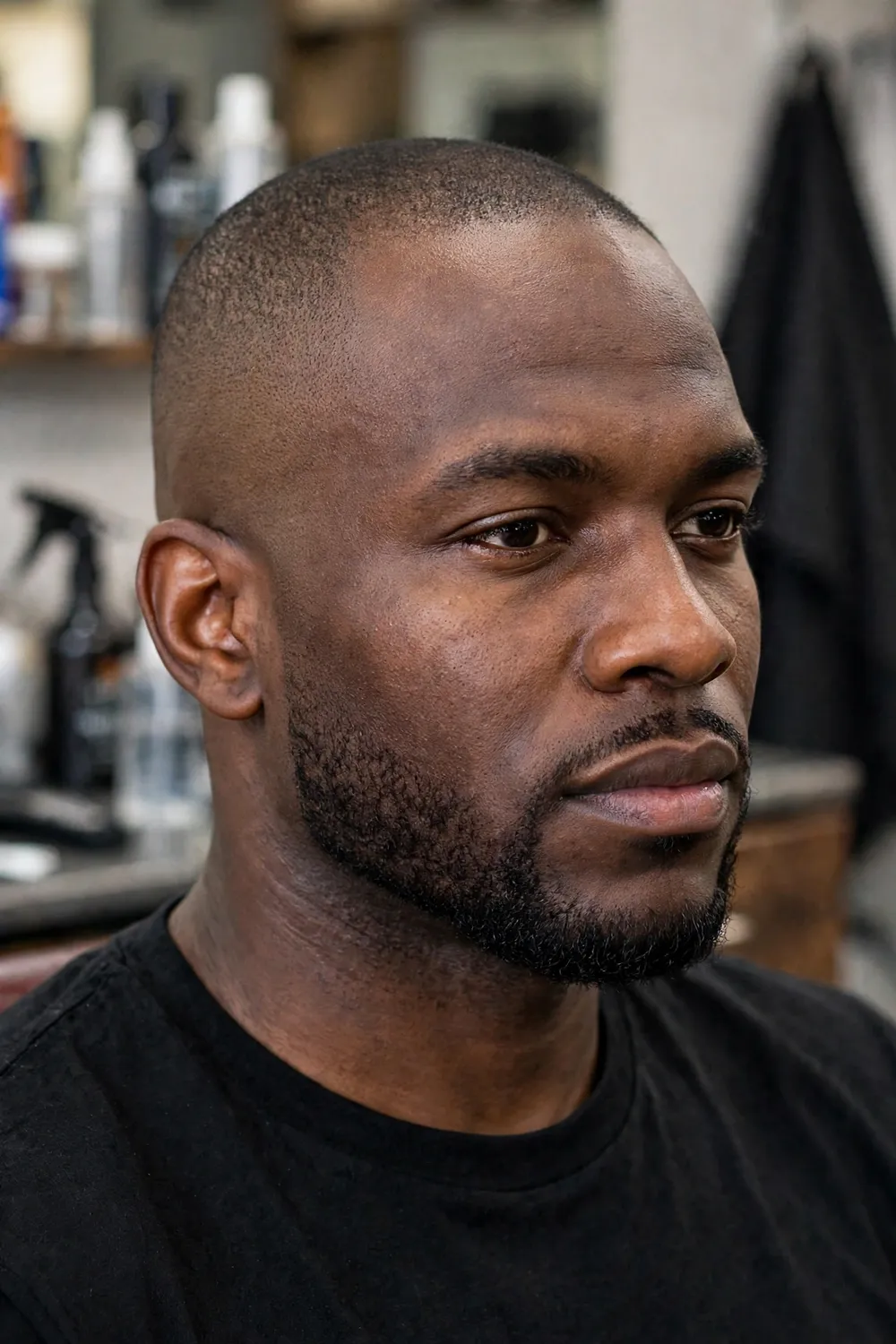
Some faces don’t need hair to look good — they need the absence of it. A skin fade with a buzz cut takes the sides to bare skin and the top down to a #1 or #2 all over, which puts a strong jaw and solid bone structure completely on display. There’s nowhere to hide, and on a square face that’s the point: the cut frames the jaw instead of competing with it. It suits any hair type, including thinning hair, and it’s the lowest-maintenance cut in this entire guide. Ask your barber: “Skin fade to a 2, buzz the top with a number 1 guard, keep it even all over.” No product needed — towel-dry and go. The catch is the upkeep cycle: a buzz with a skin fade shows regrowth within a week, so plan on a cut every one to two weeks if you want it looking sharp.
14. Drop Fade with Side Part — Square Faces
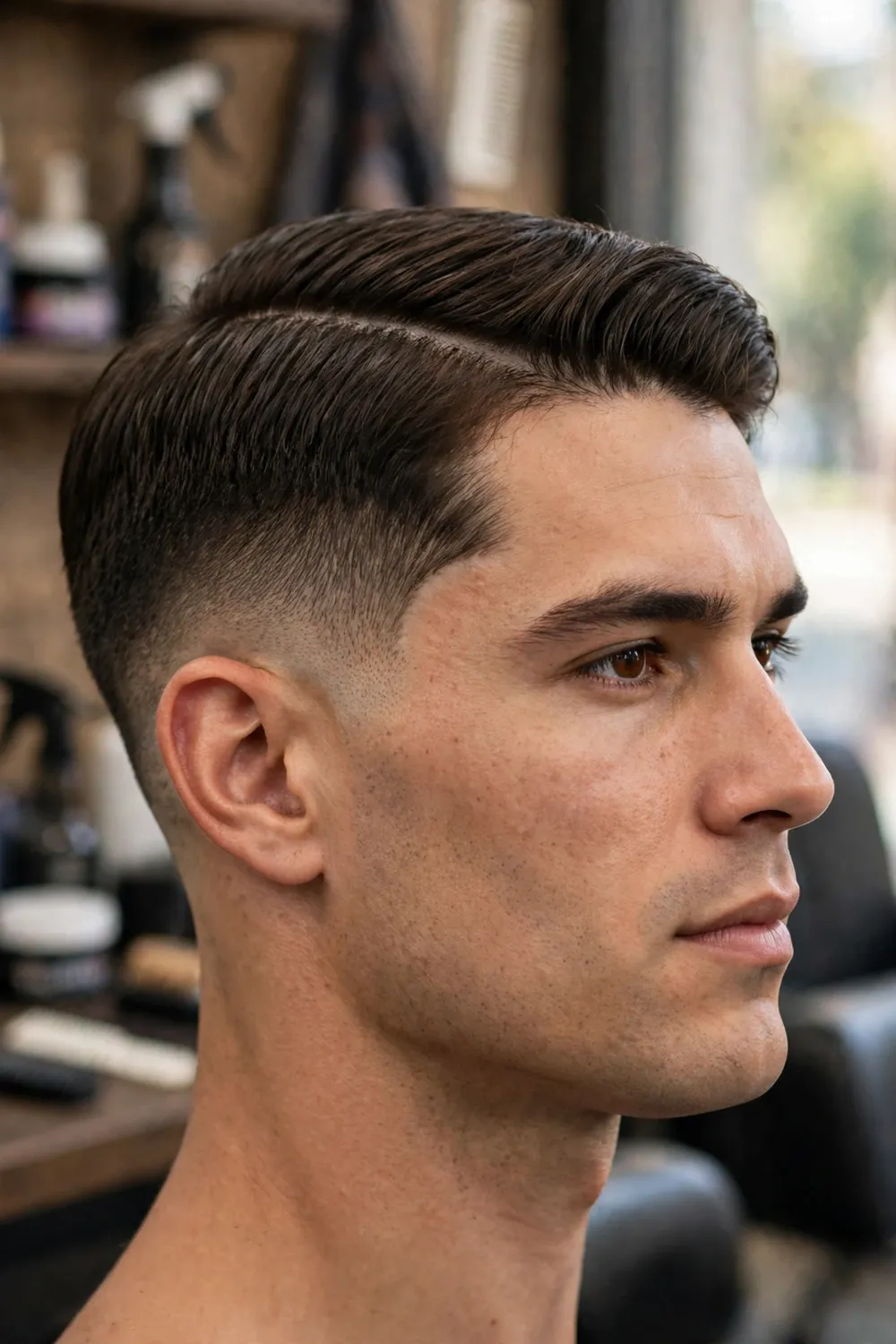
The drop fade earns its place here because it follows the curve of the head instead of cutting a straight line across it, which keeps a square face from looking boxy. The fade dips down behind the ear, blending from skin to a #2, while the top is left 3 to 4 inches and parted neatly to the side. The side part adds a touch of classic polish, and the curved fade line softens the corners of the jaw just enough. Straight hair shows the part best, but wavy hair works too with a bit of product. Ask your barber: “Drop fade, skin to a 2, top three and a half inches, side part, let the fade curve down behind the ear.” A light pomade keeps the part tidy and adds a subtle shine. The fade needs attention every two to three weeks, and the morning routine is a comb and a dab of product.
15. High Fade with Crew Cut — Square Faces
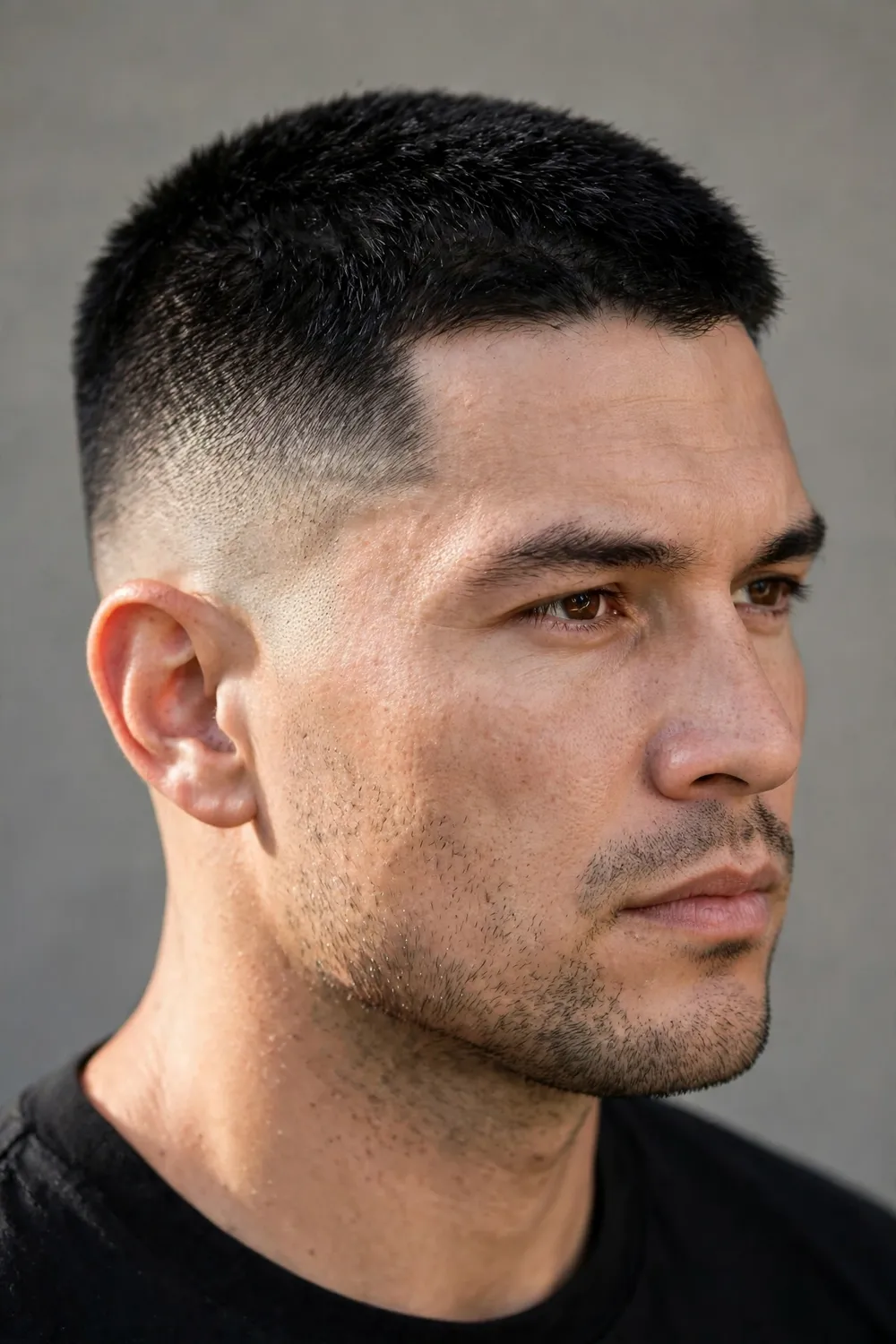
Bold and structured is a fair description — and on a square face, it works, because the face can carry the contrast. The high fade climbs to the temple corners, skin at the bottom blending to a #2, while the crew cut top is kept short at about 1 inch, slightly longer at the front. The short top keeps the silhouette tight and military-clean, and the high fade sharpens the whole outline without adding bulk anywhere. It suits straight and thick hair, and it’s a strong choice if you like a cut that looks intentional from every angle. Ask your barber: “High skin fade to a 2, crew cut top one inch, slightly longer at the front, keep the edges clean.” A small amount of matte paste is optional — most men wear this with nothing at all. The fade needs a touch-up every two weeks, but daily styling is genuinely zero effort.
Best Fade Haircuts for Oblong Faces
16. Low Fade with French Crop — Oblong Faces
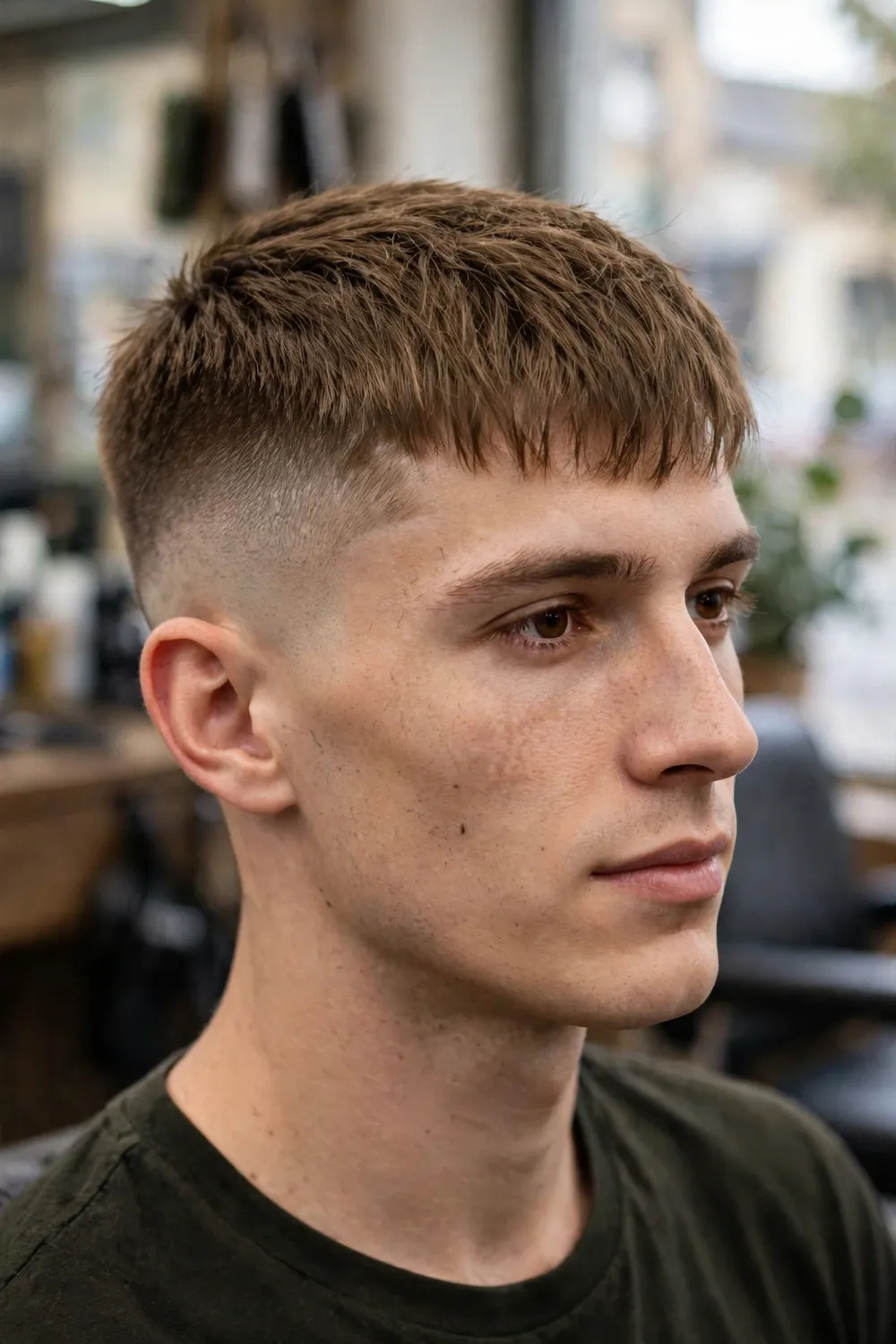
This is the top pick for oblong faces for one reason: it does nothing to make the face longer. The low fade sits just above the ear, blending from a 0.5 to a #2, which keeps width on the sides — width an oblong face genuinely needs. The top is kept short at 1 to 1.5 inches and pushed forward with a textured fringe, which covers part of the forehead and visually shortens the face. It suits straight and wavy hair, and it’s especially good if your forehead is the longest part of your face. Ask your barber: “Low fade, 0.5 to a 2, top one and a quarter inches, French crop with a forward fringe, keep the sides full.” A pea-sized amount of matte clay is all you need. The fade holds for three weeks, and the fringe needs a trim every three to four weeks to stop it creeping into your eyes.
17. Taper Fade with Side-Swept Fringe — Oblong Faces
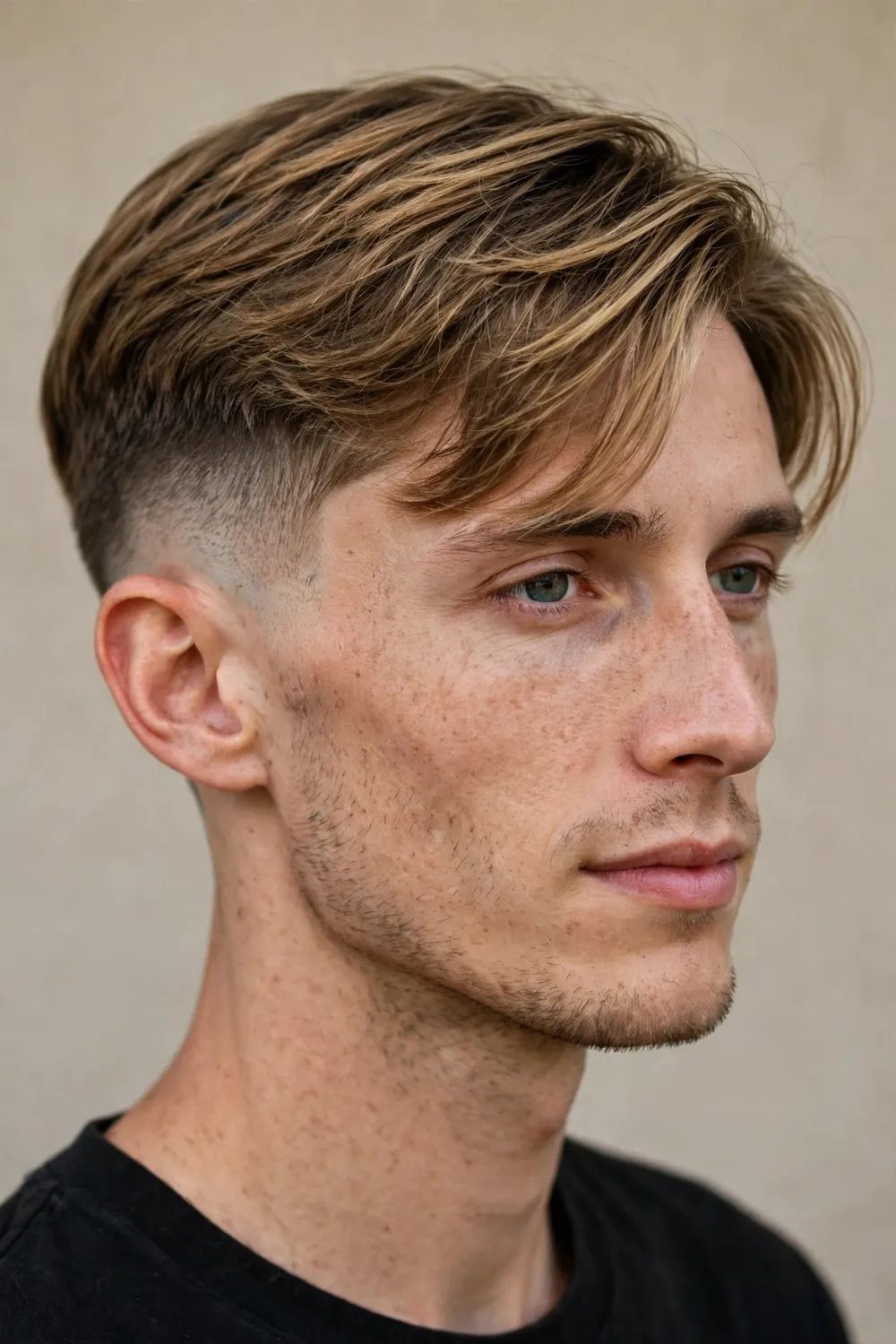
A taper fade is gentler than a full fade — shortest only at the sideburns and neckline — and on an oblong face that gentleness matters, because a hard fade line would only emphasise the length. The top is left 3 to 4 inches and swept across the forehead in a soft fringe, which breaks up the vertical line of the face and adds width where it’s needed most. It suits straight and wavy hair, and men with a high forehead will get the most from it. Ask your barber: “Taper fade, number 1 at the edges blending to a 2, top three and a half inches, fringe swept across the forehead, keep the sweep soft.” A light cream or sea-salt spray gives the fringe movement without stiffness. The taper grows out well, so three to four weeks between cuts works, and styling is a quick sweep with your fingers each morning.
18. Low Fade with Textured Fringe — Oblong Faces

Think of this as the textured version of the French crop — same logic, more movement. The low fade stays just above the ear, 0.5 blending to a #2, keeping the sides full enough to add width to a long face. The top is 2 to 3 inches, cut with heavy texture and worn forward in a choppy fringe that covers the forehead and stops the eye from travelling straight down the face. Wavy hair is ideal here because the natural movement does half the work, but straight hair takes the texture well too. Ask your barber: “Low fade, 0.5 to a 2, top two and a half inches, textured fringe worn forward, keep it choppy.” Matte clay scrunched through damp hair gives definition without shine. The fade needs a touch-up every three weeks, and the fringe needs a trim every four weeks — let it grow too long and it starts looking untidy instead of textured.
19. Mid Fade with Curtains — Oblong Faces

Curtains are back, and on an oblong face they make more sense than almost anywhere else. The mid fade starts at temple level, blending from skin to a #2, while the top is left 4 to 5 inches and parted in the middle, falling to either side of the face. That side volume is the trick — it adds width at the cheekbones and breaks the long vertical line that makes oblong faces look longer than they are. It suits straight and wavy hair with some natural body; very fine hair will struggle to hold the part. Ask your barber: “Mid fade, skin to a 2, top four and a half inches, curtains with a centre part, keep the sides of the top full.” A sea-salt spray on damp hair, dried naturally or with a diffuser, gives the relaxed movement this cut needs. The fade wants a touch-up every two to three weeks, and the curtains need a trim every five or six weeks.
20. Low Fade with Caesar Cut — Oblong Faces
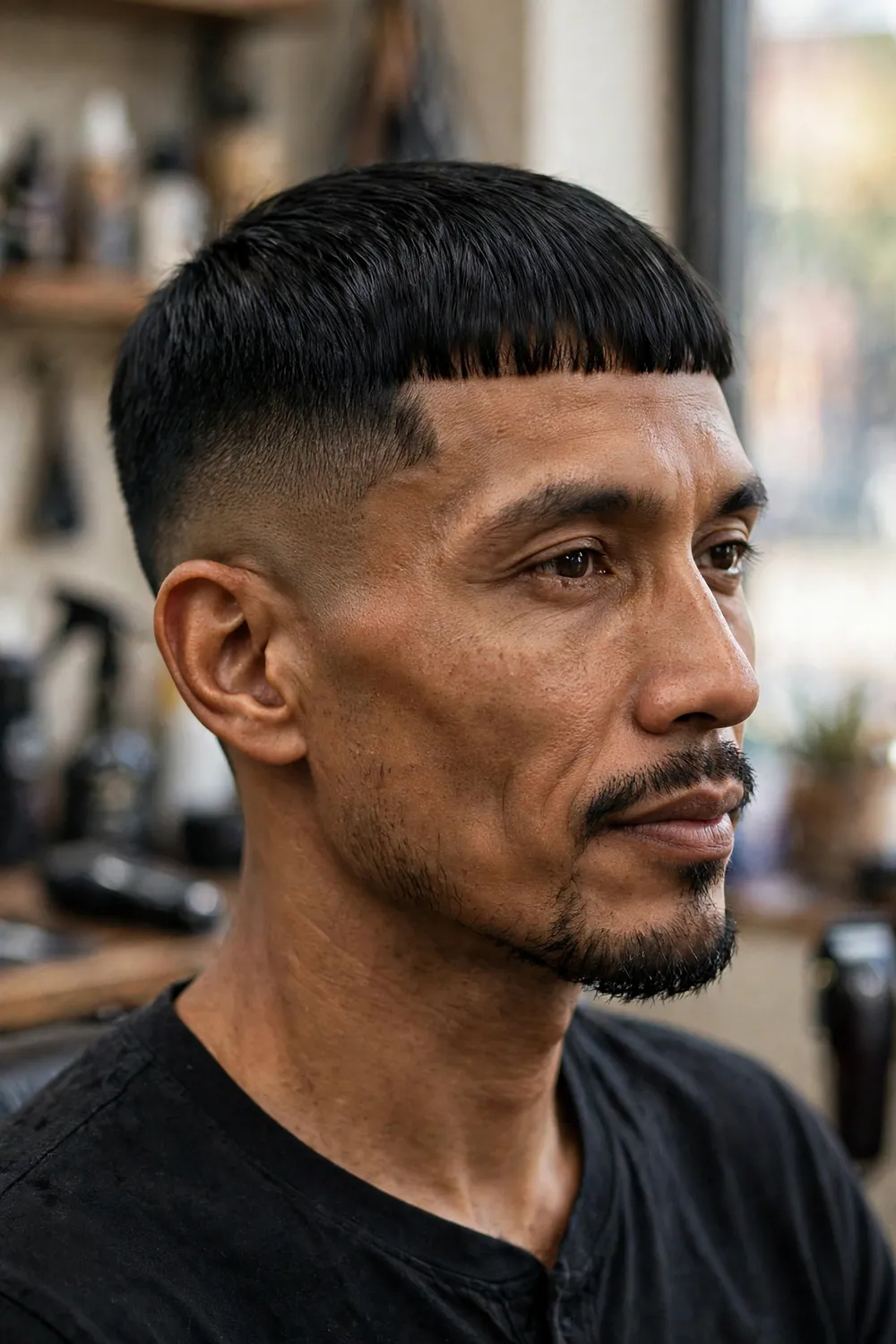
The Caesar cut is one of the oldest haircuts still in use, and it survives because it works — especially on a long face. The low fade sits just above the ear, 0.5 to a #2, keeping the sides full, while the top is cut short at 1 to 2 inches with a straight, blunt fringe worn forward across the forehead. That horizontal fringe line is what shortens the face visually, cutting the length in a way no amount of volume on top ever could. It suits straight hair best and is a strong option for men with thinning hair, since the short, forward style hides a receding hairline well. Ask your barber: “Low fade, 0.5 to a 2, top one and a half inches, Caesar cut with a straight blunt fringe, keep the fringe even.” A tiny amount of matte paste is all the styling it needs. The fade holds three weeks, the fringe needs a trim every three weeks, and mornings take about thirty seconds.
Best Fade Haircuts for Heart-Shaped Faces
21. Low Fade with Side-Swept Fringe — Heart-Shaped Faces

A heart-shaped face runs wide at the forehead and narrows to a pointed chin, so the goal is to soften that top-heavy feeling without hiding your features. This cut does it with a low fade that stays quiet around the ears and a fringe swept across one side of the forehead, which breaks up the width and pulls the eye sideways instead of up. It works best on straight to slightly wavy hair with medium density, since the fringe needs a little weight to sit naturally. Say to your barber: “Low fade, blend from a 0.5 up to a 2, keep the sides full above the ear, and leave the fringe about 3 inches long, swept to the side with texture.” A pea-sized amount of matte clay, worked through damp hair and combed across, gives a soft, natural finish. Upkeep is gentle — a trim every three to four weeks keeps the fade tidy, and the fringe grows out gracefully rather than turning into a curtain overnight.
22. Taper Fade with Textured Crop — Heart-Shaped Faces

The trick with a heart-shaped face is avoiding anything tall on top, because height only exaggerates a wide forehead. This taper fade keeps the sides short but never severe — the shortest point sits only at the sideburns and neckline — while a short, choppy textured crop on top adds just enough interest without adding height. It suits straight or slightly wavy hair, and it is one of the easiest cuts to live with if your mornings are short. Tell your barber: “Taper fade, #1 at the edges blending to a #2, top left about 1.5 inches and point-cut for texture, fringe kept short and forward.” Rub a little texture paste between your palms, push the hair forward and pinch a few pieces apart — that is the whole styling routine, and it takes about ninety seconds. Book a tidy-up every four weeks; the taper grows out softer than a skin fade, so you will not look unkempt between visits.
23. Mid Fade with Messy Top — Heart-Shaped Faces
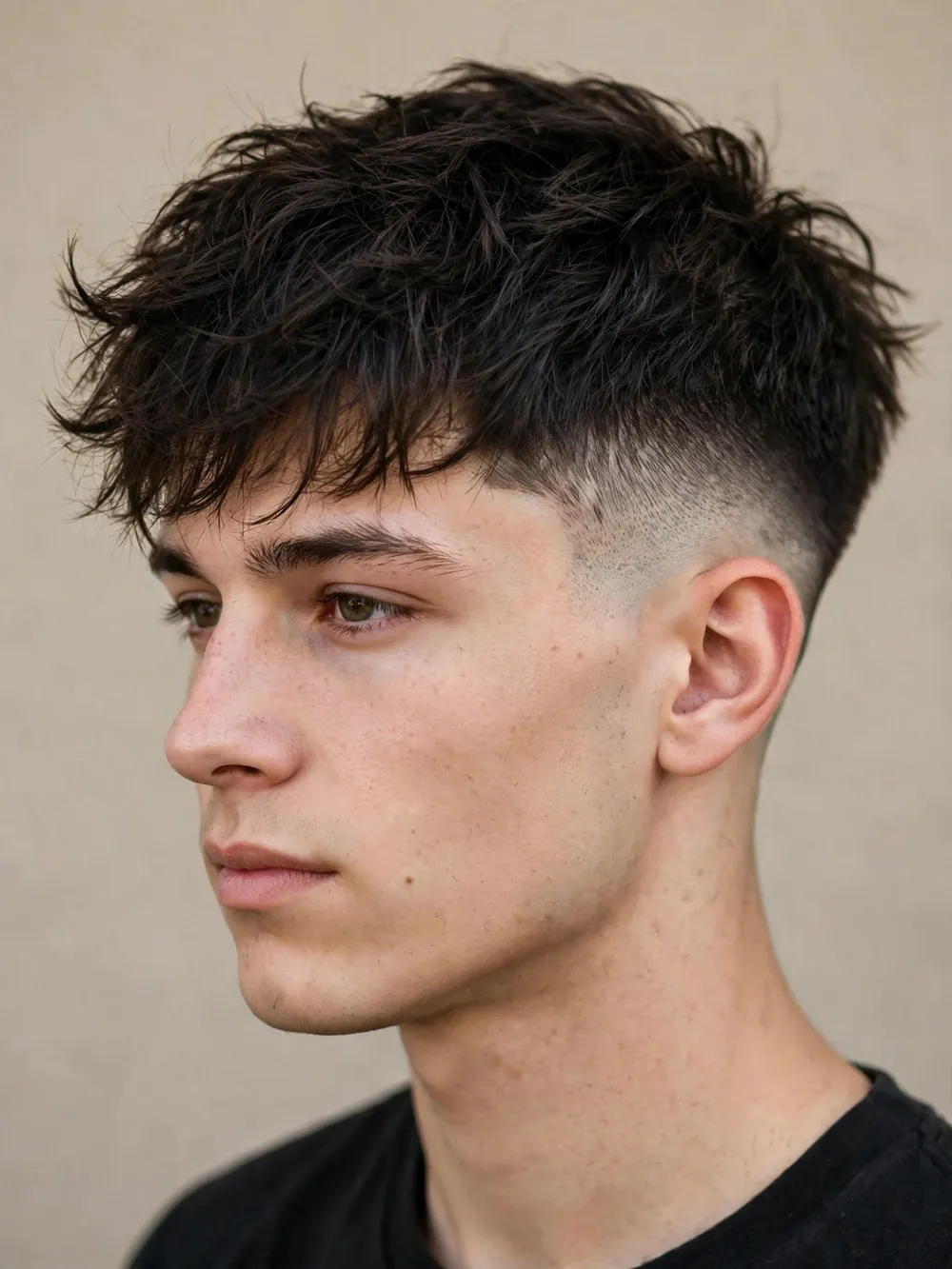
If your heart-shaped face comes with thick hair, a messy top is your friend — the controlled chaos draws attention away from the forehead and gives the whole cut a relaxed, lived-in character. The mid fade sits at the temple and keeps the sides clean, which stops the volume on top from making your head look wide, while the textured top stays deliberately uneven so no single line dominates. Ask for this: “Mid fade, 0 up to a 2, top around 3 inches with lots of point cutting, and leave it messy — I don’t want it combed neat.” Sea salt spray on damp hair, a quick rough-dry with your fingers, and a dab of matte paste is all it takes; the messier it looks, the better it works. The trade-off is honest: thick hair will need thinning at the crown every few visits, and you will want a touch-up every three weeks to keep the fade from going fuzzy.
24. Drop Fade with Quiff — Heart-Shaped Faces
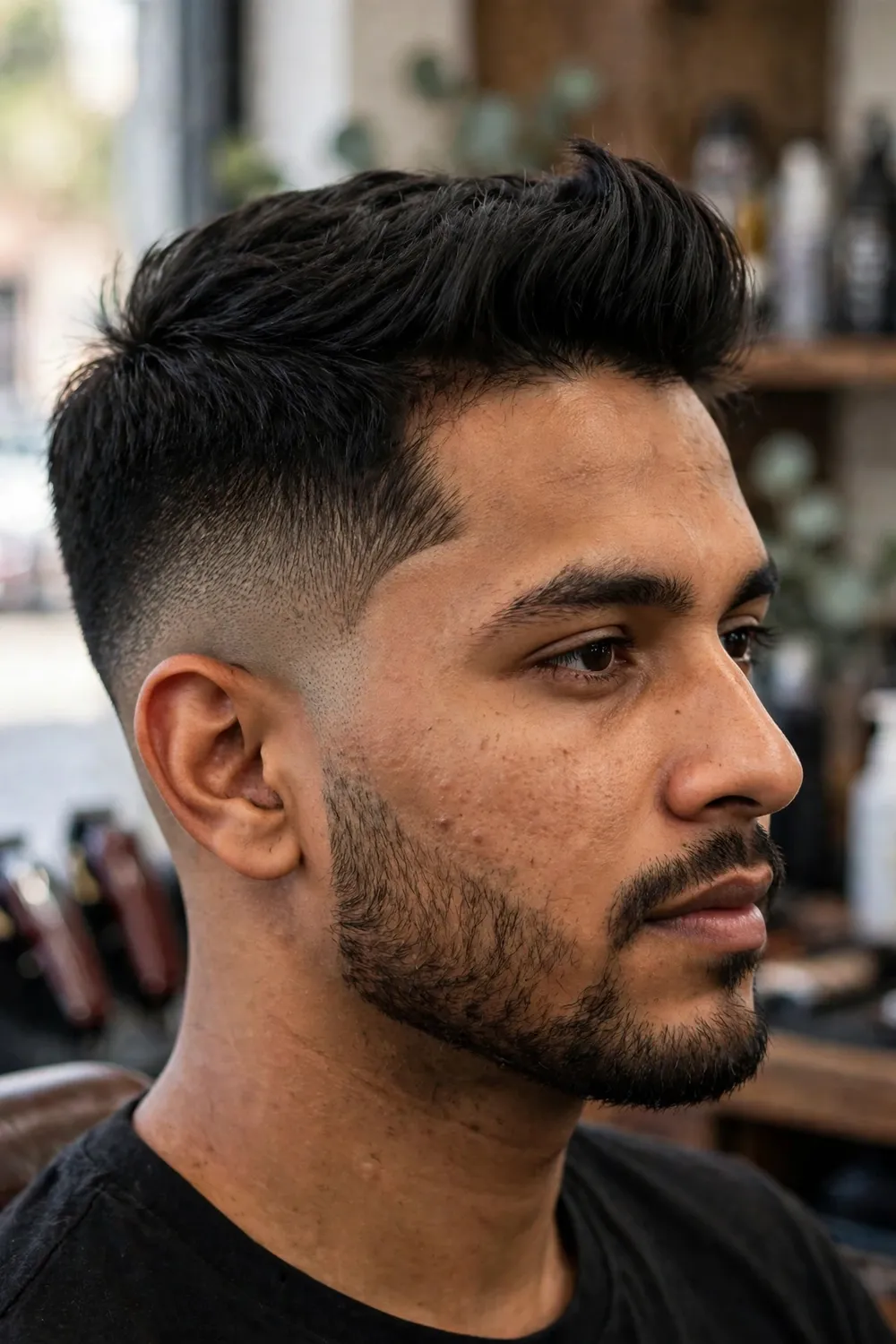
A quiff can be risky on a heart-shaped face if it runs too tall, so this version keeps the lift modest — about an inch and a half of height — and lets the drop fade do the balancing work. The fade curves down behind the ear instead of running straight round the head, which adds a soft diagonal line that flatters a pointed chin rather than fighting it. Straight or fine hair works well here because the quiff holds its shape with less product. The barber script: “Drop fade, 0 to a 2 following the head shape, top left 2.5 to 3 inches, quiff swept up and slightly to the side, not straight back.” Blow-dry the front upward with a round brush for thirty seconds, then smooth a small amount of medium-hold pomade through for a finish that moves. Expect a trim every three weeks; the drop fade loses its curve quickly once it grows out.
25. Low Fade with Wavy Top — Heart-Shaped Faces
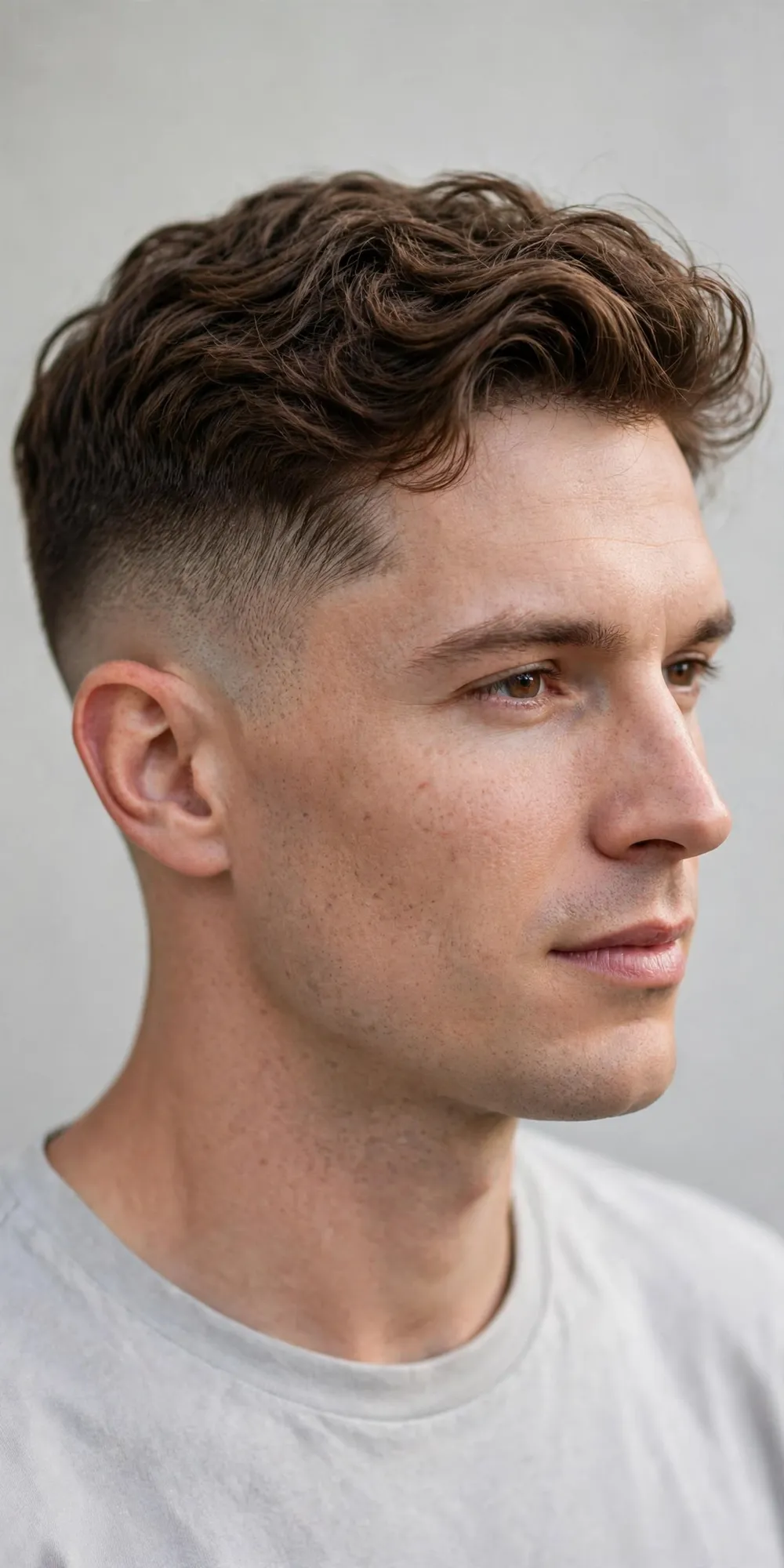
Natural waves are a gift on a heart-shaped face because they add width exactly where you need it — around the cheekbones and jaw — and take attention away from the forehead without any styling effort. The low fade keeps the sides neat but leaves plenty of weight above the ear, so the waves have room to do their thing, and the top stays long enough to show the wave pattern instead of being cropped into submission. This one is made for wavy or curly hair with medium thickness. Say: “Low fade, 0.5 blending to a 2, keep the top 3 to 4 inches so the waves show, and thin the bulk at the sides slightly.” A curl cream scrunched into damp hair, left to air-dry, gives definition without stiffness. Maintenance is the easiest of this group — four to five weeks between cuts — though a quick sea-salt spray on flat days keeps the waves from going limp.
Best Fade Haircuts for Diamond Faces
26. Low Fade with Textured Fringe — Diamond Faces

Diamond faces have the widest point at the cheekbones, with a narrower forehead and jaw, so the smart move is adding a little visual width to the forehead — and a textured fringe does exactly that. The low fade stays subtle around the ears so it never draws the eye to the cheekbones, while the fringe comes forward in choppy pieces that widen the upper third of the face. Straight to wavy hair with medium density is ideal; very curly hair will need the fringe kept shorter so it does not spring up. Tell your barber: “Low fade, 0.5 up to a 2, fringe about 2.5 inches, point-cut so it sits forward in pieces.” A touch of matte paste, pushed forward with your fingers, is enough — no comb, no fuss. Touch-ups every three to four weeks keep the fade crisp, and the fringe grows out into a longer textured crop rather than looking wrong, which buys you time.
27. Mid Fade with Side Part — Diamond Faces

A side part is one of the most reliable tools for a diamond face because the part line creates a diagonal across the forehead, breaking up the symmetry of wide cheekbones without adding any bulk. The mid fade at the temple keeps the sides tidy and gives the part somewhere clean to start from, while the top stays long enough — around 3 inches — to sweep neatly to one side. It works on straight or slightly wavy hair, and it is a strong choice if you want something that looks polished at work and relaxed at the weekend. The ask: “Mid fade, 0 to a 2, top 3 inches with a clean side part on my natural parting, tapered at the back.” Comb it through damp with a little pomade for a classic shine, or matte clay for a softer daytime look. A trim every three weeks keeps the part sharp, and the style survives a bad hair day better than most.
28. Drop Fade with Curly Top — Diamond Faces
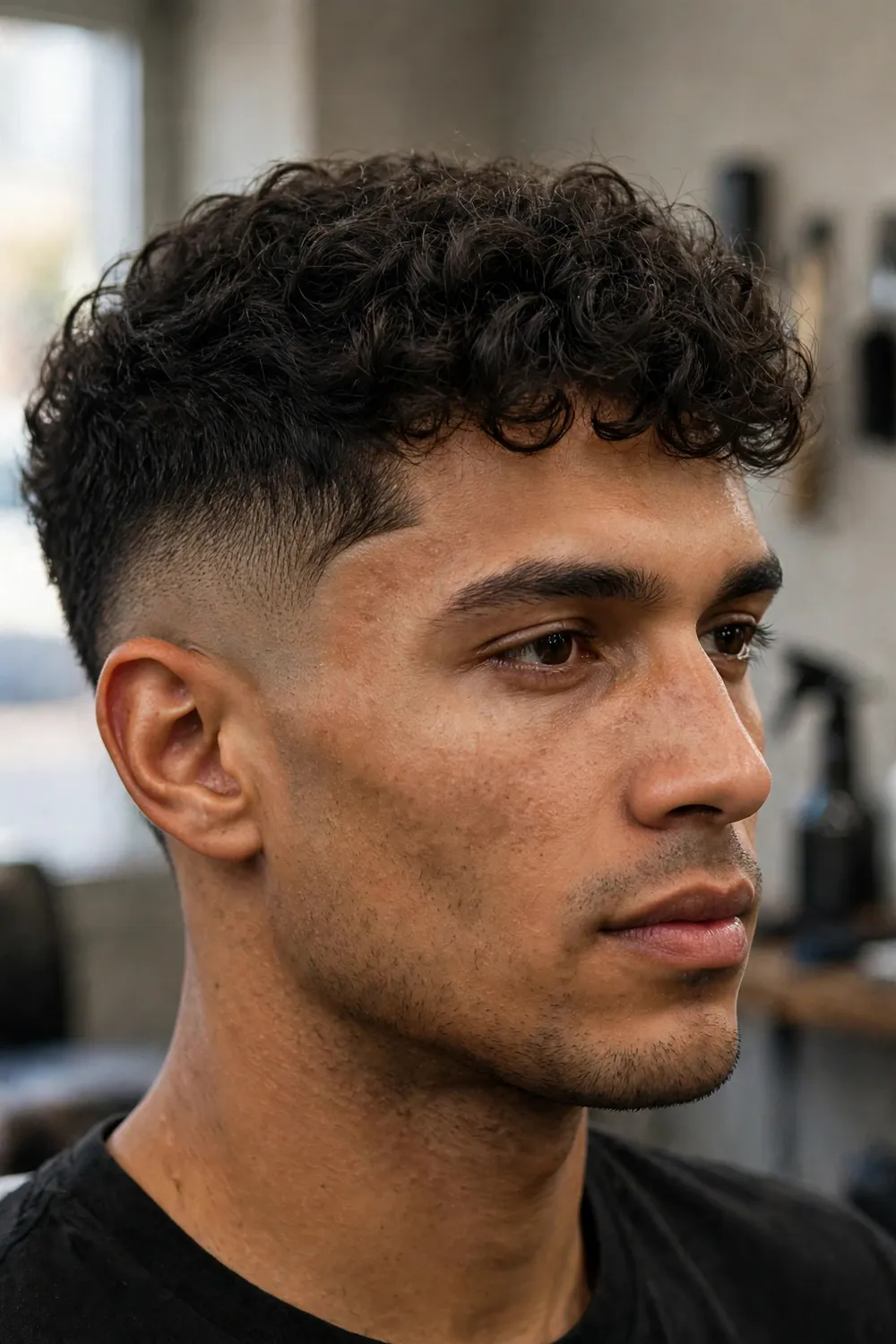
Curls soften angles, and on a diamond face that is exactly what you want — the curly top rounds off the sharp cheekbones while the drop fade follows the curve of the head and keeps the sides from puffing out. The result looks effortless, but it does need a barber who understands curly hair, because cutting curls dry and in their natural fall matters more than any guard number. Ask for: “Drop fade, 0 to a 2 curving behind the ear, top left 3 to 4 inches, cut the curls dry and leave the length on top.” Curl cream on damp hair, scrunched in and left to air-dry, defines the curls without crunch; a diffuser on low heat works on rushed mornings. Budget for a cut every four weeks, and never let anyone thin your curls with a razor — that is how frizz starts, and it takes months to grow out.
Best Fade Haircuts for Triangle Faces
29. Low Fade with Fuller Textured Top — Triangle Faces
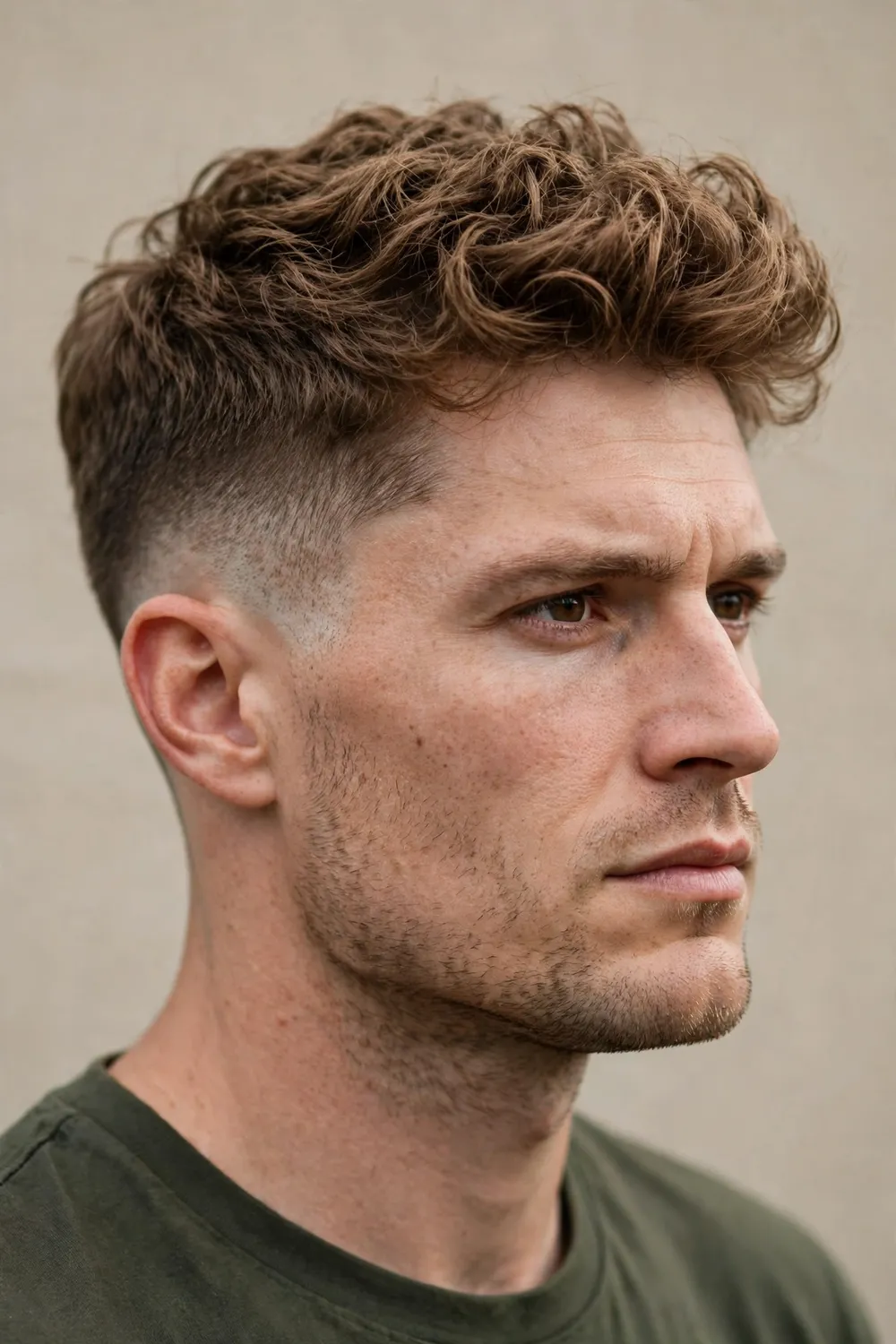
Triangle faces are wide at the jaw and narrow at the forehead, so the whole game is adding volume up top while keeping the sides from getting any wider. A low fade does the second half — it stays low and quiet, so the jaw is not emphasised — and a fuller textured top does the first, giving the forehead the width it needs to balance the face. Thick, straight or wavy hair is ideal because the top needs body to hold its shape. The script: “Low fade, 0.5 blending to a 2, keep the sides full above the ear, top left 3 to 3.5 inches with heavy texture on top, no thinning at the crown.” Matte clay through towel-dried hair, pushed up and forward, gives a full finish that lasts all day. You will need a trim every three to four weeks; the fade is forgiving as it grows, but the top loses its shape fast once it gets too long.
30. Taper Fade with Quiff — Triangle Faces
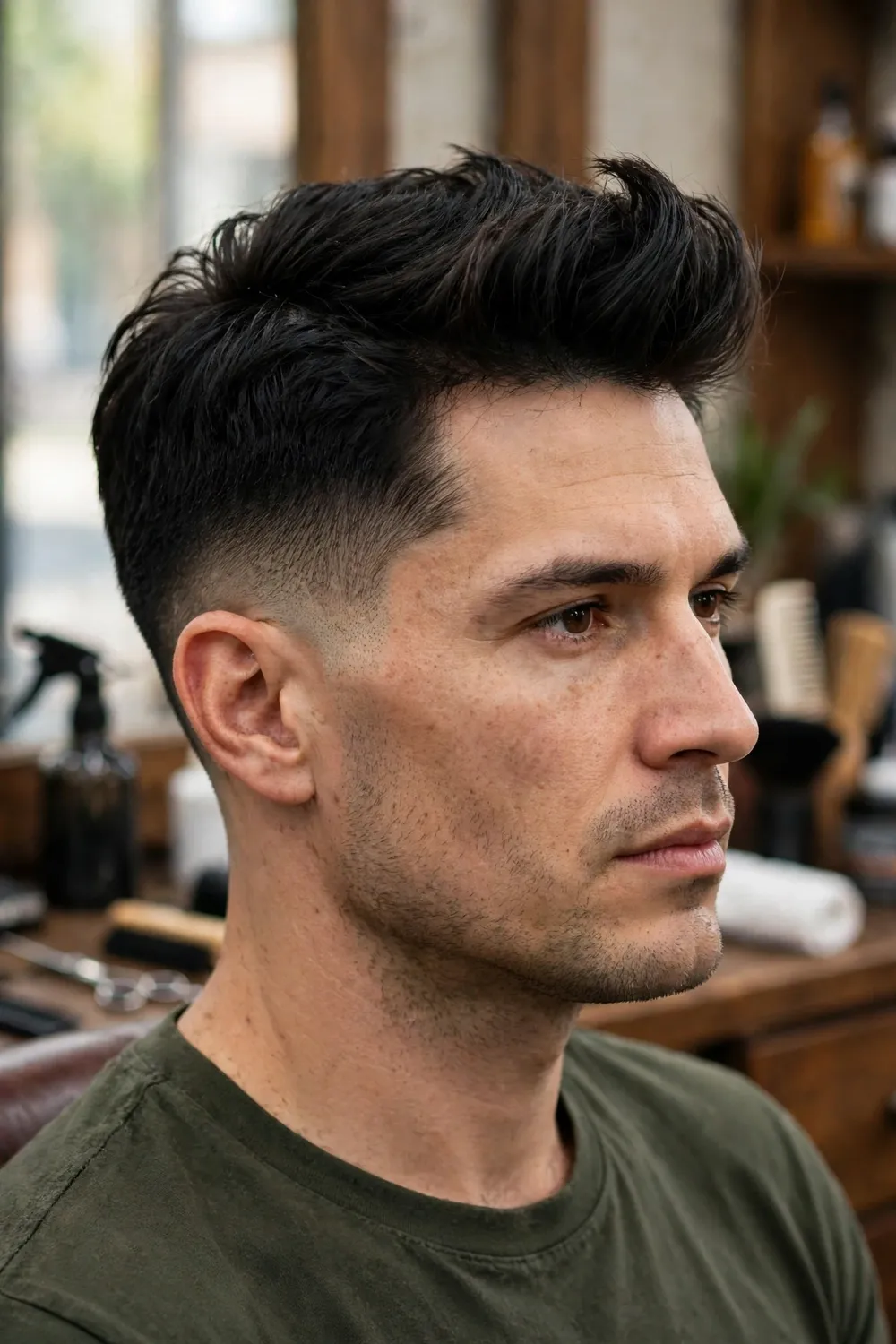
A quiff lifts the eye upward, and on a triangle face that upward pull is worth its weight in gold — it gives a narrow forehead presence and balances a strong jaw without a single harsh line. The taper fade is the gentle partner here: shortest only at the sideburns and neckline, blending softly upward, so nothing on the sides competes with the volume on top. Straight or fine hair holds a quiff best, and a little height — around 2 inches — is the sweet spot. Say: “Taper fade, #1 at the edges to a #2, top 2.5 to 3 inches, quiff swept up and back with texture.” Blow-dry the front up with your fingers, then work a small amount of medium-hold pomade through for a finish that moves but does not flop. The honest catch: a quiff needs two minutes of styling every morning, and you will want a touch-up every three weeks to keep the taper clean.
9 More Fades Worth Trying in 2026
31. Burst Fade with Textured Crop — Round Faces
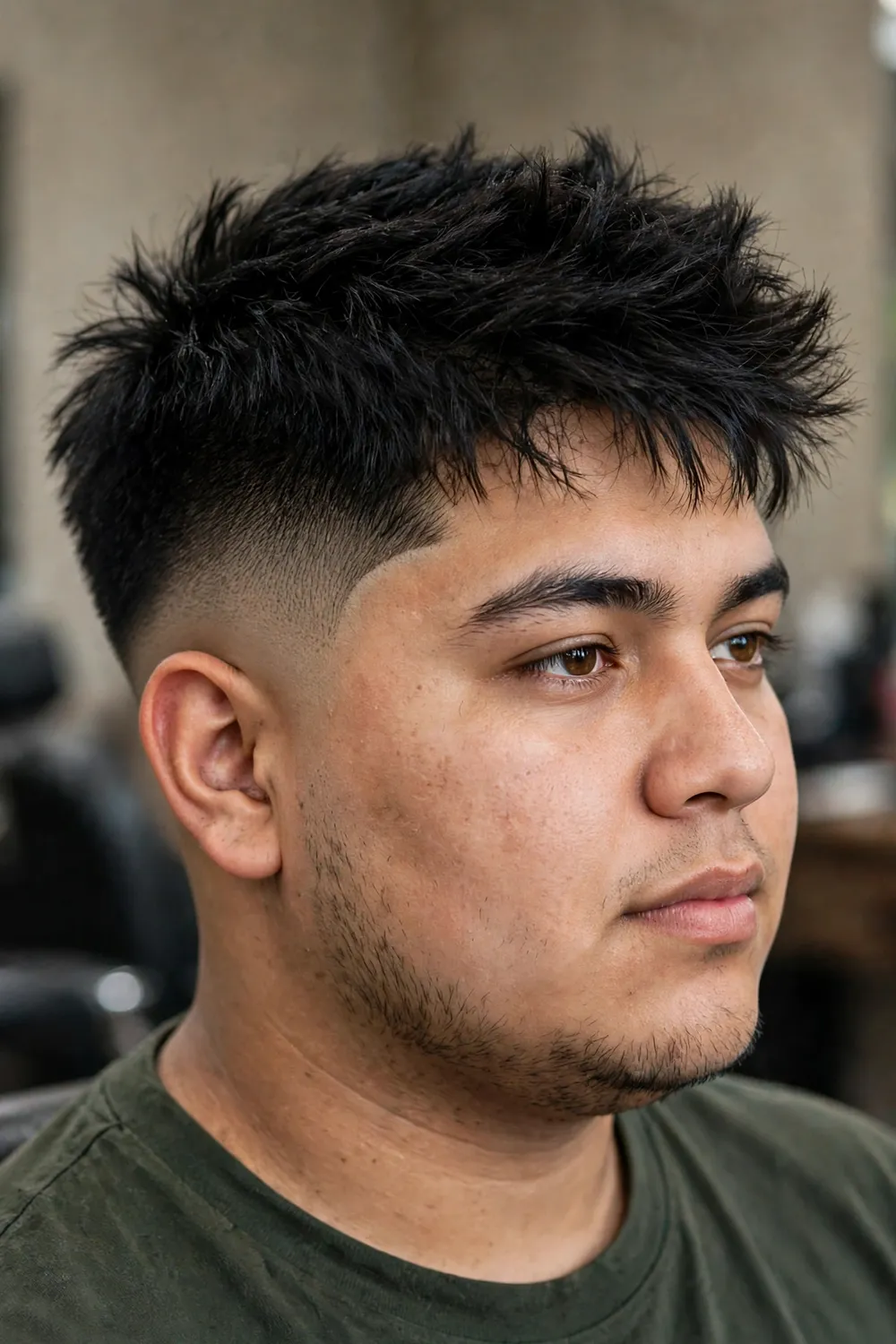
The burst fade arcs around the ear in a semicircle, leaving the back of the head longer, and that curve does something useful on a round face: it breaks the circle. Paired with a short textured crop, the cut adds angles where a round face has none, and the burst shape gives the sides a distinct, modern character that a straight fade cannot match. It suits straight to wavy hair and works well if you want a style that stands out without going extreme. Ask your barber: “Burst fade around the ear, 0 to a 2, top about 2 inches point-cut for texture, leave the back slightly longer.” Matte paste, pushed forward and pinched apart, finishes it in under a minute. The arc is the maintenance catch — once it grows out, the burst shape blurs, so plan on a touch-up every two to three weeks to keep it looking deliberate. Our full guide to burst fade haircuts covers more variations.
32. Skin Fade with Slick Back — Square Faces

Few combinations look as sharp as a skin fade with a slick back on a square face — the bare-skin sides make the jaw look even stronger, and the slicked top adds height and polish in one move. This is a statement cut, and it rewards confidence: the skin fade (faded right down to bare skin, guard 0) leaves nothing to hide behind, so the lines have to be exact. Straight, thick hair with some length on top — 3 to 4 inches — holds the slick back best. The ask: “Skin fade, 0 at the bottom blending to a 2, top 3.5 inches, slicked straight back, and keep the lineup crisp.” A strong-hold pomade combed through damp hair, finished with a blow-dryer on low, gives the classic shine. Honest warning: this is the highest-maintenance cut in this list — a touch-up every two weeks, and daily styling is not optional.
33. Low Taper Fade with Curly Top — Diamond Faces

If you have curls and a diamond face, this is one of the kindest cuts you can get. The low taper stays gentle — shortest only at the sideburns and neckline — so the sides never flare out and widen your cheekbones, while the curls on top soften every angle and add natural volume where the forehead needs it. The key is a barber who cuts curls in their natural fall, ideally dry, rather than pulling them straight and guessing. Say: “Low taper, #1 at the edges blending to a #2, top left 3 to 4 inches, cut the curls dry and keep the shape round on top.” Curl cream scrunched into damp hair and left to air-dry is the whole routine. A cut every four to five weeks is plenty, and the taper grows out so softly that nobody notices an extra week — just do not let anyone razor-thin the curls.
34. Mid Fade with Edgar Cut — Oblong Faces

The Edgar cut is the straight, blunt fringe that has taken over barbershops in the last two years, and on an oblong face it does a real job: the hard horizontal line across the forehead visually shortens the face, while the mid fade keeps the sides clean and stops the cut from looking boxy. It works best on straight, thick hair, because the fringe needs to sit flat and sharp to look intentional. Tell your barber: “Mid fade, 0 to a 2, top 2 to 2.5 inches, Edgar fringe cut straight across the forehead with a sharp lineup.” A little matte paste to keep the fringe in place is all you need — no blow-drying, no fuss. The fringe line is the catch: it grows out visibly within two weeks, so book a touch-up every two to three weeks, or learn to ask for a fringe-only tidy between full cuts.
35. High Fade with Ivy League — Oval Faces
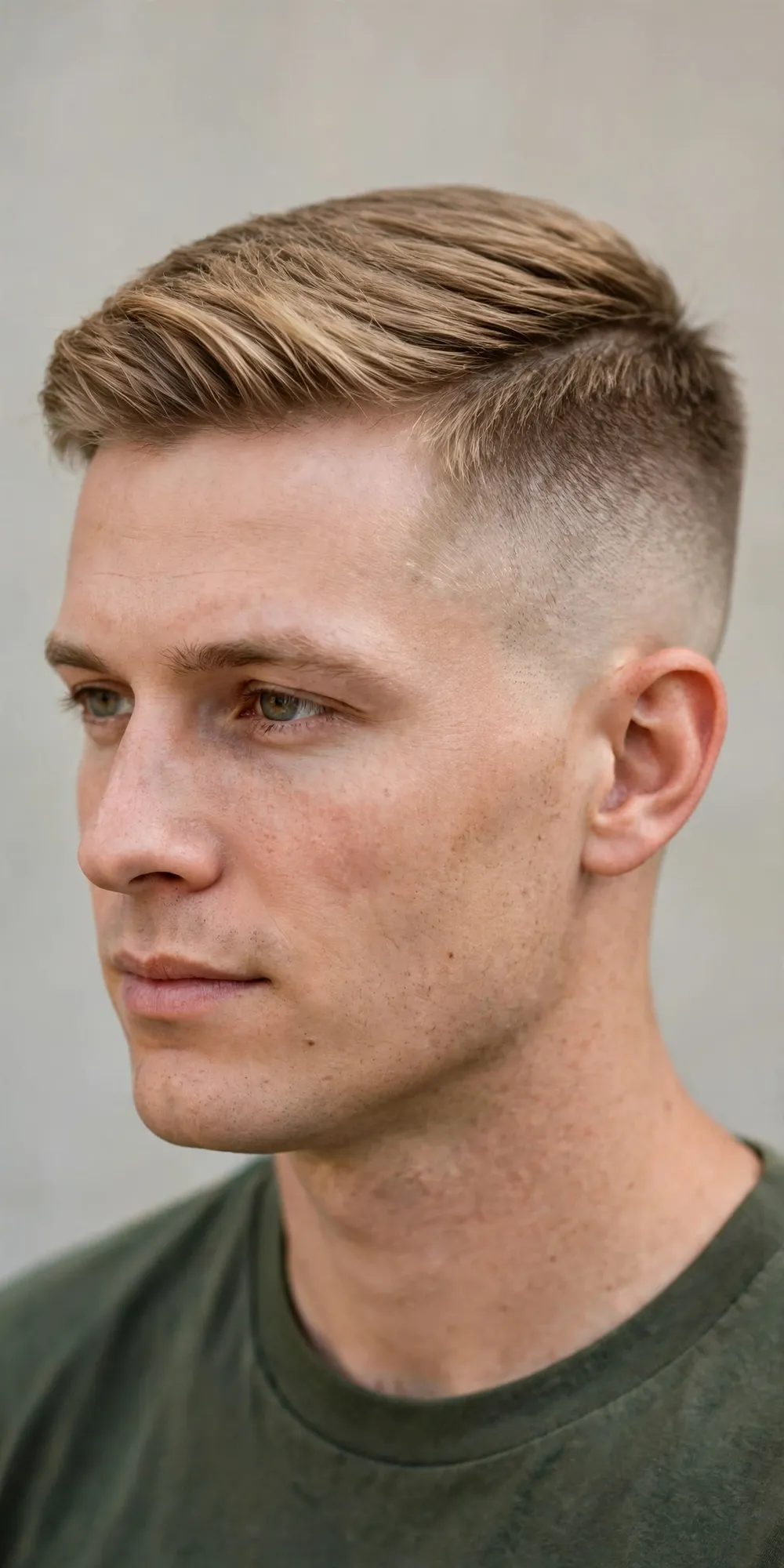
The Ivy League is the longer, smarter cousin of the crew cut, and on an oval face — which can carry almost anything — pairing it with a high fade turns a conservative cut into something with real presence. The high fade strips the sides bare up to the temple corner, which sharpens the whole silhouette, while the Ivy League top, about 2 inches with a side part, keeps it polished enough for the office. Straight or slightly wavy hair with medium density is ideal. The script: “High fade, 0 to a 2, top 2 inches with a side part, tapered at the back, and keep the front long enough to sweep.” A dab of light pomade combed to the side gives a clean, classic finish that holds all day. Maintenance is moderate — every three weeks for the fade, and the top grows out gracefully into a longer side part if you stretch it a week.
36. Shadow Fade with Flow — Heart Faces
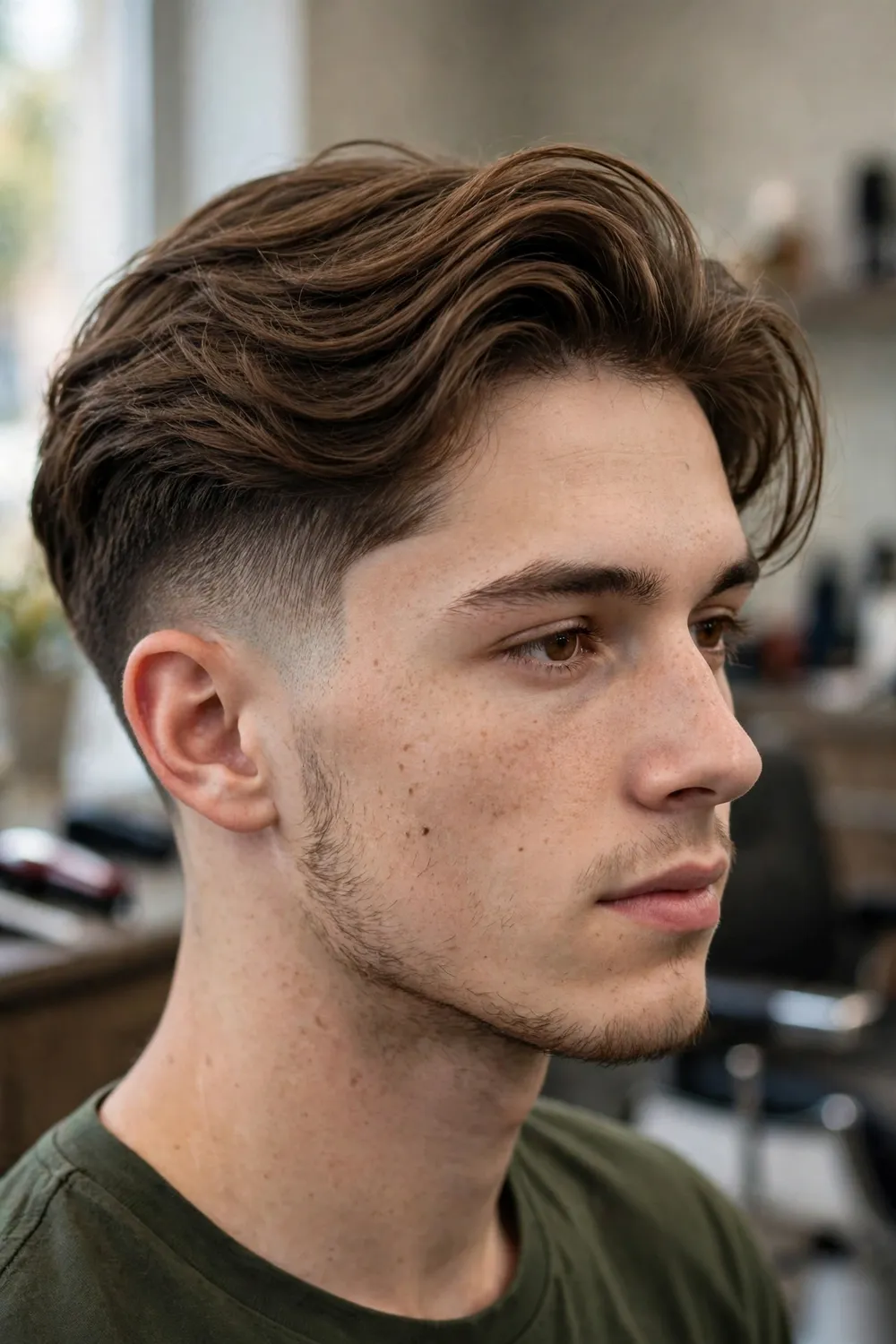
A shadow fade is the softest fade there is — no bare skin, just a gentle gradient from short to long — and paired with longer, flowing hair on top it is a beautiful match for a heart-shaped face. The flow adds width around the jaw and cheekbones, balancing a wide forehead, while the shadow fade keeps the sides tidy without any harsh line that would draw attention upward. Medium to long wavy hair is the natural fit; straight hair can work too if it has enough length to move. Ask for: “Shadow fade, #1 blending to a #3, top left 4 to 5 inches with the back left long for flow, no hard lines.” A little sea salt spray and a rough dry gives the flow movement without stiffness. This is the most forgiving cut on maintenance — four to five weeks between visits — and the flow only gets better as it grows.
37. Temple Fade with Buzz Cut — Triangle Faces
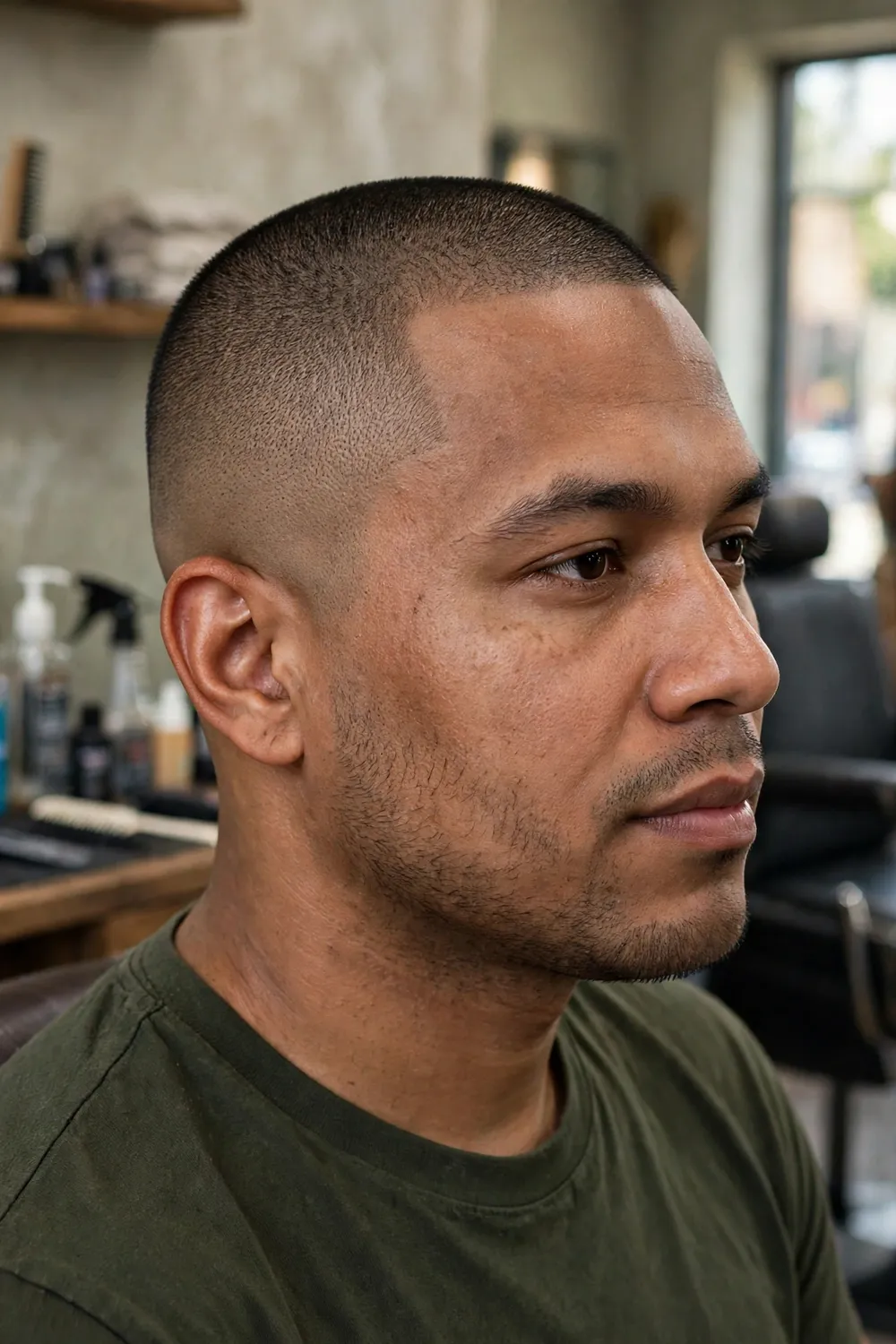
A temple fade only fades the small area around the temples, leaving the rest of the sides full, and that is exactly why it works on a triangle face: it keeps weight up high where a narrow forehead needs it, while the buzz top adds a clean, even texture that does not compete with a strong jaw. It is also one of the lowest-effort cuts in this guide — the buzz needs almost no styling, and the temple fade is subtle enough that growing it out is painless. The ask is simple: “Temple fade at the temples only, #1 to a #2, buzz the top with a #3 guard, even all over.” No product is needed, though a little matte paste can add texture if your hair is very fine. Touch-ups every three to four weeks keep the temples sharp, and if you own clippers, the buzz top is easy to maintain yourself between visits.
38. Low Fade with Beard Blend — Square Faces
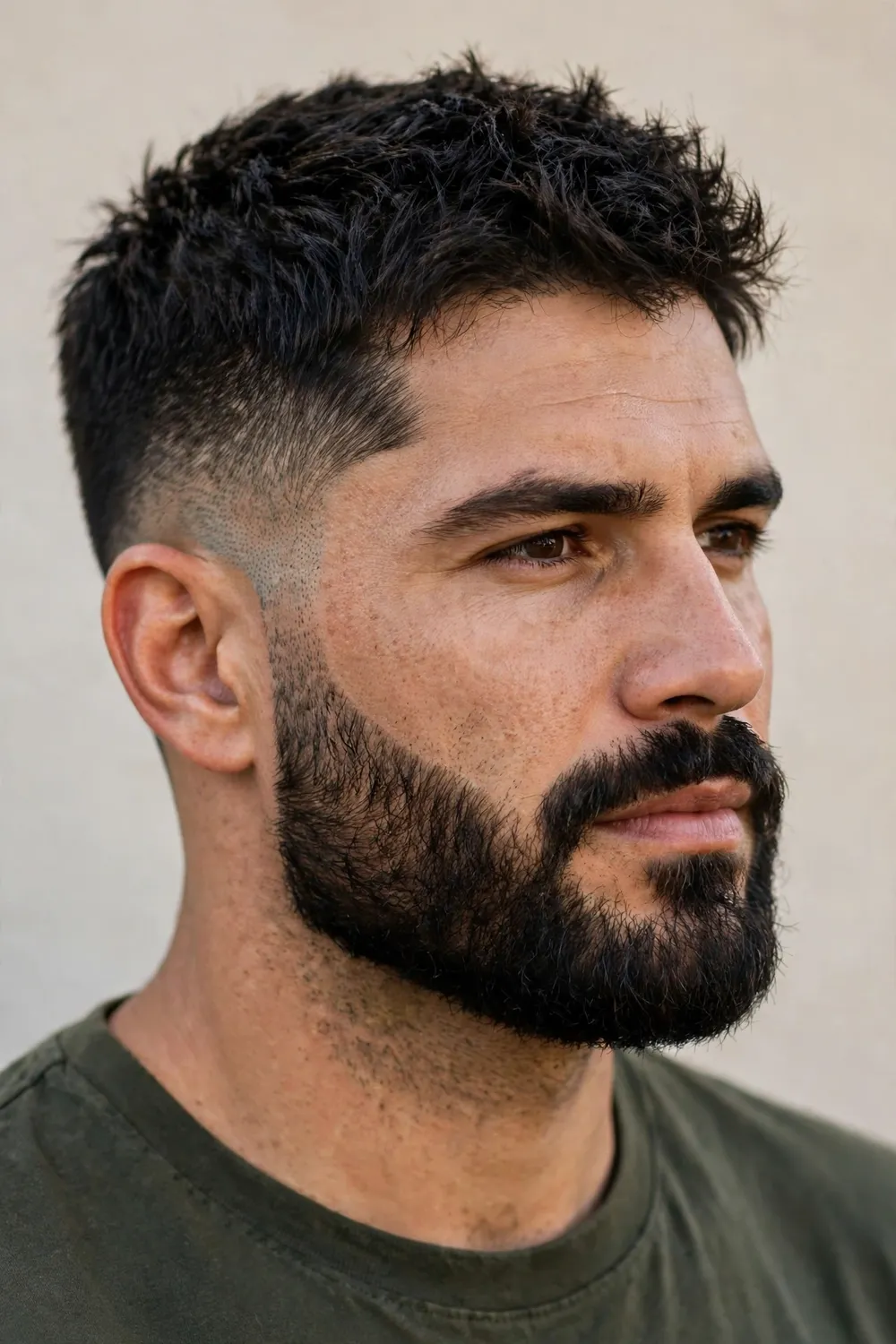
On a square face, a beard is not an accessory — it is part of the haircut, and this style treats it that way. The low fade blends seamlessly down into a shaped beard, so there is no visible line where the haircut ends and the beard begins, and the whole head reads as one continuous, deliberate shape. The beard itself should be kept full at the jaw and tapered toward the cheeks, which softens the square corners just enough without hiding the jaw. Tell your barber: “Low fade, 0.5 to a 2, blend the fade into the beard with no hard line, beard shaped with the cheeks tapered and the jaw kept full.” Beard oil daily and a weekly trim of stray hairs keep it looking intentional. The maintenance is real — a blend touch-up every two to three weeks, plus daily beard care — but for a square face with a good beard, nothing else frames the jaw this well.
39. Mid Fade with Modern Mullet — Oblong Faces
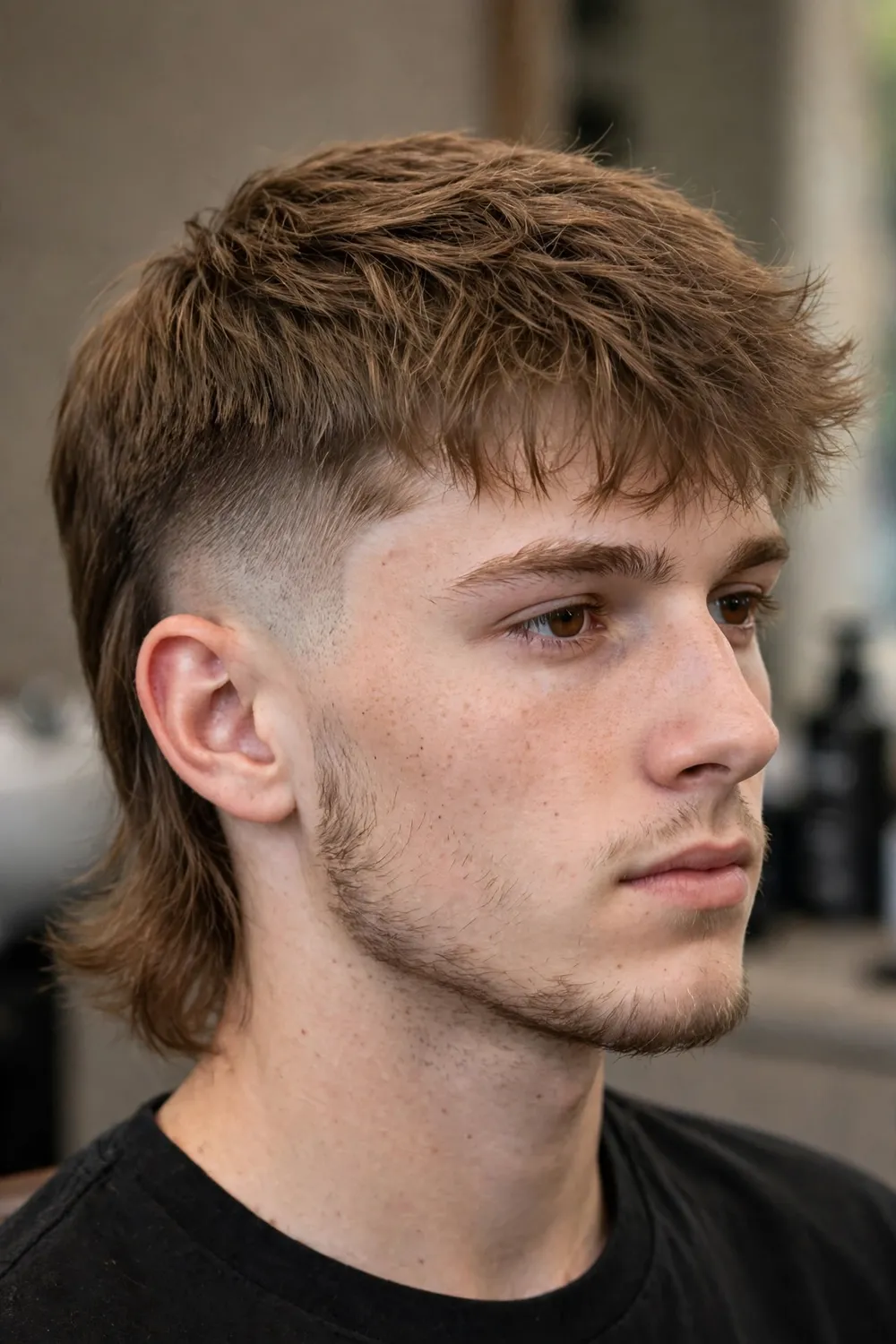
The modern mullet has come a long way from its 1980s ancestor: shorter on top, textured through the middle, and longer at the back — and on an oblong face it works because the mid fade adds width at the sides while the length at the back balances the face’s length. The top stays around 2.5 inches with plenty of texture, the sides fade at the temple, and the back flows to the collar. Straight to wavy hair with some natural texture is the best fit. Say: “Mid fade, 0 to a 2, top 2.5 inches textured, back left long to the collar with the ends thinned, not blunt.” Texture paste through the top and a little sea salt spray in the back gives it movement without looking overdone. Fair warning: a mullet grows out unevenly, so expect a tidy-up every three weeks, and be ready for opinions — this is a cut people notice.
Low vs Mid vs High Fade — Where the Fade Line Sits
The fade line is simply where the shortest hair starts, and once you know the three heights, choosing gets much easier. A low fade starts about an inch above the ear and blends upward slowly, so it keeps the most weight on the sides and grows out the most gracefully. A mid fade sits at the temple, splitting the difference — clean and defined, but not dramatic. A high fade starts at the temple corner, up near the forehead, and strips the sides bare much higher, which makes the top look taller and the face narrower. A skin fade means the shortest point goes right down to bare skin (a 0 guard), while a taper is the gentlest version of all: the shortest hair sits only at the sideburns and neckline, with the rest of the sides left longer. As a rough guide, a low fade blends from a 0.5 up to a 2, a mid fade from a 0 to a 2, and a high fade from a 0 to a 2 with a faster, sharper transition. The Fade (haircut) entry on Wikipedia gives a good overview of how these heights developed. If you are unsure, start with a mid fade — it suits the most face shapes, and your barber can take it higher or lower next time based on how it grows out on you. For the full low-fade playbook, see our guide to low fade haircuts for men, and for the boldest height, our high fade haircut guide.
7 Mistakes That Ruin a Fade for Your Face Shape
1. A high fade on an oblong face. A high fade strips the sides and makes the top look taller, which is the last thing a long face needs — it stretches the face even further. Oblong faces should stay low or mid, with a fringe to add width.
2. A flat top with a low fade on a round face. A low fade keeps the sides full, and a flat, wide top adds width on top of width. A round face needs height on top and clean, high sides to create length — the opposite of this combination.
3. A hard lineup on a square face. Square faces already have strong, angular corners, and a razor-sharp lineup with hard edges makes them look boxy and severe. A softer, slightly rounded hairline flatters a square jaw far better.
4. A skin fade with thinning hair. Fading to bare skin next to thinning hair on top only highlights the contrast — the eye goes straight to the thin patch. A taper or a low shadow fade is far kinder when density is dropping.
5. Ignoring your hair texture. A quiff that works beautifully on thick, straight hair can flop on fine hair, and a crop designed for straight hair can frizz on curls. The best fade for your face shape is also the best fade for your hair type — tell your barber both.
6. Asking for a photo of a different face shape. That celebrity cut looks great on him because his face is a different shape from yours. Bring a photo of someone with your face shape and hair type, or better, ask your barber what version of that cut suits your face.
7. Waiting too long between touch-ups. A fade is a precision cut, and after four weeks the gradient blurs into a grown-out mess — the shape that flattered your face is gone. Book the next cut before you leave the chair, and your face shape will thank you.
How Often Should You Get a Fade Touched Up?
It depends on the height of the fade, and the rule is simple: the higher and shorter the fade, the faster it needs attention. A skin fade or high fade starts to lose its sharp gradient after about two weeks, because even a few millimetres of growth blur the blend — book every two weeks if you want it looking freshly cut. A mid fade holds its shape for about three weeks, which is the sweet spot for most men: frequent enough to stay sharp, spaced enough to be affordable. A low fade or taper is the most forgiving of all and can stretch to four weeks, since the blend is softer and the growth is less visible. Cost-wise, a fade touch-up is usually cheaper than a full cut — many barbers offer a sides-only tidy for roughly half the price of a full haircut, so ask about it. A practical grow-out plan: book your next appointment before you leave the chair, set a reminder for two weeks (skin/high), three weeks (mid) or four weeks (low/taper), and use a little extra product on the days the fade starts to soften — it buys you a few more days of looking sharp.
FAQs
What fade is best for a round face?
A high fade with a textured quiff or a skin fade with a faux hawk works best, because both pull the sides in tight and add height on top, which lengthens the face and breaks up its roundness. Avoid low fades with flat, wide tops, since they add width where you least need it. If you want something safer, a mid fade with a pompadour gives the same lengthening effect with a softer finish.
What fade suits an oval face?
Almost any fade suits an oval face, because its proportions are already balanced — a mid fade with a textured crop is the safest default, and a high fade with a quiff or an Ivy League adds polish without risk. The only thing to watch is going too extreme in either direction: a very high skin fade can make an oval face look long, and a very low taper can look shapeless. Start with a mid fade and adjust from there.
Which fade is best for a square face?
A low fade with a comb over or a skin fade with a slick back both suit a square face, because they keep or emphasise the strong jaw rather than fighting it. A low fade preserves side weight and sharpens the jawline, while a skin fade with a slick back makes the whole silhouette look bold and structured. Just avoid a hard, boxy lineup, which can make square corners look severe.
What fade should I get for a long (oblong) face?
A low fade with a French crop or a textured fringe is the best choice for an oblong face, because the low fade keeps width on the sides and the fringe shortens the forehead visually. A taper fade with a side-swept fringe works the same way. What you should not get is a high fade or a tall quiff, since both make a long face look even longer.
How do I find my face shape?
Stand in front of a mirror with your hair pulled back and measure four things with a tape measure: forehead width, cheekbone width, jaw width, and face length from hairline to chin. If length is clearly greater than width, you are oblong; if length and width are close and your jaw is soft, you are round; if they are close but your jaw is angular, you are square. If your cheekbones are the widest point you are diamond, if your forehead is widest you are heart-shaped, and if your jaw is widest you are triangle. The whole test takes about sixty seconds.
What fade is best for a heart-shaped face?
A low fade with a side-swept fringe or a taper fade with a textured crop suits a heart-shaped face best, because both soften a wide forehead without adding height on top. The fringe breaks up the width of the forehead, and the low fade keeps the sides quiet so the pointed chin is not emphasised. Avoid tall quiffs and high fades, which only make the forehead look wider.
How often should I get a fade touched up?
Every two to four weeks, depending on the fade height: skin fades and high fades need a touch-up every two weeks, mid fades every three weeks, and low fades and tapers every four weeks. The shorter and higher the fade, the faster the blend blurs as it grows out. Many barbers offer a cheaper sides-only tidy between full cuts, which keeps the fade sharp without paying for a full haircut every time.
Final Word
The best fade is not the one trending on your feed — it is the one that fits your face shape, your hair texture, and how much effort you are willing to put in every morning. Find your shape with the tape-measure test, pick the fade from the section that matches it, and take the exact barber ask from that section with you to the chair. If you are still deciding, start with a mid fade: it suits nearly every face shape, and your barber can take it higher or lower next time. And if you want more ideas beyond fades, browse our full collection of men’s haircut guides and hairstyle inspiration on the blog — there is a cut there for every face shape, hair type, and occasion.